Review

Antimicrobial Resistance in Veterinary Bacterial Pathogens: Resistance Patterns, Zoonotic Risks and One Health Implications


1
Department of Semiology, Faculty of Veterinary Medicine, University of Life Sciences “King Mihai I” from Timisoara, 300645 Timisoara, Romania
2
Doctoral School “Veterinary Medicine”, University of Life Sciences “King Mihai I” from Timişoara, 300645 Timisoara, Romania
3
Department of Infectious Diseases and Preventive Medicine, Faculty of Veterinary Medicine, University of Life Sciences “King Mihai I” from Timisoara, 300645 Timisoara, Romania
4
Department of Animal Production and Veterinary Public Health, University of Life Sciences “King Mihai I” from Timisoara, 300645 Timisoara, Romania
5
Department of Anatomy, University of Life Sciences “King Mihai I” from Timisoara, 300645 Timisoara, Romania
6
Academy of Romanian Scientists, Str. Ilfov Nr. 3, Sector 5, 050044 Bucharest, Romania
*
Author to whom correspondence should be addressed.
Pathogens 2026, 15(5), 525; https://doi.org/10.3390/pathogens15050525 (registering DOI)
Submission received: 10 April 2026 / Revised: 8 May 2026 / Accepted: 11 May 2026 / Published: 13 May 2026
(This article belongs to the Section Bacterial Pathogens)

Abstract

Antimicrobial resistance (AMR) has emerged as one of the most significant global health challenges affecting both human and veterinary medicine. The growing prevalence of resistant bacterial strains in livestock and companion animals not only compromises treatment efficacy but also poses serious public health risks through potential zoonotic transmission. Recent molecular and genomic studies have shown the widespread dissemination of resistance genes across different ecological compartments, emphasizing the need for integrated monitoring systems. Antimicrobial stewardship programs and evidence-based interventions are therefore essential in veterinary medicine to mitigate these trends. This is particularly important because the emergence of multidrug-resistant (MDR) pathogens is increasingly associated with mobile genetic elements, such as plasmids, transposons, and integrons, which facilitate horizontal gene transfer within and across bacterial species.

1. Introduction

Throughout history, human populations have been engaged in a persistent struggle with microorganisms, particularly bacterial pathogens, which have contributed substantially to global patterns of morbidity and mortality across diverse demographic groups [1]. Antimicrobial agents constitute a fundamental component of veterinary practice, being widely employed for the treatment and management of bacterial infections in animal populations [2]. Antimicrobial resistance (AMR) is the ability of microorganisms, including bacteria, to survive and multiply in the presence of antimicrobial agents that would normally inhibit their growth or kill them [1].
AMR represents one of the most pressing challenges facing modern medicine. The rapid emergence and dissemination of resistant bacterial pathogens threaten the effectiveness of antimicrobial therapy and complicate the management of infectious diseases worldwide [3,4,5,6,7,8,9,10,11,12,13]. However, the available evidence remains heterogeneous across animal species, production systems, and geographic regions. In many veterinary settings, differences in surveillance methodologies and antimicrobial usage policies limit direct comparisons between studies.
The interconnection between human, animal, and environmental health highlights the necessity of a One Health approach. Evidence indicates that the spread of resistance determinants is accelerated by various factors like anthropogenic activities, including indiscriminate antimicrobial use, inadequate infection control or environmental contamination [10,14,15]. The relationship between antimicrobial use, inappropriate prescribing practices, and the dissemination of resistant bacterial strains has been well documented. In veterinary medicine, this issue is also relevant, as available evidence suggests that antimicrobial prescriptions may not always be fully justified or optimally selected, with relatively high proportions of inappropriate use reported in certain settings (approximately 30–50%) [8,15]. In companion animals, frequent close contact with humans facilitates bidirectional transfer of resistant microorganisms, highlighting the zoonotic potential of veterinary pathogens. Epidemiological studies have identified identical resistance genes and clones in pets and humans, suggesting that companion animals may represent potential reservoirs of clinically relevant resistant bacteria, although the epidemiological importance of direct animal-to-human transmission remains incompletely understood [13,16,17,18,19,20,21,22,23].
In veterinary medicine, antimicrobial agents play a principal role in maintaining animal health and welfare by enabling the treatment and control of bacterial infections. However, inappropriate dosing, prolonged prophylactic use, and the absence of routine antimicrobial susceptibility testing (AST) exacerbate resistance development [24]. Surveillance studies demonstrate that livestock and companion animals are significant reservoirs for MDR bacteria, including methicillin-resistant Staphylococcus spp., ESBL-producing Enterobacteriaceae, and multidrug-resistant Pseudomonas aeruginosa [22,25].
The One Health concept emphasizes the interconnectedness of human, animal, and environmental health and provides a comprehensive framework for addressing antimicrobial resistance [10,19,26,27]. Integrated interventions across different spheres of life sectors are critical for mitigating the emergence and spread of resistant bacteria. Strategies include genomic surveillance, targeted stewardship programs, biosecurity enhancement, and education of healthcare professionals and animal caregivers [28].
The aim of this review is to bring together and critically reassess recent data on AMR in veterinary bacterial pathogens, with a focus on how resistance mechanisms, epidemiological trends, and zoonotic aspects are linked within a One Health framework. Although AMR has been extensively studied, much of the available literature remains fragmented, often addressing these components separately.
Rather than treating these dimensions in isolation, the present work seeks to go beyond a descriptive summary by connecting molecular findings with real-world patterns of spread and transmission. It also examines the role of mobile genetic elements, the limitations of current surveillance systems, and the uncertainties surrounding transmission between animals and humans.
By integrating these perspectives, the review aims to provide a clearer and more practical understanding of how AMR develops and spreads in veterinary settings. In addition, it highlights gaps in current knowledge and outlines directions for more consistent surveillance and more effective control strategies adapted to the One Health context.
This review was developed with the intention of moving beyond a purely descriptive overview of antimicrobial resistance in veterinary bacterial pathogens. The available evidence is not equally strong across all aspects of this topic, and we have therefore tried to separate well-established conclusions from those that remain more uncertain. While the link between antimicrobial exposure and resistance development is well supported, the importance of specific animal reservoirs, environmental sources, and direct animal-to-human transmission is often harder to define. This is partly because many studies differ in design, scale, and resolution, making direct comparisons difficult. These limitations are considered throughout the review, especially when discussing regional variability and the need for longitudinal genomic data to better understand how resistance spreads across animal, human, and environmental interfaces.

2. Materials and Methods

The present review was conducted using a structured literature search to identify relevant publications on AMR in veterinary bacterial pathogens, with particular emphasis on resistance patterns, zoonotic transmission, and One Health implications.
The literature search was performed in PubMed, Scopus, and Web of Science. Publications from 2000 to 2025 were considered, with priority given to studies published after 2015, in order to include the most recent evidence. The search terms included different combinations of the following keywords: “antimicrobial resistance”, “veterinary pathogens”, “zoonotic transmission”, “One Health”, “antimicrobial use”, “multidrug resistance”, “resistance genes”, and “horizontal gene transfer”.
Studies were selected according to their relevance to veterinary bacterial antimicrobial resistance, scientific quality, and contribution to the understanding of resistance mechanisms, epidemiological trends, zoonotic transmission pathways, clinical implications, and control strategies. Priority was given to peer-reviewed original articles, systematic reviews, meta-analyses, and reports from international organizations, including the World Health Organization (WHO), World Organisation for Animal Health (WOAH), and European Food Safety Authority (EFSA).
Studies were excluded if they were not directly related to veterinary bacterial AMR, if they focused exclusively on human medicine without a relevant One Health or veterinary component, or if they lacked information on resistance mechanisms, epidemiology, multidrug resistance, zoonotic relevance, environmental dissemination, or clinical applicability.
As this manuscript was designed as a narrative review, the literature was synthesized qualitatively to connect molecular, epidemiological, clinical, and One Health perspectives on antimicrobial resistance in veterinary bacterial pathogens.

3. Antimicrobial Use and Emergence of Resistance in Veterinary Medicine

Antimicrobial agents are widely used in veterinary medicine for therapeutic, prophylactic, and, in some cases, metaphylactic purposes. In many countries, veterinary antimicrobial use surpasses human use per kilogram of body mass, largely driven by prophylactic administration in livestock production systems. High-density animal farming further facilitates the rapid dissemination of resistance determinants among bacterial populations [29,30].
The development of antimicrobial resistance is primarily a consequence of selective pressure exerted by antimicrobial exposure [31,32]. Sublethal doses of antimicrobials, commonly resulting from underdosing or incomplete treatment, favor the survival of resistant subpopulations and promote adaptive responses such as biofilm formation and efflux pump overexpression. Recent metagenomic studies reveal that even low-level environmental contamination with veterinary antimicrobials can maintain reservoirs of resistant bacteria in soil and water, creating persistent ecological niches for AMR propagation [33].
Additional contributing factors include the overuse of broad-spectrum antibiotics, empirical therapy without AST guidance, poor compliance with dosing regimens, bacterial adaptive mutations, horizontal gene transfer, and contamination of the environment through animal waste, water runoff, and manure application on agricultural land [34,35,36,37].
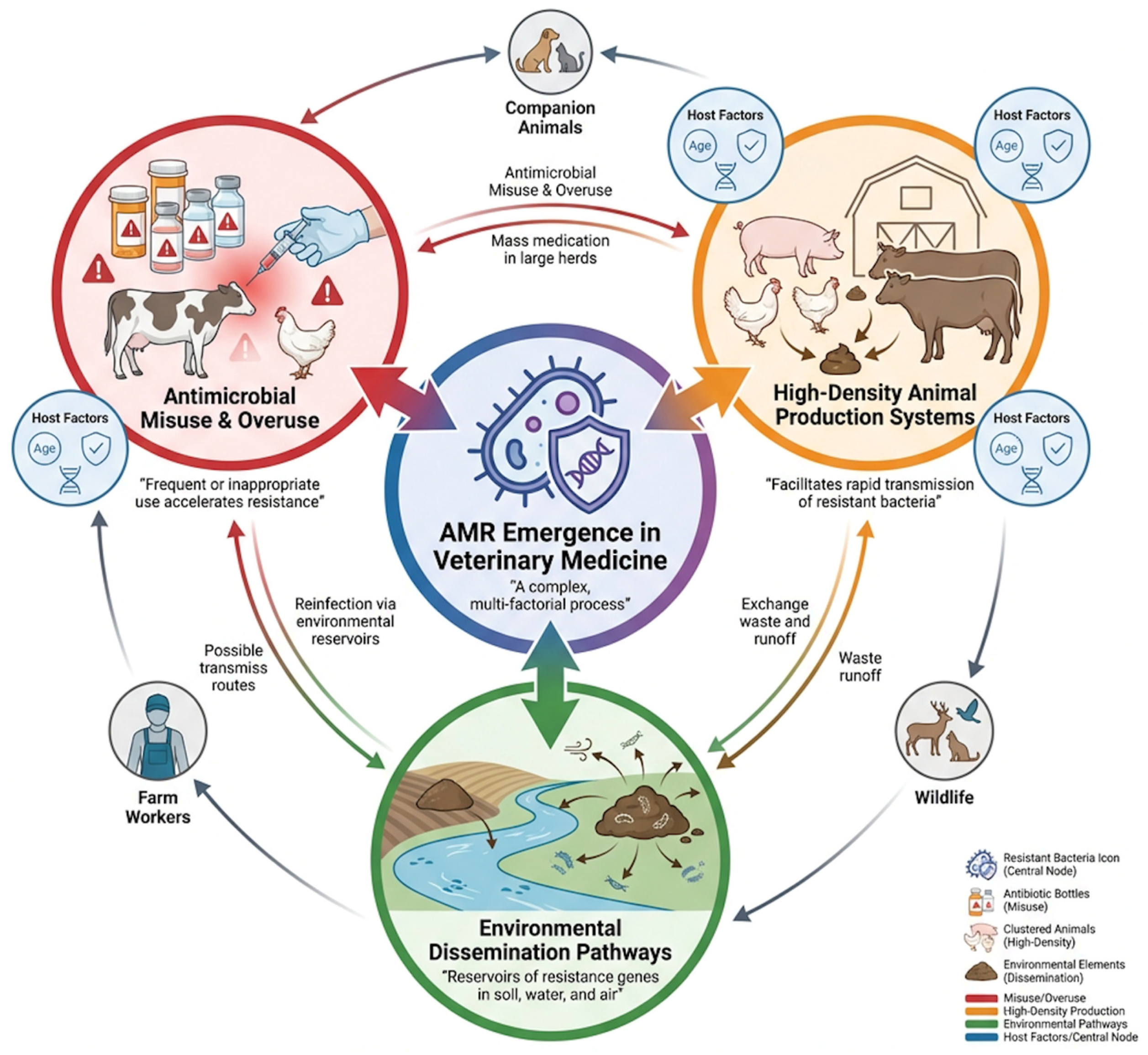
Figure 1 highlights the multifactorial nature of AMR emergence in veterinary medicine, emphasizing the interaction between antimicrobial exposure, host-related factors, and environmental dissemination pathways.
The commonly used antimicrobial classes used in veterinary medicine, together with their associated resistance trends, are summarized in Table 1.
These data illustrate the widespread occurrence of resistance across multiple antimicrobial classes, emphasizing the need for rational antimicrobial use and routine susceptibility testing in veterinary practice.
The repeated use of these agents, especially in the absence of microbiological guidance, promotes the selection and proliferation of MDR strains. Advanced stewardship programs, incorporating AST and molecular surveillance, are therefore essential to guide rational antimicrobial therapy.
Although the association between antimicrobial exposure and resistance selection is well established, the magnitude of this effect varies substantially between animal species, production systems, antimicrobial classes, and regional prescribing practices. Therefore, resistance trends should be interpreted in relation to local antimicrobial use patterns rather than as uniform global phenomena.

4. Antimicrobial Resistance in Major Veterinary Pathogens

Several bacterial species are commonly associated with infections in animals and have demonstrated increasing levels of antimicrobial resistance.
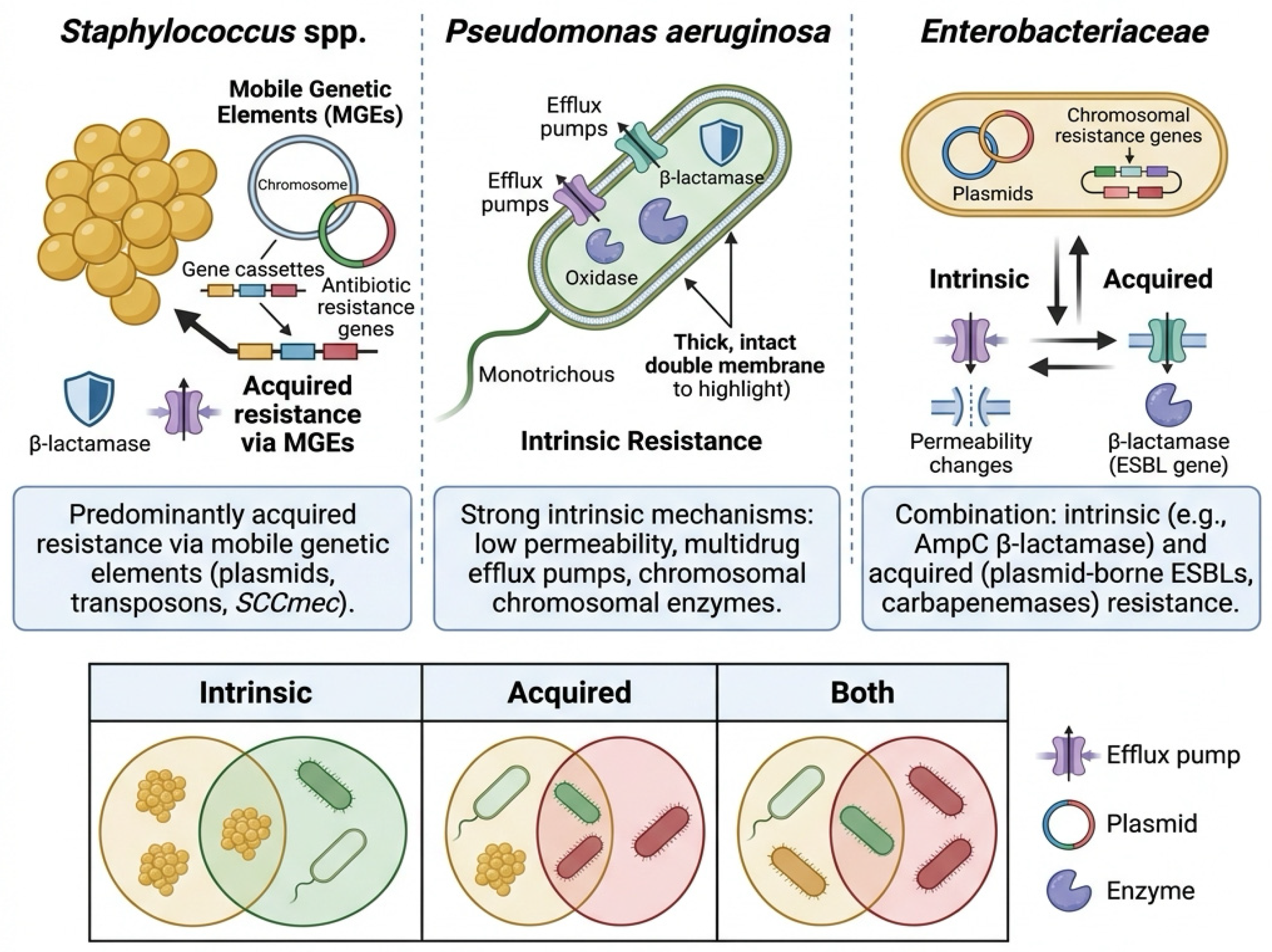
Figure 2 shows comparative overview of major bacterial pathogens in veterinary medicine, highlighting their resistance mechanisms and clinical relevance. Staphylococcus spp. predominantly exhibit acquired resistance mediated by mobile genetic elements, Pseudomonas aeruginosa displays strong intrinsic resistance mechanisms, while members of the order Enterobacterales combine intrinsic and acquired resistance. Arrows indicate interactions between resistance mechanisms. The lower schematic illustrates the coexistence of intrinsic and acquired resistance within bacterial populations.
The arrows shown in the figure should be interpreted as representing interactions between resistance mechanisms rather than strict linear pathways. In the case of Enterobacterales, the schematic highlights the coexistence of intrinsic resistance mechanisms (e.g., reduced permeability and chromosomal enzymes) and acquired resistance determinants such as plasmid-mediated ESBLs and carbapenemases.
The lower portion of the figure, represented as overlapping circles, illustrates the convergence of intrinsic and acquired resistance mechanisms within bacterial populations. The icons within these areas symbolize different resistance profiles and bacterial populations, rather than specific species. This conceptual representation emphasizes that multidrug resistance frequently arises from the interaction of multiple mechanisms.

4.1. Staphylococcus spp.

Methicillin-resistant Staphylococcus aureus (MRSA) represents a prototypical “superbug” and is associated with a significant worldwide mortality burden due to infections that exhibit resistance to conventional antibiotic therapies [53].
Bacteria belonging to the genus Staphylococcus, including S. aureus and S. pseudintermedius, are frequently isolated from skin infections, otitis, wound infections, and postoperative complications in companion animals [23,54,55,56]. Methicillin-resistant staphylococci (MRSA, MRSP) are highly prevalent in veterinary practice and frequently display multidrug resistance, often associated with the co-selection of resistance determinants linked to several commonly used antimicrobial classes [23,55].
Recent genomic studies demonstrate that mobile genetic elements, such as SCCmec cassettes and plasmids, facilitate the horizontal transfer of resistance determinants between animal and human strains. In addition, biofilm formation and small colony variants contribute to persistent infections and reduced antimicrobial susceptibility, complicating treatment outcomes [57].

4.2. Pseudomonas aeruginosa

Pseudomonas aeruginosa is an opportunistic Gram-negative bacterium ubiquitous in various places (soil, water, hospital environments) [15,58]. It is commonly associated with otitis externa, urinary tract and wound infections, as well as postoperative complications in companion animals. Its intrinsic resistance to many antimicrobials is mainly related to reduced outer membrane permeability and active efflux systems, with biofilm formation further enhancing persistence. In addition, acquired mechanisms such as β-lactamase production and target site mutations further restrict therapeutic options.
Emerging MDR strains often carry plasmid-mediated resistance genes and integrons, highlighting the potential for rapid dissemination within veterinary settings. These strains may serve as reservoirs for resistance determinants with implications for human health.

4.3. Enterobacterales

Members of the order Enterobacterales, including Escherichia coli, Proteus mirabilis, and Enterobacter spp., are important opportunistic pathogens in veterinary medicine. E. coli is frequently associated with urinary tract infections, septicemia, and gastrointestinal disease. In contrast, Proteus mirabilis and Enterobacter spp. are more often involved in urinary tract and wound infections [59].
Also, the increasing detection of ESBL-producing and carbapenemase-producing strains in animals is a major concern. These resistance mechanisms may limit the effectiveness of critically important antimicrobials used in both human and veterinary medicine. Moreover, plasmids and transposons can promote horizontal gene transfer. As a result, resistance traits may spread between bacterial populations and across different host species.
Common antimicrobial resistance patterns observed in major veterinary pathogens are summarized in Table 2.
These patterns highlight the increasing prevalence of multidrug resistance among clinically relevant veterinary pathogens and emphasize the growing challenges in antimicrobial therapy.
However, the relative contribution of each pathogen to antimicrobial resistance burden varies significantly depending on the clinical context and host species. While Staphylococcus spp. is predominantly associated with companion animal infections, Gram-negative bacteria such as Pseudomonas aeruginosa and Enterobacteriaceae pose a greater therapeutic challenge due to their intrinsic resistance mechanisms and higher capacity for acquiring additional resistance determinants. This heterogeneity highlights the need for pathogen-specific surveillance and targeted therapeutic strategies rather than uniform antimicrobial approaches.
Taken together, these findings indicate that the clinical relevance of AMR differs considerably between pathogens. In staphylococci, acquired resistance and clonal dissemination are central concerns, whereas in P. aeruginosa and Enterobacterales, intrinsic resistance combined with acquired determinants creates a greater therapeutic challenge. This distinction is important because it argues against a uniform approach to surveillance and treatment.

5. Multidrug Resistance in Veterinary Bacterial Isolates

MDR is commonly defined as resistance to at least one antimicrobial agent in three or more antimicrobial classes [66]. The emergence of MDR bacteria represents a significant challenge for both veterinary and human medicine [67].
The prevalence of multidrug resistance among pathogens affecting both humans and animals is increasing progressively on a global scale. Moreover, these patterns of resistance are expanding to include commensal microbiota derived from human, animal, and environmental sources, thereby constituting a significant threat to public health [67,68].
Recent studies have shown that MDR often arises from the accumulation of multiple resistance genes within mobile genetic elements such as plasmids, transposons, and integrons. These elements facilitate horizontal gene transfer between bacterial populations, increasing the speed at which resistance spreads in both companion and food-producing animals. MDR pathogens in livestock can impact productivity and economic outcomes, while in companion animals they complicate clinical management and increase the risk of zoonotic transmission. Environmental reservoirs, including wastewater and soil contaminated with animal excreta, also contribute to the maintenance and dissemination of MDR bacteria [69,70].
Continuous monitoring of antimicrobial susceptibility patterns is therefore essential for identifying emerging MDR strains and supporting the development of effective treatment strategies.
Despite increasing awareness, current surveillance systems remain fragmented and often lack standardization across regions and animal species. This limitation hampers accurate comparisons between studies and may underestimate the true global burden of multidrug resistance in veterinary settings. Consequently, harmonized methodologies and longitudinal studies are essential to better understand MDR dynamics and inform effective intervention strategies.

6. Epidemiology and Zoonotic Transmission of AMR

6.1. Epidemiological Trends in Companion Animals and Livestock

Global prevalence of MDR pathogens in companion animals and livestock has risen sharply over the last decade [71,72].
Regional differences reflect variations in antimicrobial usage policies, veterinary practices, and biosecurity measures [73]. Longitudinal surveillance demonstrates that countries with strict antimicrobial regulations and active stewardship programs exhibit lower prevalence of MDR strains. Molecular epidemiology further confirms interspecies and environmental dissemination of identical resistance genes, highlighting the necessity for coordinated One Health surveillance [74,75,76].
Emerging trends indicate an increase in carbapenem-resistant Enterobacteriaceae and colistin-resistant E. coli in livestock, emphasizing the importance of global monitoring, risk assessment, and proactive intervention.
However, reported prevalence rates should be interpreted with caution, as differences in sampling strategies, diagnostic methodologies, and regional antimicrobial usage policies can significantly influence results. These inconsistencies highlight the need for standardized surveillance frameworks to enable reliable global comparisons.

6.2. Zoonotic Transmission of Antimicrobial-Resistant Bacteria

6.2.1. Transmission Pathways Between Animals, Humans, and the Environment

The zoonotic transmission of antimicrobial-resistant bacteria represents an important concern for public health. Animals carrying resistant microorganisms may serve as reservoirs capable of transmitting these bacteria to humans through direct or indirect contact.
It is believed that around 60% of pathogens impacting humans, along with nearly 75% of newly emerging human diseases, have a zoonotic origin. Throughout history, many severe human infections have arisen from animal sources [77,78].
Zoonotic transmission of antimicrobial-resistant bacteria should be interpreted with caution. It is important to distinguish between: (i) direct transmission events demonstrated through epidemiological or genomic evidence; (ii) the presence of shared resistance genes or bacterial clones in animal and human populations; (iii) reverse transmission (human-to-animal); and (iv) indirect transmission through environmental reservoirs. While similarities between animal and human isolates are frequently reported, direct transmission is less commonly demonstrated and often requires high-resolution genomic confirmation.
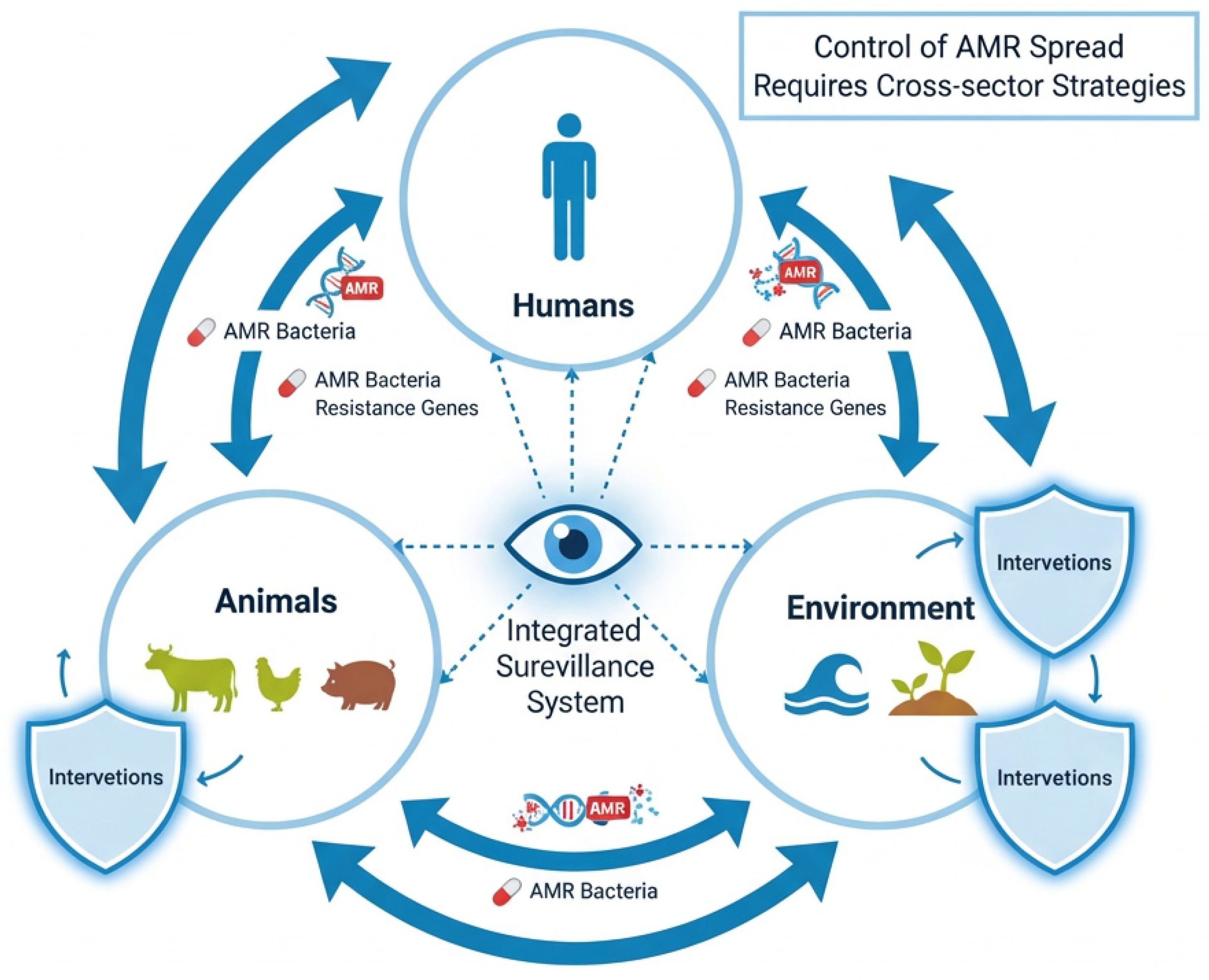
Figure 3 illustrates the interconnected circulation of resistant bacteria and resistance genes between animals, humans, and environmental reservoirs within the One Health framework.
Epidemiological surveillance has detected identical resistance genes and bacterial clones in humans and animals, indicating bidirectional transfer. Companion animals in close contact with humans are particularly important in this context. Farm workers handling livestock, and veterinarians in clinical settings, are at increased risk of colonization or infection. Environmental contamination of veterinary clinics, animal bedding, and wastewater can further facilitate the spread of resistant bacteria. These findings underscore the need for integrated One Health surveillance programs that monitor both human and animal populations to mitigate the risk of zoonotic AMR transmission [77].
Although numerous studies report the presence of identical resistance genes in humans and animals, the directionality of transmission remains incompletely understood. While some evidence supports zoonotic transfer from animals to humans, other studies suggest reverse transmission or shared environmental sources as primary drivers []. This heterogeneity highlights the limitations of current epidemiological approaches and underscores the need for longitudinal, high-resolution genomic studies to clarify transmission pathways [12,26,28,70].
Furthermore, most available data are derived from cross-sectional studies, which limit the ability to establish causal relationships or determine the directionality of transmission. High-resolution genomic approaches, including whole-genome sequencing, are increasingly required to accurately track transmission pathways and differentiate between zoonotic, reverse zoonotic, and environmentally driven dissemination.

6.2.2. Companion Animals and Livestock as Reservoirs of Resistant Bacteria

Pets, livestock, and farmed animals can contribute to the maintenance and spread of MDR bacteria, but their role as reservoirs should be interpreted in relation to the bacterial species involved, the intensity of human–animal contact, and the quality of the supporting epidemiological evidence. Human exposure can occur via direct contact, contaminated surfaces, or animal-derived food products. Molecular epidemiology confirms shared clones and resistance genes between humans and animals. Effective interventions include hygiene measures, AST-guided therapy, and surveillance programs across human and animal populations.
In recent years, dogs and cats have been progressively recognized as potential reservoirs and significant routes of transmission. The transfer of antimicrobial resistance from dogs and cats to humans has been documented in the scientific literature; however, the overall magnitude of this process remains largely undetermined. In Europe, it is estimated that over 102 million households own cats, while approximately 86 million households keep dogs [78].
Dogs and cats often carry MRSP, MRSA, and ESBL-producing Enterobacteriaceae without showing symptoms [79,80,81]. Colonized pets may facilitate human exposure to resistant bacteria, particularly in households and veterinary settings with close and repeated contact, although direct transmission requires confirmation through epidemiological and genomic evidence. Preventive measures include routine screening in clinical settings, proper hygiene, and judicious antimicrobial use. Longitudinal studies show that pets can intermittently shed MDR bacteria over months, highlighting the importance of surveillance [17].

7. One Health and Environmental Dimensions of AMR

7.1. One Health Framework for AMR Control

The One Health concept emphasizes the interconnectedness of human, animal, and environmental health and provides a comprehensive framework for addressing antimicrobial resistance. The spread of resistant bacteria across different ecological compartments demonstrates that antimicrobial resistance cannot be effectively controlled through isolated interventions.
Zoonosis-related and newly arising infectious conditions necessitate timely and coordinated responses, which can be effectively achieved only through the implementation of One Health–oriented frameworks that systematically address anticipated challenges and integrate evidence-based, context-specific solutions [82].
Successful One Health strategies integrate veterinary, human, and environmental surveillance with targeted stewardship programs, infection prevention measures, and public education. Coordination between medical and veterinary professionals is crucial to identify high-risk pathogens, implement biosecurity measures, and reduce the misuse of antimicrobials. Environmental management, including proper disposal of animal waste and treatment of farm effluents, minimizes the dissemination of resistance genes into the wider ecosystem. Rapid molecular diagnostics and genomic surveillance provide timely data to track MDR clones, enabling evidence-based interventions [82,83,84,85].
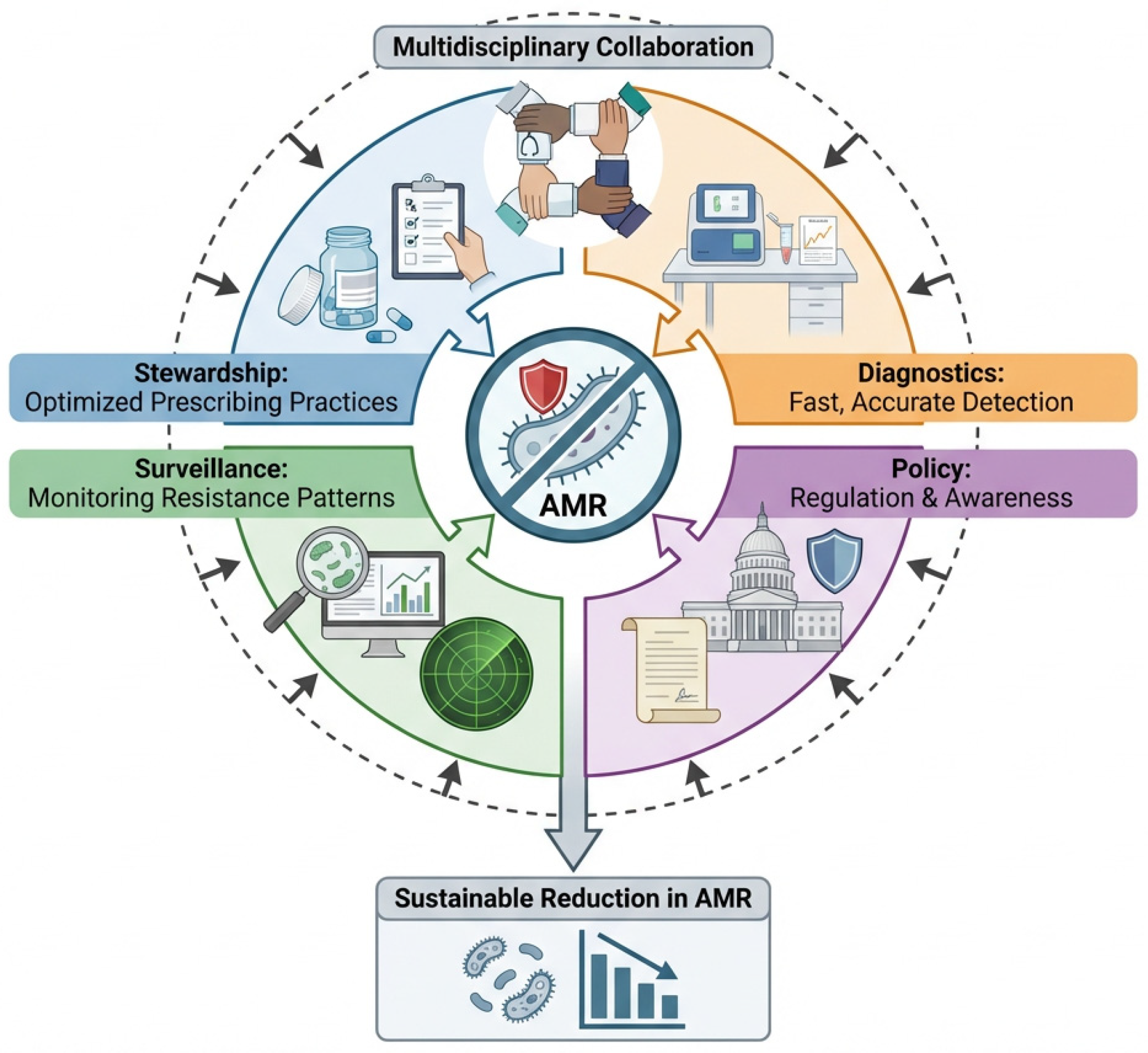
Figure 4 highlights the key components of effective AMR control, including antimicrobial stewardship, surveillance systems, rapid diagnostics, clinical decision-making, and policy interventions. Within this framework, rapid and accurate diagnosis represents a central hub, linking antimicrobial management with surveillance and treatment decisions. The integration of these strategies emphasizes the need for multidisciplinary collaboration to achieve sustainable reductions in antimicrobial resistance.

7.2. Environmental Reservoirs and Dissemination Pathways

The environment plays a central role in the dissemination and maintenance of AMR. Manure, farm runoff, and untreated effluents can introduce MDR bacteria and mobile genetic elements into soil and water. Antimicrobials and heavy metals present in agricultural waste exert selective pressure on environmental microbiota, promoting the persistence and evolution of resistance [86,87].
Environmental monitoring has detected ESBL-producing E. coli, MRSA, and carbapenem-resistant Enterobacteriaceae in surface water and agricultural soil, demonstrating the potential for horizontal gene transfer to wildlife and human commensals. Mitigation strategies include proper manure management, wastewater treatment, controlled use of antimicrobials, and surveillance of AMR in environmental compartments. Integration of environmental interventions into One Health programs is critical for reducing ecological reservoirs of MDR bacteria [88,89].

8. Molecular Mechanisms of Antimicrobial Resistance in Veterinary Pathogens

Bacteria employ multiple molecular strategies to evade antimicrobial therapy. In Staphylococcus spp., the mecA gene encodes penicillin-binding protein PBP2a, which lowers affinity for β-lactams, leading to methicillin resistance. Additional resistance determinants include genes conferring resistance to macrolides (ermA, ermC), tetracyclines (tetK, tetM), and aminoglycosides (aac(6′)-Ie-aph(2″)-Ia).
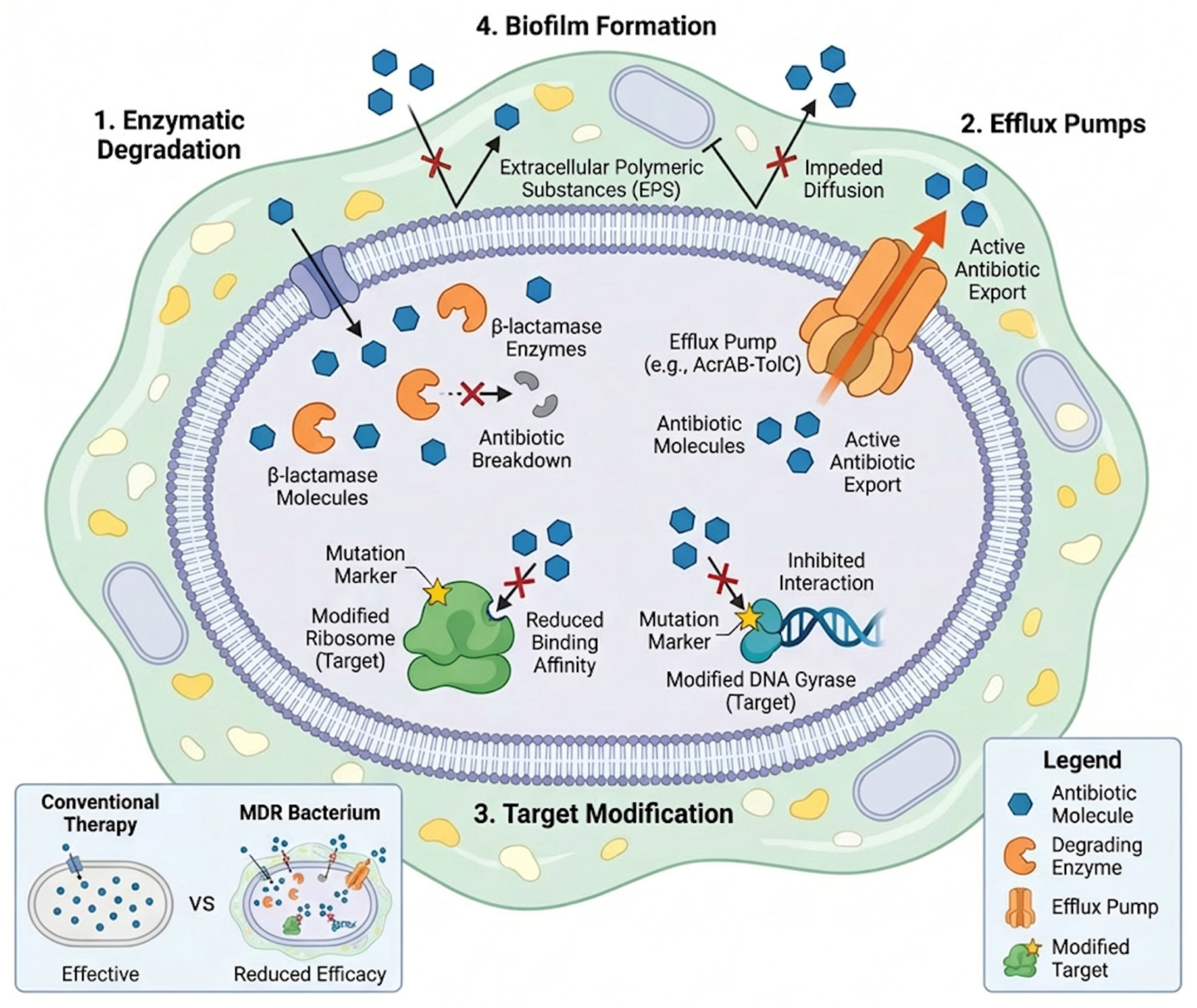
The principal molecular mechanisms underlying antimicrobial resistance in veterinary pathogens are illustrated in Figure 5.
Figure 5 demonstrates that multiple resistance mechanisms, including enzymatic degradation, efflux pumps, target modification, and biofilm formation, often coexist within the same bacterial strain. This complexity explains the rapid emergence of multidrug-resistant phenotypes and the reduced effectiveness of conventional antimicrobial therapies.
Resistance to antimicrobial agents in staphylococci is predominantly mediated by the mecA gene, which confers reduced susceptibility to the broad spectrum of β-lactam antibiotics. This gene is embedded within a mobile genetic element designated as the staphylococcal cassette chromosome mec (SCCmec). The SCCmec element integrates at a highly conserved chromosomal insertion site located at the 3′ terminus of the orfX locus, a gene responsible for encoding an RNA methyltransferase. The acquisition of mecA significantly contributes to the adaptive success of staphylococcal populations, providing a selective advantage in diverse ecological niches, including healthcare facilities, veterinary environments and community settings [90].
The mecA and mecC genetic determinants are responsible for the synthesis of the penicillin-binding proteins PBP2A and PBP2A′, respectively. These proteins exhibit markedly reduced binding affinity toward the majority of β-lactam antibiotics, thereby diminishing the effectiveness of this antibiotic class [91].
Penicillin-binding proteins (PBPs) play a crucial role in the terminal steps involving bacterial cell wall peptidoglycan (PG) synthesis and serve as the principal molecular targets for penicillin as well as other β-lactam antibiotics. In most cases, methicillin resistance arises through the acquisition of an alternative penicillin-binding protein, PBP2A, which can substitute for the functions of native PBPs because it displays a markedly reduced affinity for β-lactam antibiotics [92]. The production of these exogenous PBPs enables bacterial cells to maintain cell wall synthesis even when exposed to elevated concentrations of the antibiotic [91].
In P. aeruginosa, antimicrobial resistance results from the interaction of intrinsic, acquired, and adaptive mechanisms. Intrinsic resistance is mainly related to low outer membrane permeability, chromosomal AmpC β-lactamase activity, multidrug efflux pumps, and biofilm formation. Acquired resistance may involve additional β-lactamases, aminoglycoside-modifying enzymes, mutations affecting fluoroquinolone targets, and mobile genetic elements such as integrons carrying resistance gene cassettes. The coexistence of these mechanisms contributes to multidrug-resistant phenotypes and limits therapeutic options in veterinary infections [93,94].
In Enterobacteriaceae, resistance is frequently mediated by extended-spectrum β-lactamases (ESBLs), AmpC β-lactamases, and carbapenemases, often carried on conjugative plasmids. Horizontal gene transfer facilitated by plasmids, integrons, and transposons accelerates dissemination of multidrug resistance across species and ecological niches. Biofilm formation and the presence of persister cells further enhance survival under antimicrobial pressure [63,65,67].
Recent genomic studies show co-localization of virulence and resistance genes on mobile genetic elements, creating highly adapted MDR clones capable of colonizing animals and humans. Understanding these molecular mechanisms is crucial for designing targeted interventions and novel therapeutics.
Although these mechanisms are well characterized at the molecular level, their relative contribution to clinical resistance phenotypes may vary depending on environmental conditions and host factors. In many cases, the interaction between multiple resistance mechanisms rather than a single determinant is responsible for therapeutic failure, complicating both diagnosis and treatment strategies.

9. Antimicrobial Stewardship and One Health-Based Control Strategies

Antimicrobial stewardship programs (ASP) optimize therapeutic outcomes, reduce unnecessary antimicrobial use, and curb the emergence of MDR bacteria. Key components include AST-guided therapy, restriction of critically important antibiotics, prescriber feedback, and owner education. Digital monitoring systems, such as prescription tracking and decision support tools, enhance compliance and provide real-time data on antimicrobial usage trends [95,96].
In food-producing animals, stewardship strategies involve vaccination, biosecurity enhancements, herd health management, and careful selection of therapeutic agents. Evidence demonstrates that ASP implementation reduces overall antimicrobial consumption and decreases resistance prevalence, improving animal welfare and public health outcomes. Collaborative training programs for veterinarians, farmers, and pet owners are essential to ensure sustainability of stewardship efforts.
Although antimicrobial stewardship programs have demonstrated effectiveness in reducing antimicrobial use, their implementation in veterinary settings is often inconsistent. Variability in regulatory frameworks, limited access to diagnostic tools, and economic pressures in livestock production systems hinder widespread adoption. This disparity may contribute to persistent regional differences in AMR prevalence.
In addition, the effectiveness of antimicrobial stewardship programs is highly dependent on compliance at both the practitioner and owner level. Behavioral and economic factors often influence prescribing practices, suggesting that successful implementation requires not only regulatory measures but also educational and socio-economic interventions.
Human behavior plays a critical role in the emergence and spread of AMR. Owners may administer incomplete courses of antibiotics, self-medicate pets, or demand antimicrobials for non-bacterial conditions. In livestock production, prophylactic or growth-promoting antimicrobial use persists in some regions due to economic incentives [79].
Educational interventions targeting veterinarians, farmers, and pet owners improve awareness of AMR risks and promote adherence to AST-guided therapy. Public campaigns, training workshops, and behavioral nudges can reduce inappropriate antimicrobial use, enhance biosecurity, and support One Health strategies to mitigate resistance emergence [97,98].
In resource-limited settings, surveillance strategies should prioritize high-impact and cost-effective approaches. Sentinel surveillance targeting key bacterial pathogens such as Escherichia coli, Salmonella spp., and Staphylococcus aureus in food-producing animals may provide valuable early warning signals with relatively low resource requirements. Additionally, simplified antimicrobial use (AMU) recording systems at the farm level can improve monitoring and guide targeted interventions.

10. Clinical Management and Alternative Strategies for MDR Infections

10.1. Clinical Challenges in Treating MDR Infections

MDR infections significantly complicate veterinary clinical practice. Treatment failures, prolonged therapy, and increased costs are common consequences. Biofilms, intracellular survival, and persisted cell populations reduce antimicrobial efficacy, while limited therapeutic options in companion and food animals increase reliance on critically important antibiotics [99,100].
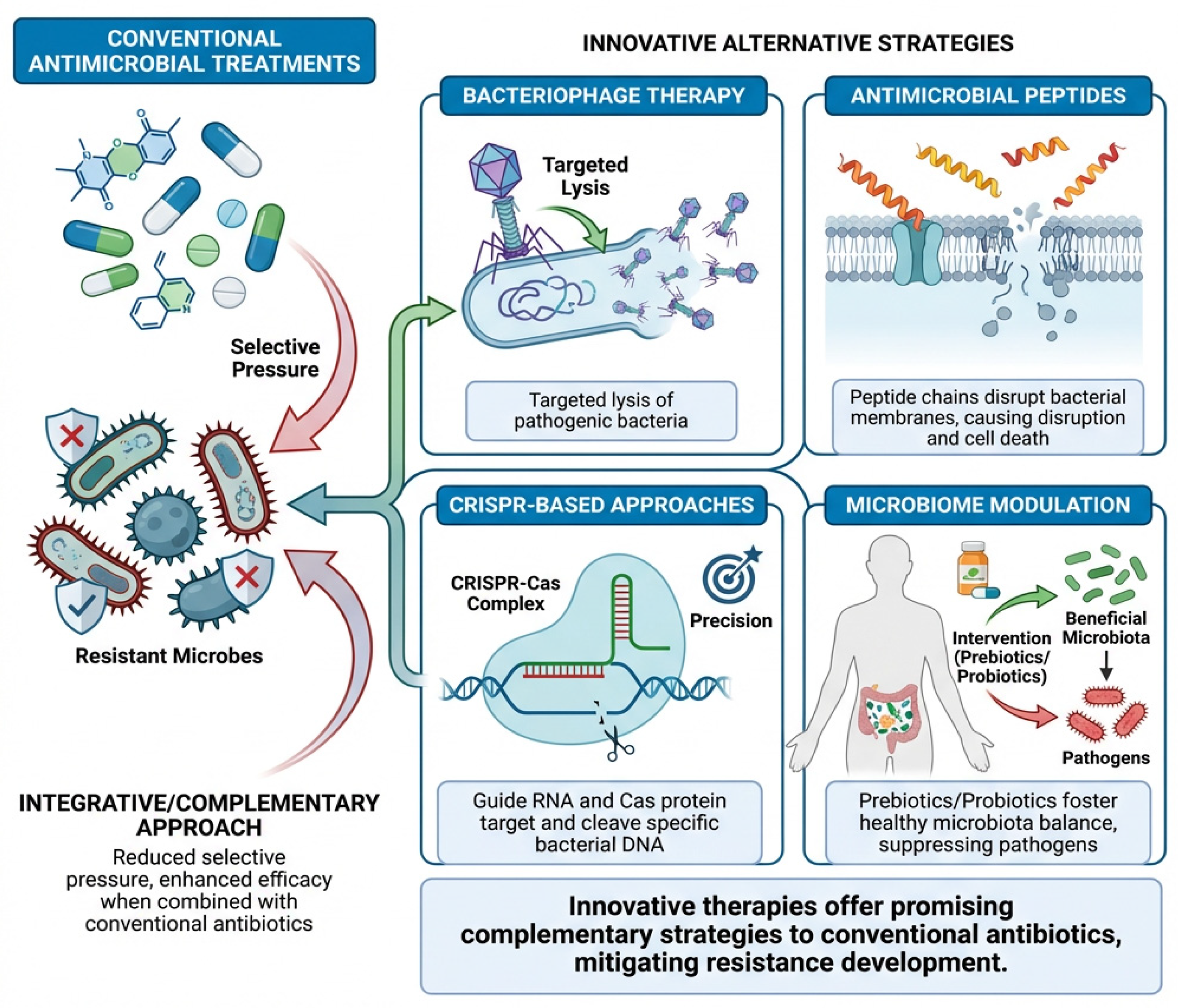
Novel interventions under investigation include bacteriophage therapy, antimicrobial peptides, immunomodulatory agents, and combination therapies. Integration of these strategies with conventional antimicrobial regimens may reduce selection pressure, prevent resistance development, and improve clinical outcomes in MDR infections [101,102].
While alternative strategies such as bacteriophage therapy, antimicrobial peptides, and CRISPR-based approaches show considerable promise, their translation into routine veterinary practice remains limited. Challenges related to regulatory approval, host specificity, delivery mechanisms, and cost-effectiveness continue to restrict large-scale implementation. Consequently, these approaches should currently be viewed as complementary rather than substitutive to conventional antimicrobial therapy [103,104].
Moreover, the clinical efficacy of these alternative therapies remains insufficiently validated in large-scale veterinary studies. Most available data are derived from experimental or limited clinical settings, highlighting the need for robust clinical trials before widespread implementation.

10.2. Alternative Strategies to Combat AMR

Non-antibiotic approaches are gaining importance as adjunct or alternative therapies. Phage therapy demonstrates species-specific lytic activity against MDR pathogens, including MRSP and ESBL-producing E. coli [105,106]. Antimicrobial peptides disrupt bacterial membranes and biofilms, enhancing susceptibility to conventional antibiotics [107]. Probiotics and competitive exclusion strategies modify host microbiota to limit pathogen colonization [108].
Emerging technologies, such as nanotechnology-based drug delivery and CRISPR (Clustered Regularly Interspersed Short Palindromic Repeats)- Cas antimicrobials, enable targeted elimination of resistance genes, reducing off-target effects and minimizing ecological impact. Integration of these approaches with stewardship programs may significantly reduce antimicrobial reliance and slow MDR propagation [108,109,110,111,112].
Figure 6 highlights innovative therapeutic strategies, including bacteriophage therapy, antimicrobial peptides, CRISPR-based approaches, and microbiome modulation. These alternatives demonstrate significant potential to complement conventional antimicrobial treatments and reduce selective pressure driving resistance.
Despite their promising potential, these alternative strategies are unlikely to fully replace conventional antimicrobials in the near future. Instead, their greatest value may lie in combination therapies and integrated approaches aimed at reducing antimicrobial use and slowing resistance development.

10.3. Diagnostic Innovations in Veterinary AMR

Rapid molecular diagnostics, such as PCR, qPCR, and whole-genome sequencing, allow early identification of resistance genes and MDR strains. Point-of-care tests in clinics and farms guide AST-informed therapy. Bioinformatic analyses track resistance gene dissemination across populations and environments, informing intervention strategies [113,114,115].

11. Global Policy Initiatives and Future Directions in Veterinary AMR

International organizations, including WHO, OIE, and FAO, support One Health approaches, harmonized surveillance, and regulatory policies to combat AMR. Restricting critically important antimicrobials, mandating AST-based prescriptions, and promoting stewardship programs have proven effective in reducing AMR prevalence in several countries. Collaborative initiatives improve data sharing, risk assessment, and coordinated interventions [116].
Future research should focus on: (i) molecular epidemiology and genomic surveillance of MDR strains, (ii) environmental pathways of AMR dissemination, (iii) rapid diagnostics and alternative therapeutics, (iv) optimization of stewardship programs, and (v) integration of One Health principles into veterinary policy and practice. Understanding the interplay between host, pathogen, antimicrobial use, and environment is critical to predict and prevent emerging resistance threats [117].
Beyond regulatory frameworks and education, improving compliance among farmers and veterinarians requires incentive-based approaches. These may include certification schemes for farms adhering to antimicrobial stewardship principles, financial subsidies or tax reductions for responsible antimicrobial use, and market-based incentives such as premium pricing for products derived from low-AMU systems. Such strategies can enhance adherence to guidelines and facilitate the implementation of sustainable AMR control programs.

12. Economic Implications of Antimicrobial Resistance in Veterinary Medicine

Beyond its clinical and public health relevance, AMR also has important economic consequences for veterinary medicine, animal production, food security, and One Health-based disease control. Currently, infections caused by antimicrobial-resistant pathogens are responsible for approximately 700,000 fatalities annually across the globe. If left uncontrolled, projections indicate that these pathogens could result in 10 million lives lost each year, with an associated cumulative economic burden estimated at $100 trillion by 2050 [118,119,120].
Analogous to AMU in human medicine, the application of antimicrobials in animal agriculture may facilitate the emergence of AMR among both human and animal pathogenic populations, thereby generating substantial health and economic burdens for society. Furthermore, such burdens are characterized in economic theory as externalities, indicating that they arise as unintended consequences of AMU, are borne by society at large, and are insufficiently incorporated into antimicrobial pricing, thus justifying the need for policy intervention [121].
In the long run, the unregulated application of antimicrobial agents and the resulting escalation of antimicrobial resistance may generate substantially higher economic burdens worldwide. As resistance proliferates, increasing antimicrobial usage ceases to ensure effective disease management, thereby compromising both livestock productivity and the reliability of food supply systems [122].
MDR infections impose substantial economic burdens on veterinary healthcare and animal production. Increased treatment costs, prolonged hospitalization, and reduced productivity in livestock contribute to financial losses. In companion animals, MDR infections require costly alternative therapies, extended care, and increased veterinary interventions [121].
Globally, economic modeling estimates that AMR in livestock and companion animals results in billions of dollars in direct and indirect costs annually. Preventive measures, stewardship programs, and alternative therapeutics not only improve clinical outcomes but also offer significant cost savings by reducing disease burden and limiting antimicrobial consumption [121].
From this perspective, the economic burden of AMR strengthens the case for prevention-oriented veterinary practice. Reducing unnecessary antimicrobial use is not only a clinical priority, but also a way to limit the costs associated with MDR infections. This is especially relevant in food-producing animals, where resistance can affect productivity as well as animal health. Economic evidence may therefore help support One Health policies focused on earlier detection, better management, and more responsible antimicrobial use.

13. Conclusions and Recommendations

Antimicrobial resistance in veterinary bacterial pathogens is a multifactorial challenge with important implications for animal health, public health, food production, and environmental sustainability. The increasing occurrence of multidrug-resistant bacteria, particularly among Staphylococcus spp., Pseudomonas aeruginosa, and Enterobacteriaceae, continues to complicate clinical management and limit therapeutic options.
The widespread use and misuse of antimicrobials in veterinary medicine continue to drive the selection and dissemination of resistant strains. In this context, integrated strategies based on antimicrobial stewardship, routine susceptibility testing, and improved biosecurity are essential to mitigate resistance development.
The One Health framework plays a central role in addressing AMR by recognizing the interconnectedness of human, animal, and environmental health. Effective control requires coordinated efforts between veterinarians, researchers, policymakers, and public health authorities to monitor resistance trends, reduce antimicrobial misuse, and limit zoonotic transmission.
In addition, emerging alternative approaches, including bacteriophage therapy, antimicrobial peptides, and microbiome-based strategies, offer promising perspectives for reducing reliance on conventional antimicrobials. Continued research and innovation in these areas are essential to support sustainable AMR management.
Overall, veterinary AMR should be viewed as a problem that extends beyond the treatment of individual infections. Resistant bacteria can move between animals, people, and the environment, while the way antimicrobials are used in practice influences both clinical outcomes and wider public health risks. For this reason, control measures need to be coordinated rather than isolated. A stronger response will depend on better surveillance, more responsible antimicrobial use, closer attention to environmental sources of resistance, and One Health policies that are guided by evidence and adapted to real veterinary settings.

Author Contributions

Conceptualization, I.P., I.I. and S.A.P.; methodology, I.P. and A.-M.P.; software, A.G.; validation, I.N., I.I. and V.H.; formal analysis, I.P.; investigation, I.P. and M.P.; resources, K.I.; data curation, S.A.P.; writing—original draft preparation, I.P. and T.B.; writing—review and editing, S.A.P.; visualization, A.A.I. and M.D.; supervision, J.D. and C.P.; project administration, E.T.; funding acquisition, V.H. All authors have read and agreed to the published version of the manuscript.

Funding

The publication of the present paper was supported by the University of Life Sciences “King Mihai I” from Timișoara, Romania, project number CNFIS-FDI-2025-F-0571.

Institutional Review Board Statement

Not applicable.

Informed Consent Statement

Not applicable.

Data Availability Statement

No new data were created or analyzed in this study.

Acknowledgments

During the preparation of this manuscript, the authors used ChatGPT (version 5.1, OpenAI, San Francisco, CA, USA) solely for language improvement. The authors have reviewed and edited the output and take full responsibility for the content of this publication. Also, the authors would like to thank to the Doctoral School “Veterinary Medicine”, University of Life Sciences “King Mihai I” from Timişoara (Calea Aradului 119, 300645 Timişoara, Romania), for the academic support and resources provided throughout the development of this research.

Conflicts of Interest

The authors declare no conflicts of interest.

Abbreviations

The following abbreviations are used in this manuscript:
AMRAntimicrobial resistance
MDRMultidrug-resistant
ASTAntimicrobial susceptibility testing
MRSAMethicillin-resistant Staphylococcus aureus
ASPAntimicrobial stewardship programs
AMUAntimicrobial use
WHOWorld Health Organization
WOAHWorld Organisation for Animal Health
EFSAEuropean Food Safety Authority

References

  1. Abushaheen, M.A.; Fatani, A.J.; Alosaimi, M.; Mansy, W.; George, M.; Acharya, S.; Rathod, S.; Divakar, D.D.; Jhugroo, C.; Vellappally, S.; et al. Antimicrobial resistance, mechanisms and its clinical significance. Disease-a-Month 2020, 66, 100971. [Google Scholar] [CrossRef] [PubMed]
  2. Best, C.M.; Bard, A.M.; Rees, G.M.; Reyher, K.K. Validation, visibility, vagueness and variation: A qualitative assessment of existing veterinary guidelines for antimicrobial use in cattle and sheep in the UK. PLoS ONE 2023, 18, e0294733. [Google Scholar] [CrossRef]
  3. Huemer, M.; Shambat, S.; Brugger, S.; Zinkernagel, A. Antibiotic resistance and persistence—Implications for human health and treatment perspectives. EMBO Rep. 2020, 21, e51034. [Google Scholar] [CrossRef]
  4. Salam, M.; Al-Amin, M.; Salam, M.; Pawar, J.; Akhter, N.; Rabaan, A.; Alqumber, M. Antimicrobial Resistance: A Growing Serious Threat for Global Public Health. Healthcare 2023, 11, 1946. [Google Scholar] [CrossRef]
  5. Galgano, M.; Pellegrini, F.; Catalano, E.; Capozzi, L.; Del Sambro, L.; Sposato, A.; Lucente, M.S.; Vasinioti, V.I.; Catella, C.; Odigie, A.E.; et al. Acquired Bacterial Resistance to Antibiotics and Resistance Genes: From Past to Future. Antibiotics 2025, 14, 222. [Google Scholar] [CrossRef]
  6. Uddin, T.; Chakraborty, A.; Khusro, A.; Zidan, B.; Mitra, S.; Emran, T.; Dhama, K.; Ripon, M.; Gajdács, M.; Sahibzada, M.; et al. Antibiotic resistance in microbes: History, mechanisms, therapeutic strategies and future prospects. J. Infect. Public Health 2021, 14, 1750–1766. [Google Scholar] [CrossRef]
  7. Oliveira, M.; Antunes, W.; Mota, S.; Madureira-Carvalho, Á.; Dinis-Oliveira, R.J.; Dias da Silva, D. An Overview of the Recent Advances in Antimicrobial Resistance. Microorganisms 2024, 12, 1920. [Google Scholar] [CrossRef] [PubMed]
  8. Popa, I.; Imre, K.; Morar, A.; Iancu, I.; Iorgoni, V.; Bochiș, T.; Pop, C.; Gligor, A.; Florea, T.; Popa, S.A.; et al. Questionnaire-Based Survey Regarding the Rational Usage of Antimicrobial Agents in Food-Producing Animals in Romania. Vet. Sci. 2025, 12, 408. [Google Scholar] [CrossRef]
  9. Mancuso, G.; Midiri, A.; Gerace, E.; Biondo, C. Bacterial Antibiotic Resistance: The Most Critical Pathogens. Pathogens 2021, 10, 1310. [Google Scholar] [CrossRef]
  10. Pham, Y.; Wozniak, T.M. Systems thinking to understand the complexity of antimicrobial resistance across One Health: A systematic review of current approaches. One Health 2025, 20, 101081. [Google Scholar] [CrossRef] [PubMed]
  11. Hoque, R.; Ahmed, S.; Naher, N.; Islam, M.; Rousham, E.; Islam, B.; Hassan, S. Tackling antimicrobial resistance in Bangladesh: A scoping review of policy and practice in human, animal and environment sectors. PLoS ONE 2020, 15, e0227947. [Google Scholar] [CrossRef] [PubMed]
  12. Bengtsson-Palme, J.; Kristiansson, E.; Larsson, D.G.J. Environmental factors influencing the development and spread of antibiotic resistance. FEMS Microbiol. Rev. 2018, 42, fux053. [Google Scholar] [CrossRef] [PubMed]
  13. Ding, D.; Wang, B.; Zhang, X.; Zhang, J.; Zhang, H.; Liu, X.; Gao, Z.; Yu, Z. The spread of antibiotic resistance to humans and potential protection strategies. Ecotoxicol. Environ. Saf. 2023, 254, 114734. [Google Scholar] [CrossRef] [PubMed]
  14. Bassetti, S.; Tschudin-Sutter, S.; Egli, A.; Osthoff, M. Optimizing antibiotic therapies to reduce the risk of bacterial resistance. Eur. J. Intern. Med. 2022, 99, 7–12. [Google Scholar] [CrossRef]
  15. Lorusso, A.B.; Carrara, J.A.; Barroso, C.D.N.; Tuon, F.F.; Faoro, H. Role of Efflux Pumps on Antimicrobial Resistance in Pseudomonas aeruginosa. Int. J. Mol. Sci. 2022, 23, 15779. [Google Scholar] [CrossRef]
  16. Jin, M.; Osman, M.; Green, B.A.; Yang, Y.; Ahuja, A.; Lu, Z.; Cazer, C.L. Evidence for the transmission of antimicrobial resistant bacteria between humans and companion animals: A scoping review. One Health 2023, 17, 100593. [Google Scholar] [CrossRef]
  17. Horodyska, I.; Kasperska, P.; Michalski, K.; Bubak, J.; Herman, I.; Miszczak, M. Natural Microbiota of Dogs and Cats as a Source and Vector of Resistance Genes-Clinical Significance. Int. J. Mol. Sci. 2025, 26, 7717. [Google Scholar] [CrossRef]
  18. Endale, H.; Mathewos, M.; Abdeta, D. Potential Causes of Spread of Antimicrobial Resistance and Preventive Measures in One Health Perspective-A Review. Infect. Drug Resist. 2023, 16, 7515–7545. [Google Scholar] [CrossRef]
  19. Hernando-Amado, S.; Coque, T.M.; Baquero, F.; Martínez, J.L. Defining and combating antibiotic resistance from One Health and Global Health perspectives. Nat. Microbiol. 2019, 4, 1432–1442. [Google Scholar] [CrossRef]
  20. Kaspar, U.; von Lützau, A.; Schlattmann, A.; Roesler, U.; Köck, R.; Becker, K. Zoonotic multidrug-resistant microorganisms among small companion animals in Germany. PLoS ONE 2018, 13, e0208364. [Google Scholar] [CrossRef]
  21. Palma, E.; Tilocca, B.; Roncada, P. Antimicrobial Resistance in Veterinary Medicine: An Overview. Int. J. Mol. Sci. 2020, 21, 1914. [Google Scholar] [CrossRef]
  22. Lenart-Boroń, A.; Stankiewicz, K.; Czernecka, N.; Ratajewicz, A.; Bulanda, K.; Heliasz, M.; Sosińska, D.; Dworak, K.; Ciesielska, D.; Siemińska, I.; et al. Wounds of Companion Animals as a Habitat of Antibiotic-Resistant Bacteria That Are Potentially Harmful to Humans-Phenotypic, Proteomic and Molecular Detection. Int. J. Mol. Sci. 2024, 25, 3121. [Google Scholar] [CrossRef] [PubMed]
  23. Monteiro, H.I.G.; Silva, V.; de Sousa, T.; Calouro, R.; Saraiva, S.; Igrejas, G.; Poeta, P. Antimicrobial Resistance in European Companion Animals Practice: A One Health Approach. Animals 2025, 15, 1708. [Google Scholar] [CrossRef] [PubMed]
  24. Rodríguez-Gascón, A.; Solinís, M.Á.; Isla, A. The Role of PK/PD Analysis in the Development and Evaluation of Antimicrobials. Pharmaceutics 2021, 13, 833. [Google Scholar] [CrossRef]
  25. Haulisah, N.A.; Hassan, L.; Jajere, S.M.; Ahmad, N.I.; Bejo, S.K. High prevalence of antimicrobial resistance and multidrug resistance among bacterial isolates from diseased pets: Retrospective laboratory data (2015–2017). PLoS ONE 2022, 17, e0277664. [Google Scholar] [CrossRef] [PubMed]
  26. Larsson, D.G.J.; Flach, C.F. Antibiotic resistance in the environment. Nat. Rev. Microbiol. 2022, 20, 257–269. [Google Scholar] [CrossRef]
  27. Moran, D. A framework for improved one health governance and policy making for antimicrobial use. BMJ Glob. Health 2019, 4, e001807. [Google Scholar] [CrossRef]
  28. Berendonk, T.U.; Manaia, C.M.; Merlin, C.; Fatta-Kassinos, D.; Cytryn, E.; Walsh, F.; Bürgmann, H.; Sørum, H.; Norström, M.; Pons, M.N.; et al. Tackling antibiotic resistance: The environmental framework. Nat. Rev. Microbiol. 2015, 13, 310–317. [Google Scholar] [CrossRef]
  29. Ardakani, Z.; Canali, M.; Aragrande, M.; Tomassone, L.; Simoes, M.; Balzani, A.; Beber, C.L. Evaluating the contribution of antimicrobial use in farmed animals to global antimicrobial resistance in humans. One Health 2023, 17, 100647. [Google Scholar] [CrossRef]
  30. Iancu, I.; Popa, S.A.; Degi, J.; Gligor, A.; Popa, I.; Iorgoni, V.; Nistor, P.; Imre, K.; Nichita, I.; Herman, V. Aerobic Uterine Pathogens in Dairy Cattle: Surveillance and Antimicrobial Resistance Profiles in Postpartum Endometritis. Antibiotics 2025, 14, 650. [Google Scholar] [CrossRef]
  31. Capita, R.; Alonso-Calleja, C. Antibiotic-resistant bacteria: A challenge for the food industry. Crit. Rev. Food Sci. Nutr. 2013, 53, 11–48. [Google Scholar] [CrossRef] [PubMed]
  32. Lai, C.K.C.; Ng, R.W.Y.; Leung, S.S.Y.; Hui, M.; Ip, M. Overcoming the rising incidence and evolving mechanisms of antibiotic resistance by novel drug delivery approaches—An overview. Adv. Drug Deliv. Rev. 2022, 181, 114078. [Google Scholar] [CrossRef]
  33. Wistrand-Yuen, E.; Knopp, M.; Hjort, K.; Koskiniemi, S.; Berg, O.G.; Andersson, D.I. Evolution of high-level resistance during low-level antibiotic exposure. Nat. Commun. 2018, 9, 1599. [Google Scholar] [CrossRef] [PubMed]
  34. Tamma, P.D.; Avdic, E.; Li, D.X.; Dzintars, K.; Cosgrove, S.E. Association of Adverse Events With Antibiotic Use in Hospitalized Patients. JAMA Intern. Med. 2017, 177, 1308–1315. [Google Scholar] [CrossRef]
  35. Kollef, M.H. Broad-spectrum antimicrobials and the treatment of serious bacterial infections: Getting it right up front. Clin. Infect. Dis. Off. Publ. Infect. Dis. Soc. Am. 2008, 47, S3–S13. [Google Scholar] [CrossRef] [PubMed]
  36. Lund, D.; Parras-Moltó, M.; Inda-Díaz, J.S.; Ebmeyer, S.; Larsson, D.G.J.; Johnning, A.; Kristiansson, E. Genetic compatibility and ecological connectivity drive the dissemination of antibiotic resistance genes. Nat. Commun. 2025, 16, 2595. [Google Scholar] [CrossRef]
  37. Spencer, D.C.; Paton, T.F.; Mulroney, K.T.; Inglis, T.J.J.; Sutton, J.M.; Morgan, H. A fast impedance-based antimicrobial susceptibility test. Nat. Commun. 2020, 11, 5328. [Google Scholar] [CrossRef]
  38. Ahmed, M.J.; Hossain, M.I.; Hossain Bhuiyan, M.I.; Rahman, M.A.; Kaderi, I.J.; Nirob, A.I.; Rahi, M.A.I.; Mamun, M.; Alam, K.E.; Chowdhury, M.J.; et al. Antimicrobial resistance in meat and meat products from Asia: An urgent one health challenge—A systematic review and meta-analysis. Poult. Sci. 2025, 104, 105811. [Google Scholar] [CrossRef]
  39. Cooke, E.; Rendi-Wagner, P. Rising antimicrobial resistance in Europe: EMA and ECDC outline urgent actions to achieve EU targets. Lancet Reg. Health—Eur. 2025, 59, 101539. [Google Scholar] [CrossRef]
  40. Pomba, C.; Rantala, M.; Greko, C.; Baptiste, K.E.; Catry, B.; van Duijkeren, E.; Mateus, A.; Moreno, M.A.; Pyörälä, S.; Ružauskas, M.; et al. Public health risk of antimicrobial resistance transfer from companion animals. J. Antimicrob. Chemother. 2017, 72, 957–968. [Google Scholar] [CrossRef]
  41. Scarpellini, R.; Assirelli, G.; Giunti, M.; Esposito, E.; Mondo, E.; Piva, S. Monitoring the Prevalence of Antimicrobial Resistance in Companion Animals: Results from Clinical Isolates in an Italian University Veterinary Hospital. Transbound. Emerg. Dis. 2023, 2023, 6695493. [Google Scholar] [CrossRef]
  42. Elbehiry, A.; Marzouk, E. From Farm to Fork: Antimicrobial-Resistant Bacterial Pathogens in Livestock Production and the Food Chain. Vet. Sci. 2025, 12, 862. [Google Scholar] [CrossRef]
  43. Karaman, R.; Jubeh, B.; Breijyeh, Z. Resistance of Gram-Positive Bacteria to Current Antibacterial Agents and Overcoming Approaches. Molecules 2020, 25, 2888. [Google Scholar] [CrossRef] [PubMed]
  44. Tang, K.W.K.; Millar, B.C.; Moore, J.E. Antimicrobial Resistance (AMR). Br. J. Biomed. Sci. 2023, 80, 11387. [Google Scholar] [CrossRef]
  45. Wang, N.; Guo, X.; Yan, Z.; Wang, W.; Chen, B.; Ge, F.; Ye, B. A Comprehensive Analysis on Spread and Distribution Characteristic of Antibiotic Resistance Genes in Livestock Farms of Southeastern China. PLoS ONE 2016, 11, e0156889. [Google Scholar] [CrossRef] [PubMed]
  46. Smith, R.P.; May, H.E.; AbuOun, M.; Stubberfield, E.; Gilson, D.; Chau, K.K.; Crook, D.W.; Shaw, L.P.; Read, D.S.; Stoesser, N.; et al. A longitudinal study reveals persistence of antimicrobial resistance on livestock farms is not due to antimicrobial usage alone. Front. Microbiol. 2023, 14, 1070340. [Google Scholar] [CrossRef] [PubMed]
  47. Pandey, S.; Doo, H.; Keum, G.B.; Kim, E.S.; Kwak, J.; Ryu, S.; Choi, Y.; Kang, J.; Kim, S.; Lee, N.R.; et al. Antibiotic resistance in livestock, environment and humans: One Health perspective. J. Anim. Sci. Technol. 2024, 66, 266–278. [Google Scholar] [CrossRef]
  48. Marco-Fuertes, A.; Marin, C.; Gimeno-Cardona, C.; Artal-Muñoz, V.; Vega, S.; Montoro-Dasi, L. Multidrug-Resistant Commensal and Infection-Causing Staphylococcus spp. Isolated from Companion Animals in the Valencia Region. Vet. Sci. 2024, 11, 54. [Google Scholar] [CrossRef]
  49. Alauzet, C.; Lozniewski, A.; Marchandin, H. Metronidazole resistance and nim genes in anaerobes: A review. Anaerobe 2019, 55, 40–53. [Google Scholar] [CrossRef]
  50. van Duijkeren, E.; Greko, C.; Pringle, M.; Baptiste, K.E.; Catry, B.; Jukes, H.; Moreno, M.A.; Pomba, M.C.; Pyörälä, S.; Rantala, M.; et al. Pleuromutilins: Use in food-producing animals in the European Union, development of resistance and impact on human and animal health. J. Antimicrob. Chemother. 2014, 69, 2022–2031. [Google Scholar] [CrossRef]
  51. Miklasińska-Majdanik, M. Mechanisms of Resistance to Macrolide Antibiotics among Staphylococcus aureus. Antibiotics 2021, 10, 1406. [Google Scholar] [CrossRef] [PubMed]
  52. Butaye, P.; Devriese, L.A.; Haesebrouck, F. Antimicrobial growth promoters used in animal feed: Effects of less well known antibiotics on gram-positive bacteria. Clin. Microbiol. Rev. 2003, 16, 175–188. [Google Scholar] [CrossRef]
  53. Safdar, N.; Saleem, S.; Salman, M.; Tareq, A.H.; Ishaq, S.; Ambreen, S.; Hameed, A.; Habib, M.B.; Ali, T.M. Economic burden of antimicrobial resistance on patients in Pakistan. Front. Public Health 2025, 13, 1481212. [Google Scholar] [CrossRef] [PubMed]
  54. Robb, A.R.; Ure, R.; Chaput, D.L.; Foster, G. Emergence of novel methicillin resistant Staphylococcus pseudintermedius lineages revealed by whole genome sequencing of isolates from companion animals and humans in Scotland. PLoS ONE 2024, 19, e0305211. [Google Scholar] [CrossRef] [PubMed]
  55. Srednik, M.E.; Perea, C.A.; Giacoboni, G.I.; Hicks, J.A.; Foxx, C.L.; Harris, B.; Schlater, L.K. Genomic Features of Antimicrobial Resistance in Staphylococcus pseudintermedius Isolated from Dogs with Pyoderma in Argentina and the United States: A Comparative Study. Int. J. Mol. Sci. 2023, 24, 11361. [Google Scholar] [CrossRef]
  56. Iorgoni, V.; Iancu, I.; Popa, I.; Gligor, A.; Orghici, G.; Sicoe, B.; Badea, C.; Dreghiciu, C.; Luca, I.; Nistor, P.; et al. The First Report of a Pulmonary Abscess Due to Streptococcus intermedius in Rabbits in Romania. Microorganisms 2025, 13, 769. [Google Scholar] [CrossRef]
  57. Maree, M.; Thi Nguyen, L.T.; Ohniwa, R.L.; Higashide, M.; Msadek, T.; Morikawa, K. Natural transformation allows transfer of SCCmec-mediated methicillin resistance in Staphylococcus aureus biofilms. Nat. Commun. 2022, 13, 2477. [Google Scholar] [CrossRef]
  58. Popa, I.; Iancu, I.; Iorgoni, V.; Gligor, A.; Imre, K.; Tîrziu, E.; Bochiș, T.; Pop, C.; Degi, J.; Ivan, A.; et al. Antimicrobial Susceptibility and Fluoroquinolone Resistance Patterns of Pseudomonas aeruginosa Isolated from Canine Otitis Externa in Romania. Antibiotics 2026, 15, 144. [Google Scholar] [CrossRef]
  59. Popa, I.; Iancu, I.; Gligor, A.; Imre, K.; Tîrziu, E.; Bochiș, T.; Pop, C.; Degi, J.; Ivan, A.; Dahma, M.; et al. Prevalence and Antimicrobial Resistance Profiles of E. coli, P. mirabilis, and E. cloacae Complex Isolated from Dogs with Otitis Externa. Antibiotics 2026, 15, 343. [Google Scholar] [CrossRef]
  60. Guimarães, L.; Teixeira, I.M.; da Silva, I.T.; Antunes, M.; Pesset, C.; Fonseca, C.; Santos, A.L.; Côrtes, M.F.; Penna, B. Epidemiologic case investigation on the zoonotic transmission of Methicillin-resistant Staphylococcus pseudintermedius among dogs and their owners. J. Infect. Public Health 2023, 16, 183–189. [Google Scholar] [CrossRef]
  61. Wood, S.J.; Kuzel, T.M.; Shafikhani, S.H. Pseudomonas aeruginosa: Infections, Animal Modeling, and Therapeutics. Cells 2023, 12, 199. [Google Scholar] [CrossRef]
  62. Jousserand, N.; Auvray, F.; Chagneau, C.; Cavalié, L.; Maurey, C.; Drut, A.; Lavoué, R.; Oswald, E. Zoonotic potential of uropathogenic Escherichia coli lineages from companion animals. Vet. Res. 2025, 56, 69. [Google Scholar] [CrossRef] [PubMed]
  63. Bonnevie, A.; Myrenås, M.; Nilsson, O. ESBL- and pAmpC-producing Enterobacterales from Swedish dogs and cats 2017–2021: A retrospective study. Acta Vet. Scand. 2025, 67, 2. [Google Scholar] [CrossRef] [PubMed]
  64. Liu, L.; Dong, Z.; Ai, S.; Chen, S.; Dong, M.; Li, Q.; Zhou, Z.; Liu, H.; Zhong, Z.; Ma, X.; et al. Virulence-related factors and antimicrobial resistance in Proteus mirabilis isolated from domestic and stray dogs. Front. Microbiol. 2023, 14, 1141418. [Google Scholar] [CrossRef]
  65. Harada, K.; Shimizu, T.; Mukai, Y.; Kuwajima, K.; Sato, T.; Kajino, A.; Usui, M.; Tamura, Y.; Kimura, Y.; Miyamoto, T.; et al. Phenotypic and molecular characterization of antimicrobial resistance in Enterobacter spp. isolates from companion animals in Japan. PLoS ONE 2017, 12, e0174178. [Google Scholar] [CrossRef] [PubMed]
  66. Magiorakos, A.P.; Srinivasan, A.; Carey, R.B.; Carmeli, Y.; Falagas, M.E.; Giske, C.G.; Harbarth, S.; Hindler, J.F.; Kahlmeter, G.; Olsson-Liljequist, B.; et al. Multidrug-resistant, extensively drug-resistant and pandrug-resistant bacteria: An international expert proposal for interim standard definitions for acquired resistance. Clin. Microbiol. Infect. Off. Publ. Eur. Soc. Clin. Microbiol. Infect. Dis. 2012, 18, 268–281. [Google Scholar] [CrossRef]
  67. Subramanya, S.H.; Bairy, I.; Metok, Y.; Baral, B.P.; Gautam, D.; Nayak, N. Detection and characterization of ESBL-producing Enterobacteriaceae from the gut of subsistence farmers, their livestock, and the surrounding environment in rural Nepal. Sci. Rep. 2021, 11, 2091. [Google Scholar] [CrossRef]
  68. Tirziu, E.; Lazăr, R.; Sala, C.; Nichita, I.; Morar, A.; Şereş, M.; Imre, K. Salmonella in raw chicken meat from the Romanian seaside: Frequency of isolation and antibiotic resistance. J. Food Prot. 2015, 78, 1003–1006. [Google Scholar] [CrossRef]
  69. Swarthout, J.M.; Chan, E.M.G.; Garcia, D.; Nadimpalli, M.L.; Pickering, A.J. Human Colonization with Antibiotic-Resistant Bacteria from Nonoccupational Exposure to Domesticated Animals in Low- and Middle-Income Countries: A Critical Review. Environ. Sci. Technol. 2022, 56, 14875–14890. [Google Scholar] [CrossRef]
  70. Checcucci, A.; Buscaroli, E.; Modesto, M.; Luise, D.; Blasioli, S.; Scarafile, D.; Di Vito, M.; Bugli, F.; Trevisi, P.; Braschi, I.; et al. The swine waste resistome: Spreading and transfer of antibiotic resistance genes in Escherichia coli strains and the associated microbial communities. Ecotoxicol. Environ. Saf. 2024, 283, 116774. [Google Scholar] [CrossRef]
  71. Kaspar, U.; von Lützau, K.; Schlattmann, A.; Rösler, U.; Köck, R.; Becker, K. Zoonotic multidrug-resistant microorganisms among non-hospitalized horses from Germany. One Health 2019, 7, 100091. [Google Scholar] [CrossRef] [PubMed]
  72. Walther, B.; Tedin, K.; Lübke-Becker, A. Multidrug-resistant opportunistic pathogens challenging veterinary infection control. Vet. Microbiol. 2017, 200, 71–78. [Google Scholar] [CrossRef]
  73. Popa, S.A.; Morar, A.; Ban-Cucerzan, A.; Imre, K. Last decade mini-review of the scientific progresses in the monitoring of the occurrence and antimicrobial susceptibility profile of poultry origin Campylobacter spp. within the European Union countries. Rev. Rom. Med. Vet. 2022, 32, 75–82. [Google Scholar]
  74. Popa, S.A.; Morar, A.; Ban-Cucerzan, A.; Tîrziu, E.; Herman, V.; Imre, M.; Florea, T.; Morar, D.; Pătrânjan, R.T.; Imre, K. First study on the frequency of isolation and phenotypic antimicrobial resistance profiles of pig- and cattle-origin Campylobacter strains in Romania. Vet. Res. Commun. 2024, 48, 2621–2627. [Google Scholar] [CrossRef] [PubMed]
  75. Popa, S.A.; Herman, V.; Tîrziu, E.; Morar, A.; Ban-Cucerzan, A.; Imre, M.; Pătrînjan, R.-T.; Imre, K. Public Health Risk of Campylobacter spp. Isolated from Slaughterhouse and Retail Poultry Meat: Prevalence and Antimicrobial Resistance Profiles. Pathogens 2025, 14, 316. [Google Scholar] [CrossRef]
  76. Zhang, T.; Nickerson, R.; Zhang, W.; Peng, X.; Shang, Y.; Zhou, Y.; Luo, Q.; Wen, G.; Cheng, Z. The impacts of animal agriculture on One Health-Bacterial zoonosis, antimicrobial resistance, and beyond. One Health 2024, 18, 100748. [Google Scholar] [CrossRef]
  77. De Giusti, M.; Barbato, D.; Lia, L.; Colamesta, V.; Lombardi, A.; Cacchio, D.; Villari, P.; La Torre, G. Collaboration between human and veterinary medicine as a tool to solve public health problems. Lancet Planet. Health 2019, 3, e64–e65. [Google Scholar] [CrossRef]
  78. Joosten, P.; Ceccarelli, D.; Odent, E.; Sarrazin, S.; Graveland, H.; Van Gompel, L.; Battisti, A.; Caprioli, A.; Franco, A.; Wagenaar, J.A.; et al. Antimicrobial Usage and Resistance in Companion Animals: A Cross-Sectional Study in Three European Countries. Antibiotics 2020, 9, 87. [Google Scholar] [CrossRef]
  79. Grönthal, T.; Ollilainen, M.; Eklund, M.; Piiparinen, H.; Gindonis, V.; Junnila, J.; Saijonmaa-Koulumies, L.; Liimatainen, R.; Rantala, M. Epidemiology of methicillin resistant Staphylococcus pseudintermedius in guide dogs in Finland. Acta Vet. Scand. 2015, 57, 37. [Google Scholar] [CrossRef]
  80. van Duijkeren, E.; Kamphuis, M.; van der Mije, I.C.; Laarhoven, L.M.; Duim, B.; Wagenaar, J.A.; Houwers, D.J. Transmission of methicillin-resistant Staphylococcus pseudintermedius between infected dogs and cats and contact pets, humans and the environment in households and veterinary clinics. Vet. Microbiol. 2011, 150, 338–343. [Google Scholar] [CrossRef]
  81. Salgado-Caxito, M.; Benavides, J.A.; Adell, A.D.; Paes, A.C.; Moreno-Switt, A.I. Global prevalence and molecular characterization of extended-spectrum β-lactamase producing-Escherichia coli in dogs and cats—A scoping review and meta-analysis. One 2021, 12, 100236. [Google Scholar] [CrossRef]
  82. Dos SRibeiro, C.; van de Burgwal, L.H.M.; Regeer, B.J. Overcoming challenges for designing and implementing the One Health approach: A systematic review of the literature. One Health 2019, 7, 100085. [Google Scholar] [CrossRef]
  83. Pepin, K.; Carlisle, K.; Anderson, D.; Baker, M.; Chipman, R.; Benschop, J.; French, N.; Greenhalgh, S.; McDougall, S.; Muellner, P.; et al. Steps towards operationalizing One Health approaches. One Health 2024, 18, 100740. [Google Scholar] [CrossRef]
  84. One Health High-Level Expert Panel (OHHLEP); Adisasmito, W.B.; Almuhairi, S.; Behravesh, C.B.; Bilivogui, P.; Bukachi, S.A.; Casas, N.; Cediel Becerra, N.; Charron, D.F.; Chaudhary, A.; et al. One Health: A new definition for a sustainable and healthy future. PLoS Pathog. 2022, 18, e1010537. [Google Scholar] [CrossRef]
  85. Milazzo, A.; Liu, J.; Multani, P.; Steele, S.; Hoon, E.; Chaber, A. One Health implementation: A systematic scoping review using the Quadripartite One Health Joint Plan of Action. One Health 2025, 20, 101008. [Google Scholar] [CrossRef] [PubMed]
  86. Vikesland, P.; Garner, E.; Gupta, S.; Kang, S.; Maile-Moskowitz, A.; Zhu, N. Differential Drivers of Antimicrobial Resistance across the World. Acc. Chem. Res. 2019, 52, 916–924. [Google Scholar] [CrossRef] [PubMed]
  87. Gillieatt, B.F.; Coleman, N.V. Unravelling the mechanisms of antibiotic and heavy metal resistance co-selection in environmental bacteria. FEMS Microbiol. Rev. 2024, 48, fuae017. [Google Scholar] [CrossRef]
  88. Wyres, K.; Holt, K. Klebsiella pneumoniae as a key trafficker of drug resistance genes from environmental to clinically important bacteria. Curr. Opin. Microbiol. 2018, 45, 131–139. [Google Scholar] [CrossRef]
  89. Marathe, N.P.; Regina, V.R.; Walujkar, S.A.; Charan, S.S.; Moore, E.R.; Larsson, D.G.; Shouche, Y.S. A treatment plant receiving waste water from multiple bulk drug manufacturers is a reservoir for highly multi-drug resistant integron-bearing bacteria. PLoS ONE 2013, 8, e77310. [Google Scholar] [CrossRef]
  90. Rolo, J.; Worning, P.; Boye Nielsen, J.; Sobral, R.; Bowden, R.; Bouchami, O.; Damborg, P.; Guardabassi, L.; Perreten, V.; Westh, H.; et al. Evidence for the evolutionary steps leading to mecA-mediated β-lactam resistance in staphylococci. PLoS Genet. 2017, 13, e1006674. [Google Scholar] [CrossRef]
  91. Aedo, S.; Tomasz, A. Role of the Stringent Stress Response in the Antibiotic Resistance Phenotype of Methicillin-Resistant Staphylococcus aureus. Antimicrob. Agents Chemother. 2016, 60, 2311–2317. [Google Scholar] [CrossRef] [PubMed]
  92. Bilyk, B.L.; Panchal, V.V.; Tinajero-Trejo, M.; Hobbs, J.K.; Foster, S.J. An Interplay of Multiple Positive and Negative Factors Governs Methicillin Resistance in Staphylococcus aureus. Microbiol. Mol. Biol. Rev. 2022, 86, e0015921. [Google Scholar] [CrossRef]
  93. Moore, N.M.; Flaws, M.L. Antimicrobial resistance mechanisms in Pseudomonas aeruginosa. Clin. Lab. Sci. 2011, 24, 47–51. [Google Scholar] [CrossRef] [PubMed]
  94. Lambert, P. Mechanisms of antibiotic resistance in Pseudomonas aeruginosa. J. R. Soc. Med. 2002, 95, 22. [Google Scholar] [PubMed]
  95. Dyar, O.J.; Huttner, B.; Schouten, J.; Pulcini, C.; ESGAP (ESCMID Study Group for Antimicrobial stewardshiP). What is antimicrobial stewardship? Clin. Microbiol. Infect. Off. Publ. Eur. Soc. Clin. Microbiol. Infect. Dis. 2017, 23, 793–798. [Google Scholar] [CrossRef]
  96. Mendelson, M.; Morris, A.M.; Thursky, K.; Pulcini, C. How to start an antimicrobial stewardship programme in a hospital. Clin. Microbiol. Infect. Off. Publ. Eur. Soc. Clin. Microbiol. Infect. Dis. 2020, 26, 447–453. [Google Scholar] [CrossRef]
  97. Gilham, E.L.; Pearce-Smith, N.; Carter, V.; Ashiru-Oredope, D. Assessment of global antimicrobial resistance campaigns conducted to improve public awareness and antimicrobial use behaviours: A rapid systematic review. BMC Public Health 2024, 24, 396. [Google Scholar] [CrossRef]
  98. Castro-Sánchez, E.; Drumright, L.N.; Gharbi, M.; Farrell, S.; Holmes, A.H. Mapping Antimicrobial Stewardship in Undergraduate Medical, Dental, Pharmacy, Nursing and Veterinary Education in the United Kingdom. PLoS ONE 2016, 11, e0150056. [Google Scholar] [CrossRef]
  99. de la Fuente-Nunez, C.; Cesaro, A.; Hancock, R.E.W. Antibiotic failure: Beyond antimicrobial resistance. Drug Resist. Updates Rev. Comment. Antimicrob. Anticancer Chemother. 2023, 71, 101012. [Google Scholar] [CrossRef]
  100. Ban-Cucerzan, A.; Imre, K.; Morar, A.; Marcu, A.; Hotea, I.; Popa, S.-A.; Pătrînjan, R.-T.; Bucur, I.-M.; Gașpar, C.; Plotuna, A.-M.; et al. Persistent Threats: A Comprehensive Review of Biofilm Formation, Control, and Economic Implications in Food Processing Environments. Microorganisms 2025, 13, 1805. [Google Scholar] [CrossRef]
  101. Mafe, A.; Büsselberg, D. Phage Therapy in Managing Multidrug-Resistant (MDR) Infections in Cancer Therapy: Innovations, Complications, and Future Directions. Pharmaceutics 2025, 17, 820. [Google Scholar] [CrossRef]
  102. Pallavali, R.R.; Degati, V.L.; Lomada, D.; Reddy, M.C.; Durbaka, V.R.P. Isolation and in vitro evaluation of bacteriophages against MDR-bacterial isolates from septic wound infections. PLoS ONE 2017, 12, e0179245. [Google Scholar] [CrossRef]
  103. van der Meer, J.W.M.; Vandenbroucke-Grauls, C.M.J.E. Bacteriofagen in de strijd tegen multiresistente bacteriën [Bacteriophages in the battle against multidrug resistant bacteria]. Ned. Tijdschr. Voor Geneeskd. 2018, 162, D2433. [Google Scholar]
  104. Herman, V.; Roșiu, D.; Cătana, N.; Degi, J.; Iancu, I.; Mițiți, I.; Ciobanu, G.; Grema, C.F.; Pascu, C. Evaluation of propolis for antibacterial activity in vitro. Rev. Romana Med. Vet. 2018, 28, 13–17. [Google Scholar]
  105. Theuretzbacher, U.; Piddock, L.J.V. Non-traditional Antibacterial Therapeutic Options and Challenges. Cell Host Microbe 2019, 26, 61–72. [Google Scholar] [CrossRef] [PubMed]
  106. Ghosh, C.; Sarkar, P.; Issa, R.; Haldar, J. Alternatives to Conventional Antibiotics in the Era of Antimicrobial Resistance. Trends Microbiol. 2019, 27, 323–338. [Google Scholar] [CrossRef] [PubMed]
  107. MacNair, C.; Rutherford, S.; Tan, M. Alternative therapeutic strategies to treat antibiotic-resistant pathogens. Nat. Rev. Microbiol. 2023, 22, 262–275. [Google Scholar] [CrossRef] [PubMed]
  108. Wan, F.; Draz, M.; Gu, M.; Yu, W.; Ruan, Z.; Luo, Q. Novel Strategy to Combat Antibiotic Resistance: A Sight into the Combination of CRISPR/Cas9 and Nanoparticles. Pharmaceutics 2021, 13, 352. [Google Scholar] [CrossRef]
  109. Yoon, B.; Kim, J. CRISPR–Cas-Mediated Reprogramming Strategies to Overcome Antimicrobial Resistance. Pharmaceutics 2026, 18, 95. [Google Scholar] [CrossRef]
  110. Alidriss, O.M.; AlSudais, H.; Alhumaidan, O.S.; Altwaijry, H.D.; Bakhsh, A.; Almuhanna, Y.; Alkudmani, Z.S.; Alqarni, I.A.; Alenazi, D.; Aljasham, A.T.; et al. Targeted Drug Delivery Strategies in Overcoming Antimicrobial Resistance: Advances and Future Directions. Pharmaceutics 2025, 17, 1426. [Google Scholar] [CrossRef]
  111. Citorik, R.; Mimee, M.; Lu, T. Sequence-specific antimicrobials using efficiently delivered RNA-guided nucleases. Nat. Biotechnol. 2014, 32, 1141–1145. [Google Scholar] [CrossRef] [PubMed]
  112. Makabenta, J.; Nabawy, A.; Li, C.; Schmidt-Malan, S.; Patel, R.; Rotello, V. Nanomaterial-based therapeutics for antibiotic-resistant bacterial infections. Nat. Rev. Microbiol. 2020, 19, 23–36. [Google Scholar] [CrossRef] [PubMed]
  113. Khaledi, A.; Weimann, A.; Schniederjans, M.; Asgari, E.; Kuo, T.; Oliver, A.; Cabot, G.; Kola, A.; Gastmeier, P.; Hogardt, M.; et al. Predicting antimicrobial resistance in Pseudomonas aeruginosa with machine learning-enabled molecular diagnostics. EMBO Mol. Med. 2020, 12, e10264. [Google Scholar] [CrossRef]
  114. Sherry, N.; Horan, K.; Ballard, S.; Da Silva, A.; Gorrie, C.; Schultz, M.; Stevens, K.; Valcanis, M.; Sait, M.; Stinear, T.; et al. An ISO-certified genomics workflow for identification and surveillance of antimicrobial resistance. Nat. Commun. 2023, 14, 60. [Google Scholar] [CrossRef]
  115. Chevalier, J.; Hansen, M.; Blumel, B.; Chuchu, V.; Gleeson, B.; Ferreyra, C.; Khan, S.; Nichols, B.; Grantz, K. Modeling the impact and cost of a culture-dependent molecular test for antimicrobial resistance in resource-limited settings. Clin. Infect. Dis. Off. Publ. Infect. Dis. Soc. Am. 2025, 82, 25–32. [Google Scholar] [CrossRef] [PubMed]
  116. James, R.; Hardefeldt, L.; Ierano, C.; Charani, E.; Dowson, L.; Elkins, S.; Thursky, K. Antimicrobial stewardship from a One Health perspective. Nat. Rev. Microbiol. 2025, 24, 146–162. [Google Scholar] [CrossRef]
  117. Bertagnolio, S.; Dobreva, Z.; Centner, C.M.; Olaru, I.D.; Donà, D.; Burzo, S.; Huttner, B.D.; Chaillon, A.; Gebreselassie, N.; Wi, T.; et al. WHO global research priorities for antimicrobial resistance in human health. Lancet Microbe 2024, 5, 100902. [Google Scholar] [CrossRef]
  118. Lesho, E.P.; Laguio-Vila, M. The Slow-Motion Catastrophe of Antimicrobial Resistance and Practical Interventions for All Prescribers. Mayo Clin. Proc. 2019, 94, 1040–1047. [Google Scholar] [CrossRef]
  119. Founou, R.C.; Founou, L.L.; Essack, S.Y. Clinical and economic impact of antibiotic resistance in developing countries: A systematic review and meta-analysis. PLoS ONE 2017, 12, e0189621. [Google Scholar] [CrossRef]
  120. Samtiya, M.; Matthews, K.R.; Dhewa, T.; Puniya, A.K. Antimicrobial Resistance in the Food Chain: Trends, Mechanisms, Pathways, and Possible Regulation Strategies. Foods 2022, 11, 2966. [Google Scholar] [CrossRef]
  121. Innes, G.K.; Randad, P.R.; Korinek, A.; Davis, M.F.; Price, L.B.; So, A.D.; Heaney, C.D. External Societal Costs of Antimicrobial Resistance in Humans Attributable to Antimicrobial Use in Livestock. Annu. Rev. Public Health 2020, 41, 141–157. [Google Scholar] [CrossRef]
  122. Acosta, A.; Roland-Holst, D.; Nicolli, F.; Tirkaso, W.; Rocha, J.S.; Song, J. A One Health framework to assess the economic returns on investment in livestock antimicrobial stewardship. One Health 2025, 21, 101188. [Google Scholar] [CrossRef]
Figure 1. Major factors contributing to the emergence and dissemination of antimicrobial resistance in veterinary medicine.
Pathogens 15 00525 g001
Figure 2. Comparative overview of major bacterial pathogens in veterinary medicine, highlighting their associated infections, key resistance mechanisms, and clinical implications. These pathogens represent significant contributors to antimicrobial resistance in both companion and food-producing animals.
Pathogens 15 00525 g002
Figure 3. One Health transmission pathways of antimicrobial-resistant bacteria. Resistant microorganisms and genes circulate between humans, animals, and the environment through direct contact, food chains, and environmental contamination, highlighting the interconnected nature of AMR dissemination.
Pathogens 15 00525 g003
Figure 4. Integrated One Health strategies for controlling antimicrobial resistance, including stewardship programs, surveillance systems, diagnostics, and policy interventions.
Pathogens 15 00525 g004
Figure 5. Molecular mechanisms of antimicrobial resistance in veterinary bacterial pathogens. Key mechanisms include enzymatic degradation of antibiotics, efflux pumps, target modification, horizontal gene transfer, and biofilm formation, all contributing to reduced antimicrobial efficacy.
Pathogens 15 00525 g005
Figure 6. Emerging alternative strategies to combat antimicrobial resistance include phage therapy, antimicrobial peptides, CRISPR-based approaches, and microbiome modulation.
Pathogens 15 00525 g006
Table 1. Antimicrobial classes commonly used in veterinary medicine and resistance trends.
Antimicrobial ClassExamples Commonly Used in Veterinary
Medicine
Major Bacterial
Targets
Frequently Reported Resistance Trends
β-lactamsAmoxicillin, ampicillin, cephalexin, ceftiofurStaphylococcus spp., E. coli, Proteus spp.Increasing resistance reported in multiple regions including Europe and Asia, particularly in livestock-associated isolates [38,39]
FluoroquinolonesEnrofloxacin, marbofloxacin, ciprofloxacinPseudomonas aeruginosa, E. coli, Enterobacter spp.Rising resistance in Gram-negative bacteria across companion and food animals in regions with high antimicrobial usage [40]
AminoglycosidesGentamicin, amikacin, neomycinPseudomonas aeruginosa, E. coli, Staphylococcus spp.Moderate but increasing resistance in hospital and veterinary clinical isolates [41]
TetracyclinesTetracycline, doxycycline, oxytetracyclineE. coli, Staphylococcus spp.High resistance prevalence globally, especially in intensive livestock production systems [42]
MacrolidesErythromycin, tylosin, tilmicosinStaphylococcus spp., respiratory pathogensIncreasing resistance in Gram-positive pathogens, particularly in Europe and North America [43]
sulfonamide-diaminopyrimidine combinationsSulfamethoxazole-trimethoprimE. coli, Proteus mirabilisWidespread resistance reported globally with regional variability depending on antimicrobial usage practices [44]
PhenicolsFlorfenicol, chloramphenicolRespiratory and systemic pathogensVariable resistance patterns, higher in regions with intensive livestock farming [45,46]
PolymyxinsColistinGram-negative bacteria, especially E. coliEmergence of resistance reported in livestock, raising significant One Health concerns [47]
LincosamidesLincomycin, clindamycinStaphylococcus spp., anaerobesVariable resistance reported, more common in companion animals [48]
NitroimidazolesMetronidazoleAnaerobic bacteriaGenerally low resistance, but regional variability exists [49]
PleuromutilinsTiamulin, valnemulinGram-positive respiratory pathogensLow to moderate resistance, mainly in food-producing animals [50]
StreptograminsVirginiamycinGram-positive bacteria (Staphylococcus spp., Enterococcus spp.)Resistance reported, often associated with cross-resistance to macrolides and lincosamides [51].
Cyclic polypeptidesBacitracinGram-positive bacteriaResistance reported in veterinary isolates [52]
Table 1 provides a context-dependent summary of commonly used antimicrobial classes in veterinary medicine. Resistance patterns are synthesized from published studies and demonstrate substantial geographic and temporal variability influenced by antimicrobial usage practices, animal production systems, and regional stewardship policies. Therefore, the reported trends should be interpreted as general patterns rather than absolute global values.
Table 2. Common AMR patterns in major veterinary pathogens.
Bacterial PathogenCommon Infections in AnimalsFrequently Reported ResistanceClinical Implications
Staphylococcus spp.Skin, otitis, wounds, postoperative infectionsResistance to β-lactams (including methicillin), macrolides, tetracyclines, and fluoroquinolones widely reported in companion animals [60]MDR complicates treatment in companion animals
Pseudomonas aeruginosaOtitis externa, wound infections, urinary tract infectionsIntrinsic resistance to multiple classes; acquired resistance to β-lactams, fluoroquinolones, and aminoglycosides reported in clinical isolates [61]Intrinsic + acquired resistance limits therapy
E. coliUrinary tract infections, septicemia, gastrointestinal infectionsHigh prevalence of resistance to β-lactams, fluoroquinolones, tetracyclines, and sulfonamides; ESBL-producing strains reported globally [62,63]Increasing prevalence of MDR isolates in animals
Proteus mirabilisUrinary tract infections, wound infectionsResistance to β-lactams, fluoroquinolones, and aminoglycosides reported, with regional variability [64]Emerging resistance patterns reported in veterinary isolates
Enterobacter spp.Opportunistic infections, urinary tract infectionsResistance to β-lactams (including AmpC), cephalosporins, and fluoroquinolones reported in veterinary isolates [65]Intrinsic + acquired resistance contributes to treatment difficulties
Disclaimer/Publisher’s Note: The statements, opinions and data contained in all publications are solely those of the individual author(s) and contributor(s) and not of MDPI and/or the editor(s). MDPI and/or the editor(s) disclaim responsibility for any injury to people or property resulting from any ideas, methods, instructions or products referred to in the content.