1. Introduction
Biotin, namely vitamin H or vitamin B7, also known as coenzyme R, with the chemical name 5-[(3aS,4S,6aR)-2-oxohexahydro-1H-thieno[3,4-d]imidazol-4-yl]pentanoic acid, is necessary for the growth and pathogenicity of many pathogenic bacteria [
1]. Biotin is a coenzyme of carboxylase, which is involved in the carboxylation, decarboxylation and transcarboxylation of fatty acid biosynthesis, gluconeogenesis and amino acid metabolism [
2]. All organisms need biotin, but mammals cannot synthesize it by themselves [
3]. They can only obtain biotin through their diet and intestinal microbes. In contrast, prokaryotes can synthesize biotin independently. This difference renders the bacterial biotin synthetic pathway a promising target for the development of antibacterial agents.
In most prokaryotes, genes encoding biotin synthetic enzymes are typically organized into operons [
4]. The de novo synthesis of biotin is mainly divided into two major steps, including the formation of precursor pimelate monoacyl CoA and the conversion of biotin through pimelate monoacyl CoA. The early stage of the biotin synthesis pathway is differentiated into different bacteria, and can be roughly divided into the classical BioC- BioH pathway (Escherichia coli) [
5], the BioI–BioW pathway (
Bacillus subtilis) [
6] and the non-classical BioZ pathway (Alphaproteobacteria) [
7]. Recent biochemical and structural studies on the BioZ pathway have greatly advanced the understanding of the diversity of biotin synthesis mechanisms [
8]. The late stage of the biotin synthesis pathway is relatively conserved. Notably, 7-keto-8-aminononanoic acid (KAPA) is the first intermediate product of this process, which is assembled from L-alanine to form pimelate monoacyl CoA by 7-keto-8-aminononanoic acid synthase (BioF). The 7,8-diaminononanoic acid synthetase (BioA) can transfer the amino group of S-adenosyl-L-methionine (SAM) to KAPA, thus generating 7,8-diaminononanoic acid (DAPA). Desthiobiotin synthase (BioD) catalyzes the closure of the urea ring to form desthiobiotin (DTB), and biotin synthase (BioB) catalyzes the closure of thiophene heterocycle to form biotin. De novo synthesis of biotin is a biological process that consumes a lot of ATP. Therefore, some bacteria have evolved a set of auxiliary pathways for biotin uptake from the environment, that is, BioY-mediated transport pathways [
9,
10]. Due to the high energetic cost of de novo biotin synthesis, bacteria precisely control the transcription of biotin synthetase through regulatory factors such as BirA [
11], BioR [
12], and BioQ [
13]. This strict regulatory mechanism highlights the central role of biotin metabolism in the physiological activities of bacteria.
Brucella is a
α-proteobacteria and a facultative intracellular parasitic bacterium that can survive within host cells by evading host immune defenses, causing brucellosis and seriously endangering human health and the development of animal husbandry [
14]. Intracellular survival is a critical virulence determinant for
Brucella [
15]. Recent studies have found that the host restricts the accessibility of essential micronutrients (such as zinc, manganese, iron and copper) through a nutritional immunity strategy to curb the proliferation of intracellular pathogens [
16]. In this evolutionary game with the host,
Brucella has evolved sophisticated metabolic adaptation mechanisms. Among these, biotin, as an essential cofactor of carboxylase, participates in core pathways such as fatty acid synthesis, gluconeogenesis, and branched-chain amino acid metabolism, and becomes a key metabolic hub for maintaining intracellular homeostasis. Therefore, exploring the correlation between biotin metabolism and the pathogenicity of
Brucella has important scientific significance. Since mammals do not possess similar biotin-metabolism-regulatory mechanisms as pathogenic bacteria, and bacteria within macrophages are subjected to hypoxia and nutrient deprivation stress, studying the functions of genes related to
Brucella’s de novo synthesis or transport of biotin can provide candidate targets for inhibiting its intracellular survival and developing anti-
Brucella drugs. At present, the research on the genes related to biotin metabolism in
Brucella is still in its infancy. The only reported study found that the regulatory factor BioR in
Brucella is located upstream of the biotin transporter gene
BioY and the biosynthetic enzyme genes
BioB/
F/
D/
A/
Z operon, and it has inhibitory effects on both the de novo synthesis and transport of biotin [
12]. However, this study did not conduct knockout verification of the biotin-synthesis-related genes in
Brucella, and the precise regulatory network and physiological functions of the bacteria need to be further elucidated.
In the conserved late pathway of biotin synthesis, the pyridoxal 5′-phosphate (PLP)-dependent aminotransferase encoded by the
BioA gene catalyzes a pivotal transamination reaction converting KAPA to DAPA. This step is indispensable for the formation of the biotin precursor. Since host cells lack the complete enzymatic machinery for de novo biotin synthesis, particularly the enzyme required for this specific transamination,
BioA-deficient strains cannot compensate for this metabolic block by utilizing host-derived precursors. This makes
BioA an ideal target for studying the relationship between metabolic dependence and bacterial virulence. In
Mycobacterium tuberculosis, deletion of
BioA impairs bacterial survival and abrogates mouse infection [
17]. Moreover, various small-molecule compounds have been reported to exhibit anti-tuberculosis activity by targeting
BioA [
18,
19]. For instance, through structure-based virtual screening, researchers have successfully identified a novel small-molecule inhibitor, A65, that can effectively target the active site of
BioA in
M. tuberculosis [
19]. The
BioA inhibitor C48 reduced the burden of
M. tuberculosis in the lungs and spleen of a mouse model, validating in vivo for the first time a proof of concept for biotin biosynthesis as a
M. tuberculosis treatment strategy [
20]. This inhibitor can inhibit the activity of the
BioA enzyme and the growth of the pathogen, and possesses characteristics similar to those of drugs. These findings provide a solid theoretical basis for conducting similar research in
Brucella. Accordingly, this study aims to systematically investigate the effects of the biosynthesis gene
BioA in the later stage of biotin synthesis on the physiological functions, intracellular survival, and pathogenicity of
Brucella, with the expectation of seeking new breakthroughs in the development of new preventive vaccines and therapeutic drugs for brucellosis.
2. Materials and Methods
2.1. Reagents
Tryptic soy agar (TSA), tryptic soy broth (TSB), and Luria–Bertani medium (LB) were acquired from Difco Laboratories (Detroit, MI, USA). Dulbecco’s modified Eagle’s medium (DMEM) and fetal bovine serum (FBS) were supplied by Gibco Life Technologies (Rockville, MD, USA). TritonX-100, sucrose, gentamicin, and kanamycin were bought from Solarbio (Beijing, China). Streptavidin magnetic beads were provided by Beaver Beads (Suzhou, China). Avidin was purchased from Sangon Biotech (Shanghai, China). The RNA extraction kit and reverse transcription kit were bought from Promega Corporation (Madison, WI, USA).
2.2. Bacterial Strain, Plasmids, Primers, Cell, and Mice
Brucella abortus 104M (
B. abortus 104M) was provided by the Third Research Department, Lanzhou Institute of Biological Products Co., Ltd., (Lanzhou, China). It was cultured on TSA or in TSB at 37 °C. To observe the growth of bacterial in a biotin-free environment, we used 1% streptavidin magnetic beads and avidin (2 μg/mL) to remove biotin from the medium. To validate the establishment of a biotin-free environment, the biotin-depleted medium was functionally verified using an
E. coli MG1655 ∆BioH strain deficient in biotin biosynthesis genes [
21]. This biotin-auxotrophic strain failed to grow in the treated medium, confirming that biotin was removed to a concentration below the minimal level required for growth. For selection or maintenance of the resistant strains, kanamycin (25 μg/mL) or 12% sucrose was added into the media.
Escherichia coli DH5α (TransGen Biotech, Beijing, China) was used for cloning. For selection or maintenance of the resistant strains, kanamycin (50 μg/mL) was added into LB. The primers used in this study are shown in
Supplementary Table S1. The murine macrophage cell lineage (RAW 264.7, obtained from Cell Resource Center, IBMS, CAMS/PUMC, Beijing, China) was propagated at 37 °C in DMEM lacking antibiotics, but augmented with 10% FBS and a 5% CO
2 atmosphere. To remove
B. abortus 104M outside the cells, gentamicin (25 μg/mL or 50 μg/mL) was added to the medium. Female specific-pathogen-free (SPF) BALB/c mice aged 5–6 weeks were bought from the Experimental Animal Center of Lanzhou Veterinary Research Institute (Lanzhou, China).
2.3. Construction of Gene Deletion and Complementation Strains
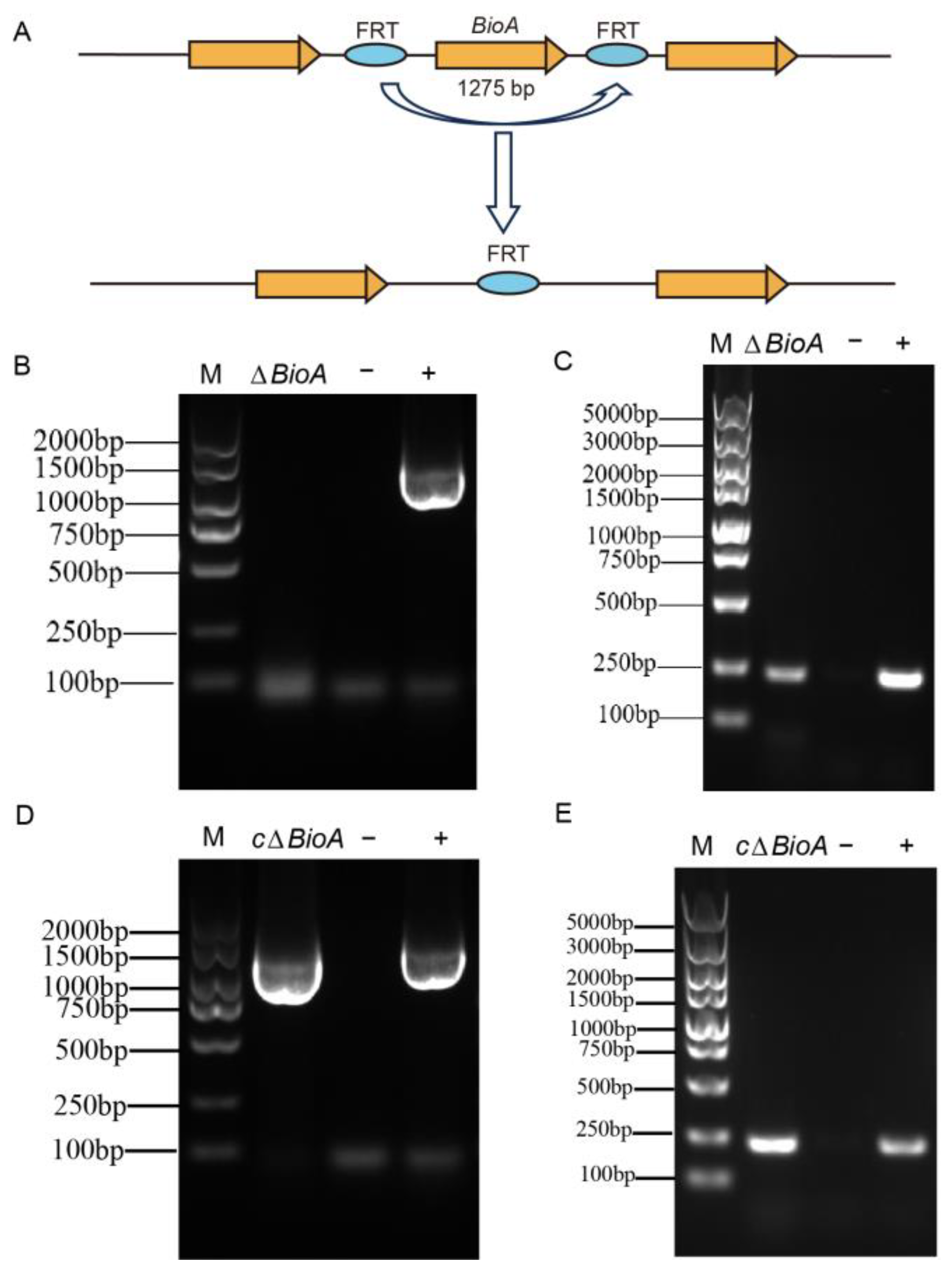
To delete the BioA gene cluster in the genome of the B. abortus 104M strain, the suicide plasmid PUC19-Kana-SacB-BioA was constructed via a one-step cloning strategy. First, upstream and downstream flanking fragments of BioA were amplified using B. abortus 104M genomic DNA as template. Then, the two fragments were assembled by overlapping extension PCR to generate one homologous recombination fragment. The purified PCR product was cloned into Hind III-digested PUC19-Kana -SacB using a clonexpress II one step cloning kit (Vazyme, Nanjing, China). The resulting suicide plasmids were electroporated into competent B. abortus 104M. The first homologous recombination was selected on TSA containing kanamycin, and the second recombination was selected on TSA containing 12% sucrose. Deletion strains were verified by PCR and sequencing. The BioA target gene fragment was amplified and cloned into the shuttle plasmid pBBR1MCS-2 using a one-step cloning strategy. To distinguish the complementation plasmid from the suicide plasmid (PUC19-Kana-SacB-BioA) used for gene deletion, the pBBR1MCS-2 vector was modified to encode an ampicillin resistance marker. The recombinant plasmid was electroporated into the deletion mutant. Transformants were selected on 25 μg/mL ampicillin-containing agar plates. Antibiotic pressure (25 μg/mL ampicillin) was maintained throughout all subsequent in vitro culture and assays to ensure plasmid retention. Genetically stable complemented strains were confirmed by PCR and sequencing.
2.4. Growth Analysis
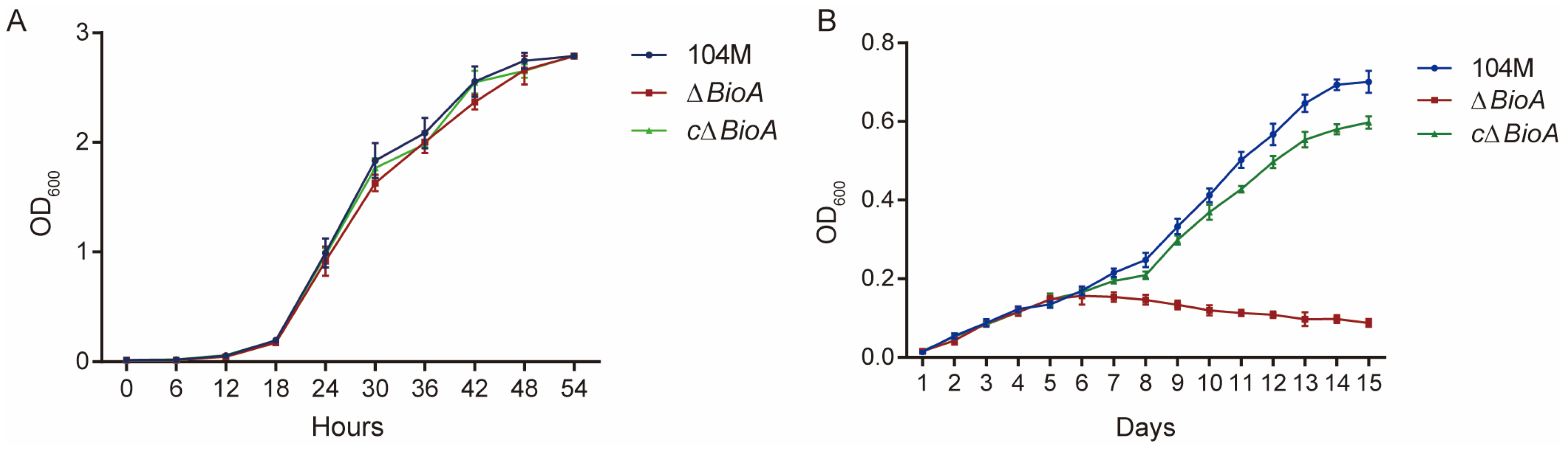
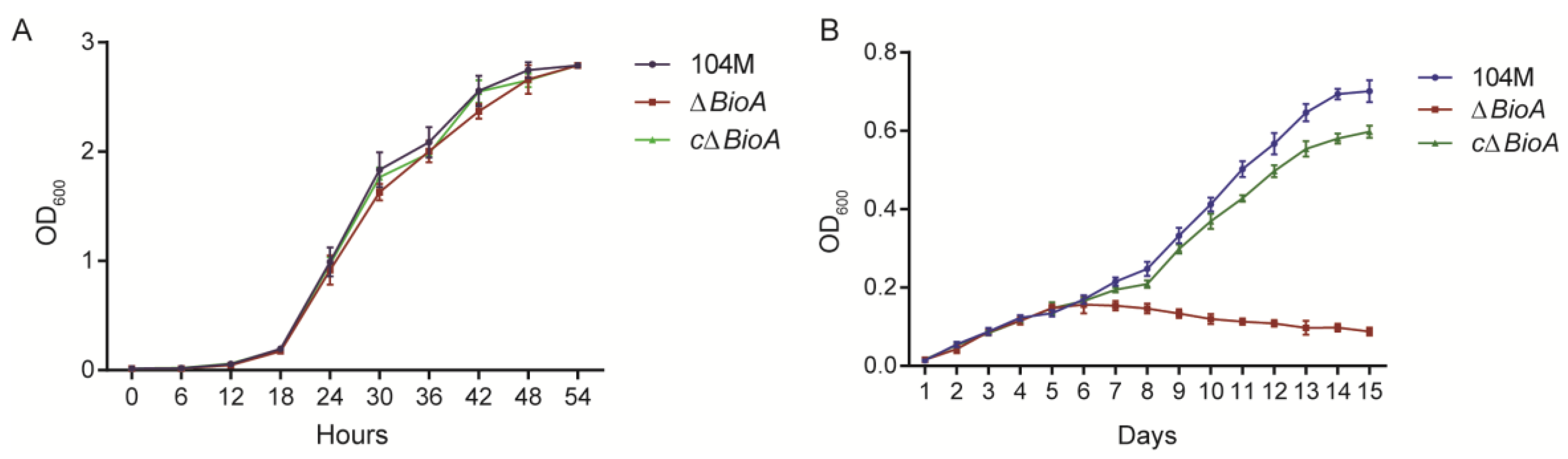
The B. abortus 104M, the ΔBioA deletion mutant, and the ΔBioA complemented strain were cultured on TSA plates at 37 °C. A single colony of each strain was inoculated into 200 mL biotin-deficient TSB and a standard TSB medium, respectively. During incubation at 37 °C for 72 h, the optical density at 600 nm (OD600) was measured every 6 h using a spectrophotometer (Eppendorf, Hamburg, Germany). In vitro growth curves were generated based on the OD600 values. Each growth curve assay was performed with 3 independent biological replicates, and each replicate was measured in triplicate.
2.5. Electron Microscopy Analysis
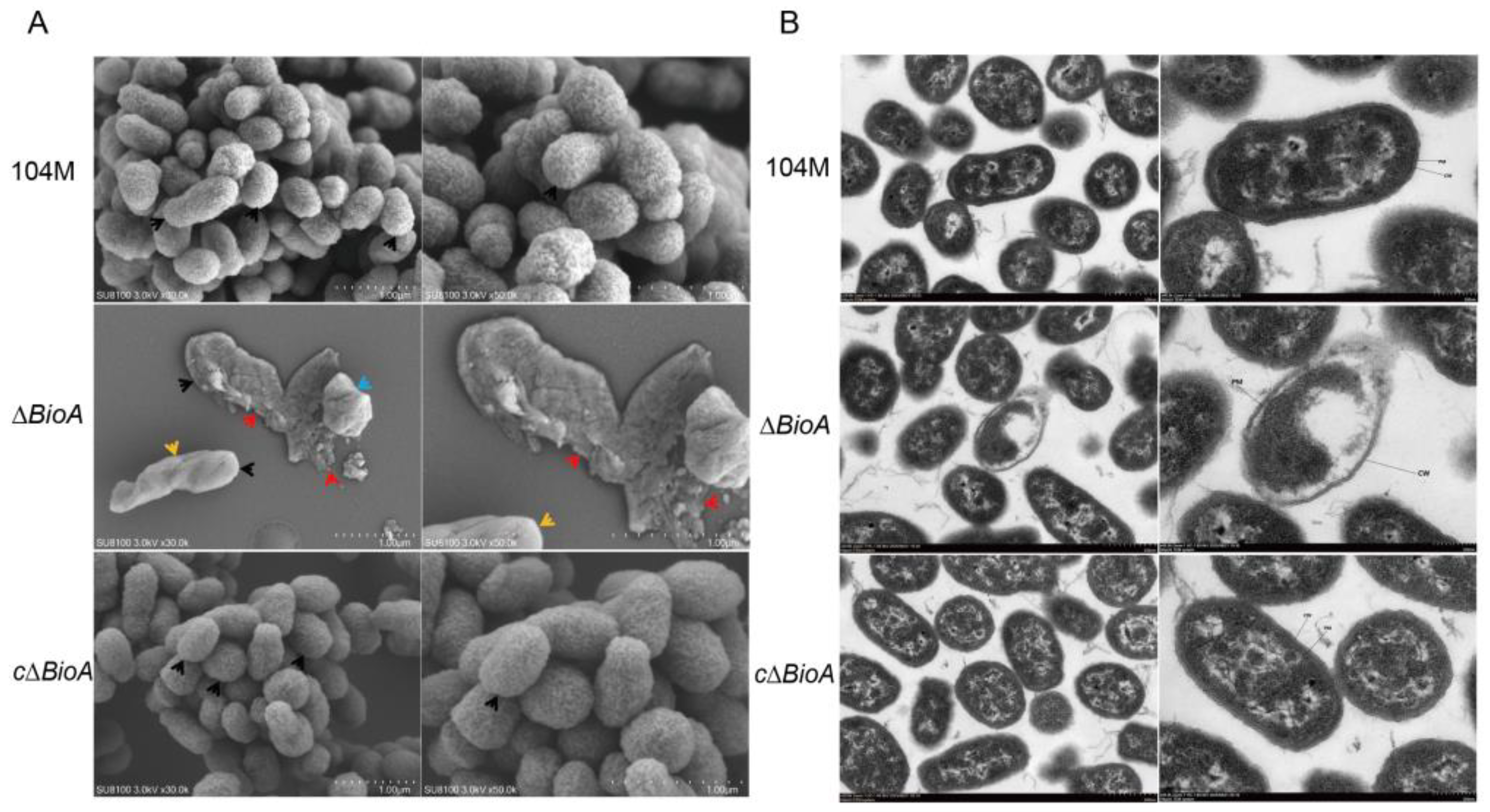
To assess the potential effects of gene deletion on bacterial ultrastructure, the B. abortus 104M, ΔBioA and cΔBioA were subjected to scanning electron microscopy (SEM) and transmission electron microscopy (TEM) analysis. Briefly, bacterial cells from mid-logarithmic phase cultures were harvested by centrifugation and primarily fixed with 2.5% glutaraldehyde in 0.1 M PBS (pH 7.4) at 4 °C. The fixed cell pellets were washed with PBS and subsequently entrusted to Servicebio Biotechnology Co., Ltd., Wuhan, China, for all further specialized processing. Final imaging and data acquisition were performed using the company’s field-emission SEM and TEM instruments.
2.6. Acetyl-CoA and Malonyl-CoA Content Determination
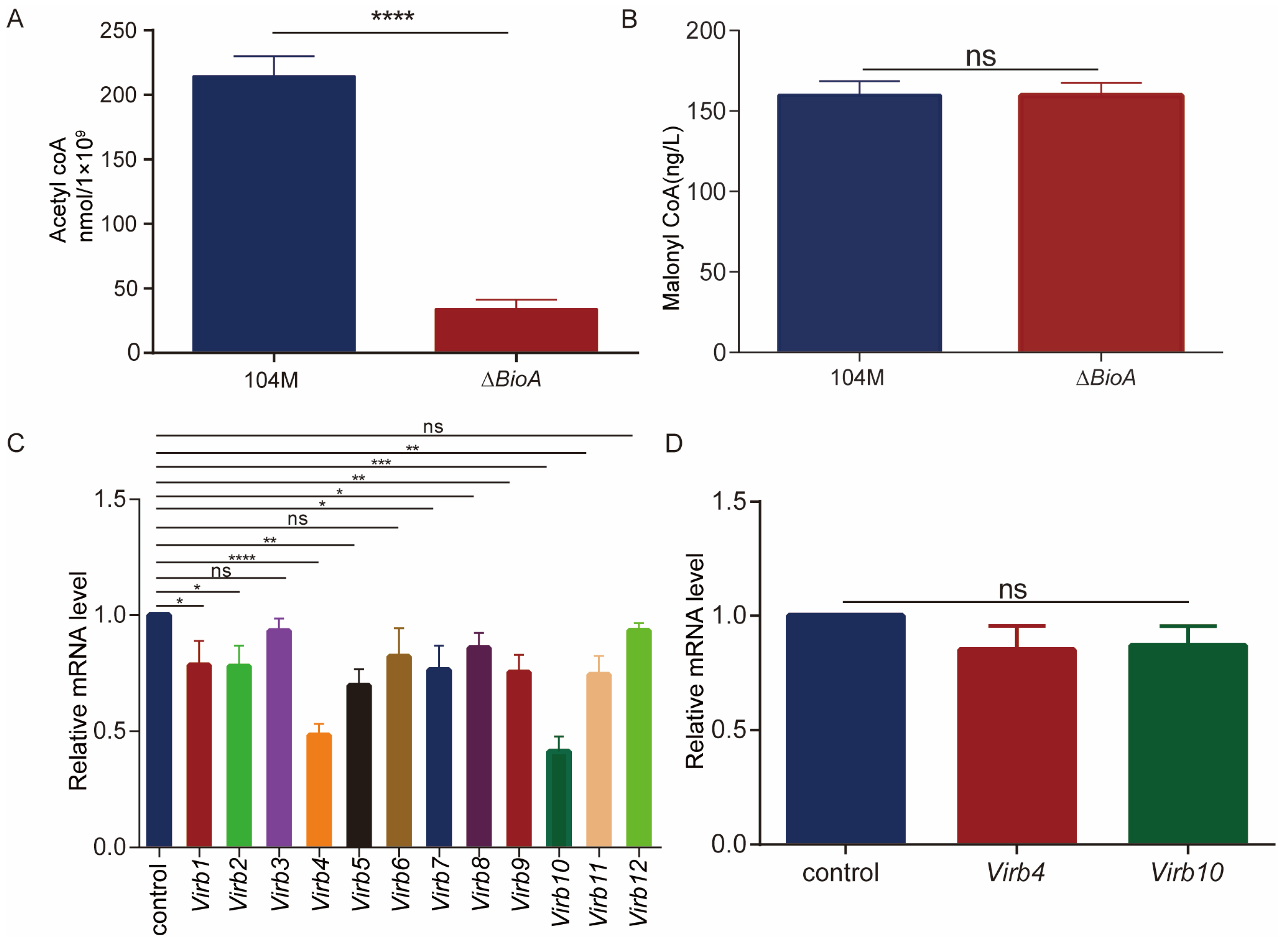
The B. abortus 104M strain and ΔBioA mutant strain were cultured to the logarithmic growth phase, washed with PBS, and harvested. Bacterial quantification was performed by plate counting, and 1 × 10⁹ CFU bacteria were precisely harvested for subsequent experiments. After ultrasonic disruption of the bacterial cells, the supernatant was collected for subsequent testing. Acetyl-CoA content was determined using the Acetyl-CoA Content Assay Kit (Solarbio Science & Technology Co., Ltd., Beijing, China) according to the manufacturer’s protocol. Malonyl-CoA content was detected using the Microbial Malonyl-CoA Kit (Jiangsu Meimian Biotechnology Co., Ltd., Yancheng, China). Both assays were normalized based on the bacterial quantity (1 × 10⁹ CFU bacteria per sample) to eliminate variations in sample loading. All metabolite measurements were performed with 3 biological replicates, each of which included 3 technical replicates.
2.7. qRT-PCR
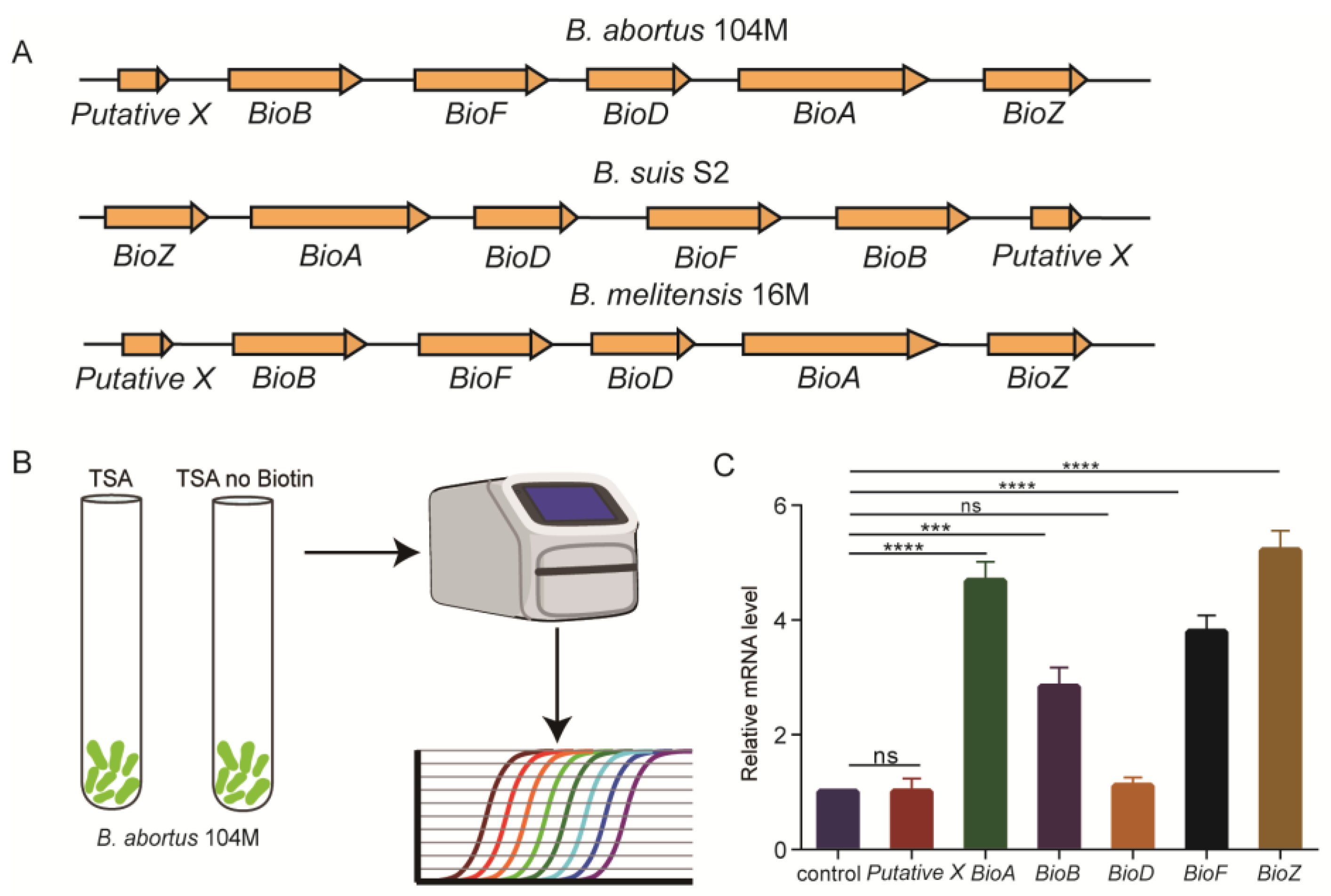
In order to detect the expression levels of different genes related to biotin synthesis,
B. abortus 104M strains were cultured in normal TSB and biotin-free TSB to OD
600 0.6. Cells were collected and total RNA was extracted using an RNA prep Pure Cell/Bacteria Kit. Reverse transcription was performed using the RT Reagent Kit, and RT–PCR was performed using ChamQ SYBR qPCR Master Mix (Vazyme, Nanjing, China) on an ABI 7500 system. Data analysis used the 2
−ΔΔCt method. The relative expression levels of virulence genes in the
ΔBioA strain and the
cΔBioA strain were also determined using the same method. All primers for qRT-PCR are listed in
Supplementary Table S1. Notably, 16S rRNA was used as the reference gene for qRT-PCR normalization to correct for variation in RNA extraction and reverse transcription efficiency. All qRT-PCR experiments were performed with 3 independent biological replicates, and each replicate was run in triplicate.
2.8. Macrophage Infection
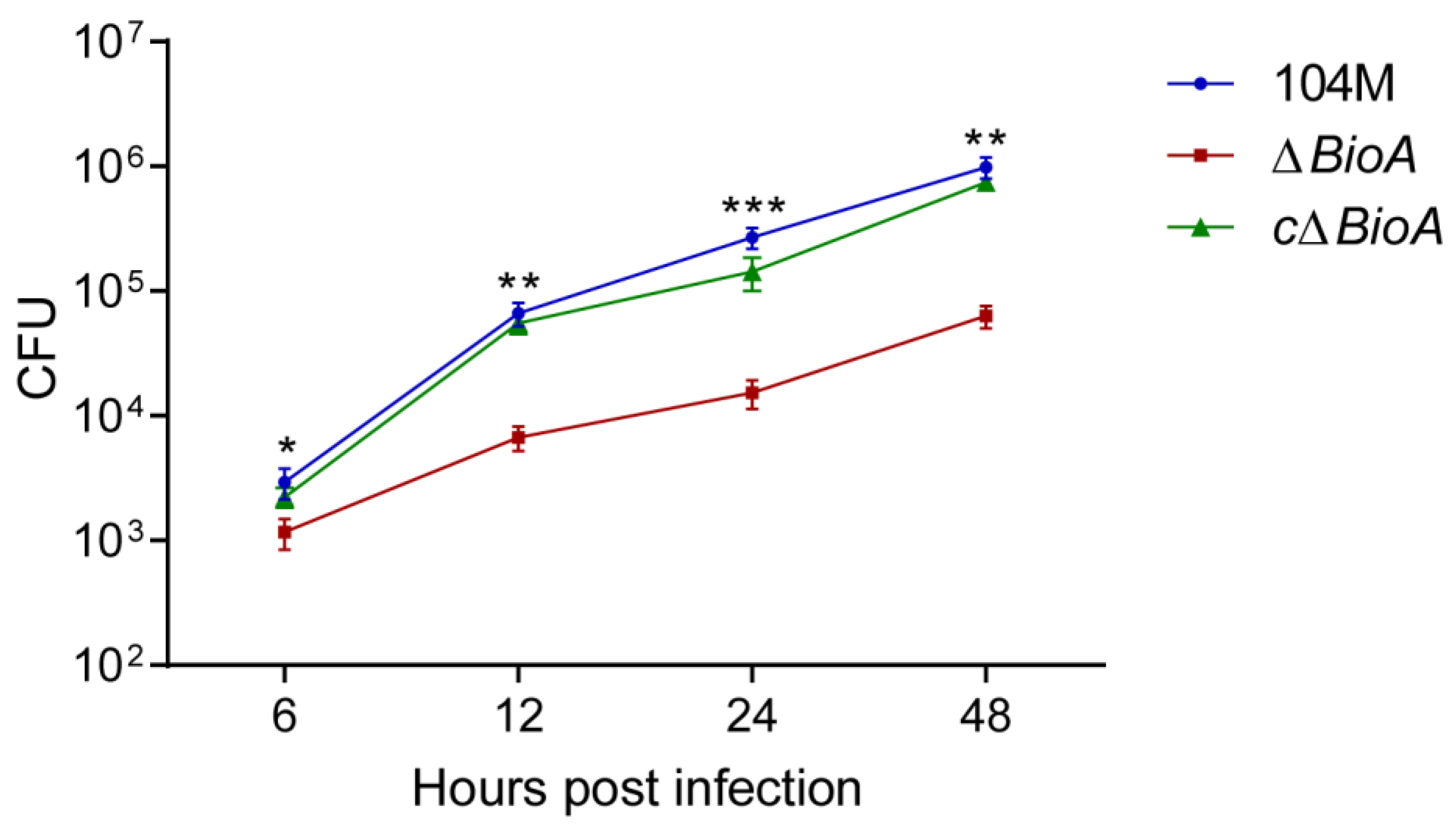
Murine macrophage RAW 264.7 cells were seeded in 24-well plates (2 × 10⁵ cells per well) and infected with B. abortus 104M, the ΔBioA strain and the cΔBioA strain for 4 h at a multiplicity of infection of 100:1. Cells were incubated for 1 h with a cell culture medium containing 50 µg/mL gentamicin to eliminate extracellular bacteria, and then in a medium containing gentamicin (25 µg/mL) to avert continuous infection. RAW 264.7 cells were lysed in 0.5 mL of PBS-0.5% Triton X-100, and the lysates were plated on TSA to determine CFUs. Each macrophage infection assay was performed with 3 independent biological replicates, and each replicate contained 3 technical replicates (wells) per bacterial strain.
2.9. Residual Virulence Assay
The residual virulence of Brucella strains was evaluated by determining the median lethal dose (LD50) in a mouse model. Fresh cultures of B. abortus 104M were diluted in PBS to obtain five bacterial suspensions with concentrations of 1.5 × 10⁹ CFU/mL, 3.0 × 10⁹ CFU/mL, 6.0 × 10⁹ CFU/mL, 1.2 × 10¹⁰ CFU/mL, and 2.4 × 10¹⁰ CFU/mL. Similarly, fresh cultures of ΔBioA mutant strain were diluted to six concentrations: 3.0 × 10⁹ CFU/mL, 6.0 × 10⁹ CFU/mL, 1.2 × 10¹⁰ CFU/mL, 2.4 × 10¹⁰ CFU/mL, 4.8 × 10¹⁰ CFU/mL, and 9.6 × 10¹⁰ CFU/mL. Groups of 5 BALB/c mice (n = 5) each were inoculated intraperitoneally with 0.5 mL of one of the bacterial suspensions. All mice were observed for 7 days post-inoculation, and the LD50 was calculated based on mortality data.
2.10. Mouse Infection
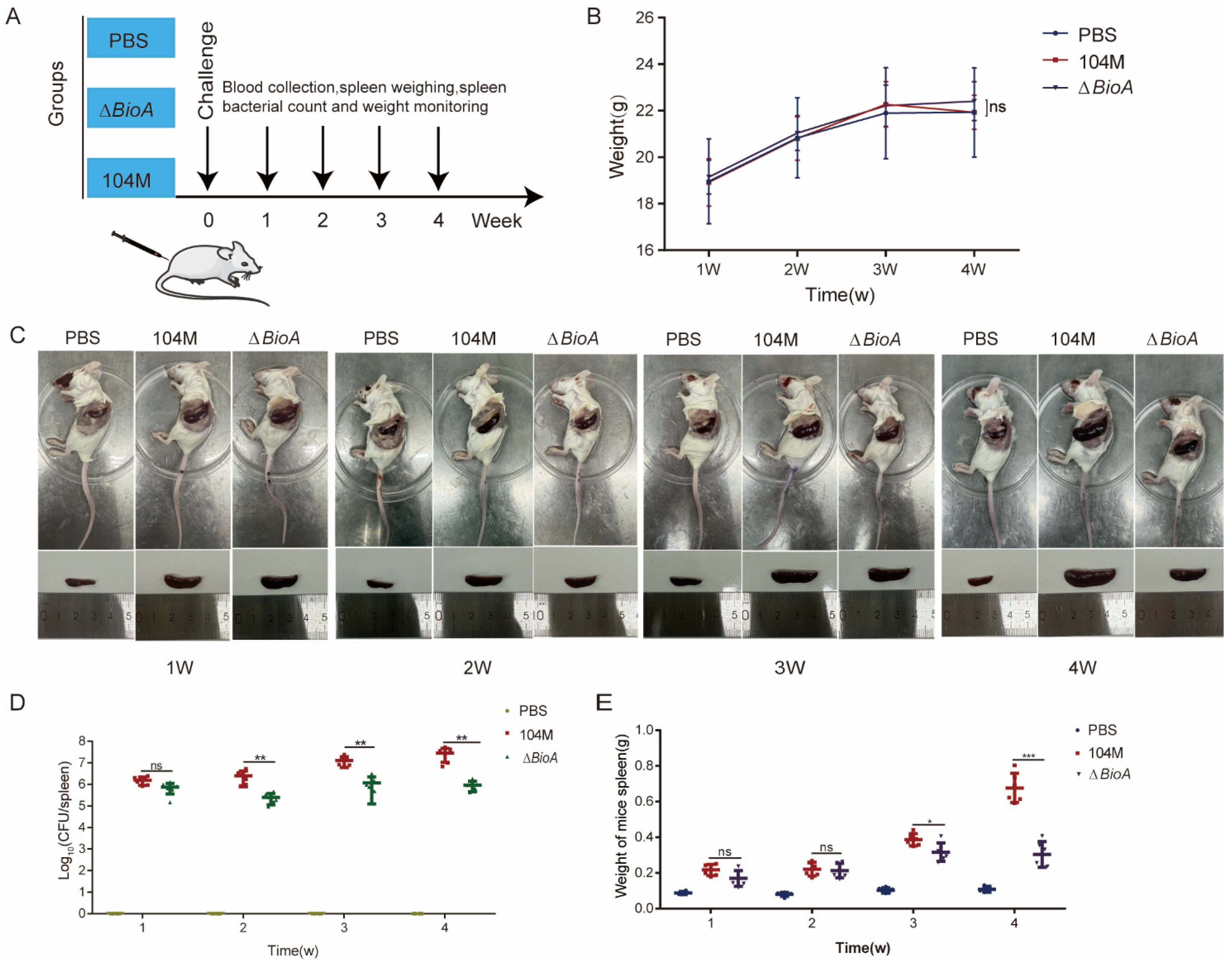
Female BALB/c mice aged 5–6 weeks were subcutaneously inoculated with 5 × 10
7 CFU of
B. abortus 104M or the
ΔBioA mutant [
22]. At 1, 2, 3, and 4 weeks post-immunization, the mice’s body weights were measured, and their spleens were removed. Spleen weights were measured to evaluate splenomegaly, and the bacterial loads in the spleens were determined by homogenizing the tissues, serially diluting the samples, and plating them onto TSA media for colony-forming unit (CFU) enumeration. The mouse infection experiment was performed with 3 independent biological replicates, with 6 mice (
n = 6) per bacterial strain per time point in each replicate.
2.11. Statistical Analysis
Experiments were performed for at least three independent biological replicates. The SPSS 22 software was used for statistical comparison. Results are presented as means ± standard deviation. Further analyses were performed using unpaired two-tailed t-tests, with Welch’s correction and one-way analysis of variation followed by Tukey’s multiple-comparison test. Welch’s t-test was specifically used for datasets with unequal variances. Probability (p) values < 0.05 were considered statistically significant.
4. Discussion
Brucella is a typical intracellular pathogen, and its pathogenicity depends on a sophisticated virulence regulatory network and adaptive metabolic plasticity within the host [
23]. By constructing a
B.
abortus 104M
BioA deletion mutant, this study provides the first direct evidence that the late-stage biotin synthesis pathway plays a central role in the core metabolic adaptation and pathogenic mechanism of
B.
abortus. To confirm the specificity of the mutant phenotype, we constructed a complementary strain (
cΔBioA), which restored
BioA function and related phenotypes to wild-type levels, thus confirming that the observed defects were specifically attributed to
BioA deletion. Our results confirm that
BioA, a key enzyme in biotin synthesis, serves as a critical metabolic hub linking biotin metabolism to bacterial pathogenicity by maintaining outer membrane structural integrity and regulating the transcription of genes encoding the type IV secretion system (T4SS). Loss of
BioA function severely impairs the metabolic fitness of
Brucella, leading to significantly reduced intracellular survival and in vivo colonization potential.
As a key catalytic enzyme in the late stage of biotin synthesis, the functional integrity of
BioA directly determines the biotin synthetic capacity of
Brucella. Deletion of
BioA leads to growth arrest in biotin-deficient environments. Biotin is an essential coenzyme of acetyl-CoA carboxylase [
24], and its deficiency may result in decreased acetyl-CoA levels. As a central precursor for fatty acid synthesis, energy metabolism and lipid biosynthesis, reduced acetyl-CoA directly limits the supply of phospholipids and lipopolysaccharides (LPSs) required for the bacterial outer membrane [
25], which ultimately may lead to outer membrane structural damage. This finding provides metabolite evidence that biotin deficiency may mediate structural defects in the bacterial outer membrane. Thus,
BioA-mediated biotin metabolism likely not only supports energy supply, but also regulates the biosynthesis and stability of the bacterial cell wall and outer membrane. Compromised structural integrity likely directly impairs the ability of the strain to resist host immune pressure [
26]. In parallel, this study reveals a key regulatory role of
BioA in T4SS-related gene expression: expression of VirB family genes, especially
VirB4 and
VirB10, was significantly downregulated in the
ΔBioA mutant.
VirB4 acts as the core ATPase of T4SS, providing energy for complex assembly and substrate secretion [
27], while
VirB10 forms the transmembrane channel essential for outer membrane integration [
27]. Downregulation of both genes suggests potential impacts on T4SS function. Combined with the phenotype of acetyl-CoA metabolic disorder, these findings suggest that
BioA-mediated metabolic homeostasis may indirectly influence T4SS expression, potentially through alterations in central carbon metabolism and membrane integrity.
Brucella may sense its nutritional status and environmental adaptability via the level of metabolites such as acetyl-CoA, and then regulate the expression of virulence genes to achieve a dynamic balance of metabolic adaptation and virulence activation. The nutrition-restricted environment of
Brucella-containing vesicles (BCVs) in macrophages may further aggravate the metabolic defects of the
ΔBioA strain, and the survival rate of the
ΔBioA mutant in macrophages is significantly reduced (approximately 95% lower than the wild type). Consistent with previous research findings [
22], the wild-type
B.
abortus 104M strain exhibited a typical median lethal dose (LD
50), while the
ΔBioA mutant strain had a significantly elevated LD
50 of 5.0 × 10
9 CFU. Relevant studies have confirmed that chronic colonization, rather than lethality, is the core biological characteristic of
Brucella infection, so splenic colonization and spleen weight—which are more robust virulence indicators than LD
50—were prioritized in this study to verify the virulence attenuation of the
ΔBioA mutant strain [
28]. These virulence defects are further reflected in the in vivo infection process, as the low biotin content in mammals [
29] impairs the replication ability of the
ΔBioA strain in the early stages of infection (such as in macrophages in local lymph nodes), reducing the number of bacteria that can spread to remote organs such as the spleen through decreases in blood circulation. After subsequent infection with spleen macrophages, the living environment of the
Brucella contained in the vesicles will be worse, which will further inhibit the proliferation of residual bacteria, and ultimately lead to the bacterial load in its spleen being continuously lower than that of the wild-type strain.
Similar to the attenuation caused by
BioA deletion in
Brucella, the loss of biotin metabolic enzymes in
Elizabethkingia and
Chryseobacterium leads to biotin auxotrophy, significantly inhibiting biofilm formation and infectivity [
25]. In
Mycobacterium tuberculosis, mutants deficient in
BioA,
BioF or
BioB display biotin auxotrophy and impaired intracellular survival and chronic infection [
30].
BioB deficiency also blocks biotin synthesis in
Mycobacterium abscessus and greatly reduces lung infection survival [
31]. A
BioF mutant in
Riemerella anatipestifer exhibits biotin auxotrophy and abnormal cell morphology, resulting in reduced pathogenicity [
32]. Notably, impaired biotin synthesis also weakens drug resistance and in vivo colonization in ESKAPE pathogens. Feng et al. demonstrated that deletion of the early biotin synthesis gene
BioC in
Acinetobacter baumannii and
Klebsiella pneumoniae restores colistin sensitivity in
mcr-1-harboring strains and reduces organ colonization in mice [
33]. In
Pseudomonas aeruginosa,
BioH deficiency reduces carbapenem resistance and lung colonization, increasing mouse survival by 80% [
29]. T4SS is the central virulence apparatus of
Brucella, encoded by the VirB operon, and its function is essential for intracellular survival, replication and systemic infection [
34]. Previous studies identified multiple regulators of T4SS, including
ArsR2–
VjbR [
35], the
BvrR/
BvrS two-component system [
36], and
QseC/
QseB and
Hfq [
27], which control VirB expression at the transcriptional level. This study identifies a novel, metabolism-dependent regulatory pathway mediated by
BioA. The precise molecular mechanism linking
BioA function to T4SS expression remains to be fully defined, but our findings expand and refine the T4SS-regulatory network and deepen the understanding of
Brucella virulence control.
Based on the discovery of BioA as the core node in Brucella metabolism and virulence regulation revealed in this study, future research should focus on three aspects. Mechanistically, in-depth investigations are warranted to elucidate the specific molecular pathway underlying acetyl-CoA-mediated regulation of T4SS, should such regulatory crosstalk exist; mechanistic evidence should be established linking acetyl-CoA depletion to transcriptional modulation of the VirB operon; and alternative explanations including global stress responses, membrane instability, and compromised energy homeostasis should be experimentally excluded. Furthermore, systematic analysis of the interaction between BioA and the biotin-sensing system is required to delineate its functional role in chronic Brucella infection. In terms of application, we rely on the ΔBioA mutant to optimize attenuated vaccines, and at the same time develop small-molecule inhibitors targeting BioA to explore its synergistic effect with existing antibiotics. In addition, the functional conservation of BioA in different pathogenic species of Brucella should be verified, alongside improving the virulence regulation network of the biotin synthesis pathway, and providing theoretical and technical support for anti-brucellosis intervention.



 ,
,