Review

Berberine Interferes with the Molecular Landscape of Biofilm-Driven Pathogenicity

1
Department of Microbiology, Faculty of Medicine, Wroclaw Medical University, Chałubińskiego 4, 50-368 Wroclaw, Poland
2
Faculty of Medicine, Wroclaw Medical University, Ludwika Pasteura 1, 50-367 Wroclaw, Poland
*
Author to whom correspondence should be addressed.
Pathogens 2026, 15(2), 194; https://doi.org/10.3390/pathogens15020194
Submission received: 19 December 2025 / Revised: 4 February 2026 / Accepted: 5 February 2026 / Published: 10 February 2026
(This article belongs to the Special Issue From Whisper to Resistance: Bacterial Dialogues Behind Biofilm)

Abstract

Biofilm-associated infections pose a significant clinical challenge due to their increased antibiotic tolerance and strong association with multidrug-resistant pathogens. The biofilm protects bacteria against antimicrobial agents and host immune response through a complex matrix, altered cell metabolism, activation of quorum sensing, and overexpression of efflux pumps. Despite the availability of numerous therapeutic strategies, the effectiveness of treatment of these infections remains limited, justifying the search for new pharmaceutics, e.g., compounds of natural origin. Berberine, an isoquinoline alkaloid from the plants of the Berberidaceae family, is of growing interest due to its broad spectrum of antimicrobial and antibiofilm activities. This review summarizes the current state of knowledge regarding the molecular mechanisms of action of berberine against the biofilm forming Gram-(+) and Gram-(−) bacteria. Its effect on bacterial cell adhesion, modulation of quorum sensing, inhibition of extracellular matrix synthesis, disruption of biofilm maturation, and the dispersion process are discussed. The role of berberine as an adjuvant to antibiotic therapy was also analyzed, in particular, its ability to restore bacterial sensitivity to different classes of antibiotics. The pharmacokinetic limitations of berberine and the prospects for the use of modern delivery systems are also considered. The collected data indicate that berberine is a promising factor supporting the treatment of biofilm-related infections.

1. Introduction

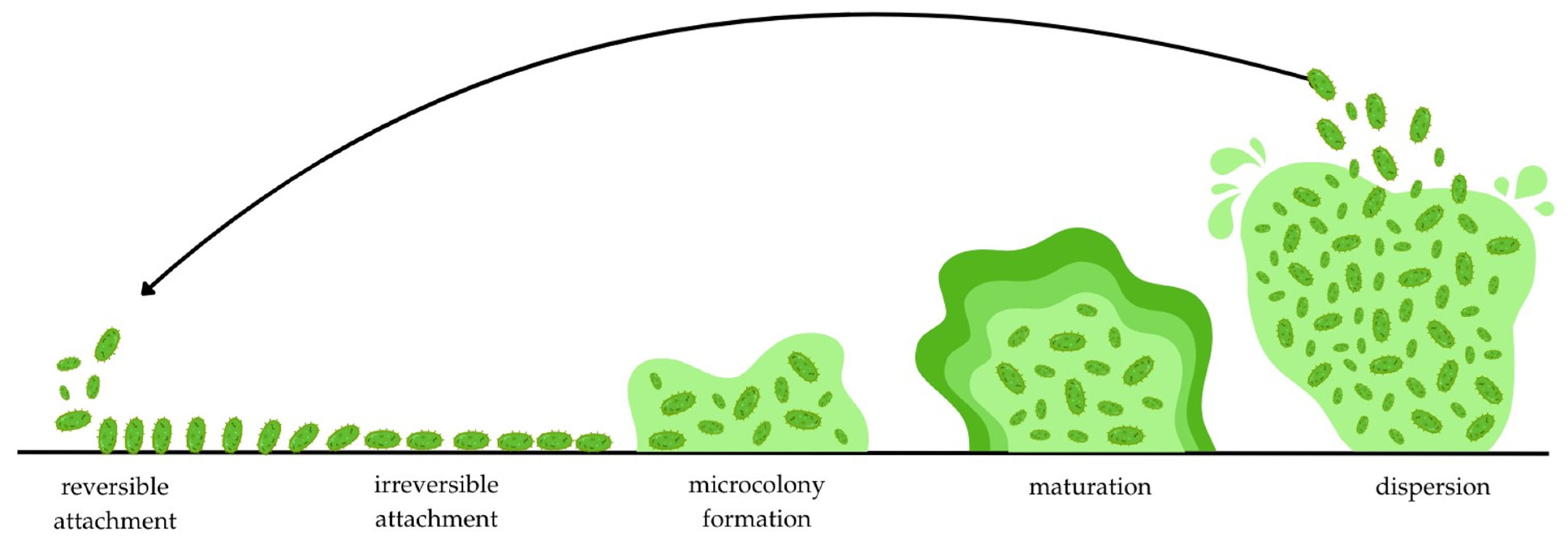
A biofilm is a highly organized community of bacterial cells surrounded by a self-produced polymeric matrix composed of polysaccharides, proteins, and extracellular DNA (EPS). The ability to form this three-dimensional structure is exhibited by both Gram-(+) and Gram-(−) bacteria, and its formation is most often associated with pathogenic potential and the hospital environment. Biofilm development is a complex, multistage process comprising (i) reversible attachment to a surface; (ii) irreversible attachment; (iii) microcolony formation; (iv) development of three-dimensional structures; and (v) maturation followed by detachment and dispersal from the occupied surface. This irreversible phenomenon occurs particularly in the presence of permanent medical devices, including heart valves [1], intravenous catheters [2], endotracheal tubes [3], stents [4,5], intrauterine devices [3,6], pacemakers [7], joint prostheses [6], and urinary catheters [5], and is also observed in up to 75% of chronic wounds [8]. The microenvironment within this architecturally complex microbial community is unique and provides bacteria with multiple advantages, including (i) enhanced biodiversity [9]; (ii) efficient intercellular communication via quorum sensing (QS) [10,11]; (iii) extensive horizontal gene transfer [12,13]; (iv) maintenance of accumulation of virulence-associated extracellular enzymes [14]; (v) recycling of nutrients [15]; and (vi) high protection against environmental stress (e.g., temperature fluctuations, drying, nutrient deprivation, UV radiation, disinfectants, and antibiotics) [16,17,18,19], and the immune system [20]. Therefore, its presence is a key factor in the pathogenesis of chronic and biomaterial-associated infections, especially those caused by MDR (multidrug-resistant) pathogens [21,22]. According to epidemiological data provided by the National Institutes of Health (NIH), as much as 65% of all bacterial infections and approximately 80% of all chronic infections are associated with biofilm formation [23], occurring on both non-living and living surfaces (inert, non-living materials or living tissues) [3].
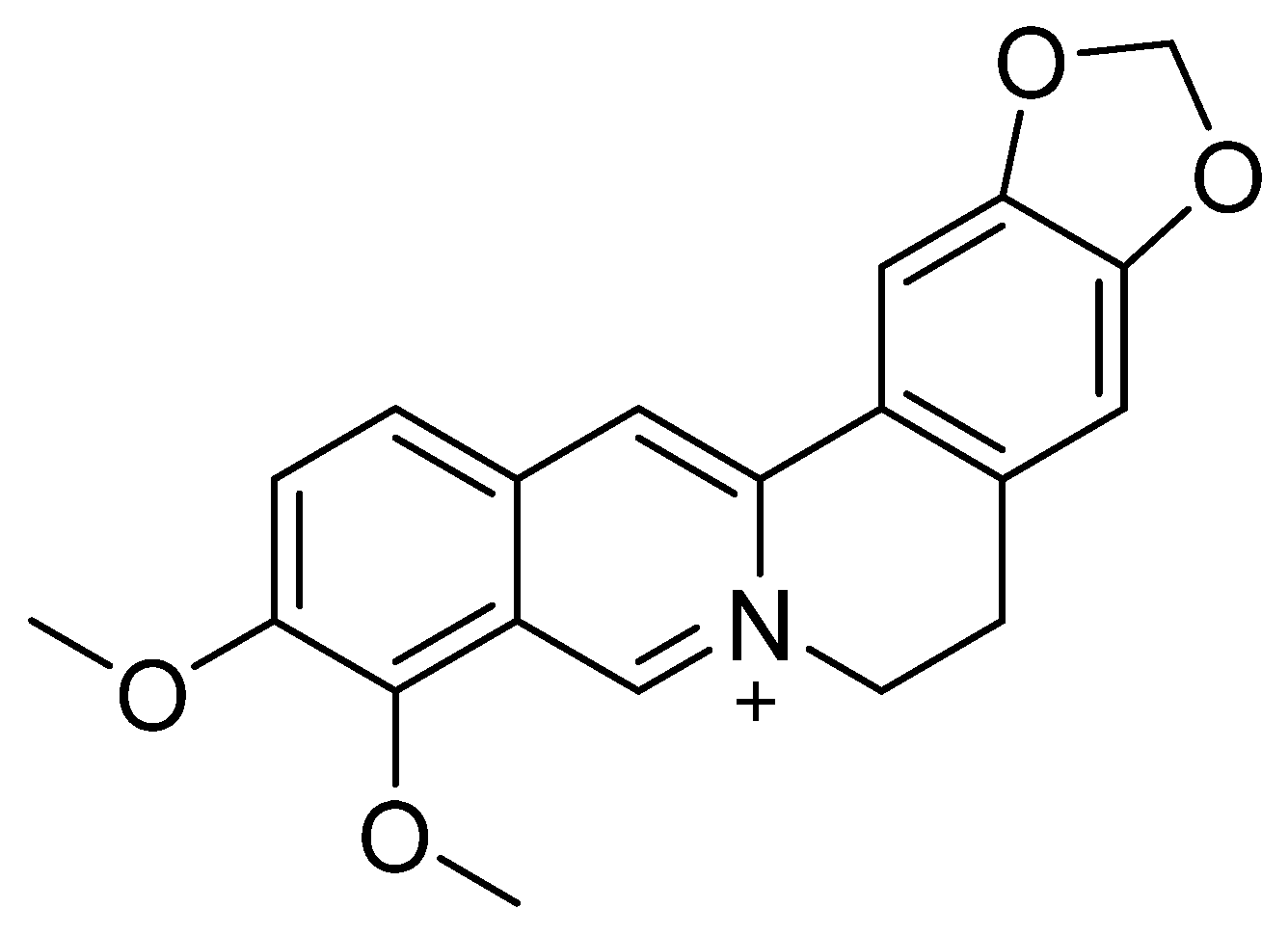
Currently, a broad spectrum of therapeutic strategies targeting biofilms is available, including a wide range of antibiotics, QS inhibitors, and EPS-degrading compounds. However, their clinical effectiveness is limited due to low penetration of the biofilm matrix and phenotypic heterogeneity of biofilm-embedded bacteria [24,25,26]. In recent years, increasing attention has been directed toward natural plant-derived compounds as modulators of the early stages of biofilm formation, offering a promising alternative strategy. One of the most extensively studied compounds in this context is berberine (BBR), an isoquinoline alkaloid and quaternary ammonium cation [27], naturally occurring in plants of the Berberidaceae (e.g., Berberis aristata, Berberis vulgaris), Ranunculaceae (e.g., Coptis chinensis, Hydrastis canadensis), and Rutaceae (e.g., Phellodendron amurense) families [27,28,29]. The chemical structure of BBR is presented in Figure 1.
Physicochemical features: molecular formula C20H18NO4+ (molar mass 336.4 g), yellow powder, poorly soluble in water, high in organic solvents, most often occurring in the form of salts—chlorides or sulfates. The physicochemical properties of BBR influence the low bioavailability of the preparation after oral administration [30].
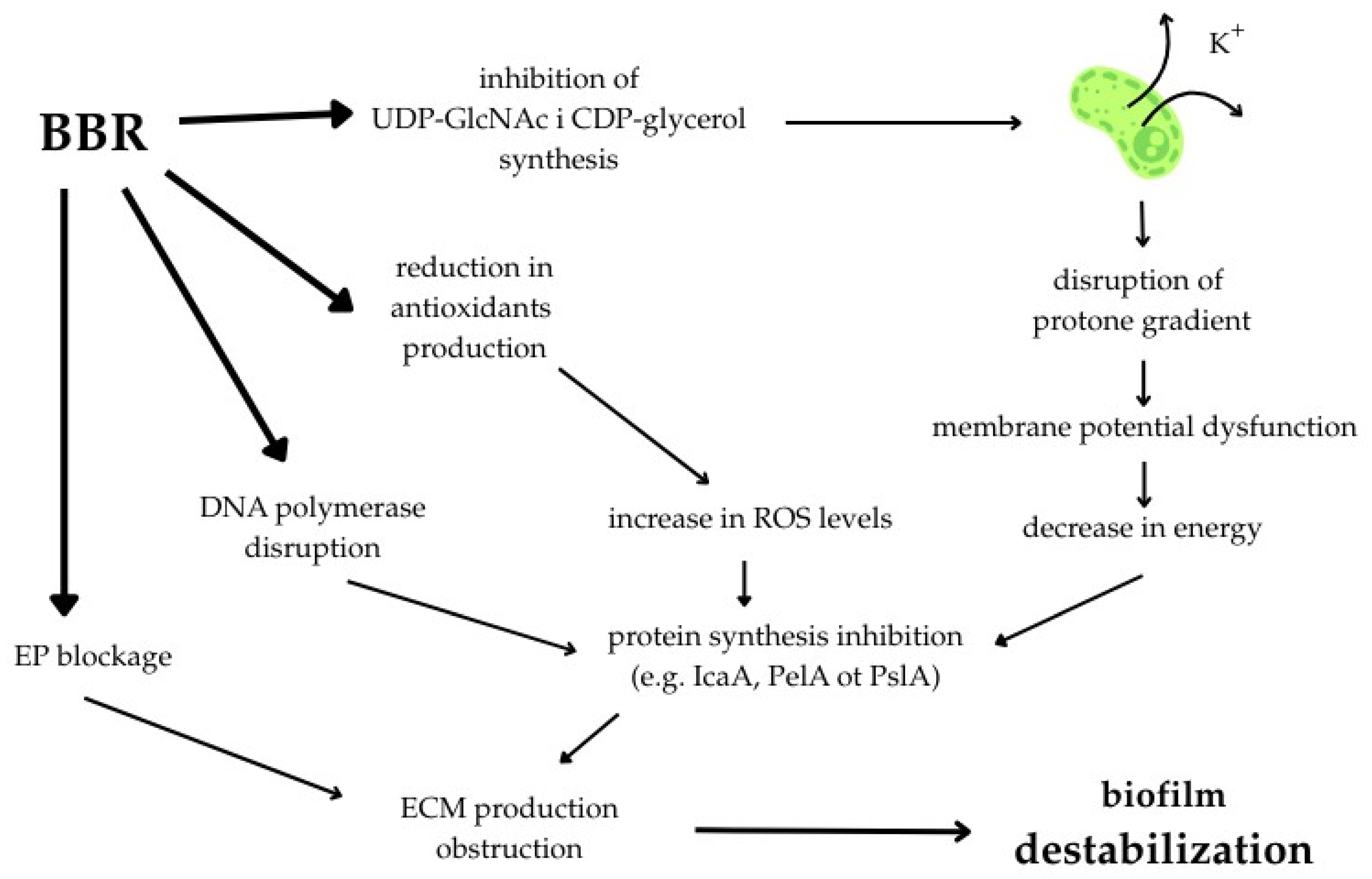
Studies indicate that the alkaloid exhibits broad anti-inflammatory mechanisms [31,32], which have been confirmed in animal in vivo models of inflammatory diseases such as IBD (inflammatory bowel disease), NAFLD (non-alcoholic fatty liver disease), and AD (Alzheimer’s disease) [33,34,35]. Alkaloid is also known for its antioxidant and antineoplastic activity. Exposure of various cancer cell lines to alkaloid in vitro and in vivo reduced tumor proliferation across multiple cancer models (colorectal, gastric, melanoma, glioblastoma, pancreatic, and breast cancer) [36,37,38,39,40,41]. Additionally, the alkaloid demonstrates antibacterial and anti-biofilm activity, including QS silencing, and inhibition of efflux pumps (EP), e.g., NorA and MexAB-OprM, thereby enhancing the efficacy of several antibiotic classes (β-lactams, aminoglycosides, fluoroquinolones) [42]. It supports intestinal barrier function by (i) increasing mucus-producing goblet cells [43,44], (ii) stabilizing tight junctions [45,46], and (iii) modulating the microbiota toward short chain fatty acid (SCFA)-producing species while reducing potentially pathogenic strains [43,47,48]. This broad mechanistic spectrum distinguishes it from other natural antimicrobial compounds. The broad-spectrum anti-biofilm activity of BBR was presented in Figure 2.
The information gathered in this review suggests that, due to well-documented antipathogenic activity against Gram-(+) and Gram-(−) bacteria [36,49,50], future research on BBR should integrate all of its multiple antimicrobial-adjacent activities to more accurately prove its preventive potential against biofilm-associated infections. It remains important to understand the mechanisms by which this alkaloid can be a potential anti-infective pharmaceutical. This review aims to integrate these aspects at the molecular level, including the suppression of QS pathways, disruption of EP activity, and inhibition of bacterial adhesion in the context of biofilm-associated infection prevention. We summarize the current state of knowledge regarding the mechanisms of BBR action at all stages of biofilm formation. In turn, we discuss its antibiofilm potential from the perspective of its use in anti-infective therapy in the era of increasing antibiotic resistance.

2. Biofilm Formation and Its Clinical Implications

2.1. Biofilm Structure and Development

Bacterial cells can exist in the environment in two forms: free-living planktonic forms and sessile forms with biofilm formation, providing enhanced adaptation to unfavorable environmental conditions [51,52]. Bacterial biofilm is a complex structure composed mainly of water (~90%) and bacterial cells (~10%), embedded in a matrix of organic and inorganic compounds [53]. The dominant organic component is polysaccharides (called EPS exopolysaccharides) such as alginate, cellulose, and polysaccharide intercellular adhesin (PIA), which form a specific network stabilizing the biofilm matrix. Polysaccharides can be positively charged by magnesium or calcium ions or take the form of polyanions or electrically neutral polymers [51,54,55]. Biofilms may also contain significant amounts of organic acids, e.g., uronic acid or pyruvate [56]. It is now known that the production of EPS is a key issue for the formation of sessile bacterial colony structures, resistant to unfavorable physical factors or, for example, drug penetration [57,58].
The biofilm formation process is structured and typically involves five steps: reversible attachment, irreversible attachment, microcolony formation, maturation, and dispersal (Figure 3). During the first stage, which depends on temperature, surface type, and pH [59], cells adhere reversibly to living or non-living surfaces using pili, fimbriae, and physicochemical interactions [60,61]. Then, as a result of prolonged adhesion, c-di-GMP increases in the presence of hydrogen, ionic, and dipole–dipole interactions, triggering the synthesis of structures necessary to stabilize intercellular connections [62,63,64]. Intensive cell division, which follows the previous stage, leads to the formation of microcolonies, the basic building blocks of biofilm, and the activation of complex intercellular communication mechanisms based on QS [65,66,67]. The biofilm then matures and reaches a size of ~100 μm. At this stage, there is overproduction of the extracellular matrix (ECM), cell aggregation, and preparation for the dispersion phase [68,69,70,71], in which cells, in response to environmental factors (passive physical factors; active internal mechanisms, e.g., nutrients, O2, pH change) return to their planktonic form [72,73].
The key virulence factors/resistance mechanisms associated with subsequent stages of biofilm formation are summarized in Table 1.

2.2. Role of Biofilm in Antimicrobial Resistance

Biofilm-forming bacteria exhibit markedly increased resistance to antimicrobials, being 10–10,000 times more resistant to drugs than planktonic forms [16]. Furthermore, structural differences between Gram-(+) and Gram-(−) bacteria, including surface glycopolymers, polysaccharides, and LPS (lipopolysaccharide), play a key role in biofilm formation and resistance [74]. Antibiotic/chemotherapeutic penetration into biofilms is significantly reduced, as demonstrated for β-lactam antibiotics and aminoglycosides (tobramycin, gentamicin) in P. aeruginosa due to binding to alginate [75,76,77,78]. The maturation stage creates additional barriers to the penetration of antimicrobial agents, as confirmed by studies by Tseng et al., which showed that the migration of tobramycin in the biofilm of P. aeruginosa biofilm was effectively prevented by electrostatic interactions between negatively charged EPS molecules and the cationic antibiotic molecule [79]. The antibiotic perfectly eliminated bacterial cells, but was unable to effectively combat structures located deeper, unlike ciprofloxacin, which has a neutral structure [79].
Additional resistance mechanisms involving acidification of the biofilm environment by extracellular DNA (eDNA), activation of the PhoPQ and PmrAB regulatory systems, and reduced tobramycin penetration have been observed in studies [80,81]. In addition, EPS-related components such as β-lactamases present in the biofilm matrix may further reduce the effectiveness of antibiotics, as demonstrated by in vitro time-killing studies conducted on a P. aeruginosa strain overexpressing β-lactamases [82]. These data emphasize that the composition of EPS is not passive, but actively supports the development of antibiotic therapy through chemical and enzymatic changes. Therefore, changes in its composition, e.g., disruption of PEL polysaccharide synthesis, reduce the bactericidal efficacy of antibiotics by up to 4–8 times [83]. In addition, many studies have shown that the phenotypic heterogeneity of biofilm, including the presence of dormant spore cells, promotes reduced tolerance to antibiotics that act on dividing cells [84,85,86,87].
The EPs play a key role in biofilm function. They have been shown to enable the transport of QS molecules, siderophores, and antibiotics [6,88,89,90,91], constituting an early, low-level mechanism leading to the development of high-level resistance [92]. Overexpression of RND family pumps is characteristic of ESKAPE pathogens (including P. aeruginosa, Acinetobacter baumannii, Enterobacter spp., Klebsiella pneumoniae) and promotes the development of MDR [93]. This confirms that EPs are a universal and early defense mechanism of biofilms, independent of species. This is a serious clinical problem due to the wide spectrum of substrates of these pumps that determine MDR resistance. This is undoubtedly facilitated by the biofilm environment, which promotes horizontal transfer of resistance genes, e.g., those encoding β-lactamases or the vanA gene, making it a more stable reservoir of mobile genetic elements (MGEs) than planktonic forms, e.g., in A. baumannii, Enterococcus faecalis, and S. aureus [94,95,96,97,98]. These observations indicate that biofilms act as a “genetic reservoir”, promoting stable and efficient exchange of resistance genes.
The most important mechanism involved in the regulation of all stages of bacterial biofilm development is the QS system. It is assumed that it is activated at the microcolony formation stage, where, under the influence of various autoinducers (e.g., AHL (N-acetyl-homoserinolactones), PQS (Pseudomonas quinolone signal), and AI-2 (autoinducer 2)), it promotes the intensification of EPS synthesis, phenotypic differentiation of cells, and stabilization of the three-dimensional architecture of the biofilm structure [99,100,101]. In subsequent phases, it plays a key role in inducing changes in the EPS structure, facilitating the spread of bacteria [102]. QS also likely induces the degeneration of some biofilm-forming cells, which may facilitate the active dispersion of the remaining cells [103]. Furthermore, QS not only regulates biofilm architecture, but also enables pathogens to effectively evade the host immune response by modulating virulence factor expression, polarizing macrophages from Mφ1 to anti-inflammatory Mφ2, and inhibiting inflammatory pathways, e.g., PAMP/TLR, NF-κB [104,105,106,107,108]. The effect of reduced expression of pro-inflammatory cytokines (e.g., INF-γ, TNF-α, IL-6) [107] contributes to the proliferation of infection and the development of chronic inflammation during the dispersion phase. Limited space within the biofilm structure and poor nutrient availability trigger active biofilm degradation. These mechanisms include the secretion of matrix-degrading enzymes, reduced EPS synthesis, and disruption of non-covalent interactions within the matrix, leading to the release of planktonic cells [66] and initiating another cycle of biofilm formation. The summary of resistance associated with biofilm and its linking with current types of infections is presented in Table 2.

3. Antimicrobial Activity of Berberine

3.1. Effect on the Cell Wall and Membrane

Metabolomic and multiomic studies have shown that BBR and its derivatives disrupt the integrity of the cell wall and bacterial membrane in both Gram-(+) and Gram-(−) bacteria. Wu et al. demonstrated that exposure of S. aureus to BBR hydrochloride led to a decrease in the synthesis of D-alanyl-D-alanine and farnesyl diphosphate synthesis and accumulation of peptidoglycan precursors and teichoic acids, e.g., UDP-GlcNAc, UDP-ManNAc, CDP-ribitol, and CDP-glycerol, strongly inhibiting cell wall biosynthesis [49]. In turn, proteomic analyses conducted by Du et al. confirmed reduced synthesis of Mur enzymatic proteins (MurA2, MurD, MurG) involved in peptidoglycan synthesis [111]. Zhang et al. indicated significant disturbances in the cell membrane cohesion of methicillin-resistant S. aureus (MRSA) exposed to BBR concentrations below the MIC (minimal inhibitory concentration) in vitro. At a concentration equal to the MIC (128 μg/mL), a ~44% increase in transmembrane K+ ion leakage and changes in fatty acid composition were observed, leading to the accumulation of cell membrane damage in this strain [112]. Research by Zhao et al. provided additional information on the disruption of the transmembrane proton gradient by this alkaloid, which supports this process [113]. Mechanisms destabilizing bacterial envelopes have also been reported in Gram-(−) bacteria. Karaosmanoglu et al. demonstrated that exposure of Escherichia coli to BBR led to global disruption of key metabolic pathways and disruption of gene expression encoding membrane structures, e.g., OmpC and NmpC [114]. BBR derivatives also significantly disrupted cell membrane integrity in both Gram-(−) [115] and Gram-(+) [116] bacteria.
These mechanisms induced by BBR and its derivatives reduce peptidoglycan and teichoic acid synthesis, leading to a significant reduction in cell wall integrity, which directly reduces the ability of bacteria to adhere to surfaces—a key step in biofilm initiation. At the same time, increased cell membrane permeability and the ability of BBR to disrupt the proton gradient impair the energy processes necessary for ECM synthesis and biofilm maturation. Global metabolic and proteomic changes, including decreased expression of Mur enzymes and membrane proteins, further destabilize the structural organization of the biofilm and increase the sensitivity of biofilm cells to environmental factors and antibiotics.

3.2. Inhibition of Nucleic Acids and Proteins Synthesis

The effect of alkaloids on the reduction of organic compound synthesis, such as proteins and nucleic acids, has been widely documented by various researchers [49,114,115]. In a study by Du et al., the proteome of S. pyogenes was evaluated after exposure to BBR, revealing disturbances in the synthesis of proteins responsible for carbohydrate metabolism (including the pentose phosphate pathway, fructose and mannose metabolism), peptidoglycan synthesis, amino sugar and nucleotide metabolism, pyruvate metabolism, and fatty acid metabolism, as well as DNA replication, transcription, and ribosome biogenesis [111]. In E. coli K12, this alkaloid caused a decrease in the expression of genes responsible for carbohydrate and amino acid metabolism, as well as the synthesis and metabolism of energy carriers and oxidoreductase enzymes [114]. In addition, BBR induced a more than 10-fold decrease in the expression of the cadA and cadB genes encoding essential E. coli virulence proteins. The production of the FtsZ protein, responsible for bacterial cell division, was also impaired [114]. In turn, BBR derivatives showed affinity for DNA polymerase III and disrupted the structure of the DNA double helix, inhibiting replication [115]. Protein synthesis disorders can also be observed in the inhibition of amino acid synthesis by BBR. A study by Wu et al. indicated that the alkaloid can lead to the inhibition of the synthesis of aromatic amino acids L-phenylalanine, L-tyrosine, and L-tryptophan in S. aureus through the accumulation of chorismate, their bacterial precursor [49].
Therefore, BBR induces multilevel metabolic and molecular disturbances that directly disrupt key stages of biofilm formation. Inhibition of protein and nucleic acid synthesis leads to a reduction in the production of adhesive proteins, enzymes responsible for ECM synthesis, and biofilm gene expression regulators. Simultaneous disturbances in carbohydrate and energy carrier metabolism limit the availability of precursors and energy necessary for the synthesis of biofilm polysaccharides. In addition, disturbances in normal protein folding and cell division destabilize the spatial organization of the bacterial population, leading to inhibition of biofilm initiation, slowing of its maturation, and reduced stability of the mature biofilm structure.

3.3. Efflux Pump Inhibition

Numerous studies have shown that BBR and its derivatives can be used as inhibitors of the main EP families: MFS, RND, and ABC, in both Gram-(+), Gram-(−) bacteria, and Mycobacterium spp. [42]. This alkaloid restored antibiotic sensitivity by directly blocking the MdfA pump in E. coli [117] and NorA, NorB, and MepA in S. aureus [118]. The anti-efflux activity of BBR has been well documented in pathogens expressing pumps from the RND family (MexXY-OprM, AdeABC, AcrAB-TolC) in both the Enterobacteriaceae family and non-fermenting bacilli, e.g., P. aeruginosa and A. baumannii [117,119,120,121,122], which is crucial in overcoming MDR resistance, common in these bacteria. In addition, this alkaloid has also shown a wide range of inhibitory abilities for EPs present in Mycobacterium avium-intracellulare complex (MAC) isolates [123]. In the study by Schildkraut et al., it was mentioned that BBR reduced efflux activity in isolates carrying ABC, MFS, and RND (MmpL) EPs, and that the substance in combination with clarithromycin induced a synergistic interaction [123].
Therefore, BBR and its derivatives, by directly blocking the activity of EPs (MFS, RND, ABC) and reducing the expression of genes encoding their key subunits, increase the intracellular accumulation of antibiotics and toxic compounds. In the context of biofilm, this leads to disruption of QS molecule transport, interference with stress tolerance mechanisms, and weakening of the protective role of biofilm as a diffusion barrier, as well as disruption of population coordination and biofilm maturation. It is particularly important that BBR, like other EP inhibitors, exhibits protective effects at concentrations below the MIC. In addition, restoring the sensitivity of biofilm cells to antibiotics increases their susceptibility to elimination, which destabilizes the structure of mature biofilm and limits its ability to survive in the clinical environment.

3.4. Energy Metabolism Disorders and Oxidative Stress in the Bacterial Cell

Previous studies have shown that BBR causes significant redox imbalances in bacterial cells. Research by Wu et al. showed that this effect in S. aureus was associated with a reduction in the synthesis of antioxidant compounds, including 2,5-pyridinedicarboxylic acid, 2,6-pyridinedicarboxylic acid, and γ-tocopherol [49]. The accumulation of oxidized glycerol phospholipid clearly indicated the failure of oxidative stress compensation mechanisms, and these reports are reflected in the study by Du et al., which showed that exposure of S. pyogenes to BBR induced the accumulation of ROS (reactive oxygen species) resulting from the disruption of key carbohydrate metabolism pathways (e.g., fructose and mannose metabolism, glycolysis, gluconeogenesis). Importantly, the presence of antioxidants such as N-acetyl-L-cysteine significantly reduced the antibacterial efficacy of this alkaloid [111]. This effect is enhanced by the disruption of carbohydrate metabolism, which, in combination with the above-mentioned mechanisms, exacerbates oxidative damage to DNA and membrane lipids, leading to bacterial cell death [112].
Therefore, BBR disrupts bacterial redox homeostasis by significantly reducing the synthesis of antioxidant compounds. This leads to uncontrolled accumulation of ROS, resulting in impaired membrane integrity, adhesion, and biofilm architecture. In turn, disturbances in energy metabolism limit the adaptive capacity of biofilm cells. As a consequence of these actions, the biofilm loses its protective function and ability to mature, resulting in increased sensitivity to antibiotics and environmental factors.
The presented data on the antimicrobial and antibiofilm activity of BBR are primarily derived from in vitro studies, which may not fully reflect the complexity of in vivo conditions, including host–pathogen interactions and microbial community dynamics. In addition, numerous mechanistic effects were observed at concentrations that were close to or above the MIC, which raises concerns about their clinical significance given the limited bioavailability of BBR. Another limitation is the heterogeneity of experimental models and bacterial strains used across studies, which may affect the comparability and generalizability of the results. Additionally, although multiomics approaches provide valuable insights into global metabolic and regulatory changes, these findings are largely correlative and do not always establish direct causal relationships between specific molecular targets and antibiofilm activity. It is necessary to conduct additional in vivo and pharmacokinetic studies to assess BBR’s therapeutic applications due to its potential cytotoxicity towards eukaryotic cells and its impact on beneficial microbiota.

4. Influence of Berberine on Biofilm Formation

Berberine as a Biofilm Formation Inhibitor

Multiple experiments have been carried out in order to implore BBR’s effectiveness against bacteria, fungi, and their biofilm formation. They not only confirmed this alkaloid’s efficacy in eliminating microorganisms’ biofilms and ability to synergize with antibiotics, but also discovered some of the mechanisms behind BBR’s success. It appears that it can influence each of the biofilm formation stages by many different mechanisms.
At the outset, it was observed that BBR influences the AI-2 signaling molecule path, reducing its synthesis [124]. This protein plays a crucial role in the adhesion of bacteria, as it regulates the QS system [125]. Its absence disrupts the whole attachment stage, thus preventing microorganisms from creating biofilm. BBR’s involvement in bacterial adhesion has also been noted in another study regarding those pathogens, although the exact mechanism has not been stated there [126].
There is also some evidence of BBR’s influence on the growth and maturation stage as it interacts with multiple S. aureus genes, reducing their synthesis, thus halting biofilm development [118,127]. Identified fragments of genomes are listed and described below in Table 3.
It has also been observed that inhibition of those genes results in impaired formation of amyloid fibrils in the biofilm [118,134]. They are highly stable protein aggregates built with phenol-soluble modulins (PSMs). Those fibrils provide a scaffold for biofilm formation, thus contributing to bacterial community cohesion, physical stability of biofilm, and its environmental resistance [135]. BBR was found to bind with the phenyl ring in PSMα2, thereby influencing its aggregation ability [136]. As those compounds interact, biofilm loses its three-layered structure, and therefore, its functionality [137]. It is also worth mentioning that BBR’s influence on the agr system negatively impacts the last step of biofilm formation—its dispersal [138].
BBR appears to interact with P. aeruginosa biofilm as well. An in silico study showed that it can interact with two proteins important for biofilm formation—LasR and RhlR [126]. They are central QS regulators in P. aeruginosa. LasR typically initiates the QS cascade, enabling RhlR expression. They both coordinate behaviors such as virulence factor production or biofilm formation [139]. Similar observations—biofilm reduction—were made when BBR was used against this bacteria in combination with antibiotics such as azithromycin—both in vitro and in vivo in mouse models [140,141]. This also resulted in lowered expression of the regulatory genes algG, algD, and algR, which play a role in alginate synthesis: its initiation, product modification, and process regulation [140]. As P. aeruginosa biofilm is rich in alginates, reduction in their quantity may be one of the potential strategies against this bacteria [142]. There is also evidence that BBR is interacting with pslA and pelA genes [19]. In P. aeruginosa, pslA and pelA encode for the core exopolysaccharide synthesis pathways (Psl and Pel) that build and stabilize the biofilm matrix. Psl is the main staging, which drives biofilm adhesion and architecture, while Pel provides additional structural support, biomass, and resilience—especially under stress or when Psl is impaired. [143].
What is interesting is that BBR has also been active against adhesion of fungi from Candida species, when paired with an antibiotic. In a synergy with fluconazole, this alkaloid reduces synthesis of adhesion-related genes such as ALS3 or HWP1 [144,145]. Yeasts devoid of the correct ALS3 or HWP1 gene cannot form a proper biofilm and their cell-to-cell adhesion is decreased [146,147]. It also appears that, with an antibiotic, BBR may be able to inhibit growth of planktonic cells of this fungi and, importantly, cells in biofilms, thus reducing their virulence [148]. Its bactericidal and anti-biofilm properties seem to be enhanced as biofilm matures [149]. This may positively influence healing processes.
It is important to note, though, a problem that currently hampers BBR’s introduction as a new anti-biofilm chemotherapeutic agent. It has been noticed that to work properly, BBR must achieve a desired concentration in an instant, as otherwise it may trigger a mechanism similar to antibiotic resistance or even improve biofilm formation [150].

5. Berberine as an Adjunct to Conventional Antibiotic Therapy

The concept of combining antibiotics with adjuvants—compounds that exhibit little or no intrinsic antimicrobial activity but are capable of restoring or enhancing antibiotic efficacy against resistant strains—has gained increasing attention [151]. Based on the mechanisms underlying their synergistic interactions with antibiotics, adjuvants can be broadly classified into three major groups, the characteristics of which are summarized in Table 4. The role of antibiotic adjuvants is of particular importance, as their use may lead to (i) a reduction in selective pressure exerted on MDR bacterial populations, thereby slowing the emergence and dissemination of antimicrobial resistance [102,152], as well as (ii) a decrease in drug-associated adverse effects, including mitigation of the detrimental impact of antibiotics on the gut microbiota [153]. Antibiotic adjuvants encompass a wide range of chemical entities, including synthetic compounds (e.g., peptidomimetics and nanoparticles) as well as naturally derived molecules, such as alkaloids, phenolic compounds, stilbenes, and terpenes [154]. BBR, which belongs to this latter group, exhibits particularly promising antimicrobial activity (see Section 4). However, due to limitations, including pharmacokinetic ones (more on this in Section 7), its monotherapy is often insufficient. Therefore, there is a fundamental question whether a strategy of combining antibiotics and BBR can effectively overcome the problem of growing antibiotic resistance, particularly among bacteria capable of producing biofilms.

5.1. Berberine as a Multi-Pronged Adjuvant—Synergistic Combinations with Antibiotics Against Biofilm-Forming Pathogens

5.1.1. In Silico Studies—Mechanistic and Computational Evidence

Before the experimental validation in biological systems, several studies have used in silico approaches to investigate the molecular basis of BBR as an antibiotic adjuvant and biofilm inhibitor. These computational analyses provide early mechanistic insights into the interactions between BBR and key bacterial targets involved in antibiotic resistance and biofilm development, supporting hypotheses subsequently tested in in vitro and in vivo models.
Aswathanarayan et al. conducted molecular docking simulations of BBR with the QS receptors LasR and RhIR in P. aeruginosa. Molecular dynamics analysis of these interactions indicated that BBR may interfere with biofilm formation as an indirect antibiotic adjuvant, targeting regulatory pathways rather than exerting direct bactericidal effects [126].
Further in silico studies confirmed and extended these observations, demonstrating stable interactions between BBR and additional QS regulators, including additionally PqsR. Yakobi et al.’s studies supported the idea that BBR’s disruption of bacterial communication networks may contribute to increased antibiotic susceptibility in biofilm-forming pathogens by binding to proteins within the biofilm, providing a structural rationale for its experimentally observed antibiofilm activity [156].
Importantly, the antibiofilm potential of BBR suggested by in silico studies is not limited to interference with QS in Gram-(−) bacteria. Computational analyses also provided mechanistic insights into the effect of BBR on the structural integrity of biofilms formed by Gram-(+) pathogens. In this regard, the study by Chu et al. is particularly noteworthy. They investigated in silico the interactions between BBR and phenol-soluble modulins (PSMs), key amphipathic peptides contributing to the stability and architecture of methicillin-resistant S. aureus (MRSA) biofilms. Their simulations demonstrated that BBR can bind to PSMs and modify their conformational dynamics, potentially destabilizing the biofilm structure. This provides a structural explanation for the experimentally observed increased antibiotic penetration and activity against MRSA biofilms in the presence of BBR [136].
Although in silico studies do not reflect the complexity of biological systems, they play an important role in identifying potential molecular targets and guiding experimental studies. In the context of BBR, computational evidence supports its classification as a multi-pronged antibiotic adjuvant through multiple complementary mechanisms, including disruption of regulatory pathways controlling biofilm formation, as well as direct destabilization of biofilm structural components.

5.1.2. In Vitro Research

In silico studies paved the way for the next stages of research, including in vitro studies, which made synergistic combinations of BBR with antibiotics one of the most well-documented examples of using a natural adjuvant to increase the effectiveness of therapy against resistant bacteria, especially against strains capable of forming biofilms. Numerous studies have demonstrated that BBR can act simultaneously as a direct adjuvant, an indirect adjuvant, and—though less frequently described—as a host response modulator, making it a versatile tool supporting conventional antibiotic therapy [50]. It is important to emphasize that most studies of BBR as an antibiotic adjuvant in biofilm-associated infections are based on in vitro models. These studies provide important mechanistic insights but do not fully reflect the complexity of in vivo or clinical infections.
At the level of direct action, BBR enhances the activity of drugs by inhibiting bacterial resistance mechanisms such as EP. Overexpression of the NorA, MepA, NorB, and SdrM pumps is one of the most important factors reducing the efficacy of fluoroquinolones in MRSA infections. Seo et al. demonstrated in their study that BBR, the active substance of the Corydalis Tuber extract, can bind to all four EP proteins and abolish the MRSA resistance mechanism [118]. Similar relationships were also observed by Su et al., whose studies showed that the combination of BBR with imipenem inhibited the MexXY-OprM EP in carbapenem-resistant P. aeruginosa [157].
BBR also acts as an indirect adjuvant, influencing the biofilm structure and physicochemical properties of the bacterial cell. Research by Zhou et al. showed that BBR can enhance the action of many classes of antibiotics (including β-lactams, quinolones, aminoglycosides, tetracyclines, macrolides, lincosamides, and fusidic acid) in combating Gram-(−) biofilm-forming pathogens, such as E. coli, P. aeruginosa, K. pneumoniae, and Salmonella spp. The authors emphasize that one of the key mechanisms of this synergy is limiting the adhesion, microcolony formation, and maturation of biofilm at an early stage [50]. In turn, Zhao et al. demonstrated that combining BBR with azithromycin against P. aeruginosa PAO1 reduced the production of alginate, an important component of the biofilm of this bacterium [140].
Accumulating evidence also suggests that BBR may act as a host-modulating adjuvant, further expanding its therapeutic potential. It has been shown to inhibit the production of proinflammatory cytokines (e.g., TNF-α, IL-1β, IL-6) and promote the expression of anti-inflammatory mediators (e.g., IL-10), reducing inflammation and promoting infection control [158]. In mouse models by Xiao et al., BBR increased host immunity, including by activating the p38MAPK pathway, which resulted in a reduction in the number of pathogens in tissues and improved survival [159]. Thanks to its host-modulating effect, BBR can support antibiotic therapy not by directly inhibiting bacteria but by strengthening the immune response, which promotes the elimination of pathogens and limits the development of resistance.
Enhanced antimicrobial efficacy against resistant and biofilm-forming bacteria can be achieved through the use of synergistic combinations of BBR and antibiotics, as documented. BBR can act as both a direct adjuvant and an indirect adjuvant by inhibiting resistance mechanisms like efflux pumps, and as a host response modulator less frequently. The restoration of antibiotic susceptibility in pathogens like MRSA and carbapenem-resistant P. aeruginosa by BBR is a result of its ability to inhibit early biofilm formation and reduce biofilm matrix components. In vitro models are the primary source of most findings, which highlight the need for further in vivo and clinical validation.
A summary of examples of synergistic BBR–antibiotic combinations is provided in Table 5.

5.1.3. Preclinical (In Vivo) and Clinical Studies

Although considerable evidence supports the synergistic effects of BBR with conventional antibiotics in vitro, data from preclinical infection models and clinical trials remain limited.
Among the notable preclinical studies, Li et al. demonstrated that BBR significantly enhanced the activity of azithromycin against P. aeruginosa isolated from patients with cystic fibrosis of the lung, both in in vitro biofilm assays and in a mouse model of lung infection. In this study, combination therapy reduced bacterial burden, attenuated virulence-related traits, and improved survival outcomes compared to antibiotic monotherapy, providing direct evidence that BBR can act as an antibiotic adjuvant in biologically relevant settings [141]. Further support for this hypothesis can be found in the preclinical studies of Li et al., involving models of MDR-A. baumannii infection. In a murine model of neutropenic thigh infection, BBR hydrochloride combined with sulbactam significantly increased the antibiotic’s antibacterial efficacy against the MDR pathogen compared to sulbactam alone [160]. Both animal studies confirm that BBR’s adjuvant effect is not limited to a single pathogen or antibiotic class but can enhance the activity of various conventional drugs in vivo, including in models of biofilm-associated infection.
Clinical evidence is still scarce and currently limited to small pilot studies. A translational study by Mangiaterra et al. demonstrated that BBR significantly reduced the number of antibiotic-tolerant cells in P. aeruginosa biofilms from patients with cystic fibrosis and increased the bactericidal activity of tobramycin. Despite the promising study results, these results were obtained using ex vivo biofilm models and clinical isolates from only 20 patients [161]. Similarly, satisfactory results regarding the synergistic effect of BBR in combination with antibiotics (clindamycin and rifampicin) were reported for methicillin-resistant and biofilm-forming clinical isolates of S. aureus from infected patients’ bloodstreams, but these observations were limited to laboratory analyses. However, due to the limited sample size (15 MRSA isolates) and the lack of a randomized, controlled trial, these results should be considered preliminary [162].
Overall, although preclinical in vivo studies and early clinical observations provide promising evidence for BBR as a potentiator of antibiotic action in combating biofilm, reliable clinical trials are still lacking. Further translational studies are needed to determine its therapeutic value, optimal dosing strategies, and safety profile in patients with biofilm-associated infections. While there is strong in vitro evidence that BBR and conventional antibiotics synergize, evidence from in vivo infection models and clinical studies is scarce. BBR–antibiotic combinations have been shown to improve antibacterial efficacy and outcomes in preclinical animal studies, but these findings are restricted to certain pathogens and experimental models. The majority of clinical evidence today is limited to small pilot and ex vivo studies with limited sample sizes and non-randomized, controlled trial designs. Consequently, while the available data suggest that BBR may act as a promising antibiotic adjuvant against biofilm-associated infections, its clinical efficacy, optimal dosing, and safety profile remain insufficiently established and require further well-designed translational and clinical studies.

5.2. Indications for Combination Therapies with Berberine

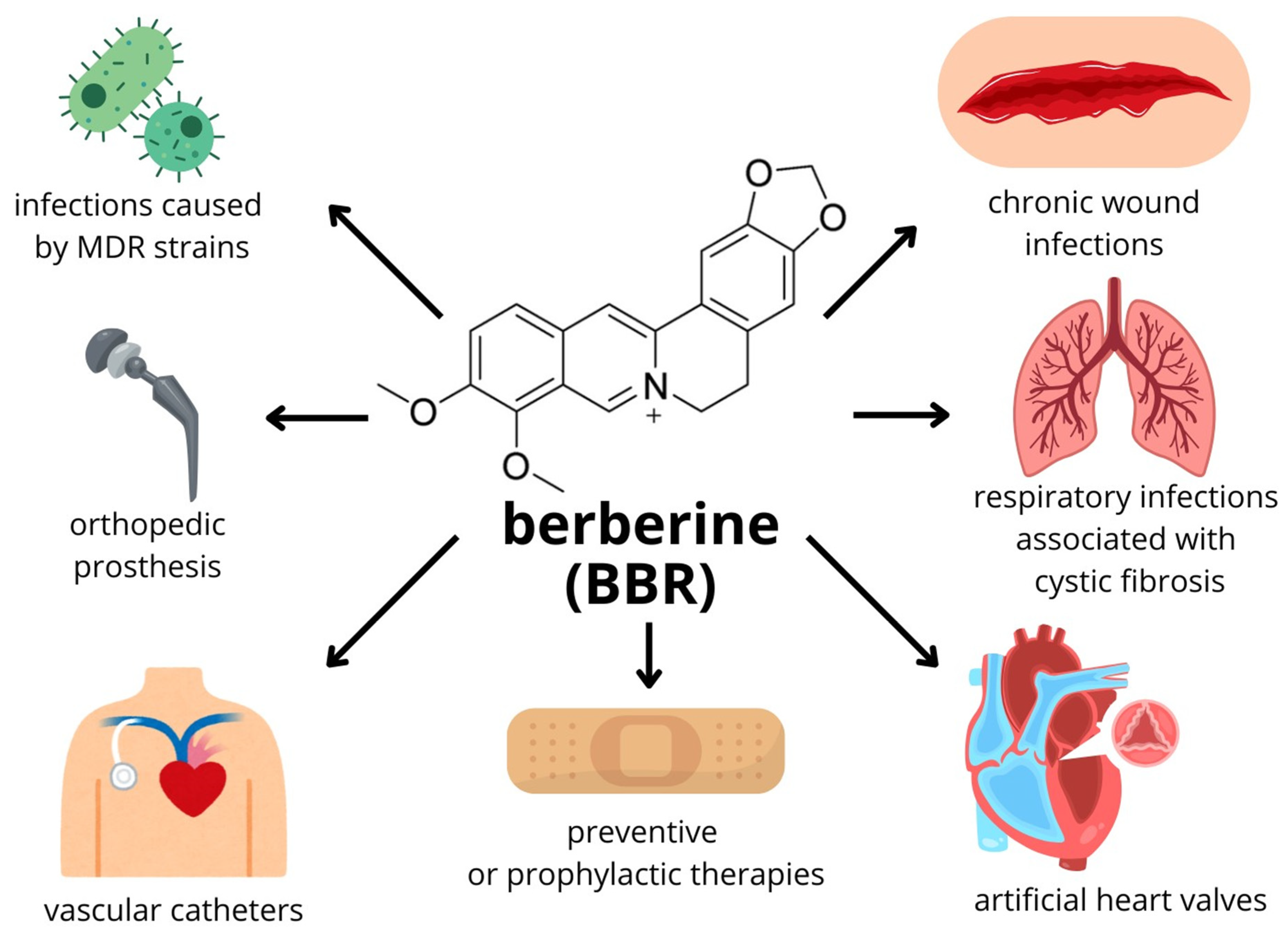
Combination therapies involving BBR may be a particularly beneficial strategy in several clinically relevant situations. Importantly, this approach appears promising in the treatment of infections caused by MDR pathogens, where BBR has been shown to enhance antimicrobial efficacy and interfere with resistance mechanisms [50].
BBR-based combination treatment regimens may also be beneficial in the management of chronic wound infections, including pressure ulcers, postoperative wounds, and diabetic foot ulcers. In these conditions, biofilm formation is a major barrier to effective healing by impairing tissue regeneration and promoting recurrent infections. BBR’s ability to disrupt biofilm architecture and sensitize bacteria to antimicrobial agents supports its potential role as an adjunct in chronic wounds management [163,164].
Furthermore, respiratory tract infections caused by Pseudomonas spp., particularly in patients with cystic fibrosis, represent another area where BBR may provide therapeutic benefits. P. aeruginosa is known for its strong biofilm-forming capacity and natural resistance to antibiotics, and BBR has been reported to impair biofilm development and virulence-associated pathways in this pathogen [161].
Infection associated with medical devices, including orthopaedic implants, urinary and vascular catheters, and prosthetic materials, also constitute a significant clinical challenge due to the rapid establishment of biofilm on abiotic surfaces. In such situations, BBR can be a valuable supplement, limiting the initial adhesion of bacteria, biofilm maturation, and its persistence on biomaterials, thereby improving the long-term effectiveness of implanted devices [165].
Finally, BBR has great potential in prophylactic applications, especially as a component of antimicrobial coatings for biomaterials. The addition of BBR into implant surfaces, hydrogels, wound dressings, or composite systems combining BBR with conventional antibiotics can effectively prevent early-stage bacterial colonization and biofilm formation, thereby reducing the risk of infection from the outset [166].
A summary of the indications for combination therapies with BBR is provided in Figure 4.

6. Challenges and Recommendations

Despite its well-documented antibacterial and biofilm-inhibiting properties, the practical use of BBR (or rather, its clinically used form—orally administered hydrochloride salt) is limited primarily by the low bioavailability of BBR, and consequently, difficulties in effective delivery to the site of infection. BBR has poor water solubility and a low intestinal absorption rate of less than 5%. This is partially due to the presence of a strongly hydrophilic quaternary ammonium group in its structure, which reduces transmembrane transport of BBR [50,167]. Although BBR is rapidly distributed in various tissues (liver, kidneys, muscle, adipose tissue, lungs, heart, and brain), the low bioavailability following oral administration limits the amount of the compound reaching the circulation and, subsequently, the tissues already at the stage of intestinal absorption. Additionally, extensive first-pass metabolism (CYP2D6, CYP1A2, CYP3A4, CYP2E1, and CYP2C19), active efflux through P-glycoprotein transporters, and efficient excretion of BBR in bile, feces, and urine make achieving an effective dose at the site of infection (e.g., implant-associated biofilm) a significant challenge [30,168]. Another barrier is limited biofilm penetration. Even if BBR reaches the site of infection, its ability to penetrate the biofilm matrix may be narrowed for a number of reasons. These include negatively charged EPS in the biofilm structure [169], variability in the biofilm microenvironment, including pH gradients, affecting the physicochemical properties of EPS and particle diffusion [170], and the above-mentioned activity of EPs in surface layers. Therefore, BBR often proves more effective in preventing biofilm formation than in eradicating already mature biofilms [126,171].
To overcome these barriers, studies have explored a number of advanced delivery systems. Nanocarriers, such as the PEG–lipid–PLGA NPs/BBR-SPC nanoparticles used in the study by Yu et al. 2017, improve the solubility and cell membrane penetration of BBR as well as its stability after oral administration and controlled release, achieving higher tissue concentrations in rat models [172]. On the other hand, metal-based nanoparticles are available. For example, Wang et al. 2025 innovatively combined BBR with silver nanoparticles (AgNPs) and carboxylated chitosan, which significantly enhanced its antimicrobial and antibiofilm activity against MRSA in the treatment of skin infections and positively impacted the wound-healing process [173]. A similar improvement in BBR activity against MRSA was noted by Sadeghi et al. 2024 after combining it with gold nanoparticles (AuNPs) in in vitro studies [174]. Al-Awady et al. 2017 demonstrated that BBR in the form of a nanogel with cationic surface charge increases its antibacterial activity against E. coli and Chlamydomonas reinhardtii due to enhanced interaction with the cell membrane [175]. There are also studies on local BBR delivery systems in the form of dressings for the treatment of chronic diabetic wounds: a polysaccharide hydrogel with BBR, combining anti-inflammatory, antioxidant, antibacterial, and tissue regeneration-stimulating effects [164], as well as a BBR nanofibrous dressing, which in in vitro and in vivo studies accelerated wound healing and increased angiogenesis and collagen synthesis [176]. A notable way to increase the penetration of BBR into cells, and thus model the immune response profile or combat intracellular pathogens, is to combine an alkaloid with a ligand that facilitates internalization. Feng et al. indicated the benefits of conjugating BBR with yeast antigens, which facilitated the uptake of the compound from the environment by macrophages [31]. Andima et al. demonstrated the effectiveness of combining BBR with lactoferrin against S. aureus strain Newman and Mycobacterium abscessus [177].
Despite promising preliminary results from preclinical studies, translating them into clinical practice poses a number of challenges. There is a lack of standardized doses—the studies cited above test a wide range of concentrations, making it difficult to determine optimal therapeutic levels. Furthermore, most of these studies were conducted in vitro and few involve animal infection models, while clinical trials are virtually nonexistent. There are also concerns about potential interactions with medications (primarily metabolized by CYP2D6) and the induction of hypoglycemia with simultaneous use of BBR and glucose-lowering medications [178], which requires caution in patients taking multiple medications due to chronic conditions.
It is also important to remember that polymicrobial and host-associated biofilms pose significant challenges in translating antibiofilm strategies into the clinical setting.
Many experimental studies, including those discussed in this review, focus on monospecies biofilm models; however, most clinically relevant biofilms are polymicrobial. They consist of multiple bacterial species or mixed communities of bacteria, fungi, and viruses, in which interspecies interactions promote increased antimicrobial tolerance and increased structural stability compared to monospecies biofilms [179,180]. Importantly, bacterial–fungal biofilms, such as those formed by C. albicans in association with Gram-(+) or Gram-(−) bacteria (e.g., in the oral cavity), are particularly resistant to antimicrobial treatment and are often associated with chronic wound and medical device-related infections [180,181]. The presence of biofilms in host-associated environments (e.g., chronic wounds, respiratory tract, and gastrointestinal tract), where microbial communities are strongly influenced by the host immunity, nutrient availability, and resident microbiota, is not without significance and causes such biofilms to exhibit phenotypes that differ remarkably from those observed in vitro, limiting the predictive value of simplified laboratory models [182,183].
BBR exhibits a broad spectrum of antimicrobial activity, which underlies its potential as an antibiotic adjuvant, but also raises consequential ecological concerns. In polymicrobial communities, this low-selectivity activity may not eliminate all microorganisms uniformly; instead, it may preferentially inhibit the growth of some species while allowing others to survive or expand. As a result, treatment may alter biofilm composition rather than completely eliminate it [180].
In host-associated environments, such as the gut or skin, these changes in microbiome composition can disrupt the resident microbiota and potentially contribute to dysbiosis. Currently, available information on the effects of BBR on the structure of microbial communities in vivo is limited and the available clinical data are insufficient to fully assess this potential risk [184,185]. Therefore, future studies should evaluate BBR-based combination therapies not only for antimicrobial efficacy but also for their impact on host-associated microbial ecosystems.
Therefore, future research should focus on several priority areas: 1. Further development and testing of nanoforms and local delivery systems (hydrogels, coatings, dressings) in infection models involving biofilm formation—particularly infections of orthopedic implants, vascular catheters, and chronic wounds. 2. Translational research combining BBR with antibiotics in clinically relevant settings—taking into consideration strain and virulence factor variability (e.g., EP expression), biofilm conditions, and its maturity. 3. Standardization of therapeutic doses depending on the delivery method—establishing minimum effective concentrations (with different therapeutic targets—prevention versus treatment). 4. A more detailed understanding of the pharmacokinetic properties and biodistribution of BBR, with emphasis on its potential toxicity (possible kernicterus and induction of premature uterine contractions) and interactions with cytochrome P450 substrates [178].

7. Conclusions

Biofilm-associated infections remain one of the most challenging problems in current medicine due to their natural tolerance to antimicrobial drugs, ability to avoid the host’s immune response, and strong association with MDR. The complex architecture of biofilm, combined with metabolic heterogeneity, horizontal gene transfer, and coordinated regulation via QS, significantly limits the effectiveness of conventional antibiotic therapies. As highlighted in this review, these characteristics not only contribute to treatment failures but also drive the persistence and recurrence of chronic and device-associated infections.
BBR appears to be a particularly promising natural compound with broad-spectrum antimicrobial activity and a unique, multidirectional mechanism of action. Unlike classic antibiotics, which often have a single target, BBR disrupts multiple bacterial processes, including cell wall and cell membrane integrity, nucleic acid and protein synthesis, EP activity, and cellular energy metabolism, while inducing oxidative stress in bacterial cells. This pleiotropic mechanism of action reduces the likelihood of rapid resistance development and positions BBR as a valuable candidate in the context of antimicrobial resistance. Current evidence strongly supports BBR’s role in disrupting the bacterial cell wall and membrane integrity, as evidenced by SEM/TEM imaging and comprehensive metabolomic profiles showing significant inhibition of peptidoglycan and teichoic acid synthesis. Similarly, its function as an EP inhibitor is well-validated through restored antibiotic sensitivity and observed binding within pump regions across various species. In contrast, the direct interaction of BBR with specific regulatory proteins like LasR, RhlR, or DNA polymerase III remains more speculative, as these mechanisms are primarily suggested by in silico docking studies and require further biochemical confirmation. Furthermore, the antibiofilm activity of BBR exhibits distinct patterns between Gram-(+) and Gram-(−) bacteria; while it primarily targets the cell wall architecture in Gram-(+), its efficacy in Gram-(−) is critically linked to its ability to bypass the outer membrane and inhibit RND-family EP.
This review highlights the significant potential of BBR in combating biofilm. By inhibiting early adhesion, disrupting QS-regulated pathways, impairing EPS production, and weakening mature biofilm structures, BBR effectively targets key stages of biofilm development. These properties are particularly relevant in the prevention and treatment of chronic, implant- and catheter-associated infections, where biofilm formation is a key determinant of clinical outcome. Literature data indicate that BBR can restore and even enhance the effectiveness of antibiotics against biofilm-forming MDR pathogens through synergistic interactions, EP inhibition, and modulation of the bacterial stress response. Such combination strategies may reduce the required antibiotic dose, limit adverse effects, and alleviate the selection pressure favoring resistant strains. Therefore, BBR-based combination therapies offer hope for the treatment of infections that are currently difficult or impossible to eradicate with antibiotics alone.
In addition, an important yet insufficiently explored aspect of the potential therapeutic application of BBR is its impact on the host microbiota. Owing to its broad-spectrum antibacterial activity and ability to modulate bacterial metabolism, BBR affects not only biofilm-forming pathogens but also the commensal microbiota, potentially leading to dysbiosis. However, due to its immunomodulatory and selective effects, BBR may modulate the host microbiota composition. Therefore, assessing the balance between therapeutic efficacy and the risk of dysbiosis induction should represent a key priority for future in vivo studies and clinical trials, particularly in the context of long-term and combination therapies.
Despite these encouraging findings, a number of challenges remain. Currently, the most robust data are derived from in vitro antibiofilm studies, which demonstrate significant molecular potential. Preclinical in vivo evidence, though promising in animal models, remains limited and insufficient to establish standardized clinical protocols. This clinical translation is further hindered by BBR’s inherently low systemic bioavailability, which results from its poor water solubility and extensive first-pass metabolism. Therefore, the clinical utility of BBR remains hypothetical and subject to future validation through controlled trials. At this stage of research, BBR should be viewed primarily as a lead compound or an adjuvant prototype rather than a ready-to-use therapeutic agent. Furthermore, the molecular mechanisms underlying the synergy between BBR and antibiotics and their specific effects on biofilm require further clarification, particularly in the context of multibacterial and host-associated biofilm. However, BBR is such a versatile and biologically credible adjunct in the fight against biofilm-associated and antibiotic-resistant infections that future research should prioritize standardized in vivo models, advanced drug delivery systems, and well-controlled clinical trials to fully exploit its therapeutic potential. The inclusion of BBR in multidimensional strategies to combat biofilm may significantly contribute to overcoming one of the most pressing challenges in modern antimicrobial therapy.

Author Contributions

Conceptualization, A.D.-M.; methodology, H.B., J.Ł. and S.V.; software, H.B., J.Ł. and S.V.; validation, A.D.-M. and S.V.; formal analysis, H.B. and S.V.; investigation, A.D.-M., H.B., J.Ł. and S.V.; resources, A.D.-M. and S.V.; data curation, A.D.-M., H.B., J.Ł. and S.V.; writing—original draft preparation, A.D.-M., H.B., J.Ł. and S.V.; writing—review and editing, A.D.-M. and S.V.; visualization, H.B., J.Ł. and S.V.; supervision, A.D.-M.; funding acquisition, A.D.-M. All authors have read and agreed to the published version of the manuscript.

Funding

This research received no external funding.

Institutional Review Board Statement

Not applicable.

Informed Consent Statement

Not applicable.

Data Availability Statement

No new data were created or analyzed in this study. Data sharing is nor applicable to this article. The original contributions presented in this study are included in the article. Further inquiries can be directed to the corresponding author.

Conflicts of Interest

The authors declare no conflicts of interest.

References

  1. Tong, Q.; Xu, Q. Biofilm Formation in Cardiovascular Infection and Bioengineering Approaches for Treatment and Prevention. MedComm-Biomater. Appl. 2025, 4, e70003. [Google Scholar] [CrossRef]
  2. Richards, G.A.; Brink, A.J.; Mcintosh, R.; Steel, H.C.; Cockeran, R. Investigation of Biofilm Formation on a Charged Intravenous Catheter Relative to That on a Similar but Uncharged Catheter. Med. Devices Evid. Res. 2014, 7, 219–224. [Google Scholar] [CrossRef] [PubMed]
  3. Donlan, R.M. Biofilms and Device-Associated Infections. Biofilms Device-Assoc. Infect. 2001, 7, 277–281. [Google Scholar] [CrossRef]
  4. Gruszecka, J. Bacterial Biofilms—A Threat to Biliary Stents, Understanding Their Formation, Clinical Consequences and Management. Medicina 2025, 61, 512. [Google Scholar] [CrossRef] [PubMed]
  5. Zumstein, V.; Betschart, P.; Albrich, W.; Buhmann, T.; Ren, Q.; Schmidt, H.-P.; Abt, D. Biofilm Formation on Ureteral Stents—Incidence, Clinical Impact and Prevention. Swiss Med. Wkly. 2017, 147, w14408. [Google Scholar] [CrossRef]
  6. Bin, L.; McGiffin, D.; Nguyen, T.; Wang, L.; Sun, Y.; Ye, L.; Han, M.; Sheng, C.; Lee, T.-H.; Aguilar, M.-I.; et al. Accurate Quantitation of Antibiotic Penetration through Staphylococcal Biofilms. Biofilm 2025, 10, 100316. [Google Scholar] [CrossRef]
  7. Lauten, A.; Martinović, M.; Kursawe, L.; Kikhney, J.; Affeld, K.; Kertzscher, U.; Falk, V.; Moter, A. Bacterial Biofilms in Infective Endocarditis: An in Vitro Model to Investigate Emerging Technologies of Antimicrobial Cardiovascular Device Coatings. Clin. Res. Cardiol. 2021, 110, 323–331. [Google Scholar] [CrossRef]
  8. Liu, Y.; Long, S.; Wang, H.; Wang, Y. Biofilm Therapy for Chronic Wounds. Int. Wound J. 2024, 21, e14667. [Google Scholar] [CrossRef]
  9. Stewart, P.S.; Franklin, M.J. Physiological Heterogeneity in Biofilms. Nat. Rev. Microbiol. 2008, 6, 199–210. [Google Scholar] [CrossRef]
  10. Markowska, K.; Szymanek-majchrzak, K.; Pituch, H.; Majewska, A. Understanding Quorum-Sensing and Biofilm Forming in Anaerobic Bacterial Communities. Int. J. Mol. Sci. 2024, 25, 12808. [Google Scholar] [CrossRef]
  11. Mitra, A. Combatting Biofilm-Mediated Infections in Clinical Settings by Targeting Quorum Sensing. Cell Surf. 2024, 12, 100133. [Google Scholar] [CrossRef]
  12. Madsen, J.S.; Burmølle, M.; Hansen, L.H.; Sørensen, S.J. The interconnection between biofilm formation and horizontal gene transfer. Immunol. Med. Microbiol. 2012, 65, 183–195. [Google Scholar] [CrossRef] [PubMed]
  13. Doyle, R.J. Microbial Growth in Biofilms. Part A, Developmental and Molecular Biological Aspects; Academic Press: San Diego, CA, USA, 2001. [Google Scholar]
  14. Zhao, A.; Sun, J.; Liu, Y. Understanding Bacterial Bio Fi Lms: From de Fi Nition to Treatment Strategies. Front. Cell. Infect. Microbiol. 2023, 13, 1137947. [Google Scholar] [CrossRef] [PubMed]
  15. Bamford, N.C.; Macphee, C.E.; Stanley-, N.R. Microbial Primer: An Introduction to Biofilms—What They Are, Why They Form and Their Impact on Built and Natural Environments. Microbiology 2023, 169, 001338. [Google Scholar] [CrossRef]
  16. Shree, P.; Singh, C.K.; Sodhi, K.K.; Surya, J.N.; Singh, D.K. Biofilms: Understanding the Structure and Contribution towards Bacterial Resistance in Antibiotics. Med. Microecol. 2023, 16, 100084. [Google Scholar] [CrossRef]
  17. Mah, T.C.; Toole, G.A.O. Mechanisms of Biofilm Resistance to Antimicrobial Agents. Trends Microbiol. 2001, 9, 34–39. [Google Scholar] [CrossRef] [PubMed]
  18. Ciofu, O.; Tolker-nielsen, T. Tolerance and Resistance of Pseudomonas aeruginosa Biofilms to Antimicrobial Agents—How P. Aeruginosa Can Escape Antibiotics. Front. Microbiol. 2019, 10, 913. [Google Scholar] [CrossRef]
  19. Liu, H.Y.; Prentice, E.L.; Webber, M.A. Mechanismsof Antimicrobial Resistance in Biofilm. npj Antimicrob. Resist. 2024, 2, 27. [Google Scholar] [CrossRef]
  20. Goodman, S.D.; Obergfell, K.P.; Jurcisek, J.A.; Novotny, L.A.; Downey, J.S.; Ayala, E.A.; Tjokro, N.; Li, B.; Justice, S.S.; Bakaletz, L.O. See COMMENTARY Page XX Biofilms Can Be Dispersed by Focusing the Immune System on a Common Family of Bacterial Nucleoid-Associated Proteins. Mucosal Immunol. 2011, 4, 625–637. [Google Scholar] [CrossRef]
  21. Sahoo, K.; Meshram, S. Biofilm Formation in Chronic Infections: A Comprehensive Review of Pathogenesis, Clinical Implications, and Novel Therapeutic Approaches. Cureus 2024, 16, e70629. [Google Scholar] [CrossRef]
  22. Li, P.; Yin, R.; Cheng, J.; Lin, J. Bacterial Biofilm Formation on Biomaterials and Approaches to Its Treatment and Prevention. Int. J. Mol. Sci. 2023, 24, 11680. [Google Scholar] [CrossRef]
  23. Jamal, M.; Ahmad, W.; Andleeb, S.; Jalil, F.; Imran, M.; Asif, M.; Hussain, T.; Ali, M.; Rafiq, M.; Atif, M. ScienceDirect Bacterial Biofilm and Associated Infections. J. Chin. Med. Assoc. 2018, 81, 7–11. [Google Scholar] [CrossRef]
  24. Mishra, S.; Gupta, A.; Upadhye, V.; Singh, S.C.; Sinha, R.P. Therapeutic Strategies against Biofilm Infections. Life 2023, 13, 172. [Google Scholar] [CrossRef] [PubMed]
  25. Singh, B.; Dahiya, M.; Kumar, V.; Ayyagari, A.; Chaudhari, D.N.; Ahire, J.J. Biofilm and Antimicrobial Resistance: Mechanisms, Implications, and Emerging Solutions. Microbiol. Res. 2025, 16, 183. [Google Scholar] [CrossRef]
  26. Sharma, D.; Misba, L.; Khan, A.U. Antibiotics versus Biofilm: An Emerging Battleground in Microbial Communities. Antimicrob. Resist. Infect. Control 2019, 3, 76. [Google Scholar] [CrossRef]
  27. Verma, S.K.; Thareja, S. Chapter 11—An Overview on Chemistry of Natural Aldose Reductase Inhibitors for the Management of Diabetic Complications. In Studies in Natural Products Chemistry; Atta-ur-Rahman, Ed.; Elsevier: London, UK, 2020; Volume 65, pp. 381–429. [Google Scholar]
  28. Neag, M.A.; Mocan, A.; Echeverría, J.; Pop, R.M.; Bocsan, C.I.; Crişan, G.; Buzoianu, A.D. Berberine: Botanical Occurrence, Traditional Uses, Extraction Methods, and Relevance in Cardiovascular, Metabolic, Hepatic, and Renal Disorders. Front. Pharmacol. 2018, 9, 557. [Google Scholar] [CrossRef]
  29. Germán-Acacio, J.M.; Meza-Sánchez, D.E.; Morales-Morales, D. Chapter 3—Therapeutically Relevant Natural Products as AMPK Activators in the Treatment of Diabetes. In Studies in Natural Products Chemistry; Atta-ur-Rahman, Ed.; Elsevier: London, UK, 2020; Volume 66, pp. 57–90. [Google Scholar]
  30. Ai, X.; Yu, P.; Peng, L.; Luo, L.; Liu, J.; Li, S.; Lai, X.; Luan, F.; Meng, X. Berberine: A Review of Its Pharmacokinetics Properties and Therapeutic Potentials in Diverse Vascular Diseases. Front. Pharmacol. 2021, 12, 762654. [Google Scholar] [CrossRef]
  31. Feng, X.; Xie, Q.; Xu, H.; Zhang, T.; Li, X.; Tian, Y.; Lan, H.; Kong, L.; Zhang, Z. Yeast Microcapsule Mediated Natural Products Delivery for Treating Ulcerative Colitis through Anti-Inflammatory and Regulation of Macrophage Polarization. ACS Appl. Mater. Interfaces 2022, 14, 31085–31098. [Google Scholar] [CrossRef] [PubMed]
  32. Zhu, L.; Gu, P.; Shen, H. Protective Effects of Berberine Hydrochloride on DSS-Induced Ulcerative Colitis in Rats. Int. Immunopharmacol. 2019, 68, 242–251. [Google Scholar] [CrossRef]
  33. Sun, C.; Dong, S.; Chen, W.; Li, J.; Luo, E.; Ji, J. Berberine Alleviates Alzheimer’s Disease by Regulating the Gut Microenvironment, Restoring the Gut Barrier and Brain-Gut Axis Balance. Phytomedicine 2024, 129, 155624. [Google Scholar] [CrossRef]
  34. Dai, Y.; Zhu, W.; Zhou, J.; Shen, T. The Combination of Berberine and Evodiamine Ameliorates High-Fat Diet-Induced Non-Alcoholic Fatty Liver Disease Associated with Modulation of Gut Microbiota in Rats. Braz. J. Med. Biol. Res. 2022, 55, e12096. [Google Scholar] [CrossRef]
  35. Dong, Y.; Fan, H.; Zhang, Z.; Jiang, F.; Li, M.; Zhou, H.; Guo, W.; Zhang, Z.; Kang, Z.; Gui, Y.; et al. Berberine Ameliorates DSS-Induced Intestinal Mucosal Barrier Dysfunction through Microbiota-Dependence and Wnt/β-Catenin Pathway. Int. J. Biol. Sci. 2022, 18, 1381–1397. [Google Scholar] [CrossRef]
  36. Duda-Madej, A.; Viscardi, S.; Bazan, H.; Sobieraj, J. Exploring the Role of Berberine as a Molecular Disruptor in Antimicrobial Strategies. Pharmaceuticals 2025, 18, 947. [Google Scholar] [CrossRef] [PubMed]
  37. Xu, M.; Ren, L.; Fan, J.; Huang, L.; Zhou, L.; Li, X.; Ye, X. Berberine Inhibits Gastric Cancer Development and Progression by Regulating the JAK2/STAT3 Pathway and Downregulating IL-6. Life Sci. 2022, 290, 120266. [Google Scholar] [CrossRef]
  38. Wang, J.; Qi, Q.; Feng, Z.; Zhang, X.; Huang, B.; Chen, A.; Prestegarden, L.; Li, X.; Wang, J. Berberine Induces Autophagy in Glioblastoma by Targeting the AMPK/MTOR/ULK1-Pathway. Oncotarget 2016, 7, 66944–66958. [Google Scholar] [CrossRef] [PubMed]
  39. Vlavcheski, F.; O’Neill, E.J.; Gagacev, F.; Tsiani, E. Effects of Berberine against Pancreatitis and Pancreatic Cancer. Molecules 2022, 27, 8630. [Google Scholar] [CrossRef] [PubMed]
  40. Zhong, X.D.; Chen, L.J.; Xu, X.Y.; Liu, Y.J.; Tao, F.; Zhu, M.H.; Li, C.Y.; Zhao, D.; Yang, G.J.; Chen, J. Berberine as a Potential Agent for Breast Cancer Therapy. Front. Oncol. 2022, 12, 993775. [Google Scholar] [CrossRef]
  41. Duda-Madej, A.; Viscardi, S.; Szewczyk, W.; Topola, E. Natural Alkaloids in Cancer Therapy: Berberine, Sanguinarine and Chelerythrine against Colorectal and Gastric Cancer. Int. J. Mol. Sci. 2024, 25, 8375. [Google Scholar] [CrossRef]
  42. Duda-Madej, A.; Viscardi, S.; Niezgódka, P.; Szewczyk, W. The Impact of Plant-Derived Polyphenols on Combating Efflux-Mediated Antibiotic Resistance. Int. J. Mol. Sci. 2025, 26, 4030. [Google Scholar] [CrossRef]
  43. Duda-Madej, A.; Viscardi, S.; Łabaz, J.P.; Topola, E.; Szewczyk, W.; Gagat, P. Berberine in Bowel Health: Anti-Inflammatory and Gut Microbiota Modulatory Effects. Int. J. Mol. Sci. 2025, 26, 12021. [Google Scholar] [CrossRef]
  44. Chen, Y.; Hao, Z.; Zhao, H.; Duan, X.; Jia, D. Berberine Alleviates Intestinal Barrier Dysfunction in Glucolipid Metabolism Disorder Hamsters by Modulating Gut Microbiota and Gut-Microbiota-Related Tryptophan Metabolites. J. Sci. Food Agric. 2023, 103, 1464–1473. [Google Scholar] [CrossRef]
  45. Cao, J.; Chen, M.; Xu, R.; Guo, M. Therapeutic Mechanisms of Berberine to Improve the Intestinal Barrier Function via Modulating Gut Microbiota, TLR4/NF-κB/MTORC Pathway and Autophagy in Cats. Front. Microbiol. 2022, 13, 961885. [Google Scholar] [CrossRef]
  46. Hou, Q.; Zhu, S.; Zhang, C.; Huang, Y.; Guo, Y.; Li, P. Biomedicine & Pharmacotherapy Berberine Improves Intestinal Epithelial Tight Junctions by Upregulating A20 Expression in IBS-D Mice. Biomed. Pharmacother. 2019, 118, 109206. [Google Scholar] [CrossRef]
  47. Yang, F.; Gao, R.; Luo, X.; Liu, R.; Xiong, D. Berberine Influences Multiple Diseases by Modifying Gut Microbiota. Front. Nutr. 2023, 10, 1187718. [Google Scholar] [CrossRef] [PubMed]
  48. Zhang, X.; Zhao, Y.; Xu, J.; Xue, Z.; Zhang, M.; Pang, X. Modulation of Gut Microbiota by Berberine and Metformin during the Treatment of High-Fat Diet- Induced Obesity in Rats. Sci. Rep. 2015, 5, 14405. [Google Scholar] [CrossRef]
  49. Wu, S.; Yang, K.; Hong, Y.; Gong, Y.; Ni, J.; Yang, N.; Ding, W. A New Perspective on the Antimicrobial Mechanism of Berberine Hydrochloride Against Staphylococcus aureus Revealed by Untargeted Metabolomic Studies. Front. Microbiol. 2022, 13, 917414. [Google Scholar] [CrossRef]
  50. Zhou, H.; Wang, W.; Cai, L.; Yang, T. Potentiation and Mechanism of Berberine as an Antibiotic Adjuvant Against Multidrug-Resistant Bacteria. Infect. Drug Resist. 2023, 16, 7313–7326. [Google Scholar] [CrossRef]
  51. Grari, O.; Ezrari, S.; Yandouzi, I.E.; Benaissa, E.; Lahlou, Y.B.; Lahmer, M.; Saddari, A.; Elouennass, M.; Maleb, A. A Comprehensive Review on Biofilm-Associated Infections: Mechanisms, Diagnostic Challenges, and Innovative Therapeutic Strategies. Microbe 2025, 8, 100436. [Google Scholar] [CrossRef]
  52. Sharma, S.; Mohler, J.; Mahajan, S.D.; Schwartz, S.A.; Bruggemann, L.; Aalinkeel, R. Microbial Biofilm: A Review on Formation, Infection, Antibiotic Resistance, Control Measures, and Innovative Treatment. Microorganisms 2023, 11, 1614. [Google Scholar] [CrossRef] [PubMed]
  53. Donlan, R.M. Biofilms: Microbial Life on Surfaces. Emerg. Infect. Dis. 2002, 8, 881. [Google Scholar] [CrossRef]
  54. Lahiri, D.; Nag, M.; Dutta, B.; Dey, A.; Ray, R.R. Bacterial Extracellular Polysaccharides in Biofilm Formation and Function. In Application of Biofilms in Applied Microbiology; Elsevier: London, UK, 2022; pp. 1–23. [Google Scholar]
  55. Vandana, D.S. Genetic Regulation, Biosynthesis and Applications of Extracellular Polysaccharides of the Biofilm Matrix of Bacteria. Carbohydr. Polym. 2022, 291, 119536. [Google Scholar] [CrossRef]
  56. Tremblay, Y.D.N.; Durand, B.A.R.; Hamiot, A.; Martin-Verstraete, I.; Oberkampf, M.; Monot, M.; Dupuy, B. Metabolic Adaption to Extracellular Pyruvate Triggers Biofilm Formation in Clostridioides difficile. ISME J. 2021, 15, 3623–3635. [Google Scholar] [CrossRef] [PubMed]
  57. Samreen; Roy, D.N.; Ahmad, I. Chapter 4—Combating Biofilm of ESKAPE Pathogens from Ancient Plant-Based Therapy to Modern Nanotechnological Combinations. In A Complete Guidebook on Biofilm Study; Roy, D., Ed.; Academic Press: Cambridge, MA, USA, 2022; pp. 59–94. [Google Scholar]
  58. Wei, X.; Chen, Z.; Liu, A.; Yang, L.; Xu, Y.; Cao, M.; He, N. Advanced Strategies for Metabolic Engineering of Bacillus to Produce Extracellular Polymeric Substances. Biotechnol. Adv. 2023, 67, 108199. [Google Scholar] [CrossRef]
  59. Kaushik, A.; Kest, H.; Sood, M.; Steussy, B.; Thieman, C.; Gupta, S. Biofilm Producing Methicillin-Resistant Staphylococcus aureus (MRSA) Infections in Humans: Clinical Implications and Management. Pathogens 2024, 13, 76. [Google Scholar] [CrossRef] [PubMed]
  60. Redwan, A.M.; Millerick, K. Anaerobic Bacterial Responses to Carbonaceous Materials and Implications for Contaminant Transformation: Cellular, Metabolic, and Community Level Findings. Bioresour. Technol. 2021, 341, 125738. [Google Scholar] [CrossRef]
  61. Mahto, K.U.; Vandana; Priyadarshanee, M.; Samantaray, D.P.; Das, S. Bacterial Biofilm and Extracellular Polymeric Substances in the Treatment of Environmental Pollutants: Beyond the Protective Role in Survivability. J. Clean. Prod. 2022, 379, 134759. [Google Scholar] [CrossRef]
  62. Hengge, R. Principles of C-Di-GMP Signalling in Bacteria. Nat. Rev. Microbiol. 2009, 7, 263–273. [Google Scholar] [CrossRef]
  63. Costa, F.C.R.; Ricci, B.C.; Teodoro, B.; Koch, K.; Drewes, J.E.; Amaral, M.C.S. Biofouling in Membrane Distillation Applications—A Review. Desalination 2021, 516, 115241. [Google Scholar] [CrossRef]
  64. de Kievit, T. 1.41—Biofilms. In Comprehensive Biotechnology, 2nd ed.; Moo-Young, M., Ed.; Academic Press: Cambridge, MA, USA, 2011; pp. 547–558. [Google Scholar]
  65. Paula, A.J.; Hwang, G.; Koo, H. Dynamics of Bacterial Population Growth in Biofilms Resemble Spatial and Structural Aspects of Urbanization. Nat. Commun. 2020, 11, 1354. [Google Scholar] [CrossRef]
  66. Rather, M.A.; Gupta, K.; Mandal, M. Microbial Biofilm: Formation, Architecture, Antibiotic Resistance, and Control Strategies. Braz. J. Microbiol. 2021, 52, 1701–1718. [Google Scholar] [CrossRef]
  67. Petrova, O.E.; Schurr, J.R.; Schurr, M.J.; Sauer, K. Microcolony Formation by the Opportunistic Pathogen Pseudomonas aeruginosa Requires Pyruvate and Pyruvate Fermentation. Mol. Microbiol. 2012, 86, 819–835. [Google Scholar] [CrossRef]
  68. Laverty, G.; Gorman, S.P.; Gilmore, B.F. 2—Biofilms and Implant-Associated Infections. In Biomaterials and Medical Device—Associated Infections; Barnes, L., Cooper, I.R., Eds.; Woodhead Publishing: Sawston, UK, 2015; pp. 19–45. [Google Scholar]
  69. Goel, N.; Fatima, S.W.; Kumar, S.; Sinha, R.; Khare, S.K. Antimicrobial Resistance in Biofilms: Exploring Marine Actinobacteria as a Potential Source of Antibiotics and Biofilm Inhibitors. Biotechnol. Rep. 2021, 30, e00613. [Google Scholar] [CrossRef]
  70. Floyd, K.A.; Eberly, A.R.; Hadjifrangiskou, M. 3—Adhesion of Bacteria to Surfaces and Biofilm Formation on Medical Devices. In Biofilms and Implantable Medical Devices; Deng, Y., Lv, W., Eds.; Woodhead Publishing: Sawston, UK, 2017; pp. 47–95. [Google Scholar]
  71. Sauer, K.; Stoodley, P.; Goeres, D.M.; Hall-Stoodley, L.; Burmølle, M.; Stewart, P.S.; Bjarnsholt, T. The Biofilm Life Cycle: Expanding the Conceptual Model of Biofilm Formation. Nat. Rev. Microbiol. 2022, 20, 608–620. [Google Scholar] [CrossRef]
  72. Wille, J.; Coenye, T. Biofilm Dispersion: The Key to Biofilm Eradication or Opening Pandora’s Box? Biofilm 2020, 2, 100027. [Google Scholar] [CrossRef] [PubMed]
  73. Kaplan, J.B. Biofilm Dispersal: Mechanisms, Clinical Implications, and Potential Therapeutic Uses. J. Dent. Res. 2010, 89, 205–218. [Google Scholar] [CrossRef] [PubMed]
  74. Ruhal, R.; Kataria, R. Biofilm Patterns in Gram-Positive and Gram-Negative Bacteria. Microbiol. Res. 2021, 251, 126829. [Google Scholar] [CrossRef] [PubMed]
  75. Gordon, C.A.; Hodges, N.A.; Marriott, C. Antibiotic Interaction and Diffusion through Alginate and Exopolysaccharide of Cystic Fibrosis-Derived Pseudomonas aeruginosa. J. Antimicrob. Chemother. 1988, 22, 667–674. [Google Scholar] [CrossRef]
  76. Nichols, W.W.; Dorrington, S.M.; Slack, M.P.; Walmsley, H.L. Inhibition of Tobramycin Diffusion by Binding to Alginate. Antimicrob. Agents Chemother. 1988, 32, 518–523. [Google Scholar] [CrossRef]
  77. Cao, B.; Christophersen, L.; Kolpen, M.; Jensen, P.Ø.; Sneppen, K.; Høiby, N.; Moser, C.; Sams, T. Diffusion Retardation by Binding of Tobramycin in an Alginate Biofilm Model. PLoS ONE 2016, 11, e0153616. [Google Scholar] [CrossRef]
  78. Schandl, S.; Osondu-Chuka, G.; Durand-Chatton, G.; Lemaire, L.; Franconi, F.; Sedivy, A.; Reimhult, E.; Ovsianikov, A. Synthetically Acetylated Alginate Is a Superior in Vitro Biofilm Model for Antibiotic Testing Showing Reduced Tobramycin Affinity. Eur. Polym. J. 2025, 237, 114176. [Google Scholar] [CrossRef]
  79. Tseng, B.S.; Zhang, W.; Harrison, J.J.; Quach, T.P.; Song, J.L.; Penterman, J.; Singh, P.K.; Chopp, D.L.; Packman, A.I.; Parsek, M.R. The Extracellular Matrix Protects Pseudomonas aeruginosa Biofilms by Limiting the Penetration of Tobramycin. Environ. Microbiol. 2013, 15, 2865–2878. [Google Scholar] [CrossRef]
  80. Mike, W.; Laetitia, C.-M.; Richard, M.; Shawn, L. Extracellular DNA Acidifies Biofilms and Induces Aminoglycoside Resistance in Pseudomonas aeruginosa. Antimicrob. Agents Chemother. 2015, 60, 544–553. [Google Scholar] [CrossRef]
  81. Wang, C.-H.; Siu, L.K.; Chang, F.-Y.; Tsai, Y.-K.; Huang, L.-Y.; Lin, J.-C. Influence of PhoPQ and PmrAB Two Component System Alternations on Colistin Resistance from Non-Mcr Colistin Resistant Clinical E. coli Strains. BMC Microbiol. 2024, 24, 109. [Google Scholar] [CrossRef]
  82. Wang, H.; Oana, C.; Liang, Y.; Hong, W.; Zhijun, S.; Antonio, O.; Niels, H. High β-Lactamase Levels Change the Pharmacodynamics of β-Lactam Antibiotics in Pseudomonas aeruginosa Biofilms. Antimicrob. Agents Chemother. 2013, 57, 196–204. [Google Scholar] [CrossRef]
  83. Khan, W.; Bernier, S.P.; Kuchma, S.L.; Hammond, J.H.; Hasan, F.; O’Toole, G.A. Aminoglycoside Resistance of Pseudomonas aeruginosa Biofilms Modulated by Extracellular Polysaccharide. Int. Microbiol. Off. J. Span. Soc. Microbiol. 2010, 13, 207. [Google Scholar]
  84. Orazi, G.; O’Toole, G.A. “It Takes a Village”: Mechanisms Underlying Antimicrobial Recalcitrance of Polymicrobial Biofilms. J. Bacteriol. 2019, 202, 10–1128. [Google Scholar] [CrossRef]
  85. Davies, D. Understanding Biofilm Resistance to Antibacterial Agents. Nat. Rev. Drug Discov. 2003, 2, 114–122. [Google Scholar] [CrossRef] [PubMed]
  86. Yadav, M.K.; Song, J.J.; Singh, B.P.; Vidal, J.E. Microbial biofilms and human disease: A concise review. In New and Future Developments in Microbial Biotechnology and Bioengineering: Microbial Biofilms Current Research and Future Trends in Microbial Biofilms; Elsevier: London, UK, 2019; pp. 1–13. [Google Scholar] [CrossRef]
  87. Galdiero, E.; de Alteriis, E.; De Natale, A.; D’Alterio, A.; Siciliano, A.; Guida, M.; Lombardi, L.; Falanga, A.; Galdiero, S. Eradication of Candida albicans Persister Cell Biofilm by the Membranotropic Peptide GH625. Sci. Rep. 2020, 10, 5780. [Google Scholar] [CrossRef] [PubMed]
  88. Dawan, J.; Li, Y.; Lu, F.; He, X.; Ahn, J. Role of Efflux Pump-Mediated Antibiotic Resistance in Quorum Sensing-Regulated Biofilm Formation by Salmonella typhimurium. Pathogens 2022, 11, 147. [Google Scholar] [CrossRef]
  89. Hannauer, M.; Yeterian, E.; Martin, L.W.; Lamont, I.L.; Schalk, I.J. An Efflux Pump Is Involved in Secretion of Newly Synthesized Siderophore by Pseudomonas aeruginosa. FEBS Lett. 2010, 584, 4751–4755. [Google Scholar] [CrossRef]
  90. Earp, J.C.; Garaeva, A.A.; Meikle, V.; Niederweis, M.; Seeger, M.A. Structural Basis of Siderophore Export and Drug Efflux by Mycobacterium Tuberculosis. Nat. Commun. 2025, 16, 1934. [Google Scholar] [CrossRef]
  91. Uruén, C.; Chopo-Escuin, G.; Tommassen, J.; Mainar-Jaime, R.C.; Arenas, J. Biofilms as Promoters of Bacterial Antibiotic Resistance and Tolerance. Antibiotics 2020, 10, 3. [Google Scholar] [CrossRef]
  92. Ebbensgaard, A.E.; Løbner-Olesen, A.; Frimodt-Møller, J. The Role of Efflux Pumps in the Transition from Low-Level to Clinical Antibiotic Resistance. Antibiotics 2020, 9, 855. [Google Scholar] [CrossRef]
  93. Sorenson, T.R.; Zack, K.M.; Joshi, S.G. Biofilm Formation and the Role of Efflux Pumps in ESKAPE Pathogens. Microorganisms 2025, 13, 1816. [Google Scholar] [CrossRef] [PubMed]
  94. Metzger, G.A.; Ridenhour, B.J.; France, M.; Gliniewicz, K.; Millstein, J.; Settles, M.L.; Forney, L.J.; Stalder, T.; Top, E.M. Biofilms Preserve the Transmissibility of a Multi-Drug Resistance Plasmid. npj Biofilms Microbiomes 2022, 8, 95. [Google Scholar] [CrossRef] [PubMed]
  95. Dale, J.L.; Cagnazzo, J.; Phan, C.Q.; Barnes, A.M.T.; Dunny, G.M. Multiple Roles for Enterococcus Faecalis Glycosyltransferases in Biofilm-Associated Antibiotic Resistance, Cell Envelope Integrity, and Conjugative Transfer. Antimicrob. Agents Chemother. 2015, 59, 4094–4105. [Google Scholar] [CrossRef] [PubMed]
  96. Komiyama, E.Y.; Lepesqueur, L.S.S.; Yassuda, C.G.; Samaranayake, L.P.; Parahitiyawa, N.B.; Balducci, I.; Koga-Ito, C.Y. Enterococcus Species in the Oral Cavity: Prevalence, Virulence Factors and Antimicrobial Susceptibility. PLoS ONE 2016, 11, e0163001. [Google Scholar] [CrossRef]
  97. Werner, G.; Freitas, A.R.; Coque, T.M.; Sollid, J.E.; Lester, C.; Hammerum, A.M.; Garcia-Migura, L.; Jensen, L.B.; Francia, M.V.; Witte, W.; et al. Host Range of Enterococcal VanA Plasmids among Gram-Positive Intestinal Bacteria. J. Antimicrob. Chemother. 2011, 66, 273–282. [Google Scholar] [CrossRef]
  98. Weigel, L.M.; Donlan, R.M.; Shin, D.H.; Jensen, B.; Clark, N.C.; McDougal, L.K.; Zhu, W.; Musser, K.A.; Thompson, J.; Kohlerschmidt, D.; et al. High-Level Vancomycin-Resistant Staphylococcus aureus Isolates Associated with a Polymicrobial Biofilm. Antimicrob. Agents Chemother. 2007, 51, 231–238. [Google Scholar] [CrossRef] [PubMed]
  99. Taghadosi, R.; Shakibaie, M.R.; Masoumi, S. Biochemical Detection of N-Acyl Homoserine Lactone from Biofilm-Forming Uropathogenic Escherichia coli Isolated from Urinary Tract Infection Samples. Rep. Biochem. Mol. Biol. 2015, 3, 56–61. [Google Scholar]
  100. Reen; Mooij, M.J.; Holcombe, L.J.; McSweeney, C.M.; McGlacken, G.P.; Morrissey, J.P.; O’Gara, F. The Pseudomonas Quinolone Signal (PQS), and Its Precursor HHQ, Modulate Interspecies and Interkingdom Behaviour. FEMS Microbiol. Ecol. 2011, 77, 413–428. [Google Scholar] [CrossRef] [PubMed]
  101. Zhao, Y.; Liu, D.; Gu, H.; Liang, Y.; He, L.; Liu, S.; Shi, K. The AI-2/LuxS Quorum Sensing System Enhances Stress Tolerance and Enological Performance of Lactiplantibacillus Plantarum during Malolactic Fermentation. Food Microbiol. 2026, 134, 104923. [Google Scholar] [CrossRef]
  102. Kumar, V.; Yasmeen, N.; Pandey, A.; Chaudhary, A.A.; Alawam, A.S.; Rudayni, H.A.; Islam, A.; Lakhawat, S.S.; Sharma, P.K.; Shahid, M. Antibiotic Adjuvants: Synergistic Tool to Combat Multi-Drug Resistant Pathogens. Front. Cell. Infect. Microbiol. 2023, 13, 1293633. [Google Scholar] [CrossRef]
  103. Solano, C.; Echeverz, M.; Lasa, I. Biofilm Dispersion and Quorum Sensing. Curr. Opin. Microbiol. 2014, 18, 96–104. [Google Scholar] [CrossRef]
  104. Marić, S.; Vraneš, J. Characteristics and Significance of Microbial Biofilm Formation. Period. Biol. 2007, 109, 115–121. [Google Scholar]
  105. Carette, J.; Nachtergael, A.; Duez, P.; Jaziri, M.E.; Rasamiravaka, T. Natural Compounds Inhibiting Pseudomonas aeruginosa Biofilm Formation by Targeting Quorum Sensing Circuitry. In Bacterial Biofilms; IntechOpen: London, UK, 2020. [Google Scholar]
  106. Soria, S.; Angulo-Bejarano, P.I.; Sharma, A. Biofilms: Development and Molecular Interaction of Microbiome in the Human Oral Cavity. In New and Future Developments in Microbial Biotechnology and Bioengineering: Microbial Biofilms; Elsevier: London, UK, 2020; pp. 61–75. [Google Scholar]
  107. Rahbari, K.M.; Chang, J.C.; Federle, M.J. A Streptococcus Quorum Sensing System Enables Suppression of Innate Immunity. mBio 2021, 12, 10–1128. [Google Scholar] [CrossRef]
  108. Chang, J.C.; Jimenez, J.C.; Federle, M.J. Induction of a Quorum Sensing Pathway by Environmental Signals Enhances Group A Streptococcal Resistance to Lysozyme. Mol. Microbiol. 2015, 97, 1097–1113. [Google Scholar] [CrossRef]
  109. Medis, S.; Dissanayake, T.; Kottahachchi, J.; Namali, D. Indian Journal of Medical Microbiology Bio Fi Lm Formation and Antibiotic Resistance among Coagulase Negative Staphylococcus Species Isolated from Central Venous Catheters of Intensive Care Unit Patients. Indian J. Med. Microbiol. 2023, 42, 71–76. [Google Scholar] [CrossRef]
  110. Borisova, D.; Paunova-krasteva, T.; Strateva, T. Biofilm Formation of Pseudomonas aeruginosa in Cystic Fibrosis: Mechanisms of Persistence, Adaptation, and Pathogenesis. Microorganisms 2025, 13, 1527. [Google Scholar] [CrossRef] [PubMed]
  111. Du, G.-F.; Le, Y.-J.; Sun, X.; Yang, X.-Y.; He, Q.-Y. Proteomic Investigation into the Action Mechanism of Berberine against Streptococcus Pyogenes. J. Proteom. 2020, 215, 103666. [Google Scholar] [CrossRef] [PubMed]
  112. Zhang, X.; Sun, X.; Wu, J.; Wu, Y.; Wang, Y.; Hu, X.; Wang, X. Berberine Damages the Cell Surface of Methicillin-Resistant Staphylococcus aureus. Front. Microbiol. 2020, 11, 621. [Google Scholar] [CrossRef]
  113. Zhao, N.; Isguven, S.; Evans, R.; Schaer, T.P.; Hickok, N.J. Berberine Disrupts Staphylococcal Proton Motive Force to Cause Potent Anti-Staphylococcal Effects in Vitro. Biofilm 2023, 5, 100117. [Google Scholar] [CrossRef]
  114. Karaosmanoglu, K.; Sayar, N.A.; Kurnaz, I.A.; Akbulut, B.S. Assessment of Berberine as a Multi-Target Antimicrobial: A Multi-Omics Study for Drug Discovery and Repositioning. OMICS A J. Integr. Biol. 2014, 18, 42–53. [Google Scholar] [CrossRef]
  115. Zhang, G.-B.; Maddili, S.K.; Tangadanchu, V.K.R.; Gopala, L.; Gao, W.-W.; Cai, G.-X.; Zhou, C.-H. Discovery of Natural Berberine-Derived Nitroimidazoles as Potentially Multi-Targeting Agents against Drug-Resistant Escherichia coli. Sci. China Chem. 2018, 61, 557–568. [Google Scholar] [CrossRef]
  116. Li, X.; Ma, Z.; Tang, Q.; Gui, Z.; Zhang, B.; Sun, G.; Li, J.; Li, J.; Li, M.; Li, X.; et al. 8-Octyl Berberine Combats Staphylococcus aureus by Preventing Peptidoglycan Synthesis. Eur. J. Pharm. Sci. 2023, 191, 106602. [Google Scholar] [CrossRef]
  117. Li, Y.; Ge, X. Role of Berberine as a Potential Efflux Pump Inhibitor against MdfA from Escherichia coli: In Vitro and In Silico Studies. Microbiol. Spectr. 2023, 11, e03324-22. [Google Scholar] [CrossRef] [PubMed]
  118. Seo, Y.; Kim, M.; Kim, T.-J. Enhanced Efficacy of Ciprofloxacin and Tobramycin against Staphylococcus aureus When Combined with Corydalis Tuber and Berberine through Efflux Pump Inhibition. Antibiotics 2024, 13, 469. [Google Scholar] [CrossRef] [PubMed]
  119. Morita, Y.; Nakashima, K.-I.; Nishino, K.; Kotani, K.; Tomida, J.; Inoue, M.; Kawamura, Y. Berberine Is a Novel Type Efflux Inhibitor Which Attenuates the MexXY-Mediated Aminoglycoside Resistance in Pseudomonas aeruginosa. Front. Microbiol. 2016, 7, 1223. [Google Scholar] [CrossRef] [PubMed]
  120. Zhou, X.-Y.; Ye, X.-G.; He, L.-T.; Zhang, S.-R.; Wang, R.-L.; Zhou, J.; He, Z.-S. In Vitro Characterization and Inhibition of the Interaction between Ciprofloxacin and Berberine against Multidrug-Resistant Klebsiella Pneumoniae. J. Antibiot. 2016, 69, 741–746. [Google Scholar] [CrossRef]
  121. Gokgoz, N.B.; Avci, F.G.; Yoneten, K.K.; Alaybeyoglu, B.; Ozkirimli, E.; Sayar, N.A.; Kazan, D.; Akbulut, B.S. Response of Escherichia coli to Prolonged Berberine Exposure. Microb. Drug Resist. 2017, 23, 531–544. [Google Scholar] [CrossRef]
  122. Cui, X.; Liu, X.; Ma, X.; Li, S.; Zhang, J.; Han, R.; Yi, K.; Liu, J.; Pan, Y.; He, D.; et al. Restoring Colistin Sensitivity in Colistin-Resistant Salmonella and Escherichia coli: Combinatorial Use of Berberine and EDTA with Colistin. mSphere 2024, 9, e00182-24. [Google Scholar] [CrossRef]
  123. Schildkraut, J.A.; Coolen, J.P.M.; Ruesen, C.; van den Heuvel, J.J.M.W.; Aceña, L.E.; Wertheim, H.F.L.; Jansen, R.S.; Koenderink, J.B.; te Brake, L.H.M.; van Ingen, J. The Potential Role of Drug Transporters and Amikacin Modifying Enzymes in M. avium. J. Glob. Antimicrob. Resist. 2023, 34, 161–165. [Google Scholar] [CrossRef]
  124. Talaat, R.; Abu El-naga, M.N.; El-Bialy, H.A.A.; El-Fouly, M.Z.; Abouzeid, M.A. Quenching of Quorum Sensing in Multi-Drug Resistant Pseudomonas aeruginosa: Insights on Halo-Bacterial Metabolites and Gamma Irradiation as Channels Inhibitors. Ann. Clin. Microbiol. Antimicrob. 2024, 23, 31. [Google Scholar] [CrossRef]
  125. Milli, G.; Pellegrini, A.; Listro, R.; Fasolini, M.; Pagano, K.; Ragona, L.; Pietrocola, G.; Linciano, P.; Collina, S. New LsrK Ligands as AI-2 Quorum Sensing Interfering Compounds against Biofilm Formation. J. Med. Chem. 2024, 67, 18139–18156. [Google Scholar] [CrossRef] [PubMed]
  126. Aswathanarayan, J.B.; Vittal, R.R. Inhibition of Biofilm Formation and Quorum Sensing Mediated Phenotypes by Berberine in Pseudomonas aeruginosa and Salmonella typhimurium. RSC Adv. 2018, 8, 36133–36141. [Google Scholar] [CrossRef] [PubMed]
  127. El-Hamid, M.I.A.; Ibrahim, D.; Elazab, S.T.; Gad, W.M.; Shalaby, M.; El-Neshwy, W.M.; Alshahrani, M.A.; Saif, A.; Algendy, R.M.; AlHarbi, M.; et al. Tackling Strong Biofilm and Multi-Virulent Vancomycin-Resistant Staphylococcus aureus via Natural Alkaloid-Based Porous Nanoparticles: Perspective towards near Future Eradication. Front. Cell. Infect. Microbiol. 2024, 13, 1287426. [Google Scholar] [CrossRef]
  128. Bowden, L.C.; Finlinson, J.; Jones, B.; Berges, B.K. Beyond the Double Helix: The Multifaceted Landscape of Extracellular DNA in Staphylococcus aureus Biofilms. Front. Cell. Infect. Microbiol. 2024, 14, 1400648. [Google Scholar] [CrossRef] [PubMed]
  129. Peng, Q.; Tang, X.; Dong, W.; Sun, N.; Yuan, W. A Review of Biofilm Formation of Staphylococcus aureus and Its Regulation Mechanism. Antibiotics 2022, 12, 12. [Google Scholar] [CrossRef] [PubMed]
  130. François, P.; Schrenzel, J.; Götz, F. Biology and Regulation of Staphylococcal Biofilm. Int. J. Mol. Sci. 2023, 24, 5218. [Google Scholar] [CrossRef]
  131. Herman-Bausier, P.; Labate, C.; Towell, A.M.; Derclaye, S.; Geoghegan, J.A.; Dufrêne, Y.F. Staphylococcus aureus Clumping Factor A Is a Force-Sensitive Molecular Switch That Activates Bacterial Adhesion. Proc. Natl. Acad. Sci. USA 2018, 115, 5564–5569. [Google Scholar] [CrossRef]
  132. Jordan, P.M.; Gerstmeier, J.; Pace, S.; Bilancia, R.; Rao, Z.; Börner, F.; Miek, L.; Gutiérrez-Gutiérrez, Ó.; Arakandy, V.; Rossi, A.; et al. Staphylococcus aureus-Derived α-Hemolysin Evokes Generation of Specialized Pro-Resolving Mediators Promoting Inflammation Resolution. Cell Rep. 2020, 33, 108247. [Google Scholar] [CrossRef]
  133. Beenken, K.E.; Smeltzer, M.S. Staphylococcus aureus Biofilm-Associated Infections: Have We Found a Clinically Relevant Target? Microorganisms 2025, 13, 852. [Google Scholar] [CrossRef] [PubMed]
  134. Yang, B.; Lei, Z.; Zhao, Y.; Ahmed, S.; Wang, C.; Zhang, S.; Fu, S.; Cao, J.; Qiu, Y. Combination Susceptibility Testing of Common Antimicrobials in Vitro and the Effects of Sub-MIC of Antimicrobials on Staphylococcus aureus Biofilm Formation. Front. Microbiol. 2017, 8, 2125. [Google Scholar] [CrossRef]
  135. Hansen, K.H.; Byeon, C.H.; Liu, Q.; Drace, T.; Boesen, T.; Conway, J.F.; Andreasen, M.; Akbey, Ü. Structure of Biofilm-Forming Functional Amyloid PSMα1 from Staphylococcus aureus. Proc. Natl. Acad. Sci. USA 2024, 121, e2406775121. [Google Scholar] [CrossRef]
  136. Chu, M.; Zhang, M.-B.; Liu, Y.-C.; Kang, J.-R.; Chu, Z.-Y.; Yin, K.-L.; Ding, L.-Y.; Ding, R.; Xiao, R.-X.; Yin, Y.-N.; et al. Role of Berberine in the Treatment of Methicillin-Resistant Staphylococcus aureus Infections. Sci. Rep. 2016, 6, 24748. [Google Scholar] [CrossRef] [PubMed]
  137. Ning, Y.; Wang, X.; Chen, P.; Liu, S.; Hu, J.; Xiao, R.; Li, L.; Lu, F. Targeted Inhibition of Methicillin-Resistant Staphylococcus aureus Biofilm Formation by a Graphene Oxide-Loaded Aptamer/Berberine Bifunctional Complex. Drug Deliv. 2022, 29, 1675–1683. [Google Scholar] [CrossRef] [PubMed]
  138. Zhang, C.; Li, Z.; Pan, Q.; Fan, L.; Pan, T.; Zhu, F.; Pan, Q.; Shan, L.; Zhao, L. Berberine at Sub-Inhibitory Concentration Inhibits Biofilm Dispersal in Staphylococcus aureus. Microbiology 2022, 168, 001243. [Google Scholar] [CrossRef]
  139. Cruz, R.L.; Asfahl, K.L.; den Bossche, S.V.; Coenye, T.; Crabbé, A.; Dandekar, A.A. RhlR-Regulated Acyl-Homoserine Lactone Quorum Sensing in a Cystic Fibrosis Isolate of Pseudomonas aeruginosa. mBio 2020, 11, e00532-20. [Google Scholar] [CrossRef]
  140. Zhao, Z.; Guo, M.; Xu, X.; Hu, Y.; Liu, D.; Wang, C.; Liu, X.; Li, Y. In Vitro Synergistic Inhibitory Activity of Natural Alkaloid Berberine Combined with Azithromycin against Alginate Production by Pseudomonas aeruginosa PAO1. Oxidative Med. Cell. Longev. 2022, 2022, 3858500. [Google Scholar] [CrossRef]
  141. Li, Y.; Huang, J.; Li, L.; Liu, L. Synergistic Activity of Berberine with Azithromycin against Pseudomonas aeruginosa Isolated from Patients with Cystic Fibrosis of Lung In Vitro and In Vivo. Cell. Physiol. Biochem. 2017, 42, 1657–1669. [Google Scholar] [CrossRef]
  142. Mahajan, S.; Ramya, T.N.C. Cellulophaga algicola Alginate Lyase Inhibits Biofilm Formation of a Clinical Pseudomonas aeruginosa Strain MCC 2081. IUBMB Life 2021, 73, 444–462. [Google Scholar] [CrossRef] [PubMed]
  143. Liu, Q.; Wu, Q.; Liu, J.; Xu, T.; Liu, J.; Wu, Q.; Malakar, P.K.; Zhu, Y.; Zhao, Y.; Zhang, Z. New Insights into the Mediation of Biofilm Formation by Three Core Extracellular Polysaccharide Biosynthesis Pathways in Pseudomonas aeruginosa. Int. J. Mol. Sci. 2025, 26, 3780. [Google Scholar] [CrossRef] [PubMed]
  144. Wu, S.; Jia, W.; Lu, Y.; Jiang, H.; Huang, C.; Tang, S.; Du, L. Mechanism and Bioinformatics Analysis of the Effect of Berberine-Enhanced Fluconazole against Drug-Resistant Candida albicans. BMC Microbiol. 2024, 24, 196. [Google Scholar] [CrossRef] [PubMed]
  145. Yong, J.; Zu, R.; Huang, X.; Ge, Y.; Li, Y. Synergistic Effect of Berberine Hydrochloride and Fluconazole Against Candida albicans Resistant Isolates. Front. Microbiol. 2020, 11, 1498. [Google Scholar] [CrossRef]
  146. Schena, N.C.; Baker, K.M.; Stark, A.A.; Thomas, D.P.; Cleary, I.A. Constitutive ALS3 Expression in Candida albicans Enhances Adhesion and Biofilm Formation of Efg1, but Not Cph1 Mutant Strains. PLoS ONE 2023, 18, e0286547. [Google Scholar] [CrossRef]
  147. Kim, D.J.; Lee, M.W.; Choi, J.S.; Lee, S.G.; Park, J.Y.; Kim, S.W. Inhibitory Activity of Hinokitiol against Biofilm Formation in Fluconazole-Resistant Candida Species. PLoS ONE 2017, 12, e0171244. [Google Scholar] [CrossRef] [PubMed]
  148. da Silva, A.R.; de Andrade Neto, J.B.; da Silva, C.R.; de Sousa Campos, R.; Silva, R.A.C.; Freitas, D.D.; do Nascimento, F.B.S.A.; de Andrade, L.N.D.; Sampaio, L.S.; Grangeiro, T.B.; et al. Berberine Antifungal Activity in Fluconazole-Resistant Pathogenic Yeasts: Action Mechanism Evaluated by Flow Cytometry and Biofilm Growth Inhibition in Candida spp. Antimicrob. Agents Chemother. 2016, 60, 3551–3557. [Google Scholar] [CrossRef]
  149. Xie, Y.; Liu, X.; Zhou, P. In Vitro Antifungal Effects of Berberine Against Candida spp. In Planktonic and Biofilm Conditions. Drug Des. Devel. Ther. 2020, 14, 87–101. [Google Scholar] [CrossRef]
  150. Tan, J.; Wang, J.; Yang, C.; Zhu, C.; Guo, G.; Tang, J.; Shen, H. Antimicrobial Characteristics of Berberine against Prosthetic Joint Infection-Related Staphylococcus aureus of Different Multi-Locus Sequence Types. BMC Complement. Altern. Med. 2019, 19, 218. [Google Scholar] [CrossRef]
  151. Wright, G.D. Antibiotic Adjuvants: Rescuing Antibiotics from Resistance. Trends Microbiol. 2016, 24, 862–871. [Google Scholar] [CrossRef]
  152. Allen, R.C.; Brown, S.P. Modified Antibiotic Adjuvant Ratios Can Slow and Steer the Evolution of Resistance: Co-Amoxiclav as a Case Study. mBio 2019, 10, e01831-19. [Google Scholar] [CrossRef]
  153. Ramirez, J.; Guarner, F.; Fernandez, L.B.; Maruy, A.; Sdepanian, V.L.; Cohen, H. Antibiotics as Major Disruptors of Gut Microbiota. Front. Cell. Infect. Microbiol. 2020, 10, 572912. [Google Scholar] [CrossRef]
  154. Joseph, J.; Boby, S.; Mooyottu, S.; Muyyarikkandy, M.S. Antibiotic Potentiators as a Promising Strategy for Combating Antibiotic Resistance. npj Antimicrob. Resist. 2025, 3, 53. [Google Scholar] [CrossRef]
  155. Dhanda, G.; Acharya, Y.; Haldar, J. Antibiotic Adjuvants: A Versatile Approach to Combat Antibiotic Resistance. ACS Omega 2023, 8, 10757–10783. [Google Scholar] [CrossRef] [PubMed]
  156. Yakobi, S.H.; Nwodo, U.U. Structure-Based Screening and Molecular Dynamics of Phytophytochemicals against Pseudomonas aeruginosa Quorum Sensing Systems. J. Genet. Eng. Biotechnol. 2025, 23, 100603. [Google Scholar] [CrossRef]
  157. Su, F.; Wang, J. Berberine Inhibits the MexXY-OprM Efflux Pump to Reverse Imipenem Resistance in a Clinical Carbapenem-resistant Pseudomonas aeruginosa Isolate in a Planktonic State. Exp. Ther. Med. 2017, 15, 467–472. [Google Scholar] [CrossRef]
  158. Shakeri, F.; Kiani, S.; Rahimi, G.; Boskabady, M.H. Anti-Inflammatory, Antioxidant, and Immunomodulatory Effects of Berberis Vulgaris and Its Constituent Berberine, Experimental and Clinical, a Review. Phyther. Res. 2024, 38, 1882–1902. [Google Scholar] [CrossRef]
  159. Xiao, Y.; Cui, Y.; Zhang, Y.; Fu, W.; Liu, Y.; Liu, F. Berberine Hydrochloride Enhances Innate Immunity to Protect against Pathogen Infection via P38 MAPK Pathway. Front. Immunol. 2025, 16, 1536143. [Google Scholar] [CrossRef]
  160. Li, X.; Song, Y.; Wang, L.; Kang, G.; Wang, P.; Yin, H. A Potential Combination Therapy of Berberine Hydrochloride with Antibiotics Against Multidrug- Resistant Acinetobacter baumannii. Front. Cell. Infect. Microbiol. 2021, 11, 660431. [Google Scholar] [CrossRef] [PubMed]
  161. Mangiaterra, G.; Cedraro, N.; Laudadio, E.; Minnelli, C.; Citterio, B.; Andreoni, F.; Mobbili, G.; Galeazzi, R.; Biavasco, F. The Natural Alkaloid Berberine Can Reduce the Number of Pseudomonas aeruginosa Tolerant Cells. J. Nat. Prod. 2021, 84, 993–1001. [Google Scholar] [CrossRef] [PubMed]
  162. Xia, S.; Ma, L.; Wang, G.; Yang, J.; Zhang, M.; Wang, X.; Su, J.; Xie, M. In Vitro Antimicrobial Activity and the Mechanism of Berberine Against Methicillin-Resistant Staphylococcus aureus Isolated from Bloodstream Infection Patients. Infect. Drug Resist. 2022, 15, 1933–1944. [Google Scholar] [CrossRef]
  163. Yin, J.; Qin, S.; Chen, J.; Wong, N.; Peng, C.; Li, D. Berberine-Based Strategies: Novel Delivery Systems Bring out New Potential for Wound Healing. Chin. Med. 2025, 20, 150. [Google Scholar] [CrossRef]
  164. Hu, Z.; Zhao, K.; Chen, X.; Zhou, M.; Chen, Y.; Ye, X.; Zhou, F.; Ding, Z.; Zhu, B. A Berberine-Loaded Bletilla Striata Polysaccharide Hydrogel as a New Medical Dressing for Diabetic Wound Healing. Int. J. Mol. Sci. 2023, 24, 16286. [Google Scholar] [CrossRef] [PubMed]
  165. Wojtyczka, R.D.; Dziedzic, A.; Kępa, M.; Kubina, R.; Kabała-Dzik, A.; Mularz, T.; Idzik, D. Berberine Enhances the Antibacterial Activity of Selected Antibiotics against Coagulase-Negative Staphylococcus Strains in Vitro. Molecules 2014, 19, 6583–6596. [Google Scholar] [CrossRef] [PubMed]
  166. Wang, Y.; Duan, H.; Zhang, Z.; Chen, L.; Li, J. Research Progress on the Application of Natural Medicines in Biomaterial Coatings. Materials 2024, 17, 5607. [Google Scholar] [CrossRef]
  167. Szaniawska, M.; Szymczyk, K.; Zdziennicka, A.; Jańczuk, B. Thermodynamic Parameters of Berberine with Kolliphor Mixtures Adsorption and Micellization. Molecules 2023, 28, 3115. [Google Scholar] [CrossRef]
  168. Guo, Y.; Li, F.; Ma, X.; Cheng, X.; Zhou, H.; Klaassen, C.D. CYP2D Plays a Major Role in Berberine Metabolism in Liver of Mice and Humans. Xenobiotica 2011, 41, 996–1005. [Google Scholar] [CrossRef] [PubMed]
  169. Shen, Y.; Zou, Y.; Chen, X.; Li, P.; Rao, Y.; Yang, X.; Sun, Y.; Hu, H. Antibacterial Self-Assembled Nanodrugs Composed of Berberine Derivatives and Rhamnolipids against Helicobacter pylori. J. Control. Release 2020, 328, 575–586. [Google Scholar] [CrossRef]
  170. Hollmann, B.; Perkins, M.; Chauhan, V.M.; Aylott, J.W.; Hardie, K.R. Fluorescent Nanosensors Reveal Dynamic PH Gradients during Biofilm Formation. npj Biofilms Microbiomes 2021, 7, 50. [Google Scholar] [CrossRef]
  171. Wang, X.; Qiu, S.; Yao, X.; Tang, T.; Dai, K.; Zhu, Z. Berberine Inhibits Staphylococcus Epidermidis Adhesion and Biofilm Formation on the Surface of Titanium Alloy. J. Orthop. Res. 2009, 27, 1487–1492. [Google Scholar] [CrossRef]
  172. Yu, F.; Ao, M.; Zheng, X.; Li, N.; Xia, J.; Li, Y.; Li, D.; Hou, Z.; Qi, Z.; Chen, X.D. PEG–Lipid–PLGA Hybrid Nanoparticles Loaded with Berberine–Phospholipid Complex to Facilitate the Oral Delivery Efficiency. Drug Deliv. 2017, 24, 825–833. [Google Scholar] [CrossRef] [PubMed]
  173. Wang, X.; Hu, J.; Chen, C.; Lu, J.; Liu, C.; Ning, Y.; Lu, F. Berberine@AgNPs@Carboxylated Chitosan Hydrogel Dressing with Immunomodulatory and Anti-Biofilm Properties Promotes Wound Repair in Drug-Resistant Bacterial Infections. Int. J. Biol. Macromol. 2025, 315, 144496. [Google Scholar] [CrossRef] [PubMed]
  174. Sadeghi, S.; Agharazi, F.; Hosseinzadeh, S.A.; Mashayekhi, M.; Saffari, Z.; Shafiei, M.; Shahrokhi, N.; Ebrahimi-Rad, M.; Sadeghi, M. Gold Nanoparticle Conjugation Enhances Berberine’s Antibacterial Activity against Methicillin-Resistant Staphylococcus aureus (MRSA). Talanta 2024, 268, 125358. [Google Scholar] [CrossRef] [PubMed]
  175. Al-Awady, M.J.; Fauchet, A.; Greenway, G.M.; Paunov, V.N. Enhanced Antimicrobial Effect of Berberine in Nanogel Carriers with Cationic Surface Functionality. J. Mater. Chem. B 2017, 5, 7885–7897. [Google Scholar] [CrossRef]
  176. Samadian, H.; Zamiri, S.; Ehterami, A.; Farzamfar, S.; Vaez, A.; Khastar, H.; Alam, M.; Ai, A.; Derakhshankhah, H.; Allahyari, Z.; et al. Electrospun Cellulose Acetate/Gelatin Nanofibrous Wound Dressing Containing Berberine for Diabetic Foot Ulcer Healing: In Vitro and in Vivo Studies. Sci. Rep. 2020, 10, 8312. [Google Scholar] [CrossRef]
  177. Andima, M.; Boese, A.; Paul, P.; Koch, M.; Loretz, B.; Lehr, C.-M. Targeting Intracellular Bacteria with Dual Drug-Loaded Lactoferrin Nanoparticles. ACS Infect. Dis. 2024, 10, 1696–1710. [Google Scholar] [CrossRef]
  178. McKennon, S.A. Non-Pharmaceutical Intervention Options For Type 2 Diabetes: Complementary & Integrative Health Approaches (Including Natural Products And Mind/Body Practices). In Endotext [Internet]; Feingold, K.R., Adler, R.A., Ahmed, S.F., Anawalt, B., Blackman, M.R., Chrousos, G., Corpas, E., de Herder, W.W., Dhatariya, K., Dungan, K., et al., Eds.; MDText.com, Inc.: South Dartmouth, MA, USA, 2000. [Google Scholar] [PubMed]
  179. Flemming, H.; Wingender, J.; Szewzyk, U.; Steinberg, P.; Rice, S.A. TH RE Biofilms: An Emergent Form of Bacterial Life. Nat. Rev. Microbiol. 2016, 14, 563–575. [Google Scholar] [CrossRef]
  180. Peters, B.M.; Jabra-rizk, M.A.; Costerton, J.W.; Shirtliff, M.E. Polymicrobial Interactions: Impact on Pathogenesis and Human Disease. Clin. Microbiol. Rev. 2012, 25, 193–213. [Google Scholar] [CrossRef]
  181. Harriott, M.M.; Noverr, M.C. Importance of Candida-Bacterial Polymicrobial Biofilms in Disease. Trends Microbiol. 2011, 19, 557–563. [Google Scholar] [CrossRef]
  182. Bjarnsholt, T. The Role of Bacterial Biofi Lms in Chronic Infections. Apmis 2013, 121, 1–54. [Google Scholar] [CrossRef]
  183. Malone, M.; McBain, A.J.; James, G.A.; Stoodley, P.; Leaper, D.; Tachi, M.; Schultz, G.; Swanson, T.; Wolcott, R.D. The Prevalence of Biofilms in Chronic Wounds: A Systematic Review and Meta-Analysis of Published Data. J. Wound Care 2017, 26, 20–25. [Google Scholar] [CrossRef] [PubMed]
  184. Thursby, E.; Juge, N. Introduction to the Human Gut Microbiota. Biochem. J. 2017, 474, 1823–1836. [Google Scholar] [CrossRef] [PubMed]
  185. Zhang, X.; Zhao, Y.; Zhang, M.; Pang, X.; Xu, J.; Kang, C.; Li, M. Structural Changes of Gut Microbiota during Berberine- Mediated Prevention of Obesity and Insulin Resistance in High-Fat Diet-Fed Rats. PLoS ONE 2012, 7, e42529. [Google Scholar] [CrossRef] [PubMed]
Figure 1. Molecular structure of BBR.
Pathogens 15 00194 g001
Figure 2. The broad-spectrum anti-biofilm activity of BBR as therapeutic agent. Abbreviations: CDP-glycerol—cytidine-glycerol diphosphate; DNA—deoxyribonucleic acid; ECM—extracellular matrix; EP—efflux pump; K+—potassium ion; ROS—reactive oxygen species; UDP-GlcNAc—uridine diphosphate N-acetylglucosamine.
Pathogens 15 00194 g002
Figure 3. Process of biofilm formation (simplified scheme).
Pathogens 15 00194 g003
Figure 4. Prospective clinical applications and hypothetical targets for BBR-based combination therapies.
Pathogens 15 00194 g004
Table 1. The summary of biofilm formation stages with regard to current virulence/resistance factors and its implications to mentioned processes.
Attachment of Bacterial Cells
MSCRAMMs (e.g., protein A, fibronectin binding
proteins, ClfA/B, M protein, FbsA/B)
adhesion of Gram-(+) bacteria to host and environmental ECM components
Fimbriae and adhesins (FimA, FimH, curli, YadA, OprF), pili (PilA)adhesion of Gram-(−) bacteria to ECM structures
Microcolony formation and maturation of biofilm
EPS polysaccharides (PIA-icaADBC, PEL, alginate)intercellular adhesion; reduced antibiotics penetration; increased stress tolerance
Other EPS components (eDNA, proteins, lipids,
Saccharides)
biofilm stabilization; selective permeability; immune evasion; metabolite and waste transport
QS and regulatory systemsregulation of virulence and biofilm-associated gene expression
Dispersal of biofilm
Specific proteases, DNases, saccharidases enzymatic degradation of ECM
QS modulationinduction of dispersal mechanisms (e.g., rhamnolipids synthesis, PEL inhibition, activation of lytic enzymes)
Abbreviations: ClfA/B—clumping factor A/B; ECM—extracellular matrix; eDNA—extracellular DNA; EPS—extracellular polymeric substances; FbsA/B—fibrinogen binding proteins A/B; FimA/H—fimbriae type A/H; MSCRAMM—microbial surface components recognizing adhesive matrix molecules; OprF—specific outer membrane protein present in Pseudomonas aeruginosa; PEL—component of P. aeruginosa EPS; PIA—polysaccharide intercellular adhesin; QS—quorum sensing; YadA—Yersinia adhesin A.
Table 2. Biofilm-related virulence and resistance mechanisms in clinical infections.
Biofilm-Related Virulence/ResistanceType of Infection
and Its Mechanism
References
EPS: proteins, polysaccharides, eDNAVascular catheter-associated infections (Gram-(+)/(−) etiology)-reduced antibiotic penetration and sequestration via cationic interactions within the matrix[75,76,77,78,79,80,109]
Persistent cells populationsChronic pulmonary colonization and recurrent P. aeruginosa infections in cystic fibrosis–phenotypic tolerance to antibiotic targeting actively dividing cells[110]
Horizontal genes transfer via MGEsUrinary catheter-associated infections of non-fermenters and Enterobacterales etiology-enhanced retention and dissemination of MDR plasmids in biofilm vs. planktonic populations[94,95]
Local antibiotic activationChronic wound infections with mixed-species biofilm-accumulation of β-lactamases in the matrix and cross-resistance mechanisms (e.g., EP, vanA transfer)[79,93,95,96,97,98]
Abbreviations: eDNA—extracellular DNA; EP—efflux pump; EPS—extracellular polymeric substances; MDR-multidrug-resistant; MGEs—mobile genome elements; vanA—gene associated with resistance to glycopeptides, e.g., vancomycin.
Table 3. Key biofilm-regulatory genes in S. aureus and their roles relevant to BBR-mediated inhibition of biofilm formation and dispersal.
GeneRole in Biofilm FormationBiofilm Stage Affected
cidAinfluences cell lysis and release of cytoplasmic contents;
enables eDNA release –> early biofilm formation [128]
Initial adhesion and early biofilm formation
icaAsynthesizing polysaccharide intercellular adhesin (PIA) –>
intercellular adhesion, biofilm accumulation, and formation of the thick multilayer matrix [129]
Biofilm maturation and matrix accumulation
sarAQS regulatory system –> biofilm dispersal (when downregulated) or
stabilization of biofilm (when upregulated) [130]
Maturation and dispersal phases
clfAencoding a cell-wall-anchored adhesin that binds fibrinogen –>
initial adhesion [131]
Initial adhesion
hlaencoding alpha-hemolysin, a pore-forming cytotoxin –>
biofilm dispersal by damaging host barriers [132]
Biofilm dispersal
agrQS regulatory system –> stabilization of biofilm (when downregulated) or biofilm dispersal (when upregulated) [133]Maturation and dispersal phases
Abbreviations: eDNA—extracellular DNA; QS—quorum sensing.
Table 4. Types of adjuvants and their role in synergistic interaction with antibiotics.
Type of AdjuvantMechanism of ActionSynergistic Effects with AntibioticsSource
Direct adjuvantsInhibition of bacterial resistance mechanisms
Blocking antibiotic-degrading enzymes (e.g., β-lactamases)
Inhibition of EP
Reduction of antibiotic MIC value
Enhanced activity against MDR strains
[102,152,153,154]
Indirect adjuvantsModification of physicochemical conditions
Increased bacterial membrane permeability
Disruption of biofilm structure
Improved antibiotic penetration
More effective eradication of biofilm-associated bacteria
[155]
Host-modulating adjuvantsEnhancement of the host immune response
Increased phagocytic activity
Induction of cytokine and chemokine production
Indirect support of pathogen elimination
Improved immune-mediated bacterial clearance
[102,155]
Abbreviations: EP—efflux pump; MIC—minimal inhibitory concentration; MDR—multidrug-resistant.
Table 5. Combinations of BBR with antibiotics leading to increased therapeutic effect and its impact on biofilm.
PathogenBBR + AntibioticSynergy MechanismReference
MRSABBR + ciprofloxacin/tobramycinEP inhibition[50]
P. aeruginosaBBR + imipenem
BBR + azithromycin
EP inhibition
Reduced alginate production and biofilm matrix modulation
[140,157]
Biofilm-forming GN bacteria (e.g., E. coli, K. pneumoniae, Salmonella spp.BBR + β-lactams/Quinolones/Aminoglycosides/Tetracyclines/Macrolides/Lincosamides/Fusidic acidBiofilm disruption—inhibition of adhesion, microcolony formation and maturation[50]
every biofilm-forming strainBBR + any antibiotichost-mediated effect: suppression of proinflammatory cytokines, enhancement of immune response[158,159]
Abbreviations: BBR—berberine; EP—efflux pump.
Disclaimer/Publisher’s Note: The statements, opinions and data contained in all publications are solely those of the individual author(s) and contributor(s) and not of MDPI and/or the editor(s). MDPI and/or the editor(s) disclaim responsibility for any injury to people or property resulting from any ideas, methods, instructions or products referred to in the content.