Article

Molecular Lineage Replacement and Shifted Seasonality of Pediatric Respiratory Syncytial Virus on Tropical Hainan Island, China, 2021–2024

1
Department of Medical Administration, Hainan General Hospital (Hainan Affiliated Hospital of Hainan Medical University), Haikou 570311, China
2
The University of Hong Kong Joint Laboratory of Tropical Infectious Diseases, Key Laboratory of Tropical Translational Medicine of Ministry of Education, Hainan Medical University, Haikou 571199, China
3
Animal and Plant Quarantine Center Haikou Customs District, Haikou 570311, China
4
Department of Clinical Laboratory, Center for Laboratory Medicine, Hainan Women and Children’s Medical Center, Hainan Medical University, Haikou 570206, China
5
Department of Hematology, Hainan General Hospital (Hainan Affiliated Hospital of Hainan Medical University), Haikou 570311, China
*
Authors to whom correspondence should be addressed.
These authors contributed equally to this work.
Pathogens 2026, 15(2), 182; https://doi.org/10.3390/pathogens15020182

Submission received: 23 December 2025 / Revised: 2 February 2026 / Accepted: 5 February 2026 / Published: 6 February 2026

Abstract

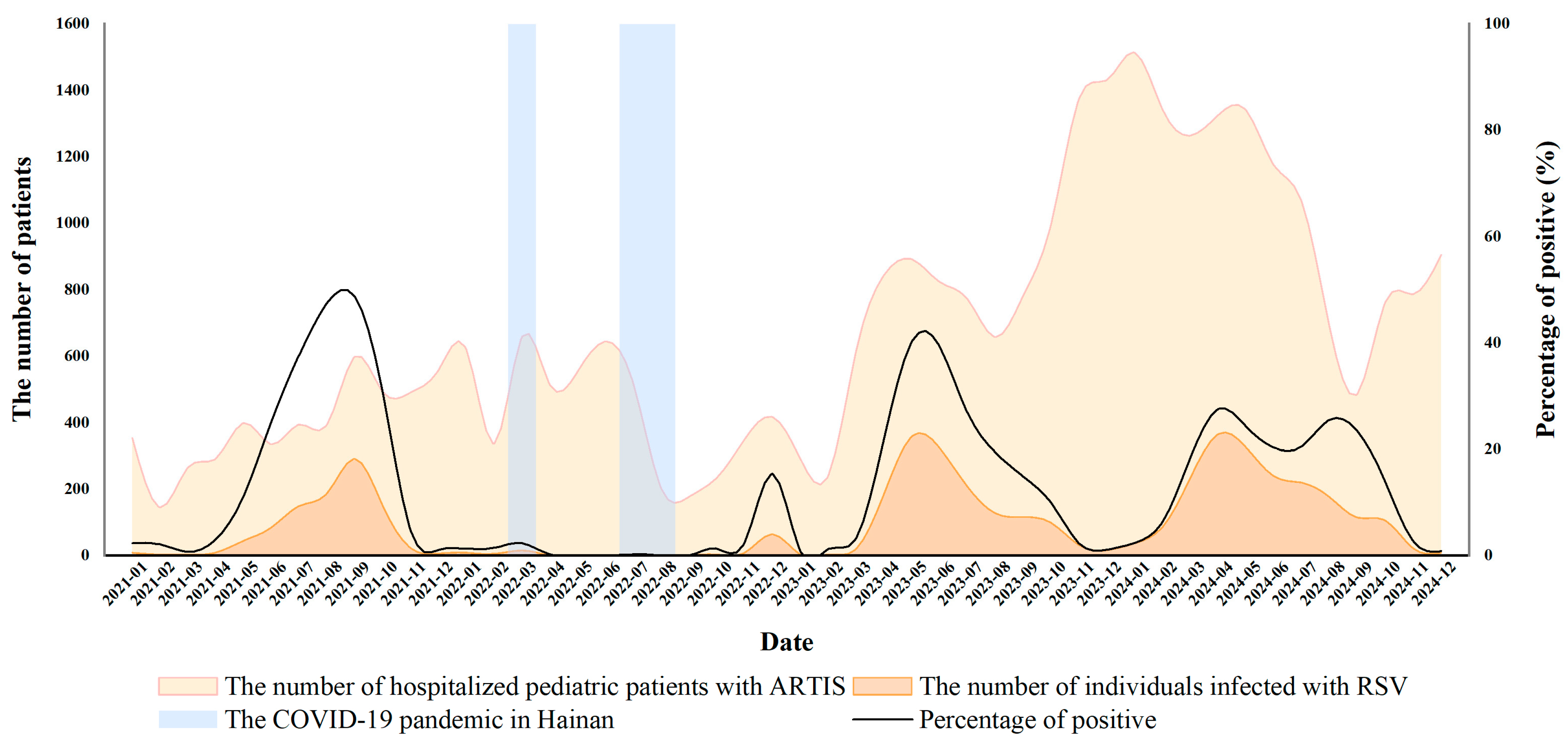
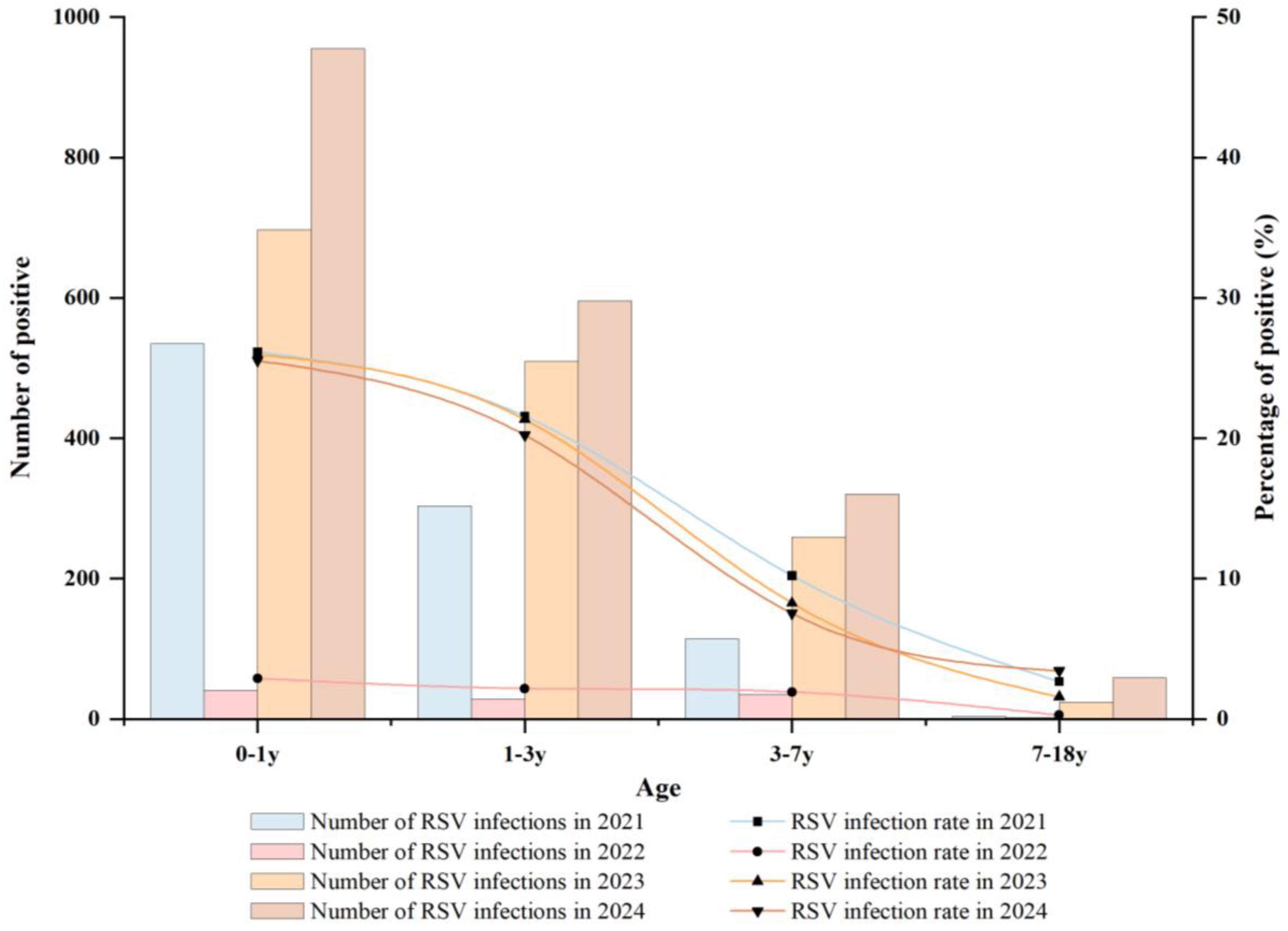
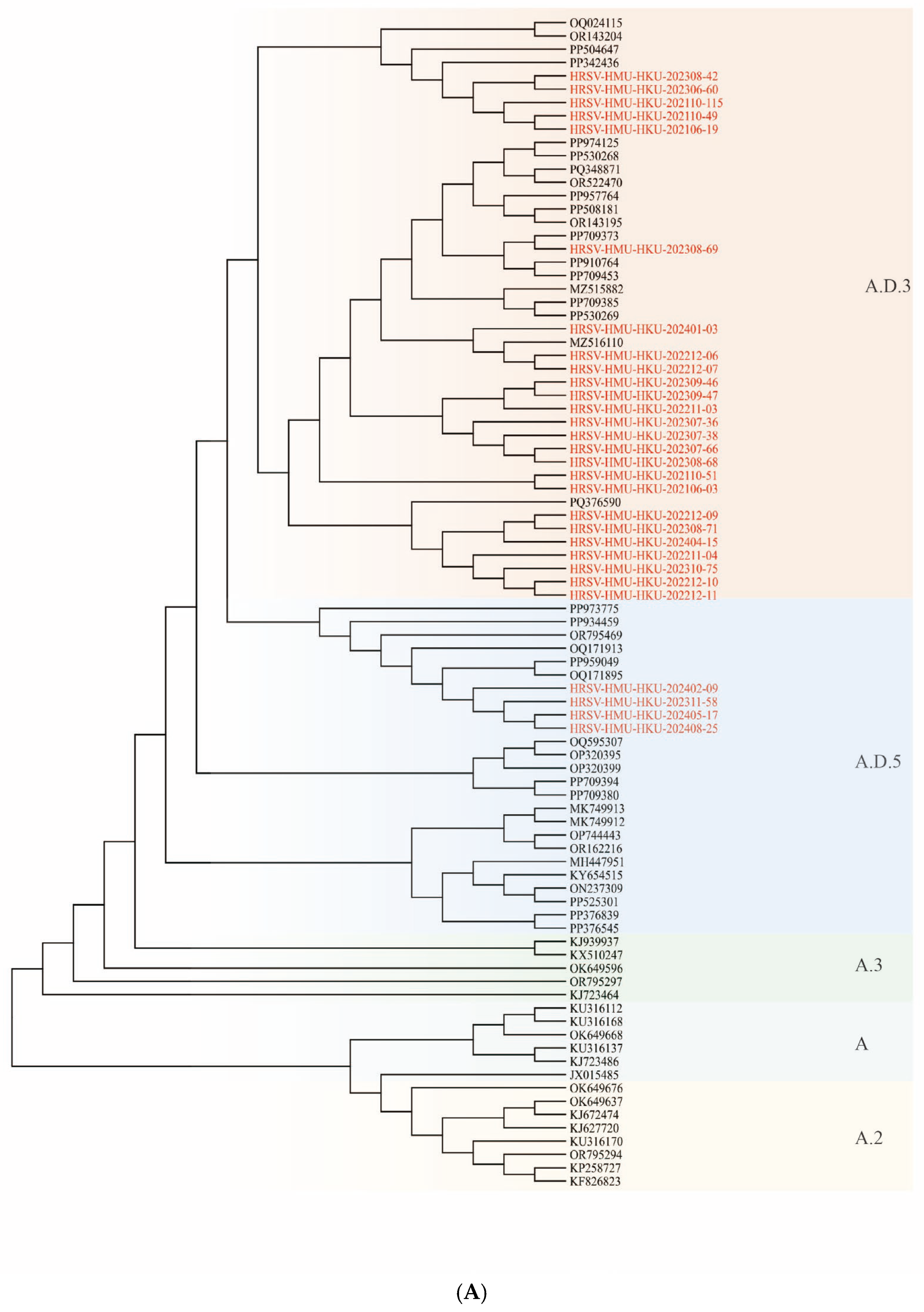
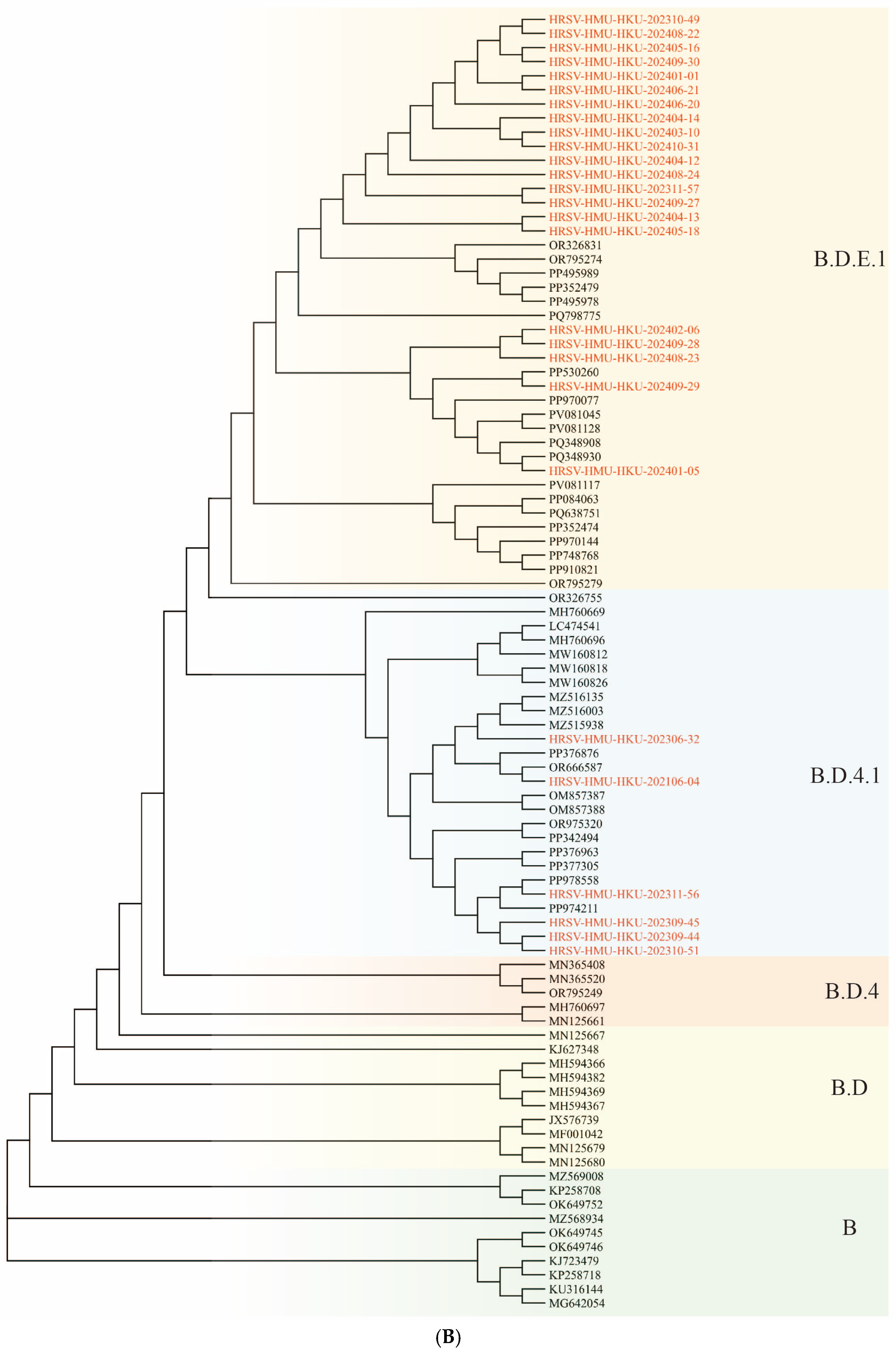
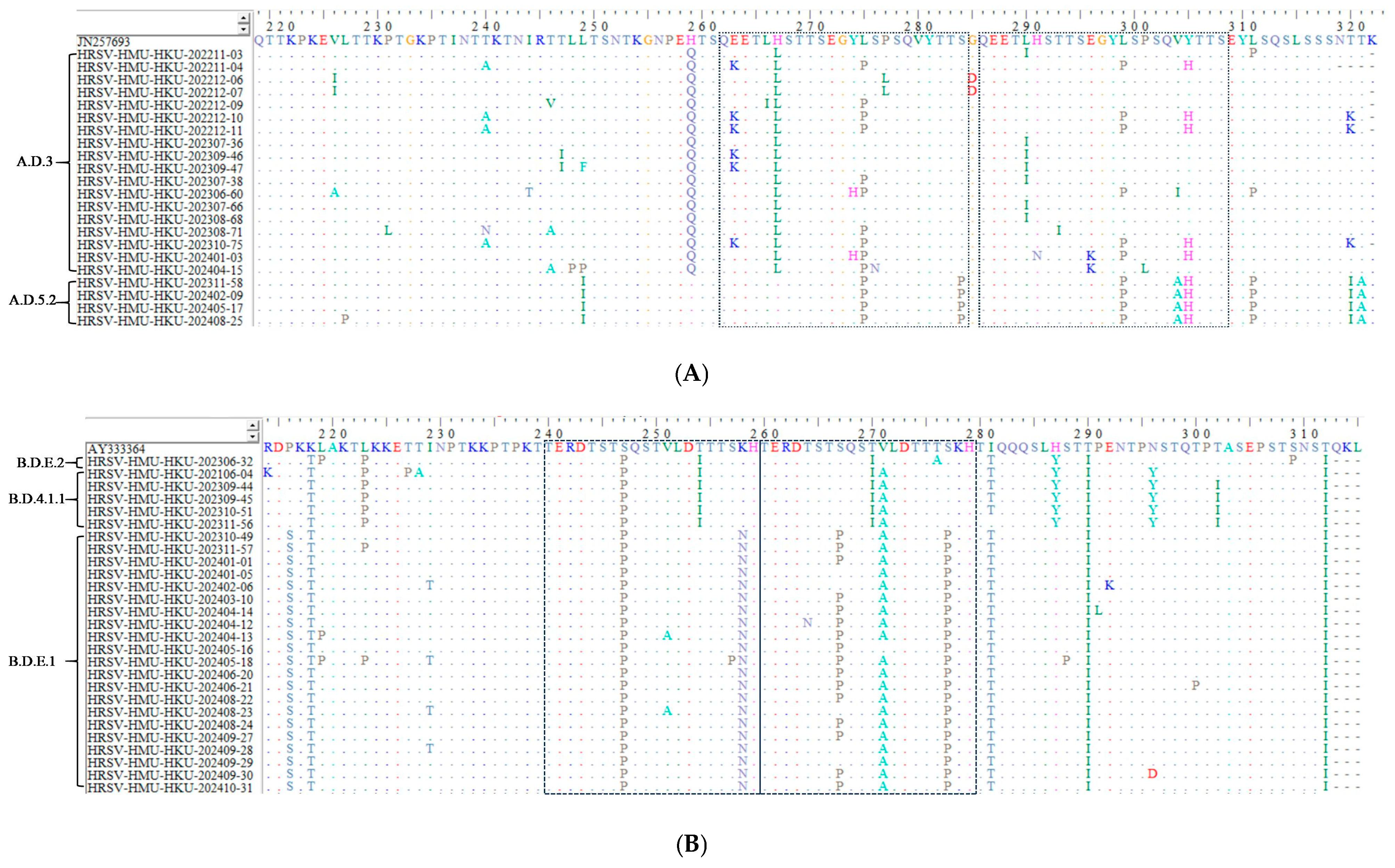
Respiratory syncytial virus (RSV) resurged in many regions after the relaxation of stringent non-pharmaceutical interventions (NPIs) implemented during the COVID-19 pandemic. Here, we characterized the epidemiological patterns and molecular evolution of RSV among pediatric inpatients with acute respiratory tract infections (ARTIs) on tropical Hainan Island, China. We retrospectively analyzed 32,329 children (≤18 years) hospitalized at Hainan Women and Children’s Medical Center from January 2021 to December 2024. RSV positivity was determined using targeted next-generation sequencing. In total, 4483/32,329 (13.86%) patients were RSV-positive, with a high positivity in 2021 (20.27%, 957/4721), marked suppression in 2022 (2.03%, 106/5227) during intensive NPIs, and a rebound in 2023–2024 (15.31%, 1490/9732; 15.26%, 1930/12,649). RSV positivity was higher in boys than girls (14.42% vs. 13.00%). Seasonality shifted from a summer–autumn peak in 2021 to a spring–summer predominance in 2023–2024. Among 56 sequenced RSV-positive specimens (29 RSV-A; 27 RSV-B), all RSV-A strains belonged to genotype ON1 (lineages A.D.3 and A.D.5.2), and all RSV-B strains belonged to genotype BA9 (lineages B.D.4.1.1, B.D.E.1, and B.D.E.2). Subtype dominance transitioned from RSV-A (2021–2023; mainly A.D.3) to RSV-B in 2024 (all B.D.E.1). Lineage-specific amino-acid and predicted N-glycosylation changes were observed, including loss of the N179 site in A.D.5.2 and acquisition of N258 in B.D.E.1. These findings indicate that RSV circulation on tropical Hainan was strongly suppressed during intensive NPIs and re-established after policy relaxation, accompanied by earlier seasonal activity and clear lineage replacement, underscoring the need for sustained genomic surveillance to inform locally tailored clinical preparedness and immunization strategies.
Keywords: respiratory syncytial virus (RSV); pediatric acute respiratory tract infections; seasonality shift; non-pharmaceutical interventions (NPIs); post–Zero-COVID period; molecular epidemiology; lineage replacement; G glycoprotein glycosylation respiratory syncytial virus (RSV); pediatric acute respiratory tract infections; seasonality shift; non-pharmaceutical interventions (NPIs); post–Zero-COVID period; molecular epidemiology; lineage replacement; G glycoprotein glycosylation