
Dynamics and Sensitivity of the Lifecycle of Hepatitis B Virus

 , , , , and
Abstract
1. Introduction
2. Materials and Methods
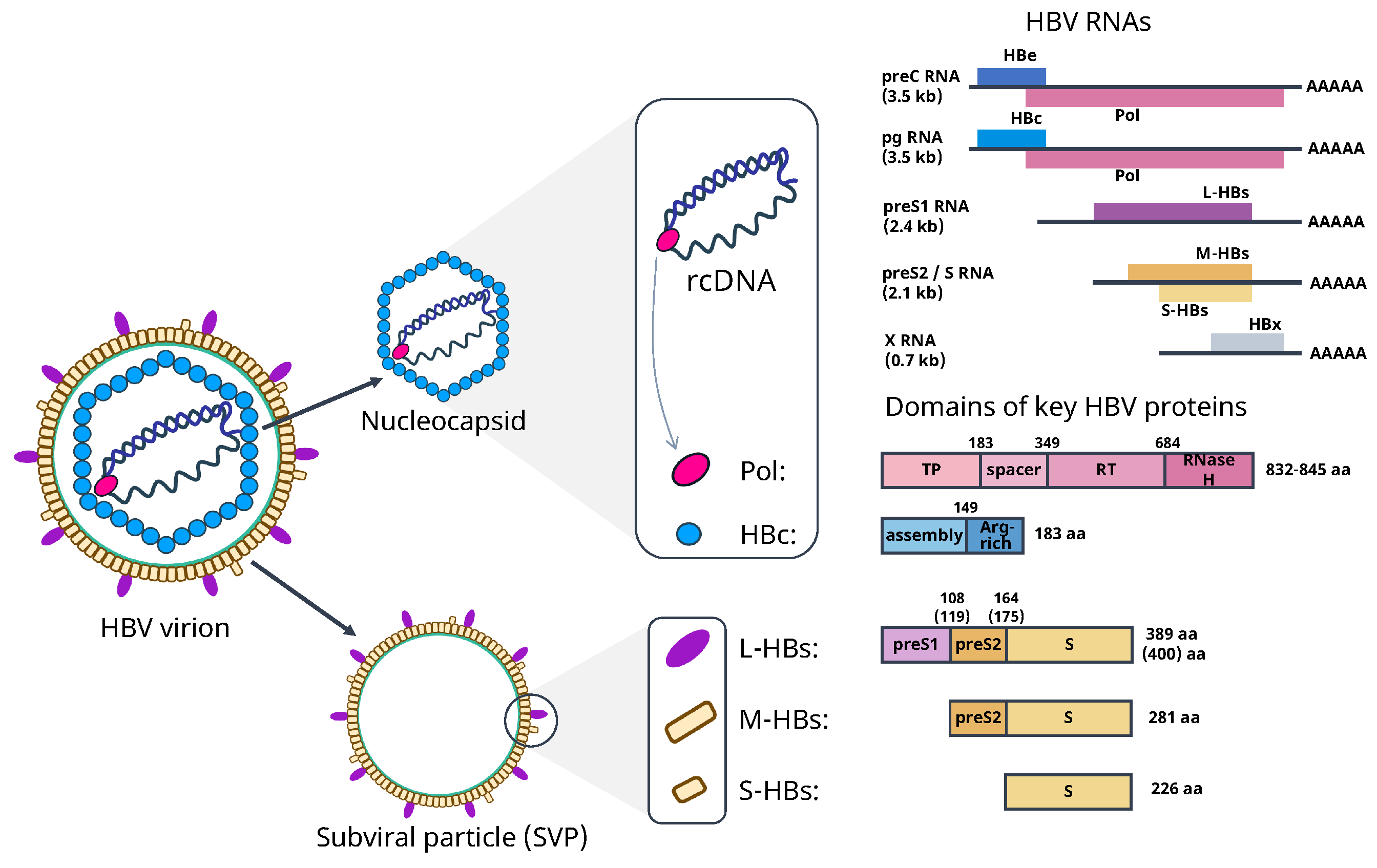
2.1. Molecular and Genome Structure of HBV
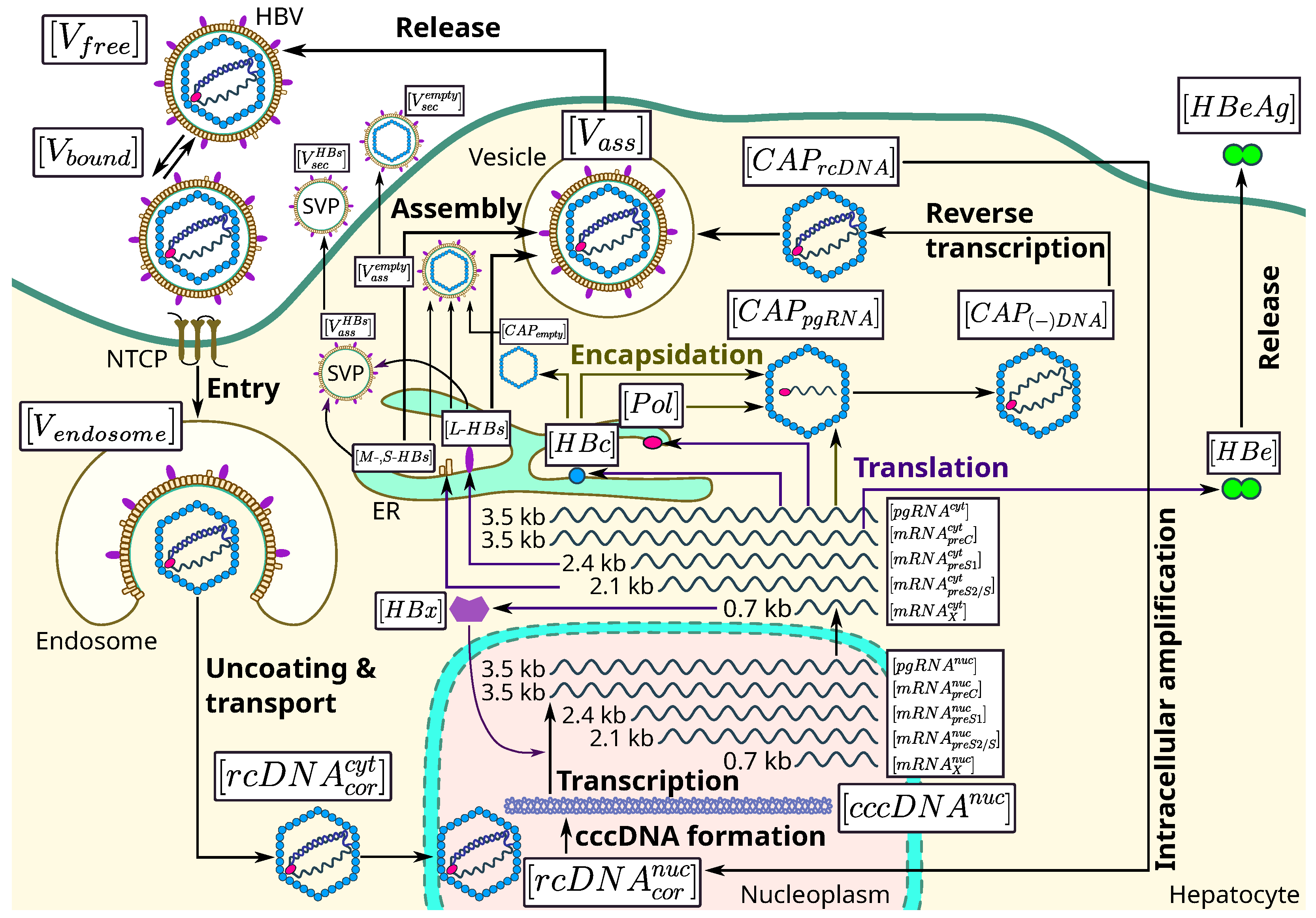
2.2. Intracellular Replication of HBV
2.3. Deterministic Mathematical Model
- HBV entry;
- Covalently closed circular DNA (cccDNA) formation;
- HBV transcription;
- Structural protein translation;
- Encapsidation and DNA synthesis;
- HBV assembly and secretion.
2.3.1. Virus Entry
2.3.2. Release of rcDNA and cccDNA Formation
2.3.3. Viral RNA Transcription
2.3.4. Structural and Envelope Protein Translation
2.3.5. Encapsidation and DNA Synthesis
2.3.6. Virion Assembly and Secretion
2.3.7. Total Number of Secreted Virions During the HBV Lifecycle
2.4. Empirical Data for Calibration of the Model
2.4.1. System-Level Infection Dynamics
2.4.2. Data on Virus Entry
2.4.3. Data on cccDNA Formation
2.4.4. Intracellular Transport
2.4.5. Data on RNA Transcription
2.4.6. Data on Viral Protein Translation and DNA Synthesis
2.4.7. Data on Assembly and Secretion of Viral and Subviral Particles
2.5. Sensitivity Analysis
2.6. Stochastic Modeling Algorithm
3. Results
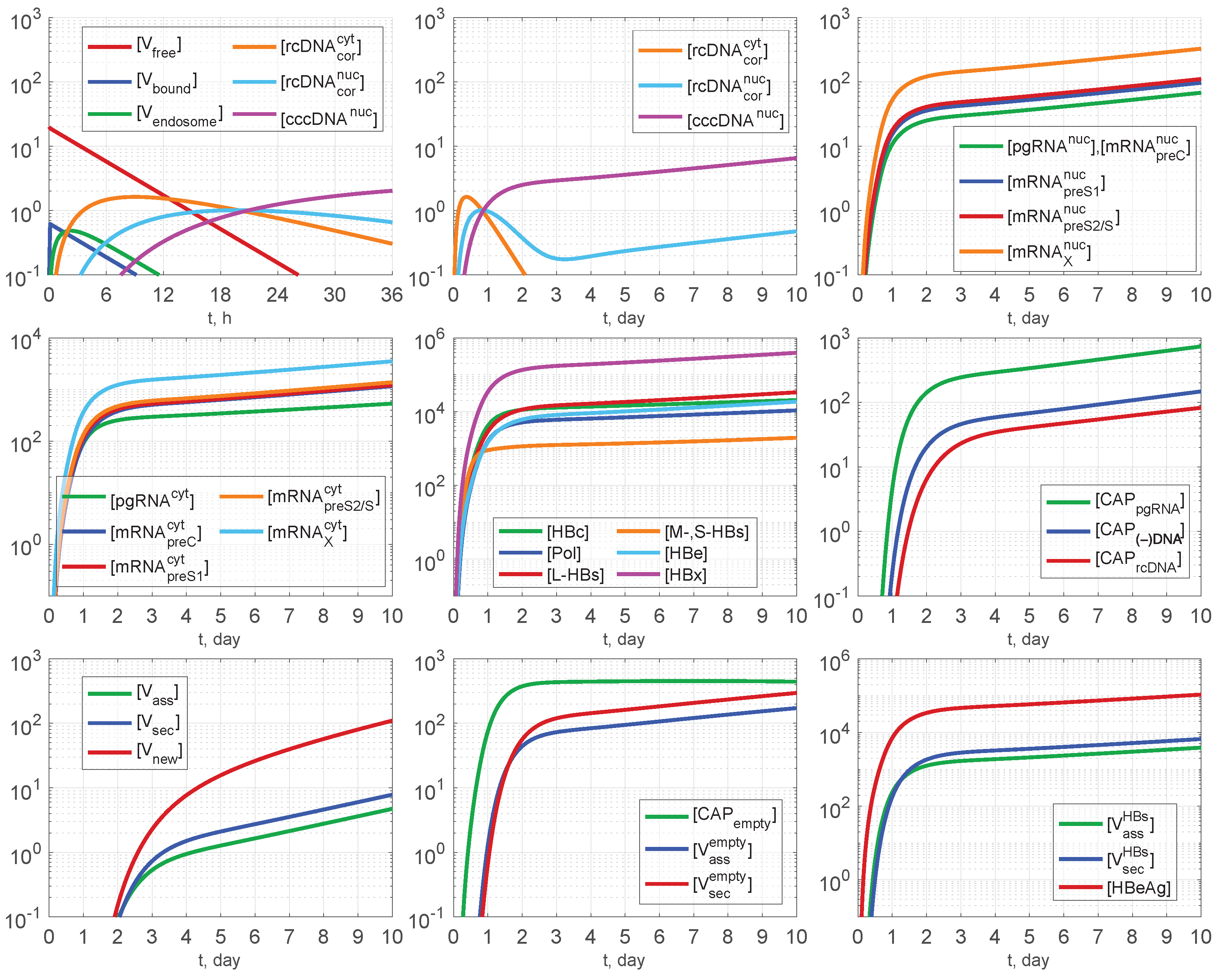
3.1. Sensitivity Analysis of the Deterministic Model
- —degradation rate of pgRNA-containing capsids;
- —active transcription rate from cccDNA;
- —length of HBV genome coding pgRNA;
- —fusion and entry rate of endocytosis;
- —degradation rate of free extracellular virions;
- —binding rate of virion to NTCP receptor;
- —dissociate rate of bound virions;
- —transport of rcDNA to nucleus;
- —degradation of pgRNA in cytoplasm;
- —synthesis rate of (−) strand DNA;
- —synthesis rate of (+) strand DNA.
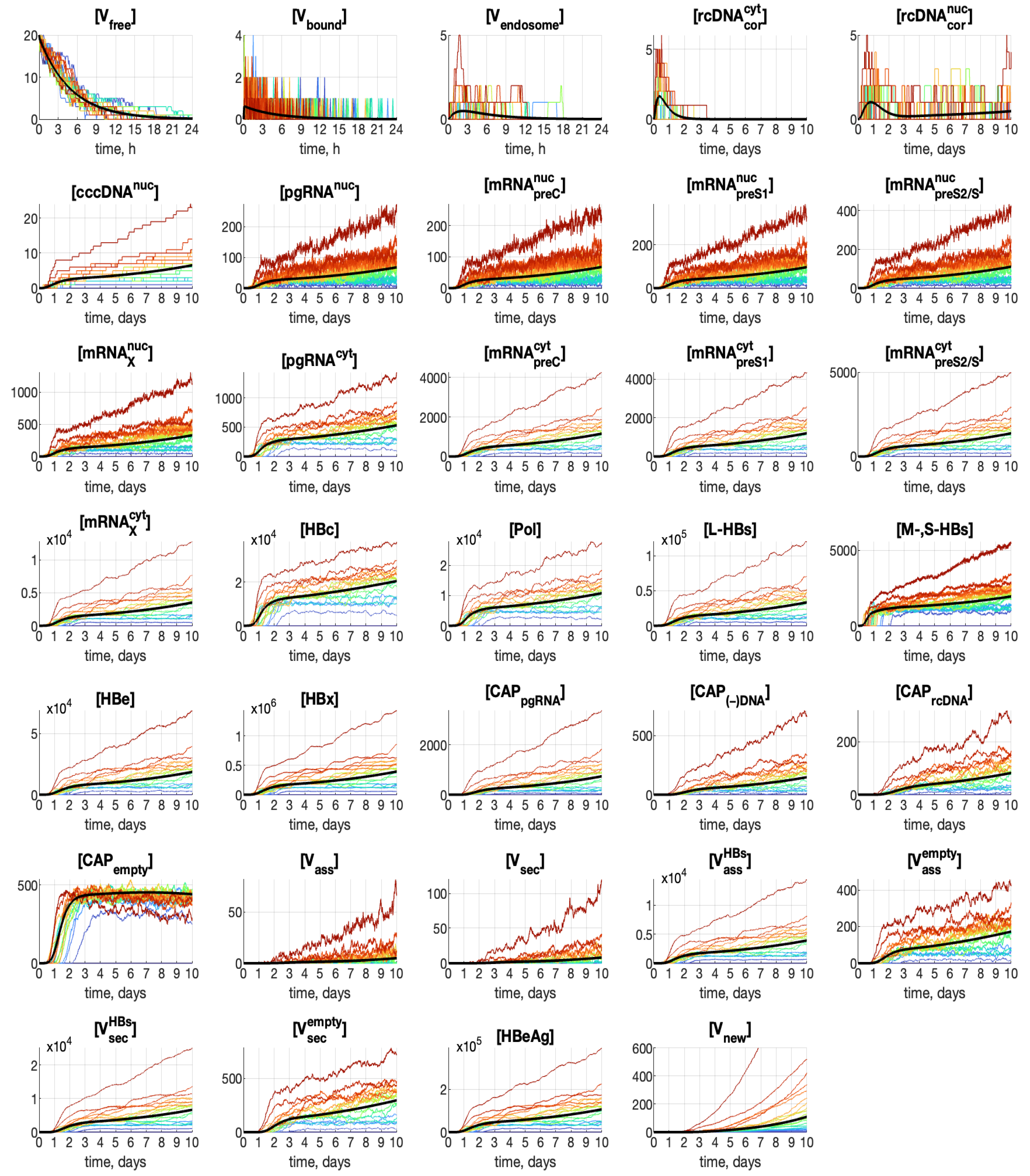
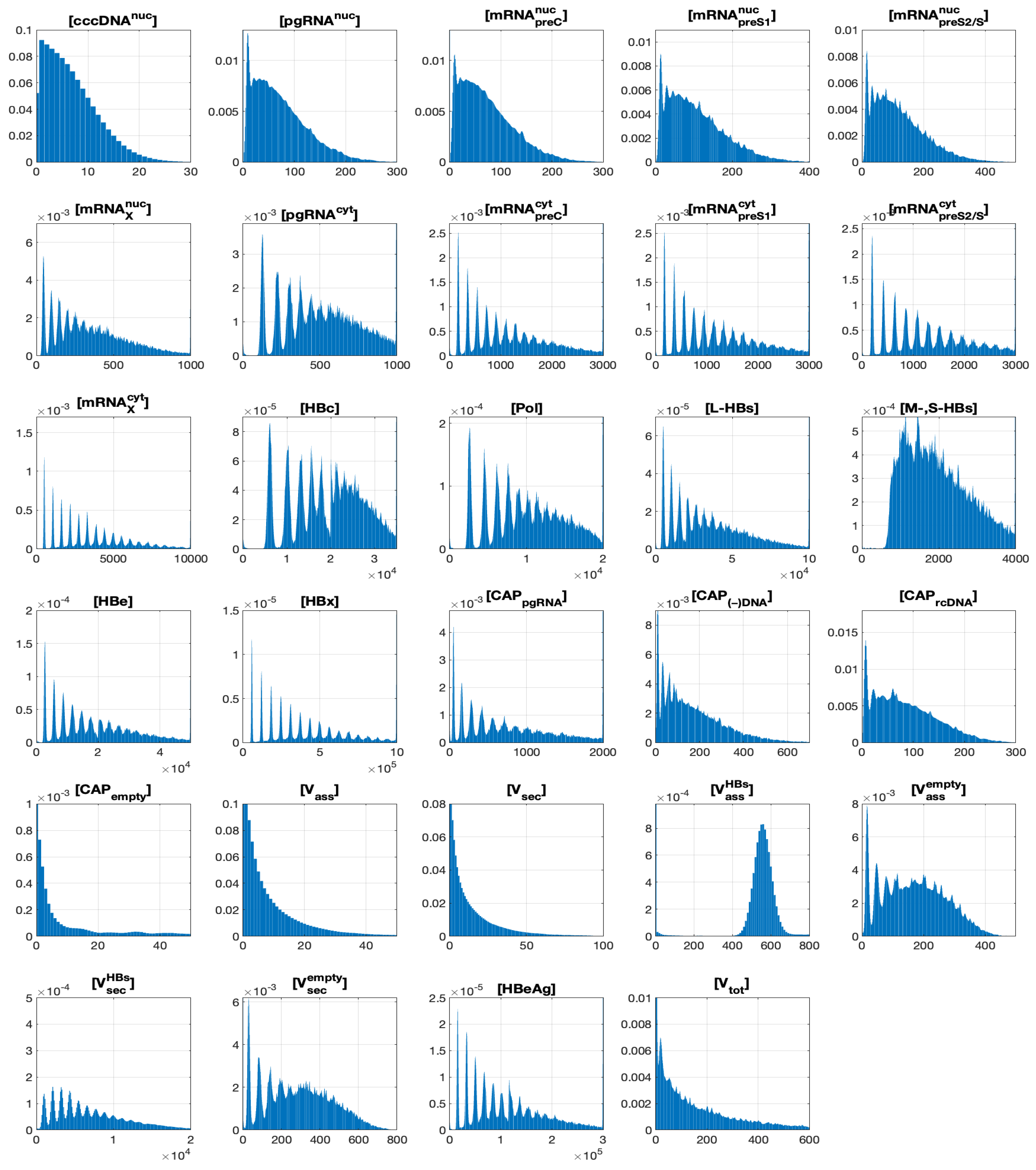
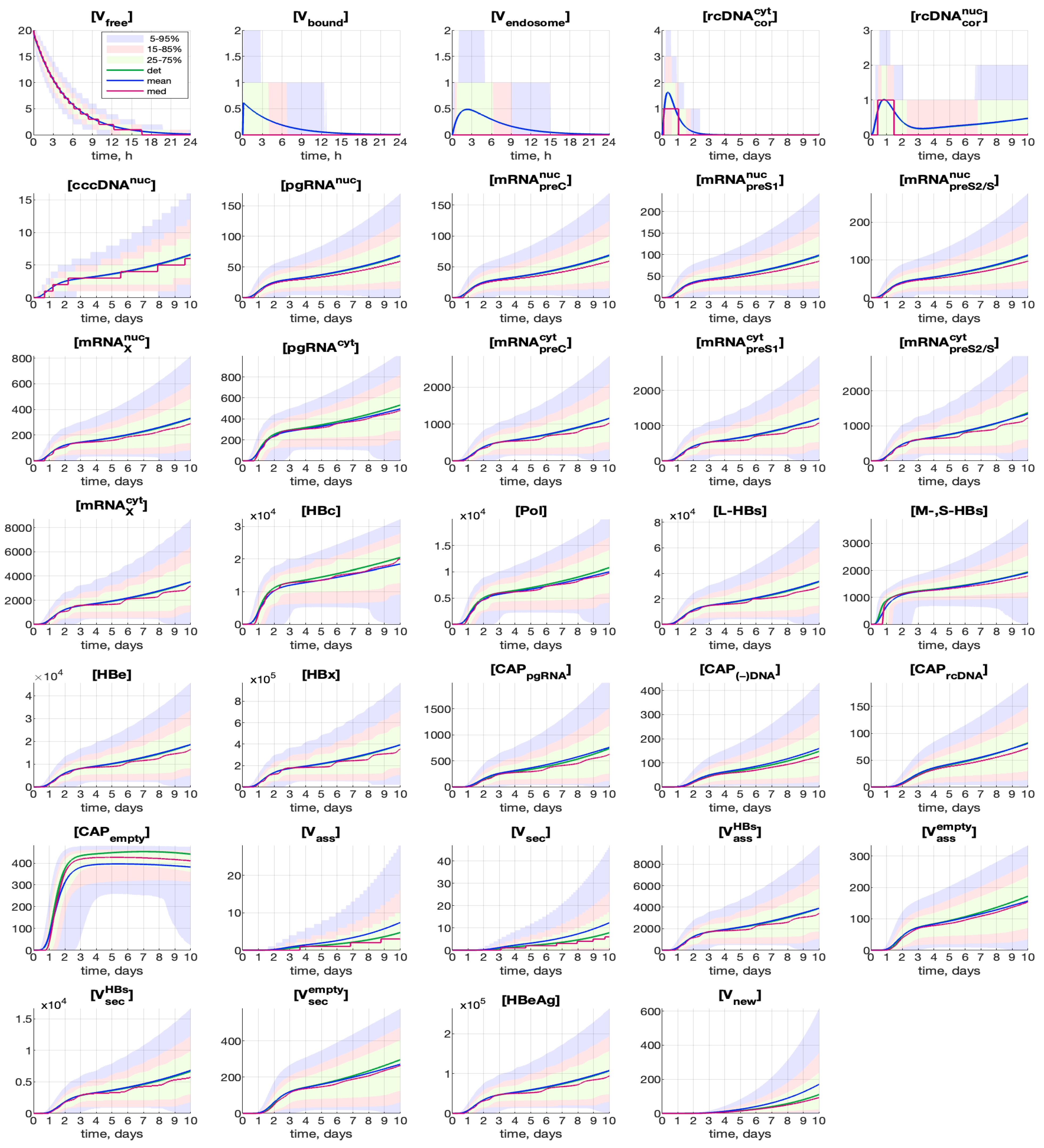
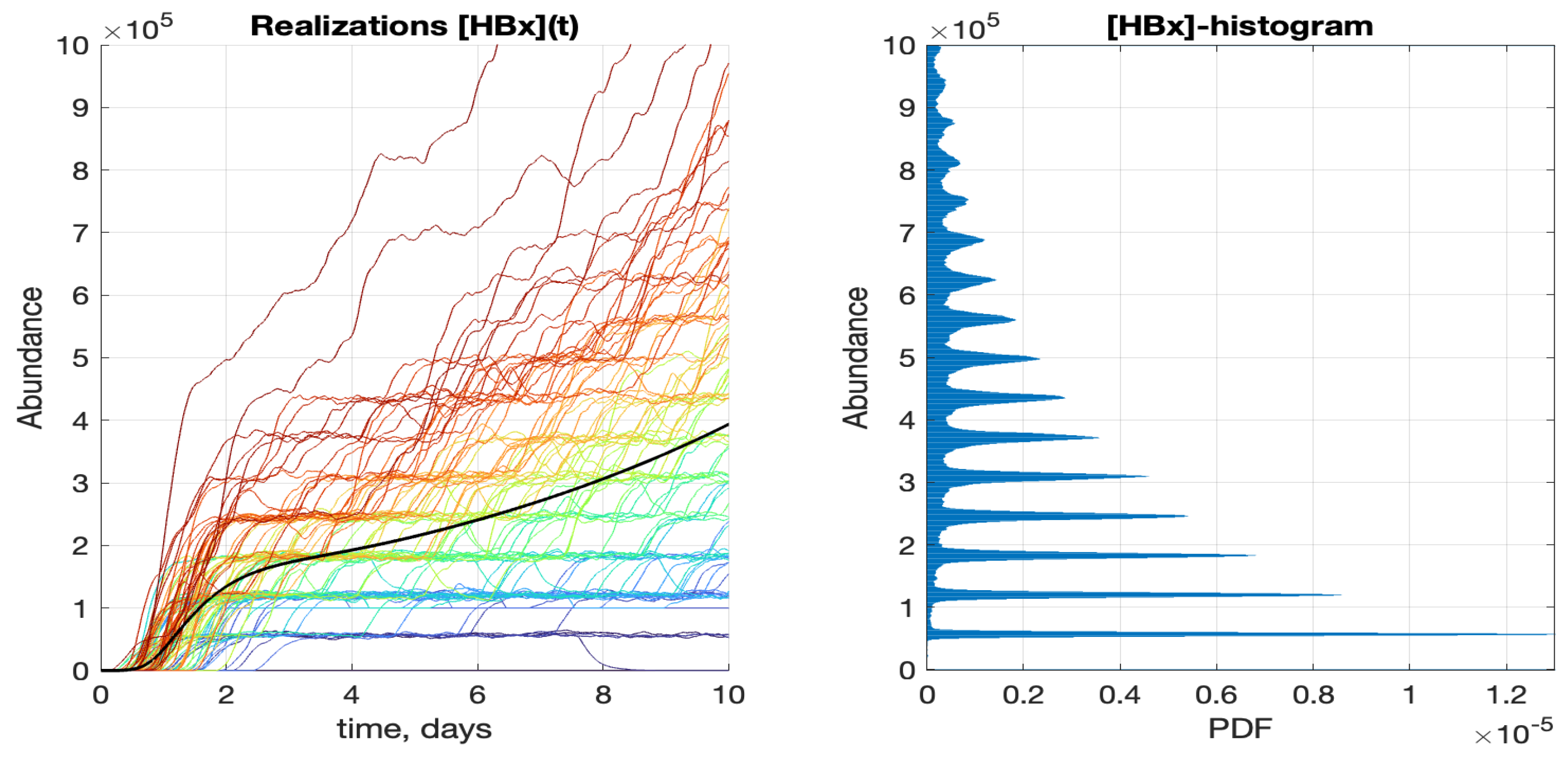
3.2. Variability of the HBV Lifecycle Due to Stochasticity
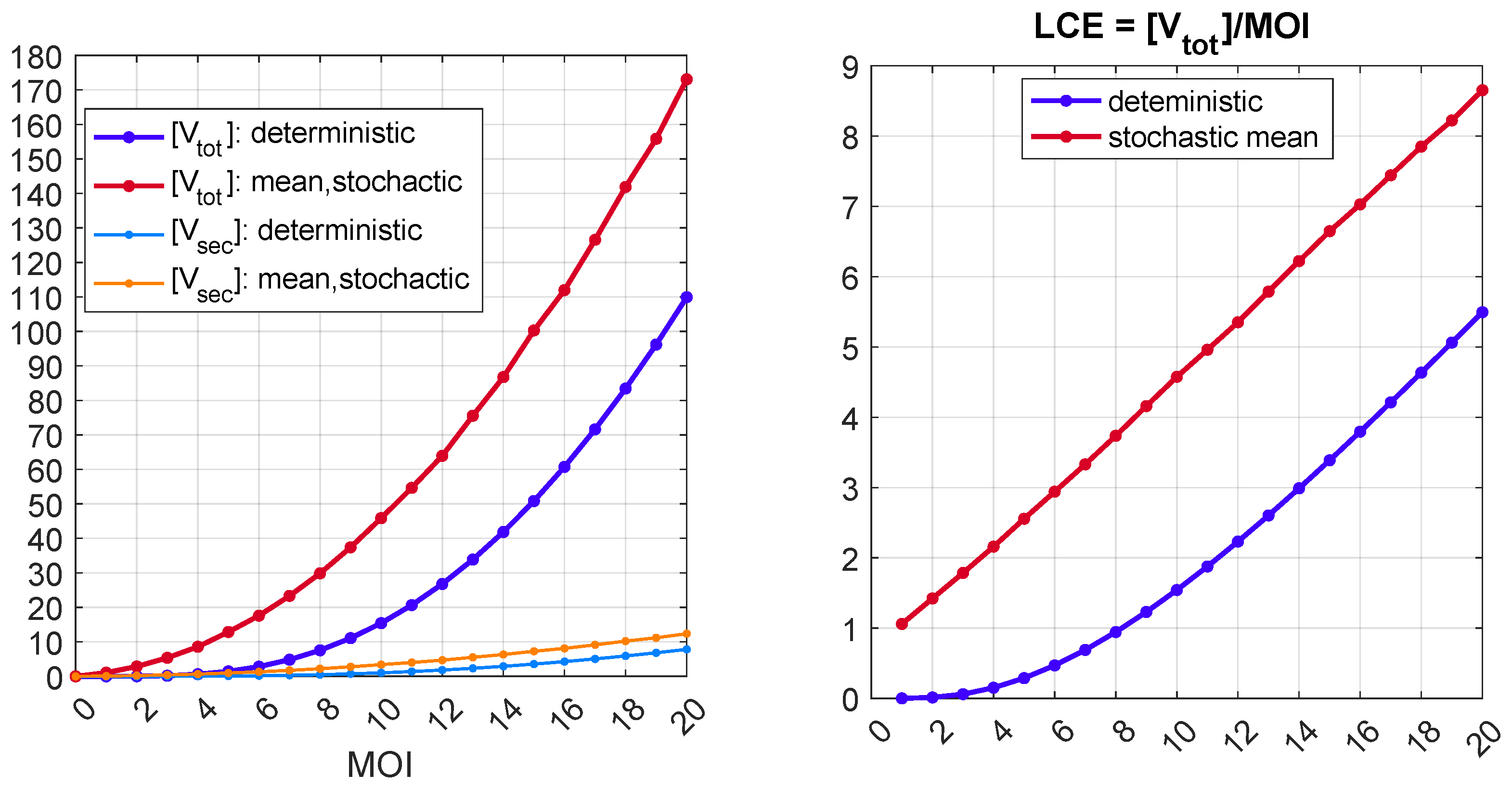
3.3. Infection Productivity and Efficiency
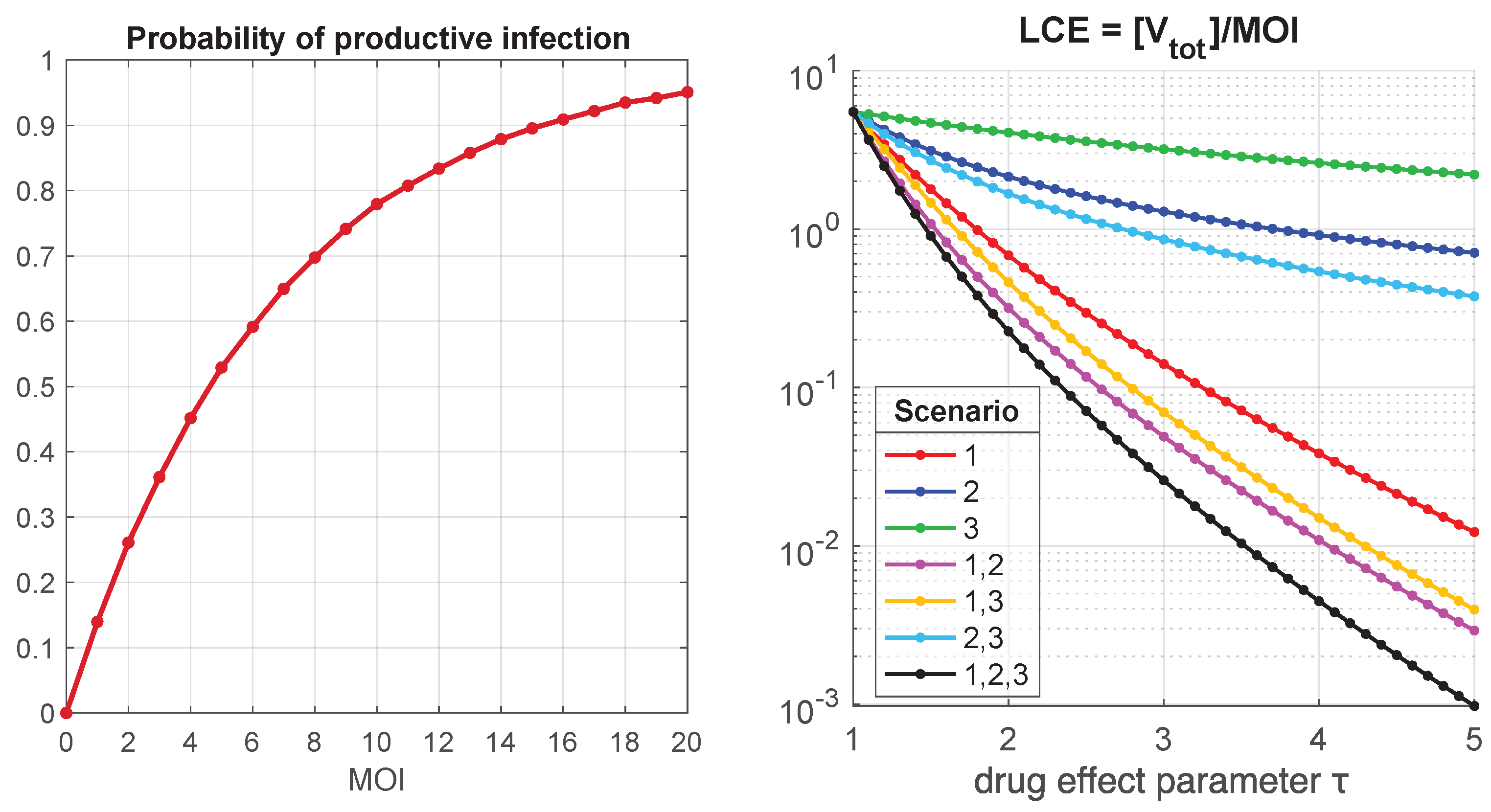
3.4. Probability of Productive HBV Infection
3.5. Sensitivity to Drug Combinations
- Group 1:
- Group 2:
- Group 3:
- Scenario 1:
- Only coefficients from Group 1 change. They increase simultaneously by a factor of .
- Scenario 2:
- Only coefficient from Group 2 changes. It decreases proportionally to .
- Scenario 3:
- Only coefficients from Group 3 change. They decrease simultaneously in proportion to .
- Scenario 1,2:
- Coefficients from Groups 1 and 2 change (in opposite directions).
- Scenario 1,3:
- Coefficients from Groups 1 and 3 change (in opposite directions).
- Scenario 2,3:
- Coefficients from Groups 2 and 3 change. They decreases simultaneously in proportion to .
- Scenario 1,2,3:
- Coefficients from all Groups 1, 2 and 3 change simultaneously in proper directions.
4. Discussion
5. Conclusions
Author Contributions
Funding
Institutional Review Board Statement
Informed Consent Statement
Data Availability Statement
Conflicts of Interest
Abbreviations
| HBV | hepatitis B virus |
| rcDNA | relaxed circular DNA |
| cccDNA | covalently closed circular DNA |
| pgRNA | pregenomic RNA |
| Pol | polymerase |
| HBc | HBV core protein |
| HBe | HBV E protein |
| HBs | HBV surface (envelope) proteins (L, M and S) |
| WT | wild-type |
| SSA | stochastic simulation algorithm |
| ODE | ordinary differential equation |
| MC | Markov chain |
References
- Shekhtman, L.; Ishida, Y.; Tsuge, M.; Reinharz, V.; Yamao, M.; Takahashi, M.; Tateno, C.; Uprichard, S.L.; Dahari, H.; Chayama, K. Modeling of hepatitis B virus kinetics and accumulation of cccDNA in primary human hepatocytes. JHEP Rep. Innov. Hepatol. 2024, 7, 101311. [Google Scholar] [CrossRef]
- Mendenhall, M.A.; Hong, X.; Hu, J. Hepatitis B virus capsid: The core in productive entry and covalently closed circular DNA formation. Viruses 2023, 15, 642. [Google Scholar] [CrossRef]
- Nassal, M. HBV cccDNA: Viral persistence reservoir and key obstacle for a cure of chronic hepatitis B. Gut 2015, 64, 1972–1984. [Google Scholar] [CrossRef]
- Yoshida, K.; Enomoto, M.; Tamori, A.; Nishiguchi, S.; Kawada, N. Combination of entecavir or tenofovir with pegylated interferon-α for long-term reduction in hepatitis B surface antigen levels: Simultaneous, sequential or add-on combination therapy. Int. J. Mol. Sci. 2021, 22, 1456. [Google Scholar] [CrossRef]
- Thimme, R.; Bertoletti, A.; Iannacone, M. Beyond exhaustion: The unique characteristics of CD8+ T cell dysfunction in chronic HBV infection. Nat. Rev. Immunol. 2024, 24, 775–776. [Google Scholar] [CrossRef]
- Mouzannar, K.; Liang, T.J. Hepatitis B virus–recent therapeutic advances and challenges to cure. J. Hepatol. 2020, 73, 694–695. [Google Scholar] [CrossRef] [PubMed]
- Philips, C.A.; Ahamed, R.; Abduljaleel, J.; Rajesh, S.; Augustine, P. Critical updates on chronic hepatitis B virus infection in 2021. Cureu 2021, 13, e19152. [Google Scholar] [CrossRef]
- Lok, A.S.F. Toward a Functional Cure for Hepatitis B. Gut Liver 2024, 18, 593–601. [Google Scholar] [CrossRef] [PubMed]
- Ray, G. Functional cure of chronic hepatitis B-hope or hype? World J. Hepatol. 2024, 9, 1199–1205. [Google Scholar] [CrossRef]
- Wu, D.; Kao, J.H.; Piratvisuth, T.; Wang, X.; Kennedy, P.T.F.; Otsuka, M.; Ahn, S.H.; Tanaka, Y.; Wang, G.; Yuan, Z.; et al. Update on the treatment navigation for functional cure of chronic hepatitis B: Expert consensus 2.0. Clin. Mol. Hepatol. 2025, 31, S134–S164. [Google Scholar] [CrossRef] [PubMed]
- Tsukuda, S.; Watashi, K. Hepatitis B virus biology and life cycle. Antivir. Res. 2020, 182, 104925. [Google Scholar] [CrossRef]
- Nakabayashi, J.; Sasaki, A. A mathematical model of the intracellular replication and within host evolution of hepatitis type B virus: Understanding the long time course of chronic hepatitis. J. Theor. Biol. 2011, 269, 318–329. [Google Scholar] [CrossRef]
- Nakabayashi, J. The intracellular dynamics of hepatitis B virus (HBV) replication with reproduced virion “re-cycling”. J. Theor. Biol. 2016, 396, 154–162. [Google Scholar] [CrossRef] [PubMed]
- Yaniwura, S.A.; Cassidy, T.; Ribeiro, R.M.; Perelson, A.S. A multiscale model of the action of a capsid assembly modulator for the treatment of chronic hepatitis B. PLoS Comput. Biol. 2025, 21, e1012322. [Google Scholar] [CrossRef] [PubMed]
- Gonçalves, A.; Lemenuel-Diot, A.; Cosson, V.; Jin, Y.; Feng, S.; Bo, Q.; Guedj, J. What drives the dynamics of HBV RNA during treatment? J. Viral Hepat. 2020, 28, 383–392. [Google Scholar] [CrossRef] [PubMed]
- Ogunfowote, O. Development and analysis of a nested multiscale model of hepatitis B viral infection. Int. J. Math. Anal. Optim. Theory Appl. 2024, 10, 67–94. [Google Scholar] [CrossRef]
- Murray, J.M.; Goyal, A. In silico single cell dynamics of hepatitis B virus infection and clearance. J. Theor. Biol. 2015, 366, 91–102. [Google Scholar] [CrossRef]
- Fatehi, F.; Bingham, R.J.; Dykeman, E.C.; Patel, N.; Stockley, P.G.; Twarock, R. An intracellular model of hepatitis B viral infection: An in silico platform for comparing therapeutic strategies. Viruses 2020, 13, 11. [Google Scholar] [CrossRef]
- Urban, S.; Schulze, A.; Dandri, M.; Petersen, J. The replication cycle of hepatitis B virus. J. Hepatol. 2010, 52, 282–284. [Google Scholar] [CrossRef]
- Ko, C.; Chakraborty, A.; Chou, W.M.; Hasreiter, J.; Wettengel, J.M.; Stadler, D.; Bester, R.; Asen, T.; Zhang, K.; Wisskirchen, K.; et al. Hepatitis B virus genome recycling and de novo secondary infection events maintain stable cccDNA levels. J. Hepatol. 2018, 69, 1231–1241. [Google Scholar] [CrossRef]
- Hu, J.; Protzer, U.; Siddiqui, A. Revisiting hepatitis B virus: Challenges of curative therapies. J. Virol. 2019, 93, e01032-19. [Google Scholar] [CrossRef]
- Pierra Rouviere, C.; Dousson, C.; Tavis, J.E. HBV replication inhibitors. Antivir. Res. 2020, 179, 104815. [Google Scholar] [CrossRef]
- Tu, T.; Budzinska, M.; Shackel, N.; Urban, S. HBV DNA integration: Molecular mechanisms and clinical implications. Viruses 2017, 9, 75. [Google Scholar] [CrossRef] [PubMed]
- Lentz, T.; Loeb, D.D. Roles of the envelope proteins in the amplification of covalently closed circular DNA and completion of synthesis of the plus-strand DNA in hepatitis B virus. J. Virol. 2011, 85, 11916–11927. [Google Scholar] [CrossRef] [PubMed]
- Lucifora, J.; Arzberger, S.; Durantel, D.; Belloni, L.; Strubin, M.; Levrero, M.; Zoulim, F.; Hantz, O.; Protzer, U. Hepatitis B virus X protein is essential to initiate and maintain virus replication after infection. J. Hepatol. 2011, 55, 996–1003. [Google Scholar] [CrossRef] [PubMed]
- Ferrari, C.; Barili, V.; Mondelli, M. Immune Mechanisms of Viral Clearance and Disease Pathogenesis During Viral Hepatitis. In The Liver; Arias, I., Alter, H., Boyer, J., Cohen, D., Shafritz, D., Thorgeirsson, S., Wolkoff, A., Eds.; Wiley: Hoboken, NJ, USA, 2020; pp. 821–850. [Google Scholar] [CrossRef]
- Nowak, M.; May, R. Virus Dynamics: Mathematical Principles of Immunology and Virology; Oxford University Press: Oxford, UK, 2000. [Google Scholar]
- Sohlenius-Sternbeck, A.K. Determination of the hepatocellularity number for human, dog, rabbit, rat and mouse livers from protein concentration measurements. Toxicol. Vitr. 2006, 20, 1582–1586. [Google Scholar] [CrossRef]
- Ogoke, O.; Oluwole, J.; Parashurama, N. Bioengineering considerations in liver regenerative medicine. J. Biol. Eng. 2017, 11, 46. [Google Scholar] [CrossRef]
- Heinke, P.; Rost, F.; Rode, J.; Trus, P.; Simonova, I.; Lázár, E.; Feddema, J.; Welsch, T.; Alkass, K.; Salehpour, M.; et al. Diploid hepatocytes drive physiological liver renewal in adult humans. Cell Syst. 2022, 13, 499–507.e12. [Google Scholar] [CrossRef]
- Grisham, J. Organizational Principles of the Liver. In The Liver: Biology and Pathobiology: Fifth Edition; Arias, I.M., Ed.; John Wiley & Sons, Ltd.: Hoboken, NJ, USA, 2009; pp. 1–15. [Google Scholar] [CrossRef]
- Murray, J.M.; Purcell, R.H.; Wieland, S.F. The half-life of hepatitis B virions. Hepatology 2006, 44, 1117–1121. [Google Scholar] [CrossRef]
- Shimura, S.; Watashi, K.; Fukano, K. Cyclosporin derivatives inhibit hepatitis B virus entry without interfering with NTCP transporter activity. J. Hepatol. 2017, 66, 685–692. [Google Scholar] [CrossRef]
- Chakraborty, A.; Ko, C.; Henning, C.; Lucko, A.; Harris, J.M.; Chen, F.; Zhuang, X.; Wettengel, J.M.; Roessler, S.; Protzer, U.; et al. Synchronised infection identifies early rate-limiting steps in the hepatitis B virus life cycle. Cell. Microbiol. 2020, 22, e13250. [Google Scholar] [CrossRef]
- Tu, T.; Budzinska, M.; Vondran, F.; Shackel, N.; Urban, S. Hepatitis B virus DNA integration occurs early in the viral life cycle in an in vitro infection model via NTCP-dependent uptake of enveloped virus particles. J. Virol. 2018, 92, JVI.02007-17. [Google Scholar] [CrossRef] [PubMed]
- Köck, J.; Rösler, C.; Zhang, J.J.; Blum, H.; Nassal, M.; Thoma, C. Generation of covalently closed circular DNA of hepatitis B viruses via intracellular recycling Is regulated in a virus specific manner. PLoS Pathog. 2010, 6, e1001082. [Google Scholar] [CrossRef]
- Hu, J.L.; Huang, A.L. Dynamics of hepatitis B virus covalently closed circular DNA: A mini-review. Microorganisms 2023, 11, 600. [Google Scholar] [CrossRef]
- Tu, T.; Zehnder, B.; Qu, B.; Urban, S. De novo synthesis of Hepatitis B virus nucleocapsids is dispensable for the maintenance and transcriptional regulation of cccDNA. JHEP Rep. 2020, 3, 100195. [Google Scholar] [CrossRef]
- Allweiss, L.; Dandri, M. The Role of cccDNA in HBV Maintenance. Viruses 2017, 9, 156. [Google Scholar] [CrossRef]
- de Bruin, K.; Ruthardt, N.; von Gersdorff, K.; Bausinger, R.; Wagner, E.; Ogris, M.; Bräuchle, C. Cellular dynamics of EGF receptor-targeted synthetic viruses. Mol. Ther. 2007, 15, 1297–1305. [Google Scholar] [CrossRef] [PubMed]
- Ruthardt, N.; Bräuchle, C. Visualizing uptake and intracellular trafficking of gene carriers by single-particle tracking. Top. Curr. Chem. 2010, 296, 283–304. [Google Scholar] [CrossRef]
- Hao, X.; Shang, X.; Wu, J.; Shan, Y.; Cai, M.; Jiang, J.; Huang, Z.; Tang, Z.; Wang, H. Single-particle tracking of hepatitis B virus-like vesicle entry into cells. Small 2011, 7, 1212–1218. [Google Scholar] [CrossRef]
- Jiang, B.; Hildt, E. Intracellular trafficking of HBV particle. Cells 2020, 9, 2023. [Google Scholar] [CrossRef] [PubMed]
- Wang, I.H.; Burckhardt, C.J.; Yakimovich, A.; Greber, U.F. Imaging, tracking and computational analyses of virus entry and egress with the cytoskeleton. Viruses 2018, 10, 166. [Google Scholar] [CrossRef]
- Brandenburg, B.; Stockl, L.; Gutzeit, C.; Roos, M.; Lupberger, J.; Schwartlander, R.; Gelderblom, H.; Sauer, I.M.; Hofschneider, P.H.; Hildt, E. A novel system for efficient gene transfer into primary human hepatocytes via cell-permeable hepatitis B virus-like particle. Hepatology 2005, 42, 1300–1309. [Google Scholar] [CrossRef]
- Adelman, K.; La Porta, A.; Santangelo, T.J.; Lis, J.T.; Roberts, J.W.; Wang, M.D. Single molecule analysis of RNA polymerase elongation reveals uniform kinetic behavior. Proc. Natl. Acad. Sci. USA 2002, 99, 13538–13543. [Google Scholar] [CrossRef]
- Morisaki, T.; Lyon, K.; DeLuca, K.F.; DeLuca, J.G.; English, B.P.; Zhang, Z.; Lavis, L.D.; Grimm, J.B.; Viswanathan, S.; Looger, L.L.; et al. Real-time quantification of single RNA translation dynamics in living cells. Science 2016, 352, 1425–1429. [Google Scholar] [CrossRef]
- Ehlers, I.; Horke, S.; Reumann, K.; Rang, A.; Grosse, F.; Will, H.; Heise, T. Functional characterization of the interaction between human La and hepatitis B virus RNA. J. Biol. Chem. 2004, 279, 43437–43447. [Google Scholar] [CrossRef]
- Aly, H.H.; Suzuki, J.; Watashi, K.; Chayama, K.; Hoshino, S.; Hijikata, M.; Kato, T.; Wakita, T. RNA exosome complex regulates stability of Hepatitis B Virus’s X-mRNA transcript in a Non-Stop mediated (NSD) RNA quality control mechanism. J. Biol. Chem. 2016, 291, jbc.M116.724641. [Google Scholar] [CrossRef]
- Wang, F.; Song, H.; Xu, F.; Xu, J.; Wang, L.; Yang, F.; Zhu, Y.; Tan, G. Role of hepatitis B virus non-structural protein HBx on HBV replication, interferon signaling, and hepatocarcinogenesis. Front. Microbiol. 2023, 14, 1322892. [Google Scholar] [CrossRef] [PubMed]
- Keasler, V.V.; Hodgson, A.J.; Madden, C.R.; Slagle, B.L. Hepatitis B virus HBx protein localized to the nucleus restores HBx-deficient virus replication in HepG2 cells and in vivo in hydrodynamically-injected mice. Virology 2009, 390, 122–129. [Google Scholar] [CrossRef]
- Chong, C.K.; Cheng, C.Y.S.; Tsoi, S.Y.J.; Huang, F.Y.; Liu, F.; Fung, J.; Seto, W.K.; Lai, K.K.; Lai, C.L.; Yuen, M.F.; et al. HBV X protein mutations affect HBV transcription and association of histone-modifying enzymes with covalently closed circular DNA. Sci. Rep. 2020, 10, 802. [Google Scholar] [CrossRef] [PubMed]
- Shcherbatova, O.; Grebennikov, D.; Sazonov, I.; Meyerhans, A.; Bocharov, G. Modeling of the HIV-1 life cycle in productively infected cells to predict novel therapeutic targets. Pathogens 2020, 9, 255. [Google Scholar] [CrossRef] [PubMed]
- Wei, L.; Ploss, A. Mechanism of Hepatitis B Virus cccDNA Formation. Viruses 2021, 13, 1463. [Google Scholar] [CrossRef]
- Yin, J.; Redovich, J. Kinetic modeling of virus growth in cells. Microbiol. Mol. Biol. Rev. 2018, 82, e00066-17. [Google Scholar] [CrossRef]
- Grebennikov, D.; Kholodareva, E.; Sazonov, I.; Karsonova, A.; Meyerhans, A.; Bocharov, G. Intracellular life cycle kinetics of SARS-CoV-2 predicted using mathematical modelling. Viruses 2021, 13, 1735. [Google Scholar] [CrossRef]
- Hao, R.; He, J.; Liu, X.; Gao, G.; Liu, D.; Cui, L.; Yu, G.; Yu, W.; Chen, Y.; Guo, D. Inhibition of hepatitis B virus gene expression and replication by hepatocyte nuclear factor 6. J. Virol. 2015, 89, 4345–4355. [Google Scholar] [CrossRef]
- Xu, C.; Guo, H.; Pan, X.B.; Mao, R.; Yu, W.; Xu, X.; Wei, L.; Chang, J.; Block, T.M.; Guo, J.T. Interferons accelerate decay of replication-competent nucleocapsids of hepatitis B virus. J. Virol. 2010, 84, 9332–9340. [Google Scholar] [CrossRef]
- Gillespie, D. A General method for numerically simulating the stochastic time evolution of coupled chemical reactions. J. Comput. Phys. 1976, 22, 403–434. [Google Scholar] [CrossRef]
- Gillespie, D.T. Exact stochastic simulation of coupled chemical reactions. J. Phys. Chem. 1977, 81, 2340–2361. [Google Scholar] [CrossRef]
- Marchetti, L.; Priami, C.; Thanh, V.H. Simulation Algorithms for Computational Systems Biology; Texts in Theoretical Computer Science. An EATCS Series; Springer: Berlin/Heidelberg, Germany, 2017. [Google Scholar] [CrossRef]
- Sazonov, I.; Grebennikov, D.; Kelbert, M.; Bocharov, G. Modelling stochastic and deterministic behaviours in virus infection dynamics. Math. Model. Nat. Phenom. 2017, 12, 63–77. [Google Scholar] [CrossRef][Green Version]
- Sazonov, I.; Grebennikov, D.; Meyerhans, A.; Bocharov, G. Markov chain based stochastic modelling of HIV-1 life cycle in a CD4 T cell. Mathematics 2021, 9, 2025. [Google Scholar] [CrossRef]
- Sazonov, I.; Grebennikov, D.; Meyerhans, A.; Bocharov, G. Sensitivity of SARS-CoV-2 life cycle to IFN effects and ACE2 binding unveiled with a stochastic model. Viruses 2022, 14, 403. [Google Scholar] [CrossRef]
- Sazonov, I.; Grebennikov, D.; Savinkov, R.; Soboleva, A.; Pavlishin, K.; Meyerhans, A.; Bocharov, G. Stochastic modelling of HIV-1 replication in a CD4 T cell with an IFN response. Viruses 2023, 15, 296. [Google Scholar] [CrossRef] [PubMed]
- Sazonov, I.; Grebennikov, D.; Savinkov, R.; Meyerhans, A.; Bocharov, G. Quantifying the inhibitory efficacy of HIV-1 therapeutic interfering particles at a single CD4 T-cell resolution. Viruses 2025, 17, 1378. [Google Scholar] [CrossRef]
- Kolmogorov, A.N.; Fomin, S.V. Elements of the Theory of Functions and Functional Analysis; Dover Books on Mathematics; Dover Books: New York, NY, USA, 2012. [Google Scholar]
- Mohd-Ismail, N.K.; Lim, Z.; Gunaratne, J.; Tan, Y.J. Mapping the Interactions of HBV cccDNA with Host Factors. Int. J. Mol. Sci. 2019, 20, 4276. [Google Scholar] [CrossRef] [PubMed]
- Zhang, J.; Ling, N.; Lei, Y.; Peng, M.; Hu, P.; Chen, M. Multifaceted interaction between hepatitis B virus infection and lipid metabolism in hepatocytes: A potential target of antiviral therapy for chronic hepatitis B. Front. Microbiol. 2021, 12, 1–9. [Google Scholar] [CrossRef] [PubMed]



| Number of Variables | |||
|---|---|---|---|
| [12] | 9 | ODEs | Switching between replication patterns during within-host evolution of HBV |
| [13] | 11 | ODEs | Effect of virion recycling on switching between intracellular replication patterns |
| [14] | 7 | Multiscale, age-dependent PDEs/ODEs | Effect of capsid assembly modulators on chronic HBV infection |
| [15] | 5 | Multiscale, age-dependent PDEs/ODEs | Effect of capsid assembly modulators and nucleoside analogues |
| [16] | 8 | Multiscale model, ODEs | Analysis of reproduction number, transmission dynamics, stability and sensitivity |
| [17] | 7 | ODEs + discrete agent-based stochastic MC | Effect of refractory cell emergence on viremia clearance and hepatocyte turnover |
| [18] | 329 | Discrete stochastic MC (detailed description of encapsidation and SVP formation) | Prediction and comparison of various treatment strategies |
| # | Variable | Meaning |
|---|---|---|
| 1 | free complete virions (rcDNA + HBs + HBc) outside the cell membrane | |
| 2 | complete virions bound to -DG receptor | |
| 3 | complete virions in endosomes | |
| 4 | capsids with partially double-stranded relaxed circular DNA (rcDNA) in cytoplasm | |
| 5 | capsids with partially double-stranded relaxed circular DNA (rcDNA) in nucleoplasm | |
| 6 | covalently closed circular DNA (cccDNA) in nucleoplasm | |
| 7 | viral pregenomic RNA for the core (HBc) and polymerase (Pol) (reverse transcriptase) in the nucleoplasm | |
| 8 | viral RNA for the precore protein in the nucleoplasm | |
| 9 | viral RNA for the L envelope protein in the nucleoplasm | |
| 10 | viral RNA for the M and S envelope protein in the nucleoplasm | |
| 11 | viral RNA for the X protein in the nucleoplasm | |
| 12 | viral pregenomic RNA for the HBc and Pol in the cytoplasm | |
| 13 | viral RNA for the HBe protein in the cytoplasm | |
| 14 | viral RNA for the L envelope protein in the cytoplasm | |
| 15 | viral RNA for the M and S envelope proteins in the cytoplasm | |
| 16 | viral RNA for the X protein in the cytoplasm | |
| 17 | HBc monomers translated from pgRNA | |
| 18 | Pol proteins translated from pgRNA | |
| 19 | L-HBs proteins translated from preS1 mRNA | |
| 20 | M-HBs and S-HBs proteins translated from preS2/S mRNA | |
| 21 | HBe proteins translated from precore mRNA and dimerized | |
| 22 | X regulatory proteins translated from X mRNA | |
| 23 | capsids assembled from pgRNA, HBc and Pol proteins in the cytoplasm | |
| 24 | capsids with the (−)DNA and the 5’-terminal RNA fragment (following strand synthesis stage of reverse transcription) | |
| 25 | capsids with relaxed circular partially double-stranded DNA (following strand synthesis stage of reverse transcription) | |
| 26 | empty capsids without pgRNA assembled from HBc proteins in the cytoplasm | |
| 27 | assembled complete viral particles at the endoplasmic reticulum | |
| 28 | complete virions (Dane particles) secreted out of the cell | |
| 29 | assembled subviral particles (HBs spheres/filaments) in the cytoplasm | |
| 30 | assembled empty virions (enveloped empty capsids) | |
| 31 | free subviral particles (HBs spheres/filaments) secreted out of the cell | |
| 32 | empty virions (enveloped empty capsids) secreted out of the cell | |
| 33 | free HBeAg particles secreted out of the cell |
| rate of virion binding to NTCP receptor, | 6.84, [3, 70] | [33] | |
| degradation rate of free extracellular virions, | 0.17, [0.16, 0.18] | [17,32] | |
| dissociation rate constant of bound virions, | 209, [182, 236] | [33] | |
| fusion and entry by endocytosis rate, | 1 | calibration, [34,42] | |
| uncoating rate constant, | 0.8 | calibration, [18,34,42] | |
| degradation rate of virions in endosomes, | 0.02 | assumed to be | |
| transport rate of rcDNA to nucleus, | 0.08 | calibration, [18,34,42] | |
| degradation rate of rcDNA in cytoplasm/nucleus, | 0.0006 (0.0005, 0.0007) | assumed to be as in [18] | |
| conversion rate of rcDNA to cccDNA, | 0.08 | calibration, [34] | |
| degradation rate of cccDNA in nucleus, | 0.0006 (0.0005, 0.0009) | [3,18,20,37] | |
| active transcription rate from cccDNA, nt · h−1 | 90,000 | [18,46] | |
| factor for (silenced) transcription rate in the absence of HBx | calibration, [25,51,52] | ||
| threshold for cytoplasmic HBx level needed for active transcription from cccDNA, molecules | calibration, [25] | ||
| length of HBV genome coding pgRNA, nt | 3500 | [11] | |
| length of HBV genome coding precore mRNA, nt | 3500 | [11] | |
| length of HBV genome coding preS1 mRNA, nt | 2400 | [11] | |
| length of HBV genome coding preS2/S mRNA, nt | 2100 | [11] | |
| length of HBV genome coding X mRNA, nt | 700 | [11] | |
| degradation rate of pgRNA, | 0.13 [0.06, 0.14] | [18,48,57,58] | |
| degradation rate of precore mRNA, | 0.13 [0.09, 0.14] | [18,48,57] | |
| degradation rate of preS1 mRNA, | 0.18 [0.17, 0.23] | [18,42] | |
| degradation rate of preS2/S mRNA, | 0.18 [0.17, 0.23] | [18,42] | |
| degradation rate of X mRNA, | 0.21 [0.2, 0.22] | [49] | |
| nuclear export rate of RNA molecules, | 2.3 [2.1, 4.6] | [53] | |
| protein translation rate, aa/h | 12,000 | [18,47] | |
| length of pgRNA translated into HBc protein, aa | 183 | [11] | |
| length of pgRNA translated into viral polymerase (Pol) protein, aa | 845 | [11] | |
| length of precore mRNA translated into HBe protein, aa | 159 | [11] | |
| length of preS1 mRNA translated into L-HBs protein, aa | 400 | [11] | |
| length of preS2/S mRNA translated into M/S-HBs, aa | 254 [226, 281] | [11] | |
| length of X mRNA translated into HBx protein, aa | 154 | [11] | |
| degradation rate of core protein, | [18] | ||
| degradation rate of Pol protein, | [18] | ||
| degradation rate of HBe protein, | [18] | ||
| degradation rate of L-HBs protein, | 0.69 | [18] | |
| degradation rate of M/S-HBs protein, | 0.69 | [18] | |
| degradation rate of HBx protein, | [18] | ||
| rate of strand DNA synthesis, | 0.029 | [18] | |
| rate of strand DNA synthesis, | 0.058 | [18] | |
| nucleocapsid assembly rate constant per pgRNA, h−1 | 1.2 | calibration, [14,18] | |
| empty capsid assembly rate constant, h−1 | 600 | , calibration | |
| threshold number of capsids for requirements on HBc/Pol availability | 1000 | [18] | |
| number of core proteins per capsid, | 120 | [18] | |
| number of polymerase proteins per capsid, | 1 | [18] | |
| number of L-HBs proteins per complete or empty virion, | 20 | [18] | |
| number of M-,S-HBs proteins per complete or empty virion, | 80 | [18] | |
| number of L-HBs proteins per subviral particle, | 10 | [18] | |
| number of M-,S-HBS proteins per subviral particle, | 50 | [18] | |
| degradation rate of pgRNA-containing capsids, | 0.08 [0.03, 0.1] | [18,58] | |
| degradation rate of (-)DNA-containing capsids, | 0.08 [0.03, 0.1] | [18,58] | |
| degradation rate of rcDNA-containing capsids, | 0.08 [0.03, 0.1] | [18,58] | |
| degradation rate of empty capsids, | 0.08 [0.03, 0.1] | [18,58] | |
| intracellular recycling rate of rcDNA-containing capsids, | calibration, [20,22,25] | ||
| assembly rate of complete virions per nucleocapsid, | 1.2 | calibration | |
| secretion rate of infectious virions (Dane particles), | 0.3 | [17,18,32] | |
| assembly rate of empty virions per empty capsid, | 8 | calibration | |
| secretion rate of empty virions (enveloped empty capsids), | 0.3 | , [18,21] | |
| assembly rate of subviral particles (HBs spheres/filaments), | calibration | ||
| secretion rate of subviral particles (HBs spheres/filaments), | 0.3 | , [18,21] | |
| secretion rate of HBeAg particles, | 4 [3, 5] | [40,41,42] | |
| degradation rate of secreted HBsAg particles (SVP or empty virions), | 0.17 [0.16, 0.18] | , [17] | |
| degradation rate of secreted HBeAg particles, | [18] |
| m | Transition | Propensity | m | Transition | Propensity |
|---|---|---|---|---|---|
| 1 | 38 | ||||
| 2 | 39 | ||||
| 3 | 40 | ||||
| 4 | 41 | ||||
| 5 | 42 | ||||
| 6 | 43 | ||||
| 7 | 44 | ||||
| 8 | 45 | ||||
| 9 | 46 | ||||
| 10 | 47 | ||||
| 11 | 48 | ||||
| 12 | 49 | ||||
| 13 | 50 | ||||
| 14 | 51 | ||||
| 15 | 52 | ||||
| 16 | 53 | ||||
| 17 | 54 | ||||
| 18 | 55 | ||||
| 19 | 56 | ||||
| 20 | 57 | ||||
| 21 | 58 | ||||
| 22 | 59 | ||||
| 23 | 60 | ||||
| 24 | 61 | ||||
| 25 | 62 | ||||
| 26 | 63 | ||||
| 27 | 64 | ||||
| 28 | 65 | ||||
| 29 | 66 | ||||
| 30 | 67 | ||||
| 31 | 68 | ||||
| 32 | 69 | ||||
| 33 | 70 | ||||
| 34 | 71 | ||||
| 35 | 72 | ||||
| 36 | 73 | ||||
| 37 |
| Parameter | Parameter | Parameter | Parameter | ||||
|---|---|---|---|---|---|---|---|
| 0 | |||||||
| 0 | |||||||
| 0 | |||||||
Disclaimer/Publisher’s Note: The statements, opinions and data contained in all publications are solely those of the individual author(s) and contributor(s) and not of MDPI and/or the editor(s). MDPI and/or the editor(s) disclaim responsibility for any injury to people or property resulting from any ideas, methods, instructions or products referred to in the content. |
© 2026 by the authors. Licensee MDPI, Basel, Switzerland. This article is an open access article distributed under the terms and conditions of the Creative Commons Attribution (CC BY) license.
Share and Cite
Grebennikov, D.; Sazonov, I.; Savinkov, R.; Zakharov, M.; Sorokin, M.; Mokin, Y.; Meyerhans, A.; Bocharov, G. Dynamics and Sensitivity of the Lifecycle of Hepatitis B Virus. Pathogens 2026, 15, 172. https://doi.org/10.3390/pathogens15020172
Grebennikov D, Sazonov I, Savinkov R, Zakharov M, Sorokin M, Mokin Y, Meyerhans A, Bocharov G. Dynamics and Sensitivity of the Lifecycle of Hepatitis B Virus. Pathogens. 2026; 15(2):172. https://doi.org/10.3390/pathogens15020172
Chicago/Turabian StyleGrebennikov, Dmitry, Igor Sazonov, Rostislav Savinkov, Matvey Zakharov, Mark Sorokin, Yakov Mokin, Andreas Meyerhans, and Gennady Bocharov. 2026. "Dynamics and Sensitivity of the Lifecycle of Hepatitis B Virus" Pathogens 15, no. 2: 172. https://doi.org/10.3390/pathogens15020172
APA StyleGrebennikov, D., Sazonov, I., Savinkov, R., Zakharov, M., Sorokin, M., Mokin, Y., Meyerhans, A., & Bocharov, G. (2026). Dynamics and Sensitivity of the Lifecycle of Hepatitis B Virus. Pathogens, 15(2), 172. https://doi.org/10.3390/pathogens15020172