Article

Molecular Detection of Theileria equi, Babesia caballi, and Borrelia burgdorferi Sensu Lato in Hippobosca equina from Horses in Spain

1
VISAVET Health Surveillance Centre, Universidad Complutense, 28040 Madrid, Spain
2
Department of Veterinary Medicine, School of Veterinary Medicine, University of Nicosia, 2414 Nicosia, Cyprus
3
Department of Animal Medicine and Surgery, Universitat Autònoma de Barcelona, 08193 Barcelona, Spain
4
Animal Health Department, Facultad de Veterinaria, Universidad Complutense, 28040 Madrid, Spain
*
Author to whom correspondence should be addressed.
Pathogens 2026, 15(1), 94; https://doi.org/10.3390/pathogens15010094 (registering DOI)
Submission received: 16 December 2025 / Revised: 8 January 2026 / Accepted: 12 January 2026 / Published: 15 January 2026
(This article belongs to the Special Issue Epidemiology of Vector-Borne Pathogens)

Abstract

The forest fly (Hippobosca equina) is an obligate haematophagous dipteran insect (order Diptera) that primarily infests horses and may contribute to the circulation of vector-borne pathogens. This study aimed to investigate the presence of Anaplasma phagocytophilum, Borrelia burgdorferi s.l., Babesia caballi, and Theileria equi, important vector-borne pathogens of equids, in forest flies collected from horses in endemic areas of Spain. A total of 170 forest flies were collected from 39 equids across four geographical regions in Spain (Segovia, Madrid, Toledo, and Menorca) and blood samples were collected from 27 of these horses. All flies were morphologically and molecularly identified as H. equina, and DNA extracted from flies and equine blood was screened using multiplex real-time and nested PCR, followed by sequencing and phylogenetic analysis. Neither flies nor horses tested positive for A. phagocytophilum, whereas one fly was positive for B. burgdorferi s.l. (0.6%). In contrast, T. equi and B. caballi DNA were detected in 11.2% and 1.2% of flies, respectively, and all positive flies were collected from horses positive for equine piroplasmosis (T. equi/B. caballi infection), with identical 18S rRNA sequences between hosts and flies. Nested PCR showed a higher detection rate than real-time PCR for the detection of these piroplasms in flies and blood samples. These findings provide the first molecular evidence of EP pathogens in H. equina and support further investigation into the epidemiological importance of forest flies in equine pathogen surveillance.

1. Introduction

Hippoboscid flies, commonly known as louse flies, are obligate haematophagous dipterans (order Diptera) that infest mammals and birds worldwide [1]. Several species of louse flies within the genus Hippobosca, particularly those infesting horses (Hippobosca equina) and dogs (Hippobosca longipennis), bite their hosts and caretakers, causing discomfort, pruritus, and, in some cases, anaphylactic shock requiring emergency treatment in humans [2,3,4].
H. equina, commonly known as the forest fly, primarily affects horses, but has also been reported on cattle, dogs, hares, birds, and even humans [4,5]. It feeds on blood and is active on warm days, targeting sensitive areas such as the perineum, udder, and inner thighs of horses [5]. H. equina is a periodic parasite, feeding briefly on a host before departing to either find another host or move to the ground to deposit third-instar larvae (pre-pupae) [6]. This species has evolved specialized morphological and physiological adaptations for its parasitic lifestyle, including leg claws for gripping and piercing-sucking mouthparts that enable it to feed on blood multiple times daily, often ranging from several to over 10 feedings per day [6]. Unlike other hippoboscids, its wings remain functional throughout its lifespan [7], a trait that facilitates its preference for parasitizing short-haired animals and frequent host-switching [8]. H. equina is most frequently reported in warm climatic regions, where it represents an ecologically relevant ectoparasite [9]. Through its effects on host welfare and behaviour, this species may alter animal activity, grazing behaviour, and reproductive performance, with potential downstream consequences for host population structure and broader ecological relationships [9]. Furthermore, the forest fly is considered both a mechanical and biological vector of various pathogens, including Corynebacterium pseudotuberculosis [10]. Hippobosca equina has been implicated in the transmission of a wide range of bacterial, viral, and protozoan agents affecting horses as well as domestic and wild ruminants. These include species of Anaplasma [11,12], Bartonella [13,14,15], Borrelia [11], bluetongue virus 9 [16], bovine viral diarrhoea virus type 2 [16], and Trypanosoma spp. [14].
Both Anaplasma phagocytophilum and Borrelia burgdorferi s.l. are vector-borne bacterial pathogens of increasing concern in equine health in Europe, including Spain [17,18,19,20,21]. A. phagocytophilum, the causative agent of equine granulocytic anaplasmosis, is an obligate intracellular bacterium that infects neutrophils and is primarily transmitted by Ixodes ticks [17]. Clinical signs in horses range from fever and lethargy to ataxia and limb oedema [17]. B. burgdorferi s.l., a spirochete responsible for Lyme borreliosis, is also transmitted by Ixodes ticks and has been associated with lameness, neurological disorders, and poor performance in horses [22]. Both pathogens are relevant not only because of their impact on equine health but also due to their zoonotic potential [17,22].
Equine piroplasmosis (EP) is a tick-borne protozoan disease affecting equids [23], caused by three intra-erythrocytic haemoprotozoans: Babesia caballi, Theileria equi and the recently identified species Theileria haneyi [24]. In this study, the term EP is used to refer to infection with these piroplasms, irrespective of the presence of clinical signs, as most infected horses remain asymptomatic carriers. Transmission occurs predominantly via ixodid ticks, with species belonging to the genera Dermacentor, Hyalomma, and Rhipicephalus playing a major role in pathogen spread [25,26]. This disease has an important impact on animal welfare, as well as the global equine industry and trade [27,28]. Although Theileria ovis and Theileria luwenshuni have been detected in Melophagus ovinus and Lipoptena fortisetosa, respectively [29,30,31], there are no studies to date reporting the detection of any piroplasms in H. equina.
Considering the impact of A. phagocytophilum and B. burgdorferi s.l. on horse health and their potential to cause zoonotic diseases, as well as the significant effect of equine piroplasmosis on the horse industry, there is a need for ongoing surveillance of vector populations in Spain. This study aimed to detect these vector-borne blood pathogens in forest flies infesting horses in endemic regions of Spain using molecular techniques.

2. Materials and Methods

2.1. Study Area and Collection of Samples

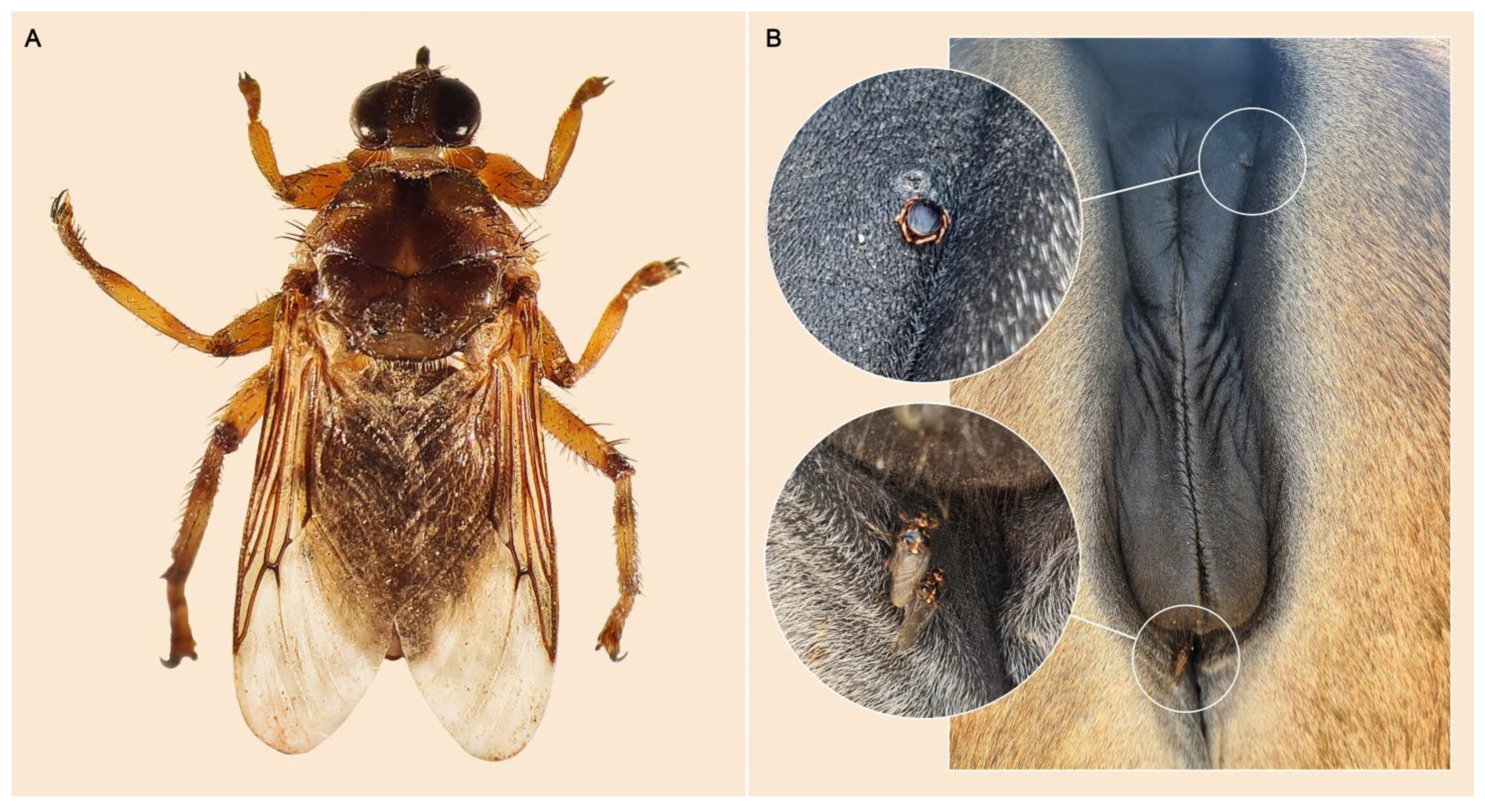
Sampling was conducted on a convenience basis in endemic areas selected for the presence of H. equina and a high incidence of equine vector-borne diseases. Hippoboscid flies were collected from horses (Equus caballus; n = 39) and one mule (Equus caballus × Equus asinus) across four provinces in Spain (Segovia, Madrid, Toledo, and Menorca) between September 2021 and August 2024. A total of 170 forest flies were manually collected directly from the perineum and inner thighs of the examined animals. The flies were carefully removed from the skin and immediately stored in 70% ethanol in individual Eppendorf tubes. All hippoboscids were identified to the species level using a stereomicroscope and morphological keys [32]. Figure 1 shows a representative H. equina individual collected in this study (A) and the perineum of a mare with a mixed infestation of Hyalomma marginatum and H. equina (B).
In the provinces of Segovia and Menorca, blood samples were obtained from a subset of the examined equids (27 horses) by the attending veterinary surgeon, who collected 5 mL of blood from the jugular vein. Blood samples were collected by veterinarians as part of routine clinical screening, with informed owner consent, and surplus material was used for research purposes. Collected blood was distributed into two tubes, one containing EDTA and a second tube without anticoagulant. Four horses (horses 6, 9, 10, and 14) were sampled on two separate occasions. All blood samples were obtained during routine veterinary examinations and were used for EP screening.
Blood samples were maintained under refrigerated conditions and promptly transported to the laboratory. Upon arrival, tubes without anticoagulant were centrifuged at 600× g for 5 min to obtain serum. Serum samples and EDTA-treated whole blood were then stored at −80 °C until serological analysis and DNA extraction, respectively.

2.2. Genomic DNA Extraction

Genomic DNA was isolated from individual hippoboscid flies for molecular detection of A. phagocytophilum, B. burgdorferi s.l, B. caballi, and T. equi, as well as for insect species identification by DNA barcoding. DNA extraction was performed using the QIAamp DNA Mini Kit (QIAGEN, Madrid, Spain) following the manufacturer’s recommended protocol.
EDTA blood samples from horses were thawed, vortexed to ensure homogenization, and subsequently used for molecular screening of the same pathogens, with total genomic DNA extracted using the same kit according to the manufacturer’s protocol.

2.3. PCR Assay for Insect Identification

To confirm the species identity and explore the genetic diversity of the collected hippoboscids, total DNA extracted from 28 forest flies was screened to amplify a 648 bp fragment of the mitochondrial COI (Cytochrome c oxidase subunit I) gene by conventional PCR using the primers listed by Hebert et al. [33]. The PCR products were sequenced by Sanger at Macrogen Spain (Madrid, Spain), and the resulting COI sequences were used for taxonomic identification by comparison with available hippoboscid sequences in the GenBank nucleotide database using BLASTn (Basic Local Alignment Search Tool) (https://blast.ncbi.nlm.nih.gov/Blast.cgi) (accessed on 14 November 2024) with default parameters and BOLD (Barcode of Life Data Systems) (www.boldsystems.org) (accessed on 14 November 2024).

2.4. PCR Assay for A. phagocytophilum and B. burgdorferi Screening

DNA samples obtained from equine blood and individual hippoboscid flies were analysed using a multiplex real-time PCR approach targeting A. phagocytophilum and B. burgdorferi s.l. The assay design, including primer and probe sequences as well as amplification conditions, was based on the protocol previously described by Courtney et al. [34]. Sequence-confirmed positive clinical samples were used as positive controls for the detection of A. phagocytophilum and B. burgdorferi sensu lato, and molecular-grade water was used as a negative control in each PCR run. Any positive samples to B. burgdorferi by real-time PCR were later tested using a conventional PCR with primers LDF and LDR as described by Marconi and Garon [35].

2.5. PCR Assay for Equine Piroplasms Screening

The presence of equine piroplasms was investigated in DNA samples obtained from horse blood and individual hippoboscid flies by means of a duplex real-time PCR approach. The assay targeted T. equi and B. caballi, and was implemented using previously validated oligonucleotides and cycling parameters described by Camino et al. [36]. Two equine blood samples previously characterized as positive for T. equi or B. caballi by PCR and confirmed by Sanger sequencing of the 18S rRNA gene in a previous study [37] were used as positive controls. RNase-free water was included as a negative control in each PCR run.

2.6. Nested PCR Assay for Equine Piroplasms Characterization

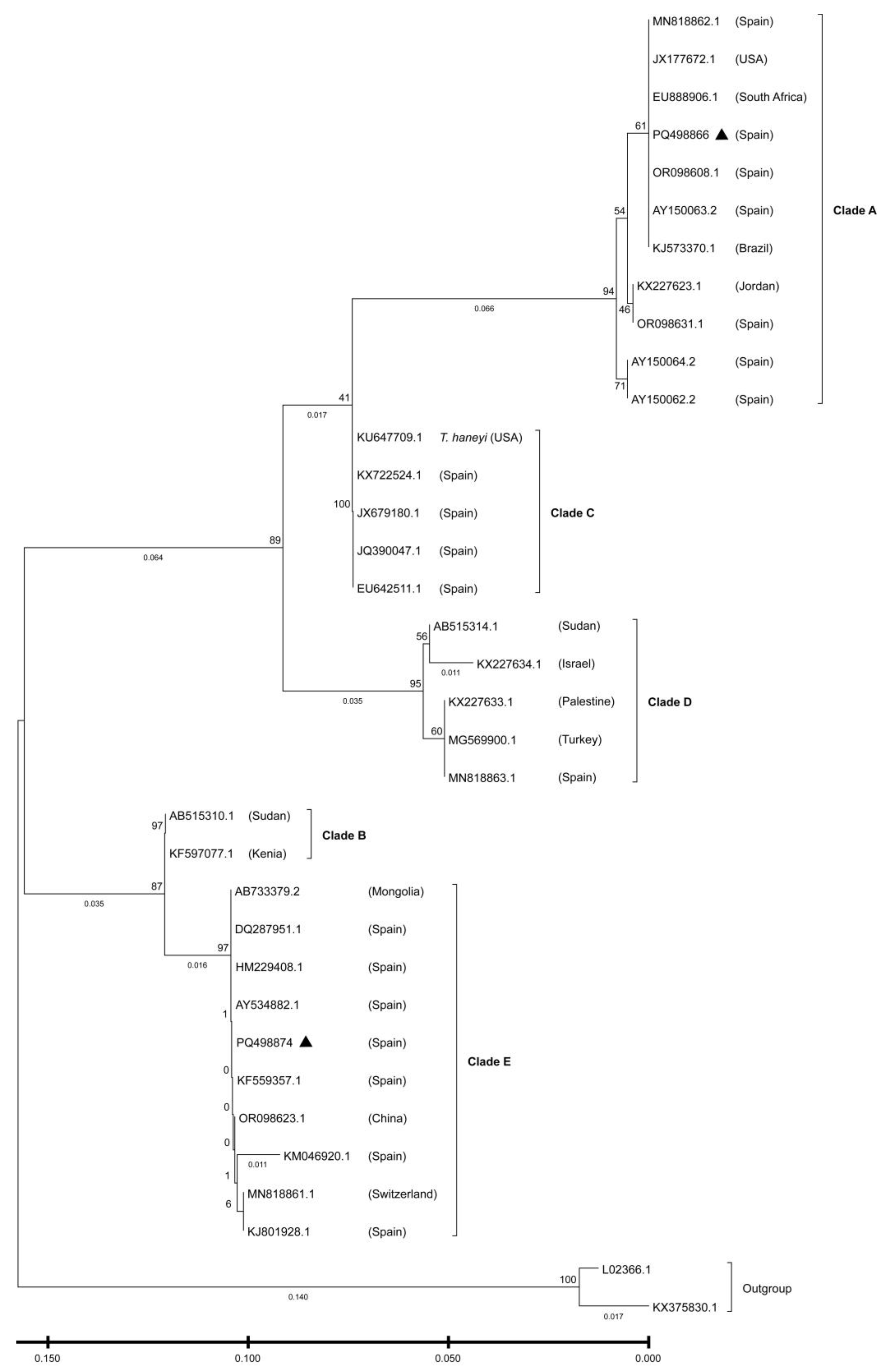
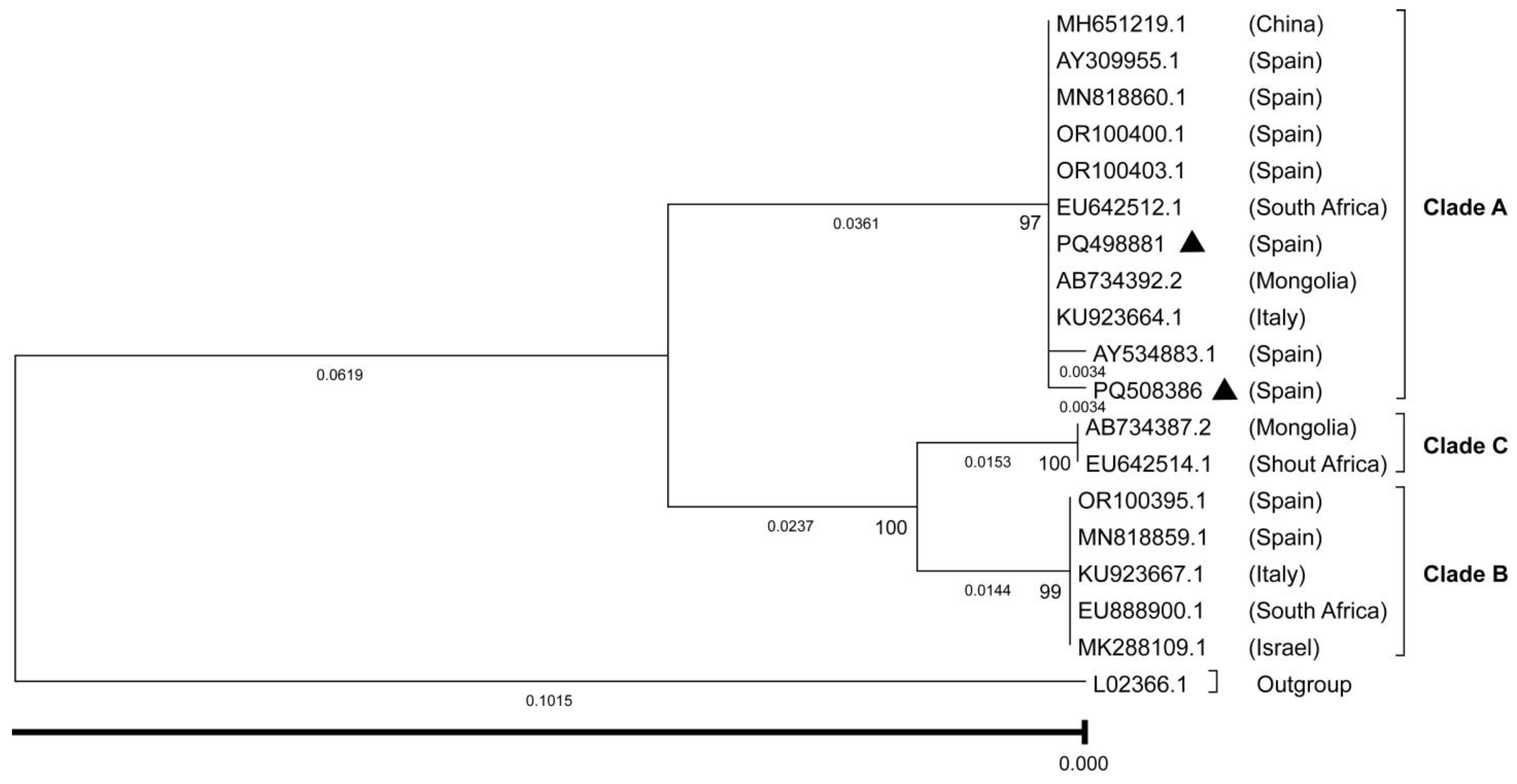
All DNA extractions (170 hippoboscid flies and blood samples from 27 horses) were analysed using a nested PCR targeting an ~800 bp fragment of the 18S rRNA locus for the genera Babesia and Theileria, with primers and conditions as described by Jefferies et al. [38]. Amplicons were visualized on an agarose gel, and products of the expected size were purified using the QIAquick PCR Purification Kit (QIAGEN, Madrid, Spain) before being sent to Macrogen Spain (Madrid, Spain) for Sanger sequencing. Species identification of the sequences obtained was performed using the Basic Local Alignment Search Tool (BLAST) and comparison with sequences deposited in the non-redundant National Center for Biotechnology Information (NCBI) database (https://blast.ncbi.nlm.nih.gov/) (accessed on 24 October 2024). The MUSCLE (Multiple Sequence Comparison by Log-Expectation) function [39], within the AliView alignment viewer and editor [40] was used to align and compare the study sequences with those previously determined and deposited in GenBank for T. equi and B. caballi. To assess the genetic diversity of both hemoparasites within the study samples, species-specific Neighbour-Joining phylogenetic trees were constructed using MEGA 7.0.26 software [41]. The 18S SSU rRNA gene sequences of Theileria parva (L02366) and/or Theileria annulata (KX375830) were included in the trees as outgroups. Representative sequences for the distinct T. equi and B. caballi clades detected in this study were submitted to the NCBI GenBank database (accession numbers PQ498866 and PQ498874 for T. equi isolates, and PQ498881 and PQ508386 for B. caballi).

2.7. Equine Piroplasmosis Serology

Serum samples were thawed and tested for equine IgG-specific antibodies against T. equi and B. caballi using two commercial competitive ELISA (cELISA) kits [Theileria equi and Babesia caballi Antibody Test Kits (VMRD® Inc., Pullman, WA, USA)] according to the manufacturer’s instructions. Results were calculated from the optical density measurements at 620 nm and expressed as inhibition percentages (IP). Sera were classified as positive (IP ≥ 40%) or negative (IP < 40%).

2.8. Data Analysis

Data processing and descriptive statistics were performed using Microsoft Excel and IBM SPSS Statistics version 25 (IBM Corporation, Armonk, NY, USA). Proportions are presented with exact 95% confidence intervals calculated using the Clopper–Pearson method. Differences in paired detection frequencies of T. equi and B. caballi in flies were assessed using McNemar’s exact test (two-sided).

3. Results

3.1. Identification and DNA Barcoding of Collected Hippoboscid Flies

All collected hippoboscids were identified as H. equina using a stereomicroscope, taxonomic keys, and mitochondrial COI sequencing. Barcode analysis of 58 individual H. equina specimens in BOLD revealed that their COI sequences clustered within a respective Barcode Index Number, matching sequences previously reported from Europe (Portugal, Corsica, Slovenia, Austria) (BOLD: AAX0882). All 58 sequences were identical, and a representative COI sequence obtained in this study was submitted to GenBank under accession number PQ608715.

3.2. A. phagocytophilum and B. burgdorferi Screening—Hippoboscid Flies and Horses

All hippoboscid flies and horses tested negative for A. phagocytophilum by real-time PCR. Regarding B. burgdorferi, molecular screening revealed a positive in one of the collected forest flies (a specimen collected in Horse 3, in Segovia, in September 2021). The Borrelia-positive specimen yielded a high Cq (Quantification Cycle) value (Cq = 37) in the real-time PCR assay but tested negative when re-analysed using conventional PCR.

3.3. Equine Piroplasms Screening—Hippoboscid Flies

In forest flies (n = 170), real-time PCR detected T. equi DNA in 11 samples (6.5%; 95% CI: 3.3–11.3), whereas nested PCR detected T. equi DNA in 19 samples (11.2%; 95% CI: 6.9–16.9). For B. caballi, real-time PCR did not detect any positive samples (0/170; 0.0%; 95% CI: 0.0–2.2), while nested PCR identified two positive samples (2/170; 1.2%; 95% CI: 0.1–4.2).
The T. equi DNA–positive flies were collected from three horses in the province of Segovia (horses 1, 6 and 14) and one horse in the province of Toledo (horse 4). The positive B. caballi DNA flies were collected from two horses in Segovia (horses 7 and 14). The horses with positive EP flies, their area of residence, sampling dates, total number of flies collected, and the number of positive flies per horse are shown in Table 1. A spatial overview of the sampling sites and nested PCR results for equine piroplasmosis (EP) in forest flies and horses is provided in Supplementary Figure S1.

3.4. Equine Piroplasms Screening—Horses

Of the horses examined in Segovia (n = 7), five were positive for piroplasm infection by both real-time and nested PCR. These included two horses infected with T. equi, two with B. caballi, and one animal (Horse 14) that showed a change in infection status, testing positive for B. caballi at the initial sampling and for T. equi three months later. In Menorca (n = 20), T. equi DNA was identified in eight horses by nested PCR (40.0%; 95% CI: 19.1–63.9), whereas real-time PCR detected T. equi DNA in four horses (20.0%; 95% CI: 5.7–43.7).
Regarding EP serology, all horses sampled in Segovia (n = 7) tested positive for either T. equi, B. caballi, or both at some point during the study. Only one horse (horse 10) became seronegative for B. caballi after eleven months. Horse 14 (positive for B. caballi at one time point and positive for T. equi three months later) showed positive results for both T. equi and B. caballi at both time points. Of the horses sampled on Menorca (n = 20), 12 were positive for T. equi by cELISA.
The results for EP real-time PCR, nested PCR, EP clade, and cELISA, along with the characteristics of each sampled horse (sex, residence area, and sampling date), are presented in Supplementary Table S1. Sampled horses with positive EP flies are marked with an asterisk after their identification. Horse 6 tested positive for T. equi by real-time PCR, nested PCR, and cELISA in 2023 and 2024. Positive T. equi DNA was found in flies collected from this horse at three time points during these two years. Horse 7 was positive for B. caballi by real-time PCR, nested PCR and cELISA, and at least one fly collected at the same time point tested positive for B. caballi. Finally, horse 14 tested positive for B. caballi in May 2024, when a positive B. caballi fly was also collected from it. However, it tested positive for T. equi in August 2024, with positive T. equi flies collected at three different time points in July and August 2024.

3.5. Equine Piroplasmosis Characterization and Phylogenetic Analysis

EP-positive flies and their equine hosts resulted in identical sequences in all cases. Within the sequences obtained in this study, two distinct T. equi (GenBank accession numbers PQ498866, PQ498874) and two B. caballi sequences (PQ508386, PQ498881) were identified. Sequence identification was based on BLASTn comparisons, with all sequences showing query coverage of ≥99%, nucleotide identity of ≥98% with reference sequences, and E-values of 0.0. Phylogenetic analysis of T. equi (Figure 2) showed that the sequences obtained in this study clustered within two major groups. One sequence grouped within clade A (PQ498866), together with reference isolates from Spain, South Africa, the USA, Brazil, and Jordan, while another clustered within clade E (PQ498874), alongside isolates from Spain, Switzerland, Saudi Arabia, Mongolia, Korea, and China. In both cases, sequence identity with reference isolates from the corresponding clades was high (approximately 99%). Similarly, the phylogenetic tree inferred for B. caballi (Figure 3) placed the sequences within clade A, clustering with isolates from Spain, South Africa, Mongolia, Italy, and China, and showing high nucleotide identity with sequences from this clade (99.9% for PQ508386 and 100% for PQ498881).

4. Discussion

In the present study, no evidence of A. phagocytophilum DNA was detected in either H. equina specimens or in the examined horses. This finding contrasts with previous reports detecting Anaplasma DNA in M. ovinus and H. equina [11,12]. Although a seroprevalence of 6.5% for A. phagocytophilum has been reported in horses from Galicia, in north-western Spain [21], the central region sampled in the present study may exhibit a much lower prevalence. Similar north–south gradients have been described for other tick-borne diseases, such as EP, and a reduced local prevalence could therefore explain the absence of A. phagocytophilum detection in our samples.
Conversely, molecular analysis revealed one H. equina specimen positive for B. burgdorferi s.l., supporting earlier evidence of the molecular detection of this bacterial pathogen in forest flies [11]. Unfortunately, the Borrelia real-time PCR–positive sample showed a high Cq value (Cq = 37) and was negative by conventional PCR, suggesting a low DNA concentration near the analytical detection limit, therefore it could not be sequenced. No studies to date have demonstrated the vector competence of H. equina for B. burgdorferi s.l., and further investigations are therefore warranted to elucidate the epidemiological significance of this species in the transmission of bacterial pathogens to horses.
In addition to bacterial pathogens, our study also investigated the presence of protozoan agents responsible for EP. In contrast to the absence of A. phagocytophilum and the isolated detection of B. burgdorferi s.l., both T. equi and B. caballi were identified in dipteran specimens. While earlier studies reported the detection of T. ovis in M. ovinus and T. luwenshuni in L. fortisetosa [29,30], previous efforts to detect piroplasm DNA in H. equina had not been successful prior to the present work [11,14]. It should be noted that EP positivity in this study reflects molecular or serological evidence of infection rather than clinical disease, as none of the sampled horses showed signs compatible with acute equine piroplasmosis at the time of sampling.
In H. equina specimens, the proportion of samples positive for T. equi was greater than that observed for B. caballi (11.2% and 1.2%, respectively; McNemar’s exact test, p < 0.001). This finding aligns with the higher prevalence of T. equi compared to B. caballi in Spain (29.0% vs. 1.8%) [37]. The two regions in Spain where horses were sampled and tested for EP, Segovia and Menorca, are areas of high EP prevalence. Segovia, part of Castile-Leon community, showed a prevalence of 26.7% for T. equi and 5.5% for B. caballi [37]. Menorca, part of the Balearic Islands community, had a 0% prevalence in a recent nationwide study [37]. However, the horses sampled in this study were Pure Breed Menorcan Horses, and data from pre-exportation analyses conducted between 2021 and 2024 at the VISAVET Equine Health Surveillance Centre indicate a high EP serological exposure (54.6%) in these horses on Menorca (unpublished data). Sampling from these two regions likely increased the chances of detecting EP-positive H. equina specimens, in contrast to other studies that did not find any piroplasms in these flies [11,14].
Across both forest fly specimens and horse blood samples, nested PCR identified a greater number of positive cases than real-time PCR, detecting additional positive samples. This is consistent with studies reporting a higher sensitivity of the nested PCR [<10 parasitized erythrocytes (PE)] versus the real-time (10–100 PE) [42,43,44], and in fact the multiplex real-time PCR used in this study had a detection limit of 3.0 × 10−4% PE for T. equi and 2.0 × 10⁻³% PE for B. caballi [36] while the nested PCR had a detection limit of 2.7 × 10⁻⁶% PE for the primary round of amplification and 2.7 × 10⁻⁷% in the secondary round of amplification [38].
EP positivity in the flies collected for this study ranged from 5% to 100% (mean: 23.7%, median: 33.3%). This suggests that approximately one-quarter of the flies collected from an EP-positive horse would test positive for EP, making it relatively straightforward to detect an EP-positive horse by sampling the flies. While collecting forest flies from the perineal area of feral horses may pose some risks, this method is likely more practical than drawing blood samples in such populations, particularly when the goal is to detect EP.
All forest flies testing positive for EP were collected from horses that were also EP-positive at the time of sampling. In addition, in one case (Horse 14), the EP status detected in flies reflected the change in host infection from B. caballi to T. equi between sampling time points. Furthermore, the 18S SSU rRNA V4 region sequences of T. equi/B. caballi obtained from all the collected flies were identical to those recovered from their equine hosts. These findings suggest that the EP-positive flies likely fed on their hosts shortly before collection. However, since H. equina can feed on multiple hosts, it is possible that in horses sharing the same environment (e.g., Horses 4, 6, and 7), EP could originate from different horses [45].
The T. equi and B. caballi sequences recovered from both horses and flies in this study were distributed among the most prevalent clades reported in Spain. T. equi isolates from flies and horses in Segovia clustered in clade E, whereas T. equi isolates from flies and/or horses in Toledo clustered in clade A. T. equi–positive horses from Menorca clustered in clade A, except for one animal (horse 17), which clustered in clade E. These two clades are the most common in Spain, with clade E being widespread across the country and clade A predominantly found in southern and central Spain [46]. As for B. caballi, all isolates from horses and flies in Segovia in this study belonged to clade A, which aligns with the distribution of this clade in the northern regions of Spain [46].
Although ixodid ticks remain the only confirmed biological vectors of EP, the detection of piroplasm DNA in dipteran flies is consistent with earlier studies demonstrating their ability to transfer infected blood between hosts during interrupted feeding [47,48]. The haematophagous behaviour of these flies, coupled with their tendency to share hosts—and often feeding sites—with ticks (Figure 1B), underscores the need for experimental transmission studies to clarify their epidemiological role in piroplasm spread. Until vertical or mechanical transmission of EP by H. equina is experimentally confirmed, its involvement should be considered a possibility rather than an established route. Consequently, control strategies for horses in endemic areas should continue to focus on tick management through acaricides and routine grooming [26,37], but should also incorporate measures targeting flies, including the use of insecticides or repellents and regular inspection of the perineum, udder, and inner thighs to detect and manage forest fly infestations.
Although vector competence cannot be established from DNA detection alone, the identification of EP pathogens—and the detection of B. burgdorferi s.l. in one specimen—together with previous reports of H. equina acting as a mechanical and biological vector of other pathogens such as Corynebacterium pseudotuberculosis [10], provide a strong rationale for further investigation into the broader vectorial capacity of this species in equine environments.

5. Conclusions

This study provides the first molecular evidence of T. equi and B. caballi in H. equina collected from horses, with a strong correspondence between the piroplasm status of flies and their hosts. While A. phagocytophilum was not detected and only one specimen tested positive for Borrelia burgdorferi sensu lato, the identification of equine piroplasms in dipteran flies highlights their potential epidemiological relevance in endemic areas. Although vector competence cannot be inferred from DNA detection alone, these findings warrant further experimental research to clarify the role of H. equina and other forest flies in the transmission of equine piroplasmosis. Given the practicality of collecting flies—particularly in free-ranging or difficult-to-handle horses—integrating forest fly sampling into surveillance programmes may enhance EP detection in the field. Further studies combining entomological, molecular, and epidemiological approaches are needed to better define the contribution of dipteran flies to the circulation of equine pathogens.

Supplementary Materials

The following supporting information can be downloaded at: https://www.mdpi.com/article/10.3390/pathogens15010094/s1, Table S1: Characteristics of each blood-sampled horse (n = 27), including sex, residence province, and sampling date, as well as their blood test results for EP real-time PCR, nested PCR, EP clade, and cELISA. Horses sampled in association with positive EP flies are marked with an asterisk following their identification. Figure S1. Geographical distribution of sampling sites and detection results for equine piroplasmosis (EP) by province in Spain. Pie charts represent the proportion of positive (red) and negative (green) samples for EP, as determined by nested PCR, for (A) forest flies collected from equids (n = 170) across four provinces (Madrid, Segovia, Toledo, and Menorca) and (B) horses sampled for blood analysis (n = 27) in two provinces (Segovia and Menorca). The size of the pie charts is proportional to the number of samples analysed per province.

Author Contributions

Conceptualization, A.D. and F.C.-L.; methodology, A.D. and F.C.-L.; validation, A.D., F.C.-L., S.O.-M. and E.J.-C.; formal analysis, F.C.-L.; investigation, A.D., P.G., A.R., B.R. and A.O.; resources, S.O.-M. and F.C.-L.; data curation, A.D.; writing—original draft preparation, A.D. and F.C.-L.; writing—review and editing, A.D., F.C.-L., S.O.-M., E.J.-C. and S.G.; supervision, F.C.-L.; project administration, S.O.-M. and F.C.-L.; funding acquisition, S.O.-M. and F.C.-L. All authors have read and agreed to the published version of the manuscript.

Funding

Gago, P. was supported by the Grants for Predoctoral Researcher Training Contracts. Funding Program of the Complutense University of Madrid-Banco Santander. 2020 Call (CT82/20-CT83/20). The sampling and analyses carried out on Menorca were supported by the Research grants from the Institut Menorquí d’Estudis 2023 (Exp. I0015-2023-000004) granted to Olvera-Maneu, S.

Institutional Review Board Statement

The present study was conducted in accordance with European Directive 2010/63/EU. The 27 horses examined in this study were sampled by their veterinary surgeon as part of a routine physical check and used for EP screening, with no additional experimental procedures.

Informed Consent Statement

Informed consent was obtained from the owners of all sampled horses prior to the study.

Data Availability Statement

The original contributions presented in this study are included in the article/Supplementary Materials. Further inquiries can be directed to the corresponding author.

Acknowledgments

We are grateful to the stud farm owners and veterinary surgeons (Erik Mantje, Lucía de Cárdenas) who kindly agreed to participate in this study. During the preparation of this work the authors used ChatGPT 4.0 to improve the English language quality of the manuscript. After using this tool, the authors reviewed and edited the content as needed and take full responsibility for the content of the publication.

Conflicts of Interest

The authors declare no conflicts of interest in the subject, matter or materials discussed in this manuscript.

Abbreviations

The following abbreviations are used in this manuscript:
BLASTBasic Local Alignment Search Tool
BOLDBarcode of Life Data Systems
CqQuantification Cycle
COICytochrome c oxidase subunit I
EPEquine Piroplasmosis
MUSCLEMultiple Sequence Comparison by Log-Expectation
NCBINational Center for Biotechnology Information

References

  1. Bequaert, J. The Hippoboscidae or louse-Flies (Diptera) of mammals and birds. Part I. Structure, physiology and natural history. Entomol. Am. 1953, 33, 211–442. [Google Scholar]
  2. Obona, J.; Sychra, O.; Gres, S.; Herman, P.; Manko, P.; Rohacek, J.; Sestakova, A.; Slapak, J.; Hromada, M. A revised annotated checklist of louse flies (Diptera, Hippoboscidae) from Slovakia. Zookeys 2019, 862, 129–152. [Google Scholar] [CrossRef]
  3. Zhang, D.; Liu, X.H.; Li, X.Y.; Cao, J.; Chu, H.J.; Li, K. Ultrastructural investigation of antennae in three cutaneous myiasis flies: Melophagus ovinus, Hippobosca equina, and Hippobosca longipennis (Diptera: Hippoboscidae). Parasitol. Res. 2015, 114, 1887–1896. [Google Scholar] [CrossRef]
  4. Decastello, A.; Farkas, R. Anaphylactic reaction caused by a horse-fly species (Hippobosca equina). Orvosi Hetil. 2009, 150, 1945–1948. [Google Scholar] [CrossRef]
  5. Sokol, R.; Michalski, M.M. Occurrence of Hippobosca equina in Polish primitive horses during the grazing season. Ann. Parasitol. 2015, 61, 119–124. [Google Scholar]
  6. Maslanko, W.; Szwaj, E.; Gazda, M.; Bartosik, K. Hippobosca equina L. (Hippoboscidae: Hippobosca)-An old enemy as an emerging threat in the Palearctic zone. Int. J. Environ. Res. Public Health 2022, 19, 16978. [Google Scholar] [CrossRef]
  7. Dittmar, K.; Porter, M.L.; Murray, S.; Whiting, M.F. Molecular phylogenetic analysis of nycteribiid and streblid bat flies (Diptera: Brachycera, Calyptratae): Implications for host associations and phylogeographic origins. Mol. Phylogenet. Evol. 2006, 38, 155–170. [Google Scholar] [CrossRef]
  8. Andreani, A.; Belcari, A.; Sacchetti, P.; Romani, R. Antennal morphology and fine structure of flagellar sensilla in Hippoboscid flies with special reference to Lipoptena fortisetosa (Diptera: Hippoboscidae). Insects 2022, 13, 236. [Google Scholar] [CrossRef]
  9. El-Geneady, M.A.; Ramadan, R.M.; Mahdy, O.A.; Kamel, M.S.; Salem, M.A. Hippobosca equina: Influences on oxidative stress and immune-regulating cytokine responses in horses. Med. Vet. Entomol. 2025; ahead of print. [Google Scholar] [CrossRef]
  10. Arafa, M.I.; Hamouda, S.M.; Rateb, H.Z.; Abdel-Hafeez, M.M.; Aamer, A.A. Oedematous Skin Disease (OSD) transmission among buffaloes. Glob. J. Med. Res. 2019, 19, 15–19. [Google Scholar]
  11. Abdullah, H.; Aboelsoued, D.; Farag, T.K.; Abdel-Shafy, S.; Abdel Megeed, K.N.; Parola, P.; Raoult, D.; Mediannikov, O. Molecular characterization of some equine vector-borne diseases and associated arthropods in Egypt. Acta Trop. 2022, 227, 106274. [Google Scholar] [CrossRef]
  12. Boucheikhchoukh, M.; Mechouk, N.; Benakhla, A.; Raoult, D.; Parola, P. Molecular evidence of bacteria in Melophagus ovinus sheep keds and Hippobosca equina forest flies collected from sheep and horses in northeastern Algeria. Comp. Immunol. Microbiol. Infect. Dis. 2019, 65, 103–109. [Google Scholar] [CrossRef]
  13. Halos, L.; Jamal, T.; Maillard, R.; Girard, B.; Guillot, J.; Chomel, B.; Vayssier-Taussat, M.; Boulouis, H.J. Role of Hippoboscidae flies as potential vectors of Bartonella spp. infecting wild and domestic ruminants. Appl. Environ. Microbiol. 2004, 70, 6302–6305. [Google Scholar] [CrossRef]
  14. Pena-Espinoza, M.; Em, D.; Shahi-Barogh, B.; Berer, D.; Duscher, G.G.; van der Vloedt, L.; Glawischnig, W.; Rehbein, S.; Harl, J.; Unterkofler, M.S.; et al. Molecular pathogen screening of louse flies (Diptera: Hippoboscidae) from domestic and wild ruminants in Austria. Parasit. Vectors 2023, 16, 179. [Google Scholar] [CrossRef]
  15. Maslanko, W.; Asman, M.; Bartosik, K.; Swislocka, M. First report of Bartonella sp. isolated from Hippobosca equina L. (Hippoboscidae: Hippobosca) in Lublin province, south-eastern Poland. Ann. Agric. Environ. Med. 2024, 31, 334–339. [Google Scholar] [CrossRef] [PubMed]
  16. Zhigailov, A.V.; Perfilyeva, Y.V.; Ostapchuk, Y.O.; Kulemin, M.V.; Ivanova, K.R.; Abdolla, N.; Kan, S.A.; Maltseva, E.R.; Berdygulova, Z.A.; Naizabayeva, D.A.; et al. Molecular detection and characterization of bovine viral diarrhea virus type 2 and bluetongue virus 9 in forest flies (Hippobosca equina) collected from livestock in southern Kazakhstan. Vet. Parasitol. Reg. Stud. Rep. 2023, 45, 100932. [Google Scholar] [CrossRef] [PubMed]
  17. Bogdan, A.M.; Mitrea, I.L.; Ionita, M. Equine granulocytic anaplasmosis: A systematic review and meta-analysis on clinico-pathological findings, diagnosis, and therapeutic management. Vet. Sci. 2024, 11, 269. [Google Scholar] [CrossRef]
  18. Silaghi, C.; Liebisch, G.; Pfister, K. Genetic variants of Anaplasma phagocytophilum from 14 equine granulocytic anaplasmosis cases. Parasit. Vectors 2011, 4, 161. [Google Scholar] [CrossRef]
  19. Gehlen, H.; Inerle, K.; Bartel, A.; Stockle, S.D.; Ulrich, S.; Briese, B.; Straubinger, R.K. Seroprevalence of Borrelia burgdorferi sensu lato and Anaplasma phagocytophilum infections in German horses. Animals 2023, 13, 1984. [Google Scholar] [CrossRef]
  20. Estrada-Pena, A.; Oteo, J.A.; Estrada-Pena, R.; Gortazar, C.; Osacar, J.J.; Moreno, J.A.; Castella, J. Borrelia burgdorferi sensu lato in ticks (Acari: Ixodidae) from two different foci in Spain. Exp. Appl. Acarol. 1995, 19, 173–180. [Google Scholar] [CrossRef] [PubMed]
  21. Amusategui, I.; Sainz, A.; Tesouro, M.A. Serological evaluation of Anaplasma phagocytophilum infection in livestock in northwestern Spain. Ann. N. Y Acad. Sci. 2006, 1078, 487–490. [Google Scholar] [CrossRef] [PubMed]
  22. Butler, C.M.; Houwers, D.J.; Jongejan, F.; van der Kolk, J.H. Borrelia burgdorferi infections with special reference to horses. A review. Vet. Q. 2005, 27, 146–156. [Google Scholar] [CrossRef] [PubMed]
  23. Tirosh-Levy, S.; Gottlieb, Y.; Fry, L.M.; Knowles, D.P.; Steinman, A. Twenty years of Equine Piroplasmosis research: Global distribution, molecular diagnosis, and phylogeny. Pathogens 2020, 9, 926. [Google Scholar] [CrossRef] [PubMed]
  24. Knowles, D.P.; Kappmeyer, L.S.; Haney, D.; Herndon, D.R.; Fry, L.M.; Munro, J.B.; Sears, K.; Ueti, M.W.; Wise, L.N.; Silva, M.; et al. Discovery of a novel species, Theileria haneyi n. sp., infective to equids, highlights exceptional genomic diversity within the genus Theileria: Implications for apicomplexan parasite surveillance. Int. J. Parasitol. 2018, 48, 679–690. [Google Scholar] [CrossRef]
  25. Scoles, G.A.; Ueti, M.W. Vector ecology of equine piroplasmosis. Annu. Rev. Entomol. 2015, 60, 561–580. [Google Scholar] [CrossRef]
  26. de Waal, D.T. Equine Piroplasmosis—A review. Br. Vet. J. 1992, 148, 6–14. [Google Scholar] [CrossRef]
  27. Friedhoff, K.T.; Tenter, A.M.; Muller, I. Haemoparasites of equines: Impact on international trade of horses. Rev. Sci. Tech. 1990, 9, 1187–1194. [Google Scholar]
  28. Wise, L.N.; Kappmeyer, L.S.; Mealey, R.H.; Knowles, D.P. Review of equine piroplasmosis. J. Vet. Intern. Med. 2013, 27, 1334–1346. [Google Scholar] [CrossRef]
  29. Zhao, L.; Wang, J.; Ding, Y.; Li, K.; He, B.; Li, F.; Zhang, L.; Li, X.; Liu, Y. Theileria ovis (Piroplasmida: Theileriidae) detected in Melophagus ovinus (Diptera: Hippoboscoidea) and Ornithodoros lahorensis (Ixodida: Argasidae) removed from sheep in Xinjiang, China. J. Med. Entomol. 2020, 57, 631–635. [Google Scholar] [CrossRef]
  30. Hao, L.; Yuan, D.; Li, S.; Jia, T.; Guo, L.; Hou, W.; Lu, Z.; Mo, X.; Yin, J.; Yang, A.; et al. Detection of Theileria spp. in ticks, sheep keds (Melophagus ovinus), and livestock in the eastern Tibetan Plateau, China. Parasitol. Res. 2020, 119, 2641–2648. [Google Scholar] [CrossRef]
  31. Lee, S.H.; Kim, K.T.; Kwon, O.D.; Ock, Y.; Kim, T.; Choi, D.; Kwak, D. Novel detection of Coxiella spp., Theileria luwenshuni, and T. ovis endosymbionts in deer keds (Lipoptena fortisetosa). PLoS ONE 2016, 11, e0156727. [Google Scholar] [CrossRef]
  32. Obona, J.; Fogasova, K.; Fulin, M.; Gres, S.; Manko, P.; Repasky, J.; Rohacek, J.; Sychra, O.; Hromada, M. Updated taxonomic keys for European Hippoboscidae (Diptera), and expansion in Central Europe of the bird louse fly Ornithomyacomosa (Austen, 1930) with the first record from Slovakia. Zookeys 2022, 1115, 81–101. [Google Scholar] [CrossRef]
  33. Hebert, P.D.; Penton, E.H.; Burns, J.M.; Janzen, D.H.; Hallwachs, W. Ten species in one: DNA barcoding reveals cryptic species in the neotropical skipper butterfly Astraptes fulgerator. Proc. Natl. Acad. Sci. USA 2004, 101, 14812–14817. [Google Scholar] [CrossRef] [PubMed]
  34. Courtney, J.W.; Kostelnik, L.M.; Zeidner, N.S.; Massung, R.F. Multiplex real-time PCR for detection of Anaplasma phagocytophilum and Borrelia burgdorferi. J. Clin. Microbiol. 2004, 42, 3164–3168. [Google Scholar] [CrossRef]
  35. Marconi, R.T.; Garon, C.F. Development of polymerase chain reaction primer sets for diagnosis of Lyme disease and for species-specific identification of Lyme disease isolates by 16S rRNA signature nucleotide analysis. J. Clin. Microbiol. 1992, 30, 2830–2834. [Google Scholar] [CrossRef]
  36. Camino, E.; Dorrego, A.; Carvajal, K.A.; Buendia-Andres, A.; de Juan, L.; Dominguez, L.; Cruz-Lopez, F. Serological, molecular and hematological diagnosis in horses with clinical suspicion of equine piroplasmosis: Pooling strengths. Vet. Parasitol. 2019, 275, 108928. [Google Scholar] [CrossRef]
  37. Camino, E.; Buendia, A.; Dorrego, A.; Pozo, P.; de Juan, L.; Dominguez, L.; Cruz-Lopez, F. Sero-molecular survey and risk factors of equine piroplasmosis in horses in Spain. Equine Vet. J. 2021, 53, 771–779. [Google Scholar] [CrossRef] [PubMed]
  38. Jefferies, R.; Ryan, U.M.; Irwin, P.J. PCR-RFLP for the detection and differentiation of the canine piroplasm species and its use with filter paper-based technologies. Vet. Parasitol. 2007, 144, 20–27. [Google Scholar] [CrossRef] [PubMed]
  39. Edgar, R.C. MUSCLE: Multiple sequence alignment with high accuracy and high throughput. Nucleic Acids Res. 2004, 32, 1792–1797. [Google Scholar] [CrossRef]
  40. Larsson, A. AliView: A fast and lightweight alignment viewer and editor for large datasets. Bioinformatics 2014, 30, 3276–3278. [Google Scholar] [CrossRef]
  41. Kumar, S.; Stecher, G.; Tamura, K. MEGA7: Molecular Evolutionary Genetics Analysis Version 7.0 for Bigger Datasets. Mol. Biol. Evol. 2016, 33, 1870–1874. [Google Scholar] [CrossRef]
  42. Nicolaiewsky, T.B.; Richter, M.F.; Lunge, V.R.; Cunha, C.W.; Delagostin, O.; Ikuta, N.; Fonseca, A.S.; da Silva, S.S.; Ozaki, L.S. Detection of Babesia equi (Laveran, 1901) by nested polymerase chain reaction. Vet. Parasitol. 2001, 101, 9–21. [Google Scholar] [CrossRef] [PubMed]
  43. Ueti, M.W.; Palmer, G.H.; Kappmeyer, L.S.; Scoles, G.A.; Knowles, D.P. Expression of equi merozoite antigen 2 during development of Babesia equi in the midgut and salivary gland of the vector tick Boophilus microplus. J. Clin. Microbiol. 2003, 41, 5803–5809. [Google Scholar] [CrossRef]
  44. Ueti, M.W.; Mealey, R.H.; Kappmeyer, L.S.; White, S.N.; Kumpula-McWhirter, N.; Pelzel, A.M.; Grause, J.F.; Bunn, T.O.; Schwartz, A.; Traub-Dargatz, J.L.; et al. Re-emergence of the apicomplexan Theileria equi in the United States: Elimination of persistent infection and transmission risk. PLoS ONE 2012, 7, e44713. [Google Scholar] [CrossRef]
  45. Soliman, S.M.; Attia, M.M.; Al-Harbi, M.S.; Saad, A.M.; El-Saadony, M.T.; Salem, H.M. Low host specificity of Hippobosca equina infestation in different domestic animals and pigeon. Saudi J. Biol. Sci. 2022, 29, 2112–2120. [Google Scholar] [CrossRef]
  46. Camino, E.; Cruz-Lopez, F.; de Juan, L.; Dominguez, L.; Shiels, B.; Coultous, R.M. Phylogenetic analysis and geographical distribution of Theileria equi and Babesia caballi sequences from horses residing in Spain. Ticks Tick Borne Dis. 2020, 11, 101521. [Google Scholar] [CrossRef] [PubMed]
  47. Jhaiaun, P.; Rudeekiatthamrong, A.; Chimnoi, W.; Nguyen, G.T.; Ngasaman, R.; Phasuk, J.; Kamyingkird, K. Molecular detection of hemoparasites in hematophagous insects collected from livestock farms in Northeastern Thailand. Insects 2025, 16, 207. [Google Scholar] [CrossRef] [PubMed]
  48. Hornok, S.; Takacs, N.; Szekeres, S.; Szoke, K.; Kontschan, J.; Horvath, G.; Sugar, L. DNA of Theileria orientalis, T. equi and T. capreoli in stable flies (Stomoxys calcitrans). Parasit. Vectors 2020, 13, 186. [Google Scholar] [CrossRef]
Figure 1. Representative specimen of Hippobosca equina collected during the present study (A), and perineal region of a mare showing a mixed infestation with Hyalomma marginatum and H. equina (B).
Pathogens 15 00094 g001
Figure 2. Maximum likelihood tree of Theileria equi isolates based on sequences from the amplified 18S SSU rRNA V4 hypervariable region. T. equi sequences reported previously are denoted by their GenBank accession numbers and countries of isolation. Bold triangles indicate sequences obtained in the present study. Numbers above the branches represent bootstrap values (1000 replications). Previously described clades (AE) are highlighted.
Pathogens 15 00094 g002
Figure 3. Maximum likelihood tree of Babesia caballi isolates based on sequences derived from the amplified 18S SSU rRNA V4 hypervariable region. B. caballi sequences reported previously are denoted by their GenBank accession numbers and countries of isolation. Bold triangles represent sequences obtained in the present study. Numbers above the branches correspond to bootstrap values (1000 replications). Previously described clades (AC) are highlighted.
Pathogens 15 00094 g003
Table 1. Equine piroplasms test results for the collected forest flies (n = 170). The table includes the number of equine piroplasms-positive flies (positive/total flies collected), their species result and corresponding clade, as well as the characteristics of their hosts (sex, sampling date, and area of residence).
Horse IDSexResidence
Province
Sampling DatePositive/
Total Collected Flies
Species
Result
Clade
Horse 1MareSegovia21 September 20211/1Theileria equiE
Horse 2StallionSegovia21 September 20210/4 - -
Mule 1MollySegovia21 September 20210/2 - -
Horse 3GeldingSegovia29 September 20210/2 - -
Horse 4GeldingToledo23 August 20223/52T. equiA
Horse 5GeldingSegovia19 September 20230/3 - -
25 September 20230/4 - -
Horse 6GeldingSegovia19 September 20231/3T. equiE
25 September 20231/3T. equiE
27 July 20243/3T. equiE
Horse 7MareSegovia25 September 20231/5Babesia caballiA
Horse 8MareSegovia25 September 20230/4 - -
Horse 9GeldingSegovia25 September 20230/5 - -
27 September 20230/18 - -
Horse 10MareSegovia25 September 20230/2 - -
27 September 20230/1 - -
Horse 11GeldingMadrid23 July 20240/3 - -
Horse 12GeldingMadrid23 July 20240/2 - -
Horse 13MareMadrid23 July 20240/4 - -
Horse 14MareSegovia13 May 20241/2B. caballiA
7 July 20241/6T. equiE
14 July 20246/8T. equiE
9 August 20243/8T. equiE
Horse 15StallionMenorca1 July 20240/1 - -
Horse 16StallionMenorca1 July 20240/1 - -
Horse 17MareMenorca1 July 20240/2 - -
Horse 18StallionMenorca1 July 20240/1 - -
Horse 19StallionMenorca1 July 20240/1 - -
Horse 20StallionMenorca1 July 20240/1 - -
Horse 21StallionMenorca2 July 20240/1 - -
Horse 22MareMenorca2 July 20240/2 - -
Horse 23MareMenorca2 July 20240/1 - -
Horse 24StallionMenorca2 July 20240/2 - -
Horse 25StallionMenorca2 July 20240/2 - -
Horse 26MareMenorca2 July 20240/1 - -
Horse 27MareMenorca2 July 20240/1 - -
Horse 28MareMenorca2 July 20240/1 - -
Horse 29StallionMenorca2 July 20240/1 - -
Horse 30MareMenorca3 July 20240/1 - -
Horse 31StallionMenorca3 July 20240/1 - -
Horse 32StallionMenorca3 July 20240/2 - -
Horse 33MareMenorca3 July 20240/1 - -
Horse 34StallionMenorca3 July 20240/1 - -
Disclaimer/Publisher’s Note: The statements, opinions and data contained in all publications are solely those of the individual author(s) and contributor(s) and not of MDPI and/or the editor(s). MDPI and/or the editor(s) disclaim responsibility for any injury to people or property resulting from any ideas, methods, instructions or products referred to in the content.