Molecular Tracing and Comparative Genomics Analysis of Yersinia pestis Strains Isolated from Wild Rodents in Yunnan Province in 2022
 and
and
Abstract
1. Introduction
2. Materials and Methods
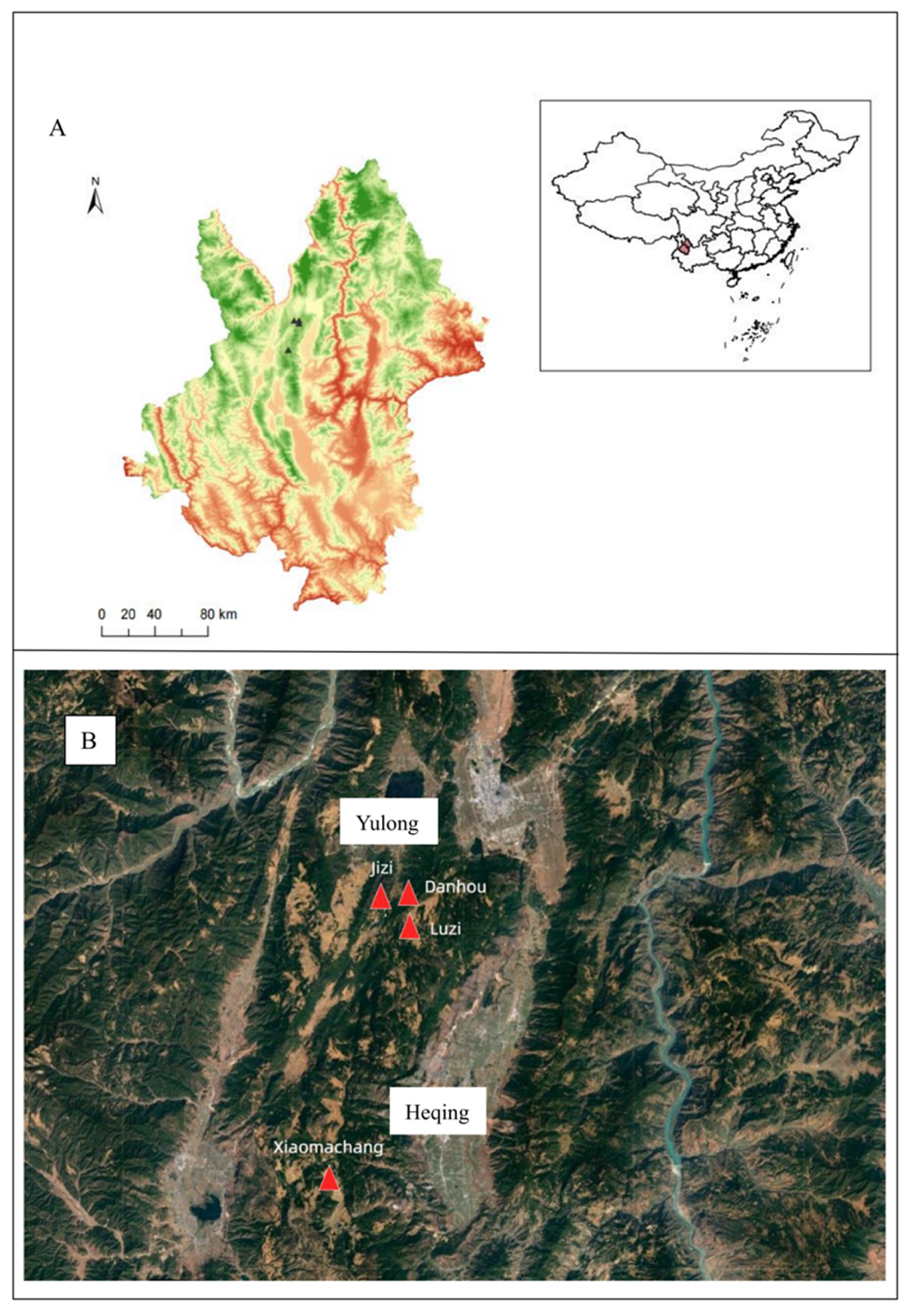
2.1. Experimental Strains
2.2. Pigment Adsorption Experiment
2.3. DNA Extraction
2.4. Sequencing
2.4.1. Next-Generation Sequencing
2.4.2. Third-Generation Sequencing
2.5. SNP Identification
2.6. Statistical Analysis
2.7. Construct Phylogenetic Tree Based on Whole Genome SNP
2.8. Comparative Genomics Analysis
3. Results
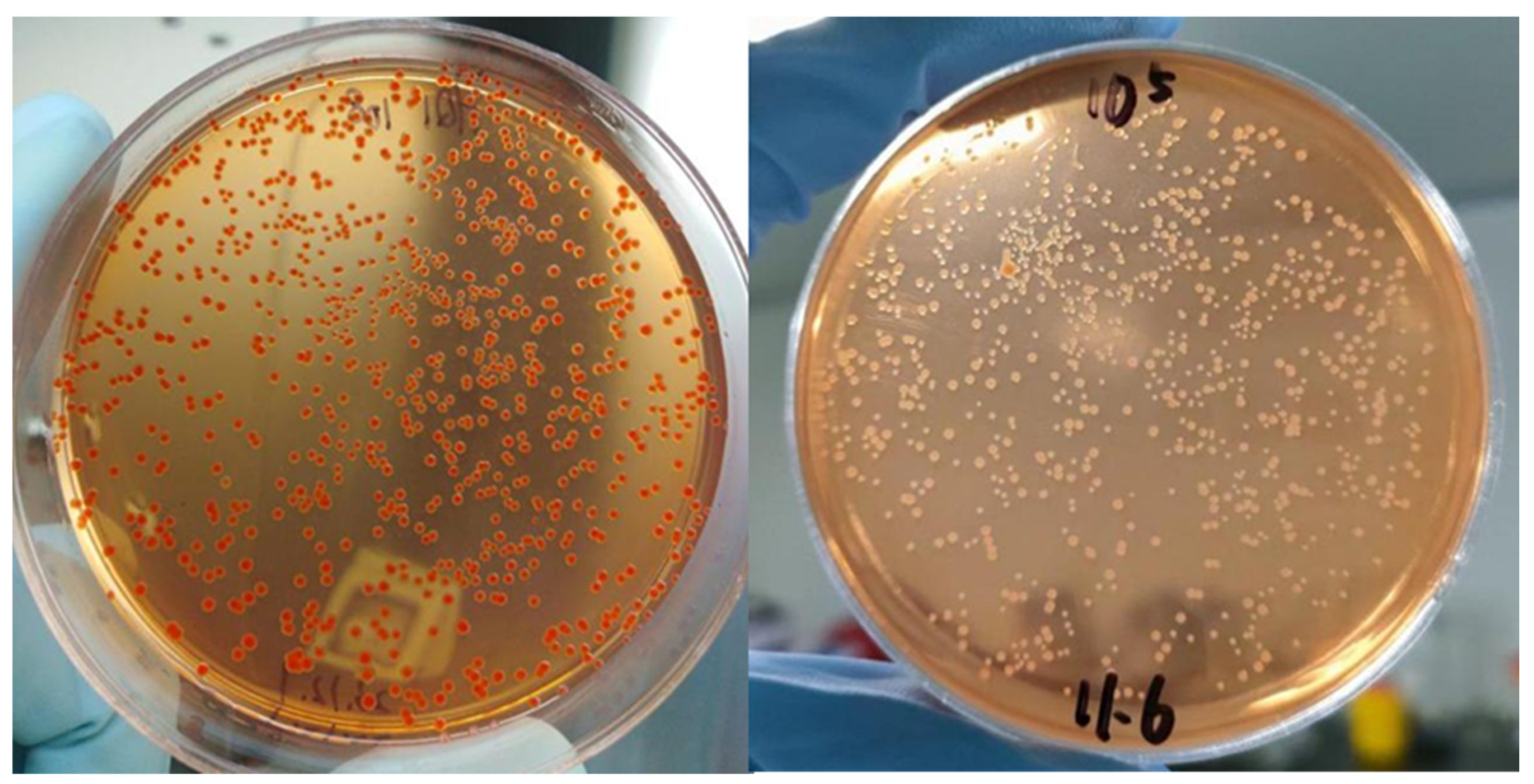
3.1. Results of the Pigment Adsorption Experiment
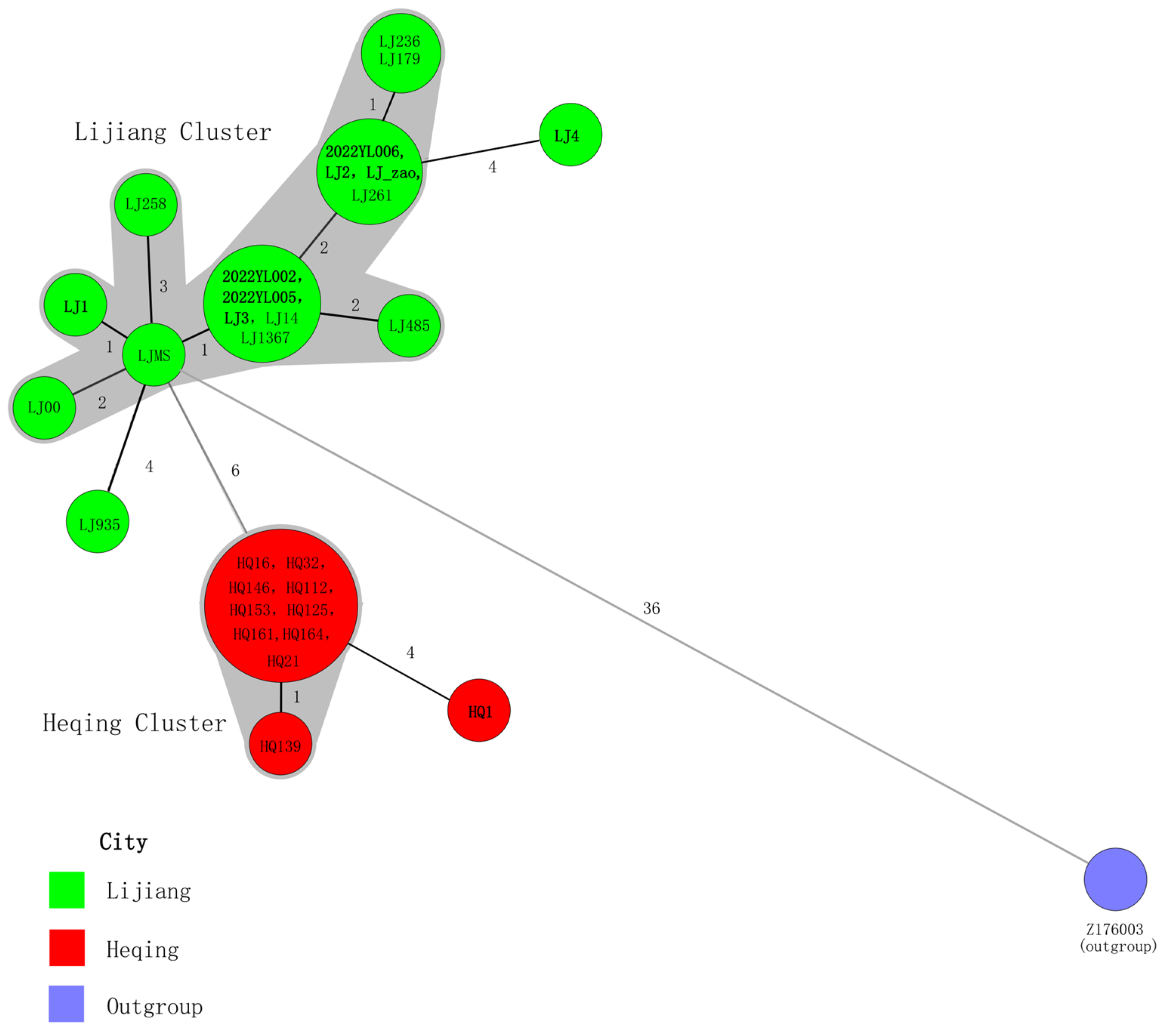
3.2. SNP Identification of Yersinia pestis
3.3. Comparison of SNP Number Differences
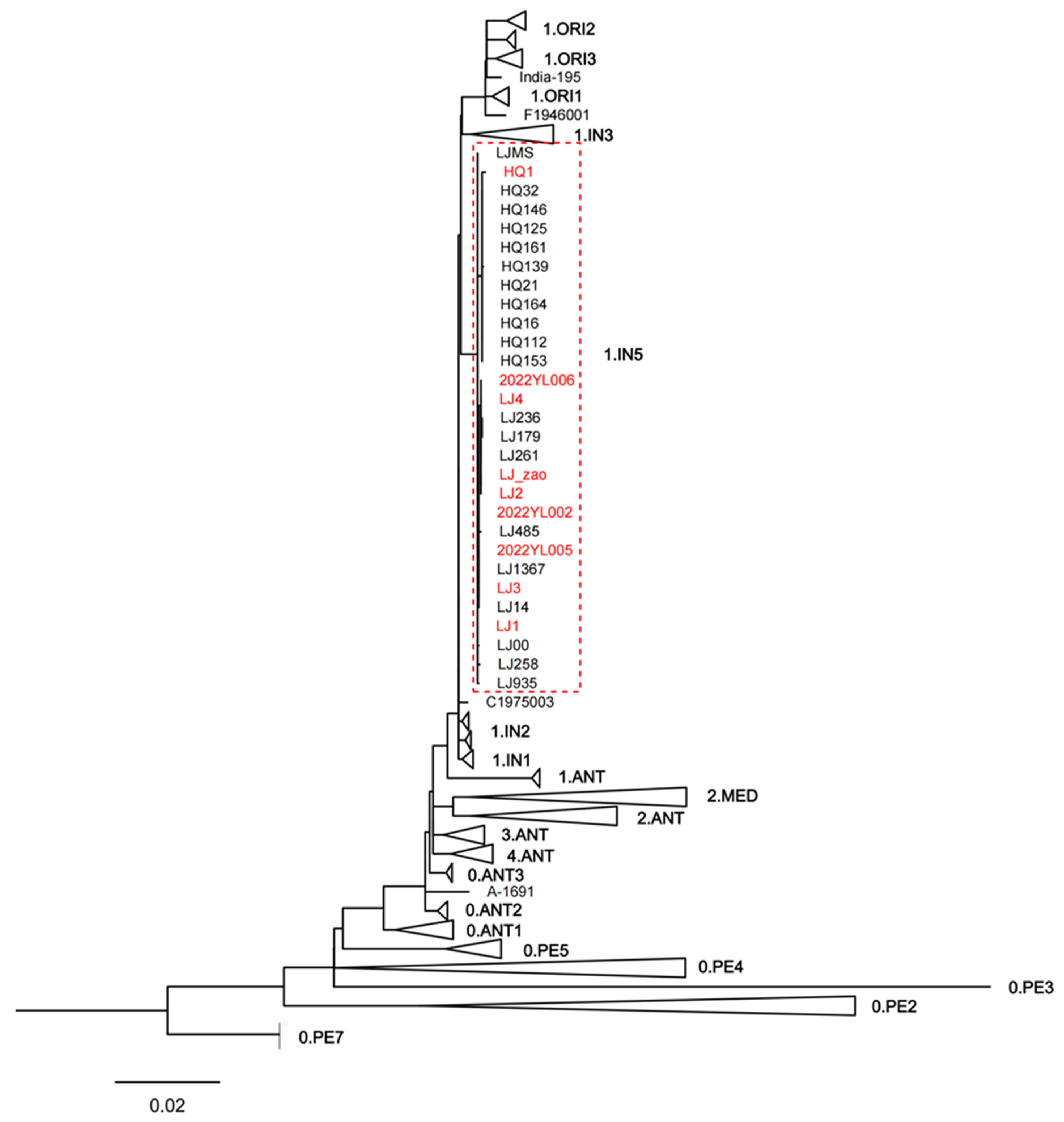
3.4. Yersinia Pestis Phylogenetic Tree
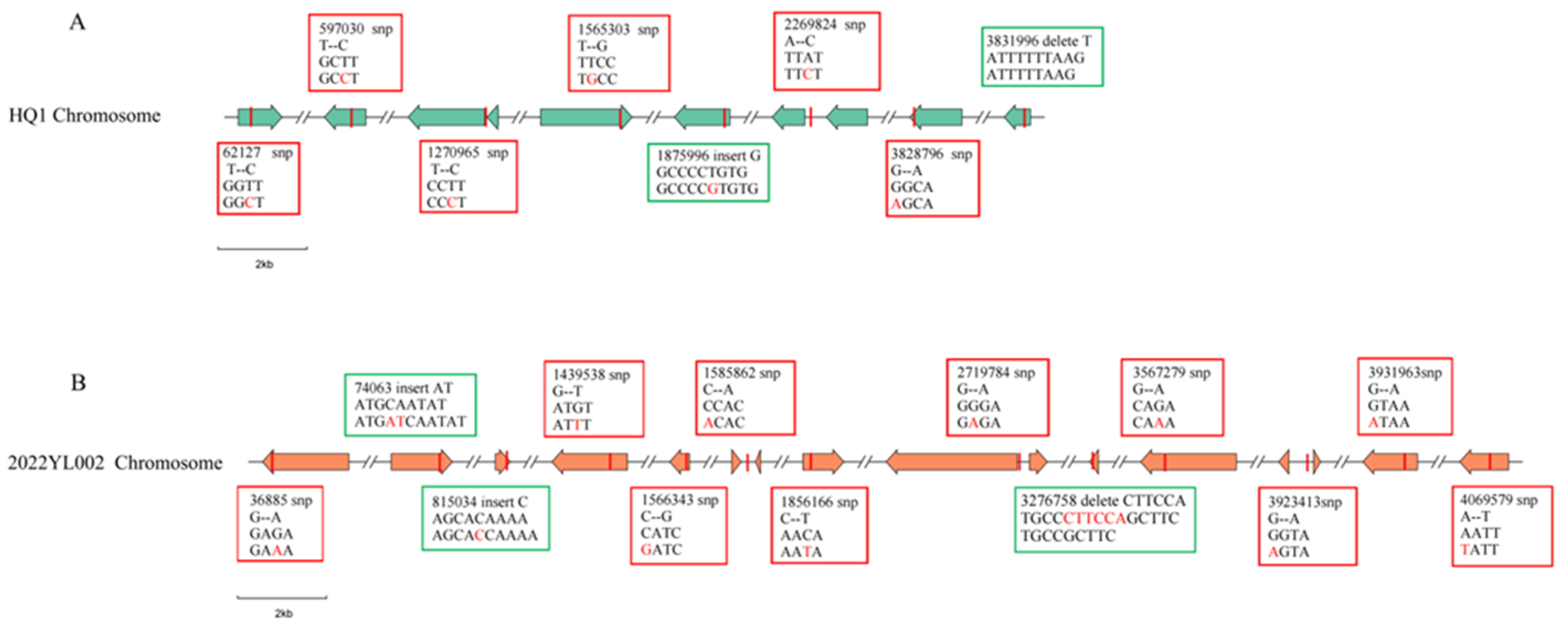
3.5. SNP and Indel Variations
4. Discussion
4.1. Source of Sylvatic Plagues in Yunnan in 2022
4.2. Comparative Genomic Analysis
5. Conclusions
Author Contributions
Funding
Institutional Review Board Statement
Informed Consent Statement
Data Availability Statement
Conflicts of Interest
References
- Achtman, M.; Morelli, G.; Zhu, P.; Wirth, T.; Diehl, I.; Kusecek, B.; Vogler, A.J.; Wagner, D.M.; Allender, C.J.; Easterday, W.R.; et al. Microevolution and history of the plague bacillus, Yersinia pestis. Proc. Natl. Acad. Sci. USA 2004, 101, 17837–17842. [Google Scholar] [CrossRef]
- Bramanti, B.; Dean, K.R.; Walløe, L.; Stenseth, N.C. The Third Plague Pandemic in Europe. Proc. Biol. Sci. 2019, 286, 20182429. [Google Scholar] [CrossRef]
- Li, C.; Gao, Z. Research status and prospect of the Natural Plague Foci in Lijiang, Yunnan. China Trop. Med. 2020, 20, 179–181. [Google Scholar]
- Cohan, H.A.; Esmaeili, S.; Mahmoudi, A.; Ghasemi, A.; Nemati, A.H.; Gooya, M.M.; Zakeri, A.; Mostafavi, E. Plague and tularemia surveillance in hormozgan province, Southern Iran. BMC Vet. Res. 2025, 21, 428. [Google Scholar] [CrossRef] [PubMed]
- Lei, C.; Kumar, S. Yersinia pestis antibiotic resistance: A systematic review. Osong Public. Health Res. Perspect. 2022, 13, 24–36. [Google Scholar] [CrossRef] [PubMed]
- Zhang, Z.; Yang, H.; Zhang, F.; Guo, Y.; Chen, Z.; Chen, F.; Yang, W.; Ma, L.; He, Y.; He, W.; et al. A 10-year study of plague natural foci diffusion trend in Lijiang. For. Med. Sect. Medgeogr. 2017, 38, 328–331. [Google Scholar]
- Li, B.; Guo, Y.; Guo, Z.; Liang, Y.; Zhu, Z.; Zhou, Q.; Yan, Y.; Song, Z.; Yang, R. Serologic survey of the sentinel animals for plague surveillance and screening for complementary diagnostic markers to F1 antigen by protein microarray. Am. J. Trop. Med. Hyg. 2008, 79, 799–802. [Google Scholar] [CrossRef]
- Zhang, Z.; Zhan, F.; Yang, H.; Ma, L.; Chen, F.; Gan, Y.; Yang, W.; He, Y.; He, W.; He, Q.; et al. Study on the distribution of wild rodents plague natural foci of Lijiang. For. Med. Sect. Medgeogr. 2014, 35, 23–26. [Google Scholar]
- Cui, Y.; Yu, C.; Yan, Y.; Li, D.; Li, Y.; Jombart, T.; Weinert, L.A.; Wang, Z.; Guo, Z.; Xu, L.; et al. Historical variations in mutation rate in an epidemic pathogen, Yersinia pestis. Proc. Natl. Acad. Sci. USA 2013, 110, 577–582. [Google Scholar] [CrossRef]
- Suntsov, V.V. Polytopic speciation of the plaguemicrobe Yersinia pestis as the cause of the trichotomy in thegeographic populations of the Mongolian tarbagan marmot (Marmota sibirica). Biol. Bull. Rev. 2022, 12, 504–515. [Google Scholar] [CrossRef]
- Suntsov, V.V. Parallelism in Speciation and Intraspecific Diversification of the Plague Microbe Yersinia pestis. Biol. Bull. Russ. Acad. Sci. 2023, 50, 103–109. [Google Scholar] [CrossRef] [PubMed]
- Xu, L.; Stige, L.C.; Leirs, H.; Neerinckx, S.; Gage, K.L.; Yang, R.; Liu, Q.; Bramanti, B.; Dean, K.R.; Tang, H.; et al. Historical and genomic data reveal the influencing factors on global transmission velocity of plague during the Third Pandemic. Proc. Natl. Acad. Sci. USA 2019, 116, 11833–11838. [Google Scholar] [CrossRef] [PubMed]
- Parker, C.E.; Hiss, A.N.; Spyrou, M.A.; Neumann, G.U.; Slavin, P.; Nelson, E.A.; Nagel, S.; Dalidowski, X.; Friederich, S.; Krause, J.; et al. 14th century Yersinia pestis genomes support emergence of pestis secunda within Europe. PLoS Pathog. 2023, 19, e1011404. [Google Scholar] [CrossRef] [PubMed]
- Guellil, M.; Kersten, O.; Namouchi, A.; Luciani, S.; Marota, I.; Arcini, C.A.; Iregren, E.; Lindemann, R.A.; Warfvinge, G.; Bakanidze, L.; et al. A genomic and historical synthesis of plague in 18th century Eurasia. Proc. Natl. Acad. Sci. USA 2020, 117, 28328–28335. [Google Scholar] [CrossRef]
- Swali, P.; Schulting, R.; Gilardet, A.; Kelly, M.; Anastasiadou, K.; Glocke, I.; McCabe, J.; Williams, M.; Audsley, T.; Loe, L.; et al. Yersinia pestis genomes reveal plague in Britain 4000 years ago. Nat. Commun. 2023, 14, 2930. [Google Scholar] [CrossRef]
- Xia, L.X.; Li, M.; Wang, P. Study on Pgm Characteristic of Yersinia pestis Isolated from Different Natural Foci of Plague in China. Chin. J. Vect. Biol. Control 2003, 14, 368–369. [Google Scholar]
- Bolger, A.M.; Lohse, M.; Usadel, B. Trimmomatic: A flexible trimmer for Illumina sequence data. Bioinformatics 2014, 30, 2114–2120. [Google Scholar] [CrossRef]
- Morozova, I.; Kasianov, A.; Bruskin, S.; Neukamm, J.; Molak, M.; Batieva, E.; Pudło, A.; Rühli, F.J.; Schuenemann, V.J. New ancient Eastern European Yersinia pestis genomes illuminate the dispersal of plague in Europe. Philos. Trans. R. Soc. Lond. B Biol. Sci. 2020, 375, 20190569. [Google Scholar] [CrossRef]
- Argov, T.; Azulay, G.; Pasechnek, A.; Stadnyuk, O.; Ran-Sapir, S.; Borovok, I.; Sigal, N.; Herskovits, A.A. Temperate bacteriophages as regulators of host behavior. Curr. Opin. Microbiol. 2017, 38, 81–87. [Google Scholar] [CrossRef]
- Zhang, X.; Hai, R.; Wei, J.; Cui, Z.; Zhang, E.; Song, Z.; Yu, D. MLVA distribution characteristics of Yersinia pestis in China and the correlation analysis. BMC Microbiol. 2009, 9, 205. [Google Scholar] [CrossRef]
- Koboldt, D.C.; Chen, K.; Wylie, T.; Larson, D.E.; McLellan, M.D.; Mardis, E.R.; Weinstock, G.M.; Wilson, R.K.; Ding, L. VarScan: Variant detection in massively parallel sequencing of individual and pooled samples. Bioinformatics 2009, 25, 2283–2285. [Google Scholar] [CrossRef] [PubMed]
- Shi, L.; Qin, J.; Zheng, H.; Guo, Y.; Zhang, H.; Zhong, Y.; Yang, C.; Dong, S.; Yang, F.; Wu, Y.; et al. New Genotype of Yersinia pestis Found in Live Rodents in Yunnan Province, China. Front. Microbiol. 2021, 12, 628335. [Google Scholar] [CrossRef] [PubMed]
- Shi, L.Y.; Ding, Y.B.; Tan, H.L.; Guo, Y.; Zhang, H.P.; Duan, C.J.; Li, W.; Wang, P. source tracing of the Yersinia pestisstrains isolated from Heqing county, Yunnan province in 2017. Chin. J. Epidemiol. 2018, 39, 983–987. [Google Scholar]
- Guo Ying, G.Y.; Gao ZiHou, G.Z.; Duan CunJuan, D.C.; Zhang HaiPeng, Z.H.; Wang Peng, W.P. Composition and risk analysis of hosts and vectors in new wild plague foci of Jianchuan county, Yunnan province, China. Chin. J. Vector Biol. Control 2019, 30, 31–34. [Google Scholar]
- Gao, Z.H.; Dong, X.Q.; Song, Z.Z. Study on Host Anim als of Natural Infection with Plague in Yunnan Province. Endem. Dis. Bull. 2008, 23, 15–18. [Google Scholar]
- Godfroid, M.; Dagan, T.; Merker, M.; Kohl, T.; Diel, R.; Maurer, F.; Niemann, S.; Kupczok, A. Insertion and deletion evolution reflects antibiotics selection pressure in a Mycobacterium tuberculosis outbreak. PLoS Pathog. 2020, 16, e1008357. [Google Scholar] [CrossRef]
- Wu, Y.; Hao, T.; Qian, X.; Zhang, X.; Song, Y.; Yang, R.; Cui, Y. Small Insertions and Deletions Drive Genomic Plasticity during Adaptive Evolution of Yersinia pestis. Microbiol. Spectr. 2022, 10, e224221. [Google Scholar] [CrossRef]
- Cao, R.; Shi, Y.; Chen, S.; Ma, Y.; Chen, J.; Yang, J.; Chen, G.; Shi, T. dbSAP: Single amino-acid polymorphism database for protein variation detection. Nucleic Acids Res. 2017, 45, D827–D832. [Google Scholar] [CrossRef]
- Ma, Y.; Song, N.N.; Li, B.Q. Advances in research on a bacterial ferric uptake regulator. J. Pathog. Biol. 2021, 16, 117–121. [Google Scholar]
- Bearden, S.W.; Perry, R.D. The Yfe system of Yersinia pestis transports iron and manganese and is required for full virulence of plague. Mol. Microbiol. 1999, 32, 403–414. [Google Scholar] [CrossRef]
- Sun, Y.-C.; Koumoutsi, A.; Jarrett, C.; Lawrence, K.; Gherardini, F.C.; Darby, C.; Hinnebusch, B.J. Differential control of Yersinia pestis biofilm formation in vitro and in the flea vector by two c-di-GMP diguanylate cyclases. PLoS ONE 2011, 6, e19267. [Google Scholar] [CrossRef]



| Strain ID | Date | City | County | Address | Host | Host State |
|---|---|---|---|---|---|---|
| 2022YL002 | 11 April 2022 | Lijiang City | Yulong County | Jizi Village | R. tanezumi | dead |
| 2022YL005 | 12 April 2022 | Lijiang City | Yulong County | Jizi Village | A. chevrieri | dead |
| 2022YL006 | 12 April 2022 | Lijiang City | Yulong County | Jizi Village | E. miletus | dead |
| HQ1 | 13 June 2022 | Dali Prefecture | Heqing County | Xiaomachang Village | E. miletus | live |
| LJ1 | 31 October 2022 | Lijiang City | Yulong County | Luzi Village | E. miletus | dead |
| LJ2 | 1 November 2022 | Lijiang City | Yulong County | Jizi Village | E. miletus | dead |
| LJ_zao | 1 November 2022 | Lijiang City | Yulong County | Jizi Village | Ctenophthalmus quadratus | —— |
| LJ3 | 2 November 2022 | Lijiang City | Yulong County | Jizi Village | R. tanezumi | dead |
| LJ4 | 2 November 2022 | Lijiang City | Yulong County | Danhou Village | E. miletus | dead |
| Strain ID | Total Length (bp) | (G + C)% | N50 | L50 | Contigs | Total Genes | Number of SNP | Synonymous SNPs | Non-synonymous SNPs | CDS | Non-CDS |
|---|---|---|---|---|---|---|---|---|---|---|---|
| 2022YL002 | 4656201 | 47.5% | 49295 | 33 | 178 | 4625 | 71 | 19 | 40 | 59 | 12 |
| 2022YL005 | 4657164 | 47.5% | 49393 | 33 | 185 | 4648 | 69 | 18 | 39 | 57 | 12 |
| 2022YL006 | 4646058 | 47.5% | 48916 | 33 | 175 | 4605 | 69 | 17 | 38 | 55 | 14 |
| HQ1 | 4652251 | 47.5% | 49629 | 32 | 175 | 4633 | 74 | 16 | 41 | 57 | 17 |
| LJ1 | 4655783 | 47.5% | 42693 | 36 | 189 | 4653 | 70 | 17 | 40 | 57 | 13 |
| LJ2 | 4652662 | 47.5% | 48799 | 33 | 174 | 4631 | 72 | 17 | 41 | 58 | 14 |
| LJ_zao | 4647096 | 47.5% | 49885 | 32 | 182 | 4608 | 70 | 14 | 42 | 56 | 14 |
| LJ3 | 4656336 | 47.5% | 49855 | 32 | 179 | 4608 | 69 | 14 | 41 | 55 | 14 |
| LJ4 | 4644272 | 47.5% | 48799 | 33 | 173 | 4625 | 74 | 16 | 42 | 58 | 16 |
| LJ14 * | 4663300 | 47.5% | 49244 | 31 | 194 | 4549 | 67 | 16 | 39 | 55 | 12 |
| LJ485 * | 4664642 | 47.5% | 49368 | 31 | 200 | 4559 | 68 | 17 | 38 | 55 | 13 |
| LJ1367 * | 4607135 | 47.5% | 48666 | 32 | 199 | 4504 | 67 | 15 | 39 | 54 | 13 |
| LJ935 * | 4817642 | 47.6% | 4646094 | 1 | 4 | 4604 | 63 | 12 | 38 | 50 | 13 |
| LJMS * | 4652746 | 47.5% | 48904 | 32 | 207 | 4561 | 66 | 14 | 38 | 52 | 14 |
| LJ00 * | 4652283 | 47.5% | 48904 | 32 | 209 | 4561 | 66 | 16 | 39 | 55 | 11 |
| HQ16 * | 4821054 | 47.6% | 4648852 | 1 | 4 | 4609 | 67 | 13 | 39 | 52 | 15 |
| HQ21 * | 4661100 | 47.5% | 48626 | 33 | 218 | 4567 | 72 | 17 | 41 | 58 | 14 |
| HQ32 * | 4664294 | 47.5% | 49251 | 31 | 205 | 4568 | 68 | 15 | 40 | 55 | 13 |
| HQ112 * | 4663758 | 47.5% | 49251 | 31 | 203 | 4566 | 68 | 15 | 40 | 55 | 13 |
| HQ146 * | 4664356 | 47.5% | 49243 | 31 | 205 | 4560 | 68 | 14 | 41 | 55 | 13 |
| HQ153 * | 4664890 | 47.5% | 49818 | 33 | 208 | 4566 | 67 | 14 | 41 | 55 | 12 |
| HQ161 * | 4664293 | 47.5% | 49251 | 31 | 205 | 4556 | 68 | 15 | 39 | 54 | 14 |
| HQ164 * | 4663823 | 47.5% | 49251 | 31 | 204 | 4546 | 66 | 13 | 40 | 53 | 13 |
| HQ125 * | 4663671 | 47.5% | 49523 | 31 | 200 | 4553 | 67 | 13 | 40 | 53 | 14 |
| HQ139 * | 4664804 | 47.5% | 49160 | 33 | 210 | 4564 | 68 | 14 | 41 | 55 | 13 |
| LJ179 * | 4675707 | 47.5% | 49244 | 31 | 211 | 4571 | 70 | 17 | 39 | 56 | 14 |
| LJ236 * | 4664450 | 47.5% | 49244 | 31 | 197 | 4566 | 70 | 18 | 39 | 57 | 13 |
| LJ258 * | 4685025 | 47.5% | 49244 | 31 | 222 | 4574 | 67 | 15 | 38 | 53 | 14 |
| LJ261 * | 4663094 | 47.5% | 49530 | 31 | 192 | 4539 | 69 | 18 | 39 | 57 | 12 |
| SNP Category | Number of SNPs (x ± s) | t | p |
|---|---|---|---|
| New isolated strain SNPs in 2022 | 70.89 ± 2.03 | 4.87 | 0.001 |
| Previously isolated strain SNPs | 67.60 ± 1.85 | ||
| New isolated strain Synonymous SNPs in 2022 | 16.44 ± 1.67 | 2.51 | 0.036 |
| Previously isolated strain Synonymous SNPs | 15.05 ± 1.73 | ||
| New isolated strain Non-synonymous SNPs in 2022 | 40.44 ± 1.33 | 2.35 | 0.047 |
| Previously isolated strain Non-synonymous SNPs | 39.40 ± 1.05 | ||
| Non-synonymous SNPs/Synonymous SNPs ratio of New isolated strain in 2022 | 2.46 * | −1.28 | 0.210 |
| Non-synonymous SNPs/Synonymous SNPs ratio of Previously isolated strain | 2.62 * |
| Site | Coding Region | Variation Type | Base Change | Encoding | Functional Categories |
|---|---|---|---|---|---|
| 62127 | Yes | Synonymous SNP | T → C | Hypothetical protein | Function unknown |
| 597030 | Yes | non-synonymous SNP | T → C | Hydroxylated aromatic compound efflux system | Inorganic ion transport and metabolism |
| 1270965 | No | Non-coding region SNP | T → C | — | — |
| 1565303 | Yes | Synonymous SNP | T → G | β-N-acetylglucosidase | Carbohydrate transport and metabolism |
| 1875996 | Yes | Insertion | Insert G | λ phage Rac integrase | Replication, recombination and repair |
| 2269824 | No | Non-coding region SNP | A → C | — | — |
| 3828796 | Yes | Synonymous SNP | G → A | Flagellar P-cyclin FlgI | Cell motility |
| 3831996 | Yes | Deletion | Delete T | Flagellin FlgF | Cell motility |
| Site | Coding Region | Variation Type | Base Change | Encoding | Functional Categories |
|---|---|---|---|---|---|
| 36885 | Yes | Synonymous SNP | G → A | Methyl-accepting chemotaxis protein | Signal transduction mechanisms |
| 74063 | Yes | Insertion | Insert AT | Hypothetical protein | Function unknown |
| 815034 | Yes | Insertion | Insert C | ABC transporter substrate-binding protein | Inorganic ion transport and metabolism |
| 1439538 | Yes | Synonymous SNP | G → T | 2-succinyl-5-enolpyruvyl-6-hydroxy-3-cyclohexene | Coenzyme transport and metabolism |
| 1566343 | Yes | non-synonymous SNP | C → G | Iron uptake regulator Fur | Signal transduction mechanisms |
| 1585862 | No | Non-coding region SNP | C → A | — | — |
| 1856166 | Yes | non-synonymous SNP | C → T | LysR-type transcriptional regulator | Transcription |
| 2719784 | No | Non-coding region SNP | G → A | — | — |
| 3276758 | Yes | Deletion | Delet CTTCCA | Relevant results are not commented | — |
| 3567279 | Yes | non-synonymous SNP | G → A | Hypothetical protein | Function unknown |
| 3923413 | No | Non-coding region SNP | G → A | — | — |
| 3931963 | Yes | non-synonymous SNP | G → A | Aspartate aminotransferase | Amino acid transport and metabolism |
| 4069579 | Yes | non-synonymous SNP | A → T | Pentatricopeptide repeat (PPR) protein family | RNA binding |
Disclaimer/Publisher’s Note: The statements, opinions and data contained in all publications are solely those of the individual author(s) and contributor(s) and not of MDPI and/or the editor(s). MDPI and/or the editor(s) disclaim responsibility for any injury to people or property resulting from any ideas, methods, instructions or products referred to in the content. |
© 2025 by the authors. Licensee MDPI, Basel, Switzerland. This article is an open access article distributed under the terms and conditions of the Creative Commons Attribution (CC BY) license (https://creativecommons.org/licenses/by/4.0/).
Share and Cite
Yang, R.; Yang, F.; Dong, S.; Peng, H.; Shi, L.; Wang, P. Molecular Tracing and Comparative Genomics Analysis of Yersinia pestis Strains Isolated from Wild Rodents in Yunnan Province in 2022. Pathogens 2025, 14, 1212. https://doi.org/10.3390/pathogens14121212
Yang R, Yang F, Dong S, Peng H, Shi L, Wang P. Molecular Tracing and Comparative Genomics Analysis of Yersinia pestis Strains Isolated from Wild Rodents in Yunnan Province in 2022. Pathogens. 2025; 14(12):1212. https://doi.org/10.3390/pathogens14121212
Chicago/Turabian StyleYang, Rong, Fengyi Yang, Shanshan Dong, Haiyan Peng, Liyuan Shi, and Peng Wang. 2025. "Molecular Tracing and Comparative Genomics Analysis of Yersinia pestis Strains Isolated from Wild Rodents in Yunnan Province in 2022" Pathogens 14, no. 12: 1212. https://doi.org/10.3390/pathogens14121212
APA StyleYang, R., Yang, F., Dong, S., Peng, H., Shi, L., & Wang, P. (2025). Molecular Tracing and Comparative Genomics Analysis of Yersinia pestis Strains Isolated from Wild Rodents in Yunnan Province in 2022. Pathogens, 14(12), 1212. https://doi.org/10.3390/pathogens14121212