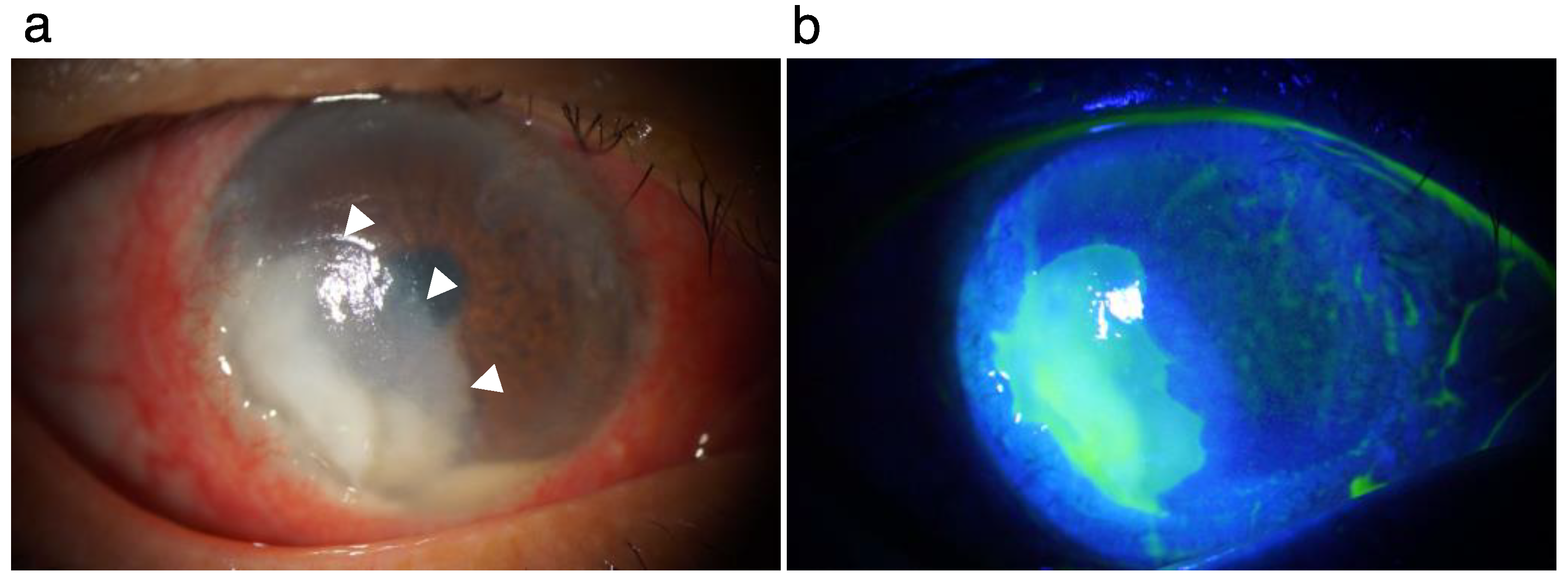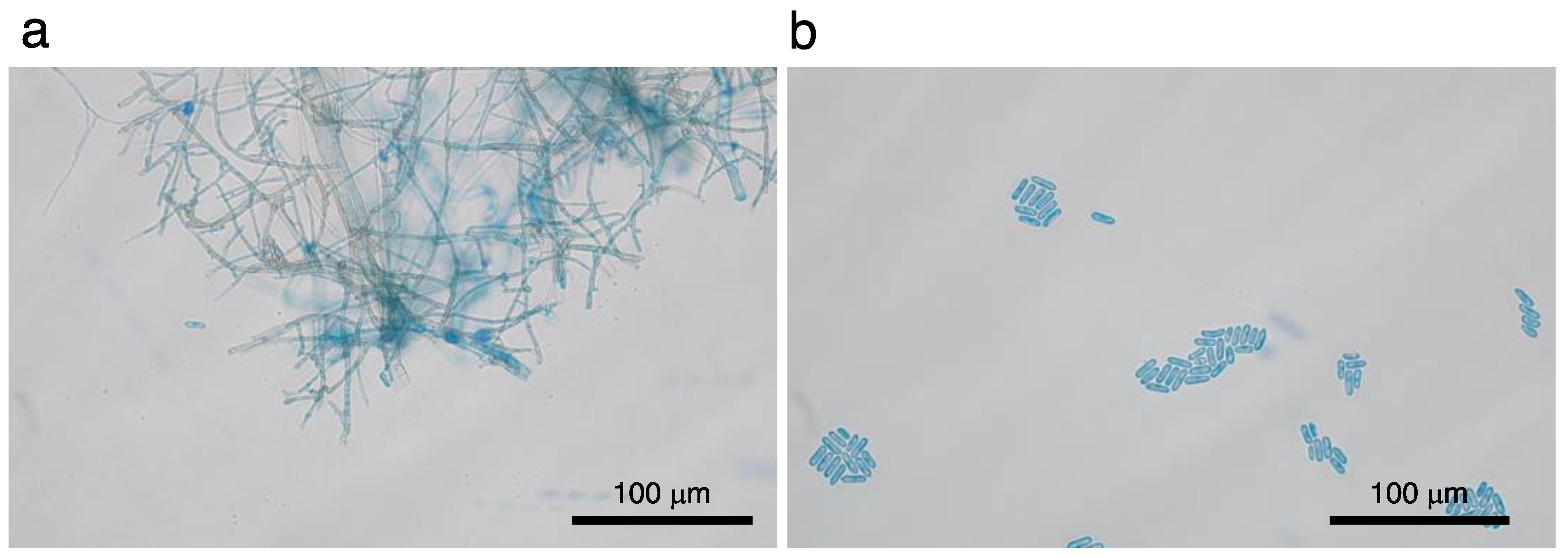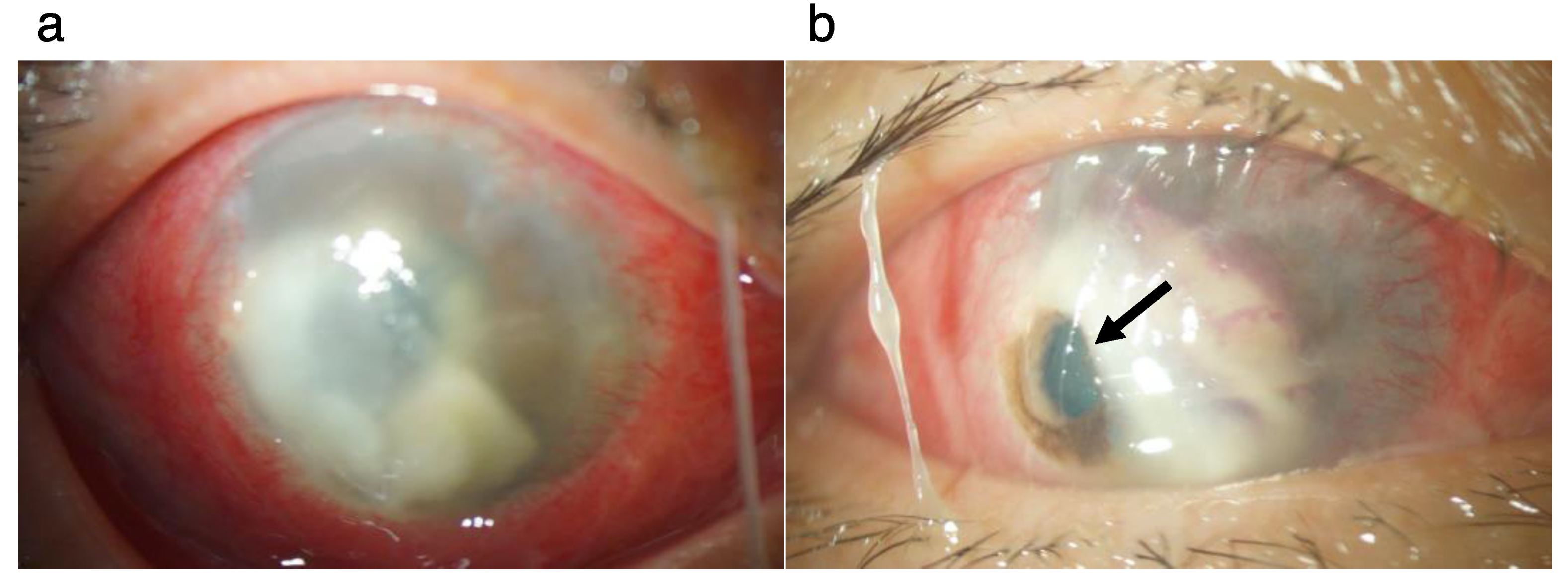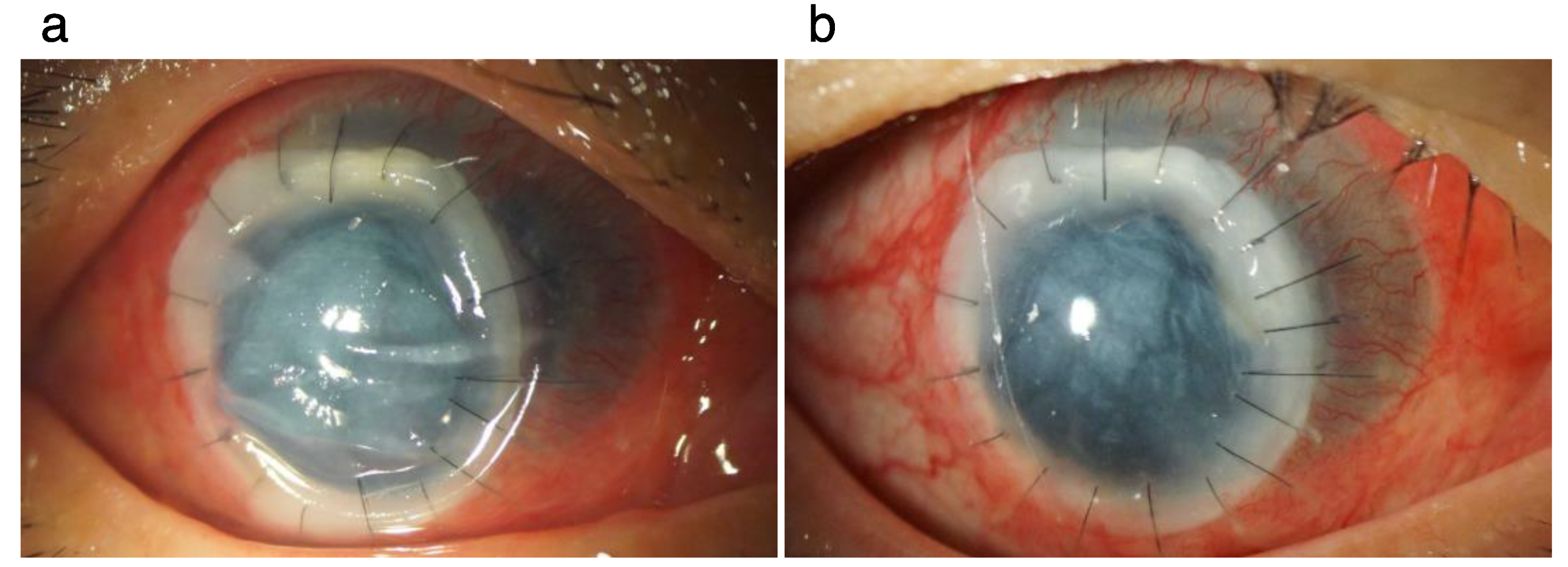

Therapeutic Penetrating Keratoplasty in a Case of Corneal Perforation Caused by Colletotrichum gloeosporioides Infection
 ,
, Abstract
Share and Cite
Imai, K.; Sumioka, T.; Iwanishi, H.; Takada, Y.; Murata, S.; Iwamoto, R.; Okada, Y.; Saika, S. Therapeutic Penetrating Keratoplasty in a Case of Corneal Perforation Caused by Colletotrichum gloeosporioides Infection. Pathogens 2022, 11, 526. https://doi.org/10.3390/pathogens11050526
Imai K, Sumioka T, Iwanishi H, Takada Y, Murata S, Iwamoto R, Okada Y, Saika S. Therapeutic Penetrating Keratoplasty in a Case of Corneal Perforation Caused by Colletotrichum gloeosporioides Infection. Pathogens. 2022; 11(5):526. https://doi.org/10.3390/pathogens11050526
Chicago/Turabian StyleImai, Kazuki, Takayoshi Sumioka, Hiroki Iwanishi, Yukihisa Takada, Shin’ichi Murata, Ryuta Iwamoto, Yuka Okada, and Shizuya Saika. 2022. "Therapeutic Penetrating Keratoplasty in a Case of Corneal Perforation Caused by Colletotrichum gloeosporioides Infection" Pathogens 11, no. 5: 526. https://doi.org/10.3390/pathogens11050526
APA StyleImai, K., Sumioka, T., Iwanishi, H., Takada, Y., Murata, S., Iwamoto, R., Okada, Y., & Saika, S. (2022). Therapeutic Penetrating Keratoplasty in a Case of Corneal Perforation Caused by Colletotrichum gloeosporioides Infection. Pathogens, 11(5), 526. https://doi.org/10.3390/pathogens11050526