Article

Zoonotic Risks of Sleeping with Pets

by
Lucie A. Zanen
1,
Johannes G. Kusters
2 and
Paul A. M. Overgaauw
1,*
1
Department Population Health Sciences, Division of Veterinary Public Health, Institute for Risk Assessment Sciences, Faculty of Veterinary Medicine, Utrecht University, P.O. Box 80178, 3508 TD Utrecht, The Netherlands
2
Department of Medical Microbiology, University Medical Center Utrecht, P.O. Box 85500, 3508 GA Utrecht, The Netherlands
*
Author to whom correspondence should be addressed.
Pathogens 2022, 11(10), 1149; https://doi.org/10.3390/pathogens11101149

Submission received: 11 July 2022 / Revised: 22 September 2022 / Accepted: 26 September 2022 / Published: 5 October 2022

Abstract

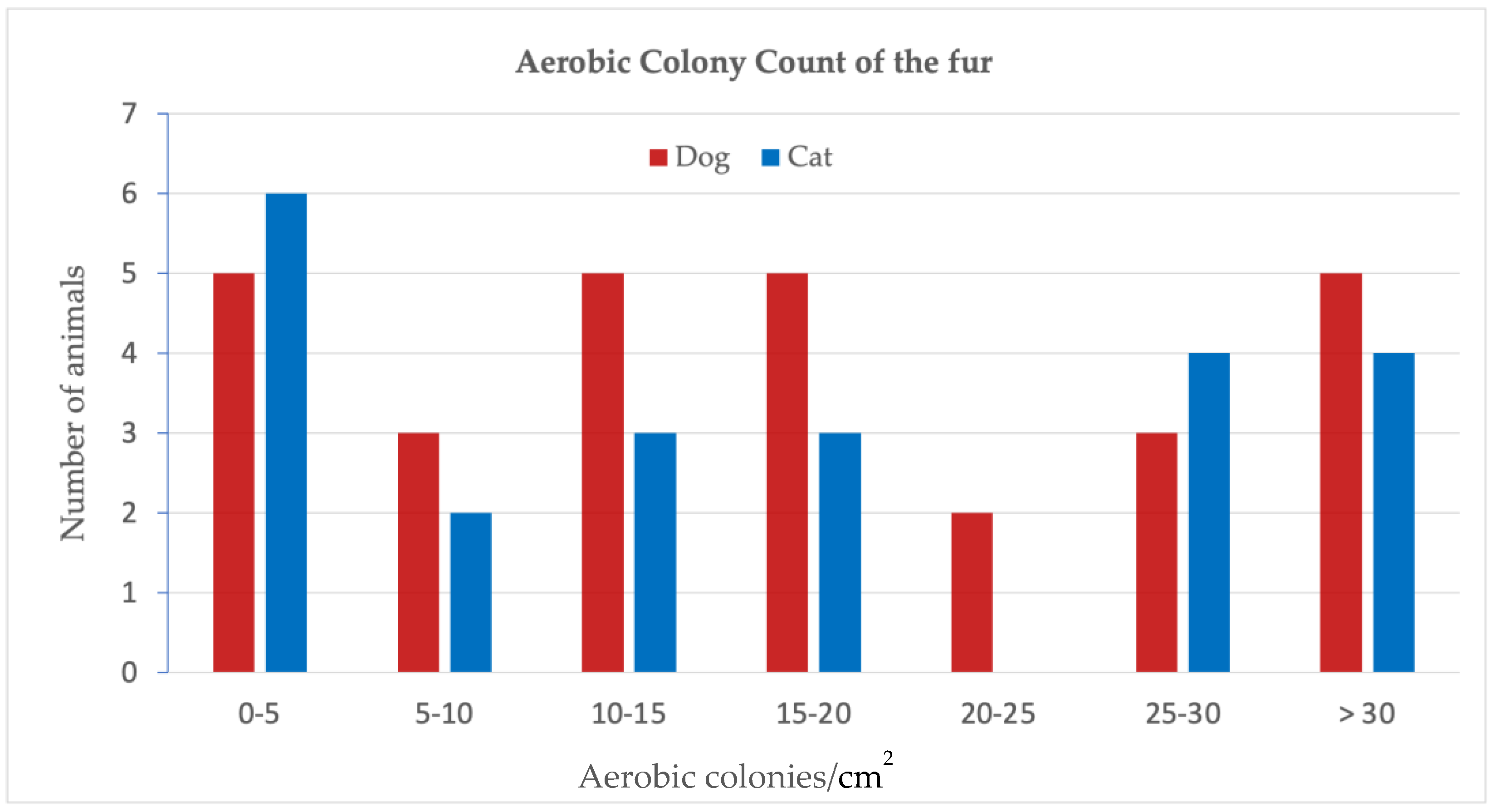
Background: Pets are increasingly becoming part of the family and interactions between pets and their owners is changing. This results in extended and more intimate contact between owners and their pets, which give rise to zoonotic risks. Objective: To establish the presence of potential zoonotic pathogens in pets that sleep with their owner. Methods: As a pilot study, a group of 28 healthy dogs and 22 healthy cats were monitored for the presence of the zoonotic parasites Cheyletiella, Ctenocephalides spp. and Toxocara spp., the dermatophyte Microsporum canis, and the bacteria Clostridium difficile, Salmonella spp., Campylobacter jejuni and Enterobacteriaceae. This was investigated by taking samples from the fur, the footpads and the animal bed. The owners filled in a questionnaire. Results: In total, 29 of the 50 pets (58%) slept on the bed, of which 15 pets (30%) slept in the bed (under the blankets). A total of 19/22 dogs (86%) and 7/22 cats (32%) tested positive for Enterobacteriaceae on the fur or footpads. Fleas were found in 5/22 of the cats’ (23%) and 2/28 of the dogs’ (7%) favourite sleeping spots. High levels of aerobic colonies were found, up to 216 colony forming units/cm2. Other pathogens were not found in this study. Conclusions: The results of this preliminary study confirm literature reports that pets may constitute a potential risk in the transmission of zoonotic pathogens to their owner, especially during direct contact when sleeping in the same bed. Owners should therefore be informed about these risks and educated to interact with their pets in a more responsible way.
Keywords: bedroom; dog; cat; pets; fleas; Enterobacteriaceae bedroom; dog; cat; pets; fleas; Enterobacteriaceae