Article

Staphylococcus aureus in Intensive Pig Production in South Africa: Antibiotic Resistance, Virulence Determinants, and Clonality

by
Ncomeka Sineke
1,
Jonathan Asante
1,
Daniel Gyamfi Amoako
1,2,3,*,
Akebe Luther King Abia
1,*,
Keith Perrett
4,
Linda A. Bester
2 and
Sabiha Y. Essack
1
1
Antimicrobial Research Unit, College of Health Sciences, University of KwaZulu-Natal, Durban 4000, South Africa
2
Biomedical Resource Unit, College of Health Sciences, University of KwaZulu-Natal, Durban 4000, South Africa
3
Centre for Respiratory Diseases and Meningitis, National Institute for Communicable Diseases, Johannesburg 2131, South Africa
4
Epidemiology Section, KwaZulu-Natal Agriculture & Rural Development-Veterinary Service, Pietermaritzburg 3201, South Africa
*
Authors to whom correspondence should be addressed.
Pathogens 2021, 10(3), 317; https://doi.org/10.3390/pathogens10030317

Submission received: 20 February 2021 / Revised: 2 March 2021 / Accepted: 4 March 2021 / Published: 8 March 2021

Abstract

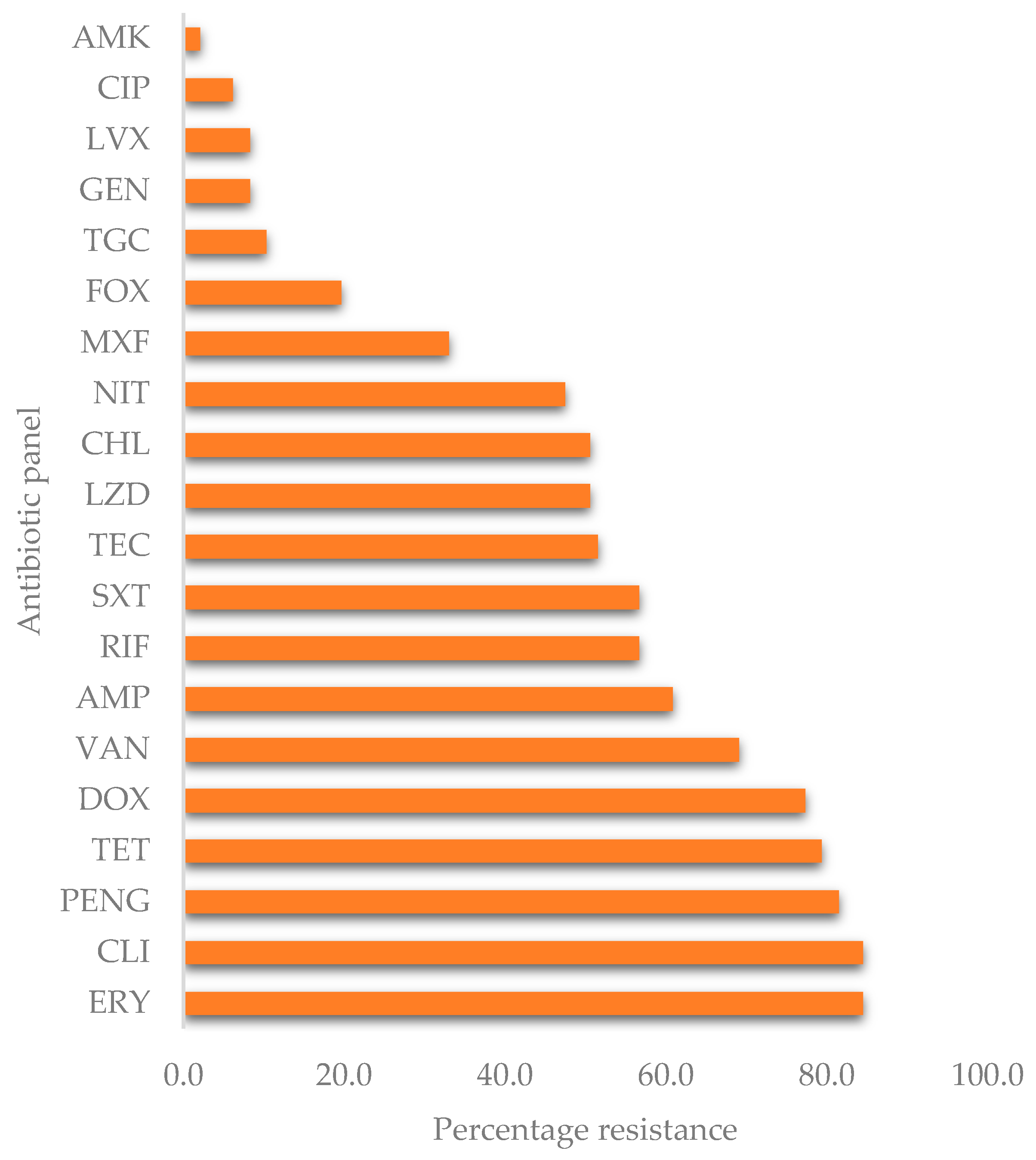
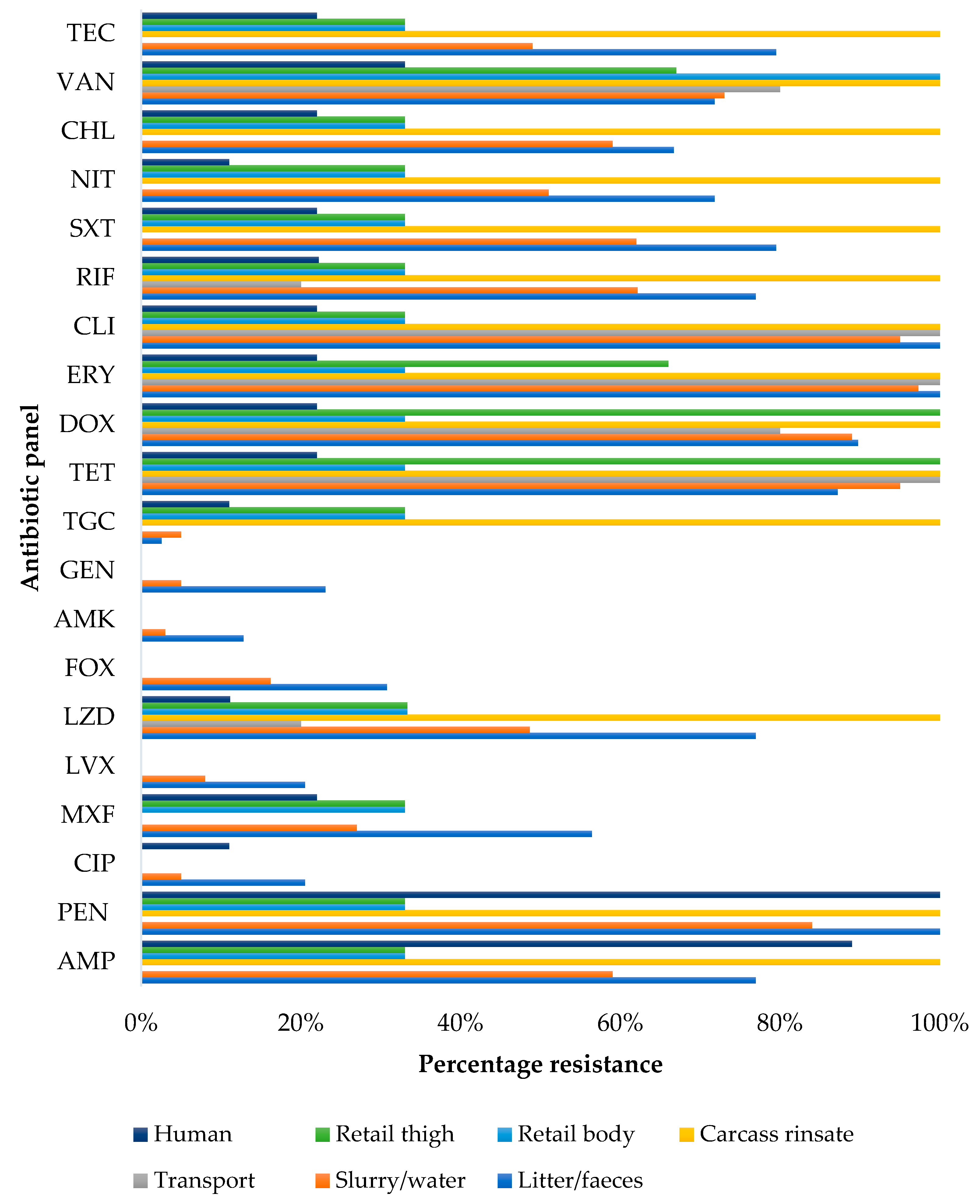
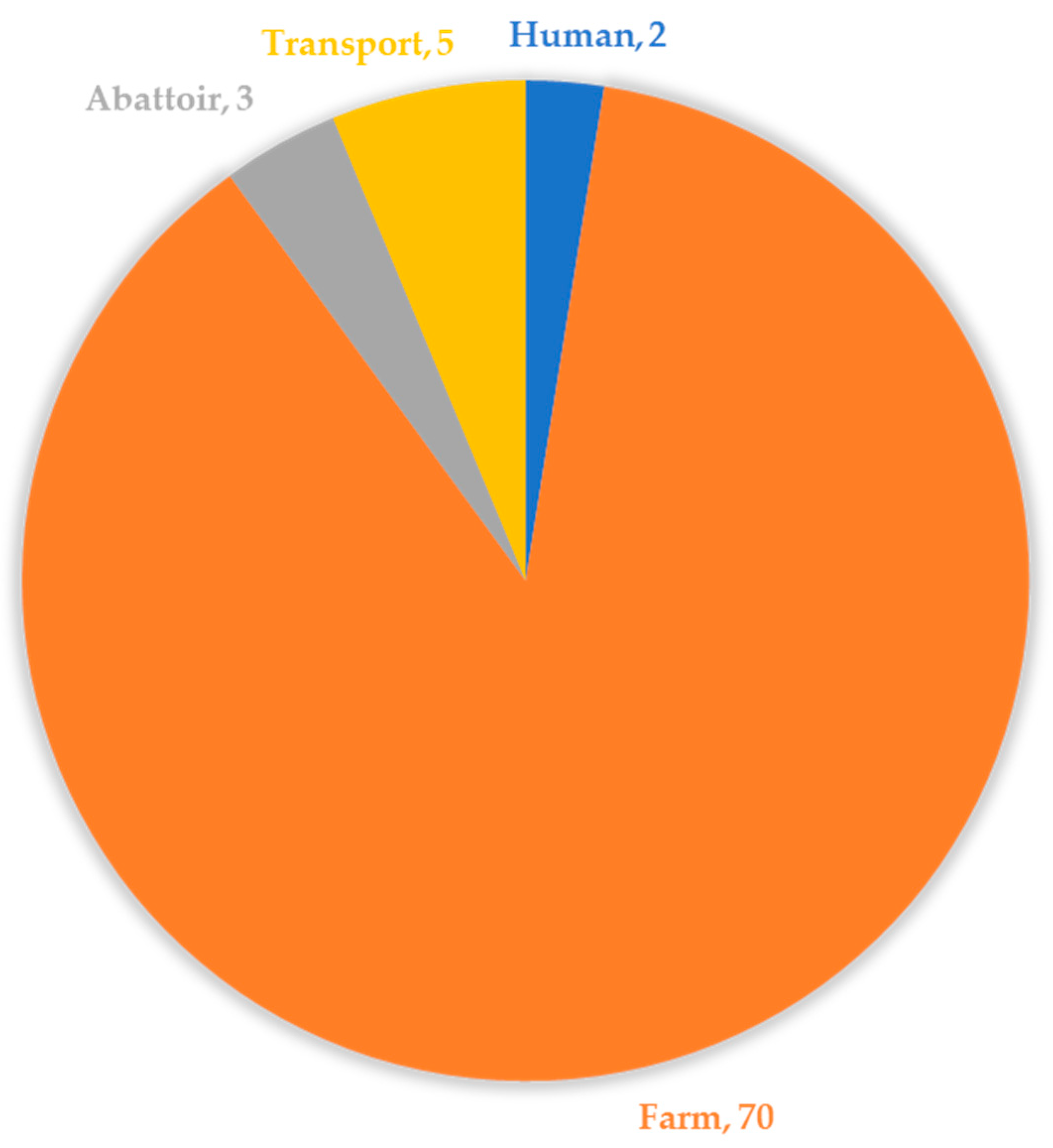
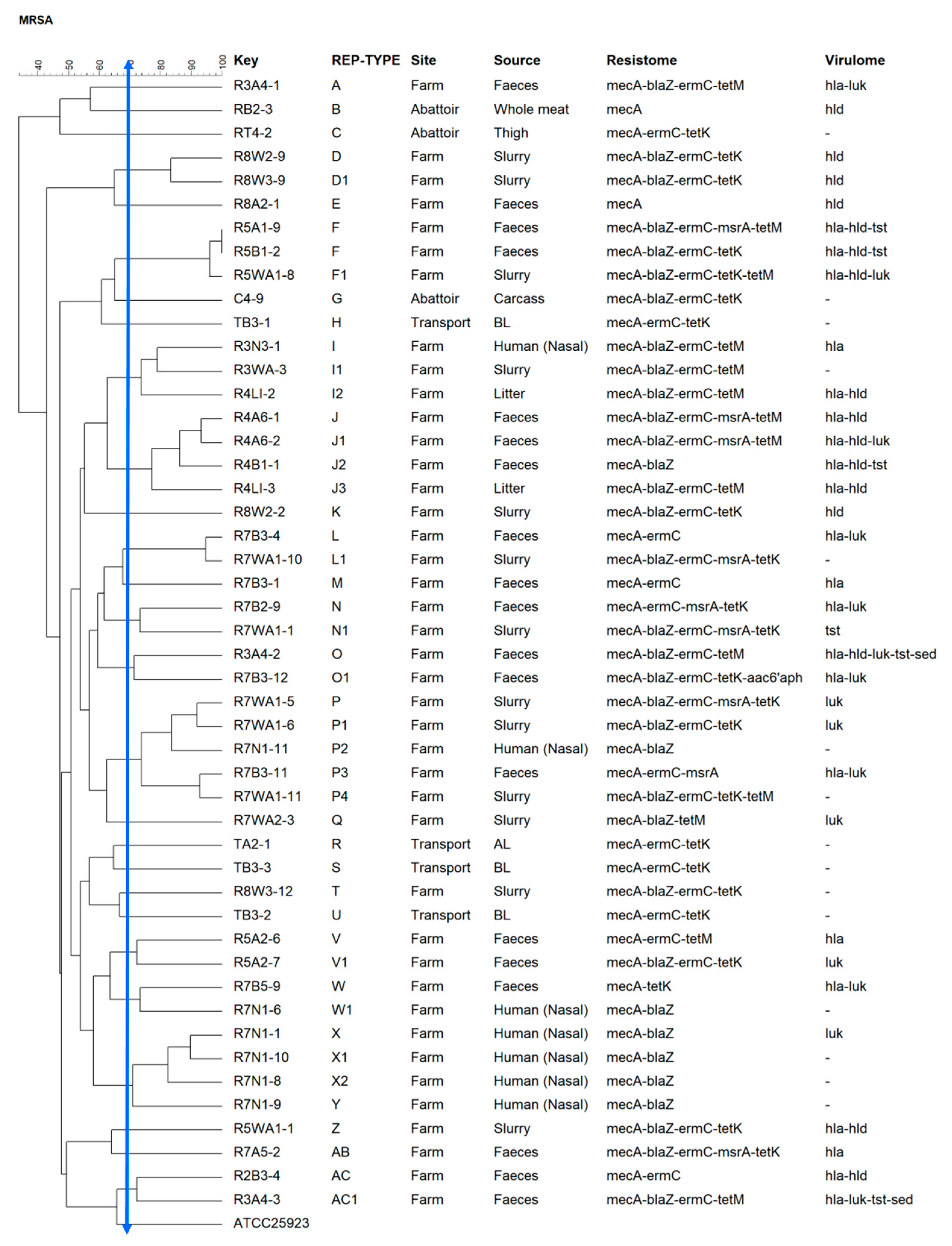
Although Staphylococcus aureus is a major threat to the veterinary, agricultural, and public health sectors because of its zoonotic potential, studies on its molecular characterisation in intensive animal production are rare. We phenotypically and genotypically characterised antibiotic-resistant S. aureus in intensive pig production in South Africa, using the farm-to-fork approach. Samples (n = 461) were collected from the farm, transport vehicles, and the abattoir using the World Health Organisation on Integrated Surveillance of Antimicrobial Resistance (WHO-AGISAR) sampling protocol. Bacteria were isolated using selective media and identified using biochemical tests and polymerase chain reaction (PCR). Phenotypic resistance was determined using the disk diffusion method. Selected resistance and virulence genes were investigated using PCR. Clonality among the isolates was determined using the repetitive element sequence-PCR. In all, 333 presumptive staphylococcal isolates were obtained, with 141/333 (42.3%) identified as staphylococci biochemically. Ninety-seven (97; 68.8%) were confirmed as S. aureus using PCR, 52.6% of which were identified as methicillin-resistant S. aureus (MRSA) through the mecA gene. All the 97 S. aureus isolates (100%) were resistant to at least one of the antibiotics tested, with the highest resistance observed against erythromycin and clindamycin (84.50% each), and the lowest observed against amikacin (2.10%); 82.47% (80/97) were multidrug-resistant with an average multiple antibiotic resistance index of 0.50. Most of the phenotypically resistant isolates carried at least one of the corresponding resistance genes tested, ermC being the most detected. hla was the most detected virulence gene (38.14%) and etb was the least (1.03%). Genetic fingerprinting revealed diverse MRSA isolates along the farm-to-fork continuum, the major REP types consisting of isolates from different sources suggesting a potential transmission along the continuum. Resistance to antibiotics used as growth promoters was evidenced by the high prevalence of MDR isolates with elevated multiple antibiotic resistance indices >0.2, specifically at the farm, indicating exposure to high antibiotic use environments, necessitating antibiotic stewardship and proper infection control measures in pig husbandry and intensive pig production.
Keywords: Staphylococcus aureus; antibiotic resistance; foodborne pathogens; multidrug resistance; MRSA; pig production chain; South Africa; genetic diversity; virulence determinants; molecular epidemiology Staphylococcus aureus; antibiotic resistance; foodborne pathogens; multidrug resistance; MRSA; pig production chain; South Africa; genetic diversity; virulence determinants; molecular epidemiology