
Article

A Phenomenological Study of Black Employees’ Experiences with Workplace Training Participation in Canadian Universities

by
Shurla Charles-Forbes
Ontario Institute for Studies in Education, University of Toronto, Toronto, ON M5S 1V6, Canada
Soc. Sci. 2026, 15(4), 266; https://doi.org/10.3390/socsci15040266
Submission received: 8 December 2025 / Revised: 21 March 2026 / Accepted: 29 March 2026 / Published: 20 April 2026
(This article belongs to the Special Issue Race and Ethnicity Without Diversity)

Abstract

With the recent ban on Diversity, Equity and Inclusion (DEI) efforts, this study seeks to address an under-researched area—the lived experience of workplace training participation (WTP)/non-participation of Black administrative employees at Canadian universities. While research in academia has focused on faculty and students, there is a lack of research on administrative employee participation within university settings in Canada. This gap is especially significant as this group composes a significant ratio of the entire workforce in Canadian universities. It is also important to understand the implications of WTP/non-participation for employees who identify as Black. This study used Stephen Billett’s conceptualization of affordance and access as a starting point to identify gaps in the workplace training (WT) literature, specifically as it pertains to Black employees. Data was collected from 26 Black administrative employees who discussed their lived experience with WTP in these settings. A qualitative approach from a phenomenological perspective was used to better understand the participants’ lived experiences with WTP. The results revealed a lack of transparency in the WT approval process, experiences of time pressure, managers’ discretion and racism as factors that influence WTP.

1. Introduction

While there are a number of determinants of workplace training participation (WTP), an area that is absent from the literature is an in-depth examination of which racial group is either afforded or not afforded the opportunity to participate in workplace training (WT). Billett (2001b), Hull (1997), and Jacob et al. (1996) identified race as a factor that prohibits WTP; however, this information is superficial and does not address university environments. While Stephen Billett’s work on affordance and access was used as the conceptual framework, certain gaps were identified. This included an examination of racism as part of or the centre of the framework. Additionally, any research on Black participants should also take into consideration their experience based on their Blackness and Black Identities (BIs). As this article’s focus is on training, participants’ Blackness and BIs were examined through the lens of their personal epistemologies (PEs).
This article examines the lived experiences of Black administrative employees in three Canadian universities to understand the impact WTP or non-participation had on their professional development. This is because although Black employees sometimes “have greater access to managerial jobs” (Greenhaus et al. 1990, p. 64), they sometimes experience “treatment discrimination” where they “receive fewer rewards, resources or opportunities on the job” (pp. 64–65). The impact is that “it is less favorable to their careers than are the experiences members of a dominant group encounter in an organization” (p. 65).
A qualitative approach from a phenomenological perspective is used to understand the lived experiences of participants with WTP. This article addresses if Black employees are excluded from WTP and the impact this has on their careers. It expands on race as a determinant of WTP to include racism as one of the critical determinants when discussing Black employees’ WTP. The results from the research will have implications for the individual and for universities in Canada.
This article provides a brief literature review, followed by the conceptual framework, methods used, participants and data analysis, limitations and delimitations, then the findings and discussions followed by a conclusion.

2. Literature Review

Within the Canadian context, WT is important on three levels: the first is on the macro level, as it assists the country with its global competitiveness, ensuring that its workers’ skills are current and that they can function in the workplace. The second is on the meso level—this is within organizations such as universities—where it is believed that WT results in higher economic returns (Betcherman et al. 1997, p. 1). The third is on the micro level, which is from the individual’s perspective—it is believed that WT “can influence income [and] job satisfaction” (Canadian Council on Learning 2008, p. 7) and can improve wages (Betcherman et al. 1997; Fitzenberger and Muehler 2015) and “quality of work, job security, and employability” (Betcherman et al. 1997, p. 1). These factors, however, do not focus on which employee racial group is included in WTP. Although there is the perception “that employers do not discriminate” (Butler 1999, p. 138) and there is the “assum[ption of] a level playing field among” (Fenwick 2001, p. 13) employees receiving WT, this is not always the case. Employees’ WTP may be impacted by the employers’ choice of who is allowed to participate (Cooke et al. 2011).
While the Black population has increased in Canada (Statistics Canada 2021), they are still “greatly overrepresented in the bottom half of the income distribution” for the racialized population (Block et al. 2019, p. 20). Although qualifications will normally translate to better paying jobs, this is not the case for many Black people as they possess “a bachelor’s degree or higher (32.4%)” (Statistics Canada 2023, p. 9). If WTP is important on the three levels indicated earlier, it is necessary to include race as a key determinant. This will help in understanding if it is a barrier to employees (e.g., those who identify as Black) progressing in the workplace.

3. Conceptual Framework

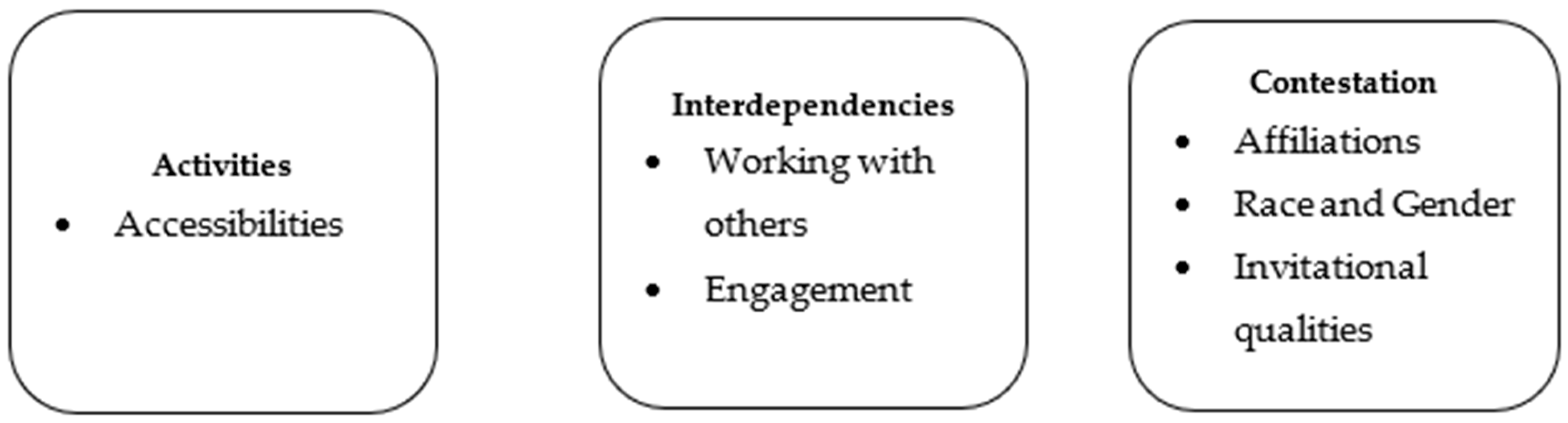
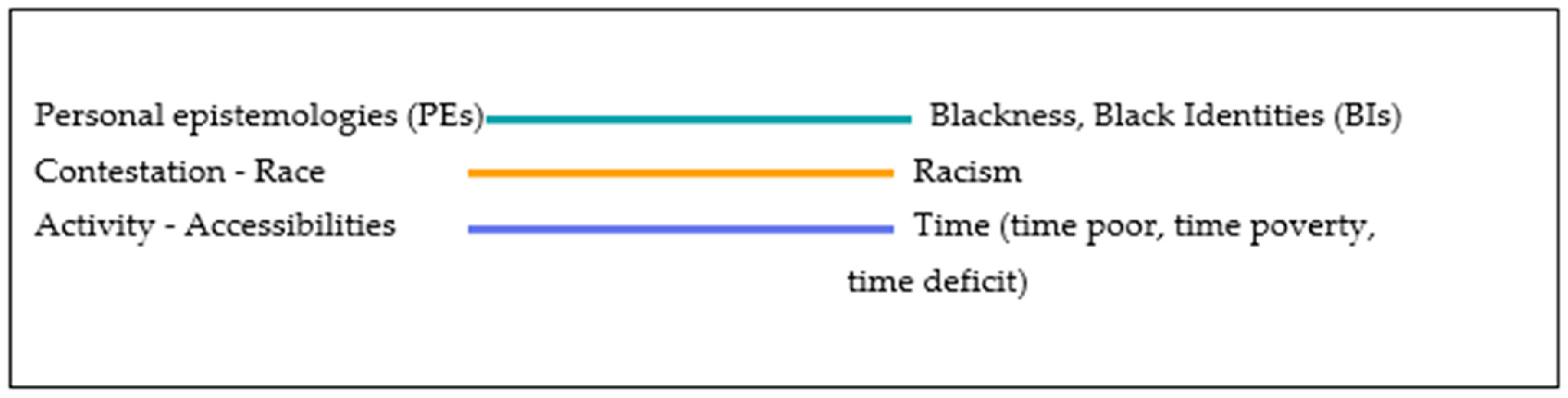
Due to the contentious nature of the university environment, Stephen Billett’s work on affordance and access was chosen as the conceptual framework. This is because Billett views workplaces as social and contested environments (Billett 2001b) which causes limitations to access (Billett 1999) and unevenly distributed opportunities (Billett 2002). The framework (Figure 1) specifically drew from Billett’s work on activities and interdependencies. In the case of the former, the focus was on accessibilities, while in the case of the latter, it focused on working with others and engagement. Due to the connectedness between contestation and interdependencies, factors under the former were also examined. These were: affiliation, race, gender and the invitational qualities of the workplace. Due to the population researched, the conceptual framework was expanded (Figure 2) to include PEs that include Blackness and BIs. Under contestation, racism was included and time poor, time poverty and time deficit were incorporated based on the participants’ stories.

4. Methods

This article used data from semi-structured interviews with Black participants. The interview protocol was divided into two sections: the first had 35 questions which were divided into two sections, the first focused on the general background and work experience of the Black participants (e.g., length of time working in respective university, employment status, educational background, age, gender, race, if they ever experienced discrimination at work, and plans for advancement). The second set of questions related to participation in non-mandatory WT (i.e., importance of WT, types of training participated in, how related to role, participation in WT outside of workplace, policies relating to who gets to participate in WT, support for WT, who pays, role of informal networks, impact of WT on career growth/advancement, and part that race played in access to WT). The second interview included seven (7) questions. The first section included clarifying questions from the first interview, while the second section expanded on WT (professional goals, if denied permission to participate in WT, role of leaders and colleagues).
As this research involved human participants, approval was obtained from each of university’s Research Ethics Board. The recruitment and informed consent letters for each university included the approval number from the research ethics board for that university. All interviews were conducted by the principal researcher. To protect the university, they were described as a university in a major Canadian Metropolitan Area (CMA) and referred as: U01, U02 and U03. To protect the confidentiality of the participants, pseudonyms were used.

5. Participant and Data Analysis

A total of 26 participants were recruited from three universities in Canada (10 from U01, 10 from U2 and six from U3), to determine similarities and differences in their WTP experience. Purposeful sampling was used to recruit participants “who possessed certain traits” (Koerber and McMichael 2008, p. 464), i.e., being Black. To mitigate against the pitfall of purposeful sampling, maximum variation sampling was used. For example, in addition to being Black, there was the selection of Black employees who were in management and non-management (including unionized) positions. This allowed the researcher to gather information on processes for advancement (i.e., from non-management to management positions). This included whether these employees received WT support for career advancement or job enrichment and the subsequent impacts. This was followed by confirming and disconfirming sampling (Creswell 2012, p. 209) to “verify the accuracy of the findings throughout the study” (p. 209). Snowball sampling was used to obtain participant recommendations for other employees who might be interested in participating in the research.
Table 1 provides a breakdown of the Black participants by institution, pseudonyms used, demographics, and education.
Participant recruitment occurred over 21 months. Table 1 shows that, with the exception of one of the participants from U02 (term employee in a unionized position), all were employed in a full-time capacity. Nine of the participants were in managerial positions, while 12 were in unionized positions and four were in administrative, non-unionized positions.
Due to the COVID-19 pandemic, interviews were conducted virtually using Microsoft Teams. Both the first and second interviews took up to 60 min. Of the 26 participants, 13 were available for second interviews. Transcription and data processing were done between interviews. After the first interview, the transcripts were examined to identify themes. In cases where there was a lack of information, the researcher decided which area needed to be followed up with participants. Hand analysis was used so that the researcher could immerse themself in the data. The transcripts were read three times to get a better sense of the data (Creswell 2012). This included taking notes of concepts and ideas that emerged (Creswell 2012). To make sense of the data, it was then coded or chunked. This was done using an Excel spreadsheet. Tabs were made for each component of the framework, e.g., activities, frequency, communication, duration, and type of participation. Each tab included data from the three universities. This allowed the researcher to identify which participants from the respective university had experience with the areas of the framework. It also allowed for comparison of the data across the three universities. Eight colours were used for dividing the data into major themes. The themes were distilled into categories, subcategories, and associated concepts to code the data. This was then expanded to the broad themes and contrary themes that emerged from the data (Creswell 2012), for example, frequency of training, time of training, type of training, support, reason for participation, career advancement, emotional impact, ERG, leader race, leader approval for training, hierarchies, support provided, length of service. This process was continued until saturation was reached—where the themes had become repetitive and no new information was obtained from the data (Creswell 2012). Saturation was first reached with U02, followed by U01 then U03. The three major themes that emerged were aligned with my conceptual framework in (Figure 1).
The data was triangulated to ensure its accuracy. This is where it was compared with data from within this and other universities to identify similar experiences. Research papers, books and articles were also reviewed for similarities in the experience of the participants.

6. Limitations and Delimitations

Recruitment occurred during the pandemic and around the time of the killing of George Floyd. While these two events led to an increased focus on DEI and ABR in these universities, an unanticipated challenge was the length of recruitment, particularly from U01 and U03. This spoke to the nature of the research and, in some ways, the manner in which those from the Black community view the world (whether due to a fear of participating or being tired of speaking of their experience with no change occurring). There are many reasons, even if, as in this case, the researcher identifies as Black. The process of recruiting participants from U03 was the most challenging and time-consuming. The proposed method of reaching out to employee resource groups (ERGs) and others within the researcher’s network at this university was not successful. Hence, the approach was changed to reviewing the university’s website, articles and publicly available contact directory for the names of potential participants, followed by cross-referencing via LinkedIn and other publicly available sources to determine which individuals were Black-identified. Their email addresses were obtained from the publicly available contact list directory. Potential participants were then sent an email containing the recruitment letter asking if they were willing to participate in the research. From among these candidates, there were references to ERGs and networks (some of which were already approached). In the end, it was decided that six participants from U03 were enough to move forward with. The changes in recruitment may have contributed to the employee group hierarchy and job statuses.
Another change in the recruitment process was the length of employment of participants. Initially, this involved employees with at least five years of work experience in full-time/term and management positions. The aim was to ensure that participants had significant background experience in each of the institutions chosen. Due to the difficulty in recruiting, this was decreased to two plus years. In one instance, one of the participants was employed for a little over one year. This change in the recruitment process, however, allowed for comparison in the WTP experience of those who were newer to these universities in relation to those who were employed over five years.
This study did not include white administrative workers; hence their voices were not included. The comparisons were from the lived experiences of the Black participants. Additionally, this study took place in only three universities in one metropolitan area in Canada.

7. Findings and Discussion

While the study was on the affordance/non-affordance of WTP based on participants’ stories, the data centred on racism. Their experiences with racism, in some ways, impacted their WTP. The main themes that emerged are detailed below.

7.1. Activities—Accessibilities

How these participants viewed their WTP, or in some cases, lack of, and its importance is embedded in their PEs from the lens of their Blackness and BIs. W. Cross (1991), in his Nigrescence theory, describes a continuum that explains the actions of Black people in different situations. These are stage 1: pre-encounter; stage 2: encounter; stage 3: immersion–emersion; stage 4: internalization; and stage 5: internalization–commitment. Depending on where Black people are on the continuum, they may also perceive their experience differently. This was witnessed in the ways in which participants spoke about their experiences.

7.1.1. Workplace Training Helps Improve Skills and Leads to Career Advancement

Martha in U01 and Georgiana and Hank in U03 viewed WTP as an opportunity to improve or build on skills which would assist in their job performance. While Martha possessed a Master’s degree, she was one of the participants who believed that gaining additional skills through WT was “highly important” and “essential”. Given the nature of the university environment, keeping her skills current would allow her to remain viable in her role. Georgiana, who recently moved into a management position, had a similar view when she said that she “think[s] it’s really important just to kind of keep building on your skills”. Hank also mirrored a similar view to Martha when he noted “in terms of my job, it helped me to develop more skills and better skill sets”. From these stories, it is noted how much these participants tie their viability and improving their skills to WTP.
Martha, Joan, Hank, June, Jeffery and Ruby expressed the view that they believed WT would assist in their career advancement. Martha noted that, “for my career aspirations, it’s [WT] highly important as well because that’s what keeps me going towards things”. Jeffery’s view was similar to Martha’s, when he stated, “I think it’s very important because I think, especially when it could directly be used towards advancement”. Even in the case of Joan, who worked at U01 for over 18 years, and is currently in a managerial role, like Martha, was still of the view that WT “is really important”. This is because it had assisted her in developing new skills that supported her progression to various roles. After developing new skills through WT, she felt that she was prepared and could demonstrate to hiring managers that she had the skills they were seeking for specific roles. This was Joan’s way of demonstrating her “self-efficacy (belief in one’s own competency)” (Bell and Nkomo 2001, p. 127). Joan’s was one of the rare cases in this research where she was able to relate her career progression with WTP. This, however, was not the case with many of the participants. For example, Evelyn is a 55-year-old woman who has worked at U01 for 22 years, which is longer than Joan’s tenure. Based on Evelyn’s experience, she believed that WT could only take you up to a certain point in your career as there are other factors which will allow you to progress. This will be discussed later in the article.

7.1.2. Understanding the System and Use of Individual Agency

Tied to participants’ PEs incorporating their Blackness and BIs is if and how they are able to understand the university environment and how the use of their agency is accepted. Joan believed that the former had been critical to her success. Understanding the system may sometimes involve uncovering hidden aspects (Billett 2001b). This hidden nature of the workplace may simply be the understanding of what is required by certain hiring managers or how to communicate skills during an interview. This was very evident in Joan’s case where she looked for opportunities to learn and understand the system which proved to be very beneficial to her in interviews. In the case of some of the other participants, like Clara and Jeffery, this was not always welcomed as they did not have the same support or autonomy that was afforded Joan.
Two participants who had very different receptions to using their agency were Joan and Clara. Joan believed that her “willingness to not just stay in my lane, so to speak, has actually helped me”. This benefitted her career advancement at U01, as demonstrated by her movement into a managerial position. Billett (2000) notes that “[b]eyond the affordance of the social practice, is the agency of individuals—how they elect to engage or participate in the social practice” (p. 21). Joan’s use of her personal agency entailed a certain confidence in her ability that worked in her favour. Joan is also one of the participants who uses the Black ERG at U01, which to a certain degree has also supported her progression. Clara is a 47-year-old woman who has worked at U02 in a unionized term position for the past 9½ years, and who did not have the same experience as Joan when she used her agency. Clara agreed that “non-mandatory workplace training is extremely important”. On the one hand, Clara was of the impression that she could use what she learned to contribute to the department’s performance. However, the result was the opposite. By making recommendations, her supervisors and other members of her management team felt threatened. The result was that she was either “shut down or pushed out” as she “asked too many questions” and did not “stay in her lane”. Clara believed that her managers felt she knew too much for someone in her position. Clara’s experience was not isolated as she observed similar treatment meted out to other colleagues of colour. They, like Clara, experienced negative repercussions from managers when they offered recommendations to improve workplace processes.
They’re all people of color. They’re all people of visible minorities. They’re different genders, but there are people of visible minorities. And the thing is my ability to advance is the balancing act between me giving the information I’ve learned, the courses I’ve taken, degrees I’ve studied, passing on that information to my supervisors, not letting them feel threatened, staying in my place. And some somehow being able not to threaten them, but enough to make them happy […] So if they go up, hopefully I will go up too. But if they get threatened, I’m gone.
(Clara)
The result, as seen in above, can be the attrition (voluntary or involuntary) of these employees.
The different experiences of Joan and Clara can be attributed to several affordance factors that include tenure, the employee group to which they belong, and the type and level of support they obtain. Tenure and employee groups are two of the areas that are part of the invitational qualities of the workplace that can either be accessible to workers or not. Clara has been in a unionized term position for the duration of her employment at U02, whereas Joan has been in a permanent position and moved to a management position. Joan has worked at U01 for 18 years while Clara has worked in U02 for 9 1/2 years. In Joan’s case, her years of service at U01 have provided her with an opportunity to learn about the university’s environment to be able to navigate it. Joan’s hierarchical position in U01 has also afforded her the ability to access training that may not be available to employees in supporting roles like Clara. These hierarchies (manager, administrative staff, union) are one of “the ways work activity is premised on interaction with others” (Billett 2001b, p. 23). However, while Joan has had the support of managers throughout her career, this is not the same with Clara. When considering these Black employees in the context of their PEs of Blackness and BIs, it can be perceived that these factors impact their experience and how they view themselves.
Another important factor in the case of these participants is the luck of the draw with the department and manager. Throughout the interview, Joan spoke about her luck with working in spaces that allowed her the opportunity to participate and advance. In the case of Black workers, this may sometimes be seen as isolated and not part of the norm, especially when they have a solo status in some departments (Fontaine and Greenlee 1993). However, Joan’s experience demonstrates her “sense of self” (Billett 2010, p. 7) and her use of agency to “focus sharply on securing more personal goals” (Billett and Pavlova 2005, p. 198), which has assisted in her development and movement during her tenure at U01. This unfortunately, is not always evident, as seen in Clara’s case.

7.1.3. Workplace Training Not Does Not Lead to Career Advancement

Serenity is a 40-year-old woman who has worked at U02 for the past 17 years and is one of the participants whose view is that WT does not lead to career advancement. Based on Serenity’s experience, she believes that “for the work itself, [WT] is somewhat important”. Serenity looks at it from an institutional perspective, in that the WT opportunities are “not necessarily important for career aspirations because in this environment they don’t. That doesn’t correlate to career advancement, so I would say for just the job itself, is somewhat important”. She further notes that while “[i]t’s nice to take, but [it’s] not like the managers or the institution see it as ‘Ohh, you took all of this training we should promote you’. So no, training is not linked to advancement”. This points to something deeper than just taking WT. Given Serenity’s tenure at U02, her statement is a bit worrisome. From her perspective, the university does not take into account participation in non-mandatory training when promoting employees. A similar view is held by Maybel, who is a 43-year-old woman and has worked at U02 for 6 years. Although Maybel participated in a management course at the university, she was overlooked when it was time for promotion in her area. Her view is that “I wouldn’t say that it helped me with advancement at all, actually because it really just didn’t […] I wasn’t really given a chance to use that in an official capacity in a lot of my work”. While there are other factors that may have been taken into consideration, Maybel believes there is something deeper at play when she speaks about “the soft bigotry of low expectations”.

7.1.4. Need for Post-Graduate Qualifications

When Evelyn mentioned that WT is important to some degree (as noted earlier), she was of the belief that formal education in the form of post-graduate qualifications is what helps with staff advancement. Similar feelings were expressed by Marilyn and Carla who also work at U01. They viewed credentials in the form of graduate degrees as more beneficial because they lead to better recognition. However, in some cases, having a Master’s degree is not enough in these spaces, as noted by Evelyn when she says “You’ve gotta go and get your master’s degree. You do and then even with the Master’s degree, you are still not competitive enough. Now then, the next phase is the PhD”. When comparing WT and graduate qualifications, Marilyn notes “I don’t think I’ve done any non-mandatory training that will support the advancements of my career, I think the decision to get an EdD is what’s going to advance my career”. Another important reason some of these participants focused on these credentials is because of feeling excluded from some spaces. They expressed the view that in order to be taken seriously they needed a Master’s or PhD. Carla speaks about her experience:
Just being in spaces where if you don’t have your masters, you know you’re not qualified or things like that, or you must have a PhD to move up, so just being in those spaces where those conversations have happened. Being in spaces where you can feel that you don’t belong in that space and they make it very clear without actually saying it. So, I can’t tell you that anyone has said anything to me about my color, but the way I’m treated, I know I’m the only one in that space and you know, I’m dismissed or, you know, my points are not taken as valid.
(Carla)
While Statistics Canada (2023) reports that “[h]igher levels of education, particularly education completed in Canada, are typically associated with better employment conditions and higher earnings” (p. 2), this, however, is not always the case for its Black population. In the case of Black employees, even with post-graduate credentials (as noted in Table 1), they still face over-qualification and are overrepresented in lower positions. This is evident from this study. All the participants are qualified for their roles. Some are actually overqualified. Overall, 46% have a Master’s degree and 12% are pursuing PhDs or EdDs, which indicates the value these employees place on graduate degrees that may not be needed for their positions but which they see as important for career advancement. When compared to their white employees, Bell and Nkomo (2001) note that Black women employees are just as qualified as their white counterparts but they continually have to prove themselves. One of the ways of doing this is an emphasis on obtaining these additional qualifications, which may not be necessary for their role, but they see it as an opportunity to progress within the university, as opposed to participating in WT, as they serve different purposes.

7.1.5. Time—The Choices Made When Faced with Time Pressure

Given that lack of time to participate in WT came up repeatedly in the interviews, time was viewed as a gatekeeper in the context of how it impacted the Black employees’ ability to participate in WT. This included being continuously pressed for time and having to decide how their non-discretionary time was used—whether to stay at their desk and finish their work or take time away to participate in WT. As such, this concept of time pressure warrants closer examination. To examine time as it impacts these Black employees, the concepts of time poverty, time poor, and time deficit were investigated to learn if they impacted these employees’ participation in WT.
Instances where there is lack of accessibility to WT due to time, which acts as a gatekeeper, is in terms of the time of day or year offered. The former was seen in Marg’s and Hank’s cases. They are unable to participate in WT because of the time of day it is offered (mainly morning time). Hank speaks about the lack of flexibility in the time that courses are offered. In his case he has to “adjust my hours or I’m stuck working longer”. Hank does not have a 9-5 schedule, so the day and time at which courses are offered lowers or removes his ability to participate in WT. While Hank may use his negotiation skills and move around his schedule, this lowers his discretionary time. Not all Black employees may have negotiation skills, as this is not something that is taught in the workplace. In Marg’s case, she sometimes applies for personal days to participate, but notes that it is not straightforward, as her manager still has to approve her time off. While it may be noted that the time of day is a factor that impacts all employees, in these universities, most of the Black employees are in either front part-time or administrative roles. Hence they are the ones that, like Hank and Marg, will experience a greater time barrier to participate in WT. Offering WT in this format does not result in it being equitable for all.
Carla is one of Black employees who is impacted by the time of year WT is offered because she is in a front facing role. Her department has periods of increased workload, which makes it impossible for her to participate in WT. These employees experience disproportionate levels of time pressure to perform in their roles and may experience time poverty when they have to decide how much, if any, time they can give up to participate in WT. Incorporating PEs, it can be noted that “the bases for individuals’ engagement in social practices are likely to be differentiated and overlapping, and in particular personal ways” (Billett 2010, p. 72).
There are instances where some Black employees (June, Georgiana, Serenity, Maybel, Darcy, and Martha) have to make a decision on whether to participate due to their work demands. June notes “I cannot recall the last time I did participate in non-mandatory workplace training. I will say like with all good intentions I registered for sessions and then you know something comes up at work and you have to cancel that registration and not go and stuff like that”. Georgiana aptly describes her challenge with her inability to participate when she speaks about “time as a double edge sword”. She notes that “on the one hand it is important to participate in professional development activities as it demonstrates a commitment to growth and professionalism”; however, although she is approved to participate, she has “the challenge of prioritizing between work and these training activities”. This decision on how to use her non-discretionary time results in work of course winning, as there are deadlines associated with it. In this way, due to the lack of non-discretionary time, training is relegated to the non-urgent bucket.
Maybel acknowledges that she does not have enough time so is rarely able to participate in training she signed up for. Maybel speaks about her workplace as “suffer[ing] from a disease as their [the university] ambitions far exceed their resources and capabilities”. Due to this Maybel believes that employees pay the price, because they are the ones delivering on the unrealistic expectations. Although Maybel admits that she needs to reset her priorities to make time for her education, this has not happened to date as she is constantly focused on doing her job. Maybel’s reflection is an example of being time poor and how she chooses to utilize her limited non-discretionary time due to the time pressure to complete tasks. This in turn impacts her ability to participate in WT which in some cases may assist in her job performance.
Serenity views it as related to the busyness of the workplace. Like Maybel, she does not even have time to register for workshops. This busyness or harriedness, Szollos (2009) states, results in time pressure. It is much the same again with Marg who, due to the hectic pace of the workplace (Szollos), sometimes does not even have time to think about it, as she has been doing the job of two people for the past 11 years. And then there are those, such as Darcy, who sign up for training, but because of work demands, has to skip the training.
Another significant contributor to time pressure is mentioned by Serenity, namely the different standards that Black employees are held to. This places more pressure on them to perform.
because you’re always busy and you always have to prove yourself as a person of colour that you can do your job, that it works against you is the fact that you don’t really have the time to be attending the sessions even though you are interested in it and you want to attend.
(Serenity)
Serenity’s experience is consistent with the research by Bell and Nkomo (2001) where they noted that Black women “are held to a higher standard” (p. 140); hence they have to work twice as hard as their white counterparts. The Black women in this study “believed they had to outperform their white colleagues for the same rewards” (p. 145). This is because these “women often felt they were in the spotlight where they could not dare underperform” (p. 145).
Another factor is the different ways in which Black employees value time as compared with their white counterparts, as noted by Serenity. This is because Black women “believe they were held to higher and often different standards than their white colleagues, even when their credentials are extraordinary” (Bell and Nkomo 2001, p. 145). This is because “they were always fighting the stereotype of being incompetent, despite having the right educational and experience credential” (p. 145). Serenity notes that her [white] colleagues safeguard their time by blocking their calendars for lunch and going for walks. Serenity on the other hand “feels bad” if she takes a break when work still has to be done. Serenity suggests that “the value of personal time is different across cultures”. Though lunch time, for example, is owed to employees, her view is that those employees who identify as Black just keep working when the work has to be done with little thought or regard to taking a break to even eat, much less take a walk.
This, she believes, is due to the individualistic ways in which employees value the quality of their work. Black staff might spend more time to ensure the standard of quality is at the level they feel comfortable with, especially when their level of work is viewed differently, while staff from the white group, for example, might just want to finish their work and are not interested in going above and beyond like their Black counterparts. Fontaine and Greenlee (1993) amply state that, because of the solo status of Black women, they tend to be “more visible and therefore receive more attention” (p. 122). Serenity is not the only racialized person in her department, but there are not many of them, which increases the pressure to perform. Adding to this, the hyper-perfectionism of Black employees, as noted by Macchia and Porcher (2019), makes them hold themselves to impossibly high standards, and “feeling the constant need to be perfect” (Shockley and Holloway 2019, p. 263) places them under additional pressure.
If time is a finite resource, how can it be multiplied? Martha acknowledges that while she is sometimes supported by her manager to participate in WT, she is “trusted” to manage her time to be able to participate. This places her in a dilemma similar to Georgiana, of prioritizing between participating and getting her job done. Martha further notes that “you could be sent like a daylong training but there is no days to give” because she still has to complete her work. Having to decide how to manage the limited time may well result in employees like Martha being perceived as experiencing time poverty as it relates to WTP, as she will choose to spend her discretionary time on work. Martha says “I don’t always feel like the spaces are built around it to allow us to have the time and energy to attend these trainings as there doesn’t leave much leniency or space for training”. This is one of the areas that can be interpreted to mean the lack of accessibility afforded to these workers. Martha as well as some of the other participants in this research admits that her “traditional formal work does come first”. Due to the importance of WT, especially when considered regarding work performance and career advancement, Martha also feels that these factors are a part of their work and should be considered and space made for employees to participate.
The barriers to WT also have emotional impacts, as noted by both Ellie and Clara from U02. Ellie describes not having the time to participate as annoying and causing her a degree of resentment. This is because she sees her white counterparts having the time to participate, while she is “barely staying above water” with her workload. This, Ellie surmises, is due to the way in which work is structured across her department. This feeling of resentment shows up in meetings, where white colleagues share their learning experiences and she is unable to contribute to the discussion. These circumstances were even worse during the COVID-19 pandemic. Having a heavier workload is one of the areas that Black employees are sometimes placed in and, as mentioned by Serenity, they feel pressured to perform. In Ellie’s case, she had solo status in her department (Fontaine and Greenlee 1993), and hence felt as though a heavier lens was on her.
From the stories provided by these Black employees, time poverty is a hidden factor that can be added to Billett’s work on affordance and access because it impacts their ability to participate in WT.

7.2. Interdependencies—Engagement and Working with Others

7.2.1. Employment Status and Tenure

Employees’ access to WT may also be impacted by their employment status (Billett 2001a, 2001b) and standing Billett (2001b). Black employees are overrepresented in part-time and casual positions and underrepresented in senior leadership positions in U02. Employees, like Clara, who are in these contractual positions may have greater problems participating in WT (Billett 2001b).
The findings also revealed that tenure impacts employees’ WTP approval. For example, during the early stages of Jeffery’s career at U02, he experienced instances in which he was not approved to participate in WT. At that time, he did not question it as his focus was ensuring that he performed his duties. While Jeffery acknowledged that his tenure impacted his participation in WT, upon reflection, he believes that it also impacted his enthusiasm/willingness to request approval. He has observed that there were elements of favouritism in who was approved to participate in WTP. While this was Jeffery’s experience, this was not the same across all institutions. For example, Marg, who is the longest serving employee in the research with a tenure of 32 years and is in a permanent position, still experienced barriers to participation. This disparity can be in part due to the organizational culture.

7.2.2. Hierarchy

In some cases, like Joan’s, hierarchical position may impact ability to participate in WT (Billett 2001b) because their “[s]tanding in work-places also influences the discretion afforded to workers” (p. 27). Joan has a bit more leeway to participate in WT. Joan’s status gives her “a little bit more free reign over my time. So, if I wanna do something I just sign up”. Similarly, Ashley, who works at U03 and also holds a managerial position, notes that “it’s not a matter of who decides, it is the individual who’s interested in the training to answer the question”. This attests to the difference in how employees in different work groups are afforded the opportunity to participate in WT. Those in lower graded positions (e.g., Martha, Hank and Marg), whether unionized or non-unionized, need their managers’ approval, whereas those in management do not have the same experience and are afforded more opportunities for WT. This is further substantiated by the OECD (2003) report, which states that “past research has shown that training activities are unequally distributed, with workers who are already in a better position in the labour market having more opportunities and incentives to acquire new skills” (p. 238). While Joan and Ashley have this liberty due to their hierarchical status, when examined in the context of the university environment, this is unsettling, given that not only are they underrepresented in middle and senior management positions in the three universities researched, but across Canadian universities in general, Black people who are part of the racialized group comprise only 8.3% of senior leaders (Universities Canada 2019). Hence, it can be argued that, though this opportunity is afforded to workers, based on hierarchy, not many Black employees will have this opportunity due to their position in the university.

7.3. Contestation—Invitational Qualities of the Workplace, Affiliations, and Race

The contentious nature of the university environment addresses undocumented gaps in who is afforded WT opportunities. Specifically, with regard to the Black employees, it considers if and how WTP is provided to this group.

7.3.1. Invitational Qualities of the Workplace

While the COVID-19 epidemic and the killing of George Floyd in 2020 had an impact on DEI and ABR work at the three universities, there were gaps in how workers were invited to participate in WTP. This was reflected in the approval process overall and, more importantly, the role of managers in how they approved these workers. Managers play an important role in developing their staff, which can include providing or encouraging the employees to participate in WT. Lack of support from managers is one of the main barriers to WTP (Canadian Council on Learning 2008). This lack of support is an institutional barrier to learning and demonstrates the power that managers wield within these organizations. It is also important to note that, although in some cases, the institution itself supports WT, the approval for individual employees to participate is at the discretion of their managers.
Workplace Training Approval Process
Given the size of these universities, there is the perception that there would be policies in place to guide WT approval. This, however, is not as clear-cut as one might expect. Maybel, Cassie and Marg are some of the participants who were unclear about the WT approval process and criteria. When asked, “are there any workplace policies you’re aware of that affect who gets non-mandatory training and if so, can you tell me about those policies”, some responses were: “I don’t know what the policies are” (Maybel), “I have no idea” (Cassie), and “I don’t think it’s a policy” (Marg). This may partially explain the employees’ level of participation in their universities’ WT opportunities and how they view and interpret the approval process. This is demonstrated when Marg states that the process is based on “historical practice and the practices are different based on the different employee groups”. They also believe that there is a lack of transparency in the approval process. Georgina at U03 summarizes the gap in the approval process aptly when she notes that, “I think if the decision-making was transparent like it’s not right now, it would be helpful”.
The experience receiving managerial approval was both positive and negative across the three universities. Positive experiences were recounted by Darcy, Marilyn, Joan, Hank, and Ashley, who all spoke about their ability to participate in training due to their manager’s approval. Darcy notes, “I think that my supervisor has been very flexible in us doing professional development pieces. I think the only thing that would impact the type of training that we can do is just a matter of cost”. This experience is similar to Marilyn’s, who notes “I think there is a level of accommodation of my time to be able to participate and leadership is supportive of further education”. Hank notes that “I’m kind of fortunate that my manager is actually just very supportive about training and I mean really the only thing that they really require is not justification to the dollars is really like how is this gonna help you develop, if I can’t really give rationale why”. Ashley, who works at the same university as Hank, also relayed a positive experience when she noted, “My leader never said anything to me, but I’ve signed up for a ton of stuff and I just do it based on my time and when I have availability to take it, so it’s a bit different”.
Importantly, one of the factors mentioned by Marilyn—“but in my case, my manager and I had a great relationship”—may hold some additional significance. Blake-Beard et al. (2019) note that “[p]eople who had strong relationships with managers (above 3.8 on a five-point scale) and coworkers (above 3.4 on a five-point scale) reported higher levels of career satisfaction, organizational commitment, and perceived job fit” (p. 157). Catalyst (2009) also mentions positive relationships when value is placed on “woman employee’s skills” (p. 24). Marilyn speaks about how support from managers also impacts how employees progress in their roles when she further states that “sometimes that [manager support] is a determining factor for progression in your role and the individuals that are in the space”. Joan also reports that her “manager is 110% supportive”. However, her view takes this a step further, when she states that while her manager “is pretty open [to employees participating in WT]”, it is also true that “if it [WT] fits with what we wanna do and we’ve got an interest, she is very supportive”. This statement alludes to the varying perspectives of managers or the latitude of their discretion in WTP decision-making.
The experiences of these Black participants demonstrate that there are managers who support their staff’s development by allowing them to participate in WT activities. However, in Darcy’s case, approval hinged on the associated cost, while in Hank’s case, he had to provide a rationale for how he would benefit from the training. Hank’s case again reinforces the earlier point that employees who can reasonably justify their participation are most likely to receive approval to participate in WT. The other factor is the relationship between the manager and the employee, as noted by Marilyn, which Billett addresses in his work on the invitational qualities of the workplace and how workers can be invited to participate in WT. These invitational qualities are critical, especially to those who identify as Black, as they determine whether or not they are invited and have access to WTP.
On the other hand, some Black employees (Judith, Maybel, Clara and June) expressed instances where they were not granted manager’s approval to participate in WT. Judith spoke about her experience in previous roles, where she was the only person of colour in her department. Her supervisors expected her to either work back the hours or take personal time if she attended WT. While she tried to be open-minded, she also questioned if she was being overly sensitive to her situation. Being the only person of colour in her department may have given the impression that there was bias in the approval process. Martha and Marg also had similar experiences of having to take personal time to participate in WT activities. This is an institutional barrier (K. P. Cross 1981) and may act as a deterrent to employees participating in WT.
Judith also experienced a “restrictive” management style. While Judith though that she would have gotten opportunities to learn and grow, this was not the case in her previous positions. This resulted in her “dissatisfaction” with the environment she worked in. Judith’s experience also extended to barriers that prevented her from advancing because she needed her manager’s reference. She described having to take on a “combative style” with her manager to allow her to advance to other positions. This is similar to Marg’s experience. In reference to career advancement, Marg believed that “there’s discrimination that’s inherent in those processes”. In Marg’s case, the turning point came when she stood up to her manager and told her “you need to release me because she was also giving me bad references in order for me to remain in that position”.

7.3.2. The Visible Yet Invisible Aspect of Racism

Most of the Black participants respond that they were—either in a past incident or ongoingly—discriminated against based on their race. Most of the examples were microaggressions. There were, however, mixed responses on whether race played a positive or negative role in their access to WTP. How they perceived their experiences may be attributed to where they were on W. Cross’s (1991) continuum.
Aurora in U03 describes her experience with “the cuts, the little microaggressions, the little things added over time” which have real significance in Black workers’ lives. While Aurora sometimes feels as though she “can’t do this”, her way to keep moving is by trying to stay motivated, positive and connected. This extra effort that she uses to try to cope with the persistent microaggressions can be described as emotional labour on her part. While this research does not explore the reasons for different ways of coping, those who experience microaggressions may respond in different ways. The disparate ways of coping can be viewed from the lens of these Black employees’ PEs, which Billett (2009) defines as “individuals’ ways of knowing and acting arising from their capacities, earlier experiences, and ongoing negotiations with the social and brute world, that together shape how they engage with and learn through work activities and interactions” (p. 211).
The experience with microaggressions can, as in Violet’s case, contribute to a feeling of disenchantment with their role in the workplace. Violet experienced a few forms of microaggression. This included staff members regularly touching her hair without her permission. This unwanted touching of a person’s hair is not acceptable and is disliked by the Black people who experience it for several reasons; it is an invasion of their personal space, “a lack of respect for the basic humanity and bodily autonomy of [B]lack [folks] that is endemic throughout White Supremacy” (Oluo 2018, p. 159), where Black people continue to be treated as though they are chattels and at the mercy of whites, who can touch any part of their bodies at any time.
Colour blindness is another common form of micoaggression. This was also experienced by Violet, when her colleague mentioned that “When she looks at me, she doesn’t see a Black person. She doesn’t see colour when she, you know, deals with people”. This expression by Violet’s colleague demonstrates the notion of colour blindness by some white people.
There are also situations where Black employees’ feelings are diminished. In Violet’s case, there were instances when she spoke up about how she felt in particular situations, she was told by those who, in this case, we can describe as the perpetrators, that she “was misinterpreting things”. This dismisses the Black person’s “feeling[s] and devalues their] claim that [they] have been hurt” (Anderson and Young 2020, p. 31), which is gaslighting (Murage 2022), “a form of epistemic injustice” (Johnson et al. 2021, p. 1030).
Violet’s experience overshadowed her love for her job. Staying in the role for 14 years was a testament to her resilience and investment in her job regardless of what she was experiencing. However, this eventually came at a cost. It can be construed that the constant forms of microaggressions eventually reduced her output at work, where she was simply doing the bare minimum. Disconnecting from her job due to her experience with racism was a deterrent that resulted in her remaining professionally stagnant for a few years. This was Violet’s way of coping and can be perceived as withdrawing from the situation to protect herself. These types of “[e]motional responses, stress and anxiety affect adult learning in a number of ways” (MacKeracher 2004, p. 126). Violet’s disenchantment resulted in her disinterest in participating in WT. This is because her experience with the social practice and her identity or, to be more specific, her BIs, may have resulted in her lack of engagement.
On the other hand, in some institutions, the subtle forms of racism are so deeply entrenched that they are normalized. Examples are Jeffery’s, Violet’s and Ellie’s experiences. Jeffery believed that he was denied the ability to advance and discouraged from applying for advancement opportunities. Notably, Jeffery views his experience not as racism per se but as part of “the common challenges Black employees face”. The way Jeffery views his experience speaks to how he makes meaning and how he normalizes his experience. Jeffery had been on leave due to microaggressions he experienced. This included “surveillance” by his manager to the extent that he was cautious of what was said when he attended sessions organized by the Black ERG in the university. The intersectional identity of Jefferey as Black and identifying as a man, along with being surveilled at a university that is doing ABR work, is concerning as it diminishes how employees view the work. Violet also spoke about one of her previous roles where she was constantly under surveillance by her manager who would follow her in the performance of tasks and time how long she was away from her desk when performing her duties. In Jefferey’s case, he took precautions to protect himself after he returned from leave by creating what he refers to as a “glass box” around himself and “removed himself” from the world around him, which he interprets as harmful. He created a shield to protect himself from “direct harassment”. Jeffery’s decision not to seek advancement is a protective mechanism that shields him from “more violence at work”. He spoke about taking very minute steps to test if it is safe for him to come out of his shield. Jefferey’s actions may indicate that unless and until the world around him changes, he will continue to take the protective measures he believes are working for him. However, one is left wondering how fragile the walls of his glass shield are.
“The organizational environment and workplace attributes also affect the degree to which workers are satisfied with their employment” (DeCuir-Gunby and Gunby 2016, p. 396). Satisfaction comes in varying forms; however, some of the Black participants’ expressions of their dissatisfaction with their institutions can be construed as “treatment discrimination” (p. 396). In these situations, they “may receive fewer rewards, resources, or opportunities on the job than they legitimately deserve on the basis of job-related criteria” (p. 396). In Ellie’s situation, she believed that she did not receive equitable opportunities when compared with her white colleagues.
over the years, there’s been asks that I’ve made for support for resources and constantly being told no, while at the same time seeing my white counterparts asked for similar asks and getting resources. Uhmm, and you know I think for a while they are explained away as you usually do, you find ways of explaining it away.
(Ellie)
She believed lack of resources was part of the reason she was prevented from progressing in the organization. Ellie describes looking on while others (white colleagues) obtained the resources they needed as demotivating.
I don’t know, maybe they just didn’t like me. Maybe it was a race thing. I do feel though that there was an element of an underlying race thing there, because like I say when I look at, uh, [white] peers that I started off with who are now directors, executive directors who put in probably equal amounts of work as I do. The only difference between them and I is skin colour. Uh, and coupled with skin colour, that’s over amplification of achievement, which I probably don’t do well.
These colleagues, though employed at the same time as Ellie, had different affordances. From Ellie’s perspective, the different ways in which they were afforded access allowed her colleagues to progress into management positions while she remained stagnant in her position. The turning point for her occurred in 2020, with the killing of George Floyd. Ellie believed that the climate both within and outside the university following his killing resulted in her manager trying to show support for the Black community by providing the resources that Ellie had requested years ago, by which time it was too late as Ellie had applied for and obtained a management job at another company.

8. Conclusions

Studies on WTP have omitted an integral component, i.e., examining workers’ participation in the context of race and identity. This study flipped the narrative and examined 26 Black employees in three (3) universities by looking at the importance of WTP and their ability (or inability) to participate. While the original intent was to determine Black employees’ WT participation or lack thereof, the data gathered led to a focus on racism as an underlying factor impacting employees’ WTP and career advancement.
Although for most participants, WT was important on a number of levels (job enrichment, career advancement), there were barriers. These included the time pressure experienced, rendering it difficult for some of these Black employees to participate in WT. Research from reports such as Catalyst (2009) discusses the importance of WT for Black employees’ advancement. Hence, it places these employees in a deficit position if they are unable to participate in WT. To ensure equity, it will benefit these universities to restructure how WT is made available and to have built-in dedicated time for certain groups so they are able to participate.
Managers play a critical role in employees’ participation in WT. The current structure results in the luck of the draw by these Black employees. Those who happen to get a “good” “supportive” leader may have greater opportunity to participate. The employees’ experiences with observing bias and favouritism are DEI issues that should be addressed in these universities by implementing transparent WT policies and holding leaders accountable for their decisions. Manager’s discretion is often used to cover situations that may not be justifiable. This is exacerbated when these employees are in solo status in most departments; seeing their white counterparts approved while they sit by, drowning in work, makes the situation worse.
There was DEI and ABR work underway at the three universities when this research took place, yet participants spoke about surveillance, touching of hair, and gaslighting. While they used different coping strategies, the results were similar—preventing them from WTP and indirectly impacting their career advancement. Although DEI and ABR training is offered, in some cases, those who really needed the training did not participate. Additionally, if these systemic issues are not addressed, the perpetrators will continue and the Black employees may either leave the university, or in the case of some of these participants, continue to work in silence until they are able to move to another department. This does not address the root issues.
Historically, Black people believed that education would assist their career advancement. In the case of these participants, this was coupled with feeling like they did not belong and their voices were not heard when they spoke in some spaces in these universities. Investing time and in some cases money to pursue post-graduate qualifications which may not be needed for their current or future roles continues to add to the over-qualification of Black workers in the labour market. This leads to them continuing to chase an goal. The universities could benefit from incorporating a zero-tolerance policy for the types of behaviours these Black employees experience.
This study can be a starting point for decision-makers. Including race as a key determinant of WTP and incorporating different structures will benefit those in racialized groups, in this case, Black workers. Institutions need to remove the one-size-fits-all structure, which should also be extended to WT due to its importance for career advancement. Also, understanding the role of gender and intersecting identities in WT will be beneficial. Extending this study to more post-secondary institutions can result in a more robust comparison between provinces, for example.

Funding

This research received no external funding.

Institutional Review Board Statement

This study was conducted in accordance with the Declaration of Helsinki and approved by each university’s Institutional Ethics Committee. Due to the confidentiality of the study, the author is not allowed to reveal the names of the universities that were part of this research.

Informed Consent Statement

Informed consent was obtained from all subjects involved in this study.

Data Availability Statement

Due to requirements for ethical approval, data and participant information are anonymous to protect the privacy of the institutions and the participants.

Acknowledgments

I have reviewed and edited the output and take full responsibility for the content of this publication.

Conflicts of Interest

The author works at a university in Canada and may therefore have interacted with the participants in varying professional capacities prior to the study.

Abbreviations

The following abbreviations are used in this manuscript:
ABRAnti-Black Racism
BIsBlack Identities
CMACanadian Metropolitan Area
DEIDiversity, Equity, and Inclusion
ERGEmployee Resource Group
PEsPersonal Epistemologies
U01University 01
U02University 02
U03University 03
USAUnited States of America
WTWorkplace Training
WTPWorkplace Training Participation

References

  1. Anderson, Myron, and Kathryn Young. 2020. Fix Your Climate. A Practical Guide to Reducing Microaggressions, Microbullying, and Bullying in the Academic Workplace. Greenwood Village: Academic Impressions. [Google Scholar]
  2. Bell, Ella, and Stella Nkomo. 2001. Our Separate Ways: Black and White Women Struggle for Professional Identity. Boston: Harvard Business School Press. [Google Scholar]
  3. Betcherman, Gordon, Norm Leckie, and Kathryn McMullen. 1997. Developing Skills in the Canadian Workplace. The Results of the Workplace. The Results of the Ekos Workplace Training Survey. Ottawa: Canadian Policy Research Networks Inc. Available online: https://www.voced.edu.au/content/ngv%3A31933 (accessed on 30 March 2021).
  4. Billett, Stephen. 1999. Work as social practice: Activities and interdependencies. Paper presented at the 7th Annual International Conference on Post Compulsorary Education and Training, Changing Practice Through Research: Changing Research Through Practice, Brisbane, Australia, December 6–8; pp. 1–11. [Google Scholar]
  5. Billett, Stephen. 2000. Coparticipation at Work: Knowing and Work Practice. Paper presented at the 8th Annual International Conference on Post Compulsory Education and Training: Learning Together, Working Together, Gold Coast, Australia, December 4–6, vol. 1, pp. 16–24. [Google Scholar]
  6. Billett, Stephen. 2001a. Learning through work: Workplace affordances and individual engagement. Journal of Workplace Learning 13: 209–14. [Google Scholar] [CrossRef]
  7. Billett, Stephen. 2001b. Learning through working life: Interdependencies at work. Studies in Continuing Education 23: 19–35. [Google Scholar] [CrossRef]
  8. Billett, Stephen. 2002. Toward a workplace pedagogy: Guidance, participation, and engagement. Adult Education Quarterly 53: 27–43. [Google Scholar] [CrossRef]
  9. Billett, Stephen. 2009. Workplace Competence: Integrating Social and Personal Perspectives. In International Perspectives on Competence in the Workplace: Implications for Research, Policy and Practice. Edited by Christine R. Velde. Berlin/Heidelberg: Springer. [Google Scholar] [CrossRef]
  10. Billett, Stephen. 2010. Lifelong learning and self: Work, subjectivity and learning. Studies in Continuing Education 32: 1–16. [Google Scholar] [CrossRef]
  11. Billett, Stephen, and Margarita Pavlova. 2005. Learning through working life: Self and individuals’ agentic action. International Journal of Lifelong Education 24: 195–211. [Google Scholar] [CrossRef]
  12. Blake-Beard, Stacy, Laura M. Roberts, Beverly Edgehill, and Ella F. Washington. 2019. Feeling connected: The importance of engagement, authenticity, and relationships in the careers of diverse professionals. In Race, Work, and Leadership: New Perspectives on the Black Experience. Edited by Laura M. Roberts, Anthony J. Mayo and David A. Thomas. Boston: Harvard Business Review Press. [Google Scholar]
  13. Block, Sheila, Grace-Edward Galabuzi, and Ricardo Tranjan. 2019. Canada’s Colour Coded Income Inequality. Ottawa: Canadian Centre for Policy Alternatives. Available online: https://policyalternatives.ca/publications/reports/canadas-colour-coded-income-inequality (accessed on 3 November 2024).
  14. Butler, Elaine. 1999. Technologising equity. The politics and practices of work-related learning. In Under-Standing Learning at Work. Edited by David Boud and John Garrick. Routledge. [Google Scholar]
  15. Canadian Council on Learning. 2008. State of Learning in Canada: Toward a Learning Future. Report on Learning in Canada. Ottawa: Canadian Council on Learning. 153p, Available online: https://www.ccl-cca.ca/pdfs/2012-1.pdf (accessed on 28 December 2023).
  16. Catalyst. 2009. Career Advancement in Corporate Canada: A Focus on Visible Minorities—Diversity & Inclusion Practices. Toronto: Catalyst. [Google Scholar]
  17. Cooke, Gordon B., James Chowhan, and Travor Brown. 2011. Declining versus participating in employer-supported training in Canada. International Journal of Training and Development 15: 271–89. [Google Scholar] [CrossRef]
  18. Creswell, John. 2012. Educational Research: Planning, Conducting and Evaluating Quantitative and Qualitative Research, 4th ed. Boston: Pearson Education. [Google Scholar]
  19. Cross, Kathryn Patricia. 1981. Adults as Learners. Increasing Participation and Facilitating Learning. San Francisco: Josey Bass Publishers. [Google Scholar]
  20. Cross, William. 1991. Shades of Black: Diversity in African-American Identity. Philadelphia: Temple University Press. [Google Scholar]
  21. DeCuir-Gunby, Jessica T., and Norris W. Gunby. 2016. Racial microaggressions in the workplace: A critical race analysis of the experiences of African American educators. Urban Education 51: 390–414. [Google Scholar] [CrossRef]
  22. Fenwick, Tara. 2001. Tides of change: New themes and questions in workplace learning. New Directions for Adult and Continuing Education 2001: 3–18. [Google Scholar] [CrossRef]
  23. Fitzenberger, Bernd, and Grit Muehler. 2015. Dips and floors in workplace training: Gender differences and supervisors. Scottish Journal of Political Economy 62: 400–29. [Google Scholar] [CrossRef]
  24. Fontaine, Deborah C., and Sheila P. Greenlee. 1993. Black women: Double solos in the workplace. The Western Journal of Black Studies 17: 121–25. [Google Scholar]
  25. Greenhaus, Jeffrey H., Saroj Parasuraman, and Wayne Wormley. 1990. Effects of Race on Organizational Experiences, Job Performance Evaluations, and Career Outcomes. Academy of Management Journal 33: 64–86. [Google Scholar] [CrossRef]
  26. Hull, Glynda. 1997. Changing Work, Changing Workers. Critical Perspectives on Language, Literacy, and Skills. New York: State University of New York Press. [Google Scholar]
  27. Jacobs, Jerry A., Marie Lukens, and Michael Useem. 1996. Organizational, job, and individual determinants of workplace training: Evidence from the national organizations surveys. Social Science Quarterly 77: 159–76. [Google Scholar]
  28. Johnson, Veronica E., Kevin L. Nadal, D. R. Gina Sissoko, and Rukiya King. 2021. “It’s Not in Your Head”: Gaslighting, Splaining, Victim Blaming, and Other Harmful Reactions to Microaggressions. Perspectives on Psychological Science 16: 1024–36. [Google Scholar] [CrossRef] [PubMed]
  29. Koerber, Amy, and Lonie McMichael. 2008. Qualitative sampling methods: A primer for technical communicators. Journal of Business and Technical Communication 22: 454–73. [Google Scholar] [CrossRef]
  30. Macchia, Michelle S., and Kisha Porcher. 2019. Rough waters of resistance: Black instructional coaches affected by implicit bias. In Race, Work, and Leadership: New Perspectives on the Black Experience. Edited by Laura M. Roberts, Anthony J. Mayo and David A. Thomas. Boston: Harvard Business Review Press. [Google Scholar]
  31. MacKeracher, Dorothy. 2004. Making Sense of Adult Learning, 2nd ed. Toronto: University of Toronto Press. [Google Scholar]
  32. Murage, Alice M. 2022. Worlds Within Diverse Histories, Identities, and Experiences of Black People of African Ancestry in British Columbia. Vancouver: BC Black History Awareness Society. Available online: https://bcblackhistory.ca/wp-content/uploads/2022/03/AAP-Report_DiverseHIE_978-1-7780980-1-7.pdf (accessed on 28 December 2023).
  33. OECD. 2003. OECD Employment Outlook. Towards More and Better Jobs. Paris: OECD Publishing. [Google Scholar] [CrossRef]
  34. Oluo, Ijeoma. 2018. So You Want to Talk About Race. New York: Seal Press. [Google Scholar]
  35. Shockley, Muriel, and Elizabeth Holloway. 2019. African American women as change agents in the white academy. Pivoting the margin via Grounded theory. In Race, Work, and Leadership: New Perspectives on the Black Experience. Edited by Laura M. Roberts, Anthony J. Mayo and David A. Thomas. Boston: Harvard Business Review Press. [Google Scholar]
  36. Statistics Canada. 2021. The Diversity of the Black Populations in Canada, 2021: A Sociodemographic Portrait; Ottawa: Statistics Canada. Available online: https://www150.statcan.gc.ca/n1/pub/89-657-x/89-657-x2024005-eng.htm (accessed on 9 February 2025).
  37. Statistics Canada. 2023. Census in Brief A Portrait of Educational Attainment and Occupational Outcomes Among Racialized Populations in 2021; Ottawa: Statistics Canada. Available online: https://www12.statcan.gc.ca/census-recensement/2021/as-sa/98-200-x/2021011/98-200-x2021011-eng.pdf (accessed on 28 December 2024).
  38. Szollos, Alex. 2009. Toward a psychology of chronic time pressure. Conceptual and methodological review. Time & Society 18: 332–50. [Google Scholar]
  39. Universities Canada. 2019. Equity, Diversity and Inclusion at Canadian Universities Report on the 2019 National Survey. Ottawa: Universities Canada. Available online: https://univcan.ca/wp-content/uploads/2019/11/Equity-diversity-and-inclusion-at-Canadian-universities-report-on-the-2019-national-survey-Nov-2019-1.pdf (accessed on 28 December 2024).
Figure 1. Conceptual framework—using Stephen Billett’s work on affordance and access.
Socsci 15 00266 g001
Figure 2. Expansion of conceptual framework to close the gaps on WT affordance and access.
Socsci 15 00266 g002
Table 1. Demographics/work categories of Black participants.
InstitutionPseudonymsAgeGenderStatusDuration of EmploymentEmployee GroupEducational Background
1Joan52WomanFull-time18 yearsmgmtBachelor’s—two;
Master’s; pursuing EDd
Evelyn55WomanFull-time22 yearsAdministrative UnionizedCertificate
Judith43WomanFull-time continuing14 yearsmgmtBachelor’s
Darcy30ManFull-timeUnder 10 yearsUnionizedMaster’s; Bachelor’s
Martha27WomanFull-time continuingAlmost 5 yearsUnionizedBachelor’s; Master’s
Marilyn34WomanFull-time1 yearmgmtMaster’s; pursuing PhD
Aurora29WomenFull-time12 yearsUnionizedBachelor’s; Master’s;
pursuing PhD
Carla50WomanFull-time1 year, 2 monthsUnionizedBachelor’s
Violet50WomanFull-time22 yearsunionizedIncomplete Bachelor’s
Henry46ManFull-time21 monthsmgmtBachelor’s; Master’s
2Maybel43WomanFull-time6 yearsmgmtCertificate
Ellie46WomanFull-time10 years, 1 monthUnionizedBachelor’s; Master’s; pursuing another Master’s
Lucy48WomanFull-time10 yearsAdministrative Non-unionizedBachelor’s;
Post-graduate; certificate
Ruby45WomanFull-time8 yearsAdministrative Non-unionizedBachelor’s; Master’s
Cassie27WomanFull-time5.5 yearsAdministrative Non-unionizedBachelor’s
Clara47womanTerm9.5 yearsAdministrative UnionizedBachelor’s; Master’s
Kaylee47WomanFull-time12 yearsAdministrative UnionizedBachelor’s;
Pursuing certificate
June32WomanFull-time6 yearsmgmtMaster’s
Serenity40WomanFull-time17 yearsmgmtBachelor’s; MBA
Jeffery31ManFull-time5 yearsAdministrative UnionizedBachelor’s;
Pursuing Master’s
3Hank32ManFull-time7 yearsUnionizedIncomplete Bachelor’s
Ashley47WomanFull-time2 yearsmgmtBachelor’s; Master’s
Milly41WomanFull-time16 yearsNon-UnionizedBachelor’s
Amber45WomanFull-time20 yearsmgmtBachelor’s; Master’s
Marg55WomanFull-time32 yearsUnionizedBachelor’s;
Pursuing Master’s
Beth41WomanFull-time16 yearsUnionizedCertificate
mgmt—management EDd—Doctor of Education MBA—Master of Business Administration
Disclaimer/Publisher’s Note: The statements, opinions and data contained in all publications are solely those of the individual author(s) and contributor(s) and not of MDPI and/or the editor(s). MDPI and/or the editor(s) disclaim responsibility for any injury to people or property resulting from any ideas, methods, instructions or products referred to in the content.