1. Introduction
Organizations aim to optimize productivity to ensure competitiveness and sustainability. However, it is increasingly important to recognize that workforce well-being is an important factor in achieving these objectives. Considering both organizational productivity and employee health within a unified approach may help organizations achieve better outcomes. In this regard, the scientific literature indicates that when staff are satisfied, healthy, and have a good quality of working life, employees are more productive and more committed, and innovation increases (
Bakker and Demerouti 2018;
Diener et al. 2018).
Therefore, organizations recognize the need to implement strategies that balance workplace efficiency with staff well-being. Furthermore, promoting a positive organizational culture in which staff feel valued and cared for, and implementing mental health prevention strategies, is aligned with the UN Sustainable Development Goals, particularly SDG 3 (good health and well-being) and SDG 8 (decent work and economic growth). Ultimately, companies that favor a comprehensive approach to results and well-being contribute to building healthier, more sustainable, and more competitive organizations.
Nevertheless, mental health problems currently affect millions of people with negative consequences in work organizations; these problems have also increased significantly after the COVID-19 pandemic. Globally, mental health problems, including stress-related disorders, affect approximately 15% of the working population each year (
ILO 2022). Depression and anxiety alone result in an estimated 12 billion lost workdays annually worldwide, costing the global economy approximately US
$ 1 trillion per year, primarily due to reduced productivity (
WHO and ILO 2022). More broadly, indirect costs, including absenteeism, presenteeism, and reduced work performance, account for approximately 50% of the total societal cost of mental health conditions (
OECD 2021;
WHO and ILO 2022). In addition, stress is a global concern, with more than 60% of individuals across 31 countries reporting experiencing stress that affected their daily lives at least once, and approximately 40% reporting stress severe enough to prevent them from attending work for a period of time (
Ipsos 2023). These mental health problems are closely related to exhaustion and common conditions such as depression and anxiety, which negatively affect work performance and contribute significantly to sickness absence (
ILO 2022).
It is important to develop interventions to reduce workplace stress and address associated organizational outcomes, such as sick leave. This paper analyzes the impact of two interventions to reduce workplace stress and its consequences (i.e., sick leave) on workers’ health. Specifically, we will analyze stress levels and sick leave in a sample from a food sector company before and after the intervention. This intervention was offered by a technology company that provides support and prevention services to companies across sectors to address stress. This program includes two different interventions, allowing us to distinguish two groups: the first group received the “Well-being Route” and was referred to as the Well-being Route group (WBR); the second group received the “Well-being Route” combined with “Cognitive Behavioral Therapy” (CBT) and was referred to as the Well-being Route + Cognitive Behavioral Therapy group (WBR+CBT). These interventions are based on stress theories (
Demerouti et al. 2001;
Hobfoll 2001;
Karasek and Theorell 1990) and the results of interventions for stress management and its consequences from previous research (i.e.,
Kröll et al. 2017;
Stratton et al. 2021;
Xu et al. 2024). In this sense, the present study contributes to previous research, providing evidence about the efficacy of cognitive behavioral and stress management interventions to reduce stress and sick leave, and giving support to intervention strategies focused on the conservation of cognitive and emotional resources (job control through emotional regulation, appraisal, and coping strategies) based on contrasted theoretical frameworks.
This study is organized as follows: first, a solid theoretical approach explains the rationale for the two types of interventions, drawing on the Conservation of Resources (COR;
Hobfoll 2001) and Job Demands–Resources (JD-R;
Demerouti et al. 2001) theories. Second, it argued that the data were analyzed and that job control is considered a covariate within the framework of Demands–Control theory (
Karasek and Theorell 1990). Later, evidence is presented on interventions shown to be associated with stress and on their immediate impact on workers’ health and the organization’s productivity, particularly in terms of sick leave. Additionally, the procedure was described, and the results are presented. Finally, we discussed the contributions to such results.
1.1. Stress
Stress has traditionally been conceived as a nonspecific physiological response activated by events perceived as threats or challenges (
Selye 1956). Subsequently,
Lazarus and Folkman (
1984) proposed cognitive evaluation as an essential component of the stress response, understanding it as a transactional process between the person and their environment. A more comprehensive understanding of the workplace and well-being requires integrating several theoretical perspectives.
Karasek’s (
1979) Demands–Control model proposed that stress results not only from work demands but also from the degree of control employees have over their work, identifying job control as a critical resource that buffers the negative effects of demands. In this sense, Karasek argued that employees develop different levels of stress. When they feel that job demands are under control, they perceive less stress, but if they do not perceive control over job demands, their stress increases.
Demerouti et al. (
2001) expanded this theory with their Job Demand–Resource model (JD-R), explaining how the employee’s well-being is determined by the balance between job demands and a wide range of job–personal resources, including both organizational support and interpersonal resources (self-efficacy, adaptive coping strategies, resilience, emotional regulation skills, and optimism). These personal resources enable employees to manage emotional responses, maintain psychological functioning under stress, and reduce the negative impact of job demands on well-being (
Lazarus and Folkman 1984). Furthermore, Conservation of Resources theory (
Hobfoll 2001) posits that individuals can continuously accumulate, acquire, and maintain resources, as existing resources facilitate the generation of new ones. These “gain spirals” enable workers to use available resources to build greater overall resource reserves, thereby impacting outcomes across domains and enhancing well-being. Within this integrated framework, control (Karasek) and resources (JD-R, COR) play a key role enabling employees to regulate emotions and the management of quotidian stressors (
Lazarus and Folkman 1984), while organizational resources contribute to reducing strain and supporting sustainable well-being. Together, these models highlight that employee well-being is shaped by the dynamic interaction between job demands and both organizational and personal resources. On the one hand, the perception and use of resources are critical for individuals grappling with competing demands in professional and domestic contexts (
ten Brummelhuis and Bakker 2012). Moreover, a configuration of job resources can influence workers’ stress levels by reducing strain and increasing productivity. Among these resources, workers’ control is one relevant factor, but not exclusive, that can help employees manage job demands (
Demerouti et al. 2001;
Hobfoll 2001;
Karasek and Theorell 1990). Each worker has different job control over the demands of their job. There are some levels of stress that are necessary to manage and beyond one’s control in the job. Although resources to help workers cope with stressors are important, this does not imply that work stress is an unavoidable condition. In line with primary prevention perspectives, a substantial body of research (
Karasek and Theorell 1990;
Nielsen et al. 2010;
Bakhuys Roozeboom et al. 2022) emphasizes the need to intervene at the organizational and work-design level by identifying and modifying job stressors through participatory, organizational-level programs that are central to effective work stress prevention, and that resource-based interventions should complement, rather than replace, these primary prevention efforts.
Providing resources to manage work stressors has become a major area of research. In general, research on stress management has emphasized individual interventions and positive outcomes and has shown a deficit in research on organizational-level interventions (
Biggs et al. 2014). Strategies that address individual aspects and aim to improve working conditions for workers are an effective way to reduce stress levels and strengthen well-being, thereby improving occupational health and organizational performance (
Martínez-Martínez et al. 2025). In fact, stress management intervention (SMI) is defined as any activity or program initiated by an organization to reduce work-related stressors or help individuals minimize the negative outcomes of exposure to them (
Ivancevich et al. 1990). It has been largely studied. For instance,
Kröll et al. (
2017) conducted a quantitative meta-analysis of 43 studies. They found that stress management interventions based on cognitive behavioral skills training, relational techniques, and multiple stress management approaches were associated with job stress outcomes. Results showed that a stress management intervention was positively associated with workers’ job satisfaction and psychological health across the two types of flexible work arrangements studied, flextime and telecommuting.
Richardson and Rothstein’s (
2008) meta-analysis showed that all stress management interventions had a significant effect size from medium to large over stress. However, Cognitive Behavioral Therapy produced larger effects than other interventions that the authors classified as follows: relaxation, organizational, multimodal, or alternative. A systematic review by
Alkhawaldeh et al. (
2020) examining 12 studies published between 2011 and 2019 found consistent evidence that cognitive behavioral skills training and mindfulness-based interventions are more effective than control conditions in reducing work-related stress among intensive and critical care nurses. Overall, these approaches showed beneficial effects, although the authors highlight the need for more methodologically robust studies and recommend prioritizing organizational-level interventions in future research. Similarly, the systematic review by
Ferrandez et al. (
2022) on positive psychology interventions for stress management reported that most of the 29 included studies showed significant improvements in at least one stress-related dimension. The results also indicated consistent gains in psychological well-being and subjective happiness among participants. In stressful situations, some workers experience pessimism and difficulty with problem-solving.
Nakao et al. (
2021), based on a review of 345 articles, asserted that Cognitive Behavioral Therapy is a psychological therapy that aims to promote more balanced thinking patterns, thereby enhancing an individual’s ability to cope with stress. In fact, they found that mental and physical problems may be managed effectively with online Cognitive Behavioral Therapy (CBT) or self-help CBT using a mobile app, but care must be taken in how it is applied.
Carl et al. (
2020) found that a fully automated, smartphone-based digital intervention (Daylight) could improve mental health, significantly reduce anxiety symptoms, and lead to significant improvements in depressive symptoms, sleep difficulties, well-being, and participant-specific quality of life.
Fasthoff et al. (
2023) evaluated the effectiveness of a stress management intervention among public employees, comparing a face-to-face format, a guided online course, and a control group. Although all groups showed reductions in perceived stress, participants in the digital intervention exhibited lower levels than those in the face-to-face and control conditions, suggesting the guided online format enhanced efficacy.
Based on classical theories described above, and previous empirical evidence, we hypothesized that both the WBR group and the WBR+CBT group would show a reduction in job stress from pretest to posttest, whereas the CG would not, after controlling for job control. Additionally, we expect the WBR+CBT group to exhibit a greater decrease in job stress than the WBR group. The combination of WBR and CBT reflects their complementary focus on organizational and personal resources. While WBR enhances organizational and contextual resources, CBT strengthens individual cognitive and emotional coping with resources. According to the theories explained, both levels may simultaneously produce synergistic effects; thus, combining WBR and CBT was expected to produce greater improvements in employee well-being than either intervention alone.
Hypothesis 1. Participants in the WBR group (H1a) and the WBR-CBT group (H1b) will show a decrease in job stress from pretest to posttest, whereas participants in the CG (H1c) will not, after controlling for job control.
Hypothesis 2. Participants in the WBR+CBT group will show a greater reduction in job stress from pretest to posttest than the WBR group, after controlling for job control.
1.2. Sick Leave
Prolonged exposure to stress can trigger clinical mental health disorders, such as anxiety and depression (
Slavich and Irwin 2019), as well as general physical and mental health issues, including insomnia (
Kalmbach et al. 2018), and cognitive difficulties (
Shields et al. 2016). Furthermore, it can lead to burnout syndrome (
Gil-Monte 2005), negatively affect performance (
Nixon et al. 2017), increase absenteeism (
Salvagioni et al. 2017), reduce motivation (
Bakker and Demerouti 2017), or cause higher staff turnover (
N. P. Podsakoff et al. 2007) at the workplace. Hence, stress not only has an impact on people’s health but also influences job performance, as it is associated with an increased risk of sick leaves (
Duchaine et al. 2020). Work absenteeism, as a broad concept, is defined as an employee’s absence from their workplace during working hours (
Johns 2002) and has negative consequences. At the organizational level, it can lead to decreased productivity and increased costs (
Cooper and Dewe 2008;
Harrison and Martocchio 1998).
Duchaine et al.’s (
2020) meta-analysis on psychological stressors and sickness absence found that workers exposed to psychosocial stressors in the workplace were at higher risk of sickness absence due to mental disorders.
Xu et al. (
2024) conducted a systematic review summarizing research on CBT-based interventions to help employees on sick leave return to work. Results of a systematic review showed that they improved the length of sick leave and were easy to return to work; nevertheless, these interventions showed no effects in managing stress, anxiety, and working ability. Additionally, the randomized controlled trial by
Dalgaard et al. (
2017) demonstrated the efficacy of a work-focused CBT intervention for employees on sick leave due to work-related stress. The study compared the efficacy of CBT, augmented by optional workplace involvement, with two control conditions: clinical assessment only and no intervention. The results demonstrated that participants who received CBT returned to work significantly faster, with a median duration of 15 weeks, compared with 19 and 32 weeks in the control groups. The intervention demonstrated a clear long-term benefit at 44 weeks, reducing sick leave duration and supporting sustainable return to work, although uptake of the workplace component was low. Overall, these findings underscore the efficacy of CBT as a strategy for managing work-related stress and improving occupational outcomes. In this line,
Dalgaard et al. (
2017) showed that CBT contributes to stress reduction among workers, which may in turn be associated with reductions in illness-related absences. Additionally, CBT has been shown to improve dysfunctional cognition and enhances problem-solving abilities in daily life (
Young et al. 2001).
Khan et al. (
2025) evaluated therapist-guided internet-delivered Cognitive Behavioral Therapy (iCBT) for depression, social anxiety disorder, and panic disorder. The program provided 10–15 min of weekly feedback. Among 565 participants, substantial symptom improvements were observed both immediately post-treatment and at a 6-month follow-up. Notably, sick leave days also decreased, by an average of 3.2 days immediately after treatment and 7.7 days at follow-up. Additionally, a systematic review and meta-analysis by
Stratton et al. (
2021) on digital mental health interventions and their relationship with workplace outcomes found that 28 studies reported small, yet non-significant, effect sizes for the relationship between digital mental health (including mindfulness practice) and absenteeism. Hence, the results of CBT interventions and those of relaxation- and mindfulness-related interventions seemed contradictory. It is necessary to provide employees with adequate resources to help them manage stress and minimize sick leave. Based on previous evidence, we hypothesize that:
Hypothesis 3. Participants in the WBR group (H3a) and the WBR-CBT group (H3b) will show a decrease in sick leave from pretest to posttest, whereas participants in the CG (H3c) will not, after controlling for job control.
Hypothesis 4. Participants in the WBR+CBT group will show a greater reduction in sick leave from pretest to posttest than the WBR group, after controlling for job control.
2. Materials and Methods
2.1. Participants
The sample included workers who were available and voluntarily agreed to participate in research conducted by an organization in the food sector (n = 154), resulting in non-probabilistic incidental sampling. The inclusion criteria were limited to active and direct employees of the organization who were available for evaluation and exposure to the scheduled interventions, covering workers from two areas and at different hierarchical levels who met the established requirements. Participants who were absent from work for a prolonged period, who did not complete the initial identification information, or who had physical or health limitations that prevented their evaluation or exposure to the interventions were excluded. Participant recruitment was conducted across various areas of the factory, including individuals with diverse roles and hierarchical levels. To this end, face-to-face information sessions were organized, and announcements were disseminated via email and the intranet, clearly explaining the study’s objectives and the potential benefits of participation, while ensuring the confidentiality of responses. The occupational health/Medical Service team supported follow-up and participant engagement throughout the study period. Inclusion criteria required participants to be direct employees of the factory. External contractors were excluded. No financial or material incentives were offered for participation. The initial sample consisted of 154 participants (82 women, 72 men), all employed full-time under indefinite contracts within the food manufacturing industry. Occupational roles included 81 operational employees and 40 administrative staff, with 33 participants not reporting their role classification. Of these, 121 completed the intervention period, yielding an attrition rate of 21.4%. Reasons for dropout included loss of interest, employment termination, voluntary resignation, and internal job relocation. No formal comparison between completers and non-completers was conducted beyond reporting attrition rates. The final screening sample consisted of three groups: the control group (n = 43), the Well-being Route group (n = 36), and the Well-being Route + Cognitive Behavioral Therapy group (n = 17). Therefore, this sample is pseudorandom (see procedure section); therefore, there was baseline differences. Description of this sample is included in
Table 1, and the phases of the protocol analysis process and the final screening of the sample are shown in
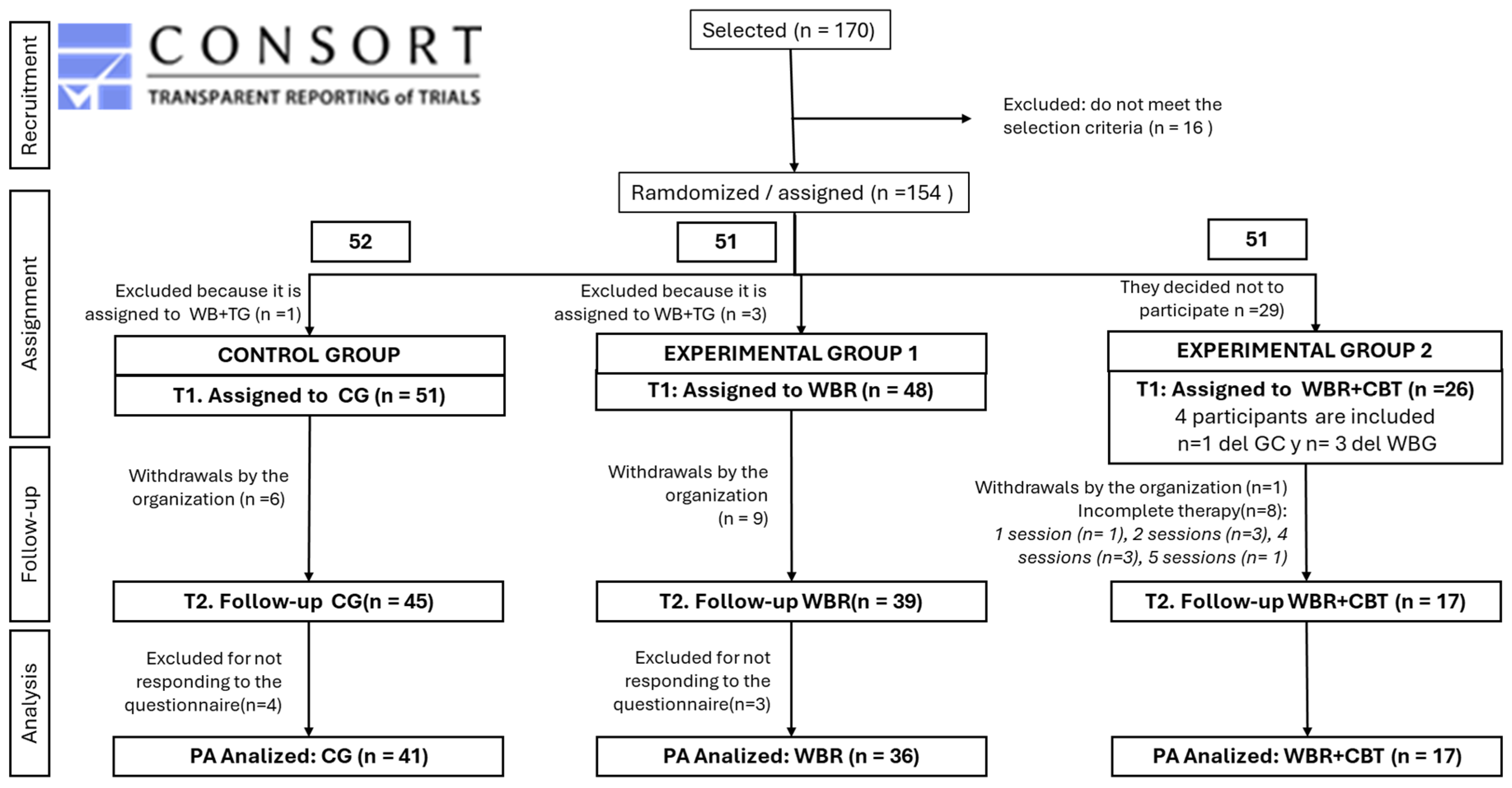
Figure 1 following CONSORT’s flowchart. Due to organizational data access limitations, information on age and educational level was unavailable. Data was collected on-site, with electronic questionnaires distributed and collected across various areas of the plant. Participants were recruited through an open invitation distributed across organizations.
The sample size was not established through a priori power calculation. Instead, the sample selection was based on organizational feasibility and worker availability criteria. Post hoc power was estimated using G*Power 3.1 assuming a repeated-measures ANOVA with a within–between interaction. Although the original analysis was a mixed MANCOVA including job control as a covariate, G*Power does not allow the inclusion of covariates in repeated-measures designs. Therefore, the estimated power should be considered conservative. The test of the power was calculated with the parameters that were previously obtained in the quasi-experiment: the sample size of 92 participants, for a maximum number of groups (3), for a number of measurements (2), with an alpha level of 0.05, and with the effect size (f2 = 0.27). Results showed the statistical power of the test was 0.99 (which is clearly satisfactory).
2.2. Measures
All variables were measured at two time points: before (T1) and after (T2) the intervention.
2.2.1. Outcomes Variables
Perceived stress. The Perceived Stress Scale (PSS-10) composed of 10 items, validated in Spanish by
Brito-Ortíz et al. (
2019), was used. Items are answered on a scale from 0 (never) to 4 (very often). An example of an item is: “In the last month, how often have you felt that you could not cope with all the things you had to do?” Internal consistency was α = 0.89 at T1 and α = 0.84 at T2.
Sick leave. This scale was assessed with a single item: “In the last 3 months, have you missed work due to physical and/or mental health issues?” on a scale from “0 = Never” to “3 = More than 7 times”. In addition, the main cause of the absence was asked (physical health, mental health, family situation, personal situation, and not applicable).
2.2.2. Covariate
Job control. It was measured by one item that is considered an antecedent of job stress (
Karasek and Theorell 1990). The item was as follows: On a scale from 1 to 10, how much control do you feel you have over your job?
2.3. Design
This is a quasi-experimental three-arm pre-post design carried out in a workplace setting (quasi-experimental three-arm workplace study), with pre- and post-intervention assessments (T1 and T2). The three arms were: a control group (CG) and two experimental groups: the Well-being Route group (WBR) and the Well-being Route plus Cognitive Behavioral Therapy group (WBR+CBT). This design enabled comparison of changes in the variables of interest between the groups over time, providing relevant evidence for the actual work context. Group allocation was not publicly announced. However, WhatsApp groups were created for coordination and follow-up, which allowed participants to identify other members within their assigned condition.
Participants in the Well-being Route (WBR) group were assigned via a pseudo-randomized, systematic sampling plan that ensured a balanced distribution across groups and reduced potential selection bias, thereby strengthening the study’s internal validity. The WBR were randomly assigned by the research team to either the WBR-only group or the control group.
Participants in WBR+CBT group were pre-assigned at the start of the study. This methodological decision was based on ethical and logistical considerations, as it was not ethically appropriate to restrict access to the platform to those already undergoing treatment on the company platform. This pre-assignment reflects the practical conditions of implementation and does not compromise internal validity, providing valuable evidence in a real-world context. Assignment to the WBR+CBT group was based on participants’ self-reported interest in receiving individual psychotherapy. Participants who indicated willingness to engage in therapy were allocated to this group, as it was the only condition offering a psychotherapeutic component. No clinical screening criteria were applied for assignment to the WBR+CBT group. The study was conducted without blinding of participants and therapists. However, outcome assessors remained blinded to participants’ intervention status. To maximize participation and reduce attrition, intervention sessions were scheduled during participants’ working hours, thereby encouraging regular attendance and supporting the study’s feasibility.
Because allocation to the WBR+CBT condition relied on self-selection, potential selection bias must be acknowledged. Individuals who opted into therapy may differ systematically from those who did not in terms of motivation, perceived distress, or help-seeking attitudes. Baseline questionnaires were administered to all participants prior to intervention exposure; however, no stratified randomization procedure was implemented. The unit of analysis was the individual, coinciding with the assigned unit, which allowed direct use of individual-level data without requiring additional adjustments for aggregation.
2.4. Procedure
Before starting the study, the Research Ethics Committee of Universidad Rey Juan Carlos approved the project titled “Impact of intervention on psychological well-being in organizational outcomes,” under internal registration number 2702202309523. After obtaining approval, participants were recruited and provided informed consent before any assessment or intervention and were informed that they could withdraw from the study at any time.
The study was carried out in collaboration with an organization. The objective was to validate the impact of its intervention and provide empirical evidence on the effectiveness of the psychological intervention offered through the online platform (Well-being Route group), evaluating improvements in workers’ well-being (reduction in stress) and in organizational variables (decrease in sickness leave).
Subsequently, an in-person visit was made to a factory to administer electronic questionnaires. Once the sample was obtained, the participants were divided into three study groups: control group (CG), Experimental Group 1: Well-being Route (WBR), and Experimental Group 2: Well-being Route + Cognitive Behavioral Therapy (WBR+CBT).
To encourage participation and minimize participant attrition, various strategies were implemented throughout the study. Sessions were scheduled during working hours to facilitate attendance; continuous communication with participants was maintained through reminders and follow-ups; and incentives were offered, including small gifts upon completing questionnaires, raffles during the follow-up visit, and additional raffles in the post-intervention evaluation.
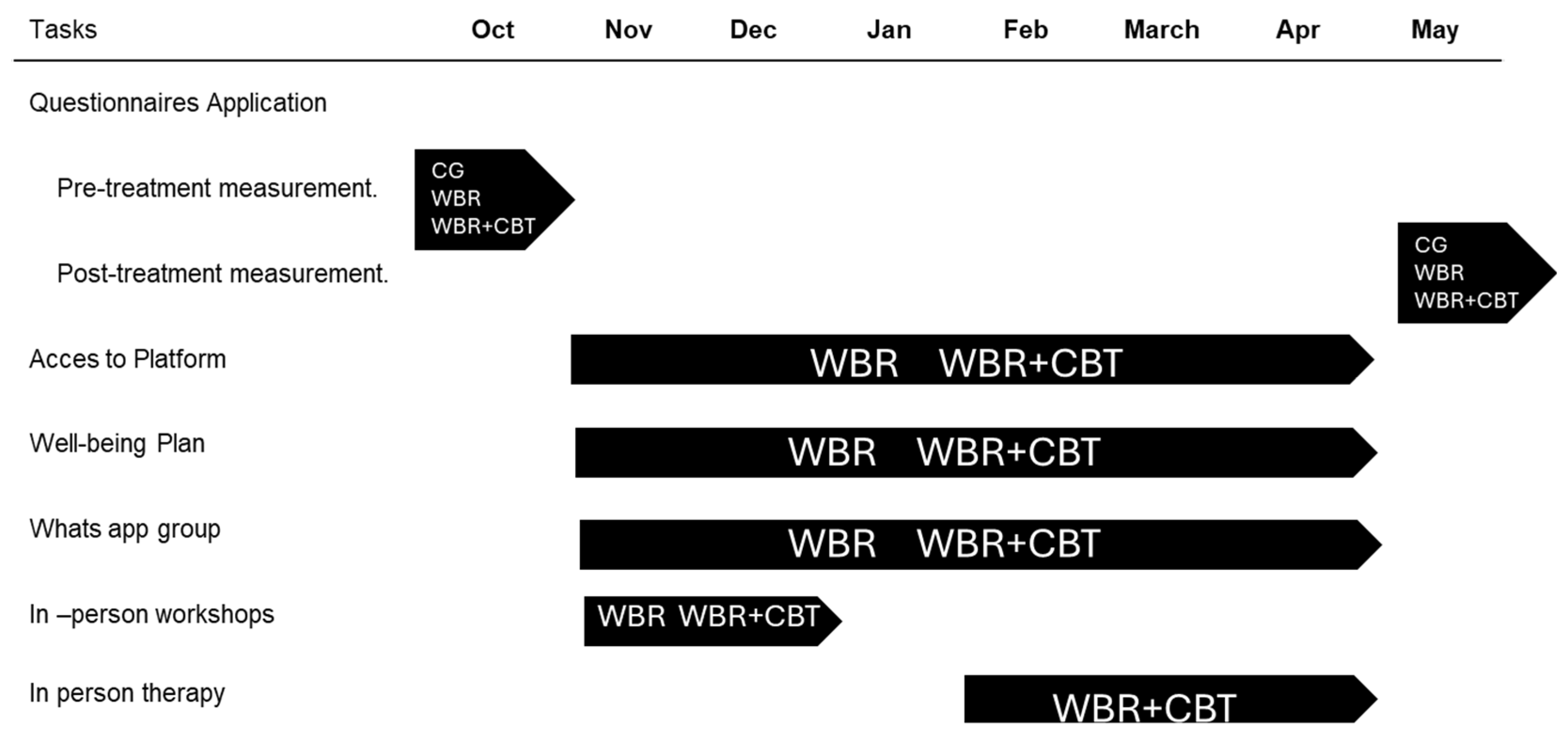
The schedule of activities (
Figure 2) outlines the steps and implementation periods, providing a comprehensive overview of the project’s development, from the initial application of the questionnaires to the final data collection and analysis.
Description of the Intervention
The WBR (Well-Being Reinforcement) intervention consisted of a psychoeducational, non-clinical program delivered in person over an eight-month period (32 weeks). Well-being Route group (WBR) had access to a series of services designed to support their well-being. In addition, they had access to an online platform that offered “digital resources to support well-being,” including several guided meditation sessions, breathing exercises, and podcasts, available 24 h a day, 7 days a week. Face-to-face workshops were held on topics selected based on the primary stressors identified in the initial questionnaires, including work–life balance, finances, and parenting. To reinforce adherence and encourage participation in resources, a WhatsApp group was created where messages from an internal communication campaign were shared, promoting the use of the Well-being Plan and attendance at the workshops. Participants received weekly communications promoting well-being practices and recommendations. Additionally, three in-person workshops (60 min each) were held bimonthly. Workshop themes were selected based on commonly reported stressors within the workforce and included: (a) work–life balance, (b) Personal finances, and (c) Assertive parenting and interpersonal relationships. Sessions were facilitated by a clinical psychologist with organizational experience.
WBR+CBT group received face-to-face Cognitive Behavioral Therapy (CBT), complementing the “digital resources of the organization platform”. Initially, an online therapy format was considered, but due to low acceptance, face-to-face treatment was implemented at the factory, consisting of 6 sessions conducted by CBT-certified psychologists. The in-person workshops followed the same thematic structure as Well-being Route group (WBR), providing practical strategies for managing stress in personal and work settings. In addition, a WhatsApp group was created to encourage communication, reinforce adherence, and promote attendance to in-person therapy and workshops. Participants in the WBR+CBT group received the full WBR program, along with individual psychotherapy based on an organizationally adapted cognitive behavioral approach. Therapy was delivered individually by a licensed psychotherapist with more than 10 years of experience in clinical and organizational settings, holding both a Master’s and a Doctoral degree. The target dosage was six 50 min sessions per participant, delivered weekly or biweekly, depending on scheduling availability; however, the number of completed sessions varied. Seventeen participants completed the full six-session target. Although no manualized protocol or formal fidelity-monitoring system was implemented, all sessions were delivered by the same clinician to enhance consistency in the therapeutic approach across participants (see
Table 2).
The control group (CG) did not have access to the organization platform. It was therefore a passive control group (waiting list), without access to face-to-face workshops or the WhatsApp group, and participants completed only the questionnaires at Time 1 (pretest) and Time 2 (posttest).
2.5. Data Analysis
Descriptive statistics, internal consistency, and correlations among the study variables were calculated. The sample was analyzed in SPSS 30, using only complete data, to examine the effects of the two interventions over time, following protocol analysis. Two ANCOVAs were performed to check results when differences are controlled in the baseline model, where variables (stress and sick leave) at Time 1 were controlled, and differences in these variables were analyzed at Time 2 in the three conditions. To examine the effect of intervention (pretest vs. posttest) and condition (WBR group, WBR+CBT group, and CG) on sick leave and stress, with job control included as a covariate, a 2 (intervention: pre, post) × 3 (condition: two intervention groups and a control) mixed MANCOVA was conducted. The assumptions were examined prior to analysis. Box’s M test indicated a violation of the homogeneity of variance–covariance matrices, and the number of observations was unbalanced across the three conditions. Accordingly, Pillai’s Trace statistics were reported, as they are considered the most robust multivariate test in the presence of assumption violations, particularly when group sizes are unequal and when variances are heterogeneous and homogeneous (
Ateş et al. 2019). The assumption of homogeneity of variances was met for stress but not for sick leave. Because the within-subjects factor had only two levels, the assumption of sphericity was inherently met. Additionally, the Bonferroni correction was employed to account for Type I error (
Field 2009), and we controlled variables that could covary with stress (job control) following the Demands–Control model (
Karasek 1979).
Effect sizes were calculated using partial eta square (η
p2) in the analyses of variance (
Lakens 2013), with 0.01, 0.06, and 0.14 considered small, medium, and large effects, respectively. The significance level was set at
p < 0.05. Additionally, the effect size
d of Cohen was calculated based on values of η
p2 to ease their interpretation. Values of
d of Cohen from 0 to 0.20 were considered small, around 0.50 medium, and up to 0.80 large (
Cohen 1988).
3. Results
Results of two ANCOVAs, conducted to control for baseline differences, showed that the stress effect was significant and had sufficient power, whereas the sick leave effect was not significant and had low power. In deep, there are significant differences for stress with a medium effect size (
F(2, 83) = 4.95,
p < 0.01, η
p2 = 0.11). Furthermore, the test has sufficient power to detect differences (1 –β = 0.80). However, post hoc comparisons do not indicate significant differences in pairwise comparisons (except that the differences in means are small, the largest being 0.12). Regarding sick leave, there are no significant differences, but the effect size is small (
F(2, 83) = 1.17,
p = 0.32, η
p2 = 0.03). Additionally, the test has very little power to detect differences (1 –β = 0.25). Although post hoc comparisons do not indicate significant differences in pairwise comparisons (and the differences in means are greater than for stress, the largest being 0.24). After this check, we added additional results to provide further evidence of the intervention’s effects, since the ANCOVA’s power for sickness leave was low. We performed a two-way mixed MANCOVA presented in
Table 3. There was a significant multivariate main effect of condition, with a medium effect size (Pillai’s trace = 0.13,
F(4, 176) = 3.16,
p = 0.02, η
p2 = 0.07,
d = 0.55). The multivariate main effect of intervention was not statistically significant (Pillai’s trace = 0.04,
F(2, 87) = 2.02,
p = 0.14, η
p2 = 0.04,
d = 0.41), with a small effect size and a low observed power (1 − β = 0.41), indicating that the study may have been underpowered to detect small overall multivariate changes across time. Additionally, a statistically significant multivariate effect was found for the intervention × condition interaction, with a medium effect size (Pillai’s trace = 0.14, F
(4, 176) = 3.19,
p = 0.02, η
p2 = 0.07,
d = 0.54).
Follow-up univariate ANCOVAs (see
Table 4) showed statistically significant intervention × condition interaction effects for both stress (
F(2, 88) = 3.80,
p = 0.03, η
p2 = 0.08,
d = 0.59) and sick leave (
F(2, 88) = 3.45,
p = 0.04, η
p2 = 0.07,
d = 0.54), with medium effect sizes. Because the interaction effects were statistically significant, the univariate main effects of condition and intervention were not further interpreted, as the pattern of change from pretest to posttest differed across conditions in both variables.
To explore the significant intervention × condition interaction effects, simple main effects of the intervention were analyzed separately for each condition (see
Table 5 and
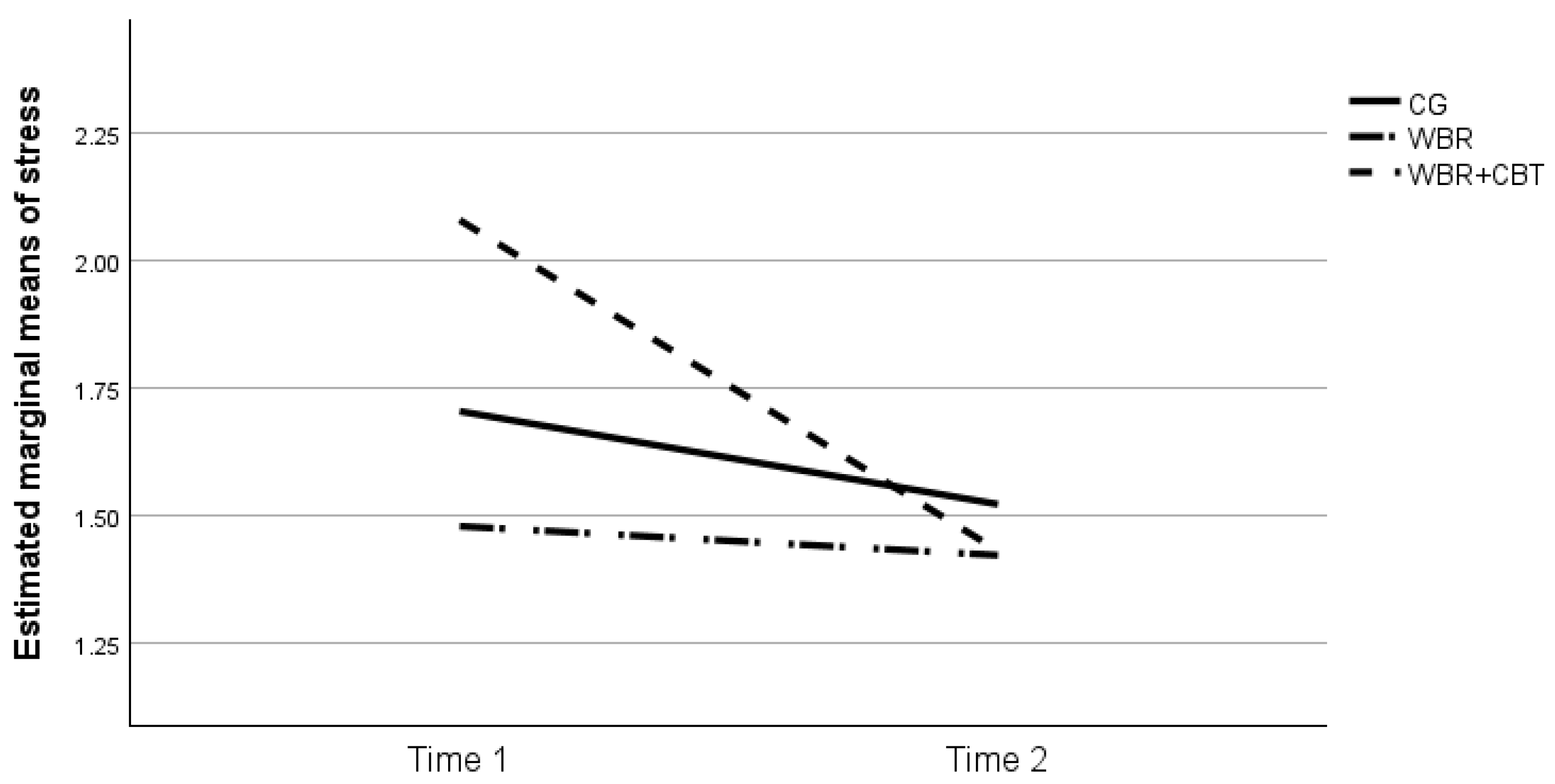
Figure 3) using post hoc Bonferroni-adjusted comparisons, but these post hoc analyses must be interpreted cautiously due to the design’s particularities (baseline differences among groups and bias in selection). Participants in the WBR+CBT condition showed a significant decrease in both stress (pretest: M
adj = 2.08, posttest: M
adj = 1.43,
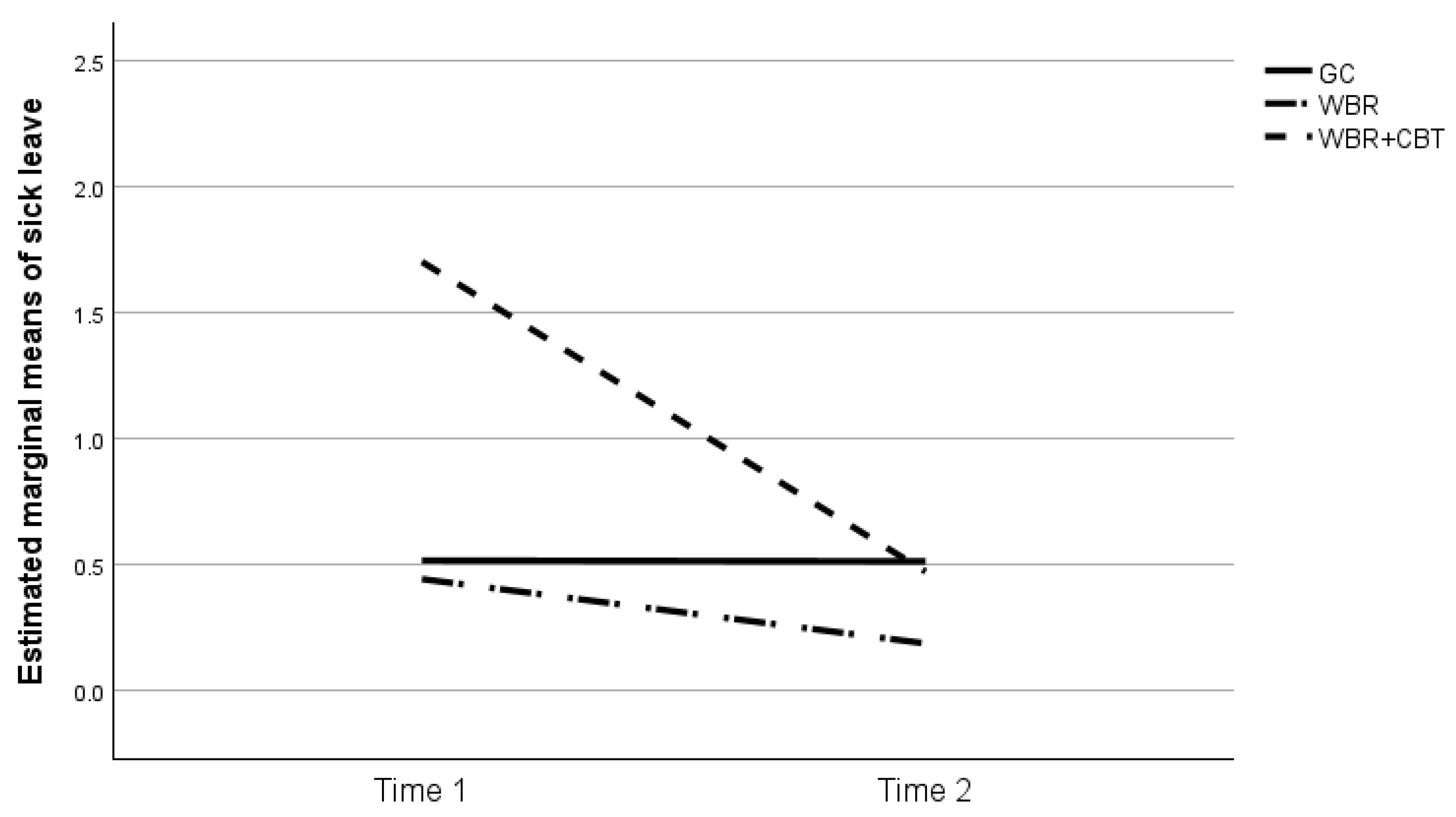
p < 0.001) and sick leave (pretest: M
adj = 1.70, posttest: M
adj = 0.47,
p < 0.01), thus supporting H1b and H3b. In contrast, changes across the intervention in the WBR condition were not statistically significant for either stress (pretest: M
adj = 1.48, posttest: M
adj = 1.42,
p = 0.64) or sick leave (pretest: M
adj = 0.45, posttest: M
adj = 0.19,
p = 0.33). Accordingly, H1a and H3a were not supported. As expected, no significant changes over time were observed in the control group (CG condition) for either stress (pretest: M
adj = 1.71, posttest: M
adj = 1.52,
p = 0.11) or sick leave (pretest: M
adj = 0.52, posttest: M
adj = 0.52,
p = 0.99), thus supporting H1c and H3c.
Hypotheses 2 and 4 posited that participants in the WBR+CBT group would show greater reductions in stress and sick leave, respectively, from pretest to posttest than those in the WBR group, after controlling for job demand control. Consistent with these hypotheses, significant reductions in both outcomes were observed in the WBR+CBT group, whereas no significant changes were found in the WBR group. Accordingly, we concluded that H2 and H4 were supported.
Additionally, simple main effects of condition were analyzed at each time point (see
Table 4 and
Figure 3). As shown in
Figure 3 (upper panel), at Time 1 (pretest), the adjusted mean level of stress in the WBR+CBT group (M
adj = 2.08) was significantly higher than that of the WBR group (M
adj = 1.48),
p < 0.01, but did not differ significantly from the CG (M
adj = 1.71),
p = 0.12. No significant differences in baseline stress were observed between the WBR group and the CG (
p = 0.32). At Time 2 (posttest), the adjusted mean level of stress did not differ significantly across the three conditions (WBR+CBT M
adj = 1.43; WBR M
adj = 1.42; CG M
adj = 1.52), with all pairwise comparisons being non-significant (
p = 1.00 for the three comparisons).
As shown in
Figure 3 (lower panel), at Time 1 (pretest), the adjusted mean level of sick leave in the WBR+CBT group (M
adj = 1.70) was significantly higher than that of the WBG group (M
adj = 0.45),
p < 0.01, and higher than that of the CG (M
adj = 0.52),
p < 0.01. No significant differences in baseline sick leave were observed between the WBG group and the CG (
p = 1.00). At Time 2 (posttest), the adjusted mean levels of sick leave did not differ significantly across the three conditions (WBR+CBT M
adj = 0.47; WBR M
adj = 0.19; CG M
adj = 0.52), with all pairwise comparisons being non-significant (
p > 0.41). Results also showed that intervention impact on levels of stress of workers from WBR+CBT group (pretest M
adj = 2.08; posttest M
adj = 1.43;
p < 0.01), whereas there was no effect for WBR group (pretest M
adj = 1.48; posttest M
adj = 1.42;
p = 0.11). As expected, no effect was found for CG (pretest M
adj = 1.70; posttest M
adj = 1.51;
p = 0.11). Sick leave also significatively decreases for workers of WBR+CBT group (pretest M
adj = 1.70; posttest M
adj = 0.47;
p < 0.01), whereas there was no effect for WBR group (pretest M
adj = 0.45; posttest M
adj = 0.19;
ps = 0.333), neither for GC group (pretest M
adj = 0.52; posttest M
adj = 0.52;
ps = 0.989).
In summary, the ANCOVA results showed a significant difference in stress and no significant difference in sick leave. However, given the MANCOVA results and the quasi-experimental design (not a Randomized Controlled Trial [RCT]), workers were not randomized, so they could have any level of stress or number of sick leave days as long as they chose to participate. Maybe the reason is that there are significant baseline differences due to selection bias. Therefore, as shown in the graph (see
Figure 3), the differences were greater at Time 1, but the intervention reduced stress differences in the intervention groups. Especially those who received therapy. In other words, the intervention seemed to improve stress levels and reduce sick leave among the workers who received it. However, it could be that the characteristics of the sample-collection procedure (selection bias) and the way subjects were assigned to conditions resulted in higher pretest differences among those who chose to participate in the quasi-experiment at Time 1 than at Time 2.
4. Discussion
Organizations face the challenge of managing workers’ stress to enable them to perform effectively and achieve their objectives. This is essential to achieving longer-term organizational goals and preventing workers’ illness. For this reason, organizations have been interested in developing multiple interventions to diminish stress and its consequences, seeking to mitigate stress or improve employees’ health at the individual and organizational levels. Those interventions usually focus on mitigating stress and avoiding its direct consequences, such as illness that could result in employees’ sick leave. Under the theoretical umbrella of Conservation of Resources Theory (
Hobfoll 2001), Job Demands–Resources model (
Demerouti et al. 2001) and
Karasek and Theorell (
1990) stress theory, the main aim of this study is testing two types of interventions, one of them based on providing only resources (WBR), whereas the other one provided additionally cognitive restructuring by eliminating false beliefs among employees through Cognitive Behavioral Therapy (WBR+CBT). The main aim of these interventions was to help them cope with everyday life by improving their stress management.
For doing so, we compared three conditions: WBR+CBT, WBR, and GC, after controlling for job control. Job control could refer to skills that enable employees to manage the demands of the job; therefore, it could interfere with the levels of stress. Hence, we introduced job control as a covariate. Our results showed significant changes after the intervention of WBR+CBT where the levels of stress and sickness leave were diminished. As expected, employees in the CG did not reduce their stress levels, nor did their sickness leave from T1 to T2. However, the WBR intervention did not reduce employees’ stress or sickness leave, contrary to our hypotheses.
On the one hand, results align with meta-analyses and systematic reviews (
Alkhawaldeh et al. 2020;
Nakao et al. 2021;
Richardson and Rothstein 2008) that synthesize findings on stress interventions.
Kröll et al. (
2017) conducted a quantitative meta-analysis and found that different methods, such as CBT, relational techniques, and mixed techniques, were positively associated with job stress outcomes, consistent with the results we found. Richardson and Rothstein’s meta-analysis found that CBT had a larger effect size than other techniques, such as relaxation, which had a significant effect. These results are not entirely consistent with ours, since relaxation had an effect in this meta-analysis but not on the route of well-being in our workers. Nevertheless,
Alkhawaldeh et al. (
2020) analyzed CBT interventions and mindfulness-based interventions and found that they were effective in reducing nurses’ stress, as we found in WBR+CBT.
On the other hand, sick leave, or absence due to illness, can occur for various reasons, like falls, viruses, lifting heavy weights, among others, and from stress that could cause different illnesses, from digestive illnesses or musculoskeletal disorders to mental illness, such as depression and anxiety (
Duchaine et al. 2020). Hence, stress is not the only cause of sick leave. Nevertheless, interventions to reduce sick leave using CBT have shown effectiveness (
Dalgaard et al. 2017;
Khan et al. 2025;
Xu et al. 2024). Nevertheless,
Stratton et al. (
2021) did not find any effect of CBT on sick leave or absenteeism, but this meta-analysis found effects on productivity or engagement. It seems unclear how stress interventions, such as mindfulness, relate to sick leave. Additionally, we test the number of sick leaves reported at the pretest and posttest using a self-reported scale. Results showed that in the WBR+CBT condition, there was a significant difference compared with the other groups and the pretest. Hence, WBR+CBT workers significantly reduced their sick leave, although these results could be influenced by the selection bias of this quasi-experiment.
The main contribution of this study regarding stress and sick leave is that the combination of stress management techniques (WBR) and Cognitive Behavioral Therapy appears to be effective in reducing stress and sick leave among employees, despite a quasi-experimental design and methodological limitations. As the Well-being Route had no effect on stress reduction, our results suggest that the differential intervention is Cognitive Behavioral Therapy even when delivered with fewer sessions. From our results, it is difficult to determine whether WBR itself is ineffective or whether the lack of effect is due to the low pretest stress levels in the WBR group. One potential explanation for this ineffective result could lie in the absence of expert guidance, as the WBR integrates diverse interesting materials and exercises to reduce stress, but they are self-administered. Thus, the availability of such interventions cannot ensure their effectiveness when professional guidance for their application is not offered. Nevertheless, the significant differences in stress and sick leave among the three worker groups in T1 prevent us from confirming this hypothesis.
From a theoretical point of view, current interventions are designed to both provide employees with additional resources to cope with demands and to avoid depletion of resources that resulted from demands. Specifically, Cognitive Behavioral Therapy could provide specific orientations to address stress: adding skills to manage interpersonal conflicts, time-management issues, helping prioritization of demands or training employees to re-appraise their current job demands. In addition, Cognitive Behavioral Therapy could contribute to increase personal resources such as optimism, resilience, or self-efficacy. Thus, CBT resulted in a wider skills repertoire and increased the personal resources employees have to cope with the specific job demands, reducing job stress and sick leave. These results provide support to JD-R theory in its Proposition 4 (
Bakker et al. 2023). This kind of interventions will extend the individual-level interventions considered by
Bakker and Demerouti (
2014), more focused on specific training about job demands and resources.
Beyond the theoretical contributions to our study regarding theories of stress and the relationship between stress management interventions (in particular, CBT) and stress and sick leave levels, our results had important managerial and practical implications. First, managers and companies could design and implement interventions to reduce stress levels at a relatively low cost. In our study, a six-session intervention reduced stress levels when combined with the WBR. In addition, our results make it clear to companies that helping employees cope with stress goes the extra mile in reducing the costs associated with sickness absences. The inclusion of the WBR in the effective intervention in our study suggests the importance of developing further research on its effects and the conditions under which it is effective, as the WBR could be used for a broader target at lower cost than CBT. Thus, future research should clarify when, how, and for whom this kind of intervention could be effective in reducing stress levels.
The present study had some limitations that prevent to take our conclusions as definitive. First, the study is not a randomized controlled trial because it does not meet all requirements for such a trial, as participants were not randomly assigned to conditions. Ethical considerations led us to exclude random assignment of subjects in our study. Second, stress and sickness absence were measured solely through subjective measures. Third, the research included a relatively small sample of employees from only one company. Fourth, a single-item measure of sick leave could diminish the validity and internal consistency of the construct, but the construct is unidimensional, with a narrow meaning, is unambiguous, and can be expressed in a single item (
Sackett and Larson 1990). Fifth, findings involving the WBR+CBT group should be interpreted cautiously as baseline equivalence across groups cannot be assumed due to selection bias.
Future research could test the effectiveness of CBT and WBR interventions through randomized controlled trials with a pure random allocation to control and intervention groups, with larger samples from different companies, economic sectors, or countries, and including more diverse measures of sickness absence (registers, supervisors’ perceptions, etc.). In addition, further research could examine the effects of interventions on other stress-related outcomes, both individual (psychological disorders, work–life balance, family conflicts, etc.) and organizational (productivity, organizational citizenship behaviors, attitudes towards the company, workplace conflict, etc.). Additionally, measures could include more items to provide a valid and reliable measure of constructs, as well as additional methods of measurement (e.g., interviews, focus groups, or cortisol levels). The fact that we measured only via questionnaire could reduce generalizability and increase common method variance (
P. M. Podsakoff et al. 2003). Finally, such interventions (WBR and CBT, both separately or combined) could be evaluated for their effectiveness in reducing stress levels stemming from other stressors, such as job rotation, job changes, or organizational restructuring.
Despite the aforementioned limitations, our results showed that combining a platform-based stress management intervention with Cognitive Behavioral Therapy may be an effective approach for reducing stress and sickness leave among employees.



 ,
,