1. Introduction
Inspired by the broader Arab Spring movements, the Syrian crisis commenced in March 2011 with peaceful protests. These demonstrations were rooted in a combination of longstanding political repression, economic grievances, high unemployment, widespread corruption, and decades of authoritarian governance. Over time, regional spillover effects, sectarian polarization, and foreign intervention contributed to the escalation of these protests into a protracted armed conflict (
Hinnebusch 2012;
Nepstad 2013). The regime of former President Bashar al-Assad violently quelled the protests, precipitating a devastating full-scale civil war. As regional and global actors became increasingly involved, the crisis evolved from domestic political unrest into a complex geopolitical conflict. This internationalization significantly exacerbated instability and led to one of the largest displacement crises in recent history (
Abu-Bader and Ianchovichina 2019;
Hughes 2014). Over the following decade, the conflict left hundreds of thousands dead and displaced nearly half of Syria’s population (
Al-Azzam and Al-Azzam 2024). Approximately 6 million Syrians have sought safety abroad, with Jordan hosting approximately 1.3 million, of whom about 649,000 are officially registered with the UNHCR (
Hamdon et al. 2024). Most reside in Jordanian towns and cities, with roughly 118,000 living in refugee camps; around 76,000 in Za’atari and 42,000 in Azraq camp. This massive influx has rendered Jordan the country with the second-highest per capita refugee population globally.
In November 2024, Syria transitioned into a novel phase of political transformation when Hayat Tahrir Al-Sham (HTS) advanced toward Damascus, culminating in a change of government the following month (
Adar et al. 2025;
Mandhare 2025). This transition signaled the termination of Assad’s family rule over five decades and the end of an extended authoritarian era (
Ahmad 2025;
Hall 2025). Many Syrians perceived the change in government as a turning point that could generate renewed hope, particularly for the millions who have been displaced domestically and internationally (
Wedeen 2025). For refugees, the transition represented the prospect of eventual safety, dignity, and a future beyond protracted exile (
Mandhare 2025). According to the UNHCR report, as of 23 August 2025, 141,230 refugees from Jordan have returned to Syria since 8 December 2024 (
UNHCR 2025). Nevertheless, Syria has confronted unprecedented economic and financial challenges, severely undermining basic services and infrastructure (
Bani Salameh 2025). Consequently, Syrian refugees face a dilemma of whether to return to Syria despite the inferior safety and security conditions as well as the economic situation or stay in Jordan in the context of limitations on employment and inadequate access to basic services (
Davidoff-Gore and Fratzke 2024;
Zafar et al. 2025). Therefore, the objective of this study is to examine the Syrian refugees’ intentions of return and factors associated with these decisions, using a mixed-method approach.
1.1. Literature Review
Since the commencement of the Syrian crisis until the end of 2024, Syrian refugees in Jordan have confronted a difficult decision on whether to return to their homeland if conditions could improve, or to remain displaced amid ongoing uncertainties (
Davidoff-Gore and Fratzke 2024;
Zafar et al. 2025). Refugees articulated simultaneous optimism and pessimism concerning their return. On one hand, many have aspirations for eventual return and repatriation, based on the UNHCR regional intention survey conducted in June 2024, which suggested that most Syrian refugees throughout the region hope to return to Syria “one day” (
UNHCR 2024). On the other hand, immediate return intentions have remained minimal due to ongoing fears and hardships, with about 1–2% of Syrian refugees articulating that they planned to return in the following 12 months. The vast majority exhibited reluctance to repatriate in the short term owing to safety, livelihood, and infrastructure concerns in Syria (
UNHCR 2024). Even though safety and security conditions inside Syria have consistently been reported as the primary obstacle to return in refugee surveys, inadequate economic opportunities and insufficient basic services in Syria have recently been deemed pivotal (
Buheji and Hasan 2025). Additionally, many highlighted the destruction of homes and urban areas, as well as inadequate housing and utilities, as primary obstacles. These realities dampened the hopes of refugees with a sense of despair that return may not yet be feasible, as demonstrated by the 2024 return intention surveys (
UNHCR 2024).
The fall of the regime symbolized practical change in Syria’s political trajectory (
Bani Salameh 2025). This historic shift revived hope among Syrian refugees for eventual return to their homeland (
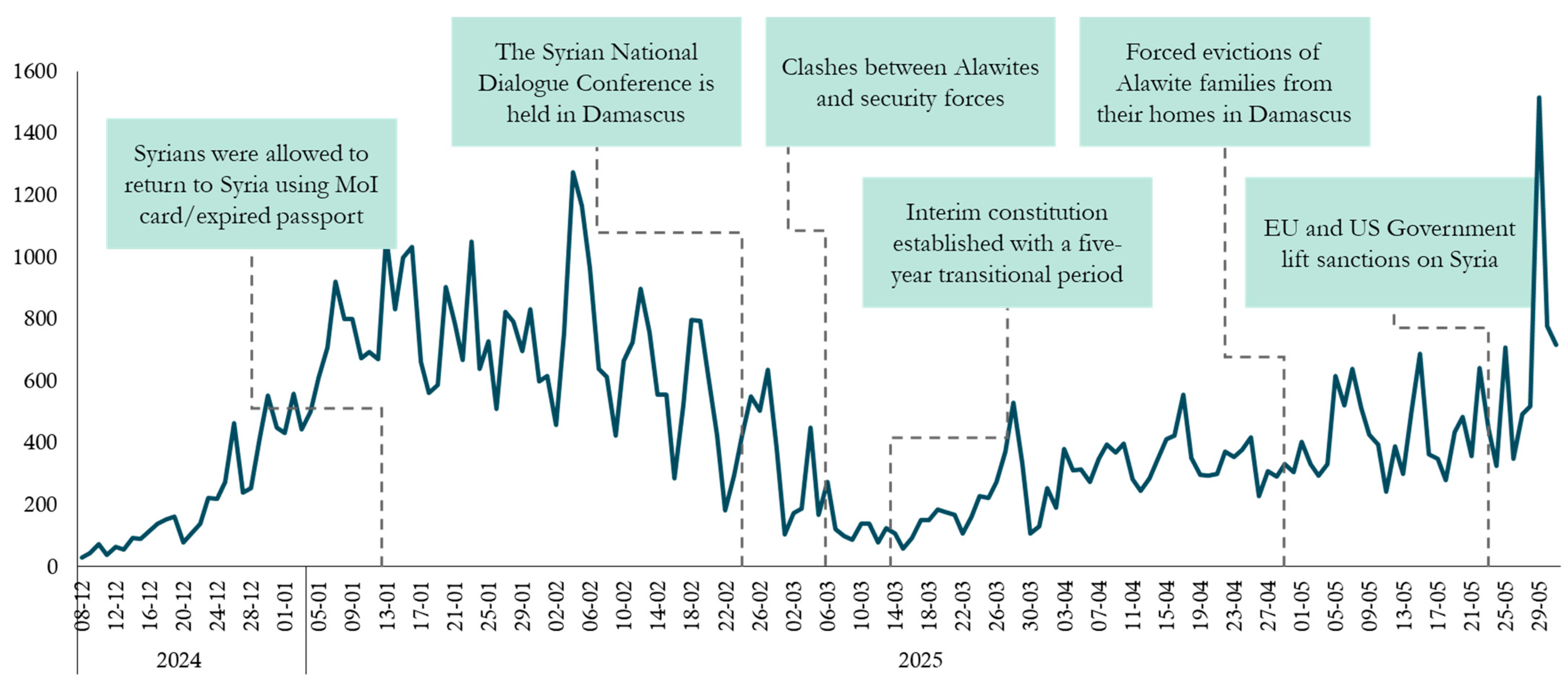
Buheji and Hasan 2025). The UNHCR records illustrate that the number of returns to Syria has steadily increased since December 2024, indicating notable peaks in January, March, and May 2025 (
Figure 1).
A recent survey among 385 Syrian refugees residing in Jordan revealed that only 24% were planning to return, with 11% undecided (
CARE Jordan 2025). Even though the regime change heightened optimism concerning return, Syria has confronted deep-rooted economic, political, and infrastructural challenges (
Bani Salameh 2025;
Buheji and Hasan 2025;
Davidoff-Gore and Fratzke 2024;
Mandhare 2025). To that end, reports of arbitrary detention, political repression, violent incidents, and sectarian strife have been alarming for the refugees. Furthermore, many refugees considering returning to Syria express concerns regarding access to housing, employment, and education upon their return to Syria (
CARE Jordan 2025;
International Rescue Committee 2025). Accordingly, a return decision to Syria encompasses considering intricate trade-offs that require balancing individual aspirations with available capabilities.
Jordan’s role as a host country is pivotal as Syria enters a new phase of political development. Jordan strives to balance humanitarian obligations with long-term sustainability (
Bani Salameh 2025). Amid declining humanitarian aid from developed countries, it has become critically challenging for Jordan to continue providing services to refugees (
Ghanem et al. 2024). Notwithstanding the Government of Jordan’s commitment to ensuring Syrian refugees access to education and healthcare, substantial service gaps are evident. Without international support, access to such services can be additionally constrained (
Segnana et al. 2024). Moreover, many Syrians report feeling isolated because they are without residency or full participation in public life. Occasionally, tensions between hosting communities and refugees have emerged due to elevated concerns regarding employment, services, and equitable aid distribution (
Bani Salameh 2025;
Ghanem et al. 2024). The recent changes in labor laws associated with work permits have aggravated obstacles for refugees to engage in the Jordanian labor market. Though indirectly, these conditions may cause refugees to leave Jordan and go to Syria or somewhere else.
1.2. Theoretical Framework
Syrian refugees now confront a profound decision between returning to a fragile and uncertain Syria and staying in Jordan, where they encounter restrictive policies, constrained employment opportunities, and escalating socio-economic challenges. The study addresses this dilemma from an ecological perspective, using an integrated theoretical framework that integrates the Aspirations–Capabilities framework (
de Haas 2021) with classical Push–Pull migration theory (
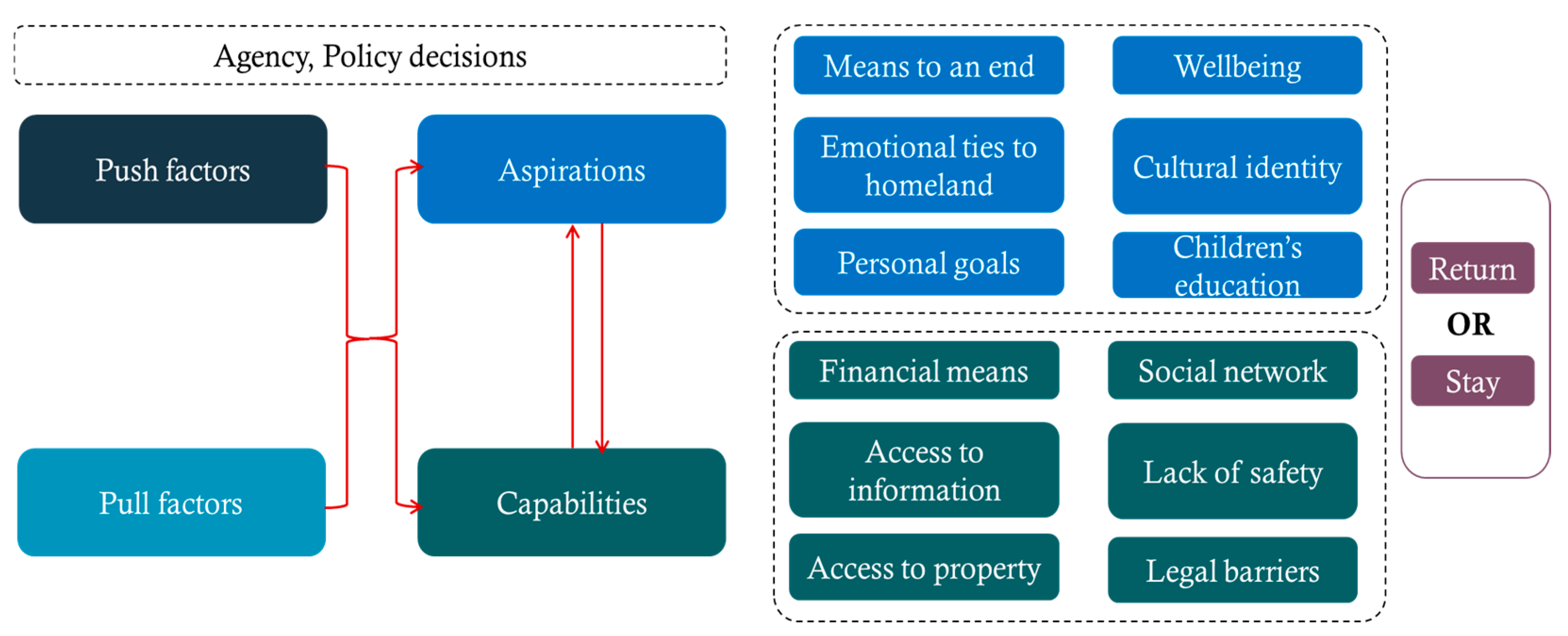
Lee 1967). Using these two frameworks, it focuses on Syrian refugees’ decision-making processes regarding repatriation to Syria or ongoing residence in Jordan. The framework conceptualizes that return decision-making is a function of both individual agency and structural influences (
Figure 2). The Push–Pull theory posits that various demographic, socio-economic, and contextual factors may push people out of countries of origin and/or pull them into their destinations (
Abou-Khalil et al. 2025). Push and pull factors are contextual variables that condition refugees’ migration aspirations and capabilities. Emotional, cultural, and instrumental motivations impact aspirations, which are the desire or intention to return or stay. These motivations encompass emotional bonds with homeland, self-identified goals, and concerns regarding children’s schooling. Capabilities denote concrete capacity to fulfill those aspirations; factors, including financial resources, access to information, legal barriers, and safety conditions, mediate them. The dynamic interaction exists between aspirations and capabilities, mutually impacting each other. These dual forces ultimately determine the potential for voluntary return or sustained displacement. The framework allows a comprehensive understanding of refugee decision-making by combining motivational and structural dimensions, simultaneously highlighting the nuanced interplay among desires, resources, and contextual constraints.
Grounded in the aforementioned theoretical framework, this study is designed to explore the complex interplay of factors that impact Syrian refugees’ decision to either return to Syria or reside in Jordan. To that end, the study focuses on how macro-level political and economic developments intersect with individual and household-level considerations to influence repatriation intentions. Using a mixed-method approach, the study addresses three central questions:
(i) What is the extent to which structural conditions in Jordan and Syria influence Syrian refugees’ intentions to return? (ii) How do refugees’ aspirations to return interact with their perceived capabilities to realize return? And (iii) do return intentions differ systematically across socio-demographic characteristics of refugees?
In addition, these research questions aimed to test the following two hypotheses: H1: Refugees experiencing greater economic challenges in Jordan are more likely to express intentions to return to Syria. H2: Perceived structural barriers in Syria are negatively associated with return intentions.
2. Materials and Methods
2.1. Data
This study adopts a mixed-method approach to examine the decision-making process regarding return to Syria among Syrian refugees in Jordan. The data were collected by an international non-governmental organization (INGO) as part of a needs assessment exercise on return intentions and preparedness.
The quantitative component consisted of a structured telephone survey conducted with 1070 Syrian refugees residing in host communities (N = 541) and refugee camps (N = 529) across Jordan. A stratified random sampling approach was employed to ensure proportional representation across geographic locations (host areas and camps). Eligible participants were randomly selected within each stratum from the organization’s administrative participants database. Telephone interviews were conducted by trained enumerators. At the beginning of each call, respondents were informed of the purpose of the survey, assured of confidentiality and voluntary participation, and reminded of their right to withdraw at any time. Participants were asked to confirm that they were available and in a private setting before proceeding. No program staff or other NGO professionals were present during the interviews. The survey collected information on return intentions, factors influencing return-related decision-making, and anticipated challenges associated with return.
The qualitative component included four focus group discussions (FGDs) conducted separately with male and female refugees residing in host communities. The FGDs explored push and pull factors, aspirations to shape return considerations, and the role of individual capabilities in influencing return decisions. Discussions were moderated by trained facilitators in neutral community settings to ensure privacy and encourage open dialogue. Prior to participation, individuals were informed of confidentiality procedures and provided informed consent. With participants’ permission, discussions were audio-recorded for transcription purposes. A note-taker was also present to document key points and non-verbal dynamics to support coherence and completeness of the data; no identifying information was recorded.
In addition, two key informant interviews (KIIs) were conducted independently by the author specifically for the purpose of this study. These interviews were designed to provide contextual insight into regional geopolitical developments and their potential influence on refugee return decisions. The KIIs followed a semi-structured format and were conducted with informed consent.
2.2. Measures
In this study, the key variable of interest comprised the intention of return to Syria. This intention was assessed by asking all respondents how the events of post-8 December 2024 have influenced their decision to return to Syria, with the following response choices: return permanently, return temporarily to assess the situation, return one day but no concrete plan yet, do not want to return, and have not thought about it. The first three responses were considered as “return”, while the rest were coded as “no” and “undecided,” respectively. For analytical purposes, the first three response categories were combined into a single “return intention” variable. This approach was adopted to distinguish between respondents expressing an orientation toward return and those not considering return, thereby enabling clearer comparison in the quantitative analysis. While these responses reflect varying degrees of temporal certainty and commitment, they were grouped to capture overall directional intent.
Additionally, the study addressed selected socio-demographic factors to analyze disparities in return intentions. These variables encompassed age (<30, 30–39, 40–49, and 50+ years), sex (female or male), current work status (no or yes), size of household (<4, 4–6, 7–8, and 9+), and whether the household have children in formal education (no or yes).
2.3. Analyses
The univariate and bivariate analytical approaches were used to present the survey data results. Univariate analysis revealed the profile of respondents and enabling factors for return. Bivariate analysis was performed to illustrate the prevalence of return intentions and socio-demographic factors associated with return decision-making among refugees. Qualitative data from FGDs and KIIs were analyzed using a phenomenological approach to explore individuals’ experiences and meaning-making processes regarding return decisions. Audio recordings were transcribed and coded. Initial open coding was conducted by the author to identify significant statements and recurring meanings related to return aspirations, capabilities, and structural constraints. Themes were developed by clustering related meanings into higher-order categories that reflect the essence of participants’ experience and informed both by the integrated theoretical framework and emergent patterns from the data. Thematic analysis identified four overarching themes. The first theme concerned structural conditions in Syria, including security dynamics, housing availability, access to basic services, and livelihood opportunities. The second theme reflected socio-economic pressures in Jordan, particularly employment constraints and household financial strain. The third theme centered on aspirations and emotional attachment to the homeland, which shape refugees’ desire to return. The fourth theme captured perceived capabilities and practical constraints that influence the feasibility and timing of repatriation.
3. Results
3.1. Profile of Respondents
The mean age of survey respondents was 40, with a family size of 5.7 (
Table 1). In host areas, nearly two-thirds of respondents (57%) were females, whereas about two-fifths (43%) in camps were females. About 72% of the respondents reported the presence of school-going children in their household; this figure was higher among camp residents than those residing in host areas. Of the respondents, approximately four-fifths (82%) were unemployed at the time of the survey.
3.2. Push and Pull Factors Behind the Decision on Return to Syria
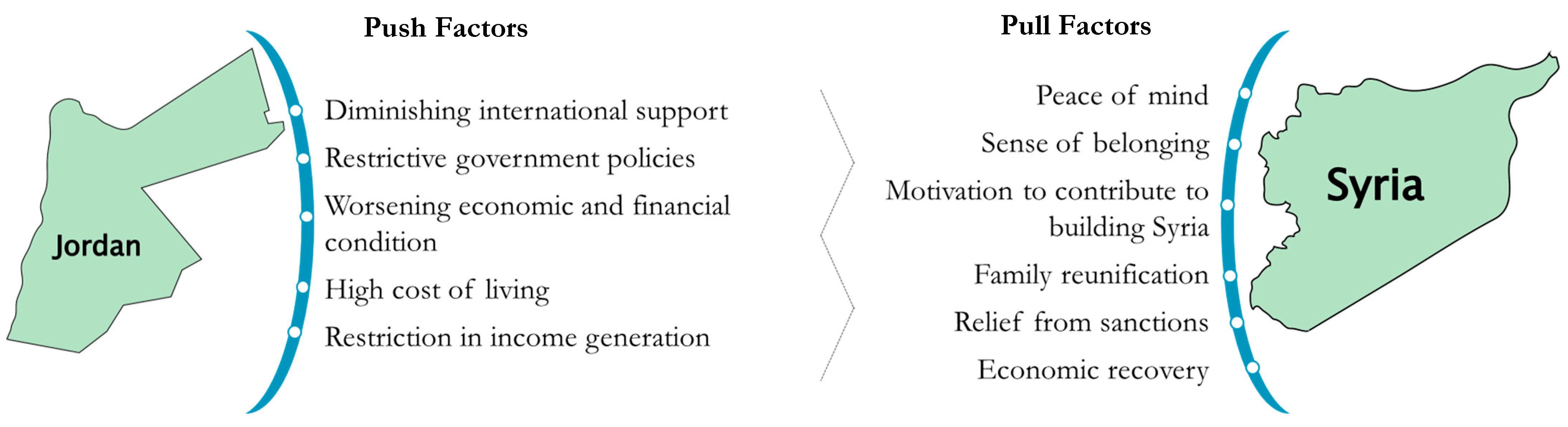
The analysis of FGDs and KIIs illustrated that both push and pull factors impact Syrian refugees’ intentions concerning return to Syria or ongoing residence in Jordan (
Figure 3). Push factors encompassed growing economic hardship, restrictive government policies, inadequate legal work opportunities, and the diminishing availability of international aid. Many refugees reported barriers to employment in Jordan as one of the most critical push factors. This sentiment vividly demonstrates how limited livelihood options and the burden of work permit costs reinforce a sense of stagnation and economic insecurity among refugees, thereby encouraging their exit from Jordan. Furthermore, participants cited the rising costs of living in Jordan as intensifying their financial hardship and compelling them to consider repatriation. Apart from these individual challenges, diminishing humanitarian funding represents a contextual push factor. Due to this reduction, the Jordanian government has been confronting additional pressure on already limited basic services for refugees, which deteriorates the adverse living conditions of refugees.
“We face so many restrictions here. For example, my husband and son can’t work freely in any sector without expensive permits. If we stay in Jordan, we’ll just keep living in poverty, and no one wants that.”
—Female, Irbid
“The international community rarely fulfilled its pledges to Jordan on refugee support. Funding never exceeded 35–36% of what was promised. This shortfall has placed a growing strain on the government [of Jordan], especially in education, health, infrastructure, and the social fabric. In my opinion, these costs Jordan can no longer continue to bear.”
—KII
Nevertheless, emotional factors or aspirational ties to the homeland rather than concrete improvements on the ground shape pull factors, which comprise conditions in Syria that might attract refugees to return. Refugees articulated that returning to Syria would foster a sense of belonging and psychological relief and facilitate family reunification after prolonged displacement. Even though they acknowledge that life in Syria may be challenging, they have the utmost motivation to participate in the post-war rebuilding of Syria. The prospect of economic recovery following the lifting of various sanctions by Western countries has a further boosting impact. However, the experts cannot accurately predict the pace of such recovery.
“Of course, all of us want to return. At the end, it’s our country. Something will always pull us towards it, no matter how difficult the situation is.”
—Male, Irbid
“While easing of US sanctions briefly strengthened the Syrian Lira and sparked optimism, Syria remains under a web of sanctions from other countries and international entities. With high-risk perceptions and limited investor confidence, the country is still in a honeymoon phase, and it is too early to tell the trajectory of development.”
—KII
3.3. Aspirations and Capabilities Influencing Return Decision
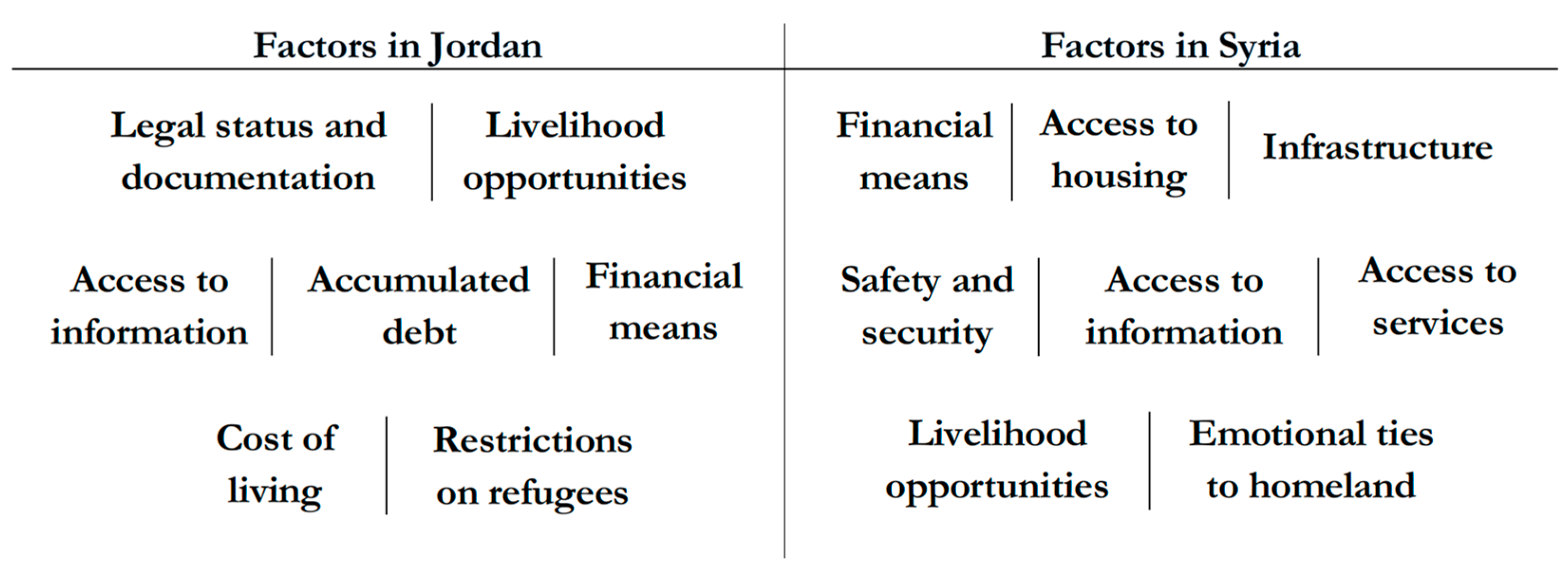
Focus group discussions demonstrated that even though many Syrian refugees articulated a strong emotional, cultural, and identity-based desire to return to their homeland, refugees’ actual capacity to act was substantially impeded by practical challenges (
Figure 4). Most participants maintained an ongoing aspiration to return, conceptualizing it as a long-term aim rather than a short-term plan. Refugees’ strong emotional ties to Syria strengthened this sentiment.
“Each one has some concerns, but at the end of the day, everyone wants to return; it is just a matter of time.”
—Male, Amman
“Syria is our country; we are committed to it; something in your heart tells you to go.”
—Male, Irbid
Nevertheless, the realities on the ground in both Syria and Jordan frequently preempt these aspirations. Refugees delineated how aspirations to return were constrained by multiple barriers. These barriers encompass inadequate financial resources for travel, the destruction or unavailability of housing in Syria, ongoing insecurity, and limited clarity on the availability of basic services. Debt accrued during displacement in Jordan further intensified participants’ financial hardships. Several participants articulated that departing without settling these obligations was impractical. Additionally, restrictive labor laws and the elevated cost of a work permit in Jordan exacerbated the situation. Despite the motivating impact of limited livelihood opportunities, the absence of income simultaneously constrains the capacity to repay debts or finance return migration, thereby particularly complicating the intersection of aspirations and capabilities.
“Most of us do not have the money, and things are only getting worse financially. If it keeps going like this, we will never be able to return to Syria.”
—Female, Amman
“Syria is going through a housing crisis. There are no houses to rent; everything is either destroyed or uninhabitable.”
—Male, Irbid
3.4. Factors Considered to Decide on Return
Personal, social, and structural factors shape the decision to return to Syria or remain in Jordan. Discussions with refugees revealed that these factors encompassed safety and security concerns in Syria, having adequate access to livelihoods, availability of basic services, family obligations, and financial circumstances. Many respondents reinforced that until they were ensured a safe and habitable setting, return would not be feasible, which is also complemented by quantitative data. Typically, refugees consider four factors to determine whether to return to Syria. Access to land and property in Syria emerged as the primary determinant (55%), followed by economic situation in Syria (46%), and safety and security situation in Syria (40%) (
Table 2). Evidence from the FGDs supports this finding, and several participants reaffirm that access to housing is the most pivotal factor.
“The most important thing is to have a dwelling there, meaning the house should be ready.”
—Male, Irbid
“I would not return for the next two years because I do not have a house there. I am not ready to go and search for a house or build a tent. Also, rent is not available.”
—Female, Amman
These considerations substantially varied by location, age, sex, employment status, household size, and whether the household has school-going children. Access to land or property was considered by most refugees residing in camps rather than living in host areas, among older (aged 50+) refugees rather than younger ones (aged under 30), and with a smaller family size (<4 members) rather than a large family size (9+ members). The state of Syria’s economy constituted a more salient factor in return decision-making for females than for males, and older individuals (30+ years) than younger ones (<30 years). The safety and security situation was acknowledged as pivotal in return decision-making by most camp residents, rather than those residing in host areas. The same trend was evident for older individuals (30+ years) compared to younger ones (<30 years), for larger families (4+ household size) compared to smaller ones (<4 members in the household), and for households with a school-going child compared to those without. Similar patterns were documented regarding access to basic services and children’s schooling in Syria.
3.5. Intention of Return
Nearly three-fifths (61%) of the Syrian refugees articulated an intention to return to Syria, with pronounced disparities across demographic groups (
Table 3). The intention to return was more pronounced in males (66%) than females (56%), who were currently working (68%) than those not (60%), individuals aged 50 and above (65%) than those below 30 (58%), and the households with 9+ members (69%) than those with less than four members (55%).
3.6. Enabling Factors for Return
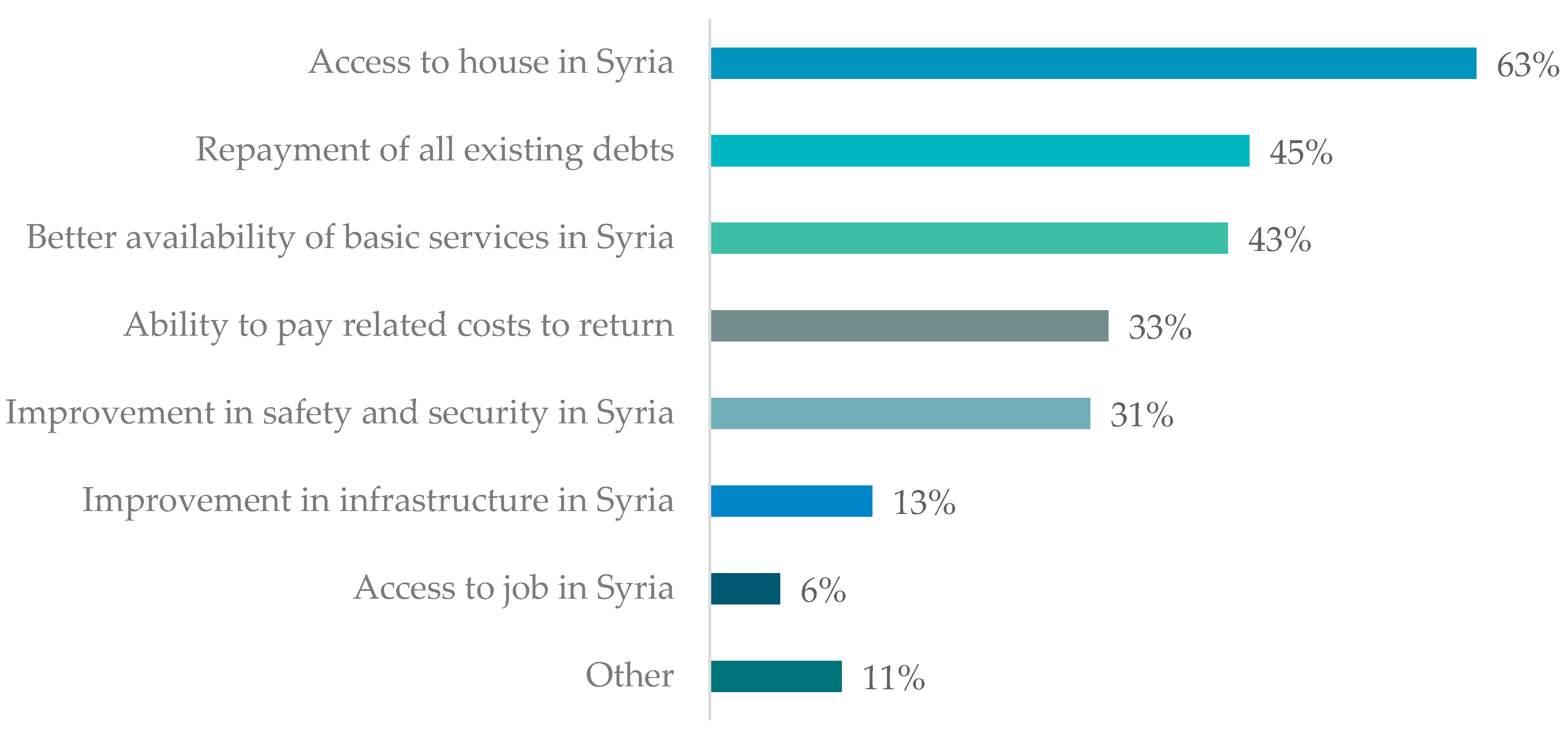
Figure 5 illustrates multiple pivotal enabling factors that could shift the return decision among refugees who currently have no intention to return to Syria. The most frequently cited condition was access to housing (63%), followed by repayment of all debts in Jordan (45%), and better availability of basic services in Syria (43%). Other factors encompassed the ability to cover return-related costs (33%) and improvement in the safety and security situation in Syria (31%).
4. Discussion
After staying outside the homeland for more than a decade, Syrian refugees living in Jordan have finally cultivated expectations of homecoming and restoration of normal living conditions. However, the choice of return migration to Syria seems complicated and inherently multidimensional. Our findings underscore that even though most surveyed refugees voiced an intention of return migration to Syria, the decision to proceed accordingly is not straightforward. Even though emotional longing or regime change shapes the pathway to return decisions, a nuanced interaction of aspirations, capabilities, and structural constraints underscores the ecological framework underlying return-decision making. Furthermore, while approximately sixty percent of surveyed individuals intended to return to Syria, a mere twenty percent manifested definitive commitment to return. This circumstance highlights the dynamic nature of decision-making where individuals continually negotiate between aspirations and capabilities. As revealed in the FGDs, eventually everyone demonstrates an intention to return. Nevertheless, the circumstances rather than their desire to return are the principal determinant.
The projected return rate aligns with findings from recent studies executed by
CARE Jordan (
2025), the
International Rescue Committee (
2025), and
Oxfam (
2024), all reporting that between 17% and 45% of Syrian refugees in Jordan indicate an intention to return. Additionally, the study found variations in return intentions by gender, age, and household size, positing a socially differentiated nature of return. Older adults, males, and people in larger households had a higher likelihood of articulating an intention to return due to a heightened sense of obligation to restore lost identity or reconstruct life in Syria. This finding could also be explained by a more varied assessment of economic opportunities in Syria than their counterparts. Conversely, females accentuated improved access to services and safety and security, indicating that they prioritized stability and opportunity over nationalistic sentiment. Other studies have documented the concerns around safety and security as a key factor among females, suggesting that women tend to underscore protection and continuity, especially where children are concerned (
Lambert et al. 2024;
UNHCR 2024).
The aspiration to return was continually observed among participants, mainly underpinned by identity, nationalism, and enduring cultural ties to Syria. This condition aligns with previous research that has illustrated that strong nationalist and identity-based motivations are prevalent among long-term refugees. However, aspirations alone did not provide adequate impetus for return unless accompanied by adequate capabilities. Refugees repeatedly identified barriers, including inadequate housing, financial constraints, and unpaid debt, restricting their capacity to implement their aspirations. As suggested by
de Haas’s (
2021) Aspirations–Capabilities Framework, refugees’ return decisions emerge from the interaction between aspirations and realized capabilities. Even though strong emotional motivation may exist, return is deferred or abandoned when financial means, housing, or safety are inadequate (
Buheji and Hasan 2025;
Davidoff-Gore and Fratzke 2024;
Mandhare 2025). Moreover, the push and pull factors established the ecological context impacting personal motivations. Pivotal push factors encompassed economic hardship and restrictive work conditions in Jordan, with costly and restricted work permits. These push factors indirectly stimulated refugees’ return considerations (
Al-Azzam and Al-Azzam 2024;
Bani Salameh 2025). Nevertheless, these exact conditions diminished their economic capabilities, impeding the ability to finance a return. Meanwhile, emotional connections with the homeland constituted a critical pull factor. Ongoing insecurity, restricted access to housing, and inadequate services in Syria also influenced refugees’ mental and evaluative process while considering return.
This study’s ecological perspective enabled us to understand return decision-making as manifested across multiple, interrelated levels, from macro-level factors such as regime change in Syria and international aid flows, to micro-level factors including individual and household characteristics. For instance, both the survey and FGDs demonstrated that access to land/property in Syria was a critical determinant of decision-making concerning return. Though profoundly structural, this factor is also highly personal. Children’s education, debt in Jordan, and access to basic services are other considerations that underscore how Syrian refugees navigate the trade-offs between existing hardship and future potential. However, the analysis also illustrates how refugees balance the consequences of return decisions concerning short- and long-term well-being.
The study findings should be interpreted in light of the following limitations. First, because quantitative data were collected through a telephone survey, a high non-response rate was probable, and some questions might have been misconstrued by the respondent due to connectivity issues. However, when notable network connectivity issues occurred, enumerators rescheduled the interviews at the respondents’ earliest convenience. Second, FGDs in the camp could not be performed because the camp authorities did not grant permission. Even though this situation may limit our understanding of some decision-making processes specific to camp residents, the quantitative data demonstrate that the thought processes are expected to pursue similar pathways. Nevertheless, we recommend that future studies collect information from camp residents to better understand the decision-making process. Third, quantitative operationalization relates to the categorization of return intentions. While grouping “return permanently”, “return temporarily” and “return one day” responses allowed for analytical clarity and sufficient statistical power, this approach may obscure differences in temporal certainty and degree of commitment to return. Future research could employ more disaggregated modeling approaches to distinguish between varying levels of temporal certainty and degrees of commitment to return. Fourth, other factors beyond the ones incorporated into the study may exist, impacting the return decision process. For example, the FGDs and survey have not addressed how social networks inform the decision-making process.
5. Conclusions
The study generates meaningful insights into how decision-making processes are made on whether to return to Syria or stay in Jordan. Even though most Syrian refugees demonstrated their willingness to return to Syria, the pace of return would depend on how adequately the structural barriers that can facilitate the improvement of conditions enabling voluntary return are addressed. Firstly, because access to land and/or property emerged as the most prominent factors in the analysis, the Syrian government and the international community must focus on housing reconstruction as the principal priority. Moreover, improving access to basic services, such as education and health infrastructure, is the next pivotal aspect. Even though the lifting of sanctions by the United States and European Union represents a constructive step in facilitating economic recovery in Syria, more concrete and tangible efforts must immediately follow to ensure people have ample opportunities to enter the labor market. In closing, returning to Syria does not constitute a straightforward decision; it is a highly personal and complicated decision impacted by the interaction of multiple factors. This process is modified by aspirations for the motherland, moderated by pragmatic considerations, and fostered through structural factors. Even though many refugees articulate solid and emotional ties to their homeland, concrete challenges, such as indebtedness, inadequate housing, and insecurity, frequently override aspirational considerations. Therefore, this study highlights the urgent need to advance a more refined understanding of return. Policy, humanitarian, and development actors must collaborate to address the short- and long-term barriers to allow Syrian refugees to make voluntary, safe, informed, and dignified decisions on returning to Syria.