1. Introduction
Natural disasters frequently intensify existing social vulnerabilities, particularly in societies marked by historical conflict and ethnic stratification. At the same time, crisis situations may operate as rupture moments in which everyday social boundaries are temporarily reconfigured and collective identities are renegotiated. In multi-ethnic and post-conflict contexts, understanding how such moments are narrated and symbolically organized is important, as they reveal both the possibilities and the limits of social cohesion under conditions of stress. Sri Lanka, shaped by decades of ethnic conflict and a fragile post-war reconciliation process, provides a critical setting for examining these dynamics. Sri Lanka’s social fabric is shaped by long-standing relations among Sinhala, Tamil, and Muslim communities, with the civil war (1983–2009) leaving unresolved challenges of reconciliation and inter-ethnic trust. These historical dynamics provide an essential backdrop for interpreting how unity and cohesion are articulated during moments of national crisis (
England 2016).
Social media platforms have become central infrastructures for disaster communication, enabling rapid information exchange, coordination of relief efforts, and the circulation of affective narratives during emergencies (
Houston et al. 2015). Existing research identifies a dual and at times contradictory role for social media in disaster contexts. The study examines social media content circulated during a national disaster in Sri Lanka in December, 2025, focusing on the immediate post-event period. On one hand, platforms facilitate collective action, mutual aid, and the dissemination of critical information (
Hareesh and Guru 2025;
Jayathilaka et al. 2021). On the other, they may amplify misinformation, reinforce inequalities of visibility, and reproduce existing social and ethnic divisions (
Boyd 2014;
Miller and Slater 2000). These diverging perspectives highlight an ongoing debate regarding whether social media meaningfully strengthens social cohesion during disasters or primarily produces its appearance through highly visible and emotionally resonant content.
Within this contested field, digital ethnography has emerged as a key methodological and theoretical approach for examining online communication as a set of situated cultural practices rather than as transparent reflections of offline realities (
Ardévol and Gómez-Cruz 2014;
Coleman 2010). From this perspective, social media posts, images, and videos are treated as cultural artifacts shaped by platform affordances, algorithmic amplification, and performative norms (
Lane and Lingel 2022;
Pink and Horst 2016). However, despite a growing body of scholarship on disaster communication and digital media, empirical research explicitly examining how social media mediates narratives of ethnic cohesion in post-conflict societies remains limited. In the Sri Lankan context, existing studies have tended to emphasize institutional communication, technological effectiveness, or risk messaging, with less attention paid to how inter-ethnic relations are symbolically articulated in user-generated content during moments of crisis (
Perera 2022;
Smith 2023;
United Nations Office for Disaster Risk Reduction 2024).
According to
Karanikola and Panagiotopoulos (
2025) rather than reflecting negotiated inter-ethnic reconciliation, unity in this context was articulated primarily through affective, symbolic, and humanitarian frames that temporarily suspended, rather than resolved, underlying ethnic distinctions. This study addresses this gap by examining social media narratives circulated during a recent national disaster in Sri Lanka. Using a qualitative digital ethnographic approach, it analyzes publicly accessible content from Facebook, X (formerly Twitter), and TikTok to explore how ethnic cohesion is discursively and visually represented. The analysis focuses on three interrelated dimensions: expressions of inter-ethnic solidarity, narratives of resource sharing and mutual aid, and visual–symbolic representations of unity. The main aim of the study is to assess how social media functions as a space for articulating inclusive national imaginaries during a disaster, while remaining attentive to the limits imposed by performativity, visibility bias, and algorithmic amplification.
The principal conclusion advanced in this article is that social media platforms can temporarily foreground narratives of unity and collective identity in post-conflict settings during crises. However, these narratives should not be conflated with durable social integration or long-term reconciliation. Rather, they reflect context-specific and platform-mediated forms of symbolic cohesion whose significance lies in their visibility and resonance, rather than in their capacity to transform underlying structural relations. By situating these findings within broader debates in disaster communication and digital ethnography, the study contributes to a more critical and accessible understanding of technology-mediated cohesion in multi-ethnic societies.
2. Materials and Methods
2.1. Study Design
This study adopts a time-bounded digital ethnographic approach focused on the interpretive analysis of publicly visible narratives during a moment of heightened collective attention. Rather than long-term community immersion, the study examines how meanings of cohesion were articulated and circulated during a specific post-disaster period that adopts a qualitative digital ethnographic research design to examine how narratives of ethnic cohesion were constructed, circulated, and rendered visible on social media during a national disaster in Sri Lanka. Digital ethnography is particularly appropriate for this inquiry because it conceptualizes online communication as culturally situated practice, shaped by socio-technical affordances, platform norms, and broader political contexts, rather than as transparent evidence of offline social relations (
Ardévol and Gómez-Cruz 2014;
Coleman 2010;
Miller and Slater 2000).
Following foundational work in digital anthropology and sociology, social media posts were treated as digital cultural artifacts that encode symbolic meaning, perform identity, and participate in public sense-making during moments of crisis (
Lane and Lingel 2022;
Pink and Horst 2016). This interpretive orientation aligns with disaster communication scholarship that emphasizes narrative construction, affective circulation, and visibility dynamics in crisis contexts (
Houston et al. 2015).
2.2. Data Sources and Collection
Data were collected from publicly accessible content on Facebook, X (formerly Twitter), and TikTok, platforms that play a central role in disaster-related communication, coordination, and public discourse in Sri Lanka (
Hareesh and Guru 2025;
Jayathilaka et al. 2021). Each platform affords distinct modes of visibility and engagement: Facebook privileges extended narratives and institutional communication, X emphasizes rapid circulation and hashtag-based visibility, while TikTok foregrounds short-form visual storytelling. These affordances shaped both the form and prominence of cohesion narratives observed in the dataset. These platforms were selected to capture variation in communicative affordances, including text-based updates, image–caption combinations, and short-form video narratives, which are known to shape how crises are narrated and emotionally framed (
Houston et al. 2015).
The data collection period spanned
1 December to 10 December, corresponding to the immediate post-disaster phase characterized by heightened public attention and accelerated content circulation. Prior research indicates that this temporal window is particularly significant for the emergence of solidarity narratives and symbolic unity claims during disasters (
Houston et al. 2015).
Using purposive sampling, posts were identified through disaster-related keywords and hashtags (e.g., #SriLankaStrong, #UnitedAsOne), as well as through manual monitoring of high-visibility accounts, including news organizations, public institutions, community pages, businesses, and individual users. Only
publicly accessible content was included; private accounts, closed groups, and restricted posts were excluded in accordance with ethical guidance for online research (
Boyd 2014;
Coleman 2010).
An initial corpus of 344 posts was assembled. Content was published in Sinhala and English and included text-only posts, images with captions, and short-form videos. Posts were generated by a mix of institutional accounts, media organizations, businesses, community pages, and individual users. No attempt was made to verify user nationality beyond publicly available self-descriptors, and the analysis focuses on visible narratives rather than user identity. Because data collection relied partly on widely circulating hashtags, the dataset may privilege content aligned with dominant visibility practices while underrepresenting localized or vernacular expressions that circulated without hashtags.
2.3. Data Refinement and Analytical Sample Selection
Following initial collection, the dataset underwent a systematic refinement process to reduce redundancy and algorithmic amplification effects. Specifically,
near-identical news reposts including syndicated headlines, replicated captions, and identical images shared across multiple accounts were identified and removed. Such duplication is a documented feature of social media communication during disasters, where institutional actors and news organizations benefit from algorithmic prioritization (
Boyd 2014;
Houston et al. 2015).
The removal of duplicated content was undertaken to prevent the over-representation of institutionally amplified narratives and to preserve analytical sensitivity to variation in framing and symbolic articulation. This approach is consistent with qualitative digital ethnography, which prioritizes interpretive depth, narrative diversity, and contextual richness over numerical representativeness (
Ardévol and Gómez-Cruz 2014;
Lane and Lingel 2022).
After refinement, a final analytical sample of 200 posts was purposively selected for in-depth qualitative analysis. Selection criteria emphasized:
Diversity in narrative framing related to solidarity, mutual aid, and unity;
Variation in media format (text, image, video);
Inclusion of both institutional and individual account types.
This sampling strategy aligns with established qualitative research principles in digital media studies and disaster communication (
Coleman 2010;
Pink and Horst 2016).
2.4. Analytical Framework
Data analysis followed Braun and Clarke’s reflexive thematic analysis approach (
Braun and Clarke 2006), adapted for digital ethnographic research. The analytical process involved four iterative stages:
- 1.
Familiarization: Repeated reading and viewing of posts to identify recurring discursive and visual patterns.
- 2.
Coding: Systematic identification of narrative, affective, and visual elements related to solidarity, resource sharing, and unity.
- 3.
Theme Development: Grouping codes into broader thematic categories reflecting discursive cohesion, symbolic unity, and representations of material cooperation.
- 4.
Interpretation: Situating themes within existing scholarship on digital ethnography, disaster communication, and social cohesion.
Throughout the analysis, attention was paid to platform affordances, performative conventions, and algorithmic visibility, which are known to shape what becomes prominent and resonant during crisis events (
Ardévol and Gómez-Cruz 2014;
Lane and Lingel 2022).
Engagement metrics (likes, shares, and comments) were recorded for each post as indicators of
resonance rather than impact, in line with cautions raised in digital media research regarding the interpretive limits of platform metrics (
Boyd 2014).
2.5. Ethical Considerations and Reflexivity
This study relied exclusively on publicly accessible digital content and did not involve direct interaction with users. Formal institutional ethical approval was therefore not required. Nevertheless, ethical considerations guided all stages of the research process. User identifiers were anonymized in reporting, and potentially sensitive content was paraphrased rather than reproduced verbatim.
Given Sri Lanka’s post-conflict context and the sensitivity of ethnic relations, reflexivity was maintained throughout the analysis. The study explicitly distinguishes between visible performances of unity and claims about durable inter-ethnic reconciliation, in line with cautions raised in prior research on social media, identity, and conflict (
Lane and Lingel 2022;
Perera 2022).
2.6. Data Availability
The curated dataset of analyzed posts will be deposited in a publicly accessible repository (Zenodo) upon manuscript acceptance. Accession numbers will be provided during the review process and prior to publication, in accordance with MDPI data availability requirements.
2.7. Generative Artificial Intelligence Disclosure
Generative artificial intelligence tools were used solely for language refinement and structural editing of the manuscript. No generative AI tools were used for data collection, coding, analysis, or interpretation. All substantive methodological decisions and analytical judgments were made by the authors.
3. Results
This section reports the results of a qualitative digital ethnographic analysis of publicly accessible social media content related to ethnic cohesion during the national disaster in Sri Lanka. While
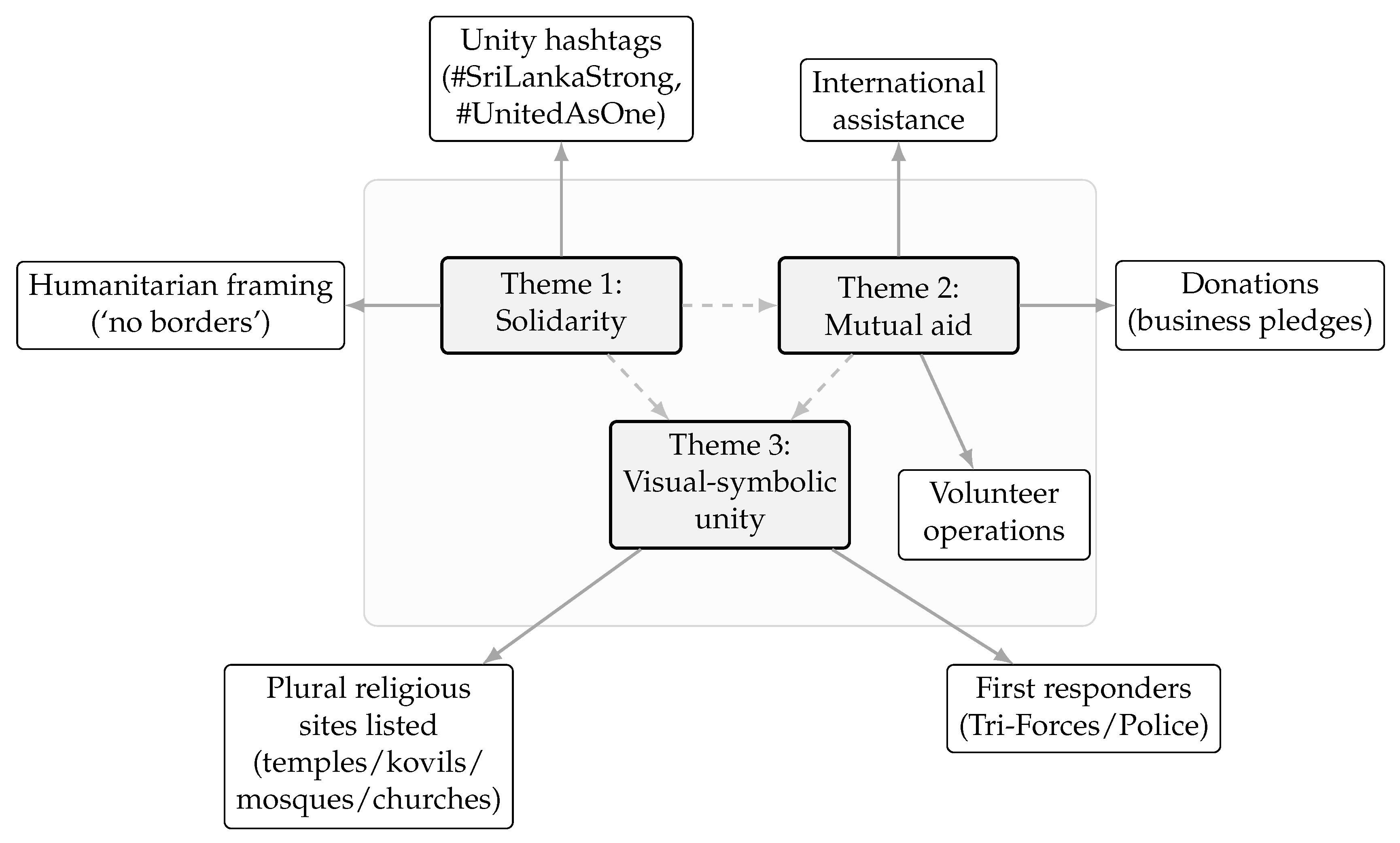
Figure 1 visualizes interpretive associations among themes,
Table 1 and
Table 2 serve complementary functions by summarising evidentiary indicators and describing distributional patterns across the analytical sample. The analysis is based on posts collected between
1 December and 10 December. An initial corpus of
344 posts was compiled across Facebook, X (formerly Twitter), and TikTok. During data cleaning, duplicated and near-identical news reposts (e.g., syndicated updates repeated verbatim across multiple pages) were removed to reduce redundancy and algorithmic repetition. A final analytical sample of
200 posts was purposively selected for qualitative analysis, prioritizing narrative diversity, media variation (text, image, video), and the presence of explicit or implicit cues of solidarity, mutual aid, or unity across ethnic, religious, or national lines.
Appendix A documents the organizational and institutional actors referenced in the analytical sample, providing contextual transparency regarding the sources through which these narratives were articulated.
Engagement metrics (likes and shares) are reported as indicators of resonance within platform-specific visibility structures, not as measures of offline impact or durable social change.
3.1. Dominant Narrative Patterns
Thematic analysis of the 200 selected posts identified three dominant and recurrent narrative patterns: (1) expressions of solidarity, (2) resource sharing and mutual aid, and (3) visual–symbolic representations of unity. Themes frequently co-occurred within single posts and were reinforced through captions, hashtags, and visual framing.
3.1.1. Expressions of Solidarity
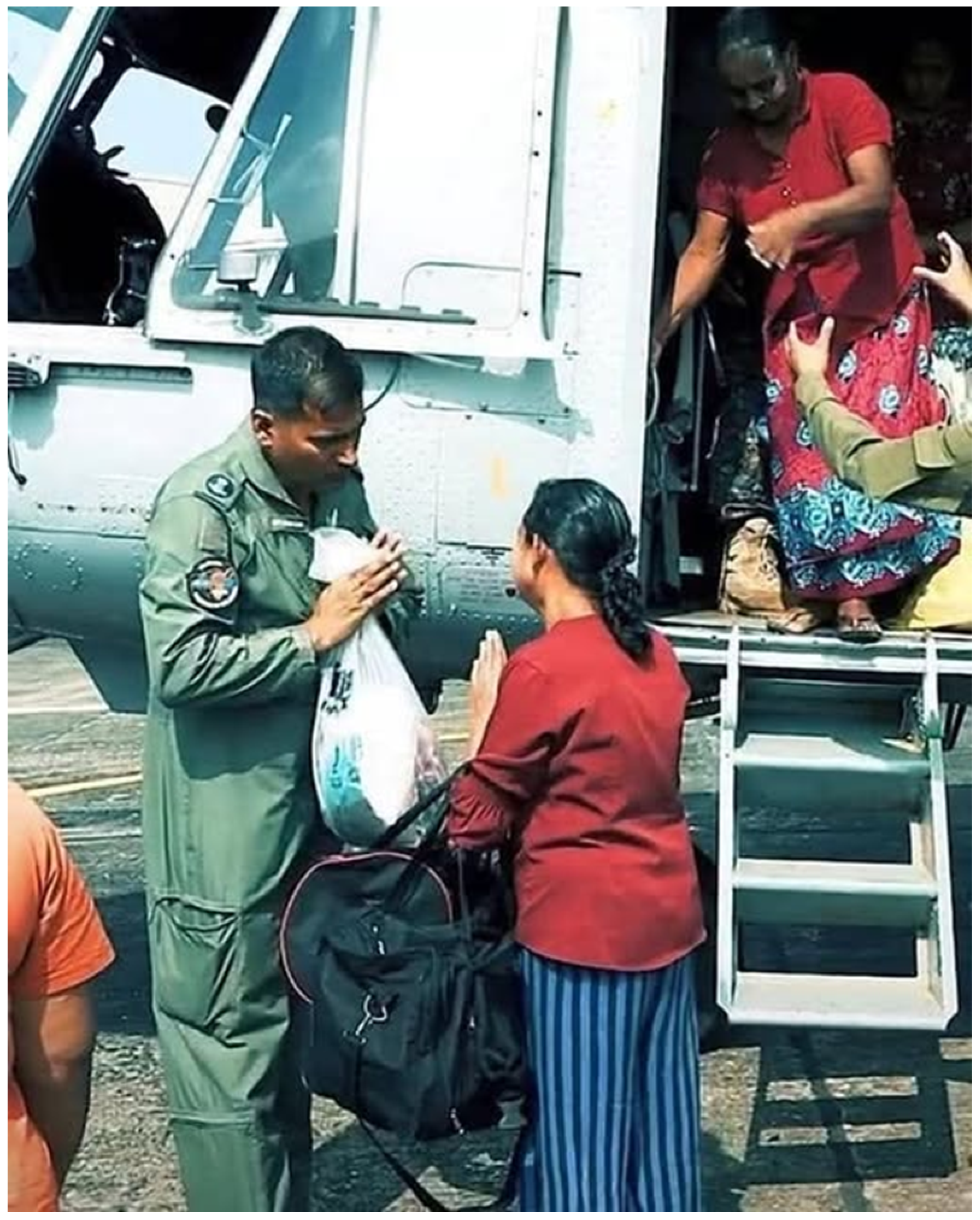
Solidarity narratives were commonly articulated through inclusive moral language and collective identity claims. Posts repeatedly framed the disaster as a shared national or humanitarian experience, using expressions such as ‘together’, ‘one nation’, and ‘humanity first’. Some posts explicitly positioned unity as a corrective to ethnic division, for example: ‘To those international voices trying to divide us by ethnicity—this is the Sri Lanka they must see. A nation that stands as one’ (47 likes; 3 shares), accompanied by multiple unity-oriented hashtags including ‘#SriLankaStrong’, ‘#UnitedAsOne’, and ‘#UnityInDiversity’. Other posts emphasized cross-border compassion through affective vignettes, for example: ‘Compassion has no borders’ (2711 likes; 3380 shares), paired with an image of a rescue encounter between a Sri Lankan civilian and an Indian Air Force officer.
These solidarity articulations were primarily affective and symbolic, foregrounding moral unity and collective belonging rather than sustained negotiation of ethnic difference.
3.1.2. Resource Sharing and Mutual Aid Narratives
A second dominant pattern concerned resource sharing and mutual aid, including donations, relief consignments, and organised volunteer labour. Posts described material contributions framed as nationally oriented responsibilities (rather than community-specific interventions), including pledges by businesses identified with different ethnic or religious communities (e.g., ‘Almas Holdings Pvt Ltd [Muslim Family business] has pledged Rs. 225 million’ (600 likes; 36 shares); ‘Sriyani Dress Point [Tamil family business] … Rs. 20 million’ (184 likes; 1 share)). Other posts highlighted operational relief and restoration work, such as a volunteer mobilisation to repair ‘1020 damaged irrigation systems’ involving state forces and civil groups (1600 likes; 118 shares).
International assistance narratives also appeared prominently as a sub-type of mutual aid framing, often coupled with gratitude statements (e.g., aid shipments and relief missions from multiple countries), suggesting that external support was incorporated into broader narratives of collective recovery.
3.1.3. Visual–Symbolic Representations of Unity
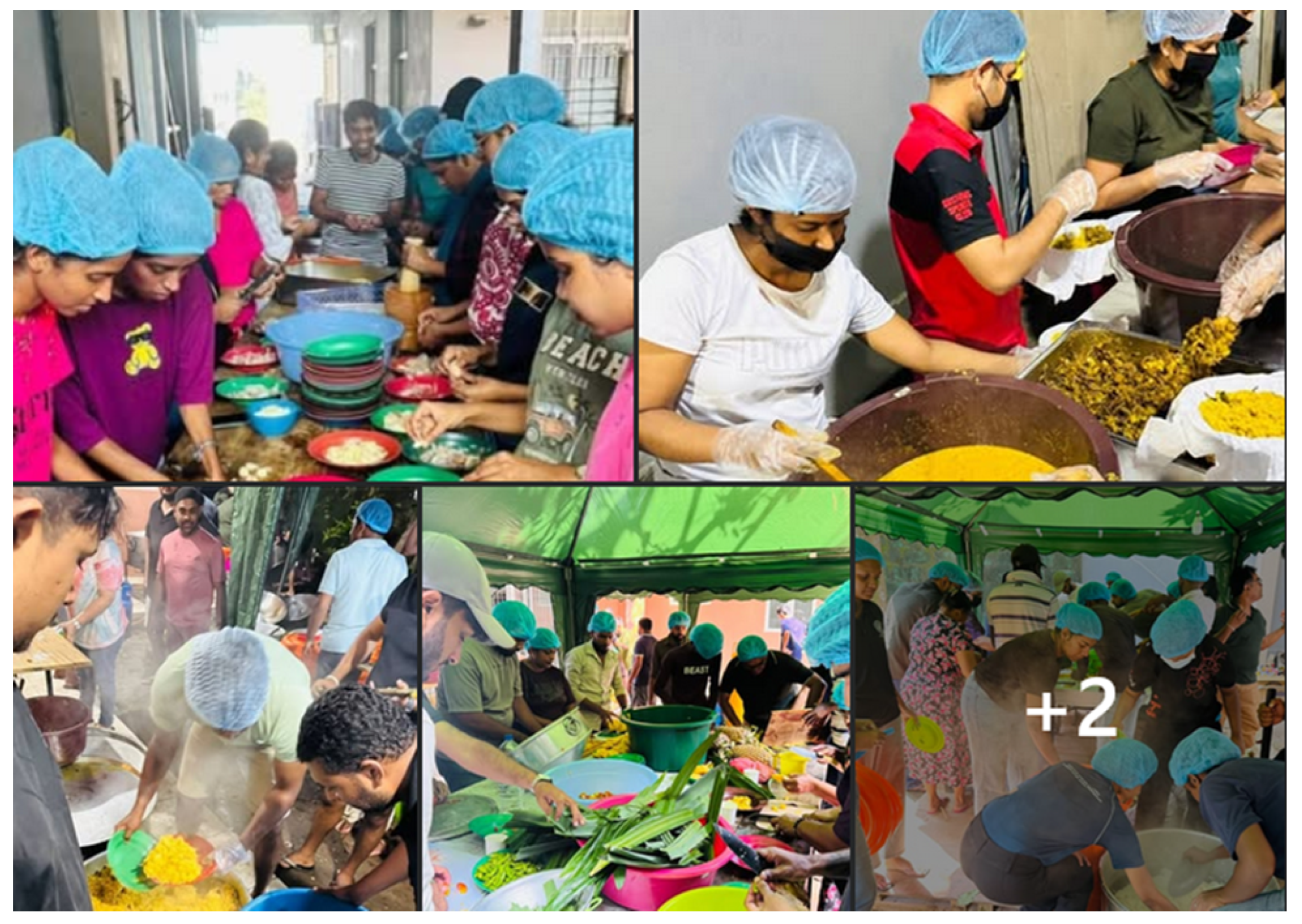
Visual content functioned as a key modality for rendering unity visible. Images and videos repeatedly depicted collaborative relief work, mixing state institutions (e.g., armed forces, police) with civilian actors and community organisations. One widely circulated caption listed plural religious and civic institutions as co-present in relief provision: ‘Community groups, temples, kovils, mosques, churches, restaurants, and ordinary citizens are coming together to cook meals, deliver supplies, and reach those cut off by rising waters’ (3100 likes; 311 shares). Visuals associated cohesion with joint labour and shared spaces rather than explicit discussion of ethnic relations, enabling unity to be communicated symbolically.
These representations should be interpreted as visible performances of cohesion within a crisis window, not as direct evidence of durable inter-ethnic integration beyond the platforms and time period observed.
3.2. Themes and Supporting Observations
The figure provides a conceptual association map derived from qualitative co-occurrence patterns, whereas the tables systematise observed narrative indicators and descriptive trends within the dataset.
Table 1 provide a systematic overview of how ethnic cohesion was articulated across the analytical sample. Rather than representing discrete or isolated categories, the themes documented in the table reflect recurrent configurations of language, imagery, and engagement that clustered within a limited post-disaster time frame.
As shown in
Table 1, expressions of solidarity were most frequently articulated through inclusive moral language and collective identity cues, often reinforced by unity-oriented hashtags and humanitarian framing. These posts foregrounded affective cohesion by emphasizing shared humanity and national belonging, while largely avoiding explicit discussion of ethnic difference. The relatively high engagement associated with some of these posts indicates strong narrative resonance within platform visibility structures, though this resonance should not be interpreted as evidence of sustained intergroup integration.
Table 1 also demonstrates that narratives of resource sharing and mutual aid constituted a second major thematic cluster. Posts documenting financial contributions, organised volunteer labour, and infrastructure repair frequently framed assistance as a national responsibility, even when donors were identified by ethnic or religious background. This pattern suggests that material support was symbolically integrated into broader narratives of collective recovery, rather than framed as community-specific intervention.
Finally, the table highlights the prominence of visual–symbolic unity, particularly through imagery and captions referencing plural religious institutions and state rescue actors. These representations staged cohesion through co-presence and shared action, rendering unity visible without requiring explicit ethnic categorization. The high engagement levels associated with such posts underscore the affective and visual appeal of institutional and inter-communal cooperation during the disaster period.
Taken together,
Table 1 reinforces the interpretation that social media platforms functioned as spaces for the visible performance of discursive cohesion and symbolic unity during the crisis. The table does not indicate the durability of these representations beyond the observed temporal window, nor does it imply causal effects on offline social relations. Instead, it offers a structured account of how cohesion was narratively and visually configured within a specific moment of heightened visibility and collective attention.
As visualised in
Figure 1 and summarised in
Table 2, the analytical sample (
n = 200) reveals a patterned configuration of discursive and visual elements through which ethnic cohesion was rendered visible on social media during the disaster period. The figure illustrates how three dominant themes—solidarity, mutual aid, and visual–symbolic unity—were not isolated categories but interrelated clusters connected through recurring motifs.
Table 2 complements this mapping by detailing how these thematic clusters manifested empirically across captions, images, and videos, and by indicating their relative prominence within the dataset using qualitative descriptors rather than numerical frequency.
Taken together,
Figure 1 and
Table 2 indicate that expressions of solidarity were the most widely distributed narrative form, appearing across platforms and media types, particularly through inclusive language and unity-oriented hashtags. Narratives of mutual aid were frequently observed in posts associated with institutional actors, media outlets, and business-affiliated accounts, where material assistance and organized relief work were foregrounded. Visual–symbolic unity emerged most clearly in image- and video-based content, where co-presence in shared spaces and the visibility of first responders functioned as symbolic representations of cohesion without explicit ethnic categorisation.
Importantly, the cross-theme linkages depicted in
Figure 1 and described in
Table 2 suggest that cohesion was often staged through the combination of affective language, material support narratives, and visual symbolism within the same posts. These configurations point to the performative and visibility-driven nature of cohesion narratives on social media. However, consistent with the methodological framing of this study, these patterns are interpreted as representations of discursive cohesion and symbolic unity within a specific temporal and platform-mediated context, rather than as evidence of durable inter-ethnic integration or long-term reconciliation.
3.3. Theme Association Map
Figure 1 visualizes a qualitative association map of the main themes and recurrent motifs observed in the analytical sample. This diagram is not a computational network analysis; it is an interpretive mapping that summarizes how motifs tended to cluster together within posts (e.g., solidarity language frequently co-appeared with unity hashtags; mutual aid frequently co-appeared with donations and institutional rescue imagery).
As illustrated in
Figure 1, the qualitative association map summarizes recurrent co-occurrence patterns between dominant themes and motifs identified in the analytical sample collected between 1 and 10 December. The figure visualizes three analytically distinct yet interrelated thematic clusters solidarity, mutual aid, and visual–symbolic unity each connected to a set of recurring narrative and visual motifs. These linkages represent interpretive associations derived from repeated proximity within captions, hashtags, and visual framing, rather than statistically inferred relationships.
Figure 1 indicates that expressions of solidarity were most frequently articulated through inclusive language and unity-oriented hashtags, which co-appeared consistently within the same posts. The proximity between the solidarity theme and humanitarian framing motifs reflects a pattern in which moral and affective appeals references to shared humanity or the absence of boundaries were mobilized to frame the disaster as a collective national or humanitarian experience. This association suggests that solidarity was primarily constructed discursively and symbolically, rather than through explicit engagement with ethnic difference.
The mutual aid theme is shown in
Figure 1 as centrally linked to motifs of donations, volunteer operations, and international assistance. These associations reflect the prominence of material support narratives within the dataset, particularly posts highlighting financial contributions, organized relief labor, and cross-border humanitarian support. The positioning of volunteer operations in close relation to mutual aid underscores the visibility of coordinated labor and institutional–civil collaboration as a key representational form of assistance during the disaster period.
Finally,
Figure 1 situates visual–symbolic unity as an interpretive bridge between discursive solidarity and material assistance narratives. Its associations with plural religious institutions and first responders highlight the role of imagery in rendering cohesion visible, often through depictions of shared spaces, joint labor, and institutional presence. These visual motifs functioned to stage unity without necessitating explicit ethnic labeling, thereby allowing cohesion to be communicated symbolically and affectively.
Taken together,
Figure 1 demonstrates how social media content during the disaster foregrounded forms of discursive cohesion and symbolic unity through recurring narrative and visual configurations. The figure does not imply causal relationships or durable social integration; rather, it provides a structured representation of how themes clustered within a specific temporal and platform-mediated context, shaped by visibility dynamics and performative conventions of social media communication.
3.4. Summary of Observed Patterns
Across the analytical window (1–10 December), social media posts repeatedly foregrounded visible narratives of unity through (i) solidarity language and hashtags, (ii) material support claims (donations, relief consignments, organised volunteer labour), and (iii) images and enumerations that staged plural institutions and communities as co-present in relief work. These findings describe discursive cohesion and symbolic unity as represented online. They do not establish the durability of cohesion beyond the observed platforms and time period, nor do they provide evidence of long-term reconciliation outcomes.
4. Discussion
This study does not assess the longevity of cohesion beyond the observed period; instead, it examines how unity was articulated and rendered visible during a specific post-disaster moment. The results demonstrate that social media platforms acted as significant mediators of ethnic cohesion during the recent national disaster in Sri Lanka. While the thematic analysis identified narratives of solidarity, resource sharing, and visual unity, these findings warrant critical reflection.
4.1. Interpretation and Theoretical Implications
The prominence of hashtags such as #SriLankaStrong and #TogetherForSriLanka suggests a deliberate framing of unity. However, this raises questions about whether such narratives represent genuine inter-ethnic integration or performative solidarity amplified by algorithmic visibility. Previous studies argue that digital platforms often privilege emotionally charged content, which may create an illusion of cohesion rather than sustained reconciliation (
Lane and Lingel 2022). These patterns are interpreted through existing work on platform performativity, visibility, and crisis communication, situating the findings within broader debates on how social media mediates collective identity during disruption. Thus, while engagement metrics indicate public endorsement, they do not necessarily translate into offline behavioral change.
4.2. Comparison with Prior Research
Our findings partially align with
Jayathilaka et al. (
2021), who observed that social media facilitates disaster communication in Sri Lanka. These interpretations are grounded in the narrative and visual patterns identified in the Results section, particularly the recurrent co-occurrence of solidarity language, material assistance narratives, and symbolic imagery. However, unlike their emphasis on information dissemination, this study foregrounds identity politics and symbolic representation. Similarly,
Hareesh and Guru (
2025) highlight the role of AI-driven disaster response, yet the present analysis underscores organic, user-generated narratives rather than institutional messaging.
4.3. Limitations
Several limitations must be acknowledged. First, the dataset comprises publicly accessible posts, which may exclude private or closed-group interactions where alternative discourses occur. Second, the reliance on thematic analysis, while robust for qualitative interpretation, lacks the granularity of network analysis that could reveal structural patterns of inter-ethnic interaction. Finally, the temporal scope two weeks post-disaster limits insights into the durability of cohesion narratives. Because the analysis is confined to the immediate post-disaster period, the findings cannot be extended to claims about longer-term inter-ethnic relations or reconciliation aspects.
4.4. Implications and Future Directions
Despite these limitations, the study offers actionable insights. Policymakers and humanitarian agencies can leverage social media as a tool for promoting inclusive narratives during crises. The primary contribution of this study lies in demonstrating how social media platforms function as spaces where unity is publicly articulated during crises, even within societies marked by unresolved ethnic tensions. Future research should:
Employ longitudinal designs to assess whether digital solidarity persists beyond the disaster context.
Integrate computational methods (e.g., sentiment analysis, network mapping) to complement ethnographic insights.
Examine the interplay between algorithmic amplification and authenticity in cohesion narratives.
In sum, while social media demonstrates potential as a space for fostering unity, its role must be critically interrogated to avoid conflating visibility with genuine reconciliation.
5. Conclusions
The study advances understanding of disaster communication by showing how unity is discursively and visually staged on social media during crises, without assuming durable reconciliation outcomes, while critically examining how social media narratives reflected ethnic cohesion during a national disaster in Sri Lanka through a digital ethnographic lens. The findings illustrate how cohesion was symbolically and discursively performed on social media during the disaster, without implying durable transformation of inter-ethnic relations beyond this context. The analysis revealed dominant themes of solidarity, resource sharing, and visual unity, suggesting that online platforms can serve as spaces for fostering inclusive identities in times of crisis. However, these findings must be interpreted cautiously, as algorithmic amplification and performative solidarity may obscure deeper structural inequalities.
The research contributes to the growing discourse on digital ethnography and disaster communication by highlighting the interplay between technology, identity, and resilience in post-conflict societies. Practical implications include leveraging social media for inclusive disaster response strategies while remaining vigilant about misinformation and superficial engagement.
Future research should adopt longitudinal and computational approaches to assess the durability and authenticity of cohesion narratives beyond the immediate disaster context. By integrating qualitative depth with quantitative scale, scholars can better understand whether digital solidarity translates into sustained inter-ethnic reconciliation.
Author Contributions
Conceptualization, G.H.B.A.d.S. and H.A.K.S.; methodology, G.H.B.A.d.S.; software, G.H.B.A.d.S.; validation, G.H.B.A.d.S. and H.A.K.S.; formal analysis, G.H.B.A.d.S.; investigation, G.H.B.A.d.S.; resources, G.H.B.A.d.S.; data curation, G.H.B.A.d.S.; writing—original draft preparation, G.H.B.A.d.S.; writing—review and editing, H.A.K.S.; visualization, G.H.B.A.d.S.; supervision, H.A.K.S.; project administration, H.A.K.S. All authors have read and agreed to the published version of the manuscript.
Funding
This research received no external funding. The APC was funded by the authors.
Institutional Review Board Statement
Not applicable.
Informed Consent Statement
Not applicable.
Data Availability Statement
The dataset generated and analyzed during the current study will be made publicly available on Zenodo upon acceptance. Accession numbers will be provided during the review process.
Acknowledgments
The authors thank the publicly accessible social media communities whose content made this study possible. The authors also acknowledge collegial feedback received during the manuscript development process. During the preparation of this manuscript, generative artificial intelligence tools were used solely for language refinement and structural editing. The authors reviewed and edited all outputs and take full responsibility for the content of this publication.
Conflicts of Interest
The authors declare no conflicts of interest.
Appendix A. Organizational Representation in the Analytical Sample
This appendix documents the organizational and institutional actors represented in the analytical sample to enhance transparency regarding the provenance of the social media content examined in this study. The examples illustrate the types of organizations whose publicly accessible posts, images, or referenced activities contributed to the narratives of solidarity, mutual aid, and visual–symbolic unity identified in the Results section. All examples are drawn from the final analytical sample (n = 200) collected between 1 and 10 December and are presented descriptively rather than as exhaustive or representative accounts of offline activity. In line with digital ethnographic principles, organizational references are treated as cultural artifacts of online representation rather than as evidence of institutional performance.
Table A1.
Organizational and institutional actors referenced in the analytical sample (n = 200).
Table A1.
Organizational and institutional actors referenced in the analytical sample (n = 200).
| Organizational Category | Actors Referenced or Visually Represented in Posts | Observed Narrative or Visual Role in Posts |
|---|
| State institutions | Sri Lankan Army, Navy, Air Force, Police, Disaster Management Centre | Rescue and evacuation imagery; infrastructure repair; official coordination narratives |
| Religious institutions | Buddhist temples, Hindu kovils, mosques, churches | Provision of shelter and food; interfaith co-presence; moral framing of compassion |
| International actors | Foreign military rescue teams and international humanitarian personnel | Expressions of gratitude; cross-national solidarity; joint rescue imagery |
| Civil society organizations | Red Cross units, volunteer associations, local community groups | Volunteer mobilization; aid distribution; coordination between institutions and civilians |
| Private sector organizations | Family-owned businesses and commercial entities | Monetary donations; relief fund contributions; rebuilding support narratives |
| Individual civilians | Unaffiliated citizens and local volunteers | Affective solidarity language; appeals for unity; documentation of everyday assistance |
Appendix B. Supplementary Visual Examples of Ethnic Cohesion
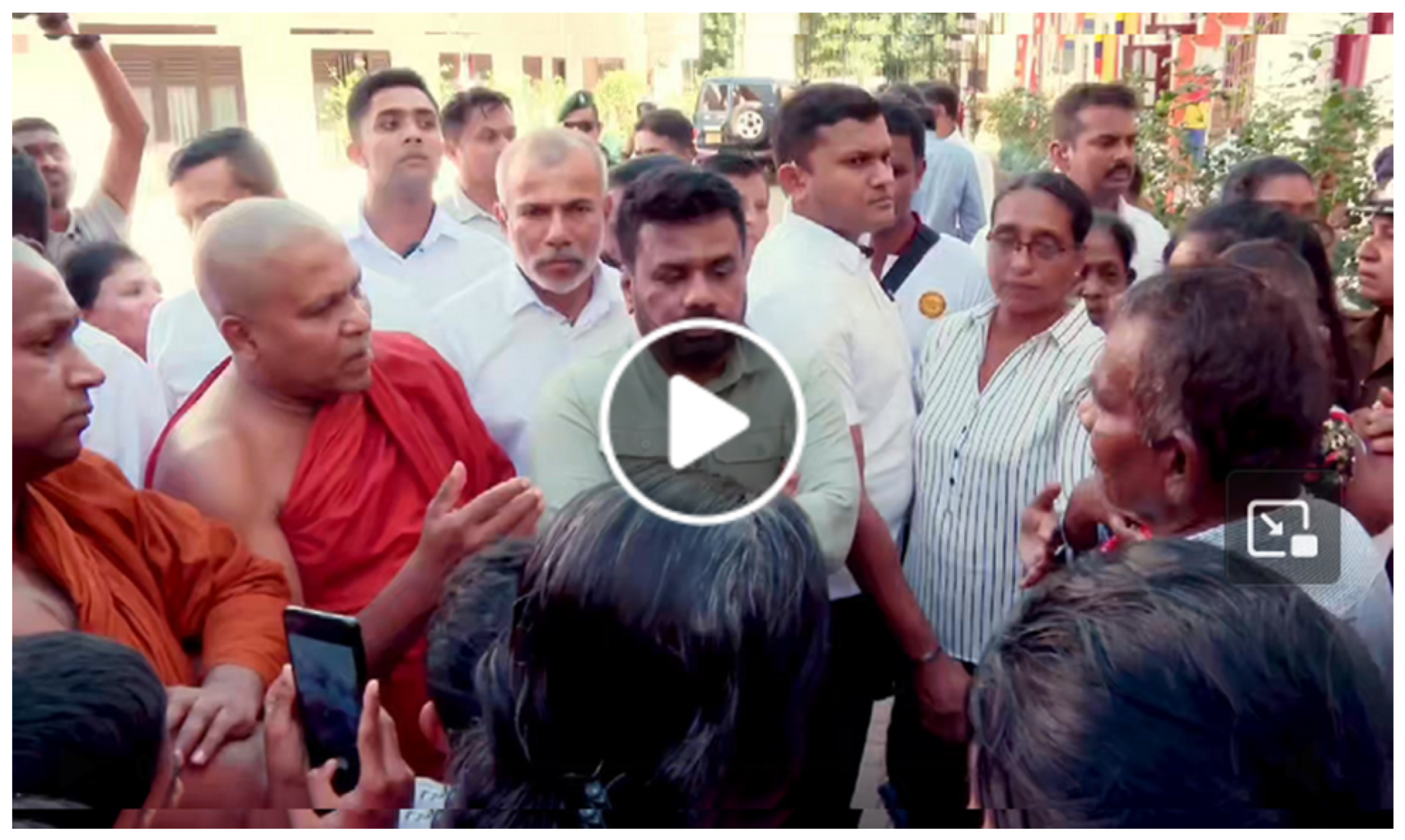
Figure A1.
Buddhist monks assisting and protecting members of a Tamil community during a rescue operation, illustrating inter-ethnic humanitarian action.
Figure A1.
Buddhist monks assisting and protecting members of a Tamil community during a rescue operation, illustrating inter-ethnic humanitarian action.
Figure A2.
A Sri Lankan civilian expressing gratitude to an Indian soldier during rescue efforts, symbolizing cross-national humanitarian solidarity.
Figure A2.
A Sri Lankan civilian expressing gratitude to an Indian soldier during rescue efforts, symbolizing cross-national humanitarian solidarity.
Figure A3.
A Muslim-owned family business providing financial support for disaster relief beyond community boundaries.
Figure A3.
A Muslim-owned family business providing financial support for disaster relief beyond community boundaries.
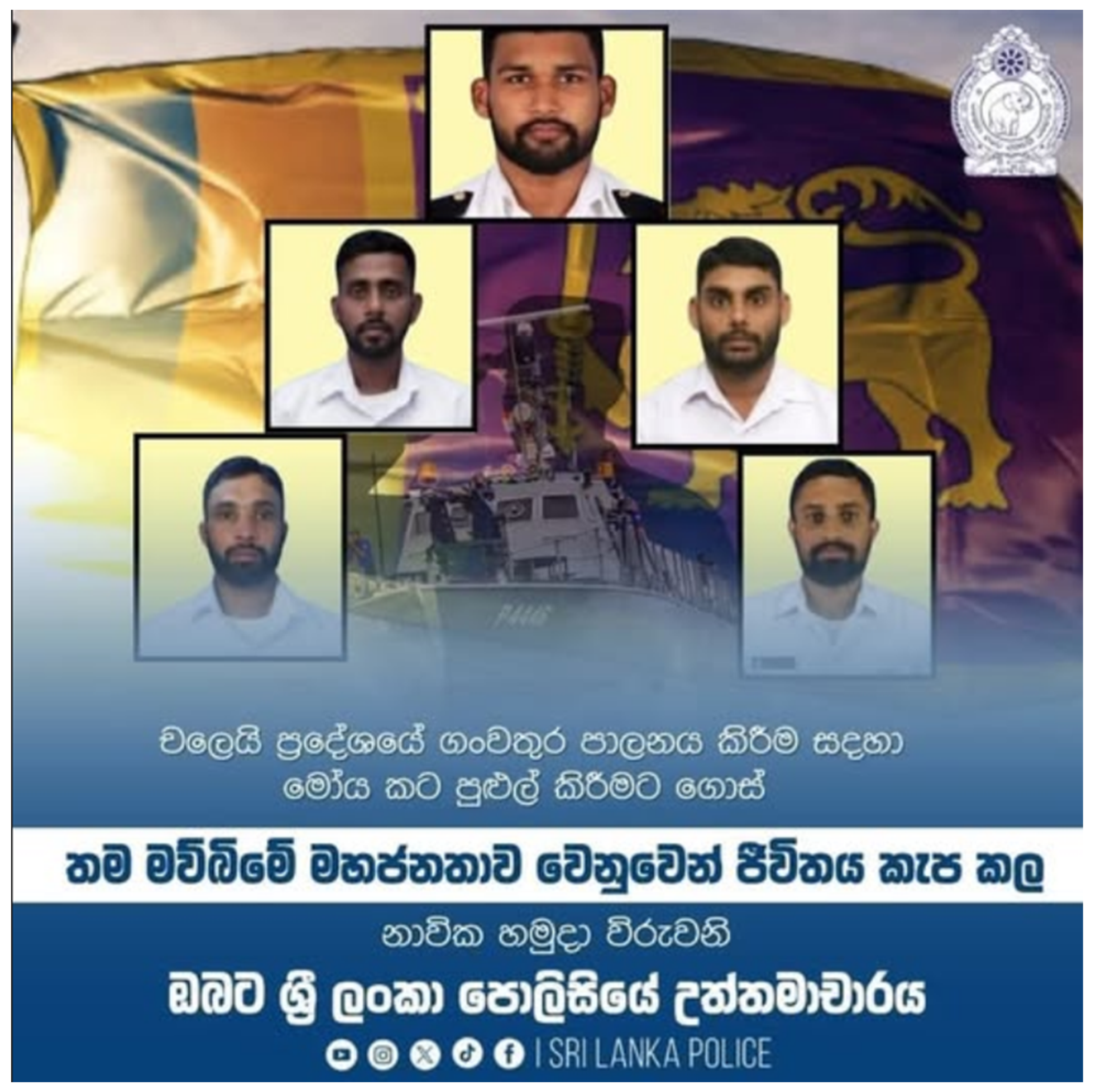
Figure A4.
Sri Lankan Navy personnel who lost their lives while rescuing civilians during flood response operations in the Eastern Province.
Figure A4.
Sri Lankan Navy personnel who lost their lives while rescuing civilians during flood response operations in the Eastern Province.
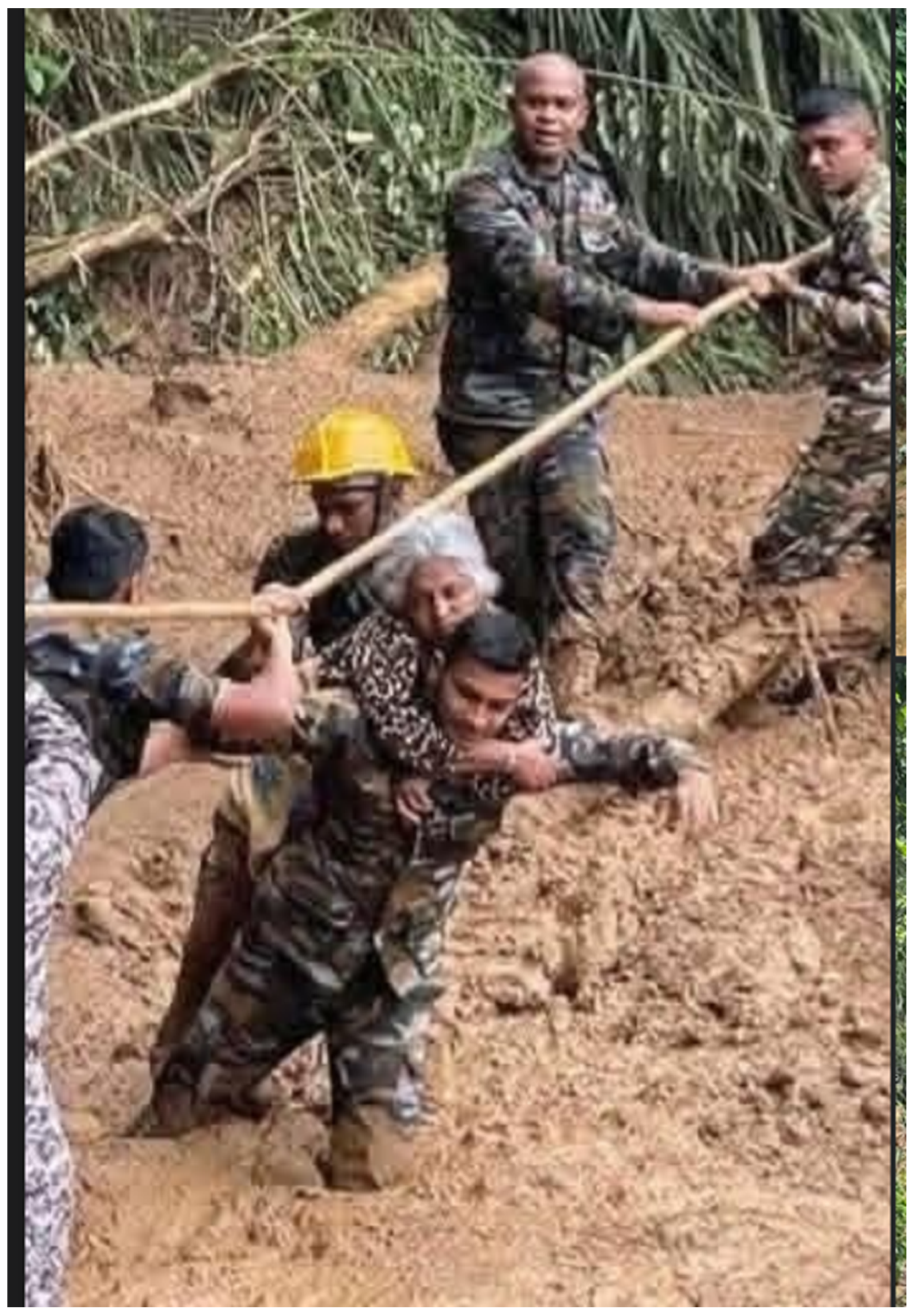
Figure A5.
Sri Lankan Army personnel rescuing an elderly Tamil woman during flood relief operations, demonstrating humanitarian action across ethnic lines.
Figure A5.
Sri Lankan Army personnel rescuing an elderly Tamil woman during flood relief operations, demonstrating humanitarian action across ethnic lines.
Figure A6.
Religious institutions including Buddhist temples, Hindu kovils, mosques, and churches providing shelter to displaced populations irrespective of religious or ethnic identity.
Figure A6.
Religious institutions including Buddhist temples, Hindu kovils, mosques, and churches providing shelter to displaced populations irrespective of religious or ethnic identity.
References
- Ardévol, Elisenda, and Edgar Gómez-Cruz. 2014. Digital ethnography and media practices. In The International Encyclopedia of Media Studies. New York: Wiley. [Google Scholar]
- Boyd, Danah. 2014. It’s Complicated: The Social Lives of Networked Teens. London: Yale University Press. [Google Scholar]
- Braun, Virginia, and Victoria Clarke. 2006. Using thematic analysis in psychology. Qualitative Research in Psychology 3: 77–101. [Google Scholar] [CrossRef]
- Coleman, Gabriella. 2010. Ethnographic approaches to digital media. Annual Review of Anthropology 39: 487–505. [Google Scholar] [CrossRef]
- England, Martha Elizabeth. 2016. Ethnic Conflict and Contemporary Social Mobilization: Exploring Motivation and Political Action in the Sri Lankan Diaspora. Ph.D. thesis, Université d’Ottawa/University of Ottawa, Ottawa, ON, Canada. [Google Scholar]
- Hareesh, N. A., and Balamurugan Guru. 2025. Social media: Potential communication tool during disaster response—Cyclone ockhi and sri lankan floods using AI and ML. In Communication, Science, Technology and Innovation in Disaster Risk Management. Edited by Swapan Talukdar, Ranit Chatterjee, Somnath Bera, Atish Prashar and Rajib Shaw. Cham: Springer, pp. 73–93. [Google Scholar]
- Houston, J. Brian, Joshua Hawthorne, Mildred F. Perreault, Eun Hae Park, Marlo Goldstein Hode, Michael R. Halliwell, Sarah E. Turner McGowen, Rachel Davis, Shivani Vaid, Jonathan A. McElderry, and et al. 2015. Social media and disasters: A functional framework for social media use in disaster planning, response, and research. Disasters 39: 1–22. [Google Scholar] [CrossRef] [PubMed]
- Jayathilaka, H. A. D. G. S., C. S. A. Siriwardana, D. Amaratunga, R. P. Haigh, and N. Dias. 2021. Investigating the variables that influence the use of social media for disaster risk communication in sri lanka. In Lecture Notes in Civil Engineering. Singapore: Springer, vol. 174, pp. 259–76. [Google Scholar]
- Karanikola, Zoe, and Georgios Panagiotopoulos. 2025. Identity negotiation and conflict resolution in contemporary multicultural settings: The contribution of intercultural mediators. Genealogy 9: 18. [Google Scholar] [CrossRef]
- Lane, Jeffrey, and Jessa Lingel. 2022. Digital ethnography for sociology: Craft, rigor, and creativity. Qualitative Sociology 45: 319–26. [Google Scholar] [CrossRef] [PubMed]
- Miller, Daniel, and Don Slater. 2000. The Internet: An Ethnographic Approach. Oxford: Berg Publishers. [Google Scholar]
- Perera, Malini. 2022. Social Media and Ethnic Relations in Sri Lanka. Ph.D. thesis, University of Colombo, Colombo, Sri Lanka. [Google Scholar]
- Pink, Sarah, and Heather Horst. 2016. Digital ethnography: Principles and practice. In Proceedings of the Digital Anthropology Conference. Thousand Oaks: SAGE Publications. [Google Scholar]
- Smith, John. 2023. Unpublished manuscript on disaster communication. Unpublished work. [Google Scholar]
- United Nations Office for Disaster Risk Reduction. 2024. Disaster Risk Reduction Strategies. Geneva: United Nations Office for Disaster Risk Reduction. [Google Scholar]
| Disclaimer/Publisher’s Note: The statements, opinions and data contained in all publications are solely those of the individual author(s) and contributor(s) and not of MDPI and/or the editor(s). MDPI and/or the editor(s) disclaim responsibility for any injury to people or property resulting from any ideas, methods, instructions or products referred to in the content. |