
Article

Examining the Effectiveness of Family Mobility Resources Using a Trauma-Informed Framework
1
School of Education, University of New England, Armidale, NSW 2350, Australia
2
Manna Institute, Canberra, ACT 2601, Australia
3
School of Education, Macquarie University, Macquarie Park, NSW 2113, Australia
4
School of Health, University of New England, Armidale, NSW 2350, Australia
5
School of Health, Medical and Applied Sciences, Central Queensland University, Bundaberg, QLD 4670, Australia
6
School of Psychology, University of New England, Armidale, NSW 2350, Australia
*
Author to whom correspondence should be addressed.
Soc. Sci. 2026, 15(2), 87; https://doi.org/10.3390/socsci15020087 (registering DOI)
Submission received: 1 December 2025 / Revised: 25 January 2026 / Accepted: 26 January 2026 / Published: 2 February 2026

Abstract

Co-created research outputs are considered the gold standard in research translation projects. It is often a requirement for gaining funding to work with affected community members and partners when working to provide resources or support communities with a lived experience of trauma. However, there is limited literature on combining a co-creation framework and trauma-informed approaches. This paper adds to these studies by describing our project, which combined co-creation with trauma-informed principles to work with potentially vulnerable communities, specifically service families who experience high family mobility (e.g., military and first responder families). The approach taken prioritised safety, trust, transparency, peer support, collaboration, empowerment, and voices of those with lived and living experiences, while also emphasising participant choice to ensure safe engagement and maintain research partner commitment. After many rounds of feedback from those with lived and living experience (over 35 initial co-creation participants), we tested the suitability of the resources on other affected community and research partners. Twelve (additional) participants provided rich feedback that was analysed using inductive thematic analysis. This included the appropriateness of the resources for the age group, the use of children’s narrative story techniques and engagement, increasing caregiver capacity and knowledge, and integration into family, educational and professional settings. We examine here potential strategies to better support this type of research and propose an improved research framework that combines co-creation and a trauma-informed approach. Although complex and time-consuming, this combined approach offers an effective means of developing targeted supports. Further testing, research and refinement with potentially vulnerable populations are needed, and successful implementation may require institutional research systems to adapt to support this approach in the future.

1. Introduction

There has been considerable debate in the literature about the level of compliance required to achieve the status of co-design or co-creation for resources, services, or policies to support target cohorts (Grindell et al. 2022; Vargas et al. 2022). Co-creation is where the affected community and partners are involved in all processes of the project, whereas co-design is where they are involved in fewer, but significant aspects of the project (Grindell et al. 2022; Vargas et al. 2022). Mental Health Europe’s (2023, para. 4) definition states that co-creation is:
a collaborative approach involving all actors in mental health working together on an equal basis to develop and implement policies, services, programmes and communication that foster positive mental health according to a psychosocial model and human rights-based approach.
There is a small but growing discussion in the literature about incorporating trauma-informed approaches into such endeavours. McGeown et al. (2023) state that the combination of trauma-informed approaches and co-design principles is:
highly suitable when developing trauma-informed services. Greater consideration needs to be given as to whether and how people share lived experiences, the need for safe spaces, honesty and humility, difficult dynamics between empowerment and safety and whether and when blurring boundaries may be helpful
(p. 1896).
The study highlighted the importance of collaboration, transparency, trust, peer support, and safety for those with lived and living experience (McGeown et al. 2023). In another study using co-design and a trauma-informed approach, Robertson et al. (2025) found the need for empowering and trusting lived and living experience voices, along with the need for researchers and service providers to address the inherent power imbalances. Similar themes were evident in this study, with the addition of choice, culture, being able to express themselves, and the desire of participants to leave a legacy (Robertson et al. 2025). Furthermore, Mohammed and Dally (2025) wrote a reflective paper on their experience using trauma-informed co-design on a project to re-envision a community hub in a US women’s prison. The findings emphasise agency, ownership, usability and collaboration (Mohammed and Dally 2025). The study highlights the ‘subtle entanglements’ of working with multiple voices on a co-design project (Mohammed and Dally 2025, p. 19).
Mental Health Europe’s (2023) Principles of Co-creation include: inclusivity, equality, respect, reciprocity, power sharing, accessibility and transparency. Others have sought to measure the effectiveness of the co-creation process by using a formal and complex PROSECO framework (Longworth et al. 2025). This framework explores five components in depth: delivery, participation, experiential, context and impact (see Longworth et al. 2025). While both these principles and the PROSECO framework have influenced our work, we have adopted the framework proposed by Vargas et al. (2022) as it aligns well with a trauma-informed approach, as discussed in the next sections. Thus, efforts to co-design or co-create require, by their nature, substantial resources and time to achieve effective and impactful outcomes. This research paper adds to the literature by reflecting on the processes of combining a co-creation research translation project aimed at supporting children with family mobility, using a trauma-informed approach.
Employing a trauma-informed approach does not mean that we consider family mobility, in and of itself, to constitute a trauma-inducing environment. Rather, a trauma-informed approach seems warranted given that some children show symptoms associated with family mobility that may impact their development, such as developing a stutter, reduced emotional control, loneliness, and social isolation, as illustrative examples provided by those with lived experience in the next section (see Rogers et al. 2023). While trauma is generally defined as an emotional response to a terrible event, such as an accident, crime, or natural disaster, it can also reflect exposure to a stressful life event that may overwhelm the child’s coping abilities. Importantly, the narrowness of the definition of trauma is deeply contested (Dalenberg et al. 2017). Consistent with this, the Diagnostic and Statistical Manual of Mental Disorders, 5th ed. (2013), does not classify trauma itself as a diagnosis but recognises its association with a range of related conditions. According to the Substance Abuse and Mental Health Services Administration SAMHSA’s Concept of Trauma and Guidance for a Trauma-Informed Approach states that such an approach:
realises the widespread impact of trauma and understands potential paths for recovery; recognises the signs and symptoms of trauma in clients, families, staff, and others involved with the system; and responds by fully integrating knowledge about trauma into policies, procedures, and practices, and seeks to actively resist re-traumatisation
(SAMHSA 2014, p. 9).
Thus, we have taken a broad psychosocial approach to trauma that situates it within the lived experience and recognises that an individual’s capacity to cope may be significantly compromised or diminished over a prolonged period of time. Trauma-informed principles add procedural value in a service family research context, as multiple aspects of service family life may contribute to trauma. Participants may therefore require additional support to safely engage in the research process. For example, such trauma might include a parent sustaining a service-related injury (physical, mental and/or moral). While such an event may initially impact one family member, other family members might be deeply impacted by this traumatic event and potentially susceptible to vicarious trauma. Therefore, our team adopted a trauma-informed approach to ensure the safe and supportive inclusion of service family perspectives. That said, navigating trauma in research involves a delicate balance between vulnerability and empowerment (Aldridge 2015). On the one hand, those with lived experience may want to share their experience, but they may feel vulnerable during and after the process (Haque 2025). While discussing this balance in research, Haque (2025, p. 161) explains:
Empowerment is the ability to make decisions that influence one’s life and reconstruct prevailing paradigms. Vulnerability is the exposure to harm due to a lack of resources or support, while resilience is the capacity to adapt to and recover from challenges.
Thus, we aimed to support lived experience participants’ empowerment through the co-creation process by addressing their feelings of vulnerability and enhancing their resilience. We wanted to ensure that safety, autonomy, and participant agency could be operationalised without reducing the richness of lived experience contribution. To do this, we added elements of empowerment, voice, choice, collaboration, mutuality, cultural and historical knowledge, trustworthiness, transparency and safety from the Substance Abuse and Mental Health Services Administration SAMHSA’s Concept of Trauma and Guidance for a Trauma-Informed Approach to enhance the co-creation approach (see Table 1; SAMHSA 2014). We also comment on why our institutional research systems and funding models need to change to support such complex undertakings.
A trauma-informed approach is useful when working with potentially vulnerable communities on wicked problems, defined as ‘social and organisational planning problems that cannot be successfully treated with traditional linear, analytical … approaches’ (Ritchey 2013, p. 1). A trauma-informed approach is not a methodology in itself, but it can be used in conjunction with methodologies to allow “unique insight into the lived experiences” of participants and “to improve the research process for everyone” (Crosby et al. 2023, p. 337). Thus, in the present study, the issue of family mobility is a wicked problem for children and for the adults and systems seeking to support them.

1.1. Research Context

Children from first responder and military families (hereafter service families) face challenging issues that are not generally experienced in other families (May et al. 2023). A central feature of service family life is frequent relocation (mobility) to meet the needs of the military organisation (Manser 2020). Frequent relocations can bring certain benefits, including opportunities to live in different parts of the country, experience diverse cultures, develop resilience, and strengthen reliance on each other for support within the family unit. However, these moves can also create significant challenges. For example, they often disrupt children’s important bonds with educators and peers (Australian Government Department of Education 2022; Sollars 2020), leading to the loss of established friendships and continuity in learning. Additionally, connections to services and support are also disrupted, particularly when families move in and out of regional, rural and remote locations where services are scarce (Thorn and Olley 2023). Over time, such disruptions can contribute to poorer health and well being outcomes for children (Borah and Fina 2017). These broader findings are reflected in the personal accounts shared with the Royal Commission.
The Royal Commission into Defence and Veteran Suicide (2024) indicated the high levels of stress this caused many military families and the compounding impacts on the family over time.
In my 32 years … I had 16 postings and moved 23 times. I have no doubt the requirement to move every two years was a key contributor to my marriage breakdown as my spouse believed the continual moves were detrimental to our children’s development and their education
(p. 140).
The inability [of] the Army to justify these postings, especially to the families… creates yet another stressor on the soldier … I can attest to the stress and depression this causes
(p. 141).
Similarly, our research team’s study (see Rogers et al. 2023) revealed families’ experiences.
We’ve moved 7 times in 5 years.
(Teagan)
As my children get older it gets harder for them to relocate and stay motivated to make friends.
(Freya)
When my eldest was almost 3 we were living in Sydney. We drove to the Gold Coast … for Christmas, were home… packing for 2 weeks and then flew to Rockingham to move … in temporary accommodation for 2 weeks. He was very out of control emotionally, having tantrums and he developed a stutter. We didn’t really know how to support him through the stress.
(Teagan)
Our eldest (4) often asks to go back to our last posting location, and often talks about his “old friends”…telling us that he “just really misses them”…we struggle to help him … he doesn’t understand.
(Miranda)
Despite these impacts on children and families, there is a lack of lived and living experience (hereafter lived experience) narrative and research-based resources for service families and their children coping with family mobility.
To address this resource gap for children, our group from the [Child and Family Resilience Project team] co-created psychosocial resources to fit within our suite of research-based resources based on lived experience narratives that have been tested for their suitability by the affected community and partners (see https://ecdefenceprograms.com/ (accessed on 5 January 2026)). These strengths-based resources convey the lived experience narratives of children and parents through children’s e-storybooks, featuring epilogues and prologues designed to enhance the knowledge, skills, and confidence of the adults who support them (e.g., parents, educators, support workers, clinicians, and educators). The stories feature the challenges faced by service families and the protective factors they draw on to cope with service family life, such as struggles with frequent family relocation (Rogers 2017). By voicing these gathered narratives, the resources aim to strengthen children’s sense of belonging while enhancing community capacity to understand and respond to their needs. In addressing the gap, a variety resources designed to support this cohort have proved useful within a range of international programs (Rogers et al. 2021b).

1.2. Co-Creating a Children’s E-Storybook

As a prerequisite to the research reported in this paper, our work began with the creation of a suite of research-based e-storybooks for children. This work has been reported in Rogers et al. (2024). Having developed numerous resources, we were interested in collaborating with those who use them to determine next steps for co-creating additional resources that the affected community still requires. This process is the subject of the current article. Before delving into the necessary details of the research, it is essential to establish the background of the founding work, which is discussed below.
Compound human requirements need multilayered approaches to address them to ensure interventions are effective (Hoffman 2024). To do this, community consultation is essential for addressing problems that have been identified as wicked (Vargas et al. 2022). This is essential to bridge the gap between practice, knowledge and theory (Grindell et al. 2022). Thus, we deployed a co-creation approach to address the resource gap.
Our initial co-created suite of psychosocial resources prompted service providers and individuals with lived experience to request additional materials—specifically resources for children as they experience frequent relocation. They reported that these children often struggle to understand what is happening and how to cope with these relocations. To address this gap, we gathered the voices of those with lived experience and those who support these families.
To ensure the resources for children were sensitive, appropriate and responsive to their unique needs, we engaged directly with adult children from a range of service families. We also engaged with the data from the lead author’s PhD study, who had gathered narratives from children and other members of military families. Their perspectives were complemented by secondary narratives provided by educators and support workers representing key service providers and agencies, along with researchers who have listened to many individuals experiencing frequent relocations, as well as parents who themselves have relocated frequently with their children. There were more than 35 initial co-creation participants from Australia, Canada, and the UK in this collaborative research process, as well as the core team, which also included individuals with lived experience. This combination of voices enabled the team to include a broader range of voices and experiences.
The steps we undertook as part of the co-creation process are outlined in Table 1, with our actions linked to the co-creation features and the trauma-informed principles.

1.3. Co-Creation Participation and Challenges

The PROSECCO Framework (Longworth et al. 2025, p. 3) emphasises the components of participation, including: ‘partnership, motivation, retention, attendance, recruitment, facilitation, conflict management, group dynamics, impactful decision-making’ and ‘impartial collaboration’.
Throughout the project, co-creation was at times fully achieved, and co-creation flourished. At other points, participation was shaped or constrained by practical considerations, such as time, scope, and budget. At other times, decisions had to be made regarding conflicting ideas. If discussions took too long or there were multiple changes to a single page of the e-storybook, the core team had to be pragmatic and make decisions to advance the project to meet deadlines. For example, some affected community members had certain experiences with relocation and wanted all of those depicted in the e-storybook. However, constraints related to the length of the e-storybook (to maintain the children’s engagement) and the available illustration budget required the core research team to make difficult decisions, prioritising more commonly shared experiences within the narrative. It should be noted, however, that the core team had members with lived and living experience. Thus, careful consideration was given to balancing scope, resources, and usability, while ensuring that the resource reflected the breadth of service family life.
Similarly, service providers and partners often requested the inclusion of additional content and concepts, either within the e-storybook narrative or in the research pages at the end of the book. Again, these requests needed to be carefully considered, with the issues raised above in mind, and prioritising which information was suitable for a children’s e-storybook, and which would be better suited to the accompanying modules for parents, educators, and support workers. To communicate these ‘subtle entanglements’ (Mohammed and Dally 2025, p. 19), personal communication via email consistently emphasised that, although all ideas were beneficial, the team could not incorporate every idea put forward by the affected community and partners due to the project’s inherent constraints.
It should also be noted that these issues of power, boundaries, and emotional labour were ongoing challenges as the core team sought to engage users while respectfully including voices from a wide range of affected communities and partners. This is further complicated when the project is funded by a particular partner, but other partners have ideas they want incorporated to make the resource more relevant to their target cohort. Balancing these ideas, while ensuring fairness to all voices, is important. Despite these challenging dynamics, lived-experience voices were generally prioritised over service-provider requests, although such decisions were challenging, as similarly noted by Robertson et al. (2025).
Cultural differences across countries were also evident. As an example, the extent of emotions displayed by the characters in the narrative of the e-storybook was the focus of discussion, and various opinions were offered to soften or strengthen the depictions. Invariably, edits throughout the drafting stages elicited additional suggestions from the affected community and service providers as the process unfolded. Sometimes these were suggestions to return to a previous version of the e-storybook scene. To avoid backtracking, the core team sometimes communicated that we would leave the edit in its current form before testing the final draft for suitability. Thus, communication and compromise were key to the challenges that arose.
Overall, the core team experienced an emotional toll from retelling lived experience narratives. When the team was entrusted to depict these experiences, this burden weighed heavily on them; the core team often discussed a single page repeatedly to strike the right balance and tone. The lead researcher sought to balance this with humour during these meetings. Additionally, we always recapped the positive comments we had received before focusing on the comments requiring change to maintain a balanced perspective. Thus, all ideas were respected, and to support safety, participants could contact team members with whom they felt comfortable submitting their ideas, without being identified to the larger group. In summary, tensions between empowerment and safety emerged, as described by McGeown et al. (2023). These were managed through careful negotiation and a large dose of patience.

1.4. Testing for Suitability

Once the co-created e-storybook and modules reached their final draft stage, we gathered insights from the affected community and partners regarding the suitability of the resources for children coping with frequent relocations. To do this, we shared resources with various support workers, educators, adult children with lived experience, spouses of members with lived experience, and parents with lived experience of frequent relocations (military and first responders). We asked them to reflect on the resources. The overarching research question was:
How can the use of a co-created e-storybook assist children from service families in building their knowledge and understanding of family relocation and change?

2. Methods

Having established the background of the work, this section now addresses the research approach used to develop the next steps in the project.

2.1. Study Design

The participants answered a brief online questionnaire. We designed this to explore the beliefs of the affected community and partners about whether they thought the relocation resources (e-storybook and modules) were useful and relevant. As such, the study was grounded in a pragmatist methodology, which focuses on generating knowledge that is useful and responsive to current opportunities and challenges (Gillespie et al. 2024). Accordingly, the study design was shaped by the practical realities of everyday life in addressing the research questions.

2.2. Questionnaire

Due to the target participants, we took care to utilise the Substance Abuse and Mental Health Services Administration’s (SAMHSA 2014) trauma-informed principle of ‘empowerment, voice and choice’. The survey was designed to support empowerment by maximising choice. This meant we provided participants with opportunities to decide how much data to provide, along with the type of data they were willing to supply, as depicted in Table 2. This technique is vital in service-connected cohorts who have privacy concerns and have genuine fears that their information might be shared with government departments. All team members, including service providers for the target cohort, were involved in the design of the survey. Only the first research question was compulsory.

2.3. Participants

For the online survey, convenience and snowball sampling were employed to recruit participants who were part of the affected community and partners (e.g., support workers, clinicians, educators, as well as parents from service families, and others) via social media posts (employing keywords). Additionally, research-based news articles by key project partners and the research team. A total of 12 participants (additional participants to the initial co-creation group) agreed to complete the survey, of which nine (75%) identified as female, two as male (16.67%), and one as nonbinary (8.33%). The participants were aged between 23 and 58. The participants reported on their relationship with the target cohort: ‘Parent, carer or adult child in a Defence (military), veteran or first responder family’ (n = 3; 25%), ‘Support worker’ (n = 1; 8.33%), ‘Clinician’ (n = 2; 16.67%); ‘Educator’ (n = 3; 25%) and three participants (25%) reported as ‘Other’. It is difficult to access service-connected communities because they are concerned about privacy. This means they are less inclined to partake in research surveys (Schumm et al. 2019). The survey was only open for six weeks due to project deadlines, which could have impeded participants’ engagement and the number of participants recruited. While the sample size is very small, it should be noted that the affected community and partners had been providing feedback during the entire co-creation process, so these twelve participants were additional voices.

2.4. Procedure

Ethical approval for the study was gained from the [University of New England] through the Human Research Ethics Committee. The participants were asked to engage with the project website, including the modules and download the draft e-storybook, which was in PDF form. The participants were informed that the resources were in draft format and that we were seeking feedback to improve the resources. The website included accompanying resources, which included links to various forms of support along with research-based information about family mobility.

2.5. Analysis

Utilising descriptive statistics (e.g., frequencies), we summarised the quantitative data. Inductive thematic analysis was used to analyse the qualitative data (Bingham 2023). To do this, one coder independently developed the initial themes from the findings. After sorting the data, the initial coder independently conducted descriptive coding. This was reviewed by another team member, who either confirmed or queried the coding. The latter led to discussions and amendments, as needed.
Participant names were not used; instead, we used their self-reported relationship with the target cohort to protect their privacy and identity. These included family members, educators, or support workers.

3. Results

Due to the low response rate, these results are illustrative and exploratory. Thus, we position the primary contribution of the present study as process-oriented learning rather than outcome evaluation. The results are presented through both quantitative and qualitative data.

3.1. Quantitative

All twelve participants stated that they were providing feedback on the relocation resources. Table 3 shows that all but two participants found the resources relevant, informative, or useful. One participant was neutral, and one did not respond. When asked if they would recommend the resources, all but two (who did not respond) participants indicated that they might. Table 4 reports the eight participants’ endorsement of the effectiveness of the resources at improving core supportive capabilities. The participants found the research-based resources effective in improving the child/ren’s abilities and skills in coping with and managing relocation.

3.2. Qualitative

All 12 participants who completed the online survey responded to open-ended questions. Inductive thematic analysis was used to analyse the data (Bingham 2023; Braun and Clarke 2006). Four themes were identified in relation to the suitability of these resources in supporting children coping with family relocations. These were: (i) the appropriateness of the resources for the age group; (ii) children’s narrative story techniques and engagement; (iii) increasing caregiver capacity and knowledge; (iv) integration into family, educational and professional settings.
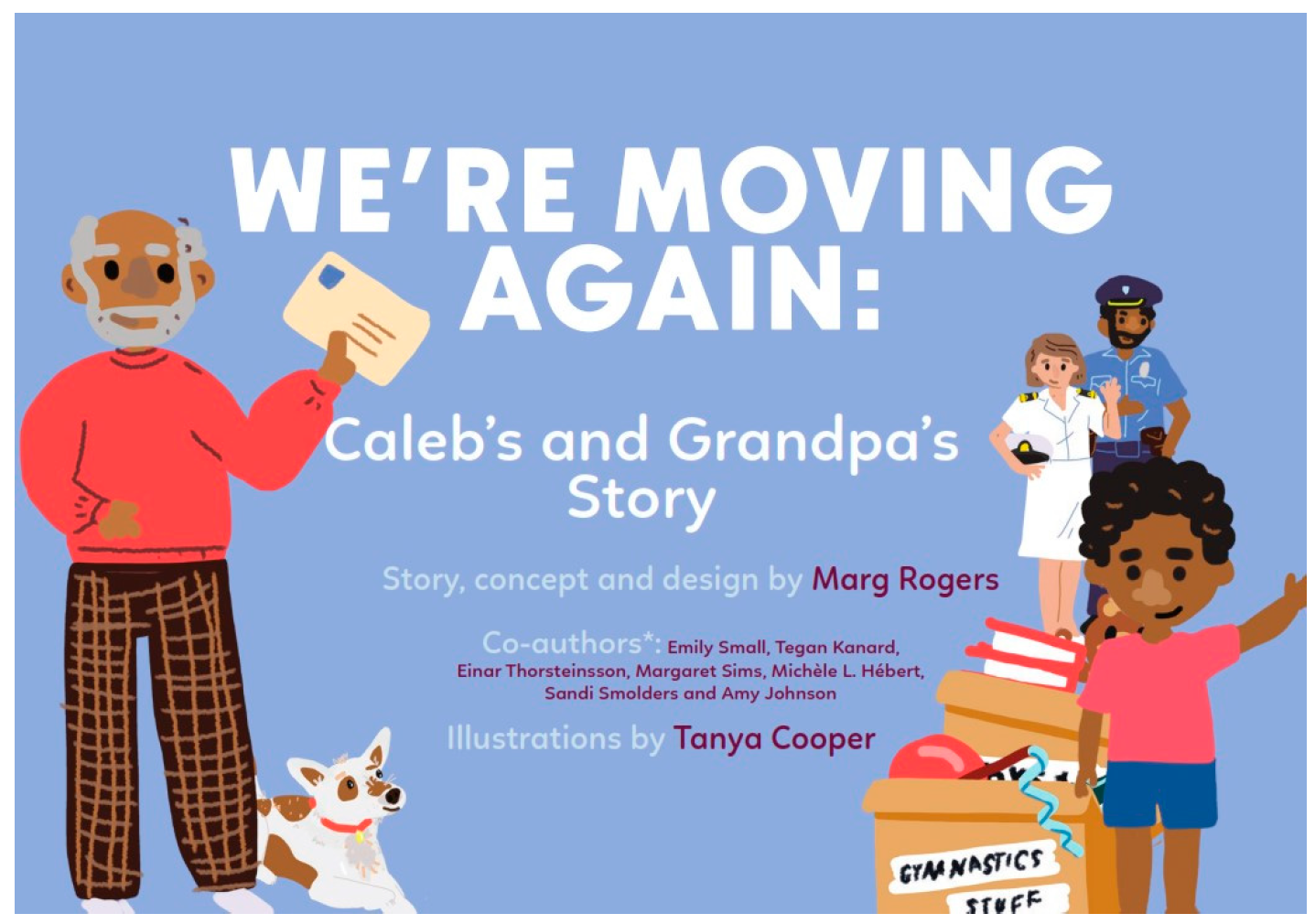
To help explain some of the responses, a basic understanding of the free e-storybook and its accompanying resources is necessary. The e-storybook is told with letters back and forth between the two main characters: Caleb (a child) and his grandfather, with an illustration after each letter (see Figure 1 and https://ecdefenceprograms.com/modules/course/view.php?id=4&section=19 (accessed on 25 January 2026)). As Caleb grows up, these letters become longer, and he starts using emails and texts. His grandfather offers a stable source of support for Caleb, as he moves frequently due to his father’s and his father’s partner Steph’s service occupations. Grandpa also grew up in a service family, so he understands what Caleb is experiencing. Through their correspondence, Caleb can explore his feelings about his experiences of frequent relocation, while his grandfather offers potential coping strategies. At the end of the story (in the original draft), the grandfather also faces change as he needs to move into an independent unit within an aged-care facility. The accompanying online modules provide information for parents, educators and support workers/clinicians about the impact of family mobility, along with activities for children, and links to community support (see Figure 2).
In the following sections, we provide a description of the four themes with participant quotes to illustrate them.

3.2.1. Appropriateness of the Resources for the Age Group

The participants reported that the resources were appropriately targeted for the developmental age group of the cohort. They commented on the way the storyline engaged the children and explored emotions and coping strategies.
One of the children that I was reading to wanted to keep reading. He was interested in reading more letters.
(Educator)
Some of the children I read the story to were able to relate to Caleb and his feelings about moving houses, and one of the children called out that he worries about his dad too! (Dad is in fire and rescue).
(Educator)
As a military parent, I would recommend the module to parents that have older children. It was simple and easy for kids to understand the concept of the story. They loved seeing each picture that was shown after the letter was sent.
(Family member)
… the graphics are beautiful, the story telling is lovely—the letters to the emails to the texts. the character development and relationship is also beautiful, and there are some strong coping mechanism included for children when moving. Well done!!
(Family member)
Two participants suggested changes that we were able to implement in the final version of the storybook. They said:
I think that Grandpa’s first letter is too high-level when writing to a child in pre-school.
(Family member)
I also thought that there could be a little more to the reasons of why they move every 1–2 years.
(Family member)

3.2.2. Children’s Narrative Story Techniques and Engagement

Participants commented on the way Caleb grew in skills and his ability to cope in the arc of the story. They also talked about the relatability of the story to service families.
I liked the letter writing and how it evolved as Caleb got older.
(Support worker)
Kids liked the letter style of writing back and forth with the grandparent.
(Family member)
I moved 5 times as a military dependent and my kids moved 5 times as well. I liked the transition from letters to email to text.
(Family member)
I read this with my nephew who has had to move due to my brother’s policing career and he was able to relate to parts of the story.
(Support worker)
I thought the story of leaving a friend behind and then trying to maintain a long-distance relationship is relatable to anyone in that situation.
(Family member)
They can relate about having a friend or family member that they can always keep in touch with throughout their life.
(Family member)
One participant commented on the postings related to the father’s occupation, rather than Steph’s, which we were able to change in the final version of the e-storybook.
I liked it, but why was it always ‘Steph’ that was posted? Police also get posted, especially those in higher ranks.
(Support worker)

3.2.3. Increasing Caregiver Capacity and Knowledge

Participants noted that the resources provided them with knowledge and a tool to build their capacity to support the children. They talked about why it was helpful to their efforts in building children’s understanding and coping strategies.
Everyone finds relocation a challenge but it’s something we have to work with. Kids need support from parents, community and Defence to successfully make changes.
(Family member)
Great book and information. All of the information is useful and relevant to our families. I wish we had this many years ago to help when the kids were younger to understand defence life. All teachers and DVA [Department of Veterans’ Affairs] should read this book!
(Family member)
I would recommend this book and resources to all educators that support families that are required to move home often. It helps to develop educators’ understanding and empathy towards the challenges these families face.
(Educator)

3.2.4. Integration into Family, Educational and Professional Settings

Respondents shared their experiences in implementing the resources with children. They commented on the way it provided a springboard for children to discuss their experiences of moving with a caring adult.
The children have noticed that we discuss big feelings and challenges in a more constructive and team-oriented approach.
(Educator)
Provided an opportunity to discuss the challenges and frequency of moving. It was good to get a conversation around feelings happening.
(Educator)
It’s a great book to start discussions.
(Family member)
It created positive discussions.
(Educator)
It opened up lots of discussion.
(Educator)
A great resource, and [it] is flexible enough to lead to many different learning experiences.
(Educator)
One participant commented on the e-storybook’s draft ending, which involved the grandfather going into an independent unit within an aged care facility. We changed the ending in the final version of the e-storybook in light of this comment, so the grandfather just downsized to a townhouse.
It’s a lovely story! It’s just a little sadder than it needs to be in my opinion. It’s tough enough for children to deal with moving, without the added layer of ageing/failing grandparents on top—which I think could be a book on its own.
(Family member)
In the next sections, we discuss our findings in relation to the literature, the limitations of this study, and the need for further research before drawing our conclusions.

4. Discussion

The overall aim of the present study was fulfilled as the present e-storybook was found to be effective in assisting children from service families in improving their understanding of their family environment and changes therein. In doing so, the study addresses an important resource gap for children navigating the complexities of service family life (Rogers 2020). The development of the e-storybook and accompanying resources seeks to empower these children’s sense of belonging and improve community capacity to understand and support them. Translational research requires a commitment to improve the knowledge and lives of those populations we research with (Australian Research Council 2022; Glasgow and Emmons 2007; Granek and Nakash 2016; Morris et al. 2011; Searles et al. 2016). For children from service families, this means research must be driven by a commitment to supporting their wellbeing so that they are able to thrive, rather than merely survive.
Survey findings indicated that almost all participants found the resource useful and informative and would recommend it to others. These findings support the experience of the team creating the e-storybook and suggest that the applied method of collaboration and cooperation was effective in producing a bibliotherapy e-storybook. This model involved co-creation with the affected community and partner organisations using a trauma-informed approach to gather and synthesise lived experience narratives alongside relevant literature, ultimately producing a draft psychosocial storybook tailored to the target cohort of children. Again, using a trauma-informed approach, we tested the suitability of the resource with other affected community members and partners, thereby demonstrating the needs of our target community who may have been exposed to trauma. However, creating the ideal bibliotherapy e-storybook requires difficult decisions around matters such as tangible resources (e.g., time, money, workload), ethics (e.g., are we causing harm by asking team members to write about lived experience), and cultural sensitivities (e.g., religious, racial). As a team, we have many responsibilities, such as to other team members, the community, and the intended audience of the resource (e.g., families, children, educators, counsellors). To create the perfect resource, we might have to push team members too far and stretch our funds beyond what is ethically acceptable (e.g., causing harm to team members). So, if the perfect resource cannot be created, we have the duty to create research that is good enough (does more good than ever any harm). Again, the survey seems to support that we have done better than good enough, suggesting that all the time and effort invested in the project was worth it.
Therefore, it is important to recognise the inherent tensions that arise from combining co-creation and a trauma-informed approach, and to intentionally implement strategies to manage these tensions. The fundamental principles underpinning co-creation require team members to be open about their experiences, which can involve emotional exposure resulting in vulnerability. From this perspective, one might argue that such a process may risk triggering the very trauma the work seeks to address (SAMHSA 2014). Thus, trauma-informed processes emphasise clear boundaries that promote feelings of safety and containment (SAMHSA 2014). The ongoing challenge, therefore, lies in creating environments that support safety while also enabling the sharing of lived experiences and their impacts.
Co-creation research has the potential to not only provide new knowledge but also support the ongoing agency of families involved in the research. Given this potential, both components of the work must be undertaken ethically and sensitively while taking into consideration the most recent understandings of best practice. Including trauma-informed approaches into the co-creation framework exemplifies an academic commitment to enhance understandings of research techniques and the praxis obligation to work to benefit those targeted by the research. Our work demonstrates that this combined approach is not only feasible but also successfully implemented, as evidenced by its perceived usefulness and acceptability among the affected community and partners.
Designing and implementing co-creation approaches takes extended periods of time and can only be done well when strong relationships with affected communities and partners have been effectively recruited (Rogers 2024), established, maintained and managed (Bowen et al. 2017; Rogers et al. 2022, 2021a). Thus, adequate resourcing (funding and time) is essential for providing knowledge that is meaningful to those most impacted by the conditions examined. Opening projects to novel interdisciplinary ideas, methodologies and approaches is what we need to solve complex human problems (Morris et al. 2011; Zhang et al. 2023).
As discussed above, a key element in managing this project was the need for time: time to enable the researchers to share their experiences and to negotiate with team members the information that would support the e-storybook’s target audiences. It was also important to support team members in understanding that exclusion of an idea or experience they had shared did not invalidate its significance, but instead reflected practical constraints associated with funding and available resources. In many cases, repeated discussions created space for ideas to be validated, even when they were ultimately not included in the e-storybook. The focus on how the trauma discussed in the e-storybook was managed also created space for sharing positive stories of personal coping strategies. This provided ongoing validation, fostering a thriving perspective. Ultimately, recognising the inherent tensions between these two approaches enabled time and effort to be directed to creating a safe and supportive space in which the e-storybook could be developed.

5. Implications

The illustrative and exploratory results provided an opportunity for process-oriented learning rather than outcome evaluation of the resource. Combining co-creation with trauma-informed approaches allows content creators (e.g., researchers) to provide more effective resources (e.g., e-books, modules, interactives) or services than if they employ co-creation as a stand-alone strategy (McGeown et al. 2023; Robertson et al. 2025). Opening the co-creation process by adding trauma-informed approaches helps: (a) identify gaps in available materials, (b) generate ideas, (c) make the material more accessible (e.g., readability, appropriate use of concepts), and (d) enable those with lived and living experience to lead and contribute as applicable (Table 1). While integrating these approaches can appear complex and time-consuming, the effort is worthwhile given how rewarding the process can be and how the quality and results of the research can be enhanced. This adds to the findings of Goldberg et al. (2025), who speak of the challenges of managing diverse voices.
For the relocation resources, when lived experience narratives are woven into children’s psychosocial resources, the perceived usefulness, relatability and ability to relay appropriate information to those supporting these children is enhanced.

6. Limitations

Projects involving systems change require interpretivist approaches to ensure that the changes do not reproduce and reify the inequities within that very system. Using a qualitative approach to the analysis shows that the quantitative results are further supported. Additionally, while the iterative feedback process enriched the findings, it required significant time and resources, which may limit feasibility for larger-scale projects. Furthermore, although this was a resource for children, they were not explicitly involved in the entire co-creation process. Instead, input was drawn from parents and adult children from these families, along with the lead author’s PhD data, which used participatory methods to collect children’s voices. This approach was shaped, in part, by the challenges associated with securing ethical clearance to involve children in such research. Future projects might ethically include children’s perspectives more directly, which would further strengthen the manuscript’s transparency and theoretical coherence.

7. Need for Further Research

Further testing of the family mobility resources is required to strengthen the validity of the framework and its applicability across diverse service family contexts. A mixed methods approach, combining in-depth interviews with a broader online survey, would allow for a more comprehensive understanding of family needs and the effectiveness of the resources. Future research should also examine how institutional systems can adapt to better support co-creation combined with trauma-informed principles in work with potentially vulnerable populations. There is a need to evaluate not only the resources that are created using co-creation methods, but also the co-creation process itself. There is also a need to evaluate the experience of different co-creation partners and contributors to further improve such processes and make them more efficient.

8. Conclusions

This project used co-creation involving thirty five international affected communities and partners. This involved clinicians, support workers, researchers, educators and those with lived experience. Deploying a trauma-informed approach to gather affected community and partner voices enhanced our ability to engage with the target cohort, often hard to reach. This approach meant our project deliverables were perceived as more effectively supporting the complex nature of family mobility experiences in service families and other families facing similar challenges. Additionally, using a trauma-informed approach in both the co-creation process and the usability study acted as an amplifier for the lived experience participants’ voices, some of whom may not have participated if they had not felt safe enough to do so. As Crosby et al. (2023, p. 338) explain, “systematically applying the amplifier” of a trauma-informed approach to qualitative methods can result “in richer data and novel insights”.
However, the co-creation process is challenging because it pushes the boundaries of traditional research processes and, as a result, is difficult to implement within the limitations of university and funding body processes. Effective co-creation, with or without additional trauma-informed practices, requires time to build relationships and trust. It requires time to consult and work effectively with research partners. It also requires a willingness to actively seek out alternative perspectives and a commitment to continue working towards mutually acceptable outcomes, however long that might take. Institutional and funding body deadlines are exclusive to these practices; in particular, external deadlines may force settling for outcomes that are not deemed satisfactory by all co-researchers. Ethics procedures often require information about research partners that many are unwilling to provide, and often do not recognise the flexible nature of participation in the co-creation process. Thus, while we feel a moral imperative to work with others to co-create outcomes from our research, the systems in which we work do not provide the necessary infrastructure to support such work.
Overall, the study highlights the urgent need for research-based resources specifically co-created for children dealing with service-related challenges such as family mobility. If we do not address this need,
The risk of intergenerational trauma runs high when children’s needs are not seen and the required services are not put in place to support the child’s psychosocial development

Author Contributions

Conceptualization, M.R., M.S. and E.B.T.; Methodology, M.R., M.S. and E.B.T.; Formal analysis, M.R., M.S. and E.B.T.; Investigation, M.R., M.S. and E.B.T.; Resources, M.R.; Data curation, M.R.; Writing—original draft, M.R., M.S., K.U. and E.B.T.; Writing—review & editing, M.R., M.S., K.U., M.G. and E.B.T.; Visualization, M.R.; Project administration, M.R. All authors have read and agreed to the published version of the manuscript.

Funding

The research-based storybook at the centre of this project was funded by the Canadian Forces Morale Welfare Service and also received in-kind funding from a range of different organisations and individuals. Marg Rogers received funding from the Commonwealth-funded Manna Institute as a Postdoctoral Fellow during this research project.

Institutional Review Board Statement

The study was conducted in accordance with the Declaration of Helsinki, and approved by the Institutional Review Board of the University of New England (protocol code HE20-027, 4 May 2020).

Informed Consent Statement

Informed consent was obtained from all participants involved in the study.

Data Availability Statement

Data is not publicly available for this study as the data are part of an ongoing study.

Acknowledgments

Amy Johnson, Emily Small, Tegan Kanard contributed to the overall project.

Conflicts of Interest

The authors declare no conflicts of interest.

References

  1. Aldridge, Jo. 2015. Participation, ‘Vulnerability’ and Voice. In Participatory Research. Bristol: Policy Press, pp. 7–30. [Google Scholar]
  2. Australian Government Department of Education. 2022. Belonging, Being and Becoming: The Early Years Learning Framework for Australia; Canberra: Australian Government Department of Education for the Ministerial Council, vol. 2. Available online: https://www.acecqa.gov.au/sites/default/files/2023-01/EYLF-2022-V2.0.pdf (accessed on 5 January 2026).
  3. Australian Research Council. 2022. ARC Submission to the Interim Report of the Australian Universities Accord; Canberra: Australian Government. Available online: https://www.arc.gov.au/sites/default/files/2023-09/ARC%20submission%20to%20the%20Interim%20Report%20of%20the%20Australian%20Universities%20Accord.pdf (accessed on 13 February 2023).
  4. Bingham, Andrea J. 2023. From Data Management to Actionable Findings: A Five-Phase Process of Qualitative Data Analysis. International Journal of Qualitative Methods 22: 16094069231183620. [Google Scholar] [CrossRef]
  5. Borah, Elisa, and Brooke Fina. 2017. Military spouses Speak Up: A Qualitative Study of Military and Veteran Spouses’ Perspectives. Journal of Family Social Work 20: 144–61. [Google Scholar] [CrossRef]
  6. Bowen, Deborah J., Travis Hyams, Melody Goodman, Kathleen M. West, Julie Harris-Wai, and Joon-Ho Yu. 2017. Systematic Review of Quantitative Measures of Stakeholder Engagement. Clinical and Translational Science 10: 314–36. [Google Scholar] [CrossRef] [PubMed]
  7. Braun, Virginia, and Victoria Clarke. 2006. Using Thematic Analysis in Psychology. Qualitative Research in Psychology 3: 77–101. [Google Scholar] [CrossRef]
  8. Commonwealth of Australia. 2022. Royal Commission into Defence and Veteran Suicide Interim Report. Available online: https://defenceveteransuicide.royalcommission.gov.au/publications/interim-report (accessed on 17 August 2023).
  9. Crosby, Elizabeth, Kim McKeage, Terri L. Rittenburg, and Natalie R. Adkins. 2023. Amplifying Marginalised Consumers’ Voices: A Case for Trauma-Informed Qualitative Methodologies. International Journal of Market Research 65: 320–39. [Google Scholar] [CrossRef]
  10. Dalenberg, Constance J., Elizabeth Straus, and Eve B. Carlson. 2017. Defining trauma. In APA Handbook of Trauma Psychology: Foundations in Knowledge. Edited by Steven N. Gold. Washington, DC: American Psychological Association, Vol. 1, pp. 15–33. [Google Scholar]
  11. Gillespie, Alex, Vlad Glăveanu, and Constance de Saint Laurent. 2024. Pragmatism and Methodology: Doing Research That Matters with Mixed Methods. Cambridge: Cambridge University Press. [Google Scholar]
  12. Glasgow, Russell E., and Karen M. Emmons. 2007. How Can we Increase Translation of Research into Practice? Types of Evidence Needed. Annual Review of Public Health 28: 413–33. [Google Scholar] [CrossRef]
  13. Goldberg, Lynette R., Kylie Radford, Kate Smith, Dina LoGiudice, Lauren Poulos, Dianne Baldock, Clair Andersen, Janaya Charles, Alison J. Canty, Dawn Bessarab, and et al. 2025. Privileging the Spirit, Voices, and Culture of Aboriginal and Torres Strait Islander Peoples in Dementia Care: Education for Non-Indigenous Health Care Providers. SSM—Mental Health 7: 100395. [Google Scholar] [CrossRef]
  14. Granek, Leeat, and Ora Nakash. 2016. The Impact of Qualitative Research on the “Real World”: Knowledge Translation as Education, Policy, Clinical Training, and Clinical Practice. Journal of Humanistic Psychology 56: 414–35. [Google Scholar] [CrossRef]
  15. Grindell, Cheryl, Elizabeth Coates, Liz Croot, and Alicia O’Cathain. 2022. The Use of Co-Production, Co-Design and Co-Creation to Mobilise Knowledge in the Management of Health Conditions: A Systematic Review. BMC Health Services Research 22: 877–26. [Google Scholar] [CrossRef]
  16. Haque, Reazul. 2025. Rethinking Empowerment: The Dual Path of Vulnerability and Resilience. In Contemporary Gender Transformations in South Asia: Transcending the Archetype of Womanhood. Leeds: Emerald Publishing Limited, pp. 161–81. [Google Scholar]
  17. Hoffman, Robert R. 2024. Trusting as an Emergent: Implications for Design. Ergonomics in Design. [Google Scholar] [CrossRef]
  18. Longworth, Giuliana Raffaella, Danielle Marie Agnello, Sebastien Chastin, Aaron Davis, Enric Senabre Hidalgo, Sergio Villanueva Baselga, Lauren McCaffrey, Jorge Zapata Restrepo, Laura Coll-Planas, and Maria Giné-Garriga. 2025. Evaluating the Co-Creation Process in Public Health Interventions: The PROSECO Framework. Public Health 245: 105783. [Google Scholar] [CrossRef] [PubMed]
  19. Manser, Lynda. 2020. The State of Military Families in Canada: A Scoping Review. Journal of Military, Veteran and Family Health 6: 120–28. [Google Scholar] [CrossRef]
  20. May, Karen, Miranda Van Hooff, Matthew Doherty, and Marie Iannos. 2023. Experiences and Perceptions of Family Members of Emergency First Responders with Post-Traumatic Stress Disorder: A Qualitative Systematic Review. JBI Evidence Synthesis 21: 629–68. [Google Scholar] [CrossRef] [PubMed]
  21. McGeown, Helen, Lucy Potter, Tracey Stone, Julie Swede, Helen Cramer, Jeremy Horwood, Maria Carvalho, Florrie Connell, Gene Feder, and Michelle Farr. 2023. Trauma-Informed Co-Production: Collaborating and Combining Expertise to Improve Access to Primary Care with Women with Complex Needs. Health Expectations 26: 1895–914. [Google Scholar] [CrossRef]
  22. Mental Health Europe. 2023. Co-Creation. Available online: https://www.mentalhealtheurope.org/library/co-creation/ (accessed on 5 January 2026).
  23. Mohammed, Hassnaa, and Carrie Dally. 2025. Re-Envisioning a Community Hub in a US Women’s Prison: Reflections on a Trauma-Informed Co-Design (TICo-D) and Service-Learning Process. CoDesign, 1–23. [Google Scholar] [CrossRef]
  24. Morris, Zoë Slote, Steven Wooding, and Jonathan Grant. 2011. The Answer is 17 Years, What is The Question: Understanding Time Lags in Translational Research. Journal of the Royal Society of Medicine 104: 510–20. [Google Scholar] [CrossRef]
  25. Ritchey, Tom. 2013. Wicked Problems: Modelling Social Messes with Morphological Analysis. Acta Morphologica Generalis 2: 1–8. Available online: https://aim-associes.com/eusa/ebook/prob-fr/pdf/wp.pdf (accessed on 12 June 2020).
  26. Robertson, Charis, Gary Kennedy, Linsey McIntosh, and Anne McKechnie. 2025. Home Fae Home: A Case Study in Co-Designing Trauma-Informed Community Spaces with Young People in Dundee, Scotland. Child and Adolescent Mental Health 30: 131–39. [Google Scholar] [CrossRef]
  27. Rogers, Marg. 2017. Young Children’s Understanding and Experiences in an Australian Defence Force (ADF) Family. Ph.D. thesis, University of New England, Armidale, NSW, Australia. [Google Scholar] [CrossRef]
  28. Rogers, Marg. 2020. Recommendations to Support Young Children from Australian Military Families: A Report for Policy Makers, Family and Social Workers and Educators. Journal of Management Policy and Practice 21: 46–71. [Google Scholar] [CrossRef]
  29. Rogers, Marg. 2024. Publishing Research-Based News Articles: Opportunities and Challenges for Creating Effective Knowledge Translation. Issues in Educational Research 34: 699–18. Available online: https://www.iier.org.au/iier34/rogers2.pdf (accessed on 25 January 2026).
  30. Rogers, Marg, Amy Johnson, and Yumiko Coffey. 2024. Gathering Voices and Experiences of Australian Military Families: Developing Family Support Resources. Journal of Military, Veteran and Family Health 10: 79–94. [Google Scholar] [CrossRef]
  31. Rogers, Marg, Amy Johnson, Jo Bird, Pep Serow, Ingrid Harrington, and Vanessa Bible. 2021a. Stakeholder Engagement in an Online Community Education Project Via Diverse Media Engagements. Issues in Educational Research 31: 626–43. Available online: https://www.iier.org.au/iier31/rogers.pdf (accessed on 25 January 2026).
  32. Rogers, Marg, Amy Johnson, Yumiko Coffey, Jill Fielding, Ingrid Harrington, and Navjot Bhullar. 2023. Parental Perceptions of Social and Emotional Well-Being of Young Children from Australian Military Families. Australian Journal of Rural Health 31: 1090–102. [Google Scholar] [CrossRef]
  33. Rogers, Marg, Penelope Baker, Ingrid Harrington, Amy Johnson, Jo Bird, and Vanessa Bible. 2022. Stakeholder Engagement with Funding Bodies, Steering Committees and Surveys: Benefits for Education Projects. Issues in Educational Research 32: 1131–52. Available online: https://iier.org.au/iier32/rogers.pdf (accessed on 25 January 2026).
  34. Rogers, Marg, Vanessa Bible, Amy Johnson, Jo Bird, Ingrid Harrington, and Penelope Bake. 2021b. International Programs and Resources to Support Children from Military Families: A Review. International Electronic Journal of Elementary Education 14: 119–33. Available online: https://www.iejee.com/index.php/IEJEE/article/view/1756 (accessed on 25 January 2026). [CrossRef]
  35. Royal Commission into Defence and Veteran Suicide. 2024. Shining a Light: Stories of Trauma and Tragedy, Hope and Healing. Available online: https://defenceveteransuicide.royalcommission.gov.au/publications/shining-light (accessed on 6 January 2025).
  36. Schumm, Walter, Duane Crawford, Janet Crow, Tonya Ricklefs, Kennedy Clark, Lorenza Lockett, Roudi Roy, and Yolanda Mitchell. 2019. Military Family Research: Methodological Lessons Learned, Often the Hard Way. Archives of Psychology 3: 1–22. Available online: https://www.archivesofpsychology.org/index.php/aop/article/view/88 (accessed on 20 October 2025). [CrossRef]
  37. Searles, Andrew, Chris Doran, John Attia, Darryl Knight, John Wiggers, Simon Deeming, Joerg Mattes, Brad Webb, Steve Hannan, Rod Ling, and et al. 2016. An Approach to Measuring and Encouraging Research Translation and Research Impact. Health Research Policy and Systems 14: 60. [Google Scholar] [CrossRef]
  38. Sollars, Valerie. 2020. Defining Quality in Early Childhood Education: Parents’ Perspectives. European Early Childhood Education Research Journal 28: 319–31. [Google Scholar] [CrossRef]
  39. Substance Abuse and Mental Health Services Administration (SAMHSA). 2014. SAMHSA’s Concept of Trauma and Guidance for a Trauma-Informed Approach; HHS Publication No. (SMA) 14-4884; Rockville: Substance Abuse and Mental Health Services Administration. Available online: https://www.health.ny.gov/health_care/medicaid/program/medicaid_health_homes/docs/samhsa_trauma_concept_paper.pdf (accessed on 1 October 2022).
  40. Thorn, Harrison, and Richard Olley. 2023. Barriers and Facilitators to Accessing Medical Services in Rural and Remote Australia: A Systematic Review. Asia Pacific Journal of Health Management 18: 20–29. [Google Scholar] [CrossRef]
  41. Vargas, Carmen, Jill Whelan, Julie Brimblecombe, and Steven Allender. 2022. Co-Creation, Co-Design, Co-Production for Public Health—A Perspective on Definition and Distinctions. Public Health Research & Practice 32: 3222211. [Google Scholar] [CrossRef]
  42. Zhang, Jia, Sipei Xu, and Qinan Huang. 2023. Exploring Academics’ Beliefs About Interdisciplinary Research Collaboration and Their Influences on Collaborative Practices: A Mixed-Method Study in China. Higher Education Research and Development 42: 2084–99. [Google Scholar] [CrossRef]
Figure 1. Cover of the relocation e-storybook.
Socsci 15 00087 g001
Figure 2. Educator module with family relocation information and activities (see https://ecdefenceprograms.com/modules/course/view.php?id=2&section=18 (accessed on 5 January 2026)).
Socsci 15 00087 g002
Table 1. Co-creation process utilising trauma-informed principles.
Features aCo-Creation aTrauma-Informed Principles bAction
Focus
  • Those with lived and living experience are part of the author team, the partners and the participants.
  • Consumer and experience centric
  • Engaging affected community and partners
  • High level of information processing
  • Empowerment and Voice
  • Collaboration and Mutuality
  • Cultural and Historical Issues
Affected community and partners highlighted the need for research-based resources to address gaps. Engagement included participants from Australia, Canada, and the UK, with idea generation and concept exchange involving extensive information processing.
Authors included those with lived and living experience from these families, including adult children from the target families. Additionally, data collected directly from children in the lead author’s PhD study were included.
Key affected community members and partners
  • All relevant affected community and partners involved in the process (e.g., consumers, managers, employees, community)
  • Trustworthiness and Transparency
  • Cultural and Historical Issues
An initial mapping of affected community members and partners was conducted, and partners were invited to recruit their clients and networks to participate in the project; thus, the present study employed convenience and snowball sampling.
End-users, individuals with lived experience, support workers and clinicians (including teams and managers), researchers; high engagement from veteran and first responder community.
Affected community and partner roles
  • Very active: provide continuous input to service provider throughout the process
  • Information provider
  • Value creator
  • Empowerment and Voice
  • Trustworthiness and Transparency
Recognised as contributors based on input; organisation logos included where relevant to acknowledge their funding; participants informed that their feedback would help improve the resource for other families.
Affected community and partner participation
  • Repeated interactions and transactions across multiple channels.
  • Help to produce knowledge and skills.
  • Collaborative cooperation in all steps of the process, from problem definition, design of solutions, implementation and evaluation of changes
  • Empowerment and Voice
  • Trustworthiness and Transparency
  • Collaboration and Mutuality
  • Cultural and Historical Issues
Adults with lived experience (adult children of veterans/first responders) co-led development, design, implementation, and suitability testing; engaged via email, social media, and organisations. Drafted e-storybook pages from lived experience narratives, collaborated with the illustrator, and participated in a survey regarding resource suitability, contributing to knowledge and skills production.
Adult children’s voices were checked against children’s voices from the lead author’s PhD project. Thus, attempting to reduce the adulting of children’s voices. Additionally, the affected community tested early drafts with children currently living in these families, providing further ideas to strengthen the story.
Communication
  • Ongoing dialogue with diverse affected community and partners.
  • Bidirectional and transparent communication.
  • Trustworthiness and Transparency
  • Collaboration and Mutuality
  • Empowerment, Voice and Choice
  • Safety
  • Peer Support
Bidirectional and transparent communication included face-to-face and virtual meetings and emails; contributors were asked to reply directly to the team leader rather than ‘reply all’ to ensure comfort in sharing. Feedback was collected via an online survey that outlined ethics approval and the use of pseudonyms if they were to be quoted. They were given a choice of the type and amount of data they provided, and there were no compulsory questions.
Value creation
(e.g., psychological, economic value or a social good)
  • Creation of unique personalised experiences—ownership and engagement in subsequent action.
  • Empowerment and Voice
  • Collaboration and Mutuality
  • Trustworthiness and Transparency
Lived experience narratives were incorporated into the book; other affected community and partners evaluated them to determine commonality and guide presentation in the resource. Affected community and partners were engaged in decision-making about implementing the feedback at all stages of development. The e-storybook was created as a royalty-free resource, published under a Creative Commons Licence. All affected community and partners were informed that their contributions were unpaid but were considered valuable to inform the resource.
Resultant initiative
  • Is created with consumer engagement at all stages of problem definition, boundary setting
  • Peer Support
  • Collaboration and Mutuality
Continued engagement with support workers, clinicians, and those with lived experience maintained a strengths- and resilience-based approach, kept the end user in focus, and ensured the project stayed within scope.
Possible outcomes
  • Creates value of a good or service using the views of diverse affected community and partners.
  • Empowerment and Voice
Draft e-storybook trialled with adult children, parents, educators, support workers and clinicians. Feedback was analysed and prioritised within budget; once revised, the book is released online and disseminated via affected community and partners, media, and social media, aiming to empower children and enhance support capacity.
Some adult participants reported on children’s responses to the resource.
Table 2. Research questions.
Question
Information sheet, followed by:
In the preservation of anonymity, I understand that no name or signature is required of me to give consent. By activating the proceed button below, I am agreeing to the above and also to participate in this study.
  • Proceed with the study
  • Do not proceed
Please tell us a little about yourself:
  • Age:
  • Gender:
I am a:
  • Parent, carer or adult child in a Defence (military), veteran or first responder family
  • Parent from another family
  • Educator
  • Support worker
  • Clinician
  • Other (please specify).
What module or storybook are you giving feedback about?
Thinking about this module or storybook only, to what extent to you agree or disagree with the statement? The content was very relevant, informative or useful. (Strongly agree, somewhat agree, neither agree nor disagree, somewhat disagree, strongly disagree).
Which sections did you use? The box will expand as you type, e.g., Which parts of the resource did you engage with (Storybook, video, article, page, audio, link to the external article, lesson about…).
What else do you think needs to be added to this module or storybook, if anything?
What were the 3 key messages you took from the module or storybook?
Please write one anecdote of how you, or a child/ren, or family members responded to the resource(s)
Please write one anecdote of how a child or children or family members responded to any changes in your practices as a result of the module or storybook
If the module or storybook had activities that involved children, to what extent have the activities, resources and activities from this module been effective at improving the child/ren’s (using a sliding scale from ‘not effective at all’ to ‘extremely effective’:
  • Understanding what is happening in their family or other families
  • Non-verbally share what is happening in their family
  • Ability to verbalise what is happening in their family
  • Able to attribute their feelings to what is happening in their family
  • Ability to show empathy to characters in the story
  • Ability to discuss self-soothing activities
  • Ability to help out at home
How likely are you to recommend this module or storybook to other parents, support workers, educators or clinicians? (definitely, probably, possibly, unlikely, N/A or haven’t used the program/resources/storybook properly yet.
Could you please say a few words about why you would/would not recommend the module or storybook?
Table 3. Response summary (N = 12).
Strongly AgreeSomewhat AgreeNeither Agree Nor DisagreeSomewhat DisagreeStrongly DisagreeNo Response
Question 1n (%)n (%)n (%)n (%)n (%)n (%)
Content was very relevant, informative or useful8 (66.67)2 (16.67)1 (8.33)--1 (8.33)
DefinitelyProbablyPossiblyUnlikelyNot yet Used the ResourceNo Response
Question 2n (%)n (%)n (%)n (%)n (%)n (%)
Would recommend this resource to other parents, support workers, educators or clinicians7 (58.33)2 (16.67)1 (8.33)--2 (16.67)
Table 4. Perceived Effectiveness of the Resources to Improve their Ability to Support the Cohort (N = 8 or 9).
QuestionsMean %Range %Respondent Frequency
Understanding of what is happening in their family or other families8030–1009
Ability to non-verbally share (through art and other mediums) what is happening in their family/what did happen/what will happen84.1351–1008
Ability to non-verbally share (through art and other mediums) what is happening in their family/what did happen/what will happen9320–1008
Ability to attribute their feelings to what is happening in their family76.8830–1008
Ability to show empathy to characters in the stories87.520–1008
Ability to discuss strategies to self-soothe70.6310–1008
Ability to help out at home52.30–1008
Note. The participants could choose more than one response option.
Disclaimer/Publisher’s Note: The statements, opinions and data contained in all publications are solely those of the individual author(s) and contributor(s) and not of MDPI and/or the editor(s). MDPI and/or the editor(s) disclaim responsibility for any injury to people or property resulting from any ideas, methods, instructions or products referred to in the content.