1. Introduction
Sport is an activity that carries meanings beyond physical exercise for health; it is also a social space that reflects power relations, values, and cultural norms across different eras. Running, as one of the most accessible and fundamental sports, has become highly popular and is organized in various forms, ranging from international marathons and charity runs to large-scale city events (
Broch 2022). This phenomenon suggests that running is no longer merely a recreational activity but has become increasingly intertwined with economic systems and market mechanisms (
Chutiphongdech et al. 2025). From the perspective of commercialization, social activities are organized according to market logic, whereby exchange value is prioritized over use value (
Marx 1867). Running spaces, therefore, cannot be understood as purely neutral or freely accessible public sport arenas. Rather, they are produced and driven by market-oriented logics, including brand sponsorship, event-based economies, and the generation of economic value from participants themselves. The commercialization of running spaces has significant impacts on both individual runners and the overall structure of the running community. Events, brand sponsorships, and media promotion transform runners into a form of “commercial capital,” whose value is determined by market criteria rather than purely by athletic performance (
Hsiao et al. 2021). Such processes mirror broader transformations in how livelihoods and well-being are shaped by market logics, where economic sustainability often overrides social equity and human development concerns (
Caringal-Go et al. 2024). Female runners are often selected as representatives of beauty, grace, and attractiveness, reflecting an evaluation based on external appearance. Drawing on Judith Butler’s theory of gender performativity (
Butler 2006), gender identity is not understood as a natural or pre-given attribute but as something continuously produced and reproduced through bodily practices, social norms, and modes of self-presentation. In running spaces, performativity operates through expectations surrounding appropriate clothing, bodily display, and acceptable forms of femininity, shaping how women are seen, regulated, and valued within commercial running cultures. In contrast, male runners are celebrated for strength, endurance, and competitive achievements (
Bogina et al. 2025;
Vai et al. 2025). These dynamics demonstrate that commercial running spaces are not neutral; rather, they are organized by the logic of the market and hegemonic masculinity, which shape the roles and values of men and women differently (
Napoli et al. 2024).
At the level of public space, these dynamics can be further understood through Habermas’s concept of the public sphere (
Habermas 1991), defined as a social space in which citizens come together to communicate, deliberate on public issues, and collectively form shared understandings. Within commercial running events, however, the growing influence of sponsors and market actors in organizing and governing these spaces often amplifies market power while marginalizing certain voices, particularly those of women and other vulnerable groups concerned with safety and access. This reveals gendered inequalities. The allocation of running areas, the establishment of rules, and the provision of safety measures often fail to address the specific risks faced by women (
Allen-Collinson 2023). Issues such as sexual harassment, intrusive gazes, and restrictions on clothing choices, running times, and routes highlight the limitations on female runners’ freedom and safety in accessing these spaces (
McKenzie et al. 2025).
Most previous studies have focused on gender representation in elite sport media, sponsorship outcomes, or athletic branding, and have tended to analyze gender inequality primarily at the level of representation or market outcomes (
Cooky et al. 2015;
Fink 2015;
Juliet 2024;
Kertamukti and Budiasa 2026). Methodologically, much of this research relies on interviews or experiential accounts, which, while valuable, remain insufficient for explaining how broader structural forces operate within everyday sporting contexts. In particular, relatively little attention has been paid to how commercialization permeates and organizes mass participation running events and public training spaces through routine marketing practices, apparel design, and spatial management. These processes play a significant yet often overlooked role in the subtle reproduction of gender norms. This study seeks to address these gaps by focusing on mass participation running events and public training spaces, with the aim of examining how commercialization functions as a structural mechanism that shapes gendered roles, values, and lived experiences of runners in everyday contexts.
This study is guided by three interrelated research questions that examine the relationships among commercialization, gender, and power in contemporary running spaces. Specifically, the study explores how the commercialization of running events shapes gendered representations of runners, and how these representations are produced and circulated through marketing practices, apparel design, and event organization. It further investigates how male and female runners experience, interpret, and negotiate gendered expectations embedded within these commercial and organizational contexts. Finally, the study examines how commercial running spaces function as semi-public arenas that may either reproduce existing forms of gender inequality or impose constraints on gender equality.
2. Materials and Methods
This study employed a critical ethnographic approach as its methodological framework, focusing on how power relations, market logics, and gendered norms are produced and normalized within everyday running spaces. The researcher, as a member of the running community, engaged in participant observation in commercial running spaces, including races, organized events, sponsor-branded zones, and service areas. This participation enabled close access to everyday interactions, embodied practices, and informal norms shaping the culture of the running community (
Madison 2011;
Boylorn and Orbe 2020;
Ellis et al. 2011).
While the researcher participated in events as a runner, the primary unit of analysis is not the self but the social organization of commercial running culture. Reflexive fieldnotes were systematically maintained to document observations and interactions, and to critically reflect on positionality, access, and potential bias, with particular attention to invisible forms of power and gendered assumptions embedded in spatial practices and event organization (
Peddle 2022). Reflexive engagement was employed as an analytical tool to interrogate how space and social relations reproduce gender inequality within the running community, rather than as an autoethnographic narrative. Through this critical lens, the study moves beyond descriptive accounts to examine how commercial running spaces function as sites where gendered meanings and inequalities are continuously produced and reinforced.
2.1. Conceptual Background for the Study
Habermas’s concept of the Public Sphere (
Habermas 1991) is used to understand “running spaces” as public domains that, in principle, should be open and inclusive for all genders to participate equally, whether for health, exercise, or community building. However, when these spaces are dominated by capital and marketing forces, such as through sponsored running events, road closures for commercialized races, or the establishment of branded promotional booths, the public sphere is distorted and no longer functions as a free and inclusive space (
Black 2022). Comparable dynamics are evident in other social contexts, such as educational spaces, where students’ creative expression becomes a means of negotiating power and moral discourse within institutional frameworks (
Chofa et al. 2025).
Butler’s concept of Gender Performativity (
Butler 2006), is applied to analyze “runners” and how gender is constructed through acts, performances, and repeated practices within the running community. Gender is not merely biological but is continuously produced and reinforced through discourse and embodied practices (
Larsson 2024). For instance, female runners are often expected to appear attractive, dress appropriately, and represent brand imagery, whereas male runners are valorized for strength, speed, and athletic performance. These repetitive constructions lead to female runners being evaluated more on appearance than on actual ability. Butler’s perspective thus illuminates how “gender performance” in running spaces is not a matter of individual choice but a social mechanism that reproduces gender inequality.
2.2. Data Collection
Fieldwork was undertaken over 10 months, from January 2025 to October 2025. The study encompassed a variety of commercial marathon, half-marathon, and mini-marathon events held in several major urban areas, spanning both international-scale and community-based contexts, reflecting the globalized nature of contemporary running culture rather than a single national or culturally specific setting. Adopting the role of a participant-observer, the researcher actively engaged in training sessions and participated in actual races. Observations were systematically conducted along running routes, within sponsor exhibition zones, and during pre- and post-race activities, including marathon expos and closing ceremonies. Particular attention was paid to the spatial dynamics, brand presence, and interactions among organizers, sponsors, and participants to capture the lived experience and cultural meanings embedded in the contemporary marathon phenomenon. This study also employed triangulation methods in qualitative data collection, integrating multiple methods as follows:
2.2.1. Participant Observation
The researcher, a female runner with 10 years of experience in the running community, directly participated in events to perceive and interpret the meanings embedded in behaviors and practices. Observations focused on spatial arrangements, competition rules, service zones, sponsor booths, marketing communication, community interactions, and experiences of gendered safety. Systematic fieldnotes were maintained throughout the process (
Bernard 2017).
2.2.2. In-Depth Interviews
Semi-structured, open-ended interview questions were designed in advance to align with the research objectives (
Kvale and Brinkmann 2015;
Creswell and Poth 2016). A total of 20 participants were interviewed, including female and male runners, event organizers, brand representatives, sponsors, and community stakeholders. The interviews addressed themes such as the commercialization of running spaces, image construction, gendered embodiment, sports apparel, spatial organization, rules, and gendered safety experiences.
2.2.3. Document and Media Analysis
Documents and media sources were analyzed, including brand advertisements, sponsorship guidelines, event regulations, spatial layouts, and field photographs of booths, billboards, and service zones. These materials were interpreted symbolically and discursively to uncover gendered representations and the influence of media, branding, and marketing activities on power relations that reinforce inequality (
Hall 1997).
2.2.4. Walking Ethnography
The researcher served as the primary instrument for data collection, engaging in self-exploration, interactions with runners, and immersion in running spaces to understand the hidden impacts of gender inequality within commercial running contexts (
Baxter 2003). Fieldnotes, still images, and video recordings were combined with personal reflections on lived experiences, emotions, thoughts, and actions in the running community (
Springgay and Truman 2018). This reflexive approach positioned the researcher as both participant and critical observer of the phenomenon.
2.3. Case and Key Informants Selection
A purposive sampling strategy was employed with specific selection criteria to capture the complexity and dynamics of commercialized running communities (
Palinkas et al. 2015). Case studies included certified competitive events recognized by
World Athletics (
2025), commercial and charity running events, and popular public parks and running tracks used for training by local communities. This ensured continuity between formal competitive spaces and informal training contexts, both of which are shaped by organizers and commercial sponsors.
In total, 20 participants were selected, covering female and male runners, event organizers, brand representatives, sponsors, and community stakeholders (see details in
Table 1). This diverse representation reflected a wide range of perspectives on the commercialization of running spaces, gendered embodiment, and the reproduction of market-driven images. This selection not only captured the experiential voices of runners and stakeholders but also provided a platform for diverse voices to collectively construct meanings around running and gender equality within commercial running communities.
2.4. Researcher’s Positionality
This study employed a critical ethnographic approach to examine power relations and gender inequalities within contemporary running culture (
Ellis et al. 2011;
Boylorn and Orbe 2020). The primary researcher, a semi-professional female runner with more than 10 years of experience and sponsorship affiliations, conducted immersive fieldwork as both an insider participant and a critical observer. This process of learning through participation and reflection echoes the community-based recreational learning framework, where self-directed inquiry and embodied experience enhance critical understanding of social phenomena (
Noklang 2020). Her embodied engagement in training sessions, races, and sponsor-driven events provided insider access to the cultural and commercial dimensions of marathon spaces.
The research team consisted of a lead researcher responsible for field immersion, interviews, and primary data interpretation, while the co-researchers were not runners themselves. However, their external perspectives played an important role in creating analytical distance and in questioning the lead researcher’s assumptions during the development of thematic categories. The co-researchers contributed significantly to data collection through interviews, field observations, and document analysis, thereby enriching external viewpoints and strengthening analytical distance. The research team engaged in continuous reflexive dialog and peer debriefing to challenge initial assumptions and enhance the credibility of data interpretation (
Lincoln and Guba 1985). When combined with reflexive journaling, data triangulation, and thematic analysis informed by the theoretical frameworks of commercialization, Habermas, and Butler, these processes ensured that the study remained critically grounded while revealing the gendered and commercial dynamics shaping the contemporary running community.
2.5. Data Analysis
This study employed reflexive thematic analysis, following the six-phase framework established by
Braun and Clarke (
2017), to discern recurring meanings across interviews, observations, and documentary sources. The analysis unfolded through repeated, non-linear cycles of familiarization, coding, theme development, and refining. The data sources comprised 20 comprehensive interviews, over 10 months of participant observation, and documentary and visual materials obtained from commercial running events and associated media.
There were two steps of analysis for coding. The initial phase used open and inductive coding of interview transcripts, field notes, and visual materials to elucidate participants’ interpretations and recurring behaviors regarding commercialization, embodiment, visibility, safety, and representation. In the second step, codes were grouped into larger analytic categories and developed into themes by comparing them with each other throughout (
Braun and Clarke 2017;
Flick 2009). During this procedure, a functioning codebook was created and improved over time. The initial codes were derived inductively, whereas further phases of analysis were guided by sensitizing theoretical frameworks, including commercialization theory, Habermas’s notion of the public sphere, and Butler’s theory of gender performativity. These frameworks guided interpretive emphasis without serving as a priori coding templates, thereby facilitating theoretically informed, data-driven research.
Documentary and media sources encompassed event promotional materials, sponsor commercials, official event websites, and social media content (e.g., Facebook and Instagram posts), as well as visual materials such as photographs and on-site displays gathered during fieldwork. These resources were analytically coded alongside interview transcripts and field notes to investigate persistent gendered representations, marketing narratives, and spatial practices, and were used to triangulate and enhance emerging themes (
Madison 2011;
Creswell and Poth 2016).
Triangulation of investigators was used to make the analysis more rigorous. Members of the research team separately coded selected transcripts and field materials. They then met regularly to compare their views. Disagreements were resolved through reflexive discussions, returning to the original data extracts, and evaluating how well the interpretations fit the study’s theoretical framework, rather than by consensus scoring. There was an audit trail that documented the study’s analytic decisions, codebook changes, and theme development. Trustworthiness was established through extended fieldwork, methodological and data-source triangulation, peer debriefing, and reflexive journaling to assess the researcher’s positionality critically. These tactics collectively enhanced the credibility, reliability, and confirmability of the findings, hence endorsing a rigorous and transparent analytical methodology (
Lincoln and Guba 1985;
Flick 2009).
3. Results
Commercialization, influenced by capitalism and globalization, has transformed running spaces into arenas of consumption that construct gendered ideals, economic values, and representations of ability and appearance. Within these processes, gender inequality is embedded across multiple dimensions, operating under the dominance of masculinity as an “invisible norm” that defines standards of athletic ability and pressures female runners to produce and maintain an attractive appearance in exchange for recognition and opportunities within the running community. As a result, the spatial practices of the running community are complex, dynamic, and continuously shifting over time. The value assigned to running spaces is primarily determined by conditions of gender and embodiment, which shape event organization, service zones, marketing communication, and the distribution of privileges. This dynamic creates divisions and constraints on the athletic potential of runners, especially female runners, who must establish their value primarily through appearance rather than athletic achievement. Within this context, the following section examines one prominent mechanism through which female runners are positioned as marketing resources within commercial running spaces.
3.1. Female Runners as Marketing Capital for Brand Promotion
The findings reveal that the promotion of running events often reproduces gendered ideals of female beauty, which are strategically utilized as key marketing mechanisms. At many events, sponsor booths and promotional activities deliberately select female runners with attractive appearances, distinctive personalities, and striking physical features to act as communicators with participants. The presence of these women not only enhances the atmosphere of the event but also becomes a form of “marketing capital” that adds value to brands, overshadowing the recognition of athletic performance.
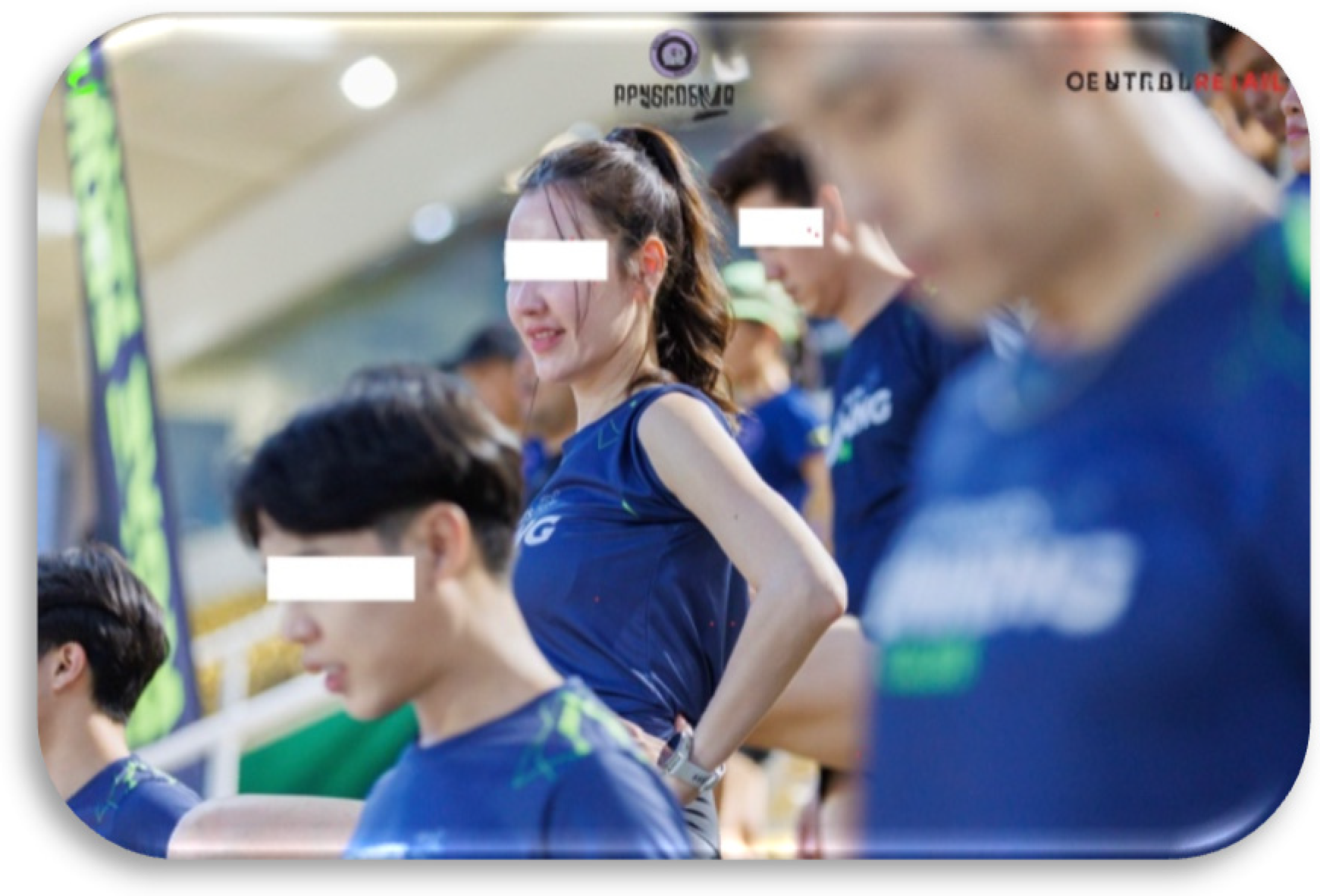
Figure 1 illustrates how commercial running events tend to frame athletic performance as a predominantly male domain, while women are more often positioned as contributors to the event atmosphere. In particular, women with visually attractive physical characteristics are selectively placed in prominent roles to enhance the appeal and market image of the event. This image highlights how the presence of a single woman in a visible position functions primarily as a marketing resource rather than as a recognition of athletic performance. The analytical significance of this image lies in revealing a commercial logic that differentiates “strength” and “beauty” and assigns these values unequally across gender within contemporary running spaces. Testimonies from female runners reinforce this phenomenon. Kate, widely known as a “Running Angel” in the Thai running community, remarked:
“In the running community, appearance comes first, followed by ability.”
(Kate, female runner, 6 years of running experience, personal interview, February 2025)
Similarly, Joy, a female runner with over 10 years of experience, explained:
“When it comes to promoting statistics or athletic performance, the representation tends to be male. Strength is associated with masculinity. However, for brand images, it usually emphasizes attractiveness, cuteness, or sex appeal; the advertising almost always features women. Online pages and media platforms give more visibility to these ‘cute’ or ‘sexy’ portrayals because that’s what sells.”
(Joy, female runner, 11 years of running experience, personal interview, February 2025)
Figure 1.
Gendered contrast in event promotion—women through beauty, men through athleticism.
Figure 1.
Gendered contrast in event promotion—women through beauty, men through athleticism.
These accounts align with field observations, where booths and billboards frequently portrayed female runners in terms of beauty, elegance, and confidence, in contrast to male runners, who were depicted through strength, power, and determination.
“Sometimes it feels like if a woman doesn’t dress nicely or post attractive photos, people won’t pay much attention. Even when she trains really hard, the number of likes she gets is still lower than when she just smiles beautifully at an event.”
(Peter, male runner, eight years of running experience, marketing professional with over 10 years of experience, personal interview, April 2025)
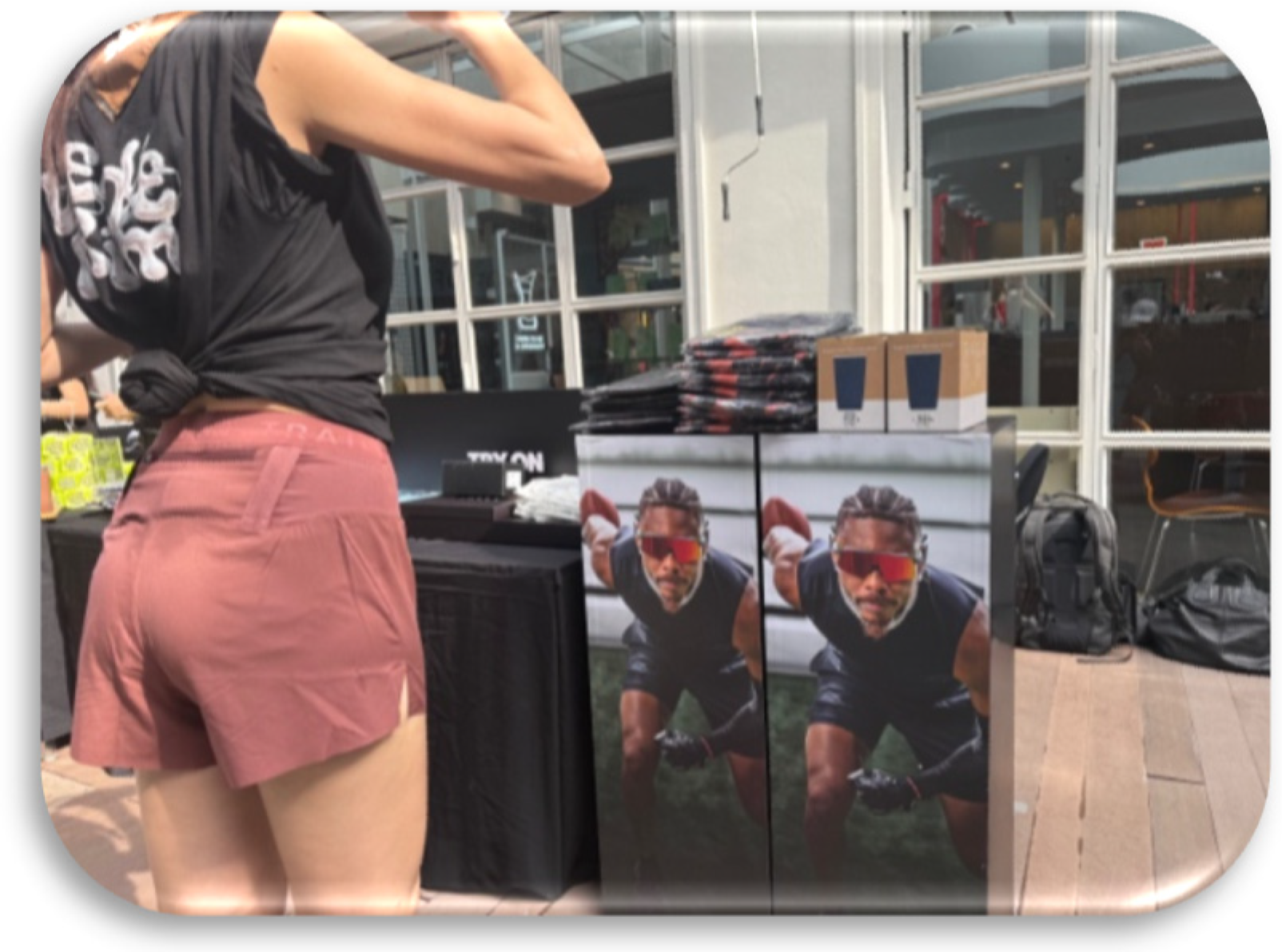
Furthermore, the attire of female runners in public spaces functions as a form of “Moving advertisement,” seamlessly linking brands to the running lifestyle without audiences perceiving the promotion as intrusive. Evidence from field surveys and photographs suggests that clothing has become a powerful marketing strategy, prioritizing visual appeal over functional performance. This is evident in the image (
Figure 2), where male runners are promoted using professional attire, while the female runner is wearing more casual clothing.
Figure 2 illustrates a pattern of event promotion repeatedly observed by the researcher across multiple running events between January to October 2025. Although such gendered arrangements do not appear at every booth or in every event (frequency of occurrence), they are analytically significant because they tend to be located in high-visibility areas, such as main sponsor stages and official photo zones. These interactions reflect the positioning of female runners as visual and affective resources, emphasizing beauty, friendliness, and visual appeal, while male runners are presented through athletic performance, strength, and physical capability. The importance of this pattern lies not in how often it occurs, but in its symbolic role in reproducing gendered marketing logic within commercial running spaces.
Overall, the promotion of running events does not foster equitable community participation; instead, it transforms public spaces into commercial platforms under the influence of market forces and sponsorship. The reliance on women’s bodies and appearances as primary marketing tools highlights deeply embedded gender inequality within these practices, ultimately reframing running not simply as a health or recreational activity but as a commodified product that generates economic and sociocultural value through the reproduction of unjust beauty ideals.
3.2. Male Ideals as a Marketing Logic in Women’s Running Spaces
Running apparel and equipment not only serve functional purposes for exercise but also act as marketing media, reflecting the commercialization of sport through the subtle reproduction of gender representations. The design of women’s running products is often guided by ideals of beauty, softness, and attractiveness rather than athletic performance. In contrast, men’s products tend to emphasize efficiency, durability, and strength—for example, through the use of breathable materials, anti-friction technology, and minimalist designs that signal power and confidence. As “Gallop,” a male runner, observed:
“Sports bras are designed exclusively for women. They’re not something men can wear. Having a sports bra automatically links female runners with images of beauty, grace, and allure, while male runners tend to be valued for their muscles, strength, and robust physique.”
(Gallop, male runner, six years of experience, personal interview, February 2025)
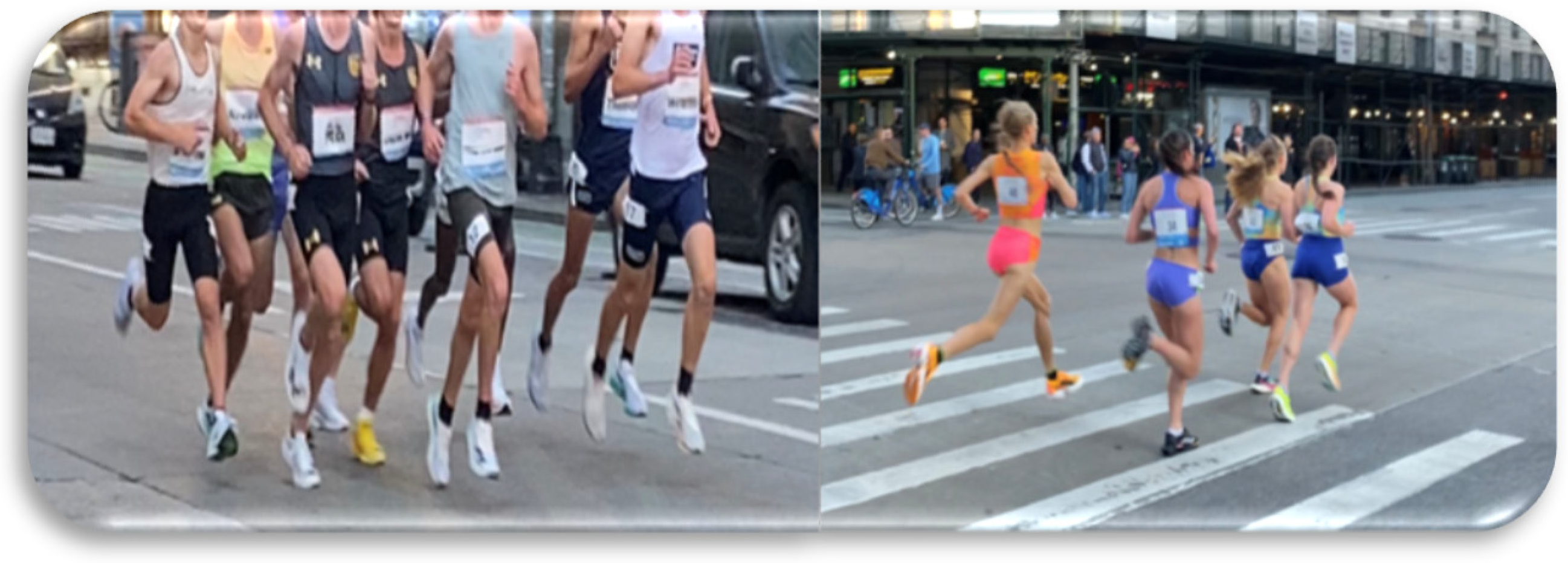
Figure 3 was documented during a commercial marathon event through on-site observation. Male runners’ team apparel was predominantly designed in neutral colors and minimalist styles, emphasizing strength, reliability, and athletic credibility. In contrast, female runners’ apparel and footwear featured brighter colors and visually striking designs intended to attract attention. Although not observed in every case, this contrast is analytically significant as it reflects a marketing logic that associates male runners with performance and strength, while positioning female runners through visual appeal.
This illustrates that sports equipment is not a neutral tool but a gendered construct, shaped by differing social expectations regarding appearance, capability, and value. While male runners are seldom judged by their attire, female runners are often evaluated through it. Men can compete wearing almost any outfit without their athletic credibility being questioned, whereas women are expected to wear form-fitting or body-revealing clothing to be recognized as “real” or “proper” runners. From a marketing perspective, running events have become commercialized spaces where brands launch new products and sports technologies. These events feature exhibition booths and interactive product demonstrations that encourage direct engagement between runners and brands. As “Joy,” a female runner with over 10 years of experience, shared:
“I always get excited to see new collections or special editions released exclusively at each event.”
(Joy, female runner, 11 years of experience, personal interview, February 2025)
Such narratives highlight how the consumption of sports products is closely tied to gendered experiences and identities, rather than being purely performance-driven. In summary, running apparel and gear function not merely as tools for physical activity but as mechanisms of marketing and cultural production that reproduce gender ideals in contemporary society. Through product design, brand communication, and event marketing, the values of “strength” as a masculine ideal and “beauty” as a feminine ideal are continuously reinforced. Consequently, both running spaces and the sports economy are embedded within a gendered capitalist system that intertwines health, sport, and the body with market logics, thereby perpetuating structural gender inequalities within the culture of running.
3.3. Marketing Ideals of Performing Strength Expose Female Runners to Gendered Risk
The ideal of “strength”, commercialized as a marketing logic within contemporary sports culture, has become a powerful cultural force shaping the bodies and performances of female runners in commercial running spaces. Marketing discourses often promote the image of athletic women with toned bodies, firm physiques, and confident, revealing attire as symbols of courage, equality, and female empowerment. Yet, this commodified ideal simultaneously places pressure on women to perform strength through masculine-coded standards to gain recognition both athletically and socially. As Michelle, a professional female runner with seven years of experience, noted:
“When I post photos wearing a tank top or sports bra, the number of likes skyrockets. But if it’s a picture of me actually running like sweaty, tired, without makeup almost no one reacts.”
(Michelle, female runner, personal interview, June 2025)
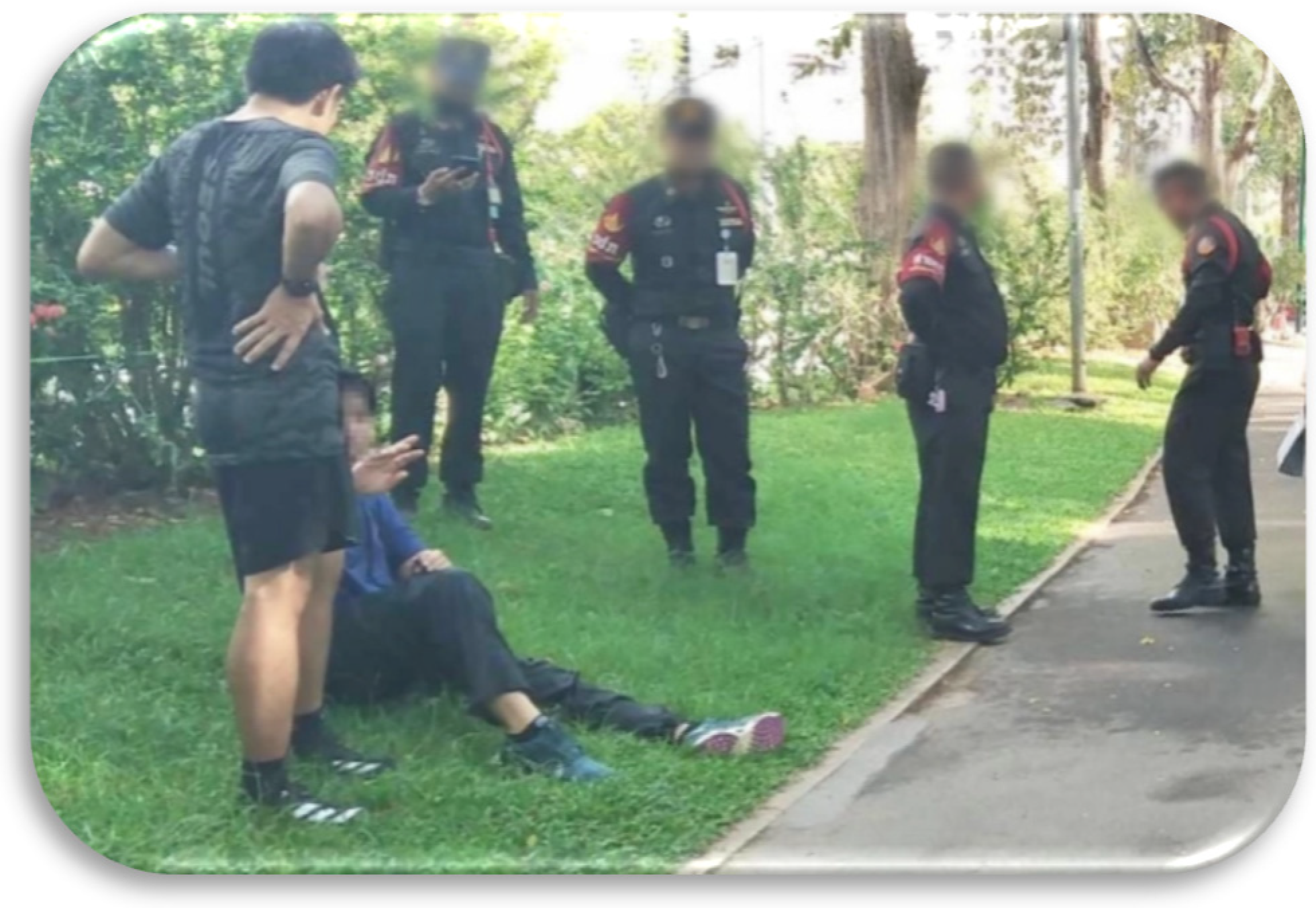
This comment illustrates how marketing ideals of “feminine strength” push women to display empowerment within socially acceptable frames of beauty, creating gendered pressures and heightening the risk of objectification in public spaces. Such embodied expressions take on additional meaning in a social context still governed by the male gaze, where visibility and exposure often invite unintended sexual harassment. Several female runners reported experiences of being stared at, teased, or verbally harassed for wearing performance attire designed for comfort and movement. Some were unfairly accused of “showing off” or “seeking attention” merely for dressing like professional athletes. A notable incident on 20 April 2025 made this issue publicly visible when a female runner was verbally harassed by a middle-aged man while jogging in a public park. Although the perpetrator later apologized, he escaped legal consequences, prompting an outpouring of similar stories on social media from women who had faced harassment but chose not to pursue legal action due to limited trust in institutional protection.
Figure 4 shows security personnel surrounding a man who verbally harassed a female runner while she was running in a public park, before eventually allowing him to leave. The incident generated public debate and prompted many women to share similar experiences on social media. The analytical significance of this image lies in highlighting how women who display their bodies or muscularity in ways that align with contemporary ideals of “strength” may simultaneously experience heightened feelings of insecurity and increased exposure to gendered harassment. Such risks persist across both everyday public training spaces and commercial running events.
Furthermore, the marketing celebration of strength has led to new forms of comparison and social pressure among women themselves. Runners whose bodies align with market ideals tend to receive more brand collaborations and public recognition, whereas those with different body types or who prefer modest clothing are often perceived as “less confident” or “outdated.” This reveals the paradox of a marketing system that claims to empower women’s expression while, in fact, constructing a new standard of femininity still rooted in masculine ideals of strength and control. In summary, the marketing ideal of performing strength operates as a double-edged process, appearing to liberate women by celebrating confidence and power, yet simultaneously subjecting them to gendered risks that are physical, psychological, and social in what should be a space of freedom. Running, thus, becomes a site of negotiation where women continuously balance athletic expression with the protection of feminine dignity, under the subtle governance of market-driven gender ideals.
Across interviews with runners, organizers, and media-affiliated participants, consistent patterns emerged across different positions within the running community. Female runners and event organizers emphasized appearance, visibility, and brand expectations, while male participants highlighted performance, endurance, and athletic legitimacy. Taken together, these findings demonstrate that women are not merely participants in running spaces but are systematically regulated and evaluated through market-oriented and gendered norms. Despite variations in individual experiences, the results indicate that the commercialization of running spaces plays a significant role in reproducing gender inequality by positioning women’s bodies as symbolic and economic resources centered on beauty.
4. Discussion
The findings reveal that running in commercialized spaces is not merely a health or fitness activity but constitutes a social arena that reflects deeper layers of power, discourse, and gender ideology. Under the influence of marketing and capital, running spaces have transformed from open public venues intended for inclusive participation into gendered arenas structured by hegemonic masculinity, an ideology that defines strength, speed, and muscularity as the normative standards of athletic capability and value (
Connell and Messerschmidt 2005;
Messner 1992). The image of the “successful runner” is therefore often associated with masculine traits such as endurance, determination, and self-discipline. These ideals are repeatedly reinforced through advertising and marketing communication, shaping a dominant narrative of what constitutes a “good runner,” one that many women feel compelled to emulate to gain social legitimacy within the sporting community (
Rasmussen et al. 2021;
Namie and Warne 2017;
Mirkovic 2020).
Interpreting the running space as a public sphere can be examined through Habermas’s concept of communicative rationality, which envisions the public sphere as an arena for open, egalitarian dialog (
Habermas 1991). Yet, in the context of commercial running, these spaces are distorted by the influence of capital and marketing logics. Brands, sponsors, and event organizers define the “meaning of running” through the design of activities, advertising media, and the selection of brand ambassadors who reflect narrow gender norms, typically strong male athletes or attractive women framed under the imagery of “health” and “confidence.” These portrayals are designed to align with the male gaze as theorized in visual and feminist studies (
Daley 2022), turning predominantly female runners’ bodies into commodified objects of marketing and consumption.
As a result, commercial running venues operate not as truly public spaces but as quasi-public arenas dominated by capitalist logics of consumption. Race organization, apparel design, and promotional activities all embed communicative mechanisms that socialize participants into gendered consumer ideals, valorizing strength, beauty, and physical appeal (
Napoli et al. 2024;
Mirehie 2022). Participation thus becomes an act of symbolic consumption rather than genuine inclusion, where gender equality is defined by consumer access and image rather than rights or freedoms (
Liu et al. 2023;
Klier et al. 2022).
From another perspective, Butler’s theory of gender performativity provides insight into how gender expression in running spaces is not an individual choice but a socially conditioned performance driven by market mechanisms (
Butler 2006;
Salih and Butler 2004). Many female runners are compelled to “perform strength” within masculine frameworks of athleticism to prove their capability through discipline, image, and esthetically appealing bodies. While such expressions may appear to resist traditional femininity, they paradoxically reinforce male-centered standards as the normative measure of athletic worth (
Hassan et al. 2024). Acts such as building muscular physiques, posting body images on social media, or selecting attire that highlights confidence are thus repetitive performances shaped by social and market structures rather than freely chosen self-expressions (
Klier et al. 2022). This process resembles how individuals in other professional or community contexts internalize dominant development discourses, transforming structural inequalities into self-regulated ideals, as seen in the self-stigmatization of rural teachers navigating mainstream narratives of progress and professionalism (
Promata et al. 2024).
This repeated enactment generates gendered risks for women runners, including visual scrutiny, verbal harassment, and social stigmatization (
Fileborn and Loney-Howes 2019). Many participants reported self-regulating their clothing choices or training times to ensure safety, revealing that running, a form of bodily freedom, is constrained by gendered insecurity and deep-seated cultural pressures. Moreover, marketing’s simultaneous glorification of strength and beauty functions as a subtle mechanism for reproducing gender inequality (
Elias et al. 2017;
Dworkin and Wachs 2009;
Niyomdecha and Noklang 2024). Rather than promoting genuine empowerment, such narratives compel women to continually negotiate their identities between the roles of “athlete” and “feminine ideal.” Representations of female runners as “inspirational figures” or “women who never give up” may appear progressive, yet structurally they rearticulate patriarchal power in more sophisticated forms.
Finally, the consumption of running culture intersects with the production of consumer identity, shaped by market, society, and media discourse (
Bauman 2012;
Prakongpan et al. 2020;
Wallace and Andrews 2024). Runners are not only motivated by personal well-being but also by commodified ideals of success, beauty, and health. Apparel, gear, and participation in races become markers of social distinction, linking athletic participation to gender and class. Female runners, in particular, must possess sufficient economic capital to align with fashion-oriented sports esthetics in order to be perceived as “valuable” within the cultural economy of running (
Bourdieu 1984;
Entwistle 2023). Importantly, the contribution of this study lies not in demonstrating the existence of gender differences in sport marketing, which has been well documented in previous research, but in shifting the analytical focus toward how such differences are structurally produced and normalized within everyday commercial running spaces. By conceptualizing commercial running venues as semi-public arenas structured by market rationality, the findings reveal how gender, capital, and culture intersect to generate symbolic hierarchies between bodies that embody marketable ideals and those that fall outside them.
Building on this perspective, the study proposes a new analytical framework that conceptualizes commercial running spaces not as neutral sites focused solely on health and inclusion, but as semi-public arenas in which gendered values such as strength, beauty, and worth are continuously reproduced through market-driven logics. Methodologically, the study demonstrates the value of critical ethnography by integrating visual analysis, the researcher’s long-term embodied experience as a runner, field observation, in-depth interviews, and reflexive engagement to examine how gender inequality is normalized within everyday sporting practices. Situated in the context of mass participation running events and public training spaces, the findings extend existing literature by showing how gender inequality operates through marketing practices, apparel design, and spatial organization rather than overt exclusion. The study also highlights important practical implications, suggesting that event organizers, sponsors, and policymakers reconsider how safety, representation, and the value of runners are defined in order to promote participation grounded in dignity, bodily autonomy, and gender equity.
5. Conclusions
The findings of this study clearly demonstrate that commercial running spaces are far more than venues for exercise or health promotion; they are fields of power in which capital and marketing redefine the meanings of the body and gender. Driven by neoliberal economic forces, running has been transformed into a cultural commodity, where the value of runners is measured less by athletic ability than by appearance, image, and marketability. Within this process, women’s bodies have been converted into forms of marketing capital, mobilized by brands and event organizers to generate commercial value, often without recognizing the embedded gendered power relations that sustain this system.
The representation of female runners in media and commercial events is not simply a celebration of strength or empowerment; it reproduces the discourse of “marketable beauty”, which reserves visibility for women who fit the industry’s esthetic ideals, while rendering ordinary runners invisible. This inequality does not stem from individual intention but from structural mechanisms that position masculinity as the normative ideal of the authentic athlete, compelling women to perform strength in ways that align with market expectations in order to be recognized within the running community.
What is often marketed as female empowerment thus becomes a deceptive illusion of liberation, a new evaluative framework defined by capital, where worth is measured through sales figures, follower counts, and media visibility. Female runners who dress confidently in athletic attire are frequently misjudged as “showing off” or “provocative,” even when such expression reflects athletic functionality. This contradiction exposes a society still governed by the male gaze, where women’s bodies remain sites of scrutiny even in spaces presumed to be safe and egalitarian, such as running events. Ultimately, the marketing ideal of strength, once celebrated as a symbol of freedom, has become a subtle mechanism of gendered control. The promotion of running as a health activity is increasingly absorbed by advertising that perpetuates inequality rather than dismantling it. Instead of enabling women’s bodily freedom, it compels them to constantly negotiate and self-regulate, choosing what to wear, where to run, and when to feel safe.
In conclusion, commercial running spaces are not mere reflections of a modern health culture but microcosms of contemporary social power, where capitalism exploits women’s bodies as sites of negotiation between consumption, beauty, and control. Under prevailing commercial and marketing logics, running spaces risk remaining constrained by gendered power relations rather than functioning as fully inclusive public spaces; they may remain a field of capital, endlessly reproducing gendered inequalities under the guise of empowerment and health.