1. Introduction
The education of refugee students has increasingly emerged as a persistent and multifaceted concern within both academic scholarship and policy practice. Across diverse geopolitical contexts, recent experiences illustrate the heterogeneity and complexity of this phenomenon (
Naidoo et al. 2018;
Streitwieser et al. 2018,
2023). For instance, in Turkey, the protracted displacement of Syrian refugees has compelled higher education institutions to shift from short-term emergency measures toward more structured and sustainable approaches to educational integration. In Latin America, the Venezuelan migration crisis—one of the largest in the history of the region—has placed unprecedented demands on Colombia’s universities, which have absorbed the majority of displaced students. Similarly, the movement of Eritrean refugee students into Ethiopia highlights the ways in which regional conflicts in the Global South reshape educational landscapes and challenge existing institutional capacities (
Streitwieser et al. 2021;
Unangst et al. 2020).
Although these cases share the overarching theme of displacement and the pursuit of educational continuity, they differ significantly in scope, duration, political complexities, historical trajectories, and the nature of institutional and policy responses. Taken together, these experiences underscore how higher education systems function not only as sites of academic instruction but also as critical arenas in which the rights, identities, and futures of displaced populations are negotiated in times of crisis (
Unangst and de Wit 2021).
Building on these insights, the current paper contributes to the ongoing debates by examining how the existing scholarly and gray literature—particularly focused on specific world regions—can inform future research agendas on the higher education access and attainment of displaced learners. With a particular emphasis on Ukrainian refugee students, the paper situates this group within the broader global context of forced migration and higher education, highlighting both the gaps in current knowledge and the opportunities for developing more inclusive, evidence-based policies and practices.
2. Previous Literature on Displaced Populations in Higher Education
Research on refugees and higher education has expanded substantially over the past decade, evolving from a primary focus on access barriers to a more nuanced examination of quality, equity, institutional responsibility, and refugee agency. Early foundational scholarship has documented the structural challenges refugees face when seeking entry into higher education, including disrupted educational trajectories, the lack of documentation, language barriers, financial constraints, and restrictive legal frameworks.
Streitwieser et al. (
2018) provide a comprehensive review of the interventions in North America and Europe, demonstrating that while universities and civil society actors have developed innovative responses such as bridging programs, alternative credential evaluations, and targeted scholarships, these initiatives are often fragmented, short-term, and insufficiently embedded within national higher education systems. This early work established the need for systemic and sustainable approaches rather than reliance on ad hoc institutional responses.
Building on this foundation, global and comparative perspectives have reframed higher education as both a human right and a key mechanism for social and economic integration. The edited volume called Refugees and Higher Education (
Unangst et al. 2020) situates refugee access within broader debates on internationalization, equity, and global responsibility, emphasizing how national policy environments shape institutional capacity and refugee experiences. Complementing this work,
Unangst and de Wit (
2021) synthesize emerging themes and articulate a future research agenda that calls for greater attention to long-term outcomes, inclusion beyond enrollment, and the systematic incorporation of refugee voices into research and policy design.
More recent scholarship has further shifted attention toward questions of quality, relevance, and lived experience.
Streitwieser et al. (
2023) emphasize that access alone is insufficient without attention to educational quality and refugee agency. By foregrounding refugee perspectives across diverse local and global contexts, this work demonstrates how higher education opportunities are shaped by institutional cultures, policy frameworks, and community engagement. The volume reinforces the argument that effective responses must be context-sensitive and co-created with refugees rather than imposed through top-down models.
Within this evolving landscape, university “pre-study” or preparation programs (including bridging pathways and Studienkollegs) have emerged as a particularly important—and understudied—site where access, retention, and belonging are negotiated before formal degree entry. Grüttner, Schröder, and Berg’s mixed-methods study of refugee-background applicants in German pre-study programs finds that refugees report higher dropout intentions than other international students at the descriptive level, but that the gap is explained once relevant background characteristics and situational factors are accounted for, pointing to structural and contextual drivers rather than refugee status per se. This contribution is significant for the literature because it extends dropout models into forced-migration contexts and reorients “dropout risk” toward a question of institutional conditions, accumulated disadvantage, and support structures within preparatory pathways rather than individual deficits (
Grüttner et al. 2021).
Extending this focus from persistence to identity and recognition,
Grüttner et al. (
2024) further complicate linear transition narratives by conceptualizing university preparation as a phase of “multiple transitions” in which adult refugees and asylum seekers navigate competing identities and stigma in educational spaces. Using quantitative and qualitative evidence from German university preparation contexts, the study highlights stigma consciousness as a mechanism that can impede student self-identification and shape enrollment-related trajectories, while also documenting the strategies learners use to manage stigma—sometimes in ways that inadvertently reproduce stigmatizing attributions. This line of work usefully bridges access-oriented research with adult education and sociological perspectives on identity, showing how inclusion is mediated not only by formal eligibility and program design, but also by the symbolic and relational dimensions of being (or not being) recognized as a student.
Institutional innovation has emerged as a key strategy for addressing persistent barriers.
Streitwieser and Issa (
2021) document the establishment of the Refugee Educational Advancement Laboratory (REAL) at George Washington University, presenting it as a model that integrates applied research, credential evaluation, advising, and policy engagement. REAL exemplifies how universities can move beyond temporary programs and toward structurally embedded initiatives. Findings associated with REAL, discussed by
Gotevbe and Johnson (
2025), complicate the dominant narrative of higher education as a guaranteed pathway to upward mobility. While refugee students often view education as central to achieving stability and belonging, their aspirations are constrained by immigration precarity, financial insecurity, and uneven institutional support, particularly within the U.S. context.
The relationship between higher education and broader migration and integration regimes is further illuminated through regional and comparative studies.
Summers et al. (
2022) analyze educational responses to the Venezuelan displacement crisis in Colombia, Peru, and Chile, demonstrating that although education is increasingly framed as an integration strategy, implementation gaps persist. Inconsistent credential recognition, limited funding, and weak coordination between migration and education authorities undermine policy effectiveness. Similarly,
Crist (
2021) questions whether higher education can function as a viable solution for Haitian asylum seekers, emphasizing that educational opportunity remains contingent upon legal status, labor market access, and migration policy environments.
Beyond universities, scholars have increasingly examined the role of intermediary actors.
Casellas Connors et al. (
2025) analyze how U.S. refugee resettlement agencies support postsecondary access, revealing tensions between immediate resettlement priorities and long-term educational aspirations. Despite operating under resource constraints, these agencies can play a critical role in facilitating access through partnerships, advocacy, and the strategic framing of education as a core component of integration.
Qualitative and critical scholarship has further challenged dominant narratives surrounding refugee learners.
Choi and Cha (
2023) center stories told by refugee youth, offering alternatives to deficit-oriented and resilience-only framings. Their findings demonstrate how refugee students actively negotiate identity, belonging, and aspiration within educational spaces, underscoring the importance of narrative agency in research and practice. This focus on voice aligns with broader critical approaches that interrogate whose knowledge counts and how refugee experiences are represented in the policy discourse.
Critical perspectives on diversity and internationalization deepen this analysis.
Unangst’s (
2024) study of immigrants and refugees at German universities interrogates how diversity and internationalization agendas can obscure structural inequalities, even within systems often celebrated for accessibility. Drawing on anticolonial and postcolonial frameworks, the work highlights how racialization, historical legacies, and institutional cultures shape refugee and immigrant student experiences, calling for justice-oriented reforms that move beyond bureaucratic notions of inclusion.
Despite growing scholarship on refugees and higher education, research on Ukrainian refugee students in European higher education remains fragmented and underrepresented. While millions of Ukrainian students have been displaced across Europe since 2022, existing studies largely emphasize short-term access and policy responses, offering limited insight into the students’ lived academic experiences and longer-term trajectories amid a protracted war. While substantial research and policy analysis is being produced in Ukrainian, as well as Czech, German, and Polish—the primary languages of the countries hosting the largest numbers of Ukrainian refugee students—it remains largely invisible in the international academic discourse. This linguistic and epistemic divide constrains a comparative understanding of how national contexts and institutional practices shape the higher education experiences of Ukrainian students, underscoring the need for research that bridges language boundaries and situates Ukrainian refugee students more fully within the broader literature on refugees in higher education.
3. Research Design
The literature search for this study followed a comprehensive approach to ensure coverage of both the scholarly and gray literature on refugee and displaced students, with particular attention to the Ukrainian context. The review was conducted as a narrative literature review, a form of scholarly synthesis that interprets existing research in a descriptive, text-driven manner rather than adhering to a rigidly structured review protocol. Unlike systematic reviews, which rely on predefined search strategies and explicit inclusion criteria, narrative reviews offer greater flexibility in scope and methodology, enabling the integration of diverse sources and the provision of contextual insight into how research themes and debates have evolved over time. This flexibility allows narrative reviews to capture a broad range of perspectives, explore emerging issues, and connect findings across disciplines, making them especially suitable for mapping complex and developing fields of research. While narrative reviews are accessible to a broad readership, their flexible and less standardized design may limit transparency and replicability, which makes clear methodological justification and rigorous critical appraisal particularly important (
Byrne 2016).
The process began with Google Scholar as the primary database for locating relevant publications. This was followed by targeted searches in the electronic catalogs of the leading Ukrainian libraries: Vernadsky National Library, the Parliamentary Library, several regional libraries, and the repositories of various Ukrainian universities. While Google Scholar yielded the majority of the relevant materials, library catalogs produced very few results. University repositories proved somewhat more useful but primarily contained publications that had already been identified through Google Scholar, with only a limited number of newer studies. As bibliographies of key publications were reviewed, any newly identified relevant sources were subsequently searched for on Google or in the HSG Library to maximize the scope of the review.
A wide range of keywords were employed in all five languages to capture different dimensions of the topic. For refugee students and displaced learners, English search terms included refugee students; displaced learners, Ukraine; refugee students abroad, Ukraine; displaced students, Ukraine; refugee students, university, Ukraine; refugee students, higher education, Ukraine; and refugee students HEI, Ukraine. Corresponding Ukrainian search terms included refugee students, Ukraine, war; Ukrainian students abroad; students forced to migrate, Ukraine; forcibly displaced students; Ukrainian students, Europe, war; student departure, war; educational emigration, war, Ukraine; and similar phrases. For displaced scholars and academics, English keywords included displaced scholars, Ukraine and displaced/Ukrainian scientists/researchers/educators abroad, while Ukrainian terms covered forced migrant scientists; refugee educators; academic migration, Ukrainian scientists abroad; departure of scientists, war; and forced migration of researchers. Finally, searches targeting secondary school students transitioning to higher education employed terms such as Ukrainians entering university/HEI and school graduates/entrants/applicants abroad in both English and Ukrainian. The same procedure was applied to keywords in Czech, German, and Polish.
This multi-pronged search strategy ensured the inclusion of both peer-reviewed scholarship and gray literature, enabling a comprehensive understanding of the existing knowledge base and the research gaps related to refugee and displaced learners in the Ukrainian context. The review identified 119 unique publications, each representing a distinct academic or research output (full list in
Supplementary File, Table S1: Research on Displacement and Higher Education). These works can be categorized as follows: journal articles, conference papers/extended abstracts, theses (master’s, bachelor’s, PhD), book chapters/monographs, reports/analytical papers, and editorials/essays. The majority of papers were written in languages other than English, with Ukrainian (41), German (14), Polish (14), and Czech (2) publications together outnumbering English-language papers (48). The predominance of peer-reviewed journal articles demonstrates a strong academic engagement with the educational and migratory implications of the Russian invasion of Ukraine. At the same time, the presence of numerous conference papers and student theses highlights active scholarly involvement across multiple academic levels and platforms.
The literature is dominated by qualitative and desk-based approaches, particularly interviews and open-source/document analysis, while quantitative surveys and mixed-method designs are also well represented. The prevalence of interviews and surveys underscores the emphasis on capturing both the lived experiences and quantitative realities of displaced learners and scholars affected by the war (
Table 1).
In 106 out of 119 publications, no research by leading scholars in the field was cited (we checked for works by Hans de Wit, Lisa Unangst, Bernhard Streitwieser, and Jane Knight). This suggests that almost all of the reviewed works did not explicitly engage with or build on prior academic literature. This trend likely reflects both the academic tradition in the selected countries, the emergent nature of the topic (focusing solely on Ukraine) and the practical orientation of many reports and student theses, which may prioritize documentation over theoretical development. It is also interesting to note that more than a half of all the selected papers (83) were authored or co-authored by Ukrainian scholars, illustrating the central role of domestic academics in generating knowledge about the educational dimensions of displacement following the Russian full-scale invasion.
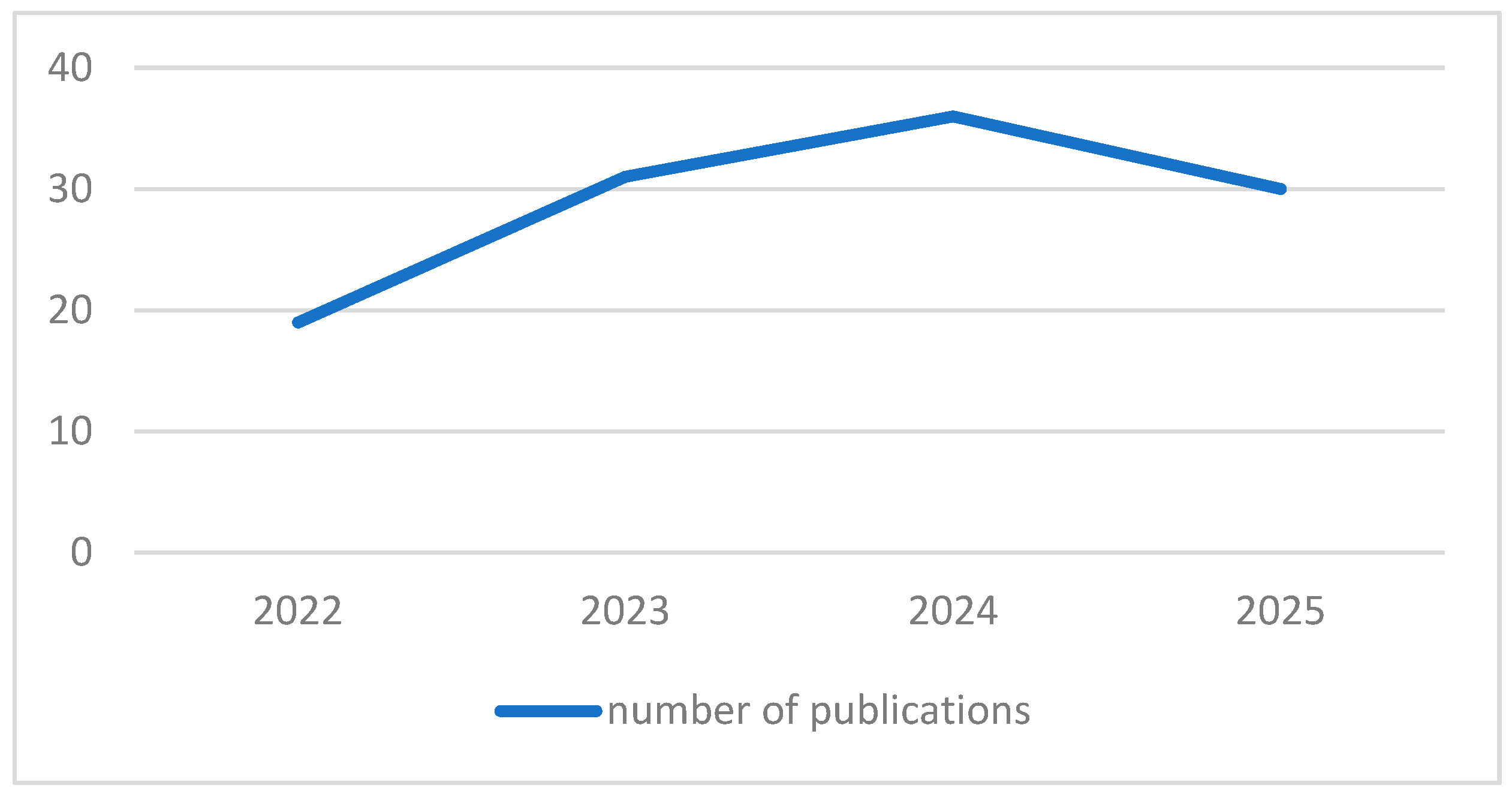
Figure 1 shows a timeline of publication trends from 2022 to 2025.
4. Results
The geography of the exodus from Ukraine, as meticulously charted by the literature set, reveals a pattern dictated first by the brutal logic of proximity and then by the complex calculus of long-term survival. The initial flight was a desperate surge westward, creating a stark demographic gradient with Poland as its overwhelming focal point. Acting as the primary spillway for the crisis, Poland absorbed the first and largest wave of displaced students and scholars, its response characterized by an unprecedented opening of borders and educational institutions. This immediate ring of reception—which also included Germany, the Czech Republic, and Slovakia—formed the crisis front line, where emergency policies were forged in real time. However, the geography of this exodus is not the story of a single wave, but of subsequent currents that carried Ukrainians further afield, mapping their paths onto pre-existing diasporas and specific national policies. The journey extended to countries like the United Kingdom and Canada, where the narrative shifted from emergency reception to the challenges of deep integration, including navigating complex visa regimes, credential recognition, and high costs of living. This dispersal created a diverse archipelago of Ukrainian learners, from students in Australian community courses to scholars in Brazilian university programs. Yet, crucially, this map of external displacement is mirrored by a parallel, internal geography of exile within Ukraine itself, where millions, including students and academics, relocated from the devastated east to relative safety in the west, creating a fractured educational landscape within the nation’s own borders. Thus, the full geography of the exodus is a multi-scalar phenomenon: a concentrated regional crisis in Central Europe, a global scattering of intellectual capital, and a profound internal rearrangement, collectively redrawing the human and educational map of Ukraine and its relationship with the world.
What are the most common topics in research on displaced Ukrainian students and scholars?
At the individual level
Across the reviewed literature, one of the most persistent themes was the sudden disruption of education in Ukraine following the 2022 invasion.
Pentón Herrera and Byndas (
2023) describe how “abrupt interruption in their education, in addition to the war, migration, and other life occurrences, has destabilized participants’ outlook, emotions, and identity, making them feel uncertain about their personal and professional goals” (p. 6). Other studies highlight how the destruction of infrastructure and reliance on remote learning have created profound challenges for students both inside Ukraine and abroad, exacerbating issues of accreditation, recognition of qualifications, and unequal access to technology (
Semenkova 2024).
At the same time, research has consistently explored the integration and adaptation of displaced students into host countries.
Akbaş (
2024) notes that while Ukrainian students in Germany and Czechia often “enjoy support mechanisms like free language courses and financial support,” they still face “linguistic problems and cultural disparities,” with some even experiencing discrimination in local contexts.
Gorokhova et al. (
2025) similarly emphasize that psychological well-being is a critical concern, with many students showing “psychological anxiety […] higher rates of depression, anxiety, dissociation, and post-traumatic stress disorder,” and call for comprehensive, culturally sensitive mental health services. Institutional responses, such as the EU’s Temporary Protection Directive or Poland’s “Solidarity with Ukraine” program, have been widely analyzed; yet, as
Riapolov (
2025) argues, their success remains uneven, with bureaucratic barriers and fragmented support systems limiting long-term effectiveness.
A small but important body of work has critiqued the inequitable treatment of non-Ukrainian students.
Bocharova and Melnik (
2023) document the “racialized welcome” faced by African and Asian students fleeing Ukraine, while
Olumba (
2025) shows how these students experienced “multiple layers of bias and discrimination,” both at borders and within European asylum systems, revealing what he calls the EU’s “selective humanitarianism.”
At the institutional level
Another recurring topic concerns migration intentions and the risk of intellectual loss for Ukraine.
Muchova et al. (
2024) find “the longer students stay abroad, the more likely they are to adapt socially and academically, and the less likely they become to return,” raising alarms about a sustained brain drain with direct consequences for Ukraine’s post-war recovery (
Bil et al. 2022). Yet, against the backdrop of trauma and displacement, many studies highlight the resilience and agency of Ukrainian students.
Kushnir and Richards (
2025) report that refugees “skillfully navigated higher education opportunities, mobilizing social networks, online resources, and advocacy groups,” while
Shmatkova et al. (
2024) describe how students developed “personal strategies to continue education despite trauma and dislocation,” reframing them as active agents rather than passive victims.
Finally, the role of higher education institutions (HEIs) has emerged as a key theme.
Kushnir et al. (
2025) highlight how universities across Europe not only provided shelter and scholarships but also condemned the invasion and developed programs to support Ukrainian academics, thus reclaiming a moral and political role beyond education alone. Similarly, initiatives like the Ukrainian-German University Network aim to “preserve academic potential and create opportunities for displaced students and scholars” (
Kalashnik 2025).
The German context
Another important finding concerns inequalities among refugee students in higher education, alongside evidence that Ukrainian refugee students have been relatively more privileged, particularly since 2022. Refugee students generally face structural barriers such as high language requirements, complex procedures for the recognition of prior qualifications, financial insecurity, and limited access to clear and targeted information, all of which systematically hinder equitable access to higher education (
Streitwieser et al. 2021;
Busse 2022;
Schröder 2025). At the same time, Ukrainian refugees have benefited from special legal and institutional arrangements, including temporary protected status, facilitated admission regulations, and comparatively favorable access to financial support and scholarships during study preparation—advantages that were often not equally available to refugees from Syria or other non-European countries (
Busse 2022;
Dirscher 2024;
Schröder 2025). However, qualitative studies demonstrate that these formal privileges do not translate into full equality in everyday academic life: exclusionary practices, rising language thresholds, insufficiently inclusive information structures, and experiences of discrimination affect Ukrainian and non-Ukrainian refugee students alike (
Dirscher 2024). Overall, the literature points to a hierarchization of refugee status, in which Ukrainian students are comparatively privileged at the policy level, while structural inequalities within higher education continue to shape unequal educational trajectories for refugee students as a whole (
Streitwieser et al. 2021;
Schröder 2025).
The Polish context
Although the reviewed studies rarely invoke World War II explicitly, they contain implicit historical associations that resonate strongly with post-WWII experiences. Recurring themes such as forced displacement, interrupted education, exile, war-related trauma, and the role of universities as spaces of protection and continuity mirror narratives that are historically linked to WWII, particularly in the Polish context (
Izdebska-Długosz 2024;
Zarzycka 2023;
Leja 2023). The emphasis on solidarity, moral responsibility, and institutional support for displaced students reflects long-standing academic traditions shaped by Poland’s wartime and post-war experiences. At the same time, discussions of potential brain drain, the loss of young intellectual capital, and the importance of post-war return and reconstruction echo the debates that followed WWII concerning the rebuilding of national education and science systems (
Kohut and Shydelko 2025;
Gerasymenko and Chovnyuk 2023). The literature also highlights a crucial difference, however: contemporary Ukrainian student displacement is embedded in a framework of European integration, international protection regimes, and transnational academic cooperation, which distinguishes it fundamentally from WWII-era displacement while still drawing on historically rooted moral and institutional responses (
Hulai et al. 2025).
One example of successful interventions
Poland’s response to the arrival of war-affected Ukrainian students following February 2022 constitutes a prominent example of a rapid and coordinated intervention, commonly framed as “Solidarity with Ukraine”. Central to this response was the activation of the EU Temporary Protection Directive, which granted displaced Ukrainians immediate legal residence, access to the labor market, healthcare, social benefits and education without lengthy asylum procedures. Within higher education, Polish universities operationalized this framework by introducing accelerated admission processes, tuition and fee exemptions, flexible enrolment statuses and pragmatic approaches to the recognition of prior learning and missing documentation. These institutional measures were reinforced by extensive engagement from civil society organizations, student associations and local authorities, which provided language training, accommodation support, financial assistance and psychosocial services. In line with the education support system framework outlined in the attached study, the Polish case demonstrates how the alignment of emergency legal protection, institutional flexibility and strong community mobilization can effectively reduce educational disruption and support the early academic and social integration of displaced students. Based on this experience—Ukrainian refuge students account for about the half of all international students in Poland—other countries hosting refugee and displaced students may draw several lessons. Effective interventions should prioritize swift legal status regularization, ensure immediate access to education under flexible admission and credential-recognition rules and actively involve universities and civil society actors in delivery and support. Importantly, the Polish case suggests that temporary protection mechanisms can function not only as humanitarian tools but also as enablers of educational continuity and long-term integration, provided they are accompanied by adequate institutional autonomy, targeted funding and coordinated governance across policy levels.
5. Gaps in Current Research
Despite the growing body of literature on refugee and displaced students, particularly in the context of the war in Ukraine, several critical gaps remain that limit our understanding of their experiences and constrain effective policy responses. One of the most pressing is the lack of longitudinal research. While many studies document short-term disruptions, access challenges, adaptation processes, and psychological well-being soon after displacement, very few track the participants over several years to observe how their academic trajectories, professional paths, and migration intentions have evolved. This absence of long-term evidence makes it difficult to evaluate which interventions have had a lasting impact and how displaced students are navigating the realities of prolonged displacement or settlement in host societies.
Another persistent gap relates to underrepresented subgroups. Much of the existing literature treats displaced Ukrainian refugee students as a relatively homogeneous population, paying insufficient attention to the differences shaped by socioeconomic background, gender, internal versus external displacement, disability, sexual orientation, and country of origin. As a result, the specific needs and experiences of more vulnerable and marginalized groups remain underexplored. This oversight is particularly visible in the case of international students enrolled in Ukrainian universities at the time of the invasion, many of whom came from Asia, Africa, and the Middle East. Their unique challenges—such as navigating multiple languages, visa restrictions, and racial discrimination—often differ significantly from those faced by Ukrainian nationals yet remain largely absent from current analyses and policy discussions.
A further shortcoming lies in the scarcity of comparative and cross-national research. Most studies focus on single countries of asylum or on students who remain in Ukraine, with few offering systematic comparisons of how host-country policies—pertaining to admissions, recognition of prior learning, language support, scholarships, and welfare provisions—influence the educational outcomes, well-being, and integration of refugee students. Comparative work would make it possible to identify which policy approaches are associated with better academic retention, mental health, and subsequent return and migration decisions. The DAFI (
UNHCR n.d.) scholarship program, for instance, has been widely implemented and evaluated globally, yet most analyses emphasize enrolment numbers, gender parity, and immediate support outcomes, without offering much insight into longer-term academic achievements or adaptation to host institutions’ cultures and norms (
UNHCR n.d.).
Another underexplored area is academic integrity—and specifically, how prior norms and practices intersect with the expectations of new academic environments. The OECD’s review of integrity in Ukrainian education (
OECD 2017) highlighted that cheating and plagiarism had long been facilitated by gaps in regulation, weak enforcement, and limited shared norms. Many studies have examined student attitudes toward plagiarism and academic fraud, but these studies largely focus on students within Ukraine or on contexts in which host-country academic standards have not yet been fully applied. For instance, it remains largely unknown how Ukrainian refugee students adapt to the academic integrity requirements of host institutions, which can often be stricter. This question is crucial, because academic integrity is not merely about compliance with rules; it is deeply connected to institutional culture, support systems, language proficiency, and students’ prior educational experiences (
Denisova-Schmidt 2026).
Finally, much of the available quantitative research relies on self-reports or short-term surveys conducted soon after displacement. These methods often lack the methodological rigor needed to capture longer-term effects and incorporate appropriate control groups. Given that displaced students’ educational experiences are shaped by highly dynamic and fragile circumstances—such as conflict, migration, the shift between online and in-person learning, resource constraints—research designs must better account for these complexities.
Addressing these gaps carries significant implications for both scholarship and policy. Future research should prioritize longitudinal, mixed-methods studies that follow refugee students from Ukraine and other contexts across multiple years and settings, documenting not only academic progression and retention but also their encounters with academic norms, integrity standards, and institutional expectations. Such studies should also disaggregate experiences by subgroup, paying particular attention to internally displaced students, learners with disabilities, and students whose sexual orientation and/or gender identity may shape their educational trajectories in distinct ways. Comparative research across host countries, using standardized indicators for integration, academic performance, and well-being, would help identify policy frameworks and institutional practices associated with more equitable outcomes. Finally, evaluations of specific interventions—including academic integrity training, orientation programs, language support, and mentorship schemes—should assess not only their immediate effects but also any long-term changes in students’ behaviors, perceptions, and academic relationships. Only with this broader, more nuanced evidence base can universities, policymakers, and international organizations design responses that adequately address the complex realities faced by refugees and displaced students.
6. Conclusions and Outlook
This review has examined the rapidly expanding body of scholarly and gray literature on displaced Ukrainian students and scholars following the 2022 Russian invasion, situating this work within wider debates on forced migration and higher education. Drawing on 119 publications across multiple languages, countries, and methodological traditions, the review demonstrates a clear evolution in the literature: from an initial emphasis on emergency responses, access, and humanitarian support toward more complex concerns with integration, equity, institutional responsibility, and longer-term educational and professional trajectories. Across contexts, higher education institutions emerge not only as providers of academic continuity but also as key social, political, and moral actors responding to displacement.
When placed in dialog with the broader international literature on refugees in higher education, the Ukrainian case both confirms and refines existing insights. Consistent with earlier scholarship, access to higher education—facilitated in this case by temporary protection regimes and exceptional policy measures—does not automatically ensure equitable participation, persistence, or belonging. As research on refugee-background students has shown in other contexts, vulnerabilities are less a function of refugee status itself than of structural conditions, accumulated educational disruption, and institutional design. The reviewed studies echo findings from research on pre-study and preparation programs, stigma consciousness, and multiple transitions, illustrating how displaced students navigate competing identities as learners, refugees, migrants, and future professionals. Even under comparatively favorable legal and institutional arrangements, Ukrainian students encounter hidden curricula, uneven recognition, language hierarchies, and symbolic boundaries that shape their academic trajectories. At the same time, the literature increasingly foregrounds refugee agency, documenting how displaced students actively mobilize personal strategies, social networks, and institutional opportunities to sustain educational aspirations.
Despite these advances, the review reveals substantial limitations in the current knowledge base. Research remains largely fragmented, short-term, and nationally bounded, with few longitudinal or comparative studies capable of capturing how educational, professional, and migration trajectories unfold over time. Several groups—including internally displaced students, students with disabilities, LGBTQ+ learners, and international students who were enrolled in Ukrainian institutions prior to the invasion—remain systematically underrepresented. Methodologically, while qualitative approaches have generated rich insights into lived experience, they have not yet been matched by sustained mixed-methods or theory-driven research that could advance conceptual development and enable cumulative comparison across contexts. The limited engagement with established international scholarship in many non-English-language publications further constrains knowledge exchange and comparative learning.
Looking ahead, future research would benefit from longitudinal, multi-sited, and comparative designs that trace displaced students’ educational pathways beyond initial access and settlement. Greater attention to institutional culture, academic integrity, recognition practices, and hidden expectations could deepen understanding of how displaced learners navigate unfamiliar academic environments. For policymakers and higher education leaders, the findings underscore the need to move beyond emergency measures toward inclusive, sustainable, and evidence-based strategies that support displaced learners throughout their educational trajectories. In this sense, the Ukrainian case offers insights that extend well beyond the current conflict: it illustrates how geopolitical proximity, legal status, and perceptions of deservingness can temporarily mitigate—but not eliminate—structural inequalities in higher education, and it provides critical lessons for higher education systems responding to displacement glob ally.