1. Introduction
Modern societies are simultaneously experiencing two major transitions: rapid population aging and the expansion of digital media. Korea, which became an aging society in 2000, is projected to enter a super-aged society by 2025, with more than 20% of its total population aged 65 or older (
Ministry of the Interior and Safety 2024). This demographic transformation necessitates a reexamination of older adults’ roles, identities, and social positions, while the advancement of digital media has reshaped not only the production and distribution of information but also the modes of social interaction and communication (
Zhao and Xia 2025).
Digital platforms—such as news comment sections, YouTube, blogs, and social networking services—serve as interactive spaces where multiple generations express and exchange opinions and emotions, thereby constructing real-time social perceptions of older adults (
Umakanth et al. 2025). In the Korean context, qualitative analyses of user comments on older adults’ YouTube content have also shown how digital platforms shape public perceptions and attitudes toward aging (
Baek 2023). Previous studies have shown that older people were often portrayed as passive, dependent, or burdensome, reinforcing age-related stereotypes and negatively influencing self-identity among older populations (
Ross and Lester 2003;
AARP 2019). However, recent trends indicate a shift toward viewing older adults as active, autonomous, and participatory social agents. According to a national survey by the Ministry of Health and Welfare, the smartphone ownership rate among Korean older adults increased from 56.4% in 2020 to 76.6% in 2023 (
Ministry of Health and Welfare 2023). This suggests that older adults are no longer merely passive recipients of information but have become active participants who create and engage in digital discourse. Given these transformations, analyzing how older adults are represented in digital media is a crucial research topic in Korea’s super-aged context.
Therefore, this study aims to examine the changes in digital media portrayals of older adults in Korea between 2020 and 2024 using text mining techniques, focusing on the thematic structure, emotional tone, and temporal patterns of discourse. Moreover, these demographic and technological transitions are unfolding alongside broader societal debates regarding how aging should be conceptualized in contemporary society. Researchers increasingly argue that chronological age alone does not adequately reflect an individual’s social role, functional capacity, or level of participation. Instead, digital competence, health status, and sociocultural engagement are emerging as more meaningful indicators of aging. In Korea, where ongoing discussions consider revising the official age threshold for “older adults” from 65 to 70 years, digital media environments provide a valuable lens for observing how these shifting perceptions are publicly negotiated. Despite growing scholarly attention to aging and digital media, longitudinal analyses remain limited. Existing studies often rely on cross-sectional snapshots, making it difficult to capture gradual or structural changes in public discourse. To address this gap, the present study systematically examines five years of digital media data to identify how representations of older adults have evolved in thematic structure and emotional tone. By doing so, this research contributes to a deeper understanding of how collective perceptions of aging are reconstructed within Korea’s rapidly changing sociocultural landscape.
2. Background
Globally, population aging is accelerating, and Korea is projected to become a super-aged society by 2025. This demographic transition calls for a reexamination of the social roles and identities of older adults. In particular, the expansion of the digital media environment has emerged as a critical factor in shaping public perceptions and representations of aging. Previous studies have reported that older adults in the media are often portrayed as dependent and passive individuals, reinforcing age-related stereotypes and contributing to social ageism (
E.-J. Kim 2017;
S. Kim and Park 2014). Such depictions can perpetuate the notion of aging as a negative process, thereby intensifying discrimination based on age. International comparisons further illustrate how media portrayals of older adults are shaped by cultural norms and technological adoption rates. For example, countries such as Sweden, the Netherlands, and Japan have reported a gradual decline in stereotypical portrayals as digital inclusion policies expanded access to online services for older populations. These changes suggest that increased digital participation can directly influence how older adults are perceived, both by themselves and by younger generations.
International research has also identified similar issues. For instance, the proportion of people aged 50 and older appearing in online content is only about 15%, far below their actual demographic representation of 46%, indicating the persistence of visual ageism (
AARP 2019;
Bergman 2022;
Ivan and Loos 2023).
Meanwhile, the ongoing digital transformation has begun to reshape how older adults engage with and participate in media. According to the
Ministry of Health and Welfare (
2023), the smartphone ownership rate among Korean older adults increased from 56.4% in 2020 to 76.6% in 2023, suggesting that older adults are no longer passive recipients of information but are becoming digital citizens who actively express opinions and participate in social interactions. This increase in digital proficiency is not coincidental but arguably driven by active government intervention. Similarly to cases in Sweden, the Korean government has implemented large-scale digital inclusion policies, such as the ‘Digital Learning Center’ initiative, which offers free digital education at community centers and senior welfare facilities. Furthermore, the COVID-19 pandemic acted as a critical catalyst for this behavioral shift. During the pandemic, digital utilization became a matter of survival rather than choice—such as using QR codes for vaccination verification or contactless kiosks—forcing a rapid adaptation that helped transform social perceptions. This trend implies the need for a new conceptualization of aging that is based not solely on chronological age but on social capability and the degree of participation. In Korea, similar patterns are emerging as government-led initiatives promote digital literacy among older adults. Programs such as community-based digital learning centers, mobile device training, and intergenerational mentoring projects have contributed to narrowing the digital divide. As a result, older adults are becoming more visible in online spaces—not merely as passive consumers but as active participants who engage in information sharing, public debate, and even content creation. These developments provide an important backdrop for interpreting shifts in digital discourse analyzed in this study.
Although several domestic and international studies have applied text mining and network analysis to explore representations of older adults, most have been limited to cross-sectional keyword analyses and have not systematically examined temporal changes in sentiment and perception (
Han and Lee 2016;
Jeon 2020;
Lee 2024;
Je et al. 2024). Theoretically, these changes can be interpreted through Moscovici’s Social Representation Theory, which posits that media do not merely reflect reality but actively constructs shared social images. The transition observed in digital media—from portraying older adults as dependent to autonomous—aligns with the framework of Active Ageing. In this context, digital inclusion is not just about access; it serves as a mechanism for Digital Citizenship, empowering older adults to move beyond passive consumption toward meaningful social participation and self-representation. Therefore, the present study aims to empirically identify how the representation of older adults in Korean digital media has evolved from 2020 to 2024 by integrating topic modeling, sentiment analysis, and time-series analysis. Through this approach, the study seeks to clarify the sociocultural dynamics of aging discourse in the context of Korea’s rapidly aging society.
3. Materials and Methods
3.1. Study Design
This study employed a descriptive text-mining design to analyze changes in the representation and emotional tone of older adults in Korean digital media from 2020 to 2024.
By integrating quantitative text analysis with time-series analysis, the study sought to empirically explore the structural transformation of social perceptions toward older adults within the broader context of sociocultural change. This approach enabled the identification of both thematic patterns and emotional dynamics across multiple years of digital discourse, providing a longitudinal perspective on how age-related narratives have evolved in online environments. Generative AI tools were used in the preparation of this manuscript for language editing and clarity improvement only. The AI-assisted outputs were carefully reviewed, revised, and validated by the authors to ensure accuracy, originality, and consistency with the study’s methodology and findings. No AI tools were used for data collection, data analysis, or interpretation of the study results.
3.2. Data Collection and Sources
The data for this study were collected from Naver News (covering the social, welfare, and economic sections) and YouTube comments related to content on older adults.
Text data were retrieved using keywords such as “노인 (older adults), 어르신 (seniors), 시니어 (senior citizens), 고령자 (elderly), 실버세대 (silver generation), 노인복지 (elderly welfare), 노인차별 (age discrimination), and 노인혐오 (ageism)”.
Data collection was conducted using a Python-based web-crawling tool (Python version 3.10; Python Software Foundation, Wilmington, DE, USA), resulting in a total of approximately 200,000 comments. All data were drawn from publicly available online sources, and any personally identifiable information was completely removed prior to analysis to ensure anonymity and compliance with research ethics.
3.3. Analysis Procedure
Data preprocessing and analysis were conducted using Python-based libraries, including KoNLPy (version 0.6.0; KoNLPy Developers, Republic of Korea), Gensim (version 4.3.0; Radim Rehurek, Prague, Czech Republic), Scikit-learn (version 1.2.2; Scikit-learn Developers, Paris, France), and NetworkX (version 3.1; NetworkX Developers, Los Alamos, NM, USA). The analysis consisted of five sequential steps designed to refine the data, extract thematic structures, classify sentiment, and identify temporal changes in public discourse.
First, during the data preprocessing stage, the Okt morphological analyzer (KoNLPy package) was employed to identify word parts of speech, remove stop words, and correct spacing and typographical errors. Second, in the topic-modeling stage, the Latent Dirichlet Allocation (LDA) algorithm was applied to uncover latent thematic structures within the text. The optimal number of topics was determined based on the Coherence Score to ensure conceptual consistency and model validity. Third, during the keyword network analysis, a co-occurrence matrix was constructed to visualize inter-word relationships. Measures such as centrality, density, and clustering structure were analyzed to identify the relational significance and connectivity of key terms. Fourth, in the sentiment analysis stage, the SentWordNet-KO lexicon (National Institute of Korean Language, Seoul, Republic of Korea) was utilized to classify text segments into positive, negative, and neutral sentiment categories. This enabled a year-by-year comparison of emotional trends and the overall tone of discourse surrounding older adults. Finally, in the time-series analysis stage, the annual changes in topic frequency and sentiment proportions were integrated to identify longitudinal trends.
This comprehensive approach empirically confirmed the gradual shift in digital portrayals of older adults—from passive recipients of care to active and self-determined participants in society. The decision to employ Latent Dirichlet Allocation (LDA) topic modeling was grounded in its ability to uncover hidden thematic structures within large-scale unstructured text. Unlike manual coding approaches, LDA provides a probabilistic classification of topics that minimizes subjective bias and allows for replicable analysis. The coherence score was used to determine the optimal number of topics, ensuring that each topic reflected meaningful semantic patterns rather than arbitrary groupings. Additionally, sentiment analysis was applied using the SentiWordNet-KO lexicon. While dictionary-based approaches have inherent limitations, they are widely used in Korean text mining research because they offer consistent classification rules across large datasets. To enhance reliability, preprocessing steps—including tokenization, normalization, and removal of colloquial variations—were carefully executed. These methodological choices collectively support a rigorous and transparent analytical framework.
3.4. Ethical Considerations
This study utilized publicly available online text data and did not involve human participants or the collection of personally identifiable information.
Therefore, the study was exempt from Institutional Review Board (IRB) review in accordance with Article 15 of the Bioethics and Safety Act of Korea.
All research procedures were conducted in accordance with the ethical principles outlined in the Declaration of Helsinki.
5. Discussion
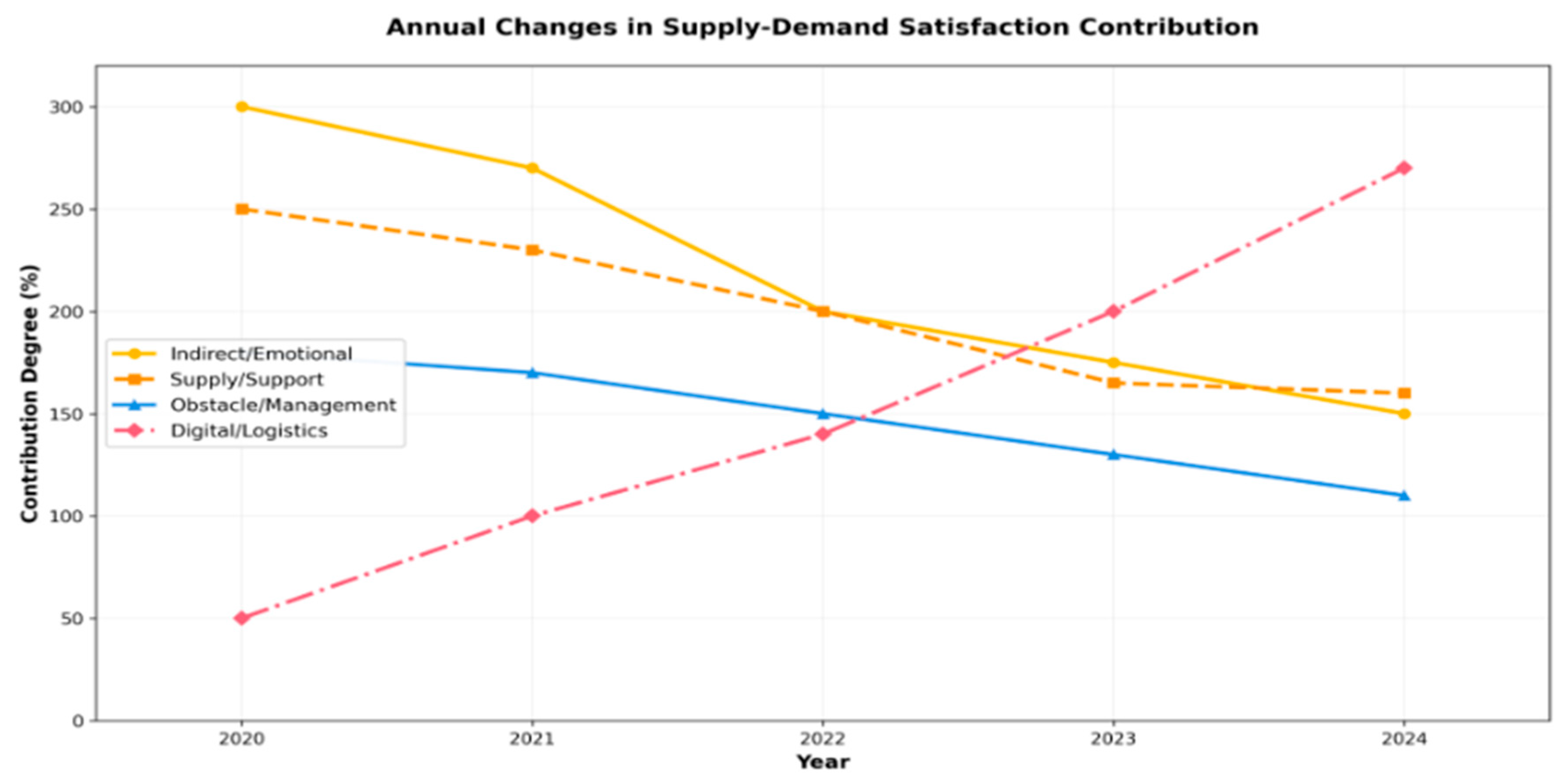
This study empirically analyzed changes in societal perceptions of older adults in Korea by examining digital media data from 2020 to 2024. The sentiment analysis showed that negative sentiment decreased from 58.3% in 2020 to 37.8% in 2024, while positive sentiment increased from 22.5% to 42.7%.
The topic modeling analysis revealed a distinct shift in discourse—from themes such as “health,” “care,” and “vulnerability” to “participation,” “self-management,” and “digital activity.” These findings indicate that the image of older adults in digital media has evolved from that of passive care recipients to active social participants. The findings of this study also underscore the role of digital media as a space for renegotiating generational relationships. As older adults become more digitally active, younger users are increasingly exposed to diverse narratives of aging that challenge traditional stereotypes. This shift may help reduce intergenerational tension by highlighting shared experiences and common interests that transcend age boundaries. The decline in keywords related to discrimination or conflict suggests that digital platforms may contribute to fostering greater mutual understanding.
The long-standing negative stereotyping of older adults observed in previous studies (
E.-J. Kim 2017;
S. Kim and Park 2014) is gradually diminishing. Earlier research often depicted older people as dependent, unproductive, or burdensome, reinforcing societal ageism. In contrast, this study demonstrates that in the past five years, these frames have softened, and older adults are increasingly represented as contributors, learners, and digital citizens. Recent empirical research has also demonstrated heterogeneous patterns of social activity among community-dwelling older adults in South Korea, underscoring the diversity and active engagement of older populations (
Shin et al. 2024). This trend aligns with Loos and Ivan’s findings regarding the weakening of visual ageism and with AARP’s report highlighting a positive shift in online imagery of older adults (
AARP 2024).
The observed changes are also linked to the structural characteristics of digital media. Unlike traditional media, which operate through one-way communication and thus reinforce passive portrayals, digital media foster interaction and participation, allowing older adults to construct their own narratives (self-representation). The increasing frequency of keywords such as “digital activity,” “communication,” “participation,” and “creation” demonstrates that older adults are now emerging not merely as subjects of discussion but as active producers of discourse. This reflects broader sociocultural transformations driven by enhanced digital accessibility, higher levels of digital literacy among older generations, and expanded intergenerational interaction.
The findings of this study are closely connected to current policy debates in Korea regarding the adjustment of the official age definition of older adults from 65 to 70 years. Previous research has shown that generational differences in perceptions significantly influence public acceptance of policies related to elderly support and welfare burdens (
Park 2022). The shift toward a more positive and capable image of older adults provides empirical evidence supporting these policy discussions. In particular, the results reinforce the need for a capability-based definition of aging, emphasizing functional ability and social participation over chronological age. This perspective aligns with
Sen’s (
1999) Capability Approach, which posits that quality of life is determined not by age but by an individual’s capabilities and opportunities to act. From a practical perspective, the results highlight the need for media guidelines that promote accurate and positive representations of older adults. Although progress has been made, ageist expressions and derogatory slang continue to appear in online spaces. Establishing ethical standards for digital communication—along with educational programs for content creators—could help ensure that portrayals of older adults align with principles of inclusivity, respect, and social justice.
From a policy standpoint, this study underscores the importance of digital inclusion. Although perceptions of older adults are becoming more positive, some digital spaces still exhibit generational conflict, discriminatory language, and information disparities. Therefore, national and local governments should strengthen digital literacy programs for older adults. However, education implies more than technical training; intergenerational media literacy initiatives are essential to foster mutual understanding, helping younger generations decode and appreciate older adults’ expanding digital narratives. Furthermore, policy interventions should include the establishment of ethical media guidelines that discourage ageist language (e.g., derogatory slang) and promote balanced, age-inclusive representations in content creation. Such efforts should go beyond individual education and serve as a broader strategy for social cohesion in an aging society.
From an academic perspective, this research contributes by presenting an analytical framework for examining social perception change through digital text mining. Unlike traditional qualitative content analysis, which relies heavily on subjective interpretation, this study employs quantitative, longitudinal text analysis of more than 200,000 unstructured data entries, offering a replicable model for future research. This methodological framework can be extended to studies in health, welfare, psychology, and sociocultural domains that aim to investigate large-scale public discourse on aging.
However, several limitations should be acknowledged. First, the analysis was limited to online comments and news texts, which may not fully capture the lived experiences or perceptions of older adults themselves. Second, the sentiment classification relied on the SentiWordNet-KO lexicon. While effective for large-scale analysis, this dictionary-based approach may have limitations in fully capturing Korean cultural nuances, such as honorifics, specific internet slang, or subtle irony, which could lead to potential under- or overestimation of sentiment scores. Third, the analysis period covered only five years, which may restrict the ability to detect longer-term societal trends. Future research should therefore adopt mixed-methods approaches, incorporating qualitative techniques such as In-depth Interviews (IDI) or Focus Group. Another important limitation lies in platform specificity. Because the dataset was derived primarily from Naver News and YouTube, the findings may not fully reflect the perspectives found in other digital environments such as Twitter/X, online communities, or emerging short-form platforms. Future studies should incorporate a broader range of data sources to capture the full diversity of online discourse. Moreover, qualitative validation—such as interviews with older influencers or digital creators—would help contextualize the computational findings and deepen our understanding of the motivations behind digital engagement. Interviews (FGI) with older content creators. These methods would validate the automated text analysis results and provide deeper insight into the specific intentions and lived experiences behind the text. Additionally, comparative studies by age, gender, or media platform could provide deeper insights into the diversity of elderly representation and intergenerational dynamics.
In summary, this study provides empirical evidence that the image of older adults in the digital era has shifted from that of dependents in need of care to engaged and participatory social actors. This transformation goes beyond linguistic change—it reflects a broader value shift toward inclusivity and active aging, offering meaningful implications for both policy and practice in super-aged societies. Finally, the transition toward positive representations also has implications for social policy. As Korea considers revising the age threshold for welfare eligibility, empirical evidence demonstrating increased capability and participation among older adults can inform policy debates. This study contributes to such discussions by showing how public discourse increasingly recognizes older adults as active contributors rather than dependents, supporting a shift toward capability-based policy frameworks.