1. Introduction
Drug markets continue to consolidate territorially globally, witnessing increased consumer numbers. By 2021, 39.6 million individuals will suffer from medical and psychological disorders associated with drug consumption (
UNODC 2023b). This consumer surge implicates a corresponding growth in the entire drug production chain. In the American Andes alone, there has been a 200% increase in cocaine cultivation over recent years (
UNODC 2023a).
Cocaine’s role as the pivotal element connecting the four case studies that we analyze is noteworthy. Our research is confined to drug distribution spaces in urban environments, focusing specifically on locations where cocaine and its derivatives are traded (acknowledging that other drugs coexist in these markets) without comprehensively addressing all segments of the drug market.
Cocaine has established a global market, with its central production hub in the tropical Andes and consumption markets in higher-income countries (
Gootenberg 2001,
2002;
Labrousse 2011;
Millán-Quijano 2020). These markets are interconnected through a series of countries that act as transit stages for illegal drugs. However, the cocaine market appears to be evolving, with new coca cultivation countries emerging and new transportation routes empowering criminal organizations in countries like Ecuador, Brazil, and Nigeria (
Ajiboye 2022;
Bartolomé and Ventura Barreiro 2020;
Zou et al. 2023).
Beyond global shifts, the cocaine market has also undergone regional and local transformations. Drug trafficking organizations (DTOs) are no longer solely focused on supplying markets in more developed countries but are venturing into establishing markets in Latin American cities (
Benítez et al. 2019;
Grogger and Willis 2000;
Mejía and Restrepo 2013). Although cocaine prices may be lower compared to the global north markets, they continue to generate significant profit margins for these organizations.
Cocaine markets are typically located in large cities, associated with higher income levels (as it is a costly product), and are characterized by being more violent than other illegal drug markets (
UNODC 2023a). The violence in these markets stems from various causes and has multiple consequences in the urban environments (
Jiménez-García et al. 2023a). Latin American cities host cocaine markets that are more violent and lethal than any other global region (
UNODC 2023b).
Our study aims to analyze why drug markets in Latin America exhibit higher levels of violence compared to European markets. To this end, we have conducted four case studies, two in Latin America and two in Europe. These case studies analyze homicide rates and the influencing factors in each market, establishing fundamental comparisons.
2. Systemic Violence in Drug Markets
Illegal drug markets present a persistent and complex challenge to global societies, marked by their dynamism and the diversity of actors involved. These systems—including producers, traffickers, consumers, and government agents, each with distinct interests and strategies—have been extensively studied due to their illicit nature and propensity for violence (
Labrousse 2011;
Reuter 2009). Specifically, the global cocaine market has established a sophisticated network that connects production hubs in the tropical Andes with consumption markets in higher-income countries, creating a web of transit nations and evolving trafficking routes (
Gootenberg 2001,
2002).
The relationship between crime, drugs, and violence—commonly referred to as the crime–drugs–violence nexus—has been studied for nearly a century (
Inciardi 1981). Paul
Goldstein’s (
1985) seminal work, however, provided a foundational conceptual framework for understanding this complex interaction. Goldstein developed a tripartite model explaining the drugs-violence connection through three distinct mechanisms: economic-compulsive, psychopharmacological, and systemic. This model has been instrumental in elucidating the various ways drug markets can generate violence and has influenced numerous subsequent studies (
Goldstein 1985;
Ousey and Lee 2007;
Reuter 2009).
Building upon Goldstein’s model,
Jacques and Wright (
2011,
2014) proposed a conceptual framework for analyzing illicit drug markets based on resource exchange and social control. This approach examines how participants acquire and distribute resources and how they maintain order and stability within the market. The authors distinguish between peaceful and violent social control, providing a basis for understanding why some markets are more violent than others. This theoretical framework is particularly useful for explaining variations in violence levels across different drug markets and has been applied in various contexts to understand the dynamics of drug-related violence (
Jacques 2010;
Jacques and Wright 2014).
May (
2004) contributes to this theoretical understanding by examining how dynamics of robbery and violent retaliation among traffickers contribute to instability in drug markets. His work highlights that the absence of formal conflict resolution mechanisms in illegal markets can lead to cycles of retributive violence, exacerbating the volatility of these environments. This perspective is further supported by studies such as
Taniguchi et al. (
2011), which explore the role of violence in enforcing informal rules and maintaining market stability.
Systemic violence, defined by Goldstein as “traditionally aggressive patterns of interaction within the system of drug distribution and use” (
Goldstein 1985, p. 497), is particularly relevant for understanding the dynamics of drug markets. This form of violence manifests in various ways, reflecting the complex
Reuter (
2009) interplay of power, control, and competition that characterizes these illicit environments. highlights territorial disputes between rival traffickers as a significant source of violence, especially in fragmented or expanding markets, emphasizing how market structure and competitive dynamics can directly influence levels of violence.
Taniguchi et al. (
2011) highlight the prevalence of aggression and homicides within distribution hierarchies as mechanisms for enforcing normative codes and maintaining discipline. Their research provides insights into the internal dynamics of drug trafficking organizations and how violence is employed as a tool for management and control.
Ousey and Lee (
2007) emphasize the elimination of informants as a practice to protect market operations and deter cooperation with authorities, underscoring the role of violence in maintaining secrecy and loyalty within criminal networks.
Johnson and Bennett (
2017) discuss how violent punishments for selling adulterated or counterfeit drugs serve to maintain product “integrity” within the market. Their work illuminates the informal quality control mechanisms in drug markets and how violence is used to enforce standards. Additionally,
Jiménez-García et al. (
2023b) explore how the physical and social characteristics of drug-selling areas contribute to the incidence of violence, emphasizing the importance of considering environmental factors in understanding drug market violence.
Market structure and competition fundamentally influence levels of violence.
Kilmer and Hoorens (
2010) argue that more fragmented markets—such as those often found in Latin America—tend to be more violent due to increased competition and the lack of stable mechanisms for conflict resolution. Their work provides a comparative perspective on market structures across different regions and their implications for violence. However,
Caulkins and Reuter (
2006) suggest that more consolidated markets or those with monopolistic structures may experience less violence, although this may come at the cost of other social problems. This complex view highlights the complex trade-offs involved in drug market dynamics and their impact on violence.
Socioeconomic and cultural factors also significantly shape violence in drug markets.
Jiménez-García et al. (
2023b) contend that the socioeconomic vulnerability of certain urban areas creates conditions conducive to the establishment of violent drug markets. Their research emphasizes the importance of considering broader social contexts when analyzing drug market violence. Moreover, cultural norms and social expectations influence how conflicts are resolved within these markets.
Alzate-Zuluaga and Jiménez-García (
2021) explore how local power structures and extortion networks can moderate or exacerbate violence in drug markets, providing insights into the complex interplay between formal and informal governance structures in drug-affected communities.
The globalization of the drug trade has introduced new complexities to this landscape.
Gootenberg (
2001,
2002) traces the historical evolution of the global cocaine market, demonstrating how production and consumption dynamics have changed over time and providing a crucial historical perspective on the development of transnational drug markets.
Millán-Quijano (
2020) examines how internal cocaine trafficking in Colombia relates to armed violence, illustrating the complex interactions between drug markets and broader conflicts. This research highlights the interconnectedness of drug trafficking and other forms of organized violence.
The role of immigration and transnational networks in shaping drug markets and their violence dynamics has also been extensively studied.
Cano (
2020,
2021) analyzes the role of family clans in organized crime in Germany and Spain, noting how these structures influence the dynamics of European drug markets. His work provides insights into the unique characteristics of drug markets in different European contexts.
Bartolomé and Ventura Barreiro (
2020) examine how the evolution of trafficking routes has empowered criminal organizations in countries such as Ecuador, Brazil, and Nigeria, adding new dimensions to the violence associated with drug trafficking. Their research underscores the global nature of drug markets and the importance of considering international dynamics when understanding local violence.
The evolution of drug distribution methods has also influenced violence dynamics.
Aldridge and Décary-Hétu (
2016) examine how online drug markets are changing the nature of drug distribution and potentially reducing the violence associated with traditional drug markets. Their work highlights how technological advancements can reshape market dynamics and impact violence levels. However,
Bhatia and Sharma (
2022) caution that these new distribution methods present new challenges for control and prevention, emphasizing the need for evolving strategies to address drug market violence.
Despite extensive research on violence in drug markets, a significant gap remains in our understanding the differences in violence levels across distinct geographical contexts. While several studies have identified individual factors contributing to violence, there is a notable absence of research examining how these factors interact simultaneously and complexly to produce varying levels of violence in specific contexts.
Specifically, the existing literature lacks comprehensive comparative analyses examining the specific configurations of factors that lead to higher or lower levels of violence in drug markets across different regions. While valuable insights have been gained from studies focusing on specific regions or aspects of drug market violence, there is a need for research that integrates these findings within a cross-regional comparative framework.
This study seeks to fill this crucial gap by employing a fuzzy-set qualitative comparative analysis (fsQCA) approach to examine how various conditions combine to produce different levels of violence in specific urban cocaine markets. By focusing on four cities that represent critical points in the global cocaine distribution chain—Pereira, Ciudad Juárez, Frankfurt, and Madrid—our study offers a unique perspective on the complex configurations of factors that lead to higher or lower levels of violence.
The fsQCA method is particularly suited for this type of analysis, as it allows for the examination of complex causal relationships and the identification of multiple pathways to the same outcome (
Ragin and Strand 2008). This approach enables us to capture the complex interactions between various factors identified in the literature such as market structure (
Kilmer and Hoorens 2010) and socioeconomic conditions in a way that traditional statistical methods might not capture (
Jiménez-García et al. 2023a).
By conducting this comparative analysis, our study not only fosters a more nuanced understanding of violence dynamics in these markets but also provides valuable insights for developing more effective and contextualized strategies to address this pressing social problem. The inclusion of both Latin American and European cities offers a unique opportunity to examine how factors identified in the literature manifest and interact in vastly different contexts, potentially revealing new insights into the conditions that promote or mitigate violence in drug markets.
3. Materials and Methods
Investigating drug markets presents unique challenges due to the scarcity of official, reliable, and representative data, as well as the inherent risks for researchers examining these illicit activities (
Pagliarin et al. 2023). To address our research question—why some drug markets are more violent than others—we adopted a qualitative research approach characterized by its exploratory and descriptive nature (
Creswell 2007;
Creswell and Creswell 2018). This approach allows for an in-depth understanding through partial or localized evidence, which is crucial given the clandestine nature of drug markets.
Our methodology combines multiple data sources and analytical techniques to capture the complex dynamics of drug market violence. By utilizing comparative case study design and employing Fuzzy-Set Qualitative Comparative Analysis (fsQCA) (
Ragin 2007), we aim to uncover the intricated factors contributing to varying levels of violence across different urban cocaine markets. This configurational approach enables us to identify multiple causal pathways to violence by analyzing how institutional, social, and market factors interact. While this study focuses on cocaine markets, the methodological framework is adaptable to other illicit markets, such as synthetic drugs or opium, where production, transit, and consumption dynamics differ significantly.
3.1. Case Study Methodology
Our methodological strategy is based on a multiple case study design (
Sammut-Bonnici and McGee 2015;
Yin 2009), aimed at answering the following research question: Why are some cocaine markets more violent than others? To address this question, we selected four key cities: Frankfurt (Germany), Madrid (Spain), Pereira (Colombia), and Ciudad Juárez (Mexico).
The selected cities—Ciudad Juárez, Pereira, Madrid, and Frankfurt—were chosen based on their contrasting levels of cocaine-related violence and their distinct roles in the global cocaine supply chain (
Table 1). Ciudad Juárez represents extreme violence associated with drug trafficking transit, while Frankfurt shows low violence levels in a consumer market with high institutional control. Pereira reflects mid-level violence in a production region, and Madrid illustrates a European distribution hub where corruption intersects with organized crime. These cities offer a comprehensive comparative framework to investigate why some urban cocaine markets are more violent than others. While we acknowledge the critiques regarding logistical connectivity, the focus of this study lies in understanding local violence configurations rather than modeling the entire supply chain (
Reuter 2009;
Werb et al. 2011). This variation is essential for identifying and contrasting the factors that influence the intensity of violence. Each city occupies a specific position in the cocaine trade and represents different socioeconomic and political contexts (
Rios 2013), allowing us to examine how local conditions and supply chain roles affect market dynamics and associated violence. Despite their differences, all four cities are interconnected within the global cocaine trafficking network and operate under similar economic principles of supply and demand (
Caulkins and Reuter 2006). This interconnection facilitates meaningful comparisons and ensures that the findings are relevant in a global context. Additionally, the availability of reliable and detailed information in these cities guarantees the robustness and validity of the analysis (
Crowe et al. 2011).
The selection of these cities allows us to comprehensively address the research question because, by including markets with different levels of violence and roles in the supply chain, we can identify patterns and contrasts that reveal key factors in the generation or mitigation of violence (
Felbab-Brown 2017;
Jiménez-García et al. 2023b;
Tealde 2019). The diversity of socioeconomic and political contexts enables us to explore how macro-level variables, such as state policies, and micro-level variables, such as local market dynamics, interact to influence violence (
Rabe-Hesketh and Skrondal 2013;
Snijders and Bosker 2012). Comparing different scenarios complements the analysis of similar cases, enriching our understanding of the phenomena studied (
Eisenhardt and Graebner 2007). Furthermore, the findings from these specific cases can be extrapolated to other contexts, as they reflect a wide range of scenarios present in the global cocaine trade. By focusing exclusively on cocaine, we avoid diluting the analysis with the dynamics of other substances, allowing us to delve deeper into the specificities of this market and offer more precise and applicable conclusions (
UNODC 2023b).
3.2. Period of Study
We conducted our fieldwork from January 2021 to December 2022. This two-year period allowed us to examine recent dynamics of urban cocaine markets and associated violence in our study sites. Our focus on this timeframe enabled us to consider contemporary factors influencing drug markets, including changes in public policies, adaptations by criminal organizations, and the socio-economic impacts of global events, particularly the COVID-19 pandemic.
3.3. Data Collection
Our study employed a mixed-methods approach that combined primary and secondary data collection techniques to gain comprehensive insights into the dynamics of violence in urban cocaine markets across Frankfurt, Madrid, Pereira, and Ciudad Juárez. This methodology allowed us to develop a deep understanding of the complex interplay among various factors influencing drug-related violence in these diverse urban settings.
3.3.1. Primary Data Collection
We conducted semi-structured interviews with a total of 56 participants, comprising 14 individuals from each of the four selected cities. Participants were selected through purposive sampling combined with snowball sampling techniques (
Noy 2008), which are effective in accessing hard-to-reach populations involved in illicit activities (
Atkinson and Flint 2001). Ethical protocols, approved by the Institutional Ethics Review Board (Universidad de Los Andes), were rigorously followed, ensuring informed consent and anonymity for all participants. These protocols included specific guidelines for handling sensitive information, such as details about unreported crimes, to ensure confidentiality while protecting the researcher and participants from legal risks. While narratives from traffickers, law enforcement, and academics are subjective, they provide valuable insights into the dynamics of cocaine markets. To mitigate potential biases, these narratives were triangulated with secondary data, such as institutional reports and publicly available statistics.
The inclusion criteria required participants to have a minimum of five years of direct involvement in or substantial knowledge of the local cocaine market, ensuring the depth and authenticity of the data collected. We included individuals occupying various roles within or related to the cocaine market, such as drug traffickers, law enforcement officers, academics specializing in criminology or drug policy, policymakers, and consumers. All participants were over the age of 18 to comply with ethical research standards.
The sample size, though limited, is justified within the context of qualitative research, which prioritizes the richness of data over the quantity of participants (
Patton 2015). Engaging with individuals involved in illicit activities presents significant challenges, including issues of trust and safety (
Lee 1995). A smaller, carefully selected sample allowed us to build rapport and obtain high-quality, in-depth data.
Participants were categorized based on their role in or relationship with the cocaine market and their years of experience, as detailed in
Table 2. This categorization is crucial for understanding the varied perspectives and for analyzing how different positions within the market influence perceptions of violence and market dynamics.
Interviews were conducted in the local language of each city—German in Frankfurt and Spanish in Madrid, Pereira and Ciudad Juárez—to facilitate comfort and authenticity. Interviews lasted between 60 and 90 min and were held in secure, neutral locations chosen by the participants to ensure their safety and confidentiality. With participants’ consent, interviews were audio-recorded to ensure accuracy in data capture. Recordings were transcribed verbatim and, where necessary, translated into English for analysis, maintaining the integrity of the original expressions (
Regmi et al. 2010).
To complement the interview data, we conducted extensive field observations in each of the four selected cities. Field observations are a crucial component in studying illicit markets, as they allow researchers to capture contextual nuances and real-time dynamics that may not be fully articulated in interviews (
Angrosino 2007).
We collaborated with local law enforcement agencies and community organizations to identify and access areas associated with cocaine consumption and trafficking. A total of 354 drug consumption points were identified across the four cities. We systematically inspected 150 of these locations—9 in Frankfurt, 35 in Madrid, 45 in Pereira, and 61 in Ciudad Juárez. The selection of sites was based on factors such as the intensity of drug activity, reported incidents of violence, and accessibility.
For the remaining locations, we analyzed photographic evidence and official reports provided by local police departments, supplementing direct observations where physical access was limited due to safety concerns. This multi-faceted approach to field observation allowed us to gather a comprehensive understanding of the physical and social environments in which cocaine markets operate across our study sites.
3.3.2. Secondary Data Collection
To complement and verify the primary data, we collected secondary data from various official and academic sources (
Table 3). These data provided quantitative measures of violence, drug seizures, and socioeconomic indicators, crucial for calibrating our fsQCA variables. We ensured comparability by standardizing measures across cities and using data from similar time periods (2015–2020).
3.3.3. Data Integration and Management
Data integration focused exclusively on qualitative sources, using a triangulation strategy to ensure the robustness of findings. These sources included semi-structured interviews with diverse actors, institutional reports, and publicly available documents, all of which were cross-referenced during the analysis. According to
Creswell (
2007), triangulation enhances the validity of qualitative research by combining multiple perspectives to reduce bias and improve the reliability of interpretations. In this study, narratives from interviews were critically analyzed alongside institutional data to identify recurring patterns and configurations of violence across urban cocaine markets.
This approach allowed for the identification of common themes, such as territorial disputes or institutional corruption, that were observed in multiple cities. While qualitative data do not lend themselves directly to statistical generalization, this triangulated analysis provides analytic generalization (
Yin 2017), where patterns identified in specific contexts can inform broader theoretical frameworks. This strengthens the transferability of findings to other urban illicit markets with similar institutional, market, and social conditions.
Given the sensitivity of our research, we prioritized ethical considerations. Participants provided informed consent and were assured anonymity. We used pseudonyms and secure data storage to protect identities. During field observations, researchers were trained in situational awareness to minimize potential risks. We maintained transparency with collaborating institutions regarding research purposes and data usage (
Israel and Hay 2006;
Liamputtong 2007).
Establishing trust with participants, particularly traffickers, was approached carefully. Researchers underwent specialized training in ethical interviewing techniques to minimize risks and ensure the reliability of narratives. Transparency regarding research objectives and data usage was maintained throughout. Additionally, situational awareness training was provided to researchers to minimize field risks. To protect participants, care was taken to avoid questions that could jeopardize their safety or legal standing, and interview settings were selected to maximize confidentiality.
Furthermore, Mexican, Colombian, and European regulations for this type of research mandate that if an interviewee discloses an unprosecuted crime, the researcher is obligated to report it. This requirement was explicitly outlined in the informed consent form. Participants, particularly active or former narcotraffickers, were also advised to refrain from discussing unprosecuted crimes in their narratives. They were invited to reflect on the importance of, in a hypothetical scenario, surrendering to authorities if they were currently engaging in criminal activities. These measures collectively ensured the safety of both researchers and participants while preserving the integrity of the data.
3.3.5. Challenges and Limitations
Our study faced several challenges inherent to researching illicit markets. Access restrictions in high-risk areas were mitigated through secondary data and local informants. We addressed potential unreliability in official statistics by triangulating multiple data sources. While our two-year data collection period captured temporal variations, we acknowledge that some market dynamics may have changed outside this timeframe.
Despite the limitations of a small sample size (
n = 56) and some cities (
n = 4), the uniqueness of our research approach and the intrinsic value of the participant’s experiences and strategic roles provide a distinctive perspective in the discourse on drug markets. While fuzzy-set Qualitative Comparative Analysis (fsQCA) is a viable method in smaller samples (
Häge 2007;
Ryan and Smith 2012), we acknowledge the potential impact on statistical power yet emphasize our approach’s qualitative depth. Despite these challenges, our mixed-methods approach provided a comprehensive dataset for analyzing violence in urban cocaine markets across the four study sites (
Jacques 2010).
3.4. Variables and Methods of Analysis
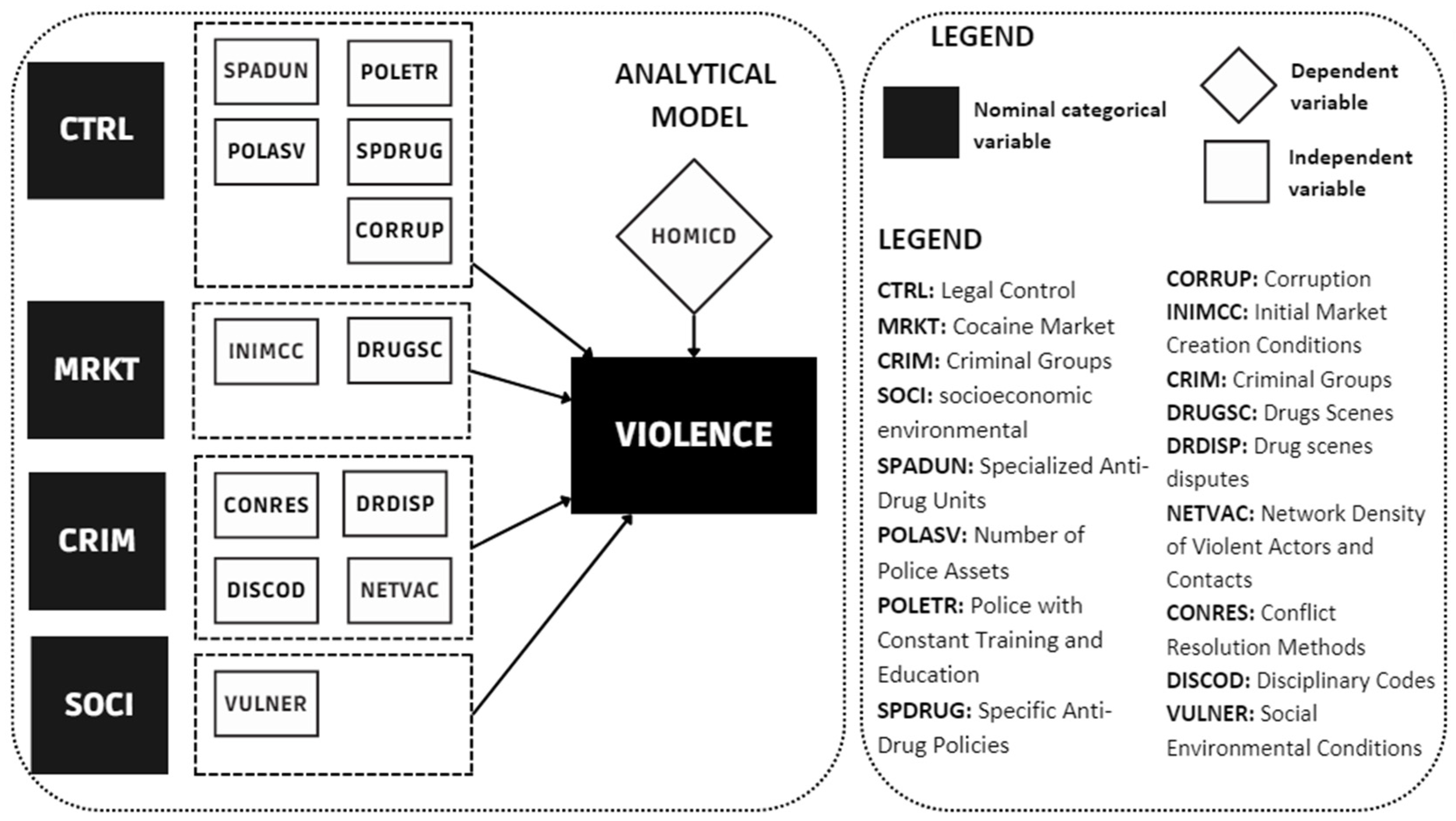
We identified key variables prevalent across urban cocaine markets, focusing on four main categories: Local Control, Cocaine Market Dynamics, Criminal Actors, and Social Environmental Conditions (see
Figure 1). These categories encompass factors such as the presence of specialized anti-drug units, levels of corruption, conflict resolution methods among criminal groups, and the vulnerability of social environments.
Each variable was operationalized into measurable sub-variables to capture the nuances of the phenomena under study: (1) Local Control includes variables like specialized anti-drug units, the number and training of police officers, and specific anti-drug policies. (2) Cocaine Market Dynamics considers factors such as the number of drug scenes and the frequency of disputes over these territories. (3) Criminal Actors examine levels of corruption, methods of conflict resolution, and the existence of disciplinary codes within criminal organizations. (4) Social Environmental Conditions assess social vulnerability, including poverty, infrastructure quality, and institutional presence. While certain variables, such as institutional corruption or social vulnerability, may include perception-based measures, these were validated with objective secondary data (e.g., publicly available statistics or institutional reports). Furthermore, this study prioritizes urban-level variables as critical to explaining violence in localized contexts, while transnational logistical factors (e.g., ports) were excluded as they fall beyond the scope of this research.
3.4.1. Calibration of Variables
Calibration involves assigning membership scores ranging from 0 (full non-membership) to 1 (full membership) based on established criteria. For example, the Homicide Rate was calibrated using international benchmarks (
UNODC 2020), where a rate above 49.4 homicides per 100,000 inhabitants was assigned a score of 1.0 (very high violence) (
Table 4). Variables derived from qualitative data, like Corruption and Conflict Resolution Methods, were calibrated based on their intensity and prevalence as reported by participants and observed during fieldwork.
3.4.2. fsQCA Implementation
The fsQCA was conducted using fs/QCA 3.0 software (
Ragin and Strand 2008). The analysis involved processing the calibrated data to identify causal patterns that explain the levels of violence observed in the four cities. By examining the combinations of conditions and their relationship to the outcome, we identified configurations that consistently lead to high or low levels of violence. The fsQCA results, including the identified configurations and their consistency and coverage scores, will be presented in the Results section, as they constitute the findings of the study.
4. Results
4.1. Homicide Rates in Cocaine Markets: A Contextual Analysis (2010–2022)
Homicide rates were selected as the primary outcome variable in this study due to their availability, reliability, and established connection to systemic violence in drug markets. While acknowledging that organized crime violence encompasses a broader spectrum of crimes—such as extortion, forced disappearances, and kidnappings—homicides provide a measurable and comparable indicator across diverse urban contexts. This decision is particularly relevant in environments where data on other forms of violence is either unavailable or inconsistently reported, often due to underreporting or corruption (
Reuter 2009;
Jiménez-García et al. 2023b). Moreover, lethal violence has been historically linked to disputes over territorial control, enforcement of market rules, and broader social tensions arising from cocaine markets (
Johnson and Bennett 2017). While this approach does not capture the full spectrum of violence, it serves as a robust proxy for analyzing the intensity and systemic nature of violence associated with cocaine markets in different urban realities. Future research should seek to integrate additional measures of organized crime violence to complement and expand upon the findings presented here.
An analysis of homicide rates across the studied cities reveals significant disparities in lethal violence, offering insights into the varying intensity associated with cocaine markets in different urban contexts.
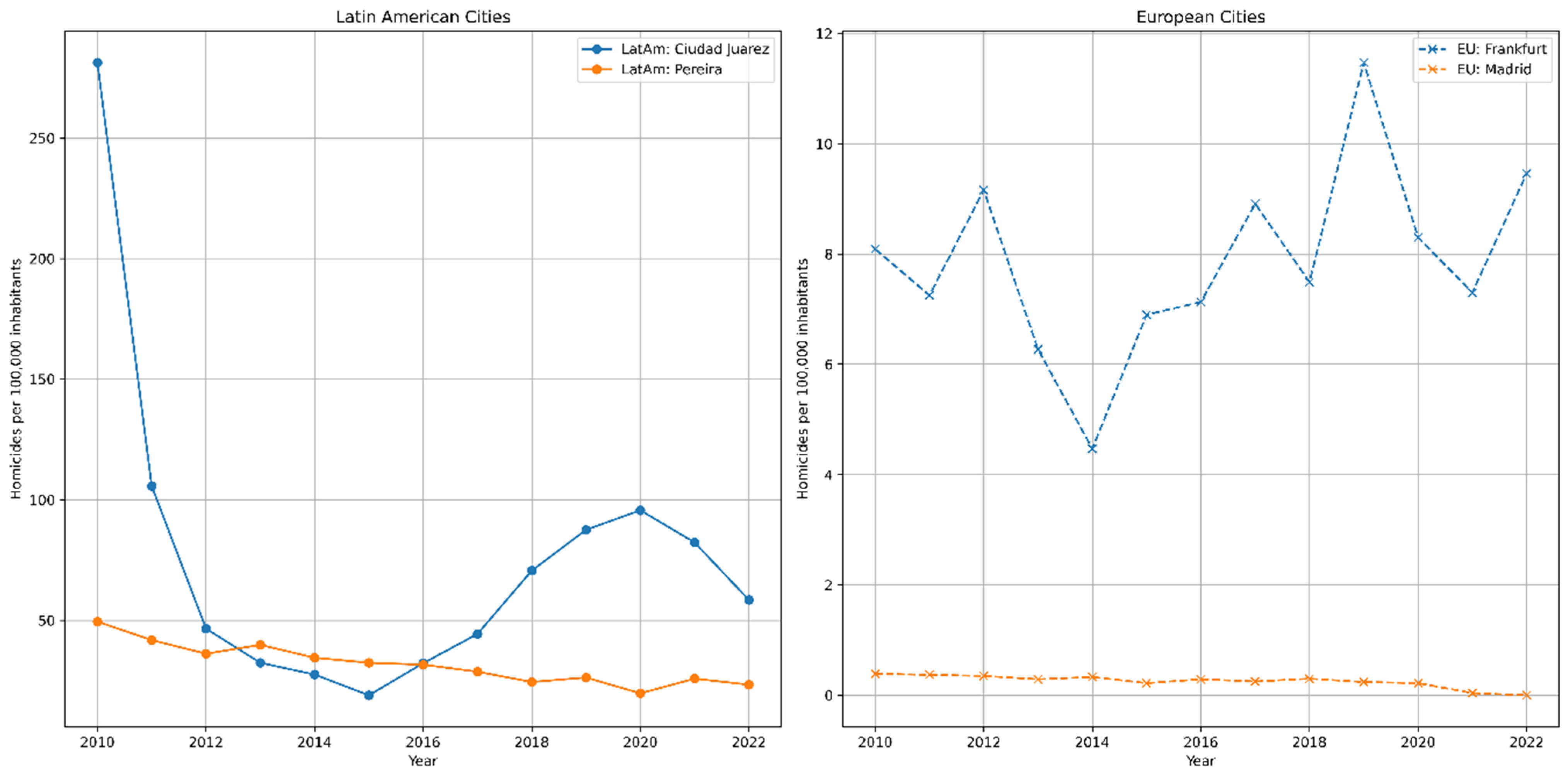
Between 2010 and 2022, Ciudad Juárez emerged as the most violent city, with an average of 75.62 homicides per 100,000 inhabitants. Pereira followed with an average rate of 33.09 homicides per 100,000 inhabitants, while Frankfurt and Madrid exhibited substantially lower rates at 5.16 and 0.39 homicides per 100,000 inhabitants, respectively (
Figure 2).
Nevertheless, our fieldwork with police officers and analysis of official reports on violent deaths provide strong evidence of the substantial impact of illegal drug markets on homicide rates. Authorities consistently report and structure their responses to violence in relation to drug trafficking, identifying it as a significant driver of lethal violence in these urban contexts.
In our fsQCA model, homicide rates serve as the outcome variable, quantifying levels of violence in cocaine markets across diverse urban settings. The stark contrast between the homicide rates of Latin American and European cities provides a clear delineation for analyzing the causal conditions contributing to market violence. However, we approach this analysis with the understanding that while drug markets may act as a catalyst for violence, they operate within broader socio-historical contexts that shape urban sociabilities and violence patterns.
Despite the significant cocaine markets in all four cities, the persistent disparity in violence levels between these regions underscores the complex factors influencing market-related violence. This variation underpins our fsQCA analysis, which explores how different combinations of causal conditions potentially lead to higher or lower levels of violence in cocaine markets, while recognizing that these markets are embedded in diverse urban realities with multiple sources of conflict and violence.
4.2. fsQCA Analysis of Cocaine Market Violence
fsQCA analysis begins with truth table construction, representing all logically possible combinations of causal conditions associated with cocaine market violence levels.
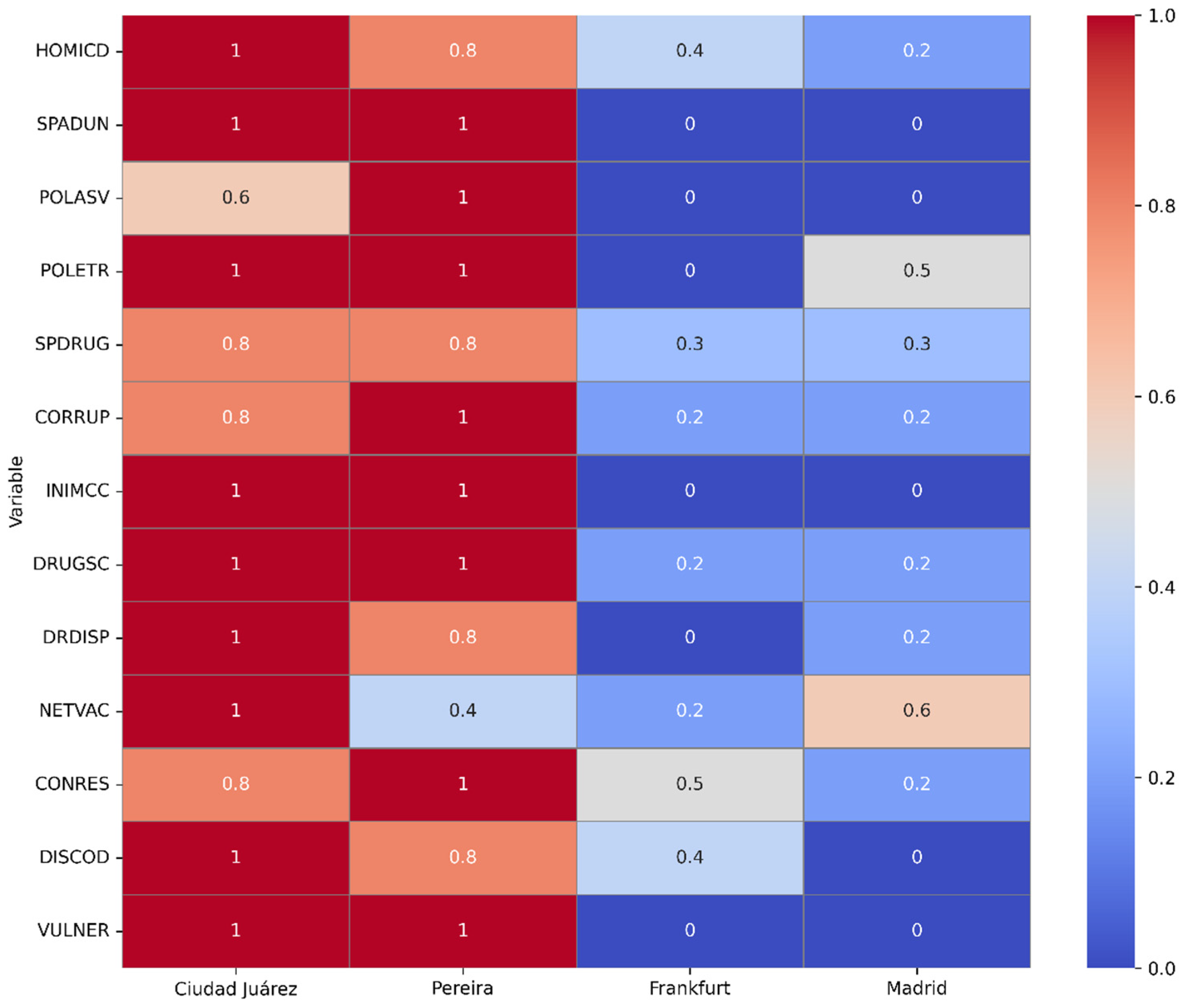
Figure 3 presents the calibrated data for each condition across the four studied cities.
Ciudad Juárez exhibits a highly volatile cocaine market (
Figure 3). The data indicate a fragmented landscape with numerous drug scenes and frequent territorial disputes. The city’s institutional response appears compromised, with weak specialized anti-drug units and inadequate police training. Dense networks of violent actors operate within challenging socio-environmental conditions, creating an environment conducive to market-related violence.
Pereira’s market shares similarities with Ciudad Juárez, but with notable nuances. The data suggest a context where corruption is pervasive and violent conflict resolution is the norm (
Figure 3). Like Ciudad Juárez, Pereira’s market appears fragmented, with significant local consumption. Socio-economic conditions favor illicit market growth. Despite its proximity to production areas, institutional weaknesses hinder effective control, mirroring the challenges seen in Ciudad Juárez.
Frankfurt’s market presents a stark contrast to its Latin American counterparts. The truth table values suggest a more controlled environment overall (
Figure 3). While there is evidence of some conflict and disciplinary codes within criminal groups, the market appears less prone to violence. The data indicate effective law enforcement presence, contributing to a more stable market environment.
Madrid emerges as the most controlled market among the four cities studied. The truth table results point to strong institutional control and low levels of corruption (
Figure 3). While there is some presence of violent actor networks, the market appears less fragmented with fewer territorial disputes compared to the Latin American cities. Effective law enforcement oversight contributes to a stable market environment.
4.3. Analysis of fsQCA Truth Curve and Complex Solution
The fsQCA truth curve analysis reveals distinct patterns across the models examined.
Table 5 presents the results of the complex solution for each model, showing how the configurations of causal conditions differ between Latin American and European drug markets. In Latin American model (MOD_LAM), the model shows 77.8% coverage and 100% consistency, indicating that the high levels of violence are consistently linked to a combination of factors such as weak institutional control, pervasive corruption, and fragmented criminal networks. This suggests that these markets operate in a highly volatile environment where violence becomes a primary regulatory mechanism.
Within European contexts, MOD_EUR, with a coverage of 66.7% and a consistency of 50%, shows a promising ability to capture significant dynamics of violence in these cities, though it suggests that additional variables might enhance its explanatory power. The model’s moderate coverage indicates that it successfully explains two-thirds of violent cases, highlighting the relevance of the included factors in structured, institutional contexts. However, the lower consistency suggests that the causal pathways are more variable, requiring further refinement to capture the complexity of European markets.
The integrated model (MO_ALL) achieving coverage of 58.3% with 100% consistency underscores challenges in unifying both contexts. Certain factors, like corruption and network density, remain consistently relevant, but distinct dynamics in each region require separate analytical approaches. Findings reinforce the necessity for tailored policy responses, considering specific configurations that drive violence in each regional setting.
Analysis of conditioning variables in MOD_LAM, MOD_EUR, and MOD_ALL models, as presented in
Table 6, provides crucial insights into factors driving homicidal violence within cocaine markets across different urban contexts. MOD_LAM, representing Latin American cities, demonstrates a pronounced influence of all examined variables. Presence of O symbols across all conditions indicates that factors such as weak specialized anti-drug units, inadequate police staffing and training, ineffective drug policies, high corruption, violent market creation conditions, numerous drug scenes, frequent disputes, dense networks of violent actors, violent conflict resolution methods, harsh disciplinary codes, and high social vulnerability all contribute significantly to the risk of homicidal violence in these markets.
In contrast, MOD_EUR reveals a different pattern for European cities. Presence of Φ symbols for SPADUN, POLASV, POLETR, SPDRUG, and VULNER suggests that absence or negation of these conditions contributes to the outcome in European contexts (
Table 6). This indicates that stronger institutional capacities, better-resourced and trained police forces, more effective drug policies, and lower social vulnerability might play a role in mitigating violence in European cocaine markets. However, factors such as corruption, market dynamics, and criminal group behaviors still show relevance, albeit potentially in a different configuration than in Latin American cities.
Results from the MOD_ALL model, which encompasses all studied cities, align closely with MOD_LAM findings, indicating O symbols for all variables (
Table 6). This alignment suggests that when considering the global landscape of cocaine markets, all examined factors play a role in shaping violence levels. However, interpretation of this model should be nuanced by insights gained from region-specific models, recognizing the potential for varying factor interactions across different urban contexts.
Our findings highlight three key areas of differentiation between Latin American and European drug markets: institutional capacities, behavioral norms of market actors, and market structure. Regarding institutional capacities, Latin American cities show a stronger influence of institutional weaknesses, while European cities benefit from more robust institutional frameworks. As for the behavioral norms of market actors, although they are relevant in both contexts, the impact of factors such as conflict resolution methods and disciplinary codes appears more pronounced in Latin American markets. In terms of market structure, the consistent relevance of market-related factors across all models suggests that market fragmentation and territorial disputes are universal concerns, although their manifestation may differ between regions.
4.4. Descriptive Analysis of Cocaine Markets
Institutional control and corruption are key factors that explain the differences in levels of violence in urban cocaine markets. In Ciudad Juárez, corruption is highly systemic and directly affects law enforcement operations. A former police officer recounted: “Here, the cartels don’t just bribe the police—they use them as informants. If an operation threatens their routes, they simply pay to make it go away” (Interviewee #12, 2022). In contrast, Frankfurt also faces cases of corruption, although they are not systemic. An officer explained: “Sometimes, agents avoid patrolling certain areas, but advanced technology and constant oversight limit the impact of these incidents” (Interviewee #45, 2022). Pereira, on the other hand, presents a different model of corruption: structural and functional. An academic noted: “Police officers here earn so little that accepting bribes is their only way to organize their finances. If they refuse to cooperate, they face threats or are transferred to more dangerous areas as punishment” (Interviewee #27, 2022). Meanwhile, Madrid is marked by high-level corruption linked to its political system. A community leader remarked: “The plazas are controlled by ethnic groups, and dismantling them is complicated because human rights organizations closely monitor any actions to avoid perceived ethnic persecution” (Interviewee #33, 2022). This context is also influenced by strong social rejection of homicide-related violence, which limits confrontations between groups. A former trafficker in Madrid stated: “Here, we don’t kill. Making noise attracts attention, and people wouldn’t tolerate it” (Interviewee #30, 2022).
Market dynamics also show significant contrasts. In Ciudad Juárez, disputes over trafficking routes are constant, with multiple cartels competing for territorial control. A trafficker explained: “If you lose your plaza, you lose everything. Here, the only way to resolve a conflict is with weapons” (Interviewee #15, 2022). In Pereira, the market is dominated by a single group that maintains violent control over the city. A former trafficker remarked: “There’s no room for others here. Anyone who tries to enter will be eliminated” (Interviewee #19, 2022). By contrast, Madrid has a more stable structure, where certain ethnic groups control the plazas and negotiate territorial limits. A police officer noted: “The system is so well organized that even the authorities struggle to intervene” (Interviewee #36, 2022). Frankfurt, on the other hand, lacks territorial disputes due to strong state control and the discretion of traffickers. An academic explained: “Here, German traffickers don’t operate like in Latin America. They supply their clients directly, door to door, and avoid any form of confrontation” (Interviewee #50, 2022).
The dynamics of criminal groups reflect the complexity of violence in these markets. In Ciudad Juárez, extreme violence is the norm, used as a tool for both internal and external control. A trafficker described: “If someone breaks the rules, they die. It’s that simple” (Interviewee #8, 2022). Although Pereira does not exhibit the same fragmentation as Ciudad Juárez, it uses similarly violent tactics to maintain dominance. A trafficker pointed out: “We don’t aim to be discreet here; we control everything directly” (Interviewee #19, 2022). Madrid presents a more negotiated model, where internal disputes are resolved through agreements between groups. A researcher explained: “Violence isn’t useful here. If there’s a problem, it’s resolved through agreements, not on the streets” (Interviewee #36, 2022). In Frankfurt, the low density of criminal networks nearly eliminates internal conflicts altogether. An officer commented: “Here, groups don’t have the scale to compete with each other, and state control ensures they don’t grow enough to cause problems” (Interviewee #45, 2022).
Social and environmental factors also play a significant role in violence. In Ciudad Juárez, the lack of opportunities and the high incidence of single-parent households create fertile ground for cartel recruitment. An academic noted: “Without jobs or education, young people have no other option but to join the business” (Interviewee #8, 2022). In Pereira, while communities have stronger support networks, poverty and informal labor limit alternatives for vulnerable families. A local politician stated: “Communities try to resist, but the lack of resources and institutional support often leaves them defenseless” (Interviewee #21, 2022). In Madrid, although social vulnerability is lower, socio-spatial segregation and the accumulation of disadvantages in certain neighborhoods perpetuate the dominance of ethnic groups in the drug market. A politician explained: “These criminal groups take advantage of social inequality to expand their control” (Interviewee #36, 2022). Frankfurt, while having fewer socioeconomic vulnerabilities, faces challenges related to the flow of migrants. A policymaker noted: “Sometimes, newcomers arrive without resources and are tempted to join the drug trade as a way to start their lives in Europe” (Interviewee #47, 2022).
The local configurations of institutional control, market dynamics, criminal structures, and social factors explain the differing levels of violence in urban cocaine markets. While Ciudad Juárez and Pereira face institutional weaknesses, deregulated markets, and vulnerable social conditions that perpetuate violence, Madrid and Frankfurt benefit from stronger institutional control and more stable market dynamics that limit conflict-driving factors. These differences underscore the importance of considering local particularities when designing strategies to reduce violence in these contexts.
5. Discussion
Using fuzzy-set Qualitative Comparative Analysis (fsQCA), we uncover the diverse configurations of factors driving violence in cocaine markets across different urban contexts. This approach reveals a more nuanced understanding than traditional single-factor explanations or
Goldstein’s (
1985) systemic violence theory. The sharp contrast between Latin American and European cities underscores the critical role of socio-economic and political contexts in shaping market violence, supporting
Jiménez-García et al. (
2023b) assertion that socioeconomic vulnerability creates conditions conducive to violent drug markets.
In Ciudad Juárez and Pereira, the convergence of institutional weakness, pervasive corruption, and market fragmentation creates an environment ripe for violence (
Durán-Martínez 2015). This observation extends
Reuter (
2010) work on territorial disputes in fragmented markets by demonstrating how these factors interact synergistically, generating self-perpetuating cycles of violence. The high density of violent actor networks in these cities, combined with weak specialized anti-drug units and inadequate police training, illustrates what
Durán-Martínez (
2018) refers to as the “politics of drug violence,” where institutional failings and criminal dynamics mutually reinforce each other.
The role of socioeconomic vulnerability is particularly pronounced in these Latin American contexts. As highlighted by
Jiménez-García et al. (
2023b), areas with high social vulnerability provide fertile ground for the establishment of violent drug markets. This aligns with the broader literature emphasizing how socioeconomic conditions contribute to the proliferation of drug-related violence (
Jiménez-García et al. 2021;
Ungar 2009). The accessibility of firearms, facilitated by drug trafficking networks, exacerbates this violence, a point emphasized in
Osorio (
2015) study on arms trafficking and drug violence in Mexico.
Conversely, Frankfurt and Madrid demonstrate how stronger institutions and effective anti-drug policies can mitigate violence, even in substantial cocaine markets (
Herschinger and Jachtenfuchs 2012;
Kostelnik and Skarbek 2013). These finding complements
Kilmer and Hoorens (
2010) work on market structure by highlighting institutional capacity as a decisive factor in modulating drug market violence. The lower levels of corruption and higher effectiveness of law enforcement in these cities suggest that systemic violence can be significantly curtailed through robust institutional frameworks, a point echoed in recent studies on European drug policy effectiveness (
Trautmann et al. 2013;
Stevens and Measham 2014).
Our results support and expand upon the conceptual framework of
Jacques and Wright (
2011) regarding resource exchange and social control in illicit markets. The prevalence of violent conflict resolution methods in Latin American cities illustrates how the absence of formal dispute resolution mechanisms leads to cycles of retributive violence, as highlighted by
Oliveira (
2007). This dynamic is evident in the high values for CONRES and DISCOD (disciplinary codes), indicating that violence has become deeply embedded in these markets’ operational logic. This suggests that violence functions as an institution within Latin American drug markets, warranting further study within the framework of the institutionalization of violence in these contexts.
Significant differences in market fragmentation strategies between Latin American and European cities were also observed. In Frankfurt and Madrid, maintaining fewer, more controlled drug scenes (lower DRUGSC values) appears to contribute to lower violence levels. This approach, combined with more effective addiction treatment and the separation of users from primary drug scenes, aligns with harm reduction strategies discussed by
Rhodes and Hedrich (
2010). Recent work by
Stevens and Measham (
2014) on European drug policy innovations further supports the efficacy of this approach in reducing market-related violence.
Our fsQCA results demonstrate the crucial importance of continuous law enforcement training and resource allocation in shaping violent market dynamics. A marked difference in POLETR is observed between Latin American and European cities, highlighting how institutional capacity, specifically law enforcement capabilities, influences these dynamics. Law enforcement agencies with higher levels of training and resources, as seen in Fankfurt and Madrid, can disrupt violent market dynamics without necessarily escalating overall violence levels (
Ungar 2009).
Our study also highlights the limitations of focusing on drug market actors alone when analyzing violence. The complex configurations identified through fsQCA suggest that a wide range of social actors influence the emergence of violent spaces. This finding aligns with previous research on urban violence that emphasizes the broader social context (
Jacques 2010;
Jiménez-García et al. 2023b;
Rodgers and Baird 2016). Additionally,
Koonings and Kruijt (
2007) exploration of the multifaceted nature of urban violence in Latin America supports this perspective. The involvement of family clans and transnational networks adds layers of complexity to European drug markets, influencing their violence dynamics (
Cano 2020,
2021).
The application of fsQCA in this study not only corroborates existing theories but also uncovers nuances in the complex interplay of factors driving violence in cocaine markets. Our findings challenge the notion of a universal model of drug market violence, emphasizing the importance of context-specific configurations. This approach aligns with recent calls for more nuanced understandings of drug-related violence (
Yashar 2018), highlighting the need for tailored interventions that address the unique institutional, social, and market dynamics of each urban context.
6. Conclusions
Our fuzzy-set Qualitative Comparative Analysis (fsQCA) demonstrates that violence levels in cocaine markets result from complex configurations of institutional, social, and market-related factors. This study moves beyond describing violence itself to uncover the conditions that make some markets more violent than others. By integrating systemic violence theory (
Goldstein 1985) with a configurational approach, the research identifies how variables such as governance capacity, corruption, market dynamics, and social vulnerabilities interact to shape the environments surrounding systemic violence.
The selection of four cities—Ciudad Juárez, Pereira, Madrid, and Frankfurt—was designed to capture diverse roles in the global cocaine market. While these cities are not directly connected within a single supply chain, they represent key points in production, transit, distribution, and consumption. This comparative framework allowed us to explore how systemic violence manifests differently depending on the local configurations of institutional, market, and social conditions. Although homicide rates were used as an outcome variable, we recognize that they are an incomplete proxy for violence. Future studies should incorporate additional metrics, such as extortion or disappearances, to provide a broader perspective on organized crime violence.
The use of fsQCA proved essential for capturing the complexity of these interactions, offering insights that traditional methods might overlook. While the variables analyzed include perceptual dimensions, they were triangulated with secondary data to enhance reliability. This approach highlights the value of configurational methodologies in studying opaque and high-risk contexts like illicit drug markets.
While acknowledging the limitations of this study, such as the small number of cases and the reliance on specific variables, the findings offer a replicable framework for future research. Expanding the number of cases, integrating longitudinal data, and incorporating additional forms of violence would strengthen the understanding of systemic violence and its underlying drivers. This study underscores the need to address the institutional, market, and social conditions that enable violence, providing actionable insights for researchers and policymakers seeking to reduce violence in diverse urban settings.