

Review

Negotiating Stereotypes in the Film Black Panther: A Critical Scoping Review
HTW Berlin Business School, University of Applied Sciences, 10318 Berlin, Germany
Arts 2026, 15(5), 102; https://doi.org/10.3390/arts15050102
Submission received: 12 January 2026 / Revised: 19 April 2026 / Accepted: 29 April 2026 / Published: 7 May 2026
(This article belongs to the Special Issue Contemporary Development of American Film)

Abstract

The film Black Panther (2018) has been the subject of extensive discussion, particularly within the context of representational politics in contemporary Hollywood cinema. This critical scoping review maps how academic literature interprets the film‘s treatment of colonial, racial, cultural, gender, and disability-related stereotypes and examines how these interpretations are shaped by epistemic context. A systematic search and screening process yielded 52 publications from 2018 to 2024 that were analyzed with qualitative content analysis and descriptive mapping. The review indicates that scholarly response to the film is defined by structured ambivalence. While scholarship predominantly frames Black Panther as challenging colonial and racial stereotypes, it also points to inconsistent representations and reinforced stereotyping, particularly with regard to cultural homogenization, exceptionalism, and patriarchal governance. Interpretive stances vary systematically across epistemic positions. Scholarship based in Africa emphasizes counter-stereotypical readings, whereas scholarship from the United States, accounting for half of the reviewed contributions, displays greater interpretive diversity, including more critical and ambivalent positions. These findings suggest that Black Panther does not function as a counter-stereotypical text. Rather, it is a site where representational politics in global blockbuster cinema, industry constraints, and epistemic authority intersect, extending the soft-power dynamics of the Marvel Cinematic Universe into academic knowledge production.

1. Introduction

In 2018, the Walt Disney Company released the first film in its Marvel Cinematic Universe (MCU) that focused on a Black superhero: Black Panther. Black Panther tells the story of the newly crowned king of the secretive, technologically advanced African nation of Wakanda, who must defend his throne and nation from internal conflict and external threats while grappling with questions of identity, power, and leadership. Under the direction of African American filmmaker Ryan Coogler, Black Panther became a groundbreaking project in mainstream blockbuster cinema, featuring a predominantly Black cast and engaging Black professionals in key creative roles, including screenwriting, production design, and costume design.
Black Panther turned into a cultural phenomenon that has provoked significant public discourse, including in Africa (Karam and Kirby-Hirst 2019; Omanga and Mainye 2019; McSweeney 2021). The production was considered a “major milestone” (J. Smith 2018) and a “turning point” (T. R. Khan 2019, p. 97) because it challenged Black underrepresentation in Hollywood (Erigha 2015). The film also marked a change in perspective on African culture, colonialism, and the African diaspora, foregrounding Black agency and African cultural imaginaries. Its depiction of Blackness and Africanity was perceived as “boundary-breaking” (Berman 2018) for its inclusiveness and authenticity (Sanders and Banjo 2022).
Audiences embraced the piece for presenting a compelling plot and an afro-futuristic setting as an innovative “counternarrative of Blackness” (Sanders and Banjo 2022, p. 441; D’Agostino 2019). With worldwide earnings of almost $1.35 billion, Black Panther became the most successful solo superhero film of all time (IMDb 2024). Beyond its blockbuster performance, the film emerged as a global event for Black culture, allowing audiences across Africa and the diaspora to channel collective excitement, expectations, and anxieties into the affirmation of a fictionalized Africa (Bakari 2018).
As globally circulating cultural commodities, films function as agents of globalization and commodification. They contribute to the construction of geopolitical imaginaries, the negotiation of social meaning, and the formation of identities (Jameson 1992). Within this context, superhero films such as Black Panther have a large psychological and cultural impact (Marsad et al. 2023). They are promoted as family-friendly entertainment and distributed worldwide, serving as a platform for either reinforcing or reshaping prevailing cultural values. Superhero films inherently carry ideological messages that can either reinforce or challenge stereotypical portrayals within contemporary visual culture (Bucciferro 2021).
Representation in superhero films, and in media in general, shapes how individuals perceive themselves and others, influencing societal attitudes and norms (Mastro 2008; Mastro and Tukachinsky 2012; Dixon 2019). At the same time, entertainment narratives can foster inclusiveness and provide spaces to articulate and contest identities and cultural values (Sanders et al. 2021). While positive media representations can promote intercultural awareness, respect, and understanding, negative portrayals may threaten minority identities and strain intergroup relations (Bredella 2012; Sanders and Banjo 2022; Mastro et al. 2024). Counter-stereotypes respond to such negative portrayals by offering alternative narratives that challenge widely held beliefs and reduce prejudice (Ramasubramanian et al. 2020).
Stereotypes are “cognitive schemas organizing information about social groups” (Mastro and Tukachinsky 2012, p. 7). They represent generalized beliefs or assumptions about the attributes, behaviors, or characteristics of members of a particular group (Mastro and Tukachinsky 2012). As such, they operate as a “subset of social reality beliefs” (Gorham 1999, p. 232) that inform how individuals interpret subsequent information about those who are stereotyped (Gorham 1999). Stereotypes often function as overgeneralizations imposed by dominant groups on less powerful or socially subordinate groups, thereby sustaining patterns of inequality (Gorham 1999; Mastro and Tukachinsky 2012).
Also in the cinematic realm, stereotypes do not merely depict social reality but help constitute it by establishing the categories through which identity and difference are understood (Foucault 1970). As part of “an epistemological movement” (Boggs and Pollard 2001, p. 177), Hollywood cinema has historically operated as a system of representation that creates racial, gender, and cultural stereotypes, thereby shaping public understanding of dominant social hierarchies and processes of Othering (S. Hall 1997; Gorham 1999; Denzin 2005; Cones 2012; Shohat and Stam 2014; Ogone 2022; Mastro et al. 2024).
Within this broader tradition, the MCU occupies a particularly influential position. As one of the most successful global franchises, Marvel productions adapt to shifting political contexts, reflecting contemporary sociopolitical anxieties and shaping collective imaginaries of race, gender, and power (Brown 2021; Kent 2021; Rangwala 2022; Shawcroft and Coyne 2022). As part of the MCU, Black Panther is not only a landmark in representational politics but also an expression of American cinema’s global soft power (Nye 1990; De Zoysa and Newman 2002; Nelson 2022). Circulating as cultural exports, Hollywood blockbusters influence perceptions of identity and geopolitics far beyond U.S. borders (Novak 2021; Artamonova 2022; Rangwala 2022).
Against this backdrop, Black Panther stands out as a significant representational moment: a superhero film that foregrounds Blackness, centers African cultural references, advances a vision of Wakandan exceptionalism, and engages directly with the historical weight of racial and cultural stereotyping yet simultaneously reproduces tensions and contradictions inherent in blockbuster filmmaking (Marco 2018; Zornado and Reilly 2021).
Narrative fiction has the capacity to reshape the social imagination by putting pressure on prejudicial stereotypes, familiarizing audiences with marginalized identities, offering resources to resist epistemic injustice (Fricker 2016; Cunliffe 2018, 2019), and cultivating “resistant imaginations” (Medina 2013). Therefore, scholarly debates about stereotypes in Black Panther are not only about representation, but about how film can expand or constrain the frameworks through which race and identity are understood. In this sense, Black Panther is both celebrated as reformist cinema and critiqued as complicit in reproducing dominant ideologies, a paradox that has fueled scholarly debate across disciplines (Griffin and Rossing 2020).
This review primarily aims to map the scholarly landscape on Black Panther and its representations of stereotypes, identifying which types of stereotypes are foregrounded and how they are framed. Given the film’s pronounced cultural references to Africa and its global impact, this scoping perspective incorporates a comparative dimension exploring how interpretations of the film differ depending on scholarly and cultural context. In this way, the review follows the scoping review logic but adds a critical lens on epistemic authority.
Stereotypes and their interpretation reveal not only how cultural meaning is constructed on screen but also how authority to define that meaning is distributed across different academic and cultural settings. Since epistemic authority is not intrinsic but discursively negotiated (Koreman et al. 2023), the review examines how different scholarly and critical voices claim legitimacy in debates on stereotypes in Black Panther. Epistemology is not a neutral record but a narrative framework that organizes race, gender, and identity, often legitimizing oppressive structures (Baker 2022). Reading scholarly and critical discussions through the lens of epistemic authority thus highlights how power operates in cinematic meaning-making.
Against this background, the review addresses two central research questions. First, what types of stereotypes does Black Panther engage with, and how is this engagement—whether through reproduction, challenge, or transformation—interpreted in scholarly analyses of the film? Second, how do scholars in different academic and cultural contexts interpret Black Panther’s engagement with stereotypes, and how do these interpretations reflect claims to epistemic authority in the interpretation of Hollywood cinema, as exemplified by Black Panther?
By combining the breadth of a scoping review with a critical lens on epistemic authority, this article contributes to film and media research by situating Black Panther within broader discussions of representation, power, and the global circulation of American blockbuster cinema (S. Hall 1997; Miller et al. 2005; Jayyusi 2018; Reyes and Wyatt 2019).

2. Materials and Methods

This study employs a scoping review design to systematically map the landscape of scholarship addressing Black Panther and its representations of stereotypes in terms of their extent, range, and nature (Arksey and O’Malley 2005; Tricco et al. 2018). In contrast to systematic reviews, scoping reviews are exploratory and descriptive. They address broader questions, include heterogeneous sources, and do not aim to assess risk of bias (Pham et al. 2014; Peters et al. 2020). This makes them particularly suitable for the present study, which seeks to examine how different types of stereotypes are interpreted in Black Panther across cultural contexts, academic positions, and publication types. The scoping perspective thereby enables the recognition of voices that would remain excluded from standard systematic reviews, aligning with the study’s critical concern with epistemic authority.
The review follows the five-stage process outlined in Arksey and O’Malley’s (2005) seminal framework for scoping studies. The stages comprise: (1) developing the research question, (2) conducting the literature search, (3) selecting relevant literature according to predefined inclusion criteria, (4) extracting and charting the data, and (5) analyzing the data through a combination of basic numerical summaries of study characteristics and qualitative thematic analysis (Arksey and O’Malley 2005; Levac et al. 2010). The review adheres to the reporting guidelines of PRISMA-ScR (Preferred Reporting Items for Systematic reviews and Meta-Analyses extension for Scoping Reviews).
A systematic search for articles was conducted in the multidisciplinary electronic databases Academic Search Ultimate, Sabinet African Journals, Scopus, Social Sciences, and Web of Science. The Boolean phrase TITLE-ABS-KEY (“black panther” AND (film OR movie) AND (stereotyp* OR bias OR prejudice OR representation OR trope OR identity OR otherness OR token*)) was applied to titles and abstracts. The search was limited to journal articles in the English language published between the release of the film Black Panther in 2018 and December 2024 (see Table S1).
A complementary manual search, which primarily targeted book chapters, included queries in the MLA International Bibliography, Bielefeld Academic Search Engine (BASE), Project MUSE, and Google Scholar (see Table S1). Essays in non-academic outlets were identified through citation tracking and included when authored by scholars to ensure intellectual rigor and relevance.
The database search initially yielded 93 articles that were potentially relevant. Subsequently, their titles and abstracts were screened against a general reference to the film Black Panther, resulting in 62 articles for full-text screening. During full-text screening, including 49 additional sources identified by manual search, two inclusion criteria were applied: content-related fit regarding any discussion of the film’s engagement in stereotypes, and analytical depth. While advancing the widely endorsed team approach (Levac et al. 2010; Peters et al. 2020), screening was conducted by the author with the support of AI-assisted tools.
The screening process was implemented in two stages: first, a manual screening performed by the author, followed by an AI-assisted screening using SciSpace (2022), which is recommended as a complementary review tool due to its performance in article screening and data extraction (Barrot 2024; Jain et al. 2024). The screening prompts (see File S1) were developed based on the above-mentioned inclusion criteria and refined using ChatGPT (OpenAI 2024). The concordance for title and abstract screening was established at a rate of nearly 100%. The full-text screening yielded a 86% match. Conflicts were resolved by the author after another round of thorough reading. After the screening process, 52 articles remained for analysis. Search outcomes are displayed in Figure 1, using a standard PRISMA flow diagram (Page et al. 2021).
Best practice suggests involving at least two reviewers in data extraction to reduce bias (Peters et al. 2020; Pollock et al. 2023). In this study, that principle was advanced through AI-assisted extraction using SciSpace (2022) combined with author validation, reflecting evidence that large language models can perform at a level comparable to humans (Cheng et al. 2023; Sufi 2024). The prompt for data related to stereotypes in Black Panther (see File S2) was based on possible ways of engaging with stereotypes in film, such as reversal, subversion, transformation, affirmation, reinforcement, or creation (Cuelenaere et al. 2019). Prompt engineering was supported by ChatGPT (OpenAI 2024). The results are presented in a summary table (Table 1, see Table S2 for an extended version).
Charting of the data followed a basic qualitative content analysis using a deductive approach (Pollock et al. 2023). The stereotype categories drew on five overarching themes recurrently identified in scholarship on American cinema: (neo)colonialism (Nkunzimana 2009; Wernli 2020), race (Denzin 2005; Cones 2012; Bogle 2016; Claverie 2017; Harrington 2021), culture (Shaheen 2003; Gammage and Gammage 2018; Cuelenaere et al. 2019; Bohrmann 2024), gender (Denzin 2005; Brown Givens and Monahan 2005; Shimizu 2016; Abney 2022; Daalmans and Hendrix 2024), and disability (Gallego et al. 2025).
During the scoping analysis, detailed data on how Black Panther engages with these stereotypes were iteratively consolidated to increase explanatory power (Pollock et al. 2023). Each article was coded by stereotype category, with one interpretive stance assigned per category—challenging stereotypes (affirming view), negotiating stereotypes (ambivalent view), or reinforcing stereotypes (critical view). These categories also formed the basis for a basic quantitative content analysis (Peters et al. 2020), in which the reviewed articles were analyzed by stereotype category, interpretive view, region of author affiliation, and publication type.
This review is critical in that it moves beyond cataloging stereotypes to interrogate the prerogative of interpretation in contemporary film studies. By examining which stereotypes are emphasized, which theoretical frameworks are mobilized, and whose perspectives gain visibility, it treats academic writing itself as a site of power (L. T. Smith 2022). In line with calls for scoping reviews that not only identify research gaps but also interrogate areas where concepts are left unquestioned and scrutinize consensus serving particular interests (Webster et al. 2017), the analysis traces how authority to define Black Panther’s meaning is contested across scholarly positions and cultural contexts.

3. Results

3.1. Stereotype Categories and Interpretative Stances

The review of stereotypes in Black Panther reveals a multifaceted engagement with colonial, racial, cultural, gender, and disability-related representations. A systematic review of existing literature reveals a substantial engagement with these themes. Specifically, 46 articles analyze racial stereotypes, 43 address gender stereotypes, while 41 studies each explore colonial or neocolonial representations and simplistic cultural portrayals. Additionally, two studies approach the film from a disability studies perspective.
Six articles place stereotypes at the core of their analytical framework (Faithful 2018; Woets 2018; Zeleza 2018; Adeniyi 2022; Ndayi 2020; Bucciferro 2021). Even within this small subset, racial stereotypes constitute the dominant analytical category. Colonial, cultural, and gender stereotypes appear selectively, while disability constitutes the sole focus in one study (Ndayi 2020).
The findings suggest that while Black Panther actively challenges and subverts numerous entrenched stereotypes, it simultaneously reinforces or constructs new ones. Across the sample, 31 articles interpret the film as challenging at least one stereotype category, 30 describe its engagement as negotiating, and 15 identify at least one instance in which the film is seen as reinforcing stereotypes. The sections that follow elaborate these patterns across the main stereotype categories, detailing how scholars variously interpret the film as challenging, negotiating, or reinforcing specific forms of stereotyping.

3.1.1. Colonial Stereotypes

Black Panther critically engages with colonial stereotypes by overturning long-standing portrayals of Africa as underdeveloped, poverty-stricken, and reliant on external aid. By depicting Wakanda as a technologically advanced and resource-rich nation, the film counters narratives that characterize Africa as impoverished in both material and intellectual terms. It directly challenges Hollywood’s traditional depiction of African nations as chaotic, primitive, and inferior (Johnson 2019; Dokotum 2020; Njambi and O’Brien 2021; Ngubane 2022; Byrne 2023; Rank and Pool 2023; Agbese 2024; Amulega et al. 2024). Additionally, the film critiques neocolonial stereotypes by rejecting the notion that African nations require Western intervention to thrive (Chrifi Alaoui and Abdi 2020; Lefait 2020; Rank and Pool 2023). Instead, it offers a counter-narrative that highlights African agency and cultural richness (Lefait 2020; Anasiudu 2023) while recognizing the complexities of African identities (Rwafa 2024).
Black Panther reshapes the geopolitical landscape by presenting Wakanda as a powerful African kingdom that critiques colonial legacies and Western exploitation (Saunders 2019). However, its portrayal of Wakanda as untouched by colonialism presents a limited perspective on African identity, as it does not fully address the continent’s historical struggles (H. E. Harris 2018; Osei 2020; Rwafa 2024). The film oversimplifies the complexities of traditional African governance by affirming the Eurocentric stereotype of tribalism and reducing political legitimacy to ritual combat (Zeleza 2018; Dokotum 2020). Unlike historical African societies, Wakanda’s political structure aligns more closely with Western ideas of absolute monarchy and centralized authority (Zornado and Reilly 2021). Furthermore, by attributing Wakanda’s success primarily to its technological superiority, the film creates the stereotype that African progress is contingent upon advanced technology (Zeleza 2018; Ward 2020).

3.1.2. Racial Stereotypes

Black Panther plays a significant role in challenging racial stereotypes by portraying African characters as powerful leaders and dismantling the traditional racial hierarchy that positions Europeans above Africans (Woets 2018; Njambi and O’Brien 2021). The film disrupts common misrepresentations of Black identity by presenting multidimensional characters who defy Western hegemonic assumptions (Adeniyi 2022; Komic 2022). Wakanda’s technological dominance counters reductive portrayals of Africans as primitive or impoverished (Kundu 2024), reshaping the discourse around African identity and potential (Saunders 2019; Osei 2020). Moreover, Black Panther rejects the White Savior trope, ensuring that African characters retain agency rather than relying on superior Western figures for liberation (H. E. Harris 2018; Bucciferro 2021; Sanders 2023; Mayer 2024). However, while the film subverts the Dark Continent stereotype (Anasiudu 2023; contra Zeleza 2018), it does not entirely escape Hollywood’s tendency to frame Africa from an outsider’s perspective (Johnson 2019).
The film critiques negative portrayals of African Americans by rejecting the stereotype of Black women as submissive figures and Black men as uncouth thugs and criminals (Washington 2019; Chambers 2022; Thomas and Gamble 2020; K. B. Khan 2024; Copeland 2024). Black Panther counters mainstream narratives that associate Blackness with inferiority, victimhood, and tokenism (Faithful 2018; Lefait 2020; King 2021a; Inayati 2021; Adeniyi 2022; Sanders 2023; Song 2024). The film recenters Black esthetics, challenging the tendency to depict characters of color as the ‘other’ in contrast to their white counterparts (Lefait 2020; Bucciferro 2021).
While Black Panther turns hypersexual and dangerous ‘black buck’ stereotypes into affirmations of Black skin as heroic and precious (King 2021a, 2021b), Killmonger, as a multifaceted character, still embodies the angry and violent Black man (Thomas and Gamble 2020; Benash 2021). Killmonger reinforces harmful racial stereotypes as he represents both “tropes of inner-city gangsterism” (Lebron 2018), “black-on-black violence” (Dokotum 2020, p. 256), and the dysfunctional African American family/community (Lebron 2018; Zeleza 2018).

3.1.3. Cultural Stereotypes

Through its rich cultural representation, Black Panther celebrates African traditions, languages, and values, highlighting the significance of community and heritage (Saunders 2019; Golding 2024; Kundu 2024). The film actively challenges colonial narratives that have historically marginalized African culture, thereby redefining cultural stereotypes (Osei 2020; Copeland 2024). By depicting Wakanda as both technologically advanced and deeply rooted in its cultural traditions, Black Panther subverts the common stereotype of African nations as underdeveloped or regressive (Faithful 2018; Rwafa 2024). Instead, the film reimagines African culture through an Afrofuturistic lens, presenting a society that harmoniously blends tradition with modernity (Washington 2019). Pride in African identity (Byrne 2023) also arises as a subversion of Western hegemonic beauty standards by Africana women (Komic 2022; Makwambeni and Sibiya 2022).
At the same time, Black Panther reproduces tropes of Africa as inherently tribal and conflict-ridden (Woets 2018; Zeleza 2018). Ritualized combat, scarification, and tribal esthetics exoticize African culture and recall colonial imaginaries of ‘witchdoctory’ and barbarism (Sen 2018; Dokotum 2020; Thakur 2020). By blending diverse sartorial and ritual practices into a simplistic, homogenized cultural frame (Woets 2018; Zeleza 2018), the film echoes older fantasies about “the magic of the untamed natural Africa” (Thakur 2020, p. 187).
Despite its efforts to offer a nuanced and diverse portrayal of African culture (Njambi and O’Brien 2021), Black Panther largely excludes Muslim representation, thereby reinforcing a narrow and monolithic depiction of African identity. This omission contributes to the broader stereotype that conflates African identity with a single, homogenous cultural narrative. Additionally, the film perpetuates a Western cinematic trope that associates Islam with violence and extremism, further reinforcing existing biases (Chrifi Alaoui and Abdi 2020). Beyond its depiction of African culture, Black Panther also reinforces stereotypes about other cultural groups. For instance, its portrayal of South Korea as an exoticized and peripheral setting reflects a Western gaze that often marginalizes Asian cultures (Song 2024).

3.1.4. Gender Stereotypes

Black Panther challenges traditional gender stereotypes by portraying strong and influential female characters such as Nakia, Okoye, and Shuri, who hold key leadership roles and exercise significant agency (Frankel 2019; Adeniyi 2022; Chambers 2022; Agbese 2024; K. B. Khan 2024; Copeland 2024). Unlike the passive and vulnerable archetypes often depicted in mainstream media, the film presents these women as strategists, warriors, and tech-savvy individuals, each characterized by depth, complexity, and autonomy (Kessock 2019; Osei 2020; Thomas and Gamble 2020; Ward 2020; Anasiudu 2023; Rwafa 2024). Black Panther challenges the stereotype that women are less capable in scientific and strategic fields, reinforcing their competence and intelligence (Chambers 2022; Byrne 2023). The film also resists the widespread sexualization of female characters, ensuring they are not merely objects within the narrative but active agents who defy patriarchal norms and disrupt the male gaze (Dokotum 2020; K. B. Khan 2024). Although the film presents a strong and empowering depiction of women and a vision of gender equality (Frankel 2019; Kessock 2019), it does so within the confines of a patriarchal Wakandan society, where men continue to hold the most influential political positions (Zeleza 2018; Chrifi Alaoui and Abdi 2020).
At the same time, Black Panther offers a complex exploration of traditional masculinity. Killmonger’s character embodies a hypermasculine ideal shaped by trauma and violence, reinforcing certain stereotypes about Black men (Thomas and Gamble 2020) while also serving as a critique of toxic masculinity (F. L. Harris 2020). Other characters in the narrative present a nuanced vision of masculinity that values collaboration and inclusivity (Gearhart 2024). T’Challa, for example, redefines the conventional superhero archetype by balancing strength with diplomacy and emotional depth (Thomas and Gamble 2020; Bucciferro 2021). Despite its nuanced approach to gender representation, Black Panther ultimately upholds heteronormative assumptions by excluding LGBTQ+ characters from its narrative (Johnson 2019).

3.1.5. Disability Stereotypes

Black Panther reinforces stereotypes surrounding disability, criminality, and African identity. The film’s only disabled character, Klaue, is portrayed as a villain, perpetuating the trope that equates physical impairment with moral corruption (Ndayi 2020). This depiction reinforces broader stereotypes that associate disability with weakness or criminal behavior. Additionally, the narrative presents disability as a condition that can be overcome through acts of bravery, a perspective that not only stigmatizes disability but also frames it as incompatible with African identity (Ndayi 2020).
The extremely limited number of studies addressing disability precludes comparative analysis and underscores the marginal position of disability within scholarly debates on representation in Black Panther.

3.2. Author Affiliation, Publication Type, and Epistemic Positioning

3.2.1. Stereotype Relevance by Cultural Context

Across the 52 publications, author affiliations are highly concentrated in a limited number of countries. The United States dominates the sample accounting for 26 affiliations, followed by South Africa (6) and the United Kingdom (5). All other countries are represented by only one or two affiliations. When affiliations are grouped by continent, North America accounts for 27 affiliations, followed by Africa (12) and Europe (10). Classifying affiliations by Global North and Global South reveals a pronounced imbalance. Thirty-nine affiliations are located in the Global North, compared to thirteen in the Global South, indicating that scholarly authority over Black Panther research is predominantly situated in Global North institutions.
As mentioned above, racial stereotypes are the most frequently addressed category, followed by gender stereotypes. Colonial and cultural stereotypes are also highly prevalent. Articles from North American scholars (27) show the broadest and strongest engagement across all major categories, with a particular emphasis on racial (25) and gender stereotypes (24), followed closely by colonial (22) and cultural stereotypes (21). Articles from African scholars (12) display a more balanced thematic profile, addressing racial, cultural, gender, and colonial stereotypes at comparable levels (9 to 10 each).
When examined by Global North and Global South affiliation, the distribution of stereotype categories reveals both overlap and variation in thematic emphasis. In the Global North, racial stereotypes are addressed most frequently (36), followed by gender (33), colonial (31), and cultural stereotypes (30). In the Global South, racial (11), cultural (11), colonial (10), and gender stereotypes (10) appear at comparable levels, indicating a more evenly distributed engagement across categories.
Overall, the findings indicate that scholarship on Black Panther is thematically centered on race and gender across regions, particularly within Global North scholarship, while colonial and cultural stereotypes remain a secondary yet significant focus.

3.2.2. Epistemic Positioning

Across all continents and stereotype categories, scholarly interpretations most frequently frame Black Panther as challenging stereotypes. This pattern is most evident in the context of African-affiliated scholarship, wherein the film is predominantly interpreted as challenging colonial and racial stereotypes (Chikafa-Chipiro 2019; Makwambeni and Sibiya 2022; Anasiudu 2023; K. B. Khan 2024; Rwafa 2024). In contrast, interpretations that perceive the film as negotiating (Washington 2019; Byrne 2023; Rwafa 2024) or reinforcing stereotypes are less prevalent (Zeleza 2018; Ndayi 2020; Ngubane 2022; Byrne 2023). African-affiliated contributions, therefore, manifest the most consistent pattern of interpretation of Black Panther as a counter-stereotypical engagement.
European-affiliated scholarship similarly tends to interpret Black Panther as challenging stereotypes, particularly in relation to gender representation (Lefait 2020; Osei 2020; King 2021a, 2021b; Chambers 2022; Kundu 2024). European studies less frequently describe the film as negotiating between counter-stereotypical ambitions (Woets 2018; Ward 2020; Mayer 2024) or reinforcing established patterns (Sen 2018), indicating a comparably less ambivalent or critical assessment of the film’s representational work.
In contrast, North American-affiliated scholarship exhibits the greatest interpretive diversity. While challenging interpretations remain prominent, negotiating and reinforcing readings are more visible than in African or European scholarship, especially in analyses of racial and cultural stereotypes (Saunders 2019; Thakur 2020; Njambi and O’Brien 2021; Zornado and Reilly 2021; Great 2023). In this context, Black Panther is more often interpreted as simultaneously disrupting and reproducing dominant representational logics (Lebron 2018; Johnson 2019; F. L. Harris 2020; Thomas and Gamble 2020; Rank and Pool 2023).
As a secondary step, these continental patterns were aggregated using a Global North vs. Global South distinction, resulting in a similar interpretive orientation across both contexts. Within this aggregate pattern, the emphasis on challenging interpretations is especially pronounced in the Global South, where analyses of colonial stereotypes are dominated by counter-stereotypical readings and reinforcing interpretations remain rare. In the Global North, challenging interpretations likewise prevail but are more frequently accompanied by negotiating readings, particularly in relation to colonial and cultural stereotypes. For gender stereotypes, both contexts predominantly interpret the film as negotiating gendered representation rather than fully transforming it.
Taken together, the results indicate systematic differences in how Black Panther’s engagement with stereotypes is interpreted depending on scholarly location, with African-affiliated scholarship emphasizing counter-stereotypical challenge, European scholarship foregrounding selective ambivalence, and North American scholarship displaying the widest range of interpretive positions.
To contextualize these epistemic patterns, publication formats were examined as an additional structural dimension. Journal articles constitute the dominant format (29), followed by book chapters in edited volumes (14), while monograph chapters (5), magazine articles (3), and editorials (1) are comparatively rare. Notably, journal articles are the only format with substantial representation from both Global North (18) and Global South (11) affiliations, including contributions from Africa.
Interpretations that frame Black Panther as reinforcing stereotypes appear in 15 publications and are distributed across core publication formats, including journal articles (7), book chapters (4), an editorial, and magazine articles (2). Challenging and negotiating interpretations are more prevalent (31, 30) and occur primarily in journal articles and edited volumes, which constitute the dominant publication formats in the sample. When publication formats are considered independently of affiliation, more critical interpretations of Black Panther—particularly those identifying reinforced stereotypes—appear comparatively less frequently in journal articles and more often in book chapters and magazines.
These patterns raise broader questions about epistemic visibility and the role of publication formats in shaping which critical interpretations of global blockbuster cinema gain prominence.

4. Discussion

This critical scoping review sought to map how scholarly literature interprets Black Panther’s engagement with stereotypes and how these interpretations are patterned across stereotype categories, interpretive stances, and epistemic contexts. The findings reveal a field characterized less by consensus or polarization than by structured ambivalence (Cloud 1992), both at the level of representation and at the level of scholarly interpretation.

4.1. Ambivalence as an Interpretive Pattern

The most significant finding of the review is the coexistence of affirmative interpretations—Black Panther as challenging stereotypes—, ambivalent readings (negotiating stereotypes), and critical views (reinforcing stereotypes) across all major stereotype categories. While ambivalence manifests as an interpretive stance in individual studies, the field as a whole is structured by ambivalence, as evidenced by the systematic coexistence of affirmative, ambivalent, and critical readings. Rather than indicating conceptual confusion or scholarly disagreement, this pattern suggests that ambivalence is an integral component of representation in globally circulating blockbuster cinema (Li 2025). Representations of race, gender, and culture operate within contradictory logics of visibility and containment, wherein affirmation and control are intricately intertwined (Ross 2019). Progressive imagery has the capacity to coexist with narrative mechanisms that stabilize dominant hierarchies. This produces texts that combine representational openness and cultural difference with recognizability and ideological anchoring (Cloud 1992; Jayyusi 2018; Nelson 2022; Bohrmann 2024).
This is one of the reasons why Black Panther is widely interpreted as counter-stereotypical, particularly in its rejection of deficit-based portrayals of Africa and Blackness, while simultaneously being read as producing and reproducing forms of exceptionalism, simplification, or narrative containment (Marco 2018; Mano and milton 2021). Wakanda’s technological sovereignty, for instance, challenges colonial conceptions of African inferiority, yet its insular exceptionalism overlooks broader African histories and diversities (Asante and Pindi 2020). Furthermore, the film’s celebration of Black leadership and futurity is frequently accompanied by critiques of how dissenting or radical positions are narratively constrained, most visibly through the character of Killmonger (Jenkins and Secker 2022; Rangwala 2022; Song 2024).
The coexistence of counter-stereotypical imagery and inherited representational logics within Black Panther (Ponzanesi and Waller 2011; Mano and milton 2021; Mayer 2024) explains why negotiating interpretations emerge persistently across stereotype categories. From this perspective, ambivalence is not a failure of representation but a structural outcome of the manner in which meaning is organized in popular cinema. The ongoing tension between interpretative stances identified in the review demonstrates how representational risks are contained rather than resolved in Black Panther.

4.2. Blockbuster Cinema as Ideological Compromise

The prevalence of negotiating interpretations across stereotype categories suggests that scholars repeatedly encounter a tension between representational innovation and ideological containment in their analyses of Black Panther. This phenomenon aligns with broader accounts of blockbuster and franchise cinema as sites of ideological compromise, wherein elements of social critique are incorporated in a moderated form without destabilizing dominant narrative frameworks (McDowell 2014; Brinker 2022; Jenkins and Secker 2022). Superhero films, in particular, are well suited to staging political conflict symbolically while maintaining narrative closure conforming to prevailing norms. This configuration is suitable for supporting both affective engagement and ideological reassurance (Muñoz-González 2017; Novak 2021; Brinker 2022; Rangwala 2022).
In Black Panther, this dynamic is visible in how anti-colonial and anti-racist critique is embedded within Afrofuturist esthetics and moral discourse, yet remains largely contained within a fictional, utopian framework that resolves political conflict at the level of narrative and moral reconciliation rather than systemic change (Johnson and Hoerl 2020; Mabasa and Boshoff 2022; Wang and Wang 2023). Negotiation therefore emerges as the interpretive stance that most accurately captures how critique is both articulated and constrained.
This logic reflects a broader tendency of popular cinema to mobilize progressive themes while embedding them within familiar genre conventions that ensure interpretative accessibility, ritualized communality, and commercial viability (Schatz 1981; Gheli and Prassa 2024). In this sense, Black Panther has been described as a pioneering yet paradoxical film that advances reformist representational politics while remaining embedded within the ideological and economic constraints of franchise cinema (Griffin and Rossing 2020; Jenkins and Secker 2022). Comparable dynamics have been identified in other blockbuster texts that stage anti-colonial or critical elements while simultaneously reproducing inherited narrative structures and ideological limits (Tompkins 2018; O’Connor 2022). These patterns suggest that ambivalence is not confined to a specific genre but rather is systemic, manifesting wherever critique is commodified for mass audiences.
Global blockbusters, in particular, tend to balance cultural difference with recognizability, incorporating symbolic disruption while maintaining ideological moderation suited to global markets (Jayyusi 2018; Reyes and Wyatt 2019; Nelson 2022). In the reviewed literature on Black Panther, this moderation concerns the partial containment of potentially more disruptive political claims: anti-colonial critique often remains at the level of representational reversal and symbolic disruption, Black radicalism is narratively contained, and gender progressiveness remains partial rather than transformative. Black Panther employs a dualistic logic that encompasses both progressive representation and compatibility with established cinematic conventions, neoliberal imaginaries, and franchise imperatives (Mayer 2024). The prevalence of negotiating interpretations highlights how Black Panther functions as a culturally significant text. It invites engagement, identification, and critique (Martin 2019) while remaining structurally constrained by blockbuster logics.
In this context, ambivalence emerges from the need to accommodate critique while maintaining narrative coherence, market viability, and franchise continuity (Schauer 2007; Beaty 2016; Marazi 2020; Taylor 2021; Hansen 2024). These framework conditions help explain why interpretations of Black Panther vary systematically across scholarly contexts, bringing questions of epistemic positioning and interpretive authority to the fore. Although well established in blockbuster scholarship, the analytical significance these conditions have for this review lies in their consistent reemergence across divergent scholarly positions.

4.3. Contextual Interpretation and Epistemic Authority

Beyond textual ambivalence, the review underscores systematic discrepancies in interpretation linked to scholarly location and epistemic positioning. African-affiliated scholarship most consistently frames Black Panther as a work that challenges colonial and racial stereotypes, in part situating the film within discourses of epistemic violence and symbolic reclamation (Anasiudu 2023; Byrne 2023; Rwafa 2024). North American scholarship exhibits the most extensive interpretive range, with a stronger tendency toward ambivalent and critical readings, particularly in the context of cultural homogenisation, diasporic conflict, and narrative containment (F. L. Harris 2020; Moore 2023).
The review further suggests that interpretive emphasis varies by location. North American scholarship shows a tendency to situate Black Panther within the broader discourse on diversity, representation, and intersectionality (H. E. Harris 2018; Frankel 2019; Kessock 2019; Thomas and Gamble 2020; Bucciferro 2021; Great 2023; Song 2024). These perspectives are a reflection of racial discourse in predominantly white societies, where issues of visibility, inclusion, and recognition are of central political concern (Bonilla-Silva 2000; Feagin 2020). In contrast, Africa-based scholarship tends to prioritize colonial history and Afrofuturism as a means of reclaiming African agency and knowledge production (Mano and milton 2021; Anasiudu 2023; Womack 2023).
While claims regarding the reinforcing of stereotypes by the film are a numerical minority in journal articles, they appear with relatively greater frequency in book chapters and magazine-style publications. This pattern suggests that more critical or structurally challenging readings gain visibility in outlets without formal peer-review processes, which offer lower barriers to dissemination and reach different audiences, rather than being entirely absent from academic debate.
When considered as a whole, these patterns do not suggest incompatible readings of Black Panther, but rather demonstrate the existence of distinct epistemic horizons shaped by historical experience and intellectual tradition. This epistemic dimension is made explicit in philosophical analyses that frame Black Panther as an epistemic resource (Hobden 2022; Komic 2022). The field of film scholarship is not an impartial domain; rather, epistemic authority in this domain is embedded in institutional structures, theoretical canons, and publication infrastructures that privilege certain questions and evaluative criteria over others (Fricker 2016; Ndlovu-Gatsheni 2018; Ajani 2020; Teo 2022). The predominance of Global North scholarship in the sample is therefore significant, both in terms of numerical representation and interpretive impact.
Afrofuturism is particularly revealing in this regard. Across the reviewed literature, it is usually mobilized as an esthetic or narrative framework for interpreting Black Panther, including in analyses authored by scholars based in Africa (F. L. Harris 2020; Adeniyi 2022; Ngubane 2022). While such approaches generate important insights into representation, sound, and narrative form, they also risk subsuming Afrofuturist imaginaries under established film-theoretical grammars when Afrofuturism is treated primarily as an object of analysis. When approached as an epistemological orientation, however, it foregrounds African and diasporic ways of knowing as sources of theory rather than objects of analysis (Womack 2023; Rwafa 2024). This tension can be illustrated by the Museum of Great Britain scene early in Black Panther, which has been discussed as both a critique of colonial looting and a site where epistemic hierarchies are symbolically negotiated (Dine 2021; Anasiudu 2023).

4.4. Industry Conditions and Representational Constraints

Beyond the interpretive patterns identified in the extant scholarship, the review’s findings attain coherence when situated within the industry conditions of Disney and the MCU franchise. As a global franchise product, Black Panther operates within a white-owned corporate system that, at the time of its production and release, was receptive to representational diversity while actively managing ideological risk (Erigha 2015; Stewart 2018). In contemporary blockbuster cinema, representational openness appears to be driven less by political commitment than by global market expansion and commercial opportunism. These factors incentivize ideological moderation and integrability across diverse audiences (Lemke 2005; Lefait 2020; Nelson 2022). In contemporary film production and distribution, diversity has become economically valuable, as demonstrated by the existence of a correlation between on-screen diversity and financial performance (Ramón et al. 2025).
Blockbuster cinema routinely accommodates elements of representational difference, challenging established racial, gendered, and cultural stereotypes. However, it is structurally embedded in a corporate, commodified media culture that limits its transformative potential (Boggs and Pollard 2001). Blockbuster films are inherently designed to absorb contradiction, transforming social tensions and critique into forms of spectacle and narrative resolution that are compatible with commercial entertainment (Acland 2020). As they disseminate globally across heterogeneous audiences, representational innovation carries the risk of interpretive conflict, political controversy, and regulatory friction. Consequently, challenges to entrenched representational hierarchies must remain legible and compatible with dominant narrative frameworks (Jayyusi 2018; Nelson 2022; Mayer 2024).
These industry rationales elucidate the reasons Black Panther introduces unprecedented Black visibility and powerful female characters while retaining familiar genre conventions, dominant geopolitical frameworks, and heteronormative assumptions (Jayyusi 2018; Johnson and Hoerl 2020; Novak 2021; Zornado and Reilly 2021; Jenkins and Secker 2022; Viljoen 2022). The marginalization of disability through villainization (Ndayi 2020), queer erasure (Johnson 2019; Meyer 2020; Sánchez-Soriano and García-Jiménez 2020), the limited realization of feminist transformation (T. R. Khan 2019), Killmonger’s narrative containment (Craig 2023; Moore 2023), and a neoliberal moral resolution that privileges individual leadership over collective struggle (Machado-Jiménez 2025) can be interpreted as outcomes of this risk-managed representational logic rather than isolated shortcomings.

4.5. Blind Spots and Implications for Future Research

The mapping unveils blind spots that stem directly from the observed patterns. Disability representation is limited within the film Black Panther itself and underrepresented in scholarly discourse (Ndayi 2020), thereby precluding a comparative examination of the subject matter. Intersectionality that transcends the domains of race and gender—particularly in the context of sexuality and religion—remains an under-explored area, often manifesting through strategic silence rather than explicit exclusion (Bucciferro 2021).
Furthermore, the prevalence of textual analysis engenders the question of how audiences in different contexts actually interpret and appropriate the film’s ambivalences. Audiences have the capacity to mobilize antagonistic or marginal characters as sites of identification or critique, even in cases where texts aim to neutralize them (Washington 2019; F. L. Harris 2020; A. E. Hall 2022; Jenkins and Secker 2022; Rangwala 2022). Oppositional readings of Black Panther are mentioned (Sewchurran 2022) but have not been systematically addressed in the context of audience reception research (Sandberg 2025).
Another gap concerns the esthetic and formal dimensions of representation. Black Panther’s excessive reliance on spectacle and conventional Hollywood forms may curtail its decolonial potential by perpetuating passive modes of spectatorship (Viljoen 2022). However, such claims are rarely connected to empirical research on how audiences actually experience spectacle, affect, and identification in relation to Black Panther (Sanders and Banjo 2022). This prompts further inquiry into whether formal conventions inherently limit political imagination or if critical engagement can emerge within highly commodified visual regimes.
The findings, when considered collectively, suggest that the political significance of Black Panther cannot be assessed through representation alone. Its meanings emerge at the intersection of text, industry, epistemic authority, and audience context. By highlighting the patterns in existing scholarship, this review reframes Black Panther not as a resolved counter-stereotypical text, but as a productive site where the limits and possibilities of representational politics in global blockbuster cinema become visible.

4.6. Limitations

The present review is subject to several limitations, many of which stem directly from its epistemic and methodological design.
The review is conducted from a European scholarly perspective and relies primarily on international citation databases that are structurally biased against research produced in non-Western countries, non-English-language scholarship, and work in the arts, humanities, and critical social sciences (Tennant 2020; Nakamura et al. 2023). Although preliminary searches in other languages yielded minimal results prior to screening, the restriction to English-language publications further exacerbates asymmetries in knowledge dissemination, thereby privileging Anglophone academic discourse (Teo 2022). Consequently, voices and knowledge systems from the Global South are likely underrepresented, and the observed imbalance between Global North and Global South scholarship partly reflects database visibility rather than the full landscape of intellectual engagement with Black Panther.
Concurrently, while the review critically interrogates epistemic authority within scholarship, it remains embedded in the very academic infrastructures it critiques. The utilization of indexed literature, conventional publication formats, and prevalent citation practices inevitably perpetuates certain hierarchies that were identified in the analysis. A more comprehensive decolonial mapping of Black Panther scholarship necessitates engagement with non-academic knowledge production, community-based criticism, and cultural commentary that circumvent conventional academic infrastructures (Teo 2022; Nakamura et al. 2023).
Methodologically, the review relies on the interpretive coding of scholarly arguments. The categorization of complex analyses into the stances “challenging,” “negotiating,” and “reinforcing” necessitates analytical judgment, particularly given that many contributions foreground ambivalence. In addition, author affiliation was used as a proxy for epistemic location, which risks overstating an over-simplifying, coloniality-inflected Global North–Global South binary. Furthermore, epistemic authority cannot be reduced to geographic location alone. Diasporic scholars often occupy hybrid epistemic positions that are simultaneously situated, transnational, and theoretically generative (Patel and Sanyal 2024). Because the review codes affiliation, rather than positionality, it fails to systematically capture how diasporic experiences shape interpretive frameworks or contribute to the diversity of readings—particularly within the context of US-based scholarship.
Finally, the scope of this review is limited to Black Panther (2018). The sequel, Black Panther: Wakanda Forever (2022), is not included, which constrains insight into the evolution of representational dynamics across the franchise, including the reconfiguration of Indigenous, postcolonial, and geopolitical imaginaries introduced in the sequel (Albarrán-Torres and Burke 2025).
These limitations indicate that the review maps institutionally visible scholarly interpretations rather than the full spectrum of global meaning-making around the Black Panther franchise.

5. Conclusions

This critical scoping review examined how scholarly literature interprets Black Panther’s engagement with colonial, racial, cultural, gender, and disability-related stereotypes. Across the reviewed literature, the film is predominantly discussed in relation to its challenge to entrenched colonial and racial stereotypes, which explains its status as a landmark within debates on representation in Hollywood cinema (McSweeney 2021). Concurrently, scholarship highlights limits to this counter-stereotypical intervention, including the reproduction of neo-colonial power relations, cultural homogenization, patriarchal governance structures, and the marginalization of disability. Instead of converging on a single interpretive position, the review reveals that scholarly engagement with Black Panther is marked by ambivalence. This patterned ambivalence is not incidental; rather, it reflects the structural conditions of global blockbuster cinema, where the demands of global circulation favor ideological moderation.
The contribution of this review lies in systematically mapping these interpretive patterns and foregrounding epistemic authority as a structuring dimension of film analysis. Within the extant scholarship, interpretive authority is predominantly situated in the USA, where ambivalent and critical readings are most prominent, while scholarship based in Africa more consistently highlights the film’s counter-stereotypical elements. This distribution underscores how global media power and scholarly authority intersect in shaping how representational ambivalence is interpreted and theorized, extending the film’s soft-power dynamics into the domain of academic knowledge production.
When considered as a whole, these insights suggest that Black Panther is best understood not as an unambiguously counter-stereotypical text, but as a productive site of negotiation through which the limits and possibilities of representational politics in global blockbuster cinema become visible. Subsequent research endeavors that integrate representational analysis with audience reception, diasporic positionality, and comparative franchise perspectives will be instrumental in further elucidating the cultural work performed by Black Panther and other high-impact blockbuster films.

Supplementary Materials

The following supporting information can be downloaded at: https://www.mdpi.com/article/10.3390/arts15050102/s1. Table S1: Search strategy; Table S2: Extended Data Extraction Matrix. File S1: Screening Prompts; File S2: Data Charting Prompts.

Funding

This research received no external funding.

Institutional Review Board Statement

Not applicable.

Informed Consent Statement

Not applicable.

Data Availability Statement

The original contributions presented in the study are included in the article/Supplementary Materials, further inquiries can be directed to the author.

Acknowledgments

During the preparation of this review, the author used ChatGPT-4o and SciSpace for the purposes of literature screening and data charting. The author has reviewed and edited the output and takes full responsibility for the content of this publication.

Conflicts of Interest

The author declares no conflicts of interest.

Abbreviations

The following abbreviations are used in this manuscript:
AIArtificial intelligence
MCUMarvel Cinematic Universe
PRISMAPreferred Reporting Items for Systematic reviews and Meta-Analyses
UKUnited Kingdom (of Great Britain and Northern Ireland)
U.S.United States (of America)
USAUnited States of America

References

  1. Abney, Will. 2022. Bad girls turned superwomen: A critical appraisal of the MCU archetype for superheroines. In Marveling Religion: Critical Discourses, Religion, and the Marvel Cinematic Universe. Edited by Jennifer Baldwin and Daniel White Hodge. Lanham: Lexington Books, pp. 239–55. [Google Scholar] [CrossRef]
  2. Acland, Charles R. 2020. American Blockbuster: Movies, Technology, and Wonder. Durham: Duke University Press. [Google Scholar]
  3. Adeniyi, Emmanuel. 2022. Wakandan utopia, Blackman’s techno-scientific imaginaries, and the complexities of pseudoscience in Black Panther. Anglo Saxonica 20: 4. [Google Scholar] [CrossRef]
  4. Agbese, Aje-Ori. 2024. Once, we were warriors: Ryan Coogler’s reimagination of Black women in Africa in Black Panther. African Journal of Rhetoric 16: 15–45. [Google Scholar]
  5. Ajani, Oludele Albert. 2020. Sociology of knowledge in the era of academic dependency in Africa. Journal of Higher Education in Africa/Revue de L’enseignement Supérieur en Afrique 18: 39–52. [Google Scholar]
  6. Albarrán-Torres, César, and Liam Burke. 2025. Postcolonial superheroes: Unmasking Black Panther: Wakanda Forever and Namor, its Mesoamerican antihero. Quarterly Review of Film and Video 42: 872–98. [Google Scholar] [CrossRef]
  7. Amulega, Shamilla, Colin Campbell, and Unwana Samuel Akpan. 2024. Deconstructing colonial frameworks in the Black Panther film analysis. In De-Neocolonizing Africa. Edited by Unwana Samuel Akpan. Cham: Palgrave Macmillan, pp. 347–59. [Google Scholar] [CrossRef]
  8. Anasiudu, Okwudiri. 2023. (Re)imagining Africa in Ryan Coogler’s Black Panther 2018. Nordic Journal of African Studies 32: 349–65. [Google Scholar] [CrossRef]
  9. Arksey, Hilary, and Lisa O’Malley. 2005. Scoping studies: Towards a methodological framework. International Journal of Social Research Methodology 8: 19–32. [Google Scholar] [CrossRef]
  10. Artamonova, Uliana Z. 2022. “Popcorn diplomacy”: American blockbusters and world order. Russia in Global Affairs 20: 105–28. [Google Scholar] [CrossRef]
  11. Asante, Godfried A., and Gloria Nziba Pindi. 2020. (Re)imagining African futures: Wakanda and the politics of transnational Blackness. Review of Communication 20: 220–28. [Google Scholar] [CrossRef]
  12. Bakari, Imruh. 2018. African film in the 21st century: Some notes to a provocation. Communication Cultures in Africa 1: 8–27. [Google Scholar] [CrossRef]
  13. Baker, Christopher M. 2022. Toward a Counternarrative Theology of Race and Whiteness: Studies in Philosophy of Race, Science Fiction Cinema, and Superhero Stories. Cham: Palgrave Macmillan. [Google Scholar] [CrossRef]
  14. Barrot, Jessie S. 2024. Balancing innovation and integrity: An emerging technology report on SciSpace in academic writing. Technology, Knowledge and Learning 30: 587–92. [Google Scholar] [CrossRef]
  15. Beaty, Bart. 2016. Superhero fan service: Audience strategies in the contemporary interlinked Hollywood blockbuster. The Information Society 32: 318–25. [Google Scholar] [CrossRef]
  16. Benash, Walter R. 2021. Black Panther and Blaxploitation: Intersections. Quarterly Review of Film and Video 38: 45–60. [Google Scholar] [CrossRef]
  17. Berman, Judy. 2018. ‘Black Panther’ Movie: What You Should Read After Watching the Boundary-Breaking Film. The New York Times, February 20. Available online: https://www.nytimes.com/2018/02/20/watching/black-panther-movie-roundup.html (accessed on 7 February 2025).
  18. Boggs, Carl, and Tom Pollard. 2001. Postmodern cinema and Hollywood culture in an age of corporate colonization. Democracy and Nature 7: 159–81. [Google Scholar] [CrossRef]
  19. Bogle, Donald. 2016. Toms, Coons, Mulattoes, Mammies, and Bucks: An Interpretive History of Blacks in American Films, 5th ed. New York: Bloomsbury Academic. [Google Scholar]
  20. Bohrmann, Thomas. 2024. Afrikabilder im Spielfilm: Überlegungen zum ethischen Erzählen im Film [Images of Africa in feature films: Reflections on ethical storytelling in film]. Communicatio Socialis 57: 39–54. [Google Scholar] [CrossRef]
  21. Bonilla-Silva, Eduardo. 2000. “This is a white country”: The racial ideology of the western nations of the world-system. Sociological Inquiry 70: 188–214. [Google Scholar] [CrossRef]
  22. Bredella, Lothar. 2012. Intercultural understanding with literary texts and feature films. In The Encyclopedia of Applied Linguistics. Edited by Carol A. Chapelle. Malden: Wiley, pp. 2788–94. [Google Scholar] [CrossRef]
  23. Brinker, Felix. 2022. Superhero Blockbusters: Seriality and Politics. Edinburgh: Edinburgh University Press. [Google Scholar] [CrossRef]
  24. Brown, Jeffrey A. 2021. Panthers, Hulks and Ironhearts: Marvel, Diversity, and the Twenty-First-Century Superhero. New Brunswick: Rutgers University Press. [Google Scholar]
  25. Brown Givens, Sonja M., and Jennifer L. Monahan. 2005. Priming mammies, jezebels, and other controlling images: An examination of the influence of mediated stereotypes on perceptions of an African American woman. Media Psychology 7: 87–106. [Google Scholar] [CrossRef]
  26. Bucciferro, Claudia. 2021. Representations of gender and race in Ryan Coogler’s film Black Panther: Disrupting Hollywood tropes. Critical Studies in Media Communication 38: 169–82. [Google Scholar] [CrossRef]
  27. Byrne, Deirdre C. 2023. Give the Black girl the remote: De-colonising and depatriarchalising knowledge and art in Black Panther and Colour Me Melanin. Image and Text 37: 1–22. [Google Scholar] [CrossRef]
  28. Chambers, Amy C. 2022. Representing women in STEM in science-based film and television. In The Palgrave Handbook of Women and Science Since 1660. Edited by Claire G. Jones, Alison E. Martin and Alexis Wolf. Cham: Palgrave Macmillan, pp. 483–501. [Google Scholar] [CrossRef]
  29. Cheng, Liying, Xingxuan Li, and Lidong Bing. 2023. Is GPT-4 a good data analyst? arXiv arXiv:2305.15038. [Google Scholar] [CrossRef]
  30. Chikafa-Chipiro, Rosemary. 2019. The future of the past: Imagi(ni)ng black womanhood, Africana womanism and Afrofuturism in Black Panther. Image and Text 33: 1–20. [Google Scholar] [CrossRef]
  31. Chrifi Alaoui, Fatima Zahrae, and Shadee Abdi. 2020. Wakanda for everyone: An invitation to an African Muslim perspective of Black Panther. Review of Communication 20: 229–35. [Google Scholar] [CrossRef]
  32. Claverie, Ezra. 2017. Ambiguous Mr. Fox: Black actors and interest convergence in the superhero film. Journal of American Culture 40: 155–68. [Google Scholar] [CrossRef]
  33. Cloud, Dana L. 1992. The limits of interpretation: Ambivalence and the stereotype in Spenser: For Hire. Critical Studies in Media Communication 9: 311–29. [Google Scholar] [CrossRef]
  34. Cones, John. 2012. Patterns of Bias in Hollywood Movies. New York: Algora Publishing. [Google Scholar]
  35. Copeland, Tiffany Thames. 2024. “Did he freeze?”: Afrofuturism, Africana Womanism, and Black Panther’s portrayal of the women of Wakanda. African Identities 22: 147–65. [Google Scholar] [CrossRef]
  36. Craig, John P. 2023. Bury me in the ocean: Erik Killmonger and Black nationalism. In Afrocentricity in Afrofuturism: Toward Afrocentric Futurism. Edited by Aaron X. Smith. Jackson: University Press of Mississippi, pp. 91–110. [Google Scholar] [CrossRef]
  37. Cuelenaere, Eduard, Gertjan Willems, and Stijn Joye. 2019. Remaking identities and stereotypes: How film remakes transform and reinforce nationality, disability, and gender. European Journal of Cultural Studies 22: 613–29. [Google Scholar] [CrossRef]
  38. Cunliffe, Zoë. 2018. Epistemic injustice and the role of narrative fiction. In Proceedings of the European Society for Aesthetics. Edited by Connell Vaughan and Iris Vidmar. Fribourg: European Society for Aesthetics, vol. 10, pp. 167–79. Available online: https://www.eurosa.org/wp-content/uploads/ESA-Proc-10-2018-Cunliffe-2018.pdf (accessed on 3 September 2025).
  39. Cunliffe, Zoë. 2019. Narrative fiction and epistemic injustice. The Journal of Aesthetics and Art Criticism 77: 169–80. [Google Scholar] [CrossRef]
  40. Daalmans, Serena, and Joël Hendrix. 2024. Gender, identity, and entertainment. In Entertainment Media and Communication. Edited by Nicholas David Bowman. Berlin: De Gruyter Mouton, pp. 429–44. [Google Scholar] [CrossRef]
  41. D’Agostino, Anthony Michael. 2019. “Who are you?”: Representation, identification, and self-definition in Black Panther. Safundi 20: 1–4. [Google Scholar] [CrossRef]
  42. De Matas, Jarrel. 2020. More than movies: Reconceptualizing race in Black Panther and Get Out. The Popular Culture Studies Journal 8: 120–38. [Google Scholar]
  43. Denzin, Norman K. 2005. Selling images of inequality: Hollywood cinema and the reproduction of racial and gender stereotypes. In The Blackwell Companion to Social Inequalities. Edited by Mary Romero and Eric Margolis. Malden: Blackwell Publishing, pp. 469–501. [Google Scholar] [CrossRef]
  44. De Zoysa, Richard, and Otto Newman. 2002. Globalization, soft power and the challenge of Hollywood. Contemporary Politics 8: 185–202. [Google Scholar] [CrossRef]
  45. Dine, Susan. 2021. Critique, dialogue, and action: Museum representation in Black Panther. Museum Worlds: Advances in Research 9: 19–32. [Google Scholar] [CrossRef]
  46. Dixon, Travis L. 2019. Media stereotypes: Content, effects, and theory. In Media Effects: Advances in Theory and Research, 4th ed. Edited by Mary Beth Oliver, Arthur A. Raney and Jennings Bryant. London: Routledge, pp. 243–57. [Google Scholar] [CrossRef]
  47. Dokotum, Okaka Opium. 2020. Hollywood and Africa: Recycling the “Dark Continent” Myth from 1908–2020. Makhanda: NISC. [Google Scholar] [CrossRef]
  48. Erigha, Maryann. 2015. Race, gender, Hollywood: Representation in cultural production and digital media’s potential for change. Sociology Compass 9: 78–89. [Google Scholar] [CrossRef]
  49. Faithful, George. 2018. Dark of the world, shine on us: The redemption of Blackness in Ryan Coogler’s Black Panther. Religions 9: 304. [Google Scholar] [CrossRef]
  50. Feagin, Joe R. 2020. The White Racial Frame: Centuries of Racial Framing and Counter-Framing, 3rd ed. New York: Routledge. [Google Scholar] [CrossRef]
  51. Foucault, Michel. 1970. The Order of Things: An Archaeology of the Human Sciences. New York: Pantheon Books. [Google Scholar]
  52. Frankel, Valerie Estelle. 2019. Blockbusters for a new age: Sisterhood defeats angry young men in Black Panther, Captain Marvel, The Last Jedi, and Ghostbusters. In Fourth Wave Feminism in Science Fiction and Fantasy: Volume 1. Essays on Film Representations 2012–2019. Edited by Valerie Estelle Frankel. Jefferson: McFarland and Company, pp. 25–51. [Google Scholar]
  53. Fricker, Miranda. 2016. Epistemic injustice and the preservation of ignorance. In The Epistemic Dimensions of Ignorance. Edited by Rik Peels and Martijn Blaauw. Cambridge: Cambridge University Press, pp. 160–77. [Google Scholar] [CrossRef]
  54. Gallego, Ana Guadalupe, Camino Ferreira, and Ana Rosa Arias-Gago. 2025. Stereotyped representations of disability in film and television: A critical review of narrative media. Disabilities 5: 87. [Google Scholar] [CrossRef]
  55. Gammage, Marquita Marie, and Justin T. Gammage. 2018. Stereotyped representations of African cultural values in Black media: A critical analysis. In Media Across the African Diaspora: Content, Audiences, and Global Influence. Edited by Omotayo O. Banjo. New York: Routledge, pp. 85–97. [Google Scholar]
  56. Gearhart, Grant. 2024. “Show them who you are!”: Ritual combat and masculine identities in Ryan Coogler’s Black Panther. Journal of Men’s Studies 32: 259–75. [Google Scholar] [CrossRef]
  57. Gheli, Vasiliki, and Maria-Angela Prassa. 2024. The symbiotic relationship between genre theory and film marketing. Paper presented at the International Conference on Contemporary Marketing Issues (ICCMI 2024), Crete, Greece, July 10–12; Available online: https://eproceedings.epublishing.ekt.gr/index.php/iccmi_ep/article/view/7598/6939 (accessed on 28 December 2025).
  58. Golding, Dan. 2024. Where does Black Panther’s music come from?: Authorship, “the Other,” and the musical representation of Africa in Hollywood. In Superheroes Beyond. Edited by Cormac McGarry, Liam Burke, Ian Gordon and Angela Ndalianis. Jackson: University Press of Mississippi, pp. 226–39. [Google Scholar]
  59. Gorham, Bradley W. 1999. Stereotypes in the media: So what? Howard Journal of Communication 10: 229–47. [Google Scholar] [CrossRef]
  60. Great, Artel. 2023. Bury me in the ocean: Marvel’s Black Panther and the politics of performative wokeness. In Black Cinema and Visual Culture: Art and Politics in the 21st Century. Edited by Artel Great and Ed Guerrero. London: Routledge, pp. 36–55. [Google Scholar] [CrossRef]
  61. Griffin, Rachel Alicia, and Jonathan P. Rossing. 2020. Black Panther in widescreen: Cross-disciplinary perspectives on a pioneering, paradoxical film. Review of Communication 20: 203–19. [Google Scholar] [CrossRef]
  62. Hall, Alice E. 2022. Audience responses to diverse superheroes: The roles of gender and race in forging connections with media characters in superhero franchise films. Psychology of Aesthetics, Creativity, and the Arts 16: 414–25. [Google Scholar] [CrossRef]
  63. Hall, Stuart. 1997. The work of representation. In Representation: Cultural Representations and Signifying Practices. Edited by Stuart Hall. London: Sage Publications, pp. 13–74. [Google Scholar]
  64. Hansen, Christopher Joseph. 2024. World Construction via Network Working: The Storytelling Mechanics of the Marvel Cinematic Universe. Bielefeld: transcript. [Google Scholar]
  65. Harrington, Michael. 2021. In Hollywood, representation of marginalized people has its moment. American Journal of Economics and Sociology 80: 863–74. [Google Scholar] [CrossRef]
  66. Harris, Felicia L. 2020. “Tell me the story of home”: Afrofuturism, Eric Killmonger, and Black American malaise. Review of Communication 20: 278–85. [Google Scholar] [CrossRef]
  67. Harris, Heather E. 2018. Queen Phiona and Princess Shuri—Alternative Africana “royalty” in Disney’s royal realm: An intersectional analysis. Social Sciences 7: 206. [Google Scholar] [CrossRef]
  68. Hobden, Christine. 2022. “What would you have Wakanda do about it?” Black Panther, global justice, and African philosophy. In Black Panther and Philosophy: What Can Wakanda Offer the World? Edited by Edwardo Pérez and Timothy E. Brown. Hoboken: John Wiley and Sons, pp. 32–41. [Google Scholar]
  69. IMDb. 2024. Top 1000 Highest-Grossing Movies of All Time. Available online: https://www.imdb.com/list/ls098063263/ (accessed on 11 February 2025).
  70. Inayati, Rif’ah. 2021. Decentering whiteness in Black Panther. Popular Culture Studies Journal 9: 303–20. [Google Scholar]
  71. Ingram, Penelope. 2023. Imperiled Whiteness: How Hollywood and Media Make Race in “Postracial” America. Jackson: University Press of Mississippi. [Google Scholar] [CrossRef]
  72. Jain, Siddhant, Asheesh Kumar, Trinita Roy, Kartik Shinde, Goutham Vignesh, and Rohan Tondulkar. 2024. SciSpace literature review: Harnessing AI for effortless scientific discovery. In Advances in Information Retrieval: ECIR 2024. Lecture Notes in Computer Science. Edited by Nazli Goharian, Nicola Tonellotto, Yulan He, Aldo Lipani, Graham McDonald, Craig Macdonald and Iadh Ounis. Cham: Springer, vol. 14612, pp. 256–60. [Google Scholar] [CrossRef]
  73. Jameson, Fredric. 1992. The Geopolitical Aesthetic: Cinema and Space in the World System. Bloomington: Indiana University Press. [Google Scholar]
  74. Jayyusi, Lena. 2018. Hollywood’s transnational imaginaries: Colonial agency and vision from Indiana Jones to World War Z. Continuum 32: 355–69. [Google Scholar] [CrossRef]
  75. Jenkins, Tricia, and Tom Secker. 2022. Superheroes, Movies, and the State: How the U.S. Government Shapes Cinematic Universes. Lawrence: University Press of Kansas. [Google Scholar]
  76. Johnson, Amber. 2019. Exploring the dark matter(s) of Wakanda: A quest for radical queer inclusion beyond capitalism. Journal of Futures Studies 24: 5–14. [Google Scholar] [CrossRef]
  77. Johnson, Jordan L., and Kristen Hoerl. 2020. Suppressing Black power through Black Panther’s neocolonial allegory. Review of Communication 20: 269–77. [Google Scholar] [CrossRef]
  78. Karam, Beschara, and Mark Kirby-Hirst. 2019. Guest editorial for themed section Black Panther and Afrofuturism: Theoretical discourse and review. Image and Text 33: 1–15. [Google Scholar] [CrossRef]
  79. Kent, Miriam. 2021. Women in Marvel Films. Edinburgh: Edinburgh University Press. [Google Scholar]
  80. Kessock, Shoshana. 2019. Black Panther and Wonder Woman: A study in feminist representation. In Fourth Wave Feminism in Science Fiction and Fantasy: Volume 1. Essays on film representations 2012–2019. Edited by Valerie Estelle Frankel. Jefferson: McFarland and Company, pp. 207–16. [Google Scholar]
  81. Khan, Khatija Bibi. 2024. [En]Gendering the ‘warrior culture’ and images of the ‘Afro-super-woman’ in/through the film Black Panther 2018. African Journal of Rhetoric 16: 46–67. [Google Scholar]
  82. Khan, Tabassum “Ruhi”. 2019. Viewing Black Panther through a postcolonial feminist lens. Women and Language 42: 97–104. [Google Scholar]
  83. King, Lorraine Henry. 2021a. Black skin as costume in Black Panther. Film, Fashion and Consumption 10: 265–76. [Google Scholar] [CrossRef]
  84. King, Lorraine Henry. 2021b. Heroic skin: Superheroes, excess and Black skin as costume. In Superheroes and Excess: A Philosophical Adventure. Edited by Jamie Brassett and Richard Reynolds. New York: Routledge, pp. 162–80. [Google Scholar] [CrossRef]
  85. Komic, Ruby. 2022. Wakandan resources: The epistemological reality of Black Panther’s fiction. In Black Panther and Philosophy: What Can Wakanda Offer the World? Edited by Edwardo Pérez and Timothy E. Brown. Hoboken: John Wiley and Sons, pp. 152–61. [Google Scholar] [CrossRef]
  86. Koreman, Rian, Marc Verboord, and Susanne Janssen. 2023. Constructing authority in the digital age: Comparing book reviews of professional and amateur critics. European Journal of Cultural Studies 27: 736–53. [Google Scholar] [CrossRef]
  87. Kundu, Arunima. 2024. Mediating otherness: The Afrofuturist planetary posthuman in Black Panther. European Journal of American Culture 43: 257–69. [Google Scholar] [CrossRef]
  88. Lebron, Christopher. 2018. Black Panther Is Not the Movie We Deserve. Boston Review, February 17. Available online: https://www.bostonreview.net/articles/christopher-lebron-black-panther/ (accessed on 8 March 2025).
  89. Lefait, Sébastien. 2020. “You can’t tell me that representation isn’t important. You just can’t”: The revisibilization of sub-Saharan Africa in Black Panther and its impact on English-speaking audiences. In Modern Representations of Sub-Saharan Africa. Edited by Lori Maguire, Susan Ball and Sébastien Lefait. London: Routledge, pp. 181–99. [Google Scholar] [CrossRef]
  90. Lemke, Jay. 2005. Critical analysis across media: Games, franchises, and the new cultural order. In Approaches to Critical Discourse Analysis: Research Papers Presented at the First International Conference on CDA, Valencia, Spain, 5–8 May 2004. Edited by María Labarta Postigo. València: Publicacions de la Universitat de València, pp. 1–22. Available online: https://static1.1.sqspcdn.com/static/f/694454/12422473/1306521864437/Games-Franchises-CulturalOrder-2005.pdf (accessed on 29 December 2025).
  91. Levac, Danielle, Heather Colquhoun, and Kelly K. O’Brien. 2010. Scoping studies: Advancing the methodology. Implementation Science 5: 69. [Google Scholar] [CrossRef]
  92. Li, Qianqian. 2025. Performative resistance and aestheticized conflicts: Barbie’s ambivalent feminist practice. European Journal of Cultural Studies 28: 1519–34. [Google Scholar] [CrossRef]
  93. Mabasa, Xiletelo, and Priscilla Boshoff. 2022. Liberatory violence or the gift: Paths to decoloniality in Black Panther. Image and Text 36: 1–21. [Google Scholar] [CrossRef]
  94. Machado-Jiménez, Almudena. 2025. Wakanda as a conditional African utopia: Analysing Black Panther’s excursion (in)to neoliberal intergalactic futures. Africanías 3: e102813. [Google Scholar] [CrossRef]
  95. Makwambeni, Blessing, and Andzisani Prunnel Sibiya. 2022. Accounting for the popularity of Black Panther among Black South African women in Soweto township. Image and Text 36: 1–20. [Google Scholar] [CrossRef]
  96. Mano, Winston, and viola c. milton. 2021. Afrokology of media and communication studies: Theorising from the margins. In Routledge Handbook of African Media and Communication Studies. Edited by Winston Mano and viola c. milton. London: Routledge, pp. 19–42. [Google Scholar] [CrossRef]
  97. Marazi, Katerina. 2020. You’ve become part of a bigger universe. You just don’t know it yet: Adaptation, intertextuality and the case of total branded entertainment. Ex-Centric Narratives: Journal of Anglophone Literature, Culture and Media 4: 83–99. [Google Scholar] [CrossRef]
  98. Marco, Derilene (Dee). 2018. Vibing with Blackness: Critical considerations of Black Panther and exceptional black positionings. Arts 7: 85. [Google Scholar] [CrossRef]
  99. Marsad, Muhammad, Rizwan Bashir Baloch, and Muhammad Zia. 2023. Superheroes: Impact of DC and Marvel films on Pakistani youth. Journal of Research in Social Development and Sustainability 2: 15–31. [Google Scholar] [CrossRef]
  100. Martin, Alfred L., Jr. 2019. Fandom while black: Misty Copeland, Black Panther, Tyler Perry and the contours of US black fandoms. International Journal of Cultural Studies 22: 737–53. [Google Scholar] [CrossRef]
  101. Mastro, Dana. 2008. Effects of racial and ethnic stereotyping. In Media Effects: Advances in Theory and Research, 3rd ed. Edited by Jennings Bryant and Mary Beth Oliver. New York: Routledge, pp. 325–41. [Google Scholar] [CrossRef]
  102. Mastro, Dana, and Riva Tukachinsky. 2012. The influence of media exposure on the formation, activation, and application of racial/ethnic stereotypes. In The International Encyclopedia of Media Studies. Edited by Angharad N. Valdivia and Erica Scharrer. Chichester: Wiley-Blackwell, vol. 5, pp. 295–315. [Google Scholar] [CrossRef]
  103. Mastro, Dana, Nancy Molina-Rogers, and Hannah Overbye. 2024. Representation matters: Ethnic/racial depictions in U.S. entertainment media and the implications for audiences. In Entertainment Media and Communication. Edited by Nicholas David Bowman. Berlin: De Gruyter Mouton, pp. 257–72. [Google Scholar] [CrossRef]
  104. Mayer, Hervé. 2024. Africanisms and the Western worldview: The cosmopolitics of Marvel’s Black Panther 2018. In Cosmopolitan Aspirations in Contemporary Cinema. Edited by María del Mar Azcona, Julia Echeverría and Pablo Gómez-Muñoz. London: Routledge, pp. 54–66. [Google Scholar] [CrossRef]
  105. McDowell, John C. 2014. The Politics of Big Fantasy: The Ideologies of Star Wars, the Matrix and the Avengers. Jefferson: McFarland and Company. [Google Scholar]
  106. McSweeney, Terence. 2021. Black Panther: Interrogating a Cultural Phenomenon. Jackson: University Press of Mississippi. [Google Scholar] [CrossRef]
  107. Medina, José. 2013. The Epistemology of Resistance: Gender and Racial Oppression, Epistemic Injustice, and Resistant Imaginations. Oxford: Oxford University Press. [Google Scholar] [CrossRef]
  108. Meyer, Michaela D. E. 2020. Black Panther, queer erasure, and intersectional representation in popular culture. Review of Communication 20: 236–43. [Google Scholar] [CrossRef]
  109. Miller, Toby, Nitin Govil, John McMurria, Richard Maxwell, and Ting Wang. 2005. Global Hollywood 2. London: Palgrave Macmillan. [Google Scholar]
  110. Moore, Jasmine A. 2023. “But I’m right here”: The curious case of Killmonger and the failures of utopian desire in Marvel’s Black Panther. In The Routledge Handbook of CoFuturisms. Edited by Taryne Jade Taylor, Isiah Lavender III, Grace L. Dillon and Bodhisattva Chattopadhyay. New York: Routledge, pp. 586–95. [Google Scholar] [CrossRef]
  111. Muñoz-González, Rodrigo. 2017. Masked thinkers? Politics and ideology in the contemporary superhero film. KOME 5: 65–79. [Google Scholar] [CrossRef]
  112. Nakamura, Gabriel, Bruno Eleres Soares, Valério D. Pillar, José Alexandre Felizola Diniz-Filho, and Leandro Duarte. 2023. Three pathways to better recognize the expertise of Global South researchers. npj Biodiversity 2: 17. [Google Scholar] [CrossRef]
  113. Ndayi, Viwe. 2020. Black Panther: (De)criminalising (dis)abilities in reimagining Africa. International Journal of African Renaissance Studies: Multi-, Inter- and Transdisciplinarity 15: 50–66. [Google Scholar] [CrossRef]
  114. Ndlovu-Gatsheni, Sabelo J. 2018. Epistemic Freedom in Africa: Deprovincialization and Decolonization. London: Routledge. [Google Scholar]
  115. Nelson, Travis. 2022. Captain America? On the relationship between Hollywood blockbusters and American soft power. Globalizations 19: 139–51. [Google Scholar] [CrossRef]
  116. Ngubane, Ntombi. 2022. Killmonger: Scoring modes and representation in Black Panther. Image and Text 36: 1–14. [Google Scholar] [CrossRef]
  117. Njambi, Wairimũ Ngarũiya, and William E. O’Brien. 2021. Hollywood imagines urban Africa, and it’s as bad as you think. Social Dynamics 47: 83–99. [Google Scholar] [CrossRef]
  118. Nkunzimana, Obed. 2009. Beyond colonial stereotypes: Reflections on postcolonial cinema in the African Great Lakes region. Journal of African Cinemas 1: 79–93. [Google Scholar] [CrossRef]
  119. Novak, Nikola. 2021. Practical geopolitics in cinematic narratives of Marvel’s The Avengers film franchise. Central European Journal of International and Security Studies 15: 4–22. [Google Scholar] [CrossRef]
  120. Nye, Joseph S. 1990. Soft power. Foreign Policy 80: 153–171. [Google Scholar] [CrossRef]
  121. O’Connor, Katie. 2022. Reproducing colonial ideologies in decolonization: Reading masculinity in James Cameron’s Avatar. Crossings 2: 62–66. [Google Scholar] [CrossRef]
  122. Ogone, James Odhiambo. 2022. Representational epistemic injustice: Disavowing the “other” Africa in the imaginative geographies of Western animation films. In Epistemic Justice and Creative Agency: Global Perspectives on Literature and Film. Edited by Sarah Colvin and Stephanie Galasso. New York: Routledge, pp. 83–105. [Google Scholar] [CrossRef]
  123. Omanga, Duncan, and Pamela C. Mainye. 2019. More than just a homecoming: The reception of Black Panther in Kenya. Safundi 20: 18–21. [Google Scholar] [CrossRef]
  124. OpenAI. 2024. ChatGPT-4o (Version 4.0) [Large Language Model]. Available online: https://chatgpt.com (accessed on 20 February 2025).
  125. Osei, Elisabeth Abena. 2020. Wakanda Africa do you see? Reading Black Panther as a decolonial film through the lens of the Sankofa theory. Critical Studies in Media Communication 37: 378–90. [Google Scholar] [CrossRef]
  126. Page, Matthew J., Joanne E. McKenzie, Patrick M. Bossuyt, Isabelle Boutron, Tammy C. Hoffmann, Cynthia D. Mulrow, Larissa Shamseer, Jennifer M. Tetzlaff, Elie A. Akl, Sue E. Brennan, and et al. 2021. The PRISMA 2020 statement: An updated guideline for reporting systematic reviews. Systematic Review 10: 89. [Google Scholar] [CrossRef] [PubMed]
  127. Patel, Kamna, and Romola Sanyal. 2024. Diasporic scholarship: Racialization, coloniality and de-territorializing knowledge. Singapore Journal of Tropical Geography 45: 347–60. [Google Scholar] [CrossRef]
  128. Peters, Micah D. J., Casey Marnie, Andrea C. Tricco, Danielle Pollock, Zachary Munn, Lyndsay Alexander, Patricia McInerney, Christina M. Godfrey, and Hanan Khalil. 2020. Updated methodological guidance for the conduct of scoping reviews. JBI Evidence Synthesis 18: 2119–26. [Google Scholar] [CrossRef] [PubMed]
  129. Pham, Mai T., Andrijana Rajić, Judy D. Greig, Jan M. Sargeant, Andrew Papadopoulos, and Scott A. McEwen. 2014. A scoping review of scoping reviews: Advancing the approach and enhancing the consistency. Research Synthesis Methods 5: 371–85. [Google Scholar] [CrossRef]
  130. Pollock, Danielle, Micah D. J. Peters, Hanan Khalil, Patricia McInerney, Lyndsay Alexander, Andrea C. Tricco, Catrin Evans, Érica Brandão de Moraes, Christina M. Godfrey, Dawid Pieper, and et al. 2023. Recommendations for the extraction, analysis, and presentation of results in scoping reviews. JBI Evidence Synthesis 21: 520–32. [Google Scholar] [CrossRef]
  131. Ponzanesi, Sandra, and Marguerite Waller. 2011. Introduction. In Postcolonial Cinema Studies. Edited by Sandra Ponzanesi and Marguerite Waller. Abingdon: Routledge, pp. 22–43. [Google Scholar]
  132. Ramasubramanian, Srividya, Asha Winfield, and Emily Riewestahl. 2020. Positive stereotypes and counterstereotypes: Examining their effects on prejudice reduction and favorable intergroup relations. In Media Stereotypes: From Ageism to Xenophobia. Edited by Andrew C. Billings and Scott Parrot. New York: Peter Lang, pp. 257–76. [Google Scholar]
  133. Ramón, Ana-Christina, Michael Tran, Jade Abston, and Darnell Hunt. 2025. Hollywood Diversity Report 2025: Theatrical Film. Los Angeles: UCLA College of Social Sciences, Entertainment and Media Research Initiative. Available online: https://socialsciences.ucla.edu/wp-content/uploads/2025/03/UCLA-Hollywood-Diversity-Report-2025-Theatrical-Film-2-27-2025.pdf (accessed on 17 December 2025).
  134. Rangwala, Shama. 2022. Liberal containment in Marvel movies of the Trump era. Canadian Review of American Studies 52: 169–89. [Google Scholar] [CrossRef]
  135. Rank, Allison, and Heather Pool. 2023. Three paths toward racial justice in Black Panther. In The Politics of the Marvel Cinematic Universe. Edited by Nicholas Carnes and Lilly J. Goren. Lawrence: University Press of Kansas, pp. 19–35. [Google Scholar]
  136. Reyes, Ian, and Justin Wyatt. 2019. On the banality of transnational film. Markets, Globalization and Development Review 4: 2. [Google Scholar] [CrossRef]
  137. Ross, Tara. 2019. Media and stereotypes. In The Palgrave Handbook of Ethnicity. Edited by Steven Ratuva. Singapore: Palgrave Macmillan, pp. 397–413. [Google Scholar] [CrossRef]
  138. Rwafa, Urther. 2024. The decolonial episteme: Black Panther 2018, Afro superheroism and Black bodies in “imagined futures”. African Journal of Rhetoric 16: 68–95. Available online: https://hdl.handle.net/10520/ejc-aar_rhetoric_v16_n1_a4 (accessed on 13 February 2025).
  139. Sandberg, Berit. 2025. The Black Panther phenomenon: A scoping review on global audience reception. Insights into Language, Culture and Communication 5: 195–208. [Google Scholar] [CrossRef]
  140. Sanders, Meghan S. 2023. Geopolitical representations of Africa through the Marvel cinematic lens. In The Politics of the Marvel Cinematic Universe. Edited by Nicholas Carnes and Lilly J. Goren. Lawrence: University Press of Kansas, pp. 323–36. [Google Scholar]
  141. Sanders, Meghan S., and Omotayo Banjo. 2022. The power of Black Panther to affect group perceptions: Examining the relationships between narrative engagement, narrative influence, and perceived vitality of African Americans. Imagination, Cognition and Personality 41: 439–59. [Google Scholar] [CrossRef]
  142. Sanders, Meghan S., Chun Yang, Anthony Ciaramella, Rachel Italiano, Stephanie L. Whitenack, and Hope M. Hickerson. 2021. Entertainment media and social consciousness. In The Oxford Handbook of Entertainment Theory. Edited by Peter Vorderer and Christoph Klimmt. Oxford: Oxford University Press, pp. 781–97. [Google Scholar] [CrossRef]
  143. Saunders, Robert A. 2019. (Profitable) imaginaries of Black power: The popular and political geographies of Black Panther. Political Geography 69: 139–149. [Google Scholar] [CrossRef]
  144. Sánchez-Soriano, Juan-José, and Leonarda García-Jiménez. 2020. The media construction of LGBT+ characters in Hollywood blockbuster movies: The use of pinkwashing and queerbaiting. Revista Latina de Comunicación Social 77: 95–116. [Google Scholar] [CrossRef]
  145. Schatz, Thomas. 1981. Hollywood Genres: Formulas, Filmmaking, and the Studio System. New York: Random House. [Google Scholar]
  146. Schauer, Bradley. 2007. Critics, clones and narrative in the franchise blockbuster. New Review of Film and Television Studies 5: 191–210. [Google Scholar] [CrossRef]
  147. SciSpace. 2022. SciSpace [AI-Powered Research Tool]. Available online: https://typeset.io/ (accessed on 15 February 2025).
  148. Sen, Sudip. 2018. The Black Panther and the monkey chant. African Identities 16: 231–33. [Google Scholar] [CrossRef]
  149. Sewchurran, Anusharani. 2022. Black Panther: A reception analysis. Image and Text 36: 1–18. [Google Scholar] [CrossRef]
  150. Shaheen, Jack G. 2003. Reel bad Arabs: How Hollywood vilifies a people. The Annals of the American Academy of Political and Social Science 588: 171–193. [Google Scholar] [CrossRef]
  151. Shawcroft, Jane, and Sarah M. Coyne. 2022. Does Thor ask Iron Man for help? Examining help-seeking behaviors in Marvel superheroes. Sex Roles 87: 223–236. [Google Scholar] [CrossRef]
  152. Shimizu, Celine Parreñas. 2016. Equal access to exploitation and joy: Women of color and Hollywood stereotype. Quarterly Review of Film and Video 33: 303–21. [Google Scholar] [CrossRef]
  153. Shohat, Ella, and Robert Stam. 2014. Unthinking Eurocentrism: Multiculturalism and the Media, 2nd ed. Abingdon: Routledge. [Google Scholar]
  154. Smith, Jamil. 2018. The revolutionary power of Black Panther: Marvel’s new movie marks a major milestone. TIME, February 11. Available online: https://time.com/black-panther/ (accessed on 11 February 2025).
  155. Smith, Linda Tuhiwai. 2022. Decolonizing Methodologies: Research and Indigenous Peoples, 3rd ed. London: Bloomsbury Academic. [Google Scholar]
  156. Sneed, Roger A. 2021. The Dreamer and the Dream: Afrofuturism and Black Religious Thought. Columbus: The Ohio State University Press. [Google Scholar]
  157. Song, Dongwook. 2024. The vacillating imagination of ‘us’ in Black Panther 2018. International Journal of Cultural Studies 27: 199–216. [Google Scholar] [CrossRef]
  158. Stewart, Andie. 2018. Black Panther: Afrofuturism Gets a Superb Film, Marvel Grows Up and I Don’t Know How to Review It. CounterPunch, February 21. Available online: https://www.counterpunch.org/2018/02/21/black-panther-afrofuturism-gets-a-superb-film-marvel-grows-up-and-i-dont-know-how-to-review-it/ (accessed on 3 March 2025).
  159. Sufi, Fahim. 2024. Generative pre-trained transformer (GPT) in research: A systematic review on data augmentation. Information 15: 99. [Google Scholar] [CrossRef]
  160. Taylor, James C. 2021. Reading the Marvel Cinematic Universe: The Avengers’ intertextual aesthetic. Journal of Cinema and Media Studies 60: 129–56. [Google Scholar] [CrossRef]
  161. Tennant, Jonathan P. 2020. Web of Science and Scopus are not global databases of knowledge. European Science Editing 46: e51987. [Google Scholar] [CrossRef]
  162. Teo, Thomas. 2022. What is a White epistemology in psychological science? A critical race-theoretical analysis. Frontiers in Psychology 13: 861584. [Google Scholar] [CrossRef]
  163. Thakur, Gautam Basu. 2020. Postcolonial Lack: Identity, Culture, Surplus. Albany: State University of New York Press. [Google Scholar] [CrossRef]
  164. Thomas, Erica M., and Malcolm D. Gamble. 2020. The battle of the new age Black, male hero and hegemonic/toxic masculinity: An examination of the representations of Black masculinity in Black Panther. In Reimagining Black Masculinities: Race, Gender, and Public Space. Edited by Mark C. Hopson and Mika’il Petin. Lanham: Lexington Books, pp. 139–56. [Google Scholar] [CrossRef]
  165. Tompkins, Joe. 2018. The makings of a contradictory franchise: Revolutionary melodrama and cynicism in The Hunger Games. Journal of Cinema and Media Studies 58: 70–90. [Google Scholar] [CrossRef]
  166. Tricco, Andrea C., Erin Lillie, Wasifa Zarin, Kelly K. O’Brien, Heather Colquhoun, Danielle Levac, David Moher, Micah D. J. Peters, Tanya Horsley, Laura Weeks, and et al. 2018. PRISMA extension for scoping reviews (PRISMA-ScR): Checklist and explanation. Annals of Internal Medicine 169: 467–73. [Google Scholar] [CrossRef]
  167. Viljoen, Jeanne-Marie. 2022. Re-forming Hollywood’s imagination: Beyond the box office and into the boardroom. Image and Text 36: 1–17. [Google Scholar] [CrossRef]
  168. Wang, Jiaxi, and Changsong Wang. 2023. Representation of anti-racism and reconstruction of Black identity in Black Panther. Media Watch 14: 77–99. [Google Scholar] [CrossRef]
  169. Ward, Jonathan. 2020. Wakanda liberation is this? Interrogating Black Panther’s relationship with colonialism. Slavery and Abolition 41: 14–28. [Google Scholar] [CrossRef]
  170. Washington, Salim. 2019. You act like a th’owed away child: Black Panther, Killmonger, and Pan-Africanist African-American identity. Image and Text 33: 1–26. [Google Scholar] [CrossRef]
  171. Webster, Fiona, Samantha Bremner, Eric Oosenbrug, Steve Durant, Colin J. McCartney, and Joel Katz. 2017. From opiophobia to overprescribing: A critical scoping review of medical education training for chronic pain. Pain Medicine 18: 1467–75. [Google Scholar] [CrossRef] [PubMed]
  172. Wernli, Monika. 2020. Die Persistenz des imperialen Blicks: Green Book versus BlacKkKlansman [The persistence of the imperial gaze: Green Book versus BlacKkKlansman]. Cinema 65: 26–34. Available online: https://www.swanassociation.ch/wp-content/uploads/202001_swan_momentaufnahme_cinema-65-skandal.pdf (accessed on 1 April 2025).
  173. Woets, Rhoda. 2018. The Representation of Africa in Hollywood Movie Black Panther. Standplaats Wereld, May 7. Available online: https://standplaatswereld.nl/the-representation-of-africa-in-hollywood-movie-black-panther/ (accessed on 6 March 2025).
  174. Womack, Ytasha L. 2023. Future rhythms in Afrofuturist films. In Black Cinema and Visual Culture: Art and Politics in the 21st Century. Edited by Artel Great and Ed Guerrero. London: Routledge, pp. 152–60. [Google Scholar] [CrossRef]
  175. Zeleza, Paul Tiyambe. 2018. Black Panther and the persistence of the colonial gaze. Medium, April 3. Available online: https://medium.com/@USIUAfrica/black-panther-and-the-persistence-of-the-colonial-gaze-6c093fa4156d (accessed on 13 March 2025).
  176. Zornado, Joseph, and Sara Reilly. 2021. The Cinematic Superhero As Social Practice. Cham: Palgrave Macmillan. [Google Scholar] [CrossRef]
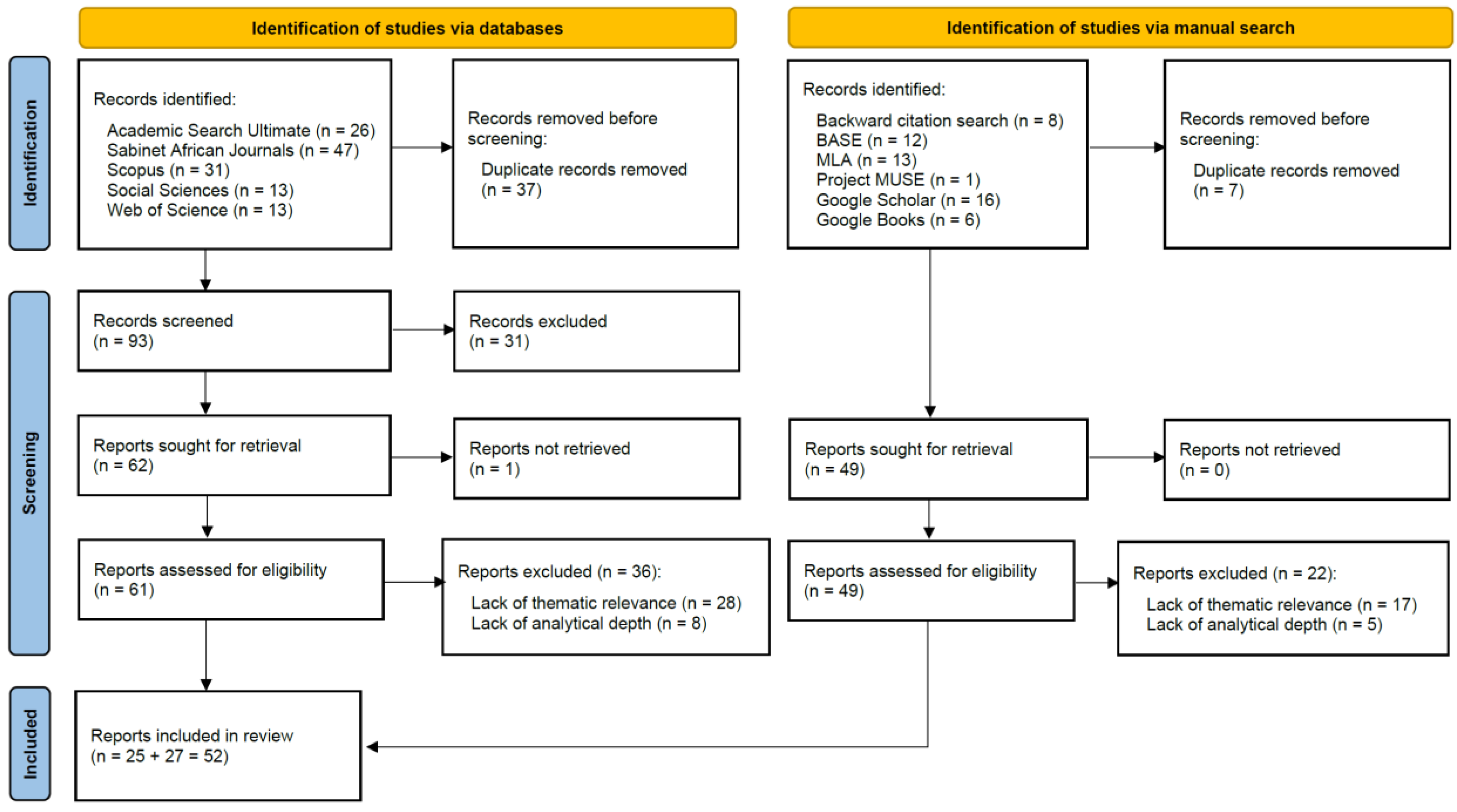
Figure 1. PRISMA flow diagram for literature search and selection.
Arts 15 00102 g001
Table 1. Data-extraction matrix.
Author(s) YearAffiliationPublication TypeInterpretative Stance
(Adeniyi 2022)NigeriaJournal articleChallenging racial stereotypes
Challenging cultural stereotypes
Challenging gender stereotypes
(Agbese 2024)USAJournal articleChallenging racial stereotypes
Challenging gender stereotypes
(Amulega et al. 2024)USABook chapterChallenging colonial stereotypes
Challenging racial stereotypes
Challenging cultural stereotypes
Challenging gender stereotypes
(Anasiudu 2023)NigeriaJournal articleChallenging colonial stereotypes
Challenging racial stereotypes
(Challenging cultural stereotypes
Challenging gender stereotypes
(Benash 2021)USAJournal articleNegotiating colonial stereotypes
Reinforcing racial stereotypes
Reinforcing cultural stereotypes
Negotiating gender stereotypes
(Bucciferro 2021)USAJournal articleNegotiating racial stereotypes
Negotiating gender stereotypes
(Byrne 2023)South AfricaJournal articleNegotiating colonial stereotypes
Reinforcing racial stereotypes
Negotiating cultural stereotypes
Negotiating gender stereotypes
(Chambers 2022)UKBook chapterChallenging gender stereotypes
(Chikafa-Chipiro 2019)ZimbabweJournal articleChallenging colonial stereotypes
Challenging racial stereotypes
Challenging cultural stereotypes
Negotiating gender stereotypes
(Chrifi Alaoui and Abdi 2020)USAJournal articleNegotiating colonial stereotypes
Challenging racial stereotypes
Negotiating cultural stereotypes
Negotiating gender stereotypes
(Copeland 2024)USAJournal articleChallenging colonial stereotypes
Challenging racial stereotypes
Challenging cultural stereotypes
Challenging gender stereotypes
(De Matas 2020)USAJournal articleChallenging colonial stereotypes
Challenging racial stereotypes
Challenging cultural stereotypes
(Dokotum 2020)UgandaBook chapter
(monograph)
Challenging colonial stereotypes
Negotiating racial stereotypes
Negotiating cultural stereotypes
Negotiating gender stereotypes
(Faithful 2018)USAJournal articleChallenging colonial stereotypes
Challenging racial stereotypes
Challenging cultural stereotypes
Negotiating gender stereotypes
(Frankel 2019)USABook chapterChallenging colonial stereotypes
Challenging racial stereotypes
Challenging cultural stereotypes
Challenging gender stereotypes
(Gearhart 2024)USAJournal articleNegotiating cultural stereotypes
Challenging gender stereotypes
(Golding 2024)AustraliaBook chapterNegotiating colonial stereotypes
Negotiating cultural stereotypes
(Great 2023)USABook chapterReinforcing colonial stereotypes
Reinforcing racial stereotypes
Reinforcing cultural stereotypes
Negotiating gender stereotypes
(H. E. Harris 2018)USAJournal articleNegotiating colonial stereotypes
Challenging racial stereotypes
Negotiating cultural stereotypes
Challenging gender stereotypes
(F. L. Harris 2020)USAJournal articleReinforcing racial stereotypes
Negotiating gender stereotypes
(Inayati 2021)IndonesiaJournal articleChallenging colonial stereotypes
Negotiating racial stereotypes
Negotiating cultural stereotypes
Challenging gender stereotypes
(Ingram 2023)USABook chapter
(monograph)
Challenging colonial stereotypes
Challenging racial stereotypes
Challenging cultural stereotypes
Negotiating gender stereotypes
(Johnson 2019)USAJournal articleNegotiating colonial stereotypes
Negotiating racial stereotypes
Reinforcing cultural stereotypes
Negotiating gender stereotypes
Reinforcing disability stereotypes
(Kessock 2019)USABook chapterChallenging colonial stereotypes
Negotiating racial stereotypes
Negotiating cultural stereotypes
Negotiating gender stereotypes
(K. B. Khan 2024)South AfricaJournal articleChallenging colonial stereotypes
Challenging racial stereotypes
Challenging cultural stereotypes
Negotiating gender stereotypes
(King 2021a)UKJournal articleChallenging racial stereotypes
Challenging gender stereotypes
(King 2021b)UKBook chapterChallenging racial stereotypes
Challenging gender stereotypes
(Komic 2022)AustraliaBook chapterChallenging colonial stereotypes
Challenging racial stereotypes
Challenging cultural stereotypes
Challenging gender stereotypes
(Kundu 2024)GermanyJournal articleChallenging colonial stereotypes
Challenging racial stereotypes
Challenging cultural stereotypes
Challenging gender stereotypes
(Lebron 2018)USAMagazineNegotiating colonial stereotypes
Reinforcing racial stereotypes
Negotiating cultural stereotypes
Negotiating gender stereotypes
(Lefait 2020)FranceBook chapterChallenging colonial stereotypes
Challenging racial stereotypes
Challenging cultural stereotypes
Challenging gender stereotypes
(Makwambeni and Sibiya 2022)South AfricaJournal articleChallenging colonial stereotypes
Challenging racial stereotypes
Challenging cultural stereotypes
Challenging gender stereotypes
(Mayer 2024)FranceBook chapterNegotiating colonial stereotypes
Negotiating racial stereotypes
Negotiating cultural stereotypes
Negotiating gender stereotypes
(Moore 2023)USABook chapterChallenging colonial stereotypes
Negotiating racial stereotypes
Negotiating cultural stereotypes
Negotiating gender stereotypes
(Ndayi 2020)South AfricaJournal articleReinforcing disability stereotypes
(Ngubane 2022)South AfricaJournal articleReinforcing cultural stereotypes
(Njambi and O’Brien 2021)USAJournal articleNegotiating colonial stereotypes
Negotiating racial stereotypes
Negotiating cultural stereotypes
(Osei 2020)GermanyJournal articleChallenging colonial stereotypes
Challenging racial stereotypes
Challenging cultural stereotypes
Challenging gender stereotypes
(Rank and Pool 2023)USABook chapterChallenging colonial stereotypes
Negotiating racial stereotypes
Reinforcing cultural stereotypes
Challenging gender stereotypes
(Rwafa 2024)ZimbabweJournal articleChallenging colonial stereotypes
Challenging racial stereotypes
Negotiating cultural stereotypes
Negotiating gender stereotypes
(Sanders 2023)USABook chapterChallenging colonial stereotypes
Challenging racial stereotypes
Challenging cultural stereotypes
Challenging gender stereotypes
(Saunders 2019)USAJournal articleNegotiating colonial stereotypes
Reinforcing racial stereotypes
Negotiating cultural stereotypes
Negotiating gender stereotypes
(Sen 2018)UKEditorialReinforcing colonial stereotypes
Reinforcing racial stereotypes
Reinforcing cultural stereotypes
(Sneed 2021)USABook chapter
(monograph)
Challenging colonial stereotypes
Challenging racial stereotypes
Challenging cultural stereotypes
Challenging gender stereotypes
(Song 2024)CanadaJournal articleNegotiating colonial stereotypes
Negotiating racial stereotypes
Negotiating cultural stereotypes
Negotiating gender stereotypes
(Thakur 2020)USABook chapter
(monograph)
Reinforcing colonial stereotypes
Reinforcing racial stereotypes
Reinforcing cultural stereotypes
Negotiating gender stereotypes
(Thomas and Gamble 2020)USABook chapterReinforcing racial stereotypes
Negotiating gender stereotypes
(Ward 2020)UKJournal articleNegotiating colonial stereotypes
Negotiating racial stereotypes
Negotiating cultural stereotypes
Negotiating gender stereotypes
(Washington 2019)South AfricaJournal articleNegotiating colonial stereotypes
Negotiating racial stereotypes
Negotiating cultural stereotypes
Negotiating gender stereotypes
(Woets 2018)NetherlandsMagazineChallenging colonial stereotypes
Negotiating racial stereotypes
Negotiating cultural stereotypes
(Zeleza 2018)KenyaMagazineReinforcing colonial stereotypes
Reinforcing racial stereotypes
Reinforcing cultural stereotypes
Negotiating gender stereotypes
(Zornado and Reilly 2021)USABook chapter
(monograph)
Reinforcing colonial stereotypes
Reinforcing racial stereotypes
Reinforcing cultural stereotypes
Reinforcing gender stereotypes
Disclaimer/Publisher’s Note: The statements, opinions and data contained in all publications are solely those of the individual author(s) and contributor(s) and not of MDPI and/or the editor(s). MDPI and/or the editor(s) disclaim responsibility for any injury to people or property resulting from any ideas, methods, instructions or products referred to in the content.