Article

Seismic Performance of a Multi-Family Building with Viscous Fluid Dissipators Designed Using BIM Methodology


by
Betty Alvites
1,*,
Jhordan Moreno
1 and
Marlon Farfán-Córdova
2
1
Civil Engineering School, Universidad César Vallejo, Trujillo 13009, Peru
2
Institutos y Centros de Investigación, Universidad César Vallejo, Trujillo 13009, Peru
*
Author to whom correspondence should be addressed.
Buildings 2026, 16(8), 1480; https://doi.org/10.3390/buildings16081480
Submission received: 29 November 2025 / Revised: 23 December 2025 / Accepted: 26 January 2026 / Published: 9 April 2026

Abstract

Earthquakes remain one of the greatest threats to urban resilience, demanding innovative strategies that go beyond traditional earthquake-resistant design. Among emerging solutions, viscous fluid dampers stand out as one of the most effective mechanisms for controlling structural responses and reducing damage. This research analyzes the seismic performance of a 12-story multifamily building equipped with viscous fluid dampers, developed using a comprehensive Building Information Modeling (BIM) methodology. The architectural model was integrated into a BIM environment, ensuring precision, coordination, and digital consistency. A time-history analysis was conducted in ETABS comparing two configurations—with and without dampers—subjected to seismic records from Lima-Perú, Ica-Perú, and Tarapacá-Chile. The results show that incorporating dampers significantly improves structural behavior, reducing maximum displacements by 52.25% and inter-story drifts by 47.37%. These findings confirm the ability of dampers to effectively dissipate seismic energy. Likewise, BIM integration establishes a robust digital framework for sustainable, coordinated, and resilient seismic design in high-rise buildings.

1. Introduction

Seismic events [1,2] continue to impose a significant burden on urban infrastructure worldwide, particularly in regions with high tectonic activity [3]. Buildings in seismic risk zones frequently face structural challenges: excessive drift, lateral displacements, and in the most extreme cases, complete collapse [4,5]. Within this context, traditional earthquake-resistant design strategies, such as robust shear walls or heavily reinforced moment frames, have proven effective to a degree, but also present significant limitations, including high construction costs and reduced efficiency in the face of large-scale events [6].
The field of seismic engineering [7,8] has evolved towards more sophisticated solutions aimed at controlling seismic energy before it compromises critical structural elements [9]. Among these, passive energy dissipation systems—specifically, viscous fluid dampers (VFDs)—have emerged as a highly promising alternative [10,11]. These devices work by converting earthquake-induced kinetic energy into heat or other harmless forms, thereby reducing the demand on the primary structure [12]. Rouhani et al. [13] conclude that these elements can substantially reduce seismic responses, both in terms of displacement and inter-story drift. However, Ding et al. [14] caution that their real-world effectiveness depends heavily on device placement, design parameters, and loading conditions, leading to an ongoing debate regarding achievable reduction levels.
At the same time, the Building Information Modeling (BIM) methodology has solidified its position as a pillar of modern design [15]. BIM enables effective multidisciplinary coordination, early clash detection, and a level of digital integration that supports advances in structural analysis and iterative design processes [16,17]. Recent studies indicate that its incorporation into high-level structural projects not only boosts productivity but also enables more accurate simulations and improved responses to extreme events. However, Rehman et al. [18] note that the combined application of BIM with advanced seismic control systems, such as viscous fluid dampers, in mid- to high-rise multifamily buildings remains underexplored within regulatory environments governed by Latin American codes.
Within seismic research, numerous studies have documented the effectiveness of dampers in both concrete and steel structures. For instance, Zoccolini et al. [19] demonstrate that incorporating VFDs in high-rise buildings significantly improves displacement reduction and energy dissipation, extending the structure’s service life and lowering its collapse risk. However, transferring these findings to Latin American contexts requires careful analysis due to differences in building codes, materials, and construction practices, creating a need for localized studies to validate the applicability of these systems [20,21].
Passive dissipation systems are structural devices designed to reduce seismic demand by absorbing earthquake motion energy; their fundamental utility is not a matter of general debate. However, Hu et al. [22] caution that incorrect damper placement or improper calibration of their parameters can limit their effectiveness and even lead to undesirable effects, such as local stress concentrations. Conversely, Chen et al. [23] suggest that combining dampers with conventional design strategies can maximize structural safety while reducing costs associated with over-sizing primary members. This duality highlights the critical importance of a design process rooted in detailed analysis and supported by modern digital tools, such as BIM, which enable optimal and efficient design distribution [24].
Viscous fluid dampers are among the most efficient types of damping devices, as they dissipate seismic energy through forces that are largely independent of velocity, thereby increasing the structural system’s effective damping without altering its initial stiffness [25]. Technically, their performance is governed by several key design variables: the damping coefficient, velocity exponent, activation force, number of devices and, most critically, their strategic placement within the building. These parameters significantly influence the optimal reduction in inter-story drift, internal forces, and structural accelerations [26]. Similarly, the connection details between the damper and adjacent structural members play a decisive role in ensuring proper force transfer [3]. An inefficient configuration can severely limit the energy dissipation capacity, potentially leading to structural damage due to induced irregularities [4]. A notable characteristic of these devices is their pronounced nonlinear response [27], since their behavior depends on both the dissipative force and the deformation rate. This particularity necessitates evaluation through nonlinear dynamic analysis, such as the time-history analysis used in this study, to realistically represent the structure–damper interaction.
This study aims to evaluate the seismic performance of a 12-story multifamily building that incorporates viscous fluid dampers within a BIM-based design. The goal is to quantify reductions in lateral displacements, story drift, and energy dissipation capacity. The findings will provide a solid foundation for implementing these technologies in urban, high-seismicity environments.
The workflow for this study involves creating a detailed 3D model of the building [27] and defining two structural configurations: a baseline model without dampers and an enhanced model with integrated damping devices. Both models are then evaluated under representative seismic loads. This approach merges the precision of digital design with the rigor of structural analysis, creating an integrated framework that supports data-driven decision-making during the structural design and optimization phase [28].
In this context, it is crucial to highlight that a foundational element of the project’s development is the Building Information Modeling (BIM) methodology [29,30]. BIM has radically transformed the architectural and structural design process by providing a digital platform that integrates all aspects of a project. Jia et al. [31] note that this capability facilitates coordination across disciplines—architecture, structure, MEP, and finishes—minimizing clash errors and optimizing workflow throughout all project phases.
From a design standpoint, BIM becomes a strategic resource that enables the comprehensive planning and representation of a building’s structural systems—such as moment frames, shear walls, and primary load-bearing elements [32,33]. Tan et al. [34] note that through design digitalization, it is possible to conceptually evaluate different structural configurations, ensuring that criteria for strength, stability, and integration are implemented and coordinated from the project’s earliest phases.
This study therefore aims to establish an integrated approach that combines advanced multifamily building design using BIM with a thorough evaluation of its seismic performance, providing practical insights for designers and building authorities. Implementing a precise, coordinated structural design allows teams to anticipate constructability issues, optimize planning, and ensure key factors like feasibility—all of which contribute directly to user safety and well-being. Likewise, the findings from this research will serve as a benchmark for future buildings in high-seismicity zones, promoting sustainable designs adapted to seismic challenges, strengthening urban resilience, and protecting human life.

2. Methodology

2.1. Study Focus

This study follows a quantitative, applied research design aimed at evaluating the seismic performance of a 12-story multifamily building. The core approach involves designing the building using a BIM methodology and integrating viscous fluid dampers to improve its seismic response. The corresponding analysis is conducted using ETABS v.22 software (Computers and Structures, Inc., Berkeley, CA, USA), enabling a direct comparison of the structure’s behavior with and without dampers under dynamic seismic loading. In the structural model, the viscous fluid dampers were represented using nonlinear link elements in ETABS. Their parameters were defined based on values reported in the technical literature [35]. Seismic performance was evaluated by examining key criteria such as inter-story drift control [36], maximum displacements, and internal forces, enabling a systematic comparison between the models with and without dampers.

2.2. Project Overview

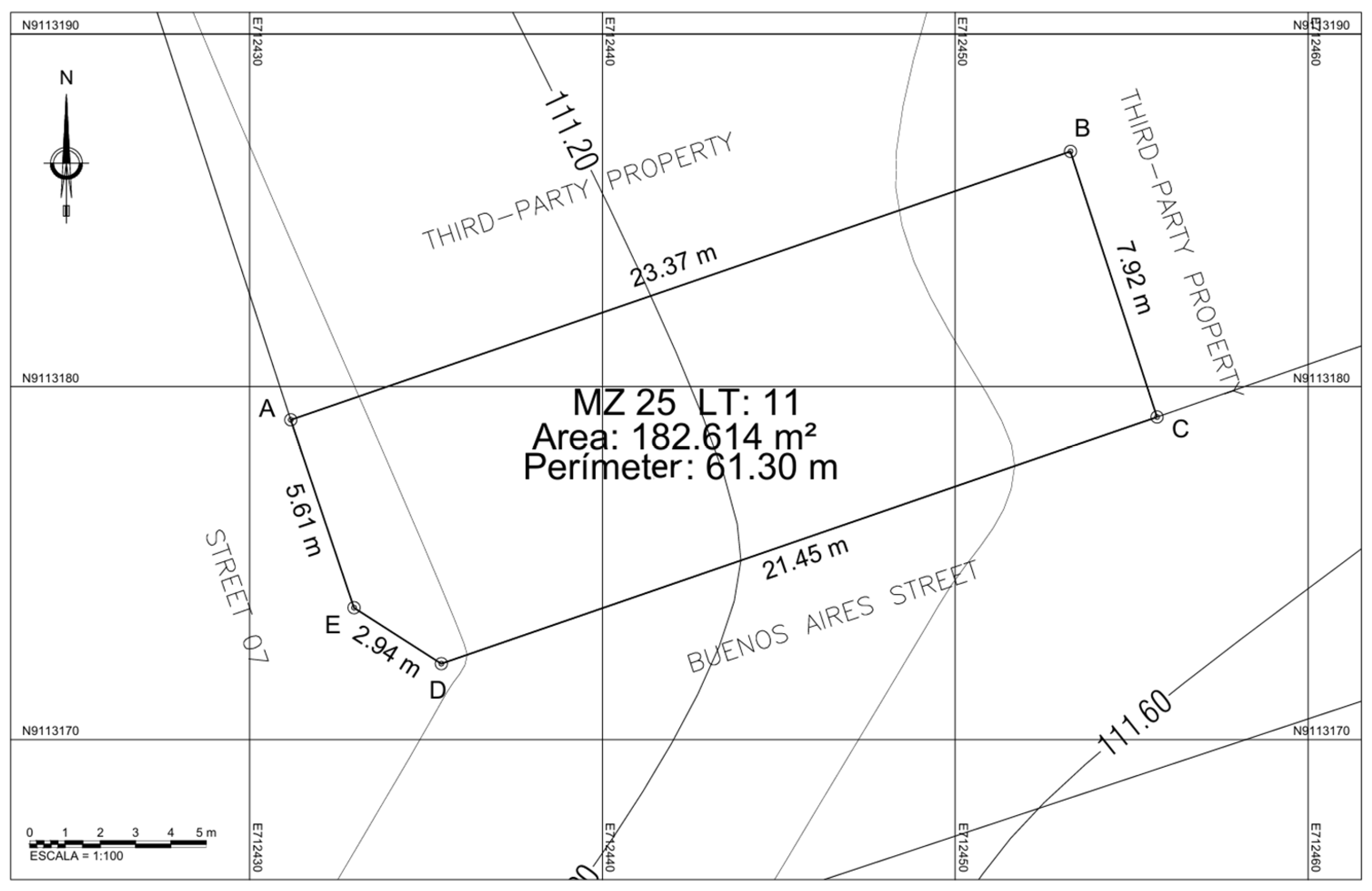
This project focuses on the design of a twelve-story multifamily building located in a high-seismicity zone. The topographic features of the study area are shown in Figure 1. The research aims to improve seismic performance by integrating viscous fluid dampers, employing a BIM-based design methodology to do so. This approach enables the creation of a three-dimensional architectural and structural model that facilitates interdisciplinary coordination, early clash detection, and the preparation of accurate data for subsequent seismic analysis.

2.3. Architectural Design Using BIM Methodology

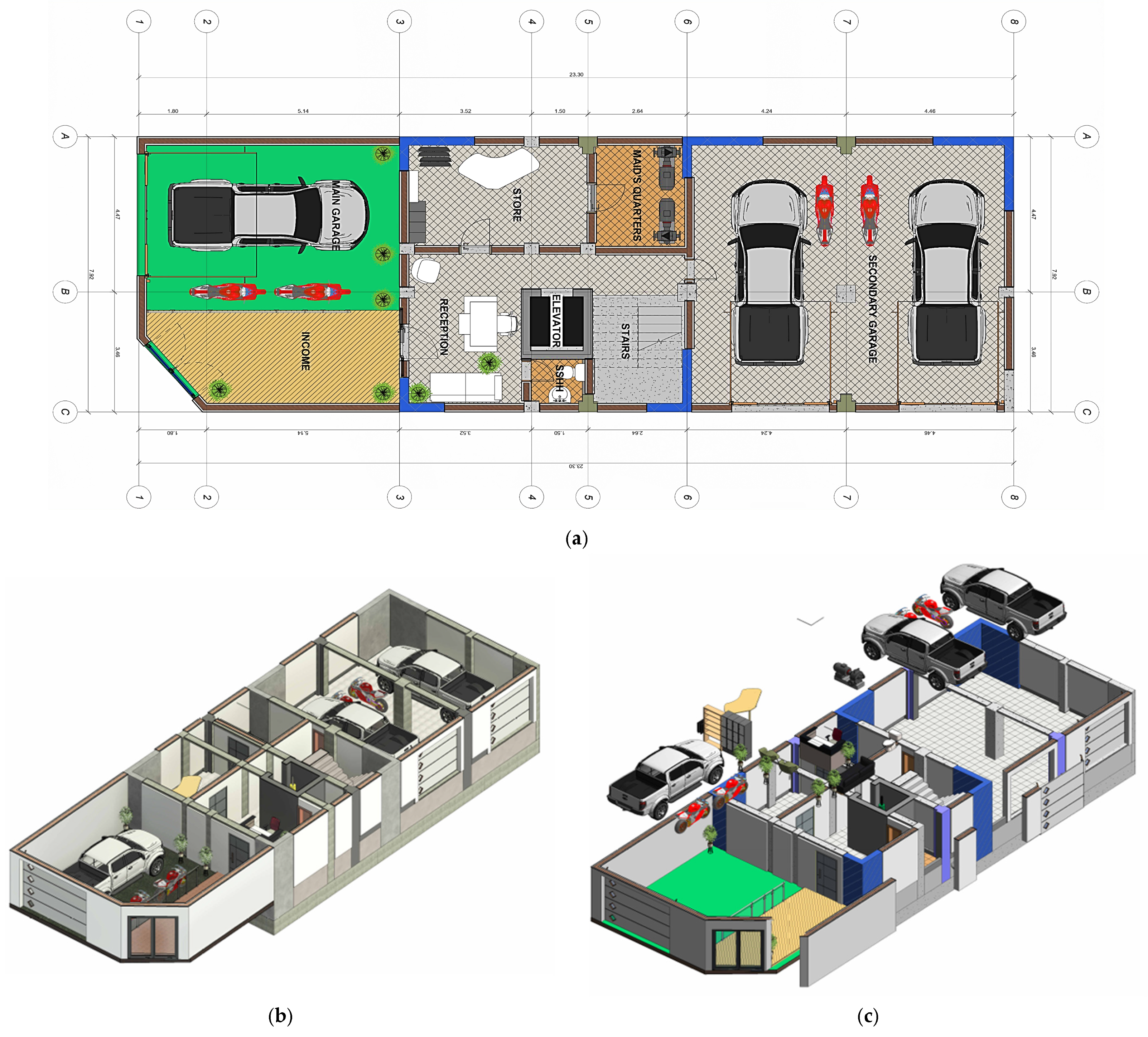
The architectural and structural design was completed entirely in Revit 2025.4 (Autodesk Inc., San Rafael, CA, USA), leveraging BIM capabilities to model structural elements, shear walls, columns, and beams with integrated material and geometric data. A comprehensive 3D model was generated, encompassing all building floors, stairs, service cores, and relevant components, while consistently adhering to code-mandated guidelines for architectural resolution. The modeling was based on a per-floor working area of 128 m2, with 30% designated as open space in compliance with the prevailing Peruvian standard A.070 “Urban Parameters.” The first floor was designed to accommodate a garage and a reception lobby. Floors two through twelve were configured with typical three-bedroom apartment units, each containing a kitchen area, a living room, and two bathrooms. This identical layout was maintained on each residential level to ensure structural uniformity and efficiency.
Likewise, the BIM environment enabled seamless coordination between the architectural and structural disciplines. This minimized design-phase clashes and streamlined the later integration with the structural model developed in ETABS. As shown in Figure 2, when the building was modeled in Revit, it provided the foundation for clearer 3D visualization and for analyzing the spatial compatibility of the structural element.
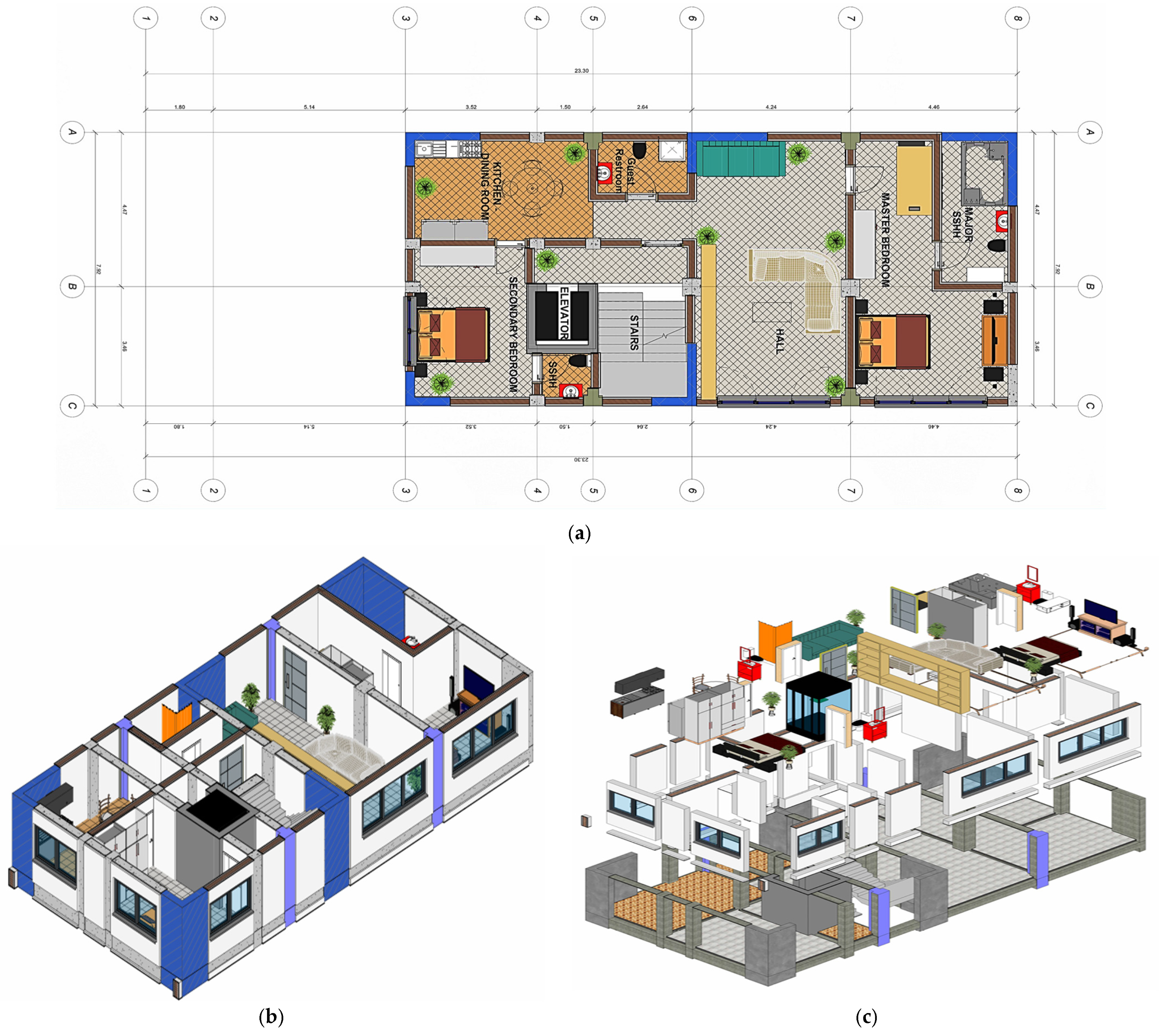
To show the layout and floor plan of the upper stories, Figure 3 illustrates the architectural arrangement from the second through the twelfth floor of the multifamily building. These levels share a uniform configuration, maintaining an identical layout of units to ensure design regularity.
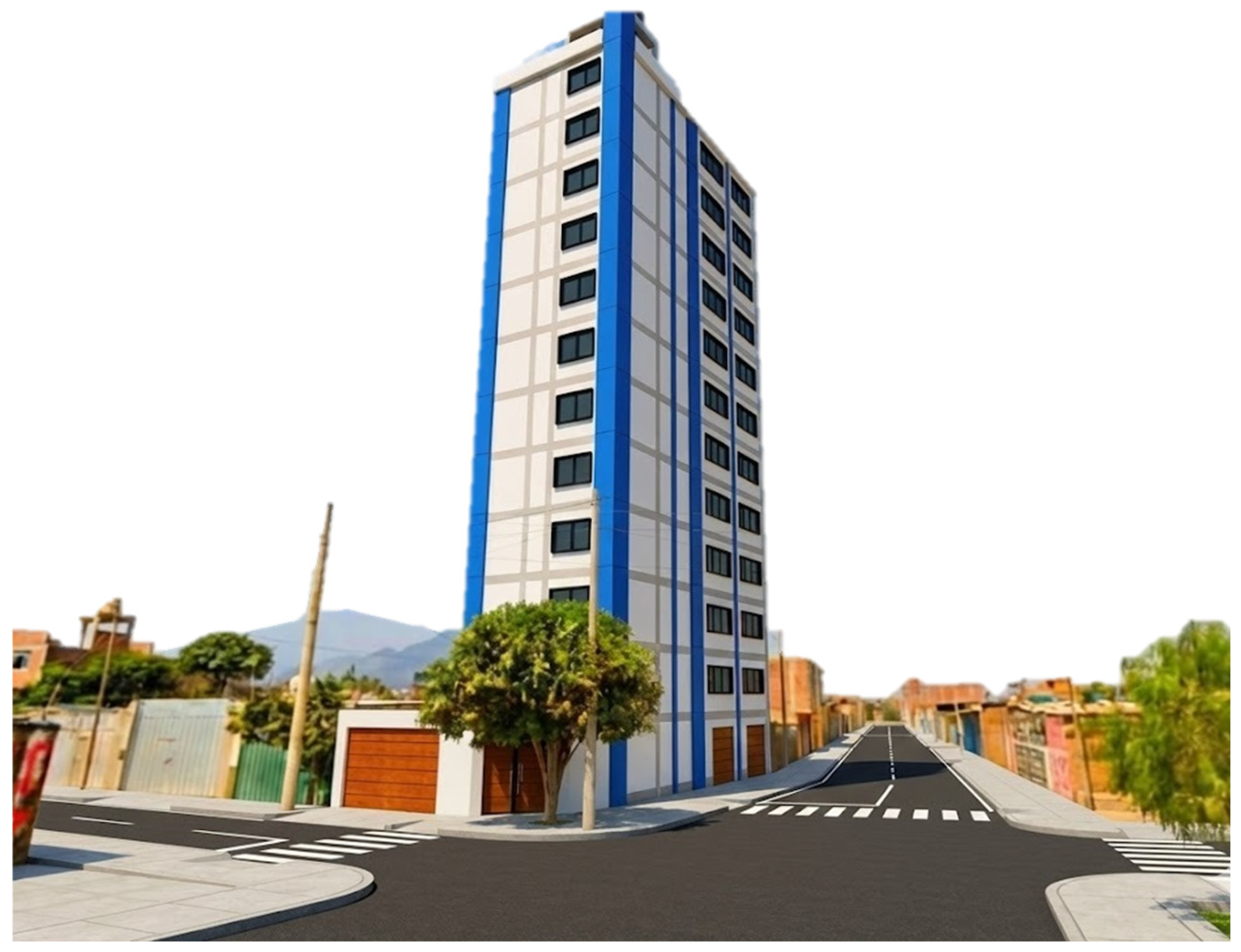
Once the interdisciplinary coordination process under the BIM methodology was completed, the final building model was obtained. This model, shown in Figure 4, illustrates the general layout of the lateral force-resisting system and the overall geometry of the building.

2.4. Structural Modeling

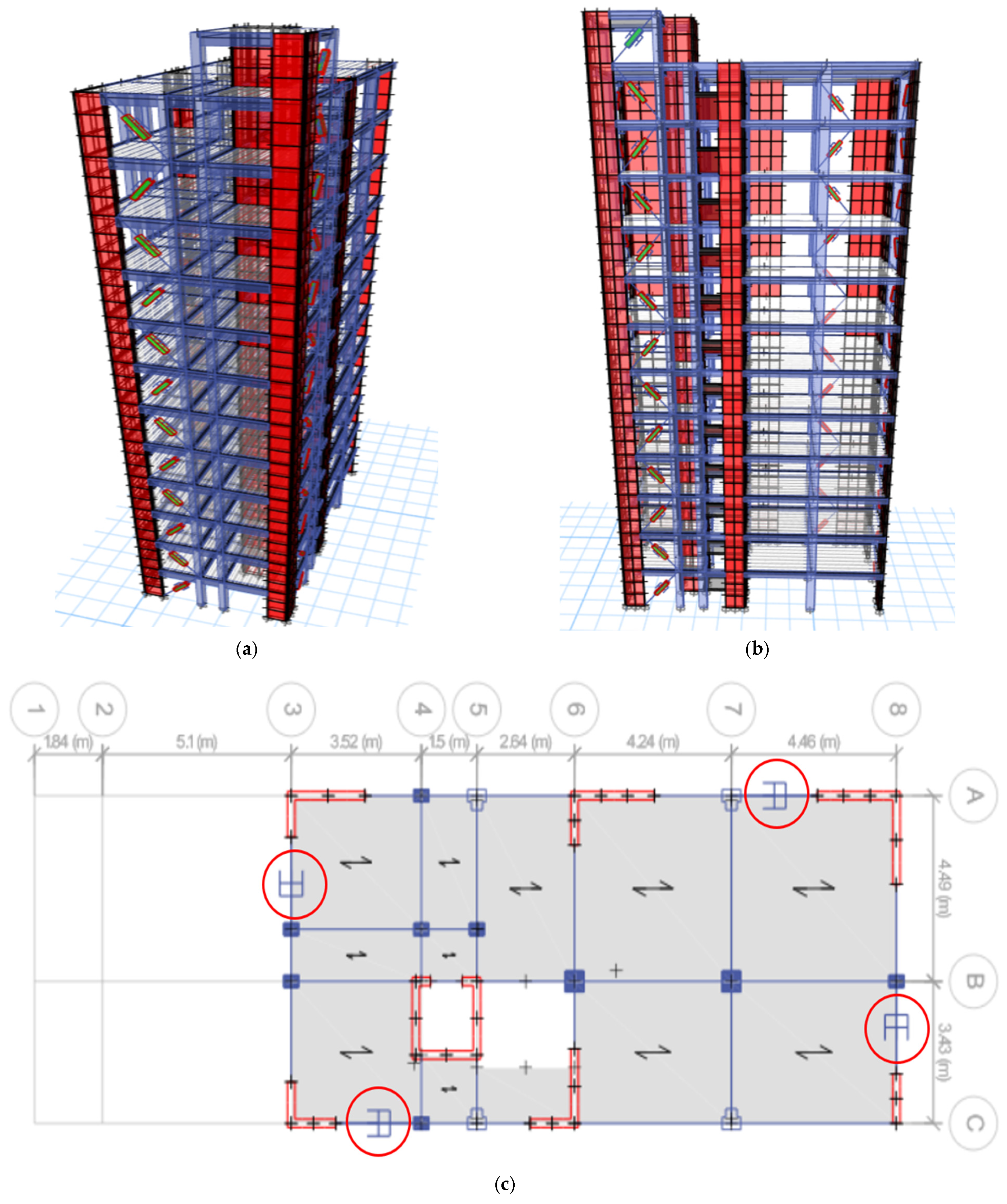
For structural modeling, material mechanical properties were defined according to the building’s structural demands, as shown in Figure 5. Reinforced concrete was used with a compressive strength of f′c = 210 kg/cm2, a Poisson’s ratio of 0.2, and a unit weight of 22.4 tonf/m3. The reinforcing steel was characterized by a yield stress of f′y = 4200 kg/cm2. The three-dimensional model was developed in ETABS software, modeling beams and columns as Frame elements and slabs along with shear walls as Shell elements.
This modeling approach enabled the detailed representation of columns, beams, slabs, and shear walls, along with their interactions, based on the geometric and mechanical properties defined in the original BIM design. The structural model included three column types: 0.50 m × 0.50 m, 0.30 m × 0.40 m, and a T-shaped column with dimensions of 0.50 m × 0.50 m × 0.30 m. Primary and secondary beams were sized at 0.35 m × 0.30 m, while slabs and plates were given a uniform thickness of 0.20 m. Design loads were also applied: a dead load of 0.272 ton/m2 and a live load of 0.200 ton/m2. The model was fully parameterized to facilitate both nonlinear dynamic and spectral analysis. This setup allowed for realistic results, as the dissipation devices were already integrated into the structure—with two units assigned per building axis (vertical and horizontal). The model’s base was idealized as fixed in all translational and rotational directions. This condition restricts both displacement and rotation. Additionally, rigid diaphragms were assigned at each floor level to ensure an accurate representation of the system’s global behavior.
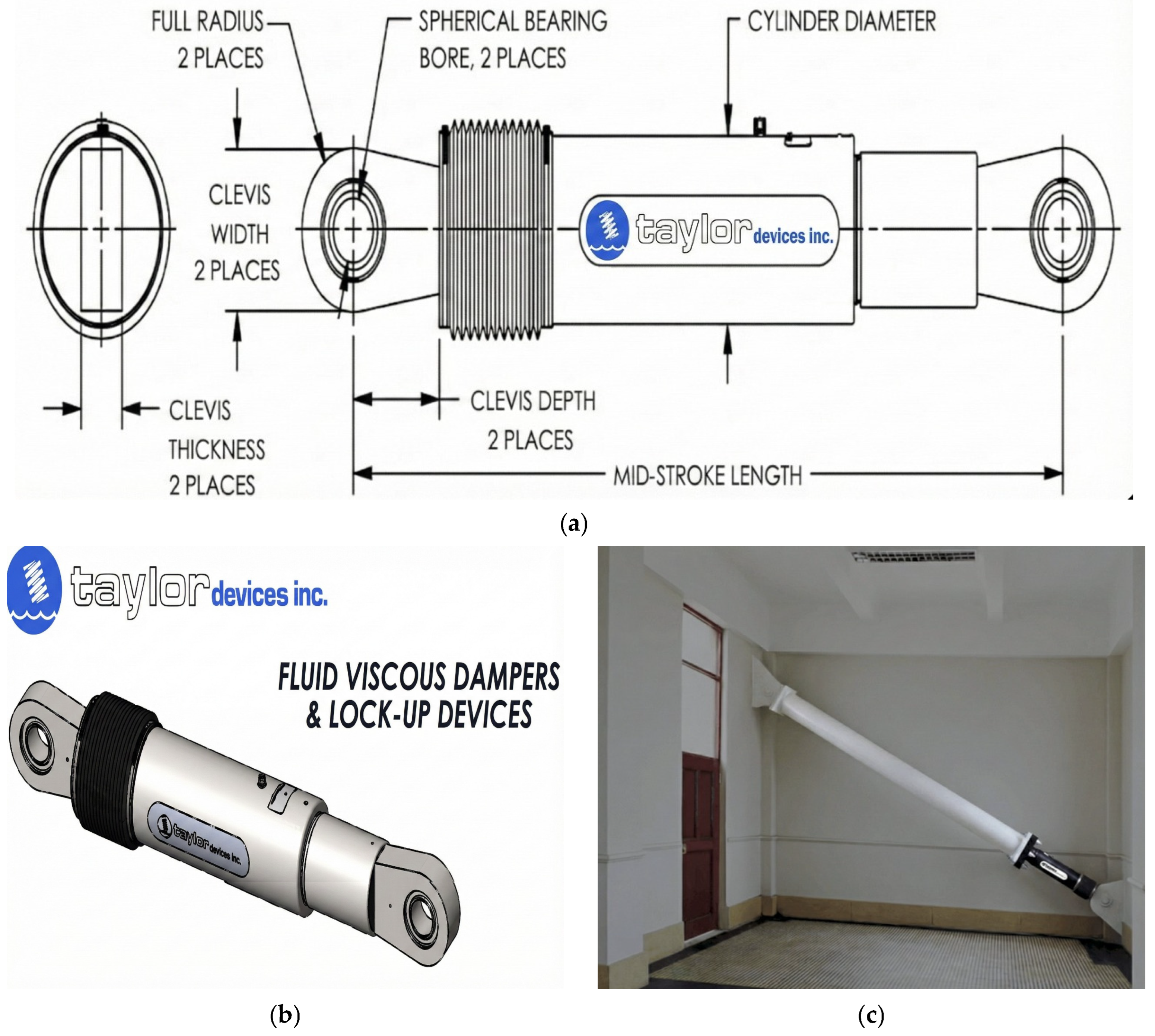
Taylor viscous fluid dampers comprise several mechanical and hydraulic components. Their main parts include a sealed steel cylinder, which contains the viscous fluid (typically high-stability silicone), and a movable piston attached to a rod that undergoes axial displacement during seismic excitation. The proper interaction of these components, detailed in Figure 6, ensures stable, repeatable, and efficient energy dissipation performance under seismic loading.
Regarding the damper design, it was based on a target drift reduction criterion, considering the two principal analysis directions (X and Y) independently. First, a target drift reduction factor was defined. This factor was used to determine the required damping demand to control the building’s seismic response, yielding target values of 2.749 for the X direction and 2.075 for the Y direction. For this study, Taylor Devices viscous fluid dampers (Taylor Devices, Inc., North Tonawanda, NY, USA) were selected due to their stable performance, high energy dissipation capacity, and extensive experimental and analytical validation [37].
Based on the estimated reduction factor, the required effective damping was determined using the approach proposed by Newmark, which assumed a 5% inherent concrete damping. This yielded a total effective damping of 64.73% in the X-direction and 40.25% in the Y-direction. Following this, the damper system stiffness was evaluated by considering the geometric properties of the device’s metal arm, modeled as an HSS structural profile. This process generated equivalent stiffnesses of Kx = 75,743.44 tonf and Ky = 74,657.36 tonf. Finally, the nonlinear damping coefficient for both directions was calculated, with its value distributed according to the number of devices required for proper implementation.

2.5. Time-History Analysis Configuration

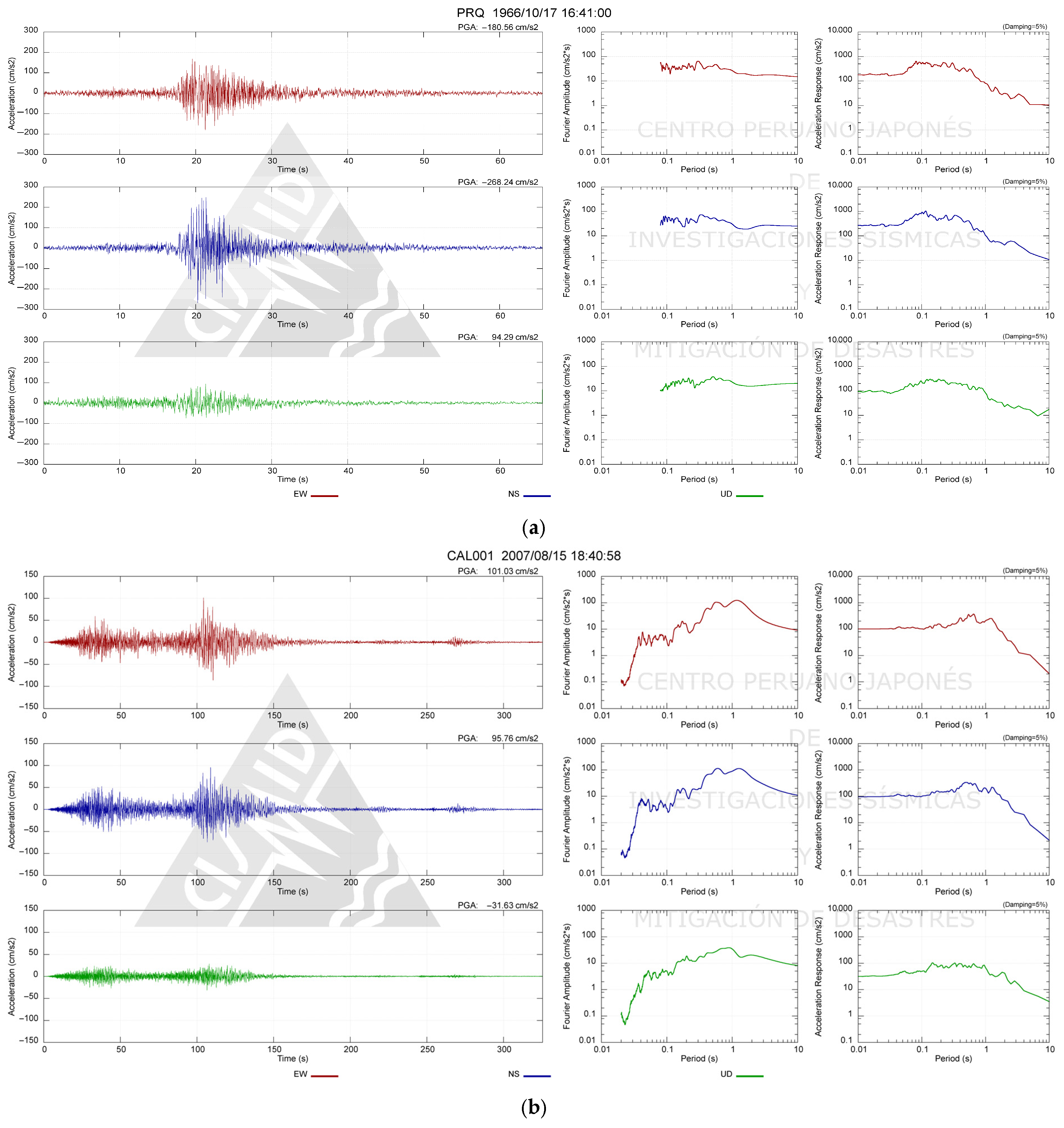
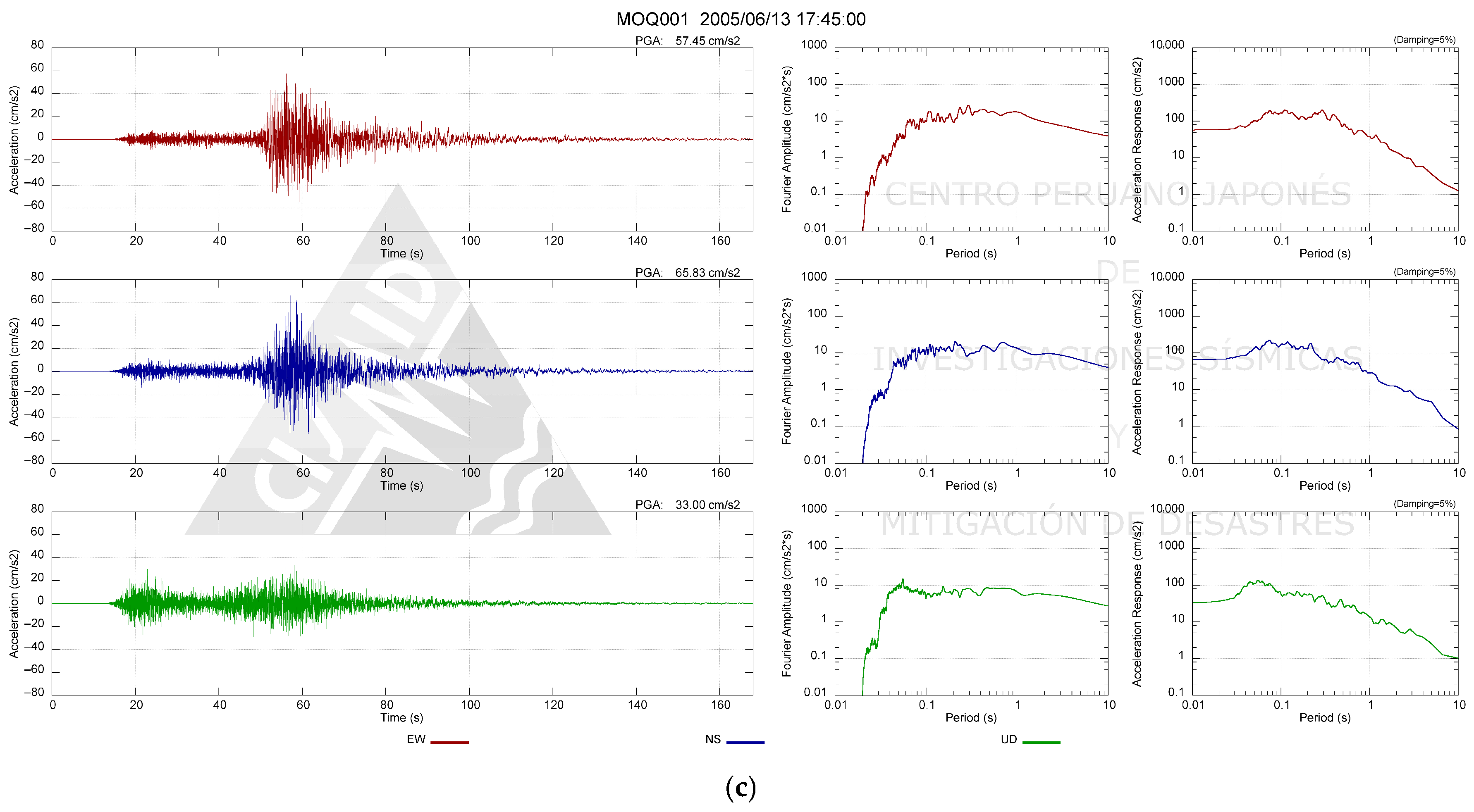
A time-history analysis was performed using the ETABS software to evaluate the building’s dynamic behavior. For this purpose, three real seismic records were selected from the earthquakes in Lima, Perú (1966); Ica, Perú (2007); and Tarapacá, Chile (2005), all with magnitudes greater than 7.0 Mw. These accelerograms were obtained from the CISMID-UNI (Peruvian-Japanese Center for Seismic Research and Disaster Mitigation, Lima, Peru) database and subsequently scaled according to the E0.30 standard, ensuring their spectral compatibility with the relevant seismic zone.
The scaling process ensured that the peak ground accelerations (PGAs) of the selected records were consistent with the values specified by the code. The accelerograms were applied along both principal directions (X and Y) of the structural model, accounting for simultaneous seismic excitation as a realistic behavior.
A 5% damping ratio was adopted for the base structure, incorporating the additional damping generated by the viscous dampers based on their mechanical properties. The results from this analysis provided key factors such as maximum inter-story drift ratios, base shears, and peak displacements for each seismic record.
Figure 7 shows the response spectra for the selected ground motion records, confirming that the earthquakes used appropriately represent the seismic demand corresponding to the study site.
From these records, the maximum drift was identified as the most representative parameter of structural performance. It reflects the distortion between floors and defines the demand that must be controlled by the viscous fluid dampers. For this reason, the analytical study focuses on the maximum drift results from the time-history analysis, as they exceed the allowable limits set by the building code—which is the case for Lima, Perú.

3. Results

3.1. Time-History Analysis Without Dampers, Lima-Perú Earthquake (1966)

For the Lima, Perú (1966) seismic record, the event was characterized by a peak ground acceleration on the order of 0.25 g and a significant duration of approximately 60 s. This allowed for the identification of the structural system’s behavior under severe conditions.
Table 1 and Table 2 show the maximum values obtained for lateral displacements and corresponding inter-story drift over the building’s 12 stories without viscous fluid dampers.
Examining the results in Table 1 and Table 2, the maximum drift values exceeded the code limits set by NTP E.030, indicating critical deformation levels on several floors. The structure failed to meet the code’s maximum drift requirement of 0.007, as values from the third to the tenth floor surpassed this limit, reaching over 0.0087. This finding directly led to the decision to retrofit the structure to ensure adequate seismic performance.

3.2. Time-History Analysis with Dampers, Lima, Peru Earthquake (1966)

The analysis corresponding to the Lima, Peru earthquake is presented below, considering the inclusion of viscous fluid dampers. The results determined the influence of the damping system on the reduction in structural displacements and drifts, as summarized in Table 3 and Table 4.
Based on the time-history analysis results in Table 3 and Table 4, the maximum story drifts were determined for each direction: 0.00617 in the X-direction and 0.00486 in the Y-direction. These values remain within the limit established by the Peruvian Seismic Design Code NTP E.030.
As part of the study, the building’s structural response was evaluated using three representative seismic records: Lima, Peru (1966); Ica, Peru (2007); and Tarapacá, Chile (2005). The results show similar behaviors in terms of displacements and inter-story drift for all records, with the model without dampers exceeding code limits in every case. However, the detailed Lima, Peru (1966) seismic record generated the highest demands for both displacement and drift, establishing it as the most critical (or most demanding) scenario among those analyzed. Therefore, this section presents results for the Lima, Peru record only.

3.3. Comparative Analysis of Models with and Without Heat Dissipators

Following a comparative analysis of the two structural models, it was found that incorporating these devices resulted in a significant reduction in lateral drifts. These drifts remained within the limits set by the E0.30 Seismic Design Standard and achieved a more stable seismic response, as detailed in Table 5.
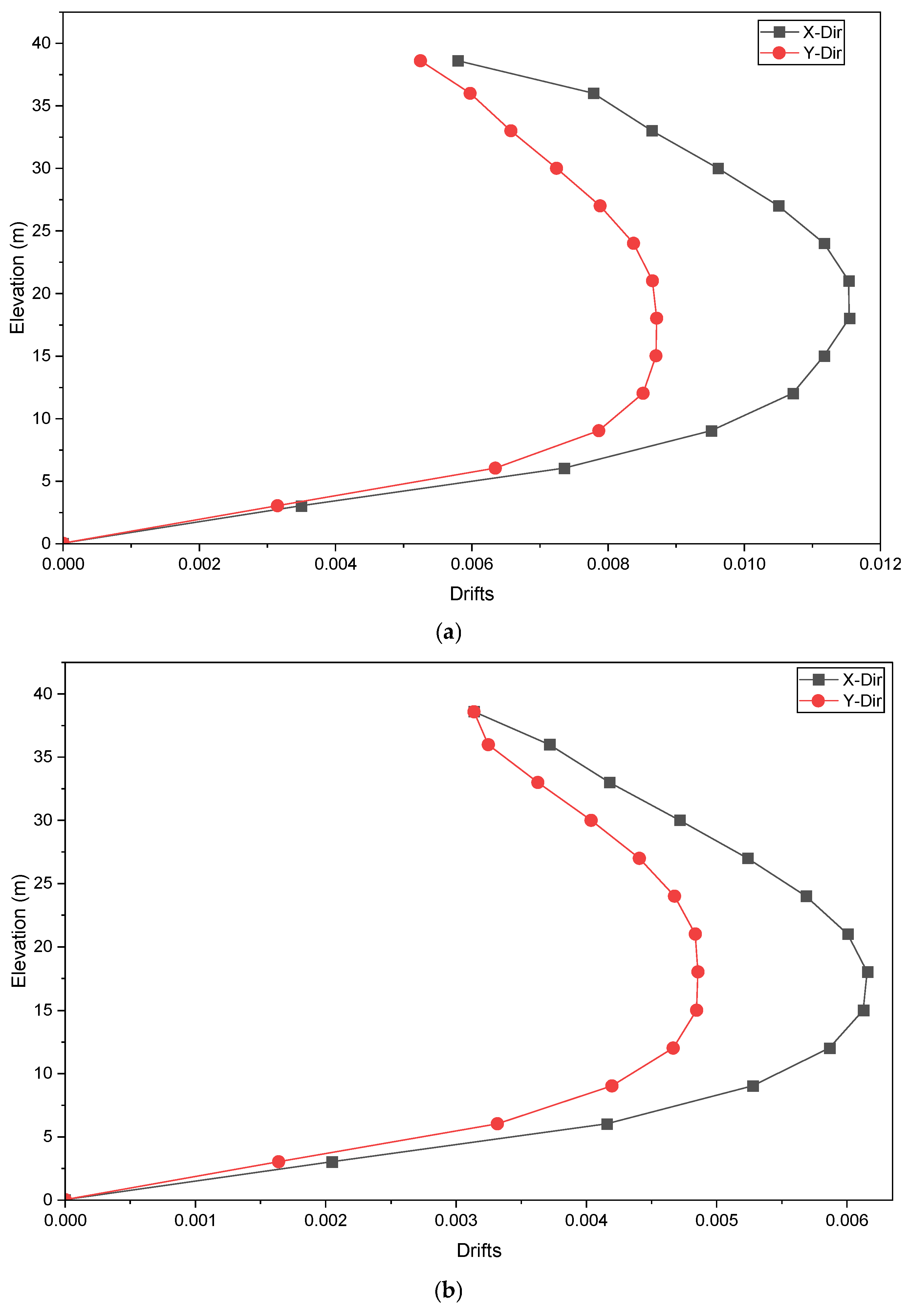
Based on the data in Table 5 and Table 6, integrating the heat dissipators was able to reduce inter-story displacements by between 47.37% in the horizontal X-direction and 44.89% in the vertical Y-direction.
On the vertical axis side analyzed, the structure exhibited a minimum drift value of 0.0315 on the first floor and a maximum drift of 0.00872 on the sixth floor. When viscous fluid dampers were incorporated, the drift values decreased, with a minimum of 0.00164 at the ground floor and a maximum of 0.00486. The collected data confirmed that these viscous devices achieve a reduction in drift between 40.21% and 48.14%, thereby fulfilling their purpose of improving the structural safety response during sudden seismic events.
The following section presents the lateral displacement analysis results for the building under seismic loading. Table 7 shows the variation in the recorded maximum displacements at each story.
As shown in Table 7, the analysis in the X-direction indicates that the structure exhibits lateral displacements in the configuration without dampers ranging from 1.05 to 3.50 cm. Once the devices are incorporated, these displacements are reduced to values between 0.61 and 1.83 cm per floor level. Consequently, the implementation of the dampers is confirmed to have reduced displacements by an average of 47.37%, demonstrating a notable improvement in the analytical response.
As detailed in Table 8, the Y-direction analysis shows that incorporating viscous fluid dampers leads to a significant reduction in cumulative lateral displacements. The values drop from a range of 0.94 cm to 2.62 cm in the original structure to a range of 0.49 cm to 1.458 cm in the modified model, representing an average reduction of 45.28%.
The results showed that adding these devices produced a significant reduction in both displacement and drift. The values obtained ranged from 40% to 60%, confirming the effectiveness of viscous fluid dampers in improving the building’s seismic performance.
While incorporating viscous fluid dampers significantly reduces drifts and peak displacements, their influence on structural response can be analyzed from various dynamic perspectives. First, these devices do not substantially increase the system’s initial stiffness, and furthermore, the fundamental vibration periods remain largely unchanged. This confirms that the effective damping they generate leads to a notable improvement in seismic performance. Similarly, the building’s predominant mode shapes do not undergo substantial alterations, resulting in a much more attenuated dynamic response without significant changes to the modal mass distribution.
Additionally, the increased energy dissipation capacity results in a reduction in the base shear demand, which in turn lowers the internal stresses in the primary structural members. This effect leads to an improved overall building performance under severe seismic scenarios.
Figure 8 shows the inter-story drift profile of the building in its original condition (without dampers). It reveals a higher concentration of maximum drift values in the middle stories, as well as differences in the response between the X and Y directions. Notably, the X direction exhibits higher drift values, which is associated with a lower effective lateral stiffness along that axis. This phenomenon can be attributed to factors such as the structural configuration, the orientation and quantity of shear walls, and greater modal participation in that direction. This behavior is characteristic of mid-rise buildings with a non-uniform stiffness distribution.

4. Discussion

The results of this investigation confirm that incorporating viscous fluid dampers into a 12-story multifamily building significantly enhances its seismic performance. The dampers reduced lateral displacements and inter-story drift by over 40% compared to the model without dampers. This behavior aligns with the findings of Rouhani et al. [13], who assert that viscous dampers can significantly reduce structural responses under intense seismic excitation, thereby contributing to damage control and overall system stability.
On the other hand, the system’s effectiveness was observed to depend heavily on the strategic placement of the devices and their design parameters. As noted by Ding et al. [14], an inadequate distribution can limit damping efficiency. In the present case, dampers were placed symmetrically along both principal axes, which helped balance dynamic responses and minimize structural torsion.
The results are also consistent with the approaches of Chen et al. [23], demonstrating that combining dampers with conventional moment frame and shear wall systems increases structural safety without necessitating unnecessary over-sizing. Similarly, they support the observations of Hu et al. [22], who emphasize that properly calibrating the damper’s damping coefficient and associated stiffness can optimize displacement control.
A comparative analysis of the three selected seismic records showed that, although each event had different energy characteristics, the system with dampers succeeded in keeping drift within regulatory limits, achieving reductions greater than 40% over the conventional model. Notably, the Lima, Perú (1966) record imposed the highest dynamic demands, while the others exhibited more stable and controlled behavior, demonstrating the damping system’s versatility.
Regarding the digital design environment, applying the BIM methodology proved to be an essential tool for interdisciplinary coordination and optimization of the modeling process. This outcome reaffirms the contributions of Manzoor et al. [39] and Jia et al. [31], who maintain that using BIM in the design phase reduces clashes, improves geometric precision, and facilitates integration between architectural and structural disciplines. In this research, the use of Revit and ETABS enabled a seamless transition between specialties, ensuring dimensional coherence and compatibility among load-bearing elements.
The use of the BIM methodology played a key role in the reliability and accuracy of the results. The 3D modeling in Revit and Navisworks enabled the precise definition of the building’s geometry, structural sections, and mass distribution, ensuring coherence between the architectural and structural models. This integration reduced errors associated with interpreting 2D drawings and facilitated the correct assignment of material properties and gravitational loads. This level of precision directly influences the dynamic analysis, as software interoperability allowed for a comprehensive and consistent design, lending greater engineering rigor to the entire process.

5. Conclusions

This study evaluated the seismic behavior of a 12-story multifamily building incorporating viscous fluid dampers. The architectural and structural design was developed using the BIM methodology to ensure multidisciplinary coordination and spatial optimization. Three-dimensional structural modeling was performed in ETABS, accounting for material properties, geometry, design loads, and the strategic placement of the dampers. This model enabled both nonlinear dynamic and spectral analyses to be conducted using seismic records representative of the Peruvian context.
The key results from comparative analyses of the structure with and without dampers show that incorporating these devices enables:
(1)
Significant reduction in displacements and story drifts. The structure equipped with viscous fluid dampers exhibited lower maximum displacements and drifts than the configuration without dampers, demonstrating the effectiveness of VFDs in controlling seismic response and protecting critical structural elements.
(2)
Greater energy dissipation capacity. The dampers contributed to greater absorption of seismic energy, which reduced the demand on columns, beams, and shear walls and helped preserve the structure’s integrity during high-intensity ground motions.
(3)
Design validation using BIM. The use of BIM during the design phase enabled efficient coordination between architecture and structure. This ensured compliance with standards, such as minimum clear area requirements, and the correct distribution of the dampers throughout the modeling process. This approach optimized spaces and facilitated the integration of these devices into the analysis phase.
Despite the favorable results obtained, the present study has several limitations that must be considered. First, the seismic analysis was conducted using a limited number of representative ground motion records; therefore, the findings cannot be generalized to all possible seismic scenarios. Second, a specific configuration of viscous fluid dampers was evaluated without analyzing variations in their quantity, layout, or material properties. Finally, the study was based on a numerical model developed in ETABS for a single representative case of a 12-story multifamily building. These limitations suggest clear directions for future research aimed at evaluating other structural configurations and seismic conditions.

Author Contributions

Conceptualization, B.A. and J.M.; Methodology, B.A., J.M. and M.F.-C.; Validation, M.F.-C.; Investigation, B.A. and J.M.; Data curation, J.M.; Writing—original draft, J.M.; Writing—review & editing, B.A. and M.F.-C.; Visualization, M.F.-C.; Supervision, M.F.-C.; Project administration, B.A. All authors have read and agreed to the published version of the manuscript.

Funding

This research was funded by Universidad César Vallejo, Trujillo, Peru. The APC was funded by Universidad César Vallejo, Trujillo, Peru.

Data Availability Statement

The original contributions presented in this study are included in the article. Further inquiries can be directed to the corresponding author.

Conflicts of Interest

The authors declare no conflicts of interest.

References

  1. Sharma, K.V.; Parmar, V.; Gautam, L.; Choudhary, S.; Gohil, J. Modelling Efficiency of Fluid Viscous Dampers Positioning for Increasing Tall Buildings’ Resilience to Earthquakes Induced Structural Vibrations. Soil Dyn. Earthq. Eng. 2023, 173, 108108. [Google Scholar] [CrossRef]
  2. Su, L.; Zhang, W.; Yang, T.Y.; Zhang, C. Seismic Design and Evaluation of Continuous Girder Bridge with Winding Rope Fluid Viscous Damper (WRFVD) Using Equivalent Energy Design Procedure (EEDP). Structures 2025, 71, 108175. [Google Scholar] [CrossRef]
  3. Das, A.; Bandyopadhyay, D. Study on Seismic Base Shear and Deformation of Regular and Irregular Buildings Using Different Properties of Fluid Viscous Dampers. Structures 2025, 76, 108925. [Google Scholar] [CrossRef]
  4. Villanueva, C.M.; Cruz, O.D. The Application of Nonlinear Fluids Viscous Dampers in Resilience-Based Seismic Design: A Systematic Review. Structures 2025, 74, 108538. [Google Scholar] [CrossRef]
  5. Chalarca, B.; Filiatrault, A.; Perrone, D. Parametric Study and Prediction Models of the Seismic Response of Single-Degree-of-Freedom Structural Systems Equipped with Maxwell Material Fluid Viscous Dampers. Structures 2022, 43, 388–406. [Google Scholar] [CrossRef]
  6. Rodríguez-Castellanos, A.; Niño, M.; Ruiz, S.E.; Santos Santiago, M.A. Multi-Disciplinary Performance Comparison for Selecting the Optimal Sustainable Design of Buildings Structures with Fluid-Viscous Dampers. Soil Dyn. Earthq. Eng. 2024, 178, 108450. [Google Scholar] [CrossRef]
  7. Guo, J.; Li, M.; Wu, Y.; Xiao, Y.; Guan, Z. Experimental Study on a Cable-Stayed Bridge Isolated with the Combination of Elastoplastic Cables and Fluid Viscous Dampers in the Transverse Direction. Eng. Struct. 2024, 302, 117447. [Google Scholar] [CrossRef]
  8. Pollini, N. Simultaneous Analysis and Design Optimization for Seismic Retrofitting of Hysteretic Structures with Fluid Viscous Dampers. J. Build. Eng. 2024, 87, 109123. [Google Scholar] [CrossRef]
  9. Han, M.; Cui, J.; Jin, M.; Kang, B.; Zhao, Y. Dynamic Analysis of Viscous Fluid Damper Under Low-Frequency Micro-Vibration with Fluid Compressibility. In Proceedings of the 2024 Academic Conference of China Instrument and Control Society (ACCIS), Chengdu, China, 28–31 July 2024; pp. 804–809. [Google Scholar]
  10. Jing, H.; Wu, C.; Feng, Z.; Zhang, Y.; Wan, T.; Hu, W.; Li, D.; Chen, Z. Longitudinal Control of Railway Suspension Bridges with Low-Exponent Fluid Viscous Dampers under Seismic Loading and Complex Train Operations. Structures 2025, 76, 108951. [Google Scholar] [CrossRef]
  11. Zhang, W.; Zhang, C.; Su, L.; Zheng, Y.; Du, X. Experimental Study on the Dynamic Performance of a Winding Rope Fluid Viscous Damper. Eng. Struct. 2023, 281, 115786. [Google Scholar] [CrossRef]
  12. Bañuelos-García, F.; Ayala, A.G.; Escamilla, M.A. An Energy-Based Seismic Design Procedure with Damage Control for Frames with Linear and Non-Linear Fluid Viscous Dampers. In Energy-Based Seismic Engineering; Varum, H., Benavent-Climent, A., Mollaioli, F., Eds.; Lecture Notes in Civil Engineering; Springer Nature: Cham, Switzerland, 2023; Volume 236, pp. 192–204. ISBN 978-3-031-36561-4. [Google Scholar]
  13. Rouhani, B.; Aghayari, R.; Mousavi, S.A. Fluid Viscous Dampers in Tackle-Damper Configuration: An Experimental Study. Eng. Struct. 2024, 321, 118927. [Google Scholar] [CrossRef]
  14. Ding, J.; Song, Z.; Zhai, C.; Wen, W. An Approach for Improving Post-Earthquake Functionality of Hospital Buildings with Fluid Viscous Damper. J. Build. Eng. 2025, 105, 112498. [Google Scholar] [CrossRef]
  15. Elwardany, H.; Seleemah, A.; Moubarak, A.M.R.; Farouk, M.A. Dynamic SSI Effect on the Pounding Response of a Series of Adjacent Buildings Equipped with Linear and Nonlinear Fluid Viscous Dampers. Structures 2025, 76, 108930. [Google Scholar] [CrossRef]
  16. Liu, F. The application of BIM technology in green building, design. Sustain. Comput. Inform. Syst. 2025, 48, 101244. [Google Scholar] [CrossRef]
  17. Alsehrawy, A.; Tong, M.; Amoudi, O. Leveraging ISO 7817 for BIM-Driven Sustainability Assessments: The GLOIN Framework. J. Build. Eng. 2025, 116, 114527. [Google Scholar] [CrossRef]
  18. Rehman, I.U.; Mazher, K.M.; Wuni, I.Y. Systematic Review of 4D BIM Benefits in Construction Projects. Results Eng. 2025, 28, 107091. [Google Scholar] [CrossRef]
  19. Zoccolini, L.; Bruschi, E.; Pettorruso, C.; Rossi, D.; Quaglini, V. Fluid Viscous Dampers for Seismic Protection of Bridges: A State of the Art. Procedia Struct. Integr. 2024, 62, 669–676. [Google Scholar] [CrossRef]
  20. Ye, Z.; Li, A.; Xu, Y.L. Fluid Viscous Damper Technology and Its Engineering Application for Structural Vibration Energy Dissipation. Dongnan Daxue Xuebao (Ziran Kexue Ban)/J. Southeast Univ. (Nat. Sci. Ed.) 2002, 32, 466–473. [Google Scholar]
  21. Mehmandousti, A.M.A.; Jalaeefar, A. Effect of Seismic Sequences on Behavior of Mid-Rise Steel Moment-Resisting Frames Equipped with Fluid Viscous Dampers. Structures 2023, 54, 657–668. [Google Scholar] [CrossRef]
  22. Hu, S.; Yang, M.; Meng, D.; Hu, R. Damping Performance of the Degraded Fluid Viscous Damper Due to Oil Leakage. Structures 2023, 48, 1609–1619. [Google Scholar] [CrossRef]
  23. Chen, X.; Zhao, L.; Liu, C.; Fu, W.; Tan, L.; Liu, T. Surrogate-Assisted Multi-Objective Optimization for Viscous Fluid Dampers in High-Rise Conjoined Structures under Multi-Hazard Conditions. J. Build. Eng. 2025, 112, 113728. [Google Scholar] [CrossRef]
  24. Ozer, E.; Inel, M. The Effect of Single and Combined Use of Base Isolator and Fluid Viscous Damper on Seismic Performance in a Conventional RC Building with Torsional Irregularity. J. Build. Eng. 2025, 101, 111898. [Google Scholar] [CrossRef]
  25. Xie, L.; Wang, H.; Yang, C.; Li, A.; Chen, Y. Development and Application of a Numerical Model of an Asynchronized Parallel Double-Stage Fluid Viscous Damper for Seismic Responses Control Based on OpenSees. Eng. Struct. 2025, 349, 121846. [Google Scholar] [CrossRef]
  26. Gao, H.; Chen, H.; Pan, Y.; Lai, X. Effects of Horizontal Pulse-like Ground Motions on a Full-Scale Two-Story RC Frame with Viscous Fluid Dampers: Shaking Table Tests. Soil Dyn. Earthq. Eng. 2025, 201, 109959. [Google Scholar] [CrossRef]
  27. Biswas, R.; Konar, T.; Ghosh, A.D. Nonlinear Fluid Viscous Dampers for Seismic Vibration Control of Tall Transmission Towers on Flat and Sloped Ground. J. Constr. Steel Res. 2025, 232, 109634. [Google Scholar] [CrossRef]
  28. Alhamdany, A.M.A.; Dilsiz, A. Comparative Evaluation of Shear Walls and Fluid Viscous Dampers in Seismic Retrofitting of RC Public School Buildings. Structures 2025, 72, 108231. [Google Scholar] [CrossRef]
  29. Alsehaimi, A.; Baarimah, A.O.; Ramu, M.B.; Alajmi, M.; Ahmed, W. Integration of BIM in Project Management Phases for Achieving Sustainable Success in Small Construction Projects: A SEM-Based Approach. Ain Shams Eng. J. 2025, 16, 103649. [Google Scholar] [CrossRef]
  30. Kim, S.; Namgung, H.; Oh, K.; Lee, J.; Jeong, K.; Hong, T.; Kong, M. BIM-IGL: A BIM-Based Framework for Automated Conceptual Design Integrating Generative Design and Life Cycle Assessment. Energy Build. 2025, 347, 116401. [Google Scholar] [CrossRef]
  31. Jia, C.; Hu, H.; Zhang, R.; Wang, D. Evolutionary Game Analysis of BIM Collaborative Innovation in China’s Construction Industry: A Cooperative Patent Network Approach. Ain Shams Eng. J. 2025, 16, 103831. [Google Scholar] [CrossRef]
  32. Waqar, A.; Alrasheed, K.A.; Almujibah, H.R. A BIM-Infused Perspective on Enhanced Visualization and Design Analysis for the Residential Construction. KSCE J. Civ. Eng. 2025, 100412. [Google Scholar] [CrossRef]
  33. Aranda, J.Á.; Pérez-García, A.; Martin-Dorta, N.; Contero, M. BIM-Based Design to Enhancing Efficiency and Accuracy in Cross-Drainage Works. J. Eng. Res. 2025; in press. [CrossRef]
  34. Tan, Y.; Wang, H.; Huang, R.; Hall, D.; Straub, A.; Qian, Q.K. Beyond Barriers: Stage-Based and Pathway-Oriented Conceptual Model of Resistance to BIM Innovation. Autom. Constr. 2025, 179, 106503. [Google Scholar] [CrossRef]
  35. Majdi, A.; Sadeghi-Movahhed, A.; Mashayekhi, M.; Zardari, S.; Benjeddou, O.; De Domenico, D. On the Influence of Unexpected Earthquake Severity and Dampers Placement on Isolated Structures Subjected to Pounding Using the Modified Endurance Time Method. Buildings 2023, 13, 1278. [Google Scholar] [CrossRef]
  36. Miani, M.; Di Marco, C.; Frappa, G.; Pauletta, M. Effects of Dissipative Systems on the Seismic Behavior of Irregular Buildings—Two Case Studies. Buildings 2020, 10, 202. [Google Scholar] [CrossRef]
  37. Dampers in Buildings and Bridges: Structural Dampers. Taylor Devices, Inc. Available online: https://www.taylordevices.com/industries/structural/ (accessed on 17 December 2025).
  38. Centro Peruano Japonés de Investigaciones Sísmicas y Mitigación de Desastres (CISMID-UNI). Available online: https://www.cismid.uni.edu.pe (accessed on 25 January 2026).
  39. Manzoor, B.; Othman, I.; ManKang, J.; WooGem, Z. Influence of Building Information Modeling (BIM) Implementation in High-Rise Buildings Towards Sustainability. Appl. Sci. 2021, 11, 7626. [Google Scholar] [CrossRef]
Figure 1. Topographic Survey Map of the Project Site.
Buildings 16 01480 g001
Figure 2. Architectural plans of the multifamily building designed using the BIM methodology: (a) first-floor architectural plan; (b) isometric view of the architectural model; (c) detailed isometric view showing specific architectural components.
Buildings 16 01480 g002
Figure 3. Architectural Plans for the Typical Floors (2 through 12) of the Multifamily Building: (a) Floor Plan of Upper Levels; (b) Isometric View of Remaining Levels; (c) Detailed Isometric View Highlighting Defined Architectural Elements.
Buildings 16 01480 g003
Figure 4. Elevation view of the building’s BIM model developed in Revit.
Buildings 16 01480 g004
Figure 5. Structural Model in ETABS with Viscous Dampers. Elevation view of the structural system along: (a) the X-axis and (b) the Y-axis; (c) plan view showing the location of the shock absorbers within the system located in the red circles.
Buildings 16 01480 g005
Figure 6. Typical Taylor fluid viscous damper and its structural integration [37]: (a) main damper components; (b) 3D view; (c) damper location and projection within the building design.
Buildings 16 01480 g006
Figure 7. Seismic records used for the time-history analysis. Accelerograms from: (a) Lima, Perú earthquake (1966); (b) Ica, Perú earthquake (2007); (c) Tarapacá, Chile earthquake (2007) [38].
Buildings 16 01480 g007aBuildings 16 01480 g007b
Figure 8. Comparison of structural system inter-story drift: (a) drifts obtained without viscous fluid dampers; (b) drifts obtained with viscous fluid dampers.
Buildings 16 01480 g008
Table 1. Structural Analysis in the X-Direction.
StoryDriftRelative DisplacementTotal Displacement
cmcm
Elevated Tank0.0057971.5135.44
12 Floor0.0077852.3433.93
11 Floor0.0086502.6031.60
10 Floor0.0096202.8929.00
9 Floor0.0105093.1526.11
8 Floor0.0111773.3522.96
7 Floor0.0115393.4619.61
6 Floor0.0115473.4616.15
5 Floor0.0111803.3512.68
4 Floor0.0107213.229.33
3 Floor0.0095202.866.11
2 Floor0.0073582.213.26
Table 2. Structural Analysis in the Y-Direction.
StoryDriftRelative DisplacementTotal Displacement
cmcm
Elevated Tank0.0052531.3727.79
12 Floor0.0059831.7926.42
11 Floor0.0065771.9724.62
10 Floor0.0072452.1722.65
9 Floor0.0078882.3720.48
8 Floor0.0083782.5118.11
7 Floor0.0086622.6015.60
6 Floor0.0087162.6113.00
5 Floor0.0087182.6210.38
4 Floor0.0085242.567.77
3 Floor0.0078702.365.21
2 Floor0.0063511.912.85
1 Floor0.0031530.950.95
Table 3. Structural Analysis in the X-Direction.
StoryDriftRelative DisplacementTotal Displacement
cmcm
Elevated Tank0.0031360.8218.58
12 Floor0.0037171.1217.76
11 Floor0.0041801.2516.64
10 Floor0.0047201.4215.39
9 Floor0.0052431.5713.97
8 Floor0.0056921.7112.40
7 Floor0.0060121.8010.69
6 Floor0.0061741.858.89
5 Floor0.0061311.847.04
4 Floor0.0058651.765.20
3 Floor0.0052771.583.44
2 Floor0.0041601.251.86
1 Floor0.0020460.610.61
Table 4. Structural Analysis in the Y-Direction.
StoryDriftRelative DisplacementTotal Displacement
cmcm
Elevated Tank0.0031410.8215.33
12 Floor0.0032490.9714.52
11 Floor0.0036291.0913.54
10 Floor0.0040391.2112.45
9 Floor0.0044061.3211.24
8 Floor0.0046811.409.92
7 Floor0.0048401.458.51
6 Floor0.0048621.467.06
5 Floor0.0048521.465.60
4 Floor0.0046671.404.15
3 Floor0.0042041.262.75
2 Floor0.0033221.001.49
1 Floor0.0016350.490.49
Table 5. Reduction in X-direction drift due to damper effect.
StoryDrifts Without DampersDrifts with DampersReduction Percentage
Elevated Tank0.005800.0031445.90%
12 Floor0.007790.0037252.25%
11 Floor0.008650.0041851.68%
10 Floor0.009620.0047250.94%
9 Floor0.010510.0052450.11%
8 Floor0.011180.0056949.07%
7 Floor0.011540.0060147.90%
6 Floor0.011550.0061746.53%
5 Floor0.011180.0061345.16%
4 Floor0.010720.0058745.29%
3 Floor0.009520.0052844.57%
2 Floor0.007360.0041643.46%
1 Floor0.003500.0020541.51%
Table 6. Reduction in Y-direction drift due to damper effect.
StoryDrifts Without DampersDrifts with DampersReduction Percentage
Elevated Tank0.005250.0031440.21%
12 Floor0.005980.0032545.70%
11 Floor0.006580.0036344.82%
10 Floor0.007250.0040444.25%
9 Floor0.007890.0044144.14%
8 Floor0.008380.0046844.13%
7 Floor0.008660.0048444.12%
6 Floor0.008720.0048644.22%
5 Floor0.008720.0048544.35%
4 Floor0.008520.0046745.25%
3 Floor0.007870.0042046.58%
2 Floor0.006350.0033247.69%
1 Floor0.003150.0016448.14%
Table 7. X-Axis Displacement Reduction.
StoryDisplacement Without Dampers (cm)Displacement with Dampers (cm)Reduction
Percentage
Elevated Tank2.33551.115152.25%
12 Floor2.59501.254051.68%
11 Floor2.88601.416050.94%
10 Floor3.15271.572950.11%
9 Floor3.35311.707649.07%
8 Floor3.46171.803647.90%
7 Floor3.46411.852246.53%
6 Floor3.35401.839345.16%
5 Floor3.21631.759545.29%
4 Floor2.85601.583144.57%
3 Floor2.20741.248043.46%
2 Floor1.04940.613841.51%
1 Floor2.33551.115152.25%
Table 8. Y-Axis Displacement Reduction.
StoryDisplacement Without Dampers (cm)Displacement with Dampers (cm)Reduction
Percentage
Elevated Tank1.79490.974745.70%
12 Floor1.97311.088744.82%
11 Floor2.17351.211744.25%
10 Floor2.36641.321844.14%
9 Floor2.51341.404344.13%
8 Floor2.59861.45244.12%
7 Floor2.61481.458644.22%
6 Floor2.61541.455644.35%
5 Floor2.55721.400145.25%
4 Floor2.3611.261246.58%
3 Floor1.90530.996647.69%
2 Floor0.94590.490548.14%
1 Floor1.79490.974745.70%
Disclaimer/Publisher’s Note: The statements, opinions and data contained in all publications are solely those of the individual author(s) and contributor(s) and not of MDPI and/or the editor(s). MDPI and/or the editor(s) disclaim responsibility for any injury to people or property resulting from any ideas, methods, instructions or products referred to in the content.