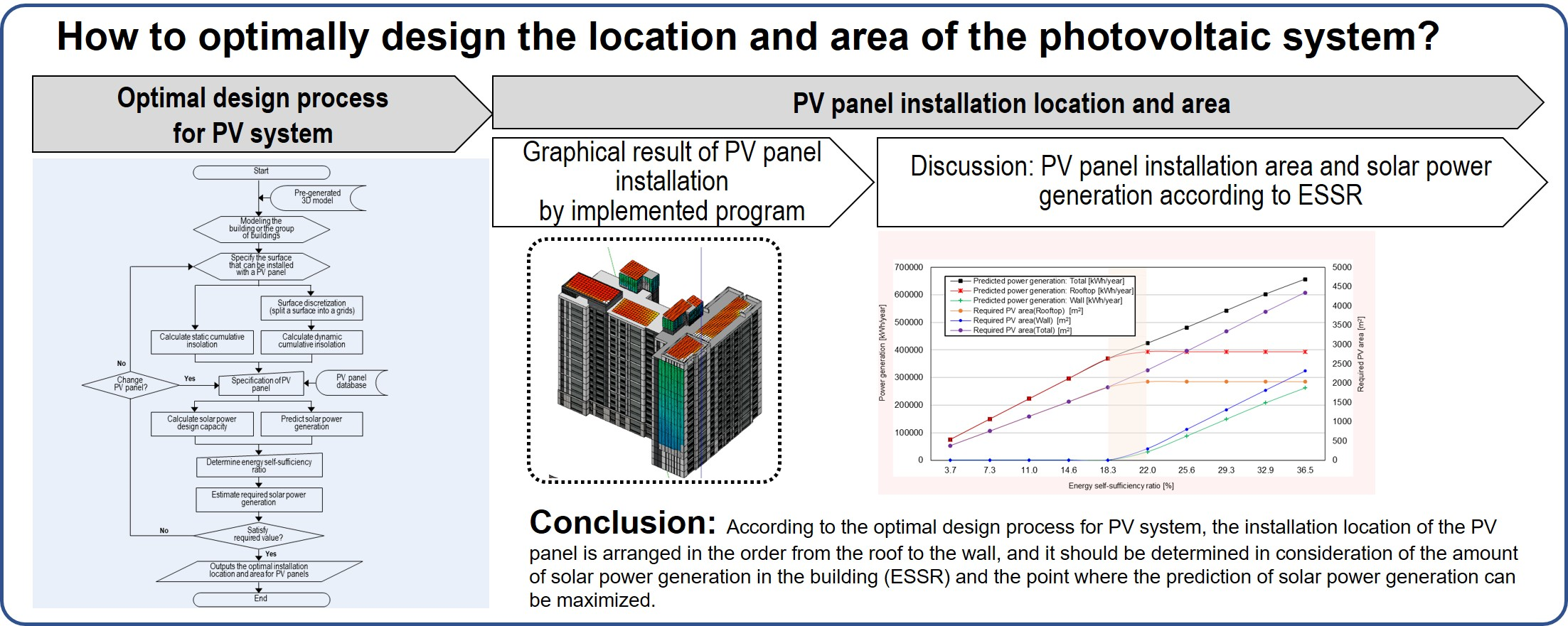
1. Introduction
In Korea, a zero-energy building (ZEB) is defined based on the energy self-sufficiency ratio (ESSR), which represents the proportion of on-site renewable energy generation relative to building energy consumption, and ZEB certification levels are determined according to this ratio as specified in national regulations. The ESSR-based definition is adopted in this study as the basis for determining the required PV generation capacity [
1]. In Korea, ZEB certification grade 5 requires achieving an energy self-sufficiency ratio (ESSR) of at least 20%, which is used as the target PV generation requirement in this study.
In this process, various alternatives to using renewable energy sources can be reviewed to increase the ratio of energy generation, but in terms of efficiency and ease of installation, a PV system is the best alternative [
2,
3]. The Korean government is also actively recommending solar power systems, and this can be said to confirm the direction of moving toward electrified housing. In this trend, it will be most important to accurately calculate the amount of power generated by solar panels. In addition, it is necessary to correctly determine the installation location and area of the panel according to the amount of power generation.
In this study, we propose a design decision-support process for determining PV installation locations and areas that satisfy the required energy generation for zero-energy building certification and implement it as a program to support early-stage PV system planning.
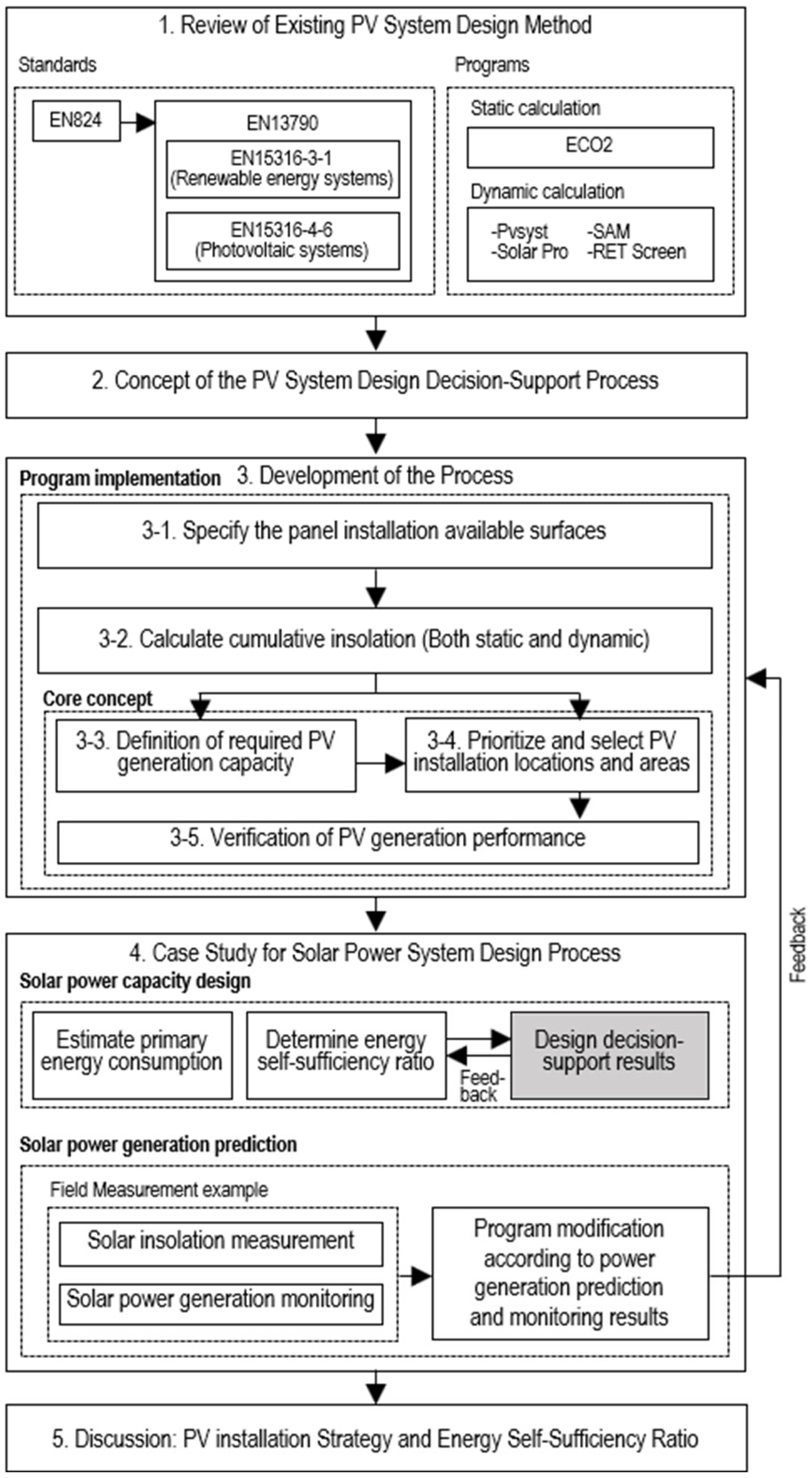
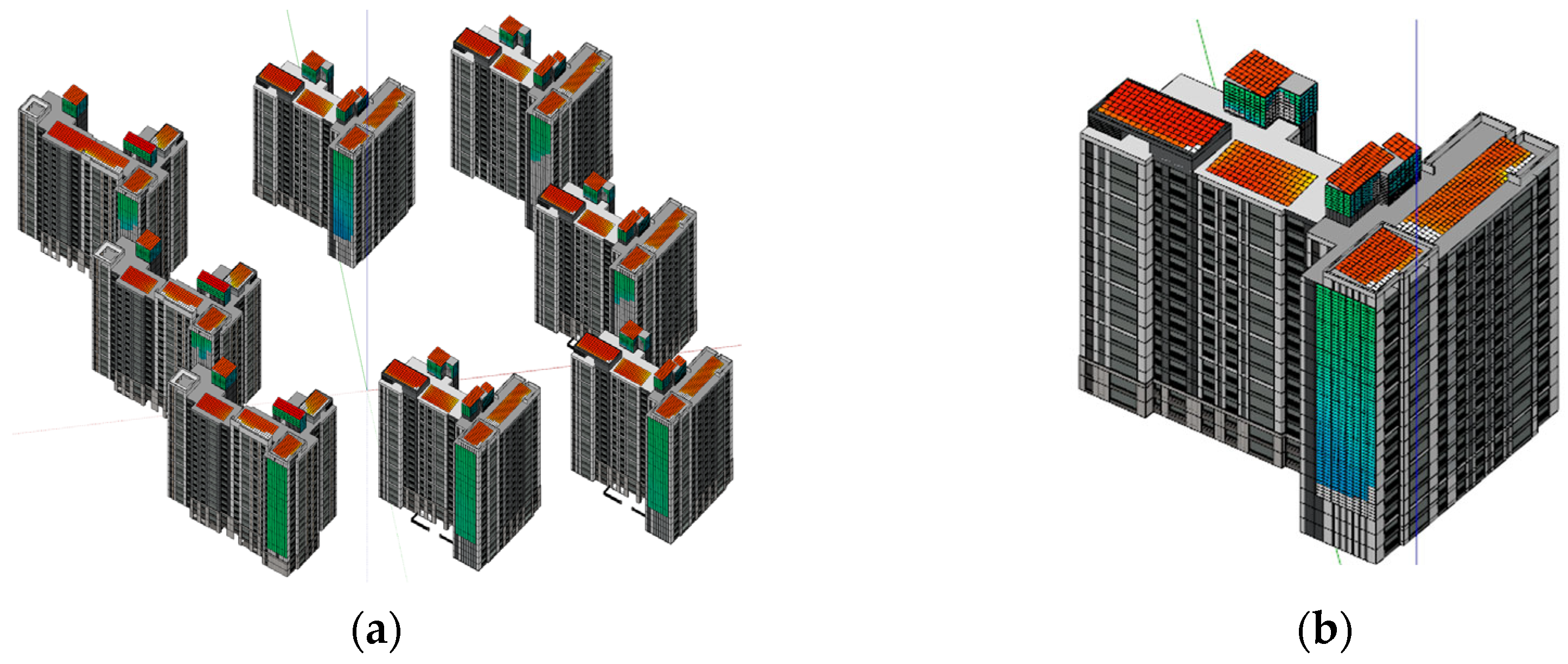
In this study, existing solar panel design processes (standards and programs) were reviewed to establish a conceptual framework for determining feasible installation locations and areas based on the required PV generation. Based on this conceptual framework, a PV system design decision-support process was developed and implemented as a SketchUp extension plug-in. The performance of the implemented program was examined by comparing predicted PV generation results with on-site measurement data. Afterwards, the optimal design of a solar power system was performed for residential building complexes, a standardized housing type in South Korea (
Figure 1).
2. Preliminary Review of the Existing Solar Power System Design Process
2.1. Solar Power Generation Calculation Standards
The energy generation calculation program for residential facilities is based on EN ISO 13790:2002 established in 2002, based on EN824 [
4,
5]. This standard was amended in 2008 by EN ISO 13790:2008, and together with EN 15316 and EN 15243, includes the calculation of heating and cooling energy, and the analysis of energy production and consumption in residential and non-residential buildings [
6,
7,
8]. It has been developed to EN 15603, including the primary energy requirement and EN 15217 [
9,
10]. DIN V 18599 can additionally calculate requirements for renewable energy, and up to the primary energy requirements. In particular, DIN V 18599 is advantageous and even provides an Excel file with calculation examples [
11]. However, DIN V 18599 is a standard established for the purpose of tools for energy evaluation, not design. Since the purpose of the standard is to evaluate for certification, it is not suitable for use in solar power system design.
2.2. Existing Program for Calculating Solar Power Generation
In Korea, the installation of renewable energy in new buildings is mandatory, and the Korea Energy Corporation is operating the ECO2 (Total Building Energy Consumption Assessment) program online to calculate the amount of solar power generation. In ECO2, the amount of electricity generated can be calculated by inputting solar information (concentration area, installation angle, orientation, cell type, module type, etc.), along with basic building information based on EN 13790. In Korea’s solar power generation-related project evaluation and incentive provision, ECO2 is the standard, and for fairness in evaluation, ECO2 does not accurately present an algorithm for calculating solar power generation, so it is only possible to make an estimate. In addition, since the purpose of the program is to encourage the application of renewable energy, the calculation results and process are not precise and simplified. Meanwhile, a quasi-steady-state calculation method is applied to reduce the difference in calculation results between different inputs. For these reasons, apart from the ZEB certification, the actual amount of power generated by the PV system after completion was often different from the result predicted by ECO2.
PVsyst, developed by the University of Geneva, Switzerland, is one of the oldest solar power generation simulation programs, and can be used in the project planning and design stage. Monthly solar power production can be calculated by inputting variables in the system planning stage, while simulation is also possible over time [
12,
13,
14]. Solar Pro is a solar power system design program developed by the Laplace System Company of Japan. Because 3D CAD is used, it has the advantage of being able to perform performance evaluation considering shading in three dimensions by importing CAD objects. In particular, the shadow mapping function has strength in the design of the PV module as a function to find the panel that is affected by shadow interference. SAM is a decision-making program for renewable energy systems developed by the National Renewable Energy Laboratory (NREL) in the United States. It is compatible with PVsyst and can import shading data, but it does not include a 3D function, so it cannot analyze shading [
15]. RET Screen is a program for rough calculation of PV, and can be classified as software for learning. It does not provide shading or report generation functions separately.
Because these programs are separate from ZEB certification, there is the potential for conflict with the deployment of solar panels for certification. In addition, in order to calculate the energy consumption and production of a building according to the input values of the program, only an expert in relation to the building load and system can use it. Therefore, construction companies continue to demand the need to derive the arrangement of solar panels that can maximize the amount of solar power generation after completion while satisfying the ZEB certification.
2.3. PV System Design Decision-Support Process
The review in the architectural planning stage for solar power system installation inevitably differs, depending on the design of the building [
16,
17]. However, these standards and programs have many input variables and limited data, making it difficult for designers or contractors to design a solar power system accurately at the initial stage [
18,
19]. For this reason, the construction company cannot utilize the design process and program discussed above, and only the capacity of the system is roughly predicted through a simple calculation method [
20,
21,
22]. Therefore, in this study, a solar power system design decision-support process was proposed to determine feasible installation locations and areas of PV panels that satisfy the required energy generation for ZEB certification. The solar installation location and area derived from this process can not only design the system capacity to satisfy the solar power generation according to the mandatory installation ratio of renewable energy, but also predict the generation amount after building completion.
The proposed process adopts a heuristic, rule-based decision-support strategy that prioritizes and selects PV installation locations based on solar availability and shading conditions under ZEB certification constraints. The design space in this study is defined as the set of feasible PV installation areas on the roof and façade surfaces, which are discretized into grid-based cells, allowing multiple combinations of installation configurations.
The proposed design decision-support process is structured into three stages: (1) definition of the required PV generation capacity, (2) prioritization and selection of PV installation locations and areas, and (3) verification of PV generation performance (
Table 1).
In the first stage, the required PV generation capacity is determined to satisfy the annual energy production target corresponding to the ZEB certification grade, considering the available installation area of PV panels.
In the second stage, feasible installation areas on the roof and façade are divided into grid-based cells, and each cell is evaluated in terms of solar availability and shading conditions. Based on this evaluation, installation locations are prioritized and selected to satisfy the required PV generation target.
In the final stage, the PV generation performance of the selected configuration is predicted to verify the feasibility of the design in terms of expected energy production. This approach does not rely on mathematical optimization techniques but instead provides a transparent and practical framework to support early-stage design decisions. This heuristic selection procedure is designed to support rapid feasibility screening in practical design workflows, where detailed optimization is typically performed at later stages.
3. Development of Design Process for PV System
3.1. Description of Each Step in the Design Process
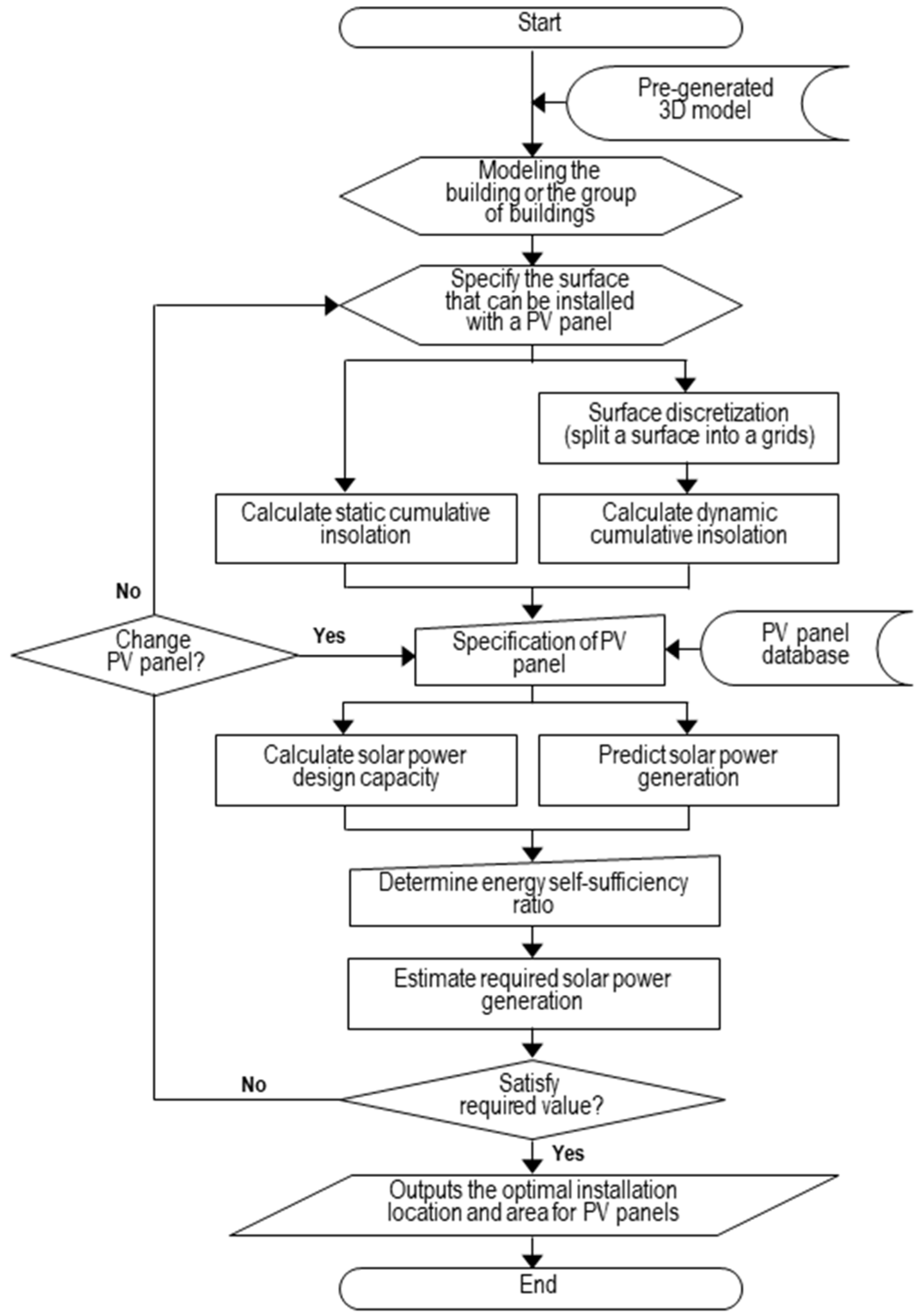
The target building or group of buildings is modeled, and then all surfaces where solar panels can be installed are designated. These surfaces are the reference plane for calculating the amount of insolation and solar power generation. Afterwards, the plane is automatically divided into numerous areas. Each segmented plane is defined as a grid. When dividing a plane, the solar panel has the precondition that it is planar and has a rectangular shape. The accumulated solar insolation is calculated from local weather data for each grid. Cumulative solar insolation is used for capacity design through static calculations and for power generation prediction through dynamic calculations. The amount of solar power required for ZEB certification is calculated to comply with the laws or standards of each country. The necessary values are the primary energy consumption per unit area and the primary energy production per unit area; the ESSR is then calculated according to Equation (1) using these two values. In this study, the primary energy conversion factors specified in the Korean ZEB certification regulation are applied to calculate both primary energy consumption and primary energy production.
The required PV generation derived from the ESSR in Equation (1) is used as the target generation level for determining the PV system capacity. To the next, the location and area to satisfy the amount of solar power generation according to the ESSR can be derived. To secure the amount of solar power required to satisfy the ESSR, the solar panels are placed in order from the high solar insolation grid, and the area is calculated. For solar power generation prediction, the amount of solar power generation is calculated through the following Equation (2) by considering the accumulated insolation per unit area, and the direction and inclination of the grid. Shading effects are evaluated at the grid-cell level using cumulative solar availability calculations based on hourly solar position data derived from local weather files. Surrounding building geometry and façade orientation are considered in the shading analysis, and shading is evaluated by determining whether the solar ray intersects surrounding objects at each time step. The annual cumulative solar availability is then applied as a reduction factor in PV generation estimation.
P: Solar power generation (kWh)
A: Total solar panel area (m2)
r: Solar panel yield (%)
H: Annual average solar insolation on tilted panels (kWh/m2)
PR: Performance ratio, coefficient for losses
(Including inverter losses, temperature losses, DC cable losses, AC cable losses, shading, losses due to weak irradiation, losses due to dust, snow…, & other losses)
In Equation (2), r is the efficiency of the solar panel manufacturer’s spec sheet, and the performance ratio (PR) as a default value is set to 1, which value is commonly used in solar design practice. The performance ratio (PR) of 1.0 is used as a reference potential generation level for early-stage sizing and comparative evaluation, and does not represent actual system performance, including temperature, inverter, and wiring losses. The shadow on the grid is considered in calculating the amount of power generation through dynamic calculation.
Figure 2 shows the above process as a flowchart.
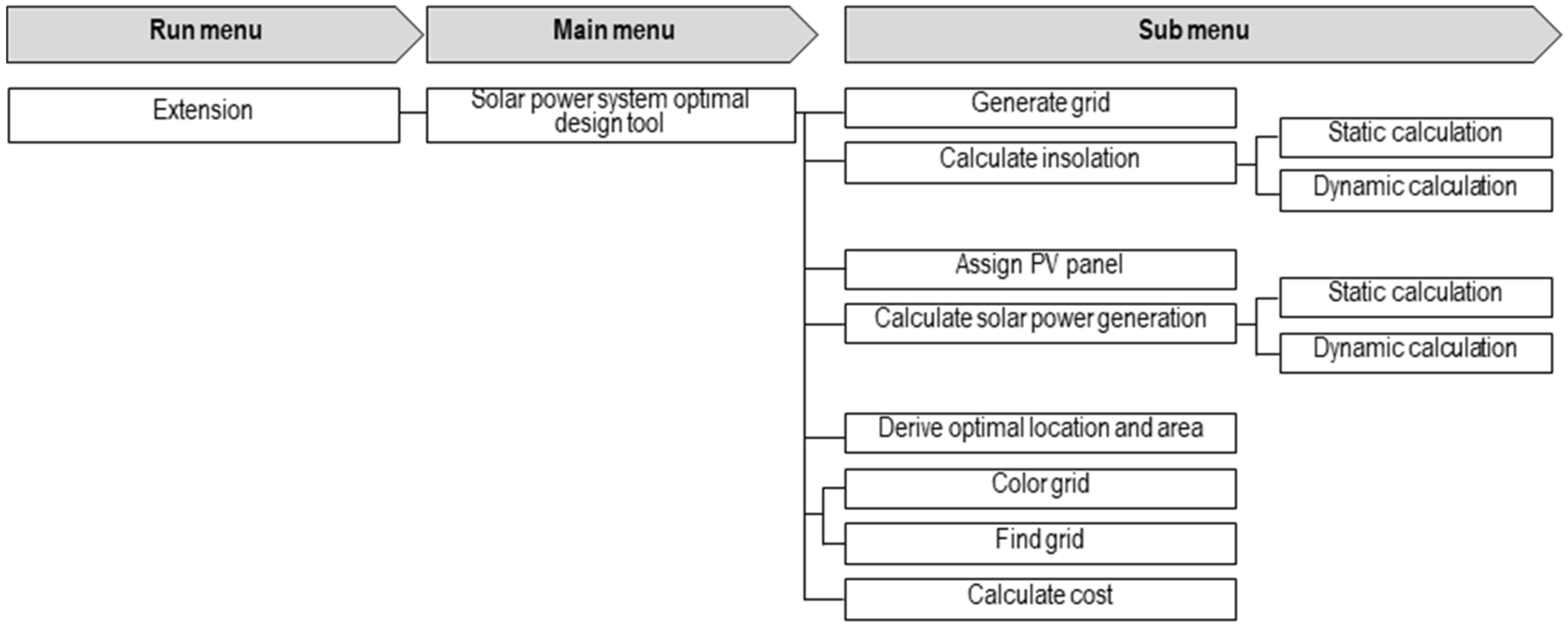
In the process, a dynamic calculation using a computer is required to predict the amount of power generation considering the shadows. Therefore, in order to implement the flowchart as a program, the menu is structured as shown in
Figure 3.
3.2. Program Details and Configuration
The design process was implemented as a program according to the flowchart and menu structure described in
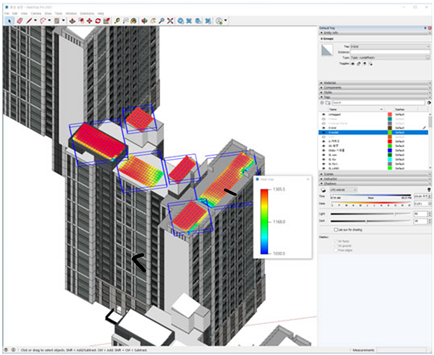
Section 3.1 using the extension plug-in SketchUp and the development language Ruby. Finally, among the menus implemented in the program, the ‘Derive Optimal Area’ is utilized to output the grid for PV panel installation from the 3D model. In addition, the calculation result can be checked in text, using a separate pop-up window.
Table 2 describes the functions that each menu must have and shows the screen where the program was executed for the case study building.
4. A Case Study: Application of the Design Decision-Support Process to the PV System
4.1. PV System Capacity and Installation Planning
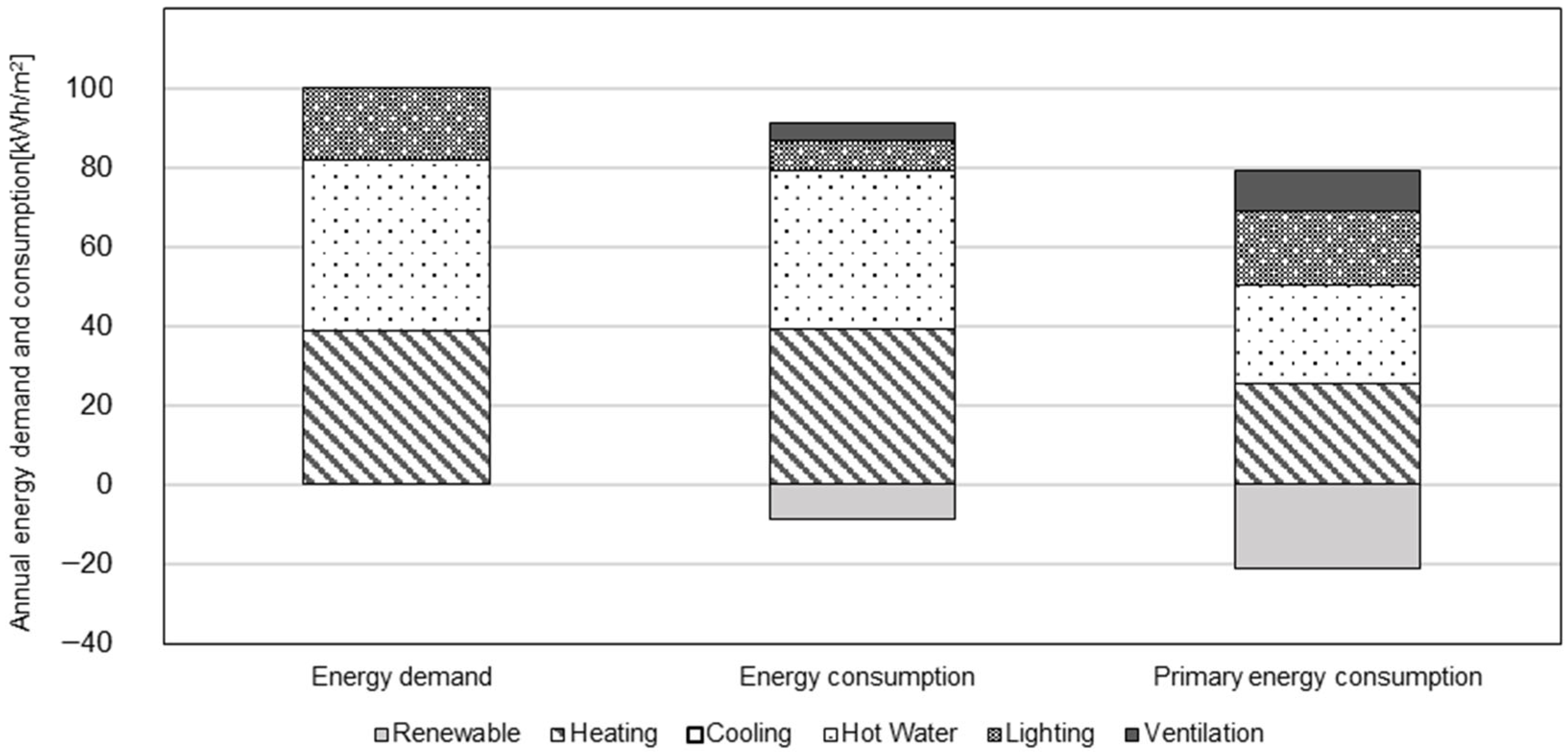
Using the program that implemented the process developed in this study, the design of the PV system was performed for the building currently under construction. According to the design capacity to satisfy the ZEB certification for the target building, the PV system capacity was derived, and the amount of power generation was predicted. The PV system capacity is also validated with the existing zero-energy certification program ECO2. For the same ESSR, the PV system was optimally designed through the process of this study, and the design capacity and power generation were predicted and compared with the existing design values. The target building is ‘NYNT’, an apartment complex located in Korea, with 604 households in eight buildings, and the highest floor is 18 stories. A 426 kW solar power plant is designed on the roof of the building. For the weather data, the data loaded in EnergyPlus 9.6.0 was used [
23,
24,
25]. The total area of the target building complex is 46,776.4 m
2, and the primary energy consumption per unit area is 112.8 kWh/m
2. The annual energy demand and consumption by energy source are shown in
Figure 4.
As a result of designing a PV system with ECO2, a 426.0 kW PV panel was installed on the roof and wall of the building to derive the primary energy production per unit area of 23.7 kWh/m
2. The PV panel was installed in three groups (
Table 3). Therefore, the building has achieved an ESSR of 21.0%.
Table 4 shows the results of applying the proposed design decision-support process to the PV system. The installation area is divided into grid cells, and PV panels are arranged based on solar availability and shading, with rooftop areas prioritized over building envelopes. The smaller rooftop installation area in the current design reflects limitations of conventional design practices, where panel arrangement is not systematically optimized.
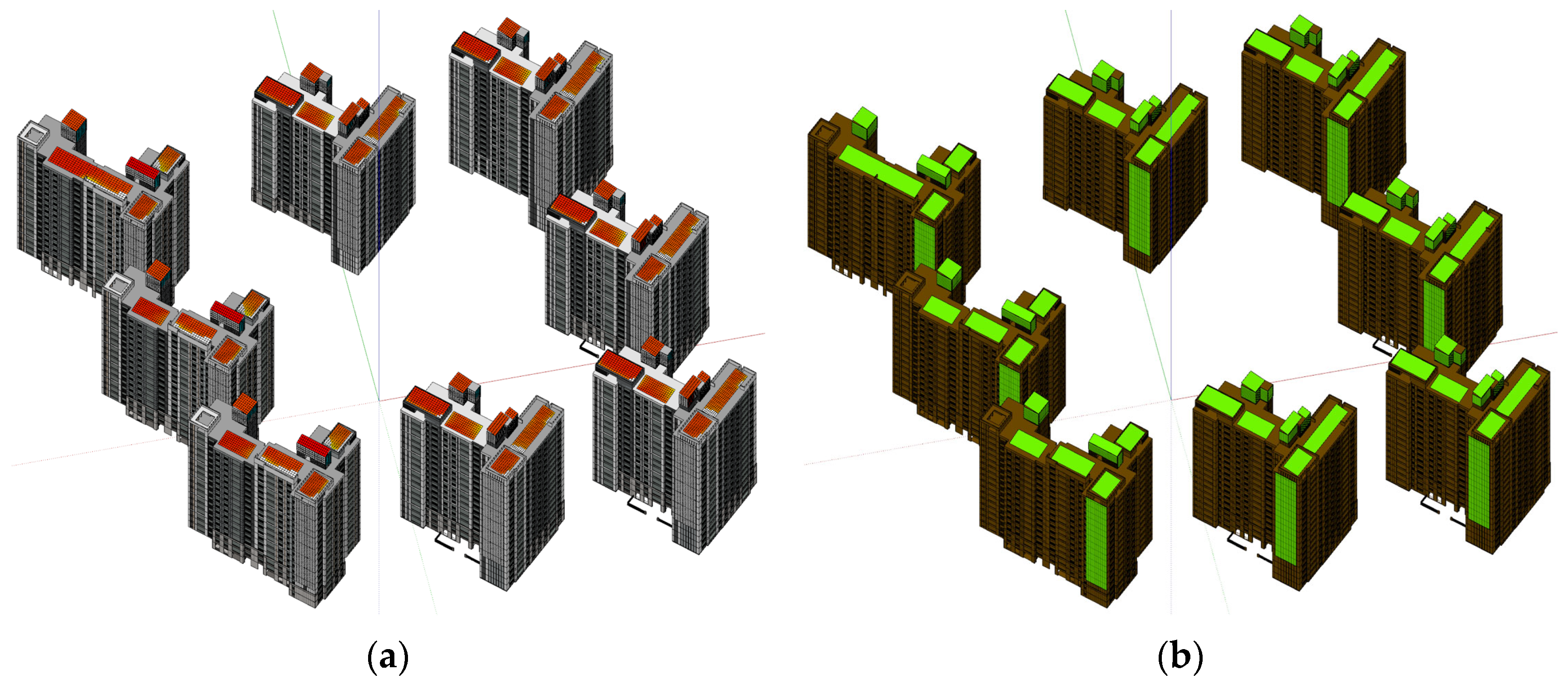
Through the design process, the installation area and design capacity can be reduced by 1.3% and 1.7%, respectively, compared to the initial design by the existing process. Specifically, the installation of solar panels on the roof increased by about 21.1%, and the installation of solar panels on the walls decreased by about 68.4%. It was predicted that power generation could be increased by about 3.0% while maintaining the same ESSR (
Figure 5a).
If the ESSR of the target building is increased, the optimal installation location and area of the solar panel can be calculated according to the required amount of power generation by performing the process after designating the solar panel installation area, as
Figure 5b.
If the solar panels are designed using the proposed design process for this building complex, 656,539 kWh/year will be generated through the solar panels installed on an area of about 4334.3 m2, which is expected to increase the power generation by about 39.2% compared to the previous design. The ESSR was 36.5%, and it was expected to be about 15.5% higher than the ESSR of the current design.
Through the design process, it is possible to predict the maximum possible ESSR and power generation in the target building. However, it can be seen that the increase in power generation by 48.6%, which is the increase in design capacity, was not achieved due to the installation of solar panels on the wall, which has relatively lower power generation efficiency than the roof.
Figure 6 shows the installation location and area of the solar panel when the ESSR of 36.5% is achieved. In order to satisfy the required power generation, it can be confirmed that a solar panel should be additionally installed for the available wall area as well as the roof. In practical PV systems, the performance ratio typically ranges between approximately 0.8 and 0.9, depending on system configuration and environmental conditions. Although PR = 1.0 was used as a reference potential generation level in this study, the relative comparison between design alternatives remains unchanged when realistic PR values are applied.
4.2. Field Measurement of Power Generation
In order to verify the predicted power generation derived using the program with the actual power generation, field measurements were performed [
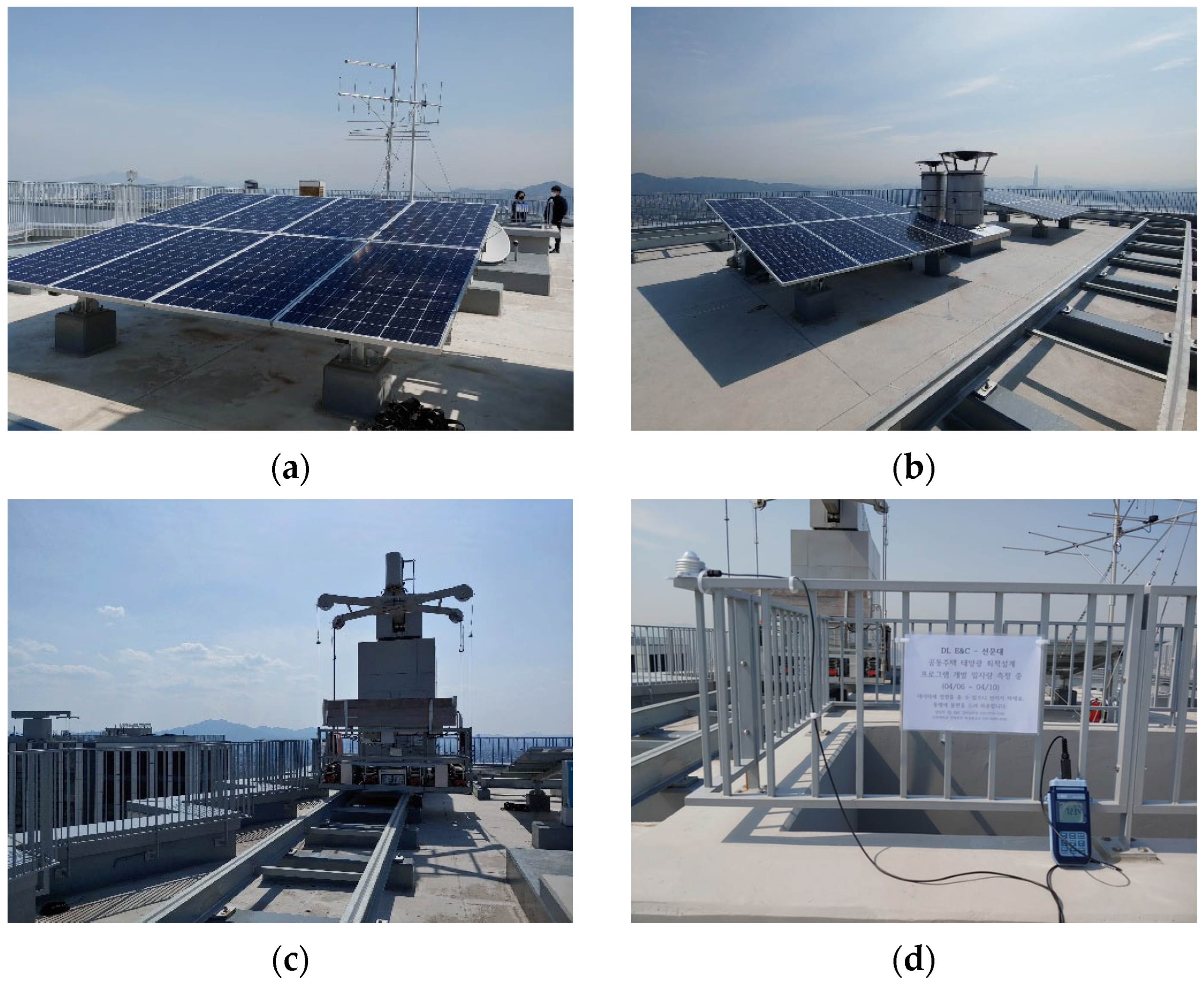
26]. ‘ASF’, a residential building located in Seoul, Korea, was selected for field measurement. The ASF case is used as a reference measurement dataset, while the NYNT case represents the design application scenario; therefore, the results should be interpreted as demonstrating methodological applicability rather than direct transferability between buildings. On the building roof, 13.32 kW solar power generation facilities are installed in four groups as shown in
Figure 7, and 36 solar panels with a capacity of 370 W are installed. The total installed area of solar panels is 71.78 m
2.
The amount of solar insolation was measured for four days in the building, and the amount of power generation was monitored. The amount of solar power generation was predicted using the measured insolation data, and the predicted value was compared with the power generation measured by the solar power generation facility monitoring system [
27,
28,
29]. As equipment for measuring solar insolation, DeltaOHM’s HD 2102.2 and LP PARA 03 were used. The daily maximum, minimum, average, and daily power generation were recorded in the solar power generation facility monitoring system [
30].
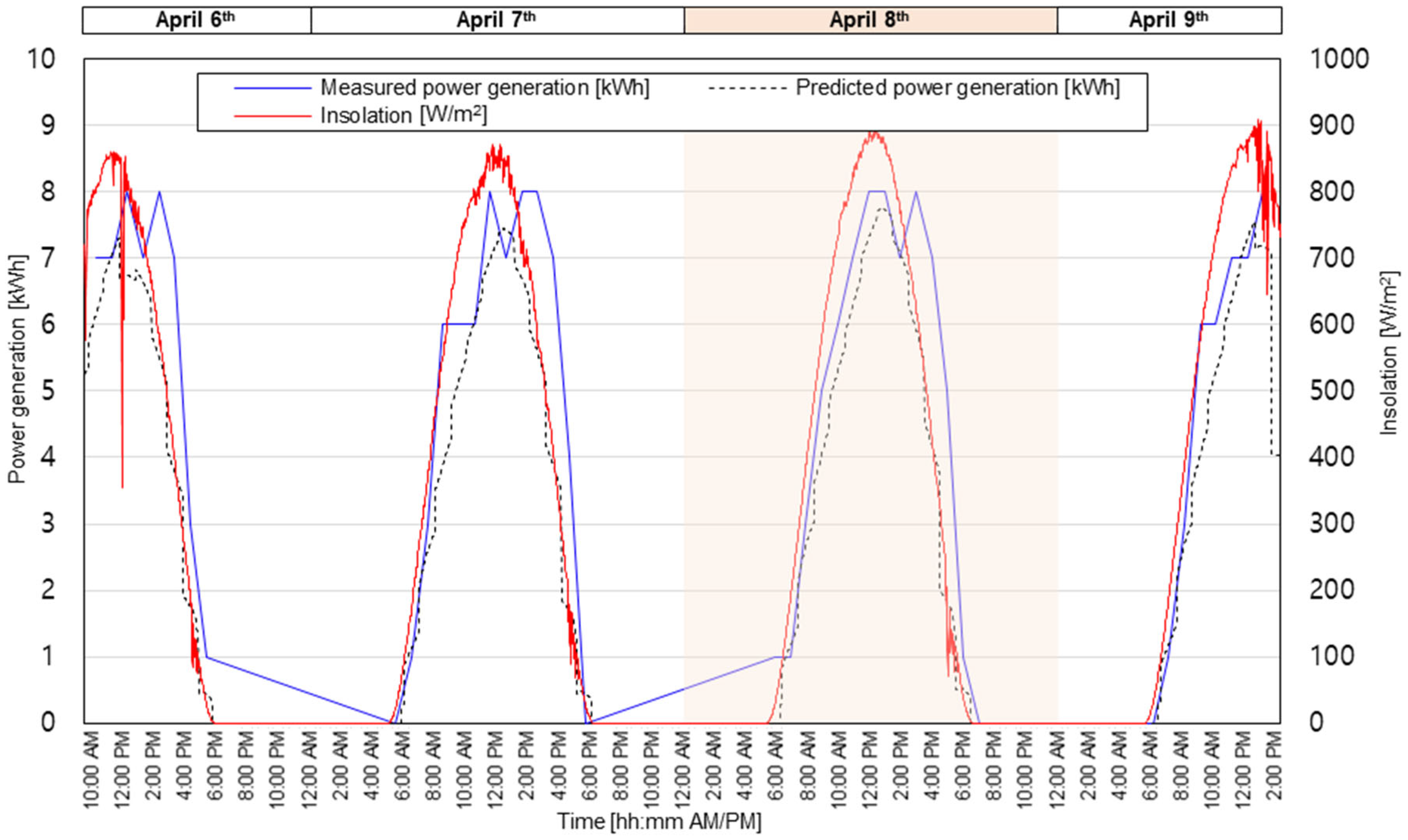
The amount of insolation and the amount of solar power generation from the solar monitoring system measured on 8 April were analyzed and compared with the predicted values of the program, which are shown in
Table 5.
The measured power generation exceeded the predicted value by approximately 10%, indicating that the proposed prediction approach provides a reasonable estimation of PV generation for early-stage planning under simplified modeling assumptions. The result can be confirmed by the solar power generation in
Figure 8, and the measured amount of power generation and the predicted amount of power generation show a similar pattern. Therefore, the results indicate that the proposed design decision-support process can provide reasonable estimates of PV generation trends for early-stage planning.
Using two days with complete datasets, the measured power generation was consistently about 10% higher than the predicted values. This difference is mainly attributed to simplified assumptions adopted in the early-stage prediction model, such as the use of a default performance ratio and simplified treatment of system losses. Nevertheless, the predicted and measured results show consistent trends, indicating the applicability of the method for comparative design evaluation and early-stage decision-making. It should be noted that the field measurement was conducted over a limited period and is not intended to provide long-term validation of absolute PV generation prediction accuracy. Instead, the measurement data are used to examine the consistency between predicted and measured generation trends under identical irradiation conditions.
Table 6 indicates that the proposed prediction method provides conservative estimates while maintaining consistent performance across multiple days.
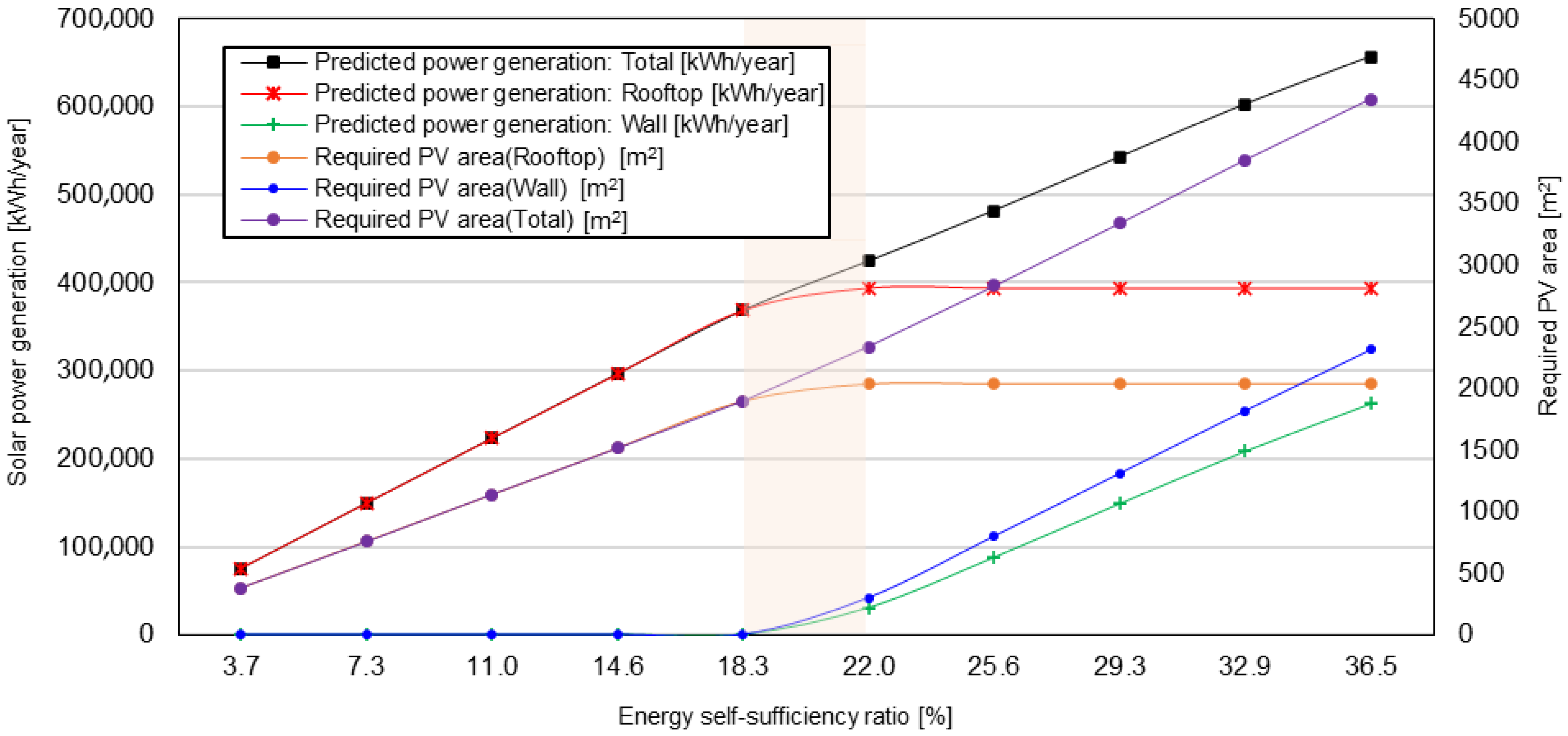
In the process proposed in this study, if the ESSR is changed, the required power generation amount and the capacity of the PV system will also change. Among the design examples performed previously, the required power generation and system capacity according to changes in the energy self-reliance rate were calculated for the <NYNT> complex, and the installation location and area of the solar panel were optimally designed (
Figure 9).
Although the case study is based on the Korean ESSR framework, the proposed design decision-support process can be adapted to other regulatory contexts by substituting the corresponding primary energy performance metric.
5. Discussion
As a result of the proposed PV design decision-support process, PV panels were first allocated to rooftop areas with minimal shading, followed by façade areas when additional installation capacity was required. Although rooftop PV installation generally provides higher solar yield, the available roof area is often insufficient to meet ZEB certification requirements, necessitating a systematic allocation of PV panels between roof and façade surfaces. In the case study building, if the ESSR is greater than 18%, the panel is installed on the wall after installing all the panels on the roof area. When the ESSR increases more than 22%, the amount of power generated by the panel installed on the roof does not increase anymore, and the increase in the amount of power generation is smaller than the increase in the panel installation area. In other words, although the ESSR can be increased, there is an inefficient point in terms of the amount of power generation. This result will vary depending on the shading if the target building is different. In this case, the design of the PV system can be performed by installing PV panels in consideration of the power generation required according to the ESSR.
Table 7 quantifies the marginal efficiency of PV installation as the energy self-sufficiency ratio increases. Up to an ESSR of approximately 18.3%, PV installation is dominated by rooftop areas and exhibits consistently high marginal efficiency, exceeding 190 kWh/m
2. Beyond an ESSR of 22.0%, rooftop PV installation reaches saturation, and additional PV capacity is installed on wall surfaces, resulting in a noticeable reduction in marginal efficiency. This transition represents a practical design threshold where further increases in ESSR lead to diminishing energy returns per unit installation area. Although the field measurement was conducted over a limited period, the purpose of validation was to confirm the consistency between predicted and measured trends under identical irradiation conditions rather than long-term yield assessment.
6. Conclusions
In this study, we established a process for deriving the installation location and area of a panel when designing a PV system for ZEB. This study primarily focuses on the development of a design decision-support process for PV systems in zero-energy buildings, with particular emphasis on early-stage planning and decision-making. The presented case study and field measurements serve to demonstrate the applicability of the proposed methodology. The main results of this study may be summarized as follows:
(1) The proposed PV system design decision-support process consists of three stages: PV capacity estimation, installation planning, and PV generation prediction. According to the design process, it is necessary to calculate the PV system capacity required for the building’s target ZEB certification grade and determine the installation area and location of the PV panel. In addition, the process enables estimation of expected PV generation during the early design stage of systems intended to meet ZEB certification requirements.
(2) While maintaining the same ESSR of the building, the design process for the PV system reduced design capacity by 1.7% and increased solar power generation by 3.0% compared to the contractor’s conventional design method. This reduction in design capacity improves installation efficiency and cost-effectiveness while still satisfying the required ZEB certification performance. This result was derived by dividing the building’s PV installation area into a grid and systematically arranging the panels to maximize insolation while accounting for shading effects.
(3) Field measurements showed that the predicted solar power generation captures the overall trend of measured generation, with differences of approximately 10% due to simplified assumptions in the early-stage prediction model. These results demonstrate that the proposed approach is suitable for comparative design evaluation and feasibility assessment in early-stage PV system planning.
(4) Using the suggested design process for PV systems, it is possible to estimate the installation location and area of PV panels in the initial design stage. In this case, the installation location of the PV panel is arranged in the order from the roof to the wall, and it should be determined in consideration of the amount of solar power generation in the building according to the ESSR and the point where the amount of power generation after completion can be maximized.
The proposed design decision-support process is expected to support practical PV planning and decision-making for meeting the renewable energy requirements of ZEB certification. Future research will be conducted to further enhance the completeness of the process by validating this process with commercial programs, large apartment complexes, and commercial buildings. It should be noted that the proposed framework focuses on a practical decision-support process for early-stage PV planning under ZEB certification constraints and does not explicitly incorporate trade-off analysis or uncertainty quantification. These aspects can be considered in future extensions of the framework.
Author Contributions
Conceptualization, S.P. and D.K.; methodology, D.K.; software, D.K.; validation, S.P.; data curation, S.P.; writing—original draft preparation, S.P.; writing—review and editing, S.P.; visualization, S.P.; supervision, S.P.; project administration, S.P.; funding acquisition, S.P. All authors have read and agreed to the published version of the manuscript.
Funding
This work was supported by Incheon National University Research Grant in 2023.
Data Availability Statement
The data presented in this study are available on request from the corresponding author due to legal reasons.
Conflicts of Interest
Author Dongwoo Kim was employed by the company Boundary Condition Corp. The remaining author declares that the research was conducted in the absence of any commercial or financial relationships that could be construed as a potential conflict of interest.
References
- Ministry of Land, Infrastructure and Transport (MOLIT). Regulation on Zero Energy Building (ZEB) Certification; Ministry of Land, Infrastructure and Transport: Sejong City, Republic of Korea, 2025.
- Kazanci, O.B.; Skrupskelis, M.; Sevela, P.; Pavlov, G.K.; Olesen, B.W. Sustainable heating, cooling and ventilation of a plus-energy house via photovoltaic/thermal panels. Energy Build. 2014, 83, 122–129. [Google Scholar] [CrossRef]
- Good, C.; Andresen, I.; Hestnes, A.G. Solar energy for net zero energy buildings-A comparision between solar thermal, PV and photovoltaic-thermal (PV/T) systems. Sol. Energy 2015, 122, 986–996. [Google Scholar] [CrossRef]
- EN ISO 13790:2008; Energy Performance of Buildings—Calculation of Energy Use for Space Heating and Cooling. CEN: Brussels, Belgium, 2008.
- Kokogiannakis, G.; Strachan, P.; Clarke, J. Comparison of the simplified methods of the ISO 13790 standard and detailed modeling programs in a regulatory context. J. Build. Perform. Simul. 2008, 1, 209–219. [Google Scholar] [CrossRef]
- Mattarelli, A.; Piva, S. EN 15316 Calculation methods for the generation Sub-system: The influence of input data on the results. Energy Procedia 2014, 45, 473–481. [Google Scholar] [CrossRef]
- EN 15316-1:2017; Heating Systems in Buildings—Method for Calculation of System Energy Requirements and System Efficiencies. CEN: Brussels, Belgium, 2017.
- EN 15243: 2007; Ventilation for Buildings—Calculation of Room Temperatures and of Load and Energy for Buildings with Room Conditioning Systems. CEN European Commitee for Standarization: Brussels, Belgium, 2008.
- EN 15603: 2008; Energy Performance of Buildings—Overall Energy Use and Definition of Energy Ratings. CEN European Commitee for Standarization: Brussels, Belgium, 2008.
- EN 15217: 2007; Energy Performance of Buildings—Methods for Expressing Energy Performance and for Energy Certification of Buildings. CEN European Commitee for Standarization: Brussels, Belgium, 2007.
- DIN V 18599; Energy Efficiency of Buildings—Calculation of the Net, Final and Primary Energy Demand for Heating, Cooling, Ventilation, Domestic Hot Water and Lighting. Deutsches Institut für Normung (DIN): Berlin, Germany, 2007.
- PVsyst. 2021. Available online: https://www.pvsyst.com/ (accessed on 24 December 2021).
- Mermoud, A.; Wittmer, B. PVsyst User’s Manual; PVsyst SA: Geneva, Switzerland, 2014. [Google Scholar]
- Jing, D.L.; Dudley, J.K.; Boyson, W.E. PVSIM: A simulation program for photovoltaic cells, modules, and arrays. In Proceedings of the 25th IEEE Photovoltaic Specialists Conference, Washington, DC, USA, 13–17 May 1996; IEEE: Piscataway, NJ, USA, 1996; pp. 1295–1297. [Google Scholar]
- U.S. NREL. System Advisor Model (SAM). 2021. Available online: https://sam.nrel.gov/ (accessed on 12 December 2021).
- Gilman, P. Photovoltaic Model Technical Reference; No. NREL/TP-6A20-63102; National Renewable Energy Lab. (NREL): Golden, CO, USA, 2015. [Google Scholar]
- Corrado, V.; Fabrizio, E. Assessment of building cooling energy need through a quasi-steady state model: Simplified correlation for gain-loss mismatch. Energy Build. 2007, 39, 569–579. [Google Scholar] [CrossRef]
- Wang, R.; Lam, C.M.; Alvarado, V.; Hsu, S. A modeling framework to examine photovoltaic rooftop peak shaving with varying roof availability: A case of office building in Hong Kong. J. Build. Eng. 2021, 44, 103349. [Google Scholar] [CrossRef]
- Prees Suzano e Silva Carolina, A.C.; Calili, R.F. New building simulation method to measure the impact of window-integrated organic photovoltaic cells on energy demand. Energy Build. 2021, 252, 111490. [Google Scholar] [CrossRef]
- Azami, A.; Sevinç, H. The energy performance of building integrated photovoltaics (BIPV) by determination of optimal building envelope. Build. Environ. 2021, 199, 107856. [Google Scholar] [CrossRef]
- Ebert, M.; Stascheit, H.; Hadrich, I.; Eitner, U. The impact of angular dependent loss measurement on PV module energy yield prediction. In Proceedings of the 29th European PV Solar Energy Conference and Exhibition, Amsterdam, The Netherlands, 22–26 September 2014. [Google Scholar]
- Sugiura, T.; Tamada, T.; Nakamura, H.; Umeya, M.; Sakura, K.; Korokawa, K. Measurements, analyses and evaluation of residential PV systems by Japanese monitoring program. Sol. Energy Mater. Sol. Cells 2003, 75, 767–779. [Google Scholar] [CrossRef]
- U.S. NREL. EnergyPlus. 2021. Available online: https://energyplus.net/weather (accessed on 20 August 2021).
- National Weather Service. 2021. Available online: https://www.weather.gov/ (accessed on 11 November 2021).
- Korea Meteorological Administration. 2022. Available online: https://data.kma.go.kr/svc/main.do (accessed on 22 March 2026).
- Deline, C.; Meydbray, J.; Donovan, M. Photovoltaic Shading Testbed for Module-Level Power Electronics: 2016 Performance Data Update; No. NREL/TP-5J00-62471; National Renewable Energy Lab. (NREL): Golden, CO, USA, 2016. [Google Scholar]
- Mondol, J.D.; Yohanis, Y.G.; Norton, B. Comparison of measured and predicted long term performance of grid a connected photovoltaic system. Convers. Manag. 2007, 48, 1065–1080. [Google Scholar] [CrossRef]
- Mondol, J.D.; Yohanis, Y.G.; Smyth, M.; Norton, B. Long term validated simulation of a building integrated photovoltaic system. Sol. Energy 2005, 78, 163–176. [Google Scholar] [CrossRef]
- Dierauf, T.; Growitz, A.; Kurtz, S.; Cruz, J.L.B.; Riley, E.; Hansen, C. Weather-Corrected Performance Ratio; No. NREL/TP-5200-57991; National Renewable Energy Lab. (NREL): Golden, CO, USA, 2013. [Google Scholar]
- Hoseinzadeh, P.; Assadi, M.K.; Heidari, S.; Khalatbari, M.; Saidur, R.; Sangin, H. Energy performance of building integrated photovoltaic high-rise building: Case study, Tehran, Iran. Energy Build. 2021, 235, 110707. [Google Scholar] [CrossRef]
| Disclaimer/Publisher’s Note: The statements, opinions and data contained in all publications are solely those of the individual author(s) and contributor(s) and not of MDPI and/or the editor(s). MDPI and/or the editor(s) disclaim responsibility for any injury to people or property resulting from any ideas, methods, instructions or products referred to in the content. |