Next Article in Journal
A Method to Construct a System Performance Function for Structural Reliability Analysis
Previous Article in Journal
Planning of Cultural Heritage Network Based on the MCR Model and Circuit Theory in Shenyang City, China
 
 
Due to scheduled maintenance work on our servers, there may be short service disruptions on this website between 11:00 and 12:00 CEST on March 28th.
Article

Research on the Temperature Variation Characteristics of Large-Scale Concrete Pouring in Open-Cut Railway Stations

1
Shandong Road and Bridge Group Co., Ltd., Jinan 250014, China
2
College of Environment and Safety Engineering, Qingdao University of Science and Technology, Qingdao 266042, China
*
Author to whom correspondence should be addressed.
Buildings 2026, 16(7), 1312; https://doi.org/10.3390/buildings16071312
Submission received: 26 February 2026 / Revised: 12 March 2026 / Accepted: 16 March 2026 / Published: 26 March 2026
(This article belongs to the Section Building Structures)

Abstract

In recent years, China’s rapid economic development has driven the improvement of infrastructure, with mass concrete widely applied in engineering for its unique structural functions. However, mass concrete is prone to temperature stress and thermal cracks due to its low thermal conductivity, huge volume, complex construction conditions, and frequent environmental changes, which pose potential structural safety risks. The hydration heat of mass concrete can also cause structural deformation, so targeted measures must be taken based on actual engineering conditions to minimize cracks. Real-time temperature monitoring during pouring is of crucial significance to ensure the quality and safety of mass concrete in practical projects. Taking the Phase I Project of Qingdao Metro Line 9 as the research object, this paper explores the temperature variation characteristics of mass concrete during pouring and forming on-site. It analyzes the temperature changes in mass concrete based on field temperature-monitoring data and laboratory test results, plots temperature measurement curves, and identifies the temperature variation trend of mass concrete caused by hydration heat. A numerical model is established via ANSYS to study the effects of ventilation temperature and velocity by simulation. Results show that the temperature of mass concrete pouring blocks rises rapidly to a peak and then decreases to room temperature, which is analyzed from the perspectives of hydration heat reaction mechanism and heat transfer. Laboratory test data are highly consistent with field data, verifying the temperature variation characteristics of concrete pouring. The numerical simulation of heat transfer-influencing factors reveals that the optimal ventilation velocity is 4 m/s for sufficient air circulation in the foundation pit; when the ventilation temperature is below 25 °C, the surface temperature of concrete decreases significantly with an obvious cooling effect.

1. Introduction

With the accelerated urbanization and rapid economic growth globally, large-scale infrastructure projects such as high-rise buildings, long-span bridges [1,2], and hydraulic dams have been increasingly constructed to meet the growing social and economic demands [3]. Mass concrete, defined as concrete structures with a minimum dimension exceeding 1 m or those prone to temperature-induced cracks due to hydration heat accumulation (ACI Committee 207), has become an indispensable construction material in these large-scale projects owing to its superior structural stability, high load-bearing capacity, and excellent durability [4,5]. Its unique structural advantages enable it to play a critical role in key components of large engineering structures, such as special-shaped members, components under complex mechanical conditions [6,7], and core load-bearing parts, where reliability and long-term performance are paramount [8].
However, the widespread application of mass concrete has also brought significant technical challenges to engineering construction, primarily attributed to its intrinsic material properties and complex construction environments [9]. Unlike normal-weight concrete, mass concrete exhibits low thermal conductivity and large volume [10], which hinder the effective dissipation of hydration heat generated during the cement hydration process [11]. Meanwhile, the complexity of construction conditions (e.g., variable casting sequences, uneven formwork support) and the variability of environmental factors (e.g., ambient temperature fluctuations, humidity changes) further exacerbate the problem of temperature accumulation [12]. These factors collectively lead to a significant temperature difference between the interior and surface of mass concrete structures, inducing substantial thermal stress. When the thermal stress exceeds the tensile strength of the concrete (especially in the early age when the concrete is relatively brittle), thermal cracks are likely to occur [13]. Such cracks not only compromise the structural integrity and impermeability of concrete but also accelerate the corrosion of reinforcement, thereby reducing the durability and long-term stability of the entire engineering structure [14]. In severe cases, crack propagation may even lead to structural failure, resulting in enormous economic losses and potential safety hazards [15].
The issue of temperature-induced cracks in mass concrete has long plagued the engineering community. In the early stage of mass concrete application, inadequate understanding of its hydration heat characteristics and temperature control mechanisms led to numerous cracking incidents in engineering projects worldwide. For instance, the Qingtongxia Hydropower Station, one of the earliest large-scale hydraulic projects in China, suffered from severe concrete cracking due to the lack of systematic research on mass concrete pouring and temperature control at that time [16], which significantly delayed the project’s progress and increased maintenance costs [17]. In contrast, the Hoover Dam in the United States, a landmark hydraulic engineering project, successfully avoided cracking issues during construction by adopting advanced temperature monitoring and crack prevention measures, benefiting from the early development of mass concrete temperature control technology in Western countries [18,19]. This stark contrast between domestic and international engineering practices highlights the critical importance of systematic research on temperature control and crack prevention for mass concrete [20,21].
Despite the extensive research efforts devoted to mass concrete temperature control over the past few decades, existing challenges remain. Previous studies have focused on single aspects such as hydration heat simulation [22], temperature control measures [23], or material modification [24]. Sun et al. [25] demonstrated through Parrot–Killoh hydration kinetics modeling that the temperature difference between the interior and surface of large-scale concrete can reach 16.4–35.4 °C, generating thermal stresses up to 5.5 MPa in the early stages, which readily induces temperature cracks at the surface and corner areas. Li et al. [26] proposed two control measures: gradient concrete and plastic crack-resistant grids. The gradient concrete approach reduced crack quantity by 80%, crack length by 41%, and crack width by 13%. Moreover, the majority of foreign studies on mass concrete temperature control have been conducted under specific climatic and engineering conditions (e.g., temperate climates, large hydraulic structures) [27], and their applicability to urban infrastructure projects (e.g., metro constructions) in coastal regions with humid and variable climates requires further verification [28]. As a typical coastal city with complex geological and climatic conditions, Qingdao poses unique challenges for mass concrete construction in metro projects, including high ambient humidity, frequent temperature fluctuations, and strict requirements for structural durability in a corrosive marine environment [29]. Therefore, it is imperative to conduct in-depth research on the hydration heat temperature variation law of mass concrete under such specific conditions to develop effective temperature control and crack prevention strategies [30].
Although existing studies have extensively explored temperature control in mass concrete, most focus on a single dimension, and few combine numerical simulation with practical engineering cases to develop precise temperature control strategies for specific construction scenarios. Based on a subway construction project in Qingdao, this study systematically analyzes the temperature variation characteristics during the mass concrete pouring process through a combination of on-site temperature monitoring, laboratory tests, and ANSYS 17.0 numerical simulation. It specifically investigates the influence of foundation pit ventilation conditions, such as ventilation speed and temperature, on the concrete temperature field. The study not only verifies the consistency of temperature variation patterns between small-scale laboratory specimens and on-site mass concrete but also determines the optimal ventilation parameters for the foundation pit through numerical simulation, providing new technical insights and a quantitative basis for temperature control in mass concrete construction.

2. Mechanism of Hydration and Thermal Conductivity in Large-Volume Concrete

2.1. Thermal Conductivity Mechanism of Concrete

In the physical world, heat always transfers from high-energy to low-energy media during natural processes, a phenomenon governed by the second law of thermodynamics. This occurs because uneven energy distribution between media drives heat transfer—specifically, heat flows from warmer to cooler substances whenever a temperature difference exists. There are three primary modes of heat transfer: heat conduction, heat convection, and heat radiation.
Heat conduction, also called thermal conduction, is a physical process in which heat is transferred from a high-temperature state to a low-temperature state through the disordered vibration and collision of microscopic particles (such as free electrons, molecules, atoms, etc.) without macroscopic displacement due to the temperature difference between different parts of the same object or between different objects.
The heat generated in different parts of the concrete pouring process varies, and the heat spreading from the high-temperature concrete interior to the exterior is called thermal conduction.
Heat convection transfers energy through fluid flow. As different materials have varying temperatures, the fluid flow facilitates heat transfer from high-temperature materials to low-temperature ones. For cast concrete, its large volume creates temperature gradients across the internal, external, and surface layers. By utilizing air circulation, the concrete exchanges heat with the surrounding air.
Thermal radiation transfers heat through electromagnetic waves. It can propagate thermal energy without any medium. When we approach a cast concrete structure, we can feel its higher temperature, indicating that the concrete is dissipating heat outward through thermal radiation.

2.2. Theory of Concrete Temperature Field

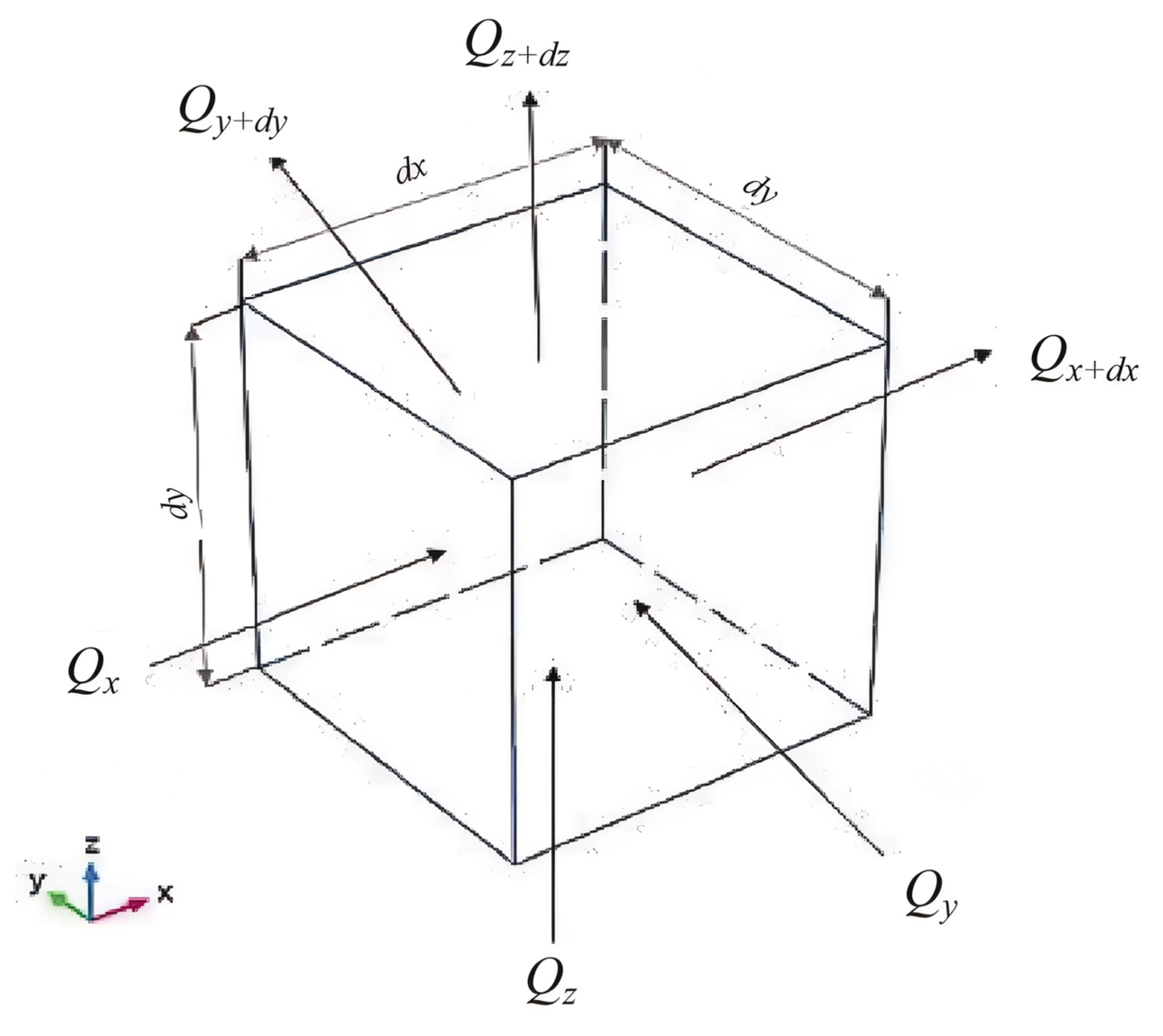
The analysis of the concrete temperature field is based on the heat conduction differential equation. Assuming concrete is an isotropic and homogeneous ideal solid medium, a micro-hexahedron dxdydz is cut from it, and a spatial Cartesian coordinate system is established, as shown in Figure 1.
According to the law of conservation of energy, in the time interval dτ, we have:
∆E = Qd + Qv
In the formula:
∆E—the total heat absorbed during the temperature rise within the micro-hexahedron.
Qd—Total net calorific value.
Qv—Heat generated by the hydration of cement.
The heat flowing into the micro-hexahedron dxdydz during the time dτ is:
Q x = λ T x d y d z d τ
The heat dissipation from the micro-hexahedron along the x-direction from the rear boundary is:
Q x + d x = λ x ( T + T x 2 d x ) d y d z d τ
The net heat generated by the micro-hexahedron along the x-axis is:
Q x Q x + d x = λ 2 T x 2 d x d y d z d τ
Similarly, the net heat generated by the micro-hexahedra along the y and z directions is:
Q y Q y + d y = λ 2 T y 2 d x d y d z d τ
Q y Q y + d y = λ 2 T z 2 d x d y d z d τ
Thus, the total net heat in the micro-hexahedron is:
Q d = λ 2 T x 2 + 2 T y 2 + 2 T z 2 d x d y d z d τ
Assuming the internal heat source intensity of concrete is qv, unit W/m3. The heat generated by the bulk hexahedron over the time interval dτ is:
Qv = qvdxdydzdτ
In the cylindrical coordinate system (r, φ, z), the heat conduction differential equation can be expressed as:
T τ = a 2 T r 2 + 1 r T r + 1 r 2 2 T φ 2 + 2 T z 2 + θ τ
Steady-state temperature field T τ = 0 , as shown in Equation (13):
2 = 0   o r   2 T x 2 + 2 T y 2 + 2 T z 2 = 0
There are two methods for calculating the finite element method of an unstable temperature field: explicit solution and implicit solution. Currently, when solving unstable temperature fields, the explicit solution method is gradually being replaced by the implicit solution method. Therefore, the implicit solution method is introduced in detail.
Now, divide the region to be solved into a single small unit, where i, j, k… denote the nodes of unit e, respectively. With T i τ , T j τ , and T k τ representing the temperatures of different nodes. The node temperature of subunit e is expressed by the shape function matrix N , and the node temperatures are as follows:
T e x , y , z , τ = N i T i τ + N j T j τ + N k T k τ + = N i , N j , N k T i τ T j τ T k τ = N T e
If the cells are subdivided sufficiently, the sum of all cell functions can yield the original function value, for example:
T e e T
When the functional T eaches its minimum value, the following holds:
T i e e T i = 0
And we can derive:
H T + R T τ + F = 0
In the formula, H ,   R ,   F represent the heat conduction matrix, heat capacity matrix, and node heat matrix, respectively, with the following expressions:
H i j = e h i j e + g i j e R i j = e r i j e   F i = e e f i e θ τ p i e T a  
Discretize the time domain τ into τ1, τ2, τ3. All τ can be expressed by Equation (14), when τ = τn and τ = τn+1 still meet the requirements. Now use T n , T τ , F n   to represent, respectively, τn and τn+1. At all times T , T τ , F :
H T n + R T τ n + F n = 0
H T n + 1 + R T τ n + 1 + F n + 1 = 0
Δ T n = T n + 1 T n = Δ τ n s T τ n + 1 + 1 s T τ n
There are three ways to change the value of s:
(1) When s = 0, there is Δ T n = Δ τ n T τ n , which is the forward difference, to display the calculation;
(2) When s = 1, there is Δ T n = Δ τ n T τ n + 1 , which is the backward difference, which is an implicit calculation;
(3) When s = ½, there exists Δ T n = 1 2 Δ τ n T τ n + T τ n + 1 , belonging to the midpoint difference, which is the implicit calculation.
According to Equation (18), we have:
T τ n + 1 = 1 s Δ τ n T n + 1 T n + s 1 1 { T τ } n
Substituting into (17), we obtain:
H T n + 1 + R 1 s Δ τ n T n + 1 T n + s 1 s T τ n + F n + 1 = 0
According to Equation (16), we have:
R T τ n = H T n + F n
Substituting into (20), we obtain:
H + 1 s Δ τ n R T n + 1 s 1 s H + 1 s Δ τ n R T n s 1 s F n + F n + 1 = 0
Equation (22) establishes the relationship between T n + 1 and T n , since T n , F n , F n + 1 are all known quantities at time τ n . By solving the equations simultaneously, the temperature field T n + 1 at each node at τ = τn+1 can be obtained.

3. Test Analysis of Temperature Change Rules of Large-Volume Concrete

3.1. Temperature Analysis of Large-Scale Concrete Pouring on Site

3.1.1. Layout of Measurement Points

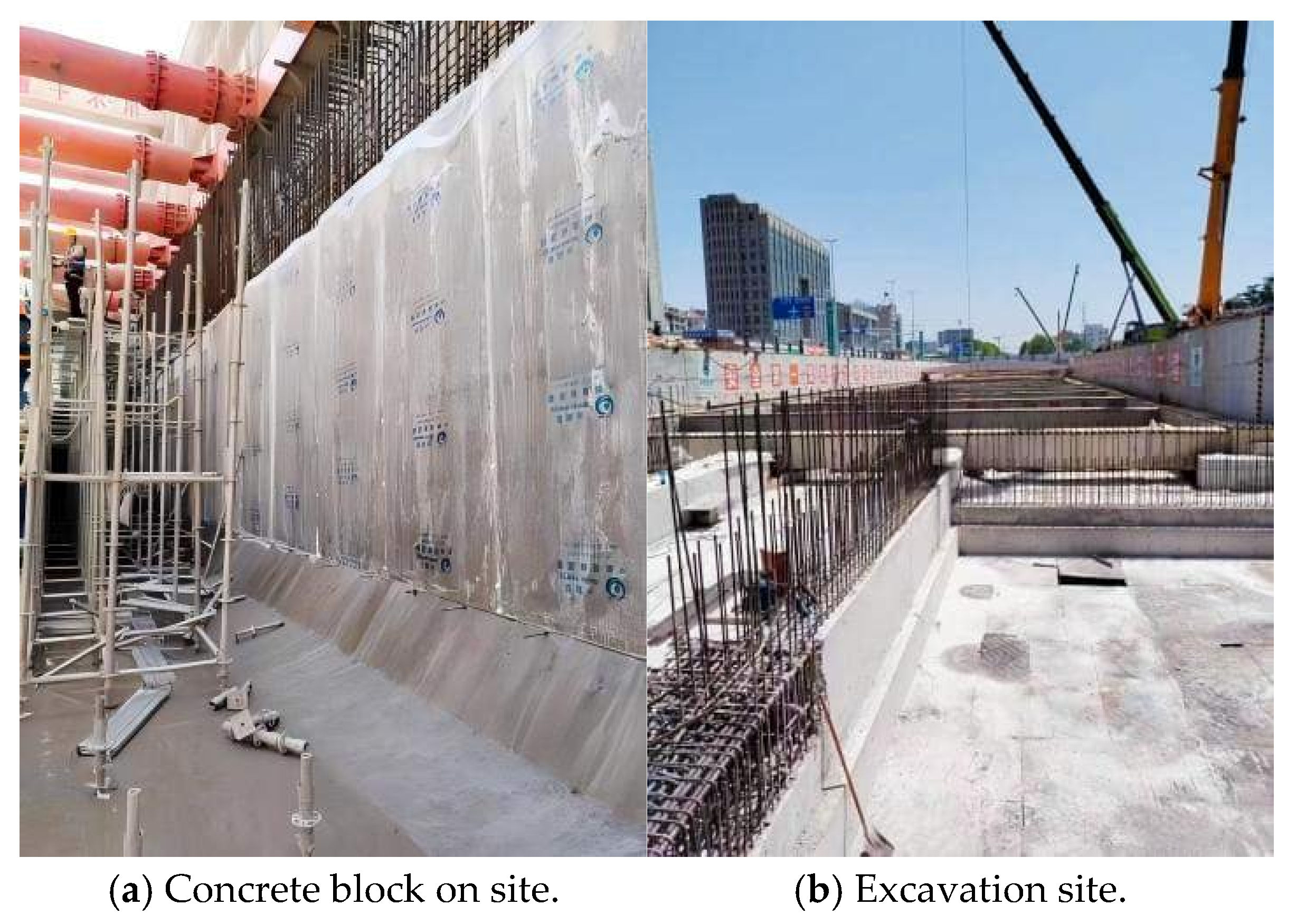
This study analyzes the temperature variation characteristics of large-volume concrete through on-site monitoring data from a subway station construction project in Qingdao, China. Temperature monitoring was conducted on the concrete pouring blocks, and the concrete pouring temperature curve was derived from the field data, as shown in Figure 2.
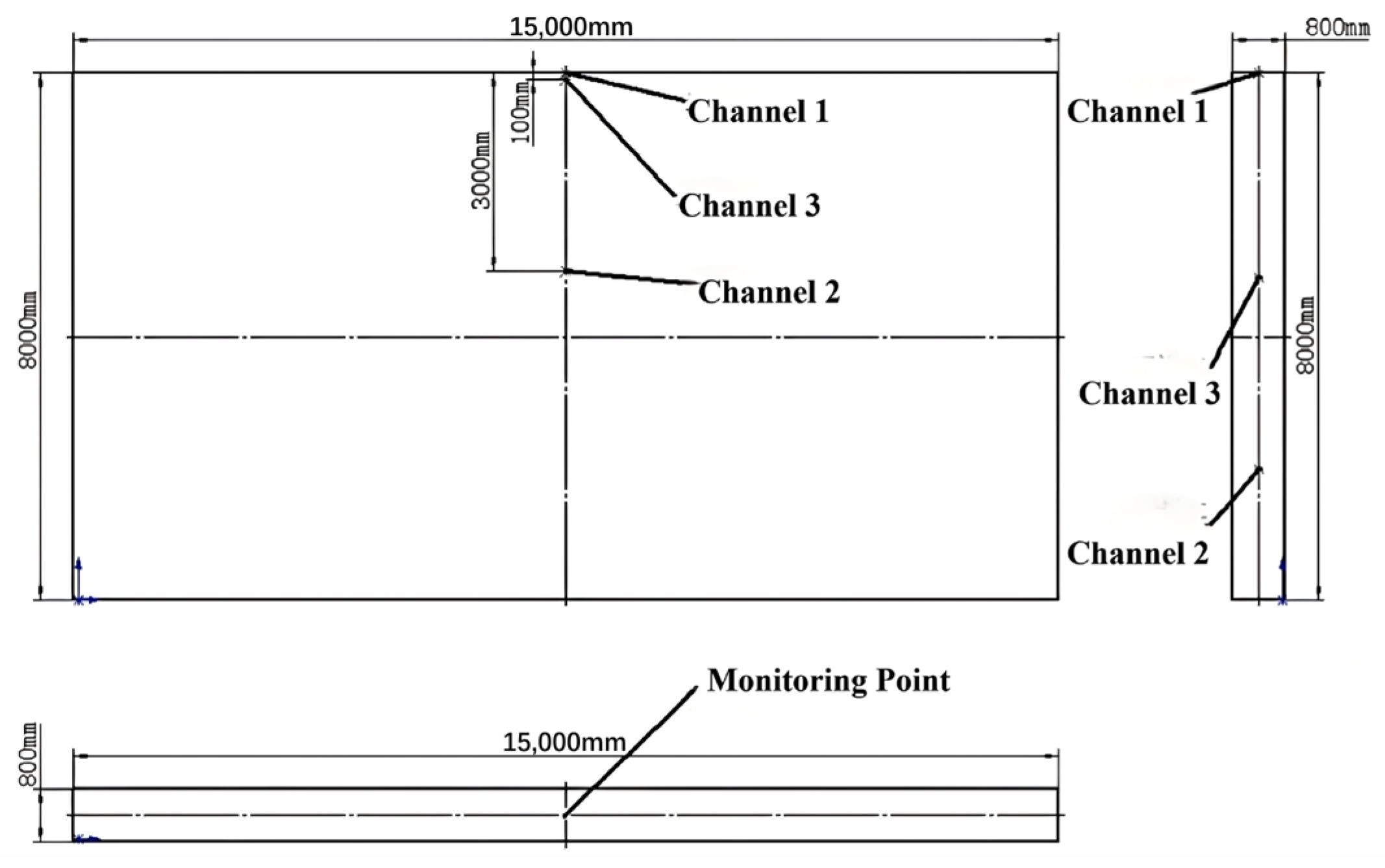
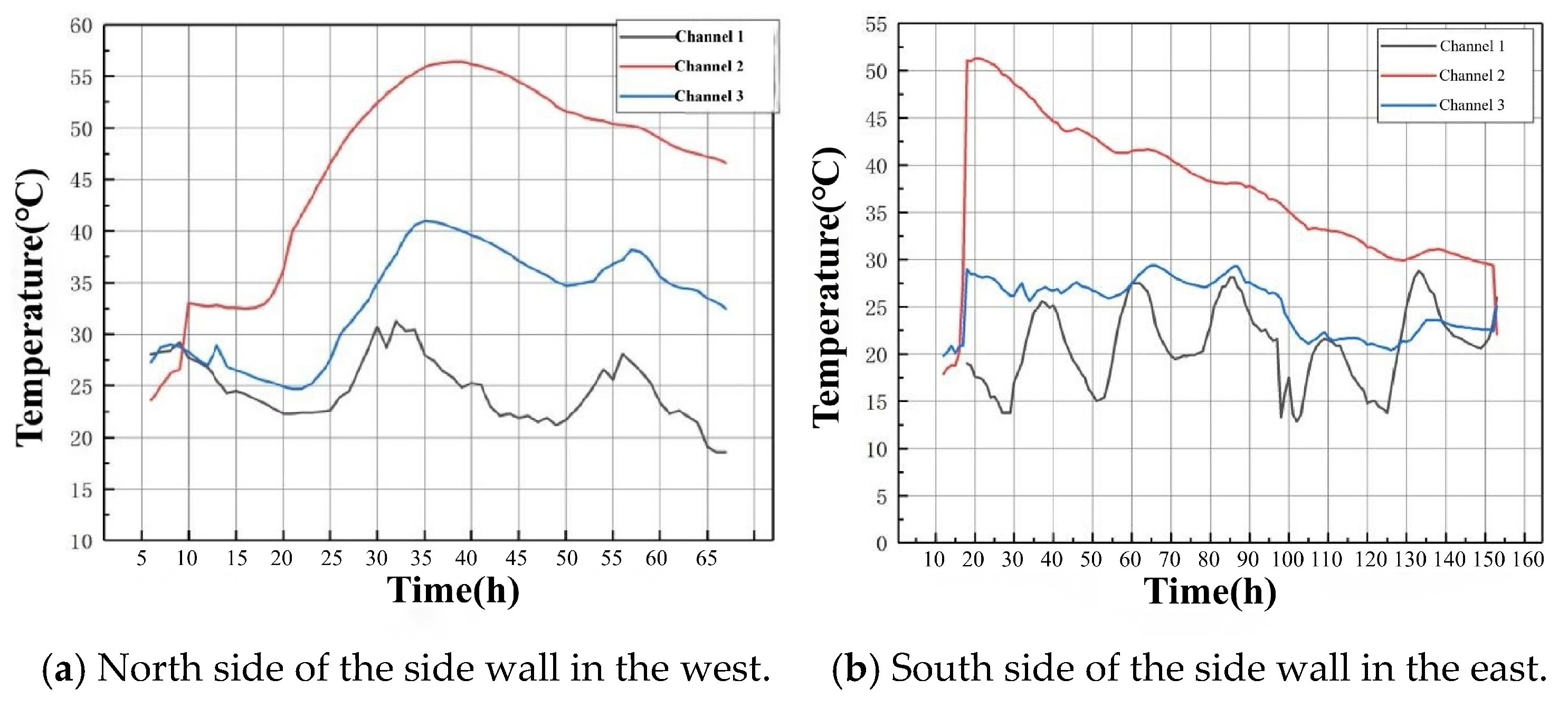
The large-scale concrete block dimensions are as follows: 15 m in length, 8 m in height, and 0.8 m in thickness, with specific plan dimensions shown in Figure 3. Channel 1 measures the surface temperature of the concrete. Channel 2 is located at the center of the concrete wall, 3 m above the wall’s top. Channel 3 is situated at the center of the concrete wall, 10 cm above the wall’s top.

3.1.2. Temperature Testing and Analysis of Cast Blocks

Temperature curves were plotted using the Origin 2024 data processing software, as shown below. Figure 4a displays the temperature variation curve on the north side of the side wall in the seventh section of the west zone’s basement level-2, while Figure 4b shows the curve on the south side of the same section in the east zone. All ambient temperatures were recorded at the same monitoring location. The measurement channels are designated as follows: Channel 1 for surface temperature, Channel 2 for mid-level monitoring, and Channel 3 for upper temperature.
The curve graph reveals that peak temperatures vary across concrete sections. Surface monitoring points show higher temperatures than upper sections, which, in turn, exceed middle sections. This variation primarily stems from the greater exposure of surface points to external temperatures and superior heat dissipation at the foundation pits’ top. Heat dissipation conditions differ with depth, while surface points benefit from enhanced convection and rapid water evaporation, which remove heat generated by hydration. In contrast, the upper and internal sections dissipate heat through conduction, resulting in poorer thermal conditions. These findings demonstrate that temperature differences in concrete compoange curve.
The following conclusions can be drawn from the analysis of the two sets of field data.
(1) Temperature-monitoring data from the site reveal minimal changes during the induction period and its early phase. The initial induction phase is brief, with exothermic activity ceasing after approximately 10 min of cement–water reaction, though the exothermic rate remains high. Compared to the initial induction phase, the exothermic rate slows down during the induction period, persisting for about one to two hours before entering an accelerated phase where the hydration exothermic rate continues to increase.
(2) The graph demonstrates that concrete surface temperature is significantly influenced by ambient temperature, remaining substantially lower than internal temperatures. While surface and ambient temperatures reach their peaks and troughs almost simultaneously, the outward heat dissipation from hydration reactions within concrete maintains its higher surface temperature. Once hydration is completed, temperature stabilization occurs as the concrete blocks gradually cool, aligning with ambient conditions.
(3) According to the data analysis of the chart, the temperature change in concrete can be divided into three stages, namely the temperature-rising stage, the temperature-falling stage, and the nents are directly linked to their heat dissipation capabilities.
(4) Among the three measurement points, the surface point exhibits the lowest peak temperature with a significantly shorter duration. This temperature proximity to ambient conditions stems not only from optimal surface heat dissipation but also from the critical role of surface moisture. Evaporation consumes substantial heat: within a 20–50 °C water temperature range, complete evaporation requires 2316–2382 J per gram of water, whereas cement hydration releases merely 500 J per gram. Thus, moisture evaporation generates far more heat than cement hydration. This process not only reduces surface temperature by removing heat from cement hydration but also affects the hydration process itself. Rapid surface moisture evaporation can cause plastic shrinkage and cracking in Portland cement concrete. Therefore, regular water spraying during concrete pouring to control surface evaporation is essential.

3.2. Laboratory Concrete Pouring Temperature-Monitoring Scheme

3.2.1. Temperature-Monitoring Scheme

Experimental equipment: Multi-channel acquisition instrument for temperature measurement and concrete analysis. The cement used in this study is Ordinary Portland Cement, grade P.O 42.5. This cement is a high-exothermic type, characterized by high strength and excellent durability. It is the actual material used in the Qingdao metro project and can reflect the typical working conditions of mass concrete construction in current subway engineering. Table 1 below shows the laboratory concrete mix design.
Temperature measurement plan: (1) Before concrete pouring, record both the ambient temperature and the initial temperature of the concrete. (2) After the concrete is placed in the mold, record the temperature every two hours for the first two hours, then every four hours for the next four days, and stop temperature monitoring after seven days. The experiment shall be terminated when the temperature gradient falls below 20 °C. (3) For each temperature measurement, record and calculate the temperature’s rise/fall value and the temperature difference at each measurement point, as well as the ambient temperature.
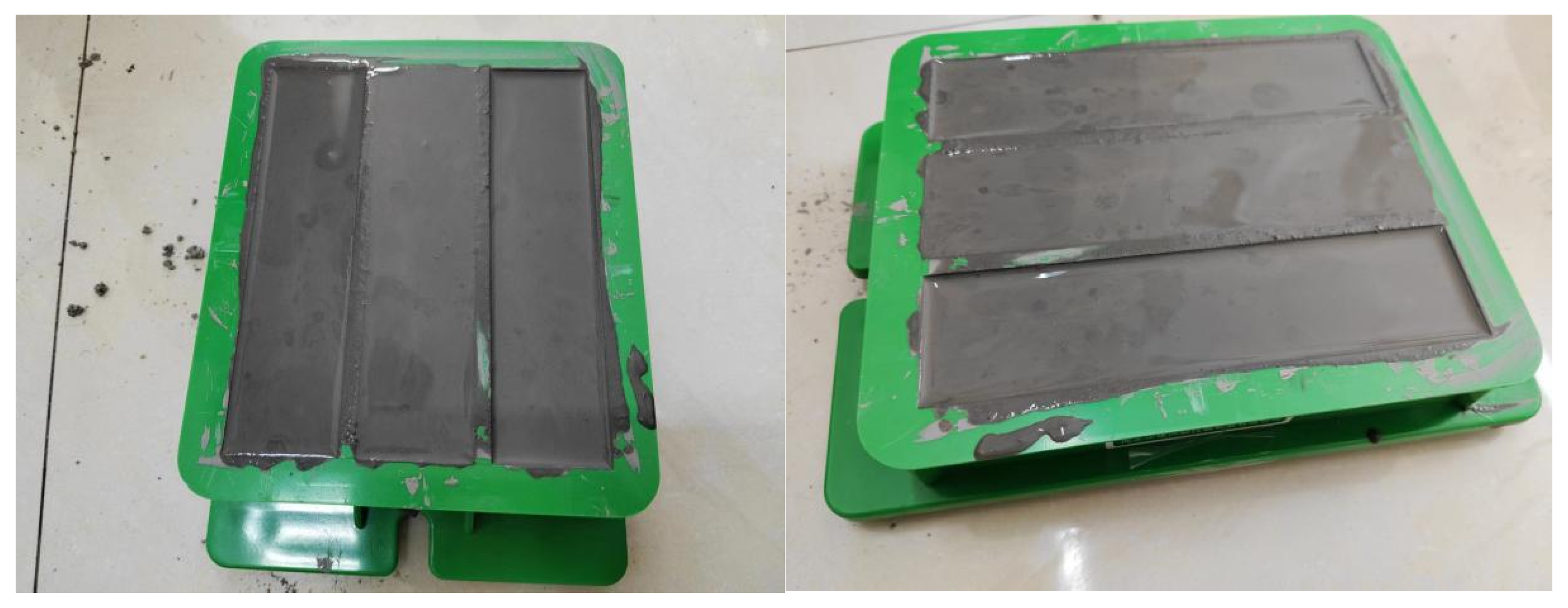
Temperature measurement point layout: Temperature measurement points are selected according to the on-site concrete monitoring plan, with the selected points reflecting the temperature variation characteristics of the concrete. Surface temperature, core temperature, and upper surface temperature are monitored. Figure 5 below shows the laboratory concrete pouring model.

3.2.2. Laboratory Monitoring Data Analysis

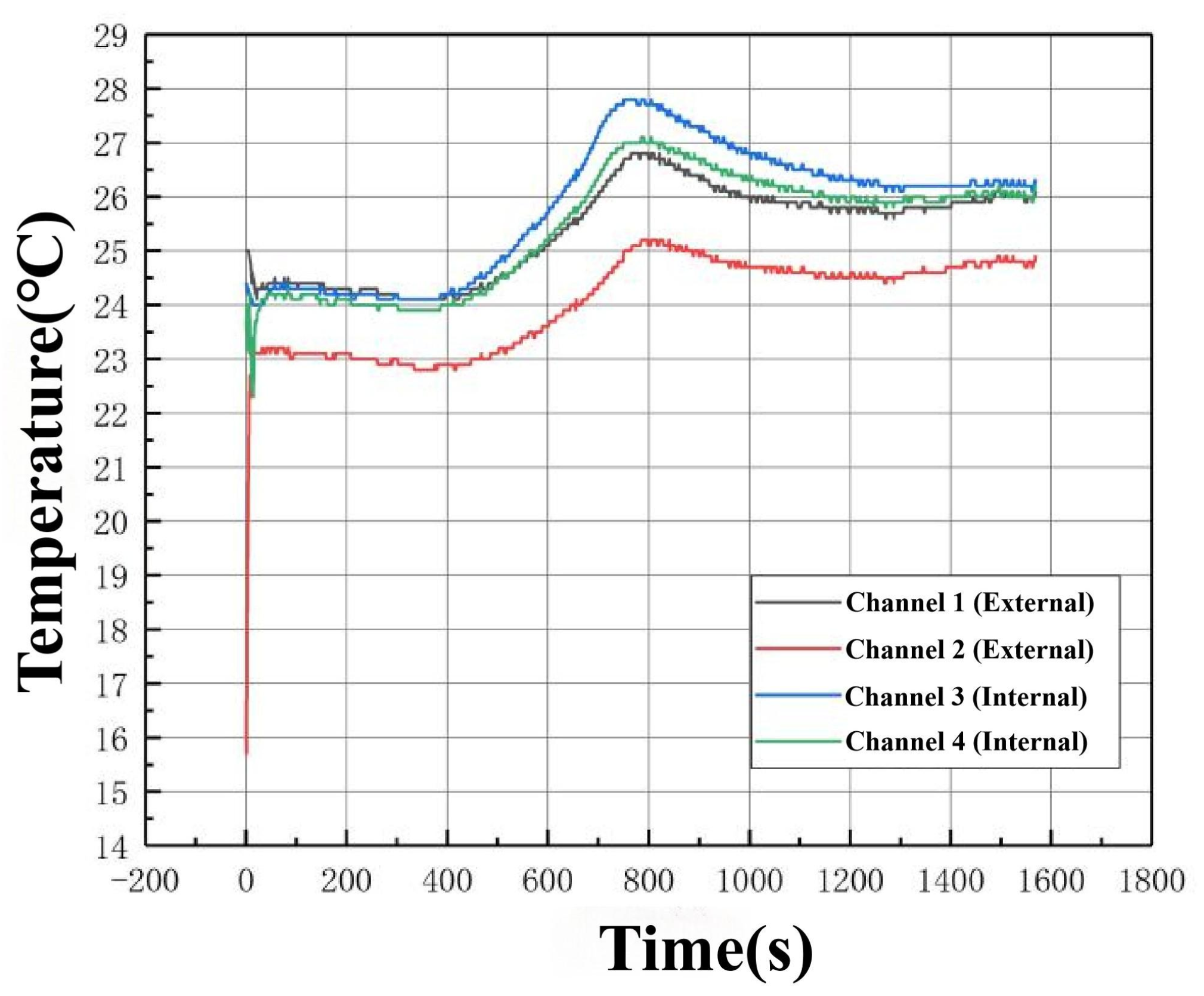
The temperature variation chart obtained from monitoring the concrete block pouring process in the laboratory is shown in Figure 6. Channels 1 and 2 represent the surface temperature of the concrete, while channels 3 and 4 indicate the internal temperature.
Analysis of the chart data reveals that upon contact with water, cement immediately releases heat, maintaining this exothermic state for approximately 200 s until reaching peak temperature. After this period, concrete ceases heat generation and begins dissipating thermal energy, as evidenced by the graph showing a gradual heat release rate. While hydration heat causes temperature elevation during the pouring phase, the process of heat dissipation leads to a progressive temperature decline. Once heat dissipation is complete, the concrete’s temperature becomes independent of initial conditions and solely correlates with the temperature of its external contact medium.
Although the heat dissipation conditions differ between small-scale specimens and mass concrete, the fundamental mechanism of the cement hydration reaction remains the same, and both exhibit the “temperature rise–peak–temperature drop” pattern. Laboratory tests can eliminate interference from complex on-site factors under strictly controlled conditions, providing a baseline reference for on-site monitoring data and verifying the consistency and generalizability of the temperature variation patterns induced by hydration heat. Finally, through monitoring the hydration heat temperature of a small portion of concrete in the experiment, it was found that the temperature variation pattern of laboratory-cast concrete aligns with that of the mass concrete.

4. Numerical Simulation of Temperature Change in Large-Volume Concrete

4.1. Mathematical Model

Within the foundation pit, the hydration process of concrete continuously releases substantial thermal energy, causing the concrete mass temperature to rise steadily. As this temperature increases dynamically, natural convective heat exchange occurs between the concrete and its surrounding air. This energy transfer strictly adheres to the law of conservation of energy. To comprehensively and accurately analyze the heat transfer mechanism between the concrete mass and air, we can utilize theoretical tools such as the continuity equation, momentum conservation equation, and convective heat transfer differential equation. These equations provide a scientific perspective, systematically revealing the detailed process of heat transfer between concrete and air.
(1)
Continuity equation
In foundation pit construction, air serves as the convection heat transfer medium for concrete. We analyze the heat transfer characteristics by examining any microscopic element within the flow field. Based on the fundamental principles of Fick’s law, when a convective heat transfer medium is present, the net mass flux per unit volume dxdydz over time dt can be expressed as a specific functional form: ρ v x x + ρ v y y + ρ v z z . Through mass conservation, the continuity equation for convective heat conduction in cylindrical coordinates can be simplified to:
ρ t + ( ρ r ν r ) r r + ( ρ ν ϕ ) r ϕ + ( ρ ν z ) z = 0
(2)
Momentum equation
In the airflow process of a foundation pit, the net momentum of the fluid is precisely balanced with its own momentum from inertial forces. Based on this principle, considering the influence of convective heat transfer, the momentum expressions for the radial and Z-directional components of the two-dimensional unsteady flow field in the foundation pit can be derived as follows:
d ( ρ ν r ) t = ( ρ ν r ) t + ν r ( ρ ν r ) r + ν z ( ρ ν r ) z = ρ g r ρ r + μ ( 2 ν r + 1 3 r ( d i ν V ) )
d ( ρ ν z ) t = ( ρ ν z ) t + ν r ( ρ ν z ) r + ν z ( ρ ν z ) z = ρ g z ρ z + μ ( 2 ν z + 1 3 z ( d i ν V ) )
(3)
Convection heat transfer differential equation
According to the law of energy conservation of trace elements, the equation of convection heat conduction of temperature field in cylindrical coordinates is:
ρ c ( t τ + ν z t z ) = 1 r r ( λ r t r ) + λ r t r + 1 r 2 ϕ ( λ t ϕ ) + z ( λ t z ) + φ

4.2. 3D Model Establishment and Boundary Setting

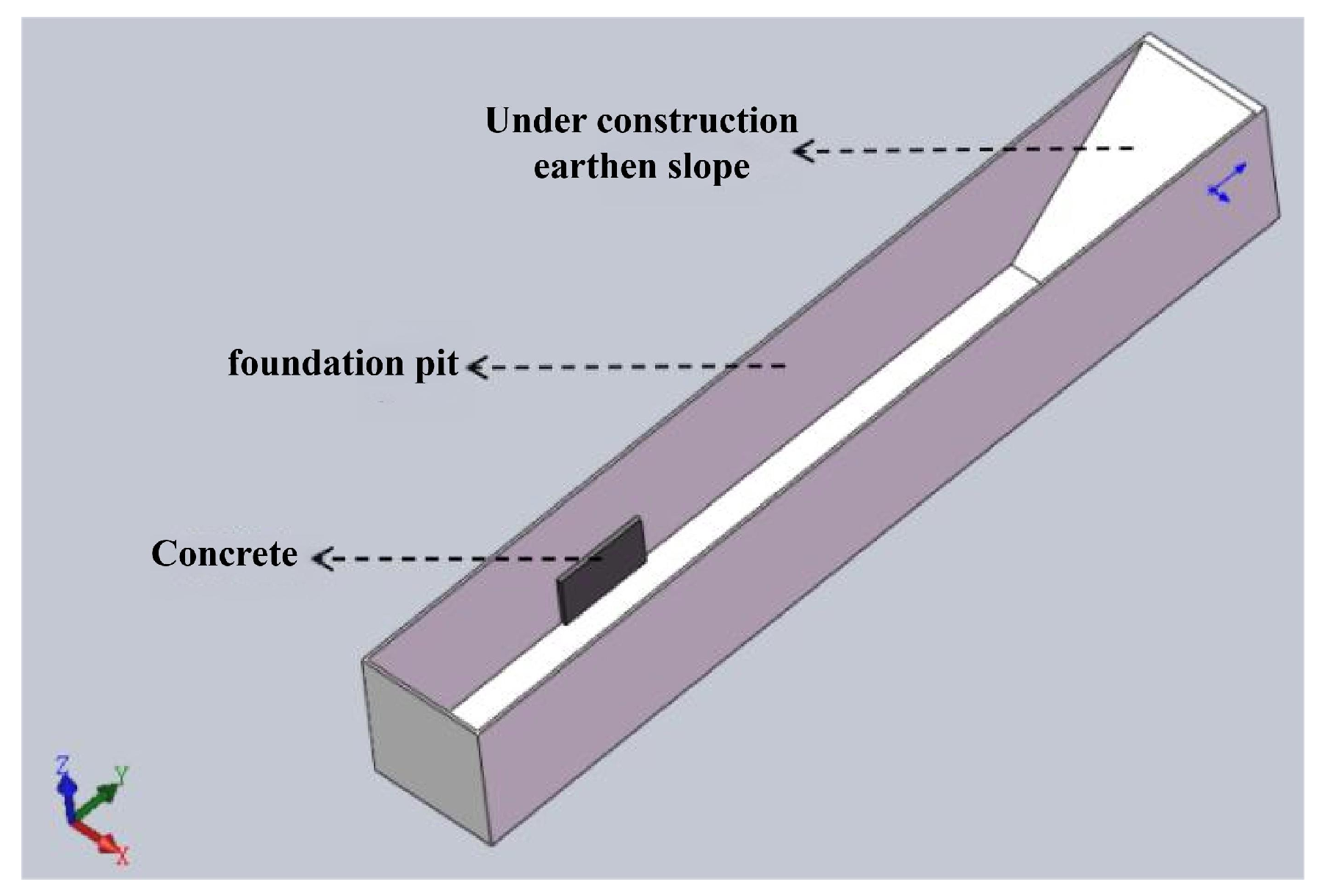
To advance our research, we developed a 1:1 scale numerical model of the excavation site using SolidWorks 2018 software. The model simulates heat dissipation in the open-cut station concrete structure, featuring a 150 m-long, 20.3 m-wide, and 20.1 m-deep excavation. The concrete slab measures 15 m in length, 0.8 m in thickness, and 5 m in height. The sloping end of the excavation serves as the air intake, while the upper section also functions as an air intake. The air outlets are formed by the remaining three enclosing surfaces and the four top surfaces of the excavation. To accurately analyze concrete heat dissipation, we specifically selected a concrete slab as the focal simulation object. As shown in Figure 7, this diagram presents the integrated model of the concrete and excavation structure.
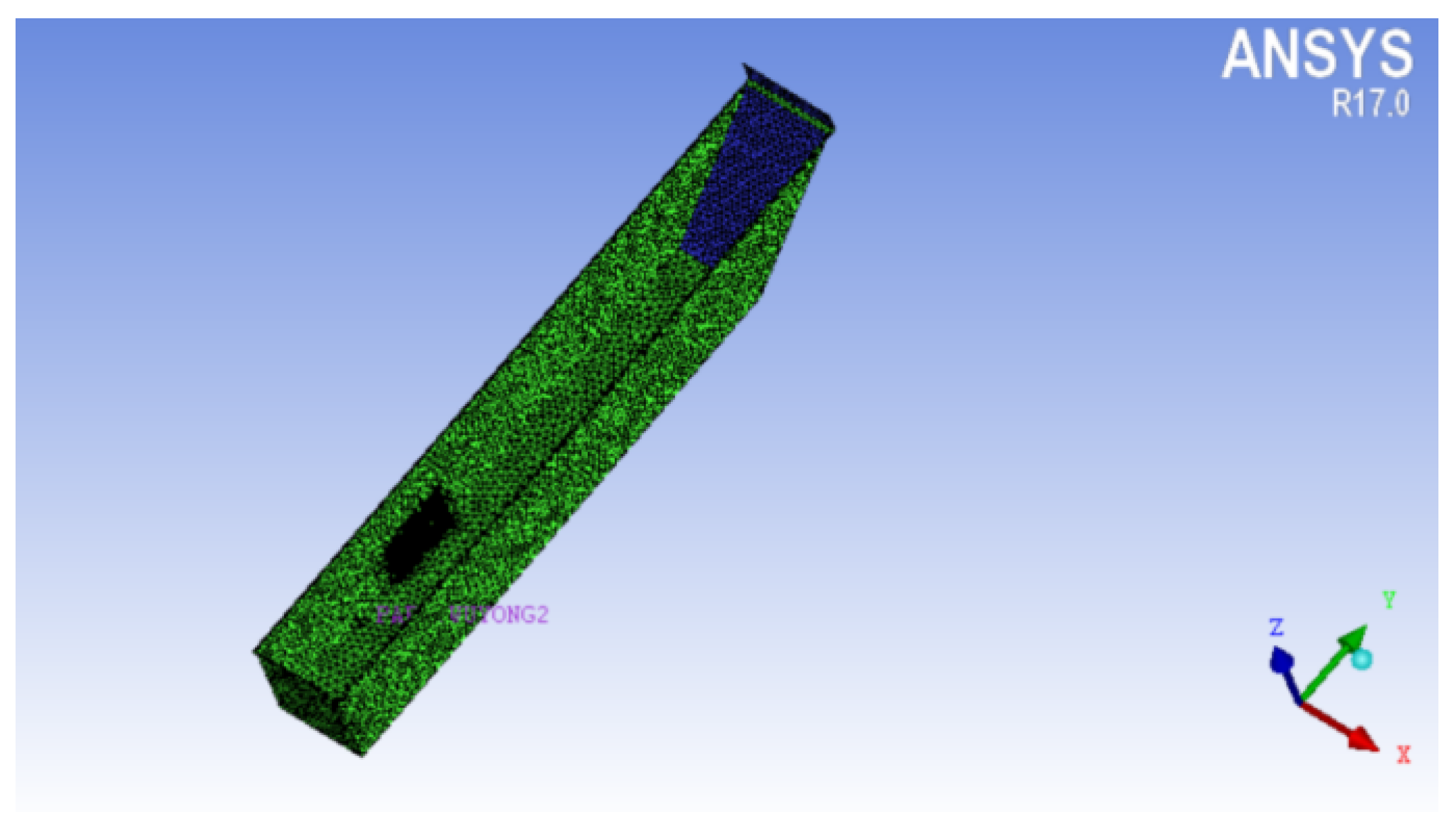
The meshing process meticulously accounts for the concrete dimensions at the construction site. The model contains 45,381 carefully configured nodes to ensure simulation accuracy and reliability, as shown in Figure 8. After model establishment, it was imported into the computational fluid dynamics (CFD) 2021 software Fluent for simulations under varying environmental parameters. Table 2 presents the major parameters in the numerical simulation.

4.3. Simulation and Data Analysis

Large-scale concrete structures are renowned for their massive volume. However, due to their relatively small heat dissipation surface area, the heat generated by hydration during initial pouring tends to accumulate significantly within the structure, causing rapid temperature elevation inside the concrete. This sudden temperature rise creates a pronounced temperature gradient between the interior and exterior, where the internal temperature substantially exceeds the external one. Given the inherent thermal expansion and contraction properties of the material, such temperature gradients can easily induce thermal stress in concrete structures. This results in tensile stress acting on the surface while compressive stress develops internally. When the tensile stress surpasses the maximum load capacity of the concrete, cracks will form.
The formation of thermal stress is closely related to the temperature difference between the interior and exterior of concrete. Therefore, real-time monitoring of temperature variations is particularly crucial during the construction of large-volume concrete. Timely detection and implementation of appropriate measures to reduce temperature differences can effectively prevent crack formation, ensuring the integrity and stability of concrete structures. In the foundation pit of a subway station, ventilation conditions directly affect the efficiency of convective heat transfer between the concrete surface and the air. Proper ventilation can accelerate heat dissipation from the concrete surface, reducing the internal–external temperature difference and thereby lowering thermal stress and preventing crack formation. However, excessive ventilation may lead to overly rapid evaporation of moisture from the concrete surface, increasing the risk of plastic shrinkage cracking.
Based on the site construction conditions, this simulation scenario corresponds to the secondary pouring process of the concrete, where the initial temperature is the temperature after the first pour. This section focuses on investigating the effects of ventilation speed and temperature on temperature variations within the foundation pit and the heat exchange process of concrete. By adjusting these parameters, we can gain deeper insights into the temperature distribution and stress state of concrete, thereby providing a scientific basis for practical construction.

4.3.1. Adjusting Ventilation Speed

To investigate the ventilation efficiency within the foundation pit, we implemented a strategy of adjusting the inlet ventilation speed at a room temperature of 25 °C. We simulated various ventilation rates (1 m/s, 2 m/s, 3 m/s, 4 m/s, and 5 m/s) and analyzed the ventilation velocity distribution, temperature distribution, and concrete surface temperature changes within the pit. This approach aimed to gain a deeper understanding of how ventilation speed affects the internal ventilation conditions through variable control.
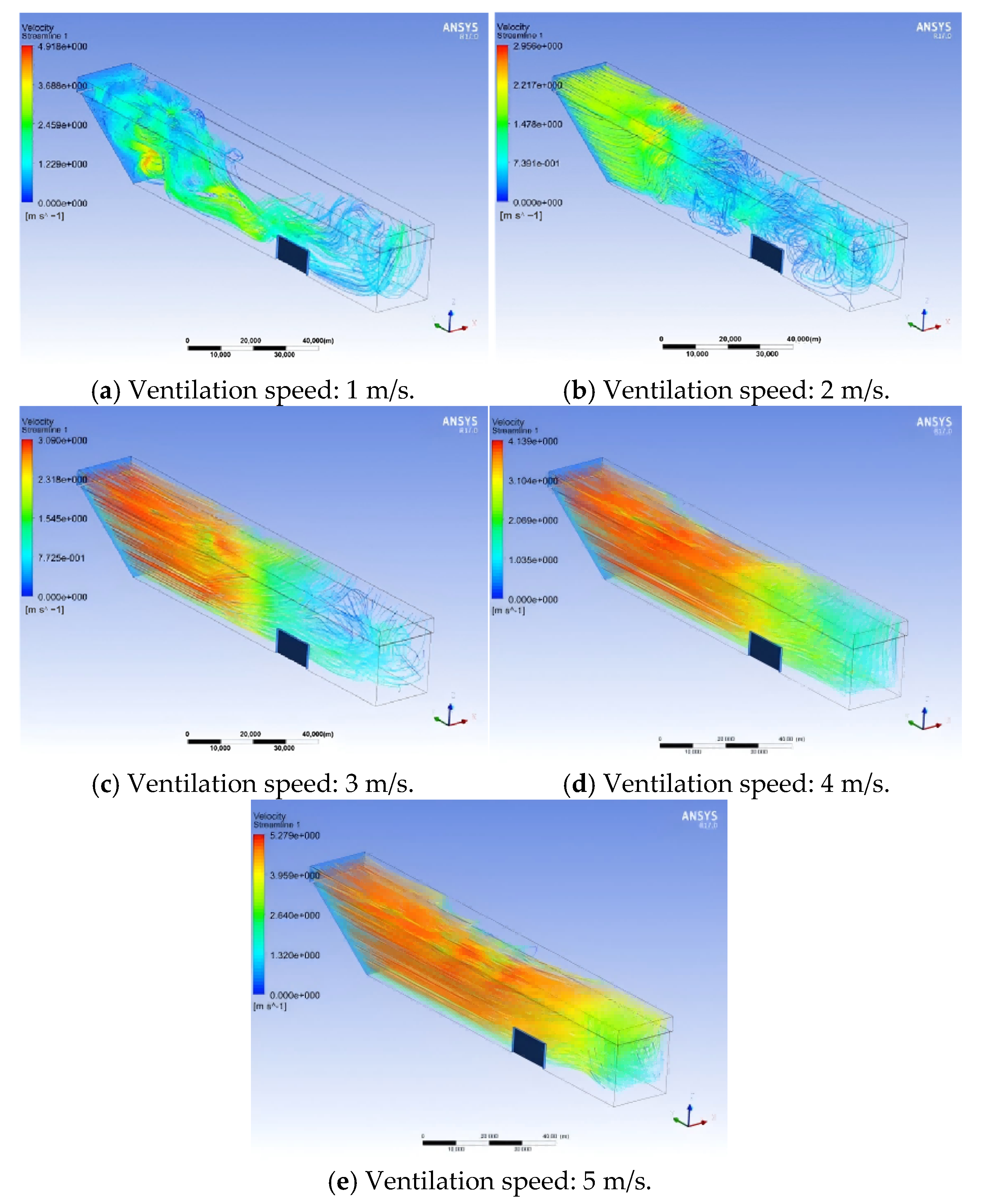
The velocity streamlines in the foundation pit at various ventilation speeds (Figure 9) demonstrate that ventilation efficiency improves progressively with increasing velocity. At 1 m/s, 2 m/s, and 3 m/s, the entrance area shows relatively good ventilation, while the interior remains moderately ventilated. When the speed reaches 4 m/s, the simulation graph reveals optimal overall ventilation, ensuring thorough air circulation throughout the foundation pit.
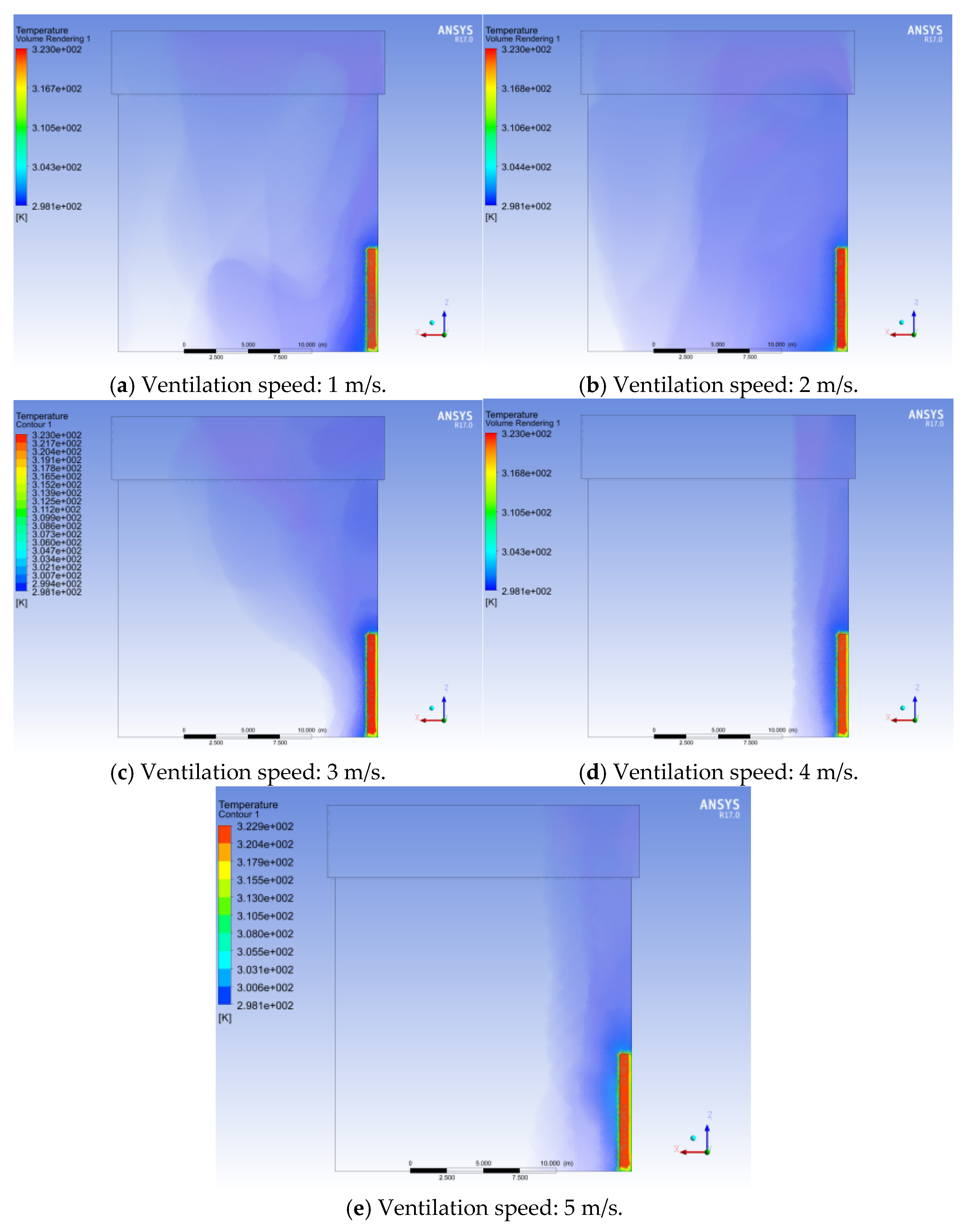
We further analyzed the temperature distribution in the foundation pit under varying ventilation speeds (1 m/s, 2 m/s, 3 m/s, and 4 m/s), as shown in Figure 10. At lower speeds, heat dissipation was limited due to the concrete’s thermal insulation effect, preventing effective heat removal from the pit’s interior. When ventilation increased to 4 m/s, the temperature map revealed significant improvement in controlling personnel temperatures within the pit area, with concrete hydration-generated heat being fully dissipated.
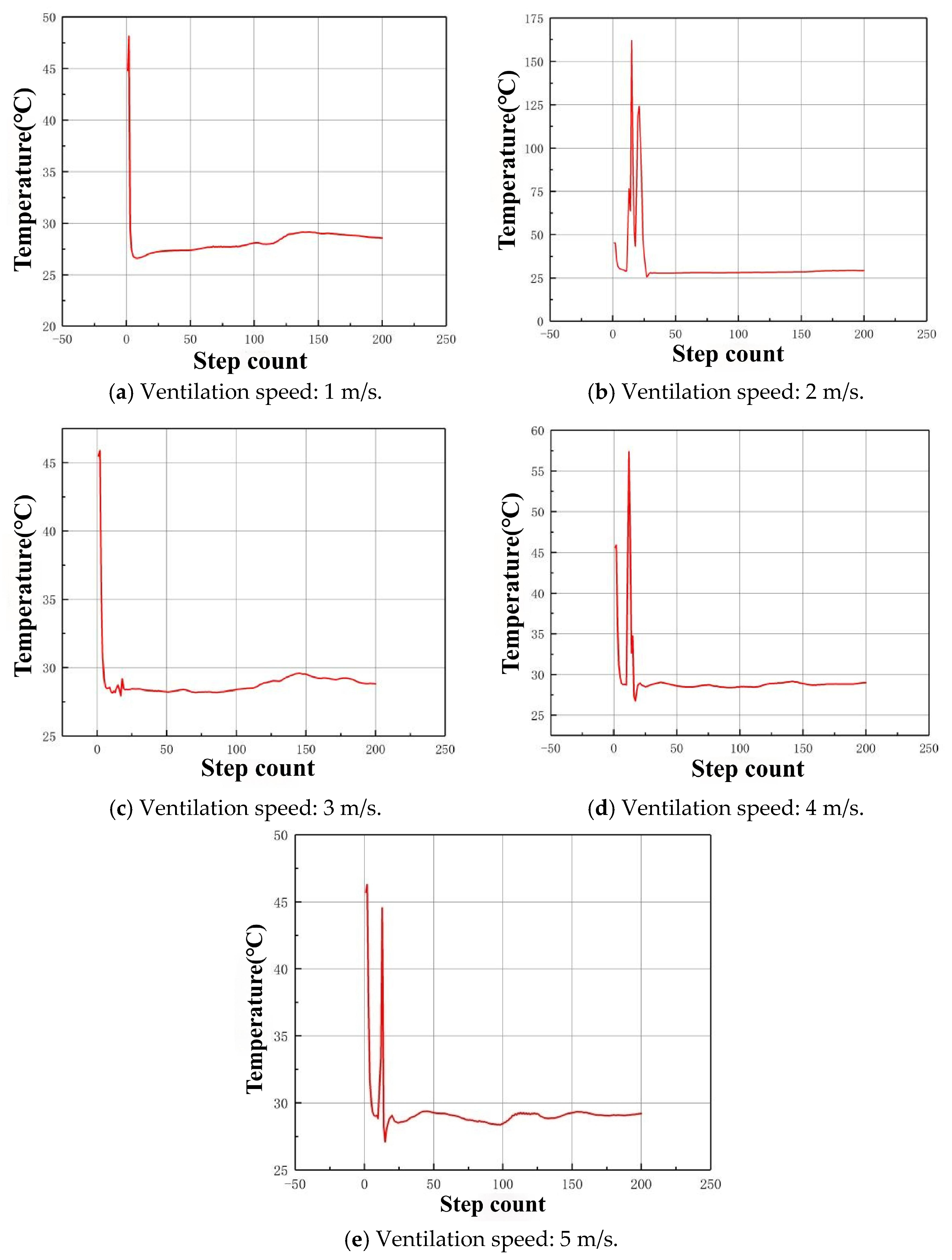
The analysis of the temperature curve of the concrete surface under different ventilation speeds (Figure 11) shows that the ventilation speed has little effect on the temperature of the concrete surface.
Simulation data analysis demonstrates that setting the ventilation speed at 4 m/s effectively controls personnel temperatures within the foundation pit area. This speed significantly improves gas flow dynamics inside the pit, enhancing ventilation efficiency and promoting convective heat transfer, which ultimately reduces concrete temperatures. However, the concrete surface temperature curve reveals that adjusting ventilation speed alone cannot effectively lower temperatures. Therefore, while maintaining the 4 m/s ventilation speed, reducing ventilation temperature becomes essential to simultaneously lower both internal pit temperatures and concrete surface temperatures.

4.3.2. Change Ventilation Temperature

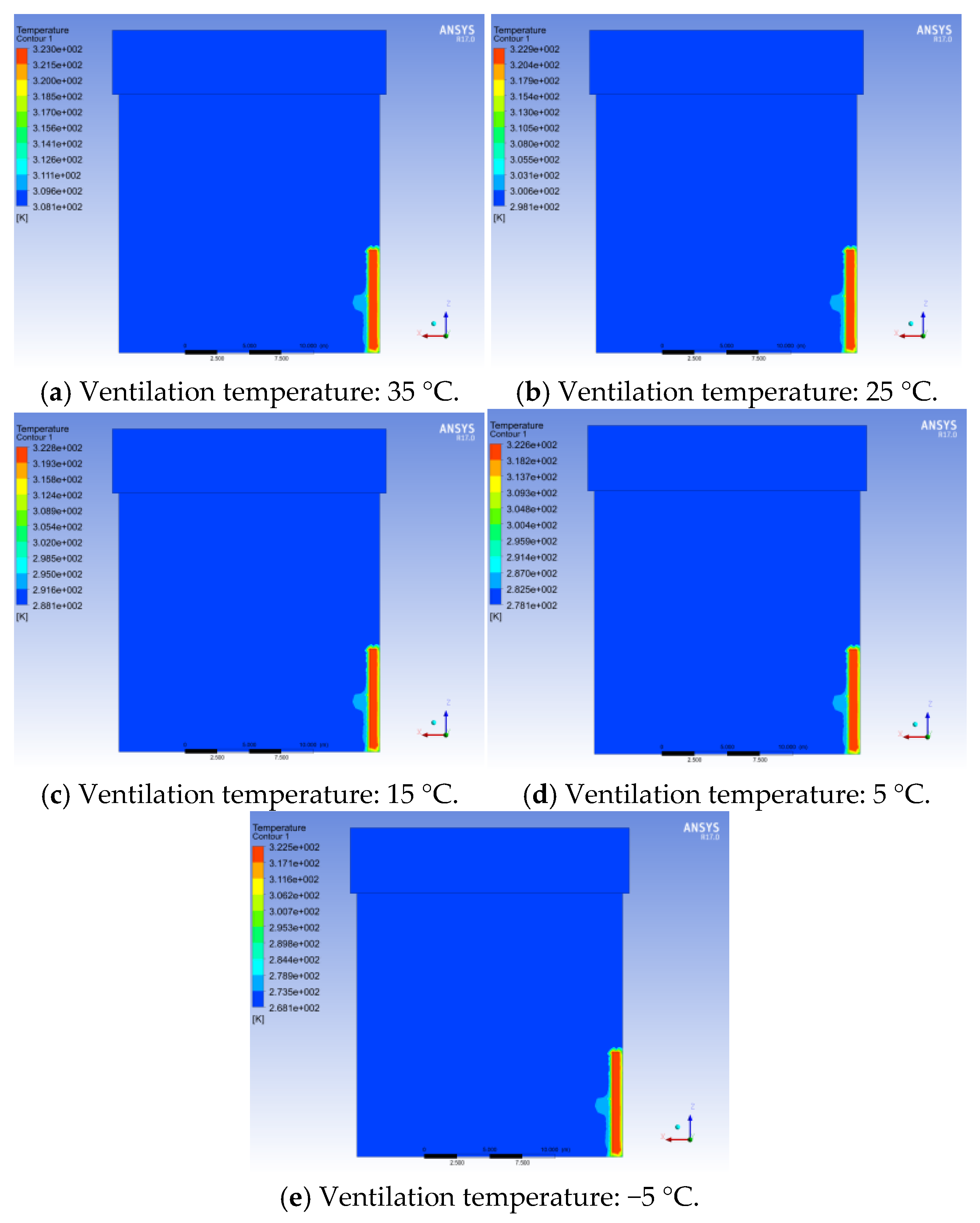
Set the ventilation speed at 4 m/s, adjust the ventilation temperature, and monitor the temperature conditions inside the foundation pit, as shown in Figure 12.
The temperature distribution map of the foundation pit reveals that as ventilation temperature decreases, the air temperature inside the pit also drops. This demonstrates that lowering ventilation temperature significantly improves heat dissipation, effectively reducing the internal temperature of the foundation pit.
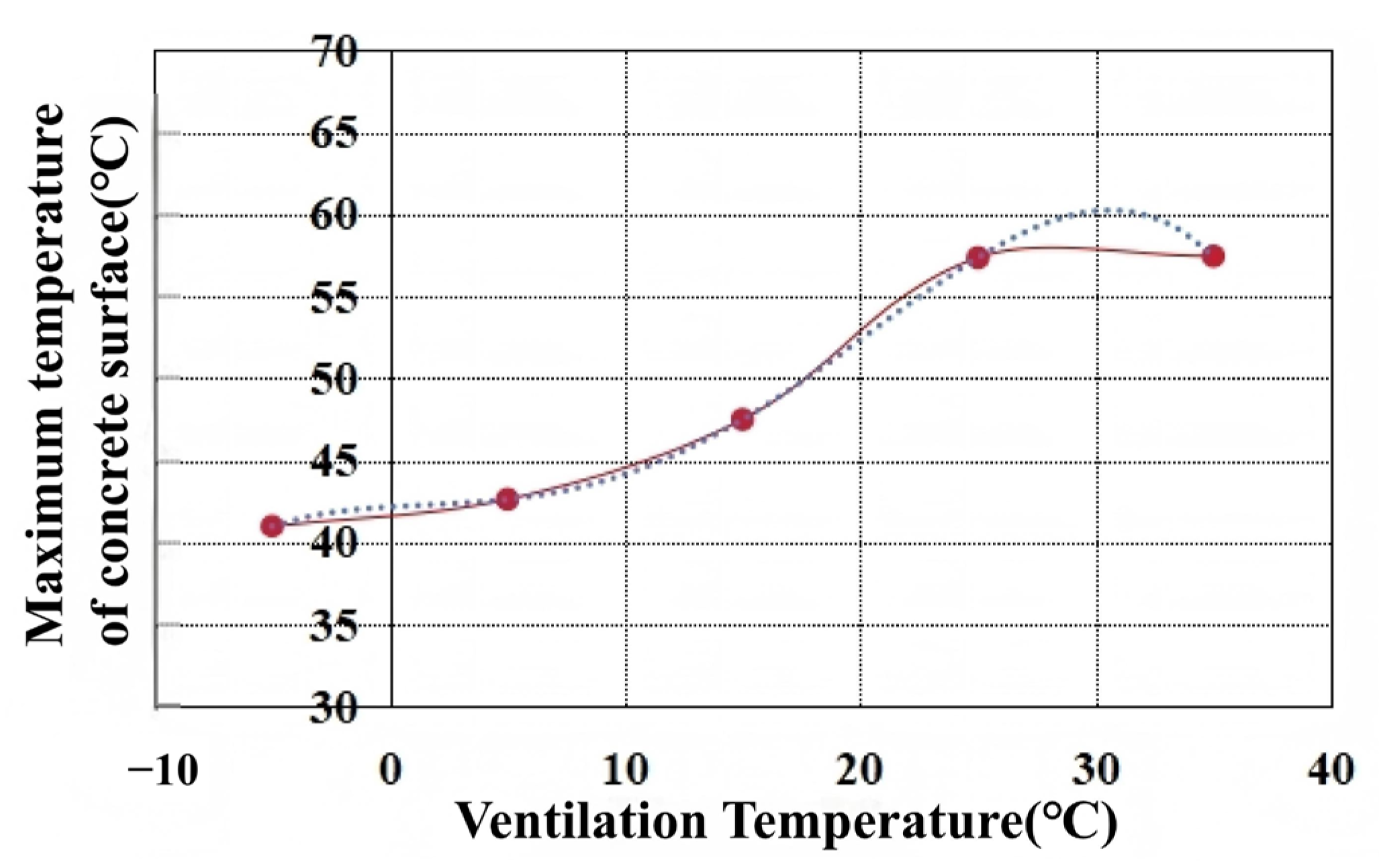
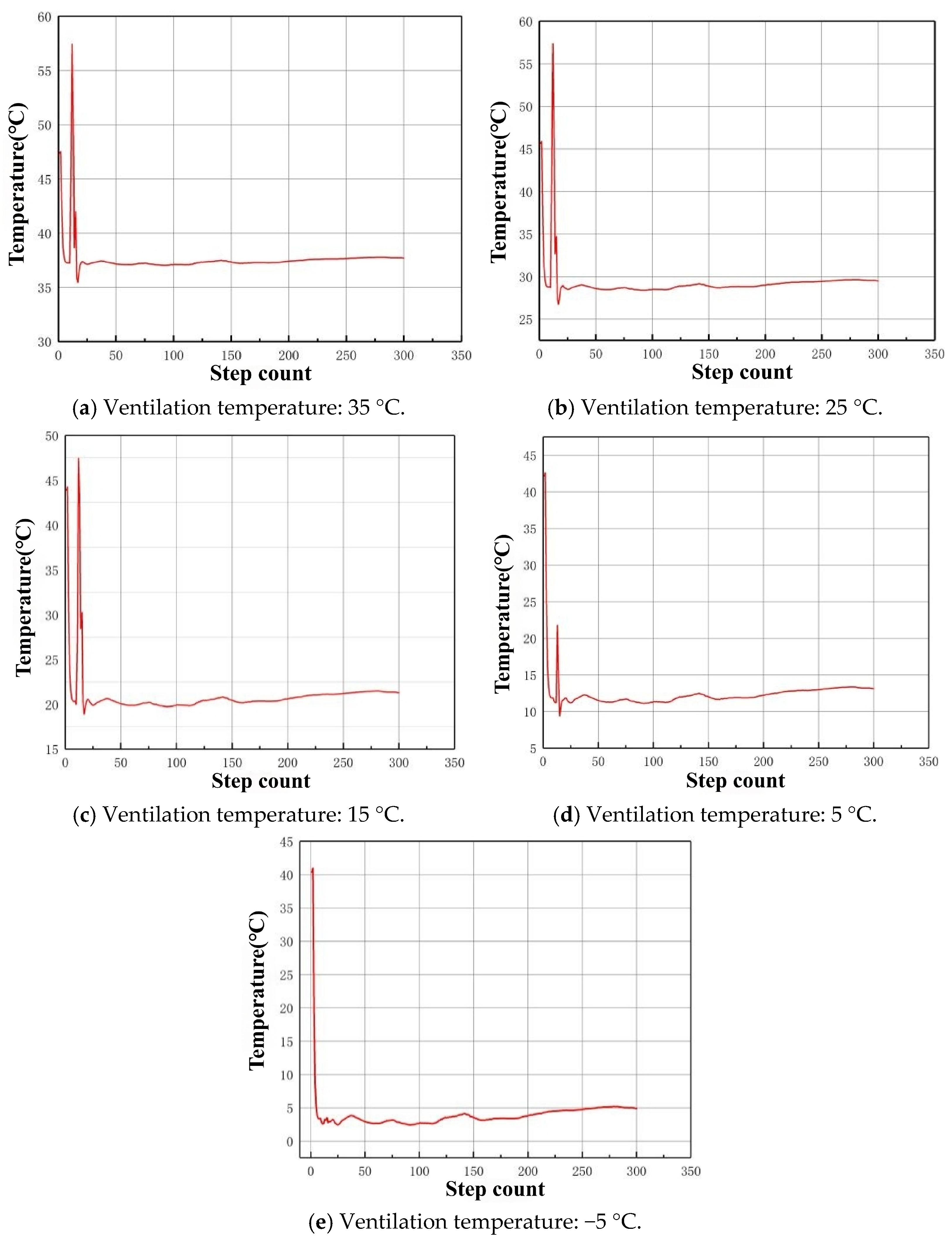
Extract the concrete surface temperature data and plot the surface temperature variation curve. Compare the changes in concrete surface temperature under different ventilation temperatures. As shown in Figure 13, the concrete temperature decreases significantly when the ventilation temperature drops below 25 °C. When the ventilation temperature reaches 15 °C, the maximum surface temperature of the concrete remains below 50 °C.
The simulation results show that the environmental temperature in the foundation pit can be further reduced under the existing ventilation conditions. As the ventilation temperature continues to decrease, the surface temperature of the concrete also decreases. When the ventilation temperature drops below 25 °C, the surface temperature of the concrete significantly decreases.
The function of ventilation temperature and surface temperature reduction was fitted by monitoring the maximum surface temperature of concrete under different ventilation temperatures: y = −7 × 10−5x4 + 0.0031x3 − 0.0125x2 + 0.0876x + 42.154, R2 = 1, to predict the variation in concrete surface temperature under different ventilation temperatures (Figure 14).

5. Conclusions

(1) The temperature variation due to concrete hydration heat exhibits a distinct three-stage pattern: “temperature rise–peak–temperature drop”. During the initial pouring stage, the intense hydration reaction generates heat at a rate far exceeding heat dissipation, leading to a sharp temperature increase and an internal–external temperature difference of 16.4 °C. When heat generation and dissipation reach equilibrium, the temperature peaks, after which it gradually decreases to the working temperature.
(2) The temperature data of the large-scale concrete pouring at the site of the Qingdao subway station project are highly consistent with the laboratory test data, which verifies the consistency of the temperature change process of concrete hydration heat and indicates that the hydration heat is less affected by the volume of concrete.
(3) A comprehensive theoretical framework for concrete hydration heat analysis was established based on heat transfer mechanisms, hydration heat calculation, the heat conduction differential equation, and an implicit algorithm. This framework provides support for accurate temperature field analysis.
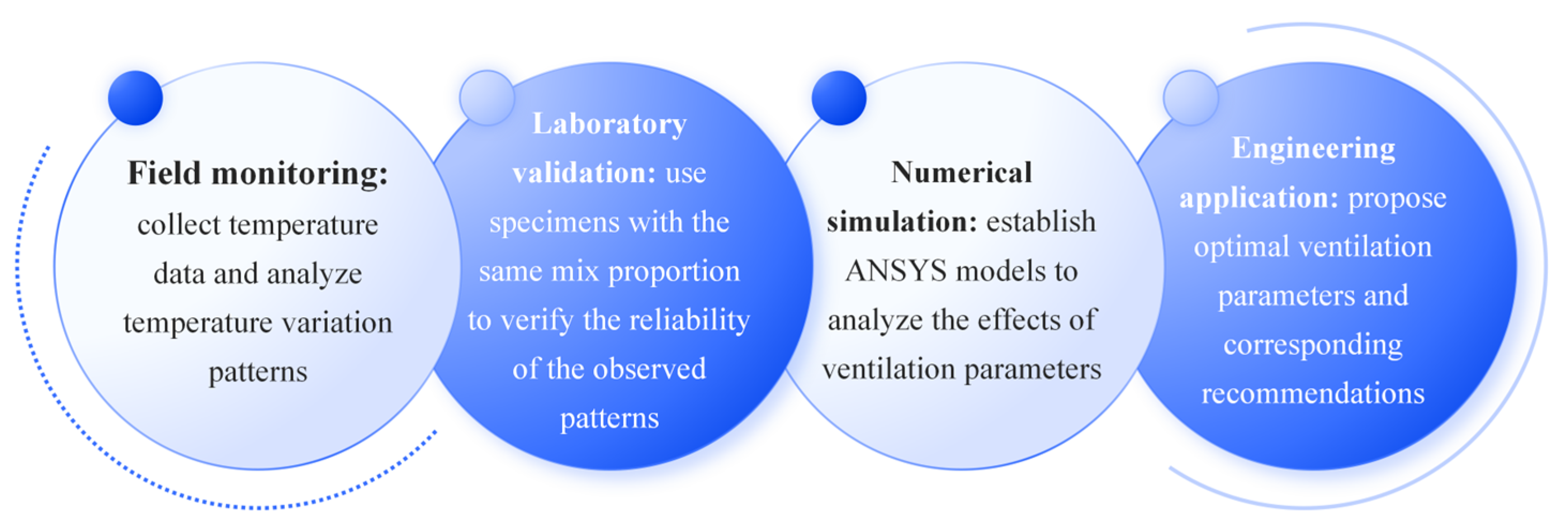
(4) Fluent simulation results indicate that ventilation velocity significantly affects air circulation within the foundation pit. When the ventilation velocity reaches 4 m/s, the air inside the pit is fully circulated, effectively controlling the temperature in the personnel activity area. Based on this 4 m/s ventilation velocity, lowering the ventilation temperature further reduces the concrete surface temperature. When the ventilation temperature drops below 25 °C, the concrete surface temperature decreases significantly; when it is reduced to 15 °C, the maximum concrete surface temperature can be controlled below 50 °C. The obtained simulation results can be used to predict concrete surface temperatures under different ventilation temperatures, providing a reference for practical engineering construction. Figure 15 is the flowchart of the research methodology

Author Contributions

Conceptualization, H.Z.; methodology, Y.S.; software, Y.S.; validation, H.Z. and C.T.; formal analysis, C.T.; investigation, R.C.; resources, R.C.; data curation, R.C.; writing—original draft preparation, H.Z.; writing—review and editing, C.T.; visualization, Y.W.; supervision, Y.S.; project administration, Y.S.; funding acquisition, Y.W. All authors have read and agreed to the published version of the manuscript.

Funding

This research was funded by the Natural Science Foundation of Shandong Province, grant numbers ZR2023QE114 and ZR2024ME053.

Data Availability Statement

The original contributions presented in this study are included in the article. Further inquiries can be directed to the corresponding author.

Acknowledgments

The authors would like to sincerely acknowledge the support of the Natural Science Foundation of Shandong Province, grant numbers ZR2023QE114 and ZR2024ME053.

Conflicts of Interest

Author Haitao Zhang was employed by the company Shandong Road and Bridge Group Co., Ltd. The remaining authors declare that the research was conducted in the absence of any commercial or financial relationships that could be construed as a potential conflict of interest.

References

  1. Shi, Y.; Wang, Y.; Wang, L.-N.; Wang, W.-N.; Yang, T.-Y. Bridge Cable Performance Warning Method Based on Temperature and Displacement Monitoring Data. Buildings 2025, 15, 2342. [Google Scholar] [CrossRef]
  2. Shi, Y.; Wang, Y.; Wang, L.-N.; Wang, W.-N.; Yang, T.-Y. Bridge Tower Warning Method Based on Improved Multi-Rate Fusion Under Strong Wind Action. Buildings 2025, 15, 2733. [Google Scholar] [CrossRef]
  3. Mehta, P.K.; Monteiro, P.J.M. Concrete: Microstructure, Properties, and Materials, 4th ed.; John Wiley & Sons, Inc.: New York, NY, USA, 2014. [Google Scholar]
  4. ACI Committee 207. Guide to Mass Concrete (ACI 207.1R-10); American Concrete Institute: Farmington Hills, MI, USA, 2010. [Google Scholar]
  5. Liu, Z.; Qi, X.; Ke, J.; Shui, Z. Enhancing the toughness of ultra-high performance concrete through improved fiber-matrix interface bonding. Constr. Build. Mater. 2025, 491, 142616. [Google Scholar] [CrossRef]
  6. Cui, Y.; Chen, S.; Li, L.; Wang, X.; Liu, J. Atomistic insights into the hydration behavior of N-A-S-H Gel via Ca2+ substitution: A molecular dynamics simulation study. J. Non-Cryst. Solids 2026, 673, 123892. [Google Scholar]
  7. Yu, N.; Zeng, X.; Ma, X.; Sun, Y.; Wang, Y.; Chen, B.; Luo, Z.; Dong, C.; Shen, K.; Wu, J. Preparation of Ce-Fe2O3/Al2O3 catalyst for simultaneous degradation of benzodiacetone and reduction of Cr(VI) by electro-Fenton process: Performance, mechanism, degradation pathways. J. Alloys Compd. 2025, 1045, 184745. [Google Scholar]
  8. Bamforth, P.B. Thermal cracking in massive concrete structures: A review. Cem. Concr. Res. 2007, 37, 1528–1535. [Google Scholar]
  9. Luo, B.; Su, Y.; Hu, X.; Chen, Z.; Chen, Y.; Ding, X. Strength behavior and microscopic mechanisms of geopolymer-stabilized waste clays considering clay mineralogy. J. Clean. Prod. 2025, 530, 146877. [Google Scholar] [CrossRef]
  10. Hu, Z.; Zhou, X.; Yu, L. An Intelligent Prediction Method for Rock Core Integrity Based on Deep Semantic Segmentation. Rock Mech. Rock Eng. 2026. [Google Scholar] [CrossRef]
  11. Schindler, A.K.; Folliard, K.J. Temperature development in mass concrete. J. Mater. Civ. Eng. 2005, 17, 727–734. [Google Scholar]
  12. Kwon, S.J.; Lee, H.K.; Kim, J.K. Effects of construction and environmental factors on thermal cracking of mass concrete. Constr. Build. Mater. 2012, 37, 819–828. [Google Scholar]
  13. Wu, G.; Tan, Y.; Zeng, J.; Zheng, J.; Zhang, R.; Liu, Y.; Yue, S. Laboratory tests of an eccentrically loaded strip footing above single underlying void. J. Build. Eng. 2025, 111, 113211. [Google Scholar] [CrossRef]
  14. Bazant, Z.P.; Kaplan, M.F. Concrete at High Temperatures; Elsevier Science Publishers: Amsterdam, The Netherlands, 1996. [Google Scholar]
  15. Nilsson, L.O.; Rostamian, M. Corrosion of reinforcement in cracked concrete: A review. Cem. Concr. Compos. 1993, 15, 177–188. [Google Scholar]
  16. Hooton, R.D.; Thomas, M.D.A. Durability of concrete: A review of current knowledge and future needs. Mater. Struct. 2001, 34, 489–494. [Google Scholar]
  17. Tong, L.; Fu, L.; Wu, B.; Xu, C.; Lim, C.W. Packing fraction effect on dynamic creep deformation of granular materials. Acta Geotech. 2025, 20, 2135–2144. [Google Scholar] [CrossRef]
  18. US Army Corps of Engineers. Hoover Dam Construction Records and Technical Reports; US Government Printing Office: Washington, DC, USA, 1940.
  19. Powers, T.C. The physical structure and engineering properties of concrete. J. Am. Concr. Inst. 1958, 54, 1035–1058. [Google Scholar]
  20. Tong, L.; Fu, L.; Wu, B.; Xu, C.; Lim, C.W.; Ding, H. Particle Shape Effect on Creep and Fluidity of Granular Packing. J. Eng. Mech. 2025, 151, 04025067. [Google Scholar] [CrossRef]
  21. Harrison, M.; Ferraro, C.C. (Eds.) SP-325: Mass Concrete and Thermal Cracking; American Concrete Institute: Farmington Hills, MI, USA, 2018. [Google Scholar]
  22. Jia, H.; Yao, S.; Tang, X.; Zheng, M.; Dong, Y.; Fan, F.; Yang, S.; Zhang, H. Multi-objective machine learning for health-oriented O3 and PM2.5 control: Integrating VOC photochemical consumption and source apportionment. J. Hazard. Mater. 2026, 505, 141483. [Google Scholar] [CrossRef]
  23. Bentz, D.P.; Gajda, J.L. Numerical simulation of hydration heat development in mass concrete. Cem. Concr. Res. 2008, 38, 1246–1254. [Google Scholar]
  24. Burgueno, R.; Shah, S.P.; Weiss, W.J. Temperature control strategies for mass concrete: A state-of-the-art review. J. Infrastruct. Syst. 2005, 11, 189–198. [Google Scholar]
  25. Sun, G.; Zheng, H.; Wang, L.; Peng, L.; Yang, H.; Li, Y. Prediction of the hydration heat, temperature distribution and thermal stress of mass concrete. Case Stud. Constr. Mater. 2026, 24, e05748. [Google Scholar] [CrossRef]
  26. Li, X.; Yu, Z.; Chen, K.; Deng, C.; Yu, F. Investigation of temperature development and cracking control strategies of mass concrete: A field monitoring case study. Case Stud. Constr. Mater. 2023, 18, E02144. [Google Scholar] [CrossRef]
  27. Shi, C.; Wu, H.; Ramezanianpour, A.A. Effect of mineral admixtures on hydration heat and strength of mass concrete. Constr. Build. Mater. 2011, 25, 2560–2567. [Google Scholar]
  28. Li, J.; Liu, Y.; Li, H.; Cui, N.; Yu, K. A Unified Family of High-Order Energy-Conserving Time Integrators for Nonlinear Dynamical Problems. Int. J. Numer. Methods Eng. 2026, 127, e70253. [Google Scholar] [CrossRef]
  29. Ding, H.; Yu, Y.; Xu, C.; Pu, X.; Guo, W.; Tong, L. Analytical modeling for nonlinear seismic metasurfaces of saturated porous media. Int. J. Mech. Sci. 2025, 303, 110666. [Google Scholar] [CrossRef]
  30. Guo, Z.; Li, J.; Wang, T.; Xie, J.; Yang, J.; Niu, B. Dynamic-Constrained Digital Twin-Based Mechanical Diagnosis Framework under Undetermined States without Fault Data. IEEE Trans. Instrum. Meas. 2025, 74, 3547715. [Google Scholar]
Figure 1. Micro-hexahedron.
Buildings 16 01312 g001
Figure 2. Construction site diagram.
Buildings 16 01312 g002
Figure 3. Layout of on-site monitoring points.
Buildings 16 01312 g003
Figure 4. Concrete temperature chstage where the temperature approaches the ambient temperature.
Buildings 16 01312 g004
Figure 5. Temperature monitoring of laboratory concrete pouring.
Buildings 16 01312 g005
Figure 6. Temperature variation curve of laboratory concrete pouring.
Buildings 16 01312 g006
Figure 7. Overall model diagram.
Buildings 16 01312 g007
Figure 8. Computational model diagram.
Buildings 16 01312 g008
Figure 9. Velocity streamlines in the foundation pit at different ventilation speeds.
Buildings 16 01312 g009
Figure 10. Temperature cloud map of the foundation pit under different ventilation speeds.
Buildings 16 01312 g010
Figure 11. Temperature change curve of concrete under different ventilation speeds.
Buildings 16 01312 g011
Figure 12. Temperature distribution in foundation pit at different ventilation temperatures.
Buildings 16 01312 g012
Figure 13. Concrete surface temperature changes under different ventilation temperatures.
Buildings 16 01312 g013
Figure 14. Maximum temperature of concrete at different ventilation temperatures.
Buildings 16 01312 g014
Figure 15. Research methodology flowchart.
Buildings 16 01312 g015
Table 1. Laboratory concrete mix design.
MaterialTypeDosage (kg/m3)
Portland cementP.O 42.5360
Fine aggregateClass II or Class I river sand1350
Coarse aggregate5–25 mm continuous gradation crushed stone1120
Slag powderS9590
Water reducerPoly Carboxylate Superplasticizer4.5
Curing agentMC120D13.02
Water-178
Table 2. Major parameters in numerical simulations.
NameParameter
Setting
NameParameter SettingNameParameter
Setting
TimeTransientCalculated frequency10Save data file every
(time steps)
20
InletVelocity-inletOutletOutflowMax iterations
/time step
30
Solver typePressure-basedk-epsilon (2 eqns)StandardTime step size0.1
Disclaimer/Publisher’s Note: The statements, opinions and data contained in all publications are solely those of the individual author(s) and contributor(s) and not of MDPI and/or the editor(s). MDPI and/or the editor(s) disclaim responsibility for any injury to people or property resulting from any ideas, methods, instructions or products referred to in the content.