Quantitative Evaluation Method for the Circumferential Multi-Point Corrosion States of Stay Cables Based on Self-Magnetic Flux Leakage Detection
 , ,
, ,
Abstract
1. Introduction
2. Establishment of Theoretical Model
3. Circumferential Multi-Point Corrosion Experimental Design
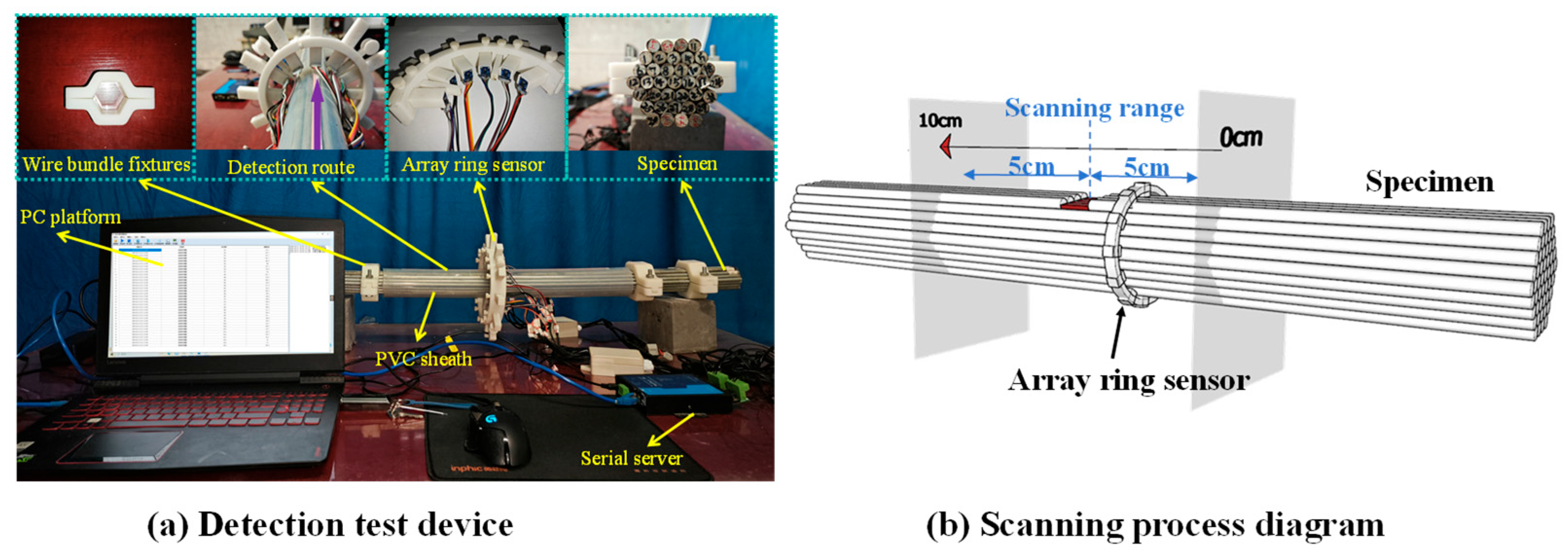
3.1. Materials and Equipment
3.2. Experimental Specimens and Parameters
3.3. Experimental Process
4. Analysis of Influencing Factors
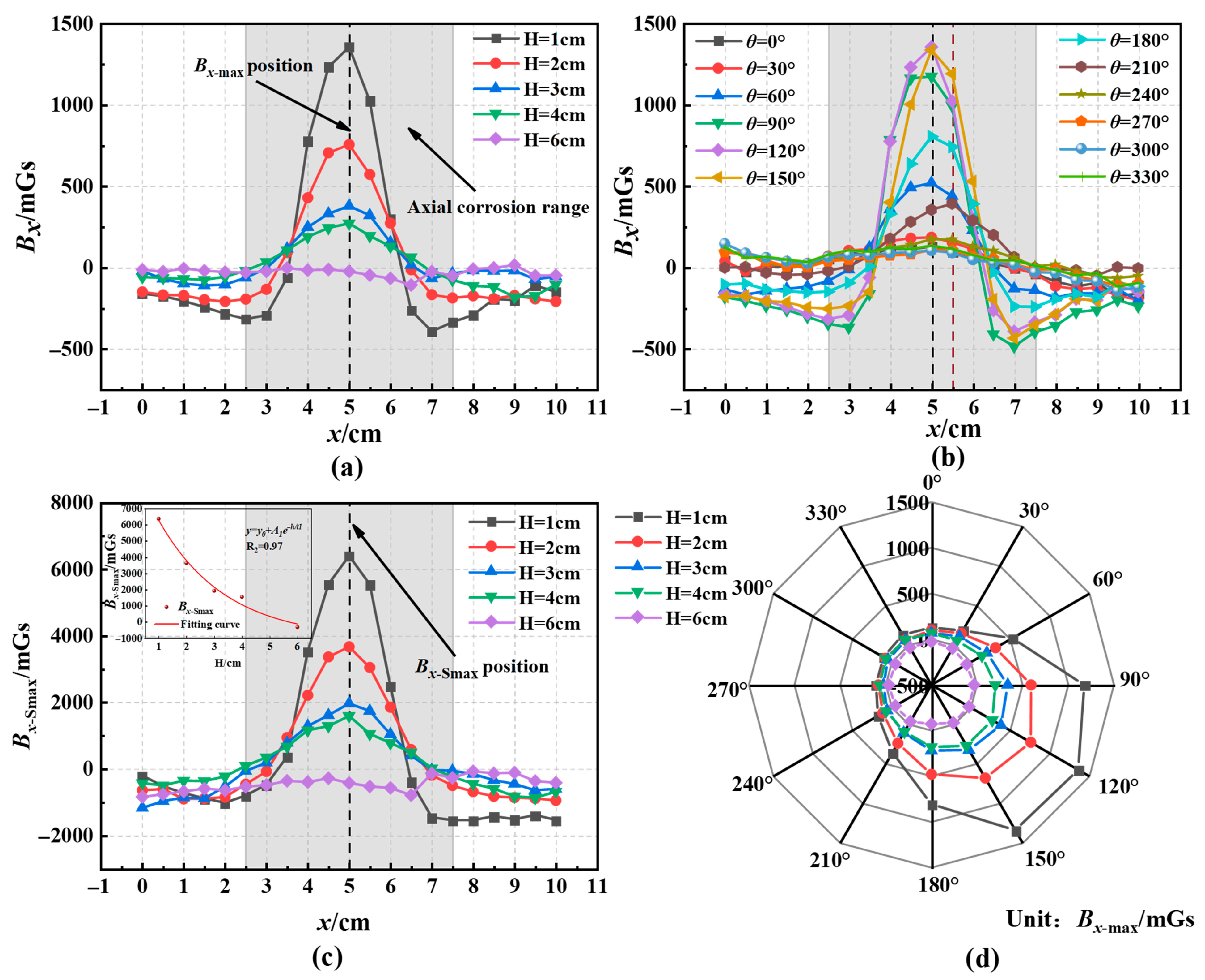
4.1. Detection Position
4.2. Corrosion Time
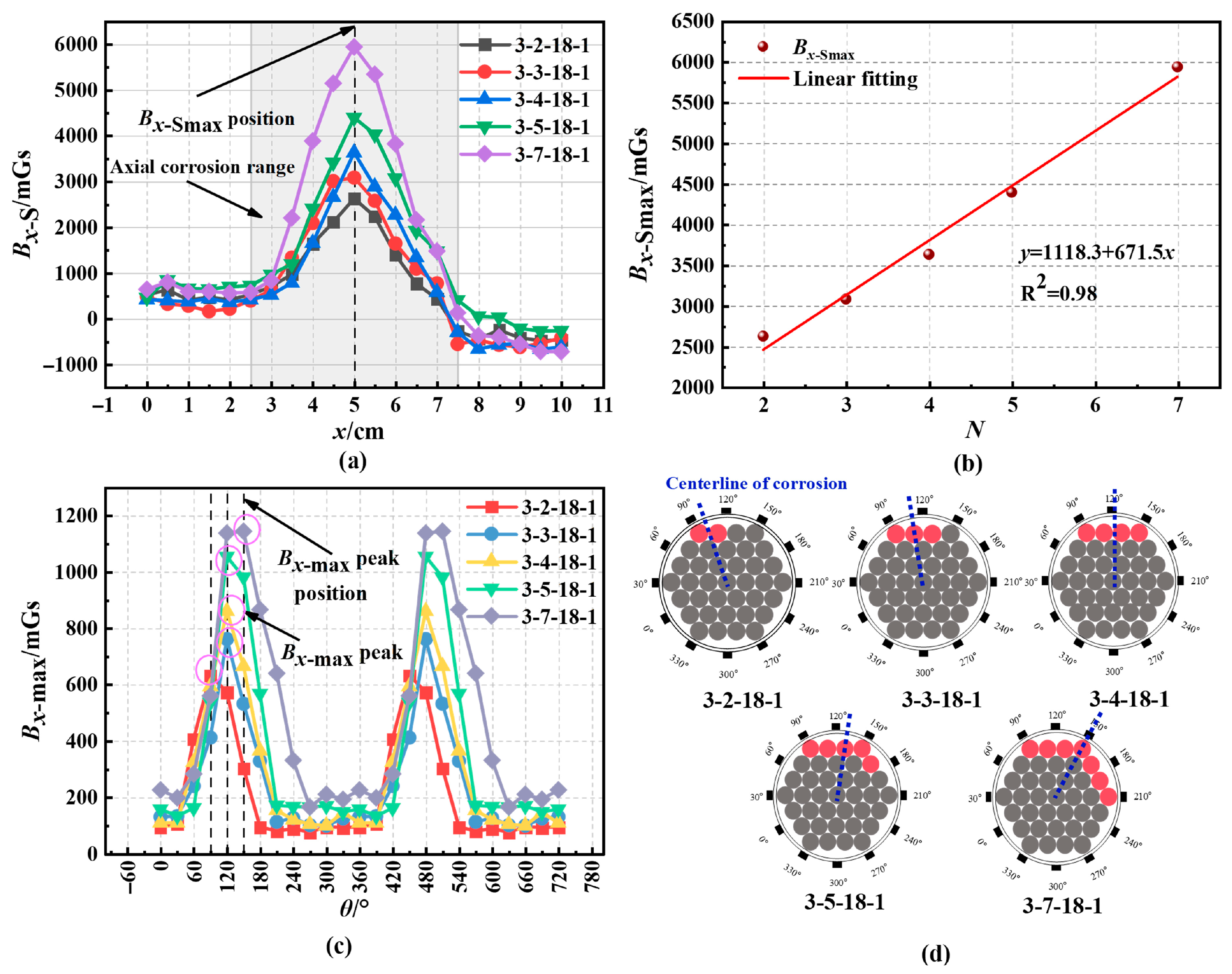
4.3. Corroded Wire Number
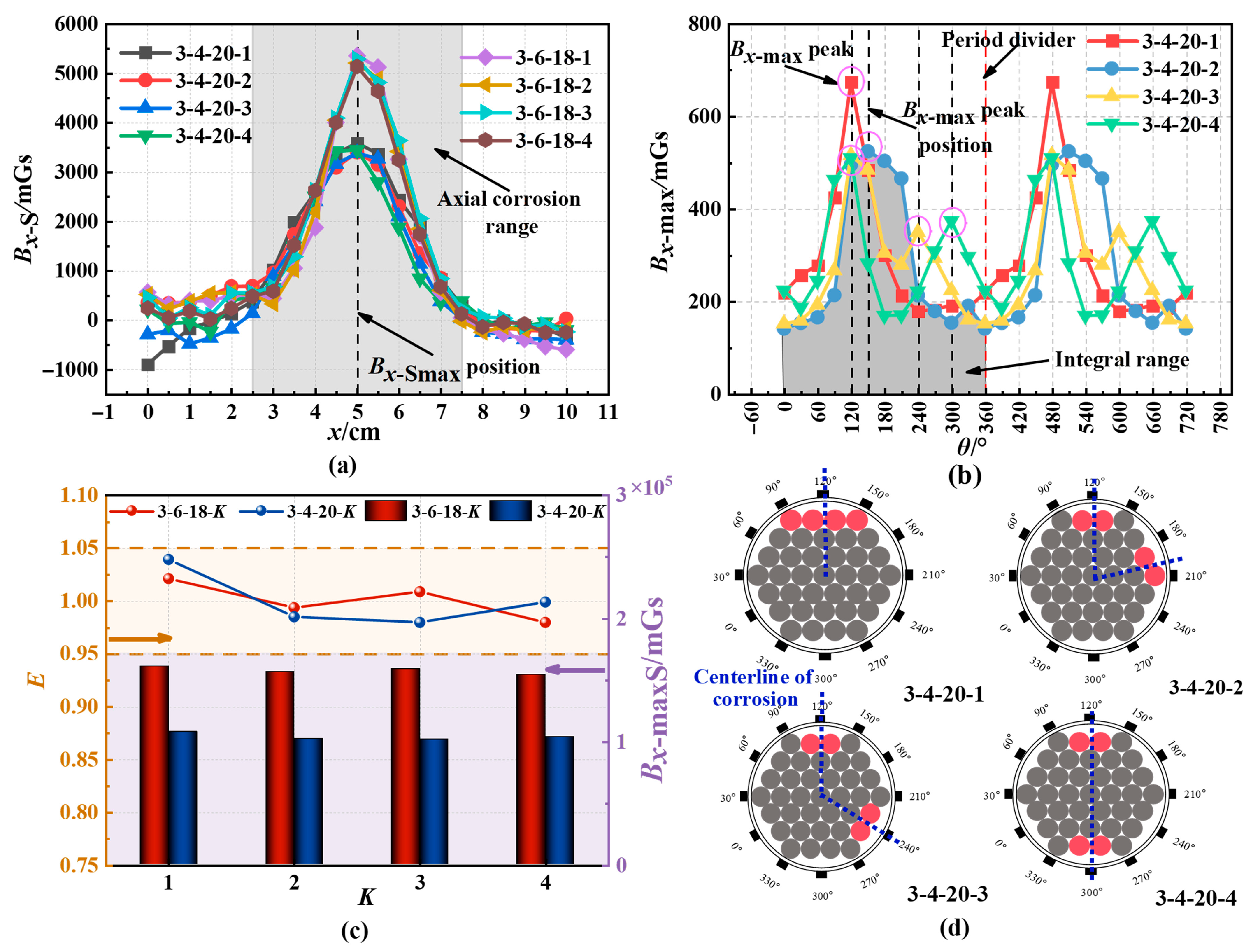
4.4. Circumferential Angle Between Corrosion Centers
5. Quantitative Analysis of the Circumferential Multi-Point Corrosion Distribution in Stay Cables
5.1. Number of Concentrated Circumferential Corrosion
5.2. Circumferential Corrosion Center Position
5.3. Circumferential Corrosion Degree
5.4. Assessment Method of Circumferential Multi-Point Corrosion State
6. Conclusions
- (1)
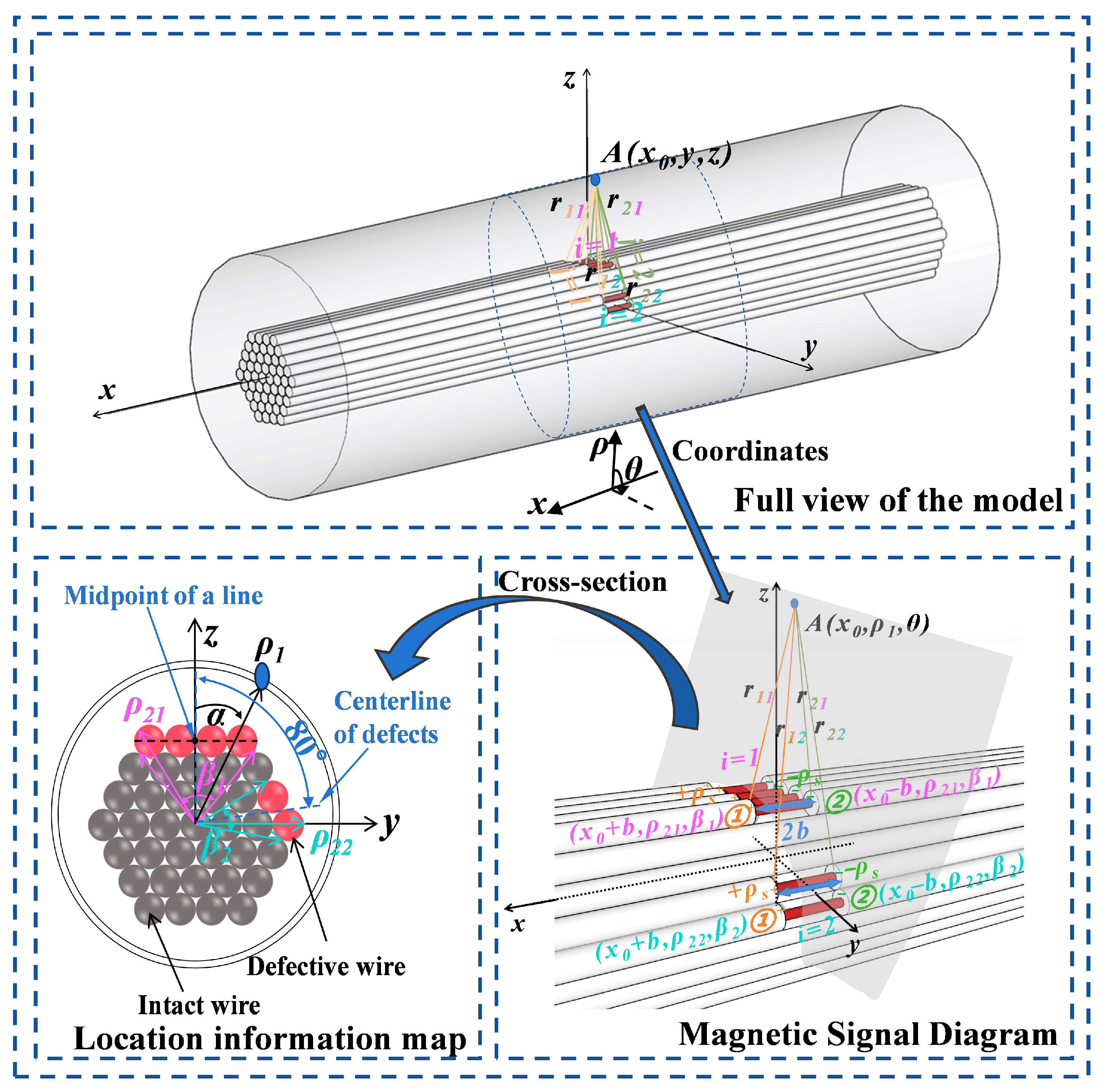
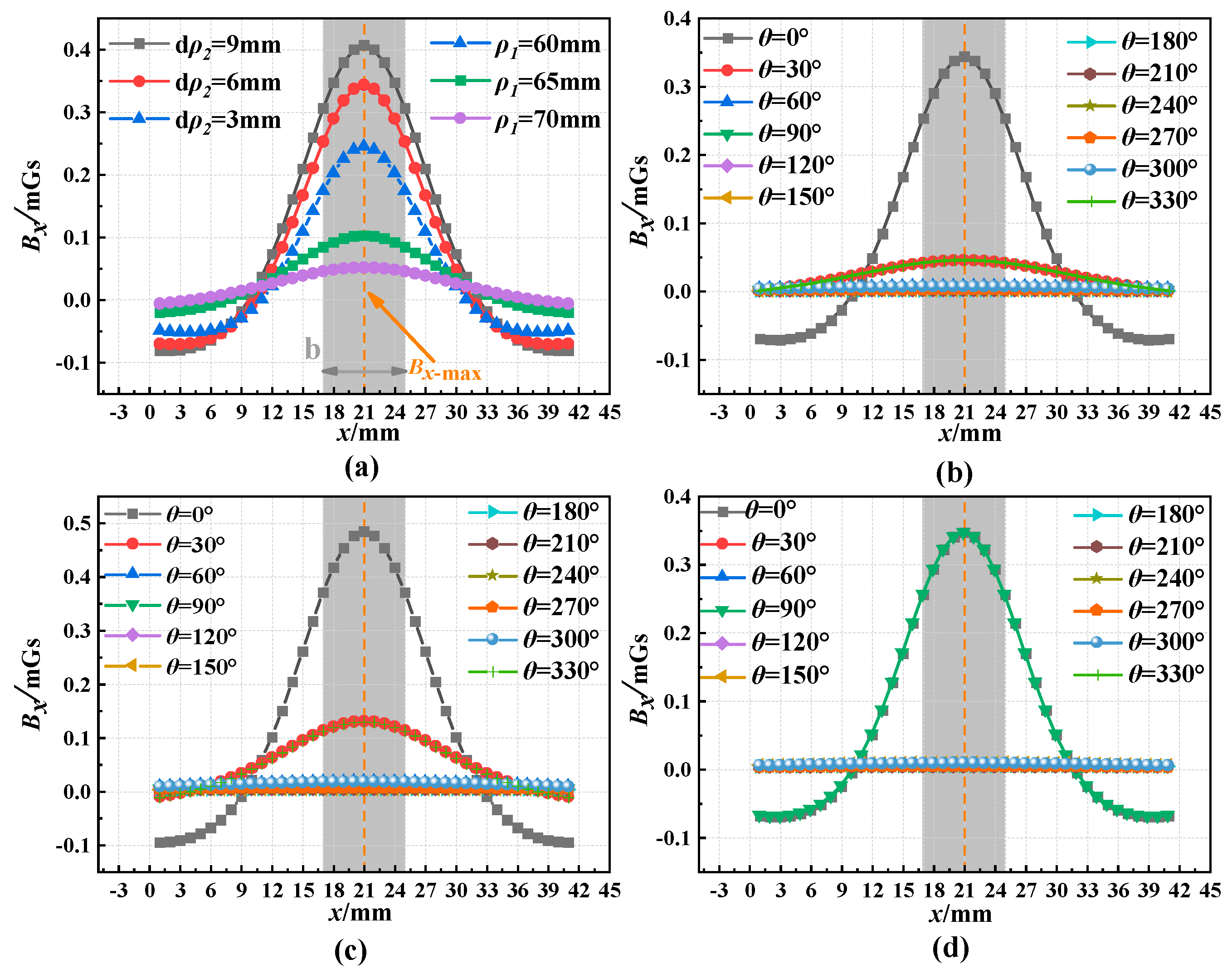
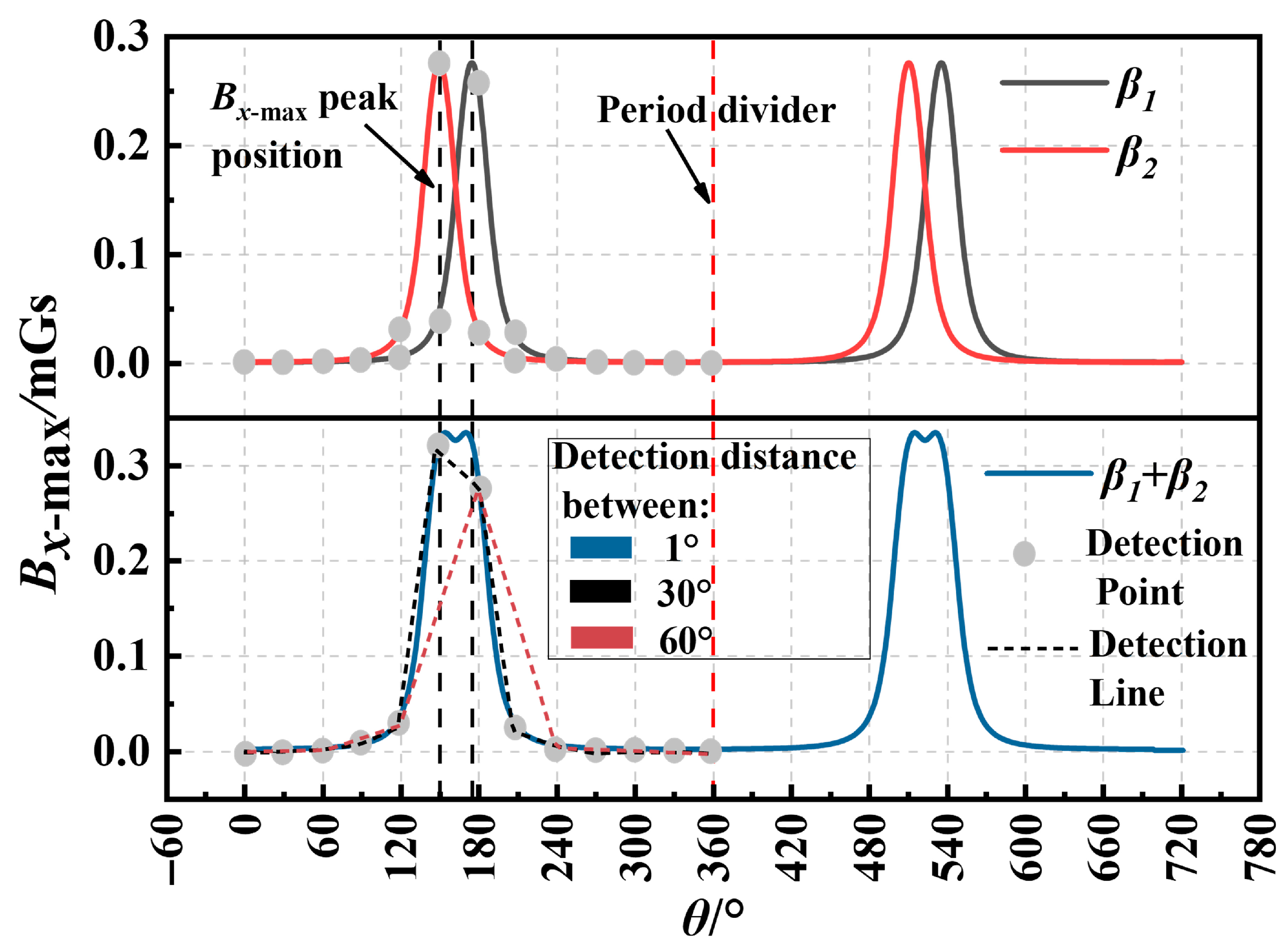
- The circumferential multi-point defect magnetic charge model was derived. Through the analysis of the numerical simulation signal map of the model, it is initially clarified that the closer the path θ is to the corrosion region, the greater the influence of changes in circumferential defect size on its detection value Bx-max. It is also found that Bx-max and its peak value correspond of Bx-max corresponds to the variation patterns of the axial corrosion center position and the circumferential corrosion center position, respectively.
- (2)
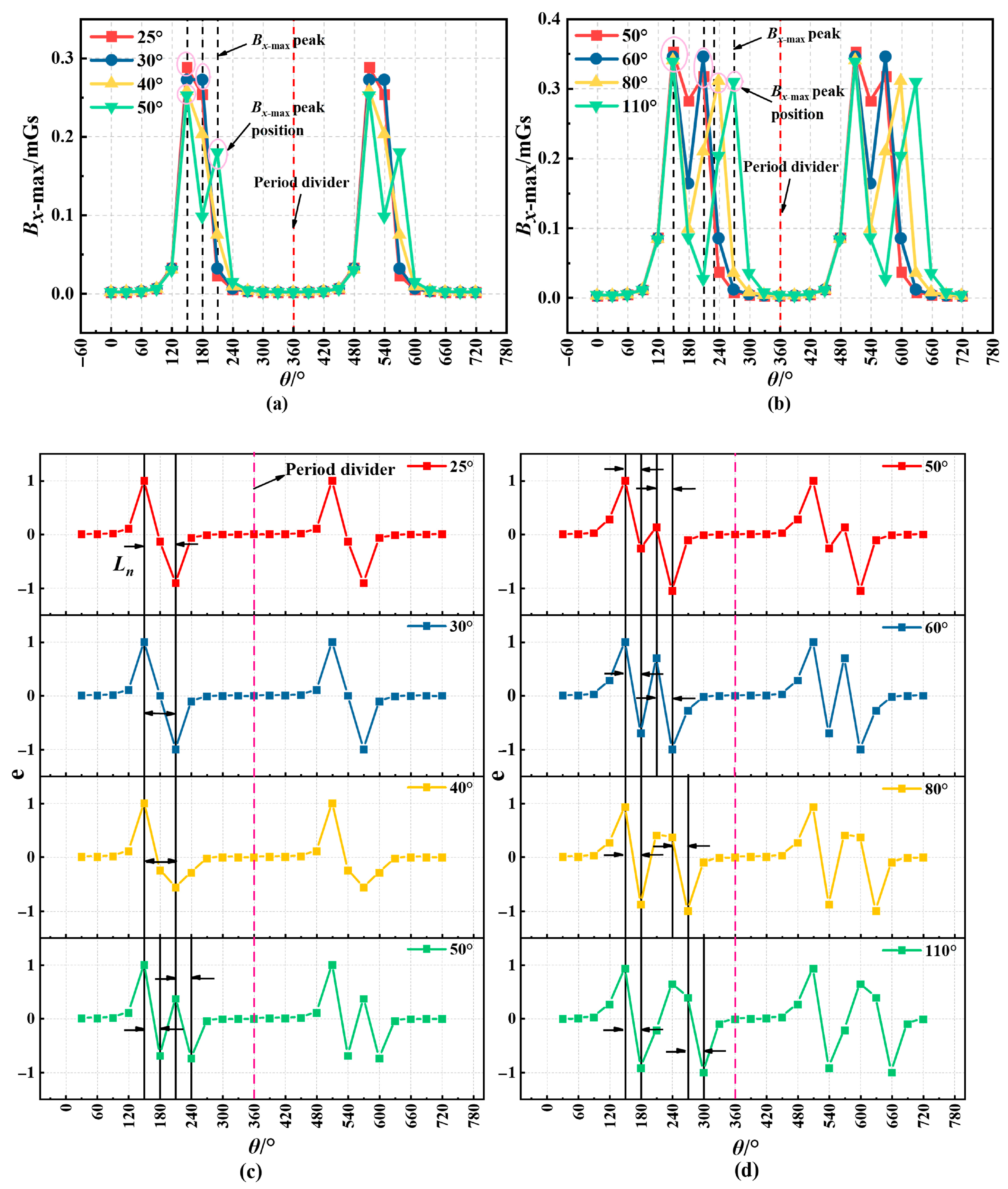
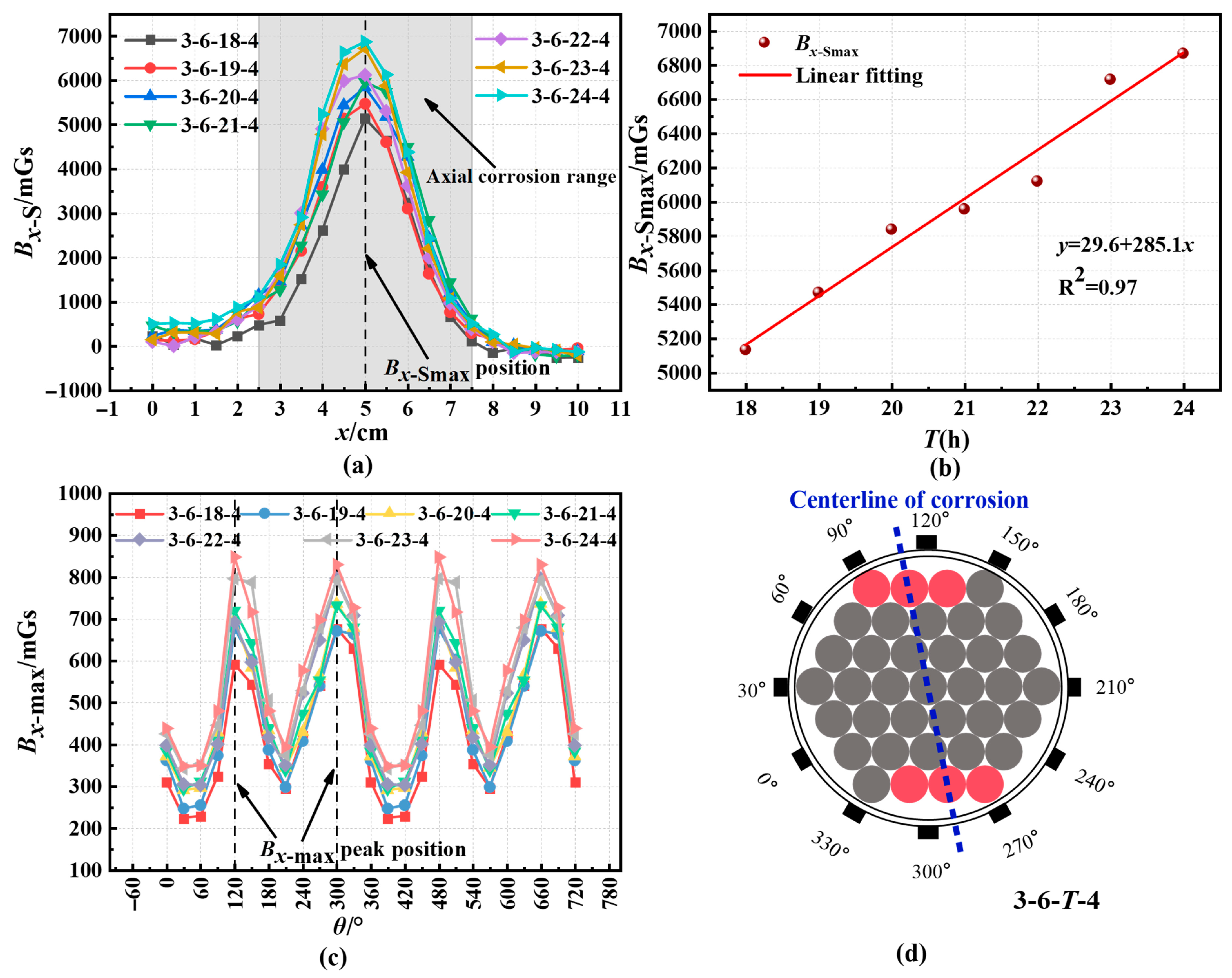
- Based on the parameter characteristics of the theoretical model, similar tests were conducted to clarify the patterns of signal variation. It is found that the peak value of Bx summation (Bx-smax) is negatively correlated with the lift-off height (H), and positively correlated with the number of corroded steel wires (N) and the corrosion duration (T), which specifically represents the corrosion dimensions. The θ-Bx-max polylines distribution on the Bx-Smax cross-section reflects the circumferential multi-point corrosion distribution. The number of single-peak bumps depends only on K and equals twice the number of concentrated sites. The Bx-max peak position shifts with N and K, while Bx-Smax is determined by N and T.
- (3)
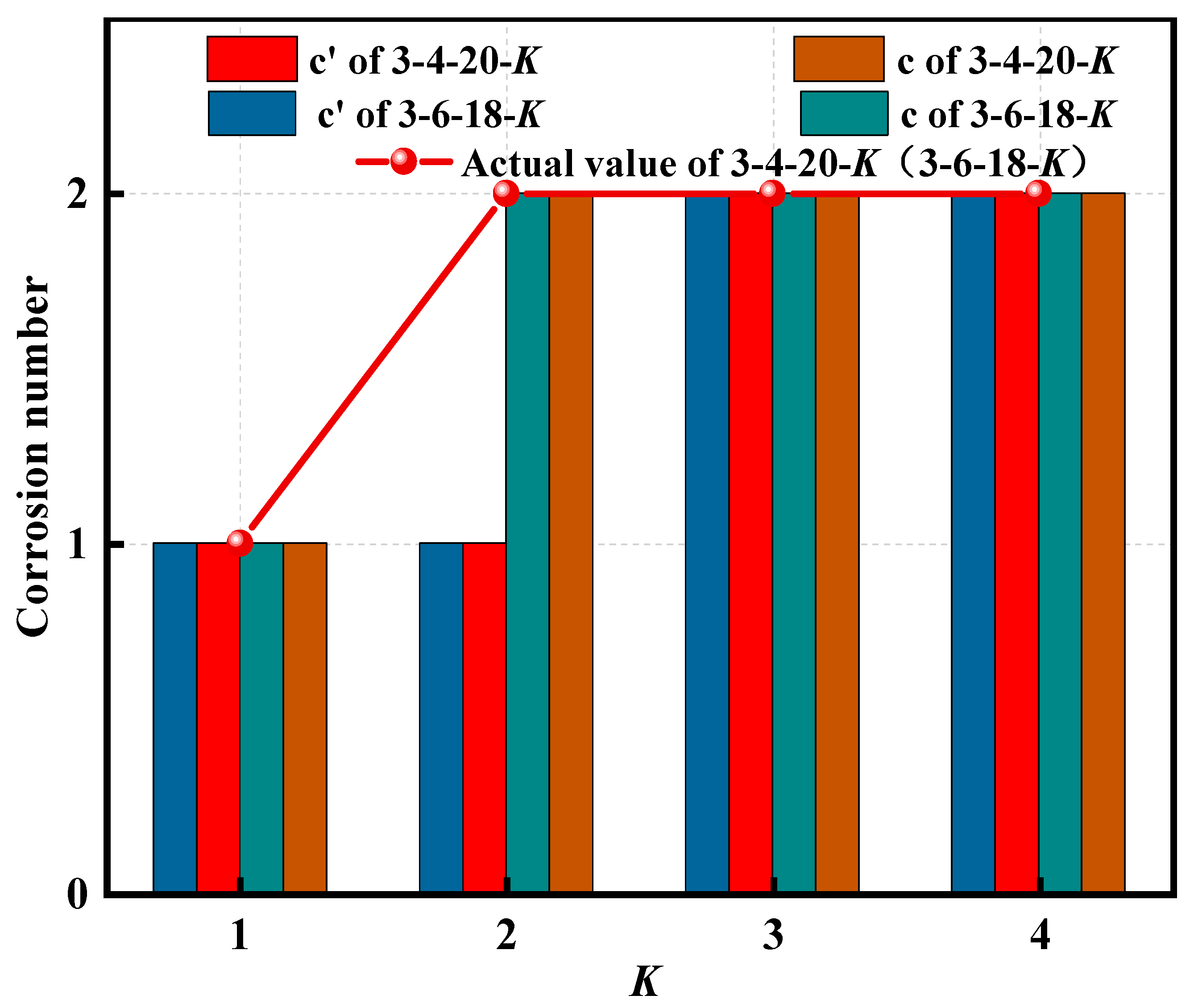
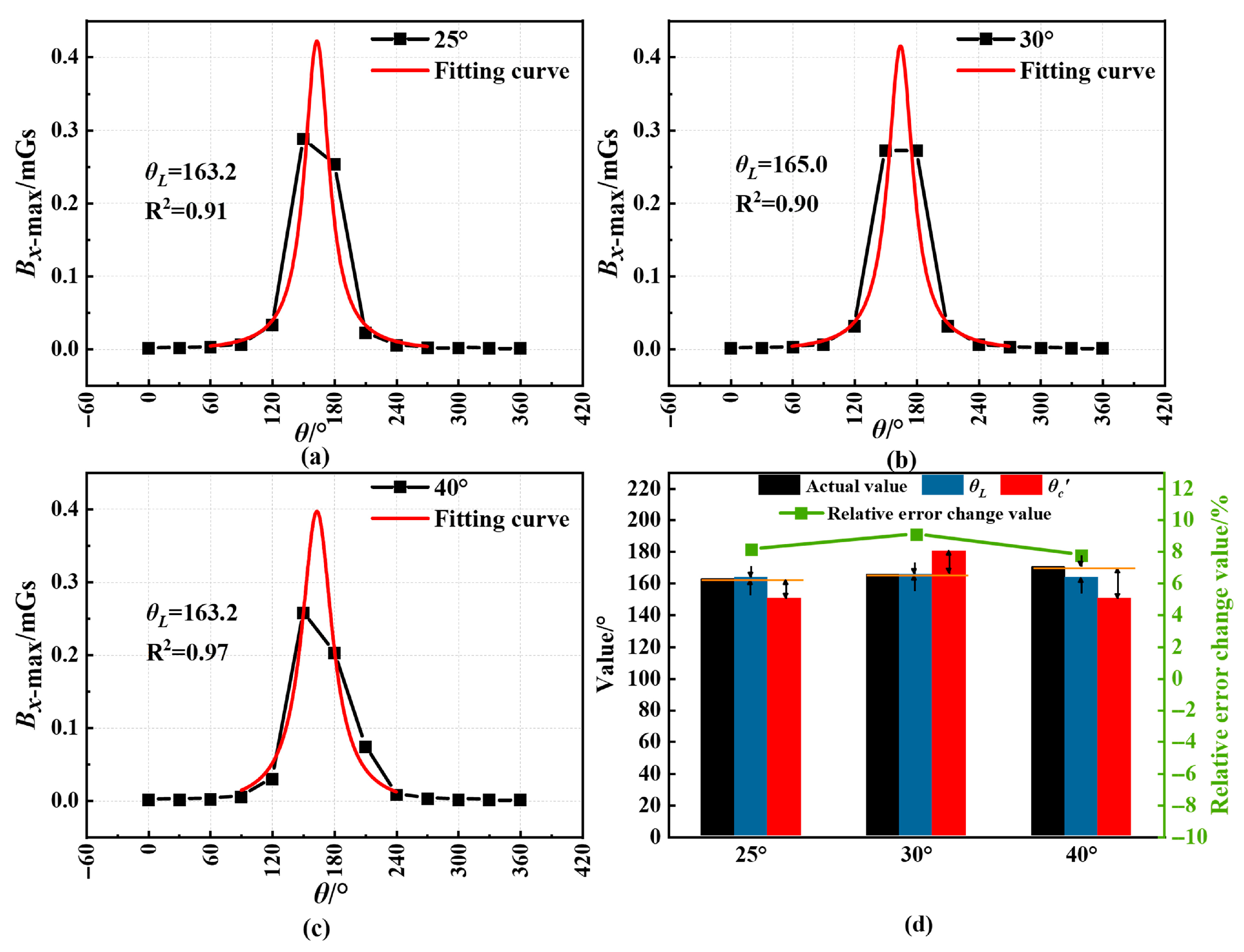
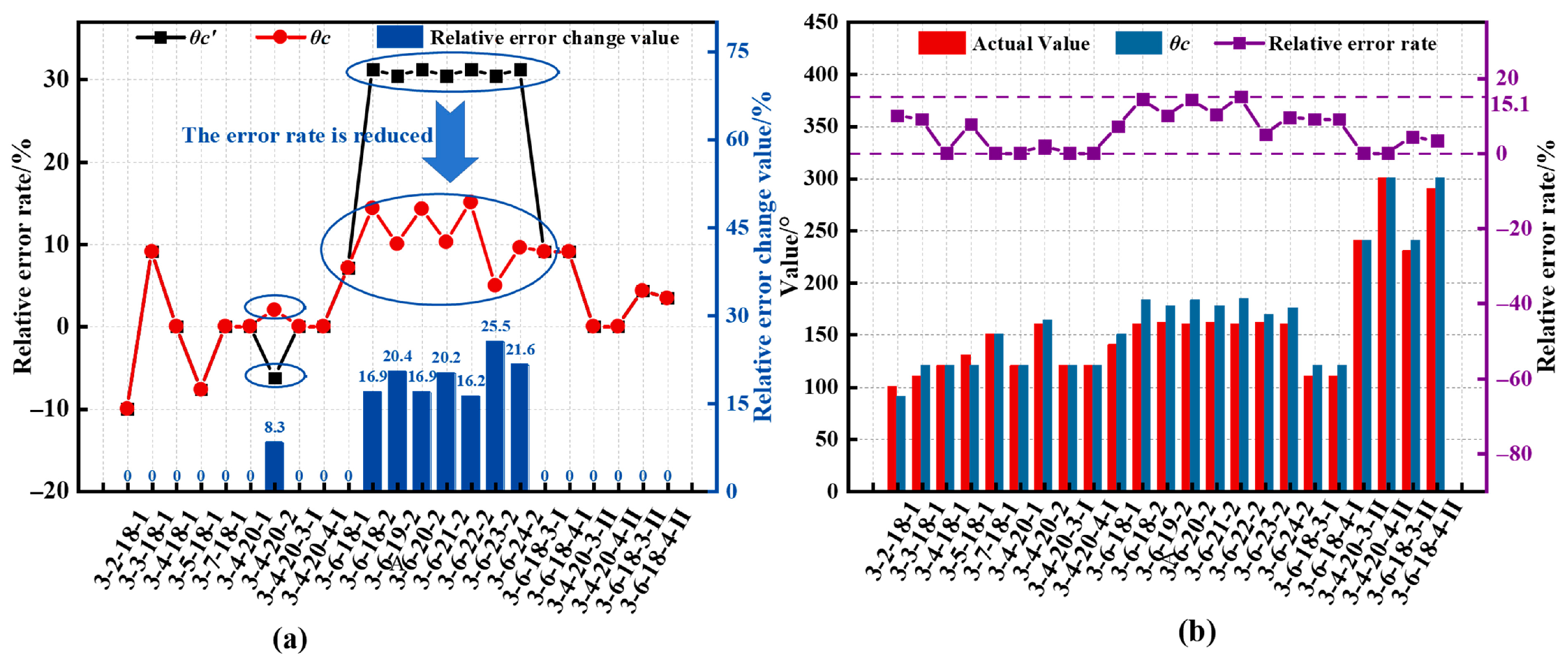
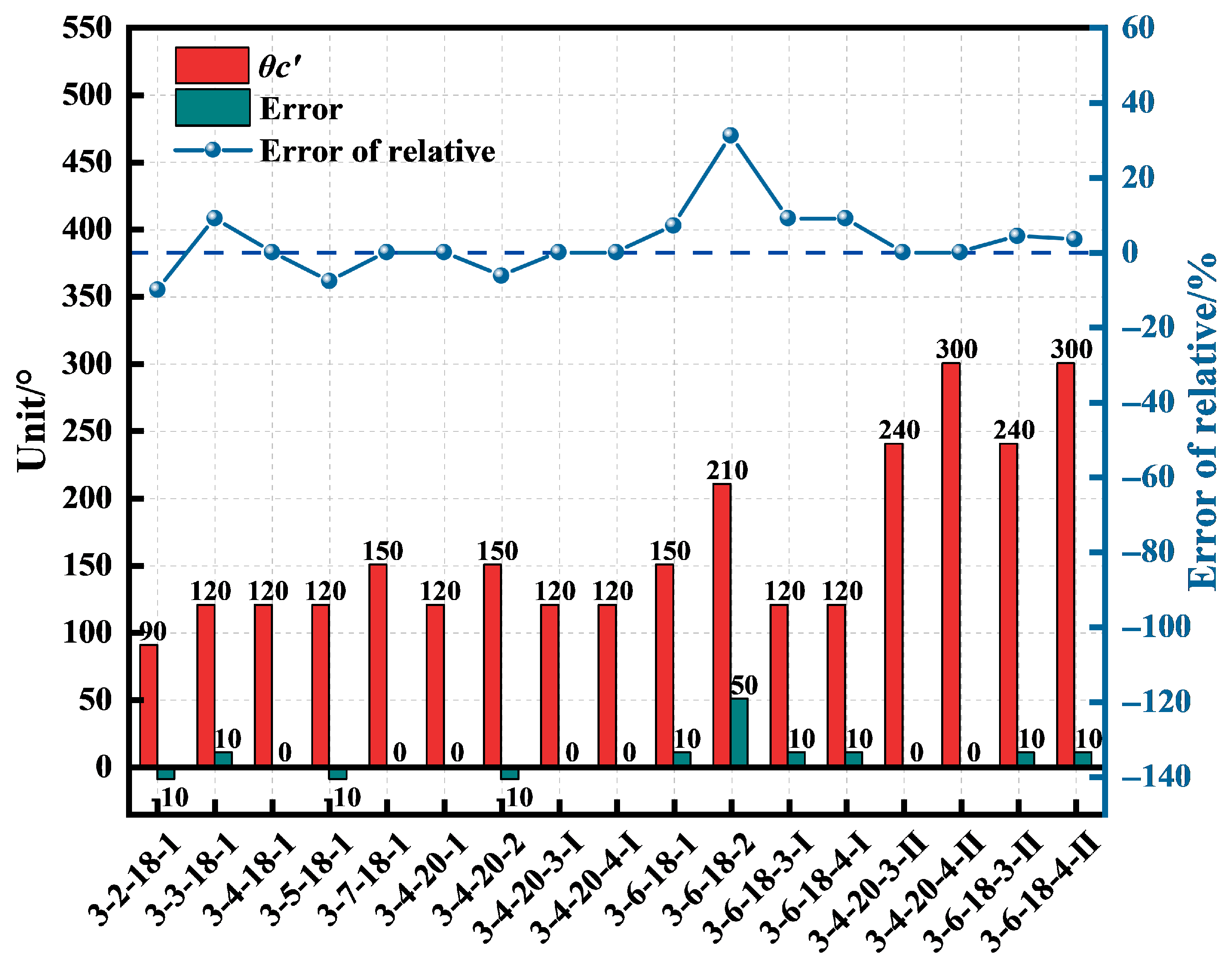
- A method for evaluating the circumferential corrosion state parameters of stay cables is proposed. Based on the variation characteristics of the θ-Bx-max curve, quantitative indices are established for parameters including the number of circumferential concentrated corrosion sites c, the circumferential corrosion center position θc, and the cross-sectional corrosion rate α. The corrected value of c exhibits high accuracy. The prediction error of θc determined using the piecewise formula is at most 15.1%. These quantitative indices were further used to establish an evaluation method for circumferential multi-point corrosion distribution.
Author Contributions
Funding
Data Availability Statement
Conflicts of Interest
Appendix A

| Variables | Definition |
|---|---|
| dBji | Local magnetic induced intensity vector |
| μ0 | Vacuum permeability (constant) |
| μr | Relative permeability of the material |
| ρs | Magnetic charge density at the defect cross-section |
| s | Defect area |
| rji, rji | Scalar and vector distance from the detection point to the defect, respectively |
| i | Serial number of the continuous defect |
| j | Defect end face type (j = 1 for positive magnetic charge surface ①, j = 2 for negative magnetic charge surface ②) |
| x0 | x0 Position of the measurement point on the x-axis |
| ρ1 | Radial distance from the measurement point to the center |
| θ | Circumferential angle between the measurement point and the z-axis (also used as circumferential path) |
| b | Defect length within the length range of the specimen |
| dρ2 | Circumferential defect depth |
| βi | Angle range β corresponding to the i th continuous defect |
| R | Radius of the specimen |
| Bijx | Axial component of magnetic induction intensity caused by each j under the same i |
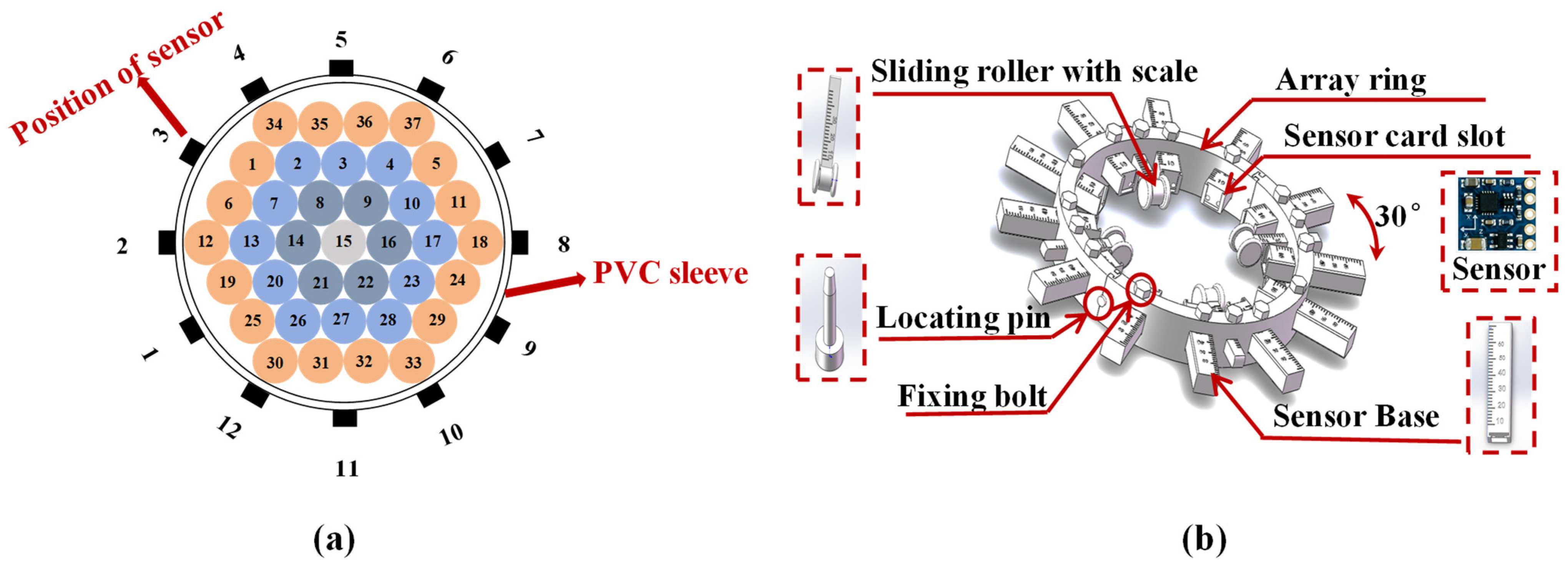
| H | Lift-off height between the sensor and the specimen surface |
| N | Number of circumferentially corroded steel wires |
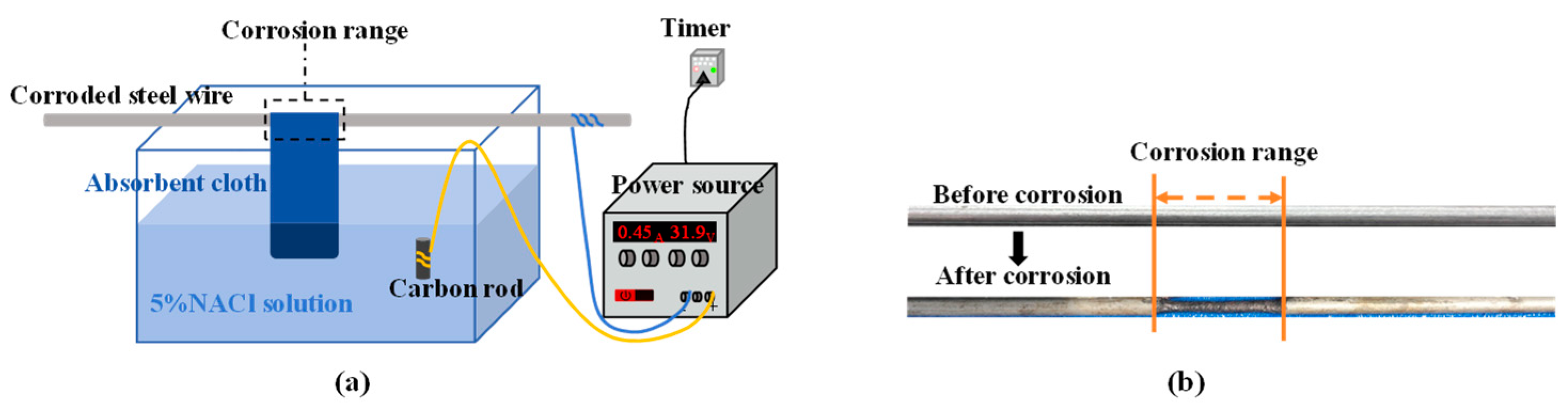
| T | Corrosion time, serving as a controlled equivalent parameter reflecting the degree of mass loss |
| K | Angle serial number representing the circumferential angle between the centerlines of different concentrated corrosion sites |
| α | Cross-sectional corrosion rate of the specimen |
| Bx | Total strength value of the axial component of the magnetic flux leakage signal |
| Bx-max | The peak value of Bx |
| Bx-S | The sum of Bx values measured at each θ for the same x0 under the same H |
| Bx-maxS | The integral value of the entire circumferential signal (Bx-max) for any K |
| V | The mean value of Bx-maxS for all K of the corresponding specimen |
| Kmax | The maximum serial number corresponding to the maximum circumferential angle between the corrosion centers (Kmax = 4) |
| E | A dimensionless index reflecting the relative change in Bx-maxS under different k |
| n | The number of Bx-max peaks in the θ-Bx-max graph |
| c’ | The initially predicted circumferential concentrated corrosion number (uncorrected) |
| Ln | The axial length/distance between the positive and negative extremes corresponding to the nth single-peak bulge |
| Ln-mode | The mode value of the distances between the extreme values of a single bulge |
| c | The corrected number of concentrated corrosion sites |
| θmax | The value of θ corresponding to the peak value of Bx-max in the θ-Bx-max graph |
| θc’ | The initially predicted position of the center of circumferential corrosion |
| θc | The actual or corrected circumferential corrosion center position |
| θL | The horizontal coordinate value at the peak of the fitting curve in the Lorentzian function |
| w, G | Parameters related to the degree of circumferential corrosion and the range of the corrosion angle in the Lorentz fitting |
| C, D | Fitting parameters related to the differences among specimens and detection errors, respectively |
References
- Liu, S.; Chen, M. Wire Rope Defect Recognition Method Based on MFL Signal Analysis and 1D-CNNs. Sensors 2023, 23, 3366. [Google Scholar] [CrossRef] [Scilit] [PubMed]
- Cao, Z.; Liu, Y.; Xu, B.; Li, X. Investigation of the impact of cable corrosion on the ultimate strength and fatigue life of ca-ble-stayed bridges. Sci. Rep. 2025, 15, 41868. [Google Scholar] [CrossRef] [Scilit] [PubMed]
- Civera, M.; Surace, C. Non-Destructive Techniques for the Condition and Structural Health Monitoring of Wind Turbines: A Literature Review of the Last 20 Years. Sensors 2022, 22, 1627. [Google Scholar] [CrossRef] [Scilit]
- Wang, B.; Zhong, S.; Lee, T.-L.; Fancey, K.S.; Mi, J. Non-Destructive Testing and Evaluation of Composite Materials/Structures: A State-of-the-Art Review. Adv. Mech. Eng. 2020, 12, 1687814020913761. [Google Scholar] [CrossRef] [Scilit]
- Noorsuhada, M.N. An Overview on Fatigue Damage Assessment of Reinforced Concrete Structures with the Aid of Acoustic Emission Technique. Constr. Build. Mater. 2016, 112, 424–439. [Google Scholar] [CrossRef] [Scilit]
- Md Nor, N.; Abdullah, S.; Mohamad Halim, M.A.H.; Arifin, A. Evaluation of the Behaviour of Steel Bar in the Concrete Under Cyclic Loading Using Magnetic Flux Leakage and Acoustic Emission Techniques. Materials 2023, 16, 2172. [Google Scholar] [CrossRef] [Scilit] [PubMed]
- de Mendonça Filho, F.F.; Copuroglu, O.; Schlangen, E.; Šavija, B. Determination of Loss of Reinforcement Due to Corrosion through X-Ray Computer Micro-Tomography. Materials 2021, 14, 893. [Google Scholar] [CrossRef] [Scilit] [PubMed]
- Fan, Z.; Bai, K.; Chen, C. Ultrasonic Testing in the Field of Engineering Joining. Int. J. Adv. Manuf. Technol. 2024, 132, 4135–4160. [Google Scholar] [CrossRef] [Scilit]
- Zitoun, A.; Dixon, S.; Kazilas, M.; Hutchins, D. Defect Detection and Imaging in Composite Structures Using Magnetostrictive Patch Transducers. Sensors 2023, 23, 600. [Google Scholar] [CrossRef] [Scilit]
- Zaki, A.; Chai, H.K.; Aggelis, D.G.; Alver, N. Non-Destructive Evaluation for Corrosion Monitoring in Concrete: A Review and Capability of Acoustic Emission Technique. Sensors 2015, 15, 19069–19101. [Google Scholar] [CrossRef] [Scilit] [PubMed]
- Dehui, W.; Lingxin, S.; Xiaohong, W.; Zhitian, L. A Novel Non-Destructive Testing Method by Measuring the Change Rate of Magnetic Flux Leakage. J. Nondestruct. Eval. 2017, 36, 24. [Google Scholar] [CrossRef] [Scilit]
- Feng, B.; Wu, J.; Tu, H.; Tang, J.; Kang, Y. A Review of Magnetic Flux Leakage Nondestructive Testing. Materials 2022, 15, 7362. [Google Scholar] [CrossRef] [Scilit] [PubMed]
- Dubov, A.A. A Study of Metal Properties Using the Method of Magnetic Memory. Met. Sci. Heat. Treat. 1997, 39, 401–405. [Google Scholar] [CrossRef] [Scilit]
- Lee, J.; Wang, D.; Dharmawan, I.D.M.O. Theoretical Model of Self-Magnetic Flux Leakage and Its Application in Estimating the Depth Direction of a Fatigue Crack. Appl. Sci. 2023, 13, 533. [Google Scholar] [CrossRef] [Scilit]
- Seleznyova, K.; Strugatsky, M.; Kliava, J. Modelling the Magnetic Dipole. Eur. J. Phys. 2016, 37, 025203. [Google Scholar] [CrossRef] [Scilit]
- Yang, L.; Huang, P.; Gao, S.; Du, Z.; Bai, S. Research on the Magnetic Flux Leakage Field Distribution Characteristics of Defect in Low-Frequency Electromagnetic Detection Technique. IEICE Electron. Express 2021, 18, 20200362. [Google Scholar] [CrossRef] [Scilit]
- Trevino, D.A.G.; Dutta, S.M.; Ghorbel, F.H.; Karkoub, M. An Improved Dipole Model of 3-D Magnetic Flux Leakage. IEEE Trans. Magn. 2016, 52, 6201707. [Google Scholar] [CrossRef] [Scilit]
- Ma, T.; Wang, H.; Tang, Y.; Chen, H. Numerical Analysis on Magnetic Leakage Field of Pipeline Defect. J. Vibroeng. 2015, 17, 3594–3607. [Google Scholar]
- Azizzadeh, T.; Safizadeh, M.S. Identification and Sizing of Neighboring Pits Using Three-Axis Magnetic Flux Leakage Technique. J. Test. Eval. 2021, 49, 1837–1852. [Google Scholar] [CrossRef] [Scilit]
- Qiu, J.; Zhang, H.; Zhou, J.; Zhang, W. An SMFL-Based Non-Destructive Quantification Method for the Localized Corrosion Cross-Sectional Area of Rebar. Corros. Sci. 2021, 192, 109793. [Google Scholar] [CrossRef] [Scilit]
- Yang, Y.; Ma, X.; Su, S.; Wang, W. Study on Corrosion Damage Characterization and Tensile Strength Evaluation for Locally Corroded Bridge Steel via Metal Magnetic Memory Method. Measurement 2023, 207, 112406. [Google Scholar] [CrossRef] [Scilit]
- Xia, R.; Zhou, J.; Zhang, H.; Liao, L.; Zhao, R.; Zhang, Z. Quantitative Study on Corrosion of Steel Strands Based on Self-Magnetic Flux Leakage. Sensors 2018, 18, 1396. [Google Scholar] [CrossRef] [Scilit] [PubMed]
- Meng, Q.; Pan, P.; Yang, X.; Song, J.; Wang, J. Self-magnetic flux leakage-based detection and quantification for high-strength steel wires of bridge cables considering corrosion-fatigue coupling effect. J. Magn. Magn. Mater. 2022, 561, 169641. [Google Scholar] [CrossRef] [Scilit]
- Qu, Y.; Zhou, J.; Liu, R.; Liao, L.; Zhao, Q. Research on the Detection of the Broken Wire Damage of a Cable in the Circumferential Directions Based on Self-Magnetic Flux Leakage. KSCE J. Civ. Eng. 2021, 25, 879–890. [Google Scholar] [CrossRef] [Scilit]
- Breysse, D.; Elachachi, S.M.; Yotte, S. Corrosion Effects on Failure at Various Scales in Suspension Cables. In Proceedings of the 11th International Conference on Fracture 2005, Turin, Italy, 20–25 March 2005; Curran Associates, Inc.: Parker, CO, USA, 2005; p. 5320. [Google Scholar]
- Li, X.; Sun, Y.; Liu, X.; Zhang, S. Adaptive Multi-Scale Bayesian Framework for MFL Inspection of Steel Wire Ropes. Machines 2024, 12, 801. [Google Scholar] [CrossRef] [Scilit]
- Zhang, D.; Zhao, M.; Zhou, Z.; Pan, S. Characterization of Wire Rope Defects with Gray Level Co-Occurrence Matrix of Magnetic Flux Leakage Images. J. Nondestruct. Eval. 2013, 32, 37–43. [Google Scholar] [CrossRef] [Scilit]
- Zhang, Y.; Feng, Z.; Shi, S.; Dong, Z.; Zhao, L.; Jing, L.; Tan, J. A Quantitative Identification Method Based on CWT and CNN for External and Inner Broken Wires of Steel Wire Ropes. Heliyon 2022, 8, e11623. [Google Scholar] [CrossRef] [Scilit]
- Xin, J.; Tao, G.; Tang, Q.; Zou, F.; Xiang, C. Structural damage identification method based on Swin Trans-former and continuous wavelet transform. Intell. Robot. 2024, 4, 200–215. [Google Scholar] [CrossRef] [Scilit]
- Jia, J.; Li, Y. Deep Learning for Structural Health Monitoring: Data, Algorithms, Applications, Challenges, and Trends. Sensors 2023, 23, 8824. [Google Scholar] [CrossRef] [Scilit] [PubMed]
- Vashisht, R.; Viji, H.; Sundararajan, T.; Mohankumar, D.; Sumitra, S. Structural Health Monitoring of Cantilever Beam Using Bayesian Neural Network and Deep Learning. In Structural Integrity Assessment; Springer: Singapore, 2019. [Google Scholar]
- Shen, Y.; Zhou, W. Development of a convolutional neural network model to predict the size and location of corrosion defects based on magnetic flux leakage signals. Int. J. Press. Vessel. Pip. 2024, 207, 105123. [Google Scholar] [CrossRef] [Scilit]
- Seavey, W. Robotic Magnetic Flux Leakage Inspection System for Cable Stays and Related Methods. U.S. Patent 11,796,506, 24 October 2023. [Google Scholar]
- Mao, Y.; Xiao, F.; Tian, G.; Xiang, Y. Sensitivity Analysis and Sensor Placement for Damage Identification of Steel Truss Bridge. Structures 2025, 73, 108310. [Google Scholar] [CrossRef] [Scilit]
- Liu, B.; Luo, N.; Feng, G. Quantitative Study on MFL Signal of Pipeline Composite Defect Based on Improved Magnetic Charge Model. Sensors 2021, 21, 3412. [Google Scholar] [CrossRef] [Scilit] [PubMed]
- Li, Y.; Sun, C.; Liu, Y. Magnetic Flux Leakage Testing Method for Pipelines with Stress Corrosion Defects Based on Improved Kernel Extreme Learning Machine. Electronics 2023, 12, 3707. [Google Scholar] [CrossRef] [Scilit]
- Lan, C.; Xu, Y.; Liu, C.; Li, H.; Spencer, B.F. Fatigue Life Prediction for Parallel-Wire Stay Cables Considering Corrosion Effects. Int. J. Fatigue 2018, 114, 81–91. [Google Scholar] [CrossRef] [Scilit]
- Whitaker, A. Einstein, Bohr and the Quantum Dilemma: From Quantum Theory to Quantum Information; Cambridge University Press: Cambridge, UK, 2006; ISBN 978-0-521-67102-6. [Google Scholar]
- Li, R.; Miao, C.; Wei, T. Effect of Environmental Factors on Electrochemical Corrosion of Galvanized Steel Wires for Bridge Cables. Anti-Corros. Methods Mater. 2022, 69, 111–118. [Google Scholar] [CrossRef] [Scilit]
- Farquhar, D.J. Cable Stayed Bridges. In ICE Manual of Bridge Engineering; ICE Manuals; ICE Publishing: London, UK, 2008; pp. 357–381. ISBN 978-0-7277-3802-8. [Google Scholar]
- Qu, Y.; Zhang, H.; Zhao, R.; Liao, L.; Zhou, Y. Research on the Method of Predicting Corrosion Width of Cables Based on the Spontaneous Magnetic Flux Leakage. Materials 2019, 12, 2154. [Google Scholar] [CrossRef] [Scilit]
- Xue, S.; Shen, R.; Xue, H.; Zhu, X.; Wu, Q.; Zhang, S. Failure Analysis of High-Strength Steel Wire Under Random Corrosion. Structures 2021, 33, 720–727. [Google Scholar] [CrossRef] [Scilit]
- Zhou, J.; Zhang, H.; Liao, L.; Zhao, R.; Xia, R.; Yang, M. The Non-Destructive Test of Steel Corrosion in Reinforced Concrete Bridges Using a Micro-Magnetic Sensor. Sensors 2016, 16, 1439. [Google Scholar] [CrossRef] [Scilit]
- Wang, S.; Zhang, D.; Wang, D.; Zhang, Z. Electrochemical Corrosion Behavior of Steel Wires in a Coalmine with a Corrosive Medium. Min. Sci. Technol. 2011, 21, 71–76. [Google Scholar] [CrossRef] [Scilit]
- Xia, R.; Zhang, H.; Xiao, Y.; Liao, L.; Zhou, J. Theoretical Analysis and Experimental Verification of Magneto-Mechanical Effect for Loaded Ferromagnetic Structure with Initial Corrosion. J. Magn. Magn. Mater. 2022, 559, 169541. [Google Scholar] [CrossRef] [Scilit]






| Specification | Diameter/mm | Tensile Strength /MPa | C/% | Si/% | Mn/% | P/% | S/% | Cu/% |
|---|---|---|---|---|---|---|---|---|
| PPWS-7 × 1 | 7 | ≥1670 | 0.75–0.85 | 0.12–0.32 | 0.60–0.90 | ≤0.025 | ≤0.025 | ≤0.20 |
| Specimen Number | H/cm | N | T/h | K | α(%) |
|---|---|---|---|---|---|
| 3-2-18-1 | 3 | 2 | 18 | 1 | 3.02 |
| 3-3-18-1 | 3 | 3 | 18 | 1 | 5.00 |
| H-4-18-1 | 1, 2, 3, 4, 6 | 4 | 18 | 1 | 6.84 |
| 3-4-20-K | 3 | 4 | 20 | 1, 2, 3, 4 | 10.07 |
| 3-5-18-1 | 3 | 5 | 18 | 1 | 9.00 |
| 3-6-18-K | 3 | 6 | 18 | 1, 2, 3, 4 | 10.54 |
| 3-6-19-K | 3 | 6 | 19 | 2, 3, 4 | 11.18 |
| 3-6-20-K | 3 | 6 | 20 | 2, 3, 4 | 11.77 |
| 3-6-21-K | 3 | 6 | 21 | 2, 3, 4 | 12.44 |
| 3-6-22-K | 3 | 6 | 22 | 2, 3, 4 | 13.08 |
| 3-6-23-K | 3 | 6 | 23 | 2, 3, 4 | 13.70 |
| 3-6-24-K | 3 | 6 | 24 | 2, 3, 4 | 14.30 |
| 3-7-18-1 | 3 | 7 | 18 | 1 | 13.55 |
| Specimen Number | Transverse Section Drawing |
|---|---|
| H-N-18-1 |  |
| 3-4-20-K |  |
| 3-6-T-K |  |
| β is the 20°/40° Distance | Actual Corrosion Number | c’ | c |
|---|---|---|---|
| 25°/50° | 2/2 | 1/2 | 2/2 |
| 30°/60° | 1/2 | ||
| 40°/80° | 1/2 | ||
| 50°/110° | 2/2 |
| Quantitative Parameter | Proposed Index/Model | Main Finding & Physical Interpretation | Prediction Accuracy/Error |
|---|---|---|---|
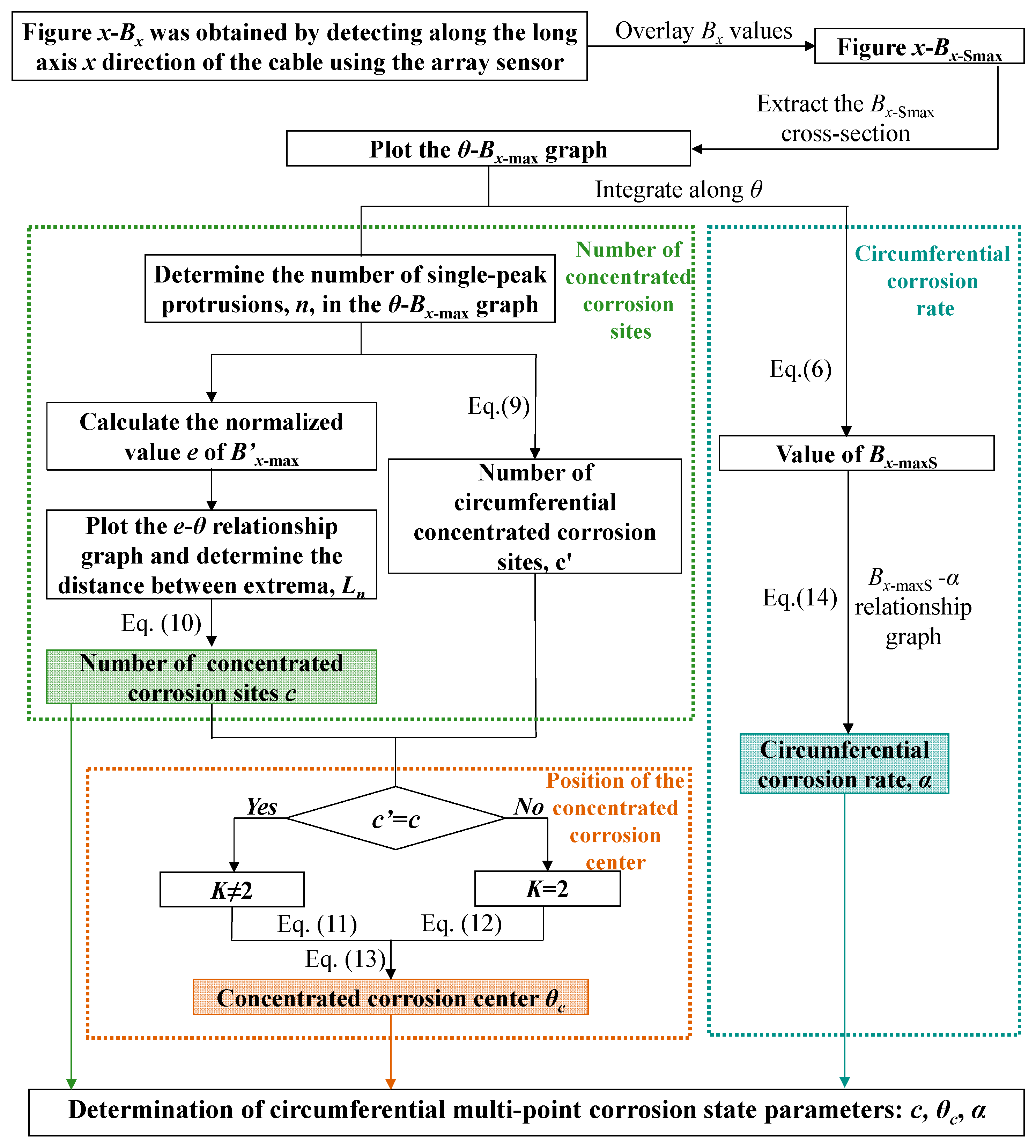
| Number of concentrated corrosion sites (c) | Mode-based baseline width Ln-mode (Equation (10)) | Corrects the “peak platform” misjudgment caused by severe signal overlap at specific angular spacings (K = 2); accurately isolates discrete pits | High accuracy (Effectively eliminated the theoretical prediction errors) |
| Circumferential corrosion center (θc) | Lorentz fitting segmented formula (Equation (13)) | The angular position of the signal peak physically aligns with the center of the corrosion cluster. Lorentz fitting reduces local signal distortion | Maximum relative prediction error ≤ 15.1% |
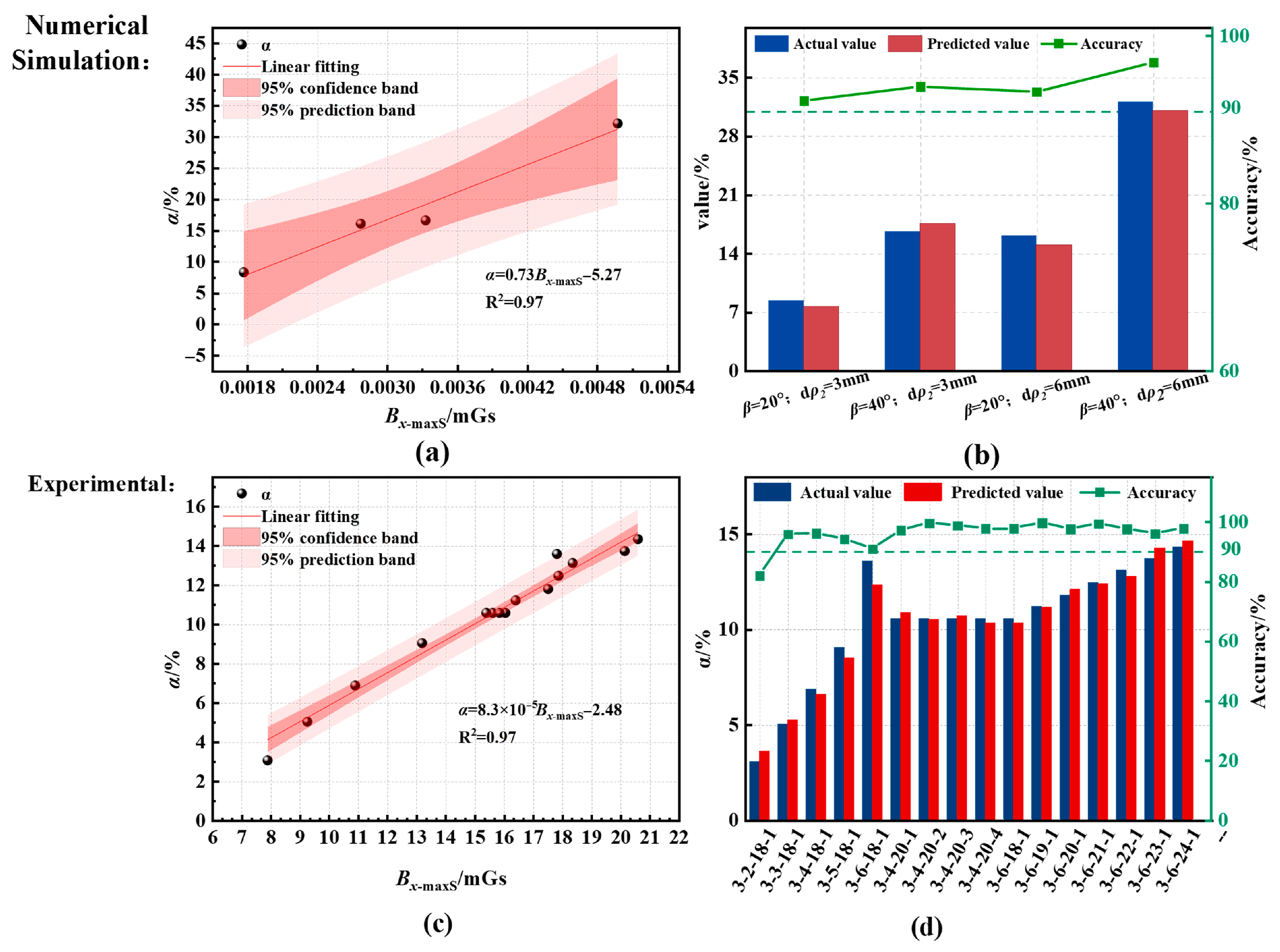
| Cross-sectional corrosion rate (α) | Linear fitting with integrated signal Bx-maxS (Equation (14)) | The angular position of the signal peak physically aligns with the center of the corrosion cluster. Lorentz fitting reduces local signal distortion | Average prediction accuracy > 90% |
Disclaimer/Publisher’s Note: The statements, opinions and data contained in all publications are solely those of the individual author(s) and contributor(s) and not of MDPI and/or the editor(s). MDPI and/or the editor(s) disclaim responsibility for any injury to people or property resulting from any ideas, methods, instructions or products referred to in the content. |
© 2026 by the authors. Licensee MDPI, Basel, Switzerland. This article is an open access article distributed under the terms and conditions of the Creative Commons Attribution (CC BY) license.
Share and Cite
Xia, R.; Tao, Q.; Chen, G.; Chen, J.; Deng, R.; Ding, Y. Quantitative Evaluation Method for the Circumferential Multi-Point Corrosion States of Stay Cables Based on Self-Magnetic Flux Leakage Detection. Buildings 2026, 16, 1309. https://doi.org/10.3390/buildings16071309
Xia R, Tao Q, Chen G, Chen J, Deng R, Ding Y. Quantitative Evaluation Method for the Circumferential Multi-Point Corrosion States of Stay Cables Based on Self-Magnetic Flux Leakage Detection. Buildings. 2026; 16(7):1309. https://doi.org/10.3390/buildings16071309
Chicago/Turabian StyleXia, Runchuan, Qingxia Tao, Guo Chen, Jinying Chen, Ran Deng, and Yaxi Ding. 2026. "Quantitative Evaluation Method for the Circumferential Multi-Point Corrosion States of Stay Cables Based on Self-Magnetic Flux Leakage Detection" Buildings 16, no. 7: 1309. https://doi.org/10.3390/buildings16071309
APA StyleXia, R., Tao, Q., Chen, G., Chen, J., Deng, R., & Ding, Y. (2026). Quantitative Evaluation Method for the Circumferential Multi-Point Corrosion States of Stay Cables Based on Self-Magnetic Flux Leakage Detection. Buildings, 16(7), 1309. https://doi.org/10.3390/buildings16071309