Article

Rethinking Winter Heating in University Classrooms in China’s Hot Summer and Cold Winter Regions: Setpoint–Preference Mismatches, Pre-Heating, and Comfort Assessment

1
School of Architecture and Civil Engineering, Chengdu University, Chengdu 610106, China
2
Faculty of Environmental Engineering, The University of Kitakyushu, Kitakyushu 808-0135, Japan
3
Innovation Institute for Sustainable Maritime Architecture Research and Technology (ISMART), Qingdao University of Technology, Qingdao 266520, China
*
Author to whom correspondence should be addressed.
Buildings 2026, 16(7), 1304; https://doi.org/10.3390/buildings16071304 (registering DOI)

Submission received: 24 February 2026 / Revised: 21 March 2026 / Accepted: 23 March 2026 / Published: 25 March 2026
(This article belongs to the Section Building Energy, Physics, Environment, and Systems)

Abstract

Winter thermal comfort in university classrooms in China’s Hot Summer and Cold Winter (HSCW) regions remains problematic due to mismatches between institutional heating setpoints and students’ actual thermal preferences. To investigate students’ thermal perceptions and behavioral responses, a post-occupancy evaluation (POE) survey was conducted, followed by field measurements in a typical classroom in Chengdu under three conditions: no-heating condition, heating conditions at 20 °C and 25 °C. Indoor environmental parameters were continuously monitored, and thermal comfort was assessed using the Predicted Mean Vote (PMV) and Predicted Percentage of Dissatisfied (PPD) model. The results show that no-heating conditions were unacceptable, highlighting the necessity of heating. While the 20 °C setpoint provided partial improvement, thermal comfort was not consistently achieved throughout the day. In contrast, the 25 °C setpoint maintained near-neutral conditions during most occupied periods. In addition, a pre-heating duration of approximately 30 min was found to be essential for reducing initial thermal discomfort. Overall, the findings indicate that fixed institutional heating standards may not adequately satisfy students’ thermal needs. Adaptive heating strategies that combine appropriate setpoints with sufficient pre-heating duration are therefore recommended to balance thermal comfort and energy efficiency in university classrooms in the HSCW regions.

1. Introduction

1.1. Research Background

In the context of global climate change and China’s ongoing “dual-carbon” strategy, higher education institutions, as public buildings with high energy intensity, have become a key focus of research on energy efficiency and low-carbon transformation in the built environment [1]. While improving energy efficiency, indoor environmental quality (IEQ) must also be maintained, as classroom thermal conditions are closely related to occupants’ health, cognitive performance, and learning outcomes [2]. However, measured energy consumption in educational and research buildings often exceeds predicted values, in some cases by a factor of two to four [3]. In teaching spaces with high occupancy and dynamic usage patterns, actual performance may deviate from design assumptions. This underscores the need for on-site assessments to identify and address these discrepancies [4,5].
These challenges become more pronounced in hot summer and cold winter (HSCW) regions. Field measurements indicate that the indoor thermal comfort of university classrooms in actual operation often deviates from the comfort range. Optimizing indoor setpoint temperatures alone can reduce energy consumption by up to 33.7%, suggesting a mismatch between operational control and actual demand [6]. In addition, simulation results show that improving envelope performance can reduce heating loads by approximately 18%, indicating that enhancing envelope insulation is an effective strategy for mitigating winter heat loss [7]. In addition, simulation studies under HSCW climatic conditions show that intermittent heating modes are characterized by a slow indoor temperature rise and pronounced temporal variations in indoor conditions, indicating strong sensitivity of indoor thermal performance to heating schedules and outdoor climate [8].
In addition to building physical performance, classroom thermal environments are also influenced by occupants’ adaptive behaviors. Studies indicate that occupants actively regulate their thermal comfort through actions including opening or closing windows and adjusting the operation or setpoint of air-conditioning systems. These behaviors reflect the role of thermal adaptation in real environments and have a significant impact on subjective thermal perception [9,10]. Moreover, in winter, the indoor air temperature in university classrooms in Nanjing differs from students’ neutral temperature by approximately 3.7 °C, suggesting that current indoor conditions deviate from occupants’ comfort needs [11]. As a result, the interactions among occupant demand, indoor thermal response, and building energy consumption remain insufficiently explored [12].
However, current heating and control strategies generally rely on uniform setpoints and static approaches, with limited consideration of occupants’ actual thermal needs, resulting in discrepancies between HVAC operation and comfort responses. Accordingly, applying Post-Occupancy Evaluation (POE) in occupied buildings is necessary to assess the indoor thermal environment and occupant responses, and to identify the limitations of existing control approaches [13]. On this basis, revisiting existing heating setpoint strategies—considering the alignment between setpoints and occupant preferences, as well as the thermal performance during preheating—remains essential to optimize both operational efficiency and indoor comfort.

1.2. Literature Review

1.2.1. Thermal Environment and Building-Related Constraints in University Classrooms of the HSCW Regions

Field evidence from educational buildings in the HSCW regions consistently indicates that winter indoor air temperatures in classrooms are generally low and frequently fall below established comfort thresholds. Approximately half of the measured indoor temperature points have been reported to be below 13 °C, well below the typical comfort range [14]. Localized field measurements in university classrooms in Nanjing further reveal substantial temperature fluctuations and overall low indoor temperatures, with thermal acceptance under cold conditions reaching only 31% [11]. Similar patterns have been observed in preschool classrooms within the HSCW regions, where low temperatures combined with high humidity exacerbate perceived cold and discomfort, and behavioral adaptations such as increased clothing insulation provide only limited relief [15].
Under these regional constraints, recent studies have examined classroom thermal conditions under different operational modes. Field investigations of secondary school classrooms operating under natural ventilation or limited heating report persistently low indoor temperatures and pronounced spatial variability during winter. Surveys further suggest that students’ adaptive capacity in cold conditions is constrained, and that adaptive comfort models may exhibit limited applicability in some classroom contexts [16]. Meanwhile, prolonged exposure to cold indoor environments also leads occupants to increase clothing insulation, and winter clothing levels have been shown to be highest in the HSCW regions across climate zones [17].
From the perspective of building design and energy performance in HSCW regions, simulation and modeling studies indicate that envelope parameters—such as orientation, window-to-wall ratio, and room size—significantly affect winter energy consumption and indoor temperature distribution in university classrooms [18]. Numerical analyses further demonstrate that under partial-space heating, thermal interactions between adjacent classrooms influence temperature distribution and heating efficiency, emphasizing the importance of spatial layout and thermal coupling in winter operation strategies [19].
Overall, existing studies show that winter thermal environments in educational spaces across the HSCW regions are characterized by low temperatures and uneven spatial distribution. Although occupants partially mitigate cold through behavioral adaptations, thermal comfort is only partially achieved. While physical indicators and building performance have been extensively examined, long-term occupant adaptation and subjective thermal experience remain insufficiently integrated. This suggests the need to further explore discrepancies between objective thermal indices and perceived comfort in real classroom settings.

1.2.2. Occupant Thermal Perception, Adaptation, and POE-Based Evidence in University Classrooms

To evaluate the operational performance of existing buildings, Post-Occupancy Evaluation (POE) has been widely adopted as an effective approach for capturing user feedback. Accordingly, complementing physical measurements with occupant-centered perspectives [20]. In classrooms characterized by high occupant density and concentrated usage periods, thermal comfort is shaped not only by environmental parameters such as air temperature and humidity, but also by individual perception and behavioral response. Accordingly, integrating subjective assessments with objective measurements has become an important direction in classroom thermal comfort research [21].
Recent studies have further examined the mechanisms underlying thermal comfort formation in university classrooms, accounting for individual attributes and contextual differences. Gender-related differences have been shown to influence energy-saving awareness and adaptive behaviors, with females generally maintaining energy-conserving actions under discomfort, while males are more inclined to modify environmental conditions to achieve personal comfort [22]. Temporally, thermal sensation and satisfaction vary across class periods, as continuous occupancy and changing environmental conditions can induce discrepancies between perceived comfort and psychological expectations [23].
Field studies and controlled experiments in classroom environments indicate that students’ thermal sensation exhibits a clear time-dependent response under transient conditions, with comfort developing progressively rather than being achieved instantaneously [24]. Due to building thermal inertia, indoor temperatures increase slowly, and preheating strategies have been shown to ensure target conditions are reached at the start of occupancy, improving environmental stability [25]. Some studies have incorporated student thermal feedback into timetable optimization to reduce discomfort [26]. These studies indicate that fully incorporating occupants’ perceptions can facilitate a transition in classroom thermal environment management from experience-based control to more refined, data-driven strategies.
In summary, thermal comfort in university classrooms is a multidimensional phenomenon shaped by environmental parameters, individual differences, behavioral adaptation, and temporal dynamics. While integrating subjective and objective approaches offers a more comprehensive representation of occupant experience, systematic investigations into the stabilization of indoor thermal conditions during early occupancy periods and their interaction with students’ dynamic behavior remain relatively limited.

1.2.3. Operational Heating Performance of University Classrooms in Winter

Field measurements of winter thermal environments in university classrooms commonly focus on key physical parameters, including air temperature, relative humidity, and vertical temperature gradients, to evaluate thermal quality under actual operational conditions [27,28]. Under varying operational modes and climatic conditions, classroom thermal environments exhibit pronounced dynamic responses. Field studies in naturally ventilated and mixed-mode classrooms demonstrate that indoor thermal conditions respond sensitively to outdoor climate variability [29,30]. In regions with clear seasonal transitions, such as Xi’an, naturally ventilated classrooms show large temperature fluctuations and varying neutral temperatures, reflecting limited thermal stability during winter and transitional periods [31]. In humid subtropical climates in Brazil, students are generally satisfied in naturally ventilated classrooms, whereas air-conditioned classrooms show lower tolerance to temperature variations [32]. These findings suggest that classroom thermal conditions are not solely determined by climate but are strongly influenced by operational mode and occupancy patterns.
Furthermore, building and spatial characteristics further shape indoor thermal distribution. Classrooms with different orientations experience significantly different winter indoor temperatures and neutral temperatures, underscoring the role of solar radiation in thermal environment formation [33]. Envelope performance—including thermal mass and insulation—strongly influences indoor temperature stability, with well-insulated or high-mass buildings generally exhibiting more uniform thermal conditions [34,35]. Envelope design parameters, such as window performance and window-to-wall ratio, also affect temperature distribution, while occupant behaviors can further amplify or mitigate these effects [36,37].
Field measurements of winter thermal conditions in university classrooms have revealed the dynamic nature of indoor temperatures under different operational modes and climates, with variations driven by heating strategies, classroom orientation, and envelope properties. However, the combined influences of heating strategies, occupancy patterns, and behavioral adjustments make it difficult to isolate the effects of specific operational parameters. This highlights the need for more controlled field investigations that explicitly examine the impact of heating setpoints and operational timing on thermal comfort outcomes.

1.3. Research Gaps and Objectives

In recent years, extensive field measurements and questionnaire surveys have been conducted on the winter thermal environment of university classrooms, providing valuable insights into indoor physical conditions, students’ thermal responses, and the applicability of thermal comfort models. However, when climate characteristics, occupant experience, and operational management are jointly considered, several research gaps remain.
Firstly, existing studies provide limited quantitative characterization of students’ overall thermal sensations and preferences, predominantly focusing on instantaneous thermal sensations or localized satisfaction assessments. There is a lack of systematic analysis regarding the relationship between group-level thermal demands and heating temperature control set points, constraining the rational determination of temperature control parameters.
Secondly, most field measurement studies are conducted in classrooms with active occupancy, where the indoor environment is influenced by occupant behavior, occupancy fluctuations, and random disturbance factors. This complicates the clear identification of the independent response characteristics of the thermal environment in unoccupied classrooms under different heating temperature control conditions, thereby limiting the accurate assessment of the effectiveness of temperature control measures.
Finally, in HSCW regions, winter heating studies in university classrooms often focus on a single operational mode or setpoint scenario. Comprehensive analyses of the potential mismatch between students’ thermal preferences and energy-saving directives remain limited. The degree of alignment between heating set points and actual thermal comfort needs, as well as the underlying mechanisms, is still unclear.
To address these gaps, this study targets university classrooms in HSCW regions, adopting a POE perspective to construct a combined subjective and objective thermal comfort evaluation method for classrooms. Field measurements and questionnaires were conducted to collect data on students’ thermal sensation, thermal comfort, and preferences, while controlled experiments under unoccupied conditions were performed to examine indoor thermal environments at different heating setpoints.
By systematically comparing thermal conditions and predicted thermal responses under no-heating conditions, student-preferred settings, and energy-saving-oriented institutional settings, this study provides new insights into the interaction between measured thermal environments and occupants’ actual comfort demands. The novelty of this work lies in integrating controlled environmental measurements with real-time subjective feedback to reveal the relationship between heating setpoints and occupant thermal requirements. From a practical perspective, the findings offer actionable guidance for optimizing temperature control strategies in university classrooms, contributing to improved thermal comfort while supporting energy-efficient building operation.

2. Materials and Methods

2.1. Materials

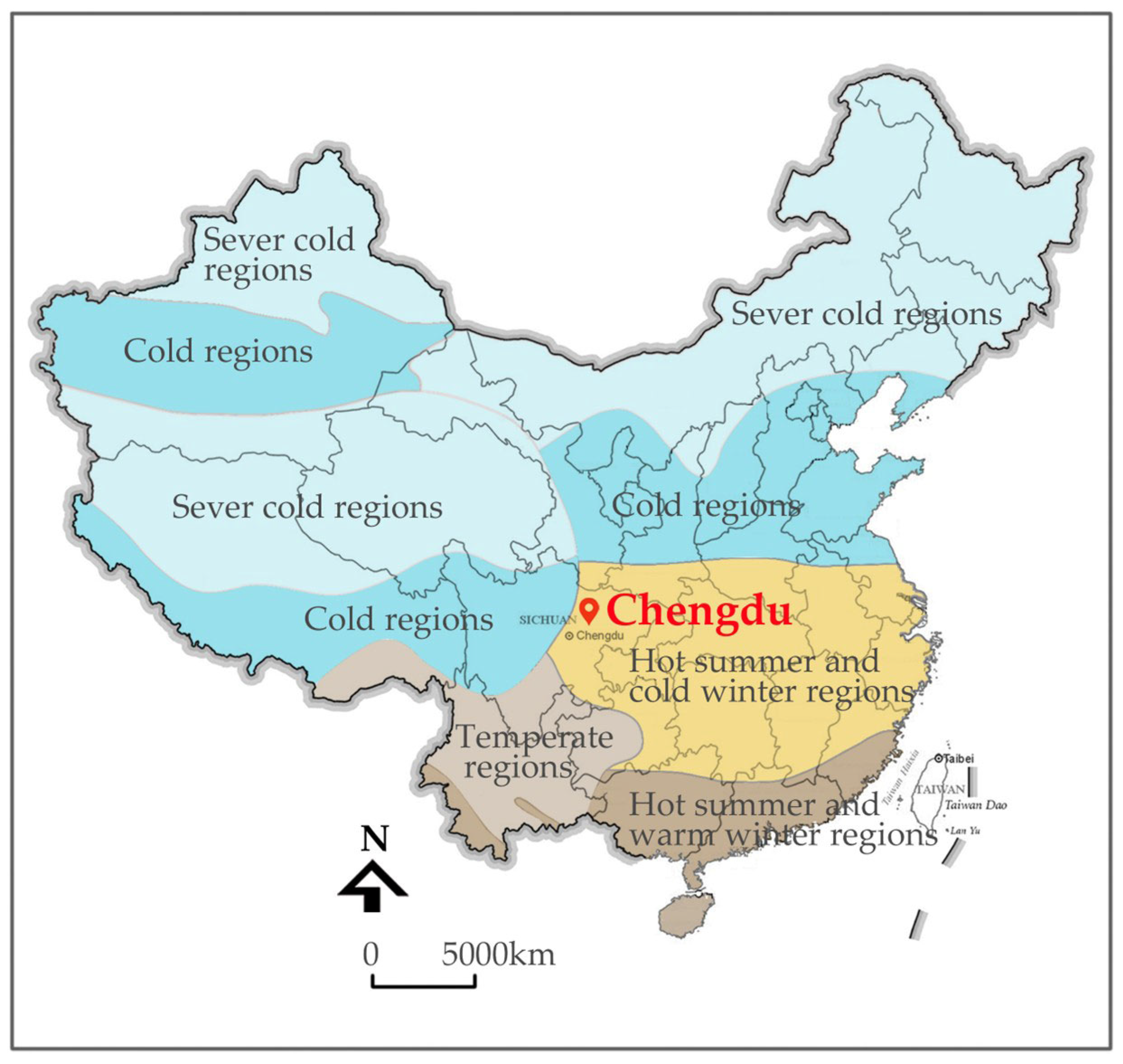
According to the Chinese national standard Design Standard for Thermal Engineering of Civil Buildings (GB 50176-2016), China is classified into five major climate regions [38]. Among them, the hot summer and cold winter (HSCW) is located in the middle and lower reaches of the Yangtze River, covering an area of approximately 1.8 million square kilometers and housing around 550 million residents, accounting for 48% of the national GDP. The average temperature in the coldest month of the HSCW regions ranges from 0 °C to 10 °C, and in the absence of heating, the indoor average temperature is typically below 12 °C [39].
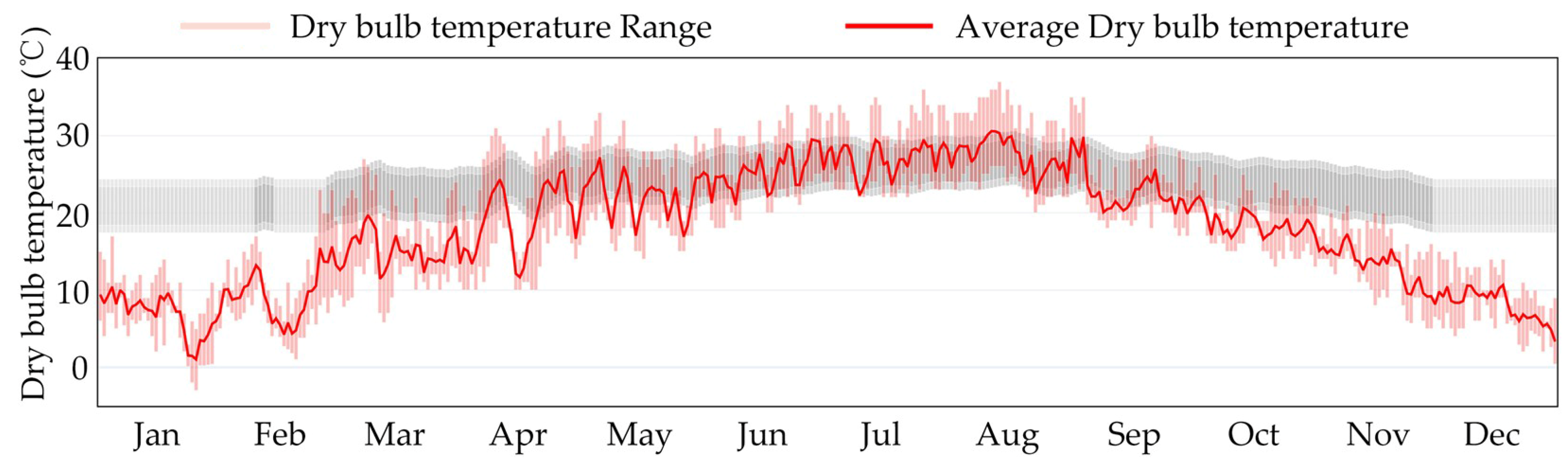
Chengdu, located in the southwestern province of Sichuan, is a typical representative city of the HSCW regions (Figure 1). The temperature data from Chengdu’s meteorological station (2009–2023) are shown in Figure 2. December and January are the coldest months, with outdoor average temperatures around 0–11 °C and relative humidity ranging from 40% to 95%.
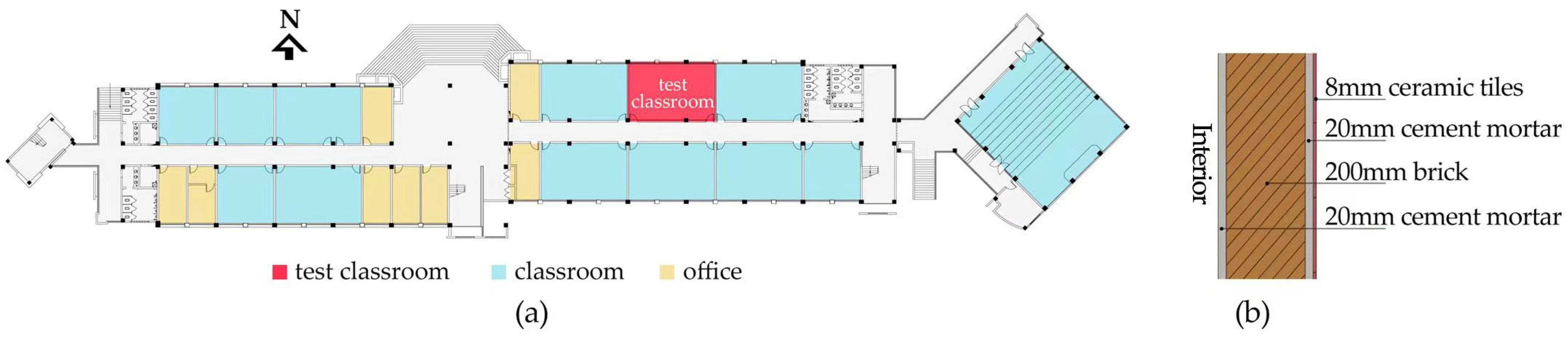
Field research was conducted at Chengdu University in Chengdu, China. The investigated classroom is located in a typical teaching building constructed around 2000. As shown in Figure 3a, most classrooms on the campus are arranged in a north–south orientation to ensure adequate daylighting. Considering that north-facing classrooms receive less solar radiation during winter and may therefore experience more severe cold discomfort, a north-oriented classroom was selected for detailed investigation.
The selected classroom has a floor area of approximately 84 m2 (7.5 m × 11.25 m), which represents one of the common classroom sizes used for undergraduate teaching. Split air-conditioning units are installed in each classroom, typically positioned near the window corners at the front and rear of the room. This decentralized split AC configuration is widely used in university buildings in the HSCW regions, where centralized heating systems are generally not available. The windows adopt PVC frames with single glazing, which is also a common window type in educational buildings in the HSCW regions. In addition, the classroom is located on a middle floor of the building, which helps avoid the potential thermal influence of roof heat transfer or ground heat exchange. The classroom size, layout, and HVAC configuration are consistent with many teaching spaces in the same campus buildings.
The building adopts a reinforced concrete frame structure with brick infill walls. The external wall consists of a 200 mm perforated brick layer, covered with 20 mm cement mortar on both sides, and finished with ceramic tiles on the exterior surface, as illustrated in Figure 3b. For existing public buildings constructed before the implementation of the building energy efficiency standard GB50189-2015, external walls typically do not include insulation layers due to relatively low thermal comfort requirements and cost considerations [40]. Consequently, campus buildings constructed during this period in the HSCW regions generally lack additional thermal insulation in the external envelope. Therefore, the investigated classroom can be regarded as representative of many university classrooms constructed during the same period in the HSCW regions.

2.2. Methods

2.2.1. Research Framework

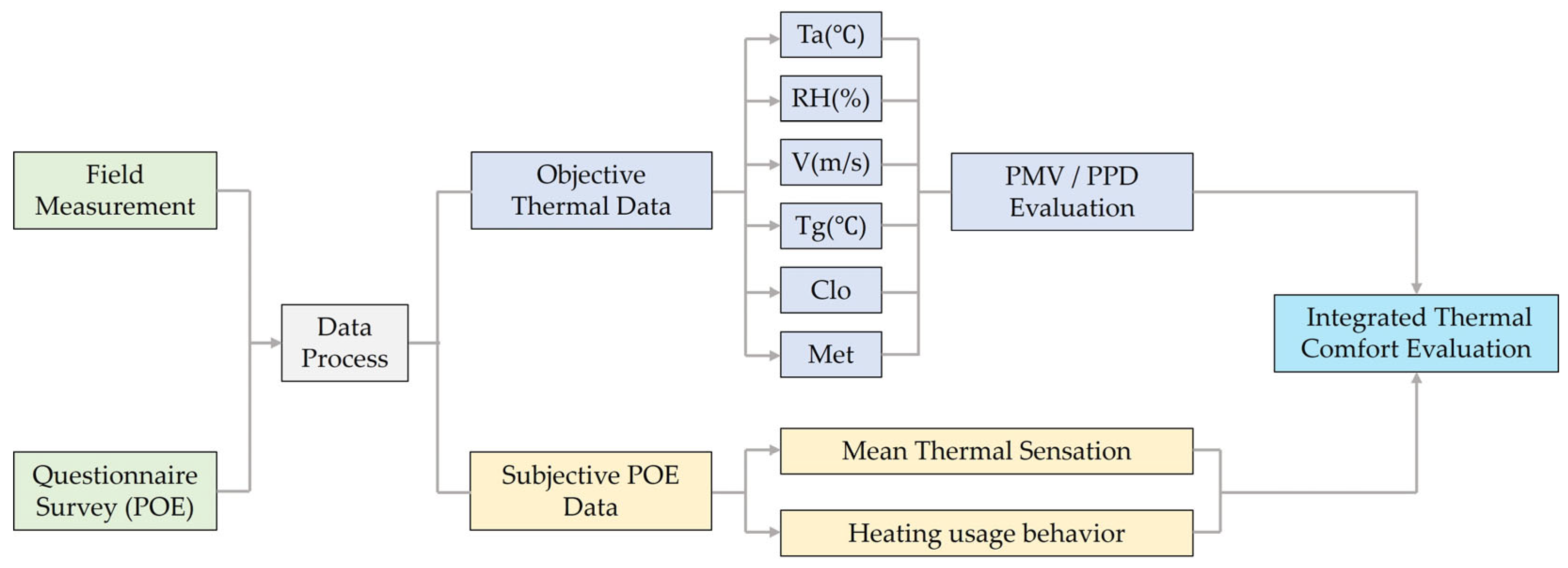
This study constructs a framework (Figure 4) that integrates Post-Occupancy Evaluation (POE) with field measurements to assess thermal comfort of university classrooms during winter under different heating conditions. The collected data are uniformly processed and analyzed from both objective and subjective perspectives.
In the subjective evaluation pathway, the POE questionnaire gathers students’ long-term thermal sensation assessments and their air-conditioning usage behaviors under the no-heating condition in winter. In this study, the no-heating (NH) condition refers to the indoor state without mechanical heating (i.e., air-conditioning turned off). Statistical analyses are then conducted on the POE responses and behavioral data to characterize occupants’ overall perceptions and heating usage strategies.
In the objective evaluation pathway, field measurements are conducted to obtain temperature (Ta), relative humidity (RH), wind speed (v), and globe temperature (Tg). These measurements, combined with clothing thermal resistance (clo) and metabolic rate (met), are used to calculate the Predicted Mean Vote (PMV) and the Percentage of Dissatisfied (PPD) to characterize the indoor thermal environment under no-heating (NH) and heating at 20 °C and 25 °C. The clothing thermal insulation (clo) was determined based on questionnaire responses, while the metabolic rate was assumed to be 1.0 met, corresponding to a typical sedentary activity level (i.e., sitting and listening) in classroom settings.
Ultimately, an overall evaluation of winter thermal comfort in classrooms under different operating conditions was conducted to characterize the relationship between physical environmental characteristics and occupants’ perceptions.

2.2.2. Questionnaire Post-Occupancy Evaluation (POE)

POE has been widely applied in commercial buildings, office buildings and educational facilities. It is regarded as one of the most practical approaches for characterizing the dynamic and acceptable comfort range between occupants and the built environment [41,42]. In this study, the questionnaire was distributed to undergraduate students from first to fourth year at Chengdu University.
December and January are the coldest months of the year; therefore, both the questionnaire and measurements are conducted during this period. The POE survey (17–19 December) is scheduled prior to the field measurements, using online questionnaires. Respondents are randomly selected and only asked for basic information and interview content related to the classroom thermal environments, without delving into personal privacy. The research process complies with academic ethical standards.
The questionnaire includes the following components: (1) collection of metadata, including age and gender; (2) behavioral and activity characteristics, including clothing, activity status, and preferred air conditioning setpoint; (3) thermal comfort perception, including subjective thermal sensation voting.

2.2.3. Field Measurement

The field measurements (21–28 December) were conducted during the exam month, when classroom occupancy was relatively low. The classroom remained unoccupied with no personnel entering or leaving during the monitoring periods, ensuring that the collected data were not influenced by occupants. Students preferred a setpoint of around 25 °C, according to POE, whereas the university recommended a uniform setpoint of 20 °C. To compare the differences, field measurements were conducted in the same classroom under three conditions: no heating (NH) on 23 December, heating at 20 °C on 24 December, and heating at 25 °C on 28 December. To ensure consistent boundary conditions across all experimental scenarios, doors and windows were kept closed in all cases, including the NH condition. This arrangement was adopted because the air-conditioning experiments required a closed indoor environment. Therefore, the indoor conditions under the no-heating scenario were measured under the same enclosure conditions as the heated cases.
Moreover, it should be noted that the primary objective of this study is to compare the indoor thermal environment under different heating setpoints. Therefore, the comparison between the 20 °C and 25 °C scenarios is emphasized, while the NH condition is used as a baseline reference to represent the free-running indoor environment in winter rather than for strict quantitative comparison. Although variations in outdoor temperature and relative humidity existed during the monitoring period, the outdoor air temperature on 24 and 28 December was relatively comparable. Under heating conditions, indoor thermal comfort is predominantly influenced by air temperature; thus, the comparison between the two heated scenarios remains meaningful. Despite the unavoidable variations in outdoor conditions, the analysis focuses on relative differences between heating setpoints rather than absolute comparisons across all scenarios.
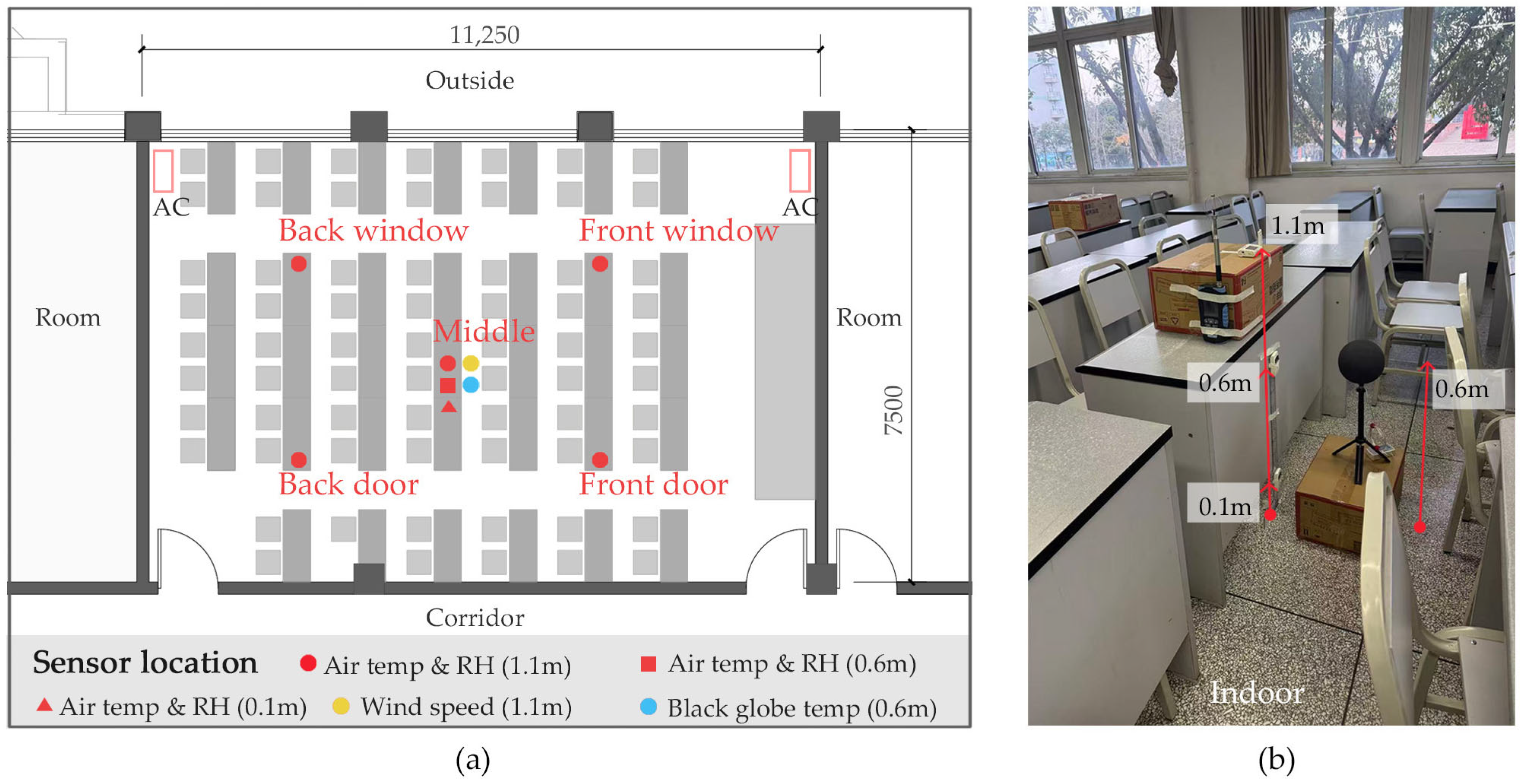
All instruments were calibrated before the measurements to minimize systematic errors, and the instrument performance parameters are detailed in Table 1. The measurement points and photographs of the on-site are shown in Figure 5a and Figure 5b, respectively. Five points were: front door, front window, middle, back door, and back window, each equipped with a temperature and humidity data logger. The average value of these five loggers was used to represent the indoor environmental conditions. In addition, a globe thermometer and an air velocity sensor were installed at the “middle” point.
According to ASHRAE 55-2023 [43], the temperature–humidity sensors and the air velocity sensor were installed at a height of 1.1 m, while the globe thermometer was positioned at 0.6 m. To examine vertical thermal stratification, additional temperature–humidity sensors were installed at heights of 0.1 m and 0.6 m at the “middle” point, corresponding to the ankle and abdomen levels of a seated occupant, respectively, while the sensor at 1.1 m represented the head level. All instruments recorded data at 10 min intervals from 8:30 to 17:30 and were placed in position 30 min prior to the start of measurements to enhance data reliability.

3. Results

3.1. Summary and Analysis of the POE Survey Results

The POE survey yielded a total of 404 responses were collected, of which 330 were valid. The gender distribution was balanced (53.6% male and 46.4% female), and respondents were mainly aged between 17 and 24, providing a representative sample.
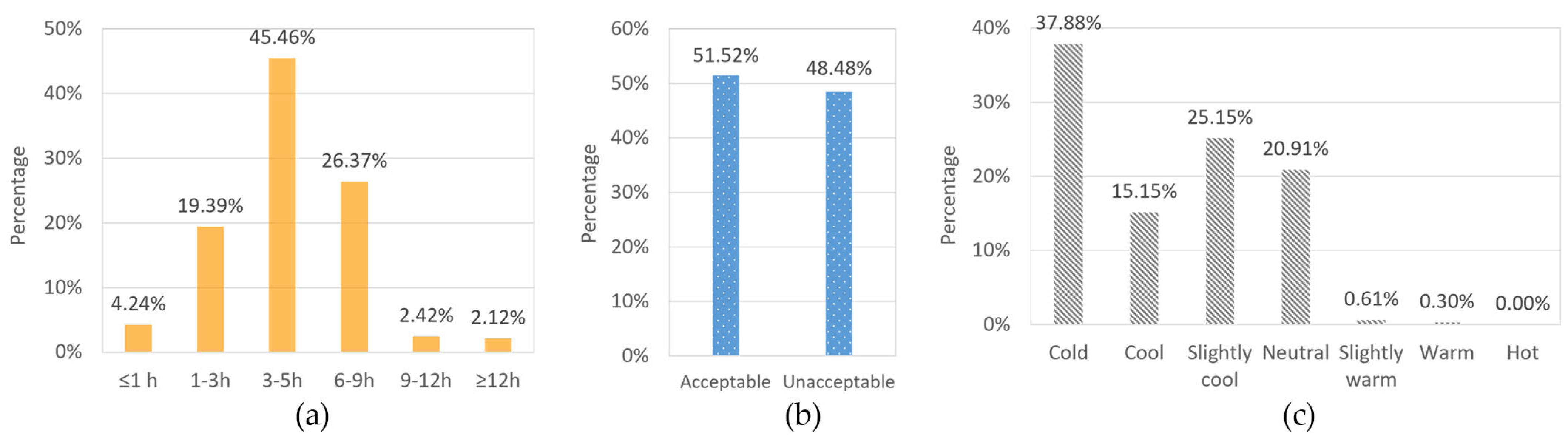
The thermal perception and acceptability of classrooms are shown in Figure 6a: 45.45% of students spend 3–6 h per day in classrooms, while 26.36% report occupancy durations of 6–9 h, demonstrating that classrooms are frequently used and functionally important spaces for students. When asked about the thermal environment under NH conditions, 51.5% of respondents chose “unacceptable”, as shown in Figure 6b. Occupants’ thermal sensations based on ISO 7730-2025 [44] are characterized in Table 2, while the thermal sensation scale was expressed using PMV intervals rather than discrete values, where each category represents a range of thermal perception (Table 3). Based on the distribution of subjective thermal sensation votes presented by Figure 6c, the mean value was calculated to be −1.679, indicating that the environment is cool without heating.
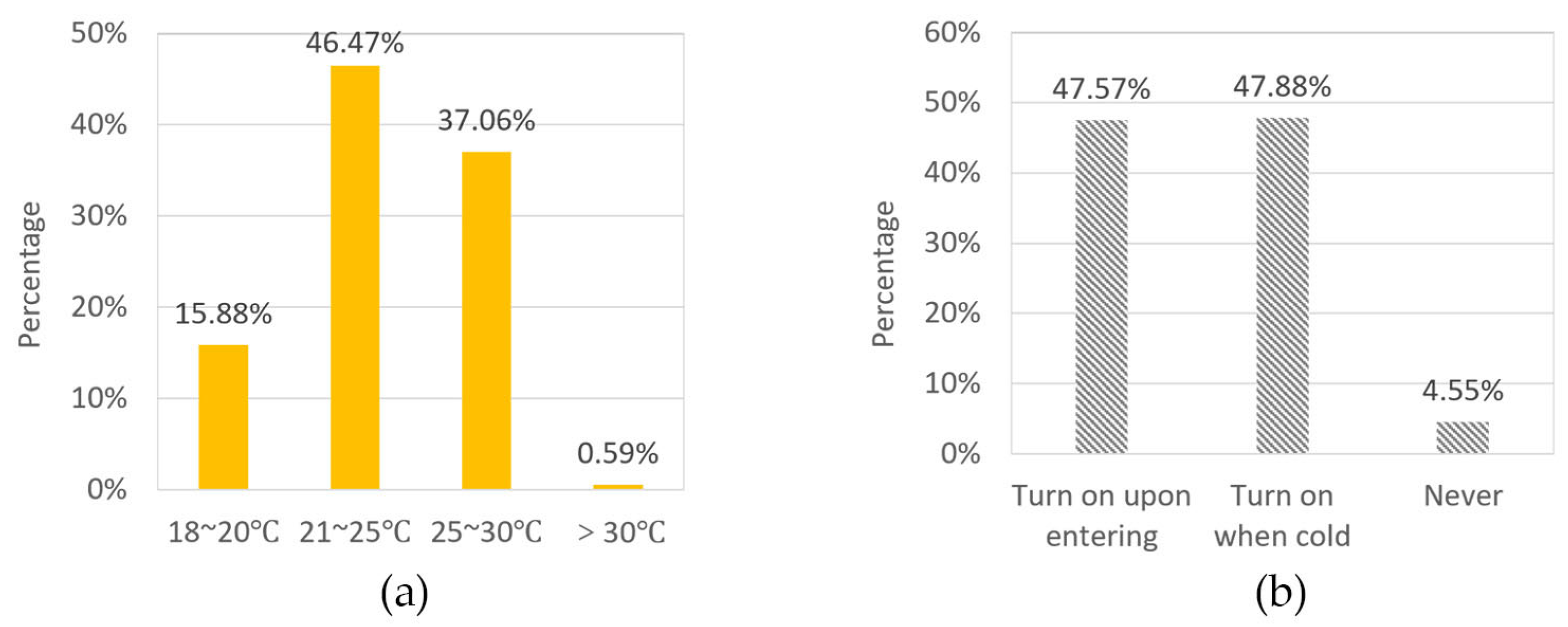
Preferences for air-conditioning setpoints are illustrated in Figure 7a. Approximately 46.5% of respondents preferred 21–25 °C, followed by 37.1% favoring 25–30 °C, indicating that temperatures around 25 °C constitute the dominant preference range. Concerning activation triggers, illustrated in Figure 7b, 47.57% of students reported turning on the air conditioner only after experiencing thermal discomfort due to cold, while 47.88% activated the system immediately upon entering the classroom; only 4.55% reported never using air conditioning. These results suggest that most students initiate heating reactively rather than proactively, indicating limited awareness of pre-heating strategies.
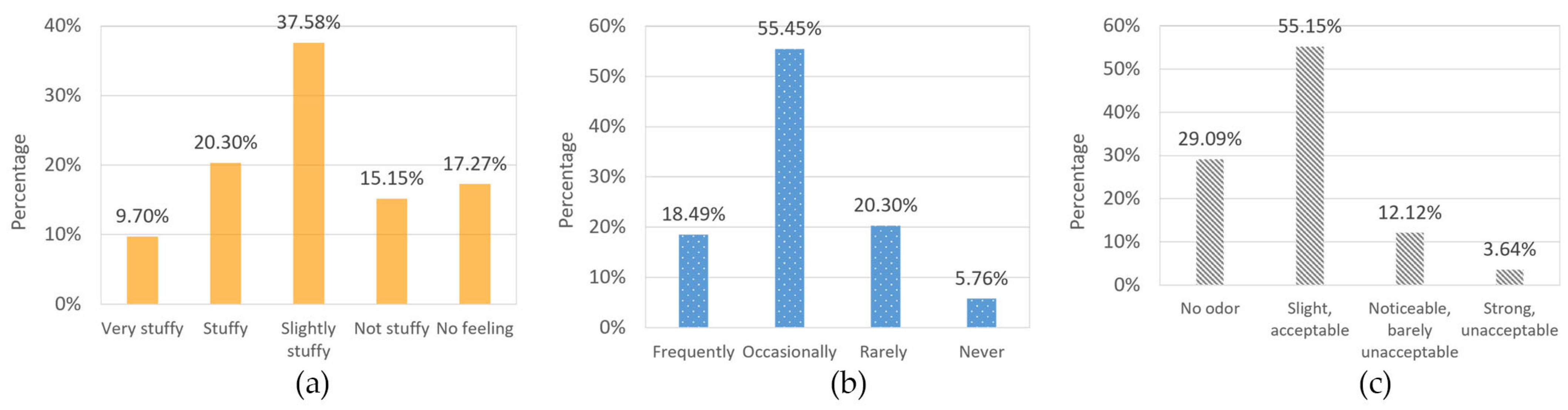
Students’ perceptions of stuffiness, window-opening behavior, and odor conditions are shown in Figure 8. The results indicate that 37.58% of students perceived the classroom as “slightly stuffy,” while the combined proportion reporting “stuffy” or “very stuffy” conditions reached 30.00%. Regarding ventilation behavior, 55.45% reported that windows were opened only “occasionally” during winter, whereas 18.48% indicated frequent window opening. In terms of odor perception, 55.15% of students reported the presence of a “slight but acceptable odor,” while 29.09% perceived no noticeable odor.
According to ASHRAE Standard 55-2023 [43], Section 5.2.2.2, clothing insulation can be calculated by summing the thermal insulation values of individual clothing layers from the inside out. The insulation values of common single clothing items are listed in Table 4, all of which are derived from ASHRAE 55-2023 [43] and ISO 7730-2025 [44]. Based on the clothing selected by the subjects, the average clothing insulation is 1.38 clo (Table 5), with a standard deviation of 0.13 clo. Clothing insulation is expressed in clo units (1 clo = 0.155 m2·K/W). This result reflects that, in the HSCW region without centralized heating, students typically wear thick clothing indoors.
As most of the respondents were in a seated posture, the insulation contribution of the seating needed to be added. The seating types and insulation values are listed in Table 6. 0.01 clo was added because the classroom was equipped with wooden chairs. As a result, the average winter clothing insulation was 1.39 clo, which will be used in the PMV calculations.
Overall, the POE clearly reveals the behavioral and perceptual characteristics of students in winter classrooms, which can be summarized as “feeling cold—raising the set temperature—adapting with thick clothing.” This provides a clear basis for selecting three typical conditions for the subsequent measurement phase: no-heating, heating at 20 °C (the university standard), and heating at 25 °C (the students’ preference), achieving a logical connection between subjective evaluations and objective measurements.

3.2. Analysis of Field Measurement Results

3.2.1. Analysis of Outdoor Thermal Environment

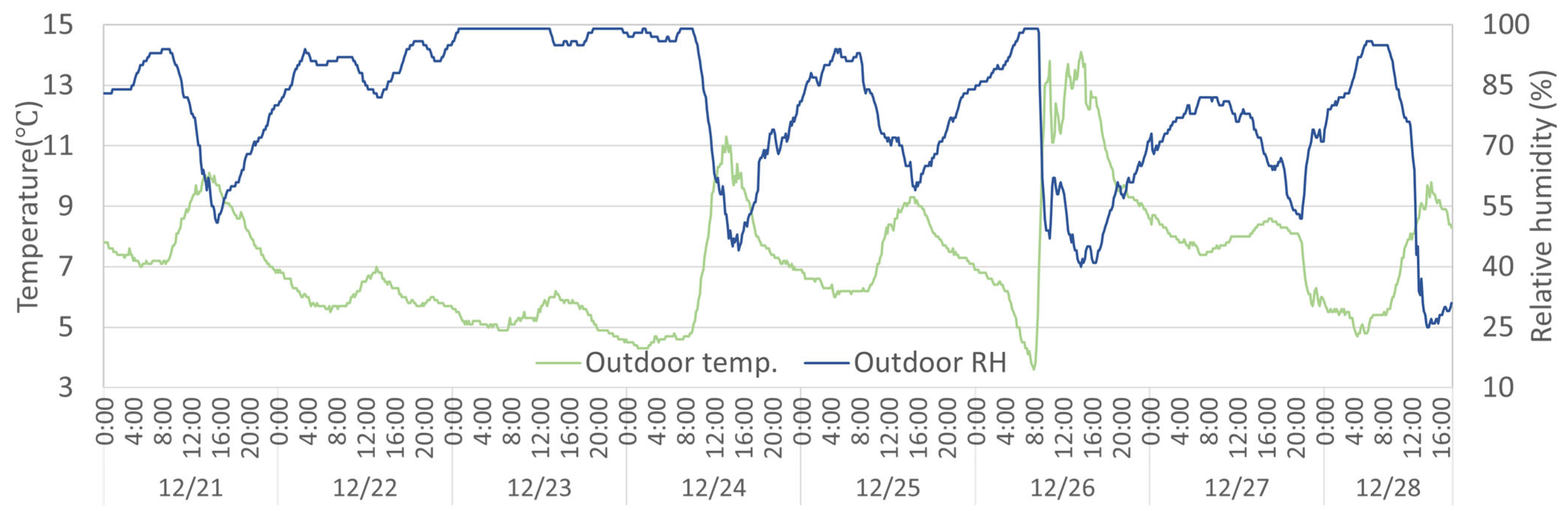
Continuous outdoor monitoring was conducted from 21 to 28 December 2024, and the collected data are shown in Figure 9 and Table 7. For most of the time, outdoor temperature ranged from 5 to 11 °C and relative humidity exhibited pronounced diurnal variation, remaining within a range of 40–100%. Overall, the outdoor environment was characterized by low temperatures and high humidity, which are representative of winter conditions in Chengdu. A distinct cold and damp sensation was observed in the morning and evening.

3.2.2. Analysis of Indoor Thermal Environment

(1)
Indoor thermal environment under no-heating condition
According to GB/T 18883-2022 [45], the recommended thermal comfort range is 16–24 °C with relative humidity of 30–60%, while GB 50736-2012 [46] specifies the temperature between 18 and 24 °C in civil buildings with long-term occupancy. Therefore, the comfortable range is defined as 18–24 °C for air temperature and 30–60% for relative humidity.
The indoor and outdoor measured data from 8:30 to 17:30 are shown in Table 8. Without air conditioning, indoor temperature stabilized between 12 and 13 °C, which is below the thermal comfort requirement of 18 °C, while the relative humidity was 53–54%, placing it within a relatively comfortable range. Both temperature and humidity exhibited minimal fluctuation, with a daily temperature variation in less than 1 °C, indicating a thermally stable but persistently cold environment in the absence of mechanical heating.
The indoor temperature was about 7 °C higher than outdoors’, suggesting that the building envelope has some insulation performance. Doors and windows remained closed all the time; even when the outdoor relative humidity approached 100%, indoor humidity remained stable and significantly lower than outdoor levels, reflecting good airtightness of the envelope. However, it also indicates insufficient ventilation and air exchange, which aligns with student feedback in the questionnaire regarding feelings of “stuffiness” or “unpleasant odors”.
(2)
Comparison of average indoor temperature and humidity under three operating conditions
As the classroom was temporarily occupied by students after 16:00 on 24 December, which affected the experimental conditions, all data presented below are from 8:30 to 16:00.
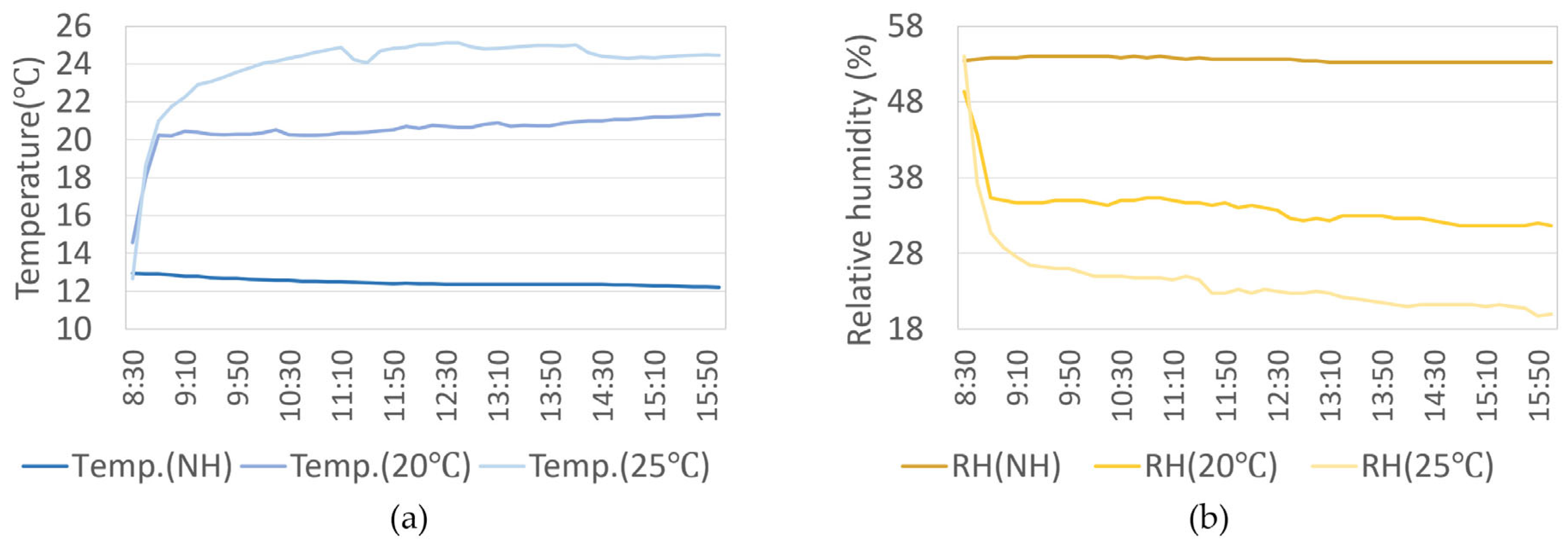
There are pronounced differences among three conditions (Figure 10). Compared with no-heating condition, heating conditions substantially increased indoor temperature, accompanied by varying degrees of relative humidity reduction, with temperature rising rapidly and humidity dropping within the first 30 min, representing the period of most significant thermal and hygric variation.
Under heating at 20 °C, temperature reached the set point around 9:00 and stabilized between 20 and 21 °C, with relative humidity remaining stable at 30–35%. At the heating setpoint of 25 °C, the temperature reached and maintained a range of 24–25 °C around 10:00, with relative humidity further decreasing and stabilizing at 20–25%, presenting a “warm but somewhat dry” characteristic.
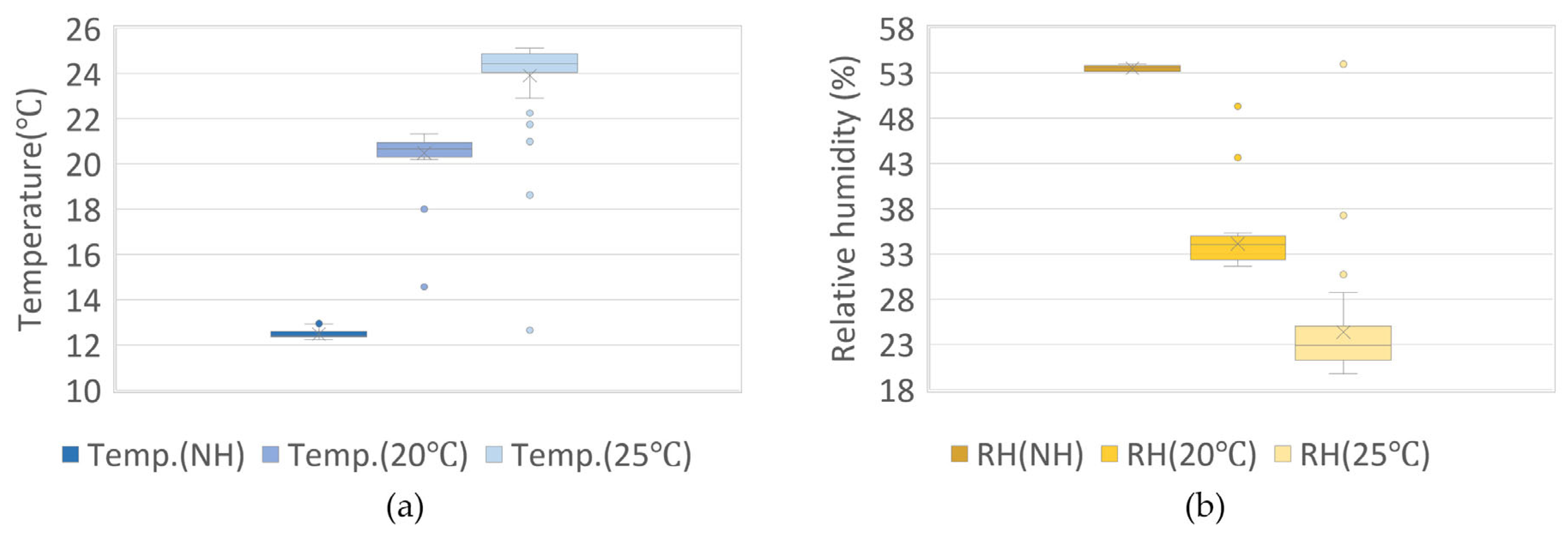
The boxplot (Figure 11) further confirms these patterns. No-heating condition has the lowest temperature and the highest humidity, with concentrated distribution. At the heating setpoint of 20 °C, the box was compact, indicating stable room temperature. Combining this with Figure 10, it can be seen that some individual low outliers (around 14–18 °C) occurred during the first half hour of early heating stage. Regarding the heating setpoint of 25 °C, outliers (e.g., 12 °C, 18 °C, 22 °C) also came from 8:30 to 9:00, indicating larger fluctuations during the warm-up phase.
(3)
Vertical temperature and humidity distribution characteristics under heating conditions
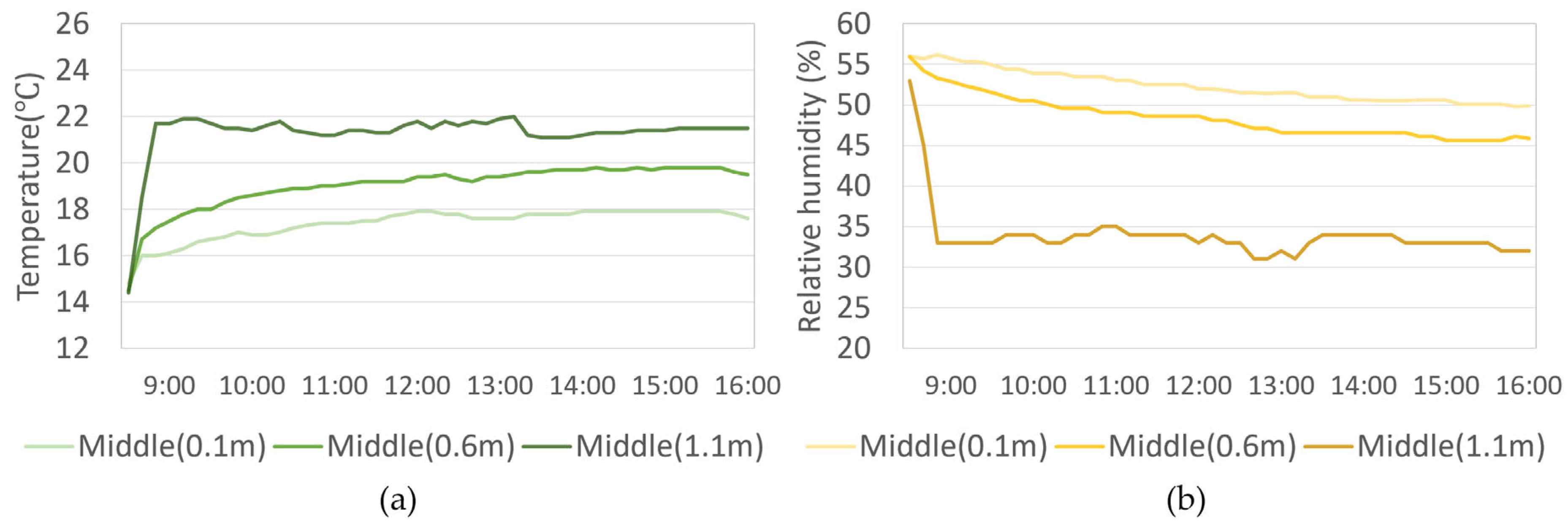
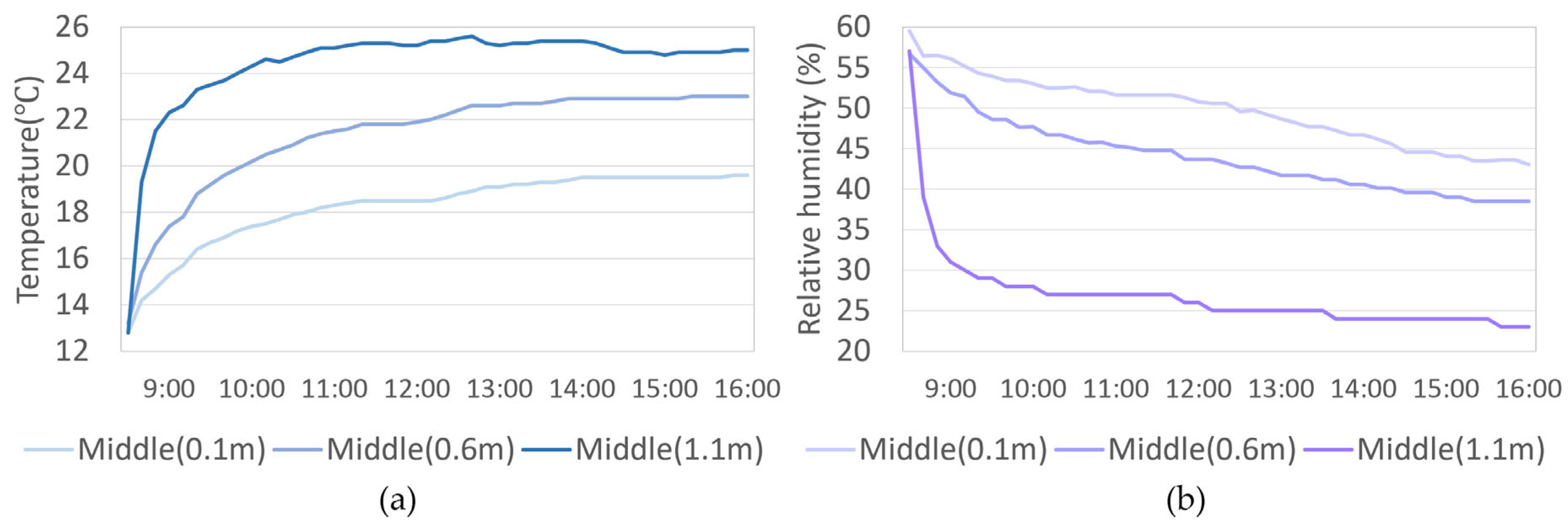
Three heights in the middle (0.1 m, 0.6 m, 1.1 m) exhibited clear vertical stratification characteristics. After thermal stabilization under 20 °C heating condition (Figure 12), the highest temperature occurred at 1.1 m (approximately 21–22 °C), followed by 0.6 m, while the lowest at 0.1 m (approximately 16–18 °C). Relative humidity exhibited an opposite vertical gradient, increasing from top to bottom, with the maximum difference reaching 15%. Under 25 °C heating condition (Figure 13), the overall temperature level was higher, and the stratification was more pronounced, with 24–25 °C at 1.1 m, while at 0.1 m remained at 19–20 °C. The maximum humidity difference between 3 points was up to 20%. These results indicate that higher heating setpoints tend to intensify thermal stratification and drying effects, leading to more pronounced vertical microclimatic differences.

3.2.3. Analysis of PMV–PPD

(1)
Comparison of PMV–PPD under three conditions
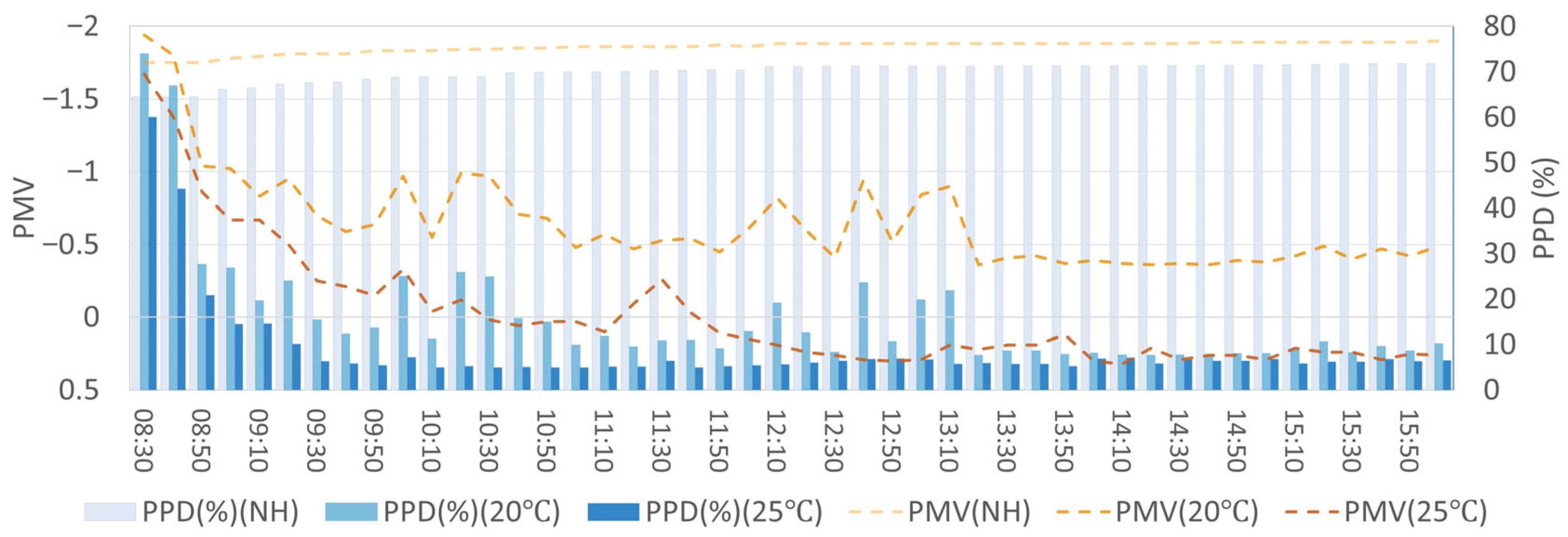
The variations in PMV and PPD are illustrated in Figure 14.
PMV remained close to −2 throughout the day under no-heating condition, corresponding to “cool” sensation, with PPD of approximately 70%, indicating that the majority of occupants would be dissatisfied. This result aligns with the findings from the POE questionnaire (MV = −1.679), confirming the inadequacy of winter thermal conditions.
Under 20 °C heating condition, PMV rapidly increased from nearly −2 to about −1 within half an hour, reflecting a clear improvement in thermal environment. From 9:00 to 13:00, PMV mainly ranged between −1 and −0.5, and after 13:00, it generally maintained −0.5 and 0. PPD mostly remained 10–25% after 9:00. Overall, there was a significant improvement compared to no-heating condition, with most of the time after 13:00 falling within the thermal comfort range, but occupants were still likely to experience slight cold discomfort during the morning period.
Under 25 °C heating condition, PMV entered the −1 to −0.5 range within 30 min and stabilized between −0.5 and +0.5 after 9:30, indicating thermally neutral conditions. The PPD remained at 5–7% after the temperature stabilized, making it the most favorable condition among three conditions. In summary, increasing the heating setpoint temperature not only improves the overall thermal comfort but also saves the time to reach a comfortable condition.
(2)
Hourly PMV characteristics: comparison between 20 °C and 25 °C setpoints
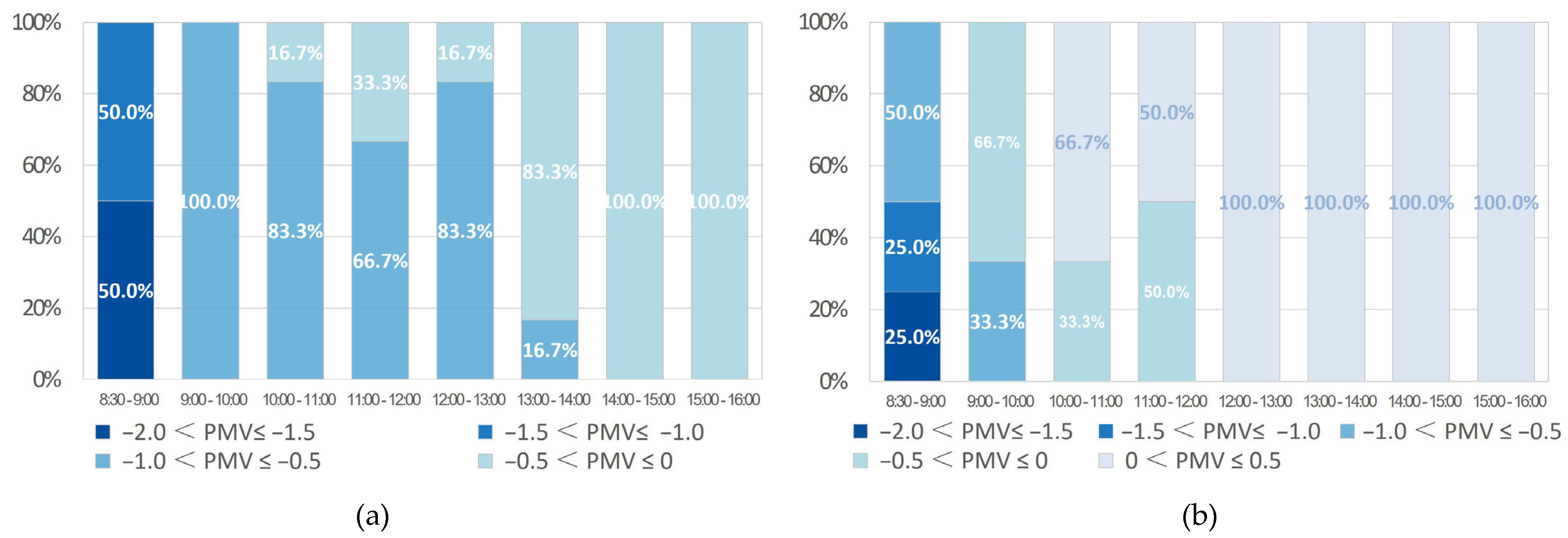
From the hourly analysis of PMV (Figure 15), under 20 °C heating condition, PMV gradually improved over time, but during the morning class period, it often remained in the “slightly cool” range, only approaching an acceptable thermal comfort level after 13:00, indicating poor stability. In contrast, the 25 °C heating condition transitioned from “cool” to “neutral” within one hour and remained consistently within the comfortable range thereafter.
Overall, a heating setpoint of 20 °C can improve the thermal environment but struggles to meet occupants’ thermal comfort requirements shortly after the initial period of class. By comparison, a 25 °C setpoint is more conducive to quickly establishing and maintaining thermal comfort. Moreover, the measured results highlight the importance of “preheating,” as preheating can effectively enhance the thermal comfort at the beginning of class sessions.

4. Discussion

4.1. Mismatch Between Institutional Heating Setpoints and Students’ Thermal Comfort Needs

Under no-heating conditions, the measured temperatures in the classroom at Chengdu University were only between 12 and 13 °C. According to several existing winter research reports on university buildings, this value is significantly lower than the temperature required for thermal comfort in classrooms. Field surveys conducted in multiple classrooms at universities in Nanjing found that when the indoor thermal comfort acceptance rate reached 80%, the temperature range was between 17.3 and 23.2 °C [11]; similarly, a study conducted in a university in Xi’an, the corresponding temperatures for the same acceptance rate were between 21.3 and 25.4 °C [31]. In addition, thermal neutrality temperatures have been shown to be influenced by gender: a study in Xiangtan universities indicated that temperature ranges of 17.3–22.0 °C and 18.5–20.8 °C corresponded to thermal balance and optimal comfort conditions for male and female occupants, respectively [47]. Moreover, thermal comfort temperatures vary across different classroom types, with large stepped classrooms (BT) and small general classrooms (SG) exhibiting comfort ranges of 18.97–22.88 °C and 19.33–24.97 °C, respectively [48]. These studies indicate that the measured temperatures in classrooms without heating are insufficient to meet thermal comfort needs. The results of POE questionnaire and the PMV values also point to this conclusion. Therefore, mechanical heating should be regarded as a necessary rather than auxiliary measure for improving thermal comfort in winter classrooms.
Additionally, although a 20 °C setting significantly improves the thermal environment compared to the no-heating condition, the PMV in the morning is mostly concentrated in the range of −1 to −0.5, only gradually approaching neutrality in the afternoon. This suggests that the 20 °C setting, as the university’s heating standard, fails to achieve thermal neutrality or thermal comfort during the main classroom occupancy periods. Conversely, the 25 °C setting keeps the PMV stable in the range of 0 to +0.5 over half of the measurement period, with the PPD maintaining an extremely low level of 5–7%, achieving nearly ideal comfort at this temperature setpoint.
However, vertical microclimate measurements under heating conditions reveal a pronounced thermal stratification within the classroom. The temperature difference between ankle level (0.1 m) and head level (1.1 m) reached approximately 4–5 °C under the 20 °C condition and further increased to 5–7 °C under the 25 °C condition. These values exceed the recommended limit of 3 °C for vertical air temperature difference between head and ankle levels specified in ISO 7730 (2025) Category A and ASHRAE 55 (2023). Such excessive vertical temperature gradients may lead to local thermal discomfort, even when the overall thermal environment is evaluated as acceptable [43,44].
Recent studies in office buildings have also demonstrated that, even when the average PMV values are similar, spaces with smaller vertical temperature differences tend to remain within the comfort range for longer durations, highlighting the importance of vertical thermal uniformity in occupant comfort evaluation [49]. This observation suggests that although PMV provides a reliable indicator of overall thermal conditions, assessing vertical stratification is essential for capturing potential local discomfort.
In conclusion, the current air conditioning setpoint (20 °C) implemented by the school is more oriented towards energy conservation and management uniformity, while students’ comfort needs—affected by prolonged sedentary learning behaviors and winter climate characteristics—often require higher heating temperatures.
Although the results indicate that a setpoint of 25 °C provides more favorable thermal comfort conditions, the potential energy implications of increasing the setpoint should not be overlooked. Previous studies have shown that different thermostat setpoint control strategies can lead to significant variations in energy consumption [50], and reducing setpoint temperature is considered one of the most effective energy-saving measures in buildings [51]. It has also been reported that optimizing setpoints can reduce heating energy use by approximately 5.2% while maintaining acceptable comfort levels [52]. Therefore, continuously maintaining a higher setpoint such as 25 °C may result in a substantial increase in heating energy consumption.
From a practical perspective, this finding suggests that maintaining a high setpoint throughout the entire day may not be an energy-efficient strategy. Instead, more flexible operation strategies—such as pre-heating before occupancy or temporarily increasing the setpoint during occupied periods—may help achieve acceptable thermal comfort while limiting additional energy use. Such approaches provide a more balanced solution between thermal comfort requirements and energy efficiency goals in university classrooms located in the HSCW region.
Similar results have been validated in recent studies: adaptive thermal comfort models have been shown to improve both thermal comfort satisfaction and energy performance in real building operations, indicating that strategies integrating user behavior and dynamic environmental conditions outperform rigid, one-size-fits-all standards [53]. Moreover, field studies on public buildings indicate that air conditioning settings based on adaptive thermal comfort principles offer potential for energy savings while meeting thermal comfort needs, reflecting that fixed temperature settings are not the optimal strategy [54]. These findings further support the need for flexible and adaptive heating strategies rather than fixed temperature settings.

4.2. Effects of Pre-Heating Duration and Setpoint Temperature on Early-Class Thermal Comfort

Analysis of hourly data reveals that under a setpoint of 20 °C, during the initial half-hour of air conditioning operation (8:30–9:00), 50% of the PMV values fall within the range of −2 to −1.5, while the remaining 50% are distributed between −1.5 and 1. It is only after 9:00 that all PMV values transition into the range of −1 to 0. In contrast, at a setpoint of 25 °C, only 25% of PMV values are in the −2 to −1.5 range during the same half-hour period; 25% are in the −1.5 to −1.0 range, and the remaining 50% move into the −1.0 to −0.5 range. This indicates that the indoor thermal environment can rapidly transition from “cool” to “slightly cool” within a short time, maintaining most of the time within the thermal comfort zone after 9:00.
The term “preheating duration” refers to the period between the activation of the heating system and the start of its use. Correlating this with questionnaire findings, it is evident that most students do not engage in preheating practices in winter classrooms; instead, they tend to activate the air conditioning only after experiencing discomfort (Figure 7), reflecting a passive control behavior. This behavior, predicated on immediate thermal sensation, fails to account for the heating response time, resulting in a notable mismatch with the delayed characteristics of thermal environment improvement revealed in the field measurements. The results show that under the 25 °C setpoint, the indoor thermal environment still requires approximately half an hour to approach thermal neutrality, whereas at the lower setpoint (20 °C), the early stages of the class are still in the “cool” range. Overall, the experimental results demonstrate that a 30 min pre-heating period plays a crucial role in achieving or approaching thermal neutrality.
Previous studies have suggested that, to ensure a building reaches an optimal indoor temperature prior to occupancy, pre-heating control strategies should determine the optimal lead time based on factors such as outdoor temperature and the thermal inertia of the building envelope [25]. Accordingly, a pre-heating duration of no less than 30 min is recommended to ensure that students experience a better indoor thermal environment at the beginning of class. In addition, early activation of the air-conditioning system not only shortens the initial cool period but also improves overall thermal comfort throughout the occupancy period. Furthermore, while preheating behavior is beneficial, increasing the setpoint temperature (e.g., from 20 °C to 25 °C) enables a faster and more stable transition into the thermal comfort zone, effectively meeting user needs and reducing initial discomfort.

4.3. Discrepancies and Complementarity Between Subjective POE and Objective PMV Assessments

This study reveals that the average subjective thermal sensation obtained from the POE survey (approximately −1.679) differs from the PMV calculated from the measurements (approximately −2). This discrepancy does not indicate that either method is unreliable; rather, it reflects the different roles and applicability of subjective and model-based evaluations.
In this study, PMV is used as an objective indicator to quantify the physical thermal environment under controlled experimental conditions, particularly for comparing different heating setpoints. It should be noted that PMV is not intended to predict the actual thermal sensation of occupants in this context. Instead, it provides a standardized basis for relative comparison between scenarios under similar boundary conditions.
By contrast, the POE results represent occupants’ long-term, experience-based thermal perception, which integrates thermal history, behavioral adaptation, and psychological expectations. Therefore, POE captures a broader and more realistic representation of thermal comfort in actual classroom use. Previous studies have demonstrated that subjective perception of the thermal environment is a complex process involving both physiological and psychological responses, encompassing multiple dimensions such as thermal sensation, thermal comfort, acceptability, and preference [55]. These dimensions do not directly correspond to the physical variables used in PMV-based evaluation, as they reflect different assessment objectives and applicability ranges.
The observed discrepancy between PMV and POE can be further explained by the limitations of the PMV model in such environments. As a steady-state model, PMV is based on averaged environmental and personal parameters and does not fully account for adaptive behaviors, transient conditions, or individual variability. In contrast, subjective responses inherently include these factors, making them particularly important in field studies involving real occupants. Furthermore, comparative studies in school environments have shown that subjective assessments, field measurements, and model-based predictions each have their own strengths and limitations, and should be interpreted within their respective contexts [21].
Therefore, PMV and POE should be regarded as complementary rather than interchangeable approaches. PMV provides a consistent physical reference for comparing environmental conditions, while POE reflects user-centered thermal perception. By integrating these two perspectives, this study offers both objective environmental evaluation and subjective comfort assessment, leading to a more comprehensive understanding of thermal conditions in university classrooms.

4.4. Limitations of the Study

While this study provides preliminary insights into the winter thermal environment of university classrooms, several limitations should be carefully considered. These factors may, to some extent, influence the interpretation and generalization of the findings. The main limitations are outlined below:
  • POE survey timing and lack of synchronized TSV: The subjective evaluation in this study was mainly derived from POE questionnaires, which reflect students’ overall perception of the winter classroom thermal environment over a relatively long-time scale, rather than instantaneous thermal sensation synchronized with field measurements. Although the POE results and PMV values show consistent trends in indicating cold discomfort, the absence of concurrent instantaneous thermal sensation votes (TSV) limits the ability to capture the dynamic human thermal responses to short-term environmental changes. Consequently, the study primarily reflects general thermal comfort trends rather than fine-grained transient responses, and interpretations regarding the immediate impact of temperature setpoints or pre-heating strategies should be made with caution.
  • Single continuous heating mode: A continuous heating operation mode (8:30–16:00) was adopted to ensure comparability among different temperature setpoints. However, common operation scenarios, such as class-schedule-based on/off control or intermittent heating, were not included. As a result, the observed thermal response patterns are specific to continuous operation and may not fully represent typical classroom heating behavior, limiting the direct applicability of these findings to other real-world operational strategies.
  • Single-room experiment: Field measurements were conducted in only one representative classroom within a single educational building, resulting in a relatively limited sample size. Although the selected classroom is representative in terms of spatial scale and functional use, thermal variations associated with different orientations, floor levels, and construction characteristics were not systematically analyzed. This limitation restricts the direct generalization of results to other classrooms in the HSCW regions. In particular, the combined effects of building-specific features and occupancy patterns on PMV-PPD outcomes may differ in other contexts, so the magnitude and timing of comfort improvements under different setpoints may vary.

4.5. Future Research Directions

Considering the limitations of this study, future research should further refine the methodology and expand the scope of investigation in the following aspects:
  • Future studies should incorporate real-time subjective thermal assessments synchronized with field measurements to better capture the impact of short-term environmental fluctuations on occupants’ thermal perception and to further evaluate the applicability of PMV-based models in specific climatic and usage contexts.
  • More realistic experimental designs are needed to reflect actual classroom operation, including preheating strategies and time-based or occupancy-based heating control, in order to systematically assess the balance between thermal comfort improvement and energy consumption.
  • As this study is based on a limited number of cases, future research should expand the sample size by including classrooms with different building types, orientations, and spatial characteristics, thereby improving the generalizability and robustness of the findings.
  • In addition, future work should extend the investigation to the warm season, with a focus on the combined effects of natural ventilation and air-conditioning operation on indoor thermal environments and occupant comfort.
Overall, the future expansion of research methods and sample sizes will contribute to a more complete understanding of winter thermal environments in educational buildings located in HSCW regions, supporting the development of more effective and occupant-oriented environmental control strategies.

5. Conclusions

This study examines the winter thermal environment and comfort performance of a typical university classroom in Chengdu under no-heating and different heating setpoints, based on combined field measurements and POE surveys.
  • Under no-heating (NH) conditions, classroom indoor temperatures remain stable but are consistently below thermal comfort requirements, resulting in significant cold discomfort as indicated by both POE surveys and PMV–PPD evaluations.
  • Mechanical heating significantly improves indoor thermal conditions, with the 25 °C setpoint providing a more stable and near-neutral thermal environment and lower occupant dissatisfaction compared to the 20 °C setpoint.
  • The heating system requires a response period to reach stable indoor conditions, and implementing preheating strategies can effectively improve thermal comfort at the beginning of classes.
  • Although discrepancies exist between subjective thermal perception and PMV-based evaluations, their combined application enables a more comprehensive and reliable assessment of classroom thermal comfort.

Author Contributions

Conceptualization, Q.G.; methodology, Q.G.; software, Q.G.; formal analysis, Q.G.; investigation, Q.G. and X.Y. (Xin Ye); data curation, Q.G. and X.Y. (Xin Ye); writing—original draft preparation, Q.G.; writing—review and editing, T.Z., X.Y. (Xin Ye), X.Y. (Xiaoyi Yang), and W.G.; supervision, T.Z. and W.G.; funding acquisition, X.Y. (Xin Ye). All authors have read and agreed to the published version of the manuscript.

Funding

This research was funded by Kangba Culture Research Center, a Key Research Base for Philosophy and Social Sciences in Sichuan Province, grant number KBYJ2024B0019; Modern Design and Culture Research Center, a Key Research Base for Philosophy and Social Sciences in Sichuan Province, grant number MD24E001; Chengdu University-funded Project, grant number Z3932.

Institutional Review Board Statement

Ethical review and approval were waived for this study due to its non-interventional design and the use of fully anonymous questionnaire data that did not involve any personal or sensitive information. Participants were informed about the purpose of the study, the voluntary nature of participation, and the anonymous use of their responses on the first page of the questionnaire, and proceeding with the questionnaire was regarded as providing informed consent.

Informed Consent Statement

Informed consent was obtained from all subjects involved in the study.

Data Availability Statement

The data presented in this study are available on request from the authors.

Acknowledgments

The authors used AI-assisted tools for limited language editing purposes. No AI tools were used for scientific analysis, interpretation, or generation of results. All content is the responsibility of the authors.

Conflicts of Interest

The authors declare no conflicts of interest.

References

  1. Aghamolaei, R.; Fallahpour, M. Strategies towards reducing carbon emission in university campuses: A comprehensive review of both global and local scales. J. Build. Eng. 2023, 76, 107183. [Google Scholar] [CrossRef]
  2. Braga, M.P.; Niza, I.L.; Broday, E.E. Assessment between indoor environmental quality aspects and productivity in buildings: A systematic literature review. Build. Environ. 2025, 278, 112983. [Google Scholar] [CrossRef]
  3. Zheng, Z.; Zhou, J.; Jiaqin, Z.; Yang, Y.; Xu, F.; Liu, H. Review of the building energy performance gap from simulation and building lifecycle perspectives: Magnitude, causes and solutions. Dev. Built Environ. 2024, 17, 100345. [Google Scholar] [CrossRef]
  4. Kim, Y.K.; Bande, L.; Tabet Aoul, K.A.; Altan, H. Dynamic Energy Performance Gap Analysis of a University Building: Case Studies at UAE University Campus, UAE. Sustainability 2021, 13, 120. [Google Scholar] [CrossRef]
  5. Abbas, S.K.; Capeluto, I.G. Examining the Gap Between Simulated and Actual Measured Performance of Buildings in the Context of the Israeli Green Building Standard. Buildings 2025, 15, 2320. [Google Scholar] [CrossRef]
  6. He, Q.; Han, L.; Gan, Y. Indoor thermal comfort and energy–saving opportunities in university classrooms: A field study across heating and cooling seasons. Energy Build. 2026, 355, 117005. [Google Scholar] [CrossRef]
  7. Liu, Z.-A.; Li, Y.; Hou, J.; Tian, L.; Wang, S.; Hu, W.; Zhang, L. Impact of exterior envelope thermal performance on energy demand and optimization strategies for university teaching-office buildings. Sci. Rep. 2025, 15, 15171. [Google Scholar] [CrossRef]
  8. Qu, M.; Sang, X.; Yan, X.; Huang, P.; Zhang, B.; Bai, X. A simulation study on the heating characteristics of residential buildings using intermittent heating in Hot-Summer/Cold-Winter areas of China. Appl. Therm. Eng. 2024, 241, 122360. [Google Scholar] [CrossRef]
  9. Zhao, M.; Ji, Y.; Xie, J.; Yin, P.; Liu, J. Understanding patterns of adaptive comfort behavior in university graduate research offices—A case study of a university in Beijing. Energy Build. 2024, 307, 113945. [Google Scholar] [CrossRef]
  10. Miao, S.; Gangolells, M.; Tejedor, B. Investigating students’ subjective comfort with window-airing during the cold season: Thermal sensation, humidity, air movement, and perceived air quality. Build. Environ. 2025, 278, 112988. [Google Scholar] [CrossRef]
  11. Liu, W.; He, Q.; Zeng, Z.; Jing, Z.; Han, J.; Liu, Q. Field study on thermal comfort in university classrooms during winter in Nanjing. Energy Build. 2025, 334, 115509. [Google Scholar] [CrossRef]
  12. Lamberti, G.; Salvadori, G.; Leccese, F.; Fantozzi, F.; Bluyssen, P.M. Advancement on Thermal Comfort in Educational Buildings: Current Issues and Way Forward. Sustainability 2021, 13, 10315. [Google Scholar] [CrossRef]
  13. Dam-Krogh, E.P.; Rupp, R.F.; Clausen, G.; Toftum, J. Scoping review of post occupancy evaluation of office buildings with focus on indoor environmental quality and productivity. J. Build. Eng. 2024, 86, 108911. [Google Scholar] [CrossRef]
  14. Wang, Y.; Wang, Z.; Zhang, N.; Ji, W.; Zhu, Y.; Cao, B. Field studies on thermal comfort in China over the past 30 years. Build. Environ. 2025, 269, 112449. [Google Scholar] [CrossRef]
  15. Chen, W.; Liu, N.; Chang, J.; Wang, Q.; Zhang, H.; Zhu, Y.; Bin, C. A field investigation on thermal comfort of kindergarten children in China’s hot summer and cold winter zone during winter. Indoor Environ. 2024, 1, 100064. [Google Scholar] [CrossRef]
  16. Wu, Z.; Wagner, A. Thermal comfort of students in naturally ventilated secondary schools in countryside of hot summer cold winter zone, China. Energy Build. 2024, 305, 113891. [Google Scholar] [CrossRef]
  17. Su, X.; Wang, Z.; Zhou, F.; Duanmu, L.; Zhai, Y.; Lian, Z.; Cao, B.; Zhang, Y.; Zhou, X.; Xie, J. Comfortable clothing model of occupants and thermal adaption to cold climates in China. Build. Environ. 2022, 207, 108499. [Google Scholar] [CrossRef]
  18. Song, Y.; Liu, J.; Zhang, W. Design Parameters Affecting Energy Consumption of University Educational Buildings in Hot Summer and Cold Winter Area of China. Buildings 2024, 14, 1697. [Google Scholar] [CrossRef]
  19. Li, Y.; Li, W.; Liu, X.; Jian, Y.; Arıcı, M.; Zhang, L.; Zhou, T.; Cao, Y. Adjacent heat transfer characteristics and energy efficiency optimization in university classrooms under partial-space heating by a numerical model based on field test. Sustain. Energy Technol. Assess. 2024, 63, 103666. [Google Scholar] [CrossRef]
  20. Lolli, F.; Marinello, S.; Coruzzolo, A.M.; Butturi, M.A. Post-Occupancy Evaluation’s (POE) Applications for Improving Indoor Environment Quality (IEQ). Toxics 2022, 10, 626. [Google Scholar] [CrossRef]
  21. Mustapha, T.D.; Hassan, A.S.; Nasir, M.H.A.; Khozaei, F.; Arab, Y. From perception to prediction: A comparative study of thermal comfort assessment techniques in school facilities. Energy Build. 2024, 313, 114233. [Google Scholar] [CrossRef]
  22. Du, J.; Pan, W. Gender differences in reasoning energy-saving behaviors of university students. Energy Build. 2022, 275, 112458. [Google Scholar] [CrossRef]
  23. Sun, Y.; Luo, X.; Ming, H. Analyzing the Time-Varying Thermal Perception of Students in Classrooms and Its Influencing Factors from a Case Study in Xi’an, China. Buildings 2022, 12, 75. [Google Scholar] [CrossRef]
  24. Jiang, J.; Liu, F.; Jiang, Z.; Zhang, J.; Ma, C. Experimental evaluation of short-term thermal experiences on students’ thermal comfort and cognitive performance. Build. Environ. 2025, 285, 113613. [Google Scholar] [CrossRef]
  25. Sun, S.; Wang, J.; Li, R.; Sun, Q. Estimation of preheating time for building intermittent heating subject to changes in outdoor temperature and solar radiation. Energy Build. 2024, 317, 114405. [Google Scholar] [CrossRef]
  26. Jiang, Y.; Luo, X. Optimization of university timetables considering students’ thermal sensation in classrooms. Energy Built Environ. 2025, 6, 834–846. [Google Scholar] [CrossRef]
  27. Zhang, J.; Li, P.; Ma, M. Thermal Environment and Thermal Comfort in University Classrooms during the Heating Season. Buildings 2022, 12, 912. [Google Scholar] [CrossRef]
  28. Riaz, H.; Riaz, A.; Iqbal, A.; Amina, N.; Imtiaz, S. A review on significance of thermal comfort in educational facilities. Build. Eng. 2025, 3, 2100. [Google Scholar] [CrossRef]
  29. Guevara, G.; Soriano, G.; Mino-Rodriguez, I. Thermal comfort in university classrooms: An experimental study in the tropics. Build. Environ. 2021, 187, 107430. [Google Scholar] [CrossRef]
  30. Lamberti, G.; Leccese, F.; Salvadori, G.; Contrada, F.; Kindinis, A. Investigating the effects of climate on thermal adaptation: A comparative field study in naturally ventilated university classrooms. Energy Build. 2023, 294, 113227. [Google Scholar] [CrossRef]
  31. Wang, X.; Yang, L.; Gao, S.; Zhao, S.; Zhai, Y. Thermal comfort in naturally ventilated university classrooms: A seasonal field study in Xi’an, China. Energy Build. 2021, 247, 111126. [Google Scholar] [CrossRef]
  32. Custódio, D.A.; Ghisi, E.; Rupp, R.F. Thermal comfort in university classrooms in humid subtropical climate: Field study during all seasons. Build. Environ. 2024, 258, 111644. [Google Scholar] [CrossRef]
  33. Hou, M.; Ghazali, M.A.; Wang, C.; Li, R.; Fan, J. An investigative study of thermal comfort deviations of university students. Therm. Sci. Eng. Prog. 2025, 65, 103916. [Google Scholar] [CrossRef]
  34. Xu, P.; Xu, X. Thermal comfort, energy consumption, and carbon emissions of building envelope in office buildings: A comparative study of 46 envelope materials. Build. Environ. 2025, 285, 113578. [Google Scholar] [CrossRef]
  35. Tian, C.; Ahmad, N.A.; Abd Rased, A.N.N.W.; Xiong, Y.; Li, W. Enhancing thermal comfort and energy efficiency in residential buildings using phase change materials in dual-seasonal climate zones. Results Eng. 2025, 27, 106273. [Google Scholar] [CrossRef]
  36. Cheng, R.; Zhang, N.; Zhang, W.; Sun, Y.; Yin, B.; Gao, W. Impact of Thermal Mass, Window Performance, and Window–Wall Ratio on Indoor Thermal Dynamics in Public Buildings. Buildings 2025, 15, 1757. [Google Scholar] [CrossRef]
  37. Ebuy, H.T.; Bril El Haouzi, H.; Benelmir, R.; Pannequin, R. Occupant Behavior Impact on Building Sustainability Performance: A Literature Review. Sustainability 2023, 15, 2440. [Google Scholar] [CrossRef]
  38. GB 50176-2016; Design Standard for Thermal Engineering of Civil Buildings. China Architecture & Building Press: Beijing, China, 2016.
  39. Ge, J.; Li, S.; Chen, S.; Wang, X.; Jiang, Z.; Shen, C. Energy-efficiency strategies of residential envelope in China’s Hot Summer–Cold Winter Zone based on intermittent thermal regulation behaviour. J. Build. Eng. 2021, 44, 103028. [Google Scholar] [CrossRef]
  40. Liu, C.; Ma, W.; Hao, J.; Luo, D.; Zuo, J.; Zhang, C. Energy Retrofitting Assessment of Public Building Envelopes in China’s Hot Summer and Cold Winter Climate Region. Buildings 2022, 12, 1866. [Google Scholar] [CrossRef]
  41. Zhao, J.; Abdul Aziz, F.; Deng, Y.; Ujang, N.; Xiao, Y. A Review of Comprehensive Post-Occupancy Evaluation Feedback on Occupant-Centric Thermal Comfort and Building Energy Efficiency. Buildings 2024, 14, 2892. [Google Scholar] [CrossRef]
  42. Huang, X.; Chen, G.; Zhao, C.; Peng, Y.; Guo, W. Post occupancy evaluation of indoor environmental quality of sports buildings at hot and humid climate from the perspective of exercisers. Build. Environ. 2022, 226, 109760. [Google Scholar] [CrossRef]
  43. ANSI/ASHRAE Standard 55-2023; Thermal Environmental Conditions for Human Occupancy. American Society of Heating, Refrigerating and Air-Conditioning Engineers: Atlanta, GA, USA, 2023.
  44. ISO 7730:2025; Ergonomics of the Thermal Environment—Analytical Determination and Interpretation of Thermal Comfort Using Calculation of the PMV and PPD Indices and Local Thermal Comfort Criteria. ISO: Geneva, Switzerland, 2025.
  45. GB/T 18883-2022; Indoor Air Quality Standard. State Administration of Market Supervision: Beijing, China, 2022.
  46. GB 50736-2012; Design Code for Heating Ventilation and Air Conditioning of Civil Buildings. China Mohan Huapai Art Seminar: Beijing, China, 2012.
  47. Hu, J.; He, Y.; Hao, X.; Li, N.; Su, Y.; Qu, H. Optimal temperature ranges considering gender differences in thermal comfort, work performance, and sick building syndrome: A winter field study in university classrooms. Energy Build. 2022, 254, 111554. [Google Scholar] [CrossRef]
  48. Wang, L.; Wang, Y.; Fei, F.; Yao, W.; Sun, L. Study on winter thermal environment characteristics and thermal comfort of university classrooms in cold regions of China. Energy Build. 2023, 291, 113126. [Google Scholar] [CrossRef]
  49. Go, B.; Rhee, K.-N.; Kim, J.; Hwang, T. Indoor Environment Improvement and Energy-Saving Effects of Light Shelf System with Integrated Radiant Heating and Cooling Panel. Buildings 2025, 15, 4561. [Google Scholar] [CrossRef]
  50. Bienvenido-Huertas, D. Influence of the type of thermostat on the energy saving obtained with adaptive setpoint temperatures: Analysis in the current and future scenario. Energy Build. 2021, 244, 111024. [Google Scholar] [CrossRef]
  51. Qi, X.; Zhang, Y.; Jin, Z. Building Energy Efficiency for Indoor Heating Temperature Set-Point: Mechanism and Case Study of Mid-Rise Apartment. Buildings 2023, 13, 1189. [Google Scholar] [CrossRef]
  52. Almeida, R.; Georgieva, P.; Martins, N. Heating setpoint recommendation strategy for thermal comfort and energy consumption optimization. Energy Build. 2023, 296, 113406. [Google Scholar] [CrossRef]
  53. Jeong, S.H.; Irakoze, A.; Lee, Y.-A.; Kim, K.H. Balancing Thermal Comfort and Energy Efficiency of a Public Building Through Adaptive Setpoint Temperature. Buildings 2025, 15, 4568. [Google Scholar] [CrossRef]
  54. Gallego-Maya, I.; Rubio-Bellido, C. Use of International Adaptive Thermal Comfort Models as a Strategy for Adjusting the Museum Environments of the Mudejar Pavilion, Seville. Energies 2024, 17, 5480. [Google Scholar] [CrossRef]
  55. Yang, Y.; Lyu, J.; Lian, Z.; Xie, Y.; Jiang, Y.; Lin, J.; Niu, J. Subjective information in thermal comfort evaluation methods: A critical review. Energy Build. 2024, 325, 115019. [Google Scholar] [CrossRef]
Figure 1. Dividing region for building thermal design of China.
Buildings 16 01304 g001
Figure 2. Temperature range of Chengdu.
Buildings 16 01304 g002
Figure 3. Layout of the teaching building and wall construction details: (a) Floor plan of the teaching building; (b) External wall structure of the classroom.
Buildings 16 01304 g003
Figure 4. The research ideas and data processing flow.
Buildings 16 01304 g004
Figure 5. Measurement: (a) Instruments layout; (b) Field measurement.
Buildings 16 01304 g005
Figure 6. Thermal perception and acceptability of classrooms: (a) Daily duration spent in classrooms; (b) Thermal acceptable votes; (c) Thermal sensation votes.
Buildings 16 01304 g006
Figure 7. Air-conditioning usage behavior and preferences: (a) Preferred heating setpoint; (b) Conditions triggering heating use.
Buildings 16 01304 g007
Figure 8. Perceived indoor air quality and ventilation-related behaviors: (a) Perceived stuffiness of the classroom; (b) Frequency of window-opening behavior; (c) Perceived presence of indoor odors.
Buildings 16 01304 g008
Figure 9. Outdoor temperatures and humidity.
Buildings 16 01304 g009
Figure 10. Indoor temperature and humidity among 3 conditions: (a) comparison of indoor temperature; (b) comparison of indoor relatively humidity.
Buildings 16 01304 g010
Figure 11. Box plots of temperature and humidity: (a) air temperature; (b) relatively humidity.
Buildings 16 01304 g011
Figure 12. Vertical distribution characteristics on 20 °C: (a) air temperature; (b) relatively humidity.
Buildings 16 01304 g012
Figure 13. Vertical distribution characteristics on 25 °C: (a) air temperature; (b) relatively humidity.
Buildings 16 01304 g013
Figure 14. Comparison of PMV–PPD.
Buildings 16 01304 g014
Figure 15. Hourly Comparison of PMV and PPD: (a) PMV–PPD on 20 °C; (b) PMV–PPD on 25 °C.
Buildings 16 01304 g015
Table 1. Characteristics of the sensors used in the field measurement campaign.
InstrumentMeasurement ItemAccuracyResolutionNotes
TR-74Ui-H
(T&D Corporation. Matsumoto, Japan)
Temperature
Relative humidity
±0.3 °C
±5%
0.1 °C
0.1%
Buildings 16 01304 i001
HQZY-1
(Beijing Tianjian Huayi Technology Development Co., Ltd., Beijing, China)
Globe temperature±0.5 °C0.1 °CBuildings 16 01304 i002
JT2023
(Beijing Century Jiantong Technology Co., Ltd., Beijing, China)
Air velocity0.05–2.0 m/s0.01 m/sBuildings 16 01304 i003
Table 2. 7-Point thermal sensation scale.
Thermal SensationColdCoolSlightly CoolNeutralSlightly WarmWarmHot
Scale−3−2−10+1+2+3
Table 3. Thermal sensation classification based on PMV ranges.
Thermal SensationColdCoolSlightly CoolNeutralSlightly WarmWarmHot
Scale[−3, −2.5][−2.5, −1.5][−1.5, −0.5][−0.5, 0.5][0.5, 1.5][1.5, 2.5][2.5, 3]
Table 4. Effective garment insulation [43,44].
Garment Description I c l , cloGarment Description I c l , clo
Tops Bottoms
Long underwear top0.20Normal Trousers0.25
Short-sleeved, dress shirt0.20Sweatpants0.28
Long-sleeved, dress shirt0.25Long-sleeved dress (thin)0.33
Sweater0.28Long-sleeved dress (thick)0.47
Long-sleeved (thick)0.36Footwear
Jacket0.35/0.40Ankle-length athletic socks0.02
Down jacket0.55Panty hose/stockings0.02
Bottoms Shoes0.02
Long underwear bottoms0.15Calf-length socks0.03
Straight trousers (thin)0.19Knee socks (thick)0.06
Straight trousers (thick)0.24Boots0.1
Table 5. Students’ clothing insulation statistics.
Maximum ValueMinimum ValueAverage ValueStandard Deviation
1.570.891.380.13
Table 6. Added Insulation when Sitting on a Chair [34].
Seating TypesInsulation Value
Net chair 0.00 clo
Metal chair0.00 clo
Wooden side arm chair0.00 clo
Wooden stool+0.01 clo
Standard office chair+0.01 clo
Executive chair+0.15 clo
Table 7. Outdoor thermal environment para meters statistics.
DateAir Temperature (°C)Relative Humidity (%)
MaxMinAvgSDMaxMinAvgSD
21 December 202410.16.88.11.094.051.076.912.8
22 December 20247.05.56.10.496.080.089.74.1
23 December 20246.24.55.30.499.095.098.11.5
24 December 202411.34.36.92.299.044.078.318.6
25 December 20249.36.07.41.094.059.078.910.1
26 December 202414.13.69.23.199.040.068.420.0
27 December 20248.75.77.80.782.052.072.58.1
28 December 20249.84.76.71.796.025.069.726.4
Table 8. Comparison of indoor and outdoor temperature and humidity during the measurement period (08:30–17:30).
Air Temperature (°C)Relative Humidity (%)
MaxMinAvgMaxMinAvg
Outdoor6.25.15.65999597.44
Indoor12.9412.2212.445453.253.48
Disclaimer/Publisher’s Note: The statements, opinions and data contained in all publications are solely those of the individual author(s) and contributor(s) and not of MDPI and/or the editor(s). MDPI and/or the editor(s) disclaim responsibility for any injury to people or property resulting from any ideas, methods, instructions or products referred to in the content.