Development and Validation of a Digital Maturity Gap Analysis Toolkit: Alpha and Beta Testing
 , ,
, ,
Abstract
1. Introduction
2. Background and Research Context
2.1. Context
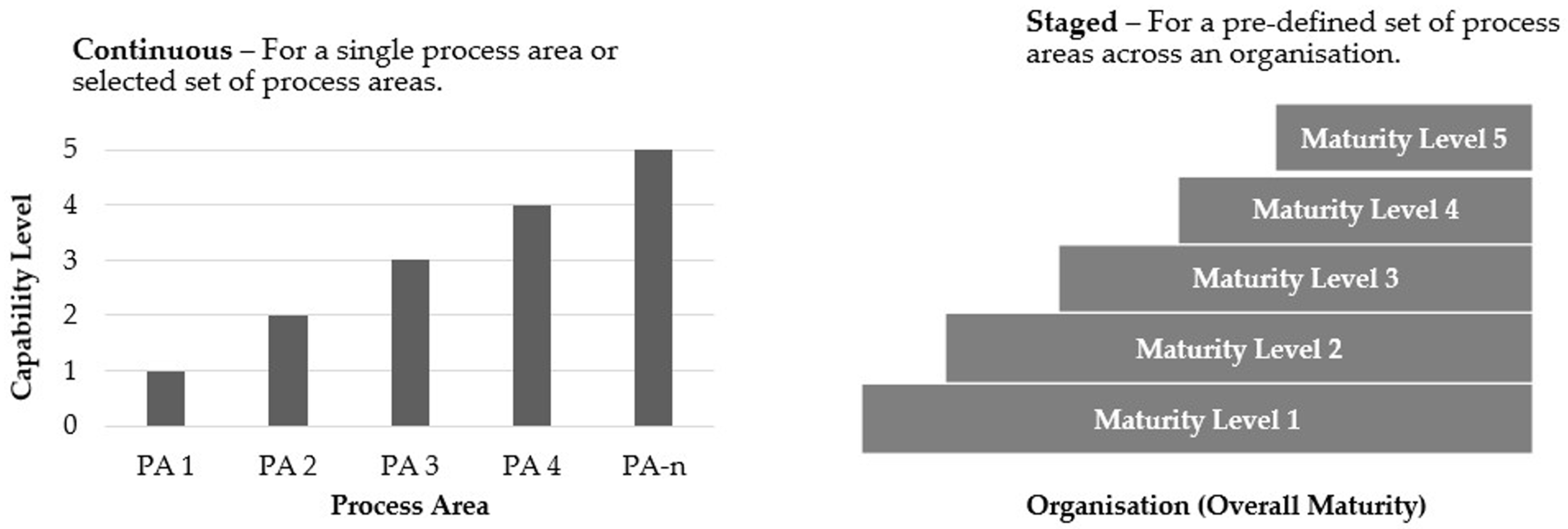
2.2. Approaches to Maturity Model Development
- Maturity levels typically range from 1 (lowest) to 5 (highest), with some models including Level 0.
- Maturity assessment areas range from 3 to 16.
- Assessment modes can involve self-assessment or external audits.
- Representation methods include numerical data, which are often visualised using radar charts in terms of percentages.
2.3. Digital Transformation and Maturity Assessment Tools
2.4. Testing Regimes in the Development of Maturity Assessment Tools
3. Methodology
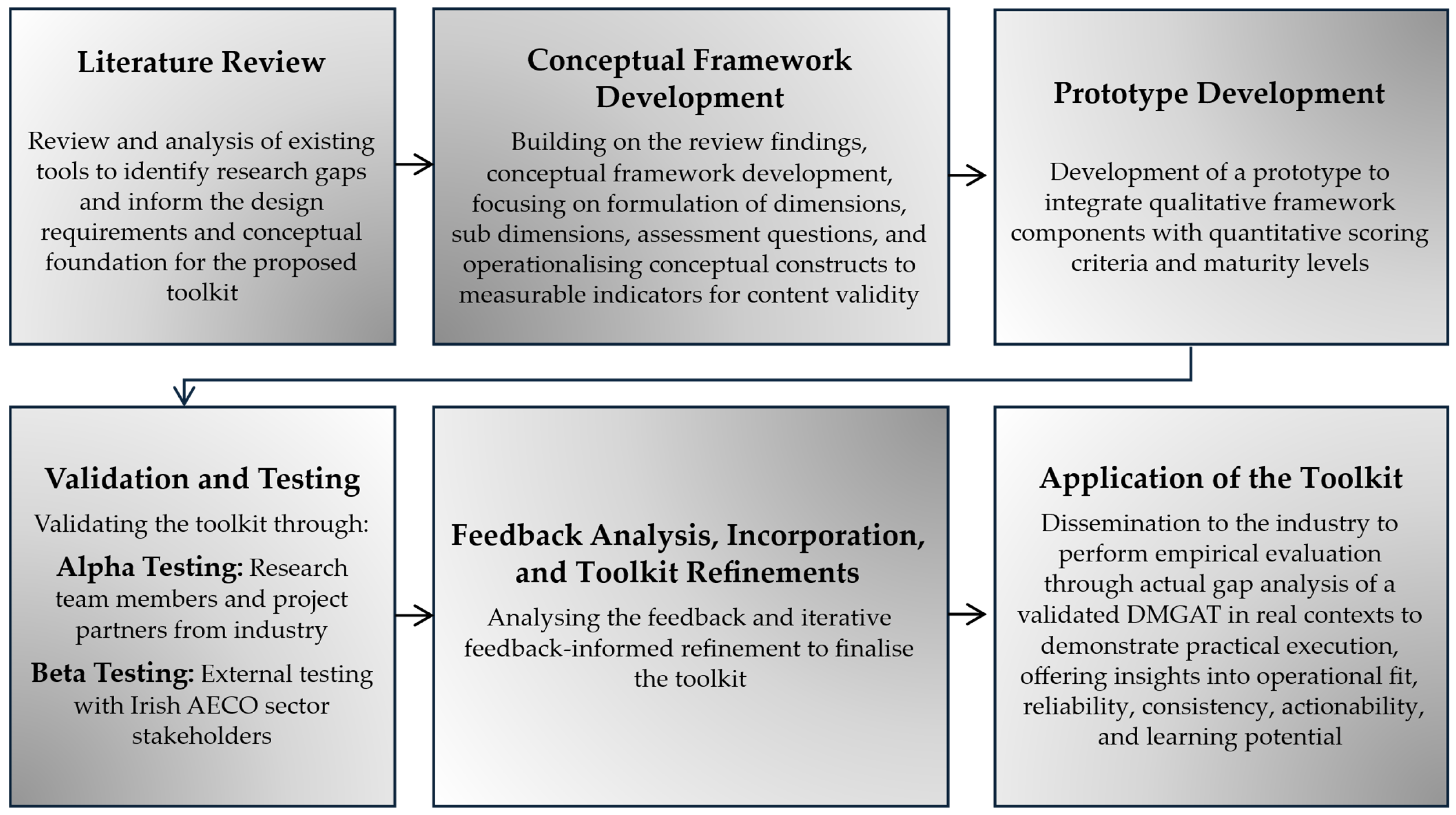
3.1. Approach to Toolkit Development
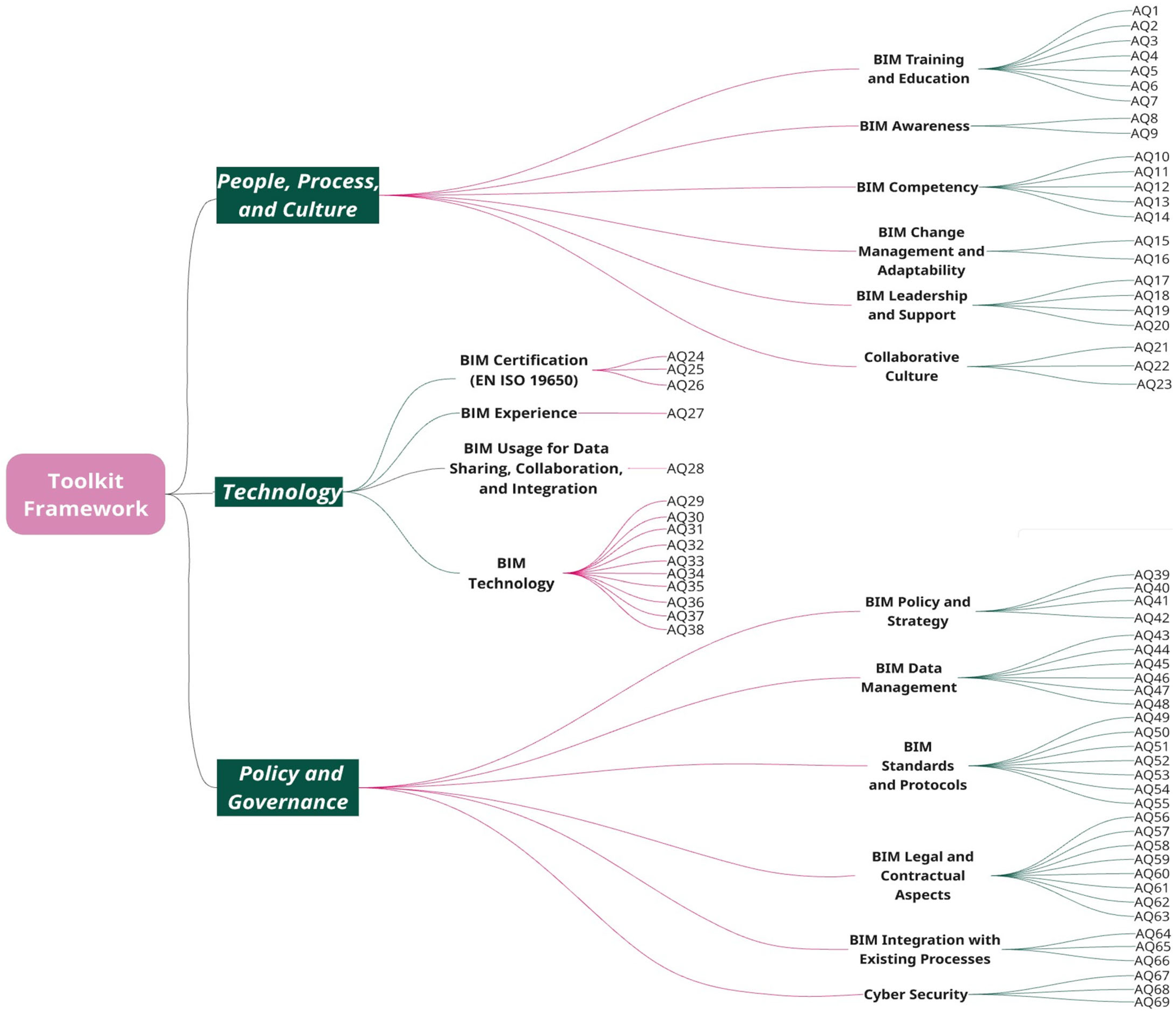
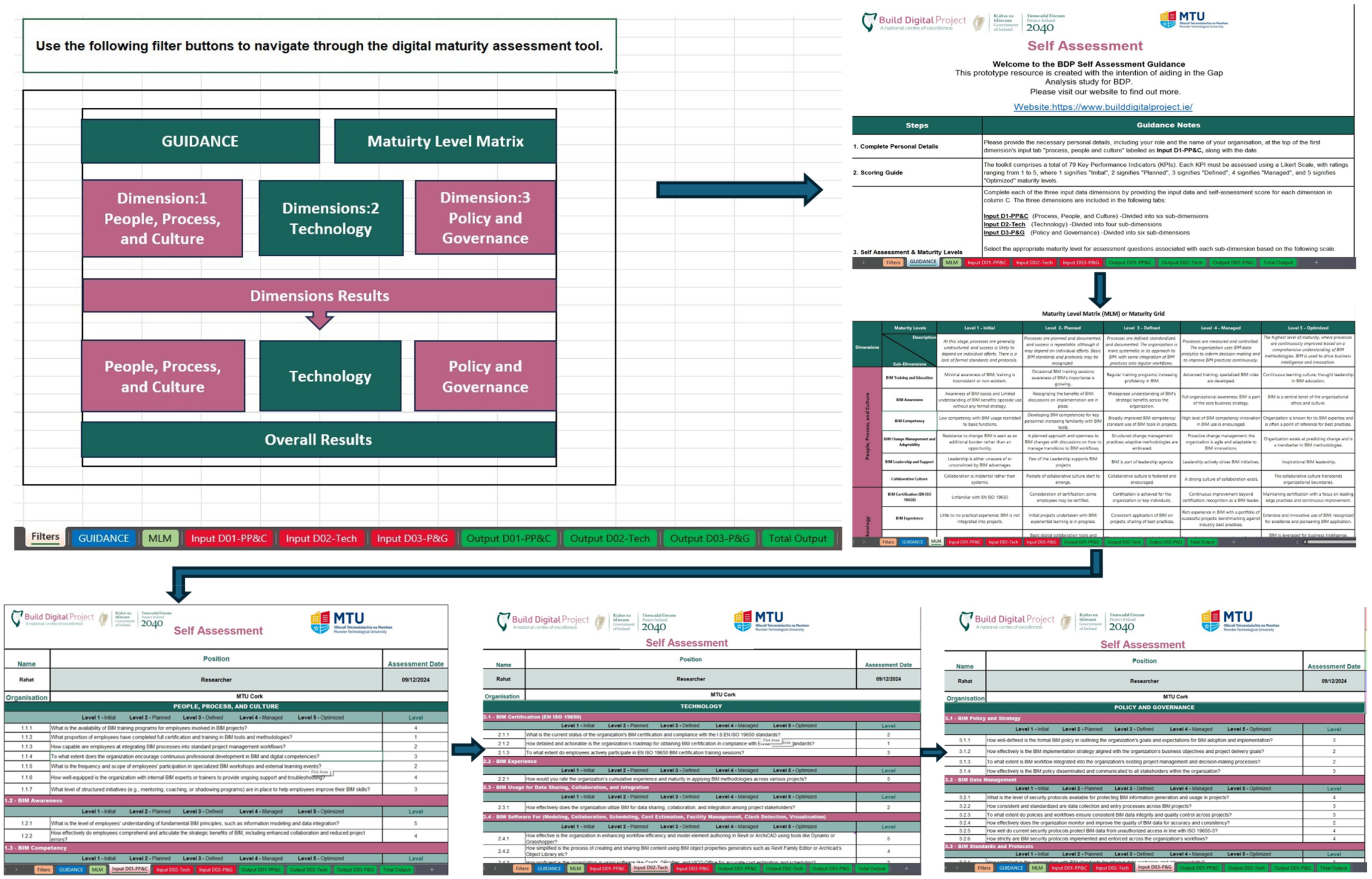
3.2. Framework and Prototype of the Toolkit
3.3. Approach to Toolkit Validation
- General Perception: obtaining initial impressions about the toolkit, including its perceived relevance and potential impact.
- Usability, User Experience, and Support: evaluating the toolkit interface, ease of navigation, and any required resources for optimal functionality.
- Relevance and Coverage: assessing the comprehensiveness of the toolkit in addressing digital maturity aspects and their alignment with industry standards.
- Key Observations and Recommendations: documenting specific insights, suggestions, and recommendations for improving the tool.
3.4. Ethical Considerations
4. Prototype Validation and Feedback Analysis
4.1. Alpha Testing
4.2. Beta Testing
4.2.1. Context
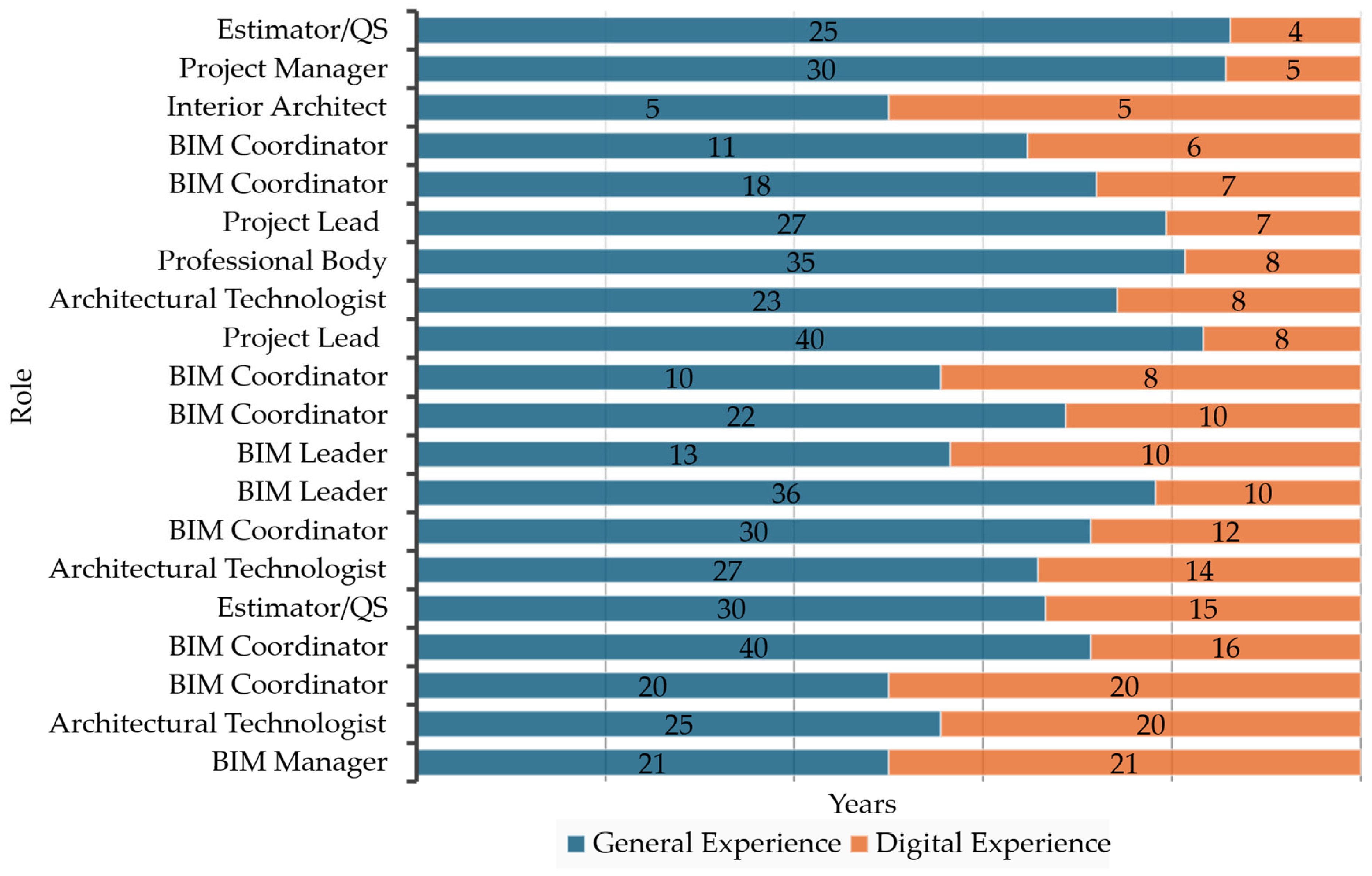
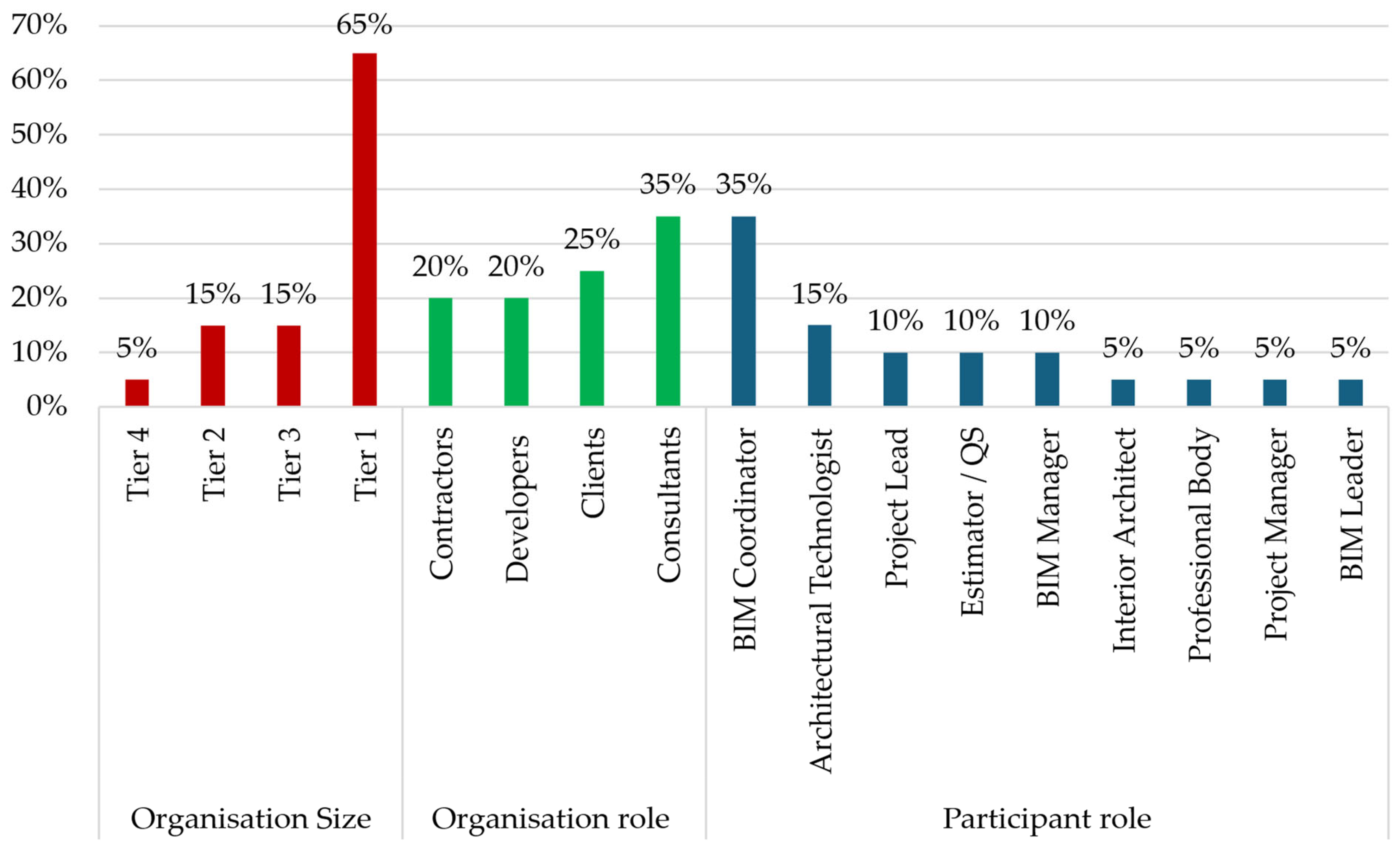
4.2.2. Participants
4.3. Results and Key Findings
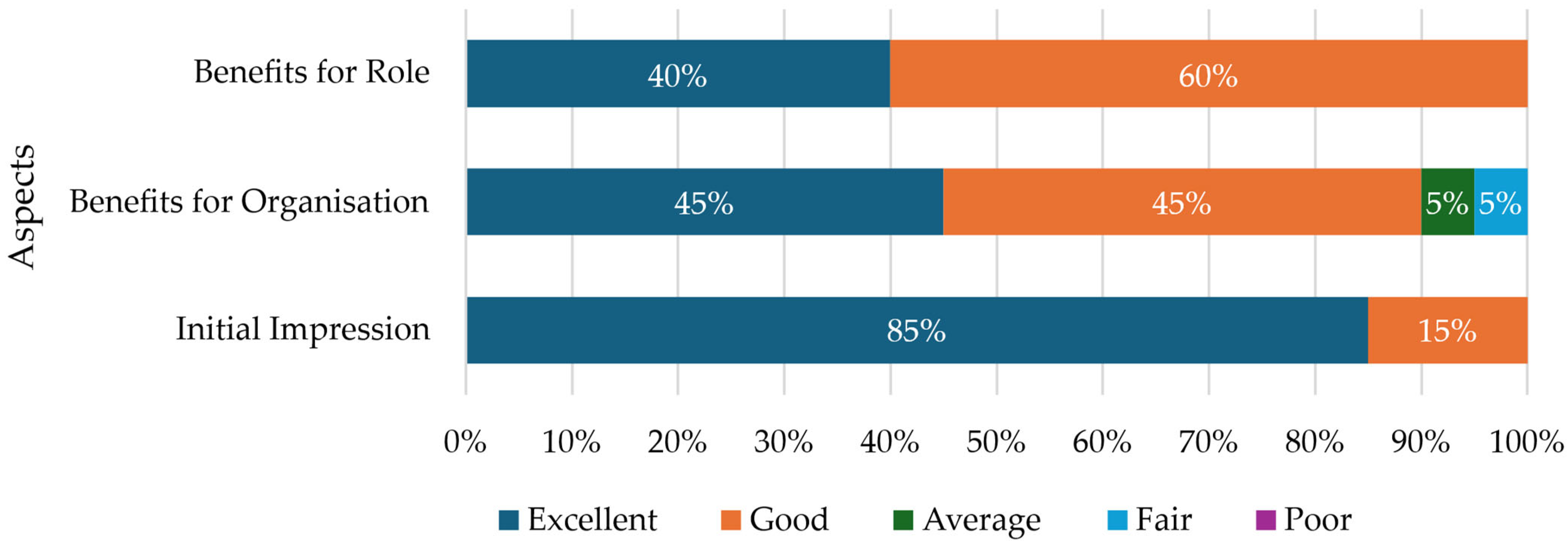
4.3.1. General Perception
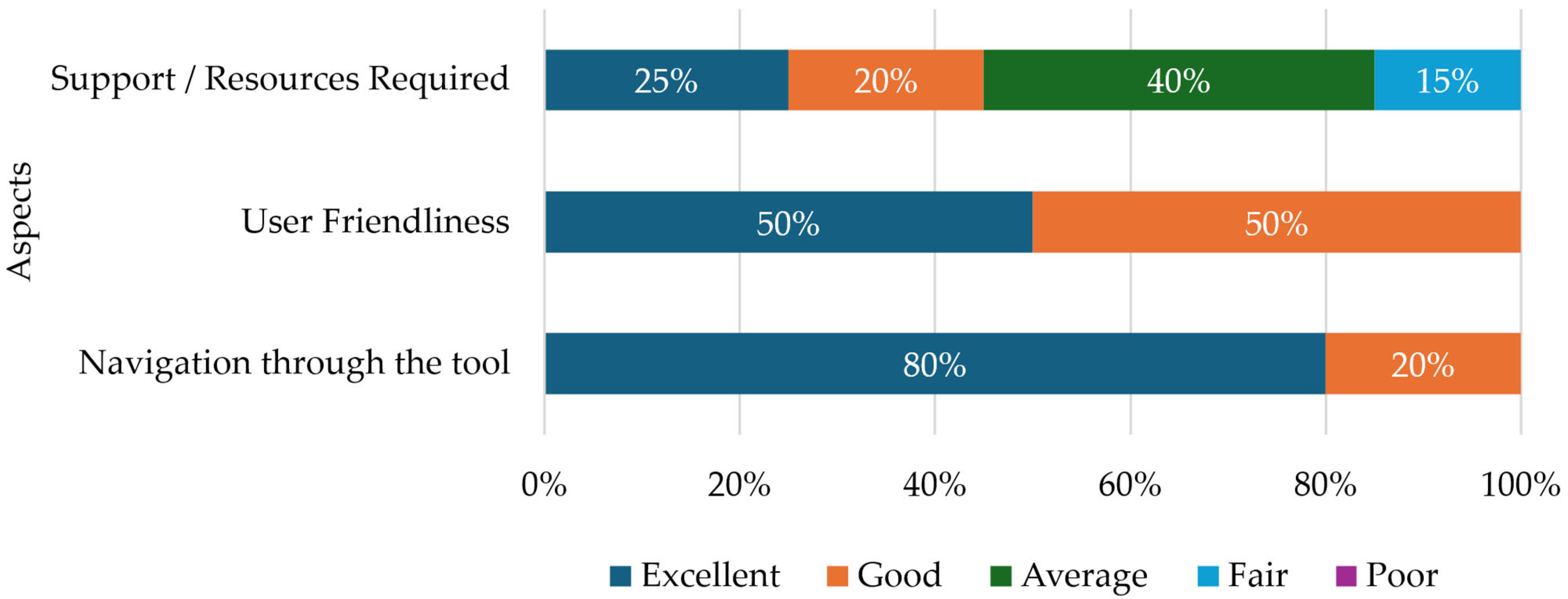
4.3.2. Usability, User Experience and Support
4.3.3. Relevance and Coverage
4.4. Key Observations and Recommendations
4.4.1. Initial Impression of the Tool
4.4.2. Navigation Through the Tool
4.4.3. User Friendliness of the Tool
4.4.4. Assessment Coverage of Relevant Aspects
4.4.5. Support and Resources Required
5. Discussion
5.1. Comparison of Alpha and Beta Testing
- Development of a maturity level matrix to link assessment questions to sub-dimensions and maturity levels.
- Refining and clarifying assessment questions to enhance their relevance and consistency.
- Enhancing the scoring and visualisation approach to ensure that outputs are both interpretable and traceable.
5.2. Implications for Digital Maturity Assessments in the AECO Sector
- Maintaining transparent assessment through clearly defined maturity stages and a maturity grid ensures consistency and clarity in evaluating digital maturity.
- Ensuring the tool is robust, role-aware, and supportive by incorporating accessibility features, dynamic visuals, concise onboarding, discipline-sensitive language, and individual competency assessments enhances relevance, usability, and adoption across the AECO stakeholders.
- Embedding adoption within a policy environment that realistically addresses SMEs’ challenges and incorporates longitudinal data for continuous improvement supports equitable digital transformation and bridges adoption gaps.
5.3. Future Development Pathways for the Digital Maturity Gap Analysis Toolkit
6. Conclusions
Limitations and Recommendations for Future Research
Supplementary Materials
Author Contributions
Funding
Data Availability Statement
Acknowledgments
Conflicts of Interest
Abbreviations
| BIM | Building Information Modelling |
| DT | Digital Transformation |
| AECO | Architecture, Engineering, Construction, and Operations |
| SMEs | Small and Medium Enterprises |
| KPIs | Key Performance Indicators |
| DMGAT | Digital Maturity Gap Analysis Toolkit |
| DSR | Design Science Research |
| ISO | International Organisation for Standardisation |
| IoT | Internet of Things |
References
- Vial, G. Understanding Digital Transformation: A Review and a Research Agenda. In Managing Digital Transformation; Routledge: London, UK, 2021. [Google Scholar]
- Remane, G.; Hanelt, A.; Wiesboeck, F.; Kolbe, L.M. Digital Maturity in Traditional Industries—An Exploratory Analysis. In Proceedings of the ECIS, Guimarães, Portugal, 5–10 June 2017; p. 10. [Google Scholar]
- Bharadwaj, A.; El Sawy, O.A.; Pavlou, P.A.; Venkatraman, N. Digital Business Strategy: Toward a next Generation of Insights. MIS Q. 2013, 37, 471–482. [Google Scholar] [CrossRef] [Scilit]
- Fitzgerald, M.; Kruschwitz, N.; Bonnet, D.; Welch, M. Embracing Digital Technology: A New Strategic Imperative. MIT Sloan Manag. Rev. 2014, 55, 1. [Google Scholar]
- Lee, M.; Yun, J.J.; Pyka, A.; Won, D.; Kodama, F.; Schiuma, G.; Park, H.; Jeon, J.; Park, K.; Jung, K. How to Respond to the Fourth Industrial Revolution, or the Second Information Technology Revolution? Dynamic New Combinations between Technology, Market, and Society through Open Innovation. J. Open Innov. Technol. Mark. Complex. 2018, 4, 21. [Google Scholar] [CrossRef] [Scilit]
- Yeow, A.; Soh, C.; Hansen, R. Aligning with New Digital Strategy: A Dynamic Capabilities Approach. J. Strateg. Inf. Syst. 2018, 27, 43–58. [Google Scholar] [CrossRef] [Scilit]
- Shi, Y.; Wang, Y.; Wang, L.-N.; Wang, W.-N.; Yang, T.-Y. Bridge Tower Warning Method Based on Improved Multi-Rate Fusion. Buildings 2025, 15, 2733. [Google Scholar] [CrossRef] [Scilit]
- Shi, Y.; Wang, Y.; Wang, L.-N.; Wang, W.-N.; Yang, T.-Y. Bridge Cable Performance Warning Method Based on Temperature and Displacement Monitoring Data. Buildings 2025, 15, 2342. [Google Scholar] [CrossRef] [Scilit]
- Wu, C.; Xu, B.; Mao, C.; Li, X. Overview of BIM Maturity Measurement Tools. J. Inf. Technol. Constr. 2017, 22, 34–62. [Google Scholar]
- Wagire, A.A.; Joshi, R.; Rathore, A.P.S.; Jain, R. Development of Maturity Model for Assessing the Implementation of Industry 4.0: Learning from Theory and Practice. Prod. Plan. Control 2021, 32, 603–622. [Google Scholar] [CrossRef] [Scilit]
- Mutis, I.; Mehraj, I. Cloud BIM Governance Framework for Implementation in Construction Firms. Pract. Period. Struct. Des. Constr. 2022, 27, 04021074. [Google Scholar] [CrossRef] [Scilit]
- McAuley, B.; Hore, A.; West, R.; Kassem, M.; Kuang, S. Ireland’s BIM Macro Adoption Study: Establishing Ireland’s BIM Maturity. In Proceedings of the 3rd CitA BIM Gathering, Dublin, Ireland, 23–24 November 2017. [Google Scholar]
- Gökalp, E.; Martinez, V. Digital Transformation Maturity Assessment: Development of the Digital Transformation Capability Maturity Model. Int. J. Prod. Res. 2022, 60, 6282–6302. [Google Scholar] [CrossRef] [Scilit]
- Brodny, J.; Tutak, M. Digitalization of Small and Medium-Sized Enterprises and Economic Growth: Evidence for the EU-27 Countries. J. Open Innov. Technol. Mark. Complex. 2022, 8, 67. [Google Scholar] [CrossRef] [Scilit]
- Rashidian, S.; Drogemuller, R.; Omrani, S.; Banakar, F. A Review of the Interrelationships and Characteristics of Building Information Modeling, Integrated Project Delivery and Lean Construction Maturity Models. Smart Sustain. Built Environ. 2023, 13, 584–608. [Google Scholar] [CrossRef] [Scilit]
- McKenna, T.; Lamon, D.; Murphy, R.; Carroll, S.; Collins, J.; Concannon, R.; Horgan, E.; Otreba, M. International Best Practice in Digital Adoption Within the AEC Sector; Build Digital Project—Project Ireland, 2040; Build Digital Project; Munster Technological University Ireland: Cork, Ireland, 2023; Available online: https://www.builddigitalproject.ie/international-best-practice-in-digital-construction-adoption-report (accessed on 23 May 2025).
- Ullah, R.; Harrington, J.; Farea, A.; Otreba, M.; Carroll, S.; Mckenna, T. Navigating Digital Maturity: Analysis of Digital Maturity Assessment Tools. In Civil Engineering Research Ireland (CERI) Conference; University of Galway: Galway, Ireland, 2024. [Google Scholar]
- Ullah, R.; Harrington, J.; Farea, A.; Otreba, M.; Carroll, S.; McKenna, T. Digital Maturity Assessment Tools for the Construction Industry: A PRISMA-ScR Scoping Review. Buildings 2026, 16, 239. [Google Scholar] [CrossRef] [Scilit]
- Abanda, F.H.; Balu, B.; Adukpo, S.E.; Akintola, A. Decoding ISO 19650 Through Process Modelling for Information Management and Stakeholder Communication in BIM. Buildings 2025, 15, 431. [Google Scholar] [CrossRef] [Scilit]
- ISO 19650-1:2018; Organization and Digitization of Information about Buildings and Civil Engineering Works, Including Building Information Modelling (BIM)—Information Management Using Building Information Modelling. ISO: Geneva, Switzerland, 2018. Available online: https://www.iso.org/standard/68078.html (accessed on 27 January 2026).
- Lin, C.; Hu, Z.-Z.; Yang, C.; Deng, Y.-C.; Zheng, W.; Lin, J.-R. Maturity Assessment of Intelligent Construction Management. Buildings 2022, 12, 1742. [Google Scholar] [CrossRef] [Scilit]
- Adekunle, S.A.; Aigbavboa, C.O.; Ejohwomu, O.; Adekunle, E.A.; Thwala, W.D. Digital Transformation in the Construction Industry: A Bibliometric Review. J. Eng. Des. Technol. 2024, 22, 130–158. [Google Scholar] [CrossRef] [Scilit]
- Rinchen, S.; Banihashemi, S.; Alkilani, S. Driving Digital Transformation in Construction: Strategic Insights into Building Information Modelling Adoption in Developing Countries. Proj. Leadersh. Soc. 2024, 5, 100138. [Google Scholar] [CrossRef] [Scilit]
- Perera, S.; Jin, X.; Das, P.; Gunasekara, K.; Samaratunga, M. A Strategic Framework for Digital Maturity of Design and Construction through a Systematic Review and Application. J. Ind. Inf. Integr. 2023, 31, 100413. [Google Scholar] [CrossRef] [Scilit]
- Jäkel, J.-I.; Fischerkeller, F.; Oberhoff, T.; Klemt-Albert, K. Development of a Maturity Model for the Digital Transformation of Companies in the Context of Construction Industry 4.0. J. Inf. Technol. Constr. 2024, 29, 778–809. [Google Scholar] [CrossRef] [Scilit]
- Di Vaio, A.; Latif, B.; Gunarathne, N.; Gupta, M.; D’Adamo, I. Digitalization and Artificial Knowledge for Accountability in SCM: A Systematic Literature Review. J. Enterp. Inf. Manag. 2024, 37, 606–672. [Google Scholar] [CrossRef] [Scilit]
- Farea, A.; Otreba, M.; Ullah, R.; McKenna, T.; Carroll, S.; Harrington, J. Digital Transformation of the AEC Industry: A Review of BIM Implementation Toolkits from Leading Countries. Smart Sustain. Built Environ. 2026, 1–24. [Google Scholar] [CrossRef] [Scilit]
- Farea, A.; Otreba, M.; Ullah, R.; Mckenna, T.; Carroll, S.; Harrington, J. Macro BIM Adoption: Global Initiatives and Strategies; University of Galway: Galway, Ireland, 2024. [Google Scholar] [CrossRef] [Scilit]
- Schilling, L.; Seuring, S. Sustainable Value Creation through Information Technology-Enabled Supply Chains in Emerging Markets. Int. J. Logist. Manag. 2022, 33, 1001–1016. [Google Scholar] [CrossRef] [Scilit]
- Tubis, A.A. Digital Maturity Assessment Model for the Organizational and Process Dimensions. Sustainability 2023, 15, 15122. [Google Scholar] [CrossRef] [Scilit]
- Looy, A.V. Business Process Maturity: A Comparative Study on a Sample of Business Process Maturity Models; Springer Science & Business Media: Berlin, Germany, 2014. [Google Scholar]
- Carrijo, P.; Alturas, B.; Pedrosa, I. Similarities and Differences Between Digital Transformation Maturity Models: A Literature Review. In Intelligent Systems in Digital Transformation; Kahraman, C., Haktanır, E., Eds.; Lecture Notes in Networks and Systems; Springer International Publishing: Cham, Switzerland, 2023; Volume 549, pp. 33–52. [Google Scholar]
- Angreani, L.S.; Vijaya, A.; Wicaksono, H. Systematic Literature Review of Industry 4.0 Maturity Model for Manufacturing and Logistics Sectors. Procedia Manuf. 2020, 52, 337–343. [Google Scholar] [CrossRef] [Scilit]
- Lasrado, L.A.; Vatrapu, R.; Andersen, K. Maturity Models Development in IS Research: A Literature Review. IRIS Sel. Pap. Inf. Syst. Res. Semin. Scand. 2015, 6, 6. Available online: http://aisel.aisnet.org/cgi/viewcontent.cgi?article=1005&context=iris2015 (accessed on 10 May 2025).
- Ishtiaq, M. Book Review Creswell, J.W. (2014). Research Design: Qualitative, Quantitative and Mixed Methods Approaches (4th ed.). Thousand Oaks, CA: Sage. Engl. Lang. Teach. 2019, 12, 40. [Google Scholar] [CrossRef] [Scilit]
- Schumacher, A.; Erol, S.; Sihn, W. A Maturity Model for Assessing Industry 4.0 Readiness and Maturity of Manufacturing Enterprises. Procedia Cirp 2016, 52, 161–166. [Google Scholar] [CrossRef] [Scilit]
- Kosieradzka, A.; Smagowicz, J. The Concept of a Pilot Study for the Verification of a Maturity Model in Public Crisis Management. Zesz. Nauk. Politech. Poznańskiej Ser. Organ. Zarządzanie 2020, 77, 127–143. [Google Scholar]
- SEI. CMMI for Development, Version 1.2; Carnegie Mellon—Software Engineering Institute: Pittsburgh, PA, USA, 2006. Available online: https://www.inf.ufsc.br/~ricardo.silva/download/cmmi/CMMI%20for%20Development%20Version%201-2%2006tr008.pdf (accessed on 13 May 2025).
- Gray, J.; Rumpe, B. Models for the Digital Transformation. Softw. Syst. Model. 2017, 16, 307–308. [Google Scholar] [CrossRef] [Scilit]
- Almeida, F.; Santos, J.D.; Monteiro, J.A. The Challenges and Opportunities in the Digitalization of Companies in a Post-COVID-19 World. IEEE Eng. Manag. Rev. 2020, 48, 97–103. [Google Scholar] [CrossRef] [Scilit]
- Amankwah-Amoah, J.; Khan, Z.; Wood, G.; Knight, G. COVID-19 and Digitalization: The Great Acceleration. J. Bus. Res. 2021, 136, 602–611. [Google Scholar] [CrossRef] [Scilit]
- Werner-Lewandowska, K.; Kosacka-Olejnik, M. Logistics 4.0 Maturity in Service Industry: Empirical Research Results. Procedia Manuf. 2019, 38, 1058–1065. [Google Scholar] [CrossRef] [Scilit]
- Mashalah, H.A.; Hassini, E.; Gunasekaran, A.; Bhatt, D. The Impact of Digital Transformation on Supply Chains through E-Commerce: Literature Review and a Conceptual Framework. Transp. Res. Part E Logist. Transp. Rev. 2022, 165, 102837. [Google Scholar] [CrossRef] [Scilit]
- Jing, H.; Fan, Y. Digital Transformation, Supply Chain Integration and Supply Chain Performance: Evidence From Chinese Manufacturing Listed Firms. Sage Open 2024, 14, 21582440241281616. [Google Scholar] [CrossRef] [Scilit]
- Ustaoğlu, N. A Maturity Model for Digital Transformation. Master’s Thesis, Sabancı University, Istanbul, Turkey, 2019. [Google Scholar]
- Yarmohammadian, M.H.; Tavakoli, N.; Shams, A.; Hatampour, F. Evaluation of Organizational Maturity Based on People Capacity Maturity Model in Medical Record Wards of Iranian Hospitals. J. Educ. Health Promot. 2014, 3, 54. [Google Scholar] [CrossRef] [Scilit] [PubMed]
- Igartua, J.I.; Retegi, J.; Ganzarain, J. IM2, a Maturity Model for Innovation in SMEs. Dir. Organ. 2018, 64, 42–49. [Google Scholar]
- Wiesner, S.; Gaiardelli, P.; Gritti, N.; Oberti, G. Maturity Models for Digitalization in Manufacturing—Applicability for SMEs. In Advances in Production Management Systems. Smart Manufacturing for Industry 4.0; Moon, I., Lee, G.M., Park, J., Kiritsis, D., Von Cieminski, G., Eds.; IFIP Advances in Information and Communication Technology; Springer International Publishing: Cham, Switzerland, 2018; Volume 536, pp. 81–88. [Google Scholar]
- Oleśków-Szłapka, J.; Wojciechowski, H.; Domański, R.; Pawłowski, G. Logistics 4.0 Maturity Levels Assessed Based on GDM (Grey Decision Model) and Artificial Intelligence in Logistics 4.0-Trends and Future Perspective. Procedia Manuf. 2019, 39, 1734–1742. [Google Scholar] [CrossRef] [Scilit]
- Zoubek, M.; Šimon, M. Methodology for Evaluating the Readiness of Internal Logistics Processes for Industry 4.0. In Proceedings of the IOP Conference Series: Materials Science and Engineering; IOP Publishing: Istanbul, Turkey, 2020; Volume 947, p. 012005. [Google Scholar]
- Tonelli, F.; Demartini, M.; Loleo, A.; Testa, C. A Novel Methodology for Manufacturing Firms Value Modeling and Mapping to Improve Operational Performance in the Industry 4.0 Era. Procedia Cirp 2016, 57, 122–127. [Google Scholar] [CrossRef] [Scilit]
- Jochem, R.; Geers, D.; Heinze, P. Maturity Measurement of Knowledge-Intensive Business Processes. TQM J. 2011, 23, 377–387. [Google Scholar] [CrossRef] [Scilit]
- Hein-Pensel, F.; Winkler, H.; Brückner, A.; Wölke, M.; Jabs, I.; Mayan, I.J.; Kirschenbaum, A.; Friedrich, J.; Zinke-Wehlmann, C. Maturity Assessment for Industry 5.0: A Review of Existing Maturity Models. J. Manuf. Syst. 2023, 66, 200–210. [Google Scholar] [CrossRef] [Scilit]
- Hellweg, F.; Lechtenberg, S.; Hellingrath, B.; Thomé, A.M.T. Literature Review on Maturity Models for Digital Supply Chains. Braz. J. Oper. Prod. Manag. 2021, 18, 1–12. [Google Scholar] [CrossRef] [Scilit]
- Gollhardt, T.; Halsbenning, S.; Hermann, A.; Karsakova, A.; Becker, J. Development of a Digital Transformation Maturity Model for IT Companies. In Proceedings of the 2020 IEEE 22nd Conference on Business Informatics (CBI); IEEE: New York, NY, USA, 2020; Volume 1, pp. 94–103. [Google Scholar]
- Kljajić Borštnar, M.; Pucihar, A. Multi-Attribute Assessment of Digital Maturity of SMEs. Electronics 2021, 10, 885. [Google Scholar] [CrossRef] [Scilit]
- Zhao, X.; Hwang, B.-G.; Low, S.P. Developing Fuzzy Enterprise Risk Management Maturity Model for Construction Firms. J. Constr. Eng. Manag. 2013, 139, 1179–1189. [Google Scholar] [CrossRef] [Scilit]
- Smits, W.; Van Buiten, M.; Hartmann, T. Yield-to-BIM: Impacts of BIM Maturity on Project Performance. Build. Res. Inf. 2017, 45, 336–346. [Google Scholar] [CrossRef] [Scilit]
- Liang, C.; Lu, W.; Rowlinson, S.; Zhang, X. Development of a Multifunctional BIM Maturity Model. J. Constr. Eng. Manag. 2016, 142, 06016003. [Google Scholar] [CrossRef] [Scilit]
- Wernicke, B.; Stehn, L.; Sezer, A.A.; Thunberg, M. Introduction of a Digital Maturity Assessment Framework for Construction Site Operations. Int. J. Constr. Manag. 2023, 23, 898–908. [Google Scholar] [CrossRef] [Scilit]
- Kumar, M.; Taj, M.G.; Zevalov, A.; Bhetwal, R.; Kanani, K.V.; Rahman, M. Maturity Model Taxonomy for Digital Transformation. In Proceedings of the 2023 IEEE 12th International Conference on Intelligent Data Acquisition and Advanced Computing Systems: Technology and Applications (IDAACS); IEEE: New York, NY, USA, 2023; Volume 1, pp. 288–296. [Google Scholar]
- Aras, A.; Büyüközkan, G. Digital Transformation Journey Guidance: A Holistic Digital Maturity Model Based on a Systematic Literature Review. Systems 2023, 11, 213. [Google Scholar] [CrossRef] [Scilit]
- Babkin, A.V.; Shkarupeta, E.V.; Gileva, T.A.; Polozhentseva, J.S.; Chen, L. Methodology for Assessing Digital Maturity Gaps in Industrial Enterprises. Mod. Innov. Razvit. 2022, 13, 443–458. [Google Scholar] [CrossRef] [Scilit]
- Kırmızı, M.; Kocaoglu, B. Digital Transformation Maturity Model Development Framework Based on Design Science: Case Studies in Manufacturing Industry. J. Manuf. Technol. Manag. 2022, 33, 1319–1346. [Google Scholar] [CrossRef] [Scilit]
- Succar, B. Building Information Modelling Maturity Matrix. In Handbook of Research on Building Information Modeling and Construction Informatics: Concepts and Technologies; IGI Global: Hershey, PA, USA, 2010; pp. 65–103. [Google Scholar]
- EU Commission Maturity Scan | Digitalisation of Construction SMEs. Available online: https://digital-construction.ec.europa.eu/maturity-scan (accessed on 13 May 2025).
- NBIMS. NBIMS, Capability Maturity Model NBIMS National BIM Standard—United States | National BIM Standard—United States. Available online: https://nibs.org/wp-content/uploads/2025/04/NBIMS-US_V3_4.2_COBie_Annex_B.pdf (accessed on 13 May 2025).
- Du, J.; Liu, R.; Issa, R.R.A. BIM Cloud Score: Benchmarking BIM Performance. J. Constr. Eng. Manage. 2014, 140, 04014054. [Google Scholar] [CrossRef] [Scilit]
- BIMe. Available online: https://bimexcellence.org/ (accessed on 13 May 2025).
- Kam, C. The VDC Scorecard: Formulation and Validation. Available online: https://stacks.stanford.edu/file/druid:xd249sp3509/WP135.pdf (accessed on 13 May 2025).
- Kam, C.; Song, M.H.; Senaratna, D. VDC Scorecard: Formulation, Application, and Validation. J. Constr. Eng. Manag. 2017, 143, 04016100. [Google Scholar] [CrossRef] [Scilit]
- Alankarage, S.; Chileshe, N.; Samaraweera, A.; Rameezdeen, R.; Edwards, D.J. Organisational BIM Maturity Models and Their Applications: A Systematic Literature Review. Archit. Eng. Des. Manag. 2023, 19, 567–585. [Google Scholar] [CrossRef] [Scilit]
- Siebelink, S.; Voordijk, J.T.; Adriaanse, A. Developing and Testing a Tool to Evaluate BIM Maturity: Sectoral Analysis in the Dutch Construction Industry. J. Constr. Eng. Manag. 2018, 144, 05018007. [Google Scholar] [CrossRef] [Scilit]
- Brooks, A.; Krebs, L.; Paulsen, B. Beta-Testing a Requirements Analysis Tool. ACM SIGSOFT 2014, 39, 1–6. [Google Scholar] [CrossRef] [Scilit]
- De Bruin, T.; Rosemann, M.; Freeze, R.; Kaulkarni, U. Understanding the Main Phases of Developing a Maturity Assessment Model. In Australasian Conference on Information Systems (ACIS); Bunker, D., Campbell, B., Underwood, J., Eds.; Australasian Chapter of the Association for Information Systems: Atlanta, GA, USA, 2005; pp. 8–19. [Google Scholar]
- Kocaoglu, B.; Kirmizi, M. Prescriptive Digital Transformation Maturity Model: A Development and Validation Study. Kybernetes 2024, 54, 2662–2705. [Google Scholar] [CrossRef] [Scilit]
- Laaber, F.; Florack, A.; Koch, T.; Hubert, M. Digital Maturity: Development and Validation of the Digital Maturity Inventory (DIMI). Comput. Hum. Behav. 2023, 143, 107709. [Google Scholar] [CrossRef] [Scilit]
- Voss, M.; Jaspert, D.; Ahlfeld, C.; Sucke, L. Developing a Digital Maturity Model for the Sales Processes of Industrial Projects. J. Pers. Sell. Sales Manag. 2024, 44, 7–28. [Google Scholar] [CrossRef] [Scilit]
- Creswell, J.W.; Clark, V.L.P. Designing and Conducting Mixed Methods Research; SAGE Publications, Inc: Thousand Oaks, CA, USA, 2017; Available online: https://collegepublishing.sagepub.com/products/designing-and-conducting-mixed-methods-research-3-241842 (accessed on 17 January 2026).
- Hevner, A.R.; March, S.T.; Park, J.; Ram, S. Design Science in Information Systems Research. Manag. Inf. Syst. Q. 2004, 28, 75. [Google Scholar] [CrossRef] [Scilit]
- Peffers, K.; Tuunanen, T.; Rothenberger, M.A.; Chatterjee, S. A Design Science Research Methodology for Information Systems Research. J. Manag. Inf. Syst. 2007, 24, 45–77. [Google Scholar] [CrossRef] [Scilit]
- Bew, M. Bew-Richards BIM Maturity Model. In Proceedings of the BuildingSMART Construct IT Autumn Members Meeting; Brighton: Bellows Falls, VT, USA, 2008. [Google Scholar]
- Adeniran, A.O. Application of Likert Scale’s Type and Cronbach’s Alpha Analysis in an Airport Perception Study. Sch. J. Appl. Sci. Res. 2019, 2, 1–5. [Google Scholar]
- McAuley, B.; Hore, A.V.; West, R.P. The Irish Construction Industry’s State of Readiness for a BIM Mandate in 2020. In Proceedings of the Civil Engineering Research in Ireland 2020 Conference, Cork, Ireland, 27–28 August 2020. [Google Scholar]
- McAuley, B.; West, R.P.; Hore, A.V. Digital Construction and BIM Research in Ireland 2016–2020. In Proceedings of the 5th CitA BIM Gathering, Online, 21–23 September 2021. [Google Scholar]
- Farea, A.; Munir, M.; Ullah, R.; Otreba, M.; Carroll, S.; Harrington, J. Comparison of the Barriers to BIM Adoption and Digital Transformation within the Construction Industry of Pakistan and Ireland. In Proceedings of the 2023 IEEE 22nd International Conference on Trust, Security and Privacy in Computing and Communications (TrustCom), Exeter, UK, 1–3 November 2023; pp. 2394–2399. [Google Scholar] [CrossRef] [Scilit]





| Maturity Levels | Level 1—Initial | Level 2—Planned | Level 3—Defined | Level 4—Managed | Level 5—Optimised | |
|---|---|---|---|---|---|---|
| Description | Processes are unstructured, and success depends on individual efforts. Lack of formal standards and protocols. | Processes are planned and documented, with repeatable success. Basic BIM standards may be recognised. | Processes are defined, standardised, and documented. BIM practices are integrated into workflows. | Processes are measured and controlled. BIM analytics inform decision-making and continuous improvement. | Continuous improvement of BIM methodologies drives innovation and business intelligence. | |
| Dimension | Sub-Dimension | |||||
| People, Process, and Culture | BIM Training and Education | Minimal awareness of BIM; training is inconsistent or non-existent. | Occasional BIM training sessions; growing awareness of BIM’s importance. | Regular training programs; increasing proficiency in BIM. | Advanced training; specialised BIM roles developed. | Continuous learning culture; thought leadership in BIM education. |
| BIM Awareness | Limited understanding of BIM benefits; sporadic use without formal strategy. | Recognising BIM benefits; discussions on implementation are in place. | Widespread understanding of BIM’s strategic benefits. | Full organisational awareness; BIM is a core business strategy. | BIM is central to the organisational ethos and culture. | |
| BIM Competency | Low competency with basic BIM functions. | Developing competencies for key personnel; increasing familiarity with BIM tools. | Broadly improved BIM competency; standard use of BIM tools in projects. | High competency; innovation in BIM use is encouraged. | Recognised expertise in BIM; reference point for best practices. | |
| BIM Change Management and Adaptability | Resistance to change; BIM considered as a burden. | Planned approach and openness to change; discussions on managing transitions. | Structured change management practices embrace adaptive methodologies. | Proactive change management; agile and innovative. | Excels at predicting change; trendsetter in BIM methodologies. | |
| BIM Leadership and Support | Leadership is unaware of or unconvinced by BIM advantages. | Few leaders support BIM projects. | BIM is part of the leadership agenda. | Leadership actively drives BIM initiatives. | Inspirational BIM leadership. | |
| Collaborative Culture | Collaboration is incidental, not systemic. | Pockets of collaboration emerging. | Collaborative culture is fostered and encouraged. | Strong culture of collaboration exists. | Collaboration transcends organisational boundaries. | |
| Dimension | Sub-Dimension | Level 1—Initial | Level 2—Planned | Level 3—Defined | Level 4—Managed | Level 5—Optimised |
| Technology | BIM Certification (EN ISO 19650) | Unfamiliar with the standard. | Consideration for certification; some employees may be certified. | Certification achieved for key individuals or the organisation. | Continuous improvement beyond certification. | Certification emphasises leading-edge practices and continuous improvement. |
| BIM Experience | Little to no practical experience; BIM not integrated into projects. | Initial projects undertaken; experiential learning in progress. | Consistent application of BIM; sharing of best practices. | Extensive experience across successful projects. | Recognised for innovative BIM applications. | |
| BIM Usage for Data Sharing, Collaboration, and Integration | Infrequent, manual data sharing; limited collaboration. | Basic digital tools and early collaboration stages. | Effective sharing and collaboration; smoother integration. | Streamlined and automated workflows. | Leveraged for predictive analysis and integrated delivery. | |
| BIM Technology | BIM technology usage is ad hoc, uncoordinated, and driven by individual preferences. | BIM technologies are selected more strategically based on specific project needs. | BIM technology integrates into practice, with interoperability considered. | Advanced BIM technologies enable high interoperability and customisation. | BIM tools and integrated solutions support enterprise-wide digital innovation. | |
| Policy and Governance | BIM Policy and Strategy | No or less familiarity with defined policy or strategy. | Initial strategy development; draft policies. | Policies aligned with business objectives. | Fully integrated strategy with regular updates. | Dynamic strategy evolving with the industry. |
| BIM Data Management | Unstructured data management; frequent data loss. | Beginning to organise and structure data. | Established procedures; central repositories. | Advanced systems with analytics. | Fully integrated system with business intelligence. | |
| BIM Standards and Protocols | No or minimal adherence to standards; non-standardised processes. | Early adoption of standards; internal protocols in development. | Full compliance with standards. | Continuous refinement and optimisation. | Industry-setting standards shared broadly. | |
| BIM Legal and Contractual Aspects | Contracts overlook BIM requirements; unclear risks. | Initial incorporation of BIM in contracts. | Clearly outlined roles and responsibilities. | Proactive risk management practices | Advanced legal and contractual innovation | |
| BIM Integration with Existing Processes | No or minimal integration. | Some project-specific efforts. | Good integration. | BIM enables innovation. | Integral to all business processes. | |
| Cyber Security | No or minimal focus on cyber security. | Basic practices with growing awareness. | Integrated strategies tailored to BIM processes. | Advanced proactive measures. | State-of-the-art security with improvement. | |
Disclaimer/Publisher’s Note: The statements, opinions and data contained in all publications are solely those of the individual author(s) and contributor(s) and not of MDPI and/or the editor(s). MDPI and/or the editor(s) disclaim responsibility for any injury to people or property resulting from any ideas, methods, instructions or products referred to in the content. |
© 2026 by the authors. Licensee MDPI, Basel, Switzerland. This article is an open access article distributed under the terms and conditions of the Creative Commons Attribution (CC BY) license.
Share and Cite
Ullah, R.; Harrington, J.; Farea, A.; Otreba, M.; Carroll, S.; McKenna, T. Development and Validation of a Digital Maturity Gap Analysis Toolkit: Alpha and Beta Testing. Buildings 2026, 16, 1305. https://doi.org/10.3390/buildings16071305
Ullah R, Harrington J, Farea A, Otreba M, Carroll S, McKenna T. Development and Validation of a Digital Maturity Gap Analysis Toolkit: Alpha and Beta Testing. Buildings. 2026; 16(7):1305. https://doi.org/10.3390/buildings16071305
Chicago/Turabian StyleUllah, Rahat, Joe Harrington, Adhban Farea, Michal Otreba, Sean Carroll, and Ted McKenna. 2026. "Development and Validation of a Digital Maturity Gap Analysis Toolkit: Alpha and Beta Testing" Buildings 16, no. 7: 1305. https://doi.org/10.3390/buildings16071305
APA StyleUllah, R., Harrington, J., Farea, A., Otreba, M., Carroll, S., & McKenna, T. (2026). Development and Validation of a Digital Maturity Gap Analysis Toolkit: Alpha and Beta Testing. Buildings, 16(7), 1305. https://doi.org/10.3390/buildings16071305