1. Introduction
As modern architectural engineering evolves, the emergence of large-span, high-rise, high-strength materials and intricate geometric configurations in buildings is becoming prevalent, guiding structural design towards greater diversity. However, the stress distribution within building structures is intricate, a condition exacerbated by the increasing variety of architectural forms. The unpredictability of natural disasters and anthropogenic threats significantly jeopardizes the integrity and safety of these structures [
1]. Consequently, to mitigate the detrimental impacts of vibrational forces on building structures, investigation into structural vibration attenuation holds substantial importance within the realm of civil engineering. The deployment of vibration mitigation devices represents an effective strategy for diminishing structural oscillations [
2]. Within the realm of vibration mitigation systems, adaptive and passive control mechanisms are predominantly utilized [
3,
4,
5]. Smart damping technologies include both active and semi-active systems, while passive control methodologies have recently attracted considerable interest because of their simplistic design and economical implementation. Notably, the TMD exemplifies a prominent passive control device [
6]. Compared to passive control systems composed of buckling restrained supports and viscous dampers [
7], the mechanical model of the TMD control system is simple and can be conceptualized as an auxiliary mass coupled with the primary structural framework via a spring and dashpot assembly. Typically, the TMD is positioned at the zenith of the structure. As subjected to external excitation, the TMD’s mass oscillates in harmony with the structure, achieving resonant motion through the spring mechanism, thereby dissipating the vibrational energy of the primary structure. This process effectively mitigates the vibration amplitude of the primary structure, consequently improving its overall stability and safety [
8,
9].
The origin of the TMD can be traced back to Frahm’s development of the dynamic vibration absorber (DVA), which can be regarded as an undamped variant of a TMD [
10]. Due to the lack of sufficient damping in the DVA, the control behavior in frequency bands outside the tuning range has been found to be even more detrimental than that of the uncontrolled structure. By incorporating a damping mechanism into the DVA, Den Hartog improved its vibration control capabilities and established the TMD concept [
11]. Den Hartog further optimized the performance of the improved TMD by introducing specific formulas for the optimization of its frequency ratio and damping coefficients [
12]. Tsai and Lin employed a linear programming algorithm to ascertain the optimal configuration parameters of the TMD and applied this technique within real-world engineering scenarios [
13]. Li Chuangdi conducted a rigorous theoretical and empirical analysis to determine the optimal parameter configurations for TMD systems [
14]. Qin Li performed a comprehensive assessment of the seismic efficacy of TMD systems by scrutinizing the impact of design parameters obtained through diverse analytical methodologies [
15]. Clark introduced the multi-degree-of-freedom TMD framework, which extends the traditional single-degree-of-freedom TMD to manage multiple vibrational modes [
16]. Almazán introduced a bi-directional homogeneous TMD [
17]. However, theoretical studies of TMDs were conducted according to the assumption of linear TMDs at the early stage of their development [
18,
19,
20]. Traditional TMD design methodologies predominantly focus on linear TMDs. However, purely linear TMDs are virtually nonexistent in practical engineering applications, as the inherent nonlinear dynamics of TMDs significantly influence their control efficacy. In reality, most vibrational phenomena exhibit nonlinearity, and the behavior of a linear system represents an idealized scenario obtained by disregarding certain parameters. Some researchers have posited that TMDs inherently generate nonlinear properties during their operational lifecycle [
21,
22]. In the context of NTMDs as a practical approach to nonlinear vibration mitigation, extensive research has been conducted by scholars. Robertson introduced the concept of bandwidth, defining it as the region between two peaks on the amplitude–frequency curve. He discovered that the bandwidth of NTMDs is significantly broader than that of their linear counterparts. This broader bandwidth implies that NTMDs exhibit superior control behavior in vibration mitigation compared to linear TMDs, making them more advantageous in terms of control efficiency [
23]. Natsiavas demonstrated the efficacy of the averaging technique by deriving the approximate solution for the cubic stiffness structure using this method [
24]. Djemal et al. elucidated the manifestation of bifurcation phenomena in NTMD systems [
25]. Li and Zhang employed an approximate analytical approach to formulate an optimal expression for the frequency of a TMD within a system exhibiting cubic stiffness nonlinearity and mass damping. Subsequently, the accuracy of this derived expression was validated through numerical simulations [
6]. Zhang et al. applied the complex variable averaging method in conjunction with the multiscale method to develop a design methodology aimed at determining the optimal mass ratio for a TMD. This novel approach demonstrated superior vibration damping performance compared to conventional linear design methodologies [
26]. Li et al. employed the Harmonic Balance Method (HBM) to ascertain the steady-state response amplitude of a structure with an NTMD. They derived an analytical expression for the optimal frequency ratio of the TMD, subsequently confirming its accuracy and efficacy through a comparative study with numerical simulations [
27]. Hu et al. applied the complex variable averaging method to formulate an approximate analytical expression for the system’s amplitude. They established that the design parameters of the TMD, optimized through nonlinear optimization techniques, result in effective vibration suppression both before and after the emergence of the TMD’s nonlinear properties [
28]. Tho et al. utilized finite element analysis to formulate both the static and dynamic force equations for the space frame system. They utilized an artificial neural network (ANN) to forecast the structure’s fundamental frequency vibration response, demonstrating that the TMD device significantly impacts the primary frequency of the mechanical system. Additionally, they developed an artificial intelligence (AI) model capable of precisely predicting the fundamental vibration frequency of a structure [
29]. Kumar et al. executed an in-depth assessment of the seismic behavior of nonuniform high-rise structures incorporating actively TMDs (ATMDs) by simulating the seismic response of a 40-story asymmetrical edifice. Their results demonstrated that the installation of ATMDs in the upper stories of buildings located on pliable soil substrates can effectively attenuate structural resonance phenomena [
30]. In their study, Lu et al. utilized TMDs to attenuate vibrations in long-span pedestrian bridges featuring self-anchored suspended composite box girders. By optimizing the TMD configuration through genetic algorithms (GAs), they established a dynamic design theoretical foundation for the composite long-span pedestrian bridges [
31]. Araz conducted an analysis on the attenuation effect of series-TMDs (STMDs) concerning structural dynamic oscillations induced by ground motion and optimized the corresponding parameters utilizing simulated annealing (SA) methodology [
32]. In recent years, substantial progress has been made in deploying TMDs within various engineering sectors. Wang et al. introduced an adaptive-passive eddy current pendulum TMD (APEC-PTMD) specifically for high-rise structures. This APEC-PTMD exhibited the proficiency to ascertain optimal TMD frequencies tailored to four distinct geotechnical profiles, thereby augmenting seismic resilience [
33]. Wang et al. developed an adaptive TMD for the attenuation of vibrations in pedestrian bridges, resulting in significant vibration reduction efficacy [
34]. Rajana presented a novel passive vibration mitigation system embedded within a seismically isolated rooftop that features a TMD-interrupter (TMDI). A numerical analysis was performed to assess the system’s capability to mitigate seismic responses in structural edifices. The findings reveal that the Inertial Response TMD with Inertia (IR-TMDI) significantly diminishes seismic reactions in structures and broadens the scope of TMDI applications for both existing and newly designed low-rise buildings [
35].
In practical engineering scenarios, the assumption of a linear TMD is often unrealistic. The operation of TMDs inherently involves nonlinear behavior due to factors such as significant displacement amplitudes and the implementation of limiting devices. Neglecting these nonlinear properties can detrimentally impact TMDs’ control efficacy [
36]. As architectural design has advanced, contemporary building structures often feature larger spans and increased verticality, alongside intricate geometrical forms and the incorporation of high-strength composite materials. These attributes can induce nonlinear behavior in structures when subjected to external forces. Structures exposed to seismic activities may experience significant deformations, further contributing to their nonlinear response. Therefore, it is crucial to examine the nonlinear dynamics of TMD and their fundamental configurations. However, the inherent complexity and computational constraints associated with large systems can result in challenging and time-intensive calculations. To address this issue, Sarranya et al. proposed a methodology to reduce large-scale systems to manageable small-scale systems, thereby validating the feasibility of the computational approach [
37]. Reducing a substantial architectural structure to a scaled-down model can significantly mitigate computational complexity and enhance analytical efficiency, while ensuring that the resultant simplified model accurately reflects the dynamic response properties of this category of structures. In addition, in earthquake engineering, near-fault earthquakes are highly destructive and complex, and the waveform properties of near-fault earthquakes are more complicated, which makes it a greater challenge for engineering design and analysis to directly consider real seismic wave loads. The sine–cosine wave loading, on the other hand, is characterized by periodicity and simplicity, which can provide a better approximation when simulating seismic actions. The transformation of near-fault seismic events into sine-cosine wave loads [
38], along with the validation of their efficacy in simulating seismic waves’ post-transformation [
39], has been established. This methodology not only streamlines the computational workflow but also enhances the interpretability and applicability of the analytical findings in practical engineering contexts. In essence, this paper delineates the establishment and examination of a system model, where a large structural entity is represented as a reduced model, and the fault-induced seismic activity is represented as sine–cosine wave loading. The objective of this research is to thoroughly investigate how the nonlinear attributes of both the TMD and its underlying primary structure impact the TMD’s vibration mitigation efficacy and the dynamic control capabilities of the primary system. The anticipated outcomes and insights from this research are expected to yield substantial practical advantages and offer a trustworthy foundation for reference in engineering practices.
This paper analyzed a two-degree-of-freedom system, which integrates an NTMD and a primary structure with nonlinear properties, both of which are subjected to harmonic excitation. The primary objective is to investigate the complex nonlinear properties of both the NTMD and the nonlinear primary structural system.
Section 1, Introduction, describes the structure, origin, and history of theoretical development of TMDs, the reasons for the nonlinear properties of TMDs and primary structures, and the development of TMDs in theory and practical engineering, and illustrates the feasibility of simplifying large-scale structures into small models and applying theoretical analyses to engineering practice.
Section 2 delineates the system architecture and the governing equations of motion utilized in this investigation. In
Section 3, the complex variable equations and the slow invariant manifold of the system are inferred using complex variable averaging and multiscale analysis techniques.
Section 4 validates the accuracy and efficacy of the complex variable equations and slow invariant manifolds via numerical simulations. Furthermore, this research assesses the negative implications of the nonlinear properties of both the TMD and the primary structure on structural stability by employing numerical methods, complex variable averaging, and multiscale analysis techniques. This study demonstrates that optimal control can be realized through the design of an NTMD. Through an analysis of the impact of diverse mass ratios on the primary structure’s amplitude response, this study demonstrates that careful selection of an appropriate mass ratio during the design phase can significantly enhance the vibration mitigation capabilities of the NTMD and the control effectiveness of the primary structure. Finally, the phenomenon of dynamic jumps in structures with significant nonlinear coefficients is analyzed, revealing that the structure enters an unstable regime during the jump interval, which can be mitigated or potentially circumvented by optimizing the mass ratio.
Section 5 provides a synthesis of the principal findings and conclusions drawn from the research presented in this paper.
2. System Representation and Equations Governing Motion Dynamics
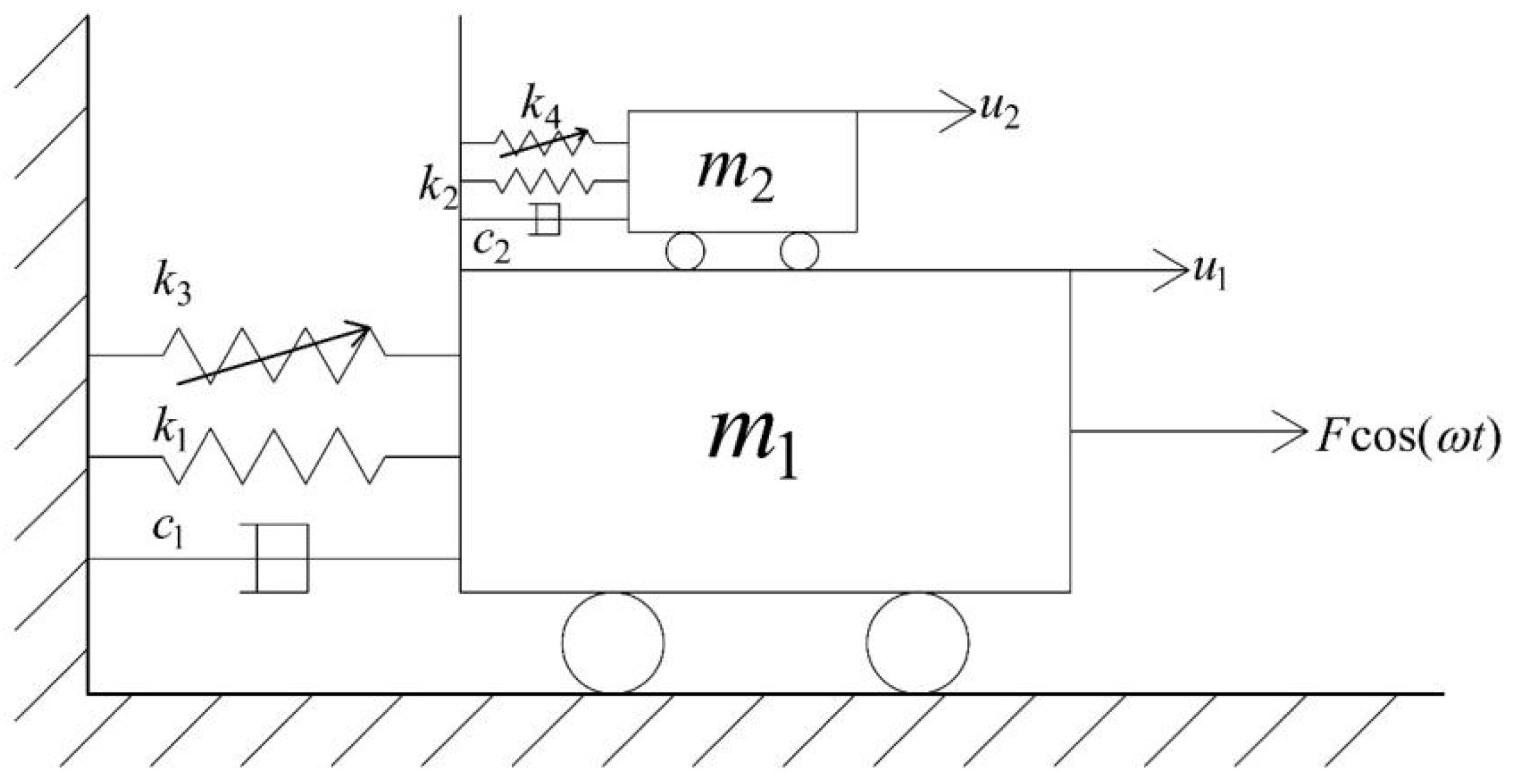
Figure 1 presents a schematic mechanical diagram depicting the system model, which integrates a TMD and the primary structure demonstrating nonlinear dynamics. The principal structure experiences harmonic stimulation defined by an excitation force F and a corresponding excitation frequency ω. The nonlinear coefficients relevant to the TMD arise from the implemented limiters and the significant displacements experienced during TMD operation, while those pertinent to the primary structure are influenced by its design and other intrinsic factors associated with its vibrational response. It is critical to note that the nonlinear coefficients in both scenarios are not design parameters, but rather significant properties that emerge during vibration. In the diagram, the primary structure’s mass is denoted as
, the linear spring stiffness is denoted as
, the nonlinear spring stiffness is denoted as
, and the linear damping is denoted as
; the TMD’s mass is denoted as
, the linear spring stiffness connecting it to the primary structure is denoted as
, the nonlinear spring is represented by
, and the linear damping is indicated as
.
Initially, a mechanical framework for the analyzed two-degree-of-freedom system is formulated, and the equations of motion for the system, as depicted in
Figure 1, are derived utilizing Newton’s second law, articulated as follows:
where
represents the nonlinear coefficient associated with the primary structure, and
denotes the nonlinear coefficient relevant to the TMD.
The dimensionless representation of the equations is derived by incorporating the dimensionless parameter in the
Appendix A into Equations (1) and (2):
The joint Equations (3) and (4) ensure that both equations contain only one second-order derivative of x, y alone:
Equations (5) and (6) represent the fundamental differential equations governing an NTMD that regulates a nonlinear principal structural system, accurately depicting the structural response. Utilizing Taylor’s theorem in Equations (5) and (6), these equations are interpreted as functions of ε and expanded around the point
, preserving terms up to the first order, leading to
Based on Equation (7) as a reference, Equations (8) and (9) can be reformulated into the following format:
In this paper, the first-order minima was excluded from Equation (9). Both Equations (8) and (9) have disregarded fast-varying and higher-order terms, as these parameters hold negligible relevance to the present analysis; thus, only the essential slow-varying components have been preserved in the equations.
3. Complex Variable Averaging and Multiscale Analysis
In this section, the paper utilizes the techniques of complex variable averaging and multiscale analysis, which are essential components of approximate analytical methods, to delve deeper into the fundamental differential equations that govern system dynamics. This paper concentrates on the system’s steady state phase, where the complex variable averaging method within approximate analytical techniques effectively addresses challenges in both strongly and weakly nonlinear systems. By converting real variables into slowly varying complex counterparts, this approach enables the acquisition of the desired steady-state solution. The application of the complex variable averaging method to the original differential equations yields a set of complex variable formulations for the system. Subsequently, these equations undergo additional refinement through the multiscale analysis technique, which involves partitioning time into two distinct scales, thereby removing the rapidly oscillating components inherent in the equations. This methodology enables us to focus on the asymptotic dynamics by discarding irrelevant terms in subsequent analytical procedures, ultimately facilitating the derivation of the system’s slow invariant manifold.
By employing the complex variable averaging method, the steady-state response of the NTMD is approximated as a first-order harmonic function, synchronized with the excitation frequency. This approach involves transforming the second-order system of equations into a more manageable first-order system to derive the solutions. The first-order approximate solutions for Equations (10) and (11) are detailed:
where
is a complex variable composed of the steady-state amplitude and phase of the main structure,
is a complex variable composed of the steady-state amplitude and phase of the nonlinear TMD,
is the ratio of the excitation frequency to the frequency of the controlled structure, and
represents the complex conjugate of the initial solution segment.
Substituting
and
into Equations (8) and (9), the resulting equations are averaged, ignoring the higher terms and retaining the
term, and the new equations are obtained after collation:
The research is specifically concentrated on instances of 1:1 resonance, where the primary structure’s maximum response is observed when the external excitation frequency is close to that of the primary structure’s natural frequency. Consequently, the external excitation frequency (ω) and the primary structure’s natural frequency (ω1) are both set to 1. Following the established definitions for these parameters, it follows that Ω = 1. By substituting these defined parameters into Equations (14) and (15), we obtain
By transposing all terms from Equations (16) and (17), excluding the first-order derivatives to the right-hand side of the equality, we achieve the following result:
The first-order derivatives in Equations (18) and (19) derived by the complex variable averaging method are expanded into the form of first-order derivatives containing amplitude and phase:
Transposing
and
from the left to the right of Equations (20) and (21) results in
The subsequent interdependencies among
,
and
concerning amplitude and phase are as follows:
By substituting Equations (22)–(24) into Equations (20) and (21) and transforming them gives the first-order differential equations that describe the amplitude and phase of both the NTMD and primary structure:
Equations (25)–(28) are differential equations derived through the comprehensive application of the complex variable averaging method to the system’s motion equations. In this paper, these will be denoted as the system’s complex variable differential equations.
Equations (14) and (15) are analyzed using the multiscale method, which divides time into two scales, the fast time variable and the slow time variable:
Expanding the studied amplitudes yields a form containing small quantities:
Substituting the above multiscale variables into Equations (20) and (21) gives
Computing Equations (32) and (33) and neglecting the higher terms of
yields
Treating Equations (34) and (35) as polynomial equations with respect to
, the equations have order
:
The
order of the equation has
It is worth noting that the article focuses on the steady state response part, which assumed the stability of this response on rapid temporal scales. As a result, the fast time scale variables tend asymptotically to 0 compared with the slow time scale variables. Thus, the derivatives of the fast time scale variables can be considered to satisfy
. Under these assumptions, Equations (37) and (38) can be reformulated as follows:
The formulation of Equation (40) is derived as follows:
Substituting Equations (40) and (41) into Equation (39) yields equations that specifically describe the amplitude and phase properties of the TMD:
Isolating the real and imaginary components of Equation (42) results in the real component expressed as
Note that Equations (43) and (44) for the real and imaginary components of the equation share common factors. To streamline these expressions and facilitate easier analysis, establish
Substituting Equation (45) into Equations (44) and (43) gives the simplified form of the equation:
Equations (46) and (47) can be further derived to represent the system’s slow invariant manifold, described by the equation
The equations of the system up to that point contained both fast- and slow-changing variables, and the slow variables usually have a dominant influence on the long-term behavior of the system. Slow invariant manifolds are low-dimensional structures presented in the space of slow variables, which describe the system on slow variable time scales, ignoring the details of fast variations. To analyze intricate systems comprising nonlinear primary structures and nonlinearly TMDs, slow invariant manifolds can project the system’s state into the domain of slow variables to derive the system’s steady state. By examining these slow variables, the system’s complexity is reduced, yielding clearer steady-state outcomes, thereby enhancing the comprehension and forecasting of the complex system’s behavior. For example, in flexible robotic arms or aircraft control, model reduction based on slow invariant manifolds can simplify control law design, requiring only slow variable control while ensuring system stability.
4. Nonlinear Analysis of the System and Nonlinear Design of NTMDs
The derivation of the system’s complex variable equations and slow invariant manifolds has been achieved using complex variable averaging and multiscale techniques, as detailed in the preceding section. Conventional linear TMD design approaches typically assume linearity, where the linearly designed TMD mitigates the primary structure’s vibrational energy, thereby decreasing the steady-state amplitude across various excitation frequencies and ensuring structural stability. Nonetheless, considering the nonlinear dynamics induced by significant displacements and the inclusion of limiting devices in TMDs, along with the nonlinear behavior of the primary structure resulting from design parameters, material properties, and vibrational processes, TMD designed under traditional linear assumptions will fail to deliver optimal control efficacy. Consequently, integrating the nonlinear properties of both the TMD and the primary structure is crucial for achieving superior structural control behavior.
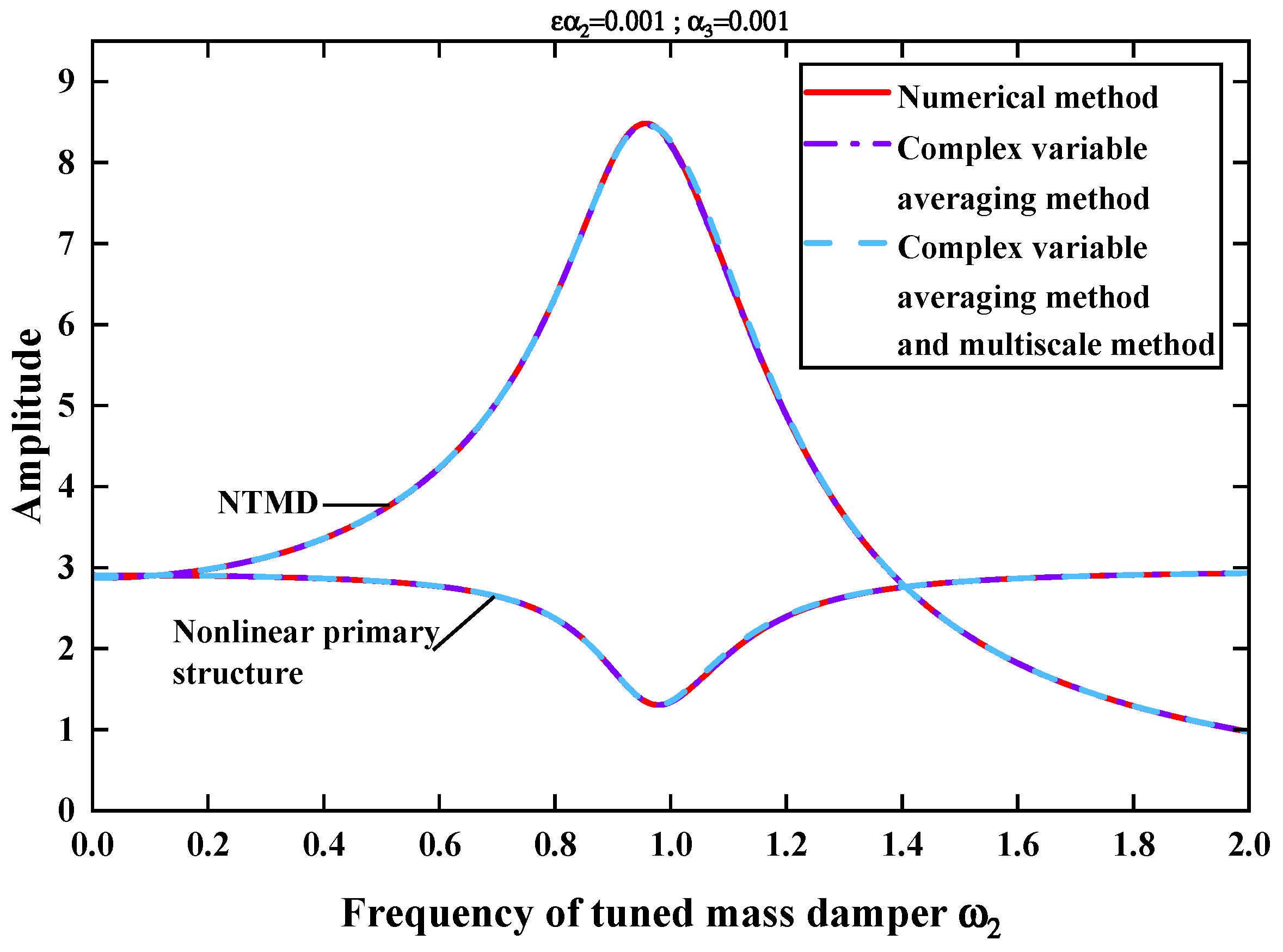
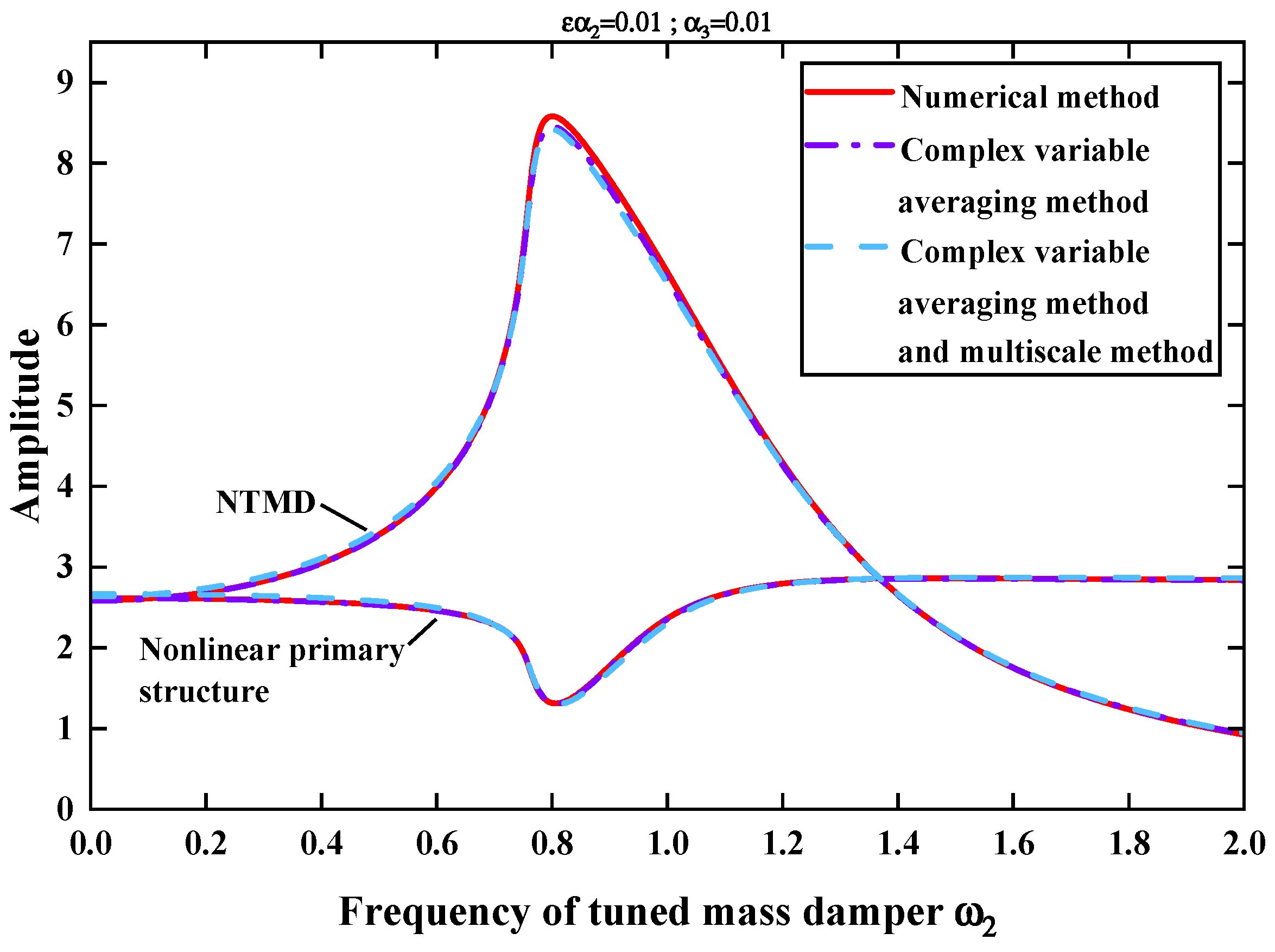
To validate the accuracy and precision of the complex variable equations and slow invariant manifolds derived in this study, comparative analyses were conducted using Equations (5), (6), (25)–(28), (48) and (49) to generate the frequency amplitude curves depicted in
Figure 2. The parameters of the system for graphing are shown in
Table 1 (note that some parameters in
Table 1 are dimensionless and therefore unitless). Initially, the relevant parameters
,
and
of the primary structure are established. The TMD’s mass is temporarily set to 2% of the primary structure’s mass. Subsequently, the remaining design parameters are determined using the optimization formula for designing a damped linear TMD. The nonlinear coefficients for both the primary structure and the TMD are assigned 0.001, from which the corresponding nonlinear stiffness is derived:
The red curves in
Figure 2 represent the frequency response amplitude curves obtained through numerical solutions of the system’s original differential equations, namely Equations (5) and (6). The horizontal axis denotes the TMD frequency, and the vertical axis signifies the amplitude of both the NTMD and the nonlinear primary structure. The purple dotted lines show the frequency–amplitude curves derived from the system’s complex variable equations by the complex variable averaging method, as detailed in Equations (25)–(28). The light-blue dashed lines represent the frequency–amplitude curves derived from the slow invariant manifolds of the system. These curves are obtained through the application of both the complex variable averaging method and the multiscale method, as given in Equations (48) and (49). As observed in
Figure 2, the consequences of the complex variable equations and the slow-invariant manifolds closely match those obtained through numerical methods. This agreement validates the effectiveness of the complex variable averaging method and the multiscale method in solving such problems, confirming the exact nature of the complex variable equations and slow invariant manifolds derived from these approaches. This high degree of accuracy in the computational results meets the requirements for subsequent analyses.
When the nonlinear coefficients, denoted as
and
are increased to 0.01, the system frequency response amplitude curves, as depicted in
Figure 3, exhibit a leftward shift relative to those in
Figure 2. Simultaneously, the frequencies of the TMD that correspond to the maximal amplitude values for both the primary structure and the NTMD undergo changes. This indicates that the TMD nonlinear properties and the primary structure significantly influence the TMD optimal frequency. In these scenarios, relying exclusively on conventional linear design methods would not result in optimal control behavior for the TMD. This analysis underscores the critical importance of accounting for the nonlinear properties of both the primary structure and the TMD during the design phase to ensure optimal structural control behavior.
Table 2 presents the TMD frequencies corresponding to the peak amplitudes of the NTMD and the minimal amplitudes of the nonlinear primary structure, derived using Equations (5), (6), (25)–(28), (48) and (49), with identical parameter settings, as depicted in
Figure 3. A comparative analysis of the computational results derived from numerical methods, the complex variable averaging method, and the multiscale method indicates that there are only minor discrepancies between the outcomes of the complex variable averaging and the multiscale methods when contrasted with the numerical results. These discrepancies are minimal, thereby reaffirming the accuracy and validity of Equations (25)–(28), (48) and (49) for further analyses.
In the TMD design process, the intrinsic frequency of the TMD is the key parameter, and a suitable intrinsic frequency can make the TMD have a better control behavior. In the parameter case corresponding to
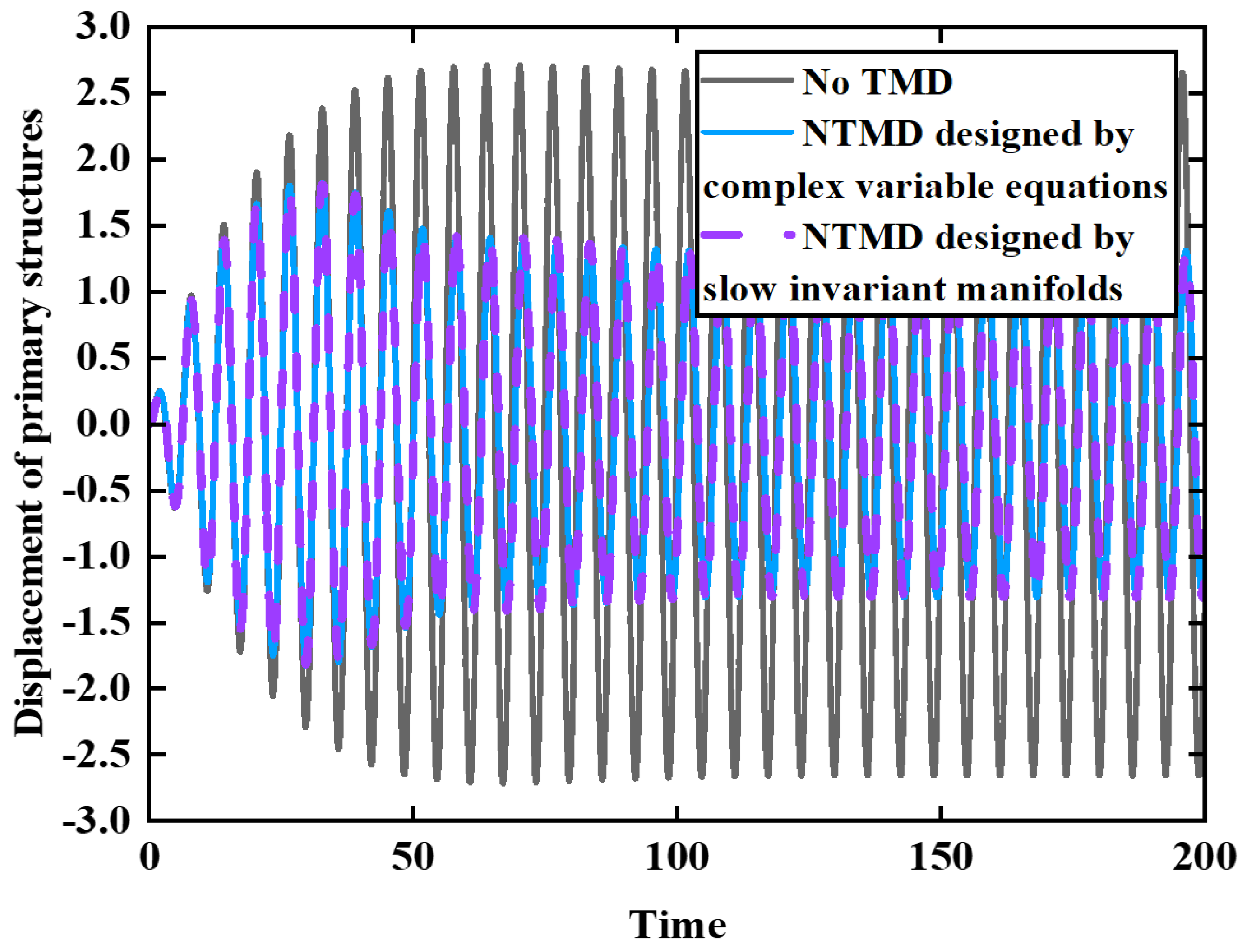
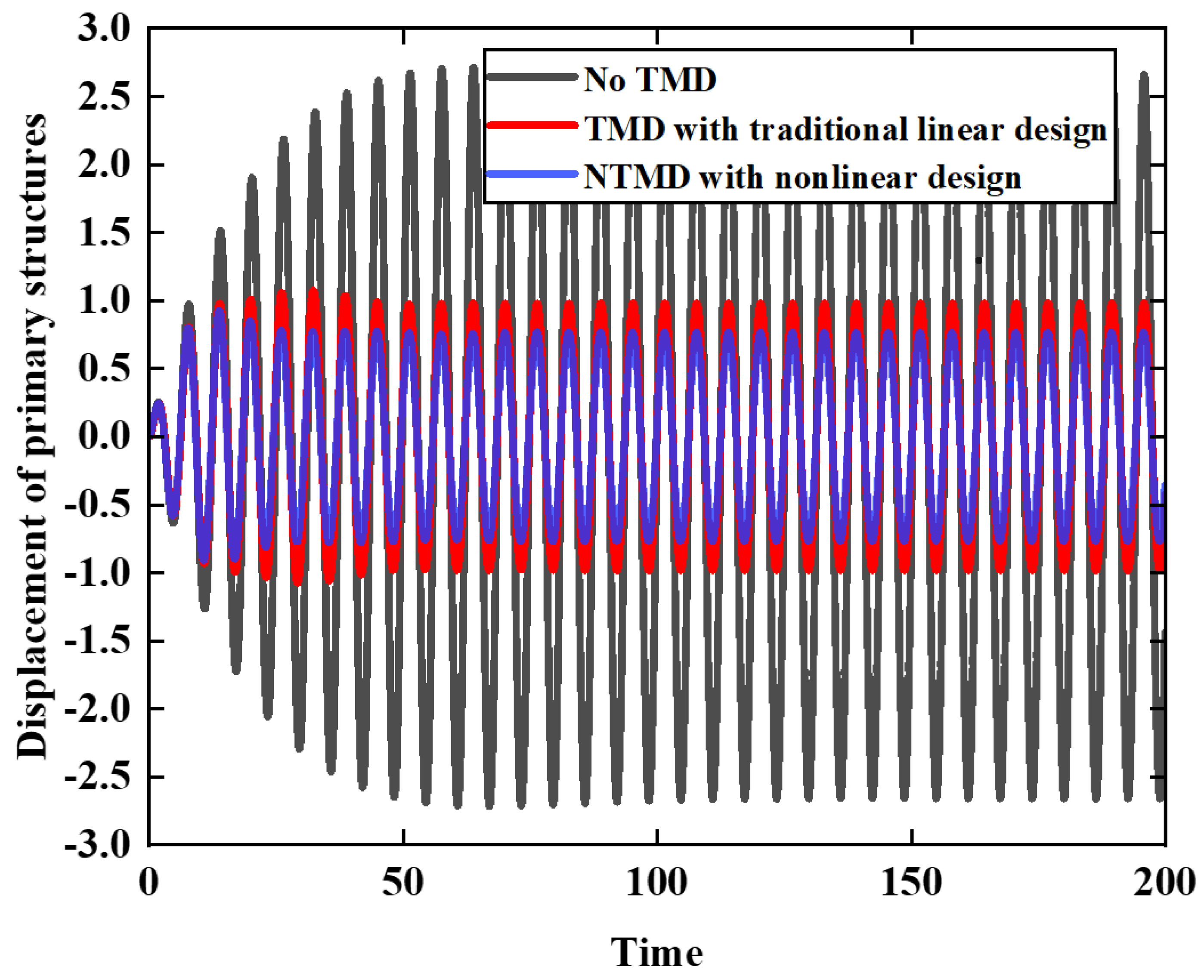
Figure 3, the optimum NTMD design frequency corresponding to the NTMD and the primary structure system is determined by the complex variable averaging method and the slow invariant manifold, which is taken to obtain the displacement time-series diagrams of the TMD-less structure and the two equation-designed NTMDs for controlling the nonlinear primary structure, as shown in
Figure 4.
Figure 4 illustrates that in the steady state, the displacements of the NTMD-controlled nonlinear primary structure designed by the optimum NTMD frequency obtained from the complex variable equations of the system and the slow invariant manifold are 49.27% and 49.29% of the displacements of the TMD-less primary structure, respectively, which clearly validates the validity of the NTMD-controlled nonlinear primary structure at this design frequency.
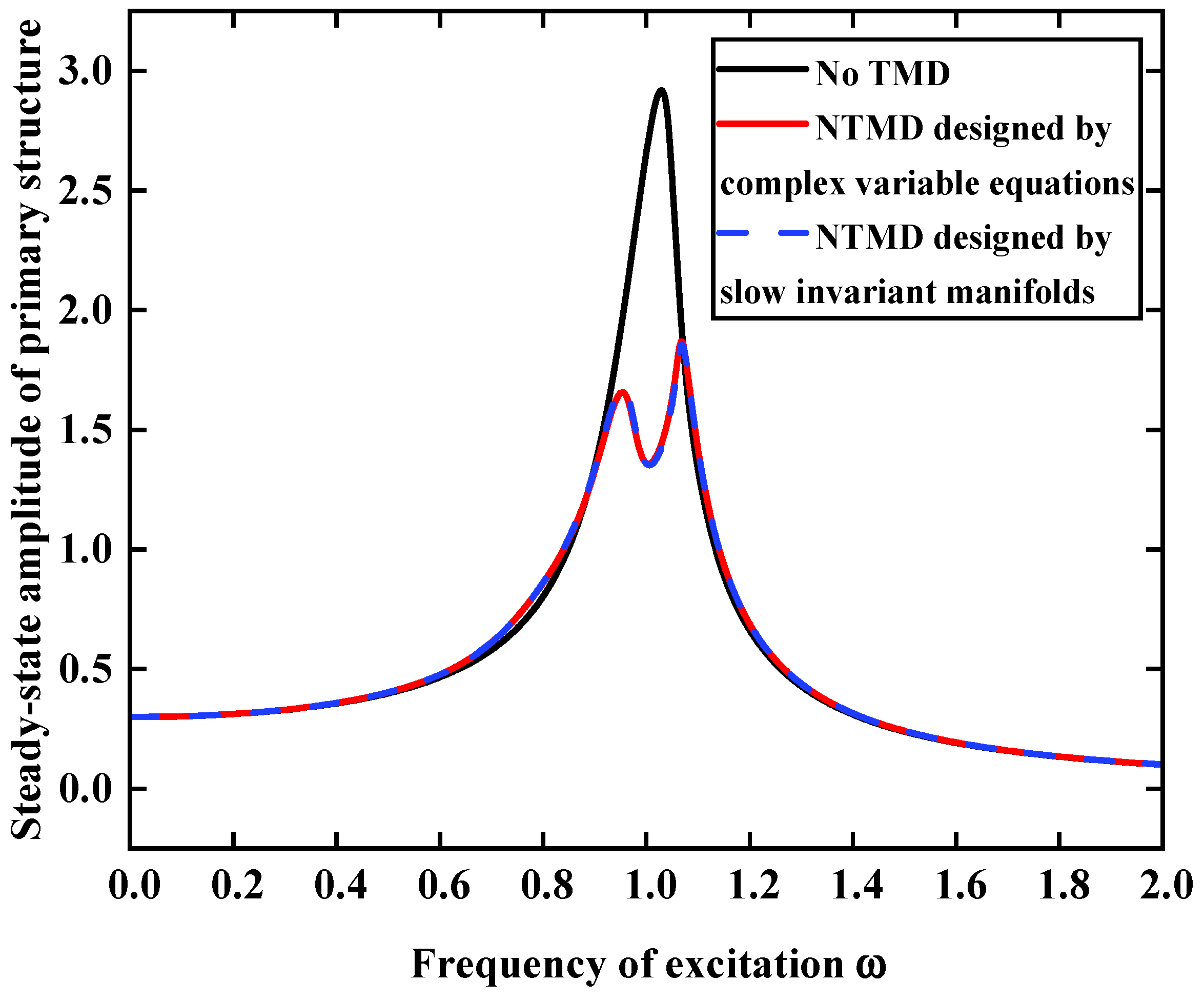
The response frequency curves of the nonlinear primary structure under the specified parameter design are shown in
Figure 5. The excitation frequency (ω) is set at horizontal coordinates, and the primary structure’s amplitude is set at vertical coordinate in the steady state. These curves play a pivotal role in evaluating the control effectiveness of the TMD on the structure and in determining the optimum tuning frequency. By analyzing the shape and peak positions of the response curves, engineers can optimize the TMD’s design parameters, providing a visual aid for system design and parameter optimization. As depicted in
Figure 5, the response frequency curves obtained from the NTMD designed by the complex variable equations and the slow invariant manifold shape show a better damping effect. The response frequency curve controlled by the NTMD of the primary structure, which has a double peak, with the two peaks positioned close to each other, reduces the primary structure’s maximum amplitude by 35.95% compared to the control structure without an NTMD. However, the optimization effect is not yet fully realized. In the response frequency curve, optimal control is generally achieved when the primary structure’s amplitude is equal to the left and right. As per the literature [
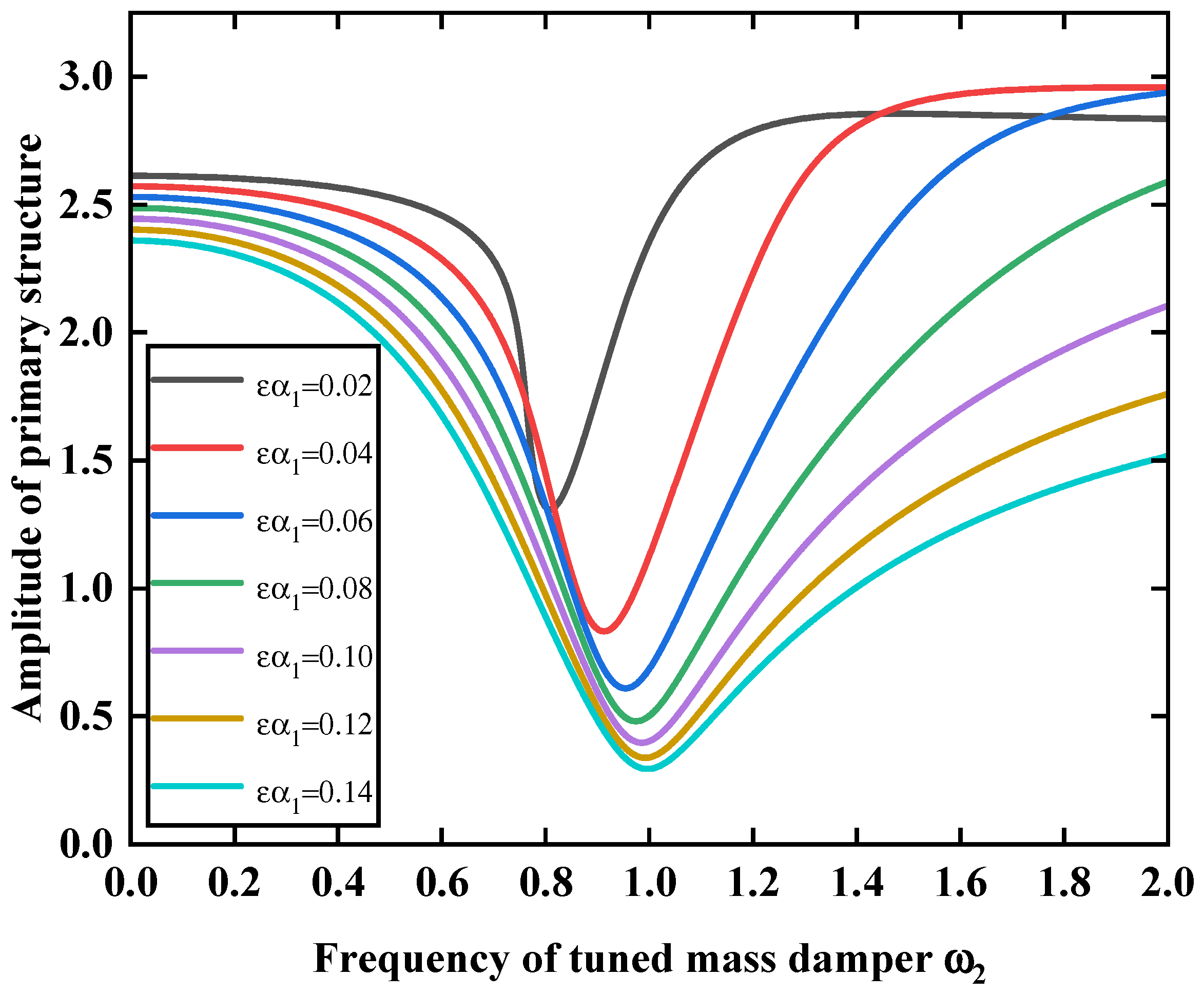
27], considering the nonlinear properties of the TMD, raising the mass ratio within a certain range can effectively improve the TMD’s control behavior. This study takes account of the nonlinear properties of both the TMD and the primary structure and investigates the impact of varying mass ratios on the TMD’s damping performance. Structure mass ratios of
= 0.02, 0.04, 0.06, 0.08, 0.10, 0.12, and 0.14 are set, with other parameters held constant, and the primary structure’s frequency–amplitude curves are shown in
Figure 6.
Figure 6 illustrates that, similar to the system composed of an NTMD and linear primary structure, the control behavior of the primary structure at the optimal frequency of the TMD is gradually improved with an increase in the mass ratio, but after exceeding a certain mass ratio, the improvement in the control behavior brought about by the increase in the mass ratio gradually becomes smaller. However, the difference between the value and the study of NTMD control of a linear primary structure system is that, due to the existence of nonlinear coefficient
of the primary structure in the system, when the mass ratios are 0.04 and 0.06, the control effect of the TMD is even weaker than that of the mass ratio of 0.02 at some frequencies, which leads to a larger vibrational response of the structure, which is not conducive to the stabilization of the structure, and therefore, the two mass ratios are considered. The two mass ratio parameters are selected. Observing the curves, the more appropriate value of the mass ratio is 0.1, and the increase in the control behavior of the structure brought about by increasing the ratio of the mass becomes less obvious, and the increase in the control behavior brought about by increasing the mass ratio of 0.02 is very small.
Using Equations (25)–(28), (48), and (49), we determined the parameters εα
1 = 0.10, εα
2 = 0.01, α
3 = 0.01,
λ1 = 5,
λ2 = 0.155,
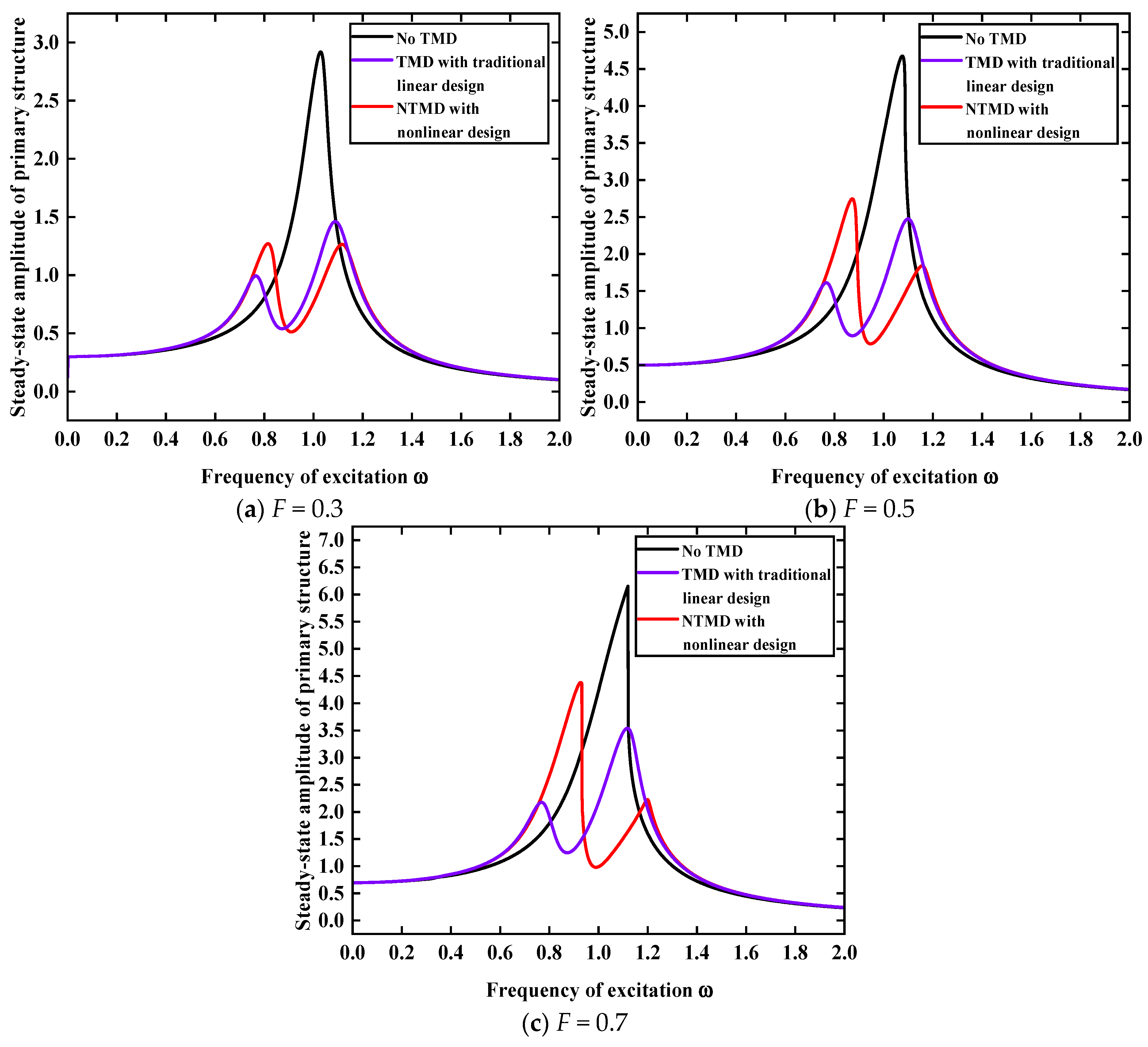
F = 0.3, and ω
2 = 0.862 to calculate the response frequency of the nonlinear primary structure mitigated by the NTMD under the specified parameter scenarios. These results are juxtaposed with the performance of a TMD control system designed using conventional linear TMD methodologies, as depicted in
Figure 7.
Figure 7 illustrates that the nonlinear design, which integrates the nonlinear TMD and primary structure, achieves superior control efficacy, significantly attenuating the response amplitude at the structure’s resonance frequency. Moreover, the NTMD’s control effectiveness becomes more pronounced with escalating external excitation forces. Conversely, the scenarios addressed by the traditional linear TMD design are idealized and seldom manifest in practical applications.
Figure 8 displays the primary structure’s displacement time history for the scenarios presented in
Figure 7. The data indicates that the TMD developed through traditional linear methodologies mitigates the primary structure’s steady-state displacement by 63.05%. In comparison, the NTMD designed with nonlinearity achieves a more significant reduction of 71.26%. This comparison underscores the superior vibration mitigation efficacy of the NTMD, highlighting the importance of considering nonlinearities in the design process. In essence, accounting for the nonlinear dynamics inherent in both the TMD and primary structure, the NTMD demonstrates enhanced overall control behavior compared to its traditionally designed linear counterpart.
In light of the preceding analysis, it is clear that neglecting the nonlinear properties of both the primary structure and the TMD during the design phase results in a TMD designed using conventional linear methods being less effective than the NTMD developed using nonlinear principles. The linear design method assumes ideal conditions, which are seldom encountered in real-world applications. The intrinsic and extrinsic nonlinearities present in the TMD and primary structure significantly undermine the validity of the linear design approach. Furthermore, experimental studies have shown that the expected vibration damping performance of TMDs is often unattainable when nonlinear attributes are overlooked. Therefore, it is crucial to incorporate the nonlinear properties of both the primary structure and the TMD into the design procedure to ensure optimal control behavior.
The primary structure’s frequency and amplitude curves of the selected parameters were derived using parameters εα
2 = 0, α
3 = 0.02,
λ1 = 5,
λ2 = 0.155, and
F = 0.3 and mass ratios
and
, respectively, as illustrated in
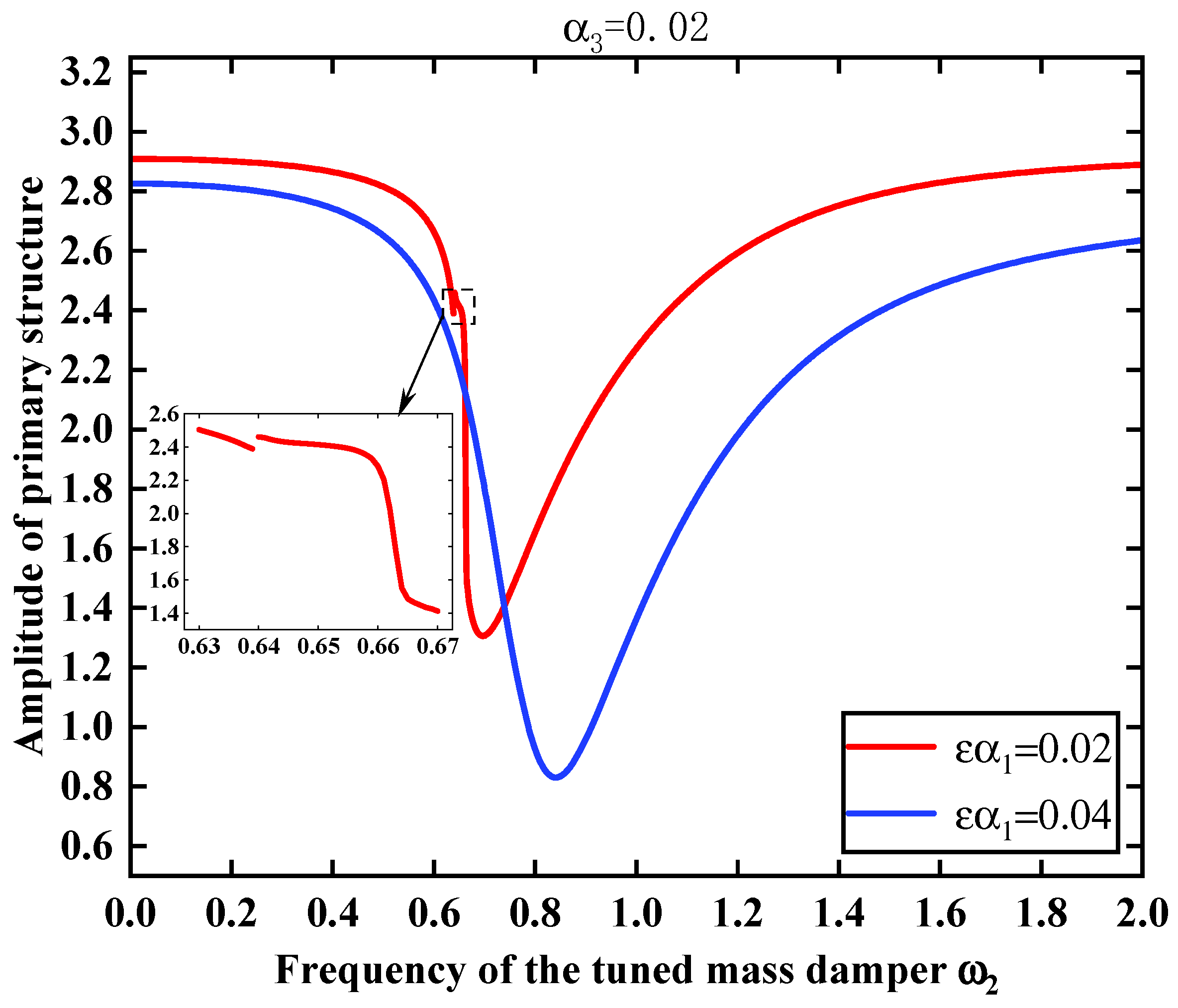
Figure 9. The red curve in
Figure 9 illustrates that when the NTMD frequency
is taken in the interval of 0.630–0.670, the primary structure experiences a significant jump phenomenon. Notably, the amplitude of the primary structure surges sharply at
= 0.640 and then declines at
= 0.660, suggesting system instability within the range of
= 0.630–0.670. By increasing the mass ratio to 4%, as shown by the blue curve in
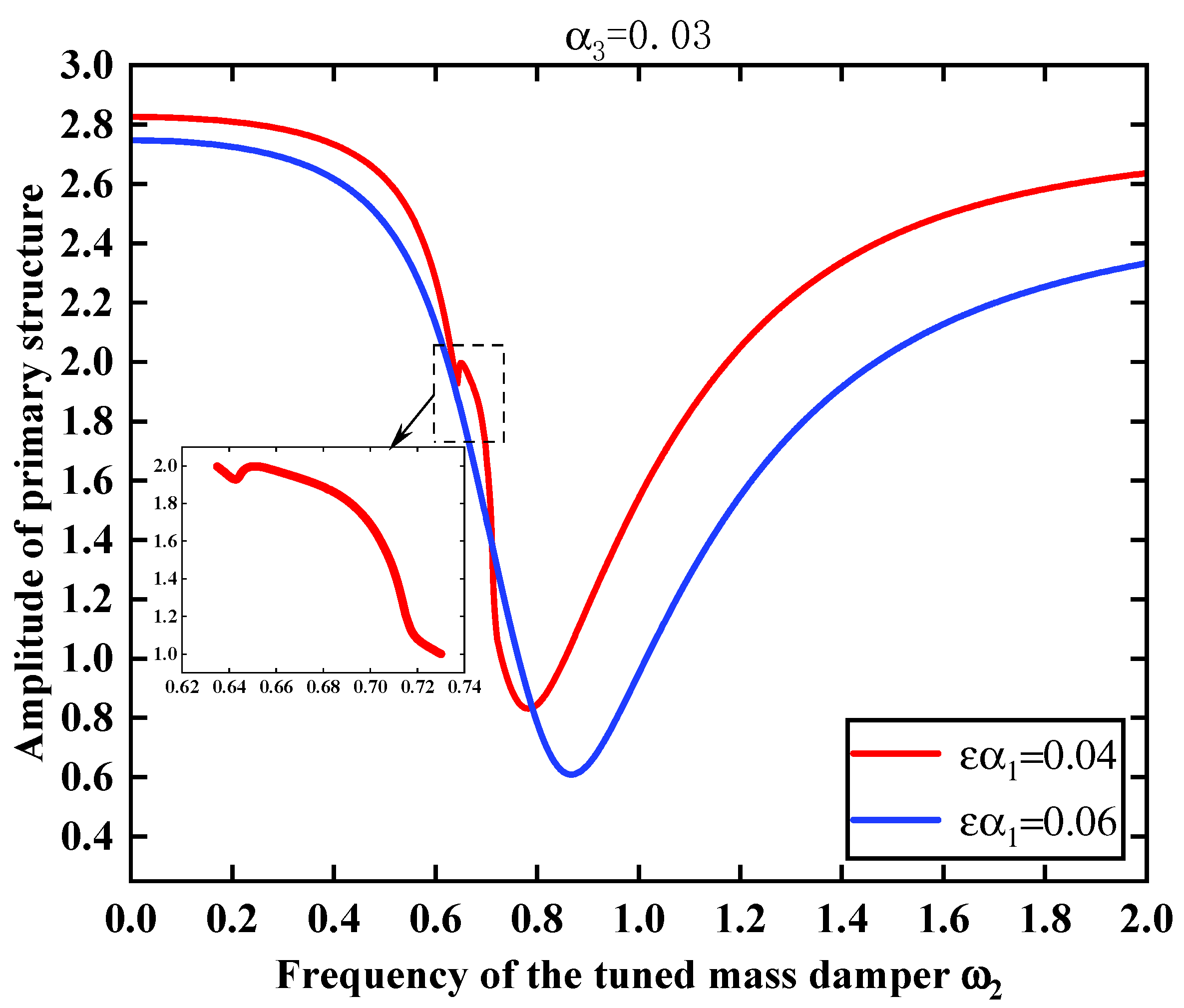
Figure 9, the jump phenomenon is mitigated, and the primary structure’s control behavior is improved. To confirm that the jump phenomenon is correlated with the nonlinear coefficient of the NTMD, the coefficient was adjusted to
= 0.03, with mass ratios set to
= 0.04 and
= 0.06, while
remained constant. The frequency–amplitude curves under these conditions are presented in
Figure 10.
As shown in
Figure 9 and
Figure 10, when the ratio of the mass of the TMD and primary structure is 0.04, after the NTMD nonlinear coefficient increases to 0.03, the jump phenomenon occurs again in the interval of
= 0.640–0.718, and the range of the frequency interval in which the jump phenomenon occurs increases, and the jump phenomenon disappears after the mass ratio increases to 0.06.
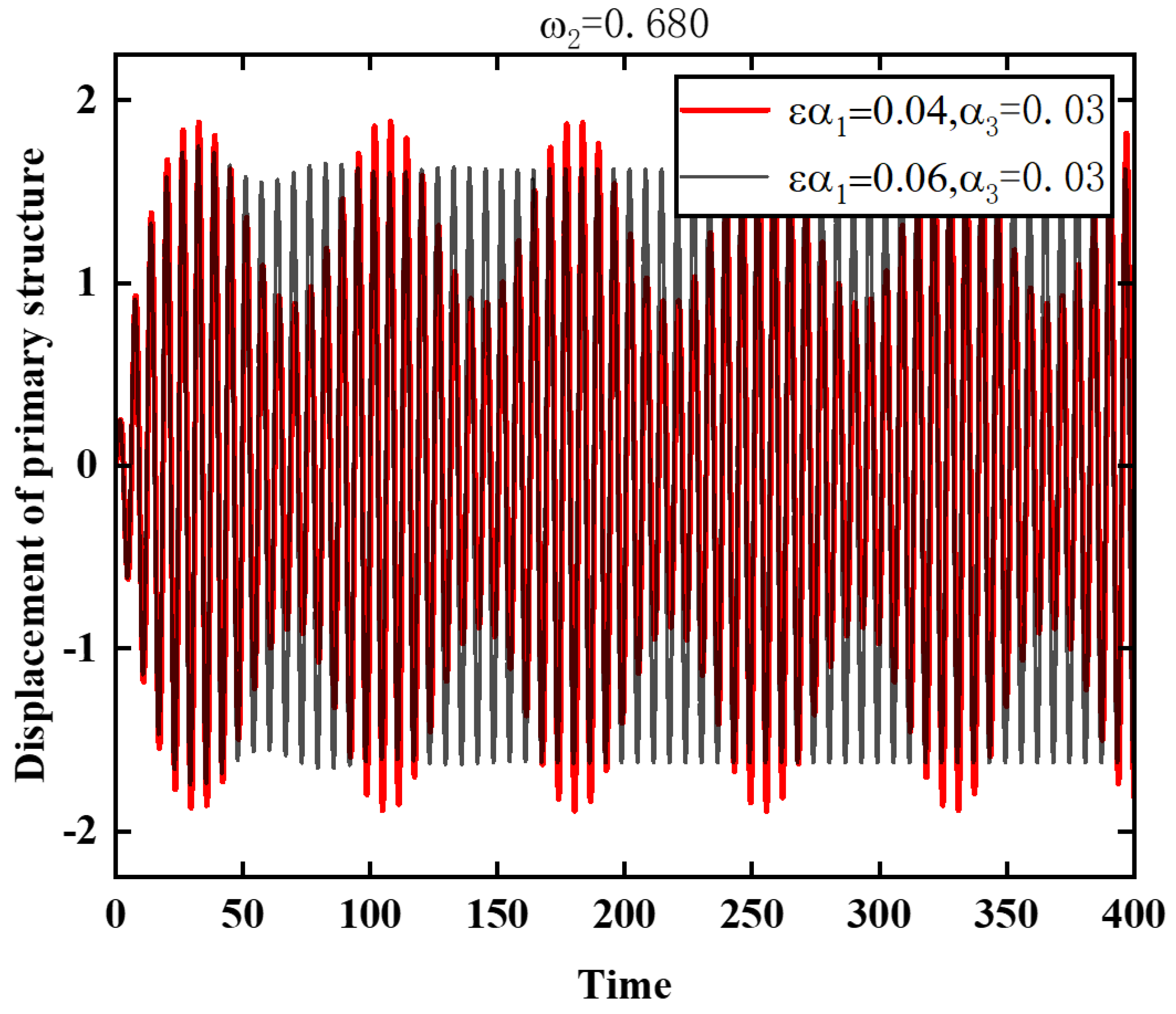
Taking the midpoint of the jumping phenomenon
= 0.680, the primary structure’s time–distance curves with different mass ratios are shown in
Figure 11. Upon examining
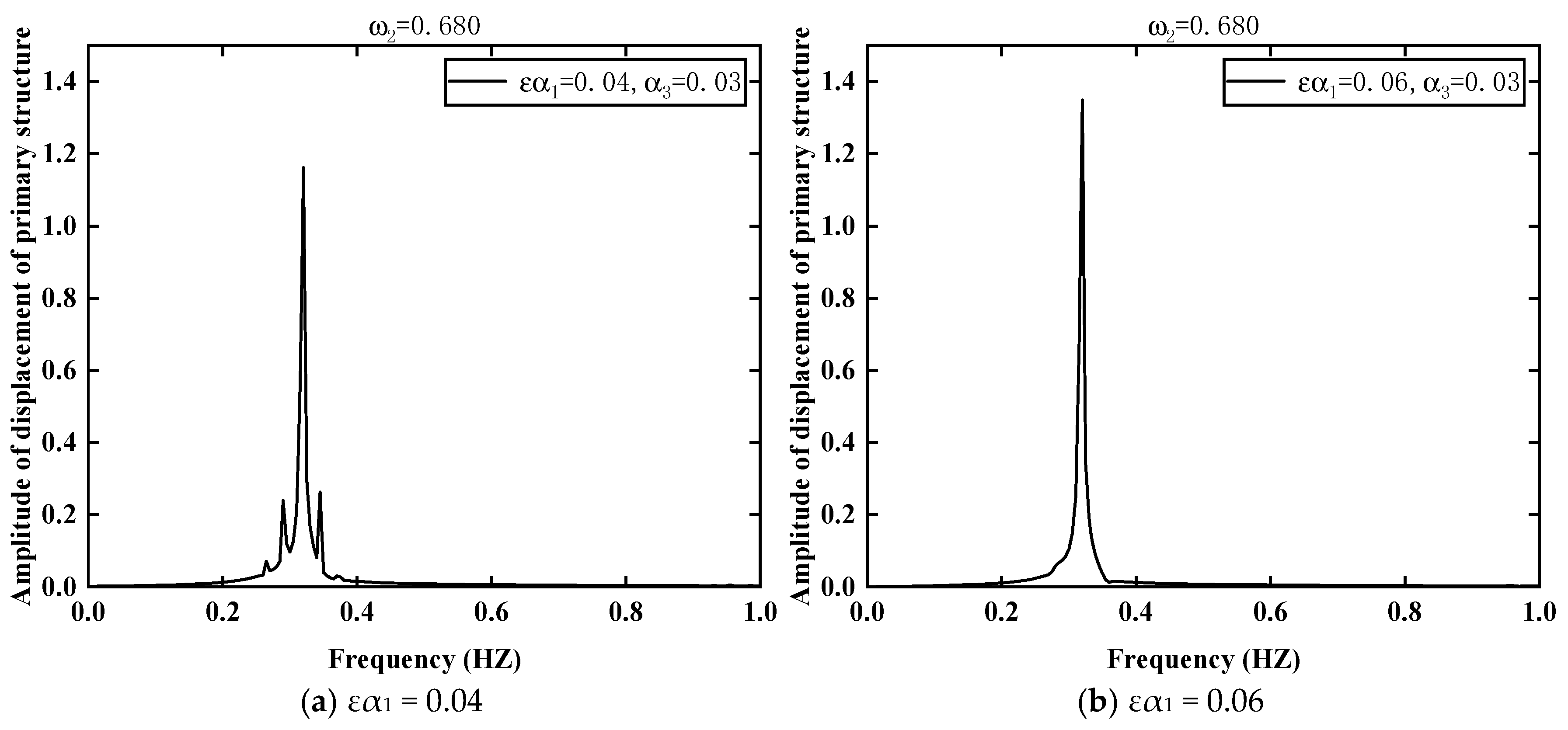
Figure 11, the time–distance curves apparently indicate that the primary structure is unstable during the period when the jumping phenomenon occurs. After the mass ratio is increased, the time–distance curve tends to stabilize and the primary structure remains stable, and the displacement of the steady state is lower than the maximum displacement when the mass ratio is 0.04. Frequency domain analysis in
Figure 12 reveals that at a mass ratio of 0.04,
Figure 12a exhibits one large peak and two smaller peaks for the primary structure, whereas
Figure 12b shows only one large peak at a mass ratio of 0.06, thereby corroborating the analytical findings from
Figure 11. In conclusion, the nonlinear coefficients of the NTMD can induce a jumping phenomenon in the primary structure, causing a sudden increase in amplitude at specific TMD frequencies. This phenomenon negatively impacts TMD damping efficacy, the control behavior of the primary structure, and overall system stability. However, increasing the mass ratio of the TMD and the primary structure can mitigate or even eliminate this effect. Therefore, in the design process of the project, the appropriate mass ratio can not only improve the TMD’s damping behavior and enhance the primary structure’s control behavior, but also enhance the stability of the system, prevent the jumping phenomenon of the TMD and primary structure, and improve the overall vibration damping behavior of the structure.