Article

Direct Shear Rheological Tests on Clays and Model Analysis

1
School of Civil Engineering and Transportation, South China University of Technology, Guangzhou 510640, China
2
Guangzhou Municipal Engineering Design and Research Institute Co., Ltd., Guangzhou 510060, China
3
State Key Laboratory of Subtropical Building and Urban Science, Guangzhou 510640, China
*
Authors to whom correspondence should be addressed.
Buildings 2026, 16(6), 1246; https://doi.org/10.3390/buildings16061246
Submission received: 6 February 2026 / Revised: 9 March 2026 / Accepted: 19 March 2026 / Published: 21 March 2026
(This article belongs to the Section Building Structures)

Abstract

This study aims to investigate the influence of clay mineral content on the rheological properties and long-term deformation stability of clays, and to establish a unified model capable of quantitatively describing the nonlinear rheological behavior of clays with different mineral compositions. Direct shear rheological tests were conducted on specimens prepared with different mixing ratios of bentonite, kaolin, and quartz. Combined with micro-mechanism analysis, the controlling factors of clay rheological behavior were explored. The experimental results show that the creep stress threshold, elastic viscosity, and average plastic viscosity decrease significantly with increasing clay mineral content. The rheological deformation exhibits distinct nonlinear characteristics, and clay mineral content plays a controlling role in the rheological behavior. Based on experimental and mechanistic analysis, a unified rheological model was established, which reflects the material origin of rheology and captures nonlinear rheological characteristics. This model can predict the entire time-history mechanical behavior of clays with different mineral compositions across the three stages of instantaneous deformation, decay rheology, and steady-state rheology under different shear stress levels using a single set of parameters. Validation was performed through direct shear rheological tests under 50 working conditions for five types of clay specimens, demonstrating good consistency between the model calculations and experimental results. The unified rheological model reveals the material origin and physical essence of clay rheology, demonstrates high universality, and advances the understanding of the influence of mineral composition on rheology from the current phenomenological qualitative description to quantitative calculation for the first time, significantly enhancing its engineering application value. This provides a more reliable tool for predicting long-term deformation and assessing the stability of clay foundations.

1. Introduction

Clay is a multiphase medium composed of soil particles, pore water, pore gas, and other cementitious materials, exhibiting significant time-dependent deformation characteristics, among which rheological behavior represents one of its time-dependent properties [1]. Rheology exerts considerable influence on the stability of foundation pit excavations in clay areas and the long-term settlement of structures, thus consistently remaining a focus of attention in both engineering practice and academic research [2].
Clay rheology is influenced by factors such as material composition, structural characteristics, and stress state within the soil [3,4,5]. Experimental studies on the effect of material composition on clay rheology have demonstrated [6,7,8,9,10] that clay rheology is primarily induced by the shear viscous flow deformation of highly viscous substances within the soil, including organic matter, oxides, bound water films, and fine clay particles enveloped by bound water. The greater the content of these substances, the more pronounced the rheological behavior. Compared to kaolin, bentonite exhibits stronger rheological properties. The underlying reason is that bentonite is primarily composed of minerals of the smectite group, which have stronger hydrophilicity, a distinctive feature being their strong swelling upon contact with water. It is smectite that plays a key role in the rheological characteristics and behavior of soils. While these investigations have contributed significantly to understanding the material origins and microscale physical mechanisms of rheology, exploration of the evolutionary patterns of parameters such as creep stress thresholds and viscosity coefficients, as well as the nonlinear characteristics of the rheological process, remains relatively limited. In reality, clay rheology exhibits marked nonlinearity [11,12,13], and these nonlinear characteristics are correlated with the type and content of viscous substances. Some scholars [14] have investigated the nonlinear characteristics of rheological test results for clays with different organic matter contents, revealing regular variations in model parameters with increasing organic matter content. Therefore, it is necessary to examine the influence of viscous substances on the nonlinearity of the clay rheological process to further refine clay rheology theory.
In the field of soil rheological model theory, researchers have proposed various model theories including empirical models [15,16], theoretical models [17,18], and general elastic-viscoplastic models [19,20,21,22]. Among these, theoretical models offer advantages such as intuitive conceptualization and clear physical significance. Furthermore, numerous mechanical models have been constructed by combining different rheological elements. Therefore, theoretical models remain an important aspect of current applied research in soil rheology theory [17]. In recent years, theoretical models of soil rheology have primarily expanded in the directions of nonlinearity and multidimensional space. Some scholars [23] have proposed a nonlinear viscoelastic element expressed in a power function form to represent the stress–time relationship, combining it with plastic elements to describe the nonlinear viscoplasticity of Tianjin coastal soft clay. Other scholars [24] have established a five-element nonlinear rheological constitutive model based on fractional derivative theory, which can reflect the instantaneous, decay, and steady-state creep characteristics of clay under low stress, as well as accelerated creep characteristics under high stress. Regarding theoretical analysis of clay rheological models, scholars [6,9] have effectively simulated clay rheological test results using existing rheological model theories. Some scholars [8] have also established seven-element composite rheological models by introducing Duncan nonlinear spring elements, providing good descriptions of soil rheological characteristics under multistage loading. Although these clay rheological models can effectively simulate clay rheological test curves, most remain qualitative phenomenological analyses that fail to reflect the microscale interaction mechanisms and material origins of clay rheology at the substance level. Particularly for the same type of soil, one set of model parameters is still required to represent one working condition, which significantly reduces the model’s applicability.
Bentonite, kaolin, and quartz were selected to prepare clay specimens with different clay mineral contents for direct shear rheological tests. Time-history curves of direct shear rheology, strain rate-shear stress relationship curves, and stress–strain isochronous curves were plotted. It was found that clay mineral content plays a controlling role in rheological behavior, and the critical stresses of rheological thresholds exhibit a decreasing trend with increasing clay mineral content. Based on micro-mechanism analysis, a power function form was adopted to characterize the nonlinear features of the clay rheological process. On this basis, a six-element rheological model was selected, and component parameters reflecting nonlinear characteristics and micro-material properties were introduced. Quantitative relationships between component parameters and clay mineral content were revealed, and a unified rheological model for clay was established. This model enables unified expression of rheological characteristics under different stresses for soils with varying equivalent clay mineral contents using a single set of model parameters, and the theoretical calculations show good consistency with experimental results.
In summary, building upon previous work by other researchers, this study, from a material concept perspective, reveals that clay mineral content plays a dominant controlling role in rheological behavior and establishes a nonlinear quantitative relationship between the content of clay minerals of different compositions and rheological parameters. From the micro-mechanism level, the study elucidates the material origin and physical essence of clay rheology, establishes a unified shear rheological model for clays, and for the first time, advances the understanding of the influence of mineral composition on rheology from previous phenomenological qualitative description to quantitative calculation. The established unified rheological model can accurately predict the entire time-history mechanical behavior of clays with different mineral compositions and contents under various working conditions using a single set of parameters, significantly enhancing the engineering application value of the theory and providing a reliable tool for predicting long-term foundation deformation.

2. Materials and Methods

2.1. Test Materials

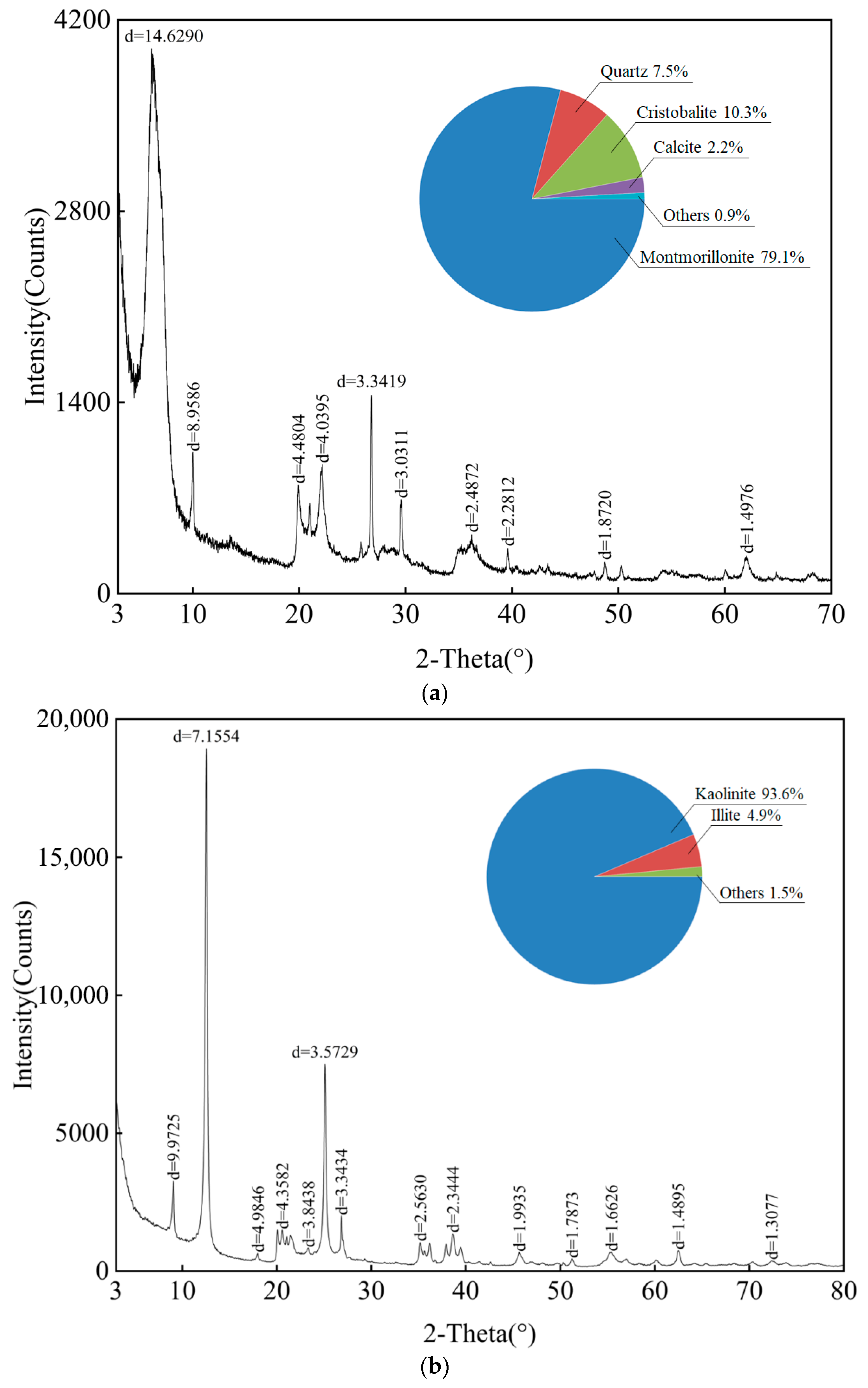
The bentonite, kaolin, and quartz used to prepare the clay specimens are commercial products (Guzhang Shan Lin Shi Yu Mineral Co., Ltd., Guzhang County, Hunan, China), and all their key parameters were remeasured by us. Quartz has a specific gravity of 2.67 and a particle size of 0.4~2 mm. Bentonite and kaolin have a fineness of 800 mesh (approximately 18 μm). The mineral composition was determined by X-ray diffraction (XRD) using a Rigaku MiniFlex-600 diffractometer (Rigaku Corporation, Tokyo, Japan) under the following conditions: scanning range 2θ = 3–80°, scan speed 10°/min, slit width 1 mm, operating current 15 mA, and operating voltage 40 kV. The XRD patterns of bentonite and kaolin are shown in Figure 1.
During specimen preparation: Bentonite, kaolin, and quartz were oven-dried. According to the predetermined ratios of the experimental design, the required masses of bentonite, kaolin, and quartz were weighed. Bentonite and kaolin were first mixed uniformly. A preset mass of distilled water (the mass calculated for each specimen based on the plastic and liquid limits to maintain a consistent liquidity index, IL, across all specimens) was then added and stirred to form a soft paste. This paste was thoroughly blended with quartz and compacted in layers into ring knives (dimensions: φ61.8 mm × 20 mm) for molding. The molded specimens were stored in sealed, saturated containers for 3 weeks to achieve moisture equilibrium before conducting the direct shear rheological tests [25].
Montmorillonite and kaolinite belong to different types of clay minerals, with montmorillonite having a more significant influence on soil rheology [9]. Considering that the plasticity index can, to some extent, characterize the plastic properties of soil, and rheology is a manifestation of soil viscoplasticity—i.e., a higher plasticity index indicates more pronounced soil rheology [26]—the equivalent clay mineral content α was used to uniformly evaluate the influence of different types of clay minerals on soil rheology. The calculation method is as follows:
α = α B + I P K / I P B × α K
In the formula, αB and αK represent the bentonite and kaolin contents, respectively, and IPB and IPK denote the plasticity indices of bentonite and kaolin.

2.2. Test Methods

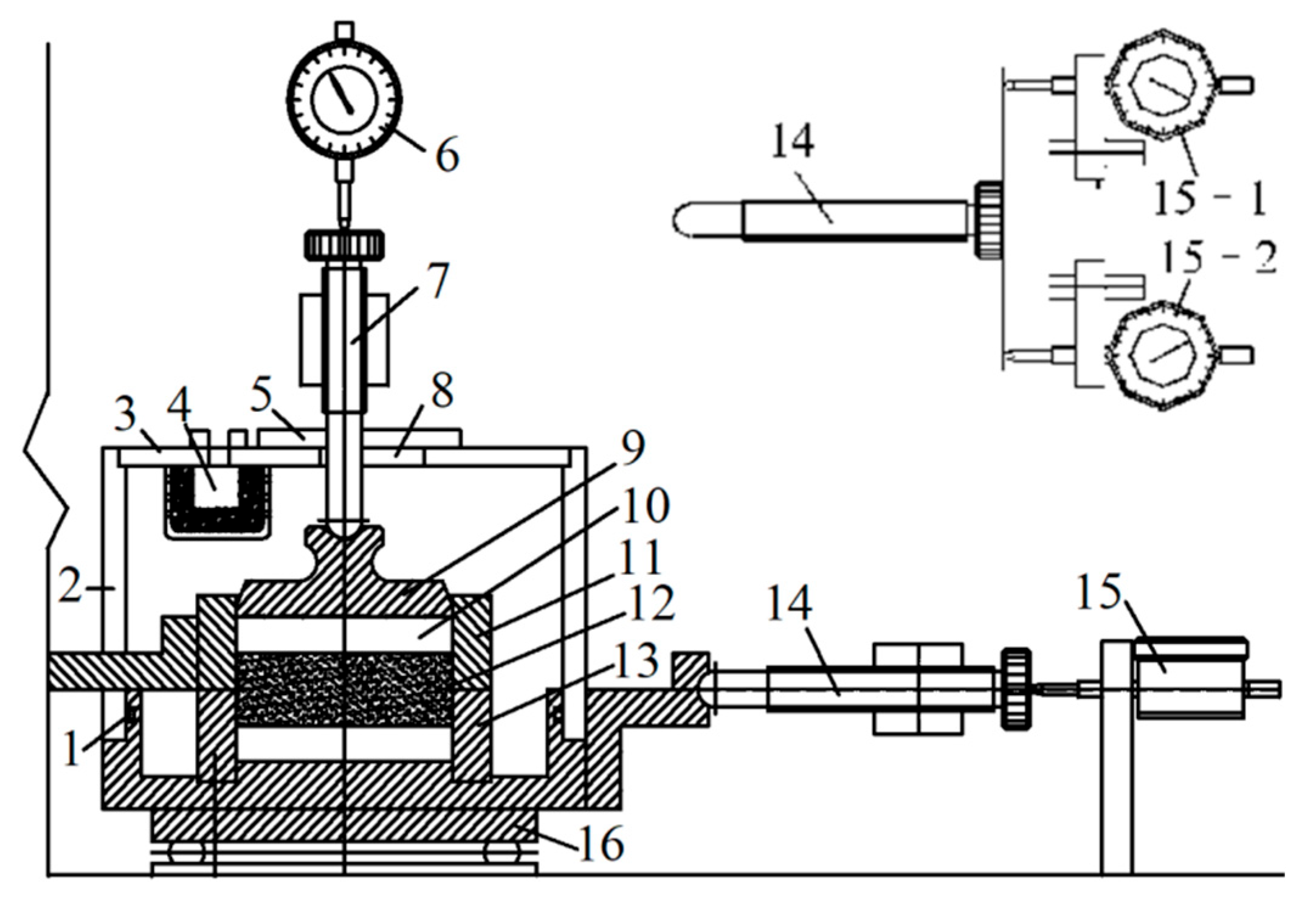
The direct shear creep apparatus employed in the tests is illustrated in Figure 2, which features a sealing moisturizing function and a displacement measurement accuracy of 1 μm [6]. The testing procedure comprises two stages: consolidation and shear rheology. The specimens were first subjected to stepwise vertical consolidation loads of 50 kPa, 100 kPa, 150 kPa, and 200 kPa in a consolidometer, with each load level maintained for 24 h. Subsequently, the consolidated specimens were mounted in the direct shear creep apparatus, and a predetermined vertical load of 200 kPa was applied. After deformation stabilization, shear loads were applied incrementally to conduct shear creep tests until specimen failure occurred [27]. During the first day of horizontal shear load application, shear deformation was recorded at the following time points: 0.1, 0.25, 1, 2.25, 4, 6.25, 9, 12.25, 16, 20.25, 25, 30.25, 36, 42.25, 49, 64, 100, 200, and 400 min, followed by 23 and 24 h. Subsequently, recordings were taken once every 24 h. The next load increment was applied only when the shear deformation over a 24 h period was less than 0.005 mm. The measured shear deformation values were converted to strain, and strain-time curves were plotted.

3. Results and Discussion

3.1. Material Characteristics

After obtaining the diffraction patterns, the Jade (Version 6.5) software was employed to compare the diffraction peak areas (calculated based on parameters such as the full width at half maximum) with standard crystal diffraction patterns. The resulting proportions of each mineral component are presented in Table 1.
Table 2 shows the physical property indices of bentonite and kaolin. The specific surface area was measured using the ethylene glycol monoethyl ether (EGME) adsorption method, based on equipment including a vacuum desiccator and a constant-temperature oven.
The composition and physical property indices of the clay specimens are listed in Table 3. It should be noted that the experimental design focused on the influence of clay mineral content. The clay minerals were maintained in a plastic state, and the “soft–hard” degree of the clay minerals was kept approximately the same across all specimens. Due to differences in clay mineral content and specific surface area, the amount of water required to maintain a similar “soft–hard” degree varied, resulting in different overall water contents w for specimens containing the same type but different amounts of clay minerals.

3.2. Time-History Curves of Direct Shear Rheology

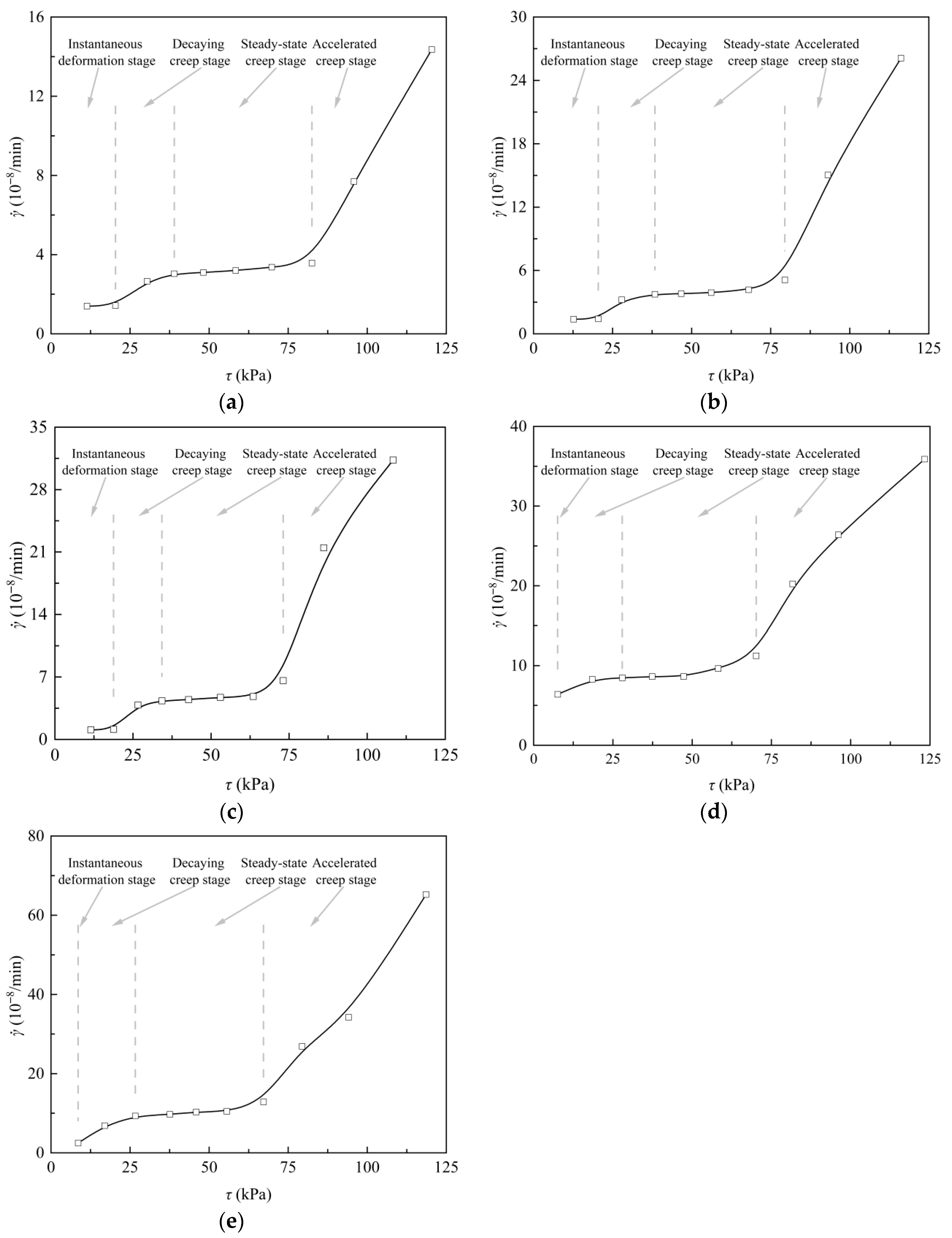
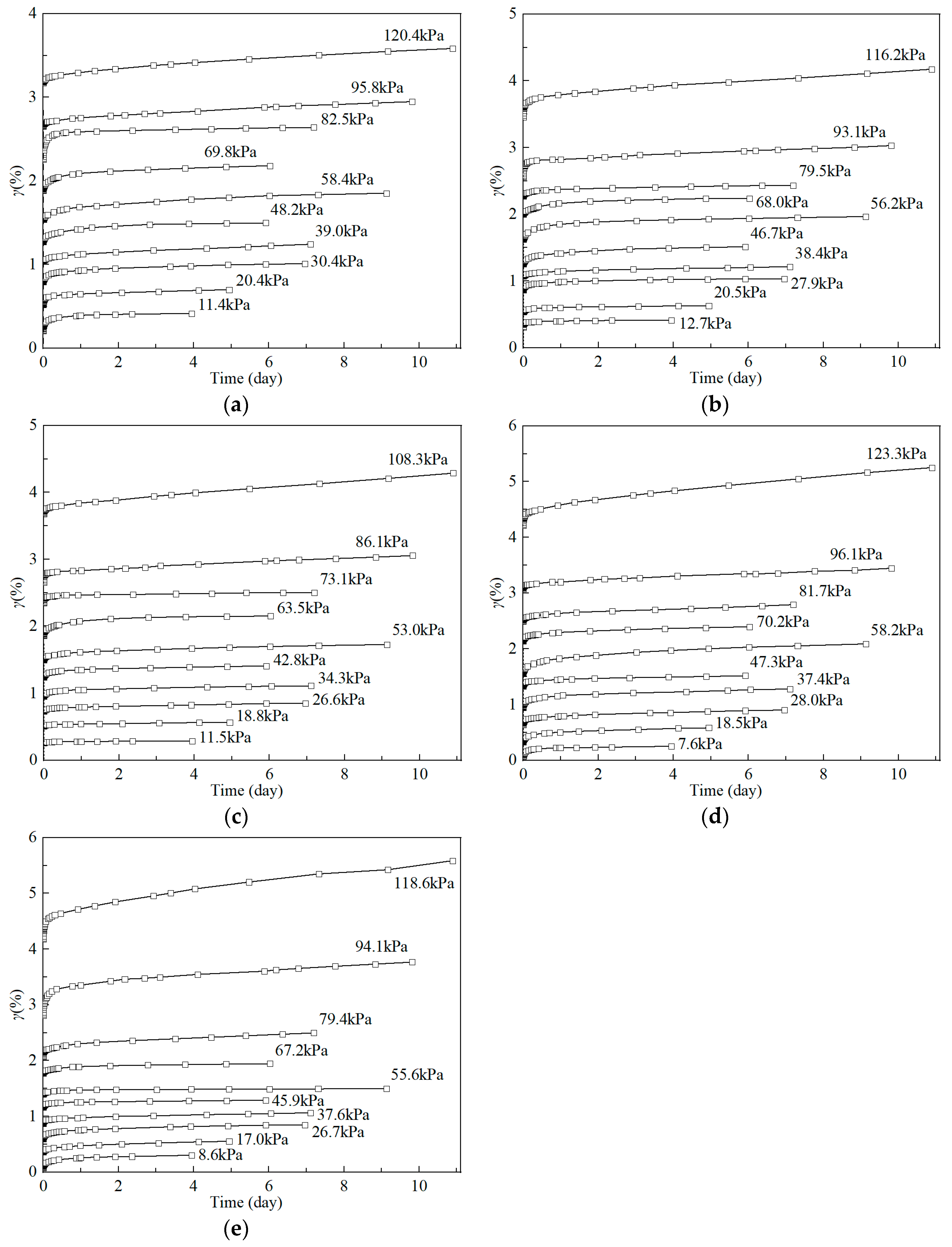
Figure 3 presents the time-history curves of direct shear rheology for the clay specimens. Analysis of these curves reveals that as the shear stress level increases, the clay undergoes distinct deformation stages: under very low shear stress, shear strain rapidly stabilizes, and the time-history curve runs essentially parallel to the time axis without further increase in shear strain over time, referred to as the instantaneous deformation stage; under relatively low shear stress, instantaneous deformation is followed by time-dependent growth in shear strain, which eventually stabilizes after a certain period, termed the attenuation rheology stage; under higher shear stress, shear strain continues to increase over time at a constant strain rate, identified as the steady-state rheology stage; under very high shear stress, shear strain accelerates progressively, leading to shear failure. To more intuitively illustrate these stages in the direct shear rheological process of clay specimens, the relationship between shear strain rate and shear stress is plotted, as shown in Figure 4. To provide a clearer and more intuitive description, the division of shear stress across different stages of the direct shear rheological process for clay specimens is shown in Table 4.

3.3. Critical Stresses for Rheological Limits

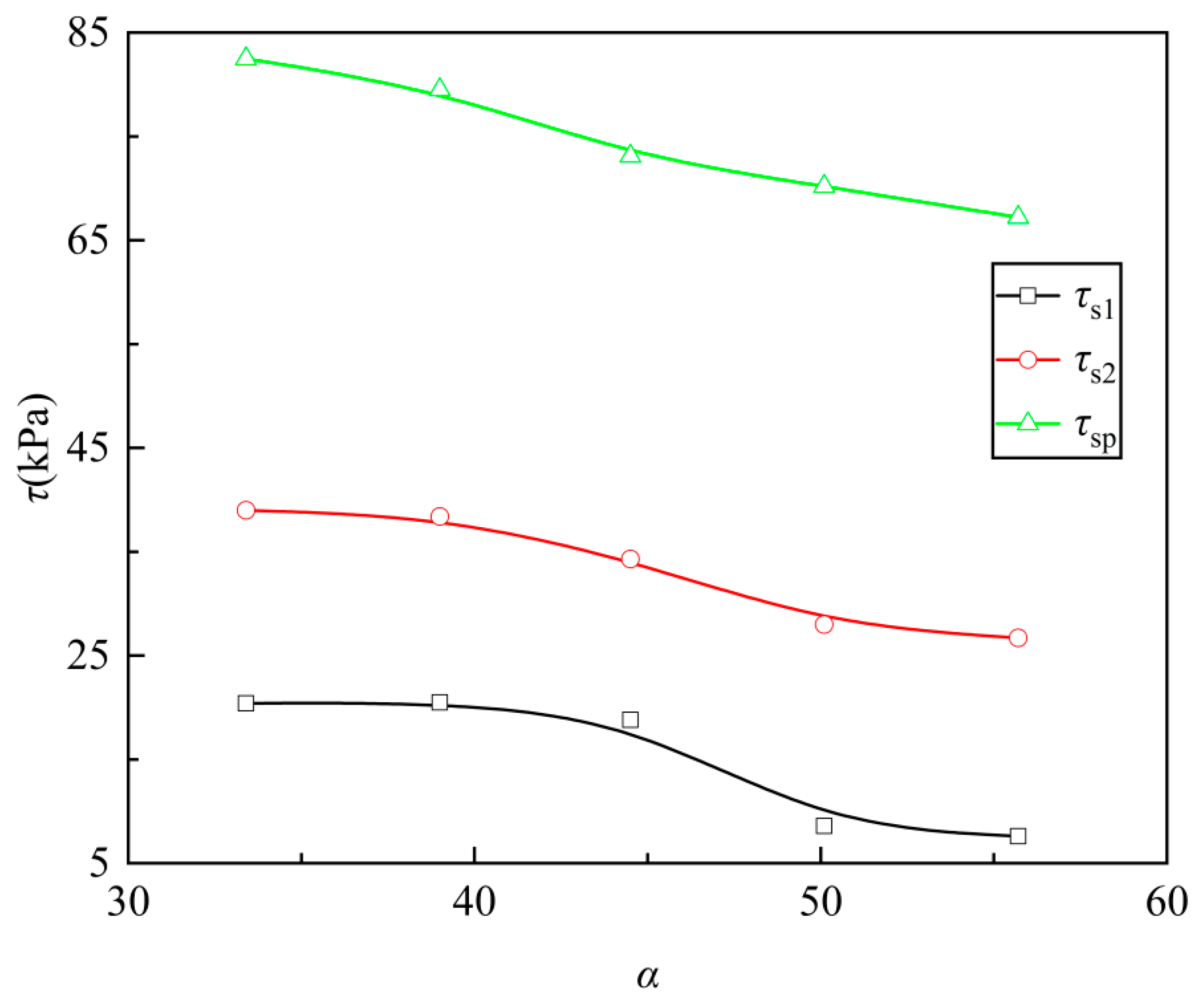
Analysis of the direct shear rheological time-history curves of clay specimens reveals that with progressively increasing shear stress levels, clay undergoes distinct deformation stages: instantaneous deformation, decaying rheology, steady-state rheology, and rheological (shear) failure. The critical stresses demarcating the stages of instantaneous deformation, decaying rheology, steady-state rheology, and rheological (shear) failure are referred to as the rheological initiation stress threshold τs1, the rheological stress threshold τs2, and the failure stress threshold τsp, respectively. Collectively, the stress thresholds τs1, τs2, and τsp are termed the critical stresses for rheological limits. Accordingly, when ττs1, instantaneous deformation occurs in the clay; when τs1 < ττs2, decaying rheology is observed; when τs2 < ττsp, steady-state rheology takes place; and when ττsp, rheological (shear) failure occurs. The rheological initiation stress threshold τs1 represents the critical stress value at which rheological behavior begins in clay—the lower this value, the more susceptible the clay is to rheological deformation [6]. The relationship between the critical stresses for the various rheological limits and the equivalent clay mineral content α is presented in Figure 5.
As can be observed from the variation curves of critical stresses for rheological limits with α in Figure 5, the rheological initiation stress threshold τs1, rheological stress threshold τs2, and failure stress threshold τsp all decrease with increasing α. This indicates that higher equivalent clay mineral content makes clay more prone to rheological initiation, entry into steady flow stage, and shear failure occurrence, demonstrating the significant influence of clay minerals on rheological behavior.

3.4. Elastic Viscosity and Plastic Viscosity

Based on the analysis of direct shear rheological test results from the previous section, when shear stress falls within the range τs1 < ττs2, decaying rheology occurs in clay, primarily characterized by viscoelastic deformation. The viscosity coefficient (elastic viscosity) is defined by the following equation:
η v e = τ τ s 1 / γ ˙
where τ represents shear stress, taking values within the range τs1 < ττs2; τs1 is the rheological initiation stress threshold; γ ˙ is the shear strain rate; and 〈ττs1〉 denotes the overstress, expressed as:
τ τ s 1 = 0   ( τ < τ s 1 ) τ τ s 1   ( τ > τ s 1 )
The statistical mean of viscosity coefficients η ¯ v e is used to comprehensively evaluate viscoelastic rheological properties, calculated by the following Equation (4):
η ¯ v e = i = 1 n τ i τ s 1 / i = 1 n τ i τ s 1 η v e i
where τi and ηvei represent the i-th level shear stress and viscosity coefficient, respectively.
Similarly, when shear stress falls within the range τs2 < ττsp, steady-state rheology occurs in clay, primarily characterized by viscoplastic deformation. The plastic viscosity is defined by the following equation:
η v p = τ τ s 2 / γ ˙
where shear stress τ takes values within the range τs2 < ττsp; and 〈ττs2〉 represents the overstress. The statistical mean of plastic viscosities η ¯ v p is used to comprehensively evaluate viscoplastic rheological properties, calculated by the following Equation (6):
η ¯ v p = i = 1 n τ i τ s 2 / i = 1 n τ i τ s 2 η v p i
where τi and ηvpi represent the i-th level shear stress and plastic viscosity, respectively.
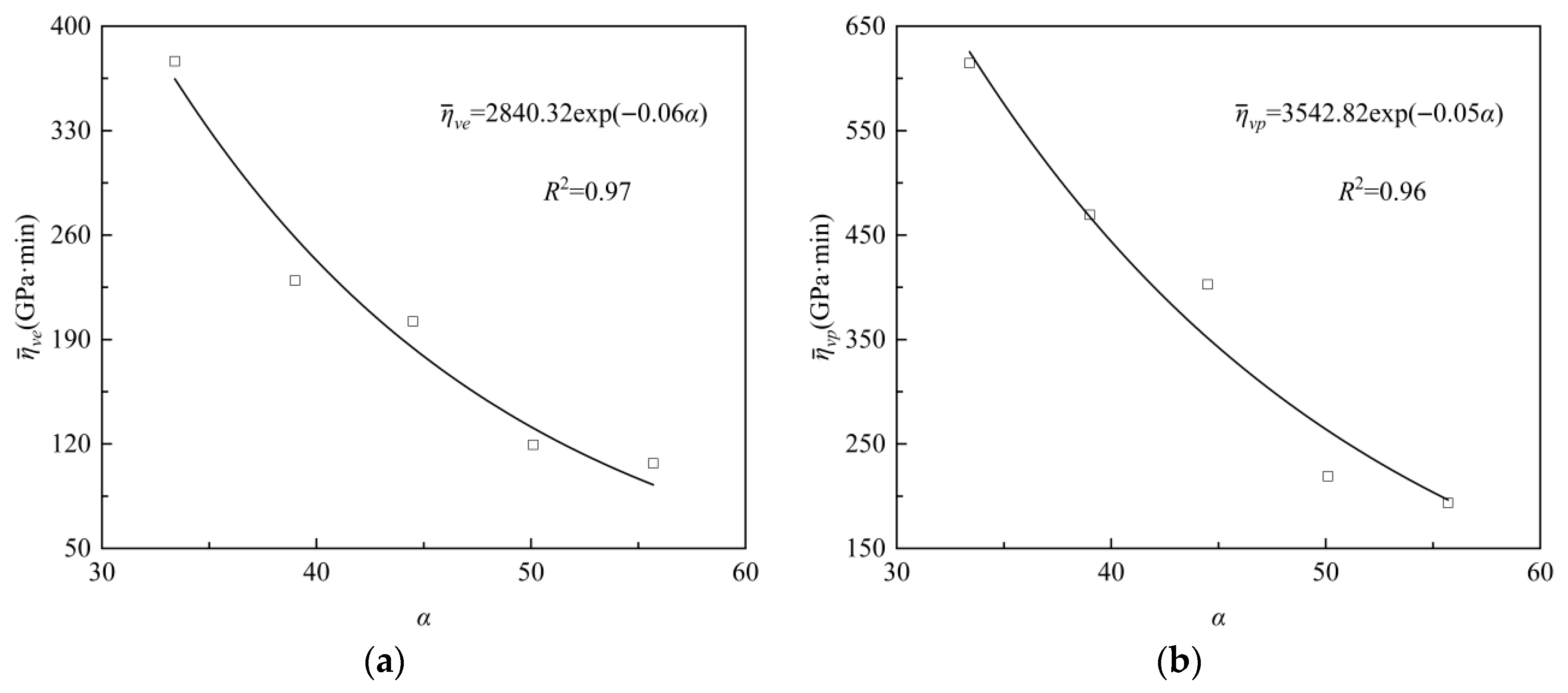
Figure 6 presents the statistical means of elastic viscosity η ¯ v e and plastic viscosity η ¯ v p obtained from direct shear rheological tests on various soil samples.
From the statistical means of viscosity coefficients η ¯ v e and plastic viscosities η ¯ v p shown in Figure 6, it is observed that both η ¯ v e and η ¯ v p decrease significantly with increasing α. This implies that under the same shear stress level, the shear rheological rate increases substantially with higher clay mineral content, further demonstrating the significant influence of clay minerals on rheological behavior.

3.5. Analysis of Nonlinear Characteristics of Isochronous Curves

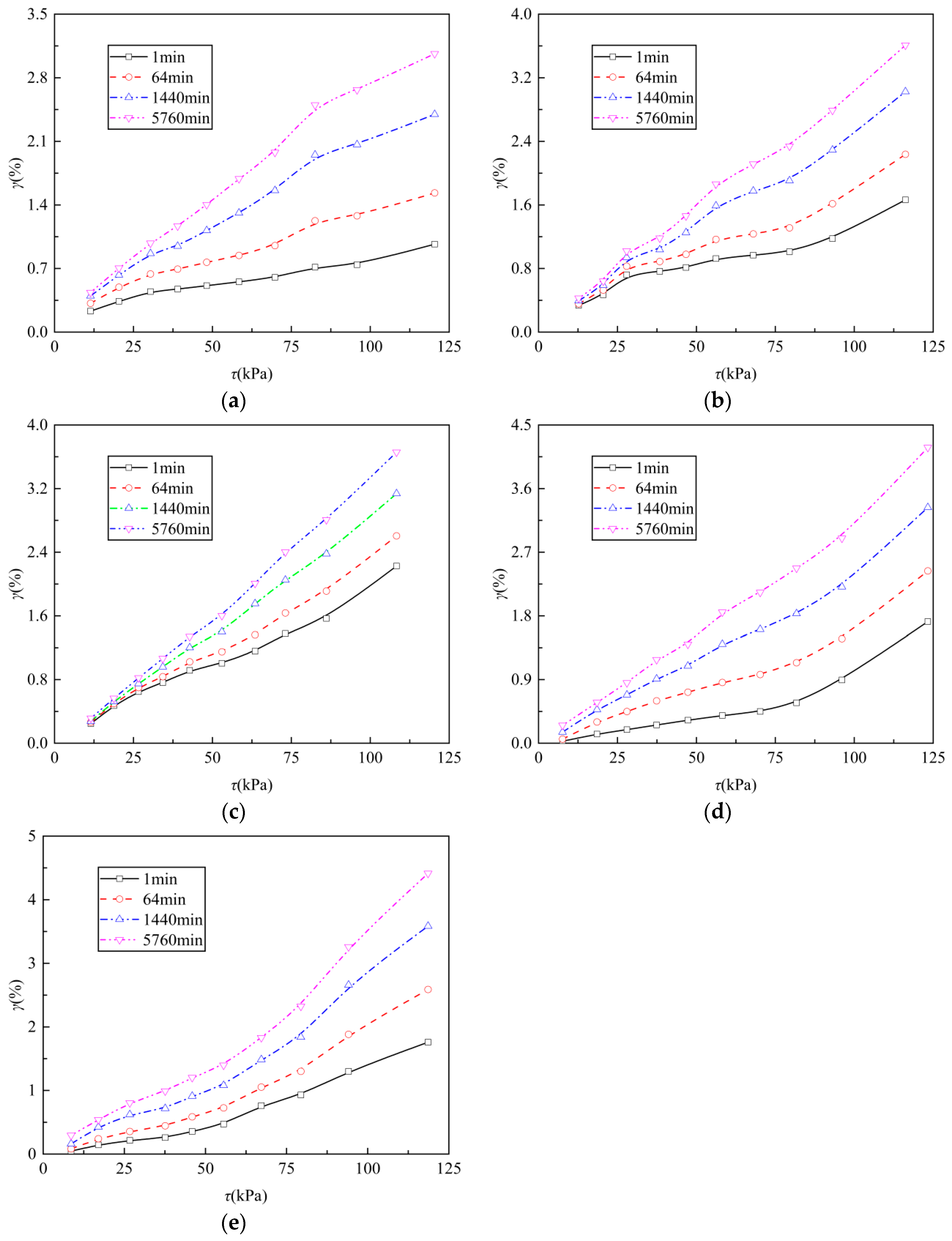
Rheological isochronous curves can be used to visually demonstrate the relationship between shear stress and shear strain at different time points, describing the evolution process of the stress–strain constitutive relationship over time. Based on the direct shear rheological time-history curves of clay specimens shown in Figure 3, isochronous curves at t = 1 min, 64 min, 1440 min, and 5760 min for each specimen’s rheological behavior were extracted, as shown in Figure 7. Isochronous curves at different time points describe rheological behaviors at various stages. For instance, considering the entire time-history of the direct shear rheological test on clay, the isochronous curve at t = 1 min primarily depicts the deformation during the instantaneous deformation stage, where rheological deformation can be neglected and it is approximately regarded as elastic deformation; the isochronous curves at t = 64 min and 1440 min mainly describe the rheological behavior during the instantaneous deformation-decaying rheology stage, where clay gradually transitions from nonlinear elastic deformation to viscoelastic deformation with increasing shear stress; the isochronous curve at t = 5760 min describes the rheological behavior during the instantaneous deformation-decaying rheology–steady-state rheology stage, where clay progresses from nonlinear elastic deformation to viscoelastic deformation and further to viscoplastic deformation as shear stress increases.
Observing the isochronous curves shown in Figure 7, the characteristics of the stress–strain relationship are as follows: (1) the isochronous curves demonstrate that the stress–strain relationship at different time points exhibits a certain degree of nonlinearity; (2) the initial stage of shear deformation shows a relatively pronounced nonlinear stress–strain relationship (e.g., the isochronous curve at t = 1 min), while the nonlinearity somewhat diminishes with increasing time (e.g., the isochronous curves at t = 1440 min and 5760 min); and (3) as the equivalent clay mineral content α increases, the stress–strain relationship displayed by the isochronous curves gradually strengthens (as shown in Figure 7d,e). Based on the analysis of the nonlinear characteristics of the aforementioned isochronous curves, it can be concluded that the rheological properties of clay are primarily characterized by nonlinear elastic–viscous deformation behavior, and the nonlinearity of the stress–strain relationship intensifies with increasing equivalent clay mineral content α, indicating the significant influence of clay minerals on the nonlinearity.

3.6. Analysis of the Physical Mechanism of Nonlinear Rheology in Clay

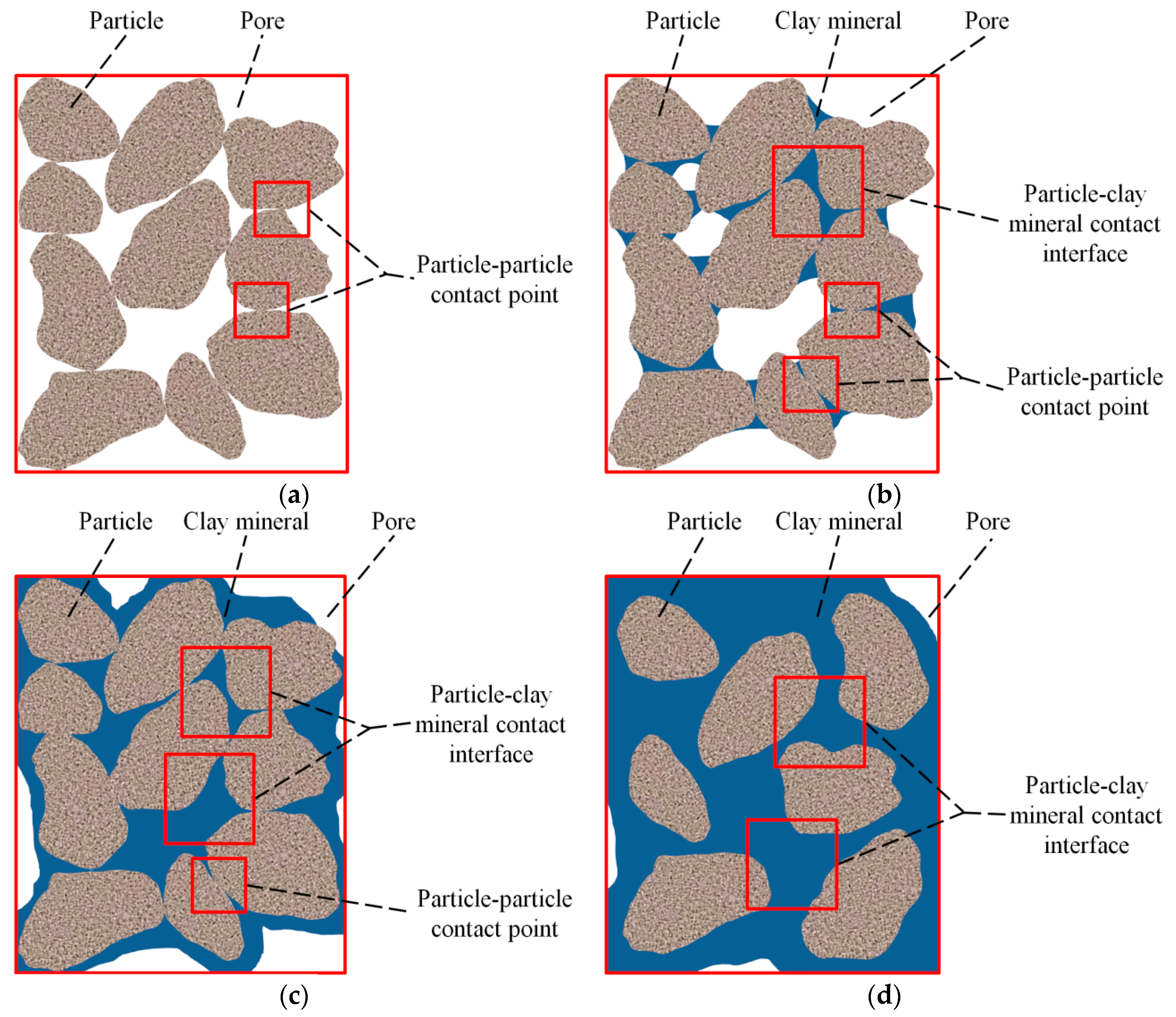
To understand the mechanism of clay rheology at the micro-scale, an analysis was conducted on the microstructural characteristics of the interconnection between particles and clay minerals in the direct shear rheology clay specimens. The clay minerals in the soil combine with water to form a highly viscous, fluid-like “soft matter” resembling a paste, which fills the spaces between particles and induces rheological behavior. As shown in Figure 8, when no clay minerals are present in the soil, particles are in direct contact, resulting in large pores. When the clay mineral content is low, the minerals primarily adsorb near the contact areas between particles, partially filling the interparticle pores. As the clay mineral content increases, the adsorption surface gradually expands to cover the entire particle surface until the interparticle pores are essentially filled. The presence of clay minerals between particles acts as a “lubricant,” reducing interparticle friction and resistance to slippage, thereby increasing the tendency for particle translation and rotation. Simultaneously, it functions as a “cushion,” reducing interparticle contact stress and significantly increasing the viscous shear rate of the soil. This indicates that clay minerals play a critical and controlling role in soil rheology, revealing that clay minerals are the origin and physical essence of clay rheological behavior.
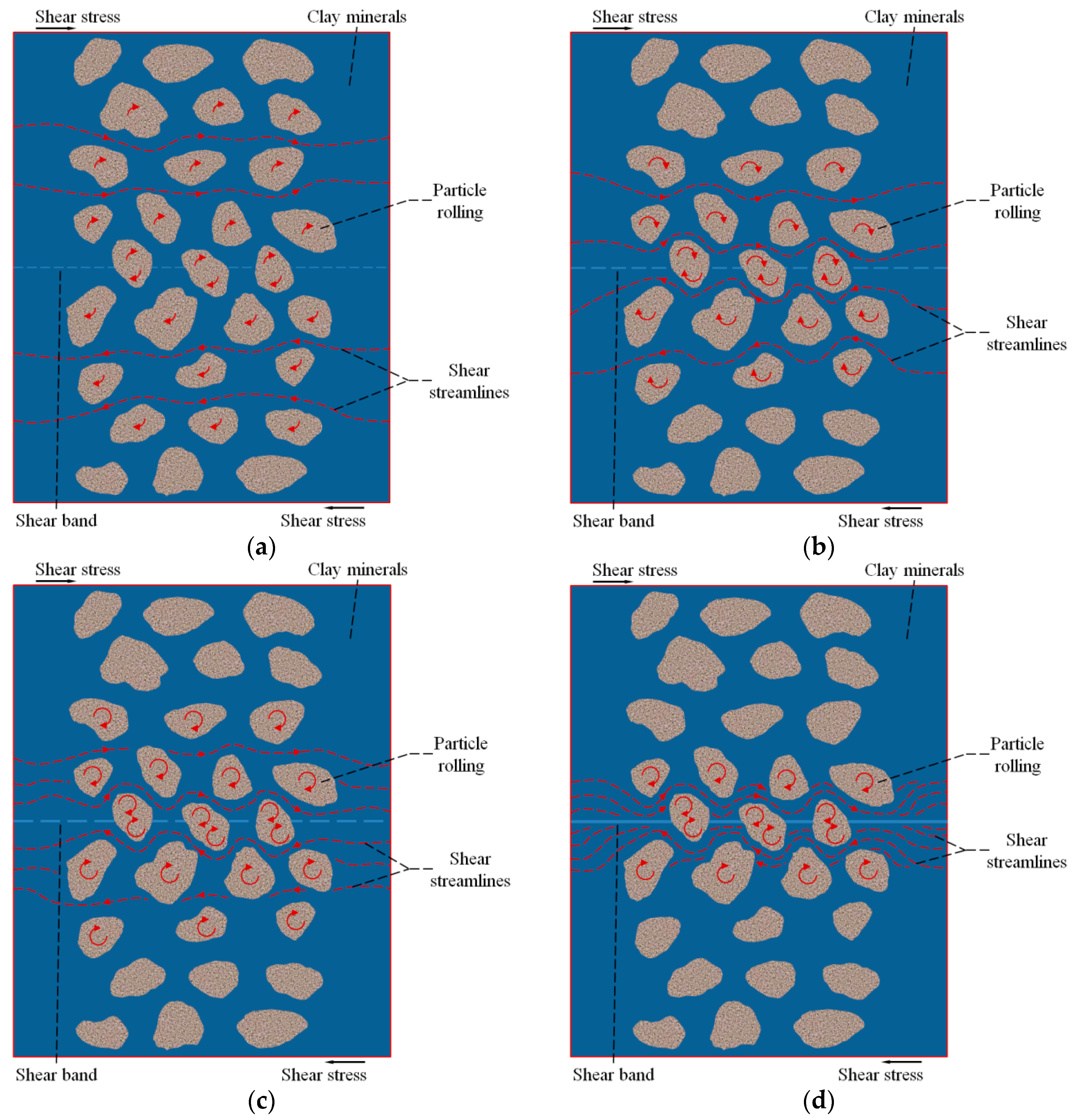
The differences in rheological properties exhibited by clay specimens under different shear stress levels are the result of interactions between clay minerals and particles in the soil. To more intuitively illustrate the physical mechanism of direct shear rheology in clay, a “shear streamline model” is introduced to describe the flow and deformation patterns of clay minerals in the soil and the meso-scale process of their interaction with particles. Streamlines are used to outline the directional characteristics of clay mineral flow and deformation, while the curvature and distribution density of the streamline field, along with particle rolling and sliding, characterize the degree of nonlinearity in stress–strain relationships resulting from changes in soil structure, as detailed in Figure 9.
At very low shear stress levels (ττs1), the streamlines exhibit slight curvature and sparse distribution. At this stage, clay mineral deformation is minimal, and particles undergo slight rolling and sliding without altering the soil structure. The stress–strain relationship is approximately linear, corresponding macroscopically to the instantaneous deformation stage. At low shear stress levels (τs1 < ττs2), streamline curvature increases, with denser distribution near particles. Clay minerals undergo significant shear flow deformation, and particles exhibit noticeable rolling and sliding, leading to structural changes in the soil and the emergence of nonlinearity. Macroscopically, this corresponds to the decaying rheology stage, where shear deformation gradually stabilizes over time. At higher shear stress levels (τs2 < ττsp), streamline curvature further increases, and the distribution becomes denser. Clay minerals “drive” particle rolling and sliding, forming shear bands and significantly altering soil structure, resulting in pronounced nonlinearity. Macroscopically, this represents the steady-state rheology stage. At very high shear stress levels (τ > τsp), shear bands undergo sliding and fracture, leading to structural failure of the soil, corresponding to the shear failure stage.
Based on the above micro-mechanism analysis, a power function (Equation (7)) is used to fit the shear rheology isochronous curves in Figure 7:
γ = a τ / τ 0 n
where a is a coefficient, τ0 is the reference shear stress (taken as τ0 = 1 kPa), and n is an exponent reflecting the degree of nonlinearity. When n > 1, a larger n indicates more pronounced nonlinearity; when n < 1, a smaller n indicates stronger nonlinearity. The power function fitting parameters a and n for the shear rheology isochronous curves are listed in Table 5.
From Table 5, it can be observed that the coefficient a decreases exponentially with increasing equivalent clay mineral content, while the exponent n increases linearly with equivalent clay mineral content. This reflects the influence of clay mineral content on the direct shear rheological properties of clay at different time points. Therefore, the strain-stress–time relationship for direct shear rheology in clay can be expressed as:
γ τ ,   t = a τ / τ 0 n 1 + b exp c t
a = a 0 exp m 1 α ,   n = n 0 + m 2 α
where parameters a0 and n0 are related to soil structure, and parameters m1 and m2 are associated with the properties of clay minerals.

4. Theoretical Analysis of the Unified Rheological Model

4.1. Unified Rheological Model

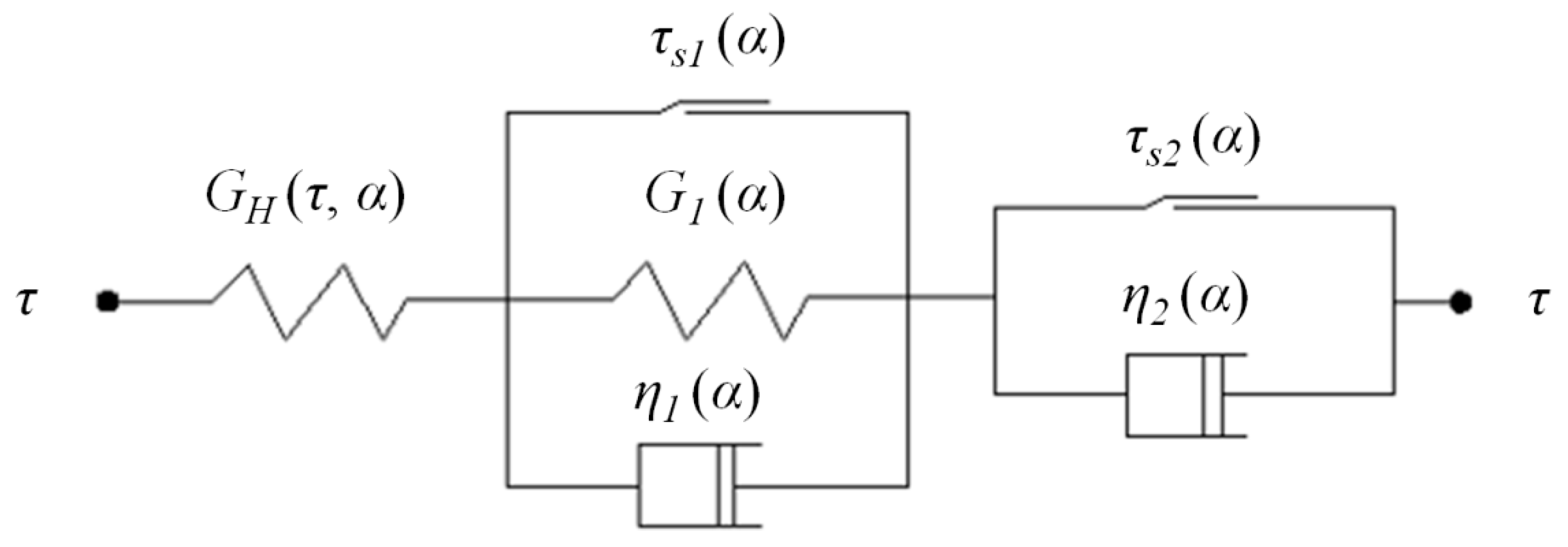
To calculate the deformation of soil rheology under load, the establishment of a corresponding rheological constitutive equation is required. Direct shear rheological test results of clay indicate that with increasing shear stress, clay undergoes various deformation stages: instantaneous deformation, decaying rheology, steady-state rheology, and ultimately failure. This represents the complete time-history process generally experienced during shear rheology of typical clay [17]. Component models are currently the most commonly used important models for describing material rheology. However, existing component models possess significant limitations: firstly, they are phenomenological models that cannot reflect the physical essence of rheology, and their parameters lack clear correlation with material components (such as clay minerals) that control rheological behavior; secondly, they cannot describe the nonlinear characteristics of rheology. These limitations render current component models essentially numerical fitting models, requiring separate sets of independent model parameters to predict rheological time-history curves for different material compositions and stress levels [18,28]. This severely restricts the universality and application efficiency of the models while significantly increasing engineering costs. Among component models, the Murayama-Shorō body and Bingham body can describe the rheological time-history processes of instantaneous deformation and decaying rheology, and instantaneous deformation, steady-state rheology until failure, respectively. Based on rheological tests and micro-mechanism analysis, improvements will be made to the Murayama-Shorō body and Bingham body, which will then be connected in series to form a composite rheological body for constructing a unified rheological model of clay. Quantitative relationships between model parameters and clay mineral content will be established to characterize the physical essence and material origin of rheology, as well as its nonlinear characteristics.
The unified rheological model for clay shear is illustrated in Figure 10. Based on the previous analysis of direct shear rheological tests on clay, the shear strain γ(τ, t) is expressed as:
γ ( τ ,   t ) = a τ / τ 0 n + τ τ s 1 G 1 1 exp G 1 t / η 1 + τ τ s 2 η 2 t
where τ is the shear stress; τ0 is the reference shear stress, taken as τ0 = 1 kPa. The first term represents nonlinear elastic shear strain, with a and n being the elastic deformation (instantaneous deformation) parameter and exponent, respectively; τs1 and τs2 are termed the rheological initiation stress threshold and rheological stress threshold, respectively. Here, G1, η1, and τs1 denote the spring shear modulus, elastic viscosity (viscous coefficient), and elastic shear yield stress (rheological initiation stress threshold) of the Murayama-Shorō model; η2 and τs2 represent the plastic viscosity and plastic body shear yield stress (rheological stress threshold) of the Bingham model, with τs1τs2. Each model parameter in Equation (6) has a definite quantitative relationship with the clay mineral content α, expressed by the following correlations:
a ( α ) = a 0 exp m 1 α ,   n ( α ) = n 0 + m 2 α
G 1 ( α ) = G 10 exp m 3 α ,   η 1 ( α ) = η ¯ v e ( α ) = η 10 exp m 4 α , τ s 1 ( α ) = τ s 10 exp m 5 α
η 2 ( α ) = η ¯ v p ( α ) = η 20 exp m 6 α ,   τ s 2 ( α ) = τ s 20 exp m 7 α
In Equation (11)–(13), α is the clay mineral content; a0, n0, G10, η10, τs10, η20, τs20, m1, m2, m3, m4, m5, m6, and m7 are constants independent of clay mineral content. Equation (6) is referred to as the unified rheological model equation for clay, describing the deformation of clay under varying load and time, and reflecting the significant influence of clay mineral content on clay deformation.

4.2. Model Validation

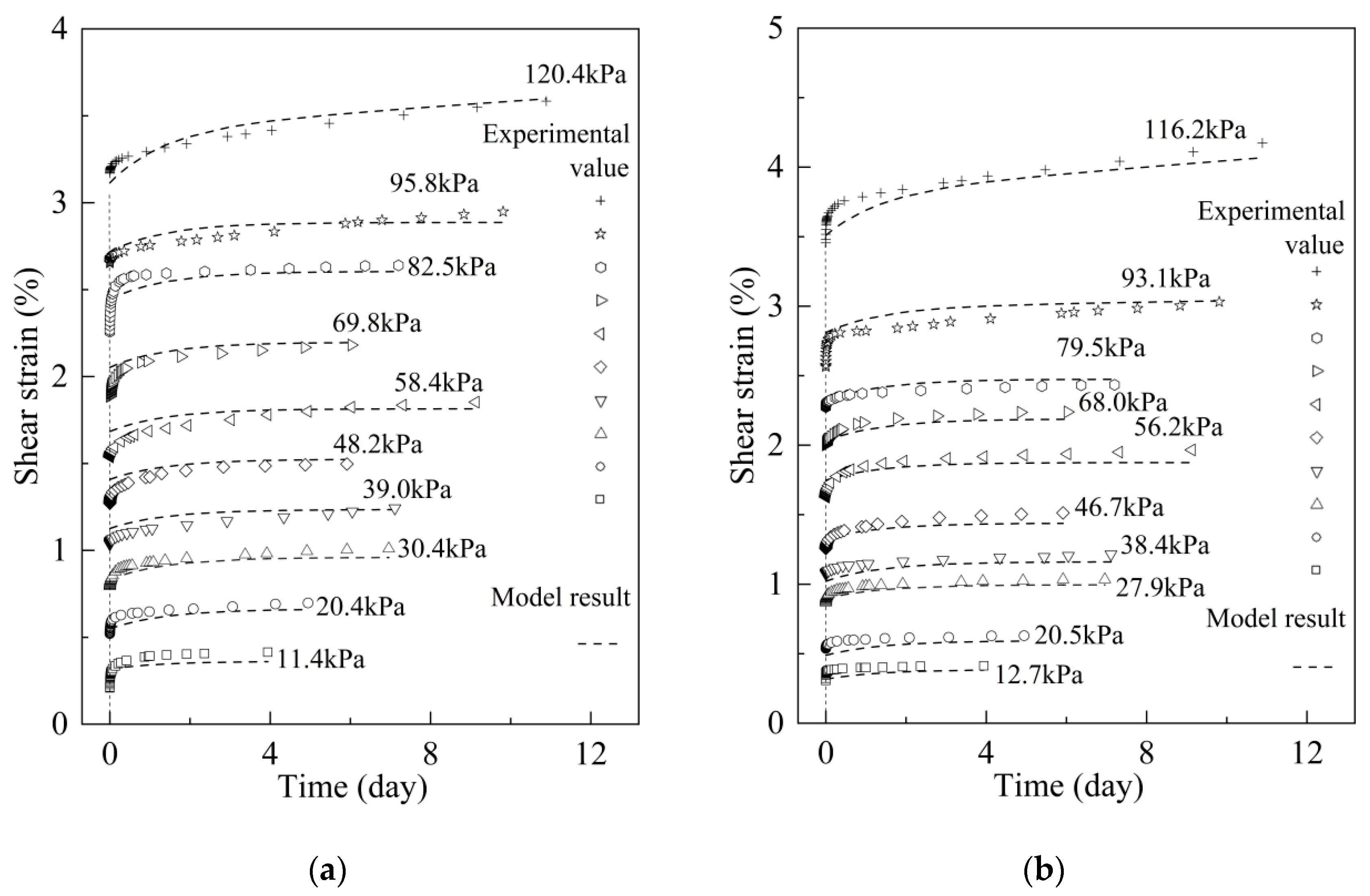
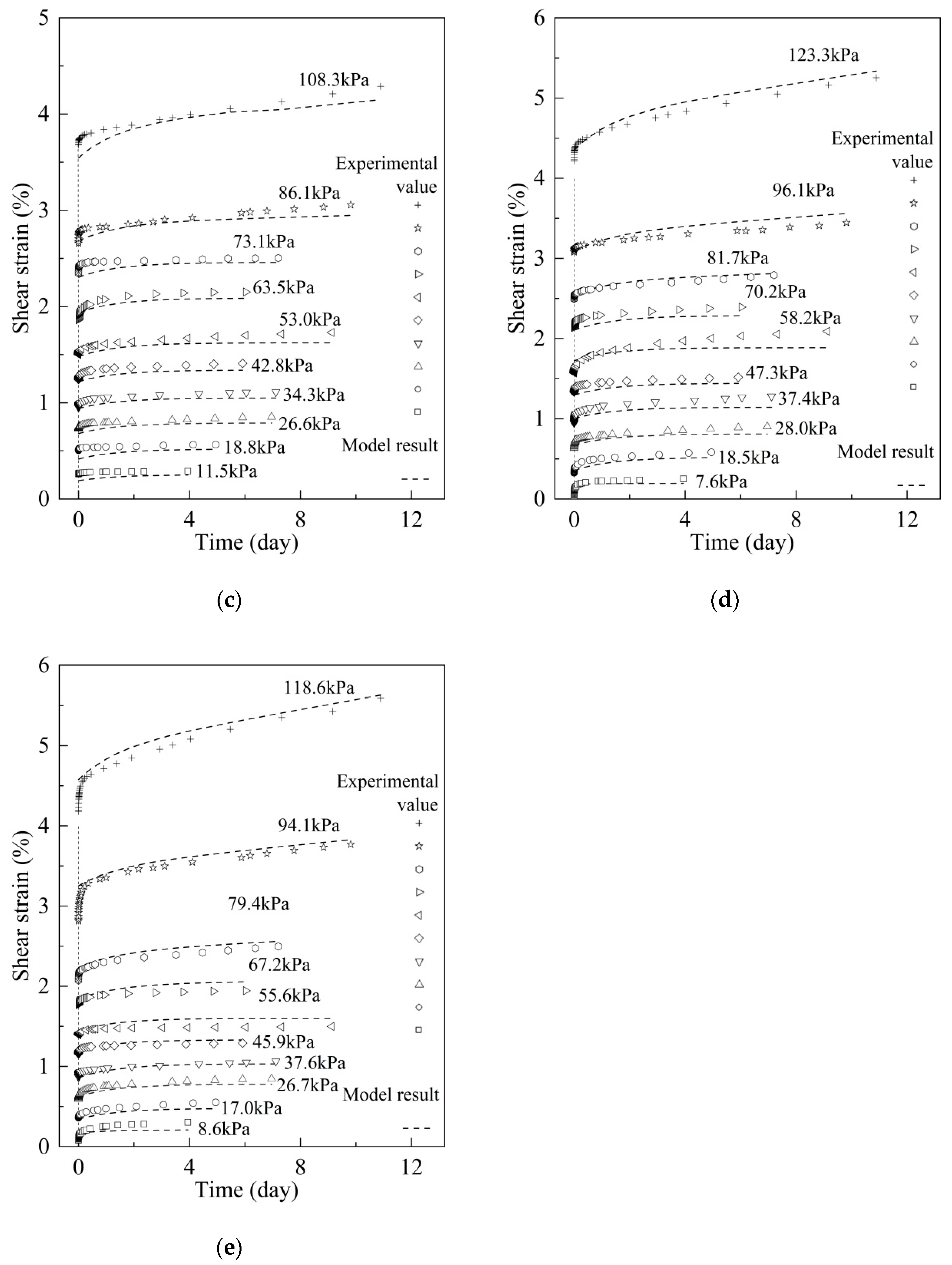
To validate the effectiveness of the unified rheological model, the shear unified rheological model Equation (6) was used to predict the shear strain rheological time-history curves for 50 working conditions under 10 loading scenarios for five types of clay specimens with different mineral compositions listed in Table 3. The predictions of the rheological time-history curves utilized only a single set of unified model parameters (determined by nonlinear least squares method) as shown in Table 6, overcoming the limitation of existing phenomenological models that require separate sets of rheological parameters for each working condition. Figure 11 presents the comparison between the unified rheological model predictions and experimental results for the rheological time-history, with the cumulative deviation ρ calculated according to the following Equation (14) indicated in the figure:
ρ = i | X i m X i c | d t / i X i c d t
where Xim and Xic represent the unified rheological model predicted value and experimentally measured value of shear strain under the i-th load level τi, respectively, and ρ is computed by numerical integration along the time-history curve.
From the results shown in Figure 11, it is observed that the unified rheological model predictions are in good agreement with the experimental results. Therefore, the unified rheological model for clay shear proposed in this study can predict the rheological behavior under different material compositions and stress levels using a unique set of model parameters, characterizing the material origin and physical essence of rheology, and advancing the influence of mineral composition on rheology from qualitative phenomenological analysis to quantitative calculation.
Existing modeling approaches generally require a distinct set of parameters to fit each individual curve. For example, the model-fitting parameters and cumulative deviation ρ for a total of 50 sets of shear strain rheological time-history curves—corresponding to 10 loading conditions for five types of clay specimens with different mineral compositions, based on previous modeling methods—are detailed in Appendix A, Table A1, Table A2, Table A3, Table A4 and Table A5, with a maximum cumulative deviation of 3.4%. By comparison, the maximum cumulative deviation obtained with the model presented in this study is 3.85%. This result indicates that the proposed modeling method maintains high fitting accuracy, as the maximum deviation increases by merely 0.45%, while simultaneously achieving a significant improvement in both parameter fitting efficiency and model universality.

5. Conclusions

Direct shear rheological tests were conducted on clay specimens with different mineral compositions to quantitatively analyze the influence of clay mineral content on rheological properties. A unified rheological model equation for clay shear was established, leading to the following main conclusions:
(1)
Clay shear rheology generally undergoes a time-history process comprising instantaneous deformation, decaying rheology, steady-state rheology, and eventual rheological (shear) failure as shear stress increases. The critical stresses demarcating each deformation stage, as well as the viscous coefficient and plastic viscosity, exhibit definitive and unique relationships with clay mineral content.
(2)
A micro-mechanism for clay rheology was proposed, elucidating that hydrophilic clay minerals filling the interparticle spaces absorb water to form highly viscous “soft matter,” which plays a critical controlling role in deformation behavior. This reveals the material origin and physical essence of clay rheology.
(3)
A unified rheological model for clay shear was developed and experimentally validated. This model reflects the physical nature of clay rheology, demonstrates strong universality, and advances the influence of mineral composition on rheological behavior from qualitative phenomenological description to quantitative computational analysis for the first time.

Author Contributions

Conceptualization, Y.F. and Z.O.; Methodology, R.G.; Software, K.G.; Formal analysis, Y.F. and K.G.; Writing—original draft, K.G.; Writing—review & editing, Y.F.; Visualization, Z.O.; Supervision, Z.O. and R.G. All authors have read and agreed to the published version of the manuscript.

Funding

This research and the Article Processing Charge (APC) were funded by the National Key Scientific Instrument and Equipment Development Project of China (Grant No. 41827807) and the State Key Laboratory of Soil-Plant-Machine System Technology (Grant No. (CN) Z018019).

Data Availability Statement

The original contributions presented in the study are included in the article, further inquiries can be directed to the corresponding author.

Conflicts of Interest

Author Zhenfeng Ou was employed by the company Guangzhou Municipal Engineering Design and Research Institute Co., Ltd. The remaining authors declare that the research was conducted in the absence of any commercial or financial relationships that could be construed as a potential conflict of interest.

Appendix A

Table A1. Model Fitting Parameters and Cumulative Deviations of Specimen 1.
Shear Stress (kPa)11.420.430.439.048.258.469.882.595.8120.4
GH4.003.753.803.753.553.703.553.403.653.40
G14.5010.0013.0017.0030.0020.0030.0040.0070.0030.00
η13.006.0019.0060.0060.0060.0060.0040.0060.0010.00
τs15.705.705.705.705.705.705.705.705.705.70
η2-100.00200.00
τs2-82.5282.52
ρ1.332.131.290.900.260.800.560.500.370.32
Table A2. Model Fitting Parameters and Cumulative Deviations of Specimen 2.
Shear Stress (kPa)12.720.527.938.446.756.268.079.593.1116.2
GH3.103.302.953.443.403.153.253.453.503.35
G120.0034.215.0015.0016.0020.0030.0040.0040.0030.00
η125.0025.0010.0060.0060.0060.0060.0060.0040.0010.00
τs124.2024.2024.2024.2024.2024.2024.2024.2024.2024.20
η2-100.00150.00
τs2-79.5179.51
ρ1.561.700.670.320.680.480.280.870.280.34
Table A3. Model Fitting Parameters and Cumulative Deviations of Specimen 3.
Shear Stress (kPa)11.518.826.634.342.853.063.573.186.1108.3
GH4.103.403.453.353.253.403.153.103.253.10
G164.6464.485.3013.0020.0020.0030.0050.0040.0040.00
η120.2120.1620.0060.0060.0060.0060.0060.0030.0010.00
τs122.7022.7022.7022.7022.7022.7022.7022.7022.7022.70
η2-90.00120.00
τs2-74.2874.28
ρ1.561.770.690.330.540.690.240.370.310.91
Table A4. Model Fitting Parameters and Cumulative Deviations of Specimen 4.
Shear Stress (kPa)7.618.528.037.447.358.270.281.796.1123.3
GH5.005.453.953.553.553.453.203.303.252.85
G14.007.0011.0015.0025.0014.0040.0050.0040.0040.00
η13.504.4050.0060.0040.0060.0070.0020.0020.0020.00
τs13.803.803.803.803.803.803.803.803.803.80
η2-85.00140.00120.00
τs2-70.1670.1670.16
ρ2.923.401.081.070.780.700.670.270.281.07
Table A5. Model Fitting Parameters and Cumulative Deviations of Specimen 5.
Shear Stress (kPa)8.617.026.737.645.955.667.279.494.1118.6
GH6.004.604.004.104.004.003.753.703.002.70
G12.807.5013.0025.0030.0050.0040.0045.0040.0030.00
η13.0014.0030.0060.0040.0040.0070.0020.0040.0040.00
τs14.304.304.304.304.304.304.304.304.304.30
η2-75.00100.0090.00
τs2-67.2067.2067.20
ρ2.631.890.890.960.830.430.590.750.670.44

References

  1. Ter-Martirosyan, A.Z.; Ermoshina, L.Y.; Anzhelo, G.O. Settlement of a Pile Foundation Considering Linear and Rheological Properties of Soils. Buildings 2024, 14, 2830. [Google Scholar] [CrossRef]
  2. Xie, M.; Yin, L.; Wang, Z.; Xu, F.; Wu, X.; Xu, M. Numerical Simulation and Analysis of Micropile-Raft Joint Jacking Technology for Rectifying Inclined Buildings Due to Uneven Settlement. Buildings 2025, 15, 2485. [Google Scholar] [CrossRef]
  3. Kuhn, M.R.; Mitchell, J.K. New perspectives on soil creep. J. Geotech. Eng. 1993, 119, 507–524. [Google Scholar] [CrossRef]
  4. Ichikawa, Y.; Kawamura, K.; Theramast, N.; Kitayama, K. Secondary and tertial consolidation of bentonite clay: Consolidation test, molecular dynamics simulation and multiscale homogenization analysis. Mech. Mater. 2004, 36, 487–513. [Google Scholar] [CrossRef]
  5. Long, L.; Li, Z.; Li, Y. Investigation of an Empirical Creep Constitutive Model of Changsha Red Loam. Buildings 2023, 13, 1064. [Google Scholar] [CrossRef]
  6. Gu, R. A Study on the Composition Effects on Soft Soil Rheology and Ion Effects in Seepage. Ph.D. Thesis, South China University of Technology, Guangzhou, China, 2007. [Google Scholar]
  7. Hu, G. Experimental Study on the Influence of Soil Composition and Distribution on Soil Strength and Rheology. Master’s Thesis, South China University of Technology, Guangzhou, China, 2013. [Google Scholar]
  8. Hu, Y. Test and Analysis on Liquid Rheological Model of Soft Soil. Master’s Thesis, South China University of Technology, Guangzhou, China, 2015. [Google Scholar]
  9. Liang, J. Experimental Study on Soft Soil Deformation and Seepage Characteristics with Microscopic Parameter Analysis. Ph.D. Thesis, South China University of Technology, Guangzhou, China, 2010. [Google Scholar]
  10. Yuan, J. Test and Analysis on Influence of Rheological Phase Material on Soft Soil Rheological Property. Ph.D. Thesis, South China University of Technology, Guangzhou, China, 2014. [Google Scholar]
  11. Zhu, Q.Y.; Yin, Z.Y.; Hicher, P.Y.; Shen, S.L. Nonlinearity of one-dimensional creep characteristics of soft clays. Acta Geotech. 2016, 11, 887–900. [Google Scholar] [CrossRef]
  12. Yin, J.H. Non-linear creep of soils in oedometer tests. Géotechnique 1999, 49, 699–707. [Google Scholar] [CrossRef]
  13. Liu, Y.; Huang, F.; Cao, Y.; Jin, F.; Wang, G.; Hou, W. Review of Soil Creep Characteristics and Advances in Modelling Research. Buildings 2024, 14, 1668. [Google Scholar] [CrossRef]
  14. Ou, Z.; Fang, Y. The influence of organic matter content on the rheological model parameters of soft clay. Soil Mech. Found. Eng. 2017, 54, 283–288. [Google Scholar] [CrossRef]
  15. Mesri, G.; Castro, A. Cα/Cc concept and K0 during secondary compression. J. Geotech. Eng. 1987, 113, 230–247. [Google Scholar] [CrossRef]
  16. Mesri, G.; Godlewski, P.M. Time- and stress-compressibility interrelationship. J. Geotech. Eng. Div. 1977, 103, 417–430. [Google Scholar] [CrossRef]
  17. Sun, J. Rheology of Geotechnical Materials and Its Engineering Applications; China Architecture & Building Press: Beijing, China, 1999. [Google Scholar]
  18. Xia, C.; Jin, L.; Guo, R. Nonlinear theoretical rheological model for rock: A review and some problems. Chin. J. Rock Mech. Eng. 2011, 30, 454–463. [Google Scholar]
  19. Karim, M.R.; Gnanendran, C.T. Review of constitutive models for describing the time dependent behaviour of soft clays. Geomech. Geoengin. 2014, 9, 36–51. [Google Scholar] [CrossRef]
  20. Perzyna, P. The constitutive equations for rate sensitive plastic materials. Quart. Appl. Math. 1963, 20, 321–332. [Google Scholar] [CrossRef]
  21. Zhan, M.L.; Qian, J.H.; Chen, X.L. Tests on rheological behavior of soft soil and rheologic model. Chin. J. Geotech. Eng. 1993, 15, 54–62. [Google Scholar]
  22. Yin, J.H.; Graham, J. Viscous-elastic-plastic modelling of one-dimensional time-dependent behaviour of clays. Can. Geotech. J. 1989, 26, 199–209. [Google Scholar] [CrossRef]
  23. Wang, Y.; Wang, T.; Wang, J. A nonlinear rheological model of soft clay and its application to Tianjin littoral area. Rock Soil Mech. 2009, 30, 2679–2685. [Google Scholar] [CrossRef]
  24. Li, R.D.; Yue, J.C. Nonlinear rheological constitute of soft soil based on fractional order derivative theory. J. Basic Sci. Eng. 2014, 22, 856–865. [Google Scholar]
  25. GB/T 50123-2019; Standard for Geotechnical Testing Method. China Planning Press: Beijing, China, 2019.
  26. Mitchell, J.K.; Soga, K. Fundamentals of Soil Behavior; Wiley: Hoboken, NJ, USA, 2005. [Google Scholar]
  27. MT/T 795-1998; Testing Method of Rheologic Characteristic for Direct Shear of Rock and Soil. State Administration of Coal Industry: Beijing, China, 1998.
  28. Luo, Q.; Chen, X.; Wang, S.; Huang, J. An experimental study of time-dependent deformation behaviour of soft soil and its empirical model. Rock Soil Mech. 2016, 37, 66–75. [Google Scholar] [CrossRef]
Figure 1. XRD Patterns: (a) Bentonite; (b) Kaolin.
Buildings 16 01246 g001
Figure 2. Schematic Diagram of Direct Shear Creep Apparatus. (1—Rubber ring, 2—Cylinder, 3—End cap, 4—Humidity chamber, 5—Sliding block, 6—Dial indicator, 7—Vertical loading rod, 8—Sliding groove, 9—Vertical loading cap, 10—Impermeable plate, 11—Upper shear box, 12—Specimen, 13—Lower shear box, 14—Horizontal shear transfer rod, 15—Shear displacement measurement system, 15-1—Micrometer dial indicator, 15-2—Dial indicator, 16—Base). Reprinted with permission from Ref. [14]. 14 October 2017 Zhen-Feng Ou et al.
Buildings 16 01246 g002
Figure 3. Time-History Curves of Direct Shear Rheology for Clay Specimens: (a) Specimen 1 (α = 33.4%); (b) Specimen 2 (α = 39%); (c) Specimen 3 (α = 44.5%); (d) Specimen 4 (α = 50.1%); (e) Specimen 5 (α = 55.7%).
Buildings 16 01246 g003
Figure 4. Relationship Curves Between Shear Strain Rate and Shear Stress for Clay Specimens: (a) Specimen 1 (α = 33.4%); (b) Specimen 2 (α = 39%); (c) Specimen 3 (α = 44.5%); (d) Specimen 4 (α = 50.1%); (e) Specimen 5 (α = 55.7%).
Buildings 16 01246 g004
Figure 5. Variation Curves of Critical Stresses for Rheological Limits with α.
Buildings 16 01246 g005
Figure 6. Variation Curve of Viscosity Coefficient with α: (a) Elastic viscosity η ¯ v e ; (b) Plastic limit viscosity η ¯ v p .
Buildings 16 01246 g006
Figure 7. Isochronous Curves of Shear Rheology: (a) Specimen 1 (α = 33.4%); (b) Specimen 2 (α = 39%); (c) Specimen 3 (α = 44.5%); (d) Specimen 4 (α = 50.1%); (e) Specimen 5 (α = 55.7%).
Buildings 16 01246 g007
Figure 8. Schematic Diagram of the Evolution of Internal Structural Characteristics in Specimens with Different Clay Mineral Contents: (a) Specimen without clay minerals; (b) Specimen with a small amount of clay minerals; (c) Specimen with increased clay mineral content; (d) Specimen with a substantial amount of clay minerals.
Buildings 16 01246 g008
Figure 9. Schematic Diagram of Direct Shear Rheology in Clay under Different Shear Stress Levels: (a) ττs1; (b) τs1 < ττs2; (c) τs2 < ττsp; (d) τ > τsp.
Buildings 16 01246 g009
Figure 10. Diagram of the Unified Rheological Model for Clay.
Buildings 16 01246 g010
Figure 11. Unified Rheological Model Prediction Versus Experimental Comparison Results for the Model Validation Specimen: (a) Model validation specimen 1 (ρ = 3.38%); (b) Model validation specimen 2 (ρ = 2.7%); (c) Model validation specimen 3 (ρ = 2.04%); (d) Model validation specimen 4 (ρ = 3.85%); (e) Model validation specimen 5 (ρ = 2.34%).
Buildings 16 01246 g011aBuildings 16 01246 g011b
Table 1. Mineral Compositions of Bentonite and Kaolin.
Soil Sample NameMineral Type (%)
MontmorilloniteKaoliniteIlliteQuartzCristobaliteCalciteOther
Bentonite79.17.510.32.20.9
Kaolin93.64.91.5
Table 2. Physical Property Indices of Bentonite and Kaolin.
Soil Sample NameLiquid Limit wL (%)Plastic Limit wp (%)Plasticity Index IP (%)Specific Gravity
Gs
Specific Surface Area
Ss (m2/g), EGME Method
Bentonite310.053.5256.52.54474.0
Kaolin58.729.629.12.5927.2
Table 3. Composition and Physical Property Indicators of Clay Specimens.
Specimen NumberSpecimen Composition and Content (%)Equivalent Clay Mineral Content α (%)Water Content
w (%)
Void Ratio
e
Liquid Limit
wL (%)
Plastic Limit
wp (%)
Plasticity Index
IP (%)
Liquidity Index
IL (%)
BentoniteKaolinQuartz
130304033.461.81.62100.833.767.10.42
235353039.072.11.88121.536.185.40.42
340402044.582.42.15142.438.2104.20.42
445451050.192.72.41165.340.6124.70.42
5505055.7103.02.67185.542.5143.00.42
Table 4. Division of shear stress across different stages of the direct shear rheological process for clay specimens (kPa).
SpecimenInstantaneous Deformation StageDecaying Creep StageSteady-State Creep StageAccelerated Creep Stage
111.420.430.439.048.258.469.882.595.8120.4-
212.720.527.938.446.756.268.079.593.1116.2-
311.518.826.634.342.853.063.573.186.1108.3-
4-7.618.528.037.447.358.270.281.796.1123.3
5-8.617.026.737.645.955.667.279.494.1118.6
Table 5. Power Function Fitting Parameters for Shear Rheology Isochronous Curves.
Specimen NumberEquivalent Clay Mineral Content α (%)Coefficient a (×0.01)Exponent n
1 min64 min1440 min5760 min1 min64 min1440 min5760 min
133.48.006.906.315.400.480.630.760.85
239.04.504.844.103.880.740.780.900.95
344.52.502.462.542.470.910.981.021.06
450.10.531.131.572.061.471.401.101.10
555.70.400.310.711.011.601.601.301.26
Table 6. Parameter Values of the Unified Rheological Model.
Model Parametera0m1n0m2G10
(MPa)
m3η10
(GPa·min)
m4τs10
(kPa)
m5η20
(GPa·min)
m6τs20
(kPa)
m7
Value0.0210.0860.1130.065110.0411900.029110.0793500.033780.017
Disclaimer/Publisher’s Note: The statements, opinions and data contained in all publications are solely those of the individual author(s) and contributor(s) and not of MDPI and/or the editor(s). MDPI and/or the editor(s) disclaim responsibility for any injury to people or property resulting from any ideas, methods, instructions or products referred to in the content.