Article

Analysis of the Influence of Tunnel Span on the Stability of Unlined Circular Tunnels Subjected to Intense Dynamic Load

1
Institute of Defense Engineering, Academy of Military Sciences (AMS), PLA, Beijing 100036, China
2
State Key Laboratory of Target Vulnerability Assessment, Beijing 100036, China
*
Author to whom correspondence should be addressed.
Buildings 2026, 16(6), 1180; https://doi.org/10.3390/buildings16061180
Submission received: 5 February 2026 / Revised: 9 March 2026 / Accepted: 12 March 2026 / Published: 17 March 2026

Abstract

This study investigates the influence of tunnel span on the dynamic response of rock masses with high integrity under intense dynamic load, analyzing an unlined circular tunnel excavated in intact surrounding rock with a uniaxial compressive strength of f r = 57 MPa. Using a combined approach of physical model testing and numerical simulation, the influence mechanism of span on tunnel stability under different intense dynamic loads is systematically analyzed. The research results indicate the following: (1) When the peak intense Dynamic load is below 0.51 f r , the surrounding rock mass remains in an elastic state. (2) When the peak load ranges between 0.51 f r and 0.54 f r , plastic zones emerge at the tunnel wall. (3) Once the peak load exceeds 0.70 f r , the influence of the tunnel span on stability becomes significantly more pronounced with increasing load intensity. In small-span tunnels, plastic zones primarily distribute along the wall sides, whereas in large-span tunnels, they extend further upward and downward. (4) At a peak load of 0.70 f r , the ratio of the maximum extent of the plastic zone in a 20 m span tunnel to that in a 5 m span tunnel is 10.70, and the ratio of the maximum relative displacement between the vault and invert is 4.67. When the peak load increases to 1.40 f r , the plastic zone extent ratio rises to 13.94, and the vault–invert displacement ratio increases to 6.17. The conclusions of this study provide theoretical foundations for the design of tunnels with varying spans under intense dynamic load.

1. Introduction

With the rapid advancement of modern technology, intense dynamic loading generated by explosions has become one of the primary threats to tunnel structures [1,2,3,4]. In practical engineering applications, tunnels exhibit varying burial depths and spans. Generally, under the same explosive conditions, an increase in tunnel burial depth reduces the intense dynamic load experienced by the tunnel, thereby enhancing its safety under underground shock loading; conversely, an increase in tunnel span diminishes the tunnel’s stability, rendering it more vulnerable to such loading. Previous research [5,6] has demonstrated the relationship between tunnel depth and stability under strong underground shock loading, and practical calculation methods have been derived [7,8]. However, the increase in tunnel span induces changes in the wavelength-to-diameter ratio of the load, the interaction between the rock mass and the structure, and the cross-sectional shape of the tunnel. Combined with the varying characteristics of different rock masses, this complicates the quantitative description of the relationship between tunnel span and stability. Nevertheless, in practical engineering, there exists a demand to establish the relationship between tunnel span and stability. Therefore, investigating the dynamic response characteristics of tunnels with different spans under various intense underground shock conditions and establishing the relationship between tunnel span and stability under these conditions hold significant theoretical value and practical engineering importance for enhancing the protective performance of tunnels subjected to intense underground shock.
Regarding the influence of tunnel span on tunnel stability, scholars both domestically and internationally have conducted a series of studies. Person [9] found through experiments and dimensional analysis that the ratio of tunnel span to the wavelength of intense underground shock is a critical parameter affecting tunnel failure. When the tunnel span is much smaller than the wavelength of the intense underground shock, tunnel failure primarily depends on the peak value of the load. When the tunnel span is much larger than the wavelength, failure is mainly governed by the impulse. When the tunnel span and the load wavelength are of the same order of magnitude, both the impulse and the peak load must be considered. Chongjin Li et al. [10] investigated the influence of the wavelength-to-tunnel-diameter ratio on the amplification effect of vibration velocity at the tunnel wall through theoretical analysis. The theoretical results indicate that the vibration velocity on the incident side of the stress wave decreases as the wavelength-to-diameter ratio increases, while the vibration velocity on the opposite side increases with the ratio. Hao Luo et al. [11,12,13,14] accumulated theoretical analysis of direct and inverse dynamic problems for a half-space with a buried cylindrical cavity, deriving the response of tunnels under dynamic loading. However, this theory is applicable only under elastic conditions of the rock mass. Zhenghui Zheng et al. [15,16] performed finite element analysis on the spalling damage of tunnels with different spans under chemical explosion conditions. They concluded that as the tunnel span increases, the local spalling zone first increases, then decreases, and eventually stabilizes. Huixiang Sun et al. [17] conducted finite element analysis on underground arched structures with different spans under chemical explosion conditions. They found that an increase in span enlarges the free surface, leading to differences in the mechanical response between large-span and small-span structures. Jianjie Chen et al. [18,19] conducted comprehensive research on the damage effects of underground caverns in intense explosion tests. They argued that the enlargement of cavern dimensions intensifies the damage induced by stress waves and analyzed the mechanisms behind the influence of cavern size. Weize Yuan et al. [20] used model tests to analyze the blast resistance of large-span underground caverns under spherical stress waves. They obtained the distribution patterns of pressure, acceleration, and displacement around the cavern and lining under different blast loads. Jianlong Wang et al. [21] studied the blast resistance of large-span caverns under planar blast waves. Using Froude similarity theory, they conducted blast resistance model tests on large-span caverns with and without shotcrete–bolt lining support, comparing and analyzing the differences in displacement, stress, and strain under various conditions. Zhu J B et al. [22,23] employed a continuous–discontinuous method to analyze the dynamic response of tunnels. Some scholars have investigated the effects of strong impact loads on actual dams [24], tunnels with different cross-sections [25], and intersecting caverns [26]. Other researchers have examined protective measures for tunnels against strong impact loads [27]. Additionally, a systematic approach to studying the dynamic response of tunnels has been proposed [28,29].
In terms of research on the influence of intense underground shock on tunnel stability, Jie Li et al. [7] proposed a practical calculation method for the safety protection layer thickness of tunnels under intense underground shock. Mingyang Wang et al. [8] developed a theoretical and methodological framework for calculating the safety layer thickness of deep-buried protective structures under coupled static and dynamic loads. However, both methods neglect the influence of the span factor on tunnel stability. The current research gap lies in the fact that existing studies are confined solely to elastic behavior, whereas in tunnel analysis, a certain degree of plastic strain is often permitted. This paper aims to investigate the influence of span on tunnel stability, thereby providing support for the development of a bearing capacity analysis model that incorporates span factors.
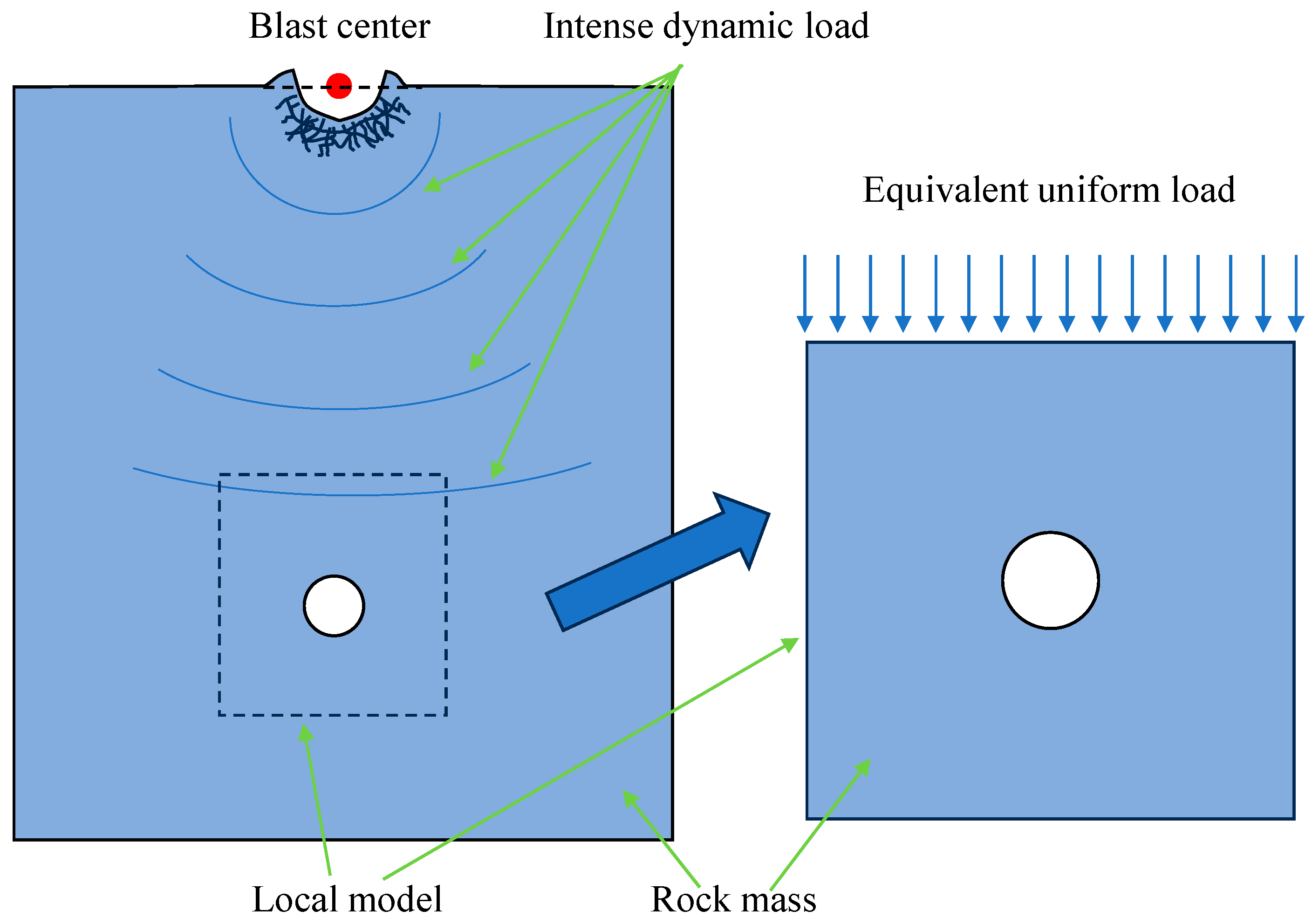
In summary, while some qualitative conclusions have been reached regarding the influence of tunnel span on stability under intense underground shock, quantitative analysis remains relatively insufficient. Therefore, this study designs model tests for tunnels with varying spans subjected to intense underground shock and employs a combined approach of physical model testing and LS-DYNA dynamic finite element analysis to quantitatively investigate the effect of tunnel span on stability. Both the experimental and numerical simulation methods adopted a local model for analysis (see Figure 1). The distribution of surrounding rock stresses, the extent of plastic zones, and the variation patterns of maximum relative displacement between the roof and floor of tunnels under different intense underground shock conditions are analyzed. The findings can provide valuable support for the anti-blast design of tunnels with different spans under intense underground shock.

2. Dynamic Loading Tests on Tunnel Models with Different Spans

2.1. Design Concept

To investigate the influence of tunnel span on its stability under strong dynamic impact loading, model tests were conducted to simulate the effects of dynamic loads applied directly above tunnels of varying spans. Based on the similarity theory, the model tests were designed and executed, ensuring compliance with the principles of similitude. A dynamic load, characterized by a triangular waveform as shown in the figure, was applied at the top of the model [5,6]. Under deep burial conditions, the duration of such dynamic loads tends to be relatively long; therefore, the parameter values adopted in this study, based on referenced values in the literature, are considered reasonable.
Taking circular unlined tunnels with a burial depth of 100 m and spans of 10 m and 13 m as examples, and without considering the plastic zone induced by stress redistribution due to tunnel excavation, this study analyzes the influence of tunnel span on stability under intense underground shock. Based on the principles of high similarity, material availability, environmental friendliness, and previous literature, the parameters of the rock mass similarity materials were determined using similarity theory. The density similarity ratio was set at 1:1, and the geometric similarity ratio at 50:1. Through dimensional analysis and mechanical principles [30,31], the similarity relationships and values of various parameters were derived, as shown in Table 1. According to the similarity ratios, the model tunnel spans are 200 mm and 260 mm, respectively. The models were designated as MT200 and MT260, and were subjected to dynamic loading with a peak pressure p of 0.2 MPa.

2.2. Test Equipment and Specimen

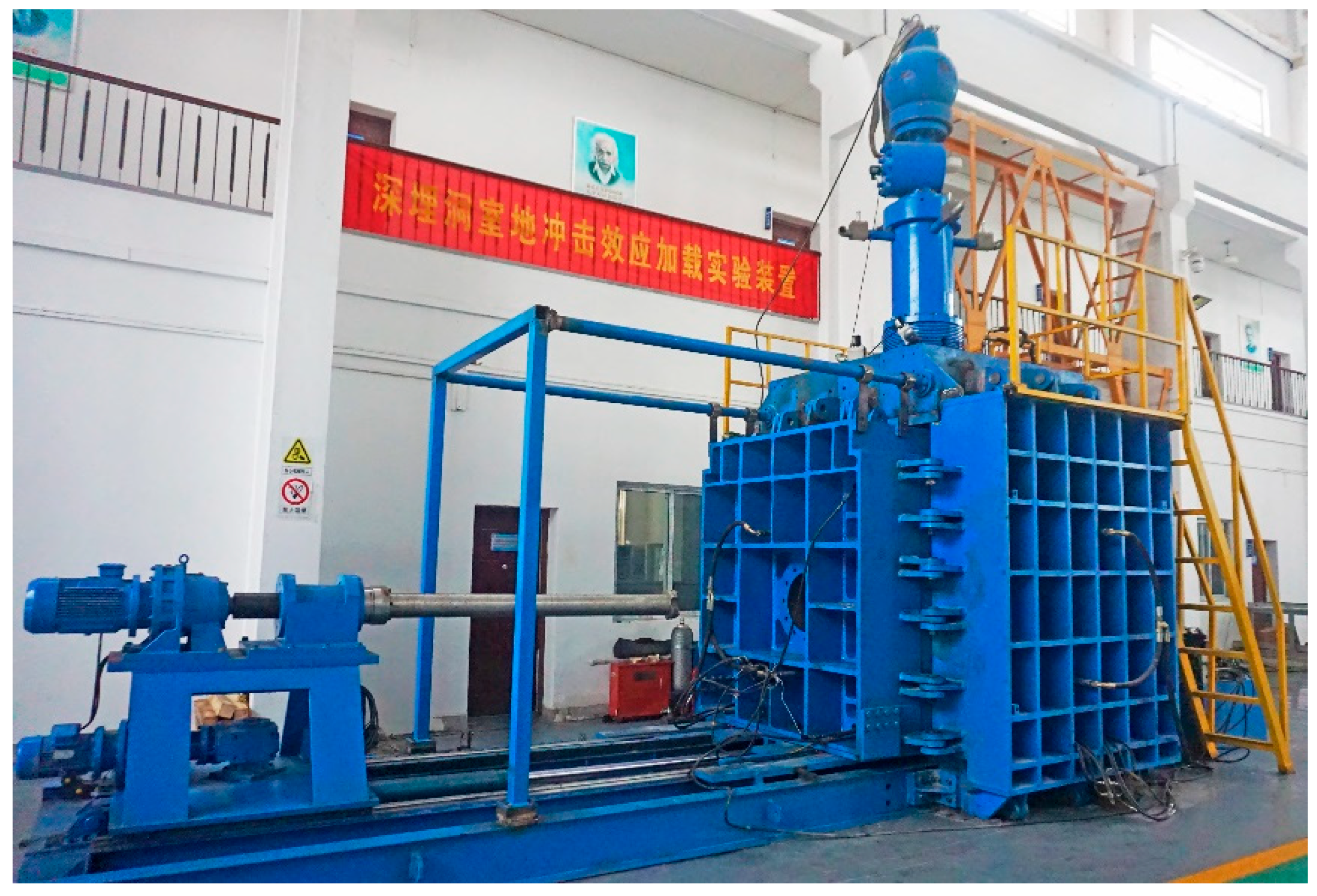
The model test in this study was conducted using the deep-buried cavern ground impact effect loading experimental apparatus at the Army Engineering University of PLA (see Figure 2) [30]. The specimen dimensions required for this experimental setup are 1.3 m × 1.3 m × 1.3 m. This apparatus can apply horizontal and vertical static pressures to the specimen through hydraulic pressure on the lateral and top surfaces, respectively. Additionally, it can apply dynamic loading to the top surface of the specimen through compressed gas. The testing apparatus [31,32] is capable of applying planar intense dynamic loading ranging from 0 to 3 MPa on the top surface of the model, with a pressure rise time adjustable between 1 and 20 ms. The pressure decay time can be extended to twice the rise time and is also adjustable.
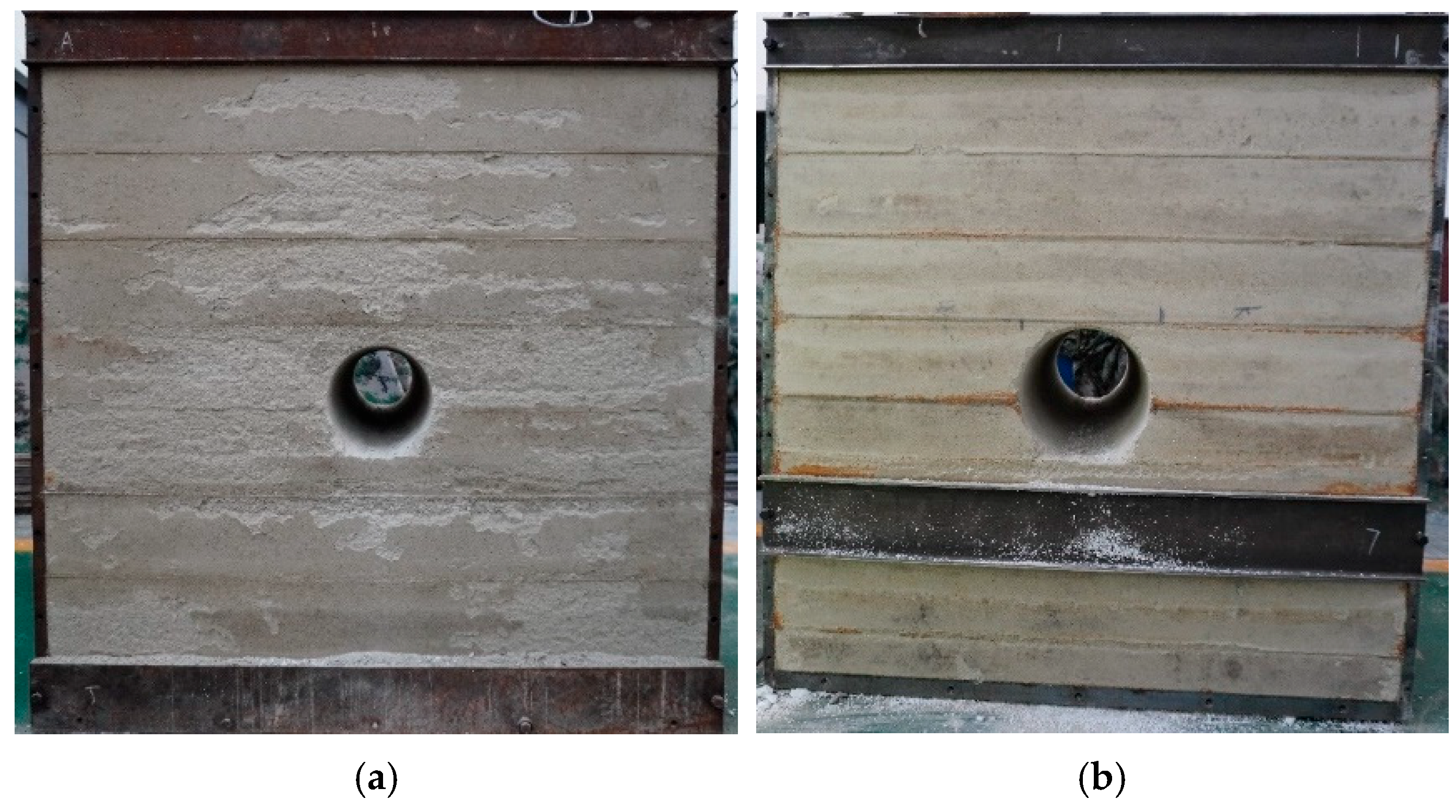
According to Reference [32], a model material with a mix ratio of quartz sand: barite sand: barite powder: rosin: 95% concentration alcohol = 30:10:60:0.7:6 was adopted to prepare cubic specimens with a side length of 1.3 m. The parameters of the model material with this mix ratio and the corresponding rock mass parameters in the prototype scenario are presented in Table 2. Verification confirmed that the similarity ratio of 50:1 relative to the actual rock mass parameters was achieved. A completed and compacted model specimen is shown in Figure 3.

2.3. Measurement Content

2.3.1. Stress Measurement

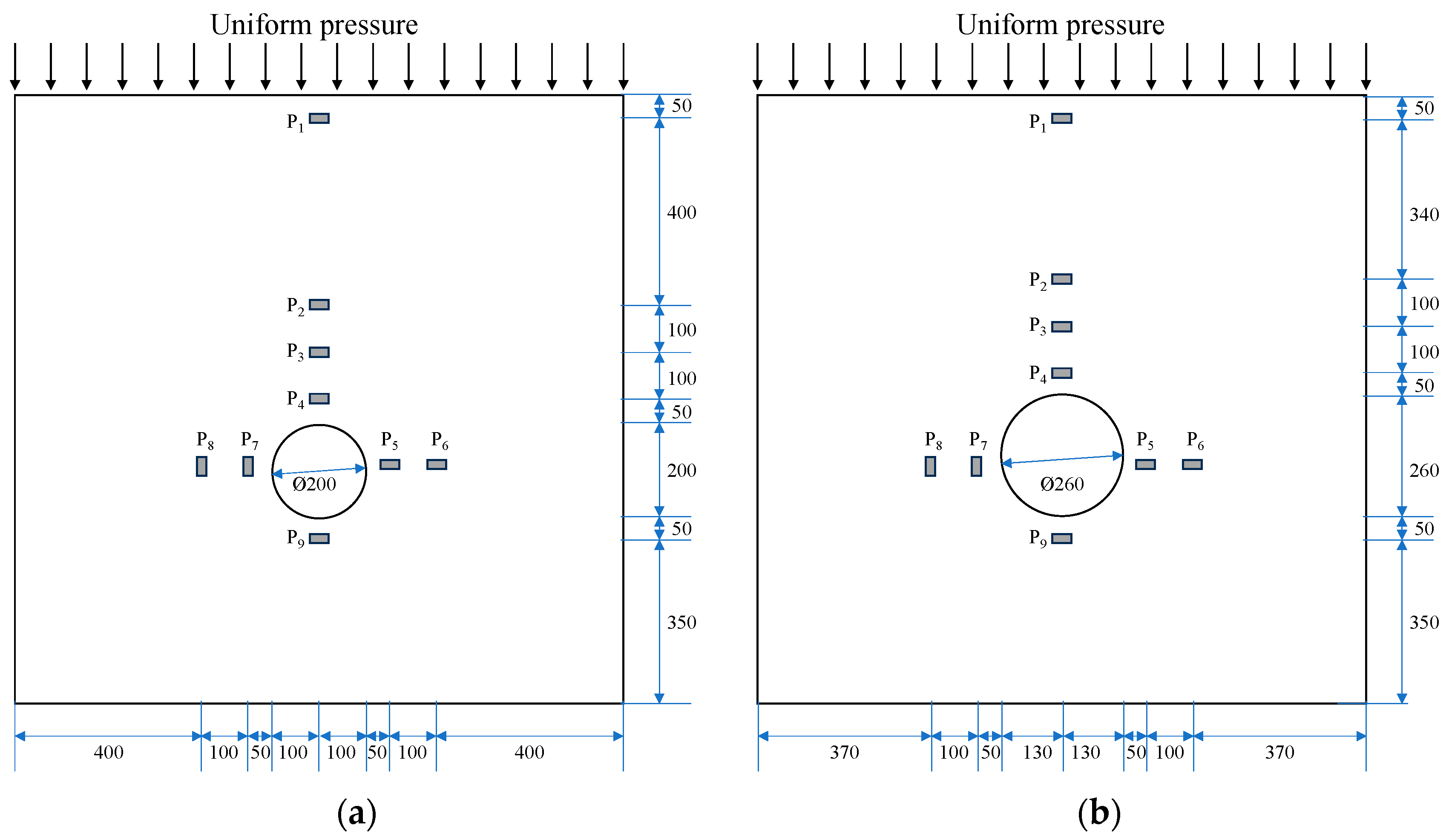
To monitor the compressive stress of the model material under intense dynamic loading, DNS123A piezoresistive pressure sensors were prefabricated during the compaction process of the specimen. The arrangement of sensors in each model specimen is illustrated in Figure 4. Labels P1 to P9 in the figure indicate the locations of pressure sensors (among which the sensors at points P7 and P8 were vertically placed to measure the horizontal compressive stress within the model, while the sensors at other points were horizontally placed to measure the vertical compressive stress within the model).

2.3.2. Measurement of Relative Displacement and Internal Phenomena of the Chamber

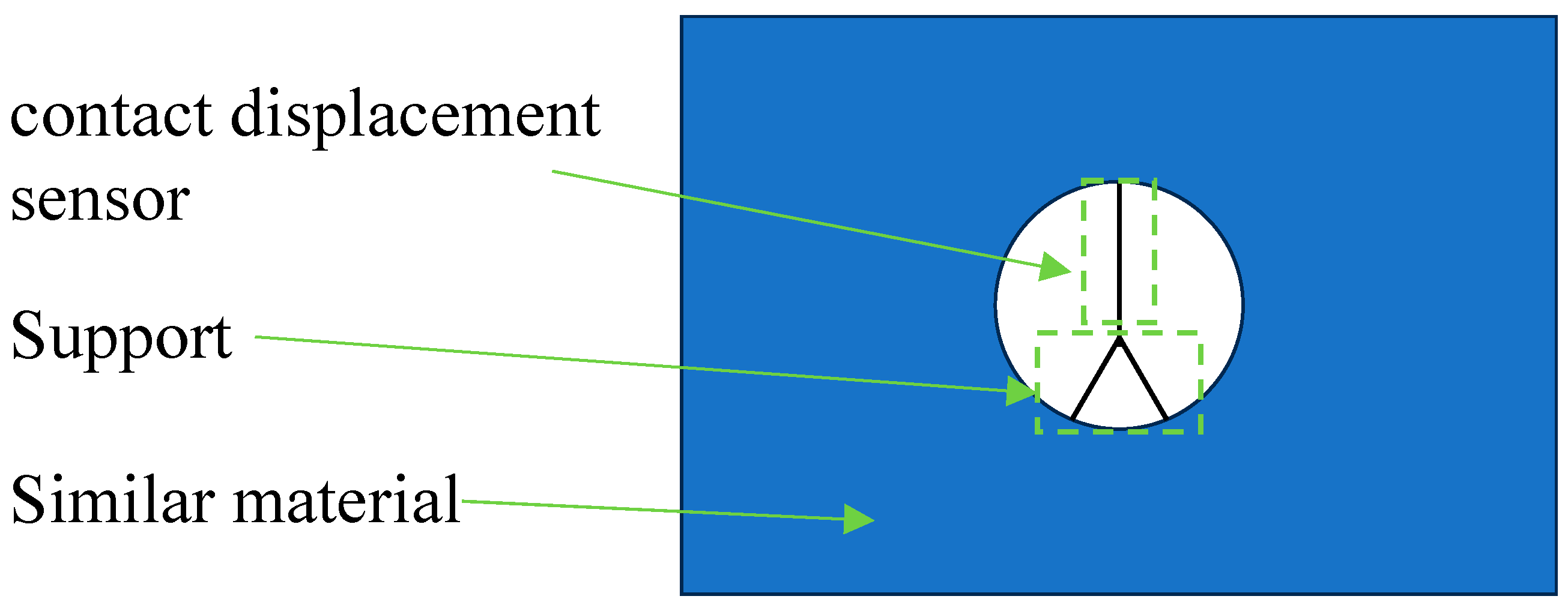
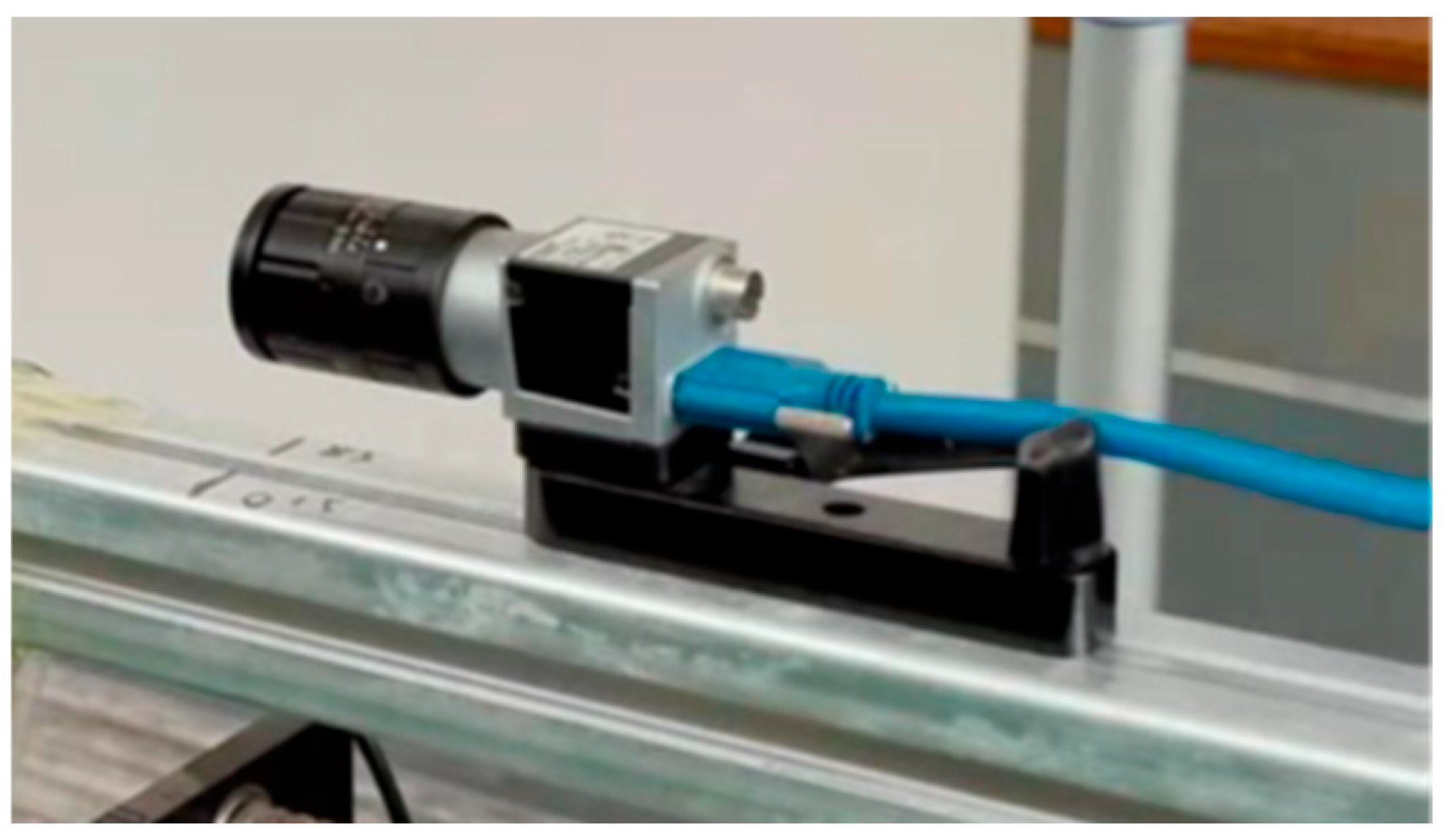
A contact displacement sensor was positioned at the axial center of the model cavity to measure the relative displacement between the center of the tunnel roof and the center of the tunnel floor (a schematic diagram is shown in Figure 5). A camera was installed inside the cavity (as shown in Figure 6) to monitor the interior of the cavity.

3. Results and Analysis

3.1. Compressive Stress at the Model Measuring Point

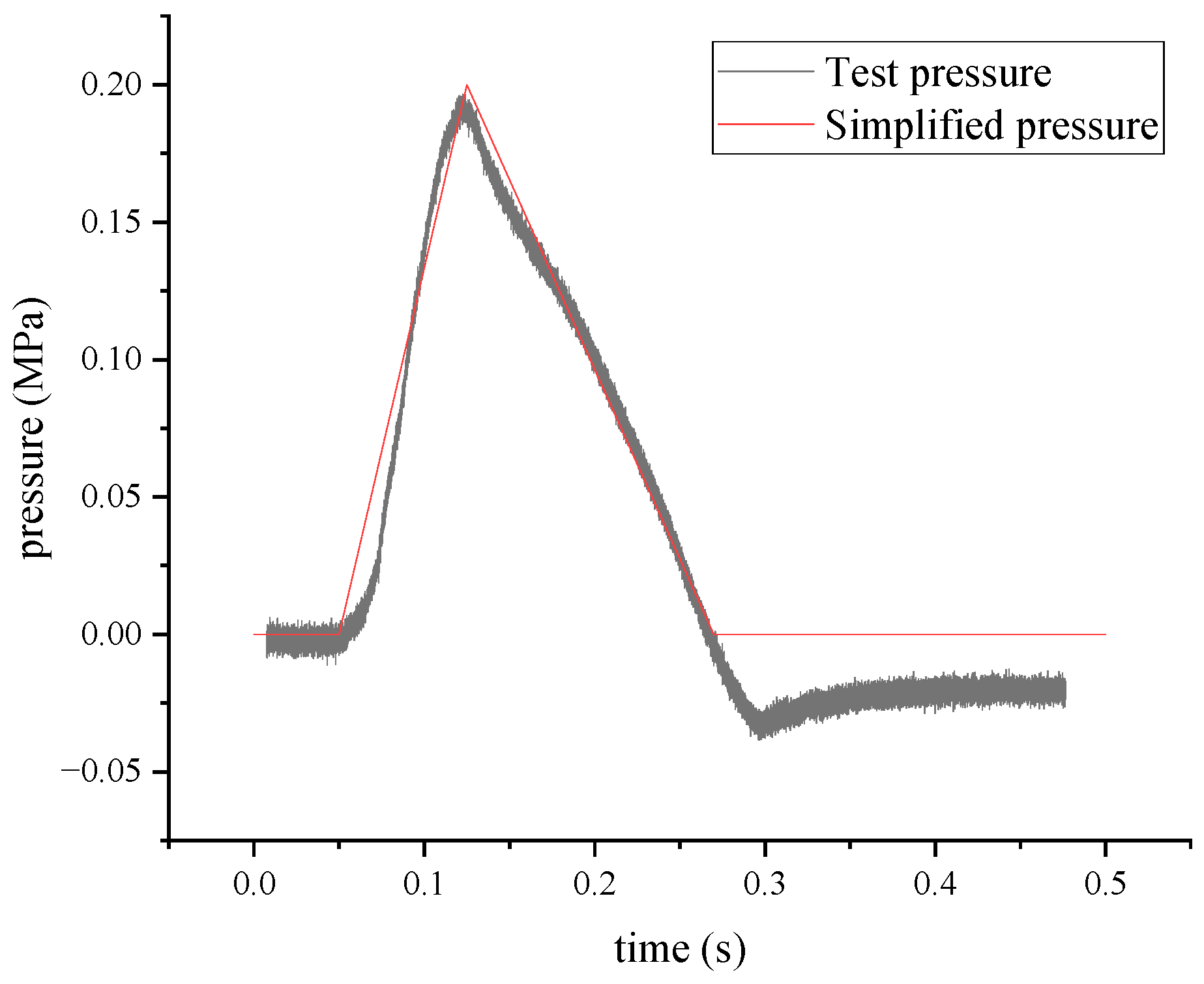
After intense dynamic loading was applied to the two models, compressive stress curves were recorded at each measurement point. The measured data shown in Figure 7 represent the compressive stress at point P1 of model MT200. It can be observed from the figure that the curve of the intense dynamic loading can be simplified as a triangular load wave. The peak compressive stresses at each measurement point were statistically obtained, as presented in Table 3.
As shown in Table 3, the peak compressive stresses at measuring point P1 for models MT200 and MT260 are both approximately 0.2 MPa, indicating that the two models can be considered as having been subjected to the same intense dynamic loading in an engineering context. The peak compressive stresses at measuring points P2 to P4 for models MT200 and MT260 decrease as the points gradually approach the top of the chamber, suggesting that the radial compressive stress at different measuring points diminishes with proximity to the chamber due to stress redistribution caused by the presence of the chamber. The peak compressive stresses at measuring points P5 and P6 increase gradually as they approach the sidewall of the chamber and exceed those at point P1, indicating that the hoop compressive stress at different measuring points intensifies with proximity to the chamber owing to stress concentration induced by the chamber. The peak compressive stresses at measuring points P7 and P8 decrease as they approach the sidewall of the chamber, following the same variation mechanism as that observed for points P2 to P4. The peak compressive stress at measuring point P9 is relatively small, suggesting that the intense dynamic loading is unlikely to cause damage to the bottom of the tunnel.
A comparison was conducted on the same measurement points of models MT200 and MT260. In terms of numerical values, the peak compressive stress at points P2–P4, P7, and P8 of model MT260 is lower than that at the same points in model MT200, while the peak compressive stress at points P5 and P6 of model MT260 is higher than that at the corresponding points in model MT200. This occurs because the increase in tunnel span reduces the ratio of the distance from the measurement point to the tunnel center to the tunnel radius, resulting in a more pronounced stress redistribution in model MT260 compared to model MT200 under identical measurement point conditions. The comparison reveals that the peak compressive stress at point P5 in model MT260 increased by 27 kPa compared to that in model MT200, indicating that the influence of tunnel span on tunnel stability is relatively limited under these conditions.

3.2. Relative Displacement Between the Roof and Floor of the Tunnel Model and Tunnel Stability

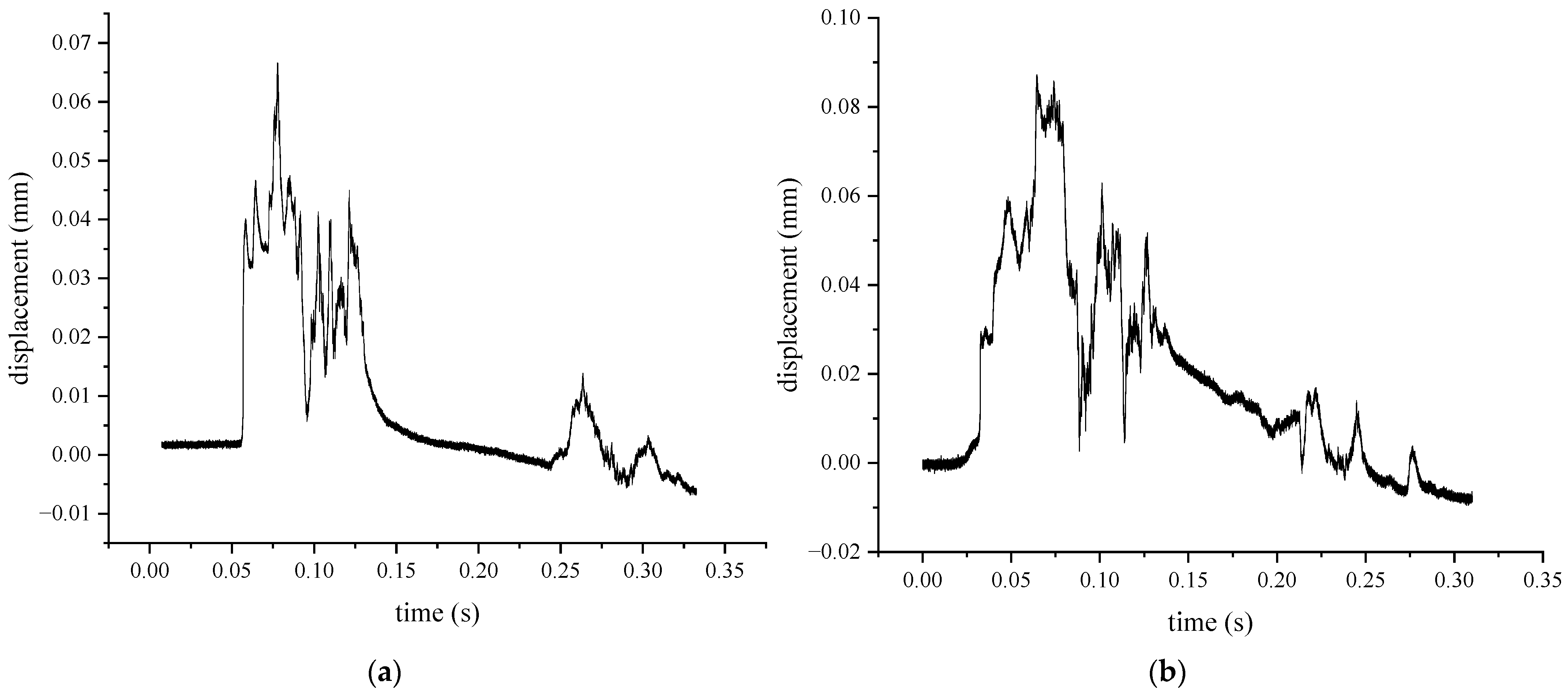
The relative displacement between the tunnel model’s roof and floor was measured using displacement transducers, as illustrated in Figure 8. The magnitude of the relative displacement between the roof and floor indicates the extent of deformation in the cavity under intense dynamic loading; a larger relative displacement corresponds to greater cavity deformation, which is more detrimental to tunnel stability. As shown in Figure 8, the maximum relative displacement between the roof and floor is 0.066 mm for MT200 and 0.087 mm for MT260. This demonstrates that the maximum relative displacement between the tunnel roof and floor increases with the tunnel span.
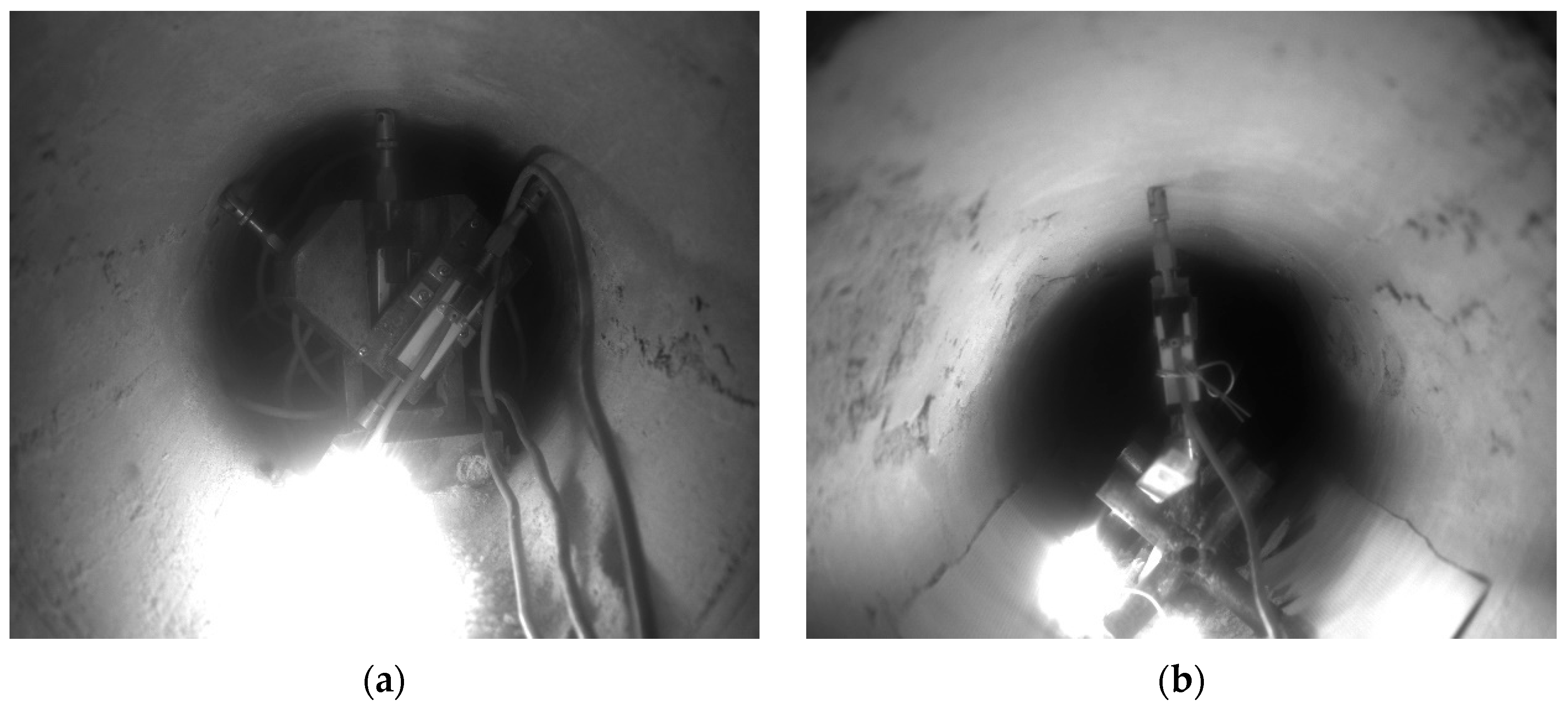
The internal phenomena of the MT200 and MT260 specimens after intense dynamic loading are shown in Figure 9, respectively. It can be observed that the cracks inside the cavern are primarily concentrated on the sidewalls, and more cracks are found on the sidewalls of MT260 than those of MT200. However, the overall tunnel model remains intact with no spalling observed at the crown, indicating that both tunnel models remained stable after being subjected to intense dynamic loading under this working condition.

4. Numerical Simulation of Intense Underground Shock on Tunnels

4.1. Establishment of the Model and Verification of the Simulation Against Experimental Conditions

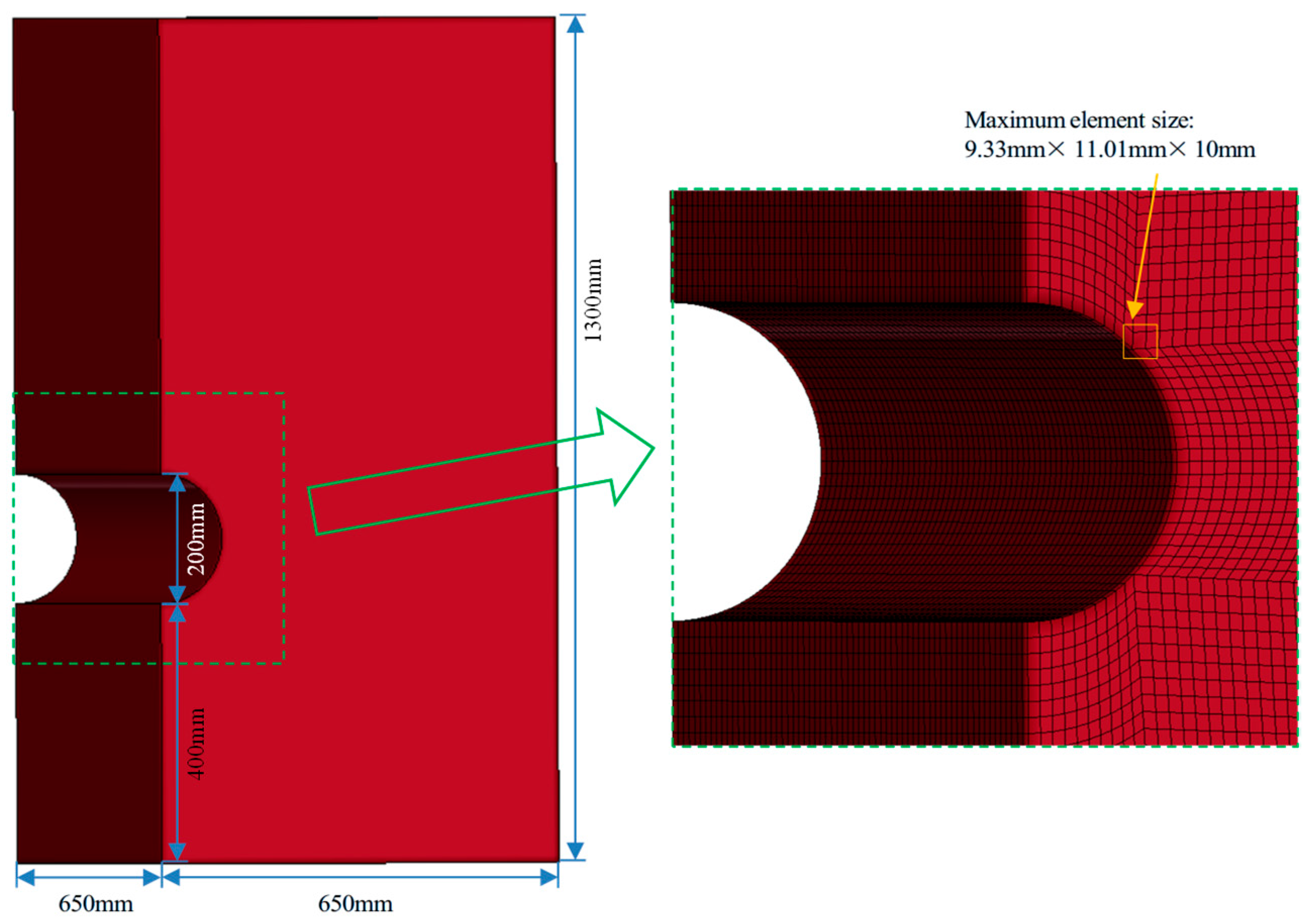
Numerical simulations were conducted using the dynamic finite element software (LS-DYNA R14.0) [33]. To validate the accuracy of the numerical simulations, this section performs a verification against experimental conditions. Numerical models were established for models MT200 and MT260, respectively, with dimensions consistent with the test specimens, and the load applied at the top of the models was identical to the simplified load pattern shown in Figure 7. Considering the symmetry of both the model and the applied loading, a half-model was constructed for analysis using the vertical plane passing through the center of the cavern as the symmetry plane. When setting the boundaries of the numerical model, the bottom, front, back, and side surfaces were defined as rigid boundaries, while the symmetry plane was treated as a symmetric boundary. To ensure the accuracy of the numerical simulation results, the element size of the model was set between 10 mm and 50 mm. Taking MT200 as an example, the established finite element model is illustrated in Figure 10.
The Mohr-Coulomb model was employed to configure the parameters of the model material. Based on the parameters provided in Table 2, the uniaxial compressive strength and uniaxial tensile strength of the rock mass, measured experimentally, were substituted into Equation (1) and Equation (2) to determine the cohesion and internal friction angle [34]. In conjunction with the “Standard for Engineering Classification of Rock Masses” [35], the final parameter values of the model material were obtained as presented in Table 4.
c 0 = σ c σ t 2
φ 0 = 2 arctan σ c 2 σ t π 2
where c 0 represents the cohesion; σ c denotes the uniaxial compressive strength; σ t indicates the uniaxial tensile strength; and φ 0 signifies the internal friction angle.
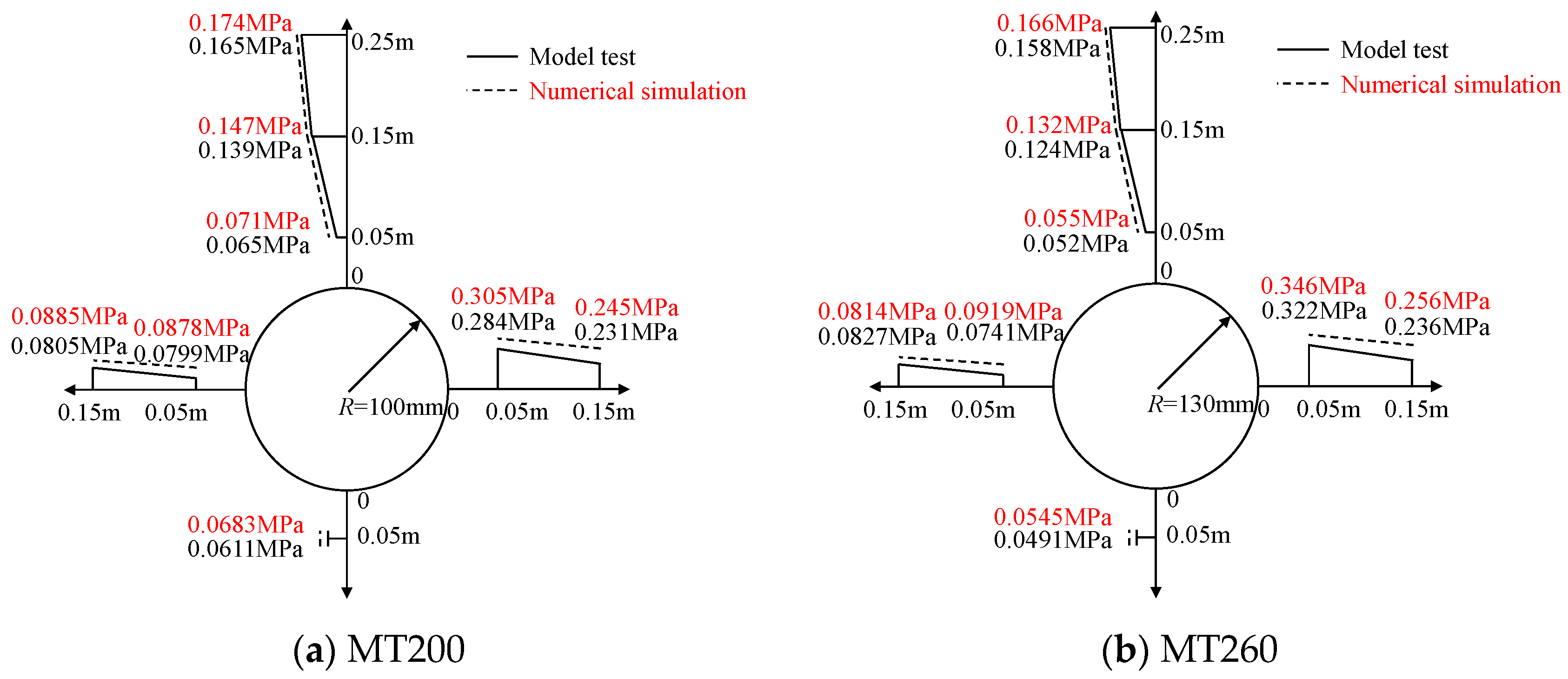
Analysis of the peak compressive stresses at identical measurement points from both numerical simulations and model tests (as shown in Figure 11) reveals that the distribution of peak compressive stresses obtained through numerical simulation aligns well with that measured in the model tests. In terms of magnitude, the results from the numerical simulations are slightly higher than those from the experimental measurements. This discrepancy may arise from the fact that the physical model specimen was compacted from granular materials in the experiment, whereas the numerical model assumed a continuous medium. As a result, the attenuation of impact-induced stress waves is more pronounced in the physical specimen than in the numerical model. Nevertheless, the overall agreement between the simulated and experimental results is satisfactory, demonstrating the validity of the numerical simulation approach.

4.2. Response Characteristics of Tunnels with Varying Spans Under Intense Underground Shock

To further investigate the influence of tunnel span on tunnel stability, this section conducts numerical simulations of prototype tunnels with a burial depth of 100 m and spans of 5, 10, 15, and 20 m. Due to the significant burial depth, where the wavelength exceeds the tunnel span, the stability of the tunnel is primarily dependent on the peak value of the dynamic load, according to the findings of Person [9]. In terms of load configuration, intense underground shock with peak values of 20, 40, 60, and 80 MPa (corresponding to 0.35 f r , 0.70 f r , 1.05 f r , and 1.40 f r , respectively) are applied at the top of the model. The rise time and positive pressure duration are consistent with the simplified load shown in Figure 6. To ensure that tunnel models with different spans are situated at the same burial depth, the distance from the crown of the tunnel to the upper boundary of the model is uniformly set to 30 m. To minimize the impact of boundary effects on the accuracy of the numerical results, the length from the model boundary to the sidewall of the tunnel is set to three times the tunnel diameter. Regarding boundary conditions, the bottom of the numerical model is assigned a transmissive boundary, while the symmetric plane and lateral sides are set as symmetric boundaries. Other model settings are consistent with those described in Section 3.1. The mechanical parameters of the prototype rock mass are determined based on similarity relationships (see Table 5).
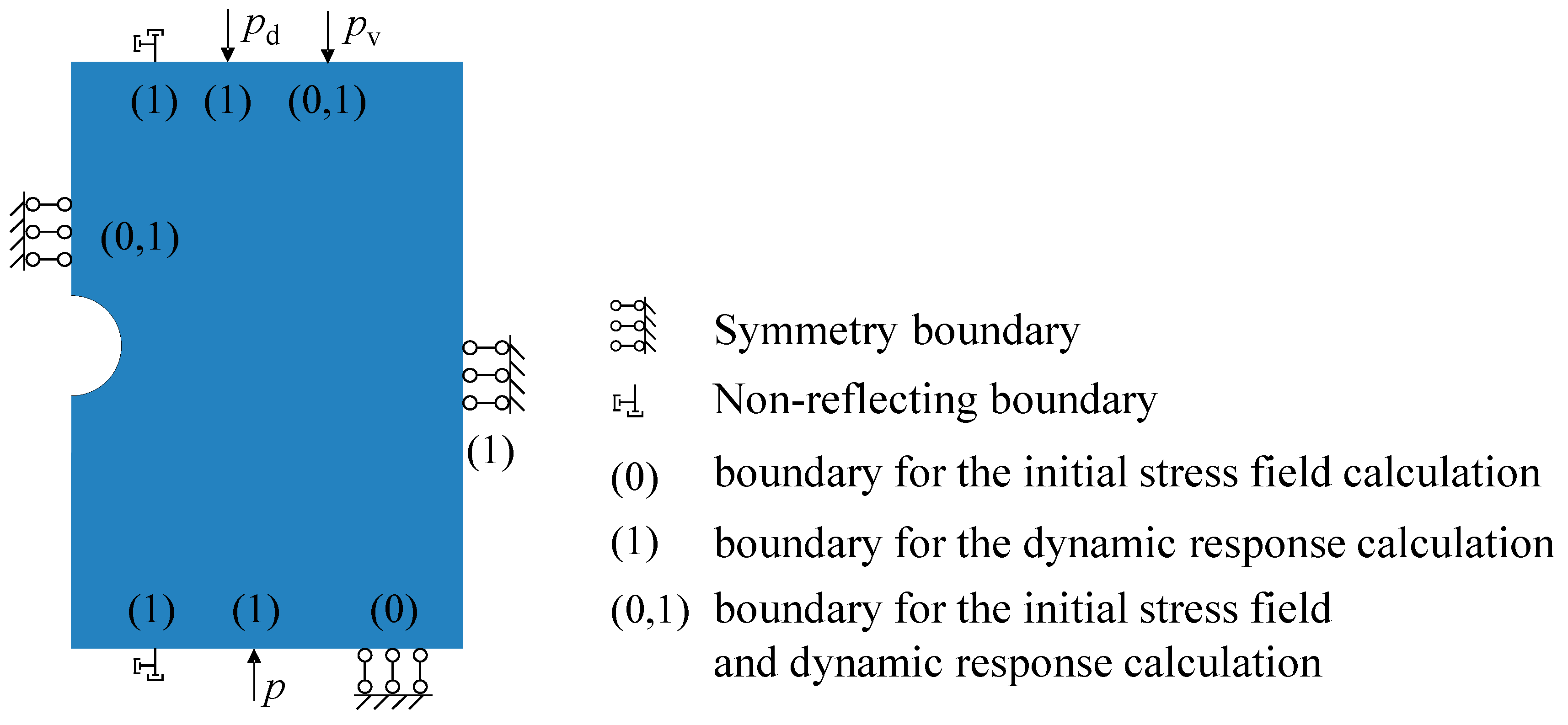
In terms of boundary configuration, Liu Shaoliu et al. [36] proposed a method for setting velocity-exerting mode boundary conditions, which accurately analyzes the deformation and failure of deep-buried structures under static and dynamic coupling conditions. This method achieves the balance of the initial in situ stress within the computational region by constructing a force system on the boundaries. Subsequently, this force system is transformed into a step function form of dynamic forces acting on the boundaries, followed by the application of dynamic loads. The specific setup procedure is illustrated in Figure 12. The numerical model calculation is performed in two steps: (1) Initial stress field calculation. The left boundary of the model is set as a symmetric boundary, the vertical self-weight in situ stress P v is applied at the top of the model, and the bottom boundary is set with rigid constraints. The equilibrium state of the surrounding rock under the initial in situ stress is obtained using the critical damping method. (2) Dynamic response calculation. The initial stress field state obtained in the first step is used as the initial condition. The left boundary of the model remains a symmetric boundary, and the vertical in situ stress P v on the top boundary is maintained. To simulate the infinite medium conditions at the top and bottom boundaries, transmitting boundaries are set for these two boundaries. Additionally, the normal constraint on the bottom boundary should be replaced by an equivalent reaction load. Finally, a ground impact load P d is applied to the top of the model to complete the dynamic analysis. In Figure 12, the configuration marked (0) is used for the initial stress field calculation in the first step, and the configuration marked (1) is used for the dynamic response calculation in the second step. The boundary conditions shown in the figure cover the entire surface on which they are applied.
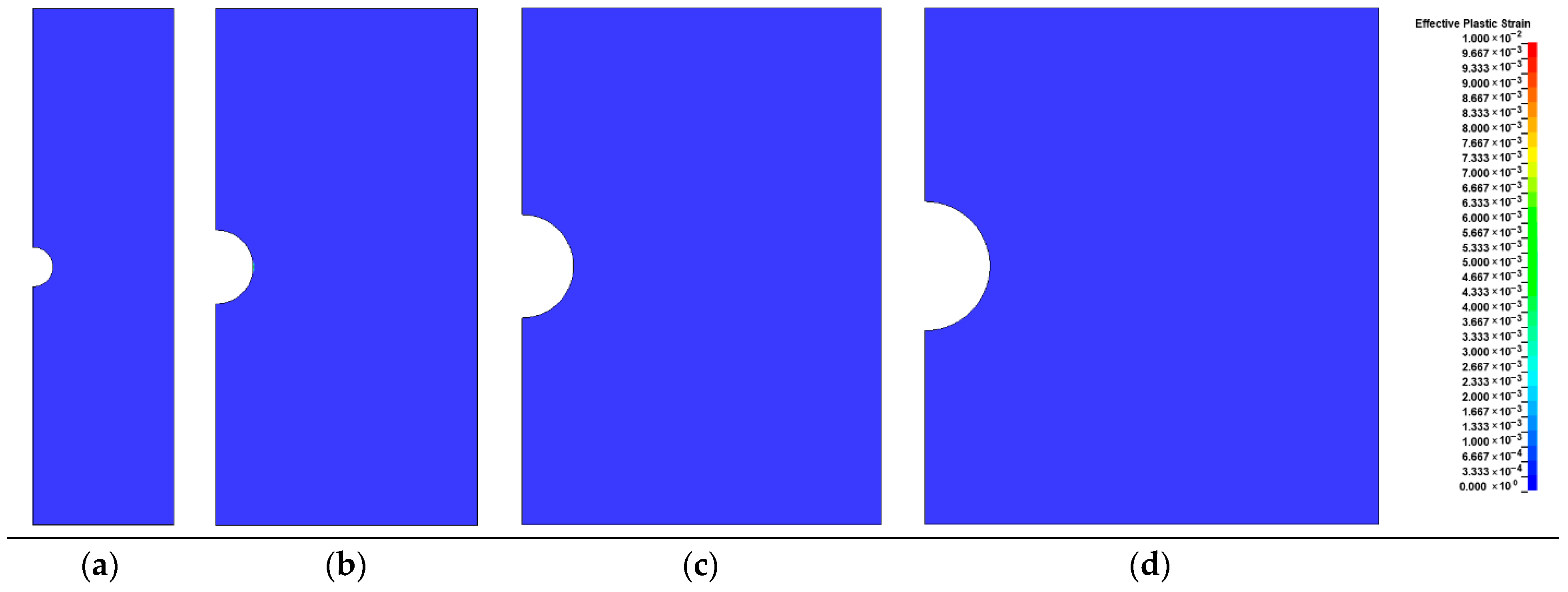
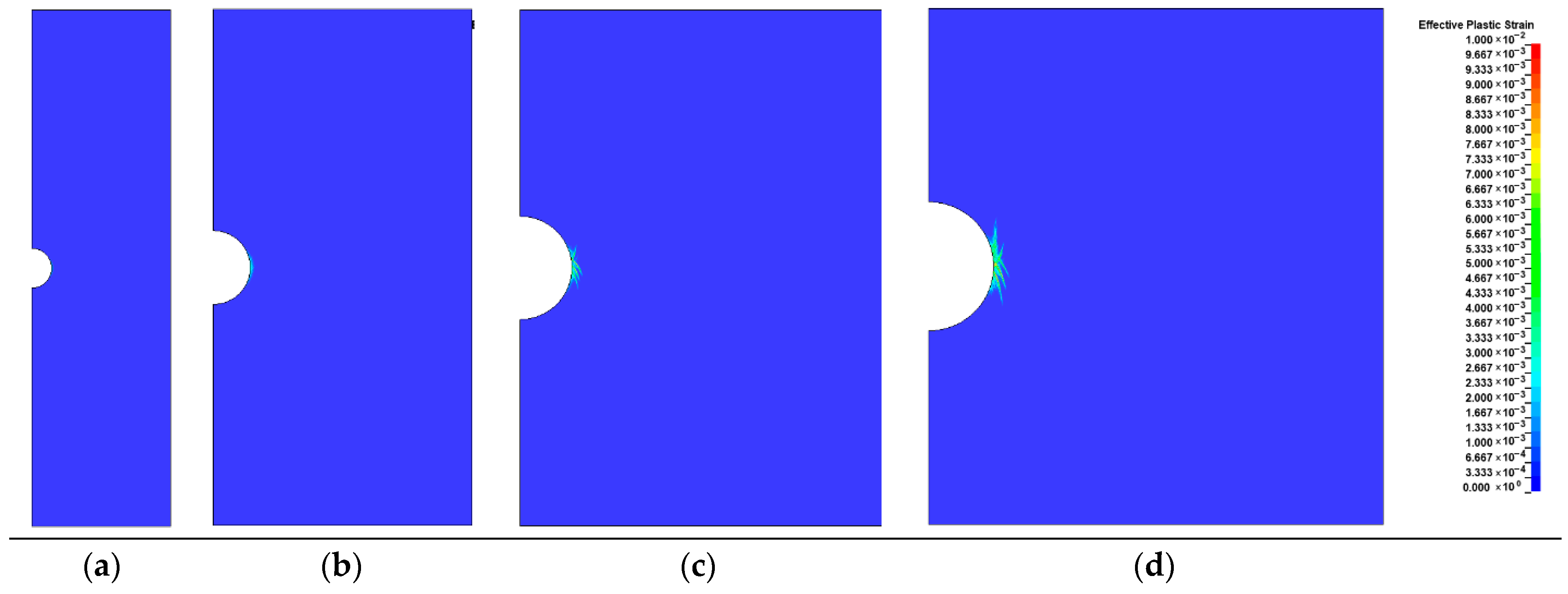
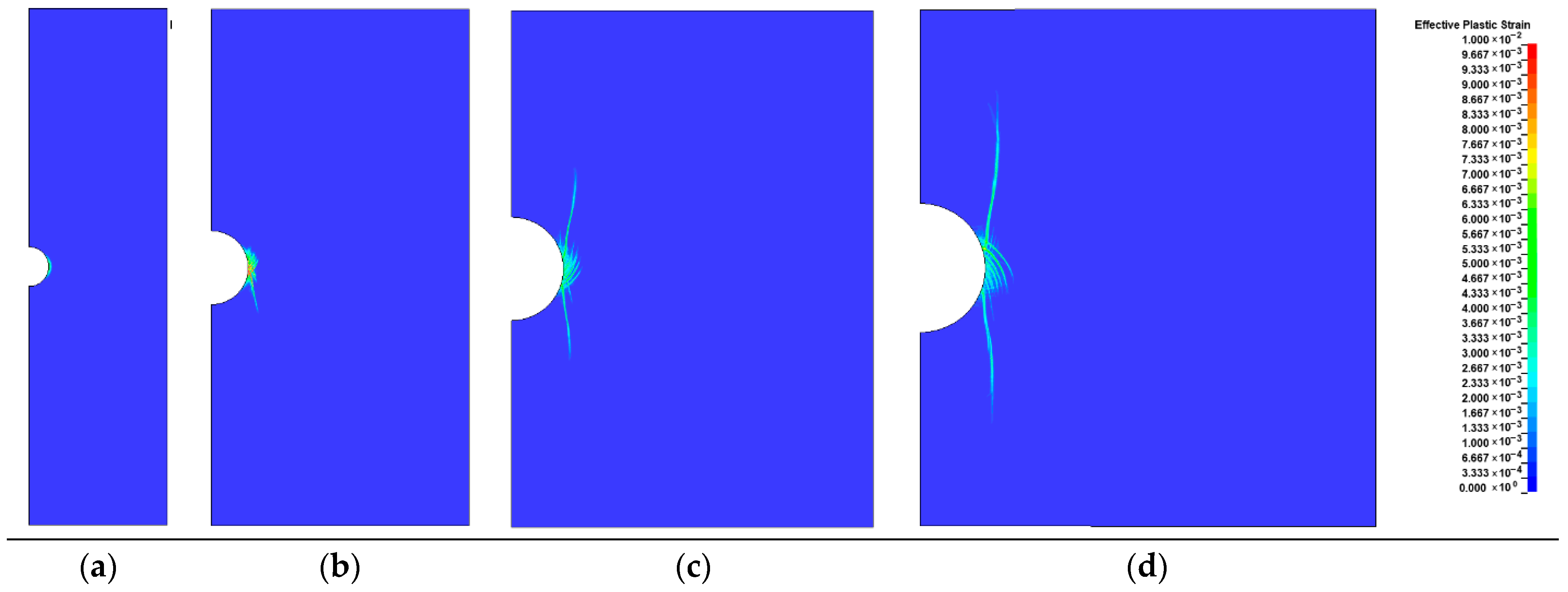
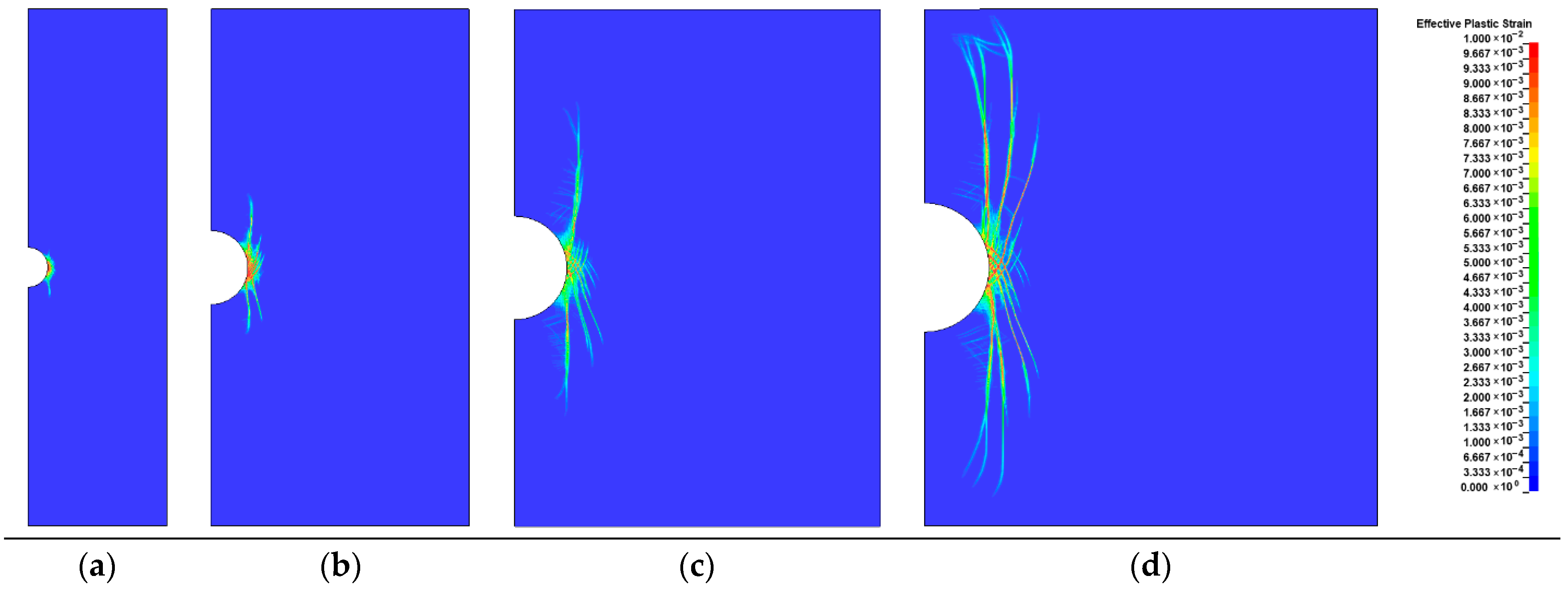
The nephograms of plastic zones in tunnels under different intense underground shock are shown in Figure 13, Figure 14, Figure 15 and Figure 16. As illustrated in Figure 13, when the peak dynamic load is 20 MPa ( 0.35 f r ), no effective plastic strain is observed in tunnels of various spans, indicating that changes in tunnel span do not significantly affect tunnel stability. With an increase in the peak intensity underground shock to 40 MPa ( 0.70 f r ), as shown in Figure 14, effective plastic strain emerges at the sidewalls of all tunnels. For the tunnel with a span of 5 m, the extent of effective plastic strain is relatively limited; however, as the span increases, the region of effective plastic strain expands slightly. When the peak dynamic load reaches 60 MPa ( 1.05 f r ) (see Figure 15), the plastic zones at the sidewalls of all tunnels enlarge further. With increasing tunnel span, upward-propagating plastic bands become apparent at the sidewalls. At a peak dynamic load of 80 MPa ( 1.40 f r ) (see Figure 16), plastic bands extending both upward and downward are observed at the sidewall plastic zones of tunnels across different spans. The maximum distances from the plastic zones to the tunnel wall are summarized in Table 6. It is evident that as the peak dynamic load increases, the growth rate of the maximum extension distance of plastic zones in large-span tunnels is more pronounced compared to that in small-span tunnels. Figure 11. Effective plastic strain contours for tunnels with different spans under intense underground shock with a peak of 20 Mpa.
As shown in Figure 13 and Figure 14, when the peak intensity of the dynamic loading ranges from 20 MPa ( 0.35 f r ) to 40 MPa ( 0.70 f r ), the tunnel wall transitions from exhibiting no plastic zone to the initial development of a plastic zone. To determine the critical condition for the formation of a plastic zone in the tunnel wall, this study systematically computed cases involving intense underground shock with peak intensities between 20 MPa and 40 MPa. The results indicate that when the intense underground shock falls within the range of 0.51 f r to 0.54 f r , a plastic zone begins to form in the tunnel wall. It can therefore be concluded that when the intense underground shock is below 0.51 f r , the surrounding rock mass of the tunnel remains in an elastic state.

4.3. Variation Characteristics of the Maximum Relative Displacement Between the Roof and Floor of Tunnels with Different Spans Under Intense Underground Shock

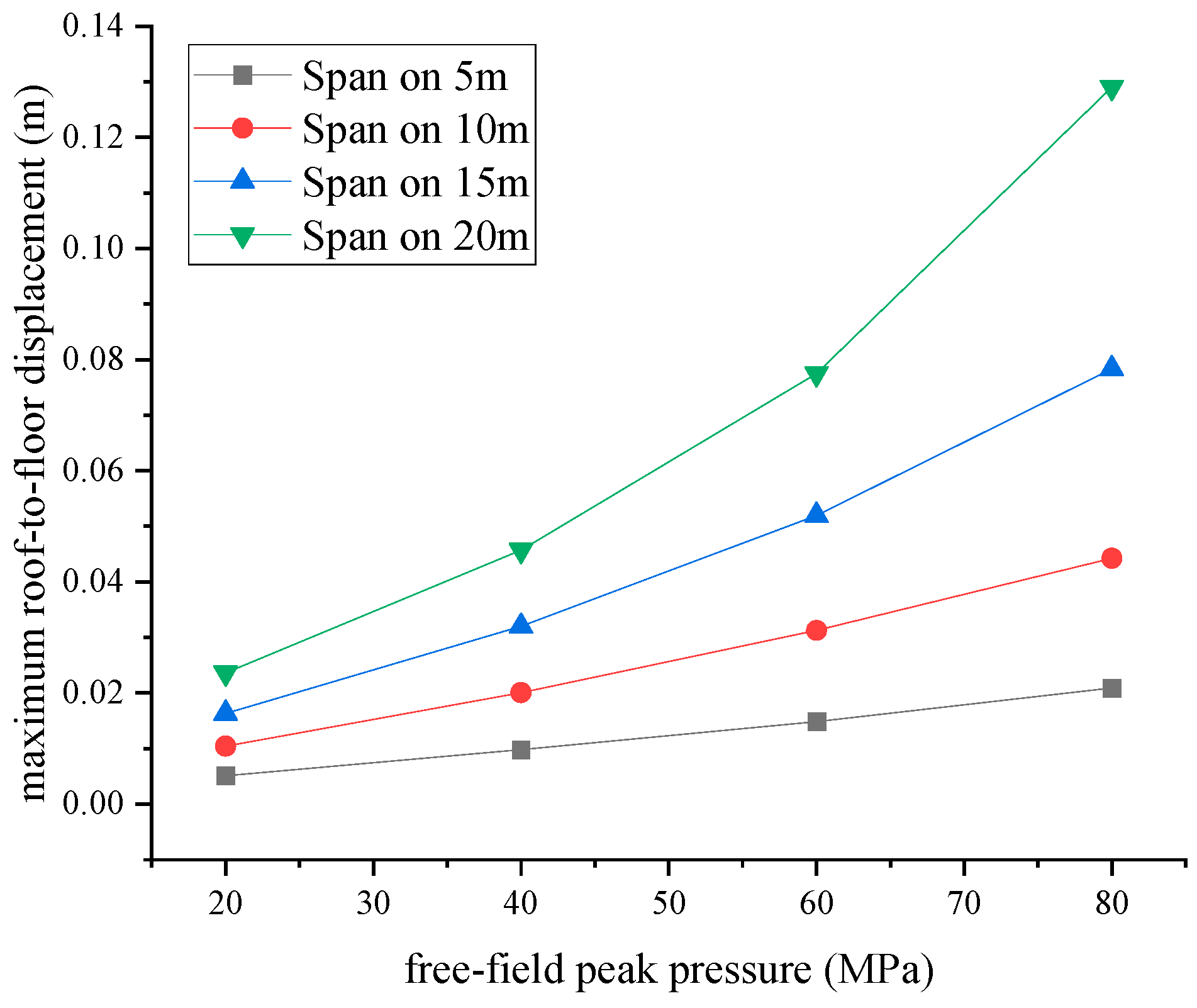
The relationship between the maximum relative displacement of the tunnel crown and invert and the tunnel span under different intense underground shock conditions is shown in Figure 17. Generally, as the peak value of the intense underground shock and the tunnel span increase, the maximum relative displacement between the crown and invert also increases. Taking a tunnel span of 5 m as an example, when the peak dynamic loading values are 20, 40, 60, and 80 MPa, the maximum relative displacements between the crown and invert are 5.14, 9.79, 14.82, and 20.9 mm, respectively. In contrast, for a tunnel span of 20 m under the same corresponding peak dynamic loading values, the maximum relative displacements between the crown and invert are 23.62, 45.68, 77.48, and 129.04 mm, respectively. Comparison indicates that the increasing trend of the maximum relative displacement in small-span tunnels is relatively uniform with increasing loading, whereas in large-span tunnels, the increasing trend becomes significantly more pronounced as the loading intensifies. This demonstrates that the tunnel span influences the stability of the tunnel, and as the peak intensity of the dynamic loading increases, the effect of the span on tunnel stability becomes more evident.
According to the dynamic response characteristics and plastic zone failure patterns of tunnels with different spans under intense underground shock, it is observed that the plastic zone initially concentrates at the sidewalls of the tunnel under such loading. Local reinforcement at the sidewalls can enhance the impact resistance of the tunnel. Furthermore, as the tunnel span increases, to ensure stability, local reinforcement should be applied at the sidewalls, while a certain number of rock bolts should be installed at the waist of the tunnel. This measure helps mitigate the adverse effects of increased tunnel span on its overall stability.

5. Discussion

It can be observed from the extent of the plastic zone and the relative displacement of the tunnel that the influence of span on tunnel stability becomes more pronounced as the load increases. When the load is relatively small, the effect of increasing the span on tunnel stability is not significant; however, when the load is relatively large, the influence of span enlargement on tunnel stability becomes evident.
A comparison with findings from other researchers reveals differences between conditions involving intense underground shock and those with short-duration loads. Under intense underground shock, the effect of span increase on tunnel stability depends on the ratio of the peak dynamic load to the uniaxial compressive strength. When this ratio is small, the influence of span is limited; when the ratio is large, the influence becomes more substantial. Nevertheless, no fundamental change in the mode of structural failure is observed. In contrast, under loading conditions induced by chemical explosions, an increase in span leads to a change in the failure mode of the tunnel structure. This discrepancy arises partly because the duration of chemical explosion loading is relatively short, and the increase in span alters the wavelength-to-tunnel-diameter ratio. Additionally, the loading mechanism resembles that of a concentrated explosive charge, and an increase in span modifies the direction in which the load acts on the tunnel. These observations provide insights into the effects of intense underground shock.
Thus, it can be concluded that when the load acting on the tunnel is low, or when the tunnel’s load-bearing capacity is enhanced—either due to the rock mass or structural reinforcement—the span has only a minor effect on tunnel stability. However, when the load is high and the tunnel’s bearing capacity is relatively low, the influence of span on tunnel stability cannot be neglected. It is recommended that tunnel depth be increased wherever possible, that structural bearing capacity be enhanced, or that a higher safety margin be adopted to mitigate the impact of span on tunnel stability.

6. Conclusions

To investigate the influence of tunnel span on tunnel stability under intense underground shock, this study examines unlined circular tunnels in intact surrounding rock with a uniaxial compressive strength f r = 57 MPa. Two tunnel models with different spans were designed, and impact tests were conducted under identical initial conditions. A numerical simulation model was established using the dynamic finite element method to analyze the dynamic response characteristics of tunnels with varying spans under different intense underground shock conditions. The following conclusions were drawn:
(1)
When the intense underground shock is below 0.51 f r , the surrounding rock mass of the tunnel remains in an elastic state;
(2)
When the intense underground shock ranges from 0.51 f r to 0.54 f r , plastic zones begin to appear in the sidewalls of the tunnel;
(3)
When the intense underground shock exceeds 0.70 f r , the influence of span on stability increases sharply with the loading intensity. In small-span tunnels, plastic zones are primarily distributed in the sidewalls, whereas in large-span tunnels, the plastic zones extend further upward and downward;
(4)
When the peak intense underground shock is 0.70 f r , the ratio of the maximum extension distance of the plastic zone in the tunnel wall between a 20 m span tunnel and a 5 m span tunnel is 10.70, and the ratio of the maximum relative displacement between the crown and the invert is 4.67. When the peak loading increases to 1.40 f r , the ratio of the maximum plastic zone distance increases to 13.94, and the ratio of the maximum relative displacement between the crown and the invert increases to 6.17.
It should be noted that the rock mass considered in this paper satisfies the continuum assumption. For rock masses that meet the continuum assumption, the cases presented in this paper are representative to a certain extent. However, for rock masses that do not satisfy the continuum assumption, further research is required.

Author Contributions

Conceptualization, Z.Z.; Methodology, Z.Z. and J.H.; Validation, G.D.; Investigation, A.W.; Writing—original draft, Z.Z.; Supervision, J.H. All authors have read and agreed to the published version of the manuscript.

Funding

This research received no external funding.

Data Availability Statement

The data presented in this study are available upon request from the corresponding author.

Acknowledgments

We thank the editors and reviewers of Buildings for their careful review and helpful comments on this paper.

Conflicts of Interest

The authors declare no conflicts of interest.

References

  1. Dang, A.; Li, X. Review and prospect of the development of foreign earth-penetrating weapons. Aerodyn. Missile J. 2014, 6, 35–39. [Google Scholar] [CrossRef]
  2. Zeng, P.; Chen, J.; Liao, L.; Guo, Y.; Xie, F. Analysis of the impact test and new military capabilities of the American B61-12 nuclear bomb. Aerodyn. Missile J. 2020, 3, 77–83. [Google Scholar] [CrossRef]
  3. Li, X.; Zhang, H.; Dang, A.; Zhang, D. Combat application of Russian precision ammunition and its enlightenment on protective engineering construction. Prot. Eng. 2022, 44, 64–69. [Google Scholar]
  4. National Research Council (U.S.). Committee on the Effects of Nuclear Earth Penetrator and Other Weapons. In Effects of Nuclear Earth-Penetrator and Other Weapons; National Academies Press: Washington, DC, USA, 2005. [Google Scholar]
  5. Hao, B. Underground Nuclear Explosion and Its Applications; National Defense Industry Press: Beijing, China, 2002. [Google Scholar]
  6. Qiao, D. Introduction to the Phenomenology of Underground Nuclear Explosions; National Defense Industry Press: Beijing, China, 2002. [Google Scholar]
  7. Li, J.; Guo, W.; Jiang, H.; Chen, W.; Shi, J. Analytical solution for stress state of surrounding rock-lining in deep buried chambers under long stress waves. Prot. Eng. 2023, 45, 36–40. [Google Scholar]
  8. Wang, M.; Xu, T.; Jiang, H.; Gao, L.; Xiong, Z.; Lu, H. Theory and method for calculating safety layer thickness of deep buried protective engineering under static-dynamic coupling. J. Tongji Univ. (Nat. Sci. Ed.) 2023, 51, 805–810+802. [Google Scholar]
  9. Persen, L.N. Rock Dynamics and Geophysical Exploration; Elsevier Scientific Publishing Company: Amsterdam, The Netherlands; Oxford, UK; New York, NY, USA, 1975. [Google Scholar]
  10. Li, C.; Li, X. Influence of wavelength-to-tunnel-diameter ratio on dynamic response of underground tunnels subjected to blasting loads. Int. J. Rock Mech. Min. Sci. 2018, 112, 323–338. [Google Scholar] [CrossRef]
  11. Luo, H.; Tao, M.; Yang, Z.; Zhao, R.; Wu, C. Transient response of semi-elliptical hill with an elliptical tunnel under blast and seismic loading. Soil Dyn. Earthq. Eng. 2024, 184, 108864. [Google Scholar] [CrossRef]
  12. Wang, Y.; Zhao, C.; Gao, M.; Wang, H. Dynamic response of cylindrical deep buried tunnels in unsaturated soil under axisymmetric explosion loading. Soil Dyn. Earthq. Eng. 2023, 175, 108261. [Google Scholar] [CrossRef]
  13. Li, X.; Li, C.; Cao, W.; Tao, M. Dynamic stress concentration and energy evolution of deep-buried tunnels under blasting loads. Int. J. Rock Mech. Min. Sci. 2018, 104, 131–146. [Google Scholar] [CrossRef]
  14. Niu, B.; Chen, Y.; Cheng, Z.; Yang, S.; Li, J.; Li, Y. Comparative Study on Model Applicability for Longitudinal Seismic Response of Shield Tunnels Under Design Earthquake Loading. Buildings 2026, 16, 417. [Google Scholar] [CrossRef]
  15. Zheng, Z.; Zeng, X. Numerical analysis of the influence of span on blast-induced collapse damage of tunnels. Explos. Mater. 2007, 36, 25–28. [Google Scholar]
  16. Çetin, B.; Kırtel, O.; Toplu, E. Numerical Assessment of Dynamic Responses Induced by Underground Explosions in Tunnel Soil Free Field Systems. Appl. Sci. 2026, 16, 1617. [Google Scholar] [CrossRef]
  17. Sun, H.; Xu, J.; Zhu, G.; Zhu, J.; Kang, T. Influence of span on failure modes of underground structures under explosion. J. Air Force Eng. Univ. (Nat. Sci. Ed.) 2013, 14, 90–94. [Google Scholar]
  18. Chen, J. Failure Effect of Deep Buried Rock Chambers Under Blast Stress Wave Loading. Master’s Thesis, Institute of Geotechnical Engineering, Tongji University, Shanghai, China, 2000. [Google Scholar]
  19. Chen, J.; Sun, J.; Lin, J.; Lin, R. Phenomenology of failure of underground rock chambers under strong blast stress waves. J. PLA Univ. Sci. Technol. (Nat. Sci. Ed.) 2007, 8, 582–588. [Google Scholar]
  20. Yuan, W.; Xu, G.; Gu, J.; Zhang, X.; Jie, X. Experimental study on failure modes of large-span underground caverns under blast loading. Chin. J. Undergr. Space Eng. 2019, 15, 601–606. [Google Scholar] [CrossRef]
  21. Wang, J.; Xu, J.; Gu, J.; Tang, H.; Xie, B. Study on blast resistance of large-span caverns under plane blast waves. Chin. J. Undergr. Space Eng. 2021, 17, 1613–1621+1629. [Google Scholar] [CrossRef]
  22. Zhu, J.B.; Li, Y.S.; Wu, S.Y.; Zhang, R.; Ren, L. Decoupled explosion in an underground opening and dynamic responses of surrounding rock masses and structures and induced ground motions: A FEM-DEM numerical study. Tunn. Undergr. Space Technol. 2018, 82, 442–454. [Google Scholar] [CrossRef]
  23. Zhu, J.; Li, Y.; Peng, Q.; Deng, X.; Gao, M.; Zhang, J. Stress wave propagation across jointed rock mass under dynamic extension and its effect on dynamic response and supporting of underground opening. Tunn. Undergr. Space Technol. 2021, 108, 103648. [Google Scholar] [CrossRef]
  24. Meng, G.; Fan, Y.; Jiang, Y.; He, W.; Pan, Y.; Li, Y. Key rock mechanical problems and measures for huge caverns of baihetan hydropower plant. Chin. J. Rock Mech. Eng. 2016, 35, 2549–2560. [Google Scholar]
  25. Lin, Q.; Lu, D.; Lei, C.; Tian, Y.; Kong, F.; Du, X. Mechanical response of existing tunnels for shield under-crossing in cobble strata based on the model test. Tunn. Undergr. Space Technol. 2022, 125, 104505. [Google Scholar] [CrossRef]
  26. Deng, J.; Zhao, Y.; Wang, D.; Liu, S.; Li, H. Study on the safe distance of spatial intersecting tunnel cavern under ground shock. Tunn. Undergr. Space Technol. 2024, 152, 105941. [Google Scholar] [CrossRef]
  27. Mobaraki, B.; Vaghefi, M. The Effect of Protective Barriers on the Dynamic Response of Underground Structures. Buildings 2024, 14, 3764. [Google Scholar] [CrossRef]
  28. Lotfollahi-Yaghin, M.A.; Kafshgarkolaei, H.J.; Allahyari, H.; Ghazvini, T. On the absolute maximum dynamic response of a beam subjected to a moving mass. Struct. Eng. Mech. 2015, 54, 55–67. [Google Scholar] [CrossRef]
  29. Bagheri, M.; Malidarreh, N.R.; Ghaseminejad, V.; Asgari, A. Seismic resilience assessment of RC superstructures on long–short combined piled raft foundations: 3D SSI modeling with pounding effects. Structures 2025, 81, 110176. [Google Scholar] [CrossRef]
  30. Li, Z.; Li, J.; Wang, M. Theoretical and experimental study on damage effect of large-yield explosion ground shock III: Simulation test of ground shock effect in deep buried chambers. Chin. J. Rock Mech. Eng. 2023, 42, 1162–1174. [Google Scholar] [CrossRef]
  31. Li, Z. Development and Application of a Simulation Test Device for Ground Shock Damage Effect in Deep Buried Chambers. Ph.D. Thesis, Army Engineering University, Nanjing, China, 2024. [Google Scholar]
  32. Li, J.; Wang, D.; Li, Z.; Jiang, H.; Xiong, Z.; Gao, L.; Fan, P.; Wang, M. Theoretical and experimental study on damage effect of large-yield explosion ground shock II: Development of a simulation test system for ground shock effect in deep buried chambers. Chin. J. Rock Mech. Eng. 2022, 41, 1536–1551. [Google Scholar]
  33. LSTC. LS-DYNA Keyword User’s Manual, version 971; Livermore Software Technology Corporation: Livermore, CA, USA, 2007. [Google Scholar]
  34. Jia, X.; Feng, Q. Consistency and application of Coulomb criterion and Griffith Mohr criterion. J. Taiyuan Univ. Technol. 1998, 29, 468–470. [Google Scholar] [CrossRef]
  35. GB/T 50218-2014; Ministry of Housing and Urban-Rural Development of the People’s Republic of China and General Administration of Quality Supervision, Inspection and Quarantine of the People’s Republic of China, Standard for Engineering Classification of Rock Mass. China Planning Press: Beijing, China, 2014.
  36. Liu, S.L.; Zhao, Y.T.; Hu, K.; Wang, S.H. Influences of different crossing types on dynamic response of underground cavern subjected to ground shock. Def. Technol. 2021, 17, 1555–1571. [Google Scholar] [CrossRef]
Figure 1. Schematic diagram of tunnel stress distribution.
Buildings 16 01180 g001
Figure 2. Simulated test system.
Buildings 16 01180 g002
Figure 3. Model specimen. (a) MT200; (b) MT260.
Buildings 16 01180 g003
Figure 4. Schematic diagram of sensor arrangement (mm). (a) MT200; (b) MT260.
Buildings 16 01180 g004
Figure 5. Schematic diagram of displacement sensor arrangement.
Buildings 16 01180 g005
Figure 6. Camera.
Figure 6. Camera.
Buildings 16 01180 g006
Figure 7. Time-history curve of compressive stress at measuring point P1 of the MT200 model under intense dynamic loading.
Buildings 16 01180 g007
Figure 8. Relative displacement between the tunnel crown and invert. (a) MT200; (b) MT260.
Buildings 16 01180 g008
Figure 9. Phenomena inside the tunnel after being subjected to intense dynamic loading. (a) MT200; (b) MT260.
Buildings 16 01180 g009
Figure 10. Schematic diagram of numerical model.
Buildings 16 01180 g010
Figure 11. Distribution of peak compressive stresses at identical measuring points in the tunnel model. (a) MT200, (b) MT260.
Buildings 16 01180 g011
Figure 12. Setting of model boundary conditions.
Buildings 16 01180 g012
Figure 13. Effective plastic strain contours for tunnels with different spans under intense underground shock with a peak of 20 MPa. (a) Span on 5 m, (b) Span on 10 m, (c) Span on 15 m, (d) Span on 20 m.
Buildings 16 01180 g013
Figure 14. Effective plastic strain contours for tunnels with different spans under intense underground shock with a peak of 40 MPa. (a) Span on 5 m, (b) Span on 10 m, (c) Span on 15 m, (d) Span on 20 m.
Buildings 16 01180 g014
Figure 15. Effective plastic strain contours for tunnels with different spans under intense underground shock with a peak of 60 MPa. (a) Span on 5 m, (b) Span on 10 m, (c) Span on 15 m, (d) Span on 20 m.
Buildings 16 01180 g015
Figure 16. Effective plastic strain contours for tunnels with different spans under intense underground shock with a peak of 80 MPa. (a) Span on 5 m, (b) Span on 10 m, (c) Span on 15 m, (d) Span on 20 m.
Buildings 16 01180 g016
Figure 17. Diagram of maximum relative displacement between roof and floor versus span.
Buildings 16 01180 g017
Table 1. Values of similarity parameters.
ParameterUnitSimilarity RatioSimilarity RelationshipRatio
Densitykg/m3 C ρ C ρ = 1 1
Dimensionm C L C L 50
Peak stressMPa C P f C P f = C ρ C L 50
Uniaxial compressive strengthMPa C σ C σ = C ρ C L 50
Uniaxial tensile strengthMPa C σ C σ = C ρ C L 50
Elastic modulusMPa C E C E = C ρ C L 50
Poisson’s ratio- C μ C μ = C ε 1
Table 2. Material parameters.
TypeDensity/
(kg·m−3)
Elastic Modulus/GPa Uniaxial   Compressive   Strength   f r /MPaUniaxial Tensile Strength/MPa
the range of rock mass parameters is planned to be selected2500~270020~3330~603~6
range of parameter values for similar materials2500~27000.4~0.660.6~1.20.06~0.12
actual parameters of the model material25400.4411.140.1
actual parameters of the prototype rock mass254022.05575
TypeDensity/(kg·m−3)Elastic modulus/GPa Uniaxial   compressive   strength   f r /MPaUniaxial tensile strength/MPa
the range of rock mass parameters is planned to be selected2500~270020~3330~603~6
range of parameter values for similar materials2500~27000.4~0.660.6~1.20.06~0.12
Table 3. Peak pressures at different measuring points of the model (MPa).
Model SpecimenP1P2P3P4P5P6P7P8P9
MT2000.19650.1650.1390.0650.2840.2310.07990.08050.0611
MT2600.2030.1580.1240.0520.3110.2360.07410.08270.0491
Table 4. Parameters of the rock mass model.
Density
ρ (t/m3)
Cohesion
c 0 (MPa)
Internal Friction Angle
φ 0 (°)
Elastic Modulus
E × 10 3 (MPa)
Poisson’s Ratio
μ
2.540.238744.546870.4410.25
Table 5. Parameters of tunnel rock mass materials.
Density
ρ (t/m3)
Cohesion
c 0 (MPa)
Internal Friction Angle
φ 0 (°)
Elastic Modulus
E × 10 3 (MPa)
Poisson’s Ratio
μ
2.5411.93544.5468722.050.25
Table 6. Maximum distance from the plastic zone to the excavation boundary.
Peak Value of LoadingSpan on 5 mSpan on 10 mSpan on 15 mSpan on 20 m
20 MPa0000
40 MPa0.270280.7436031.5745432.89488
60 MPa0.473323.7111589.9220520.0121
80 MPa2.1384135.0374614.396329.8346
Disclaimer/Publisher’s Note: The statements, opinions and data contained in all publications are solely those of the individual author(s) and contributor(s) and not of MDPI and/or the editor(s). MDPI and/or the editor(s) disclaim responsibility for any injury to people or property resulting from any ideas, methods, instructions or products referred to in the content.