


Abstract
The rapid development of multimegawatt wind turbines presents greater demands on the structural safety and stability of tower structures. In response, this study investigates the axial compressive behavior of steel–concrete–steel (SCS) composite towers with a low steel ratio and enhanced shear connection. The two steel plates are integrated by bolt connectors to ensure overall stiffness and effective composite action. Axial compression tests are conducted on curved tower wall members representing a 1/16 segment of the tower cross-section. Previous experimental results indicate that failure is dominated by local buckling of steel plates between adjacent connectors, highlighting the critical role of connector-induced confinement in controlling instability. Numerical models of curved composite walls are established and validated against previously published experimental results, showing good agreement in both failure modes and bearing capacity. Parametric analysis indicates that increasing the bolt diameter from 16 mm to 20 mm and 24 mm enhances the ultimate load by 3.09% and 6.58%, respectively. For the full-section tower model, reducing bolt spacing to 500 mm, 300 mm, and 250 mm increases the ultimate load by 16.33%, 20.05%, and 21.79%, respectively, compared to the bolt-free model. These results confirm that reducing connector spacing substantially enhances bearing capacity through improved confinement and delayed local buckling. A calculation method for evaluating the axial bearing capacity of SCS composite towers incorporating confinement effects is proposed, showing good consistency with both experimental and numerical data.
1. Introduction
Wind energy, recognized as a renewable and clean source, has been increasingly favored by more and more countries around the world. The advancement of wind energy is essential for improving energy systems and reducing carbon emissions [1]. Both onshore wind power and offshore wind power have large wind resources and higher power generation efficiency, which are significant development directions for the future [2,3]. With the increasing prevalence of multimegawatt wind turbines in recent years, the wind energy industry has faced greater challenges related to the structural safety and stability of tower structures [4,5].
Conventional steel towers have high costs and limited transportability and are prone to vibration and fatigue damage, which can lead to structural collapse. Prefabricated prestressed concrete is commonly used to replace the lower steel tower sections in steel–prestressed concrete hybrid towers, which show favorable structural performance results and significant economic advantages [6,7,8,9]. Li et al. [10] performed an experimental study of a scaled concrete tower, demonstrating that the structure exhibited sufficient strength and ductility. In addition, a two-scale numerical model was established to simulate the local failure behavior in its critical regions. Tan et al. [11,12] carried out investigations on prestressed concrete towers, focusing on their compressive–flexural capacity and highlighting the influence of horizontal joints in structural performance. The results showed that applying epoxy resin at the joint could improve the initial stiffness and load-bearing performance. Furthermore, a novel horizontal joint design method considering prestress effects was proposed. Chen et al. [13] introduced a hybrid tubular tower combining steel with UHPC to further improve corrosion resistance and fatigue resistance. Recent studies on UHPC–NC superimposed sandwich systems have shown that material zoning and optimized composite interaction can significantly improve flexural performance and structural efficiency [14]. Zhou et al. [15] conducted a numerical study on the dynamic characteristics of a prestressed UHPC–steel hybrid tower. The findings indicated that hybrid towers possess sufficient ultimate strength and fatigue strength, which offer significant cost savings relative to steel towers. However, the following problems and limitations emerge in the engineering application of concrete towers: (a) the design of concrete towers requires on-site grouting and tensioning prestressing, which not only extends the construction period but also introduces uncertainties in construction quality; (b) concrete towers face challenges related to crack control and prestress degradation, particularly under environmental influences; (c) due to the large dimensions and heavy weight of concrete tower sections, transportation and on-site lifting are subject to significant challenges, especially in remote or mountainous areas; and (d) concrete towers impose higher load demands on the foundation system, which increases design complexity and construction costs.
The concrete-filled double-skin steel tube (CFDST) structure demonstrates superior bearing capacity, flexural stiffness, and durability, providing a promising alternative solution for wind turbine towers [16,17,18]. Through combined experiments and numerical modeling, Yang et al. [19] demonstrated that a higher hollow ratio caused significant decreases in stiffness and ultimate load capacity, together with a reduced confinement contribution from the outer steel tube. Pouria Ayough et al. [20,21] demonstrated that using bolts strengthened the steel–concrete interaction zone, thereby improving confinement provided by the outer steel tube and increasing the structural performance. Experimental research on tapered CFDST columns revealed that significant outward buckling tended to occur near the column top [22,23]. A bearing capacity correction formula considering the location of the damaged section was proposed and showed close correspondence with experimental results. Wang et al. [24] proposed a large-hollow-ratio CFDST stub column filled with lightweight concrete. Experimental results confirmed that increasing the hollow ratio led to reductions in the ultimate strength and deformation capability of the specimens. Zhu et al. [25] investigated the effect of PBL ribs on CFDST columns with different hollow ratios and reported that PBL ribs significantly mitigated local buckling behavior and strengthened the composite action. Jin et al. [26,27] investigated the influence of various stiffening strategies on thin-walled CFDST columns. These stiffening measures could improve stress distribution in the concrete, enhance the confining action, and could improve both the material utilization rate and deformation capacity. Although the compressive performance of CFDST members has been extensively investigated, significant discrepancies remain between design parameters and current code provisions when applied to wind turbine towers. These discrepancies pose considerable challenges in practical design, particularly in cases involving large hollow ratios, steel tube thicknesses and shear connectors. Steel–concrete–steel (SCS) composite structures employ two steel plates encasing sandwiched concrete and use different stiffening measures to improve the synergistic interaction [28]. In recent years, this structural member has been extensively investigated with respect to its mechanical behavior, long-term performance [29], and fire resistance [30]. This structure has excellent bearing capacity and stiffness, convenient construction, and flexible design forms and has been widely used in immersed tunnels [31,32], long-span bridge towers [33], and protective structures [34]. Compared with CFDST structures, SCS composite structures employ shear connectors to enhance steel–concrete interaction and achieve efficient synergistic load-sharing, which in turn improves material utilization and reduces steel consumption. In addition, SCS composite structures allow for modular design and prefabrication, which not only facilitate transportation and on-site installation but also contribute to higher construction quality and greater efficiency in large-scale projects.
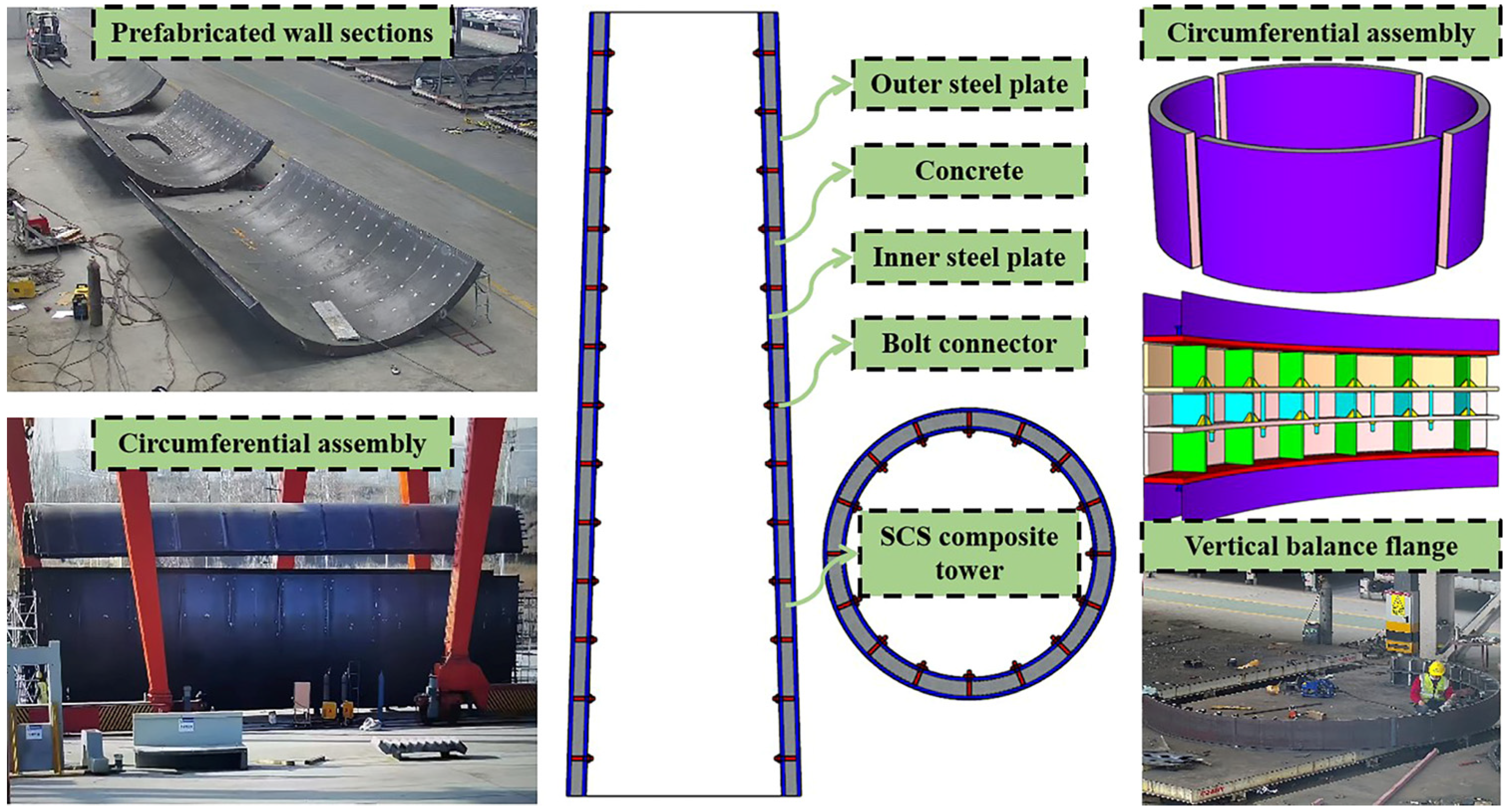
This paper presents an SCS composite tower with low steel content and economic advantages. The SCS composite tower is constructed using circumferential assembly curved wall members, wherein the two steel plates are integrated using bolt connectors, as depicted in Figure 1. The structure is characterized by high degree of shear connection and excellent stability, enabling it to overcome the height constraints of traditional steel towers, which are always less than 140 m. By employing vertical balance flange connections, the SCS composite tower can avoid the grouting and tensioning prestressing in steel–concrete hybrid towers, thereby significantly improving on-site construction efficiency. As the key load-bearing parts of an SCS composite tower, the compression behavior of curved wall members and their steel–concrete interactions are essential. Wang et al. [35] and Guo et al. [36] investigated the compression behavior of curved SCS composite walls with different curvature radii. The results indicated that a smaller curvature radius could enhance the stiffness of the steel plate and improve the bearing capacity. Experimental investigations on concrete-encased composite walls have demonstrated that enhanced steel–concrete interaction effectively restrains plate buckling [37]. The influence of connector parameters on the compressive performance of curved composite walls was further investigated in this study using experimental and numerical studies. A full-section SCS composite tower model was developed to assess compressive performance, focusing on the role of connector spacing. A calculation method for evaluating the bearing capacity of the SCS composite tower including the confinement effects was proposed, which could offer meaningful guidance for future studies and practical engineering applications.
Figure 1.
SCS composite tower.
2. Experimental Investigation
2.1. Specimen Design
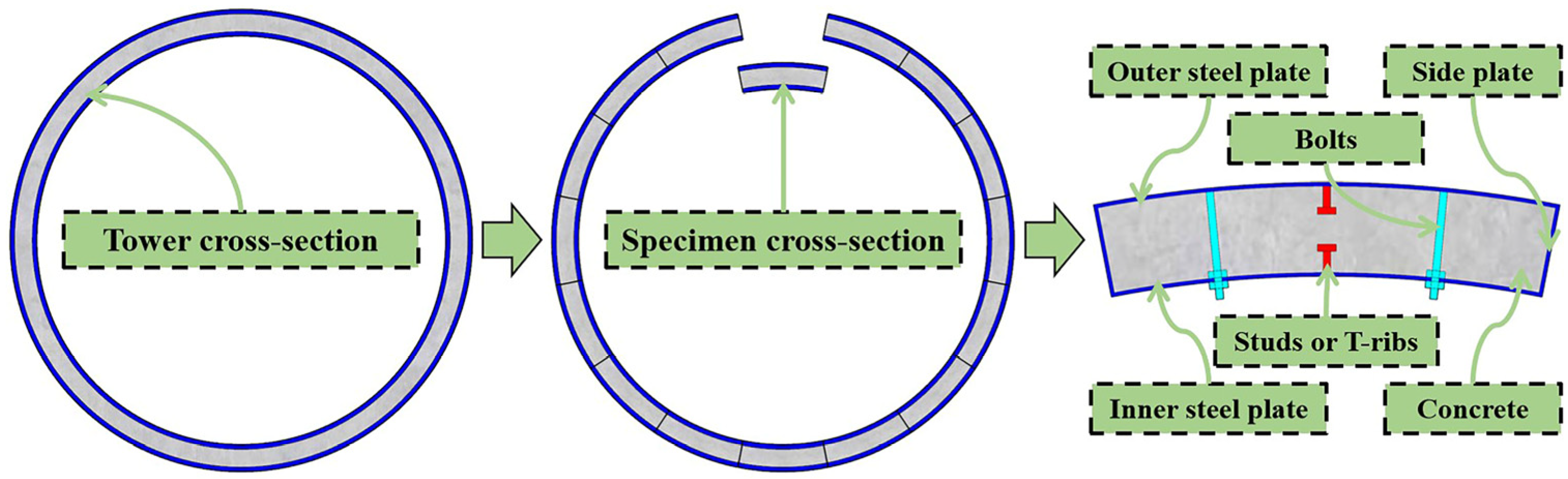
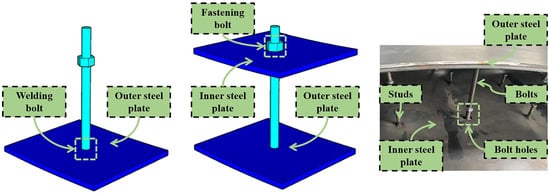
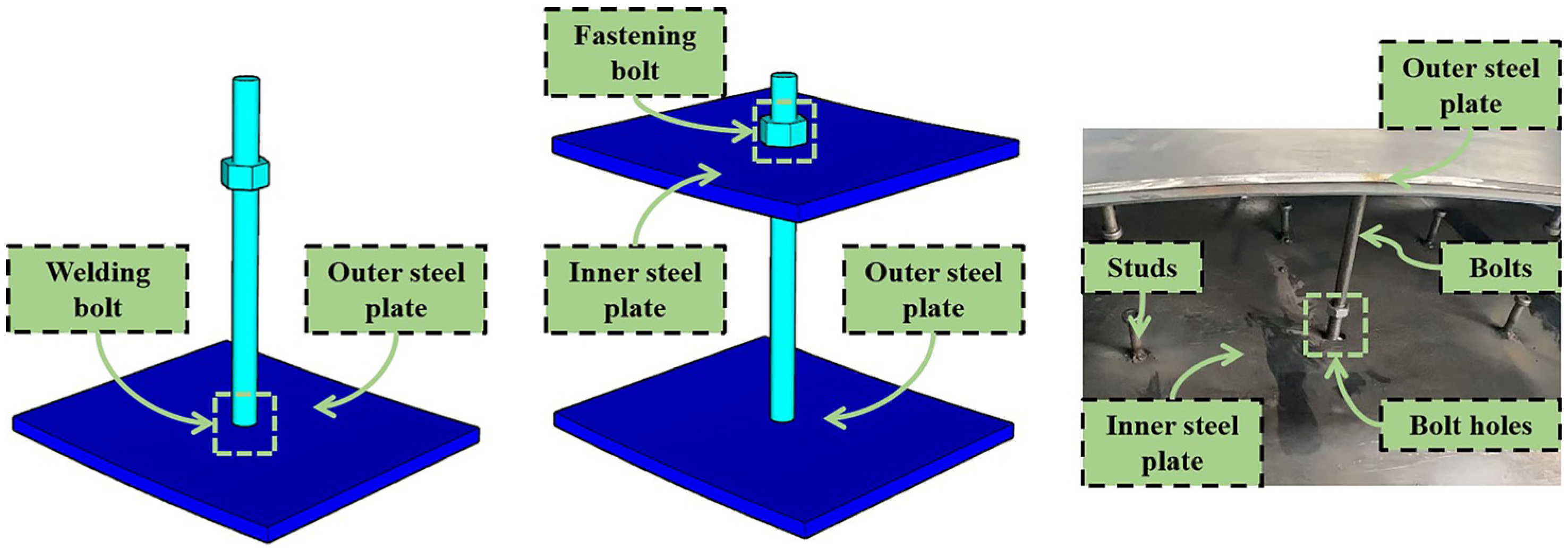
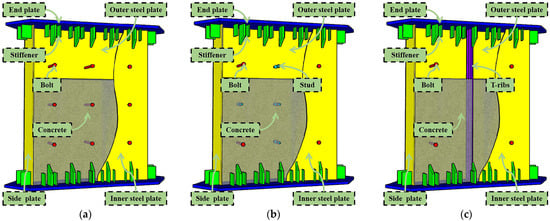
As illustrated in Figure 2, a 1/16 segment of the SCS composite tower cross-section was adopted as the experimental specimen. For this purpose, five curved composite walls were fabricated to investigate the influence of the connector type and spacing-to-thickness ratio. In these specimens, the two steel plates were integrated by bolt connectors to ensure overall stiffness and to resist transverse tensile forces that may have developed between the two steel plates. The fabrication details, depicted in Figure 3, included welding one side of each bolt to the inside of the outer plate, passing the opposite end through the inner plate, and fastening it externally. To reduce fabrication complexity associated with high-precision bolt alignment, studs or T-ribs were introduced to partially replace bolt connectors.
Figure 2.
Selection of specimen cross-section.
Figure 3.
Schematic diagram of composite structures using bolt connectors.
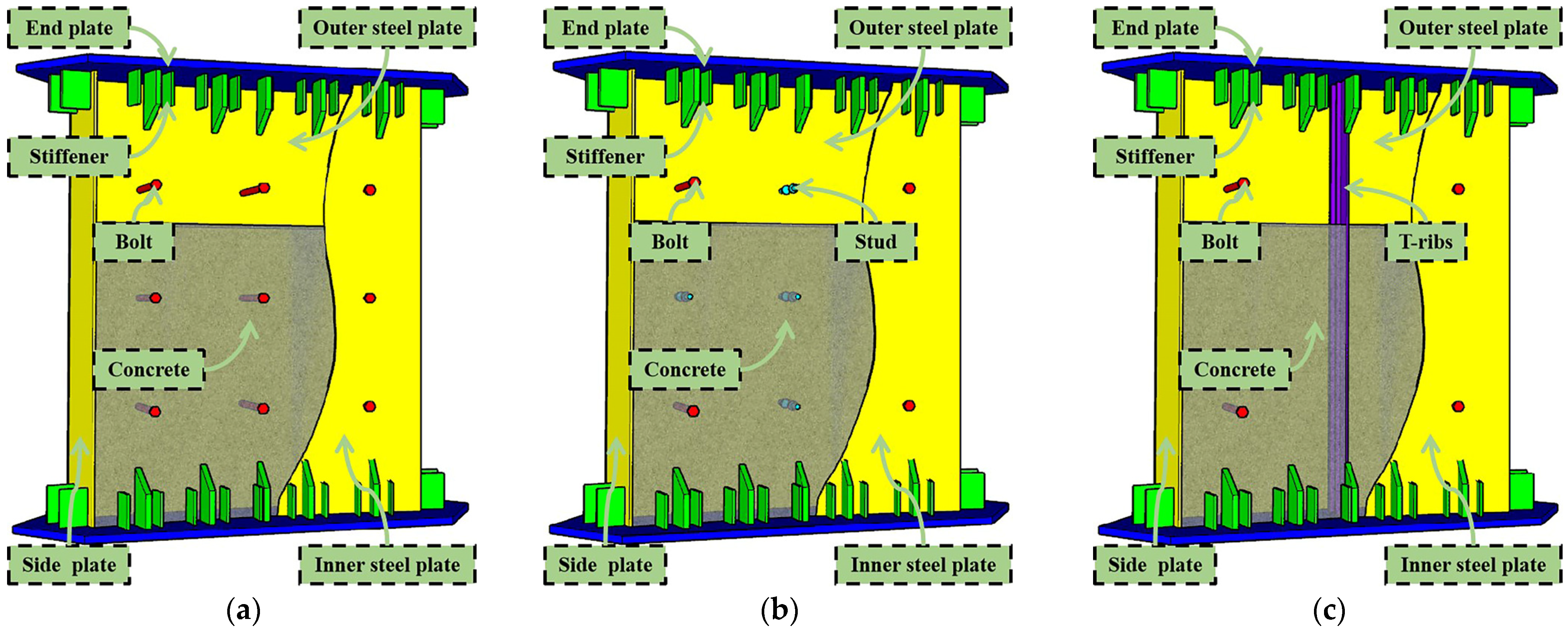
The bolt and stud connectors had diameters of 16 mm and 13 mm, respectively. The T-rib connectors had a cross-sectional size of 60 × 30 × 6 × 6 mm, with a height equal to that of the specimen. Each specimen was fitted with same-thickness end plates at its upper and lower ends, ensuring even load distribution during testing. In order to avoid local buckling, stiffeners were installed at both the upper and lower ends. Details and design parameters of the curved wall specimens are illustrated in Figure 4 and Table 1.
Figure 4.
Details of curved composite walls. (a) Bolts; (b) bolts and studs; (c) bolts and T-ribs.
Table 1.
Design parameters of specimens.
In the specimens, the concrete was of a strength grade of C45 (Shaanxi Bafu Cement Products Co., Ltd., Xi’an, China), while both the steel plate and T-ribs were manufactured using Q355 steel (Shanghai Pingcai Industrial Group Co., Ltd., Shanghai, China). Concrete cube strength specimens with 150 mm sides were tested in accordance with Chinese standard GB/T 50081 [38], as shown in Table 1. Tensile tests on the steel plate and T-ribs were completed in compliance with Chinese standard GB/T 228 [39]. The performance of the bolts and studs was provided by the manufacturer. The steel material properties are given in Table 2.
Table 2.
Material properties of the steel in the specimens.
2.2. Test Setup and Measurement
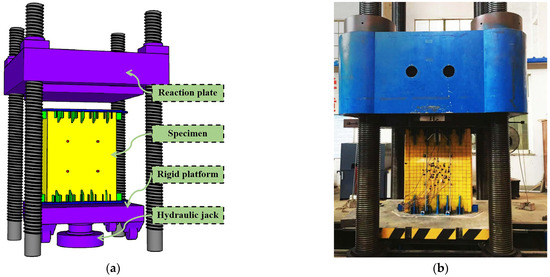
Axial compression performance was assessed using a 20,000 kN electrohydraulic servo pressure testing machine (Chongqing Xiangtong Instrument Equipment Co., Ltd., Chongqing, China) at the Key Lab of Structure and Earthquake Resistance, as illustrated in Figure 5. Before test loading, preloading of the specimens was conducted to commission the measuring device. A displacement-controlled loading scheme was employed, and the test was stopped once the specimens exhibited severe damage or the applied load fell to 85% of the peak resistance. The measuring devices consisted of the axial displacement of the specimens, while four LVDTs were symmetrically arranged about the central axis of two steel plates.
Figure 5.
Test setup. (a) Schematic diagram of test; (b) photo during testing.
2.3. Test Results
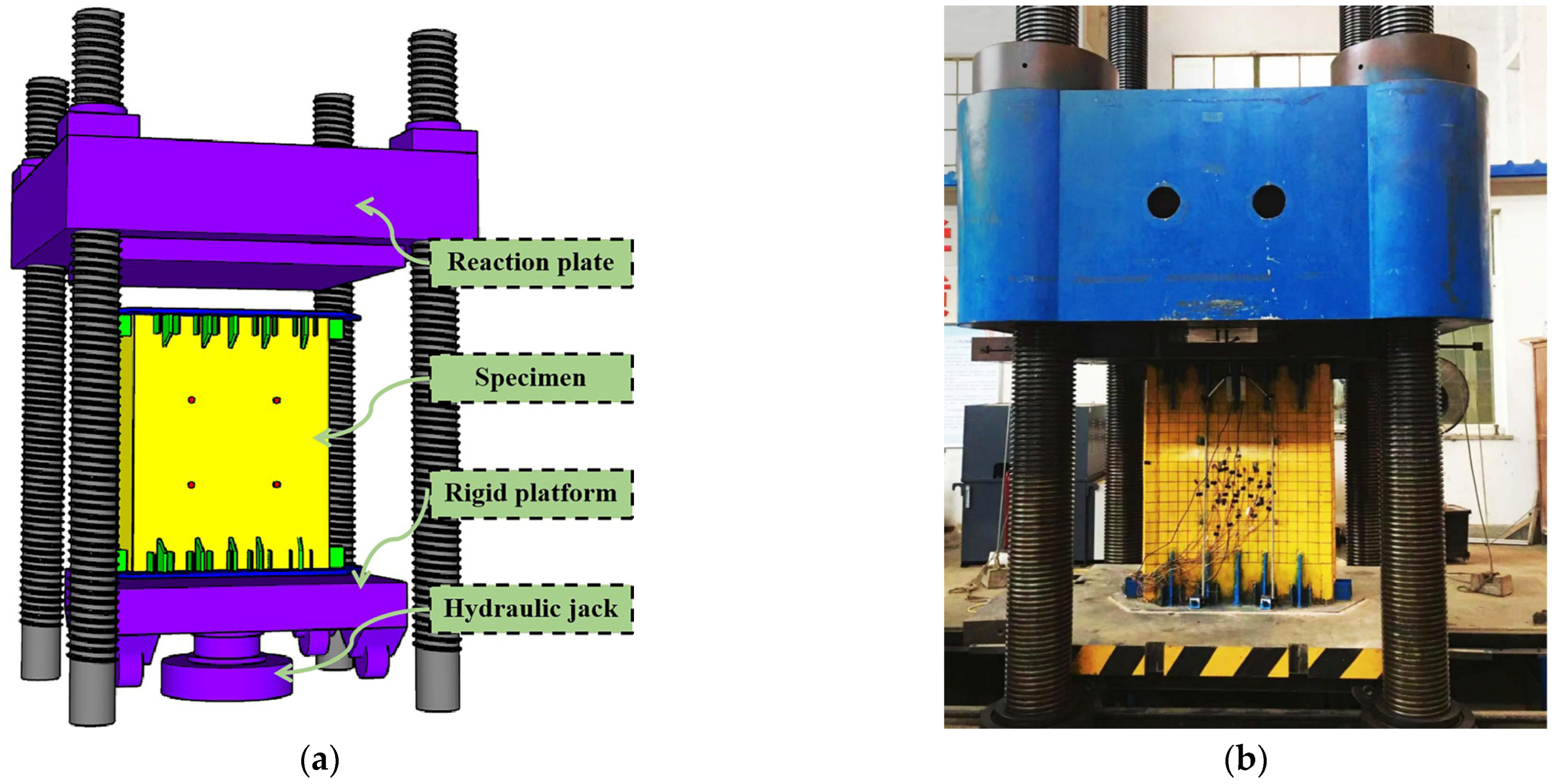
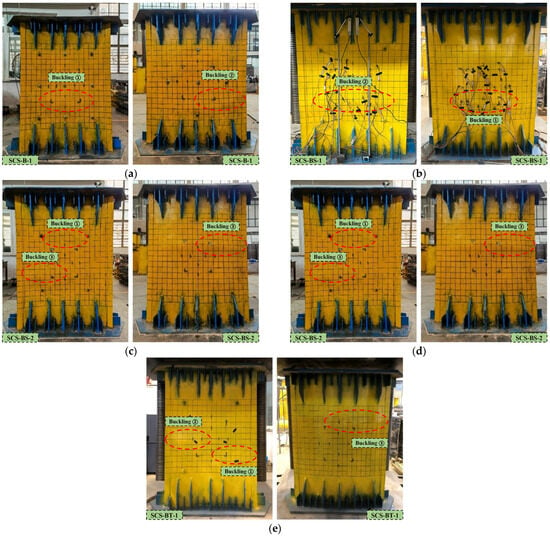
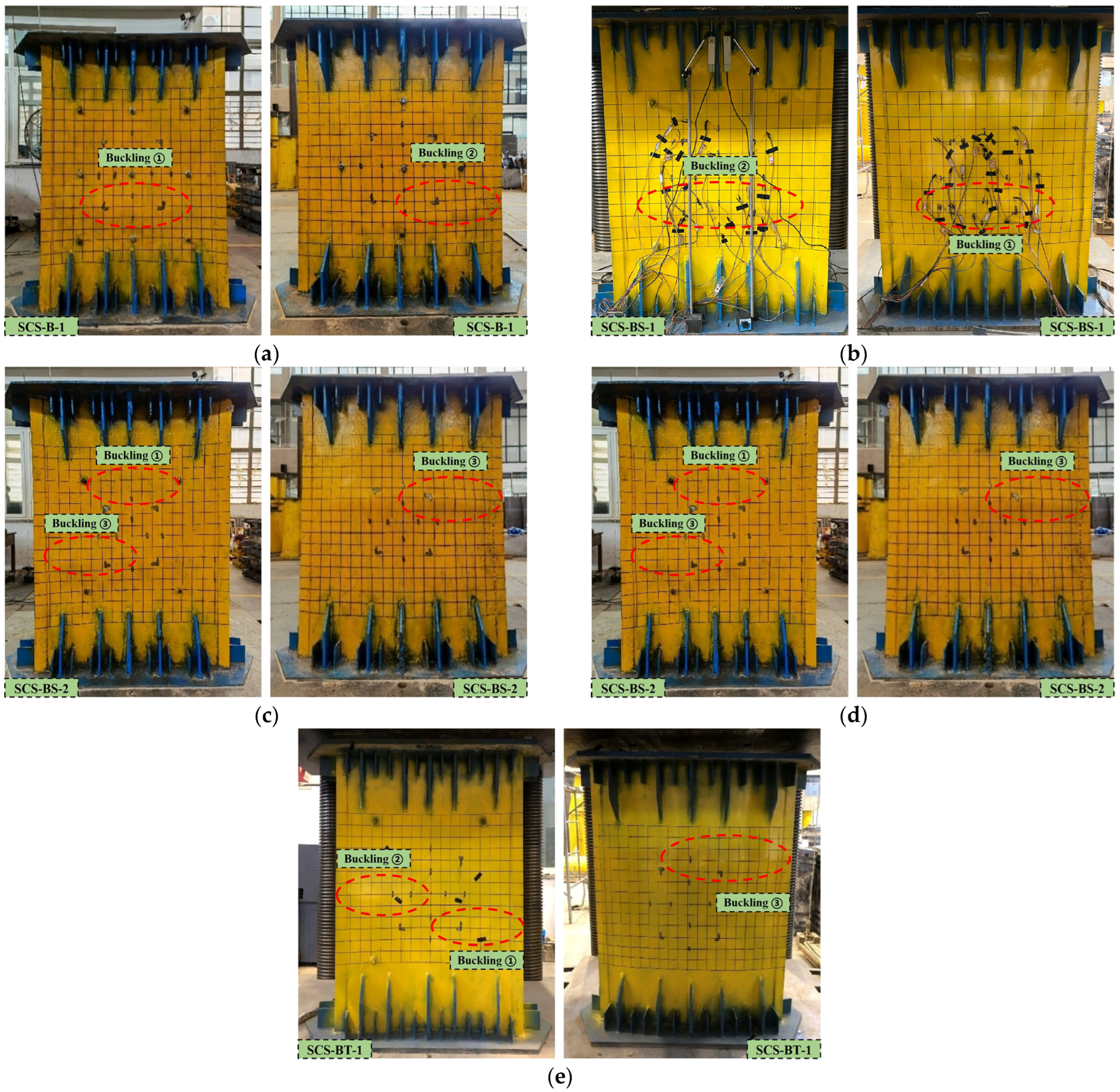
Figure 6 illustrates the buckling sequence of the steel plates at different positions. All specimens demonstrated similar failure modes, with compressive failure dominated by local buckling of the steel plate between connectors near the ultimate load. Owing to the anchoring provided by the connectors, the steel plate exhibited enhanced local stability. However, the areas between neighboring connectors remained weakly confined and served as potential buckling areas. Although a difference in ultimate load was observed between specimens SCS–B–1 and SCS–BS–1, this discrepancy was primarily attributed to the variation in concrete compressive strength. The failure modes and steel plate buckling characteristics remained consistent. Therefore, the connector type showed a limited influence on the axial compression behavior of curved composite walls. However, bolt openings may have created stress concentrations and local damage, which weakened the stability of the inner steel plate, prompting premature buckling compared to the outer plate. This finding demonstrates the superior buckling control provided by welded connectors. The main experimental results of the specimens are summarized in Table 3, while more detailed analyses of stiffness and bearing capacity were previously reported in ref. [40]. The connector spacing exerts a pronounced influence on the steel–concrete composite interaction. The denser connector arrangements provide greater confinement, thereby improving the buckling resistance of two steel plates. Furthermore, the preceding analysis established an experimental database and theoretical basis for subsequent analytical research.
Figure 6.
Failure modes of specimens. (a) Specimen SCS–B–1; (b) Specimen SCS–BS–1; (c) Specimen SCS–BS–2; (d) Specimen SCS–BS–3; (e) Specimen SCS–BT–1.
Table 3.
Main experimental results of specimens.
3. Finite Element Analysis of Curved Composite Wall
A refined and efficient numerical simulation model was established using the ABAQUS [41], which has been extensively employed, especially for numerical studies of composite structural components [42,43,44]. The modeling procedures and parameters of the numerical model are presented, and its accuracy and reliability are verified against experimental results.
3.1. Constitutive Relationship of Materials
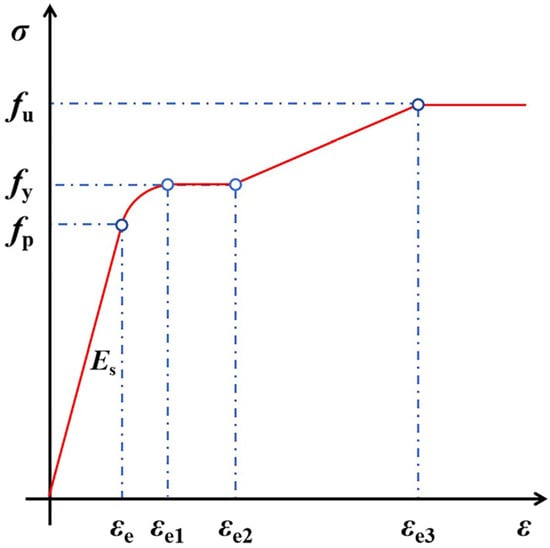
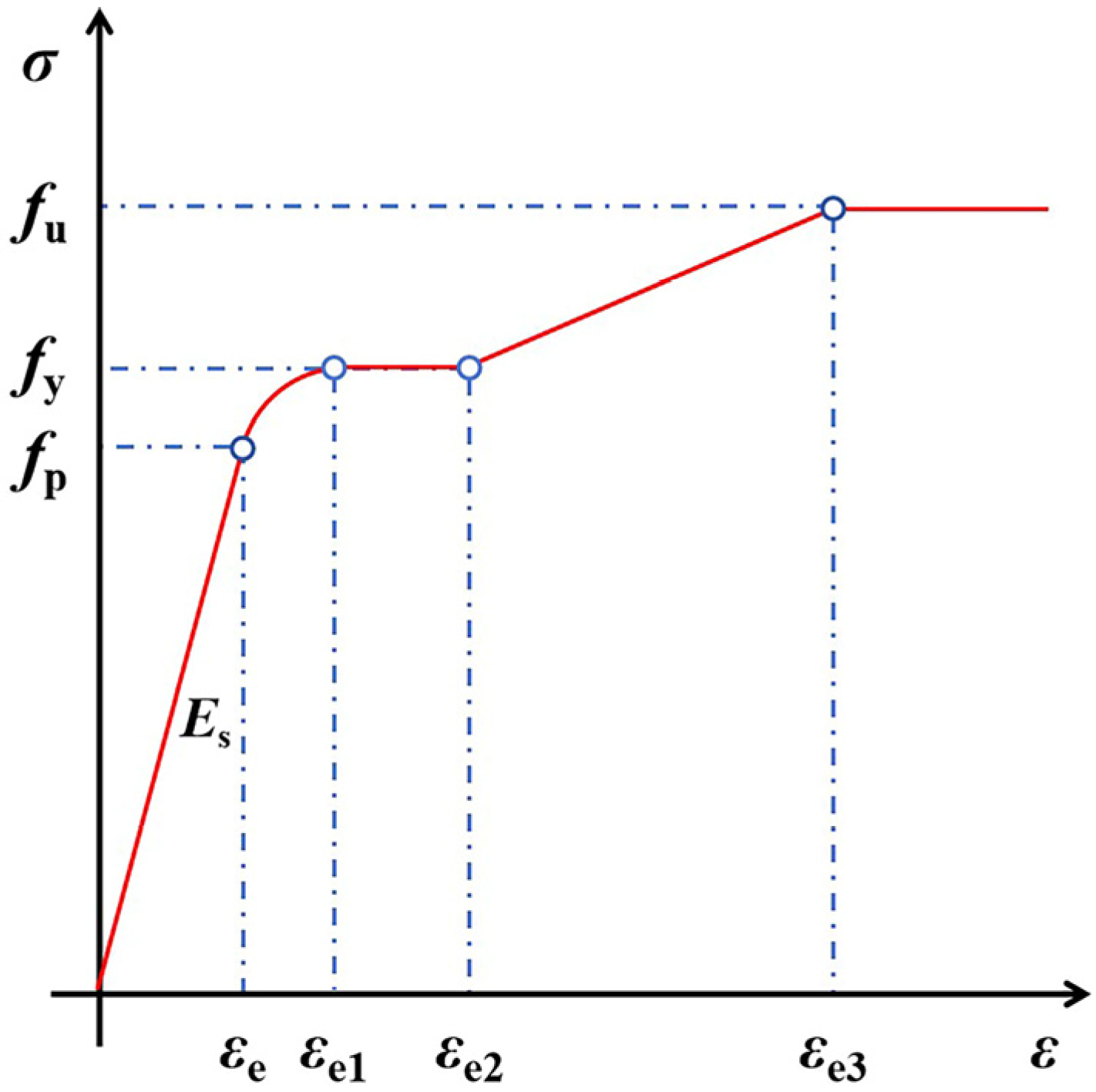
An elastic–plastic constitutive model was employed to characterize the steel behavior, where the stress–strain response can be characterized by five stages: the elastic stage, elastic–plastic stage, plastic stage, hardening stage, and quadratic plastic flow stage [45], as illustrated in Figure 7. The corresponding formula is given by:
with
where fy is the steel yield strength; σs and εs are the steel stress and the corresponding strain, respectively; εe is the strain corresponding to the proportional limit of the steel; εe1 is the steel yield strain; and εe2 and εe3 are the strains at the beginning of the hardening stage and the quadratic plastic flow stage, respectively.
Figure 7.
Stress–strain curve of steel.
In this study, the concrete behavior was characterized through the concrete damage plasticity (CDP) approach. The stress–strain curve of core concrete developed by Han et al. [46], which enables more accurate modeling the stress state of concrete constrained by a steel tube, was fully verified. The expression is as follows:
with
where σ0 and ε0 denote the peak compressive stress of the concrete and the corresponding strain; fc′ represents the cylinder compressive strength of the concrete; ξ indicates the confinement coefficient; As and Ac are the cross-sectional areas of the steel and the concrete; and fck is the standard value of the axial compressive strength of the concrete.
3.2. Element Type and Meshing
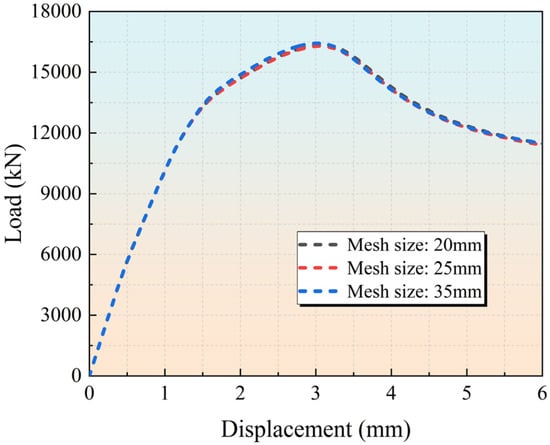
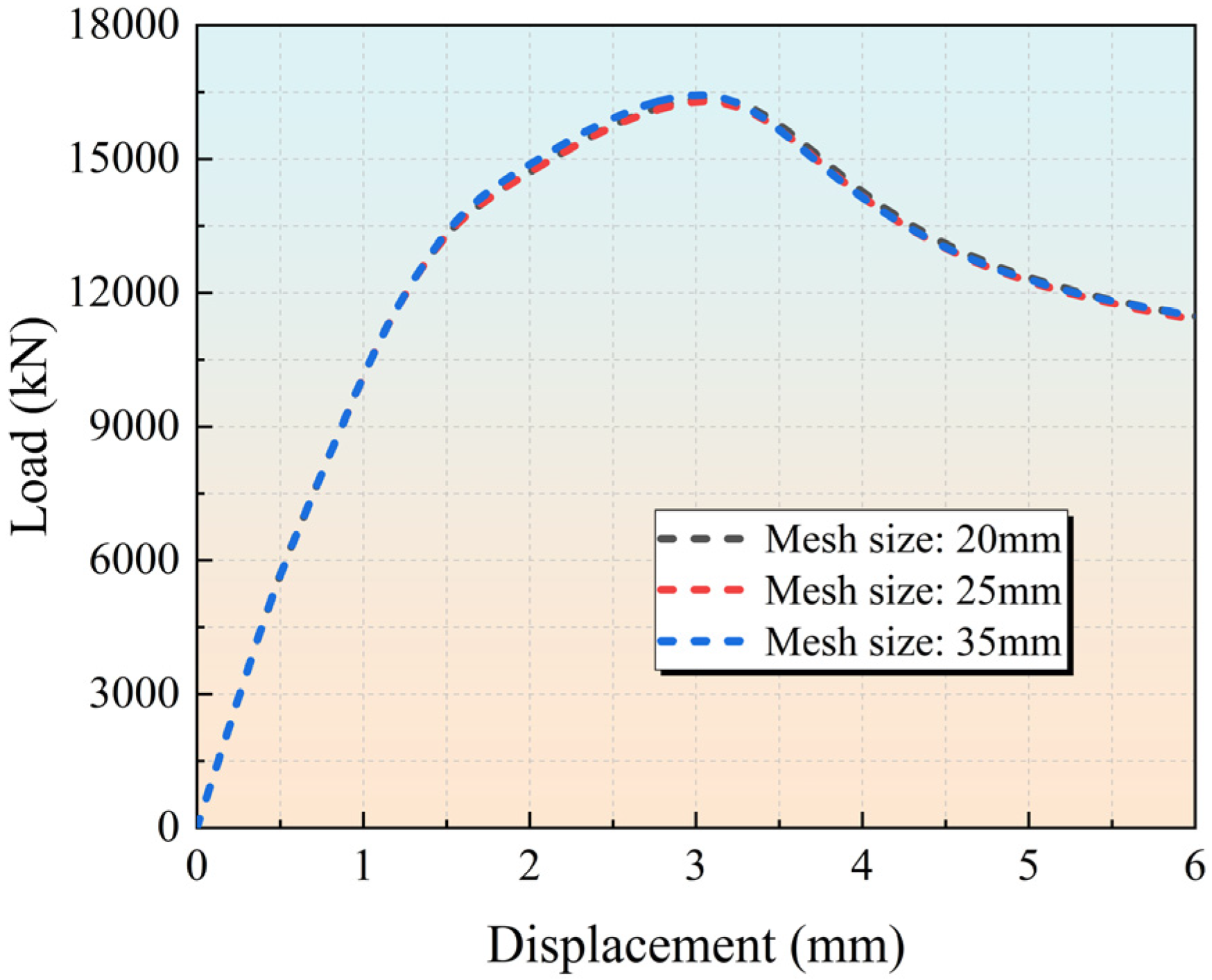
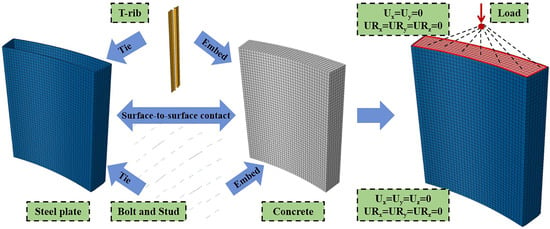
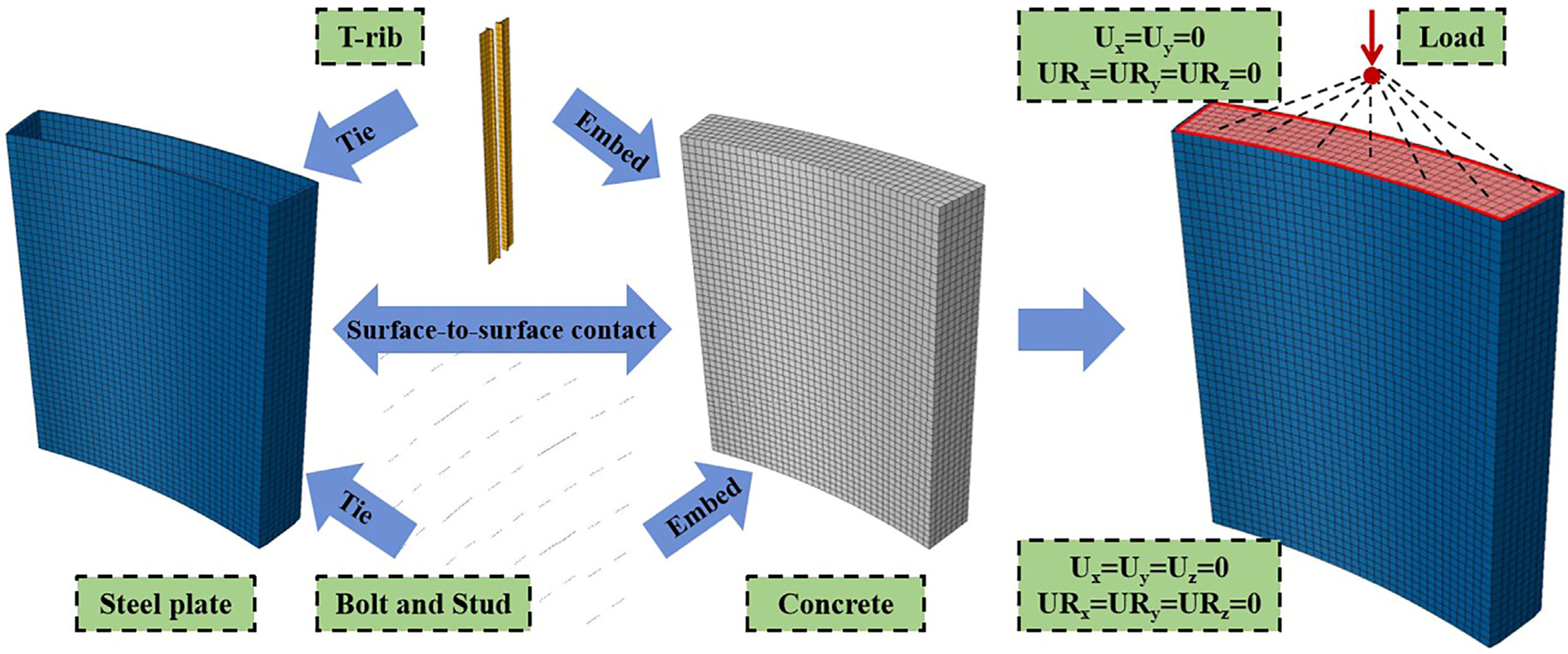
The steel plates and T-ribs were simulated using four-node linear reduced integral shell elements (S4R), and a Simpson integral with seven integration points was adopted along the thickness direction. The S4R element allowed for shear deformation in the thickness direction, and the solution method obeyed the thick-shell or thin-shell theory for different shell thicknesses. The concrete components in the specimen models were simulated by eight-node linear reduced integral 3D solid elements (C3D8R), which have high computational efficiency with sufficient accuracy. Owing to the large number and small size of the bolts and studs, two-node linear 3D truss elements (T3D2) were used to simulate the bolts and studs. The upper and lower end plates of the specimens remained essentially undeformed throughout the experiment. Therefore, the end plates were not modeled to simplify the model. Three mesh schemes with element sizes of 35 mm, 25 mm, and 20 mm were adopted to evaluate mesh sensitivity. The corresponding load–displacement curves are presented in Figure 8. The results obtained from the three mesh configurations show good agreement throughout the loading process, with negligible differences in ultimate bearing capacity. To balance accurate calculation computations with efficient simulation time, the mesh size of the concrete, steel plates, and T-ribs was 25 mm, whereas the mesh size of the bolts and studs was 5 mm. All the components were divided via the scanning meshing technique, and the meshing division results are shown in Figure 9.
Figure 8.
Mesh sensitivity analysis based on load–displacement responses.
Figure 9.
Modeling details of curved composite wall.
3.3. Interactions and Boundary Conditions
A “surface-to-surface contact” method was adopted to model the steel–concrete contact behavior [47]. Normal direction interactions were governed by “hard contact”, while tangential direction behaviors were defined through “coulomb frictional contact”, with a coefficient of friction of 0.6 [48]. Owing to its higher stiffness, the concrete surface was defined as the contact surface, while the steel plate surface was correspondingly defined as the slave surface. A “tie contact” was applied to model the welded connection between the steel plates and the T-ribs. To simplify the numerical modeling, an “embedded region” approach was adopted to model the interaction between the remaining parts of the T-ribs and the concrete [49]. For the bolts and studs, one end was constrained to the steel plates to represent the welded connection, while the other parts were embedded within concrete.
The top and bottom geometric centers of the specimens were selected as the two points RP1 and RP2. All nodes at both ends were coupled to two reference points. The point RP1 was assigned as fixed, while the point RP2 was defined as the loading end. The applied boundary conditions are depicted in Figure 9.
3.4. Validation of FE Models
3.4.1. Comparison of Failure Modes
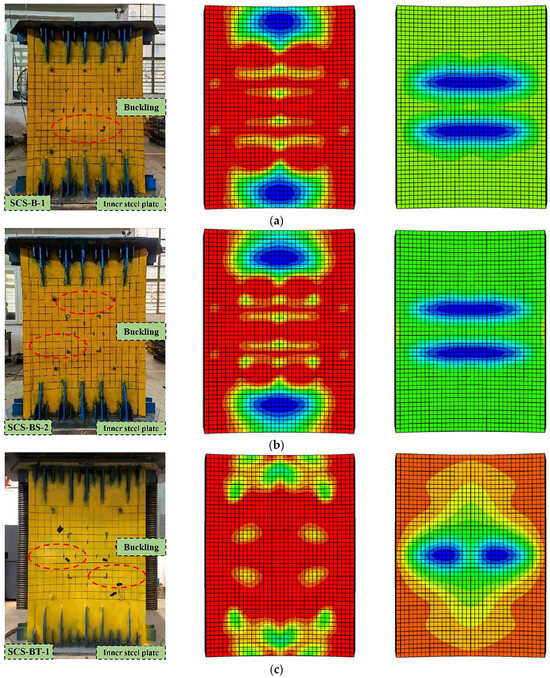
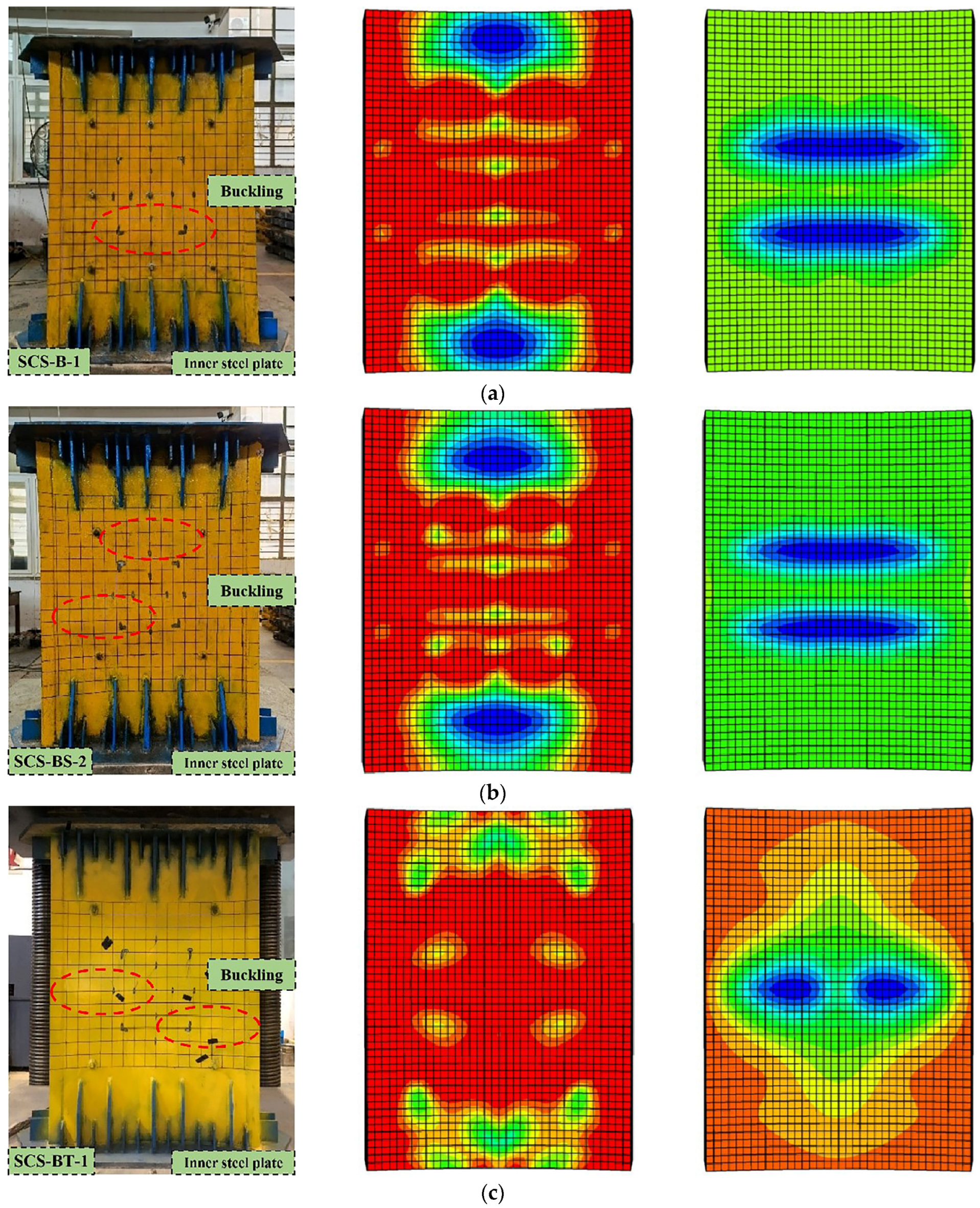
The FE models of the specimens were developed and calculated using the above method. As illustrated in Figure 10, a typical damage diagram of the curved composite walls was obtained. The buckling positions in the simulation results occurred between adjacent connectors, which was consistent with the damage phenomenon in the tests. Overall, the numerical model developed accurately predicted the failure modes.
Figure 10.
Comparison between experimental and simulated failure modes. (a) Specimen SCS–B–1; (b) Specimen SCS–BS–2; (c) Specimen SCS–BT–1.
3.4.2. Comparison of Load–Displacement Curves
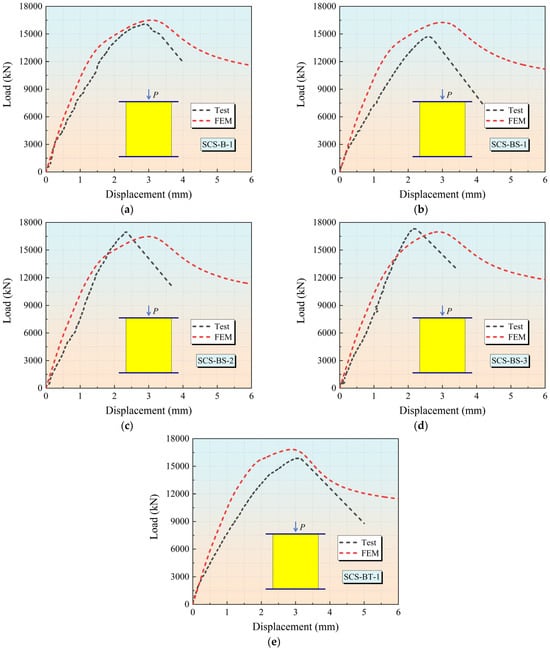
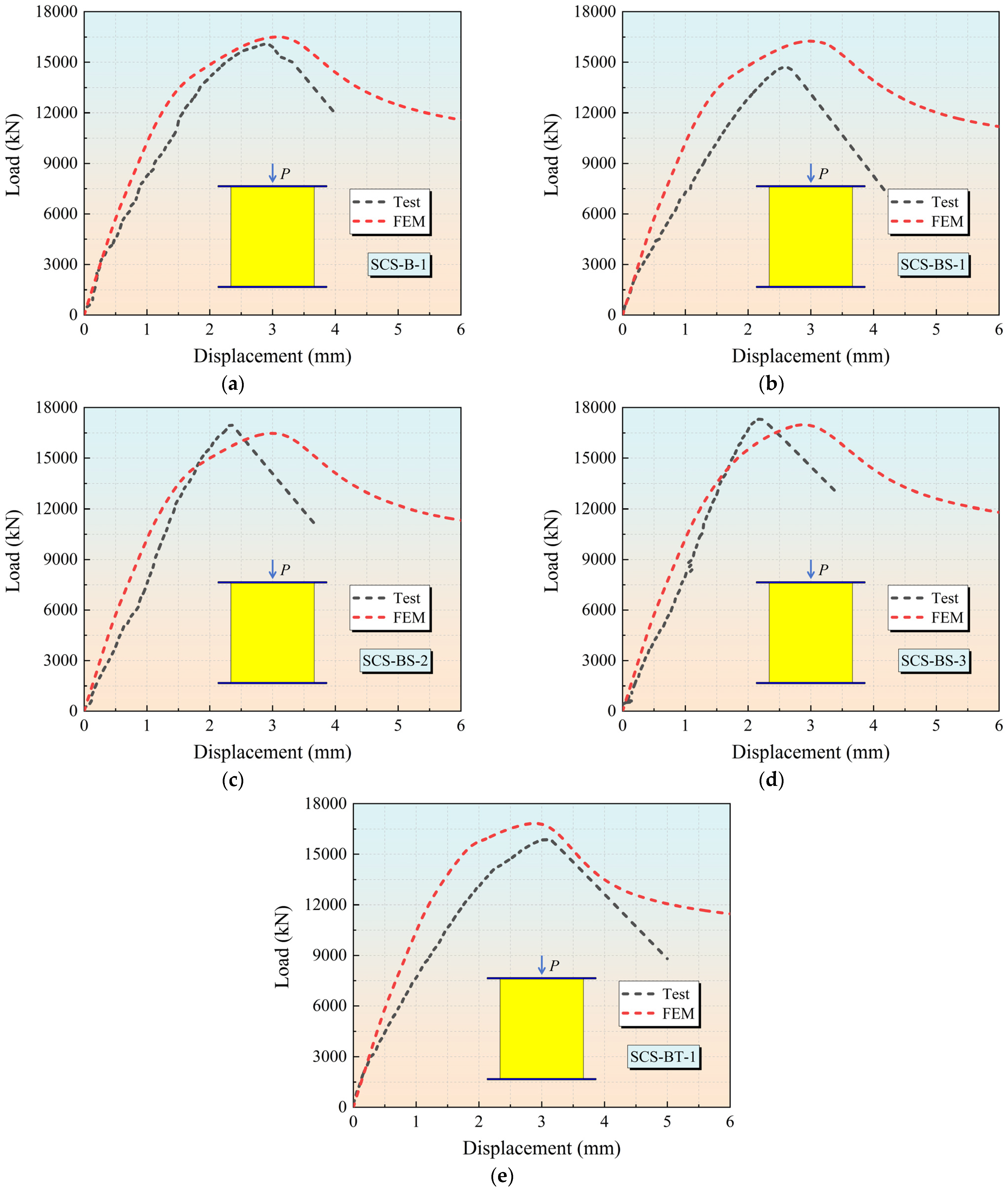
As illustrated in Figure 11, the simulated and experimental load–displacement curves are compared for further validation. The results indicate that numerical predictions closely follow the experimental curves, but the simulated initial stiffness is slightly greater. This is primarily attributed to the fact that the steel plate openings corresponding to the bolts are not considered in the simulation to simplify the model, and the construction error of the test also reduces the initial stiffness.
Figure 11.
Comparison between experimental and simulated load–displacement curves. (a) Specimen SCS–B–1; (b) Specimen SCS–BS–1; (c) Specimen SCS–BS–2; (d) Specimen SCS–BS–3; (e) Specimen SCS–BT–1.
Table 4 compares the simulated and experimental bearing capacities. These findings demonstrate that the numerical model can reliably predict the axial load capacity of curved composite walls. In conclusion, the numerical model can reasonably predict the mechanical behavior of curved composite walls, especially the ultimate capacity, and can be used for subsequent parametric studies.
Table 4.
Comparison between the experimental and simulation results.
3.5. Parameter Analysis by FE Simulation
Since the experimental investigation included a limited number of specimen parameters, the FE model became essential for a more systematic evaluation. Therefore, the effects of more parameters, including the steel plate thickness (W–1–series), steel plate strength (W–2–series), bolt diameter (W–3–series) and concrete strength (W–4–series), were discussed and analyzed based on the validated simulation model. Specimen SCS–B–1 was designated as the control specimen, and the parameter details for the parameter analysis are presented in Table 5.
Table 5.
The details and calculated values of the parametric study.
3.5.1. Effect of the Steel Plate Thickness
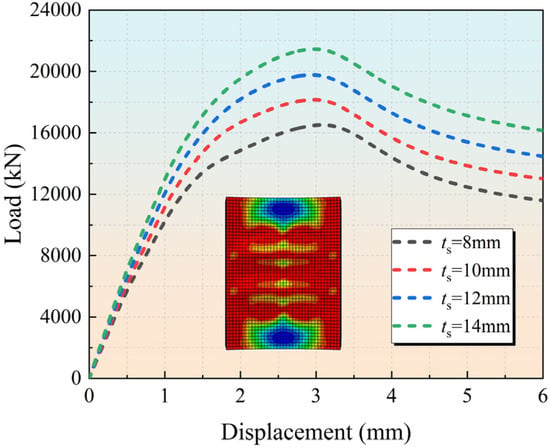
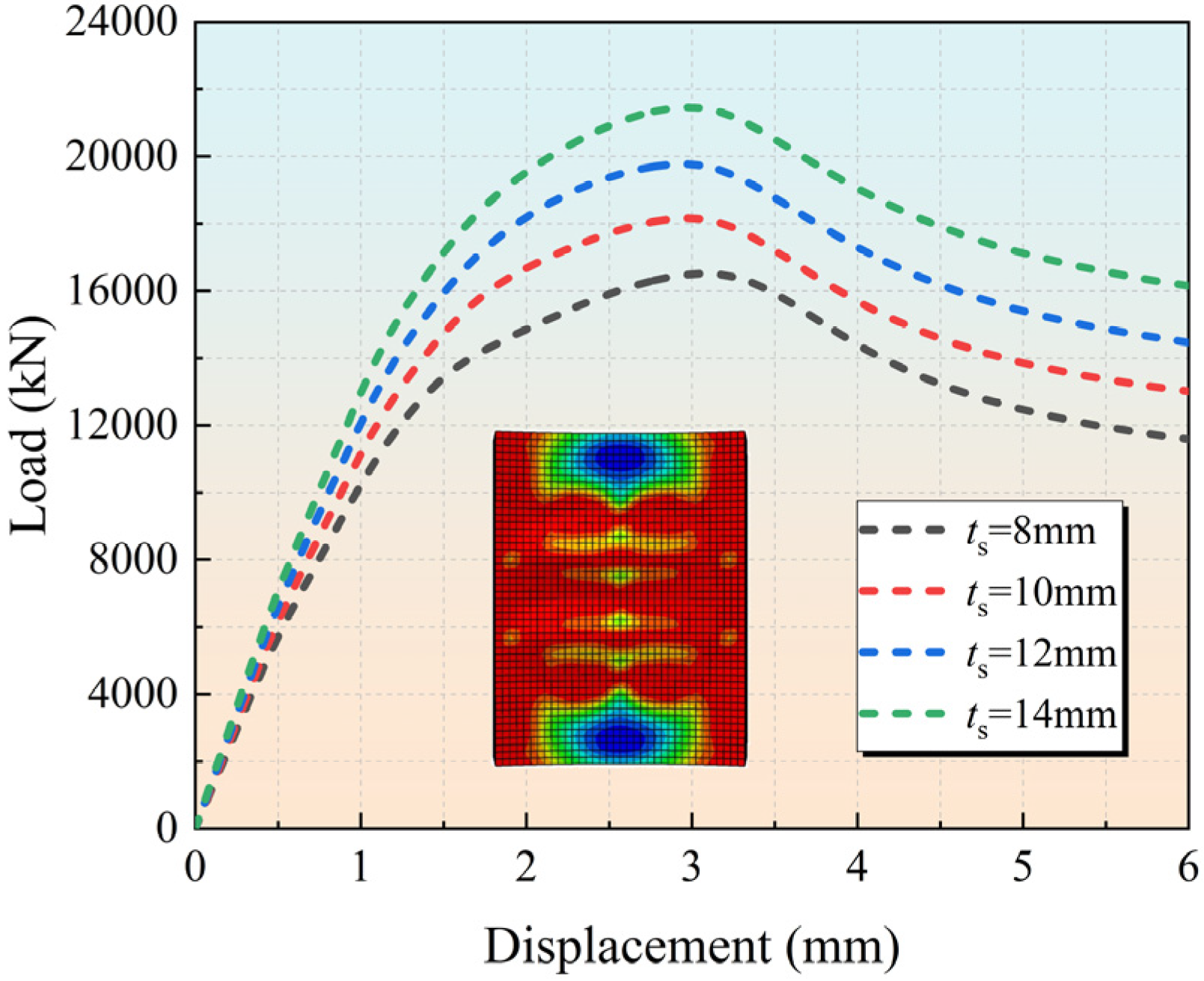
The steel plate could limit concrete deformation and enhance both strength and ductility, thereby improving the compression performance. To examine the effect of the steel plate thickness, numerical simulations were performed with 10 mm, 12 mm and 14 mm steel plate thicknesses, while other parameters remained unchanged. Figure 12 shows that the load-bearing capacity and initial stiffness of the curved composite wall substantially enhanced with increasing steel plate thickness. Compared with those of the 8 mm steel plates, the ultimate bearing capacities of the 10 mm, 12 mm and 14 mm steel plates were 10.02%, 19.72% and 30.01% greater, respectively. This observation indicates that the bearing capacity of the curved composite wall was directly proportional to the content of steel. In addition, increased steel plate thickness could provide stronger confinement to the concrete, resulting in higher ultimate capacity.
Figure 12.
Simulation results for the steel plate thickness.
3.5.2. Effect of the Steel Plate Strength
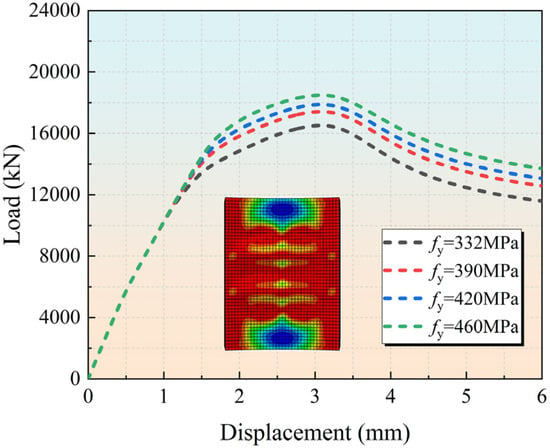
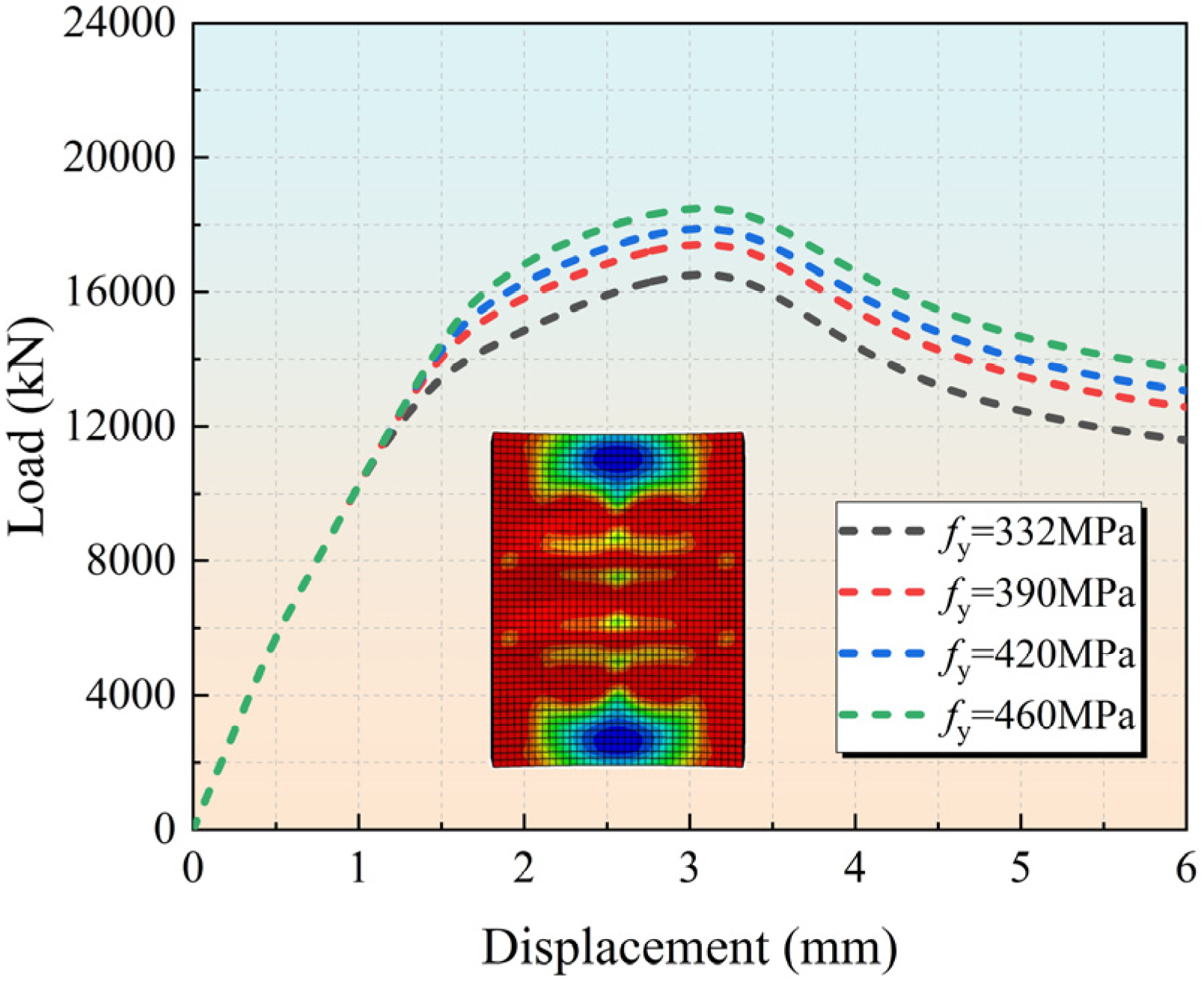
To investigate the effect of the steel plate strength, common steel yield strengths such as 390 MPa, 420 MPa and 460 MPa were surveyed without changing other parameters. Figure 13 shows that an increase in yield strength did not influence the initial stiffness of the curved composite wall but increased its axial compressive capacity. Specifically, when the steel plate strength gradually increased from 332 MPa to 390 MPa, 420 MPa and 460 MPa, the axial compressive capacity of the curved composite wall increased by 5.45%, 8.26% and 11.97%, respectively. Increasing the steel plate strength enhanced the compressive performance of the curved composite wall. However, its contribution to axial capacity diminished at higher strength levels, likely due to concrete crushing or steel plate buckling. This premature failure prevented full utilization of the high-strength steel.
Figure 13.
Simulation results for the steel plate strength.
3.5.3. Effect of the Bolt Diameter
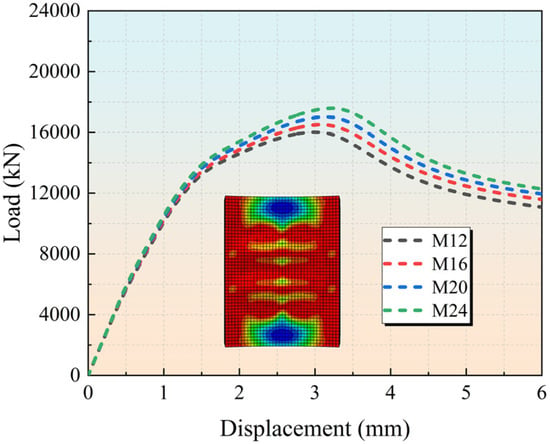
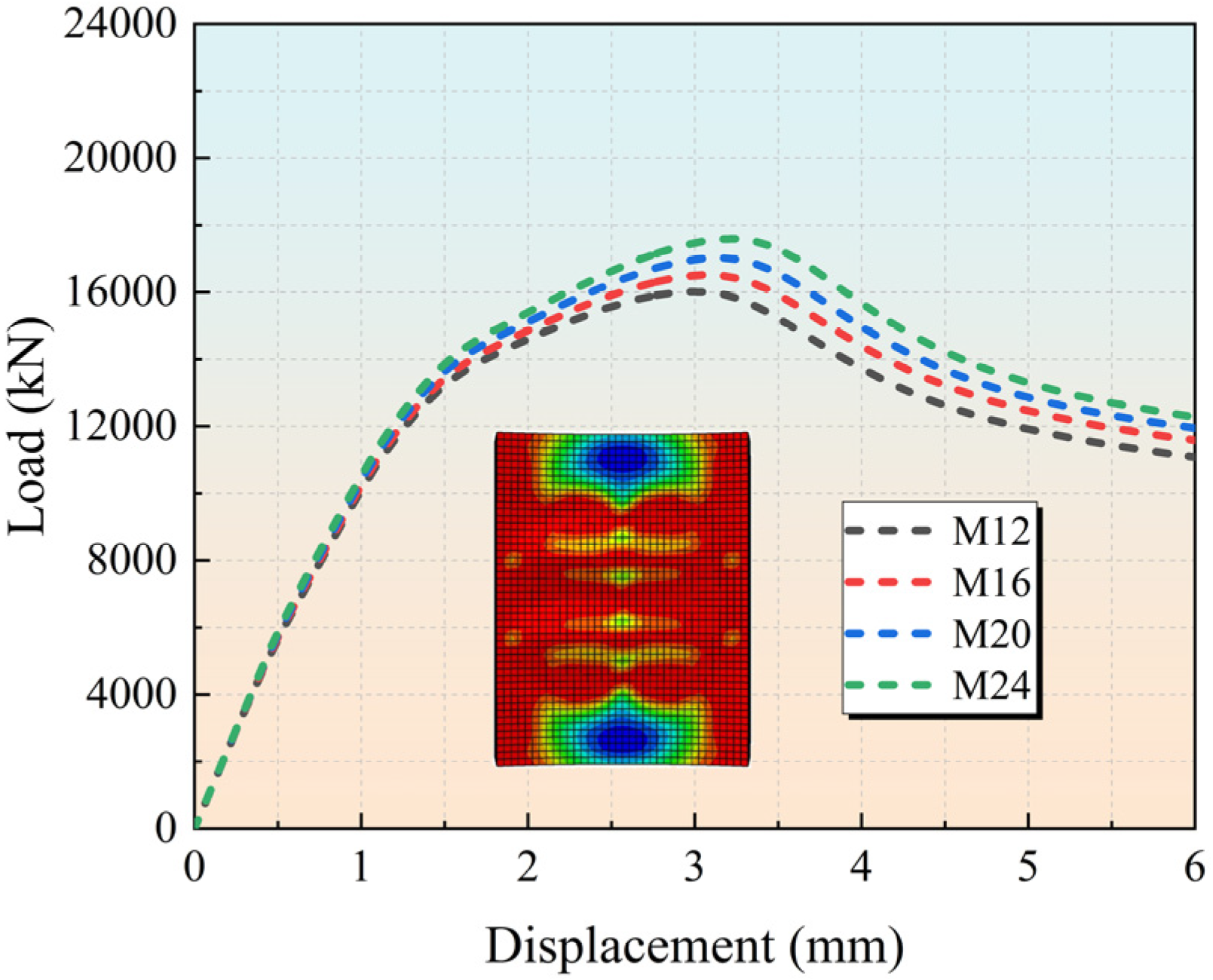
The previous analysis results indicate that the bolt connectors directly affect the local stability of the steel plate and the confinement effect, thereby affecting the compression performance of the curved composite wall. This section is dedicated to the bolt diameter as an analyzed parameter for further investigation. The simulations were performed for bolt diameters of 12 mm, 20 mm and 24 mm, keeping the other parameters constant. Figure 14 indicates that increasing the bolt diameter markedly influenced the bearing capacity of the curved composite wall, and the effect on initial stiffness was small and negligible. Compared with those of the 16 mm bolt diameter specimen, the ultimate bearing capacities of the 12 mm, 20 mm and 24 mm bolt diameter models increased by −2.95%, 3.09% and 6.58%, respectively; this confirms that the bolt diameter can improve the confinement effect, delay concrete cracking, prevent local buckling, and improve the compression performance.
Figure 14.
Simulation results for the bolt diameter.
3.5.4. Effect of the Concrete Strength
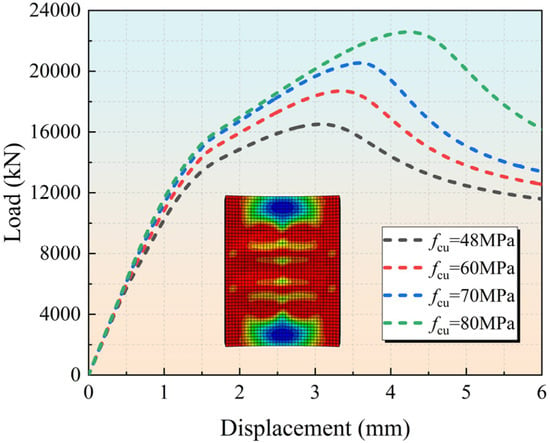
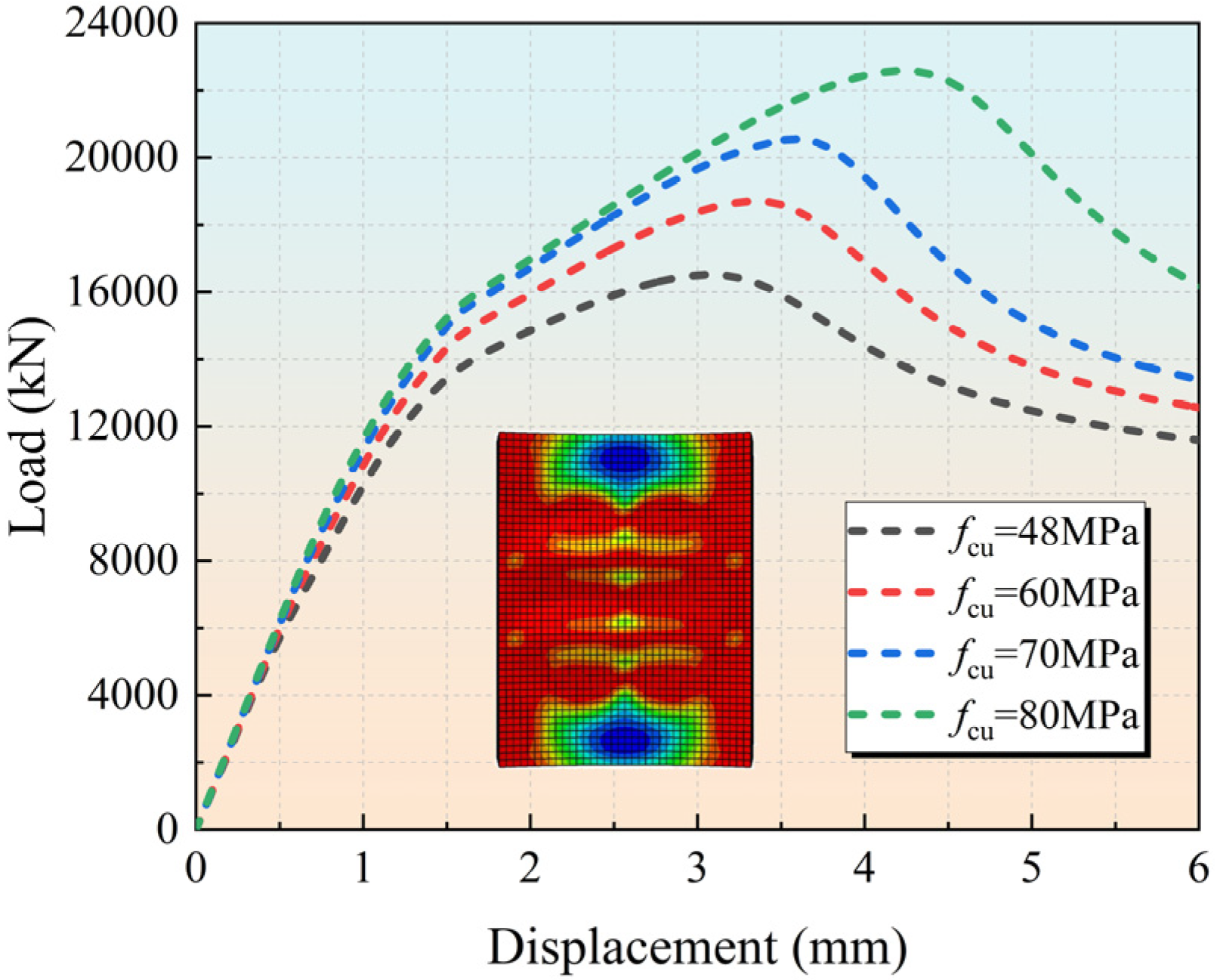
Concrete is an important pressure-bearing component of composite members, and its strength variation strongly influences compressive performance. The internal core concrete in the curved composite wall in this study could be selected flexibly as needed. A parametric analysis of the concrete strength was performed, ensuring that the other parameters were constant. As illustrated in Figure 15, the concrete strength improved both the bearing capacity and initial stiffness of the curved composite wall. Specifically, the axial compressive capacity of the curved composite wall increased by 13.34%, 24.39% and 36.81% respectively, as the concrete strength gradually increased from 48 MPa to 60 MPa, 70 MPa and 80 MPa. This finding indicates that the axial compressive capacity of the curved composite wall exhibits an approximately linear increase with concrete strength. It can be inferred that concrete strength can increase its own load-bearing percentage but has a negligible confinement effect on the steel plate.
Figure 15.
Simulation results for the concrete strength.
4. Finite Element Analysis of SCS Composite Tower
4.1. Model of the SCS Composite Tower
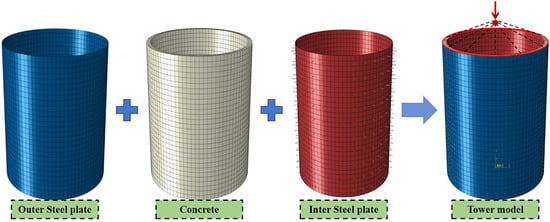
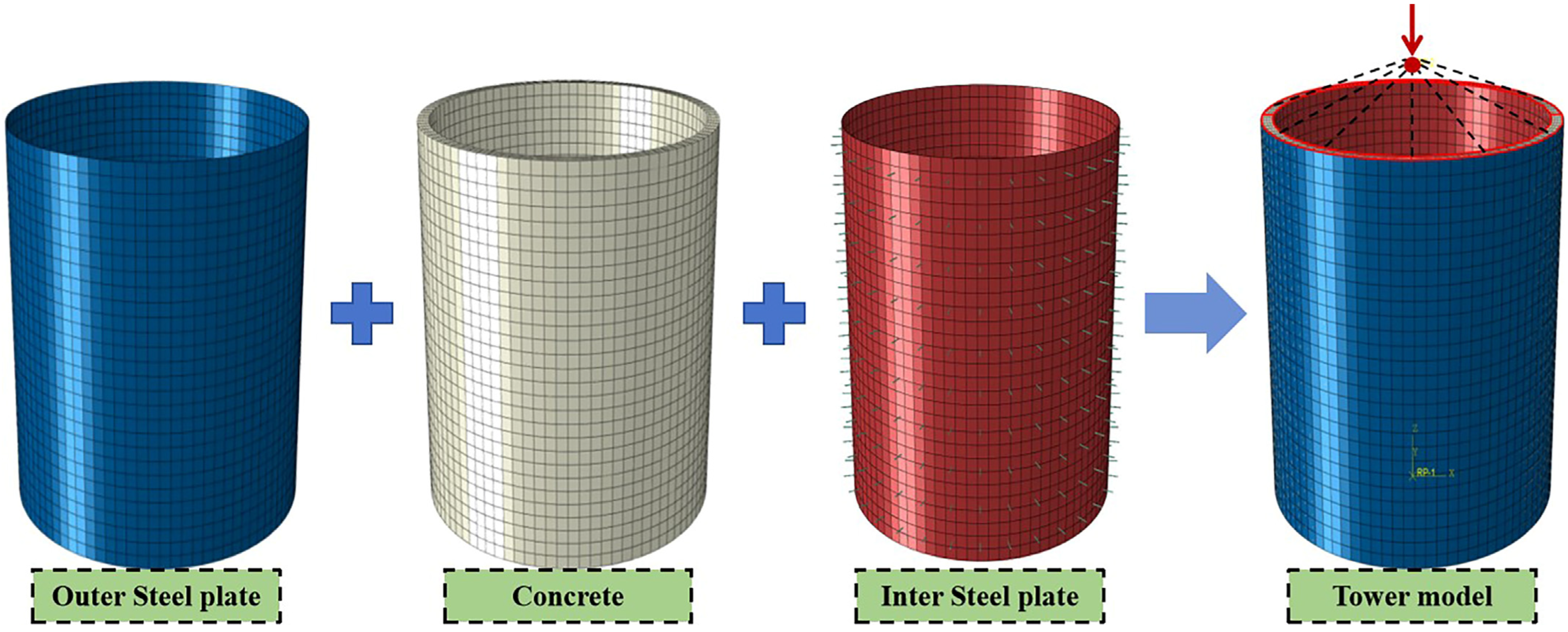
This section is devoted to the simulation analysis of the SCS composite tower, using the same modeling method as the previous section and changing to a full-section tower model. The dimensional parameters of the SCS composite tower model were as follows: (a) the total height was 5.0 m, and the outer diameter and inner diameter were 5.0 m and 4.6 m, respectively; (b) two steel plates maintained an 8 mm thickness; (c) C50 grade concrete and Q345 grade steel were specified; and (d) to ensure effective composite action, 16 mm diameter bolt connectors were installed at 500 mm circumferential intervals (Sc). To guarantee computational accuracy, the concrete mesh was divided into four layers along the thickness direction. The details of the model are shown in Figure 16. The effects of the connector spacing and the inner steel plate thickness were further investigated, and the detailed parameter information of the simulation study is shown in Table 6.
Figure 16.
Model of a full-section SCS composite tower.
Table 6.
The details and calculated values of the simulation study.
4.2. Effect of the Connector Spacing
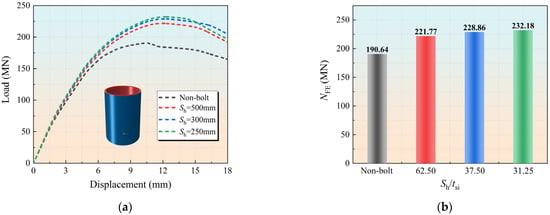
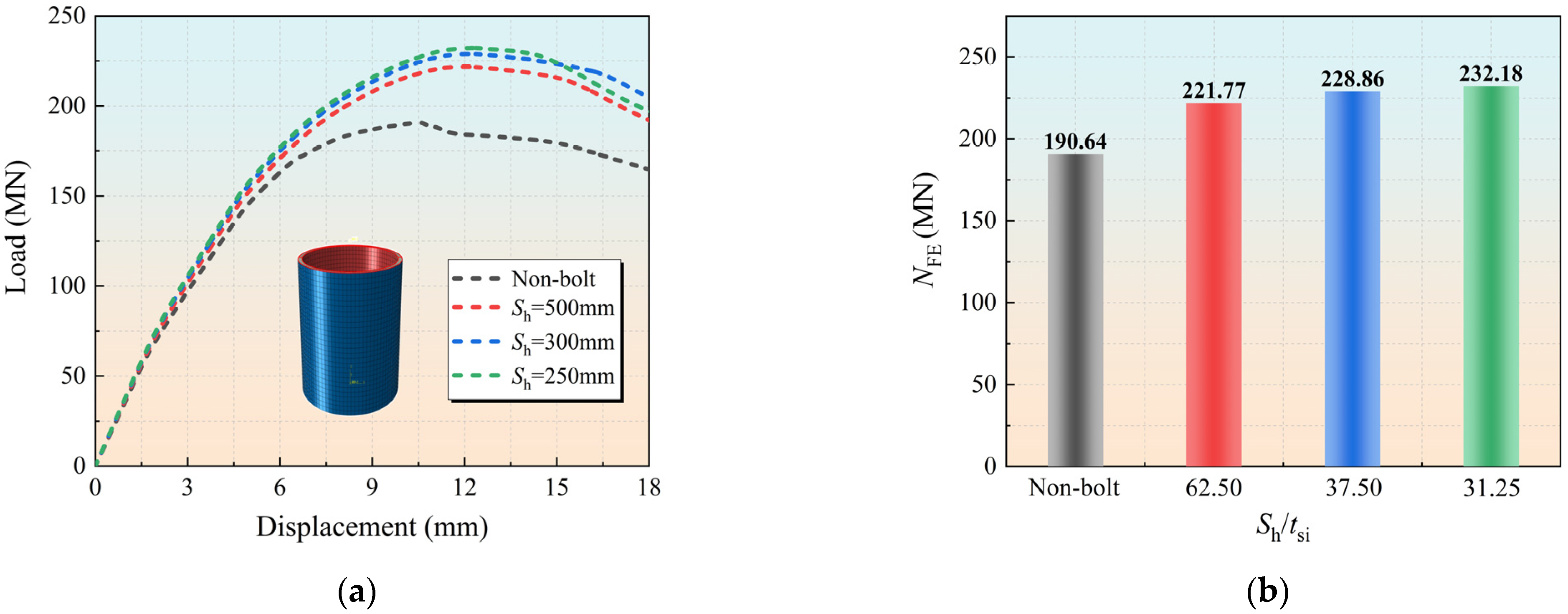
This section changes the vertical spacing (Sh) of the bolt connectors in the SCS composite tower for further analysis, ensuring that the other parameters remain unchanged. The simulations were performed with vertical spacings of bolt connectors of 500 mm, 300 mm and 250 mm, with a model without bolts serving as a control group. As shown in Figure 17a, the axial compressive capacity of the 500 mm spacing model increased by 16.33% compared with that of the model without bolts. However, the axial compressive capacity increased by 20.05% and 21.79% when the spacing was reduced to 250 mm and 300 mm respectively. This finding indicates that the improvement in the axial compressive capacity was limited as the bolt spacing decreased. Figure 17b further illustrates the variation law of the bearing capacity of the SCS composite tower with the spacing-to-thickness ratio (Sh/tsi) of the bolt connectors. It is confirmed that the improvement in axial compressive capacity decreases progressively with reduced bolt connector spacing.
Figure 17.
Effect of the connector spacing. (a) Load–displacement curves; (b) variation law of bearing capacity.
4.3. Effect of the Inner Steel Plate Thickness
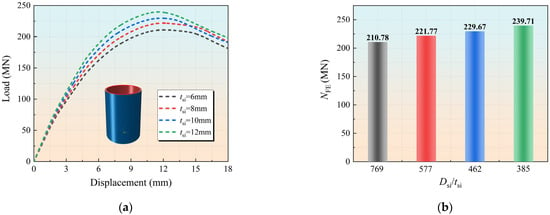
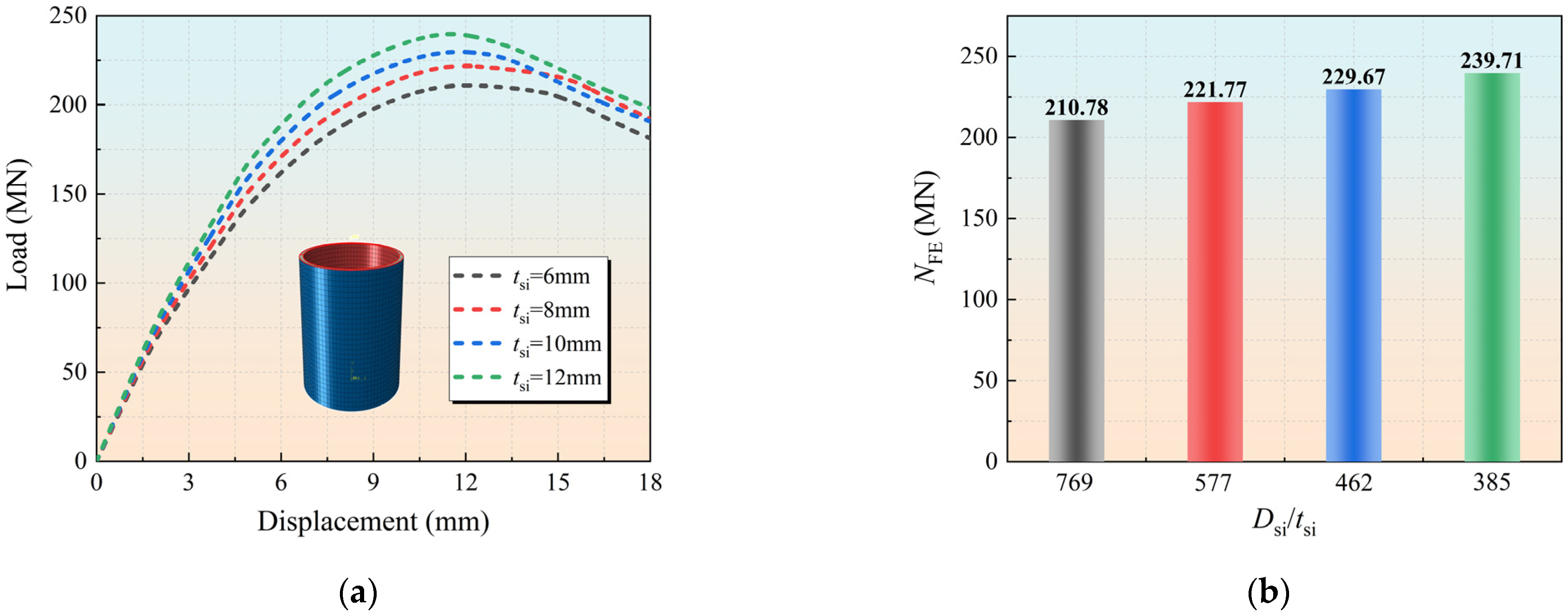
To investigate the effect of the inner steel plate thickness (tsi), numerical simulations were performed with steel plate thicknesses of 6 mm, 10 mm, and 12 mm steel without changing other parameters. As illustrated in Figure 18a, the results indicated that increasing the steel plate thickness led to considerable improvements in both the bearing capacity and initial stiffness of the SCS composite tower. Compared with those of the 8 mm steel plates, the ultimate bearing capacities of the 6 mm, 10 mm, and 12 mm steel plates were −4.95%, 3.56%, and 8.09% greater, respectively. Figure 18b clearly shows that the bearing capacity of the SCS composite tower increased approximately linearly with decreasing Dsi/tsi of the inner steel plate.
Figure 18.
Effect of the inner steel plate thickness. (a) Load–displacement curves; (b) variation law of bearing capacity.
5. Compressive Bearing Capacity of SCS Composite Tower
5.1. T/CCES 7–2020
The SCS composite towers investigated in this paper are similar in cross-section to the CFDST structure and could be considered CFDST members with large dimensions, large hollow ratios, low steel content, and high degrees of shear connection. The axial compressive capacity calculation formula for CFDST members is provided in T/CCES 7–2020 [50]. The formula superimposes the bearing capacity of the outer steel tube and concrete with that of the inner steel tube, while accounting for the confinement exerted by the outer steel tube on the concrete, as presented below:
where fosc is the composite compressive strength of the outer steel tube and concrete; Aso and Asi correspond to the cross-sectional areas of the outer and inner steel tube, while fso and fsi denote their yield strengths; χ represents the cross-section hollowness; ξ0 indicates the nominal confinement coefficient; fc and Ace are the axial compressive strength and nominal cross-sectional area of the concrete; α together with αn represent the steel ratio and nominal steel ratio of the cross-section; D is the outer diameter of the outer steel tube; t0 is the wall thickness of the outer steel tube; and Di is the outer diameter of the inner steel tube.
5.2. Modified Method Based on Composite Action
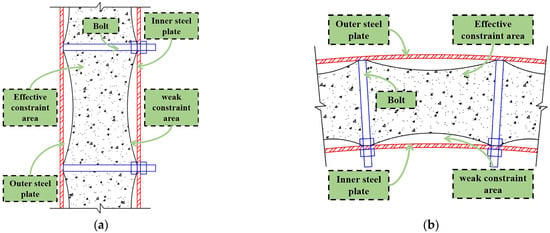
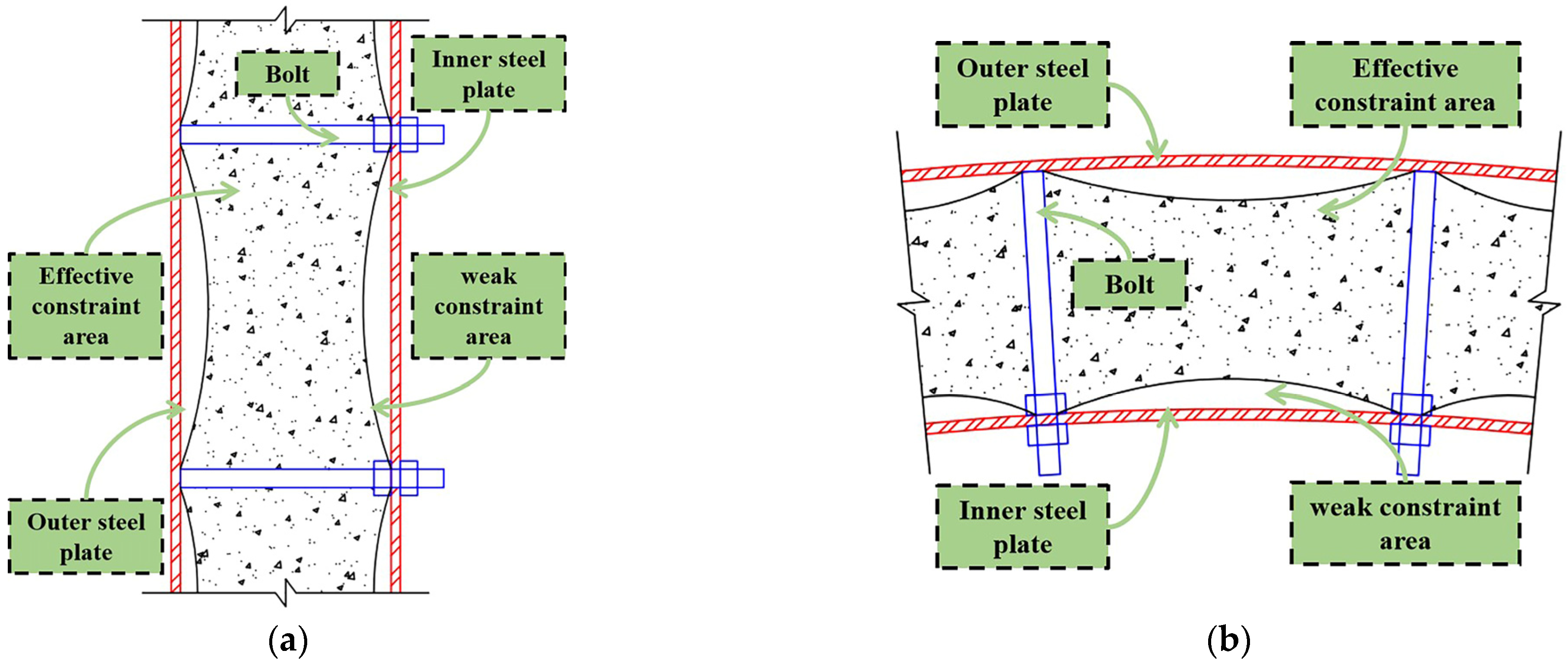
As SCS composite towers have more shear connectors than general CFDST components do, the confinement effect of the shear connectors on the steel plate and concrete should be considered [51]. The connectors could provide local stiffening to the steel plate, thereby improving its stiffness and local stability. In addition, connectors embedded in the concrete could also provide secondary confinement reinforcement to the concrete, as illustrated in Figure 19.
Figure 19.
The confinement effect of the connector on concrete. (a) Vertical confinement; (b) circumferential confinement.
In summary, this paper presents the confinement coefficients λs and λc of connectors on steel plates and concrete. For the SCS composite tower, its axial compressive capacity is calculated using:
where fsc represents the composite compressive strengths of the outer steel plate and concrete; Ass and fss correspond to the cross-sectional area and yield strength of the side steel plate; ξsc indicates the confinement coefficient of the outer steel plate on the concrete; Ab and fb correspond to the cross-sectional area and the yield strength of a single bolt connector, respectively; n is the number of bolts; and Sc is the height of contiguous bolt connectors.
The bearing capacity calculation methods in this paper and T/CCES 7–2020 are used for calculations for the SCS composite tower models, as shown in Table 7. The calculation results of T/CCES 7–2020 are conservative and more suitable for CFDST members with a certain steel content and low degree of shear connection. Accounting for the confinement effect provided by connectors yields calculation results that closely match experimental measurements and FE analysis. This method could be used for the prediction of SCS composite towers with low steel content and a high degree of shear connection. In addition, the parameters of the connector confinement effect should be reasonably optimized during the design process to ensure the stability and safety of the tower structure.
Table 7.
Comparison between the simulation values and theoretical values.
6. Conclusions
This study investigated the axial compression behavior of an SCS composite wind turbine tower with low steel content and a high degree of shear connection through experimental testing and finite element analysis. The main conclusions are summarized as follows:
- (1)
- Compressive failure was governed by local buckling of the steel plates between adjacent connectors. A higher connector density enhanced composite action and improved buckling resistance.
- (2)
- Numerical models were established and validated against experimental results. Parametric analysis indicated that increasing the bolt diameter from 16 mm to 12 mm, 20 mm and 24 mm enhanced the ultimate load by −2.95%, +3.09% and +6.58%, respectively.
- (3)
- Full-section numerical analysis revealed that reducing bolt spacing significantly increased ultimate capacity, although the incremental benefit decreased as spacing became smaller, indicating a saturation effect in connector-induced confinement.
- (4)
- A calculation method for evaluating the axial bearing capacity of SCS composite towers incorporating confinement effects was proposed. The predicted values agreed well with experimental and numerical data, with a mean ratio of 0.95 and a coefficient of variation of 0.03.
- (5)
- The parametric results were based on validated yet idealized finite element models. Therefore, the quantitative trends should be interpreted within the modeling assumptions. Future studies should include large-scale validation and long-term performance assessment to further support practical wind turbine tower applications.
Author Contributions
Writing—original draft, S.Z.; Methodology, S.Z.; Formal analysis, S.Z.; Data curation, S.Z.; Investigation, Y.Y.; Funding acquisition, Y.Y.; Methodology, L.X.; Methodology, S.F.; Writing—review and editing, S.F.; Investigation, G.L.; Validation, S.E.H.G. All authors have read and agreed to the published version of the manuscript.
Funding
This work was supported by the Shaanxi Key Science and Technology Innovation Team Project (Team No. 2024RS-CXTD-37) and the National Natural Science Foundation of China (Grant No. 52378190).
Data Availability Statement
The original contributions presented in this study are included in the article. Further inquiries can be directed to the corresponding authors.
Conflicts of Interest
The authors declare no conflicts of interest.
References
- Kadhim, M.A.; Phing, C.C.; Wai, L.C.; Paw, J.K.S.; Tak, Y.C.; Kadirgama, K.; Kadhim, A.A. Performance study of low-speed wind energy harvesting by micro wind turbine system. Energy Rep. 2025, 13, 3712–3727. [Google Scholar] [CrossRef] [Scilit]
- Jiang, Z.Y. Installation of offshore wind turbines: A technical review. Renew. Sustain. Energy Rev. 2021, 139, 110576. [Google Scholar] [CrossRef] [Scilit]
- Gurjar, A.; Sarkar, A.; Ghoshal, R. Torus Hull Articulated Tower for offshore wind turbines. Ocean Eng. 2024, 308, 118291. [Google Scholar] [CrossRef] [Scilit]
- Wang, F.W.; Zhou, K.M.; Ke, S.T. Research on dynamic load carrying capacity of assembled internal stiffening wind turbine tower based on multi-scale modeling. Adv. Steel Constr. 2023, 19, 86–90. [Google Scholar] [CrossRef] [Scilit]
- Jiang, J.L.; Jeong, H.K.; Dou, H.Y. Study on the Structural Strength Assessment of Mega Offshore Wind Turbine Tower. Energies 2025, 18, 69. [Google Scholar] [CrossRef] [Scilit]
- Huang, X.G.; Li, B.K.; Zhou, X.H.; Wang, Y.H.; Zhu, R.H. Geometric optimisation analysis of Steel-Concrete hybrid wind turbine towers. Structures 2022, 35, 1125–1137. [Google Scholar] [CrossRef] [Scilit]
- Cheng, Y.; Zhao, Y.N.; Qi, H.T.; Zhou, X.H. Intelligent optimal design of steel-concrete hybrid wind turbine tower based on evolutionary algorithm. J. Constr. Steel Res. 2024, 218, 108729. [Google Scholar] [CrossRef] [Scilit]
- Xu, J.; He, Z.Y.; Wang, D.; He, G.L.; Wu, Q.; Zhang, Z.L. Nonlinear dynamic response analyses of Onshore Wind Turbines with Steel-Concrete Hybrid Tower using a co-simulation approach. Renew. Energy 2025, 243, 122475. [Google Scholar] [CrossRef] [Scilit]
- Wang, Y.H.; Zhou, X.H.; Yang, L.; Zhang, L.X.; Ren, W.; Bai, J.L.; Wang, K. Current Status and Development Trend of Supporting Structures for Wind Turbines. Steel Constr. 2024, 39, 1–13. (In Chinese) [Google Scholar] [CrossRef]
- Li, Z.Y.; Xu, B.; Wang, J.; Chen, H.B.; Ge, H.B. Experimental and two-scale numerical studies on the behavior of prestressed concrete-steel hybrid wind turbine tower models. Eng. Struct. 2023, 279, 115622. [Google Scholar] [CrossRef] [Scilit]
- Tan, J.K.; Zheng, W.L.; Zhou, Y.; Wang, Y.H.; Li, Y.E.; Jin, S.S. Study on the compression-bending capacity of horizontal joints in prestressed concrete towers for wind turbines. Structures 2025, 72, 108292. [Google Scholar] [CrossRef] [Scilit]
- Tan, J.K.; Zheng, W.L.; Wang, Y.H.; Su, M.N.; Zhao, L.; Zhang, Y.H.; Feng, Y.; Chen, D.X. Finite element modelling and design of concrete wind turbine towers subjected to combined compression and bending. Structures 2025, 77, 108811. [Google Scholar] [CrossRef] [Scilit]
- Chen, C.; Shen, X.J.; Zhou, Z.; Hua, X.G. Feasibility study of a steel-UHPFRC hybrid tower for offshore wind turbines. Ocean Eng. 2023, 288, 116140. [Google Scholar] [CrossRef] [Scilit]
- Ma, Z.Q.; Li, H.; Su, T.; Wu, T.Y.; Li, J.Q.; Zhu, J. Flexural Behavior of One-Way Lightweight UHPC-NC Superimposed Sandwich Slabs. Buildings 2026, 16, 641. [Google Scholar] [CrossRef] [Scilit]
- Zhou, Z.; Chen, C.; Shen, X.J.; Zhou, X.H.; Hua, X.G. Conceptual design of a prestressed precast UHPC-steel hybrid tower to support a 15 MW offshore wind turbine. Eng. Struct. 2024, 321, 118939. [Google Scholar] [CrossRef] [Scilit]
- Duan, L.X.; Wang, W.D.; Zheng, L.; Shi, Y.L. Dynamic response analysis of monopile CFDST wind turbine tower system under wind-wave-seismic coupling action. Thin-Walled Struct. 2024, 202, 112089. [Google Scholar] [CrossRef] [Scilit]
- Shi, Y.L.; Zheng, L.; Xian, W.; Wang, W.D.; Huang, W.H. Shear performance of circular and rectangular concrete-filled double-skin steel tubes (CFDSTs). J. Constr. Steel Res. 2025, 229, 109542. [Google Scholar] [CrossRef] [Scilit]
- Guo, L.; Wang, W.Q.; Shen, Q.H. Numerical and analytical performance of tapered CFDST column under cyclic loading for wind turbine structures. J. Constr. Steel Res. 2024, 223, 109038. [Google Scholar] [CrossRef] [Scilit]
- Yang, Y.F.; Fu, F.; Bie, X.M.; Dai, X.H. Axial compressive behaviour of CFDST stub columns with large void ratio. J. Constr. Steel Res. 2021, 186, 106892. [Google Scholar] [CrossRef] [Scilit]
- Ayough, P.; Ibrahim, Z.; Sulong, N.H.R.; Ganasan, R.; Ghayeb, H.H.; Elchalakani, M. Experimental and numerical investigations into the compressive behaviour of circular concrete-filled double-skin steel tubular columns with bolted shear studs. Structures 2022, 46, 880–898. [Google Scholar] [CrossRef] [Scilit]
- Ayough, P.; Ibrahim, Z.; Jameel, M.; Alnahhal, A.M. Axial compression behaviour of circular concrete-filled double-skin steel tubular columns with bolted shear studs: Numerical investigation and design. J. Constr. Steel Res. 2023, 205, 107911. [Google Scholar] [CrossRef] [Scilit]
- Shi, Y.L.; Ji, S.H.; Wang, W.D.; Xian, W.; Fan, J.H. Axial compressive behaviour of tapered CFDST stub columns with large void ratio. J. Constr. Steel Res. 2022, 191, 107206. [Google Scholar] [CrossRef] [Scilit]
- Zhang, D.L.; Li, W.; Fu, K.; Li, T.H.; Deng, R.; Wang, Y.H. Ultimate compressive capacity of tapered concrete-filled double skin steel tubular stub columns with large hollow ratio. J. Constr. Steel Res. 2022, 196, 107356. [Google Scholar] [CrossRef] [Scilit]
- Li, B.F.; Wang, X.T.; Xie, C.D.; Yan, X.F.; Wang, S. Compressive behaviour and design of tapered lightweight concrete-filled double-skin stiffened steel tubular short columns with large hollow ratio. Structures 2024, 64, 106527. [Google Scholar] [CrossRef] [Scilit]
- Zhu, W.Q.; Wang, J.Y.; Liu, Y.J.; Sun, L.P. Experimental study on axial compressive behavior of concrete-filled double-skin thin-walled steel box columns with and without PBL. Structures 2023, 47, 1927–1939. [Google Scholar] [CrossRef] [Scilit]
- Jin, K.Y.; Zhou, X.H.; Wen, H.; Deng, R.; Li, R.F.; Wang, Y.H. Compressive behaviour of stiffened thin-walled CFDST columns with large hollow ratio. J. Constr. Steel Res. 2023, 205, 107886. [Google Scholar] [CrossRef] [Scilit]
- Jin, K.Y.; Zhou, X.H.; Ren, W.; Wang, Y.H.; Li, R.F. Axial compressive behavior of concrete-filled double skin steel tubular columns with different stiffening constructions for wind turbine towers. Structures 2024, 63, 106390. [Google Scholar] [CrossRef] [Scilit]
- Yan, J.B.; Fan, J.S.; Ding, R.; Nie, X. Steel-concrete-steel sandwich composite structures: A review. Eng. Struct. 2024, 302, 117449. [Google Scholar] [CrossRef] [Scilit]
- Wang, Y.T.; Khan, M.; Uy, B.; Katwal, U.; Tao, Z.; Thai, H.T.; Ngo, T. Long-term performance of steel-concrete composite wall panels under axial compression. Structures 2024, 64, 106606. [Google Scholar] [CrossRef] [Scilit]
- Wang, Y.T.; Khan, M.; Uy, B.; Lim, L.; Thai, H.T.; Ngo, T. Behaviour, design and performance of steel-concrete composite walls in fire. J. Constr. Steel Res. 2025, 227, 109408. [Google Scholar] [CrossRef] [Scilit]
- Guo, Y.T.; Nie, X.; Tao, M.X.; Qiu, S.Y.; Tang, L.; Fan, J.S. Bending Capacity of Steel-Concrete-Steel Composite Structures Considering Local Buckling and Casting Imperfection. J. Struct. Eng. 2019, 145, 04019102. [Google Scholar] [CrossRef] [Scilit]
- Guo, Y.T.; Chen, J.; Nie, X.; Tao, M.X.; Wang, J.J.; Fan, J.S. Investigation of the shear resistances of steel-concrete-steel composite structures with bidirectional webs. J. Constr. Steel Res. 2020, 164, 105846. [Google Scholar] [CrossRef] [Scilit]
- Zhao, H.Y.; Chen, W.L.; Liu, S.; Ding, R.; Fan, J.S.; Nie, X.; Cui, B. Research on the compression-bending behavior of concrete-filled double-steel-plate composite bridge towers. J. Constr. Steel Res. 2024, 221, 108871. [Google Scholar] [CrossRef] [Scilit]
- Wang, J.; Yan, J.B.; Wang, T.; Liu, Q.F.; Zhang, L.X. Behaviour of steel-concrete-steel sandwich walls with EC connectors under out-of-plane patch loads. Eng. Struct. 2021, 238, 112257. [Google Scholar] [CrossRef] [Scilit]
- Wang, Y.H.; Wang, S.Q.; Zhou, X.H.; Tan, J.K.; Wang, K.; Gui, D.Y. Research on buckling bearing capacity of steel plate in steel-concrete composite tower. J. Build. Struct. 2021, 42, 419–426. (In Chinese) [Google Scholar] [CrossRef]
- Guo, L.; Liu, C.; Gao, S.; Yu, Y. Axial compressive behaviors of the curved steel-plate composite walls with small curvature radius-to-section thickness ratio. Eng. Struct. 2025, 326, 119505. [Google Scholar] [CrossRef] [Scilit]
- Wang, H.F.; Mao, X.Y.; Gu, Q.; Ding, X.Y.; Dong, J.L.; Wu, N.; Qi, Y. Experimental Study on the Cyclic Behavior of Composite Plate Shear Walls–Concrete Encased. Buildings 2026, 16, 657. [Google Scholar] [CrossRef] [Scilit]
- GB/T 50081; Standard for Test Methods of Concrete Physical and Mechanical Properties. China Architecture & Building Press: Beijing, China, 2019. (In Chinese)
- GB/T 228; Metallic Material-Tensile Testing-Part 1: Method of Test at Room Temperature. Standards Press of China: Beijing, China, 2021. (In Chinese)
- Zhang, S.C.; Yang, Y.; Liu, X.Y.; Liu, G.J.; Xu, J.H. Study on axial compression performance of curved steel-concrete-steel composite wall of wind turbine tower. Structures 2025, 75, 108794. [Google Scholar] [CrossRef] [Scilit]
- ABAQUS. ABAQUS/Standard, version 6.11; ABAQUS Inc.: Pawtucket, RI, USA, 2018.
- Ding, F.X.; Wang, W.J.; Lu, D.R.; Liu, X.M. Study on the behavior of concrete-filled square double-skin steel tubular stub columns under axial loading. Structures 2020, 23, 665–676. [Google Scholar] [CrossRef] [Scilit]
- Liu, J.; Yu, W.Z.; Zhang, T.; Xiong, X. Axial behavior of round-ended section concrete-filled steel tube columns with localized corrosion. Struct. Concr. 2025, 1–26. [Google Scholar] [CrossRef] [Scilit]
- Chen, J.; Zhang, M.; Zhu, H.X.; Xu, F.; Shao, Z.J.; Ding, F.X.; Xiang, P. Study on mechanical properties of wind turbine tower reinforced by ribbed interlayer. J. Constr. Steel Res. 2024, 212, 108256. [Google Scholar] [CrossRef] [Scilit]
- Han, L.H.; Tao, Z.; Huang, H.; Zhao, X.L. Concrete-filled double skin (SHS outer and CHS inner) steel tubular beam-columns. Thin-Walled Struct. 2004, 42, 1329–1355. [Google Scholar] [CrossRef] [Scilit]
- Han, L.H.; Yao, G.H.; Tao, Z. Performance of concrete-filled thin-walled steel tubes under pure torsion. Thin-Walled Struct. 2007, 45, 24–36. [Google Scholar] [CrossRef] [Scilit]
- Chen, J.; Zhao, S.Q.; Zhang, Y.; Tan, X.Y.; Zhang, B. Axial compressive performance of composite cylinder wall members in steel-concrete towers designed for wind turbines. J. Constr. Steel Res. 2024, 221, 108908. [Google Scholar] [CrossRef] [Scilit]
- Yu, Y.; Shi, J.; Cai, L.J.; Guo, L.H. Study on buckling behavior of steel plate in double-skin steel plate concrete composite walls under compression. Prog. Steel Build. Struct. 2024, 26, 37–45. (In Chinese) [Google Scholar] [CrossRef]
- Zhang, S.C.; Yang, Y.; Xu, L.K.; Ma, Y.K.; Liu, G.J.; Hernandez Gadea, S.E. Behavior of RCFST columns stiffened with T–shaped PBL connectors under axial and eccentric compression: Experiment and numerical simulation. J. Build. Eng. 2026, 118, 115060. [Google Scholar] [CrossRef] [Scilit]
- T/CCES 7-2020; Technical Specification for Concrete-Filled Double Skin Steel Tubular Structures. China Architecture & Building Press: Beijing, China, 2020. (In Chinese)
- Jin, K.Y.; Zhou, X.H.; Ji, W.D.; Deng, R.; Wang, Y.H.; Ren, W. Experimental study of large-scale stiffened thin-walled CFDST columns under aixal compression. Eng. Struct. 2023, 291, 116418. [Google Scholar] [CrossRef] [Scilit]

Disclaimer/Publisher’s Note: The statements, opinions and data contained in all publications are solely those of the individual author(s) and contributor(s) and not of MDPI and/or the editor(s). MDPI and/or the editor(s) disclaim responsibility for any injury to people or property resulting from any ideas, methods, instructions or products referred to in the content. |
© 2026 by the authors. Licensee MDPI, Basel, Switzerland. This article is an open access article distributed under the terms and conditions of the Creative Commons Attribution (CC BY) license.