1. Introduction
The current conflict between Russia and Ukraine as well as the Middle East conflicts show that energy assets such as refineries, pump stations, and all other related components are legitimate targets and prone to bombardment. These situations may lead to hydrocarbon spill and contamination. Pile foundation behavior is governed by a multitude of factors, including installation methods, geometry (embedment length and diameter), and soil-specific mechanisms like side load transfer, residual stresses, pore water pressure dissipation, and subsequent strength gain (Dourado and Deng (2025) [
1], Debnath and Singh (2025) [
2], Ibrahim and Karkush (2025) [
3], Gananathan et al. 2025 [
4], Akbarnezhad et al. 2025 [
5], Potini et al. 2025 [
6]). Although the migration of hydrocarbon contaminants (e.g., kerosene) from sources like storage containers has been studied from an environmental perspective, focusing on groundwater pollution and public health risks, their geotechnical impact has been largely overlooked. This research specifically addressed this gap by investigating and quantifying the effect of kerosene contamination on the ultimate strength capacity of pile foundations. Similar performance-based geotechnical evaluations are commonly verified using field evidence (e.g., Cone Penetration Test (CPT) comparisons before and after intervention) in infrastructure projects [
7].
A growing body of geotechnical research has established that hydrocarbon contamination consistently degrades the mechanical properties of soil, with critical implications for infrastructure stability on contaminated sites. This trend was demonstrated in early studies, such as those by Evgin and Das (1992) [
8], who found that motor oil contamination significantly reduced the friction angle of sands. More recent research confirmed this behavior, showing that crude oil contamination leads to decreased shear strength parameters, including friction angle and cohesion, in various soil types (Saeed et al. 2024 [
9], Asadi et al. 2025 [
10], Awarri and West (2025) [
11]). Hydrocarbon contamination directly diminishes the bearing capacity of shallow foundations. Model tests show that even low oil contents (e.g., 4–6%) can drastically reduce the ultimate bearing capacity of strip footings on sand. Finite element analyses have predicted increased settlement of flexible footings on contaminated sand due to its reduced stiffness and increased compressibility. A particularly critical design challenge arises in rigid footings, where partial contamination (e.g., from one-sided spills) can induce asymmetric horizontal displacements and foundation rotation (Evgin and Das (1992) [
8]).
The detrimental effects are equally pronounced in deep foundations. For PHC piles, contamination exacerbates skin friction reduction and settlement. Pile installation in contaminated soils worsens pore pressure generation and lateral displacement, leading to significant post-installation consolidation. The driving process itself can reduce the compression modulus of the surrounding soil by up to 30%, further increasing total settlement. The root cause of this behavior lies in the alteration of the soil fabric. As Tuncan and Pamukcu (1992) [
12] observed in marine clays, crude oil contamination reduces specific surface area and cation exchange capacity, promoting an open, flocculated structure. This results in soil with higher water-holding capacity but critically lower strength, stiffness, and permeability.
The geotechnical impact of hydrocarbon contamination begins at a fundamental level. Advanced insights from techniques like X-ray diffraction (XRD) reveal that hydrocarbons interact with clay minerals, altering the soil fabric and reducing the interparticle forces. These microstructural changes manifest in altered index and compaction properties; for instance, crude oil contamination in CL and CH soils typically decreases the Atterberg limits and maximum dry density while increasing the optimum moisture content. Furthermore, the viscous hydrocarbons clog soil pores, leading to a decrease in permeability. This hindered drainage can significantly prolong consolidation times, a critical factor for predicting settlement rates on contaminated sites. While direct studies on PHC piles in hydrocarbon-contaminated soils are scarce, the altered soil properties suggest a severe impact on pile capacity. Analogous research indicates that contamination reduces both shaft friction and end-bearing capacity, primarily by altering the critical pile–soil interface properties. The problem is exacerbated during construction. The driving of PHC piles in contaminated soils generates excess pore pressures and lateral soil displacements, which further compromise the soil–pile interaction and can lead to increased post-installation settlement.
These combined effects pose significant design challenges. Engineers working on contaminated sites must account for reduced soil shear parameters, increased total settlement, and the risk of differential movements. To mitigate these risks, remediation techniques such as soil mixing or grouting may be necessary to improve the in situ ground conditions before foundation construction.
Previous studies showed that hydrocarbon contaminations of soils can degrade their mechanical properties, but these studies were mostly limited to element scale laboratory tests, such as direct shear or triaxial compression. These studies detailed changes in some strength parameters but did not analyze foundation performance firsthand. Therefore, the extent to which contamination directly modifies pile load settlement response, secant stiffness, and ultimate bearing capacity is not yet available from quantitative evidence. Low viscosity fuels especially, such as kerosene, have received comparatively little foundation scale assessment, despite exhibiting higher mobility and deeper penetration in fine grained soils. The novel contribution of the current work was to move the investigation from soil element behavior to foundation scale performance with a controllable and quantifiable assessment of the interaction of pile–soil under kerosene contamination. Specifically, this work includes the following: (i) generates complete load settlement curves from instrumented model pile compression tests in compacted clayey soil, allowing direct quantification of stiffness degradation and failure capacity; (ii) determines the reduction in ultimate pile bearing capacity at defined contamination levels and formulates predictive capacity reduction relationships suitable for engineering design; (iii) investigates the combined influence of hydrocarbon contamination and pile installation disturbance on load transfer mechanisms. This study contributes to moving the field beyond qualitative confirmation of strength loss to a mechanistic and predictive model of contaminated foundation systems by converting contamination effects into measurable performance indicators and design-oriented relationships.
3. Results
3.1. Soil Conditions for Pile Model
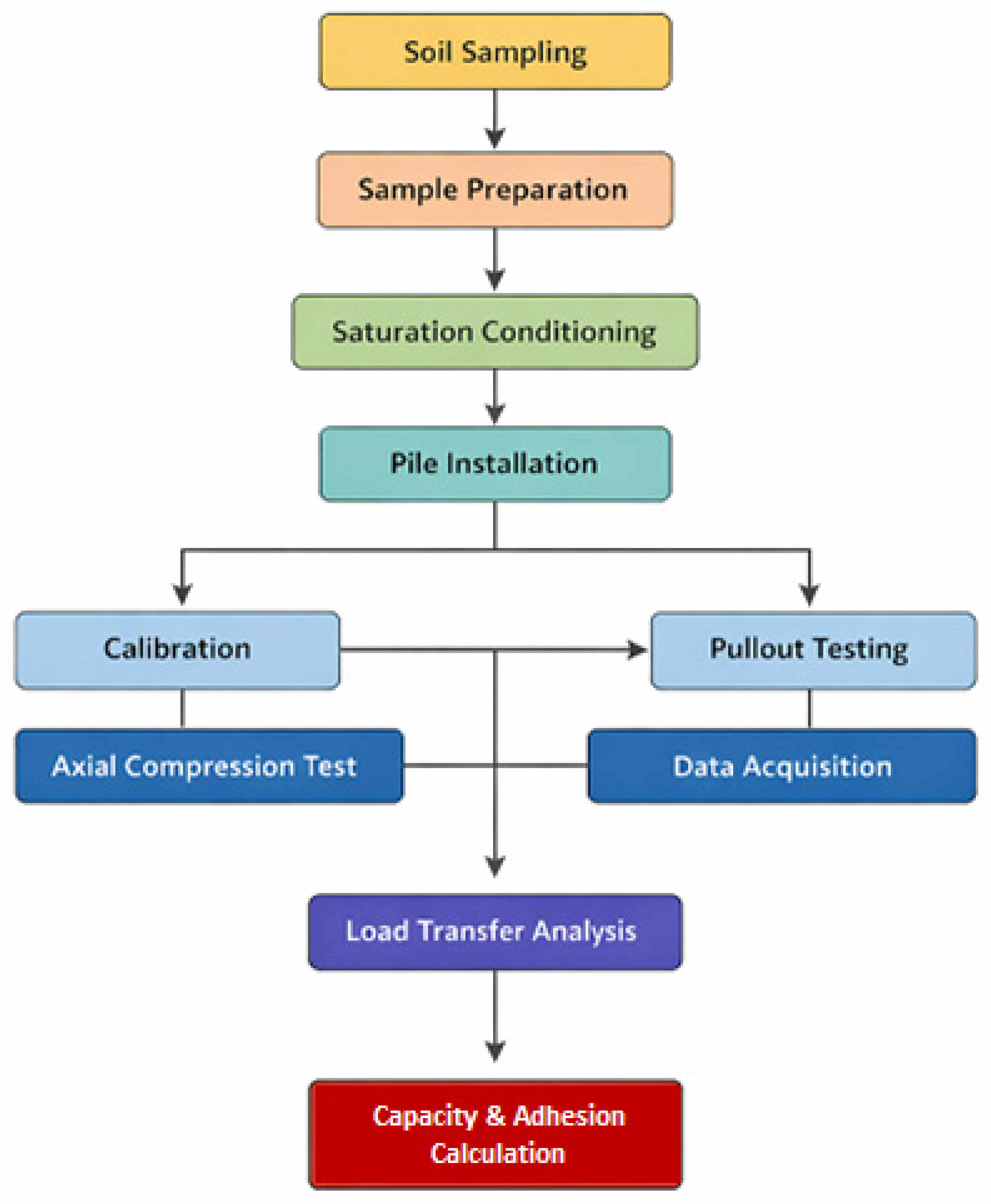
Three identical clay beds were prepared using the method previously described. The testing and sampling strategy for each bed was as follows:
For the first clay bed (Benchmark), undisturbed soil specimens were extracted three days after pile installation. Two types of samples were taken: smaller specimens (38 mm diameter) for unconfined compression tests to determine the undrained shear strength, and larger specimens (76.2 mm diameter) for consolidation tests. A permanent 2 cm layer of the corresponding fluid (water or kerosene) was maintained atop the second and third clay beds to simulate flooded conditions, starting one day post-installation.
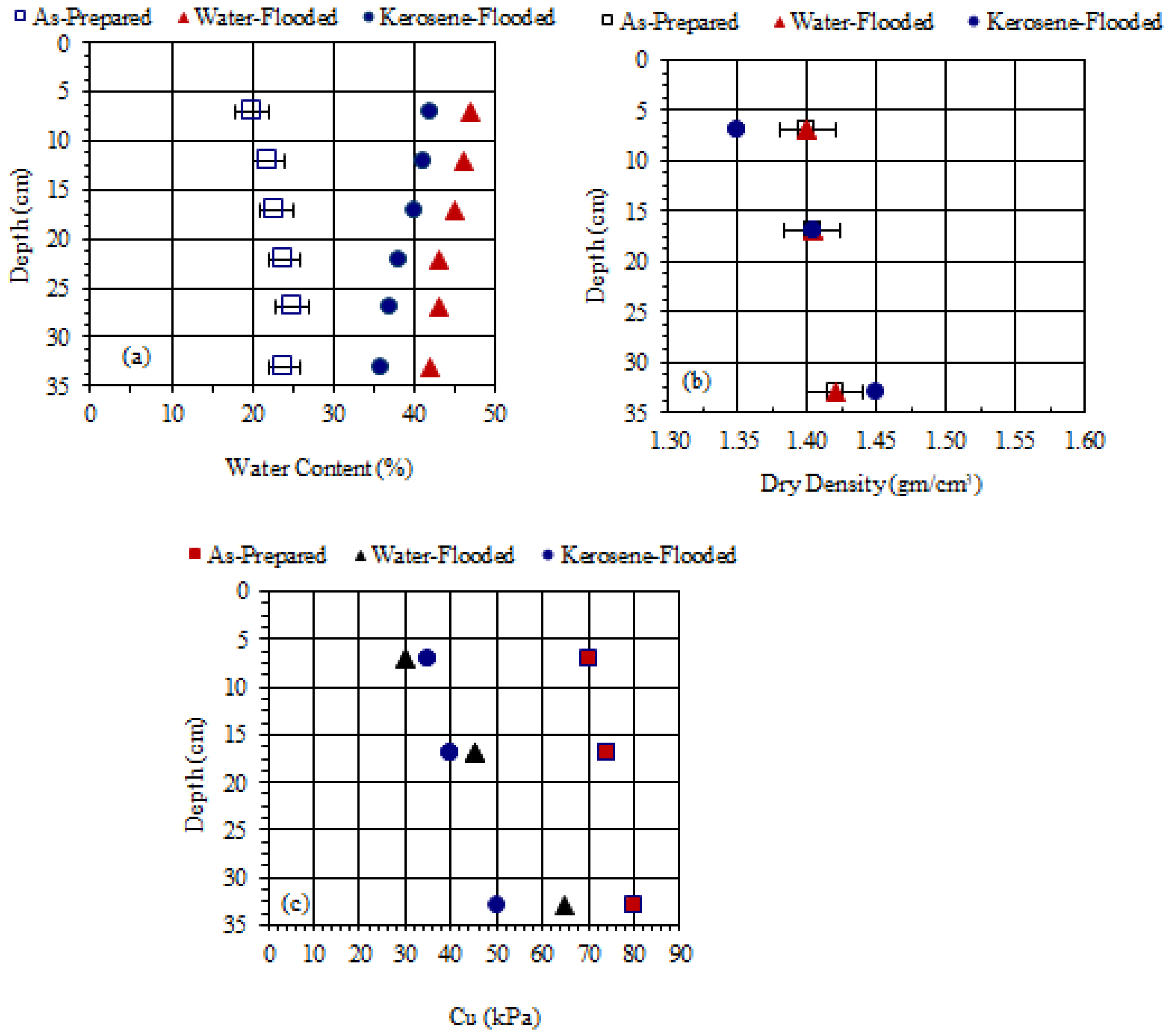
Figure 4 shows the variation of water content, dry density, and undrained strength with depth. The geotechnical properties of the soil, namely fluid content, dry density, and undrained shear strength (Cu), exhibit distinct profiles that are highly dependent on pore fluid conditions.
Regarding fluid content, benchmark beds show an increase from 20% at the surface to 25% at a depth of 82% of the pile length. In contrast, flooded samples show a decreasing trend with depth. The water-flooded beds decreased from a higher initial fluid content of 47% to 43%, while the kerosene-flooded samples decreased from 42% to 36% over the same interval. A corresponding divergence is observed in the dry density profiles. Both benchmark and water-flooded beds displayed a minor density increase from 1.40 g/cm3 to 1.42 g/cm3. The kerosene-flooded beds, however, began with a significantly lower surface density of 1.35 g/cm3 but underwent a substantial increase to 1.45 g/cm3 at the same depth.
The undrained shear strength (Cu) profiles further highlight the impact of fluid flooding. The benchmark beds showed a strength increase from 70 kPa to 80 kPa. The water-flooded beds started with a pronounced lower strength of 30 kPa at the surface, which subsequently recovered to 65 kPa. Similarly, the kerosene-flooded sample exhibited an increase in strength from 35 kPa to 50 kPa with depth.
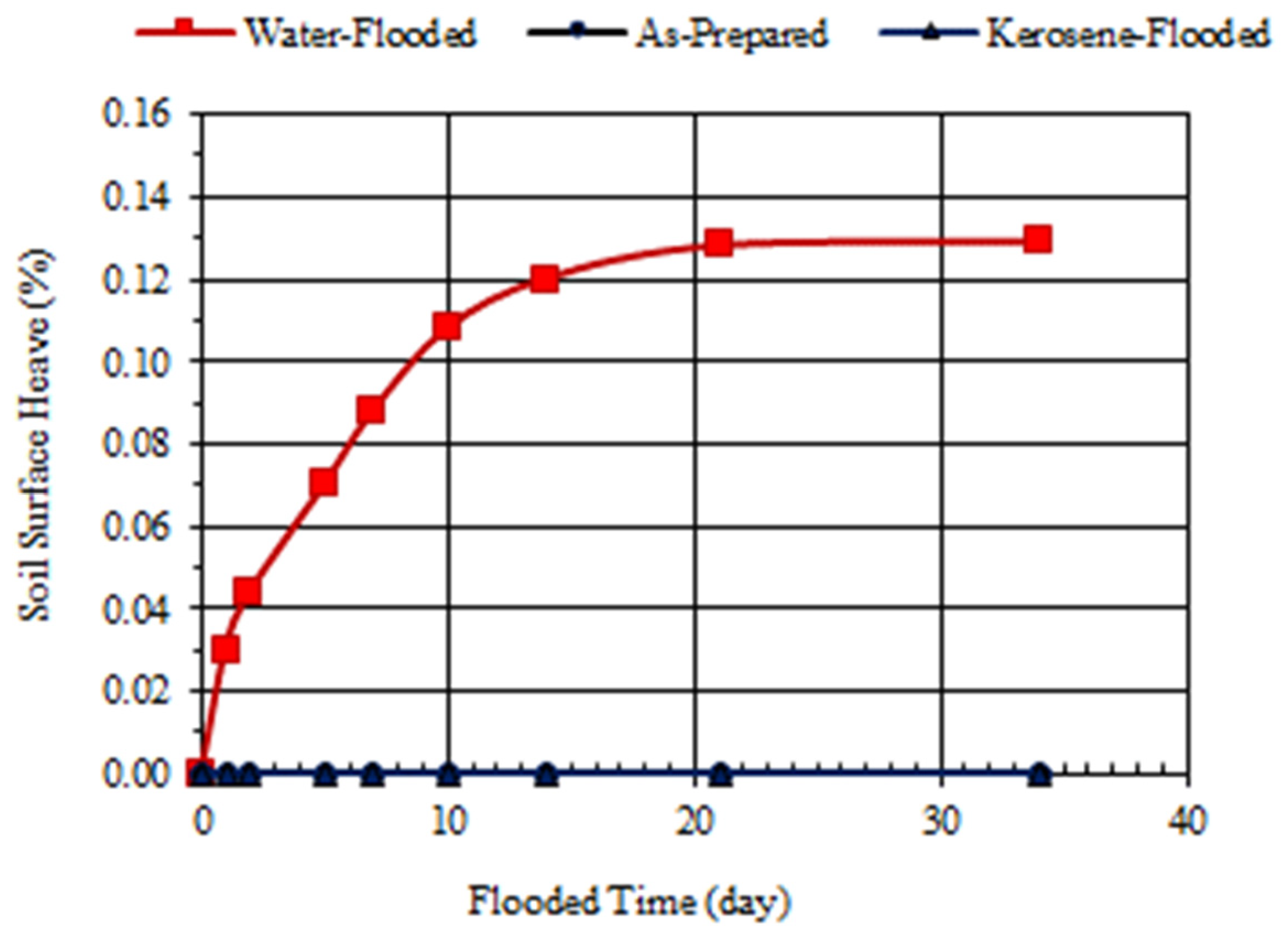
Soil surface heave was monitored using two dial gauges positioned 12.5 cm from the pile on opposite sides. The benchmark soil beds and kerosene-flooded soil beds exhibit no heave or swell at all while the water-flooded soil beds give percent swell in the order of 13.8% as shown in
Figure 5.
To comprehensively evaluate the soil bed conditions, a series of one-dimensional consolidation tests was conducted in accordance with ASTM D2435/D2435M-11 [
24]. The results, as shown in
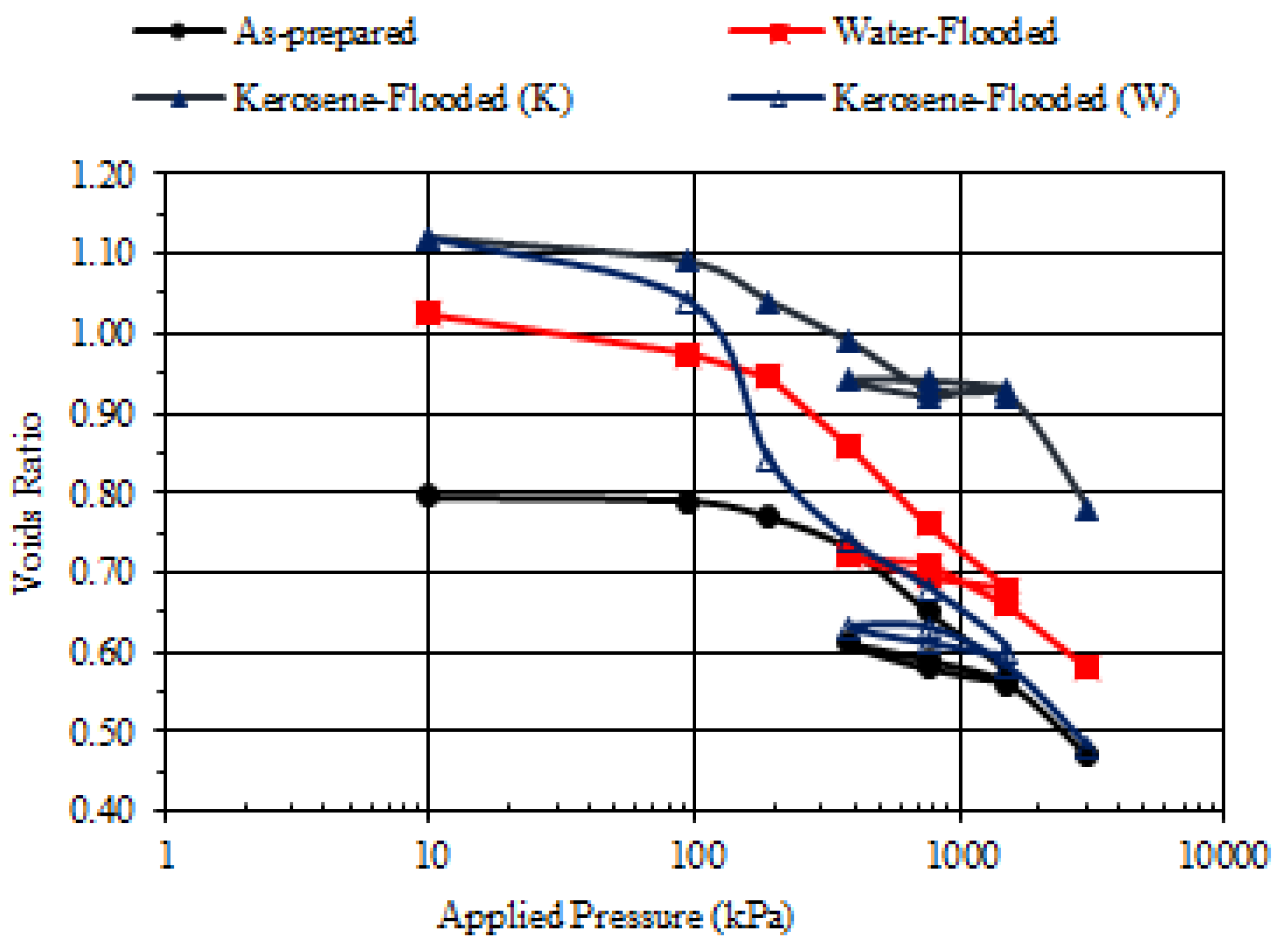
Figure 6, are summarized as outlined. (a) As-Prepared Samples: The baseline specimens yielded a compression index (Cc) of 0.243, a recompression index (Cr) of 0.071, and a maximum past pressure (Pm) of 520 kPa. (b) Water-Flooded Samples: Inundation with water increased the soil’s compressibility, resulting in a higher Cc of 0.29 and a reduced Pm of 290 kPa. (c) Kerosene-Flooded Bed: A comparative analysis of two undisturbed specimens revealed the profound influence of pore fluid chemistry. The kerosene-saturated sample exhibited a low Cc of 0.23 and a very high Pm of 1000 kPa. In contrast, a companion sample saturated with water was highly compressible (Cc = 0.44) and exhibited a low Pm of 100 kPa. This stark contrast is attributed to the non-polar nature of kerosene (Fan and Zhong (2022) [
25], Caffiero et al. 2024 [
26], Wang et al. 2024 [
27], Tang et al. 2025 [
28]), which enhances interparticle electrochemical attractive forces. This strengthened soil skeleton is manifested as a substantial increase in the apparent pre-consolidation pressure.
3.2. Test Results of Axial Compression Loading
To evaluate the ultimate compressive capacity of test piles when a clear failure load is not evident from the load–settlement curve, several analytical methods are employed, predicated on the pile’s elastic properties, geometry, and the curve’s shape. This study applied four prominent methods from the literature. The Swedish Pile Commission Method (Hansen, 1963 [
29], Tang et al. 2025 [
30]) uses a 90% criterion, defining failure as the load causing twice the settlement observed at 90% of that load, based on a hyperbolic curve assumption. Mazurkiewicz’s Method (1972) [
31] is a graphical technique where the failure load is identified as the convergence point on the load axis of a series of 45° lines projected from the intersections of arbitrary settlement lines with the load–settlement curve. Conversely, the Tangent Method (Prakash and Sharma 1991 [
32], Eslami et al. 2025 [
33]) determines capacity from the intersection of tangents drawn to the initial and final portions of the curve. Finally, the American Association of State Highway and Transportation Officials (AASHTO, BDS (2010) [
34]) Method defines the ultimate load as that corresponding to a net settlement of 6.35 mm.
The ultimate bearing capacity was interpreted from the load–settlement curves using four established methods: Swedish Pile Commission, Mazurkiewicz, Tangent, and AASHTO. These approaches were selected because they are widely adopted in practice and are specifically developed for static compression pile load tests based on load–displacement behavior. Each method represents a different failure criterion, including settlement-based, graphical extrapolation, stiffness-change, and code-recommended interpretations. Employing multiple methods enables cross-validation of the results and reduces dependence on a single interpretation technique. Differences among the predicted capacities are expected, as each method defines the ultimate state differently (e.g., service ability-based versus theoretical failure), and similar variations are commonly reported in the pile load test literature. Therefore, the comparison enhances reliability rather than introducing uncertainty.
The axial compressive capacity of the model piles was investigated through constant rate of displacement (CRD) tests at 0.1 mm/s. Three distinct interface conditions were examined: non-flooded (dry), flooded with kerosene, and flooded with water. A summary of the ultimate load capacities is presented in
Table 2, while the corresponding pile head displacements at failure for each trial are summarized in
Table 3.
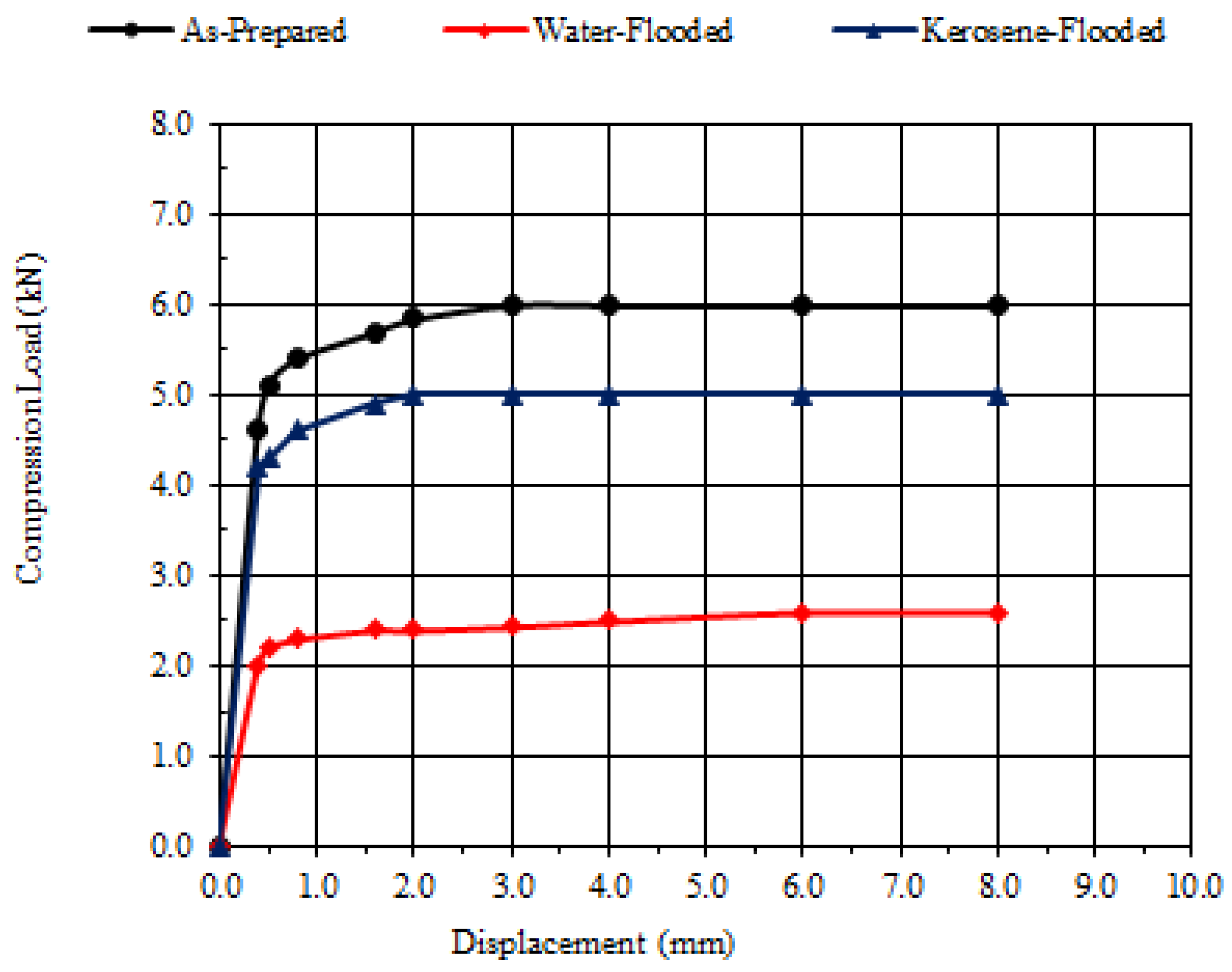
Figure 7 provides a representative comparison from the first trial, clearly demonstrating that the pile capacity is highly dependent on the interface fluid. The non-flooded pile achieved the maximum load, with the kerosene-flooded condition exhibiting a higher capacity than the water-flooded condition. Examination of the load–displacement behavior reveals that all three curves are qualitatively similar, exhibiting a ductile failure mode without a sharp peak. The ultimate failure state was reached at displacements ranging from 2.9 mm to 6.0 mm across all tests, suggesting rather that the interface fluid primarily affects the shear strength.
3.3. Pullout Test Results
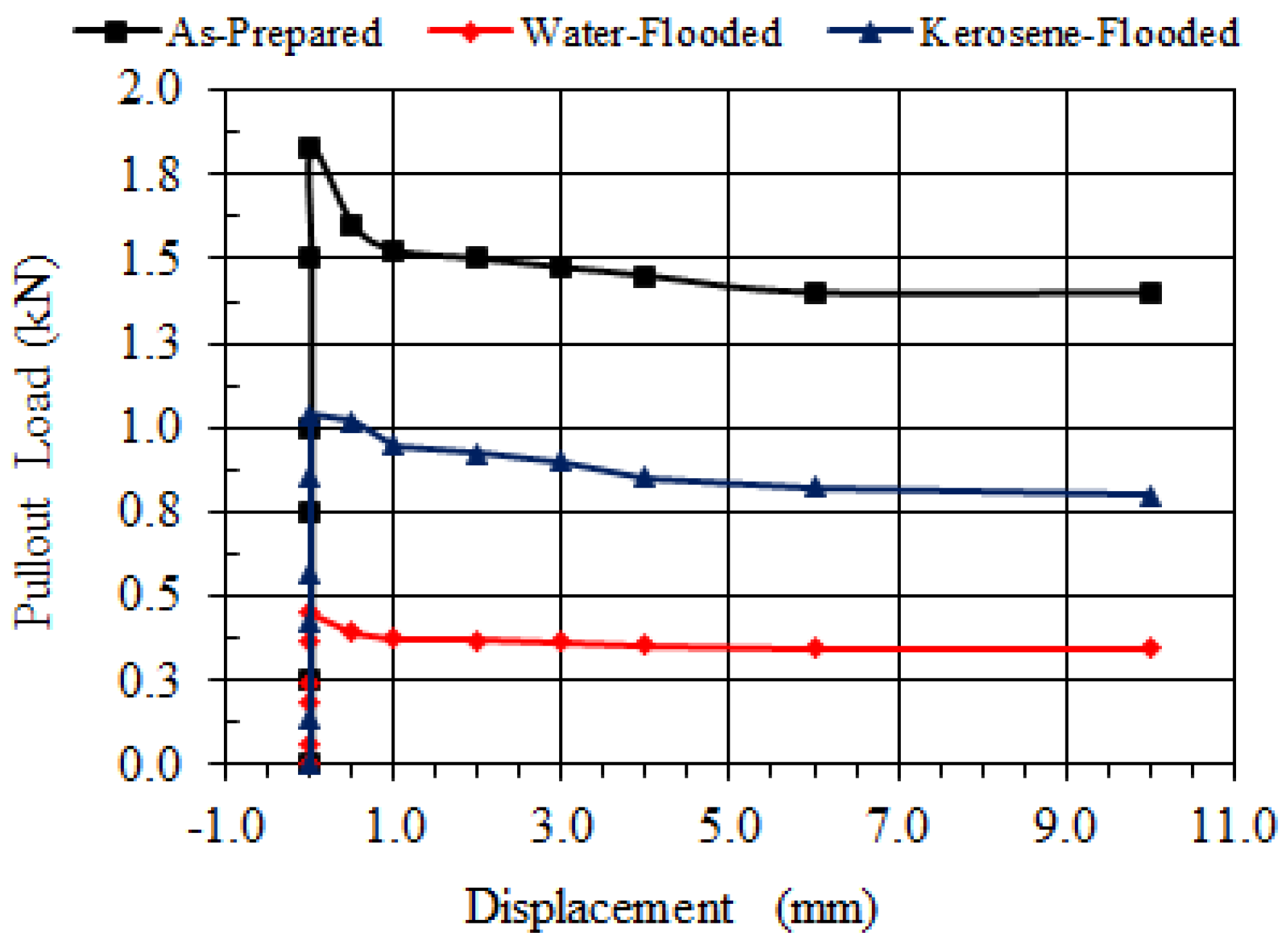
The pullout capacity of the model piles was assessed using constant rate of displacement (CRD) tests at 0.1 mm/s, conducted 24 h after the initial compression tests. The three interface conditions—non-flooded (dry), kerosene-flooded, and water-flooded—were evaluated. As summarized in
Table 4 and illustrated in
Figure 8, the results indicate a significant influence of the interface fluid on the ultimate pullout load. The load–displacement curves for all conditions exhibited a similar shape, featuring a sharp, distinct peak at failure. The corresponding displacements at failure ranged from 0.03 to 2.40 mm, a range consistent with previous model pile tests in clayey soils (Mochtar et al., 1988 [
35], Siemaszko (2024) [
36]).
To improve generality and facilitate comparison, the pullout results are also interpreted using normalized (dimensionless) parameters relative to the uncontaminated condition. Specifically, the ultimate pullout load is presented as a capacity ratio (Qpc/Qp0) and the displacement at peak load is expressed as a settlement ratio s/D, where D is the pile diameter. This normalization reduces scale dependency and highlights the relative degradation trends attributable to the flooding fluid, thereby improving the transferability of the findings to other pile dimensions and similar clayey soils.
4. Discussion
4.1. Analysis of Skin Friction and Adhesion Factors
The average unit skin friction fs under pullout loading can be derived from the force equilibrium equation:
where
fs = average unit skin friction,
Qult = ultimate pullout force, w = weight of the pile
B0 = pile diameter and
L = embedment length of the pile.
For the different test conditions, the ultimate average unit skin friction ranged from 7.1 kPa to 35.6 kPa. The adhesion factor α, defined as the ratio (
α =
fs/
Cu), was derived from these values.
Table 4 presents the calculated average unit skin friction to compare the influence of the soaking fluid. The data show that the non-flooded model exhibits a higher adhesion factor than the fluid-flooded models. The calculated adhesion factors (
α) for the non-flooded piles fall within the range established by Tomlinson (1971) [
37], Tomlinson, and Woodward (2007) [
38]. In contrast, the values for the kerosene-flooded model lie outside the typical ranges for driven piles summarized by Poulos and Davis (1980) [
39]. The average adhesion factor in this study was 0.134, which is lower than the value of 0.2 reported by Das and Seeley (1982) [
40] and Basack et al. 2025 [
41] for model piles in saturated soil with Cu < 27 kPa. This reduction is attributed to the prior mobilization of soil shear strength during the compression tests.
4.2. Influence of Fluid Type on Soil–Pile Adhesion
The water-flooded model yielded the lowest unit skin friction. This can be explained by the fluid’s properties: water is a wetting fluid adsorbed by clay particles due to osmotic effects (Bear, 2013 [
42], Tong et al. 2025 [
43]). This adsorption causes the clay to heave, increasing the diffuse double-layer thickness between particles. The resulting decrease in soil density and shear strength consequently reduces the soil–pile adhesion.
Kerosene, being a non-wetting, non-polar fluid, cannot enter the basal spacing of the clay and thus has a less detrimental effect than water. However, both fluids reduce adhesion compared to the non-flooded condition by diminishing the apparent cohesion. In the non-flooded soil, air-filled voids create surface tension between adsorbed water and air, increasing the effective stress and apparent cohesion (Al Hattamleh et al. 2021 [
44], Abu-Agolah et al. 2025 [
45]). This enhances the soil–pile adhesion. When either water or kerosene floods the soil, they displace the air, reducing this surface tension and the associated cohesive and adhesive strength.
Kerosene was selected as the contaminant medium because its physicochemical properties differ from heavier hydrocarbons such as diesel and crude oil in ways that directly influence soil–pile interaction. Compared with these media, kerosene has lower viscosity, higher mobility, and greater penetration capacity within fine-grained soils. As a result, it can more readily replace pore water, reduce matric suction, and introduce lubrication at particle contacts and at the pile–soil interface, potentially leading to more pronounced reductions in stiffness and bearing capacity. In contrast, heavier hydrocarbons typically exhibit slower migration and partial coating effects, resulting in different or less severe mechanical responses. Therefore, the results of this study are most directly applicable to light fuel contamination scenarios (e.g., aviation fuel or kerosene spills), while also providing conservative insight into general hydrocarbon contamination effects. This clarification defines the applicability boundaries of the findings without limiting their broader engineering relevance.
4.3. Load Transfer
It should be emphasized that the pile–soil interface behavior was not evaluated solely using average skin friction values. The strain-gauge instrumentation enabled measurement of internal axial load along the pile shaft, from which local load transfer and the distribution of unit skin friction with depth were derived. These profiles provide a direct characterization of interface shear stress mobilization and failure progression along the pile. The observed reduction and redistribution of local skin friction under kerosene flooding indicate a weakened interface and lubrication effect, confirming that contamination alters the shear transfer mechanism rather than only reducing the global capacity. Therefore, the interface response was assessed at both global (average capacity) and local (depth-dependent shear stress) scales.
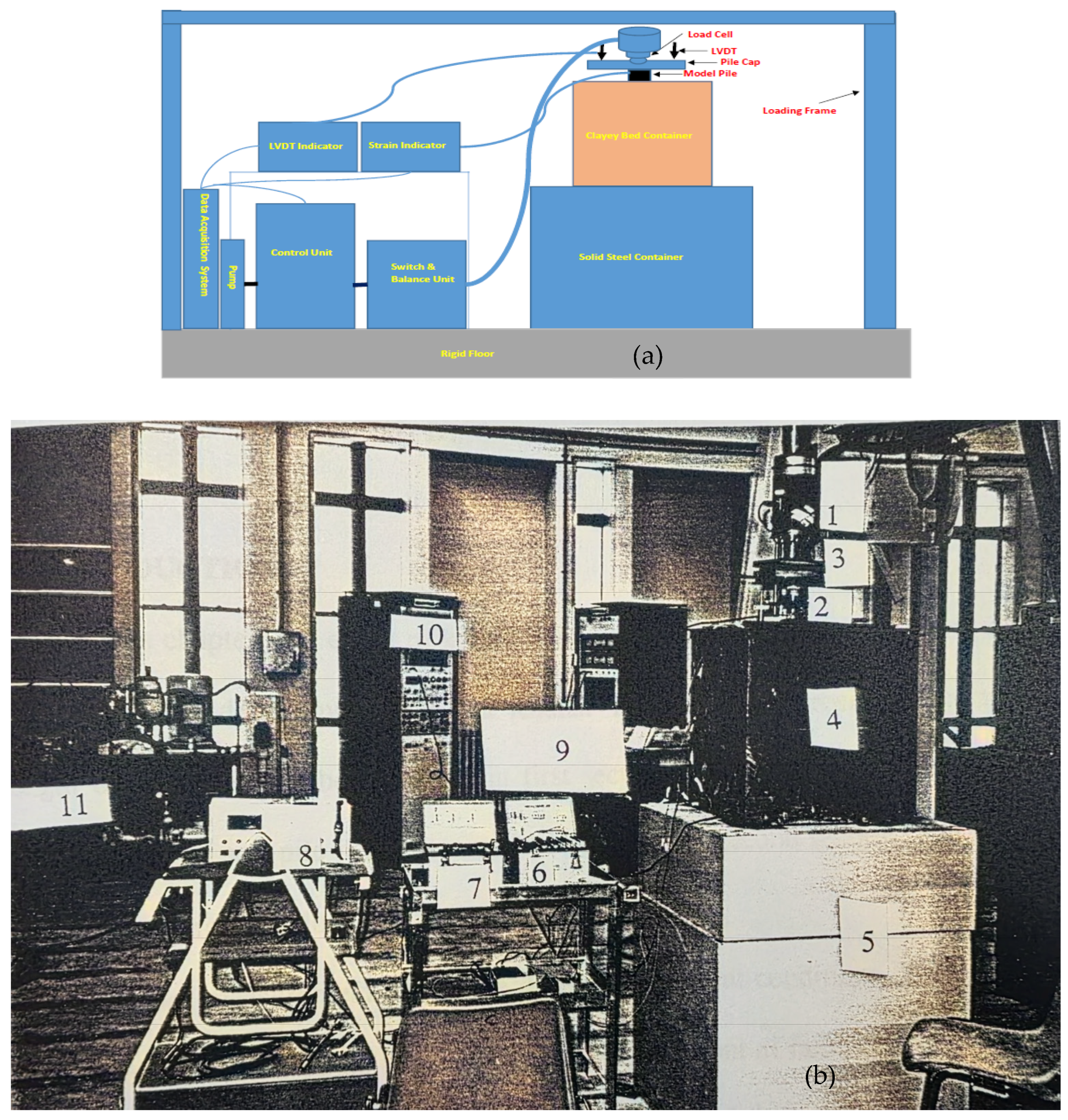
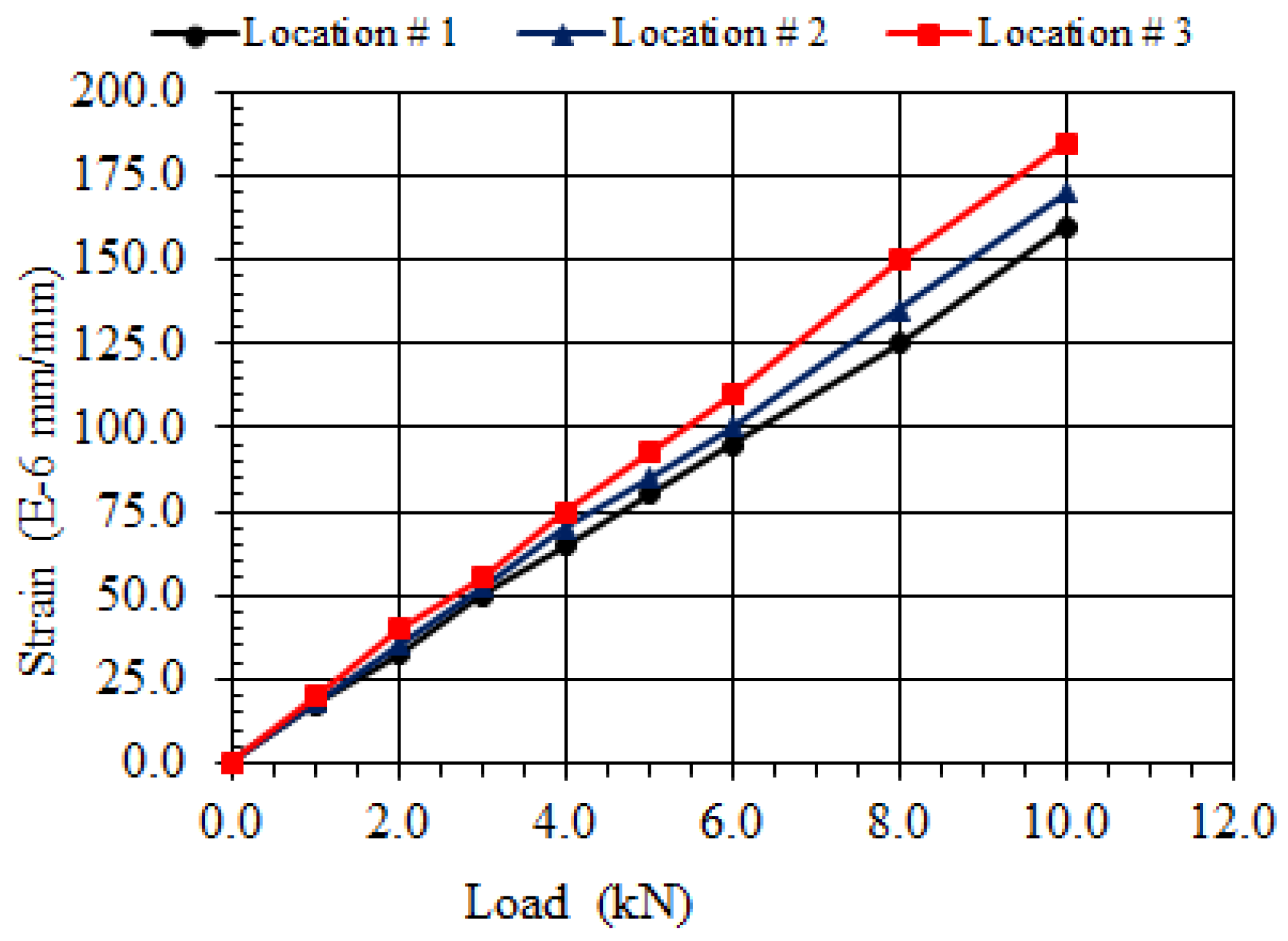
Each model pile underwent axial compression calibration before installation. In this procedure, the piles were fixed and subjected to a maximum axial load of 10 kN. The corresponding strain gauge readings were plotted to generate calibration curves (see
Figure 9 for an example), which were later used to derive the load transfer along the pile shaft. This pre-test calibration also served to identify and mitigate stress concentrations and prevent buckling during the main testing phase.
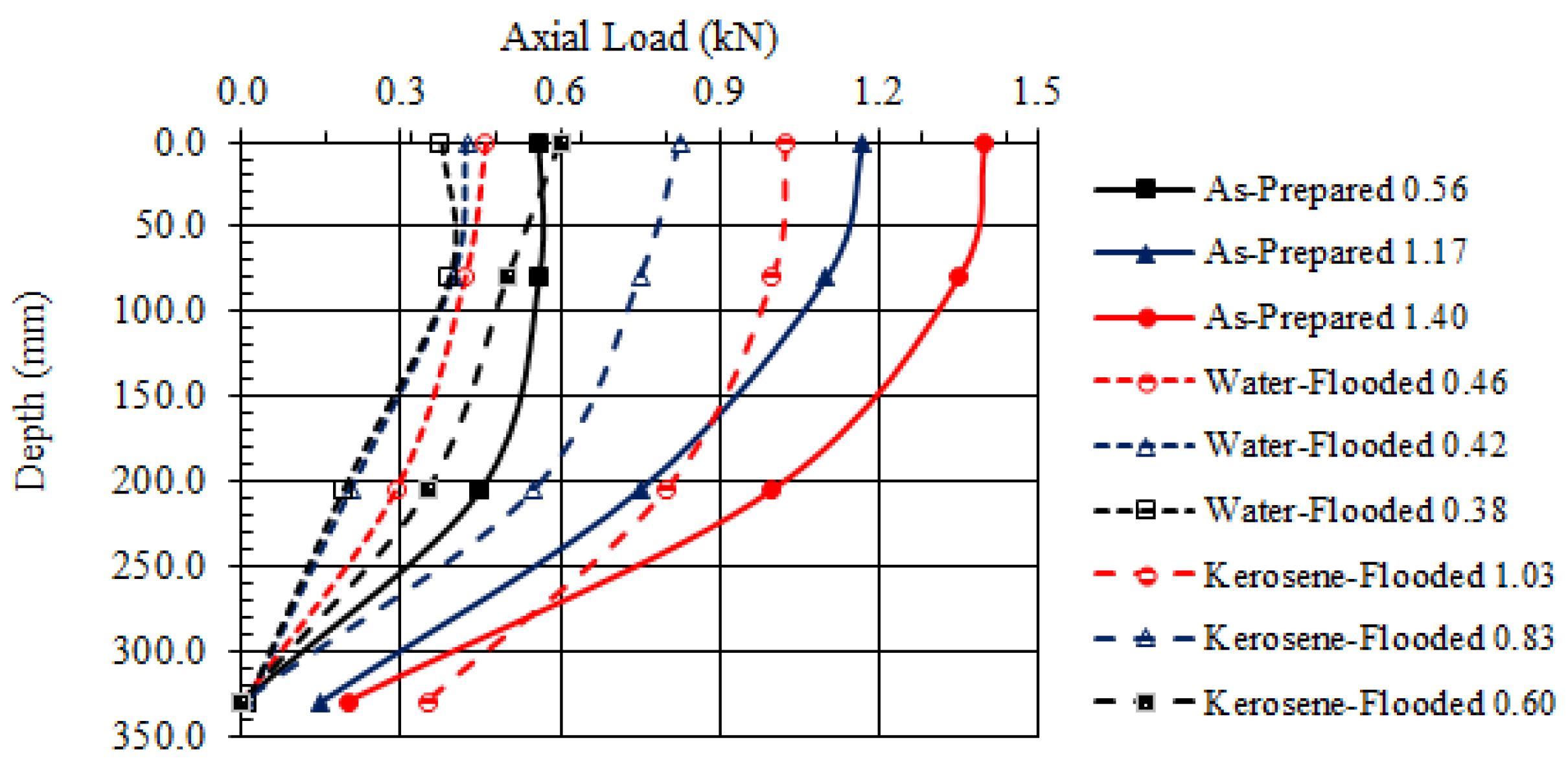
Figure 10 presents the variation of internal axial load with depth during the pullout test. The distribution shows that the load is maximum at the clay surface and attenuates with increasing depth. These profiles were approximated using second- or third-degree polynomials to facilitate the calculation of local unit skin friction.
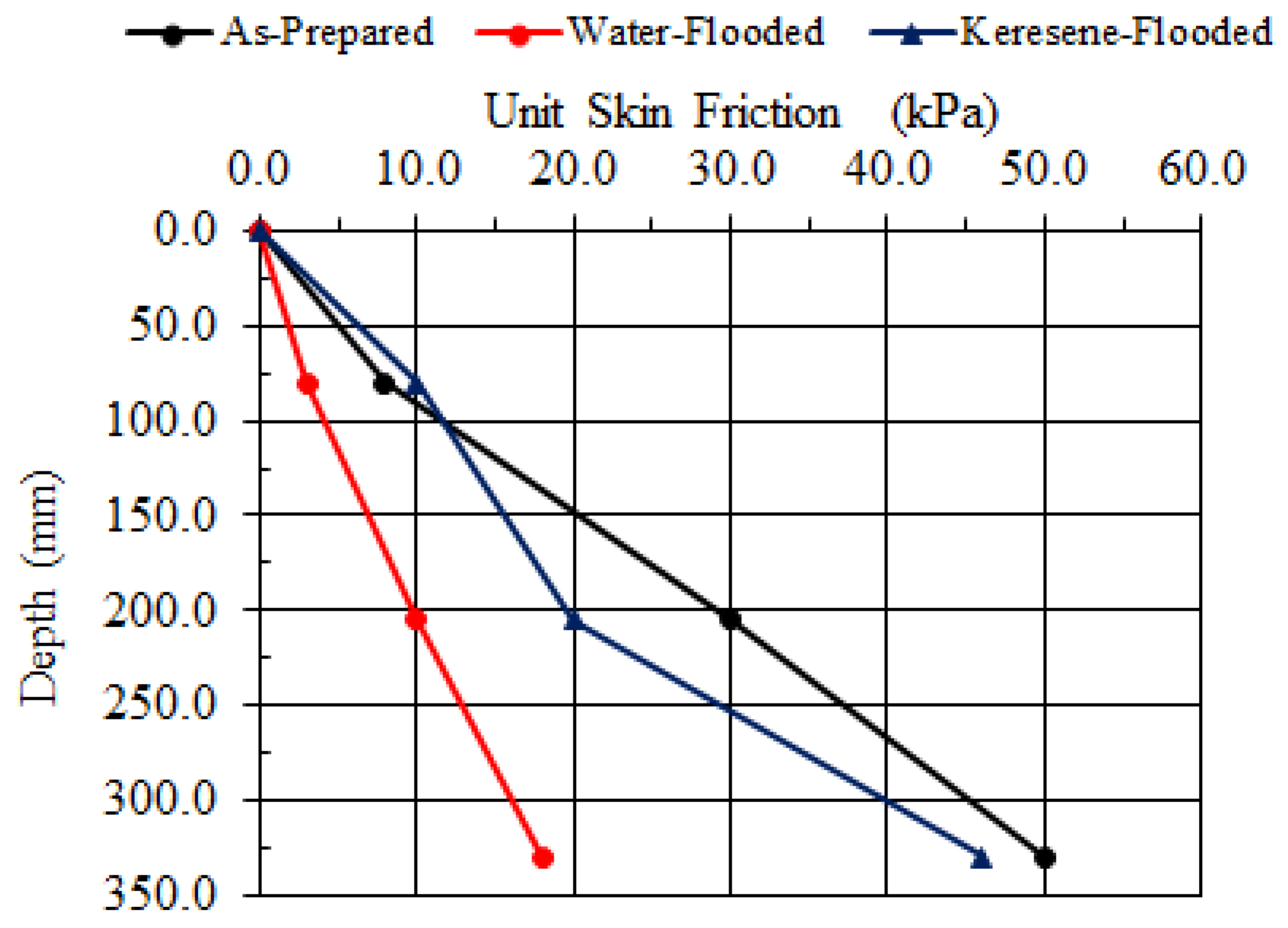
Figure 11 shows the calculated local unit skin friction, which is low at the surface and increases linearly with depth during pullout. This initial low friction is due to a reduced soil–pile contact area near the surface [
46], for both the dry and kerosene-flooded pile models, and the presence of a very weak soil layer at the surface for the water-flooded model.
From an engineering perspective, the results are intended to provide reduction trends and design guidance rather than direct prediction of absolute pile capacity. The experimentally derived capacity degradation ratios and load–settlement behavior can be used as modification factors or preliminary assessment tools when evaluating pile performance in contaminated sites. In practice, designers may combine these reduction factors with conventional capacity calculations to account for potential contamination-induced losses.
Moreover, the mechanisms discussed in this study are interpreted primarily from macroscopic mechanical behavior (load–settlement response, strength, and compressibility changes). Although advanced microstructural techniques such as SEM or XRD could provide direct visualization of particle arrangement and mineralogical alterations, the present work focuses on foundation-scale performance and engineering response rather than detailed physicochemical characterization. The observed degradation trends are consistent with mechanisms widely reported in the literature, including pore fluid replacement, reduction of matric suction, and lubrication at particle contacts and at the pile–soil interface. Therefore, the interpretation is supported by established soil mechanics principles, while microstructural investigation is considered a valuable direction for future research.
In
Table 5, a comparative summary of representative studies addressing hydrocarbon contamination and foundation behavior is provided to clearly embed the contribution of the current investigation into prior literature. Although existing studies on index properties, shear strength degradation, or shallow foundation response have been limited, very minimal studies have explored pile behavior directly in controlled contamination conditions. The joint analysis of axial compression, pullout capacity, soil mechanical characterization, and the instrumented load transfer along the pile shaft has remained largely unexplored. This is why the study builds on existing insights from testing at a material level to testing at foundation scale performance.
4.4. Strengths, Weaknesses, Risks, and Limitations
One of the strengths of the current study is the controlled experimental design, the integration of instrumented model piles, and the coupling of mechanical soil characterization with the direct testing of pile load. The strain gauge readings allow for depth dependent load transfer measurement and thus give an insight into the interface mechanism as opposed to only viewing global capacity values. The comparison of the difference between the natural, water-saturated, and kerosene-flooded states facilitated the separation of the specific influence of pore fluid type on pile behavior. However, few limitations need to be acknowledged. Experiments were conducted at model scale, and there may be an effect of scale in stress distribution and failure mechanisms compared with full scale field conditions. The duration of contamination was short and may not allow the long-term assessment of physicochemical aging or biodegradation effects. Only one clay type and one hydrocarbon medium were analyzed, which imposes limitations on generalizability to other soil mineralogizes or contaminant compositions. Potential risks and uncertainties include inhomogeneous contaminant distribution in the soil bed, boundary effects from the testing container, and variability across local interface conditions. The above factors may result in scatter in the measured capacities and need to be considered when attempting to extrapolate results to practice. Notwithstanding these restrictions, the observed findings invariably indicated that hydrocarbon contamination causes a change in soil structure, decreases its adhesion, and changes the load transfer. Accordingly, the results offer compelling qualitative and semi-quantitative lessons for engineering in contaminated conditions.
4.5. Practical Implementation and Future Research Prospects
In this paper, the experimental results have a direct practical bearing on foundation design in hydrocarbon contaminated clay deposits. The quantified reductions in unit skin friction, adhesion factor, and ultimate pile capacity can be included in regular design practice, by using adjustment or reduction factors for classical static capacity values. At sites where light fuel pollution is suspected, i.e., storage facilities, transport corridors, and industrial sites, the resulting degradation trends may be applied for a preliminary risk assessment and conservative designing of pile foundations. This approach allows engineers the ability to accommodate contamination impacts without requiring extensive full-scale testing at each site. Although the processes for conducting the experiments have been applied to clay collected in Irbid, Jordan, for example, they are not site specific; the underlying mechanisms presented in this work are based on the basic principles of soil mechanics such as the replacement of pore fluid, abatement of matric suction, application of lubrication to the particle contact points, and the weakening of pile–soil interface as a result. These processes are the dominant ones for fine, cohesive soil all over the globe. These trends and normalized parameters of adhesion factor reduction and capacity degradation ratios can thus be extrapolated fairly readily to similar clayey soils in other regions, given that differences in mineralogy, plasticity, and contaminant type are well accounted for. It is suggested that local calibration with representative soil properties be used for wider implementation. There are, however, a few opportunities for scientific advancement in this area of research. Future work could be used to test model-scale observation results on a larger scale to confirm effects, to examine various soil species and mineral deposits, to assess heavier hydrocarbons and mixed contaminants, and to examine long-term aging and chemical interaction effects. By incorporating microstructural approaches, such as SEM or XRD investigation, there could be further visibility into the particle-scale modifications stimulated by contamination. In addition, numerical models and combined hydro-mechanical simulations may be able to generalize the results at the experimental scales and to more complicated boundary cases. In the end, the present study provides a mechanistic insight into contamination-induced degradation of pile performance characterization and quantity assessment, as well as an immediate engineering guideline, but also serves as the basis for continuing scientific progress towards the design of foundations in contaminated ground.
5. Conclusions
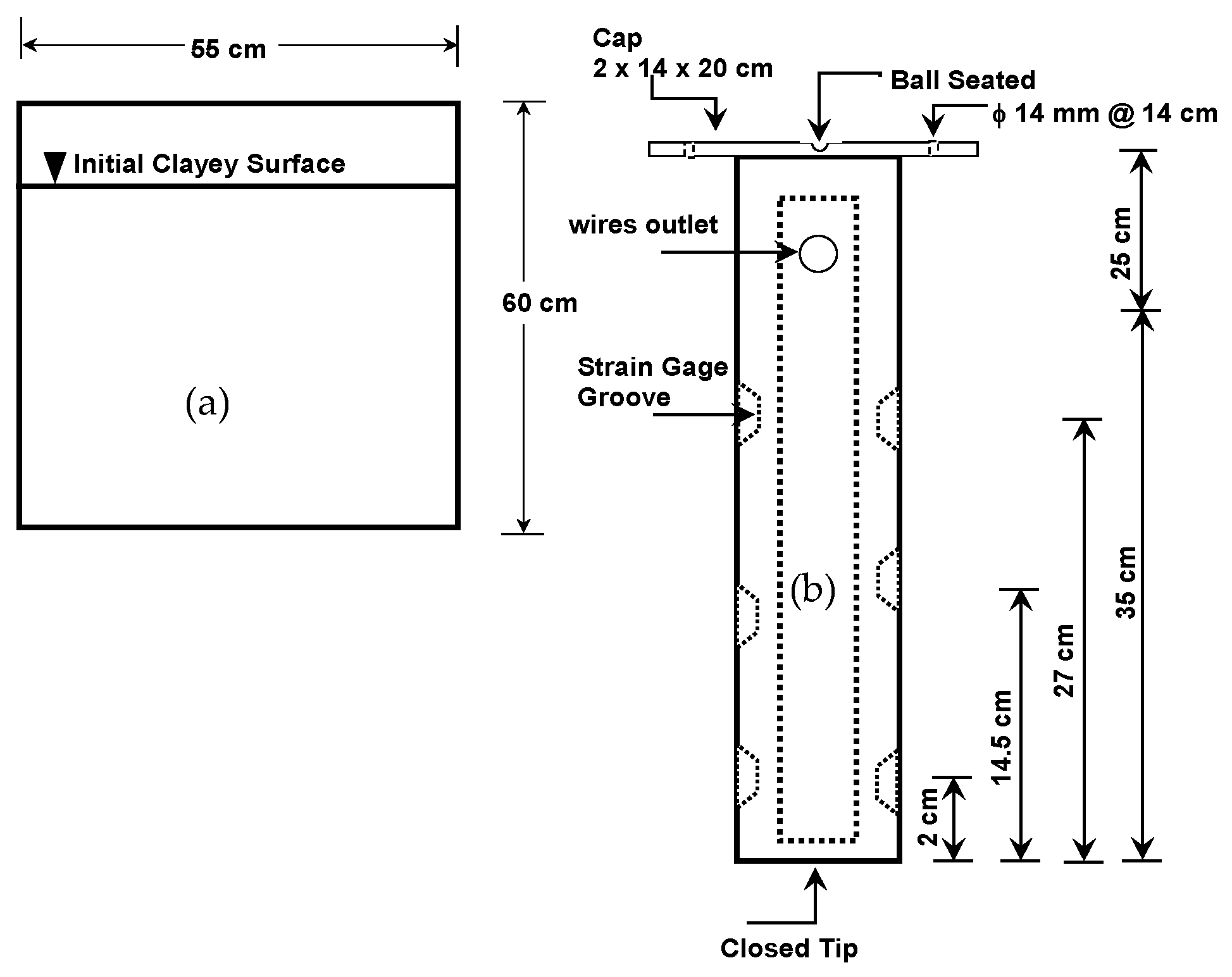
This study experimentally investigated the impact of subsurface kerosene contamination on the soil–pile interaction in clayey soil. The research involved testing three instrumented model piles (4.3 cm diameter, 35 cm depth) installed in a compacted clay bed under three distinct conditions: natural, water-saturated, and kerosene-flooded. A comprehensive testing program, including compression/pullout tests on the piles and unconfined compression/consolidation tests on the soil, was conducted over a two-week saturation period. The following key conclusions were drawn:
The ultimate compressive and pullout capacities of the piles were highly dependent on the pore fluid. The water-saturated condition resulted in the lowest capacity, while the natural (unsaturated) condition exhibited the highest. This implies that for piles in permanently saturated clays, the detrimental effect of water is the primary design concern. However, in partially saturated soils, the potential presence of hydrocarbon contaminants like kerosene necessitates a higher factor of safety to mitigate their strength-reducing effects.
Consolidation tests revealed that kerosene fundamentally changes the clay’s properties, leading to particle aggregation. When the pore fluid was kerosene, the pre-consolidation pressure increased more than tenfold, and the compression index decreased by approximately 50% compared to the water-saturated condition.
During pullout tests, the local unit skin friction demonstrated a linear relationship with depth across all tested conditions.
Visual inspection of the pile shafts after extraction confirmed that failure occurred at the pile–soil interface, as evidenced by the shiny, smooth surface of the adjacent clay.
This study provides a controlled experimental investigation of the response of instrumented model piles installed in compacted clay subjected to natural, water-flooded, and kerosene-flooded conditions. The results demonstrate that the saturating fluid governs pile performance and clay compressibility, with clear changes observed in load–settlement behavior, ultimate capacity, and interface response under contaminated conditions. It should also be noted that the experimental program was conducted using clay obtained from a single site; therefore, the absolute capacities reported are site-specific and the findings should be applied primarily as normalized degradation trends and design-oriented reduction guidance for clays with comparable index properties and compaction state. Although microstructural characterization and numerical or theoretical modelling could further explain particle-scale mechanisms and extend the results to field-scale parametric studies, these approaches are beyond the scope of the current work. Future research may integrate the experimentally derived capacity and stiffness degradation relationships into numerical or analytical frameworks and examine additional clay types to further generalize the conclusions [
48].