Chloride Transport Modeling of Binary Mineral Admixture High-Performance Concrete Under Sustained Compressive Stress
Abstract
1. Introduction
2. Experimental Design
2.1. Materials
2.2. Chloride Penetration Experiment
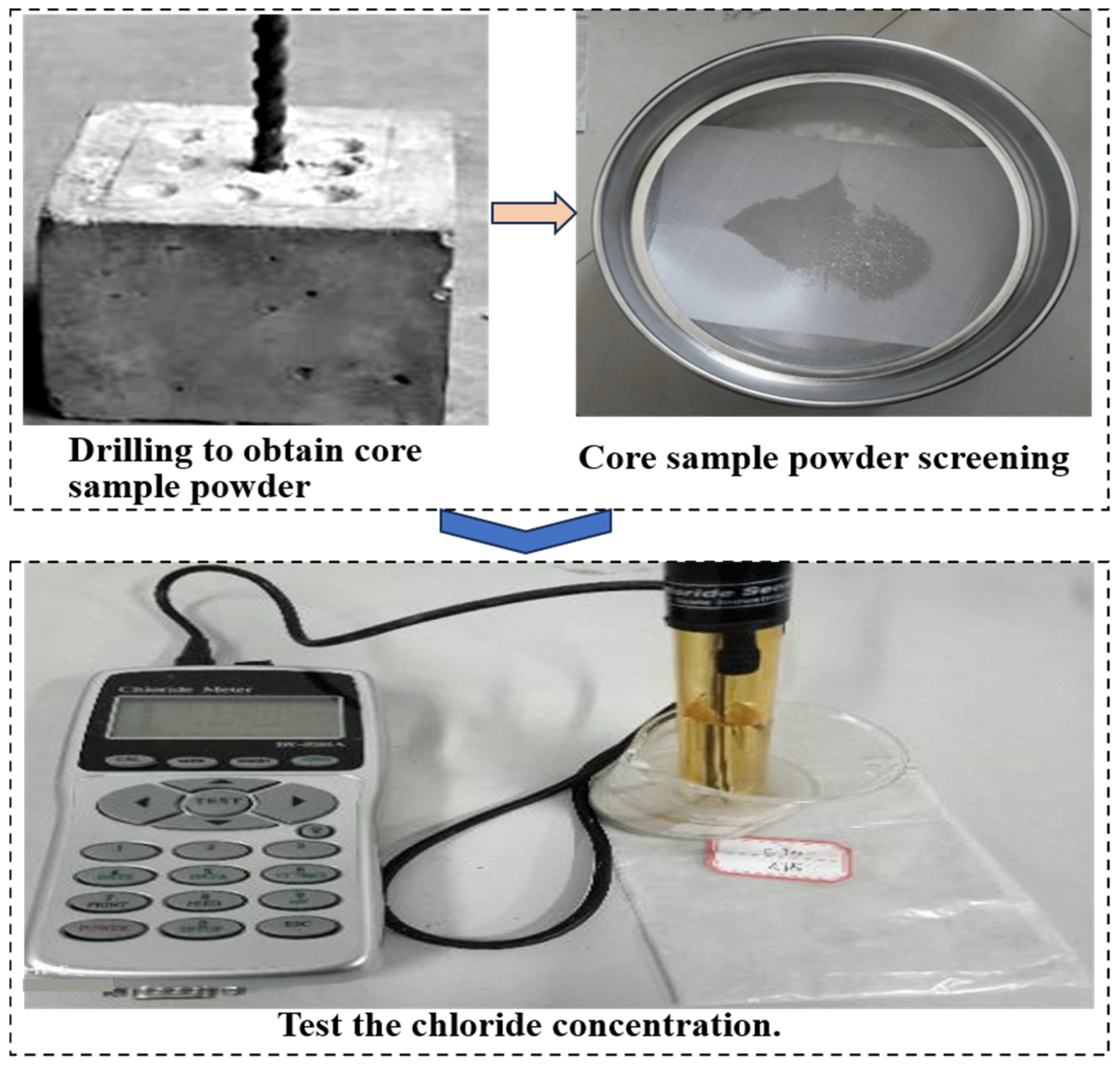
2.3. Test of Chloride Concentration
3. Analysis of Experimental Results
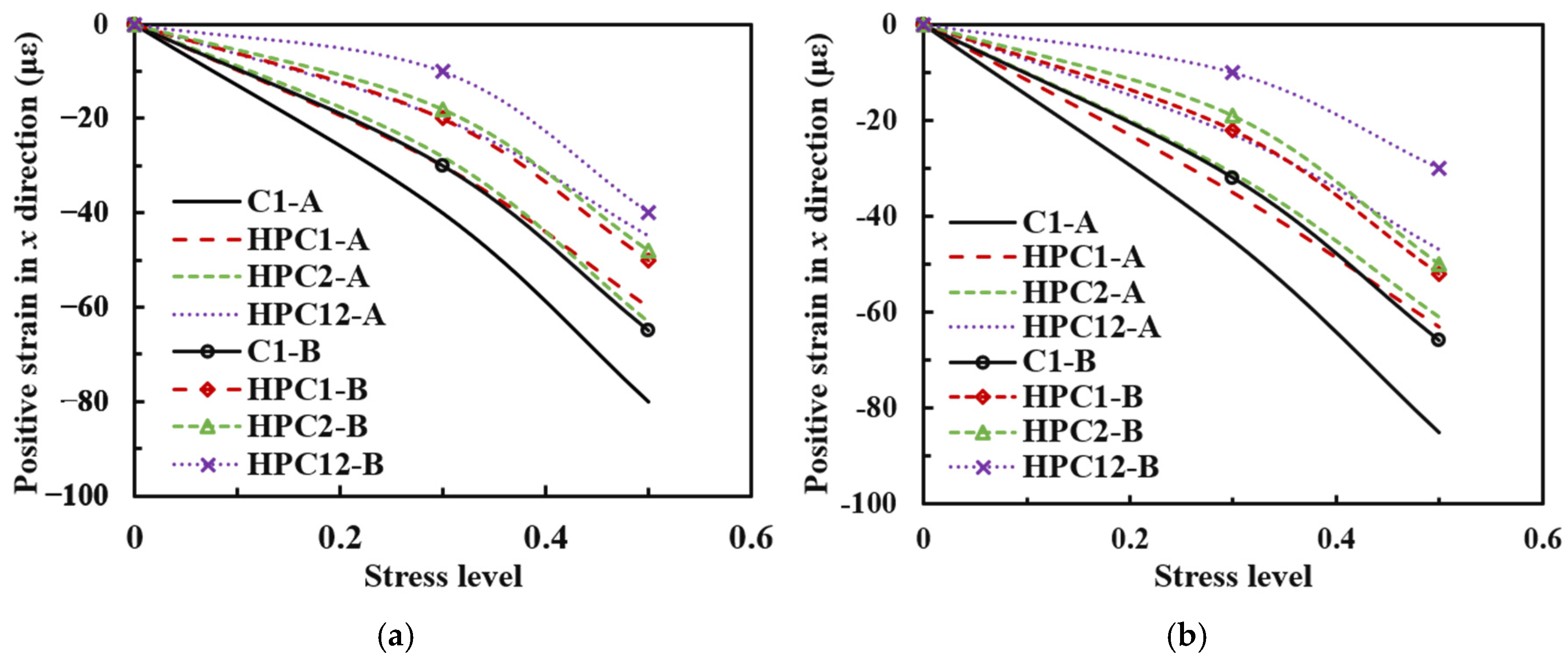
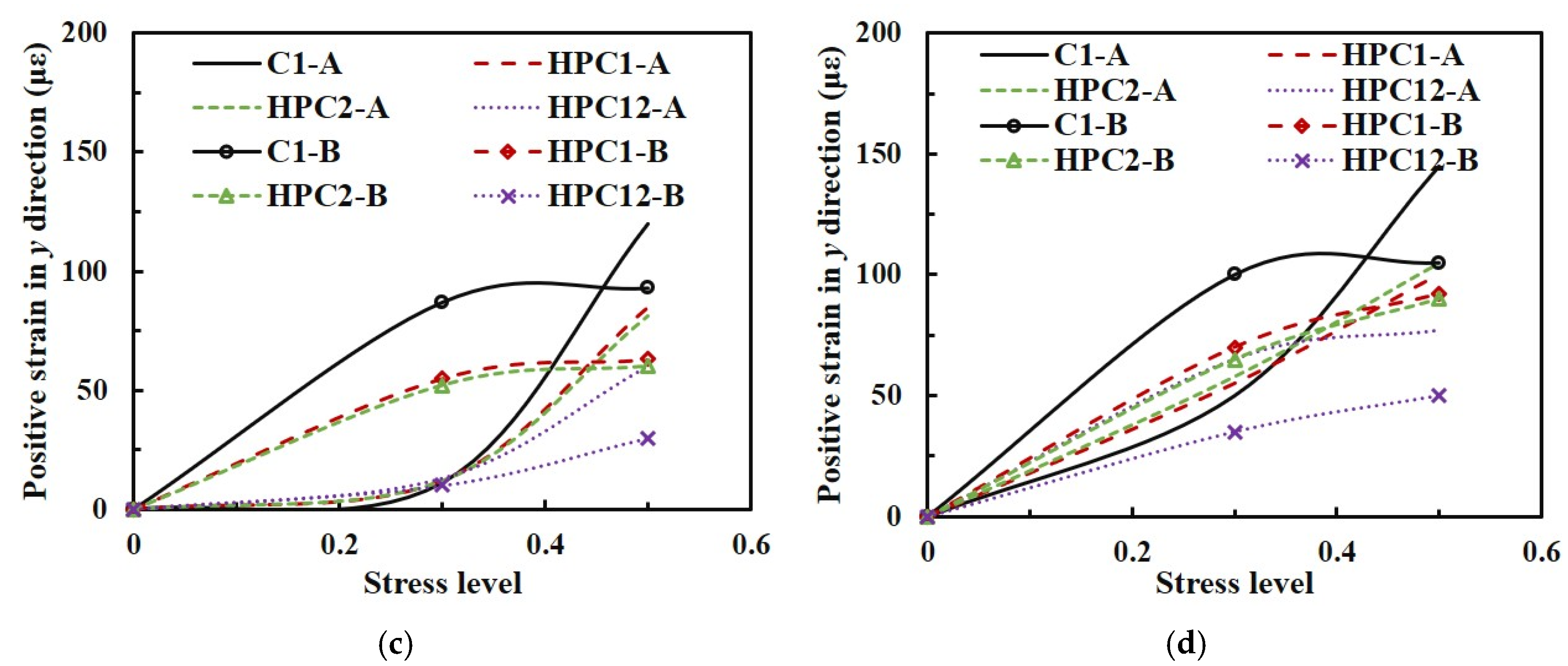
3.1. Strain Analysis of Loaded Concrete
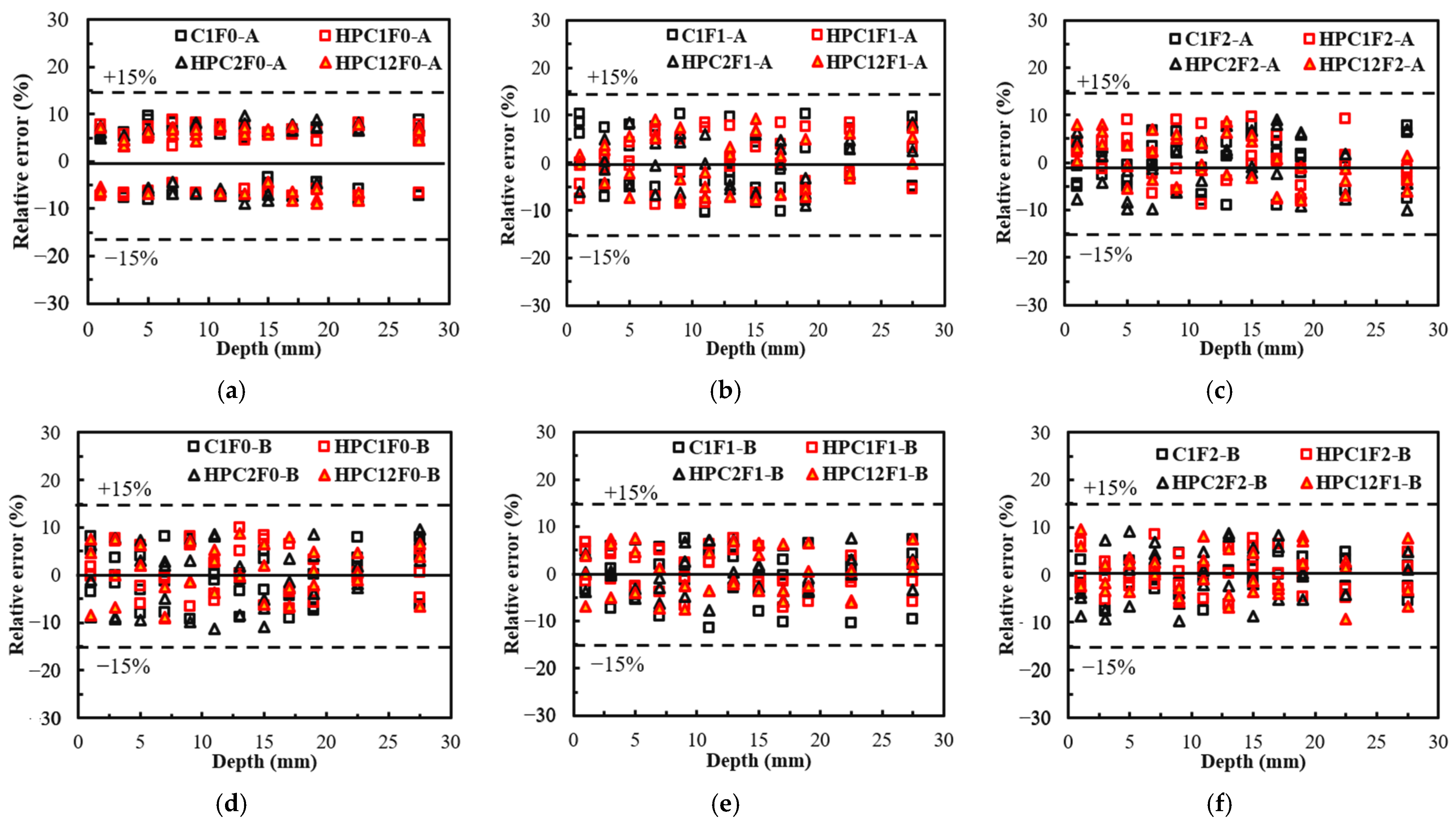
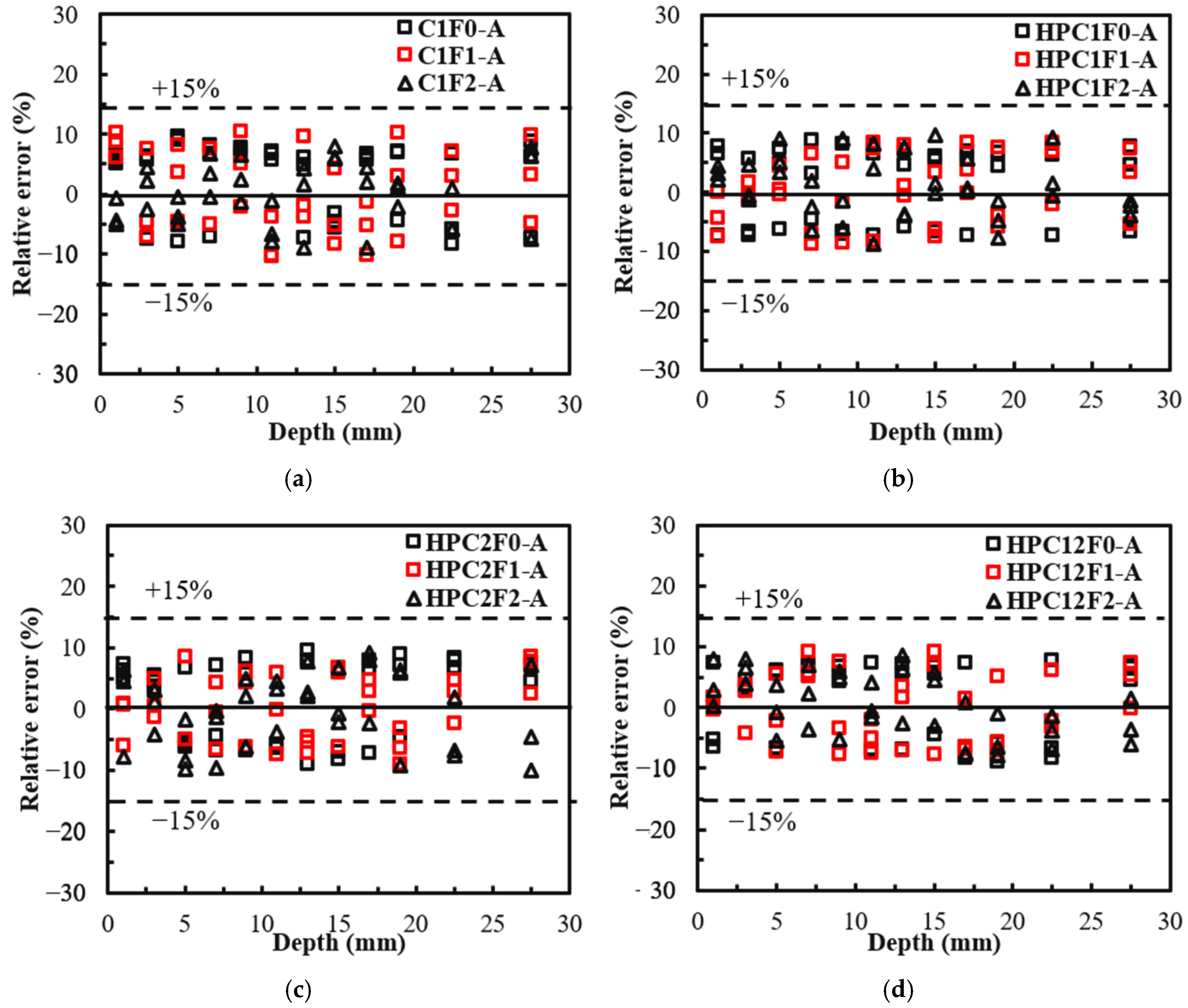
3.2. Error Analysis of Chloride Concentration
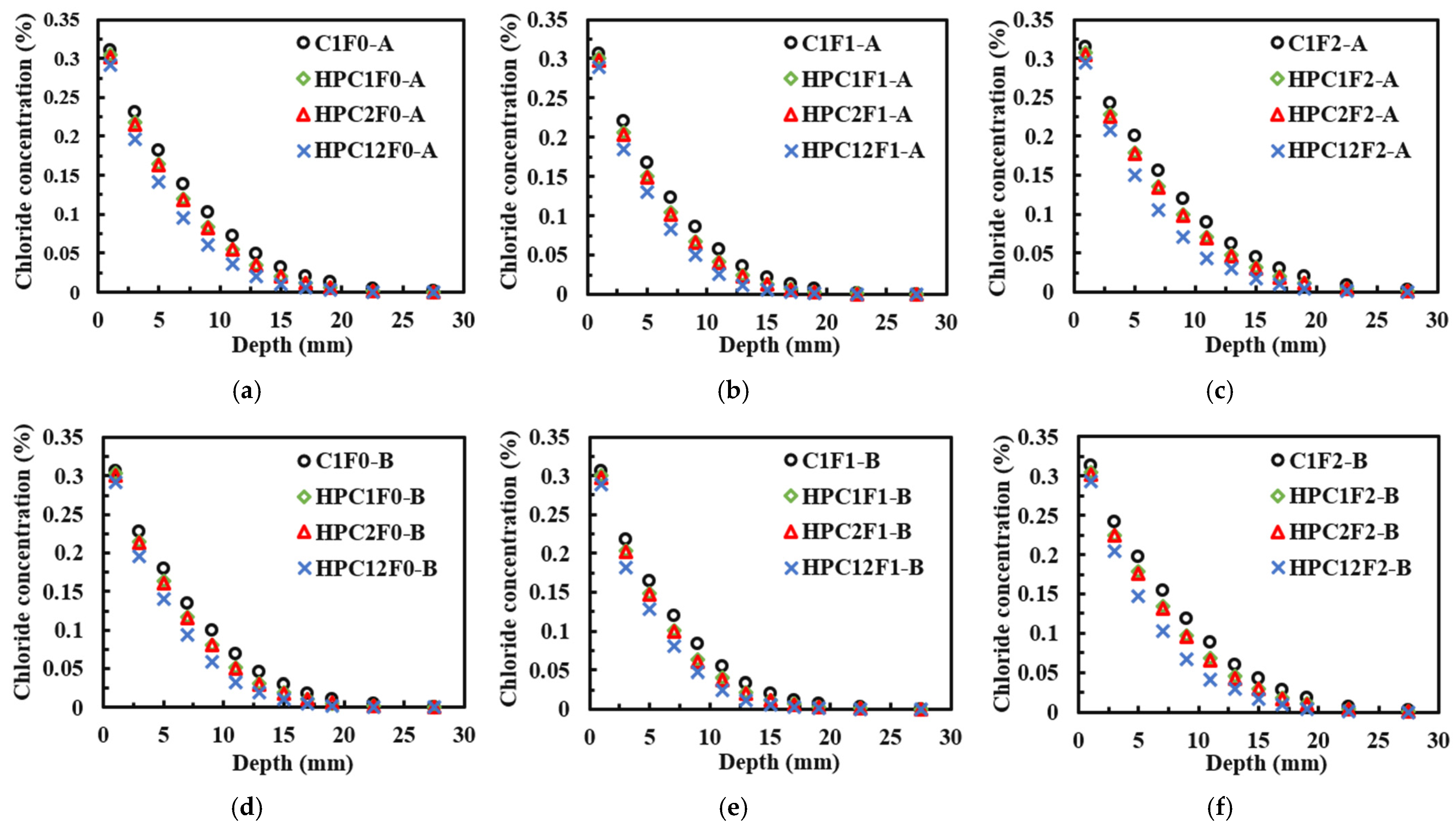
3.3. Effect of Concrete Types
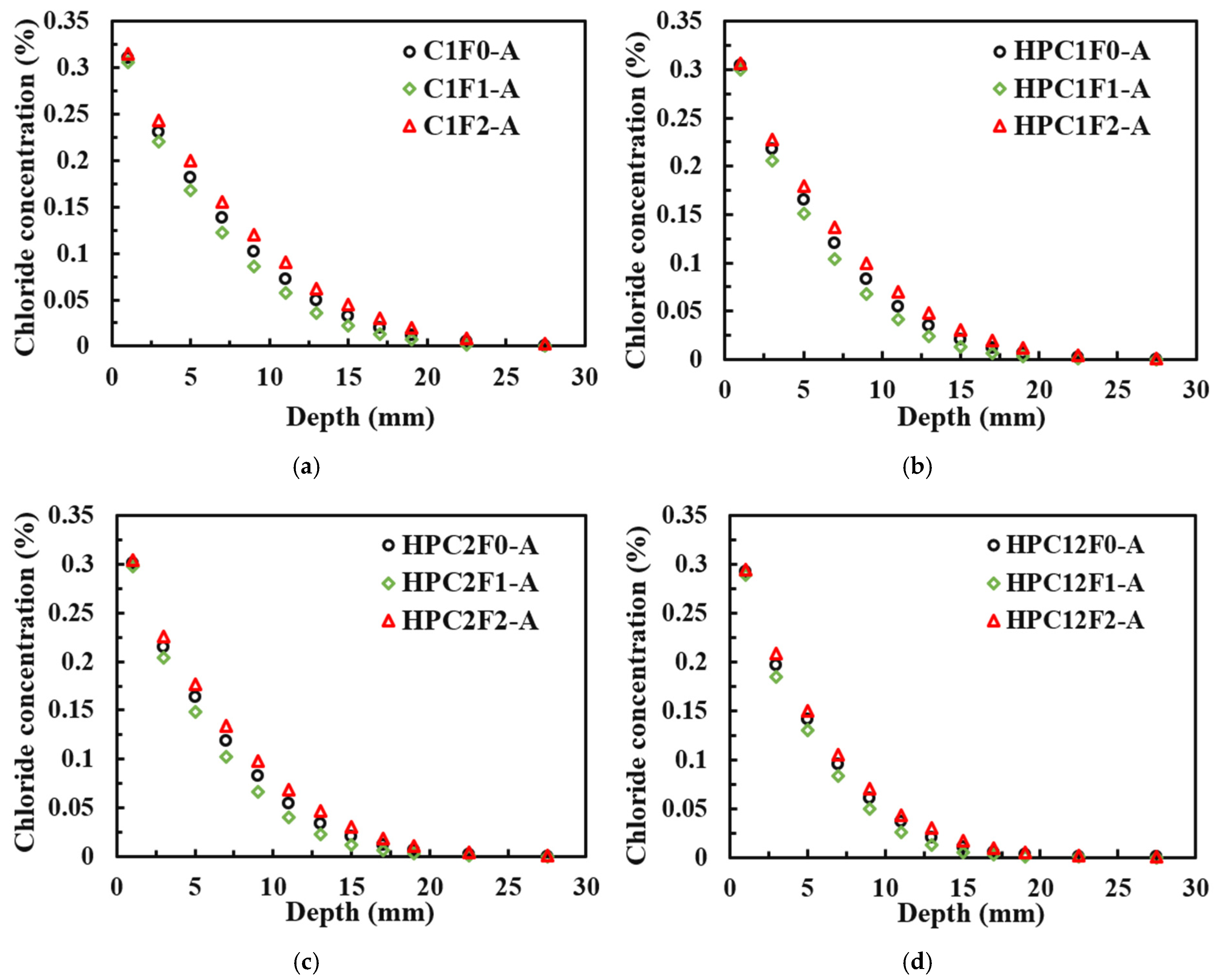
3.4. Effect of Stress Level
4. Chloride Diffusion Coefficient Model Under Compressive Stress
4.1. Establishment of the Chloride Diffusion Coefficient Model
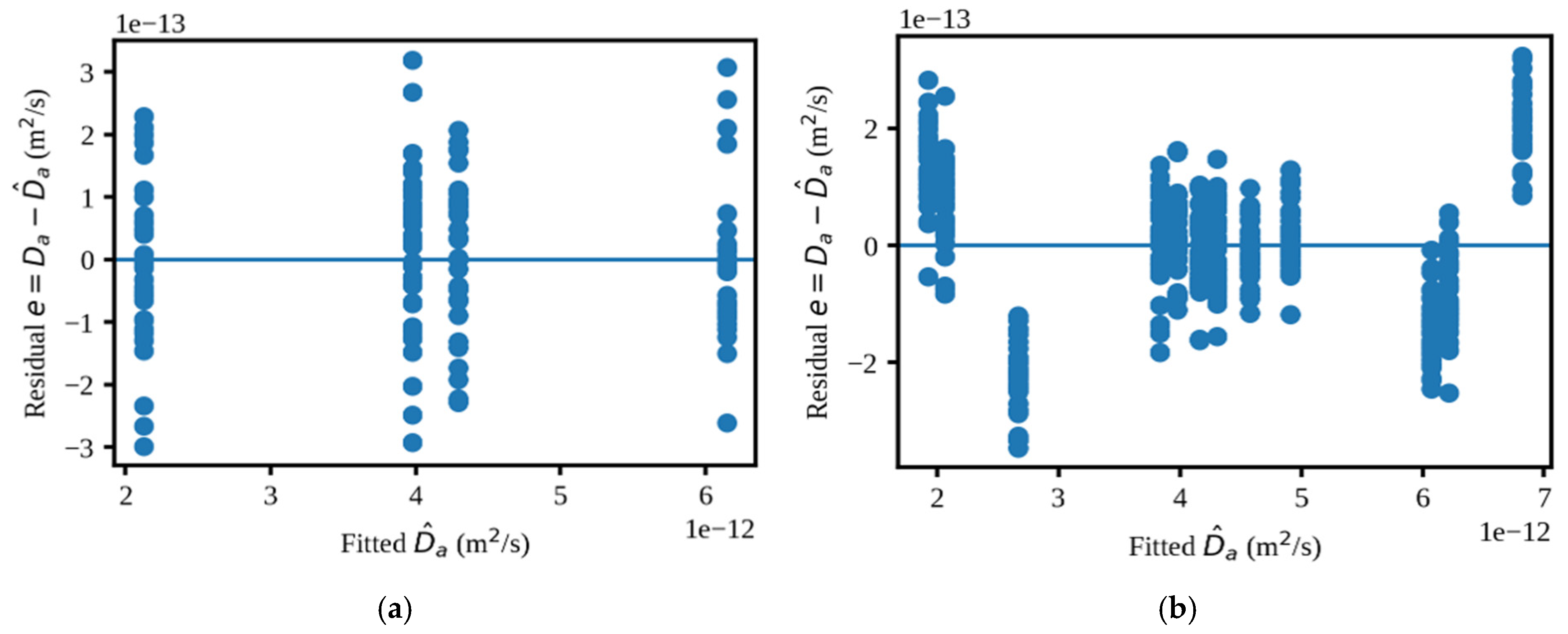
4.2. Verification of Model
5. Parameter Sensitivity Analysis
6. Conclusions
- In the longitudinal direction, the normal strain at the midspan gauge was approximately 20% higher than that at the other gauges, and chloride exposure had a negligible influence on the compressive strain measured along the longitudinal direction. In the lateral direction, the tensile strains at all measurement points increased with increasing compressive stress. The strain differences between the high-performance concrete containing fly ash alone and that containing silica fume alone were small in both the longitudinal and lateral directions. In both directions, the normal concrete specimens exhibited the largest strains, followed by the single-admixture high-performance concretes with fly ash or silica fume, whereas the binary-blended high-performance concrete incorporating fly ash and silica fume exhibited the smallest strains.
- The chloride ion diffusion rate of ordinary concrete specimens was the fastest. The chloride diffusion rate of high-performance concrete specimens with the single admixture of fly ash or silica fume was slower, and the difference in chloride concentration between the two was small. The chloride ion diffusion rate of high-performance concrete specimens with double admixtures of fly ash and silica fume was the slowest. The chloride concentration in concrete first decreased and then increased with the increase in the compressive stress level. The largest change amplitude was observed in ordinary concrete, and the smallest was in high-performance concrete with double admixtures of fly ash and silica fume.
- An increase in the time decay coefficient caused the chloride concentration in binary-blended high-performance concrete to decrease first and then increase. When the fly ash content was kept constant, the chloride concentration gradually decreased with increasing silica fume content. When the silica fume content reached 17%, the chloride concentration at a diffusion depth of 11 mm approached zero. When the compressive stress level increased from 0.5 to 0.7, the chloride concentration increased by an average of 10.5%.
Author Contributions
Funding
Data Availability Statement
Conflicts of Interest
References
- Osta, M.O.; Azeem, A.; Rashid, S.; Mohamed, H.; Asad, H. Marine resilience: Understanding the durability and effects on concrete structures—A Comprehensive Review. Arab. J. Sci. Eng. 2025, 50, 1–26. [Google Scholar] [CrossRef]
- Peng, J.X.; Cheng, X.K.; Yang, Y.M.; Xiao, J.Y. Chloride transport in concrete subjected to multiple cracks under drying-wetting cycles. Constr. Build. Mater. 2025, 470, 140559. [Google Scholar] [CrossRef]
- Ma, W.Q.; Zhang, R.C.; Li, X.; Cheng, X.K.; Xiong, Y.M. Chloride ion transport in concrete subjected to sustained compressive stress under different dry-wet ratios. Materials 2025, 18, 4388. [Google Scholar] [CrossRef] [PubMed]
- Al-Ameeri, A.S.; Rafiq, M.I.; Tsioulou, O. Combined impact of carbonation and crack width on the chloride penetration and corrosion resistance of concrete structures. Cem. Concr. Compos. 2021, 115, 103819. [Google Scholar] [CrossRef]
- Wang, X.H.; Hu, D.G.; Hong, A.K.B.; Shi, D.D. Prediction of equivalent chloride ion diffusion coefficient in cracked concrete of the in-service RC element. KSCE J. Civ. Eng. 2022, 26, 2369–2380. [Google Scholar] [CrossRef]
- Mimi, M.M.; Shakil, A.-M.-O.-R.; Haque, M.R.; Hasan, M.R. Effect of addition of CaO on compressive strength of High-Volume fly Ash concrete. J. Civ. Eng. Sci. Technol. 2023, 14, 64–76. [Google Scholar] [CrossRef]
- Iqbal, M.; Zhang, D.; Khan, K.; Amin, M.N.; Ibrahim, M.; Salami, B.A. Evaluating mechanical, microstructural and durability performance of seawater sea sand concrete modified with silica fume. J. Build. Eng. 2023, 72, 106583. [Google Scholar] [CrossRef]
- Iqbal, M.; Zhang, D.; Jalal, F.E.; Javed, M.F. Computational AI prediction models for residual tensile strength of GFRP bars aged in the alkaline concrete environment. Ocean Eng. 2021, 232, 109134. [Google Scholar] [CrossRef]
- Tuerxunmaimaiti, Y.; Zhao, X.-L.; Zhang, D.; Zhao, Q.; Iqbal, M. Predicting fatigue slip and fatigue life of FRP rebar-concrete bonds using tree-based and theory-informed learning models. Int. J. Fatigue 2025, 193, 108816. [Google Scholar] [CrossRef]
- Agboola, O.; Kupolati, K.W.; Fayomi, O.S.I.; Ayeni, A.O.; Ayodeji, A.; Akinmolayemi, J.J.; Olagoke, O.; Rotimi Sadiku, R.; Oluwasegun, K.M. A review on corrosion in concrete structure: Inhibiting admixtures and their compatibility in concrete. J. Bio- Tribo-Corros. 2022, 8, 25. [Google Scholar] [CrossRef]
- Zhou, Q.S.; Lu, C.F.; Wang, W.; Wei, S.H.; Lu, C.H.; Hao, M. Effect of fly ash and sustained uniaxial compressive loading on chloride diffusion in concrete. J. Bulid. Eng. 2020, 31, 101394. [Google Scholar] [CrossRef]
- Andrade, C.; Prieto, M.; Tanner, P.; Tavares, F.; d’Andréa, R. Testing and modelling chloride penetration into concrete. Constr. Build. Mater. 2013, 39, 9–18. [Google Scholar] [CrossRef]
- Zhang, L.H.; Jia, J.Q.; Meng, G.; Zhu, W.Q. Chloride diffusion in concrete subjected to compressive loading. Mag. Concr. Res. 2014, 66, 991–997. [Google Scholar] [CrossRef]
- Zhang, W.-M.; Ba, H.-J. Effect of silica fume addition and repeated loading on chloride diffusion coefficient of concrete. Mater. Struct. 2013, 46, 1183–1191. [Google Scholar] [CrossRef]
- Wongkeo, W.; Thongsanitgarn, P.; Ngamjarurojana, A.; Chaipanich, A. Compressive strength and chloride resistance of self-compacting concrete containing high level fly ash and silica fume. Mater. Des. 2014, 64, 261–269. [Google Scholar] [CrossRef]
- Petcherdchoo, A. Time dependent models of apparent diffusion coefficient and surface chloride for chloride transport in fly ash concrete. Constr. Build. Mater. 2013, 38, 497–507. [Google Scholar] [CrossRef]
- Hodhod, O.A.; Ahmed, H.I. Developing an artificial neural network model to evaluate chloride diffusivity in high performance concrete. HBRC J. 2013, 9, 15–21. [Google Scholar] [CrossRef]
- Li, H.M.; Wu, J.; Song, Y.J.; Zhe, W. Effect of external loads on chloride diffusion coefficient of concrete with fly ash and blast furnace slag. J. Mater. Civ. Eng. 2014, 26, 04014053. [Google Scholar] [CrossRef]
- Tang, H.; Yang, Y.M.; Peng, J.X.; Liu, P.; Zhang, J.R. Test and mesoscopic analysis of chloride ion diffusion of high-performance-concrete with fly ash and silica fume. Coatings 2022, 12, 1095. [Google Scholar] [CrossRef]
- Khormani, M.; Kalat Jaari, V.R. Statistical analysis of the compressive strength of concrete using 2D DIP technology and Finite Element Method. Case Stud. Constr. Mater. 2023, 19, e02461. [Google Scholar] [CrossRef]
- Schack, T.; Coenen, M.; Haist, M. Digital Slump Flow: Image-based assessment of fresh concrete homogeneity as part of the slump flow test. Case Stud. Constr. Mater. 2024, 21, e03973. [Google Scholar] [CrossRef]
- Abdelrahman, B.N.; Tyler Ley, M. The effects of concrete temperature on air void parameters in pumped concrete. Mater. Struct. 2024, 57, 228. [Google Scholar] [CrossRef]
- Ju, M.; Jeong, J.-G.; Palou, M.; Park, K. Mechanical behavior of fine recycled concrete aggregate concrete with the mineral admixtures. Materials 2020, 13, 2264. [Google Scholar] [CrossRef]
- Erdogdu, K.; Arslantürk, C. Influence of mineral admixtures on workability and strength of concrete incorporating recycled aggregates. Constr. Build. Mater. 2011, 25, 784–790. [Google Scholar]
- Padavala, S.S.A.B.; Avudaiappan, S.; Paluri, Y.; Bharath, C.N.; Prathipati, S.R.R.T.; Kumara, A.M. Self-compacting concrete with fly ash and silica fume: Experimental evaluation, microstructural analysis, and machine learning modeling. Sci. Rep. 2025, 15, 45146. [Google Scholar] [CrossRef]
- Cheng, X.K.; Peng, J.X.; Cai, C.S.; Zhang, J.R. Experimental study on chloride ion diffusion in concrete under uniaxial and biaxial sustained stress. Materials 2020, 13, 5717. [Google Scholar] [CrossRef]
- Kosalla, M.; Raupach, M. Diagnosis of concrete structures: The influence of sampling parameters on the accuracy of chloride profiles. Mater. Struct. 2018, 51, 75. [Google Scholar] [CrossRef]
- NT BUILD 443; Concrete, Hardened: Accelerated Chloride Penetration. Nordtest: Espoo, Finland, 1995.
- ASTM C1218/C1218M-19; Standard Test Method for Water-Soluble Chloride in Mortar and Concrete. ASTM International: West Conshohocken, PA, USA, 2019.
- Tran, T.T.; Pham, D.T.; Vu, M.N.; Truong, V.Q.; Ho, X.B.; Tran, N.L.; Nguyen-Sy, T.; To, Q.D. Relation between water permeability and chloride diffusivity of concrete under compressive stress: Experimental investigation and mesoscale lattice modelling. Constr. Build. Mater. 2021, 267, 121164. [Google Scholar] [CrossRef]
- Liao, J.; Sun, X.; Wang, Y.; Wang, Y. Experimental and analytical investigation on chloride transport in LC3 and MPPF reinforced LC3 concrete considering the effect of transverse crack. Constr. Build. Mater. 2025, 482, 141667. [Google Scholar] [CrossRef]
- Cheng, X.K.; Mu, Q.J.; Peng, J.X.; Yang, Y.M. Chloride transport in concrete on the side of anchorage zone under drying-wetting cycles. Constr. Build. Mater. 2025, 498, 143869. [Google Scholar] [CrossRef]
- Nili, M.; Ramezanianpour, A.A.; Sobhani, J. Evaluation of the effects of silica fume and air-entrainment on deicer salt scaling resistance of concrete pavements: Microstructural study and modeling. Constr. Build. Mater. 2021, 308, 124972. [Google Scholar] [CrossRef]
- De Weerdt, K.; Wilson, W.; Machner, A.; Georget, F. Chloride profiles—What do they tell us and how should they be used? Cem. Concr. Res. 2023, 173, 107287. [Google Scholar] [CrossRef]
- Wilson, W.; Georget, F.; Scrivener, K.L. Towards a two-step assessment of the chloride ingress behaviour of new cementitious binders. Cem. Concr. Res. 2024, 184, 107594. [Google Scholar] [CrossRef]
- Possolo, A.; Hibbert, D.B.; Stohner, J.; Bodnar, O.; Meija, J. A brief guide to measurement uncertainty (IUPAC Technical Report). Pure Appl. Chem. 2024, 96, 113–134. [Google Scholar] [CrossRef]
- Wang, C.; Sun, R.; Hu, X.; Guan, Y.; Yang, Y.; Lu, W.; Tian, J.; Zhang, H.; Ge, Z.; Šavija, B. Chloride penetration resistance of engineered cementitious composite (ECC) subjected to sustained flexural loading. Mater. Today Commun. 2023, 35, 106080. [Google Scholar] [CrossRef]
- Xiao, J.; Huang, L.; Weng, R.; Murong, Y.; Liu, L.; Zeng, H.; Jiang, H. Mechanism of chloride ion transport and associated damage in ultra-high-performance concrete subjected to hydrostatic pressure. J. Build. Eng. 2025, 112, 113700. [Google Scholar] [CrossRef]
- Meira, G.R.; Ferreira, P.R.; Andrade, C. Long-term chloride accumulation on concrete surface in marine atmosphere zone—Modelling the influence of exposure time and chloride availability in atmosphere. Corros. Mater. Degrad. 2022, 3, 349–362. [Google Scholar] [CrossRef]
- Peng, J.X.; Wang, H.; Zhang, J.R.; Hu, S.W.; Liu, Y. Experimental study on chloride ion diffusion coefficient in concrete and probabilistic analysis of its influence on deterioration performance of RC structures. China J. Highw. Transp. 2014, 27, 77–83. (In Chinese) [Google Scholar]
- Hu, S.W.; Peng, J.X.; Zhang, J.R.; Cai, C.S. Influences of time, temperature, and humidity on chloride diffusivity: Mesoscopic numerical research. J. Mater. Civ. Eng. 2017, 29, 04017223. [Google Scholar] [CrossRef]
- Samani, A.K.; Attard, M.M. A stress–strain model for uniaxial and confined concrete under compression. Eng. Struct. 2012, 41, 335–349. [Google Scholar] [CrossRef]
- Al-Jabari, M. Concrete durability problems: Physicochemical and transport mechanisms. In Integral Waterproofing of Concrete Structures; Woodhead Publishing: Cambridge, UK, 2022; pp. 69–107. [Google Scholar]
- Fu, Q.; Zhang, Z.; Wang, Z.; He, J.; Niu, D. Erosion behavior of ions in lining concrete incorporating fly ash and silica fume under the combined action of load and flowing groundwater containing composite salt. Case Stud. Constr. Mater. 2022, 17, e01659. [Google Scholar] [CrossRef]
- Babaahmadi, A.; Machner, A.; Kunther, W.; Figueira, J.; Hemstad, P.; De Weerdt, K. Chloride binding in Portland composite cements containing metakaolin and silica fume. Cem. Concr. Res. 2022, 161, 106924. [Google Scholar] [CrossRef]
- Wally, G.B.; Larrossa, M.d.C.; Pinheiro, L.C.d.L.; Real, M.d.V.; Magalhães, F.C. 6-Month evaluation of concrete aging factor using chloride migration test: Effects of binder type and w/b ratio. Materialia 2023, 30, 101841. [Google Scholar] [CrossRef]
- Feng, T.; Miao, Y.; Jiang, J. New insights into the time-dependent coefficient of chloride diffusion: A multiscale numerical simulation study. Constr. Build. Mater. 2025, 458, 139739. [Google Scholar] [CrossRef]
- Song, Z.G.; Zou, S.M.; Zhou, W.X.; Huang, Y.; Shao, L.W.; Yuan, J.; Gou, X.N.; Jin, W.; Wang, Z.B.; Chen, X.; et al. Clinically applicable histopathological diagnosis system for gastric cancer detection using deep learning. Nat. Commun. 2020, 11, 4294. [Google Scholar] [CrossRef] [PubMed]
- Kabir, H.; Wu, J.; Dahal, S.; Joo, T.; Garg, N. Automated Estimation of Cementitious Sorptivity via Computer Vision. Nat. Commun. 2024, 15, 9935. [Google Scholar] [CrossRef] [PubMed]





| SiO2 | Al2O3 | Fe2O3 | CaO | MgO | SO3 | TiO2 | K2O | Loss on Ignition | |
|---|---|---|---|---|---|---|---|---|---|
| Chemical composition (%) | 21.46 | 6.43 | 4.57 | 61.25 | 1.46 | 1.74 | 0.22 | 0.35 | 2.52 |
| Specimen | Water | Cement | Fly Ash | Slag | Fine Aggregate | Coarse Aggregate | fc (MPa) |
|---|---|---|---|---|---|---|---|
| C1 | 165 | 460 | ― | ― | 534.8 | 1190.2 | 45.6 |
| HPC1 | 165 | 437 | 23 | ― | 534.8 | 1190.2 | 50.2 |
| HPC2 | 165 | 437 | ― | 23 | 534.8 | 1190.2 | 51.7 |
| HPC12 | 165 | 414 | 23 | 23 | 534.8 | 1190.2 | 54.3 |
| Slump | Air Content | Compressive Strength | |||||||
|---|---|---|---|---|---|---|---|---|---|
| Mean (mm) | SD (mm) | COV (%) | Mean (%) | SD (%) | COV (%) | Mean (MPa) | SD (MPa) | COV (%) | |
| C1 | 180 | 12.50 | 7.00 | 2.00 | 0.23 | 11.50 | 45.60 | 1.37 | 3.00 |
| HPC1 | 190 | 13.70 | 7.20 | 2.10 | 0.25 | 11.90 | 50.20 | 1.51 | 3.01 |
| HPC2 | 185 | 13.20 | 7.10 | 2.00 | 0.24 | 12.00 | 51.70 | 1.55 | 2.96 |
| HPC12 | 200 | 13.70 | 6.90 | 2.20 | 0.26 | 11.82 | 54.30 | 1.63 | 3.00 |
| Specimen Number | Sustained Compressive Load (fc) |
|---|---|
| C1F0 | - |
| C1F1 | 0.3 |
| C1F2 | 0.5 |
| HPC1F0 | - |
| HPC1F1 | 0.3 |
| HPC1F2 | 0.5 |
| HPC2F0 | - |
| HPC2F1 | 0.3 |
| HPC2F2 | 0.5 |
| HPC12F0 | - |
| HPC12F1 | 0.3 |
| HPC12F2 | 0.5 |
| Depth (mm) | ΔC01 (%) | ΔC12 (%) | ΔC02 (%) |
|---|---|---|---|
| 1 | −0.040 | 0.007 | 0.004 |
| 3 | −0.013 | 0.020 | 0.011 |
| 5 | −0.011 | 0.024 | 0.009 |
| 7 | −0.011 | 0.022 | 0.011 |
| 9 | −0.010 | 0.020 | 0.010 |
| 11 | −0.010 | 0.017 | 0.007 |
| 13 | −0.007 | 0.018 | 0.010 |
| 15 | −0.005 | 0.012 | 0.007 |
| 17 | −0.003 | 0.007 | 0.003 |
| 19 | −0.001 | 0.004 | 0.002 |
| Depth (mm) | ΔU01 (%) | Status | ΔU12 (%) | Status | ΔU02 (%) | Status |
|---|---|---|---|---|---|---|
| 1 | 0.003 | Significant | 0.003 | Significant | 0.003 | Significant |
| 3 | 0.006 | Significant | 0.005 | Significant | 0.007 | Significant |
| 5 | 0.007 | Significant | 0.007 | Significant | 0.005 | Significant |
| 7 | 0.004 | Significant | 0.010 | Significant | 0.005 | Significant |
| 9 | 0.008 | Significant | 0.004 | Significant | 0.007 | Significant |
| 11 | 0.003 | Significant | 0.007 | Significant | 0.004 | Significant |
| 13 | 0.006 | Significant | 0.004 | Significant | 0.009 | Significant |
| 15 | 0.002 | Significant | 0.002 | Significant | 0.004 | Significant |
| 17 | 0.001 | Significant | 0.001 | Significant | 0.002 | Significant |
| 19 | 0.001 | Significant | 0.001 | Significant | 0.002 | Significant |
| Model | n | k | df | R2 | RMSE(m2/s) | NRMSE(%) | p_const | p_s1 | p_s2 |
|---|---|---|---|---|---|---|---|---|---|
| Equation (3) | 132 | 3 | 129 | 0.965 | 1.28 × 10⁻¹³ | 3.09 | <0.001 | <0.001 | <0.001 |
| Equation (5) | 396 | 5 | 391 | 0.973 | 1.28 × 10⁻¹³ | 2.99 | <0.001 | <0.001 | <0.001 |
Disclaimer/Publisher’s Note: The statements, opinions and data contained in all publications are solely those of the individual author(s) and contributor(s) and not of MDPI and/or the editor(s). MDPI and/or the editor(s) disclaim responsibility for any injury to people or property resulting from any ideas, methods, instructions or products referred to in the content. |
© 2026 by the authors. Licensee MDPI, Basel, Switzerland. This article is an open access article distributed under the terms and conditions of the Creative Commons Attribution (CC BY) license.
Share and Cite
Ma, W.; Cheng, X.; Nie, J.; Li, X.; Zeng, J.; Sun, Z. Chloride Transport Modeling of Binary Mineral Admixture High-Performance Concrete Under Sustained Compressive Stress. Buildings 2026, 16, 985. https://doi.org/10.3390/buildings16050985
Ma W, Cheng X, Nie J, Li X, Zeng J, Sun Z. Chloride Transport Modeling of Binary Mineral Admixture High-Performance Concrete Under Sustained Compressive Stress. Buildings. 2026; 16(5):985. https://doi.org/10.3390/buildings16050985
Chicago/Turabian StyleMa, Wenqi, Xiaokang Cheng, Jie Nie, Xiang Li, Jia Zeng, and Ziling Sun. 2026. "Chloride Transport Modeling of Binary Mineral Admixture High-Performance Concrete Under Sustained Compressive Stress" Buildings 16, no. 5: 985. https://doi.org/10.3390/buildings16050985
APA StyleMa, W., Cheng, X., Nie, J., Li, X., Zeng, J., & Sun, Z. (2026). Chloride Transport Modeling of Binary Mineral Admixture High-Performance Concrete Under Sustained Compressive Stress. Buildings, 16(5), 985. https://doi.org/10.3390/buildings16050985