Article

An Experimental Investigation of Constitutive Models for Steel Fiber-Reinforced Concrete Tunnel Linings Subjected to Freeze–Thaw Cycles

by
Li-Ming Wu
1,2,
Feng Gao
1,
Hu-Xin-Tong Huang
3,*,
Wen-Jie Luo
3 and
Guang-Na Liu
2
1
School of Civil Engineering, Chongqing Jiaotong University, Chongqing 400074, China
2
School of Urban Construction Engineering, Chongqing Technology and Business Institute, Chongqing 400052, China
3
School of Civil and Hydraulic Engineering, Chongqing University of Science & Technology, Chongqing 401331, China
*
Author to whom correspondence should be addressed.
Buildings 2026, 16(5), 957; https://doi.org/10.3390/buildings16050957
Submission received: 23 January 2026 / Revised: 26 February 2026 / Accepted: 27 February 2026 / Published: 28 February 2026
(This article belongs to the Section Building Structures)

Abstract

To investigate the mechanical properties of steel fiber-reinforced concrete under freeze-thaw cycles and the accuracy of its finite element simulation, a constitutive model and its functional expressions for steel fiber-reinforced concrete under tension and compression before and after freeze-thaw cycles were developed. This was based on the stress-strain curve characteristics obtained from experiments, combined with the Hognestad model, the Guo Zhenhai model, and the tensile-compressive model. Finite element simulations were conducted using ABAQUS to model the evolution of the mechanical properties of the lining structure during freeze-thaw processes, revealing the damage characteristics and failure modes of the lining mechanical properties induced by freeze-thaw cycles. The results indicated that after experiencing freeze-thaw cycles, the peak strength of the specimens decreased from 43.3 GPa to 35.3 GPa. Validation through scaled model tests confirmed that the established constitutive model and the corresponding finite element method accurately reflect the cumulative process of freeze-thaw damage, with the numerical simulation results showing good agreement with the experimental data. This study verifies the feasibility of accurately simulating the structural performance of steel fiber-reinforced concrete by developing a freeze-thaw constitutive model, thereby providing a theoretical basis and analytical method for the design and durability assessment of tunnel linings in cold regions.

1. Introduction

In cold-region tunnel linings, to reduce the cracking of concrete due to frost heave and to enhance the tensile strength and deformability of materials, it is essential to accurately understand the stress-strain response of concrete under the coupled effects of freeze-thaw cycles and load. Recently, research on the constitutive relationships of steel fiber-reinforced concrete has made some progress, establishing models that can reflect fiber damage evolution and toughness enhancement. However, existing studies still have limitations: most constitutive models fail to adequately couple the long-term interaction between freeze-thaw cycles and complex loading, and they provide insufficient characterization of the deterioration of the steel fiber-concrete interface and the accumulation of damage at low temperatures. Additionally, there is a lack of a unified theoretical framework, which restricts the accurate prediction and optimization of material performance under extreme environmental conditions.
Shi et al. [1] investigated the frost resistance and micro-mechanisms of steel fiber coal gangue concrete. The results indicated that steel fibers effectively inhibit cracking and significantly enhance frost resistance, mitigating the loss of quality and dynamic elastic modulus, thereby providing a reference for applications in cold-region engineering. Li et al. [2] studied the influence of steel fibers on the frost resistance of concrete by conducting rapid freeze-thaw and capillary water absorption tests. They established a freeze-thaw damage probability model based on the Weibull distribution, concluding that steel fibers can effectively delay the loss of elastic modulus and reduce moisture transport capacity, significantly improving the frost durability of concrete. Meng et al. [3] conducted experimental research on the durability of high-performance synthetic fiber-reinforced concrete. The results showed that its excellent crack resistance significantly enhances both sulfate attack resistance and freeze-thaw capabilities. Through response surface methodology analysis, it was determined that freeze-thaw cycles are the primary factor affecting freeze-thaw performance, followed by sulfate concentration and fiber content. Wei et al. [4] examined the effects of steel fibers on the crack permeability and surface morphology of freeze-thaw-damaged concrete. The findings revealed that steel fibers significantly reduce crack permeability, with the effect increasing with the fiber content and the severity of freeze-thaw damage. Lin [5] investigated the effects of strength grade and freeze-thaw cycles on the performance of steel fiber-reinforced concrete (SFRC) through frost resistance tests. The results show that low-strength SFRC exhibits significant damage, while the high-strength group demonstrates superior frost resistance. Li et al. [6] explored the mechanical properties and damage evolution of freeze-thaw-damaged concrete using rapid freeze-thaw cycles, uniaxial compression tests, and acoustic emission monitoring. Li [7] examined the influence of micro steel fiber content on the frost resistance and flexural performance of self-compacting lightweight aggregate concrete. It was found that steel fibers can effectively enhance the flexural strength and toughness of specimens after freeze-thaw cycles, though their reinforcing and toughening effects vary regularly with the number of freeze-thaw cycles. Wei et al. [8] studied the impact of admixtures and water-binder ratio on concrete performance. Appropriate incorporation of fly ash and silica fume was shown to improve compactness and frost resistance. Ding et al. [9] investigated the effect of silica fume on concrete performance under dry-wet and freeze-thaw conditions. The findings indicate that silica fume effectively reduces compressive strength loss and mass loss, refines pore structure, increases pore fractal dimension, and enhances concrete durability. Ning et al. [10] investigated the dynamic mechanical properties of concrete in cold regions through impact tests, analyzing the effects of temperature and strain rate on damage and strength, and established a constitutive model considering temperature effects. Zhu et al. [11] studied the dynamic mechanical behavior of frozen soil under impact loading. Using SHPB tests combined with a damage evolution model that accounts for strain rate and temperature effects, as well as a viscoplastic constitutive model, they developed a dynamic constitutive model for frozen soil and verified its validity. Thomas et al. [12] examined the uniaxial compression behavior of concrete at low temperatures (−70 °C to 20 °C), revealing the variation patterns of strength, elastic modulus, and peak strain, and established a stress-strain model. Qin et al. [13] systematically explored the effects of steel fiber type, content, and aspect ratio on the uniaxial compression performance of steel fiber-reinforced concrete through experiments, analyzing mechanical responses and failure mechanisms. They also established corresponding strength prediction models and stress-strain constitutive relations. Bi et al. [14] improved the Holmquist-Johnson-Cook model and, based on multiple sets of quasi-static and dynamic tests, systematically investigated the influence of steel fiber content, matrix strength, and strain rate on the mechanical properties of steel fiber-reinforced concrete. They subsequently developed a constitutive model that accurately describes its dynamic response. Cao et al. [15] investigated how freeze-thaw cycles reduce the strength and stiffness of concrete and alter its fracture mode. They found that the strain rate affects the damage sensitivity of the material, and their research provides a theoretical basis for predicting the service life of structures in cold regions.
Existing studies have predominantly focused on unilateral mechanical property testing, constitutive model development, and numerical simulation analysis through experimental research and modeling. However, there is often a lack of in-depth investigation into systematic shortcomings in constitutive relations under the coupled effects of freeze-thaw cycles and complex stress states, as well as insufficient model validation. To address the issues of applicability and inadequate validation of existing models in cold-region environments, this study establishes a mechanical model for lining materials in cold regions based on constitutive relations. The accuracy of the model is subsequently verified through scaled-down experiments, thereby providing a more reliable theoretical foundation and technical support for the structural design optimization of tunnels in cold regions.


2. Experiment

2.1. Materials

2.1.1. Silica Fume

The study selected Platinum Brand silica fume, with the following main constituents: SiO 96.3%, loss on ignition 3.92%, specific surface area 21.2 m2/g, chloride ions 0.07%, Fe2O3 0.07%, Al2O3 0.19%, Na2O 0.02%, K2O 0.01%, and TiO2 0.015%.

2.1.2. Cement

Cement, as an important matrix material in steel fiber-reinforced concrete, was selected according to the standard (General Portland Cement GB175-2007) [16]. The cement used in this study was the P.O42.5 ordinary Portland cement produced by Anhui Xuancheng Conch Cement Co., Ltd. (Xuancheng, China).

2.1.3. Coarse and Fine Aggregates

The fine aggregate used was natural river sand sourced from Chongqing, with a fineness modulus of 2.6 determined in accordance with (Sand for Construction GB/T 14684-2022) [17]. Due to the incorporation of steel fibers in the concrete, the maximum particle size of the coarse aggregate should not exceed 20 mm or two-thirds of the steel fiber length. Both fine and coarse aggregates must comply with (Test Methods of Aggregate for Highway Engineering JTG 3432-2024) [18] and the (Technical Specification for Construction of Secondary Lining Concrete in Highway Tunnels in Cold Regions DB63/T 1976-2021) [19].

2.1.4. Steel Fiber

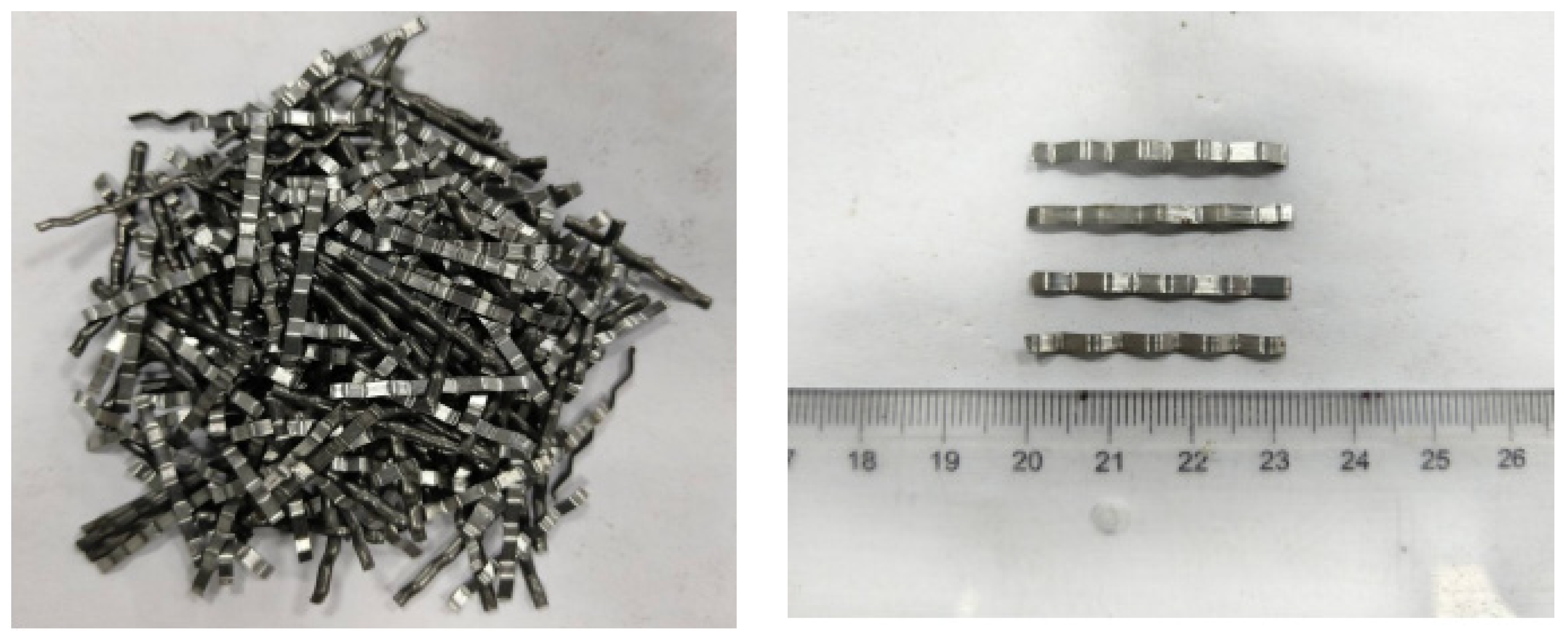
There are many varieties of steel fibers available domestically and internationally. Considering both economic factors and various performance indicators, milled steel fibers were selected. According to the standard (Fiber for Cement Concrete in Highway Engineering JT/T524-2019) [20], milled steel fibers produced by Hebei Hengshui Maole Metal Products Co., Ltd. (Hengshui, China) were chosen as the reinforcing material for concrete, as illustrated in Figure 1. The main performance indicators of the steel fibers are shown in Table 1.

2.1.5. Polycarboxylate High-Performance Water Reducer

A polycarboxylate high-performance water-reducing agent produced by Shanxi Feike New Material Technology Co., Ltd. (Yuncheng, China) was used. According to the standard (Concrete Admixtures GB8076-2023) [21], its primary functions are to improve the workability of concrete, reduce the water demand of the mixture, effectively inhibit concrete shrinkage, and enhance the durability of concrete.

2.2. Experimental Procedure

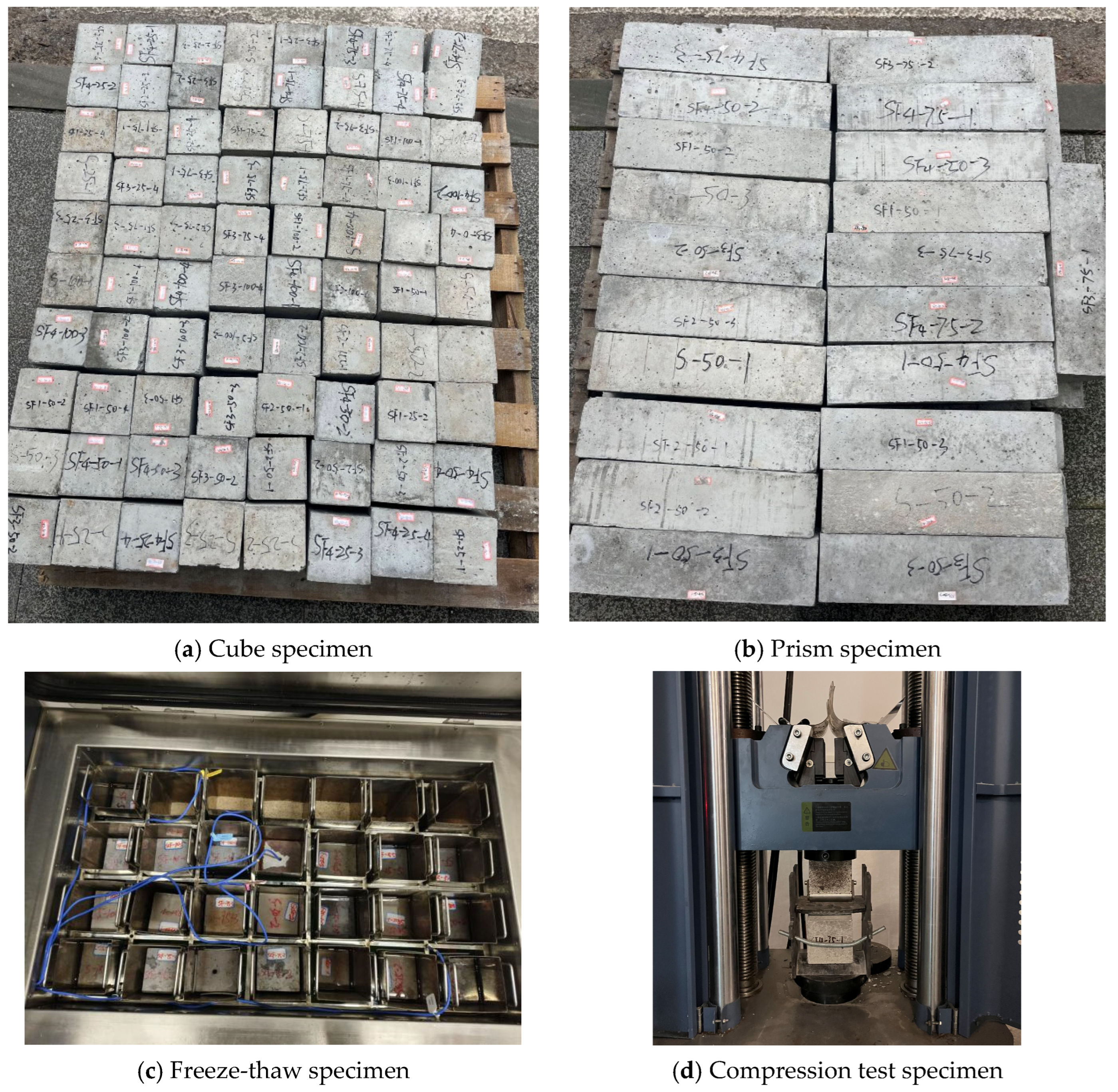
Based on existing research findings [22], this study used plain concrete and steel fiber-reinforced concrete as the primary subjects. Specimens of both types of concrete were first prepared, and compressive strength, splitting tensile strength, and flexural strength tests were conducted, as shown in Figure 2. The influence of mix parameters, including steel fiber volume fraction (0%, 1%, and 1.5%), silica fume content (0%, 5%, and 10%), water-to-binder ratio (0.4), and superplasticizer dosage (1%), was quantified using response surface methodology. The optimal performance mix combination, designated as SF4, was determined as follows: silica fume content of 10%, steel fiber volume fraction of 1.5%, water-to-binder ratio of 0.40, and superplasticizer dosage of 1%.
Through experimental investigation into the effects of steel fiber volume fraction and silica fume content on the mechanical properties of concrete under freeze-thaw cycles, the results of the elastic modulus tests are presented in Table 2.
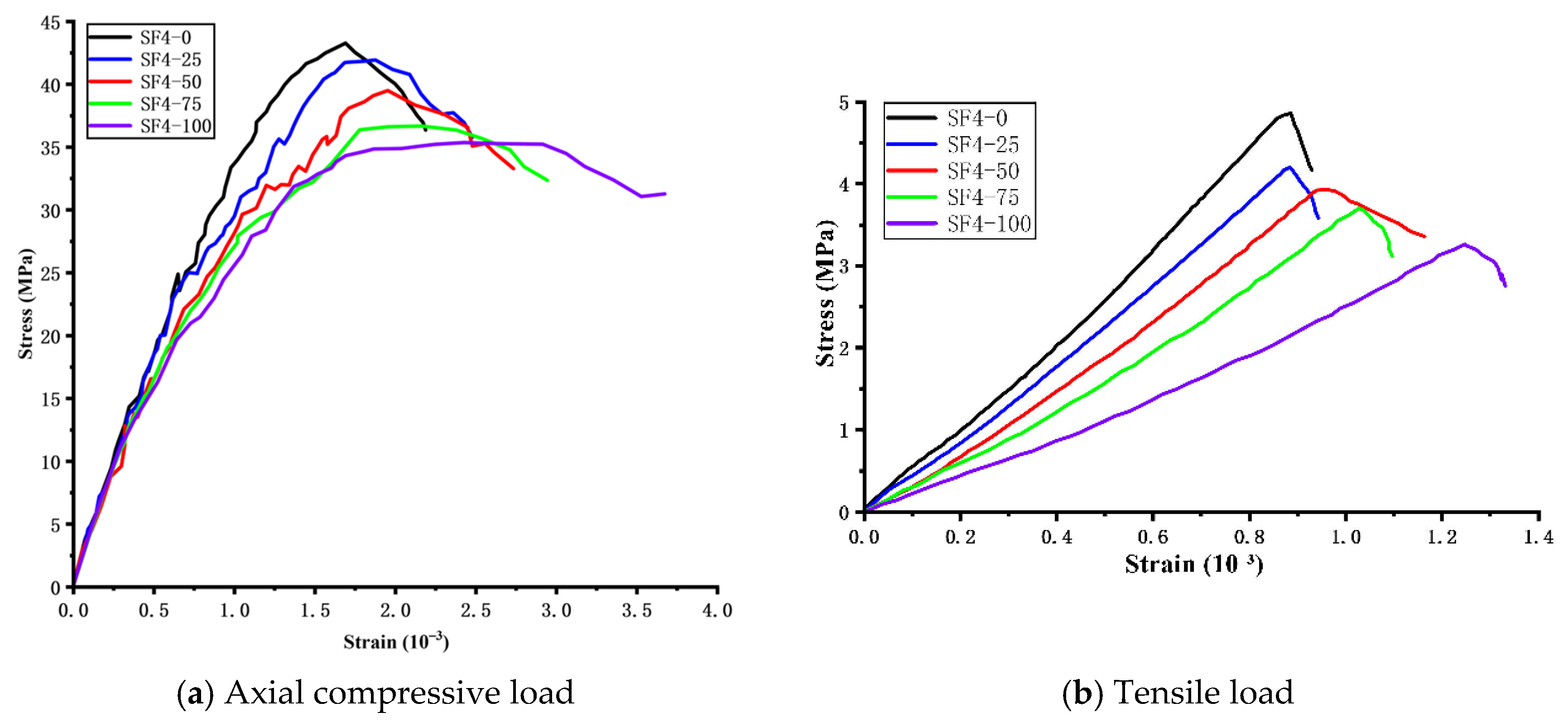
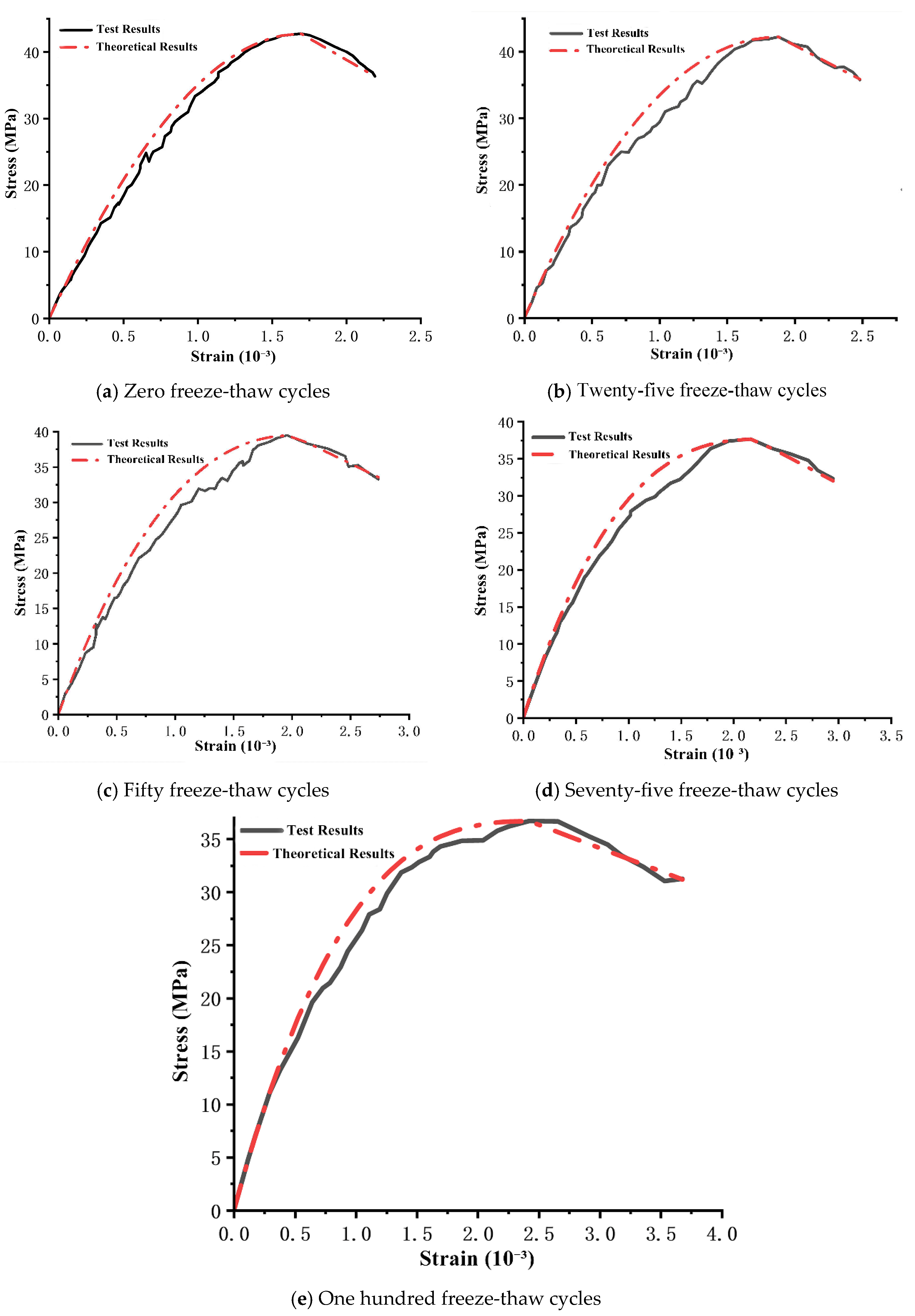
Based on the stress-strain curve and the elastic modulus, a combined constitutive model was solved to establish the functional relationship between the number of freeze-thaw cycles and stress. A constitutive model of concrete under axial compression was investigated, with the descending segment of the stress-strain curve corresponding to the strain curve at 0.85 σ p . The stress-strain curves for different numbers of freeze-thaw cycles are shown in Figure 3.
Through the experiments, the stress-strain curves and the elastic modulus of steel fiber-reinforced concrete under different numbers of freeze-thaw cycles were obtained. Based on the stress-strain curves and the elastic modulus, a combined constitutive model was solved to establish the functional relationship between the number of freeze-thaw cycles n and stress σ .

3. Constitutive Models

3.1. Stress-Strain Curve Models Under Monotonic Loading

3.1.1. Hognestad Constitutive Model

The model employs a two-segment fitting curve, where the ascending segment of the constitutive mathematical model is represented by a quadratic parabola and the descending segment is depicted as an inclined straight line. The specific expressions for the model are provided in Equations (1) and (2).
When ε ε p ,
σ = f c [ 2 ε ε p ( ε ε p ) 2 ]
When ε u ε ε p ,
σ = f c ( 1 0.15 ε ε p ε u ε p )
where ε u —strain corresponding to 0.85 f c ;
ε p —strain corresponding to the peak stress;
ε u —ultimate strain.

3.1.2. Guo Zhenhai Constitutive Model

The model employs a piecewise fitting curve, with the ascending branch represented by a cubic polynomial and the descending branch described by a rational fraction. The specific constitutive equations are given by Equations (3)–(6) as follows:
When ε ε p ,
σ = f c [ α a ε ε p + ( 3 2 α a ) ( ε ε p ) 2 + ( α a 2 ) ( ε ε p ) 3 ]
When ε ε p ,
σ = f c ε ε p α d ( ε ε p 1 ) 2 + ε ε p
α a = E 0 E p = E 0 ε p f c
0 α d
where α a = E 0 E p = E 0 ε p f c ;
f c —peak stress.

3.1.3. Combined Compression Constitutive Model

The proposed constitutive model adopts a two-stage composite curve, integrating the ascending branch from the Guo Zhenhai model [23] with the descending branch from the Hognestad model [24,25]. The combined model exhibits the following characteristics: it effectively captures all geometric features of the experimental curves from this study; its descending branch accurately reflects the actual test results and the mechanical performance of steel fiber-reinforced concrete; the ascending and descending branches are mutually independent, and the corresponding formulas are straightforward yet provide precise fitting; and parameter α a in the ascending branch carries clear physical significance, representing material properties such as deformation modulus and ductility. The constitutive equations are given by Equations (7) and (8) as follows:
When ε ε p ,
σ = f c [ E p 2 ε E 0 f c + ( 3 2 E p E 0 ) ( ε E p f c ) 2 + ( E p E 0 2 ) ( ε E p f c ) 3 ]
When ε u ε ε p ,
σ = f c ( 1 0.15 ε E p f c ε u E p f c )
where α a = E 0 E p = E 0 ε p f c and ε u represents the strain corresponding to 0.85 f c .

3.1.4. Tensile Strength Constitutive Model

The mathematical model is expressed using two stages: ascending and descending. The first combination consists of the ascending segment from the stress-strain full curve expression for concrete under tension by Gao Danying [26] and the descending segment from the Hognestad constitutive model. The second combination comprises the ascending segment from the stress-strain full curve expression in the referenced literature and the descending segment from the Hognestad constitutive model. The optimal constitutive mathematical expression is determined through experimental comparison.
(1) Hognestad Constitutive Model
The Hognestad constitutive model was applied to the descending branch for compression members, as shown in Equation (9):
When ε u ε ε p ,
σ = f t ( 1 0.15 ε ε t ε u ε t )
where ε t u —0.85 f t is the corresponding strain value.
(2) Combinatorial Tensile Constitutive Model
Based on the characteristics of the split tensile stress-strain curve, the combinatorial tensile model adopts a linear ascending constitutive model for the ascending segment. The descending segment is described by the Hognestad constitutive model, forming a combined tensile model as presented in Equations (10) and (11):
When ε ε t ,
σ = f t ε ε t
When ε t ε ε u t ,
σ = f t ( 1 0.15 ε ε t ε u t ε t )
where ε t u —0.85 f t is the corresponding strain value.

3.2. Steel Fiber-Reinforced Concrete Constitutive Models

3.2.1. Axial Compression Constitutive Model

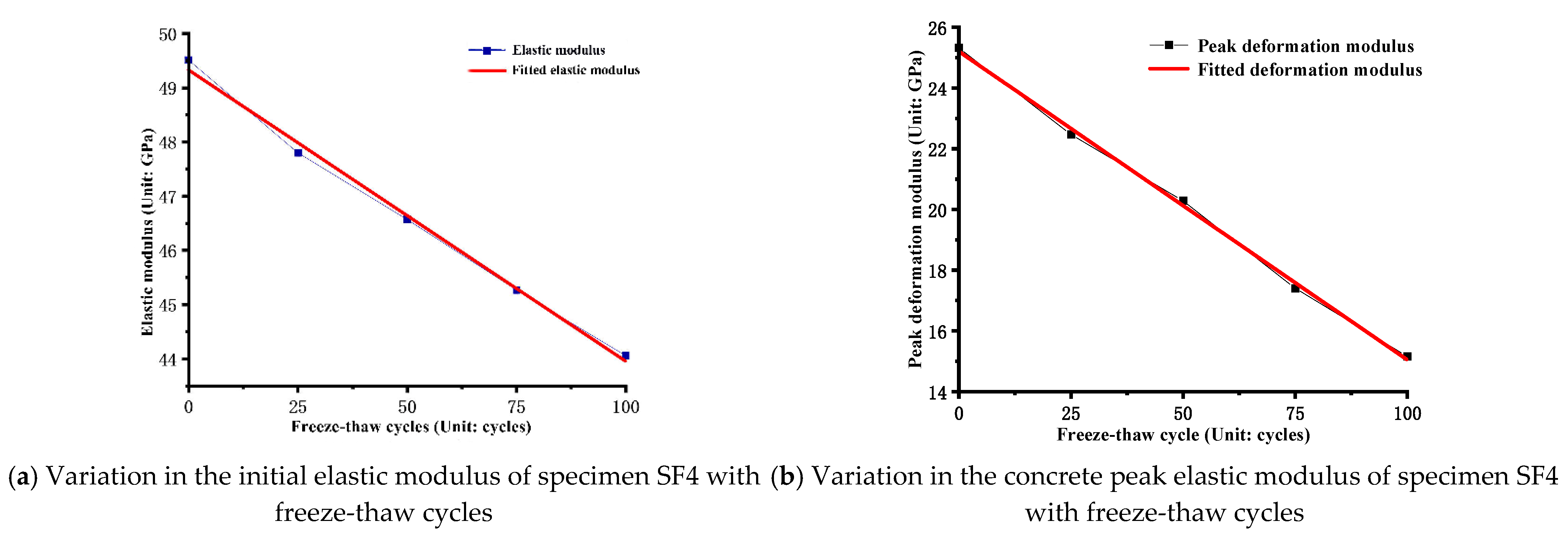
The initial and peak variations in the elastic modulus of the SF4 specimens with respect to freeze-thaw cycles are illustrated in Figure 4. The regression curves for the initial and peak deformation modulus are represented by the quadratic function formulas as shown in Equations (12) and (13).
Figure 4. Relationship between elastic modulus and number of freeze-thaw cycles for SF4 concrete.
Buildings 16 00957 g004
E 0 , n = 0.05372 × n + 49.328 ,   R 2 = 0.9954
E P , n = 0.10162 × n + 25.2056 ,   R 2 = 0.9981
where E 0 , n —Elastic modulus after n freeze-thaw cycles, GPa;
E P , n —Elastic modulus after n freeze-thaw cycles, GPa;
n —Number of freeze-thaw cycles.
The parameter values of the constitutive model for SF4 concrete under freeze-thaw cycles are presented in Table 3, while the constitutive functions of SF4 concrete corresponding to different numbers of cycles are summarized in Table 4. A comparison between the combined constitutive model and the experimental stress-strain constitutive curves is illustrated in Figure 5.

3.2.2. Splitting Tensile Constitutive Model

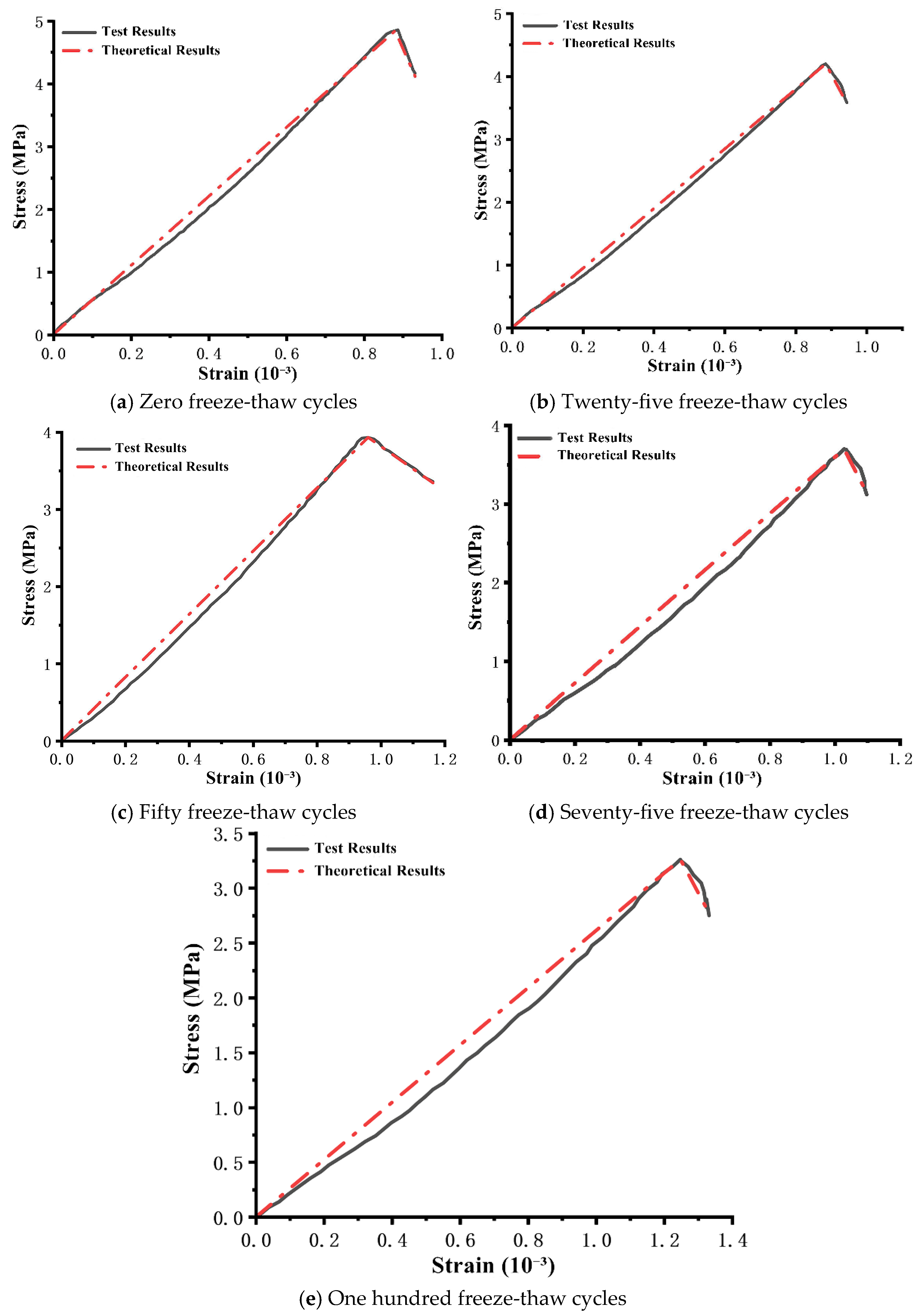
Based on the stress-strain data obtained from the splitting test, and utilizing the combined constitutive model formula derived from Equations (12) and (13), the expressions of the SF4 constitutive model for the ascending and descending branches under different numbers of freeze-thaw cycles are calculated and summarized in Table 5. A comparative verification between the derived constitutive model under freeze-thaw cycles and the experimental data is presented in Figure 6.
The constitutive relationship of tensile stress-strain for SF4 under different freeze-thaw cycles reveals the following: (1) The calculated results from the constitutive model derived from the stress-strain data of splitting tests show a high overall agreement with the experimental results under various freeze-thaw cycles, indicating that this constitutive model can effectively describe the stress-strain behavior of SF4 subjected to freeze-thaw actions. (2) As the number of freeze-thaw cycles increases, the peak stress of SF4 gradually decreases, and the slope of the ascending portion of the curve during stress development toward the peak also tends to diminish. This suggests that freeze-thaw cycling progressively degrades both the strength and stiffness of SF4, leading to a reduction in its deformation resistance. (3) At small strains, stress increases approximately linearly. Beyond a certain value approaching the peak, the rate of stress increase slows until it declines after reaching the peak, reflecting distinct behavioral phases under loading. The model remains applicable even under freeze-thaw conditions.

4. Numerical Simulation

4.1. Model Description

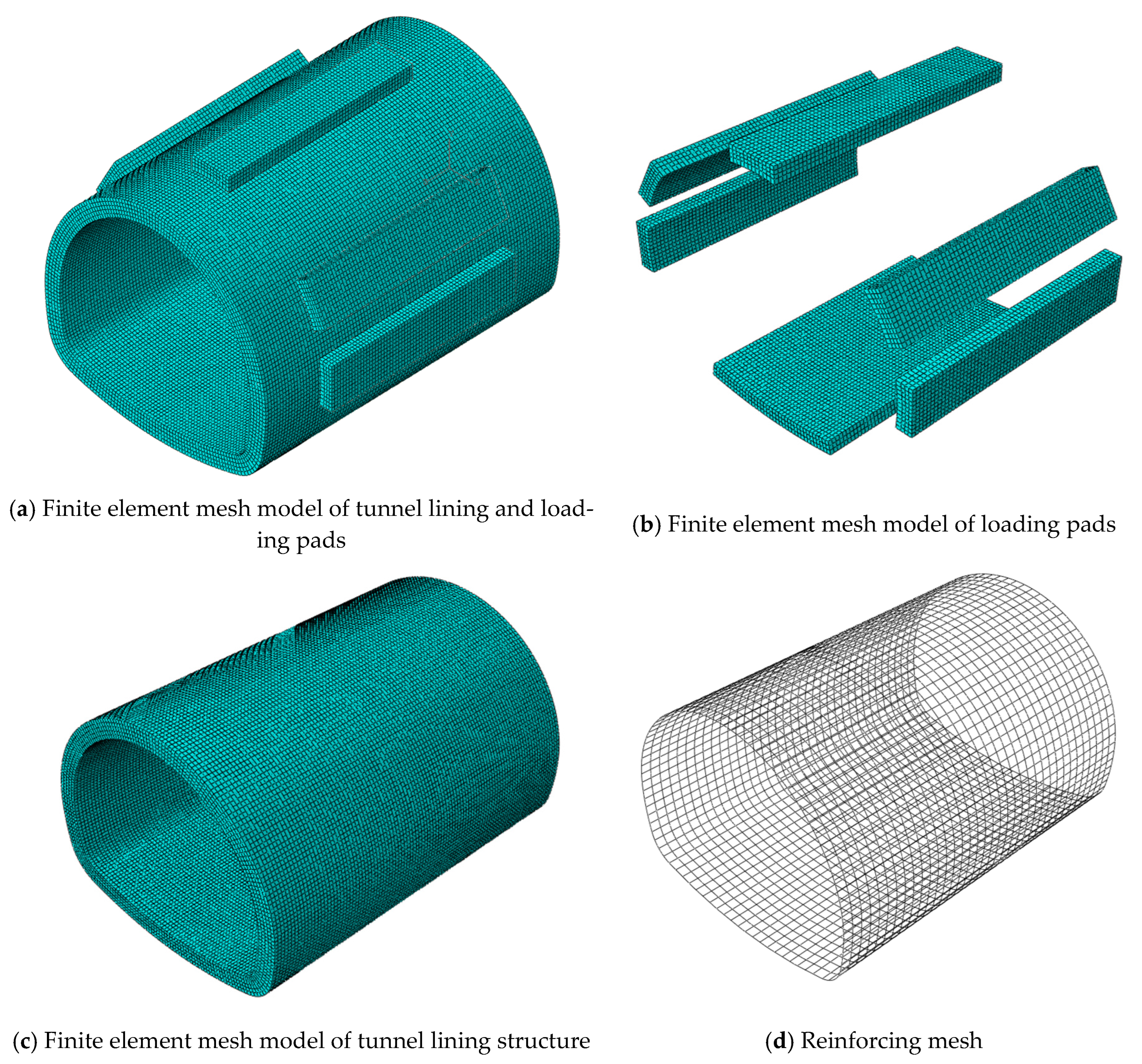
Based on experiments and constitutive models, a scaled finite element model of reinforced concrete was established. The steel fiber-reinforced concrete of the tunnel lining was modeled using solid elements, while the reinforcement was represented by truss elements. The rubber gaskets were simulated with solid elements, and all steel plates were also modeled using solid elements. A uniform hexagonal mesh with a size of 8 mm was adopted. The steel plates at the bottom of the tunnel lining model were assigned fixed boundary conditions. The ratio of horizontal loading on the left and right sides to vertical loading on the top of the tunnel lining was set to 0.7. The elastic moduli before and after freeze-thaw cycles are presented in Table 3. The plastic damage parameters for steel fiber-reinforced concrete under freeze-thaw conditions were as follows: dilation angle of 35°, eccentricity of 0.2, K of 0.4, and viscosity parameter of 0.06.
As shown in Figure 7, a comparative analysis was conducted between the experimental data and numerical simulation results. The working conditions of the tunnel lining model required for the analysis are presented in Table 6.

4.2. ABAQUS Damage Factors

4.2.1. Stress-Strain Relationship for Tensile Damage

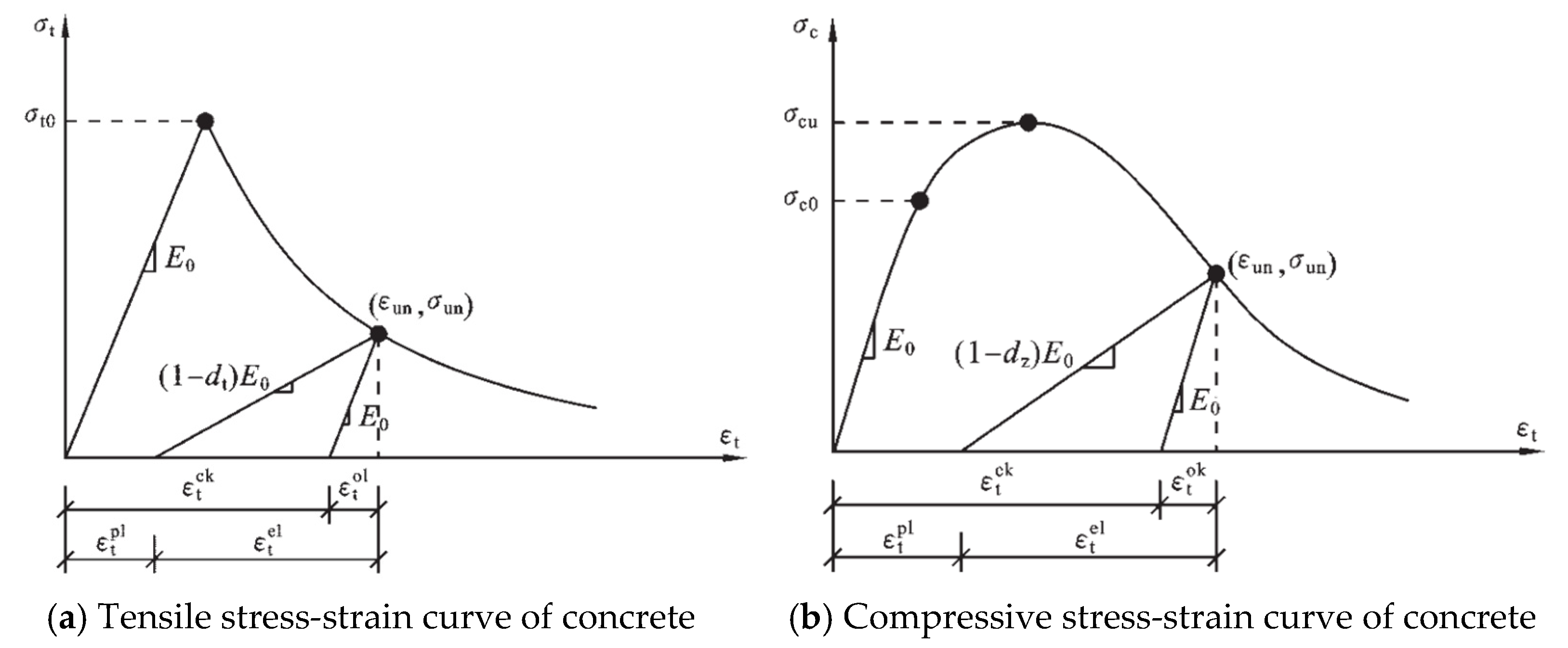
The stress-strain curve data for the plastic stage under tensile loading in ABAQUS is input in the form of σ t ε ˜ t c k [27,28,29], while the stress-strain curves for both compression and tension are illustrated in Figure 8.
Where ε t ck and ε t in —The tensile cracking strain and compressive cracking strain, respectively;
ε 0 t cl and ε 0 c cl —The undamaged tensile elastic strain and undamaged compressive elastic strain, respectively;
ε 0 t el and ε 0 c el —The tensile elastic strain and compressive elastic strain considering damage, respectively.
The tensile damage data σ t ε ˜ t c k is input into ABAQUS in the form shown in Equation (14):
ε ˜ t p l = ε ˜ t c k d t 1 d t σ t E 0

4.2.2. Stress-Strain Relationship for Compressive Damage

In ABAQUS, the compressive stress-strain curve data beyond the elastic range are input in the form of σ c ε ˜ c i n [30,31]. The compressive inelastic strain is defined as the total strain minus the elastic strain of the undamaged material. The compressive damage data are input into ABAQUS in the form of σ c ε ˜ c i n , as shown in Equation (15):
ε ˜ c p l = ε ˜ c c k d c 1 d c σ c E 0

4.3. Finite Element Model

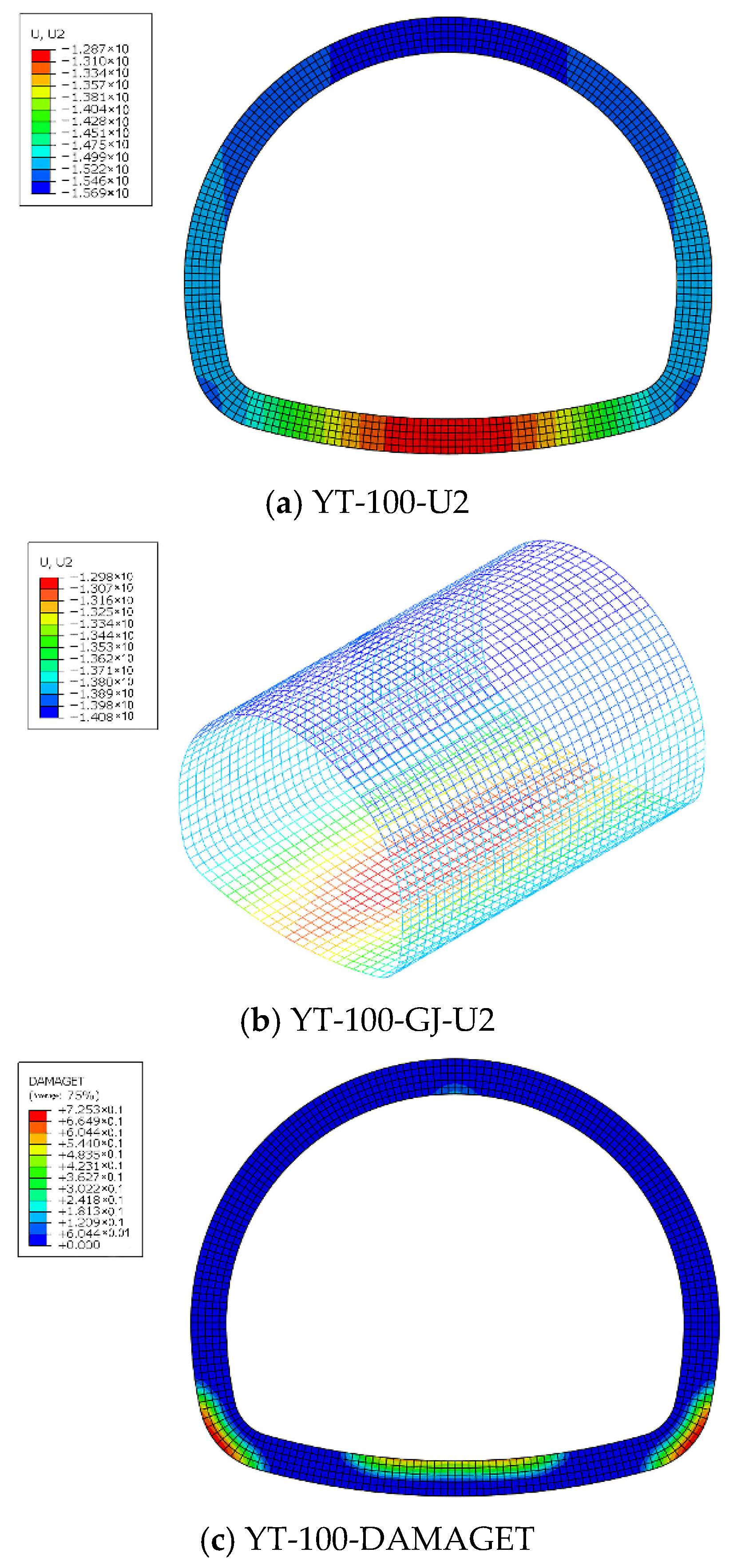
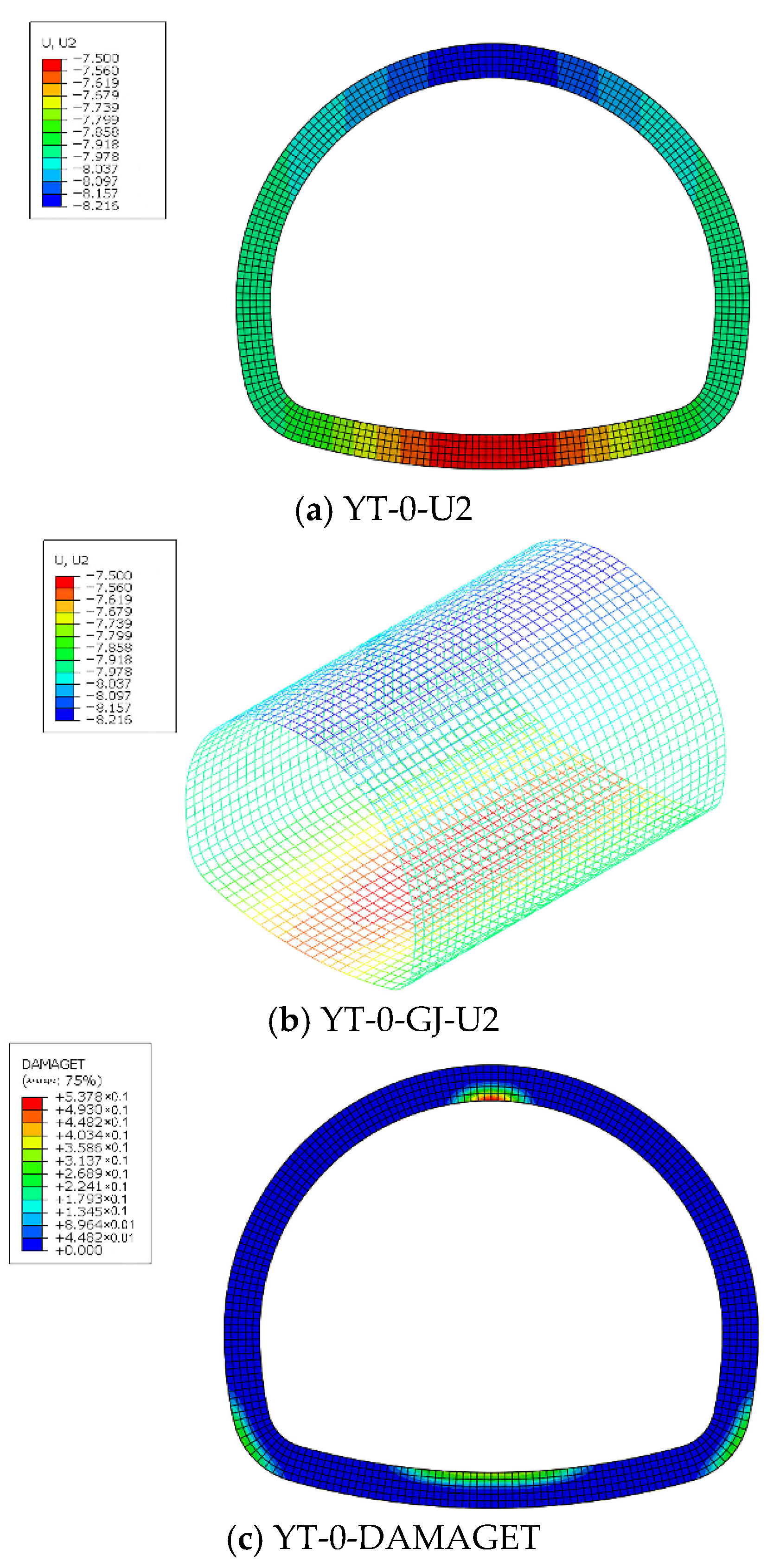
From the state cloud diagrams of the YT model shown in Figure 9 and Figure 10, it can be observed that after 100 freeze-thaw cycles, the vertical displacement is significantly greater than that after 0 freeze-thaw cycles. This analysis examines the yield state of the concrete lining as well as the extent and location of tensile damage.

5. Steel Fiber-Reinforced Concrete Tunnel Reduced-Scale Model

5.1. Model Design

5.1.1. Experimental Scheme

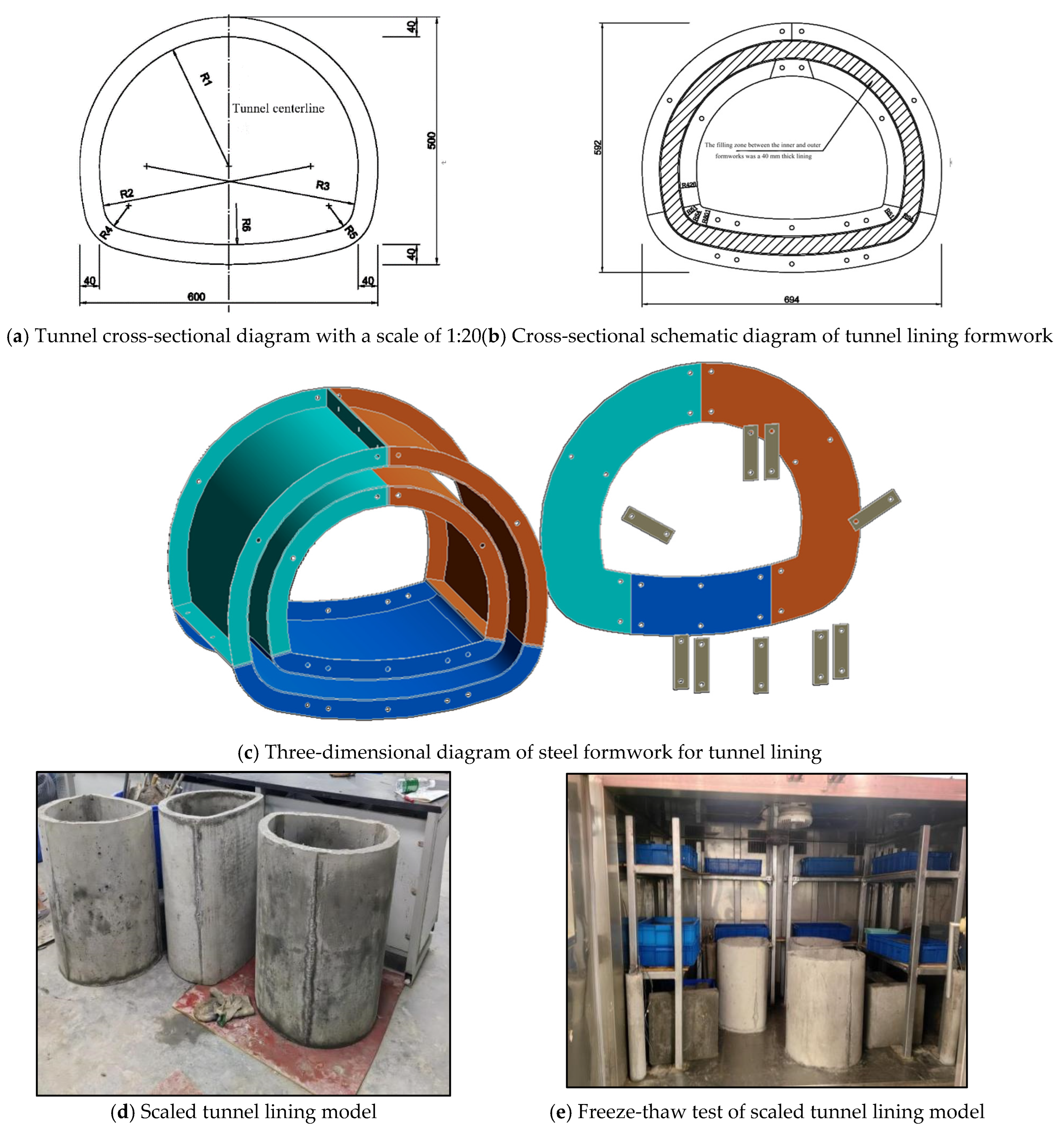
The original tunnel lining dimensions were optimized and scaled down, with the thickness of the cast lining reduced to a scale of 1:20. The lining model is shown in Figure 11.

5.1.2. Similitude Materials

The dimensional ratio of 1:20 between the full-scale model and the scaled model, i.e., the geometric similarity ratio, is calculated by C L = L p L m = 20 (subscript p denotes the prototype model, and m denotes the scaled model.). ① Material Similarity Ratio: Since the same materials were used for both the full-scale and scaled models, the stress similarity ratio is determined accordingly by C σ = σ p σ m = 1 , the Density Similarity Ratio ρ σ = ρ p ρ m = 1 , the Strain Similarity Ratio C ε = ε p ε m = C δ C L = 1 , the Elastic Modulus Similarity Ratio C E = E p E m = 1 , and Poisson’s Ratio Similarity Ratio C v = v p v m = 1 . ② Load Similarity Ratio: Concentrated Force Similarity Ratio C F = F p F m = σ p A p σ m A m = C σ C L 2 = 1 × 20 2 = 400 , Bending Moment Similarity Ratio C M = M p M m = F p L p F m L m = C F C L = 400 × 20 = 8000 , and Coefficient of Elastic Resistance C M = k p k m = σ p L p σ m L m = C σ C L = 1 20 = 0.05 .
The similarity ratios of various physical quantities calculated based on the similarity theory are presented in Table 7.
The tunnel lining model was constructed at a scale of 1:20 using steel fiber-reinforced concrete (SF4, with a steel fiber volume fraction of 1.5%). The material design for the tunnel lining model test is presented in Table 8.

5.1.3. Freeze-Thaw Cycle Design

The frost resistance mechanical properties of tunnel structures under cold-region conditions (freeze-thaw cycles) were studied by constructing a steel fiber-reinforced concrete tunnel structure model. The design parameters for the freeze-thaw conditions of the tunnel structure model are presented in Table 9.
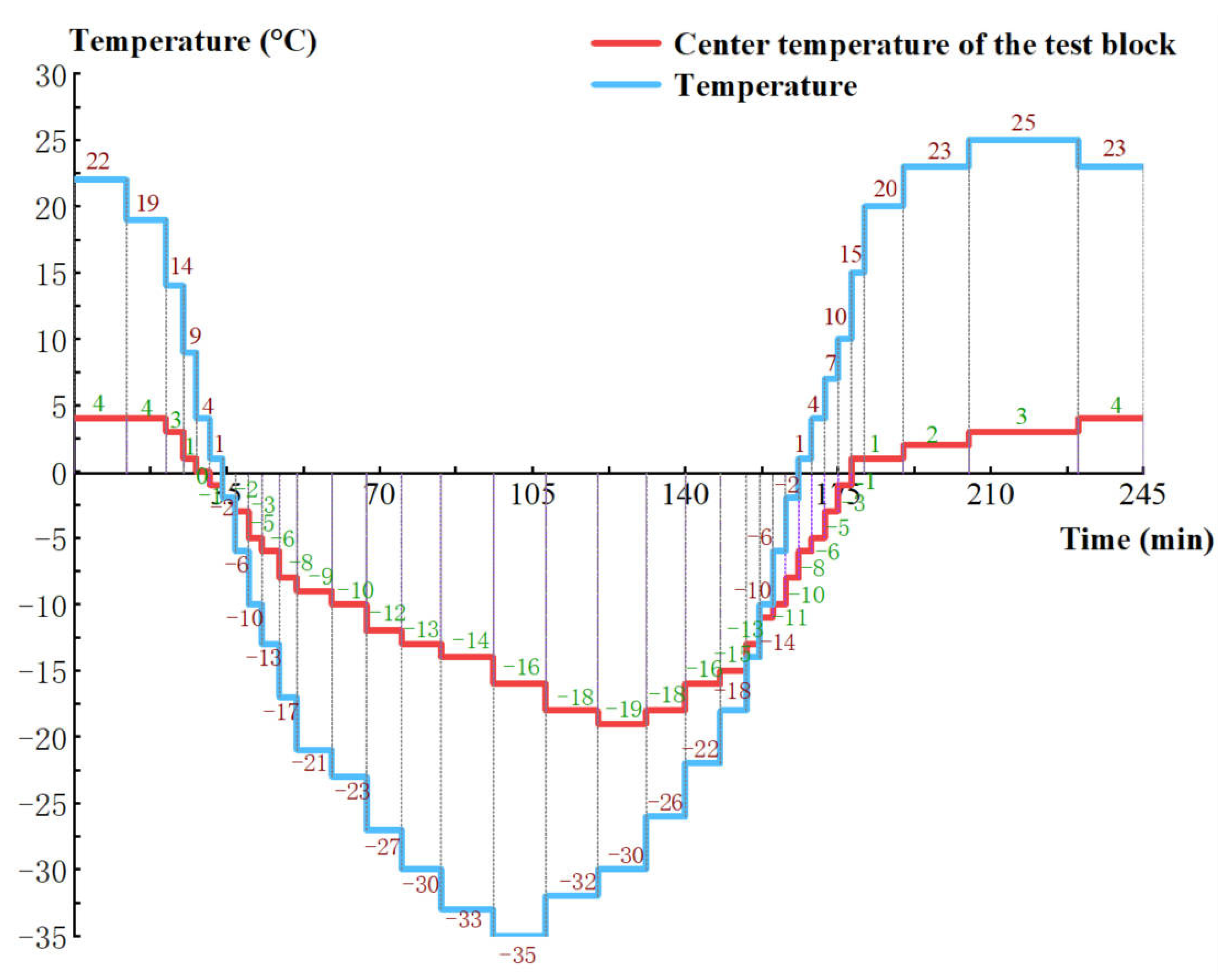
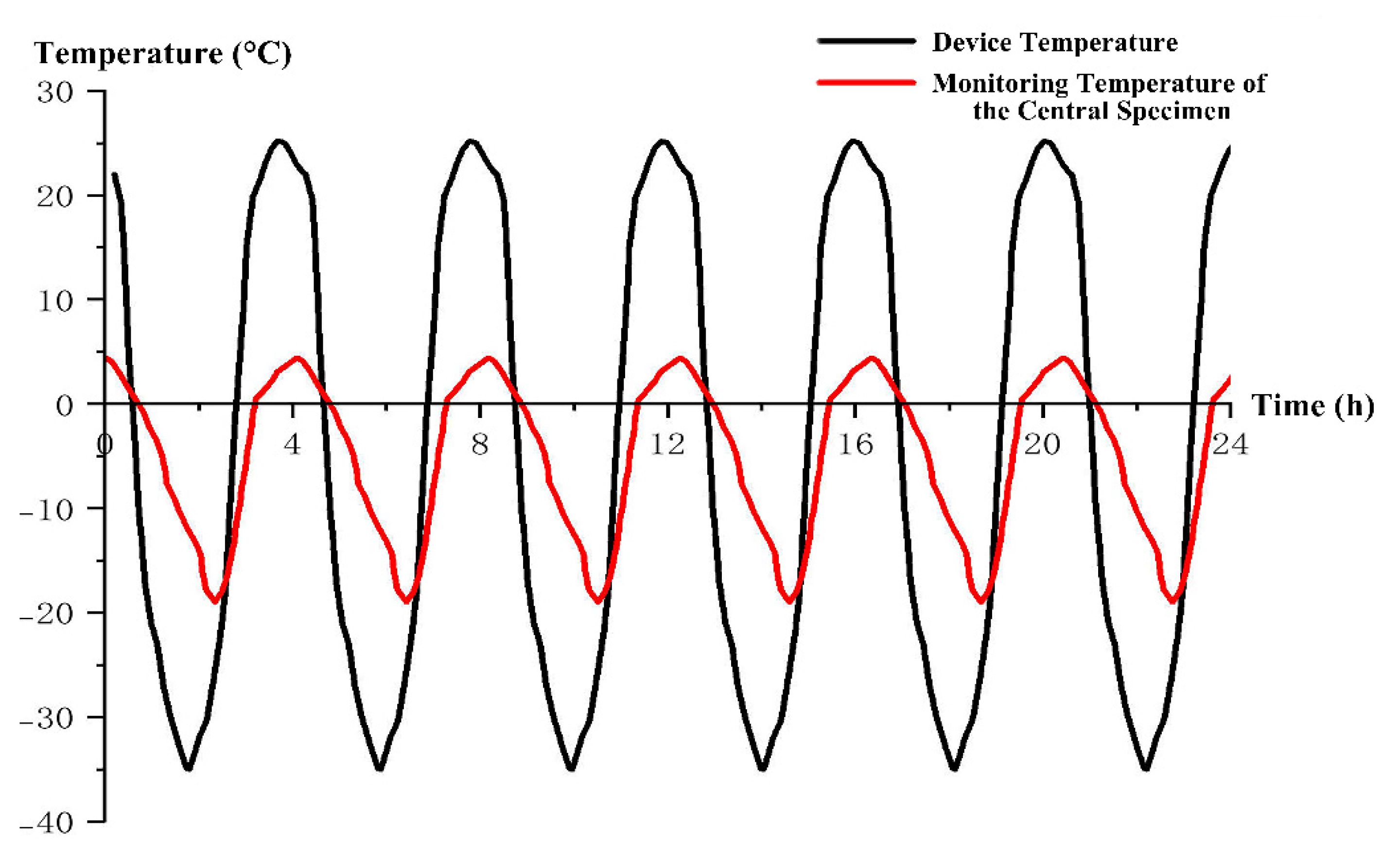
According to the (Standard for Test Methods of Long-Term Performance and Durability of Concrete GB/T50082-2024) [32], rapid freeze-thaw cycle tests were conducted, the freeze-thaw medium was drinking water after reaching the curing age, and the specimens were directly saturated with water without air-drying. The temperature time-history curve of the freeze-thaw equipment during multiple freeze-thaw cycles within a 24 h period is shown in Figure 12. Taking one complete freeze-thaw cycle as an example, the freezing temperature of the test specimens ranged from −18 °C to −14 °C, the thawing temperature ranged from 5 °C to 8 °C, and the duration of a single freeze-thaw cycle was 2 to 4 h. Figure 13 displays, in a comparative manner, the dynamic response between the temperature control curve of the apparatus and the temperature measured at the center of the specimen during that cycle.

5.2. Mechanical Property Tests

5.2.1. Loading Scheme

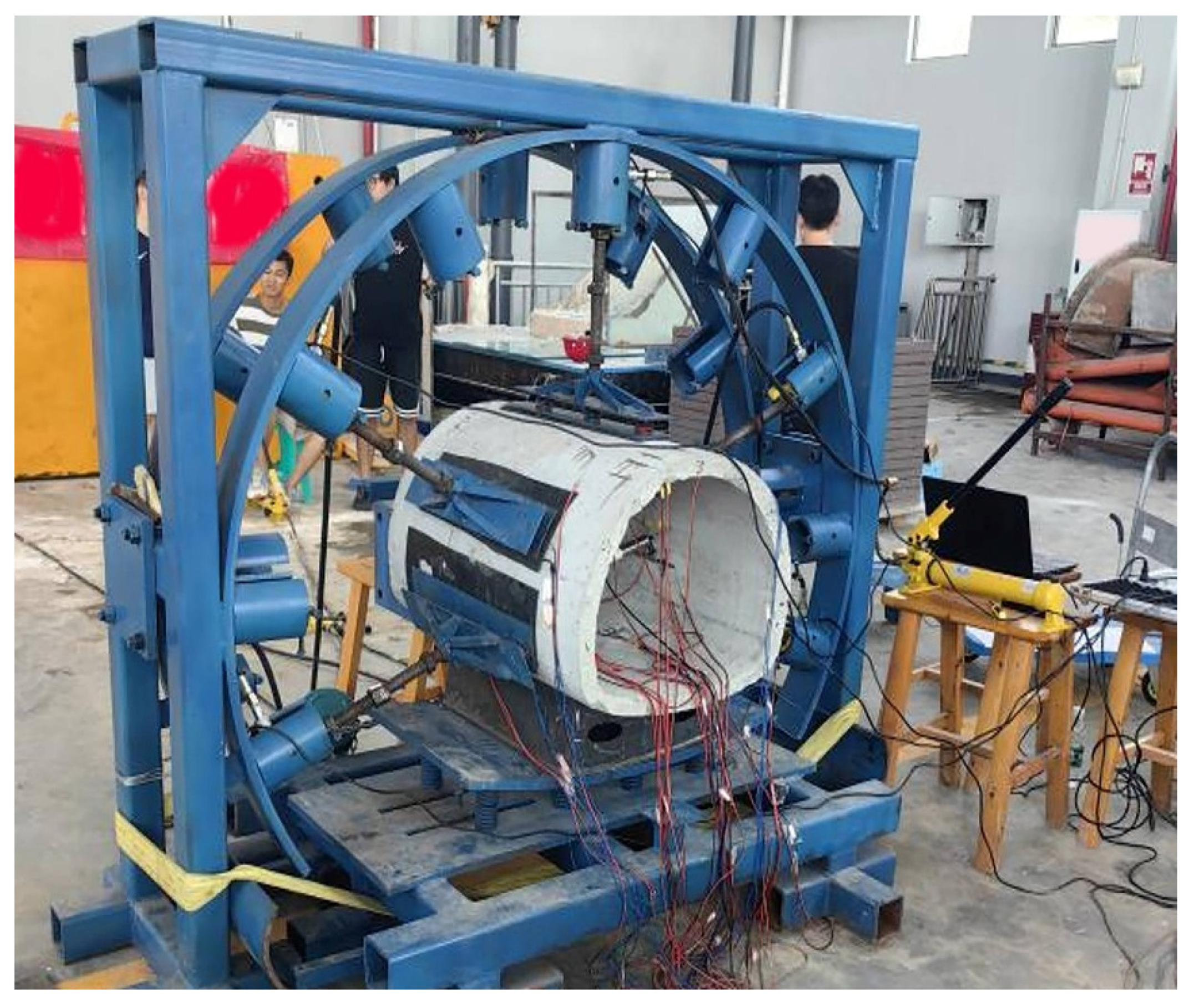
The test loading setup is capable of simulating the bidirectional synchronous mechanism of lateral confining pressure and vertical loading on tunnel linings. The force from the jacks is transferred to rigid bearing plates on the lining through load-transmitting rods, ensuring uniform distribution of the confining pressure to simulate the vertical pressure from the surrounding rock, as shown in Figure 14.
The load-transfer system of the loading device and the reaction frame specifically includes a reaction frame welded from two rows of square steel sections, capable of simulating the loading conditions of two-ring tunnel linings. The tunnel lining model is scaled at 1:20, and one of the rings is used for the loading simulation. The loading device consists of: the reaction frame, installation steel channels, load-transfer adjustment rods, and double-layer steel bearing plates. An arc-shaped steel support is installed at the bottom of the tunnel lining invert. A rubber pad is directly placed between the arc-shaped support and the invert to improve load distribution uniformity. The bottom of the steel support is welded to springs, which are connected to the base of the reaction frame to simulate compression conditions of different rock and soil layers. The physical parameters of the springs in the loading device are shown in Table 10.
The experiment adopts a stepwise loading mechanism, utilizing a load-transfer rod system arranged on both sides of the lining structure to accurately simulate the constraining effect of the surrounding rock on the tunnel structure. To ensure uniform load distribution, cushion blocks are installed at the interfaces between the load-transfer rods and the lining. During the testing process, by controlling the load increments applied through the top load-transfer rods, the system observes and records the evolution of mechanical behaviors in the lining structure throughout progressive failure. Particular emphasis is placed on the comparative analysis of failure mode characteristics and the differences in failure mechanisms.
A systematic analysis and validation of the distribution characteristics of surrounding rock pressure is conducted using the empirical formula known as the Kirsch equation [33]. This equation can be utilized to estimate the lateral pressure coefficient (K), which represents the ratio of lateral pressure to vertical pressure. The Kirsch equation is given by Equation (16):
K = 1 sin ϕ 1 + sin ϕ
where ϕ represents the internal friction angle of the surrounding rock.
The load application for the load-structure simulation was conducted as follows: the loading was applied incrementally, with the vertical load increasing by 50 kPa per step. Concurrently, the lateral pressure was gradually increased, maintaining it at 0.7 times the vertical load to ensure the lateral confinement of the lining structure. After each loading increment, a stabilization period of 1–2 min was allowed to observe the cracking time and crack propagation in the tunnel lining until the lining structure was completely destroyed.

5.2.2. Failure of Steel Fiber-Reinforced Concrete Tunnel Lining

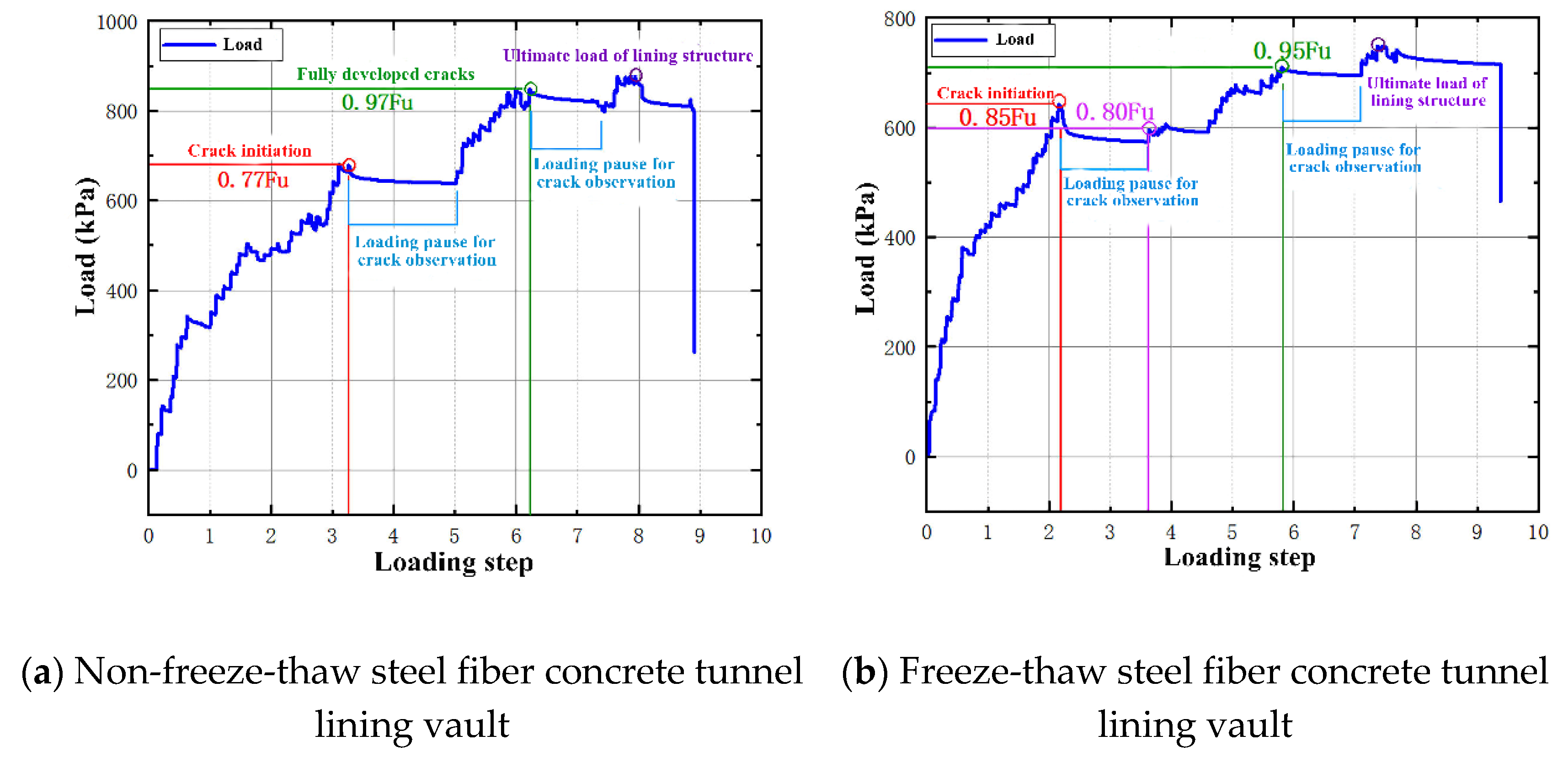
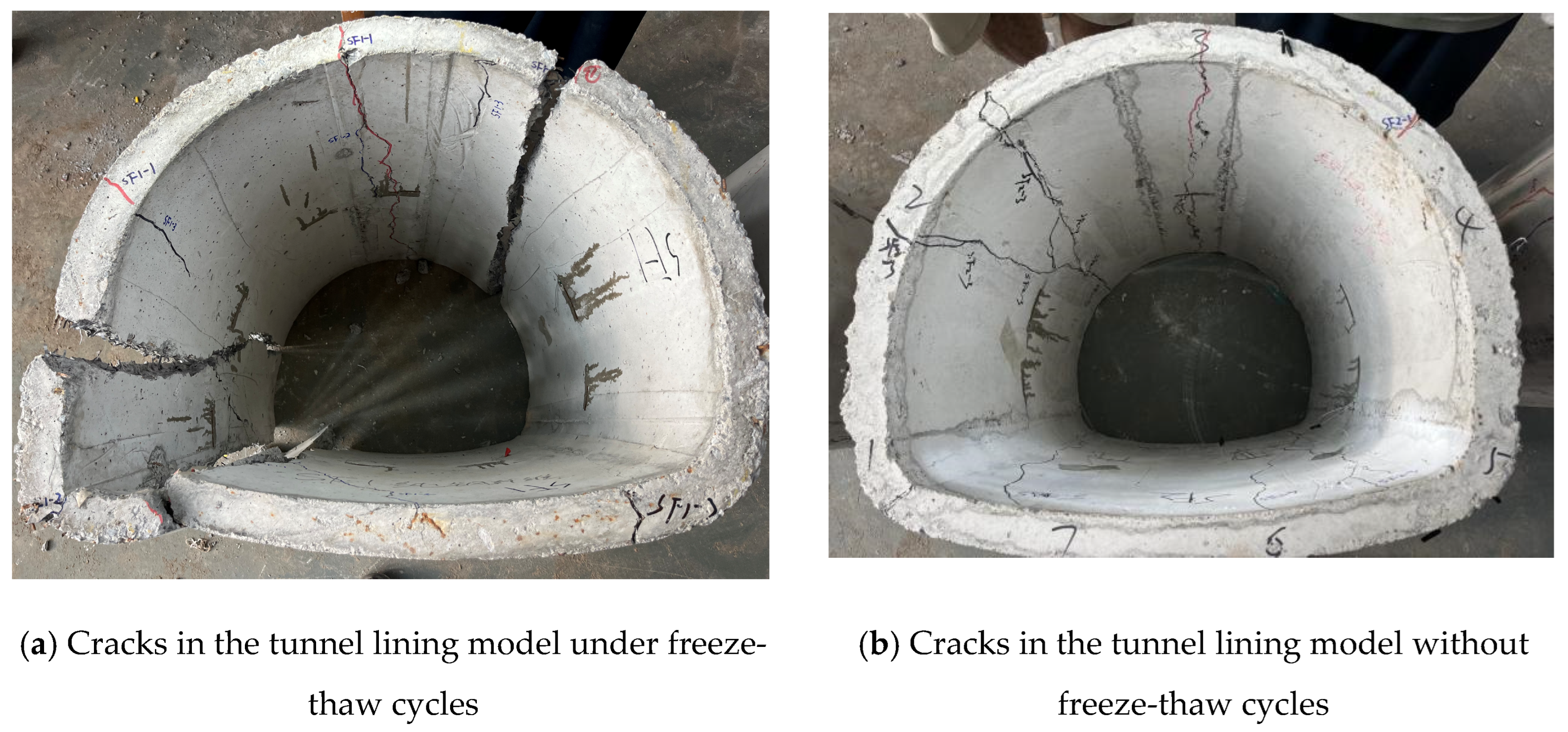
The process of vertical loading applied to both frozen-thawed and unfrozen steel fiber-reinforced concrete tunnel linings is illustrated in Figure 15.
The experimental data indicate that structural failure occurred during the 8th loading stage, with vertical load values of 876 kPa for the non-freeze-thaw tunnel lining and 748 kPa for the freeze-thaw tunnel lining at the vault. The evolution of structural damage progressed as follows: in the initial loading phase, no obvious signs of damage were observed in the specimens. When the applied load reached 0.77 Fu for the non-freeze-thaw tunnel lining model and 0.85 Fu for the freeze-thaw tunnel lining model, the first significant cracks appeared in the tunnel lining structure. These cracks manifested as long, thin microcracks simultaneously initiating in the arch foot, vault, and arch waist regions. As the load continued to increase, the crack system exhibited clear characteristics of propagation and longitudinal extension; after the second level of loading, new cracks appeared in both arch foot regions. When the vertical loads at the crown of the unfrozen and frozen tunnel linings reached 0.97 Fu and 0.95 Fu, respectively, the frozen tunnel lining exhibited significantly more concrete cracking locations and degrees of cracking at the crown, arch waist, and arch foot regions compared to the unfrozen lining. As the loads approached the ultimate load Fu, the cracks continued to propagate, leading to longitudinal fractures in the arch waist and arch foot regions of the frozen steel fiber-reinforced concrete lining, resulting in overall structural instability and failure. In contrast, the unfrozen steel fiber-reinforced tunnel lining developed a greater number of cracks, which were distributed near the triangular regions of the arch waist and arch foot, until the loading could no longer be applied, indicating the failure of the tunnel lining model.
From the analysis of the crack locations shown in Figure 16, it can be observed that the arch crown and arch foot areas, as stress concentration zones within the structure, experience damage first. In the arch crown region, the continuous widening of cracks leads to the propagation of concrete fractures, ultimately resulting in structural failure. The model of the freeze-thaw tunnel lining exhibits a relatively high number of cracks, with significant development observed across these cracks. In contrast, the non-freeze-thaw tunnel lining model shows a concentration of cracks, primarily in a few distinct locations, with these cracks being wider and interconnected in the arch triangle region. Regarding the failure mode, the asymmetry of loading-induced cracks during the experiment is attributed to the effects of initial eccentric loading, which causes greater stress concentration on one side of the lining.
The stress distribution trends in the tunnel lining obtained from the models before and after freeze-thaw cycles are fundamentally consistent, following the order: arch foot > vault > invert > arch waist. The tensile-compressive constitutive model of steel fiber-reinforced concrete effectively simulates the damage and failure state of the tunnel.

5.2.3. Comparison and Validation of Numerical Simulation and Experiments

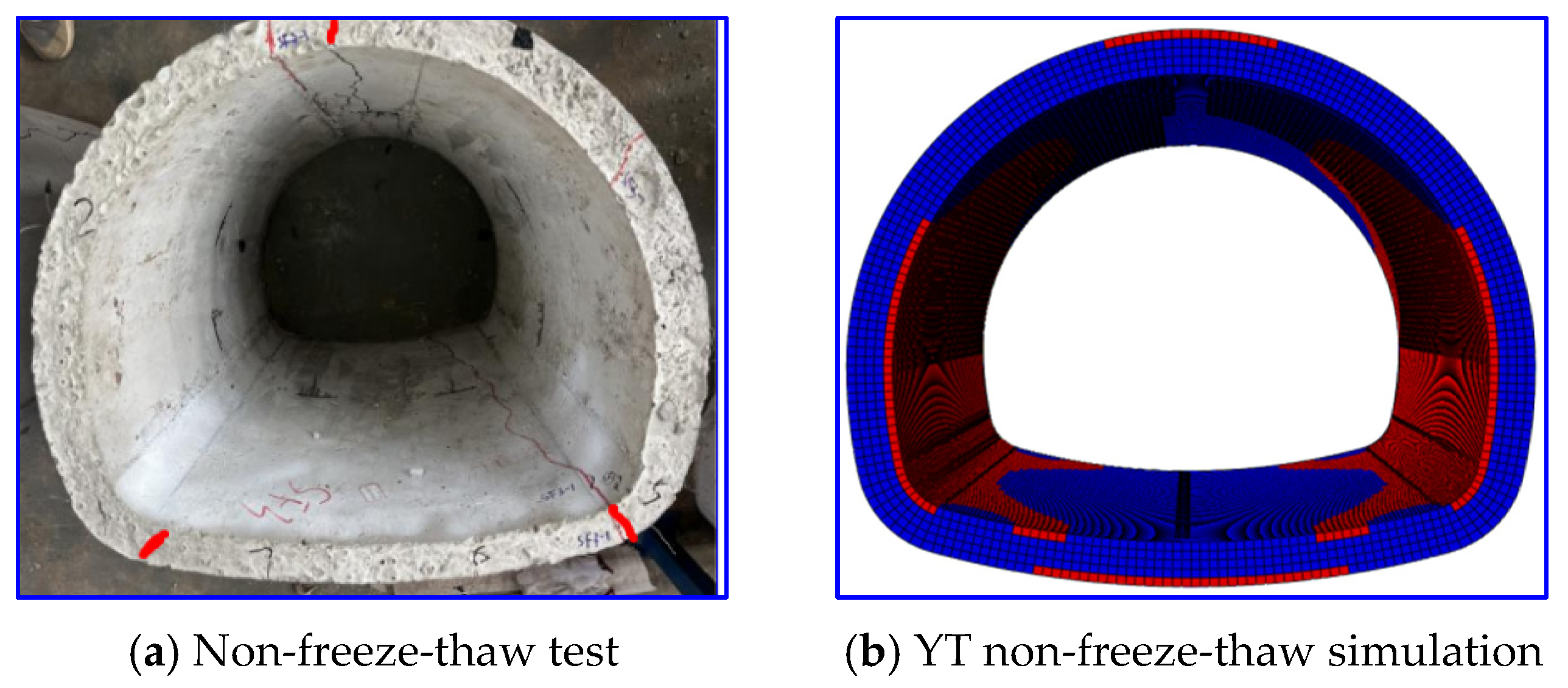
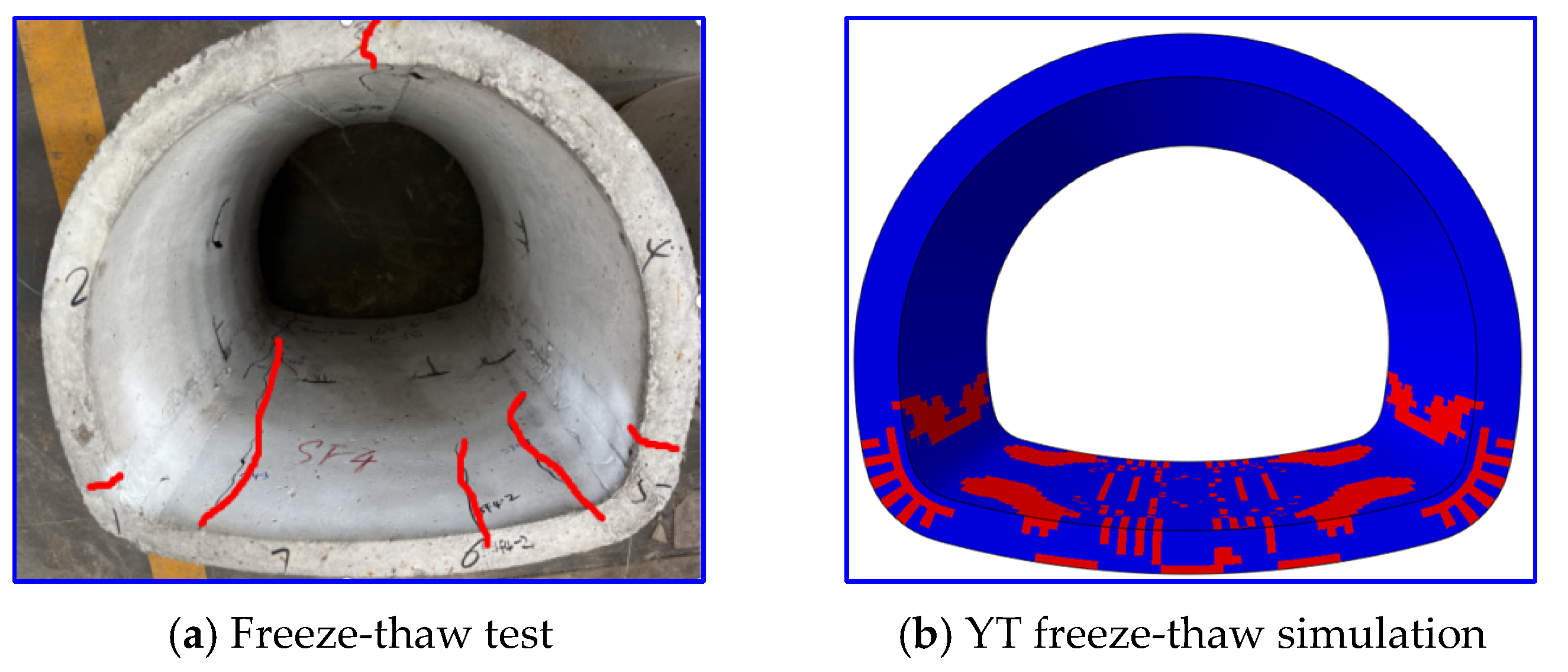
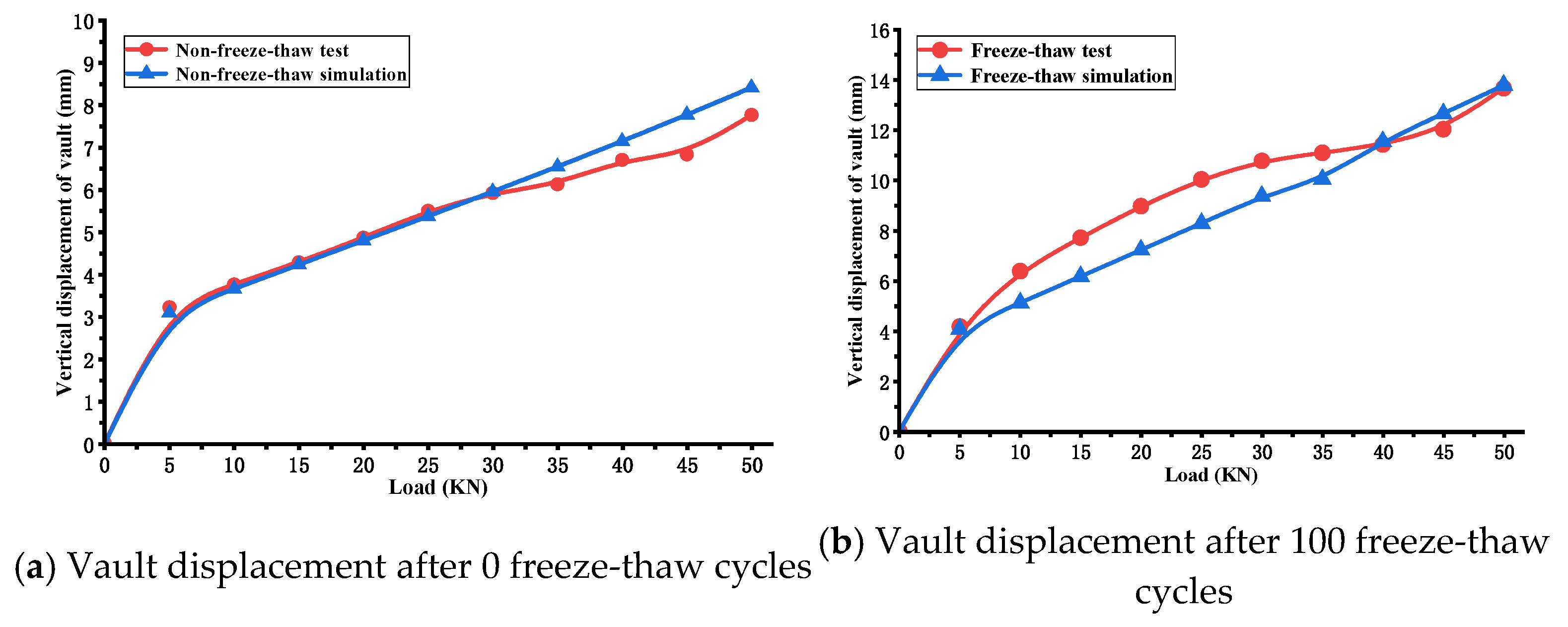
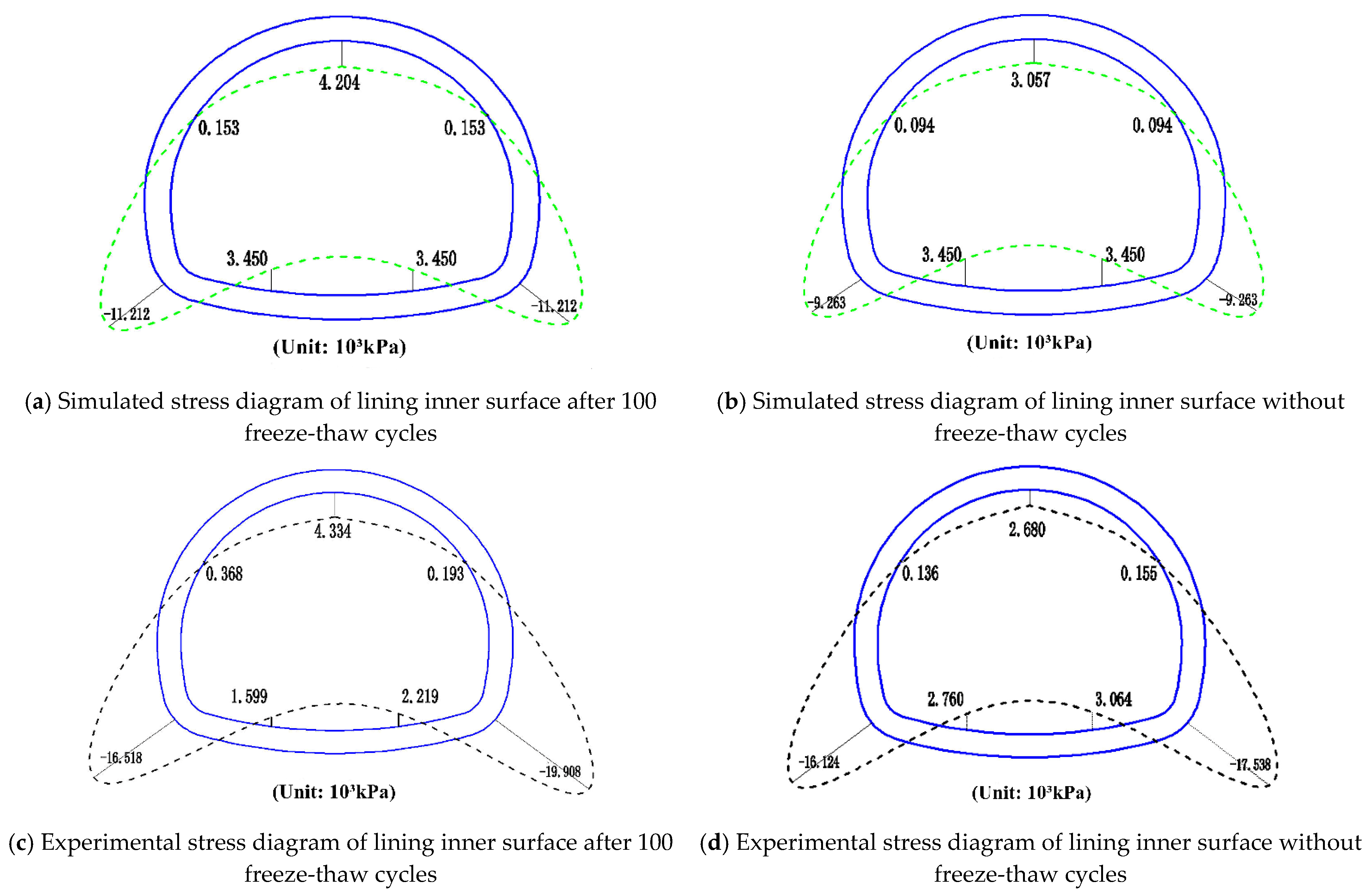
To verify the feasibility of the mechanical performance of the three-dimensional finite element model constructed using the constitutive relationships of steel fibers before and after freeze-thaw cycles proposed in this paper, a comparative analysis was conducted between the finite element model of the tunnel cross-section and experimental data. Figure 17 and Figure 18 present the damage state diagrams of the tunnel lining structure loaded to the failure load state before and after freeze-thaw cycles, respectively. Figure 19 shows the curves of vertical displacement at the tunnel lining vault during the loading process before and after freeze-thaw cycles, and Figure 20 displays the stress distribution diagrams at key circumferential locations of the tunnel lining when loaded to 50 kN before and after freeze-thaw cycles.
From Figure 17 and Figure 18, which illustrate the damage diagrams of tunnel lining loaded to failure before and after freeze-thaw cycles, it can be observed that the locations of concentrated cracks in the model align well with those observed in the experimental results when the tunnel lining reaches failure after freeze-thaw cycles. Cracks tend to concentrate and partially penetrate the lining at positions such as the vault, arch foot, and invert. Notably, the number of through-cracks in the tunnel lining without freeze-thaw cycles is significantly lower than that in the tunnel after freeze-thaw cycles. The tensile-compressive constitutive model for steel fiber-reinforced concrete proposed in this study demonstrates strong capability in accurately simulating the damage and failure state of the tunnel.
Based on the experimental and simulated arch crown displacement curves presented in Figure 19, the following observations can be made: ① Both the vertical deformation and circumferential stress of the arch crown increase with the rise in crown load. Notably, the arch crown displacement increases rapidly between 0 kN and 10 kN, after which the rate of displacement increase slows down as the load rises beyond 10 kN. This behavior is primarily attributed to the larger displacement of the compressed spring simulating the soil layer, which results in reduced displacement increments once the spring is compressed. ② Prior to freeze-thaw cycling, the relative vertical displacement of the arch crown in the experimental tunnel shows a maximum error of 10.90%, indicating that the YT simulation with steel fiber lining is feasible. ③ After 100 freeze-thaw cycles, the maximum error in the relative vertical displacement of the arch crown in the experimental tunnel reaches 17.49%, occurring in the low-load region. As the load increases, the error diminishes, with the maximum error decreasing to 9.46% once the load reaches 35 kN. The significant errors observed in the low-load region are attributed to the incomplete contact between the pad springs and the surface of the tunnel lining, as well as the stability process of the loading equipment.
As shown in the stress distribution diagram of tunnel lining before and after freeze-thaw cycles in Figure 20, the stress distribution trends of the tunnel lining obtained from the model are essentially consistent before and after freeze-thaw cycles, with the stress magnitude following the order: arch foot > vault > invert > arch waist. The YT constitutive model for steel fiber-reinforced concrete in tension and compression effectively simulates the damage and failure state of the tunnel.

6. Results and Discussion

Under freeze-thaw cycles, the core objective was to establish a constitutive model under tension-compression, conduct finite element simulations, and perform bearing capacity tests on scaled models. By comparing constitutive models, carrying out mechanical experiments, and simulating load-structure model tests, this research verifies the patterns of force and deformation as well as the reliability of numerical simulations and scaled structures. The conclusions are as follows:
(1) Steel fiber-reinforced concrete (SF4) was selected as the research object to obtain mechanical parameters under different freeze-thaw cycles, providing data support for the development of a refined constitutive model.
(2) A tensile/compressive constitutive model applicable to freeze-thaw environments was developed. For axial compression, a combined model incorporating the ascending branch of the Guo Zhenhai model and the descending branch of the Hognestad model was adopted. For tension, a combined model consisting of a linear ascending branch and the Hognestad descending branch was used. This model effectively reflects the degradation of deformation modulus and the evolution of ductility of the material after freeze-thaw exposure.
(3) A comparative analysis of the damage distribution characteristics obtained from scaled model tests and numerical simulations reveals a strong consistency in the damage evolution trends. This consistency not only validates the reliability of the scaled model test results but also confirms the applicability of the numerical simulation method adopted in this study for capturing macroscopic damage patterns. The research demonstrates that the numerical model, developed based on a specific tension-compression constitutive model, can reproduce the damage evolution process and the ultimate failure mode of tunnel linings under freeze-thaw conditions with a reasonable degree of accuracy. This provides a reliable theoretical foundation and methodological basis for related engineering applications.

Author Contributions

The authors confirm the contributions to the paper as follows: Conceptualization, L.-M.W.; methodology, F.G.; software, H.-X.-T.H.; validation, F.G. and L.-M.W.; formal analysis, F.G.; investigation, W.-J.L.; data curation, H.-X.-T.H.; writing—original draft preparation, L.-M.W.; writing—review and editing, G.-N.L. and H.-X.-T.H.; visualization, H.-X.-T.H. and W.-J.L.; supervision, G.-N.L.; project administration, L.-M.W.; funding acquisition, L.-M.W. All authors have read and agreed to the published version of the manuscript.

Funding

This work was supported by the Science and Technology Research Program of Chongqing Municipal Education Commission (Grant No. KJZD-K202504002).

Data Availability Statement

All data involved in this study are included in this paper.

Conflicts of Interest

The authors declare no conflict of interest.

References

  1. Shi, J.; Song, Z.; Cui, G.; Cheng, Y.; Yan, B. Study on frost resistance of steel fiber gangue concrete under freeze-thaw circulation. J. Xi’an Univ. Archit. Technol. Nat. Sci. Ed. 2023, 55, 52–59. [Google Scholar] [CrossRef]
  2. Li, D.; Liu, S. Investigation on the frost durability of concrete reinforced with steel fiber. Low Temp. Archit. Technol. 2022, 44, 49–53. [Google Scholar] [CrossRef]
  3. Meng, C.; Li, W.; Cai, L.; Shi, X.; Jiang, C. Experimental research on durability of high-performance synthetic fibers reinforced concrete: Resistance to sulfate attack and freezing-thawing. Constr. Build. Mater. 2020, 262, 120055. [Google Scholar] [CrossRef]
  4. Zeng, W.; Ding, Y.; Zhang, Y.; Dehn, F. Effect of steel fiber on the crack permeability evolution and crack surface topography of concrete subjected to freeze-thaw damage. Cem. Concr. Res. 2020, 138, 106230. [Google Scholar] [CrossRef]
  5. Lin, Y.; Jiang, S.; Guo, S.; Sun, L. Experimental Research on the Mechanical Properties of Steel Fiber-Reinforced Concrete Under Freeze-Thaw Cycles. Ind. Constr. 2025, 55, 73–85. [Google Scholar] [CrossRef]
  6. Li, Y.; Guo, H.; Zhou, H.; Li, Y.; Chen, J. Damage characteristics and constitutive model of concrete under uniaxial compression after Freeze-Thaw damage. Constr. Build. Mater. 2022, 345, 128171. [Google Scholar] [CrossRef]
  7. Li, J.; Zhang, X.; Li, Z.; Zhang, J.; Shi, Z. Study on Flexural Toughness of Steel Fiber Reinforced Self-compacting Lightweight Aggregate Concrete Under Freeze-thaw Environment. Adv. Eng. Sci. 2025, 57, 214–222. [Google Scholar] [CrossRef]
  8. Wei, R.; Zhang, K.; Zhang, Z. Experimental Study on the Optimization of Concrete Mix Ratio in Freeze-Thaw Environment. Chin. J. Undergr. Space Eng. 2025, 21, 1211–1218+1227. [Google Scholar] [CrossRef]
  9. Ding, X.; Zhou, R.; Wang, Y. Effect of silica fume on the frost resistance and pore structure of concrete. Concrete 2017, 2, 53–55. [Google Scholar] [CrossRef]
  10. Ning, J.; Li, Y.; Yang, S.; Xu, X. Research on Constitutive Model of Low-temperature Concrete Subjected to Impact Load. Acta Armamentarii 2024, 45, 4339–4349. [Google Scholar] [CrossRef]
  11. Zhu, Z.; Jia, J.; Zhang, F. A damage and elastic-viscoplastic constitutive model of frozen soil under uniaxial impact loading and its numerical implementation. Cold Reg. Sci. Technol. 2020, 175, 103081. [Google Scholar] [CrossRef]
  12. MacLean, T.J.; Lloyd, A. Compressive Stress–Strain Response of Concrete Exposed to Low Temperatures. J. Cold Reg. Eng. 2019, 33, 04019014. [Google Scholar] [CrossRef]
  13. Qin, Z.; Li, B.; Wu, F.; Hu, J.; Wang, L.; Li, Y.; Wang, S. Development of a comprehensive compressive constitutive model of steel fiber reinforced alkali-activated concrete considering the effects of fiber type, volume fraction and aspect ratio. J. Build. Eng. 2026, 117, 114812. [Google Scholar] [CrossRef]
  14. Bi, Z.; Liu, J.; Zhao, F.; Wang, Y.; Zhen, M.E.; Liu, Z. Research on dynamic constitutive model of steel fiber reinforced concrete with different steel fiber content and matrix strength. Constr. Build. Mater. 2024, 433, 136671. [Google Scholar] [CrossRef]
  15. Cao, Y.; Zhou, J.; Shao, Y.; Ye, W.; Wang, H.; Hua, X.; Bian, H.; Jin, H. Experimental study on dynamic mechanical properties and damage mechanisms models of concrete under freeze-thaw cycles. Sci. Rep. 2026, 16, 7796. [Google Scholar] [CrossRef]
  16. GB 175-2007; Common Portland Cement. Standards Press of China: Beijing, China, 2007.
  17. GB/T 14684-2022; Sand for Construction. Standards Press of China: Beijing, China, 2022.
  18. JTG 3432-2024; Test Methods for Aggregate in Highway Engineering. China Communications Press: Beijing, China, 2024.
  19. DB63/T 1976-2021; Technical Specification for Construction of Secondary Lining Concrete in Highway Tunnels in Cold Regions. Qinghai Provincial Administration for Market Regulation: Xining, China, 2021.
  20. JT/T 524-2019; Fibers for Cement Concrete in Highway Engineering. China Communications Press: Beijing, China, 2019.
  21. GB 8076-2023; Concrete Admixtures. Standards Press of China: Beijing, China, 2023.
  22. Wang, C.; Liu, L.; Cao, F.; Lu, L. Experimental study on mechanical properties of recycled concrete after freeze-thaw cycles. J. Build. Struct. 2020, 41, 193–202. [Google Scholar] [CrossRef]
  23. Guo, Z. Strength and Deformation of Concrete—Experimental Basis and Constitutive Relations; Tsinghua University Press: Beijing, China, 1997. [Google Scholar]
  24. Karasin, A.; Gunaslan, S.E.; Öncü, M.E. Models for confined concrete columns with fiber composites. Nanoscience 2015, 5, 55–63. [Google Scholar]
  25. Lee, J.; Gregory, L. Plastic-Damage Model for Cyclic Loading of Concrete Structures. J. Eng. Mech. 1998, 124, 892. [Google Scholar] [CrossRef]
  26. Gao, D.; Liu, J. Basic Theory of Steel Fiber Reinforced Concrete; Scientific and Technical Documentation Press: Beijing, China, 1994. [Google Scholar]
  27. Olesen, J.F. Fictitious Crack Propagation in Fiber-Reinforced Concrete Beams. J. Eng. Mech. 2001, 127, 372. [Google Scholar] [CrossRef]
  28. Jayanth, K.; Suresh, G.S. Steel fibre-reinforced concrete (SFRC) under repeated slow cyclic loading in tension: Experimental and theoretical studies. Innov. Infrastruct. Solut. 2025, 10, 228. [Google Scholar] [CrossRef]
  29. Jayanth, K.; Suresh, G.S.; Shesha Prakash, M.N. Studies on the behaviour of steel fibre reinforced concrete under monotonic and repeated cyclic stress in tension. Innov. Infrastruct. Solut. 2024, 9, 274. [Google Scholar] [CrossRef]
  30. Jayanth, K.; Shesha Prakash, M.N.; Suresh, G.S.; Naveen, B.O. Studies on the behaviour of steel fibre-reinforced concrete under monotonic and repeated cyclic stress in compression. Arch. Civ. Mech. Eng. 2022, 22, 50. [Google Scholar] [CrossRef]
  31. Koniki, S.; Ravi Prasad, D. Mechanical properties and constitutive stress-strain behaviour of steel fiber reinforced concrete under uni-axial stresses. J. Build. Pathol. Rehabil. 2019, 4, 6. [Google Scholar] [CrossRef]
  32. GB/T 50082-2024; Standard for Test Methods of Long-Term Performance and Durability of Concrete. China Architecture & Building Press: Beijing, China, 2024.
  33. Wu, S. Soil Dynamics; China Architecture & Building Press: Beijing, China, 2000. [Google Scholar]
Figure 1. Milling-type steel fibers.
Buildings 16 00957 g001
Figure 2. Concrete specimen.
Buildings 16 00957 g002
Figure 3. SF4 stress-strain curve.
Buildings 16 00957 g003
Figure 5. Constitutive model of SF4 steel fiber-reinforced concrete under axial compression.
Buildings 16 00957 g005
Figure 6. Constitutive model of SF4 steel fiber-reinforced concrete under tension.
Buildings 16 00957 g006
Figure 7. ABAQUS finite element tunnel model.
Buildings 16 00957 g007
Figure 8. Stress-strain curves of the concrete damage plasticity model.
Buildings 16 00957 g008
Figure 9. Cloud diagram of concrete under YT-50 KN loading at 0 freeze-thaw cycles.
Buildings 16 00957 g009
Figure 10. Cloud diagram of concrete under YT-50 KN loading at 100 freeze-thaw cycles.
Buildings 16 00957 g010
Figure 11. Tunnel lining model.
Buildings 16 00957 g011
Figure 12. Temperature variation in the freeze-thaw equipment during a 24 h freeze-thaw cycle over time.
Buildings 16 00957 g012
Figure 13. Temperature variation over time at the center of the freeze-thaw equipment and specimen.
Buildings 16 00957 g013
Figure 14. Loading reaction device for tunnel lining.
Buildings 16 00957 g014
Figure 15. Loading process curve of steel fiber-reinforced concrete tunnel lining model.
Buildings 16 00957 g015
Figure 16. Failure process of steel fiber-reinforced concrete tunnel lining model.
Buildings 16 00957 g016
Figure 17. Stress Damage of Tunnel Lining Structural Model without Freeze-thaw Cycles.
Buildings 16 00957 g017
Figure 18. Stress damage of freeze-thaw tunnel lining structural model.
Buildings 16 00957 g018
Figure 19. Test and simulation curves of vault displacement variation with loading process.
Buildings 16 00957 g019
Figure 20. Comparison of lining circumferential stresses at 50 KN before and after freeze-thaw cycles in a tunnel.
Buildings 16 00957 g020
Table 1. Milling-type steel fibers.
Fiber NameTensile Strength (MPa)Equivalent Diameter (mm)Fiber Length (mm)
Milling-type600 ≤ Fu ≤ 10002.4 ± 132 ± 3
Table 2. Elastic modulus of concrete under freeze-thaw cycles.
Freeze-Thaw Cycles (n)Steel Fiber-Reinforced Concrete (SF4)
Elastic Modulus (GPa)Peak Strength (GPa)
049.343.3
2547.841.9
5046.639.5
7545.336.7
10043.835.3
Table 5. Tensile constitutive expression of SF4 steel fiber-reinforced concrete under freeze-thaw cycles.
Freeze-Thaw Cycles (n) ε ε t ε u ε ε t
0 σ = 5.51 ε σ = 14.21 ε + 17.35
25 σ = 4.75 ε σ = 10.59 ε + 13.57
50 σ = 4.09 ε σ = 2.90 ε + 6.71
75 σ = 3.60 ε σ = 8.00 ε + 11.92
100 σ = 2.61 ε σ = 5.81 ε + 10.51
Table 3. Parameters of the constitutive model for SF4 steel fiber-reinforced concrete.
Freeze-Thaw Cycles (n)Initial Elastic ModulusPeak Deformation Modulus α a = E 0 / E P Peak Stress
049.32825.3251.942.7649
2547.98522.4652.142.2185
5046.64220.2792.339.48675
7545.29917.3972.637.65746
10043.95615.1562.936.68205
Table 4. Constitutive function of SF4 concrete under freeze-thaw cycling conditions.
Freeze-Thaw Cycles (n) ε ε p ε u ε ε p
0 σ = 47.79 ε 11.84 ε 2 0.87 ε 3 σ = 12.88 ε + 64.58
25 σ = 47.16 ε 14.33 ε 2 0.64 ε 3 σ = 10.55 ε + 62.06
50 σ = 46.43 ε 16.51 ε 2 + 1.58 ε 3 σ = 8.03 ε + 55.54
75 σ = 44.50 ε 17.12 ε 2 + 2.12 ε 3 σ = 7.54 ε + 54.26
100 σ = 43.96 ε 17.54 ε 2 + 2.33 ε 3 σ = 4.37 ε + 47.27
Table 6. Working conditions of tunnel lining model.
NumberLining ConditionConcrete
YT (Simulation)Integral tunnel lining with steel fibersSF4—steel fiber-reinforced concrete
Table 7. The similarity ratios of various physical quantities of the test materials.
PropertyPhysical QuantityUnitSimilarity RatioPropertyPhysical QuantityUnitSimilarity Ratio
MaterialStressMPa C σ = 1 Geometry and LoadDimensionm C L = 20
Elastic modulusGPa C E = 1 Displacementm C δ = C σ C L C E = 20
DensityKg/m3 C ρ = 1 Concentrated loadN C F = C σ C L 2 = 400
Strain C ε = 1 Bending momentN∙m C M = C σ C L 3 = 8000
Poisson’s ratio C μ = 1 Elastic resistance coefficientN/m3 C k = C σ C δ = 0.05
Table 8. Model test program table.
NumberFreeze-Thaw CyclesSilica Fume ContentSteel Fiber Volume FractionWater-to-Binder Ratio
SF410010%1.5%0.40
Table 9. Freeze-thaw cycle design scheme for tunnel structure model.
Tunnel Model TypeNumberFreeze-Thaw CyclesSilica Fume ContentSteel Fiber Volume FractionWater-to-Binder RatioF-T Condition
Steel Fiber-Reinforced ConcreteSF4-110010%1.5%0.40Yes
SF4-2010%1.5%0.40No
Table 10. Physical parameters of springs.
Spring TypeSupport Plate SpringArch Ring Plate Spring
Spring Stiffness (N/mm)160100
Disclaimer/Publisher’s Note: The statements, opinions and data contained in all publications are solely those of the individual author(s) and contributor(s) and not of MDPI and/or the editor(s). MDPI and/or the editor(s) disclaim responsibility for any injury to people or property resulting from any ideas, methods, instructions or products referred to in the content.