1. Introduction
Historic towns represent precious tangible cultural heritage and constitute a vital component of vernacular architecture, embodying regional characteristics. Against the backdrop of globalization and rapid urbanization, the architectural landscapes of these areas face risks of cultural homogenization [
1], social hollowing out, and loss of distinctiveness. How to scientifically preserve and revitalize such heritage has become a shared concern within the international community [
2]. As the core carriers of historic towns, streets and alleys directly shape the visual identity and cultural atmosphere of these settlements through their facades and spatial configurations. Consequently, they have become a significant subject of research in fields such as architecture, urban and rural planning, and cultural heritage conservation.
Research on the preservation of historic buildings began relatively early abroad, giving rise to diverse theoretical schools and systematic practical frameworks. This field has evolved from purely stylistic restoration to multidimensional value preservation. The Venice Charter established the principle of authenticity, emphasizing the irreplaceable nature of tangible heritage. The Nara Document on Authenticity further expanded authenticity’s cultural dimensions, incorporating intangible values and regional contexts into conservation practices. The Washington Charter extended protection to historic towns and urban districts. Practically, nations have developed distinct conservation models based on cultural contexts and heritage characteristics [
3]: Bologna, Italy’s “red line restoration” achieves holistic living preservation of historic districts by retaining facades while updating interior functions [
4]; Lyon, France’s conservation zone system meticulously regulates facade colors, materials, and signage to systematically maintain streetscape integrity; Kyoto, Japan’s “Traditional Building Preservation Districts” coordinate the preservation of timber-framed machiya facades with modern living needs through government subsidies and technical guidance; Charleston, USA, guides the sustainable use of facades on privately owned historic buildings through preservation easements and tax incentives. The preservation of historic streetscapes and facades has transcended the physical maintenance of buildings themselves.
China places high importance on the preservation and inheritance of historic towns [
5]. The Ministry of Housing and Urban-Rural Development and the National Cultural Heritage Administration have designated seven batches of historic and cultural towns, totaling 312 such towns. Related research has gradually shifted from qualitative to quantitative analysis. Zhou Tao and Lai Jialong conducted quantitative research on the relevant elements and types of building facades in commercial streets [
6]. Huang Ziyun applied space syntax to study the morphological patterns of building clusters in historic towns in Hunan [
7]. Hu Yun selected indicators to explore the patterns of solid and void forms in historic district facades through the distribution characteristics of window openings [
8]. Zuo Hongwei and Li Zao performed a quantitative analysis of the “secondary contour” of Tunxi Old Street in Anhui based on visual perception principles [
9]. Qin Mengchen employed the Semantic Differential (SD) method to evaluate and optimize the streetscape design of historic towns [
10]. Liu Yumeng utilized fractal theory to investigate the morphological characteristics of street space ground interfaces in historic towns [
11].
The historic towns of Sichuan Province have developed distinctive architectural styles shaped by diverse geographical environments, climatic conditions, ethnic cultures, and historical evolution. A total of 31 historic towns in the region have been included on the designated list, with 7 located in the Chengdu area. Ji Fuzheng, in his work Bashu Towns and Vernacular Dwellings, conducted on-site surveys of multiple historic towns and systematically documented the architectural heritage of the Bashu region since the early Qing Dynasty [
12]. Dai Yan and Zhao Wanmin adopted a problem-oriented research approach, guided by an integrated interdisciplinary theoretical perspective, to explore spatiotemporal regional perspectives and theoretical methodologies for the conservation of historic towns. He Aixuan investigated the spatial morphology of Zhaohua Historic Town within the historical context of “Sichuan Salt Supplying Hubei” [
13]. Xiang Yao provided an in-depth analysis of the spatial characteristics of traditional architecture in Laoguan Historic Town [
14]. Hu Yaling employed morphological typology to study the spatial evolution features of Luodai Historic Town [
15].
Research on historic towns in the Chengdu Plain has yielded significant results, but it has largely focused on the urban design level. Qualitative approaches have explored preservation and design principles for town facades, while rational studies at the architectural entity level remain scarce. Sample sizes are limited, with studies concentrated on individual towns rather than regional commonalities. In the current context prioritizing both preservation and development, there is an urgent need to establish a framework for the conservation of historic streets and facades that is adapted to the local context. This should be achieved by incorporating international theoretical insights and methodological tools, thereby ensuring the sustainable transmission of regional characteristics.
This study examines the micro-macro levels of historic town streets and individual buildings, selecting the facades of buildings along the main streets of Pingle Historic Town, Anren Historic Town, Xinchang Historic Town, and Yuantong Historic Town—historically and culturally significant towns on the Chengdu Plain—as research subjects. It elucidates the facade patterns of individual building units and building clusters under typical center-oriented models. Constrained by the typical regional conditions of Chengdu Plain’s historic towns, this study addresses the following three research questions based on the physical elements of their facades:
- 1
What underlying factors govern and influence the composition of facade units in historic towns across the Chengdu Plain?
- 2
What are the typical compositional patterns of facade units in historic towns of the Chengdu Plain?
- 3
How do historic towns in the Chengdu Plain combine and connect facade units to form rhythmic street and alley facades?
2. Materials and Methods
Chengdu, long renowned as the “Land of Abundance,” is a nationally designated historic and cultural city that preserves a wealth of scenic sites and historic monuments. Sichuan vernacular architecture, shaped by its distinctive geographical setting and the cultural fusion brought about by population migrations such as the “Huguang Settlement of Sichuan,” has developed a unique regional character [
16]. This study focuses on the primary street spaces of four historic towns—Pingle, Anren, Yuantong, and Xinchang—where a significant number of Qing Dynasty residential buildings are preserved, exemplifying the architectural heritage of Sichuan.
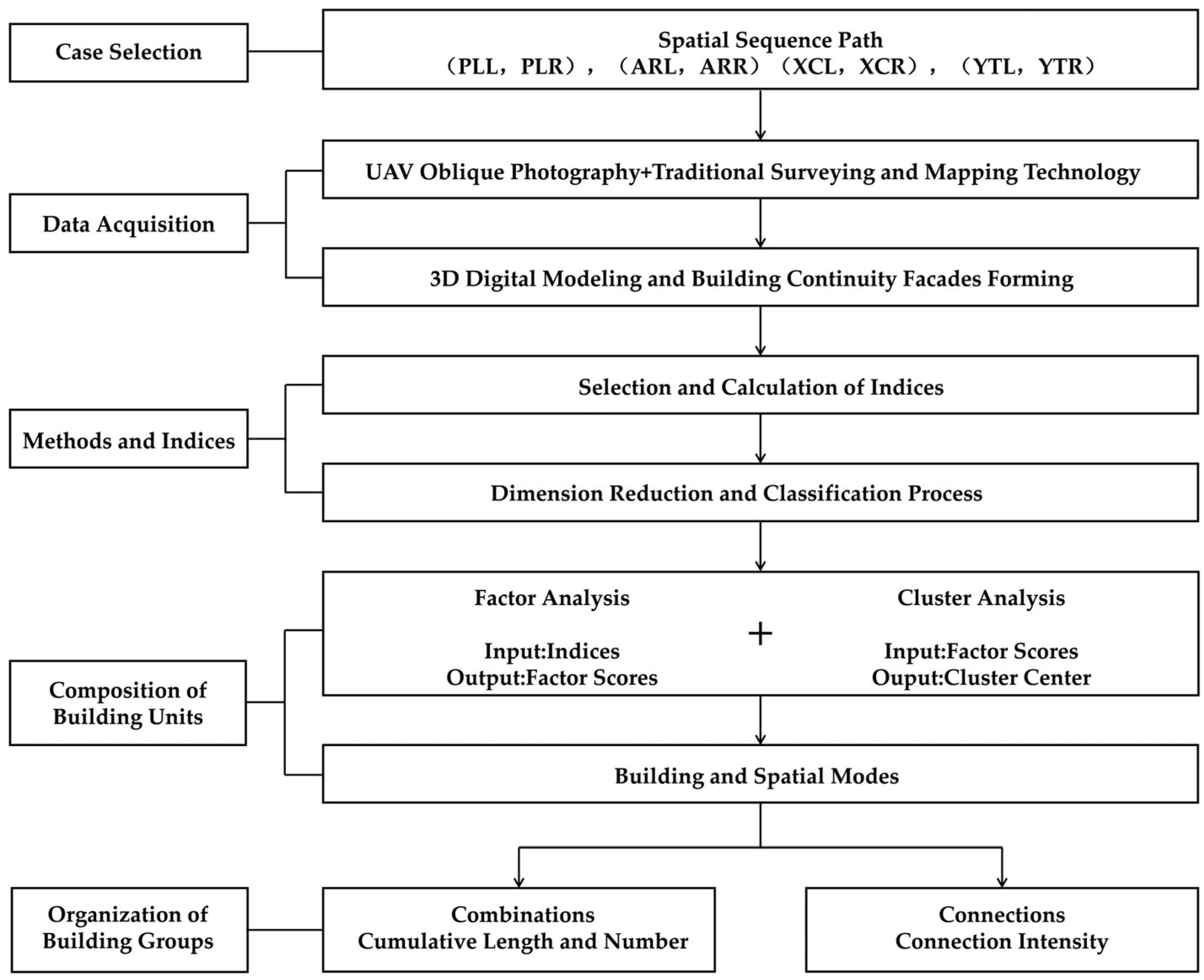
The overall scheme of operation was formed in
Figure 1. By integrating rapid 3D modeling through UAV oblique photography with traditional surveying methods, facade data from a large sample set were acquired. Quantitative data were then used to identify the factors influencing facade morphology, summarize typical facade patterns, and investigate the mechanisms of facade combination and connection. Factor analysis and cluster analysis were employed to reduce dimensionality and achieve systematic classification, thereby uncovering the underlying logic and value of the facades.
2.1. Case Selection
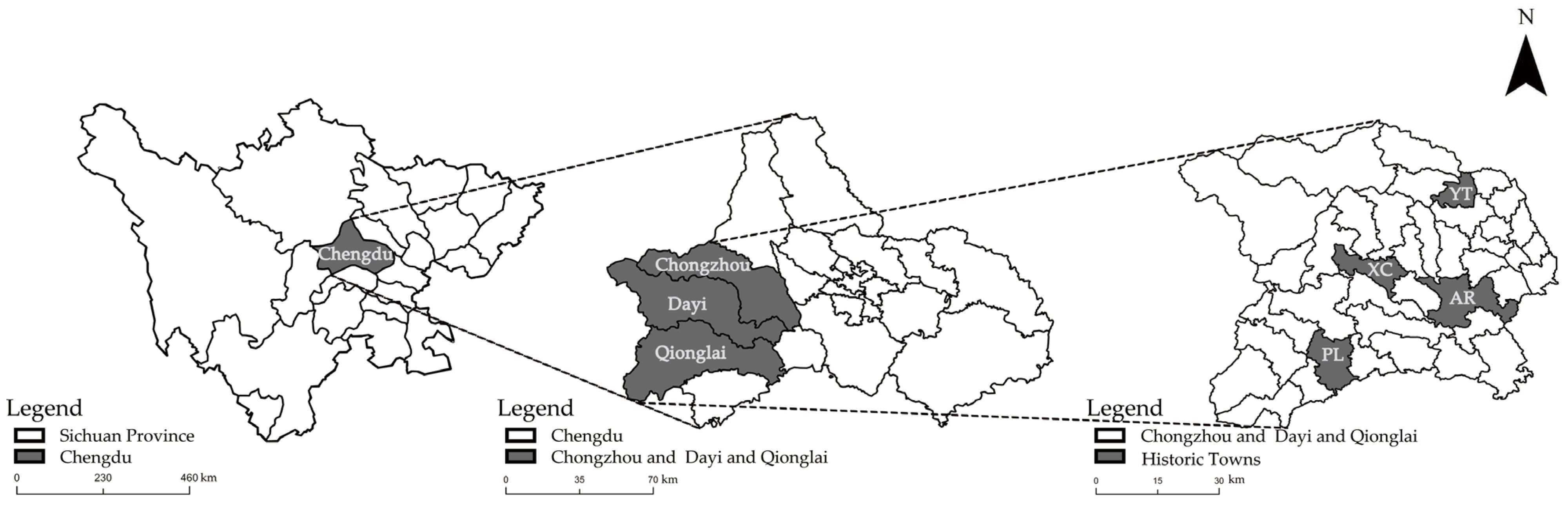
The selected case studies focus on the continuous building facades along the core spatial sequence corridors of the main streets in four historic towns: Pingle, Anren, Xinchang, and Yuantong in
Figure 2. These towns are located in Chongzhou City, Dayi County, and Qionglai City under the jurisdiction of Chengdu, and are representative examples of Sichuan’s historic towns. They were included in the National Historic and Cultural Towns list in the second, fourth, and seventh batches, respectively, and are also recognized as national-level tourist attractions. Collectively, they exemplify the typical center-oriented spatial pattern of historic towns in Chengdu plain, offering high theoretical research value and making them well-suited as the subjects of this study in
Table 1.
2.2. Data Acquisition
After determining the research subjects, it is necessary to extract the selected routes in Pingle, Anren, Xinchang, and Yuantong historic towns for facade processing, obtaining vector data of the building facades on both sides of the chosen routes. Traditional surveying techniques are time-consuming and labor-intensive. With the advancement of modern technology, 3D laser scanning [
18] and UAV oblique photography play significant roles in the surveying of building facades.
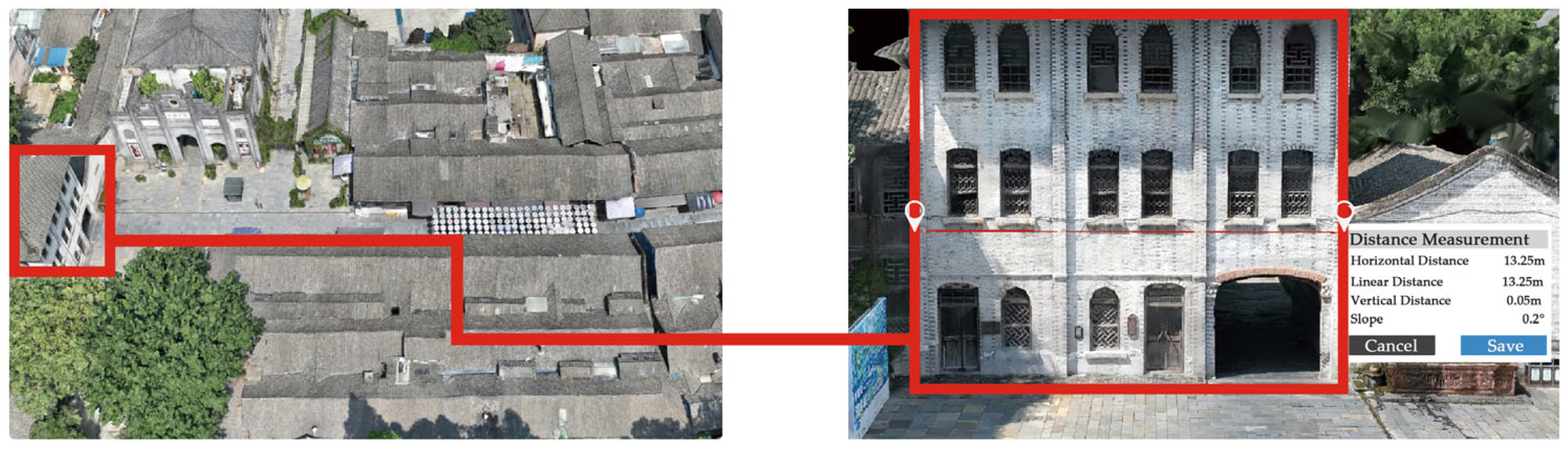
This study utilized the DJI Matrice 4 series (DJI, Shenzhen, China). Flight altitude must be selected based on the specific building being surveyed and local safety regulations, with different measurement tasks requiring distinct flight environments. The flight workflow was as follows: Open the DJI Pilot 2 app homepage—Select “Flight Plan” to access the flight plan library—Choose a “Rectangular Flight Plan” and define the flight area—Adjust relevant parameters—Execute oblique photography with the drone. Adjusting flight altitude affects the number of oblique photography images captured. During actual mapping, factors such as vegetation coverage, moving people, roof overhangs, and other obstructions can impact building facade mapping. Therefore, traditional manual surveying methods must be integrated to supplement building facade mapping.
Import flight results into DJI Terra or DJI Smart Map to efficiently complete detailed measurement and modeling of buildings, as shown in
Figure 3.
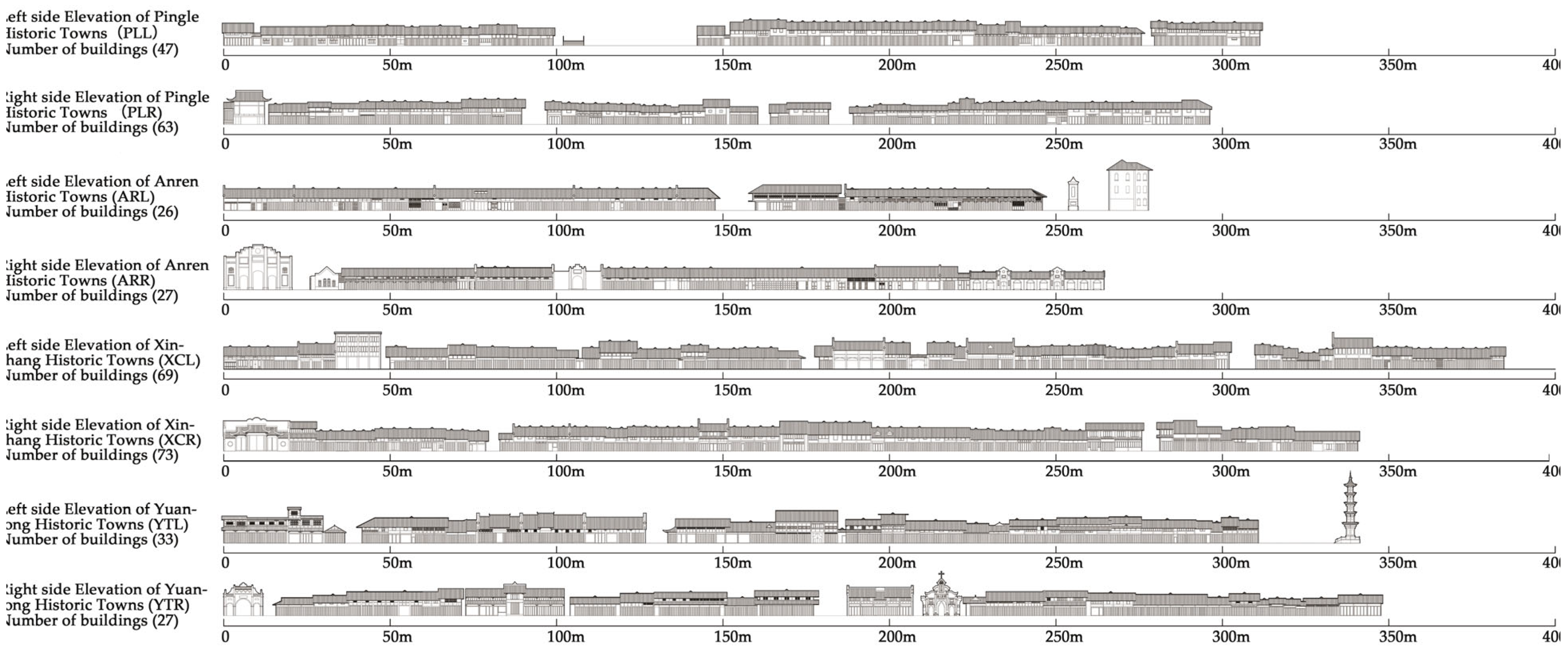
The field survey data were imported into a computer to establish a building database. Using DJI Terra, CAD, and other graphic software for processing, continuous street building facade models were constructed. A total of 365 building cases along the main streets were selected, including 110 buildings along Fuhui Street and Changqing Street in Pingle Historic Town, 53 buildings along Shuren Street and Yumin Street in Anren Historic Town, 142 buildings along Shangzheng Street and Xiazheng Street in Xinchang Historic Town, and 60 buildings along Qilin Street in Yuantong Historic Town. The left side of the human body (facing the building) was defined as the left facade (L), and the right side as the right facade (R), forming continuous building facades for eight street sections: the left and right facades of Pingle, Anren, Xinchang, and Yuantong Historic Towns, denoted as PLL, PLR, ARL, ARR, XCL, XCR, YTL, and YTR respectively in
Figure 4.
2.3. Methods and Indices
When processing facade information of historic town buildings, which involves feature perception [
19], it is necessary to select appropriate indicators to extract key elements of the building facades. The wealth of facade information requires dimensionality reduction of the extracted elements, followed by systematic classification. Factor analysis is commonly applied for dimensionality reduction, while cluster analysis is suitable for systematic classification. This study adopts a combined approach of factor analysis and cluster analysis, providing a methodological reference for the study of building facade sequences in historic towns.
Factor analysis is a classical multivariate statistical method whose core objective is to reveal the correlations among numerous observable variables through latent, unobservable factors. It extracts common factors as a statistical technique, thereby achieving data dimensionality reduction and exploratory deconstruction. Factor analysis is commonly used in marketing and consumer research, and in the fields of architecture and planning, it has also been applied to quantitative studies of urban spatial structure and form [
20], assessments of residential environment quality and community satisfaction [
21], investigations of intrinsic relationships between environmental behaviors [
22], and explorations of design elements in architecture [
23].
Cluster analysis involves grouping different objects into multiple categories or clusters based on similarity. Objects within the same cluster should exhibit high cohesion, while those in different clusters should demonstrate high dispersion. Cluster analysis requires the selection of appropriate clustering methods and measurement techniques. Common clustering methods include K-means clustering, hierarchical clustering, and two-step clustering, while measurement techniques primarily include squared Euclidean distance and the Chi-square measure. In the fields of architecture and planning, cluster analysis has been applied in areas such as urban morphology and functional zone identification, community classification and profiling, urban network and regional system studies, user behavior and public preference analysis, and spatial distribution characteristics of buildings [
24]. It enables the automated and scientific identification of spatial patterns within multidimensional data, serving as a powerful tool for regional division, typological generalization, and precise policy implementation.
Gestalt, originating from the German psychological concept, centers on principles of visual perception, including the law of totality, figure-ground relationships, and organizational principles. It simplifies complex visual scenes and is widely applied in the study of building facades [
25]. Human vision divides perceived images into two components: figure and ground. In building facades, the entire facade is treated as the “ground,” while elements such as doors, windows, and roofs are regarded as the “figure.” Research focuses on the proportional and scalar relationships between the “ground” and the “figure.”
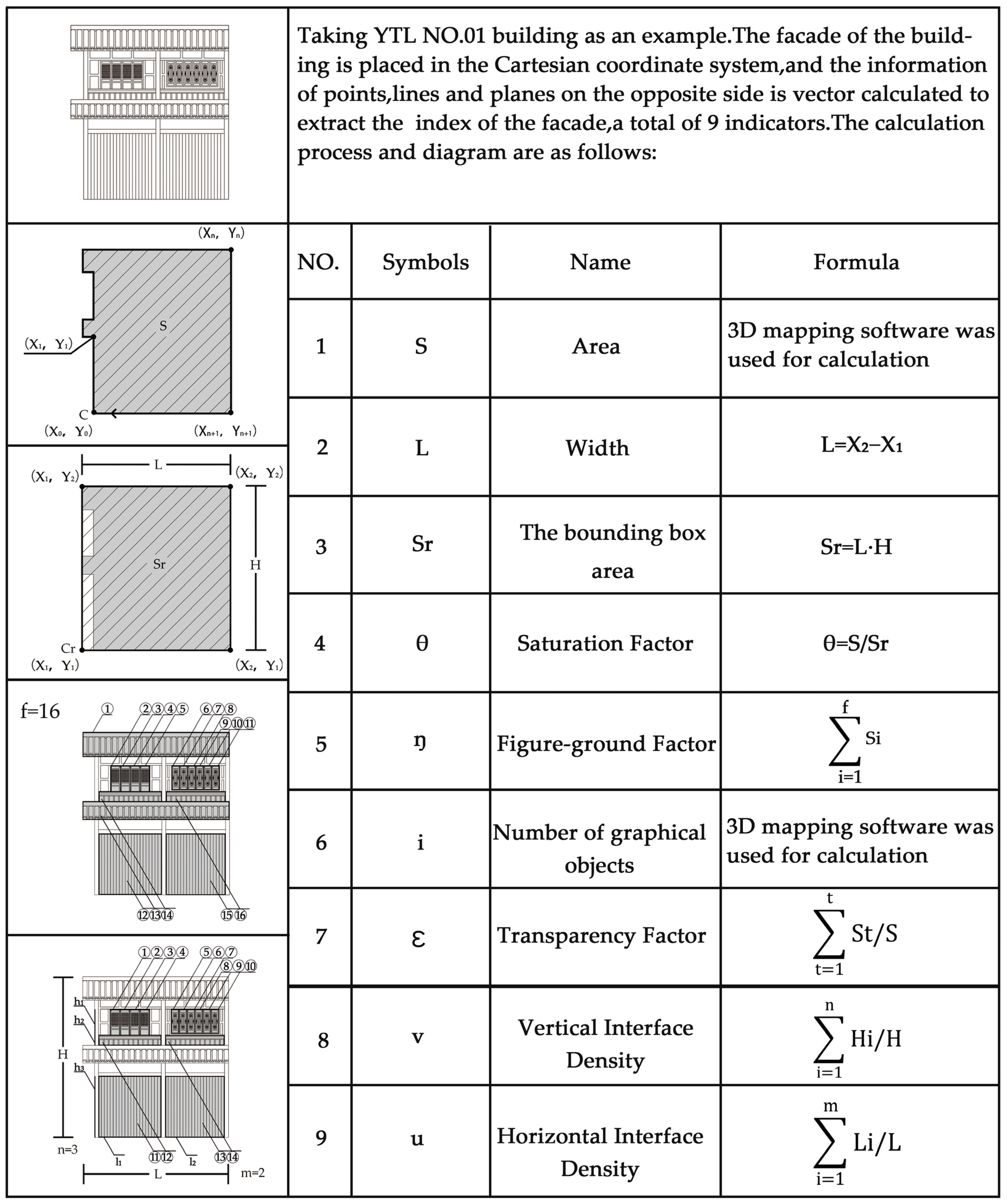
Based on the existing literature regarding building facades [
26], in this study, building facade data were constructed within a Cartesian coordinate system. From point, line, and polygon vector information, nine feature-related metrics were extracted, including facade area, width, bounding box area, saturation factor, horizontal interface density, vertical interface density, number of graphic blocks, transparency factor, and figure-ground factor. These metrics integrate both holistic and local characteristics to explore the interrelationships between the overall appearance of buildings and detailed features such as doors and windows [
27]. Area (S), width (L), bounding box area (Sr), and saturation factor (θ) reflect the overall characteristics of building facades, while horizontal interface density (µ), vertical interface density (ν), number of graphic blocks (i), transparency factor (ε), and figure-ground factor (η) capture the local features of building facades.
At the holistic indicator level, the building facade area (S) serves as a fundamental variable describing the overall shape, which can be measured quickly and accurately using 3D drafting software. Width (L) and height (H) define the maximum extent of the building facade within the Cartesian coordinate system. The bounding box area (Sr) is derived from the maximum rectangular area formed by width (L) and height (H). The saturation factor (θ) is defined as the ratio of the building facade area (S) to the bounding box area (Sr), representing the degree of completeness or filling extent of the facade.
At the hierarchical indicator level, based on the figure-ground theory, human visual perception divides an observed image into two parts: figure and ground. In the context of building facades, the entire facade is treated as the “ground,” while elements such as doors, windows, roofs, and components are regarded as “figures,” establishing a two-dimensional figure-ground relationship. This framework allows for the study of proportional and scalar relationships between the “ground” and “figures” [
28]. The figure-ground factor (η) refers to the sum of the areas of all figures. The transparency factor (ε) is defined as the ratio of the area of virtual components (e.g., doors and windows) to the total facade area. The number of graphic blocks (i), drawing on the concept of fragmentation from landscape ecology, is used to describe the quantity of graphic elements on the building façade [
29]. The horizontal interface density (µ) and vertical interface density (ν) refer to interface density metrics informed by prior research on street interface characterization [
30]. In this study, horizontal interface density (µ) is calculated as the ratio of the sum of the horizontal projection widths of virtual figures (e.g., doors and windows), where overlapping projections are counted only once, to the facade width (L). Similarly, vertical interface density (ν) is defined as the ratio of the sum of the vertical projection lengths of virtual figures, with overlapping projections counted once, to the facade height (H).
As illustrated in
Figure 5, these nine metrics constitute a quantitative analytical framework for characterizing the building facades along historic town streets.
3. Results
3.1. Influencing Factors of Architectural Units
Data statistics were conducted on 365 architectural units across the four historic towns, employing nine holistic and hierarchical indicators. Factor analysis was performed using SPSS 27 software. The analytical process included assessing the feasibility of the original variables, selecting the method for factor extraction, rotating the extracted factors, and interpreting and naming the rotated factors. Finally, factor scores were calculated to determine the correlations between the factors and the variables.
3.1.1. Feasibility Assessment for Factor Analysis
To assess the feasibility of factor analysis, the sample size and variable indicators must be comprehensively evaluated during data processing and validation. Factor analysis requires continuous variables, and discrete categorical variables should be excluded. The number of cases selected should be at least five times the number of variables. In this study, all nine indicators are continuous variables, and the ratio of sample size to the number of variables is 40.5, significantly exceeding the minimum requirement of 5.
During the data validation phase, this study employs the Kaiser-Meyer-Olkin (KMO) measure and Bartlett’s test of sphericity to evaluate the correlations among the indicators. The KMO value ranges from 0 to 1, with values closer to 1 indicating stronger correlations among variables and greater suitability for factor analysis. In practice, the KMO value should be above 0.5, and the significance level of Bartlett’s test of sphericity should be below 0.01.
In this study, the KMO measure for the nine variable indicators is 0.691 (>0.5), and the significance level of Bartlett’s test is 0.000 (<0.01), indicating a statistically significant difference between the correlation matrix and the identity matrix, thereby meeting the requirements for factor analysis in
Table 2. In conclusion, the architectural cases in this study are suitable for factor analysis.
3.1.2. Factor Construction and Rotation
During the factor construction process, it is necessary to extract a small number of latent common factors that can explain the majority of the data variance. Factor loadings indicate the degree of correlation between a variable and a factor, ranging from −1 to 1. A larger absolute value of the loading suggests a closer relationship between the variable and the factor. Principal Component Analysis (PCA) is the most commonly used method, as it maximizes the components explaining the total variance of the data.
In this study, the correlation matrix is shown in the
Table 3: the communality of each original variable is initially 1, and the extracted values reflect the proportion of variance explained by the common factors before rotation. The communality values for all original variables are high (>0.7), indicating that the extracted factors effectively explain these variables with strong correlations and high interpretability.
Factor rotation is a critical step in factor analysis. After extracting the initial factors, the factor model is transformed through rotation to achieve a simpler and more interpretable factor loading matrix. Although factor extraction ensures orthogonality, interpretability still needs to be enhanced through rotation. The rotated factor loading matrix is more concise, facilitating the naming and interpretation of common factors.
The total variance explained is shown in the common factor variance table of components in
Table 4. After rotating the factors, a total variance explained chart can be obtained to measure the ability of the extracted factors to explain the variability in the original data. This chart visually displays the contribution of each factor to the total variance, allowing researchers to select the number of factors to retain based on their needs. The common criterion is to retain factors with initial eigenvalues greater than 1. In this study, among the nine component indicators, only the first three had initial eigenvalues greater than 1, specifically 4.714, 2.229, and 1.021, and were therefore retained. The cumulative eigenvalues of these three factors reached 88.492%, meeting the threshold for sufficient explanatory power and effectively interpreting the original variables. The unexplained possibility may be due to the omission of underlying cultural factors. The sum of squared loadings obtained through rotation showed slight changes in the cumulative variance contribution values, but the overall cumulative variance contribution rate remained unchanged, confirming the stability of the overall structure of the factor model.
3.1.3. Calculation of Factor Scores
After factor construction and rotation, three common factors provide strong explanatory power for the initial nine variables. The absolute values of the loadings indicate the strength of the relationship between the original variables and the common factors—values closer to 1 signify greater contribution of the original variable to the common factor. The rotated component matrix for this study is presented in the
Table 5.
In the rotated component matrix of this study, Factor 1 shows high loadings (above 0.83) on facade area, figure-ground factor, width, bounding-box area, and number of graphic blocks, indicating that these five initial variables share common characteristics. It reflects the overall volume of the building facade: the higher Factor 1 is, the larger the facade area. Therefore, Factor 1 is defined as the Volume Factor.
Factor 2 exhibits high loadings (above 0.87) on area saturation and horizontal interface density, suggesting that these two initial variables share common traits. It captures the overall shape of the facade and its degree of completion in the horizontal plane: the higher Factor 2 is, the greater the facade’s saturation, the more its shape tends toward completeness and regularity, and the lower the complexity of the facade’s outline. Hence, Factor 2 is defined as the Form Factor.
Factor 3 displays high loadings (above 0.85) on vertical interface density and the virtual coefficient, implying that these two initial variables possess common features. It represents the area occupied by doors, windows, and other transparent elements: the higher Factor 3 is, the larger the virtual area of the facade. Consequently, Factor 3 is defined as the Transparency Factor.
Based on the rotation and definition of common factors, the linear relationships between the initial variables and the common factors were examined, yielding the component score coefficient matrix, as shown in the
Table 6.
Factor scores are obtained by multiplying the values of the original variables by their corresponding coefficients in the component score coefficient matrix and summing the results. The calculation formula is as follows:
The linear equations for the scores of the three common factors are as follows:
In the study of street building facades in historic towns of Chengdu Plain, the Volume Factor (Factor 1), Form Factor (Factor 2), and Transparency Factor (Factor 3) collectively explain 88% of the information on building facades. Therefore, the research concludes that the main influencing factors on building facades in historic towns of the region are volume, form, and transparency. These three factors exhibit high loading control and influence over the initial variables and demonstrate linear relationships with them.
3.2. Typical Patterns of Street Building Facades
Based on the results of factor analysis, cluster analysis was adopted to further summarize and classify the building facades along the streets of historic towns in Chengdu Plain. Cluster analysis groups a set of samples into several categories based on their intrinsic similarities, aiming to maximize homogeneity within each category and heterogeneity between categories. This study employs cluster analysis to uncover inherent spatial structural patterns from the quantitative data of 365 traditional historic town spatial samples, identify spatial types with similar characteristics, and provide a scientific basis for subsequent categorized conservation and renewal design.
3.2.1. Cluster Analysis and Method Selection
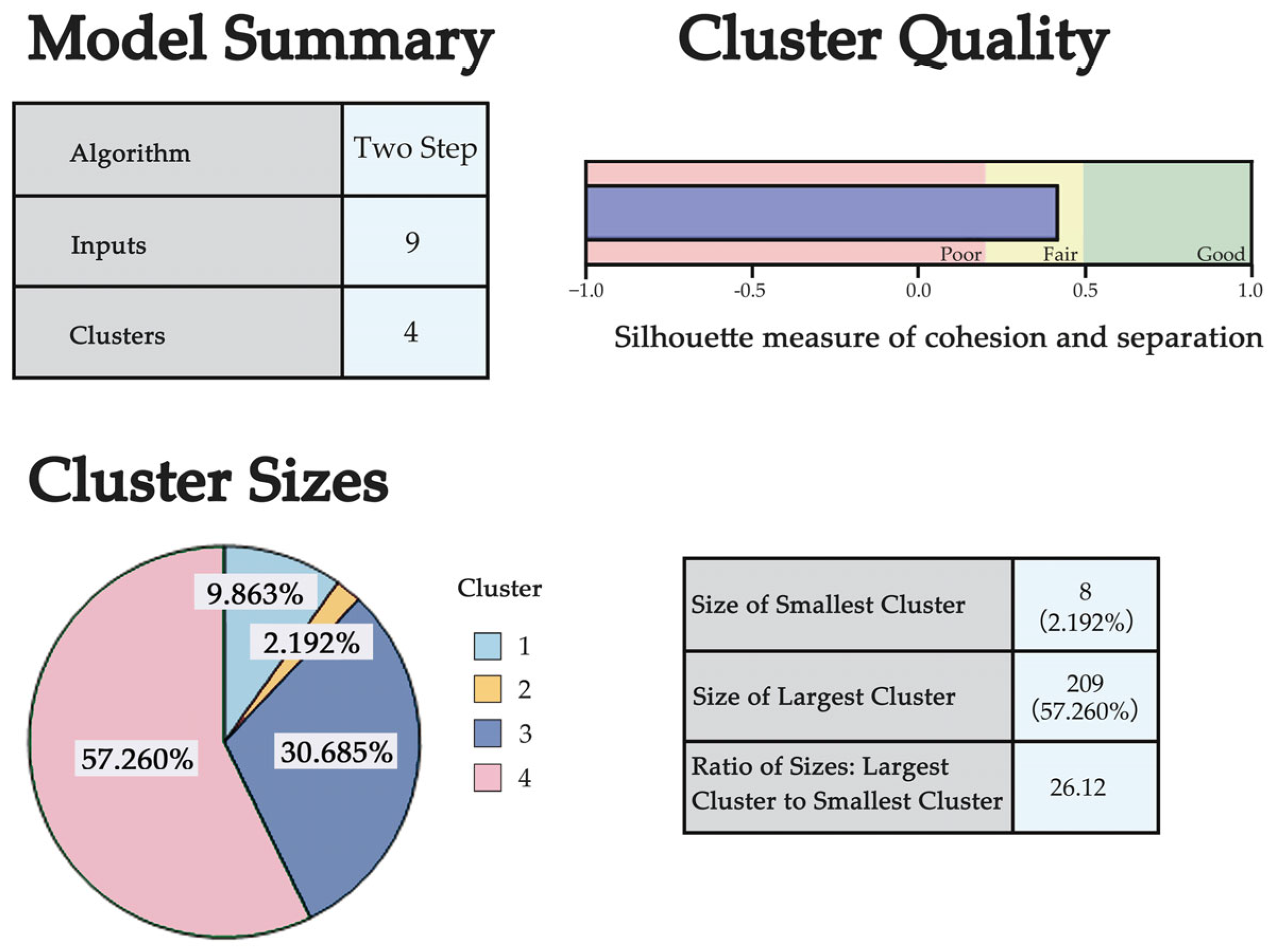
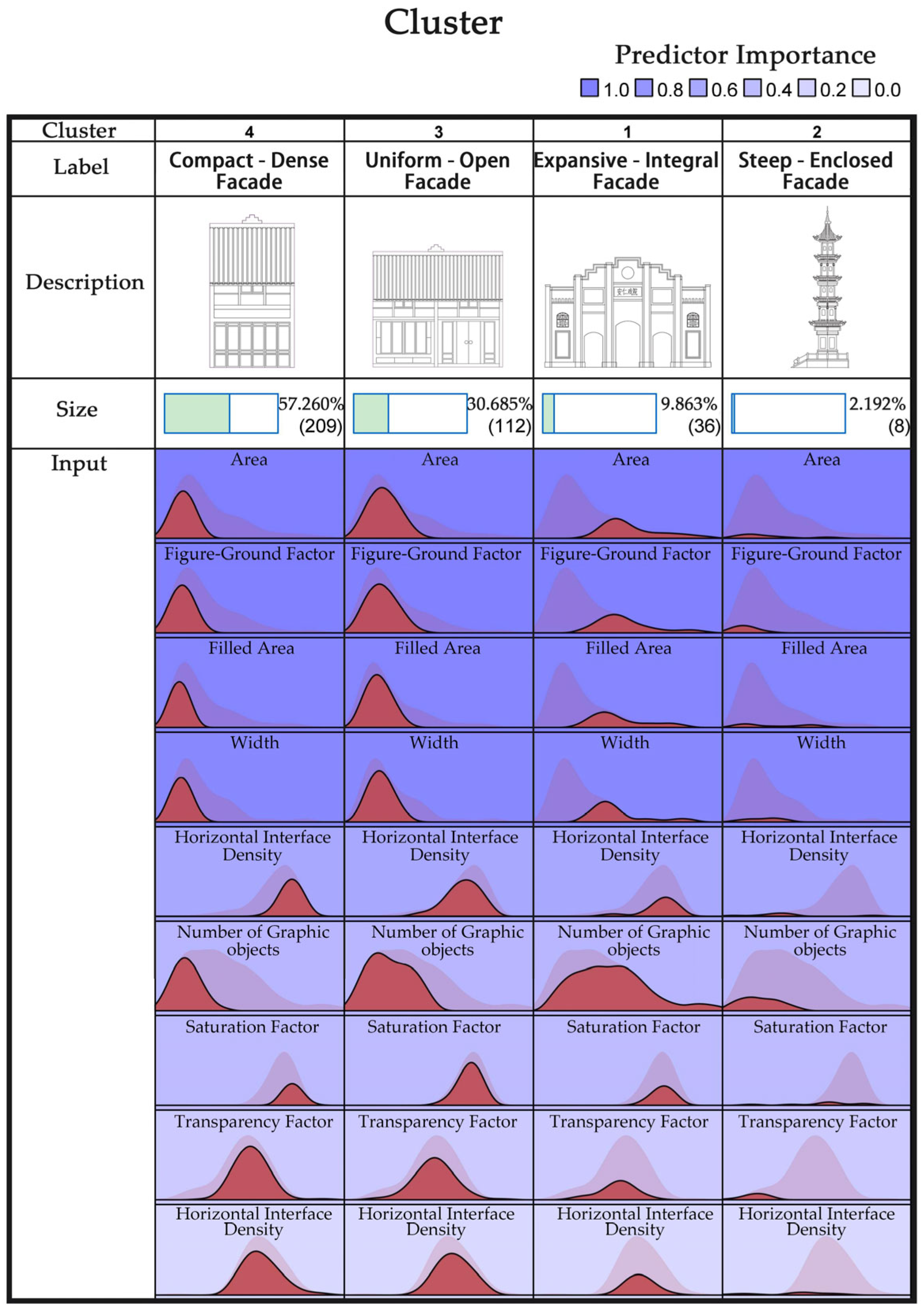
Common clustering methods include K-Means clustering, two-step clustering, and hierarchical clustering. The choice of method depends on the characteristics of the data samples and research needs, often requiring iterative experimentation and parameter adjustment to achieve optimal results. Two-step clustering is a two-stage clustering approach. Its core idea is to first use an efficient method for initial partitioning, then refine this initial result through optimization, thereby overcoming the sensitivity of single-stage clustering algorithms to initial values. In this study, the two-step clustering method was adopted, with log-likelihood distance used as the measurement metric for systematic clustering. The four resulting categories accounted for 2.2%, 9.9%, 30.7%, and 57.3% of the dataset, respectively, as illustrated in the accompanying
Figure 6.
3.2.2. Cluster Centers and Data Characteristics
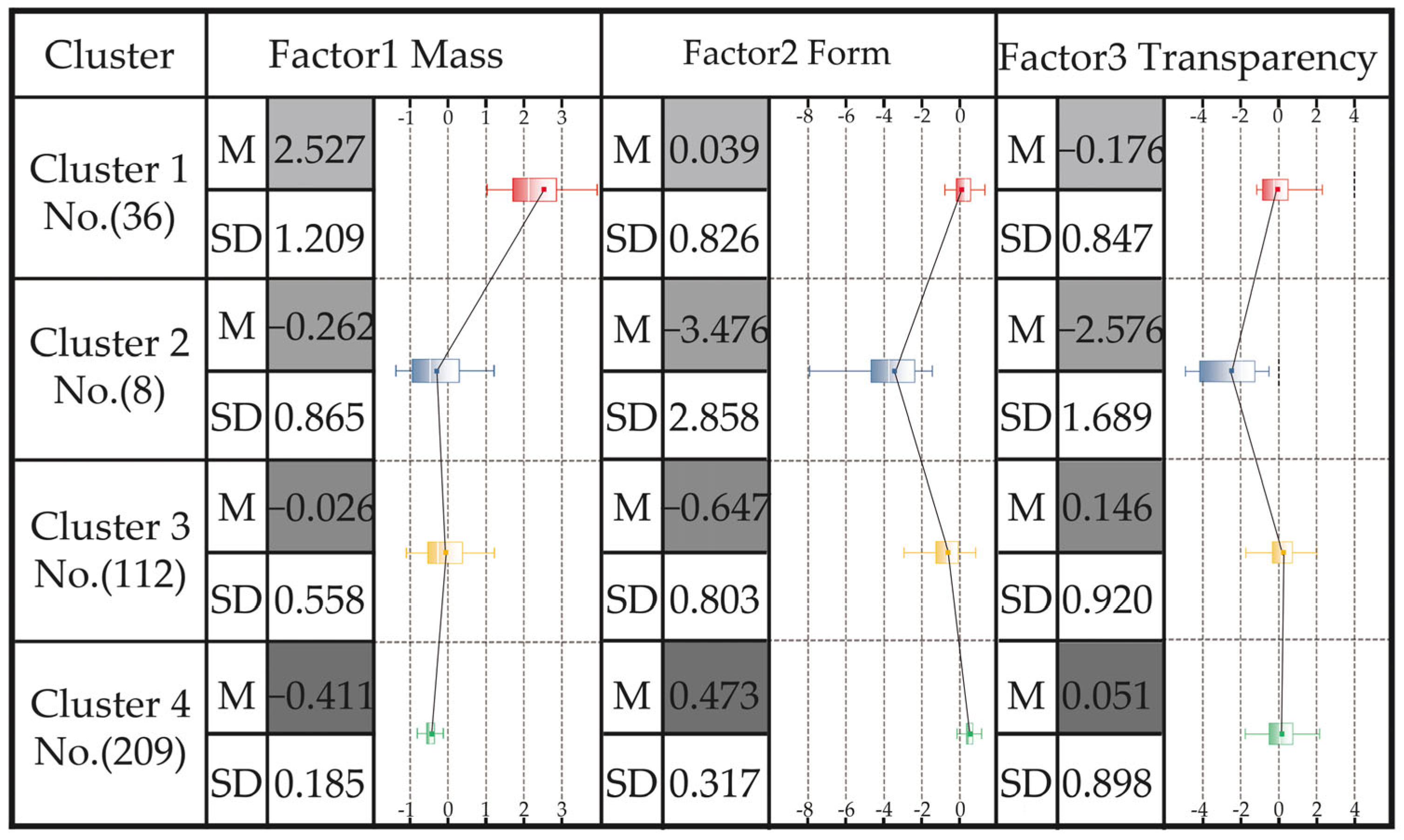
Using the scores of the three common factors under each case as input variables for cluster analysis, the means and standard deviations of the three factors across the four categories were calculated, revealing the distribution of cluster centers and data characteristics for each of the four clusters, as illustrated in the
Figure 7.
The cluster center serves as the representative or average point of a cluster, reflecting the core position of all data points within that cluster in the feature space. It aids in characterizing and distinguishing different cluster categories. By comparing the means, standard deviations, and distribution characteristics of the three factors across the four categories, each category was defined and interpreted. The data levels are described and defined according to the four categories: low (I), moderate (II), high (III), and very high (IV).
Cluster 1 is characterized by a very high volume coefficient (IV), a high form coefficient (III), and a moderate transparency coefficient (II). Buildings in this category are distinguished by their large scale, high degree of formal completeness and regularity, and relatively low transparency. They primarily include large traditional residences such as mansions and major public buildings like temples. Cluster 1 is defined as the “Grand-Integral Facade” type, comprising 36 building cases.
Cluster 2 is characterized by a moderate volume coefficient (II), a low form coefficient (I), and a low transparency coefficient (I). Buildings in this category are typically small in scale, exhibit extremely low formal completeness with highly complex shapes, and possess very low transparency. They are mainly represented by structurally intricate small-to-medium landscape structures such as Ziku Pagoda, and public buildings with enclosed facades. Cluster 2 is defined as the “Steep-Enclosed Facade” type, comprising 8 building cases.
Cluster 3 is characterized by a high volume coefficient (III), a moderate form coefficient (II), and a very high transparency coefficient (IV). Buildings in this category are generally large in scale, exhibit low formal completeness with relatively complex shapes, and possess extremely high transparency. They are primarily represented by medium-sized traditional residences with intricate forms and high levels of transparency. Cluster 3 is defined as the “Uniform-Sparse Facade” type, comprising 112 building cases.
Cluster 4 is characterized by a very low volume coefficient (I), a very high form coefficient (IV), and a high transparency coefficient (III). Buildings in this category are typically very small in scale, exhibit extremely high formal completeness with highly regular shapes, and possess relatively high transparency. They are mainly represented by small traditional residences with exceptionally regular forms and considerable transparency. Cluster 4 is defined as the “Compact-Dense Facade” type, comprising 209 building cases, making it the most prevalent facade unit pattern in the historic towns.
Based on the above analysis, the four identified categories are designated as T1, T2, T3, and T4, respectively. In summary, street-building units in historic towns of Chengdu Plain generally exhibit four typical facade morphologies: Grand-Integral Facade (T1), Steep-Enclosed Facade (T2), Uniform-Sparse Facade (T3), and Compact-Dense Facade (T4). Among these, T1 and T2 account for a smaller proportion, while T3 and T4 are more prevalent. Building on the definitions and interpretations of each cluster, a cluster summary model can be established in
Figure 8, supplemented with detailed information on the basic indicators of each cluster.
3.3. Spatial Sequence of Street Building Facades
3.3.1. Building Distribution and Spatial Pattern
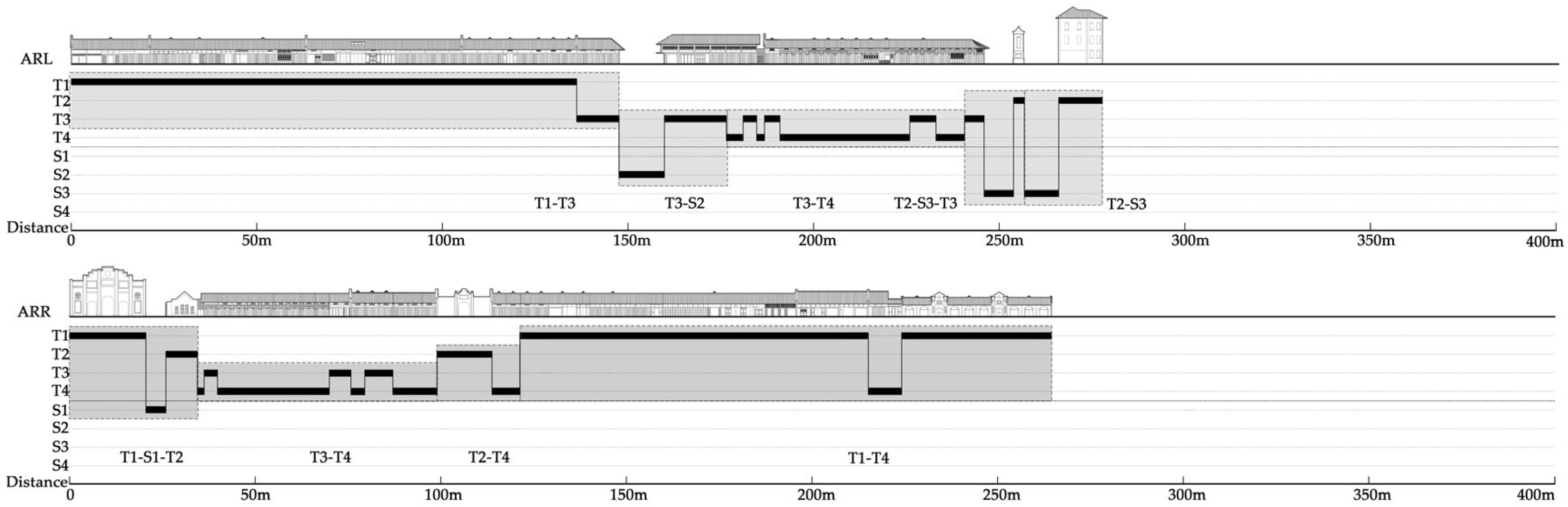
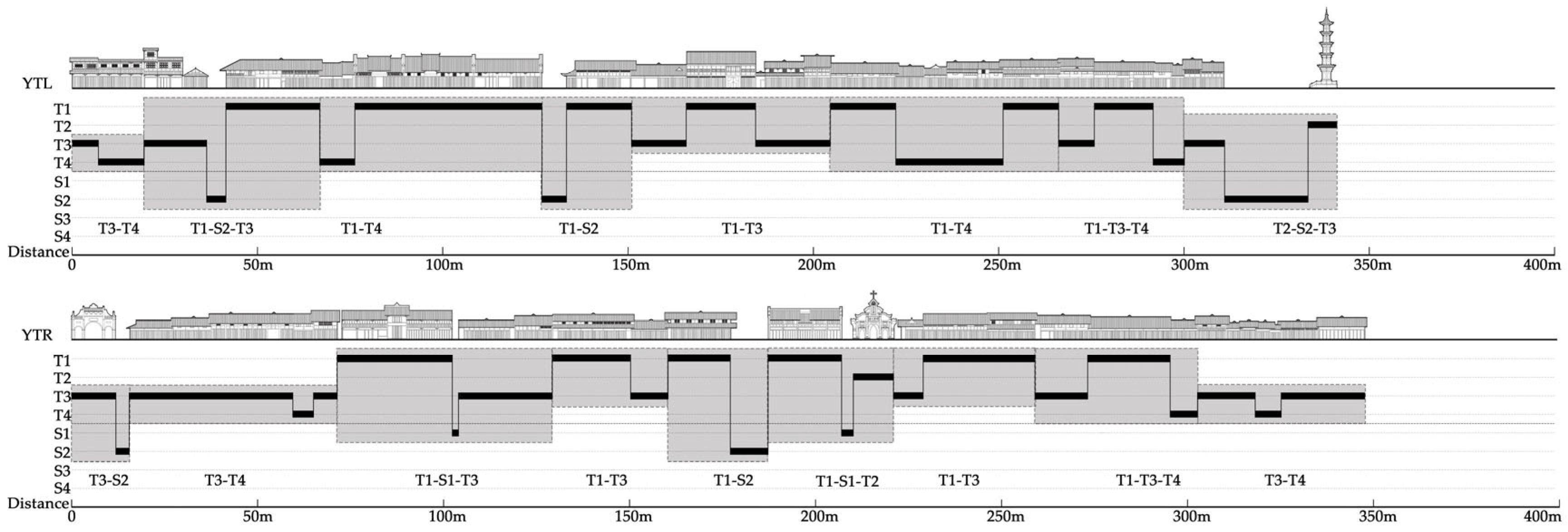
Considering the actual layout of historic towns, intervals exist between building units—such as street corners, landscape trees, and rest seating areas. Based on their inherent attributes, this study introduces four supplementary spatial interface types: Alley Space Interface (S1), Street Space Interface (S2), Landscape Space Interface (S3), and Street Furniture & Small-Structure Interface (S4). These are integrated, together with the four building facade categories (T1–T4), into the continuous facade sequences of Ping’le, Anren, Xinchang, and Yuantong historic towns, thereby constructing a comprehensive street-facade model for each of the four towns. The resulting facade model of a historic town is thus composed of the four primary building facade types and the four supplementary spatial interface types, collectively shaping the distinctive local character of street architecture in Chengdu Plain historic towns.
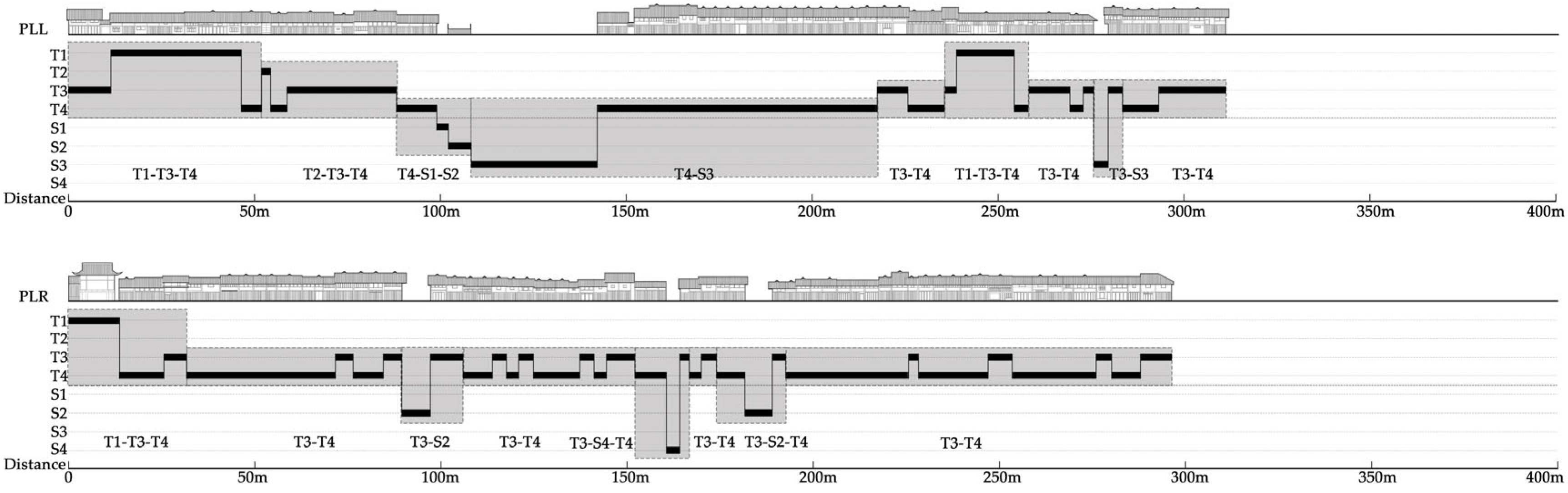
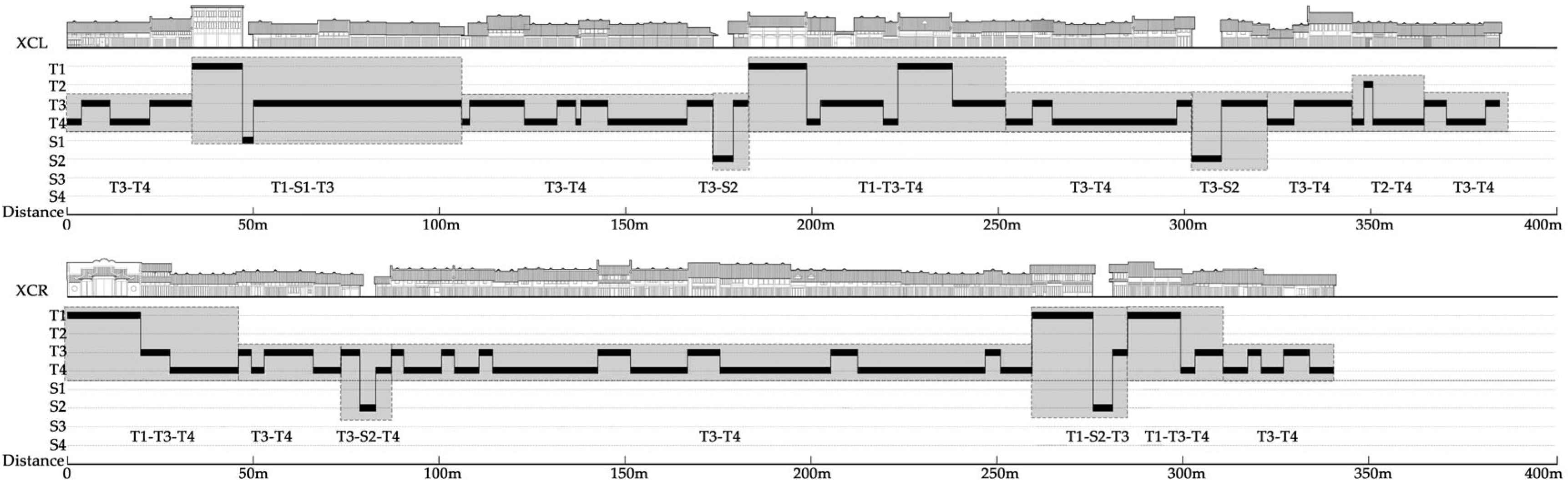
The
Figure 9,
Figure 10,
Figure 11 and
Figure 12 illustrates the distribution and spatial morphology of buildings along the streets of the historic town. It can be observed that buildings serve as the key elements dominating the spatial sequence of the town’s streets, while landscape spaces and street furniture act as supplementary and modulating components to the building sequence. Together, they form a layered and rhythmically ordered street interface system.
3.3.2. Combination of Building and Supplementary Spatial Patterns
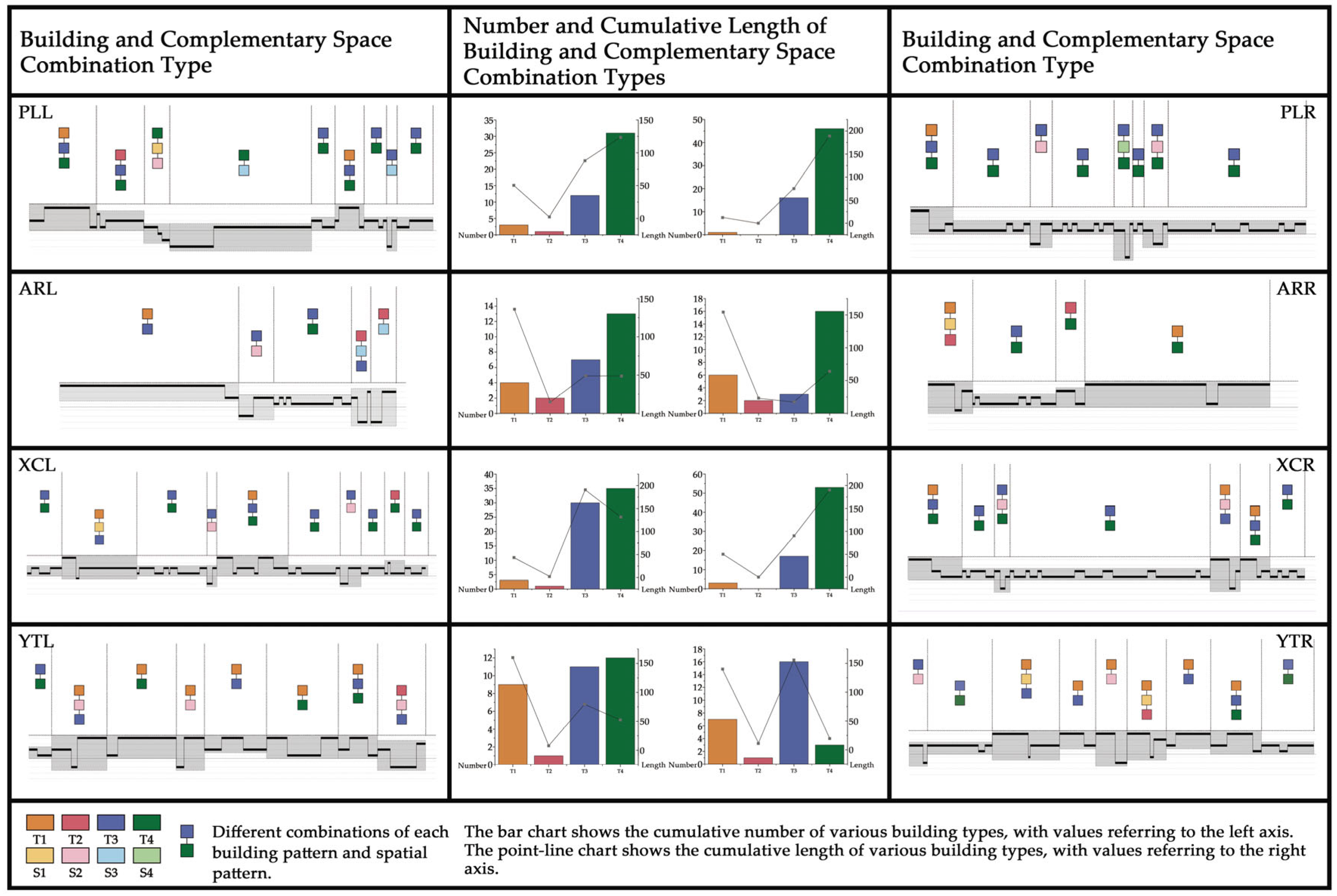
The selected street lengths for Pingle, Anren, Xinchang, and Yuantong historic towns are 311 m, 278 m, 384 m, and 348 m, respectively. The street-interface models of the four towns are composed of four building facade types and four supplementary spatial interface types, jointly shaping the rhythmic and distinctive street spatial style characteristic of Chengdu Plain historic towns. Different building facade types interact with supplementary spatial types, generating diverse building-space combination patterns and thereby forming street spatial sequences. Through statistical analysis of the combination pattern counts, cumulative lengths, and comparative typology of the building-supplementary space combinations in the street interfaces of the four towns, this study explores the regularity of spatial sequences in the historic town streets of the region in
Figure 13.
In terms of the number of combination patterns between building spatial types and supplementary spatial types, the street spaces of the four historic towns consist of 4 to 7 combination patterns, each composed of 2 to 3 building facade types or combinations of building facades and supplementary spatial types. Regarding building spatial types, a generally similar proportional relationship is observed: T4 > T3 > T1 > T2, indicating that T3 and T4 types dominate the street facades, with T1 and T2 types playing a secondary role. On the right-side street of Yuantong Historic Town, however, the proportion of building types shows T3 > T1 > T4 > T2, suggesting that medium- to large-scale buildings are more prevalent there. As for supplementary spatial types, the proportional distribution across the towns also exhibits similarity: S2 > S1, S2 > S4, reflecting the dominant role of street space interfaces (S2) among the supplementary spatial categories.
In terms of cumulative length of building spatial types and supplementary spatial types, the proportion of building spatial length is relatively high in all four historic towns, while the proportion of supplementary spatial length is comparatively low. In Pingle Historic Town, the cumulative length of building types shows T4 > T3 > T1 > T2, consistent with the distribution of building type counts, indicating that outward-oriented residential buildings dominate the town. In Anren Historic Town, the cumulative length of building types displays T1 as the largest and T2 as the smallest; due to the substantial scale of mansion complexes, large multi-functional buildings occupy a prominent proportion of the street dimension. In Xinchang Historic Town, the cumulative length of T3 and T4 exceeds that of T1 and T2, aligning with the distribution of building type counts, suggesting that outward-oriented residential buildings also prevail here. In Yuantong Historic Town, the cumulative length of T1 and T3 is greater than that of T2 and T4, where merchant residences such as the Huang Family Compound and Luo Family Compound, with their considerable scale, contribute significantly to the cumulative facade length along the street.
In terms of combination types between building spatial forms and supplementary spatial forms, all four historic towns share the common T3-T4 combination, which is dominated by outward-oriented residential buildings. Additionally, the T3-S2 building-supplementary space combination appears in all four towns, often occurring at street corners. Furthermore, each town exhibits distinctive combination types, such as T3-S3 in Pingle, T2-S3 in Anren, T3-S2-T3 in Xinchang, and T2-S2-T3 in Yuantong. Based on the analysis of building type counts and cumulative lengths in
Table 7, T4 serves as the core pattern in the typological combinations of Chengdu Plain historic towns, playing a dominant role in the architectural environment of traditional settlements in this region.
4. Discussion
This study conducted field surveys in four representative historic towns in Chengdu Plain—Pingle, Anren, Xinchang, and Yuantong—selecting the street-facing facades along their main streets as research objects. Through the collection of facade information and the construction of continuous facade models, factor analysis and cluster analysis were applied to explore the influencing factors, typical morphological patterns, and the mechanisms of combination and connection between buildings and supplementary spaces in the historic towns of the region. The following sections provide a detailed discussion of the three research questions.
The building facade units along the streets of historic towns in Chengdu Plain are primarily influenced by the volume factor, the form factor, and the transparency factor.
The study collected facade information from 365 building units across four historic towns and selected nine continuous variables as initial inputs for factor analysis. The feasibility of factor analysis was verified using the KMO measure, and principal component analysis was applied to rotate and construct the factors, resulting in the extraction of three common factors: volume factor, form factor, and transparency factor. The volume factor reflects the overall scale of buildings; the form factor captures the complexity of facade outlines through area saturation; and the transparency factor represents the proportion of void areas such as doors and windows. This analysis provides a deeper understanding of the compositional logic underlying building facades in Chengdu Plain historic towns. It is noteworthy that building facades in different regions exhibit distinct local characteristics, and each area should be treated as a unique geographical unit. The selection of initial variables significantly influences the outcomes of factor analysis. Therefore, indicators appropriate to the specific research subject should be carefully chosen for analysis.
The typical morphological patterns of street-building facades in Chengdu Plain historic towns can be summarized as follows: T1: Grand-Integral Facade, T2: Steep-Enclosed Facade, T3: Uniform-Sparse Facade, T4: Compact-Dense Facade.
Based on the factor analysis, a two-step cluster analysis was performed on the scores of the three common factors from 365 building units. Combining scale and facade morphological perspectives, four typical building facade patterns were identified: T1: Grand-Integral Facade, T2: Steep-Enclosed Facade, T3: Uniform-Sparse Facade, T4: Compact-Dense Facade. Category T1 primarily includes large-scale mansions and public buildings such as the ancient theater stage in Pingle, the theater and mansion complexes in Anren, Bishan Temple in Xinchang, and the Huang Family Compound and Luo Family Compound in Yuantong. These structures are characterized by grand scale and rich compositional integrity, serving as core architectural landmarks in the historic towns. Category T2 mainly comprises commemorative structures such as the Wanchengyan Monument in Anren and the Ziku Pagoda in Yuantong. These buildings are typically solid, enclosed, and functionally symbolic. Category T3 represents ordinary residential buildings in the towns, which exhibit balanced proportions and moderate articulation. Category T4 constitutes the most numerous facade type in the towns. These facades are horizontally dense, rich in detail, and often correspond to mixed-use commercial-residential buildings lining the streets. By linking the cluster membership variables from the cluster analysis with actual building cases, the rationality of the factor analysis and cluster analysis results is further substantiated. It should be noted that cluster analysis encompasses various clustering methods and distance measures, and the use of different classification approaches or metrics may lead to divergent clustering outcomes. The data and cluster categories presented above are derived from the selected sample and do not represent all possible facade morphological styles in Chengdu Plain historic towns. As the building sample expands, the classification of facade types is expected to become more detailed and refined.
The street spaces of historic towns in Chengdu Plain exhibit both distinct regional characteristics and shared common features in terms of building combinations and spatial sequences.
Although the four historic towns are geographically independent, they share similar architectural patterns and spatial sequence characteristics. Their main streets consistently present a linear, densely packed interface of shop-house integration: street-front buildings typically follow the “shop in front, residence behind” or “shop below, residence above” layout, forming a continuous, high-density commercial-living facade. Eaves and corridors create transitional gray space, contributing to a unified and continuous street interface. Prominent nodal buildings stand out as visual and spatial anchors: at street turns, intersections, or endpoints, large public buildings or mansion compounds often serve as controlling elements in the streetscape. Symbolic structures punctuate the street sequence: uniquely scaled and shaped constructions, such as Ziku Pagoda or monuments, are strategically placed as focal points along the street. Collectively, these four towns exemplify the typical street prototype of commercialized forest-shaded settlements in Chengdu Plain. Through scientific factor analysis and cluster analysis, this study quantitatively verifies and refines the long-qualitatively-described regional features from the perspective of building facade morphology. The findings provide robust data support for understanding the spatial gene of Western Sichuan historic towns and offer a reference for the preservation of streetscape character in these towns, as well as for conservation efforts in other regions.
5. Conclusions
This study conducted a quantitative analysis of 365 street-facing building facades in four representative historic towns in Chengdu Plain—Pingle, Anren, Xinchang, and Yuantong. Using factor analysis and cluster analysis, it deconstructed and summarized their regional characteristics from the perspective of facade morphology. The main conclusions are as follows:
The volume factor, form factor, and transparency factor govern and influence the facade composition of architectural units in historic towns of Chengdu Plain. These three factors quantify the morphological attributes of building facades from different perspectives and collectively explain approximately 88.5% of the morphological information, demonstrating high explanatory power. Therefore, it can be concluded that the volume factor, form factor, and transparency factor are the primary factors affecting facades, providing a scientific dimensional framework for the objective description and comparison of facade morphology in historic towns.
The typical compositional patterns of building unit facades in Chengdu Plain historic towns can be classified into four distinct facade morphological archetypes: Grand-Integral Facade; Characterized by grand scale and full, coherent composition. Such facades are few in number but possess strong visual dominance in the townscape, often represented by core buildings such as theaters, temples, and large mansions, serving as spatial anchors and visual landmarks along the streets. Steep-Enclosed Facade; Identified by tall and narrow proportions, low filling degree, and high enclosure. These facades typically include symbolic structures like character-repository pagodas and monuments, acting as distinctive “punctuation marks” within the continuous street interface and fulfilling roles of commemoration, emphasis, and skyline enrichment. Uniform-Sparse Facade; Exhibiting morphological features close to the average, with relatively sparse and balanced composition. This type constitutes part of the background texture of historic town streets, mainly corresponding to ordinary residential buildings. Compact-Dense Facade; Displaying compact composition, dense horizontal interfaces, and visually rich details within a relatively small scale. This is the most prevalent interface type along the main streets, corresponding to shop-house units with “shop in front, residence behind” or “shop below, residence above” layouts. It vividly reflects the mixed commercial-residential vitality and urban density characteristic of daily life in Chengdu Plain historic towns.
The morphological types of facades exhibit a clear coupling relationship with the supplementary spatial structure of historic town streets, and their combination and connection form rhythmic street elevations. These four facade types are not randomly distributed but are highly coupled with the spatial hierarchy, sequential rhythm, and functional organization of the town streets, collectively constructing distinct regional spatial characteristics: Main streets serving commercial functions are primarily covered by continuous Compact-Dense Facades and Uniform-Sparse Facades, creating active and dense linear spaces. Grand-Integral Facades and Steep-Enclosed Facades, as two types of heterogeneous nodes, are deliberately anchored at key positions such as street turns, intersections, or endpoints. Together with the continuous shop-house interfaces, they form an orderly alternation of “dense background—prominent nodes”, shaping the spatial rhythm of Western Sichuan historic towns characterized by controlled pacing and interplay between solid and void. This structural coupling not only reflects the adaptability of traditional settlements to commercial and social needs but also provides a quantitative morphological basis for the conservation and regeneration of historic streetscapes.
Although this study has made some progress in the quantitative analysis and pattern recognition of architectural facades in ancient towns on the Chengdu Plain, several limitations remain, pointing the way for future research. First, the study sample focused on four typical ancient towns on the Chengdu Plain. While its conclusions are representative of the characteristics of this region, whether they can be directly extrapolated to other geographical and cultural areas in Southwest China (such as mountainous or riverside ancient towns) or even historical towns in other countries requires further verification. Second, this study primarily examined physical morphological indicators of building facades, without delving into the underlying sociocultural factors shaping them (such as clan systems, commercial histories, or construction techniques). Future research could integrate historical documents and oral histories for multidimensional analysis. Regarding technical methodologies, while UAV oblique photography efficiently captures geometric data, it remains insufficient for capturing intricate features such as complex decorative elements, material textures, colors, and traces of aging. Subsequent research could incorporate hyperspectral scanning or 3D laser point cloud texture mapping to supplement these limitations. Finally, regarding the representation of street and alley sequences, it is recommended to introduce more quantitative analysis.
In summary, his study employs quantitative analysis methods to not only validate the regional consensus in the perceptual dimension of ancient town streets and alleys on the Chengdu Plain, but also further reveals their intrinsic, quantifiable morphological composition logic. The four prototypical forms of street-facing facades and their spatial organization collectively constitute the morphological grammar defining the unique character of ancient towns on the Chengdu Plain. The integrated framework developed in this study—encompassing data collection, factor reduction, clustering classification, and sequence analysis—provides a transferable methodology for the quantitative and systematic investigation of historic built environments. For other countries and regions, this methodological system holds significant reference value. It offers an objective analytical tool that transcends qualitative descriptions and stylistic generalizations, aiding in identifying localized architectural form genes and their combinatorial logic across diverse cultural contexts. This provides valuable insights for urban conservation efforts.