Next Article in Journal
Enhancing Structural Resilience: Numerical Modeling of Steel Frames Filled with Concrete Block Masonry Under Cyclic Loads
Previous Article in Journal
Seismic Behaviors of Double-Column Pier-Bearing System Based on Shaking Table Tests
 
 
Due to scheduled maintenance work on our servers, there may be short service disruptions on this website between 11:00 and 12:00 CEST on March 28th.
Article

A Study on Shear Performance of Longitudinally Reinforced SFRC Beams with Satisfactory Composite-Recycled Aggregates


1
International Joint Research Laboratory for Eco-Building Materials and Engineering of Henan, North China University of Water Resources and Electric Power, Zhengzhou 450045, China
2
Xuchang Innovation Center of Low-Carbon Eco-Building Materials Technology, Zhongyuan Institute of Science and Technology, Xuchang 461000, China
3
School of Civil Engineering, Zhengzhou University, Zhengzhou 450001, China
*
Author to whom correspondence should be addressed.
Buildings 2026, 16(4), 788; https://doi.org/10.3390/buildings16040788
Submission received: 20 December 2025 / Revised: 2 February 2026 / Accepted: 11 February 2026 / Published: 14 February 2026
(This article belongs to the Topic Advances on Structural Engineering, 3rd Edition)

Abstract

Composed of recycled small-particle coarse aggregates with virgin large-particle crushed stones, satisfactory composite-recycled aggregates are developed to overcome the shortcomings of large particle recycled coarse aggregate, making a new concrete with similar mechanical properties to conventional concrete. This brings a development of steel fiber reinforced satisfactory composite-recycled aggregate concrete (SFRSCAC) used for structural engineering. To identify the shear performance of longitudinally reinforced SFRSCAC beams without stirrups, ten test beams were fabricated and experimentally studied by four-point bending tests, incorporating ingot-mill steel fiber in volume fraction from 0 to 2.0%. Results show that steel fibers could delay shear cracking and effectively increase shear strength of test beams, but could not fundamentally change the shear failure with brittle characterization of bond cracking along the longitudinal reinforcement. The assessment using existing prediction formulas of reinforced steel fiber reinforced concrete (SFRC) beams demonstrates that the shear cracking resistance and shear strength of longitudinally reinforced SFRSCAC beams reach the level of reinforced SFRC beams. This provides a basis for broadening the application of SFRSCAC, just like conventional SFRC in structural engineering.

1. Introduction

Faced with a huge amount of waste concrete and bricks from old buildings and infrastructures during urban renewals, recycling and reusing them as aggregates of concrete remains the most widely applicable and optimal solution [1,2,3]. This helps to alleviate the excessive exploitation of natural sand and stone resources, aligning with the global trend for producing sustainable, cost-efficient, low-carbon, and eco-friendly concrete with recycled aggregates [4,5,6].
Compared with virgin aggregates, including gravels and crushed stones, recycled coarse aggregates (RCA) from waste concrete or bricks have a special morphological characteristic with attached old mortar on the surface, creating uncertain impacts on concrete properties, especially those heavily dependent on RCA quality, such as density, drying shrinkage, and tensile strength [7,8,9,10]. This directly affects the load-bearing properties of concrete structures using RCAs. Studies indicate that using the replacement ratio of virgin aggregate as a key variable, the shear strength of longitudinally reinforced RCA concrete beams decreases by 11% with a 30% replacement ratio [11], 9.5% with a 20%~80% replacement ratio [12], and 12.5% with a 50% replacement ratio [13]. When the replacement ratio reached 100%, the shear strength declined, respectively, by 17.5%, 11%, 5%, and 28% [13,14,15], while lower cracking resistance and wider crack width were observed for reinforced RCA concrete beams under bending [16]. An opposite result of the shear strength of beams increased by 5% to 16% when RCA with low adhered mortar content was used in 50 MPa concrete [17]. Meanwhile, the status changed in beams with a varying of shear-span to depth ratio (λ) or longitudinal reinforcement ratio (ρ): a 50% replacement ratio led to a 27% lower shear strength at λ = 1.15, and a nearly equivalent strength at λ = 2.5 [15]; beams tested at λ = 3.10 exhibited similar shear strengths across replacement ratios from 0% to 100% when ρ = 1.81; whereas, a 6% reduction in shear strength with a 100% replacement ratio and ρ = 1.16% [18]. When using stirrups as shear reinforcement, no significant difference in shear strength was observed between reinforced RCA concrete beams and virgin aggregate concrete beams at λ = 2.55 [19]. To mitigate the differences caused by admixing RCA as coarse aggregate, improving RCAs quality is necessary by methods of the surface morphology regulation or surficial carbonized modification [6,8,9,10]. When using high-quality RCA, the crack patterns and failure modes of reinforced RCA concrete beams closely resemble those of virgin aggregate concrete beams, with failure mainly influenced by the shear-span to depth ratio [20,21]. Therefore, studies have focused on classifying RCA into categories based on its physical and mechanical properties [22,23].
Alongside the fabrication of recycled coarse aggregates, a certain amount of recycled fine aggregates is generated in particle sizes lower than 5 mm, which need to be reused to realize full recycling of wastes. However, the impact of recycled fine aggregates on the mechanical properties of concrete is more complex, with intricate physical and chemical factors. The shear strength of beams decreased by 11–19% even with a 30% replacement ratio of both recycled fine and coarse aggregates [11]. When using 100% recycled fine and coarse aggregates, beams exhibit lower flexural cracking resistance and wider crack width, and reduced shear strength [24,25]. This reveals a problem regarding how to utilize recycled fine aggregate in producing concrete.
To completely reuse the recycled fine and coarse aggregates in producing new concrete, and concerned about the composition of RCAs with virgin aggregates to play a combined role of different particle sizes, a kind of satisfactory composite-recycled aggregates (SCAs) based on compact packing test has been developed [26]. The SCAs featured continuous gradation with recycled small-particle aggregates and virgin large-particle aggregates. The recycled small-particle aggregates are fabricated through a three-stage recycling process, reaching an optimized level of surface-bonded mortar and specific particle morphology. The virgin large-particle aggregates leverage the benefits of large-particle constituents of coarse aggregates. Meanwhile, the recycled fine aggregate is strict in controlling mud content by means of detecting the methylene blue value, which should be lower than 1.4 [27,28]. Since the mechanical properties of concrete heavily rely on the quality of coarse aggregates, particularly large particles, concrete with 100% recycled fine aggregate and SCAs (abbr. SCAC) achieves comparable properties to conventional concrete [26]. This maximizes the use of small-particle RCAs with recycled fine aggregate, and enables reinforced SCAC beams having similar load-bearing performances to reinforced conventional concrete beams in bending and shear [29,30].
Simultaneously, the excellent tensile behaviors of steel fiber reinforced concrete (abbr. SFRC) [31,32,33] have motivated studies on steel fiber reinforced RCA concrete to further enhance structural load-bearing capacity [34,35]. A study demonstrated that adding 0.75% volume fraction of steel fibers delayed the onset of the first crack, controlled crack width and propagation, and increased the shear strength contributed by RCA concrete by 59.2–64.5% compared to that without steel fibers [36]. Another study showed that incorporating steel fibers at 0.5–1.5% volume fraction increased the shear strength by 1.4–16.7% for reinforced concrete beams with 30% recycled aggregate, and by 24.5–59.4% for the beams with 70% recycled aggregate [37]. For high-strength concrete beams containing steel fibers and recycled coarse aggregates, the shear failure mode closely resembled that of conventional concrete beams, with shear strength increasing as the recycled coarse aggregate replacement ratio rose [38]. Shear capacity decreased by 10–20% in beams with both fine and coarse recycled aggregates at replacement ratios of 50% and 100%, the loss could be nearly offset with steel fibers at 0.5–1.0% volume fraction; when the volume fraction of steel fibers was 0.5% and 1.5%, the shear capacity was improved with an increase of 12.9–37.1% [39,40].
Inspired by the above studies, the steel fiber reinforced SCAC (abbr. SFRSCAC) was designed to fabricate reinforced SFRSCAC beams, expecting to achieve the same load-bearing level of reinforced SFRC beams. This promotes the fundamental understanding of reinforced SFRSCAC beams related to reinforced SCAC beams under shear. In this study, ten longitudinally reinforced SFRSCAC beams without stirrups were designed to fail in shear, in view of the longitudinal reinforcement ratio ρ = 1.15%, and the volume fraction of ingot-mill steel fiber varied from 0 to 2.0%. An experimental study was performed for the beams with a four-point bending test at a shear-span to depth ratio of 2.6. The shear cracking, formation of a critical inclined crack, and ultimate failure modes were observed, while the strains of SFRSCAC and longitudinal tensile steel bars, the mid-span deflection, and the loads were measured. Based on test results, the impacts of steel fibers are assessed, and methods for predicting shear cracking resistance and shear strength of test beams are proposed, depicting the necessity of this study before practical application.

2. Materials and Methods

2.1. Preparation of SFRSCAC

Common Portland cement of 42.5 strength grade produced by Huixian Mengdian Cement Co., Ltd. of Henan, China, was used with a density of 3095 kg/m3, and a flexural strength of 5.2 MPa and 8.1 MPa, while the compressive strength of 29.5 MPa and 56.2 MPa at curing ages of 3 days and 28 days. These properties meet the relevant specifications outlined in the China code GB 175 [41]. A polycarboxylate superplasticizer, produced by Jiangsu Sobute New Materials Co., Ltd., Nanjing, China, was used, with a water-reducing ratio up to 25% and a solid content of 21%. The mixing water was tap water. The ingot-mill steel fibers with nominal tensile strength exceeded 600 MPa, produced using a special milling machine [42,43], had a length of 32 mm and an equivalent diameter of 0.8 mm, creating an aspect ratio (lf/df) of 40.
Based on the principle of maximum compact packing density, the SCAs consist of small-particle RCAs along with large-particle virgin crushed limestones [26]. The RCAs were categorized into two particle sizes of 5–10 mm and 10–16 mm, while the virgin crushed limestone had a particle size of 16–20 mm. The composite percentage of them in mass was 55:25:25 to meet the continuous gradation in particle size of 5–20 mm, making the SCAs have an apparent density of 2725 kg/m3, a compact packing density of 1522 kg/m3, and a 24 h water absorption rate of 5.2%. The fine aggregate, a byproduct of the coarse recycled aggregates, had a particle size below 5 mm after screening, aligning with the particle gradation in zone II with a fineness modulus of 2.82 [44,45].
The mix proportion of SFRSCAC was designed using the absolute volume method with a target cubic compressive strength of 36.5 MPa at strength grade CF30 as specified in China codes [31,46]. The variable was the volume fraction of steel fiber, vf = 0.8%, 1.2%, 1.6%, and 2.0%. The water to cement ratio w/c = 0.34 with a water dosage of 180 kg/m3, the sand ratio was 40%, and the dosage of superplasticizer was adjusted to maintain the slump of fresh mixes within the range of (100 ± 20) mm [47,48]. Additionally, the aggregates were weighed in a saturated dry surface condition, and any additional water required to account for the absorption of recycled aggregates was added by presoaking the aggregates before mixing. The results of the mixed proportions are summarized in Table 1.
Along with the test beams, cubic specimens with a size of 150 mm and prism specimens of 150 mm × 150 mm × 300 mm were cast and cured under the same conditions. The cubic specimens were tested for the cubic compressive strength fcu, and the splitting tensile strength ft. the prism specimens were tested for the axial compressive strength fc, and the modulus of elasticity Ec. All tests were conducted according to the specifications of China code GB50081 [49]. Test results are summarized in Table 1.

2.2. Test Beams

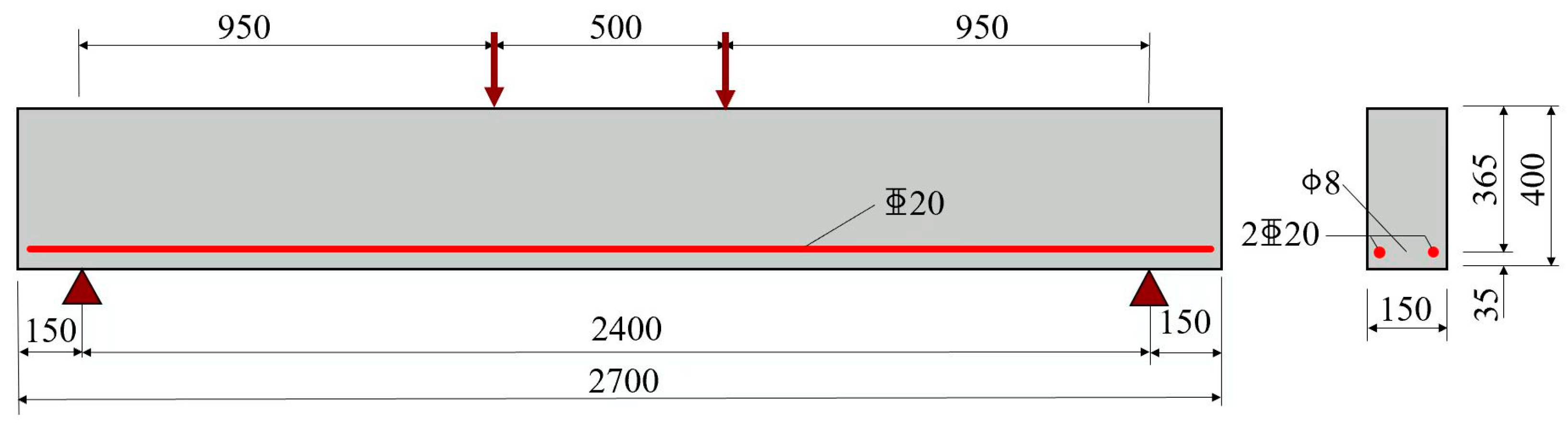
Ten beams with a typical rectangular section were designed, each with a sectional width b = 150 mm and depth h = 400 mm, and a total length of 2.7 m with a span l0 = 2.4 m. The shear-span, defined as the centerline distance from the support to the load point, was fixed at a = 950 mm, resulting in a shear-span to depth ratio λ = 2.6. Corresponding to the SFRSCACs with volume fraction of steel fibers vf = 0, 0.8%, 1.2%, 1.6% and 2.0%, the beams were marked as L0-A/B, L0.8-A/B, L1.2-A/B, L1.6-A/B, L2.0-A/B, where letter L denoted the test beam, and letters A, B identified the same two beams in a group.
As per the specifications outlined in China codes JGJ/T 465 [33], and verified using the semi-empirical formula proposed for predicting the shear strength of longitudinally reinforced SFRC beams [50,51], the beams without stirrups were designed to fail in shear to evaluate the contribution of steel fibers. The longitudinal tensile reinforcement consisted of two HRB500 hot-rolled deformed rebars, with a diameter of d = 20 mm. The measured yield strength was fy = 542 MPa, ultimate strength fst = 684 MPa, and modulus of elasticity Es = 2.05 × 10⁵ MPa. The concrete cover thickness for the longitudinal tensile rebars was cs = 25 mm, and the longitudinal reinforcement ratio was ρ = 1.15%. The effective depth of cross-section h0 = hcsd/2 = 365 mm. The details of the test beams are depicted in Figure 1.
Based on previous studies [42,43,48], the orientation and uniform distribution of steel fibers are critical to the performance of structural components. Therefore, the procedures of mixing and vibration for the fresh mix were strictly followed throughout the casting process. The mixing process was the same as that for conventional concrete, with the only difference being that the recycled aggregates were presoaked using additional water to achieve a saturated condition. The steel fibers were mixed with the aggregates to ensure uniform distribution in the fresh mix. The SFRSCAC for test beams was compacted using vibrators attached to the outside of the steel molds. The screed top surface was covered with plastic film for 48 h after compaction, after which the steel molds were demolded. The test beams were cured by spraying water for 7 days and then cured in ambient conditions for the remaining 21 days until the loading tests began.

2.3. Loading Approach

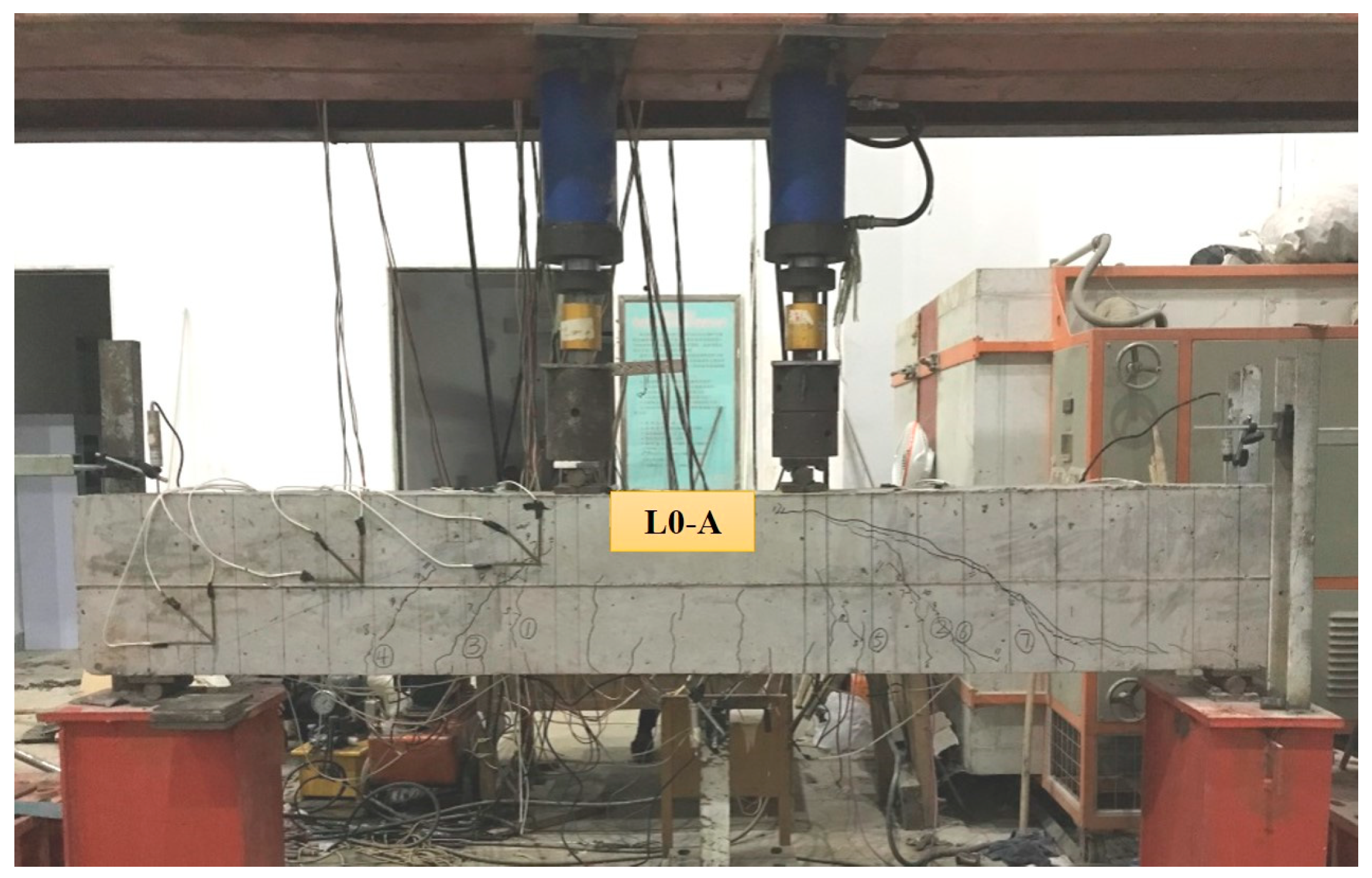
Figure 2 exhibits the arrangement of the four-point bending test. The loading device consisted of a counter-force frame, two jacks, and two load sensors. The jacks were connected to a hydraulic oil pump to symmetrically apply loads on the top surface of the simply supported test beam. The load sensors were linked to a data collector to monitor and control the loading process. Due to the continuous deformation of test beams under loads, the load of each step on the test beams was determined with a maximum deviation of ±5%. Meanwhile, three displacement meters were placed at the bottom of the mid-span and the supports to measure the mid-span deflection. Along the predicted shear cracks, three strain rosettes were attached to the side surface of the shear span of the test beam, measuring the principal strain of SFRSCAC.
As depicted in Figure 3, eight strain gauges were affixed to the surface of the longitudinal rebars to measure the tensile strain. All data from the strain gauges and displacement meters were automatically recorded using a data collector.
According to the specification of China code GB/T 50152 [52], the load increment of each step within normal serviceability should not exceed 20% of the target load, while that approaching the ultimate should not exceed 5% of the target load. This makes a test to accurately grasp the loading characteristics of test beams. Therefore, the increment of each step of the symmetrical loads in this study was taken as 10% of the ultimate load predicted using existing formulas [50,51], while the increments near shear cracking and shear capacity were taken as 5%. The load rate was about 1 kN/min. The appearance of initial cracks, crack development, and crack widths were recorded during the loading process.

3. Results

3.1. Crack Distribution and Failure Mode

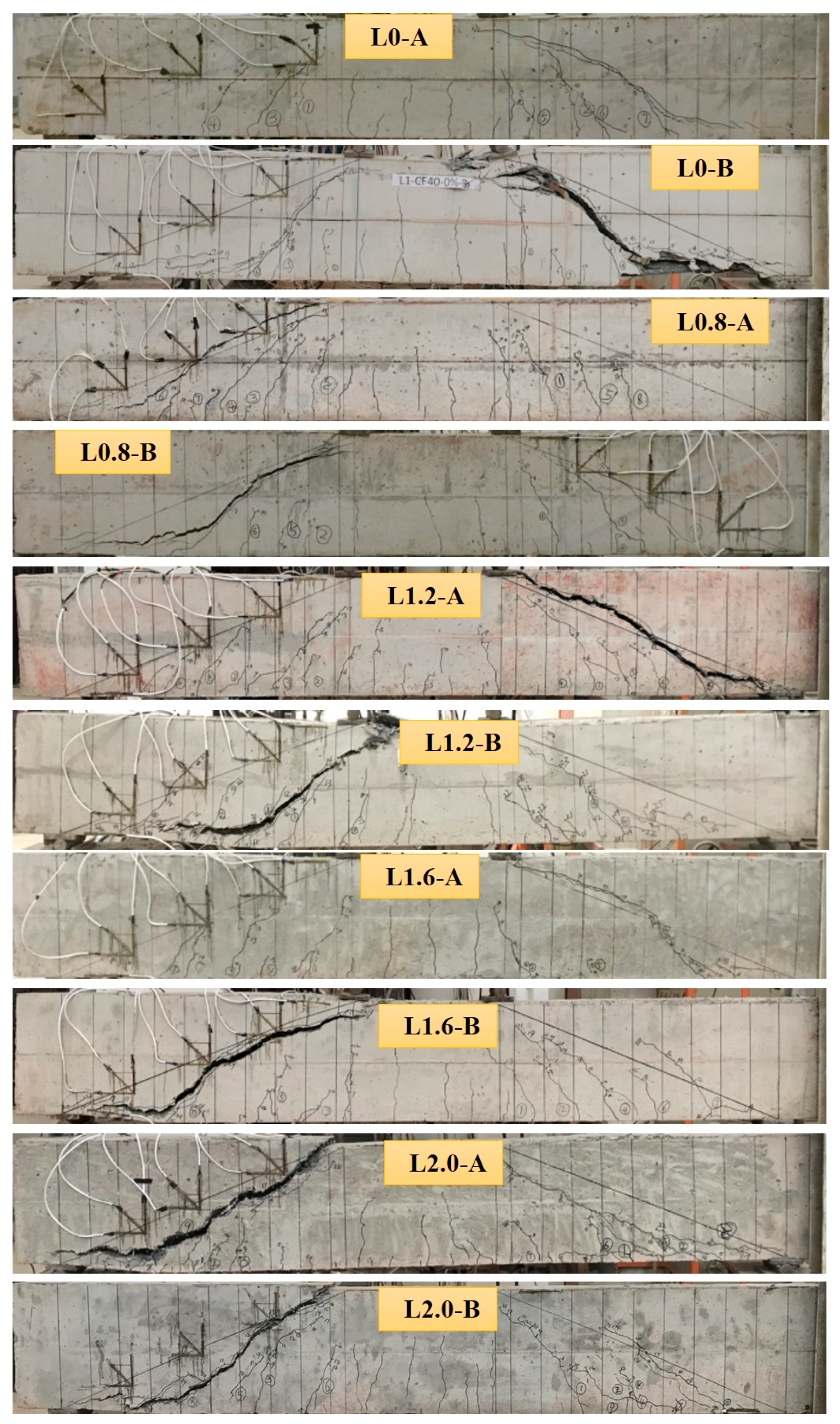
Figure 4 shows the photos of test beams with crack distribution and failure mode. All beams went through four distinct stages under concentrated loads: short and thin flexural cracking initially occurred, followed by the formation of the first shear crack, a critical inclined crack, and finally, shear failure.
The forces at various stages of flexural cracking (Vf,cr), initial shear cracking (Vcr,ini), critical inclined crack (Vcr,crit), bond cracking along longitudinal tensile steel bars (Vcr,b), and the ultimate (Vu), are summarized in Table 2. After shear cracking, multiple inclined cracks formed, but only one developed into a critical inclined crack. During the progression of the inclined cracks, the steel fibers bridging across the cracks were gradually pulled out or fractured, producing a continuous cracking sound, while the flexural cracks extended slowly with smaller widths. When the critical inclined crack formed, it rapidly extended, reducing the depth of the shear-compression zone and reaching the longitudinal tensile steel bars, leading to the formation of a bond crack along the steel bars. This accelerated the failure process, resulting in a sudden shear failure.
Based on the test data presented in Table 2, the shear force at the formation of a critical inclined crack ranged from 76.8% to 68.6% of the ultimate shear force, showing a tendency to increase with the volume fraction of steel fiber. This indicates a beneficial effect of steel fibers in controlling inclined cracks before the critical inclined crack forms [37,38,39]. Meanwhile, the shear force at the formation of the bond crack along the longitudinal tensile steel bars ranged from 84.4% to 99.9% of the ultimate shear force, showing no clear relationship with the volume fraction of steel fiber, and was closer to the ultimate shear force of the beams with steel fibers. This suggests that, although the shear forces at the formation of a critical inclined crack, bond crack, and ultimate state increased with the volume fraction of steel fiber, the steel fibers did not alter the brittleness of shear failure. In fact, as the shear cracks developed along the shear span of test beams, the internal redistribution of shear stress allowed the beams to reach new equilibrium states, leading to an increase in the shear force applied to the beams. When the critical inclined crack formed, the equilibrium state mainly relied on the tension of the steel fibers bridging the crack. However, as the crack widened with the continued increase in shear force, the steel fibers lost their bearing capacity due to fracture or debonding from the SFRSCAC matrix, which accelerated the development of the critical inclined crack and caused bond failure along the longitudinal tensile steel bars. Unlike stirrups, which provide continuous reinforcement [29], steel fibers cannot provide effective reinforcement when the crack width becomes large, thus failing to prevent the abrupt shear failure of test beams.
Generally, all test beams exhibited typical shear failure, characterized by the appearance of bond cracks along the longitudinal tensile steel bars. However, beam L0-B failed in shear with a crushed compression zone and a peeling off of the SFRSCAC due to the bond crack along the longitudinal tensile steel bars.

3.2. Strains of SFRSCAC and Longitudinal Rebars

The principal tensile strain at the detected point, measured using strain gauges, was computed based on elastic material behavior. The maximum values at the formation of shear cracking are summarized in Table 3. Due to the strain gauges not fully spanning the cracks in different test beams, the test results showed higher variability. However, a clear trend can be observed from the data comparison: the tensile strain at shear cracking increased with the increased volume fraction of steel fibers, thereby enhancing the shear resistance.
Based on the test results, the strain in the longitudinal tensile steel bars increased linearly with the applied load before shear cracking, followed by a sharp rise at the formation of a critical inclined crack. However, when the beams failed under shear, the longitudinal tensile steel bars did not yield. Therefore, detailed data from the strain gauges are not presented here.

3.3. Mid-Span Deflection and Ductility

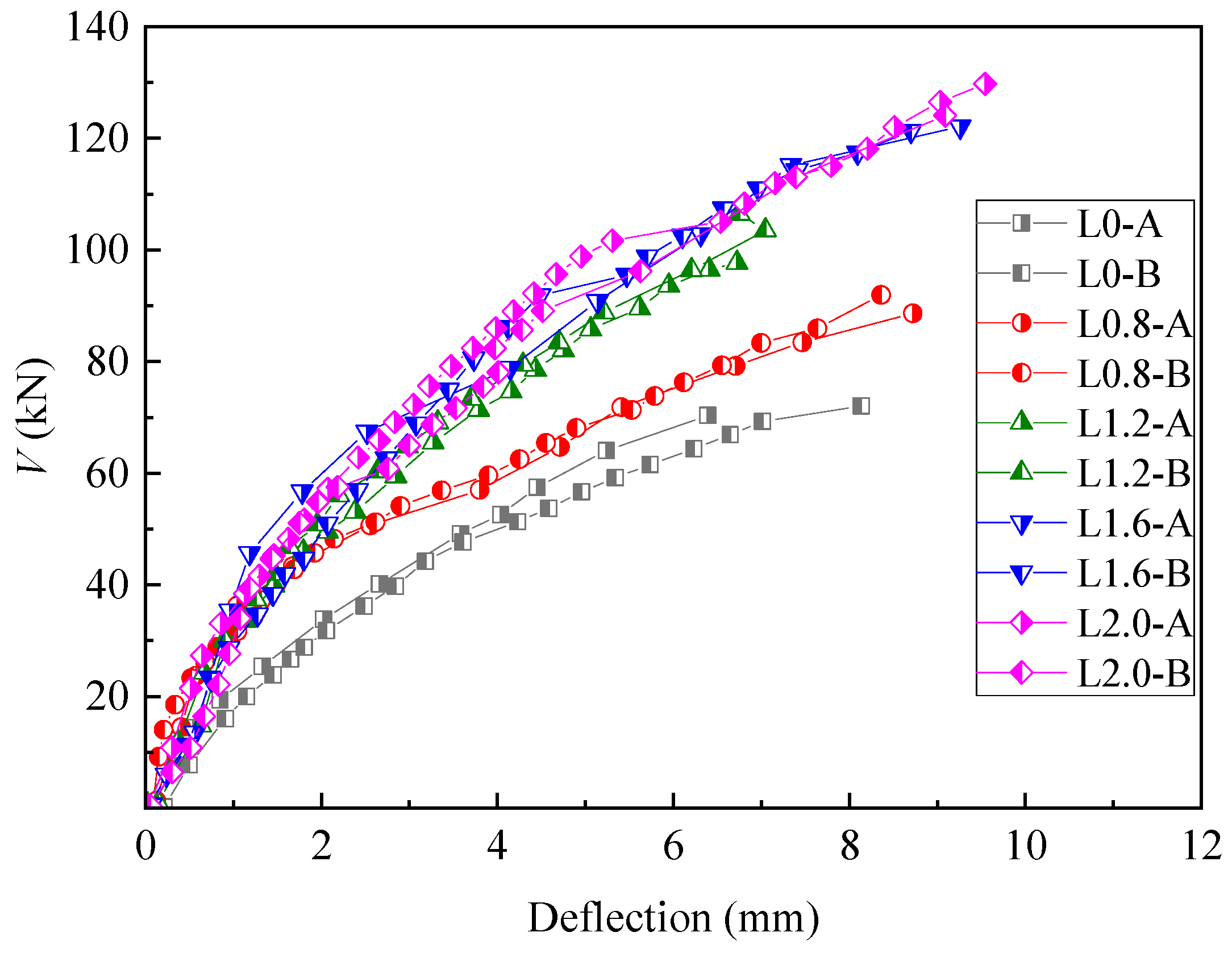
The mid-span deflections of test beams increased with the loading level, as depicted in Figure 5. In addition to the deflection caused by bending deformation, the mid-span deflection was primarily influenced by shear deformation in the shear-span. The deflection increased linearly before the SFRSCAC cracking but exhibited a nonlinear increase after the appearance of flexural and shear cracks. The curves showed a marked inflection when the critical inclined crack formed, after which the deflection developed rapidly until shear failure occurred. With the increase in the volume fraction of steel fiber, the number of steel fibers increased across the critical inclined crack, creating higher shear resistance to assist the matrix of SFRSCAC. This prolongs the rapid development portion of the deflection curve with a larger final deflection, indicating a greater ductility with an improved failure in test beams. However, the shear resistance provided by steel fibers will disappear with the fracturing or debonding of steel fibers across the critical inclined crack, leading to a limited improvement of ductility. This differs from the stirrups as shear reinforcement, which can provide shear resistance even if at the ultimate failure state with marked shear crack width, as stirrups having enough elongation after yield [19,40].

3.4. Shear Cracking Resistance

Based on the test data summarized in Table 2, the shear cracking resistance of test beams increased with the volume fraction of steel fiber. When the volume fraction of steel fiber was 0.8%, 1.2%, 1.6%, and 2.0%, the shear cracking force of the test beams increased by 15.8%, 47.4%, 53.9%, and 85.5%, respectively, compared to test beams without steel fibers. Similarly, the shear force at the formation of a critical inclined crack increased by 13.3%, 33.1%, 52.9%, and 74.9%, respectively.
Since this study only considered the variation of ingot-mill steel fibers in volume fraction of 0.8–2.0%, a popular expression of the fiber factor F is introduced to reflect the effect of steel fibers, using the following Equation:
F = l f d f v f η f ,
where, lf/df is the aspect ratio of steel fiber, vf is the volume fraction of steel fiber, ηf is the bonding factor, ηf = 0.9 for ingot-mill steel fiber [51].
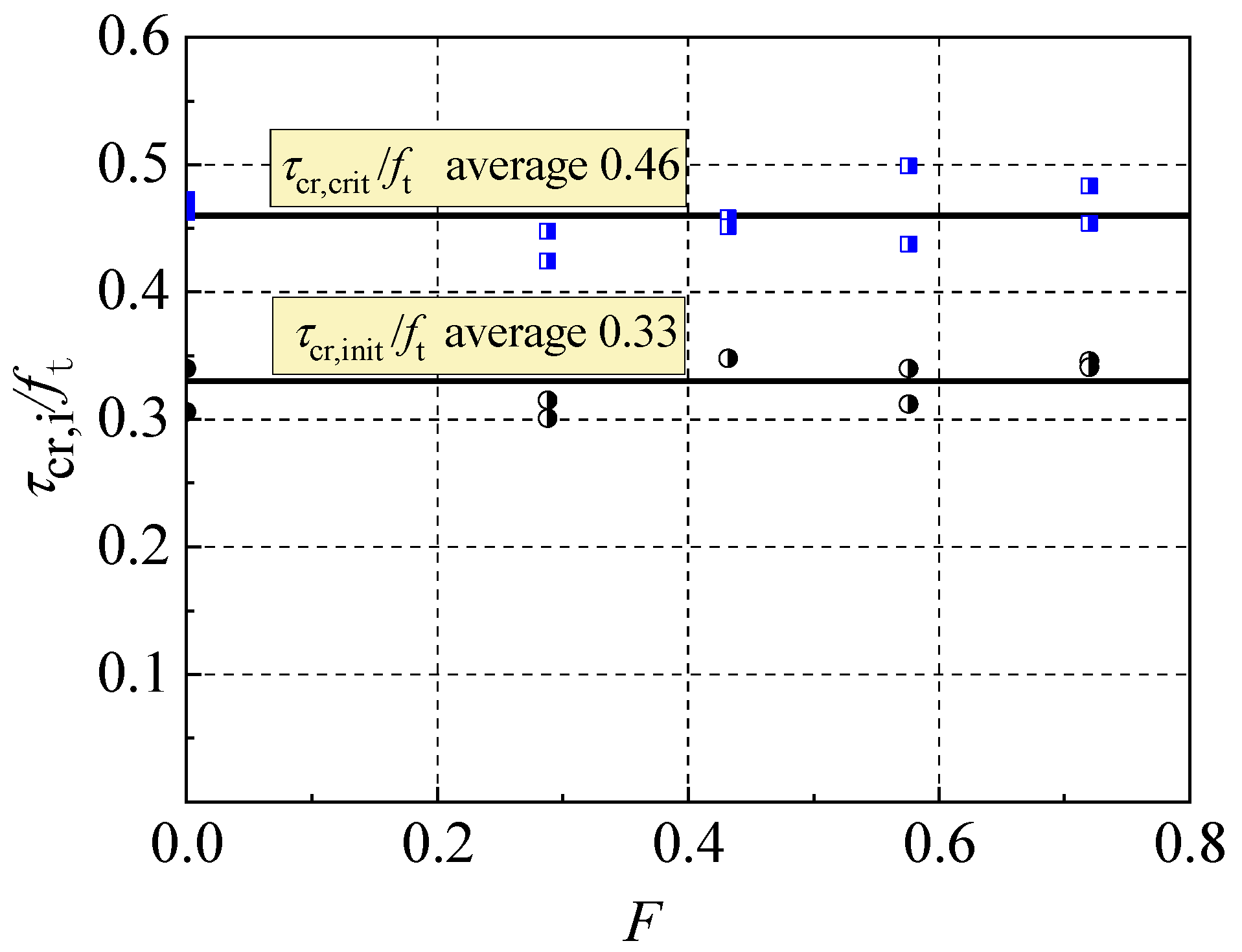
To study the variation of the shear force with change of the fiber factor F, the average stress along the cross-sectional depth is defined as the nominal shear stress τ = V/bh0. Considering that shear cracking and the extension of shear cracks primarily depend on the maximum principal stress, which is related to the tensile strength of SFRSCAC (fft, for the matrix without steel fibers, marked as ft), the ratios τcr,i/fft (or τcr,i/ft) for the shear forces at initial shear cracking and the formation of a critical shear crack are depicted in Figure 6.
It can be observed that the values of τcr,i/ft remain almost unchanged with a varying F. The average of τcr,init/ft at shear cracking is 0.33 with a variation coefficient of 0.057, while the average value of τcr,crit/ft at the formation of a critical inclined crack is 0.46 with a variation coefficient of 0.047. This indicates that the shear forces at the initial shear cracking of test beams are primarily dependent on the tensile strength of SFRSCAC, both with and without steel fibers, under the condition of a constant shear-span to depth ratio (λ = 2.6) and longitudinal tensile reinforcement ratio (ρ = 1.15%). Furthermore, due to the steel fibers forming a diffused network across the shear cracks, the shear-span remains intact before the appearance of a critical inclined crack, ensuring effective transfer of shear stress along the cross-sectional depth. This creates a foundation for maintaining a constant nominal shear stress at the formation of a critical inclined crack. Therefore, for reinforced SFRSCAC beams, whether with or without steel fibers, the shear strength at the formation of the critical inclined crack can serve as a reliable reference for shear strength prediction.
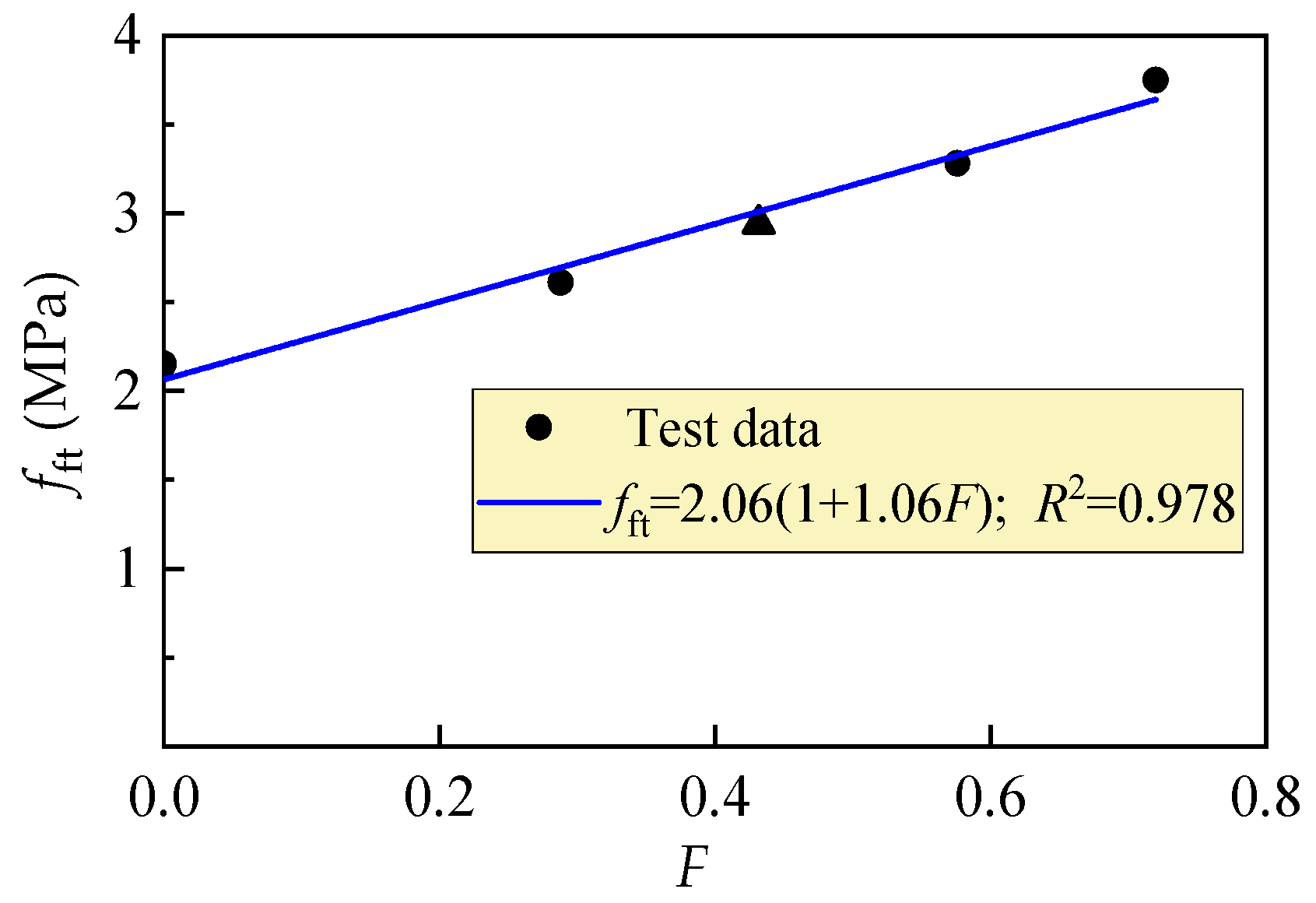
Based on the test data from this study, the variation of tensile strength ft with the fiber factor F is presented in Figure 7. Similar to that of SFRC [50,51], a linear fit can be applied to obtain a equation with good agreement, as follows:
f ft = 2.06 1 + 1.06 F ,
In Equation (2), the value of 2.06 represents the tensile strength (ft) of the SCAC matrix. Due to limited data available for the SFRSCAC, the expression for the tensile strength of conventional concrete is referred to in this study as follows: ft = 0.395fcu0.55 [53]. Taking fcu = 26.6 MPa for SCAC from Table 1, ft = 0.395 × 26.60.55 = 2.40 MPa, close to the test value of 2.15 MPa. Therefore, the tensile strength of SFRSCAC depends on the fiber factor F, based on the tensile strength of SCAC. This is attributed to SCAC having similar mechanical properties to conventional concrete, thanks to the composite technology that overcomes the shortcomings of coarse recycled aggregates [26].
Therefore, combined with Equation (2), the shear cracking resistance Vinit,f and the shear force Vcrit,f at the formation of a critical inclined crack for longitudinally reinforced SFRSCAC beams can be obtained with the following Equations (3) and (4),
V init , f = 0.33 1 + 1.06 F b h 0 f t ,
V crit , f = 0.46 1 + 1.06 F b h 0 f t ,
The finding of Equation (3) aligns with the study of the shear cracking resistance of reinforced SCAC beams with strength grades ranging from 30 MPa to 60 MPa [29]. The finding of Equation (4) extends the elastic scope of the shear band up to the formation of a critical inclined crack, due to the strengthening effect of steel fibers.

3.5. Shear Strength

Based on the test results listed in Table 2, the shear strength of the SFRSCAC beams increased by 26.7%, 43.4%, 70.8%, and 80.5% with steel fiber volume fractions of 0.8%, 1.2%, 1.6%, and 2.0%, respectively, compared to the test beams without steel fibers. This indicates a significant enhancement in the shear strength of longitudinally reinforced SFRSCAC beams when steel fibers are used as shear reinforcement. This indicates that the improvement of shear strength contributed by steel fibers is evident, since steel fibers play an important role in bridging shear cracks to restraining their propagation, maintaining a high residual load-bearing capacity even after damage occurs, thereby increasing safety redundancy [37,38,39,40].
Based on previous studies [50,51], steel fibers mainly contribute to the shear capacity of longitudinally reinforced SFRC beams in two aspects: one is the fiber bridging action on critical inclined cracks, providing distributed tensile resistance perpendicular to the cracks; another is strengthening on the dowel action of longitudinal tensile reinforcements with stronger bonding to SFRC, reducing the bond slip at inclined crack section and increasing the shear stiffness with bonded surrounding concrete. By semi-empirical synergetic analysis of the shear strength of longitudinally reinforced SFRC beams, the shear capacity can be calculated as follows:
V uc = 0.23 1 + 5 ρ λ 0.5 f ft + ρ 1 + 2 F f c 3 λ 1 3 + 0.36 tan θ 0.0225 + tan 2 θ f c 1 3 + 0.062 + 0.35 cot θ v b b h 0 ,
θ = π 4 1 + λ 1 / 3 3 , ( in   which   λ = 4.0   for   λ > 4.0 ) ,
v b = 0.41 1.53 + 0.6 f c 0.55 F ,
where θ is the inclined angle of the critical diagonal crack, and vb is the tensile strength of steel fibers bridging the shear crack.
The conservative form of Equation (5) can be expressed as follows:
V uc = 0.23 1 + 5 ρ f ft λ 0.5 + ρ 1 + 2 F f c 3 λ 1 3 b h 0 ,
moreover, referenced to the approach in China code JGJ/T 465 [33], Equation (8) can be further simplified for the convenience of design as follows:
V uc = 0.22 1 + 5 ρ λ 0.5 f c 0.55 1 + 1 . 05 F b h 0 ,
where λ = 1.2 for λ < 1.2, and λ = 4.5 for λ > 4.5.
Meanwhile, the formula specified in China code JGJ/T 465 [33] for longitudinally reinforced SFRC beams is also used to evaluate the shear capacity of test beams in this study:
V uc = 1.75 λ + 1 f ft b h 0
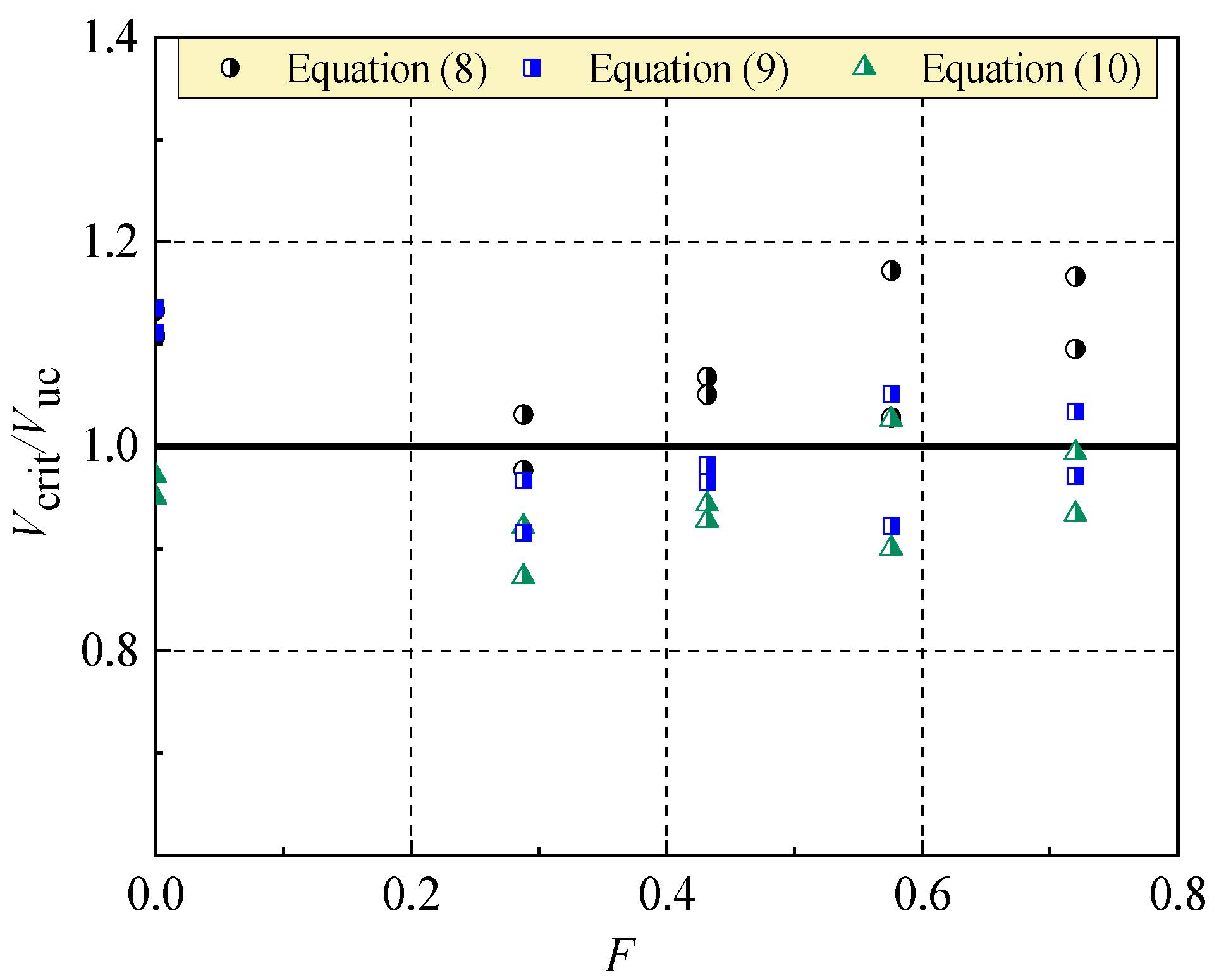
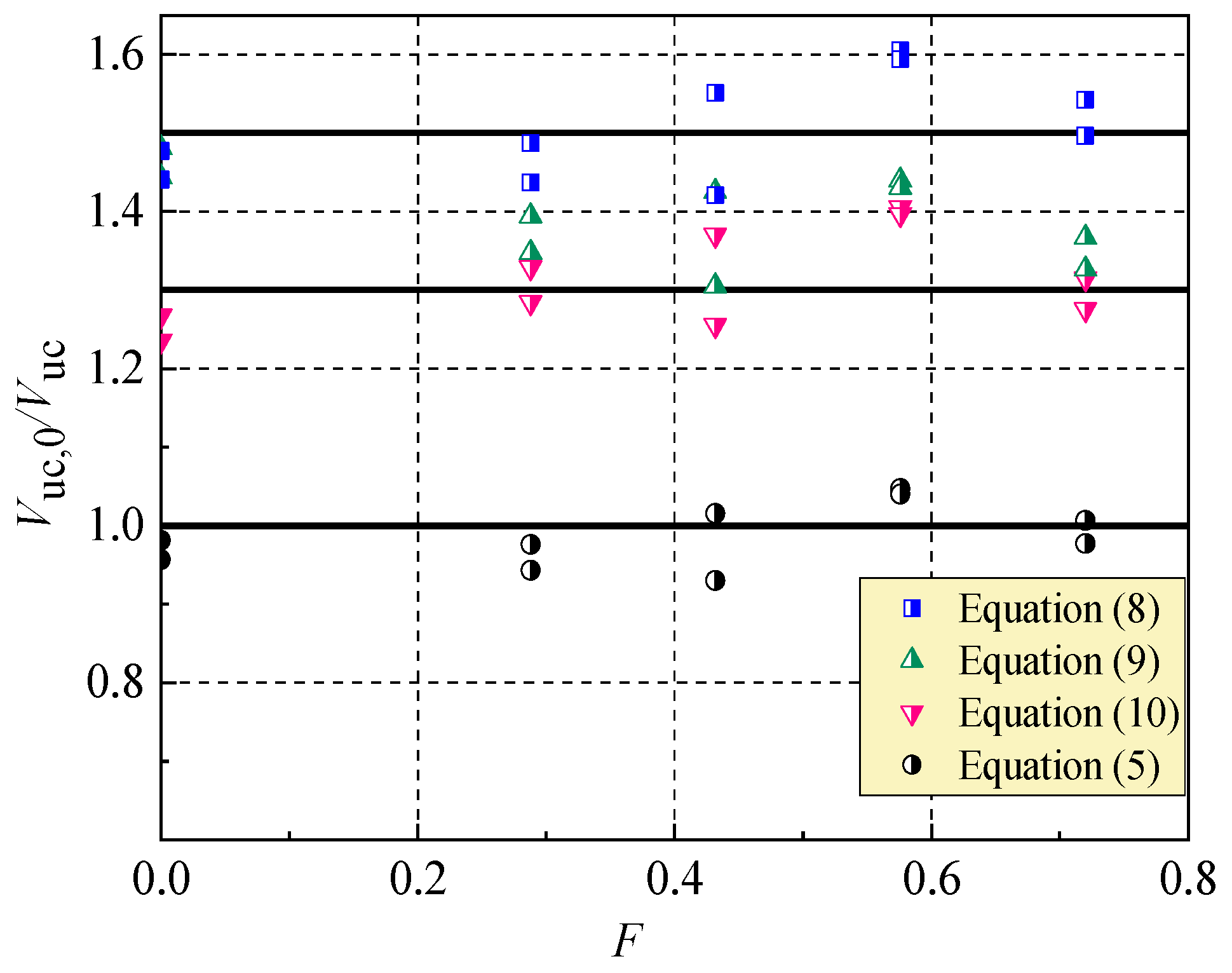
Figure 8 illustrates the comparisons of the shear strength of test beams with the predicted results using the above formulas, where the cylinder compressive strength (fc′) is obtained from multiplying the cubic compressive strength (fcu) by a coefficient of 0.85. Meanwhile, the shear forces at the formation of critical inclined cracks in the test beams are also compared with the calculated results from Equations (8)–(10), and the ratios are presented in Figure 9. For convenience, the statistical results of the shear strength ratios of test to predicted Equations (5) and (8)–(10), and the ratios of shear stress at a critical inclined crack to the predicted results using Equations (8)–(10), are summarized in Table 4.
From Figure 8 and Table 4, it can be observed that Equation (5) provides a good fitness, with an average ratio close to 1.0 and a low variation coefficient. This suggests that the shear strength of longitudinally reinforced SFRSCAC beams can be predicted using the same formula as for longitudinally reinforced SFRC beams, meaning that steel fibers present the same reinforcing effect on the shear strength of longitudinally reinforced SFRSCAC beams and longitudinally reinforced SFRC beams. Therefore, the longitudinally reinforced SFRSCAC beams catch up to the level of the longitudinally reinforced SFRC beams in shear performance, having no shear strength loss induced by RCA.
When using the more conservative Equations (8)–(10), the tested shear strength is 1.3 to 1.5 times higher than the predicted values, ensuring a sufficient safety margin for reinforced SFRSCAC beams under shear.
Meanwhile, from Figure 9 and Table 4, the shear force at the formation of a critical inclined crack is well predicted using Equations (8)–(10). This indicates that the conservative formulas for predicting shear strength accurately correspond to the shear force at the formation of the critical inclined crack in reinforced SFRSCAC beams. Therefore, if the reinforced SFRSCAC beam is designed with the conservatively predicted shear strength, it will remain in a loading state without reaching a critical inclined crack. Additionally, this approach ensures that the beams maintain a limited width of inclined cracks, meeting the durability requirements for stirrup protection. This aligns with the purpose of the conservative shear strength predictions specified in design codes for reinforced concrete beams under shear [33,53].

4. Conclusions

The experimental study focused on longitudinally reinforced SFRSCAC beams in this paper, with the volume fraction of steel fiber ranging from 0% to 2.0% as the main experimental variable. The shear performance of ten test beams was analyzed through a four-point loading test, including crack patterns, failure modes, SFRSCAC strain in the shear-span, strain of longitudinal tensile steel bars, mid-span deflection, shear cracking force, and shear strength. Conclusions can be drawn as follows:
(1) The brittle shear or shear-compression failure occurred in test beams with a shear-span to depth ratio of 2.6. Steel fibers did not alter the shear failure mode in beams with sufficient flexural resistance. The brittleness of shear failure, characterized by bond cracking along the longitudinal tensile steel bars, was not mitigated. This attributes to most steel fibers either fractured or unbonded with the SFRSCAC due to a rapid widening of the critical inclined crack.
(2) Steel fibers significantly enhanced the shear crack resistance of test beams. With volume fractions of steel fiber at 0.8%, 1.2%, 1.6%, and 2.0%, the shear cracking load of test beams increased by 15.8%, 47.4%, 53.9%, and 85.5%, compared to the beams without steel fibers. Similarly, the shear force at the formation of a critical inclined crack increased by 13.3%, 33.1%, 52.9%, and 74.9%. The shear forces at both shear cracking and the formation of a critical inclined crack increased linearly with the fiber factor, and were directly related to the tensile strength of SFRSCAC.
(3) The shear strength of test beams increased by 26.7%, 43.4%, 70.8%, and 80.5% with steel fiber volume fractions of 0.8%, 1.2%, 1.6%, and 2.0%, compared to test beams without steel fibers. Alongside comparisons with predicted results using formulas proposed for longitudinally reinforced SFRC beams, the shear strength of SFRSCAC was comparable to that of SFRC, meaning that no shear strength loss is induced by RCA. The conservatively predicted shear strength is close to the shear force at the formation of a critical inclined crack, ensuring adequate resistance to control shear cracks within a limited width of longitudinally reinforced SFRSCAC beams.
(4) It should be noted that despite increased shear strength and cracking resistance, all test beams presented a brittle shear failure with bond cracking along longitudinal reinforcement. This indicates that steel fibers could minimize but not fully replace stirrups as shear reinforcement in structural applications. Before practical application in structural engineering, the shear performance of reinforced SFRSCAC beams with stirrups should be thoroughly studied. Therefore, a series of studies with varying factors of shear-span to depth ratio, stirrup ratio, and longitudinal reinforcement ratio is still necessary in the future.

Author Contributions

Conceptualization, C.L. and S.Z.; methodology, M.Z. (Mingshuang Zhao) and X.D.; formal analysis, M.Z. (Mingshuang Zhao), M.Z. (Minglei Zhao) and K.W.; investigation, M.Z. (Mingshuang Zhao), K.W. and C.L.; data curation, M.Z. (Mingshuang Zhao); writing—original draft preparation, M.Z. (Mingshuang Zhao), M.Z. (Minglei Zhao) and X.D.; writing—review and editing, C.L. and S.Z.; supervision, S.Z.; project administration, S.Z.; funding acquisition, C.L. and X.D. All authors have read and agreed to the published version of the manuscript.

Funding

This research was funded by the Key Sci-Tech Research and Development Project of Henan, China (242102320325), and the Provincial Key Discipline Funds of Civil Engineering and Water Conservancy of Zhongyuan Institute of Science and Technology (ZIST/PKDF-2025-01).

Data Availability Statement

Data is provided within the manuscript and can be obtained on request.

Acknowledgments

Thanks to graduate student Kui Ma for his contribution to the experiment at the International Joint Research Lab for Eco-building Materials and Engineering of Henan, North China University of Water Resources and Electric Power, China; and Xiaoke Li, who works at North China University of Water Resources and Electric Power, for his contribution in the guidance of the experimental study.

Conflicts of Interest

The authors declare no conflicts of interest.

References

  1. Ferriz-Papi, J.A.; Weekes, E.; Whitehead, N.; Lee, A. A cost-effective recycled aggregates classification procedure for construction and demolition waste evaluation. Constr. Build. Mater. 2022, 324, 126642. [Google Scholar] [CrossRef]
  2. Dang, J.; Zhu, R.; Xiao, J.; Li, F. Effect of surface activity of recycled fine aggregates from clay bricks on the hydration, microstructure and chloride transport of concrete. Constr. Build. Mater. 2024, 418, 135499. [Google Scholar] [CrossRef]
  3. Nemes, R. Utilization of demolition waste for concrete aggregate. Buildings 2026, 16, 526. [Google Scholar] [CrossRef]
  4. Wijayasundara, M.; Mendis, P.; Crawford, R.H. Integrated assessment of the use of recycled concrete aggregate replacing natural aggregate in structural concrete. J. Clean. Prod. 2017, 174, 591–604. [Google Scholar] [CrossRef]
  5. Ouyang, K.; Shi, C.; Chu, H.; Guo, H.; Song, B.; Ding, Y.; Guan, X.; Zhu, J.; Zhang, H.; Wang, Y.; et al. An overview on the efficiency of different pretreatment techniques for recycled concrete aggregate. J. Clean. Prod. 2020, 263, 121264. [Google Scholar] [CrossRef]
  6. Zhong, W.; Wang, P.; Ye, N.; Shu, K.; Dai, R.; Ba, M.; Fang, X. Effects of different carbonation treatment methods for recycled concrete aggregate. Buildings 2025, 15, 3054. [Google Scholar] [CrossRef]
  7. Muhammad, F.; Harun, M.; Ahmed, A.; Kabir, N.; Khalid, H.R.; Hanif, A. Influence of bonded mortar on recycled aggregate concrete properties: A review. Constr. Build. Mater. 2024, 432, 136564. [Google Scholar] [CrossRef]
  8. Abdo, A.; El-Zohairy, A.; Alashker, Y.; Badran, M.A.E.A.; Ahmed, S. Effect of treated/untreated recycled aggregate concrete: Structural behavior of RC beams. Sustainability 2024, 16, 4039. [Google Scholar] [CrossRef]
  9. Panghal, H.; Kumar, A. Enhancing concrete performance: Surface modification of recycled coarse aggregates for sustainable construction. Constr. Build. Mater. 2024, 411, 134432. [Google Scholar] [CrossRef]
  10. Zhou, Y.; Xu, W.; Zhuang, J.; Lin, W.; Xing, F.; Hu, R. Effects of carbonation modification on shear performance of recycled aggregate concrete beams: Test and mechanism analysis. Eng. Struct. 2024, 315, 118385. [Google Scholar] [CrossRef]
  11. Mahmoud, F.A.; Boissiere, R.; Mercier, C.; Khelil, A. Shear behavior of reinforced concrete beams made from recycled coarse and fine aggregates. Structures 2020, 25, 660–669. [Google Scholar] [CrossRef]
  12. Arabiyat, S.; Jaber, M.A.; Katkhuda, H.; Shatarat, N. Influence of using two types of recycled aggregates on shear behavior of concrete beams. Constr. Build. Mater. 2021, 279, 122475. [Google Scholar] [CrossRef]
  13. Sagheer, A.M.; Tabsh, S.W.; Yehia, S. The structural behavior of reinforced concrete beams made with locally produced recycled aggregate in the UAE. Buildings 2023, 13, 2597. [Google Scholar] [CrossRef]
  14. Arezoumandi, M.; Drury, J.; Volz, J.S.; Khayat, K.H. Effect of recycled concrete aggregate replacement level on shear strength of reinforced concrete beams. ACI Mater. J. 2015, 112, 559–568. [Google Scholar]
  15. Sagheer, A.M.; Tabsh, S.W. Shear strength of concrete beams without stirrups made with recycled coarse aggregate. Buildings 2023, 13, 75. [Google Scholar] [CrossRef]
  16. Li, C.; Liu, T.; Fu, H.; Zhang, X.; Yang, Y.; Zhao, S. Test and evaluation of the flexural properties of reinforced concrete beams with 100% recycled coarse aggregate and manufactured sand. Buildings 2021, 11, 420. [Google Scholar] [CrossRef]
  17. Rahal, K.N.; Elsayed, K. Shear strength of 50 MPa longitudinally reinforced concrete beams made with coarse aggregates from low strength recycled waste concrete. Constr. Build. Mater. 2021, 286, 122835. [Google Scholar] [CrossRef]
  18. Setkit, M.; Leelatanon, S.; Imjai, T.; Garcia, R.; Limkatanyu, S. Prediction of shear strength of reinforced recycled aggregate concrete beams without stirrups. Buildings 2021, 11, 402. [Google Scholar] [CrossRef]
  19. Trindade, J.C.; Garcia, S.L.G.; Lacerda, T.N.; Resende, T.L. Analysis of the shear behavior of reinforced recycled aggregate concrete beams based on shear transfer mechanisms. Eng. Struct. 2023, 293, 116616. [Google Scholar] [CrossRef]
  20. Kim, W.; Kang, T.H.-K.; Lee, D.; Choi, H.; Kwak, Y.-K. Shear strength of reinforced concrete beams using recycled coarse aggregates without stirrups. ACI Struct. J. 2020, 117, 281–295. [Google Scholar]
  21. Hamad, B.S.; Dawi, A.H.; Daou, A.; Chehab, G.R. Studies of the effect of recycled aggregates on flexural, shear, and bond splitting beam structural behavior. Case Stud. Constr. Mater. 2018, 9, e00186. [Google Scholar] [CrossRef]
  22. Yanweerasak, T.; Kea, T.M.; Ishibashi, H.; Akiyama, M. Effect of recycled aggregate quality on the bond behavior and shear strength of RC members. Appl. Sci. 2018, 8, 2054. [Google Scholar] [CrossRef]
  23. GB/T 25177-2010; Recycled Coarse Aggregate for Concrete. China Standard Press: Beijing, China, 2011.
  24. Arezoumandi, M.; Smith, A.; Volz, J.S.; Khayat, K.H. An experimental study on flexural strength of reinforced concrete beams with 100% recycled concrete aggregate. Eng. Struct. 2015, 88, 154–162. [Google Scholar] [CrossRef]
  25. Arezoumandi, M.; Smith, A.; Volz, J.S.; Khayat, K.H. An experimental study on shear strength of reinforced concrete beams with 100% recycled concrete aggregate. Constr. Build. Mater. 2014, 53, 612–620. [Google Scholar] [CrossRef]
  26. Li, C.; Wang, F.; Deng, X.; Li, Y.; Zhao, S. Testing and prediction of the strength development of recycled-aggregate concrete with large particle natural aggregate. Materials 2019, 12, 1891. [Google Scholar] [CrossRef]
  27. Zhao, M.; Dai, M.; Li, J.; Li, C. Case study on performance of pumping concrete with super-fine river-sand and manufactured-sand. Case Stud. Constr. Mater. 2023, 18, e01850. [Google Scholar] [CrossRef]
  28. Zhao, M.; Li, J.; Li, C.; Shen, J. Experimental study and prediction of the long-term strength development of high-flowability concrete made of mixed-sand and high-content fly ash. Constr. Build. Mater. 2024, 437, 137043. [Google Scholar] [CrossRef]
  29. Li, C.; Liang, N.; Zhao, M.; Yao, K.; Li, J.; Li, X. Shear performance of reinforced concrete beams affected by satisfactory composite-recycled aggregates. Materials 2020, 13, 1711. [Google Scholar] [CrossRef]
  30. Li, X.; Pei, S.; Fan, K.; Geng, H.; Li, F. Bending performance of SFRC beams based on composite-recycled aggregate and matched with 500MPa rebars. Materials 2020, 13, 930. [Google Scholar] [CrossRef]
  31. JG/T 472-2015; Steel Fiber Reinforced Concrete. China Standard Press: Beijing, China, 2015.
  32. ACI 544.4R-18; Guide to Design with Fiber Reinforced Concrete. ACI Committee 544, ACI: Farmington Hill, MI, USA, 2018.
  33. JGJ/T 465-2019; Standard for Design of Steel Fiber Reinforced Concrete Structures. China Building Industry Press: Beijing, China, 2019.
  34. Nematzadeh, M.; Shahmansouri, A.A.; Fakoor, M. Post-fire compressive strength of recycled PET aggregate concrete reinforced with steel fibers: Optimization and prediction via RSM and GEP. Constr. Build. Mater. 2020, 252, 119057. [Google Scholar] [CrossRef]
  35. Bayraktar, O.Y.; Kaplan, G.; Shi, J.; Benli, A.; Bodur, B.; Turkoglu, M. The effect of steel fiber aspect-ratio and content on the fresh, flexural, and mechanical performance of concrete made with recycled fine aggregate. Constr. Build. Mater. 2023, 368, 130497. [Google Scholar] [CrossRef]
  36. Ghoneim, M.; Yehia, A.; Yehia, S.; Abuzaid, W. Shear strength of fiber reinforced recycled aggregate concrete. Materials 2020, 13, 4183. [Google Scholar] [CrossRef]
  37. Ibrahim, Y.E.; Fawzy, K.; Farouk, M.A. Effect of steel fiber on the shear behavior of reinforced recycled aggregate concrete beams. Struct. Concr. 2021, 22, 1861–1872. [Google Scholar] [CrossRef]
  38. Liu, C.; Wu, Y.; Gao, Y.; Tang, Z. Experimental and numerical analysis of high-strength concrete beams including steel fibers and large-particle recycled coarse aggregates. Fluid Dyn. Mater. Process. 2021, 17, 947–958. [Google Scholar] [CrossRef]
  39. Gao, D.; Zhu, W.; Fang, D.; Tang, J.; Zhu, H. Shear behavior analysis and capacity prediction for the steel fiber reinforced concrete beam with recycled fine aggregate and recycled coarse aggregate. Structures 2022, 37, 44–55. [Google Scholar] [CrossRef]
  40. Gao, D.; Zhu, W.; Gu, Z.; Hu, Y.; Yang, Z.; Yang, L. Investigation on shear performance of steel fiber reinforced recycled concrete short beams. Constr. Build. Mater. 2025, 497, 143873. [Google Scholar] [CrossRef]
  41. GB 175-2024; Common Portland Cement. China Standard Press: Beijing, China, 2024.
  42. Zhao, M.; Li, J.; Xie, Y.M. Effect of vibration time on steel fibre distribution and flexural behaviours of steel fibre reinforced concrete with different flowability. Case Stud. Constr. Mater. 2022, 16, e01114. [Google Scholar] [CrossRef]
  43. Zhao, M.; Li, C.; Li, J.; Yue, L. Experimental study on the performance of steel-fiber-reinforced concrete for remote-pumping construction. Materials 2023, 16, 3666. [Google Scholar] [CrossRef]
  44. JGJ 52-2006; Standard for Technical Requirements and Test Method of Sand and Crushed Stone (or Gravel) for Ordinary Concrete. China Building Industry Press: Beijing, China, 2006.
  45. GB/T 25176-2010; Recycled Fine Aggregate for Concrete and Mortar. China Standard Press: Beijing, China, 2011.
  46. JGJ 55-2011; Specification for Mix Proportion Design of Ordinary Concrete. China Building Industry Press: Beijing, China, 2011.
  47. Ding, X.; Zhao, M.; Li, J.; Shang, P.; Li, C. Mix proportion design of self-compacting SFRC with manufactured sand based on the steel fiber-aggregates skeleton packing test. Materials 2020, 13, 2833. [Google Scholar] [CrossRef]
  48. Ding, X.; Li, C.; Han, B.; Lu, Y.; Zhao, S. Effects of different deformed steel-fibers on preparation and properties of self-compacting SFRC. Constr. Build. Mater. 2018, 168, 471–481. [Google Scholar] [CrossRef]
  49. GB/T 50081-2019; Standard for Test Method of Mechanical Properties on Ordinary Concrete. China Building Industry Press: Beijing, China, 2019.
  50. Zhao, M.; Li, J.; Xie, Y.M.; Shen, J. Semi-empirical synergetic analysis of the shear capacity of steel fiber reinforced concrete slender beams of rectangular-sections without stirrups. Eng. Struct. 2023, 285, 116035. [Google Scholar] [CrossRef]
  51. Zhao, M.; Li, J.; Li, C.; Shen, J. Effectiveness evaluation of different steel fibres on the shear resistance of reinforced SFRC slender beams without web rebars. Sci. Rep. 2024, 14, 4066. [Google Scholar] [CrossRef] [PubMed]
  52. GB/T 50152-2012; Standard for Test Method of Concrete Structures. China Building Industry Press: Beijing, China, 2012.
  53. GB/T 50010-2010; Design Code for Concrete Structures, 2024 ed. China Building Industry Press: Beijing, China, 2024.
Figure 1. Details of test beams.
Buildings 16 00788 g001
Figure 2. Test device, arrangements of SFRSCAC strain gauges and displacement meters.
Buildings 16 00788 g002
Figure 3. Arrangement of the strain gauges pasted on longitudinal rebars.
Buildings 16 00788 g003
Figure 4. Crack distribution and shear failure mode of test beams.
Buildings 16 00788 g004
Figure 5. Shear force vs. mid-span deflection curves of test beams.
Buildings 16 00788 g005
Figure 6. Variation of the ratio τ/ft with the F.
Buildings 16 00788 g006
Figure 7. Variation of the tensile strength ft with the F.
Buildings 16 00788 g007
Figure 8. Comparisons of the test results to the predicted results of the shear strength of test beams.
Buildings 16 00788 g008
Figure 9. Comparisons of the test to the predicted results of the shear stress at a critical inclined crack.
Buildings 16 00788 g009
Table 1. Mixed proportions and tested the mechanical properties of SFRSCACs.
vf
(%)
Dosage of Raw Materials (kg/m3)Basic Mechanical Properties
WaterCementFine RCAsSCAsSteel FiberWater ReducerAdditional Waterfcu
(MPa)
fc
(MPa)
ft
(MPa)
Ec
(GPa)
01805296599890.03.656.226.620.42.1528.6
0.865197662.83.655.528.522.02.6129.0
1.264797094.23.655.229.423.12.9429.9
1.6643964125.64.054.830.824.33.2830.2
2.0638958157.04.554.532.525.23.7531.9
Table 2. Experimental data of test beams.
BeamVf,cr
(kN)
Vcr,ini
(kN)
Vcr,crit
(kN)
Vcr,b
(kN)
Vu
(kN)
Vcr,crit/VuVcr,b/VuFailure Mode
L0-A253655.659.270.70.7680.844Shear
L0-B314054.461.772.5Shear/Compression
L0.8-A354360.683.489.20.6860.906Shear
L0.8-B304564.081.092.3Shear
L1.2-A385673.898.098.20.7140.992Shear
L1.2-B405672.6105.6107.2Shear
L1.6-A475678.6121122.70.6880.999Shear
L1.6-B406189.6123.4121.9Shear
L2.0-A447199.2129.4131.20.7440.950Shear
L2.0-B407093.2116.2127.3Shear
Table 3. Maximum principal tensile strain of SFRSCAC for test beams.
BeamTest Value (10−6)Mean Value (10−6)Ratio
L0-A73.677.0-
L0-B80.3
L0.8-A125.9108.51.41
L0.8-B91.1
L1.2-A254.2284.73.70
L1.2-B315.1
L1.6-A230.0221.22.87
L1.6-B212.4
L2.0-A187.7192.82.50
L2.0-B197.8
Table 4. Statistical results of the shear strength ratios between the test and the predicted equations.
Shear StrengthShear Stress at a Critical Inclined Crack
Equation (5)Equation (8)Equation (9)Equation (10)Equation (8)Equation (9)Equation (10)
Aver.Vari.Aver.Vari.Aver.Vari.Aver.Vari.Aver.Vari.Aver.Vari.Aver.Vari.
0.9870.0401.5050.0431.3960.0411.3130.0461.0830.0591.0050.0750.9440.047
Disclaimer/Publisher’s Note: The statements, opinions and data contained in all publications are solely those of the individual author(s) and contributor(s) and not of MDPI and/or the editor(s). MDPI and/or the editor(s) disclaim responsibility for any injury to people or property resulting from any ideas, methods, instructions or products referred to in the content.