


Abstract
Amid accelerating global urbanization, the Qinghai–Tibet Plateau, as a repository of multi-ethnic architectural heritage, plays a crucial role in preserving plateau cultural diversity and sustaining harmonious human–environment relationships. A critical research gap persists, however, in the systematic, comparable, and quantitative assessment of urban architectural character across plateau towns, particularly in high-altitude, ecologically sensitive, and multi-ethnic regions such as Haixi Mongol and Tibetan Autonomous Prefecture. This study takes the Haixi Mongol and Tibetan Autonomous Prefecture as a case to address the specific paradox between the homogenization of urban architectural styles and the erosion of cultural authenticity in plateau towns. We develop and apply an innovative three-dimensional evaluation model—encompassing natural substrate, built environment, and cultural context—to 22 towns. For the first time in research on this region, a chained methodological approach integrating descriptive statistics, principal component analysis (PCA), and cluster analysis is employed to systematically examine the spatial differentiation of architectural character. The analysis reveals three key findings. First, it delineates a regional composite landscape characterized by mountain-basin enclosures, seasonal arid rivers and lakes, small-scale towns with expansive layouts, and multi-ethnic cultural fusion. Second, it identifies a clear ternary differentiation in urban style dominance: nine towns are nature-dominated, nine are human-made (built environment) dominated, and only four are culture-dominated, quantitatively highlighting a significant weakness in the cultural dimension. Third, cluster analysis objectively classifies the towns into eight distinct character groups—for instance, Category I towns exhibit strong architectural regionalism and traditional continuity, whereas Category V towns integrate modern relics with adjacent mountain-water features. Methodologically, this study contributes by providing a replicable, chained quantitative framework that addresses a critical gap in comparative urban studies of high-altitude, underdeveloped regions. Empirically, it reveals the specific “nature > human-made > culture” dominance pattern in Haixi and offers a scientific foundation for formulating differentiated conservation and development strategies tailored to distinct town types in the ecologically fragile areas of western China.
1. Introduction
The preservation of traditional dwellings on the Qinghai–Tibet Plateau possesses ecological and cultural significance that extends far beyond the region itself [1,2,3,4]. In the context of rapid global urbanization, plateau towns face a distinctive set of challenges: increasing homogenization of architectural styles and the concurrent erosion of cultural authenticity, which is deeply rooted in the region’s multi-ethnic history and fragile ecosystems. This tension is especially acute in the high-altitude, less developed, and ecologically sensitive Haixi Mongolian and Tibetan Autonomous Prefecture. While the ecological wisdom embodied in traditional plateau dwellings—exemplified by principles such as local material sourcing and low-consumption circularity—and the region’s critical roles as the “Asian Water Tower” and a nexus of Silk Road cultural exchange are well recognized [2,5,6], a significant research gap persists. Specifically, there is a scarcity of systematic and comparable quantitative research on the urban character of towns across the plateau region. Existing scholarship has largely concentrated on qualitative descriptions of individual settlements or analyses of particular architectural typologies, lacking a comprehensive analytical framework capable of uncovering broad spatial differentiation patterns and identifying characteristic town typologies at a regional scale.
The absence of robust quantitative assessment tools impedes a systematic understanding of the current state of urban character in plateau towns and undermines the scientific basis for formulating differentiated conservation and development strategies. To address this gap, this study aims to construct and apply a quantitative evaluation model and methodological chain for assessing urban character, using Haixi Prefecture as an empirical case study. By integrating the three dimensions of “natural substrate–built environment–cultural context” and, for the first time in this context, applying a chained methodology that combines descriptive statistics, principal component analysis (PCA), and cluster analysis, this research pursues four specific objectives: (1) to systematically identify and filter the core indicators that differentiate character among towns in Haixi; (2) to extract the key latent dimensions influencing character formation and to quantitatively assess each town’s relative standing across these dimensions; (3) to classify towns into distinct character types based on objective data, thereby revealing their spatial differentiation patterns; and (4) to explore the underlying logic of these character types and their implications for tailored conservation and context-sensitive development.
Ultimately, the findings are intended to yield a verifiable and transferable quantitative analytical framework, providing a scientific reference for decision-making related to urban cultural heritage conservation, the maintenance of distinctive local character, and the promotion of sustainable development in ecologically fragile plateau regions.
2. Literature Review
Principal Component Analysis (PCA), as a core dimensionality reduction technique in multivariate statistical analysis, integrates correlated indicators into principal components to construct comprehensive measures and provide quantitative evidence for policy evaluation [7,8,9,10,11,12,13]. Beyond its technical utility, the epistemological value of PCA lies in its ability to distill essential patterns from complex data. By eliminating random disturbances and secondary variations, PCA directs scholarly attention to stable and explanatory data structures, thereby advancing the transition from mere “data description” to “mechanistic insight.”
In heritage studies, PCA effectively addresses limitations of conventional multivariate methods. For instance, research on the Hagia Sophia applied PCA to material provenance, mortar classification, and marble weathering analysis, synthesizing fragmented datasets into coherent patterns that informed material diagnostics, deterioration assessment, and conservation planning. This collectively demonstrated PCA’s efficacy in characterizing the technical attributes and decay processes of historic building materials [14]. At the planning scale, where architectural heritage faces risks from both anthropogenic and natural threats, vulnerability assessment requires consideration of morphology, preservation state, and urban pressure. A study of 16th–18th century churches in Colombia and Guatemala applied PCA to evaluate multi-factor influences on vulnerability indices, identifying both common and divergent risk factors. The method not only streamlined the dataset and revealed underlying vulnerability factors but also informed predictive maintenance and cross-building preventive strategies, thereby offering distilled policy insights for preventive conservation and resilience-oriented urban risk management [15]. In living heritage studies, research on Kuala Lumpur’s historic center integrated environmental psychology with onsite photographic surveys and applied PCA to reduce multidimensional visual features. The analysis clarified each dimension’s contribution to tourists’ perceptions and, through content recognition, quantified preferred and disliked elements, providing valuable insights into visual heritage management [16].
Cluster analysis has also become a systematic methodological pathway in architectural heritage protection, offering scientific support for value assessment, prioritization of interventions, and revitalization strategies through multidimensional data reduction and pattern recognition. For example, in Venice, cluster analysis was used to classify 200 historic buildings based on structural stability, cultural value density, and environmental risk, yielding three intervention categories “emergency action,” “medium-term maintenance,” and “monitoring” to allocate limited resources more effectively [17]. In Suzhou, the integration of GIS-based spatial clustering with architectural attributes identified distinctive settlement clusters, informing differentiated regulatory frameworks for conservation [18].
Dynamic monitoring has further expanded the application of clustering. In Berlin, temporal clustering of industrial heritage from 1989 to 2020 traced trajectories of decline, regeneration, and stability. Sites such as the gasworks (Cluster A), flagged for delayed functional transformation, were revitalized through cultural investment, while workshops with rapid structural deterioration (Cluster B) were prioritized for reinforcement [19]. Similarly, in Barcelona, clustering combined laser scanning and social media sentiment to identify visitor hotspots and infrastructure gaps around the Sagrada Familia, guiding service optimization [20]. More recent studies explore spatiotemporal clustering: the Kyoto temple conservation project integrated century-long climatic data, microbial erosion mapping, and structural monitoring to predict wood decay risks, enabling targeted preventive interventions [21]. Yet, in Italy, heritage law requires that “low-value clusters” identified by algorithms undergo community hearings, ensuring cultural identity is not overshadowed by technical rationality [22]. This highlights the dialectical unity of data intelligence and humanistic values in heritage protection.
Collectively, the synergistic application of PCA and cluster analysis offers distinct advantages for contemporary urban character studies. Their combined strength lies in overcoming high-dimensional data challenges through sequential dimensionality reduction and pattern recognition. In the present study, focusing on Haixi Prefecture, PCA distilled the original indicator set into five principal components (cumulative variance > 85%), revealing latent structural relationships. Subsequently, cluster analysis applied to the principal component scores grouped the 22 towns into eight character clusters. This two-step analytical procedure transcends the limitations of conventional ternary typologies and establishes a robust, data-driven foundation for formulating differentiated conservation strategies.
3. Materials and Methods
3.1. Research Area
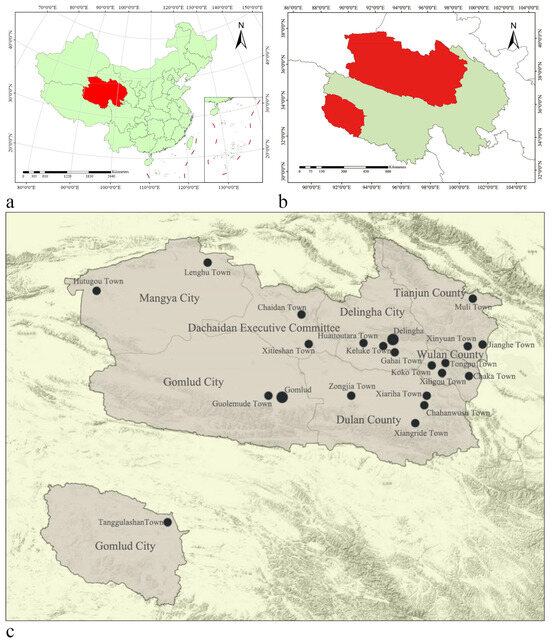
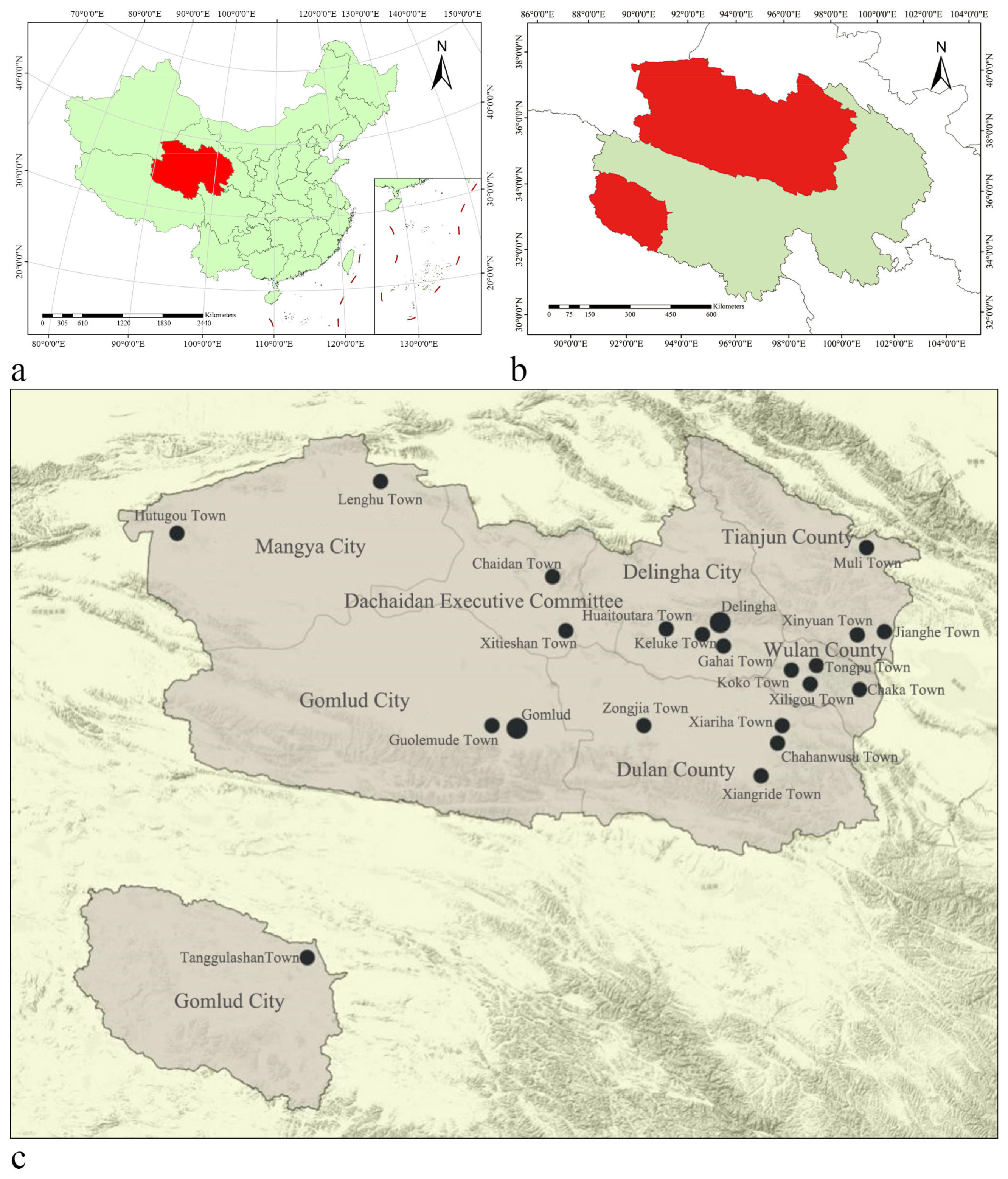
The protection of architectural character in Haixi Prefecture, Qinghai Province, on the Qinghai–Tibet Plateau carries multifaceted significance (Figure 1a,b), deeply rooted in the interwoven dimensions of ecology, culture, and development. Ecologically, as a key barrier in the northeastern Plateau, Haixi’s distinctive “salt lake–desert–grassland” composite ecosystem endows its built environment with inherent adaptive attributes. Culturally, Haixi serves as a living heritage crossroads where Silk Road traditions, Mongolian–Tibetan–Han multi-ethnic exchanges, and the prehistoric Nomuhong civilization converge. From the perspective of regional development, protecting urban character is essential for addressing the paradox of plateau urbanization. This study selects 22 towns within Haixi Prefecture as research samples. The distribution of these towns is relatively even, with representation across all subregions of Haixi; overall, however, a greater concentration is observed in the northeastern part of the prefecture (Figure 1c).
Figure 1.
Location Map of the Study Area. (a) Location Map of Qinghai Province. (b) Location Map of Haixi Prefecture. (c) 22 Towns in the Study Areas of Haixi Prefecture.
3.2. Research Framework
This study follows a progressive analytical logic of “macro–meso–micro”. It begins with the exploration of regional commonalities in urban style formation, then anchors on the identification of individual stylistic features in Haixi towns, and ultimately constructs an integrated paradigm of “theoretical framework, methodological combination, and technical pathway”. To this end, a methodological matrix is established by combining three approaches: descriptive analysis, principal component analysis (PCA), and cluster analysis. These methods work synergistically to form a comprehensive framework that advances from “common cognition” to “individual differentiation”, thereby providing a systematic methodological guide for analyzing the stylistic characteristics of 22 towns in Haixi Prefecture. Crucially, this micro-scale analysis of local urban character is conceptually positioned within a macro-context of national heritage governance and large-scale cultural networks. Research on China’s evolving heritage governance framework emphasizes systematic registration and prioritized conservation of sites within a national spatial planning system [23]. Simultaneously, studies on the Silk Road network highlight how cultural heritage sites function as interconnected nodes within transnational corridors, their value derived from both intrinsic features and relational positions [24]. This study contributes to these discussions by developing a granular, quantitative method to identify and categorize the foundational local units—towns and their distinctive styles—that constitute the very fabric of these macro-scale systems. The systematic characterization of Haixi’s towns provides a replicable model for inventorying and assessing urban heritage character, which can feed into higher-level regional registries and inform strategies for integrating local distinctiveness into broader cultural corridor conservation plans.
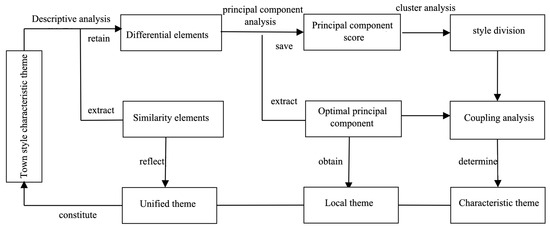
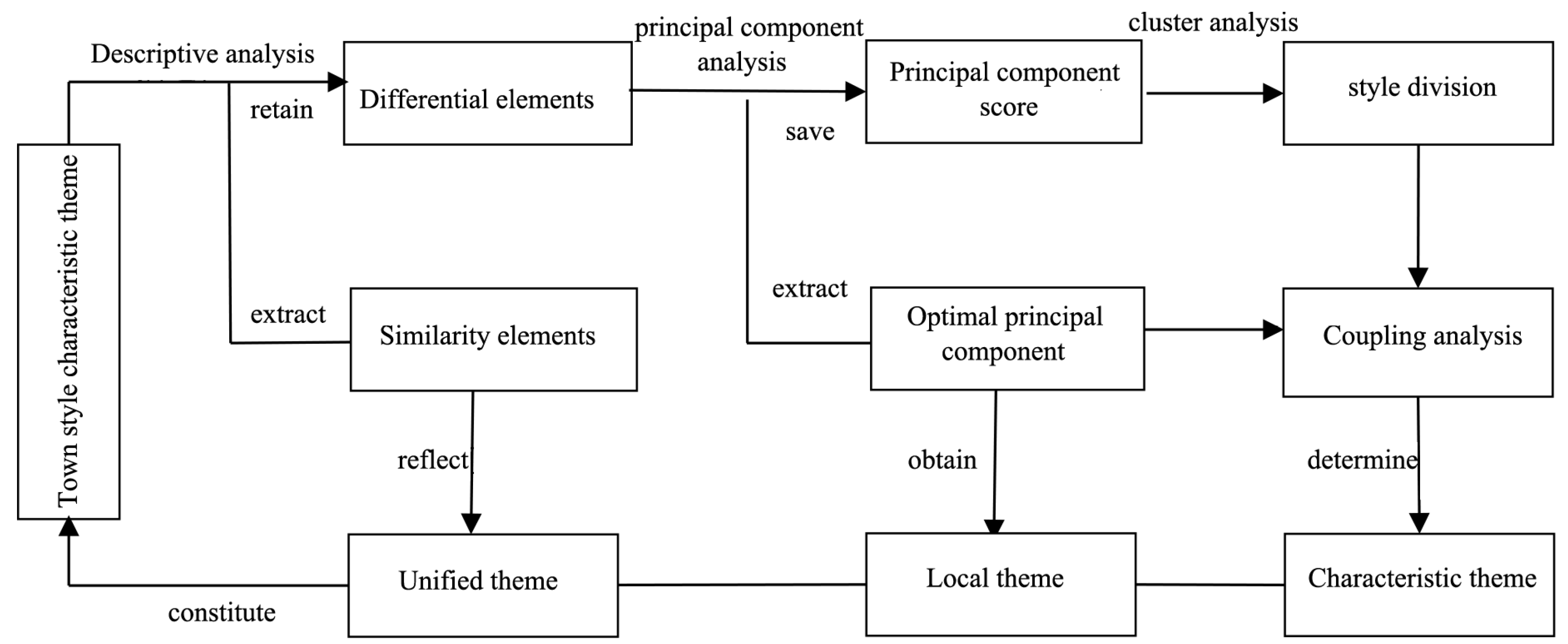
At the meso-level, the focus is placed on the procedural linkage and functional complementarity of the three methods, forming a progressive relationship of “differentiation filtering–dimensionality reduction–categorical aggregation.” First, descriptive analysis tests the stylistic indicator data of the 22 towns. Homogenized indicators (e.g., town size, basic infrastructure), characterized by low variance coefficients (<40%) and similar distributions, are excluded. This step performs data “denoising” and “effective information extraction,” enabling the analysis to concentrate on distinctive indicators such as “architectural style differentiation” and “density of historical and cultural relics.” This corresponds to the process Descriptive analysis → Differential elements (retain) → Similarity elements (extract) in the workflow, delineating the valid interval of differentiation for subsequent analysis. Second, PCA applies linear transformations to convert multidimensional indicators into a small number of linearly independent components, such as an “ecological substrate principal component” or a “cultural inheritance principal component.” This process retains most of the original information while achieving dimensionality reduction. At the same time, the principal component scores serve as quantitative measures of urban stylistic features, with higher or lower scores intuitively reflecting the relative advantages of towns along each dimension. This corresponds to the chain Principal component analysis → Principal component score → Optimal principal component (extract), completing the meso-level transition from “multidimensional indicators” to “core features.” Third, cluster analysis employs an “agglomerative clustering + squared Euclidean distance” algorithm on the PCA scores to classify towns into groups with similar stylistic characteristics. This step bridges the gap between “individual score differences” and “group style types,” generating the final outputs of Cluster analysis → Style division. This categorical framework then provides a reference system for identifying micro-level stylistic characteristics.
At the micro-level, the analysis deepens in granularity, achieving a precise linkage of “indicator–score–category–feature.” Descriptive analysis removes ineffective indicators and preserves effective carriers of stylistic differentiation. PCA highlights each town’s comparative advantages across the optimal principal components. Finally, cluster analysis clarifies the shared stylistic attributes and boundaries of different town groups (Figure 2).
Figure 2.
Research Framework Diagram.
The data system constructed in this study fully accounts for the characteristics of indicators and spatial dimensional differences, thereby forming a multi-source and complementary data collection model. For indicators related to natural environmental styles and historical–cultural features, the administrative boundaries of towns in Haixi Prefecture are taken as the research unit, with statistical data drawn from the annual statistical bulletins of Haixi’s cities and counties. For indicators requiring spatial quantification, such as natural landscape morphology and built environment patterns—data were obtained through a combination of field surveys and measurements based on Google satellite imagery. We distributed a score sheet to 45 experts in relevant fields in Haixi prefecture (including 15 urban and rural planners, 10 scholars in the protection of cultural heritage, 10 officials from the cultural and Tourism Department of the local government and 10 senior local architects). The recovery rate reached 100%. In order to ensure the consistency and objectivity of scoring, all experts received unified training on index definition and scoring standard before scoring. This mixed collection model of “statistical data—spatial measurement-expert judgment” not only ensures the authority of official statistical data, but also enhances the precision of spatial morphology indicators and supplements quantitative blind spots with expert insights, thus laying a solid foundation for multidimensional analysis.
Based on IBM SPSS Statistics 24, a three-tier technical framework of “descriptive analysis → principal component analysis → cluster analysis” was established to achieve a stepwise excavation of data value. First, descriptive analysis was used to present the basic characteristics of each indicator, such as central tendency and dispersion, thereby providing baseline benchmarks for subsequent analyses. On this basis, in order to optimize the analysis efficiency and focus on the dimensions with urban differentiation and discrimination, we eliminated six low variation indicators according to the coefficient of variation (cv < 40%). Second, principal component analysis (PCA) was applied to reduce dimensionality and integrate high-dimensional indicators, extracting key factors that explain the majority of variance and simplifying the complex indicator system while retaining critical information. To ensure the robustness of PCA results given the sample size (N = 22) to variable (P = 16) ratio, a correlation analysis was first conducted, revealing no highly collinear indicator pairs (|r| > 0.8). Following PCA, the stability of the principal component structure was further verified using a Bootstrap resampling method (1000 iterations), supporting the reliability of the extracted dimensions. Finally, cluster analysis was conducted to classify towns into different types, identifying town clusters with distinct combinations of natural environments, built environments, and cultural features, and thereby revealing spatial differentiation patterns. These three methods form a progressive analytical sequence—from “data profiling” to “dimensional extraction” and finally to “typological induction”—to systematically interpret the spatial characteristics and underlying logic of urban styles in Haixi Prefecture.
In addressing the spatial attributes of different subsystems, the study differentiates research boundaries to align indicator connotations with spatial scales. Specifically, natural environmental styles and historical–cultural features adopt “town administrative boundaries” as the research extent, owing to their holistic characteristics: natural environments encompass ecological elements such as mountains, water bodies, and climate, which extend across entire towns, while historical–cultural features include cultural resources such as heritage sites and folk traditions, which are also distributed throughout the whole administrative area. Conversely, the built environment style focuses on “central urban areas (town cores),” since its key indicators—morphological patterns, facility configurations, and spatial layouts—are highly “centrally concentrated.” The central urban area is the most intensive focus of built activities and the most representative spatial unit for capturing morphological features. This “holistic core” distinction in spatial scale avoids ambiguity in research boundaries and ensures consistency between indicator data and spatial carriers, thereby providing a solid guarantee for the accuracy of analytical results (Table 1).
Table 1.
The selection index system of urban style and features.
4. Results
4.1. Descriptive Analysis
Descriptive statistical analysis was conducted on the 22 style and character indicators for the 22 towns in Haixi Prefecture (Table 2). Among these, six indicators—river and lake landscapes, river seasonality, green coverage rate, architectural color coordination, square landscapes, and the urban form saturation coefficient—exhibited coefficients of variation (CVs) below 40%. For instance, the convergence of green coverage rates reflects a relatively homogeneous level of ecological greening, while the low dispersion of the urban form saturation coefficient suggests common foundational spatial configurations. Consequently, to enhance the efficiency of subsequent analysis and focus on dimensions with greater explanatory power for differentiation, these six low-variance indicators were excluded from further principal component analysis (PCA).
Table 2.
Descriptive statistics of urban style and features.
Acknowledging the statistical guideline that PCA sample size should ideally be several times the number of variables, we took measures to ensure the robustness of our analysis with 22 towns and the remaining 16 indicators. Before PCA, a correlation analysis was performed on the 16 indicators. No pair of indicators was found to have a Pearson correlation coefficient |r| > 0.8, indicating that severe multicollinearity was not present among the retained variables. Therefore, all 16 indicators were retained for PCA to preserve the comprehensiveness of the evaluation system for this regional case study.
In contrast, the remaining 16 indicators generally displayed higher CVs, reflecting substantial inter-town differences across most stylistic dimensions. Notably, annual mean temperature, with an exceptionally high CV of 270.1%, emerged as the most dispersed indicator. This pronounced variability is closely linked to the region’s complex physical geography: Haixi encompasses plateaus, mountains, and basins, resulting in wide variations in elevation. The interaction of latitude and topography produces highly uneven thermal conditions, which in turn manifest as extreme differentiation in annual mean temperature. Furthermore, two spatial location indicators—the distance from the town center to the nearest mountain and the distance from the town center to the nearest river or lake—also exhibited strong dispersion. From the perspective of human–environment interaction in settlement selection, some towns are situated close to mountains to utilize natural defensive barriers or exploit mountain resources, while others are located farther away to mitigate geological risks or secure space for expansion. Similarly, in relation to water resources, some towns were established near rivers and lakes to ensure access to water and transportation, whereas others are located at a greater distance due to the sparse distribution of water bodies or ecological protection constraints. These divergent locational strategies directly account for the high variability observed in the two distance-related indicators.
4.2. KMO and Bartlett’s Test Analysis
The collected indicator system data were subjected to the Kaiser–Meyer–Olkin (KMO) test and Bartlett’s test of sphericity, with the results presented in Table 3. The KMO measure of sampling adequacy was 0.563. This index assesses partial correlations among variables to determine whether the dataset is suitable for factor analysis and related methods. Conventionally, a KMO value greater than 0.5 indicates that the data are appropriate for such analysis. Although the KMO value in this study did not reach the traditional threshold of 0.6, largely due to the relatively small sample size combined with a high-dimensional indicator set, it still falls within the acceptable range, suggesting that the variables possess a moderate level of partial correlation.
Table 3.
KMO and Bartlett test.
For Bartlett’s test of sphericity, the approximate chi-square statistic was 203.558 with 120 degrees of freedom, and the significance probability was p = 0.000. Since p < 0.005, the null hypothesis of “no correlation among variables” was strongly rejected. This result demonstrates that the variables exhibit significant intercorrelations, thereby indicating the presence of common factors that can be extracted from the dataset.
To directly address potential concerns regarding the stability of PCA results with a limited sample size (N = 22), we employed a Bootstrap resampling procedure (1000 iterations). This method involves repeatedly sampling from the original dataset with replacement to estimate the sampling distribution of the statistics. The Bootstrap results demonstrated robust stability: the eigenvalues and the cumulative variance explained by the first five principal components remained consistent across the majority of iterations. Furthermore, the confidence intervals for the component loadings were reasonably narrow, and the fundamental structure of the component matrix—which indicators loaded highly on which components—was consistently reproduced.
4.3. Analysis of Variance Results
Based on the preliminary analysis, six indicators—river and lake landscapes, river seasonality, green coverage rate, architectural color coordination, square landscapes, and the urban form saturation coefficient—were excluded, and principal component analysis (PCA) was subsequently applied to the remaining 16 style and character indicators across the 22 towns. As shown in Table 4 (“Total Variance Explained”), the first five principal components (PC1–PC5) yielded eigenvalues of 5.373, 2.897, 1.678, 1.423, and 1.223, respectively, each meeting the extraction criterion of eigenvalue ≥ 1. Their corresponding variance contributions were 43.583% for PC1, 18.104% for PC2, 10.485% for PC3, 8.895% for PC4, and 7.645% for PC5, with a cumulative variance contribution of 88.711% by PC5, thereby surpassing the conventional 85% threshold. This confirms that these five components effectively capture the majority of information from the original 16 indicators. Furthermore, the extracted sums of squared loadings produced the same cumulative variance contribution pattern as the initial eigenvalues, while the rotated sums of squared loadings optimized the interpretability of each component through orthogonal rotation without altering the total variance explained, thus confirming the stability of the extraction.
Table 4.
Total variance explained.
The variance explanation results in Table 5 demonstrate that the principal components derived from PCA provide sufficient information coverage for the 16 style and characteristic indicators, laying a reliable foundation for subsequent comprehensive evaluation.
Table 5.
Component load matrix after PCA rotation.
4.4. Clustering Analysis
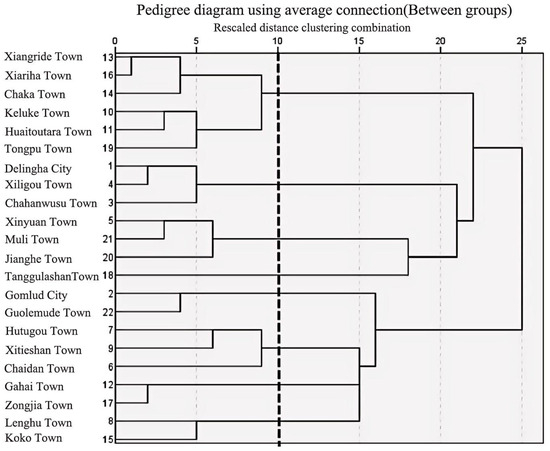
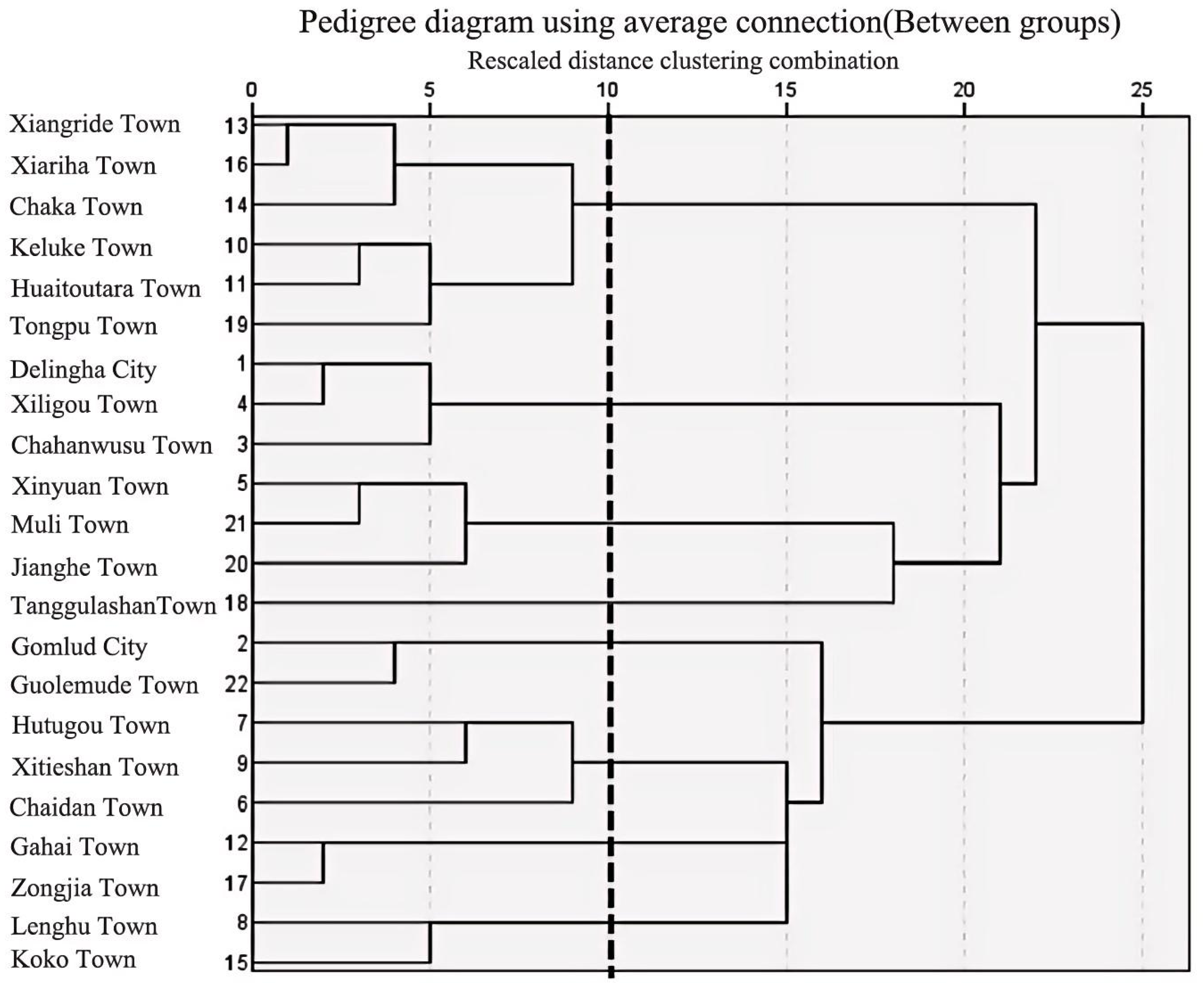
After clustering the towns in Haixi Prefecture into 8 categories using cluster analysis, it is essential to identify the principal component (PC) with the highest urban style score within each category through comparative analysis (Figure 3). Subsequently, horizontal comparisons are conducted among the optimal PCs corresponding to each category, aiming to determine the optimal style orientation and characteristic indicator focus for different types of towns. Building on this, an in-depth dissection of the connotative carriers of style and characteristic indicators is performed, encompassing dimensions such as street space facility coverage, quantity and protection levels of historical and cultural heritages, spatial location relationships between mountain-river-lake systems and towns, natural elements, architectural style characteristics, industrial functional attributes, and regional cultural symbols. This process decodes the specific manifestations and value logics of each carrier in urban spatial construction, cultural inheritance, and functional development, thereby anchoring the selected urban styles and characteristics for distinct town types in Haixi Prefecture. The specific correspondences and core evaluation criteria are illustrated in Table 6, which not only presents diverse style combinations but also reflects the differentiated pathways for condensing features rooted in natural endowments, cultural genes, and functional attributes across towns.
Figure 3.
Pedigree diagram of cluster analysis.
Table 6.
Selected urban style and features of Haixi Prefecture.
A multi-dimensional analysis of the styles and characteristics of towns in Haixi Prefecture should be conducted from three dimensions: natural foundation, human-made construction, and humanistic core. Through comprehensive comparison, the differentiated formation mechanisms and developmental logics of these towns can be revealed.
In terms of natural style, Golmud City and Guolemude Town form a “mountain-town symbiosis” pattern relying on the grandeur of the Kunlun Snow Mountain. Tanggula Town represents the ecological authenticity of the Qinghai–Tibet Plateau and Sanjiangyuan, embodying the natural foundation of the plateau. The yardang landforms in Huatugou Town and Lenghu Town showcase the unique texture of desert geology. Chaka Town constructs a natural aesthetic landmark through its “Sky Mirror” salt lake, while towns such as Huaotuotala interpret the integration of ecological agriculture and natural landscapes via wolfberry fieldscapes. As a foundational element of town style, the protection of natural characteristics necessitates reinforcing the “minimal intervention” principle—for instance, restricting development intensity around snow-capped mountains and designating ecological buffer zones for salt lakes—to prevent human construction from undermining the primitiveness and recognizability of natural landscapes.
Shifting to human-made style, Golmud’s modern urban space, with its well-scaled neighborhoods and complete public facilities, demonstrates the vitality of an economic hub. Delingha City conveys the humanistic warmth of a political and cultural center through pleasant alleyways and architectural textures blending tradition and modernity. Ethnic Mongolian architecture in Xitieshan Town, Tibetan Buddhist temples in Xiangride Town, Tibetan-style residences in Xinyuan Town, and red-brick-and-tile buildings with revolutionary connotations in Keluke Town, respectively shape unique characters through ethnic symbols, religious relics, and revolutionary memories. The square morphology and transportation hub function of Chaidan Town, along with the linear layout of Muli Town, reflect the adaptability of industrial-mining towns to geographical conditions. As an external manifestation of urban characteristics, human-made style requires emphasis on the “symbiosis of old and new”—for example, preserving alleyway textures during Delingha’s old city renovation and integrating Kunlun cultural elements into Golmud’s new town development—to avoid the homogenization of urban landscapes.
Humanistic culture serves as the intrinsic soul of town style: Dedu Mongolian culture in Delingha continues the continuity of grassland civilization through festivals, handicrafts, and cuisine; the “Qaidam Spirit” in Golmud inherits memories of arduous pioneering efforts via industrial heritage, memorial halls, and urban sculptures; Nomhon Culture in Chahanwusu Town reconstructs prehistoric civilization through archaeological sites and unearthed artifacts; and Tibetan customs in Tanggula Town and Jianghe Town maintain living cultural vitality through wedding/funeral rituals and folk arts. Their protection demands a dual mechanism of material and intangible heritage—renovating historical relics like the Nomhon Site while revitalizing folk culture through community inheritance and cultural-tourism integration.
Overall, Golmud, as an economic hub, aggregates diverse characteristics from nature (Kunlun Snow Mountain), human-made elements (modern space), and culture (Qaidam Spirit). Delingha, a political and cultural center, focuses on human-made features (alleyway textures) and cultural elements (Dedu Mongolian culture). Meanwhile, towns such as Tanggula and Muli, due to geographical isolation and economic backwardness, have accidentally preserved traditional customs, emerging as “living cultural museums.” Notably, although Xitieshan Town performs well on the indicator of “distance between town center and mountain range,” its industry-mining-dominated functional positioning has blurred its stylistic features—indicating that shaping town characteristics requires balancing functional needs with cultural expression to avoid the homogenization trap of “prioritizing economy over culture.” In essence, the town styles of Haixi Prefecture constitute a symbiotic entity of natural foundation, human-made construction, and humanistic accumulation. Their protection and development must be guided by “respecting differences and activating connotations” to achieve sustainable characterization marked by the “unique charm of each town.”
5. Discussion
This study fills the gap in quantitative research on urban architectural styles in the Qinghai–Tibet Plateau by constructing a three-dimensional evaluation model of “natural foundation–artificial heritage–cultural context” and integrating principal component analysis (PCA) with cluster analysis. Compared with existing studies, the core advantages of this work are the following. Methodologically, for the first time, PCA and cluster analysis are chain-applied to the study of urban style in high-altitude multi-ethnic areas. Descriptive analysis screened indicators with high coefficients of variation (e.g., annual mean temperature difference with a coefficient of variation [CV] of 270.1%), PCA extracted 5 principal components (cumulative variance contribution rate: 88.7%), and cluster analysis generated 8 style lineages (as shown in Figure 3). This breaks through the limitations of traditional tripartite classification and achieves a logical closed loop from “data denoising” to “type induction.”
Practically, it identifies an imbalanced pattern of “nature-dominated (9 towns) > human-made dominated (9 towns) > humanistic dominated (4 towns)” in Haixi Prefecture’s towns, providing a scientific basis for differentiated conservation strategies. This addresses the deficiency of existing studies in their insufficient attention to the cultural dimension of towns in western ecologically fragile areas. This study relies on local experts to conduct hierarchical evaluation, which ensures that the evaluation is based on in-depth local knowledge, but it may also introduce ‘internal perspective bias’. For example, experts may be more familiar with the demands of local development and evaluate some modern construction than external observers. Although the reliability test supports the consistency of scores, the consistency itself may reflect a shared local perspective. Future research can be cross verified by incorporating external experts, combining social media sentiment analysis or tourists’ perception of big data, to obtain a more three-dimensional and more meta evaluation perspective, so as to balance ‘internal’ and ‘external’ cognition.
Beyond these methodological contributions, the spatial differentiation patterns revealed in Haixi Prefecture resonate with broader discourses on high-altitude settlement development and resource-based urbanism, offering insights that transcend the local context.
First, the “nature-dominated” character of Haixi’s towns is not an isolated phenomenon but aligns with a fundamental logic of high-altitude human–environment adaptation. In regions like the Andes and the Alps, the overwhelming presence of monumental landscapes (e.g., peaks, valleys, glaciers) and severe climatic constraints (e.g., hypoxia, low temperatures) have historically dictated settlement patterns, resulting in towns that are often organically embedded within, and visually subordinate to, their natural settings. This study quantifies this dynamic in Haixi: towns such as Golmud and Guolemude, defined by their adjacency to the Kunlun Snow Mountains, and Chaka Town, centered around its “Sky Mirror” salt lake, exemplify settlements where natural elements are the primary, often non-negotiable, determinants of urban form and identity. Our finding that 9 out of 22 towns are nature-dominated empirically confirms that in high-altitude, ecologically sensitive zones like the Qinghai–Tibet Plateau, natural environmental carrying capacity remains the paramount factor shaping urban character. This necessitates a conservation philosophy of “minimal intervention,” prioritizing the integrity of the natural substrate over extensive artificial transformation, a principle that is equally critical in other global highland regions.
Second, the dual impact of industrial and mining activities on townscape, as evidenced in Haixi, reveals a globally relevant trajectory from “functional imprint” to “cultural heritage and ecological transformation.” Initially, industries like the Xitieshan mining area and the oil towns of Lenghu and Huatugou imposed a stark, functionalist built environment, often leading to stylistic homogenization and a weakening of cultural expression—a pattern observed in mining towns worldwide from the 20th century. However, the contemporary phase presents a more complex and hopeful narrative. The evolving practices in Haixi, such as the transformation of the Dachaidan emerald from an abandoned borax mining pit into a national AAAA-level tourist attraction, and the strict separation of production and tourism zones in Caka Salt Lake to preserve both industrial heritage and ecological aesthetics, demonstrate a proactive shift towards integrating industrial legacies into new urban identities. This aligns with a global paradigm shift in post-industrial landscapes. Comparative cases like the ecological restoration of coal mining subsidence areas in Xuzhou, Jiangsu Province, into wetland parks (e.g., Pan’an Lake), and the comprehensive management of mining subsidence area in Huainan, Anhui Province, into multi-functional urban “green kidneys” (e.g., Chunshen Lake), illustrate a common path where industrial sites are re-conceptualized as ecological and cultural assets rather than mere scars. The challenge for Haixi’s industrial towns, therefore, is not merely to mitigate negative impacts but to strategically navigate this transition from “resource dependency” to “ecological and cultural empowerment,” turning potential liabilities into cornerstones of sustainable, place-specific development.
However, compared with international frontiers [15,26,27,28,29,30], this study still has three limitations: First, lack of data dynamism. Existing indicators rely mostly on static cross-sectional data, failing to incorporate temporal variables such as climate change and tourism development. This makes it difficult to capture the evolutionary trajectories of style characteristics. Second, weak cross-scale correlation. Although the existing clustering results reveal intra-group commonalities, they do not link with macro-scale elements such as regional ecological security barriers and Silk Road cultural corridors. This constrains the systematicity of conservation strategies. Third, insufficient quantification of the humanistic dimension. Cultural genes depend primarily on expert subjective scoring, lacking objective corroboration from sources like social media text and tourist perception big data. This leads to a small sample size of humanistic-dominated towns (only 4).
Future research needs to focus on three directions: At the methodological integration level, spatiotemporal clustering and machine learning should be combined to construct a dynamic coupling framework for multi-source heterogeneous data of “nature–human-made–culture.” At the scale linkage level, the urban style clustering results (Figure 3) need to be embedded into the “Asian Water Tower” ecological security pattern and South Asian cultural corridor network to explore the matching mechanism between micro-level style characteristics and macro-level ecological and cultural functions. At the technology empowerment level, microbial erosion mapping technology from Kyoto’s temple preventive conservation could be referenced, and tools such as remote sensing inversion and LiDAR point cloud analysis could be introduced to quantitatively monitor the weathering processes of traditional building materials (rammed earth and stone) in plateau towns. This would promote conservation strategies from “passive restoration” to “active intervention.” Ultimately, by establishing a full-cycle conservation paradigm of “difference identification–dynamic assessment–preventive regulation,” this study aims to provide a Chinese approach for the sustainable preservation of high-altitude cultural landscapes worldwide.
6. Conclusions
Building upon the general indicator framework of existing urban landscape research, this paper proposes a localized indicator system by integrating Haixi Prefecture’s unique geographical environment and cultural context. The research team systematically reviewed over 20 literature works on plateau town landscapes, extracted high-frequency indicators such as “topography and landform,” “hydrological characteristics,” “architectural style,” and “ethnic culture,” and adjusted for the specificity of Haixi Prefecture—characterized by “high altitude, multi-ethnicity, and equal emphasis on industrial-mining and ecology.” The final indicator system covers 22 metrics across three categories: natural environment (7 items), built environment (8 items), and humanistic culture (7 items), effectively operationalizing the study of “mountains, waters, towns, and people” interactions in this specific high-altitude region.
The primary contribution of this study lies in the development and application of an integrated quantitative framework to diagnose and interpret urban landscape character. This framework, structured as a logical chain of “descriptive analysis → principal component analysis (PCA) → cluster analysis”, systematically analyzes the style characteristics of towns in Haixi Prefecture. The process identified core differentiating indicators, reduced dimensionality to extract key latent factors (e.g., “natural ecological foundation,” “artificial spatial quality”), and ultimately classified the 22 towns into 8 distinct style clusters. This methodological workflow successfully bridges statistical rigor with spatial reality, providing a replicable model for comparative urban landscape studies in data-scarce, high-altitude regions.
Second, the study reveals three common characteristics of Haixi’s towns, which stem from the deep integration of natural foundation and human history. First, the natural pattern of “being surrounded by mountains and basins, dotted with arid seasonal rivers, and abundant in rivers and lakes” has shaped the spatial prototype of towns “adapting to mountains and settling by water.” For example, Golmud relies on the Kunlun Mountains and Qaidam River for its layout, while Chaka Town is centered around Chaka Salt Lake—natural elements serve as the underlying constraints for town site selection and form. Second, the distribution characteristic of “small town size but extensive coverage” stems from the reality of sparse population on the plateau, driving the transformation of town functions toward “regional service centers” and forming a “small but comprehensive” composite functional structure. Third, the humanistic trait of “integration of multi-ethnic cultures” arises from the overlapping influences of historical Silk Road trade, garrison farming, and contemporary multi-ethnic settlement. Cultures such as Mongolian, Tibetan, and Han merge deeply in architectural symbols and festive customs, forming the foundation of urban cultural identity.
The author proposes a “chain methodology framework” (descriptive statistics → principal component analysis → cluster analysis) as a replicable analytical pathway suitable for the study of towns in high-altitude regions. Rather than remaining at the level of mere data description, this framework incorporates epistemological reflection—particularly the transition enabled by principal component analysis (PCA) from simple “data compression and summarization” to the exploration of underlying mechanisms—thereby effectively addressing the longstanding gap in comparative quantitative research on underdeveloped highland towns. To ensure robustness given the small sample size (N = 22), the analysis pipeline includes pre-PCA correlation analysis and Bootstrap resampling (1000 iterations) to assess the stability of PCA results under limited data conditions and to mitigate sampling bias. Five principal components were ultimately extracted, accounting for a cumulative explained variance exceeding 88.7%. Varimax orthogonal rotation was applied to the component loadings to substantially improve interpretability. Based on the resulting component scores, spatial clustering was performed, yielding eight distinct town types exhibiting clear geographical differentiation. These types are further situated within the broader global spectrum of high-altitude adaptation, with explicit comparisons drawn to towns in the Andes and the Alps. Through Table 6, the clustering outcomes are concretely mapped onto each of the 22 sampled towns, providing a synthesized profile for every case. Each town’s summary includes its assigned landscape category (e.g., Delingha falls into Category 2), the dominant principal component(s) (e.g., PC1), the most defining stylistic indicators (e.g., street facility coverage rate), and its distinctive cultural and place-specific connotations (e.g., the Mongol cultural characteristics of the “Dedu” region). This integrative presentation successfully bridges quantitative clustering results with qualitative cultural interpretation, offering a clear and specific reference framework for the typological study of high-altitude towns.
Based on the analysis results, the style of towns in Haixi Prefecture exhibits a differentiation characteristic of “nature-dominated, human-made secondary, and humanistic culture awaiting development.” Among the 9 nature-dominated towns, Golmud and Guolemude Town stand out with their “high-altitude mountain town” image tied to the Kunlun Snow Mountain; Chaka Town creates a “natural aesthetic landmark” with its “Sky Mirror” salt lake; and the yardang landform in Huatugou Town interprets the rugged beauty of desert geology. These towns have become “iconic nodes” of regional landscape due to the irreplaceability of their natural landscapes. Among the 9 human-made dominated towns, pleasant alleyways in Delingha, Mongolian architecture in Xitieshan, and red-brick residences in Keluke—through differentiated design of architectural form and functional layout—shape the built environment characteristic of “human-land symbiosis.” Although the four humanistic culture-dominated towns have the smallest number, they carry profound value.
Author Contributions
Conceptualization, J.L. and B.L.; methodology, L.Y.; validation, J.L., B.L. and L.Y.; data curation, J.L.; writing—original draft preparation, J.L.; writing—review and editing, L.Y.; supervision, B.L. All authors have read and agreed to the published version of the manuscript.
Funding
This research is funded by the Industrial Support Plan Project for Universities in Gansu Province (2026CYZC-020).
Data Availability Statement
The original contributions presented in the study are included in the article, further inquiries can be directed to the corresponding author.
Conflicts of Interest
Author Jianguo Liu was employed by the company Gansu Transportation Planning, Survey and Design Institute Co., Ltd. Author Lisha Ye was employed by the company Gansu Construction Design Consulting Group Co., Ltd. The remaining author declare that the research was conducted in the absence of any commercial or financial relationships that could be construed as a potential conflict of interest.
References
- Bi, L.; Liu, X.; Zhang, Z. Study of the Ecological Adaptive Mechanism of Traditional Human Settlements in Sichuan Tibetan Areas Based on a Cultural Perspective. In Human-Centered Urban Planning and Design in China: Volume I: Urban and Rural Planning; Li, W., Hu, L., Cao, J., Eds.; Springer: Berlin/Heidelberg, Germany, 2021; pp. 111–135. [Google Scholar]
- Hua, Y.; Nakatani, N. Historic conservation in Tibetan region amidst rapid urbanization: A case study of Dukezong Old Town. J. Asian Archit. Build. Eng. 2025, 24, 1–15. [Google Scholar] [CrossRef] [Scilit]
- Shen, X.; Tan, J. Ecological conservation, cultural preservation, and a bridge between: The journey of Shanshui Conservation Center in the Sanjiangyuan region, Qinghai-Tibetan Plateau, China. Ecol. Soc. 2012, 17, 38. [Google Scholar] [CrossRef] [Scilit]
- Zhu, J.; Xu, W.; Xiao, Y.; Shi, J.; Hu, X.; Yan, B. Temporal and spatial patterns of traditional village distribution evolution in Xiangxi, China: Identifying multidimensional influential factors and conservation significance. Herit. Sci. 2023, 11, 261. [Google Scholar] [CrossRef] [Scilit]
- Riffat, S.; Ahmad, M.I.; Shakir, A. Eco-cities: Sustainable urban living. In Sustainable Energy Technologies and Low Carbon Buildings; Saffa, R., Mardiana, I., Aliff, S., Eds.; Springer: Berlin/Heidelberg, Germany, 2024; pp. 259–309. [Google Scholar]
- Tsering, T. Hydro Logic: Water for Human Development. In Tibet: Current Environment and Development Issues; Tibet Justice Center: Oakland, CA, USA, 2002. [Google Scholar]
- Costa, A.P.d.A.; Choren, R.; Pereira, D.A.d.M.; Terra, A.V.; Costa, I.P.d.A.; Junior, C.d.S.R.; Santos, M.d.; Gomes, C.F.S.; Moreira, M.Â.L. Integrating multicriteria decision making and principal component analysis: A systematic literature review. Cogent Eng. 2024, 11, 2374944. [Google Scholar] [CrossRef] [Scilit]
- Demšar, U.; Harris, P.; Brunsdon, C.; Fotheringham, A.S.; McLoone, S. Principal component analysis on spatial data: An overview. Ann. Assoc. Am. Geogr. 2013, 103, 106–128. [Google Scholar] [CrossRef] [Scilit]
- Doukas, H.; Papadopoulou, A.; Savvakis, N.; Tsoutsos, T.; Psarras, J. Assessing energy sustainability of rural communities using Principal Component Analysis. Renew. Sustain. Energy Rev. 2012, 16, 1949–1957. [Google Scholar] [CrossRef] [Scilit]
- Mazziotta, M.; Pareto, A. Principal component analysis for constructing socio-economic composite indicators: Theoretical and empirical considerations. SN Soc. Sci. 2024, 4, 114. [Google Scholar] [CrossRef] [Scilit]
- Park, Y.S.; Egilmez, G.; Kucukvar, M. A novel life cycle-based principal component analysis framework for eco-efficiency analysis: Case of the United States manufacturing and transportation nexus. J. Clean. Prod. 2015, 92, 327–342. [Google Scholar] [CrossRef] [Scilit]
- Wang, E. Decomposing core energy factor structure of US residential buildings through principal component analysis with variable clustering on high-dimensional mixed data. Appl. Energy 2017, 203, 858–873. [Google Scholar] [CrossRef] [Scilit]
- Wu, R.M.; Zhang, Z.; Yan, W.; Fan, J.; Gou, J.; Liu, B.; Gide, E.; Soar, J.; Shen, B.; Fazal-e-Hasan, S. A comparative analysis of the principal component analysis and entropy weight methods to establish the indexing measurement. PLoS ONE 2022, 17, e0262261. [Google Scholar] [CrossRef] [Scilit] [PubMed]
- Moropoulou, A.; Polikreti, K. Principal Component Analysis in monument conservation: Three application examples. J. Cult. Herit. 2009, 10, 73–81. [Google Scholar] [CrossRef] [Scilit]
- Turbay, I.; Ortiz, P.; Ortiz, R. Statistical analysis of principal components (PCA) in the study of the vulnerability of Heritage Churches. Procedia Struct. Integr. 2024, 55, 168–176. [Google Scholar] [CrossRef] [Scilit]
- Najd, M.D.; Ismail, N.A.; Maulan, S.; Yunos, M.Y.M.; Niya, M.D. Visual preference dimensions of historic urban areas: The determinants for urban heritage conservation. Habitat Int. 2015, 49, 115–125. [Google Scholar] [CrossRef] [Scilit]
- Tavakolian, P.; Shokouhi, E.B.; Sfarra, S.; Gargiulo, G.; Mandelis, A. Non-destructive imaging of ancient marquetries using active thermography and photothermal coherence tomography. J. Cult. Herit. 2020, 46, 159–164. [Google Scholar] [CrossRef] [Scilit]
- Huang, Y.; Yang, S. Mapping Suzhou’s Cultural Heritage Sites: Exploring Gusu Prosperous Map through Data Visualization. ACM J. Comput. Cult. Herit. 2025, 18, 35. [Google Scholar] [CrossRef] [Scilit]
- Orama, J.A.; Huertas, A.; Borràs, J.; Moreno, A.; Anton Clavé, S. Identification of mobility patterns of clusters of city visitors: An application of artificial intelligence techniques to social media data. Appl. Sci. 2022, 12, 5834. [Google Scholar] [CrossRef] [Scilit]
- Jarolímková, L.; Míšková, Z.; Novacka, L.; Hilliard, I.; Moreno, A.; Mattera, M.; de Cuerva, L.L.M.; Gomez, D.M.; Claro, M.F.C.; Tortosa, A.J.P. Interpretation of European Cultural Heritage in Tourism; University of Economics: Prague, Czech Republic, 2020; pp. 1–447. [Google Scholar]
- Brimblecombe, P.; Hayashi, M. Perception of the relationship between climate change and traditional wooden heritage in Japan. In Public Archaeology and Climate Change; Dawson, D., Nimura, E., Daire, M., Eds.; Oxbow Books: Oxford, UK, 2017; pp. 288–302. [Google Scholar]
- Comino, L.; Lanza, S.G. The quarries in the coastal municipalities of western Liguria: Reflections on landscape protection with a view to their recovery. In Monitoring of Mediterranean Coastal Areas: Problems and Measurement Techniques 2; Firenze University Press: Firenze, Italy, 2024. [Google Scholar] [CrossRef] [Scilit]
- Dang, X.; Hong, Q.; Liu, W.; Wang, Y. China’s heritage governance blueprint: Revisiting evolutionary trajectories, reframing institutional priorities and mapping the national registry. Habitat Int. 2025, 165, 103541. [Google Scholar] [CrossRef] [Scilit]
- Shen, Y.; Liu, J.; Han, J.; Wan, X. Reconstructing the Silk Road network: Insights from spatiotemporal patterning of UNESCO world heritage sites. Land 2024, 13, 1401. [Google Scholar] [CrossRef] [Scilit]
- Ye, L.S. Study on the Judging Method of the Characteristic Theme of Haixiprefecture’s Urban Feature. Master’s Thesis, Lanzhou University of Technology, Lanzhou, China, 2020. [Google Scholar]
- Afjal, M.I.; Mondal, M.N.I.; Mamun, M.A. Effective hyperspectral image classification based on segmented PCA and 3D-2D CNN leveraging multibranch feature fusion. J. Spat. Sci. 2024, 69, 821–848. [Google Scholar] [CrossRef] [Scilit]
- Ahamed, M.F.; Shafi, F.B.; Nahiduzzaman, M.; Ayari, M.A.; Khandakar, A. Interpretable deep learning architecture for gastrointestinal disease detection: A Tri-stage approach with PCA and XAI. Comput. Biol. Med. 2025, 185, 109503. [Google Scholar] [CrossRef] [Scilit] [PubMed]
- Chen, X.; Xu, S.; Li, S.; He, H.; Han, Y.; Qu, X. Identification of architectural elements based on SVM with PCA: A case study of sandy braided river reservoir in the Lamadian Oilfield, Songliao Basin, NE China. J. Pet. Sci. Eng. 2021, 198, 108247. [Google Scholar] [CrossRef] [Scilit]
- Liao, J.; Guo, L.; Jiang, L.; Yu, C.; Liang, W.; Li, K.; Pop, F. A machine learning-based feature extraction method for image classification using ResNet architecture. Digit. Signal Process. 2025, 160, 105036. [Google Scholar] [CrossRef] [Scilit]
- Tavakoli, S.; Nicu, I.C.; Frauenfelder, R.; Gilbert, G. First geophysical investigations to study a fragile Pomor cultural heritage site at Russekeila–Kapp Linné), Svalbard. J. Cult. Herit. 2023, 63, 187–193. [Google Scholar] [CrossRef] [Scilit]

Disclaimer/Publisher’s Note: The statements, opinions and data contained in all publications are solely those of the individual author(s) and contributor(s) and not of MDPI and/or the editor(s). MDPI and/or the editor(s) disclaim responsibility for any injury to people or property resulting from any ideas, methods, instructions or products referred to in the content. |
© 2026 by the authors. Licensee MDPI, Basel, Switzerland. This article is an open access article distributed under the terms and conditions of the Creative Commons Attribution (CC BY) license.