Research Progress on Advanced Characterization Methods for Hydration Interfaces in Wood Micro- and Nanochannels


Abstract
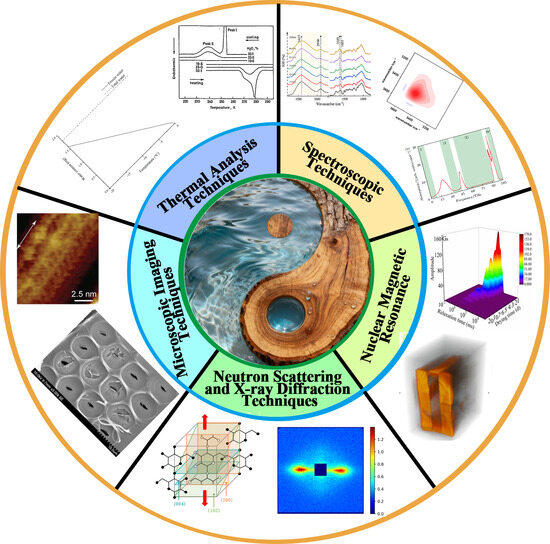
1. Introduction
2. Structural Characteristics of Wood Micro/Nano Channels and Moisture State
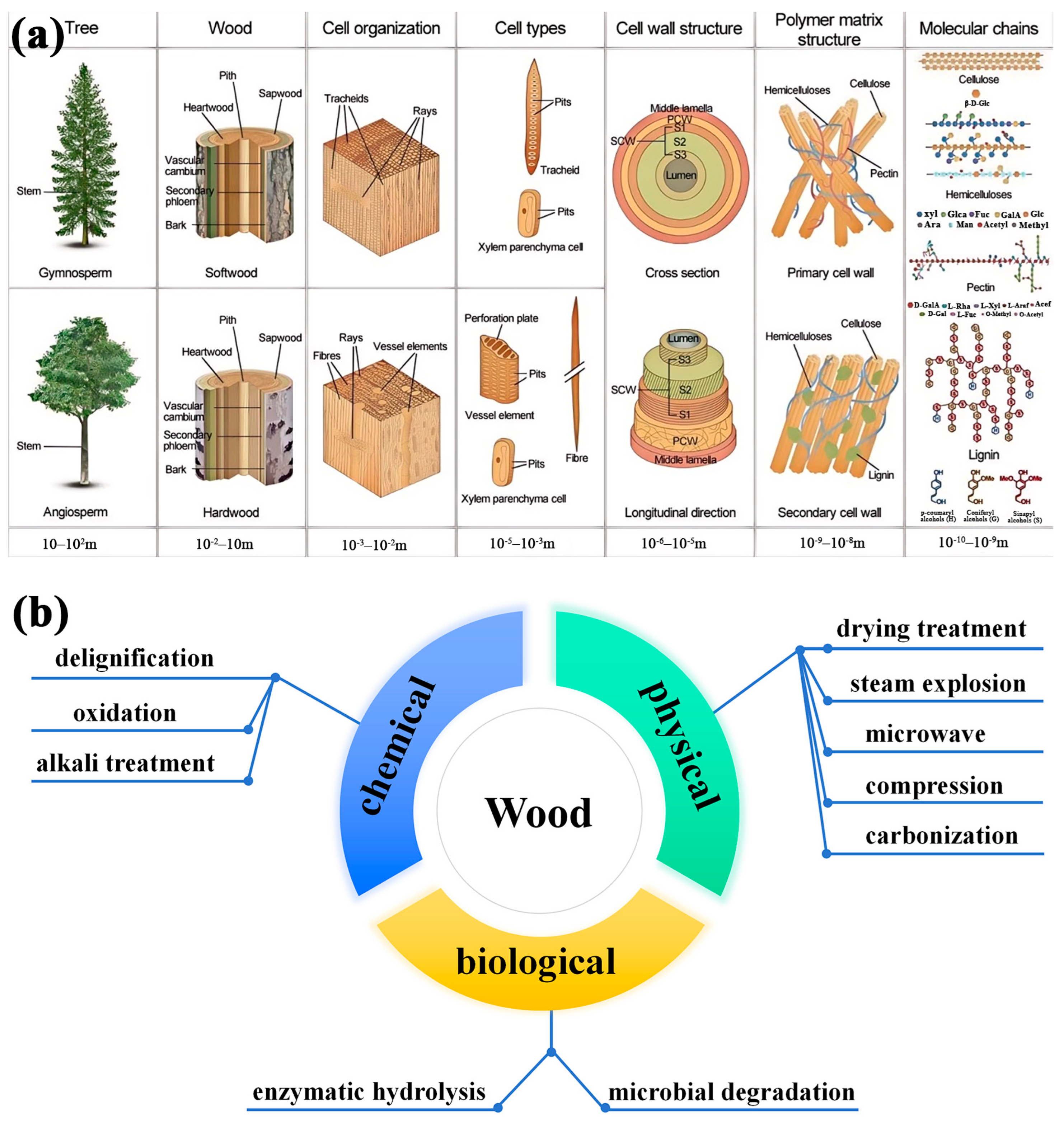
2.1. Formation of Wood Micro/Nano Channel Structure
2.1.1. Formation of Natural Wood Micro/Nano Channels
2.1.2. Formation of Artificial Wood Micro/Nano Channels
2.2. The Status and Classification of Moisture in Wood
2.2.1. Introduction and Classification of Water
2.2.2. Moisture in Wood
2.3. Hydration Interactions in Wood’s Micro/Nano Channels
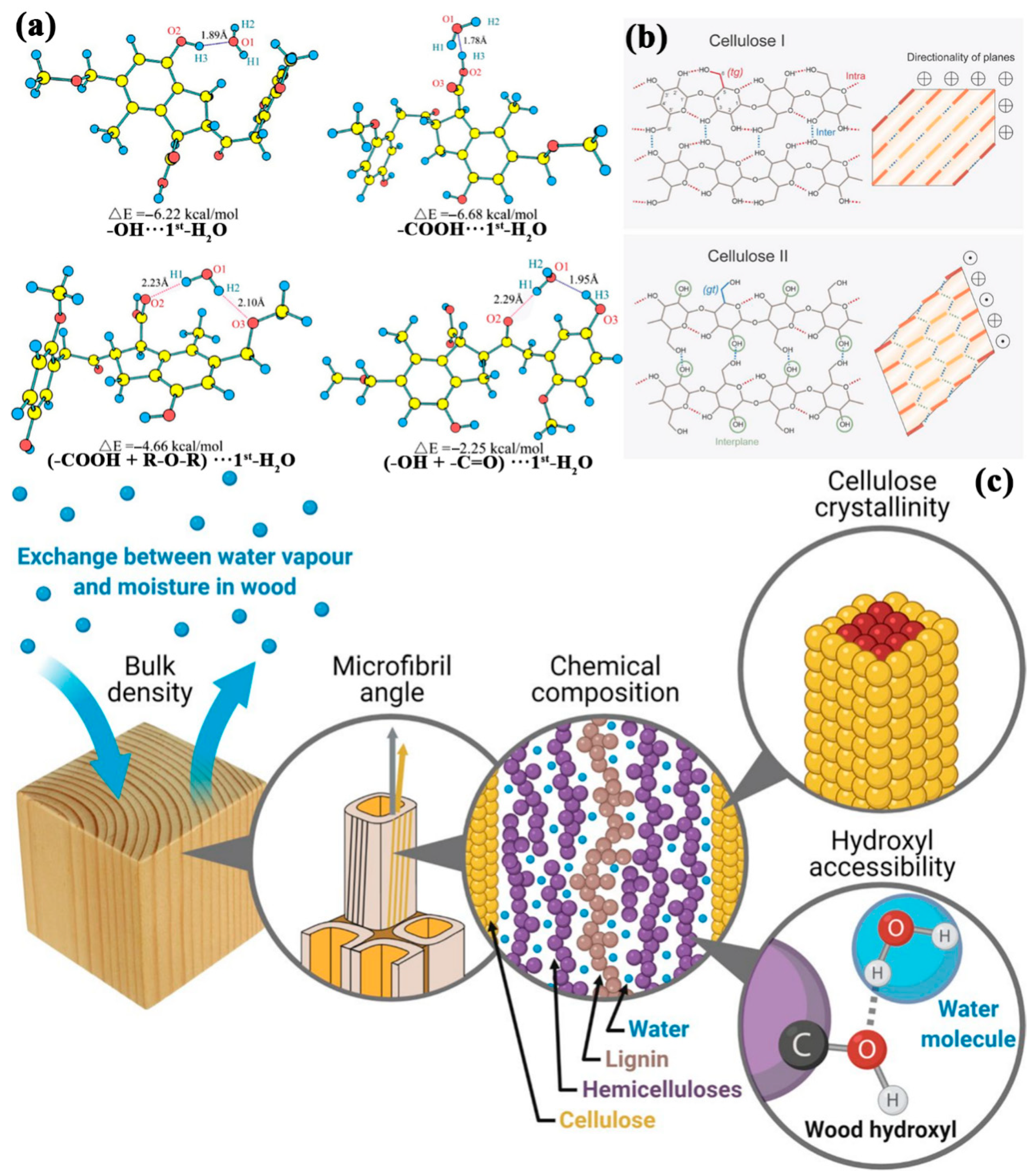
2.3.1. Hydration Interactions and Hydrogen Bonds
2.3.2. Hydration Interactions and Cellulose
2.3.3. Interfacial Hydration
2.3.4. Confined Water in Wood’s Micro/Nano Channels

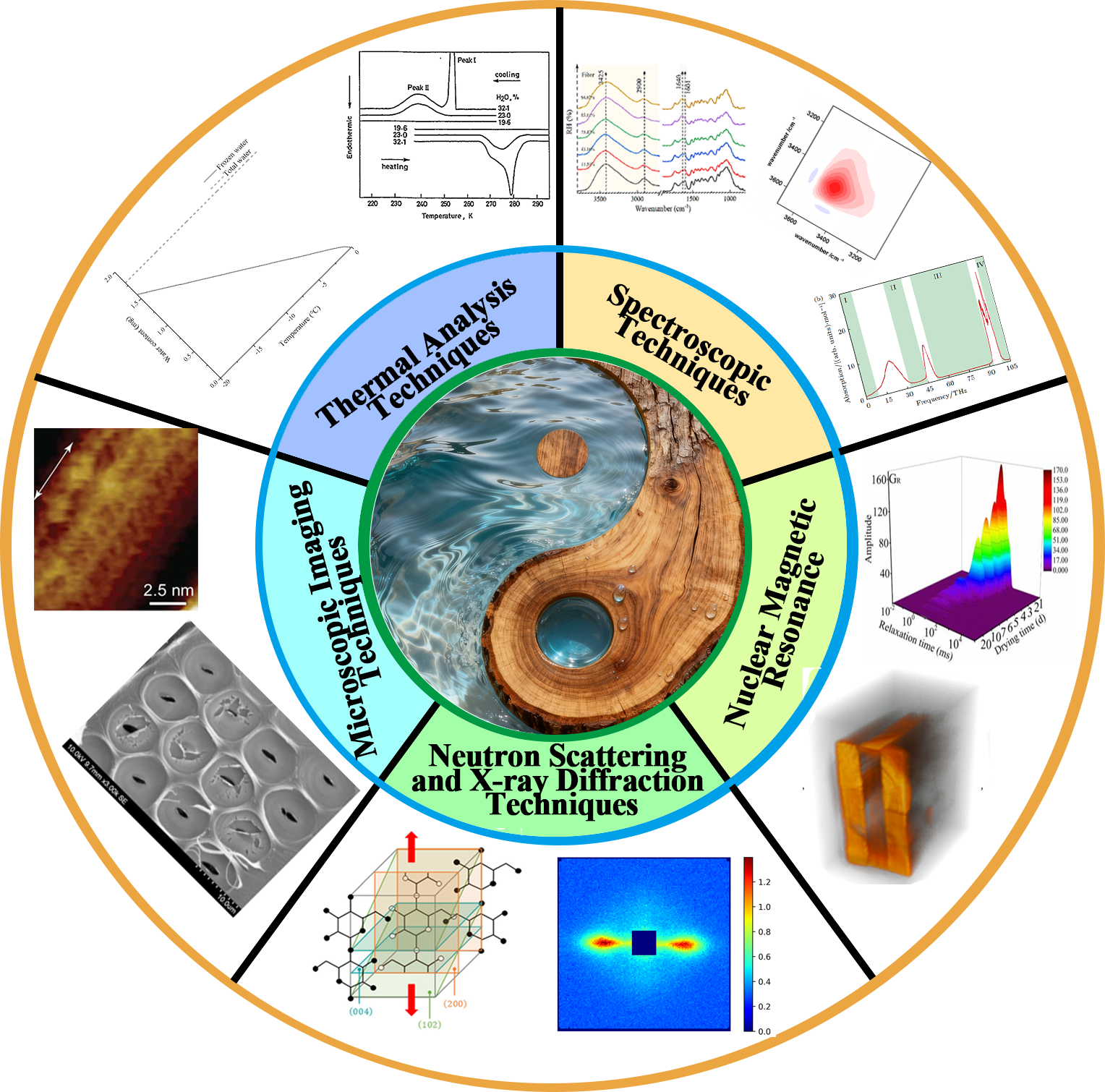
3. Application of Advanced Characterization Methods in Hydration Research
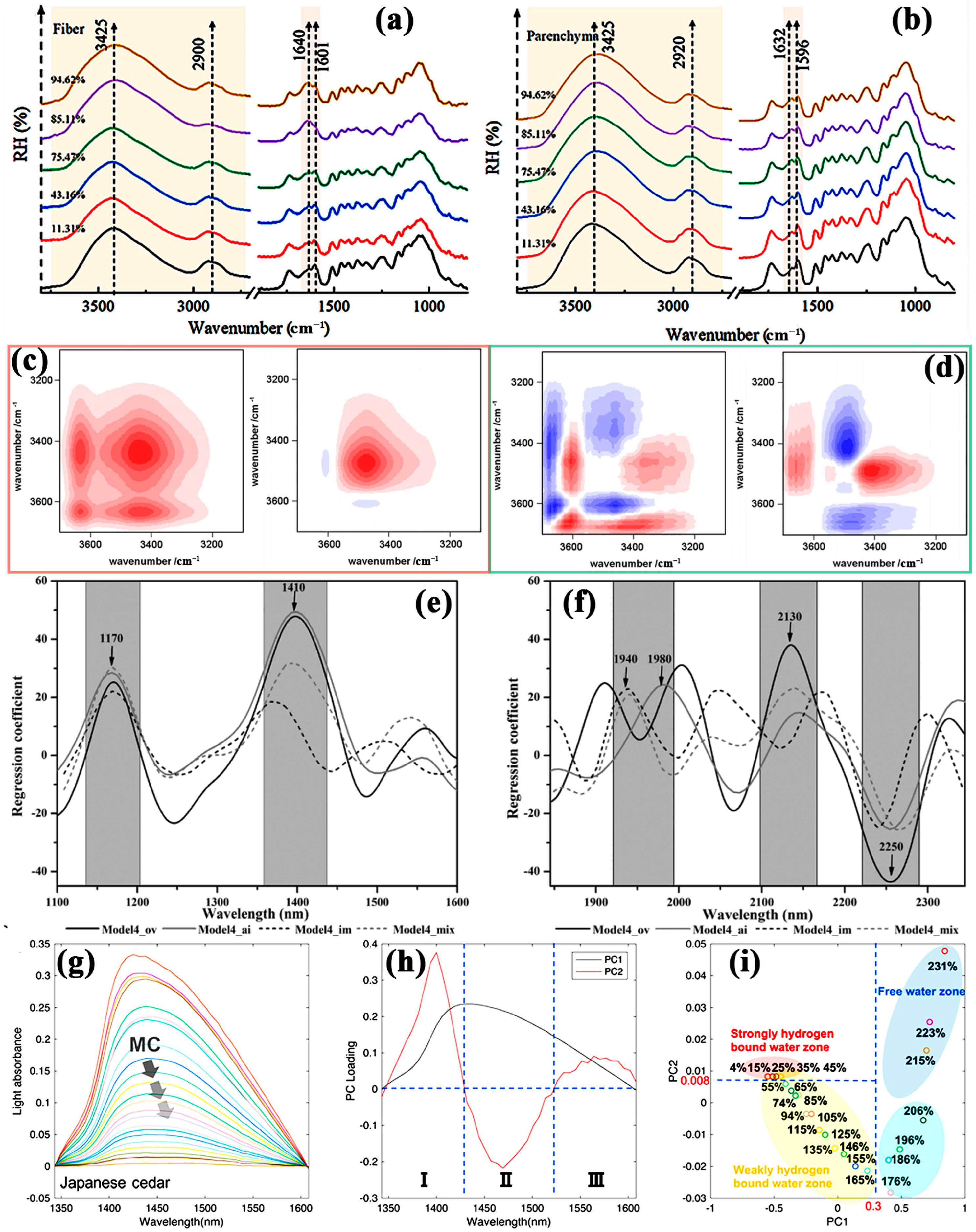
3.1. Spectroscopic Methods
3.1.1. Infrared Spectroscopy Method
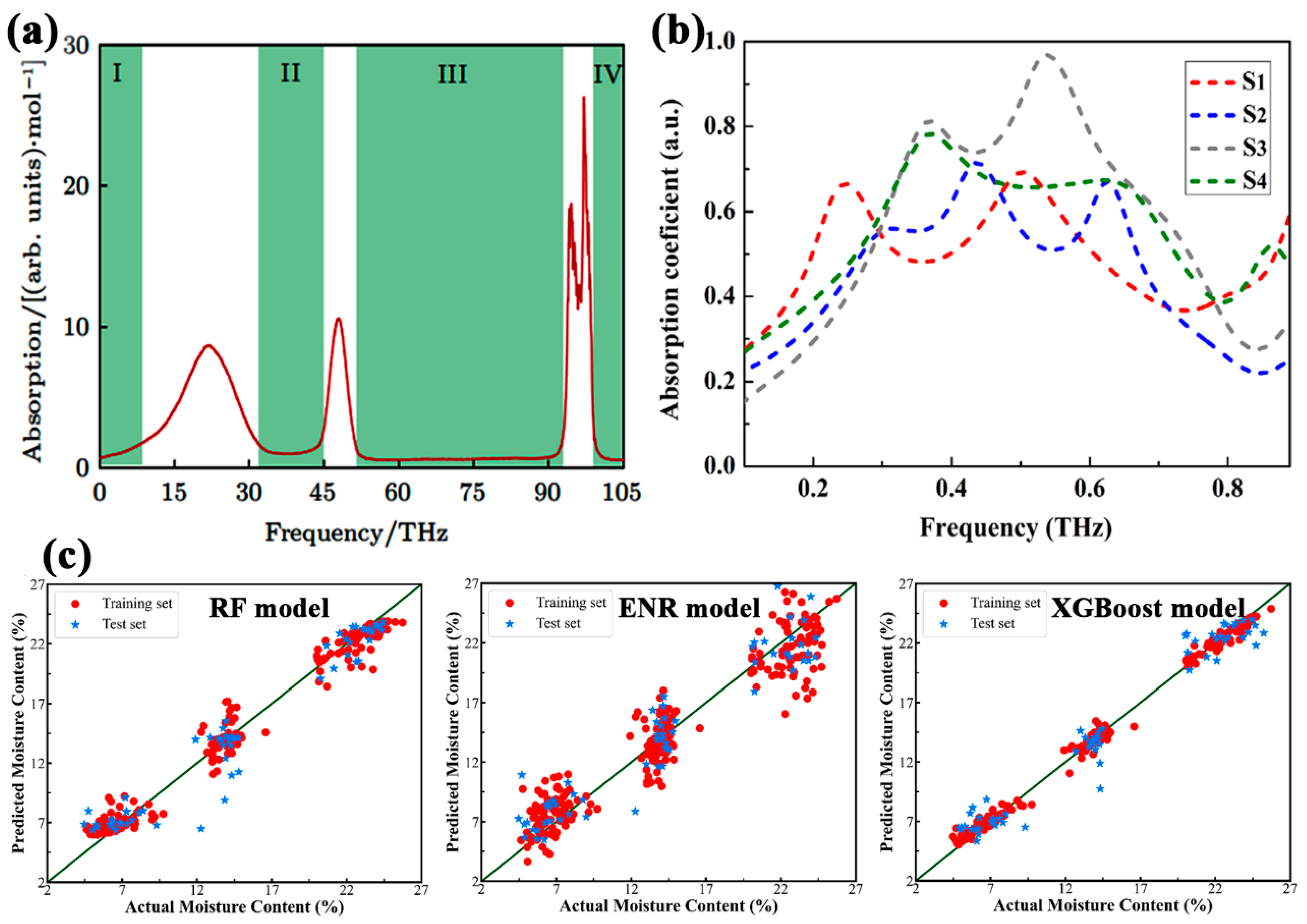
3.1.2. Terahertz Spectroscopy Method

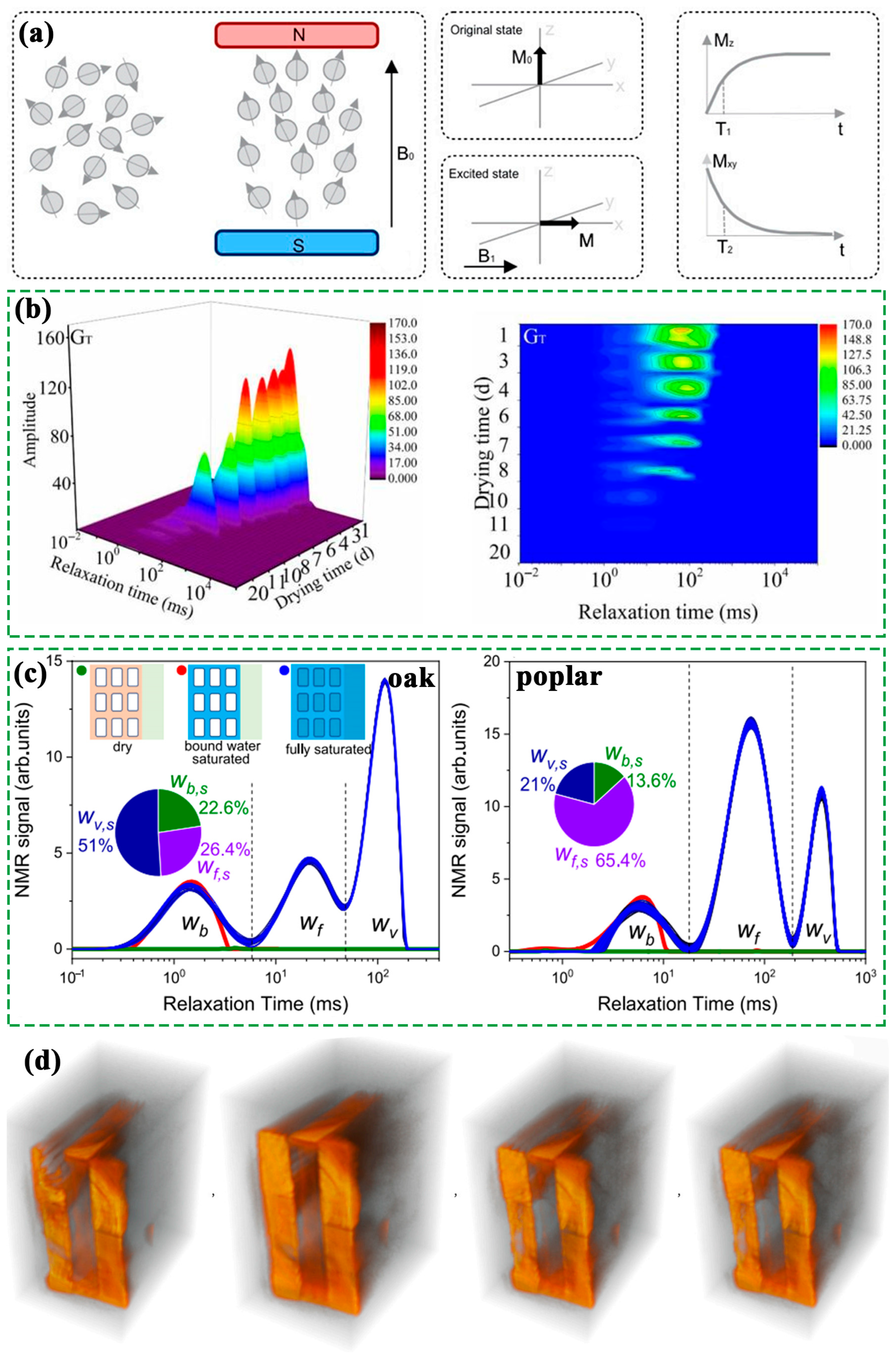
3.2. Nuclear Magnetic Resonance Imaging and Its Imaging Methods
3.2.1. Low-Field Nuclear Magnetic Resonance
3.2.2. Nuclear Magnetic Resonance Imaging Methods
3.3. Neutron Scattering and X-Ray Diffraction Methods
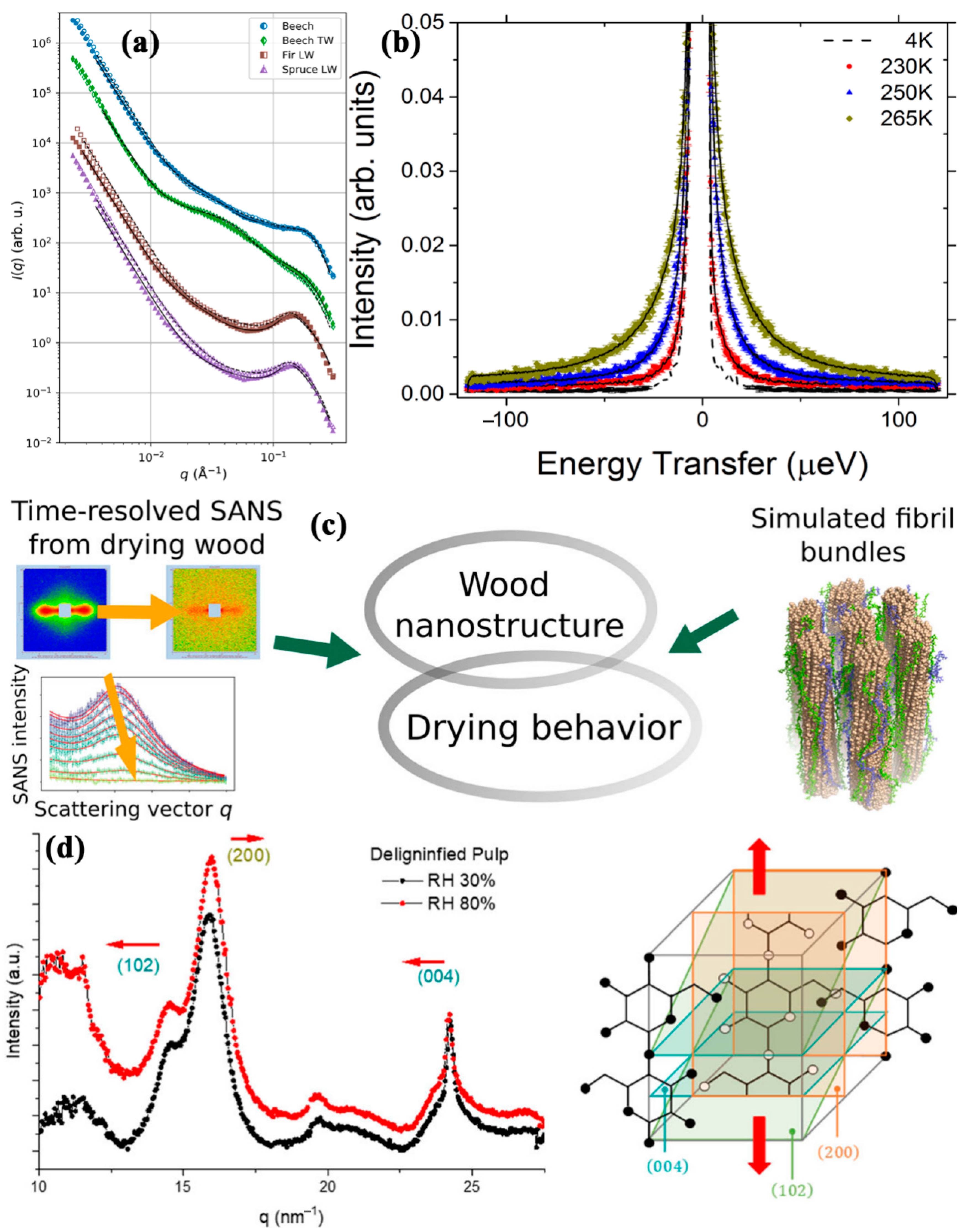
3.3.1. Neutron Scattering
3.3.2. X-Ray Diffraction Technique
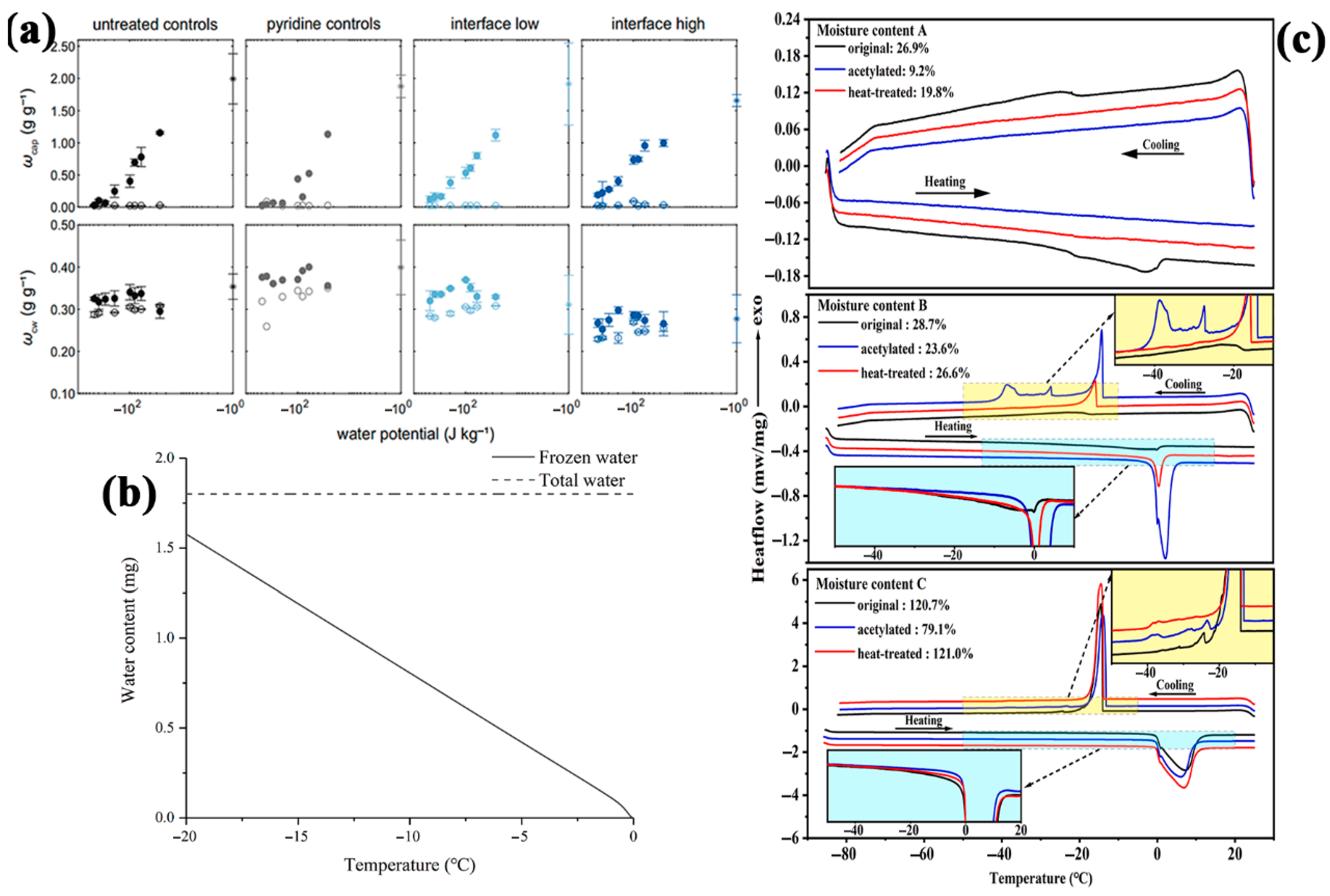
3.4. Thermal Analysis Methods

3.5. Microscopic Imaging Methods
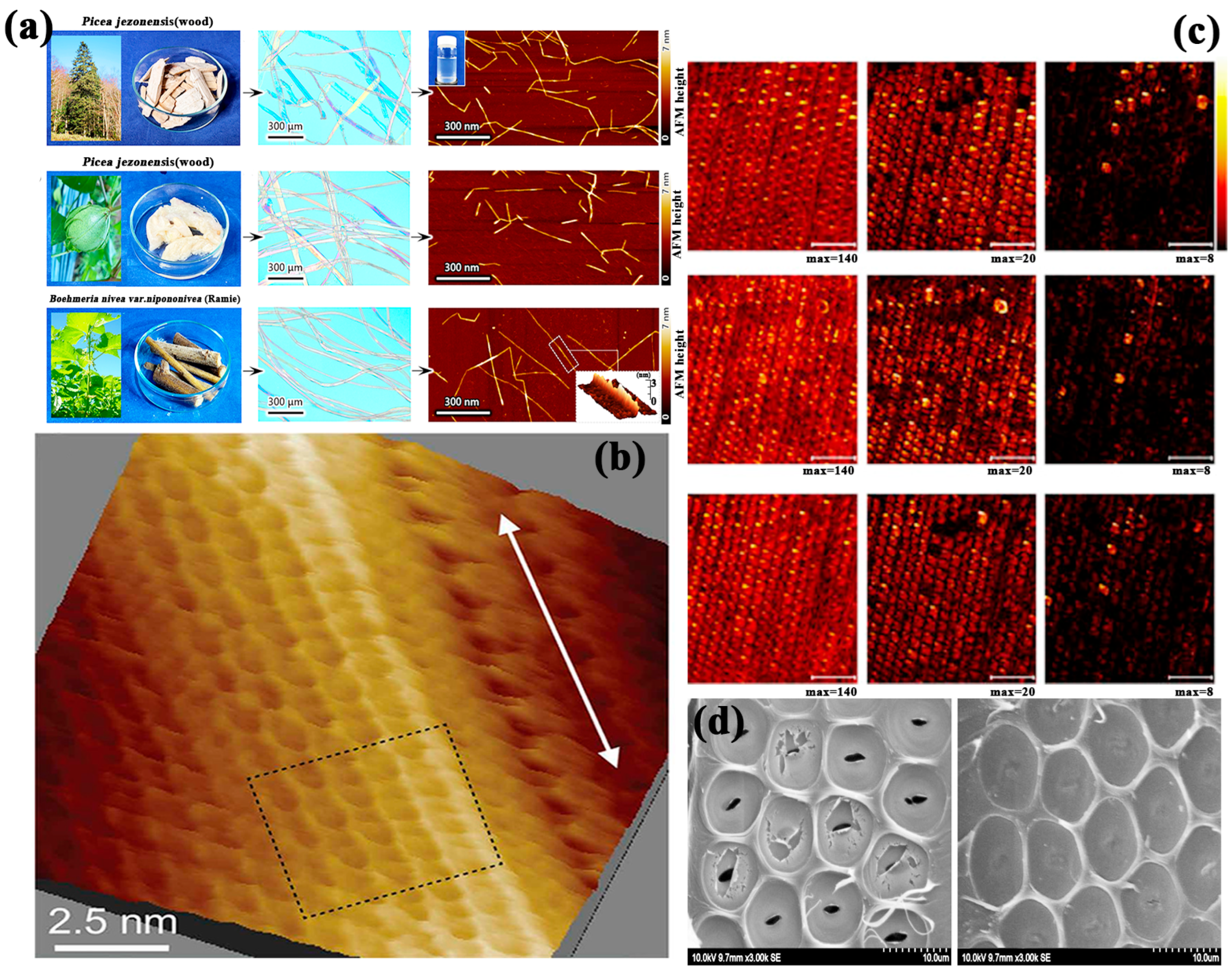
3.5.1. Atomic Force Microscopy
3.5.2. Scanning Electron Microscopy
3.6. Comparative Synthesis and Data Integration Across Methods
4. Conclusions and Prospects
4.1. Conclusions
4.2. Prospects
Author Contributions
Funding
Conflicts of Interest
References
- Soper, A.K. Is water one liquid or two? J. Chem. Phys. 2019, 150, 234503. [Google Scholar] [CrossRef]
- Chen, M.; Zhang, C.; Ke, L.-L. How to regulate moisture-induced stresses in composites: The answer from nanostructure of S2 layer in Wood cell wall. Compos. Part A Appl. Sci. Manuf. 2024, 177, 107889. [Google Scholar] [CrossRef]
- Liu, C.; Zhang, Y.; Zhang, J.; Wang, J.; Li, W.; Wang, W. Interplay between translational diffusion and large-amplitude angular jumps of water molecules. J. Chem. Phys. 2018, 148, 184502. [Google Scholar] [CrossRef]
- Uchida, S.; Fujiwara, K.; Shibahara, M. Structure of the Water Molecule Layer between Ice and Amorphous/Crystalline Surfaces Based on Molecular Dynamics Simulations. J. Phys. Chem. B 2021, 125, 9601–9609. [Google Scholar] [CrossRef]
- Xu, F.; Jin, X.; Zhang, L.; Chen, X.D. Investigation on water status and distribution in broccoli and the effects of drying on water status using NMR and MRI methods. Food Res. Int. 2017, 96, 191–197. [Google Scholar] [CrossRef]
- Shapchenkova, O.; Loskutov, S.; Aniskina, A.; Börcsök, Z.; Pásztory, Z. Thermal characterization of wood of nine European tree species: Thermogravimetry and differential scanning calorimetry in an air atmosphere. Eur. J. Wood Wood Prod. 2021, 80, 409–417. [Google Scholar] [CrossRef]
- Alméras, T.; Gronvold, A.; van der Lee, A.; Clair, B.; Montero, C. Contribution of cellulose to the moisture-dependent elastic behaviour of wood. Compos. Sci. Technol. 2017, 138, 151–160. [Google Scholar] [CrossRef]
- Zhong, L.; Zhao, W.; Yao, X.; Zhang, Y.; Wu, Y.; Zhou, X. Preparation and physicochemical properties of colored transparent wood. Mater. Today Commun. 2025, 48, 113387. [Google Scholar] [CrossRef]
- Wani, A.K.; Akhtar, N.; Sher, F.; Navarrete, A.A.; Américo-Pinheiro, J.H.P. Microbial adaptation to different environmental conditions: Molecular perspective of evolved genetic and cellular systems. Arch. Microbiol. 2022, 204, 144. [Google Scholar] [CrossRef]
- Jia, C.; Chen, C.; Kuang, Y.; Fu, K.; Wang, Y.; Yao, Y.; Kronthal, S.; Hitz, E.; Song, J.; Xu, F.; et al. From Wood to Textiles: Top-Down Assembly of Aligned Cellulose Nanofibers. Adv. Mater. 2018, 30, 1801347. [Google Scholar] [CrossRef]
- Noyer, E.; Stojanovic, M.; Horacek, P.; Perez-de-Lis, G. Toward a better understanding of angiosperm xylogenesis: A new method for a cellular approach. New Phytol. 2023, 239, 792–805. [Google Scholar] [CrossRef]
- Zhu, Y.; Li, L. Wood of trees: Cellular structure, molecular formation, and genetic engineering. J. Integr. Plant Biol. 2024, 66, 443–467. [Google Scholar] [CrossRef]
- Liu, H.; Gao, J.; Sun, J.; Li, S.; Zhang, B.; Wang, Z.; Zhou, C.; Sulis, D.B.; Wang, J.P.; Chiang, V.L.; et al. Dimerization of PtrMYB074 and PtrWRKY19 mediates transcriptional activation of PtrbHLH186 for secondary xylem development in Populus trichocarpa. New Phytol. 2022, 234, 918–933. [Google Scholar] [CrossRef]
- Xiong, M.; Li, C.; Wang, W.; Yang, B. Protein Structure and Modification of Aquaporins. Adv. Exp. Med. Biol. 2023, 1398, 15–38. [Google Scholar] [CrossRef]
- Pereira, L.; Kaack, L.; Guan, X.; Silva, L.M.; Miranda, M.T.; Pires, G.S.; Ribeiro, R.V.; Schenk, H.J.; Jansen, S. Angiosperms follow a convex trade-off to optimize hydraulic safety and efficiency. New Phytol. 2023, 240, 1788–1801. [Google Scholar] [CrossRef]
- Charrier, G.; Willick, I.R.; Takahashi, D. Cross-disciplinary insights into the mechanisms of plant cold hardiness: From molecules to ecosystems. Physiol. Plant. 2023, 175, e13901. [Google Scholar] [CrossRef]
- Qin, R.; Xu, H.; Guo, J.; Wang, P.; Yang, K. A study on the relationship between porosity and dielectric constant of wood considering the change of moisture content and frequency. Holzforschung 2025, 79, 237–243. [Google Scholar] [CrossRef]
- Tong, X.; He, Z.; Zheng, L.; Pande, H.; Ni, Y. Enzymatic treatment processes for the production of cellulose nanomaterials: A review. Carbohydr. Polym. 2023, 299, 120199. [Google Scholar] [CrossRef]
- Zhang, W.; Li, L.; Zhang, X.; Liu, H.; An, Y.; Zhong, Y.; Hu, Z.; Shan, X.; Wu, J.; White, M.; et al. Adsorption of Zn(ii) on amination@wood-aerogel and high-value reuse to ZnO/ZnS as an efficient photocatalyst. J. Mater. Chem. A 2022, 10, 18644–18656. [Google Scholar] [CrossRef]
- Guo, A.; Sun, Z.; Satyavolu, J. Impact of chemical treatment on the physiochemical and mechanical properties of kenaf fibers. Ind. Crops Prod. 2019, 141, 111726. [Google Scholar] [CrossRef]
- Li, X.; Zhao, Z. Time domain-NMR studies of average pore size of wood cell walls during drying and moisture adsorption. Wood Sci. Technol. 2020, 54, 1241–1251. [Google Scholar] [CrossRef]
- Yang, T.; Luo, D.; Wang, L.; Hu, C.; Mei, C. New insights into the influencing mechanisms of hemicellulose removal on dynamic wood-water interactions characterized with low-field NMR. Ind. Crops Prod. 2024, 219, 119139. [Google Scholar] [CrossRef]
- Vinogradova, N.T.; Pavelsky, T.M.; Farrar, J.T.; Hossain, F.; Fu, L.-L. A new look at Earth’s water and energy with SWOT. Nat. Water 2025, 3, 27–37. [Google Scholar] [CrossRef]
- Shu, L.; Jegatheesan, L.; Jegatheesan, V.; Li, C.Q. The structure of water. Fluid Phase Equilibria 2020, 511, 112514. [Google Scholar] [CrossRef]
- Liu, Z.; Zhang, G.; Yuan, R. Experimental and Theoretical Investigation of the Bound Water Film Thickness in Porous Media. Energy Fuels 2024, 38, 15225–15234. [Google Scholar] [CrossRef]
- Cui, Y.; Gao, S.; Zhang, R.; Cheng, L.; Yu, J. Study on the Moisture Absorption and Thermal Properties of Hygroscopic Exothermic Fibers and Related Interactions with Water Molecules. Polymers 2020, 12, 98. [Google Scholar] [CrossRef]
- Autengruber, M.; Lukacevic, M.; Füssl, J. Finite-element-based moisture transport model for wood including free water above the fiber saturation point. Int. J. Heat Mass Transf. 2020, 161, 120228. [Google Scholar] [CrossRef]
- Khan, M.I.H.; Wellard, R.M.; Nagy, S.A.; Joardder, M.U.H.; Karim, M.A. Investigation of bound and free water in plant-based food material using NMR T 2 relaxometry. Innov. Food Sci. Emerg. Technol. 2016, 38, 252–261. [Google Scholar] [CrossRef]
- Talik, P.; Hubicka, U. The DSC approach to study non-freezing water contents of hydrated hydroxypropylcellulose (HPC). J. Therm. Anal. Calorim. 2017, 132, 445–451. [Google Scholar] [CrossRef]
- Barsotti, E.; Piri, M. Effect of Pore Size Distribution on Capillary Condensation in Nanoporous Media. Langmuir 2021, 37, 2276–2288. [Google Scholar] [CrossRef]
- Wu, B.; Qi, K.; Petit, T.; Zhang, F.; Xu, Z.J.; Fu, H. Modulation of Interfacial Water at Gas-Liquid-Solid Interface for Water Electrolysis. Angew. Chem. Int. Ed. Engl. 2025, 64, e202507327. [Google Scholar] [CrossRef]
- Ramesh, G.; Mahajan, V.; Koner, D.; Singh, R.S. Microscopic pathways of transition from low-density to high-density amorphous phase of water. J. Chem. Phys. 2024, 160, 194501. [Google Scholar] [CrossRef]
- Sheu, S.Y.; Liu, Y.C.; Zhou, J.K.; Schlag, E.W.; Yang, D.Y. Surface Topography Effects of Globular Biomolecules on Hydration Water. J. Phys. Chem. B 2019, 123, 6917–6932. [Google Scholar] [CrossRef]
- Li, P.; Yang, X.; Chen, F.; Wang, D.; Hao, D.; Xu, Z.; Qiu, M.; He, S.; Xia, F.; Tian, Y. Confined Water Dominates Ion/Molecule Transport in Hydrogel Nanochannels. Nano Lett. 2024, 24, 897–904. [Google Scholar] [CrossRef]
- Mogami, G.; Suzuki, M.; Matubayasi, N. Spatial-Decomposition Analysis of Energetics of Ionic Hydration. J. Phys. Chem. B 2016, 120, 1813–1821. [Google Scholar] [CrossRef]
- Yin, F.; Zhou, Y.; Zhou, F.; Huang, S.; Gao, X.; Fang, X. Moisture sorption and its induced deformation of juvenile wood at different radial positions in poplar wood at the tissue scale. Ind. Crops Prod. 2024, 220, 119435. [Google Scholar] [CrossRef]
- Penvern, H.; Zhou, M.; Maillet, B.; Courtier-Murias, D.; Scheel, M.; Perrin, J.; Weitkamp, T.; Bardet, S.; Caré, S.; Coussot, P. How Bound Water Regulates Wood Drying. Phys. Rev. Appl. 2020, 14, 054051. [Google Scholar] [CrossRef]
- Zou, Y.; Maillet, B.; Brochard, L.; Coussot, P. Unveiling moisture transport mechanisms in cellulosic materials: Vapor vs. bound water. PNAS Nexus 2024, 3, pgad450. [Google Scholar] [CrossRef]
- Qiu, Z.; Yu, F.; Xu, D.; Wang, Z.; Huang, J.; Wang, S.; Yang, Y.; Wang, Y.; Li, J.; Xiao, Z.; et al. Ultrafast Self-propelling directionally water transporting wood via cell wall reshaping for water manipulation. Chem. Eng. J. 2023, 455, 140563. [Google Scholar] [CrossRef]
- Paajanen, A.; Ceccherini, S.; Maloney, T.; Ketoja, J.A. Chirality and bound water in the hierarchical cellulose structure. Cellulose 2019, 26, 5877–5892. [Google Scholar] [CrossRef]
- Zhan, T.; Lyu, J.; Eder, M. In situ observation of shrinking and swelling of normal and compression Chinese fir wood at the tissue, cell and cell wall level. Wood Sci. Technol. 2021, 55, 1359–1377. [Google Scholar] [CrossRef]
- Gao, Z.; Ding, Y.; Yang, W.; Han, W. DFT study of water adsorption on lignite molecule surface. J. Mol. Model. 2017, 23, 27. [Google Scholar] [CrossRef]
- Mobley, D.L.; Barber, A.E.; Fennell, C.J.; Dill, K.A. Charge Asymmetries in Hydration of Polar Solutes. J. Phys. Chem. B 2008, 112, 2405–2414. [Google Scholar] [CrossRef]
- Chen, X.; Xu, J.; Zuo, P.; Li, Y.; Li, L.; Zhao, S. Influence of SiO2 nanoparticles grafted with surfactant on coal wetting properties and microscopic mechanism of action. J. Mol. Model. 2025, 31, 249. [Google Scholar] [CrossRef]
- Lee, Y.J.; Kweon, S.W.; Lee, T.-J.; Kim, H.J. Quantification of cellulose II using infrared spectroscopy: Machine learning approaches. Int. J. Biol. Macromol. 2025, 323, 147193. [Google Scholar] [CrossRef] [PubMed]
- Wohlert, M.; Benselfelt, T.; Wågberg, L.; Furó, I.; Berglund, L.A.; Wohlert, J. Cellulose and the role of hydrogen bonds: Not in charge of everything. Cellulose 2021, 29, 1–23. [Google Scholar] [CrossRef]
- Trentin, L.N.; Pereira, C.S.; Silveira, R.L.; Hill, S.; Sorieul, M.; Skaf, M.S. Nanoscale Wetting of Crystalline Cellulose. Biomacromolecules 2021, 22, 4251–4261. [Google Scholar] [CrossRef] [PubMed]
- Li, M.-Y.; Wang, Y.-Q.; Lu, Y.; Ying, Y.-L.; Long, Y.-T. Single Molecule Study of Hydrogen Bond Interactions Between Single Oligonucleotide and Aerolysin Sensing Interface. Front. Chem. 2019, 7, 528. [Google Scholar] [CrossRef] [PubMed]
- He, J.; Li, N.; Bian, K.; Piao, G. Optically active polyaniline film based on cellulose nanocrystals. Carbohydr. Polym. 2019, 208, 398–403. [Google Scholar] [CrossRef]
- Juszczyk, E.; Kulinowski, P.; Baran, E.; Birczyński, A.; Majda, D.; García-Montoya, E.; Pérez-Lozano, P.; Suñé-Negre, J.M.; Węglarz, W.P.; Dorożyński, P. Spatiotemporal Analysis of Hydration Mechanism in Sodium Alginate Matrix Tablets. Materials 2021, 14, 646. [Google Scholar] [CrossRef]
- Russo, D.; Teixeira, J. Mapping water dynamics in defined local environment: From hindered rotation to vibrational modes. J. Non-Cryst. Solids 2015, 407, 459–464. [Google Scholar] [CrossRef]
- Inoue, K.-i.; Ahmed, M.; Nihonyanagi, S.; Tahara, T. Reorientation-induced relaxation of free OH at the air/water interface revealed by ultrafast heterodyne-detected nonlinear spectroscopy. Nat. Commun. 2020, 11, 5344. [Google Scholar] [CrossRef]
- Thybring, E.E.; Boardman, C.R.; Zelinka, S.L.; Glass, S.V. Common sorption isotherm models are not physically valid for water in wood. Colloids Surf. A Physicochem. Eng. Asp. 2021, 627, 127214. [Google Scholar] [CrossRef]
- Ma, R.-T.; Zheng, S.-Q.; Liao, G.; Li, J.-Y.; Xia, T.; Li, H.-J.; Yi, H.-B. Effects of interfacial dynamics and nanoconfinement on the aggregation characteristics of CaSO4 in aqueous solutions inside 2D nanochannels. Surf. Interfaces 2024, 52, 104901. [Google Scholar] [CrossRef]
- Tang, T.; Ding, W.; Fu, W.; Tang, S.; Zhang, X. Scale-dependent anomalous behavior of confined water between Al2O3 layers. Nano Res. 2025, 18, 94907417. [Google Scholar] [CrossRef]
- Xiao, B.; Liu, T.; Wang, D.; Zhou, L.; Zheng, X.; Tang, L.; Gou, S. The influence of surfactant concentration on foams: From hydrogen bonds at the gas-liquid interface to foam characteristics. J. Mol. Struct. 2025, 1348, 143487. [Google Scholar] [CrossRef]
- Fredriksson, M.; Rüggeberg, M.; Nord-Larsen, T.; Beck, G.; Thybring, E.E. Water sorption in wood cell walls–data exploration of the influential physicochemical characteristics. Cellulose 2022, 30, 1857–1871. [Google Scholar] [CrossRef]
- Pascal, T.A.; Goddard, W.A.; Jung, Y. Entropy and the driving force for the filling of carbon nanotubes with water. Proc. Natl. Acad. Sci. USA 2011, 108, 11794–11798. [Google Scholar] [CrossRef]
- Srivastava, A.; Hassan, J.; Homouz, D. Hydrogen Bond Dynamics and Phase Transitions of Water inside Carbon Nanotubes. Nanomaterials 2023, 13, 284. [Google Scholar] [CrossRef]
- Yuan, J.; Lei, Y.; Mi, B.; Chen, M.; Chen, Q.; Fang, C.; Chen, L.; Yan, L. Differences in the hygroscopic behavior of bamboo fiber and parenchyma. Wood Sci. Technol. 2024, 58, 575–587. [Google Scholar] [CrossRef]
- Guo, Y.; Wu, P. Investigation of the hydrogen-bond structure of cellulose diacetate by two-dimensional infrared correlation spectroscopy. Carbohydr. Polym. 2008, 74, 509–513. [Google Scholar] [CrossRef]
- Liang, L.; Fang, G.; Deng, Y.; Xiong, Z.; Wu, T. Determination of Moisture Content and Basic Density of Poplar Wood Chips under Various Moisture Conditions by Near-Infrared Spectroscopy. For. Sci. 2019, 65, 548–555. [Google Scholar] [CrossRef]
- Ma, T.; Inagaki, T.; Tsuchikawa, S. Rapidly visualizing the dynamic state of free, weakly, and strongly hydrogen-bonded water with lignocellulosic material during drying by near-infrared hyperspectral imaging. Cellulose 2020, 27, 4857–4869. [Google Scholar] [CrossRef]
- Guo, X.; Qing, Y.; Wu, Y.; Wu, Q. Molecular association of adsorbed water with lignocellulosic materials examined by micro-FTIR spectroscopy. Int. J. Biol. Macromol. 2016, 83, 117–125. [Google Scholar] [CrossRef]
- Duan, T.-C.; Yan, S.-J.; Zhao, Y.; Sun, T.-Y.; Li, Y.-M.; Zhu, Z. Relationship between hydrogen bond network dynamics of water and its terahertz spectrum. Acta Phys. Sin. 2021, 70, 248702. [Google Scholar] [CrossRef]
- Zhang, M.; Xie, X.; Zhang, D.; Chen, R.; Xu, Y.; Wang, J.; Liu, J.; Xu, X. Nondestructive identification of wood species by terahertz spectrum. Microw. Opt. Technol. Lett. 2022, 65, 1117–1121. [Google Scholar] [CrossRef]
- Hoshina, H.; Iwasaki, Y.; Katahira, E.; Okamoto, M.; Otani, C. Structure and dynamics of bound water in poly(ethylene-vinylalcohol) copolymers studied by terahertz spectroscopy. Polymer 2018, 148, 49–60. [Google Scholar] [CrossRef]
- Yu, M.; Yan, J.; Chu, J.; Qi, H.; Xu, P.; Liu, S.; Zhou, L.; Gao, J. Accurate prediction of wood moisture content using terahertz time-domain spectroscopy combined with machine learning algorithms. Ind. Crops Prod. 2025, 227, 120771. [Google Scholar] [CrossRef]
- Li, J.; Ma, E. Characterization of Water in Wood by Time-Domain Nuclear Magnetic Resonance Spectroscopy (TD-NMR): A Review. Forests 2021, 12, 886. [Google Scholar] [CrossRef]
- Sun, F.; Chen, K.; Tan, Y.; Peng, H.; Zhan, T.; Cai, L.; Lyu, J. Characterization of stable and unstable states of moisture in wood during sorption by low-field NMR. Ind. Crops Prod. 2024, 210, 118109. [Google Scholar] [CrossRef]
- Xu, K.; Lu, J.; Gao, Y.; Wu, Y.; Li, X. Determination of moisture content and moisture content profiles in wood during drying by low-field nuclear magnetic resonance. Dry. Technol. 2017, 35, 1909–1918. [Google Scholar] [CrossRef]
- Yan, L.; Julien, E.; Maillet, B.; Sidi-Boulenouar, R.; Coussot, P. Water penetration in the microstructure of hardwood revealed by NMR relaxometry. Wood Sci. Technol. 2025, 59, 29. [Google Scholar] [CrossRef]
- Javed, M.A.; Kekkonen, P.M.; Ahola, S.; Telkki, V.-V. Magnetic resonance imaging study of water absorption in thermally modified pine wood. Holzforschung 2015, 69, 899–907. [Google Scholar] [CrossRef]
- Leko, J.; Richman, R.; Schumacher, C. Applicability of magnetic resonance imaging for mass timber moisture research. Constr. Build. Mater. 2025, 489, 142092. [Google Scholar] [CrossRef]
- Penttila, P.A.; Altgen, M.; Awais, M.; Osterberg, M.; Rautkari, L.; Schweins, R. Bundling of cellulose microfibrils in native and polyethylene glycol-containing wood cell walls revealed by small-angle neutron scattering. Sci. Rep. 2020, 10, 20844. [Google Scholar] [CrossRef]
- Penttilä, P.A.; Altgen, M.; Carl, N.; van der Linden, P.; Morfin, I.; Österberg, M.; Schweins, R.; Rautkari, L. Moisture-related changes in the nanostructure of woods studied with X-ray and neutron scattering. Cellulose 2019, 27, 71–87. [Google Scholar] [CrossRef]
- Zitting, A.; Paajanen, A.; Rautkari, L.; Penttilä, P.A. Deswelling of microfibril bundles in drying wood studied by small-angle neutron scattering and molecular dynamics. Cellulose 2021, 28, 10765–10776. [Google Scholar] [CrossRef]
- O’Neill, H.; Pingali, S.V.; Petridis, L.; He, J.; Mamontov, E.; Hong, L.; Urban, V.; Evans, B.; Langan, P.; Smith, J.C.; et al. Dynamics of water bound to crystalline cellulose. Sci. Rep. 2017, 7, 11840. [Google Scholar] [CrossRef]
- Penttila, P.A.; Paajanen, A.; Ketoja, J.A. Combining scattering analysis and atomistic simulation of wood-water interactions. Carbohydr. Polym. 2021, 251, 117064. [Google Scholar] [CrossRef]
- Salmén, L.; Stevanic, J.S.; Holmqvist, C.; Yu, S. Moisture induced straining of the cellulosic microfibril. Cellulose 2021, 28, 3347–3357. [Google Scholar] [CrossRef]
- Agarwal, U.P.; Ralph, S.A.; Baez, C.; Reiner, R.S.; Verrill, S.P. Effect of sample moisture content on XRD-estimated cellulose crystallinity index and crystallite size. Cellulose 2017, 24, 1971–1984. [Google Scholar] [CrossRef]
- El Hachem, C.; Abahri, K.; Leclerc, S.; Bennacer, R. NMR and XRD quantification of bound and free water interaction of spruce wood fibers. Constr. Build. Mater. 2020, 260, 120470. [Google Scholar] [CrossRef]
- de Souza, N.C.M.; Lima, J.T.; Soares, B.C.D. Application of X-ray diffraction to assess the microfibril angle of green and dry Eucalyptus grandis wood. Trees 2021, 36, 191–197. [Google Scholar] [CrossRef]
- Kojima, E.; Yamasaki, M.; Imaeda, K.; Lee, C.-G.; Sugimoto, T.; Sasaki, Y. XRD investigation of mechanical properties of cellulose microfibrils in S1 and S3 layers of thermally modified wood under tensile loading. Wood Sci. Technol. 2021, 55, 955–969. [Google Scholar] [CrossRef]
- Fredriksson, M.; Digaitis, R.; Engqvist, J.; Thybring, E.E. Effect of targeted acetylation on wood–water interactions at high moisture states. Cellulose 2023, 31, 869–885. [Google Scholar] [CrossRef]
- Fredriksson, M.; Thybring, E.E.; Zelinka, S.L.; Glass, S.V. The fiber saturation point: Does it mean what you think it means? Cellulose 2025, 32, 2901–2918. [Google Scholar] [CrossRef]
- Passarini, L.; Zelinka, S.L.; Glass, S.V.; Hunt, C.G. Effect of weight percent gain and experimental method on fiber saturation point of acetylated wood determined by differential scanning calorimetry. Wood Sci. Technol. 2017, 51, 1291–1305. [Google Scholar] [CrossRef]
- Zhong, X.; Ma, E. A novel approach for characterizing pore size distribution of wood cell wall using differential scanning calorimetry thermoporosimetry. Thermochim. Acta 2022, 718, 179380. [Google Scholar] [CrossRef]
- Cao, S.; Shi, J.; Dong, Y.; Dong, H.; Lv, J.; Xia, C.; Rahimi, S. Phase transition behavior of water in original, heat-treated and acetylated poplar woods. Ind. Crops Prod. 2024, 208, 117899. [Google Scholar] [CrossRef]
- Daicho, K.; Fujisawa, S.; Doi, Y.; Suzuki, M.; Shiomi, J.; Saito, T. Uniform elementary fibrils in diverse plant cell walls. Proc. Natl. Acad. Sci. USA 2025, 122, e2426467122. [Google Scholar] [CrossRef]
- Yurtsever, A.; Wang, P.-X.; Priante, F.; Morais Jaques, Y.; Miyazawa, K.; MacLachlan, M.J.; Foster, A.S.; Fukuma, T. Molecular insights on the crystalline cellulose-water interfaces via three-dimensional atomic force microscopy. Sci. Adv. 2022, 8, eabq0160. [Google Scholar] [CrossRef]
- Kuroda, K.; Fujiwara, T.; Imai, T.; Takama, R.; Saito, K.; Matsushita, Y.; Fukushima, K. The cryo-TOF-SIMS/SEM system for the analysis of the chemical distribution in freeze-fixed Cryptomeria japonica wood. Surf. Interface Anal. 2012, 45, 215–219. [Google Scholar] [CrossRef]
- Ma, Q.; Zhao, Z.; Xu, M.; Yi, S.; Wang, T. The pit membrane changes of micro-explosion-pretreated poplar. Wood Sci. Technol. 2016, 50, 1089–1099. [Google Scholar] [CrossRef]
- Fang, H.; Yu, Q.; Xie, D.; Cai, Y.; Sun, J.; Chen, B.; Huang, H.; Li, X.; Dai, S.; Shi, S.; et al. Flexible bifunctional wood-derived water filtration/photo-Fenton membrane for efficient purification of mixed organic wastewater. Colloids Surf. A Physicochem. Eng. Asp. 2024, 697, 134498. [Google Scholar] [CrossRef]
- Huang, J.; Zhao, B.; Liu, T.; Mou, J.; Jiang, Z.; Liu, J.; Li, H.; Liu, M. Wood-Derived Materials for Advanced Electrochemical Energy Storage Devices. Adv. Funct. Mater. 2019, 29, 1902255. [Google Scholar] [CrossRef]
- Che, W.; Miao, Y.; Liu, Y.; Wang, R.; Moyo, J.; Yu, Y.; Bao, W.; Peng, Y. Biomimetic adhesive-free self-splicing enables scalable wood film for programmable hygromorphic soft actuators. Chem. Eng. J. 2025, 526, 171527. [Google Scholar] [CrossRef]
- Aniza, R.; Petrissans, A.; Petrissans, M.; Rosyadi, E.; Anindita, H.N.; Rini, T.P.; Hastuti, Z.D.; Rahmawati, N.; Dwiratna, B.; Marlina, E.; et al. Evaluation of Biomass Softwood Composites: Structural Features and Functional Properties of Advanced Engineered Wood. Forests 2025, 16, 1823. [Google Scholar] [CrossRef]
- Chen, Y.; Liu, C.; Liang, Z.; Ye, L.; Liu, L.; Liu, Z.; Feng, X.; Donaldson, L.; Singh, T.; Zhan, X.; et al. Hydrochromic wood biocomposites for humidity and moisture detection. Chem. Eng. J. 2023, 465, 142890. [Google Scholar] [CrossRef]
- Morgillo, L.; Brionne, L.; Falourd, X.; Adrien, J.; Lesaint, B.; Trillaud, V.; Colinart, T.; Ouagne, P.; Steyer, P.; Abida, M.; et al. Kink-bands as drivers of hygroscopic response in flax fibres: A multi-scale investigation. Ind. Crops Prod. 2026, 240, 122613. [Google Scholar] [CrossRef]



| Type of Water | Location | Binding Mode/Force | Core Properties | Migration Characteristics |
|---|---|---|---|---|
| Bound Water | Cell Wall | Hydrogen bonds | High viscosity and chemical potential; Low molecular mobility | Slow and complex; Requires overcoming hydrogen bond |
| Free Water | Cell Lumen, Large Pores | No strong hydrogen bond binding | Low viscosity and chemical potential; High molecular mobility | Smooth flow; High migration rate |
| Microcapillary Water | Micro capillary system | Capillary force | Properties between bound water and free water | Transported via capillary action |
| Water Vapor | Between Wood Pores and External Atmosphere | No direct binding; | dynamically changes with environmental humidity | Diffusion (moisture absorption/desorption) |
| Water Type | Core Characterization Methods | Key Information Provided |
|---|---|---|
| Bound Water | LF-NMR FTIR/ATR/Micro-FTIR DSC NIR Spectroscopy | Content & mobility (T2 relaxation) Hydrogen bond strength & configuration Non-freezable water content & phase transitions Moisture content quantification |
| Microcapillary Water | MRI Cryo-SEM DSC Gravimetric Analysis | 2D/3D spatial distribution Visual morphology & storage sites Freezing/melting behavior Macroscopic water content |
| Free Water | MRI Cryo-SEM Gravimetric Analysis | Spatial distribution & migration Visual confirmation in lumens Quantitative mass changes |
| Water Vapor | Dynamic Vapor Sorption (DVS) Gravimetric Analysis | Sorption isotherms Diffusion kinetics Thermodynamic parameters |
| Interfacial/Confined Water | QENS SANS AFM THz-TDS | Diffusion coefficients & dynamics Nanoscale structure (bundle size/spacing) Molecular-scale hydration layers Collective H-bond network vibrations |
| Technique | Spatial/Temporal Resolution | Key Information Provided | Main Advantages | Main Limitations |
|---|---|---|---|---|
| FTIR | Micrometer-level (micro-FTIR); Fast scanning | Hydrogen bonding, water state distribution, molecular vibrations | Non-contact/non-destructive, provides molecular “fingerprint”, widely accessible | Signal overlap in broad bands, surface-sensitive, limited spatial resolution in conventional mode |
| 2DCOS | Dependent on base spectroscopy; Resolves sequences of changes | Sequence of dynamic changes, deconvolution of overlapping peaks | Reveals sequence and correlation of molecular responses to external perturbation | Requires a series of spectra under perturbation, data interpretation can be complex |
| NIR | Millimeter to centimeter level; Rapid measurement | Moisture content, chemical composition, water structure | Fast, non-contact, suitable for online monitoring, can analyze multiple components simultaneously | Indirect measurement, relies on calibration models, weak signals and overlapping bands require chemometrics |
| THz | Sub-millimeter level; Fast scanning | Hydrogen bond network vibrations, collective water modes, material dielectric properties | Sensitive to hydrogen bonds and weak interactions, strong penetrability, low photon energy | Strong absorption by bulk water, complex data interpretation for heterogeneous materials |
| Technique | Spatial/Temporal Resolution | Key Information Provided | Main Advantages | Main Limitations |
|---|---|---|---|---|
| LF-NMR | No spatial resolution; Millisecond-second temporal resolution | Water state distribution (free/bound water), transport kinetics, pore confinement effects | Non-invasive, highly sensitive to protons (1H), enables real-time process monitoring | Cannot provide direct spatial distribution, relatively high equipment cost |
| MRI | Sub-millimeter level (~1 mm) | Spatial distribution of water (2D/3D), water differences across structural parts | Non-destructive, visualization of water distribution and migration, suitable for large samples | Resolution better at high moisture content, weak signal at low moisture content, expensive equipment |
| Technique | Spatial/Temporal Resolution | Key Information Provided | Main Advantages | Main Limitations |
|---|---|---|---|---|
| SANS/QENS | Nanoscale structure (1–100 nm); Nanosecond-picosecond dynamics | Nanostructure (microfibril bundle size/spacing), water molecular dynamics (diffusion coefficient) | Sensitive to hydrogen isotopes, non-destructive, probes atomic/molecular scale motion | Requires neutron source, complex sample preparation |
| XRD | Atomic/Nanoscale (crystal structure) | Cellulose crystal parameters (d-spacing, crystallinity, microfibril angle), crystal deformation | Reveals crystal-scale interaction with moisture, precise measurement | Primarily provides crystalline information, limited data on amorphous regions |
| Technique | Spatial/Temporal Resolution | Key Information Provided | Main Advantages | Main Limitations |
|---|---|---|---|---|
| AFM | Nanoscale (molecular-level) resolution | Real-space imaging (nanostructure), surface topography, interfacial water molecule layer structure | Extremely high resolution, allows in situ observation near natural humidity, measures mechanical properties | Small scan area, sample surface needs relative flatness, relatively slow imaging |
| SEM | Nanometer-micrometer level | Micro-morphology (cells, pores), water distribution and storage sites (after freezing) | High-resolution intuitive morphology, cryo-technique preserves original water state | Conventional SEM requires dry samples; Cryo-SEM has complex preparation, requires prevention of ice artifacts |
| Water State | T2 Relaxation Time (LF-NMR) | Diffusion Coef. D (QENS) | Phase Behavior (DSC) | H-Bond Vibrational Feature (FTIR/THz) | Primary Probing Methods |
|---|---|---|---|---|---|
| Bound Water | 1–10 ms | ~10−11–10−10 m2/s | Non-freezable or broad melting (−40–0 °C) | O-H stretch significantly red-shifted (~3200–3400 cm−1) | LF-NMR, DSC, FTIR |
| Interfacial/Confined Water | 10–50 ms | ~10−10–10−9 m2/s | Signif. freezing point depression (ΔT = 5–20 K) | Altered collective modes/Blue shift (THz) | QENS, SANS, AFM, THz |
| Free Water | >50 ms (up to hundreds of ms) | ~2.3 × 10⁻⁹ m2/s (bulk value) | Sharp melting peak near 0 °C | Similar to bulk water spectrum | MRI, Gravimetry, DSC |
Disclaimer/Publisher’s Note: The statements, opinions and data contained in all publications are solely those of the individual author(s) and contributor(s) and not of MDPI and/or the editor(s). MDPI and/or the editor(s) disclaim responsibility for any injury to people or property resulting from any ideas, methods, instructions or products referred to in the content. |
© 2026 by the authors. Licensee MDPI, Basel, Switzerland. This article is an open access article distributed under the terms and conditions of the Creative Commons Attribution (CC BY) license.
Share and Cite
Liu, H.; Wang, Z.; Wang, X. Research Progress on Advanced Characterization Methods for Hydration Interfaces in Wood Micro- and Nanochannels. Buildings 2026, 16, 739. https://doi.org/10.3390/buildings16040739
Liu H, Wang Z, Wang X. Research Progress on Advanced Characterization Methods for Hydration Interfaces in Wood Micro- and Nanochannels. Buildings. 2026; 16(4):739. https://doi.org/10.3390/buildings16040739
Chicago/Turabian StyleLiu, Hui, Zhe Wang, and Ximing Wang. 2026. "Research Progress on Advanced Characterization Methods for Hydration Interfaces in Wood Micro- and Nanochannels" Buildings 16, no. 4: 739. https://doi.org/10.3390/buildings16040739
APA StyleLiu, H., Wang, Z., & Wang, X. (2026). Research Progress on Advanced Characterization Methods for Hydration Interfaces in Wood Micro- and Nanochannels. Buildings, 16(4), 739. https://doi.org/10.3390/buildings16040739