


Abstract
The application of steel–concrete composite structures in the pylons of long-span cable-stayed bridges can effectively address the issue of insufficient structural stiffness. Shear connectors are critical load-transfer components in steel–concrete composite segments, where they are typically arranged to ensure coordinated force transmission between steel and concrete. The stud–PBL composite shear connector, as a novel type of connector, has been implemented in engineering practice. However, the collaborative load-bearing performance between studs and PBL connectors remains unclear. Most shear connectors operate within the elastic stage during service, making their elastic stiffness a key evaluation metric. Based on the Winkler elastic foundation beam theory, plane strain theory, and the spring series–parallel model, this study derives the elastic stiffness calculation formulas for stud shear connectors and PBL shear connectors, respectively. The primary focus of this study was the single-layer stud–PBL composite shear connector within the steel–concrete composite section of bridge pylons. Embedded push-out tests were designed and conducted, comprising three main categories and eight subcategories. The load–slip curves for the three types of shear connectors were generated, and the stiffness calculation formula for the stud–PBL composite shear connector was verified through finite element analysis. The comparative push-out tests and finite element simulations demonstrate that the theoretical formula proposed in this study can effectively analyze the elastic stiffness of three types of shear connectors. The elastic stiffness of composite shear connectors can be regarded as the superposition of the elastic stiffness of studs and PBL shear connectors. Compared with single shear connectors, composite shear connectors exhibit superior elastic stiffness and shear resistance, meeting the application requirements of steel–concrete composite bridge pylons. The research findings provide a theoretical basis for the optimal design of shear connectors in large-span cable-stayed bridge composite pylons. Furthermore, the established formula has broad applicability.
1. Introduction
With the development of bridge engineering towards long-span, lightweight, high-durability, and rapid construction, steel–concrete composite structure technology has emerged as an effective solution to address the insufficient stiffness of long-span cable-stayed bridge pylons owing to its complementary material advantages and structural efficiency [1,2,3]. Shear connectors are commonly employed at critical steel–concrete composite sections of composite bridge pylons to ensure the composite action between steel and concrete [4,5,6,7,8]. For instance, the Jiuzhou Channel Bridge of the Hong Kong–Zhuhai–Macao Bridge achieves the synergy of steel and concrete by using elastic stiffness-optimized shear connectors at the key sections of the steel–concrete joint in the composite bridge towers.
Viest [9] conducted push-out tests on stud shear connectors as early as the 1950s and proposed an empirical formula for determining the shear capacity of studs. In 2004, Shim [10] conducted push-out tests on large-diameter studs and proposed corresponding calculation formulas, addressing the limitation that the stud capacity equations specified in Eurocode cannot be directly applied to large-diameter studs. In 2020, Donmez [11] conducted push-out tests on nine shear stud connectors of varying sizes to validate the size-effect characteristics of shear stud connectors in steel–concrete composite beams. In 2024, Chai [12] demonstrated through combined push-out tests and finite element analysis that both concrete strength and stud diameter significantly enhance the shear capacity of shear stud connectors. The concept of PBL shear connectors was first proposed by Professor Leonhardt [13] from West Germany in 1987 to address the fatigue issues of steel–concrete composite shear connectors in the Caroní Third Bridge in Venezuela. He demonstrated that this type of shear connector exhibits excellent stiffness and ductility. In 2008, Ahn and Kim [14] conducted push-out tests to verify that the arrangement of penetrating rebars significantly enhances the shear performance of PBL shear connectors under cyclic loading. In 2023, Zou [15] investigated the influence of restraining rebars and contact friction on the shear performance of PBL shear connectors through push-out tests. The results indicated that the shear capacity of PBL shear connectors increased by 19% due to the effect of restraining rebars while the improvements in stiffness and ductility were relatively minor.
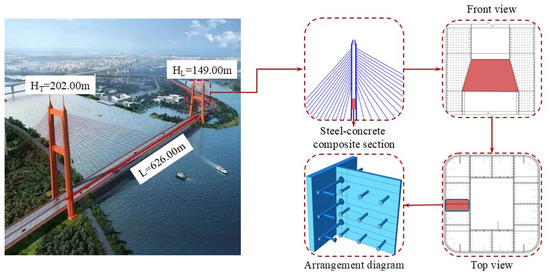
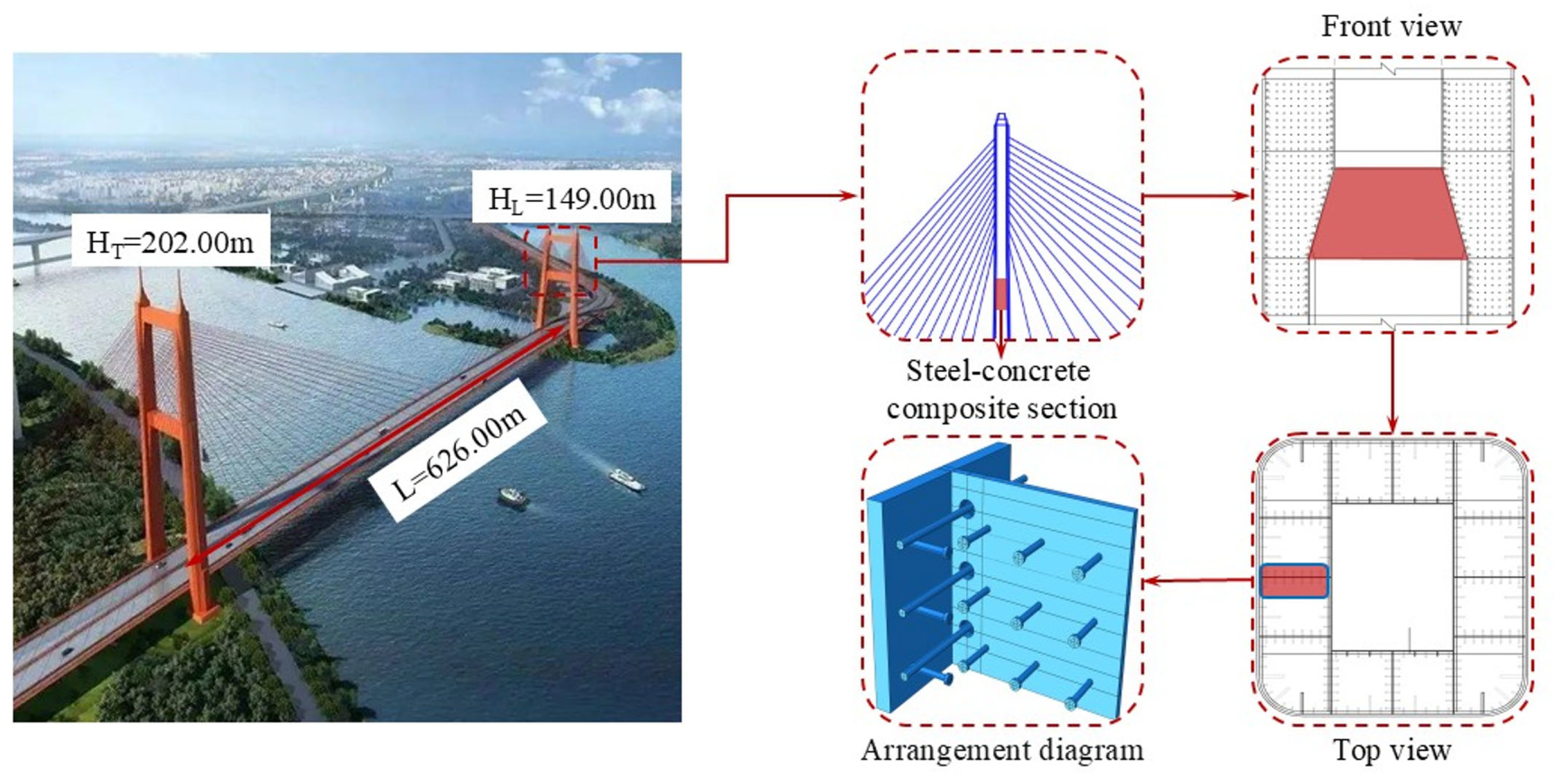
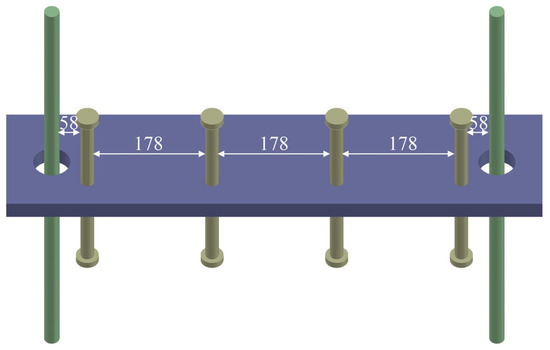
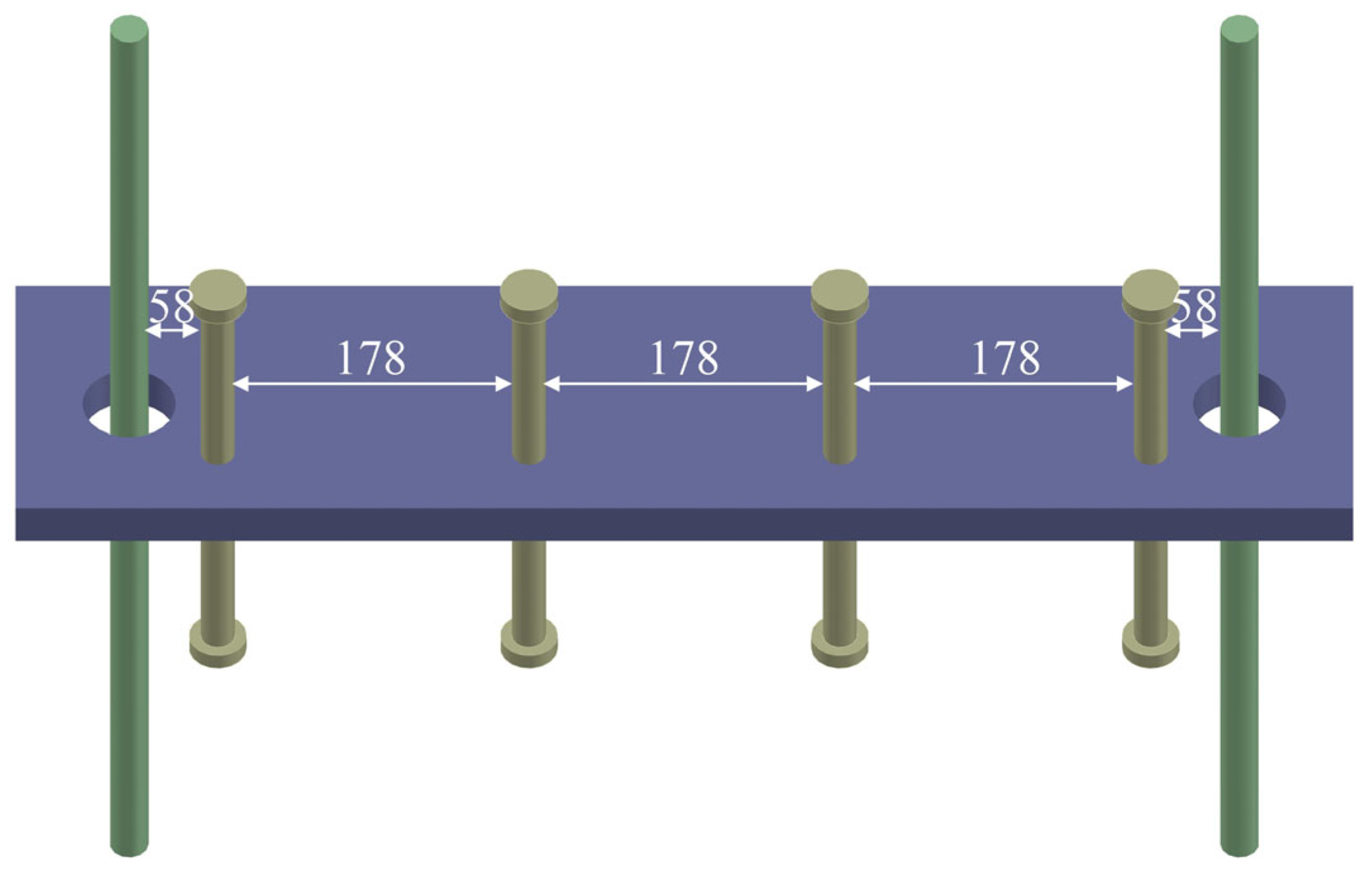
The stud–PBL composite shear connector is a hybrid continuous structure that combines the advantages of stud shear connectors and PBL shear connectors, featuring the high deformation capacity of studs and the superior load-bearing capability of PBL shear connectors [16,17]. Wu [18] conducted four sets of pulling and pushing experiments to investigate the influence of 12 mm/16 mm bolt diameters and the construction methods of cast-in-place (ZJ group) and precast high-strength mortar filling (GJ group) on the interface shear performance. The results showed that the large-diameter bolts were crucial for the shear potential of the NRC–UHPC interface. Jiang [19] conducted five sets of RHHPC concrete experiments and adjusted the content of SAC and steel fibers to optimize the mixture for investigating the interface shear performance, aiming to predict the shear capacity of the RHHPC–NC interface and provide theoretical support and optimization paths for engineering applications. Tu [20] also systematically examined the influence of concrete type, embedded depth, transverse steel bar diameter, and end-bearing effect on the shear performance of the embedded steel–UHPC composite truss bridge using 12 sets of pull-out tests. The results showed that the concrete type and end-bearing effect significantly affected the PBL shear strength, while the influence of embedded depth and transverse steel bar diameter was relatively weak. Additionally, there are studies indicating that the new shear connection structure composed of HSBs and the filled epoxy mortar layer (EML) can effectively enhance the shear resistance of the bolt connection interface [21]. Mei [22] conducted four experiments to explore the influence of three interface treatments and bolt arrangement on the shear performance, verifying that the steel support beam (ASSJ) can improve the overturning resistance of single-column concrete pier (SCP) bridges. However, research on the failure modes and shear performance of composite shear connectors remains limited. The performance differences between composite shear connectors and single shear connectors such as studs or PBL connectors are still unclear, particularly due to the lack of reliable theoretical formulas for calculating the elastic stiffness of composite shear connectors. Therefore, the elastic stiffness effect of composite shear connectors under the superposition of single shear connectors still requires further investigation through experiments and finite element analysis. This study focuses on stud shear connectors, PBL shear connectors, and stud–PBL combined shear connectors as the research objects. In response to the research hotspot of leveraging the complementary advantages of materials to enhance structural performance in recent years, it analyzes the elastic stiffness characteristics of different types of shear connectors. Additionally, push-out tests were conducted based on the arrangement of shear connectors in a steel–concrete composite pylon segment of a long-span cable-stayed bridge located in Foshan City, Guangdong Province, as illustrated in Figure 1.
Figure 1.
Layout of composite shear connectors for a long-span cable-stayed bridge.
2. Theoretical Derivation of Elastic Stiffness for Stud and PBL Shear Connectors
The elastic stiffness of shear connectors is a crucial parameter in the design of steel–concrete composite segments for long-span cable-stayed bridge pylons. Based on the elastic foundation beam theory [23], this chapter derives the theoretical solution for the elastic stiffness of stud shear connectors under longitudinal shear conditions by establishing the corresponding differential equation. Additionally, the theoretical solution for the elastic stiffness of PBL shear connectors is obtained using the spring model theory [24].
2.1. Calculation and Analysis of Elastic Stiffness for Stud Shear Connectors
Based on the theory of elastic foundation beams, the deflection differential equation of stud shear connectors under longitudinal shear is established. To simplify the derivation process, the following assumptions are made:
- (1)
- The deformation of the stud cross-section conforms to the plane section assumption.
- (2)
- The contact surface between the stud and concrete remains tightly bonded throughout the loading process.
- (3)
- Within the displacement range of 0.2 mm corresponding to the initial stiffness, both the studs and concrete remain within the elastic range.
- (4)
- The axial force of studs and the frictional resistance of contact surfaces caused by small displacements are neglected.
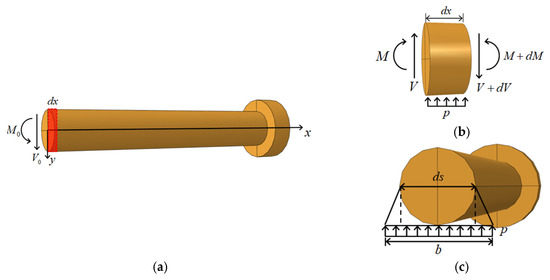
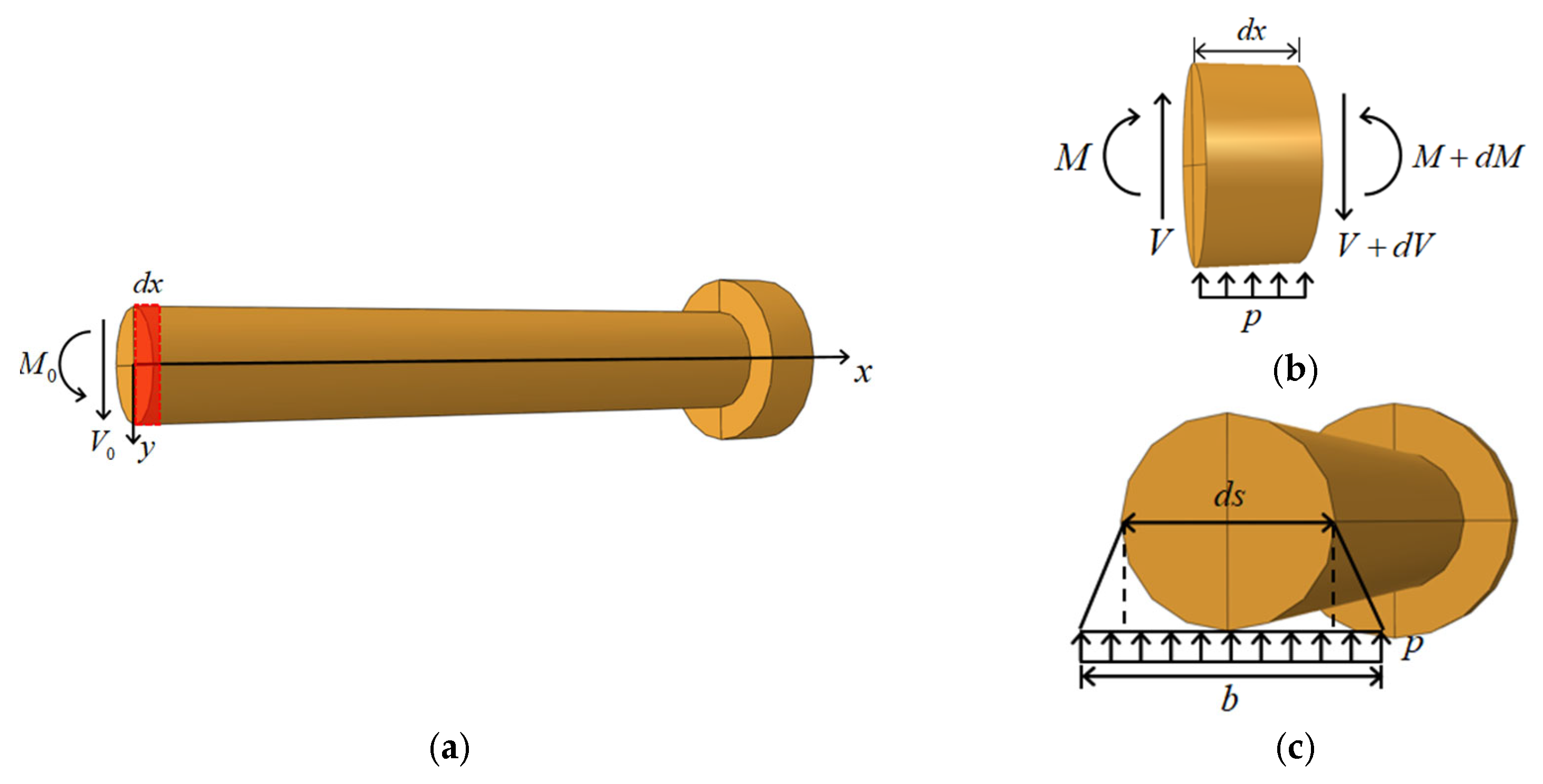
Based on the above assumptions, a stud micro-element is extracted for force analysis as shown in Figure 2:
Figure 2.
Analysis of stud bolt stress. (a) Schematic diagram of force distribution at the root of shear studs. (b) Schematic diagram of the micro-element at the root of the pull-out bolt. (c) Schematic diagram of the effective width of studs.
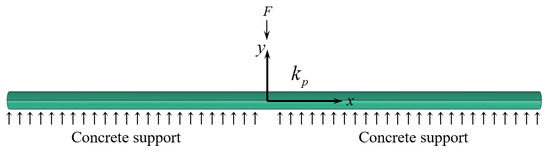
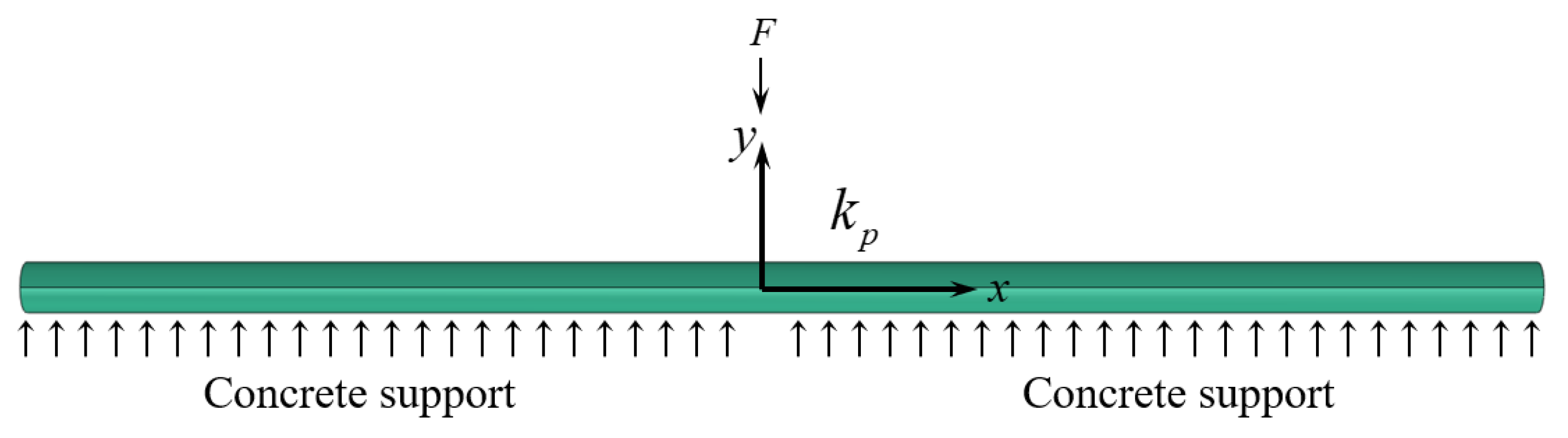
The stud has a diameter of , a height of , an elastic modulus of , and a moment of inertia of . Under loading, the dowel root is subjected to a concentrated force and a concentrated moment , while the dowel shaft experiences a reaction force from the restrained concrete, the magnitude of which is proportional to the vertical displacement , as expressed by Equation (1):
where is the reaction coefficient, represents the vertical displacement of the stud under load, denotes the effective width of concrete, and the value of the effective width is taken as .
According to the static equilibrium condition, the equilibrium equation of the stud element can be derived as follows:
As can be seen from Equation (4):
Based on the relationship between the bending moment and displacement of the stud:
Substituting Equations (1), (4) and (5) into (6) yields the bending differential equation for the stud shear connector:
Let the flexibility coefficient of the stud shear connector to concrete be :
It can be concluded that the general solution of Equation (8) is:
The four constants A, B, C, and D can be determined through boundary conditions. Assuming the displacement at the nail head position is zero, when , there is . Therefore, if and only if , there is . Substituting into Equation (9) yields:
Differentiating Equation (10) yields the expressions for rotation angle, bending moment, and shear force of the stud shear connectors:
Assuming the shear force at the root of the stud is and the bending moment is , substituting into Equations (12) and (13) yields:
Since the stud root is rigidly connected to the bearing plate, the rotation angle at this location is nearly zero. According to Equation (11), exists if and only if , thus . Meanwhile, the vertical displacement at the stud root , from which the elastic stiffness of the stud shear connector can be derived:
As previously discussed, , and by substituting Equation (2) into Equation (15):
The expression for the elastic stiffness of stud connectors reveals that their elastic stiffness is primarily influenced by a combination of factors, including the elastic modulus of concrete, the elastic modulus of the stud material, and the dimensions of the studs.
2.2. Calculation and Analysis of Elastic Stiffness for PBL Shear Connectors
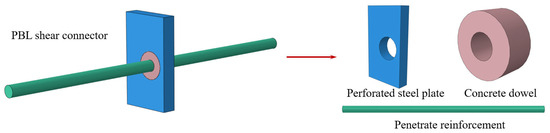
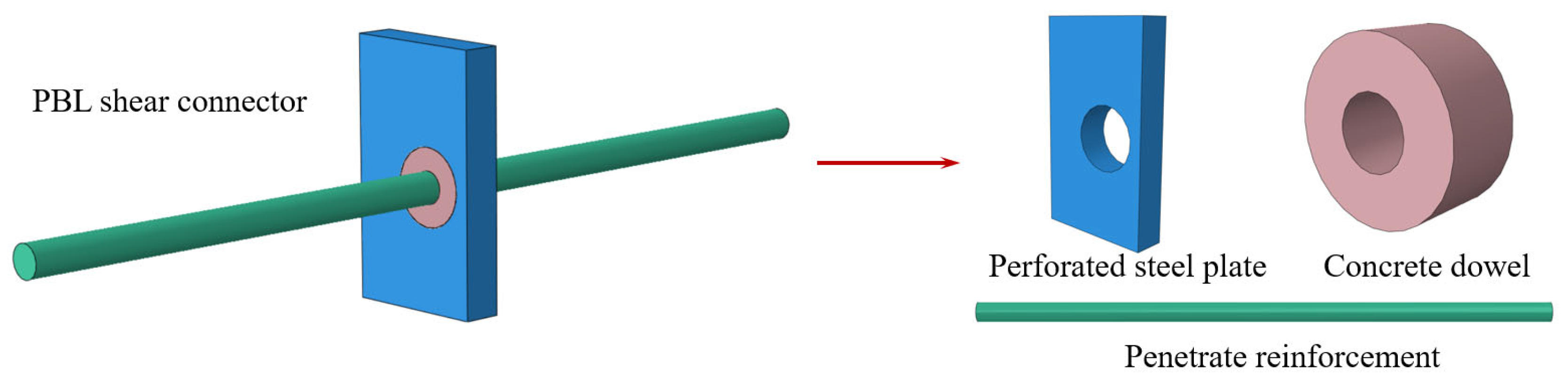
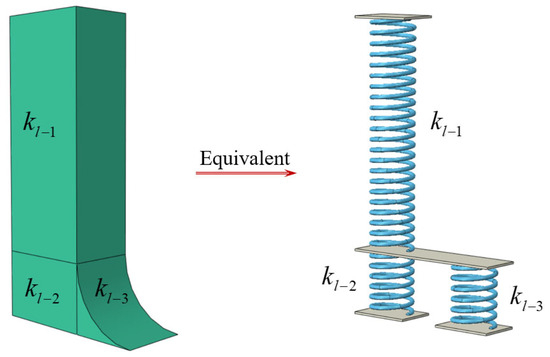
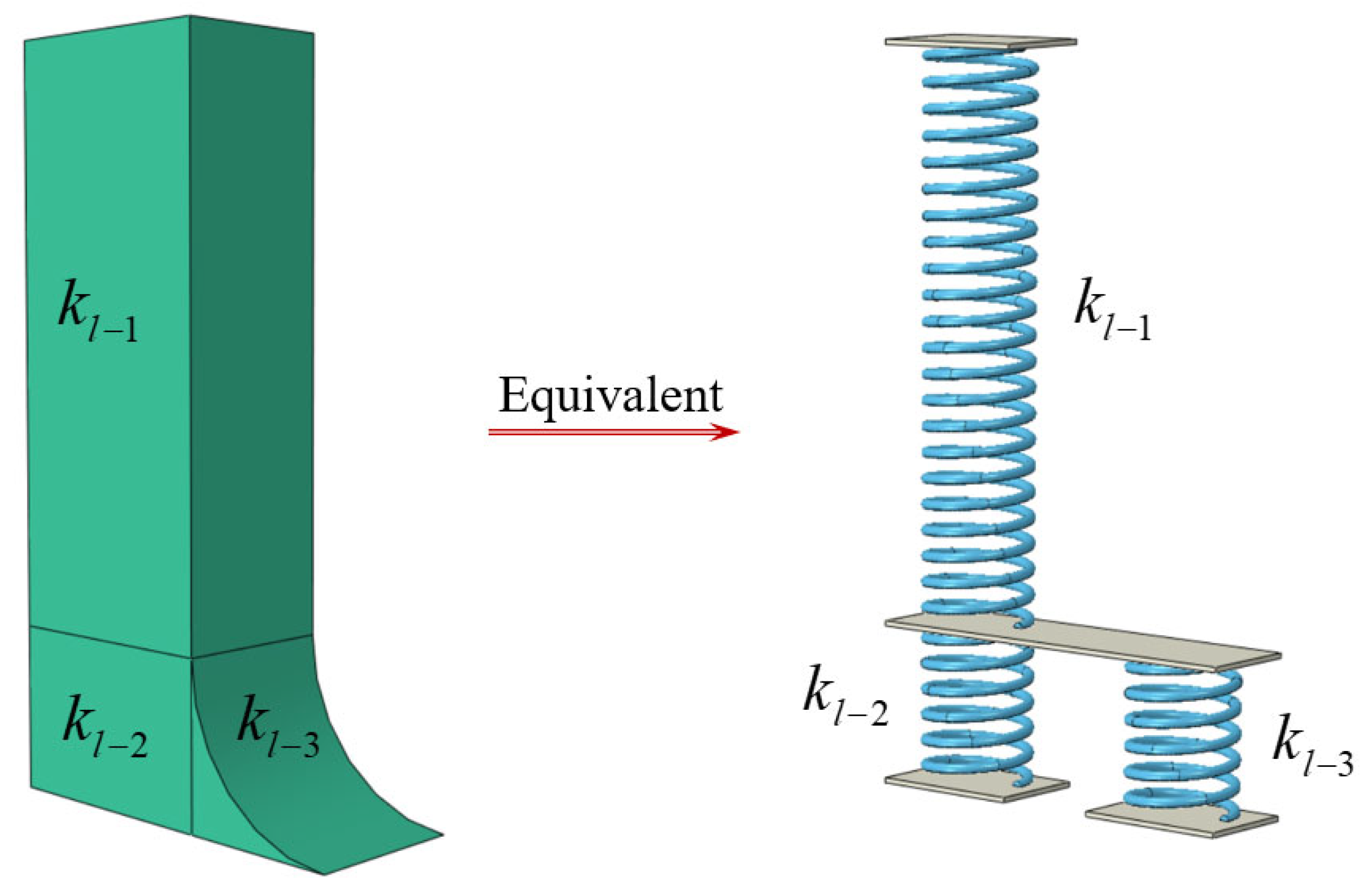
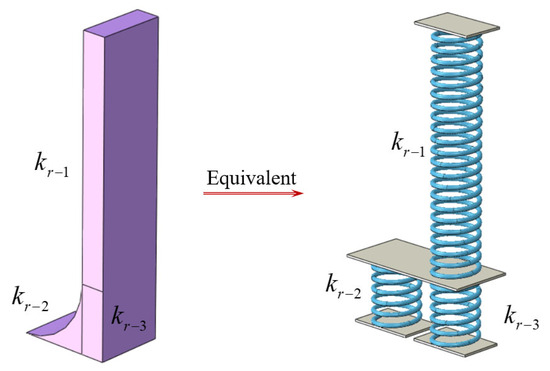
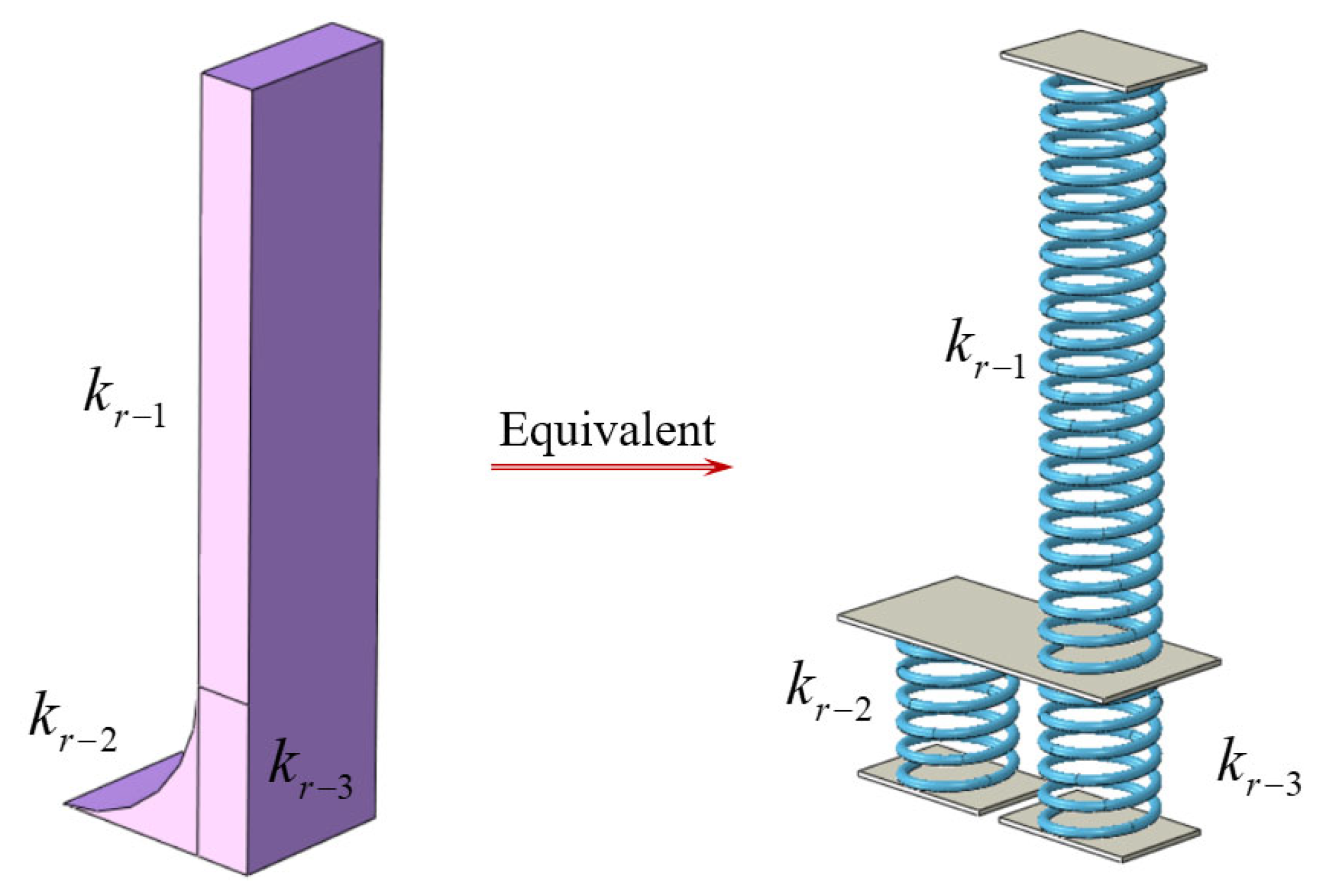
During the working process of the PBL shear connector, the load is initially transferred from the perforated steel plate to the concrete tenon and the penetrating reinforcement, and subsequently from the penetrating reinforcement to the concrete block [25,26]. Consequently, the equivalent springs representing the perforated steel plate, concrete tenon, and penetrating reinforcement exhibit a series connection relationship, as illustrated in Figure 3.
Figure 3.
Equivalent spring stiffness model of a PBL shear connector.
The relationship between the elastic stiffness of the PBL shear connector and the corresponding elastic stiffness of its three subdivided components can be expressed as follows:
where is the stiffness of a single PBL shear connector, is the stiffness provided by the perforated steel plate, is the stiffness contributed by the concrete dowel, and is the stiffness offered by the penetrating reinforcement.
- (1)
- Elastic Stiffness of Perforated Steel Plates ()
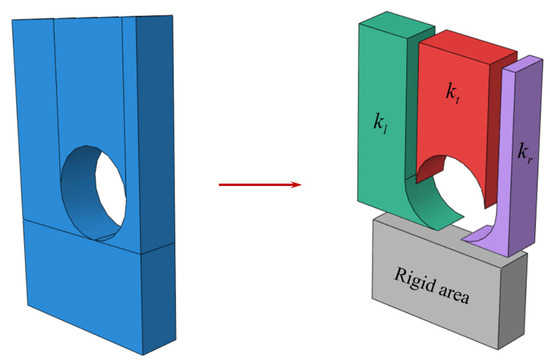
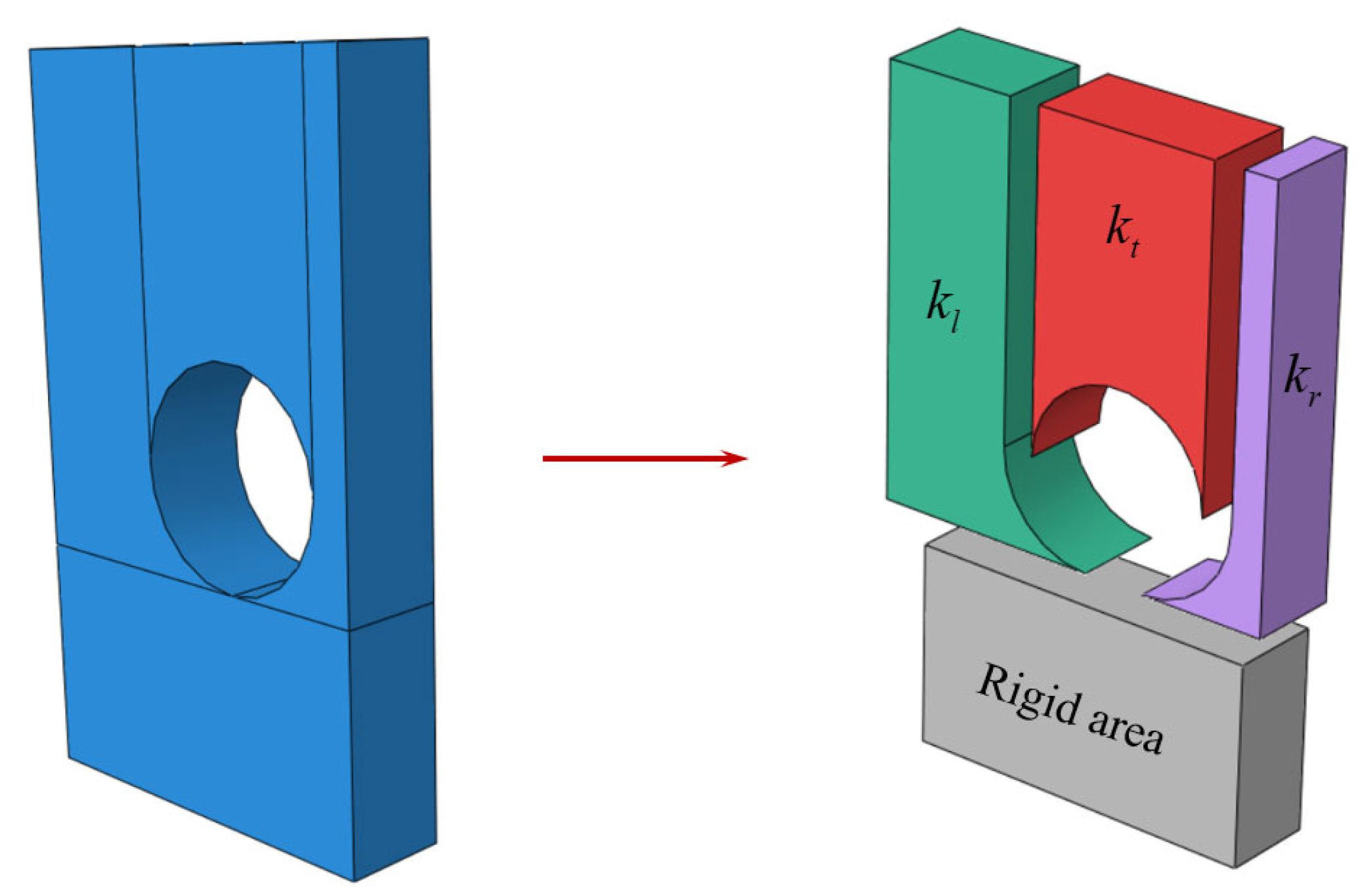
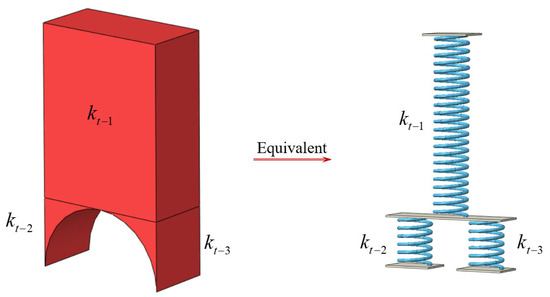
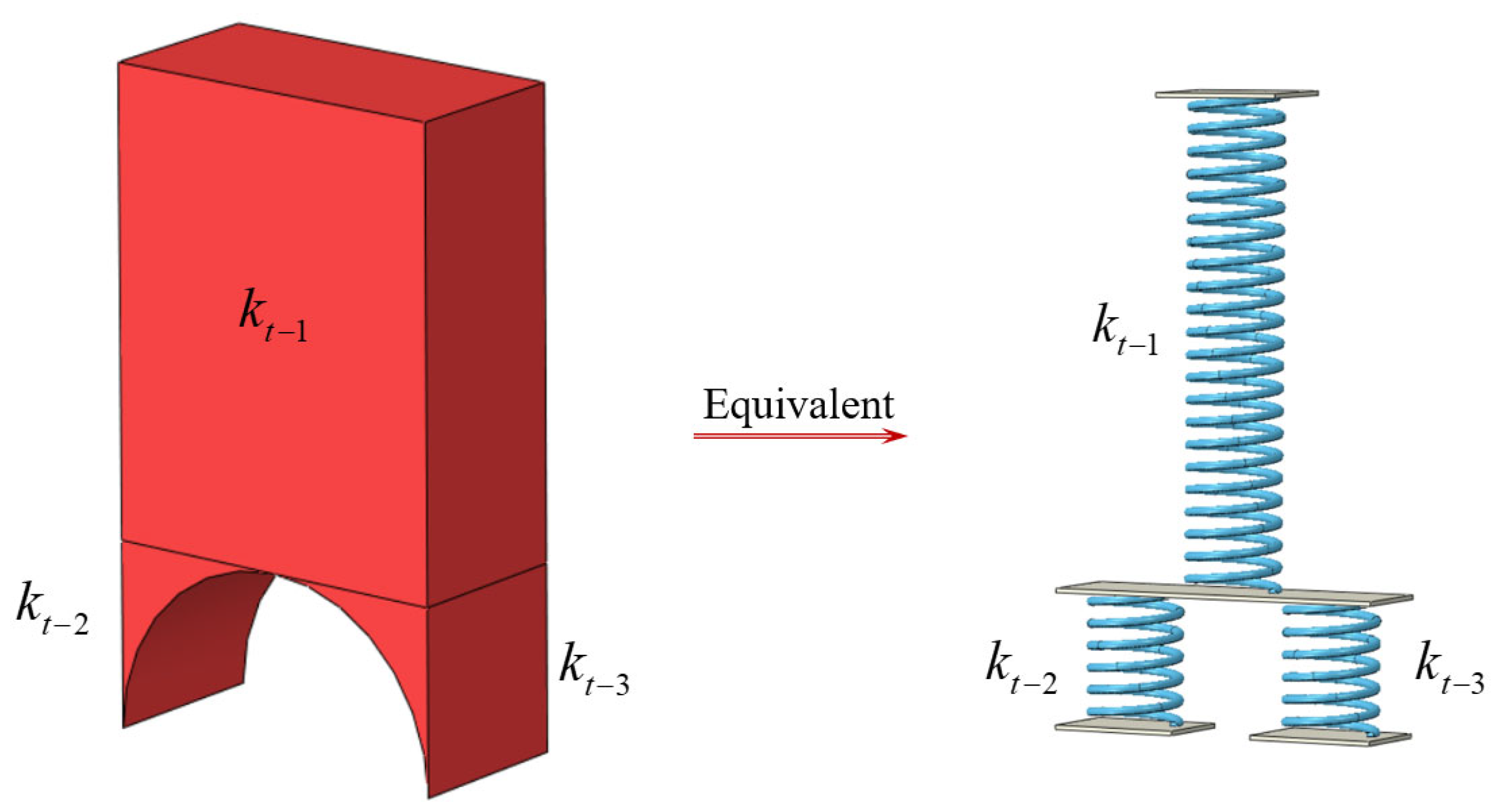
Based on the geometric configuration of perforated steel plates, the stiffness of a perforated steel plate can be divided into four components as illustrated in Figure 4. Additionally, there exists a region with a height of at the bottom of the perforated steel plate, where both deformation and stress are minimal. Consequently, this region can be equivalently treated as a rigid zone and considered non-contributing to the overall stiffness. According to the load transfer mechanism of perforated steel plates, and are in a parallel relationship, while , and each bear a portion of the load, which can be described as a series relationship. The stiffness contributions of each component of the perforated steel plate are expressed as follows:
Figure 4.
Stiffness zoning of a perforated steel plate.
- (a)
- The Elastic Stiffness of the Spring
The stiffness calculation model of spring is shown in Figure 5. The stiffness can be subdivided into three components, which satisfy Equation (19) based on the series-parallel relationship of the springs.
Figure 5.
Stiffness calculation model of spring .
Regions and in the figure are rectangular areas with elastic stiffness as follows:
For , the width of the sector region varies with position and can be expressed as follows:
Assuming that the force is uniformly distributed along the spring, the strain can be expressed as follows:
Displacement of the sector region under the action of is as follows:
The stiffness of the sector region can be obtained by calculating based on the definition of stiffness.
Substituting , , and into Equation (19) yields the elastic stiffness of spring a as follows:
- (b)
- The Elastic Stiffness of the Spring
The stiffness calculation model of the spring is shown in Figure 6, and the expression for is as follows (using the same method as ).
Figure 6.
Stiffness calculation model of spring .
- (c)
- The Elastic Stiffness of the Spring
The simplified spring at the top region of the perforated steel plate can be considered as a series combination of a rectangular steel plate and two sector steel plates, as shown in Figure 7 and satisfying Equation (26).
Figure 7.
Stiffness calculation model of spring .
The elastic stiffness of is as follows:
and have the same elastic stiffness, and the calculation method is identical to that of which is as follows:
Therefore, the elastic stiffness of spring is as follows:
Substituting (24), (25), and (29) into (18) for stiffness integration yields the stiffness contribution of the perforated steel plate as follows:
where .
- (2)
- Elastic Stiffness of Concrete Dowel ()
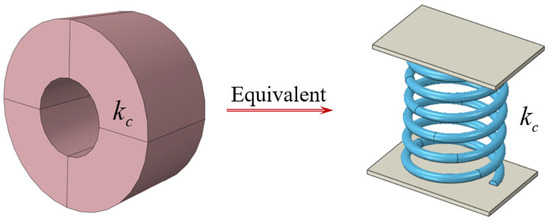
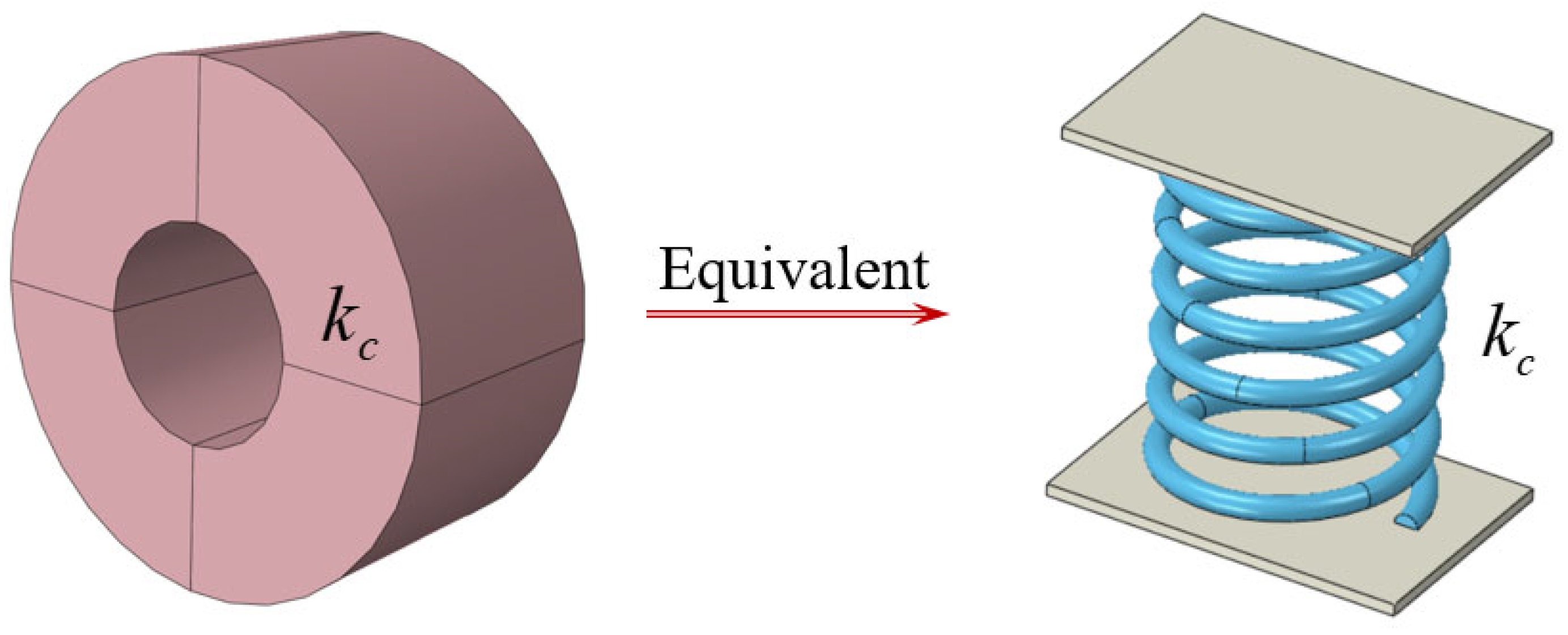
The equivalent spring stiffness model of the concrete dowel is shown in Figure 8. The load transmitted by the perforated steel plate is transferred to the concrete dowel through the penetrating reinforcement. The area above the hole is approximately rectangular, and the same method as used for analyzing is applied, as shown in the following:
where is the elastic modulus of concrete, is the diameter of the penetrating reinforcement, is the diameter of the perforated steel plate, is the thickness of the perforated steel plate, and is the stiffness correction factor of the concrete dowel.
Figure 8.
Stiffness calculation model of spring .
- (3)
- Elastic Stiffness of Penetrating reinforcement ()
In PBL shear connectors, the concrete dowel transfers the load to the penetrating reinforcement, while the concrete beneath the penetrating reinforcement provides sufficient elastic support. Therefore, the penetrating reinforcement can be simplified as a Winkler elastic foundation beam model, as shown in Figure 9.
Figure 9.
Stiffness calculation model of spring .
Assuming the load intensity on the beam is , the differential equation for beam deflection can be expressed as follows:
where is the elastic modulus of the penetrating reinforcement; is the moment of inertia of the penetrating reinforcement; and is the elastic coefficient of concrete, , .
Taking the center of the perforated steel plate as the coordinate origin, let , and substitute the load intensity at the far end of the penetrating reinforcement into Equation (32):
Assuming that the deformation and internal forces far from the perforated steel plate tend to zero, the general solution of Equation (33) is as follows:
When , there is:
When , the shear force at any point of the penetrating reinforcement can be expressed as follows:
Substitute Equation (34) into Equation (36):
Taking the semi-structure at , there is . Substituting it into Equation (34) yields as follows:
Meanwhile, at , there exists , from which the stiffness contribution of the penetrating reinforcement can be derived as follows:
where represents the stiffness correction factor for the through-bar reinforcement.
Substituting Equations (30), (31) and (39) into Equation (18) and performing stiffness integration yields the elastic stiffness of the PBL shear connector, as shown in Equation (40). Based on the above analysis, it is recommended that the stiffness correction factor for the concrete dowel be taken as , and the stiffness correction factor for the penetrating reinforcement be taken as .
3. Elastic Stiffness Push-Out Test of Shear Connectors
3.1. Determination of Test Parameters
The static behavior of shear connectors is directly related to the synergistic effect of steel–concrete composite structures. The push-out test is an important method to study the shear behavior of shear connectors in steel–concrete composite structures. The purpose of this chapter is to demonstrate the performance improvement of the elastic stiffness of composite members due to the synergistic effect by deducing the failure mode of the test and fitting the corresponding load–displacement curve [16,17].
Single-layer stud–PBL composite shear connectors in the steel–concrete joint section of cable-stayed bridge pylons are selected and divided into regions. Three categories and eight sub-categories of push-out tests are designed to study the static characteristics of stud–PBL shear connectors, PBL shear connectors and stud–PBL shear connectors. The size of each group of specimens is determined according to the actual bridge drawings, as shown in Table 1.
Table 1.
Push-out test parameter.
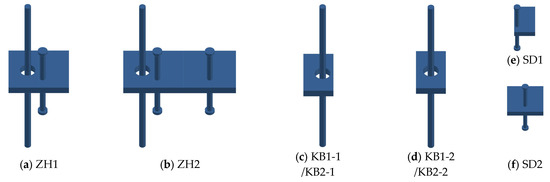
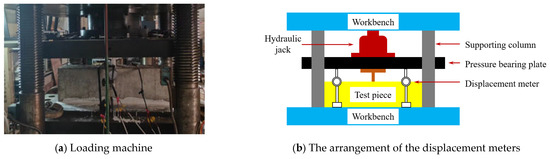
The study comprises three types of shear connectors: PBL shear connectors (designated as KB), stud shear connectors (designated as SD), and single-layer composite shear connectors (designated as ZH). The control groups SD1 and SD2 are utilized to investigate the mechanical properties of stud PBL shear connectors. The ZH connectors consist of ZH1, which includes KB2-1 and SD1, and ZH2, which comprises KB2-1, SD1, and SD2. The construction and division modes of stud shear connectors, PBL shear connectors and stud PBL composite shear connectors are illustrated in Figure 10 and Figure 11.
Figure 10.
Example diagram of shear connector layout in steel–concrete joint section.
Figure 11.
Schematic diagram of construction mode of shear connectors.
The push-out test specimen comprises concrete, studs, penetrating reinforcement, and perforated steel plates. The perforated steel plate has a hole diameter of 60 mm and is made of Q420qD. The penetrating reinforcement is 750 mm long with a diameter of 25 mm and is composed of HRB400E material. The stud has a diameter of 22 mm, while the stud cap has a diameter of 37 mm. The stud length is 138 mm, the stud cap length is 12 mm, and the embedding length of the studs is 69 mm. Both are made of ML15AL material, and the concrete strength is C50.
3.2. Test Loading Scheme
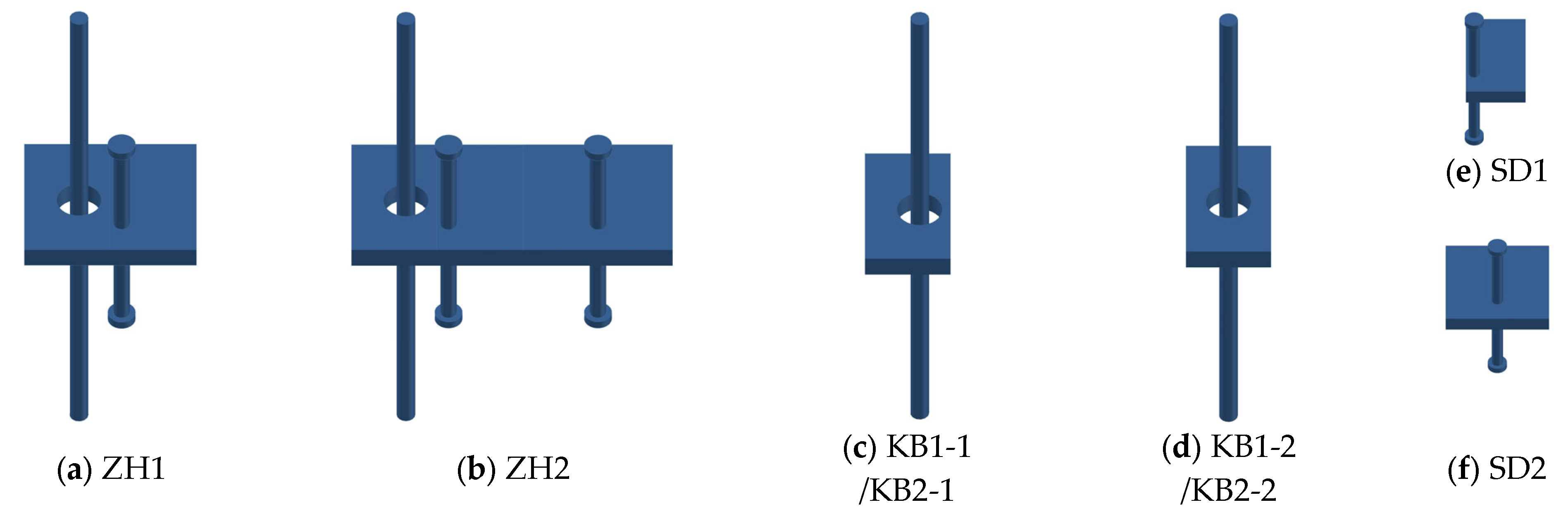
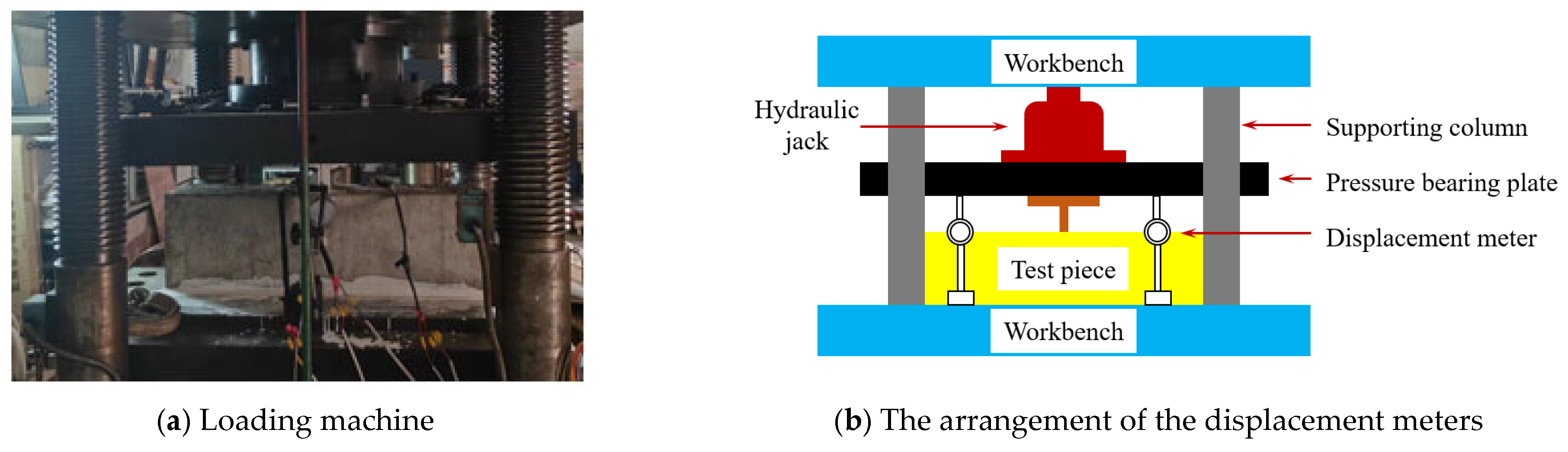
This study employed a force-controlled loading method. All specimens were loaded using a hydraulic jack with a capacity of 1000 tons. During the elastic stage, the loading rate was maintained at 5–15 kN per step, with a maximum speed not exceeding 5 kN/s. Upon entering the elastoplastic stage, the loading rate was reduced to 2–5 kN per step, with a maximum speed not exceeding 1 kN/s. The loading speed was adjusted according to actual conditions during the loading process. The loading configuration and displacement gauge arrangement are illustrated in Figure 12.
Figure 12.
Loading platform.
This study investigates the load–strain patterns of studs and penetrating rebars in key regions of stud connectors, PBL shear connectors, and stud–PBL composite shear connectors while simultaneously collecting strain data at various stages to facilitate subsequent plotting of load–slip curves.
3.3. Failure Mode of Push-Out Test Component
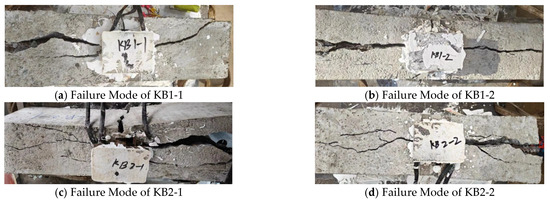
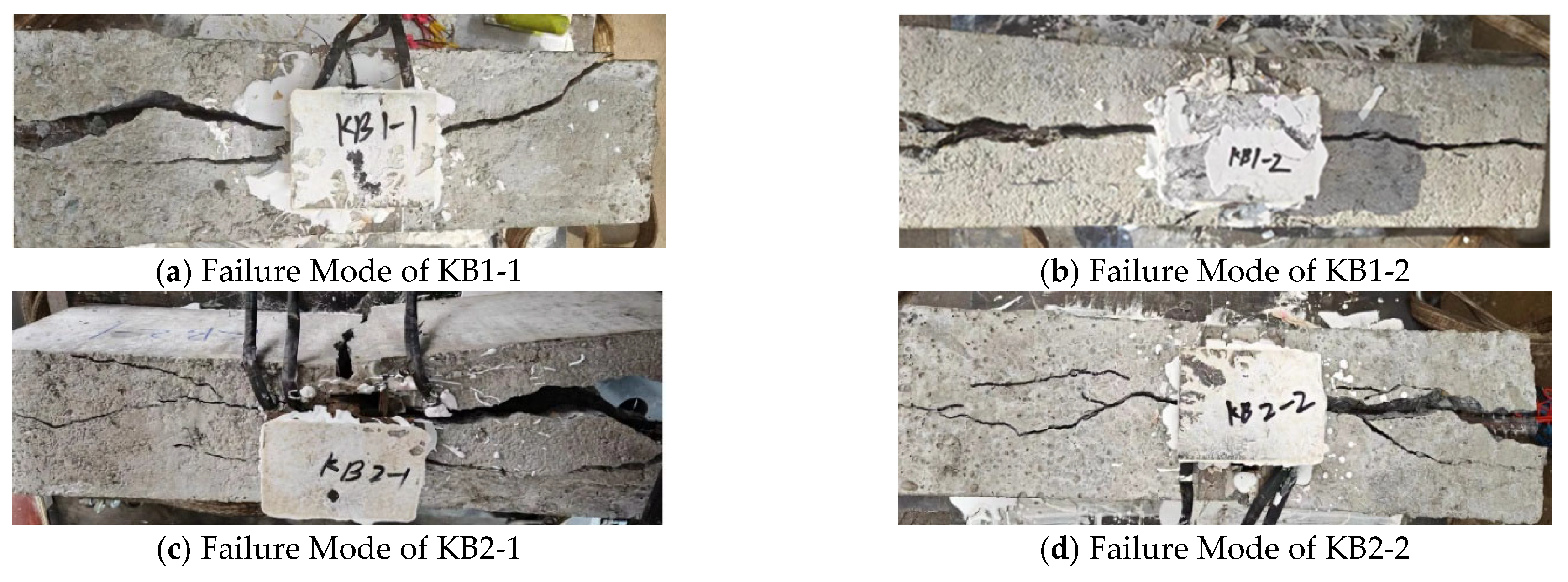
In the KB group, longitudinal and transverse cracks emerge at the crest when the load reaches 65% to 73% of the ultimate bearing capacity. At approximately 93% of the ultimate bearing capacity, oblique cracks develop alongside fine cracks. The ultimate failure mode for all groups is characterized by concrete block splitting. The failure mode of the KB group specimens as shown in Figure 13.
Figure 13.
Failure mode of the KB group.
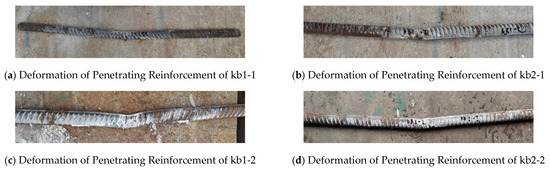
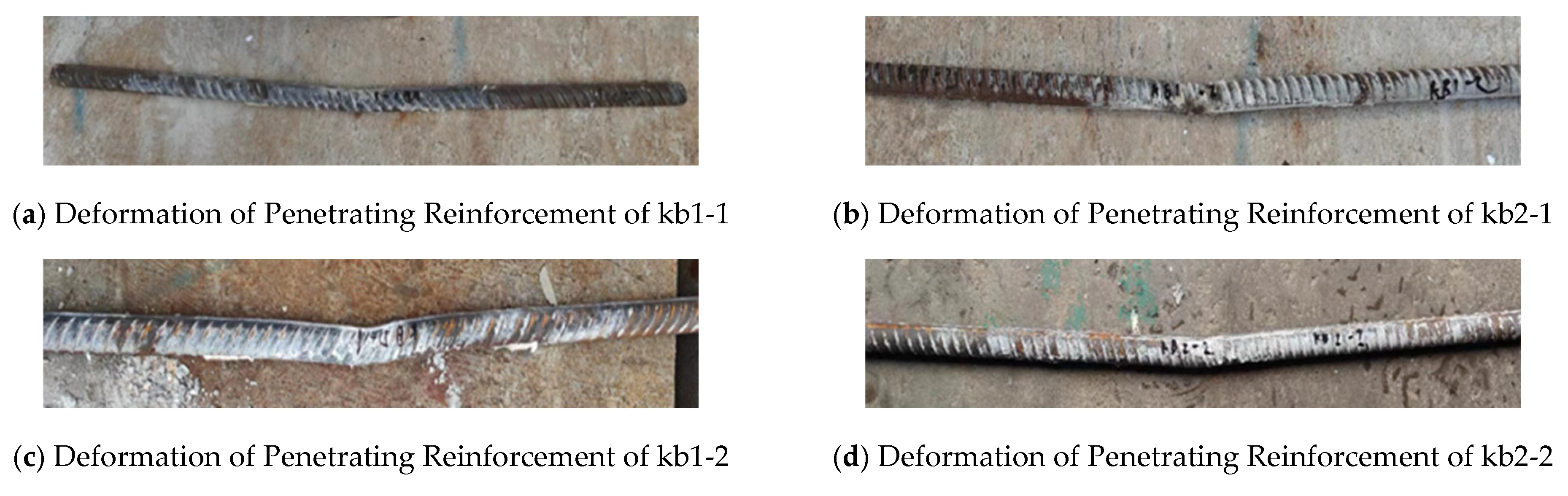
Upon completion of loading, the penetrating reinforcement within the orifice will inevitably displace. While no discernible deformation was noted in the perforated steel plate, conspicuous bending deformation was observed in the penetrating reinforcement adjacent to the perforated steel plate. The deformation of the KB group’s penetrating reinforcement is illustrated in Figure 14.
Figure 14.
Deformation of the penetrating reinforcement of the KB group.
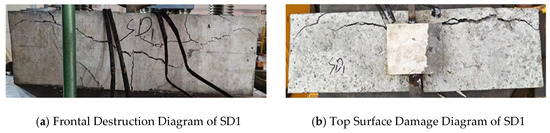
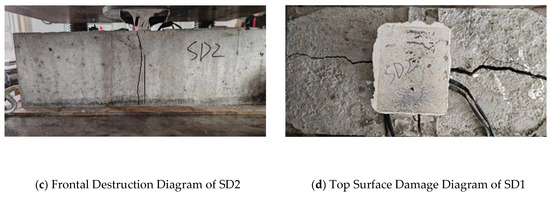
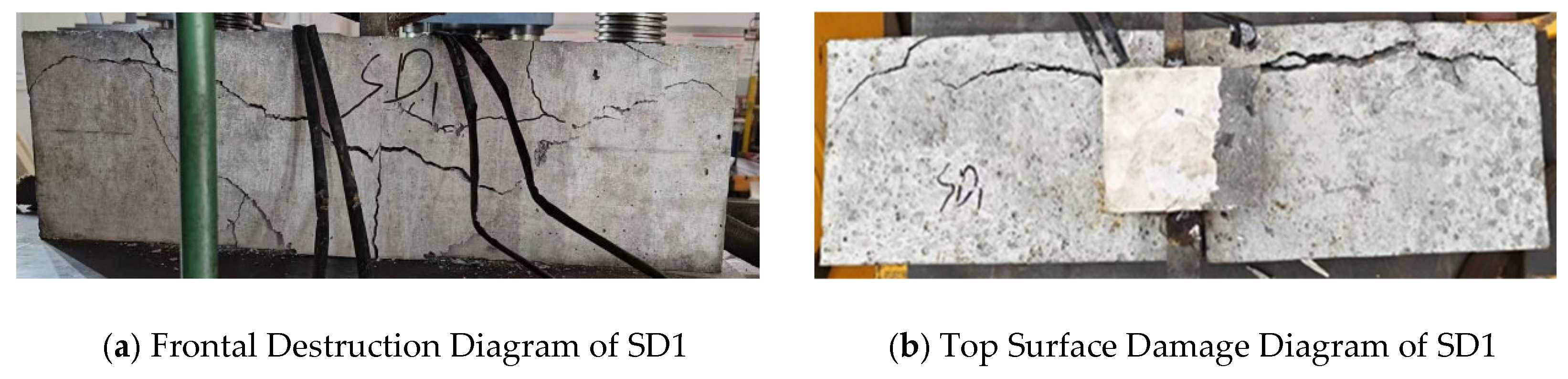
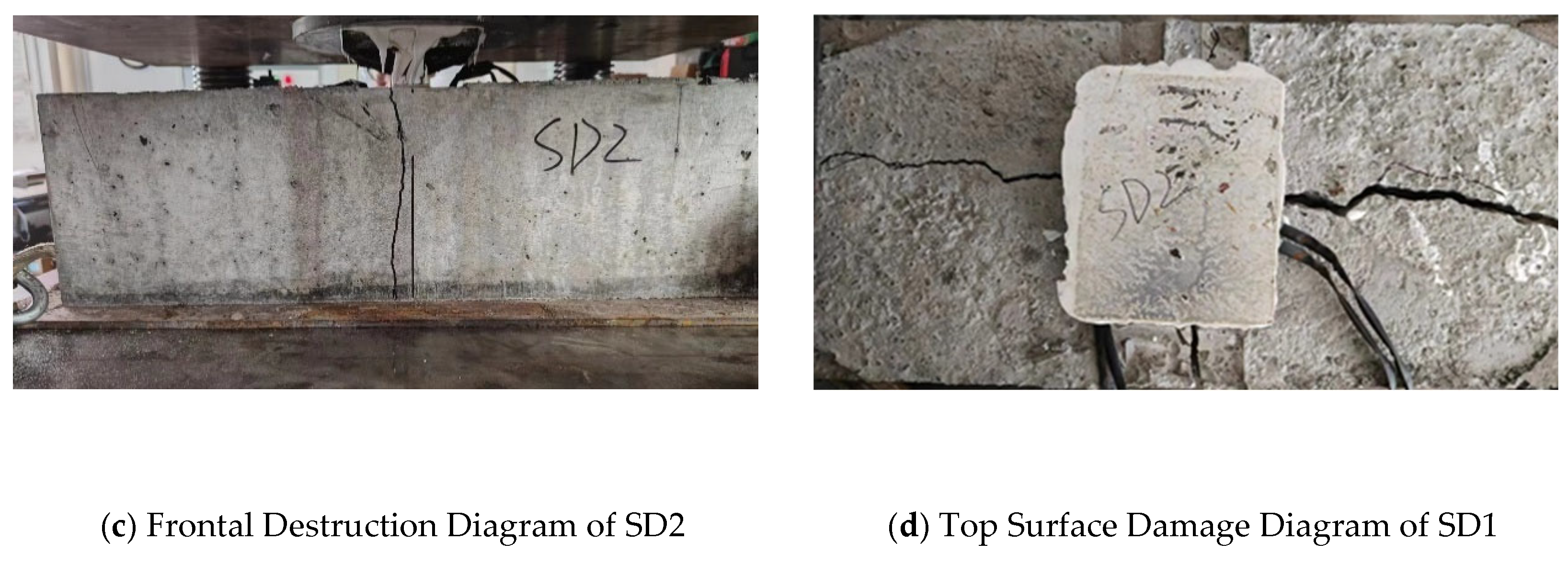
In the control group of stud shear connectors, transverse and longitudinal cracks emerged at the upper and weaker sides of the SD1 specimen when subjected to a load corresponding to 51% of the ultimate bearing capacity. Similarly, upon reaching 56% of the ultimate bearing capacity, a transverse crack manifested at the top of the SD2 specimen. Subsequently, upon reaching the ultimate bearing capacity, both specimens exhibited longitudinal and transverse cracks that propagated throughout the entirety of the concrete block, as depicted in Figure 15.
Figure 15.
Destruction diagram of SD the group.
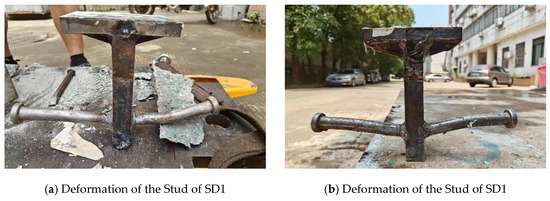
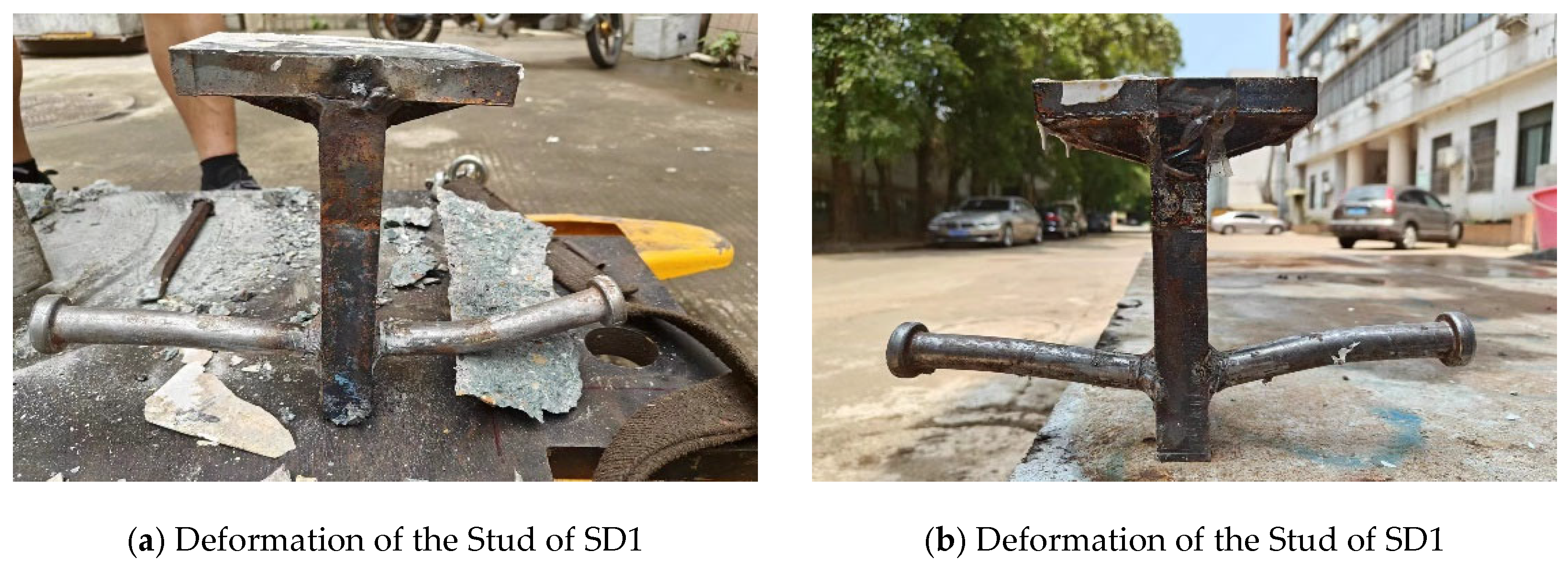
Upon examination post-loading, it was observed that the screws in the SD1 and SD2 groups remained intact without shearing, with varying degrees of deformation as illustrated in Figure 16. Deformation of the screws was more pronounced closer to their base. Group SD1 exhibited uneven deformation between the left and right pegs, whereas deformation of SD2 was consistent.
Figure 16.
Deformation of the stud of the SD group.
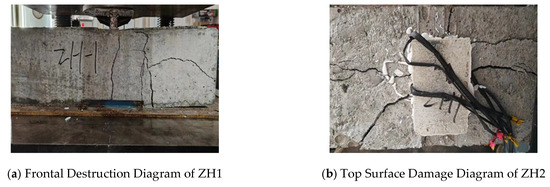
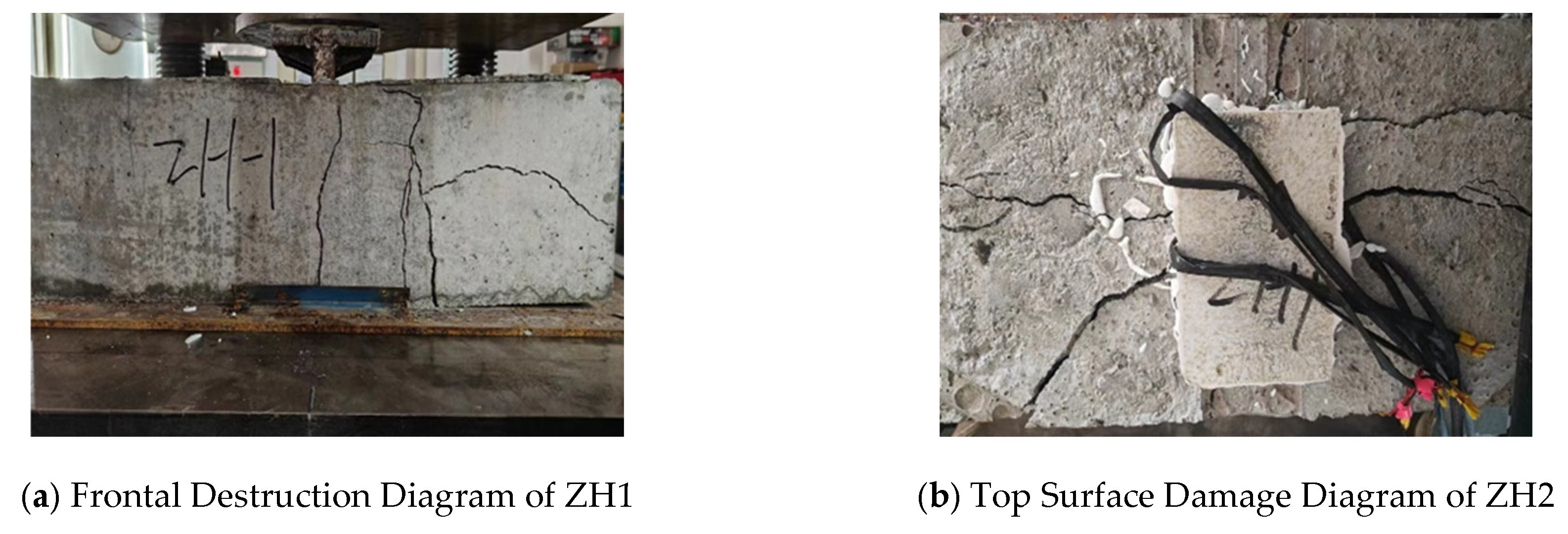
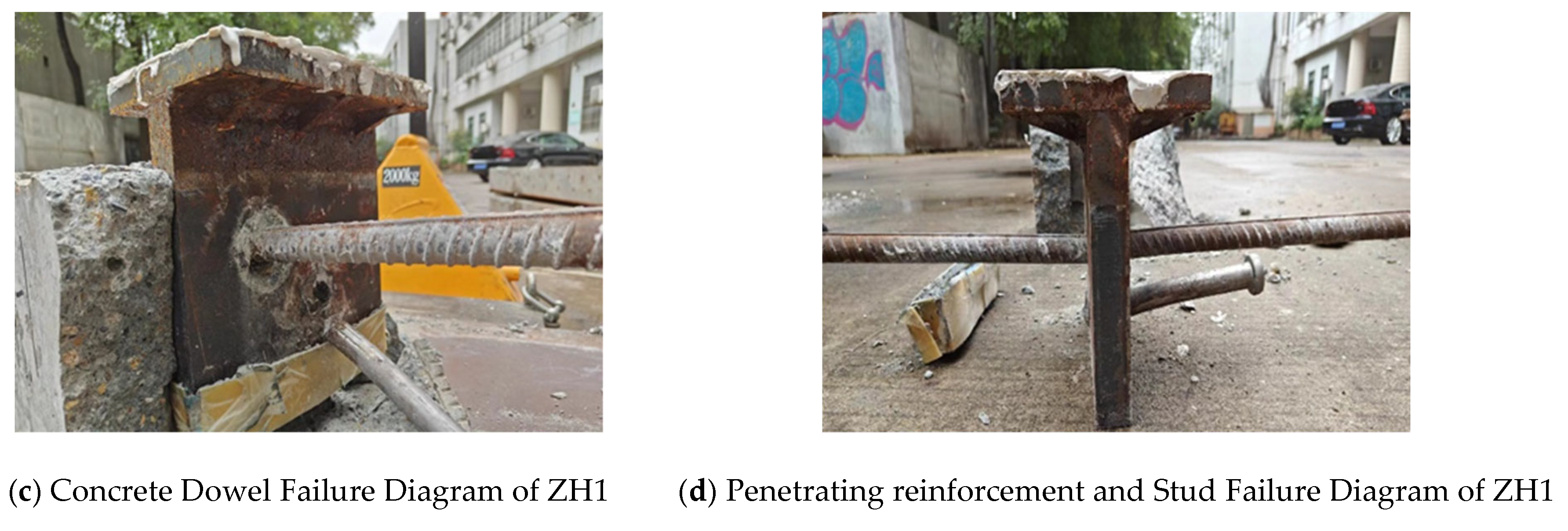
The ultimate bearing capacity of the ZH1 group specimens was 632.6 kN. When the load reached approximately 62% of the ultimate bearing capacity, longitudinal and transverse cracks began to appear at the top. As the load approached the ultimate bearing capacity, the studs on one side were sheared off. On the side where the studs were not sheared, vertical cracks penetrating the full height of the concrete block were observed. The crack distribution, penetration of reinforcement, and deformation of the studs are shown in Figure 17.
Figure 17.
Destruction diagram of ZH1.
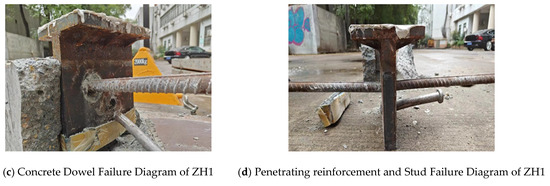
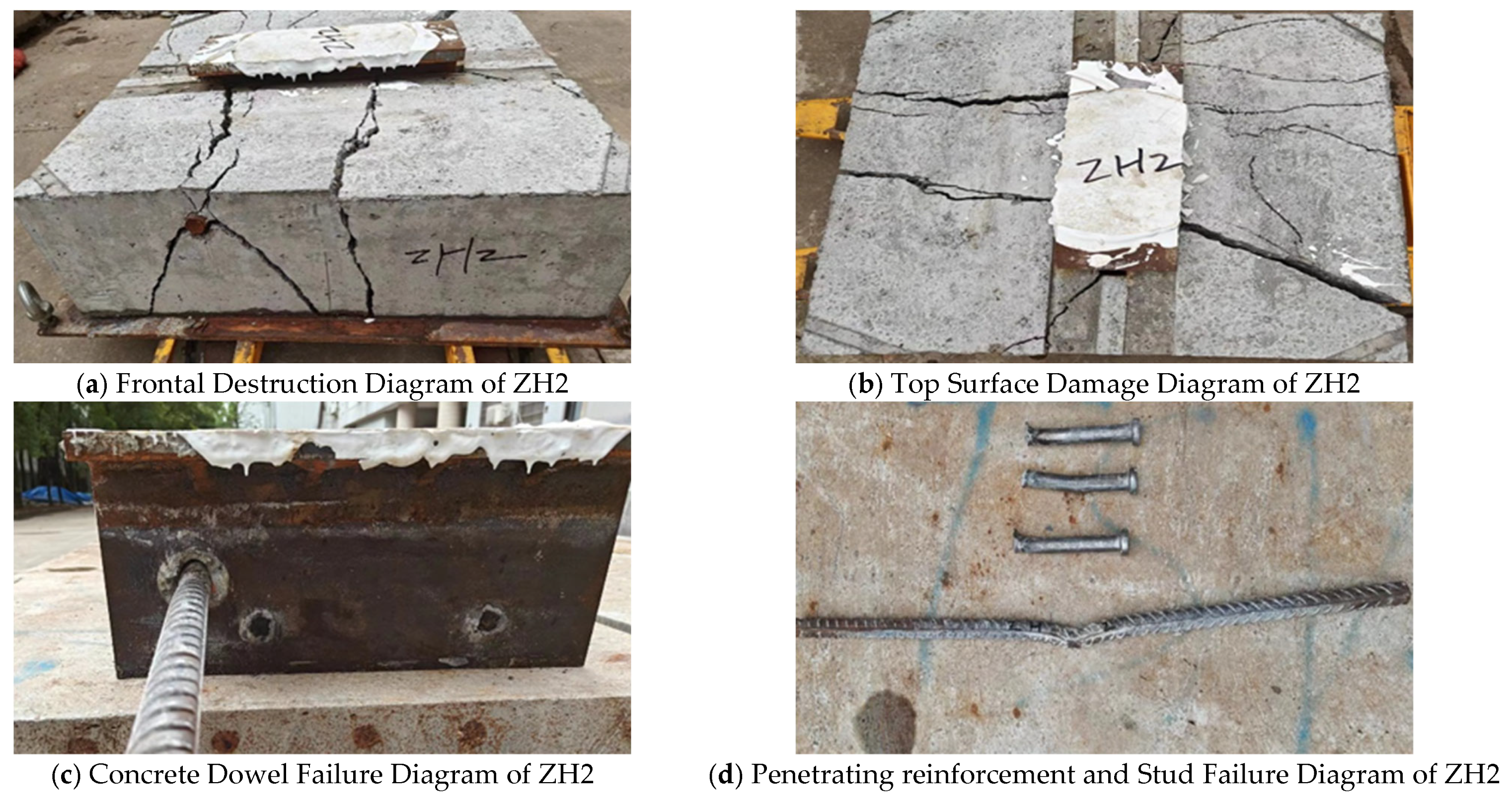
The ultimate bearing capacity of the ZH2 group specimens was 922.9 kN. When the load reached 45% to 67% of the ultimate load, flaking and spalling of concrete were observed on the surface near the perforated steel plate. Upon reaching 90% of the ultimate bearing capacity, transverse, vertical, and longitudinal cracks began to propagate throughout the specimen. After attaining the ultimate bearing capacity, the studs were sheared off, and the failure mode of the ZH2 specimens is illustrated in Figure 18a,b. After unloading, the concrete block was chiseled open, revealing three sheared studs, as shown in Figure 18c. Severe deformation occurred at the root of the studs and the center of the penetrating reinforcement, as depicted in Figure 18d, with the degree of deformation significantly greater than that of the ZH1 group.
Figure 18.
Destruction diagram of ZH2.
3.4. Results of Push-Out Tests
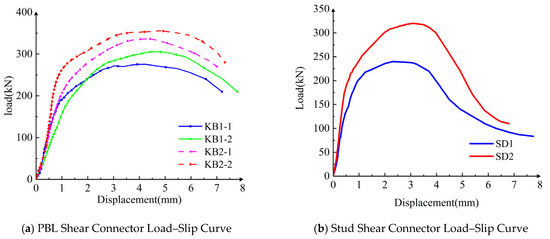
According to the processing method described in ref. [24], the load–displacement curves obtained from push-out tests were averaged. The ratio of the tangent slope to the secant slope of the load–slip curve reflects the rate of nonlinear growth in the curve. When the nonlinear growth of the curve is at its fastest, the secant slope value corresponding to the slip value represents the elastic stiffness of the shear key. At 0.2 mm, the nonlinear growth of the curve reaches its peak. The load–slip curves for each specimen are shown in Figure 19.
Figure 19.
Load–displacement curve obtained from the push-out test.
3.5. Analysis of Push-Out Test Results
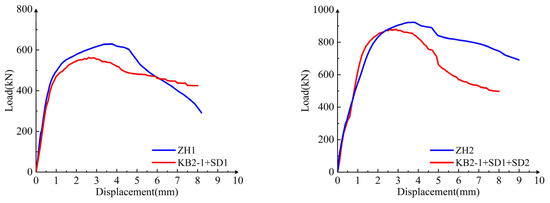
To investigate the intrinsic relationship between elastic stiffness of studs, PBL shear connectors, and stud–PBL composite shear connectors, load–slip curves of KB, SD, and ZH groups were analyzed. The combined curve of the KB and SD groups was juxtaposed with the load–slip curve of the ZH group. The comparison, depicted in Figure 20, revealed similarities between the load–slip curves of ZH1 (derived from combining KB2-1 and SD1) and ZH2 (derived from combining KB2-1, SD1, and SD2). Notably, both ZH1 and ZH2 curves exhibited three distinct stages: elastic, plastic, and descending. During the elastic stage, ZH1 and ZH2 load–displacement curves displayed linear characteristics. As the load increased, the curves transitioned into the plastic stage, where the material underwent plastic deformation, resulting in a deceleration of slope, a slowdown in load growth rate, and a significant acceleration in slip growth rate. Upon reaching the ultimate bearing capacity, the load–slip curve of ZH2 began to decline, while that of ZH1 exhibited a more pronounced decrease, indicating superior ductility.
Figure 20.
Verification of load–slip curves and additive curves of composite shear connectors.
A comparison of the load–slip curves between the ZH1 and ZH2 experimental groups and the superimposed experimental group revealed that the elastic stiffness of the ZH1 and ZH2 groups increased by 8.5% and 2.9%, respectively, with no performance degradation observed. Based on the above analysis, it can be concluded that the elastic stiffness and load–slip curve of the stud–PBL composite shear connector can be regarded as the superposition of the stud shear connector and the PBL shear connector. This further confirms the superior shear performance of the stud–PBL composite shear connector.
Moreover, ZH1 had a peak slip of 3.69 mm and a ductility coefficient of 2.81, whereas ZH2 showed a peak slip of 3.75 mm and a ductility coefficient of 2.85. The peak slip and ductility coefficient of the stud–PBL composite shear connector fell between the stud shear connectors and PBL shear connectors. This composite arrangement not only exhibited increased load-bearing capacity but also retained favorable ductility, allowing it to withstand partial loads even after reaching its ultimate bearing capacity.
4. Finite Element Numerical Analysis of Push-Out Tests
4.1. Overview of the Finite Element Model
The finite element model was established using the general-purpose finite element software ABAQUS 2025 to validate the push-out test results. The main components of the model included perforated concrete, concrete dowels, penetrating reinforcement and perforated steel plates. The constitutive model of concrete adopted the plastic damage model, where the stiffness matrix was reduced by inputting plastic damage factors to simulate the stiffness degradation or failure caused by concrete damage. The elastic modulus of concrete was set to 34.5 GPa, with a Poisson’s ratio of 0.2. In the plastic data, the dilation angle was 38°, the eccentricity was 0.1, the viscosity parameter was 0.00001, and the ratio of biaxial to uniaxial compressive strength was 1.16. For steel materials, a bilinear constitutive relationship was employed, with the Von Mises yield criterion applied as the strength criterion. The penetrating reinforcement used HRB400E, while the perforated steel plate adopted Q420qD. The constitutive relationship of concrete was modeled using a bilinear approach. Perforated concrete, perforated steel plates, studs, and penetrating reinforcement were all simulated using the linear reduced-integration C3D8R element in ABAQUS.
The outsourced concrete is the part where test samples are placed on the reaction frame for loading, and it can also provide macroscopic boundary conditions. However, this part has a relatively small impact on the stress of the connected components and has a large grid size of 50 mm. This still ensures that there are at least 4 elements in each stress direction, avoiding the bell-shaped effect of simplified integral elements. The perforated concrete refers to the concrete on both sides of the perforated steel plate, which provides unidirectional surface external constraints for the steel plate to prevent it from expanding while allowing it to contract. At the same time, this part also provides anchorage for the through-reinforcing bars and reserves the corresponding reinforcing holes corresponding to the through-reinforcing bars. The grid size of this part is 16 mm, corresponding to the outer surface grid of the reinforcing bars. The core load-bearing components include the parts directly involved in the load-bearing process of the thin perforated plate connection components, including: perforated steel plate, through-reinforcing bars, and the concrete sleeve that transmits force between the two parts. The core load-bearing components almost determine all the characteristics of the connection components, such as stiffness, bearing capacity, and ductility. The sizes of the reinforcing bars and the concrete sleeves in this part are also relatively small, so the grid division is also relatively fine. Considering its small size, the grid size of the concrete socket is 5 mm, and the external grid size corresponds to the perforated steel plate grid. The overall grid size of the perforated steel plate is 10 mm, ensuring that there are still 4 elements between the bottom of the hole and the bottom of the steel plate. In addition, the grid division size of the reinforcing bars is 5 mm. All these parts’ grid divisions have been checked and adjusted, and there are no problems such as grid deformation, thus ensuring the convergence and accuracy of the subsequent numerical analysis.
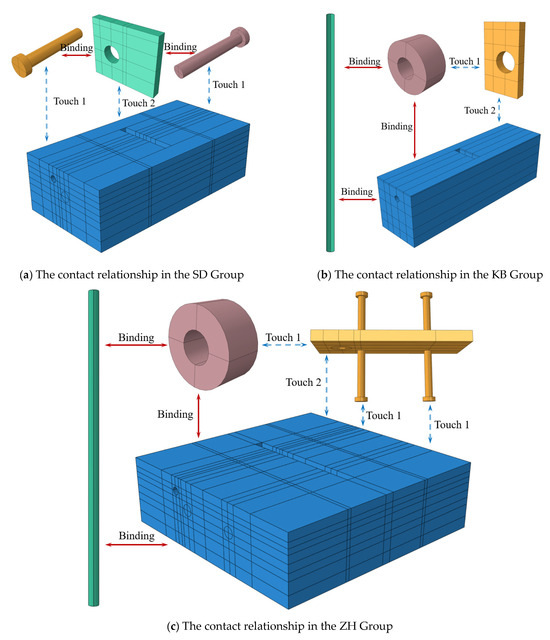
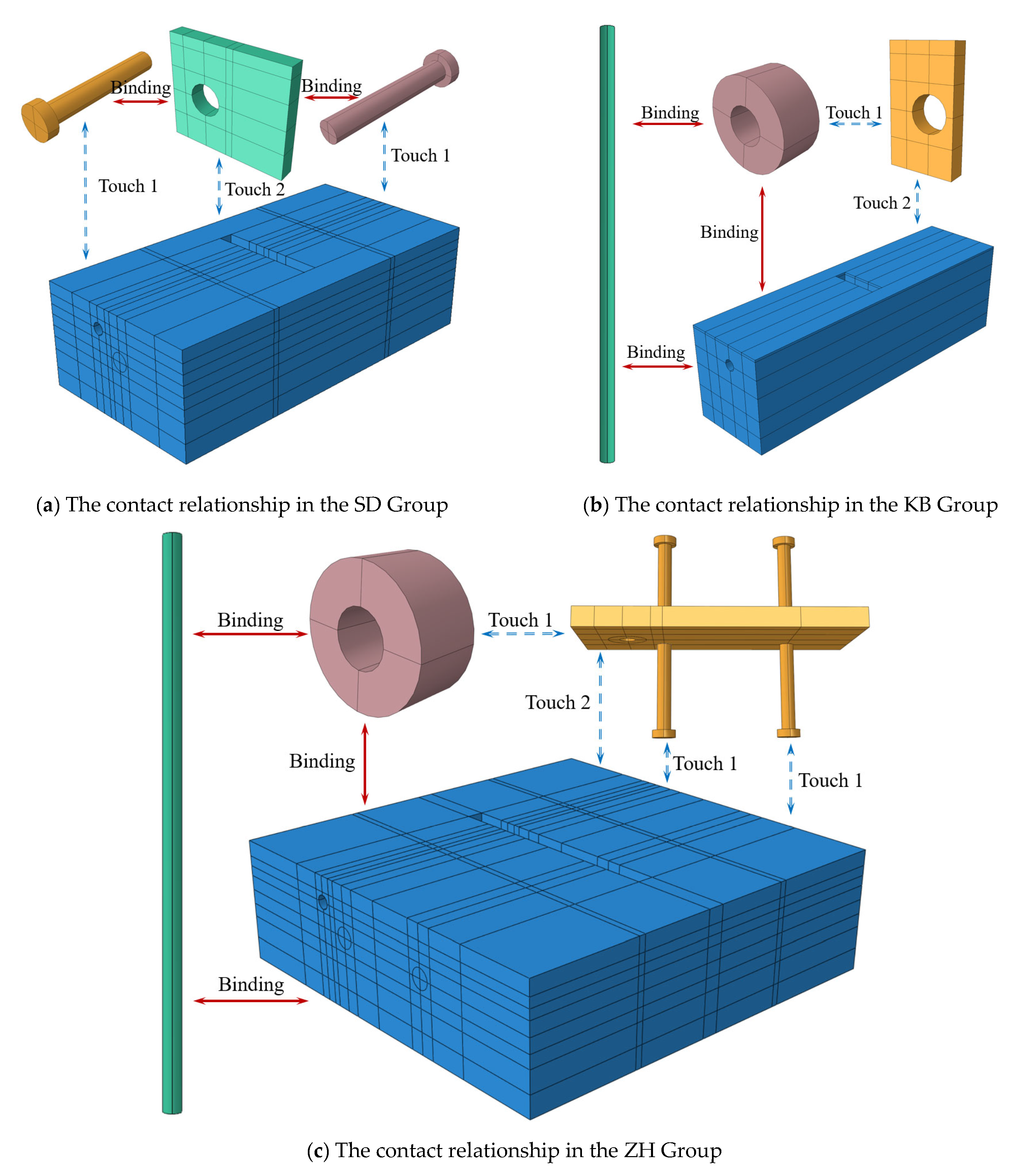
The detailed meshing of each component is illustrated in Figure 21. Bonded constraints are used to simulate the connection between the through bars and the drilled concrete, as well as between the concrete sockets and the through bars, and between the concrete sockets and the drilled concrete components. Contact attribute 1 is used between the concrete sockets and the drilled steel plates, contact attribute 2 is used between the drilled steel plates and the constrained concrete blocks, and the boundary conditions at the bottom of the drilled concrete are fully consolidated. The contact attribute settings are detailed in Table 2.
Figure 21.
Schematic diagram of contact relationships between components.
Table 2.
Contact property settings.
4.2. Comparative Verification of Finite Element Models
The finite element model was verified based on the push-out test results, with a focus on analyzing the similarities and differences in the failure modes and load–slip curves of the specimens.
- (1)
- Failure Mode
The distribution patterns of concrete cracks and corresponding deformation states of PBL shear connectors, stud shear connectors, and composite shear connectors in the finite element model were compared with the push-out test results.
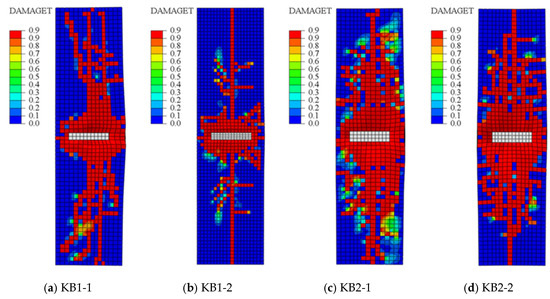
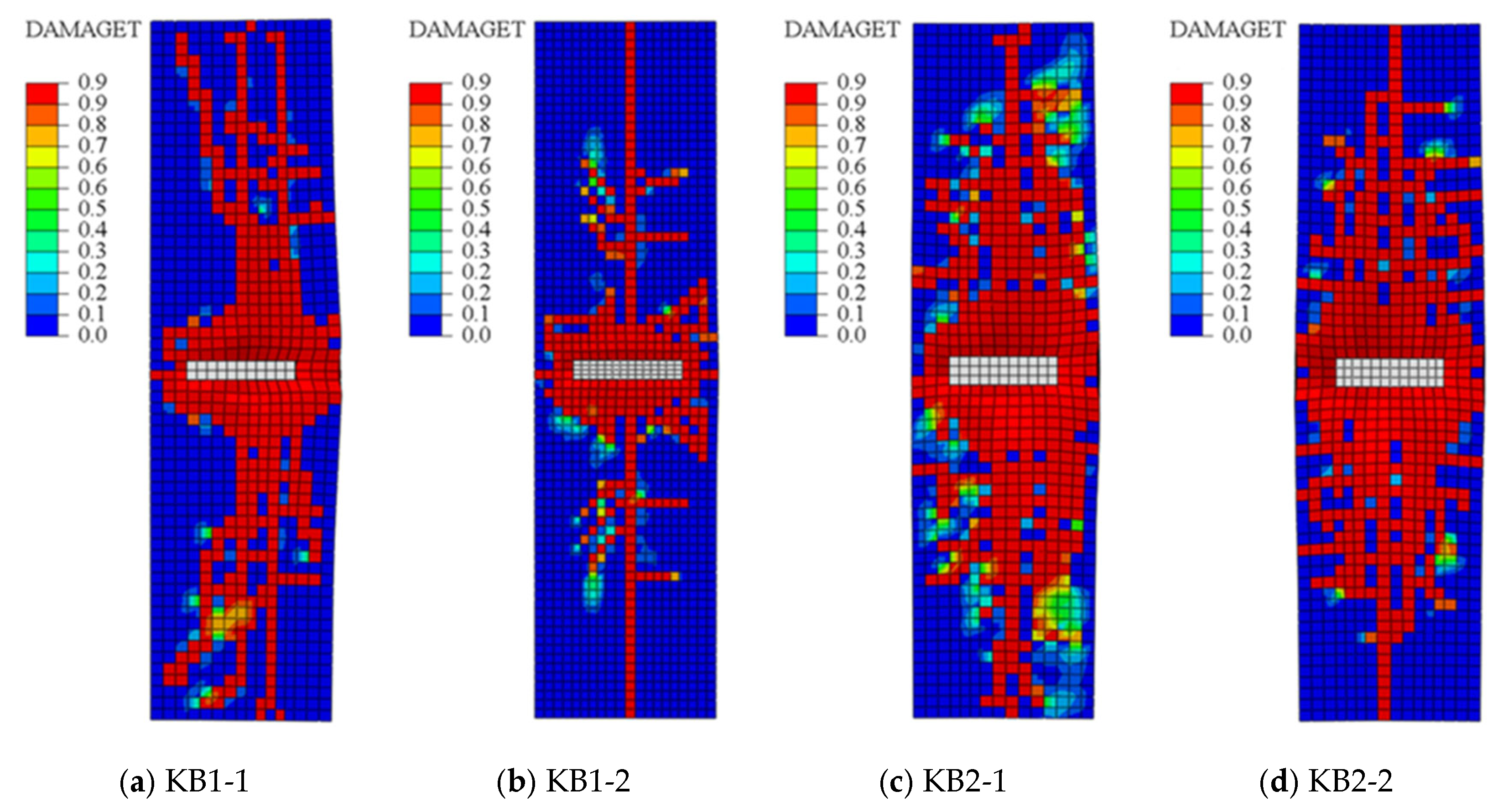
The distribution of concrete cracks in the KB group obtained from finite element simulation is shown in Figure 22, which is generally consistent with the failure modes observed in the push-out tests (Figure 13 and Figure 14). The specimens exhibit distinct cross-shaped cracks, with vertical cracks appearing at the locations of penetrating reinforcement arrangements and horizontal cracks developing near the perforated steel plates.
Figure 22.
Tensile damage cloud diagram of PBL shear connectors.
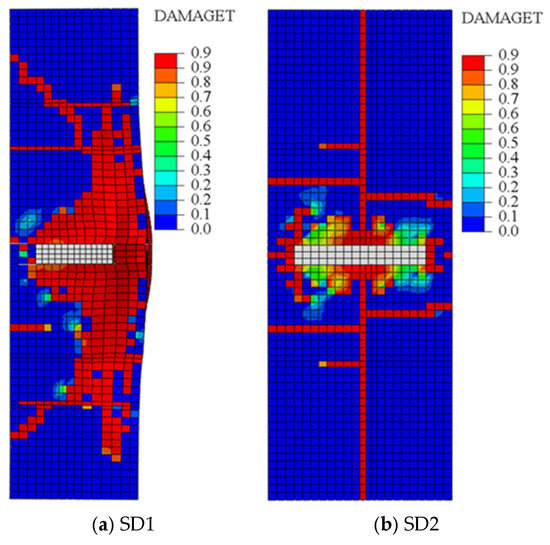
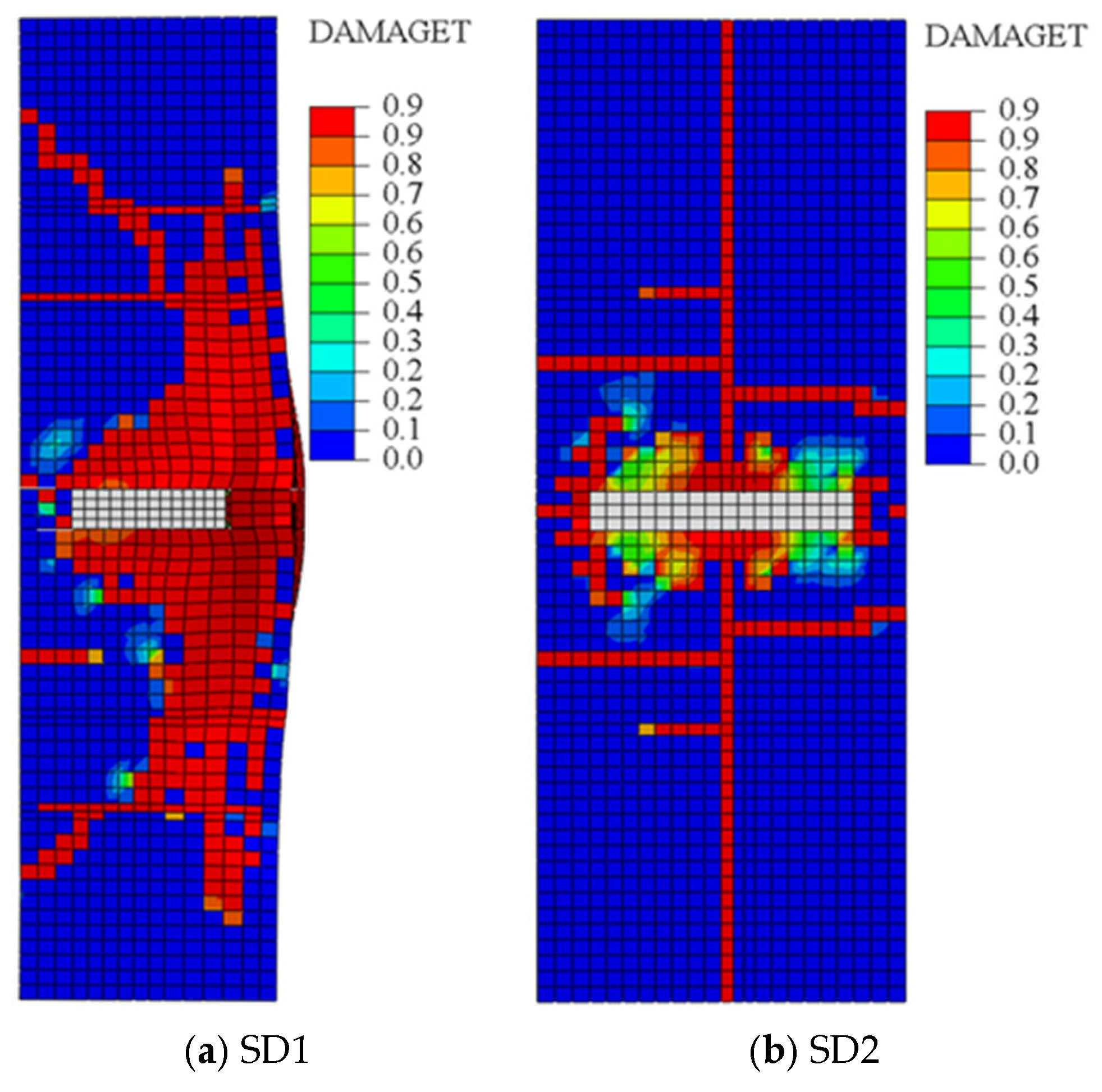
The finite element simulation results of concrete crack distribution in the SD groups are shown in Figure 23, which is generally consistent with the failure modes observed in the push-out tests (Figure 15 and Figure 16). The specimens exhibited cross-shaped penetrating cracks. The SD1 group displayed more fine cracks near the steel plates, while the longitudinal cracks in the SD2 group occurred at locations corresponding to the stud arrangement, accompanied by numerous diagonal cracks near the steel plates.
Figure 23.
Tensile damage cloud diagram of stud shear connectors.
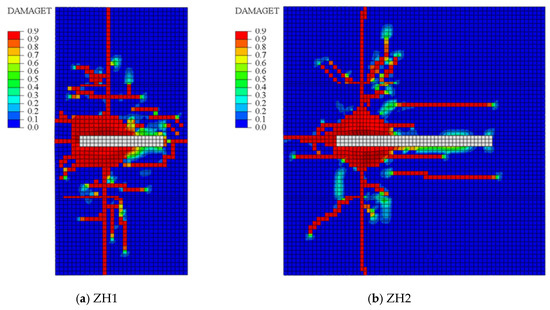
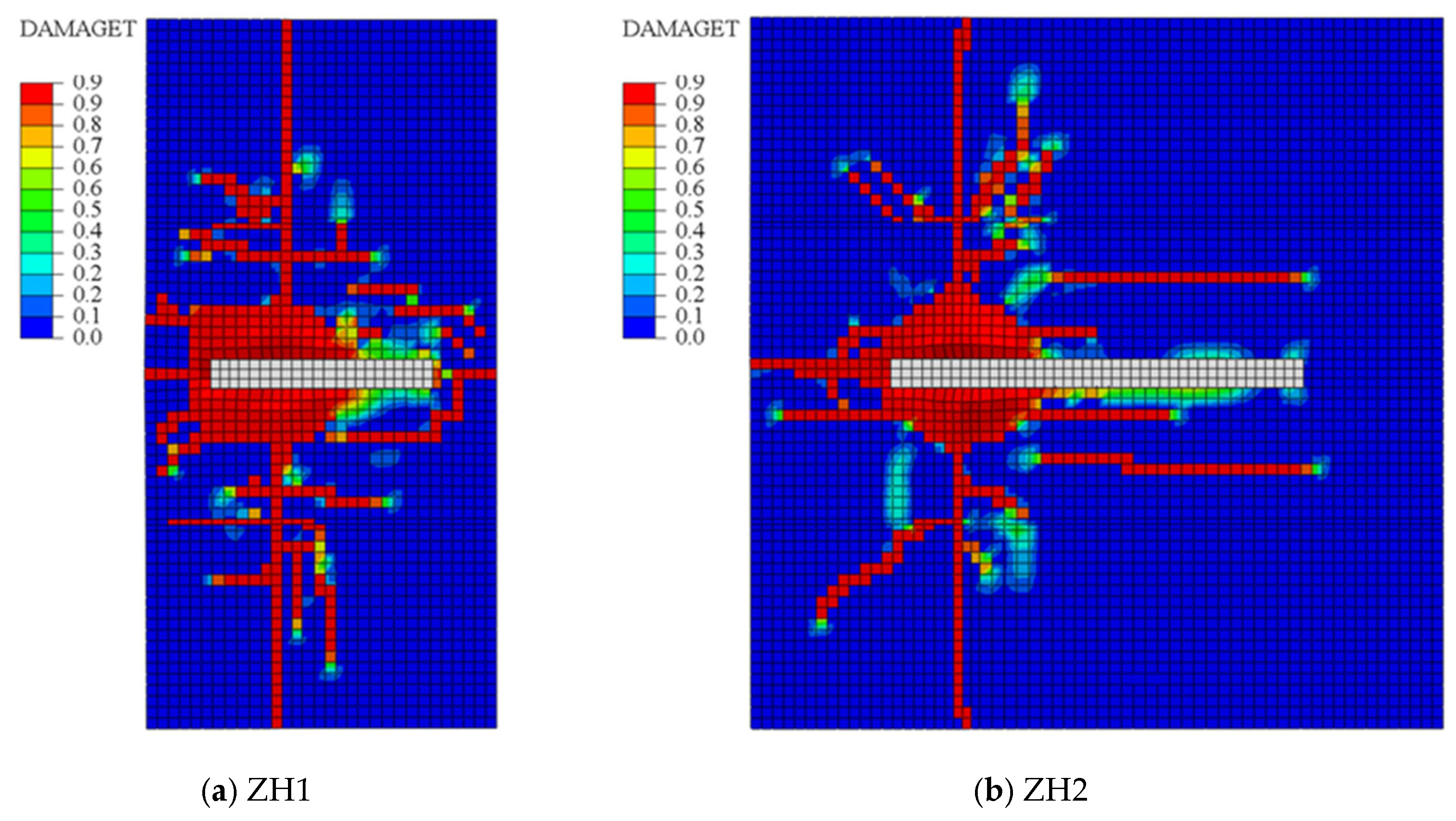
The distribution of concrete cracks in the ZH group obtained from finite element simulation is shown in Figure 24, which is generally consistent with the failure modes observed in the push-out tests illustrated in Figure 17 and Figure 18. The failure mechanism of the composite shear connectors combines the characteristics of both PBL shear connectors and stud shear connectors. Longitudinal cracks are distributed along the locations of perforated reinforcement and studs, while a transverse crack penetrating the specimen and numerous diagonal cracks are observed near the steel plate. In the vicinity of the perforated steel plate, the concrete exhibits severe tensile damage, and the concrete dowels are completely destroyed.
Figure 24.
Damage cloud diagram of concrete under tension in composite shear connectors.
- (2)
- Comparison of Load–Slip Curves
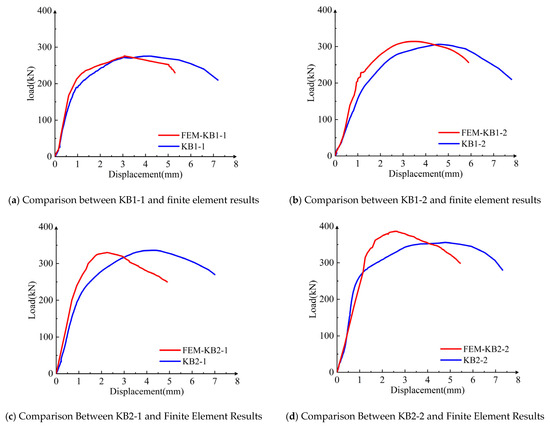
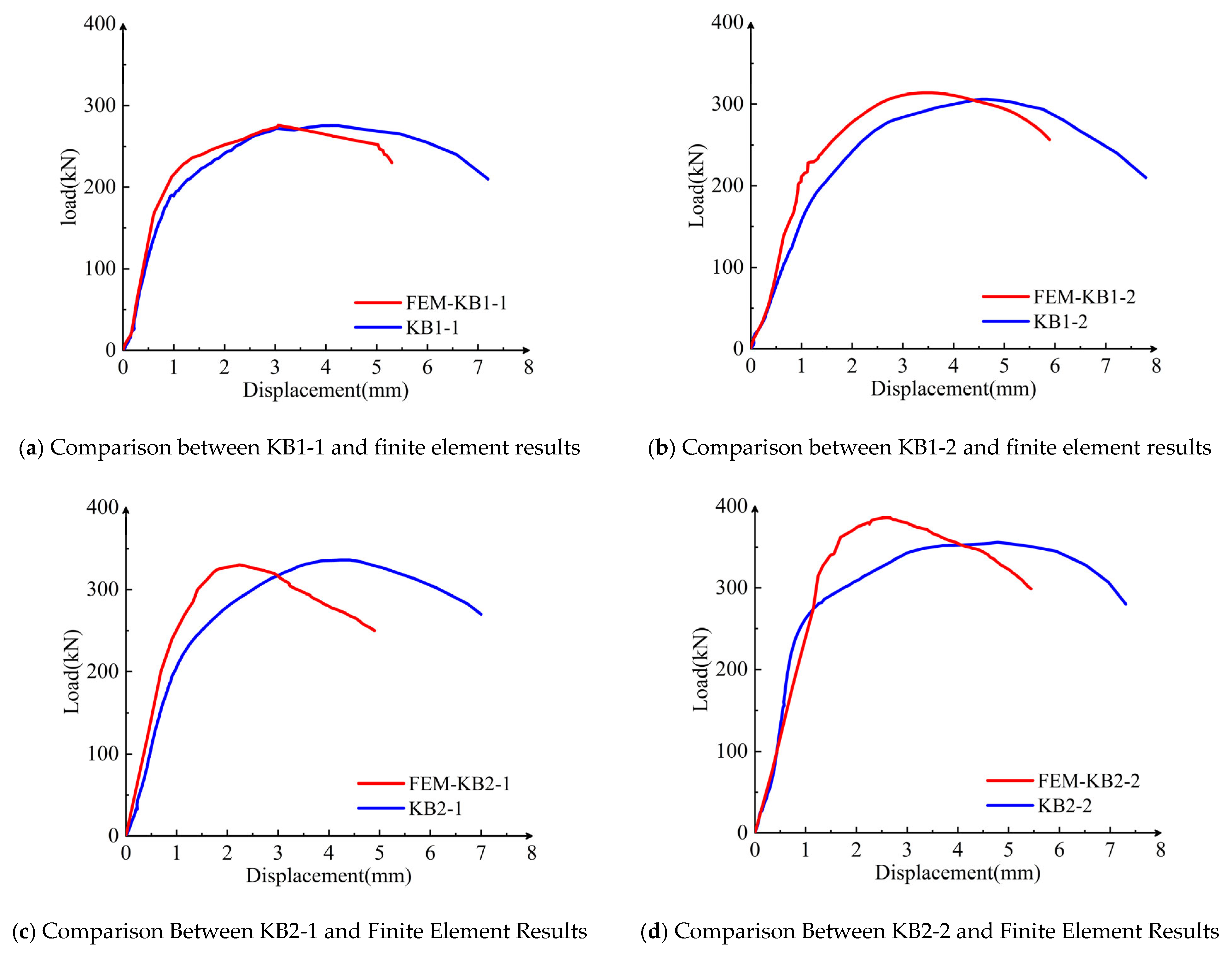
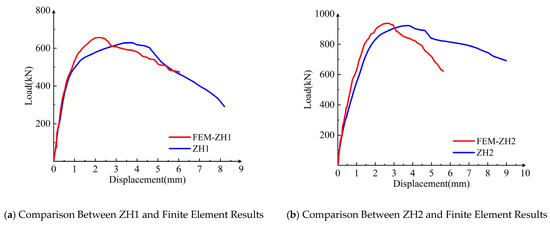
The comparison results between the finite element analysis and push-out tests for the load–displacement curves of the KB group are shown in Figure 25. The ultimate bearing capacity of the finite element model exhibits minor deviations from the push-out test results. However, some local discrepancies are observed, manifested as incomplete descending segments in the load–slip curves, with the specimen slip values consistently lower than those obtained from the push-out tests.
Figure 25.
Comparison of load–slip curves between finite element analysis and push-out tests for PBL shear connectors.
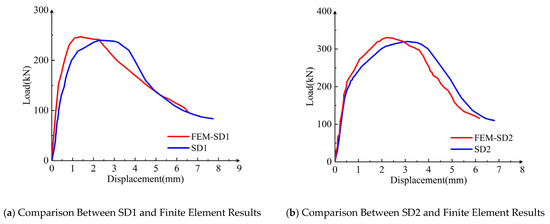
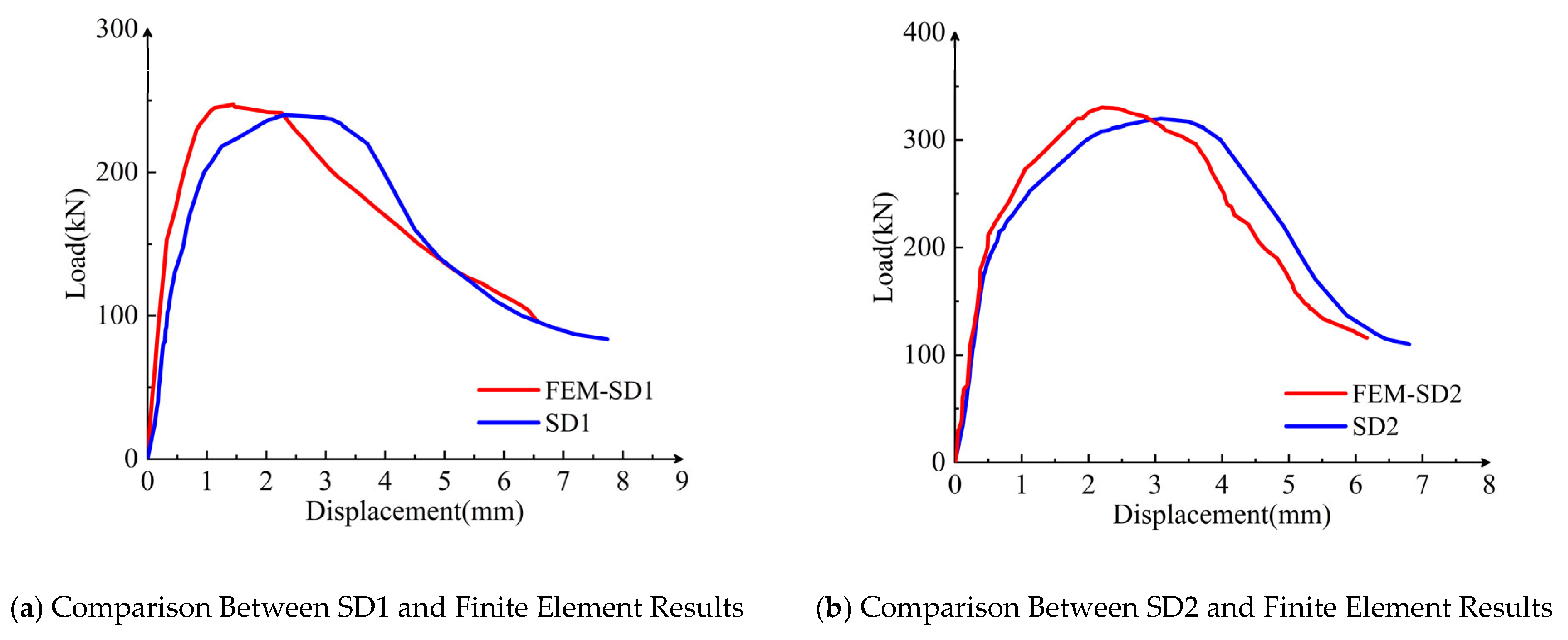
The load–displacement curves of the SD group are shown in Figure 26. The load–slip curves of both types of stud shear connectors exhibit a similar overall shape to the push-out test results, which can be divided into elastic, plastic and descending segments. However, there is a certain difference in the slip values corresponding to the ultimate load. Compared to SD1, the load–slip curve of SD2 appears relatively smoother.
Figure 26.
Comparison of load–slip curves between finite element analysis and experimental tests for stud shear connectors.
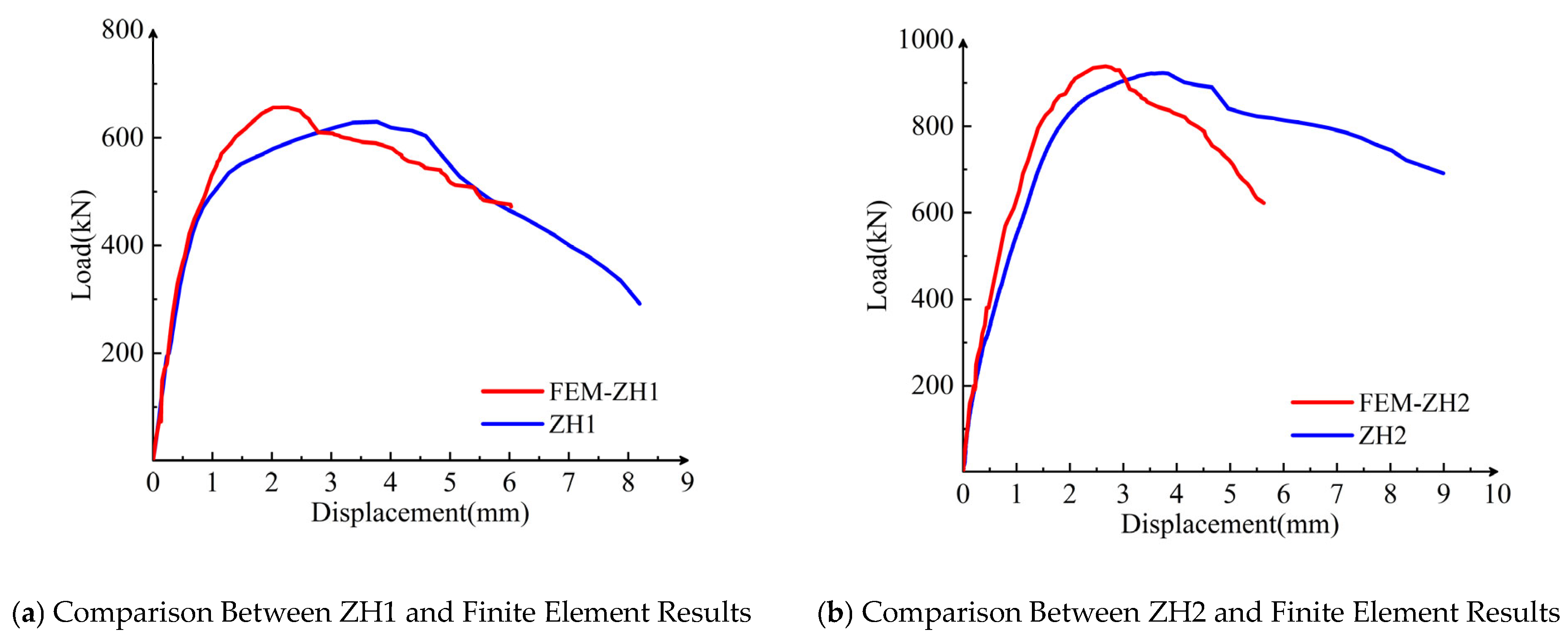
The load–displacement curves of the ZH group are shown in Figure 27. The load–displacement curves of the two composite shear connectors exhibit good agreement before reaching the yield strength, but the discrepancy gradually increases after entering the yield stage, and the descending segment is incomplete. The ultimate bearing capacities obtained from the finite element simulations of ZH1 and ZH2 are consistent with the push-out test results, with an error of 3.7% for the ZH1 group and 2.1% for the ZH2 group.
Figure 27.
Comparison of finite element and experimental load–slip curves for composite shear connectors.
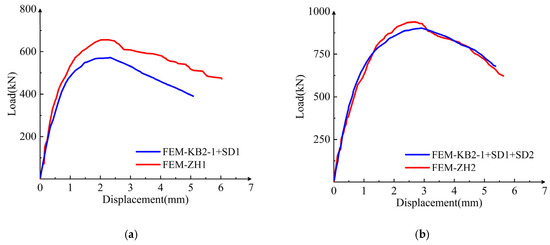
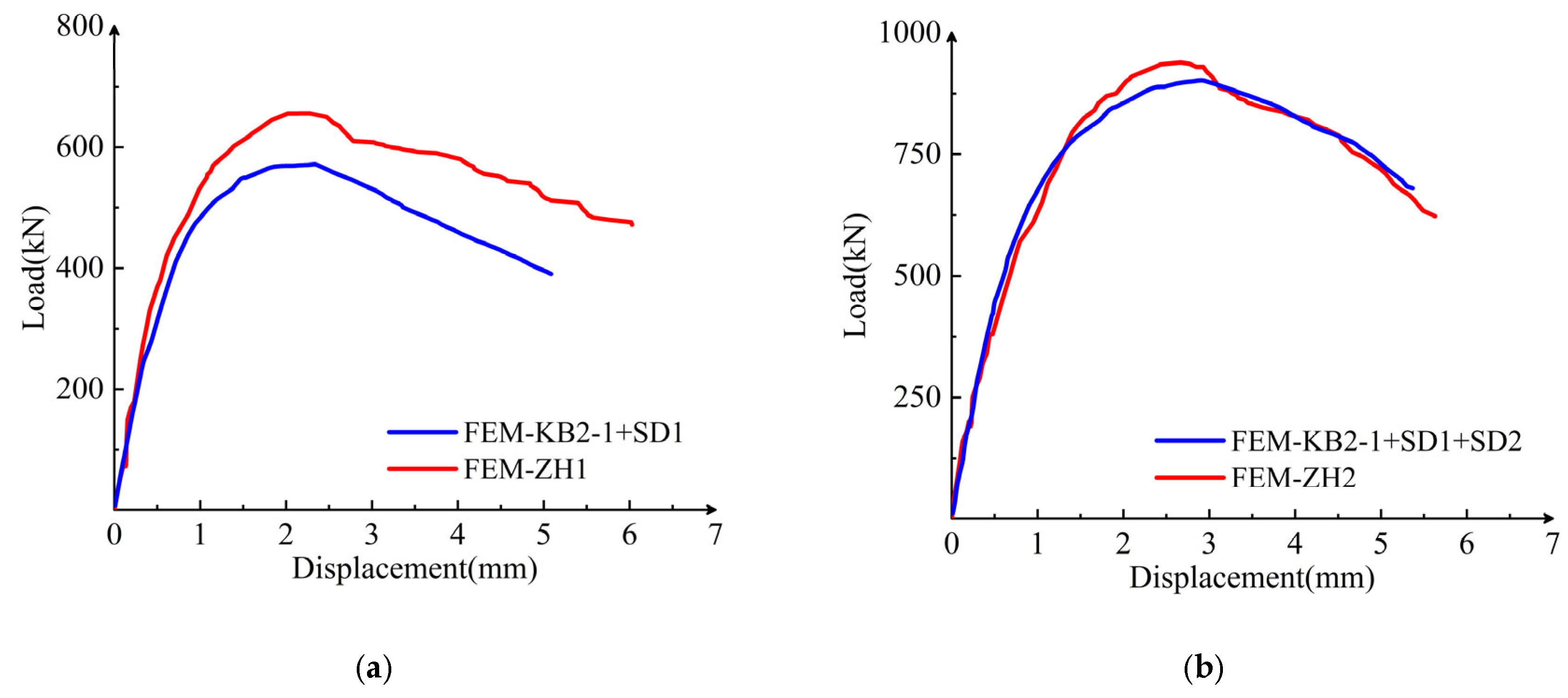
The load–slip curves obtained from finite element simulations were superimposed, and the results are shown in Figure 28. The load–displacement curve of the stud–PBL composite shear connector exhibits an overall trend consistent with the summation curve of the stud shear connector and PBL shear connector. The errors in ultimate bearing capacity between groups ZH1 and ZH2 were 10.8% and 4.3%, respectively. Therefore, through comparative finite element simulations, it can be concluded that the load–slip curve of the stud–PBL composite shear connector is the superposition of those from the stud shear connector and PBL shear connector, which aligns with the push-out test results.
Figure 28.
Load–slip curve superposition verification for composite shear connectors. (a) Comparison between ZH1 and superimposed finite element results. (b) Comparison between ZH2 and superimposed finite element results.
5. Verification of Elastic Stiffness Calculation for Stud–PBL Composite Shear Connectors
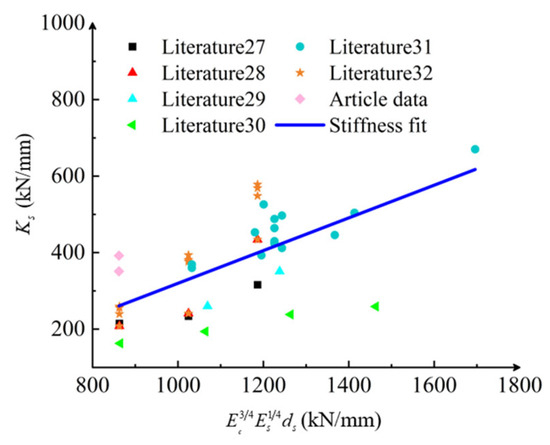
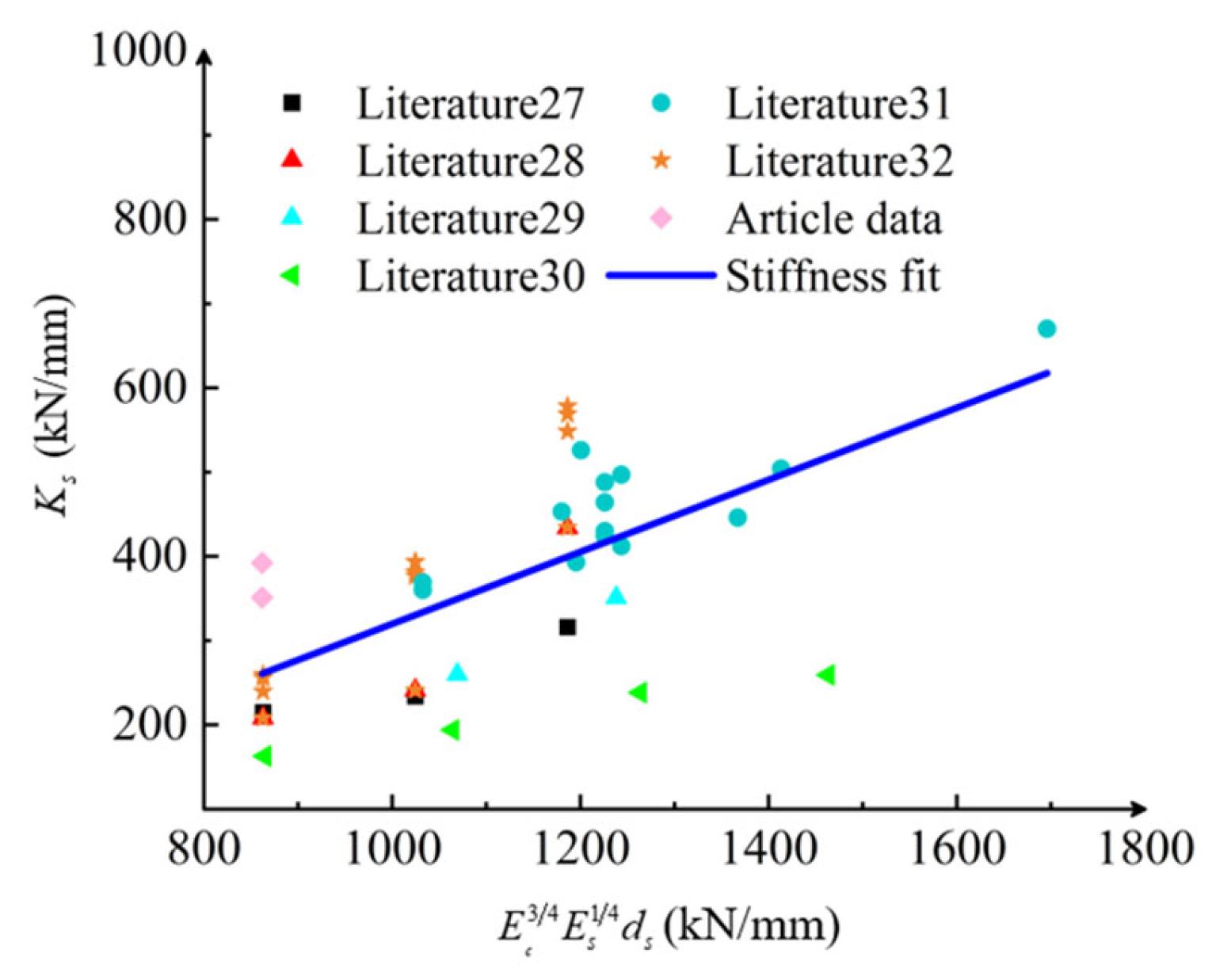
As derived from Equation (16) in the previous section, the elastic stiffness of studs is primarily influenced by the elastic modulus of concrete, the elastic modulus of the stud material, and the dimensions of the stud. Additionally, an unknown variable exists in the equation. To determine the value of in Equation (16), besides relying on the push-out test data obtained in this study, relevant push-out test data from domestic and international sources were extensively collected and statistically analyzed. A linear regression analysis was performed on these test data, with the elastic stiffness of the studs as the vertical axis and as the horizontal axis. The results are shown in Figure 29.
Figure 29.
Comparison of calculation results for stud elastic stiffness.
Based on the fitted data [27,28,29,30,31,32], and can be obtained. The elastic stiffness expression, Equation (16), of the stud shear connector can be simplified as follows:
For the elastic stiffness of PBL shear connectors, the mathematical expression has been provided in Equation (40), along with the recommended stiffness correction factors for concrete dowels and for penetrating reinforcement. A comparison of the elastic stiffness calculated by this formula, push-out test results, and finite element results is presented in Table 3 The error between the theoretical elastic stiffness of PBL shear connectors and the push-out test results ranges from −1.4% to 8.1%, while the error compared to finite element results ranges from −8.2% to −3.1%. This effectively demonstrates that the error in the elastic stiffness calculated by this formula falls within a reasonable range.
Table 3.
Comparison of elastic stiffness for PBL shear connectors.
Here, represents the elastic stiffness obtained from the push-out test, denotes the elastic stiffness derived from finite element analysis, and stands for the elastic stiffness calculated using theoretical formulas. , and .
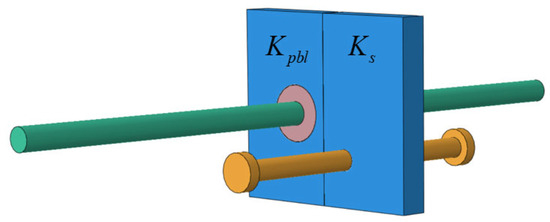
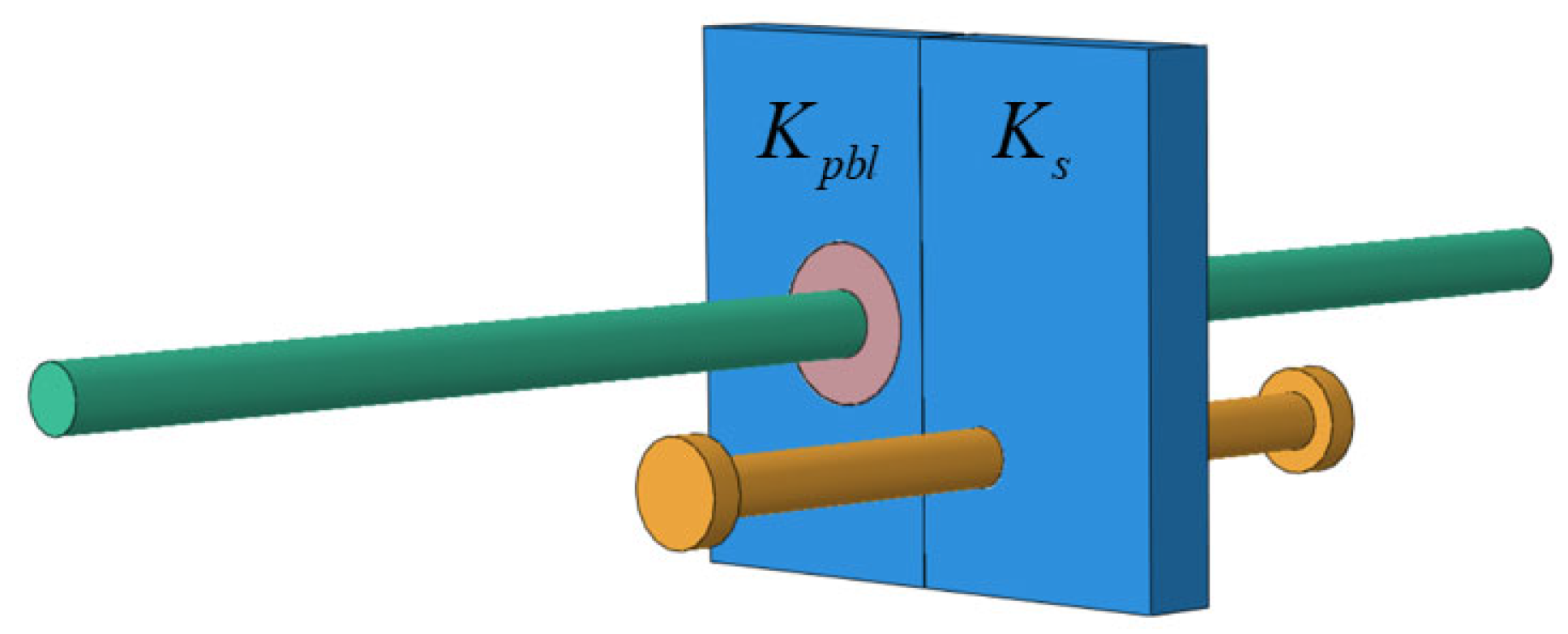
The composite shear connector consists of a PBL shear connector and a stud shear connector. A single-layer composite shear connector can be regarded as the parallel connection of these two components, and thus their stiffness follows the superposition principle of springs in parallel, as illustrated in Figure 30.
Figure 30.
Schematic diagram of stiffness superposition for composite shear connectors.
The stiffness of single-layer stud–PBL composite shear connectors can be expressed as follows:
where represents the shear stiffness of the PBL shear connector, and denotes the shear stiffness of the stud shear connector. , and .
The elastic stiffness results of composite shear connectors ZH1 and ZH2 are compared with those from Equation (42) and finite element calculations, as shown in Table 4.
Table 4.
Comparison of elastic stiffness for composite shear connectors.
The elastic stiffness formulas for stud shear connectors and PBL shear connectors were superimposed to derive the stiffness calculation formula for stud–PBL composite shear connectors in the elastic stage. Verification results indicate that the errors between the elastic stiffness of stud–PBL composite shear connectors calculated by the proposed formula and the finite element simulation values are 4.9% and 2.4%, which demonstrates high accuracy. The maximum error between the calculated values and push-out test results is 13.4%, primarily due to the following reasons: (1) In push-out tests, the porosity, microcracks, and uneven aggregate distribution of concrete lead to discrepancies between its actual strength, elastic stiffness, and deformation capacity and the theoretical assumption (homogeneous continuum) [33,34]. (2) The calculation model assumes a uniform distribution of bond strength at the steel–concrete interface, whereas local debonding and slip concentration occur in actual push-out tests. This means the contact surface between studs and concrete cannot remain tightly bonded throughout the loading process, resulting in lower test values compared to theoretical calculations [35,36,37]. (3) Stress redistribution after concrete cracking, through local bond failure, multiple crack slip concentration, and stiffness degradation, causes the load–slip curve to exhibit more pronounced nonlinearity, greater slip displacement, and earlier stiffness reduction. Consequently, the elastic stiffness from test values is lower than both theoretical calculations and finite element analysis results [38,39].
6. Conclusions
This study presents a systematic theoretical analysis, experimental investigation, and numerical simulation of the elastic stiffness of stud shear connectors, PBL shear connectors and stud–PBL composite shear connectors in the steel–concrete joint segment of long-span cable-stayed bridges. The main conclusions are as follows:
(1) The elastic stiffness calculation formulas for stud shear connectors and PBL shear connectors were derived based on the theory of beams on elastic foundation and the spring series–parallel model. The elastic stiffness of studs is primarily influenced by factors such as the elastic modulus of concrete, the elastic modulus of the stud material, and the dimensions of the studs. The error in the theoretically derived elastic stiffness of PBL shear connectors compared to push-out tests falls within the range of −1.4% to 8.1%, while the error compared to finite element analysis ranges from −8.2% to −3.1%. These results effectively demonstrate that the calculated elastic stiffness error using this formula is within an acceptable range.
(2) Push-out tests and ABAQUS finite element simulations have shown that the elastic stiffness of stud–PBL composite shear connectors can be estimated by combining the stiffness of individual stud shear connectors and PBL shear connectors. Experimental results indicate that the elastic stiffness of the stud–PBL composite shear connectors increased by 8.5% (ZH1) and 2.9% (ZH2) compared to individual connectors. The load–slip curves displayed strong linear superposition characteristics during the elastic phase. This discovery establishes a theoretical foundation for the design of composite connectors, suggesting that their shear behavior can be forecasted by aggregating the characteristics of individual connectors. Meanwhile, the peak slip and ductility coefficient of the stud–PBL composite shear connector lie between the stud shear connectors and PBL shear connectors. It exhibits strong bearing capacity along with favorable ductility, and can still sustain a portion of the load after reaching its ultimate bearing capacity.
(3) By conducting a comparative analysis of push-out tests and finite element simulation outcomes within three primary categories and eight subcategories, the study validated the failure modes and load–slip behavior of stud–PBL composite shear connectors. The elastic phases of the load–slip curves demonstrated strong alignment with consistent overarching patterns, thereby reinforcing the validity of the theoretical model.
(4) The proposed elastic stiffness calculation formula exhibits errors of 13.4% and 4.7% compared to push-out tests and finite element results, respectively. The discrepancies primarily stem from practical factors such as concrete heterogeneity, interfacial bond-slip effects, and local stress concentrations. Nevertheless, the formula demonstrates considerable engineering applicability and provides a quantitative analysis method for optimizing shear connectors in steel–concrete composite pylons of long-span cable-stayed bridges.
This study employs multiple validation methods to elucidate the elastic stiffness characteristics and superposition principles of stud–PBL composite shear connectors, providing crucial theoretical support and practical guidance for the design and construction of steel–concrete composite bridge pylons.
Author Contributions
Conceptualization, Q.L.; Software, Z.H.; Validation, Q.L.; Formal analysis, H.Z.; Investigation, Y.C.; Resources, R.W.; Writing—original draft, Q.L.; Writing—review and editing, Q.L.; Funding acquisition, R.W. All authors have read and agreed to the published version of the manuscript.
Funding
Sincere thanks are given to the National Natural Science Foundation of China (52178138).
Data Availability Statement
Data will be made available on request.
Conflicts of Interest
All the authors declare that they have no known competing financial interests or personal relationships that could have appeared to influence the work reported in this paper.
References
- Nie, J. Steel-Concrete Composite Bridge Structures; China Communications Press: Beijing, China, 2011; pp. 43–44. [Google Scholar]
- Zhao, Y. Interface Damage Detection Technology for Steel-Concrete Composite Structures Based on, MASW; Tsinghua University: Beijing, China, 2021. [Google Scholar] [CrossRef]
- Kuang, Y.; Chen, L.; Li, C.; He, Y. Mechanical performance analysis of stud shear connectors. J. Jilin Univ. Eng. Technol. Ed. 2023, 53, 5385–5446. [Google Scholar] [CrossRef]
- Liang, F.; Zhou, Z.X. New Shear Connectors Based on PBL Shear Connector for Composite Arch Members. Struct. Eng. Int. 2014, 2, 281–284. [Google Scholar] [CrossRef] [Scilit]
- Wu, F.; Liu, S.; Xue, C.; Yang, K.; Feng, Y.; Zhang, H. Experimental Study on the Mechanical Properties of Perfobond Rib Shear Connectors with Steel Fiber High Strength Concrete. Materials 2021, 14, 3345. [Google Scholar] [CrossRef] [Scilit] [PubMed]
- Zhan, Y.; Yin, C.; Liu, F.; Song, R.; Deng, K.; Sun, J. Push out tests on headed studs and PBL shear connectors considering external pressure. J. Bridge Eng. 2020, 25, 04019125. [Google Scholar] [CrossRef] [Scilit]
- Fang, Z.C.; Jiang, H.B.; Chen, G.F.; Dong, X.T.; Shao, T.F. Behavior of grouped stud shear connectors between precast high-strength concrete slabs and steel beams. Steel Compos. Struct. Int. J. 2020, 34, 837–851. [Google Scholar]
- Kim, S.H.; Jung, C.Y.; Ann, J.H. Ultimate strength of composite structure with different degrees of shear connection. Steel Compos. Struct. Int. J. 2011, 11, 375–390. [Google Scholar] [CrossRef] [Scilit]
- Viest, I.M. Investigation of stud shear connectors for composite concrete and steel T-beams. J. Am. Concr. Inst. 1956, 27, 875–891. [Google Scholar]
- Shim, C.S.; Lee, P.G.; Yoon, T.Y. Static behavior of large stud shear connectors. Eng. Struct. 2004, 26, 1853–1860. [Google Scholar] [CrossRef] [Scilit]
- Dnmez, A.A. Size effect on the shear capacity of headed studs. Adv. Struct. Eng. 2020, 24, 136943322096903. [Google Scholar] [CrossRef] [Scilit]
- Chai, W.; Di, J.; Lu, Y.; Qin, F.; Men, P.; Su, Y. Experimental investigation on static mechanical performance of grouped-stud shear connectors in steel–UHPC composite beams. Eng. Struct. 2024, 306, 14. [Google Scholar] [CrossRef] [Scilit]
- Leonhardt, F.; Andrä, W.; Andrä, H.P.; Harre, W. Neues, vorteilhaftes Verbundmittel für Stahlverbund-Tragwerke mit hoher Dauerfestigkeit. Beton Stahlbetonbau 1987, 82, 325–331. [Google Scholar] [CrossRef] [Scilit]
- Ahn, J.H.; Kim, S.H.; Jeong, Y.J. Shear behaviour of perfobond rib shear connector under static and cyclic loadings. Mag. Concr. Res. 2008, 60, 347–357. [Google Scholar] [CrossRef] [Scilit]
- Zou, Y.; Peng, H.; Zhang, Z.; Jiang, J.; Guo, J. Effect of additional constraints of push-out test on the mechanical properties of perfobond shear connectors. Structures 2023, 47, 991–1004. [Google Scholar] [CrossRef] [Scilit]
- Wang, X.; Li, Y.; Song, W.; Xu, J. Static experiment and finite element analysis of a multitower cable-stayed bridge with a new stiffening system. Adv. Civ. Eng. 2019, 1–8. [Google Scholar] [CrossRef] [Scilit]
- Qin, X.; Yang, G. Elastic stiffness of stud connection in composite structures. Steel Compos. Struct. 2021, 39, 419–433. [Google Scholar]
- Wu, K.; Shen, R.; Luo, K.; Mo, F.; Jiang, H.; Fang, H.; Xian, B. Experimental Study of the Interfacial Shear Behavior Between NRC and UHPC in UHPC-Jacketing Rehabilitation of Concrete Bridges. Buildings 2025, 15, 2928. [Google Scholar] [CrossRef] [Scilit]
- Jiang, H.; Chen, Z.; Fang, Z.; Fang, S.; Tu, W.; Mo, F.; Xie, S.; Liu, J. Rapid hardening high performance concrete (RHHPC) for bridge expansion joints: From material properties to interfacial shear performance. Constr. Build. Mater. 2025, 458, 139638. [Google Scholar] [CrossRef] [Scilit]
- Tu, W.; Ke, Y.; Shen, R.; Jiang, H.; Zhang, S.; Tian, Y.; Cao, Z. Interfacial shear behavior of PBL deeply embedded in UHPC considering end-bearing effect. J. Constr. Steel Res. 2025, 226, 109242. [Google Scholar] [CrossRef] [Scilit]
- Jiang, H.; Wu, S.; Zhou, C.; Zhang, L.; Li, P.; Gao, X.; Chen, Z.; Shi, Q.; Hu, J. Experimental and numerical study on interfacial shear behaviors of novel shear connections with epoxy mortar layer between steel and concrete. Structures 2025, 80, 109797. [Google Scholar] [CrossRef] [Scilit]
- Mei, G.; Zhou, C.; Wu, S.; Zhang, L.; Xiao, J.; Li, P.; Chen, Z.; Shi, Q.; Hu, J.; Jiang, H. Interfacial Shear Behavior of Novel Connections Between Concrete Bridge Piers and Anti-Overturning Steel Supporting Joists. Buildings 2025, 15, 1299. [Google Scholar] [CrossRef] [Scilit]
- Si, X.; Liu, L.; Xiao, L. Elastic Static Analytical Solution for PBL Shear Connectors. China Railw. Sci. 2018, 39, 8–14. [Google Scholar]
- Zhu, Y.Y. Research on the Mechanical Behavior and Design Methods of Steel-Concrete Composite Bridge Pylons; Tsinghua University: Beijing, China, 2020. [Google Scholar]
- Du, Y.; Wang, R.; Zhen, X.; Ma, N. Calculation of elastic stiffness for shear connectors in steel-concrete composite bridge tower joints. J. South China Univ. Technol. Nat. Sci. Ed. 2023, 51, 76–87. [Google Scholar]
- Zhu, J.; Liu, Z.; Yu, X. Study on shear performance of single-ring groove rivet shear connectors in steel-UHPC composite beams. Eng. Struct. 2025, 342, 120924. [Google Scholar] [CrossRef] [Scilit]
- Pallares, L.; Hajjar, J.F. Headed steel stud anchors in composite structures: Part II—Tension and interaction. J. Constr. Steel Res. 2010, 66, 213–228. [Google Scholar] [CrossRef] [Scilit]
- Ma, Y.; Zhou, B.; Wang, L.; Zhang, J. Experimental study on shear behavior and bearing capacity calculation of pressure-bearing composite shear keys. Eng. Mech. 2023, 40, 120–129. [Google Scholar]
- Xiao, L.; Liao, X.; Wei, X.; Qiang, S. Experimental Study on Mechanical Performance of PBL Shear Connectors in UHPC. J. China Railw. Soc. 2022, 44, 157–164. [Google Scholar]
- Zou, Y.; Wang, D. Bearing Capacity Analysis of PBL Shear Connectors Based on Finite Element Method. Highway 2022, 67, 109–113. [Google Scholar]
- Liao, X. Study on Static and Fatigue Performance of PBL Shear Connectors in UHPC; Southwest Jiaotong University: Chengdu, China, 2022. [Google Scholar]
- Xu, X.; Liu, Y. Analytical and numerical study of the shear stiffness of rubber-sleeved stud. J. Constr. Steel Res. 2016, 123, 68–78. [Google Scholar] [CrossRef] [Scilit]
- Ju, H.; Lee, D. Nonlinear Analysis of Reinforced Concrete Members Subjected to Combined Torsion and Bending Moment. ACI Struct. J. 2021, 118, 55–70. [Google Scholar] [CrossRef] [Scilit]
- Gong, F.; Wang, Y.; Ueda, T.; Zhang, D. Modeling and Mesoscale Simulation of Ice-Strengthened Mechanical Properties of Concrete at Low Temperatures. J. Eng. Mech. 2017, 143, 04017022. [Google Scholar] [CrossRef] [Scilit]
- Chen, F.; Li, B.; Li, D.; Jin, L.; Du, X. Bond stress-slip relationship of CFRP bar-concrete interface of CFRP reinforced concrete subjected to reversed cyclic loading. Eng. Struct. 2024, 314, 118231. [Google Scholar] [CrossRef] [Scilit]
- Zhao, J.; Kou, Z.; Li, X.; Liu, X. Cyclic bond behavior and bond stress–slip model of steel strands in steel fiber reinforced concrete. Constr. Build. Mater. 2024, 449, 138405. [Google Scholar] [CrossRef] [Scilit]
- Wang, B.; Huang, W.; Li, X.; Tang, S.; Zhou, Z. The bond-slip behavior of H-shaped steel embedded in UHPC under reversed cyclic loading. J. Constr. Steel Res. 2025, 226, 109208. [Google Scholar] [CrossRef] [Scilit]
- Žuvelek, V.; Ćurković, I.; Lukačević, I.; Rajić, A. Analysis of demountable shear connections in cold-formed steel-concrete composite beams: A finite element approach validated with experimental data. Thin-Walled Struct. 2025, 214, 11113327. [Google Scholar] [CrossRef] [Scilit]
- Yan, W.; Yang, Y.; Lou, G.; Chen, Y.F. Behavior of shear connection in web-embedded U-shaped steel-concrete composite beams: Experimental and numerical study. Eng. Struct. 2025, 332, 120020. [Google Scholar] [CrossRef] [Scilit]

Disclaimer/Publisher’s Note: The statements, opinions and data contained in all publications are solely those of the individual author(s) and contributor(s) and not of MDPI and/or the editor(s). MDPI and/or the editor(s) disclaim responsibility for any injury to people or property resulting from any ideas, methods, instructions or products referred to in the content. |
© 2026 by the authors. Licensee MDPI, Basel, Switzerland. This article is an open access article distributed under the terms and conditions of the Creative Commons Attribution (CC BY) license.