Article

Flexural Behavior of One-Way Lightweight UHPC-NC Superimposed Sandwich Slabs

1
School of Civil Engineering, University of Science and Technology Liaoning, Anshan 114051, China
2
School of Civil Engineering, Shenyang Jianzhu University, Shenyang 110168, China
3
Department of Civil Engineering, School of Civil Engineering and Geomatics, Shandong University of Technology, Zibo 255000, China
4
Department of Engineering and Management, International College, Krirk University, No. 3 Soi Ramintra 1, Ramintra Road, Anusaowaree, Bangkhen, Bangkok 10220, Thailand
5
School of Infrastructure Engineering, Dalian University of Technology, Dalian 116024, China
6
College of Materials and Metallurgy, University of Science and Technology Liaoning, Anshan 114051, China
*
Authors to whom correspondence should be addressed.
Buildings 2026, 16(3), 641; https://doi.org/10.3390/buildings16030641
Submission received: 22 December 2025 / Revised: 29 January 2026 / Accepted: 31 January 2026 / Published: 3 February 2026

Abstract

A novel type of ultra-high-performance concrete–normal concrete (UHPC-NC) superimposed sandwich slab is introduced, which eliminates the need for conventional longitudinal reinforcement. This sandwich slab consists of a prefabricated thin UHPC layer at the bottom, a cast-in-place NC layer at the top, and an extruded polystyrene foam core that provides both acoustic and thermal insulation. The resulting lightweight composite sandwich structure is integrated with web walls reinforced by a three-dimensional truss reinforcement system. The flexural performance is examined through four-point bending tests and compared with that of a fully UHPC sandwich slab of identical structural configuration and casting progress. Relative to the fully UHPC slab, the UHPC-NC slab demonstrates superior flexural structural integrity, significantly reduces costs and improves construction efficiency. The ductility coefficient of the UHPC-NC slab reaches 3.23, which is superior to the UHPC slab. This indicates that it has a stronger collaborative working ability with the rebars and the compressed concrete. Comprehensive analytical, numerical, and experimental investigations into the flexural behavior of the proposed UHPC-NC sandwich slab yield accurate evaluation of cracking and ultimate load capacities, thereby offering valuable guidance for the engineering application of this innovative superimposed sandwich slab system.

1. Introduction

Ultra-high-performance concrete (UHPC) is distinguished by its exceptional properties, including ultra-high strength, enhanced toughness, and superior durability, which have stimulated a growing body of research and practical applications in engineering [1,2,3,4]. The incorporation of randomly dispersed reinforcing fibers within UHPC effectively impedes the initiation and propagation of microcracks, thereby restraining the accelerated development of macrocracks in the concrete matrix [5]. Owing to its remarkable performance in slab applications, UHPC has garnered significant scholarly attention globally in recent years. In comparison to conventional concrete, UHPC demonstrates substantially greater toughness and tensile strength, thereby mitigating the inherent brittleness typically associated with high-strength concrete. These enhanced mechanical properties contribute to the improved safety and reliability of UHPC-based structural elements [6]. Furthermore, UHPC exhibits notable resistance to corrosion, freeze–thaw cycles [7,8], and permeability, which collectively ensure minimal maintenance requirements under normal service conditions and sustained performance in harsh environments, thereby extending the service life of UHPC structures. Despite these considerable life-cycle advantages, the widespread adoption of UHPC in engineering practice is constrained by its elevated cost. This cost premium arises from the stringent material specifications and the substantial volume of steel fibers required, making UHPC considerably more expensive than normal concrete (NC) [9,10]. Consequently, optimizing the efficient utilization of UHPC remains a critical research focus.
Conventional reinforced concrete structures, whether cast-in-place or precast, typically employ solid cross-sectional reinforced concrete slabs [11,12,13,14]. These slabs, often configured as either superimposed or composite elements, tend to be heavy, complicating transportation and installation processes. Additionally, post-construction thermal insulation measures are frequently necessary, which can reduce construction efficiency and potentially compromise the aesthetic quality of the building. The integration of thermal insulation systems within the prefabrication process, while preserving load-carrying capacity and functional performance, presents a promising avenue for advancing prefabricated reinforced concrete structures [15]. Precast concrete sandwich slabs represent a viable solution in this context [16], with ongoing research focusing on the development of various shear connectors to enhance the interaction between the top and bottom layers [17,18,19]. Nevertheless, many sandwich slabs designed for beams or slabs in building applications remain excessively thick and heavy, underscoring the need for research aimed at reducing the weight of precast slabs and minimizing reinforcement requirements.
In recent years, the advent of novel high-performance cementitious slabs has offered potential solutions to the challenges associated with prefabricated reinforced concrete structures. Among these innovations, UHPC emerges as a novel fiber-reinforced cementitious slab material [20]. Relative to conventional concrete, UHPC is characterized by its high compressive strength, typically exceeding 120 MPa, and tensile strength surpassing 8 MPa when appropriately reinforced with steel fibers, along with tensile strain-hardening behavior [21,22]. Direct shear testing has demonstrated that UHPC can achieve shear strengths up to 20 MPa [23]. Moreover, UHPC’s high density contributes to its excellent durability [24].
Numerous experimental investigations have been undertaken to examine the mechanical properties of structures composed of ultra-high-performance concrete (UHPC) and to substantiate their advantages relative to conventional reinforced concrete (RC) structures. Zhang et al. [25] evaluated the flexural behavior of RC slabs reinforced with a UHPC overlay, demonstrating that the incorporation of the UHPC layer markedly increased the slabs’ flexural strength. Similarly, Wang et al. [26], Qiu et al. [27], You et al. [28], and Tu et al. [29] developed various novel precast UHPC bridge designs, revealing that under equivalent design parameters, the self-weight of precast UHPC beams was approximately half that of traditional RC beams. Moreover, the utilization of UHPC contributed to further weight reductions in sandwich slab configurations, alongside enhancements in load-carrying capacity and durability [30]. Pimentel and Nunes [31] investigated sixteen RC beams strengthened with UHPC subjected to shear or bending loads, with experimental outcomes indicating that the UHPC-RC composite system exhibited superior strength and ductility at the point of shear failure. Prem et al. [32] conducted an extensive study on the flexural performance of damaged RC beams reinforced with a UHPC overlay under varying curing regimes, observing significant improvements in both ductility and load-carrying capacity; additionally, elevated curing temperatures accelerated the early-age strength development of UHPC. Al-Osta et al. [33] assessed two strengthening methodologies: sandblasting the RC beam surfaces followed by in situ UHPC casting, and bonding prefabricated UHPC strips to RC substrates using epoxy adhesive. Bond strength tests demonstrated that the UHPC layer effectively inhibited crack propagation within the RC beams, resulting in notable enhancements in crack resistance, ultimate load, and stiffness. The sandblasting technique yielded superior shear bond strength, whereas the epoxy adhesive provided enhanced tensile bond strength; both approaches were validated as feasible for composite structural applications. Finally, Hor et al. [34] performed experimental analyses on RC slabs reinforced with UHPC in the tension zone, concluding that UHPC significantly improved overall stiffness and ductility, while effectively mitigating and delaying the onset of shear cracking.
To rationally exploit the superior mechanical performance of ultra-high-performance concrete (UHPC) in flexural structural systems, this study focuses on its selective application in lightweight superimposed sandwich slabs rather than its full-depth use. Although previous studies have widely acknowledged that employing UHPC throughout an entire sandwich slab—especially in the compression zone—is neither mechanically efficient nor economically favorable, the functional role and load-transfer mechanisms of UHPC when confined to the tensile zone of lightweight superimposed slabs incorporating soft core materials remain insufficiently understood. In this background, a novel UHPC–normal concrete (NC) superimposed sandwich slab with an extruded polystyrene (XPS) core is proposed. A fully UHPC-based sandwich slab is introduced solely as a reference configuration to provide a mechanical benchmark for evaluating the effectiveness and necessity of UHPC-NC sandwich slabs. Through a combined experimental and numerical investigation, the cracking behavior, stiffness evolution, interfacial performance, and ultimate load-carrying capacity of UHPC-NC superimposed sandwich slabs are systematically analyzed.
From the perspective of structural concept, the proposed UHPC-NC superimposed composite sandwich slab shares similarities with the stay-in-place permanent formwork systems widely adopted in precast concrete structures. In such systems, high-performance cementitious materials, such as engineered cementitious composites, are employed as permanent formwork to work synergistically with cast-in situ concrete, achieving functional material utilization and improved structural efficiency. Previous studies [35,36] have demonstrated the effectiveness of ECC permanent formwork in steel reinforced concrete composite columns, including experimental investigations on eccentric compressive behavior and numerical studies on structural performance and parametric influences. Inspired by this design philosophy, the present study extends the concept of permanent formwork to flexural members by employing UHPC as the tensile component in a superimposed composite sandwich slab, aiming to optimize the utilization efficiency of UHPC while ensuring favorable structural performance.

2. Specimen Preparation

2.1. Material Properties

The components of UHPC include cement, silica fume (SF), fine sand (FS), water, high-efficiency water-reducing agent (HWRA), and steel fibers. For the UHPC fabricated in this study, 52.5 ordinary Portland cement was used. The SF was grade SF90 (provided by Sipson Co. Ltd., Liaocheng, China) and the FS was river sand with a particle size < 0.7 mm. The HWRA was a polycarboxylic acid superplasticizer with a water-reducing rate of 30%. The water was laboratory tap water. The steel fiber volume was 2%, the diameter was 0.2 mm and the length was 13 mm. The mix proportions for UHPC are detailed in Table 1.
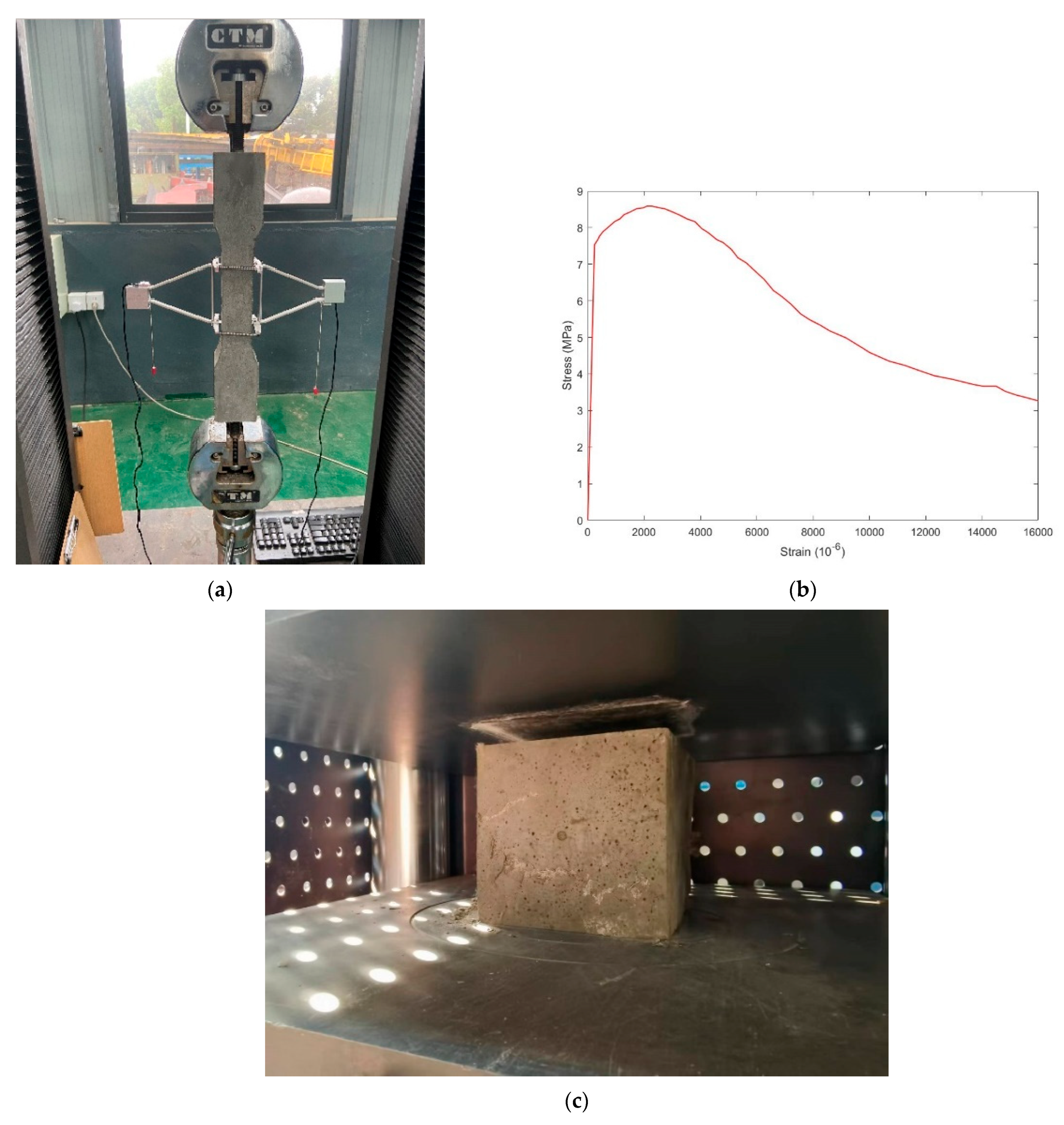
Dog-bone-shaped specimens with a central cross section of 50 mm × 50 mm were utilized for direct tension testing. The specimen dimensions were selected in accordance with the methodology proposed by Zhou and Qiao [37]. Cube specimens measuring 100 mm × 100 mm × 100 mm were employed for compressive strength evaluation. All specimens were cured under conditions identical to those of the slab components. The experimental setup for the UHPC direct tension test is illustrated in Figure 1a, while the tensile stress–strain curve, averaged from three specimens, is presented in Figure 1b. The results demonstrate that the inclusion of steel fibers facilitates continued tensile stress increase postcracking, manifesting a characteristic strain-hardening behavior, consistent with findings reported in the literature [38]. The Young’s modulus of UHPC, derived from the linear elastic portion of the stress–strain curve in Figure 1b, was approximately 32,000 N/mm2. Compressive test outcomes are depicted in Figure 1c, indicating an average compressive strength of 123.4 MPa based on three specimens.
NC was obtained from a local batching plant, characterized by a prismatic compressive strength of 25.5 MPa and a Young’s modulus of 31,500 N/mm2.
The reinforcement for the truss within the web walls was procured from a local rebar processing facility, employing HRB400 rebars with an 8 mm diameter for longitudinal reinforcement and HPB300 rebars with a 6 mm diameter for stirrups and hooks. The rebar properties were supplied by the local steel manufacturer, exhibiting yield strengths of 421 MPa (HRB400) and 389 MPa (HPB300) for the longitudinal chords and web hooks, respectively.

2.2. Configuration of Superimposed Sandwich Slabs

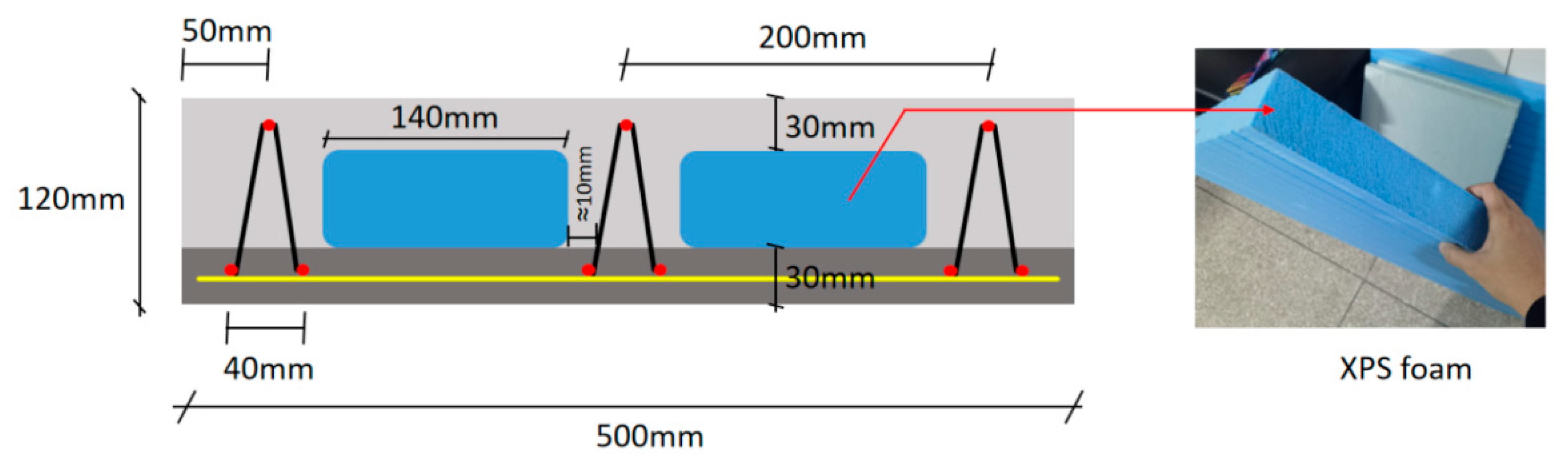
The geometric specifications and slab configurations for the proposed UHPC-NC and fully UHPC sandwich slabs are detailed in Table 2. For example, in the UHPC-NC superimposed sandwich slab, the lower UHPC thin layer measures 30 mm in thickness to comply with building slab protective layer requirements, while the upper NC layer similarly has a thickness of approximately 30 mm. Additional dimensional details are illustrated in Figure 2. The core of the sandwich slab consists of extruded polystyrene (XPS) foam board, which offers several advantages, as documented in prior studies [39,40]: (1) XPS exhibits low thermal conductivity, providing excellent thermal insulation that effectively minimizes heat loss, stabilizes indoor temperatures, and enhances building energy efficiency; (2) its closed-cell structure confers high resistance to moisture absorption, rendering it suitable for applications such as underground construction, exterior wall insulation, and roofing; (3) XPS foam demonstrates long-term durability, with resistance to chemical exposure, corrosion, mold growth, and adverse weather conditions, enabling performance in diverse harsh environments; (4) the manufacturing process of XPS foam is energy-efficient, and the material is highly recyclable, resulting in a lower environmental impact compared to alternative insulation materials; and (5) its relatively low density facilitates ease of installation and reduces the overall self-weight of the sandwich slabs, thereby improving construction efficiency. Consequently, XPS foam presents numerous benefits as the core material within the proposed sandwich slab system.
By leveraging the advantages of UHPC, the thickness of the UHPC-NC superimposed sandwich slabs is 120 mm. The total thickness of traditional reinforced concrete superimposed floor slabs is usually 130–180 mm. Among these, 140–160 mm is the most common in practical engineering applications, especially for the reinforced truss superimposed slabs. Compared with traditional concrete superimposed slabs, it has achieved thinner and lighter structure. Compared with the concrete composite floor slab with a thickness of 140 mm, the weight has been reduced by approximately 36%.
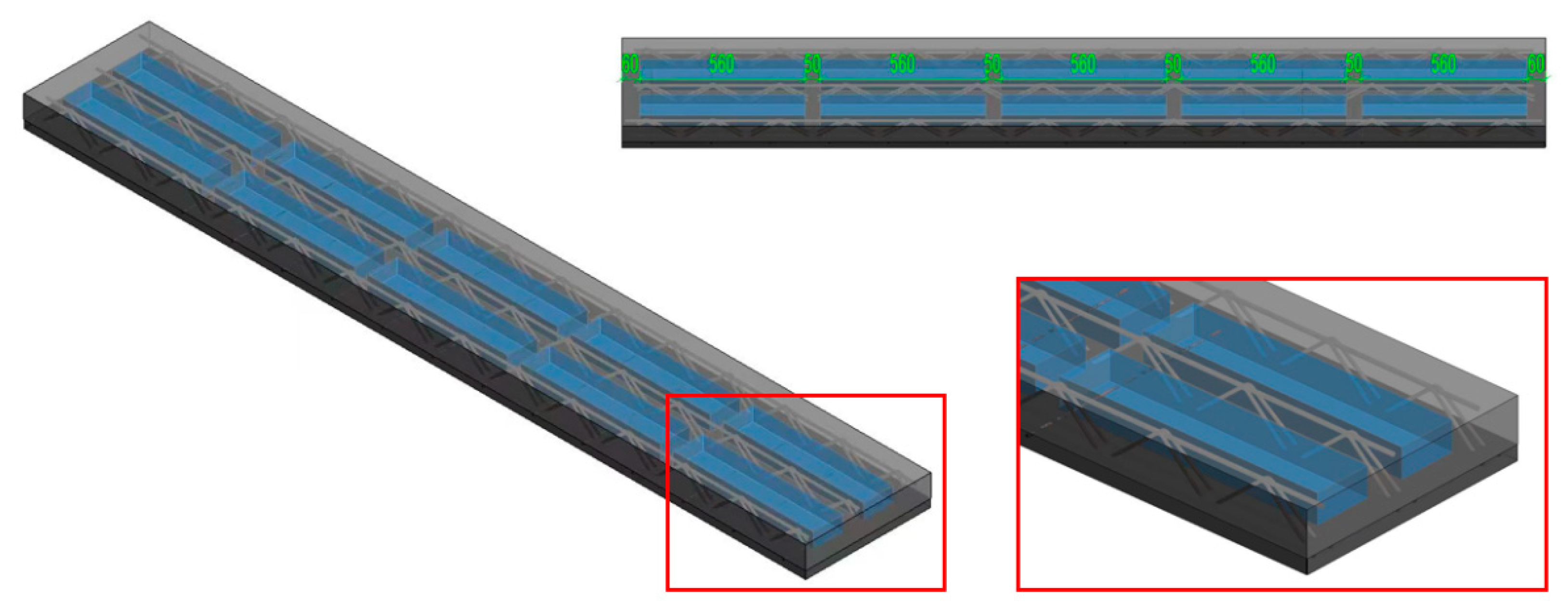
During the casting process, a slender truss reinforcement composed of top and bottom longitudinal bars along with shear hooks (refer to Figure 2) is introduced as the exclusive reinforcement within the sandwich slabs, thereby obviating the need for conventional longitudinal main reinforcement. In conjunction with the concrete, this truss forms the web walls and functions as shear connectors, linking and supporting the top (normal concrete, NC) and bottom (ultra-high-performance concrete, UHPC) layers. Concurrently, the truss framework enhances the overall structural integrity of the sandwich slabs. The center-to-center spacing of the truss steel reinforcement is set at 200 mm, with both the top and bottom anchoring chords having a diameter of 8 mm and a concrete cover thickness of 15 mm (i.e., the distance from the bottom chord to the underside of the sandwich slab is 15 mm). The diameter of the web steel hooks measures 6 mm. Figure 3 presents a three-dimensional rendering of the UHPC-NC superimposed sandwich slab, identified as specimen B1 in Table 2, along with detailed internal dimensional specifications.

2.3. Fabrication Process

The casting procedure for the sandwich slabs commences with the initial casting of the bottom UHPC layer, which has a thickness of 30 mm. Following a curing period of 14 days for the UHPC (after casting, the specimen was covered with plastic sheets for the first 24 h to prevent moisture loss, and subsequently the specimens were demolded and cured under standard laboratory conditions at a temperature of 20 ± 2 °C and a relative humidity of not less than 95% until the designated testing age), the top layer (also 30 mm thick) and the web walls, as illustrated in Figure 3, were subsequently cast, then the entire specimen was cured for 28 days. A curing age of 14 days was selected for mechanical testing. This choice was based on the rapid early-age strength development of UHPC, which typically reaches approximately 90% of its ultimate strength within the first two weeks. In addition, the focus of this study is on the comparative flexural behavior and composite action of the superimposed sandwich slabs, for which a stable and representative mechanical state can be achieved at 14 days.
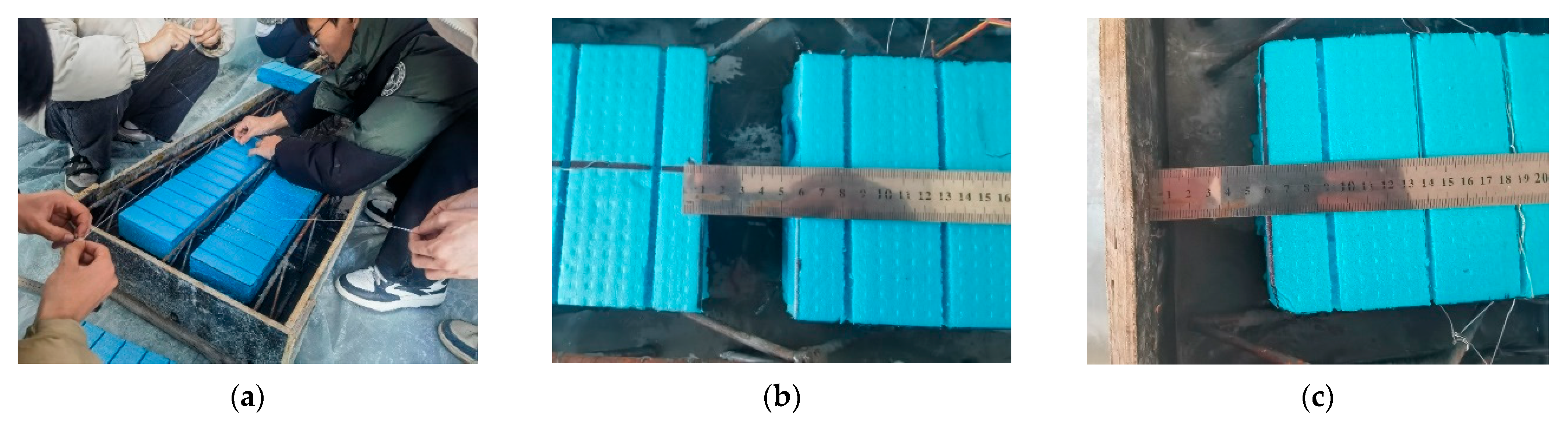
For the UHPC-NC sandwich slabs (denoted as B1), the top layer is composed of normal concrete (NC), whereas for the full UHPC sandwich slabs (designated as B2), the top layer consists of UHPC; both configurations feature a top-layer thickness of 90 mm (including XPS foam, as shown in Figure 2 and Figure 3). Given that the initial bottom UHPC layer is only 30 mm thick and that the installation of the XPS foam and the casting of the top layer and web walls must be performed thereafter, this sequence introduces certain technical challenges. And the web walls refer to an internal vertical concrete web located within the slab thickness, which connects the top and bottom layers of the sandwich slab and works together with the three-dimensional truss reinforcement to ensure composite action. Specifically, during the casting of the top layer and web walls—whether NC for B1 or UHPC for B2—the XPS foam exhibits a tendency to float, thereby necessitating secure fixation. In the present study, this fixation is achieved by anchoring the XPS foam to the truss using binding wires to prevent displacement. Furthermore, a 50 mm gap is maintained between adjacent XPS foam blocks, and the distance from the slab edge to the end of the XPS foam block is set at 60 mm, as depicted in Figure 4.
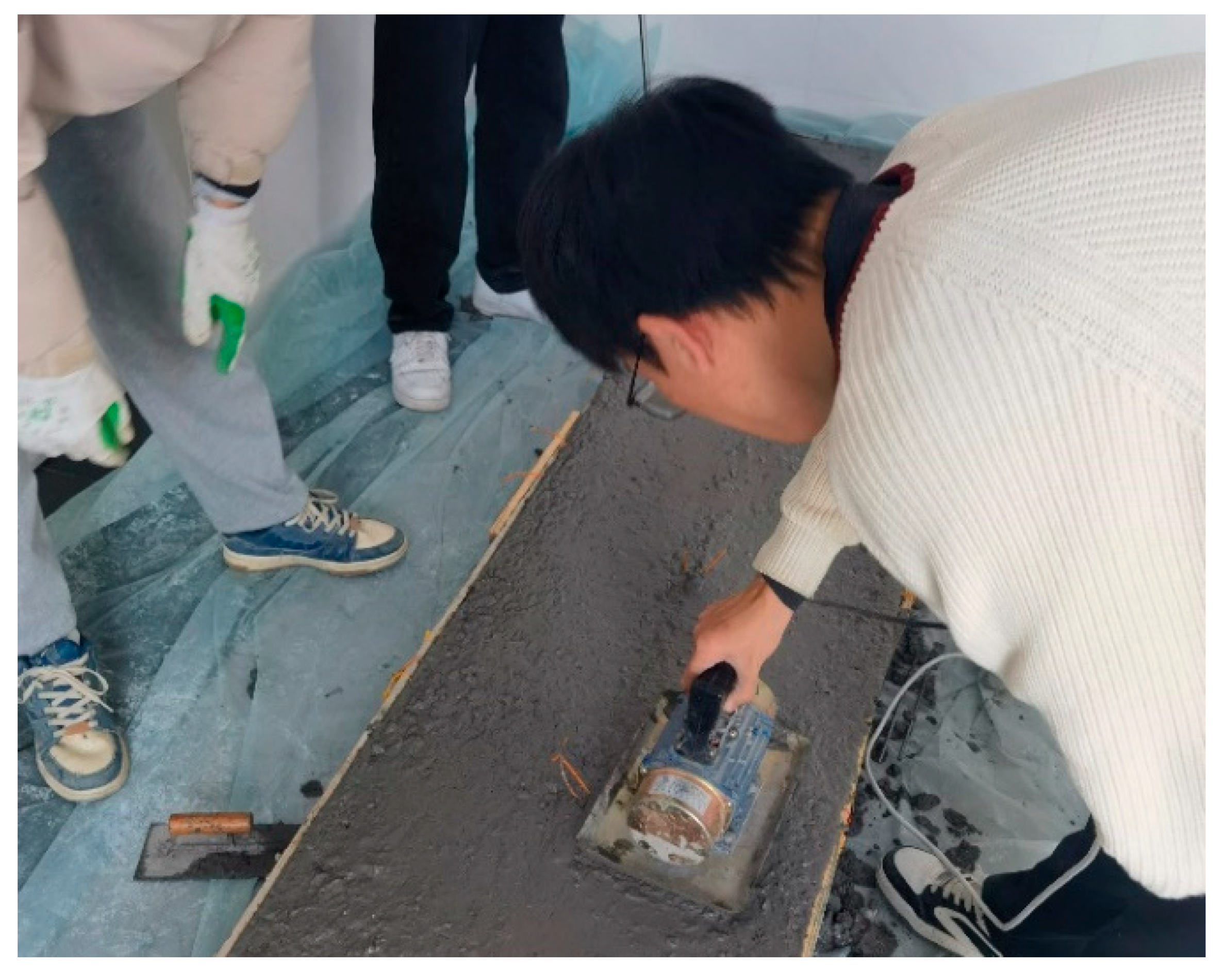
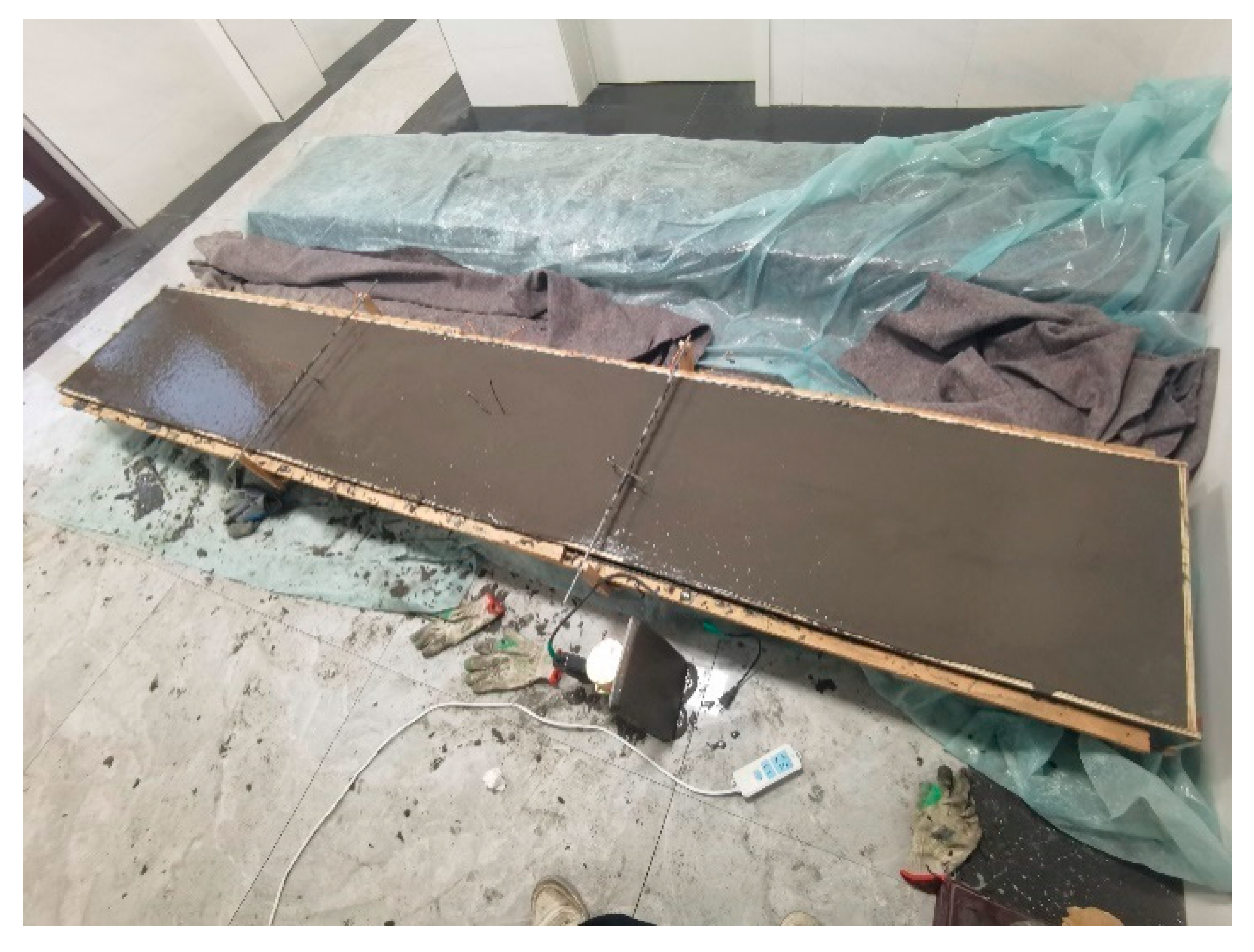
Following the secure installation of the XPS foam blocks, the casting of the top layer and web wall slab of normal concrete (NC) commenced. To improve the quality of the sandwich slabs, a layer-by-layer casting technique was employed, with each layer approximately 2 cm thick. During casting, concrete was placed inside the inner and side walls, and also above the embedded XPS foam core in thin layers with a thickness of approximately 2 cm. Compaction was primarily performed using a plate vibrator whose effective width was smaller than the clear spacing between the top chords of the truss reinforcement, allowing direct vibration of the fresh concrete without reinforcement obstruction. Under plate vibration, the concrete with good flowability naturally squeezed and redistributed toward the inner and side wall regions. To further enhance compaction, manual vibrating with a steel bar and gentle tapping on the side formwork using a rubber hammer were applied. This combined vibration and manual-assisted method ensured adequate concrete flow and air release in the narrow wall regions. This procedure is repeated sequentially until the specimen attains the specified thickness. Figure 5 illustrates the compaction and leveling process of the UHPC-NC superimposed sandwich slab (B1) utilizing the plate vibrator. The fabrication and casting methodology for the complete UHPC superimposed sandwich slab (B2) adhered to the same protocol. The finished slab surfaces were smooth and uniform, as depicted in Figure 6.
After demolding, no honeycombing or visible voids were observed, indicating satisfactory compaction quality. The UHPC surface was kept in its as-cast condition without intentional roughening before casting the upper NC or UHPC layer, and no bonding agents were applied. The surface was cleaned and conditioned to a surface-dry state. The XPS foam was placed directly on the UHPC during casting; no adhesive bonding was intended at this interface. Composite action was primarily ensured by surface roughness and truss reinforcement.

3. Experimental Characterization

3.1. Experimental Setup for Sandwich Slabs in Flexure

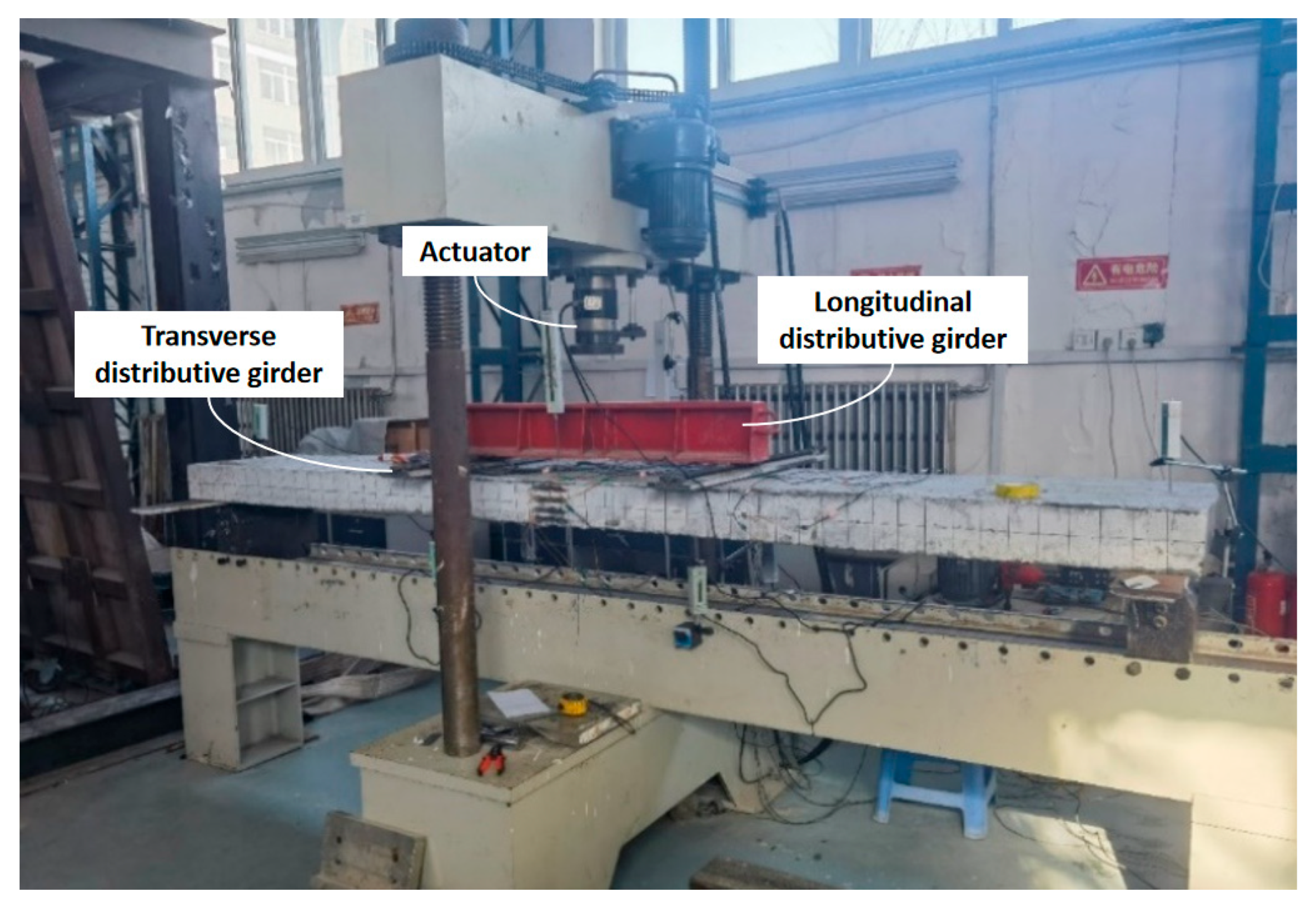
Figure 7 illustrates the experimental setup employed for testing the UHPC-NC (B1) and full UHPC (B2) superimposed sandwich slabs under a four-point bending configuration. The net span of the sandwich slab is 2960 mm. A concentrated load is applied via a loading actuator onto a steel spreader beam with a span of 900 mm, which subsequently transfers the load to two loading roller bars directly connected to the sandwich slab. The loading process is controlled by a deflection stroke rate of 2 mm/min.
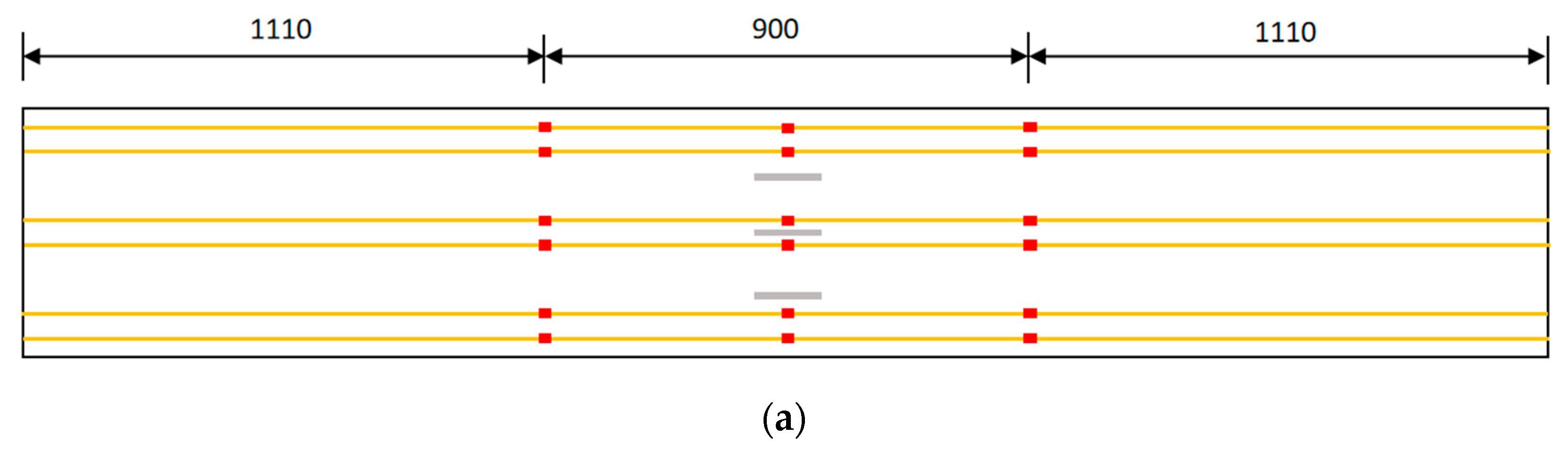
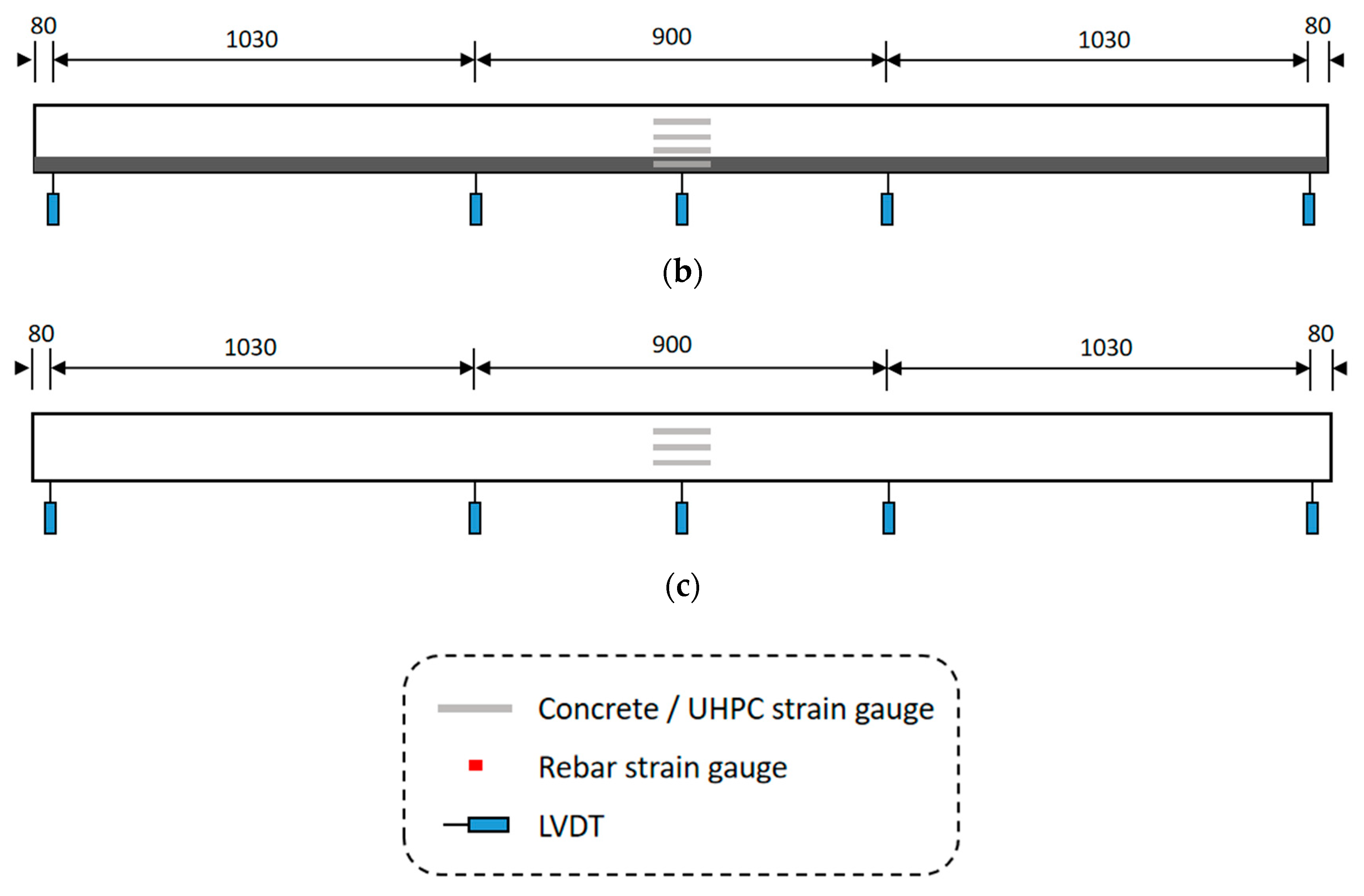
As depicted in Figure 8, the detailed instrumentation scheme for the UHPC-NC sandwich slab is presented, highlighting the placement of displacement transducers (linear variable differential transformers, LVDTs) and strain gauges. Displacement transducers are positioned at multiple locations along the longitudinal axis—at mid-span (two transducers at the bottom edges), at the two loading points (four transducers at the bottom edges), and at the left and right supports (two transducers)—resulting in a total of eight displacement transducers. Ten concrete strain gauges are affixed to the mid-span surface of the slab, distributed as follows: three on the top surface, three on the bottom surface, and four along the sandwich thickness, including two near the interface between the UHPC and NC layers within the web. Furthermore, strain gauges are installed on the steel reinforcement at three locations along the rebar length: at mid-span and beneath each of the two loading points (refer to Figure 8a). The loading and measurement configurations for the full UHPC sandwich slab (B2) are consistent with those of the UHPC-NC slab, with the exception that only three concrete strain gauges are placed along the thickness of the full UHPC sandwich.

3.2. Experimental Results and Discussion

3.2.1. Load–Deflection Behavior

Both the UHPC-NC and fully UHPC superimposed sandwich slabs demonstrate progressive flexural failure mechanisms. Initially, cracks are not discernible to the naked eye; however, during the loading process, multiple cracks emerge along the bottom and lateral surfaces of both sandwich slab types. As the applied load increases, one or two of these cracks propagate, evolving into primary cracks characterized by increased length and width. At approximately 12 kN of applied load, a distinct and sudden popping sound is observed in both sandwich slabs, which is attributed to the pull-off of steel fibers embedded within the bottom UHPC layer. This phenomenon results from the bridging action of steel fibers within the tensile zone of the UHPC, occurring subsequent to the cracking of the bottom layer and side webs of the sandwich structures. With further crack propagation, the load continues to increase, accompanied by increasingly loud cracking noises. Additionally, the extraction of steel fibers from the UHPC cement matrix becomes more frequent, producing a characteristic series of “click-click” sounds. As the load approaches its peak value, the fiber pull-off and extraction processes become markedly evident and continuous.
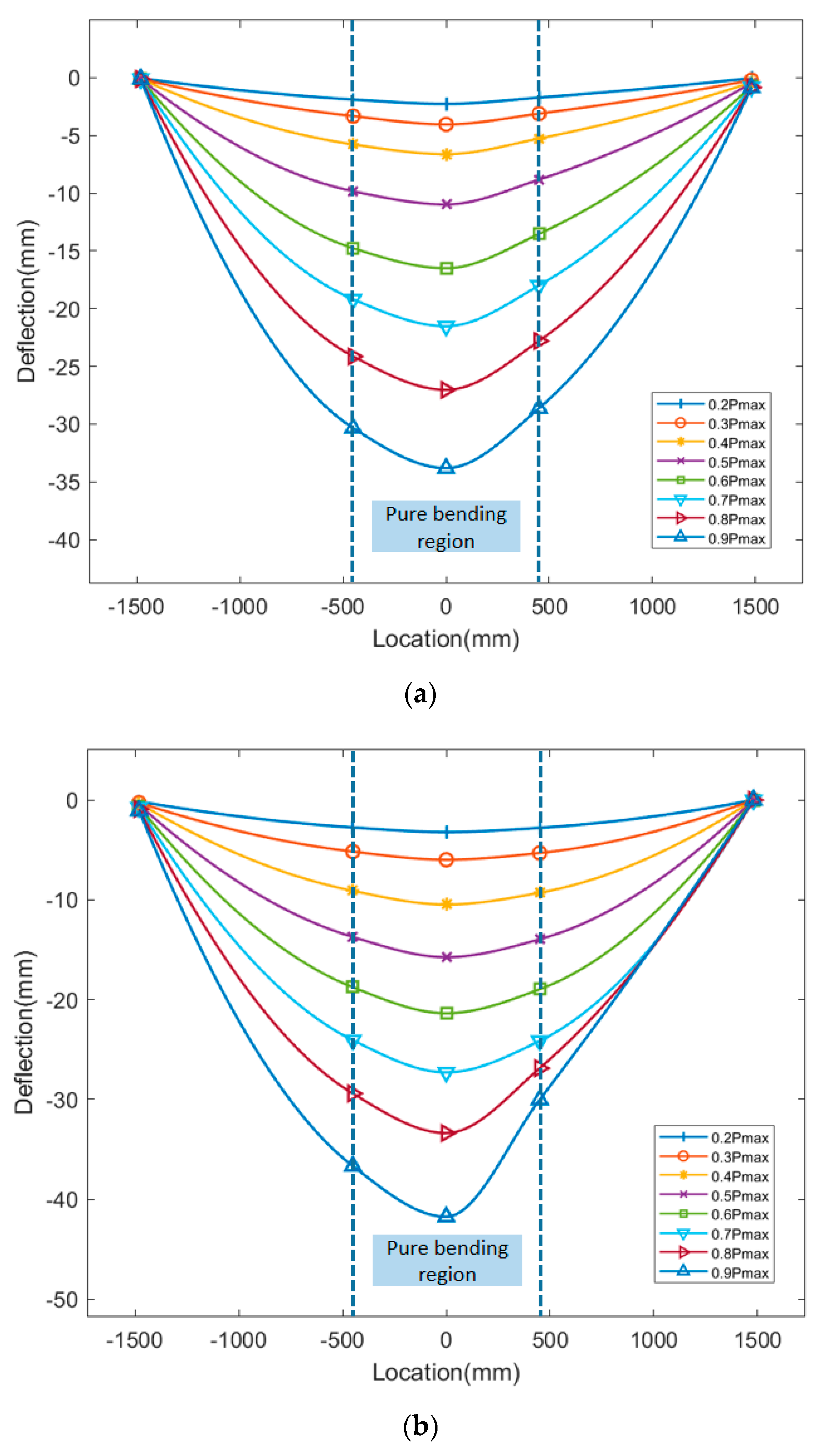
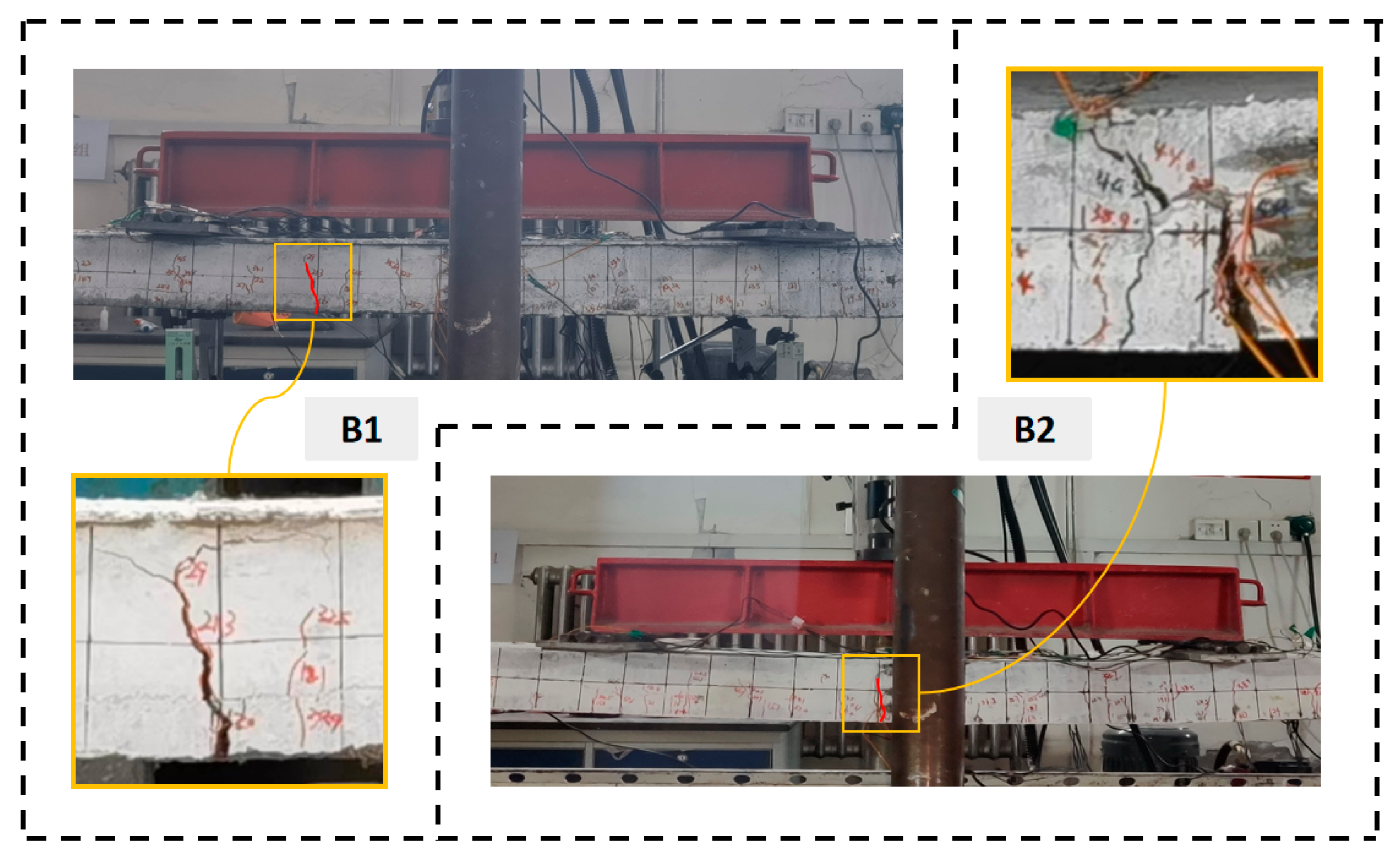
Deflection measurements at various load levels for the two sandwich slab configurations are presented in Figure 9, while Figure 10 illustrates the overall condition of the specimens near ultimate load, highlighting detailed images of primary crack locations and patterns at ultimate failure. The deflection contours depicted in Figure 9, obtained via LVDT measurements, correspond closely with the anticipated deformation patterns indicated by the primary crack locations shown in Figure 10. Both sandwich slabs exhibit principal cracks within the pure bending region. Specifically, Figure 9a,b correspond to the UHPC-NC (B1) and fully UHPC (B2) specimens, respectively. Prior to reaching 0.3Pmax loading, deformation growth is minimal, reflecting the linear elastic behavior of both B1 and B2 slabs. Within the loading range of 0.5Pmax to 0.8Pmax, which corresponds to the phase from crack initiation to steel yielding, the deformation growth rate becomes nonlinear, consistent with the load–deflection relationships illustrated in Figure 11.
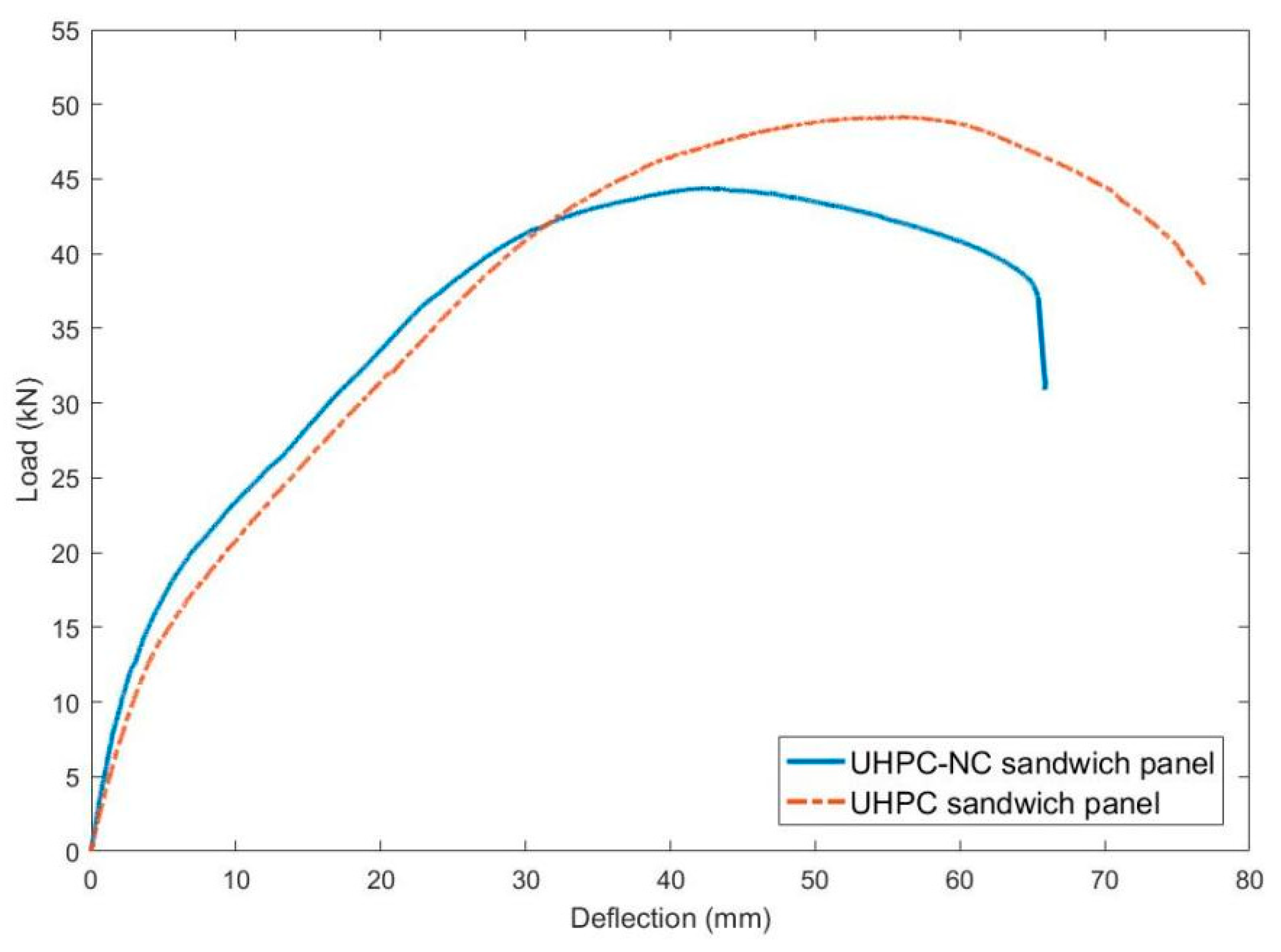
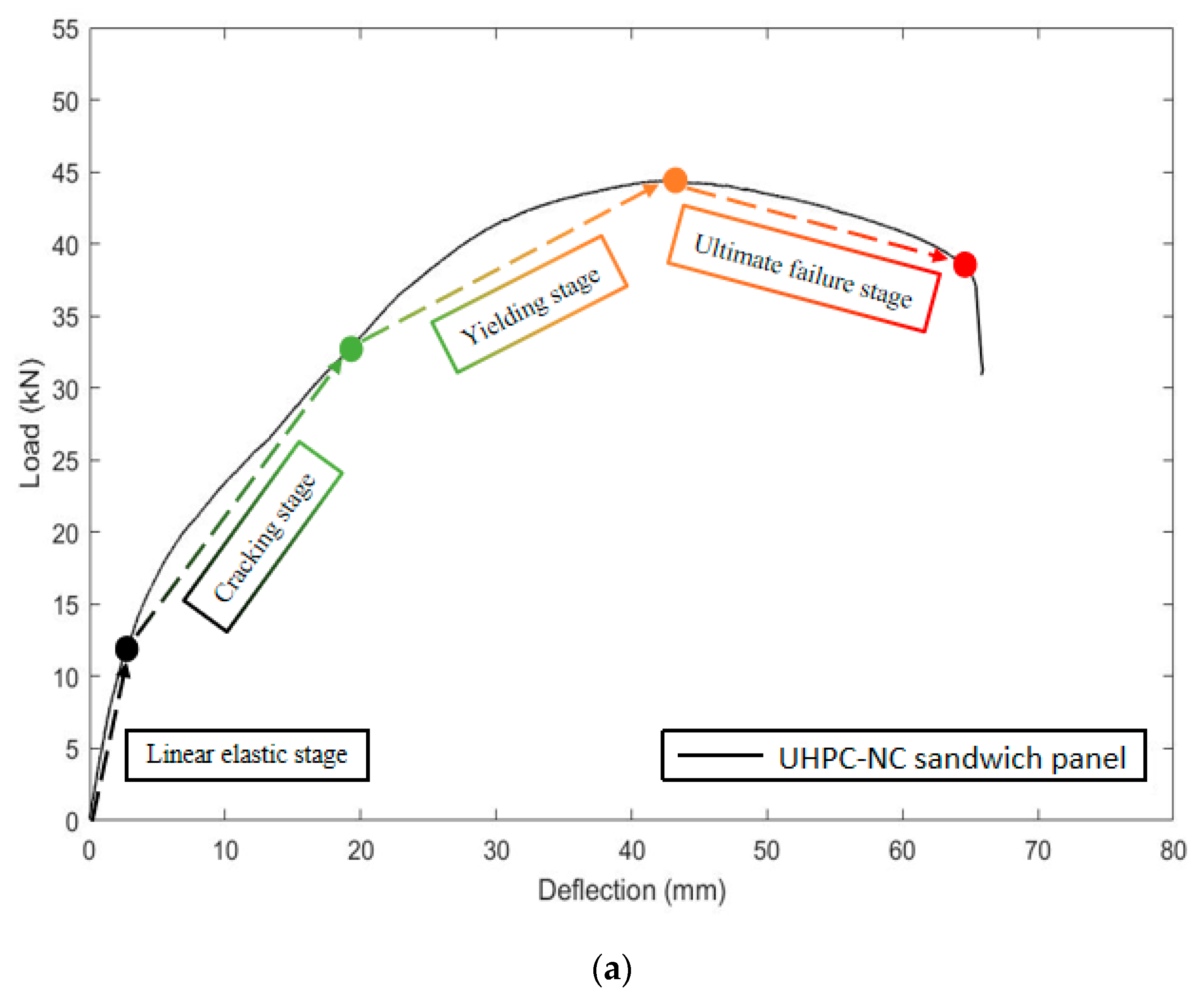
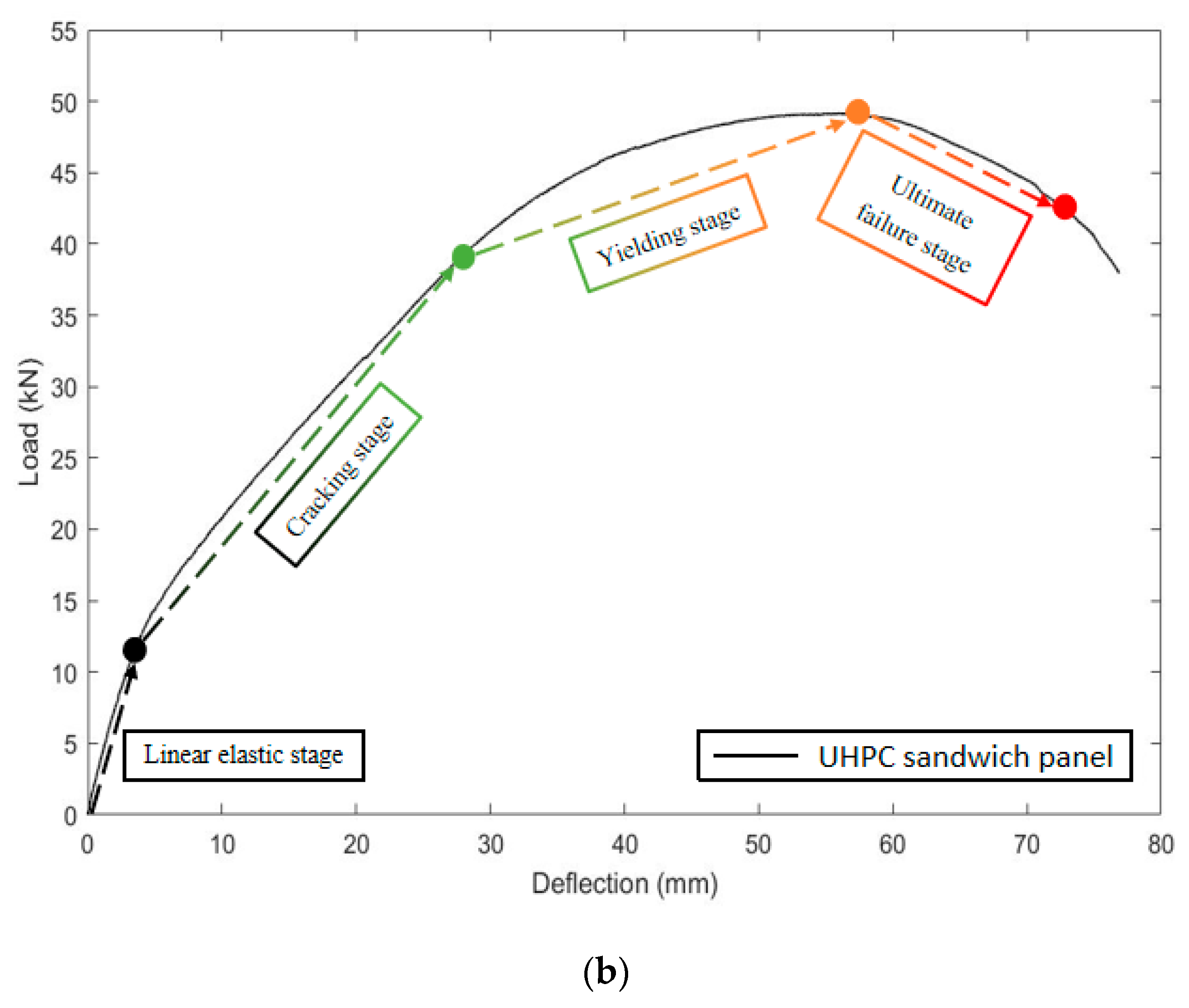
Figure 11 presents a comparison of the load–deflection curves observed during the loading process of two sandwich slabs, designated as B1 and B2. Analysis of the load–deflection behavior depicted in Figure 11 allows the loading process to be categorized into four distinct stages, as illustrated in Figure 12: (1) Linear elastic stage: Prior to crack initiation, the bending stiffness of the sandwich slabs remains nearly constant, indicating elastic behavior. (2) Cracking stage: At the onset of cracking, cracks are not yet visible to the naked eye. These cracks gradually propagate due to the bridging effect provided by steel fibers embedded in the ultra-high-performance concrete (UHPC) of the bottom layer. As the applied load increases, the bending stiffness of the slabs decreases, and deflection exhibits nonlinear growth corresponding to the formation and expansion of additional cracks. (3) Yielding stage: Upon yielding of the longitudinal reinforcement bars within the truss reinforcement, a marked change in the slope of the load–deflection curve is observed, accompanied by a significant reduction in bending stiffness. This stage is further examined in Section 3.2.2 in conjunction with reinforcement strain data. As loading continues, mid-span displacement increases substantially, and all longitudinal bars reach yield. (4) Ultimate failure stage: Following attainment of the ultimate load, the slabs enter the ultimate failure stage characterized by strain softening. The load gradually diminishes as steel fibers are pulled out, the UHPC in the tension zone progressively ceases to contribute to load resistance, and the load continues to decline until a few steel reinforcements are extracted and the upper concrete layer undergoes crushing. A comparison of the load–deflection responses of sandwich slabs B1 (comprising UHPC and normal concrete) and B2 (entirely UHPC) in Figure 11 reveals that their bending stiffness and cracking loads are nearly equivalent prior to the yielding stage. Subsequent to the yielding of the steel reinforcement, the tensile load-carrying capacity within the tension zone is initially sustained by both the UHPC matrix and the longitudinal bars of the truss reinforcement.
In the case of specimen B1, which features a UHPC-NC composite cross section with a relatively thin UHPC layer of only 30 mm thickness, progressive loading leads to the gradual detachment of steel fibers within the UHPC matrix. This fiber pull-out results in the loss of their bridging function and tensile load-carrying capacity. Consequently, the bottom UHPC layer ceases to contribute effectively to structural performance, and the load-carrying responsibility shifts predominantly to the longitudinal steel reinforcement within the truss reinforcement. This shift causes a more pronounced reduction in bending stiffness compared to specimen B2, which possesses a full UHPC cross section. Although the B2 sandwich slab demonstrates a higher ultimate load-carrying capacity (as illustrated in Figure 11), the increase in ultimate load is relatively modest, approximately 4.2 kN or 9.44%. Both B1 and B2 specimens exhibit commendable ductility, following consistent behavioral trends. However, as depicted in Figure 12, the ultimate failure stage comparison reveals a steeper post-ultimate load decline in B2, suggesting a slightly lower safety margin during failure relative to B1. This phenomenon can be attributed to the full UHPC composition of B2, wherein the UHPC in the compression zone performs less effectively in conjunction with the reinforcement compared to normal concrete (NC). To achieve a more gradual post-ultimate load reduction akin to B1, it would be necessary to increase the reinforcement ratio in B2, which directly influences its ductility characteristics.
Based on the initial linear elastic segment of the load–deflection curve (see Figure 12b), the elastic modulus of UHPC is back-calculated from the flexural response of the full UHPC slab. The rough estimate of elastic modulus reaches approximately 36.1 GPa. This value remains higher than the elastic modulus obtained from direct tensile tests (approximately 32 GPa), which is expected. The difference can be attributed to several factors, including shear deformation effects in relatively deep members, simplification of the hollow-core cross section, and the influence of boundary conditions and testing-system compliance. It should be noted that the back-calculated value represents an equivalent structural elastic modulus associated with the initial flexural stiffness of the member rather than the intrinsic material modulus of UHPC under uniaxial loading. In the elastic stage, fiber-reinforced UHPC exhibits effective crack suppression and fiber bridging, leading to a relatively high initial tangent stiffness under bending. In addition, the contribution of truss reinforcement and boundary constraints further enhances the overall flexural stiffness of the slab. Therefore, the higher equivalent elastic modulus obtained from the flexural response is reasonable and does not indicate inconsistency with the material-level properties. The elastic modulus obtained from material tests represents the intrinsic elastic property of the concrete material under uniaxial loading. In contrast, the elastic modulus back-calculated from the flexural response corresponds to an equivalent structural elastic modulus reflecting the overall bending stiffness of the composite member. Owing to the favorable positioning of the UHPC layer in the tensile zone, where its contribution to flexural stiffness is amplified by the squared distance from the neutral axis, the equivalent elastic modulus of the composite slab is higher than the material-level modulus. In addition, the effective crack-bridging behavior of UHPC in the elastic stage, together with the contribution of truss reinforcement and interfacial composite action, further enhances the initial stiffness of the member. Therefore, the difference between the two elastic moduli is reasonable and does not indicate any inconsistency. Overall, the results indicate that the elastic modulus obtained from flexural response represents an effective structural modulus, while the modulus obtained from dog-bone tensile tests reflects the intrinsic material property of UHPC.
We present further discussion on the comparison of bending stiffness: in flexural members, structural performance is governed primarily by the efficiency of material distribution rather than by the absolute strength or stiffness of a single material. UHPC exhibits its greatest mechanical advantage in the tensile zone, whereas its contribution in the compression zone is comparatively limited. In the UHPC-NC specimens, UHPC is deliberately concentrated in the tensile layer, while normal concrete occupies the compression region, resulting in a more mechanically efficient use of UHPC and an optimized sectional response. Although full UHPC slabs possess higher material strength, they also tend to develop a dominant flexural crack at an early stage due to their relatively homogeneous stiffness distribution across the section. Once a major crack forms, crack localization occurs rapidly, leading to accelerated stiffness degradation at the structural level. In contrast, the UHPC-NC composite section introduces stiffness and strength heterogeneity, which helps redistribute tensile stresses and delay the localization of a single dominant crack. During the test, the main cracks of the UHPC sandwich slab did indeed form relatively quickly and precisely at the mid-span position. This can also be seen from Figure 10, and the width of the main cracks of the UHPC-NC sandwich slab is significantly larger than that of the UHPC sandwich slab. As a result, the UHPC-NC slabs exhibit improved cracking resistance and a higher apparent stiffness in the precracking and early postcracking stages.
The experimental results are summarized in Table 3, including the cracking load Pcr and corresponding deflection δcr, yield load Py and corresponding deflection δy, peak or ultimate load Pp and corresponding deflection δp, and ultimate load Pu (85% of ultimate load) and corresponding deflection δu. The yield load Py and corresponding deflection δy are determined using the secant method at the yield point [41]. The ductility of specimens are evaluated by the ductility factor (i.e., δu/δy) [42]. Both the specimens, B1 and B2, exhibit good ductility, with B1 demonstrating the superior one (see Table 3). From the perspective of engineering productivity and raw slab cost, the cost-effectiveness of sandwich slab B1 is much higher than that of B2.

3.2.2. Distribution of Strain

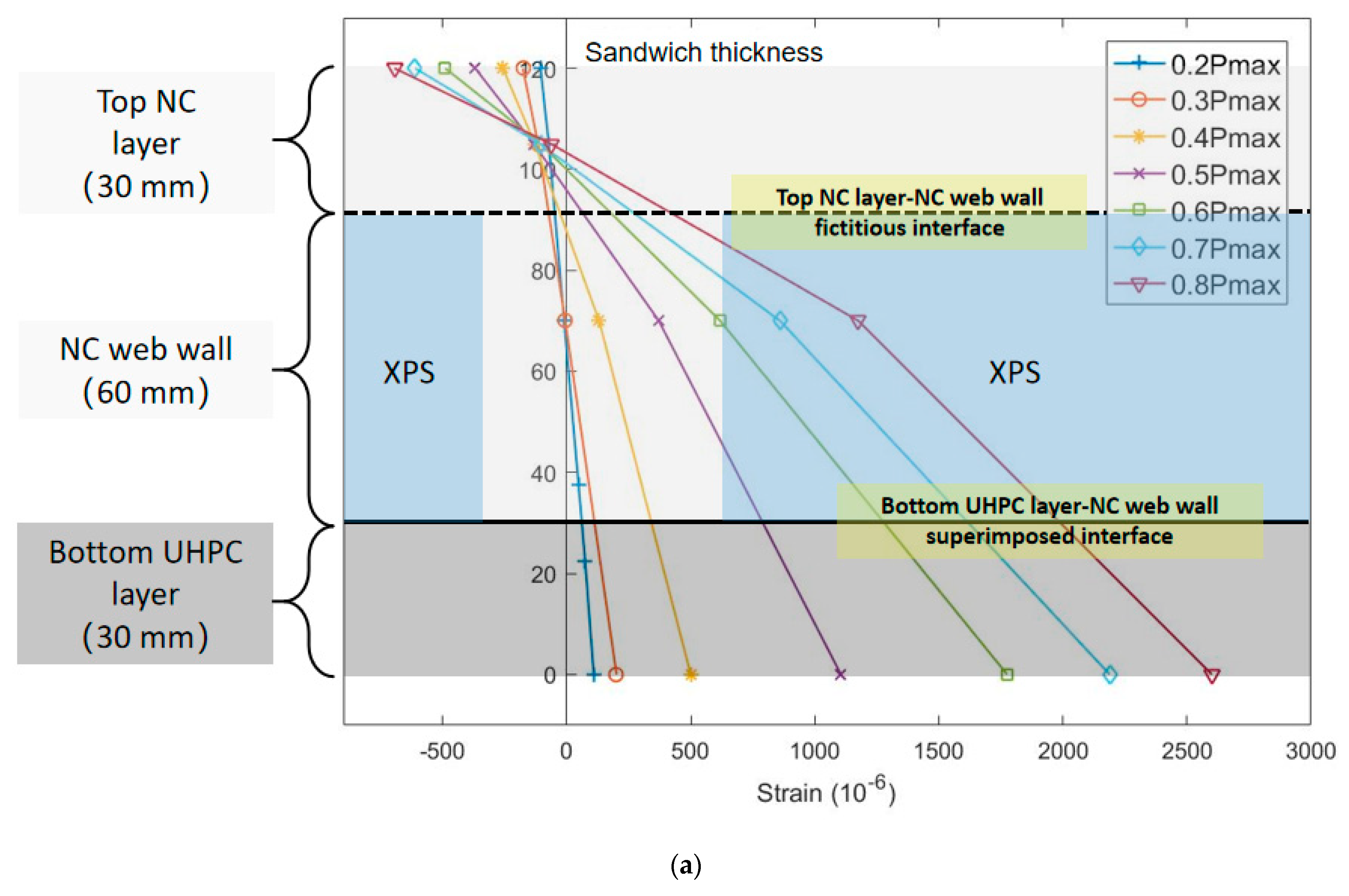
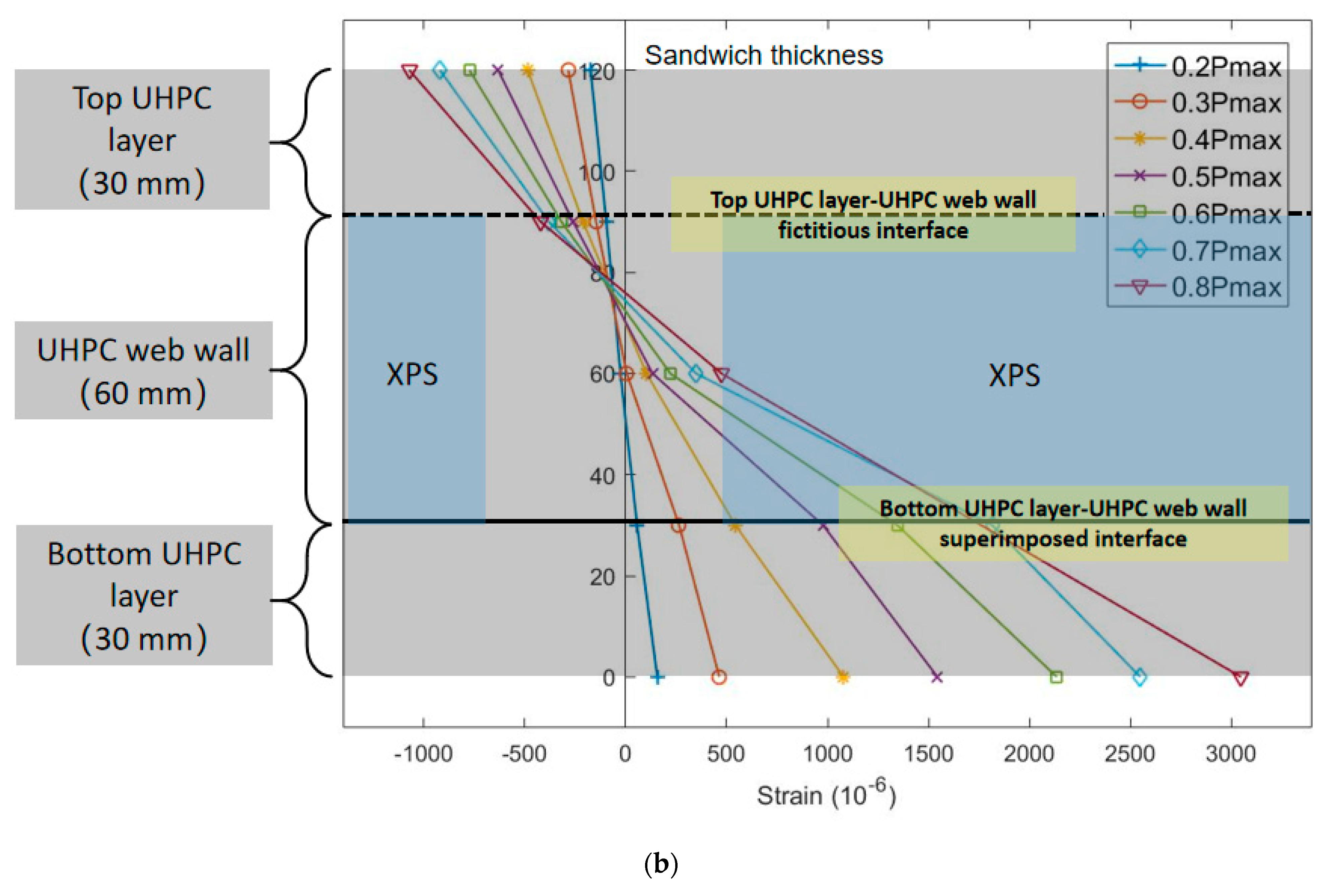
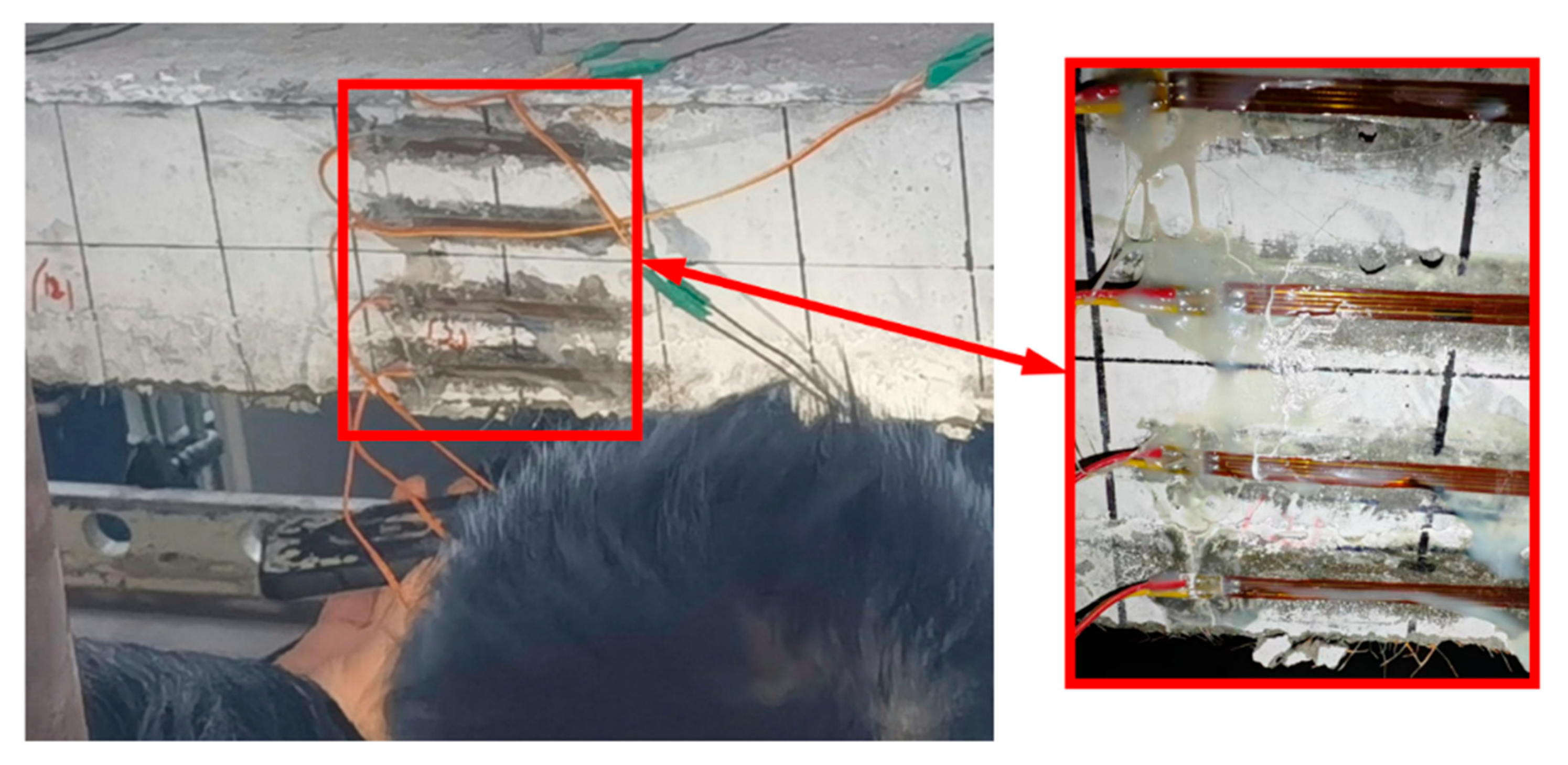
Concrete strain gauges were affixed along the thickness of the sandwich slabs to monitor the strain distributions of the B1 and B2 specimens under flexural loading. The strain profiles at various load levels are presented in Figure 13. It is important to note that during the loading process, some strain gauges were inadvertently positioned at crack locations near the mid-span (as illustrated in Figure 14). This placement allowed for the observation of debonding and detachment phenomena affecting the strain gauges, which resulted in distorted strain measurements. Consequently, data exhibiting such distortions were excluded from analysis. The strain distributions were primarily derived from measurements at other locations, consistently demonstrating either linear behavior during the initial loading stages or nonlinear behavior at later stages.
As depicted in Figure 13, increasing load levels induces crack propagation upward from the bottom of the sandwich slab, causing a progressive upward shift of the neutral axis. This shift corresponds with an expansion of the tension zone and a reduction in the compression zone height. Notably, the compression zone thickness is minimal and confined within the top layer of the sandwich structure. Across the range of applied loads, the strain distribution through the slab thickness remains approximately linear, thereby supporting the validity of the linear strain profile assumption for the cross section of this type of flexural sandwich slab. Specifically, as shown in Figure 13b, at a load level of 0.8Pmax, the strain gauge located near the bottom of the bottom layer was damaged due to tensile forces, and its data were consequently excluded from the strain distribution analysis at this load level.
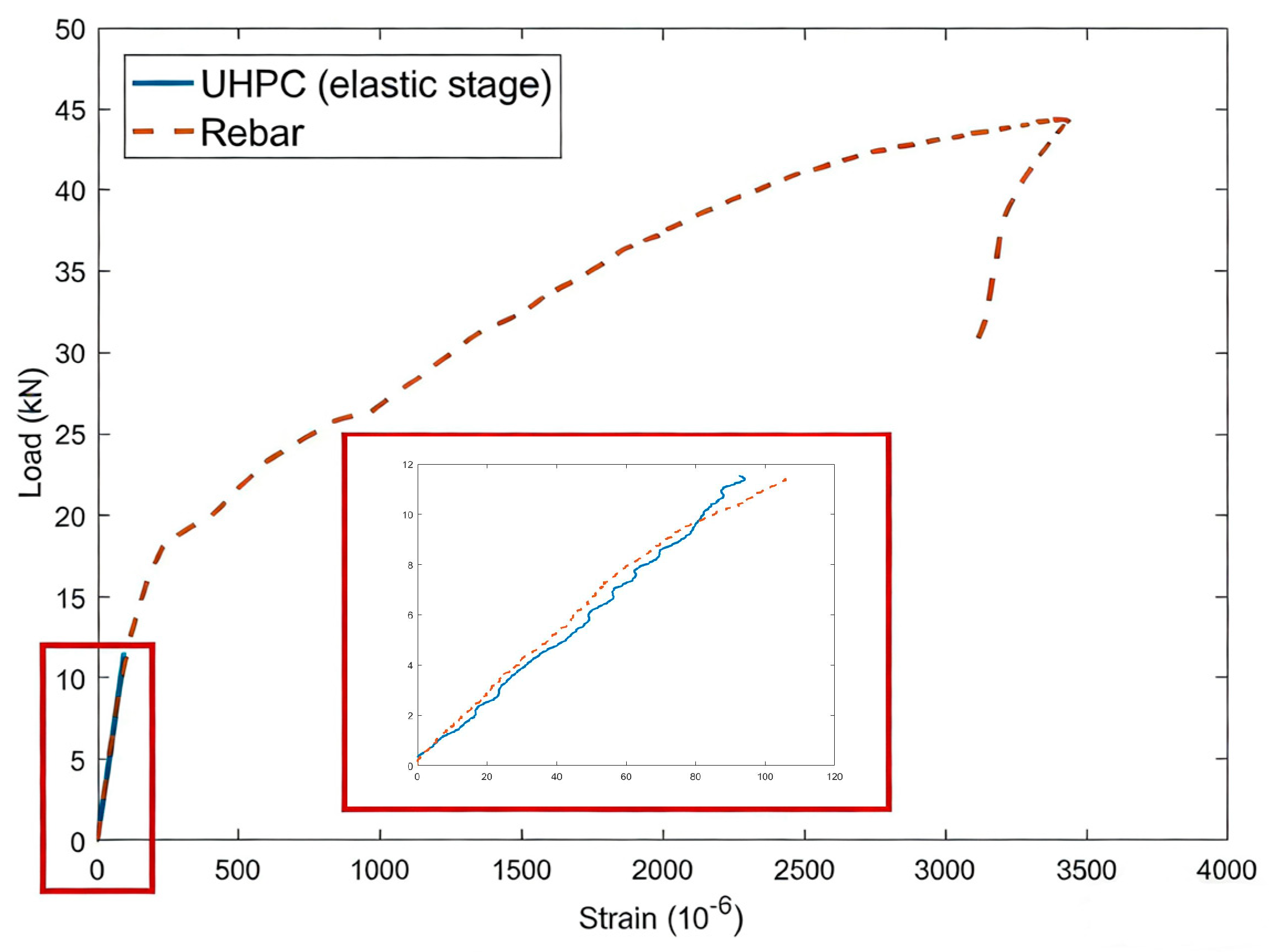
Figure 15 illustrates the mid-span strain in the reinforcement alongside the corresponding side surface strain in the UHPC at an identical position within the slab thickness during the loading process of specimen B1. Notably, the strain gauge affixed to the bottom surface of the UHPC was located precisely at the site of crack propagation, which led to detachment and distortion of the gauge during measurement. Nevertheless, strain data for the UHPC within the elastic stage were successfully recorded. As shown in Figure 15, the strain measurements for both the steel reinforcement and UHPC at mid-span demonstrate consistent values prior to crack initiation.
A detailed examination of the linear elastic stage (Stage 1) in Figure 15 reveals that the strain in the UHPC generally exceeds that in the reinforcement. Toward the conclusion of this stage, the measured UHPC strain does not attain the cracking strain determined from direct tension tests. This observation aligns with expectations, as the longitudinal steel bars constituting the truss reinforcement contribute minimally to flexural stiffness and crack resistance during the linear elastic phase. Integrating the data from Figure 12a and Table 3, it is evident that at the yield point of specimen B1 (Py = 32.5 kN), the strain in the reinforcement bars is 0.00155, which remains below the bars’ yielding strain. This finding indicates that the UHPC bottom layer within the tension zone plays a critical role during the yield stage. Furthermore, it underscores that the UHPC’s high toughness, ductility, and tensile strength enhance the tensile load-carrying capacity, with both the reinforcing bars and the UHPC layer functioning synergistically.

4. Numerical Analysis Method

The numerical finite element analysis software ABAQUS 2013 [43], capable of accurately capturing the nonlinear behavior of slabs and structures and validating the experimental flexural response of UHPC-NC and full UHPC superimposed sandwich slabs, is utilized.

4.1. Slab Properties of NC and UHPC

The Concrete Damaged Plasticity (CDP) model, widely implemented in ABAQUS [38], is utilized to simulate the nonlinear behavior of concrete slabs under both compressive and tensile loading conditions [44]. Considering that the thickness of the bottom UHPC layer in the UHPC-NC superimposed sandwich slab is 30 mm and is located within the tensile zone of the specimen, particular attention is directed towards the tensile constitutive modeling of UHPC during the simulation. The stress–strain relationship for UHPC is derived from the averaged results of direct tension tests performed on UHPC specimens. For normal concrete (NC), the constitutive models in compression and tension are developed in accordance with the Chinese Concrete Structure Design Code (GB50010-2010) [45], which prescribes the stress–strain curves for NC under uniaxial tension and compression. The derivation of the stress–strain relationships for concrete in both tension and compression is summarized in Equations (1)–(4). The Young’s modulus for UHPC is adopted from the slab performance parameters detailed in Section 3.1, while the Poisson’s ratio is assumed to be 0.2 for both UHPC and NC.
For concrete in compression,
σ = 1 d c E c ε
d c = 1 ρ c n n 1 + x n x 1 1 ρ c α c ( x 1 ) 2 + x x > 1
where x = ε ε c , r ,   ρ c = f c , r E c ε c , r ,   n = E c ε c , r E c ε c , r f c , r .
For concrete or UHPC in tension,
σ = 1 d t E c ε
d t = 1 ρ t 1.2 0.2 x 5 x 1 1 ρ t α t ( x 1 ) 1.7 + x x > 1
where x = ε ε t , r ,   ρ t = f t , r E c ε t , r ; f c , r is the compressive strength of NC (normal concrete); ε c , r is the compressive strain of NC at f c , r ; E c is the Young’s modulus of NC; d c is the compressive coefficient of concrete; f t , r is the tensile strength of NC; ε t , r is the tensile strain of NC at f t , r ; and d t is the tensile coefficient of concrete.
To further characterize the crack initiation and propagation in the simulation, it is necessary to input the tensile and compressive damage parameters of slabs. The compression and tensile damage parameters of NC and UHPC used in the model are given in Equations (5)–(8) as follows.
ϵ c i n = ϵ σ c E c
ϵ t i n = ϵ σ t E c
D c = 1 σ c E c 1 ϵ c p l 1 b c 1 + σ c E c 1
D t = 1 σ t E c 1 ϵ t p l 1 b t 1 + σ t E c 1
where D c and D t are the compressive and tensile damage parameters of concrete, respectively; σ c and σ t are the compressive and tensile stress in the slab, respectively; E c is the Young’s modulus of the slab (either NC or UHPC); ϵ c p l and ϵ t p l are the plastic strains corresponding to the compressive and tensile stresses of the slab, respectively; and  ϵ c p l = b c ϵ c i n ,   ϵ t p l = b t ϵ t i n ,   i n   w h i c h   b c and b t are the constants, with 0 < b c   a n d   b t < 1 . The inelastic stress and strain of NC and UHPC as well as the corresponding damage parameters are given in Table 4.
The modeling of NC and UHPC elements employs the three-dimensional eight-node linear brick elements, C3D8R in ABAQUS. This type of element is suitable for both linear analysis and more complex nonlinear analysis. Additionally, the five parameters needed to be input in the modeling are given in Table 5.

4.2. Slab Properties of Reinforcement

The truss reinforcements examined in this study comprise top and bottom longitudinal chords fabricated from HRB400 steel with a diameter of 8 mm, alongside web stirrups composed of HPB300 steel with a diameter of 6 mm. The characteristics of the associated slab are detailed in Section 3.1. The stress–strain behavior of the steel reinforcement is modeled using a bilinear elastic–perfectly plastic constitutive relationship, characterized by a horizontal yield plateau and a maximum strain of 0.01. The Poisson’s ratio for the steel reinforcement is assumed to be 0.3. The top and bottom chords are discretized using two-node linear truss elements, which are designed to carry only axial loads during the stress analysis. Conversely, the web members (stirrups) are represented by beam elements to more accurately simulate actual conditions and facilitate the transmission of shear forces.

4.3. Modeling of UHPC-NC Interface

According to the American Concrete Institute (ACI) design code for concrete structures (ACI 318) [46], the shear strength at the interface between new and old concrete (UHPC and NC in this study) is influenced by the bonding performance of interface reinforcement when the shear forces are present. When the shear reinforcement (stirrup) reaches its yield strength, the interface achieves its ultimate shear capacity. ACI 318 accounts for the shear friction between the new and old concrete when the shear reinforcement is yielded and interface debonding or crack is present. The interface shear strength is calculated as:
ν n = μ A ν f f y
where μ is the friction coefficient, A ν f is the area of the shear reinforcement, and f y is the yield strength of the shear reinforcement. The specific instructions for selecting the friction coefficient μ are given in Table 6. In this study, a value of μ   = 0.7 is chosen for the numerical modeling, assuming the rigid contact interface setup. The rigid contact is defined in ABAQUS as the standard interface interaction behavior of UHPC [47].

4.4. Numerical Analysis

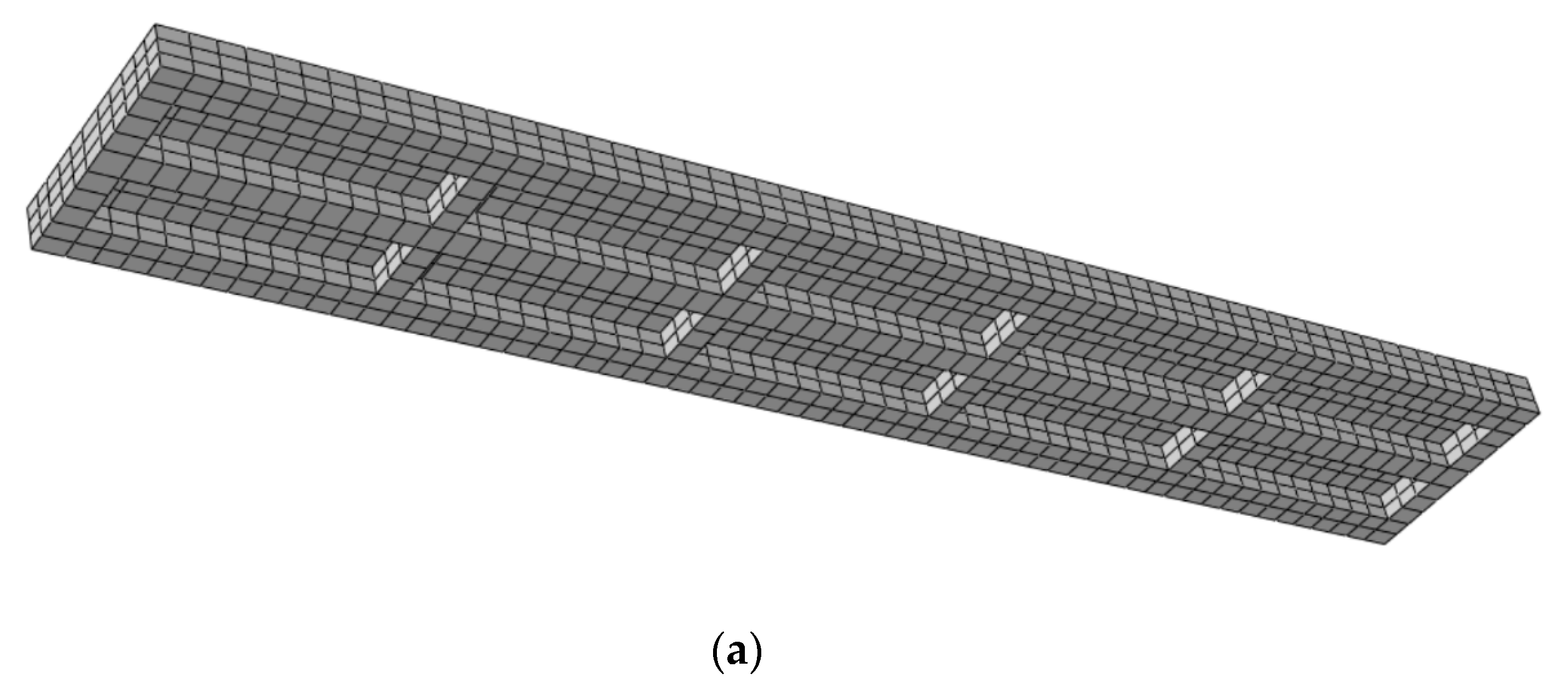
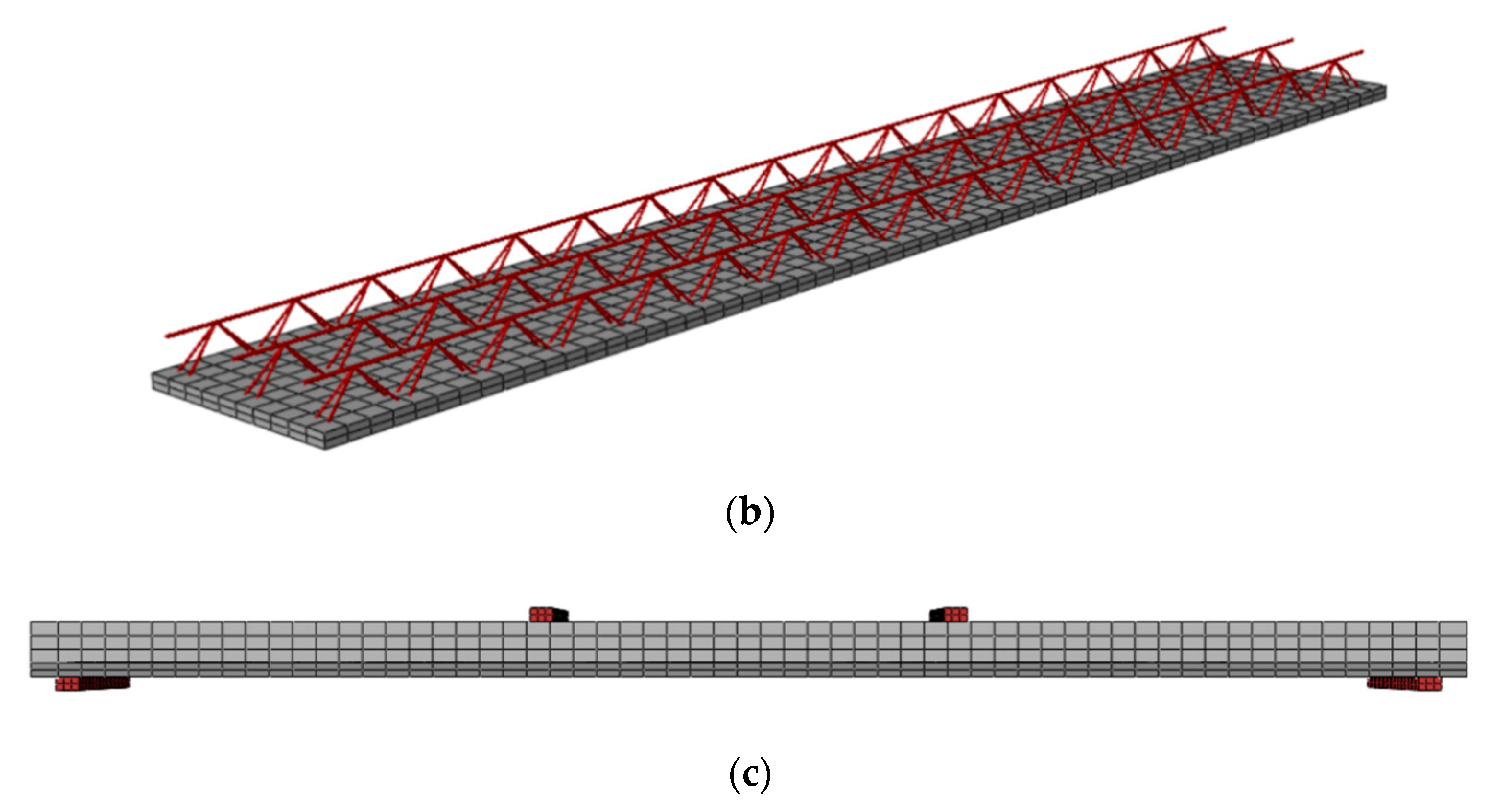
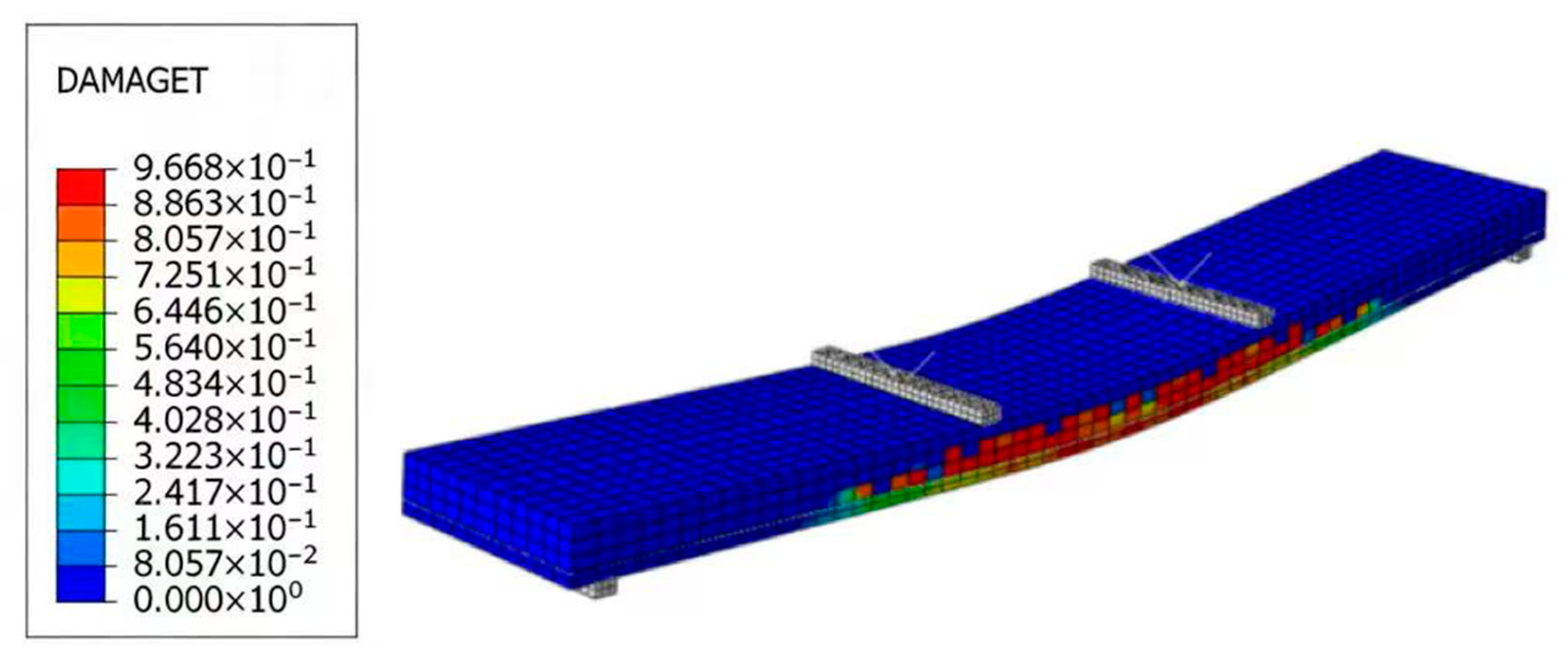
Figure 16 illustrates the numerical finite element model of the UHPC-NC superimposed sandwich slab, wherein the reinforcement grid is represented using the embedded modeling technique. Since the XPS foam core is non-structural, it is modeled as a void region. The tensile damage distribution across the entire slab is depicted in Figure 17, revealing the emergence of multiple vertical cracks within the tensile zone that propagate upward during the loading process. The crack propagation pattern evaluated by the numerical model aligns closely with the experimental observations, indicating that the material property parameters employed in the model are sufficiently accurate. Consequently, the model can be reliably utilized for further comparative analysis with the experimental results.
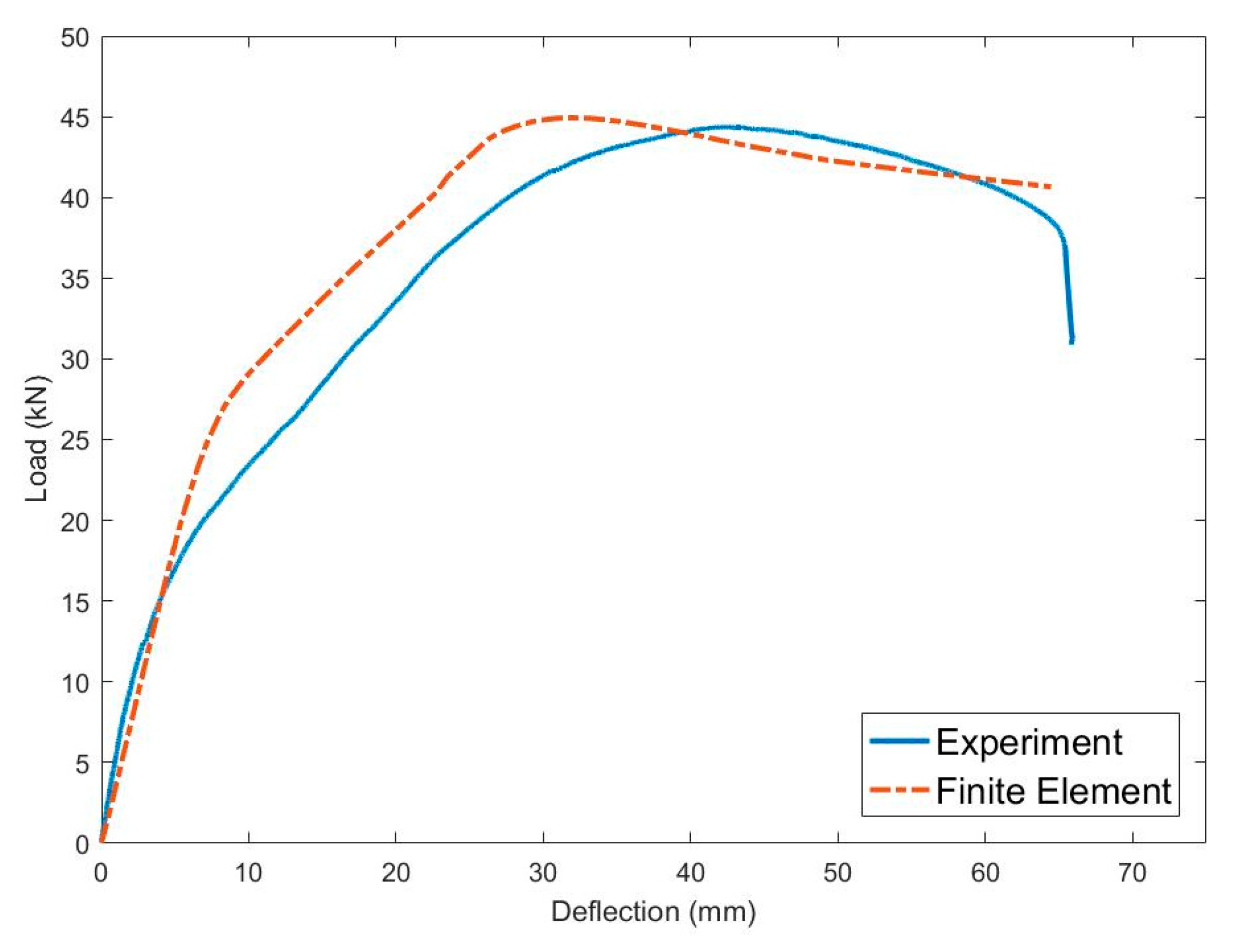
Figure 18 presents a comparison of the load–deflection curves obtained from both numerical simulations and experimental investigations. As depicted, the response can be delineated into four distinct stages: cracking, yielding, ultimate load, and final failure. The close agreement between the numerical and experimental results substantiates the validity of the numerical modeling approach utilized. This concordance demonstrates that the finite element model, once calibrated with experimental data, effectively captures the flexural behavior of the complex UHPC-NC superimposed sandwich slabs.
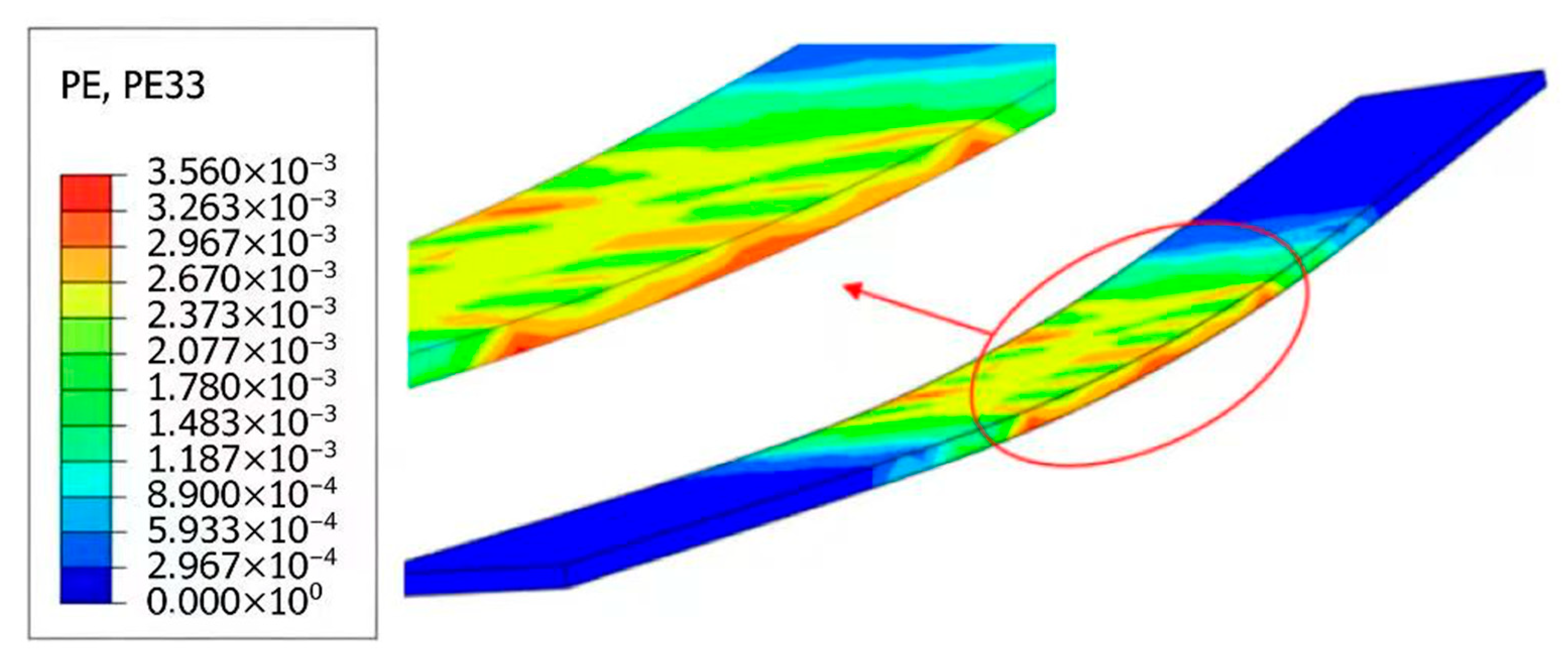
Given the pivotal role of UHPC in enhancing structural ductility and tensile strength, the UHPC layer within the UHPC-NC superimposed sandwich slab exerts a significant influence on bending performance. Figure 19 illustrates the distribution of plastic strain in the UHPC bottom layer at the ultimate load. By correlating the numerical analysis with experimentally obtained stress–strain characteristics of UHPC, the stress distribution through the thickness of the UHPC bottom layer is approximated as linear.
The comprehensive numerical analysis of stress distribution serves as a fundamental basis for theoretical computations. Given the difficulties associated with accurately measuring strain at the interface during experimental procedures, as well as the challenge of precisely positioning strain gauges at the critical cross section, the numerical finite element model offers a complementary approach. As a full-field analytical method, it addresses these uncertainties and enables more precise evaluation analysis of strain and stress distributions within the UHPC-NC sandwich slab.

5. Design Analysis

To support the design analysis of UHPC-NC superimposed sandwich slabs, a comprehensive theoretical derivation of their load-carrying capacity is provided. This derivation encompasses the determination of both the cracking load and the ultimate load. The fundamental principles and key assumptions underlying the theoretical framework are detailed as follows:
(1)
Plane section assumption: Based on previously referenced experimental findings, the strain distribution within the slab is assumed to adhere to the plane section hypothesis.
(2)
Bonding interface between UHPC and NC layers: A distinctive advantage of employing truss reinforcement in the current sandwich slab configuration (illustrated in Figure 16c) lies in the diagonal bar members, which function similarly to stirrups, effectively transferring shear forces across the UHPC-NC interface. Experimental evidence further indicates that failure in the UHPC-NC superimposed sandwich primarily results from bending, with no occurrence of slippage or debonding at the interface between the UHPC and NC layers.
(3)
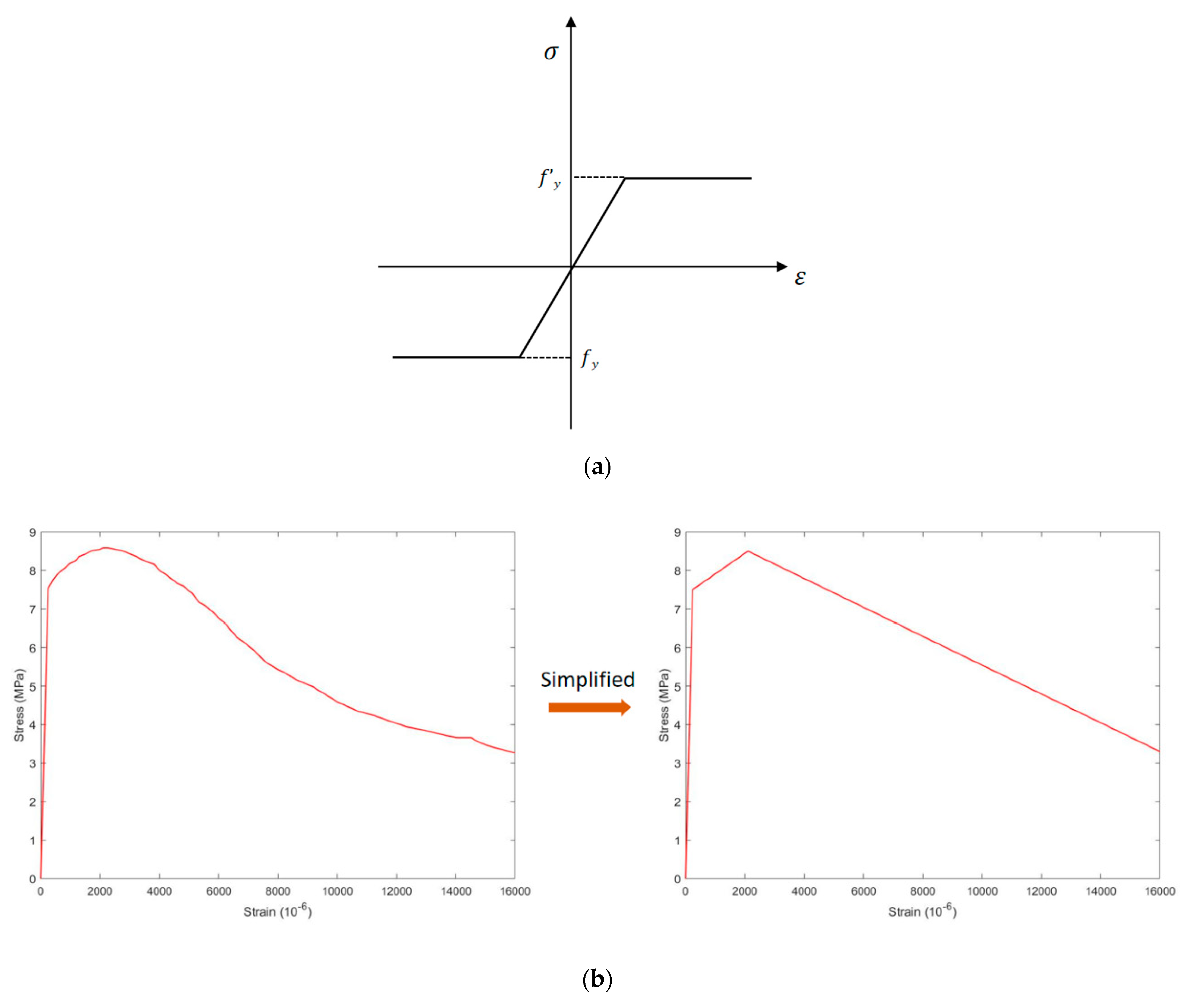
Constitutive model of reinforcement: The reinforcement is modeled using a bilinear elastic–plastic constitutive relationship without strain hardening, as shown in Figure 20a.
(4)
Constitutive model of UHPC: For computational simplicity, the constitutive behavior of UHPC observed in direct tension tests—characterized by elastic, strain-hardening, and strain-softening phases—is approximated by three linear segments corresponding to these phases, as depicted in Figure 20b.

5.1. Cracking Load

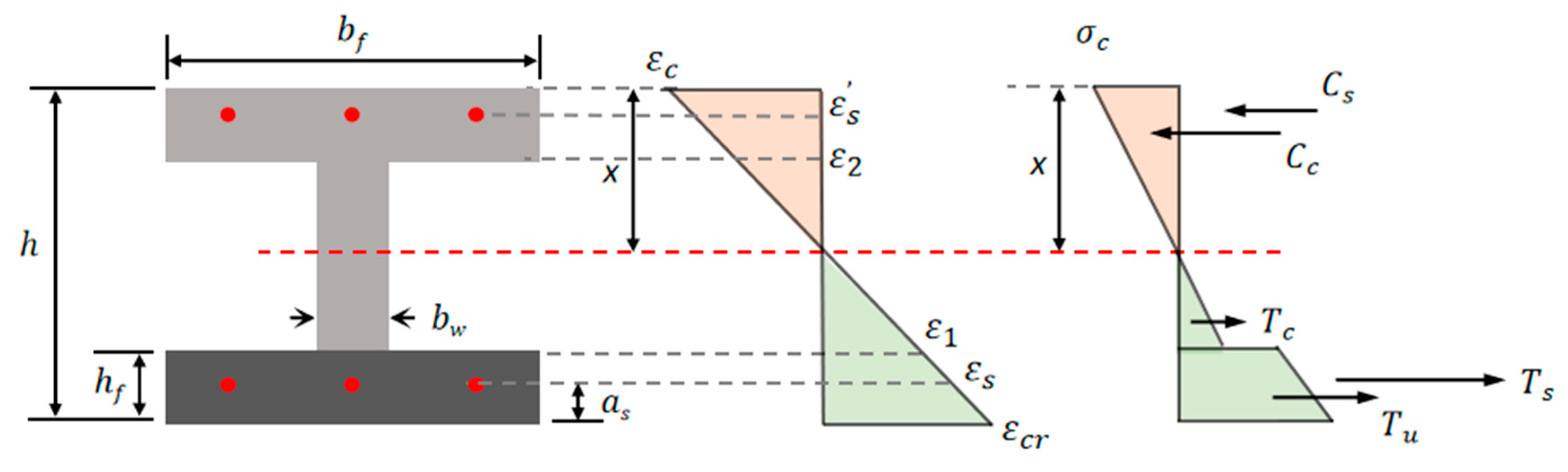
Based on the structural configuration of UHPC-NC superimposed sandwich slabs in this study, the strain and stress diagrams are depicted as shown in Figure 21. In the actual components, the tensile behavior of UHPC should be characterized by the flexural strength. The flexural strength of UHPC differs somewhat from its uniaxial tensile strength [48,49]. Therefore, during this derivation, the equation for calculating the flexural strength from the French standards (AFGCSETRA Working Group) [50], as expressed in Equation (10), is used to describe the tensile strength of UHPC. Here, f c t , e l represents the ultimate strength of the proportionality limit of tensile behavior under uniaxial tension, f cr represents its equivalent flexural strength (bottom cracking strength of the component), and a is the height of the specimen (i.e., a = h ), with α value of 0.08.
f c t , e l = f cr α × a 0.7 1 + α × a 0.7
According to Figure 21, the tensile strain in concrete ε c r , the compressive strain in concrete ε c , the tensile strain in reinforcement ε s , the compressive strain in reinforcement ε s , the strain at the upper edge of the top layer ε 1 , and the strain at the lower edge of the top layer ε 2 exhibit the triangular similarity relationship in the linear stage. This relationship can be expressed geometrically through Equation (11). The sandwich bottom cracking strain ε c r can be determined using the Young’s modulus of UHPC E u and the cracking strength of UHPC f cr .
ε c r h x = ε c x = ε 2 x h f = ε 1 h x h f = ε s h x a s = ε s x a s
The force equilibrium on the section is expressed as
C c + C s = T c + T u + T s
The specific expressions for each force value in Equation (12) are given as
C c = 1 2 ( E c ε c b f x E c ε 2 b f b w x h f )
C s = E s ε s A s
T c = 1 2 E c ε 1 b w h x h f
T u = f cr + E u ε 1 2 b f h f
T s = E s ε s A s
where E c and E u are the Young’s moduli of concrete and UHPC, respectively.
By substituting Equations (13)–(17) into Equation (12) and applying the triangular similarity geometric relationship presented in Equation (11), the height of the compression zone can be determined. Subsequently, by enforcing moment equilibrium and calculating the moments about the neutral axis, the cracking moment (strength) of the UHPC-NC sandwich slab is obtained as follows:
M c r = 1 3 ( E c ε c b f x 2 E c ε 2 b f b w x h f 2 ) + E s ε s A s ( x a s ) + 1 3 E c ε 1 b w h x h f 2 +   1 2 E u ε 1 + ε c r b f h f h x 2 ε 1 + ε c r 3 ε 1 + ε c r h f + E s ε s A s h x a s

5.2. Ultimate Load

The resultant compression (C) and tension (T) forces in the cross section at the ultimate load are, respectively, calculated as
C = C c f + C s = α 1 f c b f h f + f y A s ,
T = T u f + T s = σ tu + σ 1 2 b f h f + f y A s
where ε t u represents the bottom ultimate tensile strain of the bottom UHPC layer. Considering that the specimen attains the ultimate load, the following conditions are observed: (1) the concrete within the tensile zone has undergone extensive cracking, rendering the tensile capacity of normal concrete (NC) negligible; and (2) the strain measured at the bottom of the ultra-high-performance concrete (UHPC) layer in the tensile zone during testing approaches its maximum strain observed under direct tension of UHPC. Consequently, it is postulated that at the ultimate load, the tensile stress at the bottom of the UHPC layer reaches its ultimate value.
Under these circumstances, one of the two scenarios described below applies to the UHPC-NC superimposed sandwich slabs: (1) C <   T and (2) C   <   T . For the case of C <   T , the ultimate bending moment (strength) is:
M u = σ tu + σ 1 2 b f h f h 1 2 β 1 x 2 σ 1 + σ tu 3 σ 1 + σ tu h f + f y A s h 1 2 β 1 x a s + f y A s 1 2 β 1 x a s
For the case of C   <   T , the ultimate bending moment is given as:
M u = α 1 f c b w β 1 x h 1 2 β 1 x 2 σ 1 + σ tu 3 σ 1 + σ tu h f + α 1 f c ( b f b w ) h f h 1 2 h f 2 σ 1 + σ tu 3 σ 1 + σ tu h f + f y A s a s 2 σ 1 + σ tu 3 σ 1 + σ tu h f + f y A s h a s 2 σ 1 + σ tu 3 σ 1 + σ tu h f

5.3. Comparisons

Theoretical estimations for the cracking moment and ultimate bending moment are 12.88 kN·m and 44.39 kN·m, respectively. A comparison between these theoretical values and the corresponding experimental data is presented in Table 7. As indicated in Table 7, the absolute discrepancy between the experimental measurement and theoretical result is 6.8% for the cracking moment and 3.1% for the ultimate bending moment.

6. Attributes of UHPC in Load-Carrying

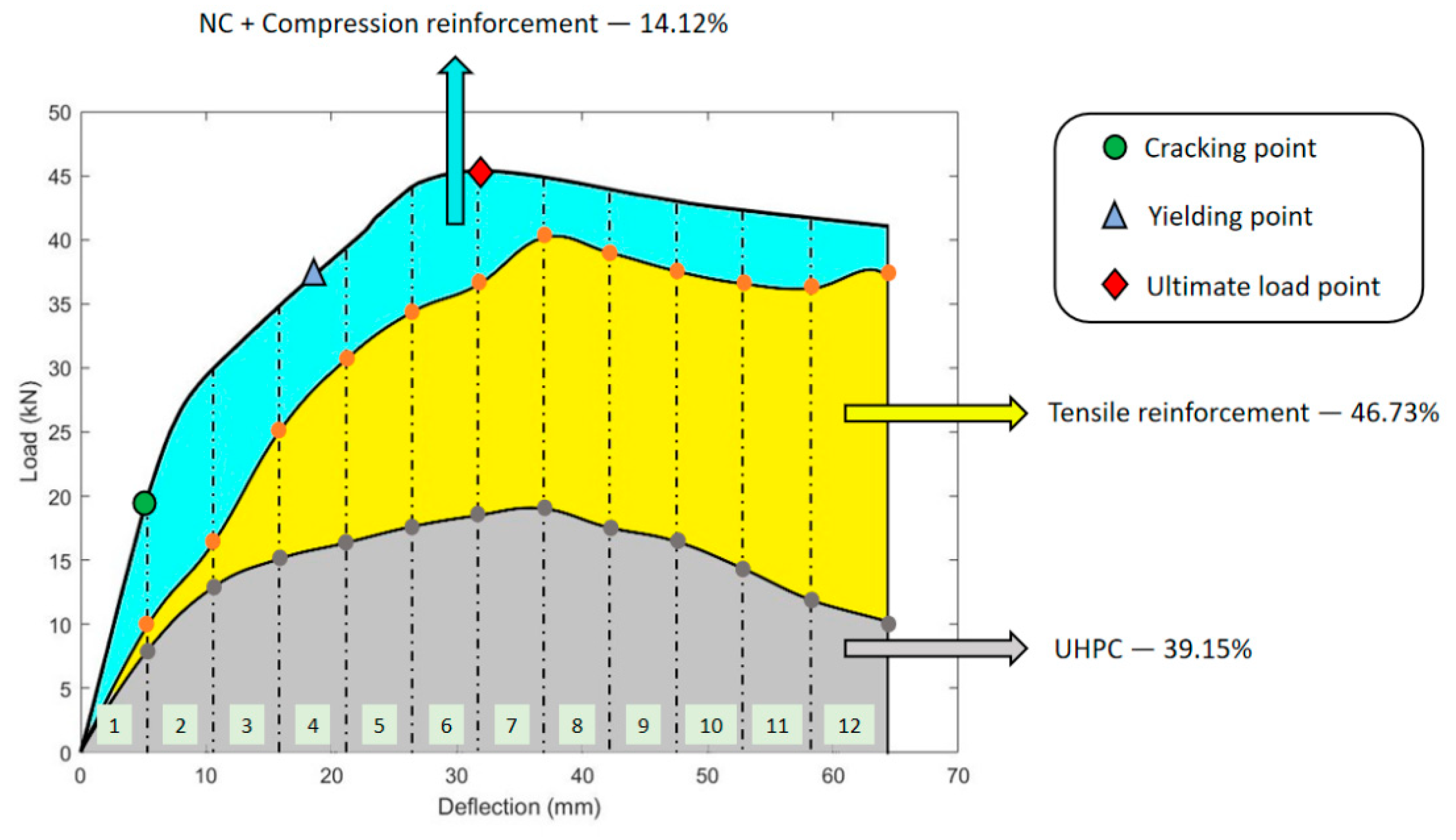
To elucidate the roles of ultra-high-performance concrete (UHPC) in enhancing ductility and tensile strength during load-bearing, the UHPC-NC superimposed sandwich slab is further examined throughout the entire loading process via finite element analysis. The proportional contributions of individual slab constituents—namely, UHPC and steel reinforcement within the tension zone, and NC and steel reinforcement within the compression zone—are systematically analyzed. The detailed analytical outcomes are presented in Figure 22.
As depicted in Figure 22, the load–displacement response of the UHPC-NC sandwich slab is segmented into twelve discrete intervals. For each interval, the forces borne by each slab component are computed and represented on their respective load–displacement curves according to their relative contribution ratios. From this analysis, the following key observations are derived:
  • Elastic stage: During the initial elastic phase, the bottom UHPC layer exhibits a predominant contribution to load resistance, while the tensile steel reinforcement participates minimally. In this stage, the load is primarily sustained by the UHPC in the tension zone (bottom layer) alongside the NC and steel reinforcement in the compression zone (top layer).
  • Strain-hardening stage: Following the onset of cracking, as the applied load increases, the contribution of UHPC progressively intensifies. The load–displacement curve continues to ascend in an approximately linear manner. Concurrently, the steel reinforcement assumes a more significant role, yielding subsequent to the yield point of the UHPC-NC sandwich slab, approaching the ultimate (peak) load. The presence of UHPC, which acts synergistically with the reinforcement to resist tensile forces, delays the yielding of the steel compared to conventional reinforced concrete slabs. During this phase, the contributions of both UHPC and steel reinforcement in the tension zone (bottom layer) increase in a roughly linear fashion, mirroring the linear progression observed in the overall load–displacement response. Consequently, both UHPC and tensile steel reinforcement dominate the load-carrying behavior between the cracking load and ultimate load points.
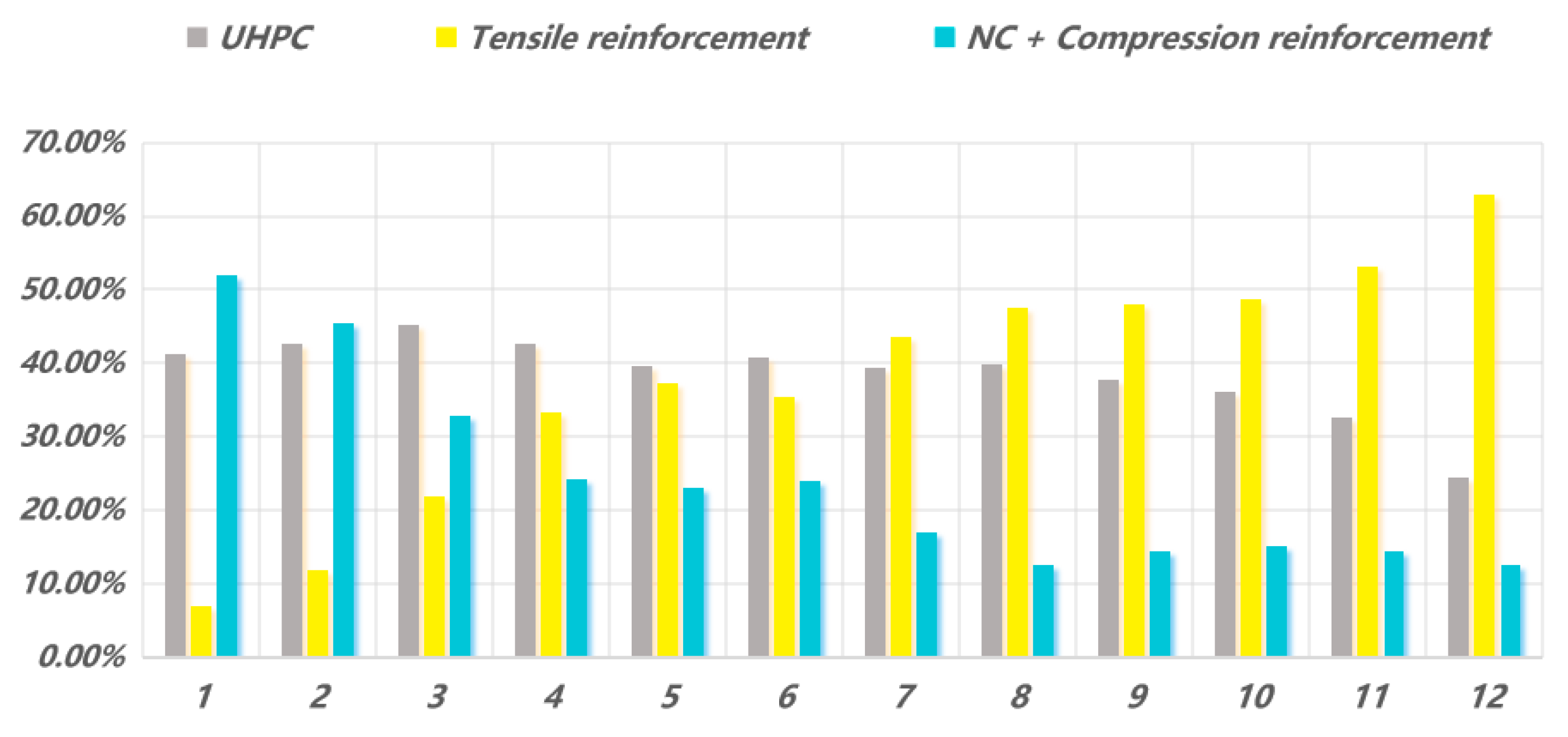
  • Strain-softening stage: Following the attainment of ultimate load, the ultra-high-performance concrete (UHPC) progressively ceases to be the primary load-bearing element, with the majority of the load subsequently transferred to the reinforcement bars located in the bottom layer. Notably, the transition of UHPC’s load-bearing role is gradual rather than abrupt, indicative of a relatively slow disengagement process. This behavior is corroborated by the load–displacement curve and the residual load-carrying capacity of UHPC, which collectively contribute to the ductility of the composite system alongside the reinforcement bars. Analyzing the contribution of each constituent at the conclusion of the twelve divisions presented in Figure 22 reveals that UHPC in the bottom layer accounts for 39.15%, tensile reinforcement in the bottom layer contributes 46.73%, and normal concrete (NC) along with reinforcement in the top layer comprises 14.12%. As illustrated in Figure 22, the overall loading response is predominantly governed by the UHPC and steel reinforcement within the bottom layer of the sandwich structure.
Figure 23 depicts the contribution ratios of individual slab components corresponding to each division along the respective curves in Figure 22. Throughout the loading process, the contribution of the reinforcement bars steadily increases, particularly from the cracking stage up to the yield point of the sandwich. Concurrently, the compression zone diminishes progressively, resulting in a reduced and eventually negligible load resistance contribution from the NC and reinforcement situated in the compression zone of the top layer. By the end of the loading sequence, the neutral axis approaches or even surpasses the location of the reinforcement bars within the compression zone. Now, the NC primarily sustains the load-carrying capacity of the compression zone, while the contribution from the compression zone experiences a marked decline. Throughout the operational phase, UHPC demonstrates stable performance and exhibits a gradual disengagement even at the terminal loading stage. This observation underscores the significant contribution of UHPC relative to conventional concrete flexural members, as it not only enhances load-carrying capacity but also imparts sufficient ductility to the composite member in conjunction with the steel reinforcement. It is noteworthy that the functional behavior of UHPC aligns closely with that of the tensile reinforcement bars, further substantiating the effective synergistic interaction between UHPC and the reinforcement. In Figure 23, the contribution trends of each slab component remain relatively stable between the yielding point and the ultimate load point (Divisions 4, 5, and 6). Correspondingly, Figure 22 illustrates a linear increase in the contribution degree of each component, a pattern that persists even as the components enter the damage phase.
In addition to the mechanical interaction, restrained shrinkage is also important for long-term performance. The shrinkage of the new NC layer is restrained by the hardened UHPC base and truss bars, which causes stress at the interface. Similar to the shrinkage damage observed in concrete repair layers [51], this restraint may increase the risk of small cracks or debonding over time. Although current short-term tests showed strong bonding, future numerical studies should use shrinkage models that change with time. By using methods similar to those for concrete composites [52], we can predict these long-term effects more accurately.

7. Conclusions

The primary motivation of this study is not to demonstrate the superior performance of a fully UHPC slab, which has already been well documented in the literature, but to explore how UHPC can be used more efficiently in flexural structural systems. To this end, a fully UHPC sandwich slab is employed solely as a mechanical upper-bound reference, representing the maximum flexural performance achievable with full UHPC usage. On this basis, a UHPC-NC superimposed sandwich slab is proposed, in which UHPC is selectively placed in the tensile zone, while normal concrete and XPS are used in non-critical regions. By comparing the flexural response of the UHPC-NC slab against the upper-bound benchmark, this study aims to quantify the effectiveness of targeted UHPC placement and to demonstrate that comparable structural performance can be achieved with significantly reduced UHPC consumption. This approach provides a rational framework for system-level optimization of UHPC-based composite slabs.
This study introduces an innovative structural configuration of ultra-high-performance concrete–normal concrete (UHPC-NC) superimposed sandwich slabs, which substantially reduces the reliance on conventional main longitudinal reinforcement. The proposed UHPC-NC superimposed sandwich slab comprises a prefabricated thin UHPC layer at the bottom, a cast-in-place NC layer at the top, truss reinforcement, and extruded polystyrene (XPS) foam blocks serving as the core for sound and thermal insulation. The truss reinforcement bars function as shear connectors and, in conjunction with the concrete, form reinforced internal walls that enhance the overall structural integrity of the sandwich system. Compared to fully UHPC-based superimposed sandwich slabs, the UHPC-NC variant demonstrates superior cost-effectiveness, attributable to improved production efficiency and reduced raw material expenses.
Based on an extensive experimental, numerical, and theoretical investigation of both the UHPC-NC and fully UHPC superimposed sandwich slabs, the following conclusions are drawn:
(1)
Failure modes: Both UHPC-NC and fully UHPC superimposed sandwich slabs predominantly exhibit flexural failure. The specimens display comparable load-carrying capacities and ductility. Considering construction speed and cost efficiency, the UHPC-NC superimposed sandwich slab is more advantageous. The loading process can be delineated into four distinct stages: linear elasticity, cracking, yielding, and ultimate failure. During the initial cracking phase, cracks are not readily visible to the naked eye and propagate slowly, owing to the crack-bridging effect of steel fibers within the UHPC matrix. Upon reaching the yielding stage, the load–deflection curve exhibits a marked change in slope accompanied by a significant reduction in stiffness; however, the reinforcement bars have not yet yielded, indicating the critical role of the UHPC layer in the tension zone during service and its effective collaboration with the reinforcement. As the load increases further, mid-span displacement escalates substantially, and the reinforcement bars yield. Following the attainment of ultimate load, the structure enters the failure stage, characterized by a descending load–deflection curve, culminating in the rupture of a limited number of reinforcement bars and crushing of the upper concrete layer.
(2)
Behavior at the UHPC-NC interface: During the incremental loading process, minimal slippage or debonding was observed at the interface between the normal concrete (NC) and ultra-high-performance concrete (UHPC). This indicates that the truss reinforcement bars, together with the reinforced inner wall formed by the concrete, effectively transfer forces and function as shear connectors. Consequently, this sandwich construction maintains structural integrity and fully exploits the advantageous properties of its constituent components, such as UHPC and truss reinforcement, within the composite slab system.
(3)
Precision of numerical simulation: The developed finite element numerical model demonstrates a high degree of correlation with the experimental outcomes obtained from flexural testing of UHPC-NC superimposed sandwich slabs. This experimentally validated model can be reliably employed to investigate the flexural behavior of analogous superimposed sandwich slab configurations.
(4)
Design analysis: Theoretical calculations pertaining to flexural cracking moments and ultimate strength moments of the superimposed UHPC-NC sandwich slabs are presented, enabling accurate evaluation of cracking initiation and ultimate load capacities. These calculations offer valuable guidance for the structural design and engineering application of such UHPC-NC sandwich slab systems.
(5)
Analysis of UHPC contribution: UHPC significantly influences the service performance of the sandwich structure by providing enhanced ductility, increased load-carrying capacity, and greater safety margins. Moreover, UHPC exhibits effective synergistic interaction with reinforcing bars. This study thoroughly examines the degree of UHPC’s contribution, its working mechanisms, and its failure modes. The findings furnish essential guidelines for the design, analysis, and further optimization of superimposed UHPC-NC sandwich slabs.

Author Contributions

Conceptualization, H.L.; Methodology, Z.M., H.L. and T.W.; Software, Z.M., H.L. and J.L.; Validation, Z.M., H.L., T.W., J.L. and J.Z.; Formal analysis, Z.M., T.W. and J.Z.; Investigation, J.Z.; Data curation, T.S., T.W. and J.Z.; Writing—original draft, Z.M. and H.L.; Writing—review & editing, H.L., T.S. and J.L.; Supervision, H.L., T.S., T.W. and J.L.; Project administration, T.S.; Funding acquisition, T.S. All authors have read and agreed to the published version of the manuscript.

Funding

The authors acknowledge the Basic Scientific Research Projects of Colleges and Universities in Liaoning Province (Project No. LJKMZ20220662), Key Research and Development Project in Liaoning Province (Project No. 2024JH2/102400016), and the Natural Science Foundation of Shandong Province (ZR2025MS802) for their partial financial support to this study.

Data Availability Statement

The original contributions presented in this study are included in the article. Further inquiries can be directed to the corresponding authors.

Acknowledgments

The authors also want to thank the contributions to the experimental study from Huadong Zhang, Tiantian Feng, Weishuo Xu and Jia Zhou at University of Science and Technology Liaoning.

Conflicts of Interest

The authors declare no conflict of interest.

References

  1. Rechard, P. Reactive powder concrete: A new ultra-high-strength cementitious slab. In Proceedings of the 4th International Symposium on Utilization of High-Strength/High-Performance Concrete, Paris, France, 29–31 May 1996; Presses des Ponts et Chaussees: Paris, France, 1996; pp. 1343–1349. [Google Scholar]
  2. Mishra, O.; Singh, S.P. An overview of microstructural and slab properties of ultra-high performance concrete. J. Sustain. Cem.-Based Mater. 2019, 8, 97–143. [Google Scholar] [CrossRef]
  3. Sun, Q.; Liu, C. Experimental study and calculation method on the flexural resistance of reinforced concrete beam strengthened using high strain-hardening ultra high performance concrete. Struct. Concr. 2021, 22, 1741–1759. [Google Scholar] [CrossRef]
  4. Lai, B.L.; Li, Y.R.; Becque, J.; Zheng, Y.Y.; Fan, S.G. Axial compressive be-havior of circular stainless steel tube confined UHPC stub columns under monotonic and cyclic loading. Thin-Walled Struct. 2025, 208, 112830. [Google Scholar] [CrossRef]
  5. Du, J.; Meng, W.; Khayat, K.H.; Bao, Y.; Guo, P.; Lyu, Z.; Abu-obeidah, A.; Nassif, H.; Wang, H. New development of ultra-high-performance concrete (UHPC). Compos. Part B Eng. 2021, 224, 109220. [Google Scholar] [CrossRef]
  6. Blais, P.Y.; Couture, M. Precast, prestressed pedestrian bridge-world’s first reactive powder concrete structure. PCI J. 1999, 44, 60–71. [Google Scholar] [CrossRef]
  7. Liu, H.; Chen, J.; Zhang, P.; Li, W.; Su, W.; Su, T.; Gong, S.; Li, B. Freeze-Thaw Behavior and Damage Prediction of Mixed Recycled Coarse Aggregate Concrete. Buildings 2026, 16, 368. [Google Scholar] [CrossRef]
  8. Su, T.; Yu, X.; Jin, H.; Ngo, T. Macro-mechanical properties and freeze thaw evaluation of innovative nano-silica modified concrete reinforced by recycled carpet fibers. Constr. Build. Mater. 2025, 411, 134321. [Google Scholar] [CrossRef]
  9. Akhnoukh, A.K.; Xie, H. Welded wire reinforcement versus random steel fibers in precast ultra-high performance concrete I-girders. Constr. Build. Mater. 2010, 24, 2200–2207. [Google Scholar] [CrossRef]
  10. Zhang, Y.S.; Sun, W.; Liu, S.F.; Jiao, C.J.; Lai, J.Z. Preparation of C200 green reactive powder concrete and its static–dynamic behaviors. Cem. Concr. Compos. 2008, 30, 831–838. [Google Scholar] [CrossRef]
  11. Kurama, Y.C.; Sritharan, S.; Fleischman, R.B.; Restrepo, J.I.; Henry, R.S.; Cleland, N.M.; Bonelli, P. Seismic-resistant precast concrete structures: State of the art. J. Struct. Eng. 2018, 144, 03118001. [Google Scholar] [CrossRef]
  12. Jiang, Y.; Chen, H.; Nie, X.; Tao, M. Experimental study on bond and anchorage of steel bars in precast concrete structures with new-to-old concrete interface. Eng. Struct. 2021, 247, 113086. [Google Scholar] [CrossRef]
  13. Zhang, R.J.; Li, A.Q. Experimental study on the performance of damaged precast shear wall structures after base isolation. Eng. Struct. 2021, 228, 111553. [Google Scholar] [CrossRef]
  14. Al-Fakher, U.; Manalo, A.; Ferdous, W.; Aravinthan, T.; Zhuge, Y.; Bai, Y. Bending behaviour of precast concrete slab with externally flanged hollow FRP tubes. Eng. Struct. 2021, 241, 112433. [Google Scholar] [CrossRef]
  15. Ding, R.; Sun, Y.T.; Fan, J.S.; Chen, D.Q. Experimental and theoretical study on flexural behaviour of a new UHPC sandwich slab. Eng. Struct. 2022, 267, 114673. [Google Scholar] [CrossRef]
  16. O’Hegarty, R.; Kinnane, O. Review of precast concrete sandwich slabs and their innovations. Constr. Build. Mater. 2020, 233, 117145. [Google Scholar] [CrossRef]
  17. Frankl, B.A.; Lucier, G.W.; Hassan, T.K.; Rizkalla, S.H. Behavior of precast, prestressed concrete sandwich wall slabs reinforced with CFRP shear grid. PCI J. 2011, 56, 42–54. [Google Scholar] [CrossRef]
  18. Chen, A.; Norris, T.G.; Hopkins, P.M.; Yossef, M. Experimental investigation and finite element analysis of flexural behavior of insulated concrete sandwich slabs with FRP plate shear connectors. Eng. Struct. 2015, 98, 95–108. [Google Scholar] [CrossRef]
  19. Hou, H.; Ji, K.; Wang, W.; Bing, Q.; Fang, M.; Qiu, C. Flexural behavior of precast insulated sandwich wall slabs: Full-scale tests and design implications. Eng. Struct. 2019, 180, 750–761. [Google Scholar] [CrossRef]
  20. Hung, C.C.; El-Tawil, S.; Chao, S.H. A review of developments and challenges for UHPC in structural engineering: Behavior, analysis, and design. J. Struct. Eng. 2021, 147, 03121001. [Google Scholar] [CrossRef]
  21. ASTM C1856/C1586-17; Standard Practice for Fabricating and Testing Specimens of Ultra-High Performance Concrete. ASTM: West Conshohocken, PA, USA, 2017.
  22. Bajaber, M.A.; Hakeem, I.Y. UHPC evolution, development, and utilization in construction: A review. J. Mater. Res. Technol. 2021, 10, 1058–1074. [Google Scholar] [CrossRef]
  23. Wu, P.T.; Wu, C.Q.; Liu, Z.X.; Hao, H. Investigation of shear performance of UHPC by direct shear tests. Eng. Struct. 2019, 183, 780–790. [Google Scholar] [CrossRef]
  24. Farzad, M.; Sadeghnejad, A.; Rastkar, S.; Moshkforoush, A.; Azizinamini, A. A Theoretical analysis of mechanical and durability enhancement of circular reinforced concrete columns repaired with UHPC. Eng. Struct. 2020, 209, 109928. [Google Scholar] [CrossRef]
  25. Zhang, Y.; Zhu, Y.; Yeseta, M.; Meng, D.; Shao, X.; Dang, Q.; Chen, G. Flexural behaviors and capacity prediction on damaged Reinforcement Concrete (RC) bridge deck strengthened by Ultra-high Performance Concrete (UHPC) layer. Constr. Build. Mater. 2019, 215, 347–359. [Google Scholar] [CrossRef]
  26. Wang, Y.; Shao, X.; Chen, J.; Cao, J.; Deng, S. UHPC-based strengthening technique for orthotropic steel decks with significant fatigue cracking issues. J. Constr. Steel Res. 2021, 176, 106393. [Google Scholar] [CrossRef]
  27. Qiu, M.; Shao, X.; Yan, B.; Zhu, Y.; Chen, Y. Flexural behavior of UHPC joints for precast UHPC deck slabs. Eng. Struct. 2022, 251, 113422. [Google Scholar] [CrossRef]
  28. You, W.; Bradford, M.A.; Liu, H.; Zhao, W.; Yang, G. Steel-alkali activated cement based ultra-high performance concrete lightweight composite bridge decks: Flexural behavior. Eng. Struct. 2022, 266, 114639. [Google Scholar] [CrossRef]
  29. Tu, L.; Zhao, H.; Qiao, D.; Hu, J.; Tan, C.; Ma, J.; Shao, X. Concept and flexural performance of non-prestressed steel plate-UHPC-NC composite girder bridge. Eng. Struct. 2024, 315, 118417. [Google Scholar] [CrossRef]
  30. Sylaj, V.; Fam, A.; Hachborn, M.; Burak, R. Flexural response of Double-Wythe insulated ultra-high-performance concrete slabs with low to moderate composite action. PCI J. 2020, 65, 24–40. [Google Scholar] [CrossRef]
  31. Pimentel, M.; Nunes, S. Experimental tests on RC beams reinforced with a UHPFRC layer failing in bending and shear. In Proceedings of the HiPerMat 2016: Ultra-High Performance Concrete and High Performance Construction Slabs, Kassel, Germany, 9–11 March 2016. [Google Scholar]
  32. Prem, P.R.; Ramachandra Murthy, A.; Ramesh, G.; Bharatkumar, B.H.; Iyer, N.R. Flexural behaviour of damaged RC beams strengthened with ultra high performance concrete. In Proceedings of the Advances in Structural Engineering, Slabs, Delhi, India, 22–24 December 2015; Springer: New Delhi, India, 2015; Volume 3, pp. 2057–2069. [Google Scholar] [CrossRef]
  33. Al-Osta, M.A.; Isa, M.N.; Baluch, M.H.; Rahman, M.K. Flexural behavior of reinforced concrete beams strengthened with ultra-high performance fiber reinforced concrete. Constr. Build. Mater. 2017, 134, 279–296. [Google Scholar] [CrossRef]
  34. Hor, Y.; Teo, W.; Kazutaka, S. Experimental investigation on the behaviour of reinforced concrete slabs strengthened with ultra-high performance concrete. Constr. Build. Mater. 2017, 155, 463–474. [Google Scholar] [CrossRef]
  35. Lai, B.L.; Zhou, X.; Zhang, M.Y.; Zheng, X.F.; Fan, S.G. Experimental study on the eccentric compressive behavior of steel reinforced concrete composite columns with stay-in-place ECC jacket. J. Build. Eng. 2025, 102, 112007. [Google Scholar] [CrossRef]
  36. Lai, B.L.; Zheng, X.F.; Zhang, Y.X.; Zhang, M.Y.; Zhu, L.; Fan, S.G. Structural behavior of steel reinforced concrete composite columns with ECC permanent formwork: Numerical simulation and parametric study. Structures 2025, 80, 109868. [Google Scholar] [CrossRef]
  37. Zhou, Z.D.; Qiao, P.Z. Direct tension test for characterization of tensile behavior of ultra-high performance concrete. J. Test. Eval. 2020, 48, 2730–2749. [Google Scholar] [CrossRef]
  38. Wang, Y.; Qiao, P.; Sun, J.; Li, H.; Chen, A. Production of ultra-high performance concrete using recycled tire steel fiber: Mechanical properties and life cycle assessment. Mag. Concr. Res. 2025, 77, 552–567. [Google Scholar] [CrossRef]
  39. Niu, F.; Jiang, H.; Su, W.; Jiang, W.; He, J. Performance degradation of polymer slab under freeze-thaw cycles: A case study of extruded polystyrene board. Polym. Test. 2021, 96, 107067. [Google Scholar] [CrossRef]
  40. Kytinou, V.K.; Metaxa, Z.S.; Zapris, A.G. Exploitation of extruded polystyrene (XPS) waste for lightweight, thermal insulation and rehabilitation building applications. Dev. Built Environ. 2024, 20, 100580. [Google Scholar] [CrossRef]
  41. Ashour, S.A.; Wafa, F.F. Flexural behavior of high-strength fiber reinforced concrete beams. ACI Struct. J. 1993, 90, 279–287. [Google Scholar] [CrossRef]
  42. Yang, I.H.; Joh, C.; Kim, B.S. Structural behavior of ultra high performance concrete beams subjected to bending. Eng. Struct. 2010, 32, 3478–3487. [Google Scholar] [CrossRef]
  43. Simulia. Dassault Systems. In ABAQUS 6.13 User Manual; Online Documentation; Simulia: Providence, RI, USA, 2013. [Google Scholar]
  44. Leng, J.; Yang, J.; Zhang, Z.; Zou, Y.; Chen, J.; Zhou, J. Experimental and numerical investigations on force transfer mechanism of steel-concrete joint in hybrid girder bridges. Structures 2023, 54, 153–170. [Google Scholar] [CrossRef]
  45. GB50010-2010; Code for Design of Concrete Structures. Ministry of Housing and Urban-Rural Development: Beijing, China, 2011.
  46. ACI 318R-11; Building Code Requirements for Structural Concrete and Commentary. American Concrete Institute: Farmington Hills, MI, USA, 2011.
  47. Chen, L.; Graybeal, B.A. Modeling structural performance of ultrahigh performance concrete I-girders. J. Bridge Eng. 2012, 17, 754–764. [Google Scholar] [CrossRef]
  48. Qian, S.; Li, V.C. Simplified inverse method for determining the tensile properties of strain hardening cementitious composites. J. Adv. Concr. Technol. 2008, 6, 353–363. [Google Scholar] [CrossRef]
  49. Florent, B.; Benjamin, G.; Pierre, M.; Franois, T. UHPFRC tensile behavior characterization: Inverse analysis of four-point bending test results. Mater. Struct. 2013, 46, 1337–1354. [Google Scholar] [CrossRef]
  50. AFGC-SETRA Working Group. Ultra High Performance Fibre-Reinforced Concretes Recommendations; AFGC-SETRA Working Group: Paris, France, 2013. [Google Scholar]
  51. Al-musawi, H.; Figueiredo, F.P.; Guadagnini, M.; Pilakoutas, K. Shrinkage properties of plain and recycled steel-fibre-reinforced rapid hardening mortars for repairs. Constr. Build. Mater. 2019, 197, 369–384. [Google Scholar] [CrossRef]
  52. Daneshvar, D.; Deix, K.; Robisson, A.; Shafei, B. Investigation of drying shrinkage effects on sloped concrete-concrete composites. In Computational Modelling of Concrete and Concrete Structures; CRC Press: Boca Raton, FL, USA, 2022; pp. 378–385. [Google Scholar] [CrossRef]
Figure 1. Slab property tests of UHPC. (a) UHPC: direct tension test. (b) Typical stress–strain curve of UHPC from direct tension test. (c) UHPC: compression test.
Buildings 16 00641 g001
Figure 2. Cross section of UHPC-NC superimposed sandwich slab (B1) and a sample of XPS foam as the core.
Buildings 16 00641 g002
Figure 3. 3D configuration of UHPC-NC superimposed sandwich slabs.
Buildings 16 00641 g003
Figure 4. Fixation of insulation slab XPS foam inside the sandwich before casting of top layer and web walls of NC. (a) Laying XPS foam blocks and tying them to truss. (b) Arrangement of XPS foam and the spacing of 50 mm. (c) Spacing of 60 mm from the end of slab to the XPS foam.
Buildings 16 00641 g004
Figure 5. Compacting and vibration of sandwich slab with a plate vibrator.
Buildings 16 00641 g005
Figure 6. Finishing of sandwich slab.
Buildings 16 00641 g006
Figure 7. Testing setup of UHPC-NC sandwich slab under four-point bending.
Buildings 16 00641 g007
Figure 8. Measurement layout in the superimposed sandwich slabs. (a) Locations of concrete strain gauges on the top and bottom surfaces of sandwich and strain gauges on the longitudinal chords of truss reinforcement. (b) Locations of concrete strain gauges via the side surface along the thickness of sandwich (B1). (c) Locations of concrete strain gauges via the side surface along the thickness of sandwich (B2).
Buildings 16 00641 g008aBuildings 16 00641 g008b
Figure 9. Deflection contours of the UHPC-NC (B1) and full UHPC (B2) sandwich slabs under different loading levels in flexure. (a) Specimen B1. (b) Specimen B2.
Buildings 16 00641 g009
Figure 10. Crack distributions at the ultimate load and detailed views of main crack propagation after failure in the UHPC-NC (B1) and full UHPC (B2) sandwich slabs.
Buildings 16 00641 g010
Figure 11. Load–deflection curves of UHPC-NC (B1) and full UHPC (B2) sandwich slabs in flexure.
Buildings 16 00641 g011
Figure 12. Different stages in the load–deflection curves of UHPC-NC (B1) and full UHPC (B2) sandwich slabs in flexure. (a) UHPC-NC sandwich (B1). (b) Full UHPC sandwich (B2).
Buildings 16 00641 g012aBuildings 16 00641 g012b
Figure 13. Strain distributions along the thickness of UHPC-NC (B1) and full UHPC (B2) sandwich slabs at different loading levels in flexure. (a) Sandwich B1. (b) Sandwich B2.
Buildings 16 00641 g013aBuildings 16 00641 g013b
Figure 14. Damaged strain gauges near the crack during loading.
Buildings 16 00641 g014
Figure 15. Measurements of mid-span strains in steel reinforcement and UHPC of the B1 sandwich specimen.
Buildings 16 00641 g015
Figure 16. Numerical modeling of UHPC-NC superimposed sandwich slab. (a) Modeling of top NC layer and core webs. (b) Modeling of UHPC bottom layer and truss reinforcement. (c) Modeling of assembled UHPC-NC superimposed sandwich slab.
Buildings 16 00641 g016aBuildings 16 00641 g016b
Figure 17. Damage in the tensile zone of UHPC-NC superimposed sandwich slab.
Buildings 16 00641 g017
Figure 18. Comparison of load–deflection curves for the B1 sandwich specimen.
Buildings 16 00641 g018
Figure 19. Plastic strain distribution in the UHPC layer of B1 specimen at ultimate load.
Buildings 16 00641 g019
Figure 20. Constitutive relationships of reinforcement and UHPC. (a) Constitutive relationship of steel reinforcement. (b) Simplified constitutive relationship of UHPC.
Buildings 16 00641 g020
Figure 21. Schematic of crack initiation load calculation.
Buildings 16 00641 g021
Figure 22. Contribution degrees of individual slab components in load-carrying process.
Buildings 16 00641 g022
Figure 23. Contribution degrees of individual slab components in different divisions.
Buildings 16 00641 g023
Table 1. Mix proportions of UHPC (kg/m3).
SlabCementSilica FumeFine SandWaterWater ReducerSteel Fibers
Amount89015793419310.47156
Table 2. Dimensions of sandwich slabs.
Specimen IDSpecimen IDSpecimen Dimensions (mm)Single XPS Foam Dimensions (mm)Number of XPS Foams
B1UHPC-NC sandwich3120 × 500 × 120560 × 140 × 6010
B2Full UHPC sandwich3120 × 500 × 120560 × 140 × 6010
Table 3. Experimental results of superimposed sandwich slabs in flexure (units: load–kN and deflection–mm).
SpecimensCrackingYieldingPeakUltimate FailureDuctility Factor
PcrδcrPyδyPPδpPuδuδu/δy
B111.73.232.519.644.544.637.863.43.23
B211.34.139.128.248.757.841.472.82.58
Table 4. Inelastic parameters of NC and UHPC in the CDP model.
NC
Comp.
Stress, MPa
Inelastic
Strain
Damage
Parameter
Tensile
Stress, MPa
Inelastic
Strain
Damage
Parameter
16.40001.3600
19.850.0001220.05251.940.0002260.1361
22.120.0002030.07632.120.0004120.2079
24.800.0004270.13412.210.0006010.2686
25.530.0007150.20142.260.0007910.3207
24.650.0010580.27872.160.0010820.4028
22.720.0014360.36251.670.0014810.5444
20.520.0018220.44411.260.0018770.6677
18.420.0022050.51850.980.0022690.7570
16.550.0025800.58380.790.0026580.8187
14.930.0029470.63980.660.0030450.8612
12.340.0036580.72720.560.0034310.8911
10.440.0043460.78930.490.0038160.9127
9.670.0046840.83210.370.0047750.9457
UHPC
Comp.
Stress, MPa
Inelastic
Strain
Damage
Parameter
Tensile
Stress, MPa
Inelastic
Strain
Damage
Parameter
108.01007.5300
123.030.0004290.08767.680.0000630.1048
102.270.0012960.23977.930.0002050.2531
72.800.0023200.40618.040.0007780.5047
52.220.0031890.52948.150.0013480.6013
39.160.0039280.61588.320.0017780.6428
30.680.0045870.67748.460.0022780.6793
24.910.0052110.72287.060.0047480.7909
20.800.0057830.75755.590.0113180.8779
17.770.0063480.78474.200.0147780.9071
15.450.0069020.80652.640.0189680.9349
13.630.0074430.82441.890.0237180.9507
12.180.0079810.83931.480.0266510.9577
10.010.0090420.88271.060.0296380.9668
Table 5. Damage plasticity parameters in the CDP model.
Dilation AngleFlow Potential Eccentricityσb0/σc0KcViscosity Coefficient
30°0.11.160.6670.0005
Table 6. Friction coefficients corresponding to contact surface types.
Contact Surface TypeCoefficient of Friction μ
Integral cast-in-place concrete1.4
Hardened concrete surface clean, no laitance, and surface roughness not less than 1/4 inch1.0
The surface of hardened concrete is clean, no slurry but no roughness0.6
Contact surface with shear pins or reinforcement0.7
Table 7. Comparison of calculated and experimental results for the cracking and ultimate loads.
Cracking Loads Ultimate Loads
Pcr,expPcr,calPcr,cal/Pcr,exp|%| Diff.Pp,expPp,calPp,cal/Pp,exp|%| Diff.
11.7 kN12.5 kN1.0686.8%44.5 kN43.1 kN0.9683.1%
Disclaimer/Publisher’s Note: The statements, opinions and data contained in all publications are solely those of the individual author(s) and contributor(s) and not of MDPI and/or the editor(s). MDPI and/or the editor(s) disclaim responsibility for any injury to people or property resulting from any ideas, methods, instructions or products referred to in the content.