Review

Platform-Based Approaches in the AEC Industry: A Bibliometric Review and Trend Analysis

1
School of Architecture, Tianjin University, Tianjin 300072, China
2
School of Architecture, Tianjin Chengjian University, Tianjin 300384, China
*
Author to whom correspondence should be addressed.
Buildings 2026, 16(3), 594; https://doi.org/10.3390/buildings16030594
Submission received: 27 December 2025 / Revised: 26 January 2026 / Accepted: 30 January 2026 / Published: 1 February 2026
(This article belongs to the Section Architectural Design, Urban Science, and Real Estate)

Abstract

Operational inefficiencies hinder progress in the architecture, engineering, and construction (AEC) industry. Platform-based approaches systematically utilize standardized and variable components and workflows to support customization and reuse across projects, making them viable solutions. This study addresses two research questions: (1) What are the current trends and challenges facing platform-based approaches in the AEC industry? (2) What research opportunities and future directions exist for platform-based approaches in the AEC industry? It conducted a bibliometric review and trend analysis using data collected from Engineering Village, Google Scholar, ScienceDirect, Scopus, SpringerLink, and Web of Science. Research interest increased from 16 publications between 2001 and 2014 to 18 publications in 2024. The UK dominates the field with 193 publications; however, collaboration across author groups remains weak. The trend analysis revealed an imbalanced research distribution, with 70% of publications focusing on product platforms and technological innovation, while governance, knowledge sharing, and stakeholders remain underexplored. Insights from the automotive and consumer goods industries highlight transferable strategies. The novelty and timeliness of this research lie in the multi-layer analyses, which integrated artificial intelligence-assisted bibliometric analysis with qualitative thematic and cross-industry analysis to generate insights on trends and challenges, translating them into a roadmap addressing AEC industry challenges.

1. Introduction

Many architecture, engineering, and construction (AEC) projects continue to result in highly fragmented processes in which design, production, and construction are loosely coordinated. Repeated efforts to improve efficiency through strategies such as prefabrication, digital tools, or modularization have often remained project-specific, with limited carryover from one project to the next [1]. Reasons for this outcome include the absence of stable component definitions [2], the lack of shared digital representations, including digital maturity [3], and the absence of commonly agreed-upon digital standards for component libraries [4]. Other issues include the persistence of contractual [5] and organizational arrangements that discourage early coordination among designers, contractors, and suppliers [6,7].
Against this background, platform-based approaches have gained attention in the AEC discourse, largely by analogy to industries such as automotive and consumer goods, where firms organize products around a limited set of shared components and interfaces [8,9,10]. In the AEC industry, the promise of a platform-based approach lies in its potential to shift away from one-off project optimization toward the systematic configuration of repeatable components and processes across multiple projects [11]. Yet, despite this promise, evidence of sustained and widespread implantation remains limited. Notably, existing studies tend to emphasize conceptual frameworks or isolated case examples, leaving open questions about how platform-based strategies are interpreted, adapted, and constrained in everyday AEC practice.
This study addresses these unresolved issues by examining current developments in platform-based approaches within the AEC industry. Specifically, it asks the following questions:
  • What are the current trends and challenges facing platform-based approaches in the AEC industry?
  • What research opportunities and future directions exist for platform-based approaches in the AEC industry?
Although platform-based approaches in the AEC industry sound promising in theory, they rarely live up to their potential in practice. Most projects rely on partially repeatable kits of parts and inconsistent standards for quality and productivity [12], which often produce disconnected tools, siloed data, and highly variable results. While some frameworks imagine integrated component libraries and interoperable systems [13] that could improve efficiency and shorten construction timelines [14], such cases are few and far between.
Upon investigating the literature, it is clear that most reviews focus on only one aspect of the problem [15,16,17,18,19]. For example, Andresen et al. explored operational and strategic development [15], Gauss et al. evaluated product families and modularization [16], Grabham and Manu examined platform thinking in the supply chain [17], Hall et al. presented platform strategies for digital applications [18], and Zhang investigated platform theory [19]. Although each of the aforementioned studies offers useful insights, none of them confronts how the layers of design, technology, and governance interact in real-world projects. Most of these studies rely on narrative or thematic synthesis and offer an empirical mapping of knowledge and trends across disciplines and industries, which remains largely absent.
Another pattern observed in the literature is the bias toward product- and technology-oriented platforms. Governance, knowledge, and decision support platforms receive far less attention, even though they clearly affect how projects unfold. In short, there is still a need for greater attention to how platform-based approaches actually operate. As a result, keyword-driven bibliometric reviews risk underrepresenting such studies, despite their alignment with platform principles such as standardization, modularity, reuse, and service-based deployment.
One major gap in the literature is the lack of a framework that captures both the obvious and subtle ways in which platform logic appears in AEC projects and explains how product, technology, governance, knowledge, and decision support dimensions co-evolve. Without such a framework, it is difficult to translate observed bibliometric patterns or thematic trends into actionable strategies for implementation, governance design, and decision-support integration.
This study addresses these limitations by adopting a novel, multi-layered, and integrative review framework combining artificial intelligence (AI)-assisted bibliometric science mapping with systematic trend, thematic, and cross-industry analysis. Unlike previous reviews, this analysis links conceptual, procedural, and organizational trend domains and cross-industry dimensions of platform-based approaches within a single analytical structure. This integration enables the identification of structural relationships, research fronts, and latent connections within the AEC literature.
The study contributes to the AEC industry in three ways. First, at a theoretical level, it synthesizes fragmented AEC industry studies to highlight dominant trends, structural gaps, and adoption challenges, drawing comparisons with the automotive and consumer goods industries, where platform thinking is more established. Second, methodologically, it combines bibliometric mapping, trend analysis, and cross-industry review with AI-assisted and manual screening to provide a grounded picture of the field. Third, at a practical level, it proposes a framework and roadmap aimed at helping practitioners and policymakers implement platform-based approaches, particularly in terms of standardization, interoperability, and governance mechanisms.
Following this introduction, Section 2 outlines the research methodology, and Section 3 presents the results of the bibliometric analysis. Section 4 provides the trend analysis results, Section 5 discusses the insights from other industries and the research findings, and Section 6 concludes the study’s implications.

2. Materials and Methods

This study employed a mixed-methods approach that combined performance metrics, science mapping, systematic reviews, and cross-industry insights. This section summarizes the data collection and analysis.

2.1. Data Collection

In total, 112 English-language journal articles, conference papers, and industry reports published between 2001 and 2024 were identified and downloaded from the Engineering Village (Ei Compendex), Google Scholar, ScienceDirect (Elsevier), Scopus, SpringerLink, and Web of Science databases [20]. The focus of database searches was platform-based approaches in the AEC industry. Publications that only dealt with software platforms, addressed other industries, or appeared as book chapters were excluded. The complete screening criteria and their details are presented in Table S1 in the Supplementary Materials.
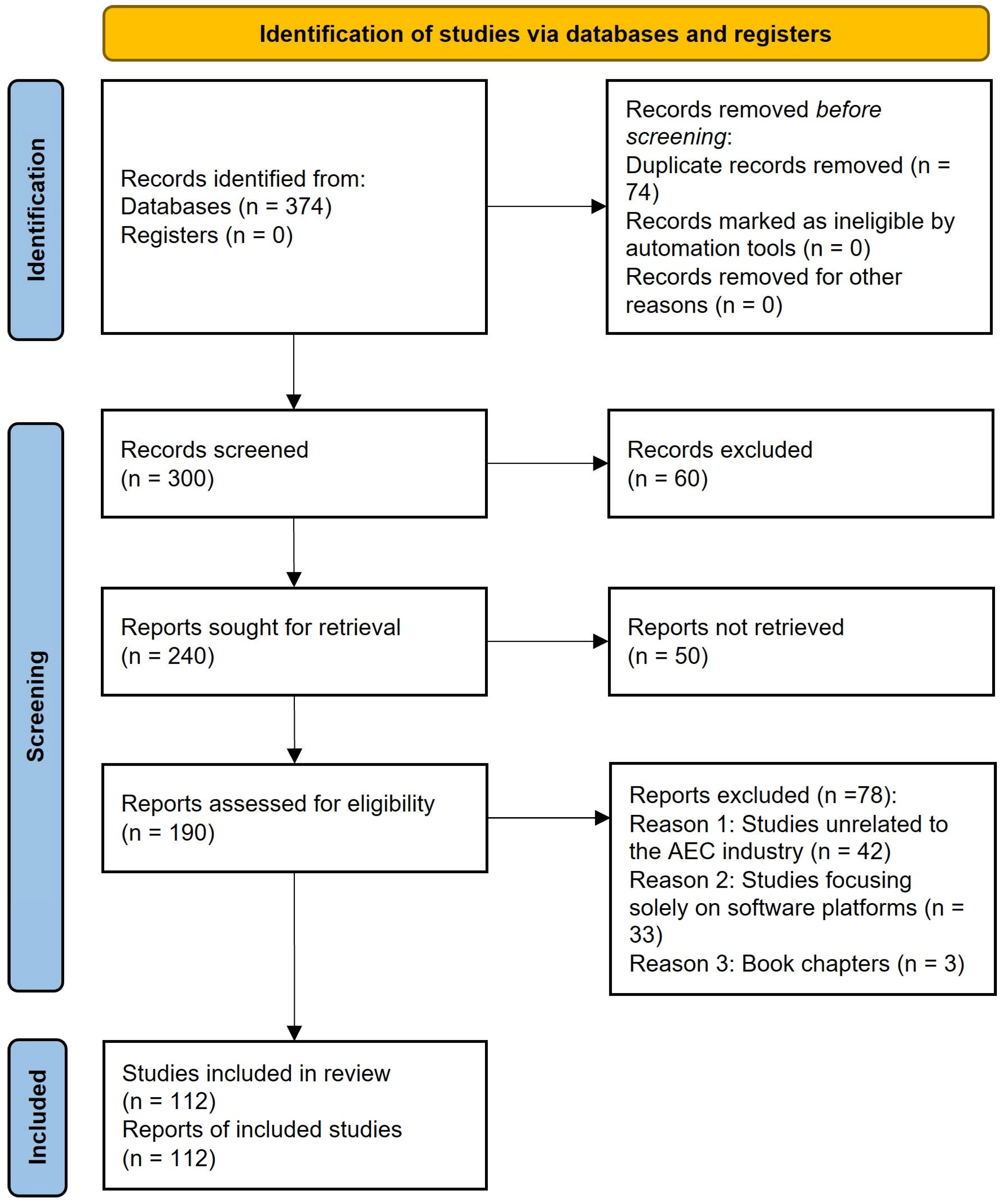
The Preferred Reporting Items for Systematic Reviews and Meta-Analyses (PRISMA) framework (Version 7.0.0) guided the review process [20]. Figure 1 illustrates the main PRISMA stages: identification, screening, and inclusion. An initial manual search was performed, with AI-assisted tools thereafter. Overall, the search process returned 374 documents. After duplicates were removed and titles and abstracts were screened, 300 documents remained. After excluding irrelevant studies, 420 documents remained. Full-text review, combined with the backward and forward snowballing of references, resulted in 112 documents being included in the final analysis. The final set of publications was primarily drawn from Scopus (n = 58), followed by Web of Science (n = 45), Engineering Village (n = 3), SpringerLink (n = 3), Google Scholar (n = 2), and ScienceDirect (n = 1). Table S2 presents the 112 documents selected and analyzed for this study. Table S3 in the Supplementary Materials provides the detailed search parameters for each database, focusing on the search fields, queries (Boolean search strings), data searches, and filters used.
The analysis integrated bibliometric review, trend analysis, and cross-industry insights. The bibliometric review applied performance metrics and science mapping to explore timelines, authorship, keywords, and countries. Trend analysis identified challenges and opportunities, addressing the first research question. Cross-industry insights, drawn from the automotive and consumer goods industries, informed future research directions and addressed the second research question. This rigorous, multi-layered approach highlighted fragmented coverage and limited empirical depth in existing research, underscoring the novelty of the present study in bridging gaps and advancing understanding of platform-based approaches in the AEC industry.
Building upon studies that explicitly adopt platform terminology, this study highlights representative examples of implicit platform research to illustrate how platform logic already appears in the AEC industry literature, as presented in Table S4 in the Supplementary Materials. These studies were identified through a purposive systematic search using an illustrative sampling strategy. This approach was intended to support and clarify the proposed typology rather than provide a comprehensive classification of the literature. Selection criteria focused on studies that have the following features: (1) address the main trends identified in this review; (2) exhibit platform characteristics (e.g., a shared technical and organizational core, reuse of components across multiple projects and scenarios, and configurable or multi-actor applications); and (3) consist of peer-reviewed journal articles or authoritative reports. Studies were excluded if they focused on single-use tools, lacked transferability beyond a specific case, or failed to demonstrate reusable or configurable structures. The selected studies span multiple research trends and serve as illustrative examples, not an exhaustive mapping of implicit platform research. This purposive and illustrative sampling strategy is methodologically valid because the aim of the analysis is analytical generalization rather than statistical representativeness [20]. By selecting theoretically relevant and information-rich cases, this approach enables the identification and clarification of recurring platform characteristics across different research contexts, thereby supporting the construction and validation of the proposed typology without requiring exhaustive coverage of the entire literature.
AI tools for bibliometric review use machine learning techniques to automate tasks and identify patterns, improving accuracy by reducing extraction errors [21]. These tools support keyword extraction and clustering during initial screening, assist manual searches, refine research questions, enhance recall by capturing overlooked terms, and reduce personal bias in literature analysis [22]. Combining AI-assisted methods with manual screening ensures comprehensive coverage and strengthens the validity of the analysis.
Three AI tools were employed in this study: Elicit (Version 1.0), SciSpace (Version 1.5), and Consensus (Version 2.0). At the initial scoping stage, Elicit was used to assist in framing the literature by identifying semantically related studies based on a predefined set of seed terms derived from the research questions [21]. The resulting suggestions were not automatically accepted; instead, they were manually screened by the authors to confirm topical relevance and alignment with the study scope.
SciSpace was subsequently applied during the systematic review phase to automate selected tasks, including abstract-level relevance ranking and metadata extraction [23]. Manual database searches were conducted first, and the retrieved records were then uploaded to SciSpace for semantic comparison and ranking. Inclusion and exclusion decisions remained fully manual and were based on predefined criteria, with SciSpace outputs only being used to support prioritization rather than replace human judgment.
Consensus was employed during the data collection stage to assist in identifying claim-level evidence and highly cited studies relevant to the research themes [24]. Its ranked outputs were cross-checked against manually extracted bibliographic data to verify consistency and avoid algorithm-driven bias.
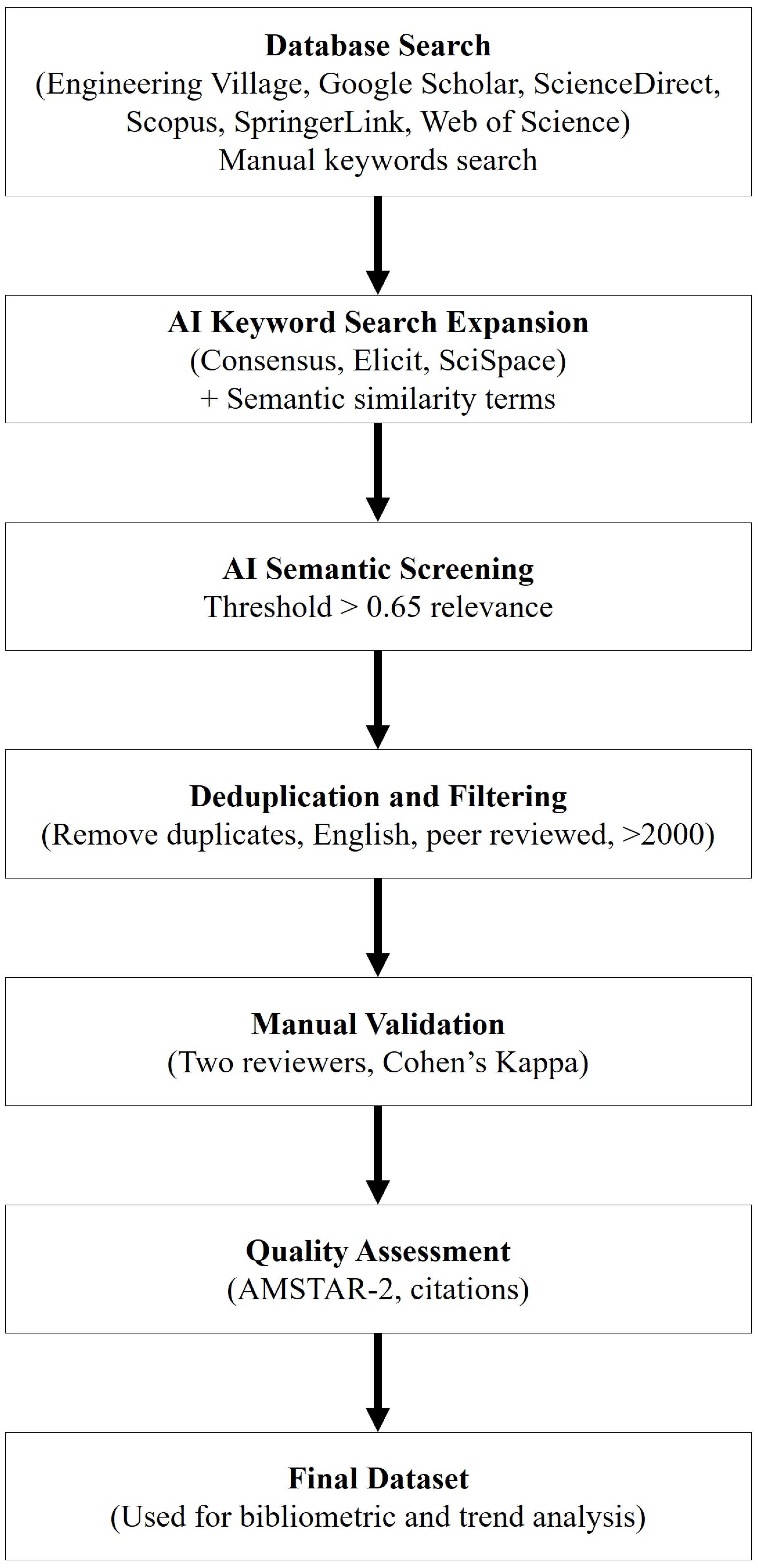
Figure 2 presents a flowchart of the combined AI and manual search process, beginning with manual searches of the selected databases. Technically, Elicit and SciSpace rely on transformer-based sentence embedding algorithms to generate dense semantic vectors from textual inputs [21,23]. Consensus applies supervised relevance-ranking algorithms trained on citation and claim-level data to prioritize sources [24]. Similarity scores were calculated by projecting titles, abstracts, and keywords into a shared embedding space using transformer-based sentence embedding models and computing cosine similarity between document vectors and a predefined seed-term vector set. These embeddings, which were generated through self-attention mechanisms rather than keyword frequency, formed the basis of the semantic expansion and relevance filtering implemented by the AI tools [21,22,23,24]. Publications with similarity scores below 0.65 were excluded, and duplicates were removed to retain studies with moderate to high semantic alignment with the research scope [23]. To ensure reproducibility, all seed terms, similarity thresholds, inclusion criteria, and databases were predefined and consistently applied across the AI tools. AI-generated outputs were systematically cross-validated with manual screening results and compared across databases to minimize database-specific and algorithmic bias. This hybrid approach ensured the transparency, traceability, and replicability of the literature selection process while leveraging AI tools solely as supportive mechanisms rather than autonomous decision-makers.
The inclusion criteria for the present study limited the dataset to peer-reviewed English-language journal articles on platform-based approaches in the AEC industry published between 2001 and 2024. The lower bound of the timeframe was selected to coincide with the emergence of platform thinking, modularization, and product family concepts in construction and manufacturing-related research, which began to attract scholarly attention in the early 2000s. The upper bound reflects the most recent complete publication year at the time of data collection, ensuring the coverage of both foundational and contemporary developments. The restriction to English-language publications was applied to ensure consistency in interpretation and analytical rigor across sources, as well as to reflect the dominance of English as the primary language of high-impact journals in the AEC and platform research domains. However, this criterion may introduce language bias by excluding relevant contributions published in other languages, particularly from regions with strong modular construction practices.
To further assess relevance, each AI-recommended source was independently rated by two reviewers using a five-point ordinal relevance scale, where 1 = marginal or tangential relevance, 2 = limited relevance, 3 = moderate relevance, 4 = high relevance, and 5 = direct relevance to the platform-based approaches in the AEC industry. Relevance scores for each article were assigned based on title, abstract, and keyword alignment, with studies scoring 3 or higher being retained for subsequent analysis.
Study quality was evaluated using AMSTAR-2 as a methodological appraisal instrument to assess transparency, consistency, and potential sources of bias. AMSTAR-2 was selected because it is a widely recognized and structured framework capable of systematically identifying methodological weaknesses in review-based literature, making it appropriate for synthesizing heterogeneous bodies of theoretical, empirical, and bibliometric research rather than relying on experimental studies alone.
When applying AMSTAR-2 to non-experimental and conceptual studies, the assessment emphasized criteria relevant to the quality of evidence synthesis, including the clarity of research questions, transparency of search strategies, justification of inclusion and exclusion criteria, reporting of data extraction procedures, and acknowledgment of limitations. Items specific to randomized or intervention-based studies were not emphasized. Moreover, studies exhibiting critical methodological limitations were flagged during interpretation but not automatically excluded, in line with the exploratory and mapping-oriented objectives of this review. Inter-rater reliability was strong (Cohen’s Kappa k = 0.81), and all discrepancies were resolved through reviewer consensus.
Compared with manual searching, the AI-assisted process increased recall by 22% and improved precision by reducing the number of irrelevant abstracts by 18% through semantic clustering [21,22]. This resulted in a more comprehensive and focused dataset for analysis.

2.2. Data Analysis

To address the first research question, this study employed performance metrics and science mapping in the bibliometric review by revealing patterns across publication timelines, authorship, countries, and keywords. VOSviewer (Version 1.6.20) was used with default resolution and clustering settings to visualize relationships among publications and identify dominant trends. The “association strength” normalization technique, recommended for bibliometric mapping, was applied [20].
The trend analysis addressed the second research question by using systematic and structured review procedures, including defining objectives, searching, screening, assessing quality, and synthesizing findings. Trends, challenges, and opportunities were semi-systematically categorized across the full dataset of 112 studies, comprising 92 empirical papers based on case studies, surveys, or experiments, 15 conceptual works addressing frameworks and definitions, and five review papers. The classification process considered the primary data, methodology, and research design of each study [20].
To validate the trend classification and reduce algorithmic bias, the study applied a triangulation procedure combining AI-generated trend clusters, manual thematic coding, and cross-database comparison. First, AI tools generated preliminary trend classifications based on keyword co-occurrence and semantic similarity patterns. Second, two independent reviewers manually coded a subset of the publications using an inductive thematic approach. Third, the analysis compared the resulting classifications across the main databases’ outputs, which were used to identify convergence and divergence in the dominant themes of this study. The study only retained trends when observing conceptual alignment across at least two of the three methods, with discrepancies discussed and resolved through consensus. This triangulated process enhanced the robustness and interpretability of the identified research trends.
The automotive and consumer goods industries can provide insights into platform-based approaches in the AEC industry [10,11]. Thus, the present study draws on these insights through a systematic review of empirical studies, reports, and academic literature to strengthen conceptualization and situate findings in the AEC industry context.
Previous reviews on platform-based approaches used qualitative case studies and frameworks [15,16,17,18,19], yet overlooked cross-industry analyses. In light of this, the present study contributes a novel multi-layered review that integrates bibliometric science mapping and systematic trend analysis using AI tools and manual searches for comprehensive data collection and cross-industry insights.

3. Bibliometric Review Results

This section addresses the first research question through a bibliometric review, highlighting timelines, keywords, authors, and countries to define trends and challenges in platform-based approaches in the AEC industry. Findings show growing momentum, defined research focuses, author networks, and regional priorities, which support the progress and collaboration opportunities.

3.1. Timeline Series

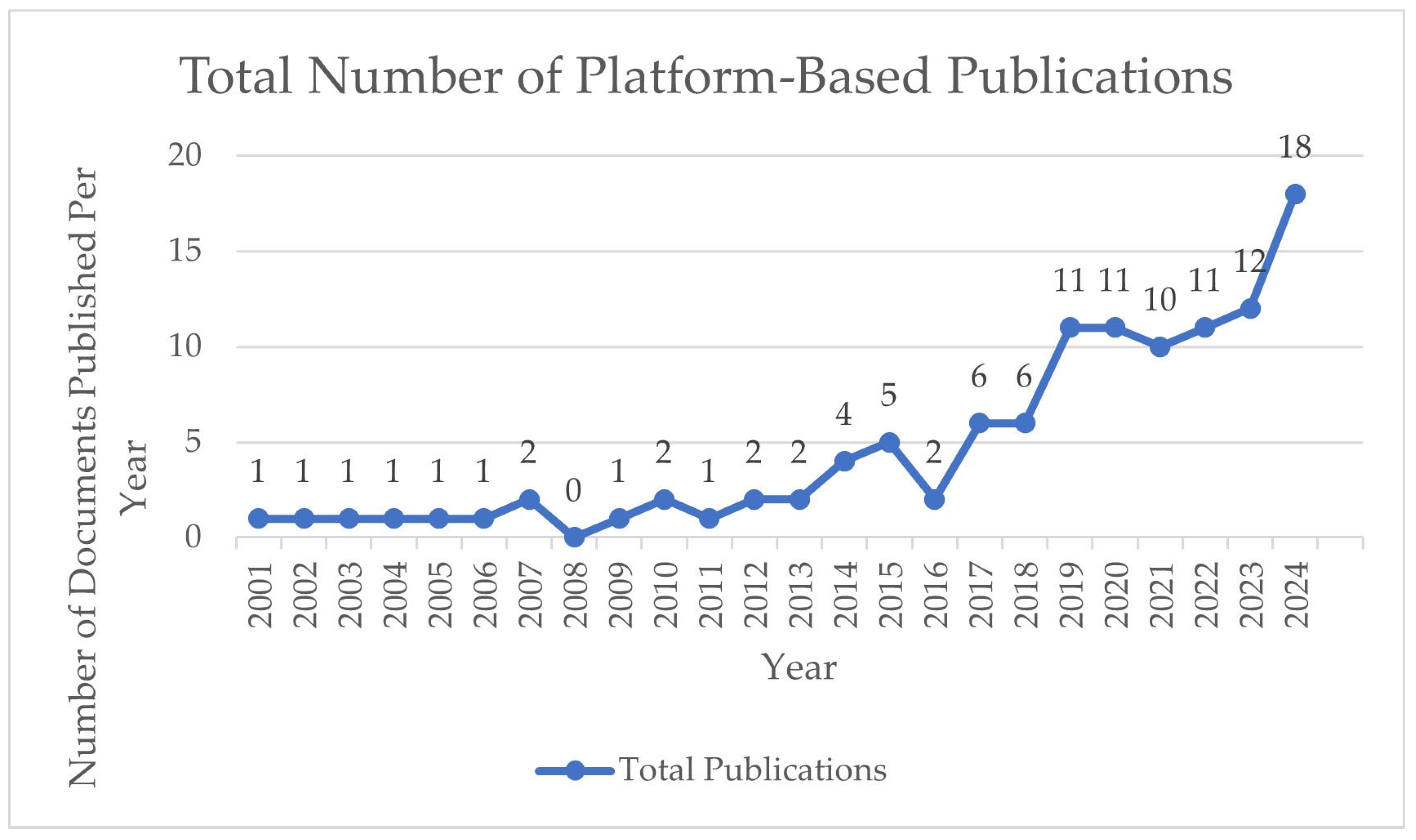
This subsection presents a timeline series of the selected documents to evaluate the development of the platform-based approach. Figure 3 shows the number of identified publications from 2001 to 2024. Overall, publication activity remained low for more than a decade, with a notable increase beginning in 2018 [25]. Between 2001 and 2011, only one relevant publication appeared annually, except in 2007 and 2010, and no relevant publications were recorded in 2008. In 2007, 2010, 2012, 2013, and 2016, the number of publications doubled, reflecting early academic interest in platform-based approaches [26]. By 2014–2015, publication output increased modestly to four to five studies per year, with a focus on design and development issues [19]. From 2017 to 2024, annual publication counts ranged from 6 to 12, peaking at 18 publications in 2024. During this later period, researchers more often focused on digital integration [27] and the links between platform concepts and manufacturing approaches [28]. Overall, the literature remained sparse and stable until 2017, followed by a gradual rise culminating in a peak in 2024, indicating growing, but still limited, scholarly attention to platform-based approaches in the AEC industry [29].

3.2. Keywords

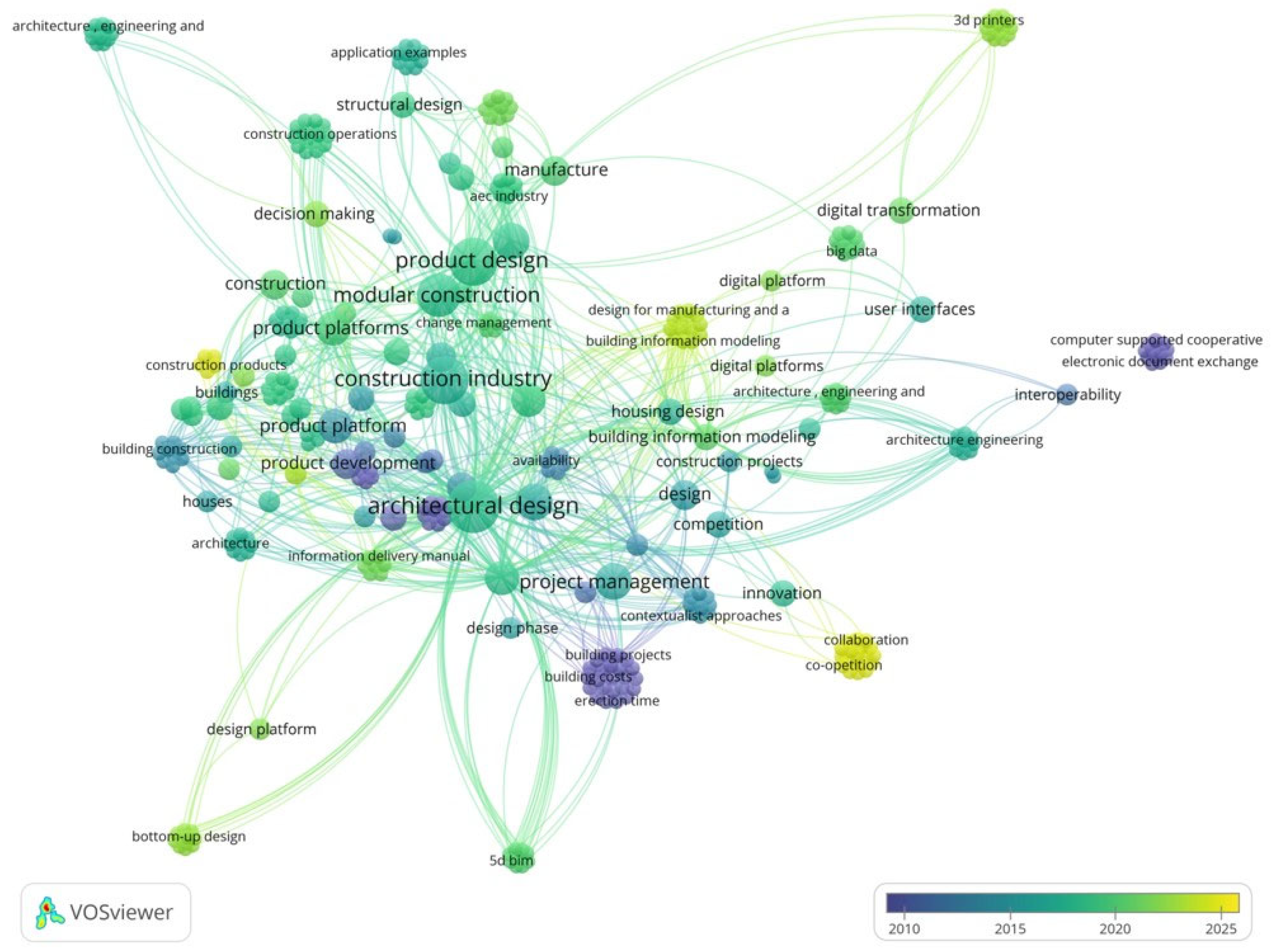
A keyword analysis was conducted to identify dominant research themes and emerging trends [20]. This subsection details a review of all keywords and author keywords conducted using VOSviewer (Version 1.6.20). Figure 4 illustrates three primary keyword clusters: construction and design, technology and innovation, and project management. Cluster names were assigned based on the most frequent and dominant co-occurring keywords within each group, reflecting their shared thematic focus. The construction and design cluster, dominant before 2019 and shown in blue and dark green, includes keywords such as “product platform” and “buildings” [30]. The technology and innovation cluster, most prominent between 2020 and 2022 and displayed in green, includes terms such as modular construction, 5D Building information modeling (BIM), and digital platforms. Emerging technologies, including 3D printers and big data, feature prominently in this cluster and drive platform-related innovations [31]. The project management cluster, prevalent during the 2023–2024 period and represented in yellow and light green, emphasizes construction operations and manufacturing. These clusters illustrate a progression in which technology and innovation developments enhance construction and design practices, with project management integrating these advances into practice. Although operational and technological dimensions dominate the literature, the relatively limited attention to governance, knowledge sharing, and platform typologies reveals conceptual gaps and inconsistent terminology that warrant further exploration [32].
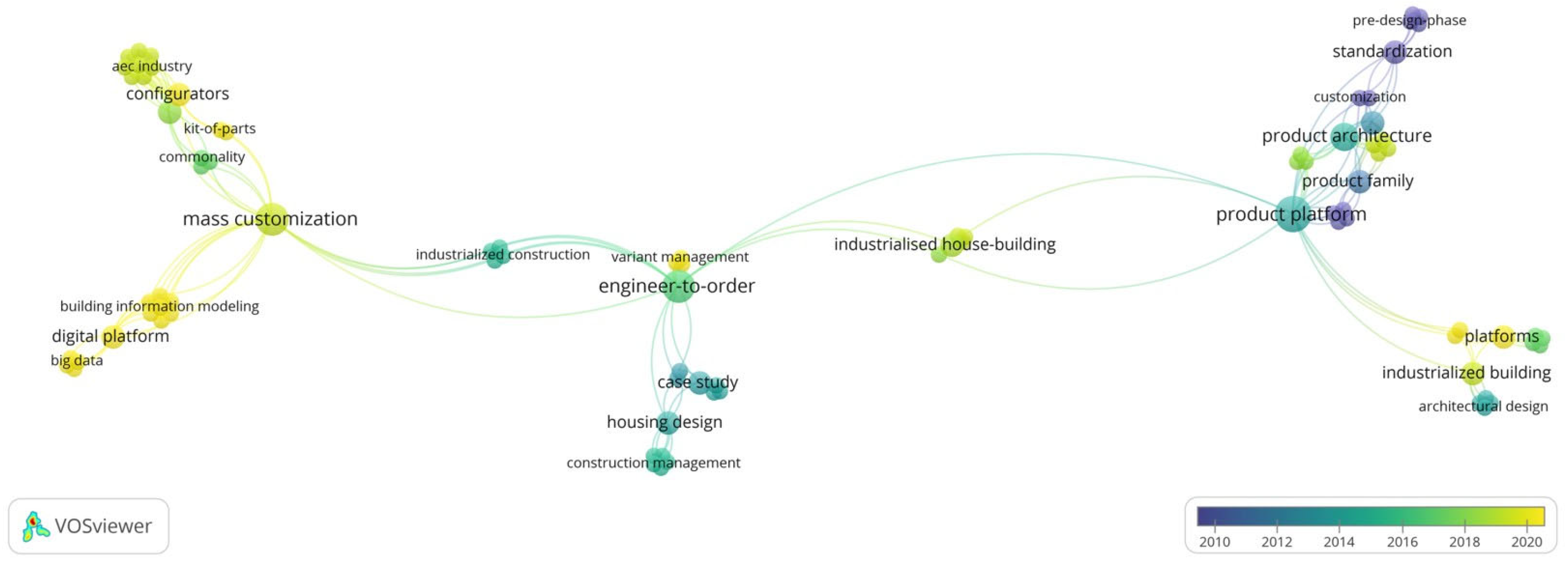
Author keywords are researcher-selected terms representing the key concepts of a study [20]. Figure 5 presents their temporal distribution in the platform-based literature, categorized into three groups: platform basics, production methods, and digitalization and customization enablers. These group labels reflect the primary conceptual roles of the keywords within each cluster, as indicated by their co-occurrence patterns and temporal prominence. The platform basics group, shown in bluish-purple and dominant before 2012, emphasizes product platforms and standardization. The production methods group (2013–2017), presented in greenish-blue, focuses on engineer-to-order and industrialized construction [33]. The digitalization and customization enablers group (2018–2024), shown in yellow and green, highlights the kit-of-parts approach, big data, and BIM [34]. The first two groups interact through product platform techniques [35], while the second and third groups are linked through manufacturing activities [36].
The difference in cluster labeling between the all keywords analysis (Figure 4) and the author keywords analysis (Figure 5) reflects the use of two complementary classification logics. The all keywords analysis is system-derived and based on co-occurrence patterns extracted from titles, abstracts, and keywords, resulting in broader, conceptually aggregated clusters such as “construction and design.” In contrast, the author–keywords analysis relies on author-defined terminology, which produces more focused and theory-driven groupings, such as “platform basics.” Therefore, these perspectives enrich the analysis by capturing both the emergent thematic structure of the literature and the intentional conceptual framing adopted by authors.
Across the keyword classifications, the emerging themes highlight gaps in linking early-stage product platform strategies with downstream manufacturing processes, particularly regarding customization and digital integration [15]. Other drawbacks, such as design rigidity and increased economic risk [22], are closely linked to the trends and gaps identified in the review, particularly the underdevelopment of governance frameworks and limited emphasis on lifecycle-oriented platform management [29]. Notably, the absence of robust governance and coordination mechanisms constrains controlled flexibility and risk-sharing, thereby reinforcing the very challenges that hinder broader platform adoption in the AEC industry [2]. Overall, the keyword analysis demonstrates a thematic shift from foundational research topics, dominated by platform basics before 2012, toward more specialized areas encompassing production methods and digitalization and customization enablers after 2013. This progression reflects the maturation of the field, as platform-based research increasingly incorporates digital technologies and advanced integration strategies. These findings align with prior work identifying digital integration and knowledge sharing as central challenges in advancing technologies in the AEC industry [22].

3.3. Authors

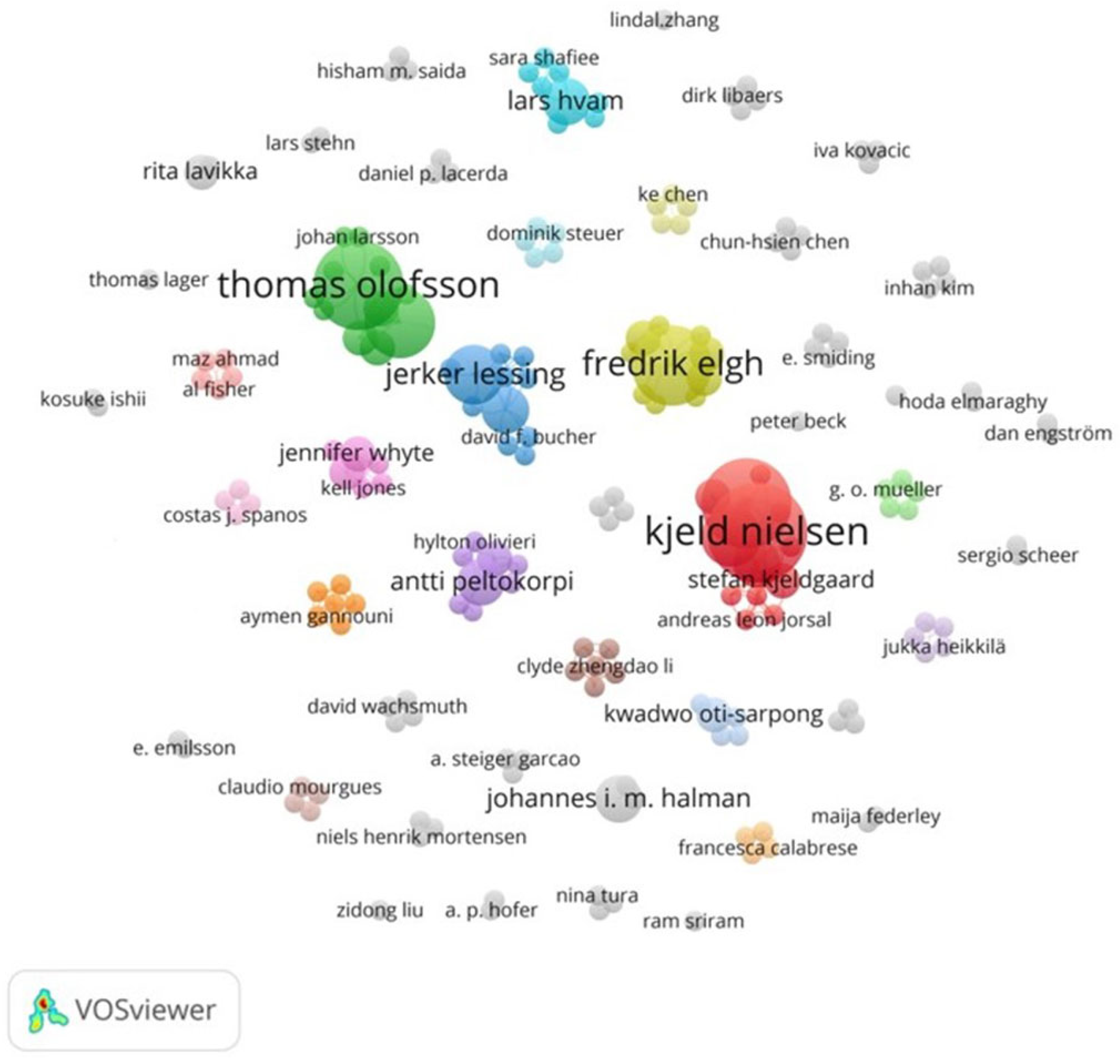
Author analysis was used to examine publication patterns and collaboration relationships within the literature [20]. Figure 6 presents the resulting author network. In the figure, node size corresponds to the number of publications, while colors indicate groups of authors who frequently publish together. Links between nodes represent collaboration strength. The map shows distinct author groups, as well as several authors who appear with few or no collaborative links. The analysis indicates a fragmented structure, characterized by low network density and high modularity. This structure is evidenced by multiple, separate color-coded clusters with limited interaction between them. Centrality measures identify several authors as particularly influential, such as Thomas Olofsson (h-index = 30), Fredrik Elgh (h-index = 17), Kjeld Nielsen (h-index = 17), and Jerker Lessing (h-index = 10) [37]. These authors exhibit a higher degree of centrality than others in the database. In contrast, betweenness centrality remains minimal, suggesting the absence of bridging authors who connect otherwise disconnected clusters. This pattern highlights limited intergroup collaboration and largely isolated research efforts. Such fragmentation is consistent with observations by Zhou [38], who noted that platform-based approaches are shaped by distinct and loosely connected author networks. Therefore, strengthening the connections among these groups is necessary to improve knowledge sharing, foster collaboration, and accelerate platform adoption across the AEC industry research community.

3.4. Countries

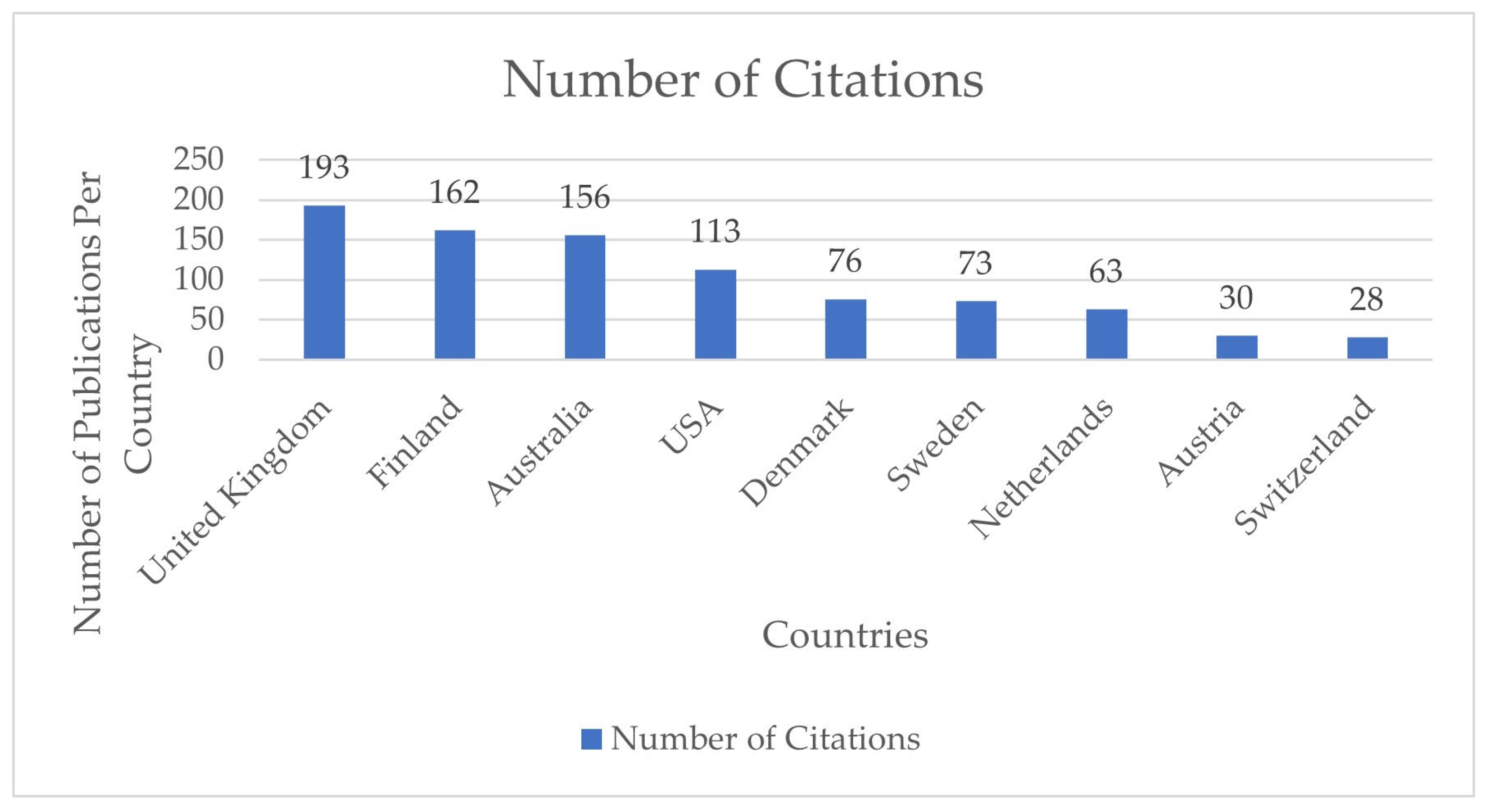
Country-level analysis revealed global research trends, geographic hotspots, and the influence of national policy and funding environments on platform-based research [20]. Figure 7 presents citation counts by country for the studies included in the review. These include the UK, Finland, Australia, the USA, Denmark, Sweden, the Netherlands, Austria, and Switzerland, which dominate the literature. These countries collectively account for the majority of publications in the dataset, while contributions from other regions appear much less frequently. In several cases, the countries with higher publication activity also have policy or funding environments that support industrialized or digital construction research. In the UK, offsite construction and platform-based practices are promoted through government programs and targeted funding [39]. Moreover, Denmark, Finland, and Sweden have longer histories of industrialized construction and timber prefabrication, supported by housing policies, innovation initiatives, and regulatory frameworks that favor standardized and modular approaches [40]. In the USA and Australia, platform-based research often appears in connection with large infrastructure programs and housing demand, with frequent collaboration between university and industry [41]. Studies from the Netherlands, Austria, and Switzerland are commonly linked to work on sustainability, circular construction, and digital building technologies supported by national funding schemes [42].
These patterns demonstrate how research on platform-based approaches is geographically uneven. In many cases, higher levels of activity coincide with national and regional priorities related to funding, regulation, and construction innovation. Countries with existing industrial capacity and a focus on digital and industrialized construction tend to be more visible in the literature, which is consistent with earlier findings [11]. Other regions appear far less frequently, reducing the variety of contexts represented and limiting how broadly current findings can be applied [29]. As a result, evidence from less active regions remains limited, particularly at early stages of platform-based research.

4. Trend Analysis Results

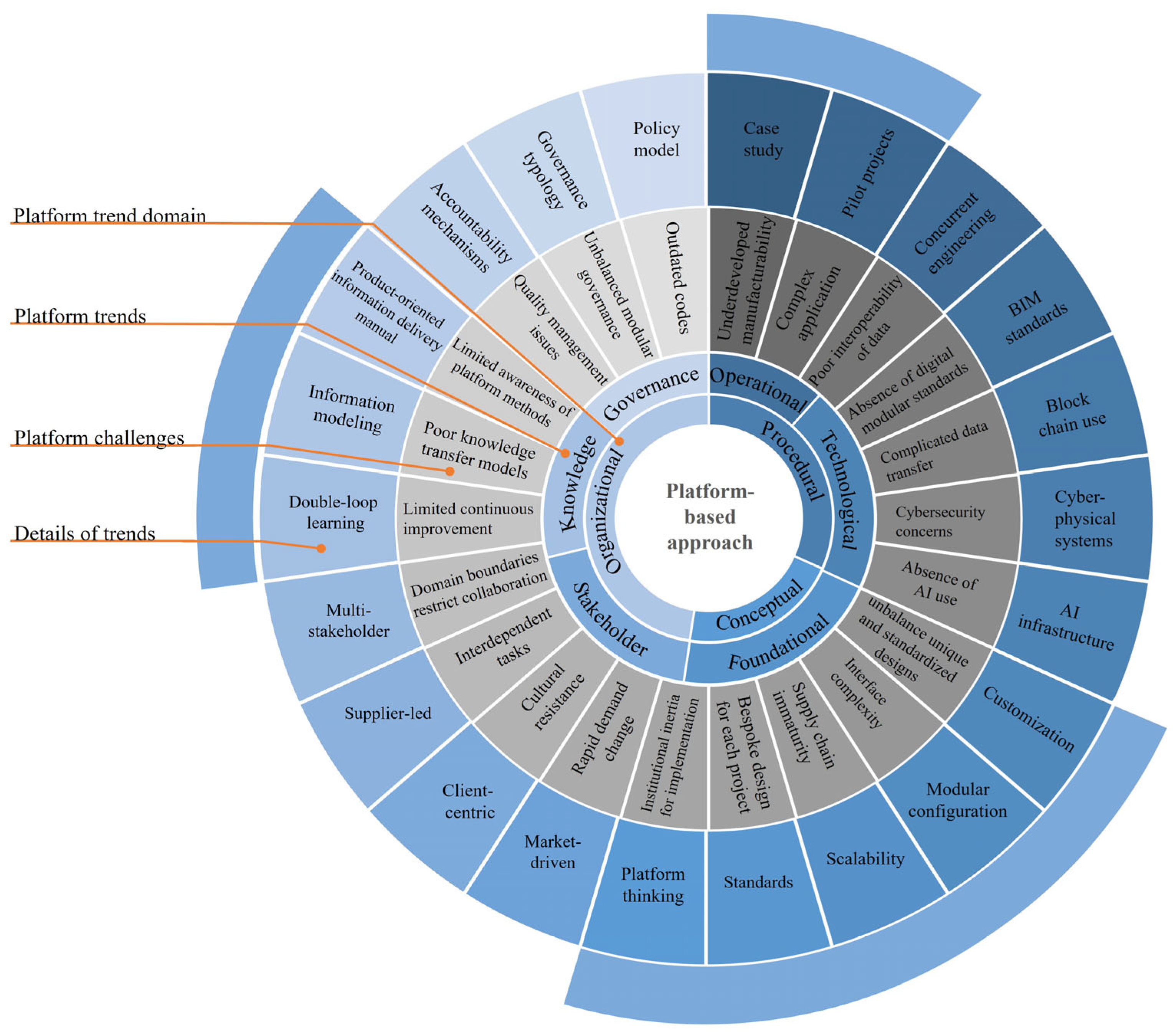
This section addresses the second research question by exploring the multi-dimensional evolution of the platform-based approaches in the AEC industry, complementing the bibliometric results. It identifies three main trend domains: conceptual, procedural, and organizational aspects. While the trends include typologies, standardized foundations, technological and operational advances, and examine stakeholder roles, governance, and knowledge sharing. This underscores the need for continued research and consistent practices.
A trend reflects progressive change over time [20]. This section identifies trends by tracking these changes and platform assets, which highlight evolving themes such as typologies, foundational, operational, technological, knowledge, stakeholder, and governance trends [43,44].

4.1. Conceptual Trends

4.1.1. Typological Trends

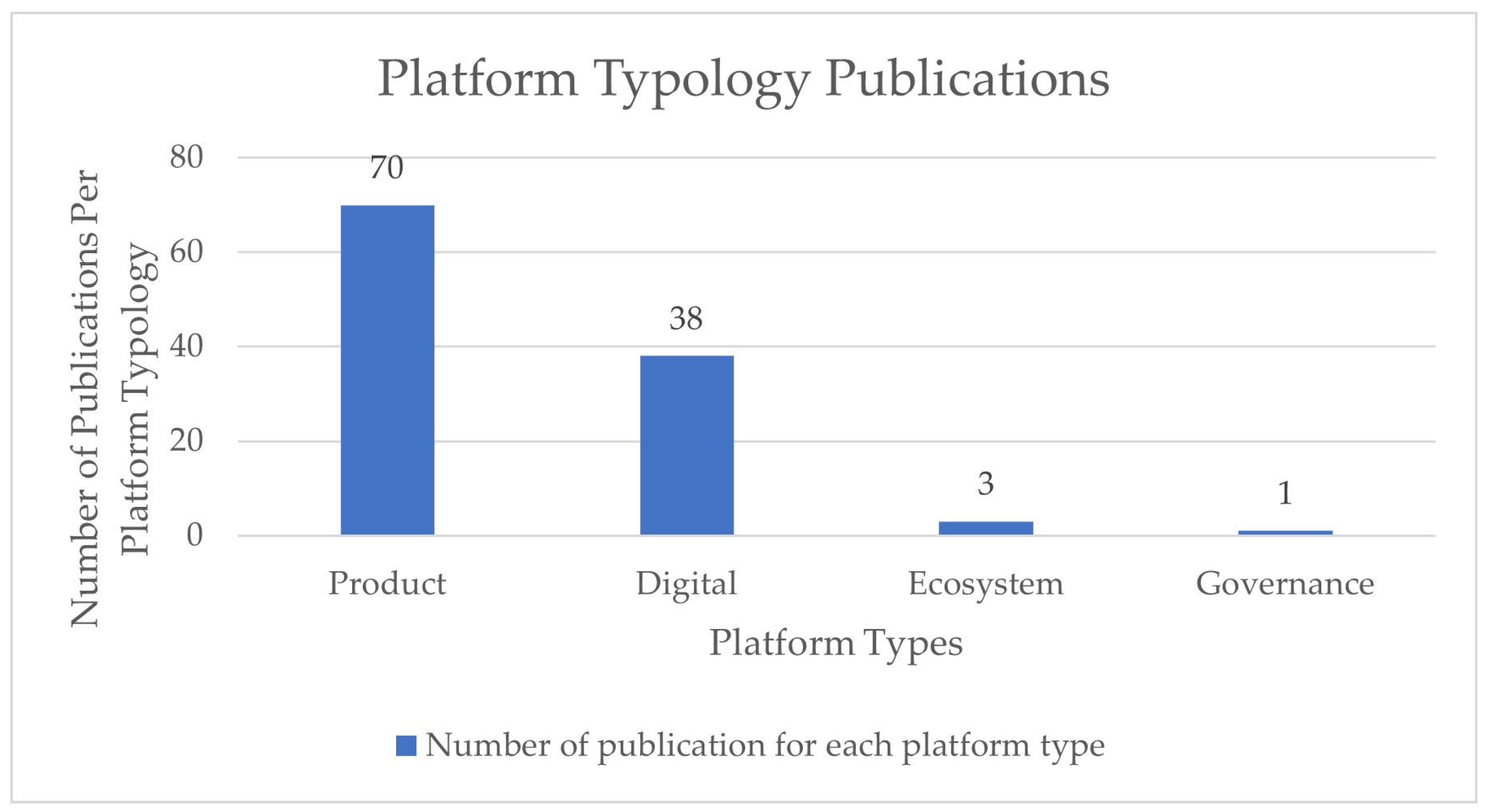
This subsection discusses the main platform typologies observed in the literature, as well as their frequency and taxonomy. Platform typologies structure systems by type and category [20]. In the AEC literature, platforms appear as methodological tools [45], management strategies [46], and integrated systems [47,48]. Figure 8 presents four main platform classifications in the AEC industry: product, digital, ecosystem, and governance. Notably, the distribution of publications is uneven, with most studies addressing product platforms (n = 70), followed by digital (n = 38), ecosystem (n = 3), and governance (n = 1) platforms.
This taxonomy differentiates platforms by their primary focus, distinguishing tangible platforms (product, digital) from institutional ones (ecosystem, governance) [11]. Product and digital platforms dominate the literature due to their practical relevance and measurability through modularization and BIM integration, which demonstrates the efficiency gains. In contrast, ecosystem and governance platforms require coordination among fragmented stakeholders and regulatory alignment, making them more challenging to investigate and implement [11]. This imbalance indicates that research emphasizes technical and tangible aspects, while the institutional dimensions critical to long-term platform adoption remain underdeveloped.
Product platforms emphasize functionality and physical product architecture [11]. Research also addresses layout [39], modularization [49], products-in-products [50], customization [51,52], kit-of-parts configurations [53], design platforms as structured systems, and design methods [54]. Tangible product platforms are adapted to the AEC projects through standardized modules, supporting a shift from engineered-to-order to made-to-order systems while reducing fragmentation [55].
Digital platform typologies denote BIM-based environments and common data spaces that connect actors through information flows, highlighting software, user interactions, providers, and data exchange [56]. Related studies examine digital manufacturing platforms [18], cloud platforms [27], and design optimization platforms [57].
Platform ecosystem research examines the interorganizational collaborations that generate value across supply chains, focusing on stakeholder networks coordinated through shared standards and interfaces [58]. Platform governance studies address the rules, standards, and institutional frameworks that guide platform use [43] and explore policies shaping platform structure, assets, and implementation [29].
Notably, fragmented projects lacking integrated digital and ecosystem foundations impede technological and governance alignment [59], whereas platform typologies enhance procurement models and industry innovation [11].
Despite not being explicitly framed as platforms, the studies listed in Table S4 in the Supplementary Materials demonstrate core characteristics: a shared technical base, reuse across projects, configurability, and stakeholder knowledge sharing by defining their study focus, relations to the platform logic, and the platform functionality. These examples highlight the implicit platform present in the AEC industry research.

4.1.2. Foundational Trends

This subsection describes foundational trends in the AEC industry literature, focusing on how modular configuration, customization, scalability, and application relate to modularity theories and platform thinking. These trends shape core research principles and theoretical approaches [60]. Many studies investigate modular product platform designs and configurations, focusing on standardization through iterative development [61] and the reuse of solutions [62,63]. Product lifecycle management and data handling are also discussed [64]. For example, Eriksson et al. examined partial modularizations [65]. Moreover, Lin et al. developed kit-of-parts libraries to enable modularization [66], which appears promising; however, practical implementation may vary.
Modular configurations allow some level of customization while using standardized components [15]. Fully modular product platforms break products down into parameterized subsystems [67,68]. Notably, these designs are shaped by market demand and supply chain considerations [69,70]. Although modularity tends to support innovation and scalability, physical site constraints and standards can sometimes limit implementation [11,71].
According to two-sided market theory, platforms help connect different groups, including designers, contractors, and manufacturers. Still, rigid modular configurations and fragmented practices can make these interactions challenging [43,72]. Some projects use three-tier configurations to manage options across multiple levels [73], which helps with development, design, manufacturing, and assembly. However, these configurations remain influenced by cost, time, and functional requirements [74,75].
Some publications link platform thinking with lean principles [4]. Open building systems balance standardization and customization [76]. However, design-phase customization often lacks sufficient investment and management in practice [4].
Despite promising recent developments in this field, certain challenges remain. These include limited platform understanding, resource constraints, scalability, and standardization [77]. Resource constraints include insufficient budgets, limited time, limited modularization, and regulations [30]. Scalability issues also arise from rigid designs and inflexible module interfaces that restrict design and functional modifications [78]. Moreover, the limited standardization of inputs and outputs can also complicate routine design processes [79]. Bertram et al. suggested establishing library standards to improve component compatibility and interchangeability [49]. This is linked to platform ecosystem governance concerns about rules, decision rights, and regulatory frameworks [29].
Siewczyńska et al. provide an illustrative example by treating the modular unit as a platform product [80]. This modular unit functions as a repeatable and transportable building component, with standard dimensions, interfaces, and configurable variants. It combines a shared technical core with flexible layouts, allowing for multiple model variants. It also enables the quantification of material, energy, and cost differences. Notably, scaling modular product families can deliver economic and sustainability benefits. Standardized cores form a foundation for platform-based architectural systems, while standardized interfaces reduce coordination and transaction costs across the project lifecycle.
The Construction Innovation Hub has developed a standards-based quality pathway that links verification (meeting requirements) and validation (fitness for purpose) within the product development process [81]. This framework supports a repeatable testing model aligned with platform-based approaches, in which identical components are validated once and subsequently reused across projects.
Even with these advances, modular approaches remain underdeveloped. Project fragmentation makes it difficult to establish consistent standards [82]. Moreover, regulatory and procurement frameworks often prioritize compliance and cost reduction over innovation [60]. Cultural resistance is also common among architects, contractors, and clients, who sometimes view modularity as limiting design freedom or quality [11]. The economic model of modular construction depends on stable, large-scale demand to justify investment in factories and logistics, which is rarely the case in an industry with cyclical demand and bespoke projects [83].

4.2. Procedural Trends

4.2.1. Operational Trends

This subsection discusses the results of platform implementations through the operational trends that emerge from platform implementations, highlighting relevant metrics, insights, and challenges. These trends reflect evolving case studies and patterns in working processes over time [84]. Platform-based approaches can shorten project schedules by shifting labor-intensive work from sites to factory environments. For instance, a kit-of-parts system enabled delivery of the Forge office building in London 30% faster than conventional projects [11]. Platform methods have also reduced the material costs by 27%, construction time by 53%, and improved the energy efficiency by 58% compared with traditional on-site construction methods [85]. Furthermore, Nievola and Scheer reported roughly 20% lower construction costs for residential houses of 50–100 m2 [86], while Bryden Wood company noted a 70% reduction in carbon emissions when using product platforms [11].
Beyond these performance gains, operational trends also reveal constraints related to design flexibility and platform standardization. Unlike conventional workflows, which suffer from sequential processes, on-site inefficiencies, and material waste, platform-based approaches leverage prefabrication and modularization to enhance sustainability, reduce waste, and improve quality control [40].
Staszak et al. developed practical methods for reducing complex, repeatable structural components into low-cost, standardized modular systems [87,88]. These implementations rely on modular product families and digital workflows to support rapid design iteration, prefabrication, and lifecycle simulation. Empirical evidence demonstrates that low-order, repeatable modular structural systems maintain sufficient accuracy compared with high-fidelity models, supporting core platform-based objectives centered on standardization and repeatability. Detailed models also function as repeatable computational modules and operational functions within the platform architecture.
However, architectural creativity can conflict with engineering constraints since standardized platforms limit design when compared with traditional construction [89]. While standardized and modular layouts support scalable processes while balancing design and standardization [88], platform manufacturing and material choices remain underdeveloped [41]. Smart manufacturing tools, such as real-time monitoring, enhance operations [80], while reconfigurable systems offer long-term savings but require substantial investment in production and technology [17].
Rigid platform structures and formalized processes can restrict flexibility for unique projects [36], complicating implementation due to misalignment between product complexity and manufacturing processes [60]. Moreover, limitations in standardized data exchange [89] further challenge the consistent application of platform methods.

4.2.2. Technological Trends

This subsection discusses technological trends encompassing AI, BIM, blockchain, and cyber-physical systems, highlighting applications, challenges, integration barriers, and interoperability architecture. Current construction technology trends integrate advanced digital tools and innovations [90]. For instance, AI integration, BIM, and optimization techniques influence platform adoption by enabling real-time updates, data tracking, and digital manufacturing [91]. Despite these advantages, unstructured data remains a persistent issue [92,93]. Even so, AI integration can improve productivity in complex platform-based construction projects [94].
Szymczak-Graczyk et al. developed a framework combining experimental and numerical data to support simulation and measurement [95]. Their study produced a calibrated model that can be reused as a computational component within platform-based approaches. By connecting decision-support with application-driven analytics, the digital twin allowed predictions of long-term performance impacts. This work illustrates how BIM, digital twins, and operational data can generate actionable insights for material selection, maintenance planning, and retrofit decision-making. However, in practice, adoption depends on team expertise and project scale.
Platform-based applications also include automation [96], parametric and generative design optimization [97], and data analysis using self-organizing maps [98]. While AI-driven digital ecosystems can support stakeholder value co-creation [38], they often require long-term strategies for effective market adoption [99]. Blockchain offers decentralized platforms and helps mitigate information asymmetry among stakeholders [100], while digital configurators and protocols enhance repeatability in modular designs [101]. Furthermore, wireless technologies, sensors, and mobile interfaces facilitate real-time monitoring [102], while cyber-physical systems link virtual models with physical manufacturing in a seamless manner [32].
Although emerging technologies clearly have the potential to enable platform-based approaches, their effectiveness depends on integration across the entire project lifecycle [13]. Data from different software, such as Revit (Version 2025.4.4) and ArchiCAD (Version 29), often lack interoperability, making transfers between design and manufacturing difficult [100]. Moreover, the lack of shared ontologies for modular product definitions hinders stakeholder alignment, while digital infrastructures with organizational silos reinforce fragmented adoption [13]. Cybersecurity and intellectual property concerns also restrict open data exchange, limiting the collaborative implementation of AI technologies [66].
Addressing these barriers requires a strong interoperability architecture. For example, digital twin frameworks can integrate real-time data from design, manufacturing, and assembly into a single platform [100]. Successful technical interoperability also depends on governance mechanisms that define data ownership, access rights, and regulatory compliance [66]. In practice, both technical and organizational coordination are essential to making these technologies function effectively within AEC platform-based approaches.

4.3. Organizational Trends

4.3.1. Stakeholder Trends

Platform stakeholders include individuals operating across multiple levels of the AEC industry [85]. Therefore, this subsection discusses stakeholder-related trends, including supplier-led, client-centric, market-driven, multi-stakeholder, and concurrent engineering approaches.
In supplier-led approaches [14], manufacturers drive platform development by providing modular subsystems, such as bathroom pods and façades, fostering long-term supplier relationships through standardized production and tailored project inputs [103,104]. Although practitioners can leverage technical expertise and standardization, risks such as vendor lock-in and poor interoperability persist. Supply chain fragmentation and short-term contracts also hinder stable collaboration [105]. Weak connections, frequent team changes, and supplier modularization cycle times can also disrupt platform diffusion and complicate scheduling [106].
Client-centric models prioritize clients in driving platform adoption through procurement, configurable modularity, and shared software in early design phases [107]. These approaches enable innovation at scale but demand robust governance capacity. In this context, effective specification management reduces costly iterations [108,109]. Nevertheless, unclear client preferences and miscommunication with designers prolong timelines and complicate early design stages [110]. Client-centric models also align with market-driven approaches, where competitive pressures prompt developers and contractors to adopt modular platforms to reduce costs and expedite delivery. However, fragmented market conditions frequently limit these outcomes [111].
Integrative solutions in multi-stakeholder arrangements promote shared resource use within temporary project alliances. In such cases, platform standards are co-developed among architects, engineers, suppliers, and clients. Although collaboration is costly and governance-intensive [112], these arrangements support mutual goals and concurrent engineering [113]. Platform business models link organizations to achieve collective objectives [114], while concurrent engineering emphasizes simultaneous design and manufacturing processes supported by digital platforms [108]. Challenges include cultural resistance to platform adoption in one-off delivery contexts [106], workflow complexity from interdependent tasks, and restrictive domain boundaries [115].
Lehtinen and Aaltonen demonstrate that platform-based approaches shape stakeholder engagement by explicitly defining mechanisms [116], including assessment criteria for stakeholder platforms. Teng et al. employed standardized modular systems to establish technical interfaces, multi-party dependencies, and designer–stakeholder qualifications [117]. These approaches introduce platform-level metrics, such as symbiosis indicators, to evaluate system stability and support reuse across projects.

4.3.2. Knowledge Trends

This section explores knowledge trends, including information modeling, product-oriented delivery manuals, double-loop learning, and performance-based contracting [84]. Information modeling, particularly via BIM and digital twins, underpins integrated knowledge flows by creating shared data environments that allow designers and manufacturers to coordinate and structure their knowledge assets [74,75].
Existing studies demonstrate the practical implementation of information modeling for knowledge and decision-support platforms by establishing data integration layers that collect, analyze, and visualize the available multi-source data [118,119]. These platforms treat the data integration layer as a decision support layer, thereby enabling structured evaluation. They formalize end-to-end decision workflows, from non-destructive scanning and targeted sampling to laboratory analysis, limit-state calculations, and recommended allowable loads, closely aligning with the integrated decision pipelines codified by platform-based approaches. These workflows incorporate legal and regulatory constraints, reflecting the need for platform-based approaches in the AEC industry to capture decision contexts and governing rules.
Moreover, these studies conceptualize data as a service by providing a repeatable, high-density data acquisition workflow that supplies continuous diagnostic inputs to platform-based systems. In this manner, these platforms function as an operational data layer for knowledge-based platforms. The decision support operates as a modular service, using algorithms and hierarchical criteria sets to organize and deploy decision modules, thereby enabling reuse and integration within larger platform workflows. This approach integrates sensing technologies, automated analytics, and prescriptive outputs to support stakeholder decision-making while capturing knowledge for subsequent reuse.
Szymczak-Graczyk et al. emphasize standardization within platform-based knowledge systems by highlighting relevant reference standards, standardized metadata, and calibration procedures [95]. These elements reflect the core governance considerations underpinning effective knowledge sharing. Product-oriented information delivery manuals establish structured information exchanges across the lifecycle, enabling real-time data sharing on materials and components, while weak knowledge sharing often delays such updates [30]. Moreover, double-loop learning helps firms correct errors and reassess platform assumptions, thus enhancing knowledge through feedback, adaptation, and revision to improve project outcomes [120,121].
Performance-oriented contracts align incentives with outcomes, linking project results to platform performance metrics (e.g., energy efficiency and lifecycle cost) rather than initial price [60]. Although project teams can leverage lifecycle resources to track, evaluate, and optimize project performance [84], this requires new knowledge application structures and risk-sharing models.
These trends reveal that knowledge flows underpin platforms but face persistent challenges, including limited continuous improvement [121], inadequate documentation [57], and weak intellectual property protections [84]. Notable gaps include insufficient manufacturing knowledge restricting supply chain integration [61], an underdeveloped theory for aligning production strategies within product platforms [122], and limited awareness of design methods constraining innovation [123].
Informal knowledge-sharing practices must evolve into structured management systems, which requires organizational change [51]. Architects often struggle with information management because teams frequently lose knowledge when projects conclude [42,124]. Feedback channels remain fragmented and lack quality control [125], while tacit expertise and intuition resist codification [126].

4.3.3. Governance Trends

This subsection examines governance trends focusing on policy models, typologies, and accountability mechanisms. Although these trends can provide frameworks for stakeholder collaboration and value creation [29], they remain an underdeveloped aspect of platform adoption. Notably, policy models differ significantly across contexts [29]. For example, Singapore’s design-for-manufacturing and assembly strategy mandates the adoption of regulation and procurement requirements, exemplifying a top-down policy approach [2]. In contrast, UK policy reflects hybrid public–private systems, with the state issuing guidelines while industry drives implementation [43]. Government-led programs, open databases, and regulatory standards support lifecycle-wide platform adoption [127]. Open digital databases enhance access to standards [128], and procurement policies regulate innovation, thus enabling scalable, efficient, modular construction [2].
Existing studies provide empirical grounding for governance interventions, including standards updates, policy modeling, compliance workflows, and public policy dashboards [129,130]. These studies frame the platforms by identifying operationalized actions and classifying them as ontologies for platform-based risk modules. The resulting rule sets and decision structures formalize Eurocode-based design situations, load combination rules, partial safety factors, and consequence classes, thereby reflecting key governance trends within platform-based approaches. Regulatory requirements directly translate into explicit decision logic, compliance checks, and automated recommendations that a governance platform can implement. Furthermore, the studies map design strategies to migration policies and workflow branches within platform-based systems. These policies encompass safety management systems, monitoring and inspection regimes, and iterative adjustments to design standards, all of which constitute governance actions that a platform can operationalize. The studies also employ evaluation criteria based on consequence classes, reporting obligations, and observed failure modes to establish objective benchmarks for assessing whether a platform adequately supports governance objectives.
Structured decision processes rely on formal data models and computational methods packaged as reusable components that a governance platform can deliver as services. Additionally, evidence-driven governance embeds regulatory and technical knowledge as reusable data layers and rule sets required by platform-based systems. By linking performance indicators to historical development trends, these studies demonstrate how platforms can operationalize regulatory goals, thereby supporting policy-level interventions, planning scenarios, and the state-led development of forecasting and simulation capabilities.
Governance approaches align with the broader typologies. Centralized models place authority in a dominant client or regulator, thereby ensuring coherence but restricting flexibility [29]. Decentralized models distribute decision-making across stakeholders, enhancing inclusivity yet raising coordination costs [127]. Importantly, modular governance balances independent subsystem management and shared interface standards [2].
Accountability mechanisms are still emerging. Delivery frameworks connect outcomes to whole-life performance via collaborative agreements emphasizing shared risk, reward, and the benchmarking of environmental and productivity goals [29]. Technical accountability derives from compliance and regulatory oversight, while certification schemes offer external monitoring. Market-based mechanisms, such as benchmarking and reputation, complement these measures [2].
Notably, platform governance faces regulatory hurdles and quality management challenges. For instance, standardization limits industrialized building adoption [2], while policymakers face barriers to data access [131]. Outdated codes hinder industrialized construction practices [128], and insufficient hierarchical structures impede innovation [132,133].
This trend analysis illustrates the breadth of current discourse on platform-based approaches. However, their full value emerges when examined relationally. Governance gaps and fragmented knowledge practices constrain technological advances in AI, BIM, and optimization, while stakeholder configurations influence how modular and digital tools generate operational benefits. From a socio-technical perspective, these patterns reveal misalignments between technological capabilities and organizational or regulatory structures. Institutional theory can explain such divergent adoption trajectories across regions and firms. The prominence of digital and product platforms over governance- and knowledge-oriented platforms indicates that the AEC industry prioritizes tool development rather than systemic accountability, coordination, and integrated implementation. These insights also reflect company typologies (e.g., supply-led and client-driven approaches) and construction systems (e.g., volumetric modularity), demonstrating how platform-based approaches materialize in practice. The identified trends interact with one another, which reveals the opportunities and structural bottlenecks that influence the development of platform approaches in the AEC industry.

5. Discussion

5.1. Insights from Other Industries

The AEC industry can draw lessons from automotive and consumer goods, where standardized architectures, modular systems, and digital integration balance efficiency, customization, and stakeholder coordination. Despite AEC’s project fragmentation and regional variability, these examples highlight transferable principles for modularization, governance, knowledge management, and operational optimization to support platform adoption.

5.1.1. Insights from the Automotive Industry

The automotive industry offers valuable guidance for AEC, which remains deeply rooted in regional contexts, whereas the automotive industry operates within largely global and standardized markets. Construction systems often favor lightweight or large, single-material structures, which facilitate standardization. Most building projects involve either large, vertically integrated contractors or fragmented networks of small and medium-sized companies operating locally. This increases dependence on local suppliers, contractors, and interpretations of building regulations influenced by cultural and regional practices.
Platforms in the AEC industry emerge in a bottom-up manner, driven by the progressive development of analytical models, diagnostic frameworks, and decision support tools rather than by fully standardized products. This bottom-up emergence reflects the project-based and context-dependent nature of AEC production. It also indicates that researchers should not assess platform development in this industry solely against product-centric manufacturing benchmarks, but should view it as a distinct and equally valid platform pathway.
In contrast, the automotive industry uses top-down architectures, where standardized components and interfaces are defined early and reused across variants. Thus, platform-based approaches in the AEC industry must navigate organizational fragmentation, regulatory diversity, and cultural specificity, challenges less prominent in global industries such as automotive and consumer goods manufacturing. Platform-based standardization, modularization, supply chain coordination, and technological integrations demonstrate that platform approaches can be scalable and transferable [11,134].
Due to the challenges of their foundation trends, AEC projects have limited scalable and standardized product components, resulting in rigid designs. Volkswagen’s Modular transversal toolkit (MQB) platform modularizes hidden systems (e.g., engines and transmissions) while customizing visible parts (e.g., finishes) in its Golf and Audi A3 models [10]. Hou et al. showed how classifying components improves structural stiffness and manufacturability using graph-based algorithms [135]. However, this requires significant computational resources. In the AEC industry, contractors and manufacturers can adopt modular grids for diverse kit-of-parts components. The AEC industry has categorized platforms by building types and structures [11], while the automotive industry coordinated modular systems and improved customization management through kit-of-parts frameworks [10].
Another challenge in the AEC industry is stakeholders’ resistance to adopting platform-based approaches across projects. The automotive industry uses the customer-order-specific information (COSI) methodology to balance standards and customized orders [136]. To manage projects in the AEC industry, the client-centric model can integrate COSI to enhance customization, together with the existing customer-order decoupling point method [60].
In light of the challenges linked to recent technological trends, AEC projects lack a framework that integrates real-time data from design, manufacturing, and assembly. Additionally, the AEC projects typically have poor information management and knowledge application structures, as discussed in the knowledge trends. In the automotive industry, Ford’s AI partnerships with Google [137], BMW’s digital twins [138], and General Motors’ knowledge management system use technology-driven strategies to enable continuous improvements [10]. AEC consultancies and digital providers can use AI-driven configuration tools to convert client needs into manufacturable modules, thereby supporting modular, mass-customized systems [22]. Digital twin-enabled systems track performance over time [123], while BIM integration enhances assembly precision and long-term operational value [56]. Knowledge management is particularly relevant for design–build contractors and supply chain networks, where fragmented knowledge limits innovation in modular construction [11]. Notably, standard-setting bodies and digital platform coalitions drive interoperability across BIM tools, prefabrication standards, and modular component catalogs, thus enabling integrated hybrid construction systems [123].

5.1.2. Insights from the Consumer Goods Industry

Insights from the consumer goods industry can also inform the AEC industry since the consumer goods industry has operationally effective platform strategies. Taobao exemplifies effective governance platforms [139], while Philips and HP delay differentiation in product families [140], and Black + Decker emphasizes component sharing [82]. Due to the foundational trends, the AEC industry lacks systematic modular platforms. Thus, suppliers, contractors, and designers can interact in component and material marketplaces, thereby enabling prefabricated system providers to showcase modules and develop shared component platforms, which can promote interoperable construction systems. Bryden Wood Company has translated these principles to offer scalable modules for combining and reconfiguring building parts across projects [11].
Due to existing governance trends, the AEC industry has quality management issues and outdated codes. Notably, Taobao has demonstrated rapid technological and regulatory adaptation by complying with China’s E-commerce Law [140], for example. The AEC industry can accelerate compliance by integrating digital tools and governance standards [27] while collaborating with tech providers, manufacturers, and government to enhance platform capabilities through real-time coordination [141].
In light of current operational trends, AEC projects often lack structured modular components and interface systems. In contrast, HP’s interactive product platform integrates 2D/3D interfaces and cloud management to improve customization, flexibility, and manufacturing and assembly performance [140]. HP transitioned from product-centric to platform models, connecting customers with third-party services [140]. Moreover, Black + Decker’s modular platforms use component configurations to meet market demands [82]. The AEC industry can overcome design and regulatory challenges by partnering with governments [141] and adopting client- and supplier-centric procedures [68].

5.2. Findings and Future Research Directions

Research on the platform-based approaches in the AEC industry is growing in three areas: fundamentals, design and configuration, and digital applications. This reflects the trends in timelines, keywords, and typologies [141,142]. Research remains fragmented across isolated author groups and countries, indicating a need for further collaboration, as shown by the author and country results of the bibliometric review and other studies [5,141].
This study has revealed underexplored challenges to platform adoption, including complexity, limited flexibility, and digital issues, which are consistent with typological, foundational, and technological trends [66,143]. Application complexities, resistance to change, and inadequate codes and knowledge manuals are consistent with findings concerning operational, stakeholder, knowledge, and governance trends [144]. Figure 9 summarizes the findings, connecting platform typologies, trends, and challenges. Table S5 in the Supplementary Materials connects the key research findings and challenges with future research directions.
Insights from the automotive and consumer goods industries suggest a transferable framework for platform strategies in the AEC industry, highlighting three interrelated strategies: standardization, interoperability, and supply chain modularity. Table S6 in Supplementary Materials illustrates key strategies transferable from the automotive and consumer goods industries to the AEC industry, defining their barriers and enablers. Standardization enables product families to share core structures, as in Volkswagen’s MQB and Black + Decker’s systems, which can inform modular grids and prefabricated subsystems in AEC projects. Interoperability, as demonstrated by integrated digital systems and Taobao’s marketplace, aligns with efforts in the AEC industry to achieve BIM compatibility and digital material platforms, which can help overcome fragmented adoption through OpenBIM and regulations. Supply chain modularity, evident in tiered suppliers and HP’s modular printers, parallels the potential for configurable modules in the AEC industry.
However, the transfer of these strategies between industries faces significant barriers and unintended consequences. Institutional inertia within construction organizations, including resistance to changing traditional procurement models, bespoke design practices, and opposition from unions and skilled trades (whose work would shift from site-based labor to factory settings), poses major challenges. Moreover, asset specificity in customized, one-off projects limits the reuse of designs, investments, and supply chains tied to a single asset. Additionally, regulatory and cultural constraints, such as local building codes, client expectations for bespoke architecture reflecting local identity, and prolonged approvals due to unfamiliarity with modular systems, further complicate adoption. Addressing these barriers requires a composite approach that integrates lessons from other industries while reflecting the unique characteristics of the AEC industry.
These findings also reveal the limited frameworks that integrate real-time data with operational processes in the AEC context, as highlighted in the technological trends section. Future research can investigate applications of AI, digital twins, and knowledge management in AEC projects. The rigid design and inflexible module interfaces in the AEC industry are due to the poor scalability of the product platform, as shown in the foundational trends section. Thus, future research should investigate manufacturing-led mindsets and digitalized kits of parts in platform typologies to improve the scalability of product platforms, drawing on consumer goods insights [139].
Stakeholders’ resistance to platform adoption across AEC projects is linked to limited knowledge management transfer mechanisms and rules to govern the work process and protect intellectual property. This is consistent with the challenges of organizational trends, supported by insights from the automotive industry [10]. These challenges indicate that governance issues, including component-sharing laws, data privacy, and knowledge management frameworks, warrant further investigation.
The findings of this study confirm the relevance of previous reviews [15,16,17,18,19] by highlighting their consistency with the foundational, operational, and technological trend results presented here. However, the results also extend prior work by systematically mapping the interdependencies between design standardization, technological configuration, and governance mechanisms, as well as their challenges, with insights from the automotive and consumer goods industries.

5.3. Potential Negative Effects of Platform-Based Approach Implementation

Despite findings having the potential to guide platform-based advancements in the AEC industry, recognizing potential drawbacks is crucial for adaptive implementation and future research. A major concern is that design rigidity limits innovation since standardization restricts creative architectural expression and contextual responses. Platform-based approaches shift architects’ roles from designing projects to configuring components, necessitating changes in architectural education [32]. Established platforms enforce rigid modules, which may constrain landmark projects, unique requirements, and local variations [131].
Data fragmentation represents another significant challenge, which is largely caused by poor interoperability among stakeholders’ tools. Architects and contractors often rely on different software systems, leading to duplication, coordination breakdowns, and siloed data ownership. Reluctance to share proprietary information further restricts knowledge flows [15], while inconsistent standards and missing protocols weaken collaboration and increase the risk of data and intellectual property misuse, highlighting the need for stronger platform standards [15,145].
Coordinating interests is also difficult since clients, owners, designers, manufacturers, and contractors often have divergent goals, complicating shared platform adoption. Platform-based approaches risk creating power imbalances, where dominant actors (e.g., governments, large contractors, and technology firms) may control platforms and marginalize smaller firms or clients [41,146]. Distrust and resistance to change can further hinder collaboration, while the unclear governance of roles, rules, and decision-making may cause additional friction [147]. Therefore, clearer governmental frameworks are essential to define stakeholder roles and responsibilities [29].
Economic risks constitute another significant concern. High initial investments in standardized components may result in financial loss if projects fail or demand is low [22]. Moreover, dependence on a single platform provider can make switching costly or impractical. While large or repeated projects may achieve cost savings, small firms may find such investments difficult to justify [148]. Furthermore, additional expenses related to integration, licensing, and compliance can increase overall project costs [13,149].

6. Conclusions

This study reviewed platform-based approaches in the AEC industry using a mixed-methods approach, combining AI-supported and manual searches to analyze the bibliometrics and trends of 112 peer-reviewed publications. By integrating insights from the automotive and consumer goods industries, the study defined transformative platform strategies to address fragmentation, inefficiencies, and challenges in the AEC industry.
The bibliometric review revealed a growing research interest in using platform-based approaches within the AEC industry, indicating an increase in academic attention, as shown in the timeline and keyword analysis sections. However, the results also highlighted fragmented author networks, limited cross-country collaboration, and the concentration of research contributions in a small number of regions and research clusters, as shown in the author and country analysis sections. These patterns suggest that research on platform-based approaches in the AEC industry remains emergent and lacks the coordinated knowledge management observed in more mature platform-driven industries.
The trend analysis identified three focus areas: the conceptual, procedural, and organizational trend domains. While conceptual discussions of the platform-based approaches are advancing, implementation-oriented research remains uneven, focusing exclusively on product platforms with poorly standardized components and interfaces, as shown in the typological and foundational trends. The procedural trend domain exhibited a limited increase in implementing pilot projects using platform-based approaches, while technological enablers (e.g., BIM and digital twins) have received greater attention in recent studies, as presented in the operational and technological trends sections. The organizational trend domain shows a limited focus on governance mechanisms, knowledge-sharing management, and stakeholders’ resistance to adopting platform-based approaches across projects, as noted in the stakeholder, knowledge, and governance trends sections.
The transition from trend identification to the proposed roadmap is grounded in a synthesis of the bibliometric patterns, thematic trend domains, and cross-industry insights identified in the preceding sections. Specifically, the uneven maturity observed across conceptual, procedural, and organizational trends indicates the need for a phased approach that aligns immediate actions with dominant and well-established trends, while progressively addressing structural gaps related to governance, standardization, and knowledge integration. Therefore, the roadmap translates these differentiated trend dynamics into short-, medium-, and long-term actions that reflect both the current state of platform-based research in the AEC industry and its anticipated trajectory toward greater coordination and scalability.
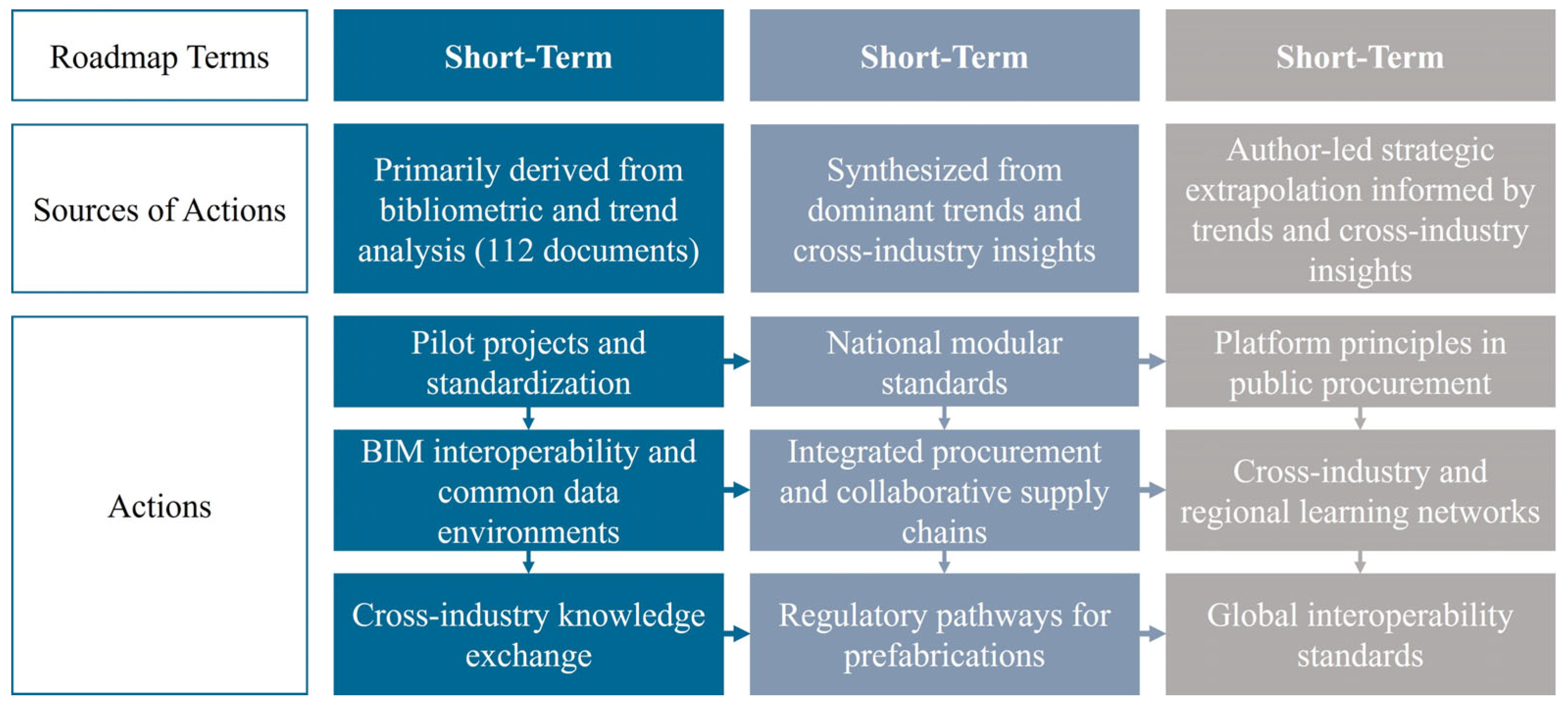
Building on the findings of this study, a policy roadmap for adopting platform-based approaches in the AEC industry unfolds in three phases. This roadmap combines direct evidence from the bibliometric and trend analyses with the author-led synthesis and extrapolation informed by cross-industry insights.
(1)
Short-term actions are primarily derived from the bibliometric patterns and dominant trends identified in the 112 documents analyzed in this study. These include promoting pilot projects based on standardized and modular solutions (as presented in the foundational, operational trend, and keywords’ bibliometric analysis results), incentivizing BIM interoperability and common data environments (as shown in the technological trend results), and facilitating structured knowledge exchange between manufacturing and construction stakeholders (as shown in the knowledge trend results).
(2)
The medium-term phase reflects a synthesis of recurrent themes in the governance and foundational trends, complemented by interpretive insights from the other industries with established platform use. These actions include establishing national modular standards, supporting integrated procurement and collaborative supply chain models, and developing regulatory pathways for prefabrication. While supported by trend frequencies, these measures involve a higher degree of analytical interpretation beyond direct bibliometric counts.
(3)
Long-term actions are primarily conceptual and forward-looking, informed by governance, knowledge trends, the author and country bibliometric analysis results, as well as lessons from the automotive and consumer goods industries. These include embedding platform-based principles into public procurement policies (as shown in the governance trend results), fostering cross-industry and cross-regional learning networks to sustain innovation (as shown in the knowledge trends and the author and country bibliometric analysis results), and advancing global interoperability standards for digital platforms and modular design, which connect the foundational and technological trend findings, as well as automotive industry insights. Thus, national modularization standards would provide regulatory certainty, encouraging firm investment in platform-based prefabrication, as shown in the results linked to operational trends and consumer goods industry insights. Ultimately, this would enable scalability and supply chain integration. Figure 10 presents the roadmap, which outlines short-, medium-, and long-term actions.
This study makes three important contributions to the AEC industry. Theoretically, it extends platform theory to the AEC industry by highlighting trends in platform-based approaches and the challenges facing platform adoption, with insights drawn from the automotive and consumer goods industries. Methodologically, it has applied a mixed bibliometric review combining AI and manual processes to collect data from multiple databases. Practically, it provides a framework and roadmap for policymakers and firms in the AEC industry to implement platform-based approaches, emphasizing standardization, interoperability, and governance mechanisms.
Despite these contributions, the study has certain limitations. For instance, database selection may have introduced bias. The study relied on a limited number of major academic databases, which implies that some relevant platform-related research indexed elsewhere or published in practitioner-oriented outlets could have been missed. Moreover, the review focused exclusively on English-language publications, which may underrepresent the platform-related research conducted in non-English-speaking regions, particularly given the global and interdisciplinary nature of the AEC industry. Thus, future research should include non-English research on platform-based approaches to expand the research scope.
Furthermore, the use of AI-assisted tools also has certain caveats. Although these tools helped make screening, classification, and thematic synthesis faster and more scalable, they are imperfect. Decisions based on semantic similarity thresholds or relevance scoring might have overlooked subtle conceptual distinctions that a fully manual expert review might have captured. In other words, some nuances of platform logic might not have been captured.
Another limitation is the nature of the bibliometric methods themselves. These approaches depend on predefined search terms and keyword structures. In AEC research, studies relevant to platform-based approaches are scattered across different subdisciplines and often described using varied terminology, frameworks, systems, tools, or models—rather than explicitly being labeled as platforms. Even with careful query design and iterative refinement, it is possible that some studies were overlooked, which is a common issue in interdisciplinary bibliometric reviews. This also reinforces why qualitative interpretation, alongside quantitative mapping, remains important—a point that this study attempted to address. Going forward, combining bibliometric approaches with expert-led qualitative screening or the use of broader, domain-specific search terms could better capture this dispersed literature.
The novelty of this study lies in its integrative methodological contribution, which combines AI-assisted bibliometric data extraction with manual validation, multi-layer thematic analysis, and cross-industry comparison to structure insights into platform-based approaches in the AEC industry. This study introduces a unified framework that links platform-related conceptual, procedural, and organizational trends and challenges and translates these findings into an implementation roadmap. The timeliness of this research stems from the increasing urgency to address systemic fragmentation, low productivity, and scalability challenges in the AEC industry, while platform-based approaches gain practical relevance.

Supplementary Materials

The following supporting information can be downloaded at: https://www.mdpi.com/article/10.3390/buildings16030594/s1, Table S1: The screening criteria for the selected data; Table S2: List of documents analyzed; Table S3: Databases’ search details; Table S4: Examples of the implicit platform studies in the AEC industry; Table S5: The findings and the future research directions of the research; Table S6: Insights from other industries relevant to the AEC industry.

Author Contributions

Conceptualization, L.M.; methodology, L.M.; software, L.M.; validation, J.W.; formal analysis, L.M.; investigation, L.M.; resources, L.M.; data curation, L.M.; writing—original draft preparation, L.M.; writing—review and editing, J.W.; visualization, L.M.; supervision, G.F. and J.W.; project administration, G.F. and J.W.; funding acquisition, G.F. and J.W. All authors have read and agreed to the published version of the manuscript.

Funding

This research was funded by the Tianjin Key R&D Program, grant number 22YFZCSN00140, for the project Research on Key Technologies for Modularized Construction of Public Safety Emergency Facilities.

Data Availability Statement

The data presented in this study are available in the article itself.

Acknowledgments

During the preparation of this study, the author(s) used Consensus AI (Version 2.0), Elicit AI (Version 1.0), and SciSpace AI (Version 1.5) to identify publications for the literature review to enlarge the scope of the research beyond the regular databases. The article discussed the results. After using these tools, the author(s) have reviewed and edited the output and take full responsibility for the content of this publication.

Conflicts of Interest

The authors declare no conflicts of interest.

Abbreviations

The following abbreviations are used in this manuscript:
AECArchitecture, Engineering, and Construction Industry
AIArtificial Intelligence
BIMBuilding Information Modeling
COSICustomer-Order-Specific Information
MQBModular Transversal Toolkit
PRISMAPreferred Reporting Items for Systematic Reviews and Meta-Analyses

References

  1. Hyun, H.; Kim, H.-G.; Kim, J.-S. Integrated Off-Site Construction Design Process including DfMA Considerations. Sustainability 2022, 14, 4084. [Google Scholar] [CrossRef]
  2. Zhou, S.; Mosca, L.; Whyte, J. How the Reliability of External Competences Shapes the Modularization Strategies of Industrialized Construction Firms. Constr. Manag. Econ. 2023, 41, 608–619. [Google Scholar] [CrossRef]
  3. Hafiane, A.E.; En-nadi, A.; Ramadany, M. Towards Sustainable Construction: Systematic Review of Lean and Circular Economy Integration. Sustainability 2025, 17, 6735. [Google Scholar] [CrossRef]
  4. Zhang, Z. Research on the New Construction Industrialization Platform Based on Computing Technology. Appl. Math. Nonlinear Sci. 2024, 10, 1–21. Available online: https://sciendo.com/it/article/10.2478/amns-2025-0194 (accessed on 13 October 2025). [CrossRef]
  5. Turk, Z.; Giddey, M.; Klinc, R. Platforms—A Novel Paradigm of Construction Collaboration. IOP Conf. Ser. Mater. Sci. Eng. 2021, 1218, 012029. [Google Scholar] [CrossRef]
  6. Thajudeen, S.; Lennartsson, M.; Elgh, F. Expanding the Building System into a Product Platform for Improved Design and Manufacture—A Case Study in Industrialised House-Building. In Proceedings of the 9th Swedish Production Symposium (SPS2020), Jönköping, Sweden, 21–24 April 2020. [Google Scholar] [CrossRef]
  7. Abrishami, S.; Martín-Durán, R. BIM and DfMA: A Paradigm of New Opportunities. Sustainability 2021, 13, 9591. [Google Scholar] [CrossRef]
  8. Fisher, A.; Tsakiridis, G.; Lombardi, A.; Ahmad, M.; Watts, A. A Common Configurator Framework for Distributed Design, Collaboration, and Verification Across the Full AEC Supply Chain. IOP Conf. Ser. Earth Environ. Sci. 2022, 1101, 092042. [Google Scholar] [CrossRef]
  9. Gebler, M.; Warsen, J.; Meininghaus, R.; Baudis, M.; Cerdas, F.; Herrmann, C. Implementing Zero Impact Factories in Volkswagen’s Global Automotive Manufacturing System: A Discussion of Opportunities and Challenges from Integrating Current Science into Strategic Management. Sustainability 2024, 16, 3011. [Google Scholar] [CrossRef]
  10. Lampón, J.F. Efficiency in Design and Production to Achieve Sustainable Development Challenges in the Automobile Industry: Modular Electric Vehicle Platforms. Sustain. Dev. 2022, 31, 26–38. [Google Scholar] [CrossRef]
  11. Wood, B. Platforms in Practice: A Lean Approach to Industrialised Construction; Bryden Wood: London, UK, 2023; Available online: https://constructioninnovationhub.org.uk/media/l3bhzunv/platforms-in-practice-optimised.pdf (accessed on 10 October 2025).
  12. Andersen, R.; Brunoe, T.D.; Nielsen, K. A Framework for Identification of Complexity Drivers in Manufacturing Companies. In Proceedings of the IFIP International Conference on Advances in Production Management Systems (APMS), Austin, TX, USA, 1–5 September 2019; pp. 392–399. [Google Scholar] [CrossRef]
  13. Shahruddin, S.; Husain, S.H. Navigating Paradoxes of Identity and Leadership in the Age of Digital Transformation of Construction Industry: Architects’ Experiences and Perceptions. Constr. Manag. Econ. 2024, 42, 591–609. [Google Scholar] [CrossRef]
  14. Popovic, D.; Schauerte, T.; Elgh, F. Product Platform Alignment in Industrialised House Building. Wood Mater. Sci. Eng. 2022, 17, 572–585. [Google Scholar] [CrossRef]
  15. Andersen, R.; Brunoe, T.D.; Nielsen, K. Module Drivers in Product Development: A Comprehensive Review and Synthesis. Proc. CIRP 2022, 107, 1503–1508. [Google Scholar] [CrossRef]
  16. Gauss, L.; Lacerda, D.P.; Miguel, P.A.C. Module-Based Product Family Design: Systematic Literature Review and Meta-Synthesis. J. Intell. Manuf. 2021, 32, 265–312. [Google Scholar] [CrossRef]
  17. Grabham, S.; Manu, E. Diffusion of Platform Thinking as an Innovation in the Construction Supply Chain. Proc. Inst. Civ. Eng. Manag. Procure. Law 2022, 175, 119–130. [Google Scholar] [CrossRef]
  18. Hall, D.; Whyte, J.; Lessing, J. Mirror-Breaking Strategies to Enable Digital Manufacturing in Silicon Valley Construction Firms: A Comparative Case Study. Constr. Manag. Econ. 2020, 38, 322–339. [Google Scholar] [CrossRef]
  19. Zhang, L. A Literature Review on Multitype Platforming and Framework for Future Research. Int. J. Prod. Econ. 2015, 168, 1–12. [Google Scholar] [CrossRef]
  20. Donthu, N.; Kumar, S.; Mukherjee, D.; Pandey, N.; Lim, W.M. How to Conduct a Bibliometric Analysis: An Overview and Guidelines. J. Bus. Res. 2021, 133, 285–296. [Google Scholar] [CrossRef]
  21. Elicit. Available online: https://elicit.com/ (accessed on 15 September 2025).
  22. Oprach, S.; Bolduan, T.; Steuer, D.; Vössing, M.; Haghsheno, S. Building the Future of the Construction Industry through Artificial Intelligence and Platform Thinking. Digit. Welt 2019, 3, 40–44. [Google Scholar] [CrossRef]
  23. SciSpace. About SciSpace. Available online: https://typeset.io/t/about/ (accessed on 14 September 2025).
  24. Consensus. Consensus. Available online: https://consensus.app/home/blog/category/help-center/ (accessed on 17 September 2025).
  25. CIH; Akerlof; Atkins; MacDonald, M.; Studio, C. The Product Platform Rulebook; Edition 1.2; Construction Innovation Hub UK Research and Innovation: London, UK, 2023; Available online: https://akerlof.co.uk/wp-content/uploads/2023/04/CIH-product-platform-rulebook-edition-1.2.pdf (accessed on 29 September 2025).
  26. Jiao, J.R.; Simpson, T.W.; Siddique, Z. Product Family Design and Platform-Based Product Development: A State-of-the-Art Review. J. Intell. Manuf. 2007, 18, 5–29. [Google Scholar] [CrossRef]
  27. Lavikka, R.; Kallio, J.; Casey, T.; Airaksinen, M. Digital Disruption of the AEC Industry: Technology-Oriented Scenarios for Possible Future Development Paths. Constr. Manag. Econ. 2018, 36, 635–650. [Google Scholar] [CrossRef]
  28. Wang, S.; Zhang, D.; Hao, X.; Liang, J.; Li, S. Data-Driven Optimization Design Method and Tool Platform for Green Residential Area Layout. J. Asian Archit. Build. 2024, 25, 443–459. [Google Scholar] [CrossRef]
  29. Aksenova, G.; Oti-Sarpong, K. Beyond “Platformania” in the Construction Sector: Conceptualisations and Implementations of Product Platformisation in the UK. Constr. Manag. Econ. 2023, 42, 229–250. [Google Scholar] [CrossRef]
  30. Mortensen, N.H.; Bertram, C.A.; Lundgaard, R. Achieving Long-Term Modularization Benefits: A Small- And Medium-Sized Enterprise Study. Concurr. Eng. Res. Appl. 2019, 27, 14–27. [Google Scholar] [CrossRef]
  31. Wang, Z.; Zheng, P.; Li, X.; Chen, C.-H. Implications of Data-Driven Product Design: From Information Age Towards Intelligence Age. Adv. Eng. Inform. 2022, 54, 101793. [Google Scholar] [CrossRef]
  32. Antai, I.; Lenka, S.; Achtenhagen, L. Digital Platforms and the Construction Supply Chain: Trends and Emerging Themes in Extant AEC Research. Constr. Manag. Econ. 2024, 43, 113–129. [Google Scholar] [CrossRef]
  33. Lessing, J.; Brege, S. Industrialized Building Companies’ Business Models: Multiple Case Study of Swedish and North American Companies. J. Constr. Eng. M. ASCE 2018, 142, 05017019. [Google Scholar] [CrossRef]
  34. Kjeldgaard, S.; Brunoe, T.D.; Andersen, R.; Sorensen, D.G.H.; Andersen, A.-L.; Nielsen, K. Brownfield Design of Reconfigurable Manufacturing Architectures: An Application of a Modified MFD to the Capital Goods Industry. In Proceedings of the 55th CIRP Conference on Manufacturing Systems, Lugano, Switzerland, 29 June–1 July 2022; pp. 1293–1298. [Google Scholar] [CrossRef]
  35. Veenstra, V.S.; Halman, J.I.M.; Voordijk, J.T. A Methodology for Developing Product Platforms in the Specific Setting of the Housebuilding Industry. Res. Eng. Des. 2006, 17, 157–173. [Google Scholar] [CrossRef]
  36. Peltokorpi, A.; Olivieri, H.; Granja, A.D.; Seppanen, O. Categorizing Modularization Strategies to Achieve Various Objectives of Building Investments. Constr. Manag. Econ. 2018, 36, 32–48. [Google Scholar] [CrossRef]
  37. Scopus. Search for an Author Profile: H-Index of Authors. Available online: https://www.scopus.com/freelookup/form/author.uri?zone=TopNavBar&origin=NO%20ORIGIN%20DEFINED (accessed on 12 December 2025).
  38. Zhou, S.A. Platforming for Industrialized Building: A Comparative Case Study of Digitally-Enabled Product Platforms. Build. Res. Inf. 2024, 52, 4–18. [Google Scholar] [CrossRef]
  39. MacDonald, M. The Value of Platforms in Construction; UK Research and Innovation Construction Innovation Hub Mott MacDonald: London, UK, 2023; pp. 7–68. Available online: https://constructioninnovationhub.org.uk/media/rzwdinep/the-value-of-platforms-final-upload-april-2023.pdf (accessed on 21 September 2025).
  40. Kedir, F.; Hall, D.M.; Brantvall, S.; Lessing, J.; Hollberg, A.; Soman, R.K. Circular Information Flows in Industrialized Housing Construction: The Case of a Multi-Family Housing Product Platform in Sweden. Constr. Innov. 2023, 24, 1354–1379. [Google Scholar] [CrossRef]
  41. Althoey, F.; Houda, M.; Waqar, A.; Nisar, S. Comprehensive Framework for Integrated Construction Platforms (ICP) Implementation and Its Effect on Project Success. Ain Shams Eng. J. 2024, 15, 103152. [Google Scholar] [CrossRef]
  42. Köhler, J. Building Platforms to Scale the Circular Economy in the Construction Sector. In Building A Circular Future—Insights from Interdisciplinary Research; BLOXHUB: Copenhagen, Denmark, 2024; pp. 61–62. Available online: https://orbit.dtu.dk/en/publications/building-platforms-to-scale-the-circular-economy-in-the-construct (accessed on 12 October 2025).
  43. Akerlof. Platforms in the Wild; Platforms Deployed by UK Tier and Contractors: London, UK, 2023; Available online: https://constructioninnovationhub.org.uk/media/vzdfwe1i/aklf_platforms-in-the-wild_tier-1-2.pdf (accessed on 13 October 2025).
  44. Jansson, G.; Jahnsson, H.; Engstrom, D. Platform Use in Systems Building. Constr. Manag. Econ. 2013, 32, 70–82. [Google Scholar] [CrossRef]
  45. Bonev, M.; Wörösch, M.; Hvam, L. Utilizing Platforms in Industrialized Construction: A Case Study of a Precast Manufacturer. Constr. Innov. 2015, 15, 84–106. [Google Scholar] [CrossRef]
  46. Cusumano, M. The Japanese Automobile Industry: Technology and Management at Nissan and Toyota; Harvard University Press: Cambridge, MA, USA, 1985. [Google Scholar] [CrossRef]
  47. Zha, X.F.; Sriram, R.D. Collaborative Product Development and Customization: A Platform-Based Strategy and Implementation. In Proceedings of the 2004 ASME Design Engineering Technical Conference, Salt Lake City, UT, USA, 28 September–2 October 2004. [Google Scholar] [CrossRef]
  48. Kennedy, Z.A.; Daniel, E.I.; Egan, M.; Sully, T.; Tennant, G. Exploring a Platform Approach to Improve the Uptake of Offsite Construction in Housebuilding: Evidence from the United Kingdom. In Proceedings of the Annual Conference of the International Group for Lean Construction (IGLC31), Lille, France, 26 June 2023. [Google Scholar] [CrossRef]
  49. Bertram, C.A.; Mueller, G.O.; Løkkegaard, M.; Mortensen, N.H.; Hvam, L. Why Engineer-to-Order Portfolio Rationalization Stalls: Challenges in Standardization, Modularization, Platform Design and Mass Customization. Proc. Int. Des. Conf.—Des. 2020, 1, 2265–2274. [Google Scholar] [CrossRef]
  50. Jensen, P.; Lidelow, H.; Olofsson, T. Product Configuration in Construction. Int. J. Mass Cust. 2015, 5, 73–92. [Google Scholar] [CrossRef]
  51. Lennartsson, M.; André, S.; Elgh, F. PLM Support for Design Platforms in Industrialized House-Building. Constr. Innov. 2023, 23, 265–286. [Google Scholar] [CrossRef]
  52. Thuesen, C.; Hvam, L. Efficient On-Site Construction: Learning Points from a German Platform for Housing. Constr. Innov. Inf. Process Manag. 2011, 11, 338–355. [Google Scholar] [CrossRef]
  53. Said, H.; Chalasani, T.; Logan, A. Exterior Prefabricated Panelized Wall Platform Optimization. Automat. Constr. 2017, 76, 1–13. [Google Scholar] [CrossRef]
  54. Lager, T. A Conceptual Framework for Platform-Based Design of Non-Assembled Products. Technovation 2017, 68, 20–34. [Google Scholar] [CrossRef]
  55. Andersen, R.; Brunoe, T.D.; Nielsen, K. Exploring a Data-Augmented Approach for Improved Module Driver Analysis. In Proceedings of the Changeable, Agile, Reconfigurable and Virtual Production Conference and the World Mass Customization & Personalization Conference, Bologna, Italy, 20–23 June 2022; pp. 677–685. [Google Scholar] [CrossRef]
  56. Tetik, M.; Peltokorpi, A.; Seppänena, O.; Holmström, J. Direct Digital Construction: Technology-Based Operations Management Practice for Continuous Improvement of Construction Industry Performance. Automat. Constr. 2019, 107, 102910. [Google Scholar] [CrossRef]
  57. Díaz, H.; Alarcón, L.F.; Mourgues, C.; García, S. Multidisciplinary Design Optimization through Process Integration in the AEC Industry: Strategies and Challenges. Automat. Constr. 2017, 73, 102–119. [Google Scholar] [CrossRef]
  58. Savu, C.; Bungau, C. Synthesis on the Assessment of Design Platforms in Terms of Construction Efficiency. Rev. Manag. Econ. Eng. 2024, 23, 220–232. Available online: https://rmee.org/index.php/pub/article/view/4 (accessed on 17 October 2025). [CrossRef]
  59. Eriksson, H.; Emilsson, E. Platforms for Enabling Flexibility at Two Construction Companies. In Proceedings of the 36th International Symposium on Automation and Robotics in Construction (ISARC 2019), Banff, Canada, 21–24 May 2019; pp. 348–355. [Google Scholar] [CrossRef]
  60. Li, J. Research on Intelligent Construction Platform for Assembled Buildings Based on BIM and Internet of Things. In Proceedings of the 5th International Conference on Machine Learning and Big Data Analytics for IoT Security and Privacy (SPIoT2024), Haikou, China, 30 November-1 December 2024; Volume 261, pp. 110–117. [Google Scholar] [CrossRef]
  61. Jones, K.; Mosca, L.; Whyte, J.; Davies, A.; Glass, J. Addressing Specialization and Fragmentation: Product Platform Development in Construction Consultancy Firms. Constr. Manag. Econ. 2022, 40, 918–933. [Google Scholar] [CrossRef]
  62. Andersen, R.; Andersen, A.-L.; Larsen, M.S.S.; Brunø, T.D.; Nielsen, K. Potential Benefits and Challenges of Changeable Manufacturing in the Process Industry. Proc. CIRP 2019, 81, 944–949. [Google Scholar] [CrossRef]
  63. Halman, J.I.M.; Hofer, A.P.; Vuure, W.v. Platform-Driven Development of Product Families: Linking Theory with Practice. J. Prod. Innovat. Manag. 2003, 20, 149–162. [Google Scholar] [CrossRef]
  64. Michaelis, M.T.; Johannesson, H. Platform Approaches in Manufacturing: Considering Integration With Product Platforms. In Proceedings of the ASME 2011 International Design Engineering Technical Conferences and Computers and Information in Engineering Conference, Washington, DC, USA, 28–31 August 2012; pp. 1115–1124. [Google Scholar] [CrossRef]
  65. Eriksson, H.; Sandberg, M.; Jansson, G.; Lessing, J. Exploring Product Modularity in Residential Building Areas. Buildings 2021, 11, 281. [Google Scholar] [CrossRef]
  66. Lin, Y.-W.; Tang, T.L.E.; Schiavon, S.; Spanos, C.J. Toward Platform-Based Building Design. arXiv 2023, arXiv:2305.10949. [Google Scholar] [CrossRef]
  67. Hofer, A.P.; Halman, J.I.M. The Potential of Layout Platforms for Modular Complex Products and Systems. J. Eng. Design. 2005, 16, 237–258. [Google Scholar] [CrossRef]
  68. Liu, Z. Housingprime App, A Participatory Design Platform for Housing Customization and Community Self-Organization. In Proceedings of the 7th International Conference on Architecture, Materials and Construction, Lisbon, Portugal, 27–29 October 2022; pp. 98–109. [Google Scholar] [CrossRef]
  69. Finch, W.W. Set-Based Models of Product Platform Design and Manufacturing Processes. In Proceedings of the 11th International Conference on Design Theory and Methodology, Las Vegas, NV, USA, 17–19 August 2021; pp. 223–232. [Google Scholar] [CrossRef]
  70. Segerstedt, A.; Olofsson, T. Supply Chains in the Construction Industry. Supply Chain. Manag. Int. J. 2010, 15, 347–353. [Google Scholar] [CrossRef]
  71. Baldwin, C.; Clark, K. Design Rules, Volume 1: The Power of Modularity. Acad. Manag. 2000, 26, 130–133. [Google Scholar] [CrossRef]
  72. Gibb, A.G.F. Off-Site Fabrication: Prefabrication, Pre-assembly, and Modularization; Wiley: New York, NY, USA, 1999; Available online: https://books.google.jo/books/about/Off_site_Fabrication.html?id=uTiN_aGtXzwC&redir_esc=y (accessed on 12 October 2025).
  73. Islam, M.; Bunster, V.; Couper, R.; Yazdi, A.J.; Maxwell, D. Process Modularity—A Lean Approach to Develop Industrialised Building Platforms. In Proceedings of the Annual Conference of the International Group for Lean Construction, IGLC, Auckland, New Zealand, 3–5 July 2024; pp. 894–905. [Google Scholar] [CrossRef]
  74. Beck, P. The AEC Dilemma—Exploring the Barriers to Change. Leadersh. Manag. Eng. 2001, 1, 1–6. [Google Scholar] [CrossRef]
  75. Kjeldgaard, S.; Jorsal, A.L.; Albrecht, V.; Andersen, A.-L.; Brunoe, T.D.; Nielsen, K. Towards a Model for Evaluating the Investment of Reconfigurable and Platform-Based Manufacturing Concepts Considering Footprint Adaptability. In Proceedings of the 54th CIRP Conference on Manufacturing Systems, Virtual, 22–24 September 2021; Volume 104, pp. 553–558. [Google Scholar] [CrossRef]
  76. Haller, M.; Stehn, L. Standardizing the Pre-Design-Phase for Improved Efficiency in Off-Site Housing Projects. In Proceedings 26th Annual ARCOM Conference leeds; Egbu, C., Ed.; Association of Researchers in Construction Management: London, UK, 2010; pp. 1259–1268. Available online: https://www.arcom.ac.uk/-docs/proceedings/ar2010-1259-1268_Haller_and_Stehn.pdf (accessed on 17 October 2025).
  77. Andersen, R.; Brunoe, T.D.; Nielsen, K. Investigating the Applicability of Modular Function Deployment in the Process Industry. In Proceedings of the 54th CIRP Conference on Manufacturing Systems, Patras, Greece, 22–24 September 2021; Volumne 104, pp. 659–664. [Google Scholar] [CrossRef]
  78. Cao, J.; Bucher, D.F.; Hall, D.M.; Lessing, J. Cross-Phase Product Configurator for Modular Buildings Using Kit-of-Parts. Automat. Constr. 2021, 123, 103437. [Google Scholar] [CrossRef]
  79. Kovacic, I.; Honic, M.; Sreckovic, M. Digital Platform for Circular Economy in AEC Industry. Eng. Proj. Organ. J. 2020, 9, 16. [Google Scholar] [CrossRef]
  80. Siewczyńska, M.; Siewczyński, B.; Grzelczak, A.; Szymczak-Graczyk, A.; Ksit, B. Modular Buildings as a Potential for Small Trade Development in a Sustainable City. Sustainability 2025, 17, 5958. [Google Scholar] [CrossRef]
  81. CIH. Construction Product Quality Planning; Construction Innovation Hub: London, UK, 2023; pp. 1–12. Available online: https://constructioninnovationhub.org.uk/media/bimh0atu/5-cpqp-5-vv-social-slides.pdf (accessed on 21 October 2025).
  82. André, S.; Lennartsson, M.; Elgh, F. Exploring the Design Platform in Industrialized Housing for Efficient Design and Production of Customized Houses. In Proceedings of the 26th ISTE International Conference on Transdisciplinary Engineering, Tokyo, Japan, 30 July–1 August 2019; pp. 125–134. [Google Scholar] [CrossRef]
  83. Mosca, L.; Jones, K.; Davies, A.; Whyte, J.; Glass, J. Platform Thinking for Construction, Transforming Construction Network Plus, Digest Series, No.2. 2020. Available online: https://www.ucl.ac.uk/bartlett/construction/sites/bartlett/files/digest-platform-thinking-for-construction.pdf (accessed on 13 October 2025).
  84. Allan, D.; Hallinan, P.; Greulach, S.; Ayers, A.J.; Campbell, P.D.; Carter, S.K.; Crew, D.A.; Hankin, M.D.; Manning, R.J.; Mitchell, A.V.; et al. Optimizing for Sustainable Performance; Stanley Black and Decker: New Britain, CT, USA, 2023; Available online: https://s29.q4cdn.com/245094436/files/doc_financials/2023/AR/aaa99a5a-c7c8-4a5f-babe-3da3f6184a2b.pdf (accessed on 25 September 2025).
  85. Mujahed, L.; Feng, G.; Wang, J. Platform Approaches in the AEC Industry: Stakeholder Perspectives and Case Study. Buildings 2025, 15, 2684. [Google Scholar] [CrossRef]
  86. Nievola, T.P.; Scheer, S. Product Platform Flow to Develop New Products in an Off-Site Company. In Proceedings of the 31st Annual Conference of the International Group for Lean Construction (IGLC31), Lille, France, 26 June–2 July 2023; pp. 1037–1048. [Google Scholar] [CrossRef]
  87. Staszak, N.; Garbowski, T.; Szymczak-Graczyk, A. Solid Truss to Shell Numerical Homogenization of Prefabricated Composite Slabs. Materials 2021, 14, 4120. [Google Scholar] [CrossRef]
  88. Staszak, N.; Szymczak-Graczyk, A.; Garbowski, T. Elastic Analysis of Three-Layer Concrete Slab Based on Numerical Homogenization with an Analytical Shear Correction Factor. Appl. Sci. 2022, 12, 9918. [Google Scholar] [CrossRef]
  89. CIH. Developing a Product Platform Strategy: Implementing the Product Platform Rulebook; Construction Innovation Hub: London, UK, 2023; pp. 1–24. Available online: https://constructioninnovationhub.org.uk/media/fd5l4wfn/developing-a-product-platform-strategy_implementing-the-product-platform-rulebook-final.pdf (accessed on 13 September 2025).
  90. Mujahed, L.; Feng, G.; Wang, J. Transforming Construction: Integrating Off-Site Techniques and Advanced Technologies. In Proceedings of the ICATCP 2024: Architectural Theory and Construction Processes Conference, Amsterdam, Netherlands, 4–5 November 2024; pp. 368–377. Available online: https://publications.waset.org/10013828.pdf (accessed on 27 October 2025).
  91. Jansson, G.; Viklund, E.; Olofsson, T. Artistic and Engineering Design of Platform-Based Production Systems: A Study of Swedish Architectural Practice. Buildings 2018, 8, 34. [Google Scholar] [CrossRef]
  92. Jensen, P.; Olofsson, T.; Johnsson, H. Configuration through the Parameterization of Building Components. Automat. Constr. 2012, 23, 1–8. [Google Scholar] [CrossRef]
  93. Alexander, J. Creative Commoning: Design Experiments Exploring Ways for Platform Technology to Democratise Architectural Practice and Production. J. Archit. 2023, 28, 101–129. [Google Scholar] [CrossRef]
  94. Otte, T.; Zhou, H.A.; Gannouni, A.; Odenthal, J.; Abdelrazeq, A.; Hees, F. A Manufacturer-Independent Digital Process Platform for Future Construction Sites. In Proceedings of the 14th International Conference on Innovations in Information Technology (IIT), Al Ain, United Arab Emirates, 17–18 November 2020. [Google Scholar] [CrossRef]
  95. Szymczak-Graczyk, A.; Korentz, J.; Garbowski, T. Digital Twin Model for Predicting Hygrothermal Performance of Building Materials from Moisture Permeability Tests. Materials 2025, 18, 4360. [Google Scholar] [CrossRef]
  96. Uusitalo, P.; Lavikka, R. Technology Transfer in the Construction Industry. J. Technol. Transf. 2021, 46, 1291–1320. [Google Scholar] [CrossRef]
  97. Gawer, A. Bridging Differing Perspectives on Technological Platforms: Toward an Integrative Framework. Res. Policy 2014, 43, 1239–1249. [Google Scholar] [CrossRef]
  98. Onyia, U.; Ani, I.S.; Nwankwo, U.F. Addressing the Challenges Towards the Adoption of Digital Technologies in Construction Supply Chain Management. Discov. Civ. Eng. 2024, 1, 118. [Google Scholar] [CrossRef]
  99. Xu, Y.; Ahokangas, P.; Turunen, M.; Mäntymäki, M.; Heikkilä, J. Platform-Based Business Models: Insights from an Emerging AI-Enabled Smart Building Ecosystem. Electronics 2019, 8, 1150. [Google Scholar] [CrossRef]
  100. Luo, H.; Lin, L.; Chen, K.; Antwi-Afari, M.F.; Chen, L. Digital Technology for Quality Management in Construction: A Review and Future Research Directions. Dev. Built Environ. 2022, 12, 100087. [Google Scholar] [CrossRef]
  101. Masters, K.; Johnston, J. Automated Construction: Boosting On-Site Productivity Using a Platform-Based Approach. Proc. Inst. Civ. Eng.—Civ. Eng. 2019, 172, 23–28. [Google Scholar] [CrossRef]
  102. Tura, N.; Kutvonen, A.; Ritala, P. Platform Design Framework: Conceptualisation and Application. Technol. Anal. Strateg. Manag. 2018, 30, 881–894. [Google Scholar] [CrossRef]
  103. Meyer, M.H.; Cassis, J.; Osiyevskyy, O.; Libaers, D. Implementing Product Platforms in the Global Enterprise: Lessons from an LED Industry Leader. Bus. Horizons 2020, 63, 421–434. [Google Scholar] [CrossRef]
  104. Wu, M. Research and Practice of Smart Service Platform Construction in the Context of Modernized Governance in the Digital Government Era. In Proceedings of the 25th Annual International Conference on Digital Government Research, Taipei, Taiwan, 11–14 June 2024; pp. 594–604. [Google Scholar] [CrossRef]
  105. Widanage, C.; Kim, K.P. Integrating Design for Manufacture and Assembly (DfMA) with BIM for infrastructure. Automat. Constr. 2024, 167, 105705. [Google Scholar] [CrossRef]
  106. Nyqvist, R.; Peltokorpi, A.; Lavikka, R.; Ainamo, A. Building the Digital Age: Management of Digital Transformation in the Construction Industry. Constr. Manag. Econ. 2024, 43, 262–283. [Google Scholar] [CrossRef]
  107. Li, C.Z.; Hong, J.; Xue, F.; Shen, G.Q.; Xu, X.; Luo, L. SWOT Analysis and Internet of Things-Enabled Platform for Prefabrication Housing Production in Hong Kong. Habitat. Int. 2016, 57, 74–87. [Google Scholar] [CrossRef]
  108. Hwang, K.-E.; Kim, I.; Kim, J.I.; Cha, S.H. Client-Engaged Collaborative Pre-Design Framework for Modular Housing. Automat. Constr. 2023, 156, 105123. [Google Scholar] [CrossRef]
  109. Martin, M.V.; Ishii, K. Design for Variety: Developing Standardized and Modularized Product Platform Architectures. Res. Eng. Design 2002, 13, 213–235. [Google Scholar] [CrossRef]
  110. Jansson, G.; Viklund, E. Advancement of Platform Development in Industrialised Building. Procedia Econ. Financ. 2015, 21, 461–468. [Google Scholar] [CrossRef]
  111. Gamil, Y.; Rahman, I.A. Identification of Causes and Effects of Poor Communication in Construction Industry: A Theoretical Review. Emerg. Sci. J. 2024, 1, 239–247. [Google Scholar] [CrossRef]
  112. Hällström, A.A.; Bosch-Sijtsema, P.; Poblete, L. Challenges with Collaboration: The Interaction of Formal and Informal Ties in Infrastructure Construction. Constr. Manag. Econ. 2024, 43, 7–25. [Google Scholar] [CrossRef]
  113. Piroozfar, P.; Farr, E.R.P.; Hvam, L.; Robinson, D.; Shafiee, S. Configuration Platform for Customisation of Design, Manufacturing and Assembly Processes of Building Façade Systems: A Building Information Modelling Perspective. Automat. Constr. 2019, 106, 102914. [Google Scholar] [CrossRef]
  114. Bortolini, M.; Calabrese, F.; Galizia, F.G.; Regattieri, A. A Two-Step Methodology for Product Platform Design and Assessment in High-Variety Manufacturing. Int. J. Adv. Manuf. Tech. 2023, 126, 3923–3948. [Google Scholar] [CrossRef]
  115. Naderpajouh, N.; Zolghadr, A.; Clegg, S. Organizing Coopetitive Tensions: Collaborative Consumption in Project Ecologies. Int. J. Proj. Manag. 2024, 42, 102586. [Google Scholar] [CrossRef]
  116. Lehtinen, J.; Aaltonen, K. Community Stakeholders’ Online Engagement in Infrastructure Projects: A Theory-Testing Single-Case Study. Constr. Manag. Econ. 2024, 42, 758–786. [Google Scholar] [CrossRef]
  117. Teng, Y.; Mao, C.; Liu, G.; Wang, X. Analysis of Stakeholder Relationships in the Industry Chain of Industrialized Building in China. J. Clean. Prod. 2017, 152, 387–398. [Google Scholar] [CrossRef]
  118. Szymczak-Graczyk, A.; Walczak, Z.; Ksit, B.; Szygula, Z. Multi-Criteria Diagnostics of Historic Buildings with the Use of 3D Laser Scanning (A Case Study). Bull. Pol. Acad. Sci. Tech. Sci. 2022, 70, e140373. [Google Scholar] [CrossRef]
  119. Walczak, Z.; Ksit, B.; Szymczak-Graczyk, A. Decision-Support Tools for Diagnosing and Selecting the Optimal Method of Repairing Buildings. Bull. Pol. Acad. Sci. Tech. Sci. 2024, 72, 1–14. [Google Scholar] [CrossRef]
  120. Lehtinen, J.; Peltokorpi, A.; Artto, K. Megaprojects As Organizational Platforms and Technology Platforms for Value Creation. Int. J. Proj. Manag. 2019, 37, 43–58. [Google Scholar] [CrossRef]
  121. Farinha, F.; Goncalves, R.J.; Garcao, A.S. Integration of Cooperative Production and Distributed Design in AEC. Adv. Eng. Softw. 2007, 38, 772–779. [Google Scholar] [CrossRef]
  122. Maxwell, D.W. The Ecosystem Revolution: Co-Ordinating Construction by Design. In Proceedings of the 1st Annual Design Research Conference, Sydney, Australia, 27–28 September 2018; Available online: https://researchmgt.monash.edu/ws/portalfiles/portal/277377527/277377457.pdf (accessed on 13 September 2025).
  123. Lappalainen, I.; Federley, M. The Role of Digital Platforms in Resident-Centric Housing Concepts. Technol. Innov. Manag. Rev. 2021, 11, 14. Available online: https://cris.vtt.fi/en/publications/the-role-of-digital-platforms-in-resident-centric-housing-concept/ (accessed on 17 October 2025). [CrossRef]
  124. Johnsson, H.; Jansson, G.; Jensen, P. Modularization in a Housing Platform for Mass Customization. In Proceedings of the 29th Annual ARCOM Conference, Reading, UK, 2–4 September 2013; pp. 91–100. Available online: http://www.diva-portal.se/smash/get/diva2:1012960/FULLTEXT01.pdf (accessed on 30 October 2025).
  125. Chan, P.W. Construction in the Platform Society: New Directions for Construction Management Research. In Proceedings of the 36th Annual Conference 2020 (ARCOM 2020), Virtual, 7–8 September 2020; pp. 396–405. Available online: http://resolver.tudelft.nl/uuid:356dfa7a-e7a3-4a57-b3fa-e02085ed1a61 (accessed on 9 October 2025).
  126. Thajudeen, S.; Lennartsson, M.; Elgh, F. Impact on the Design Phase of Industrial Housing When Applying a Product Platform Approach. In Proceedings of the 26th Annual Conference of the International Group for Lean Construction (IGLC), Chennai, India, 18–22 July 2018; pp. 527–537. [Google Scholar] [CrossRef]
  127. Elghaish, F.A.K.; Abrishami, S.; Hosseini, M.R. Integrated Project Delivery with Blockchain: An Automated Financial System. Automat. Constr. 2020, 114, 102182. [Google Scholar] [CrossRef]
  128. Wikberg, F.; Olofsson, T.; Ekholm, A. Design Configuration with Architectural Objects: Linking Customer Requirements with System Capabilities in Industrialized House-Building Platforms. Constr. Manag. Econ. 2014, 32, 196–207. [Google Scholar] [CrossRef]
  129. Szymczak-Graczyk, A.; Laks, I.; Ksit, B.; Ratajczak, M. Analysis of the Impact of Omitted Accidental Actions and the Method of Land Use on the Number of Construction Disasters (A Case Study of Poland). Sustainability 2021, 13, 618. [Google Scholar] [CrossRef]
  130. Wysocki, G.; Ksit, B.; Szymczak-Graczyk, A. Geoenvironmental Hazards in Development Planning. Sustainability 2025, 17, 9685. [Google Scholar] [CrossRef]
  131. Jansson, G.; Lundkvist, R.; Olofsson, T. The Role of Experience Feedback Channels in the Continuous Development of House-Building Platforms. Constr. Innov. 2015, 15, 1471–4175. [Google Scholar] [CrossRef]
  132. Wang, Y.-G.; He, X.-J.; He, J.; Fan, C. Virtual Trial Assembly of Steel Structure Based on BIM Platform. Automat. Constr. 2022, 141, 104395. [Google Scholar] [CrossRef]
  133. Oti-Sarpong, K.; Parn, E.A.; Burgess, G.; Zaki, M. Transforming the Construction Sector: An Institutional Complexity Perspective. Constr. Innov. 2021, 22, 361–387. [Google Scholar] [CrossRef]
  134. UN. Global Status Report for Buildings and Construction-Beyond Foundations: Mainstreaming Sustainable Solutions to Cut Emissions from the Buildings Sector. 2024. Available online: https://wedocs.unep.org/bitstream/handle/20.500.11822/45095/global_status_report_buildings_construction_2023.pdf?sequence=3&isAllowed=y (accessed on 19 August 2025).
  135. Boeing, G.; Besbris, M.; Wachsmuth, D.; Wegmann, J. Tilted Platforms: Rental Housing Technology and The Rise of Urban Big Data Oligopolies. Urban Transform. 2021, 3, 6. [Google Scholar] [CrossRef]
  136. Gawer, A. Platforms, Markets and Innovation: An Introduction; Elgaronline: Beijing, China, 2009. [Google Scholar] [CrossRef]
  137. Hanafy, M.; ElMaraghy, H. Modular Product Platform Configuration and Co-Planning of Assembly Lines Using Assembly and Disassembly. J. Manuf. Syst. 2017, 42, 289–305. [Google Scholar] [CrossRef]
  138. André, S.; Stolt, R.; Elgh, F. A Platform Model for Suppliers of Customized Systems: Creating an Ability to Master Fluctuating Requirements. In Proceedings of the International Design Engineering Technical Conferences & Computers & Information in Engineering Conference, Charlotte, NC, USA, 23–26 August 2016; Available online: https://typeset.io/pdf/a-platform-model-for-suppliers-of-customized-systems-3tihbpbfv6.pdf (accessed on 17 June 2025).
  139. Hou, W.; Shan, C.; Yu, Y.; Hu, P.; Zhang, H. Modular Platform Optimization in Conceptual Vehicle Body Design Via Modified Graph-Based Decomposition Algorithm and Cost-Based Priority Method. Struct. Multidiscip. Optim. 2017, 55, 2087–2097. [Google Scholar] [CrossRef]
  140. Bäckstrand, J.; Lennartsson, M. Customizations vs. Platforms—A Conceptual Approach to COSI. In Advances in Production Management Systems. Production Management for Data-Driven, Intelligent, Collaborative, and Sustainable Manufacturing; Moon, I., Lee, G., Park, J., Kiritsis, D., von Cieminski, G., Eds.; APMS 2018; IFIP Advances in Information and Communication Technology; Springer: Cham, Switzerland, 2018; pp. 116–123. [Google Scholar] [CrossRef]
  141. FORD. Ford and Google to Accelerate Auto Innovation, Reinvent Connected Vehicle Experience. Available online: https://corporate.ford.com/articles/products/ford-and-google-to-accelerate-auto-innovation.html (accessed on 24 November 2025).
  142. BMW. Innovative “3D Human Simulation”: BMW Group Plant Regensburg Uses Virtual Tools to Plan Assembly Processes Years Ahead of NEUE KLASSE Series Launch. Available online: https://www.press.bmwgroup.com/global/article/detail/T0443439EN/innovative-%E2%80%9C3d-human-simulation%E2%80%9D:-bmw-group-plant-regensburg-uses-virtual-tools-to-plan-assembly-processes-years-ahead-of-neue-klasse-series-launch?language=en (accessed on 22 November 2025).
  143. Lin, Z.H. E-Commerce Evolution in China: Taobao’s Triumphs, Trials, and Strategic Advancements. Adv. Econ. Manag. Political Sci. 2024, 80, 337–344. [Google Scholar] [CrossRef]
  144. HP. HP IT Elevates Employee Experience and Engagement. 2025. Available online: https://h20195.www2.hp.com/v2/getpdf.aspx/4AA8-4075ENW.pdf (accessed on 12 May 2025).
  145. Wuni, I.Y.; Shen, G.Q. Stakeholder Management in Prefabricated Prefinished Volumetric Construction Projects: Benchmarking the Key Result Areas. Built Environ. Proj. Asset Manag. 2020, 10, 407–421. [Google Scholar] [CrossRef]
  146. Jensen, P.; Olofsson, T.; Smiding, E.; Gerth, R. Developing Products in Product Platforms in the AEC Industry. In Proceedings of the 2014 International Conference on Computing in Civil and Building Engineering, Orlando, FL, USA, 23–25 June 2014. [Google Scholar] [CrossRef][Green Version]
  147. Larsson, J.; Olofsson, T.; Lu, W. Platform Concepts in Bridge Construction. In Computing in Civil and Building Engineering, American Society of Civil Engineers (ASCE) 2014; American Society of Civil Engineers: Reston, VA, USA, 2014. [Google Scholar] [CrossRef][Green Version]
  148. Mujahed, L.; Feng, G.; Wang, J. A Dual-Method Analysis of P-DfMA Adoption in the AEC Industry Through the TOE Framework: Insights from Interviews and Policy Analysis. Buildings 2025, 15, 4063. [Google Scholar] [CrossRef]
  149. Popovic, D.; Elgh, F.; Heikkinen, T. Configuration of Flexible Volumetric Elements Using Product Platforms: Information Modeling Method and a Case Study. Automat. Constr. 2021, 126, 103661. [Google Scholar] [CrossRef]
Figure 1. PRISMA diagram of the research methodology.
Buildings 16 00594 g001
Figure 2. Search flowchart for the AI and manual literature search processes.
Buildings 16 00594 g002
Figure 3. Number of platform-based publications in the AEC industry per year (Total = 112 publications).
Buildings 16 00594 g003
Figure 4. Overlay visualization of keywords used in platform research in the AEC industry.
Buildings 16 00594 g004
Figure 5. Author keywords overlay analysis of platform-related research.
Buildings 16 00594 g005
Figure 6. Analysis of the author collaboration network in AEC platform-related research.
Buildings 16 00594 g006
Figure 7. Geographical distribution of platform-based research (Total = 9 countries).
Buildings 16 00594 g007
Figure 8. Distribution of platform typologies in the AEC industry (Total = 112 publications).
Buildings 16 00594 g008
Figure 9. Research findings.
Buildings 16 00594 g009
Figure 10. Roadmap illustrating short-, medium-, and long-term actions for platform implementation in AEC projects.
Buildings 16 00594 g010
Disclaimer/Publisher’s Note: The statements, opinions and data contained in all publications are solely those of the individual author(s) and contributor(s) and not of MDPI and/or the editor(s). MDPI and/or the editor(s) disclaim responsibility for any injury to people or property resulting from any ideas, methods, instructions or products referred to in the content.