


Abstract
Sensory mapping in architecture lacks a guiding theoretical model, leaving practitioners without a clear way to relate spatial design to embodied experience. This study introduces a structured methodology that links phenomenological observation with affordance theory and sensory semiotics, framing sensory data within architectural contexts. Fieldwork in fourteen courtyard houses of Damascus had residents trace their movements on simplified floor plans, switching colors as sight, sound, touch, smell and taste became dominant. The analysis reveals that visitors pass through a narrow entry corridor, enter the courtyard, and converge at the central fountain, which emerges as a focal point for multiple senses. Residents consistently trace tactile interactions along the fountain’s stone rim and at raised benches in the liwan (open space). Gustatory (taste-related, food-linked) markers appear along the route from kitchen thresholds toward the fountain, suggesting how food preparation and communal gathering overlap. Using 28 sensory maps and a three-level analytical process, comparison, synthesis, and spatial interpretation, the study produced a unified sensory map of the Damascene courtyard house. This pattern highlights how sequential spatial arrangements shape sensory engagement and suggests conservation strategies that preserve these experiential pathways. Architects and conservators can reinforce welcome gestures at thresholds and design water features and planting schemes that invite lingering. The proposed methodology fills the theoretical gap and offers clear guidelines for crafting spaces that respond to human perception.
1. Introduction
Courtyard houses stand among the earliest domestic forms in human history, with evidence of inward-facing dwellings appearing more than five millennia ago in regions as diverse as Mesopotamia and the Indus Valley [1]. Scholars often treat these structures as climatic solutions, focusing on temperature regulation and daylight control, yet the role of human senses in shaping movement and memory within their walls has received far less attention [2]. Simple sightlines and spatial hierarchies tell only part of the story; the sound of trickling water, scent of jasmine, feel of carved stone and taste of courtyard-grown citrus also guide one’s path. Damascus offers a rare living archive of courtyard houses whose origins reach into the third millennium BCE [3]. Within the walled historic core, recognized through UNESCO inscription of the Ancient City of Damascus as World Heritage in 1979 [4], courtyard houses remain occupied by families whose daily routines embed sensory cues in surfaces, edges, and microclimatic transitions. Rather than treating these houses only as climatic devices or stylistic artifacts, this study foregrounds how threshold sequences, water, planting, and seating invite attention, movement, and recall through multi-sensory experience. Classic elements define these homes: a narrow entrance passage that muffles street noise and subtly cools incoming air; a central courtyard paved in marble or basalt that catches shifting sunlight; a liwan (open space), or open hall, where gentle breezes meet shaded walls; and one or more fountains carved from local limestone or inlaid marble [5]. Plants cluster at courtyard edges, mixing ornamental roses, jasmine and Sambac jasmine with fruit-bearing trees such as orange and pomegranate [6]. Even small variations in courtyard size or fountain design shape patterns of heat gain and airflow, yet those factors serve also as carriers of smell and sound. A great deal of research has chronicled these houses from single-discipline angles. Studies of religious iconography and room arrangement trace shifts from Umayyad through Ottoman rule [7,8,9]. Environmental analyses chart courtyard microclimates and seasonal comfort [10,11]. Technical treatises focus on masonry, timber framing and water management [12,13,14]. Aesthetic inquiries highlight marble motifs and wood-carved mashrabiyas [1,15]. Social studies map household organization and guest rituals [3,16], while economic and sustainable perspectives assess living patterns and resource use [8,17]. That wealth of detail has shaped our sense of form and function, though it leaves out the sensory choreography that unfolds as light, sound, texture and aroma converge around thresholds, fountains and liwan (open space)s. Pioneering investigations in sensory mapping offer methods for tracing smell-walks and soundscapes in urban settings. Scratch-and-sniff installations have drawn attention to smell biases in public space [18]. Digital mash-ups have charted wafting aromas of chocolate and coffee across city blocks [19,20,21]. Tonotopic and isomap techniques capture birdcalls or traffic hum in thermal-camera-style overlays [22,23]. Rising interest in haptic mapping for accessibility yields raised reliefs and 3D-printed models for blind users [24]. Visual sensory maps, long used by planners to chart pollution or pedestrian flows, add color-coded layers of environmental data [25,26]. Those approaches accommodate one or two senses at a time but rarely account for how taste, touch, smell, sound and sight intersect in a single architectural typology. A unified sensory map would track moment-to-moment shifts: the click of sandals on marble, the whisper of wind down a narrow corridor, the burst of citrus scent at kitchen thresholds, the cool wet arc of fountain mist on a wrist. Uncovering those shifts calls for a theoretical frame that acknowledges body, object and environment in dynamic relation. Phenomenological accounts position architecture as lived experience, where perception and movement shape one another [27]. Affordance theory describes surfaces and openings as invitations or deterrents to action. Spatial semiotics treats material signs, light patterns, water sound, textured stone, as carriers of meaning. Combining those lenses offers a way to interpret participant-generated sensory tracings. This study aims to map sensory activations across fourteen Damascene courtyard houses, identifying which architectural elements engage particular senses and how these activations unfold through thresholds, courtyards, fountains, and liwan (open space)s. The study interprets participant-generated sensory traces through three complementary lenses, phenomenological accounts of lived experience, affordance theory, and sensory semiotics, to clarify how spatial sequences shape embodied attention, movement, and recall. The specific focus is captured in three research questions: how do residents’ sensory emphases shift along the entrance–courtyard–fountain–liwan (open space) sequence; which architectural elements act as repeated multi-sensory anchors across cases; and how can the resulting sensory patterns be translated into conservation and design strategies that preserve experiential pathways? Procedural details of participant mapping, coding, digitization, and cross-case synthesis are described in the methodological framework. The article is structured as follows: Section 2 surveys previous mapping efforts, organized by sensory domain and noting methodological tendencies and omissions; Section 3 outlines the historical development and spatial logic of Damascene courtyard houses; Section 4 introduces the theoretical foundations, phenomenology, affordance theory, and semiotics, and shows how these approaches support the reading of sensory sequences; Section 5 presents the findings from each house, noting common trajectories that move from entrance areas to fountains and liwan (open space)s; and Section 6 provides a conclusion that reflects on the study’s limitations and suggests directions for further research, including virtual modeling and comparative studies across different cultural settings.
2. Literature Review
Mapping has long been used to describe how sensory experience becomes organized and legible, including in neuroscience through topographic representations (e.g., somatotopic, retinotopic, and tonotopic mappings) that illustrate patterned correspondences between sensory input and perceived structure [28,29,30]. In this study, these neural concepts are treated as a conceptual analogy for structured representation rather than as the analytical basis for architectural interpretation. The methodological foundation for the present study comes instead from built-environment and qualitative traditions that document experience in situ, especially sensory ethnography and go-along/walk-along approaches that capture perception while moving through real settings [31,32]. This positioning clarifies why participant-generated traces, combined with a transparent synthesis workflow, are appropriate for understanding how multiple sensory emphases unfold across a specific architectural typology. Urban smell investigations commenced with tangible scent samples. Scratch-and-sniff installations revealed residents’ odor preferences in the work of Davis and Thys-Şenocak [18]. Sissel Tolaas conducted over fifty exhibitions pairing electronic-nose measurements with synthetic fragrance panels, and Nicola Twilley mapped New Yorkers’ genetic odor predispositions using personalized scratch patches. McLean’s 2012 chocolate-aroma mash-up gathered experiential reports on Tumblr and Reddit [19]. In 2019, French design students shaped haptic scent forms from source materials to delineate zones of fragrance overlap [20,21]. Lin-Greenberg [33] documented the influence of dew point and wind speed on donut aromas during eleven days of street-level sampling by Esther Wu, who employed circular symbols to record each scent’s persistence. Méndez Vázquez [34] led eleven-day participatory smell-walks that translated live observations into watercolor, animation, and sculpture. Taste mapping treats food itself as a cartographic medium. McLean [20,21] compared regional dishes with urban landmarks on illustrated maps, and artists such as Rosie Mackean designed bespoke food-and-drink guides that highlight local ingredients. Hopkins captured urban temporality through Jell-O city-block sculptures whose progressive decay reveals changes in texture and flavor [35]. Levin and Hargreaves [36] synthesized emblematic foods into edible maps that define zones suited for urban agriculture, fostering dialogue on local food systems. Auditory mapping extends back to mid-twentieth-century conceptions. Finnish geographer Granö first outlined the concept of auditory scape-mapping, and Thulin [37] recorded temporal and frequency attributes of natural and urban sounds to probe memory, culture, and everyday life. Southworth [22] charted Boston’s diurnal versus nocturnal sound patterns on visual cartophony diagrams. Truax [23] mapped acoustic pressure variations across diverse environments using digital overlays. Simon Elvin deployed acoustic sensors and triangulation in London to locate gunshots, after which mobile units were dispatched for field verification [20,21]. Tscirhart [38] created a non-digital FM-station map utilizing conductive pushpins and pencil-drawn lines to tune live broadcasts. Ruchlewicz-Dzianach [39] developed a sound-only map of Gdańsk navigable without visual cues. Eyerly [40] interwove personal reflections into audio tours of Black Hills heritage sites. Touch-based models appear in raised-relief form. Weimer [24] cataloged embossed maps, raised-surface reliefs, and a haptic globe fabricated via vacuum forming, 3D printing, and swell paper for visually impaired users at the Perkins School. Public bronze relief city models installed in parks invite both blind and sighted visitors to explore urban form through touch. Visual cartography remains a cornerstone of urban planning. Guo [25] employed color-coded lines and geometric shapes to depict traffic flows, subway networks, and demographic trends. Md et al. [26] utilized gradient scales to illustrate air pollution hotspots in Beijing and New Delhi. Lynch [41] described how landmarks and pathways shape mental representations of city environments. Although each study offers robust, sense-specific methodologies, scratch-and-sniff sampling, edible media, isobel contours, haptic relief, and color gradients, none track the sequential interplay of taste, touch, smell, sound, and vision within a single architectural typology. The proposed approach synthesizes phenomenology, affordance theory, and semiotics applied to participant tracings in Damascene courtyard houses, capturing multisensory flows through thresholds, courtyards, and liwan (open space)s.
3. Damascene Courtyard Houses
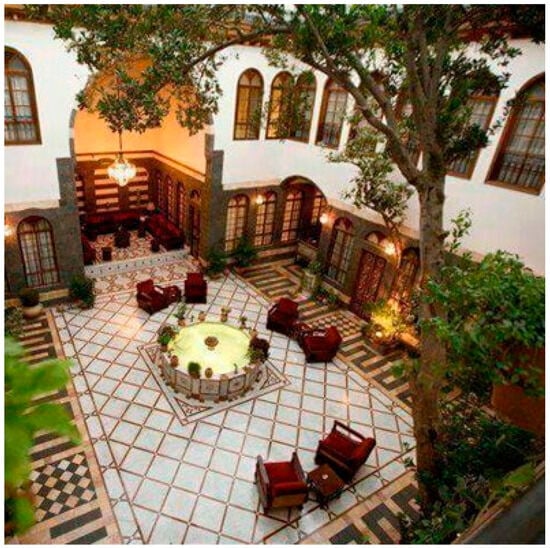
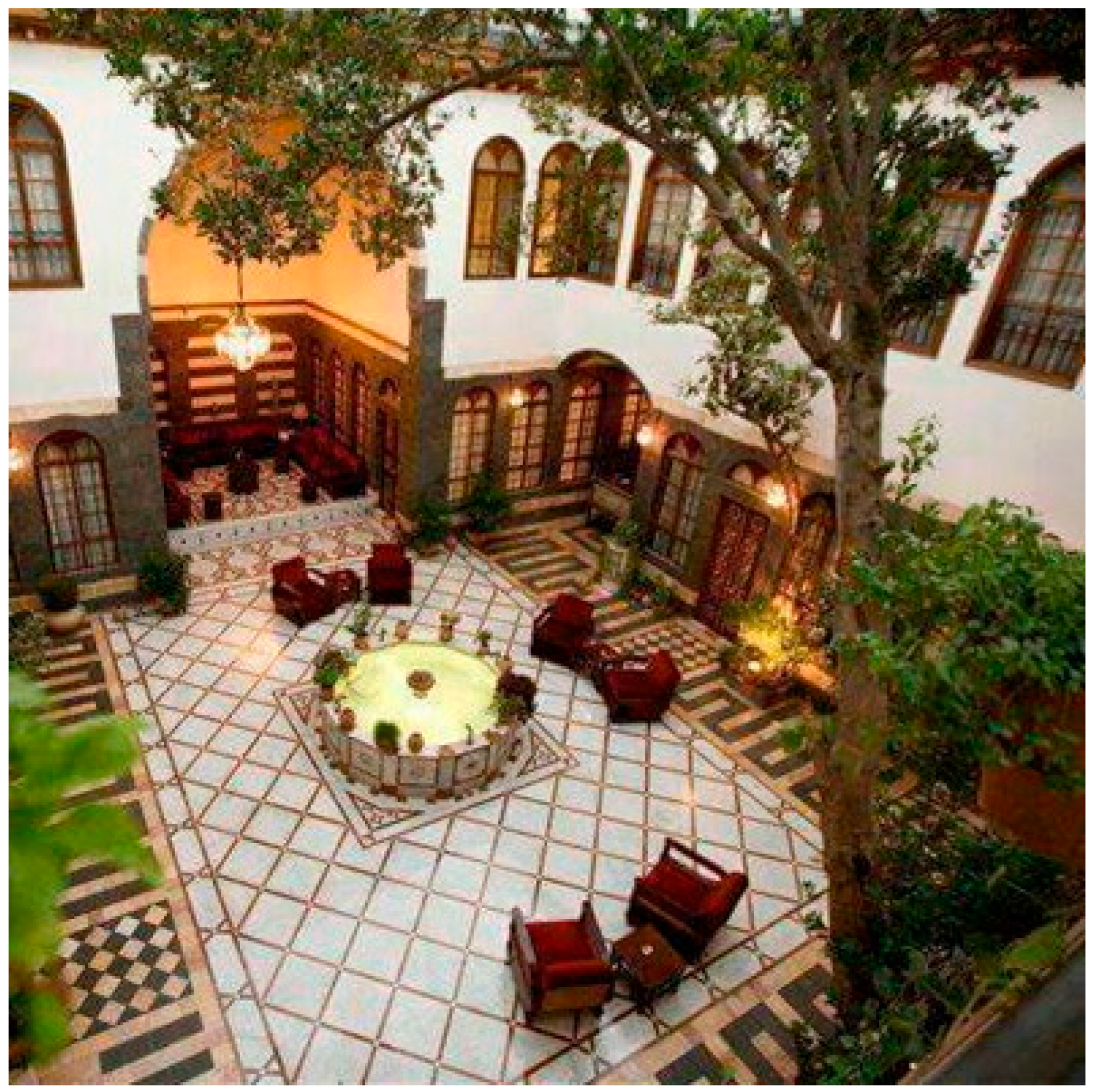
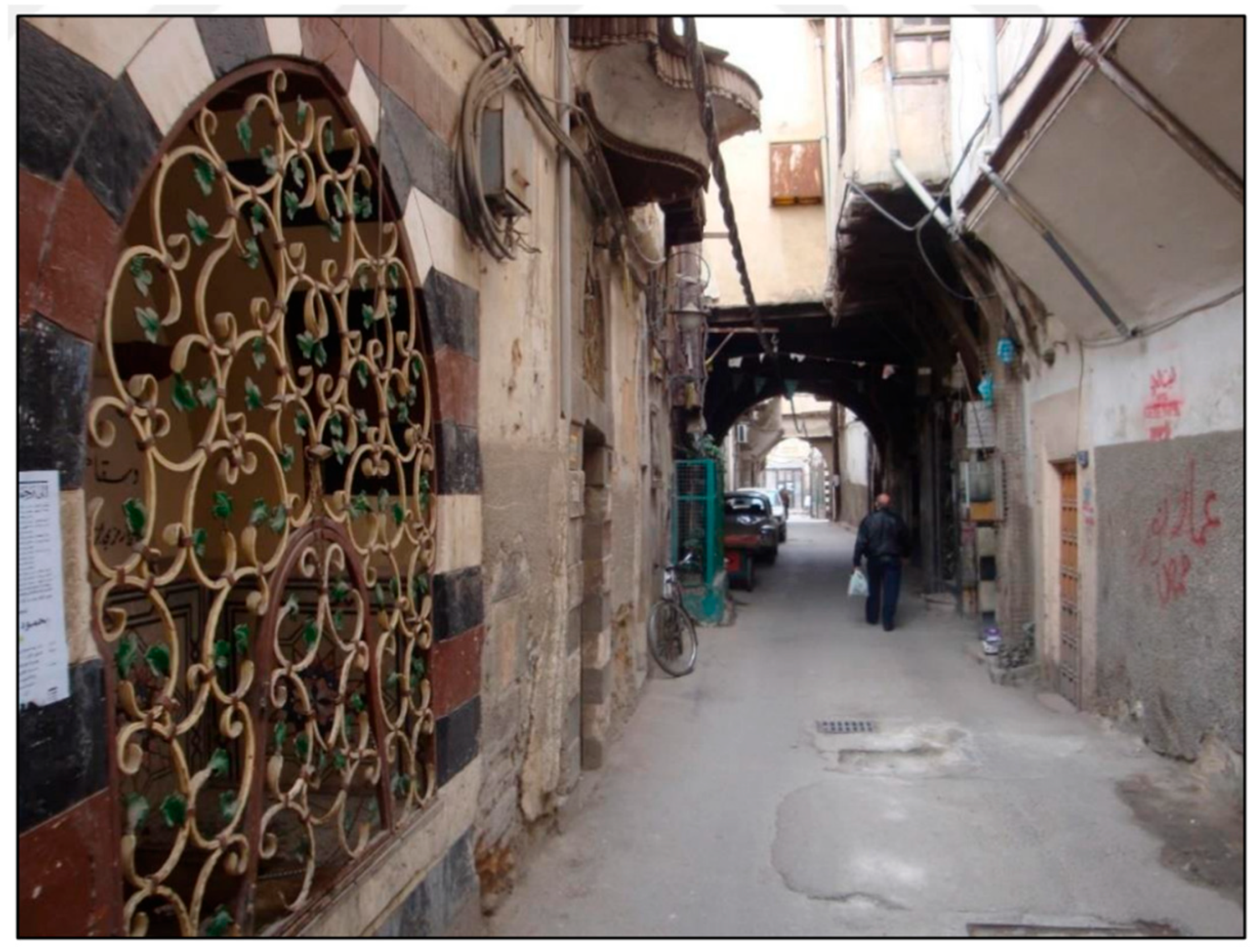
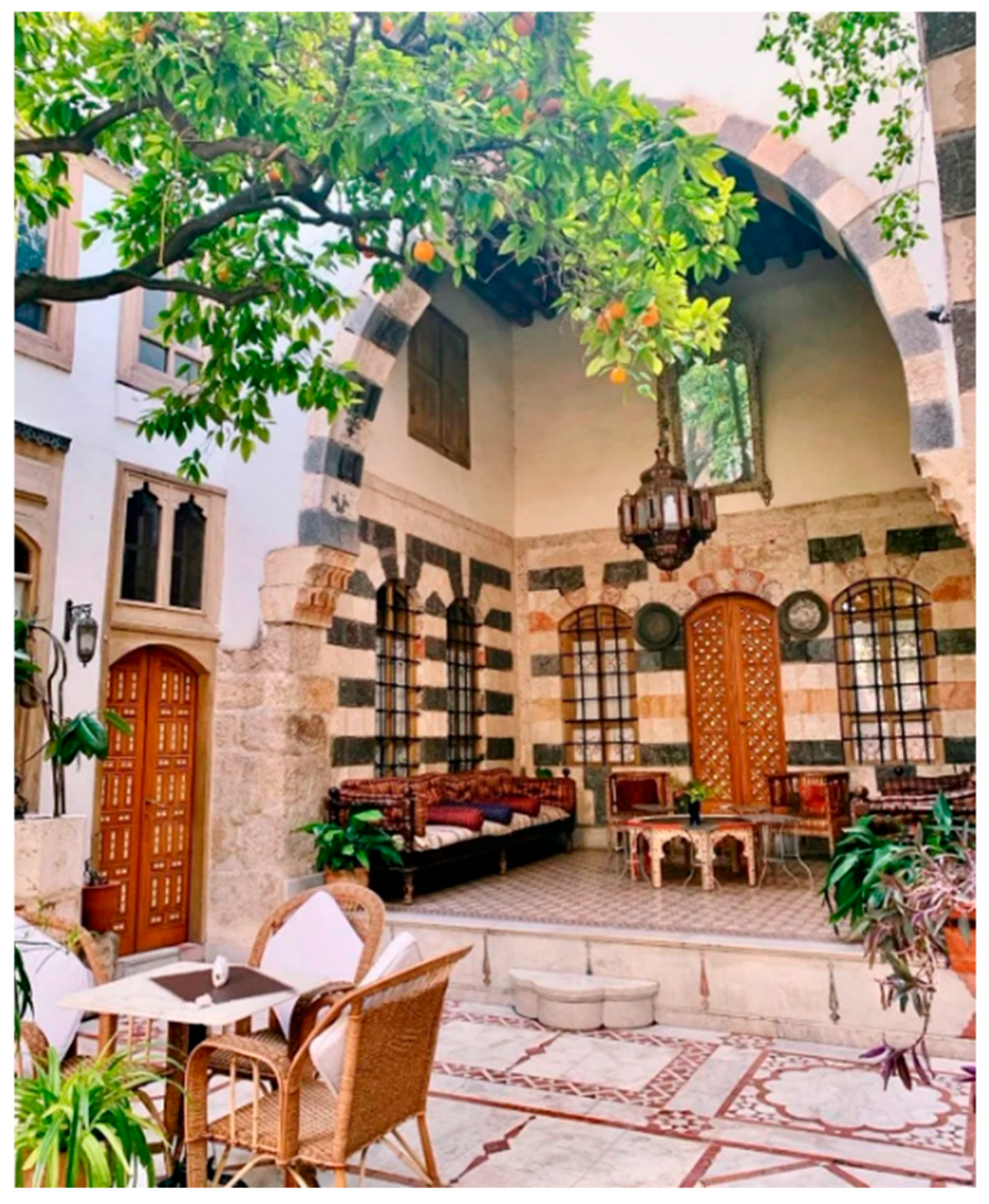
The traditional courtyard house in Damascus, Figure 1, represents a distinctive architectural model prevalent in major Syrian cities such as Damascus, Aleppo, Homs, and Hama. The earliest examples of these houses date back to the Ayyubid period, although the majority belong to the Mamluk and Ottoman periods [42]. The number of courtyards within a house varies according to its size and level of luxury; larger residences may include two or three courtyards, while most traditional homes contain a single courtyard, the dimensions of which typically reflect the economic status of their occupants [5]. Albakeer [6] and Hatahet [8] identified the key architectural features of the Damascene courtyard house as the entrance, courtyard space, and the liwan (open space). These components were derived from Zakaria’s book Traditional Damascene Houses [43], which will be further elaborated upon in this section.
Figure 1.
Courtyard area in a courtyard house in Damascus [42].
3.1. The Entrance
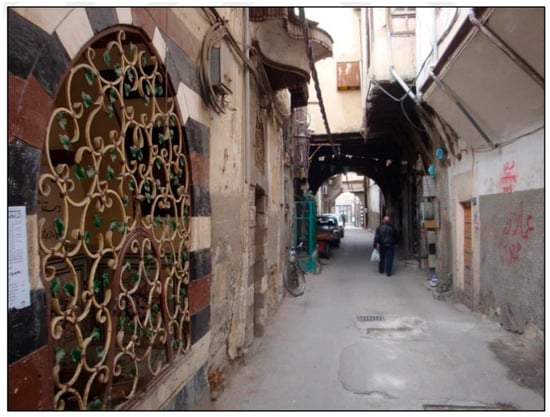
In order to access the central courtyard, which functions as the primary focal point of the house, a long, narrow passageway is typically used to connect the entrance with the courtyard, thereby enhancing the residents’ privacy. A distinct spatial hierarchy is evident in the organization of movement, beginning with the public domain of main streets, progressing through semi-public pathways, and ultimately leading to the private sanctuary of the courtyard area, Figure 2 [8].
Figure 2.
Houses’ entrances not facing each other alongside the street [6].
3.2. Courtyard Space
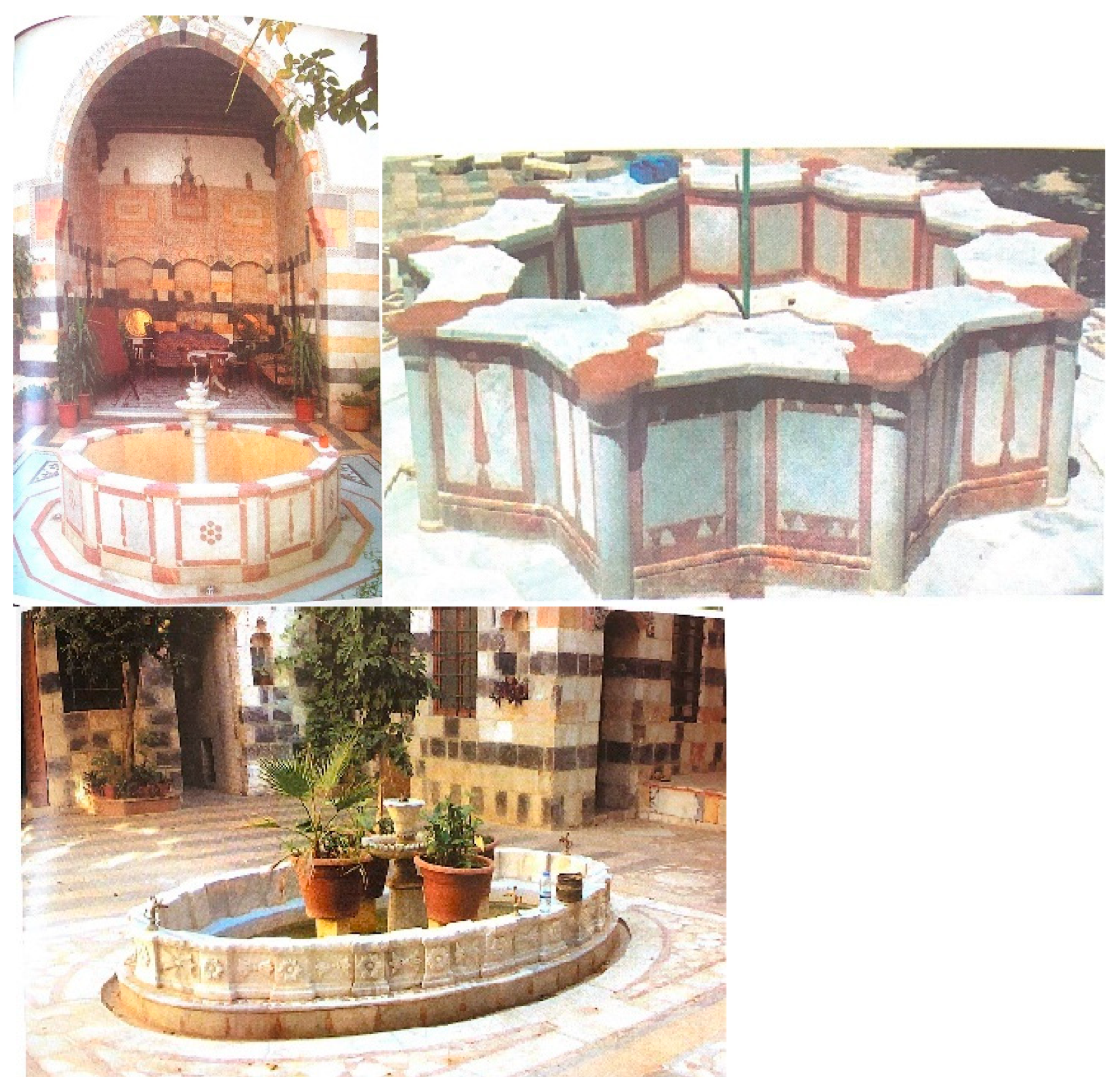
The courtyard in traditional Damascene houses represents the central and most prominent space within the dwelling. Architecturally, it acts as a pivotal connector, integrating various rooms and facilitating smooth internal circulation. The dimensions and layout of the courtyard differ according to the house’s status, ranging from expansive courtyards embellished with elaborate marble details and fountains to more compact ones incorporating black stone features. Courtyard components contribute to thermal regulation by minimizing solar radiation and dryness. Moreover, the courtyard offers a secluded communal space for families while enabling convenient access to various sections of the house. It establishes a contrast between the understated external appearance and the richly detailed interior, thereby enriching the residential experience in Damascene homes [8]. Vegetation is integral to both the aesthetic and environmental roles of the courtyard. Plant species are divided into ornamental varieties, such as roses, jasmine, Sambac jasmine, and tulips, and fruit-bearing trees, including citrons, oranges, lemons, and pomegranates [6]. A fountain serves as a defining feature of the Damascene courtyard, generally positioned in front of the liwan (open space). These fountains, Figure 3, are crafted in diverse forms, octagonal, pistol-shaped, square, ring, star, curved, and oval. They are commonly constructed from stone or ornamental marble, with external surfaces decorated with inlaid stone and interiors lined with waterproof lime to ensure durability and effective water retention [44].
Figure 3.
Various shapes of the fountain in the courtyard space [44].
3.3. The Liwan (Open Space)
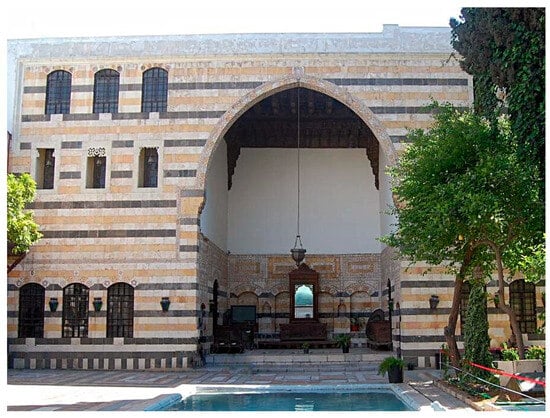
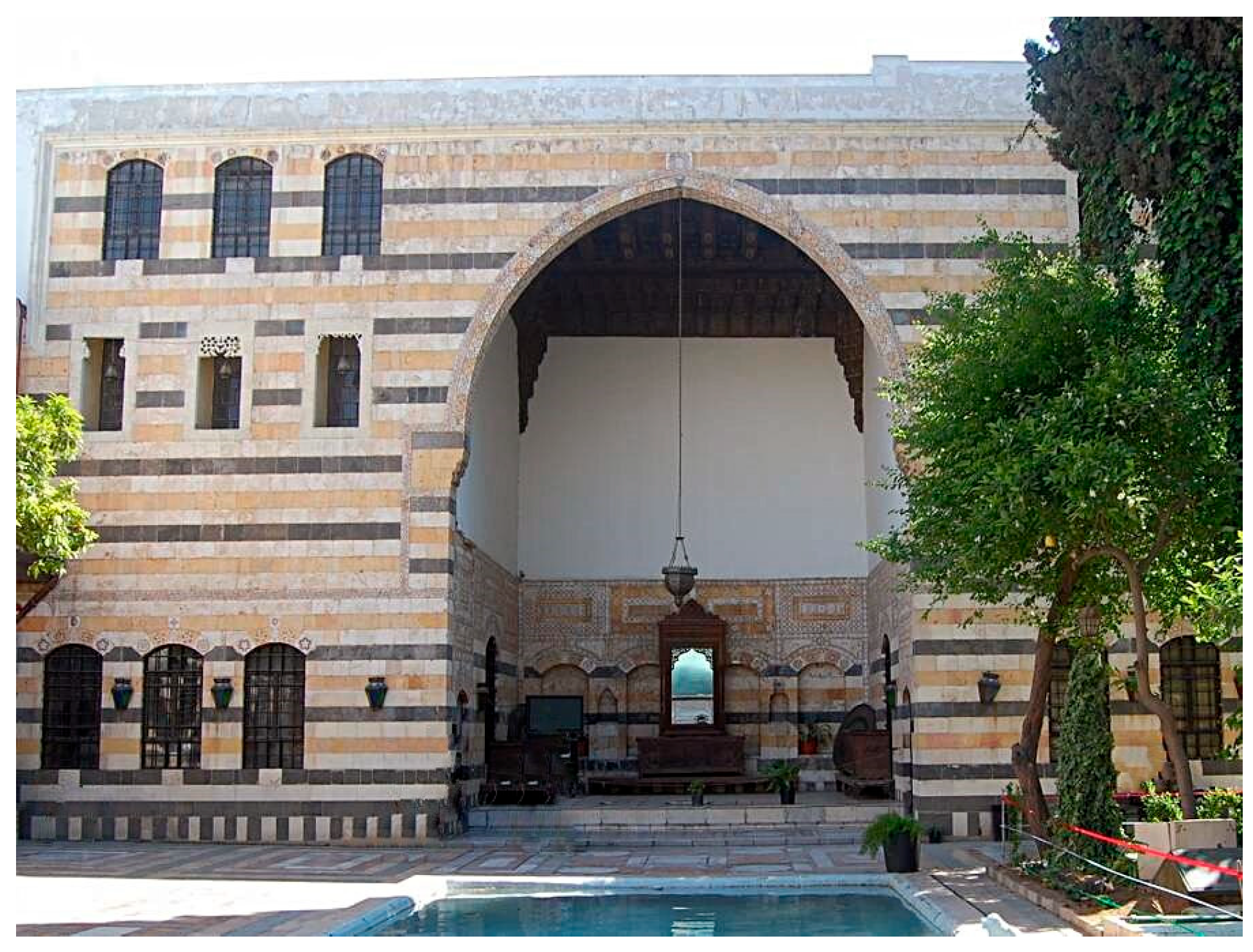
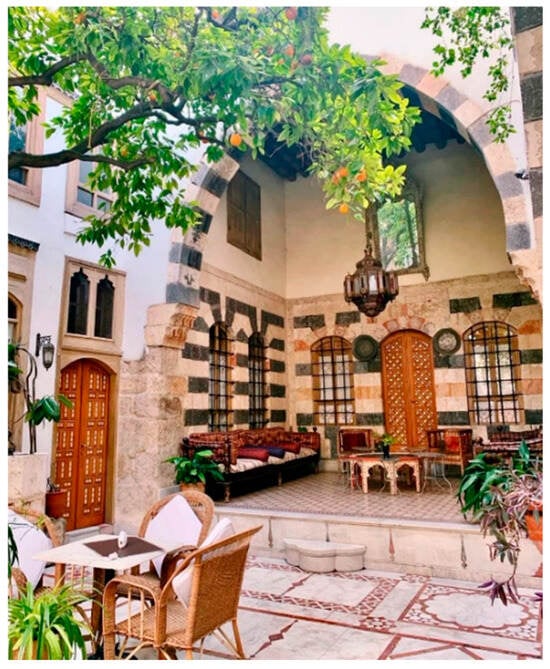
The traditional Damascene courtyard house incorporates a prominent architectural element known as the liwan (open space), Figure 4, typically aligned with the courtyard floor level or occasionally slightly elevated [45].
Figure 4.
The liwan (open space) of the Al-Azem Palace in Damascus.
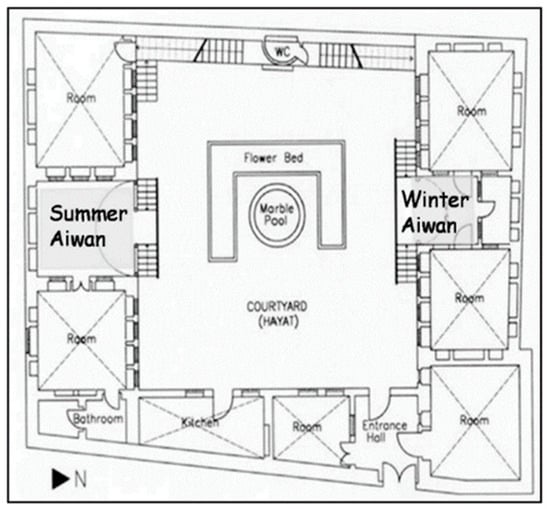
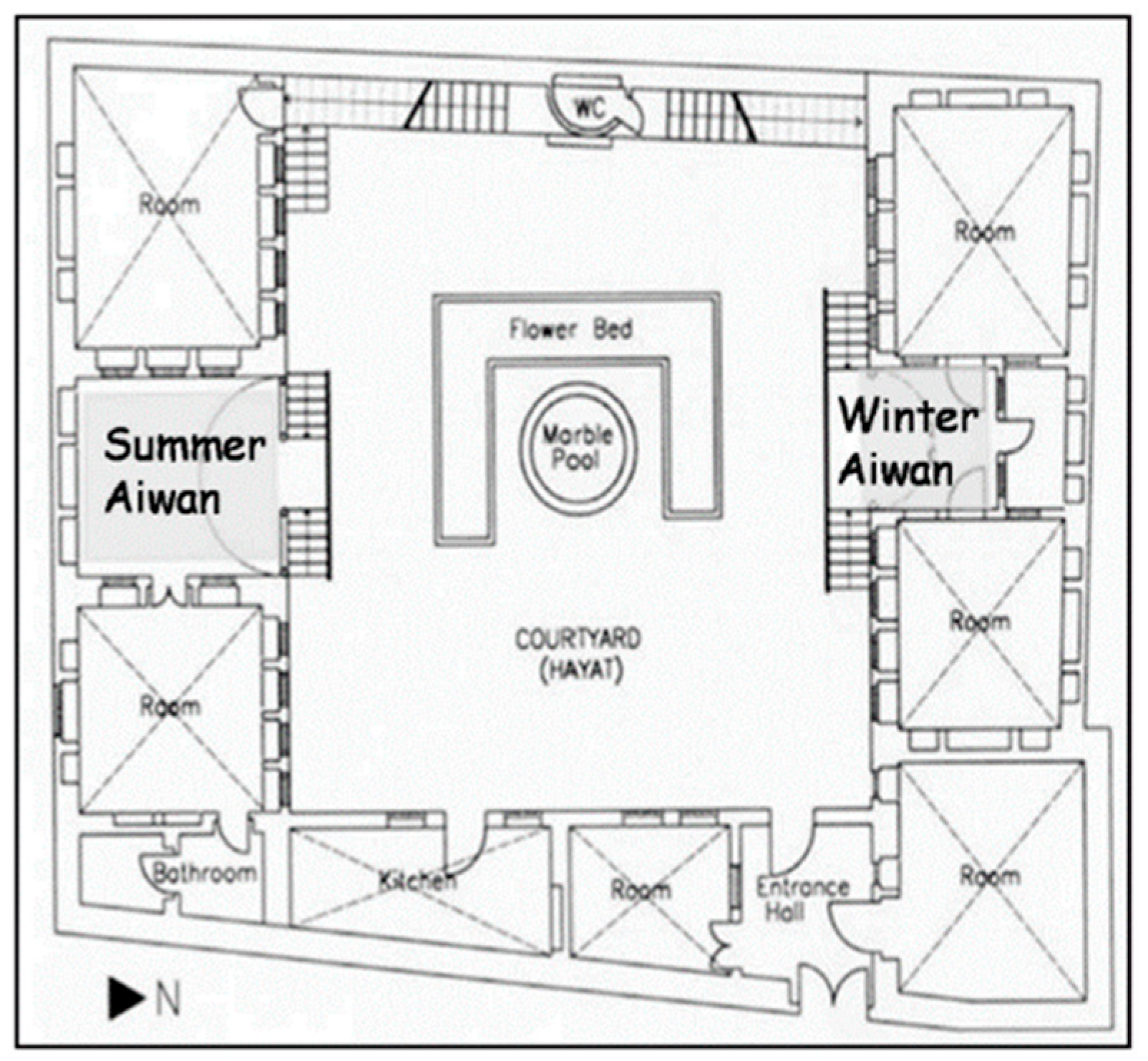
In more spacious homes, it is customary to find two liwan (open space)s, Figure 5, each serving a distinct seasonal purpose. The first liwan (open space) is deliberately positioned to face north, providing essential shading for the courtyard during the summer. Its extended depth helps block direct heat radiation reflected from the ground. Furthermore, it functions as a visual shield, reducing glare and enhancing occupant comfort during peak heat hours [8,43].
Figure 5.
Layout of urban house Damascus with two liwan (open space)s [43].
Conversely, the second liwan (open space) faces south, enabling it to capture sufficient solar radiation during the winter months. Throughout the year, liwan (open space)s serve as multifunctional areas within the courtyard, Figure 6, accommodating a range of activities such as living, food preparation, dining, seating, recreation, sleeping, family gatherings, and circulation between rooms.
Figure 6.
Elements of the liwan (open space).
The liwan (open space) varies in both height and depth, sometimes extending across two or three levels, and is typically oriented to the north. It is often raised 40 to 50 cm above ground level to promote better ventilation and thermal efficiency. Adjacent halls fitted with glass windows offer supplementary functional spaces [8,43].
4. Methodological Framework
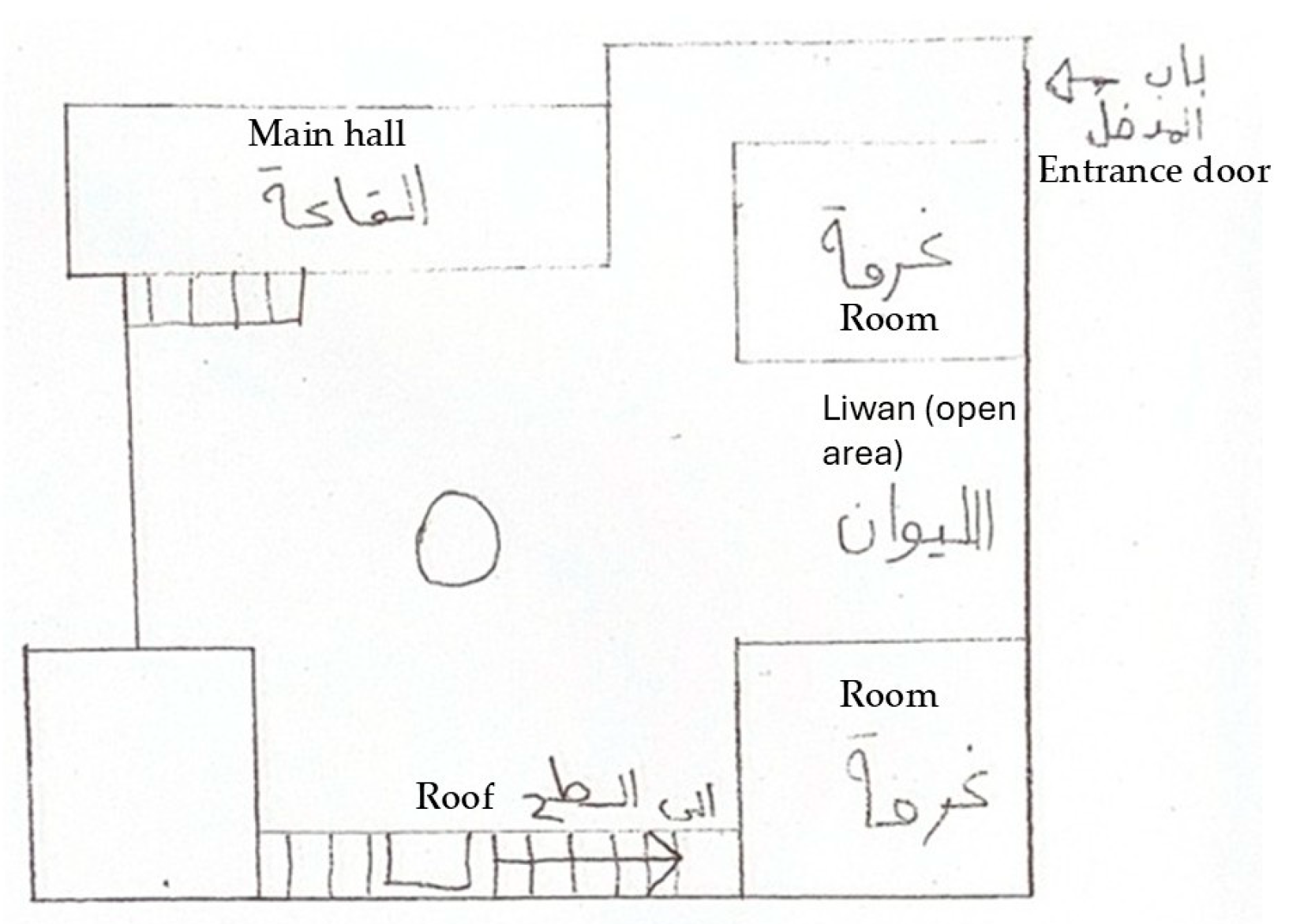
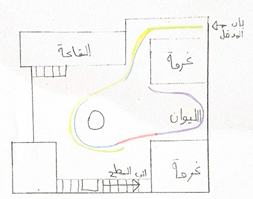
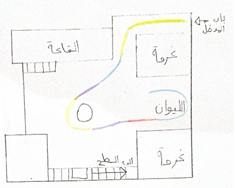
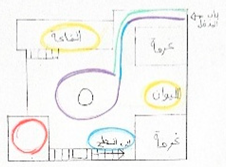
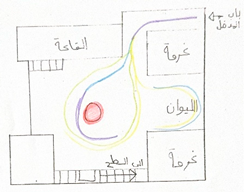
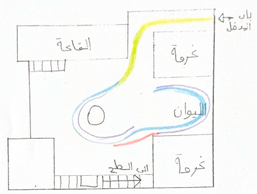
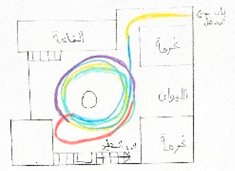
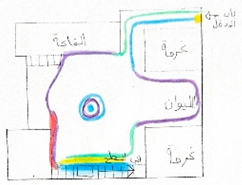
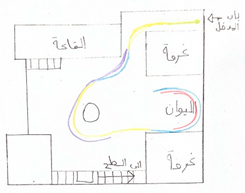
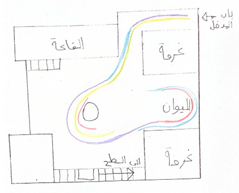
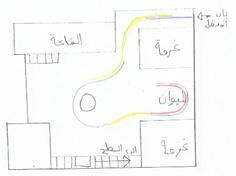
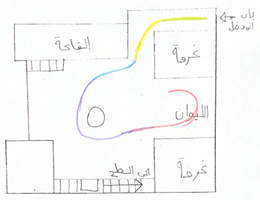
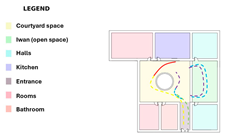
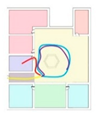
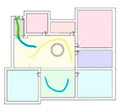
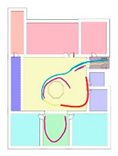
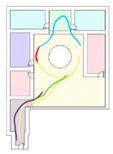
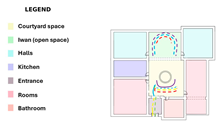
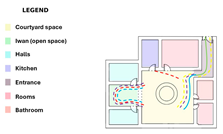
Building on earlier research that introduced sensory mapping, this study shapes a method specifically designed for Damascene courtyard houses. Participants take part by tracing their sensory responses onto simplified schematic floor plans of their own homes. These plans were hand-drawn by the researcher during site visits in a deliberately accessible format, since most participants were not architects and could engage more easily with schematic drawings than technical CAD layouts. Each sense is represented by a different color marker: yellow for hearing, purple for touch, red for taste, green for smell, and blue for sight. Mapping was conducted in situ as a walk-along activity inside the house: as participants moved through key areas such as the entrance, courtyard, fountain, and liwan (open space), they traced their route on the plan and switched markers whenever a different sense became dominant in that moment. The first stage of the study involved selecting two participants from each house. This helped ensure that various sensory viewpoints were represented, which supports more reliable conclusions. Participants were instructed to begin at the house entrance, then draw their path through the architectural elements, courtyard, fountain, liwan (open space), and other significant areas, changing colors based on the sense that stood out at each location.
To make the mapping process reproducible, the fieldwork followed a consistent and documented workflow. During each site visit, the researcher first produced a simplified schematic plan by direct observation, marking the entrance corridor, courtyard boundaries, fountain location, liwan (open space) position, kitchen threshold, stairs, and the main rooms opening to the courtyard. The plan was intentionally schematic and label-based rather than a fully dimensioned architectural drawing, because it served as a participant-facing template for tracing experience rather than as a construction document. Before the mapping began, the researcher explained the plan to the participant, confirmed orientation and key elements, and ensured the participant could identify the locations they would pass through.
The mapping session itself was conducted as a walk-along activity inside the house rather than a memory-only exercise. After the short orientation, the participant walked through the dwelling starting from the entrance and moving toward the courtyard and its key elements, while drawing the route directly onto the plan. Five colored pens were provided, and the participant switched color whenever the dominant sense changed (yellow hearing, purple touch, red taste, green smell, blue sight). Because “taste” can be misunderstood when discussed in relation to built space, the red traces are interpreted here as gustatory or food-linked moments rather than as literal tasting of architectural materials. Participants were not asked to taste surfaces; they marked red only when the experience of space was dominated by eating- and food-related experience, such as at the kitchen threshold, during serving routines, or during movement toward communal gathering zones where food consumption commonly occurs. This framing aligns with multisensory research emphasizing that gustation is frequently entangled with smell, anticipation, and memory in everyday environments, and that place cues can evoke taste-related experience even when the act of eating is not occurring at that instant.
Each session lasted approximately 45 min to one hour, including the explanation of the plan and the mapping task.
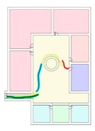
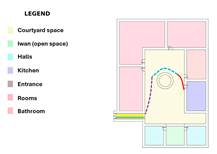
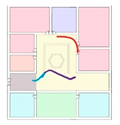
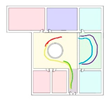
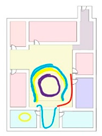
After the site visits, the hand-drawn schematic plans were digitally reconstructed in AutoCAD 2022 to generate consistent base plans for documentation. Participant traces were then manually transferred onto the corresponding AutoCAD-based plan using Microsoft PowerPoint while preserving the same color-coding system and path geometry (Level 1). Level 1 outputs were then overlaid and synthesized to produce the House-Level Sensory Map for each case. In Level 2, House-Level Sensory Maps were grouped by gate district and overlaid using PowerPoint to produce one Gate-Level Sensory Map for each gate district. In Level 3, the final visual synthesis and heat-map style outputs were produced in Adobe Photoshop.
Intensity was defined operationally through overlap frequency, consistent with the layered nature of the analysis. Areas where the same sense was traced repeatedly by different participants and/or across synthesized layers were treated as stronger intensity, while isolated or scattered traces were treated as lower intensity. This definition is applied transparently within the Level 1 to Level 3 synthesis logic described above, so that “strong” indicates repeated, shared traces rather than an assumed physical magnitude.
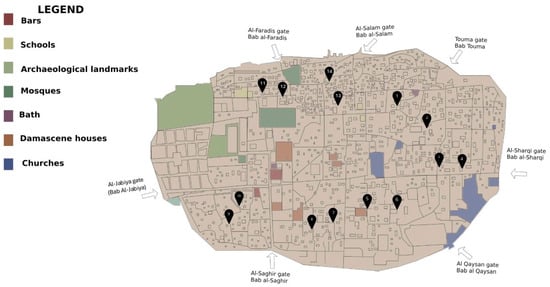
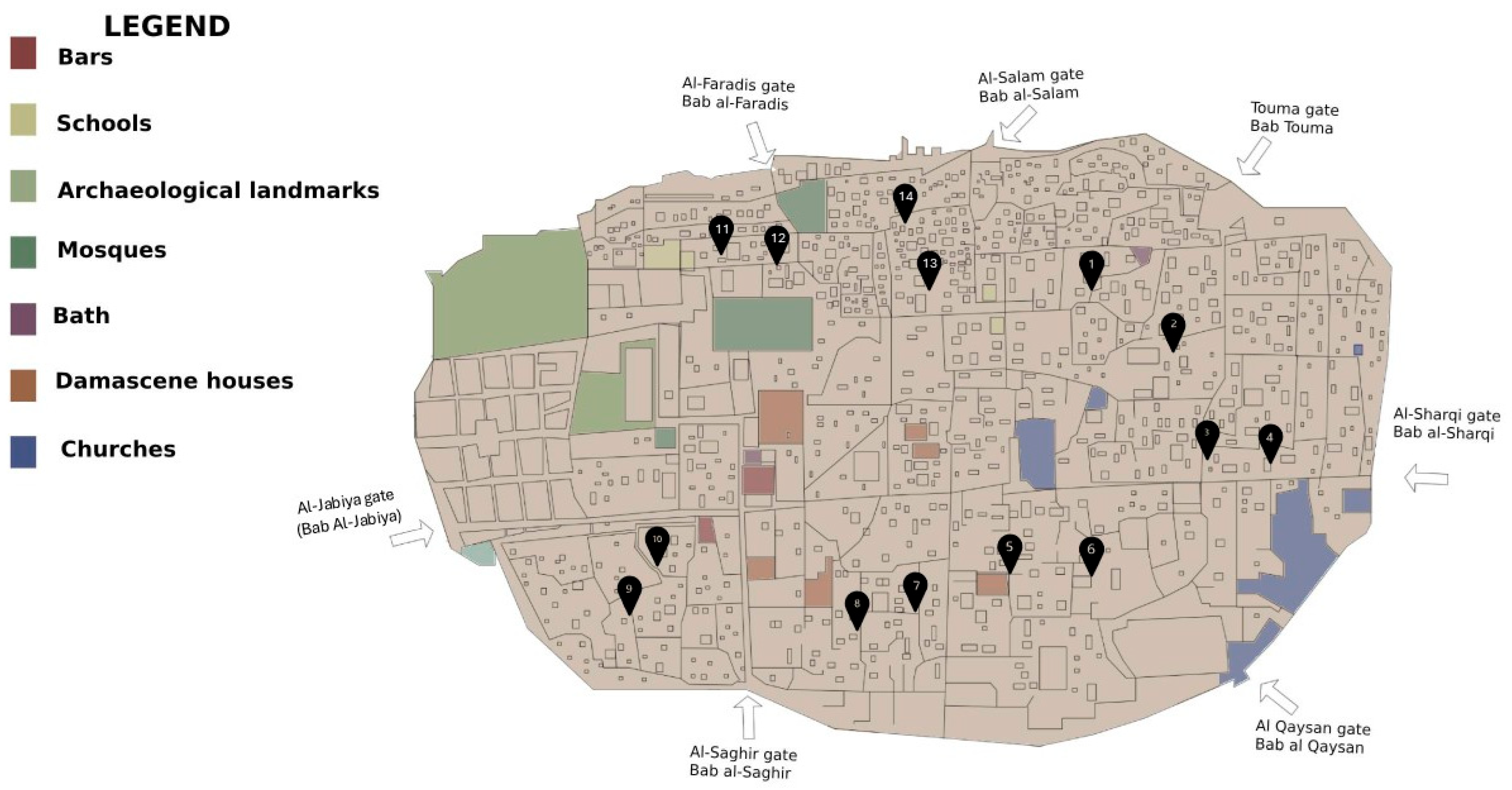
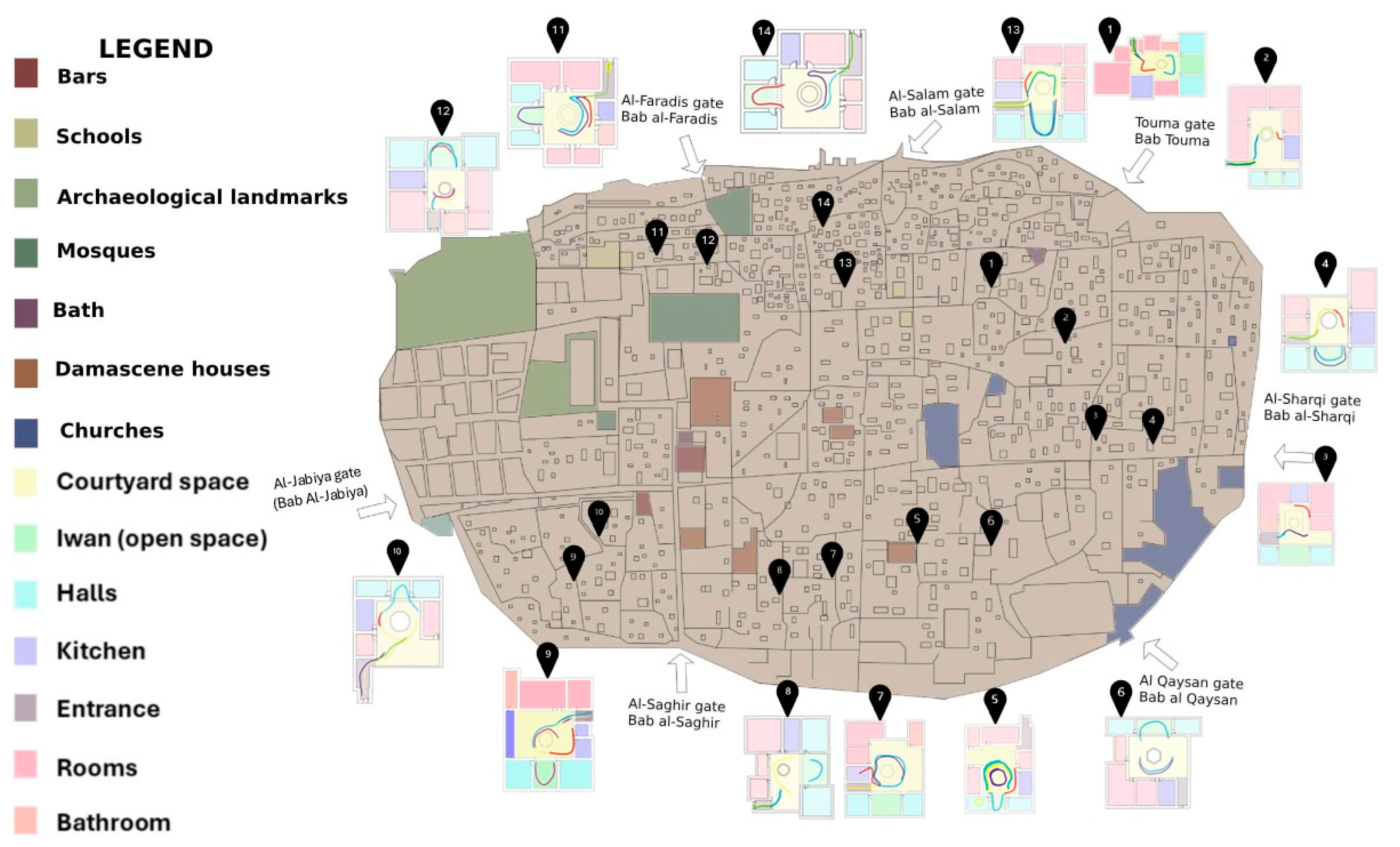
It should be noted that the limited availability of Damascene courtyard houses with preserved key architectural features constrained the sample size to fourteen cases. The cases were distributed across the Old City to achieve geographic coverage using the established gate-district divisions as a practical spatial stratification tool for location-based organization rather than a symbolic rationale. Selection followed explicit inclusion criteria tied to the research aim: each case needed a preserved courtyard–house sequence (entrance corridor–courtyard–fountain–liwan (open space)), the presence of the key architectural elements that structure this sequence (courtyard, fountain, and liwan (open space)), ongoing residential use at the time of fieldwork, and resident permission for accompanied in-house walk-along mapping. Practical constraints such as restricted access, ongoing restoration, neglect, and functional conversion also shaped the final set of houses included in the study. The spatial distribution of the fourteen case studies across the Old City is illustrated in Figure 7.
Figure 7.
Map of Old Damascus showing the locations of the fourteen selected case studies. The numbered markers (1–14) represent both the locations of the selected case studies within the map of the Old City of Damascus. The arrows represent the locations of the seven historic gates surrounding the Old City.
The study includes a structured comparison of sensory differences among participants. One aim is to determine whether people experience similar sensory reactions in equivalent settings, or if their responses vary according to personal interpretation. Looking at the maps created by different participants makes it possible to identify repeated features or changes in perception, which allows for the construction of a wide-ranging sensory diagram of the Damascene courtyard house. The analysis takes place in two rounds, each serving a specific purpose in understanding how people experience these houses. In addition, all methods in this study were performed in accordance with the relevant guidelines and regulations.
4.1. Level 1—House-Level Synthesis
Prior to analysis, participants engaged in guided sensory mapping sessions using a standardized script provided by the researcher (see Appendix A and Appendix B).
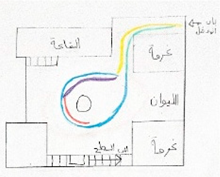
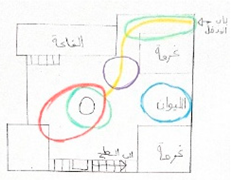
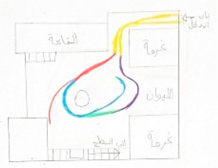
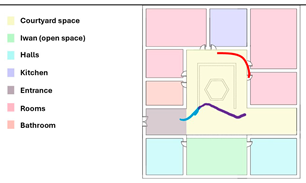
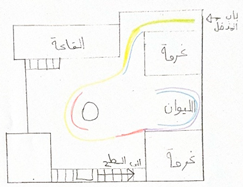
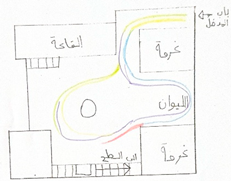
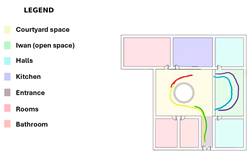
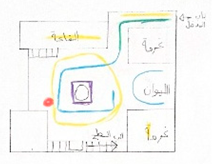
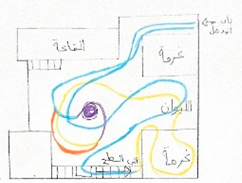
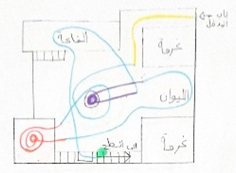
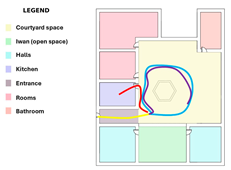
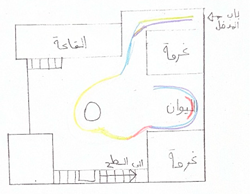
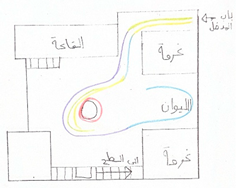
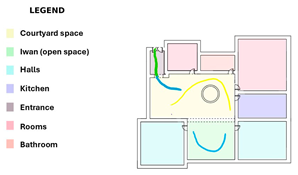
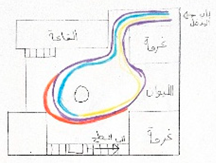
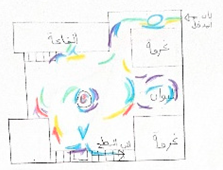
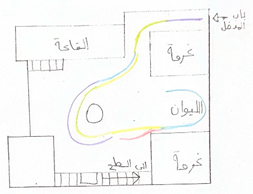
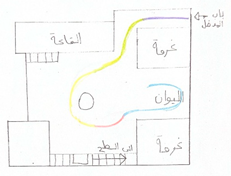
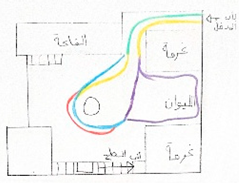
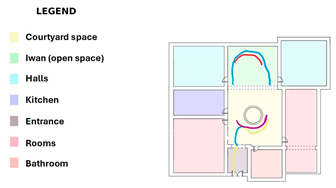
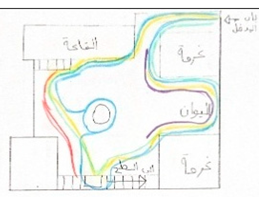
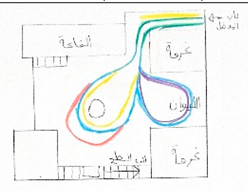
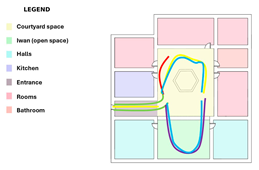
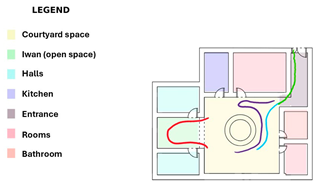
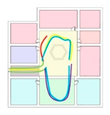
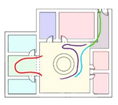
Two participant maps are compared within each house to identify convergences and divergences under the same spatial layout. A convergence is recorded when both participants mark the same sensory category within the same tolerance zone around a spatial anchor or segment on the base-map. For point anchors (such as the fountain center), the tolerance zone is defined as a buffer radius proportional to the plan scale; for linear segments (such as the entrance corridor), convergence is defined as overlapping marks along the same segment length. Where participants mark the same sense in the same tolerance zone but draw different path geometries, the sense is treated as shared but lower in geometric consistency, and this distinction is carried forward into Level 2 and Level 3 synthesis. The resulting output is a House-Level Sensory Map that preserves both shared anchors and meaningful within-house variation (see Table 1).
Table 1.
Level 1—House-Level Synthesis of sensory maps in Damascene houses. Arabic terms labeled on the plan are defined as follows: “باب المدخل”—Entrance door; “غرفة”—Room; “الليوان” (Liwan—open area); “القاعه”—Main hall; “السطح”—Roof.
4.2. Level 2—Gate-Level Synthesis
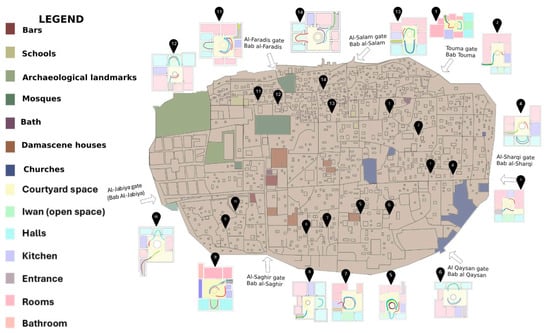
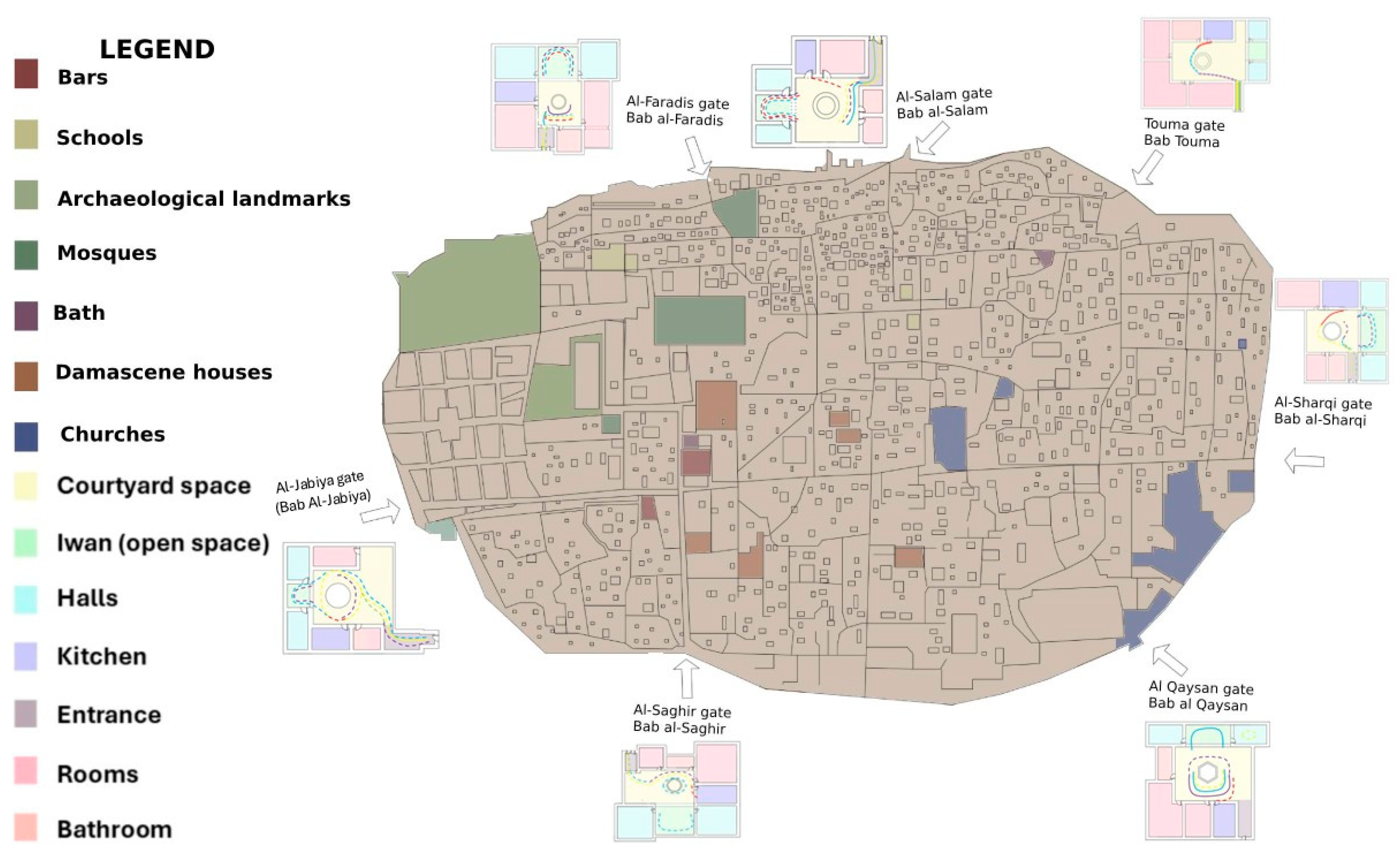
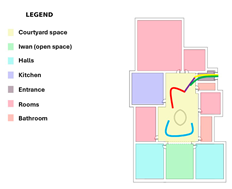
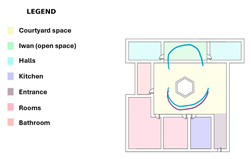
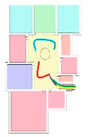
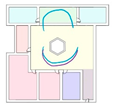
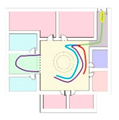
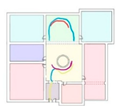
In the second level of analysis, the two House-Level Sensory Maps for the two case studies within each gate district were combined to create one Gate-Level Sensory Map. The aim was to preserve the full range of sensory traces visible across the two houses while making the strength of shared traces explicit. When the same sense appeared in comparable locations on both house-level maps, it was interpreted as a strong and stable feature of that gate district. When a sense appeared in only one of the two cases, it was retained in the gate-level synthesis but treated as lower intensity, reflecting weaker cross-case consistency rather than absence. The resulting gate map therefore combines all traced senses while distinguishing between shared versus less consistent sensory activations, providing a complete representation of the gate district’s sensory character. Figure 8 and Table 2 show the Old City gate-based organization used to group the case studies for the gate-level synthesis.
Figure 8.
A map of the old city of Damascus showing the locations of the sensory maps The arrows represent the locations of the seven historic gates surrounding the Old City. Colored lines represent different types of sensory perception: Yellow—Auditory, Green—Smell, Blue—Visual, Purple—Haptic, Red—Taste.
Table 2.
Level 2—Gate-Level Synthesis of sensory mappings for paired houses within each gate district.
4.3. Level 3—City-Level Synthesis
Level 3 synthesizes the seven gate-level sensory maps to establish a unified sensory framework for the Damascene courtyard house. Through cross-case comparison, recurring patterns such as where each sense originates, intensifies, or converges are extracted to construct a comprehensive sensory model. Figure 9 and Table 3 summarize the recurring city-level spatial patterns identified for each sensory domain across the seven gates.
Figure 9.
A map of the Old City of Damascus showing the locations of the seven historic gates (indicated by arrows) and the Gate-Level Sensory Maps for each district. Line types represent intensity levels of sensory traces: solid lines indicate strong-intensity (shared across both cases), while dotted lines indicate low-intensity (present in only one case).
Table 3.
Analysis of the second phase of sensory maps in Damascene houses.
5. Results and Discussions
- Auditory Perception (Yellow)
The fountain’s constant sound serves as a fixed element in the auditory experience across all maps, particularly at the entrance, where it is encountered even before the participant fully enters the courtyard. The presence of auditory engagement near the fountain in several maps reflects the way sound moves through old Damascene houses, where architectural features and open courtyards influence the spatial distribution of sound.
- Haptic Perception (Purple)
The fountain functions as a tactile center, drawing participants into direct physical engagement with the water or its surroundings. The liwan (open space) also acts as a tactile focal area due to its spatial openness and its seamless relationship with the courtyard, making it a prominent sensory position within the layout.
- Gustatory (Taste-Related) Perception (Red)
The maps show gustatory (taste-related, food-linked) perception as originating in the kitchen and extending toward the fountain, tracing the transition from preparation toward shared gathering and eating routines. This pattern indicates the kitchen’s role in food-related activity and its spatial relationship to courtyard zones where communal interaction and consumption commonly occur, rather than suggesting literal tasting of architectural surfaces.
- Smelling Perception (Green)
The green-smelling perception pathway is most consistently anchored at the entrance, where the door opening and corridor transition make courtyard scents noticeable early in the sequence. In several cases, secondary smell traces extend beyond the threshold into the courtyard and can become more noticeable near planting edges, the fountain area, or toward the liwan (open space) direction depending on ventilation, flowering/watering, and transient household activity. This configuration implies that vegetation and water-related humidity can contribute to olfactory experience while still keeping the entrance as the most stable shared anchor across cases.
- Visual Perception (Blue)
The fountain and the liwan (open space) dominate visual perception. The fountain marks the participant’s first visual contact with the space, while the liwan (open space) functions as a visual node due to its raised and open position in relation to the courtyard. Both elements maintain visibility and draw attention, supporting their central role in the spatial experience.
The repeated sensory sequence can be interpreted as a structured experiential script produced by the courtyard–house typology rather than as a set of isolated sensory hotspots. At the threshold, the narrow entrance corridor operates as an experiential compression: reduced visual depth and filtered exterior noise make subtle cues—especially the approach of water sound and the anticipation of courtyard openness—more salient as lived experience (phenomenology). From an affordance perspective, the corridor’s constricted width and controlled turning geometry discourage lingering and instead afford directed movement toward the courtyard opening, while simultaneously supporting privacy by limiting direct sightlines. In semiotic terms, the corridor functions as a signifying boundary that marks a transition from public street life to domestic interior order, with the shift in acoustic character acting as a legible cue of entry into a different social realm.At the courtyard center, sensory convergence reflects a typological emphasis on orientation and gathering. Phenomenologically, the courtyard supports bodily recalibration through light, temperature, and openness; the shift from compression to release becomes a memorable bodily event. As an affordance structure, the courtyard’s clear centrality and circulation geometry invite movement around the fountain and facilitate face-to-face interaction, which helps explain why multiple senses cluster there across cases. Semiotic readings treat the courtyard center as a legible organizer: the fountain, planting edges, and paving patterns produce stable signs of ‘center’ and ‘pause’ that can be read quickly even during movement.
At the fountain edge, tactile and auditory emphasis can be interpreted as an affordance-rich boundary object. The stone rim affords resting the hand, leaning, sitting, and momentary contact with cool surfaces; water sound provides an acoustic anchor that remains stable across household variations. Semiotic meaning is strengthened because the fountain is both functional and emblematic; it materializes domestic care, cooling, and hospitality through a visible and audible element placed at the spatial core.
At the liwan (open space) seating zone, visual and tactile emphasis aligns with a typological vantage condition. Phenomenologically, the liwan (open space) supports a sustained, comfortable gaze back into the courtyard while remaining shaded; bodily comfort and social visibility coincide. Affordances include sitting, observing, and hosting, reinforced by raised benches and spatial framing. Semiotic cues arise from elevation, alignment, and the framed view that signals the liwan (open space) as a recognized social stage within the domestic setting. Table 4 consolidates these recurrent spatial moments and interprets them through phenomenology, affordance theory, and spatial semiotics.
Table 4.
Interpretation of recurrent spatial moments through phenomenology, affordance theory, and spatial semiotics.
Although cross-case regularities are strong, competing interpretations remain plausible. First, familiarity and routine may shape what participants mark as ‘dominant’ because residents repeatedly traverse the same sequence; the maps may therefore reflect practiced attention rather than purely sensory intensity. Second, transient conditions can affect smell and sound, including cooking activity, flowering cycles, wind direction, and time of day; these can amplify or dampen olfactory and acoustic cues without changing the underlying spatial sequence. Third, the mapping task itself may bias results toward easily verbalized or socially shared cues (such as the fountain) while under-representing subtle or private sensations. These limitations do not negate the recurring sequence, but they define the boundary of interpretation: the results support a typology-linked experiential pathway, while intensity and olfactory spread may fluctuate with context.
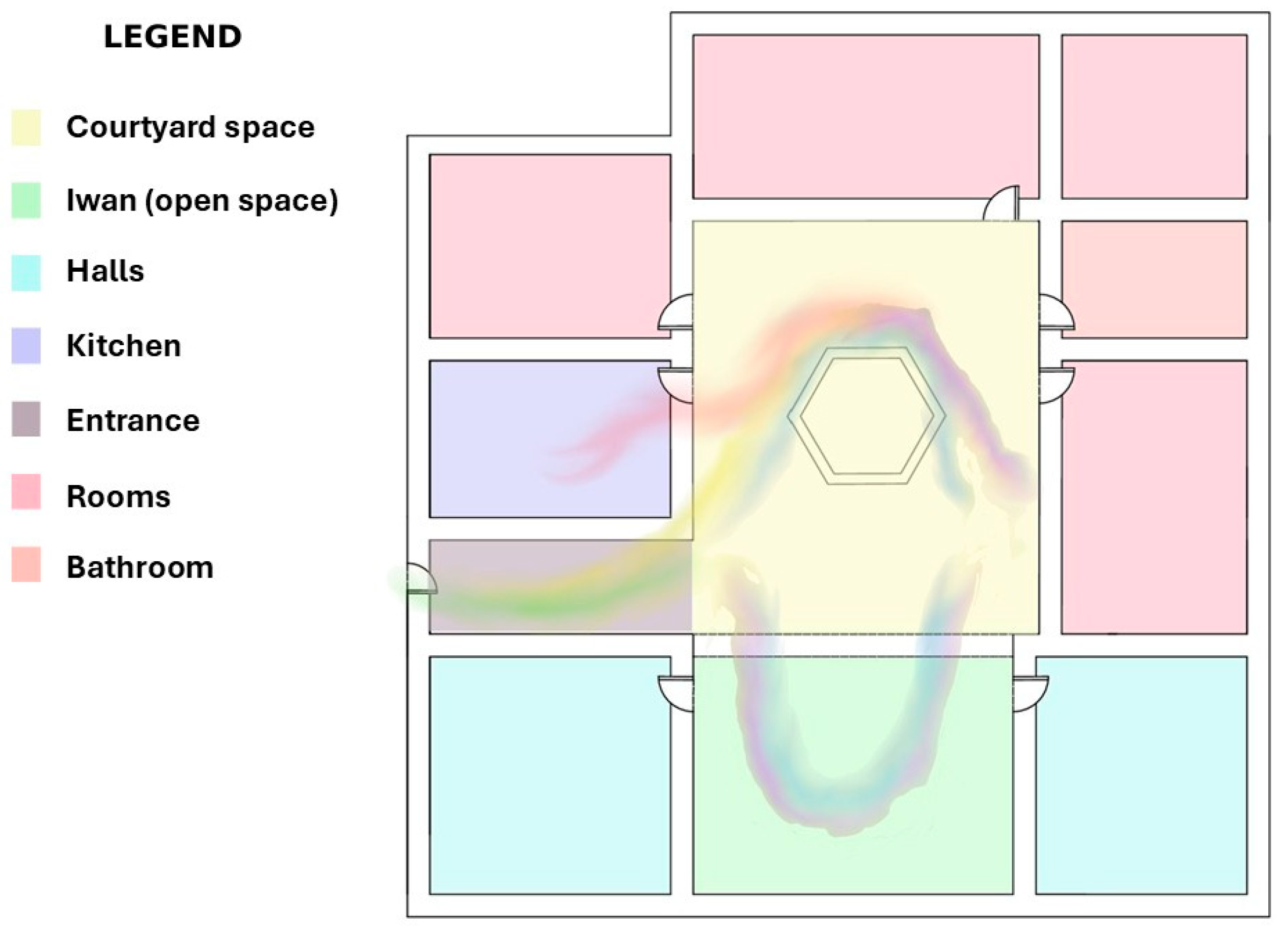
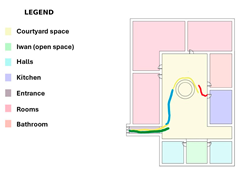
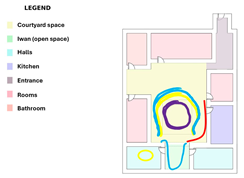
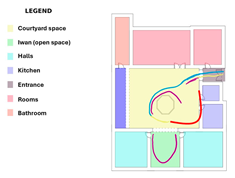
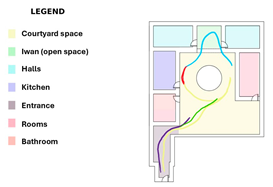
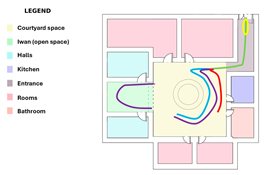
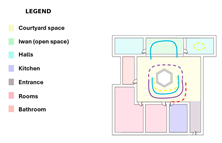
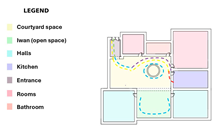
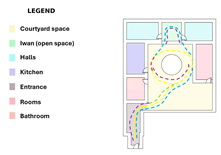
Figure 10 presents the developed comprehensive sensory map of the traditional Damascene courtyard house, illustrating the strong association between spatial sequence and sensory perception. The map begins at the entrance, specifically along the corridor separating the exterior from the interior courtyard. This transitional zone engages hearing and smell. Typically shaded and dimly lit, it restricts direct interaction with the courtyard while allowing the sound of the fountain to reach visitors as an initial auditory cue. The auditory stimulus in this area results from the sound of water flowing from the fountain and traveling through the corridor.
Figure 10.
Developed comprehensive sensory map of Damascene courtyard houses. Colored lines represent different types of sensory perception: Yellow—Auditory, Green—Smell, Blue—Visual, Purple—Haptic, Red—Taste.
In the context of smell, environmental conditions and wind direction significantly influence the experience. When the door opens, the airflow carries the scents of the courtyard’s plants and flowers, particularly jasmine and citrus trees, toward the entrance, establishing a sensory link between outdoors and indoors. This aromatic sequence intensifies the sensory engagement during the passage into the house. Hearing continues to draw attention toward the fountain, which functions as the primary source of sound and acts as a key courtyard feature. Touch and sight converge at two major architectural components: the fountain and the liwan (open space). The fountain plays a central role in both tactile and visual engagement, as it occupies the middle of the layout, around which the remaining architectural elements are structured. This positioning creates a sensory focal point that naturally attracts both touch and sight. In contrast, the liwan (open space), raised in elevation and designed with an open layout that provides a complete view of the courtyard, holds substantial relevance for these senses. Food-linked is mainly linked to the kitchen and continues into the courtyard space near the fountain, especially in the section closest to the kitchen. This sensory path positions the kitchen as the origin of food-linked-related activity, reflecting the process of food preparation. It extends toward the area by the fountain, indicating the movement from preparation to dining. This sequence highlights the courtyard’s dual function, where both culinary tasks and social interaction take place as part of a shared sensory environment.
6. Conclusions
This study aimed to develop a structured methodology that integrates phenomenological observation with affordance theory and sensory semiotics to map moment-to-moment sensory activations in traditional Damascene courtyard houses. It addresses a critical gap in architectural research, namely, the absence of a guiding theoretical model that relates spatial design to the dynamic, embodied experience of multiple senses, whereas prior work typically isolated one or two sensory domains or treated courtyard houses solely as climatic or formal objects.
- Participants followed a remarkably consistent sensory pathway, moving from a narrow, sound-muffled entry corridor into the open courtyard, and converging at the central fountain, demonstrating how sequential spatial arrangements inherently guide multisensory engagement.
- The central fountain emerged as a multisensory nexus: its flowing water anchors auditory attention, its stone rim invites tactile exploration, and its position frames key visual sightlines toward the liwan (open space).
- Raised benches in the liwan (open space) function as secondary tactile and visual nodes, offering vantage points where texture and form coalesce with shaded comfort, reinforcing the courtyard’s social and architectural rhythm.
- Smell transitions unfold along planted borders and through shaded passages: jasmine and citrus scents drift into the threshold and intensify near the fountain, revealing how vegetation and microclimate collaborate to shape movement and memory.
- Gustatory markers trace a clear route from kitchen thresholds toward the fountain, suggesting that food preparation and communal gathering overlap spatially and sensorially, linking culinary activity with courtyard sociability.
Finally, the study recognizes certain limitations. For instance, the sample encompassed fourteen houses and two participants per case, which, although been forced due to the existing situation and war damage in Syria that limited the researchers’ ability to find more cases, may not capture the full diversity of sensory responses or architectural variations.
Credibility was strengthened through within-house independent mapping by two residents under the same spatial layout, which enabled direct comparison of shared anchors versus individual variation, and through a transparent multi-level synthesis that preserves both convergence and divergence rather than averaging them away. Contextual factors observed during sessions, such as door state, ventilation, active cooking, or recently watered planting, were noted as qualifiers to avoid treating transient cues as fixed typological features. Future work can extend this approach through mixed methods that complement participant interpretation, including basic acoustic measurements near fountains and corridors, microclimate logging across courtyard and liwan (open space) zones, and structured odor sampling during different seasons, which would help validate the sensory attributions while keeping the mapping process grounded in lived experience.
Accordingly, future research can expand the participant pool through searching in similar contexts worldwide and possibly apply the discussed methodology to other architectural typologies and cultural contexts. Such steps would refine the theoretical framework and support conservation or design strategies that more fully respond to human perception.
Author Contributions
Conceptualization, R.S. and A.C.; methodology, R.S. and A.C.; writing—original draft preparation, R.S. and A.C.; writing—review and editing, R.S. and A.C. All authors have read and agreed to the published version of the manuscript.
Funding
This research received no external funding.
Institutional Review Board Statement
This study was reviewed and approved by the Architectural, Planning, and Design Ethics Sub-Committee at Eastern Mediterranean University with approval number 2024-03. The ethics committee reviewed the research and found it appropriate to proceed. Informed consent was obtained from all participants prior to their inclusion in the study.
Data Availability Statement
The data that support the findings of this study are available from the corresponding author upon reasonable request.
Conflicts of Interest
The authors declare that there are no conflicts of interest regarding the publication of this paper.
Appendix A. Participant Instruction Script Used During Sensory Mapping Sessions
Before each session, the researcher explained the task using a consistent script in everyday language. The participant was told that the activity documents how the house is sensed while moving through it, and that there are no correct or incorrect answers. The researcher introduced the plan as a simplified drawing of the participant’s own house and pointed out the entrance corridor, courtyard, fountain, liwan (open space), and kitchen threshold. The participant was asked to walk through the house starting from the entrance and to draw the route on the plan while walking. Five colors were explained as five senses: blue for what is mainly seen, yellow for what is mainly heard, green for what is mainly smelled, purple for what is mainly touched, and red for taste or food-related moments. The participant was asked to choose only the dominant sense at each moment and to switch colors whenever the dominant sense changed. The researcher emphasized that the participant should mark what they personally experience rather than what they assume should be experienced, and that the participant could pause at any time to look around and then continue.
Appendix B. Sensory Mapping Field Protocol
- Participants:
- Number: 2 participants per household (total 28 participants across 14 homes).
- Profile: Family members from different age groups or genders (e.g., parent and adult child).
- Requirement: Long-term residents of the house.
- Materials:
- One simplified schematic base-map per household (hand-drawn by the researcher).
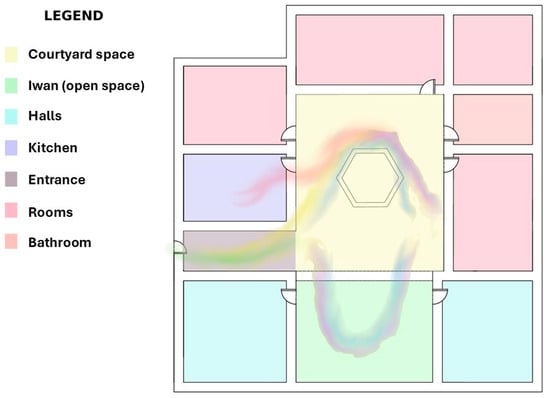
Figure A1. Sample schematic base map provided to participants prior to mapping.- Five colored pens:
- Red = Taste.
- Green = Smell.
- Yellow = Sight.
- Blue = Hearing.
- Purple = Touch.
- Instructions (Delivered Orally Before Mapping):
- You will walk through your home as usual, from entrance to courtyard, liwan, and other areas.
- As you walk, use the colored pens to draw your path and mark the dominant sense you feel at each step.
- Change pen color when your dominant sensory perception changes.
- Timing:
- Duration per session: ~45 min to 1 h.
- Timing: Between 10:00 a.m. and 1:00 p.m.
- Season: Spring to early summer.
- Environmental Considerations:
- Efforts were made to maintain consistent environmental conditions across all cases.
- Data Recording:
- Participant maps were scanned after each session.
- Researcher also drew independent base plan for each home based on on-site observation.
- These maps were used in further digital analysis (AutoCAD, PowerPoint, Photoshop).
References
- Edwards, B.; Sibley, M.; Hakmi, M.; Land, P. Courtyard Housing: Past, Present and Future, 1st ed.; Taylor & Francis: Abingdon, UK, 2004. [Google Scholar] [CrossRef] [Scilit]
- Rapoport, A. House Form and Culture; Prentice-Hall Press: Hoboken, NJ, USA, 1969. [Google Scholar]
- Ali, M.; Zarkesh, A.; Yeganeh, M. Development of Housing Architecture Identity in Damascus. Eur. J. Res. 2018, 1, 16–33. [Google Scholar] [CrossRef] [Scilit]
- UNESCO. Alywnskw-Tnshy-Mrsdaan-Lswn-Altrath. 2023. Available online: https://www.unesco.org/ar/articles/alywnskw-tnshy-mrsdaan-lswn-altrath-althqafy-fy-swrya (accessed on 27 January 2024).
- Levant, C. Handbook for the Maintenance and Rehabilitation of Traditional Syrian Architecture. In Traditional Syrian Architecture; École d’Avignon: Avignon, France, 2004. [Google Scholar]
- Hatahet, K. Urban Pattern and Housing Typology of Damascus: Postwar Projections for Social Sustainability and Residential Place-Making. Master’s Thesis, Bahçeşehir University, Istanbul, Turkey, 2016. [Google Scholar]
- Yaghi, M. The Archaeological Monuments of the Islamic Civilization in Syria; Islamic Educational, Scientific and Cultural Organization (ISESCO): Rabat, Morocco, 2011. [Google Scholar]
- Albakeer, Y. Reviving Architectural Values of Damascene Domestic Buildings from Ottoman Period. Master’s Thesis, Fatih Sultan Mehmet Vakıf Üniversitesi, Istanbul, Turkey, 2021. [Google Scholar]
- Amro, D.; Bahauddin, A. Analysis of the interior design components in traditional courtyard houses in Irbid, Jordan. Adv. Environ. Biol. 2015, 9, 117–122. [Google Scholar]
- Meir, I. Courtyard microclimate: A hot arid region case study. In Proceedings of the 17th PLEA International Conference, Cambridge, UK, 2–5 July 2000. [Google Scholar]
- Al-Kodmany, K. Residential visual privacy: Traditional and modern architecture and urban design. J. Urban Des. 1999, 4, 283–311. [Google Scholar] [CrossRef] [Scilit]
- Fekry, D. Islamic content and its effect in crystallizing the design vision of contemporary housing. J. Archit. Arts Humanit. 2017, 2, 80–93. [Google Scholar]
- Ferwati, M.S. A Geographical Semiotic Analysis of Four Damascene Residential Neighbourhoods: Spatial Design and behavioural Relations. Ph.D. Thesis, Western University, London, ON, Canada, 1993. [Google Scholar]
- Bahnassi, A. Urbanism of Damascus (Omran Al-Fayha’a), 1st ed.; Dar Al-Fikir: Beirut, Lebanon, 2002. [Google Scholar]
- Anna, S. Damascus Houses in the 18th and 19th Centuries; University of Damascus: Damascus, Syria, 2016. [Google Scholar]
- Al Asali, W.; Shahin, I. Rural habitation in Syria: The culture of. traditional architecture and its role in the reconstruction process. METU J. Fac. Archit. 2016, 33, 19. [Google Scholar] [CrossRef] [Scilit]
- Malik, S.; Mujahid, B. Perception of house design in Islam: Experiences from Saudi Arabia and Pakistan. J. Islam. Thought Civiliz. 2016, 6, 53–76. [Google Scholar] [CrossRef] [Scilit]
- Davis, L.; Thys-Şenocak, L. Heritage and scent: Research and exhibition of Istanbul’s changing smellscapes. Int. J. Herit. Stud. 2017, 23, 723–741. [Google Scholar] [CrossRef] [Scilit]
- McLean, K. Emotion, Location and the Senses: A Virtual Dérive Smell Map of Paris. In Proceedings of the 8th International Conference on Design and Emotion: Out of Control, London, UK, 11–14 September 2012. [Google Scholar]
- McLean, K. Sensory maps. In International Encyclopedia of Human Geography; Elsevier: Amsterdam, The Netherlands, 2019; pp. 153–168. [Google Scholar]
- McLean, K.J. Nose-First: Practices of Smellwalking and Smellscape Mapping; Royal College of Art: London, UK, 2019. [Google Scholar]
- Southworth, M.F. The Sonic Environment of Cities. Doctoral Dissertation, Massachusetts Institute of Technology, Boston, MA, USA, 1967. [Google Scholar]
- Truax, B. From Soundscape Documentation to Soundscape Composition. In Proceedings of the Acoustics 2012 Nantes Conference, Nantes, France, 23–27 April 2012. [Google Scholar]
- Weimer, D. To touch a sighted world: Tactile maps in the early nineteenth century. Winterthur Portf. 2017, 51, 135–158. [Google Scholar] [CrossRef] [Scilit]
- Guo, Z. Mind the map! The impact of transit maps on path choice in public transit. Transp. Res. Part A Policy Pract. 2011, 45, 625–639. [Google Scholar] [CrossRef] [Scilit]
- Rahman, M.H.; Shivang, A.; Sumit, S.; Seema, K.; Stijn, V.; Bino, M.; Blyth, L.; Janssen, S.; Jorge, S.; Gargava, P.; et al. High-resolution mapping of air pollution in Delhi using Detrended Kriging Model. Environ. Model. Assess. 2023, 28, 39–54. [Google Scholar] [CrossRef] [Scilit]
- Pallasmaa, J. The Eyes of the Skin: Architecture and the Senses; John Wiley & Sons: Hoboken, NJ, USA, 2024. [Google Scholar]
- Weinberger, N. Dynamic regulation of receptive fields and maps in the adult sensory cortex. Annu. Rev. Neurosci. 1995, 18, 129. [Google Scholar] [CrossRef] [PubMed]
- Feldman, D.; Brecht, M. Map plasticity in somatosensory cortex. Science 2005, 310, 810–815. [Google Scholar] [CrossRef] [Scilit] [PubMed]
- Groh, J.; Born, R.; Newsome, W. How is a sensory map read out? Effects of microstimulation in visual area MT on saccades and smooth pursuit eye movements. J. Neurosci. 1997, 17, 4312–4330. [Google Scholar] [CrossRef] [Scilit] [PubMed]
- Kusenbach, M. Street phenomenology: The go-along as ethnographic research tool. Ethnography 2003, 4, 455–485. [Google Scholar] [CrossRef] [Scilit]
- Carpiano, R.M. Come take a walk with me: The “Go-Along” interview as a novel method for studying the implications of place for health and well-being. Health Place 2009, 15, 263–272. [Google Scholar] [CrossRef] [Scilit] [PubMed]
- Lin-Greenberg, K. Before. Antioch Rev. 2020, 78, 114–134. [Google Scholar] [CrossRef] [Scilit]
- Méndez Vázquez, W. The urban space is a world of (smell)stories. Cienc. Puerto Rico 2015. [Google Scholar] [CrossRef] [Scilit]
- Hopkins, J. Sensory Informants: A Guide to Mapping Ephemeral Data. Master’s Thesis, Northeastern University, Boston, MA, USA, 2016. [Google Scholar]
- Levin, C.; Hargreaves, H. Delicious Geography: Food Maps Project. 2014. Available online: https://www.hargreavesandlevin.com/food-maps (accessed on 27 January 2024).
- Thulin, S. Sound maps matter: Expanding cartophony. Soc. Cult. Geogr. 2018, 19, 192–210. [Google Scholar]
- Tscirhart, P.L. Sound Maps and the Representation of Audible Space. Doctoral Dissertation, University of Virginia, Charlottesville, VA, USA, 2013. [Google Scholar]
- Ruchlewicz-Dzianach, A. Subjective Soundscapes; Academy of Fine Arts in Gdańsk: Gdańsk, Poland, 2015. [Google Scholar]
- Eyerly, S. Re-Sounding the History of Christian Congregational Music. In Studying Congregational Music; Routledge: Abingdon, UK, 2021; pp. 81–102. [Google Scholar]
- Lynch, K. The Image of the Environment and the City Image and Its Elements: From the Image of the City (1960). In The Urban Design Reader; Routledge: Abingdon, UK, 2013; pp. 125–138. [Google Scholar]
- Alabidin, Z. The Courtyard Houses of Syria; Taylor & Francis: Abingdon, UK, 2011; pp. 63–75. [Google Scholar]
- Kabrit, Z. Damascene House 1; Al-Salhani Foundation: Damascus, Syria, 2000. [Google Scholar]
- Amene, M. Damascine Traditional Houses Extensive Review; Ninawa Publishing: Damascus, Syria, 2018. [Google Scholar]
- Bianca, S. Urban Form in the Arab World: Past and Present; vdf Hochschulverlag AG: Zurich, Switzerland, 2000. [Google Scholar]

Disclaimer/Publisher’s Note: The statements, opinions and data contained in all publications are solely those of the individual author(s) and contributor(s) and not of MDPI and/or the editor(s). MDPI and/or the editor(s) disclaim responsibility for any injury to people or property resulting from any ideas, methods, instructions or products referred to in the content. |
© 2026 by the authors. Licensee MDPI, Basel, Switzerland. This article is an open access article distributed under the terms and conditions of the Creative Commons Attribution (CC BY) license.