Review

Research on Performance Optimization and Vulnerability Assessment of Tension Isolation Bearings for Bridges in Near-Fault Zones: A State-of-the-Art Review

1
School of Civil Engineering, Jiangxi University of Engineering, Xinyu 338000, China
2
Faculty of Civil Engineering, Universiti Teknologi Malaysia, Skudai 81310 UTM, Johor, Malaysia
*
Author to whom correspondence should be addressed.
Buildings 2026, 16(3), 516; https://doi.org/10.3390/buildings16030516
Submission received: 4 December 2025 / Revised: 14 January 2026 / Accepted: 23 January 2026 / Published: 27 January 2026
(This article belongs to the Special Issue Advanced Research on Cementitious Composites for Construction)

Abstract

This review offers a comprehensive analysis of the mechanical behavior and evolving design strategies of bridge bearings subjected to vertical seismic loading. Existing studies underscored that intense vertical ground motions—particularly those with high peak accelerations and rich frequency content—can provoke separation and subsequent impact between girders and bearings. Such interactions are especially harmful due to the inherently limited tensile resistance of conventional bearing systems. To evaluate vertical seismic performance, two core parameters are emphasized: tensile capacity and controlled energy dissipation. In recent years, the concept of tensile-resistant seismic design has garnered growing interest. By integrating high-strength steel cables, shape memory alloys (SMA), and advanced elastomeric materials, researchers have developed novel mechanisms that enhance the vertical resilience of bearings. This review synthesizes current understanding of near-fault seismic phenomena, recent advancements in bearing technology, and prospective research directions, thereby offering theoretical insight for optimal bearing selection and design, and contributing to the refinement of relevant engineering codes and standards.

1. Introduction

This review undertakes a systematic exploration of near-fault ground motions, with a particular emphasis on their pronounced vertical components and the formidable challenges these pose to the seismic performance of bridges. Catastrophic events—most notably the 2008 Wenchuan earthquake—have starkly revealed critical shortcomings in conventional bearings when subjected to multi-directional seismic excitations [1], thereby highlighting the limitations inherent in traditional bridge seismic design philosophies. Post-event investigations have shown that many bridges experienced damage due to distinctive failure modes, including bearing sliding, anchor bolt shearing, and column shear failure. Among these, deck collapses caused by excessive displacements severely hindered emergency response efforts following the earthquake.
To address these vulnerabilities, significant research efforts—both domestic and international—have focused on advancing seismic isolation technologies. Saeid et al. [2] suggested that sliding-controlled laminated rubber bearings (SLRB), which incorporate “elastic energy dissipation, sliding restraint, and self-centering” functions, exhibit stable hysteretic performance under quasi-static loading conditions. Liang et al. [3,4] revealed that repeated dynamic loading can accelerate the accumulation of plastic deformation in the lead core of lead-rubber bearings, ultimately diminishing their energy dissipation capacity. On the materials front, the integration of shape memory alloys (SMA) into isolation systems has shown considerable promise. Notably, Long et al. [5] developed an SMA-SLRB system featuring a cable-restrained mechanism, which effectively limited displacements in continuous girder bridges while maintaining high energy dissipation efficiency.
Despite these promising developments, several critical challenges remain unresolved. Existing research has largely focused on enhancing the horizontal seismic performance of bearings, with comparatively limited attention paid to the effects of vertical excitation. However, both empirical damage records and analytical studies underscore the destructive potential of vertical ground motions. In near-fault scenarios, strong vertical accelerations frequently lead to cyclic “separation–impact–re-contact” behavior between girders and piers [6], compromising the efficacy of horizontal restraints and exacerbating damage to key structural elements. Evidence from the Wenchuan earthquake further indicates that over 80% of the affected bridges were simply supported or continuous girder types utilizing elastomeric bearings—components that typically lack adequate tensile anchorage and are thus especially susceptible to vertical seismic forces.
To mitigate these risks, researchers worldwide investigated various nonlinear contact phenomena—such as the detachment between superstructures and piers—and have proposed multidimensional design strategies aimed at improving tensile resistance. Examples include rubber bearings equipped with rail-tensioning systems and laminated bearings engineered to decouple tensile and compressive stiffnesses under different service conditions. Moreover, emerging devices such as viscous fluid dampers have garnered increasing attention. The strengthening method introduced by Cao et al. [7] proved effective in limiting seismic displacements and reducing additional bending moments imposed on bridge piers.
However, current design approaches remain largely functional in nature, and few have examined the fundamental interplay between vertical tensile performance and energy dissipation mechanisms. Significant gaps persist in the comparative evaluation of competing technologies, sensitivity analyses of key parameters, and the formulation of robust frameworks for assessing the vulnerability of innovative bearing systems. In this context, a comprehensive and timely review of near-fault excitation characteristics, recent advancements in tension–compression bearing technologies, and their associated vulnerabilities is not only warranted but essential for guiding future seismic design efforts.
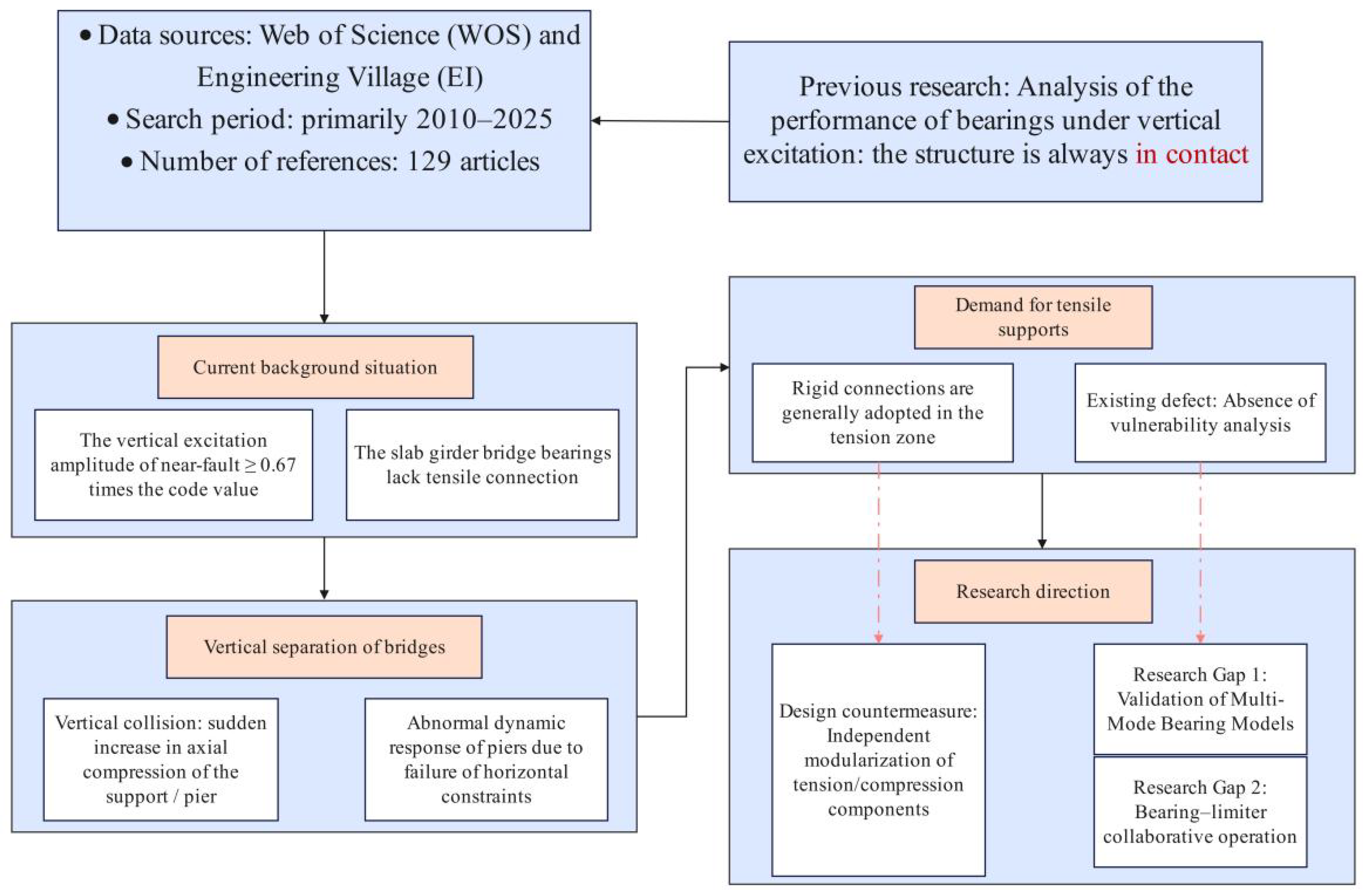
This study adopts a systematic review methodology, surveying literature published between January 2010 and September 2025 from the Web of Science and Engineering Village databases. Search keywords included “near-fault earthquake”, “vertical ground motion”, and “seismic isolation bearing uplift mechanism”. Following a rigorous screening process focused on near-fault seismic behavior and uplift dynamics, 130 relevant publications were selected. The content is organized under a thematic structure that spans “excitation characteristics and technological developments”, offering a critical assessment of research progress, current limitations, and future directions. For the specific process, please refer to Figure 1.

2. Characteristics of Excitations in Near-Fault Earthquakes and Their Impact on Structural Failure

This section aims to clarify the key engineering characteristics that distinguish near-fault vertical seismic motions from ordinary seismic motions, and to preliminarily explore the potential engineering consequences they may cause, thereby laying the groundwork for subsequent in-depth analyses of failure mechanisms.

2.1. Pulse Excitation

The pulse characteristics of near-fault earthquakes encompass multiple components in both horizontal and vertical directions, manifesting as single or multi-pulse forms, significantly influencing structural responses. Giuseppe et al. [8] identified that pulse-like motions in near-fault earthquakes often occur simultaneously in horizontal (notably fault-normal) and vertical directions. These pulses can be detected using variational mode decomposition, with a notable correlation between the horizontal to vertical pulse period ratio and the horizontal pulse period. When the vertical component exhibits pulse-like behavior, the maximum displacement of high-damping rubber bearings is moderately amplified. Luo et al. [9] demonstrated through simulations of the 1979 Imperial Valley earthquake that slip asperities in the fault’s northern section contribute more to large velocity pulses than those in the source area. The bidirectional pulses of the fault-normal component and the unidirectional pulses of the strike component are influenced by fault rupture and slip directions, respectively. The displacement response spectrum more effectively captures the resonance effect of long-period structures compared to the pseudo-velocity response spectrum.
Near-fault ground motions that feature multiple velocity pulses are common and highly destructive. Historical events illustrate this hazard: the 1957 Port-au-Prince earthquake [10,11], the 1971 San Fernando earthquake [12,13,14], and the 1994 Northridge, 1995 Kobe, and 1999 Izmit earthquakes all show that velocity pulses can cause severe structural damage. Research attributes the elevated PGV/PGA ratios in near-field motions to complex seismic wave propagation, with broadly distributed acceleration spectra [15], and these characteristics substantially increase base shear, interstory drift, and ductility demands [16]. Compared with conventional earthquakes, pulse-type near-field events display higher PGV/PGA ratios (see Table 1 [17]), which amplify acceleration-sensitive regions of elastic response spectra and raise ductility requirements for stiff structures. Structural analyses report larger reaction forces, greater displacements, and higher ductility demands than under typical seismic conditions; these effects are linked to added energy input from long-period velocity pulses, which intensify structural damage.
Empirical studies by Chen et al. [18,19] showed that multi-pulse ground motions have higher velocity spectra and more peaks in the long-period range, which cause frame structures’ maximum interstory drift to be twice that under non-pulse conditions and markedly increase embankment displacements and crack propagation in concrete dams. Regardless of the damage metric used (e.g., pixel-level damaged regions), multi-pulse seismic excitations consistently produce more severe damage.
At the engineering application level, Luo and Peng [20] developed a stochastic simulation method based on the evolution of probability density, integrating an improved finite-fault model with a multivariate Copula velocity pulse model; this approach simultaneously estimates parameters and accurately captures both the stochasticity of pulses and the consistency of component ratios. Dong et al. [21] pointed out that the spectral characteristics of pulses (acceleration-, velocity-, and displacement-sensitive bands) directly determine the ductility demands of self-centering structures, and that these demand spectra can be predicted accurately from parameters such as vibration period and strength reduction factors.
Numerical simulation studies [22,23,24,25,26,27,28] have shown that parameterized waveforms, such as triangular and half-sine pulses, effectively reproduce key features of near-field ground motions. Comparative analyses reveal that linear systems develop larger displacement responses under multi-pulse ground motions. In tall buildings, multiple peaks in the long-period velocity spectrum readily excite resonances and modal coupling, which substantially amplify response magnitudes. These results strongly support the optimization of seismic-resistant design.
Near-fault seismic pulses (multi-component in the horizontal and vertical directions) markedly amplify structural responses. Multiple-pulse ground motions can increase the peak interstory drift of frame structures to twice that observed under non-pulse conditions, and the prolonged-period velocity spectral peak exacerbates damage. The high PGV/PGA ratio expands the sensitive region of the elastic response spectrum and raises ductility demands for stiff structures. Parametric waveforms can effectively reproduce these key features, providing a basis for seismic design optimization.

2.2. High-Amplitude Vertical Earthquake

The impact of vertical seismic activity on structural response is often underestimated. Recent studies show that ignoring vertical seismic forces can lead to inaccurate evaluations of structural safety. Li et al. [29] through friction pendulum bearing tests, demonstrated that vertical earthquake forces significantly reduce bridge damping performance, with this negative effect worsening as vertical earthquake intensity rises. Neglecting strong vertical seismic activity may lead to underestimating the internal forces and displacements within piers. Erz [30] conducted nonlinear time-history analyses on multi-span continuous steel truss bridges, revealing that different vertical acceleration ratios significantly influence the maximum displacement response at pier tops when using a bilinear hysteretic model. These findings highlight the necessity of including vertical seismic action in bridge seismic analyses.
The bearing slip mechanism can worsen structural failure by amplifying bearing slip under vertical seismic action [31]. This highlights the necessity of considering vertical seismic effects during the design process. Gordon [32] discovered that vertical seismic excitation significantly affects the dynamic response of bearings and recommended that incorporating the vertical seismic characteristics of near-field events could enhance structural resilience. Martin [33] examined the nonlinear dynamic response of six bridges and developed a practical calculation formula for code adoption, demonstrating that vertical ground motion significantly influences structures when considered as a static load.
In studying near-fault earthquake impacts, Salar [34] emphasized that directional foundation vibrations reduce a structure’s resistance to seismic forces, highlighting the significance of vertical earthquakes in causing structural damage. Li’s shaking table tests on curved bridges revealed the effects of pulse-type ground motions on bridge seismic performance [35]. Xu [36] introduced a predictive model that integrates peak ground accelerations (PGA), intensity indices (IMs), and impulse indices, thereby enhancing the evaluation of dynamic responses to near-fault impulse ground motions through an improved endurance time analysis (ETA) method. Using finite element simulations and scale tests, Liu [37] found that the velocity pulse effect, resulting from forward directivity and fling step effects, poses a significant threat to high-speed railway track bridges. Mohammed [38] applied variance analysis to model and optimize the mechanical performance of lead-core rubber bearings under varying impulse ground motions. An elastoplastic time history analysis of low-damage self-recovery precast concrete (SRPC) frames and steel damping devices evaluated the collapse resistance of new structures, pointing out the current specifications’ neglect of near-field ground motion.
The bending stiffness of bridge girders, essential for load-bearing capacity, is significantly lower than the vertical compressive stiffness of piers. This difference can cause considerable bending deformation of the main girder at midspan during intense vertical seismic events [39]. Advances in prestressing technology have facilitated the construction of longer bridge spans, which present greater challenges for seismic design, especially in seismically active areas. Strong vertical seismic forces can jeopardize the bridge-to-foundation connection, particularly in bridges using “weak” rubber bearings [40,41,42,43,44]. Therefore, engineers must apply appropriate analytical methods and seismic mitigation strategies, supported by ongoing research, to deepen the understanding of vertical seismic action mechanisms and provide a solid scientific basis for structural safety.
Advancements in seismic monitoring have significantly increased the density of the global seismic network, enabling precise measurement of ground motion parameters. Recent multi-source data indicate that peak vertical ground motion acceleration in near-field earthquakes often surpasses traditional expectations, offering critical insights for the seismic assessment of structures. For example, Fu examined the impact of vertical seismic excitation on the failure of concrete columns [45,46]. During the Northridge earthquake, the peak vertical-to-horizontal acceleration (V/H) ratio reached 1.79, exceeding conventional standards [47]. This trend was even more pronounced in the Kobe earthquake, where peak vertical acceleration nearly doubled the horizontal component.
Near-fault records of strong earthquakes underscore the critical influence of vertical ground acceleration. Empirical data from the Wenchuan earthquake’s near-field region show that the vertical-to-horizontal response spectrum ratio (V/H) can peak at 1.2, with an average of 0.89, directly highlighting the importance of vertical ground motion [48]. These findings notably diverge from the traditional seismic design assumption that the vertical component is two-thirds of the horizontal component (V = 2H/3) [49].
The time-frequency characteristics of vertical ground motion display distinct features, notably a significant high-frequency component. This has specific implications for the dynamic response of high-rise buildings and long-span spatial structures. Current analysis methods, which often rely on simplified assumptions, may underestimate the actual stress states of these structures, particularly during shallow-source near-field earthquakes. In seismic analysis, especially when assessing near-field earthquakes, it is advisable to use a response spectrum that accurately reflects the spectral characteristics of vertical ground motions for specialized verification, rather than depending solely on traditional proportional assumptions.
The spatial variability of vertical ground-motion parameters in near-field earthquakes depends strongly on site conditions, epicentral distance, and response period [50,51]. Multiple studies report that, under short-period excitation (T < 1 s), the vertical-to-horizontal acceleration ratio (V/H) often exceeds the conventional 2/3 threshold [50,51,52,53]. A Pacific Earthquake Engineering Research Center analysis of 452 waveforms found a time-varying V/H that peaks at 1.0 near 0.2 s, falls sharply to about 0.4 over 0.2–1.0 s, and stabilizes near 0.6 at long periods (T > 1 s) [54]. Statistical analysis of 436 global vertical ground-motion records corroborates this period-dependent V/H behavior and its pronounced gradients with changing excitation period [55].
The analysis of near-fault seismic spectra indicates significant amplification of the vertical ground motion component as it nears the seismic source. Jin’s research data show that the vertical-to-horizontal (V/H) ratio in this area often surpasses specified limits [55]. In response, scholars have developed specialized design response spectrum models tailored to the distinct characteristics of near-field ground motions. For example, Elnashai created a design spectrum model adaptable to various engineering scenarios by conducting damping ratio correction analysis on multiple near-field ground motion datasets [56]. Although employing a conservative 2/3 ratio in the long-period range is practical for engineering applications [57], Bozorgnia et al. emphasize that potential structural safety risks in the short-period range require careful attention.
The “Code for Seismic Design of Highway Bridges” and related standards have integrated the previously mentioned research findings [53,58]. The vertical seismic acceleration response spectrum is explicitly calculated using Formula 1 and Formula 2. These formulas include parameter settings that thoroughly consider essential factors such as the seismic excitation period, site classification, and epicentral distance.
R = 0.9 0 < T < 0.1 1.0 T 0.1 < T < 0.5 0.475 + 0.05 T 0.5 < T < 2.5 0.6 T > 2.5
Bedrock   site :   R = 0.65 Soil   site : R = 1.0 T < 0.1   s 1.0 2.5 ( T 0 . 1 ) 0.1   s T 0.3   s 0.5 T 0.3   s
The delay between the arrivals of vertical and horizontal ground motions in seismic events arises from different propagation mechanisms. Vertical motion is dominated by the faster compressional (P) waves, whereas horizontal motion is governed by the slower shear (S) waves. As a result, the peak of vertical vibration typically precedes the peaks of the horizontal components. The time difference is affected by factors such as epicentral distance, site conditions, earthquake magnitude, focal depth, and the seismic wave propagation path, as shown in Collier’s research [59].
The influence of vertical seismic excitation is often underestimated; observed V/H ratios substantially exceed conventional assumptions (2/3). During strong ground motions the vertical component markedly reduces structural damping and amplifies bearing sliding, and V/H ratios at short periods (T < 1 s) frequently exceed threshold values. Design codes have incorporated vertical response spectrum formulations and explicitly require consideration of the critical effects of vertical motion on structural safety.

3. Dynamics and Influences of Separation and Collision Between Main Girder and Pier

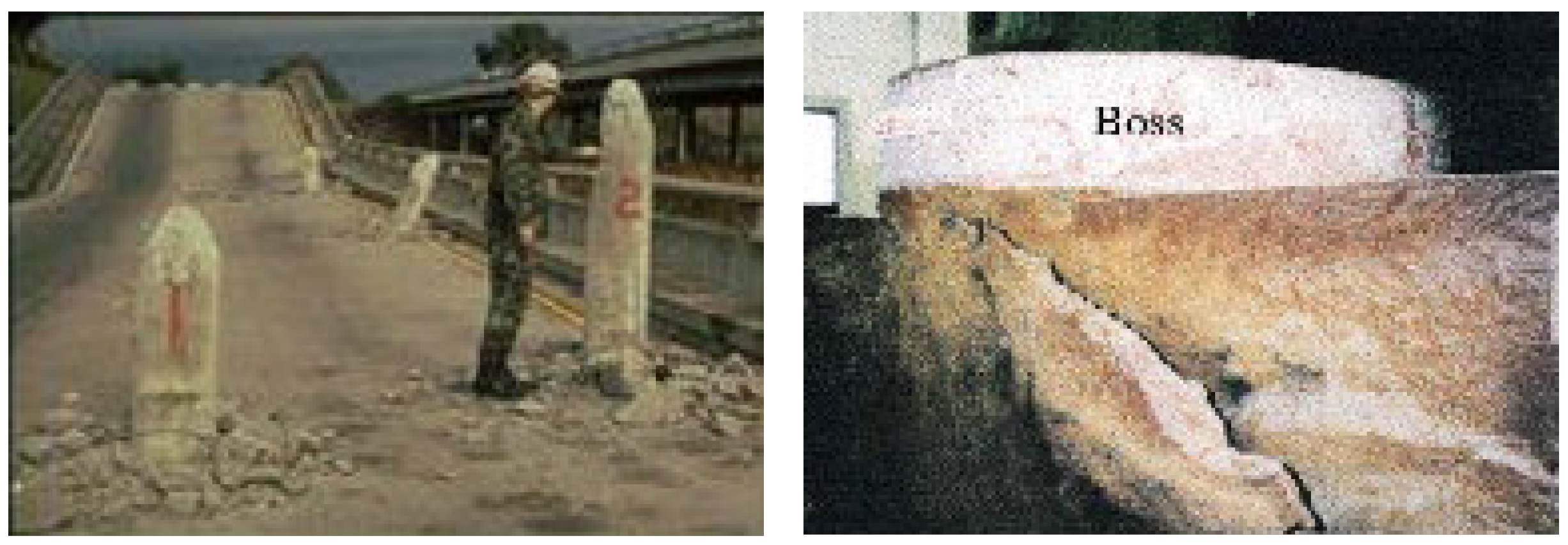
Rubber bearings are effective in reducing horizontal vibrations but are susceptible to vertical forces. During seismic events, this susceptibility can lead to significant vertical deformation and potential detachment of the main girder from the bearing. Such detachment may cause substantial impact forces, resulting in structural damage to the bridge and affecting its horizontal seismic response, thereby compromising structural integrity. In China, flat rubber bearings are frequently used in bridge designs to support the main girder and connect It to the pier [60,61]. However, these designs are prone to high-amplitude vertical seismic actions, which can lead to structural detachment. As illustrated in Figure 2, this detachment can cause collisions between the main girder and the pier. Research shows that failures in these support systems often stem from vertical collisions between the main girder and support components [62,63].

3.1. Pier- and Girder-Separation Conditions

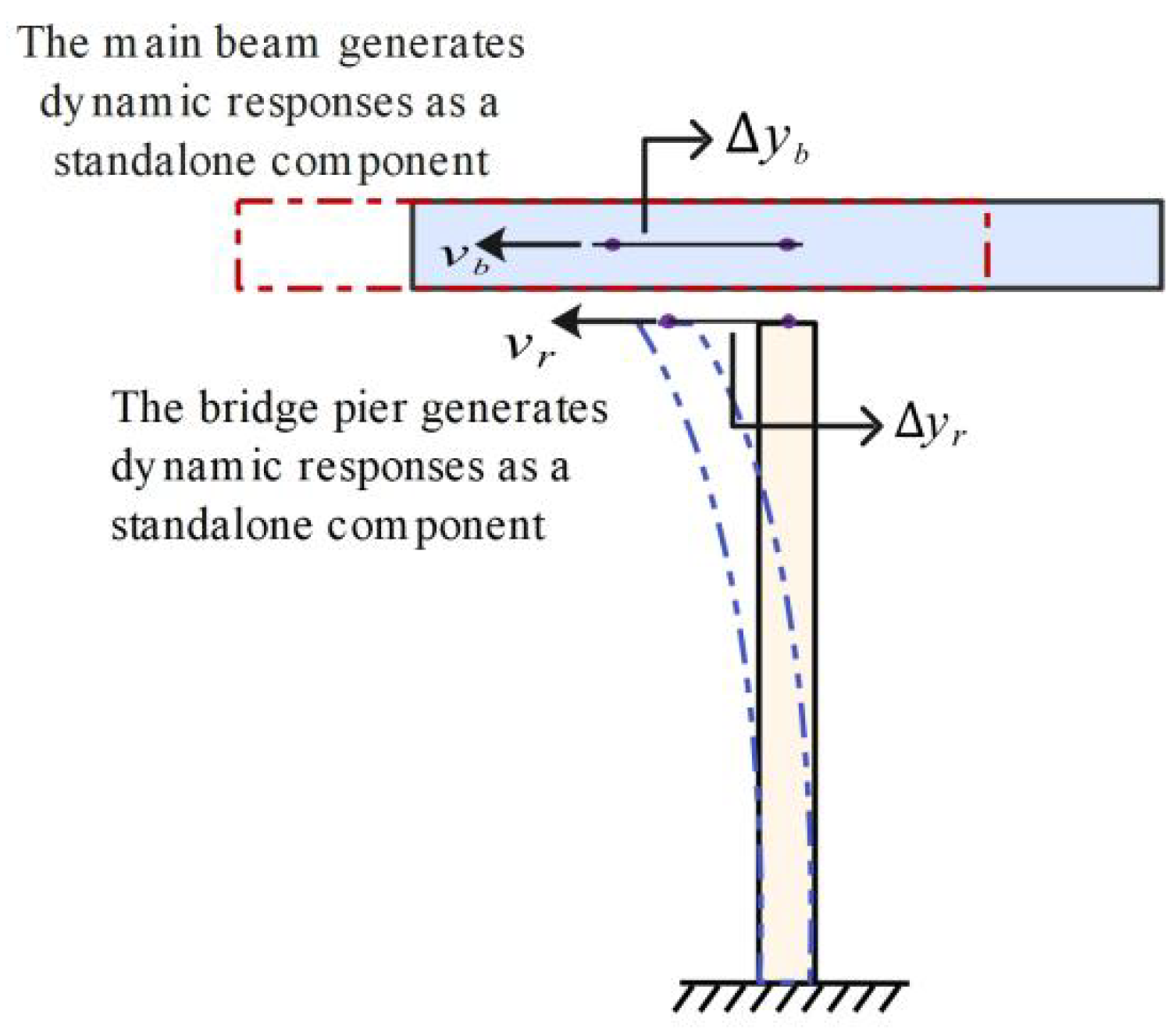
Near-fault vertical ground motion can easily cause vertical separation and impact events between girders and bearings. When the relative displacement between a girder and a pier surpasses the bearing’s deformation capacity under non-compressive conditions, the girder may be thrust upward, leading to the failure of the connection between the bearing and the girder. This failure results in the simultaneous loss of both vertical and lateral restraint [64,65,66,67,68,69]. Such a process significantly alters the pier’s dynamic response, triggering high-frequency impacts and causing severe fluctuations in axial load, including alternating tensile and compressive stress cycles. These cycles substantially weaken the pier’s flexural and shear capacity. At the same time, the separation increases horizontal relative displacement between the pier and girder, heightening the risk of collisions with limit devices like restraining blocks and potentially leading to catastrophic outcomes such as deck collapse. To tackle this issue, many researchers have proposed various tensile-resisting bearing designs, such as energy-dissipating seismic bearings with tensile capacity and self-recentering separable bearings. These designs incorporate tensile-resisting units, energy-dissipation mechanisms, or staged response systems to suppress vertical separation, control horizontal displacement, and improve the pier’s stress state, thereby enhancing the overall seismic resilience of bridges.
Figure 3 presents a schematic diagram illustrating the separation of piers and beams. Once the beam is detached from the bridge pier, the constraining effect between them is eliminated. With the initial separation velocity remaining constant, the bridge’s dynamic response changes significantly. Subsequent eccentric collisions further influence the failure process and the ultimate failure mode of the bridge.

3.2. Calculation of Pile Cap–Beam Collision Forces

The interaction between bridge superstructures and piers poses a significant risk to the structural integrity and safety of bridges. Consequently, research in this area is crucial for engineering applications. Xu and Yin [64,65] proposed a simplified beam-rod model, employing a method that combines transient wave function expansion with transient internal force techniques. This method transforms the vertical collision forces between piers and beams into structural forces for analysis. Their approach not only simplifies the complex bridge system but also accurately captures the structural effects of pier-beam collisions, providing essential theoretical support for seismic design considerations.
Yang [66,67] explored the seismic performance of bridge bearings by developing a beam-spring-column continuum model. The study assessed the number of collisions and vertical impact forces across different bearing stiffness levels to clarify the vertical energy dissipation properties and impact response dynamics of the bearings. This research not only illuminated the operational mechanisms of bearings during seismic events but also provided a scientific foundation for their optimal design. Tamaden et al. [68,69] formulated a curved beam-spring-column model specifically for urban intersection curved bridges. They used the transient wave function method to analyze the dynamic response to seismic forces. By investigating how the main girder curvature angle affects displacement response, the study offered valuable insights for the seismic design of urban curved bridges.
Research conducted by Liao’s team [70] demonstrates that long-span continuous girder bridges are particularly susceptible to various types of cracks in the main girder, as well as damage to bearings and concrete secondary girders, especially under strong vertical impacts. This underscores the critical importance of seismic studies in this context. When subjected to near-field earthquake excitation, vertical cyclic separation and collision between the pier and girder occur, leading to two significant mechanical effects: a notable increase in axial compressive stress and an alteration in the structure’s horizontal dynamic response due to the weakening of the bearings’ lateral restraint mechanism. An and team [71,72,73] conducted a comprehensive investigation of continuous girder bridge systems under vertical-longitudinal coupled seismic actions. They employed an analysis framework that integrates transient wave function expansion with indirect modal superposition. Their theoretical analysis suggests that vertical earthquake-induced separation can intensify the bridge’s longitudinal response and significantly increase the failure risk of piers through an axial-bending combined failure mode. A comparative analysis of the base bending moment confirms that neglecting vertical separation in traditional one-way analyses results in an underestimation of bending, potentially leading to unsafe pier foundation designs.
The vertical separation effect increases the risk of pier failure and raises the likelihood of block collision by intensifying the lateral collision force between the girder and abutment. To address this issue, Chen [74] systematically examined the abutment collision mechanism in near-field seismic zones. By analyzing abutment design practices in the United States, China, Japan, and New Zealand, a theoretical framework for the collision model was developed. Chen, An, and their teams [75,76] then derived analytical formulas for the dynamic response and collision behavior of separable bridge systems. Through numerical simulations and theoretical analyses, they quantitatively demonstrated the relationship between vertical separation distance and the amplification of lateral collision force. This research provides a theoretical foundation for improving the seismic design of abutments in near-field seismic zones.

3.3. Effect of Separation–Collision on Bearing and Pier Damage

Under near-fault vertical seismic excitation, the separation and impact phenomena between the bridge girder and its bearings can significantly increase the risk of damage to both the bearings and piers. The primary mechanisms of this influence are evident in the following aspects:
Separation-impact events fundamentally alter the dynamic response of bridge piers, significantly increasing their axial compressive forces and directly affecting their flexural and shear capacities. Research indicates that near-fault earthquakes greatly intensify the separation and impact interactions between the girder and the pier, with mid-span piers showing notably stronger impact responses than edge piers. During these events, piers undergo high-frequency, high-amplitude vibrations, with stress concentration factors rising by about 40% compared to states of continuous contact. Crucially, intense vertical impacts substantially increase axial compression in piers and can induce alternating tensile-compressive stress cycles. For instance, under strong vertical seismic excitation, a pier section may shift from a static compressive stress state to one with tensile stress exceeding the concrete’s tensile strength, potentially causing cracking or crushing. These severe axial force fluctuations also diminish the pier’s shear capacity and adversely affect its flexural performance, degrading its overall seismic resistance. Further analyses reveal that axial forces at the pier base can exhibit high-frequency, high-amplitude oscillations; when the excitation period aligns with the bridge’s fundamental period, the response is particularly severe and may exceed the design tensile and compressive strengths of the concrete, leading to horizontal cracking, concrete crushing, and even “lantern-shaped” failure.
Second, the separation between the girder and the bearing directly affects the horizontal relative displacement between piers and girders, potentially triggering cascading failures. When separation occurs, the bearing temporarily loses its horizontal constraint on the girder, increasing the relative displacement between the girder and the pier (or stopper). This alteration significantly impacts the global load-transfer paths of the bridge and may heighten the risk of shear failure in limit devices like stoppers. Studies have shown that accounting for pier–girder collision effects can lead to substantial residual displacements after an earthquake. Simultaneously, bearing malfunction, such as loss of constraint due to separation, significantly alters the force distribution in the pier and increases bending moments at the pier base, ultimately leading to flexural failure due to amplified combined displacements. In multi-span or curved bridges, such changes in relative displacement can also induce torsional and other complex responses, further raising the probability of structural damage.
In summary, vertical seismic excitation triggers a separation–impact mechanism that not only imposes significant vertical impact loads but also modifies the structure’s dynamic properties, axial force distribution, and displacement compatibility. This results in combined compressive, shear, and bending damage to piers and bearings, thereby significantly elevating the overall seismic risk of the bridge.

4. Research and Technological Advances in the Development of Tensile Bearing

4.1. Material Properties of Seismic Isolation Bearing

4.1.1. Traditional Seismic Isolation Bearing

The evolution of seismic isolation technology for bridges showcases a profound integration of materials science with engineering practice. From the innovative sliding bearings used at New Zealand’s Motu Bridge in 1973, to the seismic retrofit of the Golden Gate Bridge’s north approach after the 1989 Loma Prieta earthquake, and the introduction of elastomeric isolation technology in China in 1993, which led to the construction of 1780 isolated bridges by 2020 [77,78], this progression not only mirrors technological advancement but also underscores the vital connection between material performance and structural safety. Nonetheless, current mainstream isolation bearings face systemic deficiencies in material selection and mechanical properties, particularly inadequate tensile performance, which have become a bottleneck in enhancing bridge seismic resilience.
Devices like stacked rubber bearings (SRB), sliding friction bearings (SFB), and shape memory alloy (SMA) bearings are commonly used in engineering projects, but each has material characteristics that impose inherent limitations. Roeder et al. demonstrated that low-temperature environments can significantly alter the stiffness of bearing materials [79]. Kim et al. confirmed that the combined effects of temperature and strain rate further exacerbate fluctuations in material performance [80]. These findings highlight fundamental deficiencies in the environmental adaptability of current seismic isolation materials. Notably, Yakut et al. identified a lack of understanding of how vibration transmissibility is affected [81], a knowledge gap that directly impacts evaluations of seismic isolation system effectiveness.
Lead-core rubber bearings demonstrate minimal horizontal displacement under low loads due to their initial stiffness, effectively meeting routine operational needs. The plastic deformation of the lead core allows for energy dissipation and self-centering capabilities [82,83]. However, a significant material-level issue exists: the accumulated plastic deformation of lead leads to irreversible performance degradation, significantly reducing energy dissipation capacity under repeated seismic loading [84,85]. More critically, the tensile strength of lead-core rubber bearings generally does not exceed 1.0 MPa, severely limiting their use in long-span bridges. In low-temperature environments, the rubber matrix’s stiffness increases, reducing its deformation capacity, while the lead core’s mechanical properties also deteriorate as temperatures drop [86,87]. These material limitations prevent conventional lead-core rubber bearings from simultaneously meeting the demands of everyday loads and extreme seismic events, especially in long-span bridges that must withstand temperature-induced deformations.
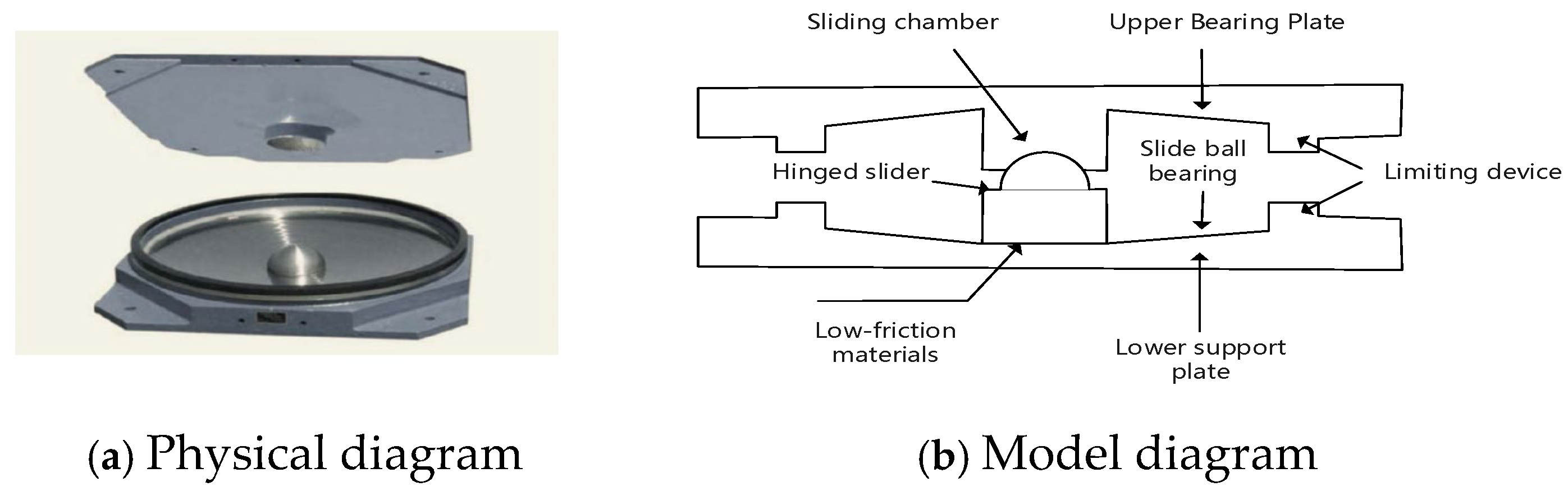
The Friction Pendulum Bearing (FPB) is a seismic isolation device that operates on the principle of curved-surface sliding friction. Its core mechanism extends the structure’s natural period through pendulum motion while dissipating energy via sliding friction. The FPB primarily consists of a sliding curved surface (concave bowl) and sliders. During seismic events, the superstructure slides on the curved surface through these sliders, converting kinetic energy into potential and thermal energy (Figure 4). Although sliding isolation bearings dissipate seismic energy through friction and effectively accommodate thermal deformations [88], the frictional behavior at their material interfaces is highly dependent on environmental conditions. Friction pendulum bearings, while offering self-centering capacity, cause upward displacement of the superstructure due to their curved sliding mechanism, which can lead to structural damage in continuous girder bridges with piers of varying heights [89,90]. A critical issue is that the friction coefficients of current sliding-surface materials, such as PTFE and stainless steel, are extremely sensitive to temperature [91]. This sensitivity significantly reduces the bearing’s re-centering ability in low-temperature environments, resulting in considerable residual displacements after strong earthquakes. Jangid’s study indicates that the optimal friction coefficient is influenced by multiple factors [92], yet existing materials cannot maintain stable frictional performance across a wide temperature range.

4.1.2. Application of Novel Materials

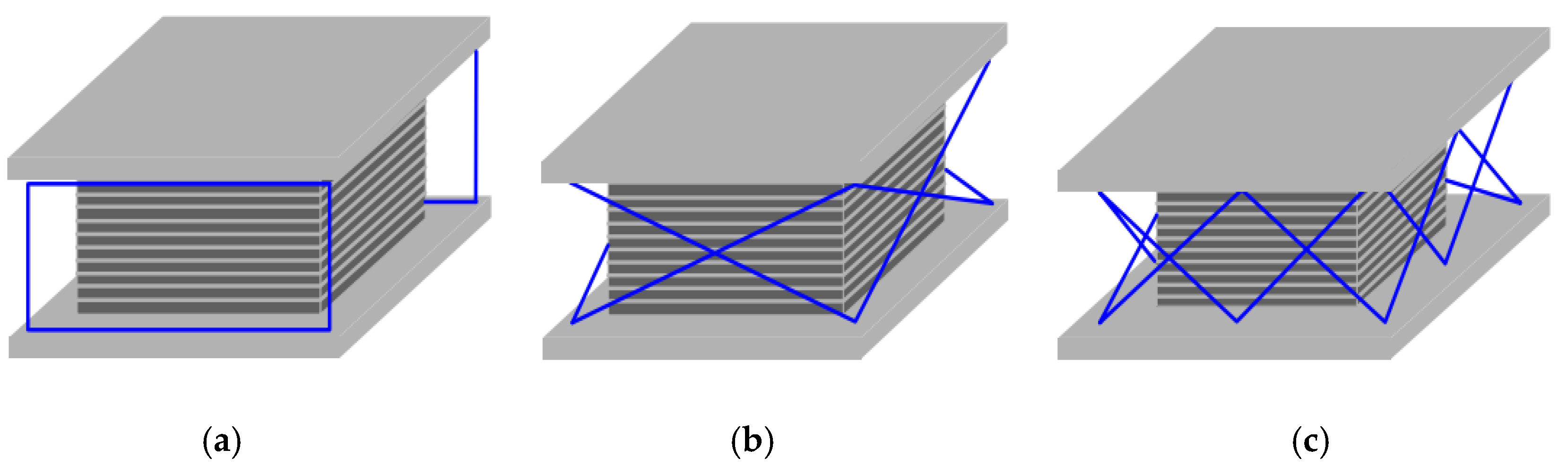
Shape memory alloys (SMAs) represent a groundbreaking class of materials, offering properties that exceed those of traditional metals, including the shape memory effect, superelasticity, exceptional damping, energy dissipation capacity, and the ability to fully recover from significant deformations. These attributes provide notable benefits for seismic control in structures. Graesser and Cozzarelli demonstrated the superior energy dissipation capabilities of SMA dampers through material property tests [93]. Cerda and colleagues confirmed the seismic effectiveness of copper-based SMA devices in shake-table experiments [94]. Hedayati Dezfuli and Alam explored how different arrangements of SMA wires affect mechanical behavior [87,95]; for details on the specific deployment method, see Figure 5, he double-cross SMA configuration can significantly enhance the performance of the bearing, increasing the cumulative energy dissipation of the total bearing by up to 31% compared to traditional LRBs, while simultaneously reducing the maximum shear strain of the bearing by 46%. This configuration is regarded as the optimal geometric design. Despite SMAs’ excellent tensile performance, their high cost and complex manufacturing processes hinder large-scale deployment. Additionally, SMA mechanical properties are highly temperature-dependent, and managing the phase-transformation temperature range poses a challenge in engineering applications.
Composite bearing technology aims to address the limitations of traditional bearings by integrating SMA wires with conventional seismic isolation systems. This integration theoretically enhances both re-centering capability and energy dissipation. However, in practice, the mismatched material properties lead to performance falling short of expectations. When SMAs are used in laminated rubber bearings, re-centering improves, but the energy dissipation capacity of SMAs is significantly less than that of lead-core materials. More importantly, increasing the amount of SMA substantially raises costs and imposes stricter seismic demands on bridge piers. In combination with sliding isolation bearings, large quantities of SMA wire are necessary to achieve sufficient horizontal stiffness and re-centering capability, further intensifying economic challenges. Additionally, the sliding friction coefficient’s sensitivity to ambient temperature undermines the composite system’s overall performance stability. These material-level incompatibilities prevent current composite bearings from effectively addressing deficiencies in tensile performance.
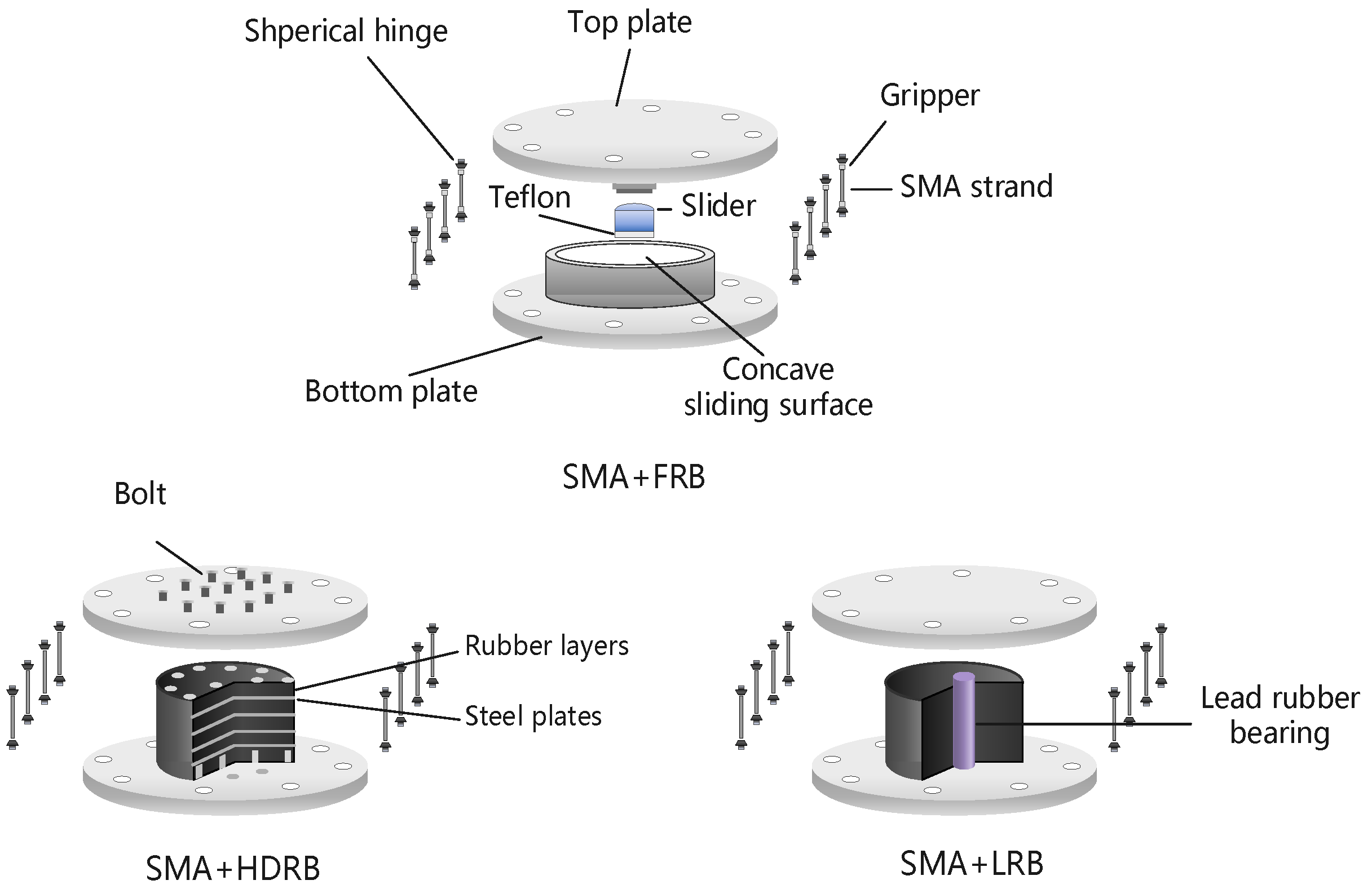
Research shows that combining shape memory alloys (SMAs) with friction pendulum bearings (FPBs), high-damping rubber bearings (HDRBs), and lead-rubber bearings (LRBs) enhances self-centering, boosts energy dissipation, and reduces residual displacements of main girders. Figure 6 illustrates the configurations of various bearings combined with SMA, while Table 2 details the research methods for different SMA composite bearings. However, stress concentration at the rubber–metal interface under tensile loading remains inadequately addressed. Despite improvements in tensile strength, existing composite bearings fall short of the ideal performance needed for long-span bridges, tall-pier bridges, and structures vulnerable to strong vertical earthquake actions. To overcome these limitations, interdisciplinary research between materials science and structural engineering must be intensified to develop novel composite materials that offer high strength, toughness, environmental adaptability, and cost-effectiveness. Only by synergistically optimizing material innovation and structural design can seismic isolation technology progress from “passive protection” to “active adaptation,” ensuring more reliable safety measures for bridges.

4.2. Tensile Bearings

Rubber seismic isolation bearings are extensively utilized in seismic isolation engineering due to their superior horizontal isolation capabilities. However, they face significant limitations in tensile strength. When tensile stress exceeds 1.0 MPa, stiffness degradation occurs, leading to a notable decline in mechanical properties. This limitation is particularly critical for tall buildings, long-span bridges, and structures susceptible to vertical earthquakes, where substantial tensile forces can develop during strong seismic events. Current regulations mandate that the design tensile stress of isolation bearings must not exceed 1.0 MPa, thereby restricting their application in such scenarios. While research has primarily focused on the compressive performance of these bearings, studies on their tensile performance are limited. Uryu and Liu [103,104] have conducted theoretical modeling and analyses of tensile characteristics based on elastomer theory, but these findings require further experimental validation. Recent advancements in enhancing tensile performance include the development of new seismic isolation devices with built-in tensile components and composite restraint mechanisms, effectively increasing tensile stress capacity through structural innovations.

4.2.1. Tensile Laminated Rubber Bearing

Researchers have devised various strategies to enhance the tensile performance of seismic isolation bearings, addressing the limitations of conventional rubber bearings. These strategies focus on improving mechanical properties, developing theoretical models, and exploring engineering applications. Studies show that isolation bearings with tensile capacity often incorporate additional components, such as steel wire ropes, spring assemblies, or U-shaped reinforcing bars, to boost tensile strength and stability. For instance, triple-layer rubber bearings with a lead core (TLRB) use compression springs and steel wire ropes, significantly increasing tensile stiffness and ultimate tensile stress while maintaining effective horizontal isolation. Similarly, uplift-restraining beam rubber bearings (URB) employ steel wire rope connectors to limit bearing displacement, reducing the risk of beam collapse, though their impact on pier seismic behavior requires further investigation. Notably, TLRBs exhibit horizontal stiffness stability comparable to conventional lead rubber bearings (LRBs) at high shear strains but experience significantly less stiffness degradation. Moreover, the spring mechanism in TLRBs enhances tensile performance under uplift conditions, a capability LRBs lack [103,105].
Extensive research has explored the mechanical behavior of tensile bearings using both experimental and numerical methods. Tensile lead rubber bearings (TLRBs) maintain stable horizontal stiffness and restoring force characteristics under compression. Compared to conventional lead rubber bearings (LRBs), TLRBs exhibit a significantly smaller reduction in equivalent horizontal stiffness as shear strain increases. TLRBs enhance vertical stiffness through helical springs and steel cables; these springs elongate under tensile forces, generating restoring forces that prevent tearing of the rubber layers. During horizontal displacement, the springs incline, providing additional lateral stiffness and improving shear resistance [103]. Three-dimensional isolation bearings achieve a synergistic effect between vertical and horizontal isolation by serially coupling disk spring stacks with U-shaped reinforcements. The equivalent horizontal stiffness of these bearings decreases with increasing vertical load, and their energy-dissipation capacity can be enhanced by adding more U-shaped reinforcements [104]. It is crucial to balance the introduction of tensile bearings with their impact on horizontal performance. For example, bearings with tensile elements do not significantly affect shear performance under compression-shear conditions but effectively resist tensile forces under combined tension-shear states [105]. However, reference [106] highlights that cavitation phenomena in rubber under high tensile stress may lead to buckling-type failure, potentially conflicting with the expected stable performance of TLRB designs. Therefore, tensile stress levels must be strictly controlled to avoid this issue.
The double-spring model framework developed by Elgamal shows a strong correlation between tensile stiffness formulation and experimental results for shear strains below 100%. However, deviations occur at larger strains due to rubber’s nonlinear behavior [103]. Researchers have examined the impact of cavitation on buckling load by adjusting the bulk modulus formulation; the introduction of the parameter α effectively accounts for cavitation’s role in instability [106]. The dual-stiffness model accurately represents post-yield deformation characteristics under tension [107]. Studies on optimizing design parameters suggest that adjusting the initial gap in the wire rope and tensile stiffness can enhance displacement control and force equilibrium within the pier cap [108]. Shake-table tests confirm that three-dimensional isolation bearings significantly reduce three-component seismic responses during infrequent earthquakes [105]. Additionally, TLRBs can withstand tensile demands under strong seismic excitation in tall buildings with width-to-height ratios greater than 5, with numerical predictions aligning with experimental observations [109]. Therefore, designing tensile bearings requires balancing enhanced tensile capacity with stable horizontal performance, providing a foundation for engineering applications.

4.2.2. Suspension Tensile Bearing

Seismic research for bridges currently focuses on developing and optimizing innovative isolation bearings and multi-level seismic mitigation systems to enhance structural performance during earthquakes. Studies show that composite isolation systems, which combine sliding friction with cable restraint, can create effective multi-tiered energy dissipation mechanisms. These systems reduce seismic damage and precisely control displacement responses. The multi-level anti-seismic bridge system (MLABS) described in reference [110] includes cable-supported sliding-friction anti-seismic bearings (CSFABs) and energy-dissipating rocking piers. Compared to single-level seismic systems, MLABS effectively coordinates the mechanical responses of bearings and piers under various seismic intensities, significantly reducing residual deformations. This cooperative mechanism has been preliminarily validated in several bridge projects [110]. Additionally, the multi-level control strategies of MLABS and the multi-stage sliding-friction self-adaptive isolation bearings (MSFB) discussed in reference [111] demonstrate that these systems can achieve layered displacement management in high-speed railway bridges [110,111].
Reference [111] introduced an MSFB operating in a three-stage mode. After optimizing its performance parameters using a sequential quadratic programming algorithm, the study validated the effectiveness of hierarchical control in high-speed railway bridges. Reference [112] conducted a systematic investigation into the frictional characteristics of low-friction spherical sliding bearings (LF-SSB). The study found that under low-speed loading conditions, the friction coefficients are significantly higher than theoretical predictions, suggesting a potential conflict with the basic assumptions of conventional friction models. The bearing combines a flat sliding surface with a resettable cable restraint, where the cable limits excessive displacement and springs provide reset forces. This design enables seismic displacement control and reduces residual deformations. The observed deviation in frictional behavior underscores the importance of considering velocity-dependent effects in the design process. Notably, the low-speed friction coefficient deviation of LF-SSB reported in [112] contrasts with the consensus on optimized parameters for U-shaped dampers in [113], further supporting the need to incorporate velocity dependence into friction models.
Analysis of the sliding–rolling composite isolation bearing reveals that the number and width of U-shaped dampers significantly impact hysteretic performance [113]. The study determined that the optimal configuration includes a friction coefficient of 0.04 with four U-shaped dampers, each 60 mm wide, arranged at 45°. The sliding-variable method proposed in [114] effectively addresses the simulation challenges of sliding-friction cables, enhancing the accuracy of numerical modeling for isolation systems. Experimental results for the cable sliding-friction isolation bearing (CSFAB) indicate that when displacement exceeds a certain threshold, beam displacement can be reduced by 40%. However, this reduction also causes a transient increase in acceleration [115], highlighting the inherent trade-off between controlling displacement and managing acceleration effects.
Cable-damping bearings have significantly advanced structural recoverability. Quasi-static tests on recoverable cable sliding bearings (RCB) demonstrate that residual displacements under strong seismic conditions can be reduced by over 60%. However, to manage pier curvature growth, an 80 mm displacement threshold must be enforced [116]. A case study [117] revealed that internal forces in fixed piers can be decreased by 30–50%, while transverse bending moments in transition piers are reduced by only 15–20%. This suggests that the effectiveness of bearing-based damping is highly dependent on the installation location. Reference [118] corroborates the minimal impact on main bridge piers, whereas Reference [119] notes that for long-span cable-stayed bridges, such bearings can reduce displacements by 40–60% but may increase tower internal forces by 20%. These apparent contradictions highlight the need for a dynamic trade-off among multiple performance objectives in seismic design.

4.2.3. Rail-Type Tensile Bearing

The RTD&LNR600 system, created by integrating the rail-type tensile bearing (RTB) from Refs. [120,121,122] with a natural rubber bearing, underwent pseudo-static testing. They revealed a 10% enhancement in equivalent horizontal stiffness accompanied by a significant boost in the tensile bearing capacity. The vertical tension-displacement relationship displayed a bilinear characteristic, while the horizontal mechanical properties remained stable under tensile loading. Additionally, finite element analysis via using ABAQUS verified that the tensile performance of the RTB was unaffected by eccentricity, providing a robust theoretical foundation for the device design.
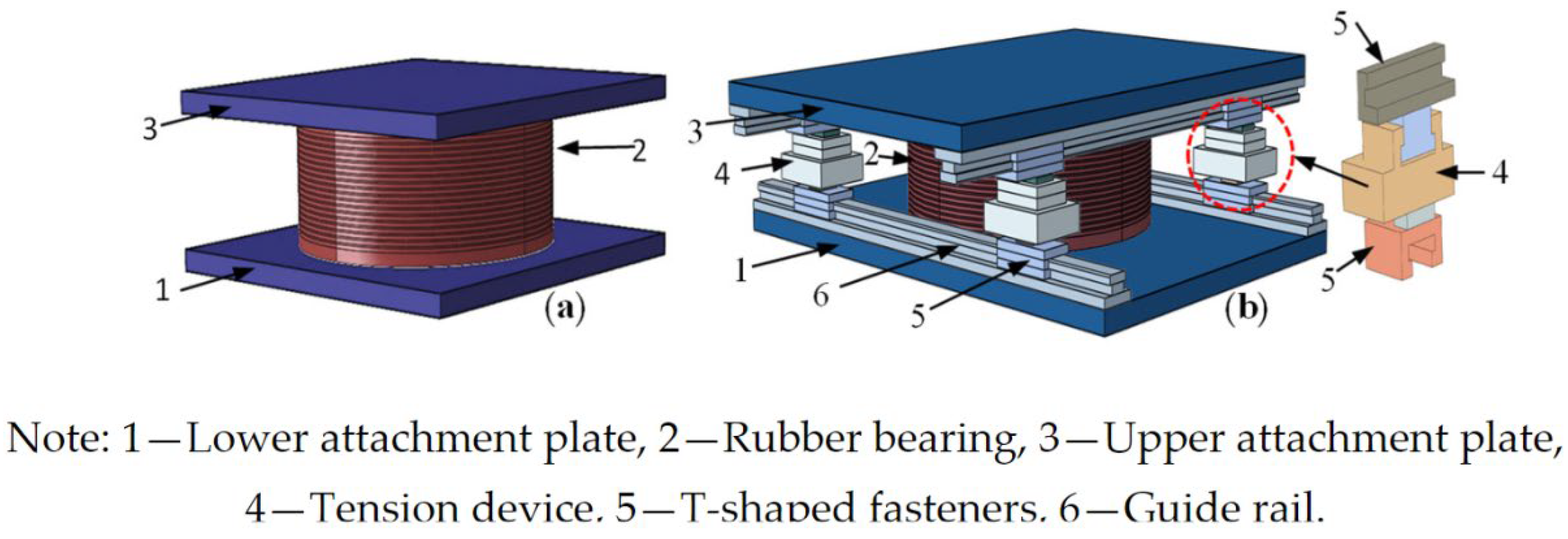
The bearing is arranged in parallel with a guide-rail tensile bearing (GR) and a rubber isolation bearing (RB); under tensile loading the guide-rail device shares the tensile force, preventing the formation of negative-pressure cavities in the rubber layers and thus markedly enhancing the bearing’s tensile capacity without compromising its horizontal isolation performance [123,124]. Studies in Refs. [125,126] confirmed that the guide rail device substantially enhances and boosts the vertical tensile capacity of the bearing while maintaining stable horizontal mechanical properties. Ref. [126] introduced a novel tensile sliding device. ANSYS simulations demonstrated that its biaxial mechanical properties remained unaffected under shear conditions. The hysteresis curve under tension-shear action mirrored the compression-shear characteristics of sliding bearings, indicating energy dissipation capability. Notably, when the baffle limited slider displacement, the device’s shear force increased sharply, providing a crucial basis for device parameters. In Figure 7, the bearing works in parallel with the rubber isolation bearing (RB) through the guide rail tensioning device (GR), which can significantly enhance the bearing’s tensile performance [127]. Experiments show that its tensile bearing capacity reaches 1195 kN, which is approximately 4.23 times that of the traditional rubber bearing of the same specification. Meanwhile, the addition of GR has a negligible effect on the horizontal equivalent stiffness of the bearing and almost no impact on the isolation effect. Numerical analysis further indicates that the use of GR&RB can reduce the tensile stress level of the rubber isolation layer by 75% to 98%, effectively suppressing the risk of negative pressure cavities in the rubber layer due to tension.
The proposed V-shaped cable slider and guide rail system with rubber bearings, as described in [128], utilized theoretical analysis to elucidate the relationship between tensile force and shear strain. Experimental validation confirmed the optimization of both tensile and isolation performance, demonstrating that cable diameter influences tensile capacity and that total tensile force decreases with increasing horizontal shear deformation. Similarly, Song [129] employed a combined design of friction dampers and rubber bearings, which was shown to prolong the natural vibration period, reduce displacement and inclination angle, eliminate tensile stress, and enhance energy dissipation. Both studies employed a synergistic approach of theoretical and experimental methods, with the former optimizing the design through cable parameter comparison and the latter verifying the seismic response using a combined element model. The flexible V-shaped cable device and the rigid combined bearing solution illustrate the scenario adaptability of isolation technology, addressing the specific requirements of high-rise buildings and nuclear facilities, respectively.

4.2.4. Comparison of Different Tensioning Bearing Technologies

Conventional bridge bearing technologies face notable limitations. Elastomeric bearings, which manage displacement and distribute horizontal forces mainly through the shear deformation of rubber, are cost-effective and easy to install. However, they have poor tensile strength and a limited service life of about 15 years, making them vulnerable to damage during high-intensity earthquakes. Steel bearings offer greater durability but are non-concurrent-force bearings, necessitating the use of fixed and sliding bearings, which restricts structural design flexibility. These inherent drawbacks have prompted engineers to innovate a new generation of bearing systems that integrate tensile resistance with seismic isolation capabilities.
Novel tensile bearings often utilize an innovative “base bearing + auxiliary tensile component” design. For instance, the TLRB incorporates helical springs and steel wire ropes into a traditional lead-rubber bearing; the SWD-SB features an annular prestressed cable surrounding a spherical bearing; and the TRD comprises tie rods, movable elements, and fixed elements. This modular approach not only leverages established components—allowing for seamless adaptation and upgrades within current manufacturing and installation processes—but also offers comprehensive installation instructions. These include specific steps such as inserting movable elements through openings in fixed elements, interlocking tie rods, and maintaining equivalent clearance.
In performance validation, the novel bearings have proven their reliability through a comprehensive multi-tiered testing program. Every type of bearing underwent rigorous verification, including numerical simulations, low-cycle cyclic loading tests on full-scale or scaled prototypes, and shake-table experiments. The TRD was validated through low-cycle loading of a prototype isolator and 1:15 scaled shake-table tests on a high-rise structural model. The TLRB underwent combined horizontal cyclic and vertical tensile tests, while the SWD-SB demonstrated a 72.6% reduction in pier-base moment in the Pingchuan Yellow River Bridge project. For long-term performance, the research focused on critical components: the resettable cable sliding bearing (RCB) uses polyurethane elastic springs with silicone grease lubrication to enhance durability. Although shape memory alloy (SMA) elements showed superior performance, they were limited by cost and long-term stability. Additionally, products like the uplift-constraining friction pendulum bearing (UR-FPB) feature modular construction and bolted connections, allowing easy replacement of worn components such as friction plates and uplift tracks, which significantly reduces maintenance costs over their service life.
Table 3 outlines the characteristics of various bearings and their suitable operating conditions. The diversity in bearing technologies stems from their ability to meet specific engineering demands. Variable-stiffness bearings (BGD) offer service lives of over 40 years and exhibit cooperative force behavior by functionally separating vertical load bearing from horizontal deformation. Tensile-resisting devices, such as TRD and UR-FPB, are designed to handle tensile forces and are ideal for slender structures with high height-to-length ratios.
Cable/spring re-centering bearings aim to minimize residual displacements following earthquakes, while friction-composite bearings enhance energy dissipation through multi-stage friction dampers, effectively controlling displacements at the isolation level. Consequently, the choice of bearings should align with specific needs: BGD bearings are ideal when cost and maintainability are the main concerns; TRD or UR-FPB devices are recommended for completely eliminating tensile forces; and friction-composite or high-damping rubber bearings are best suited for prioritizing displacement control and high energy dissipation. Future research should focus on integrating multi-directional seismic load coupling effects, long-term durability, and life-cycle costs to further optimize the engineering application of these innovative bearing systems.

4.3. Design of a Novel Tensile Bearing

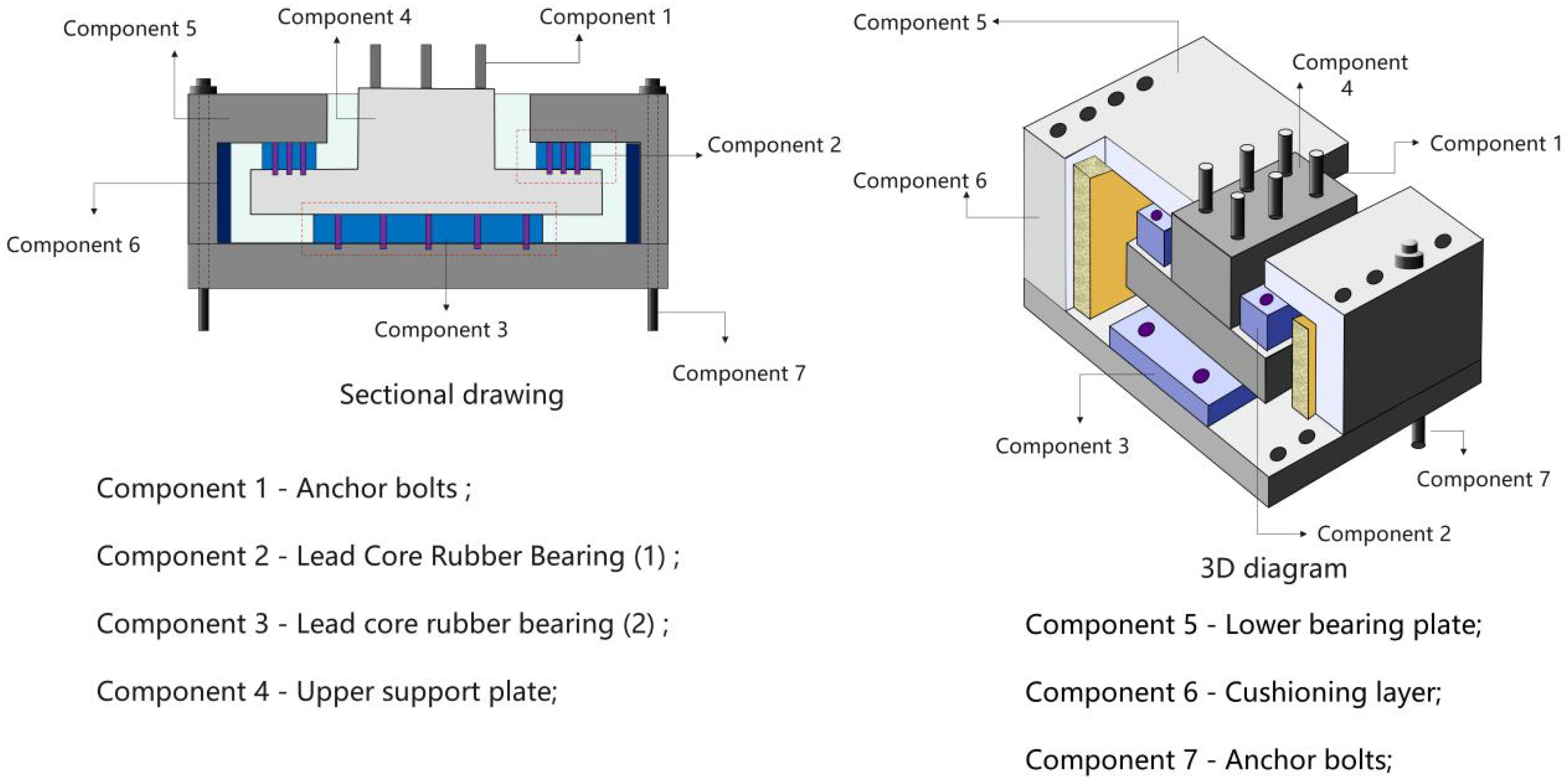
The vulnerability of bolted rigid connections is a significant concern. Most existing tensile bearings use rigid bolted connections, leading to stress concentration at bolt-hole edges; under sudden seismic loads, these joints are prone to shear fracture or thread slip. Consequently, the capacity for plastic deformation and the ductility design of the joint region require further study. As shown in Figure 8, the lead–rubber bearing design proposed here effectively addresses the shortcomings of conventional models by accounting for both the resonance effects of vertical seismic motion and changes in dynamic material properties during tensile–compressive cycling. This innovative configuration decouples the tensile and compressive modules, allowing for targeted optimization of material stiffness and damping properties. It remedies earlier models’ neglect of vertical seismic resonance and the influence of the Paaschinger (packaging) effect on bearing mechanical performance. The bearing leverages the distinct material characteristics of the tensile and compressive components, resulting in different natural frequencies under tensile versus compressive loading, thereby reducing the risk of resonance induced by vertical ground motion. Additionally, flexible deformation of the tensile module and interface slip mechanisms dissipate instantaneous stress concentrations generated during tensile loading, mitigating the risk of failure in rigidly connected regions. Optimizing the load-transfer path for tensile forces is crucial to enhancing the overall structural integrity and reliability of the system.
Combined with a multi-directional limiting device, the design constrains displacement amplitude during tensile–compressive cycles while preserving the bearing’s re-centering capability, thus avoiding structural instability or collision damage.
Current mechanical analyses of tensile-bearing bearings have largely concentrated on responses to conventional horizontal loading, leaving a gap in comprehensive studies on structural separation behavior and tensile mechanisms under vertical seismic excitation. Most existing mechanical models assume continuous contact, which hampers their ability to accurately capture dynamic changes in the pier–girder system during the rapid separation and recontact processes that occur with large displacements. Research shows that when structural responses surpass a critical displacement threshold, the system abruptly shifts from a constrained state to free motion. This transition results in a singular stiffness matrix and a reconfiguration of energy transfer pathways. The traditional mechanical analysis framework struggles to adequately describe these discontinuous processes due to its theoretical limitations.
Research on the tensile mechanical behavior of bearings under vertical seismic excitation remains underdeveloped. While seismic observations indicate that the vertical component of ground motion can be substantial in near-fault areas, current mechanical models often simplify or overlook the impact of vertical excitation on the tensile performance of bearings. A comprehensive theoretical framework is still needed to address the constitutive relationships, interface bond degradation laws, and tensile–shear coupling effects of typical tensile bearings, such as lead-rubber bearings and high-damping rubber bearings, under vertical tensile loading. Experimentally, most tests currently use single-axis loading paths and lack compound loading data that replicate the multiaxial stress states encountered in actual earthquakes. This limitation hinders the understanding of damage-evolution mechanisms in materials subjected to complex stress trajectories.
The focus on mechanical investigation has resulted in an incomplete grasp of bearing failure mechanisms under extreme conditions. Specifically, there is a lack of quantitative descriptions of critical mechanical phenomena, such as the recontact impact forces of bearings in separated states and the tensile-compression cycling effects caused by vertical seismic excitation. The next section will systematically examine the vulnerability characteristics of bearings under vertical seismic loading, based on an in-depth analysis of these mechanical mechanisms. It will also establish mappings between mechanical behavior and damage states, thereby supporting the refinement of uplift-resistant bearing design theory.

4.4. Key Issues and Improvement Directions

Current research on vertical seismic effects encounters significant challenges. Traditional design methods typically address tensile bearings and transverse isolation systems separately, overlooking their three-dimensional coupling mechanisms. These methods often concentrate solely on preventing vertical separation, rather than optimizing the entire “separation–reclosure” process. As a result, it becomes difficult to balance constrained displacement with additional restraining forces, potentially causing secondary damage due to dynamic amplification at the moment of separation.
Future research should pivot towards a new paradigm of “actively managing separation processes.” This involves developing a three-dimensional coordinated control system that maintains separation within safe limits by precisely regulating stiffness ratios. Key areas for exploration include: creating integrated limit-and-tension devices that adopt a “dissipate first, restrain later” approach; devising a quantitative pull–shear coupling model to describe how vertical tensile forces affect in-plane performance; designing innovative mechanisms to channel separation kinetic energy into controllable dissipation; and developing real-time, displacement-based adaptive control strategies. The ultimate goal is to establish a design philosophy that “allows limited separation, controls impact intensity, and ensures reliable re-centering,” thus guaranteeing both the safety and functional resilience of structures after strong earthquakes.

5. Conclusions and Perspectives

5.1. Research Summary

This review highlights the essential interrelationships among near-fault earthquake characteristics, tensile-resistant bearing technologies, and the risk of vertical separation in bridge structures. Vertical ground motions—especially those characterized by sharp velocity pulses and significant upward accelerations—significantly heighten the likelihood of separation between superstructures and supporting piers. Conventional seismic design methods, particularly the simplified vertical load expression V = 2H/3, tend to underestimate these vertical effects, often leading to underdesigned tensile capacity in bearings and exposing bridges to serious systemic vulnerabilities. Once vertical separation occurs, the subsequent impact between components can cause substantial structural damage. As such, vertical seismic action must be regarded as a fundamental consideration in seismic design, particularly in regions of high seismic intensity. At the technological level, three distinct classes of bearing solutions have emerged. Firstly, laminated rubber bearings, which rely on material enhancements to offer limited vertical tensile resistance, are suitable for short- to medium-span bridges; Secondly, tendon-type bearings, incorporating steel strands, deliver self-centering behavior and accommodate large deformations, making them appropriate for long-span bridges or applications in complex topographic conditions; Thirdly, track-type devices, with their compact form factor and ease of installation, are particularly advantageous for retrofitting existing bridges.

5.2. Future Research Directions

Looking ahead, several critical areas warrant further exploration to enhance the vertical seismic performance of bridge bearings. Firstly, collaborative design strategies that integrate bearings with auxiliary components—such as combining SMA-based bearings with hydraulic dampers—should be developed to create performance-oriented, synergistic systems. Secondly, multiphysics models that couple pile, soil, and structural interactions are needed to accurately quantify how varying site conditions influence vertical displacement responses. Third, the integration of discrete-element and finite-element methods holds promise for generating high-fidelity simulations of impact dynamics during vertical separation events. Lastly, a comprehensive resilience evaluation framework should be established—encompassing the four phases of prevention, absorption, adaptation, and recovery—to assess post-earthquake serviceability and repair efficiency of bearing systems. Such a framework would support whole-life-cycle decision-making in bridge engineering practice.

Author Contributions

Methodology, Y.L.; validation, P.Z.; formal analysis, Y.L.; resources, Y.W.; data curation, Y.W.; writing—original draft preparation, C.-L.C. and C.-K.M.; writing—review and editing, P.Z., X.N. and H.X.; visualization, C.-L.C. and C.-K.M.; supervision, X.N. and H.X.; project administration, W.A.; funding acquisition, W.A. All authors have read and agreed to the published version of the manuscript.

Funding

This research was funded by [Sichuan Province University Key Laboratory of Bridge Non-destruction Detecting and Engineering Computing] grant number [2024QYJ05] and The APC was funded by [2024QYJ05].

Data Availability Statement

The data presented in this research are available upon request from the corresponding author.

Acknowledgments

The authors gratefully acknowledge the Pacific Earthquake Center for providing the seismic wave data used in this study.

Conflicts of Interest

The authors declare no conflict of interest.

References

  1. Bozorgnia, Y.; Eeri, M.; Niazi, M. Characteristics of free-field vertical ground motion during the Northridge earthquale. Earthq. Spectra 1995, 11, 515–525. [Google Scholar] [CrossRef]
  2. Seyyed, A.M.; Afshin, K. Computing the Effects of Vertical Ground Motion Component on Performance Indices of Bridge Sliding-Rubber Bearings. Iran. J. Sci. Technol. Trans. Civ. Eng. 2019, 45, 1197–1270. [Google Scholar] [CrossRef]
  3. Liang, R.-J.; Wang, H.; Zheng, W.-Z.; Shen, H.-J.; Li, A.-Q. Parameter Optimization of Lead Rubber Bearings of an Isolated Curved Girder Bridge. Eng. Mech. 2019, 36, 83–90. [Google Scholar]
  4. Kalpakidis, I.V.; Constantinou, M.C.; Whittaker, A.S. Modeling strength degradation in lead-rubber bearings under earthquake shaking. Earthq. Eng. Struct. Dyn. 2010, 39, 1533–1549. [Google Scholar] [CrossRef]
  5. Long, X.; Zhou, Q.; Ma, Y.; Gui, S.; Lu, C. Displacement-based seismic design of SMA cable-restrained sliding lead rubber bearing for isolated continuous girder bridges. Eng. Struct. 2024, 300, 117179. [Google Scholar] [CrossRef]
  6. Yayun, X. Earthquake Resistant Engineering and Retrofitting. Earthq. Resist. Eng. Retrofit. 2005, 27, 48–50. [Google Scholar]
  7. Cao, F.-H.; Liu, C. Utilization of FVDs for Seismic Strengthening of Bridge Bearings. Bridge Constr. 2021, 51, 95–100. [Google Scholar]
  8. Quaranta, G.; Angelucci, G.; Mollaioli, F. Near-fault earthquakes with pulse-like horizontal and vertical seismic ground motion components: Analysis and effects on elastomeric bearings. Soil Dyn. Earthq. Eng. 2022, 160, 107361. [Google Scholar] [CrossRef]
  9. Luo, Q.; Dai, F.; Liu, Y.; Chen, X. Simulating the near-field pulse-like ground motions of the Imperial Valley, California, earthquake. Soil Dyn. Earthq. Eng. 2020, 138, 106347. [Google Scholar] [CrossRef]
  10. Papazoglou, A.J.; Elnashai, A.S. Analytical and field evidence of the damaging effect of vertical earthquake ground motion. Earthq. Eng. Struct. Dyn. 1996, 25, 1109–1137. [Google Scholar] [CrossRef]
  11. Wu, X.; He, J.; Tian, J.; Liu, M.; Zheng, Y.; Zhang, W.; Yuan, J.; Wang, W.-W.; Fu, H.; Wang, R. Multi-scale performance of underwater-castable ultra-high-volume fly-ash eco-friendly engineered cementitious composites: Microstructural characterization, workability, mechanical properties and environmental effects. Constr. Build. Mater. 2026, 506, 144870. [Google Scholar] [CrossRef]
  12. Elnashai, A.S.; Papazoglou, A.J. Procedure and spectra for analysis of RC structures subjected to strong vertical earthquake loads. J. Earthq. Eng. 1997, 1, 121–155. [Google Scholar] [CrossRef]
  13. Sun, Z.; Han, T.; Wang, X.; Wang, L.; Fu, H.; Li, Y.; Zhong, Z.; Liu, J.; Huang, H.; Wu, Z. Bidirectional mapping modeling of pipeline vertical deformation and axial strain based on multi-source monitoring data and machine learning. J. Pipeline Sci. Eng. 2026, 100432. [Google Scholar] [CrossRef]
  14. Mavroeidis, G.P.; Papageorgiou, A.S. A mathematical representation of near-fault ground motions. Bull. Seismol. Soc. Am. 2003, 93, 1099–1131. [Google Scholar] [CrossRef]
  15. Sun, Z.; Wang, X.; Han, T.; Liu, J.; Wang, L.; Wei, X.; Huang, H.; Huang, X.; Wu, Z. Advanced prediction of pipeline vertical deformation and axial strain via multi-source data fusion and multi-task deep learning. Struct. Health Monit. 2025, 14759217251385078. [Google Scholar] [CrossRef]
  16. Malhotra, P.K. Response of building to near-field pulse-like ground motions. Earthq. Eng. Struct. Dyn. 1999, 28, 1309–1326. [Google Scholar] [CrossRef]
  17. PEER. Pacific Earthquake Engineering Research Center; University of California: Berkeley, CA, USA, 2005. [Google Scholar]
  18. Chen, G.; Yang, J.; Wang, R.; Li, K.; Liu, Y.; Beer, M. Seismic damage analysis due to near-fault multipulse ground motion. Earthq. Eng. Struct. Dyn. 2023, 52, 5099–5116. [Google Scholar] [CrossRef]
  19. Chen, G.; Yang, J.; Wang, R.; Li, K.; Liu, Y.; Beer, M. Response to discussion of “Seismic damage analysis due to near-fault multipulse ground motion”. Earthq. Eng. Struct. Dyn. 2024, 53, 861–866. [Google Scholar] [CrossRef]
  20. Luo, C.; Peng, Y. Probability density evolution method based stochastic simulation of near-fault pulse-like ground motions. Probabilistic Eng. Mech. 2024, 76, 103629. [Google Scholar] [CrossRef]
  21. Dong, H.; Han, Q.; Bi, K.; Zhang, C.; Du, X. Ductility Demand Spectra of the Self-Centering Structure Subjected to Near-Fault Pulse-like Ground Motions. J. Earthq. Eng. 2021, 25, 3142–3160. [Google Scholar] [CrossRef]
  22. Bozorgnia, Y.; Niazi, M. Distance scaling of vertical and horizontal response spectra of the Loma Prieta earthquake. Earthq. Eng. Struct. Dyn. 1993, 22, 695–707. [Google Scholar] [CrossRef]
  23. Makris, N.; Chang, S.P. Response of damped oscillators to cycloid pulses. J. Eng. Mech. 2000, 126, 123–131. [Google Scholar] [CrossRef]
  24. Dong, H.; Han, Q.; Bi, K.; Zhang, C.; Du, X. Degradation behavior sand damage model of the interface between ECC and concrete under sulfate wet-dry cycling. Constr. Build. Mater. 2025, 476, 141283. [Google Scholar]
  25. Alavi, B.; Krawinkler, H. Behavior of moment-resisting frame structures subjected to near-fault ground motions. Earthq. Eng. Struct. Dyn. 2004, 33, 687–706. [Google Scholar] [CrossRef]
  26. Zeng, X.Z.; Deng, K.L.; Wang, Y.C.; Yan, G.H.; Zhao, C.H. Field investigation and numerical analysis of damage to a high-pier long-span continuous rigid frame bridge in the 2008 wenchuan earthquake. J. Earthq. Eng. 2021, 6, 1–17. [Google Scholar] [CrossRef]
  27. Baker, J.W. Quantitative classification of near-fault ground motions using wavelet analysis. Bull. Seismol. Soc. Am. 2007, 97, 1486–1501. [Google Scholar] [CrossRef]
  28. Baker, J.W. Identification of near-fault velocity pulses and prediction of resulting response spectra. In Proceedings of the Geotechnical Earthquake Engineering and Structural Dynamics IV, Sacramento, CA, USA, 18–22 May 2008. [Google Scholar]
  29. Zhongxian, L.; Haiping, Z.; Yunbiao, L. Influence of vertical component of ground motion on seismic isolating performance of friction pendulum bearings isolated viaduct. Earthq. Eng. Eng. Dyn. 2018, 38, 8–17. [Google Scholar]
  30. Eroz, M.; DesRoches, R. Bridge seismic response as a function of the Friction Pendulum System (FPS) modeling assumptions. Eng. Struct. 2008, 30, 3204–3212. [Google Scholar] [CrossRef]
  31. Lin, Z.; Lueqin, X.; Shuimeng, P. Effect of Vertical Earthquakes on Sliding Performance of Laminated Rubber Bearings. Struct. Eng. 2020, 36, 71–78. [Google Scholar]
  32. Warn, G.P.; Whittaker, A.S. Vertical Earthquake Loads on Seismic Isolation Systems in Bridges. J. Struct. Eng. 2008, 134, 1696–1704. [Google Scholar] [CrossRef]
  33. Button, M.R.; Cronin, C.J.; Mayes, R.L. Effect of Vertical Motions on Seismic Response of Highway Bridges. J. Struct. Eng. 2002, 128, 1551–1564. [Google Scholar] [CrossRef]
  34. Farahmand-Tabar, S.; Barghian, M. Seismic assessment of a cable-stayed arch bridge under three-component orthotropic earthquake excitation. Adv. Struct. Eng. 2020, 24, 136943322094875. [Google Scholar] [CrossRef]
  35. Li, Q.; Li, X.; Zhao, J.; Wang, C. Experimental study on seismic responses of a curved bridge considering the effect of pulse and pulse duration. Structures 2023, 58, 105494. [Google Scholar] [CrossRef]
  36. Xu, S.; Xu, Q.; Chen, J.; Li, J. Improved endurance time analysis for seismic responses of concrete dam under near-fault pulse-like ground motions. Eng. Struct. 2022, 270, 114912. [Google Scholar] [CrossRef]
  37. Shaohui, L.; Lizhong, J.; Wangbao, Z.; Jian, Y.; Yulin, F.; Zhenbin, R. Influence of velocity pulse effect on earthquake-induced track irregularities of high-speed railway track-bridge system under near-fault ground motions. Arch. Civ. Mech. Eng. 2024, 24, 70. [Google Scholar] [CrossRef]
  38. Karimi, M.R.B. Optimum Values of Mechanical Properties for Lead Core Rubber Bearing (LCRB) Under Variable Pulse-like Ground Motions. Int. J. Steel Struct. 2023, 23, 780–794. [Google Scholar] [CrossRef]
  39. Sunil, T.; Yadin, S.; Dipendra, G. Seismic fragility analysis of RC bridges in high seismic regions under horizontal and simultaneous horizontal and vertical excitations. Structures 2022, 37, 284–294. [Google Scholar] [CrossRef]
  40. Fu, H.; Tian, J.; Chin, C.-L.; Liu, H.; Yuan, J.; Tang, S.; Mai, R.; Wu, X. Axial compression behavior of GFRP-steel composite tube confined seawater sea-sand concrete intermediate long columns. Eng. Struct. 2025, 333, 120157. [Google Scholar] [CrossRef]
  41. Fu, H.; Tian, J.; Chen, S.; Chin, C.-L.; Ma, C.-K. Axial compressive performance of CFRP-steel composite tube confined seawater sea-sand concrete intermediate slender columns. Constr. Build. Mater. 2024, 441, 137399. [Google Scholar] [CrossRef]
  42. Wu, X.; Ouyang, X.; Tian, J.; Zheng, Y.; Fu, H.; Yuan, J.; Wang, W.-W.; Zuo, Y. Experimental study on mechanical and self-sensing properties of intelligence-function cement-based composite beams under marine erosion environment. Structures 2025, 76, 108950. [Google Scholar] [CrossRef]
  43. Fukushima, Y.; Irikura, K.; Uetake, T. Characteristics of observed peak amplitude for strong ground motion from the 1995 Hyogoken Nanbu (Kobe) earthquake. Bull. Seismol. Soc. Am. 2000, 90, 545–565. [Google Scholar] [CrossRef]
  44. Wang, J.; Huang, M.; Chen, K.; Hwang, R.; Chang, W. Aspects of characteristics of near-fault ground motions of the 1999 Chi-Chi(Taiwan) Earthquake. J. Chin. Inst. Eng. 2002, 25, 507–518. [Google Scholar] [CrossRef]
  45. Fu, H.; Zhang, J.; Wu, Z.; Chin, C.-L.; Ma, C.-K. Nonlinear analysis of axial-compressed corroded circular steel pipes reinforced by FRP-casing grouting. J. Constr. Steel Res. 2023, 201, 107689. [Google Scholar] [CrossRef]
  46. Liu, Z.; Qi, X.; Ke, J.; Shui, Z. Enhancing the toughness of ultra-high performance concrete through improved fiber-matrix interface bonding. Constr. Build. Mater. 2025, 491, 142616. [Google Scholar] [CrossRef]
  47. Heng, L.; Jinggang, L.; Dun, W. Analysis of Statistic Characteristics of Peak Ratios in Vertical and Horizontal Ground Motion Acceleration. J. Seismol. Res. 2010, 33, 195–199. [Google Scholar]
  48. Dong, W.; Xilin, L. Experimental research on mechanical properties of anti-tension isolation bearing. J. Build. Struct. 2015, 36, 124–132. [Google Scholar]
  49. Ambraseys, N.N.; Douglas, J. Near-field horizontal and vertical earthquake ground motions. Soli Dyn. Earthq. Eng. 2003, 23, 1–18. [Google Scholar] [CrossRef]
  50. McGuire, R.K.; Silva, W.J.; Kenneally, R. New seismic design spectra for nuclear power plants. Nucl. Eng. Des. 2001, 203, 249–257. [Google Scholar] [CrossRef]
  51. Zhou, Z.; Zhou, Y.; Lu, T. Study on characteristics of vertical ground motion. Earthq. Eng. Eng. Vib. 2003, 23, 25–29. [Google Scholar]
  52. Silva, W. Characteristics of Vertical Ground Motions for Applications to Engineering Design; National Center for Earthquake Engineering Research: New York, NY, USA, 1997. [Google Scholar]
  53. Kim, S.J.; Holub, C.J.; Elnashai, A.S. Analytical Assessment of the Effect of Vertical Earthquake Motion on RC Bridge Piers. J. Struct. Eng. 2011, 137, 252–260. [Google Scholar] [CrossRef]
  54. Abrahamson, N.; Litehiser, J. Attenuation of vertical peak acceleration. Bull. Seismol. Soc. Am. 1989, 79, 549–580. [Google Scholar]
  55. Geng, S.; Tao, X. The ratios of vertical to horizontal acceleration response spectra. Earthq. Eng. Eng. Vib. 2005, 24, 33–38. [Google Scholar]
  56. Fu, H.; Guo, K.; Wu, Z.; Mai, R.; Chin, C.-L.; Ma, C.-K. Experimental Investigation of a Novel CFRP-Steel Composite Tube-Confined Seawater-Sea Sand Concrete Intermediate Long Column. Int. J. Integr. Eng. 2024, 16, 466–475. [Google Scholar] [CrossRef]
  57. Ministry of Transport of the People’s Republic of China. JTG/T 2231-01—2020; Specifications for Seismic Design of Highway Bridges. China Communications Press: Beijing, China, 2020.
  58. Ministry of Transport of the People’s Republic of China. JTG/T B02-01—2008; Guidelines for Seismic Design of Highway Bridges. China Communications Press: Beijing, China, 2008.
  59. Collier, C.; Elnashai, A. A procedure for combining vertical and horizontal seismic action effects. J. Earthq. Eng. 2001, 5, 521–539. [Google Scholar] [CrossRef]
  60. Li, X.; Zhou, Z.; Yu, H.; Wen, R.; Lu, D.; Huang, M.; Zhou, Y.; Cu, J. Strong motion observations and recordings from the great Wenchuan Earthquake. Earthq. Eng. Eng. Vib. 2008, 7, 235–246. [Google Scholar] [CrossRef]
  61. Bi, K.; Hong, H.; Chouw, N. Required separation distance between decks and at abutments of a bridge crossing a canyon site to avoid seismic pounding. Earthq. Eng. Struct. Dyn. 2010, 39, 303–323. [Google Scholar] [CrossRef]
  62. Boulanger, R.W. Detail of Punching Failure; University of California: Berkeley, CA, USA, 1989; NISEE-PEER. [Google Scholar]
  63. Tanimura, S.; Sato, T.; Umeda, T.; Mimura, K.; Yoshikawa, O. A note on dynamic fracture of the bridge bearing due to the great Hanshin-Awaji earthquake. Int. J. Impact Eng. 2002, 27, 153–160. [Google Scholar] [CrossRef]
  64. Ran, X.; Xiaochun, Y. Calculations of Multiple Pounding Forces Between Girder and Pier of Bridges Under Vertical Earthquakes. Eng. Mech. 2010, 27, 124–130. [Google Scholar]
  65. Ran, X.; Xiaochun, Y. Transient wave response analysis of a bridge under vertical earthquakes. J. Vib. Shock 2012, 31, 49–55. [Google Scholar]
  66. Yang, H.; Yin, X.; Hao, H.; Bi, K. Theoretical Investigation of Bridge Seismic Responses with Pounding under Near-Fault Vertical Ground Motions. Adv. Struct. Eng. 2015, 11, 452–468. [Google Scholar] [CrossRef]
  67. Yang, H.; Yin, X. Transient responses of girder bridges with vertical poundings under near-fault vertical earthquake. Earthq. Eng. Struct. Dyn. 2015, 44, 2637–2657. [Google Scholar] [CrossRef]
  68. Tamaddon, S.; Hosseinim, M.; Vasseghi, A. Effect of Non-Uniform Vertical Excitations on Vertical Pounding Phenomenon in Continuous-Deck Curved Box Girder RC Bridges Subjected to Near-Source Earthquakes. J. Earthq. Eng. 2022, 26, 5360–5383. [Google Scholar] [CrossRef]
  69. Ding, H.; Yu, Y.; Xu, C.; Pu, X.; Guo, W.; Tong, L. Analytical modeling for nonlinear seismic metasurfaces of saturated porous media. Int. J. Mech. Sci. 2025, 303, 110666. [Google Scholar] [CrossRef]
  70. Liao, M.; Yang, Y.; Luo, D. Seismic response analysis of long-span continuous girder bridge considering fluctuating friction of bearing. Structures 2023, 43, 2162–2177. [Google Scholar] [CrossRef]
  71. An, W.; Song, G. Transient Response of Bridge Piers to Structure Separation under Near-Fault Vertical Earthquake. Appl. Sci. 2021, 11, 4068. [Google Scholar] [CrossRef]
  72. An, W.; Song, G.; Chen, S. Near-Fault Seismic Response Analysis of Bridges Considering Girder Impact and Pier Size. Mathematics 2021, 9, 704. [Google Scholar] [CrossRef]
  73. An, W.; Zhou, P.; Wang, P.; Zheng, Z.; Yang, H. Analysis of dynamic interaction and response in multispan girder bridges subjected to near-fault earthquakes. Structures 2023, 58, 105622. [Google Scholar] [CrossRef]
  74. Shutong, C.; Kassem, M.M.; Jalilluddin, A.M.; Nazri, F.M.; Wenjun, A. The effect of bridge girder-bearing separation on shear key pounding under vertical earthquake action-A state-of-the-art review. Structures 2023, 55, 2445–2460. [Google Scholar] [CrossRef]
  75. Fu, H.; Zhao, H.; Pan, Z.; Wu, Z.; Chin, C.-L.; Ma, C.-K. Behaviour of corroded circular steel tube strengthened with external FRP tube grouting under eccentric loading:Numerical study. Structures 2023, 56, 104810. [Google Scholar] [CrossRef]
  76. An, W.; Zhou, L.; Fang, T.; Wu, Y.; Li, Q. Collision Analysis of Transverse Stops Considering the Vertical Separation of the Main Beam and Bent Cap. Sustainability 2023, 15, 2809. [Google Scholar] [CrossRef]
  77. Zheng, W. Study on SMA-Sliding Lead Rubber Bearing System for seismic Response Control of Concrete Continuous Bridges. Ph.D. Thesis, Southeast University, Dhaka, Bangladesh, 2020. [Google Scholar]
  78. Roeder, C.W.; Stanton, J.F.; Feller, T. Low-temperature performance of elastomeric bearings. J. Cold Reg. Eng. 1990, 4, 113–132. [Google Scholar] [CrossRef]
  79. Yakut, A.; Yura, J.A. Evaluation of elastomeric bearing performance at low temperatures. J. Struct. Eng. 2002, 128, 995–1002. [Google Scholar] [CrossRef]
  80. Kim, D.K.; Mander, J.B.; Chen, S.S. Temperature and strain rate effects on the seismic performance of elastomeric and lead-rubber bearings. Spec. Publ. 1996, 164, 309–322. [Google Scholar]
  81. Yakut, A.; Yura, J.A. Parameters influencing performance of elastomeric bearings at low temperatures. J. Struct. Eng. 2002, 128, 986–994. [Google Scholar] [CrossRef]
  82. Shen, J.; Akira, I.; Dang, J.; Hamada, Y.; Himeno, T. A multi-layer thermo-mechanical coupling hysteretic model for high damping rubber bearings at low temperature. Earthq. Eng. Struct. Dyn. 2023, 53, 1028–1047. [Google Scholar] [CrossRef]
  83. Liu, R.; Ma, Y.; Zhao, G.; Li, Y.; Zheng, N. Influence of freeze–thaw cycles and aging on the horizontal mechanical properties of high damping rubber bearings. J. Rubber Res. 2022, 25, 69–77. [Google Scholar] [CrossRef]
  84. Wu, B.; Zhuang, J.S.; Zang, X.Q. Experimental study of mechanical parameters of lead-rubber bearing for nonlinear dynamic analysis. Eng. Mech. 2004, 21, 144–149. [Google Scholar]
  85. Hameed, A.; Koo, M.-S.; Do, T.D.; Jeong, J.-H. Effect of lead rubber bearing characteristics on the response of seismic-isolated bridges. KSCE J. Civ. Eng. 2008, 12, 187–196. [Google Scholar] [CrossRef]
  86. Zhang, C.Y.; Zhong, T.Y.; Gu, Z.W. Study on optimal design of lead-rubber bearings for railway continuous beam bridges. J. China Railw. Soc. 2012, 34, 97–102. [Google Scholar]
  87. Hedayati Dezfuli, F.; Alam, M.S. Smart lead rubber bearings equipped with ferrous shape memory alloy wires for seismically isolating highway bridges. J. Earthq. Eng. 2018, 22, 1042–1067. [Google Scholar] [CrossRef]
  88. Meng, D.; Hu, S.; Yang, M.; Hu, R.; He, X. Experimental evaluation of the seismic isolation effectiveness of friction pendulum bearings in bridges considering transverse poundings. Soil Dyn. Earthq. Eng. 2023, 170, 107926. [Google Scholar] [CrossRef]
  89. Fenz, D.M.; Constantinou, M.C. Behaviour of the double concave friction pendulum bearing. Earthq. Eng. Struct. D. 2006, 35, 1403–1424. [Google Scholar] [CrossRef]
  90. Meng, D.; Hu, S.; Yang, M.; Hu, R.; He, X. Energy-based prediction of the displacement of DCFP bearings. Appl. Sci. 2020, 10, 5259. [Google Scholar] [CrossRef]
  91. Biao, W.; Tianhan, Y.; Lizhong, J. Effects of friction-based fixed bearings on the seismic vulnerability of a high-speed railway continuous bridge. Adv. Struct. Eng. 2017, 21, 136943321772689. [Google Scholar]
  92. Jangid, R.S. Stochastic response of bridges seismically isolated by friction pendulum system. J. Bridge Eng. 2008, 13, 319–330. [Google Scholar] [CrossRef]
  93. Graesser, E.J.; Cozzarelli, F.A. Shape-memory alloys as new materials for aseismic isolation. J. Eng. Mech. 1991, 117, 2590–2608. [Google Scholar] [CrossRef]
  94. Cerda, M.; Boroschek, R.; Farias, G. Shaking table test of a reduced-scale structure with copper-based SMA energy dissipation devices. In Proceedings of the 8th U.S. National Conference on Earthquake Engineering, San Francisco, CA, USA, 18–22 April 2006. [Google Scholar]
  95. Hedayati Dezfuli, F.; Alam, M.S. Shape memory alloy wire-based smart natural rubber bearing. Smart Mater. Struct. 2013, 22, 045013. [Google Scholar] [CrossRef]
  96. Mishra, S.K.; Gur, S.; Roy, K.; Chakraborty, S. Response of bridges isolated by shape memory-alloy rubber bearing. J. Bridge Eng. 2016, 21, 04015071. [Google Scholar] [CrossRef]
  97. Cardone, D.; Dolce, M.; Ponzo, F.C. The behaviour of SMA isolation systems based on a full-scale release test. J. Earthq. Eng. 2006, 10, 815–842. [Google Scholar] [CrossRef]
  98. Wang, J.; Mou, S.; Liu, H. The Performance Contrast Research between SMA Wire and SMA Strands laminate Rubber Bearing. J. Seismol. Res. 2017, 40, 70–74+167. [Google Scholar]
  99. Li, S.; Wang, J.-Q.; Alam, M.S. Multi-criteria optimal design and seismic assessment of SMA RC piers and SMA cable restrainers for mitigating seismic damage of simply-supported highway bridges. Eng. Struct. 2022, 252, 113547. [Google Scholar] [CrossRef]
  100. Cao, S.; E Ozbulut, O.; Shi, F.; Deng, J. Experimental and numerical investigations on hysteretic response of a multi-level SMA/lead rubber bearing seismic isolation system. Smart Mater. Struct. 2022, 31, 035024. [Google Scholar] [CrossRef]
  101. Xing, C.-X.; Wang, H.; Li, A.-Q.; Wu, J.-R. Design and experimental verification of a new multi-functional bridge seismic isolation bearing. J. Zhejiang Univ. Sci. A 2012, 13, 904–914. [Google Scholar] [CrossRef]
  102. Xing, C.-X.; Wang, H.; Li, A.-Q.; Wu, J.-R. Explicit finite element analysis and experimental verification of a sliding lead rubber bearing. J. Zhejiang Univ. Sci. A 2017, 18, 363–376. [Google Scholar]
  103. Mitsuru, U.; Takao, N. Study on stiffness, deformation and ulrimate characteristics of base-isolated rubber bearings:horizontalandvertical characteristics under shear deformation. J. Struct. Constr. Eng. 1996, 479, 119–128. [Google Scholar]
  104. Li, W.; Yang, G.; Zhu, F. Theoretical and experimental researches on nonlinear elastic tension property of rubber isolators. Eng. Eng. Vib. 2004, 24, 158–167. [Google Scholar]
  105. Bin, Y.; Xiu-Li, D.; Qiang, H.A. Analysis of Seismic Performance of a Unseating-prevention Laminated Rubber Bearing. J. Beijing Univ. Technol. 2014, 40, 857–864. [Google Scholar]
  106. Yan, W.M.; Zhang, Z.Q.; Chen, S.; Ren, X. Modeling and analyzing of tensile stiffness for seismic isolated rubber bearings. Eng. Mech. 2014, 31, 184–189. [Google Scholar]
  107. Jia-Jia, M.; Yun, C.; Liang, Y. Simulation study on mechanical properties of a new type of three—Dimensional isolation bearing. Earthq. Resist. Eng. Retrofit. 2025, 47, 79–87. [Google Scholar]
  108. Ya, X.; Zhu, Y. Experimental study on high-rise structure with three-dimensional base isolation and overturn resistance devices. J. Build. Struct. 2009, 30, 1–8. [Google Scholar]
  109. Peng, C.; Ying, Z.; Lu, L. Experimental research on mechanical performance of tension-resistant device for rubber bearings. J. Build. Struct. 2017, 38, 113–119. [Google Scholar]
  110. Kelly, J.M.; Marsico, M.R. Tension buckling in rubber bearings affected by cavitation. Eng. Struct. 2013, 56, 656–663. [Google Scholar] [CrossRef]
  111. Hu, K.; Zhou, Y.; Jiang, L.; Chen, P.; Qu, G. A mechanical tension-resistant device for lead rubber bearings. Eng. Struct. 2017, 152, 238–250. [Google Scholar] [CrossRef]
  112. Lu, X.; Wang, D.; Wang, S. Investigation of the seismic response of high-rise buildings supported on tension-resistant elastomeric isolation bearings. Earthq. Eng. Struct. Dyn. 2016, 45, 2207–2228. [Google Scholar] [CrossRef]
  113. Zhong, H.; Guo, J.; Yuan, W.; Wang, Z.; Dang, X.; Deng, X. Numerical study on seismic performance of a novel multi-level aseismic highway bridge. Eng. Struct. 2023, 275, 115253. [Google Scholar] [CrossRef]
  114. Zou, S.; Wang, H.; Fang, S.; Fang, Z.; Wenliuhan, H.; Qu, C.; Zhang, C. Seismic isolation effect and parametric analysis of simply supported beam bridges with multi-level sliding friction adaptive isolation bearing. Soil Dyn. Earthq. Eng. 2025, 188, 109000. [Google Scholar] [CrossRef]
  115. Akazawa, M.; Kurata, M.; Yamazaki, S.; Kawamata, Y.; Matsuo, S. Test and sensitivity analysis of base-isolated steel frame with low-friction spherical sliding bearings. Earthq. Engng Struct Dyn. 2025, 54, 100–118. [Google Scholar] [CrossRef]
  116. Lu, Y.; Li, J.; Liu, B. Study on the Vibration Isolation Performance of Sliding–Rolling Friction Composite Vibration Isolation Bearing. Buildings 2024, 14, 2053. [Google Scholar] [CrossRef]
  117. Zhu, Y.; Xie, L.; Wu, J. Finite element analysis method for the sliding cable analysis: The sliding variable method. Structures 2024, 69, 107463. [Google Scholar] [CrossRef]
  118. Yang, H.; Liu, S.; Yuan, W. Experiment Based Seismic Behavior Investigation of a Sliding Controlled Isolation System. J. Perform. Constr. Facil. 2017, 31, 04016106. [Google Scholar] [CrossRef]
  119. He, J.; Han, Z.; Pang, Y.; Yuan, W. Seismic performance assessment of bridges isolated by a new restorable cable-sliding bearing. Eng. Struct. 2025, 327, 119578. [Google Scholar] [CrossRef]
  120. Yuan, W.; Wang, B. Numerical Model and Seismic Performance of Cable-sliding Friction Aseismic Bearing. J. Tongji Univ. (Nat. Sci.) 2011, 39, 1126–1131. [Google Scholar]
  121. Chen, Z.-G.; Zhao, Y.-C. Study of Transverse Seismic Performance of Rigid-Frame Bridge Using Cable Sliding Friction Aseismic Bearings. Bridge Constr. 2014, 44, 38–42. [Google Scholar]
  122. Li, C.; Hu, J. Seismic Analysis of Cable-stayed Bridges with Cable-sliding Friction Aseismic Bearing. J. Water Resour. Archit. Eng. 2019, 17, 224. [Google Scholar]
  123. Zhang, Y.-M.; Liu, J.-X.; Zhao, G.-H. Parametric design of unseating prevention devices for highway bridges. J. Vib. Shock 2011, 30, 195–204. [Google Scholar]
  124. Sarlis, A.A.; Constantinou, M.C. A model of triple friction pendulum bearing for general geometric and frictional parameters. Earthq. Eng. Struct. Dyn. 2016, 45, 1837–1853. [Google Scholar] [CrossRef]
  125. Yuan, W.; Cao, X.; Cheung, P.C.; Wang, B.; Rong, Z. Development and experimental study on cable-sliding friction aseismic bearing. J. Habin Eng. Univ. 2010, 31, 1593–1600. [Google Scholar]
  126. Long, Z.; Zhong, T.; Wen, P. Mechanical properties of rail-type anti-tensile rubber bearings. J. Vib. Shock 2018, 37, 150. [Google Scholar]
  127. Zhang, L.; Lan, X.; Wu, K.; Yu, W. Tests and Seismic Response Analysis of Guided-Rail-Type Anti-Tensile Rubber Bearing. Buildings 2024, 14, 992. [Google Scholar] [CrossRef]
  128. Song, X.S.; Tian, J.; Liu, Y.D.; Liang, S. Experimental study on tension property of V-shaped cable tensile isolation device. Earthq. Resist. Eng. Retrofit. 2019, 41, 126–132. [Google Scholar]
  129. Song, L.-X. Research and Development of the New Seismic Spherical Bearing for Urban Rail Transit. Highway 2018, 4, 76–79. [Google Scholar]
Figure 1. Content framework.
Buildings 16 00516 g001
Figure 2. Bridge Collision Damage [62,63].
Buildings 16 00516 g002
Figure 3. Schematic diagram of separation.
Buildings 16 00516 g003
Figure 4. Friction pendulum support.
Buildings 16 00516 g004
Figure 5. Arrangement of SMA wire: (a) Parallel arrangement; (b) Single crossing arrangement; (c) Double crossing arrangement [95].
Buildings 16 00516 g005
Figure 6. Composite Bearing.
Buildings 16 00516 g006
Figure 7. Ref. [127] Rail-type tensile bearing. (a) RB; (b) GR & RB.
Buildings 16 00516 g007
Figure 8. Tensile lead-core rubber bearing.
Buildings 16 00516 g008
Table 1. Information on near-field ground motion records [17].
Event, Station, and RecordSite Condition M W Epic.Dist
(km)
PGA
(g)
PGV
(m/s)
PGD
(m)
r 1
(s)
r 2
( s 2 )
Duration
(s)
Intensity
( m / s 1.5 )
ω e f b
1940 EI Centro, ELC#9, H-180Medium7.012.990.310.300.130.100.0440.0010.640.26
1940 EI Centro, ELC#9, H-270Medium7.012.990.220.300.240.140.1140.007.460.13
1966 Parkfield, Chol.#2, C02065Medium6.131.040.480.750.230.160.0543.6911.130.17
1971 San Fernando, LA-WH, PCD164Medium6.611.860.211.190.120.100.0628.004.060.16
1978 Tabas, Tabas, TAB-LNMedium7.455.240.840.980.370.120.0532.848.490.13
1978 Tabas, Tabas, TAB-TRMedium7.455.240.851.220.950.150.1132.848.480.11
1979 Imperial Valley, H-AEP045Medium6.52.470.330.430.100.130.0311.157.150.35
1979 Imperial Valley, H-E06230Medium6.527.470.441.100.660.260.1539.043.310.08
1981 Westmorland, WSM-090Medium5.87.020.370.490.110.140.0340.0010.960.14
1989 Loma Prieta, LGP000Rock6.918.460.560.950.410.170.0824.9749.120.17
1992 Erzincan, ERZ-NSMedium6.98.970.520.840.270.170.0521.319.420.19
1992 Landers, LCN-275Rock7.344.020.720.980.700.140.1048.1343.460.16
1992 Landers, JOS-090Stiff7.313.670.280.430.150.160.0644.0013.670.17
1992 Cape Mendocino, CPM000Rock7.110.361.501.270.410.090.0330.0027.190.16
1994 Northridge, Rinaldi, RRS228Medium6.710.910.841.660.290.200.0414.9546.030.31
1994 Northridge, Sylmar, SCS052Medium6.713.110.611.170.540.200.0940.0036.420.21
1995 Kobe, Takatori-000Soft6.913.120.611.270.360.210.0640.9654.310.17
1995 Kobe, Takatori-090Soft6.913.120.621.210.330.200.0640.967.130.20
1995 Kobe, KJM-000Stiff6.918.270.820.810.180.100.0248.007.240.21
1995 Kobe, KJM-090Stiff6.918.270.600.740.200.130.0348.005.830.21
1999 Kocaeli, YPT060Medium7.419.300.270.660.570.250.2235.001.360.06
1999 Chichi, TCU068-NMedium7.647.860.462.634.300.580.9590.0020.060.02
1999 Chichi, TCU068-WMedium7.647.860.571.773.240.320.5990.0020.620.02
1999 Chichi, ALS-EStiff7.637.830.180.390.100.220.0659.006.000.12
1999 Chichi, TCU078WMedium7.64.960.440.390.310.090.0790.0036.150.07
1999 Chichi, TCU089WStiff7.67.040.250.310.320.130.1379.009.640.07
1999 Duze, DZC180Medium7.11.610.350.600.420.180.1225.8916.830.09
Table 2. Research on Different Composite Isolation Bearings.
Type of SupportResearch ContentResearch MethodsReferences
SMA + FPBThe Influence of Mechanical Properties on Shape Memory Alloy Composite Friction Dampersexperimental + numerical simulation[96,97]
SMA + HDRBMechanical Properties of SMA Composite High-Damping Rubber Bearingsexperimental + numerical simulation[98,99]
SAM + LRBSMA cables enhance the seismic isolation performance of traditional lead-core rubber bearingsexperimental + numerical simulation[100,101]
MFBSIBDevelop a multi-functional seismic isolation and support system and determine its mechanical propertiesexperimental + numerical simulation[102]
Table 3. Applicable Scenarios for Different Bearing Characteristic Mechanisms.
Technical NameCore Tensile Resistance/Functional MechanismMain AdvantagesMajor Limitations/ShortcomingsKey Performance ParametersTypical Applicable Scenarios
Conventional elastomeric bearings (GBZ, LNR, HDR)Rubber materials exhibit intrinsic shear deformation accompanied by low inherent dampingLow cost, simple construction, and mature technologyVery low tensile strength, prone to aging (service life approximately 15 years), vulnerable in high-intensity zones, and poor cooperative load-bearing capacity.Compressive elastic modulus (E), shape factor (S), shear modulus (G)Bridges of small to medium span in non-seismic regions or areas of low seismic intensity/u
Tie/Cable Reset BearingProvide a restoring force via shear bolts (post-fracture) or frictional sliding combined with steel cables/springsProvide a reset function to limit excessive displacement and protect the primary structure.Relatively complex in structural configuration; sensitive to cable parameters (initial gap, stiffness); may increase internal forces at the pier baseInitial free travel of the cable, cable stiffness, friction coefficientMedium-span continuous girder bridges that require control of residual displacement and prevention of girder collapse.
Tension-Reinforcement Device (Rail-Mounted RTD)Adding independent tensile members to conventional rubber bearingsSignificantly improves tensile capacity while having minimal effect on the original bearing’s horizontal shear performance (<4%)Increased structural complexity and upfront costs; the tensile reinforcement device itself must be reliableTensile stiffness, yield force, bilinear model parametersTall/high-pier buildings or bridges with large aspect ratios, scenarios in which bearings may be subjected to tensile forces
Frictional composite bearingLead-core rubber bearings + multi-stage friction dampers, providing additional energy dissipation and uplift resistance/uHigh energy dissipation capacity with a full hysteresis loop; capable of reducing tensile stresses in bearings and controlling displacement of the isolation layer.A large number of design parameters (such as slip force and the number of dampers) necessitate precise and meticulous tuning.Equivalent damping ratio, sliding force of friction damper Buildings or bridges for which the displacement of the isolation layer and the tensile stress on bearings are subject to strict control requirements.
XY-FP Friction Pendulum BearingCurved-surface sliding friction with bidirectionally independent periodicity, theoretically capable of resisting tensile forcesCan effectively reduce near-field seismic displacements and redirect seismic forces; insensitive to variations in the coefficient of frictionHigh precision is required for curved-surface machining; theoretical research predominates over large-scale engineering applicationsRadius of curvature, coefficient of friction, bidirectional periodicityIrregular, long-span, or potentially tension-generating base-isolated bridges
Disclaimer/Publisher’s Note: The statements, opinions and data contained in all publications are solely those of the individual author(s) and contributor(s) and not of MDPI and/or the editor(s). MDPI and/or the editor(s) disclaim responsibility for any injury to people or property resulting from any ideas, methods, instructions or products referred to in the content.