
Article

Impact of Transformational Leadership on New-Generation Construction Workers’ Safety Behavior: A Structural Equation Modeling Approach

School of Civil Engineering and Architecture, Wuyi University, Jiangmen 529020, China
*
Author to whom correspondence should be addressed.
Buildings 2026, 16(2), 354; https://doi.org/10.3390/buildings16020354
Submission received: 9 December 2025 / Revised: 6 January 2026 / Accepted: 12 January 2026 / Published: 15 January 2026

Abstract

In recent years, despite the continuous improvement of China’s construction safety management systems and the adoption of advanced technologies, safety accidents remain frequent. This shift highlights the growing importance of human factors in construction safety. As the main labor force, the new generation of construction workers differs significantly from previous generations in values and motivation, reducing the effectiveness of traditional safety management models. This study investigates the direct effect of transformational leadership on the safety behavior of new-generation construction workers. Using survey data collected from construction enterprises in Guangdong Province, China, and applying structural equation modeling (SEM), the results reveal that transformational leadership has a significant positive impact on safety behavior. All four dimensions—idealized influence, inspirational motivation, idealized influence (charisma) and individualized consideration—positively influence both safety compliance and participation, with inspirational motivation exerting the strongest effect (β = 0.509 for compliance; β = 0.446 for participation). These findings indicate that leaders who articulate a compelling shared vision can effectively internalize safety norms and motivate proactive safety participation. This study enriches theoretical understanding of safety leadership mechanisms and provides practical guidance for construction enterprises to enhance safety performance through cultivating transformational leadership among managers.

1. Introduction

The global construction industry has undergone rapid growth and transformation in recent decades, driven by the expansion of large-scale and complex projects [1]. However, this growth has been accompanied by persistent safety challenges, largely stemming from BUILDING the sector’s inherent characteristics, including long project cycles, high workforce turnover, outdoor operations, and heavy reliance on manual labor [2,3]. In China, although safety management systems and technologies have been continuously upgraded, production accidents remain frequent, and the effectiveness of safety equipment alone in reducing accident rates has shown diminishing returns. As a result, scholars have increasingly turned their attention to human factors, with particular emphasis on the role of managers in influencing workers’ safety behaviors [4].
Recent research underscores the importance of leadership in fostering proactive safety practices. Yu et al. [5], for example, proposed a dual-mediation model incorporating psychological contract and safety motivation to explain how safety-transformational leadership affects workers’ safety voice. Their survey of 902 construction workers revealed that effective leadership significantly enhances employees’ willingness to raise safety concerns, thereby improving organizational safety performance. Human factors remain a dominant cause of construction accidents, with unsafe behaviors accounting for over 80% of incidents [6]. Against this backdrop, the new generation of construction workers—those born in the 1980s and later—has emerged as the main labor force in the industry [7]. Compared with older cohorts, they are generally better educated, more self-aware, and hold diverse expectations regarding career development and work–life balance. Yet, these aspirations often conflict with the industry’s harsh working conditions and limited advancement opportunities, posing new challenges for safety management and leadership practices.
With increasing attention to authentic leadership in leadership research, this concept has also begun to gain traction in project management studies. Transformational leadership, grounded in social exchange theory [8] and closely related to social cognitive theory [9] and contingency theory [10], has been recognized as an important factor in shaping construction workers’ safety behaviors. For example, Cui et al. [11] found that leadership style significantly influences the safety attitudes and practices of the new generation of workers. Empirical studies further show that leadership exerts a strong effect on employees’ self-efficacy [12], which is widely regarded as a key determinant of behavior and performance. As Bandura [13] noted, domain-specific self-efficacy is more predictive of individual actions than general efficacy, suggesting that in the construction context, safety self-efficacy may act as a mediator between transformational leadership and workers’ safety behaviors. At the same time, contingency theory emphasizes the interaction between leadership style and situational factors, and existing research has identified team safety climate as a critical moderator in this relationship [14].
Despite continuous improvements in safety technologies and management systems, construction accidents remain frequent, suggesting that the root causes increasingly lie in human factors rather than technical deficiencies. Nevertheless, the field of safety behavior management still lacks sufficient exploration of the underlying psychological mechanisms that shape workers’ safety behaviors, including motivation, identification, and humanistic needs [15]. With societal change and the rise of the new generation of construction workers, personalized management and organizational care have become crucial for promoting proactive safety engagement. However, refined and human-centered approaches to safety management remain scarce in both theory and practice. Leadership, as a key organizational driver, plays a central role in shaping workers’ safety awareness and behavioral compliance. Prior studies have shown that leadership behaviors can exert both positive and negative effects on workers’ attitudes and actions, emphasizing the importance of differentiating leadership styles in safety management research. Among these, transformational leadership has been recognized as particularly effective in fostering trust, inspiring motivation, and cultivating ethical responsibility toward safety [16]. It not only enhances workers’ intrinsic motivation to comply with safety rules but also promotes their willingness to participate in collective safety practices. Hence, investigating the psychological and behavioral mechanisms through which transformational leadership influences the safety behaviors of the new generation of construction workers is of both theoretical and practical importance for reducing accident rates and advancing organizational safety management.
Transformational leadership, as characterized by articulating a shared safety vision, providing individualized consideration, and reshaping work values [17], has the potential to directly foster workers’ safety compliance and participation. This is particularly relevant for new-generation construction workers, who exhibit higher levels of self-awareness and value alignment, and whose safety behavior may be more responsive to empowering and vision-driven management styles. Although organizational identification has been shown to mediate leadership effects by strengthening workers’ sense of belonging and internalizing organizational safety norms [18], the current study aims to validate the direct causal pathway between transformational leadership and safety behavior using structural equation modeling. By emphasizing this pathway, the research enriches the theoretical foundation of safety psychology in construction and offers actionable insights for practice—particularly in developing leadership strategies to directly enhance safety conduct among new-generation workers.
Building upon these perspectives, this study integrates social exchange theory and social identity theory to construct a conceptual framework linking transformational leadership and the safety behaviors of new-generation construction workers. While prior studies have indicated that transformational leadership may enhance safety behavior indirectly—for example, by elevating organizational identification [19]-this study focuses on examining its direct effect, which has received relatively less empirical attention in the construction context. Overall, the study contributes to both leadership and safety management literature by bridging psychological mechanisms with practical strategies for cultivating a safety-oriented workforce in the era of intelligent and human-centered construction. The remaining six sections of the study are as follows: Section 2: Theoretical Background and Hypothesis Development; Section 3: Methodology; Section 4: Results and Analysis; Section 5: Discussion; Section 6: Research Constraints and Future Prospects; and Section 7: Conclusions.

2. Theoretical Background and Hypothesis Development

2.1. Transformational Leadership

Transformational leadership theory remains a research hotspot. Burns [20] first proposed the concept of transformational leadership and distinguished it from transactional leadership. Transactional leadership emphasizes contracts and exchange relationships, while transformational leadership focuses on transformation and transcendence. BM Bass [21] further researched on this foundation, finding that transformational leadership enables employees to recognize the value of their tasks, inspires them to prioritize organizational interests over personal gains, and thereby generates performance that exceeds expectations.
Leadership has become a significant research subject across multiple fields, such as political science, psychology and so on [22]. Transformational leadership, as a theory based on individual perceptions, enhances performance, satisfaction, and innovation by inspiring followers’ higher-order needs, building a shared vision, and providing individualized consideration and intellectual stimulation among the individual, team, and organizational. Consequently, it has been demonstrated to be more effective than transactional leadership in many scenarios. Studies such as those by Avolio et al. [23] emphasized that new-generation leadership focuses on charismatic leadership behaviors, foresight, inspiration, ideology, and moral values such as individualized consideration and intellectual stimulation. Furthermore, Yammarino and Dubinsky [24] contended that the outcomes of transformational leadership are entirely based on individual differences. Accordingly, the theory of transformational leadership is identified as an individual-level theory, bounded by the perceptions of individuals (both leaders and followers), and cannot be substantiated at higher levels of analysis. Subsequently, Bass [25] found that in order to improve organizational effectiveness, transformational leaders should exchange benefits with subordinates, but more importantly they can achieve performance that exceeds expectations by stimulating subordinates’ high-level needs, shaping a common vision, and encouraging innovation. Moreover, Bass [26] revealed that transformational leadership can be either directive or participative. Notably, it is widely recognized that leaders require a higher level of moral. Dionne et al. [27] indicated that transformational leadership can generate intermediate outcomes such as shared vision, team commitment, an empowered team environment, and functional team conflict. These outcomes are likely to exert positive effects on team communication, cohesion, and conflict management. Similarly, Li et al. [28] demonstrated that transformational leadership significantly influences intrinsic motivation and creativity. Qalati et al. [29] showed that transformational leadership enhances performance by motivating employees to participate in job actively. In contrast, Schriesheim et al. [30] proposed that leaders’ rewarding behaviors negatively moderate the relationship between transformational leadership and subordinates’ performance and job satisfaction at the individual level. Simultaneously, this study tested the prediction that transformational leadership positively enhances the effects of leaders’ rewarding behaviors.
When the concept of “transformational leadership” was proposed, many studies has explored around its different dimensions. Burns first constructed the theoretical framework of the leadership model and summarized three major components as core elements including charisma, individualized consideration, and intellectual stimulation. Bass and Avolio [31] developed a multifactor leadership questionnaire based on the three core dimensions of charisma, intellectual stimulation and individualized consideration, providing a standardized assessment tool for the field of organizational behavior. In addition to Bass’s pioneering research, other scholars have cross-validated the theoretical model through various methods. For example, Hater supported the tri-factor theoretical framework of transformational leadership by surveying 362 workers based on classic measurement tools. Bycio [32] used the structural equation model (SEM) to test the scale data, confirming the statistical robustness of the theoretical structure. Avolio and Bass used the confirmatory factor analysis method to conduct a systematic test of the multifactor leadership scale. Finally, the study showed that the scale had great structural validity and reliability [33].
Currently, Bass’s theory and scale have been widely confirmed in academia. Based on the theoretical framework and the situation of Chinese management, Chaoping Li and Kan Shi [34] constructed a transformational leadership scale questionnaire covering four dimensions including idealized influence, inspirational motivation, idealized influence (charisma) and individualized consideration. Specifically, in this scale, “idealized influence” depicts leaders as ethical role models, while “idealized influence (charisma)” highlights the articulation of an inspiring vision and motivation through emotional appeal. Compared with the internationally scale, it is more compatible with the characteristics of Chinese organizational culture. Therefore, this paper selected the standardized scale developed by Li Chaoping as the basis.

2.2. New Generation Construction Workers’ Safety Behavior

In the early 20th century, the theory of Accident Causation Chain, proposed by Heinrich, laid the foundation for safety science, revealing that unsafe human behavior is the direct cause of accidents [34]. In the mid-to-late 20th century, researchers pay more attention to the impact of workers’ inherent cognitive factors, such as risk perception and safety attitude, on safety behavior. The theory of Planned Behavior proposed by Ajzen was introduced into the safety research, emphasizing that behavioral attitudes, subjective norms, and perceived behavioral control jointly determine behavioral intentions, which in turn influence actual safety behaviors [35].
On one hand, safe behavior refers to employees following safety regulations strictly during production activities, taking measures to avoid risks and ensuring the safety of people, materials and equipment [36]. On the other hand, unsafe behavior refers to employees not following the safety regulations and guidelines during work, and taking potentially risky actions [37].
In recent years, with the advancement of computer vision and deep learning technologies, current techniques enable relatively accurate monitoring of construction workers’ safety behavior, particularly in terms of safety helmet [38] and personal protective equipment (PPE) [39] compliance. Studies indicate that even with advanced algorithms, such as those integrating YOLOv10 with Transformer architectures, irregular wearing of safety gear can still be frequently detected under real-world construction conditions using surveillance and wearable camera data. These studies indicate that the workers’ safety behavior remains an unresolved issue in construction safety management. This study focuses specifically on the factors influencing workers’ safety behavior.
According to the current studies, workers’ safety behavior is affected by multiple factors. For instance, Fang et al. [40] studied the impact of supervisors’ management behaviors in two dimensions including: (1) training and preventive measures, (2) response and support measures on workers’ safety behavior, and then established a connection between operational management behaviors, group-level safety atmosphere and workers’ safety behaviors in the construction. Leung et al. [41] studied the relationship between work stressors, stress, safety behaviors and accidents, and found that safety behaviors were related to supervisor support and physical stress. Specifically, physical stress was predicted by job certainty, colleague support and safety equipment. He et al. [42] explored the relationship between leader-member exchange relationship and construction workers’ safety behavior. The study showed that leader-member exchange relationships directly affect safety atmosphere and psychological capital. In addition, construction workers’ safety behavior is indirectly affected by safety atmosphere and psychological capital. Liu et al. [43] found that safety leadership, workers’ safety cognition and their behavior have a positive impact on workers’ safety behavior through risk perception.
In a word, the above studies revealed workers’ safety behavior is related to factors such as safety atmosphere and psychological capital from different perspectives including safety management behavior, work pressure, leader-member exchange, and safety cognition. To be specific, safety behavior includes safety compliance and safety participation. The abovementioned content lays a foundation for further exploration of the specific mechanism of the role of leadership and workers’ safety behavior.

2.3. The Relationship Between the Above Two Concepts

A large number of studies have shown that various dimensions of transformational leadership, such as personalized care, play a crucial driving role in workers’ safe behaviors concerning safety compliance and participation. Al Suwaidi et al. [44] found that authoritative leadership has a positive effect on safety compliance and participation. Slil et al. [45] concluded that safety leadership has a positive impact on both safety behavior and employee morale. Employees with high morale can directly promote safety performance and play a mediating role between safety leadership and safety performance. Kapp [14] has demonstrated that the safety atmosphere has a significant impact on employees’ safety behaviors. Under the condition of a positive safety atmosphere, as the behavior of the supervisor leaders strengthens, the safety compliance of employees will be improved. Conversely, under non-positive safety and compliance conditions, even if the behavior of the supervisor improves, the safety compliance will not be increased. Hoffmeister et al. [46] studied the impact of various dimensions of transformational leadership on safety behavior. The results showed that proactive exception management and personalized care had a greater impact than idealized behavior on workers’ safety behavior. Mullen et al. [47] demonstrated that safety-specific transformational leadership has a positive impact on workers’ safety behaviors. Fernandez-Muniz et al. [48] found that safety leadership has a negative impact on work stress but has a positive impact on environmental conditions, occupational hazards and safety incentives. Usman et al. [49] demonstrated that safety-specific transformational leadership can effectively encourage employees to engage in safety behaviors beyond their duties by fulfilling their psychological contracts.
Taking all of the above considerations into account, the study hypothesizes the following:
H1. 
Transformational leadership by managers can significantly promote the new generation of construction workers’ safety behavior performance.
H1a. 
The idealized influence by managers has a positive effect on both safety compliance and safety participation behaviors of new generation construction workers.
H1b. 
The inspirational motivation of managers has a positive effect on both safety compliance and safety participation behaviors of new generation construction workers.
H1c. 
The idealized influence (charisma) has a positive effect on both safety compliance and safety participation behaviors of new generation construction workers.
H1d. 
The individualized consideration by managers has a positive effect on both safety compliance and safety participation behaviors of new generation construction workers.

3. Methodology

3.1. Measures

This study adopted well-established and validated measurement scales from both domestic and international research to develop the initial items for each variable, thereby constructing the preliminary questionnaire. A small-scale pre-survey was subsequently administered and the collected data were subjected to reliability and validity testing using SPSS 27.0. Based on the analytical results, the initial items were refined to produce the final formal scale. To ensure transparency and traceability of instrument development, Appendix A provides the initial questionnaire used in the pre-survey phase, which served as the basis for item revision and the development of the final measurement scale. Participants in the pre-survey consisted of project management personnel and frontline construction workers from selected construction enterprises in Guangdong Province. Data collection took place between June and August 2024. The questionnaire was distributed simultaneously in both paper-based and online formats. Data authenticity and quality were ensured through anonymous responses, on-site retrieval of completed paper questionnaires, and platform-based collection of electronic questionnaires. A total of 118 questionnaires were distributed, and 108 were returned. After screening for completeness and validity, 96 usable responses were obtained, resulting in an effective response rate of 81.36%.

3.1.1. Transformational Leadership Scale

Li Chaoping and Shi Kan [50] adapted Bass’s transformational leadership theory to the Chinese context, developing a measurement tool comprising four dimensions and 26 items. This study employed a combined approach of Cronbach’s alpha coefficient and corrected item-total correlation (CITC) to assess scale reliability and optimize items (α coefficient < 0.7 indicates insufficient reliability; 0.7–0.8 is acceptable; 0.8–0.9 is excellent; ≥0.9 denotes outstanding internal consistency; CITC < 0.4 serves as the item deletion threshold, provided that removing the item does not significantly enhance the overall scale reliability). Using SPSS 27.0 statistical analysis software, the transformational leadership measurement scale was validated. Results indicated all items exceeded the 0.4 CITC threshold. The Cronbach’s α coefficients for the four dimensions of transformational leadership were 0.957, 0.950, 0.938, and 0.935, respectively, with all indicators exceeding 0.7, confirming the scale’s good internal consistency. Further analysis revealed that removing any item resulted in a decrease in reliability coefficients, indicating that all existing items positively contribute to overall reliability. Consequently, all measurement items were retained.
To ensure the validity of the transformational leadership scale, this study employed exploratory factor analysis (EFA) for validation. Prior to implementing EFA, data suitability was assessed via Kaiser-Meyer-Olkin (KMO) and Bartlett’s sphericity tests. (Criteria: KMO ≥ 0.9 indicates ‘highly suitable’; 0.8–0.9 ‘very suitable’; 0.7–0.8 ‘suitable’; Bartlett’s sphericity Sig. < 0.05 indicates significance). Results indicated a KMO value of 0.956 and a Bartlett’s test approximate chi-square value significantly below 0.001, confirming strong inter-variable correlations and meeting EFA criteria. Common factors were extracted via principal component analysis, yielding four dimensions based on eigenvalues exceeding 1. The variance explained by each dimension was 22.640%, 22.299%, 20.042%, and 15.595%, respectively, cumulatively accounting for 80.575% of total variance. The exploratory factor analysis revealed that items X25, X26, X12, X15, X16, X43, X34, and X36 exhibited factor loadings ranging from 0.229 to 0.492, all below the retention criterion of 0.5. Consequently, these items were excluded. Following preliminary reliability and validity analysis alongside item refinement, the transformational leadership scale ultimately retained 18 items for formal investigation.

3.1.2. Safety Behavior Scale

For the measurement of safety behavior, the scale developed by Neal et al. [36] was adopted. This instrument comprises two independent dimensions—safety compliance and safety participation—each containing three items. All items in the safety behavior scale demonstrated CITC values greater than 0.4. The Cronbach’s α coefficients for the two dimensions were 0.924 and 0.925, both exceeding the 0.7 threshold. Furthermore, the scale’s overall reliability did not increase meaningfully when any individual item was deleted. Therefore, all items were retained.
Construct validity testing indicated that the Safety Behavior Scale met the criteria for factor analysis, with a KMO value of 0.833 and a statistically significant Bartlett’s test of sphericity (p < 0.001). Principal component analysis based on the eigenvalue criterion yielded a two-factor structure, corresponding to the theoretical dimensions of safety participation and safety compliance. The cumulative variance explained by the two factors reached 87.428%. The first factor contributed 43.818% and the second 43.610%, both values being well above common thresholds for adequate explanatory power. Factor loadings for all items were above the threshold of 0.5, confirming strong convergent validity of the scale.

3.2. Procedure and Sample

3.2.1. Research Objects and Procedures

Following the preliminary test and subsequent data analysis, the questionnaire items were refined. Guided by these results, the final survey instrument was developed to suit the research context (see Appendix B).
The formal questionnaire, targeting post-1980s construction workers as research subjects, comprises sections on demographic information, transformational leadership scales, safety behavior scales and organizational identity scales. All scales employ a 5-point Likert scale (1 = Strongly Disagree, 5 = Strongly Agree). The formal survey was conducted between August and October 2024, covering locations including Guangzhou, Jiangmen, and Shenzhen in Guangdong Province. The sample comprised workers from two large construction enterprises and the China Construction Eighth Engineering Division’s Jiangmen project. Questionnaires were distributed via both online and offline channels, strictly adhering to anonymity and ethical standards. During the survey period, 482 questionnaires were distributed, with 460 returned. All responses were completed anonymously. After excluding invalid responses due to excessively short completion times, missing answers, or mismatched respondent profiles, 401 valid questionnaires were obtained, yielding an effective recovery rate of 87.17%.

3.2.2. Sample Characteristics

The demographic and statistical characteristics of the research sample primarily encompass age, length of service under direct supervision, years of professional experience, educational attainment, marital status, and other factors, as detailed in Table 1.
Guangdong province holds a leading position in China’s economy and industrialization. Consequently, its patterns of safety management and employee behavior are considered paradigmatic and forward-looking. Thus, findings derived from this Guangdong-based sample can offer valuable insights for other regions at comparable developmental stages or confronting analogous challenges.

4. Results and Analysis

This study employed SPSS 27.0 and AMOS 28.0 software to conduct statistical analysis on the collected data. AMOS 28.0 performed confirmatory factor analysis (CFA) as a SEM tool. Through visual path diagrams and goodness-of-fit indices, it examined the consistency between the scale structure and theoretical framework to establish construct validity.
Given the differences between the formal investigation phase and preliminary testing stages in terms of sample collection cycles and regional coverage, it is necessary to conduct preliminary reliability and validity testing of the scales to ensure data reliability. Reliability testing employs Cronbach’s alpha coefficient as the assessment metric, with its threshold meeting fundamental requirements within the research domain. Validity assessment primarily encompasses convergent and discriminant validity testing. Specifically, the evaluation of convergent validity involves three key criteria: (1) all observed variables must demonstrate statistical significance (p < 0.05); (2) standardized factor loadings should fall within the range of 0.5 to 0.95; and (3) both the composite reliability (CR) and the average variance extracted (AVE) must exceed the thresholds of 0.6 and 0.5, respectively. Distinctive validity is assessed by comparing the square root of latent variable AVE against inter-variable correlation coefficients. Should the former significantly exceed the latter, it indicates the scale possesses sound discriminative capability.
SEM employs multiple statistical indicators to comprehensively evaluate the overall model fit, categorized primarily into absolute fit indices and relative fit indices. The testing criteria are outlined in Table 2.

4.1. Reliability and Validity Test

Using SPSS 27.0, reliability analyses were conducted for the sub-dimensions of transformational leadership as well as for safety compliance and safety participation. The Cronbach’s α coefficients for these scales were 0.889, 0.859, 0.863, 0.880, 0.829, and 0.815, all exceeding the commonly accepted threshold of 0.7. These results indicate that the measurement instruments possess high internal consistency.
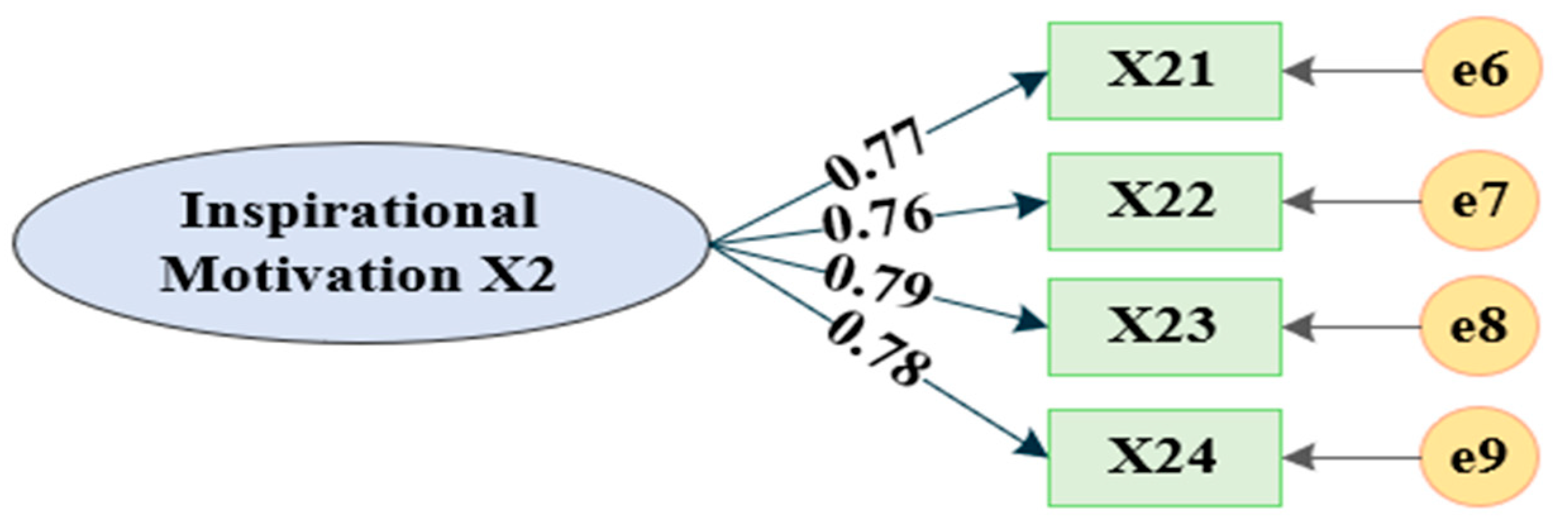
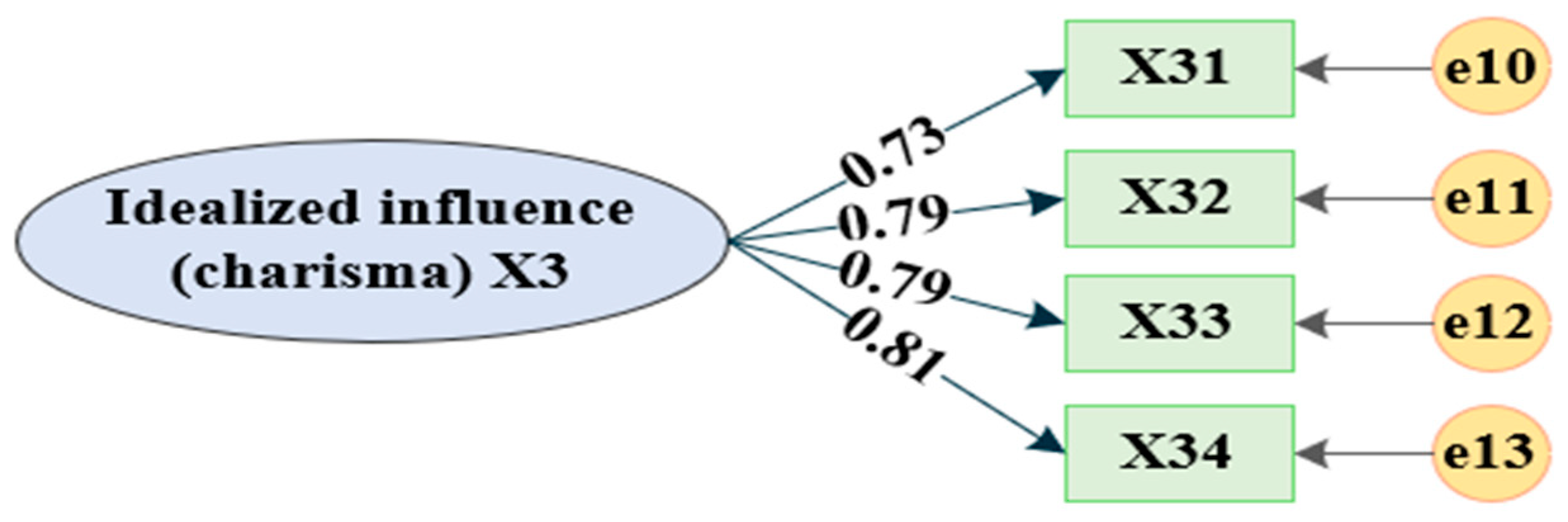
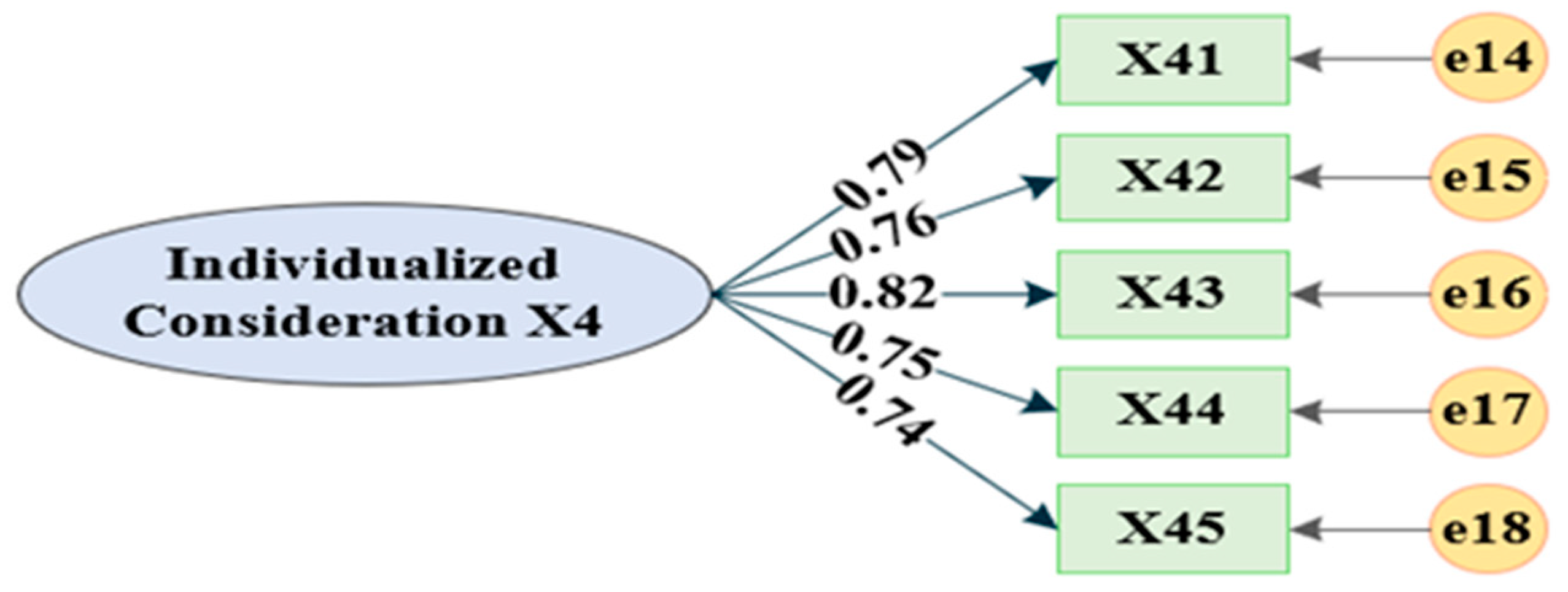
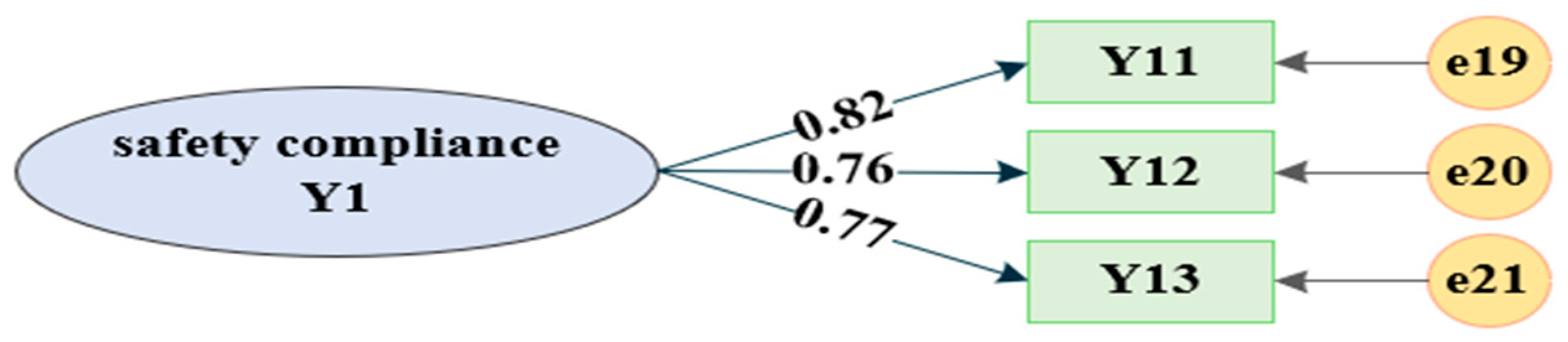
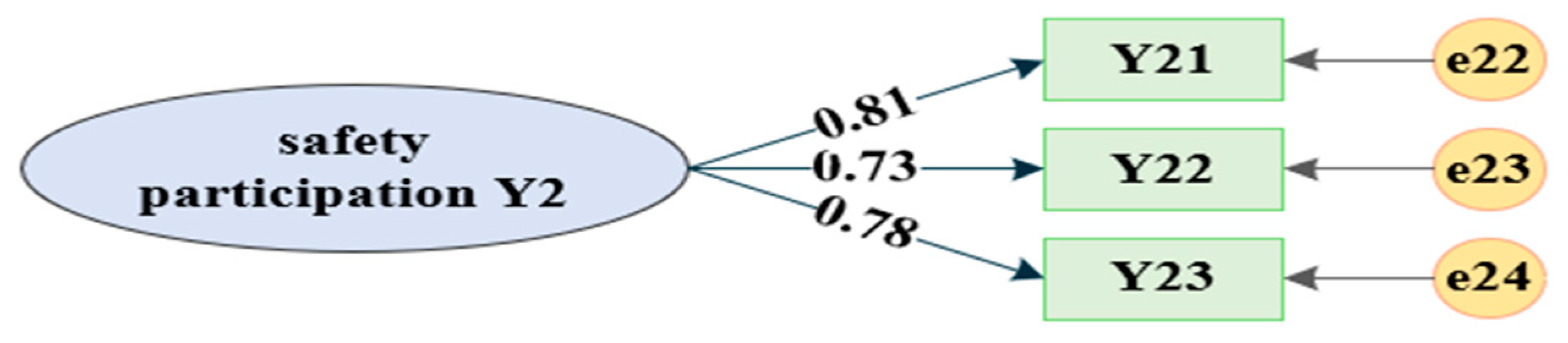
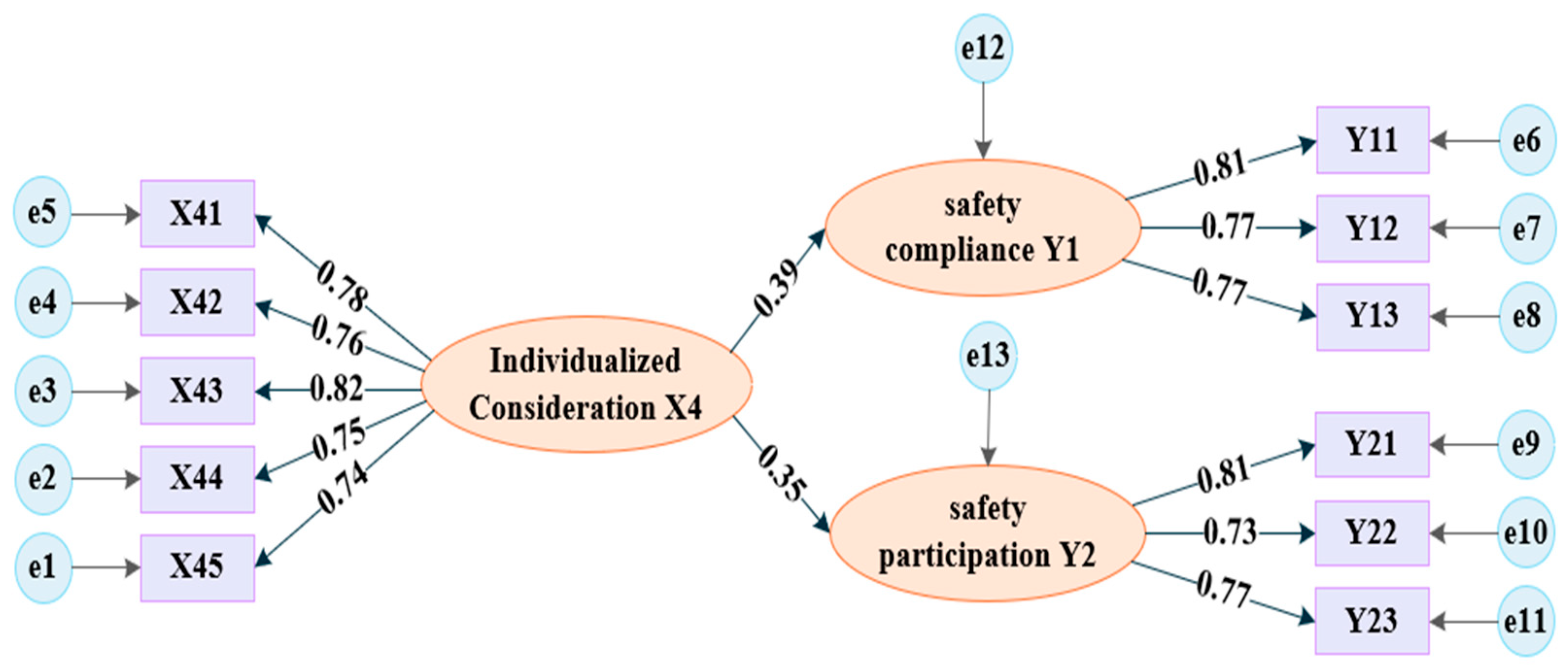
CFA of the latent variables was performed using structural equation modeling. As shown in Figure 1, Figure 2, Figure 3, Figure 4, Figure 5 and Figure 6, the standardized factor loadings for each sub-dimension of transformational leadership, as well as for safety compliance and safety participation, ranged between 0.50 and 0.95 and were all statistically significant (p < 0.05). Moreover, all CR values exceeded 0.60, and all AVE values met or surpassed the benchmark of 0.50. Taking together, these results demonstrate strong convergent validity for the transformational leadership dimensions and for safety compliance and participation. Detailed measurement indicators are provided in Table 3.
Discriminant validity was assessed by comparing the AVE values of each construct with the squared correlation coefficients between constructs. When the AVE of a construct exceeds the squared correlation coefficients shared with other constructs, discriminant validity is considered satisfactory. The correlation coefficients among variables are presented in Table 4, while Table 5 reports the AVE values on the diagonal. As shown in Table 5, the AVE values for all constructions are substantially greater than the corresponding squared correlation coefficients in each column. Therefore, the constructions in this study exhibit strong discriminant validity.
The results indicate that both the reliability and validity of the measurement scales employed in this study meet statistical standards, thereby providing a reliable foundation of data and measurement tools for subsequent SEM analysis and hypothesis testing.

4.2. Hypotheses Testing

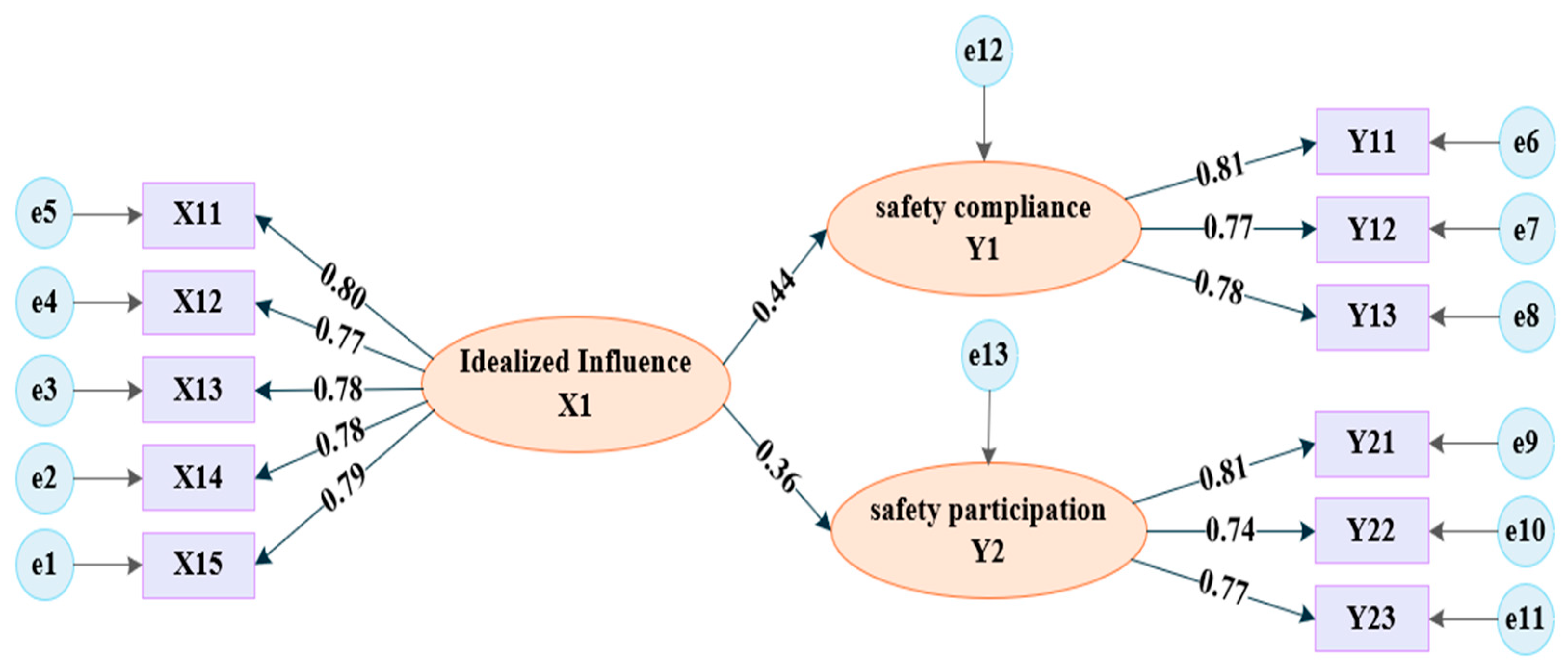
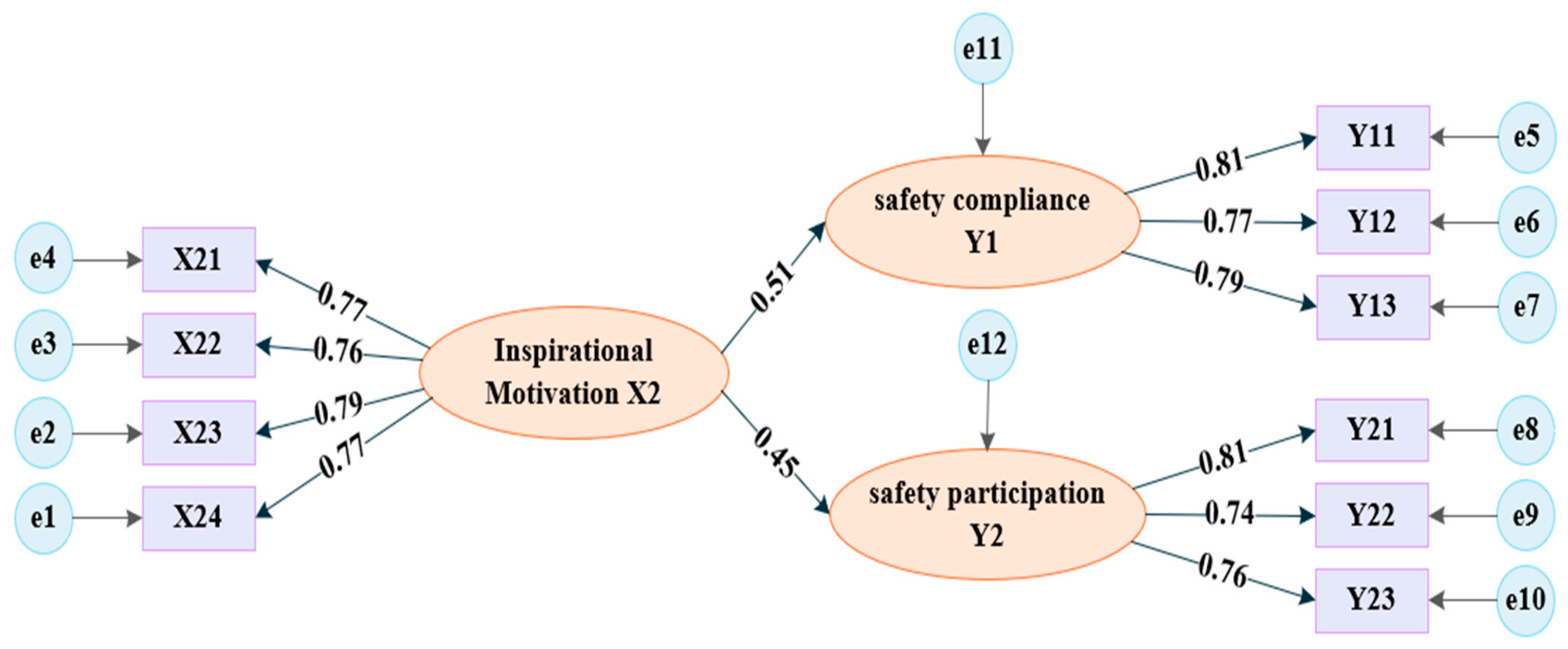
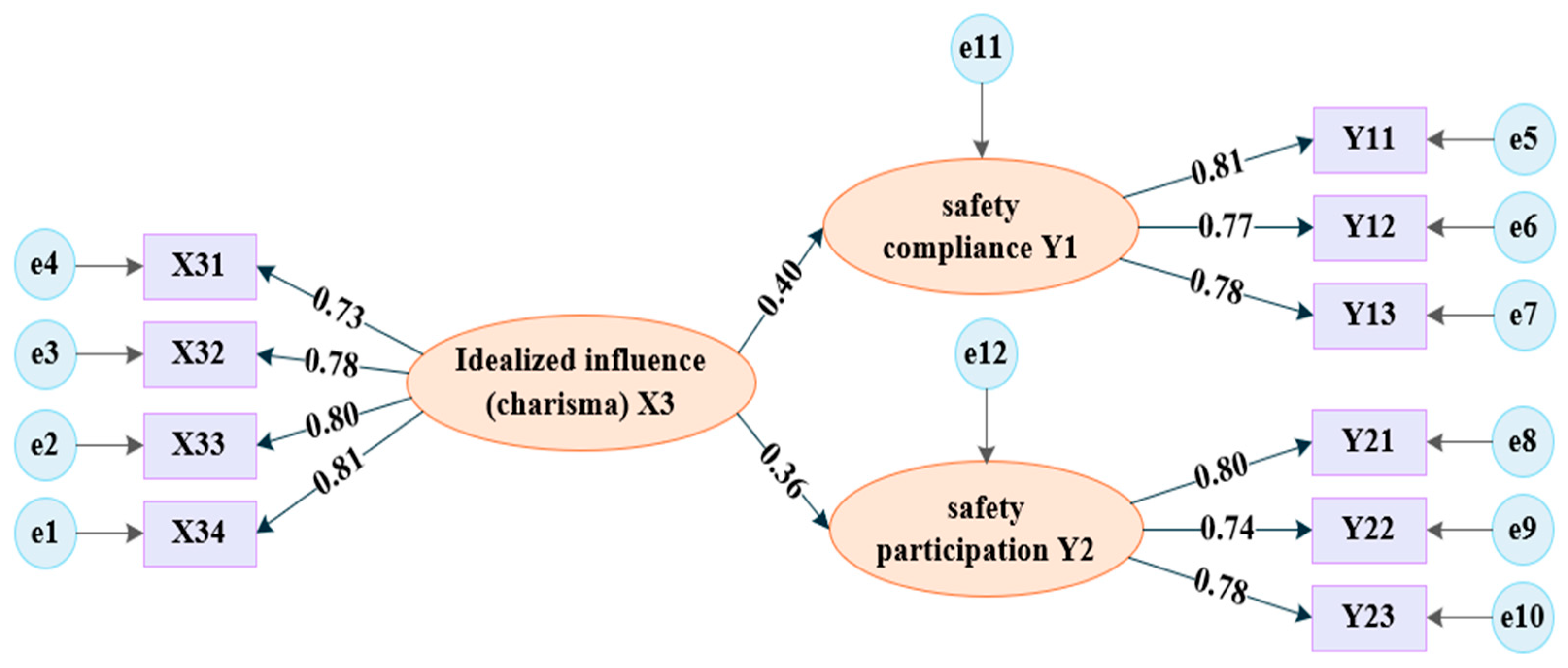
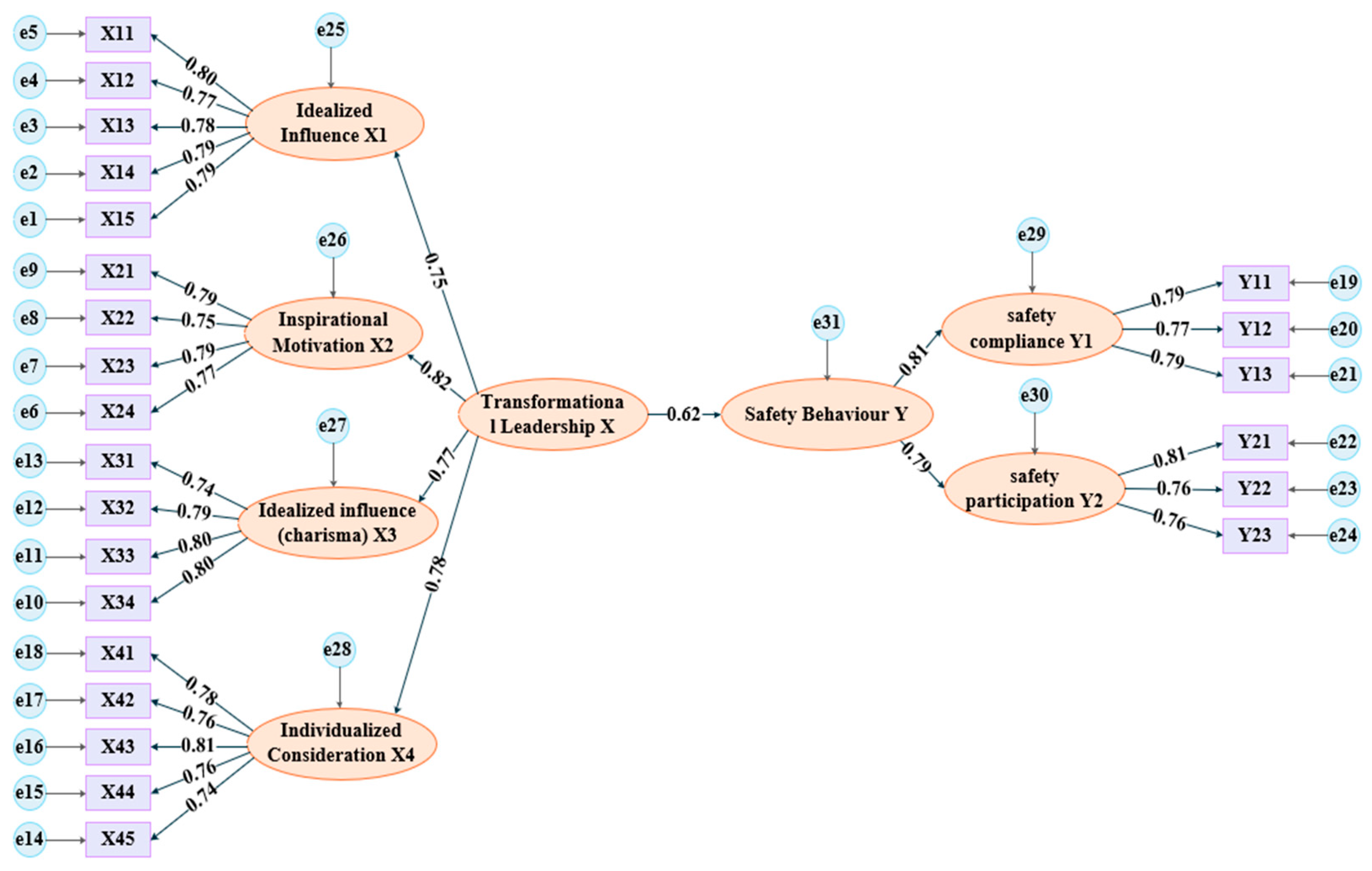
To validate the research hypotheses, SEM was employed to systematically examine the differential pathways between the dimensions of transformational leadership and those of safety behaviors. By constructing a structural relationship model linking transformational leadership and safety behaviours, the associative mechanisms and influence intensities across different dimensions were analyzed. Multidimensional fit analysis was conducted on the sample data using AMOS 28.0 software, yielding the validation results presented in Figure 7, Figure 8, Figure 9, Figure 10 and Figure 11.
First, a comprehensive assessment of the goodness of fit between data and theory was conducted using five structural equation models. All indicators reached acceptable levels (Table 6), indicating that the models fit the data well.
To comprehensively test the hypotheses, five structural equation models were evaluated. Model 5 was specified to examine the effect of the overall transformational leadership construct on safety behavior (H1). Furthermore, to delve into the distinct effects of its sub-dimensions, Models 1 through 4 were used to separately test the effects of idealized influence (H1a), inspirational motivation (H1b), idealized influence (charisma) (H1c), and individualized consideration (H1d) on safety behavior.
According to the goodness-of-fit metrics analysis in Table 6, all models satisfy the predefined statistical criteria, with the measured data exhibiting good agreement with the models.
Using AMOS 28.0 software to estimate path coefficients and conduct significance tests for each model, Table 7 data indicates that the standardized path coefficient between transformational leadership and safety behavior is 0.617 (p < 0.05), confirming a significant positive association and thereby establishing Hypothesis H1. Analyzing specific dimensions: Idealized influence has a significant positive effect on both safety compliance behavior (β = 0.438, p < 0.05) and safety participation behavior (β = 0.364, p < 0.05). Thus, Hypothesis H1a is supported. Inspirational motivation yielded path coefficients of 0.509 (p < 0.05) and 0.446 (p < 0.05) for the two safety behaviors, respectively, thus validating H1b. Furthermore, Idealized Influence (charisma) significantly predicted both safety compliance (β = 0.404) and participation behavior (β = 0.360) at the 0.05 level, thus validating H1c. The path coefficients for the individualized consideration dimension were 0.389 (p < 0.05) and 0.351 (p < 0.05), respectively, confirming the validity of H1d.
To elucidate the differential impact of leadership dimensions, Table 8 compares the effect sizes (β) for safety compliance versus safety participation.
The effect size comparisons presented in Table 8 reveal a consistent pattern: all four dimensions of transformational leadership exhibit a stronger association with safety compliance than with safety participation (all differences are positive). This differential impact aligns with the distinct psychological mechanisms theorized to underpin these two types of safety behavior.
Safety compliance is primarily driven by external regulations and role expectations, representing a response to formal requirements. Transformational leaders, through role modeling (idealized influence) and clarifying standards (inspirational motivation), directly strengthen this sense of duty and the perceived cost of non-compliance, leading to a more pronounced effect.
In contrast, safety participation is more volitional and stems from internal motivation, personal initiative, and organizational citizenship. While transformational leadership also fosters these internal states—particularly through charismatic appeal and individualized consideration—the translation into extra-role, participatory behaviors is a more complex psychological process, which may explain the relatively smaller, though still significant, effect sizes.

4.3. Comparative Analysis

This section draws upon the study conducted by Jiang Xianglong et al. [51]. It compares the direct effect pathways of transformational leadership on these workers’ safety behaviors with the indirect pathways mediated by organizational identity. Focusing on the core coefficient differences between these two pathways, it reveals the role effect of organizational identity, thereby providing data support for subsequent mechanism interpretations.
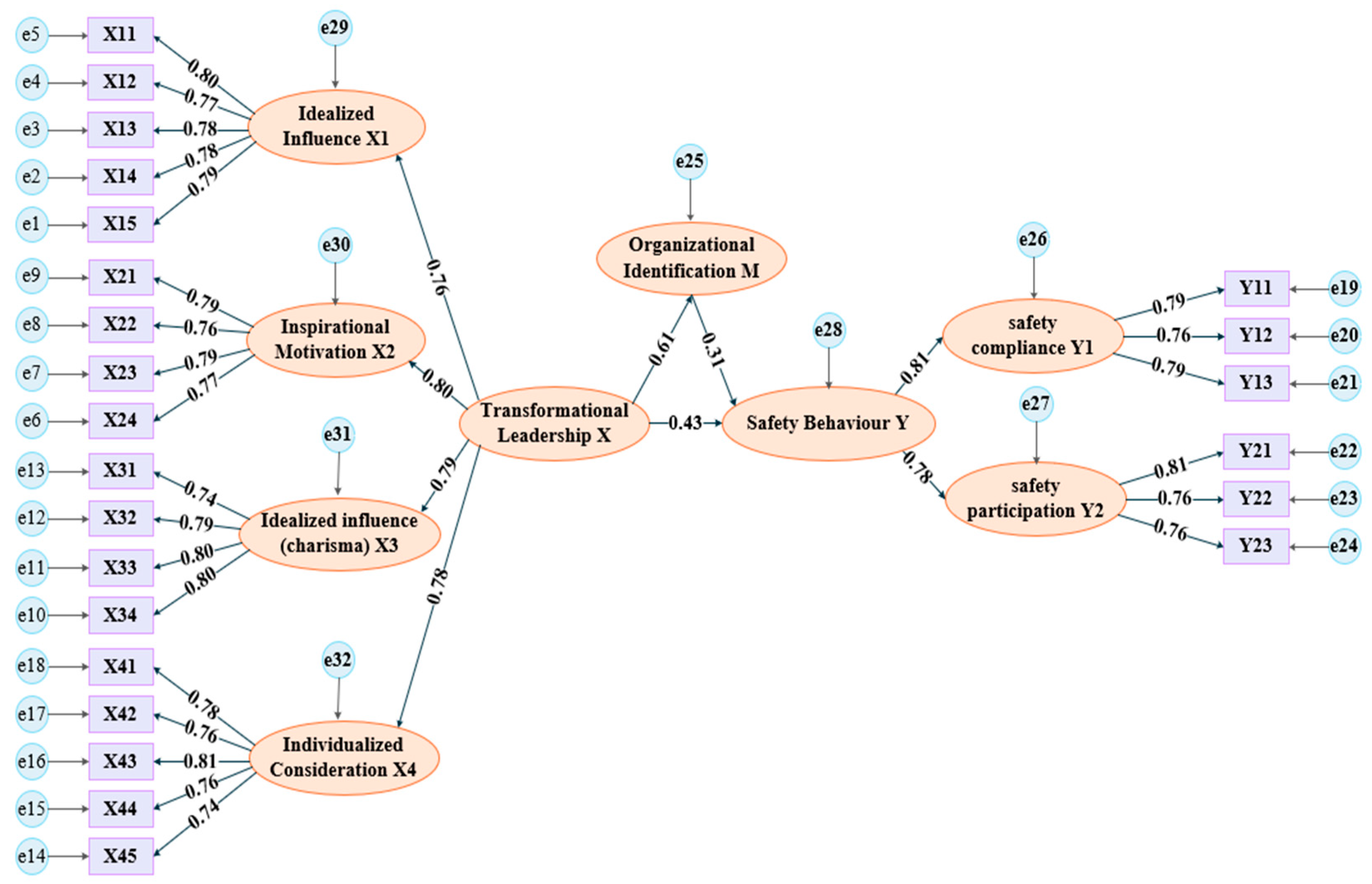
To examine the differentiated effect pathways after incorporating organizational identity as a mediating variable, this study draws on the theoretical framework and analytical logic proposed by scholars such as Jiang Xianglong regarding the relationship between transformational leadership, organizational identity, and the safety behaviors of new-generation construction workers. Building on these insights, a mediation model, as shown in Figure 12, is established in which organizational identity functions as the key mechanism through which transformational leadership influences safety behavior.
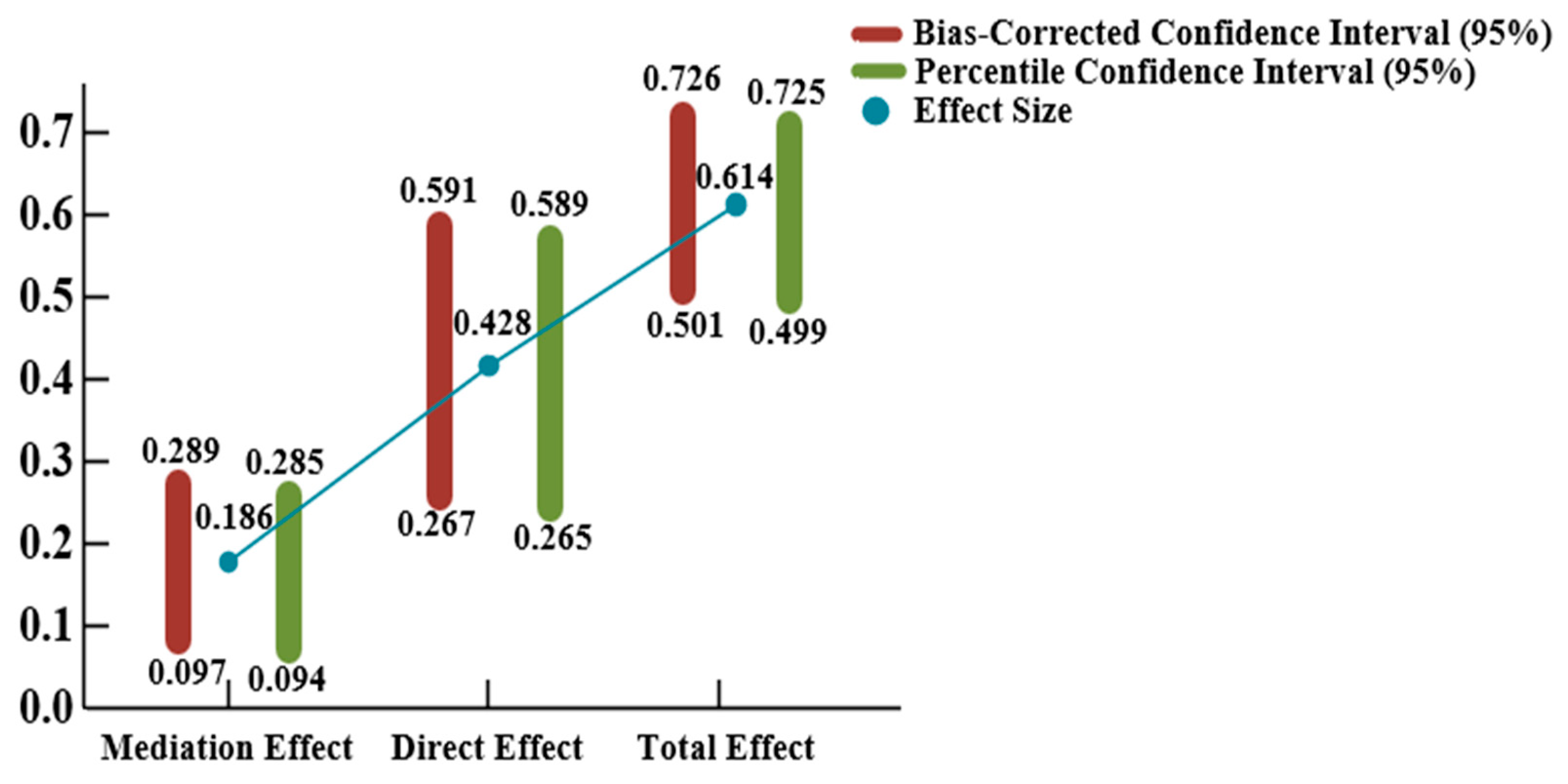
According to the path analysis results, transformational leadership demonstrates a significant positive effect on both safety behavior and organizational identity, with a standardized coefficient of 0.428 (p < 0.05). Organizational identity also exerts a significant positive influence on safety behavior, with a standardized path coefficient of 0.307, which likewise passes the significance test (p < 0.05). To further verify these findings, the Bootstrap method was applied using AMOS 28.0, with 5000 resamples and a 95% confidence level. Parameter estimates were obtained through maximum likelihood estimation, and asymmetric confidence intervals were assessed using both bias-corrected and percentile methods. The path effect was considered significant when its 95% confidence interval did not include zero. The detailed results are shown in Figure 13.
Comparing the direct effect of transformational leadership on the safety behaviors of new-generation construction workers with the effect pathway after introducing organizational identity as a mediating variable, the analysis shows the following: without the mediator, the direct effect coefficient is 0.617; with organizational identity included, the total effect is 0.614, while the direct effect decreases to 0.428 (p < 0.05), reflecting a reduction of approximately 30.6%. The near equivalence between the total effects suggests that organizational identity does not generate an additional influence on safety behavior but instead reallocates part of the original direct effect into an indirect pathway. This finding further validates the robustness of the direct effect of transformational leadership. Organizational identity merely modifies the route through which the effect is transmitted, without weakening or negating the fundamental significance of the direct effect itself.

5. Discussion

5.1. Theoretical Implications

This study integrates social exchange theory and social identity theory to elucidate the psychological mechanisms through which transformational leadership influences safety behavior. Moreover, unlike prior research that treats construction workers as a homogeneous group, this study focuses specifically on new-generation construction workers, highlighting the unique role of transformational leadership in shaping their safety behavior. Based on the above perspectives and object, this study demonstrates that transformational leadership exerts a direct influence on new generation construction workers’ safety behavior. In addition, the data demonstrate that all four dimensions of transformational leadership (idealized influence, inspirational motivation, idealized influence (charisma), and individualized consideration) independently and significantly promote both safety compliance and safety participation among workers, thereby providing refined empirical support for the differentiated utility of specific leadership dimensions.

5.2. Practical Implications

The findings show that transformational leadership—comprising idealized influence, inspirational motivation, idealized influence (charisma) and individualized consideration—positively affects the safety behaviors of new-generation construction workers in China. The identification of this direct effect suggests that transformational leadership may exert a positive impact on workers’ safety behavior in the short term, even in the absence of a well-established and stable safety climate. This finding has important practical implications for safety management in construction sites, where working conditions are dynamic and time constraints are pronounced. Managers should prioritize strengthening their leadership competencies across these four dimensions and improve their managerial effectiveness through systematic training to form a virtuous cycle that supports workplace safety. In addition, managers must place greater emphasis on enhancing organizational identification among new-generation workers.
First, regarding idealized influence, managers should maintain a professional image in daily work and continuously improve their moral conduct through self-cultivation. New-generation construction workers are particularly attentive to the professional ethics of their supervisors. Establishing moral exemplars enables workers to perceive the leader’s professional qualities implicitly. Second, with respect to inspirational motivation, managers—drawing on their advanced understanding of industry trends and strategic goals—should reinforce their bridging role between upper and lower organizational levels. New-generation workers value personal growth and professional identity; thus, clearly defining their roles significantly enhances intrinsic motivation and adherence to safety behaviors. For instance, enterprises can clarify the link between individual contributions and organizational goals through structured communication mechanisms such as strategic briefings and goal alignment workshops. Third, in terms of charismatic influence, managers should model practical work styles and proactive attitudes to guide workers in consciously following safe operating procedures. Demonstrating enthusiasm and commitment helps subtly instill safety-oriented behaviors beyond basic role requirements. Finally, enterprises can strengthen safety performance by enhancing workers’ sense of organizational belonging. Managers must lead by example in communicating the organizational vision, translating strategic objectives into concrete statements that help workers understand the value of their work. Establishing regular communication channels to address career development and personal concerns is essential. Additionally, improving organizational systems—such as standardizing performance evaluations with transparent and verifiable assessment criteria—can enhance fairness and recognition. Enterprises should also innovate management practices, such as implementing project accountability mechanisms and suggestion systems to empower workers in workflow optimization. Conducting regular job-value reinforcement training and establishing multi-dimensional recognition systems combining immediate feedback and points-based incentives can further reinforce alignment between individual contributions and organizational development.

6. Research Constraints and Future Prospects

Despite efforts to ensure objectivity and scientific rigor, this study has several limitations. First, sample representativeness is limited. Data were collected primarily in Guangdong Province and did not sufficiently cover diverse regions, project types, or trades. Although 401 valid samples were obtained through both online and on-site surveys—meeting the sample size requirements for structural equation modeling—the heterogeneity of construction sites and occupations means the sample structure remains imbalanced. This may influence the observed mechanism through which transformational leadership affects safety behavior. Future studies should expand the survey scope to improve the generalizability of findings.
Second, subjective data bias exists. Reliance on self-reported questionnaires may introduce common method bias. Future research could adopt multi-source data collection approaches, such as behavioral observations or experimental methods, to mitigate single-method bias and strengthen causal inference.
Third, intergenerational comparisons are insufficient. This study did not systematically compare new-generation and older-generation workers. Future research should incorporate cross-generational comparisons to refine theoretical models.
Fourth, this study does not explicitly adopt a stage-based safety maturity framework. Future research could integrate the micro-level leadership perspective advanced in this study with macro-level models such as the Safety Maturity Framework (SMF) [52]. Specifically, subsequent studies may examine the differentiated effects of various transformational leadership behaviors across different stages of safety maturity, as well as the dynamic changes in leadership-driven employees’ safety motivation and proactive safety behaviors throughout the safety maturity development process.
Fifth, the research has not been conducted on specific situations. Future research could validate and refine this model by situating it within specific high-risk situation (e.g., work at height) [53], thereby enhancing the practical relevance of the theoretical framework and further elucidating the interactive mechanisms between leadership interventions and domain-specific risk prevention and control factors.
Finally, the mechanism examined in this study remains limited. While this study focuses on the direct relationship between transformational leadership and safety behavior and compares this with a model including organizational identity as a mediator, the determinants of safety behavior are multifaceted. Key variables such as safety climate and job stress were not included, potentially omitting important explanatory pathways. Future research should construct a more comprehensive theoretical framework integrating these variables to better capture the complex mechanisms shaping safety behavior.

7. Conclusions

This study empirically investigated the direct effect of transformational leadership on the safety behaviors of new-generation construction workers using structural equation modeling. The results show that transformational leadership significantly promotes safety behaviors. All four dimensions—idealized influence, inspirational motivation, idealized influence (charisma) and individualized consideration—exert significant positive effects on both safety compliance and safety participation, supporting all proposed hypotheses (H1, H1a–H1d).
To further clarify the mechanism, the direct-effects model was compared with a model incorporating organizational identity as a mediator. Organizational identity was found to partially mediate the relationship, accounting for approximately 30.6% of the total effect. Importantly, the direct effect remained dominant (approximately 69.4%), indicating that a leader’s direct behavioral modeling and motivational influence are fundamental drivers of safety behavior and cannot be replaced or weakened by mediating psychological processes.
Theoretical contributions are reflected in identifying multiple concurrent mechanisms through which transformational leadership influences safety behavior. Path analysis showed that inspirational motivation exerts the strongest integrated effect—its coefficients for safety compliance (β = 0.509) and safety participation (β = 0.446) are the highest among all dimensions. This underscores the importance of communicating long-term work significance to promote internalization of rules and proactive behavior. Idealized influence demonstrates strong predictive power for both compliance (β = 0.438) and participation (β = 0.364), highlighting the role of leaders as behavioral models. Idealized influence (charisma) (β = 0.404) and Individualized consideration (β = 0.389), respectively, contribute to professional credibility and reciprocal motivation, forming a solid relational foundation for safety behavior. Organizational identity mediates approximately 30.6% of the total effect, with transformational leadership reinforcing organizational identification (β = 0.606), which subsequently enhances safety behavior (β = 0.307).
Practically, the findings highlight the importance of shifting from overreliance on formal safety regulations toward cultivating the direct influence of transformational leadership among frontline managers. Training programs should emphasize developing competencies in idealized influence, inspirational motivation, idealized influence (charisma) and individualized consideration, as these behaviors directly strengthen workers’ safety practices. The enhanced organizational identification that results further facilitates voluntary safety engagement. Therefore, constructing a comprehensive safety leadership system—anchored in direct leadership behaviors and supported by psychological mechanisms such as organizational identity—is essential for advancing modern safety management in construction enterprises.

Author Contributions

Conceptualization, H.Z., Y.T. and X.J.; Investigation, X.J., M.L. and Q.L.; Methodology, H.Z. and Y.T.; Writing—original draft, M.L. and H.Z.; Writing—review and editing, Y.T. and Q.L. All authors have read and agreed to the published version of the manuscript.

Funding

This research was funded by Key Project of Basic and Applied Basic Research of Jiangmen City in 2022 (Project No.: 2220002000176).

Data Availability Statement

The original contributions presented in this study are included in the article. Further inquiries can be directed to the corresponding author.

Conflicts of Interest

The authors declare no conflicts of interest.

Appendix A

Preliminary Survey Questionnaire: Impact of Transformational Leadership on Safety Behavior of New Generation Construction Workers
Dear colleague,
Thank you for taking the time to complete this questionnaire amidst your busy schedule. This research primarily explores the influence mechanism of transformational leadership style on the safety behaviours of construction workers born in 1980 or later. We assure you that the data collected solely serves the comprehensive analysis of academic research. Responses are anonymous, with no correct or incorrect answers, and each questionnaire will be treated with strict confidentiality. Please feel assured in your responses. Should you find any questions particularly challenging, please endeavour to select the most appropriate response. We are deeply grateful for your support and active participation!
To ensure data quality, please:
① Select only one answer per question
② Respond intuitively and promptly
③ For questions you have never considered, make a choice nonetheless
④ Please complete every question without omission.

Appendix A.1. Demographic Information

Instructions: Please select only one answer for each question by marking “✓” in the box.
1. What is your gender?
☐ Male
☐ Female
2. What is your age?
☐ 24 years or younger
☐ 25–34 years
☐ 35–44 years
☐ 45 years or older
3. What is your highest level of education?
☐ High school/Vocational school or below
☐ Associate degree
☐ Bachelor’s degree
☐ Master’s degree or higher
4. What is your total tenure in the construction industry?
☐ Less than 1 year
☐ 1–5 years
☐ 6–10 years
☐ More than 10 years
5. What is your current position?
☐ Frontline worker
☐ Frontline supervisor
☐ Middle manager
☐ Senior manager
6. How long have you been working with your direct supervisor?
☐ Less than 1 year
☐ 1–5 years
☐ 6–10 years
☐ More than 10 years
7. What is your marital status?
☐ Married
☐ Unmarried

Appendix A.2. Main Survey

Appendix A.2.1. Transformational Leadership

Instructions: The following statements describe the leadership behaviors of your direct supervisor or frontline manager. Please indicate your level of agreement with each statement based on your actual observations and experiences.
Rating Scale:1 = Strongly Disagree → 2 = Disagree → 3 = Neutral → 4 = Agree → 5 = Strongly Agree
Table A1. Main Survey Questionnaire.
ItemStatement12345
1My leader is selfless and serves the public interest, not personal gain.
2My leader is the first to bear hardships and the last to enjoy comforts.
3My leader devotes himself/herself to the job without personal calculation.
4My leader is willing to sacrifice personal interests for the benefit of the unit/department.
5My leader prioritizes collective and others’ interests above his/her own.
6My leader never claims credit for others’ work or achievements.
7My leader shares the hardships and joys with subordinates.
8My leader treats subordinates fairly.
9My leader helps subordinates understand the department’s future vision.
10My leader ensures subordinates understand the department’s philosophy and goals.
11My leader explains the long-term significance of our work.
12My leader paints a compelling vision of the future for us.
13My leader provides subordinates with clear objectives and direction.
14My leader often explains how our work contributes to the organization’s overall goals.
15My leader considers subordinates’ personal circumstances when interacting with them.
16My leader is willing to help subordinates solve personal or family difficulties.
17My leader frequently communicates with us to understand our work, life, and family situation.
18My leader patiently instructs subordinates and answers our questions.
19My leader shows concern for subordinates’ work, well-being, and growth, and offers career advice.
20My leader fosters an environment that allows us to utilize our strengths.
21My leader possesses strong professional expertise.
22My leader is open-minded and has a strong sense of innovation.
23My leader is passionate about work and has a strong sense of commitment and initiative.
24My leader is highly dedicated to the job and always maintains a high level of enthusiasm.
25My leader continuously engages in learning to enhance his/her capabilities.

Appendix A.2.2. Safety Behavior

Instructions: The following statements describe safety-related behaviors at work. Please indicate how accurately each statement describes your own actual behavior, based on your experience.
Rating Scale:1 = Strongly Disagree → 2 = Disagree → 3 = Neutral → 4 = Agree → 5 = Strongly Agree
Table A2. Safety Behavior Questionnaire.
ItemStatement12345
1I use all necessary safety equipment to perform my job.
2I correct safety procedures while working.
3I ensure the highest level of safety in my work.
4I promote safety programs within the organization.
5I put extra effort into improving workplace safety.
6I voluntarily carry out tasks or activities that help improve workplace safety.
This is the end of the questionnaire. We sincerely thank you for your valuable time and support for this research study.

Appendix B

Preliminary Survey Questionnaire: Impact of Transformational Leadership on Safety Behavior of New Generation Construction Workers
Dear colleague,
Thank you for taking the time to complete this questionnaire amidst your busy schedule. This research primarily explores the influence mechanism of transformational leadership style on the safety behaviours of construction workers born in 1980 or later. We assure you that the data collected solely serves the comprehensive analysis of academic research. Responses are anonymous, with no correct or incorrect answers, and each questionnaire will be treated with strict confidentiality. Please feel assured in your responses. Should you find any questions particularly challenging, please endeavor to select the most appropriate response. We are deeply grateful for your support and active participation!
To ensure data quality, please:
① Select only one answer per question
② Respond intuitively and promptly
③ For questions you have never considered, make a choice nonetheless
④ Please complete every question without omission.

Appendix B.1. Demographic Information

Instructions: Please select only one answer for each question by marking “✓” in the box.
1. What is your gender?
☐ Male
☐ Female
2. What is your age?
☐ 24 years or younger
☐ 25–34 years
☐ 35–44 years
☐ 45 years or older
3. What is your highest level of education?
☐ High school/Vocational school or below
☐ Associate degree
☐ Bachelor’s degree
☐ Master’s degree or higher
4. What is your total tenure in the construction industry?
☐ Less than 1 year
☐ 1–5 years
☐ 6–10 years
☐ More than 10 years
5. What is your current position?
☐ Frontline worker
☐ Frontline supervisor
☐ Middle manager
☐ Senior manager
6. How long have you been working with your direct supervisor?
☐ Less than 1 year
☐ 1–5 years
☐ 6–10 years
☐ More than 10 years
7. What is your marital status?
☐ Married
☐ Unmarried

Appendix B.2. Main Survey

Appendix B.2.1. Transformational Leadership

Instructions: The following statements describe the leadership behaviors of your direct supervisor or frontline manager. Please indicate your level of agreement with each statement based on your actual observations and experiences.
Rating Scale: 1 = Strongly Disagree → 2 = Disagree → 3 = Neutral → 4 = Agree → 5 = Strongly Agree
Table A3. Main Survey Questionnaire.
ItemStatement12345
1My leader is selfless and serves the public interest, not personal gain.
2My leader devotes himself/herself to the job without personal calculation.
3My leader is willing to sacrifice personal interests for the benefit of the unit/department.
4My leader shares the hardships and joys with subordinates.
5My leader treats subordinates fairly.
6My leader helps subordinates understand the department’s future vision.
7My leader ensures subordinates understand the department’s philosophy and goals.
8My leader explains the long-term significance of our work.
9My leader paints a compelling vision of the future for us.
10My leader considers subordinates’ personal circumstances when interacting with them.
11My leader is willing to help subordinates solve personal or family difficulties.
12My leader frequently communicates with us to understand our work, life, and family situation.
13My leader shows concern for subordinates’ work, well-being, and growth, and offers career advice.
14My leader possesses strong professional expertise.
15My leader is open-minded and has a strong sense of innovation.
16My leader is highly dedicated to the job and always maintains a high level of enthusiasm.
17My leader continuously engages in learning to enhance his/her capabilities.
18My leader tackles problems courageously and is adept at handling challenging issues.

Appendix B.2.2. Safety Behavior

Instructions: The following statements describe safety-related behaviors at work. Please indicate how accurately each statement describes your own actual behavior, based on your experience.
Rating Scale: 1 = Strongly Disagree → 2 = Disagree → 3 = Neutral → 4 = Agree → 5 = Strongly Agree
Table A4. Safety Behavior Questionnaire.
ItemStatement12345
1I use all necessary safety equipment to perform my job.
2I correct safety procedures while working.
3I ensure the highest level of safety in my work.
4I promote safety programs within the organization.
5I put extra effort into improving workplace safety.
6I voluntarily carry out tasks or activities that help improve workplace safety.
This is the end of the questionnaire. We sincerely thank you for your valuable time and support for this research study.

References

  1. Zeng, R.; Chini, A.; Ries, R. Innovative Design for Sustainability. Eng. Constr. Archit. Manag. 2020, 28, 747–764. [Google Scholar] [CrossRef]
  2. Jo, B.; Lee, Y.; Kim, J.; Khan, R. Trend Analysis of Construction Industrial Accidents in Korea from 2011 to 2015. Sustainability 2017, 9, 1297. [Google Scholar] [CrossRef]
  3. Kang, Y.; Siddiqui, S.; Suk, S.J.; Chi, S.; Kim, C. Trends of Fall Accidents in the U.S. Construction Industry. J. Constr. Eng. Manag. 2017, 143, 04017043. [Google Scholar] [CrossRef]
  4. Mak, C.K.; Li, R.Y.M. How Does Social Exchange Theory, Perceived Organizational Support and Leader-Member Exchange Affect Construction Practitioners’ Perception on Construction Safety? An Asymmetric Information Approach. In Construction Safety: Economics and Informatics Perspectives; Springer Nature: Singapore, 2023; pp. 1–26. [Google Scholar]
  5. Yu, T.; Wu, X.; Zhang, R.; Sun, Y.; Yang, H. Mechanisms of Safety-Transformational Leadership Influence on Construction Workers’ Safety Voice: A Dual-Mediation Model of Psychological Contract and Safety Motivation. Eng. Constr. Archit. Manag. 2025. ahead of print. [Google Scholar] [CrossRef]
  6. Estudillo, B.; Carretero-Gómez, J.M.; Forteza, F.J. The Impact of Occupational Accidents on Economic Performance: Evidence from the Construction. Saf. Sci. 2024, 177, 106571. [Google Scholar] [CrossRef]
  7. Zhao, W.; Peng, P.; Liu, H.; Wang, S.; Liu, W. How Job Satisfaction Affects Professionalization Behavior of New-Generation Construction Workers: A Model Based on Theory of Planned Behavior. Eng. Constr. Archit. Manag. 2025, 32, 2672–2696. [Google Scholar] [CrossRef]
  8. Cropanzano, R.; Mitchell, M.S. Social Exchange Theory: An Interdisciplinary Review. J. Manag. 2005, 31, 874–900. [Google Scholar] [CrossRef]
  9. Bandura, A. Social Cognitive Theory: An Agentic Perspective. Asian J. Soc. Psychol. 1999, 2, 21–41. [Google Scholar] [CrossRef]
  10. Kerr, S.; Schriesheim, C.A.; Murphy, C.J.; Stogdill, R.M. Toward a Contingency Theory of Leadership Based upon the Consideration and Initiating Structure Literature. Organ. Behav. Hum. Perform. 1974, 12, 62–82. [Google Scholar] [CrossRef]
  11. Cui, L.; Mo, J. How Does Supportive Leadership Impact the Safety Behaviors of the New Generation of Construction Workers? Behav. Sci. 2025, 15, 110. [Google Scholar] [CrossRef] [PubMed]
  12. Septriani, S. Transformational Leadership Style and Innovative Behavior with Self-Efficacy as a Mediator. Hum. Resour. Manag. Stud. 2021, 1, 58–67. [Google Scholar] [CrossRef]
  13. Bandura, A. Self-Efficacy: Toward a Unifying Theory of Behavioral Change. Psychol. Rev. 1977, 84, 191–215. [Google Scholar] [CrossRef] [PubMed]
  14. Kapp, E.A. The Influence of Supervisor Leadership Practices and Perceived Group Safety Climate on Employee Safety Performance. Saf. Sci. 2012, 50, 1119–1124. [Google Scholar] [CrossRef]
  15. Jiang, W.; Zhao, X.; Ni, J. The Impact of Transformational Leadership on Employee Sustainable Performance: The Mediating Role of Organizational Citizenship Behavior. Sustainability 2017, 9, 1567. [Google Scholar] [CrossRef]
  16. Javed, A.; Iqbal, J.; Iqbal, S.M.J.; Imran, M. Sustainable Leadership and Employee Innovative Behavior: Discussing the Mediating Role of Creative Self-efficacy. J. Public Aff. 2021, 21, e2547. [Google Scholar] [CrossRef]
  17. Wang, D.; Huang, R.; Qiao, Y.; Sheng, Z.; Li, K.; Zhao, L. How Perceived Leader–Member Exchange Differentiation Affects Construction Workers’ Safety Citizenship Behavior: Organizational Identity and Felt Safety Responsibility as Mediators. J. Constr. Eng. Manag. 2023, 149, 04023110. [Google Scholar] [CrossRef]
  18. Gong, S. Research on the Relationship Between Self-Identity and Organizational Citizenship Behavior of the New Generation Knowledge Workers—The Mediating Effects of Organizational Identification. In Proceedings of the 2020 IEEE International Conference on Industrial Engineering and Engineering Management (IEEM), Singapore, 14–17 December 2020; pp. 675–680. [Google Scholar]
  19. Ali, M.; Iyiola, K.; Alzubi, A.; Aljuhmani, H.Y. Using Safety-Specific Transformational Leadership to Improve Safety Behavior Among Construction Workers: Exploring the Role of Knowledge Sharing and Psychological Safety. Buildings 2025, 15, 3340. [Google Scholar] [CrossRef]
  20. Burns, J.M. Leadership; Harper & Ro: New York, NY, USA, 2012; ISBN 9780060105884. [Google Scholar]
  21. Longshore, J.M.; Bass, B.M. Leadership and Performance beyond Expectations. Acad. Manag. Rev. 1987, 12, 756. [Google Scholar] [CrossRef]
  22. Bass, B.M.; Stogdill, R.M. Bass & Stogdill’s Handbook of Leadership: Theory, Research, and Managerial Applications; Free Press: New York City, NY, USA, 1990; ISBN 9780029015001. [Google Scholar]
  23. Avolio, B.J.; Walumbwa, F.O.; Weber, T.J. Leadership: Current Theories, Research, and Future Directions. Annu. Rev. Psychol. 2009, 60, 421–449. [Google Scholar] [CrossRef]
  24. Yammarino, F.J.; Dubinsky, A.J. Transformational Leadership Theory: Using Levels of Analysis to Determine Boundary Conditions. Pers. Psychol. 1994, 47, 787–811. [Google Scholar] [CrossRef]
  25. Bass, B.M.; Avolio, B.J. Improving Organizational Effectiveness Through Transformational Leadership; Sage Publications: Thousand Oaks, CA, USA, 1994; ISBN 9780803952362. [Google Scholar]
  26. Bass, B.M. Two Decades of Research and Development in Transformational Leadership. Eur. J. Work Organ. Psychol. 1999, 8, 9–32. [Google Scholar] [CrossRef]
  27. Dionne, S.D.; Yammarino, F.J.; Atwater, L.E.; Spangler, W.D. Transformational Leadership and Team Performance. J. Organ. Change Manag. 2004, 17, 177–193. [Google Scholar] [CrossRef]
  28. Wenjing, L.; Bhutto, T.A.; Xuhui, W.; Maitlo, Q.; Zafar, A.U.; Ahmed Bhutto, N. Unlocking Employees’ Green Creativity: The Effects of Green Transformational Leadership, Green Intrinsic, and Extrinsic Motivation. J. Clean. Prod. 2020, 255, 120229. [Google Scholar] [CrossRef]
  29. Qalati, S.A.; Zafar, Z.; Fan, M.; Sánchez Limón, M.L.; Khaskheli, M.B. Employee Performance under Transformational Leadership and Organizational Citizenship Behavior: A Mediated Model. Heliyon 2022, 8, e11374. [Google Scholar] [CrossRef]
  30. Schriesheim, C.A.; Castro, S.L.; Zhou, X.T.; DeChurch, L.A. An Investigation of Path-Goal and Transformational Leadership Theory Predictions at the Individual Level of Analysis. Leadersh. Q. 2006, 17, 21–38. [Google Scholar] [CrossRef]
  31. Bass, B.M.; Avolio, B.J. Multifactor Leadership Questionnaire. PsycTests Dataset 2011, 47, 787–811. [Google Scholar]
  32. Bycio, P.; Hackett, R.D.; Allen, J.S. Further Assessments of Bass’s (1985) Conceptualization of Transactional and Transformational Leadership. Appl. Psychol. 1995, 80, 468–478. [Google Scholar] [CrossRef]
  33. Avolio, B.J.; Bass, B.M.; Jung, D.I. Re-examining the Components of Transformational and Transactional Leadership Using the Multifactor Leadership. J. Occup. Organ. Psychol. 1999, 72, 441–462. [Google Scholar] [CrossRef]
  34. Heinrich, H.W. Industrial Accident Prevention. A Scientific Approach; McGraw-Hill Inc.: New York, NY, USA, 1941. [Google Scholar]
  35. Ajzen, I. The Theory of Planned Behavior. Organ. Behav. Hum. Decis. Process. 1991, 50, 179–211. [Google Scholar] [CrossRef]
  36. Neal, A.; Griffin, M.; Hart, P. The Impact of Organizational Climate on Safety Climate and Individual Behavior. Saf. Sci. 2000, 34, 99–109. [Google Scholar] [CrossRef]
  37. Mohammadfam, I.; Ghasemi, F.; Kalatpour, O.; Moghimbeigi, A. Constructing a Bayesian Network Model for Improving Safety Behavior of Employees at Workplaces. Appl. Ergon. 2017, 58, 35–47. [Google Scholar] [CrossRef]
  38. Wang, S.; Park, S.; Kim, J.; Kim, J. Safety Helmet Monitoring on Construction Sites Using YOLOv10 and Advanced Transformer Architectures with Surveillance and Body-Worn Cameras. J. Constr. Eng. Manag. 2025, 151, 04025186. [Google Scholar] [CrossRef]
  39. Wang, S. Automated Non-PPE Detection on Construction Sites Using YOLOv10 and Transformer Architectures for Surveillance and Body Worn Cameras with Benchmark Datasets. Sci. Rep. 2025, 15, 27043. [Google Scholar] [CrossRef]
  40. Fang, D.; Wu, C.; Wu, H. Impact of the Supervisor on Worker Safety Behavior in Construction Projects. J. Manag. Eng. 2015, 31, 04015001. [Google Scholar] [CrossRef]
  41. Leung, M.-Y.; Liang, Q.; Olomolaiye, P. Impact of Job Stressors and Stress on the Safety Behavior and Accidents of Construction Workers. J. Manag. Eng. 2016, 32, 04015001. [Google Scholar] [CrossRef]
  42. He, C.; McCabe, B.; Jia, G. Effect of Leader-Member Exchange on Construction Worker Safety Behavior: Safety Climate and Psychological Capital as the Mediators. Saf. Sci. 2021, 142, 105401. [Google Scholar] [CrossRef]
  43. Liu, Y.; Wang, X.; Wang, D. How Leaders and Coworkers Affect Construction Workers’ Safety Behavior: An Integrative Perspective. J. Constr. Eng. Manag. 2021, 147, 04021176. [Google Scholar] [CrossRef]
  44. Al Suwaidi, M.S.; Jabeen, F.; Al Nahyan, M.T.; Farouk, S.; Hussain, M. Impact of Authentic Leadership on Employee Safety Performance: Role of Knowledge Hoarding, Support, and Passion. Saf. Sci. 2025, 192, 106993. [Google Scholar] [CrossRef]
  45. Slil, E.; Iyiola, K.; Alzubi, A.; Aljuhmani, H.Y. Impact of Safety Leadership and Employee Morale on Safety Performance: The Moderating Role of Harmonious Safety Passion. Buildings 2025, 15, 186. [Google Scholar] [CrossRef]
  46. Hoffmeister, K.; Gibbons, A.M.; Johnson, S.K.; Cigularov, K.P.; Chen, P.Y.; Rosecrance, J.C. The Differential Effects of Transformational Leadership Facets on Employee Safety. Saf. Sci. 2014, 62, 68–78. [Google Scholar] [CrossRef]
  47. Mullen, J.; Kelloway, E.K.; Teed, M. Employer Safety Obligations, Transformational Leadership and Their Interactive Effects on Employee Safety Performance. Saf. Sci. 2017, 91, 405–412. [Google Scholar] [CrossRef]
  48. Fernández-Muñiz, B.; Montes-Peón, J.M.; Vázquez-Ordás, C.J. The Role of Safety Leadership and Working Conditions in Safety Performance in Process Industries. J. Loss Prev. Process Ind. 2017, 50, 403–415. [Google Scholar] [CrossRef]
  49. Usman, M.; Shahzad, K.; Khan, A.K. Role of Safety-Specific Transformational Leadership in Fostering Extra-Role Behaviors through Psychological Contract Fulfillment among Frontline Workers during COVID-19. Int. J. Occup. Saf. Ergon. 2024, 30, 119–128. [Google Scholar] [CrossRef]
  50. Li, C.; Shi, K. The Structure and Measurement of Transformational Leadership in China. Acta Psychol. Sin. 2005, 37, 803–811. [Google Scholar] [CrossRef]
  51. Jiang, X.; Zeng, H.; Tang, J. A Study of Safety Behavior of the New Generation of Construction Workers Based on the Structural Equation Model. J. Wuyi Univ. 2025, 39, 45–52. [Google Scholar]
  52. Golabchi, H.; Pereira, E.; Lefsrud, L.; Mohamed, Y. Proposal of a Safety Maturity Framework in Construction: Implementing Leading Indicators for Proactive Safety Management. J. Saf. Sustain. 2025, 2, 207–221. [Google Scholar] [CrossRef]
  53. Ammad, S.; Mostafa, S.; Stewart, R.A. Development of a Safety Oriented Framework for Fall Prevention in Construction Projects Using Smart PLS-SEM Analysis. J. Saf. Sustain. 2025, 2, 268–284. [Google Scholar] [CrossRef]
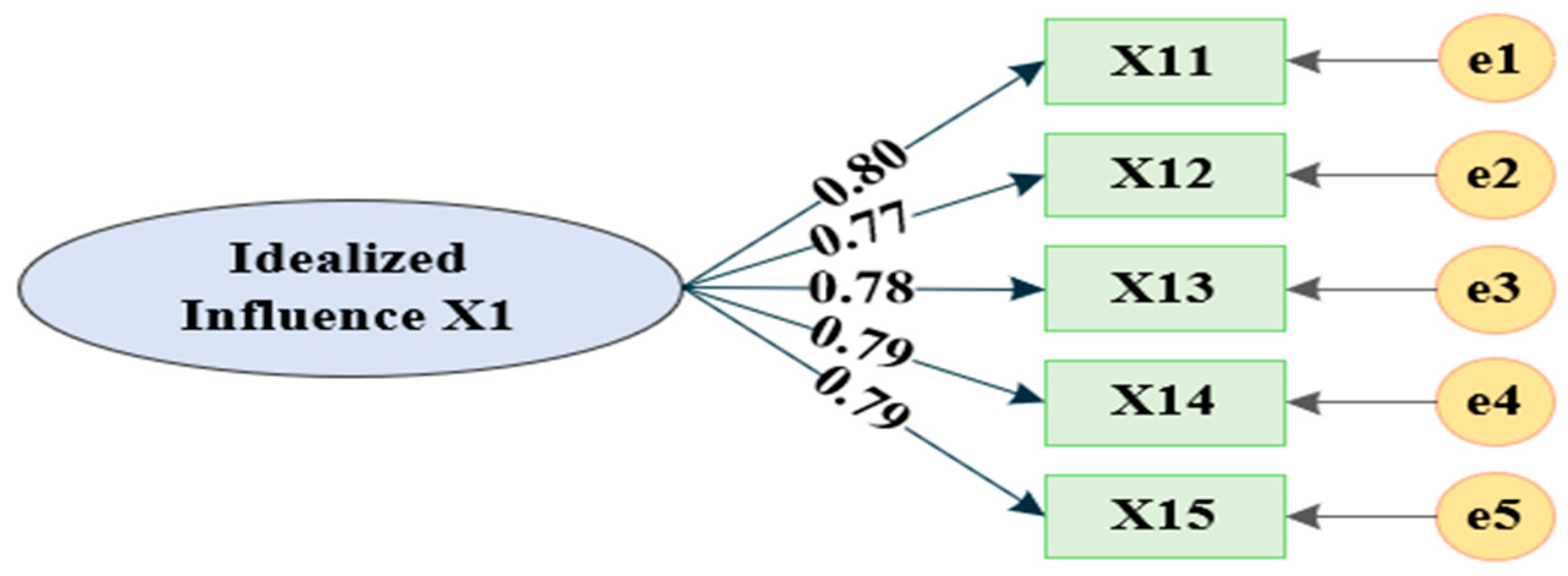
Figure 1. Standardized Factor Loadings for Idealized Influence.
Buildings 16 00354 g001
Figure 2. Standardized Factor Loadings for Inspirational Motivation.
Buildings 16 00354 g002
Figure 3. Standardized Factor Loadings for Idealized Influence (charisma).
Buildings 16 00354 g003
Figure 4. Standardized Factor Loadings for Individualized Consideration.
Buildings 16 00354 g004
Figure 5. Standardized Factor Loadings for Safety Compliance.
Buildings 16 00354 g005
Figure 6. Standardized Factor Loadings for Safety Participation.
Buildings 16 00354 g006
Figure 7. The Effect of Idealized Influence on Safety Behavior.
Buildings 16 00354 g007
Figure 8. The Effect of Inspirational Motivation on Safety Behavior.
Buildings 16 00354 g008
Figure 9. The Effect of Idealized Influence (charisma) on Safety Behavior.
Buildings 16 00354 g009
Figure 10. The Effect of Individualized Consideration on Safety Behavior.
Buildings 16 00354 g010
Figure 11. The Effect of Transformational Leadership on Safety Behavior.
Buildings 16 00354 g011
Figure 12. Mediating Pathway Model of Organizational Identity.
Buildings 16 00354 g012
Figure 13. Confidence Interval Estimation for Intermediary Models.
Buildings 16 00354 g013
Table 1. Descriptive Statistics for Population Variables.
ItemCategoryFrequencyPercentage (%)
Gender DistributionMale34786.5
Female5413.5
Total401100.0
Age Range≤24 years old6215.5
25–34 years old21754.1
35–44 years old12230.4
Total401100.0
Years of Service<1 year5413.5
1–5 years17844.4
6–10 years13934.7
>10 years307.5
Total401100.0
Tenure with Leader<1 year17844.4
1–5 years 15438.4
6–10 years5814.5
>10 years112.7
Total401100.0
Marital StatusMarried28170.1
Unmarried12029.9
Total401100.0
Table 2. Model Data Fitting Adequacy Assessment Metric.
Statistical MeasurementIndicator NameFit Criterion
Absolute Fit Statisticsχ2/df1~5, Model Acceptable
RMSEA<0.08, The Smaller the Better
GFI>0.90, Model Acceptable
AGFI>0.90, Model Acceptable
Relative Fit StatisticsIFI>0.90, Model Acceptable
CFI>0.90, Model Acceptable
NFI>0.90, Model Acceptable
Table 3. Convergence Validity Tests.
VariableIndicatorStandardized Factor LoadingCRAVE
Idealized InfluenceX110.800.8900.618
X120.77
X130.78
X140.79
X150.79
Inspirational MotivationX210.770.8580.601
X220.76
X230.79
X240.78
Idealized Influence
(charisma)
X310.730.8620.609
X320.79
X330.79
X340.81
Individualized
Consideration
X410.790.8810.597
X420.76
X430.82
X440.75
X450.74
Safety ComplianceY110.820.8270.614
Y120.76
Y130.77
Safety ParticipationY210.810.8170.599
Y220.73
Y230.78
Table 4. Correlation Analysis of Variables.
Variable123456
Idealized Influence1.000
Inspirational Motivation0.533 **1.000
Idealized Influence
(charisma)
0.524 **0.530 **1.000
Individualized
Consideration
0.512 **0.559 **0.547 **1.000
Safety Compliance0.361 **0.405 **0.323 **0.315 **1.000
Safety Participation0.290 **0.343 **0.278 **0.281 **0.526 **1.000
** indicates p is less than 0.01.
Table 5. Discriminant Validity Test.
Variable123456
Idealized Influence0.618
Inspirational Motivation0.2840.601
Idealized Influence (charisma)0.2750.2810.609
Individualized Consideration0.2620.3120.2990.597
Safety Compliance0.1300.1640.1040.0990.614
Safety Participation0.0840.1180.0770.0790.2770.599
Table 6. Model Fit Test.
VariableModel 1Model 2Model 3Model 4Model 5
χ2/df3.0743.6294.0583.6531.054
RMSEA0.0720.0750.0780.0740.012
GFI0.9490.9470.9430.9400.949
AGFI0.9200.9120.9060.9050.937
IFI0.9580.9510.9430.9450.997
CFI0.9580.9510.9420.9440.997
NFI0.9390.9340.9260.9250.951
Model 1: The Idealized Influence → Safety Behavior Model; Model 2: The Inspirational Motivation → Safety Behavior Model; Model 3: The Idealized Influence (charisma) → Safety Behavior Model; Model 4: The Individualized Consideration → Safety Behavior Model; Model 5: The Overall Transformational Leadership → Safety Behavior Model.
Table 7. Standardized Path Coefficients and Significance Tests.
PathβStandard ErrorCritical Ratiop
Idealized Influence → Safety Compliance Behavior0.4380.0627.445<0.001
Idealized Influence → Safety Participation Behavior0.3640.0606.158<0.001
Inspirational Motivation → Safety Compliance Behavior0.5090.0678.403<0.001
Inspirational Motivation → Safety Participation Behavior0.4460.0647.345<0.001
Idealized Influence (charisma) → Safety Compliance Behavior0.4040.0616.809<0.001
Idealized Influence (charisma) → Safety Participation Behavior0.3600.0596.016<0.001
Individualized Consideration → Safety Compliance Behavior0.3890.0696.526<0.001
Individualized Consideration → Safety Participation Behavior0.3510.0675.855<0.001
Transformational Leadership → Safety Behavior0.6170.0798.428<0.001
Table 8. Comparison of Effect Size Differences.
Transformational Leadership DimensionsSafety Compliance Behavior (β)Safety Participation
Behavior (β)
Difference
Idealized Influence0.4380.364+0.074
Inspirational Motivation0.5090.446+0.063
Idealized Influence (charisma)0.4040.360+0.044
Individualized Consideration0.3890.351+0.038
Disclaimer/Publisher’s Note: The statements, opinions and data contained in all publications are solely those of the individual author(s) and contributor(s) and not of MDPI and/or the editor(s). MDPI and/or the editor(s) disclaim responsibility for any injury to people or property resulting from any ideas, methods, instructions or products referred to in the content.