1. Introduction
The construction industry is a major contributor to economic growth, supporting infrastructure development, employment generation, and national productivity in both developed and developing economies. Globally, the sector accounts for approximately 13% of the gross domestic product (GDP) and employs over 7% of the world’s workforce [
1,
2]. Despite its economic importance, the industry still faces a persistent labor shortage that affects organizational performance and long-term sustainability. Human resource (HR) management has become a strategic focus for construction companies owing to high employee turnover, increasing competition for skilled labor, tight project schedules, and changing workforce expectations [
3,
4]. This is especially relevant for the Indian construction industry, the second largest employer after agriculture and contributing nearly 9% to the country’s GDP [
5,
6]. Rapid urbanization and infrastructure development have increased the demand for skilled construction professionals, while project-based employment, changing work locations, and low employee retention continue to create workforce instability [
7,
8,
9].
In addition to these workforce challenges, the construction workforce has changed dramatically in the last two decades, and construction projects increasingly depend on multidisciplinary teams comprising professionals with diverse educational, cultural, linguistic, and demographic backgrounds [
8]. Although workforce diversity promotes knowledge sharing, innovation, and problem-solving, it may also create communication and inclusion challenges when organizational practices are perceived as unfair or inconsistent [
10,
11]. Consequently, research has shifted from examining workforce diversity itself to understanding employees’ perceptions of how organizations manage diversity [
12].
These changing workplace conditions have led to a focus on diversity climate (DC), which refers to employees’ perceptions of whether their organization values diversity, promotes inclusion, and applies workplace policies and practices fairly across different employee groups [
13,
14]. In the present study, DC is examined through individual employees’ perceptions of it within their organizations. Positive DC has been linked to several positive employee outcomes, including higher job satisfaction (JS), increased organizational commitment, higher work engagement, and lower turnover intentions [
15,
16]. Employees who perceive their organization as fair and inclusive will have a more positive attitude toward their work and, in turn, demonstrate greater commitment and continued performance. Conversely, perceptions of exclusion and unfair treatment reduce employees’ sense of belonging and weaken job satisfaction and work engagement [
14,
16,
17].
However, positive DC alone may not be enough to maintain positive employee attitudes. Construction organizations operate through temporary project teams with changing reporting relationships and decentralized decision-making, giving managers considerable discretion over work allocation, performance evaluation, and career opportunities [
18]. Under these conditions, employees may perceive workplace decisions as influenced by favoritism, informal networks, and personal relationships rather than by merit. Perceived organizational politics (POP) refers to employees’ beliefs that organizational decisions are driven by self-interest rather than transparent and merit-based procedures [
19,
20]. Previous studies consistently show that higher POP is associated with lower trust, reduced organizational commitment, emotional exhaustion, and lower JS across various organizational settings [
21,
22]. Even when organizations implement inclusive policies, employees may question the credibility of those policies if promotion, recognition, and resource allocation are perceived to depend on political influence rather than merit [
23]. Consequently, POP may condition the association between DC and employee outcomes. Despite its theoretical importance, construction management research has paid limited attention to examining POP as a boundary condition that influences these relationships.
POP has been extensively researched as a predictor of employee attitudes or a mediator of the influence of organizational conditions on behavioral outcomes [
24,
25,
26]. However, these perspectives suggest that political perceptions directly explain employees’ reactions to workplace experiences. The present study adopts a different perspective, conceptualizing POP as a contextual condition in which favorable perceptions of DC are more or less strongly associated with JS. This position is supported by Social Exchange Theory (SET), which suggests that employees evaluate organizational practices in relation to the wider organizational environment to determine appropriate reciprocal attitudes and behaviors [
27]. While organizations may endorse fairness, inclusion, and equal opportunities, employees may doubt the credibility and consistency of such practices when decision-making processes are perceived as politically motivated. Consequently, POP is expected to alter the strength of the relationship between DC and JS rather than constitute an intermediate explanatory mechanism. Viewing POP as a moderator therefore provides additional theoretical insight into the organizational conditions under which diversity-supportive practices are more or less strongly associated with employee outcomes and withdrawal-related experiences.
JS represents employees’ overall evaluation of their work and organizational environment [
23,
28]. Satisfied employees tend to be more motivated, committed, and willing to go beyond the formal duties, while dissatisfaction usually results in withdrawal from the organization [
29]. Organizational withdrawal (OW) includes both psychological withdrawal, such as emotional detachment and reduced discretionary effort, and physical withdrawal, including absenteeism, lateness, and voluntary turnover [
30,
31,
32]. These behaviors are particularly costly in construction because they disrupt project continuity, increase recruitment and training costs, and reduce the retention of organizational knowledge. Understanding the organizational conditions that strengthen or weaken employee satisfaction is therefore essential for improving workforce stability in the construction industry.
Although research on employee behavior in construction has expanded considerably, important gaps remain. Existing studies have generally examined DC and POP as independent predictors of JS, organizational commitment, and withdrawal-related outcomes [
5,
26,
33,
34,
35,
36,
37,
38]. Consequently, limited evidence explains how organizational politics influences the effectiveness of diversity-supportive practices within construction organizations. Furthermore, construction management research has relied predominantly on quantitative, cross-sectional designs that establish statistical relationships but provide limited understanding of the workplace experiences underlying those relationships [
39]. Although recent qualitative evidence suggests that perceptions of organizational politics develop through employees’ everyday experiences of fairness, recognition, and managerial decisions, these insights have rarely been integrated with quantitative findings [
22]. Consequently, the organizational mechanisms through which perceived organizational politics influences the effectiveness of diversity climate remain insufficiently understood.
This gap is particularly relevant in Tamil Nadu, one of the fastest-growing construction regions in India. Temporary project teams characterize the state’s construction sector, changing reporting relationships and a diverse professional workforce comprising individuals from different linguistic, cultural, and regional backgrounds [
40]. These organizational conditions require employees to continually evaluate fairness, managerial support and career opportunities while adapting to new project environments. Such characteristics make Tamil Nadu an appropriate context for examining how DC and POP interact to influence employee attitudes and behaviors in project-based organizations.
This study builds on the authors’ earlier quantitative examination of DC, JS, and OW [
8]. The earlier study analyzed 318 responses from the same survey program and focused on the mediating role of job satisfaction in the relationships between DC and psychological and physical withdrawal [
8]. The present study uses the expanded final sample of 392 responses. It addresses a different research question by examining perceived organizational politics as a boundary condition of the DC–JS association and its indirect association with OW through JS. It also extends the earlier quantitative approach through an explanatory sequential qualitative phase.
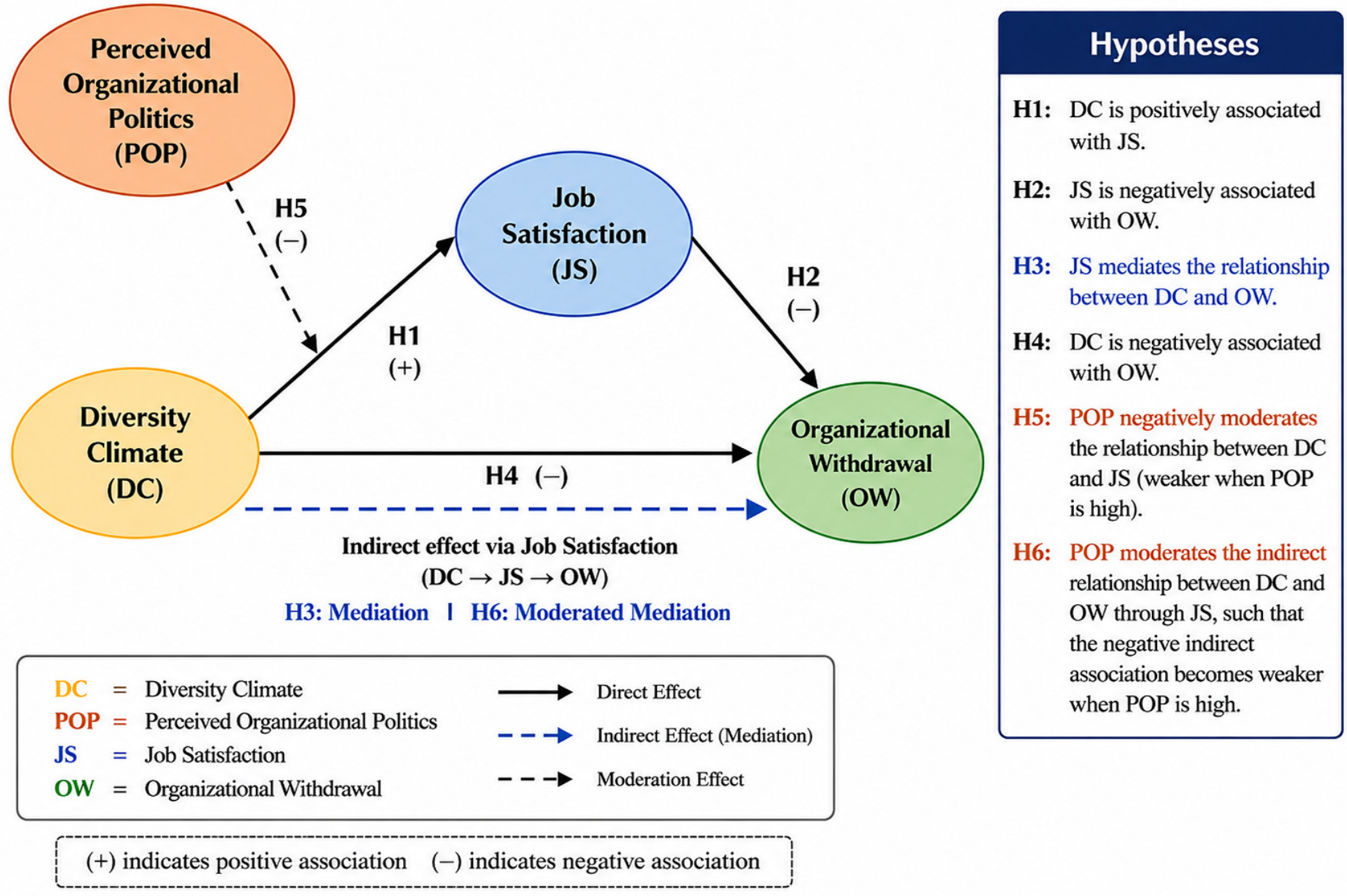
To address these gaps, this study adopts an explanatory sequential mixed-methods design that integrates quantitative and qualitative evidence. In the quantitative phase of this study, the relationships among DC, POP, JS, and OW are examined. In contrast, the qualitative phase explores how construction professionals experience and interpret these relationships in their daily work. The use of both types of evidence allows for a more holistic understanding of the organizational processes that impact employee behavior in construction. Specifically, this study seeks to (1) investigate the relationships between DC, POP, JS, and OW; (2) examine whether POP moderates the relationship between DC and JS and its indirect effect on OW; and (3) interpret these relationships based on the lived experiences of construction professionals.
The remainder of this paper is organized as follows.
Section 2 reviews the theoretical background and develops the research hypotheses.
Section 3 describes the research methodology, followed by the presentation of quantitative and qualitative findings, integrated discussion, implications, and conclusions.
5. Discussion
The findings indicate that employees’ perceptions of DC are closely connected with how they experience their work and their relationship with the organization. In construction, where work is organized around temporary project teams, changing reporting relationships, and multidisciplinary coordination, employees form their perceptions of DC through routine workplace interactions and formal organizational policies. The interview evidence points particularly to fair treatment, respectful communication, equitable work allocation, recognition, and opportunities to contribute as salient features through which employees evaluate the diversity climate of their workplace. This interpretation is consistent with evidence that DC is associated with trust, employee attitudes and retention-related outcomes [
14,
16,
68]. It also accords with SET and Equity Theory, according to which employees interpret organizational treatment in terms of reciprocity and perceived fairness [
27,
41,
42]. The construction setting adds an important contextual dimension because the meaning of organizational practices may vary across supervisors, project teams, and immediate work environments.
The association between DC and OW also warrants consideration beyond JS’s role. The quantitative analysis was conducted at the individual-respondent level; therefore, the findings describe associations among employees’ perceptions of DC, JS, POP, and OW rather than differences in shared diversity climate across organizations or project teams. DC was not aggregated across employees to represent an organization-level climate. Accordingly, the interpretation of the findings is limited to how individual construction professionals perceive and respond to diversity-related conditions in their workplaces. The partial mediation pattern suggests that employees’ perceptions of DC are related to withdrawal through JS while retaining a distinct direct association with withdrawal. This is theoretically plausible because DC encompasses employees’ broader judgments about inclusion, interpersonal treatment and fairness, which may be relevant to withdrawal independently of their overall evaluation of the job. Previous research has similarly linked DC to retention- and turnover-related outcomes [
15,
68]. In the present study, participants described exclusion, unequal recognition, and limited opportunities to contribute as experiences that could weaken their connection with the organization. These accounts do not independently establish the statistical pathway, but they provide a workplace context in which the observed association between DC and OW can be understood.
The mediating role of JS further suggests that employees’ general evaluation of their work may be an important link between organizational experiences and withdrawal-related outcomes. This interpretation is compatible with research identifying JS as a central job attitude associated with withdrawal behavior [
29,
30] and with studies connecting organizational climate and employee outcomes through attitudinal mechanisms [
44,
45,
46]. The qualitative accounts add specificity to this relationship. Recognition, constructive feedback and meaningful opportunities were associated in participants’ accounts with more favorable work experiences, whereas persistent dissatisfaction was described alongside reduced initiative and psychological disengagement. Such accounts are particularly relevant to construction workplaces, where dissatisfaction may emerge from repeated interactions across projects rather than from a single organizational event.
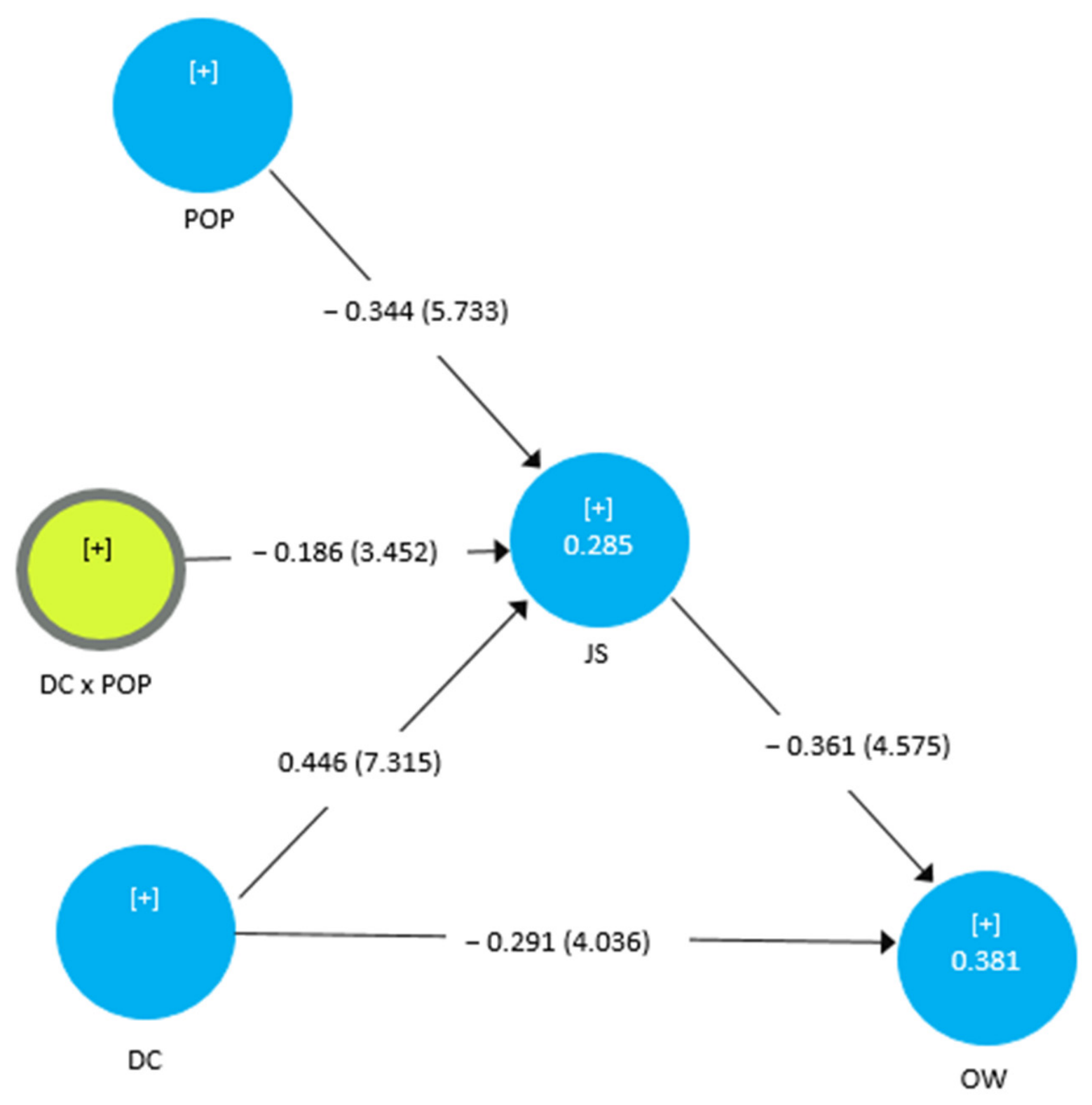
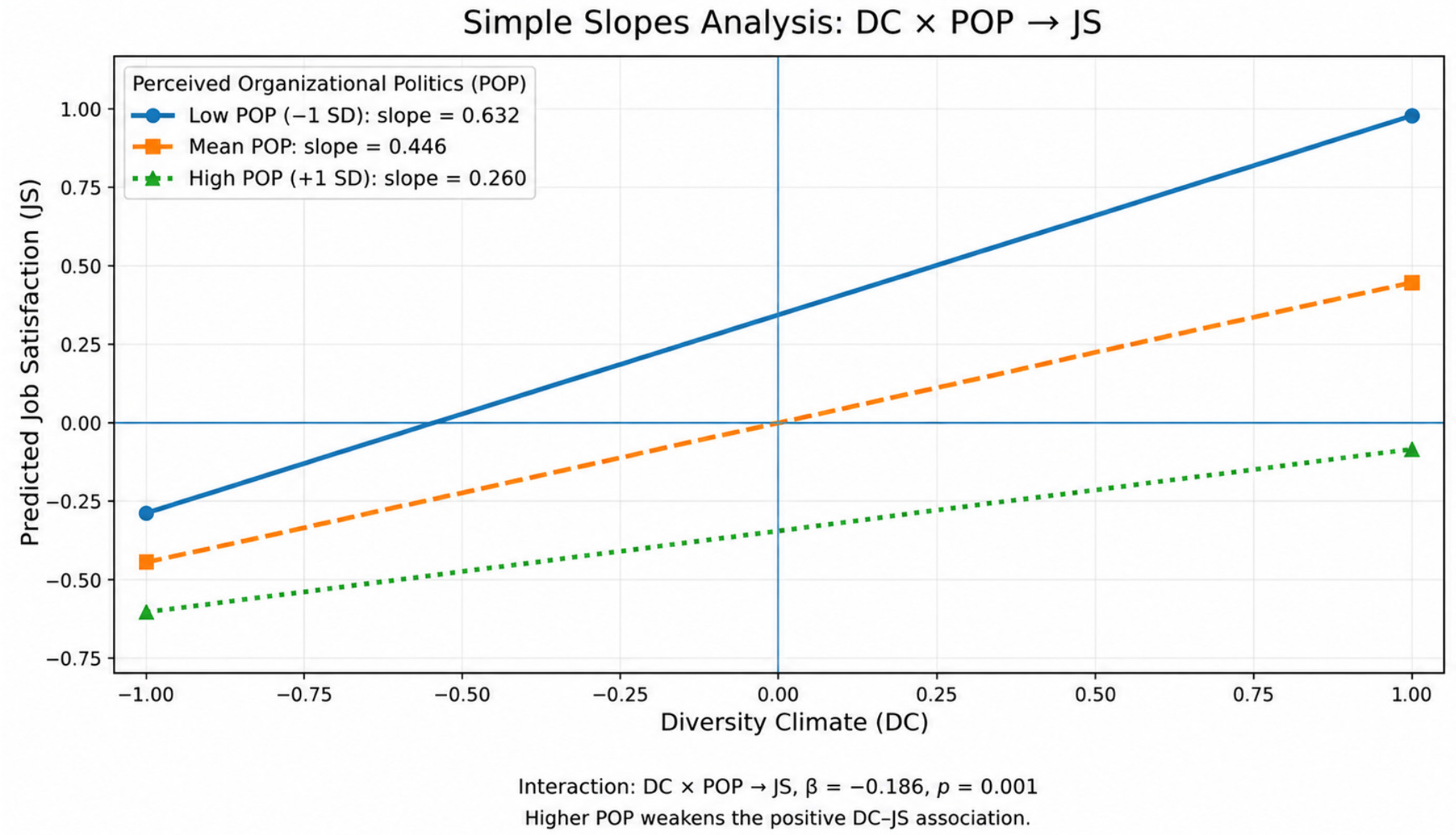
A more important theoretical implication concerns the role of POP as a boundary condition. The findings indicate that the positive association between DC and JS is less pronounced when employees report stronger perceptions of organizational politics. This supports the conceptualization of POP as a contextual condition rather than simply another antecedent of employee attitudes. From an SET perspective, diversity-supportive practices may be evaluated less favorably when employees simultaneously perceive organizational decisions as politically driven. Equity Theory provides a complementary explanation: when recognition, promotion, or access to resources appears to depend on relationships rather than contribution, the perceived fairness of otherwise supportive practices may be questioned [
41]. This interpretation is consistent with previous evidence linking POP with job dissatisfaction and unfavorable employee attitudes [
69] and with research in construction showing that political perceptions are related to evaluations of organizational processes [
39].
The quantitative analysis identifies a weaker DC–JS association at higher POP levels, whereas the qualitative interviews provide contextual evidence of workplace experiences that may help interpret this pattern. Participants described preferential treatment, unequal recognition, inconsistent promotion practices, and informal influence as experiences that shaped their perceptions of organizational fairness. These accounts do not independently establish the statistical interaction. Some experiences concerned supervisors and senior personnel, whereas others involved interpersonal and group-level behaviors such as regional grouping, backbiting, and role-based partiality [
49,
70]. Because POP was assessed as an overall construct, the present study cannot determine whether political behavior from supervisors and peers has different moderating consequences. This distinction should therefore be examined directly in future research rather than inferred from the present qualitative evidence.
The conditional indirect relationship between DC and OW through JS further refines the proposed framework. Moderated mediation provides a means of examining whether an indirect relationship varies with a contextual variable [
50,
51]. In the present study, the pattern suggests that the association between DC and withdrawal through JS is contingent on the organizational political context. In practical terms, diversity-supportive experiences may carry less favorable attitudinal implications when employees simultaneously perceive organizational decisions as politically influenced. This interpretation is consistent with research showing that perceptions of organizational politics are associated with employee attitudes, strain, and behavioral outcomes [
21,
26]. Participants described reduced motivation due to favoritism, unrecognized contributions, and limited advancement. These accounts provide contextual material that is compatible with the quantitative pattern but do not demonstrate the conditional indirect relationship itself. They instead illustrate workplace experiences through which the statistical association can be interpreted. This distinction is important because the cross-sectional design permits examination of associations but does not establish temporal or causal relationships.
The findings also refine the application of SET and Equity Theory to project-based construction organizations. Both perspectives emphasize that employees evaluate organizational exchanges in part through the fairness and reciprocity of treatment [
27,
41,
42]. The relevant issue is therefore not simply whether diversity-supportive practices exist, but whether employees experience those practices as credible and consistently applied. Research on diversity, inclusion and organizational politics similarly indicates that political conditions can shape how employees interpret organizational practices and their implications for well-being [
23]. Formal inclusion measures may have limited perceived value when everyday decisions concerning recognition, resources or advancement are regarded as politically influenced. This interpretation is consistent with evidence linking perceived organizational politics with employee attitudes and workplace outcomes [
21,
26]. For construction organizations, the findings highlight the importance of consistent supervisory decisions, recognition practices and access to opportunities across project teams.
The present study extends the authors’ earlier work [
8] in both analytical scope and research question. Whereas the earlier study examined JS as a mediating pathway between DC and withdrawal dimensions, the present analysis examines POP as a moderating condition of the DC–JS association and the resulting indirect association with OW. The qualitative phase further provides contextual insight into how employees experience fairness, recognition and political behavior in construction workplaces.
Overall, the mixed-methods evidence indicates that DC, JS and OW should be considered within the wider political context of construction workplaces. The quantitative model identifies the proposed relationships, while the interviews provide contextual insight into how employees describe fairness, recognition and interpersonal experiences in their organizational environment. This interpretation is consistent with research demonstrating the relevance of diversity climate to employee attitudes and withdrawal-related outcomes [
14,
15,
16,
68], and with evidence linking job attitudes with OW [
29,
30]. At the same time, the regional and context-specific nature of the qualitative sample limits transferability, while the cross-sectional quantitative design limits causal interpretation. Because the quantitative analysis was conducted at the individual level and organization- and project-level identifiers were unavailable to examine potential clustering, the findings should not be interpreted as evidence of shared climate effects or of differences between firms or project teams. The quantitative estimates therefore represent associations among the measured constructs rather than evidence of temporal or causal relationships. Within these boundaries, the study contributes by showing how employees’ perceptions of DC, JS and POP are interconnected with withdrawal-related experiences in project-based construction workplaces.
6. Implications
This study makes several theoretical contributions to the body of knowledge in construction management and organizational behavior. First, it extends the application of SET and Equity Theory by indicating that JS partly explains the association between DC and OW and varies with employees’ perceptions of organizational politics. By integrating these constructs within a first-stage moderated mediation framework, the study advances current understanding of how fairness perceptions, political behavior, and employee attitudes jointly shape withdrawal in project-based construction organizations. Furthermore, the mixed-methods design complements the statistical findings by providing contextual insight into the workplace experiences associated with these relationships. The qualitative findings identify context-specific aspects of DC, including supervisory fairness, transparent communication, recognition, and inclusive team interactions, thereby extending evidence on diversity climate in project-based construction settings.
The results have practical implications for construction firms and point to three priorities. First, practices that support diversity need to be improved through consistent recognition, fair distribution of work, respectful communication and open access to opportunities within project teams. Second, given the moderating role of POP, organizations should improve the transparency of promotion, performance appraisal, and recognition procedures and establish accessible channels for employees to express concerns about preferential treatment or inconsistent decision-making. Third, managers need to be alert to the early indications of dissatisfaction and withdrawal, particularly in areas where employees report recurring concerns about fairness, recognition, or career progression. These priorities are closely aligned with the quantitative findings and the workplace experiences reported by participants. Longitudinal or intervention studies are needed to investigate longer-term effects on JS and workforce stability.
7. Limitations and Future Directions
This study should be interpreted in light of several limitations. First, the quantitative phase employed a cross-sectional research design, which limits conclusions regarding causal relationships among DC, POP, JS, and OW. Longitudinal or time-lagged designs might offer stronger evidence for temporal ordering across different phases of construction projects. Accordingly, the reported coefficients represent statistical associations within the observed sample and should not be interpreted as evidence of temporal causation. Second, this study was carried out with professionals across different organizational roles and 26 districts of Tamil Nadu. Still, the generalizability of the results to other regions and construction sectors may be limited due to convenience sampling. Future research could use probability-based sampling or multi-country comparative designs to strengthen external validity. Third, the quantitative data were based on self-reported questionnaires and may therefore be affected by social desirability and common method bias despite the procedural and statistical measures adopted to reduce these concerns. Fourth, the quantitative analysis was conducted at the individual-respondent level, with DC representing employees’ perceptions of DC within their workplaces. Organization- and project-level identifiers were not available to examine potential clustering or shared climate effects; consequently, the findings should not be interpreted as evidence of organization- or project-level differences. Future studies could collect suitable group-level information and apply multilevel or cluster-aware methods.
The qualitative phase also has contextual limitations. Although purposive sampling sought variation in gender, age, educational qualification, professional role and work experience, project type and organizational size were not used as specific criteria. The 14 interviews, therefore, do not establish whether the identified experiences extend across residential, infrastructure, and other project types, or across small, medium, and large organizations. In addition, all qualitative participants were drawn from Tamil Nadu. The qualitative findings should consequently be viewed as context-specific explanations rather than universal patterns. Future research could employ maximum-variation purposive sampling across project types, organizational sizes, geographical regions and project delivery contexts to assess the transferability of the identified themes.