


Abstract
Conservation-oriented renewal of traditional rural settlements increasingly requires evidence-based color control that considers both natural environmental backgrounds and built-cultural interfaces. This study examined whether built-cultural colors in a traditional mountain village are differentiated from natural environmental colors in hue composition while remaining proximate in NCS attribute space and explored how such quantitative findings can inform carrier-specific architectural color-control guidance. Taking Qingmuchuan Village in the Qinba Mountain region as a case study, 145 representative color samples were recorded, including 59 natural environmental samples and 86 built-cultural environmental samples. The samples were encoded using the Natural Color System (NCS) and their hue composition, blackness–whiteness–chroma attributes, nonparametric differences, exploratory structural order assessment, and attribute-space proximity were analyzed. Among the retained carrier-oriented samples, natural environmental samples were dominated by green-yellow hues (54.2%), whereas built-cultural environmental samples mainly contained yellow-red, red-blue, and neutral hues (31.4%, 18.6%, and 12.8%, respectively). Blackness did not differ significantly between the two systems, while whiteness and chroma differed significantly; the mean pairwise cosine similarity was 0.824, indicating attribute-space proximity rather than direct hue correspondence. Based on these empirical results, the study proposes provisional, carrier-specific guidance for facade renewal, roof and eave replacement, paving repair, and signage regulation.
1. Introduction
In recent years, the conservation of traditional villages has shifted from the restoration of individual historic buildings to the integrated conservation of the built environment, cultural landscape, and local character. Traditional villages are complex living environments shaped by landforms, climate, vernacular materials, construction techniques, street interfaces, commercial activities, and everyday life [1,2,3,4]. This understanding is consistent with heritage conservation approaches that emphasize the integrated relationship between built fabric, cultural landscape, natural setting, and local authenticity [5,6,7]. Within this context, color serves as a visual medium through which natural settings, local materials, architectural interfaces, and living culture are perceived together [8,9,10,11]. This relationship is particularly evident in traditional mountain settlements, where buildings and streets are embedded within mountains, river valleys, vegetation, and farmland.
However, under the combined influence of rapid urbanization, rural revitalization, tourism development, and commercial upgrading, the existing color systems and local chromatic identity of traditional villages are increasingly disturbed. In some villages, facade improvement and tourism-oriented renovation are implemented through standardized repainting, pseudo-antique decoration, high-saturation coatings, commercial signs, light boxes, color-coated steel tiles, and resin roof tiles. Although such interventions may improve short-term visual neatness and commercial visibility, they can weaken material authenticity, disrupt the coordination between architectural interfaces and natural backgrounds, and lead to landscape homogenization and the loss of local chromatic identity [12,13,14]. Related studies have shown that commercial colors may affect traditional heritage features [12], color authenticity is important for the sustainable development of historical areas [13], and urban color planning can support renewal management and local identity in historic environments [15,16,17]. Therefore, refined color control in traditional village micro-renewal requires more than empirical judgment or subjective aesthetic preference and should be supported by systematic environmental color assessment and context-sensitive color guidance [18].
Existing studies on traditional village colors and historic built-cultural environmental colors have gradually shifted from empirical description to quantitative identification. One methodological path focuses on image analysis, K-means clustering, street-view recognition, and palette construction. For example, color data have been used to reveal diachronic changes and regional differences in traditional village colors [19], online images and K-means clustering have been applied to extract village color features [20], and clustering methods have been used to compare architectural heritage colors in different traditional villages [21]. Sustainable color-development strategies have also been discussed in historical commercial areas, linking color guidance with conservation and renewal practice [22]. Street-view recognition and image clustering have also been introduced into urban color evaluation and historical building color assessment [23,24]. Another methodological path focuses on color-system coding, color-difference measurement, visual perception, and color-order assessment [25]. NCS-based analyses have been applied to document and compare color characteristics through perceptual color notation [26,27,28]. Color-order and harmony-related studies have further provided a theoretical basis for interpreting color relationships [29,30], while CIEDE2000 has been used to quantify color differences and improve the objectivity of color evaluation and restoration processes [31,32]. Together, these approaches have contributed to transforming historic built-cultural environmental colors into describable and comparable analytical objects. At the urban and historic-district scales, individual studies have explored urban color-system construction [16], color planning and management strategies [15,17], and the integration of color guidance into renewal and conservation practice [22].
These studies indicate that color research on traditional settlements and historic environments has become increasingly data-based, image-based, and model-based. Nevertheless, three limitations remain. First, many studies focus mainly on facades, street interfaces, historic buildings, or single cultural carriers, while natural background colors such as mountains, vegetation, water bodies, farmland, and rocks are rarely incorporated into a unified analytical framework together with built-cultural colors, although environmental color studies have long emphasized the relationship between built colors, regional materials, and surrounding landscape settings [10,11,18]. Second, existing studies often emphasize dominant color extraction, palette construction, and color classification, but provide insufficient explanation of the observable differentiation and attribute-space proximity between natural environmental colors and built-cultural colors. Third, quantitative color results are not always translated into carrier-specific guidance for material selection, facade control, roof renewal, signage management, and visual character conservation. Therefore, color research on traditional mountain villages should not only identify extracted colors, but also explain the observable differentiation and attribute-space proximity between natural backgrounds, vernacular materials, built interfaces, and cultural carriers and further translate these findings into carrier-specific color-control implications.
Qingmuchuan Village provides a suitable case for addressing these issues. Located in Ningqiang County, Hanzhong City, Shaanxi Province, at the junction of Shaanxi, Gansu, and Sichuan provinces in the Qinba Mountain region, Qingmuchuan is a traditional mountain settlement shaped by its mountain environment, border-trade history, multiethnic interaction, and vernacular construction traditions. The surrounding mountains, valleys, vegetation, farmland, and water systems form a stable natural landscape background, while historic streets, traditional courtyards, covered bridges, public buildings, shop plaques, folk activities, and everyday objects constitute diverse built-cultural color carriers. The village preserves a relatively complete visual relationship between natural background colors and architectural interface colors, while also facing color-intervention pressures from tourism development, commercial activities, and facade renewal. It is therefore a suitable case for examining natural–built-cultural color relationships and conservation-oriented color control in traditional mountain villages.
Accordingly, this study takes Qingmuchuan Village as a case study to examine the hue composition and blackness–whiteness–chroma attributes of natural background colors and built-cultural colors and to explore how these quantitative results can inform architectural color-control guidance for traditional village micro-renewal. In this study, the natural–built-cultural color relationship refers to the observable differentiation and proximity between natural environmental colors and built-cultural environmental colors in hue composition and NCS attributes, rather than a causal mechanism. Specifically, this study asks: (1) How do natural and built-cultural colors differ in hue composition and blackness–whiteness–chroma attributes? (2) Do the two systems remain proximate in NCS attribute space despite hue differentiation? (3) How can these findings inform carrier-specific color-control guidance for conservation-oriented micro-renewal? Particular attention is given to visually sensitive carriers such as wall surfaces, roofs and eaves, paving surfaces, doors and windows, ornamental components, and commercial signage.
The main contribution of this study is to develop a low-intervention and case-based analytical workflow linking field color documentation, NCS-coded attribute analysis, exploratory structural order assessment, and carrier-specific renewal interpretation. Rather than proposing a universal color-control standard, this workflow provides a methodological reference that requires local recalibration before being applied to other traditional mountain villages or historic built environments.
2. Materials and Methods
2.1. Research Area
Qingmuchuan Village is located in Ningqiang County, Hanzhong City, Shaanxi Province, China (32°49′42″ N, 105°34′54″ E), on the southern margin of the Qinling–Daba Mountain trough-fold belt; its terrain is dominated by low- to middle-mountain landforms and transitions toward middle- to high-mountain terrain, with interlaced slopes and valleys, an elevation range of approximately 538–2079 m, and a maximum relative relief of about 1541 m. The climate lies in the transitional zone between a subtropical humid monsoon climate and a temperate monsoon climate, with an annual mean temperature of approximately 13 °C and annual precipitation of about 800–1200 mm, mainly concentrated in summer.
The village possesses abundant vegetation resources. Influenced by elevation gradients, vegetation types exhibit vertical zonation: areas above 1300 m are mainly characterized by mixed coniferous–broadleaved forests and cold-temperate coniferous forests; areas between 1000 and 1300 m are dominated by deciduous broadleaved forests; and river valleys, hills, and intermontane basins below 1000 m support evergreen–deciduous broadleaved mixed forests. The Jinxi River and its tributaries run through the village; consequently, river valleys, mountains, farmland, and the settlement jointly structure the spatial pattern of Qingmuchuan.
The historical development of Qingmuchuan Village is closely associated with the Qin–Shu ancient route, border trade, and multi-ethnic migration. During the Chenghua period of the Ming Dynasty, the village gradually developed a settlement pattern centered on Huilongchang Old Street and extending along the Jinxi River, forming a spatial configuration described as “two mountains enclosing one valley, and one river dividing two streets.” During the Republican period, Qingmuchuan developed into an important commercial market town on the Shaanxi–Gansu–Sichuan border due to its locational advantage at the junction of the three provinces; its streets, courtyards, and public buildings still retain spatial traces of commercial activity and cultural interaction.
Qingmuchuan Village preserves diverse spatial carriers, including historic streets, traditional courtyards, covered bridges, mountain dwellings, and Republican-period public buildings. It integrates a natural mountain environment, a traditional settlement pattern, and a multi-ethnic cultural background. The local built environment is mainly composed of grey-tile roofs, rammed-earth and plastered wall surfaces, timber doors and windows, blue-brick interfaces, and stone paving. These material carriers provide the main architectural basis for the warm-grey and low-chroma built-environment color system identified in this study. These characteristics make Qingmuchuan a suitable case-specific setting for examining natural–built-cultural color relationships and exploring their implications for conservation-oriented color control. The location and spatial setting of Qingmuchuan Village are shown in Figure 1.
Figure 1.
Location and spatial setting of Qingmuchuan Village. (a) Geographic location of Qingmuchuan Village. (b) Spatial setting of the village and representative natural and built-cultural color carriers.
2.2. Classification of Natural and Built-Cultural Color Carriers
To establish a clear correspondence between color samples and specific spatial environments, material substrates, and cultural activities, the color elements of Qingmuchuan Village were first systematically categorized. Based on the village’s spatial morphology, visual perception characteristics, and practical demands for visual character control and conservation-oriented micro-renewal, the color carriers were divided into two primary systems: the natural environmental color system and the built-cultural environmental color system. This classification was designed for carrier-based color documentation and micro-renewal interpretation, rather than for area-weighted or visibility-weighted estimation of the entire village color composition. Each retained sample was counted as one analytical unit, regardless of the visible area, spatial frequency, viewing distance, or perceptual prominence of the corresponding carrier in the whole village landscape. This two-system classification follows the common distinction between natural environmental colors and humanistic or built-environment colors in landscape color studies, but was adapted here to the settlement-scale context of Qingmuchuan Village by emphasizing built interfaces, vernacular materials, and everyday cultural carriers.
The natural environmental color system refers to the background colors composed of mountain landforms, water bodies, agricultural fields, rocks, trees, riverside plants, and seasonal vegetation. These elements collectively constitute the main natural visual background of the village and provide the background reference for the overall landscape character of traditional mountain settlements. The built-cultural environmental color system comprises the colors presented by architectural interfaces, vernacular building materials, street paving, doors and windows, commercial signs, ornamental components, folk objects, and everyday cultural carriers. This system directly constitutes the everyday visual interface of streets and contributes to local cultural identity, serving as the main object for fine-grained rural micro-renewal and color management. The detailed classification is summarized in Table 1.
Table 1.
Classification of natural and built-cultural color carriers and retained sample sizes.
2.3. Field Color Sampling and Image Screening
Object colors in outdoor village environments are easily affected by season, weather, illumination conditions, viewing angle, material aging, surface texture, and temporary objects. To improve the consistency of color recording, this study adopted an integrated procedure combining NCS Index 2050 portable color-card-assisted field comparison, photographic recording with the built-in digital camera module, image screening and palette extraction, and NCS coding verification. The field NCS color-card comparison was used as the primary basis for final color coding, while photographs and image-derived colors were used mainly for carrier identification, color verification, palette visualization, and the exclusion of abnormal color patches, rather than as absolute colorimetric measurements.
The overall research preparation, data organization, image verification, and data analysis were conducted from March 2025 to March 2026. The main field color sampling was conducted during a 12-day fieldwork period from 20 July to 31 July 2025, and was used mainly to record built-cultural color carriers, mountain backgrounds, water bodies, farmland, rocks, and summer natural environmental colors. Considering the obvious seasonal variation in plant colors, plant and seasonal natural environmental color samples were supplemented and verified through images from March 2025 to March 2026.
Field surveys were conducted where possible under clear or slightly cloudy weather conditions, avoiding rainy conditions, strong backlighting, strong reflections, and large shadowed areas that could affect color judgment. Field photography was mainly conducted during two time periods, 09:00–11:00 and 14:00–17:00, to reduce color deviations caused by strong midday sunlight and low-angle illumination. The shooting viewpoint was maintained at approximately 1.6 m, close to the pedestrian eye-level perspective. The survey was conducted by two observers who had received unified training. Before fieldwork, the two observers standardized the color-carrier classification criteria, NCS color-card comparison method, and sample-recording rules. After fieldwork, sample records were cross-checked using field photographs and sample notes. If inconsistencies occurred between the field record and photographic verification, the field NCS color-card comparison record was treated as the primary basis, and the corresponding photographs and sample notes were rechecked.
Field sampling was organized along the main visual corridors and renewal-sensitive areas of Qingmuchuan Village, including Huilongchang Old Street, the Jinxi River waterfront, surrounding agricultural fields, mountain-view interfaces, and peripheral settlement areas. Samples were retained when the target color patch was visually identifiable, had a clear spatial carrier attribution, was representative of the corresponding color-carrier type, and was relevant to village character conservation and micro-renewal color control. Temporary objects, tourists, vehicles, overexposed areas, deep shadows, strong reflections, and temporary advertisements unrelated to the target carriers were excluded. A total of 145 representative color samples were retained, including 59 natural environmental color samples and 86 built-cultural environmental color samples.
Photographs were taken using the built-in digital camera module of the same OPPO Reno9 Pro+ 5G mobile device. To improve image-recording consistency, the field photographs used for sample verification were taken in the camera’s professional mode with the 1× camera module, a 3:4 image ratio, and JPEG format. The recorded image size was 6560 × 4928 pixels, corresponding to 32 megapixels, with an aperture of f/2.4. During field recording, the same nominal shooting settings were used as far as possible, including ISO 160, a shutter speed of 1/60 s, EV 0.0, a focus setting of 0.82, and a white-balance setting of 4600 K. The retained image files recorded image size, file format, aperture, and shooting settings, but did not contain EXIF fields for sensor model, sensor size, focal length, or 35 mm equivalent focal length. Therefore, these values were not retrospectively inferred from external device specifications. The default camera application in professional mode was used, and HDR, beautification filters, and post-processing color enhancement were not applied during field recording. The photographs were stored in the sRGB color space and were not treated as calibrated colorimetric measurements. They were used only for sample-location recording, carrier identification, material-texture recognition, visual verification, and palette visualization, while the final NCS coding was based primarily on field color-card comparison.
During field color-card comparison, the NCS Index 2050 portable color card and the target carrier were observed under comparable local daylight conditions as far as site conditions allowed. For physically accessible material surfaces, the color card was placed adjacent to the target color patch without covering the sampled area, and the observer viewed the card and the target surface simultaneously at an approximately arm-length field-comparison distance. Where site conditions allowed, the viewing direction was kept approximately perpendicular to the target surface to reduce angular reflection. This distance was used as an operational field-comparison rule rather than as an instrumentally fixed laboratory measurement distance. For distant or non-contact natural background carriers, such as mountains, sky, and water surfaces, direct card adjacency was not possible; therefore, their NCS coding was based on field visual observation under comparable daylight conditions and was cross-checked with photographs for carrier identification and visual consistency.
To reduce potential color-matching errors related to metamerism, comparisons were conducted under natural daylight, and mixed artificial lighting was avoided. Highly glossy, wet, strongly reflective, heavily stained, or deeply shadowed areas were excluded from sampling. For textured, weathered, or slightly nonuniform surfaces, the visually dominant and materially stable color patch was selected, while local stains, cracks, dust, water marks, and reflected highlights were excluded. Therefore, the field color-card comparison was intended to improve the consistency of visual color documentation, but it was not treated as a spectrophotometric or laboratory-calibrated color measurement.
During image screening and palette extraction, field photographs were first manually screened to exclude image areas obviously affected by overexposure, underexposure, strong shadows, strong reflections, edge noise, and temporary interfering objects. The screened photographs or target regions were then imported into the Color Palette Generator tool to extract the main colors and their proportions, which were used to assist in identifying natural environmental tones and built-cultural environmental tones. For the same sample, if the dominant color extracted from the image clearly deviated from the field NCS color-card record, the corresponding photograph, field record, and carrier description were rechecked, and the field color-card comparison result was prioritized. The image extraction and palette-generation results were used mainly for color-composition visualization and sample verification and did not replace the final coding based on the NCS color card. No direct RGB-to-NCS conversion was used as the final coding procedure; instead, NCS codes were determined primarily through field color-card comparison, while image-derived colors served only as auxiliary evidence for verification and palette visualization.
After field comparison and image verification, each retained sample was encoded with the corresponding NCS notation, and its hue category, blackness, whiteness, and chroma attributes were further extracted. These data formed the basis for subsequent hue-composition analysis, blackness–whiteness–chroma attribute comparison, structural order assessment, and natural–built-cultural color relationship analysis.
2.4. NCS Coding and Color Attribute Extraction
This study adopted the Swedish Natural Color System (NCS), which encodes color based on human visual perception and enables the color attributes of different carriers to be described within a unified coding framework. In the NCS model, color is specified by basic perceptual attributes, namely blackness (s), whiteness (w), chroma (c), and hue (Φ). Its vertical section is a triangle whose vertices denote blackness, whiteness, and chroma, where ; the central horizontal plane is a hue circle composed of the four elementary hues: yellow (Y), red (R), blue (B), and green (G).
For each color, the three attributes satisfy Equation (1):
For example, in the notation S 1040-R20B, “1040” specifies the blackness and chroma values, corresponding to 10% blackness and 40% chroma; “R20B” specifies the hue, meaning that the chromatic component is composed of 80% red and 20% blue. In this study, NCS was selected not only for its perceptual coding logic, but also because its attributes can support carrier-level comparison, quantitative color-attribute analysis, and conservation-oriented color-control interpretation.
NCS coding was conducted through field color-card comparison and photographic verification. For each retained sample, the closest NCS notation was first identified through visual comparison under field-comparison conditions. Photographs were then used to verify carrier identity, exclude unstable color patches, and check consistency with the recorded NCS codes. Where disagreement occurred between field notes and image-based evidence, the field color-card record was treated as the primary source, and the sample was rechecked by the two observers using the corresponding field notes, photographs, and carrier descriptions. To reduce subjective coding bias, all NCS records were further checked against the corresponding field photographs and sample notes before being included in the final dataset.
For coding adjudication, the initial NCS code assigned in the field was checked by the second observer using the field notes and photographs. When the two observers selected different but adjacent NCS notations within the same hue tendency or with similar blackness–whiteness–chroma attributes, the final code was determined by rechecking the field color-card record and retaining the notation closest to the visually dominant material surface. When the disagreement involved different hue categories or larger attribute differences, the sample was jointly re-examined using the field record, photographs, carrier description, and surrounding material context. If a consistent coding decision could not be reached after re-examination, the sample was excluded from the retained dataset. This rule was used to improve coding consistency, but it should be understood as a field-based adjudication procedure rather than a substitute for instrumental colorimetric validation.
To further assess observer reliability, an independent coding-consistency check was conducted on all 145 retained samples. The second observer independently re-coded the retained samples using the field records, photographs, carrier descriptions, and the same NCS coding rules, without referring to the final adjudicated NCS codes. The coding results of the two observers were then compared at both categorical and attribute levels. Hue-category agreement was evaluated using percentage agreement and Cohen’s kappa. Agreement within one NCS step was calculated to assess whether minor notation differences remained within an acceptable adjacent-code range. In this study, agreement within one NCS step was operationally defined as the same hue category and absolute differences of no more than 10 units in blackness, whiteness, and chroma. For the numerical NCS attributes, namely blackness, whiteness, and chroma, intraclass correlation coefficients (ICCs) were calculated to evaluate inter-observer consistency.
The observer-reliability assessment showed good consistency between the two observers. Hue-category exact agreement was 90.3%, and Cohen’s kappa was κ = 0.861, indicating strong agreement at the hue-category level. Agreement within one NCS step was 94.5%, suggesting that most notation differences were minor adjacent-code differences rather than substantial disagreements. The ICC values for blackness, whiteness, and chroma were 0.914, 0.902, and 0.873, respectively, indicating good inter-observer consistency for the numerical NCS attributes. These results suggest that the field-based NCS coding procedure had acceptable observer reliability within the scope of this study. However, this reliability check was used to assess the consistency of field-based visual coding between observers and should not be interpreted as a substitute for instrumental colorimetric validation. Detailed results are provided in Appendix A, Table A6.
After coding, each sample was described using hue category, blackness, whiteness, and chroma, which formed the basis for subsequent distribution analysis, attribute comparison, structural order assessment, and natural–built-cultural color relationship analysis. The NCS color notation and attribute structure used in this study are illustrated in Figure 2.
Figure 2.
NCS color notation and attribute structure. The example notation S 1040-R20B indicates 10% blackness, 40% chroma, and a hue composed of 80% red and 20% blue. The NCS attributes of blackness (s), whiteness (w), chroma (c), and hue (Φ) were extracted for subsequent statistical comparison and structural order assessment.
2.5. NCS-Based Approximate Structural Order Assessment
To compare the internal order of color combinations across different environmental systems, this study introduced an NCS-based approximate structural color order descriptor inspired by Moon–Spencer theory. This descriptor was not used to evaluate visual preference or aesthetic harmony in an absolute sense. Instead, it was used as an exploratory tool to compare the relative structural order of color combinations within different environmental systems and architectural or built-cultural carrier groups.
The basic calculation unit was an unordered color pair within the same analytical unit. For each system or carrier group, all retained color samples were paired. If an analytical unit contained n samples, the number of unordered color pairs was calculated using Equation (2):
For each NCS color sample, blackness (s), chroma (c), and hue (h) were extracted from the NCS notation, while whiteness (w) was calculated according to Equation (3):
Chromatic NCS hues were first mapped onto a 40-step NCS hue circle and then converted into angular positions on a 360° circle, with each step corresponding to 9°. The basic hue positions were defined as Y = 0°, R = 90°, B = 180°, and G = 270°. For any color pair i and j, hue difference, blackness difference, and chromaticness difference were calculated using Equations (4)–(6):
where pi and pj are the hue positions of the two colors. Neutral colors coded as N were treated using an approximate rule: neutral–neutral pairs were assigned , while neutral–chromatic pairs were assigned . Because this rule is an approximation, the resulting structural order values were interpreted only as exploratory indicators for relative comparison.
Based on the reconstructed interval-scoring rules, the hue-order contribution (Oh), value-order approximation (Ov), and chromaticness-order contribution (Oc) were assigned for each color pair. The total order contribution was calculated using Equation (7):
The complexity term was calculated according to the number of color-attribute dimensions contributing to the pair-level comparison, as shown in Equation (8):
where I(·) is an indicator function. The structural order value of each analytical unit was then calculated as the ratio between the total order contribution and the total complexity, as shown in Equation (9):
A higher M value indicates a more internally organized color composition under the same calculation framework, whereas a lower value indicates greater color dispersion or weaker structural order. Because this descriptor is an approximate Moon–Spencer-inspired implementation based on NCS attribute differences, the resulting M values were used only for relative comparison among systems and carrier groups. The reconstructed interval-scoring rules, neutral-color treatment, and a worked calculation example are provided in Appendix A, Table A1, Table A2 and Table A3.
To further examine the sensitivity of the NCS-based approximate structural order descriptor, a minimal sensitivity analysis was conducted. Four quantitative checks and one conceptual hue-circle orientation check were included. First, the treatment of neutral–chromatic hue differences was tested by comparing the baseline rule of assigning to neutral–chromatic pairs with two alternative assumptions: assigning and excluding neutral–chromatic pairs from pairwise hue-difference calculation. Second, the sensitivity of the reconstructed interval-scoring thresholds was examined by applying relaxed and strict threshold settings, in which the interval boundaries in the reconstructed scoring rules were widened or narrowed by 10% while preserving the original interval order. Third, to assess the influence of very small carrier groups, the system-level M values were recalculated after excluding carrier groups with fewer than five samples. Fourth, a leave-one-sample-out analysis was conducted at the system level by removing one sample at a time and recalculating the M values for the overall, natural environmental, and built-cultural environmental systems. These checks were used to evaluate whether the main system-level structural order interpretation was sensitive to neutral-color assumptions, interval-threshold settings, small carrier groups, or individual samples. In addition, alternative hue-circle orientations were examined conceptually by considering rotated or reversed starting directions of the NCS hue circle. Because the structural order calculation used pairwise circular hue differences rather than absolute hue positions, such orientation changes did not alter the pairwise hue distances or the resulting M values. Bootstrap resampling was not used as a primary robustness check because the structural order descriptor was calculated from the complete retained sample set and was used as a descriptive, non-inferential index rather than as an estimator of population-level aesthetic harmony.
2.6. Statistical Comparison and Attribute-Space Similarity Analysis
To examine the differentiation and proximity between natural environmental colors and built-cultural environmental colors in Qingmuchuan Village, this study conducted statistical comparison and exploratory similarity analysis using IBM SPSS Statistics 27.0 and Python 3.10. Statistical significance was evaluated at p < 0.05.
First, hue-category composition was examined through contingency-table analysis, Pearson’s chi-square test, and Cramér’s V coefficient. These methods were used to determine whether significant differences existed in hue distribution between the two color systems and to evaluate the strength of association between system type and hue category. Considering that some low-frequency hue categories may produce small expected counts, the chi-square results were interpreted together with descriptive hue distributions and carrier-based color evidence.
For the three color attributes of blackness, whiteness, and chroma, the Shapiro–Wilk test was first used to examine whether the data followed a normal distribution. Because the color-attribute data did not satisfy the normality assumption, the Mann–Whitney U test was further applied to compare between-group differences in blackness, whiteness, and chroma between the natural environmental color group and the built-cultural environmental color group. In addition to reporting p-values, effect-size indicators, such as rank-biserial correlation coefficients, were calculated to indicate the magnitude and direction of attribute differences between the two groups.
To describe attribute-space proximity, cosine similarity was calculated between natural environmental samples and built-cultural samples in the blackness–whiteness–chroma attribute space based on NCS percentage attributes, as shown in Equation (10):
In this equation, A and B denote the blackness–whiteness–chroma vectors of two color samples, expressed as NCS percentage attributes. Because blackness, whiteness, and chroma are mathematically linked in the NCS system, and because pairwise similarities share repeated samples, cosine similarity was used only as an exploratory descriptor of attribute-space proximity. No inferential p-value was assigned to the pairwise cosine-similarity distribution. Therefore, the mean similarity value and distributional intervals were interpreted as evidence of overall attribute-space proximity, not as direct one-to-one correspondence between individual natural and built-cultural samples.
The statistical interpretation followed a combined logic: hue-category analysis was used to identify directional differentiation, Mann–Whitney U tests were used to examine attribute differences, the structural order descriptor was used for exploratory within-system comparison, and cosine similarity was used to describe whether the two systems remained proximate within the blackness–whiteness–chroma attribute space. Together, these analyses supported the interpretation that the retained natural and built-cultural sample groups were proximate in basic NCS attributes but differentiated in hue direction and carrier expression. The overall research workflow is shown in Figure 3.
Figure 3.
Research workflow for carrier-oriented natural and built-cultural color identification and provisional architectural color-control guidance.
3. Results
3.1. Color Sample Composition and Sample-Set NCS Spectrum
A total of 145 representative color samples were recorded and retained for Qingmuchuan Village, including 59 natural environmental samples and 86 built-cultural environmental samples. After standardized NCS coding, 132 distinct NCS standard colors were obtained, comprising 53 natural environmental colors and 79 built-cultural environmental colors. Within the retained carrier-oriented sample set, the NCS color spectrum was mainly composed of compound hues related to yellow, red, and green. The retained samples were not limited to architectural facades, but included natural background carriers, built-interface carriers, and localized cultural accent carriers.
At the sample level, natural environmental samples showed a concentration of dark green, grey-green, yellow-green, and blue-grey tones, corresponding mainly to vegetation, water bodies, rocks, and shaded mountain backgrounds. In contrast, built-cultural samples displayed a larger proportion of grey, grey-brown, earth-yellow, dark brown, and localized red or blue accents, corresponding to wall surfaces, grey tiles, timber components, paving materials, plaques, and decorative elements. The comparison between field-recorded color samples and image-derived palette-display results indicated that the two systems differed in hue tendency while sharing a generally low- to medium-chroma foundation. Because the samples were carrier-oriented rather than area-weighted or visibility-weighted, the following results should be interpreted as sample-set distributions of visually and conservation-relevant color carriers, rather than as the complete areal, frequency-based, or perceptual color composition of the entire village landscape. The image-derived palette-display results of the retained natural and built-cultural environmental samples are shown in Figure 4 and Figure 5.
Figure 4.
Original dominant color composition and image-derived palette-display results of retained natural environmental samples.
Figure 5.
Original dominant color composition and image-derived palette-display results of retained built-cultural environmental samples.
3.2. Hue Composition of Retained Natural and Built-Cultural Colors
From the perspective of hue composition, the retained natural environmental samples showed a clear dominance of green-yellow hues. GY hues accounted for 54.2% of the retained natural environmental samples, making them the dominant hue category within this sample group. RB hues accounted for 11.8%; YR and BG hues each accounted for 8.5%; G and Y hues each accounted for 6.8%; and R and B hues each accounted for 1.7%. This result indicates that, within the retained sample set, natural color carriers were mainly associated with mountain vegetation, riverside plants, agricultural crops, and seasonal vegetation, forming a sample-based natural background color pattern dominated by green-yellow hues with limited participation of compound cool hues.
Within the retained natural environmental samples, the relatively low proportions of RB and BG hues were mainly related to water bodies, riverbank rocks, shaded areas, and local cool-grey landscape surfaces. This suggests that the sampled natural background carriers were not primarily composed of pure greyscale colors but were associated with vegetation, soil, water bodies, and shaded surfaces, which together produced a layered compound-hue tendency within the retained sample set.
In contrast to the retained natural environmental samples, the retained built-cultural environmental samples were mainly composed of YR, RB, and N hues. Among them, YR hues accounted for 31.4%, making them the largest hue category within the built-cultural sample group. RB hues accounted for 18.6%, N hues for 12.8%, B hues for 8.1%, Y hues for 7.0%, G, R, and GY hues each for 5.8%, and BG hues for 4.7%.
The dominance of YR hues corresponded to the extensive presence of earth-yellow wall surfaces, timber components, rammed earth, weathered masonry, and warm-grey materials in Huilongchang Old Street and surrounding traditional buildings. N hues were mainly associated with grey tiles, stone paving, blue-brick walls, and low-chroma surfaces. RB hues occurred more frequently in plaques, ornamental components, folk objects, clothing, and some commercial interfaces, where they appeared as localized visual identifiers and cultural accents.
Overall, within the retained carrier-oriented sample set, natural environmental samples and built-cultural environmental samples did not correspond directly at the hue level. The sampled natural background carriers were dominated by green-yellow hues, whereas the sampled built-cultural carriers formed a warmer and lower-chroma street-interface tendency through earth yellow, grey tiles, timber colors, blue bricks, and localized decorative colors. This pattern indicates hue-direction differentiation between the sampled natural background carriers and built-cultural carriers. The complete hue-category contingency table, including observed and expected counts, is provided in Appendix A, Table A4. The hue composition of retained natural and built-cultural colors is summarized in Figure 6.
Figure 6.
Hue composition of retained natural and built-cultural colors: (a) retained natural environmental colors; (b) retained built-cultural colors; (c) comparison of hue-category proportions within the retained sample set.
3.3. Attribute Differences in Blackness, Whiteness, and Chroma
From the perspective of NCS blackness, whiteness, and chroma, the retained carrier-oriented sample set was characterized by moderate blackness, a wide range of whiteness, and a dominance of low- to medium-chroma colors. The blackness values of all retained samples ranged from 3% to 90%, mainly concentrated between 10% and 60%. Whiteness ranged from 5% to 97%, indicating a broad lightness hierarchy within the retained sample set. Chroma ranged from 0% to 80%, but most retained samples were concentrated between 0% and 44%. These results indicate that the retained color samples were mainly distributed within low- to medium-chroma ranges, rather than being dominated by highly saturated colors.
Natural environmental colors showed a pattern of medium-to-high blackness, relatively dispersed whiteness, and moderate chroma. Their blackness values ranged from 5% to 85%, whiteness values ranged from 5% to 88%, and chroma values ranged from 2% to 60%, with most samples concentrated between 20% and 44%. This pattern was mainly associated with vegetation, agricultural crops, water bodies, and seasonal plants, indicating that natural environmental colors had relatively wider chroma variation within the present sample.
Built-cultural environmental colors, by contrast, were characterized by moderate blackness, clear whiteness stratification, and a concentration of low-chroma colors. Their blackness values ranged from 3% to 90%, whiteness values ranged from 5% to 97%, and chroma values ranged from 0% to 80%. However, most samples were concentrated between 0% and 40%, especially within the 0–20% interval. These low-chroma colors were mainly associated with traditional building materials, grey tiles, blue bricks, stone paving, timber components, and weathered wall surfaces.
To provide a more complete statistical description, Table 2 reports the mean, standard deviation, median, interquartile range, minimum–maximum range, and 95% confidence interval for blackness, whiteness, and chroma in the natural and built-cultural groups. The mean and median blackness values of natural environmental colors were 39.95 and 45.00, respectively, while those of built-cultural environmental colors were 35.10 and 35.00. This indicates a certain overlap in their basic light–dark structure. In contrast, the mean and median whiteness values of natural environmental colors were 33.53 and 30.00, whereas those of built-cultural environmental colors were 47.67 and 45.00, suggesting that the built-cultural environment had higher whiteness values. The mean and median chroma values of natural environmental colors were 26.53 and 30.00, compared with 17.22 and 10.00 for built-cultural environmental colors, indicating that the natural environment had a higher chroma level.
Table 2.
Descriptive statistics of NCS attributes in retained natural and built-cultural environmental colors.
Overall, the descriptive results indicate that built-cultural environmental colors were not dominated by high-chroma artificial colors. The two color systems were relatively close in blackness but differed in whiteness and chroma, and these differences were further examined through nonparametric tests in Section 3.5. The distributions and between-group comparisons of NCS blackness, whiteness, and chroma are shown in Figure 7.
Figure 7.
Distributions and between-group comparisons of NCS blackness, whiteness, and chroma in retained natural and built-cultural samples. In the boxplots, dots indicate outliers beyond 1.5 times the interquartile range.
3.4. Exploratory Structural Color Order Across Systems and Carriers
The structural color order assessment based on the NCS-based approximate Moon–Spencer descriptor showed that the overall retained sample set had a structural order value of 0.587. The retained natural environmental sample group had a value of 0.534, while the retained built-cultural environmental sample group had a value of 0.589.
The built-cultural environmental system showed a slightly higher structural order than the natural environmental system. However, because no inferential uncertainty estimates were calculated for the structural order descriptor, the differences in M values were interpreted descriptively rather than as statistically tested differences.
Within the natural environmental system, riverside plants and mountain landforms showed relatively high structural order values of 0.693 and 0.692, respectively. However, both categories contained only three samples, and their results should therefore be interpreted as exploratory descriptors rather than robust statistical conclusions. Fields and rocks showed moderate-to-high values of 0.558 and 0.505, respectively. Flowers, trees, water bodies, and sky showed lower structural order values of 0.308, 0.283, 0.267, and 0.020, respectively. The sky category contained only two samples, and its value should not be generalized beyond the present dataset.
Within the built-cultural environmental system, wall surfaces showed the highest structural order value of 0.669, followed by ornamental components, ground paving, doors and windows, and plaques and signs, with values of 0.626, 0.620, 0.584, and 0.514, respectively. Ground paving contained only four samples, and its value was therefore treated as exploratory. Folk objects and clothing, as well as roofs and eaves, showed lower structural order values of 0.308 and 0.289, respectively.
The sensitivity analysis showed that the system-level structural order interpretation was generally stable under the tested alternative assumptions, although the absolute M values changed under different neutral-color and interval-threshold settings. Under the alternative neutral–chromatic hue-difference assumptions, the overall M value ranged from 0.558 to 0.587, the natural environmental system remained at 0.534 because no neutral-color samples were included in this group, and the built-cultural environmental system ranged from 0.543 to 0.589. Under the relaxed and strict interval-threshold settings, the overall M value ranged from 0.567 to 0.637, the natural environmental system ranged from 0.511 to 0.575, and the built-cultural environmental system ranged from 0.572 to 0.646. After excluding carrier groups with fewer than five samples, the recalculated system-level M values were 0.587 for the overall system, 0.531 for the natural environmental system, and 0.591 for the built-cultural environmental system. The leave-one-sample-out analysis further showed that the overall system-level M value ranged from 0.580 to 0.590, while the natural and built-cultural system-level M values ranged from 0.521 to 0.541 and from 0.577 to 0.594, respectively. These results indicate that the main system-level pattern was not driven by a single sample or by very small carrier groups. However, the changes under alternative neutral-color and threshold assumptions also confirm that the descriptor should remain an exploratory and descriptive measure rather than a validated aesthetic index. Detailed results are provided in Appendix A, Table A5.
Overall, continuous or semi-continuous built-interface carriers tended to show higher descriptive structural order values than dynamic living carriers and roof/eave carriers. Nevertheless, these carrier-level patterns should be understood as descriptive results within the present sample, rather than as statistically validated rankings. Their planning implications are further discussed in Section 4. The exploratory structural order values across natural and built-cultural carrier groups are shown in Figure 8.
Figure 8.
Exploratory structural order values of retained natural and built-cultural carrier groups.
3.5. Statistical Differentiation and Exploratory Similarity Between Natural and Built-Cultural Colors
To further examine the differentiation between natural and built-cultural environmental colors, a contingency-table analysis was conducted on the hue-category distributions of the two sample groups. The results indicated a significant difference in hue composition between the two systems (Pearson’s χ2 = 53.884, df = 8, p < 0.001, Cramér’s V = 0.610), suggesting a relatively strong association between environmental system type and hue category. Because several hue categories had low expected frequencies, the chi-square result was interpreted together with the observed hue distribution and carrier-based evidence. The complete hue-category contingency table with observed and expected counts is provided in Appendix A, Table A4.
Combined with the descriptive results presented above, this finding shows that natural colors were mainly characterized by green-yellow hues, whereas built-cultural colors were more strongly associated with yellow–red, red–blue, and neutral hues. This indicates a clear differentiation in hue structure between the natural background and the built-cultural environment.
Regarding the basic color attributes, the Shapiro–Wilk test showed that blackness, whiteness, and chroma did not follow normal distributions. Therefore, the nonparametric Mann–Whitney U test was used for between-group comparisons. The results showed no significant difference in blackness between the natural and built-cultural systems (U = 2193.000, p = 0.165), indicating that the two systems shared a similar light–dark foundation. In contrast, significant differences were observed in both chroma and whiteness. Specifically, the chroma of natural colors was significantly higher than that of built-cultural colors (U = 1593.500, p < 0.001, r = 0.372); conversely, the whiteness of built-cultural colors was significantly higher than that of natural colors (U = 3256.000, p = 0.004, r = 0.283). These results indicate that the two color systems were not identical, but differed mainly along the dimensions of whiteness and chroma while retaining a shared blackness basis.
The cosine similarity analysis further showed that the two systems had relatively high proximity within the blackness–whiteness–chroma attribute space, with an average similarity of 0.824 and 88.9% of pairwise similarity values ≥ 0.5. Because the pairwise values shared repeated samples and were not statistically independent, this result was interpreted as a descriptive proximity indicator rather than as an independent inferential test. It suggests that the built-cultural color system did not develop as a highly saturated artificial palette detached from the natural background. Instead, it remained close to the natural system in basic color attributes, especially in blackness and low- to medium-chroma tendencies. However, this proximity does not indicate direct hue correspondence or one-to-one mapping between natural and built-cultural samples. The relationship between the two systems is better understood as attribute-space proximity combined with hue-direction differentiation and carrier-specific expression.
Taken together, these findings suggest that the color system of Qingmuchuan Village can be summarized as a pattern of green-yellow natural background colors, warm-grey built-interface colors, and localized cultural accent colors. The two systems remained proximate in blackness and low- to medium-chroma attributes, while maintaining differentiation in hue direction, whiteness, and chroma. These results provide an empirical basis for the subsequent discussion of carrier-specific color-control implications, but they should not be interpreted as validated planning standards. The statistical comparison results are summarized in Figure 9 and Table 3.
Figure 9.
Statistical comparison of NCS attributes between retained natural and built-cultural samples. (a) Mann–Whitney U test based on mean ranks. (b) Shapiro–Wilk normality test. ** p < 0.01; *** p < 0.001.
Table 3.
Statistical comparison and descriptive proximity analysis between retained natural and built-cultural samples.
4. Discussion
4.1. Comparison with Previous Studies and Methodological Transferability
Previous studies have provided important methodological foundations for the color analysis of traditional villages and historic built environments. For example, some studies have used color data to examine diachronic or regional differences in traditional village colors [19], while others have used online images, K-means clustering, or image-clustering methods to extract dominant colors and construct palettes [20,21]. Street-view recognition and image clustering have also been introduced into urban color evaluation and historical building color assessment [23,24]. NCS- and CIEDE2000-based studies have further improved the perceptual coding and quantitative comparison of color attributes in settlement and heritage contexts [26,27,28,31,32]. These studies have made village and heritage colors more describable and comparable, but many of them still focus mainly on dominant color extraction, architectural interfaces, or palette construction.
Building on these studies, the contribution of this research does not lie in proposing a more complex image algorithm or a higher-precision colorimetric method. Instead, it places natural environmental colors and built-cultural environmental colors within the same NCS-based analytical framework, and connects hue differentiation, blackness–whiteness–chroma proximity, exploratory structural order assessment, and carrier-specific renewal interpretation. This provides a case-based way to examine how mountain backgrounds, vernacular materials, built interfaces, and cultural carriers are represented in the visual character of a traditional mountain village.
The Qingmuchuan results indicate that natural and built-cultural colors do not directly correspond in hue composition, but remain proximate in blackness and low- to medium-chroma attributes. This finding extends previous dominant-color and palette-construction studies by distinguishing hue-level differentiation from attribute-space proximity. However, this relationship should be understood as an observable color pattern in the present case, rather than as evidence of a causal coupling mechanism between natural background colors and built-cultural color formation.
The workflow has potential methodological transferability to other traditional mountain villages, especially those with visual backgrounds shaped by mountains, valleys, farmland, forests, and water systems. A similar procedure can be used to classify natural and built-cultural color carriers, identify NCS attribute tendencies, and examine whether built interfaces remain proximate to natural backgrounds in blackness–whiteness–chroma space. Nevertheless, what is transferable is mainly the workflow rather than the specific palettes, NCS reference ranges, or negative-list recommendations derived from Qingmuchuan. These case-specific outputs should be recalibrated through local sampling, historical verification, and stakeholder consultation before being applied to other villages.
4.2. Carrier-Specific Color-Control Implications as Provisional Guidance
Based on the empirical results, color conservation in Qingmuchuan Village should not rely on a single palette-based approach. Instead, color-control guidance should be organized according to carrier type, spatial visibility, material stability, and renewal sensitivity. However, such guidance should be understood as case-specific and provisional, rather than as a universally validated control hierarchy.
For continuous or semi-continuous built interfaces, such as wall surfaces, paving, doors and windows, ornamental components, and street-facing architectural elements, low- to medium-chroma material colors may serve as local reference tones for maintaining everyday streetscape continuity. For visually sensitive fixed interfaces, including roofs, eaves, and commercial frontages, renewal interventions should be carefully identified, especially where material replacement may affect skyline continuity or street-view perception. For dynamic or localized identity carriers, such as plaques, decorative details, folk objects, clothing, and festival installations, greater color variability may be acceptable when it remains limited to small-area cultural expression.
According to the observed NCS attribute distribution, blackness values between 10% and 60% and chroma values between 0% and 20% can be used as empirical reference ranges for large-area architectural interfaces in Qingmuchuan Village. Colors with chroma values above 40% should generally be avoided as large-area facade, roof, or paving colors unless supported by historical evidence and limited by area proportion. Visually intrusive commercial signs, light-box advertisements, color-coated steel tiles, resin tiles, large-area bright coatings, and pseudo-antique colors may be included in a local negative-list approach for visually sensitive areas.
Therefore, the four-layer framework of natural background colors, everyday architectural interface colors, cultural accent colors, and intervention-regulated colors should be regarded as a provisional tool for organizing color-control decisions in Qingmuchuan Village. These references are derived from the present sample distribution and carrier interpretation and should be recalibrated through local sampling, historical verification, visual-area assessment, and stakeholder consultation before being applied to other villages, formal planning documents, or color-control standards. The provisional carrier-specific architectural color-control framework is summarized in Figure 10.
Figure 10.
Provisional carrier-specific architectural color-control framework for conservation-oriented micro-renewal in Qingmuchuan Village.
4.3. Limitations and Future Research
This study still has several limitations. First, the field-based survey method combined standard color-card-assisted observation with image-based verification. This approach is suitable for settlement-scale architectural color identification and planning-oriented interpretation, but its colorimetric precision differs from laboratory-based spectrophotometric measurement or fully standardized calibrated photography. Future research could introduce spectrophotometers, standardized image-calibration procedures, and CIEDE2000 color-difference calculation to improve cross-case comparability.
Second, the natural environmental colors of Qingmuchuan Village are influenced by season, weather, vegetation growth stage, water-surface reflection, and illumination conditions. Although weather and shooting time were controlled as much as possible during fieldwork, the samples mainly reflect the color condition during a specific survey period. Multi-seasonal and multi-temporal sampling would help to distinguish relatively stable color foundations from seasonal fluctuations.
Third, the carrier-oriented purposive sampling design limits the interpretation of color proportions. Because each retained sample was counted equally, the dataset does not represent the visible area, spatial frequency, viewing distance, or perceptual dominance of different color carriers in the whole village landscape. Therefore, the reported hue proportions, NCS-attribute distributions, and structural order values should be interpreted as sample-set-based evidence for representative color carriers, rather than as area-weighted, frequency-weighted, or visibility-weighted proportions of Qingmuchuan’s overall visual field. Future studies could combine area-weighted color extraction, street-view visibility analysis, visual-field segmentation, and pedestrian-view sequence analysis to evaluate the perceptual dominance of different color carriers more precisely.
Fourth, the NCS-based structural order descriptor used in this study was exploratory and intended for relative comparison among color systems and carrier groups. It does not fully incorporate color area, viewing distance, visual dominance, spatial sequence, or subjective perception. In addition, some carrier groups had small sample sizes, and their M values should therefore be interpreted only as descriptive evidence. Future studies could combine area-weighted color extraction, street-view visibility analysis, perception experiments, expert evaluation, and resident or tourist surveys to examine how structural color order is actually perceived in village environments.
Fifth, the carrier-specific guidance proposed in this study, including NCS reference ranges and negative-list items, should be regarded as provisional and case-dependent. These recommendations are derived from the empirical color distribution and carrier interpretation of Qingmuchuan Village, but they have not yet been validated through historical documentation, stakeholder evaluation, perception experiments, or implementation feedback. Therefore, they should be used as local reference points rather than universal planning standards.
Finally, this study focuses on a single traditional mountain village and is cross-sectional and descriptive in nature. It identifies hue differentiation, attribute-space proximity, and carrier-specific color characteristics but does not establish causal relationships between natural background colors and built-cultural color formation. Future research could conduct comparative studies across villages with different landforms, material systems, construction traditions, and tourism-development stages and could combine historical image analysis, renewal-process tracking, and stakeholder interviews to further examine how village color systems change over time.
5. Conclusions
Taking Qingmuchuan Village in the Qinba Mountain region of China as a case study, this research examined the observable relationship between natural environmental colors and built-cultural environmental colors in a traditional mountain village. Using standard color-card-assisted field observation, image-based verification, NCS coding, statistical comparison, exploratory structural order assessment, and attribute-space similarity analysis, the study proposed a case-based workflow for linking color identification with conservation-oriented micro-renewal interpretation. The main conclusions are as follows.
First, as an empirical finding within the retained carrier-oriented sample set, natural environmental samples and built-cultural environmental samples showed hue differentiation while remaining proximate in basic NCS attributes. Retained natural environmental samples were dominated by green-yellow hues, while retained built-cultural environmental samples were mainly composed of yellow–red, red–blue, and neutral hues. The two color systems did not show direct hue correspondence, but they shared a similar blackness basis and low- to medium-chroma tendency, with significant differences mainly occurring in whiteness and chroma. This indicates that the observed color relationship was not characterized by mechanical consistency between natural colors and architectural colors, but by attribute-space proximity and hue-direction differentiation associated with natural backgrounds, vernacular materials, and cultural carriers.
Second, as an exploratory carrier-level finding, different color carriers showed different structural order characteristics. Continuous or semi-continuous built interfaces, such as wall surfaces, paving, doors and windows, ornamental components, and plaques and signs, showed relatively higher descriptive structural order values within the present sample. Roofs and eaves, as fixed visual interfaces, and folk objects and clothing, as dynamic living carriers, showed lower values. However, these carrier-level differences should not be interpreted as statistically validated rankings because the structural order descriptor was exploratory and some carrier groups had small sample sizes. Their implications for streetscape continuity, roof renewal, and cultural expression therefore require further validation through visual-area assessment, perception studies, historical evidence, and stakeholder evaluation.
Third, as a planning-oriented implication, the study proposes a provisional four-layer color-control reference for Qingmuchuan Village, including natural background colors, everyday architectural interface colors, cultural accent colors, and intervention-regulated colors. Based on the observed NCS attribute distribution, low- to medium-chroma tones may serve as empirical references for large-area architectural interfaces, while high-saturation, highly reflective, or materially incompatible colors may be included in a local negative-list approach. However, these control ranges and carrier-specific recommendations are provisional and case-dependent. They should be understood as local reference points for conservation-oriented micro-renewal rather than as universal or validated planning standards.
Therefore, architectural color control should not freeze Qingmuchuan into a static historical image or replace local color traditions with uniform renovation schemes. Conservation-oriented renewal should continue the village’s living traditional color scheme by maintaining its low- to medium-chroma natural and built-environment background, retaining locally recognizable material textures, and allowing culturally meaningful accent colors to remain in appropriate carriers such as doors and windows, plaques and signs, ornamental details, and seasonal living scenes. The proposed NCS-based guidance should therefore be understood as a local reference for continuing traditional color relationships rather than as a rigid standard.
Overall, this study suggests that traditional village color identification should not stop at palette extraction. Linking NCS-coded color attributes with carrier classification can help to clarify the observable relationship between natural backgrounds, built interfaces, and cultural accent colors in traditional mountain settlements. However, the findings should be interpreted as carrier-sample-based evidence rather than as area-weighted or visibility-weighted proportions of the village’s overall visual field. Because this study is based on a single case, carrier-oriented purposive sampling, one main field-survey period with supplementary plant and seasonal natural environment verification, and exploratory analytical procedures, its specific palettes, reference ranges, and control implications should be locally recalibrated before being applied to other regions. Future research should incorporate multi-seasonal sampling, calibrated color measurement, area-weighted visual analysis, street-view visibility assessment, perception evaluation, and stakeholder participation to further test and refine the proposed workflow.
Author Contributions
J.Y. contributed to conceptualization, methodology, investigation, data analysis, visualization, and writing of the original draft. Y.L. contributed to supervision, manuscript review, and editing. X.L. contributed to field investigation, data organization, and visualization. All authors have read and agreed to the published version of the manuscript.
Funding
This research was funded by the Ministry of Education Humanities and Social Science Research Planning Fund, “Research on Gene Mapping and Protection and Development Strategy of Intangible Cultural Heritage in Qinba Mountain Area”, grant number 23YJC760079; the Science and Technology Plan Project of Shaanxi Province, grant number 2025KG-YBXM-105; the Social Science Foundation Project of Shaanxi Province, grant number 2023J022; and the Art Science Planning Project of Shaanxi Province, grant number SYA20250004.
Data Availability Statement
The data that support the findings of this study are available from the corresponding author upon reasonable request.
Acknowledgments
The authors thank the local staff and fieldwork assistants for their support during data collection.
Conflicts of Interest
The authors declare no conflicts of interest.
Appendix A
Table A1.
Reconstructed interval-scoring rules for the NCS-based approximate structural order descriptor, including hue-order contribution (Oh), value-order approximation (Ov), and chromaticness-order contribution (Oc).
Table A2.
Exploratory structural order values of retained environmental systems and carrier groups.
Table A3.
Worked example of the NCS-based approximate structural order calculation.
Table A4.
Hue-category contingency table with observed and expected counts for retained natural and built-cultural samples.
Table A5.
Sensitivity analysis of the NCS-based approximate structural order descriptor.
Table A6.
Observer-reliability assessment for NCS coding.
References
- Pan, Z.; Chen, Y.; Huang, Y.; Zheng, L. The vernacular cultural landscape in traditional villages: Global hotspots, emerging trends, and a case study of China’s Qilu cultural district. Front. Earth Sci. 2024, 12, 1511292. [Google Scholar] [CrossRef] [Scilit]
- Cai, X.; Chen, X.; Zhou, W.; Liu, R.; Yin, T.; He, X. Assessment and protection of heritage value of traditional villages from the perspective of Historic Urban Landscape: A case study of Huaqiu Village. Sustainability 2025, 17, 8981. [Google Scholar] [CrossRef] [Scilit]
- Meng, S.; Liu, C.; Zeng, Y.; Xu, R.; Zhang, C.; Chen, Y.; Wang, K.; Zhang, Y. Quality evaluation of public spaces in traditional villages: A study using deep learning and panoramic images. Land 2024, 13, 1584. [Google Scholar] [CrossRef] [Scilit]
- Shen, H.; Aziz, N.F.; Lv, X. Using 360-degree panoramic technology to explore the mechanisms underlying the influence of landscape features on visual landscape quality in traditional villages. Ecol. Inform. 2025, 86, 103036. [Google Scholar] [CrossRef] [Scilit]
- UNESCO. Recommendation on the Historic Urban Landscape; UNESCO: Paris, France, 2011; Available online: https://whc.unesco.org/document/160163 (accessed on 13 June 2026).
- ICOMOS. The Nara Document on Authenticity; ICOMOS: Nara, Japan, 1994; Available online: https://whc.unesco.org/archive/nara94.htm (accessed on 13 June 2026).
- ICOMOS. Xi’an Declaration on the Conservation of the Setting of Heritage Structures, Sites and Areas; ICOMOS: Xi’an, China, 2005; Available online: https://www.icomos.org/images/DOCUMENTS/Charters/xian-declaration.pdf (accessed on 13 June 2026).
- Caivano, J.L. Research on color in architecture and environmental design: Brief history, current developments, and possible future. Color Res. Appl. 2006, 31, 350–363. [Google Scholar] [CrossRef] [Scilit]
- Serra, J.; Cabodevilla-Artieda, I.; Torres-Barchino, A.; Llopis, J. Color induction in the restoration of architecture in historic city centers. Color Res. Appl. 2023, 48, 497–512. [Google Scholar] [CrossRef] [Scilit]
- Lenclos, J.-P.; Lenclos, D. Colors of the World: The Geography of Color; W.W. Norton & Company: New York, NY, USA, 2004. [Google Scholar]
- Lancaster, M. Colourscape; Academy Editions: London, UK, 1996. [Google Scholar]
- Wu, Y.; Miao, M.; Ding, Z.; Wu, Y.; Zhan, M. Commercial color impact on traditional heritage features in Suzhou Shiquan historic district. npj Herit. Sci. 2025, 13, 395. [Google Scholar] [CrossRef] [Scilit]
- Miao, M.; Feng, L.; Wu, Y.; Zhu, R.; Xu, D. Color authenticity for the sustainable development of historical areas: A case study of Shiquan. Sustainability 2024, 16, 2417. [Google Scholar] [CrossRef] [Scilit]
- Yu, B. Understanding new colors in urban environments: Deciphering colors as semiotic resources. Color Res. Appl. 2023, 48, 567–577. [Google Scholar] [CrossRef] [Scilit]
- Hong, X.; Ji, X.; Wu, Z. Architectural colour planning strategy and planning implementation evaluation of historical and cultural cities based on different urban zones in Xuzhou (China). Color Res. Appl. 2022, 47, 424–453. [Google Scholar] [CrossRef] [Scilit]
- Zhang, Y.; Wang, P.; Wei, W.; Wang, Z. How to construct an urban color system? Taking the Historic Center of Macau as an example. Buildings 2024, 14, 2874. [Google Scholar] [CrossRef] [Scilit]
- Gasparini, K. Urban Color Plan: The case study of the Ledro Valley (Italy). Color Res. Appl. 2024, 49, 618–634. [Google Scholar] [CrossRef] [Scilit]
- Landscape Institute. Environmental Colour Assessment: Technical Information Note 04/2018; Landscape Institute: London, UK, 2018. [Google Scholar]
- Tan, G.; Chen, Z.; Xue, M.; Jia, Y. Unveiling the mechanism of diachronic changes and regional characteristics differences in the built environment of traditional villages from the perspective of color data: Evidence from Macheng City, China. Herit. Sci. 2024, 12, 115. [Google Scholar] [CrossRef] [Scilit]
- Zhong, X. A data-driven approach to traditional village colors: K-means clustering of online images. J. Asian Archit. Build. Eng. 2025, 24, 5815–5826. [Google Scholar] [CrossRef] [Scilit]
- Dong, L.; Kang, M. Quantitative comparison of geographical color of traditional village architectural heritage based on K-means color clustering—A case study of southeastern Hubei Province, China. Buildings 2025, 15, 748. [Google Scholar] [CrossRef] [Scilit]
- Feng, L.; Yu, G.; Miao, M.; Sun, J. Sustainable color development strategies for ancient Chinese historical commercial areas: A case study of Suzhou’s Xueshi Street–Wuzoufang Street. Sustainability 2025, 17, 4756. [Google Scholar] [CrossRef] [Scilit]
- Ren, Y.; Guo, Y.; Xu, N.; Liu, K.; Xu, X. Quantitative evaluation of color system of small and medium-sized cities based on color recognition of street view images: A case study of Feng County, China. Front. Archit. Res. 2025, 14, 429–448. [Google Scholar] [CrossRef] [Scilit]
- Fan, T.; Tang, X.; Li, K. Image clustering algorithm and psychological perception in historical building colour rating research: A case study of Guangzhou, China. Front. Archit. Res. 2025, 14, 1415–1435. [Google Scholar] [CrossRef] [Scilit]
- International Commission on Illumination. Colorimetry, 4th ed.; CIE 015:2018; International Commission on Illumination: Vienna, Austria, 2018. [Google Scholar] [CrossRef] [Scilit]
- Hård, A.; Sivik, L.; Tonnquist, G. NCS—Natural Color System: A Swedish standard for color notation. Color Res. Appl. 1981, 6, 129–138. [Google Scholar] [CrossRef] [Scilit]
- Hård, A.; Sivik, L.; Tonnquist, G. NCS, Natural Color System—From concept to research and applications. Part I. Color Res. Appl. 1996, 21, 180–205. [Google Scholar] [CrossRef] [Scilit]
- Hård, A.; Sivik, L.; Tonnquist, G. NCS, Natural Color System—From concept to research and applications. Part II. Color Res. Appl. 1996, 21, 206–220. [Google Scholar] [CrossRef]
- Hård, A.; Sivik, L. A theory of colors in combination—A descriptive model related to the NCS Color-Order System. Color Res. Appl. 2001, 26, 4–28. [Google Scholar] [CrossRef] [Scilit]
- Moon, P.; Spencer, D.E. Aesthetic measure applied to color harmony. J. Opt. Soc. Am. 1944, 34, 234–242. [Google Scholar] [CrossRef] [Scilit]
- Sharma, G.; Wu, W.; Dalal, E.N. The CIEDE2000 color-difference formula: Implementation notes, supplementary test data, and mathematical observations. Color Res. Appl. 2005, 30, 21–30. [Google Scholar] [CrossRef] [Scilit]
- Shao, J.; Li, L.; Jiang, Y.; Liu, X.; Yang, H. Quantitative analysis methods for evaluating colour on architectural heritage: Survey of colour restoration and perception of the Wen Yuan Ge in the Forbidden City. Herit. Sci. 2024, 12, 124. [Google Scholar] [CrossRef] [Scilit]
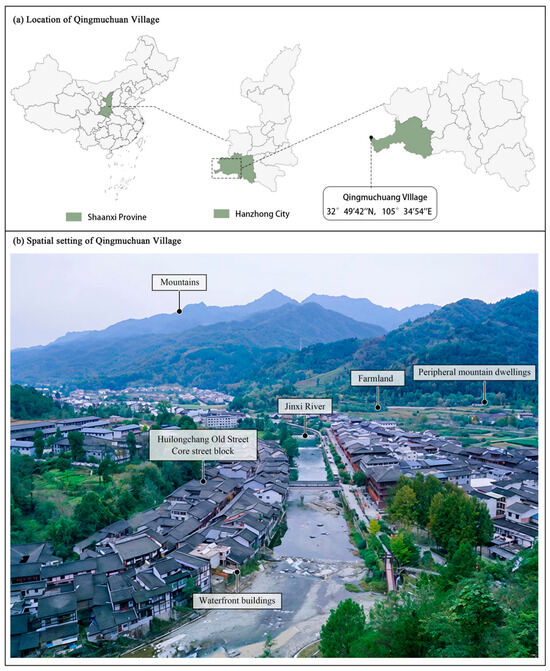
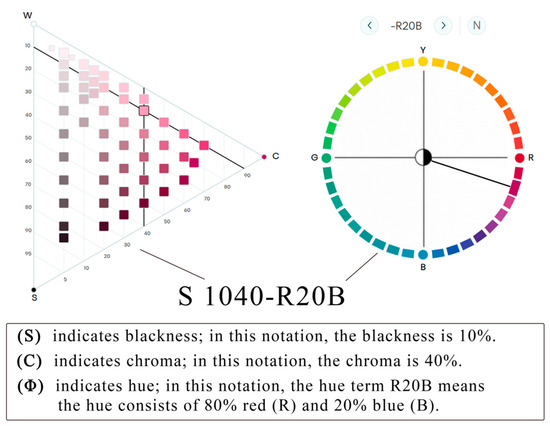
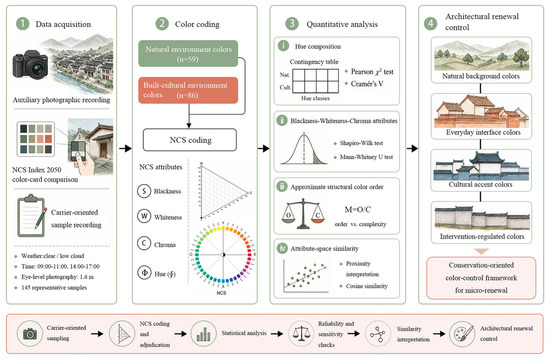
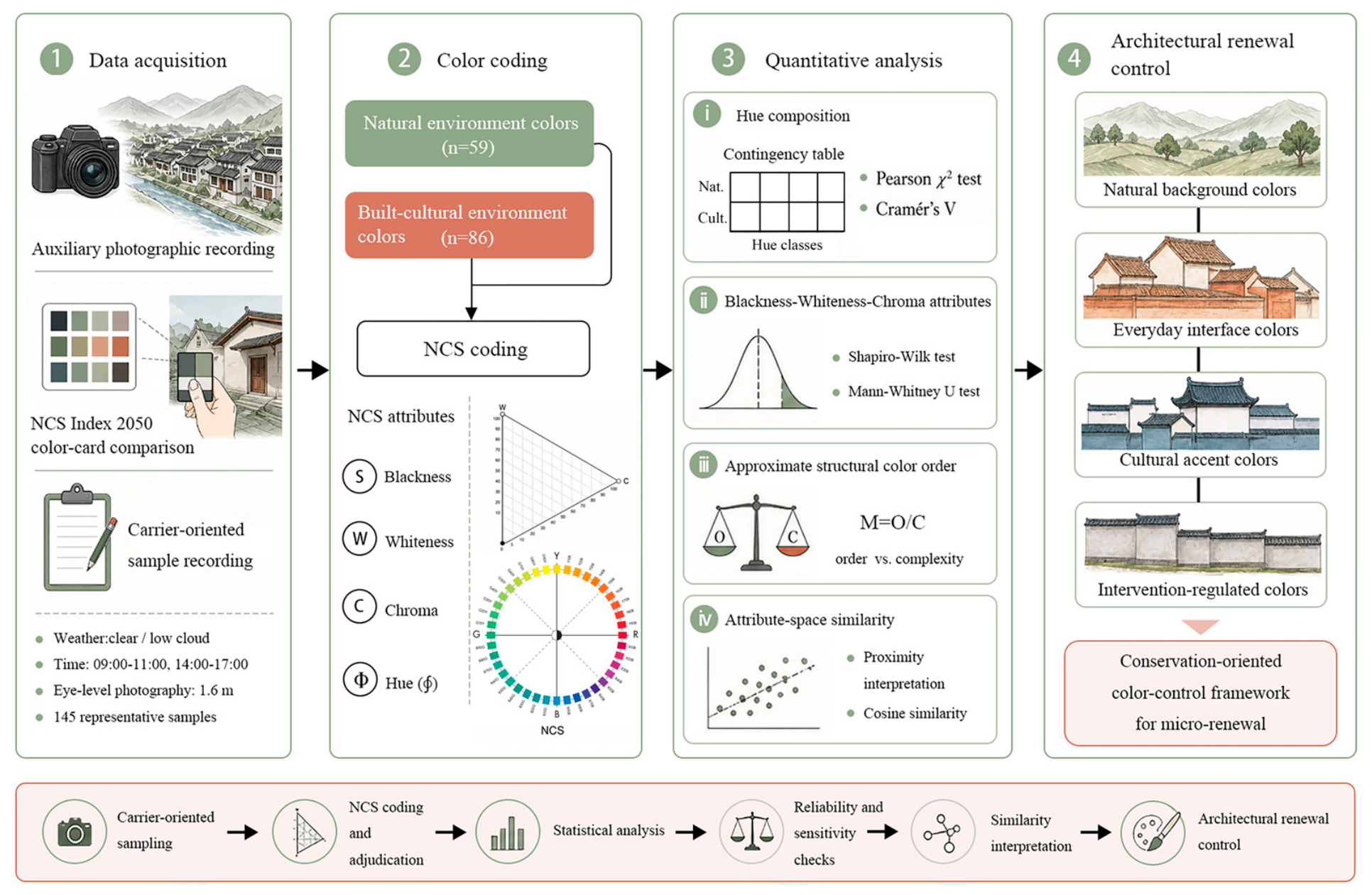
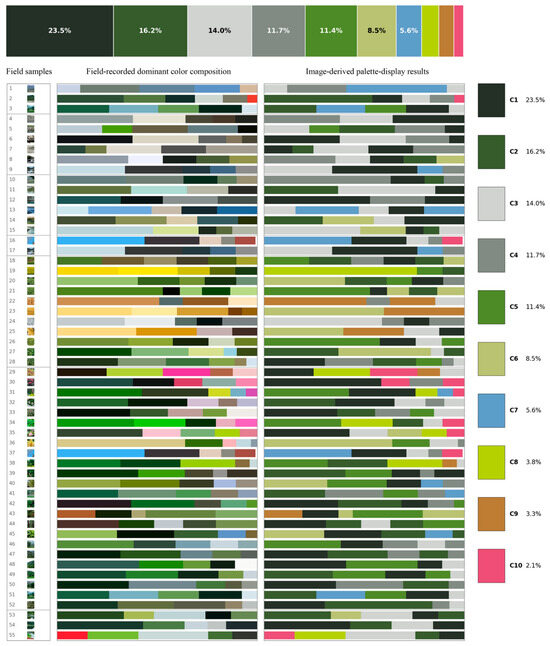
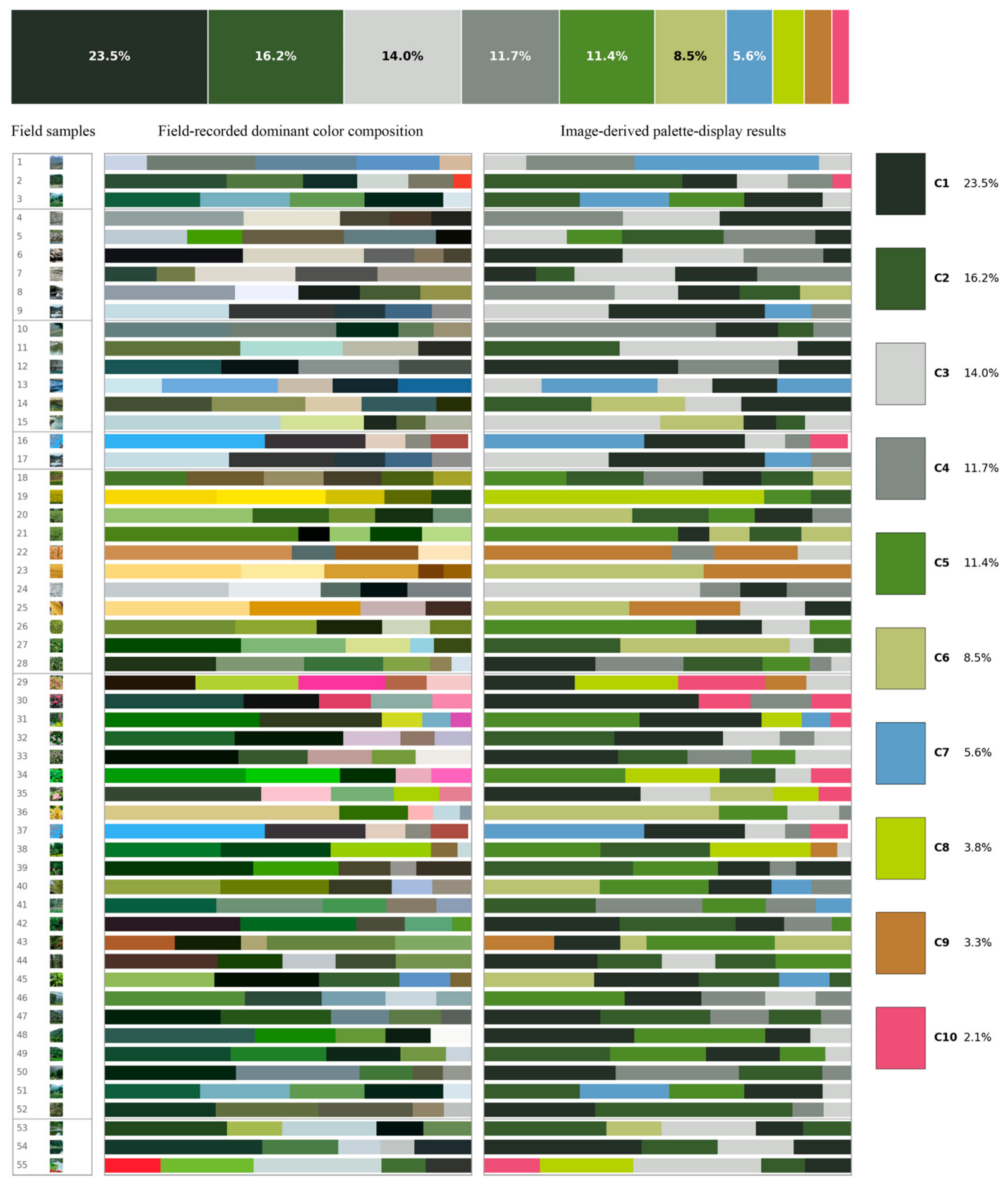
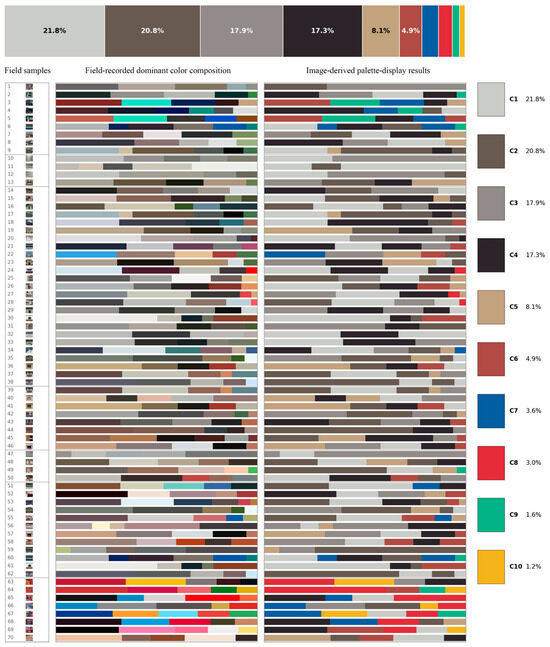
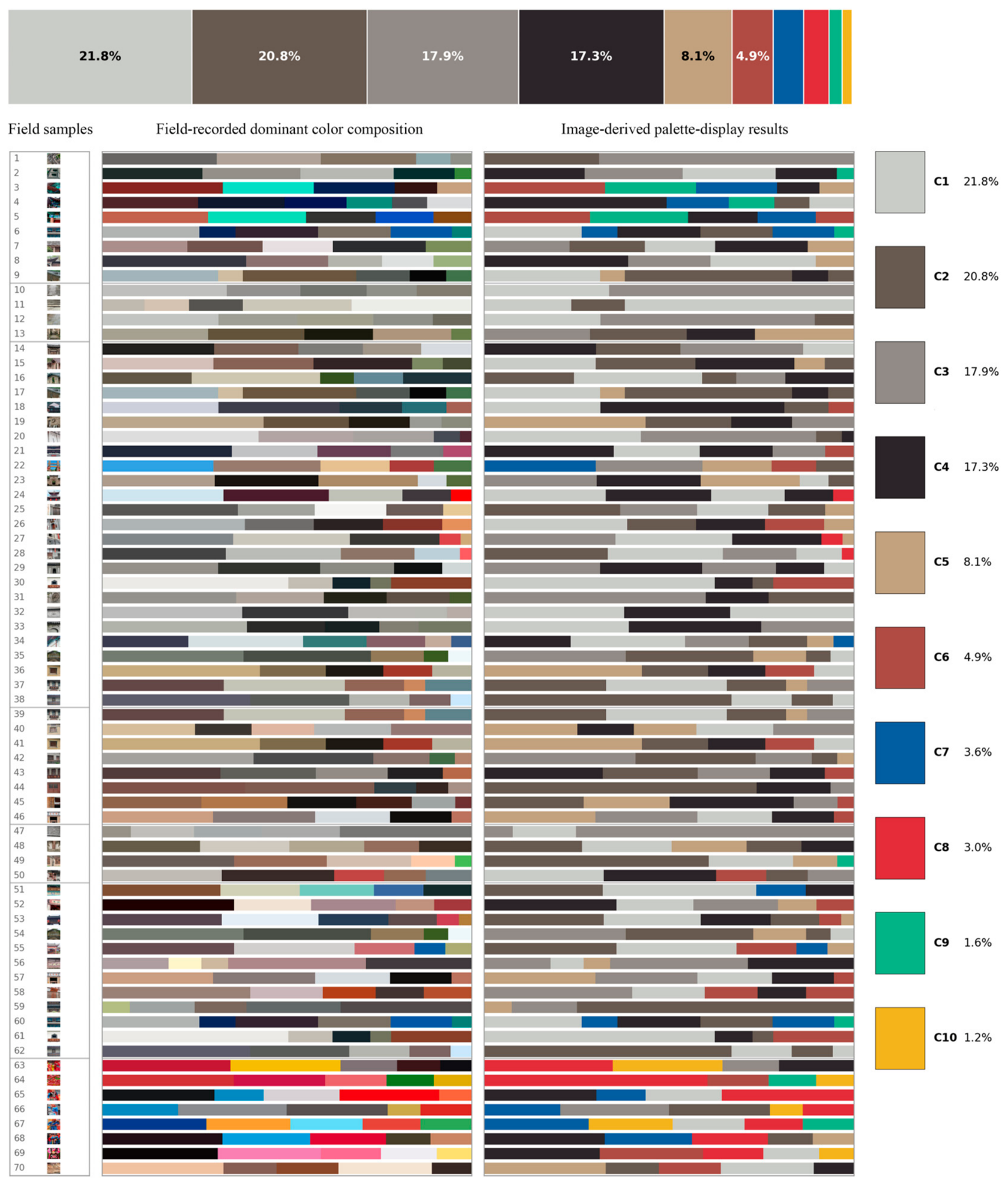
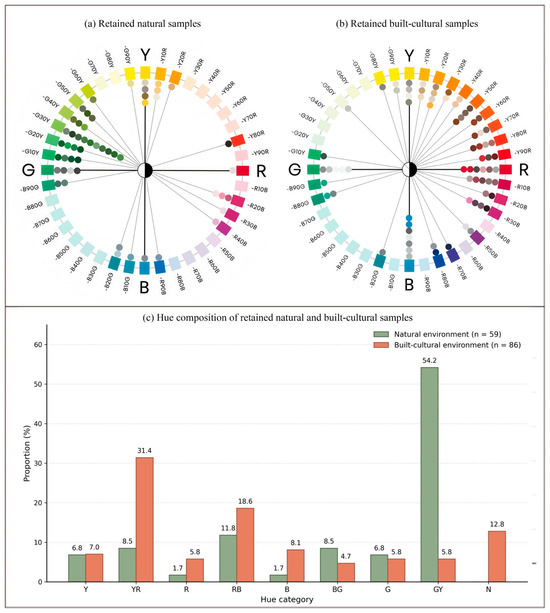
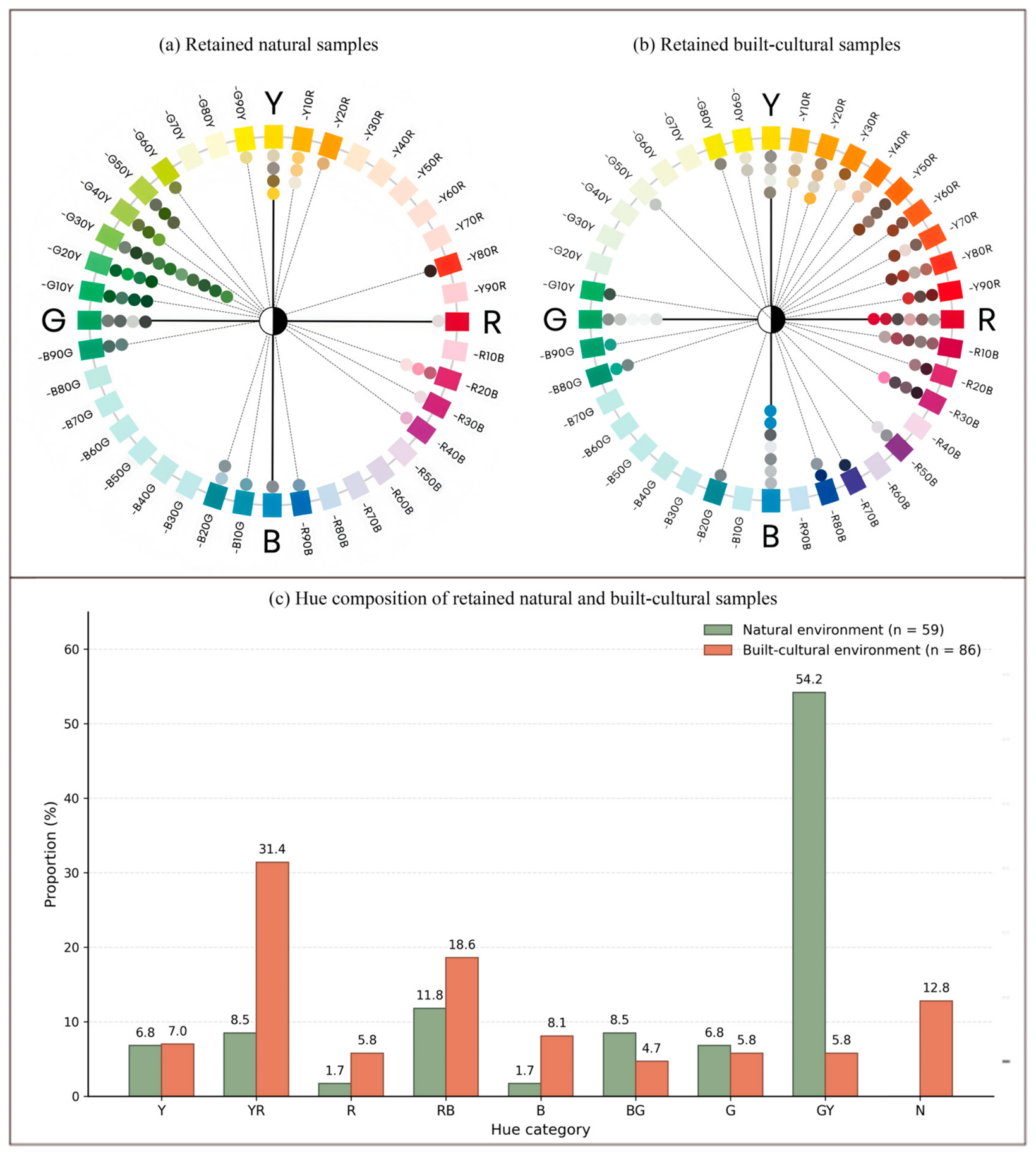
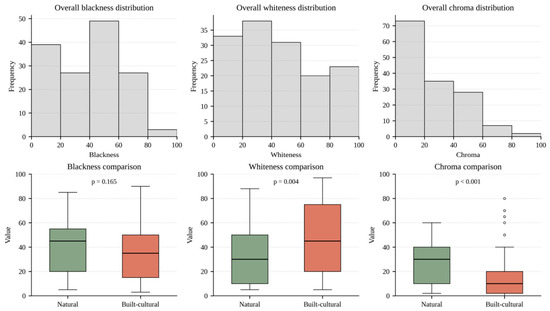
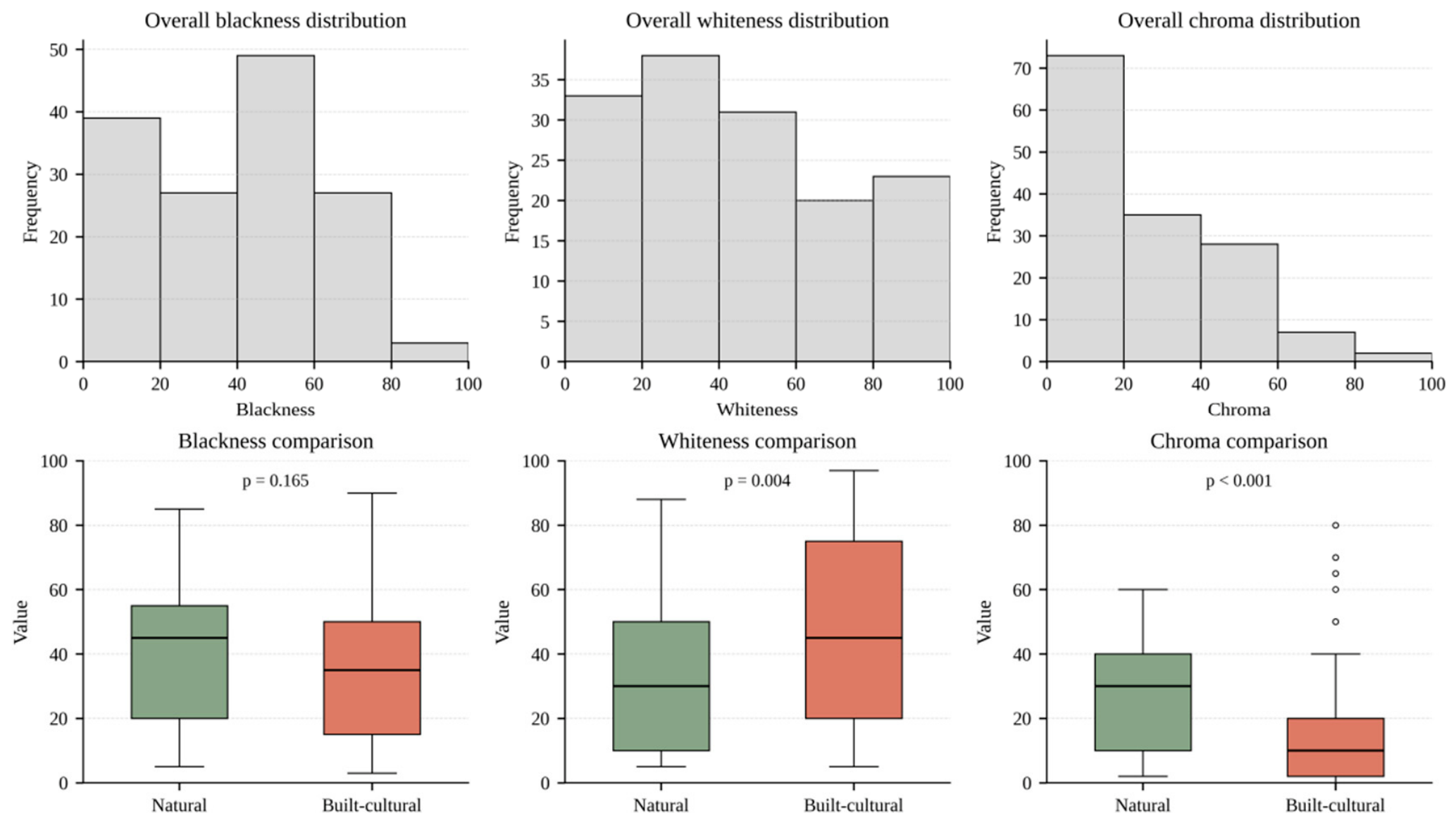
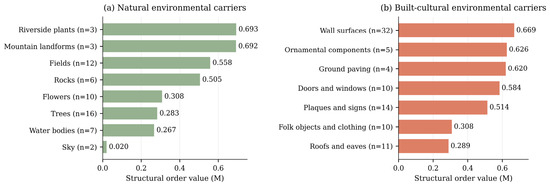
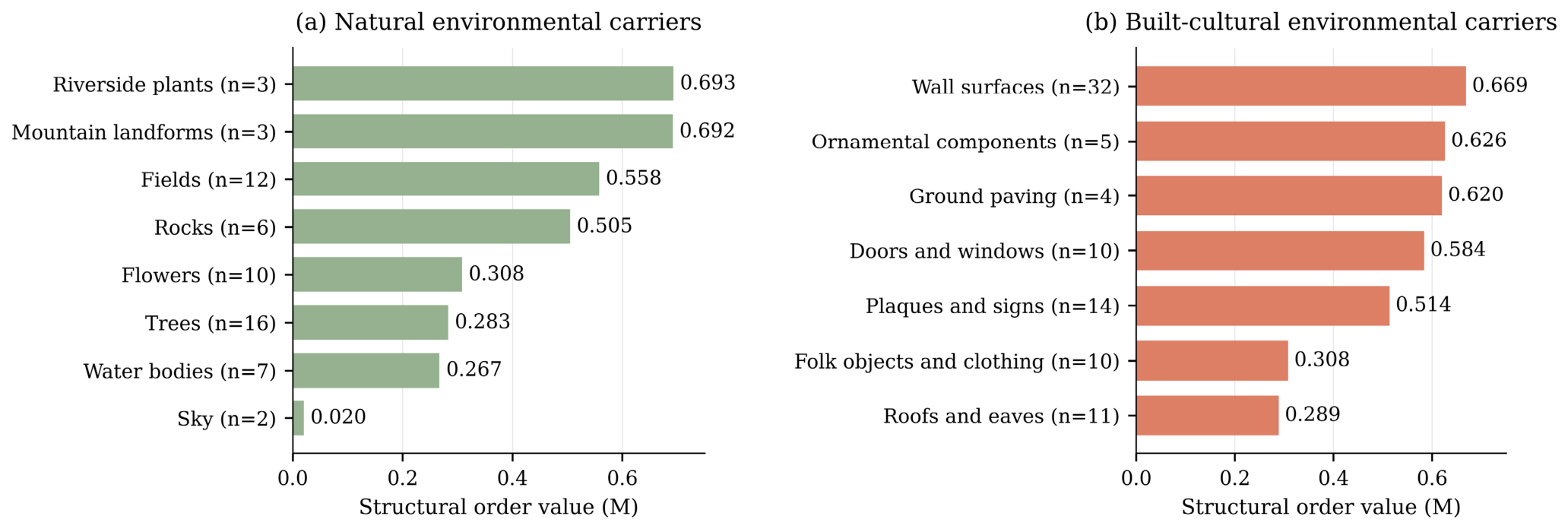
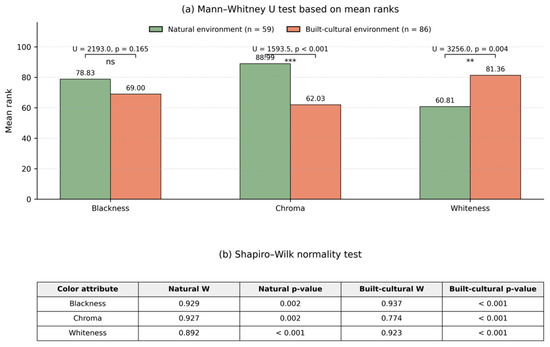
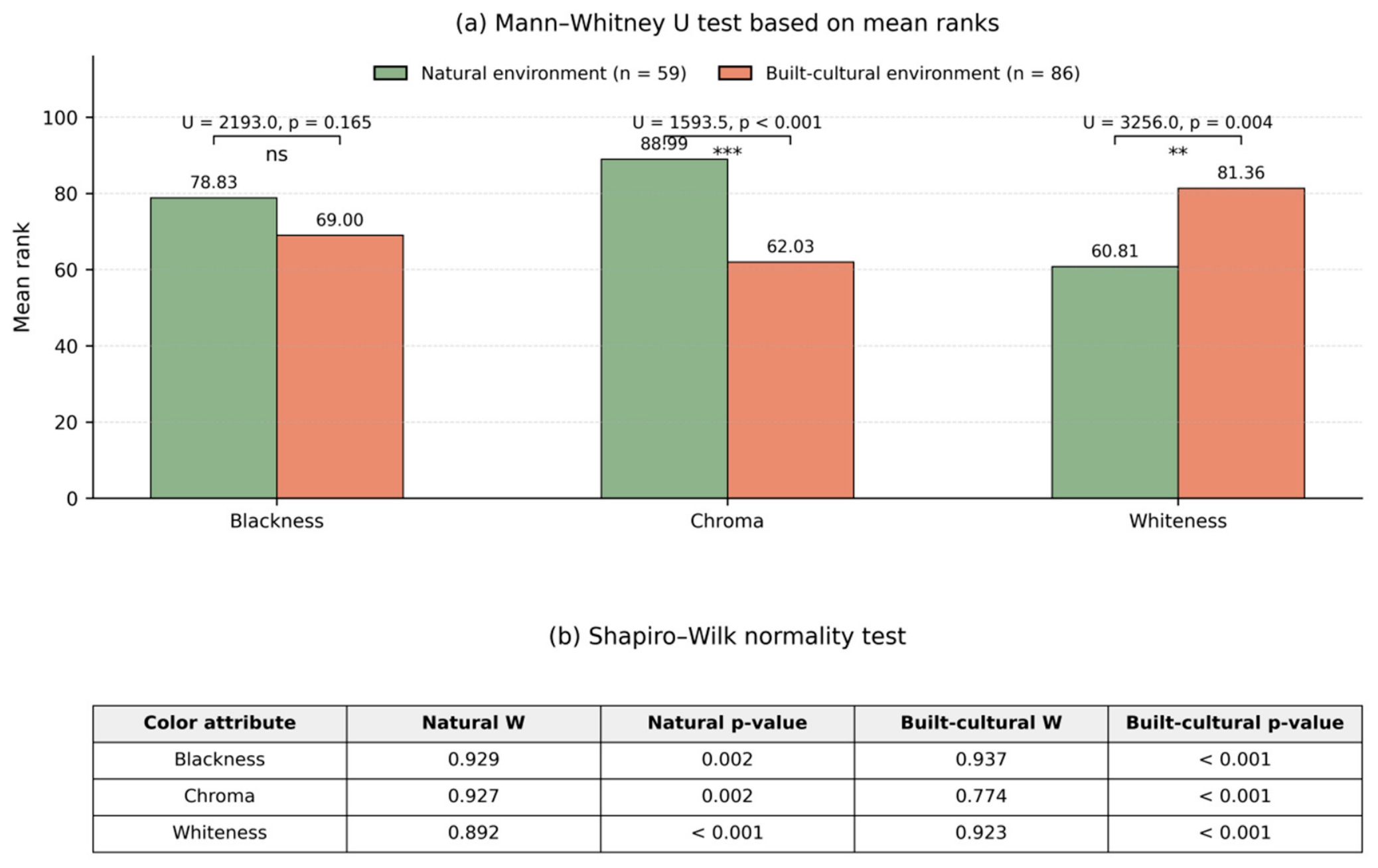
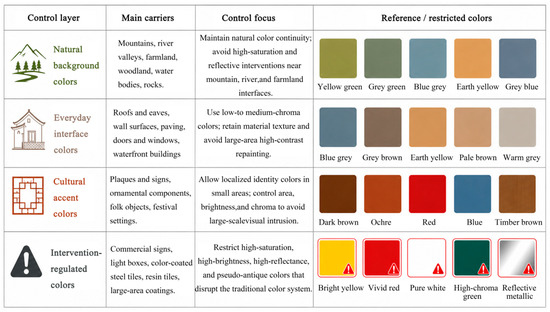
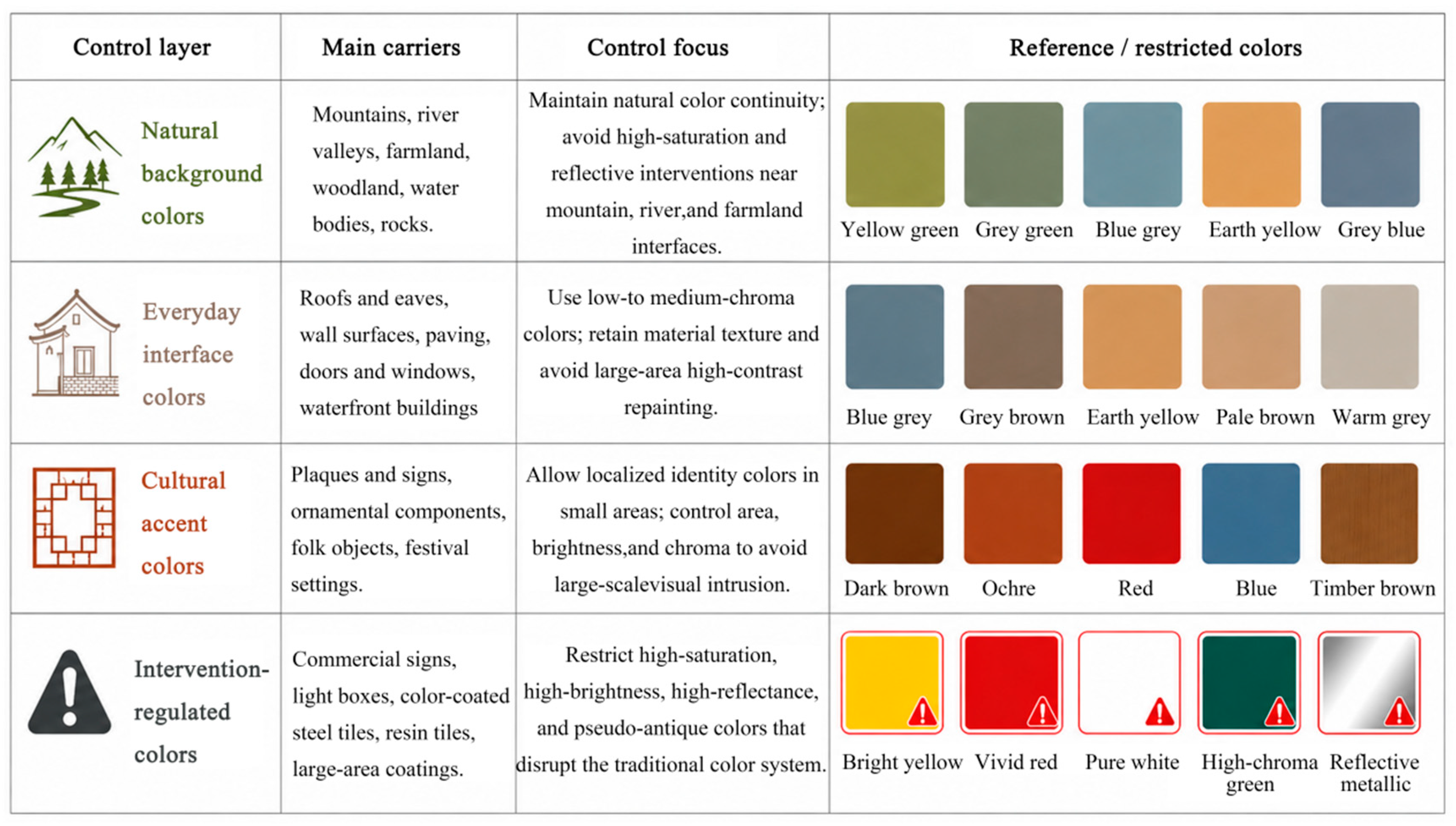

Disclaimer/Publisher’s Note: The statements, opinions and data contained in all publications are solely those of the individual author(s) and contributor(s) and not of MDPI and/or the editor(s). MDPI and/or the editor(s) disclaim responsibility for any injury to people or property resulting from any ideas, methods, instructions or products referred to in the content. |
© 2026 by the authors. Licensee MDPI, Basel, Switzerland. This article is an open access article distributed under the terms and conditions of the Creative Commons Attribution (CC BY) license.