Experimental Study on the Seismic Performance of Assembled Shear Walls Based on UHPC Connections


Abstract
1. Introduction
2. Experimental Methods
2.1. Specimen Design
2.2. Material Properties
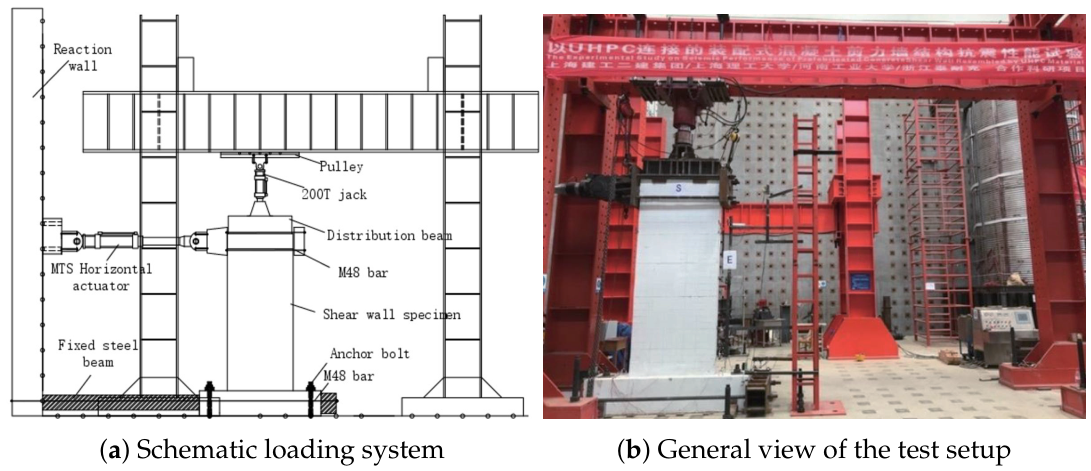
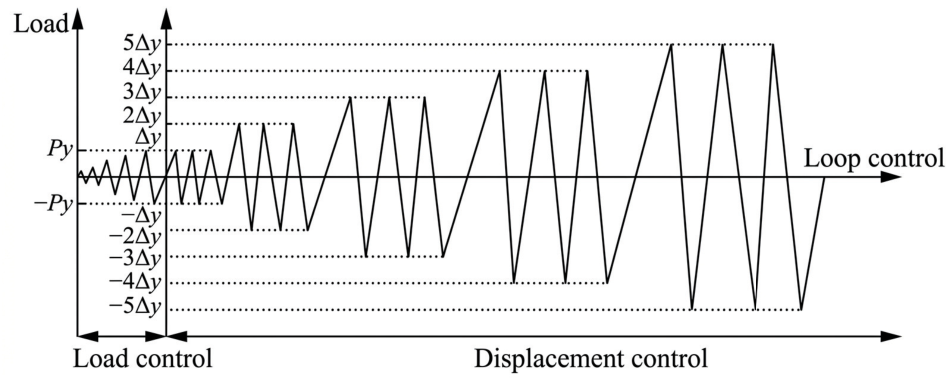
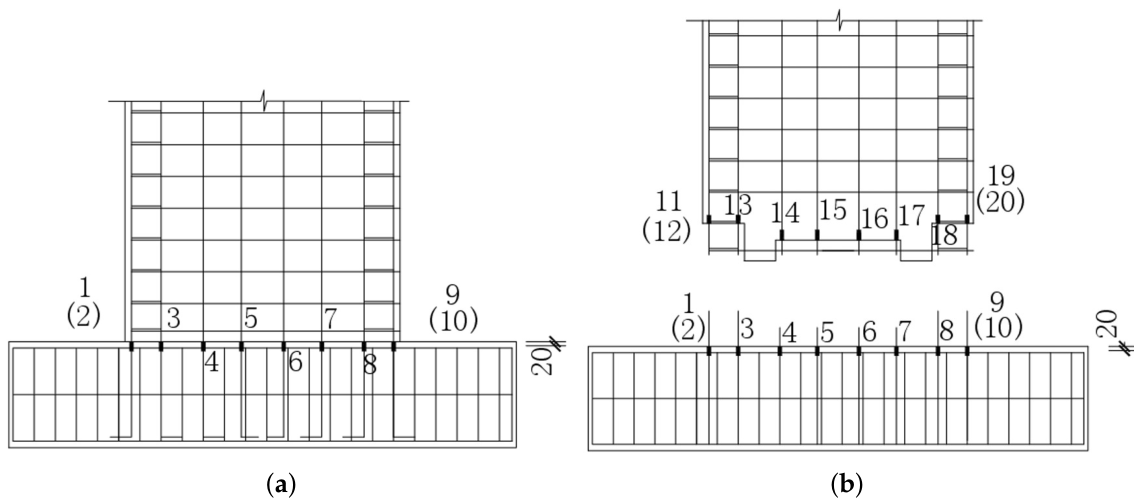
2.3. Test Loading Program and Measurement Point Arrangement
3. Test Phenomenon and Damage Pattern
3.1. Test Phenomenon
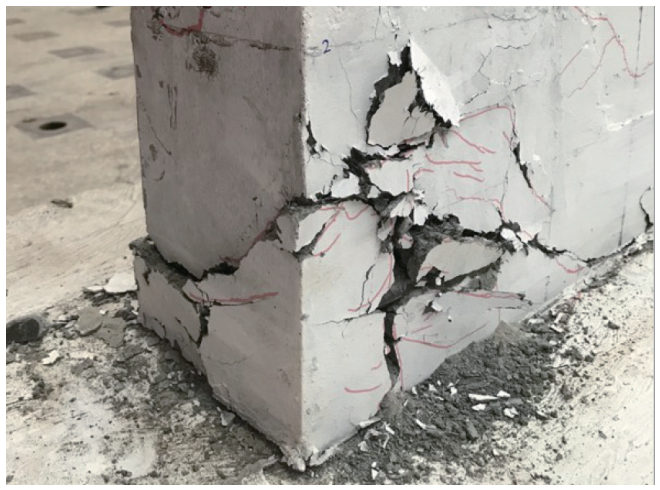
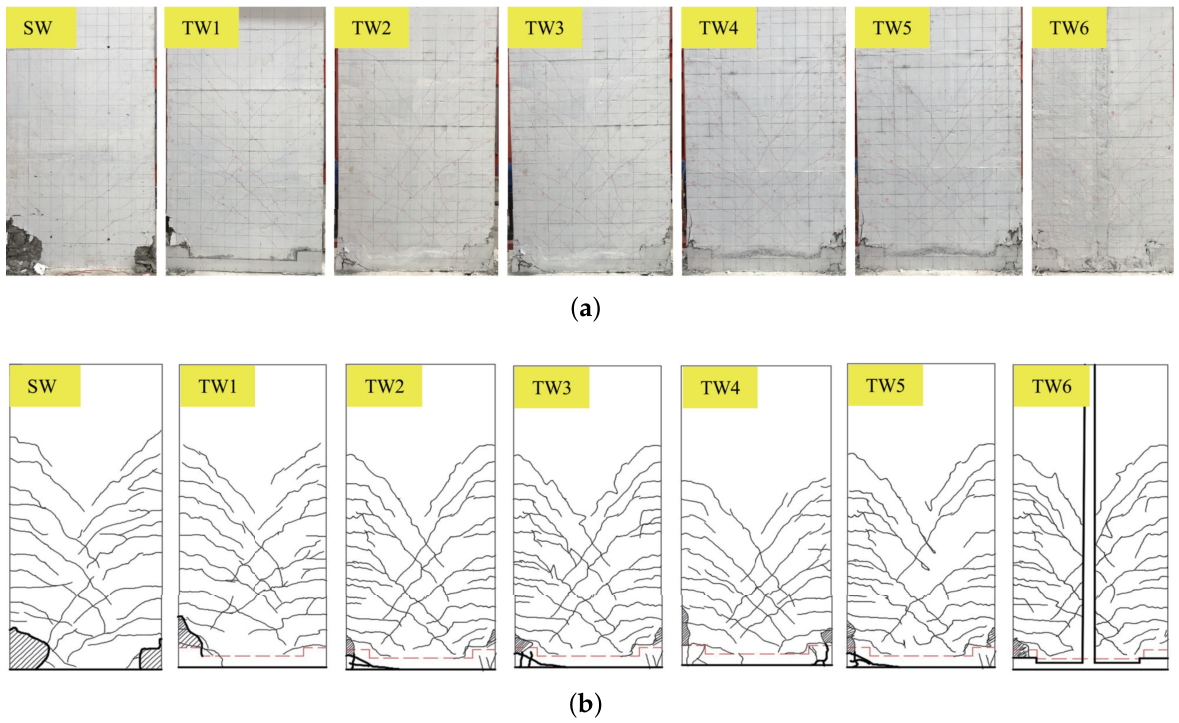
3.2. Damage Pattern
4. Results and Discussion
4.1. Hysteresis Curve
- (1)
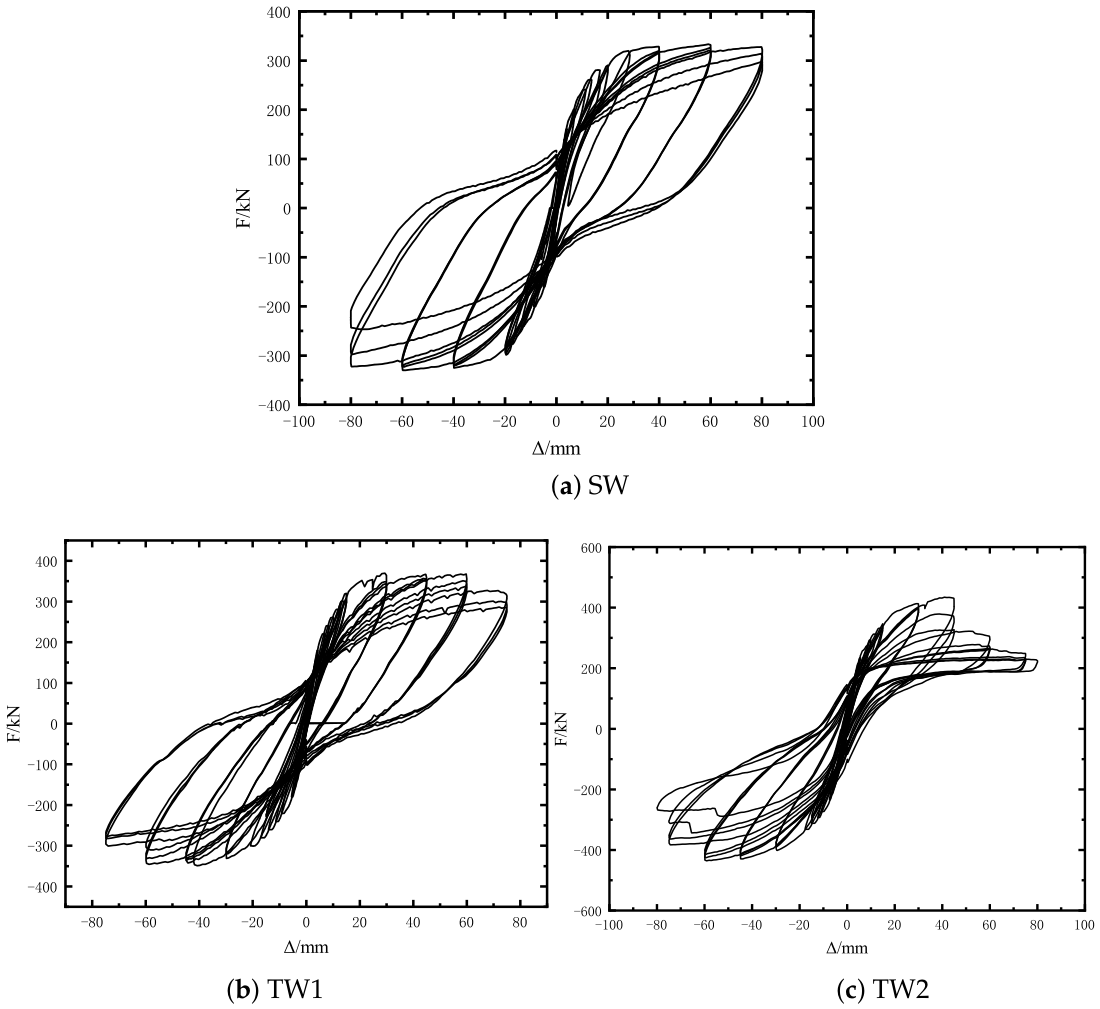
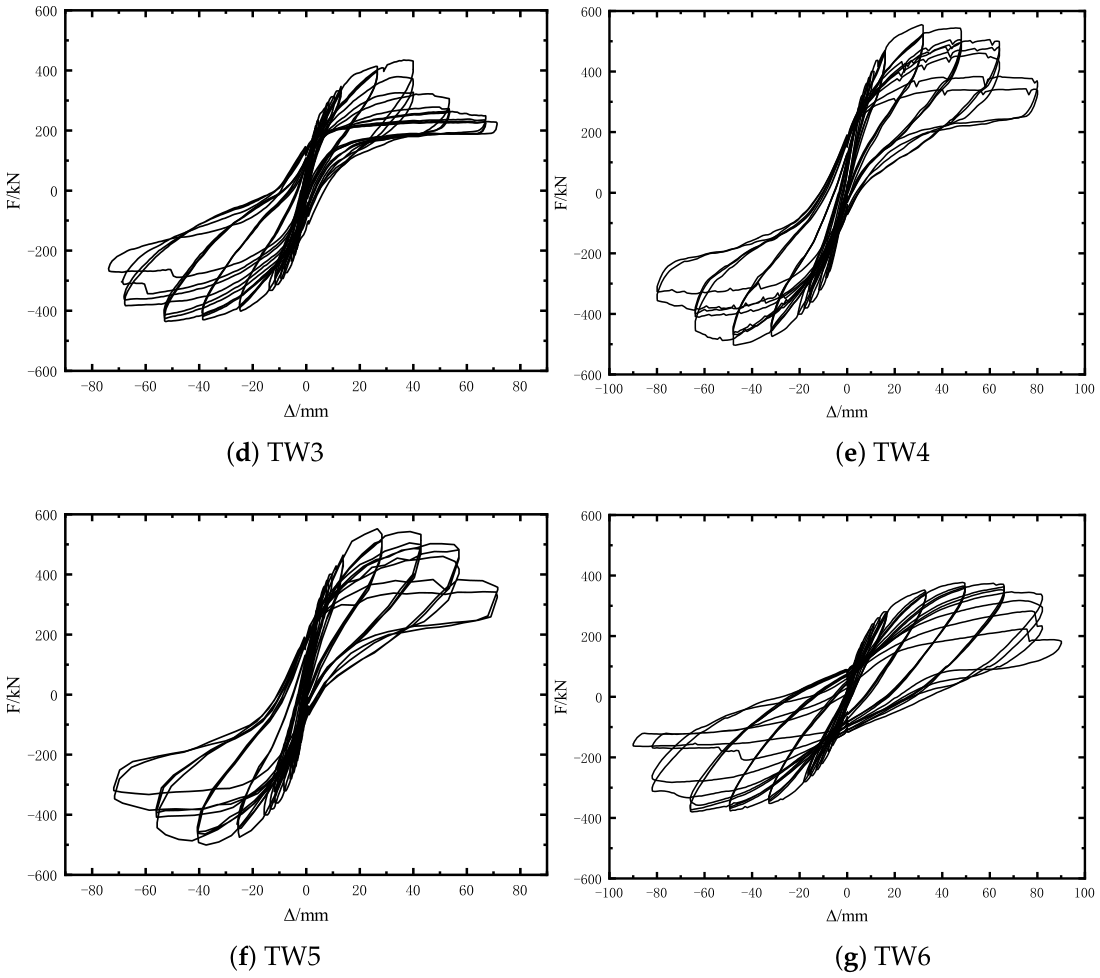
- When specimens SW, TW1, and TW6 have the same axial compression ratio, their hysteresis performance is generally similar. The hysteresis curves appear full, exhibiting no notable “pinching” phenomenon. After reaching the peak load, as the displacement increases, the load is sustained for a period before gradually declining, demonstrating good post-peak load-retention capacity.
- (2)
- Specimens TW1, TW2, TW3, TW4, and TW5 share the same assembly structure, with axial pressure ratios of 0.2, 0.3, 0.33, 0.45, and 0.47, respectively. As the axial pressure ratio increases, the hysteresis curves display significant “pinching,” with more pronounced effects at higher axial pressure ratios. The phenomenon of pinching becomes increasingly evident with rising axial pressure ratios, which correlates with the cracking and localized collapse of the concrete. With an elevated axial pressure ratio, the development of cracks is inhibited, leading to a diminished deformation capacity. TW2 is not used as the sole basis for the axial-compression-ratio trend because its construction defect introduced an additional confounding factor.
- (3)
- Notably, the hysteresis curve of specimen TW2 experiences a sharp decline at a horizontal load corresponding to a displacement of 3y. This abrupt decrease is attributed to localized splitting damage of the UHPC section on the tensile side at this load level, which compromises the grip of the vertical reinforcement within the UHPC and adversely affects the hysteresis performance of the specimen.
4.2. Skeleton Curves
4.3. Carrying Capacity
- (1)
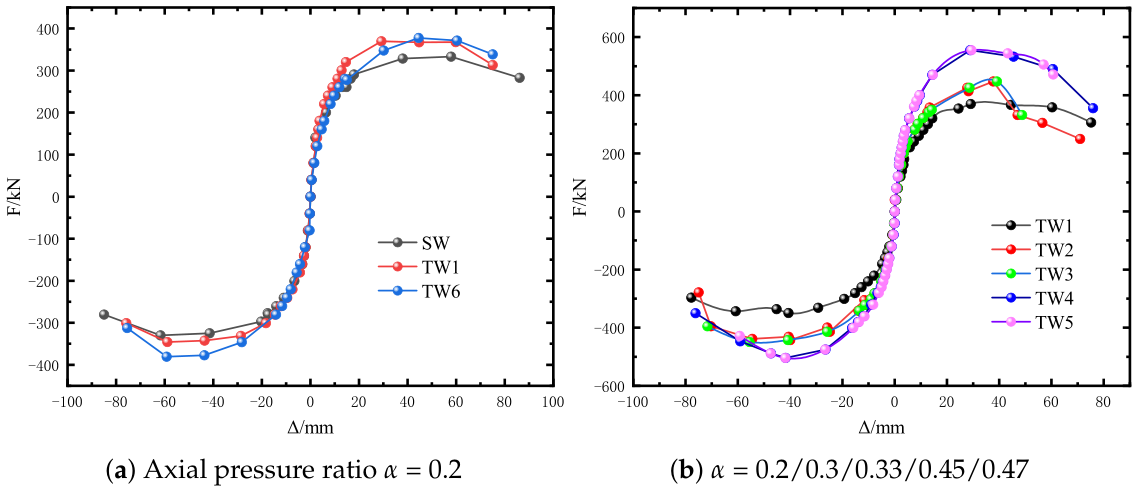
- The greater strength of the UHPC in the back-cast zone at the bottom of the assembled specimens TW1 and TW6 provides localized reinforcement for the vertical reinforcement and vertical distribution bars in the lap zone.
- (2)
- The casting orientation also influenced the comparison. The precast walls of specimens TW1 and TW6 were cast horizontally, whereas the full-cast wall SW was cast vertically, resulting in relatively poor concrete densities. Therefore, the observed capacity increase cannot be attributed solely to the UHPC connection. Additionally, the assembled specimens TW1, TW2, TW3, TW4, and TW5, which featured horizontal joints at the wall base, demonstrated a significant increase in bearing capacity with rising axial compression ratios except that TW2 is discussed separately because of the UHPC-cover defect.
4.4. Deformability
- (1)
- The difference between the displacement ductility coefficients of specimens TW1 and SW is not substantial when the axial compression ratios are equal.
- (2)
- The displacement ductility coefficient of specimen TW6 is approximately 73% of that of the full-cast specimen, attributed to the presence of vertical joints that inhibit the development of cracks in the shear wall, thereby enhancing specimen integrity but reducing deformation capacity.
- (3)
- Specimen TW2 exhibits the smallest displacement ductility coefficient and the poorest deformation capacity due to localized splitting damage on the bottom UHPC side, which adversely impacts the overall deformation of the specimen.
4.5. Stiffness Degradation
- (1)
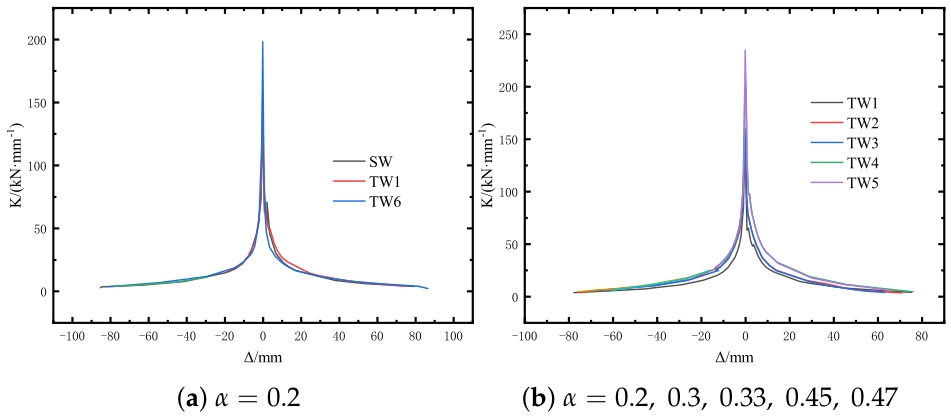
- The stiffness degradation behavior of the assembled specimen is fundamentally similar to that of the full-cast specimen. Stiffness degradation occurs more rapidly before cracking, with the rate of degradation slowing down after the specimen has cracked. Near the destructive load, the stiffness of both specimens converges to a similar value.
- (2)
- The initial stiffness of specimen TW6 is greater; however, due to overall lateral movement, its stiffness aligns closely with that of the full-cast specimen at the point of failure.
4.6. Reinforcement Strain
- (1)
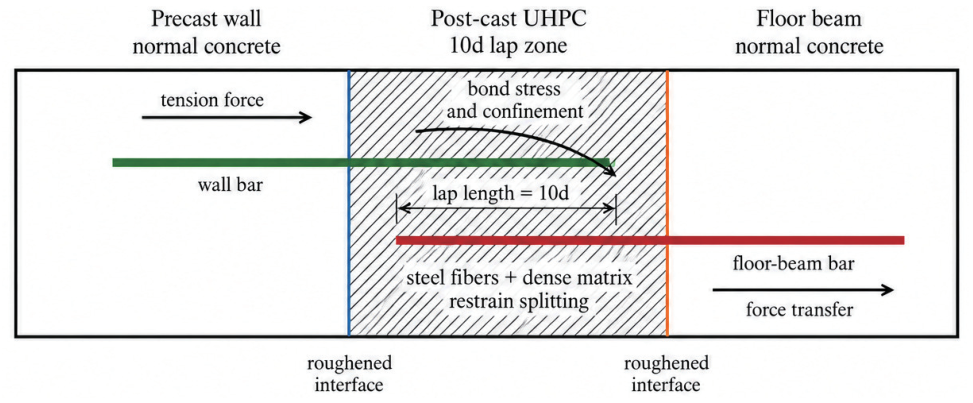
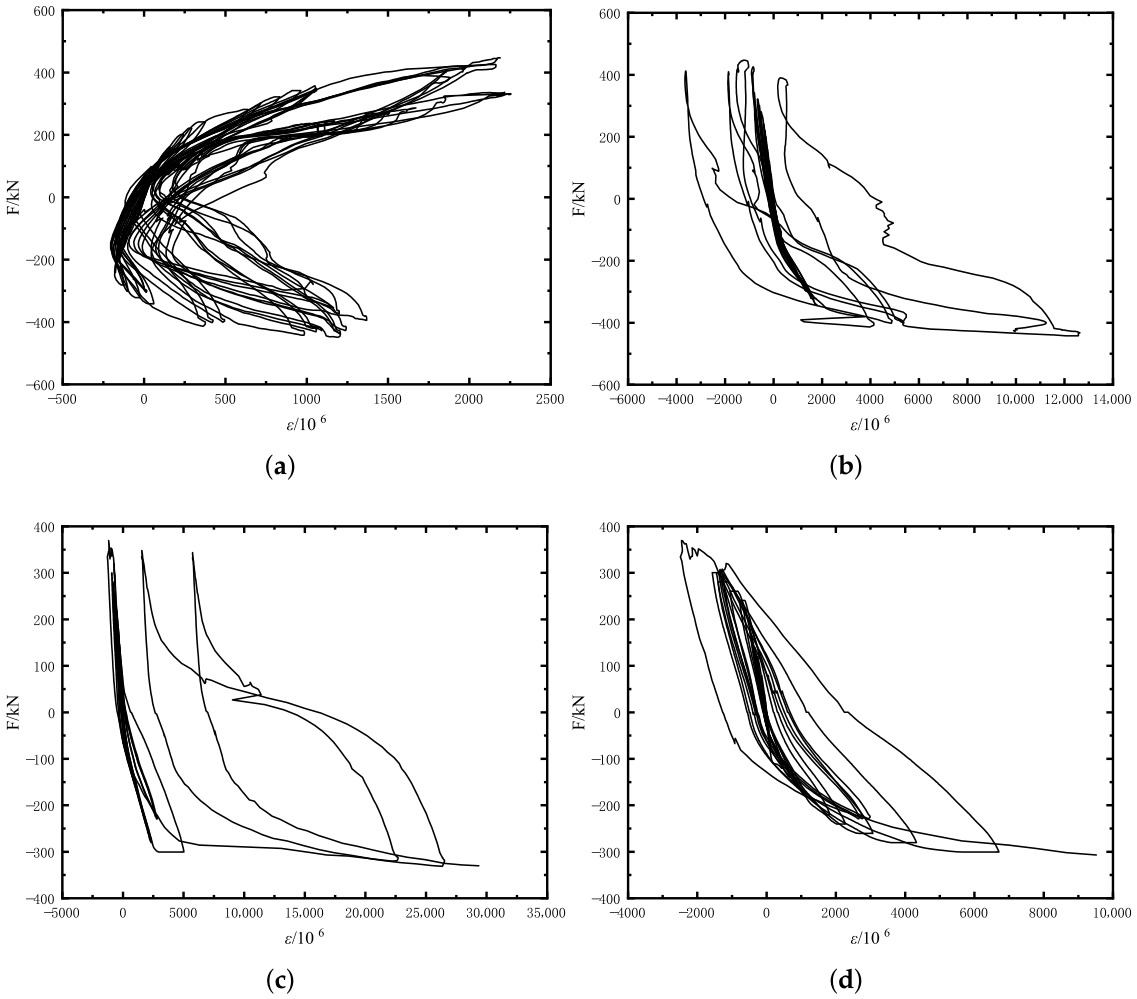
- Prior to the yielding of the reinforcement, the strain growth rate is slow while the specimen is in the elastic stage. Following yielding, the strain of the reinforcement increases rapidly, and the trends of the two curves are similar. The similar strain development on the lapped bars suggests that the UHPC post-cast zone and the 10d lap splice participated in stress transfer in the tested specimens. However, this evidence is indirect because no local bond-slip gauges or interface-slip transducers were installed.
- (2)
- Before global failure, the global displacement and reinforcement strain records did not show evidence of abrupt bar pull-out. Therefore, the anchorage performance can be described as adequate for the tested specimens, while a complete bond-transfer assessment requires dedicated bond-slip or local-slip measurements.
- (3)
- The hysteresis curve of the strain gauge within the floor beam is relatively fuller, attributed to the greater strength of UHPC, which maintains better integrity after the specimen yields. Additionally, no obvious cracks are observed at the bottom, which helps inhibit deformation of the reinforcement.
4.7. Energy Dissipation Capacity
4.8. Mechanical Interpretation, Joint Reliability, and Applicability
5. Conclusions
- (1)
- The specimen with horizontal joints at the bottom of the wall exhibited a damage pattern similar to that of the full-cast specimen, characterized by compression-flexure-dominated damage. Upon failure, the vertical reinforcement of the concealed column yielded, and the concrete at the bottom was crushed. In contrast, the specimen with a vertical joint in the middle of the wall demonstrated bending and shearing damage, with part of the vertical reinforcement of the concealed column shearing off. Within the present test range, the axial compression ratio mainly affected cracking distribution, bearing capacity, and deformation capacity; its influence on the final global failure mode was less pronounced than the influence of joint configuration and local construction quality.
- (2)
- For the specimens tested at an axial compression ratio of 0.20, TW1 and TW6 had slightly higher peak loads than SW, while their ductility and energy-dissipation indices remained in a comparable range. This result is affected by both the UHPC joint and the different casting orientations of the specimens, so it should not be generalized as a universal capacity advantage of all assembled walls.
- (3)
- The reinforcement strain records and absence of abrupt bar pull-out before global failure suggest that the 10d short lap with post-cast UHPC provided adequate stress transfer in the tested specimens. This conclusion is limited by the absence of direct bond-slip and interface-slip measurements. The ultimate drift ratios exceeded 1/100; together with the observed failure modes, stiffness degradation, and energy-dissipation indices, this indicates acceptable seismic deformation capacity for the tested configurations.
- (4)
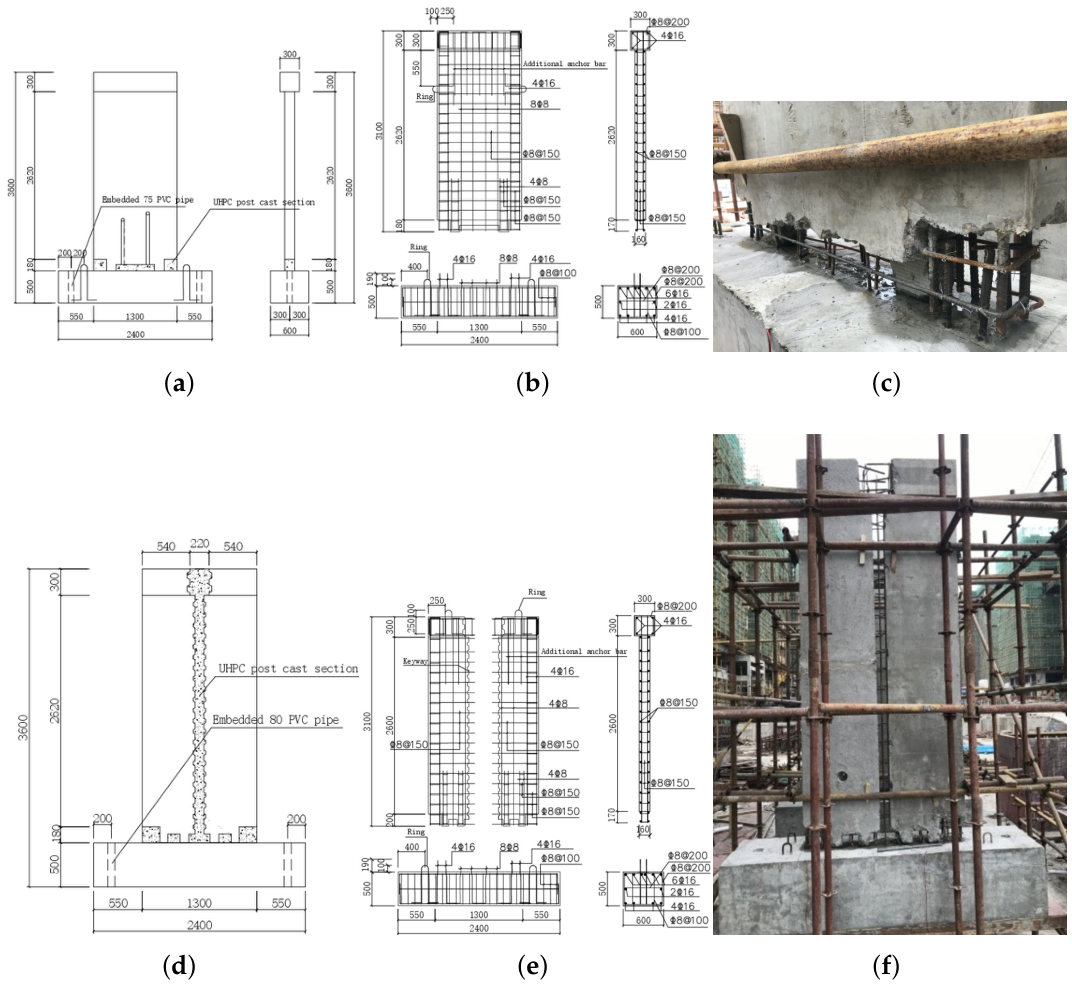
- Visual cracking showed that the UHPC-floor-beam interface was a relatively vulnerable region in several specimens, with cracks tending to develop along the roughened interface. Because no direct interface shear or quantified roughness tests were conducted, this observation should be interpreted as an experimental cracking tendency rather than a quantified statement of weak bond strength. The shaped interface between the precast wall and the UHPC appeared to improve crack distribution compared with a straight horizontal interface, but further interface testing is required.
6. Future Research
- (1)
- To prevent premature cracking at the joints between UHPC and precast concrete, additional in-depth research and testing should be performed on the interface treatment between UHPC and ordinary concrete.
- (2)
- When implementing this new type of connection in actual projects, the shear capacity of the shear walls can be enhanced by incorporating shear-resisting keys and other mechanisms.
- (3)
- Further investigations should be conducted to examine the influence of the thickness of the protective layer of UHPC at concealed columns on the seismic performance of the shear walls.
- (4)
- Comparative specimens with normal-concrete post-cast zones should be tested to quantify how the longer lap length required in normal concrete changes the force-transfer mechanism, construction efficiency, and seismic response.
- (5)
- For application in high-seismic regions, additional validation should include interface cyclic-shear tests, local bond-slip and joint-opening measurements, repeated wall specimens, and dynamic or pseudo-dynamic loading protocols.
Author Contributions
Funding
Data Availability Statement
Conflicts of Interest
Abbreviations
| UHPC | Ultra-high performance concrete |
| SW | Cast-in-place control specimen |
| TW | Assembled shear-wall specimen |
References
- JGJ 1-2014; Technical Specification for Precast Concrete Structures. China Architecture & Building Press: Beijing, China, 2014.
- Qin, C.G.; Gao, Z.Y.; Yang, L.; Wu, T. Study on shear resistance of precast concrete sleeve grouting joint with double interface. J. Build. Struct. 2024, 45, 223–235. [Google Scholar] [CrossRef]
- Qian, J.R.; Yang, X.K.; Qin, H.; Peng, Y.Y.; Zhang, J.M.; Li, J.S. Tests on seismic behavior of pre-cast shear walls with various methods of vertical reinforcement splicing. J. Build. Struct. 2011, 32, 51–59. [Google Scholar]
- Zhao, J.H.; Ling, L.J.; Wan, L.; Wang, C.; Liu, Z.J.; Wang, T. Experimental study on strength of grouting materials for sleeve grouting of prefabricated concrete structures. China Concr. Cem. Prod. 2023, 75–79. [Google Scholar]
- Yu, Q.; Tang, Z.M.; Zhang, X.K.; Fan, B.X.; Zhang, Z.; Chen, Z.H. Test on seismic behavior of L-shaped precast shear wall with grouted sleeve lapping connector. J. Harbin Inst. Technol. 2023, 55, 72–83. [Google Scholar]
- Lu, Z.W.; Wu, B.; Sakata, H.; Huang, J.; Zhang, M.Z. Mechanical performance of prefabricated concrete beam-column joints with double-grouted sleeve connectors: A numerical and theoretical study. Structures 2023, 56, 104870. [Google Scholar]
- Qian, F.; Zheng, S.C.; Wang, Y.; Xiang, H.W.; Wang, Y.F.; Xu, R.Q. Failure mechanism analysis and partial-interaction numerical simulation of Grouted Sleeve Connections (GSC) in tensile behavior. Case Stud. Constr. Mater. 2024, 20, e03040. [Google Scholar] [CrossRef] [Scilit]
- Huang, E.H.; Lin, P.; Wang, C.L. Seismic experimental study of prefabricated columns with slurry-anchor lap connection. Sichuan Build. Mater. 2019, 45, 94–95. [Google Scholar]
- Qian, J.R.; Peng, Y.Y.; Zhang, J.M.; Qin, H.; Li, J.S.; Liu, G.Q.; Zhao, F.D.; Li, L.R. Tests on seismic behavior of pre-cast shear walls with vertical reinforcements spliced by grout sleeves. Build. Struct. 2011, 41, 1–6. [Google Scholar]
- Ma, C.F.; Jiang, H.B.; Zhang, Z.B.; Cao, Z. Ultrasonic testing on grouting plumpness of prefabricated concrete shear wall restraint grouting-anchoring overlap-joint. Concrete 2020, 132–136+140. [Google Scholar]
- Wang, C.L.; Song, M.M. Seismic performance of slurry anchor lapping of corrugated pipe restrained by spiral stirrup. Ind. Constr. 2021, 51, 126–131. [Google Scholar]
- Zhong, Z.L.; Li, G.F.; Shi, S.H.; Zhao, M.; Du, X.L. Experimental study on out-of-plane seismic performance of sidewall connections of utility tunnels with composite plates. Eng. Mech. 2024, 41, 39–49+105. [Google Scholar]
- Wan, L.J.; Zhao, Y.Q.; Yu, M.P.; Li, N.; Sun, X.L. Experimental study on spatial mechanical properties of grout anchor lap joints. Structures 2022, 44, 728–739. [Google Scholar] [CrossRef] [Scilit]
- Chen, J.W.; Su, Y.P. Prefabricated concrete shear wall structure and its connecting technology. World Earthq. Eng. 2013, 29, 38–48. [Google Scholar]
- Xue, W.C.; Hu, X. Overview of research progress on precast concrete building structure system. Constr. Technol. 2018, 47, 1–5+43. [Google Scholar]
- Li, G.; Huang, X.K.; Liu, X.; Li, Z.L.; Li, R.; Tian, C.Y.; Liu, S.M. Experimental study on seismic behavior of monolithic precast concrete shear wall with rebar overlapped in pre-reserved area for subsequent concrete casting. J. Build. Struct. 2016, 37, 193–200. [Google Scholar]
- Yang, Y. Experimental Research on Seismic Performance of Precast Shear Wall with Vertical Joint Surface. Master’s Thesis, Harbin Institute of Technology, Harbin, China, 2011. [Google Scholar]
- Gu, Q.; Dong, G.; Wang, X.; Jiang, H.B.; Peng, S.M. Research on pseudo-static cyclic tests of precast concrete shear walls with vertical rebar lapping in grout-filled constrained hole. Eng. Struct. 2019, 189, 396–410. [Google Scholar]
- Ding, W.S.; Wang, Y.Z.; Nie, Z.L.; Wang, T.; Yang, S. Experimental study on shear behavior of UHPC-T beams. J. Technol. 2024, 24, 55–62. [Google Scholar]
- Huang, Y.; Xia, W.L.; Hong, Z.C. Experimental and theoretical model study on shear performance of ultra-high performance concrete corbels. J. Build. Struct. 2024, 45, 108–117. [Google Scholar]
- Liu, R.C.; Dong, E.L.; Ma, X.W.; Song, S.M. Research progress on shrinkage of ultra high performance concrete. Build. Struct. 2024, 54, 91–98. [Google Scholar]
- Zheng, Q.Z.; Rang, M.; Li, P. Experimental study on the bond behavior between ultra-high performance concrete and steel bars. J. Univ. Shanghai Sci. Technol. 2018, 40, 398–402. [Google Scholar]
- Wang, R.L.; Ma, B. Study on bond anchorage test of steel bar and ultrahigh performance concrete. Urban Roads Bridg. Flood Control 2018, 204–207+22–23. [Google Scholar]
- Farzad, M.; Azizinamini, A. Experimental and numerical study on Mechanical Properties of Ultra High Performance concrete (UHPC). Constr. Build. Mater. 2017, 156, 402–411. [Google Scholar] [CrossRef] [Scilit]
- Wu, C.; Hwang, H.J.; Ma, G. Bond Strength of Tension Lap Splices in Pre-Damaged Reinforced Concrete Beams Retrofitted with Carbon Fiber- Reinforced Polymer and Ultra-High-Performance Concrete. ACI Struct. J. 2023, 120, 103–118. [Google Scholar]
- Li, T.; Nie, Z.; Wang, S.Q.; Long, L.B.; Ma, Y.Q. Research on the corrosion resistance and mechanical properties of the bonding surface between ultra-high performance concrete and normal concrete. China Concr. Cem. Prod. 2024, 10–15+21. [Google Scholar]
- Dapper, P.R.; Ehrendring, H.Z.; Pacheco, F.; Christ, R.; Menegussi, G.C.; Oliveira, M.F.; Tutikian, B.F. Ballistic Impact Resistance of UHPC Plates Made with Hybrid Fibers and Low Binder Content. Sustainability 2021, 13, 13410. [Google Scholar] [CrossRef] [Scilit]
- Zahid, M.Z.A.M.; Bakar, B.H.A.; Nazri, F.M.; Alasmari, H.; Latiff, M.F.P.M.; Ayob, A.; Muhammad, K.; Ahmad, M.M.; Manaf, B.H.A.; Ishak, M.K. Mechanical, Durability and Rheology Properties of Ultra High Performance Concrete (UHPC) with Low Cement Content. IOP Conf. Ser. Earth Environ. Sci. 2021, 920, 012005. [Google Scholar] [CrossRef] [Scilit]
- Khan, M.I.; Fares, G.; Abbas, Y.M.; Alqahtani, F.K. Behavior of Non-Shear-Strengthened UHPC Beams under Flexural Loading: Influence of Reinforcement Percentage. Appl. Sci. 2021, 11, 11346. [Google Scholar]
- Li, P.; Zheng, Q.Z.; Long, L.B.; Chen, G. Effect of rebar embedment length on the bond behavior between ultra-high performance concrete and reinforcing bars. Build. Constr. 2016, 38, 1722–1723+1729. [Google Scholar]
- Liu, X.H.; Zheng, S.S.; Wang, W.; Liu, H.; Zheng, Y.; Zheng, H. Experimental study on the seismic behaviour of a corroded T-shaped RC shear wall. J. Build. Eng. 2023, 76, 107071. [Google Scholar] [CrossRef] [Scilit]
- Xu, Z.F.; Chen, Z.F.; Dong, X.T.; Zuo, Y.N. Experimental Study on Seismic Behavior of Lightweight Concrete-Filled Cold-Formed Steel Shear Walls Strengthened Using Horizontal Reinforcement. J. Earthq. Eng. 2023, 27, 4126–4160. [Google Scholar]
- Zhang, X.Z.; Lang, D.S.; Chen, J.J.; Niu, S.X.; Zhang, J.W. Seismic performance research on prefabricated RC shear walls with cast-in-place wedge-shaped joint connection. Build. Struct. 2017, 47, 75–81+88. [Google Scholar]
- Zhao, C.H.; Li, H.D.; Deng, K.L. Experimental Study on Bonding Performance Between Rebar and Coarse Aggregate Ultra-High Performance Concrete. J. Southwest Jiaotong Univ. 2019, 54, 937–944. [Google Scholar]
- JGJ/T 101-2015; Specification for Seismic Test of Buildings. China Architecture & Building Press: Beijing, China, 2015.






| Test Piece No. | Wall Processing Method | Joint Location | Interface Processing Mode | Design Axial Compression Ratio | Axial Pressure/kN |
|---|---|---|---|---|---|
| SW | Integral pouring | – | – | 0.2 | 660 |
| TW1 | Horizontal joint | Bottom of wall | Rough surface | 0.2 | 660 |
| TW2 | Horizontal joint | Bottom of wall | Rough surface | 0.3 | 1100 |
| TW3 | Horizontal joint | Bottom of wall | Rough surface | 0.33 | 1210 |
| TW4 | Horizontal joint | Bottom of wall | Rough surface | 0.45 | 1560 |
| TW5 | Horizontal joint | Bottom of wall | Rough surface | 0.47 | 1750 |
| TW6 | Vertical joint | In wall | Rough surface | 0.2 | 660 |
| Component | Cement | Silica Fume | Quartz Sand | Ground Filler | Super Plasticizer | Water | Superfine Steel Fiber |
|---|---|---|---|---|---|---|---|
| Mass ratio | 1.0 | 0.3 | 1.34 | 0.3 | 0.005 | 0.2 | 2.0% |
| Rebar Specifications | Yield Strength (fy/MPa) | Ultimate Strength (fu/MPa) |
|---|---|---|
| HRB400 rebar with a diameter of 8 | 525.94 | 701.25 |
| HRB400 rebar with a diameter of 16 | 557.66 | 698.76 |
| Specimens | Cracking Load (Fcr/kN) | Yield Load (Fy/kN) | Peak Load (Fp/kN) | Ultimate Load (Fu/kN) | ||||||||
|---|---|---|---|---|---|---|---|---|---|---|---|---|
| Forward | Reverse | Average | Forward | Reverse | Average | Forward | Reverse | Average | Forward | Reverse | Average | |
| SW | 160 | −160 | 160 | 308.30 | −304.50 | 306.40 | 333.80 | −325.10 | 329.45 | 283.73 | −276.34 | 280.03 |
| TW1 | 220 | −180 | 200 | 323.30 | −314.11 | 318.71 | 369.80 | −348.99 | 359.40 | 314.33 | −296.64 | 305.48 |
| TW2 | 220 | −220 | 220 | 389.59 | −404.31 | 396.95 | 447.58 | −442.46 | 445.02 | 380.44 | −376.09 | 378.26 |
| TW3 | 201 | 221 | 211 | 339.02 | −338.97 | 339.00 | 444.71 | −449.03 | 446.87 | 332.04 | −394.82 | 363.43 |
| TW4 | 260 | −260 | 260 | 430.17 | −443.50 | 436.84 | 554.92 | −503.69 | 529.31 | 471.69 | −428.14 | 449.92 |
| TW5 | 240 | −260 | 250 | 424.43 | −373.19 | 398.81 | 554.92 | −503.68 | 529.30 | 471.71 | −428.12 | 449.91 |
| TW6 | 180 | −180 | 180 | 332.47 | −362.00 | 347.24 | 377.57 | −380.41 | 378.99 | 320.93 | −323.35 | 322.14 |
| Specimens | Cracking Displacement (cr/mm) | Yield Displacement (y/mm) | Peak Displacement (p/mm) | Ultimate Displacement (u/mm) | |||||||||
|---|---|---|---|---|---|---|---|---|---|---|---|---|---|
| Forward | Reverse | Average | Forward | Reverse | Average | Forward | Reverse | Average | Forward | Reverse | Average | ||
| SW | 3.52 | −3.53 | 3.53 | 22.71 | −25.94 | 24.32 | 38.02 | −41.49 | 39.76 | 89.17 | −94.97 | 92.07 | 3.79 |
| TW1 | 5.73 | −4.8 | 5.3 | 15.25 | −23.74 | 19.5 | 29.08 | −40.63 | 34.86 | 72.93 | −76.85 | 74.89 | 3.84 |
| TW2 | 4.1 | −4.15 | 4.13 | 21.16 | −23.4 | 22.28 | 37.71 | −39.98 | 38.85 | 43.11 | −71.07 | 57.09 | 2.56 |
| TW3 | 3.51 | 4.13 | 3.97 | 12.75 | 13.21 | 12.98 | 38.14 | 55.57 | 46.86 | 48.73 | 71.64 | 60.19 | 4.62 |
| TW4 | 3.48 | −5.34 | 4.41 | 14.8 | −24.02 | 19.41 | 28.89 | −41.69 | 35.29 | 65.28 | −62.43 | 62.51 | 3.22 |
| TW5 | 3.09 | 5.03 | 4.06 | 10.83 | 12.82 | 11.83 | 29.34 | 41.83 | 35.59 | 60.67 | 59.29 | 59.98 | 5.07 |
| TW6 | 6.53 | −5.94 | 6.24 | 25.33 | −33.55 | 29.44 | 48.09 | −62.72 | 55.4 | 81.82 | −80.8 | 81.31 | 2.77 |
| Specimens | Ecr | Ey | Eu |
|---|---|---|---|
| SW | 0.56 | 0.49 | 1.49 |
| TW1 | 0.53 | 0.40 | 1.44 |
| TW2 | 0.61 | 0.46 | 0.96 |
| TW3 | 0.63 | 0.48 | 1.07 |
| TW4 | 0.69 | 0.53 | 1.08 |
| TW5 | 0.72 | 0.54 | 1.30 |
| TW6 | 0.73 | 0.57 | 1.38 |
Disclaimer/Publisher’s Note: The statements, opinions and data contained in all publications are solely those of the individual author(s) and contributor(s) and not of MDPI and/or the editor(s). MDPI and/or the editor(s) disclaim responsibility for any injury to people or property resulting from any ideas, methods, instructions or products referred to in the content. |
© 2026 by the authors. Licensee MDPI, Basel, Switzerland. This article is an open access article distributed under the terms and conditions of the Creative Commons Attribution (CC BY) license.
Share and Cite
Chen, G.; Yuan, S.; Zheng, Q.; Long, L.; Li, H.; Nong, D. Experimental Study on the Seismic Performance of Assembled Shear Walls Based on UHPC Connections. Buildings 2026, 16, 2644. https://doi.org/10.3390/buildings16132644
Chen G, Yuan S, Zheng Q, Long L, Li H, Nong D. Experimental Study on the Seismic Performance of Assembled Shear Walls Based on UHPC Connections. Buildings. 2026; 16(13):2644. https://doi.org/10.3390/buildings16132644
Chicago/Turabian StyleChen, Gang, Shiwei Yuan, Qizhen Zheng, Libo Long, Huiyan Li, and Decai Nong. 2026. "Experimental Study on the Seismic Performance of Assembled Shear Walls Based on UHPC Connections" Buildings 16, no. 13: 2644. https://doi.org/10.3390/buildings16132644
APA StyleChen, G., Yuan, S., Zheng, Q., Long, L., Li, H., & Nong, D. (2026). Experimental Study on the Seismic Performance of Assembled Shear Walls Based on UHPC Connections. Buildings, 16(13), 2644. https://doi.org/10.3390/buildings16132644