Article

Nonlinear Analysis of Hybrid GFRP-Steel Reinforced Beam-Column Joints Under Cyclic and Axial Loading

1
Decoration and Interior Design Department, College of Engineering, University of Ha’il, Hail 55476, Saudi Arabia
2
Department of Civil Engineering, College of Engineering, University of Ha’il, Hail 55476, Saudi Arabia
3
Department of Civil Engineering, El Wanchrissi University, Tissemsilt 38000, Algeria
*
Author to whom correspondence should be addressed.
Buildings 2026, 16(1), 72; https://doi.org/10.3390/buildings16010072
Submission received: 31 October 2025 / Revised: 26 November 2025 / Accepted: 8 December 2025 / Published: 24 December 2025
(This article belongs to the Special Issue Advance in Eco-Friendly Building Materials and Innovative Structures)

Abstract

This study investigates the cyclic behavior of reinforced concrete beam–column joints strengthened with hybrid GFRP–steel reinforcement using nonlinear finite element analysis. Six hybrid configurations—defined by varying the percentage of the total longitudinal steel reinforcement area, in the beam, replaced with GFRP bars (0%, 20%, 25%, 33%, 50%, and 100%)—were evaluated in terms of load–displacement hysteresis, stiffness degradation, dissipated energy, and crack development. A multi-criteria decision analysis (MCDA) was employed to quantitatively compare the six configurations. The findings demonstrate the potential of partial GFRP substitution to enhance the seismic performance of reinforced concrete beam–column joints.

1. Introduction

Reinforced Concrete Beam-Column Joints (RCJs) remain a central focus of extensive research due to their critical role as the most vulnerable components in reinforced concrete moment-resisting frame structures, where failure can lead to progressive collapse and catastrophic structural damage [1,2,3]. RCJs in the frame serve to transfer the loads and moments at the ends of the beams into the columns [4]. They are sensitive to detailing, confinement, reinforcement anchorage, and material nonlinearities [5,6,7,8]. An adequate beam-column joint is fundamentally designed to remain strong and elastic to facilitate the development of plastic hinges in the adjoining beams, a concept central to capacity design and ductile seismic performance. This hierarchy of strength is crucial because beams, being flexural members, possess a substantially higher energy dissipation capacity through controlled inelastic deformation than the joint core itself, which is prone to brittle shear failure. By ensuring the joint has sufficient strength, confinement, and reinforcement anchorage—as mandated by codes like [9,10,11]—the structure can undergo significant deformations without collapse, as energy is dissipated in the designated ductile elements (the beams) rather than in the critical connection.
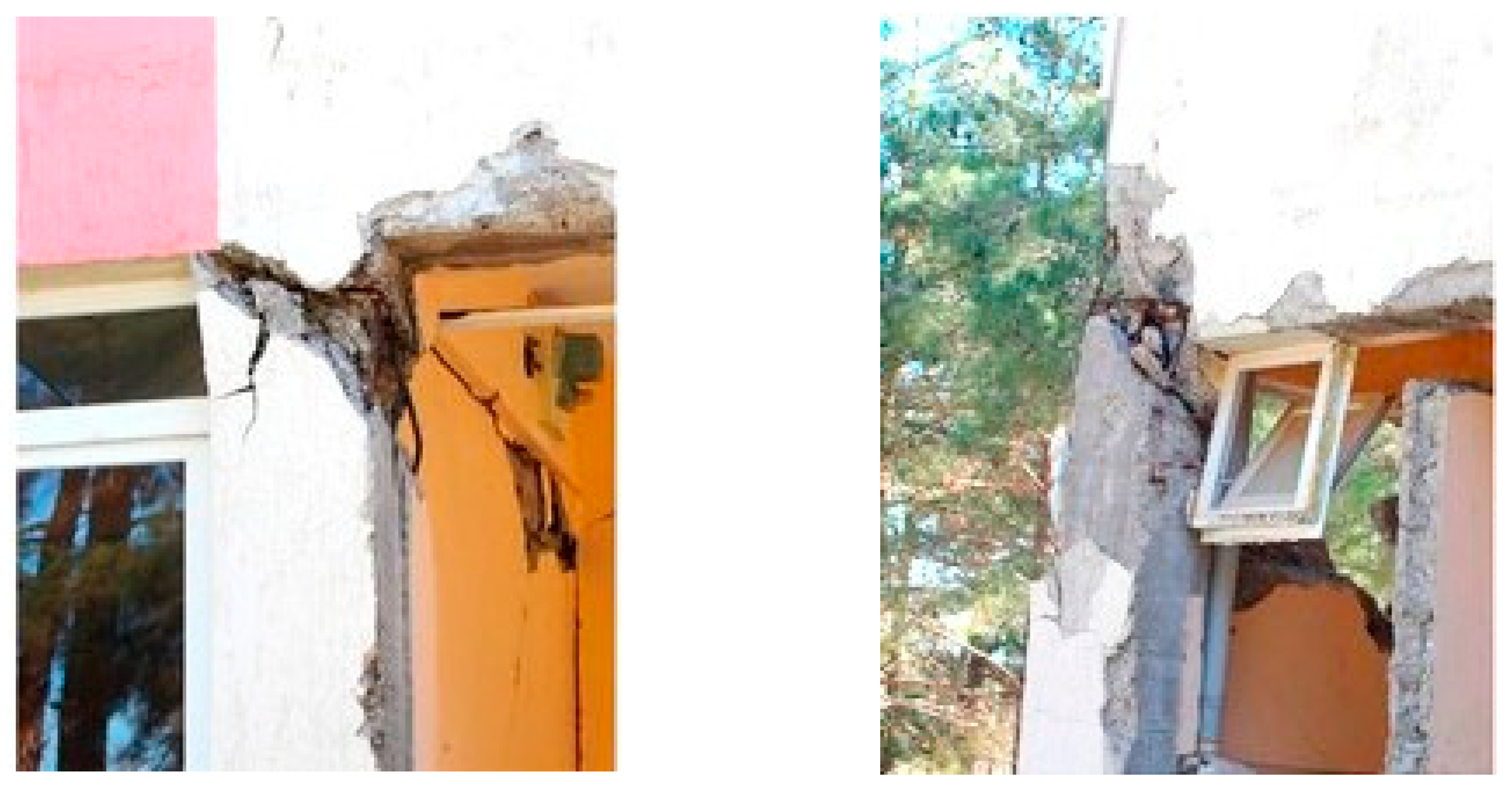
Despite decades of study, significant challenges persist in accurately predicting and modeling their complex behavior under seismic loading, and they exhibit strong sensitivity to construction practice and retrofit measures [12,13]. This complexity leads to gaps between simplified design rules and observed in situ or experimental behavior [5,14,15,16,17]. Furthermore, emerging challenges such as incorporating advanced materials like fiber-reinforced polymers, developing machine learning-based prediction models, and addressing uncertainties in joint behavior under varying loading conditions ensure that beam-column joint research continues to drive ongoing research efforts [12]. The continued relevance of this research is starkly demonstrated by recent major seismic events, including the devastating 6 February 2023 earthquakes in Turkey and Syria, where extensive damage to beam-column joints was observed even in buildings constructed according to modern seismic codes (Figure 1).
Beyond seismic demands, steel corrosion presents a critical threat to beam-column joints [19,20]. In aggressive environments, it severely reduces long-term durability, strength, and ductility. The expansive corrosion products crack and spall the concrete, weakening joint confinement and damaging the vital bond between steel and concrete. This impairs reinforcement anchorage and diminishes the cross-sectional area of the bars. As a result, the joint’s rotational ductility and shear capacity are drastically reduced, compromising the structural integrity required by design codes. Furthermore, other long-term features of GFRP reinforcement, such as creep rupture under continuous loading and potential degradation in alkaline concrete environments, may affect the overall durability of hybrid RC joints. Given these challenges, using GFRP rebars in place of traditional steel is one innovative way to address these issues.
Research into GFRP-RC beam-column joints has expanded significantly, driven by the need for global durability designs and seismic retrofitting solutions [21,22,23,24]. A primary finding across studies is the distinct seismic performance characterized by an ability to withstand very high drift ratios (often above 4%) with minimal residual damage, as the typical concentrated plastic hinge of steel is replaced by distributed cracking, allowing the structure to maintain its design capacity after repeated cyclic loads [25,26,27]. However, a consistent result is that this comes at the cost of narrower hysteresis loops and significantly reduced energy dissipation at the member level compared to steel-RC counterparts [28,29,30]. Investigations into key design parameters have established that achieving a “strong column-weak beam” configuration and providing robust joint confinement through shear reinforcement (e.g., stirrups, spirals) are the most critical factors for ensuring strength and preventing brittle shear failure [16,31]. Furthermore, research has shown that the presence of lateral beams and floor slabs substantially enhances the connection’s overall performance by improving capacity, stiffness, and energy dissipation, though the effective slab width contribution is less pronounced than in steel-RC systems [32,33]. For practical application, a major conclusion is that brittle failure can be avoided by designing with a larger reinforcement area to limit service-level stresses, and anchorage length is paramount, with a minimum straight development length of 24 times the diameter of longitudinal bars being a key recommendation to prevent bar slippage [14,33].
Recently, El-Naqeeb et al. (2025) [13], through a detailed literature review dedicated to Beam-column connections in GFRP-RC moment-resisting frames, highlight an evolving but still fragmented understanding of how GFRP reinforcement affects joint behavior under seismic loading. Although numerous studies have documented the distinctive response of fully GFRP-reinforced joints—high drift capacity, low residual deformation, reduced energy dissipation, and strong dependence on confinement and anchorage—the findings remain inconsistent across testing scales (element vs. subassembly vs. full frame). A critical synthesis of the literature reveals clear trends: (i) increased deformation capacity is consistently accompanied by reduced joint stiffness and altered load distribution mechanisms, (ii) energy dissipation at the joint is governed more by concrete damage and bar slippage than by reinforcement behavior, and (iii) failure modes are highly sensitive to detailing, joint shear reinforcement, axial load level, and boundary conditions. Despite these insights, the review explicitly concludes that a major gap persists in understanding hybrid reinforcement systems, as existing research focuses predominantly on fully GFRP or fully steel configurations. In particular, the synergistic interaction between steel yielding and GFRP elasticity inside the same joint has not been systematically investigated, leaving unanswered questions regarding strength hierarchy, internal stress redistribution, and cyclic degradation mechanisms in hybrid GFRP–steel beam–column joints. This gap directly motivates the present study, which aims to isolate and quantify the seismic performance implications of varying GFRP replacement ratios within the longitudinal reinforcement of RC joints.
To address this gap, the cyclic behavior of RCJs reinforced with hybrid GFRP–steel longitudinal bars under combined axial and lateral loads was investigated. Six hybrid configurations were examined by varying the GFRP replacement ratio —defined as the percentage of the total longitudinal steel reinforcement area in the beam, replaced with GFRP bars—at 0% (reference), 20%, 25%, 33%, 50%, and 100%. A detailed comparative analysis of load–displacement response, stiffness degradation, cumulative energy dissipation, and crack propagation was conducted. A multi-criteria decision analysis (MCDA) was incorporated to quantify the balance among competing performance indicators and identify the hybrid configuration offering the most favorable compromise between strength, ductility, and durability.
Finally, it is important to emphasize that the goal of this initial investigation is to isolate the effect of GFRP-steel hybridization rather than produce a final design solution. Only the material composition of the longitudinal beam reinforcement was modified, replacing a portion of the steel with GFRP bars of the same diameter. The beam and column sections were not redesigned, and the reinforcement layout was intentionally preserved. As a result, the strong-column/weak-beam hierarchy is naturally disturbed in this exploratory configuration. Nevertheless, this work provides an essential foundation for subsequent design-oriented studies, including optimized hybrid layouts and full 3D analyses.

2. Numerical Modeling and Finite Element Analysis

2.1. Configuration and Reinforcement Layout of the RC Joint

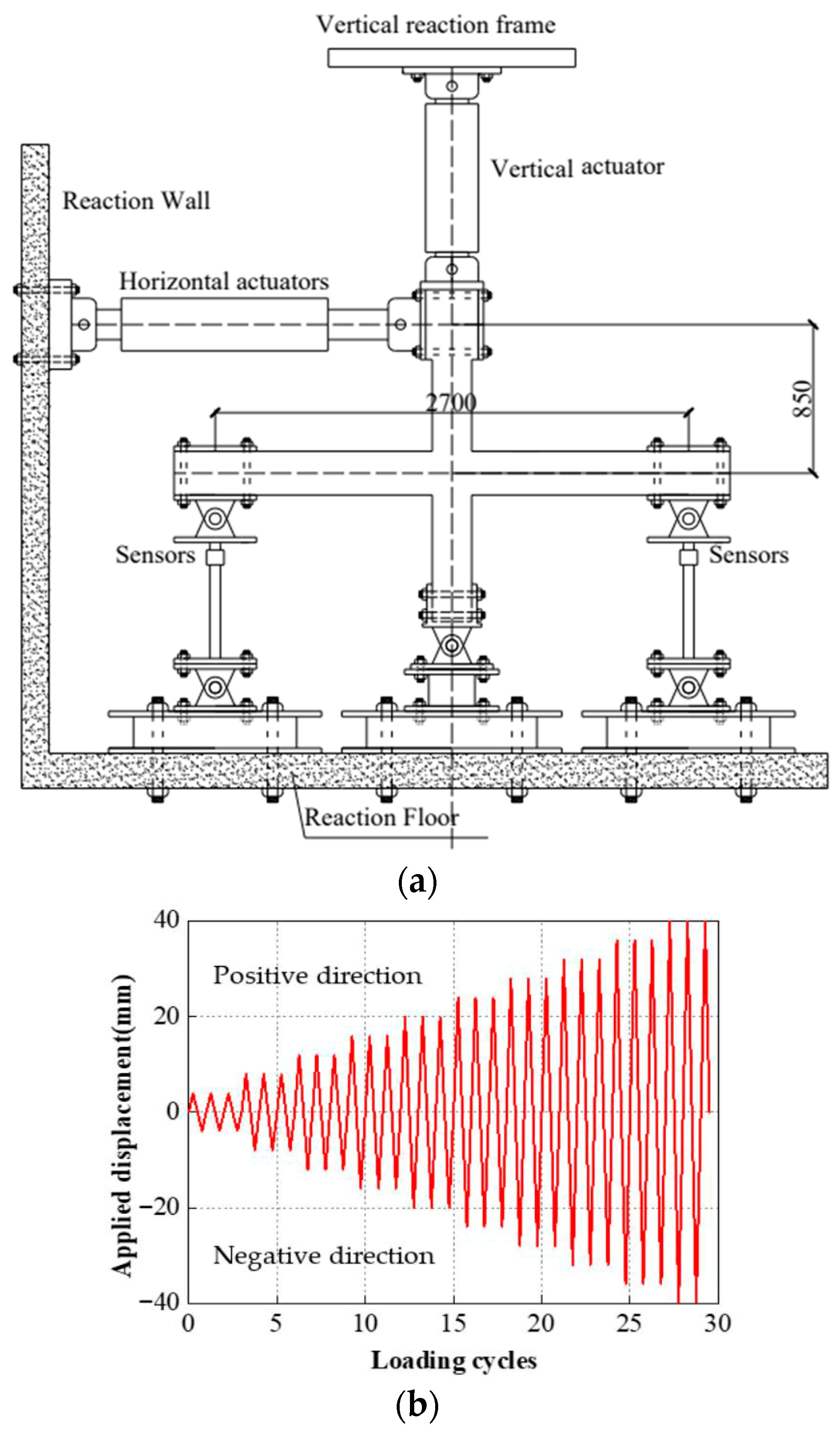
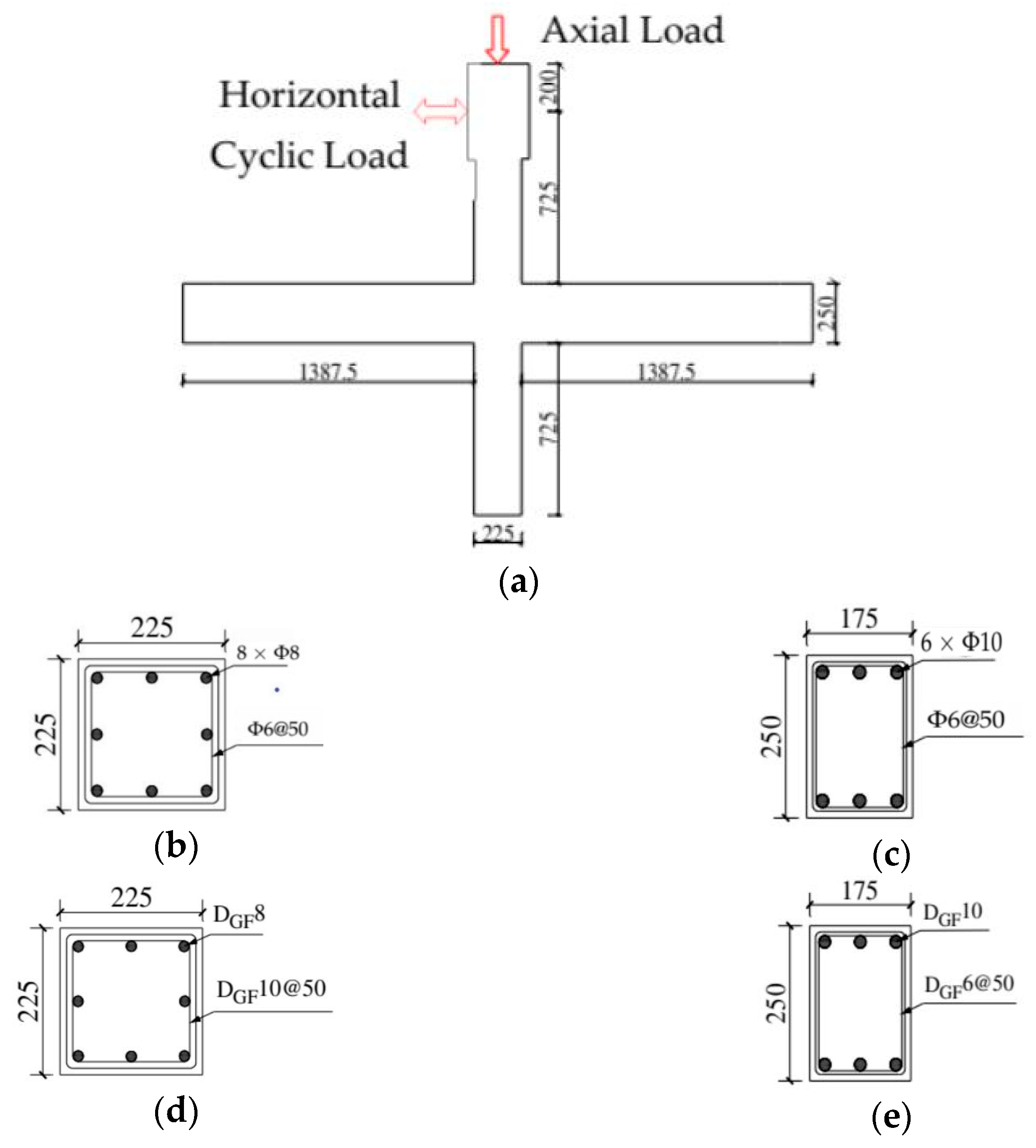
The experimental test specimen and loading protocol proposed by Guo et al. (2022) [26] for interior RC beam-column joints under axial and cyclic loading were used as a benchmark to evaluate the Finite Element (FE) model developed in this study (Figure 2a). The RC joint specimen was designed with an interior beam–column configuration, consisting of a 270 mm × 270 mm square column intersecting with two beams, each measuring 1387.5 mm in length, 250 mm in depth, and 225 mm in width. The height of the column is 850 mm from the reaction floor to the top of the joint, while the beam span is symmetrically distributed on either side of the column (Figure 3a). Reinforcement layouts vary across specimens: one set uses GFRP bars (Figure 3d,e), while another employs conventional steel bars (Figure 3b,c), enabling direct comparison of material performance. A vertical actuator simulates gravity loads by applying a constant axial load vertically at the top of the column of the specimen. Simultaneously, horizontal cyclic loads are imposed at the beam ends using horizontal actuators attached to a rigid reaction wall (Figure 2b). Boundary conditions are restrained at the base, where the column is anchored to a massive reaction floor, ensuring fixed support. Sensors are strategically placed at critical locations—beam-column interfaces and along the column—to monitor strains, displacements, and rotations during testing.

2.2. Material Constitutive Models

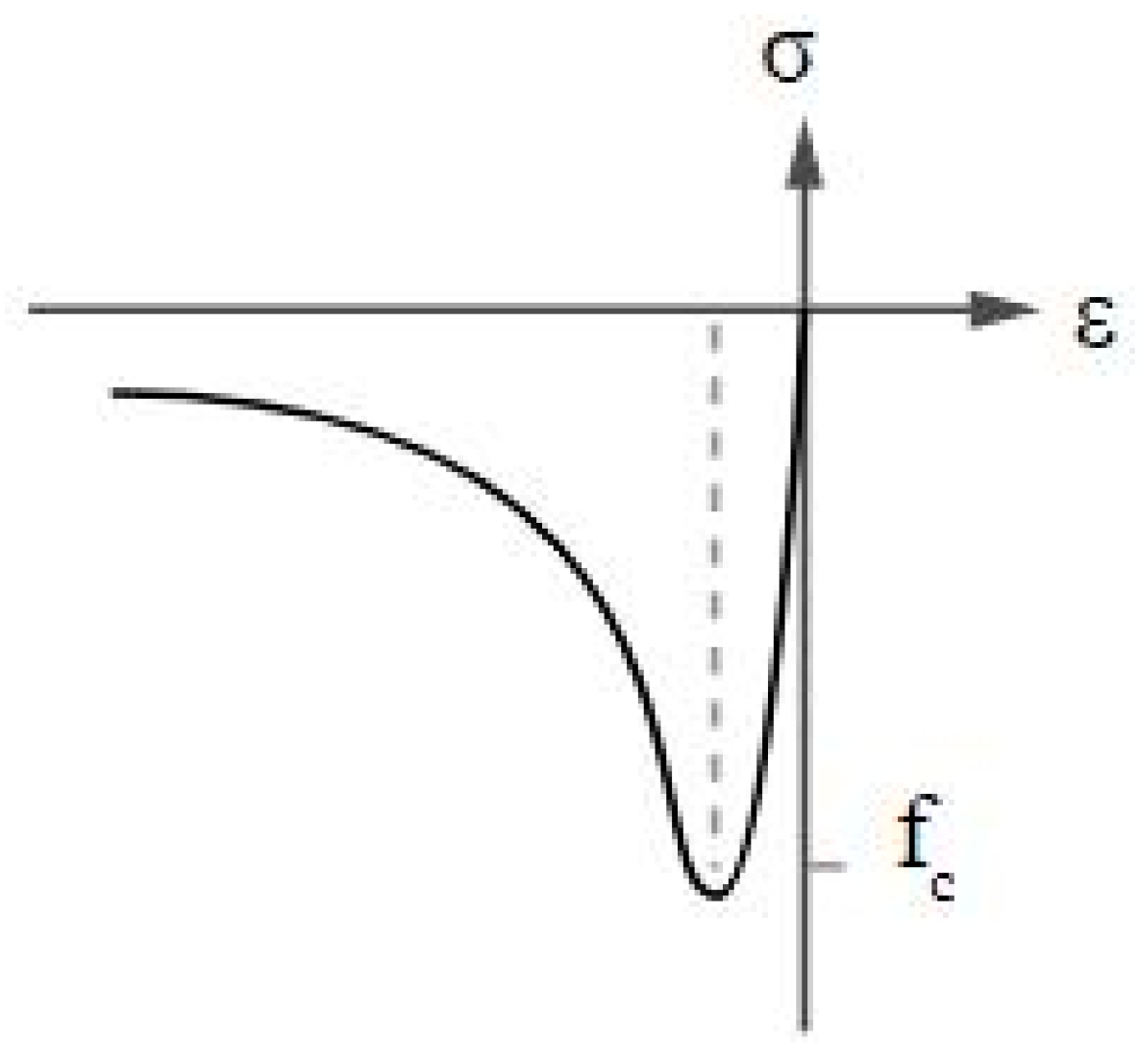
The nonlinear physical response of reinforced concrete structures is primarily governed by three key mechanisms: cracking of concrete, crushing of concrete, and bond-slip behavior of longitudinal reinforcement bars. These phenomena are incorporated into the numerical model to accurately capture the load–deformation relationship and the ultimate capacity of the structural members. The modeling approach is based on a total strain-based crack (TSC) formulation. Within this approach, the crack orientation rotates according to the principal strain directions, allowing for a realistic simulation of complex cracking patterns [34].

2.2.1. Concrete

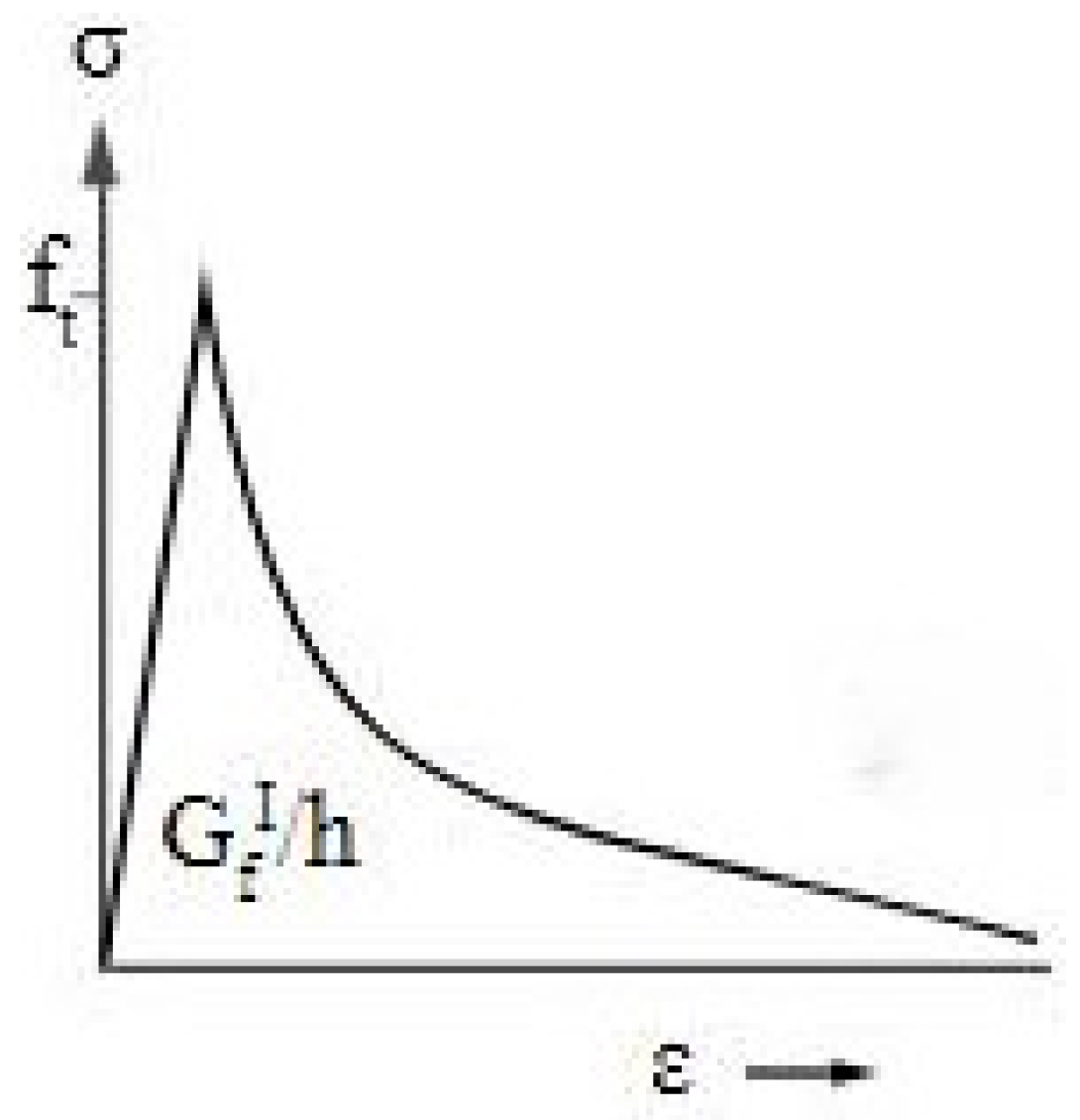
For concrete in tension, the Hordijk softening curve is adopted to simulate post-cracking behavior, providing a smooth and gradual stress decay after crack initiation [35]. This representation is essential for capturing the tension stiffening effects and the redistribution of stresses within the cracked zones (Figure 4). In compression, the CEB-FIP Model Code 1990 stress–strain relationship is implemented [36], which accounts for both the nonlinear ascending branch and the strain-softening response after peak stress (Figure 5). This enables the model to reproduce the crushing mechanism of concrete, which is critical in predicting failure modes under high compressive stresses. Table 1 provides a summary of the properties of concrete: Young’s modulus (E), Poisson’s ratio (ν), Mass density (m), Compression strength (fc), Tensile strength (ff), and Mode-I tensile fracture energy ( G f I h ).

2.2.2. Reinforcement Bars

In numerical modeling, the reinforcing steel is represented using Von Mises plasticity with isotropic strain hardening, which provides a reliable description of its nonlinear response. The selected material characteristics include a Young’s modulus (Es = 200,000 MPa), a Poisson’s ratio (v = 0.3), and a mass density (m = 7850 kg/m3). The plasticity properties, including the yield stress (fy), ultimate stress (fu), and elongation (ε), are summarized in Table 2. For transverse reinforcement (stirrups), an embedded modeling approach is applied, assuming perfect bond with the surrounding concrete to simplify the analysis while accurately representing shear transfer. In contrast, the longitudinal reinforcement bars are assigned explicit bond–slip relations to capture the interaction at the concrete–steel interface, allowing the model to reproduce stiffness degradation, tension stiffening, and possible bar pullout. For the GFRP reinforcement, a linear elastic stress–strain relationship is considered, defined by the tensile strength (fgt) and modulus of elasticity (Eg) reported in Table 2.

2.3. Interface Modeling

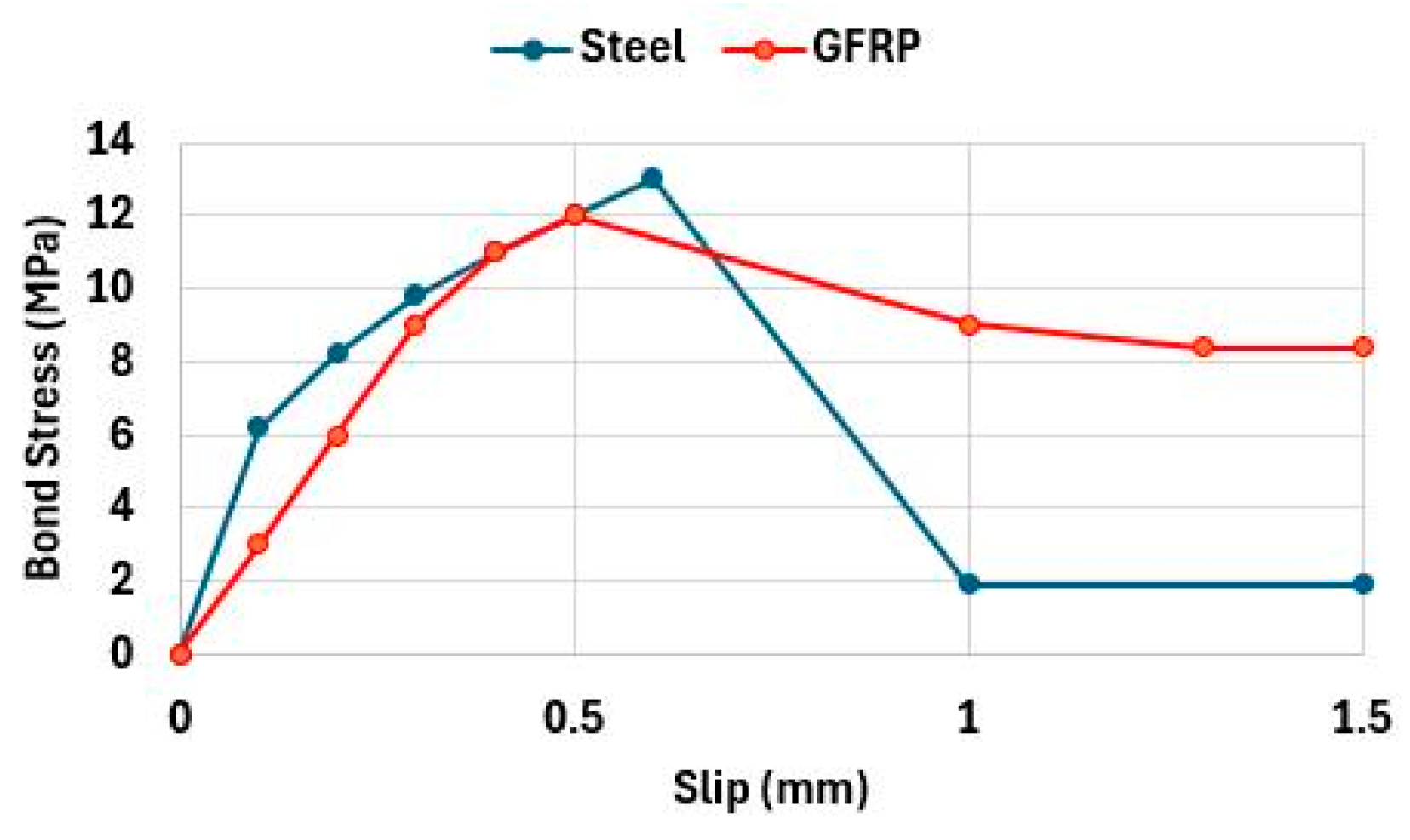
The bond-slip curves used for GFRP and steel reinforcement are shown in Figure 6. The bond-slip behavior model in the CEB-FIP code (1991) is used to describe bond-slip behavior for steel reinforcement. This model offers a reliable representation of bond strength, post-peak degradation, and residual stress levels. In the case of GFRP reinforcement, the bond–slip parameters were derived from experimental data reported by [36].

2.4. Loading, Boundary Conditions, and Reinforcement Configuration

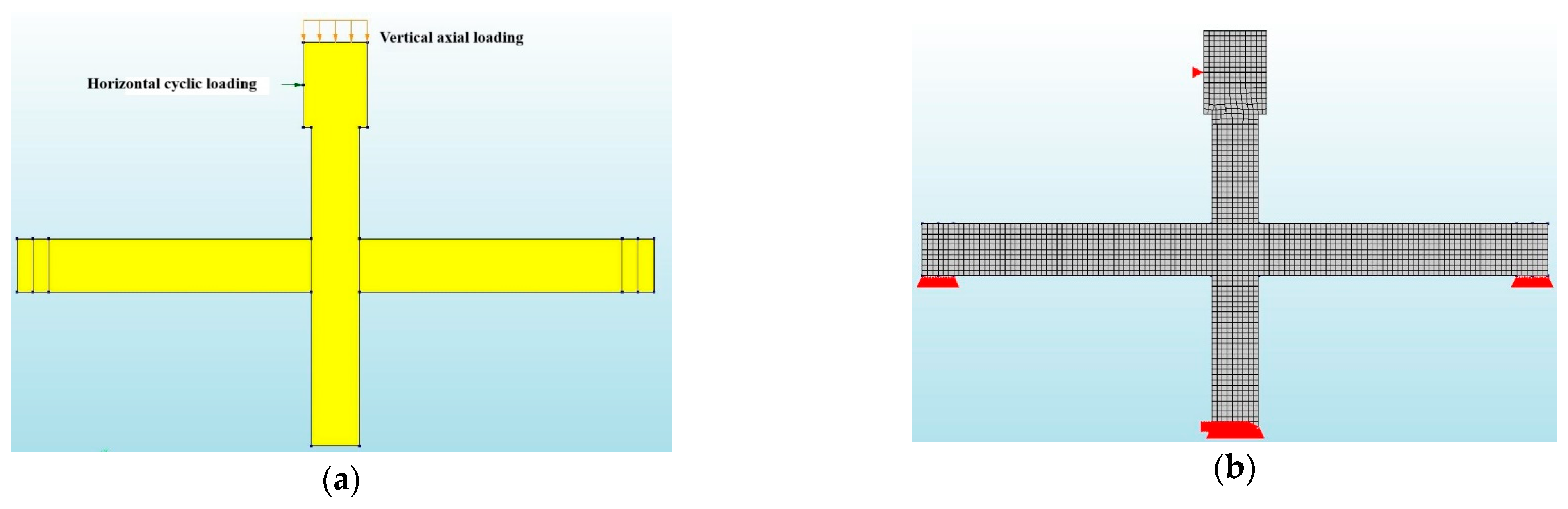
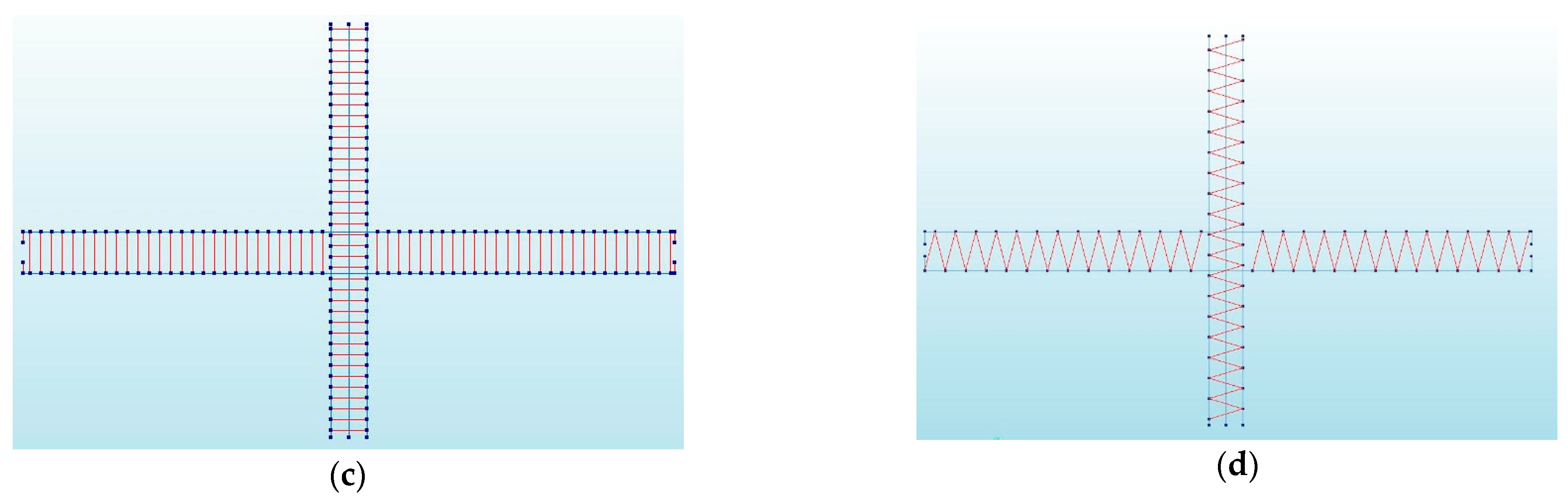
With precisely specified loading conditions, boundary constraints, meshing approach, and reinforcement details, the RCJ’s FE model was developed. While horizontal cyclic loading was provided at the ends of the beams (Figure 2b), the joint was subjected to a constant vertical axial load applied to the column (970 kN), as shown in Figure 7a. The boundary conditions and meshing layout are shown in Figure 7b, where the base of the columns and the ends of the beams were supported by pinned supports, and an element size of 50 mm was adopted to achieve a balance between accuracy and computational efficiency. The reinforcement arrangement of the steel RC joint is presented in Figure 7c, with longitudinal and transverse reinforcement explicitly modeled. In comparison, Figure 7d displays the GFRP RC joint configuration.

2.5. Numerical Model Validation

A nonlinear finite element analysis was performed using a fiber-based modeling approach [38] to accurately capture the inelastic behavior of concrete, steel, and GFRP materials under cyclic loading.
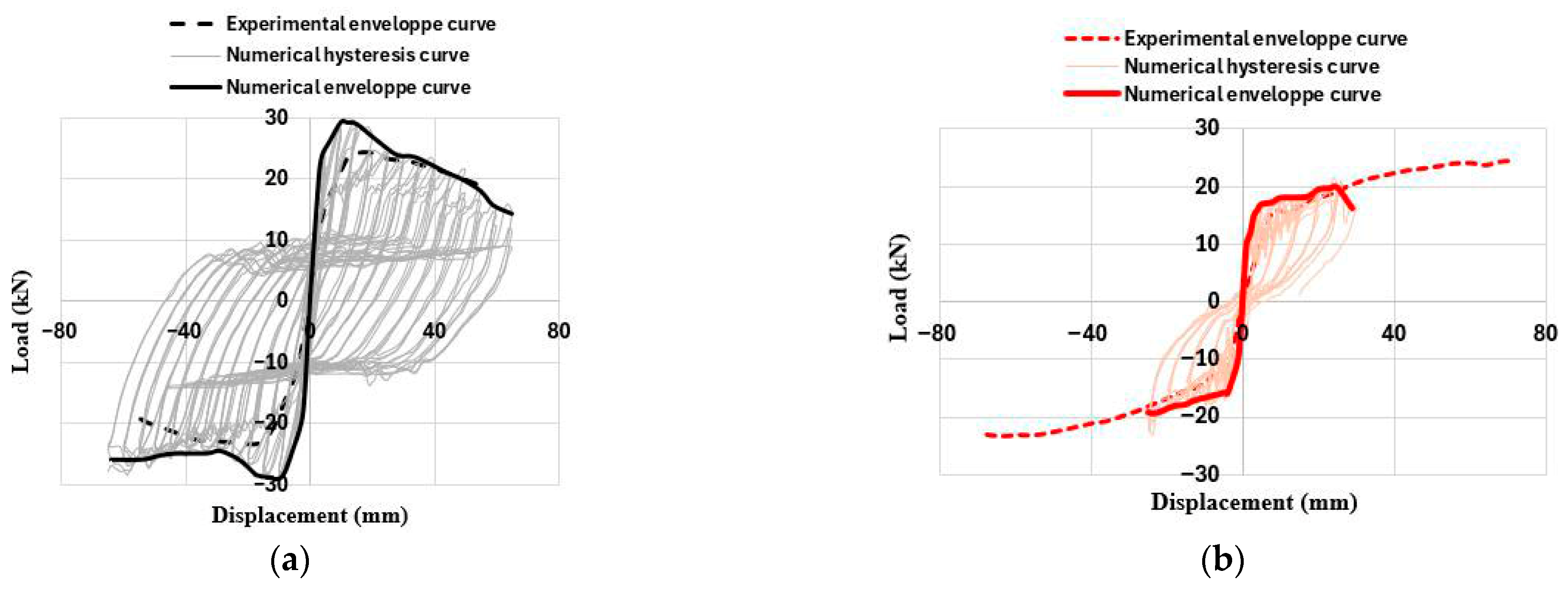
The validation of the numerical model against experimental results for both the steel-reinforced joint (Figure 8a) and the GFRP-reinforced joint (Figure 8b) shows that the simulations reproduce the overall response trends with satisfactory accuracy. In both cases, the numerical envelope curves successfully capture the general strength levels, stiffness degradation patterns, and global hysteretic shapes observed experimentally. However, some differences—typically on the order of 5–15% in stiffness or peak load at certain drift stages—are noticeable, and they arise for distinct reasons in each configuration. For the steel RC joint, the numerical model slightly overestimates the initial stiffness and underrepresents pinching and strength deterioration at larger drifts, mainly due to the simplified 2D concrete damage plasticity formulation and the simplistic steel bond–slip or anchorage degradation, which are present in the physical test. For the GFRP RC joint, the model mildly overpredicts early-cycle stiffness and underestimates the gradual capacity reduction at higher displacement amplitudes, reflecting the idealized linear-elastic GFRP constitutive behavior and simplified bond assumptions, whereas the experiment exhibits additional flexibility from bar slip, concrete cover cracking, and more pronounced joint shear deformation. Despite these discrepancies, the numerical models capture the dominant behavioral mechanisms for both reinforcement types and provide a sufficiently reliable foundation for the parametric evaluation of hybrid GFRP–steel reinforcement ratios conducted in this study.

3. Parametric Study

A detailed parametric study was conducted to examine how varying GFRP reinforcement ratios affect the cyclic and axial performance of hybrid GFRP–steel beam–column joints. Six reinforcement configurations of finite element models were designed and tested, labeled GFRP0% to GFRP100%, to represent a progressive substitution of GFRP bars for steel reinforcement in the longitudinal reinforcement at the bottom of the beam (Table 3). To ensure consistency, all specimens shared the same column reinforcement layout (8Φ8 longitudinal bars and Φ6@50 mm stirrups) and beam transverse reinforcement (Φ6@50 mm).
The control Finite Element Model (FEM), GFRP0%, contained only traditional steel reinforcement in both the top and bottom layers of the beam (6Φ10). The hybrid FEMs, ranging from GFRP20% to GFRP50%, included partial replacement of bottom steel bars with GFRP while keeping the top reinforcement 50% steel to maintain ductility. Finally, the fully GFRP-reinforced FEM (GFRP100%) used GFRP bars in both the top and bottom layers (6DGF10).
This progressive adjustment in reinforcement composition allowed for a clear evaluation of how increasing the GFRP ratio influences essential structural behaviors such as joint stiffness, energy absorption, ductility, and failure patterns under combined cyclic lateral and axial loads. The outcomes of this study highlight the potential for achieving an optimal hybrid reinforcement balance—one that leverages the corrosion resistance and lightweight nature of GFRP while retaining the desirable ductile and post-yield characteristics of steel, which are crucial for designing earthquake-resistant reinforced concrete joints.

4. Results and Discussion

This section presents a comprehensive evaluation of the structural performance of hybrid GFRP–steel reinforced beam–column joints under combined cyclic and axial loading. The analysis focuses on key response parameters, including load–displacement hysteresis behavior, stiffness degradation, and energy dissipation characteristics, supported by observations of crack propagation.

4.1. Load–Displacement Curves

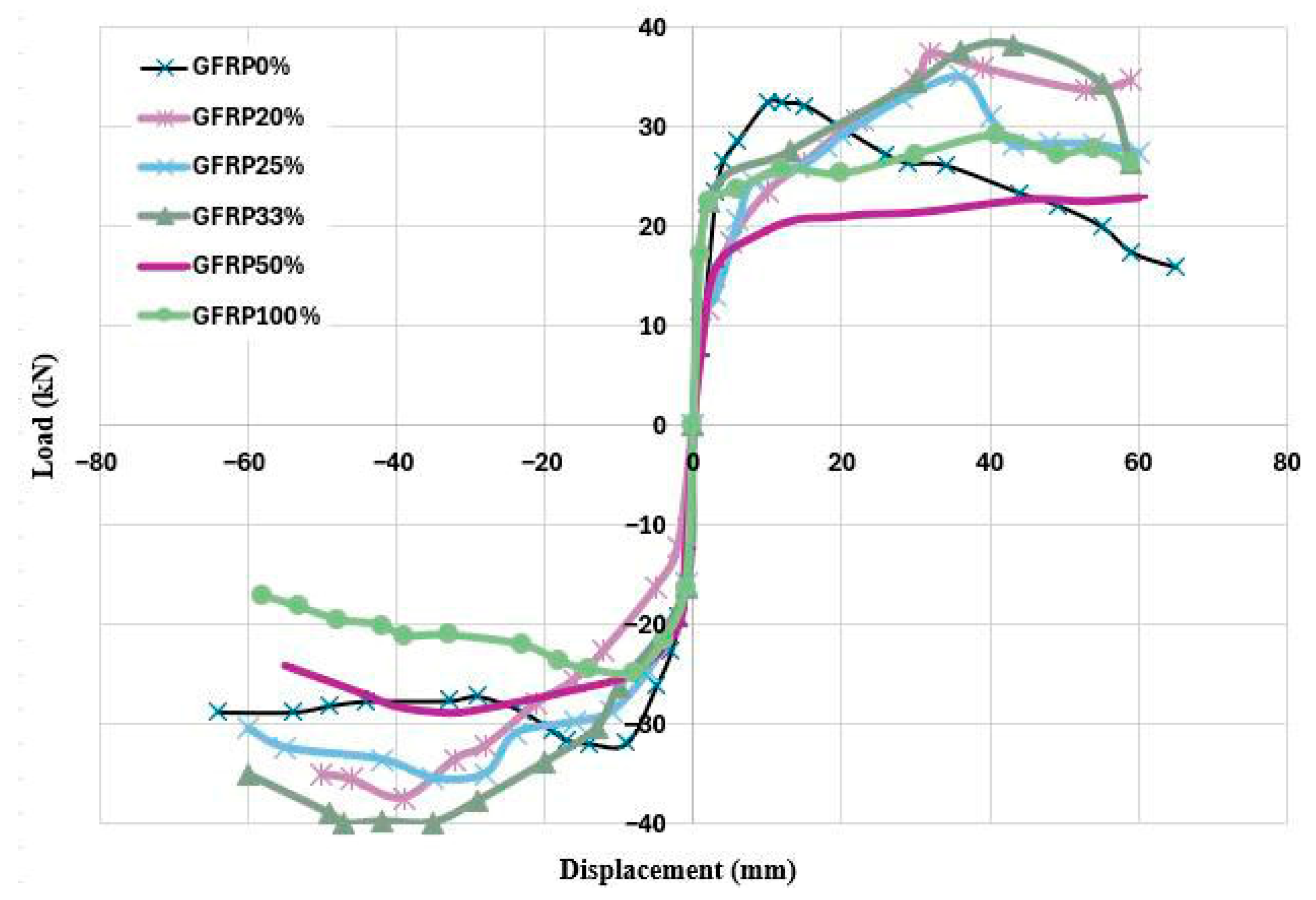
The load–displacement response (Figure 9) reveals that the steel-only joint (GFRP0%) attains the highest peak load of approximately 34 kN but experiences a sharp post-yield strength drop, reflecting brittle behavior. In contrast, the hybrid GFRP–steel specimens (GFRP20–50%) display a more favorable balance between strength and ductility, with the GFRP33% specimen achieving near-maximum load capacity while sustaining large displacement ductility beyond 60 mm. The fully GFRP-reinforced joint (GFRP100%) exhibits the greatest deformation capacity but the lowest load resistance, whereas GFRP25% and GFRP50% show intermediate responses. All hybrid configurations maintain stable hysteretic loops, indicating effective stress sharing between steel and GFRP. Overall, the GFRP33% ratio demonstrates the most desirable performance, combining sufficient strength with enhanced ductility and energy dissipation—making it the most efficient hybrid configuration for seismic applications.

4.2. Crack Propagation Patterns

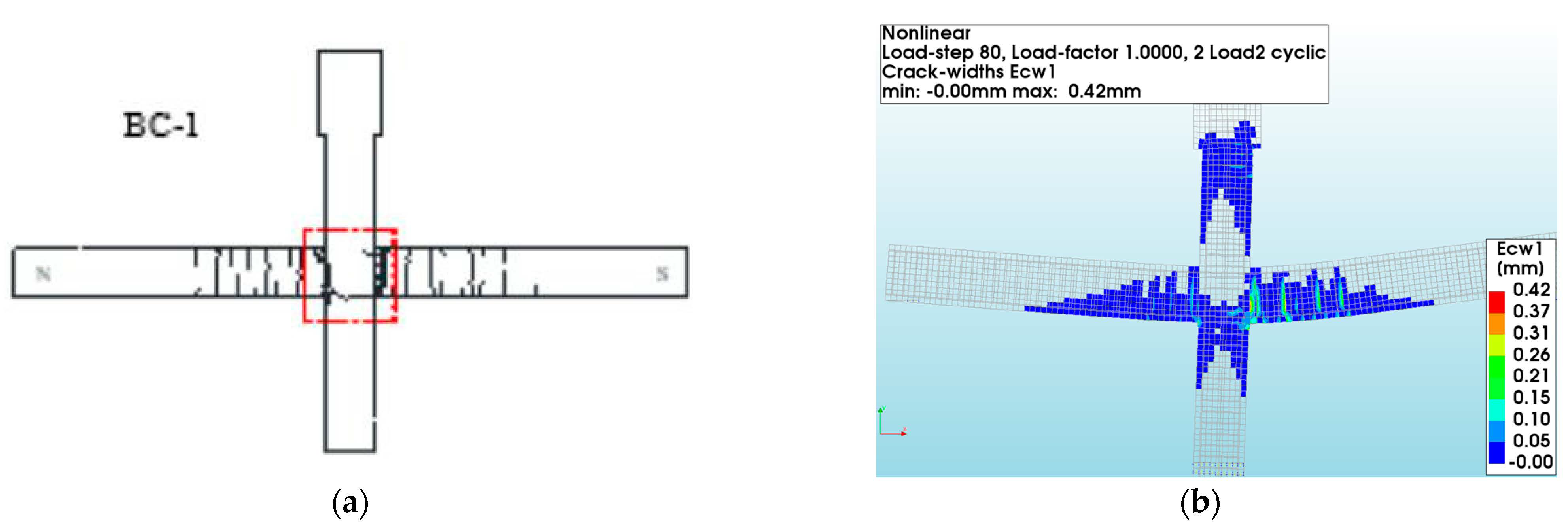
The cracking patterns obtained from the experimental test (Figure 10a) and the numerical simulation (Figure 10b) show a generally consistent failure mechanism, with both indicating that cracking initiates at the column–beam interface and damage localizes primarily within the plastic hinge area of the beam. Both sets of results confirm that joint shear behavior dominates the failure mechanism rather than flexural hinging in the beams.
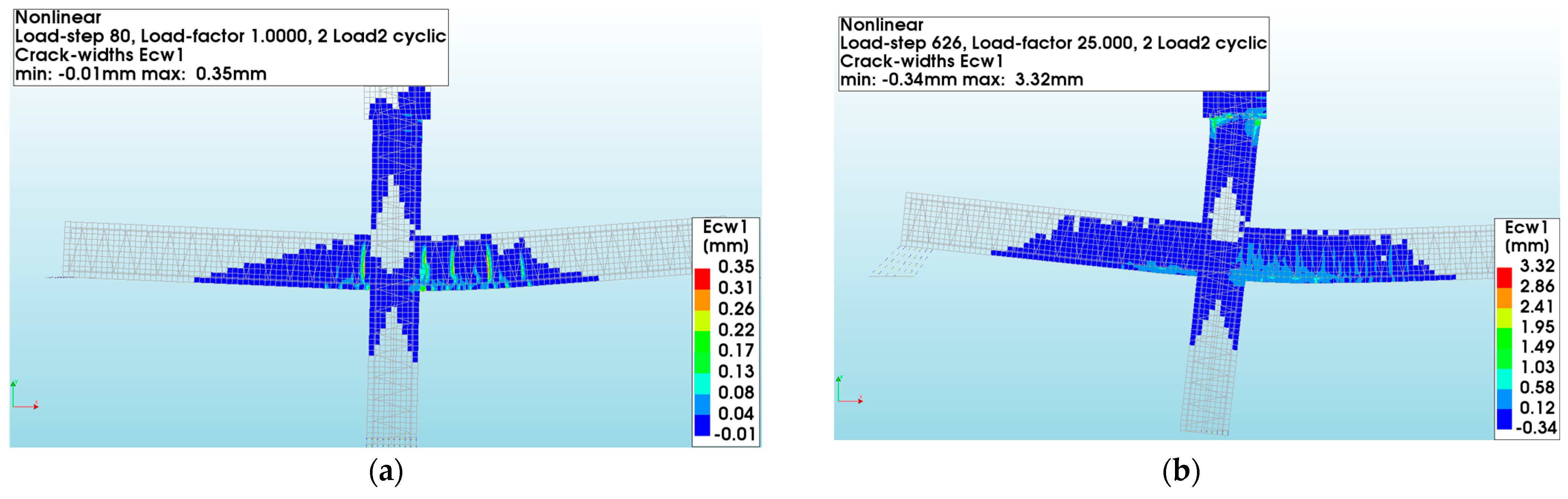
No experimental cracking pattern is available for the hybrid RC joint; the numerical results in Figure 11 provide the basis for comparison with the fully steel RC joint (Figure 10a,b). The hybrid GFRP–steel joint exhibits a more uniform and finer crack distribution, with maximum crack widths limited to approximately 0.35 mm, compared with 0.42 mm observed in the fully steel-reinforced joint. This reduction reflects the beneficial contribution of GFRP bars in enhancing tensile resistance and improving bond characteristics, resulting in superior crack control. The hybrid reinforcement delays crack initiation, mitigates crack growth, and reduces peak crack widths by nearly 8%, which enhances both durability and serviceability under cyclic loading. These observations highlight the ability of GFRP to promote a more even stress distribution and minimize localized damage, supporting its value as a complementary material in seismic-resistant RC detailing.
Furthermore, Figure 11b illustrates the crack propagation at the maximum number of drift cycles. The numerical results show a pronounced concentration of tensile damage within the joint core, along with extensive crack spreading along the beam–column interfaces. At peak cyclic demand, crack widths reach approximately 3.3 mm, indicating significant joint shear distortion and progressive degradation of bond and concrete tensile capacity. The crack field becomes noticeably wider and more continuous compared with earlier cycles, demonstrating how damage accumulates and stabilizes under repeated load reversals.

4.3. Stiffness Degradation Analysis

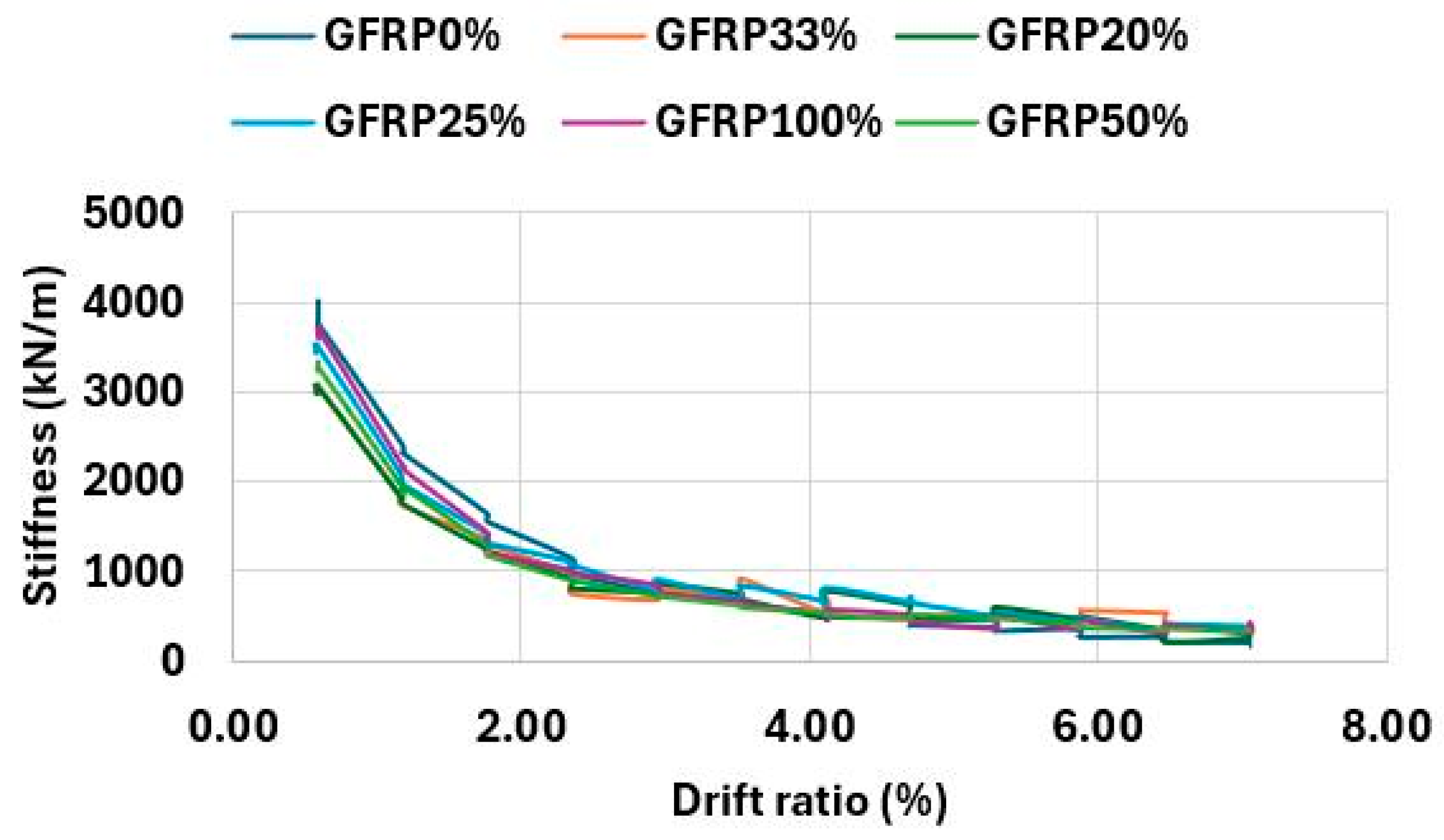
Stiffness degradation, defined as the progressive reduction in effective lateral stiffness with increasing cyclic drift due to cracking, bond-slip, and material deterioration, is a fundamental measure of structural performance under repeated loading. The stiffness degradation curves (Figure 12) illustrate the reduction in lateral stiffness with increasing drift ratio for RC joints containing varying proportions of GFRP reinforcement. The steel joint (GFRP0%) retained the highest initial stiffness, while the GFRP100% joint showed the fastest reduction due to the absence of yielding. Hybrid joints demonstrated intermediate performance, with GFRP25% and GFRP33% maintaining about 80% of the control stiffness up to 4% drift. Beyond this point, stiffness differences diminished as severe cracking dominated the behavior. The gradual degradation observed in the GFRP25% FE model suggests an optimal reinforcement balance, providing both adequate stiffness retention and reduced brittleness. Thus, among the simulated configurations, GFRP25% exhibited the most desirable stiffness performance under cyclic loading.

4.4. Energy Dissipation Capacity

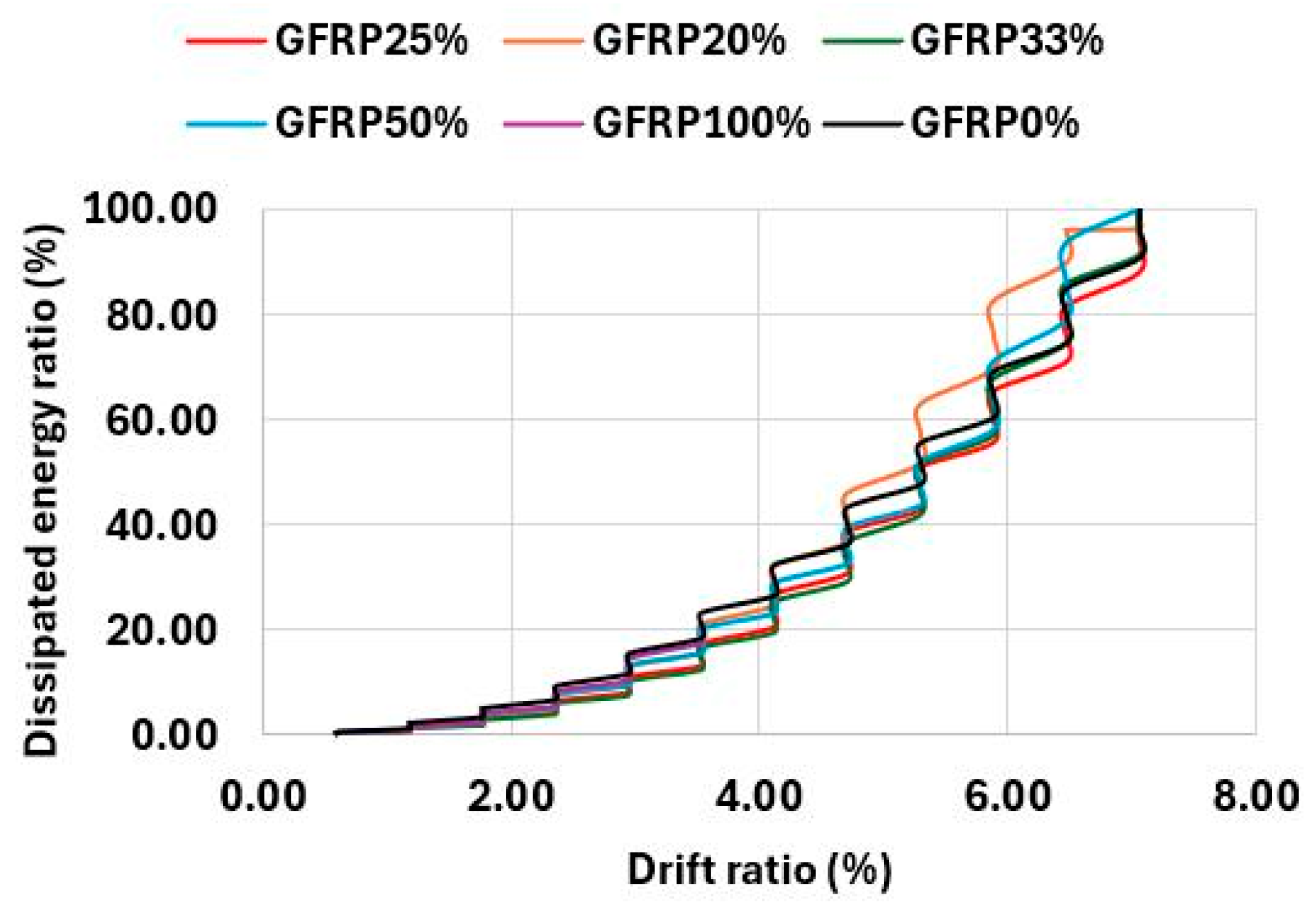
The Cumulative Dissipated Energy Ratio (CDER) is defined as the ratio of the energy dissipated by the joint up to a given cycle (or drift level) relative to its total cumulative energy dissipation capacity. The CDER serves as a key indicator of structural resilience under cyclic loading.
C D E R ( n ) = E d ,   cum   ( n ) E d ,   total  
where
  • E d ,   cum   ( n ) = i = 1 n E d , i is the cumulative energy dissipated from the first cycle up to the n -th cycle;
  • E d ,   total   = i = 1 N E d , i is the total dissipated energy over all N cycles of the analysis;
  • E d , i = F i ( δ ) d δ is the energy dissipated in the i -th hysteresis loop (i.e., the enclosed area of the force-displacement loop).
The relationship between dissipated energy ratio and drift ratio (Figure 13) demonstrates a clear dependency on the proportion of GFRP reinforcement within the RC joints. The GFRP33% FEM exhibited the highest cumulative energy dissipation, reaching approximately 98% at a 7% drift ratio—surpassing the performance of GFRP25%, GFRP50%, and even the fully steel-reinforced (GFRP0%) FEM. This enhanced behavior results from the combined effect of steel yielding and controlled bond–slip in the GFRP reinforcement, which together promote sustained hysteretic damping. Although the GFRP100% FEM demonstrated greater ductility, its reduced stiffness limited energy absorption during the initial loading cycles.
To complement the qualitative comparison of the different hybrid configurations and strengthen the objectivity of the findings, a multi-criteria decision analysis (MCDA) is introduced in the next section. By doing so, the identification of the most balanced GFRP–steel ratio is placed on a rigorous quantitative basis.

4.5. MCDA Global Performance Score

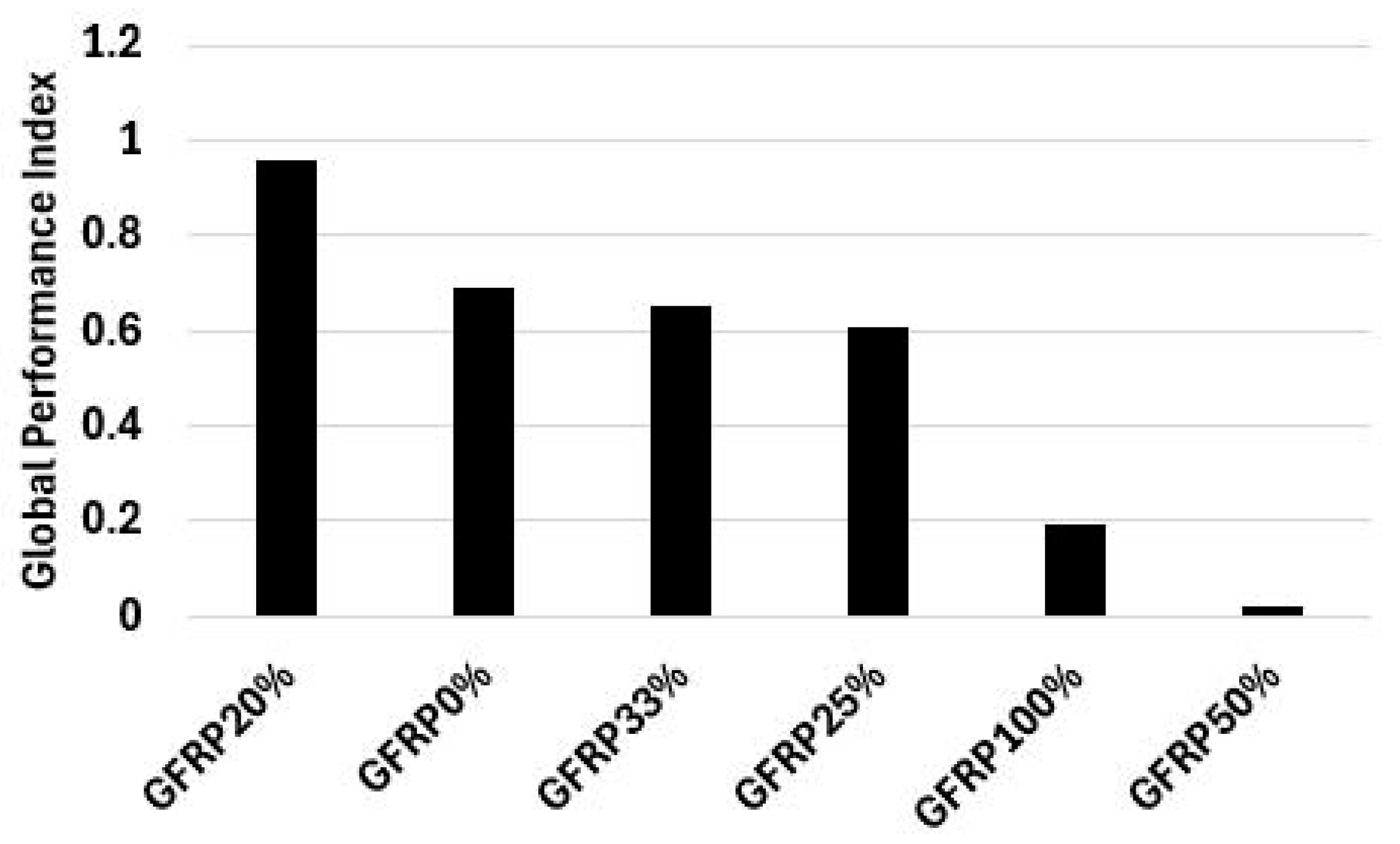
Peak load, cumulative dissipated energy, and secant stiffness—the three key performance indicators derived from the cyclic simulations (Figure 9, Figure 12 and Figure 13)—were combined using an MCDA based on the Analytic Hierarchy Process (AHP) [37]. Each indicator’s physical significance for the seismic performance of RC beam-column joints was compared pairwise; dissipated energy was found to be more significant than both peak load and secant stiffness, while peak load was found to be more significant than secant stiffness. The AHP comparison matrix produced normalized weights of 0.33 for peak load, 0.57 for dissipated energy, and 0.10 for secant stiffness.
Low-to-moderate GFRP ratios (20–33%) provide the best balance between strength and ductility, according to the MCDA scoring (Figure 14). Less performance results from high GFRP ratios (50–100%), which lowers peak load and rigidity. The GFRP20% ratio performs better than the conventional steel case (GFRP0%) in terms of ductility and hysteretic energy absorption.

5. Conclusions

This work presented a nonlinear finite element investigation of the cyclic response of hybrid GFRP–steel reinforced beam–column joints. The analysis showed that combining steel and GFRP reinforcement can provide a favorable compromise between strength, ductility, and stiffness, overcoming several limitations associated with using either material alone. Based on the MCDA introduced in this study, the 20% GFRP replacement ratio showed the most balanced performance, offering improved ductility and energy dissipation and adequate peak strength.
These findings, however, must be interpreted within the context of the modeling assumptions and parameters adopted. The conclusions are limited to the specific joint geometry, concrete strength, axial load ratio, reinforcement detailing, and the two-dimensional representation used in the simulations. As such, the optimal ratio identified here should not be generalized without further verification under different structural configurations and loading conditions. Nevertheless, the present work constitutes a necessary first step, providing a foundational understanding of the hybrid mechanism before engaging in more accurate and computationally demanding three-dimensional analyses. By establishing the key trends, critical parameters, and expected behavioral patterns, this study lays the groundwork upon which the forthcoming detailed three-dimensional investigation can be reliably built and validated.
Future investigations should extend the study toward three-dimensional modeling, explore the use of hybrid reinforcement in columns, and evaluate the influence of GFRP bars as transverse reinforcement on joint confinement and plastic hinge development. Additional experimental and numerical research is also needed to assess long-term effects such as creep rupture, environmental degradation, and cyclic deterioration mechanisms. These efforts are essential for refining design guidelines and advancing the practical adoption of hybrid GFRP–steel reinforcement in seismic applications.

Author Contributions

Conceptualization, A.H. and A.O.; methodology, A.H.; software, M.O.; validation, M.O. and H.D.; formal analysis, A.H., A.O., M.O. and H.D.; resources, H.D.; writing—original draft preparation, A.H.; writing—review and editing, A.O.; funding acquisition, A.O. All authors have read and agreed to the published version of the manuscript.

Funding

This research was funded by the Scientific Research Deanship at the University of Ha’il, Saudi Arabia, under project number RG-23 022.

Data Availability Statement

The original contributions presented in this study are included in the article. Further inquiries can be directed to the corresponding author.

Acknowledgments

The authors would like to express their deepest gratitude to the Deanship of Scientific Research at the University of Ha’il for providing the necessary support to conduct this research.

Conflicts of Interest

The authors declare no conflicts of interest.

References

  1. Kaviani, A.; Dabiri, H.; Kheyroddin, A. Effect of Beam and Column Dimensions on the Behavior of RC Beam-Column Joints. Asian J. Civ. Eng. 2021, 22, 941–958. [Google Scholar] [CrossRef]
  2. Nahar, M.; Islam, K.; Billah, A.M. Seismic Collapse Safety Assessment of Concrete Beam-Column Joints Reinforced with Different Types of Shape Memory Alloy Rebars. J. Build. Eng. 2020, 29, 101106. [Google Scholar] [CrossRef]
  3. Dabiri, H.; Rahimzadeh, K.; Kheyroddin, A. A Comparison of Machine Learning- and Regression-Based Models for Predicting Ductility Ratio of RC Beam-Column Joints. Structures 2022, 37, 69–81. [Google Scholar] [CrossRef]
  4. MacGregor, J.G.; Wight, J.K.; Teng, S.; Irawan, P. Reinforced Concrete: Mechanics and Design, 8th ed.; Prentice Hall: Upper Saddle River, NJ, USA, 2021. [Google Scholar]
  5. Dabiri, H.; Kaviani, A.; Kheyroddin, A. Influence of Reinforcement on the Performance of Non-Seismically Detailed RC Beam-Column Joints. J. Build. Eng. 2020, 31, 101333. [Google Scholar] [CrossRef]
  6. Tasligedik, A.S. Shear Capacity N-M Interaction Envelope for RC Beam-Column Joints with Transverse Reinforcement: A Concept Derived from Strength Hierarchy. J. Earthq. Eng. 2022, 26, 2194–2224. [Google Scholar] [CrossRef]
  7. Gouda, A.; El-Salakawy, E. Finite Element Modeling of GFRP-Reinforced Concrete Interior Slab-Column Connections Subjected to Moment Transfer. Fibers 2015, 3, 411–431. [Google Scholar] [CrossRef]
  8. Alavi-Dehkordi, S.; Mostofinejad, D.; Alaee, P. Effects of High-Strength Reinforcing Bars and Concrete on Seismic Behavior of RC Beam-Column Joints. Eng. Struct. 2019, 183, 702–719. [Google Scholar] [CrossRef]
  9. ACI CODE-318-19(22); ACI Committee 318 Building Code Requirements for Structural Concrete. ACI Committee: Farmington Hills, MI, USA, 2022.
  10. ACI PRC-352-02; ACI Committee 352 Recommendations for Design of Beam-Column Connections in Monolithic Reinforced Concrete Structures. ACI Committee: Farmington Hills, MI, USA, 2002.
  11. NZS 3101:2006; Concrete Structures Standard (Amendment 3). Standards New Zealand: Wellington, New Zealand, 2017.
  12. Pohoryles, D.A.; Melo, J.; Rossetto, T.; Varum, H.; Bisby, L. Seismic Retrofit Schemes with FRP for Deficient RC Beam-Column Joints: State-of-the-Art Review. J. Compos. Constr. 2019, 23, 0000950. [Google Scholar] [CrossRef]
  13. El-Naqeeb, M.H.; Hassanli, R.; Zhuge, Y.; Ma, X.; Bazli, M.; Manalo, A. Beam-Column Connections in GFRP-RC Moment Resisting Frames: A Review of Seismic Behaviour and Key Parameters. Structures 2025, 71, 108109. [Google Scholar] [CrossRef]
  14. Ibrahim, H.A.; Fahmy, M.F.M.; Wu, Z. Numerical Study of Steel-to-FRP Reinforcement Ratio as a Design-Tool Controlling the Lateral Response of SFRC Beam-Column Joints. Eng. Struct. 2018, 172, 253–274. [Google Scholar] [CrossRef]
  15. Ghomi, S.K.; El-Salakawy, E. Effect of Joint Shear Stress on Seismic Behaviour of Interior GFRP-RC Beam-Column Joints. Eng. Struct. 2019, 191, 583–597. [Google Scholar] [CrossRef]
  16. Zheng, B.-T.; Gencturk, B.; Aryan, H.; Pan, X.; Lopez, J.; Rivera, J.; Del Carpio, M.; Alkhrdaji, T. Seismic Performance of Highly Eccentric Reinforced Concrete Beam–Column Joints. J. Struct. Eng. 2024, 150, 04024161. [Google Scholar] [CrossRef]
  17. Girgin, S.C. Effect of Modeling Beam-Column Joints on Performance Assessment of Columns in Non-Ductile RC Frames. Tek. Dergi 2020, 31, 10339–10358. [Google Scholar] [CrossRef]
  18. Oyguc, E.; Oyguc, R.; Seker, O.; Hayir, A.; Shen, J.; Akbas, B. Improving Seismic Performance of RC Structures with Innovative TnT BRBs: A Shake Table and Finite Element Investigation. Appl. Sci. 2025, 15, 3844. [Google Scholar] [CrossRef]
  19. Manalo, A.C.; Mendis, P.; Bai, Y.; Jachmann, B.; Sorbello, C.D. Fiber-Reinforced Polymer Bars for Concrete Structures: State-of-the-Practice in Australia. J. Compos. Constr. 2021, 25, 05020007. [Google Scholar] [CrossRef]
  20. Alaskar, A.; Alqarni, A.S.; Alfalah, G.; El-Sayed, A.K.; Mohammadhosseini, H.; Alyousef, R. Performance Evaluation of Reinforced Concrete Beams with Corroded Web Reinforcement: Experimental and Theoretical Study. J. Build. Eng. 2021, 35, 102038. [Google Scholar] [CrossRef]
  21. Jape, A.S.; Gayake, S.B.; Dhake, P.D. Structural Behavior of Beam Column Joint Retrofitted Using Carbon Fiber Reinforced Polymer. J. Mater. Eng. Struct. 2021, 8, 47–59. [Google Scholar]
  22. Majumder, S.; Saha, S. Quasi-Static Cyclic Performance of RC Exterior Beam-Column Joint Assemblages Strengthened with Geosynthetic Materials. Structures 2021, 29, 1210–1228. [Google Scholar] [CrossRef]
  23. Tiwary, A.K.; Singh, S.; Chohan, J.S.; Kumar, R.; Sharma, S.; Chattopadhyaya, S.; Abed, F.; Stepinac, M. Behavior of RC Beam–Column Joints Strengthened with Modified Reinforcement Techniques. Sustainability 2022, 14, 1918. [Google Scholar] [CrossRef]
  24. Said, A.M.; Nehdi, M.L. Use of FRP for RC Frames in Seismic Zones: Part I. Evaluation of FRP Beam-Column Joint Rehabilitation Techniques. Appl. Compos. Mater. 2004, 11, 205–226. [Google Scholar] [CrossRef]
  25. Elsanadedy, H.M.; Al-Salloum, Y.A.; Alrubaidi, M.A.; Almusallam, T.H.; Siddiqui, N.A.; Abbas, H. Upgrading of Precast RC Beam-Column Joints Using Innovative FRP/Steel Hybrid Technique for Progressive Collapse Prevention. Constr. Build. Mater. 2021, 268, 121130. [Google Scholar] [CrossRef]
  26. Guo, R.; Yang, D.; Jia, B.; Tang, D. Seismic Response of GFRP-RC Interior Beam-to-Column Joints under Cyclic Static Loads. Buildings 2022, 12, 1987. [Google Scholar] [CrossRef]
  27. Javan, D.; Kheyroddin, A.; Dabiri, H.; Esfahani, M.R. Performance of RC Beam-Column Joints with Hybrid GFRP-Steel Reinforcement under Cyclic and Axial Loads. Structures 2023, 47, 1408–1415. [Google Scholar] [CrossRef]
  28. Mady, M.; El-Ragaby, A.; El-Salakawy, E.F. Experimental Investigation on the Seismic Performance of Beam-Column Joints Reinforced with GFRP Bars. J. Earthq. Eng. 2011, 15, 77–98. [Google Scholar] [CrossRef]
  29. Balamuralikrishnan, R.; Saravanan, J. Finite Element Analysis of Beam—Column Joints Reinforced with GFRP Reinforcements. Civ. Eng. J. 2019, 5, 2708–2726. [Google Scholar] [CrossRef]
  30. Madkour, H.; Maher, M.; Ali, O. Finite Element Analysis for Interior Slab-Column Connections Reinforced with GFRP Bars Using Damage Plasticity Model. J. Build. Eng. 2022, 48, 104013. [Google Scholar] [CrossRef]
  31. Jianbing, Y.; Zhiqiang, X.; Yufeng, X.; Zhengxing, G. Seismic Behavior of Reactive Powder Concrete (RPC) Interior Beam–to-Column Joints under Reversed Cyclic Loading. Case Stud. Constr. Mater. 2023, 18, e01792. [Google Scholar] [CrossRef]
  32. Gombosuren, D.; Maki, T. Prediction of Joint Shear Deformation Index of RC Beam–Column Joints. Buildings 2020, 10, 176. [Google Scholar] [CrossRef]
  33. Pan, Z.; Guner, S.; Vecchio, F.J. Modeling of Interior Beam-Column Joints for Nonlinear Analysis of Reinforced Concrete Frames. Eng. Struct. 2017, 142, 182–191. [Google Scholar] [CrossRef][Green Version]
  34. Hordijk, D. Local Approach to Fracture of Concrete. PhD. Thesis, Delft University of Technology, Delft, The Netherlands, 1991. [Google Scholar]
  35. Comite Euro-International Du Beton. CEB-FIP Model Code 1990: Design Code; Comite Euro-International Du Beton: Paris, France, 1991. [Google Scholar]
  36. Alves, J.; El-Ragaby, A.; El-Salakawy, E. Durability of GFRP Bars’ Bond to Concrete under Different Loading and Environmental Conditions. J. Compos. Constr. 2011, 15, 249–262. [Google Scholar] [CrossRef]
  37. Vaidya, O.S.; Kumar, S. Analytic Hierarchy Process: An Overview of Applications. Eur. J. Oper. Res. 2006, 169, 1–29. [Google Scholar] [CrossRef]
  38. Diana FEA. User’s Manual—Release 10.6; Diana FEA: Delft, The Netherlands, 2022. [Google Scholar]
Figure 1. Structural damage in RC beam–column joints [18].
Buildings 16 00072 g001
Figure 2. (a) Schematic diagram of test set-Loading Setup; (b) Cyclic loading history applied to the RC joint [26].
Buildings 16 00072 g002
Figure 3. (a) Specimen loading; (b) Column reinforced with steel bars; (c) Beam reinforced with steel bars; (d) Column reinforced with GFRP bars; (e) Beam reinforced with GFRP bars; (all dimensions in mm) [26].
Buildings 16 00072 g003
Figure 4. Hordijk nonlinear softening curve.
Buildings 16 00072 g004
Figure 5. CEB-FIP model code 1990 stress–strain relationship.
Buildings 16 00072 g005
Figure 6. Bond-slip curve [37].
Buildings 16 00072 g006
Figure 7. (a) RC joint loading. (b) RC joint supports and meshing. (c) Reinforcement of steel RC joint. (d) Reinforcement of GFRP RC joint.
Buildings 16 00072 g007aBuildings 16 00072 g007b
Figure 8. Comparison between experimental and numerical envelope curves for the RC joint under cyclic loading: (a) Steel reinforcement; (b) GFRP reinforcement.
Buildings 16 00072 g008
Figure 9. Load-displacement curves of the RC joints.
Buildings 16 00072 g009
Figure 10. Cracking behavior in steel-reinforced concrete joint: (a) Experimental test, red box marks the critical observation zone [26]; (b) Numerical simulation.
Buildings 16 00072 g010
Figure 11. Cracking Behavior in hybrid steel-GFRP RC joint: (a) Cyclic load approached the earlier vertical cracks; (b) Cyclic load approached the peak load.
Buildings 16 00072 g011
Figure 12. Stiffness degradation response of RC joint with varying GFRP reinforcement ratios under cyclic loading.
Buildings 16 00072 g012
Figure 13. Variation in dissipated energy ratio with drift ratio for RC joint with different GFRP reinforcement ratios.
Buildings 16 00072 g013
Figure 14. MCDA global performance index.
Buildings 16 00072 g014
Table 1. Mechanical properties of concrete.
Linear Material Properties
E (MPa)26,071.6
ν0.2
m (kg/m3)2500
Compression behavior (CEB-FIP Model code 1990)
Fc (MPa)30
Tensile behavior (Hordijk curve)
Ff (MPa) G f I h   ( N / m )
1.850
Table 2. Reinforcement of mechanical characteristics.
Diameter (mm)SteelGFRP
fyfuε (%)fgtEg (MPa)
Φ6563.87647.1924.031481.1156,700
Φ8486.61581.5122.561317.4153,500
Φ10480.46575.1623.841153.7150,300
Table 3. Reinforcement configurations of finite element models.
Model NameLongitudinal Rebar in BeamsStirrups in BeamsLongitudinal Rebar in ColumnTies in Column
GFRP0%6Φ10 steel, top and botΦ6@50 mm8Φ8Φ6@50 mm
GFRP20%Top: 3Φ10 steel, 50%
Bot.: 30% steel and 20% GFRP
GFRP25%Top: 3Φ10 steel, 50%
Bot.: 25% steel and 25% GFRP
GFRP33%Top: 3Φ10 steel, 50%
Bot.: 33% steel and 17% GFRP
GFRP50%Top: 3Φ10 steel, 50%
Bot.: 3DGF10 GFRP, 50%
GFRP100%6DGF10 GFRP, top and bot
Disclaimer/Publisher’s Note: The statements, opinions and data contained in all publications are solely those of the individual author(s) and contributor(s) and not of MDPI and/or the editor(s). MDPI and/or the editor(s) disclaim responsibility for any injury to people or property resulting from any ideas, methods, instructions or products referred to in the content.