1. Introduction
The phenomena of diversifying and destructive emergencies, potentially threatening sustainable economic development and increasing risks of social instability, emphasise the pressing necessity for action [
1]. To rapid recovery governments’ capacity for public services in emergencies owing to disasters, emergency infrastructure projects (EIPs) such as new construction to address crises, rushed repair engineering facing threats, severely damaged restoration projects and emergency relief and resettlement projects after disasters, are becoming increasingly important [
2]. For example, in response to COVID-19, the rapid establishment of emergency facilities, such as Huoshenshan Hospital, Leishenshan Hospital and various mobile cabin hospitals, significantly strengthened the emergency capabilities of public health services and were crucial in controlling the pandemic [
2,
3].
Under urgent and unforeseen circumstances, EIPs serve as vital resources for responding to emergencies and are closely tied to the public interest, often drawing significant public attention [
4]. In reality, since government departments often define the functional requirements of EIPs to respond to an emergency rapidly [
5], public needs and aspirations have not been adequately considered in the decision-making and management processes for these projects [
6,
7]. The public’s dissatisfaction, arising from such negligence and disregard, is often expressed through the internet, easily leading to significant fluctuations in public opinion and allegations of government dishonesty [
8,
9]. Therefore, it is necessary to focus on the public sentiment expressions reflected in online discussion topics and the comment data regarding EIPs in response to emergencies, in order to better understand public concerns and demands and promote the sustainable development of emergency infrastructure projects [
10].
Sentiment analysis was initially widely used by governments or businesses to make decisions based on public sentiment [
11,
12,
13]. Using public sentiment analysis, government departments can better understand public opinion and make targeted decisions accordingly, while enterprises have easier cognizance of customer feedback and thus improve products or adjust market strategy [
14]. Emerging in recent years, sentiment analysis is increasingly popular in the fields of infrastructure and buildings. Researchers adopted text mining methods to analyse public sentiment towards green buildings [
15], off-site construction [
16], municipal solid waste sorting [
17], etc. In these studies, the data of popular posts and comments were collected from Sina Weibo, as it is the largest open social platform in China. Thus, it can be seen that Sina Weibo data is the main source of analysing public sentiments, while the text mining method is an effective research paradigm.
Although much has been done to analyse public sentiment using text mining methods based on Sina Weibo data in the field of engineering, greater attention has to be paid to public sentiment specifically towards EIPs because of the real needs faced in emergencies. First, existing literature lacks a systematic analysis of the dynamic changes in public sentiment towards emergency infrastructure projects (EIPs). Second, there is a lack of comparative analysis of public sentiment towards EIPs across different time periods, project types, and locations. To bridge this research gap, the current study aims to (1) collect objective big data about the popular posts and comments related to EIPs from Sina Weibo and extract sentiment information using the text mining method; (2) measure public sentiment towards EIPs; and (3) analyse the public sentiment difference towards different projects and by region.
2. Literature Review
2.1. Importance of Public Sentiment Towards Eips
In emergencies, the potentially affected public closely focuses on the construction of EIPs. On the one hand, public sentiment primarily stems from concerns regarding whether EIPs may introduce new risks [
18]. Considering the urgent time constraints and rapid decision-making associated with EIPs during emergencies, it is easy for the public to perceive new risks [
19]. For example, although the response to COVID-19 was effective, the location of Leishenshan Hospital near a water source raised public concerns about water pollution and virus transmission. Jan et al. [
20] noted that perceptions of risk and uncertainty significantly influence decisions regarding infrastructure implementation. Furthermore, according to Zheng et al. [
8], when members of the public perceive risks, they may turn to online platforms to express their concerns and dissatisfaction, potentially leading to social unrest.
On the other hand, public sentiment largely arises from the EIPs’ effectiveness in emergency response efforts [
21]. Cui et al. [
18] indicated that public sentiment towards infrastructure projects is influenced directly by perceived value and overall service quality and indirectly by service experience and convenience. Existing studies have focused on the impact of perceived value, service quality, service experience, and convenience on the public perceived effectiveness of infrastructure. However, research related to emotions has not yet yielded systematic results. Wan et al. [
22] argued that public sentiment depends on the extent to which infrastructure meets public needs, whereas Song [
23] indicated that the depth of public aversion to infrastructure projects is influenced by perceived efficacy and acceptance. In the context of EIPs, insufficient attention from the government to public needs and desires during the project decision-making process and management can easily lead to negative public sentiment.
This study takes the EIPs in public health emergencies as its core research object. Based on criteria such as time frame, purpose, reversibility, cost, sustainability, adaptability and regulations, EIPs can be categorised into temporary and long-term adaptive EIPs [
2]. Among them, mobile cabin hospitals are temporary EIPs, while Huoshenshan Hospital and Leishenshan Hospital are long-term adaptive EIPs.
2.2. Sentiment Measurement Based on Text Mining
Sentiment measurement is an analytical method that extracts and analyses people’s opinions, sentiments, attitudes and perceptions towards various entities such as topics, products and services [
24]. In the application of emotion measurement, scholars have conducted diversified research on various research objects. For example, Wang et al. [
16] analysed the public’s sentiment towards off-site construction based on data collected from Sina Weibo using web crawling technology and text mining methods through topic modelling and sentiment measurement. Moreover, Wu et al. [
25] collected data from Sina Weibo and used text mining techniques to obtain the sentiment inclination of Chinese residents towards municipal solid waste classification policy. Furthermore, text mining was used to analyse the public sentiment orientation towards green buildings and the current situation and trend of public concern in China [
15].
Scholars often use text mining methods to analyse sentiment in emergencies. Hu [
26] used a Python crawler to collect Weibo content with the label of COVID-19 outbreak in Nanjing, China and adopted the Snow NLP sentiment analysis model to analyse the evolution of emotions related to the sudden public health event and provide a dynamic understanding of the potential mechanisms of emotional evolution in public health emergencies. Luo et al. [
27] built a collaborative analysis model of sentiment and topic mining, using text clustering and sentiment analysis methods to analyse the emotional attitudes and focus topics of Weibo users during the COVID-19 pandemic. Huang et al. [
28] used social networks, text mining techniques and sentiment analysis, which extend the sentiment dictionary and integrate sentence, sentiment and sentence structure factors to improve the accuracy of sentiment classification, to study the interactive and evolving public attitudes to sudden public events. Additionally, some studies have pointed out that when the combined proportion of positive emotions and neutral emotions reaches more than 80%, individuals are usually in a state of emotional stability. Public emotional stability refers to a psychological state where the general public demonstrates relatively stable, rational, and controllable emotional responses under the influence of specific social backgrounds or events, enabling them to effectively adapt to environmental changes and maintain harmonious social order. When the combined proportion of positive emotions and neutral emotions is less than 80%, people may enter a state of emotional fluctuation. Public emotional fluctuation refers to significant changes in the emotional state of the public group within a short period under the influence of specific social backgrounds or events, characterised by dynamic traits such as ups and downs in emotions [
29].
In summary, while there have been notable advances in research regarding public sentiment towards infrastructure, there remains a gap in sentiment analysis specifically focused on EIPs. Employing text mining technology to analyse online comments about EIPs on Sina Weibo can offer a more objective understanding of public sentiment and provide a stronger theoretical foundation for future decision-making.
3. Methodology
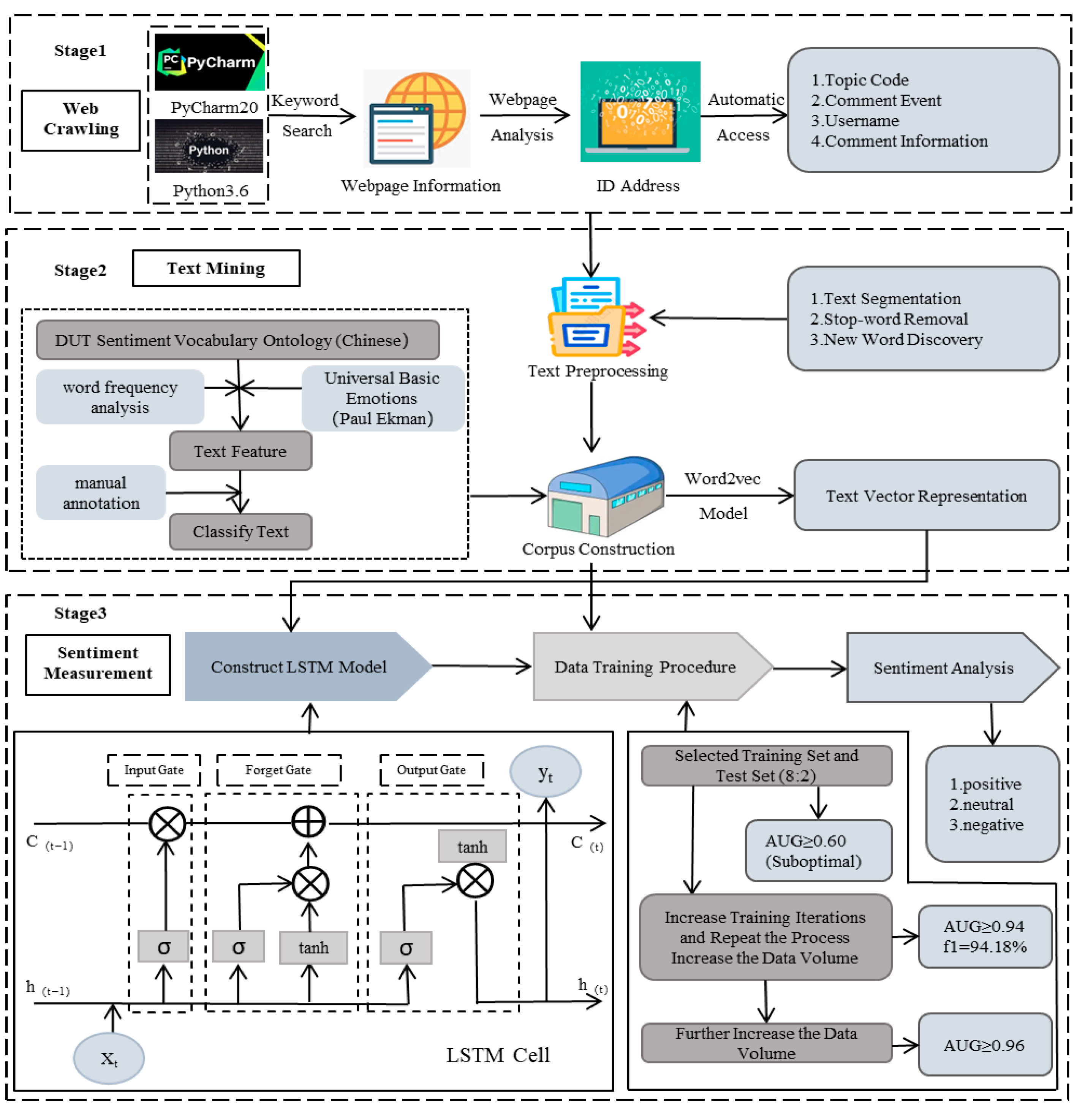
This study takes the EIPs in public health emergencies as its core research object, and focuses on analysing the public sentiment across different time periods, project types, and regions. It aims to reveal the distribution characteristics of public sentiment toward such projects. As shown in
Figure 1, the methodology of this study is divided into three stages: web crawling, text mining and sentiment measurement.
3.1. Web Crawling
Web crawling, which automatically identifies and parses web page structures to capture and store data according to specific rules, is commonly used for scraping and analysing data from the internet. This study primarily utilises PyCharm 2021 and Python 3.6 to collect data from Sina Weibo. The main data collection process involves using a Python programme to perform keyword searches to retrieve relevant web page information. The programme then parses these web pages and extracts the topic IDs from web page Uniform Resource Locators (URLs) using Python regular expressions to obtain specific topic ID codes, and subsequently accesses these IDs to capture and export topic codes, comment events, usernames and comment details automatically. Then data cleaning is performed on the crawled data. First, duplicate removal is performed on multiple identical comment data entries. Second, invalid Weibo comments such as blanks, invalid symbols, invalid emojis, and Weibo links are cleared, and special characters in Weibo comment texts are removed using regular expressions in Python. Finally, data whose comment content is irrelevant to the topic of this study is deleted. After the word segmentation operation, the segmented text data is filtered using a stop word list to remove words that are meaningless for the sentiment classification task.
Using the terms ‘Huoshenshan Hospital’, ‘Leishenshan Hospital’ and ‘Temporary Hospital’ as keywords, this study obtained the data from 491,149 Sina Weibo comments published during the epidemic period from 24 January 2020 to 1 March 2023. There were 445,190 reviews of Huoshenshan Hospital and Leishenshan Hospital in Wuhan and 45,959 reviews of temporary hospitals in Hebei (9257), Jilin (3841), Shandong (8771) and Shanghai (24,090).
3.2. Text Mining
Text mining is a technology used to extract useful information and knowledge from a large volume of text data, providing support for various applications such as information retrieval, intelligent recommendation and intelligence analysis. The specific steps are as follows:
3.2.1. Text Data Preprocessing
Text data preprocessing enhances a computer’s ability to recognise text data accurately by distinguishing text categories, reducing feature dimensions, removing noise features and structuring documents [
30]. In this study, text preprocessing includes phases such as text segmentation, stop-word removal and new word discovery. Moreover, for text segmentation, the widely used dictionary-based method Python Jieba (version 0.42.1) [
31] segmentation library was employed to perform the segmentation function. In the stop-word removal phase, the authoritative stop-word list from the Harbin Institute of Technology was used by matching the segmented words against the list and then removing them when a match was found. For new word discovery, this study used an N-gram segmented negative sentiment dataset as the initial word set and then applied pointwise mutual information and left-right entropy to generate candidate words, ultimately determining whether they qualified as new words based on a predefined threshold.
3.2.2. Corpus Construction
To extract text features, the Chinese Sentiment Vocabulary Ontology from Dalian University of Technology [
32] and Paul Ekman’s [
33] universal basic sentiments classification were used to describe a Chinese word or phrase in terms of word type, sentiment category, intensity and polarity. Text feature extraction was achieved by distinguishing seven categories (namely, ‘good’, ‘evil’, ‘joy’, ‘sorrow’, ‘fear’, ‘shock’ and ‘anger’) of words and conducting word frequency analysis on the sentiment words extracted. In the data collected, the most frequent sentiment shared was ‘good’, at 53.31%, followed by ‘evil’, at 15.63%. The occurrence frequency of specific keywords corresponding to these categories of sentiment was analysed further, and the top 20 sentiment keywords are shown in
Table 1.
In this study, manual annotation was adopted for the sentiment classification of texts (positive = 1, neutral = 0, negative = −1). The specific process is as follows: (1) Number of annotators: An annotation team consisting of 5 postgraduates was formed; (2) Coding guidelines: Detailed classification standards were developed, defining keywords for positive, neutral, and negative sentiments as well as rules for context-based judgement, and providing annotation interpretations of sample texts; (3) Training procedure: It included theoretical explanations, training on the operation of the annotation system, and practical exercises with test texts; annotators could participate in formal annotation only after passing the assessment; (4) Coder reliability: After annotation by all coders, consistency checks were conducted, and consensus was reached through discussion for samples with divergent annotations. The corpus and training dataset were supplemented continuously using training data, thereby revising model parameters. Text vectorisation refers to the process of converting text data into a set of vectors that can represent text semantics while being convenient for computer input and use. After segmenting all corpus texts, this study used the Word2vec [
34] model to convert words into high-dimensional vectors, and the original sentences became a collection of word vectors. At the same time, the corresponding sentence matrix vector was flattened by the programme and then connected to form the corresponding long vector, to realise the training of the subsequent LSTM model.
3.3. Sentiment Measurement
3.3.1. LSTM Model Construction
The LSTM model, a variant of recurrent neural networks (RNNs), was developed to process and predict time series data. However, RNNs are prone to encountering the issues of gradient explosion and vanishing gradients when handling long texts [
35]. To tackle the challenge posed by long-term dependencies, the ‘Gate’ mechanism was introduced by Hochreiter & Schmidhuber [
36], building upon the foundational structure of RNNs and led to the creation of the LSTM model. By incorporating gate mechanisms and memory cells, the problems faced by RNNs were effectively mitigated. The function of the ‘input gate’ is to determine the words allowed to enter the memory cell, the ‘forget gate’ plays a role in deciding which words should be kept in memory and the ‘output gate’ is responsible for controlling which words will be finally outputted [
37]. Furthermore, in the LSTM model, a memory cell is introduced to store and transmit information and is responsible for passing long-term dependency information between different time steps.
The specific procedure is as follows. At each time step, each word input is required to be processed through the input gate before it can be incorporated into the cell state. Upon entering the cell state, the information is subjected to a self-loop via the forget gate; words that fail to pass through the forget gate are eliminated. Meanwhile, those that succeed in passing are maintained in memory. Gradually, the number of words within the cell state achieves a state of equilibrium. Ultimately, only the words that manage to pass through the output gate are released [
38]. Moreover, the robustness analysis reveals that the LSTM model performs better on the original, noisy, and shuffled datasets.
3.3.2. Data Training
During the word embedding and model training phase, the experiment adopts the Word2Vec model for text semantic representation learning, with the word vector dimension set to 100. In the subsequently constructed LSTM neural network model, the number of hidden layers is 1, and the number of hidden units in this single LSTM layer is configured to 128. Additionally, a Dropout regularisation mechanism is introduced (where the dropout rate is set to 0.4) to alleviate the risk of overfitting. The Adam optimiser is employed for the model, with a learning rate of 0.001. During the training process, the batch size is set to 128, and the total number of training epochs is 30—this configuration ensures the model sufficiently converges and effectively learns text features. After constructing the LSTM model, this study used it as the basis for training the programme developed. During the training process, the ratio of the selected training set to the test set was 8:2. Initially, the model was trained using 8258 pieces of positive review data, 1287 pieces of neutral review data and 1708 pieces of negative review data. The obtained accuracy of the LSTM model was 91.34%, with an F1 score of 93.50% and an area under the curve (AUC) value of 0.60 or above, indicating unsatisfactory model performance. Subsequently, by increasing the number of training iterations, repeating the training steps to refine the corpus, adjusting the model parameters and increasing the volume of training data (selecting 11,338, 1257 and 2059 pieces of positive, neutral and negative review data, respectively) the LSTM model’s accuracy was improved to 94.27%, with an F1 score of 94.18% and AUC values of 0.94 or above, enhancing the model’s performance significantly. Finally, further increases in the amount of training data led to excellent overall performance of the LSTM model, with AUC values of 0.96 or above, thereby meeting the research requirements.
3.3.3. Sentiment Analysis
The processed data were imported for sentiment recognition, with 1 representing positive sentiment, 0 representing neutral sentiment and −1 representing negative sentiment. After that, three classification results were obtained: positive, neutral and negative. The final corpus included 13,973 positive corpus, 3790 neutral corpus and 4169 negative corpus.
Table 2 presents typical examples of positive corpora, neutral corpora, and negative corpora, respectively.
4. Results and Discussion
This study collected data from January 2020 to March 2023, a timeframe that fully covers the key phases of COVID-19 prevention and control in China—including the early outbreak, peak emergency response, regular prevention and control, and policy adjustments. It enables a comprehensive reflection of the stage-specific public attention and emotional evolution regarding emergency infrastructure.
In Hubei Province, the pandemic spread rapidly in early 2020, during which Leishenshan Hospital and Huoshenshan Hospital became the core focus of public attention; from the second half of 2020 to March 2023, Hubei shifted to regular prevention and control, and public attention toward such infrastructure stabilised accordingly. In Shandong Province, outbreaks occurred in February 2020, March 2022, and November 2022, with the focus of public discussions adjusting dynamically based on the scale of each outbreak. Hebei Province’s key pandemic nodes were concentrated in early 2021, April 2022, and November 2022, during which the rapid construction of mobile cabin hospitals became a core focus of public attention. Jilin Province experienced a large-scale regional outbreak from March to April 2022, and the rapid construction and operation of mobile cabin hospitals became a hot topic of public discussion. Shanghai Municipality went through a large-scale outbreak from March to May 2022, during which the number of EIPs (such as mobile cabin hospitals) and their operation management models attracted widespread attention, serving as a core channel for public emotional expression.
To mitigate the analytical bias caused by differences in data volume, subsequent analyses in this study will be conducted based on emotional proportions.
4.1. Sentiment Characteristics Analysis
Based on the total number of comments and the proportion of different sentiment comments each day, the comment density and sentiment characteristics were found to exhibit different states over time.
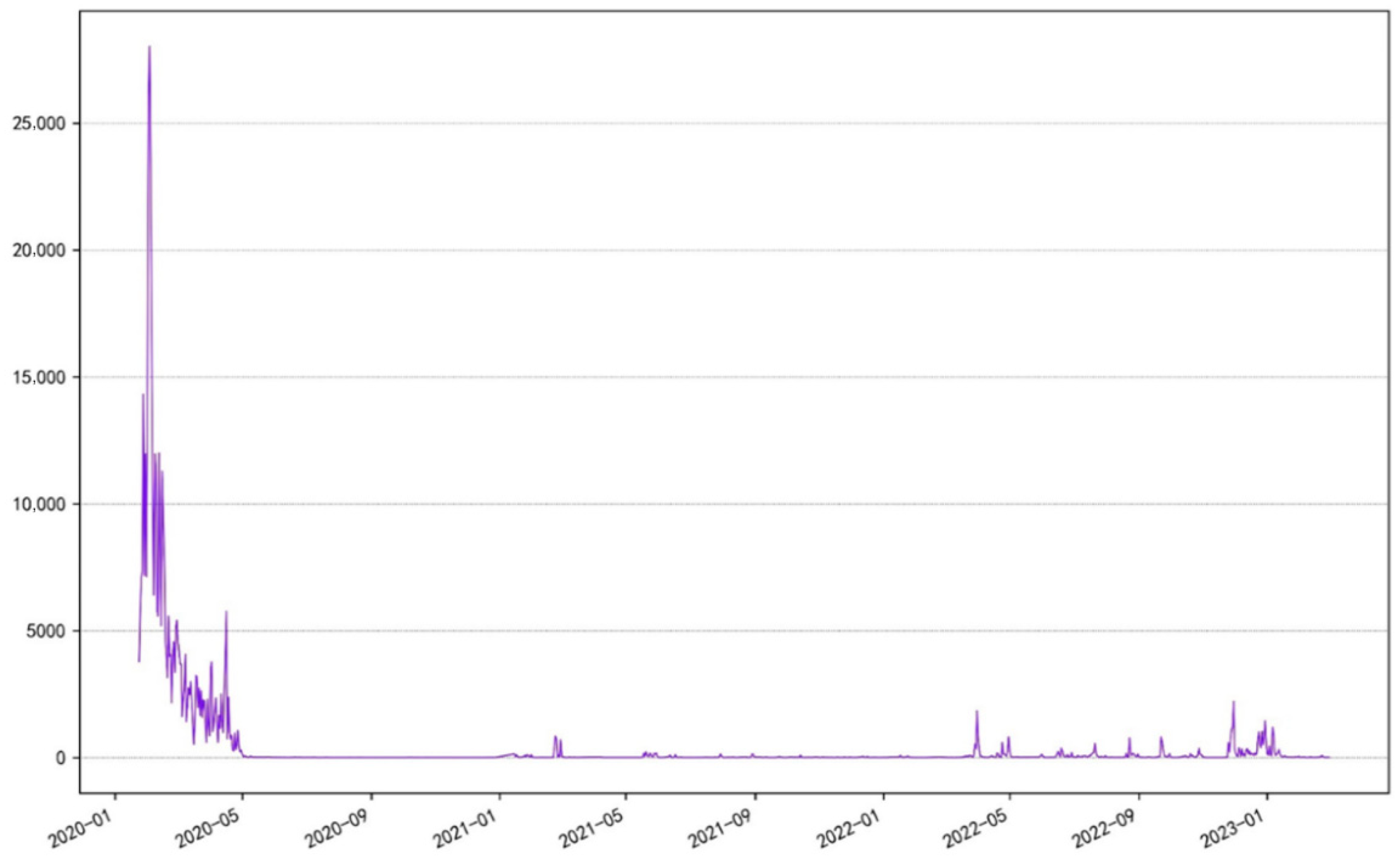
As shown in
Figure 2, the comments on EIPs began in January 2020 and surged from January to May 2020, with daily comments consistently remaining at a high level, including 64 days with more than 2000 comments per day and 27 days recording between 500 and 2000 comments. Starting from 24 January 2020, the amount of comment data gradually increased, reaching its peak on 3 February 2020, with 28,027 comments, followed by sustained fluctuations and decreases. Since May 2020, the number of comments has remained at a relatively low level with daily comments numbering less than 850. Moreover, from April 2022 to March 2023, the number of daily comments showed fluctuating increases in certain periods but peaked below 2500 each day, which is consistent with previous studies such as those of Cui and Kertész [
39]. During the initial phase of the COVID-19 pandemic, the public was widely impacted by anxiety and panic. The heightened attention to the dynamics of the pandemic and the associated preventive measures led to increased engagement among individuals, who actively shared opinions and exchanged information across various platforms, thereby driving a high volume of commentary.
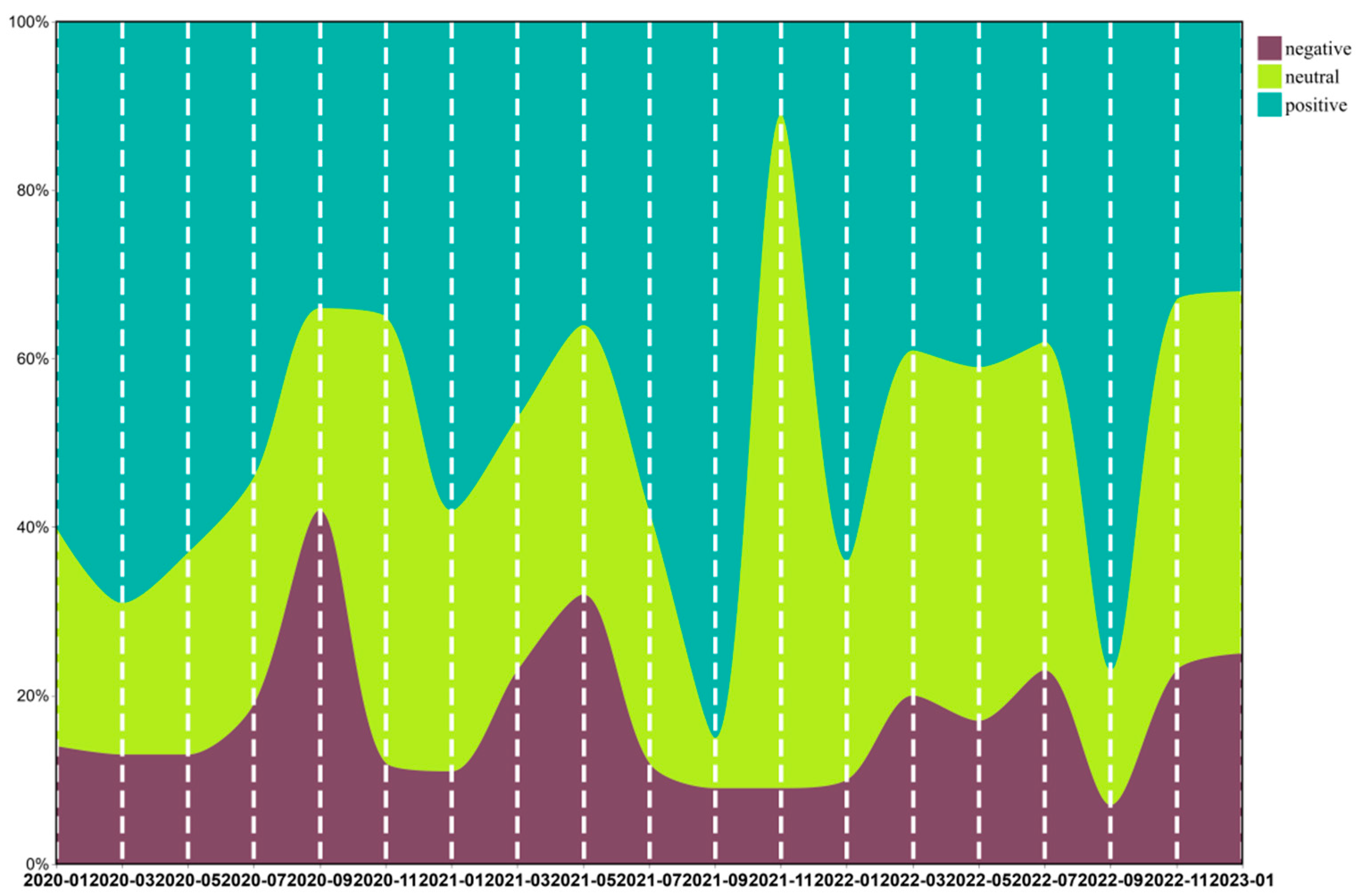
Figure 3 shows the proportion of different sentiment comments. Most of the time, positive sentiments made up the largest proportion, exceeding 50%. This is consistent with the findings of Zhang and Gan [
40], which indicated that, overall, the public maintained a generally positive emotional state during the pandemic. According to previous research by Bollen [
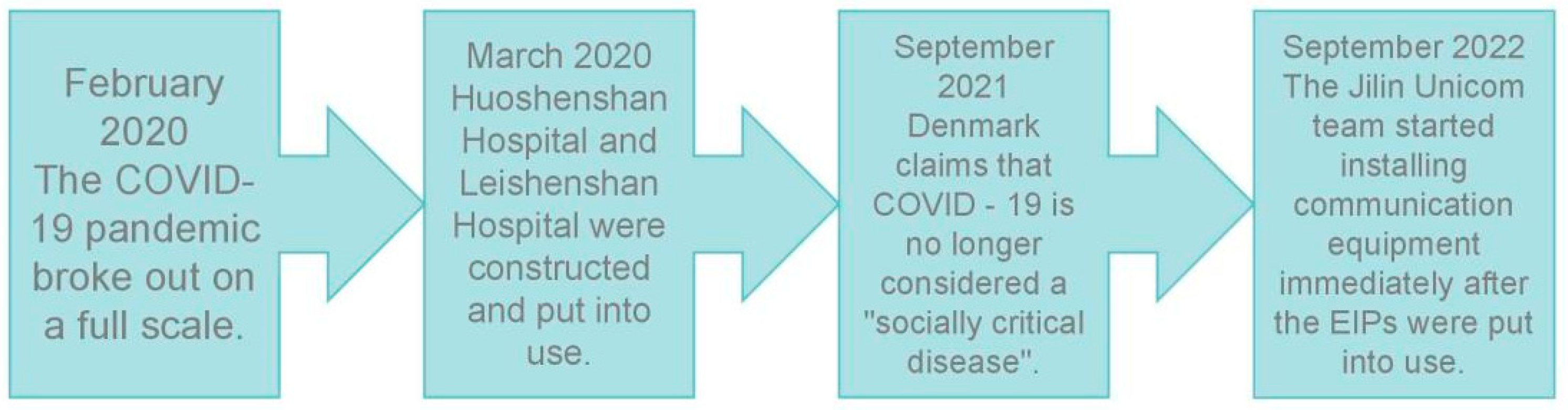
41], public sentiment in online environments is significantly influenced by specific events in the real world. Therefore, the proportion of positive sentiment began to rise steadily from January 2020 and reached a peak of approximately 65% in March 2020. This increase is likely related to the construction and commissioning of Leishenshan Hospital and Huoshenshan Hospital, as well as the continuous responses of the Hubei Provincial Government and Wuhan Municipal Government to public concerns. Subsequently, positive sentiment gradually declined while negative sentiment increased. Between September and November 2020, the proportion of positive sentiment remained at a relatively low level, ranging from 30% to 50%, with negative sentiment exceeding 30%. This shift was primarily attributed to localised resurgences of the pandemic and the occurrence of trademark squatting incidents related to the pandemic, which triggered public dissatisfaction. Subsequently, in April and May of 2021, this indicator remained within the same range. Since then, the proportion of positive sentiment has exhibited a growing trend, reaching its peak of 85% in September 2021. The rise in the public’s positive emotions toward EIPs may be related to positive signals from other countries. For instance, Denmark announced that it would no longer classify COVID-19 as a “serious threat to society” [
42]. However, in November of the same year, this proportion experienced a significant decline, falling to 11%, with neutral sentiment accounting for the largest proportion soaring to 80%. The significant weakening of positive public sentiment may be related to the continuous increase in confirmed cases, despite the implementation of strict mandatory quarantine measures in EIPs [
43]. Additionally, due to the relatively stable epidemic situation nationwide during this period, the negative emotions of the public did not increase significantly [
43]. Entering 2022, the proportion of positive sentiment fluctuated between 30% and 50% from March to July. Until September 2022, this proportion peaked at 77% and subsequently stabilised. The improvement in positive emotions at this point may be related to the fact that the Jilin Unicom team immediately began installing communication equipment after the EIPs were put into use [
44].
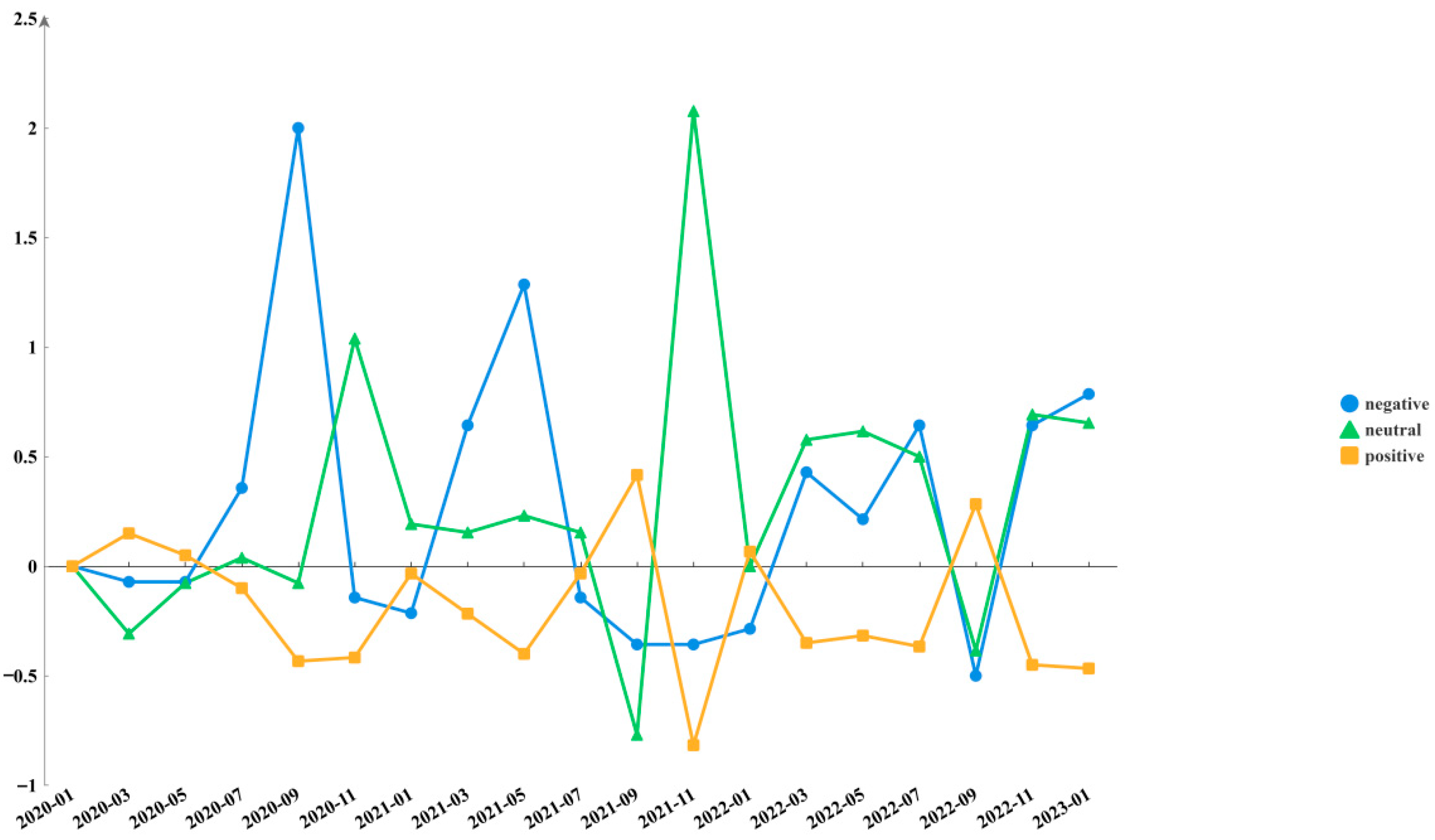
Figure 4 systematically outlines the temporal sequence of occurrences of the aforementioned events. Finally, as can be seen from
Figure 5, the volatility of positive emotions is significantly more stable. This indicates that positive emotions remained in a relatively stable state throughout the entire COVID-19 pandemic cycle. By contrast, the volatility of negative emotions is significantly higher, which reflects that negative emotions fluctuated more drastically during the pandemic.
4.2. Public Sentiment Towards Different Projects
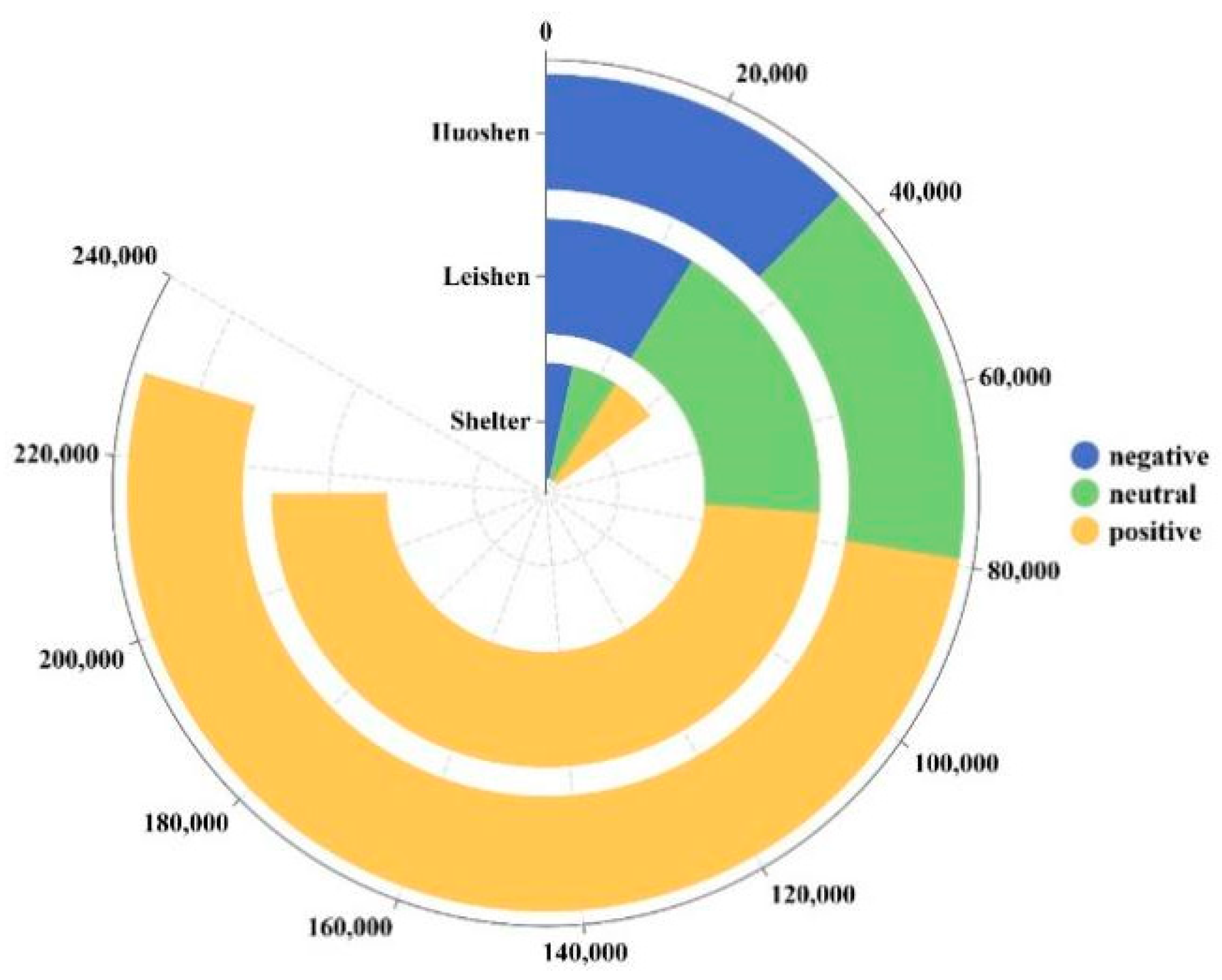
Figure 6 illustrates the public sentiment distribution across different project types. The number of comments about Huoshenshan Hospital, Leishenshan Hospital and mobile cabin hospitals are 229,366, 215,824 and 45,959, respectively. The corresponding positive sentiment for these projects in sequence are 65%, 65% and 39%, while the negative sentiment sequence is 16%, 18% and 22%.
Based on criteria such as time frame, purpose, reversibility, cost, sustainability, adaptability and regulations, EIPs can be categorised into temporary and long-term adaptive EIPs [
2]. According to Cui [
2] and Ye [
45], temporary EIPs tend to receive higher levels of attention and more positive feedback during the initial and peak stages of project development. In contrast, long-term adaptability EIPs face more complex and fluctuating emotional responses throughout their construction and operational cycles. The current study’s data analysis results support this conclusion. Both types of projects generally elicited positive public sentiment; however, the stability and trends of that sentiment varied as per the nature of the projects, unexpected events and the duration of their implementation. Temporary EIPs, such as Huoshenshan Hospital and Leishenshan Hospital, were primarily characterised by positive sentiment throughout the pandemic, with public sentiment remaining relatively stable. Although negative emotions increased when incidents of maliciously registering catchphrase trademarks occurred, the public’s high recognition and support for these EIPs coincided precisely with the peak period of comment data volume. However, long-term adaptive EIPs, such as mobile cabin hospitals, exhibited more significant fluctuations in public sentiment. As temporary EIPs, both Huoshenshan Hospital and Leishenshan Hospital exhibit certain differences. The number of comments regarding Huoshenshan Hospital exceeds that of Leishenshan Hospital by 13,542, with a 2% lower proportion of negative sentiment. According to the research findings of Chen and Zhang [
46], there exists a strong positive correlation between the daily volume of comments and the number of news reports. Therefore, this difference may be related to the fact that Huoshenshan Hospital started admitting patients earlier, its official Weibo account was launched earlier, and the media coverage surrounding Huoshenshan Hospital was more extensive [
46].
4.3. Public Sentiment by Region
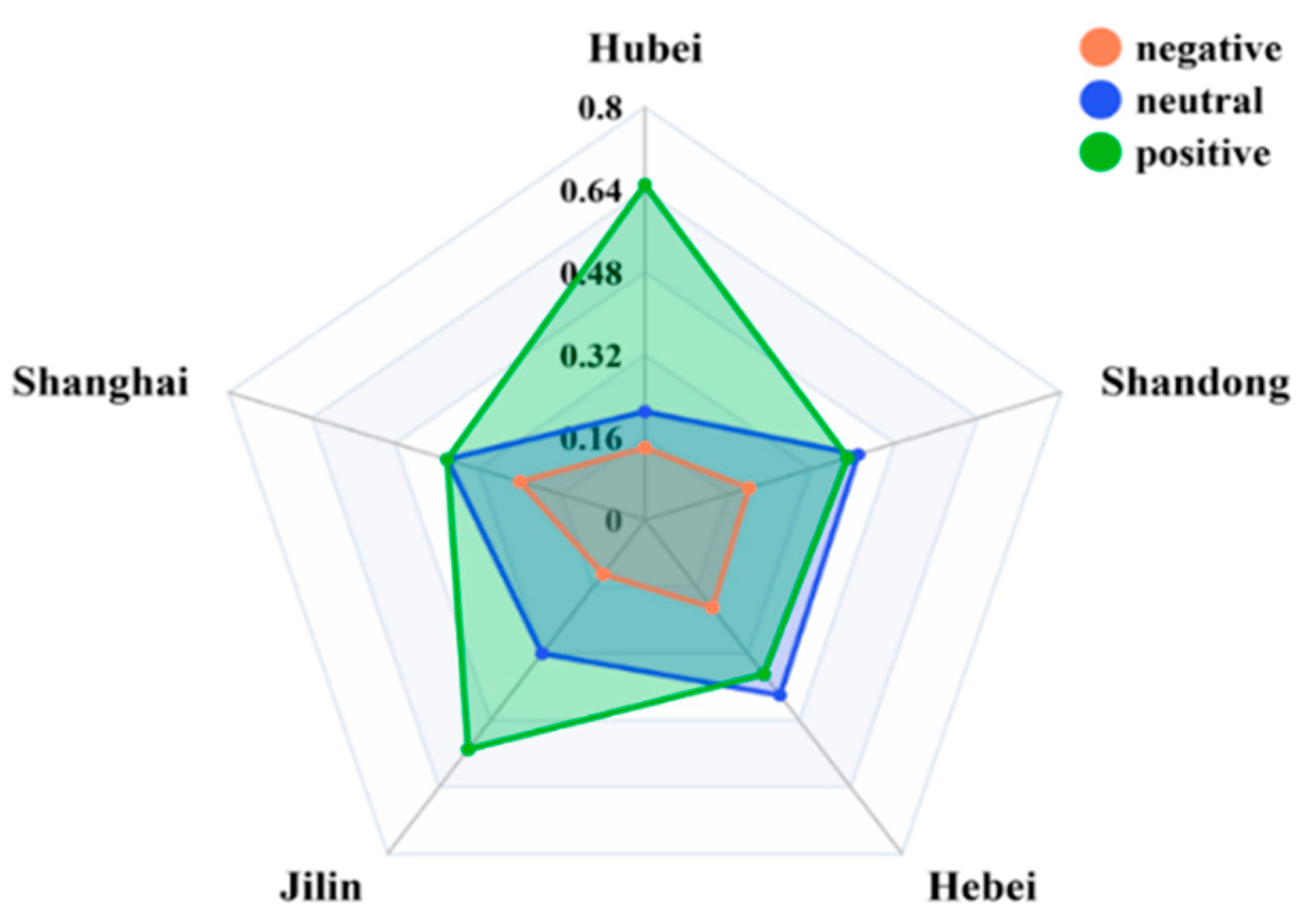
In this study, the data collected originate from several regions, including Hubei Province (specifically Wuhan City), Hebei Province, Jilin Province, Shandong Province and Shanghai City. The regional radar charts illustrating public sentiment proportions are presented in
Figure 7.
When examining sentiment trends, certain commonalities and differences emerged between the regions. A notable commonality is that negative sentiment remains the lowest across all regions: 14% in Hubei, 21% in Hebei, 13% in Jilin, 21% in Shandong, and 24% in Shanghai. All figures are well below the 30% mark, which reflecting the public’s affirmation and support for the various policy measures implemented by the government and their active participation in interactive communication [
47]. Regarding differences, the overall sentiment in Jilin and Hubei is relatively stable, with a higher proportion of positive sentiment—55% in Jilin and 65% in Hubei, both exceeding 50%. However, Hebei, Shandong and Shanghai exhibit slightly lower stability in overall sentiment. Specifically, in Hebei and Shandong, the proportion of positive sentiment is slightly lower than that of neutral sentiment (37% vs. 42% in Hebei, and 38% vs. 41% in Shandong). In Shanghai, the proportions of positive and neutral sentiment are equal, both at 38%. This discrepancy may be related to the recurrence of the pandemic and inadequate implementation of certain control measures, leading to public dissatisfaction and a lower proportion of positive sentiment [
48]. During the COVID-19 pandemic, a cluster of cases occurred at a mobile cabin hospital in Langfang City, Hebei Province, and this incident was associated with a potential increase in public negative sentiments. Shandong Province plans to invest 23 billion yuan to construct 119 mobile cabin hospitals, a measure intended to better address the pandemic. However, some members of the public view this as a waste of resources. In Shanghai, issues arose during the formulation of epidemic control policies and the construction and operation of mobile cabin hospitals. These two incidents may be related to changes in public sentiment [
48]. As a result, public positive sentiment in these three provinces was relatively low during the pandemic, thereby providing empirical support for the downward trend in public sentiment triggered by negative news in specific regions, as proposed by Blanco and Lourenco [
49].
The proportion of positive sentiment in the Wuhan region—particularly regarding Huoshenshan Hospital and Leishenshan Hospital—was the highest. This may be related to the relatively short duration of the pandemic in Wuhan, which featured numerous public interactions and more positive events during the construction and operational phases of these hospitals [
44]. During the pandemic, Jilin Province did not experience any significant negative news. Instead, there was a positive event where the Jilin Unicom team swiftly improved the infrastructure for the mobile cabin hospitals, related to a generally positive sentiment. In contrast, the mobile cabin hospitals in Hebei, Shandong, and Shanghai experienced a longer duration of use, occurring within a socially stable context marked by localised and sudden outbreaks. Additionally, negative incidents occurred in these regions. During the period when this situation occurred, national public attention showed a decline, while local public sentiment turned increasingly negative—these trends were associated with a higher proportion of negative sentiment [
25]. This research finding further validates Bollen’s [
40] proposition that public sentiment in online environments is significantly influenced by specific events occurring in the real world.
5. Conclusions
This study collected public comments on EIPs from the Sina Weibo platform and employed text mining technology to analyse public sentiment regarding emergency infrastructure projects. The principal findings are that (1) Positive sentiment predominates in the data: In most cases, positive sentiment constitutes the largest proportion (exceeding 50%) of public opinion. (2) Stability of sentiment in temporary versus long-term EIPs: Public sentiment towards temporary EIPs tends to remain relatively stable, while long-term adaptive EIPs experienced more pronounced fluctuations in sentiment. (3) There were notable regional differences in public sentiment. In Jilin and Hubei, the sentiment remained relatively stable, with a significantly higher proportion of positive sentiment than neutral and negative sentiment. Conversely, Hebei, Shandong and Shanghai demonstrated slightly lower stability, where positive sentiment was either slightly lower than or equal to neutral sentiment.
This study makes a unique contribution to the literature by focusing innovatively on the public perspective of EIPs under urgent circumstances. This study conducts a systematic analysis of the dynamic changes in public sentiment towards EIPs and performs a comparative analysis of public sentiment proportions towards EIPs across different time periods, project types, and locations. It enriches the theoretical perspectives of research on the differentiation of public sentiment in the field of emergency management. The characteristics and differences in public sentiment towards various projects and regions may improve theories related to project management, particularly in the context of emergency management. Meanwhile, for the government, public sentiment analysis can assist government departments in understanding public sentiment and demands, maximising public welfare and improving policies related to EIPs to effectively respond to crises. For project managers of EIPs, the findings emphasise the importance of timely identification of social risk factors by tracking public sentiment, potentially improving project implementation performance through information disclosure and public participation.
However, this study has its limitations. The comment data is sourced solely from Sina Weibo and does not include users from multiple platforms. Furthermore, the volume of comments for Huoshenshan and Leishenshan hospitals far exceeds that of mobile cabin hospitals. Additionally, sentiment annotation relies on annotators’ subjective perceptions and judgments, which may lead to discrepancies in how different annotators define the sentiment of the same text. In the future, we will carry out work from three aspects to address these limitations: first, expanding data acquisition channels to enhance the diversity of data sources; second, exploring effective approaches to reduce the gap in sample sizes between different projects; third, further optimising annotation methods to improve the accuracy of sentiment annotation. Additionally, we will further strengthen cooperation with data platforms. By leveraging historical data retrieval technology and combining it with social media backup tools, we will recover negative data that may have been deleted in sensitive contexts, thereby enhancing the comprehensiveness of the analysis results. These efforts aim to build a more comprehensive data structure and provide a more solid scientific basis for emergency infrastructure projects.
Author Contributions
Conceptualisation, C.C.; methodology, Y.L. (Yong Liu); software, J.F. and X.H.; formal analysis, J.F.; investigation, Q.L. and Y.L. (Yaming Li); data curation, Q.L. and Y.L. (Yong Liu); writing—original draft preparation, J.F.; writing—review and editing, C.C.; supervision, C.C.; funding acquisition, C.C. All authors have read and agreed to the published version of the manuscript.
Funding
This study was financially supported by the National Natural Science Foundation of China (NSFC) (Grant No 72001079, 72072165). Hebei Provincial Major Science and Technology Support Project Foundation (24294301Z) and the Fundamental Research Funds for the Central Universities (3142021010, 050201080303, ZY20250130).
Data Availability Statement
The data that support the findings of this study are available from the corresponding author, Cui, upon reasonable request. The raw data supporting the conclusions of this article will be made available by the authors on request.
Conflicts of Interest
Author Xiaowei Han was employed by Jiangsu Subei Environmental Protection Group Co., Ltd. Author Qian Li was employed by Nsfocus Group Co., Ltd. The remaining authors declare that the research was conducted in the absence of any commercial or financial relationships that could be construed as a potential conflict of interest.
References
- Chester, M.V.; Allenby, B. Toward adaptive infrastructure: Flexibility and agility in a non-stationarity age. Sustain. Resilient Infrastruct. 2019, 4, 173–191. [Google Scholar] [CrossRef]
- Cui, C.; Xie, T.; Liu, Y.; Liu, M.; Cao, H.; Li, H. Public perceived efficacy of emergency infrastructure project: Antecedents in a triadic reciprocal determinism. Eng. Constr. Archit. Manag. 2024; ahead-of-print. [Google Scholar] [CrossRef]
- Wang, W.S.; Fu, Y.T.; Gao, J.; Shang, K.; Gao, S.L.; Xing, J.W.; Ni, G.D.; Yuan, Z.M.; Qiao, Y.N.; Mi, L.Y. How the COVID-19 Outbreak Affected Organizational Citizenship Behavior in Emergency Construction Megaprojects: Case Study from Two Emergency Hospital Projects in Wuhan, China. J. Manag. Eng. 2021, 37, 04021008. [Google Scholar] [CrossRef]
- Wearne, S.H. Management of urgent emergency engineering projects. In Proceedings of the Institution of Civil Engineers-Municipal Engineer, Wales, UK, 7–12 July 2002; Thomas Telford Ltd.: London, UK, 2002; Volume 151, pp. 255–263. [Google Scholar]
- Zidane, Y.J.; Klakegg, O.J.; Andersen, B.; Hussein, B. “Superfast!” managing the urgent: Case study of telecommunications infrastructure project in Algeria. Int. J. Manag. Proj. Bus. 2018, 11, 507–526. [Google Scholar] [CrossRef]
- Brunet, M. Governance-as-practice for major public infrastructure projects: A case of multilevel project governing. Int. J. Proj. Manag. 2019, 37, 283–297. [Google Scholar] [CrossRef]
- Darnthamromgkul, W. Public response to the appearance of ecological urban park design: The battle between the ‘picturesque’ and the ‘messiness’. Sustain. Resilient Infrastruct. 2023, 8, 307–324. [Google Scholar] [CrossRef]
- Zheng, B.; Liu, H.; Davison, R.M. Exploring the relationship between corporate reputation and the public’s crisis communication on social media. Public Relat. Rev. 2018, 44, 56–64. [Google Scholar] [CrossRef]
- Ma, N.; Liu, Y.; Lian, Y. A review of public opinion risk for unexpected emergency. J. Intell. 2019, 38, 88–94. (In Chinese) [Google Scholar]
- Zhang, N.; Li, H.; Li, P.Z.; Shen, H.Z.; Yuan, Q.J. Internet Public Response to Public Health Emergencies-Taking the Topic related to COVID-19 on the Zhihu Platform as an Example. J. Mod. Inf. 2021, 41, 78–88. (In Chinese) [Google Scholar]
- Ju, S.; Li, S. Active learning on sentiment classification by selecting both words and documents. In Chinese Lexical Semantics: 13th Workshop, CLSW 2012, Wuhan, China, July 6–8, 2012, Revised Selected Papers; Springer: Berlin/Heidelberg, Germany, 2013; Volume 13, pp. 49–57. [Google Scholar]
- Liu, L.; Nie, X.; Wang, H. Toward a fuzzy domain sentiment ontology tree for sentiment analysis. In Proceedings of the 2012 5th International Congress on Image and Signal Processing, Agadir, Morocco, 28–30 June 2012; IEEE: New York, NY, USA, 2012; pp. 1620–1624. [Google Scholar]
- Sánchez-Rada, J.F.; Iglesias, C.A. Social context in sentiment analysis: Formal definition, overview of current trends and framework for comparison. Inf. Fusion 2019, 52, 344–356. [Google Scholar] [CrossRef]
- Ramírez-Tinoco, F.J.; Alor-Hernández, G.; Sánchez-Cervantes, J.L.; Olivares-Zepahua, B.A.; Rodríguez-Mazahua, L. A brief review on the use of sentiment analysis approaches in social networks. In Proceedings of the International Conference on Software Process Improvement, Torreón, Mexico, 20–22 October 2021. [Google Scholar]
- Liu, X.J.; Hu, W. Attention and sentiment of Chinese public toward green buildings based on Sina Weibo. Sustain. Cities Soc. 2019, 44, 550–558. [Google Scholar] [CrossRef]
- Wang, Y.; Li, H.; Wu, Z.Z. Attitude of the Chinese public toward off-site construction: A text mining study. J. Clean. Prod. 2019, 238, 117926. [Google Scholar] [CrossRef]
- Wu, Z.Z.; Zhang, Y.; Chen, Q.H.; Wang, H. Attitude of Chinese public towards municipal solid waste sorting policy: A text mining study. Sci. Total Environ. 2020, 756, 142675. [Google Scholar] [CrossRef] [PubMed]
- Cui, C.; Han, X.; Zhou, Q.; Xu, M.; Skitmore, M.; Liu, Y. Impact of passengers’ perceptions of social responsibility activities on the efficacy of PPP urban rail transit projects. Cities 2022, 130, 103987. [Google Scholar] [CrossRef]
- Bearth, A.; Siegrist, M. Are risk or benefit perceptions more important for public acceptance of innovative food technologies: A meta-analysis. Trends Food Sci. Technol. 2016, 49, 14–23. [Google Scholar] [CrossRef]
- Hildebrand, J.; Sadat-Razavi, P.; Rau, I. Different Risks—Different Views: How Hydrogen Infrastructure Is Linked to Societal Risk Perception. Energy Technol. 2024, 13, 2300998. [Google Scholar] [CrossRef]
- Huang, L.; She, L. Factors that influence emergency events public preparedness intention-based on empirical research. Chin. J. Manag. Sci. 2019, 26, 146–157. (In Chinese) [Google Scholar]
- Wan, X.; Ding, X.Y.; Zhang, T.T.; Li, L.Z. A Study on the Social Impact of Rainstorm Disasters Considering Infrastructure Disruption: An Evolutionary Analysis of Emotions and Behaviors from the Perspective of the Public. J. Nat. Resour. 2023, 38, 2919–2932. (In Chinese) [Google Scholar]
- Song, J.; Sun, Y.; Jin, L. PESTEL analysis of the development of the waste-to-energy incineration industry in China. Renew. Sustain. Energy Rev. 2017, 80, 276–289. [Google Scholar] [CrossRef]
- Chaturvedi, I.; Cambria, E.; Welsch, R.E.; Herrera, F. Distinguishing between facts and opinions for sentiment analysis: Survey and challenges. Inf. Fusion 2018, 44, 65–77. [Google Scholar] [CrossRef]
- Wu, L.; Li, J.; Qi, J.; Shi, N.; Zhu, H. How to Promote Public Engagement and Enhance Sentiment Through Government Social Media During the COVID-19 Crisis: A Public Value Management Perspective. J. Organ. End User Comput. (JOEUC) 2022, 34, 1–24. [Google Scholar] [CrossRef]
- Hu, N. Sentiment Analysis of Texts on Public Health Emergencies Based on Social Media Data Mining. Comput. Math. Methods Med. 2022, 2022, 3964473. [Google Scholar] [CrossRef] [PubMed]
- Luo, T.; Li, R.; Sun, Z.; Tao, F.; Kumar, M.; Li, C. Let the big data speak: Collaborative model of topic extract and sentiment analysis COVID-19 based on weibo data. Artif. Intell. Secur. 2022, 264–275. [Google Scholar]
- Huang, W.; Wang, Q.; Cao, J. Tracing public opinion propagation and emotional evolution based on public emergencies in social networks. Int. J. Comput. Commun. Control 2018, 13, 129–142. [Google Scholar]
- Liu, C.; Tian, Y.; Shi, Y.; Huang, Z.; Shao, Y. An analysis of public topics and sentiments based on social media during the COVID-19 Omicron Variant outbreak in Shanghai 2022. Comput. Urban Sci. 2024, 4, 19. [Google Scholar] [CrossRef]
- Yang, L. Survey of text sentiment analysis. J. Comput. Appl. 2013, 33, 1574. (In Chinese) [Google Scholar] [CrossRef]
- Available online: https://github.com/fxsjy/jieba (accessed on 27 April 2023).
- Xu, L.H.; Lin, H.F.; Zhao, J. Construction and analysis of an emotional corpus. J. Chin. Inf. Process. 2008, 116–122. [Google Scholar]
- Ekman, P.; Friesen, V.W. Head and Body Cues in the Judgment of Emotion: A Reformulation. Percept. Mot. Ski. 1967, 24, 711–724. [Google Scholar] [CrossRef]
- Mikolov, T.; Sutskever, I.; Chen, K.; Corrado, G.S.; Dean, J. Distributed Representations of Words and Phrases and their Compositionality. arXiv 2013, arXiv:1310.4546. [Google Scholar] [CrossRef]
- Bengio, Y. Learning long-term dependencies with gradient descent is difficult. IEEE Trans. Neural Netw. 2002, 5, 157–166. [Google Scholar] [CrossRef]
- Hochreiter, S.; Schmidhuber, J. Long short-term memory. Neural Comput. 1997, 9, 1735–1780. [Google Scholar] [CrossRef] [PubMed]
- Zhang, Y. Research on Emotional Tendencies of College Students Based on Self Attention and Bi-LSTM. Softw. Guide 2024, 23, 53–57. (In Chinese) [Google Scholar]
- Shahid, F.; Zameer, A.; Muneeb, M. Predictions for COVID-19 with deep learning models of lstm, gru and bi-lstm. Chaos Solitons Fractals 2020, 140, 110212. [Google Scholar] [CrossRef] [PubMed]
- Cui, H.; Kertész, J. Attention dynamics on the Chinese social media Sina Weibo during the COVID-19 pandemic. EPJ Data Sci. 2021, 10, 8. [Google Scholar] [CrossRef]
- Zhang, F.; Gan, H.C. The Impact of Psychological Temporal and Spatial Distance on Public Emotions During the Pandemic: A Computational Analysis Based on Weibo Text Panel Data. Journal. J. 2020, 39–49. (In Chinese) [Google Scholar]
- Bollen, J.; Mao, H.; Pepe, A. Modeling public mood and emotion: Twitter sentiment and socio-economic phenomena. In Proceedings of the International AAAI Conference on Web and Social Media, Barcelona, Spain, 17–21 July 2011; Volume 5, pp. 450–453. [Google Scholar]
- Ma, N.; Yu, G.; Jin, X.; Zhu, X.Q. Quantified multidimensional public sentiment characteristics on social media for public opinion management: Evidence from the COVID-19 pandemic. Front. Public Health 2023, 11, 1097796. [Google Scholar] [CrossRef]
- Hu, Y.; Wang, Z.; Chen, G.D.; Gao, W. Influencing Factors and Mechanism of Network User’s Emotional Evolution in Emergency Network Public Opinion. Inf. Sci. 2024, 1–26. (In Chinese) [Google Scholar]
- Zhu, M.; Chen, S.Z. Enlightenment of COVID-19: Analysis and Thinking of China’s Health Public Opinion. J. Appl. Stat. Manag. 2024, 43, 622–634. (In Chinese) [Google Scholar]
- Ye, Z.J.; Li, R.S.; Wu, J. Dynamic Demand Evaluation of COVID-19 Medical Facilities in Wuhan Based on Public Sentiment. Int. J. Environ. Res. Public Health 2022, 19, 7045. [Google Scholar] [CrossRef]
- Chen, Y.; Zhang, Z.S. An easy numeric data augmentation method for early-stage COVID-19 tweets exploration of participatory dynamics of public attention and news coverage. Inf. Process. Manag. 2022, 59, 103073. [Google Scholar] [CrossRef]
- Yang, G.; Wang, Z.D.; Chen, L. Investigating the Public Sentiment in Major Public Emergencies Through the Complex Networks Method: A Case Study of COVID-19 Epidemic. Front. Public Health 2022, 10, 847161. [Google Scholar] [CrossRef]
- Tan, H.; Peng, S.; Zhu, C.; You, Z.; Miao, M.; Kuai, S. Long-term Effects of the COVID-19 Pandemic on Public Sentiments in Mainland China: Sentiment Analysis of Social Media Posts. J. Med. Internet Res. 2021, 23, e29150. [Google Scholar] [CrossRef]
- Blanco, G.; Lourenco, A. Optimism and pessimism analysis using deep learning on COVID-19 related twitter conversations. Inf. Process. Manag. 2022, 59, 102918. [Google Scholar] [CrossRef]
| Disclaimer/Publisher’s Note: The statements, opinions and data contained in all publications are solely those of the individual author(s) and contributor(s) and not of MDPI and/or the editor(s). MDPI and/or the editor(s) disclaim responsibility for any injury to people or property resulting from any ideas, methods, instructions or products referred to in the content. |