Experimental Assessment of the Influence of Drywall Infills on the Seismic Behaviour of RC Frame Buildings


Abstract
1. Introduction
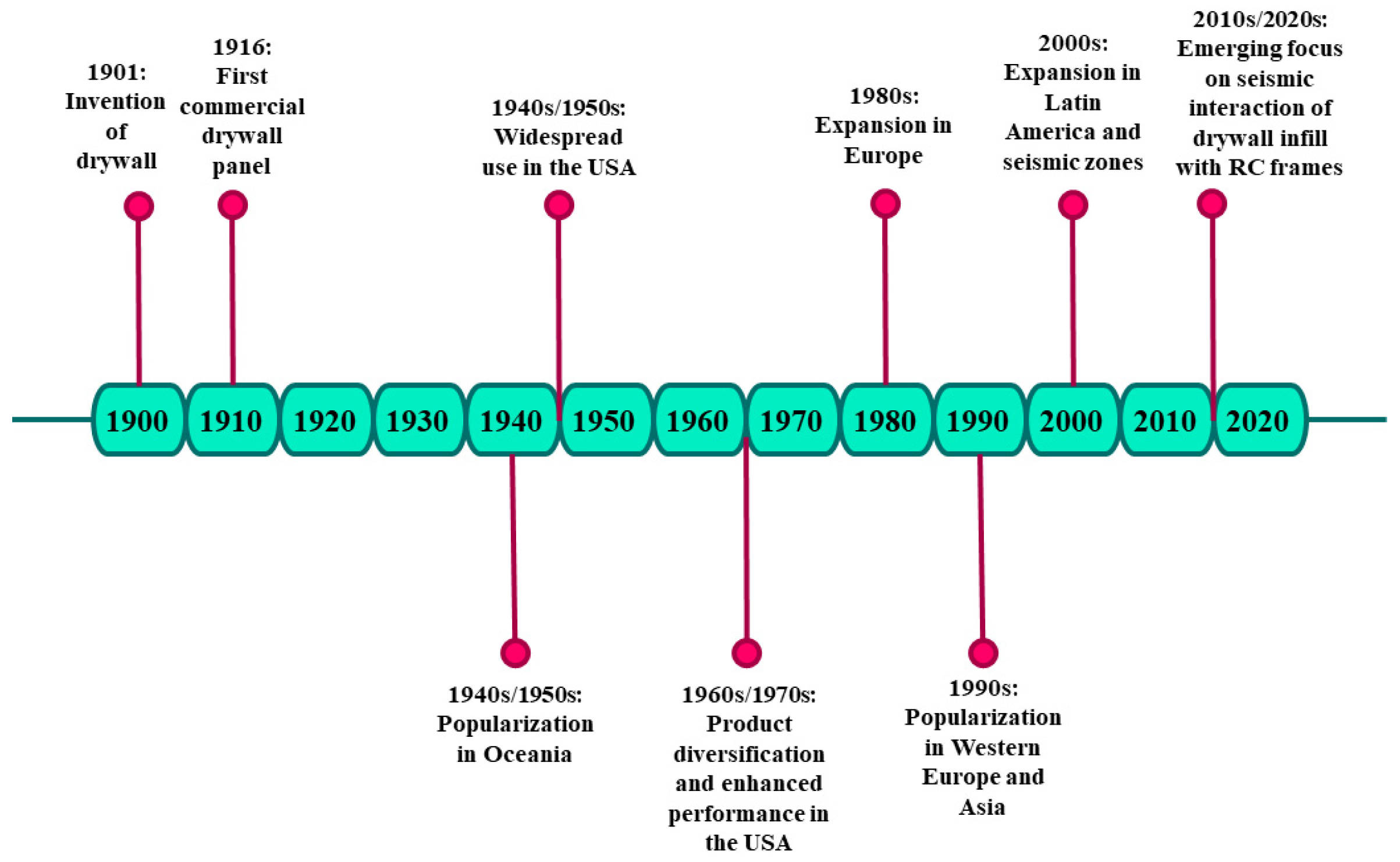
2. Research Context and Motivation
2.1. Context Framework
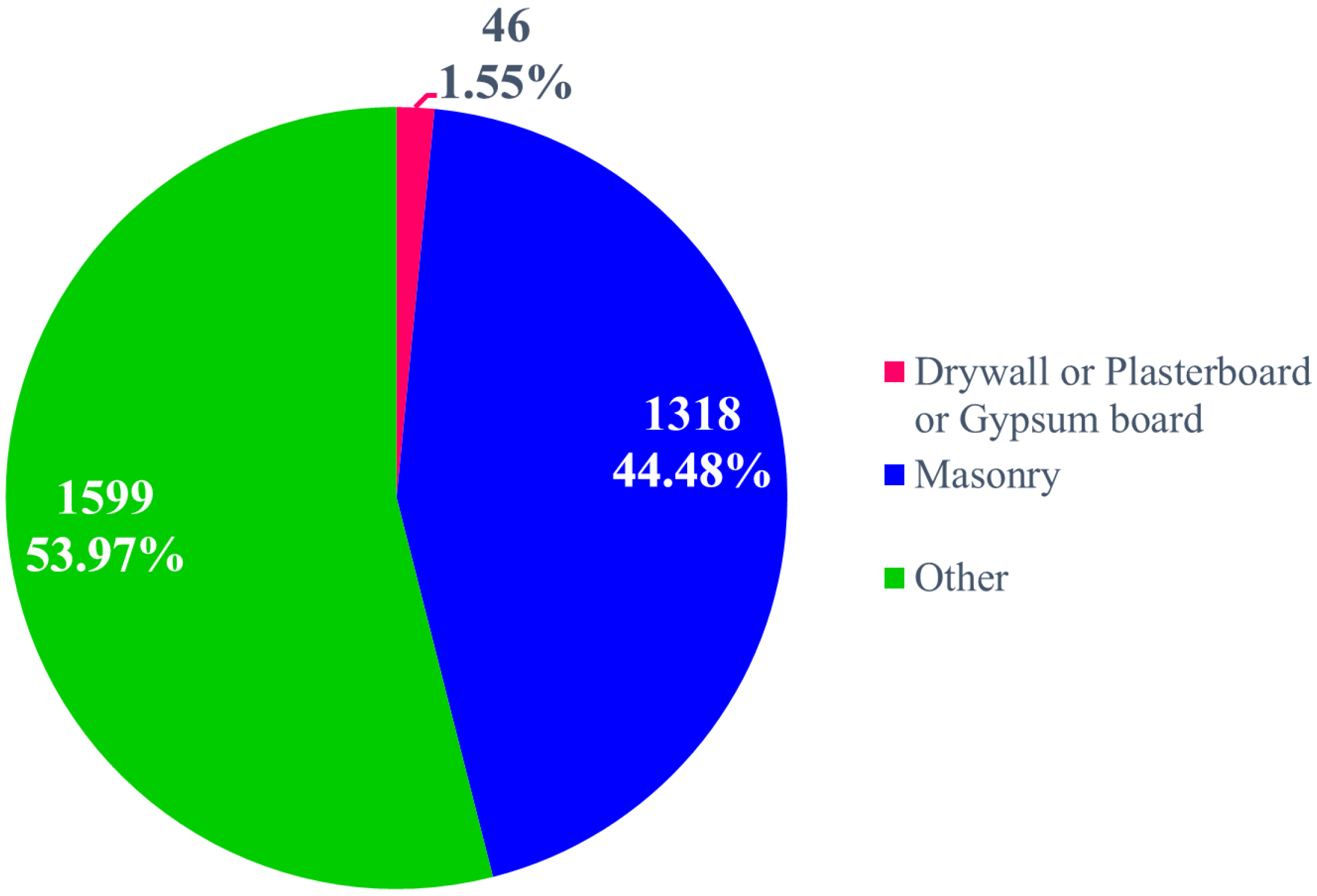
2.2. Bibliometric Study
- Presence of terms such as “seismic” or “earthquake” or “cyclic”; “infill” or “infilled”; “masonry”; “drywall” or “plasterboard” or “gypsum board”; “reinforced concrete”; “experimental” and “full scale” in the title, abstract, or keywords of the publication.
- Coverage from 1989 to the present.
- Publications categorized as “Article” or “Review”.
- Subject area: “engineering”.
2.3. Research Motivation and Objectives
- To quantify the increase in initial lateral stiffness and its impact on the vibration period.
- To identify and describe the in-plane interaction behaviour and load-transfer mechanisms between the drywall infill and the reinforced concrete frame.
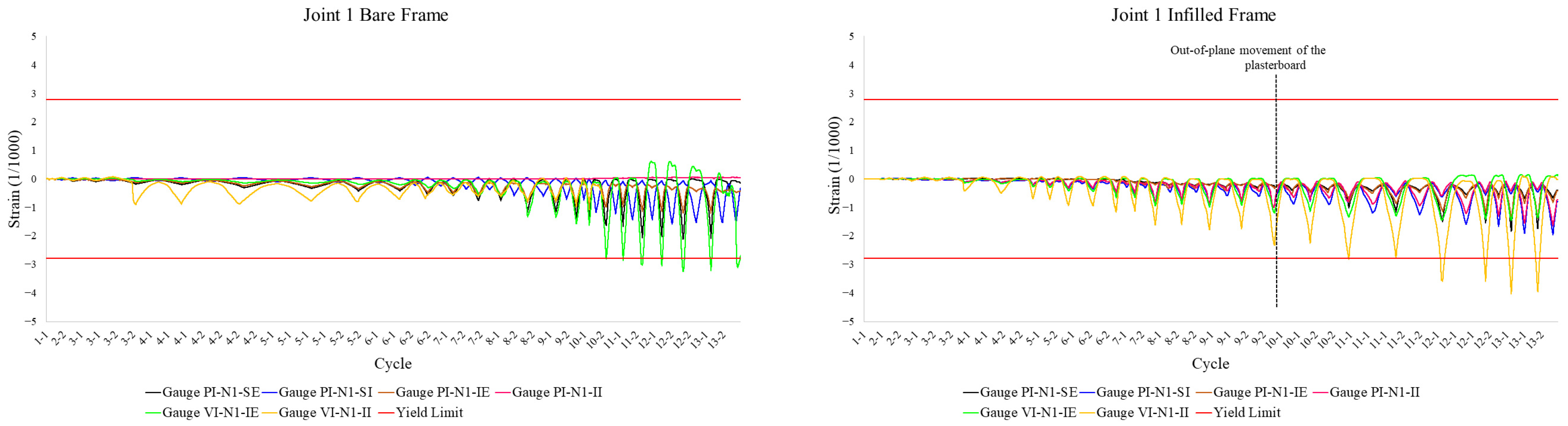
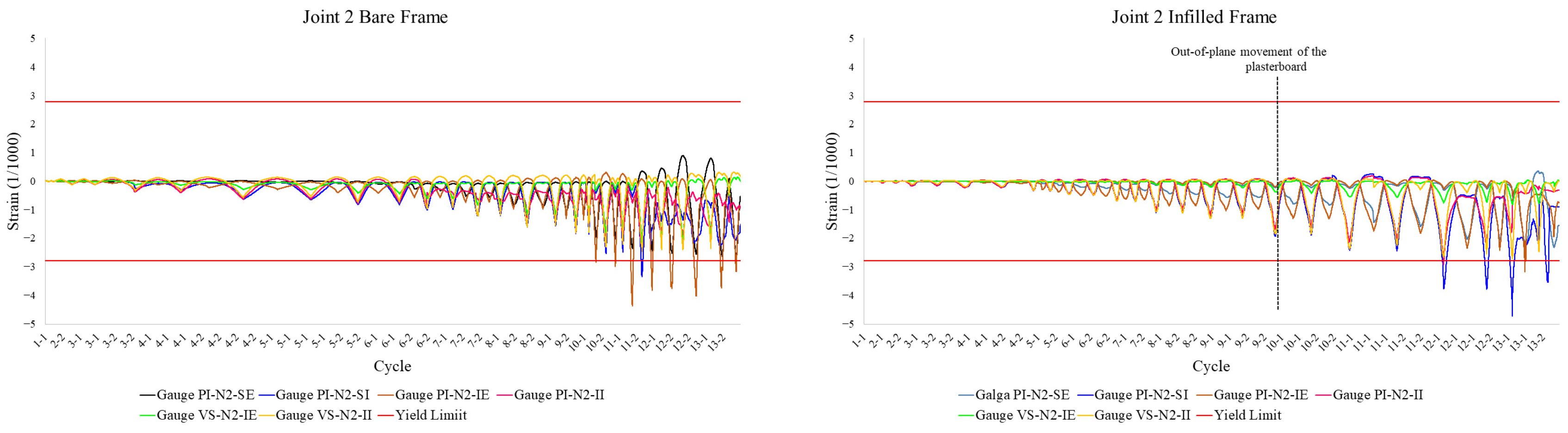
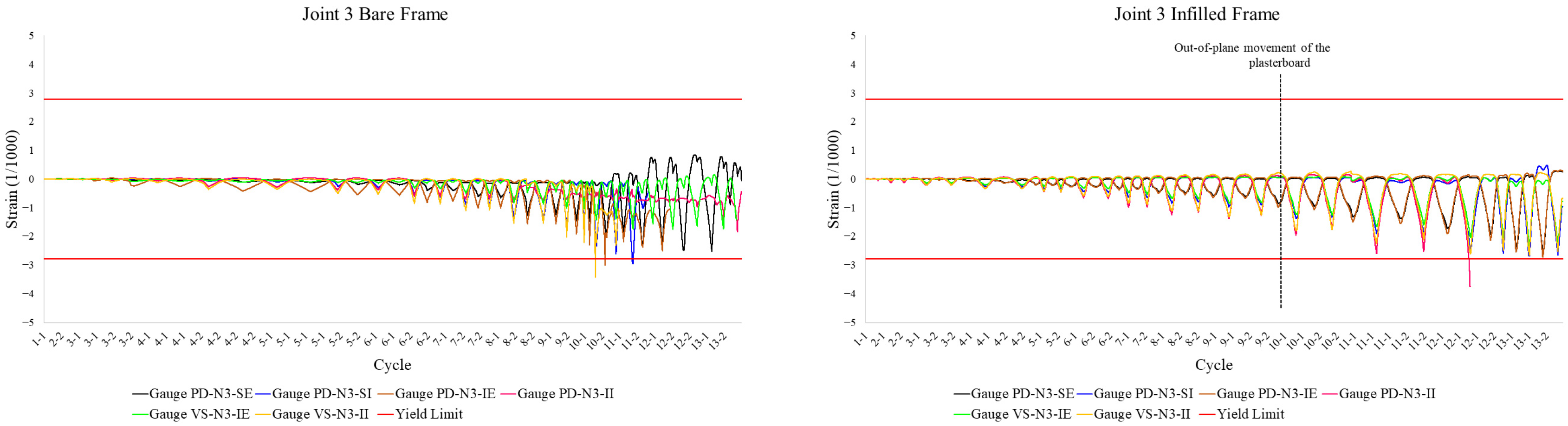
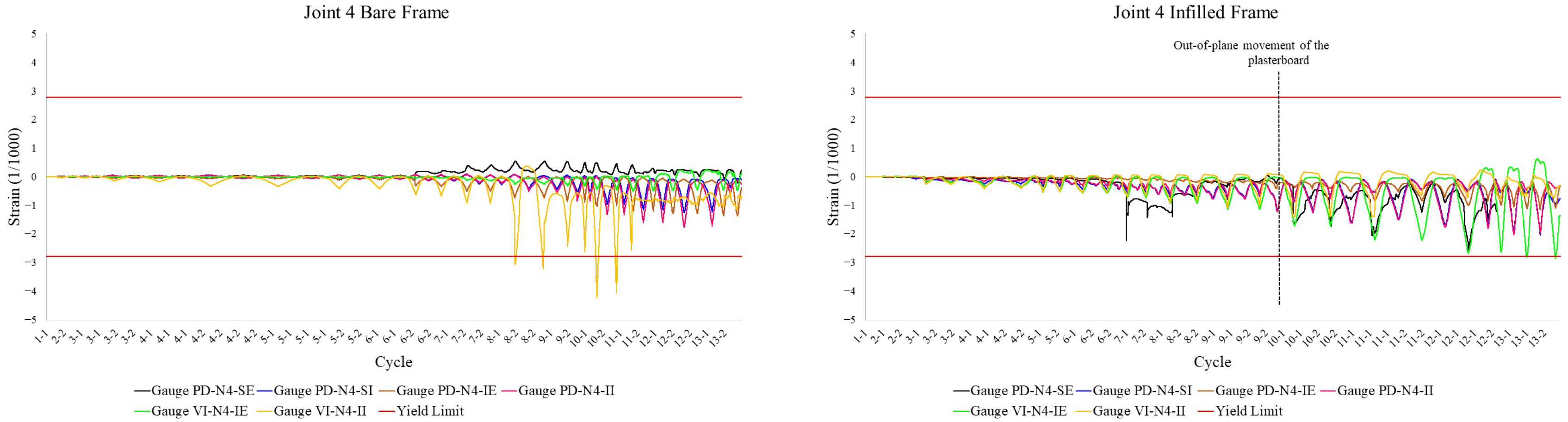
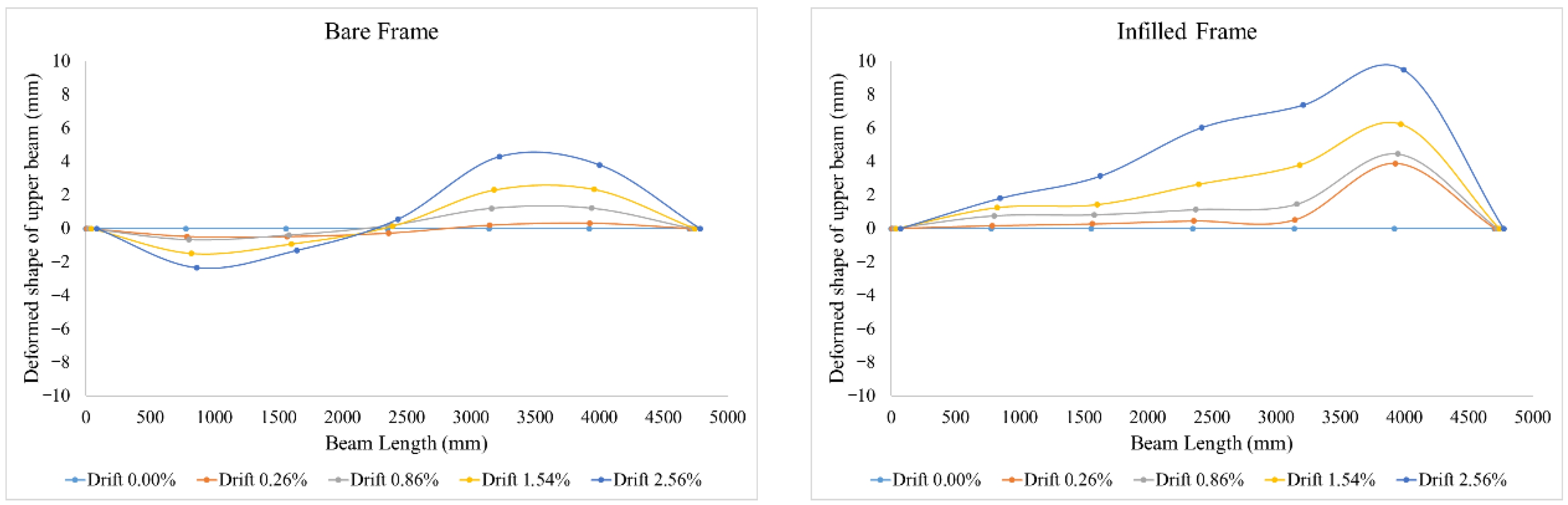
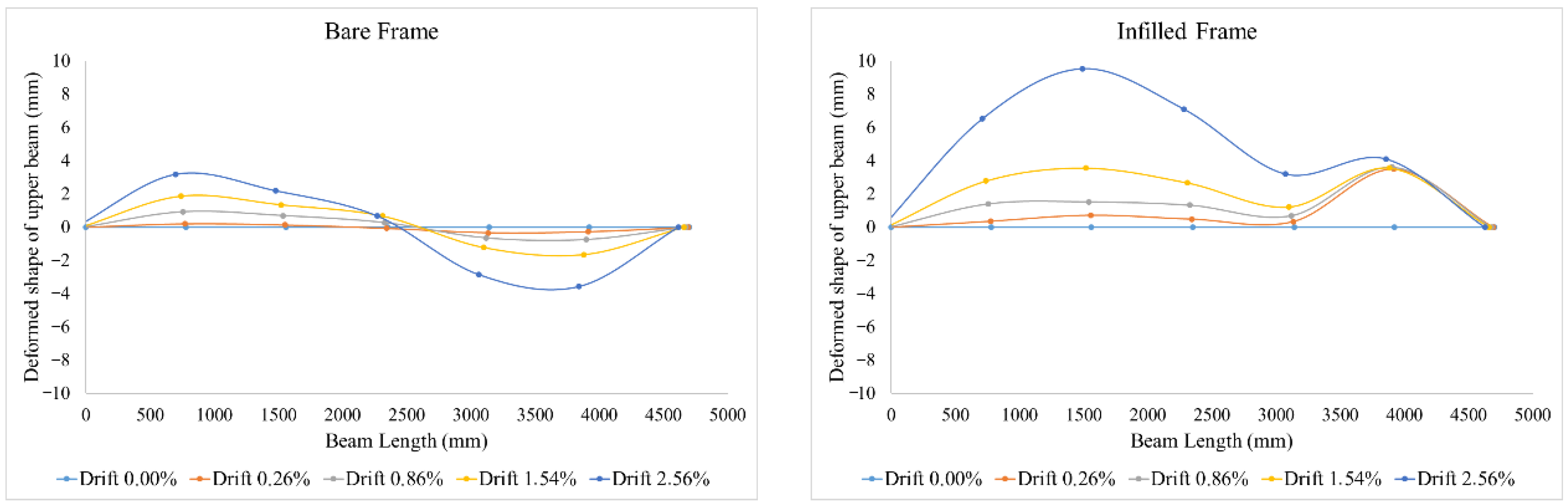
- To evaluate the influence of the infill on the damage distribution and yielding sequence of the reinforced concrete structural joints.
3. Experimental Program
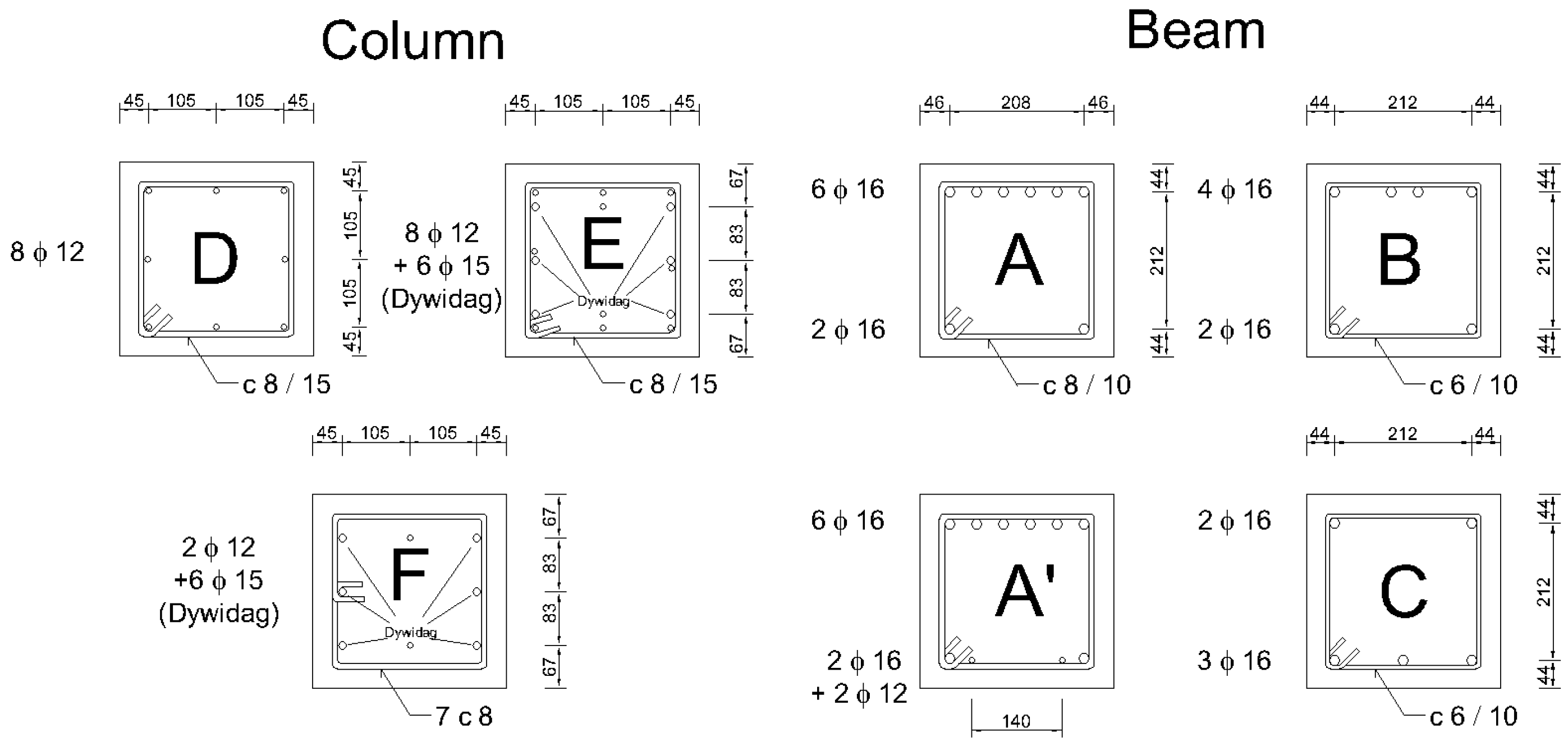
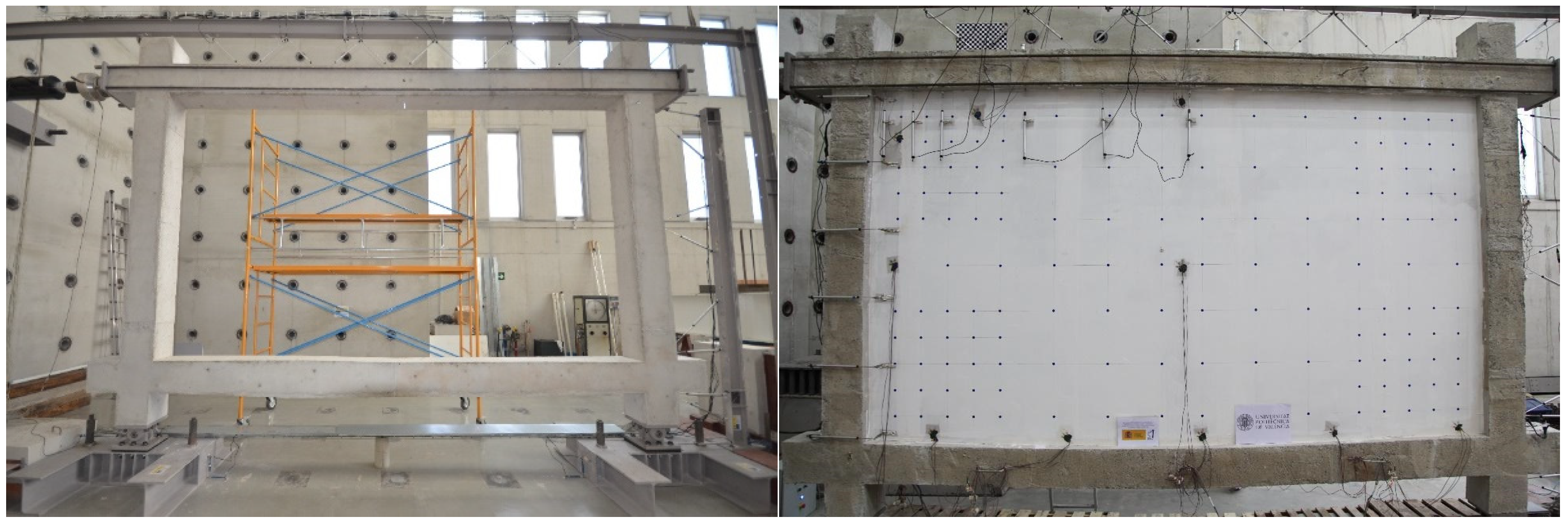
- Bare Frame: This specimen consists of a reinforced concrete portal frame without any infill, serving as the control specimen to capture the inherent structural response.
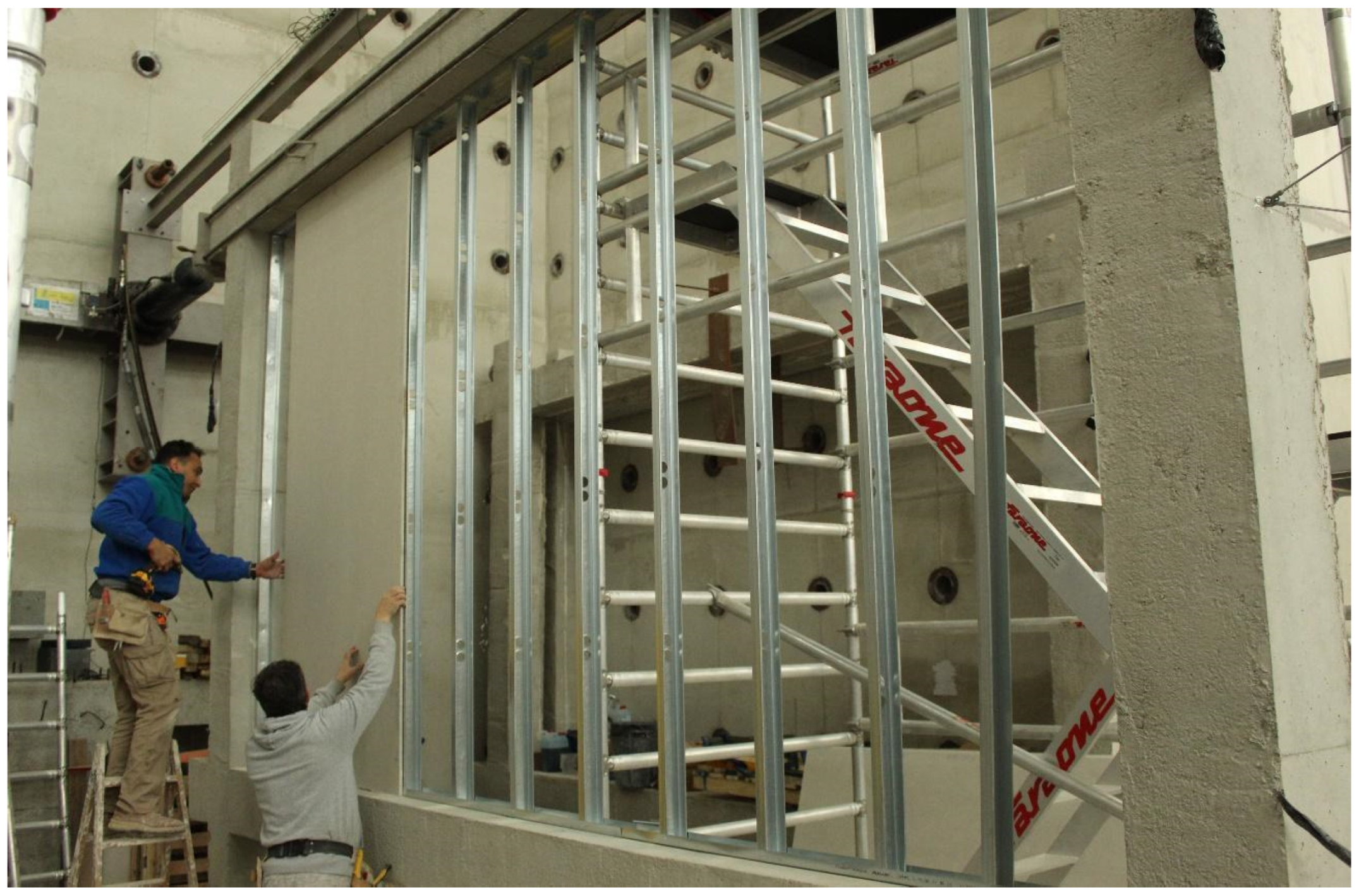
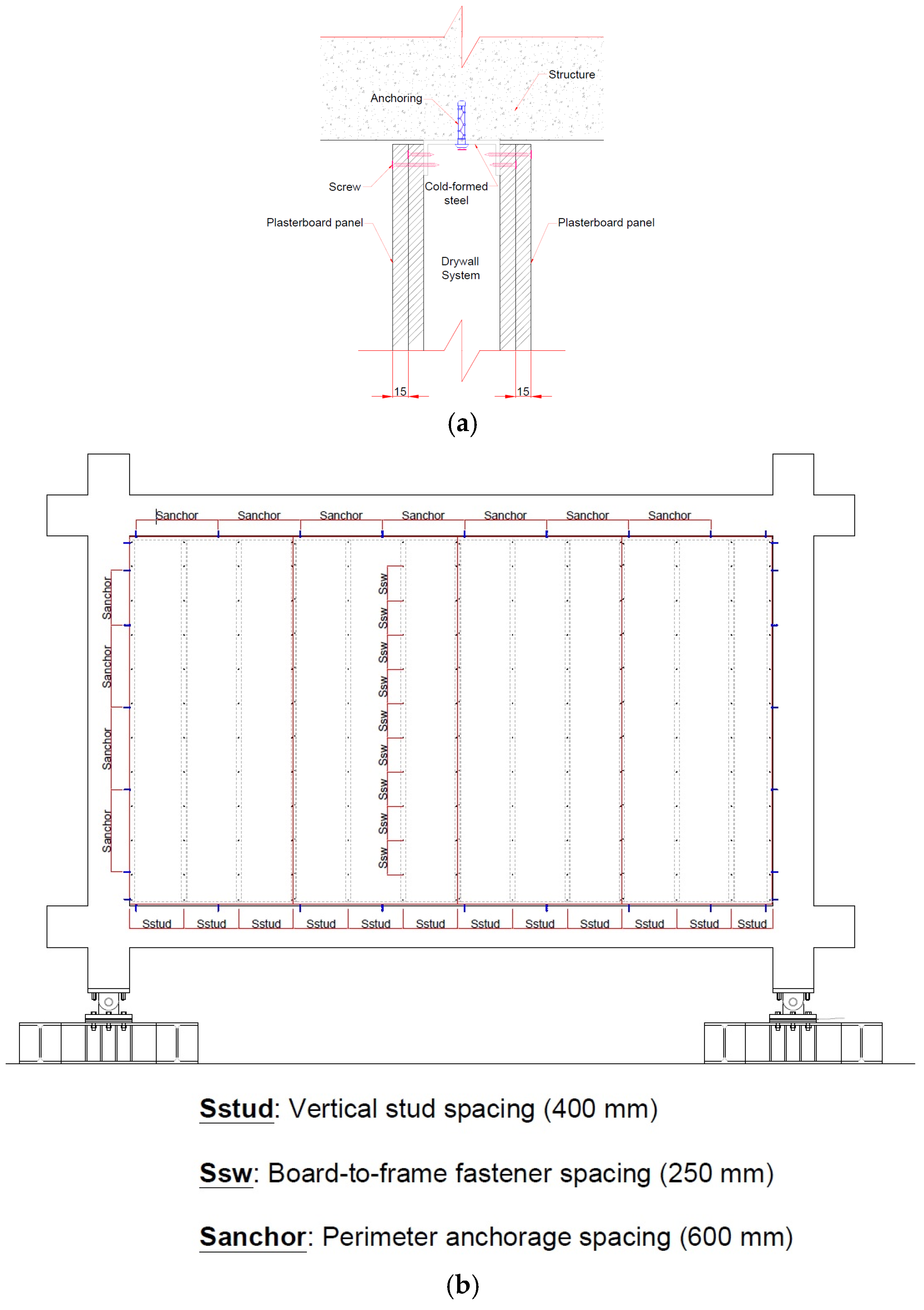
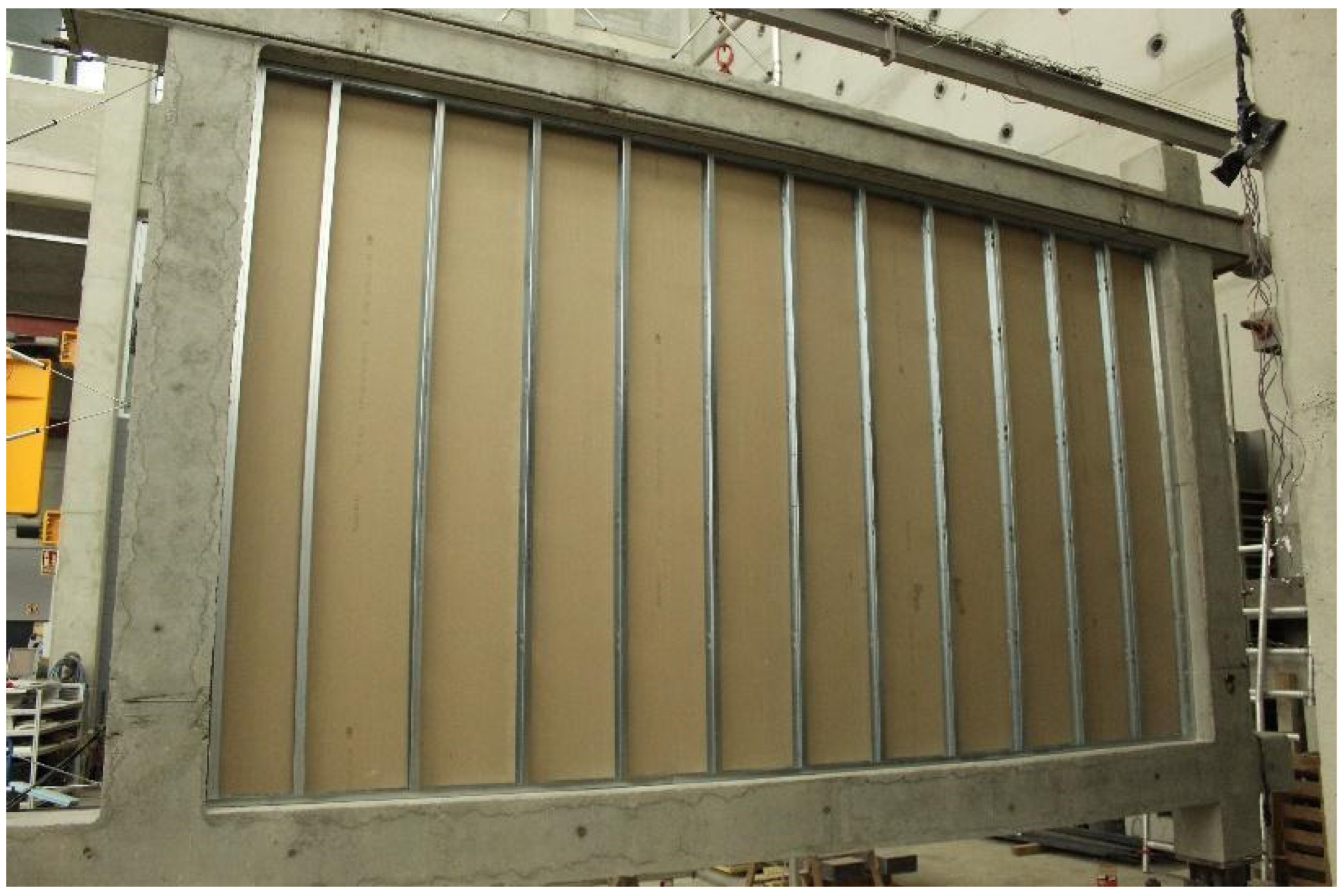
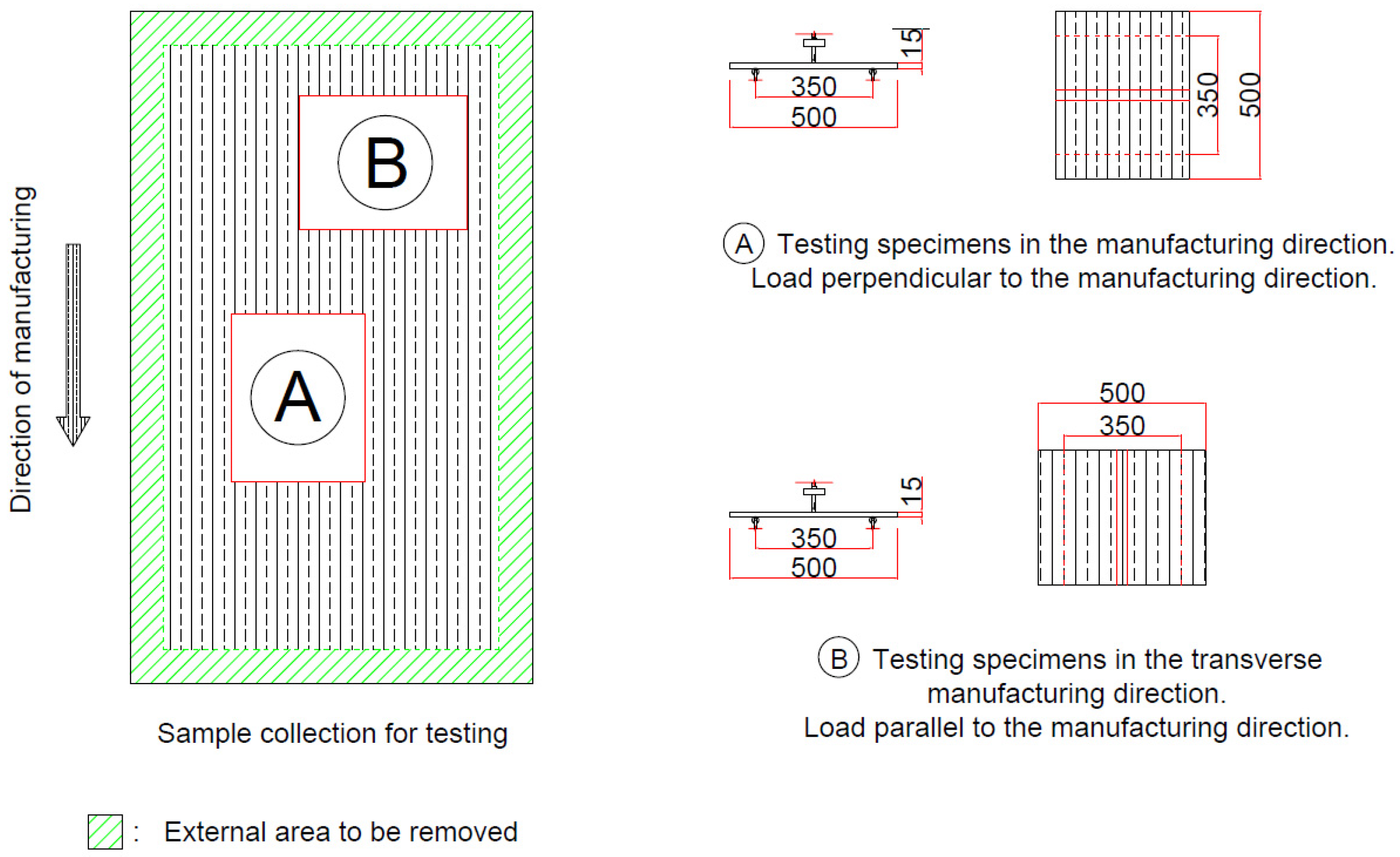
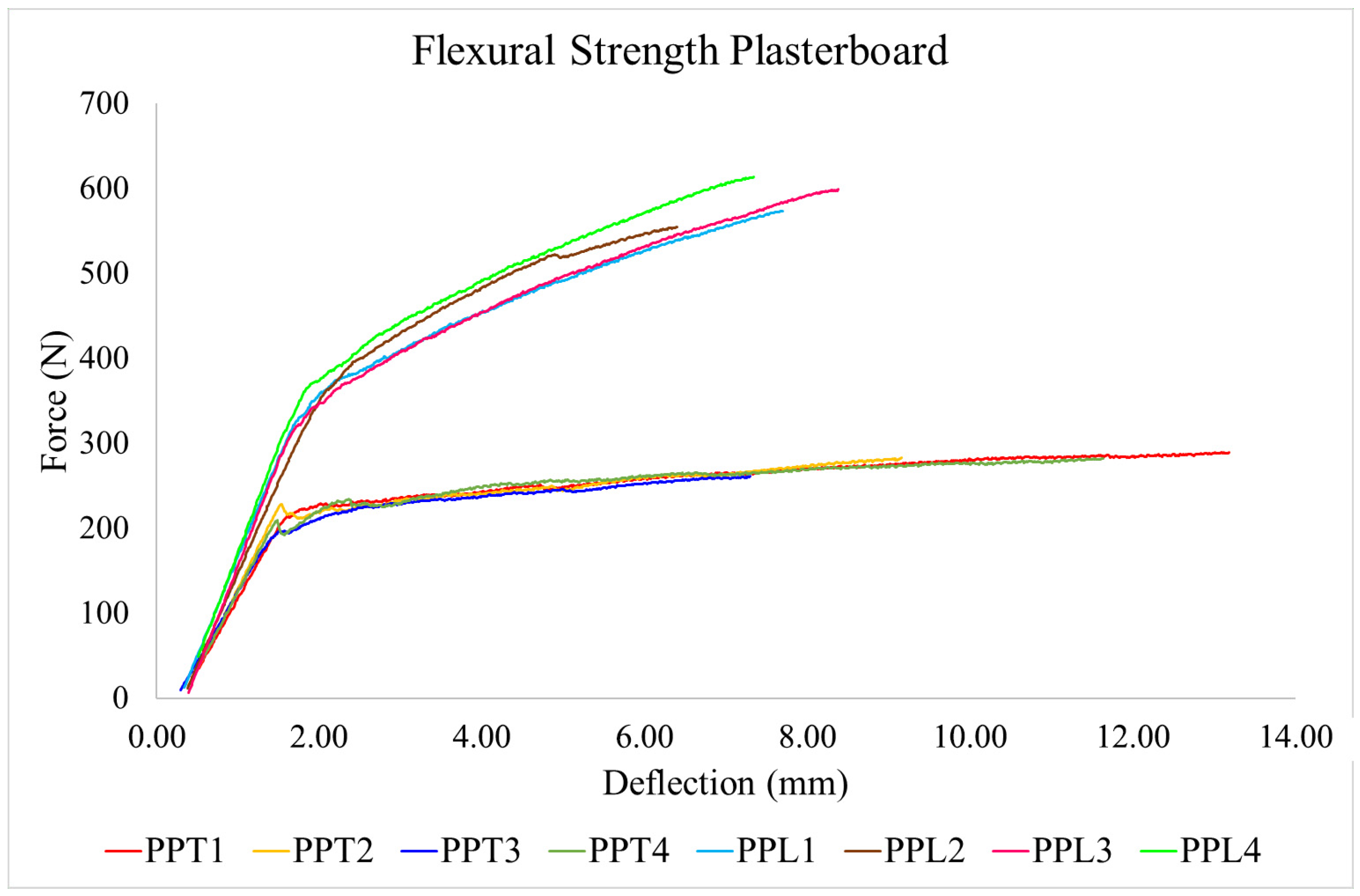
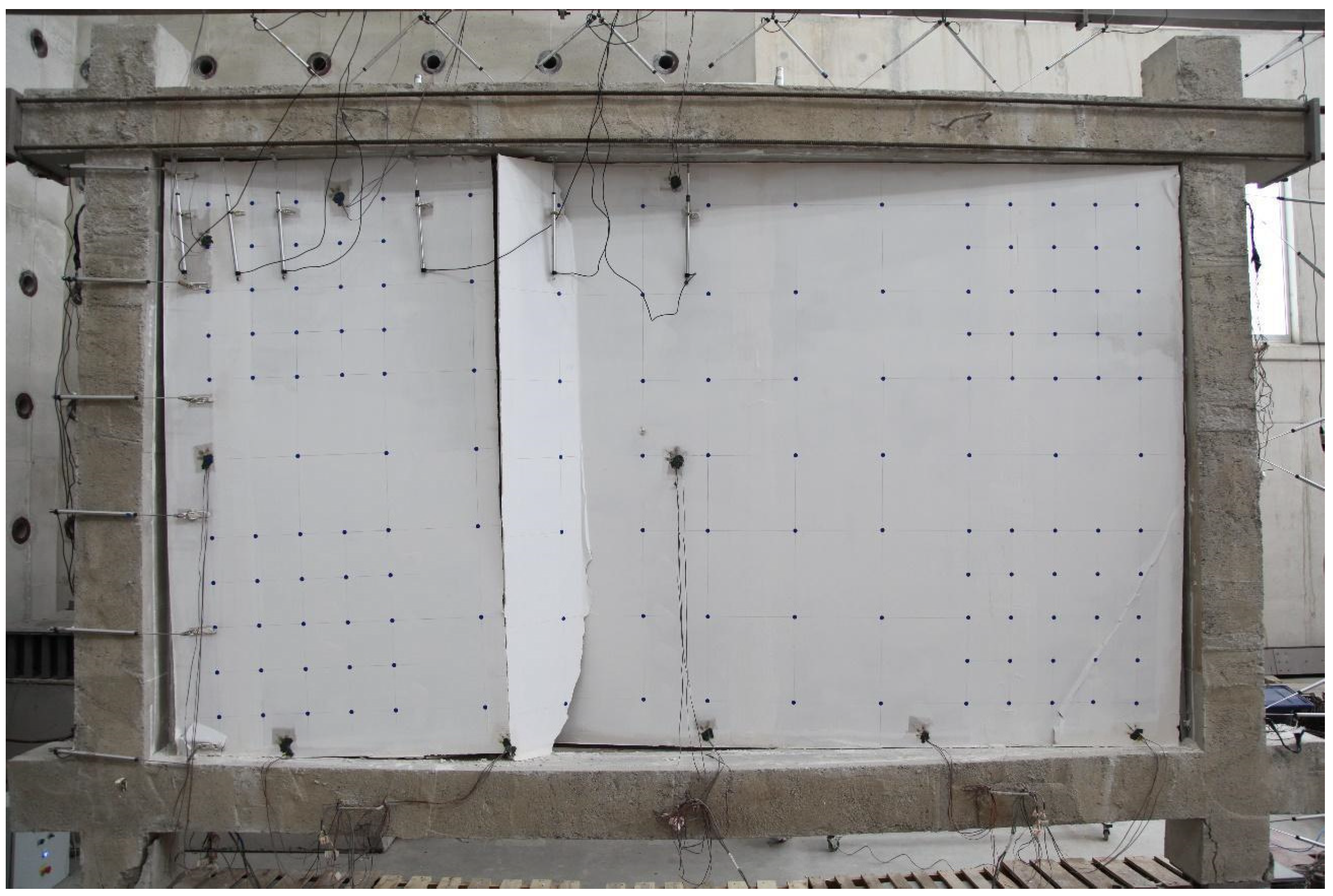
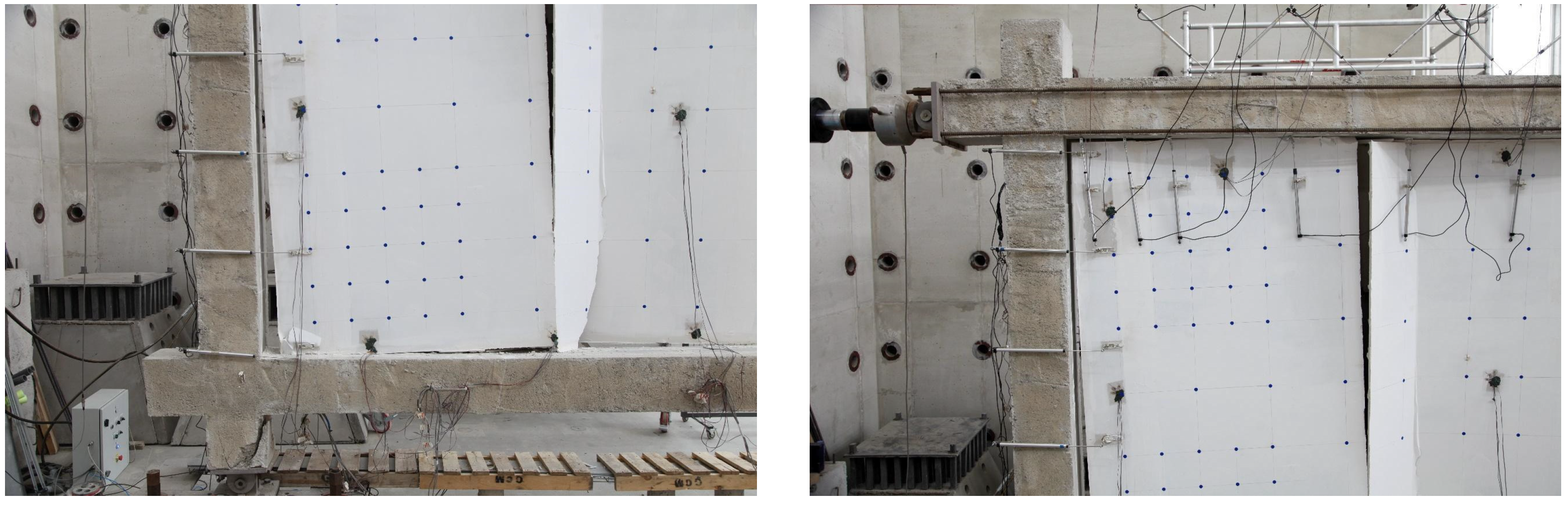
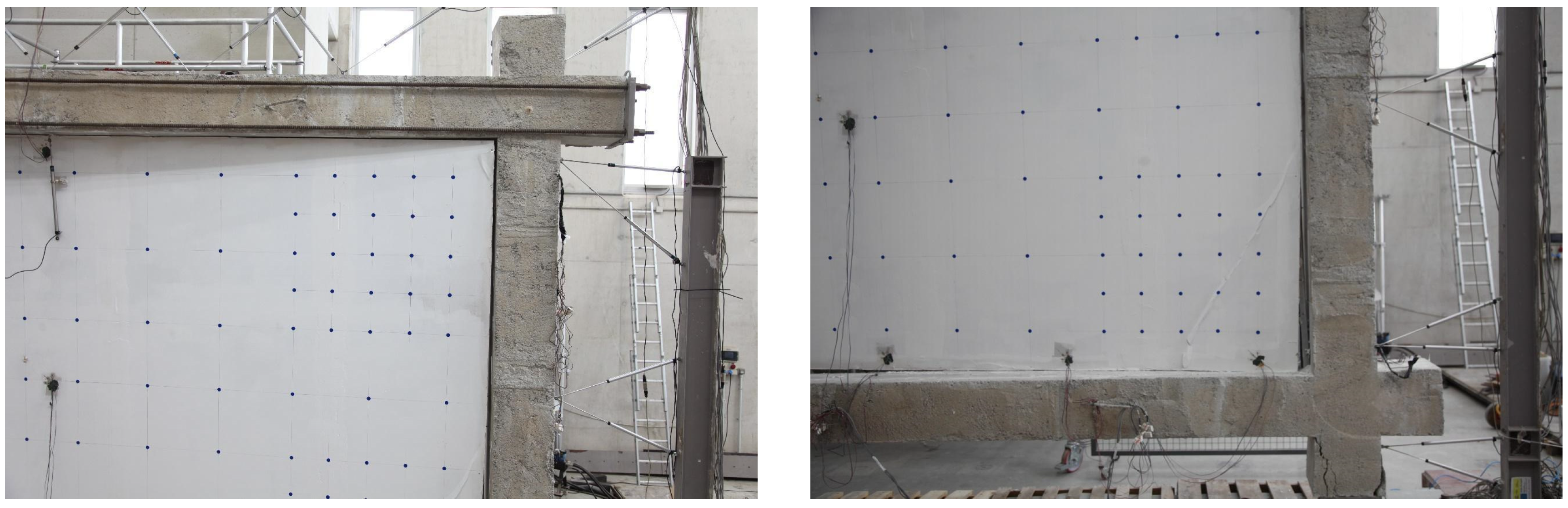
- Infilled Frame: This frame incorporates an interior partition made of plasterboard panels. The infill system consists of two 15 mm thick plasterboard panels applied to each face of a cold-formed steel frame. The cold-formed steel frame is constructed using studs and channels of 70 mm depth (described in detail in Section 3.2). The spacing between the studs is maintained at 400 mm. The cold-formed steel frame is anchored directly to the beams and columns of the structural frame, ensuring interaction during the tests (Figure 5 and Figure 6). This setup (double 15 mm panels on 70 mm studs) was selected to strictly adhere to the installation specifications of the Spanish standard UNE 102043 [21], ensuring representativeness of current construction practice.
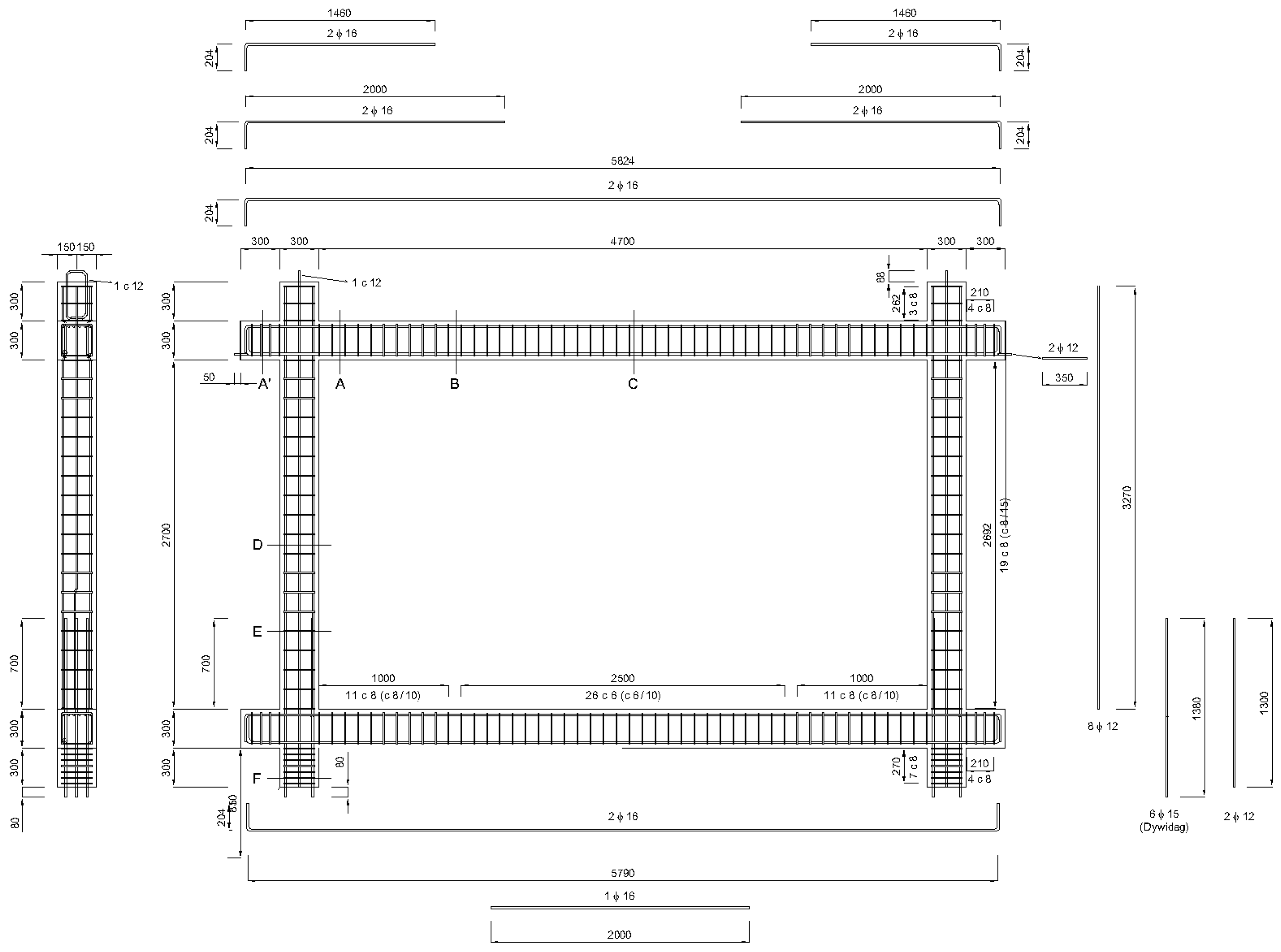
3.1. Description of the Structural Frame
3.2. Materials
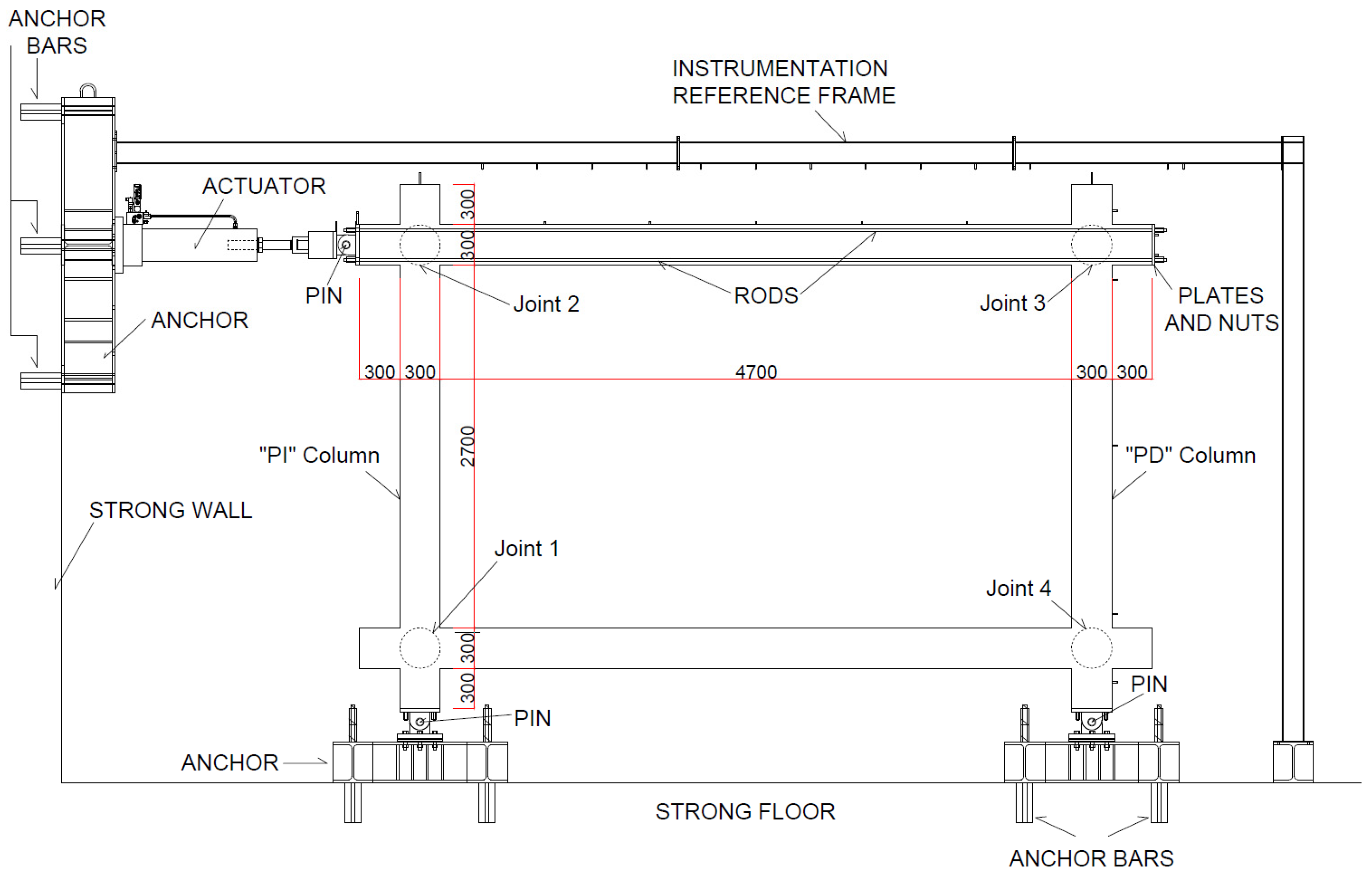
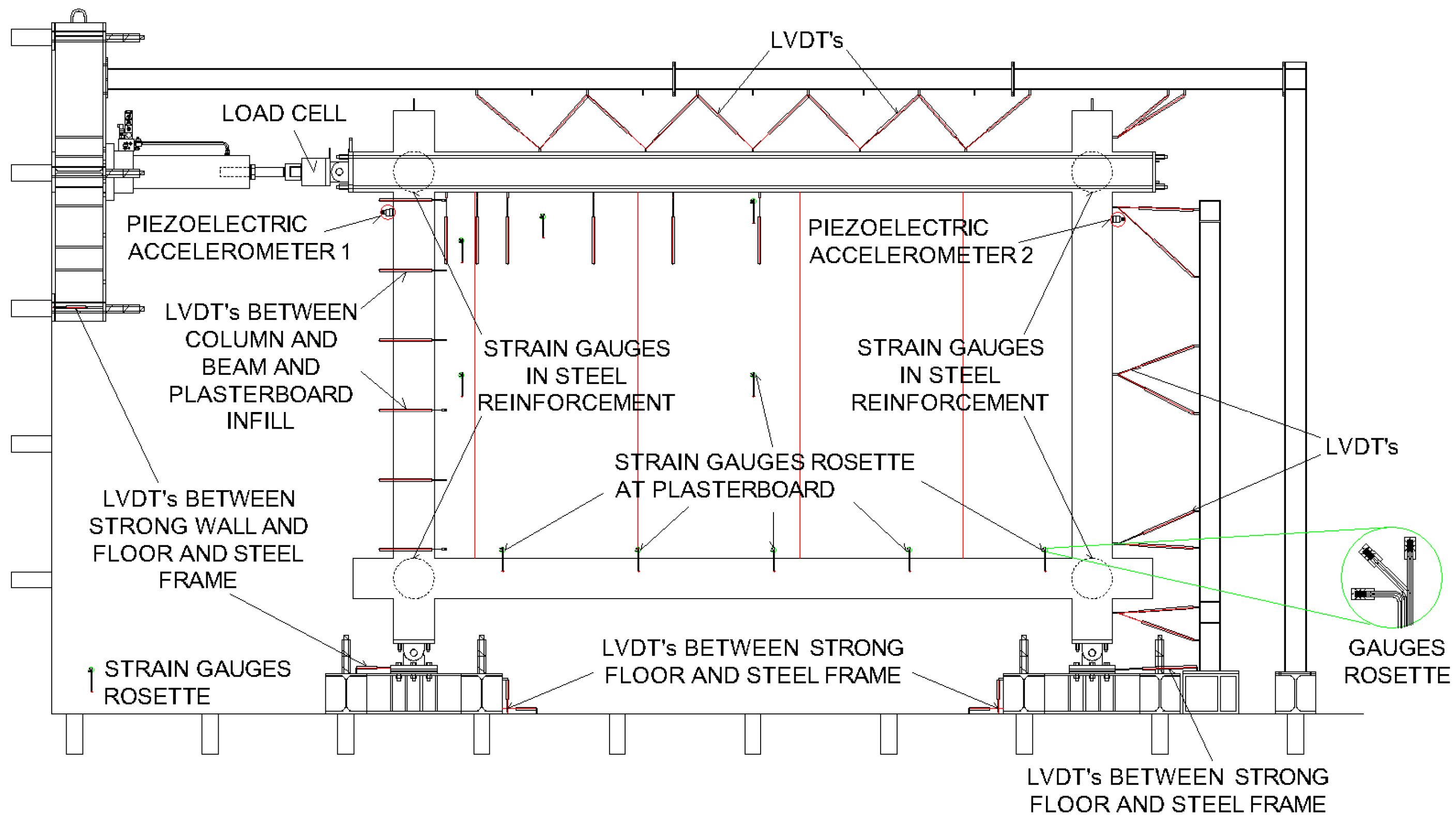
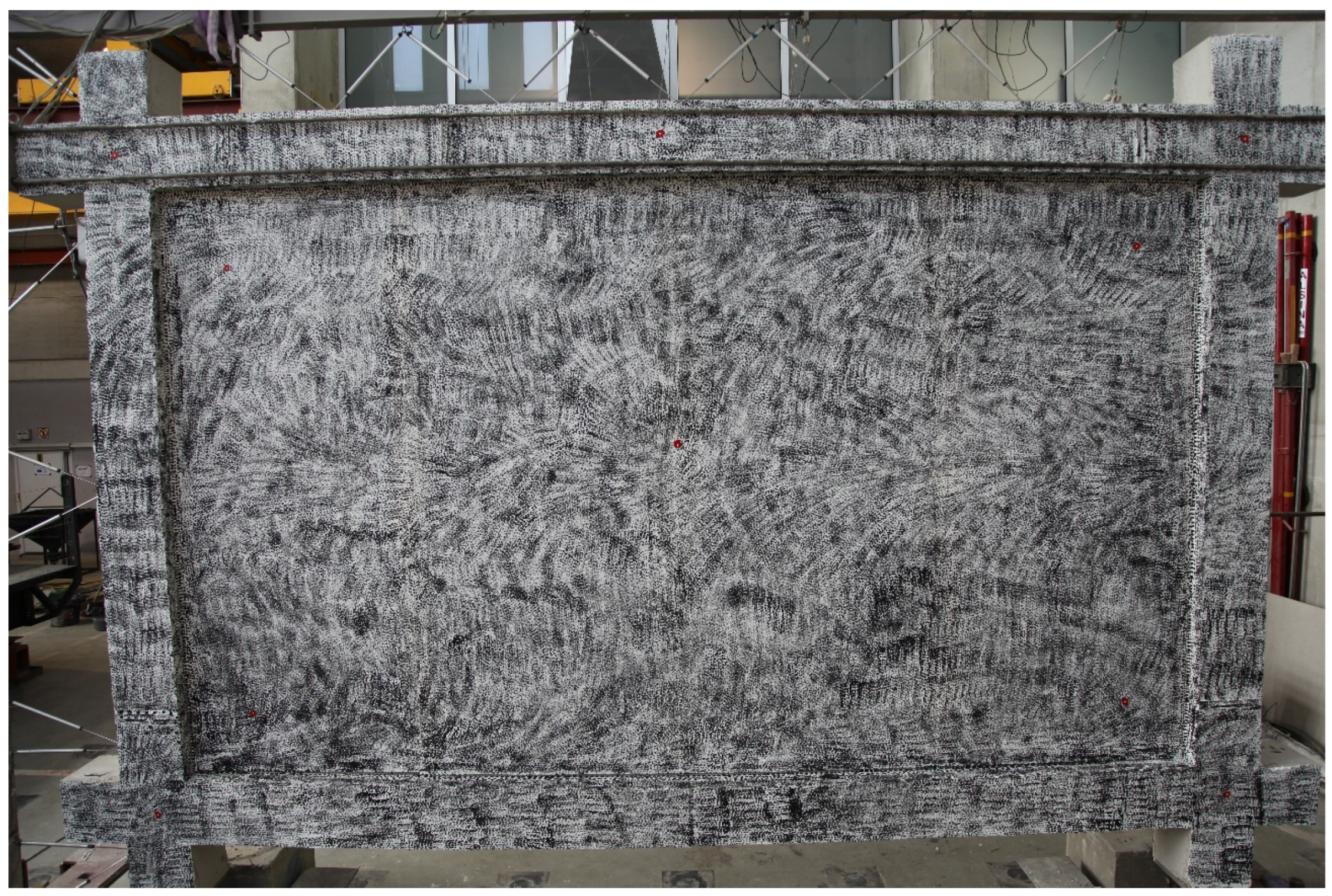
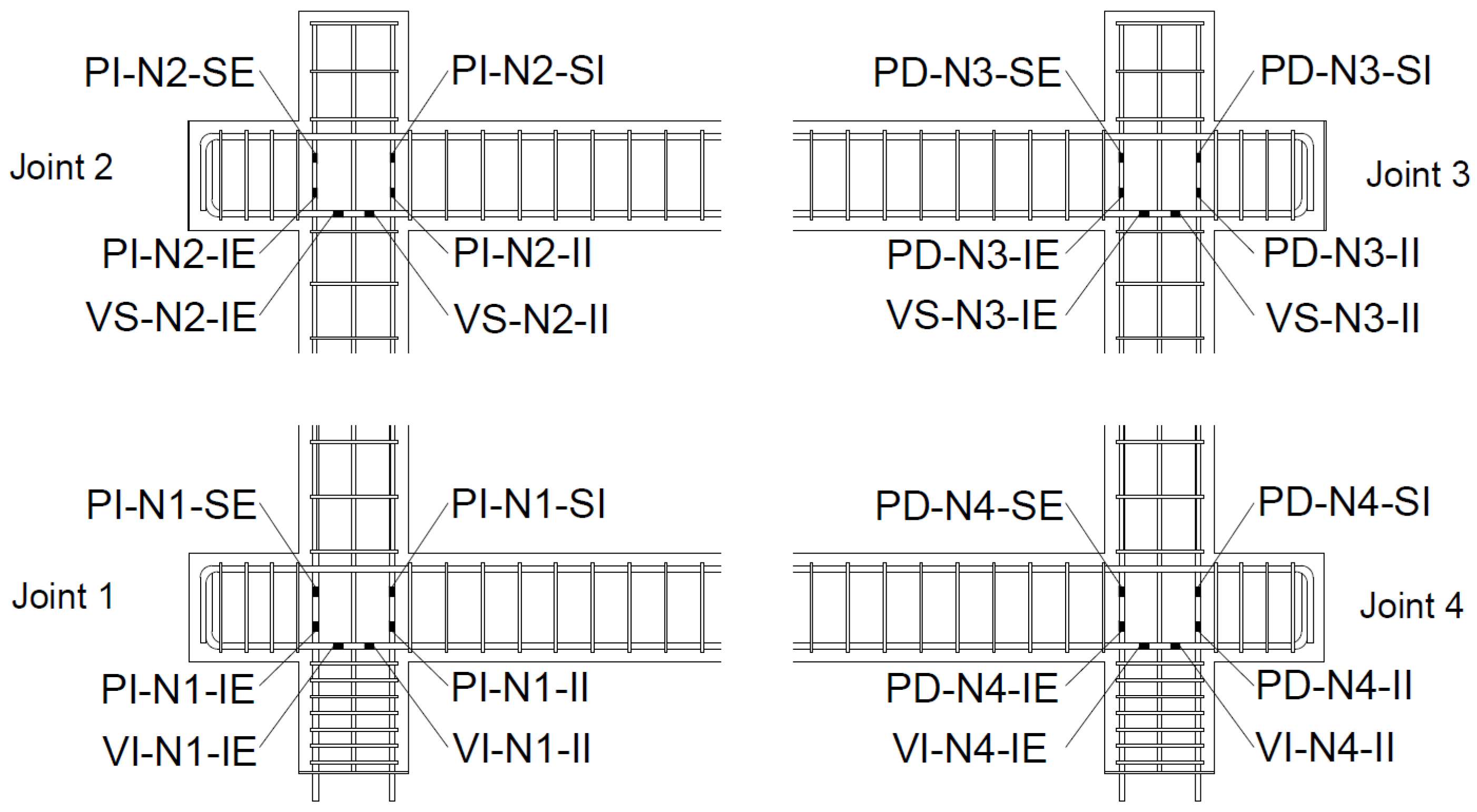
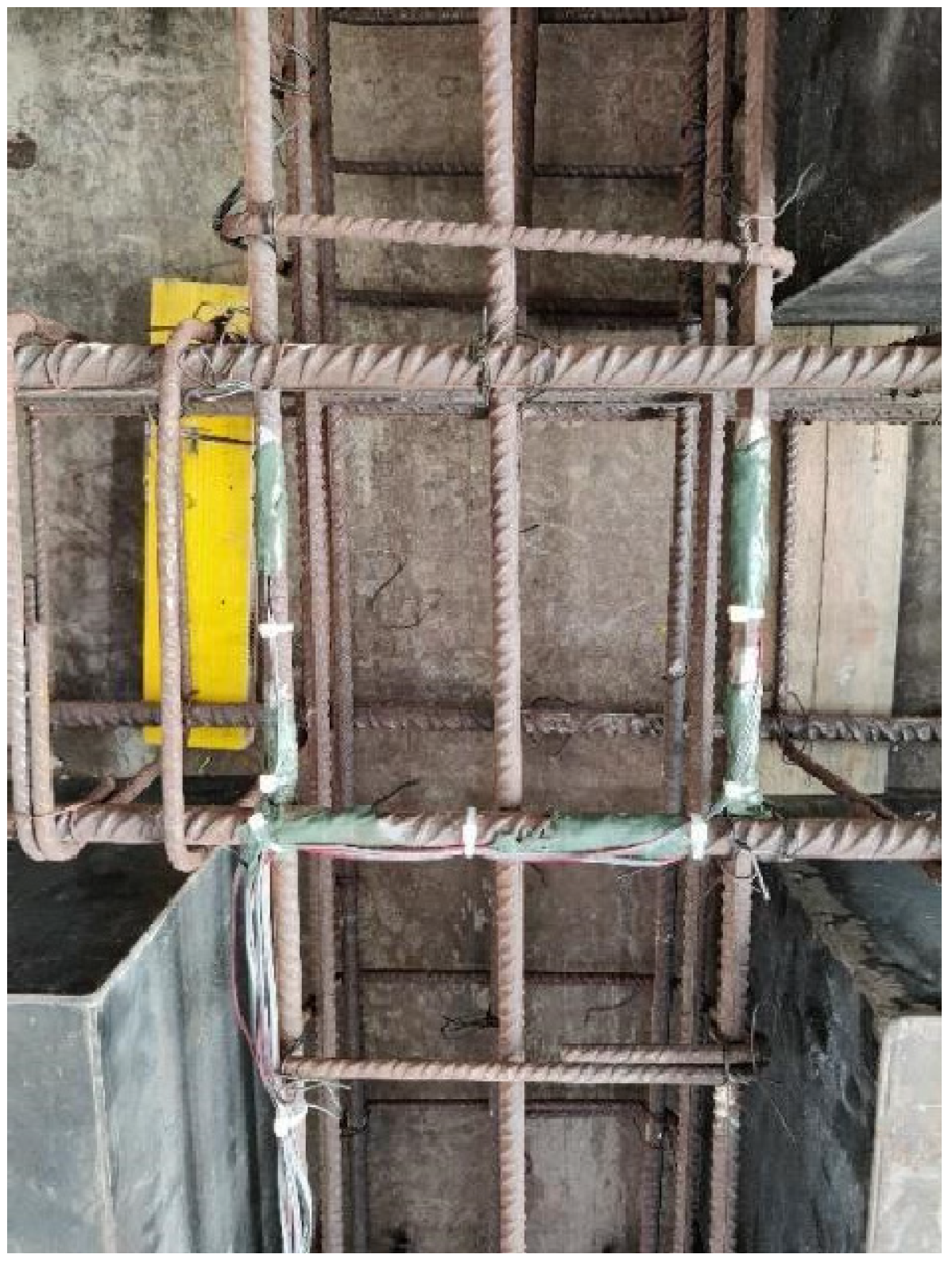
3.3. Instrumentation
3.4. Loading Protocol
4. Results
4.1. Vibration Frequency
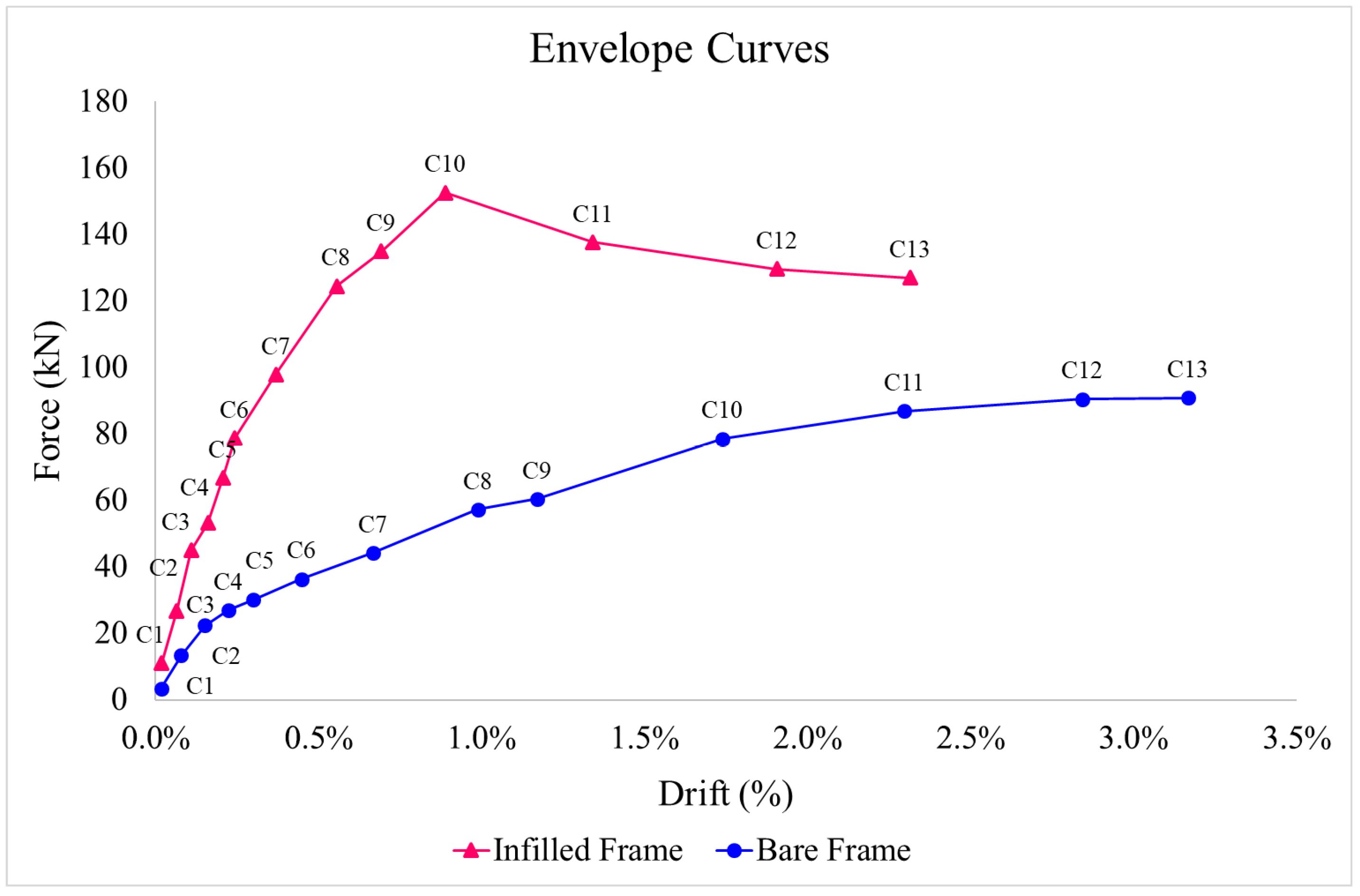
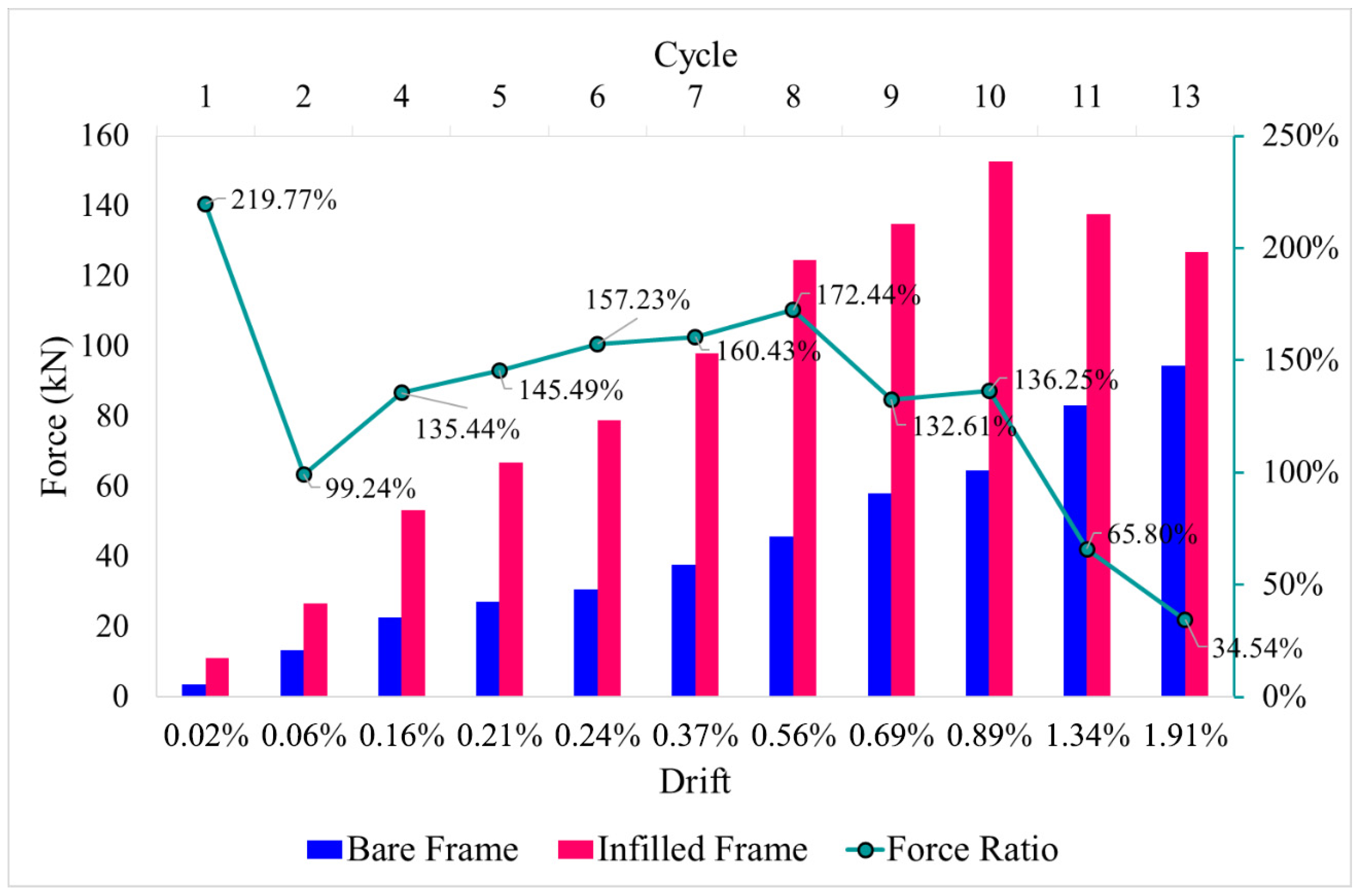
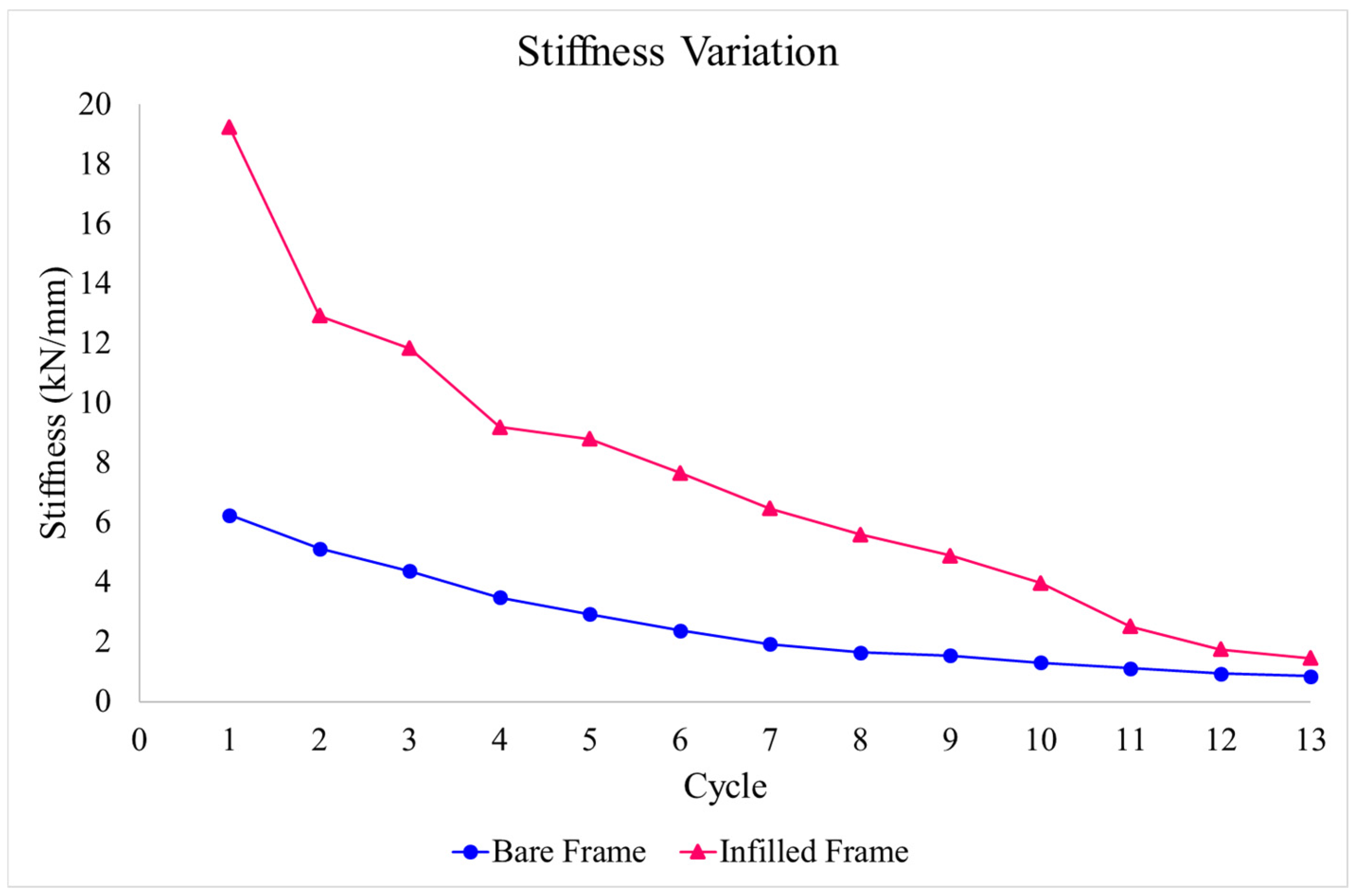
4.2. Force–Displacement Curve and Stiffness
4.3. Joints Behavior
4.3.1. Bare Frame Behaviour
4.3.2. Infilled Frame Behaviour
4.3.3. Overall Comparison
4.4. Dissipated Energy
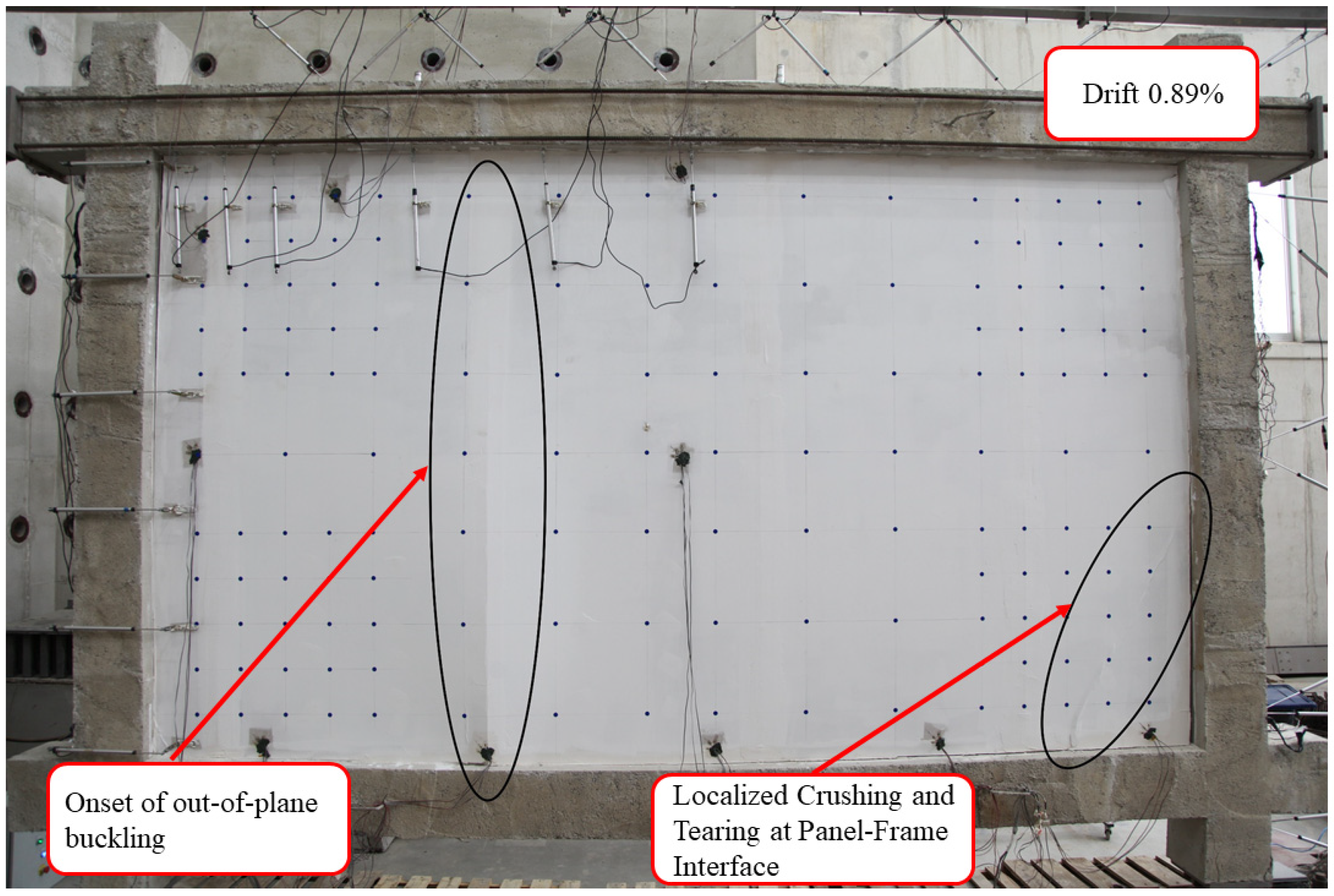
4.5. Failure Mode
4.6. Drift Limits and Design Implications
5. Conclusions and Future Research
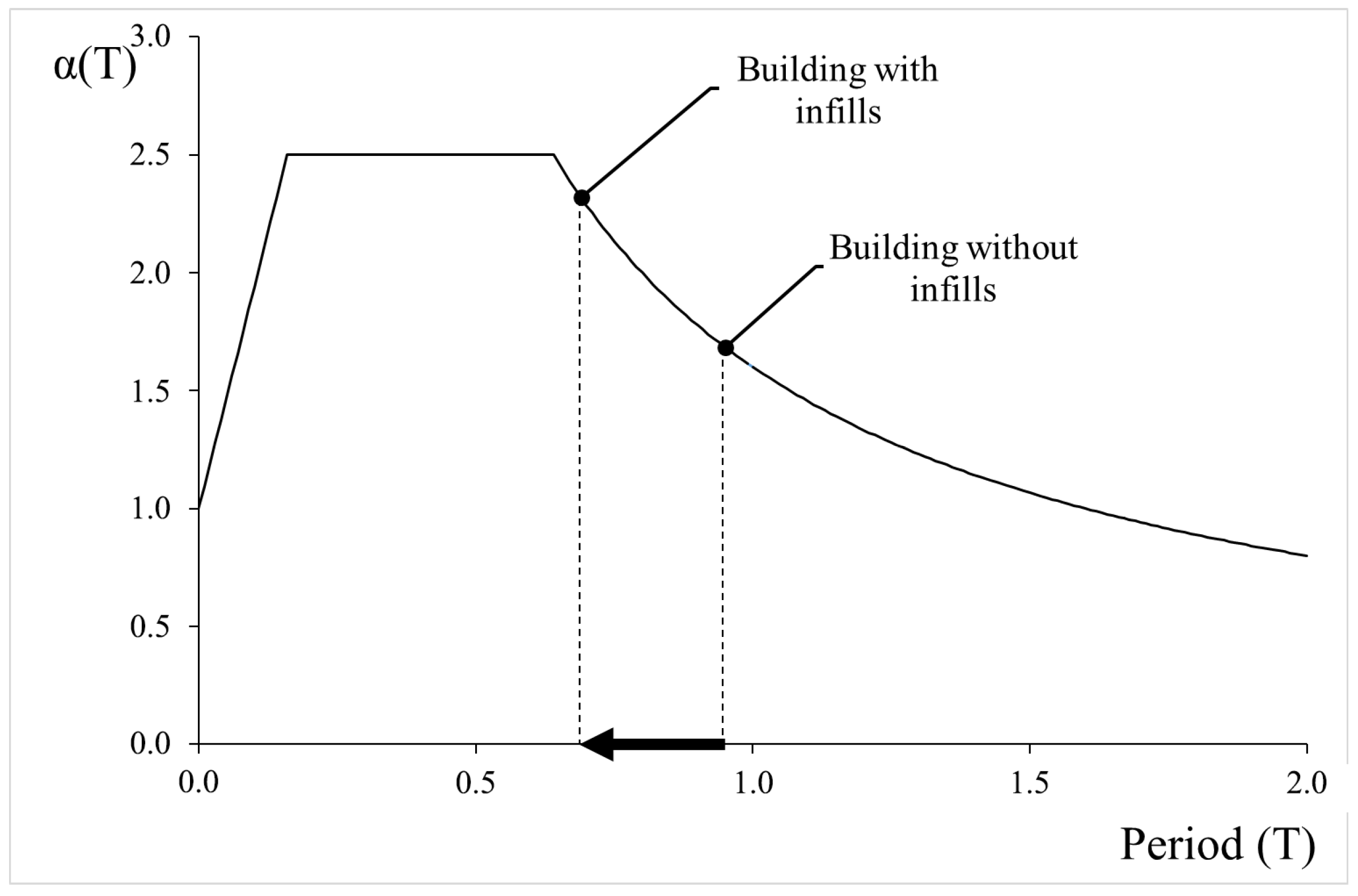
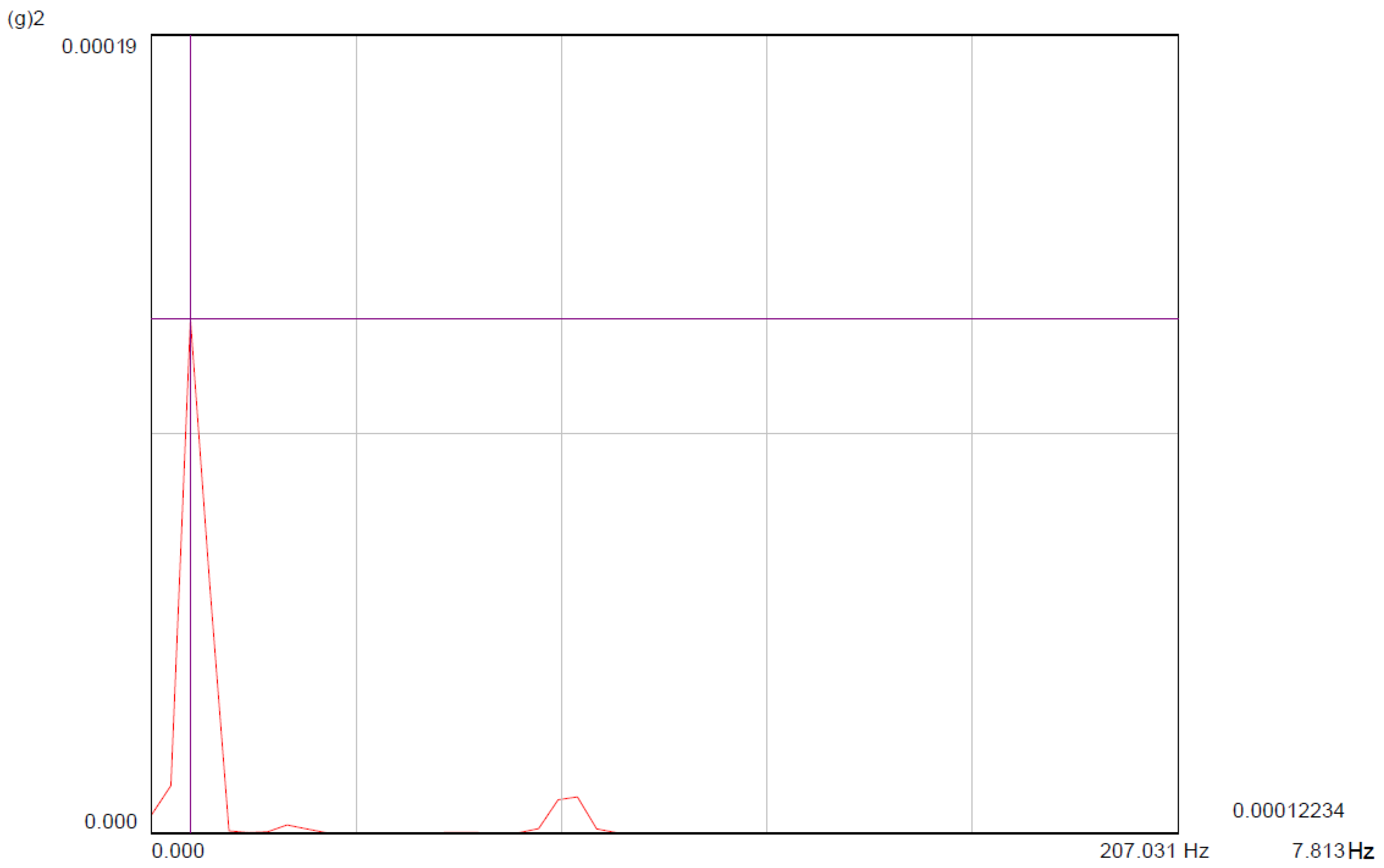
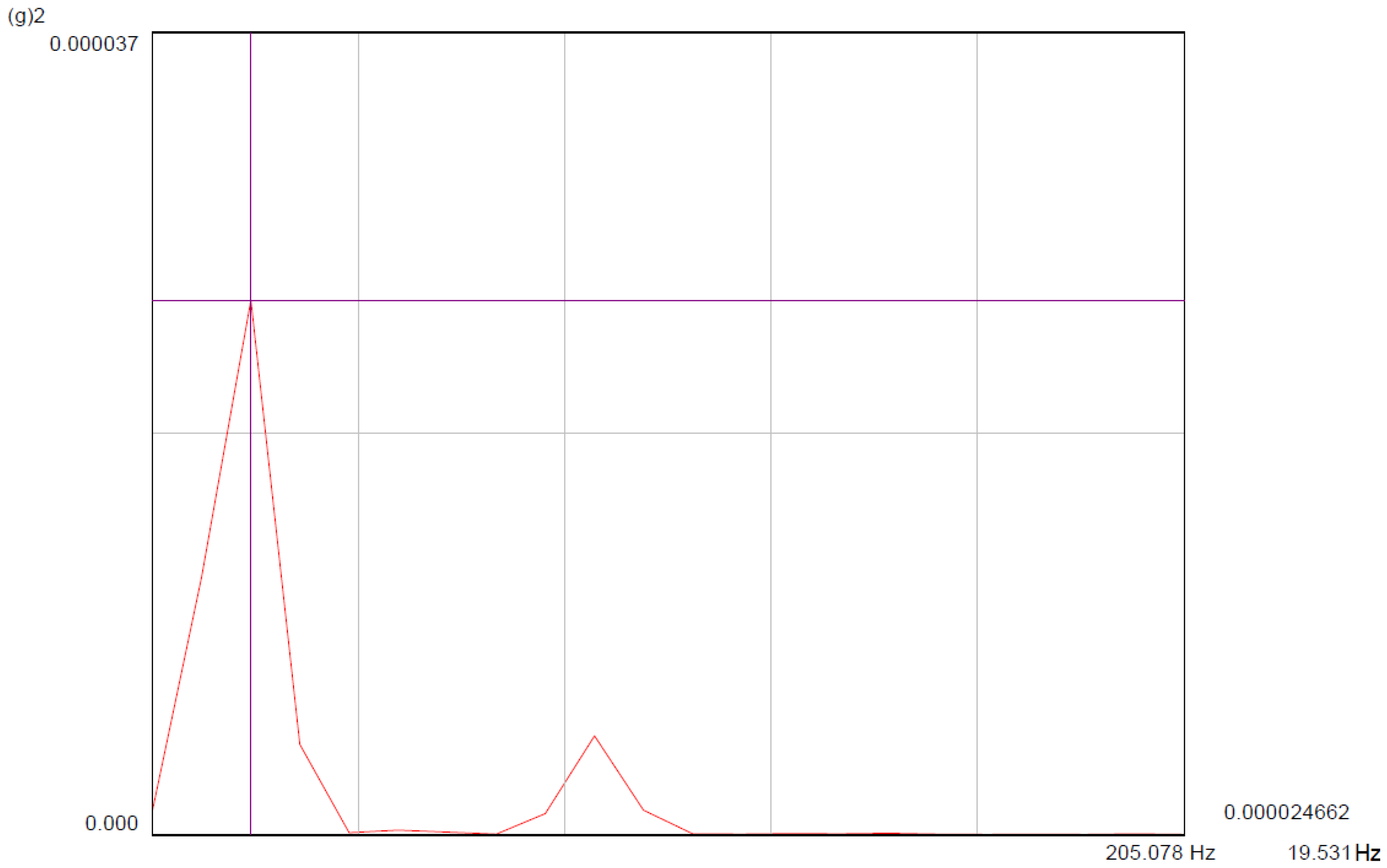
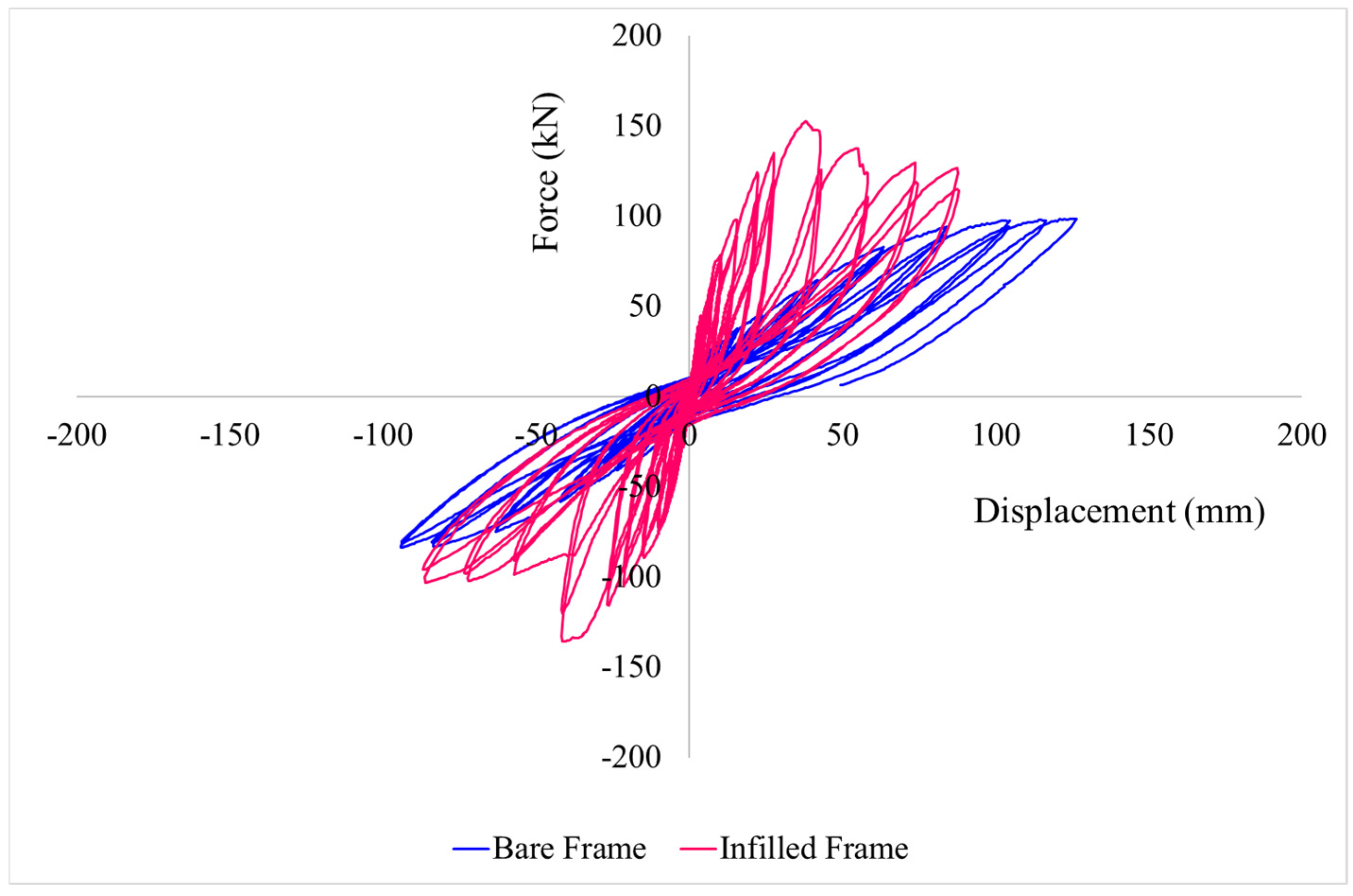
- The drywall infill system substantially increases the overall lateral stiffness and modifies the dynamic properties of the structure. The infilled frame exhibited an increase of about 208.2% (approximately 3 times) in initial stiffness and 149.9% (approximately 2.5 times) in natural vibration frequency. This reduction in fundamental period may shift the structure into a higher-demand region of the acceleration response spectrum.
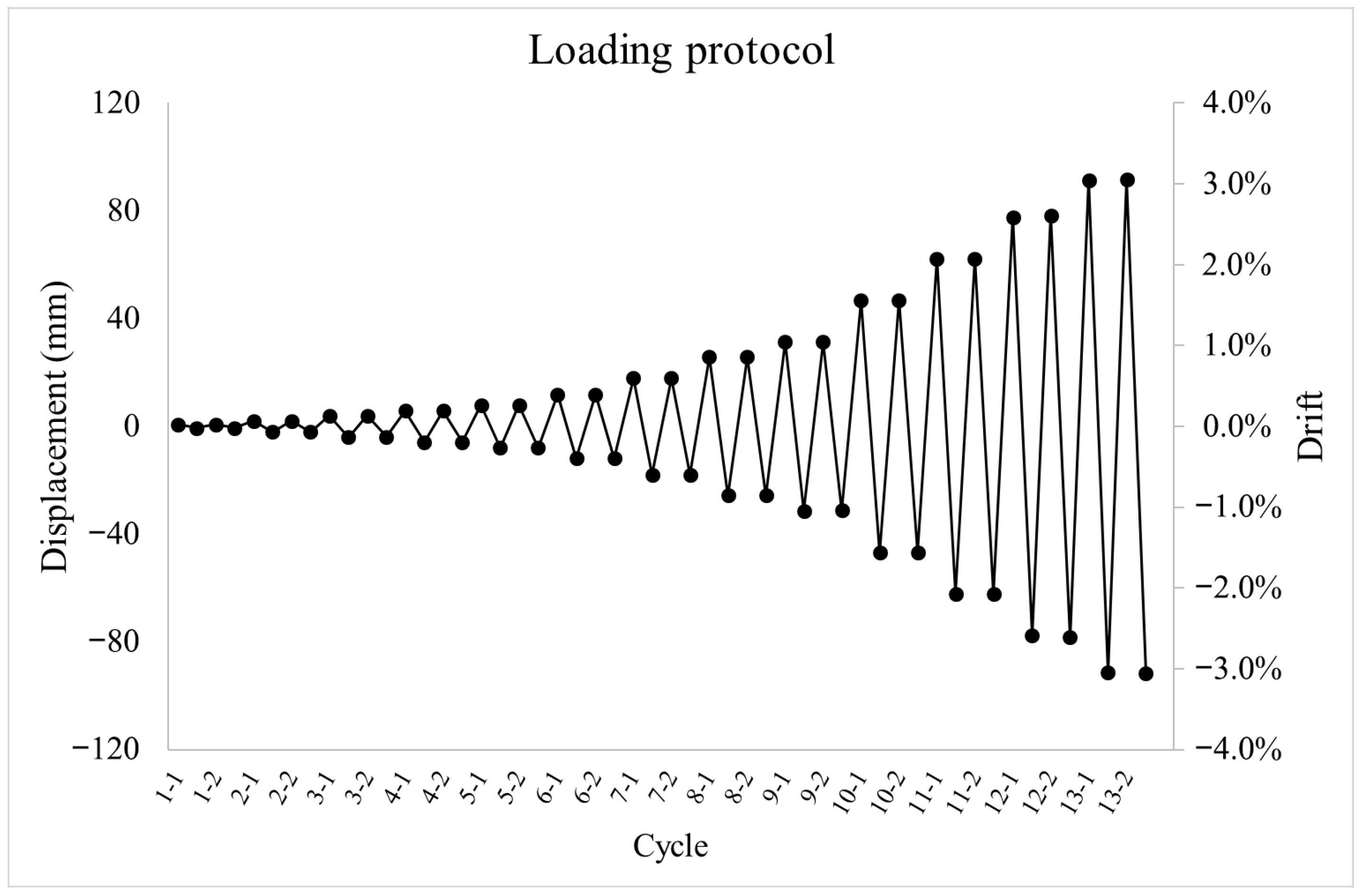
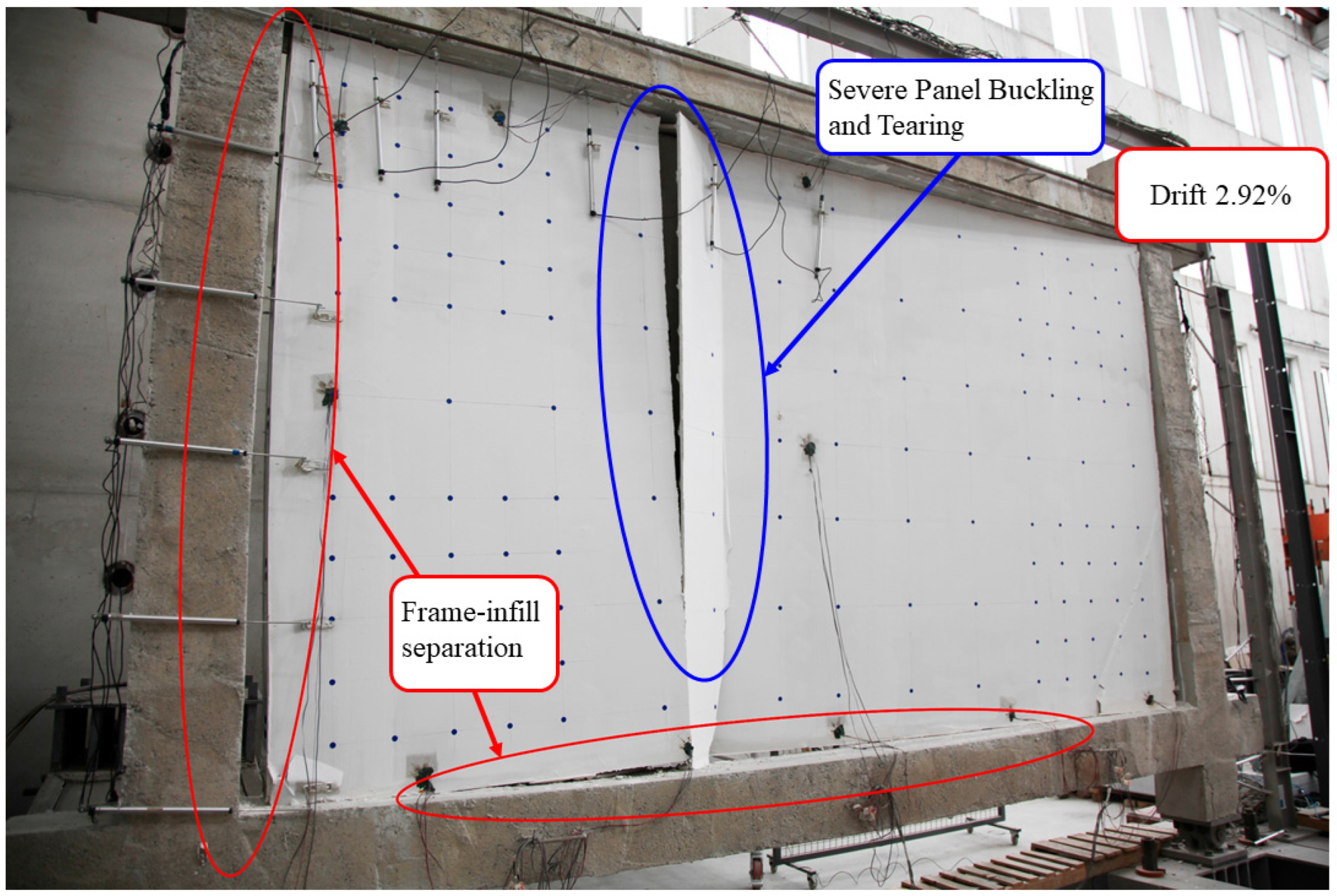
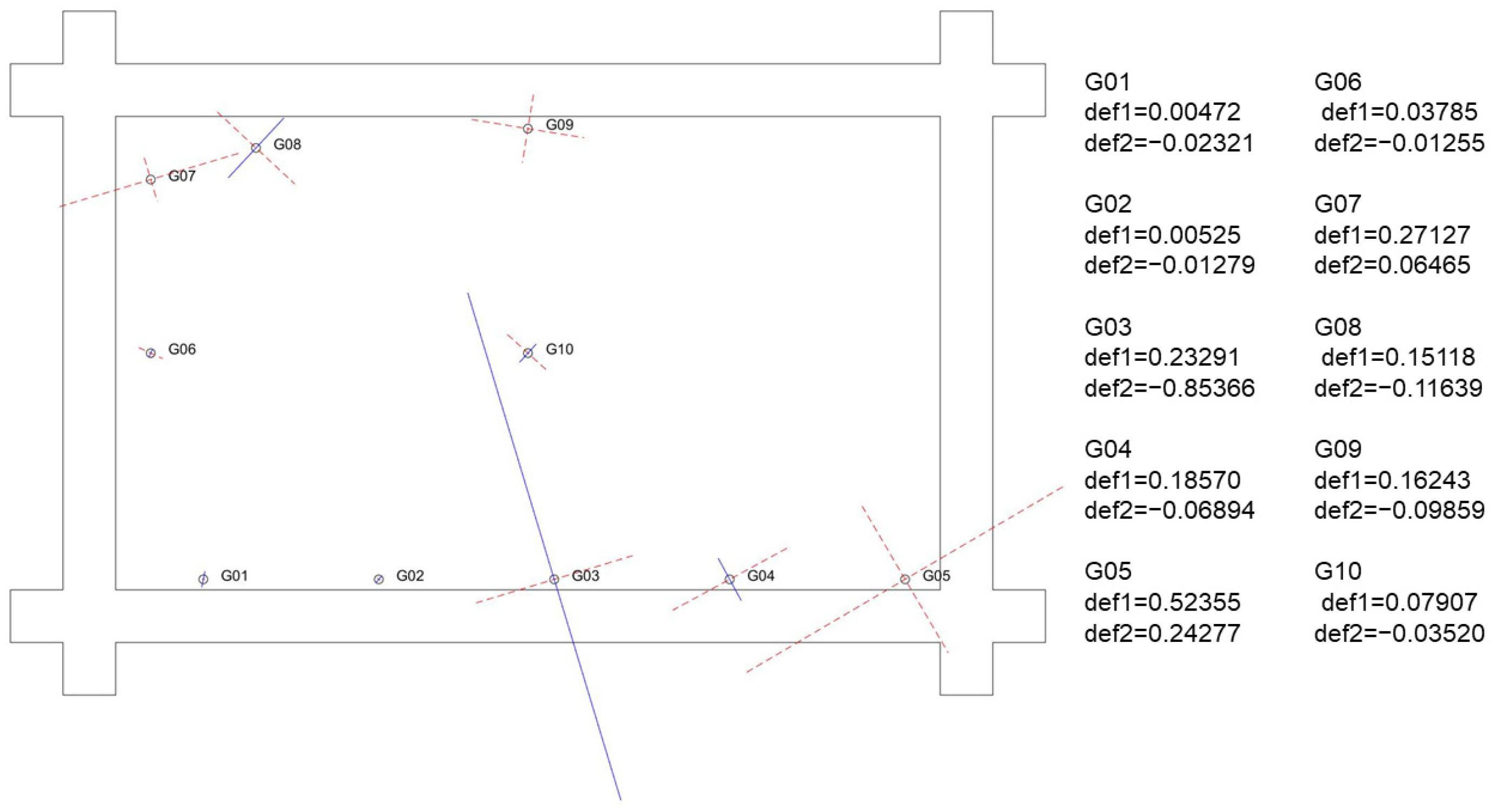
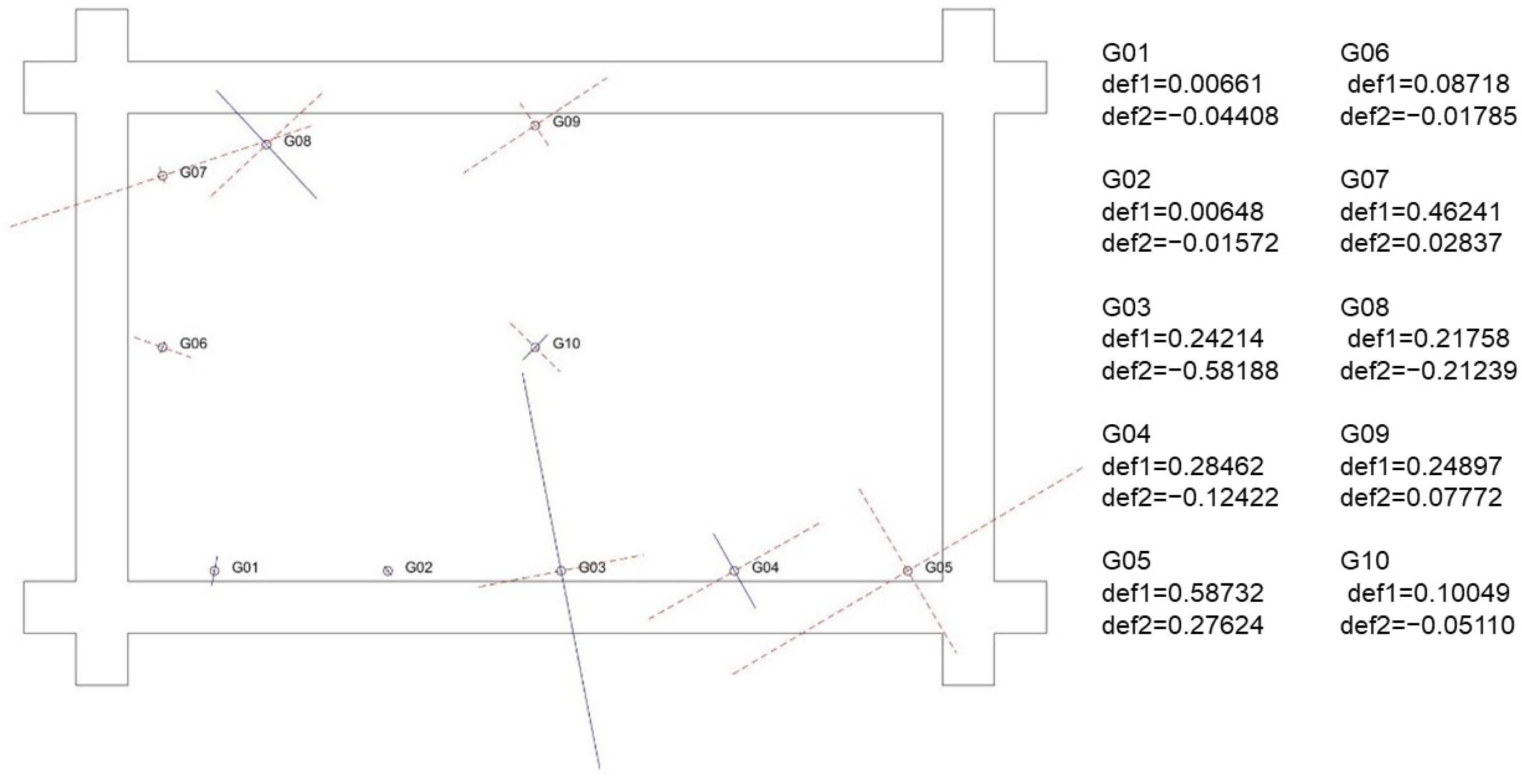
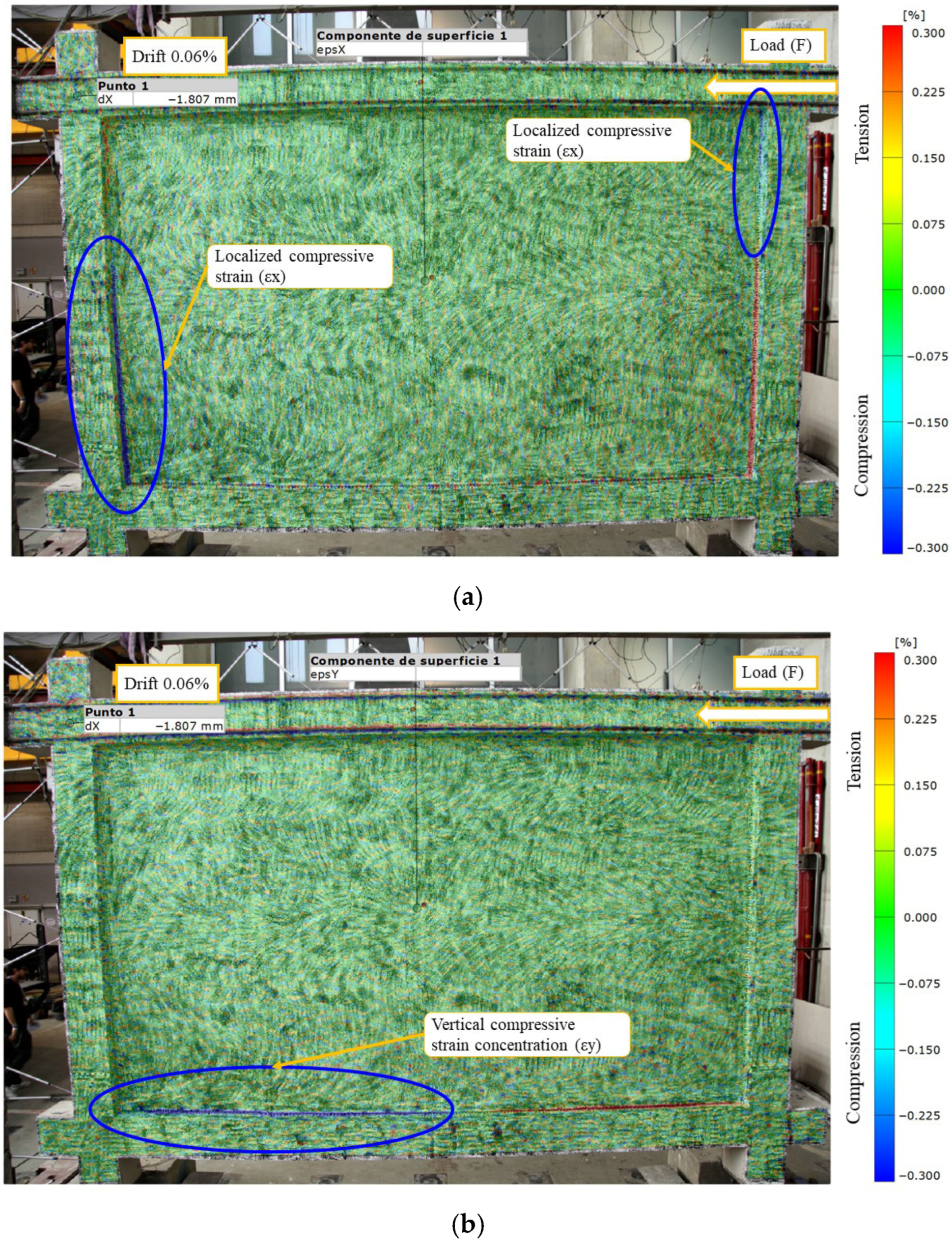
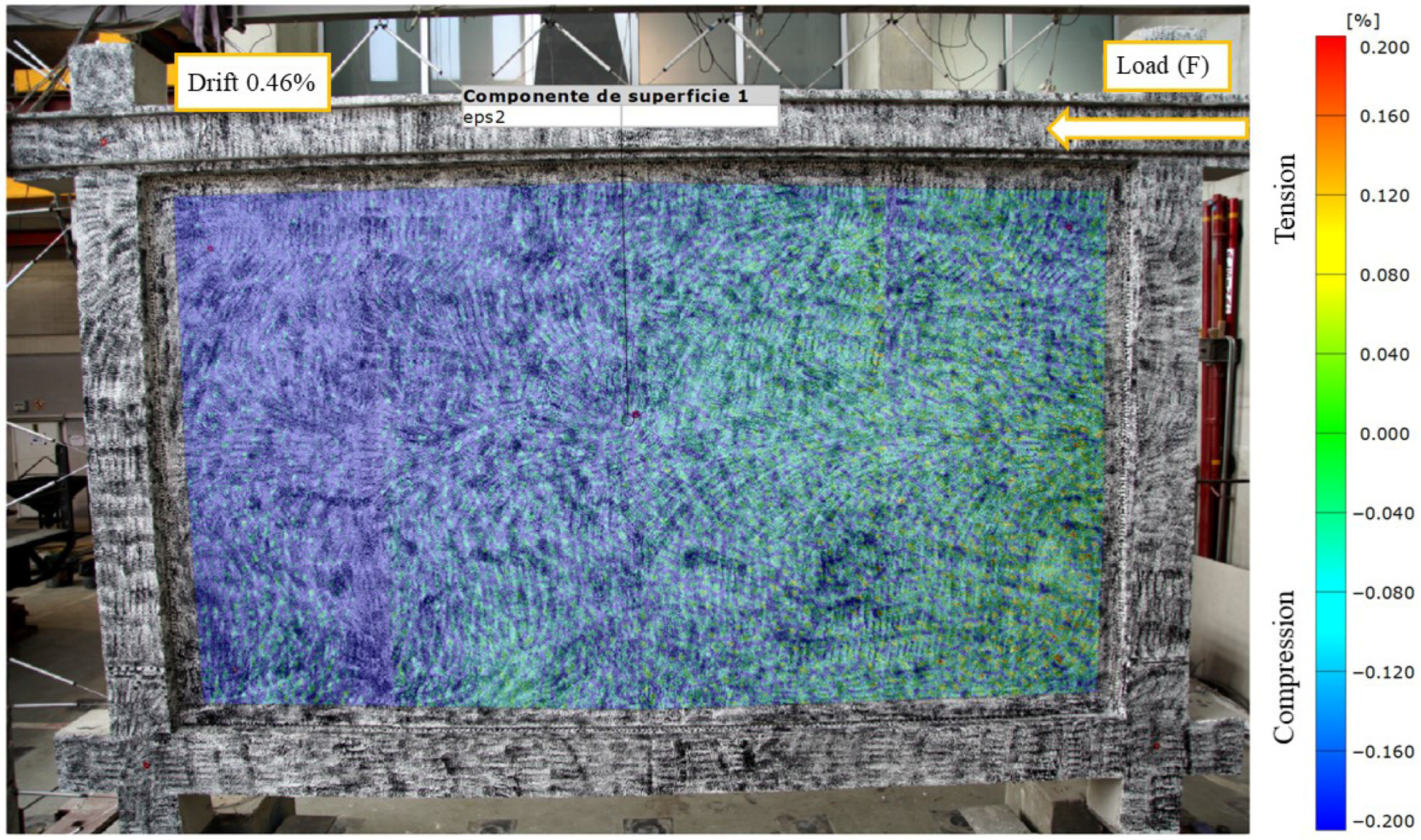
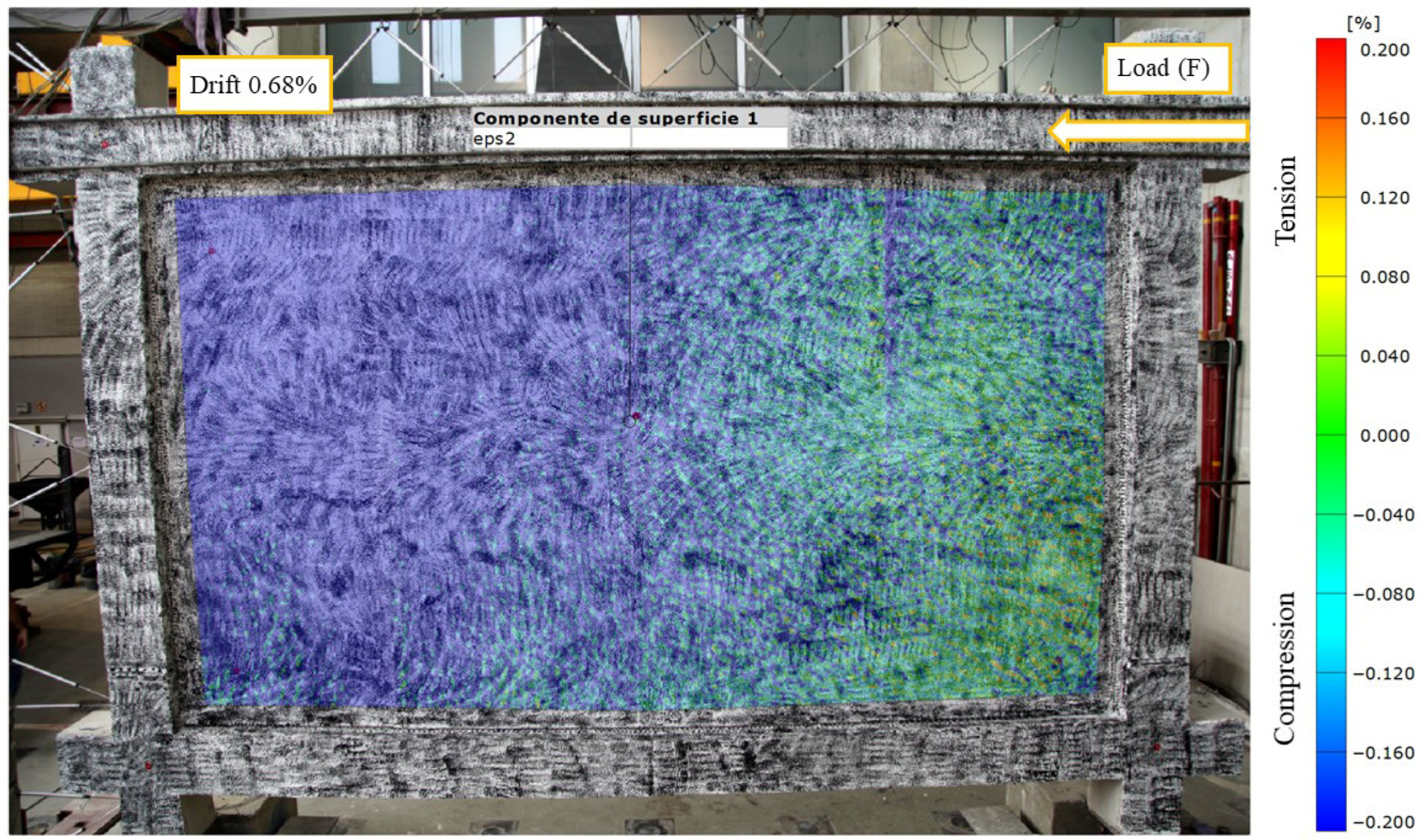
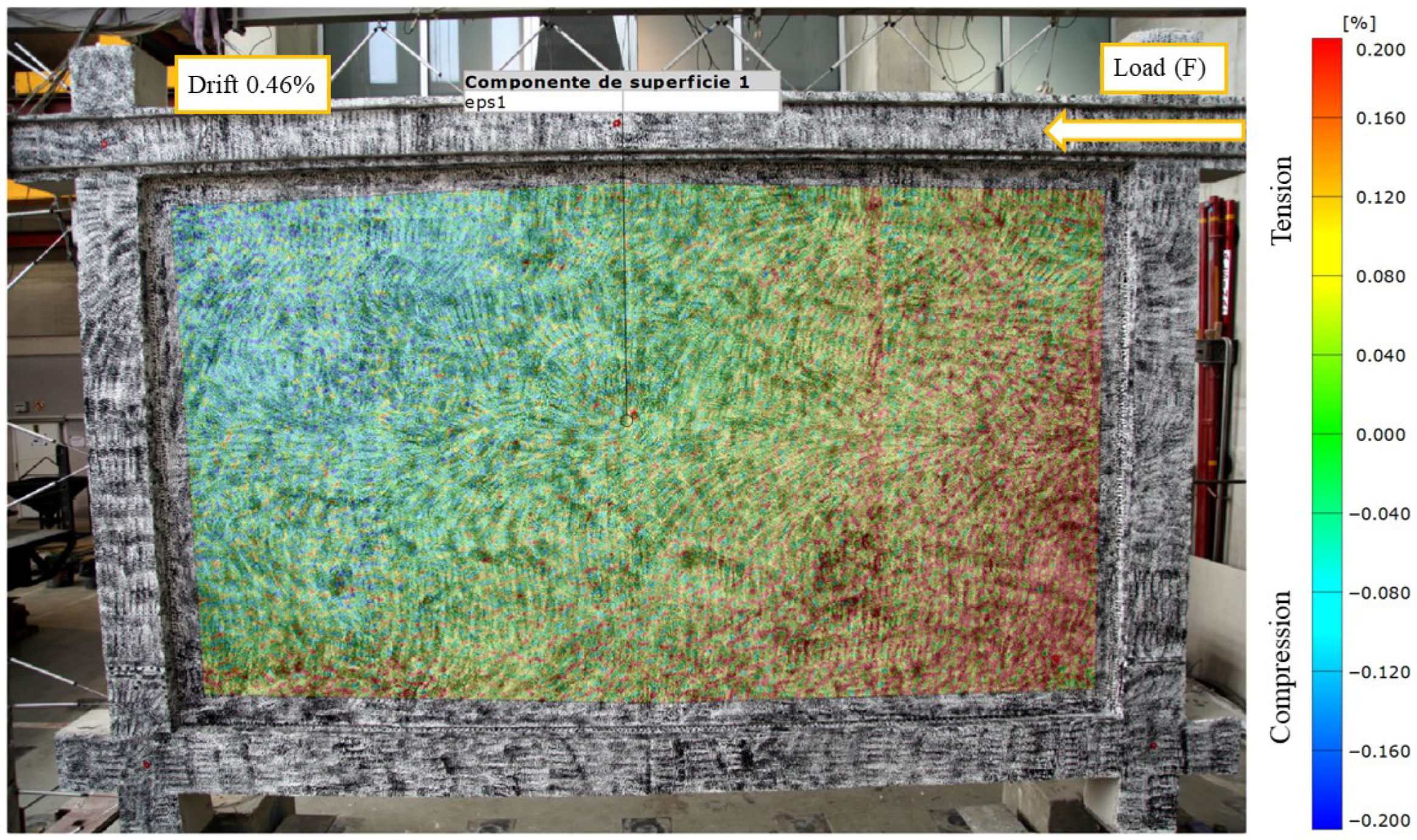
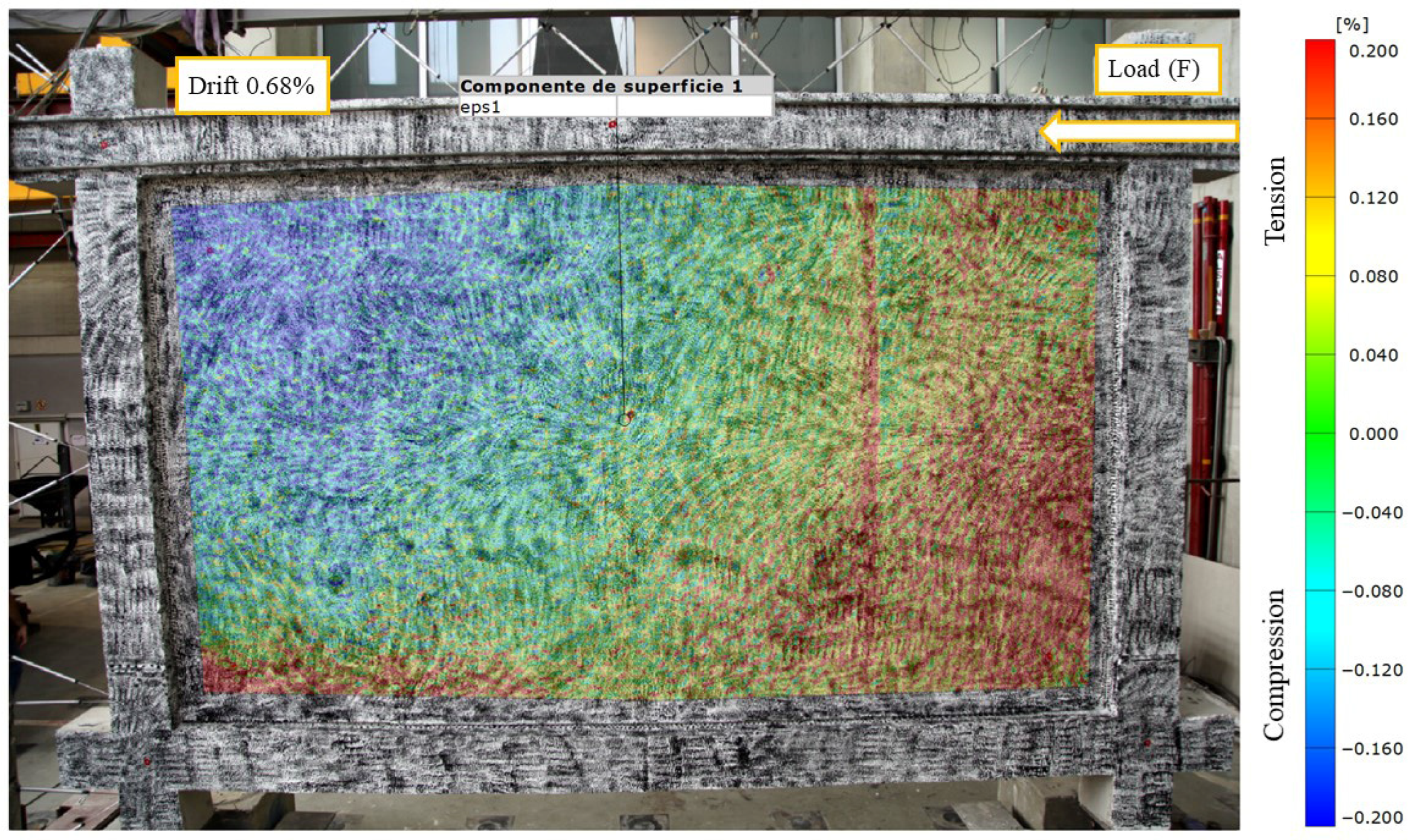
- Despite being a non-structural element composed of brittle materials, the drywall system (plasterboard, screws, and cold-formed steel studs) develops a complex multi-stage load transfer mechanism. It initiates with a transient diagonal strut action at very low drifts, which rapidly and concurrently transitions into a dominant membrane behaviour. This membrane contribution ceases abruptly once the panels fail at an interstory drift of 0.89%.
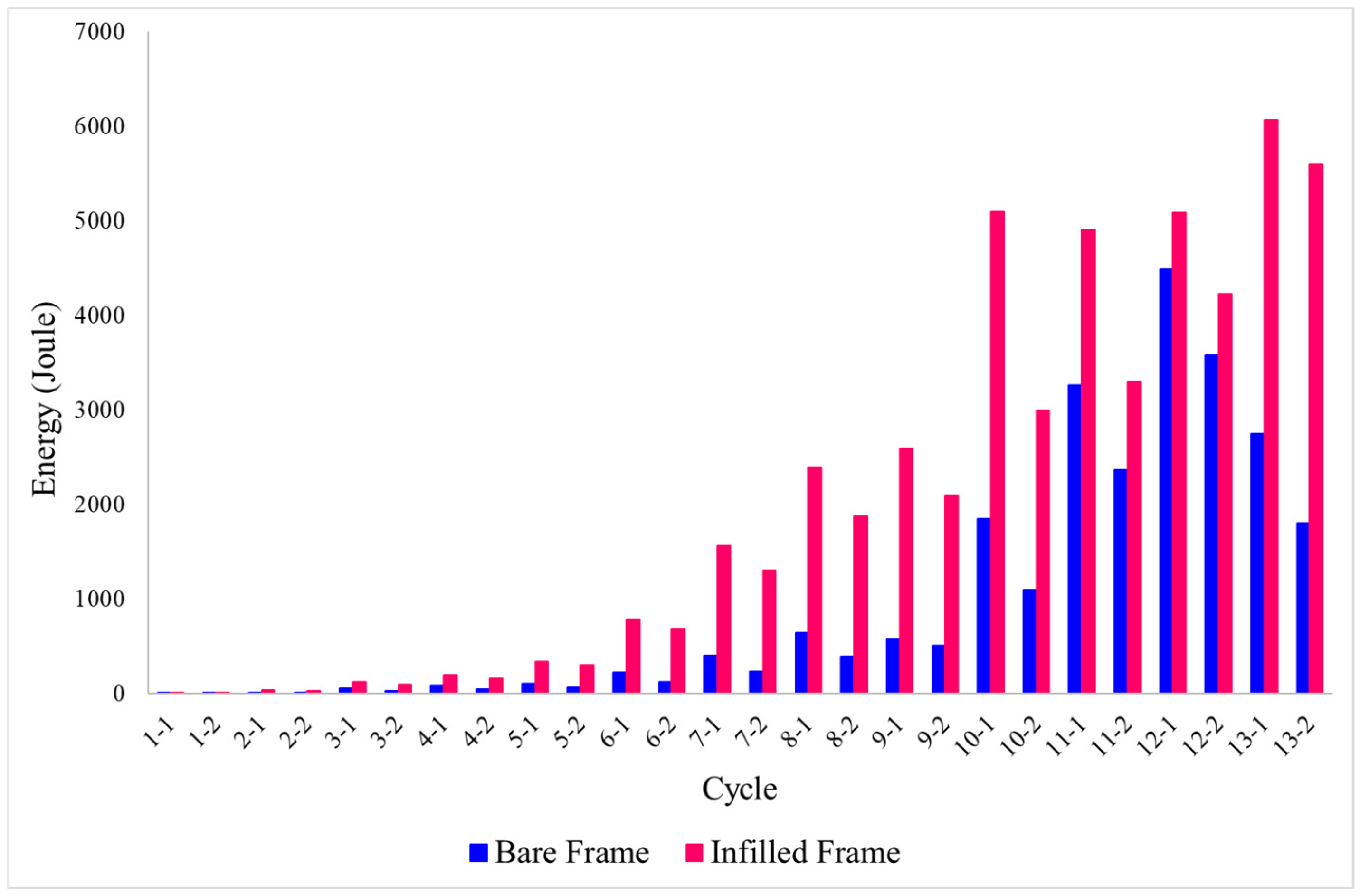
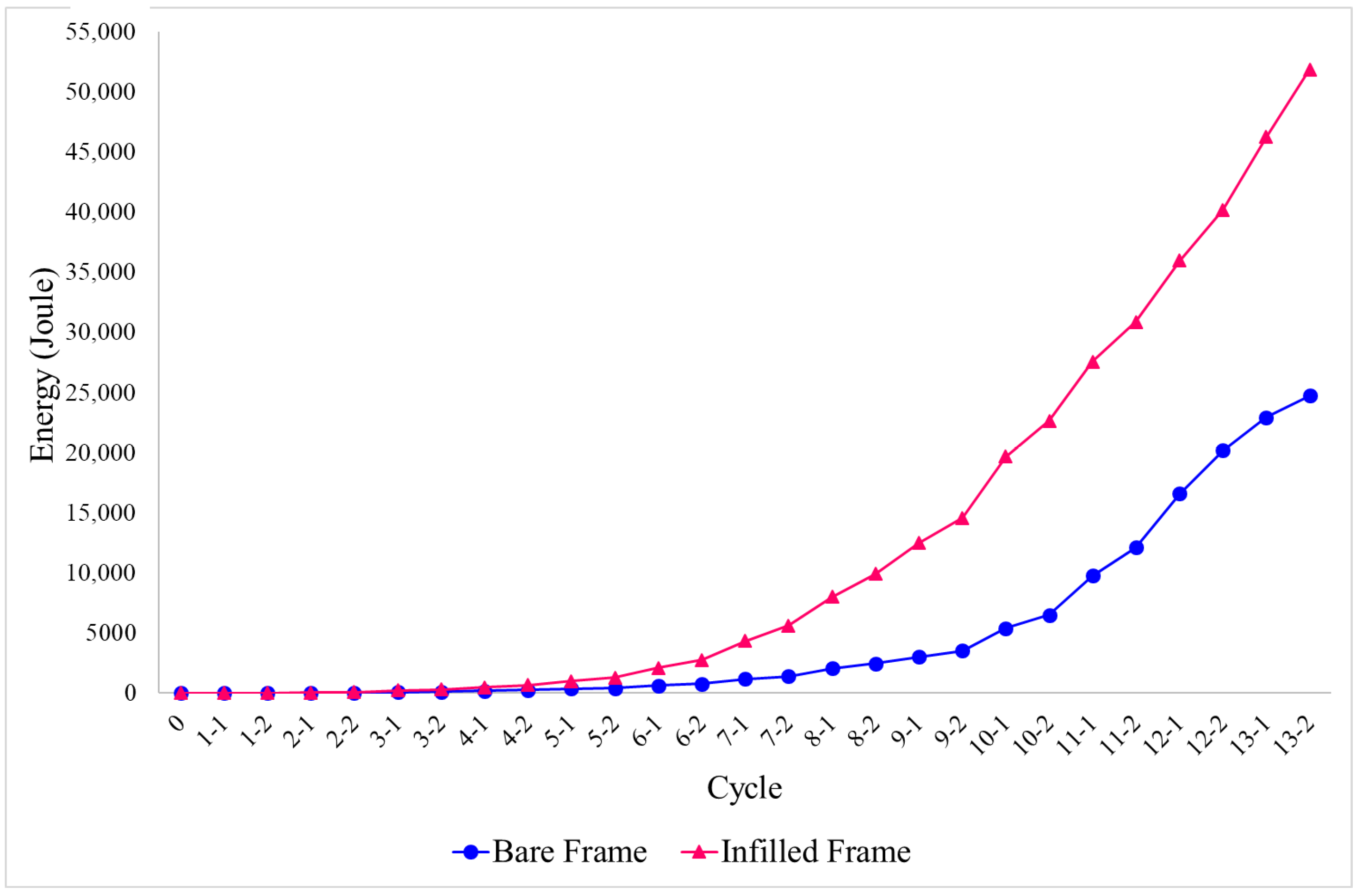
- The infilled frame exhibited energy dissipation capacity, primarily derived from the progressive degradation of the drywall system (crushing and tearing). Additionally, minor shear cracking was observed in the beam–column joints, which ceased to propagate once the infill failed. Thus, the observed energy absorption is strictly a consequence of the non-structural element’s failure process and its interaction with the frame joints.
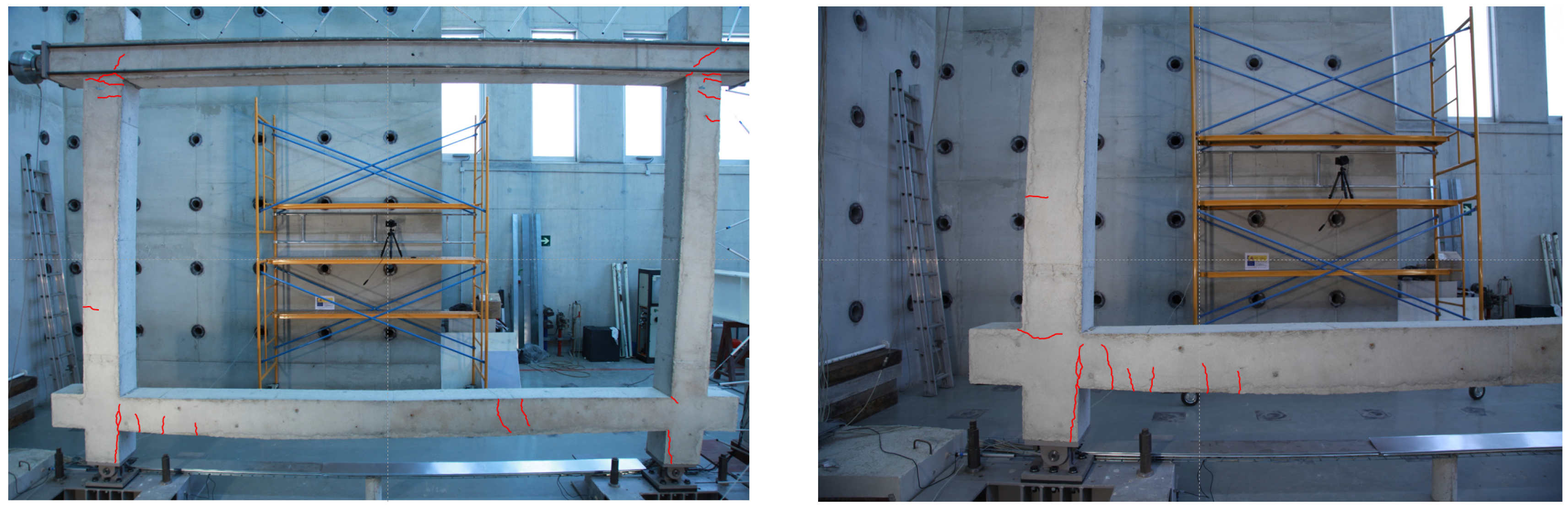
- The presence of the infill fundamentally changes the failure mode of the reinforced concrete frame. The increased stiffness forces the structural elements to resist higher lateral loads for smaller displacements. The infill then fails sequentially, allowing the reinforced concrete frame to replicate the flexural failure mode of the bare frame only in later cycles, with the onset of primary structural damage (flexural yielding) occurring at a higher drift capacity, as evidenced by the absence of cracking in the columns.
- The significant influence of the drywall infill demonstrates that this non-structural element must be appropriately accounted for in seismic design, since it changes the structural response and failure mode. To ensure a satisfactory design, these systems must either be included in the structural analysis to predict their behaviour or their interaction with the structure should be isolated to allow the frame to behave as intended, consistent with a performance-based seismic design approach.
- Given the complex, nonlinear nature of the infill–frame interaction—characterized by a rapid transition from diagonal strut action to membrane behaviour—and its crucial influence on structural response, there is a clear need to develop robust and computationally efficient numerical models. This experimental work provides the essential validation basis for future modeling efforts. The primary goal of this future research is to develop numerical strategies that can reliably capture the observed effects on stiffness, strength, and energy dissipation, while remaining easily implementable for practicing engineers. Achieving this balance between high-fidelity models (for validation) and the development of simplified, yet reliable, design tools (for ease of application) is necessary to fully integrate these findings into a modern performance-based seismic design methodology.
- First, the experimental campaign focused on a specific drywall configuration. This setup (double 15 mm panels on 70 mm studs) was selected to strictly adhere to the installation specifications of the Spanish standard UNE 102043 [21], ensuring representativeness of current construction practice. Consequently, the reported stiffness and strength contributions are specific to this standard assembly; variations in board thickness, stud gauge, or screw spacing—different from those prescribed by the norm—could alter the interaction.
- Second, the specimen geometry consisted of a single-storey, single-bay frame. While effective for isolating fundamental interaction mechanics at the component level, this setup does not capture global system effects present in multi-storey buildings. However, this sub-assembly approach provides the essential experimental data required to calibrate macro-models which can subsequently be extrapolated to assess complex structures.
- Third, tests were conducted under pinned-base boundary conditions. In real buildings, foundation flexibility (Soil–Structure Interaction) can modify the dynamic response; however, the pinned base was chosen to strictly quantify the stiffness of the superstructure components without external variables.
- Finally, the instrumentation setup was primarily designed to capture the in-plane global response (stiffness, strength, and drift). While the failure mechanism of the drywall involved out-of-plane buckling and tearing—inherently 3D phenomena—these were monitored visually and correlated with the in-plane force drop.
Author Contributions
Funding
Data Availability Statement
Acknowledgments
Conflicts of Interest
References
- Bertero, V.; Brokken, S. Infills in Seismic Resistant Building. J. Struct. Eng. 1983, 109, 1337–1361. [Google Scholar] [CrossRef] [Scilit]
- BS EN1998-1:2004; Eurocode 8: Design of Structures for Earthquake Resistance—Part 1: General Rules, Seismic Actions and Rules for Buildings. CEN: Brussels, Belgium, 2004.
- ACI 318-19; Building Code Requirements for Structural Concrete (ACI 318-19). Commentary on Building Code Requirements for Structural Concrete (ACI 318R-19). American Concrete Institute: Farmington Hills, MI, USA, 2019.
- NCSE-02; Seismic-Resistant Construction Standard: General Part and Building. Ministerio de Fomento, Gobierno de España: Madrid, Spain, 2002.
- Patrício, J.; Gusmão, A.; Ferreira, S.; Silva, F.; Kafshgarkolaei, H.; Azevedo, A.; Delgado, J. Settlement Analysis of Concrete-Walled Buildings Using Soil–Structure Interactions and Finite Element Modeling. Buildings 2024, 14, 746. [Google Scholar] [CrossRef] [Scilit]
- Bagheri, M.; Malidarreh, N.; Ghaseminejad, V.; Asgari, A. Seismic resilience assessment of RC superstructures on long–short combined piled raft foundations: 3D SSI modeling with pounding effects. Structure 2025, 81, 110176. [Google Scholar] [CrossRef] [Scilit]
- Pallarés, F.J.; Davia, A.; Hassan, W.; Pallarés, L. Experimental and analytical assessment of the influence of masonry façade infills on seismic behavior of RC frame buildings. Eng. Struct. 2021, 235, 112031. [Google Scholar] [CrossRef] [Scilit]
- Papasotiriou, A.; Athanatopoulou, A.; Kostinakis, K. Parametric study of the masonry infills effect on the seismic performance of R/C frames based on the use of different damage measures. Eng. Struct. 2021, 241, 112326. [Google Scholar] [CrossRef] [Scilit]
- Baloevic, G.; Radnic, J.; Grgic, N.; Grubisic, I. Shake-table study on the effect of masonry infill on the seismic response of reinforced concrete frames. Soil Dyn. Earthq. Eng. 2022, 161, 107404. [Google Scholar] [CrossRef] [Scilit]
- Gad, E.; Chandler, A.; Duffield, C.; Stark, G. Lateral Behavior of Plasterboard-Clad Residential Steel Frames. J. Struct. Eng. 1999, 125, 32–39. [Google Scholar] [CrossRef] [Scilit]
- Liew, Y.; Duffield, C.; Gad, E. The influence of plasterboard clad walls on the structural behaviour of low rise residential buildings. Electron. J. Struct. Eng. 2002, 2, 1–16. [Google Scholar] [CrossRef] [Scilit]
- Hart, G.; Hortacsu, A.; Simsir, C.; Jain, A. Performance of drywall shear walls: UC Irvine and CSU San Jose tests. Struct. Des. Tall Spec. Build. 2008, 19, 309–345. [Google Scholar] [CrossRef] [Scilit]
- Petrone, C.; Magliulo, G.; Lopez, P.; Manfredi, G. Seismic fragility of plasterboard partitions via in-plane quasi-static test. Earthq. Eng. Struct. Dyn. 2015, 44, 2589–2606. [Google Scholar] [CrossRef] [Scilit]
- Magliulo, G.; Petrone, C.; Capozzi, V.; Maddaloni, G.; Lopez, P.; Talamonti, R.; Manfredi, G. Shake Table Tests on Infill Plasterboard Partitions. Open Constr. Build. Technol. J. 2012, 6, 155–163. [Google Scholar] [CrossRef] [Scilit]
- Fiorino, L.; Bucciero, B.; Landolfo, R. Evaluation of seismic dynamic behaviour of drywall partitions, façades and ceilings through shake table testing. Eng. Struct. 2019, 180, 103–123. [Google Scholar] [CrossRef] [Scilit]
- Magliulo, G.; D’Angela, D.; Bonati, A.; Coppola, O. Cyclic behavior of screw connections in plasterboard partitions. Constr. Build. Mater. 2025, 484, 141780. [Google Scholar] [CrossRef] [Scilit]
- United States Gypsum Company. The Origins of USG Sheetrock Brand; United States Gypsum Company: Chicago, IL, USA, 2022; Available online: https://www.usg.com/en-US/about-usg/history (accessed on 15 December 2025).
- Eurogypsum. Eurogypsum Waste Policy: Building Value for Society; Eurogypsum: Brussels, Belgium, 2005. [Google Scholar]
- Freedonia Group. Global Drywall—Market Size, Market Share, Market Leaders, Demand Forecast, Sales, Company Profiles, Market Research, Industry Trends and Companies; Freedonia Group: Rockville, MD, USA, 2023. [Google Scholar]
- Te Ara Encyclopedia of New Zealand. Stopping Plasterboard; Te Ara Encyclopedia of New Zealand: Wellington, New Zealand, 2024. Available online: https://teara.govt.nz/en/photograph/38659/stopping-plasterboard (accessed on 15 December 2025).
- UNE 102043:2013; Montaje de los Sistemas Constructivos con Placa de Yeso Laminado (PYL). Tabiques, Trasdosados y Techos. Definiciones, Aplicaciones y Recomendaciones. Asociación Española de Normalización (UNE): Madrid, Spain, 2013.
- EHE-08; Instrucción de Hormigón Estructural. Ministerio de Fomento, Comisión Permanente del Hormigón, Gobierno de España: Madrid, Spain, 2010.
- EN 1992-1-1; Eurocode 2: Design of Concrete Structures—Part 1: General Rules and Rules for Buildings. Eurocode: Brussels, Belgium, 2013.
- UNE EN 12390-1:2013; Testing Hardened Concrete—Part 1: Shape, Dimensions and Other Requirements for Specimens and Moulds. European Standards; CEN: Brussels, Belgium, 2013.
- UNE EN 520:2004+A1:2009; Gypsum Plasterboards. Definitions, Requirements and Test Methods. European Standards; CEN: Brussels, Belgium, 2009.
- UNE EN 10346:2015; Continuously Hot-Dip Coated Steel Flat Products for Cold Forming. Technical Delivery Conditions. European Standards; CEN: Brussels, Belgium, 2015.
- UNE EN 14195:2014; Metal Framing Components for Gypsum Board Systems. Definitions, Requirements and Methods. European Standards; CEN: Brussels, Belgium, 2014.
- FEMA. Interim Testing Protocols for Determining the Seismic Performance Characteristics of Structural and Nonstructural Components; Through Laboratory Testing—Fema—461; FEMA 461; Federal Emergency Management Agency: Washington, DC, USA, 2007.


Disclaimer/Publisher’s Note: The statements, opinions and data contained in all publications are solely those of the individual author(s) and contributor(s) and not of MDPI and/or the editor(s). MDPI and/or the editor(s) disclaim responsibility for any injury to people or property resulting from any ideas, methods, instructions or products referred to in the content. |
© 2025 by the authors. Licensee MDPI, Basel, Switzerland. This article is an open access article distributed under the terms and conditions of the Creative Commons Attribution (CC BY) license.
Share and Cite
Garcés, J.I.; Pallarés, F.J.; Perelló, R.; Pallarés, L. Experimental Assessment of the Influence of Drywall Infills on the Seismic Behaviour of RC Frame Buildings. Buildings 2026, 16, 40. https://doi.org/10.3390/buildings16010040
Garcés JI, Pallarés FJ, Perelló R, Pallarés L. Experimental Assessment of the Influence of Drywall Infills on the Seismic Behaviour of RC Frame Buildings. Buildings. 2026; 16(1):40. https://doi.org/10.3390/buildings16010040
Chicago/Turabian StyleGarcés, Jorge I., Francisco J. Pallarés, Ricardo Perelló, and Luis Pallarés. 2026. "Experimental Assessment of the Influence of Drywall Infills on the Seismic Behaviour of RC Frame Buildings" Buildings 16, no. 1: 40. https://doi.org/10.3390/buildings16010040
APA StyleGarcés, J. I., Pallarés, F. J., Perelló, R., & Pallarés, L. (2026). Experimental Assessment of the Influence of Drywall Infills on the Seismic Behaviour of RC Frame Buildings. Buildings, 16(1), 40. https://doi.org/10.3390/buildings16010040