Article

Flexural Performance of Geopolymer-Reinforced Concrete Beams Under Monotonic and Cyclic Loading: Experimental Investigation


by
Musab Aied Qissab Al-Janabi
1,2,
Duaa Al-Jeznawi
1,
Rana Talib Nasser
1,
Luís Filipe Almeida Bernardo
3,* and
Hugo Alexandre Silva Pinto
3
1
Department of Civil Engineering, College of Engineering, Al-Nahrain University, Jadriya, Baghdad 10081, Iraq
2
Department of Civil Engineering, Middle East Technical University, Ankara 06800, Türkiye
3
GeoBioTec, Department of Civil Engineering, University of Beira Interior, 6201-001 Covilhã, Portugal
*
Author to whom correspondence should be addressed.
Buildings 2026, 16(1), 209; https://doi.org/10.3390/buildings16010209
Submission received: 28 November 2025 / Revised: 24 December 2025 / Accepted: 26 December 2025 / Published: 2 January 2026
(This article belongs to the Section Building Structures)

Abstract

This study investigates the flexural performance of geopolymer (zero-cement) concrete (ZCC) beams compared to normal concrete (NC) under monotonic and cyclic loading. Sixteen reinforced beams with compressive strengths of 20 and 30 Mpa and reinforcement configurations of 2Ø10 and 3Ø12 were tested to evaluate load–deflection behavior, ductility, energy absorption, and cracking characteristics. Under monotonic loading, ZCC beams achieved 9–17% higher ultimate strength and 5–30% greater mid-span deflection than NC beams, indicating superior ductility and energy dissipation. Under cyclic loading, ZCC beams demonstrated more stable hysteresis loops, slower stiffness degradation, and 8–32% higher cumulative energy absorption. ZCC specimens also sustained 8–12 cycles, corresponding to 70–90% of the monotonic displacement, whereas NC beams generally failed earlier at lower displacement levels. Increasing reinforcement ratio enhanced stiffness and load capacity but reduced deflection for both materials. Crack mapping showed finer and more uniformly distributed cracking in ZCC beams, confirming improved bond behavior between steel reinforcement and the geopolymer matrix. In addition, geopolymer concrete beams exhibited a significant enhancement in ductility, with the ductility coefficient increasing by nearly 50% compared to normal concrete under cyclic loading. Overall, the findings indicate that ZCC provides comparable or superior structural performance relative to NC, supporting its application as a sustainable, low-carbon material for flexure- and shear-critical members subjected to static and cyclic actions.

1. Introduction

Concrete is the most widely used construction material worldwide, with an annual consumption exceeding 30 billion tons, surpassing the use of all other man-made materials combined [1]. This widespread demand has led to a substantial environmental impact, as the production of ordinary Portland cement (OPC), the primary binder in conventional concrete, accounts for approximately 7–8% of global anthropogenic CO2 emissions [2,3]. The cement industry is therefore recognized as one of the leading contributors to climate change, consuming substantial energy and emitting greenhouse gases during clinker production and associated chemical reactions [4]. In response, many countries have set ambitious targets to achieve carbon-neutral construction practices by 2050, which has accelerated the development of sustainable alternatives to cement-based materials [5].
One of the most promising alternatives to conventional concrete is zero-cement concrete (ZCC), also known as geopolymer or alkali-activated concrete, which entirely eliminates the use of OPC. In ZCC, industrial by-products such as fly ash (FA), ground granulated blast furnace slag (GGBS), and metakaolin (MK) act as aluminosilicate precursors that are activated by alkaline solutions (e.g., sodium hydroxide, sodium silicate, or their combinations) to form a geopolymeric binder [6,7]. This reaction pathway significantly reduces CO2 emissions compared to OPC while providing superior durability against acid attack, sulfate exposure, high temperatures, and freeze–thaw cycles [8,9]. Consequently, ZCC has gained increasing attention as a sustainable structural material for modern infrastructure [10,11]. Recent studies further support its potential: Hassoon and Qissab (2023) [12] critically reviewed the performance of fly ash-based ZCC, reporting that Class C FA yields higher compressive strength and performs well under ambient curing compared with Class F, with increased sodium hydroxide molarity enhancing strength; overall, FA-ZCC exhibits mechanical properties comparable to or slightly lower than normal concrete (NC), highlighting the need for standardized mix design methods. Hason and Al-Janabi (2024) [13] experimentally and numerically investigated twenty zero-cement reinforced concrete slabs under monotonic and impact loading, showing that ZCC slabs exhibit comparable behavior to conventional concrete with enhanced energy absorption and punching shear resistance, thereby confirming their suitability as sustainable, low-carbon structural alternatives. Similarly, Hassoon and Qissab (2024) [14] examined reinforced ZCC slabs under monotonic loading, finding that increasing slab thickness and reducing bar spacing improve stiffness, load capacity, and energy absorption, with failure primarily governed by punching shear, thus demonstrating structural performance comparable to that of NC.
While the material-level properties of ZCC, such as compressive, tensile, and flexural strengths, have been extensively studied [15,16,17], its structural behavior in reinforced members remains less explored. Flexural behavior in reinforced concrete beams is of particular importance, as it governs stiffness (K), ductility, and energy absorption, which collectively ensure structural safety under service and ultimate loads [18]. Prior research on geopolymer concrete beams indicates that their flexural performance, including load–deflection response and failure modes, is generally comparable to or exceeds that of OPC concrete beams [19,20]. Moreover, increasing reinforcement ratios or alkali activator concentrations has been reported to enhance load capacity and reduce deflections [21].
Recent studies have increasingly investigated the structural performance of reinforced geopolymer concrete members, particularly under flexural and cyclic loading. Experimental investigations have reported improved crack control, comparable or enhanced ductility, and superior energy dissipation capacity of geopolymer concrete beams compared to conventional normal concrete [22,23,24]. Other studies have highlighted the influence of reinforcement ratio, activator composition, and curing conditions on stiffness degradation and hysteretic response under cyclic loading [25,26]. These recent findings provide important context for the present study, which further examines the flexural and cyclic behavior of strength-matched geopolymer and normal concrete beams.
In recent years, several experimental studies have explored the structural response of geopolymer and ZCC beams under flexural loading. Kumar and Kumar (2016) [19] reported that reinforced geopolymer beams exhibited load–deflection curves and crack patterns similar to OPC beams, with only minor differences in the cracking moment. Similarly, Kumar and Ramesh (2018) [20] demonstrated that finite element models can predict the flexural performance of ZCC beams with good accuracy, confirming their viability in structural design. Bendapudi (2019) [21] observed that increasing the molarity of the alkaline activator enhanced the flexural strength of ZCC beams, although failure modes remained comparable to OPC beams. More recently, Al-Jabali et al. (2024) [17] highlighted that reinforced ZCC beams prepared from GGBS and red mud achieved adequate load capacity and exhibited conventional flexural failure patterns, further reinforcing their suitability for structural use. Despite these encouraging findings, the majority of available studies have focused mainly on monotonic loading. The cyclic behavior of ZCC beams, particularly regarding hysteresis characteristics, stiffness degradation, ductility, and energy dissipation, remains insufficiently investigated. This is a notable limitation, as cyclic loading is essential for simulating real-world conditions such as seismic events, wind loads, and traffic-induced fatigue [27]. Only a limited number of experimental programs have systematically compared the cyclic performance of ZCC and OPC beams, especially across varying compressive strengths and reinforcement ratios. This gap hinders the broader adoption of ZCC in structural applications where cyclic or seismic loading governs design.
In the broader field of solid mechanics, energy-based approaches have been widely employed to interpret failure mechanisms under dynamic and cyclic loading conditions. Studies on geomaterials, such as coal and rock, have demonstrated that damage and failure are closely associated with the processes of energy accumulation, release, and dissipation during repeated or dynamic loading, rather than stress level alone. These investigations emphasize that progressive stiffness degradation, microcrack evolution, and catastrophic failure are governed by the balance between stored elastic energy and dissipated energy. Although the material systems and failure environments differ significantly, the underlying concept of energy evolution remains applicable to structural concrete elements subjected to cyclic loading. In reinforced concrete and geopolymer concrete members, cyclic flexural loading similarly induces energy accumulation during loading phases and energy dissipation through cracking, steel yielding, and hysteretic behavior. Therefore, evaluating load–deflection hysteresis, stiffness degradation, and cumulative energy dissipation provides a rational framework for assessing structural performance and damage evolution in geopolymer concrete beams under repeated loading.
To address this research need, the present study experimentally investigates the flexural behavior of reinforced ZCC beams under monotonic and cyclic loading, with NC beams tested in parallel for comparison. Unlike most previous studies focused on material characterization, this work provides a systematic structural-level comparison between strength-matched geopolymer and normal concrete beams under monotonic and cyclic loading, with particular emphasis on reinforcement ratio effects, hysteretic behavior, energy dissipation, and stiffness degradation. A total of 16 beams were cast and tested, considering variables such as compressive strength (20 Mpa and 30 Mpa), longitudinal steel reinforcement (2-Ø10, 3-Ø10, and 3-Ø12), and loading type (monotonic vs. cyclic). Figure 1 illustrates the flowchart of the entire testing program. The study evaluates the load–deflection response of the beams, ductility, energy absorption, crack patterns, and strain behavior of the beams, thereby providing a comprehensive comparison between ZCC and NC beams under both loading regimes.

2. Experimental Program

The experimental program was designed to investigate the flexural response of ZCC beams in comparison with NC beams under monotonic and cyclic loading. It involved a systematic process encompassing material selection, mix design optimization, specimen preparation, testing configuration, and data acquisition. To ensure a comprehensive evaluation, the program was divided into four main parts, as described in the following sections.
To validate the selected mix proportions, the mechanical properties of both NC and ZCC mixes were evaluated prior to beam testing, as summarized in Table 1. Standard cube and prism specimens were cast and tested at 28 days to determine compressive strength, splitting tensile strength, and flexural strength (modulus of rupture) in accordance with ASTM C39 [28], ASTM C496 [29], and ASTM C78 [30], respectively.
The results confirmed that both NC and ZCC mixes achieved their target compressive strengths of 20 Mpa and 30 Mpa. The geopolymer concrete exhibited comparable splitting tensile and flexural strengths to normal concrete at equivalent strength levels, thereby ensuring a balanced and meaningful comparison in the subsequent structural beam tests.
The workability of both NC and ZCC mixes was evaluated to ensure adequate consistency and proper placement during casting. Slump tests were conducted in accordance with ASTM C143 [31]. The results are presented in Table 2.
The measured slump values indicated that all mixes achieved moderate to high workability suitable for reinforced beam casting without segregation or bleeding. The use of a polycarboxylate-based superplasticizer effectively improved the workability of both NC and ZCC mixes, ensuring comparable fresh properties across all strength levels.

2.1. Materials and Mix Design

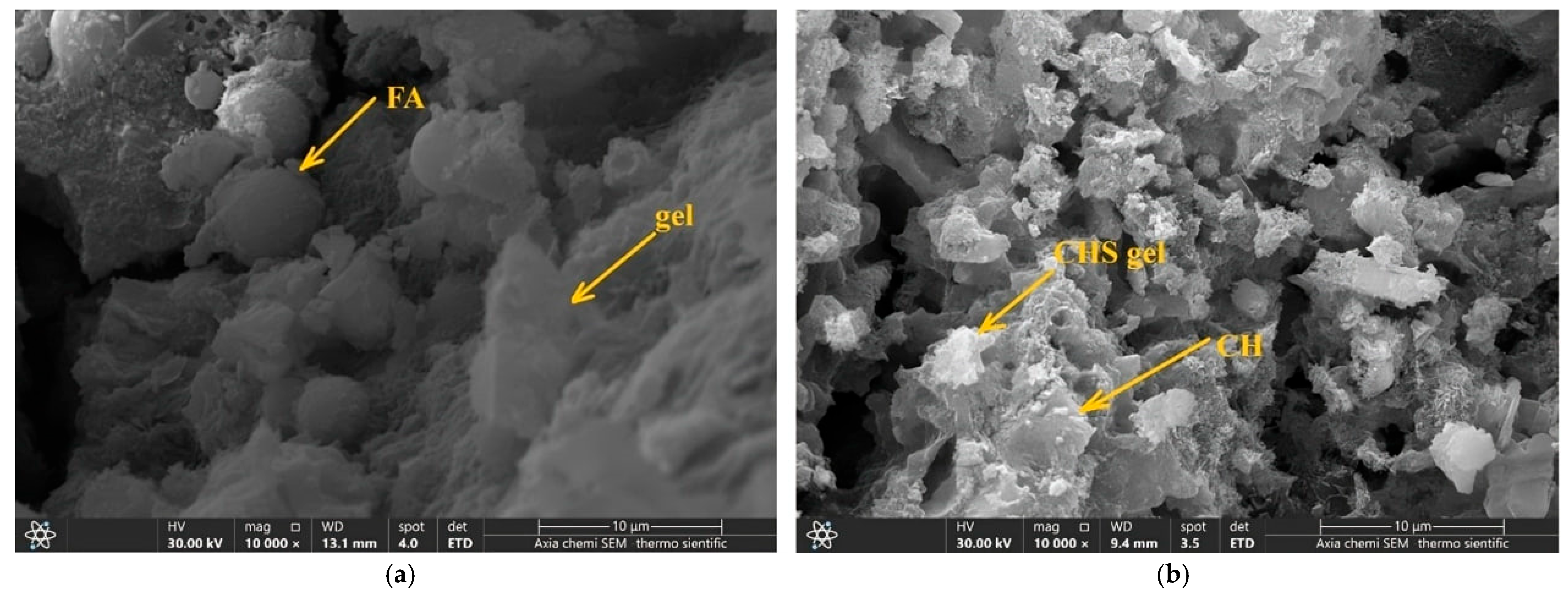
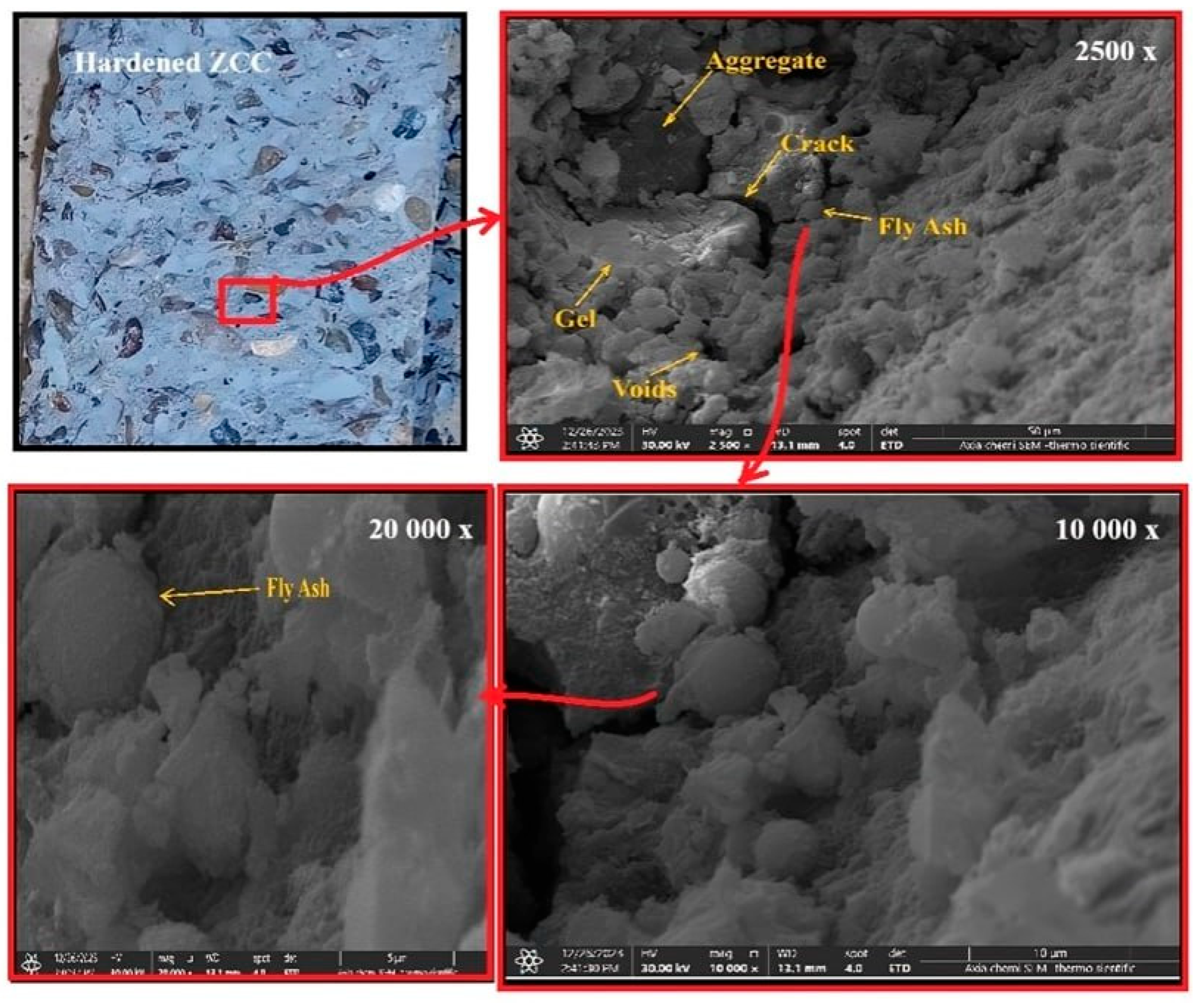
Two types of concrete mixtures were prepared for this study: NC and ZCC. The NC mixtures were designed using conventional mix design procedures to achieve target compressive strengths of 20 Mpa and 30 Mpa. OPC served as the primary binder, combined with natural river sand as the fine aggregate, crushed coarse aggregate with a maximum size of 12 mm, potable water, and a polycarboxylate-based superplasticizer to improve workability. In contrast, the ZCC mixtures were entirely free of Portland cement, with Class F FA employed as the main aluminosilicate precursor and activated using a binary alkaline solution composed of sodium hydroxide (NaOH) and sodium silicate (Na2SiO3). While binary and ternary blends incorporating materials such as slag or metakaolin have been shown to enhance early strength and durability, the use of fly ash alone provides a clearer comparison with conventional normal concrete and reflects the utilization of an abundant industrial by-product. The NaOH solution was prepared at a molarity of 10 M, and the Na2SiO3/NaOH ratio was maintained at 2.0, as this combination has been shown in prior optimization studies to enhance both flowability and strength development in geopolymeric systems. To further increase workability and ensure homogeneity, a high-range water-reducing admixture was incorporated. After casting, all ZCC specimens were subjected to oven curing at 70 °C for 24 h to accelerate the geopolymerization process and were subsequently stored under ambient laboratory conditions until testing. The complete mix proportions for both NC and ZCC at the two strength levels are summarized in Table 3. Scanning electron microscopy (SEM) was conducted on ZCC samples to evaluate the microstructural characteristics of the binder matrix and the interfacial transition zone between paste and aggregates, as shown in Figure 2. As illustrated in Figure 3, the spherical morphology of FA in ZCC enhances the reaction between the alkali activator (SH–SS solution) and the binder, promoting a denser microstructure formation and strength development through sodium aluminum silicate phases, unlike OPC where strength arises from calcium silicate hydrate (C-S-H) formation.
The geopolymer mix proportions were optimized to match the target strength grades of the corresponding normal concrete mixes, ensuring that the observed differences in structural performance are attributable to material behavior rather than strength disparity.
The physical and chemical properties of the constituent materials used in this study were determined to ensure consistency and reproducibility. Class F fly ash was used as the sole aluminosilicate precursor in the geopolymer concrete. Its chemical composition, determined by X-ray fluorescence (XRF), consisted primarily of SiO2, Al2O3, and Fe2O3, with the combined content exceeding 70%, satisfying ASTM C618 requirements for Class F fly ash. The specific gravity of the fly ash was approximately 2.25, and the median particle size was in the range of 10–20 μm.
OPC conforming to ASTM C150 was used for the normal concrete mixtures, with a specific gravity of 3.15. Natural river sand with a fineness modulus of 2.6 was used as fine aggregate, while crushed limestone coarse aggregate with a nominal maximum size of 12 mm and specific gravity of 2.65 was employed. Both aggregates satisfied ASTM C33 grading requirements.
The alkaline activator solution consisted of sodium hydroxide (NaOH) and sodium silicate (Na2SiO3). The NaOH solution was prepared at a concentration of 10 M using laboratory-grade pellets dissolved in distilled water. The sodium silicate solution had a SiO2/Na2O ratio of approximately 2.0, with a solids content of about 37%. The combined activator solution was prepared 24 h prior to mixing to ensure thermal equilibrium and homogeneity.

2.2. Beam Specimens and Reinforcement Details

All beam specimens were designed following conventional reinforced concrete design principles to ensure flexural-dominated behavior and to avoid premature shear failure. The design was based on the measured compressive strengths of concrete and the nominal yield strength of reinforcing steel. Reinforcement ratios were selected to represent under-reinforced sections, allowing yielding of tensile reinforcement prior to concrete crushing.
Stirrups were provided to satisfy minimum shear reinforcement requirements and to ensure that shear failure did not govern the response. Uniform stirrup spacing was adopted along the beam length to simplify specimen fabrication and ensure consistent shear resistance across all test specimens. The selected spacing satisfied minimum shear reinforcement requirements and was intentionally chosen to prevent shear failure, thereby allowing the flexural behavior to govern the experimental response. This approach ensured a fair and consistent comparison between normal concrete and geopolymer concrete beams under both monotonic and cyclic loading. Serviceability considerations, including deflection and crack control, were indirectly accounted for through reinforcement selection and experimental monitoring during testing.
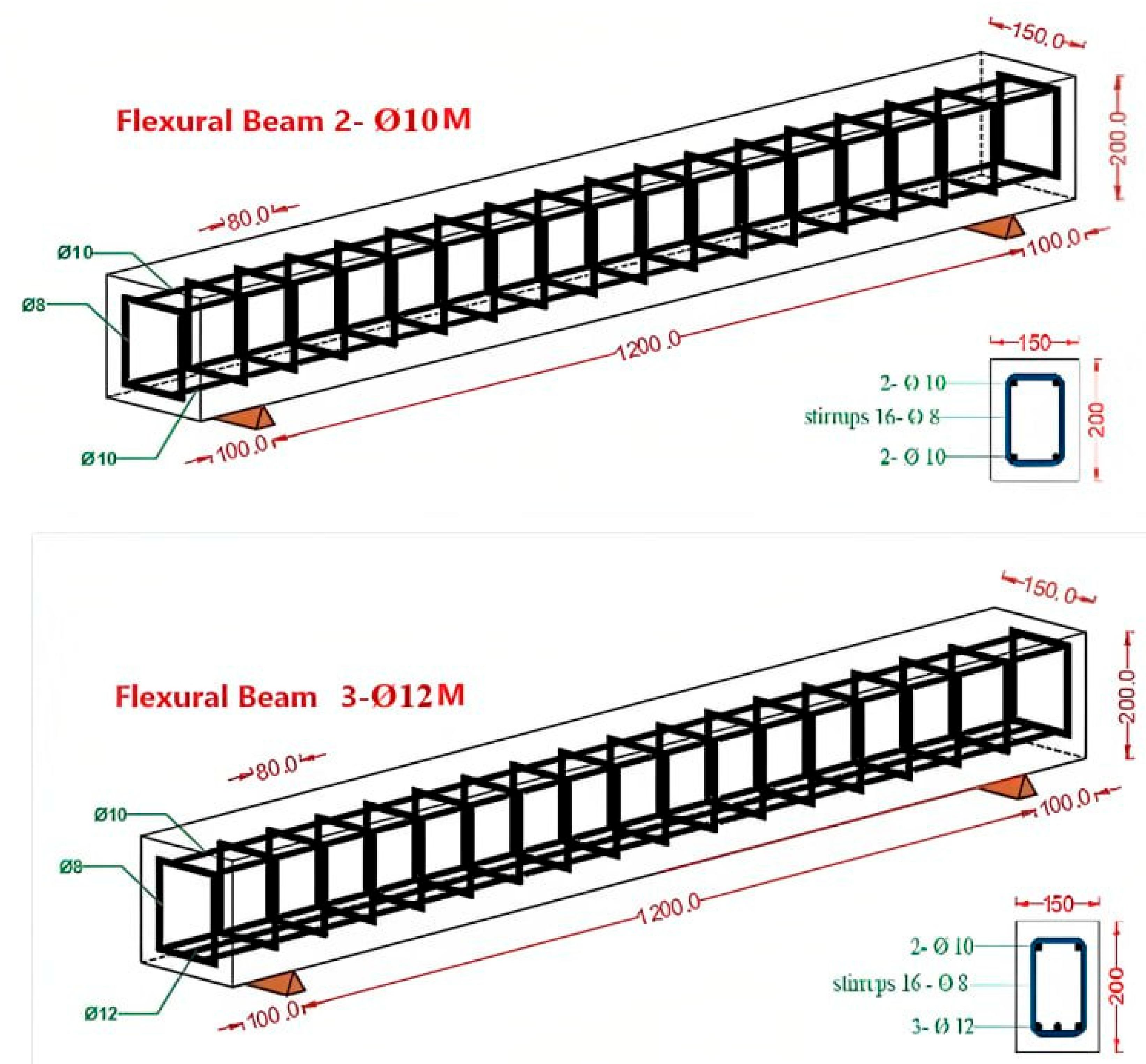
A total of sixteen simply supported reinforced concrete beams were designed, fabricated, and tested in this study. Each specimen was constructed with uniform overall dimensions of 1400 mm in length, 200 mm in depth, and 150 mm in width, with a clear span of 1200 mm between supports. The reinforcement details of the beams are illustrated in Figure 4. The selection of these dimensions was intended to ensure that the beams were large enough to replicate realistic flexural behavior while remaining manageable for laboratory testing.
The experimental program was structured around four principal variables: (i) concrete type, either conventional NC or sustainable ZCC; (ii) target compressive strength, with two strength levels of 20 MPa and 30 MPa; (iii) reinforcement ratio, provided by three longitudinal reinforcement schemes consisting of 2Ø10, 3Ø10, and 3Ø12 mm bars; and (iv) loading type, with beams subjected to either monotonic or cyclic four-point bending. The longitudinal reinforcement bars had a measured yield strength of approximately 420 MPa, while transverse reinforcement was provided using Ø8 mm mild steel stirrups. These stirrups were arranged at 100 mm spacing along the shear spans of the beams to prevent premature shear failure, thereby ensuring that the structural response was governed predominantly by flexural behavior.
During reinforcement cage fabrication, careful attention was given to bar placement and alignment. Plastic spacers were used to maintain adequate cover between the concrete surface and the reinforcement, ensuring both durability and accurate positioning within the mold. Once the cages were prepared, they were securely fixed inside the steel molds before casting to avoid displacement during concreting.
The complete experimental matrix, including details of concrete type, target compressive strength, reinforcement arrangement, and loading condition, is presented in Table 4. This matrix clearly identifies the coding of specimens and the distribution of the sixteen beams across the chosen variables. By systematically varying one parameter while holding others constant, the program was designed to isolate the effects of reinforcement ratio, compressive strength, and loading type on the flexural performance of NC and ZCC beams.

2.3. Testing Setup and Loading Procedure

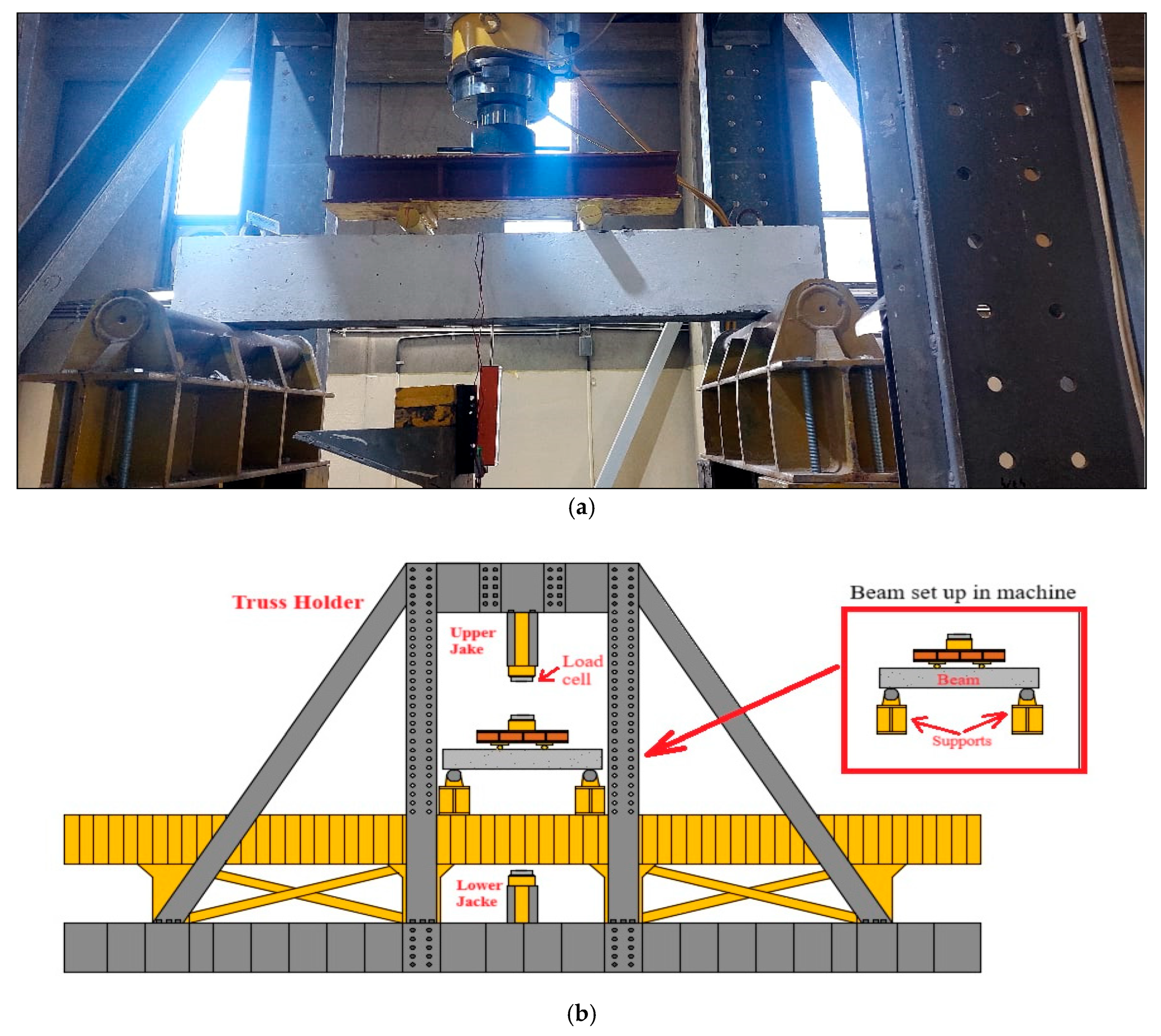
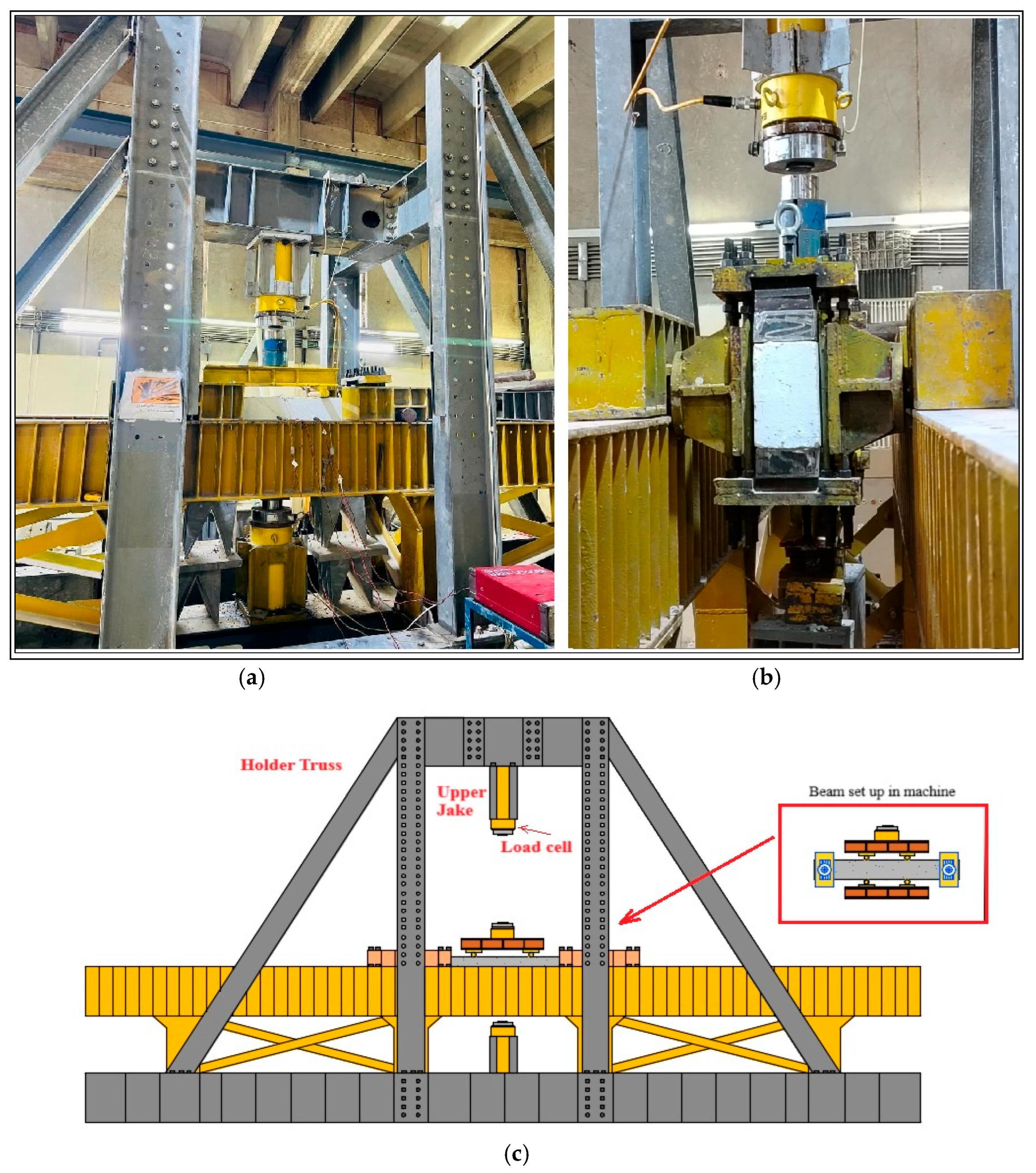
All beam specimens were tested under a four-point bending configuration using a 2000 kN servo-controlled hydraulic testing machine. The beams were simply supported over a clear span of 1200 mm, with the overall beam length being 1400 mm. Two concentrated loads were applied symmetrically at one-third span intervals, resulting in a constant moment region of 400 mm between the loading points where flexural cracks were expected to develop. This arrangement ensured that the applied bending stresses dominated the beam response while minimizing the influence of shear. A schematic view of the experimental setup is shown in Figure 5.
During testing, the beams were carefully aligned on steel rollers to prevent unintended eccentricities, and bearing plates were provided at both the supports and the loading points to ensure uniform stress distribution and to prevent local crushing of the concrete surface. Dial gauges and LVDTs were positioned at the mid-span and under the loading points to capture deflections, while a calibrated load cell integrated into the hydraulic system continuously recorded the applied load.
Two distinct loading protocols were employed depending on the test group. In the monotonic loading tests, beams were subjected to continuously increasing load at a constant displacement-controlled rate until ultimate failure. This loading regime was designed to capture the fundamental flexural capacity, load–deflection response, crack propagation, and ductility of both NC and ZCC beams under static conditions.
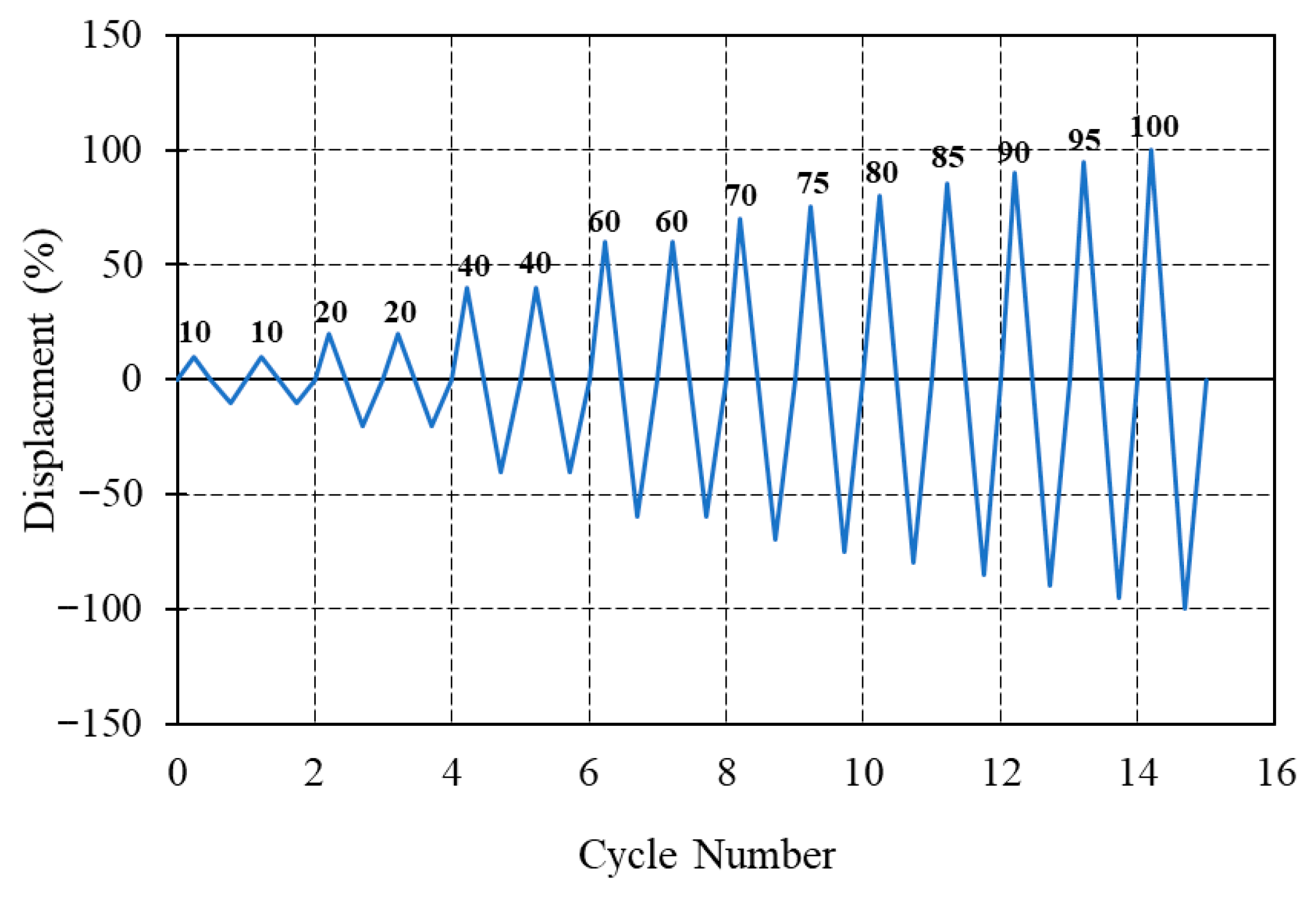
In contrast, the cyclic loading tests were conducted using a repeated load–unload–reload procedure, as illustrated in Figure 6. Each cycle involved loading the specimen up to a predetermined percentage of its estimated ultimate load (based on monotonic test results of identical beams), followed by unloading to nearly zero load before starting the next cycle. The peak load was progressively increased in subsequent cycles until failure occurred. This cyclic protocol was designed to replicate fatigue- and seismic-type effects, thereby allowing a detailed assessment of stiffness degradation, hysteresis behavior, energy dissipation, and crack evolution under repeated stress reversals. The cyclic tests thus provided valuable insight into the suitability of ZCC beams for structural applications subjected to repeated service loads and seismic demands.

2.4. Instrumentation and Measurements

A comprehensive instrumentation system was employed to capture the structural response of the beams during monotonic and cyclic loading. Particular attention was given to monitoring deflection, strain, applied load, and crack development, as these parameters are essential for evaluating flexural performance.
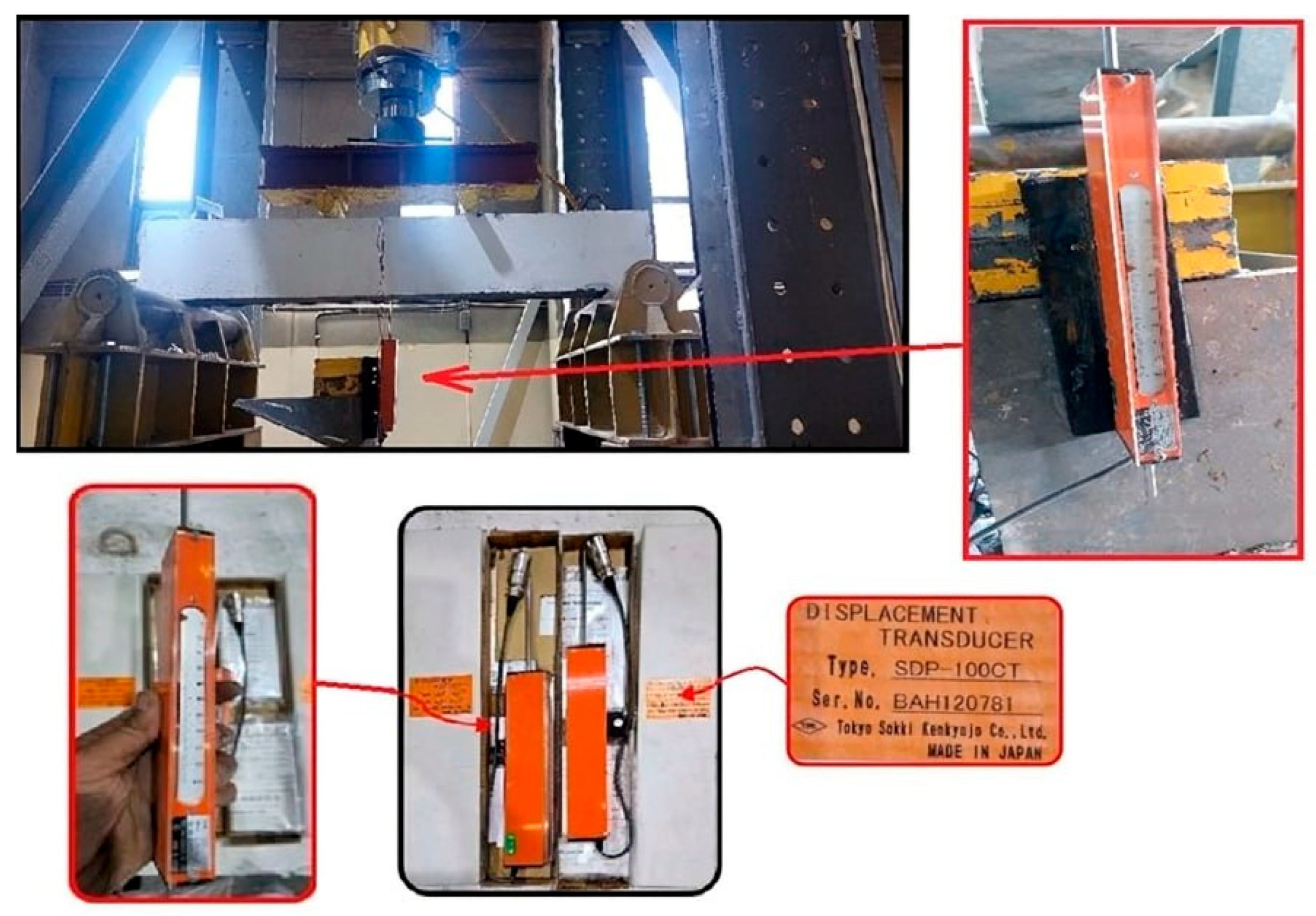
The mid-span deflection of each beam was measured using highly sensitive Linear Variable Differential Transformers (LVDTs), as shown in Figure 7. The primary LVDT was placed directly under the mid-span to record vertical displacements in the constant moment region, where maximum deflection was expected. In addition, auxiliary LVDTs were positioned beneath the loading points to provide redundancy and verify the symmetry of beam deflections. All LVDTs were connected to a computerized data acquisition system that enabled continuous, real-time monitoring and storage of displacement data throughout the test. The strain in the longitudinal tensile reinforcement was measured by bonding electrical resistance strain gauges directly onto the surface of the steel bars at mid-span prior to casting. These gauges were carefully protected with waterproof coatings and insulation during concreting to avoid damage and ensure reliable readings. Their placement at the beam’s mid-span ensured that strains were recorded in the critical region subjected to maximum flexural demand, thereby enabling assessment of steel yielding, bond behavior, and strain compatibility between NC and ZCC beams.
The applied load was monitored continuously using a calibrated load cell integrated into the hydraulic testing machine. The load cell was connected to the data acquisition system, which synchronized load data with corresponding deflection and strain readings. This ensured accurate tracking of the load–deflection and load–strain relationships for both monotonic and cyclic tests.
Finally, crack initiation and propagation were monitored visually during all tests. As soon as cracks appeared, they were marked on the surface of the beams at each load increment, allowing systematic tracking of crack development with increasing load cycles. At the end of each test, the final crack patterns were carefully mapped and documented photographically for subsequent comparison between NC and ZCC beams under the two loading regimes. This crack documentation provided valuable qualitative insights that complemented the quantitative measurements from LVDTs, and load cells.

3. Results and Discussion

3.1. Load–Deflection Behavior Under Monotonic and Cyclic Loading

The load–deflection (P-Δ) response of the tested beams provides a fundamental indicator of their flexural performance, stiffness, and ductility. In the monotonic loading program, vertical deflection was continuously recorded at mid-span using LVDTs until failure occurred. Each beam exhibited an initial linear load–deflection relationship corresponding to uncracked elastic behavior, followed by a nonlinear stage as flexural cracks initiated and propagated toward the loading points. The reduction in slope after cracking indicated progressive stiffness degradation and the redistribution of tensile stresses from concrete to the steel reinforcement.
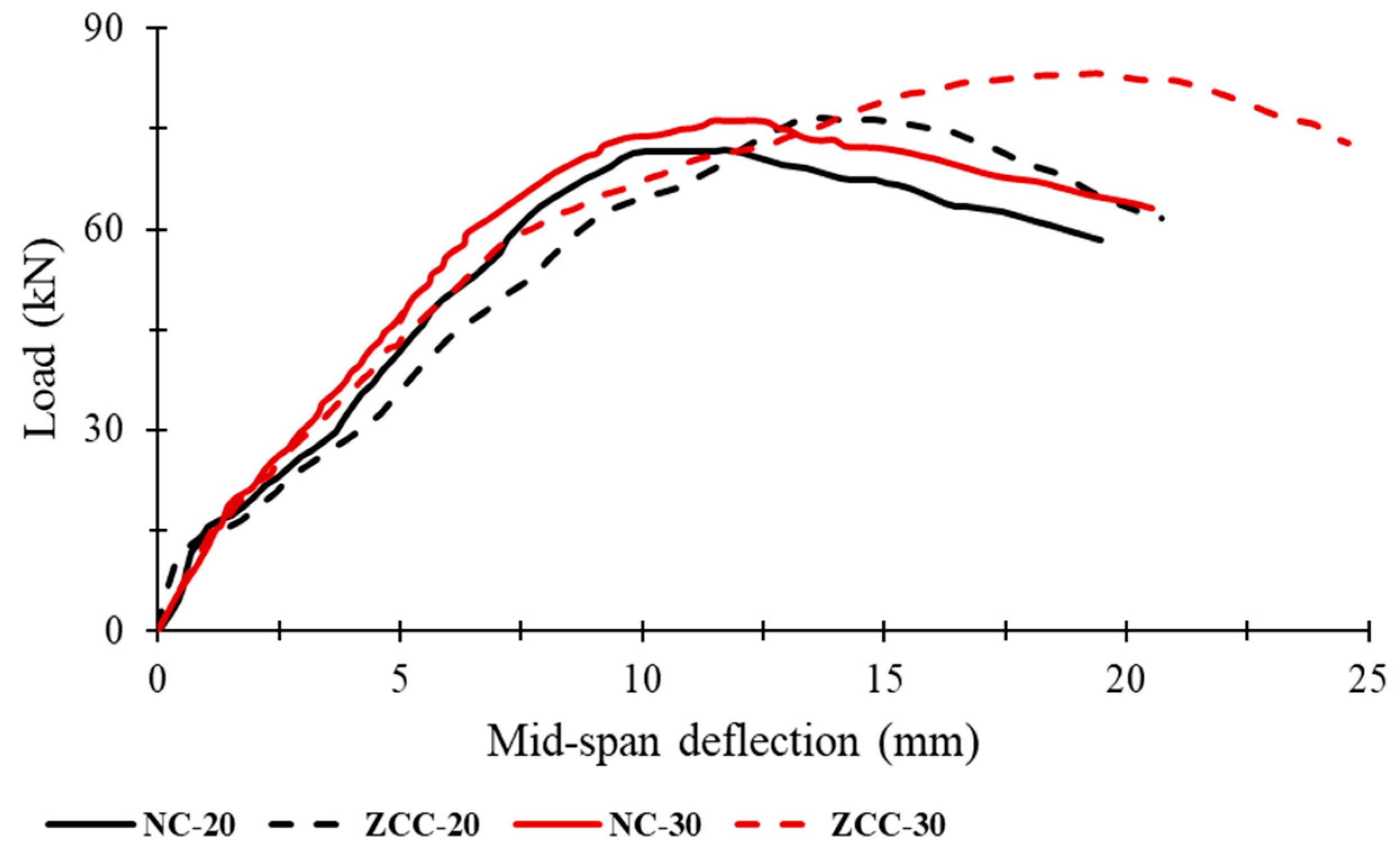
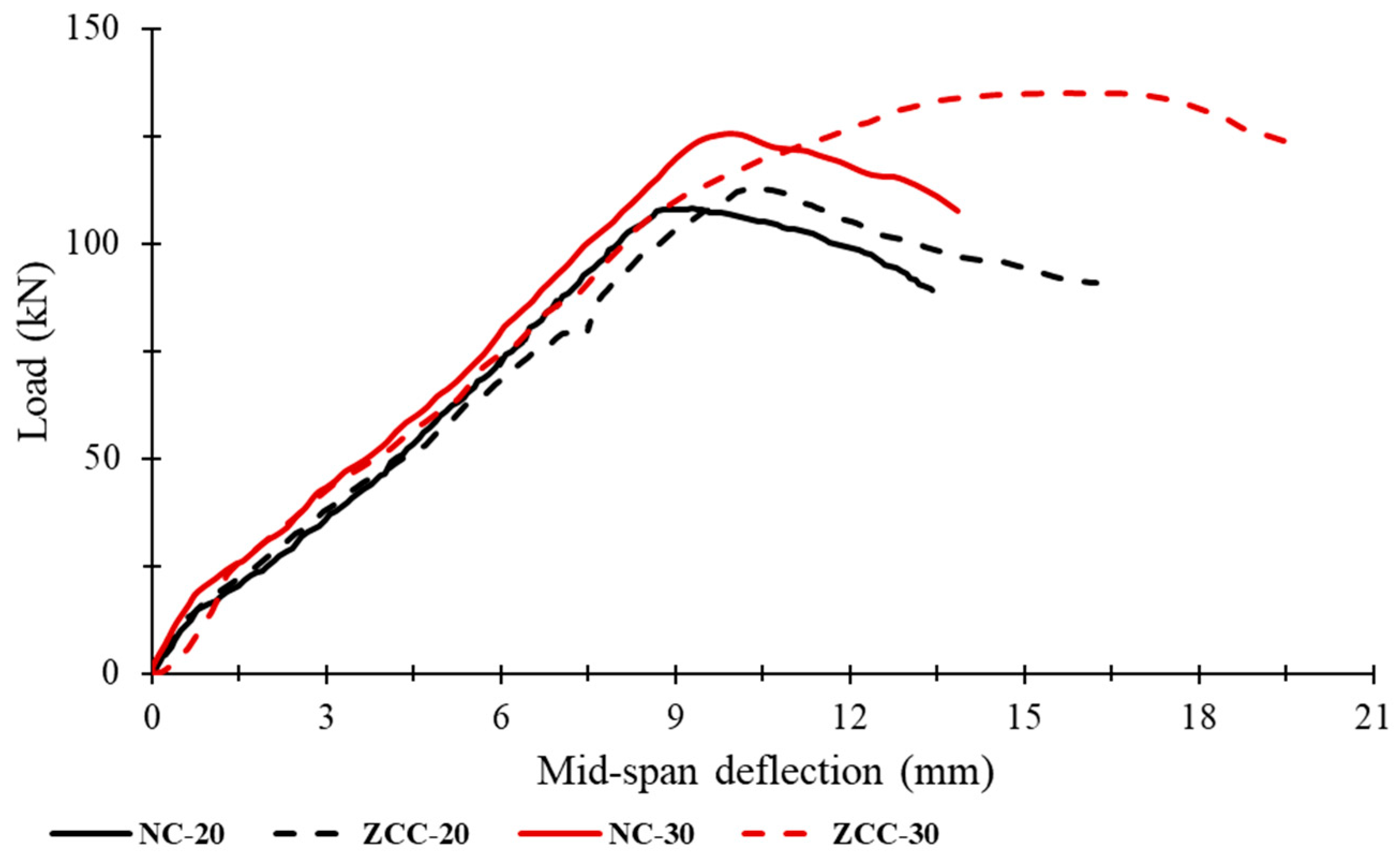
Table 5 summarizes the key results, including the cracking load (Pcr), ultimate load (Pu), and their corresponding deflections (Δcr and Δu). Figure 8 and Figure 9 illustrate representative P-Δ curves for both ZCC and NC beams. The overall trend indicates that ZCC beams achieved slightly higher load capacities and exhibited greater deformability than their NC counterparts at equivalent strength levels and reinforcement ratios. For beams reinforced with 2Ø10 bars, the ultimate load of ZCC increased by approximately 6.3% and 8.6% relative to NC at compressive strengths of 20 and 30 MPa, respectively. Similar improvements were recorded for beams with 3Ø12 reinforcement, where load capacities increased by 4.2% and 7.2%, respectively.
The corresponding mid-span deflections at ultimate load were also higher for ZCC beams, by 11.3–30.3% for the 2Ø10 series and 11.9–22.3% for the 3Ø12 series, indicating superior deformability and energy dissipation. These results suggest that the geopolymer matrix of ZCC provides enhanced bonding characteristics between the steel reinforcement and the surrounding concrete, thereby improving post-cracking stiffness and delaying failure. Overall, the flexural performance of ZCC under monotonic loading was comparable to or slightly superior to that of NC, confirming its potential as a sustainable structural material with adequate strength and enhanced ductility.
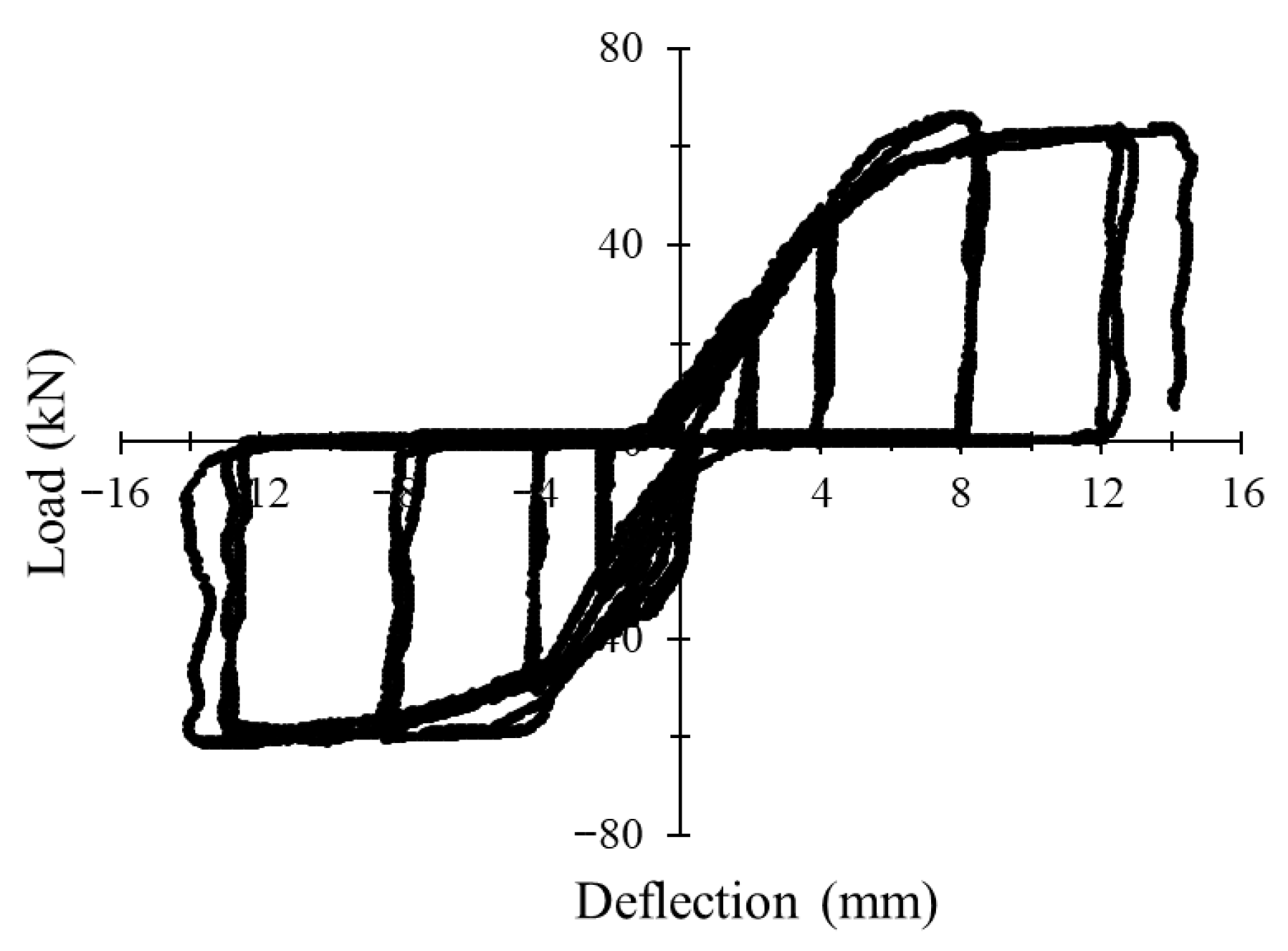
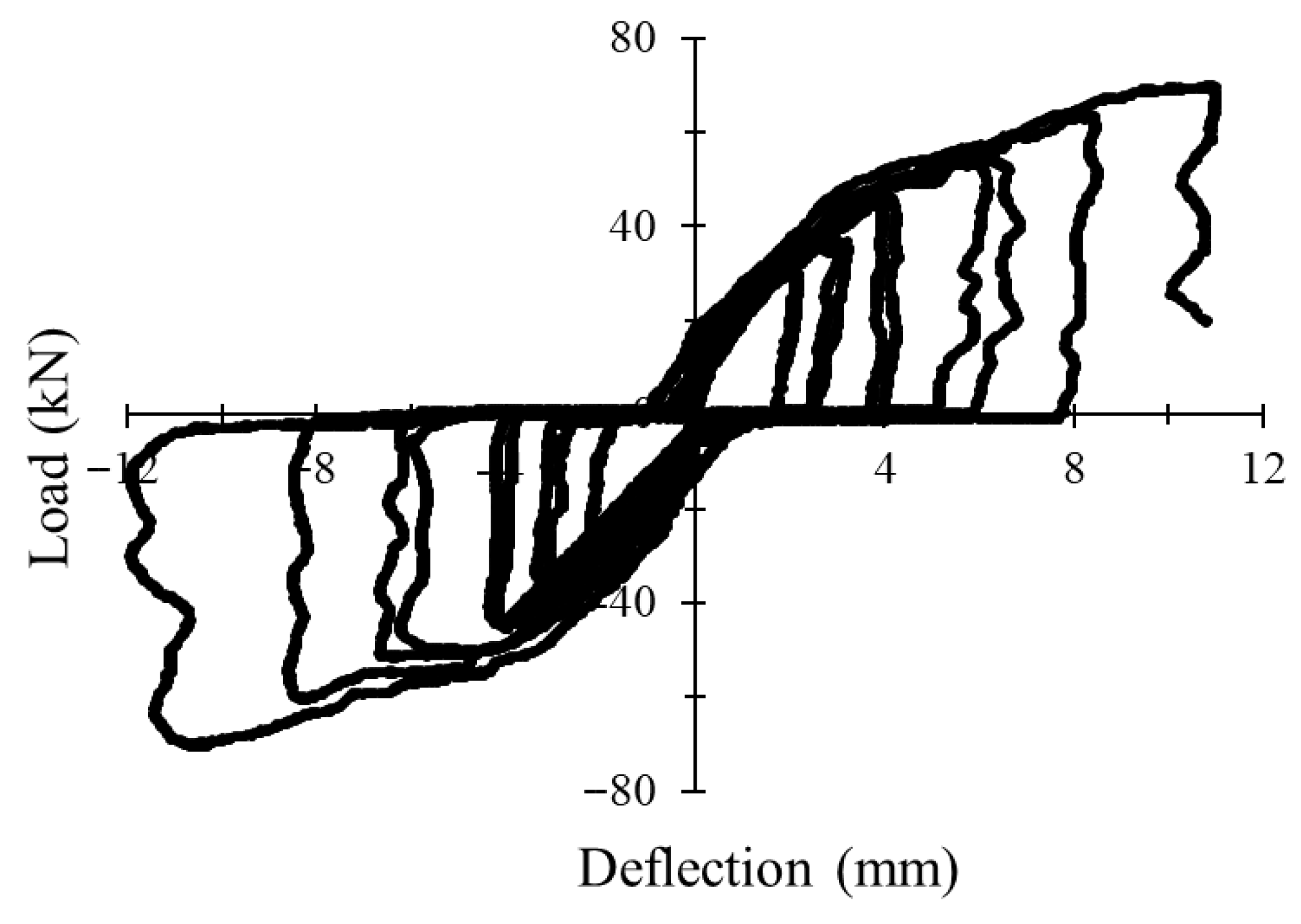
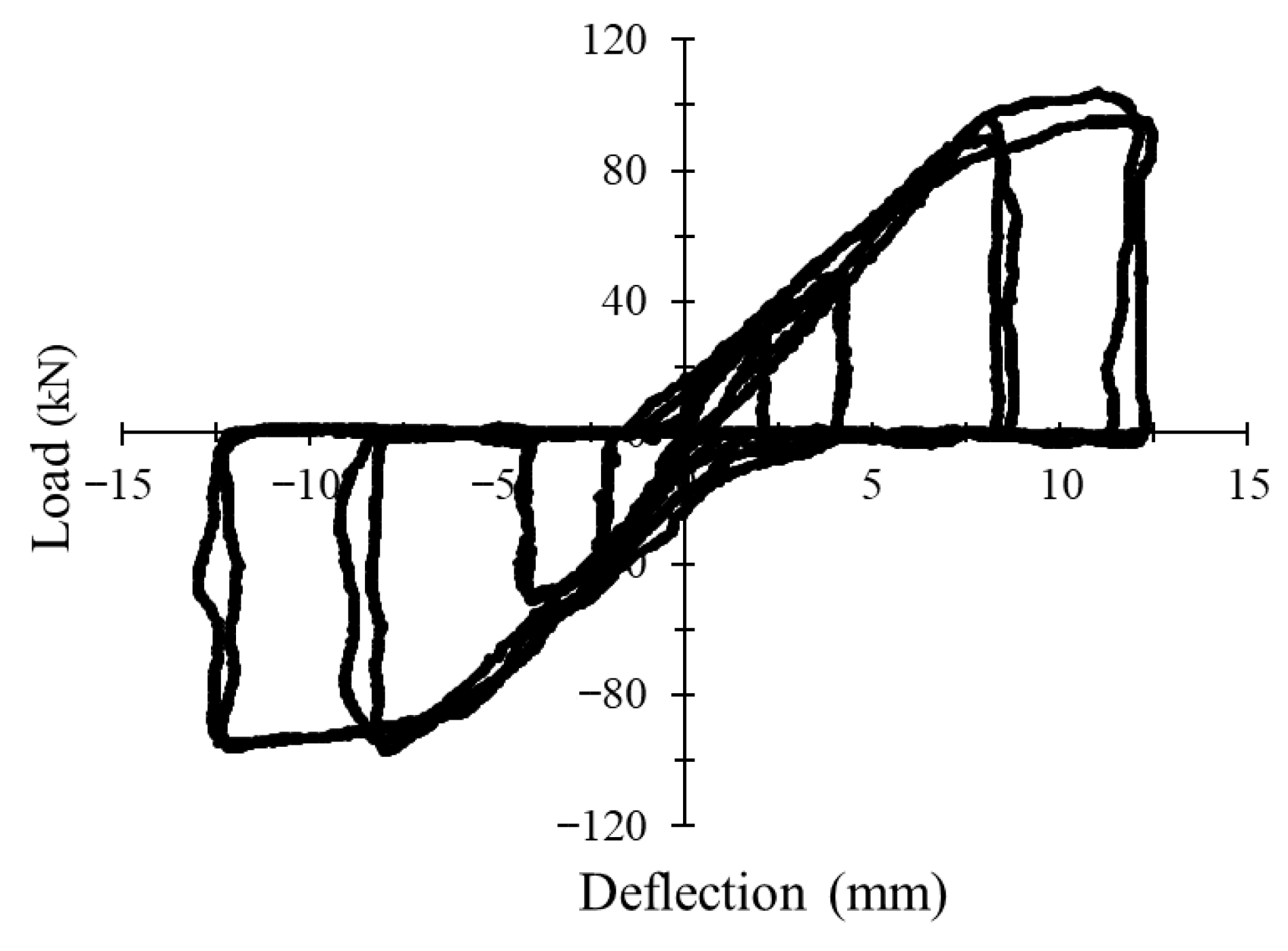
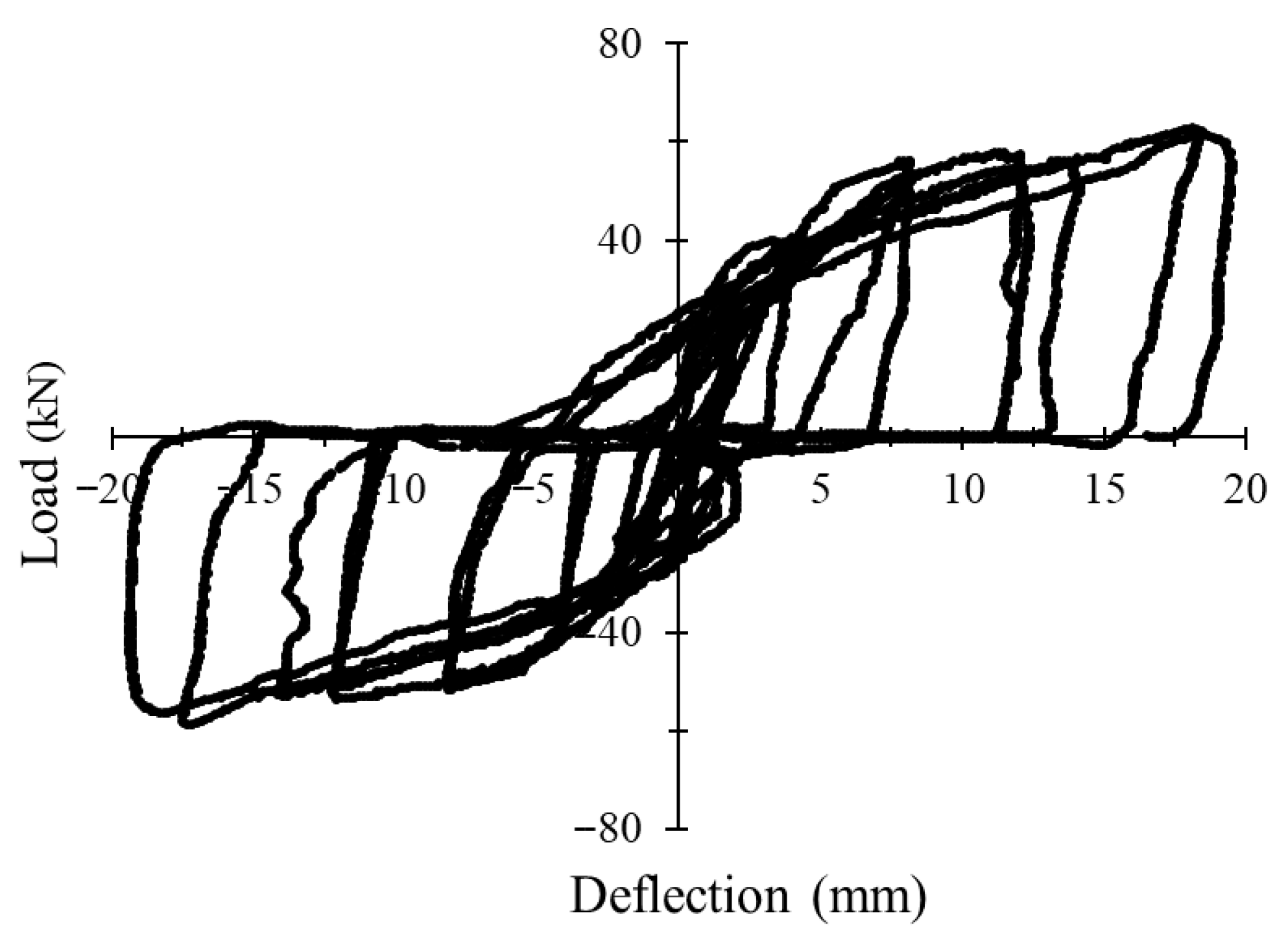
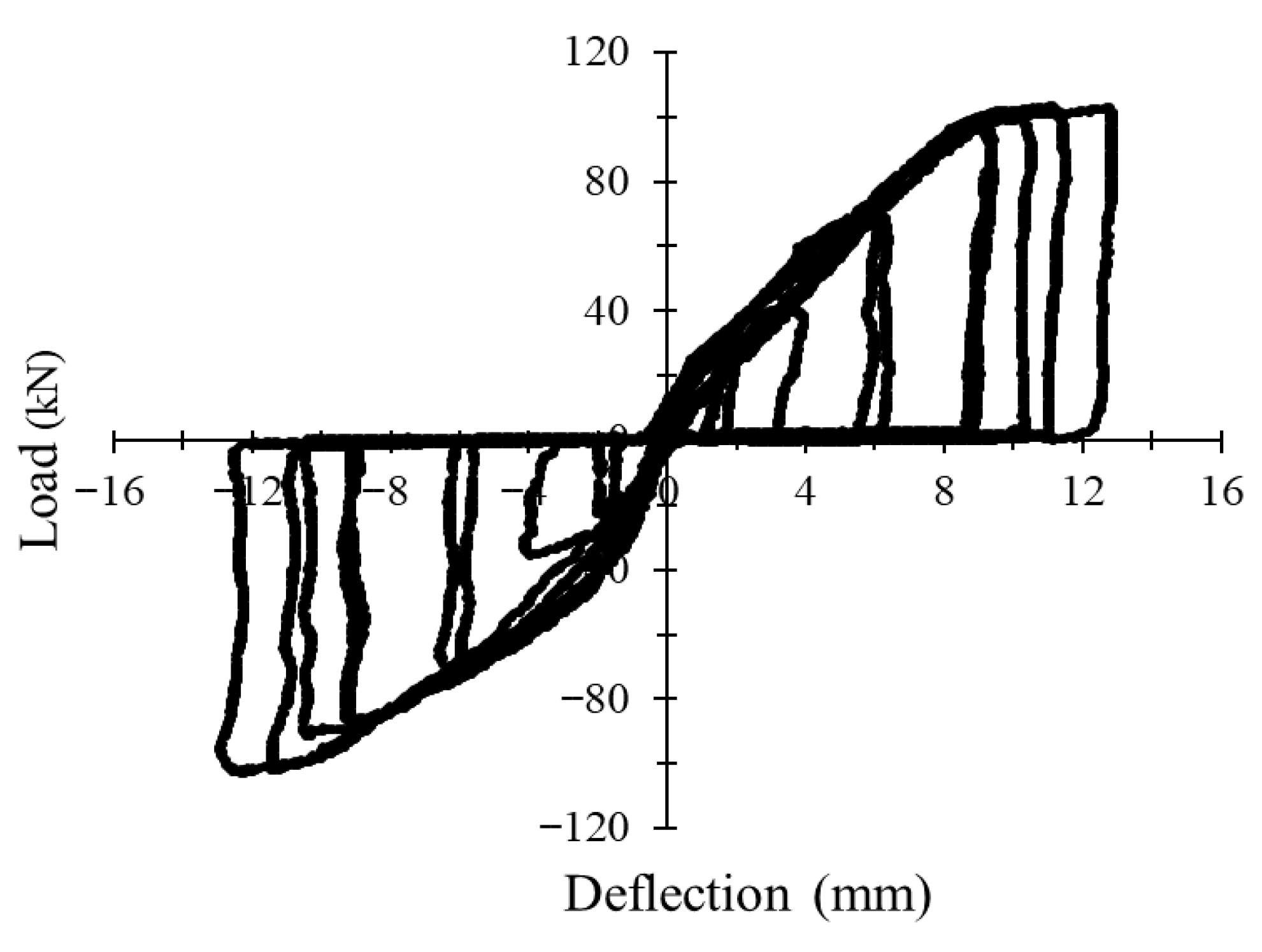
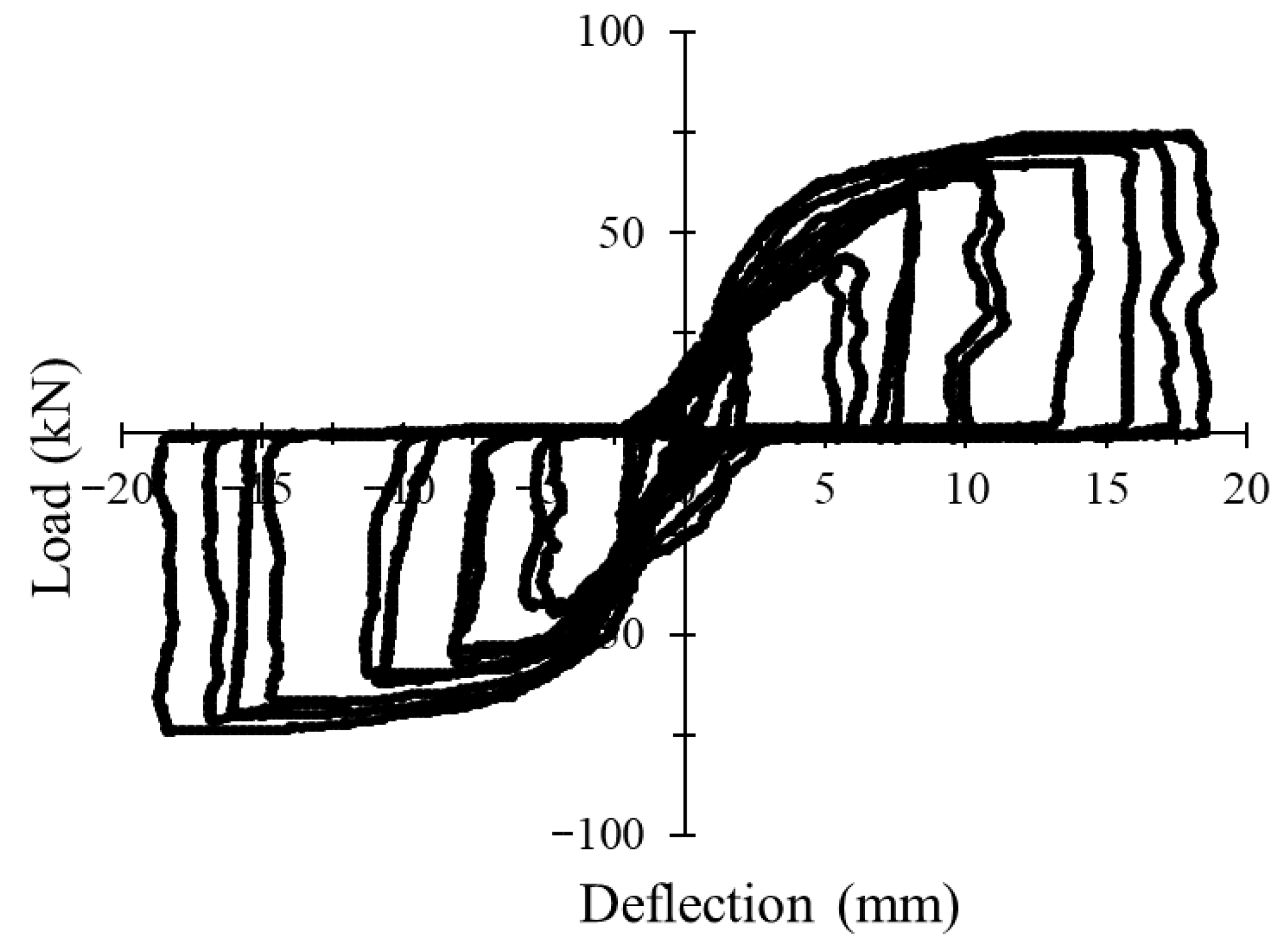
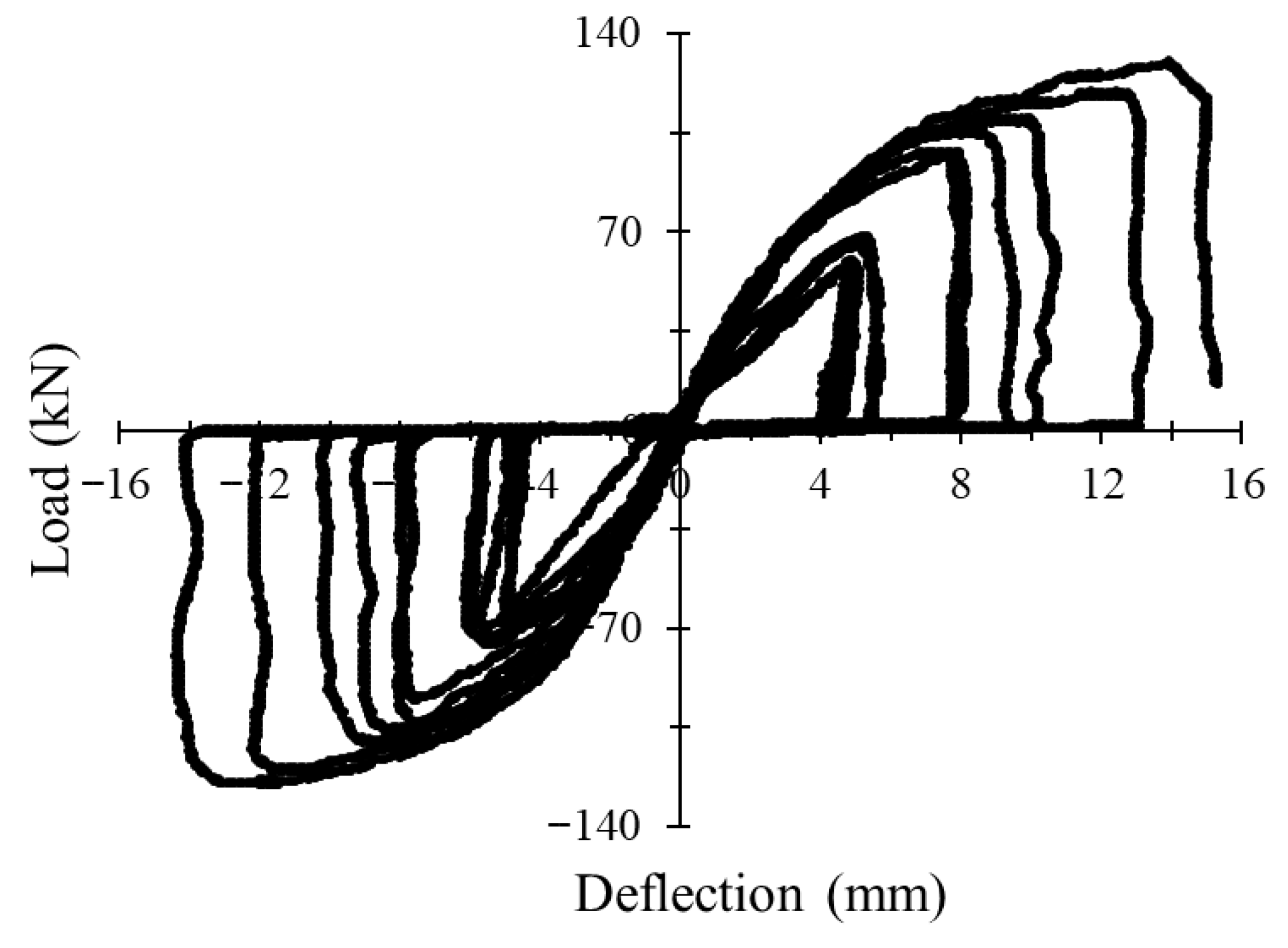
Under cyclic loading, each specimen was subjected to reversed loading cycles following the displacement history illustrated in Figure 10. The resulting load–deflection hysteresis curves, shown in Figure 11, Figure 12, Figure 13, Figure 14, Figure 15, Figure 16 and Figure 17 exhibited characteristic stiffness degradation and pinching behavior. The beams experienced progressive damage accumulation with each cycle, leading to a gradual reduction in load-carrying capacity and stiffness. From Table 6, it can be observed that most specimens failed after 8–12 cycles, corresponding to 70–90% of the ultimate displacement obtained under monotonic loading.
Under monotonic loading, the load–deflection response showed minimal strength degradation, whereas cyclic loading caused significant reduction in capacity. This is attributed to progressive fatigue damage under cyclic stresses, including microcrack propagation, bond deterioration between steel and concrete, and stiffness reduction. Repeated load reversals accelerate crack coalescence and cumulative deterioration, reducing effective strength. In contrast, monotonic loading drives specimens directly to peak failure with limited damage accumulation, explaining the pronounced susceptibility of all cyclically loaded specimens to fatigue-induced strength loss.
Compared with NC beams, ZCC beams with f′c = 20 MPa showed a slight reduction in ultimate load by approximately 6.9%, but a notable increase in deflection at failure by 27.3% for beams reinforced with 2Ø10 bars. At a higher compressive strength of f′c = 30 MPa, the ZCC beams demonstrated superior performance, with ultimate loads increasing by 4.2–19.9% and deflections by 21.4–39.8%, depending on the reinforcement configuration. The enhanced performance of ZCC under cyclic conditions can be attributed to its denser microstructure, improved interfacial bonding, and greater resistance to fatigue-induced microcracking.
Beams with lower reinforcement (2Ø10) displayed more pronounced ductile behavior and higher deflection capacities, while beams with larger reinforcement (3Ø12) showed reduced deformation due to the dominance of steel stiffness. Overall, ZCC beams retained higher energy absorption and ductility than NC beams, indicating that ZCC maintains its structural integrity under repeated loading and can provide a viable and environmentally friendly alternative to conventional concrete in flexural applications.

3.2. Energy Absorption Capacity and Ductility

The energy absorption capacity of the tested beams was evaluated from the area under the load–deflection curves, which represents the total work done on the beam until failure. In this study, energy absorption was evaluated based on the total area under the load–deflection and hysteresis curves to ensure a consistent and objective comparison between specimens, rather than separating linear and nonlinear response components that may vary depending on the definition of cracking or yielding points.
The calculations were performed using the trapezoidal numerical integration method, as expressed in Equation (1), following the approach of Hamad and Sldozian (2019) [32].
T = ( x 2 ) [ ( f ( x 0 ) ) + 2 f ( x 1 , 2 , 3 n 1 ) + f ( x n ) ]
where Δx denotes the incremental deflection along the x-axis, and f(x) represents the corresponding load along the y-axis.
Ductile materials possess the capacity to absorb substantial amounts of energy before failure, while brittle materials absorb relatively little energy [33]. Based on the experimental results summarized in Table 5 and illustrated in Figure 8 and Figure 9, ZCC beams exhibited consistently higher energy absorption than NC beams. Specifically, ZCC beams achieved increases of approximately 50.7%, 46.2%, 15.2%, and 13.8% compared to NC beams for compressive strengths of 30 and 20 MPa with reinforcement of 3Ø12 and 2Ø10, respectively. The higher energy absorption of ZCC reflects its superior post-cracking ductility and improved deformation capacity under monotonic loading.
Under cyclic loading, the total energy absorption and ductility factors are presented in Table 6. During cyclic loading, each loading–unloading loop represents energy dissipation due to material damage and crack propagation. The cumulative energy dissipation under cyclic loading was evaluated from the total enclosed area of successive hysteresis loops, thereby accounting for energy loss during both loading and unloading phases.
The ductility factor (μ) was defined as the ratio of ultimate deflection (Δu) to the deflection at steel yielding (Δy). Results indicate that ZCC beams demonstrated notably higher ductility and energy absorption capacities compared with NC beams. In particular, increases in total energy absorption of approximately 24.6% (f′c = 20 MPa, 2Ø10), 68.8% (f′c = 30 MPa, 2Ø10), and 50.2% (f′c = 30 MPa, 3Ø12) were observed relative to NC beams.
These improvements are attributed to the refined microstructure and superior bond characteristics of ZCC, which enhance crack resistance and enable greater energy dissipation before failure. Overall, ZCC exhibited enhanced ductility and toughness under both monotonic and cyclic loading, reinforcing its potential as a sustainable and durable alternative to conventional concrete in flexural structural applications.

3.3. Cracking Patterns and Failure Modes

During the early stages of loading, all beam specimens exhibited a linear elastic response with minimal visible deformation, reflecting their initial stiffness and structural integrity. As the load increased, microcracks developed within the tension zone, eventually coalescing into the first visible flexural crack at mid-span along the bottom face of the beam, corresponding to the region of maximum tensile stress. The initiation of this primary crack marked the transition from elastic to inelastic behavior, indicating the beginning of stiffness degradation.
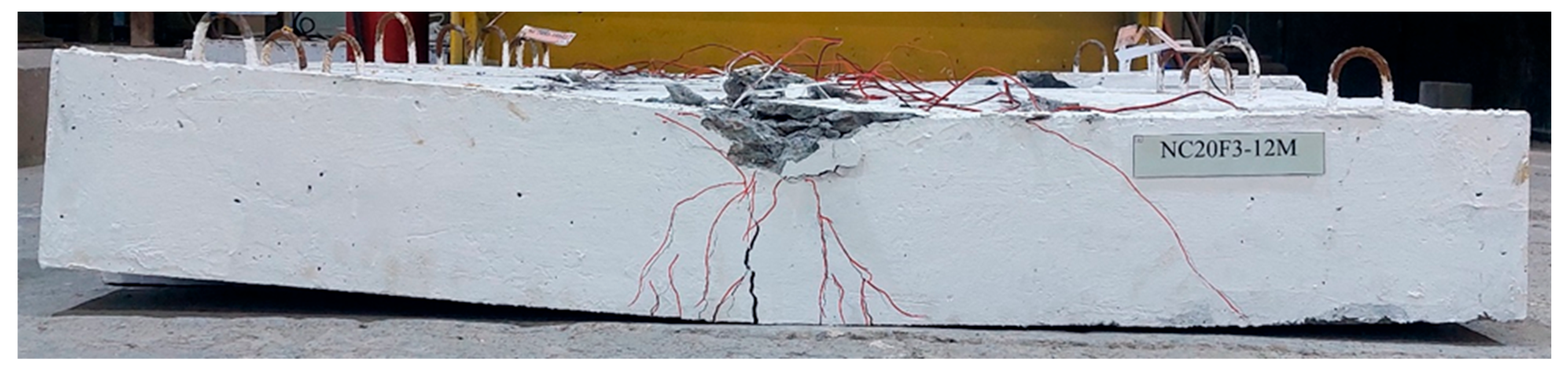
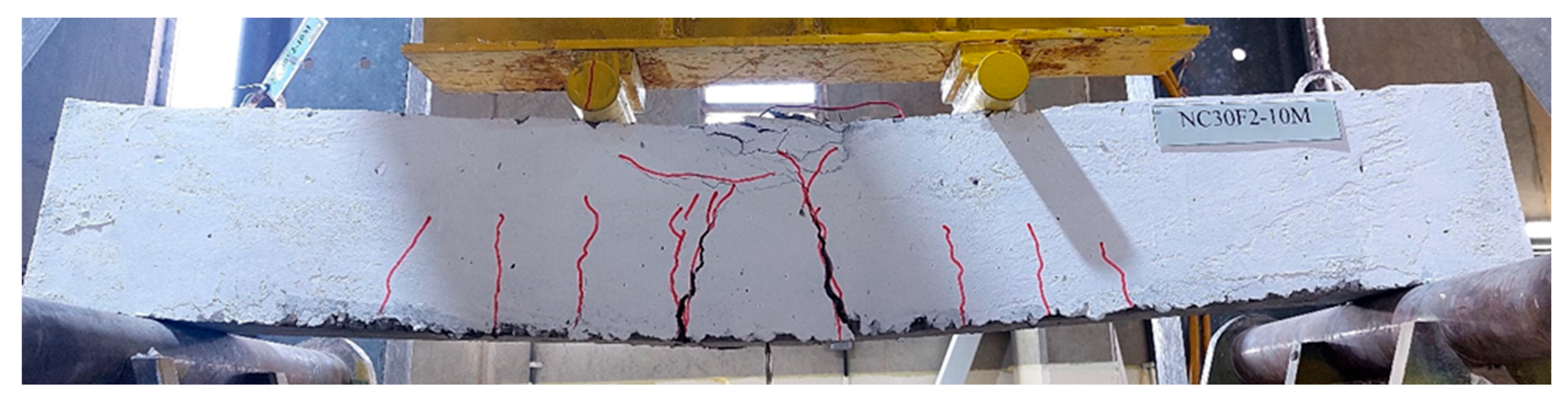
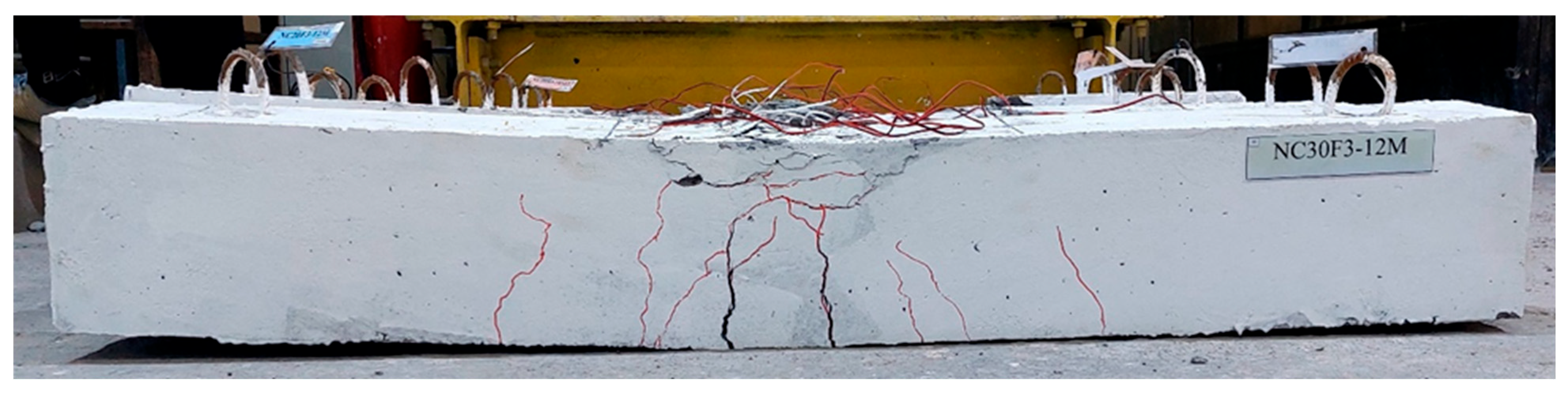
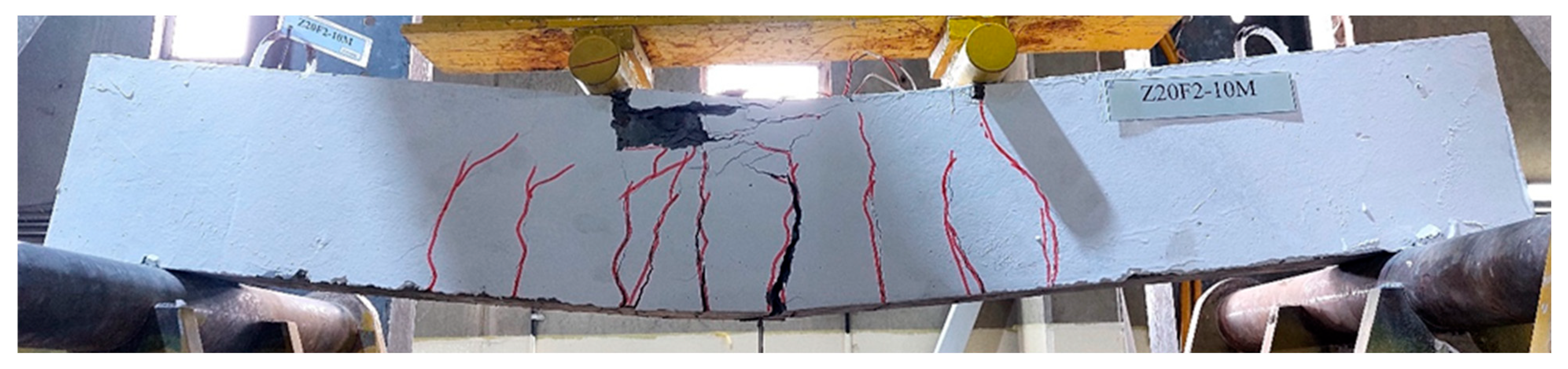
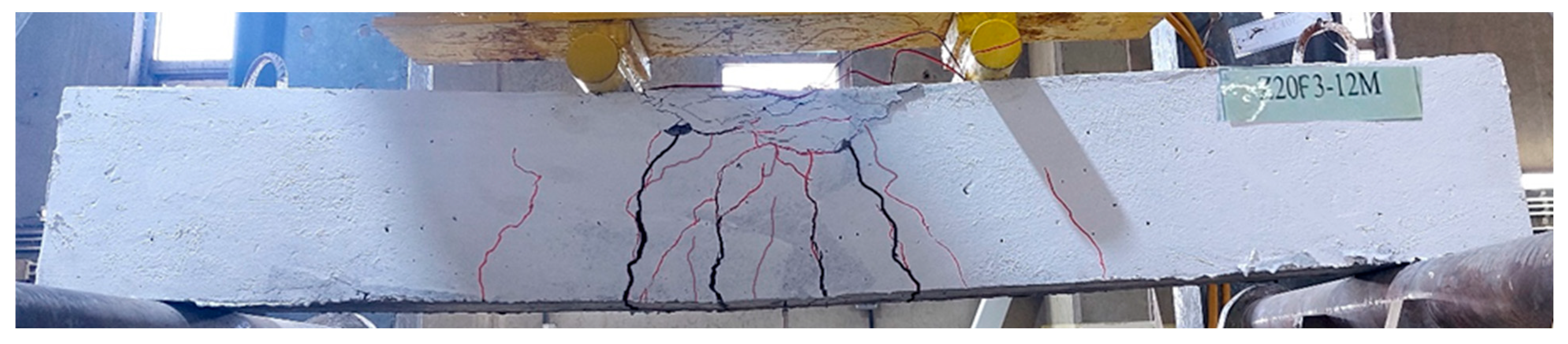
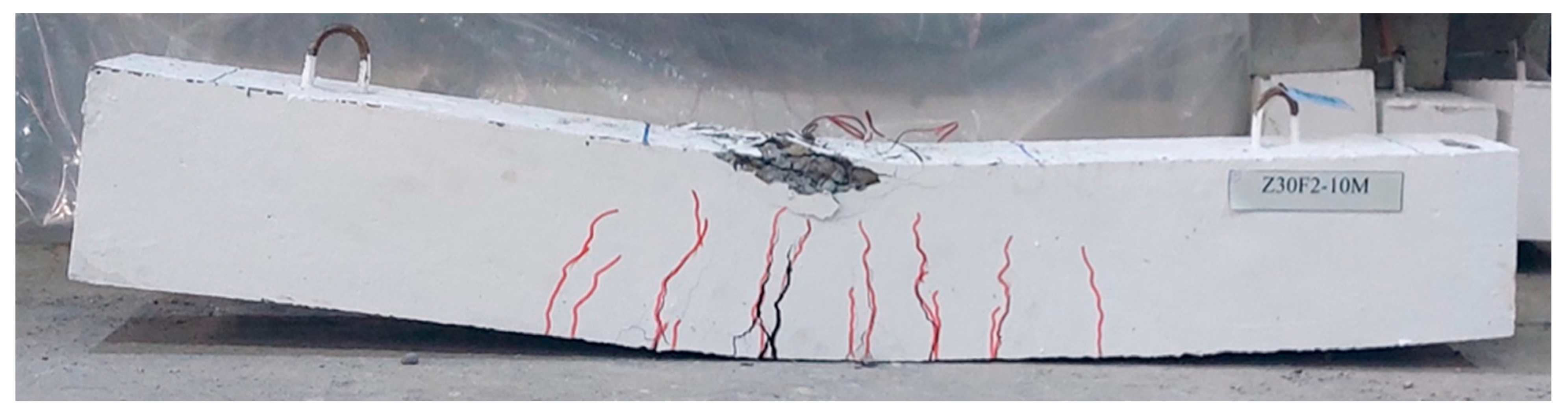
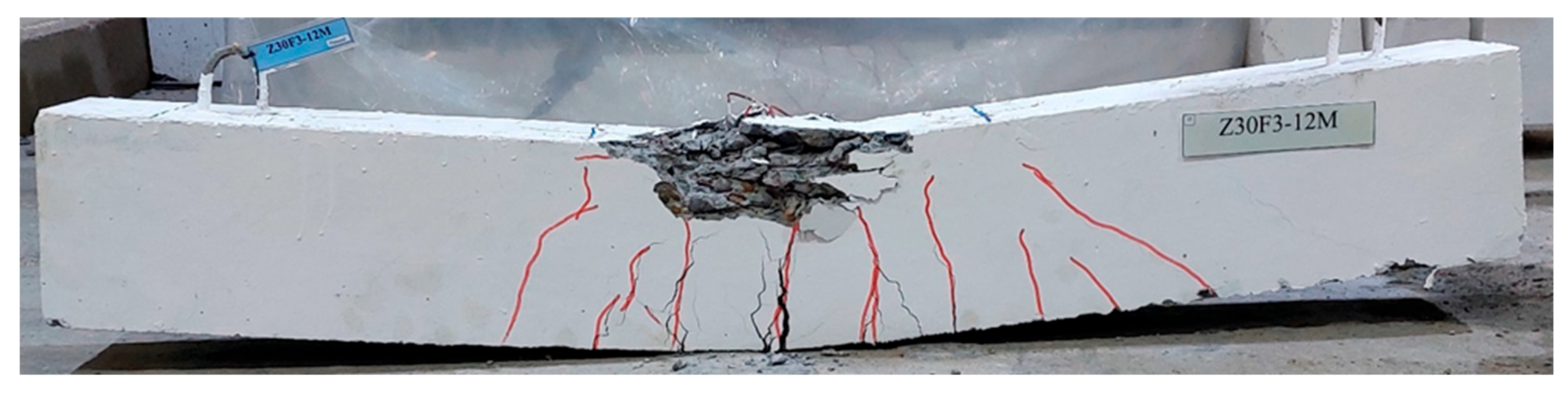
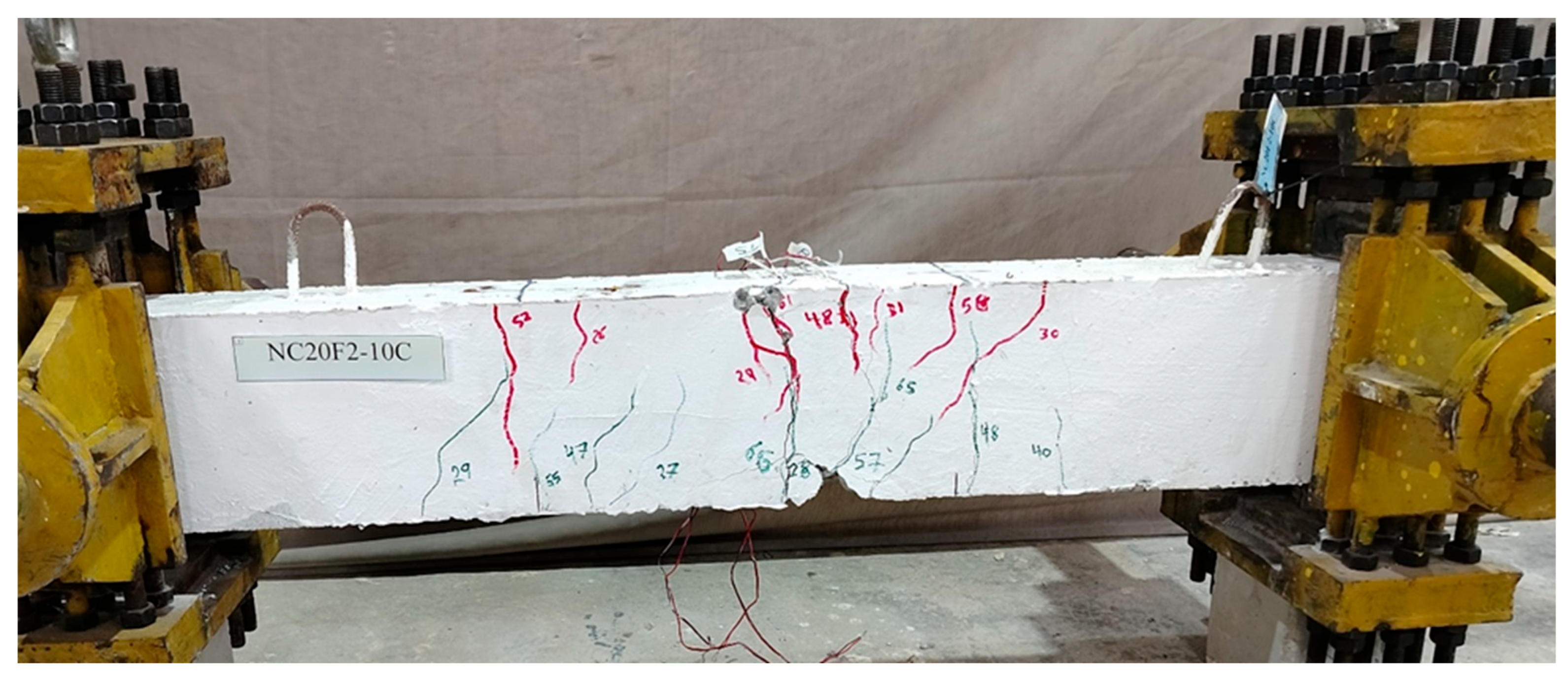
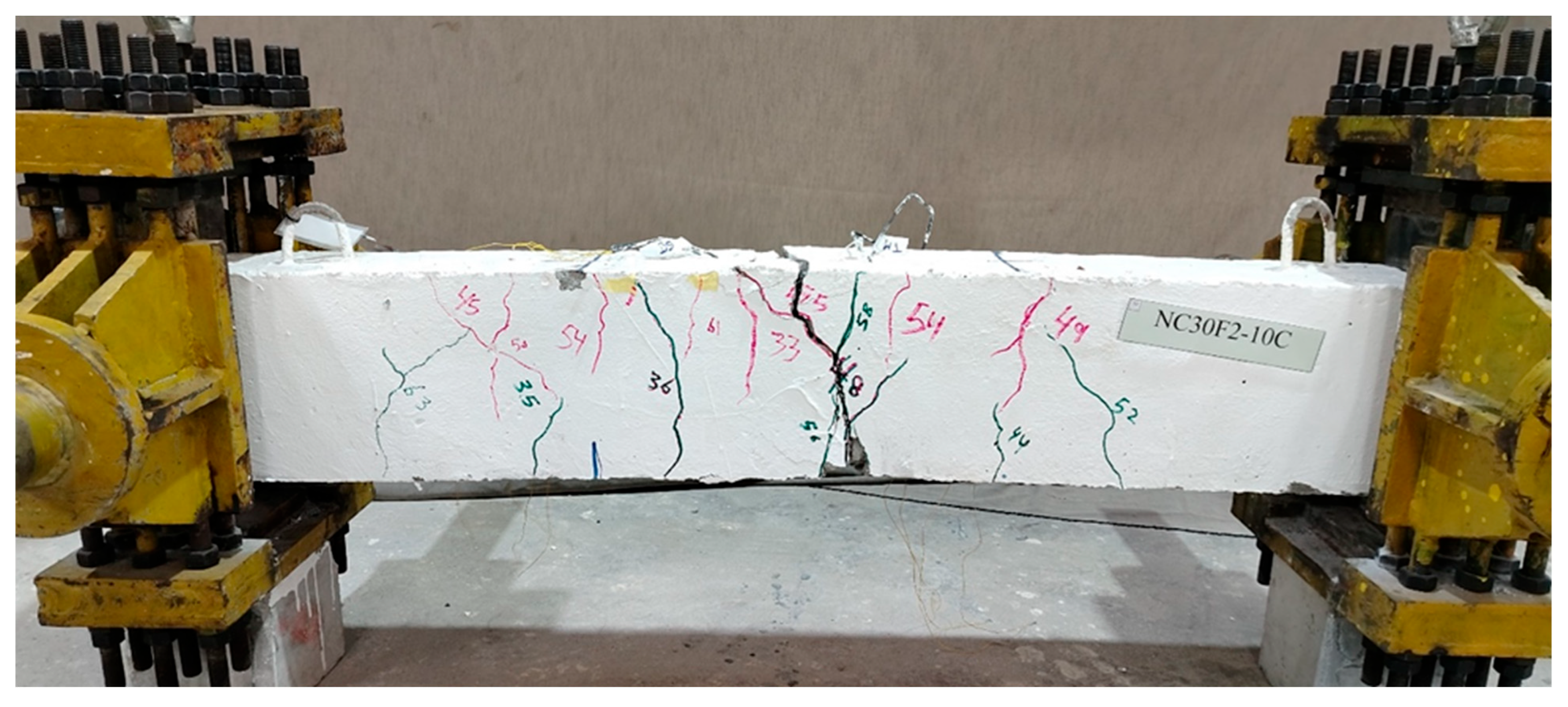
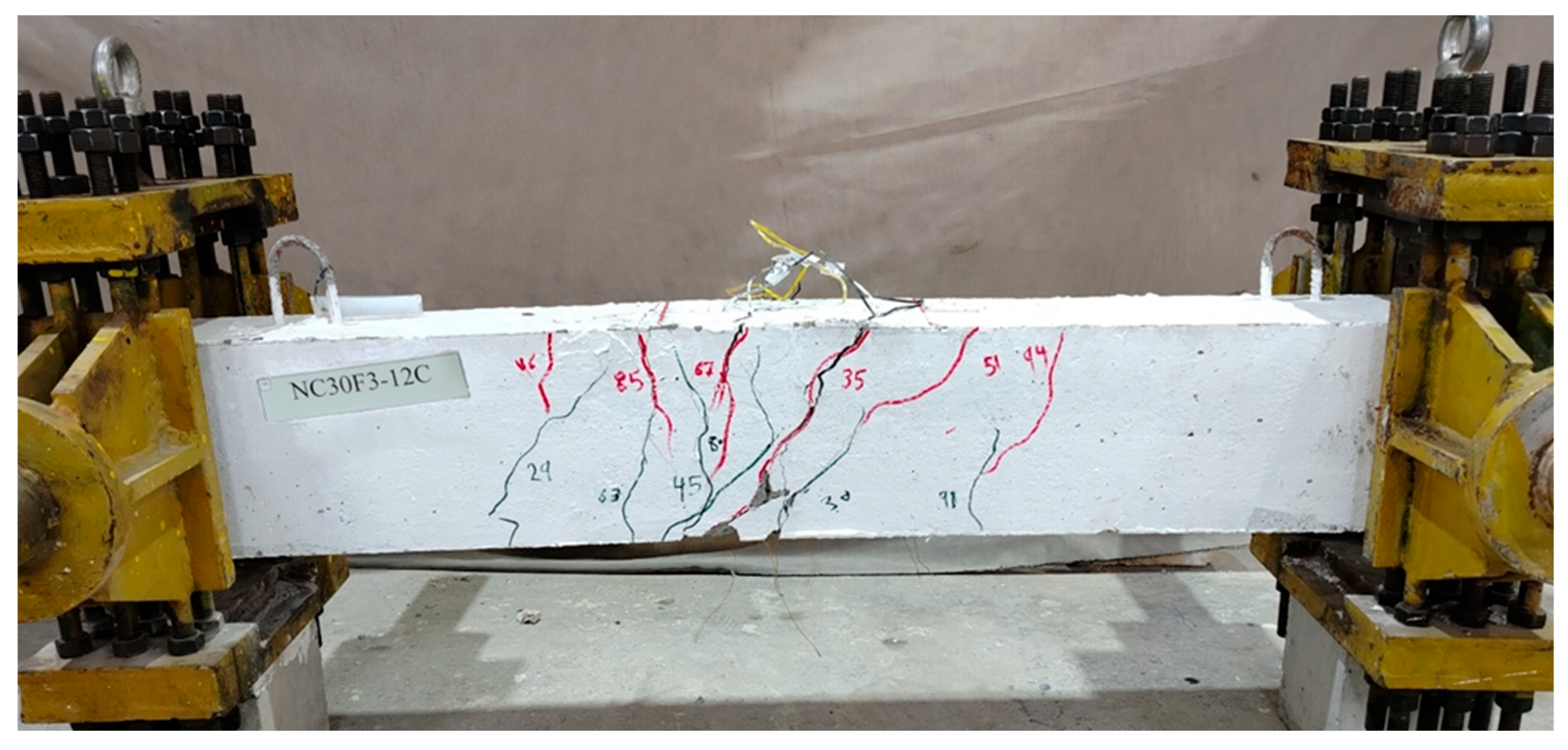
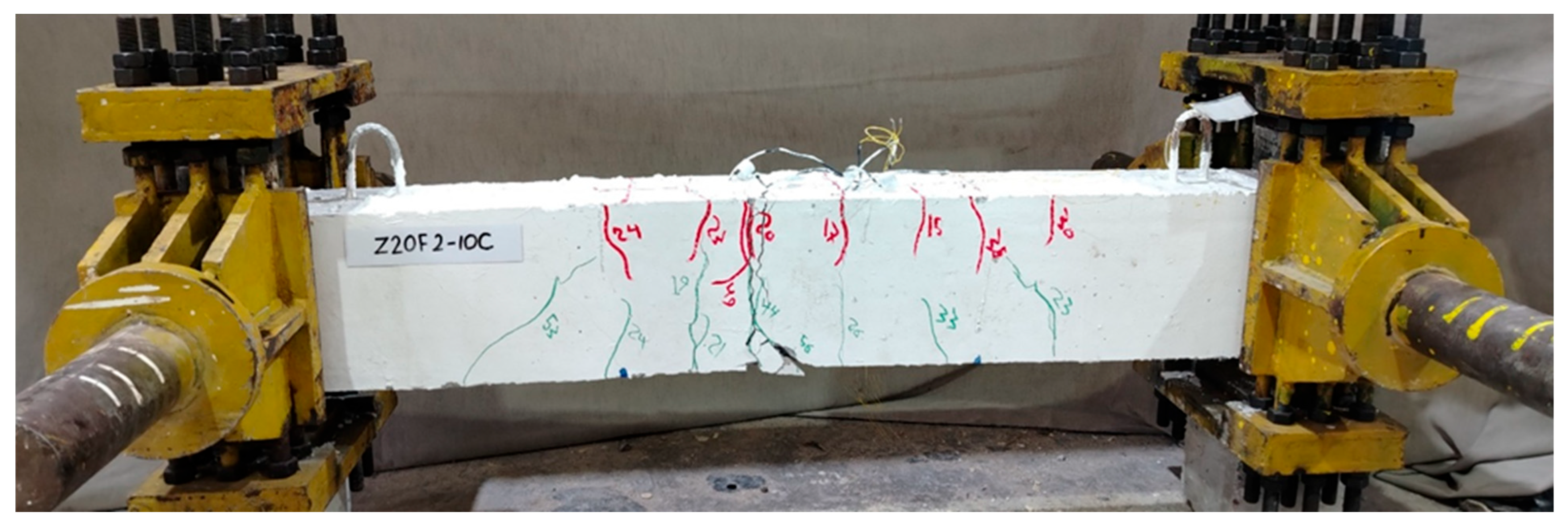
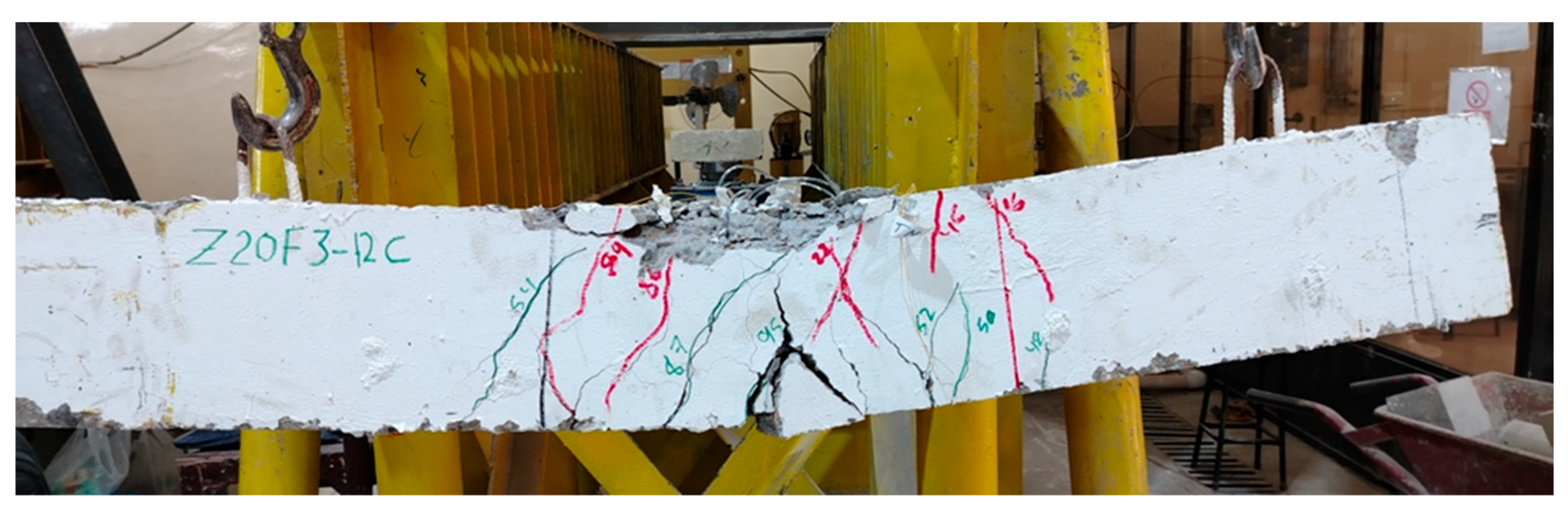
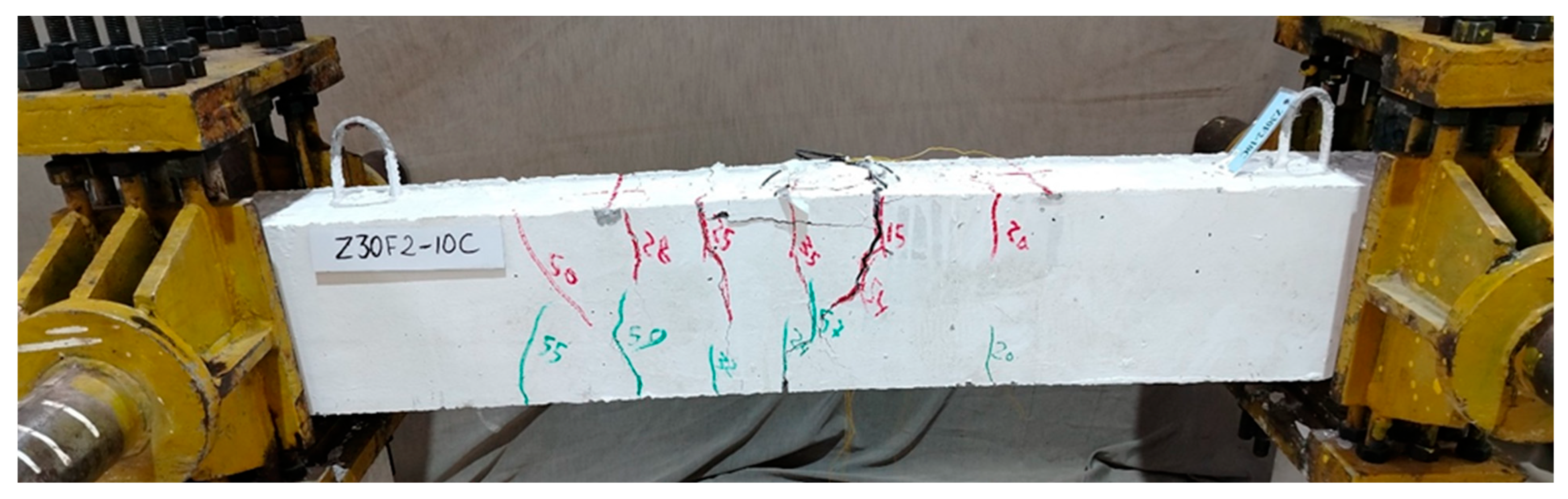
Under monotonic loading, all beams failed primarily in flexural mode, consistent with the intended design configuration. Figure 18, Figure 19, Figure 20, Figure 21, Figure 22, Figure 23, Figure 24 and Figure 25 illustrate typical crack patterns for both NC and ZCC beams. The crack development process followed a similar progression across all specimens: initial flexural cracking at the beam’s mid-span, followed by successive crack formation and vertical propagation toward the loading points as load increased. Secondary cracks appeared closer to the supports, forming a characteristic flexural crack zone within the pure bending region. Prior to failure, the cracks widened significantly, accompanied by concrete crushing in the compression zone and yielding of the longitudinal tensile reinforcement.
Notably, the ZCC beams exhibited a more refined and distributed crack pattern compared with NC beams of equivalent strength and reinforcement. The cracks in ZCC specimens were generally finer and more uniformly spaced, while those in NC beams tended to be fewer and wider. This observed behavior indicates superior crack control in ZCC beams, which can be attributed to their denser microstructural matrix and improved bond strength between the geopolymer binder and the steel reinforcement. Such microstructural characteristics contribute to enhanced post-cracking performance, allowing ZCC beams to sustain higher deflections before failure and to dissipate higher amounts of energy during deformation.
In beams with higher compressive strength (f′c = 30 MPa) and increased steel reinforcement (3Ø12), crack spacing became slightly wider, and cracks extended more steeply toward the loading points, reflecting the greater stiffness of these specimens and a tendency toward localized failure at higher reinforcement ratios. Nevertheless, ZCC beams continued to exhibit more gradual crack progression, indicating delayed localization and improved ductility.
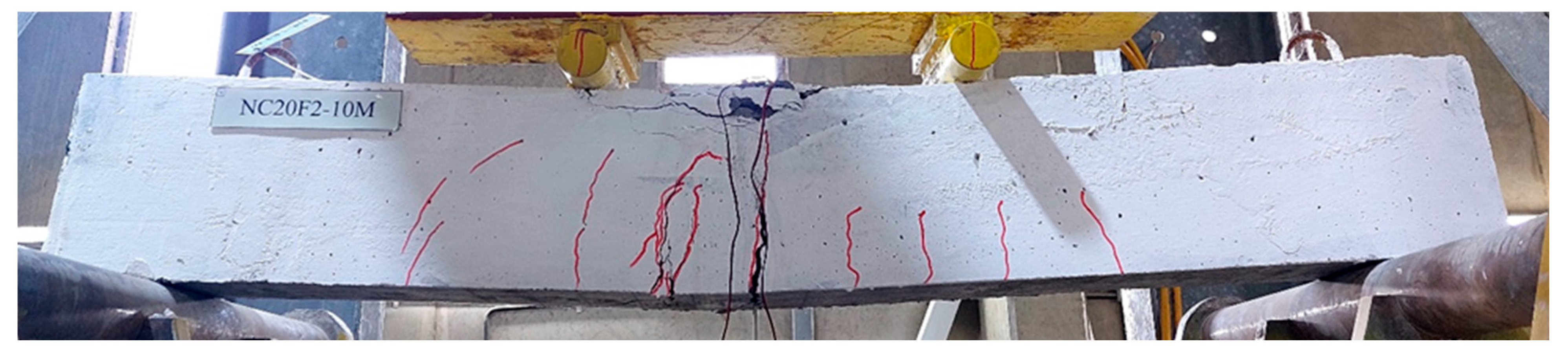
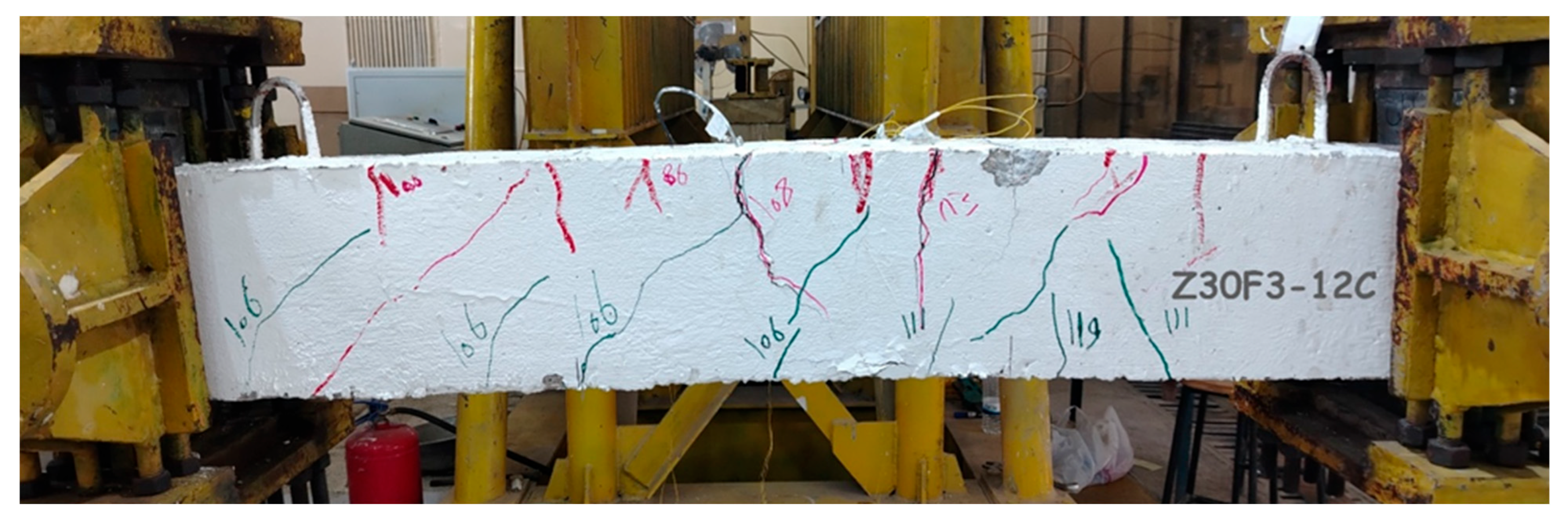
Under cyclic loading, the overall crack development pattern was similar but exhibited distinct characteristics associated with repeated stress reversals. As shown in Figure 26, Figure 27, Figure 28, Figure 29, Figure 30, Figure 31 and Figure 32, the cyclic beams initially developed flexural cracks similar to those observed in monotonic tests. However, with continued cycling, existing cracks reopened and extended with each load reversal, while new cracks formed progressively along the beam’s tension face. These repeated loading–unloading sequences led to visible crack widening and local spalling in some regions near the loading points.
ZCC beams under cyclic loading demonstrated superior crack resistance and stability compared with NC beams. The cracks in ZCC specimens remained relatively narrower throughout the test, and the overall crack distribution was more uniform. This suggests that the ZCC matrix was more effective at bridging and restraining crack propagation under cyclic stresses, likely due to its improved microstructure and interfacial bonding properties. The enhanced integrity of the ZCC matrix also contributed to reduced stiffness degradation and higher cumulative energy absorption.
Ultimately, all beams failed in a ductile flexural mode, characterized by yielding of the tensile reinforcement followed by progressive concrete crushing in the compression zone. No evidence of sudden or brittle failure was observed. The ZCC beams consistently displayed delayed crack coalescence, greater deformation capacity, and more gradual failure progression than NC beams. Consequently, the observed crack patterns and failure modes confirm that ZCC can effectively replicate, and even surpass, the structural performance of NC in flexural applications. Its refined cracking behavior, combined with improved ductility and post-peak energy dissipation, highlights ZCC’s potential as a durable, sustainable material suitable for structural members subjected to both static and cyclic loads.

3.4. Reinforcement Ratio Effects

3.4.1. Influence of Reinforcement Ratio Under Monotonic Loading

The effect of steel reinforcement on the flexural behavior of ZCC beams was evaluated by employing two reinforcement configurations: 2Ø10 and 3Ø12, corresponding to reinforcement ratios (ρ) of approximately 0.0065 and 0.014, respectively. The design of reinforcement followed ACI 318 (2019) [34] guidelines, using the flexural strength of ZCC as the basis for determining the required steel area.
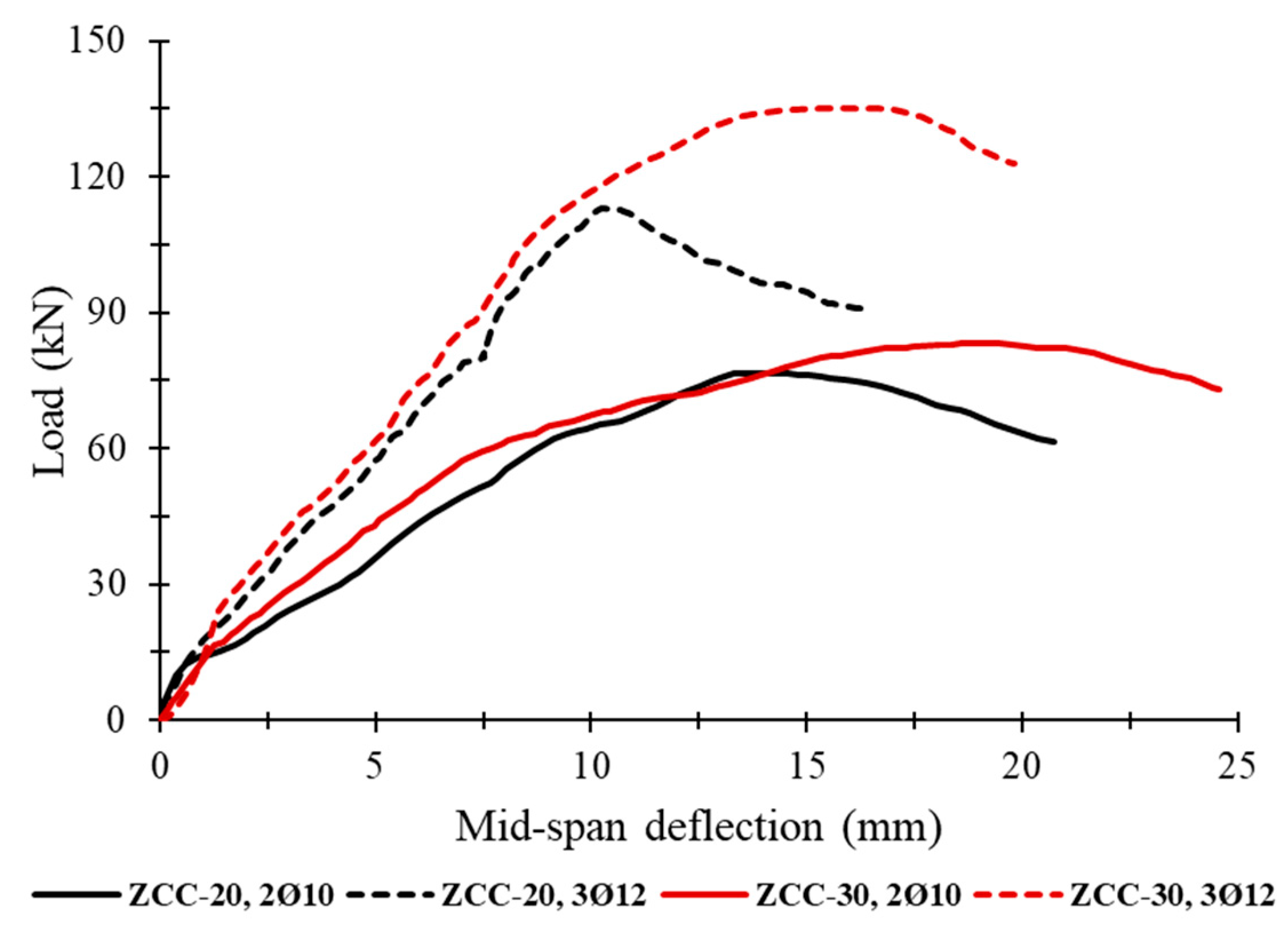
Figure 33 illustrates the mid-span load–deflection responses of ZCC beams with compressive strengths of 20 MPa and 30 MPa for both reinforcement arrangements. Increasing the reinforcement ratio by approximately 53.7% resulted in a marked improvement in load-carrying capacity, 32.3% for 20 MPa beams and 38.4% for 30 MPa beams, while reducing the corresponding mid-span deflection by 20.4% and 10.3%, respectively.
Beams reinforced with 3Ø12 bars (higher ρ) exhibited the greatest stiffness and ultimate load capacity, confirming the expected increase in flexural strength with reinforcement ratio. These beams also showed reduced deflection and crack width at failure, indicating enhanced rigidity. The observed improvement can be attributed to the increased steel cross-sectional area, which allows for better stress redistribution and delays the onset of yielding under increasing loads. Conversely, beams reinforced with 2Ø10 bars exhibited larger deflections and wider cracks, demonstrating greater deformability and ductility but lower overall stiffness.

3.4.2. Load–Strain Behavior Under Monotonic Loading

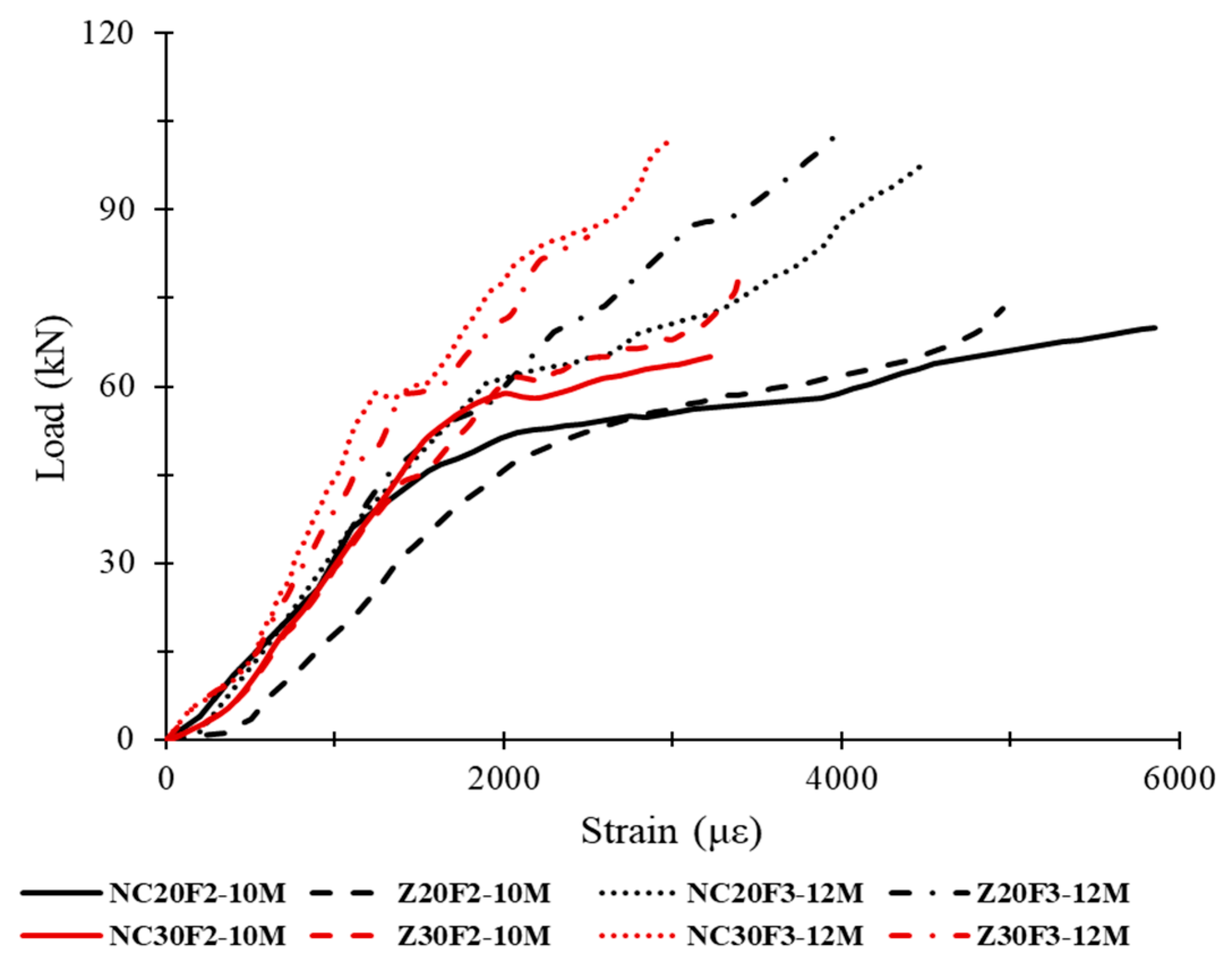
Steel strain behavior was monitored using electrical strain gauges (BMB-120-5AA) attached to the central region of the main tensile reinforcement. The load–strain relationships for beams with varying reinforcement ratios and compressive strengths are presented in Figure 34. All specimens demonstrated linear elastic behavior up to cracking, followed by a gradual reduction in stiffness as load increased, with steel yielding preceding ultimate failure, confirming a ductile flexural failure mode.
The recorded yielding strains for Ø10 and Ø12 bars were approximately 3121 με and 2250 με, respectively. ZCC beams exhibited slightly lower steel strains compared to NC beams, with reductions of 11.1–15.2% for f′c = 20 MPa and 14.2–19.1% for f′c = 30 MPa. This reduction in strain suggests improved bond performance in ZCC, which can be attributed to its denser microstructure and enhanced interfacial adhesion between the geopolymer matrix and steel reinforcement. The stronger bond minimizes relative slip, thereby ensuring more efficient stress transfer from concrete to steel.
For ZCC beams, increasing the reinforcement from 2Ø10 to 3Ø12 resulted in strain reductions of 19.8% and 26.8% for f′c = 20 and 30 MPa, respectively. Similarly, increasing concrete strength from 20 to 30 MPa reduced steel strain by 31.6% for beams with 2Ø10 and 37.6% for beams with 3Ø12. These findings indicate that higher reinforcement ratios and concrete strengths both contribute to lower steel strains and improved stiffness, which is consistent with fundamental flexural design principles.
The combined analysis of load–deflection and load–strain responses reveal a clear interaction between reinforcement ratio and loading type in governing the flexural performance of geopolymer beams. Increasing the longitudinal reinforcement ratio significantly enhances load-bearing capacity under both monotonic and cyclic loading due to the larger steel area available to resist tensile stresses. As evidenced by the measured steel strains, beams reinforced with 3Ø12 bars exhibited consistently lower tensile strains compared to beams with 2Ø10 bars at equivalent load levels, indicating delayed yielding of the reinforcement and increased flexural stiffness.
However, this increase in stiffness also limits curvature development in the constant moment region, thereby restricting plastic hinge formation and reducing overall ductility. Under monotonic loading, the reduced steel strain accumulation in heavily reinforced beams results in lower ultimate deflection despite higher ultimate load capacity. Under cyclic loading, the effect becomes more pronounced, as higher reinforcement ratios suppress strain reversals and plastic strain accumulation in the steel, leading to narrower hysteresis loops and reduced energy dissipation capacity.
Consequently, while higher reinforcement ratios improve strength and stiffness, they simultaneously reduce deformation capacity and ductility by limiting steel yielding and curvature demand. This behavior confirms that ductility in both geopolymer and normal concrete beams is primarily governed by reinforcement yielding rather than concrete strength, and that optimal seismic or cyclic performance requires a balanced reinforcement ratio that allows controlled plastic deformation and stable energy dissipation.

3.4.3. Influence of Reinforcement Ratio Under Cyclic Loading

Under cyclic loading, two reinforcement ratios (ρ = 0.0129 and 0.0279) were examined using the same bar configurations (2Ø10 and 3Ø12). Figure 14, Figure 15, Figure 16 and Figure 17 show the corresponding load–deflection curves for ZCC beams at compressive strengths of 20 MPa and 30 MPa. Increasing the reinforcement ratio significantly enhanced the load capacity by 40.2% and 43.0% for ZCC beams with 20 and 30 MPa compressive strength, respectively. However, this increase in load-carrying capacity was accompanied by reductions in mid-span deflection of 35.5% and 13.4%, reflecting higher stiffness and reduced ductility.
Beams reinforced with 3Ø12 bars (ZCC-20 and ZCC-30) demonstrated the highest stiffness and the lowest deflection amplitudes across cyclic loading cycles. This confirms that increased steel area effectively mitigates deformation demands, enhances resistance to cyclic fatigue, and delays the onset of stiffness degradation.

3.4.4. Load–Strain Hysteresis Response Under Cyclic Loading

The load–strain hysteresis responses, shown in Figure 35, Figure 36, Figure 37 and Figure 38, reveal that all specimens experienced gradual accumulation of plastic strain with increasing cycles, followed by yielding of steel reinforcement before failure, again confirming a ductile flexural failure mode. The repeated tensile-compressive reversals led to progressive deterioration of the bond between steel and concrete, particularly in later cycles.
For ZCC beams, however, the degradation was less severe compared to NC beams, indicating better bond retention under cyclic stresses. The strain in ZCC beams (f′c = 20 MPa, 2Ø10) increased by 33.8% compared to those with 3Ø12 reinforcement, while for f′c = 30 MPa, the strain in 3Ø12 beams decreased by 23.9% relative to 2Ø10 beams. These results confirm that increasing the reinforcement ratio reduces steel strain by distributing internal stresses across a larger cross-sectional area, thereby enhancing stiffness and limiting local deformation.
When comparing concrete strengths, ZCC beams with f′c = 30 MPa and 2Ø10 bars exhibited a slightly lower load-carrying capacity (by 5.4%) but higher strain (by about 8%) than beams with 3Ø12 reinforcement. This trend indicates that the reinforcement ratio plays a dominant role over concrete compressive strength in influencing cyclic strain behavior and stiffness. Consequently, the results show that ZCC beams, similar to NC beams, develop ductile flexural behavior governed by reinforcement yield rather than brittle fracture. The superior bond characteristics of ZCC contribute to more stable strain development, slower degradation under cyclic loading, and greater energy dissipation capacity, highlighting the material’s potential for resilient and sustainable structural applications.

4. Conclusions

The current experimental study evaluated the flexural behavior of ZCC beams in comparison with NC beams under both monotonic and cyclic loading, considering the effects of compressive strength, reinforcement ratio, and loading type. The results demonstrated that ZCC beams exhibited comparable or slightly superior flexural performance to NC beams across all test conditions. Under monotonic loading, the ZCC beams achieved up to 9% higher ultimate load capacity and demonstrated greater deformability, confirming that eliminating OPC does not compromise structural integrity. The enhanced load capacity and improved post-cracking behavior of ZCC are attributed to its denser microstructure and superior bond characteristics, which facilitate more efficient stress transfer between steel reinforcement and the surrounding concrete.
The energy absorption and ductility of ZCC beams were notably higher than those of NC beams under both monotonic and cyclic loading. The cumulative energy absorption increased by up to 69%, while the ductility factor improved by nearly 50%, particularly in beams with higher compressive strength. These enhancements indicate that ZCC possesses superior toughness and deformation capacity, allowing it to withstand greater energy dissipation prior to failure. Under cyclic loading, ZCC beams showed stable hysteresis behavior with reduced pinching and slower stiffness degradation. Most specimens sustained between eight and twelve load cycles before failure, corresponding to approximately 70–90% of the ultimate displacement obtained under monotonic loading. The improved cyclic performance confirms the suitability of ZCC for structures exposed to repeated or seismic-type loading conditions.
The reinforcement ratio significantly influenced the beam behavior. Increasing the steel reinforcement from 2Ø10 to 3Ø12 bars led to a marked improvement in load-carrying capacity, by up to 40%, while reducing mid-span deflection by about 35%. Beams with higher reinforcement ratios displayed increased stiffness and lower steel strains due to more effective stress distribution. Moreover, all beams failed in a ductile flexural mode, initiated by cracking at the tension face and followed by concrete crushing and yielding of steel reinforcement. Compared to NC beams, ZCC beams developed finer, more closely spaced, and more evenly distributed cracks, suggesting superior crack control and bond performance, which contributed to higher energy absorption and a more gradual failure process.
The strain measurements further confirmed the improved bond performance of ZCC, as steel strains were consistently lower, by 11–19%, than those recorded in NC beams of equivalent strength. This reduction indicates better interfacial adhesion and enhanced stress transfer within the geopolymer matrix, resulting in reduced slip and improved stiffness. All together, these findings demonstrate that ZCC can achieve mechanical performance equivalent to or better than NC, while offering additional benefits in terms of ductility, crack control, and cyclic resilience.
From a practical perspective, it is acknowledged that the alkaline activators used in geopolymer concrete, particularly sodium hydroxide and sodium silicate, currently represent a higher material cost compared to ordinary Portland cement in many regions. However, the present experimental results demonstrate that ZCC beams exhibit enhanced ductility, energy dissipation, and cyclic stability, which may offset higher initial material costs in applications where structural resilience and damage tolerance are critical, such as seismic-resistant structures. Moreover, the economic viability of geopolymer systems is strongly influenced by regional material availability, scale of production, and ongoing developments in cost-optimized activators, suggesting that the cost gap with conventional concrete is likely to decrease as industrial adoption progresses.
From a sustainability perspective, the findings of this study align with several United Nations Sustainable Development Goals (SDGs). In particular, the use of geopolymer (zero-cement) concrete contributes to SDG 9 (Industry, Innovation and Infrastructure) by promoting innovative and low-carbon construction materials and to SDG 11 (Sustainable Cities and Communities) through enhanced structural resilience and improved performance under cyclic loading. The utilization of industrial by-products such as fly ash supports SDG 12 (Responsible Consumption and Production) by reducing reliance on virgin raw materials and promoting resource efficiency, while the reduction in cement-related CO2 emissions directly contributes to SDG 13 (Climate Action). These aspects highlight the potential of geopolymer concrete as a sustainable alternative for structural applications while acknowledging that further optimization is required to address cost and durability challenges.
This study was conducted on laboratory-scale beam specimens under controlled quasi-static loading and curing conditions. Consequently, potential effects of specimen size, higher loading rates, and environmental factors such as humidity and temperature on the performance of geopolymer concrete were not examined. Future research should address large-scale members, variable and dynamic loading rates, and long-term environmental exposure to further validate the structural behavior and durability of geopolymer concrete under realistic service conditions. In addition, the relatively high alkali content associated with the selected activator concentration may influence long-term durability, particularly with respect to alkali leaching and efflorescence under environmental exposure. However, durability-related phenomena were not investigated in the present study, as all specimens were tested under controlled laboratory conditions shortly after curing. Future studies should therefore examine the long-term durability performance of geopolymer concrete with reduced alkali content and under realistic exposure conditions.

Author Contributions

M.A.Q.A.-J.: Conceptualization, Methodology, Investigation, Supervision, Writing—original draft, Writing—review and editing. D.A.-J.: Methodology, Software, Data curation, Formal analysis, Writing—original draft, Writing—review and editing. R.T.N.: Methodology, Investigation, Data curation, Formal analysis. L.F.A.B.: Writing—review and editing, visualization. H.A.S.P.: Writing—review, editing, and final drafting. All authors have read and agreed to the published version of the manuscript.

Funding

This research received no external funding.

Data Availability Statement

The authors declare that the data supporting the findings of this study are available within the paper.

Acknowledgments

The first author appreciates the financial support of the Ministry of Higher Education and Scientific Research in Iraq through a research scholarship program during the period of this study.

Conflicts of Interest

The authors declare no conflicts of interest.

References

  1. Nehdi, M.L.; Marani, A.; Zhang, L. Is Net-Zero Feasible? Systematic Review of Cement and Concrete Decarbonization Technologies. Renew. Sustain. Energy Rev. 2024, 191, 114169. [Google Scholar] [CrossRef]
  2. Cao, Z.; Masanet, E.; Tiwari, A.; Akolawala, S. Decarbonizing Concrete: Deep Decarbonization Pathways for the Cement and Concrete Cycle in the United States, India, and China; Industrial Sustainability Analysis Laboratory, Northwestern University: Evanston, IL, USA, 2021. [Google Scholar]
  3. Watari, T.; Cao, Z.; Hata, S.; Nansai, K. Efficient Use of Cement and Concrete to Reduce Reliance on Supply-Side Technologies for Net-Zero Emissions; The University of Tokyo: Kashiwa, Japan, 2022. [Google Scholar]
  4. Worrell, E.; Boyd, G. Bottom-up estimates of deep decarbonization of U.S. manufacturing in 2050. J. Clean. Prod. 2022, 330, 129758. [Google Scholar] [CrossRef]
  5. Barbhuiya, S.; Kanavaris, F.; Das, B.B.; Idrees, M. Decarbonising Cement and Concrete Production: Strategies, Challenges and Pathways for Sustainable Development. J. Build. Eng. 2024, 86, 108861. [Google Scholar] [CrossRef]
  6. Davidovits, J. Properties of Geopolymer Cements. J. Therm. Anal. 1991, 37, 1633–1656. [Google Scholar] [CrossRef]
  7. Provis, J.L.; Bernal, S.A. Geopolymers and Related Alkali-Activated Materials. Annu. Rev. Mater. Res. 2014, 44, 299–327. [Google Scholar] [CrossRef]
  8. Liew, K.M.; Sojobi, A.O.; Zhang, L.W. Green Concrete: Prospects and Challenges. Constr. Build. Mater. 2017, 156, 1063–1095. [Google Scholar] [CrossRef]
  9. Wasim, M.; Abadel, A.; Abu Bakar, B.H.; Alshaikh, I.M.H. Future Directions for the Application of Zero-Carbon Concrete in Civil Engineering—A Review. Case Stud. Constr. Mater. 2022, 17, e01318. [Google Scholar] [CrossRef]
  10. Aldred, J.; Day, J. Is Geopolymer Concrete a Suitable Alternative to Traditional Concrete? In Proceedings of the 37th Conference on Our World in Concrete & Structures, Singapore, 29–31 August 2012. [Google Scholar]
  11. Athira, V.S.; Charitha, V.; Athira, G.; Bathiudeen, A. Agro-Waste Ash-Based Alkali-Activated Binder: Cleaner Production of Zero-Cement Concrete for Construction. J. Clean. Prod. 2021, 286, 125429. [Google Scholar] [CrossRef]
  12. Hassoon, M.M.; Qissab, M.A. Performance of Zero Cement Concrete Synthesized from Fly Ash: A Critical Review. E3S Web Conf. 2023, 437, 04002. [Google Scholar] [CrossRef]
  13. Hason, M.M.; Al-Janabi, M.A.Q. Behavior of Zero Cement Reinforced Concrete Slabs under Monotonic and Impact Loads: Experimental and Numerical Investigations. Case Stud. Constr. Mater. 2024, 21, e03789. [Google Scholar] [CrossRef]
  14. Hassoon, M.M.; Qissab, M.A. Behavior of Reinforced Zero Cement Concrete Slabs under Monotonic Load. Al-Nahrain J. Eng. Sci. 2024, 27, 328–338. [Google Scholar] [CrossRef]
  15. Hardjito, D.; Rangan, B.V. Development and Properties of Low-Calcium Fly Ash-Based Geopolymer Concrete; Research Report GC1; Faculty of Engineering, Curtin University of Technology: Perth, Australia, 2005. [Google Scholar]
  16. Yao, Z.T.; Ji, X.S.; Sarker, P.K.; Tang, J.H.; Ge, L.Q.; Xia, M.S.; Xi, Y.Q. A Comprehensive Review on the Applications of Coal Fly Ash. Earth Sci. Rev. 2015, 141, 105–121. [Google Scholar] [CrossRef]
  17. Al-Jabali, H.M.; El-Latief, A.A.; Ezz, M.S.; Khairy, S.; Nada, A.A. GGBFS- and Red-Mud-Based Alkali-Activated Concrete Beams: Flexural, Shear and Pull-Out Test Behavior. Civ. Eng. J. 2024, 10, 1494–1512. [Google Scholar] [CrossRef]
  18. Sinaei, H.; Shariati, M.; Abna, A.H.; Aghaei, M.; Shariati, A. Evaluation of Reinforced Concrete Beam Behavior Using Finite Element Analysis by ABAQUS. Sci. Res. Essays 2012, 7, 2002–2009. [Google Scholar]
  19. Kumar, U.P.; Kumar, B.S.C. Flexural Behaviour of Reinforced Geopolymer Concrete Beams with GGBS and Metakaolin. Int. J. Civ. Eng. Technol. 2016, 7, 260–277. [Google Scholar]
  20. Kumar, B.S.C.; Ramesh, K. Analytical Study on Flexural Behaviour of Reinforced Geopolymer Concrete Beams by ANSYS. Mater. Sci. Eng. 2018, 455, 012065. [Google Scholar] [CrossRef]
  21. Bendapudi, S. Studies on Flexural Behavior of Geopolymer Concrete Beams with GGBS. Int. J. Recent Technol. Eng. 2019, 7, 199–205. [Google Scholar]
  22. Nath, P.; Sarker, P.K. Flexural strength and elastic modulus of ambient-cured blended low-calcium fly ash geopolymer concrete. Constr. Build. Mater. 2017, 130, 22–31. [Google Scholar] [CrossRef]
  23. Hardjito, D.; Wallah, S.E.; Sumajouw, D.M.J.; Rangan, B.V. On the development of fly ash-based geopolymer concrete. ACI Mater. J. 2004, 101, 467–472. [Google Scholar] [CrossRef] [PubMed]
  24. Tao, Y.; Hu, H.; Zhang, H.; Zhang, G.; Hao, Z.; Wang, L. A new ventilation system for extra-long railway tunnel construction by using the air cabin relay: A case study on optimization of air cabin parameters length. J. Build. Eng. 2021, 45, 103480. [Google Scholar] [CrossRef]
  25. Sarker, P.K.; Kelly, S.; Yao, Z.T. Effect of fire exposure on cracking, spalling and residual strength of fly ash geopolymer concrete. Mater. Des. 2018, 63, 584–592. [Google Scholar] [CrossRef]
  26. Tamayo, P.; García del Angel, G.; Setién, J.; Soto, A.; Thomas, C. Feasibility of silicomanganese slag as cementitious material and as aggregate for concrete. Constr. Build. Mater. 2023, 364, 129938. [Google Scholar] [CrossRef]
  27. Mohamed, G.A.; Sallam, E.A.; Elbelacy, A.N. Structural Behavior of Reinforced Concrete Beams Containing Nanomaterials Subjected to Monotonic and Cyclic Loadings. Buildings 2022, 12, 1620. [Google Scholar] [CrossRef]
  28. ASTM C39/C39M-23; Standard Test Method for Compressive Strength of Cylindrical Concrete Specimens. ASTM International: West Conshohocken, PA, USA, 2023. [CrossRef]
  29. ASTM C496/C496M-22; Standard Test Method for Splitting Tensile Strength of Cylindrical Concrete Specimens. ASTM International: West Conshohocken, PA, USA, 2022.
  30. ASTM C78/C78M-21; Standard Test Method for Flexural Strength of Concrete (Using Simple Beam with Third-Point Loading). ASTM International: West Conshohocken, PA, USA, 2021. [CrossRef]
  31. ASTM C143/C143M-20; Standard Test Method for Slump of Hydraulic-Cement Concrete. ASTM International: West Conshohocken, PA, USA, 2020. [CrossRef]
  32. Hamad, A.J.; Sldozian, R.J.A. Flexural and Flexural Toughness of Fiber-Reinforced Concrete—American Standard Specifications Review. GRD J. Eng. 2019, 4, 5–13. [Google Scholar]
  33. Ghamarian, N.; Hanim, M.A.A.; Penjumras, P.; Majid, D.L.A. Effect of Fiber Orientation on the Mechanical Properties of Laminated Polymer Composites. In Encyclopedia of Materials: Composites; Elsevier: Amsterdam, The Netherlands, 2016; Volume 1, pp. 746–765. [Google Scholar] [CrossRef]
  34. Committee 318. Building Code Requirements for Structural Concrete () and Commentary; American Concrete Institute: Farmington Hills, MI, USA, 2019. [Google Scholar]
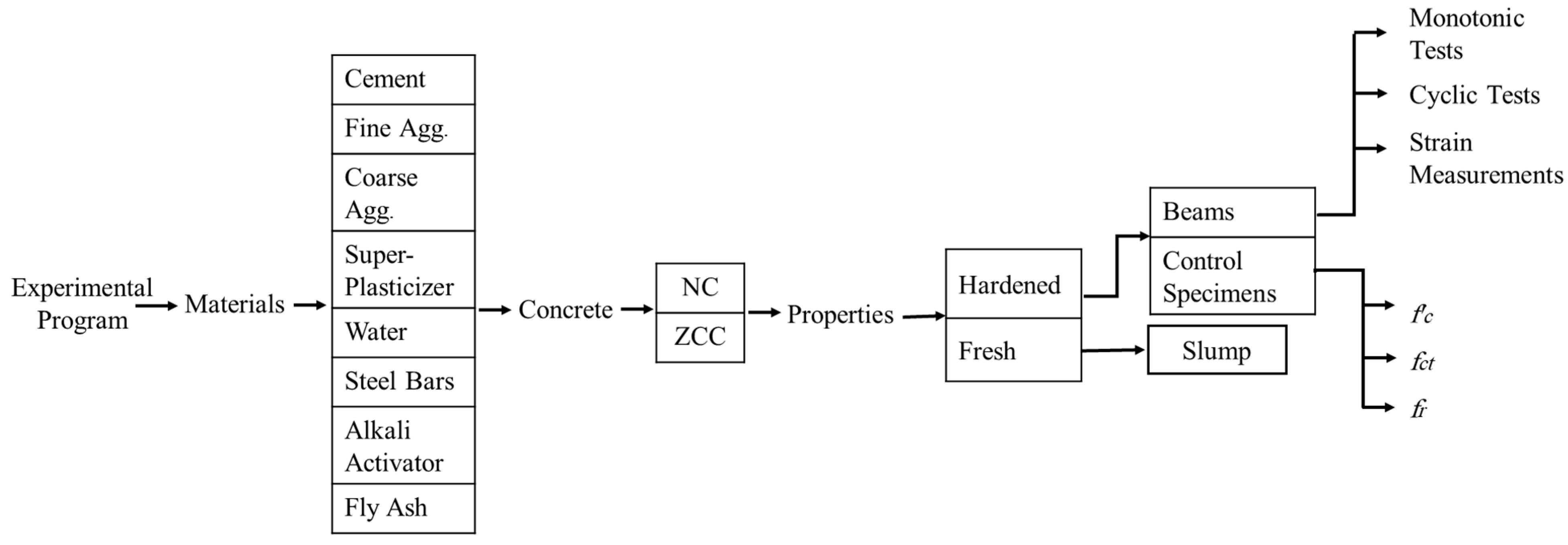
Figure 1. Flowchart of testing program.
Buildings 16 00209 g001
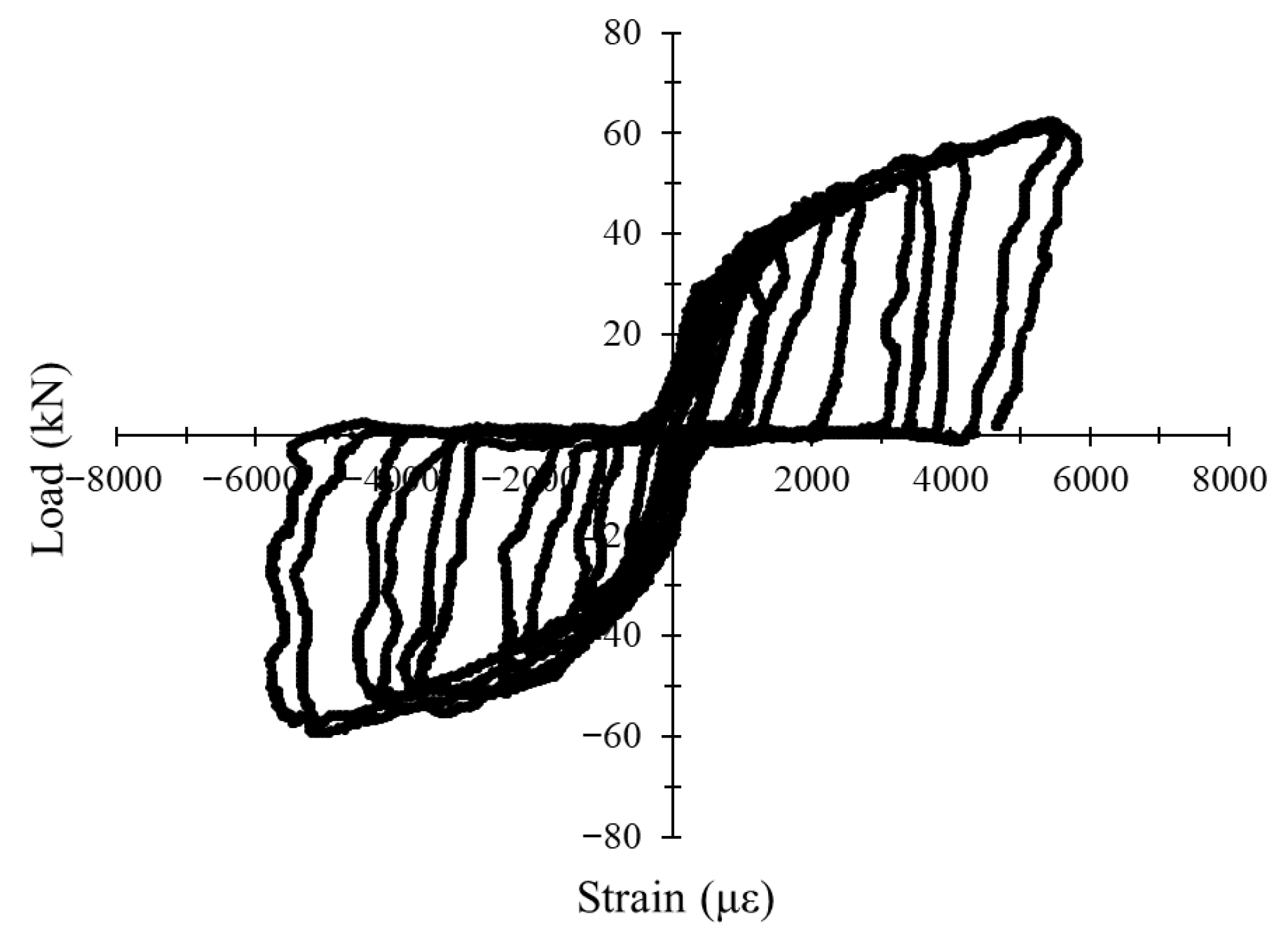
Figure 2. SEM images of (a) ZCC and (b) NC (label “CHS gel” corresponds to C–S–H gel).
Buildings 16 00209 g002
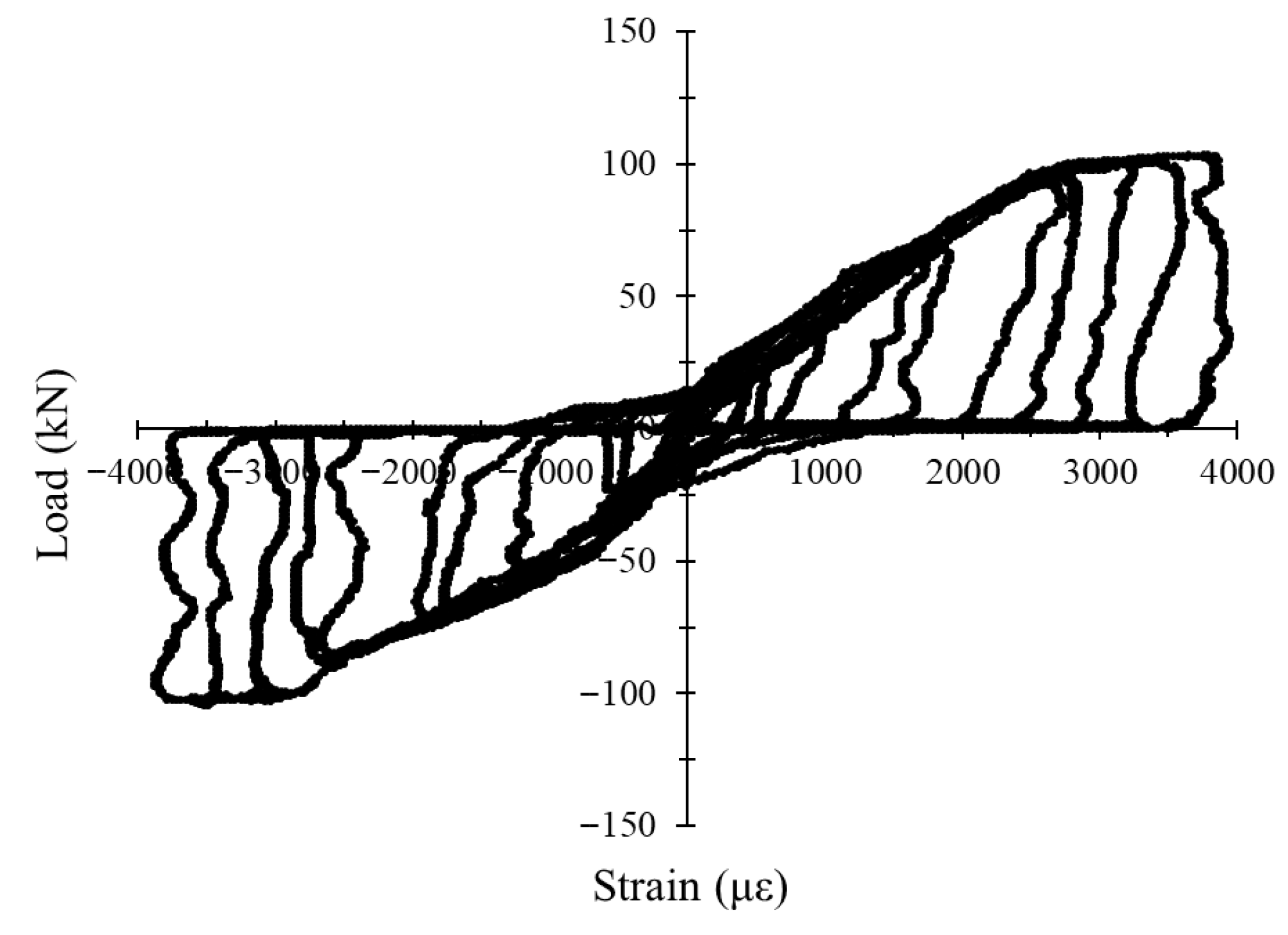
Figure 3. SEM-zoomed-in images of hardened ZCC at magnifications of 2500×, 10,000×, and 20,000×.
Buildings 16 00209 g003
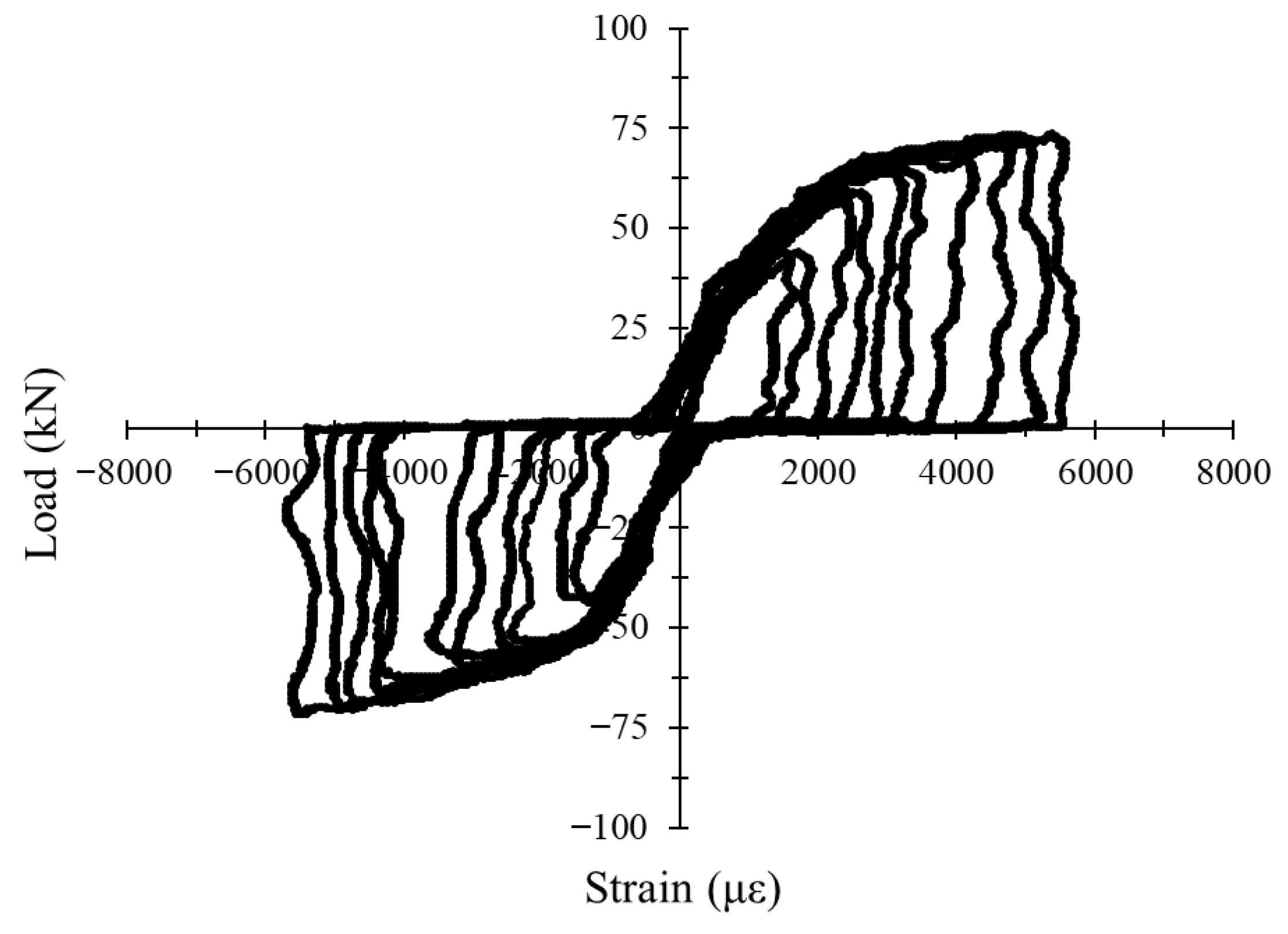
Figure 4. Reinforcement details of test specimens.
Buildings 16 00209 g004
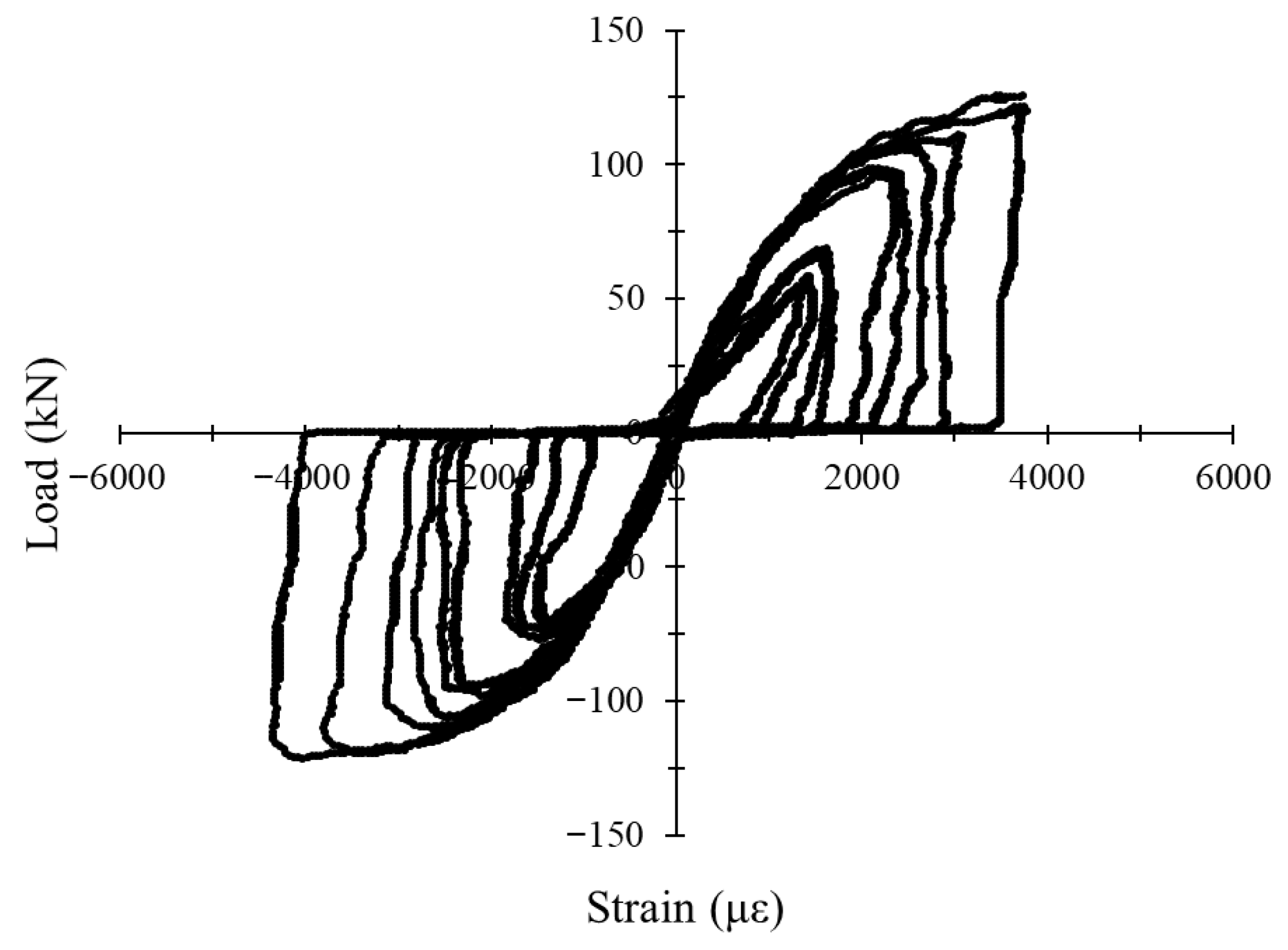
Figure 5. (a) Specimen in the testing machine (b) Schematic for monotonic loading setup.
Buildings 16 00209 g005
Figure 6. Setup machine test for cyclic loading: (a) front view, (b) side view, and (c) schematic view of setting up test.
Buildings 16 00209 g006
Figure 7. LVDT deflection measurement.
Buildings 16 00209 g007
Figure 8. Mid-span load–deflection curves for NC and ZCC beams with 2Ø10 reinforcement at compressive strengths of f′c = 20 and 30 MPa.
Buildings 16 00209 g008
Figure 9. Mid-span load–deflection curves for NC and ZCC beams with 3Ø12 reinforcement at compressive strengths of f′c = 20 and 30 MPa.
Buildings 16 00209 g009
Figure 10. Cyclic loading history.
Buildings 16 00209 g010
Figure 11. Load—Deflection hysteresis curve for NC beams with 2Ø10 reinforcement at f′c = 20 MPa.
Buildings 16 00209 g011
Figure 12. Load—Deflection hysteresis curve for NC beams with 2Ø10 reinforcement at f′c = 30 MPa.
Buildings 16 00209 g012
Figure 13. Load—Deflection hysteresis curve for NC beams with 3Ø12 reinforcement at f′c = 30 MPa.
Buildings 16 00209 g013
Figure 14. Load—Deflection hysteresis curve for ZCC beams with 2Ø10 reinforcement at f′c = 20 MPa.
Buildings 16 00209 g014
Figure 15. Load—Deflection hysteresis curve for ZCC beams with 3Ø12 reinforcement at f′c =20 MPa.
Buildings 16 00209 g015
Figure 16. Load—Deflection hysteresis curve for ZCC beams with 2Ø10 reinforcement at f′c = 30 MPa.
Buildings 16 00209 g016
Figure 17. Load—Deflection hysteresis curve for ZCC beams with 3Ø12 reinforcement at f′c = 30 MPa.
Buildings 16 00209 g017
Figure 18. Failure pattern for NC beams with 2Ø10 reinforcement at f′c = 20 MPa, under monotonic loading.
Buildings 16 00209 g018
Figure 19. Failure pattern for NC beams with 3Ø12 reinforcement at f′c = 20 MPa, under monotonic loading.
Buildings 16 00209 g019
Figure 20. Failure pattern for NC beams with 2Ø10 reinforcement at f′c = 30 MPa, under monotonic loading.
Buildings 16 00209 g020
Figure 21. Failure pattern for NC beams with 3Ø12 reinforcement at f′c = 30 MPa, under monotonic loading.
Buildings 16 00209 g021
Figure 22. Failure pattern for ZCC beams with 2Ø10 reinforcement at f′c = 20 MPa, under monotonic loading.
Buildings 16 00209 g022
Figure 23. Failure pattern for ZCC beams with 3Ø12 reinforcement at f′c = 20 MPa, under monotonic loading.
Buildings 16 00209 g023
Figure 24. Failure pattern for ZCC beams with 2Ø10 reinforcement at f′c = 30 MPa, under monotonic loading.
Buildings 16 00209 g024
Figure 25. Failure pattern for ZCC beams with 3Ø12 reinforcement at f′c = 30 MPa, under monotonic loading.
Buildings 16 00209 g025
Figure 26. Failure pattern for NC beams with 2Ø10 reinforcement at f′c = 20 MPa, under cyclic loading.
Buildings 16 00209 g026
Figure 27. Failure pattern for NC beams with 2Ø10 reinforcement at f′c = 30 MPa, under cyclic loading.
Buildings 16 00209 g027
Figure 28. Failure pattern for NC beams with 3Ø12 reinforcement at f′c = 30 MPa, under cyclic loading.
Buildings 16 00209 g028
Figure 29. Failure pattern for ZCC beams with 2Ø10 reinforcement at f′c = 20 MPa, under cyclic loading.
Buildings 16 00209 g029
Figure 30. Failure pattern for ZCC beams with 3Ø12 reinforcement at f′c = 20 MPa, under cyclic loading.
Buildings 16 00209 g030
Figure 31. Failure pattern for ZCC beams with 2Ø10 reinforcement at f′c = 30 MPa, under cyclic loading.
Buildings 16 00209 g031
Figure 32. Failure pattern for ZCC beams with 3Ø12 reinforcement at f′c = 30 MPa, under cyclic loading.
Buildings 16 00209 g032
Figure 33. Mid-span Load–deflection for ZCC with f′c = 20 MPa and f′c = 30MPa (bars 2Ø10 and 3Ø12).
Buildings 16 00209 g033
Figure 34. Load–strain curves for ZCC and NC (ƒc′ = 20 MPa and ƒc′ = 30 MPa) beams.
Buildings 16 00209 g034
Figure 35. Load–strain curve for ZCC beams with 2Ø10 reinforcement at f′c = 20 MPa.
Buildings 16 00209 g035
Figure 36. Load–strain curve for ZCC beams with 3Ø12 reinforcement at f′c = 20 MPa.
Buildings 16 00209 g036
Figure 37. Load–strain curve for ZCC beams with 2Ø10 reinforcement at f′c = 30 MPa.
Buildings 16 00209 g037
Figure 38. Load–strain curve for ZCC beams with 3Ø12 reinforcement at f′c = 30 MPa.
Buildings 16 00209 g038
Table 1. Mechanical properties of the ZCC and NC mixtures at 28 days.
Concrete Typefcu (Mpa)f’c (Mpa)ft (Mpa)fr (Mpa)
NC-2024.3221.892.023.06
NC-3036.0332.072.923.71
ZCC-2026.9023.942.533.11
ZCC-3037.3734.383.064.04
Table 2. Slump test results.
Concrete TypeSlump Test Result (mm)
NC-2055
NC-3080
ZCC-2050
ZCC-3075
Table 3. Mix proportions of NC and ZCC for 20 Mpa and 30 Mpa target compressive strengths.
Mix TypeTarget Strength (Mpa)Cement
(kg/m3)
Fly Ash
(kg/m3)
Fine
Aggregate
(kg/m3)
Coarse
Aggregate
(kg/m3)
Water
(L/m3)
NaOH
Solution
(kg/m3)
Na2SiO3 Solution
(kg/m3)
Superplasticizer
(kg/m3)
NC-202035065012001755.25
NC-303045060011801806.75
ZCC-2020400640118040805.00
ZCC-3030450600116045906.00
Table 4. Beam specimens, reinforcement details and test variables.
GroupConcrete Typef′c (MPa)Longitudinal
Reinforcement
StirrupsLoading TypeNumber of Beams
NC-20NC202Ø10, 3Ø12Ø8 @100 mmMonotonic/Cyclic4
NC-30NC302Ø10, 3Ø12Ø8 @100 mmMonotonic/Cyclic4
ZCC-20ZCC202Ø10, 3Ø12Ø8 @100 mmMonotonic/Cyclic4
ZCC-30ZCC302Ø10, 3Ø12Ø8 @100 mmMonotonic/Cyclic4
Table 5. The key results of load-deflection curves.
GroupLongitudinal
Reinforcement
Pcr (kN)cr (mm)Pu (kN)u (mm)K (kN/mm)Energy
Absorption
(kN·mm)
NC-202Ø1011.810.8671.6811.776.091148.8
ZCC-202Ø1013.800.7676.5213.275.771334.9
NC-302Ø1019.161.5675.9312.606.031305.3
ZCC-302Ø1016.891.4885.0121.723.912428.1
NC-203Ø1213.890.71107.909.3111.591099.1
ZCC-203Ø1214.540.77112.6010.5710.651296.5
NC-303Ø1219.020.75125.2510.2112.271413.4
ZCC-303Ø1224.121.35134.9216.228.322865.8
Table 6. Experimental results for beams under cyclic loading.
GroupLongitudinal
Reinforcement
No. of
Cycles
to Failure
y (mm)Pu (kN)u (mm)Flexural
Ductility
Factor = u y
Initial
Stiffness (K)
(kN/mm)
Energy
Absorption (kN.mm)
NC-202Ø109 (Up)5.03965.8114.142.814.665913.96
ZCC-202Ø1011 (Up)4.25461.2419.434.573.157844.52
NC-302Ø1010 (Up)3.14570.5711.033.516.403713.36
ZCC-302Ø1012 (Up)4.25773.6918.324.304.0211,899.33
ZCC-203Ø1211 (Down)2.904102.4212.544.328.177728.19
NC-303Ø128 (Up)7.989103.4912.461.568.316156.81
ZCC-303Ø1212 (Up)6.080129.2515.862.618.1512,351.93
Disclaimer/Publisher’s Note: The statements, opinions and data contained in all publications are solely those of the individual author(s) and contributor(s) and not of MDPI and/or the editor(s). MDPI and/or the editor(s) disclaim responsibility for any injury to people or property resulting from any ideas, methods, instructions or products referred to in the content.